EP3818135B1 - Utilisation et méthode pour refroidir et lubrifier un systeme de propulsion d'un vehicule electrique ou hybride - Google Patents
Utilisation et méthode pour refroidir et lubrifier un systeme de propulsion d'un vehicule electrique ou hybride Download PDFInfo
- Publication number
- EP3818135B1 EP3818135B1 EP19733820.5A EP19733820A EP3818135B1 EP 3818135 B1 EP3818135 B1 EP 3818135B1 EP 19733820 A EP19733820 A EP 19733820A EP 3818135 B1 EP3818135 B1 EP 3818135B1
- Authority
- EP
- European Patent Office
- Prior art keywords
- composition
- diester
- weight
- formula
- linear
- Prior art date
- Legal status (The legal status is an assumption and is not a legal conclusion. Google has not performed a legal analysis and makes no representation as to the accuracy of the status listed.)
- Active
Links
Images
Classifications
-
- C—CHEMISTRY; METALLURGY
- C10—PETROLEUM, GAS OR COKE INDUSTRIES; TECHNICAL GASES CONTAINING CARBON MONOXIDE; FUELS; LUBRICANTS; PEAT
- C10M—LUBRICATING COMPOSITIONS; USE OF CHEMICAL SUBSTANCES EITHER ALONE OR AS LUBRICATING INGREDIENTS IN A LUBRICATING COMPOSITION
- C10M105/00—Lubricating compositions characterised by the base-material being a non-macromolecular organic compound
- C10M105/08—Lubricating compositions characterised by the base-material being a non-macromolecular organic compound containing oxygen
- C10M105/32—Esters
- C10M105/38—Esters of polyhydroxy compounds
-
- C—CHEMISTRY; METALLURGY
- C10—PETROLEUM, GAS OR COKE INDUSTRIES; TECHNICAL GASES CONTAINING CARBON MONOXIDE; FUELS; LUBRICANTS; PEAT
- C10M—LUBRICATING COMPOSITIONS; USE OF CHEMICAL SUBSTANCES EITHER ALONE OR AS LUBRICATING INGREDIENTS IN A LUBRICATING COMPOSITION
- C10M129/00—Lubricating compositions characterised by the additive being an organic non-macromolecular compound containing oxygen
- C10M129/02—Lubricating compositions characterised by the additive being an organic non-macromolecular compound containing oxygen having a carbon chain of less than 30 atoms
- C10M129/68—Esters
- C10M129/74—Esters of polyhydroxy compounds
-
- C—CHEMISTRY; METALLURGY
- C10—PETROLEUM, GAS OR COKE INDUSTRIES; TECHNICAL GASES CONTAINING CARBON MONOXIDE; FUELS; LUBRICANTS; PEAT
- C10M—LUBRICATING COMPOSITIONS; USE OF CHEMICAL SUBSTANCES EITHER ALONE OR AS LUBRICATING INGREDIENTS IN A LUBRICATING COMPOSITION
- C10M169/00—Lubricating compositions characterised by containing as components a mixture of at least two types of ingredient selected from base-materials, thickeners or additives, covered by the preceding groups, each of these compounds being essential
- C10M169/04—Mixtures of base-materials and additives
-
- H—ELECTRICITY
- H01—ELECTRIC ELEMENTS
- H01M—PROCESSES OR MEANS, e.g. BATTERIES, FOR THE DIRECT CONVERSION OF CHEMICAL ENERGY INTO ELECTRICAL ENERGY
- H01M10/00—Secondary cells; Manufacture thereof
- H01M10/05—Accumulators with non-aqueous electrolyte
- H01M10/052—Li-accumulators
- H01M10/0525—Rocking-chair batteries, i.e. batteries with lithium insertion or intercalation in both electrodes; Lithium-ion batteries
-
- H—ELECTRICITY
- H01—ELECTRIC ELEMENTS
- H01M—PROCESSES OR MEANS, e.g. BATTERIES, FOR THE DIRECT CONVERSION OF CHEMICAL ENERGY INTO ELECTRICAL ENERGY
- H01M10/00—Secondary cells; Manufacture thereof
- H01M10/24—Alkaline accumulators
- H01M10/30—Nickel accumulators
-
- H—ELECTRICITY
- H01—ELECTRIC ELEMENTS
- H01M—PROCESSES OR MEANS, e.g. BATTERIES, FOR THE DIRECT CONVERSION OF CHEMICAL ENERGY INTO ELECTRICAL ENERGY
- H01M10/00—Secondary cells; Manufacture thereof
- H01M10/60—Heating or cooling; Temperature control
- H01M10/61—Types of temperature control
- H01M10/613—Cooling or keeping cold
-
- H—ELECTRICITY
- H01—ELECTRIC ELEMENTS
- H01M—PROCESSES OR MEANS, e.g. BATTERIES, FOR THE DIRECT CONVERSION OF CHEMICAL ENERGY INTO ELECTRICAL ENERGY
- H01M10/00—Secondary cells; Manufacture thereof
- H01M10/60—Heating or cooling; Temperature control
- H01M10/62—Heating or cooling; Temperature control specially adapted for specific applications
- H01M10/625—Vehicles
-
- H—ELECTRICITY
- H01—ELECTRIC ELEMENTS
- H01M—PROCESSES OR MEANS, e.g. BATTERIES, FOR THE DIRECT CONVERSION OF CHEMICAL ENERGY INTO ELECTRICAL ENERGY
- H01M10/00—Secondary cells; Manufacture thereof
- H01M10/60—Heating or cooling; Temperature control
- H01M10/65—Means for temperature control structurally associated with the cells
- H01M10/656—Means for temperature control structurally associated with the cells characterised by the type of heat-exchange fluid
- H01M10/6567—Liquids
- H01M10/6568—Liquids characterised by flow circuits, e.g. loops, located externally to the cells or cell casings
-
- C—CHEMISTRY; METALLURGY
- C10—PETROLEUM, GAS OR COKE INDUSTRIES; TECHNICAL GASES CONTAINING CARBON MONOXIDE; FUELS; LUBRICANTS; PEAT
- C10M—LUBRICATING COMPOSITIONS; USE OF CHEMICAL SUBSTANCES EITHER ALONE OR AS LUBRICATING INGREDIENTS IN A LUBRICATING COMPOSITION
- C10M2203/00—Organic non-macromolecular hydrocarbon compounds and hydrocarbon fractions as ingredients in lubricant compositions
- C10M2203/003—Organic non-macromolecular hydrocarbon compounds and hydrocarbon fractions as ingredients in lubricant compositions used as base material
-
- C—CHEMISTRY; METALLURGY
- C10—PETROLEUM, GAS OR COKE INDUSTRIES; TECHNICAL GASES CONTAINING CARBON MONOXIDE; FUELS; LUBRICANTS; PEAT
- C10M—LUBRICATING COMPOSITIONS; USE OF CHEMICAL SUBSTANCES EITHER ALONE OR AS LUBRICATING INGREDIENTS IN A LUBRICATING COMPOSITION
- C10M2207/00—Organic non-macromolecular hydrocarbon compounds containing hydrogen, carbon and oxygen as ingredients in lubricant compositions
- C10M2207/04—Ethers; Acetals; Ortho-esters; Ortho-carbonates
- C10M2207/046—Hydroxy ethers
-
- C—CHEMISTRY; METALLURGY
- C10—PETROLEUM, GAS OR COKE INDUSTRIES; TECHNICAL GASES CONTAINING CARBON MONOXIDE; FUELS; LUBRICANTS; PEAT
- C10M—LUBRICATING COMPOSITIONS; USE OF CHEMICAL SUBSTANCES EITHER ALONE OR AS LUBRICATING INGREDIENTS IN A LUBRICATING COMPOSITION
- C10M2207/00—Organic non-macromolecular hydrocarbon compounds containing hydrogen, carbon and oxygen as ingredients in lubricant compositions
- C10M2207/28—Esters
- C10M2207/283—Esters of polyhydroxy compounds
-
- C—CHEMISTRY; METALLURGY
- C10—PETROLEUM, GAS OR COKE INDUSTRIES; TECHNICAL GASES CONTAINING CARBON MONOXIDE; FUELS; LUBRICANTS; PEAT
- C10N—INDEXING SCHEME ASSOCIATED WITH SUBCLASS C10M RELATING TO LUBRICATING COMPOSITIONS
- C10N2030/00—Specified physical or chemical properties which is improved by the additive characterising the lubricating composition, e.g. multifunctional additives
- C10N2030/02—Pour-point; Viscosity index
-
- C—CHEMISTRY; METALLURGY
- C10—PETROLEUM, GAS OR COKE INDUSTRIES; TECHNICAL GASES CONTAINING CARBON MONOXIDE; FUELS; LUBRICANTS; PEAT
- C10N—INDEXING SCHEME ASSOCIATED WITH SUBCLASS C10M RELATING TO LUBRICATING COMPOSITIONS
- C10N2040/00—Specified use or application for which the lubricating composition is intended
- C10N2040/14—Electric or magnetic purposes
-
- C—CHEMISTRY; METALLURGY
- C10—PETROLEUM, GAS OR COKE INDUSTRIES; TECHNICAL GASES CONTAINING CARBON MONOXIDE; FUELS; LUBRICANTS; PEAT
- C10N—INDEXING SCHEME ASSOCIATED WITH SUBCLASS C10M RELATING TO LUBRICATING COMPOSITIONS
- C10N2040/00—Specified use or application for which the lubricating composition is intended
- C10N2040/14—Electric or magnetic purposes
- C10N2040/17—Electric or magnetic purposes for electric contacts
-
- C—CHEMISTRY; METALLURGY
- C10—PETROLEUM, GAS OR COKE INDUSTRIES; TECHNICAL GASES CONTAINING CARBON MONOXIDE; FUELS; LUBRICANTS; PEAT
- C10N—INDEXING SCHEME ASSOCIATED WITH SUBCLASS C10M RELATING TO LUBRICATING COMPOSITIONS
- C10N2040/00—Specified use or application for which the lubricating composition is intended
- C10N2040/25—Internal-combustion engines
-
- C—CHEMISTRY; METALLURGY
- C10—PETROLEUM, GAS OR COKE INDUSTRIES; TECHNICAL GASES CONTAINING CARBON MONOXIDE; FUELS; LUBRICANTS; PEAT
- C10N—INDEXING SCHEME ASSOCIATED WITH SUBCLASS C10M RELATING TO LUBRICATING COMPOSITIONS
- C10N2040/00—Specified use or application for which the lubricating composition is intended
- C10N2040/30—Refrigerators lubricants or compressors lubricants
-
- H—ELECTRICITY
- H01—ELECTRIC ELEMENTS
- H01M—PROCESSES OR MEANS, e.g. BATTERIES, FOR THE DIRECT CONVERSION OF CHEMICAL ENERGY INTO ELECTRICAL ENERGY
- H01M2220/00—Batteries for particular applications
- H01M2220/20—Batteries in motive systems, e.g. vehicle, ship, plane
-
- Y—GENERAL TAGGING OF NEW TECHNOLOGICAL DEVELOPMENTS; GENERAL TAGGING OF CROSS-SECTIONAL TECHNOLOGIES SPANNING OVER SEVERAL SECTIONS OF THE IPC; TECHNICAL SUBJECTS COVERED BY FORMER USPC CROSS-REFERENCE ART COLLECTIONS [XRACs] AND DIGESTS
- Y02—TECHNOLOGIES OR APPLICATIONS FOR MITIGATION OR ADAPTATION AGAINST CLIMATE CHANGE
- Y02E—REDUCTION OF GREENHOUSE GAS [GHG] EMISSIONS, RELATED TO ENERGY GENERATION, TRANSMISSION OR DISTRIBUTION
- Y02E60/00—Enabling technologies; Technologies with a potential or indirect contribution to GHG emissions mitigation
- Y02E60/10—Energy storage using batteries
-
- Y—GENERAL TAGGING OF NEW TECHNOLOGICAL DEVELOPMENTS; GENERAL TAGGING OF CROSS-SECTIONAL TECHNOLOGIES SPANNING OVER SEVERAL SECTIONS OF THE IPC; TECHNICAL SUBJECTS COVERED BY FORMER USPC CROSS-REFERENCE ART COLLECTIONS [XRACs] AND DIGESTS
- Y02—TECHNOLOGIES OR APPLICATIONS FOR MITIGATION OR ADAPTATION AGAINST CLIMATE CHANGE
- Y02T—CLIMATE CHANGE MITIGATION TECHNOLOGIES RELATED TO TRANSPORTATION
- Y02T10/00—Road transport of goods or passengers
- Y02T10/60—Other road transportation technologies with climate change mitigation effect
- Y02T10/70—Energy storage systems for electromobility, e.g. batteries
Definitions
- the present invention relates to the field of lubricating compositions for a propulsion system of an electric or hybrid vehicle. It thus aims to propose a composition endowed with both lubricating properties with respect to the transmission of the propulsion system, cooling of the power electronics and the battery, and both combined properties with respect to motor screw in a propulsion system of an electric or hybrid vehicle.
- electric vehicle within the meaning of the present invention is meant a vehicle comprising an electric motor as the sole means of propulsion, unlike a hybrid vehicle which comprises a combustion engine and an electric motor as combined means of propulsion. .
- propulsion system within the meaning of the present invention, we mean a system comprising the mechanical parts necessary for the propulsion of an electric vehicle.
- the propulsion system thus includes more particularly an electric motor, or the rotor-stator assembly of the power electronics (dedicated to speed regulation), a transmission and a battery.
- compositions to meet the double constraint of lubrication and cooling of the different parts of the propulsion system mentioned above.
- the lubricating composition plays a role of both lubrication and cooling.
- the composition allows cooling.
- the transmission is lubricated by the composition and finally the batteries are cooled by said composition.
- a composition as defined according to the invention plays a role of both lubrication and cooling.
- Lubricating compositions also called “lubricants”, are commonly used in engines for the main purpose of reducing the friction forces between the different metal parts moving in the engines. They are also effective in preventing premature wear or even damage to these parts, and in particular to their surface.
- a lubricating composition is conventionally composed of one or more base oils, to which are generally associated several additives dedicated to stimulating the lubricating performance of the base oils, such as for example friction modifier additives.
- electric propulsion systems generate heat during operation via the electric motor, power electronics and batteries.
- the quantity of heat generated is greater than the quantity of heat normally dissipated to the environment, it is necessary to ensure cooling of the motor, power electronics and batteries.
- cooling is carried out on several parts of the propulsion system generating heat and/or parts of said system sensitive to heat, in order to avoid reaching dangerous temperatures, and in particular the power electronics and batteries.
- WO 2011/113851 describes the use of a lubricating composition
- a base oil preferably a polyalphaolefin (PAO) or GTL
- PAO polyalphaolefin
- GTL a kinetic energy recovery system
- KERS Kinetic Energy Recovery System
- the compositions described being optimized for hybrid vehicle engines or KERS systems, they will present properties of insufficient cooling for implementation in a fully electric motor system. Indeed, an electric vehicle engine is subjected to much greater stress than an electric motor of a hybrid vehicle, due to a higher frequency of use, which implies the use of an oil with increased cooling properties.
- the document US 716,086 dated 1951 proposes to use a diester in lubricating compositions.
- this use is considered in a context very different from that of the invention.
- the lubricating compositions considered in the patent US 716,086 are not in conformity with those considered according to the invention and in particular intended to be used in aircraft engines which are exposed to very large temperature variations.
- Synthetic esters are described as being more attractive than mineral oils in that they have high viscosity indices and flash points, and lower pour points than mineral oils of comparable viscosity.
- WO2018/078290 discloses the use of a lubricating composition for cooling and/or lubricating an electric vehicle motor comprising at least one polyalkylene glycol.
- a composition comprises at least one polyalkylene glycol (PAG) obtained by polymerization or copolymerization of alkylene oxides comprising from 2 to 8 carbon atoms, preferably from 2 to 4 carbon atoms.
- PAG polyalkylene glycol
- the document US2012/283162 discloses the use of a base oil for cooling a device, and comprising 30% by mass of at least one compound selected from an oleic ester and an oleic ether.
- the oleyl ester and the oleyl ether each have 23 or more of the total number of a terminal methyl group, a methylene group and an ether group in a main string; the oleyl ester and oleyl ether each have 1 or less of the total number of a methyl branch and an ethyl branch; and the base oil has a kinematic viscosity between 4 mm 2 /s and 30 mm 2 /s.
- compositions of high viscosity capable of ensuring a good level of lubrication and protection of the parts in contact against wear, have an unsatisfactory cooling potential.
- the present invention aims precisely to propose a new composition making it possible to simultaneously satisfy the lubrication and cooling of the aforementioned propulsion system elements.
- composition thus formed can thus be placed in direct contact with the propulsion system and cool the engine, the power electronics and the battery by means of this direct contact of said composition on these organs, while also ensuring their lubrication.
- composition thus in direct contact with these organs provides better cooling than conventional cooling by air and in indirect contact by water. This direct contact allows better heat dissipation.
- air cooling allows direct cooling but air is a very poor heat dissipation fluid.
- water is an efficient fluid for cooling but is not compatible with direct contact with the engine, power electronics and battery.
- the present invention relates, according to a first of its aspects, to the use of a composition for cooling and lubricating a propulsion system of an electric or hybrid vehicle, according to claim 1.
- the lubricating composition is intended to be placed in direct contact with the batteries of electric vehicles, in particular Li-ion or Ni-Cd batteries, which are in particular in immersion or semi-immersion, static or in circulation , in said additive lubricating composition, or composition used according to the invention, or even directly sprayed in the form of a spray, jet, oil mist.
- the batteries of electric vehicles in particular Li-ion or Ni-Cd batteries, which are in particular in immersion or semi-immersion, static or in circulation , in said additive lubricating composition, or composition used according to the invention, or even directly sprayed in the form of a spray, jet, oil mist.
- a composition as defined according to the invention makes it possible to effectively cool the battery present in an electric or hybrid vehicle.
- the cooling properties of an ester required according to the invention can be determined by measuring the thermal conductivity, denoted ⁇ , and the thermal capacity, denoted Cp, of said ester.
- Thermal conductivity characterizes the behavior of a material during heat transfer by conduction. It represents the energy (amount of heat) transferred per unit of area and time under a temperature gradient of 1 kelvin per meter. The higher the thermal conductivity, the more energy-conducting the material will be and will have the ability to dissipate heat.
- Thermal conductivity can be measured according to ASTM D7896.
- Thermal capacity makes it possible to quantify the capacity of a body to absorb or release energy by thermal exchange during a temperature variation. The higher the heat capacity, the more the body is a conductor of energy and will have the capacity to dissipate heat.
- the thermal capacity can be measured by differential scanning calorimetry (or DSC for “Differential Scanning Calorimetry” in English) according to the ASTM E1269 standard.
- diesters of formula (I) required according to the invention have high conductivity and thermal capacity values, as demonstrated in example 1 below.
- a composition used according to the invention also makes it possible to ensure the lubrication of the propulsion system of an electric or hybrid vehicle, and more particularly the electric motor itself and the transmission.
- composition as defined according to the invention makes it possible to ensure the lubrication of the transmission, in particular the reduction gear, of an electric or hybrid vehicle.
- this unique composition implemented according to the invention makes it possible to ensure both the cooling of the engine, the power electronics and the battery, in particular a Li-ion or Ni-Cd battery, as well as lubrication. of the electric motor, the transmission, in particular the reduction gear, in an electric or hybrid vehicle.
- At least one diester of formula (I) as defined above in at least one base oil advantageously makes it possible to increase the flammability temperature of the base oil.
- composition used according to the invention has particularly interesting flammability at high temperatures.
- the use of at least one diester of formula (I) as defined above, in at least one base oil makes it possible to increase the lifespan of said composition.
- a diester of formula (I) required according to the invention has longer evaporation times, and therefore less volatility, comparatively to those observed for diesters not in accordance with the invention, in particular corresponding to formula (I) defined above for which s would be equal to 3.
- Volatility can be measured by thermogravimetric analysis, or TGA, according to ASTM D6375.
- a diester of formula (I) in accordance with the invention confers on a composition in which it is used, advantageous properties, in particular lubricating and cooling, over a longer duration of use, increasing by this does the drain interval.
- This criterion is particularly important for parts of the propulsion system that are difficult to access and whose draining can be complex, such as batteries.
- the present invention therefore relates, according to another of its aspects, to the use of a diester of formula (I) as defined above, in a composition for cooling and lubricating a propulsion system of a vehicle.
- electric or hybrid comprising at least one base oil, to increase the drain interval of the propulsion system, in particular of its battery.
- the present invention also relates to a method of cooling and lubricating a propulsion system of an electric or hybrid vehicle, comprising at least one step of bringing into contact at least one mechanical part of said system with a composition as described according to the invention.
- the present invention also relates to the use of a composition, for cooling and lubricating a propulsion system of an electric or hybrid vehicle, according to claim 11.
- the present invention further relates to the use of a composition, for cooling and lubricating a propulsion system of an electric or hybrid vehicle, according to claim 12.
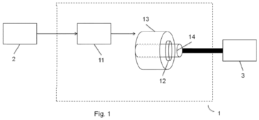
- FIG. 1 is a schematic representation of an electric or hybrid propulsion system.
- composition used according to the invention comprises at least (i) a base oil or fluid base as explained below, and (ii) at least one diester of formula (I) defined in detail below.
- a composition used according to the invention may have a kinematic viscosity, measured at 100°C according to the ASTM D445 standard, of between 2 and 8 mm 2 /s, preferably between 3 and 7 mm 2 /s.
- a lubricating composition used according to the invention can be of grade according to the SAEJ300 classification defined by the formula (X)W(Y), in which X represents 0 or 5; and Y represents an integer ranging from 4 to 20, in particular ranging from 4 to 16 or from 4 to 12.
- a composition used according to the invention comprises at least one base oil, in particular a fluid base formed from one or more base oils, having a kinematic viscosity, measured at 100°C according to the ASTM D445 standard, ranging from 1 .5 to 8 mm 2 /s, in particular 1.5 to 6.1 mm 2 /s, more particularly 1.5 to 4.1 mm 2 /s, even more particularly 1.5 to 2.1 mm 2 /s.
- This base oil can be a mixture of several base oils, namely a mixture of 2, 3 or 4 base oils.
- fluid base will refer to the oil or mixture of base oils, having a kinematic viscosity measured at 100°C according to the ASTM D445 standard ranging from 1.5 to 8 mm 2 /s.
- the base oil present in a lubricating composition used according to the invention can be chosen from oils of mineral or synthetic origin belonging to groups I to V according to the classes defined in the API classification (or their equivalents according to the classification ATIEL) and presented in Table A below or their mixtures, provided that the oil or mixture of oils has the aforementioned desired viscosity.
- Mineral base oils include all types of base oils obtained by atmospheric and vacuum distillation of crude oil, followed by refining operations such as solvent extraction, desalphating, solvent dewaxing, hydrotreating, hydrocracking, hydroisomerization and hydrofinishing .
- Blends of synthetic and mineral oils, which can be biosourced, can also be used.
- the base oils of the compositions used according to the invention can also be chosen from synthetic oils, such as certain esters of carboxylic acids and alcohols, polyalphaolefins (PAO), and polyalkylene glycol (PAG) obtained by polymerization. or copolymerization of alkylene oxides comprising from 2 to 8 carbon atoms, in particular from 2 to 4 carbon atoms.
- synthetic oils such as certain esters of carboxylic acids and alcohols, polyalphaolefins (PAO), and polyalkylene glycol (PAG) obtained by polymerization. or copolymerization of alkylene oxides comprising from 2 to 8 carbon atoms, in particular from 2 to 4 carbon atoms.
- the PAOs used as base oils are for example obtained from monomers comprising 4 to 32 carbon atoms, for example from octene or decene.
- the weight average molecular weight of PAO can vary quite widely. Preferably, the weight average molecular mass of the PAO is less than 600 Da. The weight average molecular mass of the PAO can also range from 100 to 600 Da, from 150 to 600 Da, or even from 200 to 600 Da.
- the PAOs used in the context of the invention having a kinematic viscosity, measured at 100 ° C according to the ASTM D445 standard, ranging from 1.5 to 8 mm 2 /s are sold commercially by Ineos under the brands Durasyn ® 162, Durasyn ® 164, Durasyn ® 166 and Durasyn ® 168.
- the base oil or oils of the composition used according to the invention are chosen from polyalphaolefins (PAO).
- a composition used according to the invention comprises a fluid base formed of one or more base oils having a kinematic viscosity measured at 100°C according to the ASTM D445 standard of between 1.5 and 8 mm 2 /s .
- a composition used according to the invention can be free of base oil or mixture of base oils not meeting the criterion of kinematic viscosity measured at 100 ° C according to the ASTM D445 standard, in particular free of oil or mixture of base oils having a viscosity greater than 9 mm 2 /s.
- the fluid base provides in particular the cooling potential of the composition used according to the invention.
- the fluidity of the base ensures good cooling properties during implementation. of the composition in contact with the batteries of a propulsion system of an electric or hybrid vehicle.
- the cooling properties of the composition used are further advantageously increased by the shear applied to the composition at the injection level which brings the fluid to a lower viscosity level than at rest.
- a composition used according to the invention comprises from 60% to 99.5% by weight, preferably from 70% to 98%, even more preferably from 80% to 98%, advantageously from 90% to 97%. by weight of base oil, or mixture of base oils, in particular having a kinematic viscosity measured at 100 ° C according to the ASTM D445 standard ranging from 1.5 to 8 mm 2 /s, relative to the total weight of the composition.
- R a and R b identical or different, represent, independently of each other, hydrocarbon groups, saturated or unsaturated, linear or branched, comprising from 2 to 11 carbon atoms, preferably from 3 to 8 carbon atoms.
- n in the aforementioned formula (I) is 2 or 3, and more particularly n is 2.
- At least one of the groups R represents a (C 1 -C 5 ) alkyl group, in particular (C 1 -C 4 ) alkyl, linear or branched, more preferably methyl, ethyl or propyl; advantageously methyl.
- a diester required according to the invention is of formula (I') in which at least one of R or R' represents a (C 1 -C 5 ) alkyl group, in particular (C 1 -C 4 ) alkyl, linear or branched, more preferably methyl, ethyl or propyl; advantageously methyl.
- s in the aforementioned formula (I) or (I') is 2.
- At least one of the groups R represents a (C 1 -C 5 ) alkyl group, linear or branched, in particular a methyl, ethyl or propyl group, advantageously methyl; and at least one of R' represents a (C 1 -C 5 )alkyl group, linear or branched, in particular a methyl, ethyl or propyl group, advantageously methyl.
- the diester of the invention can be of formula (I'a) in which one of the groups R represents a (C 1 -C 5 ) alkyl group, linear or branched, in particular a methyl, ethyl group or propyl, advantageously methyl; and one of the groups R' represents a (C 1 -C 5 )alkyl group, linear or branched, in particular a methyl, ethyl or propyl group, advantageously methyl; the other groups R and R' representing hydrogen atoms.
- At least one of the R represents a (C 1 -C 5 ) alkyl group, linear or branched, in particular a methyl, ethyl or propyl group, advantageously methyl.
- the diester of the invention may be of formula (I'b) in which one of the groups R represents a (C 1 -C 5 ) alkyl group, linear or branched, in particular a methyl, ethyl or propyl group, advantageously methyl, the others representing hydrogen atoms.
- R a and R b in the aforementioned formula (I), (I'), (l'a), (I"a) or (I'b), identical or different, represent saturated hydrocarbon groups or unsaturated, linear or branched, having a linear sequence of 2 to 11 carbon atoms, preferably 3 to 8 carbon atoms.
- hydrocarbon means any group having a carbon atom directly attached to the rest of the molecule and mainly having an aliphatic hydrocarbon character.
- R a and R b in the aforementioned formula (I), (I'), (l'a), (I"a) or (I'b) have a linear sequence of 3 to 6 carbon atoms .
- R a and R b in the aforementioned formula (I), (I'), (l'a), (I"a) or (I'b) present a linear sequence from 8 to 11 carbon atoms.
- linear chain of t to z carbon atoms we mean a saturated or unsaturated carbon chain, preferably saturated, comprising from t to z carbon atoms one after the other, the carbon atoms possibly present at the level of the ramifications of the carbon chain not being taken into account in the number of carbon atoms (tz) constituting the linear chain.
- R a and R b are derived of plant, animal or petroleum origin.
- R a and R b identical or different, represent saturated groups.
- R a and R b identical or different, represent linear groupings.
- R a and R b represent saturated linear hydrocarbon groups in C 8 to C 11 , in particular in C 8 to C 10 .
- R a and R b are identical.
- R a and R b both represent n-octyl or n-undecyl, preferably n-octyl, groups.
- R a and R b represent branched hydrocarbon groups comprising from 2 to 11 carbon atoms, preferably from 3 to 8 carbon atoms.
- R a and R b in the aforementioned formula (I), (I'), (I'a), (I"a) or (I'b), preferably present a linear sequence of 3 to 7 carbon atoms branched by at least one, preferably one, C 1 to C 6 hydrocarbon group, preferably methyl or ethyl.
- R a and R b are identical.
- R a and R b both represent 2-methylheptyl or 2-ethylhexyl groups.
- the diesters of formula (I) required according to the invention may be commercially available or prepared according to synthesis methods described in the literature and known to those skilled in the art. These synthesis methods more particularly implement an esterification reaction between a diol compound of formula HO-([C(R) 2 ] n -O) s -OH and compounds of formula R a -COOH and R b -COOH, with R a and R b , identical or different, being as defined above.
- diesters of formula (I) above in particular of formula (I') above, can be obtained by esterification reaction between a mono- or polypropylene glycol, in particular monopropylene glycol (MPG) or dipropylene glycol (DPG), diethylene glycol (DEG), neopentyl glycol (NPG), preferably between dipropylene glycol or diethylene glycol, and one or more suitable carboxylic acids R a -COOH and R b -COOH, in particular chosen from nonanoic acid, dodecanoic acid, isononanoic acid, 2-ethylhexanoic acid, and mixtures thereof.
- MPG monopropylene glycol
- DPG dipropylene glycol
- DEG diethylene glycol
- NPG neopentyl glycol
- R a -COOH and R b -COOH in particular chosen from nonanoic acid, dodecanoic acid, isononanoic acid, 2-ethyl
- such a diester or mixture of diesters can thus be obtained by esterification reaction between monopropylene glycol or dipropylene glycol and nonanoic acid or dodecanoic acid.
- a diester or diester mixture required according to the invention can be obtained by esterification reaction between dipropylene glycol and nonanoic acid, dodecanoic acid and their mixtures.
- a diester or diester mixture required according to the invention can be obtained by esterification reaction between diethylene glycol and nonanoic acid.
- a diester or mixture of diesters required according to the invention can be obtained by esterification reaction between neopentyl glycol and nonanoic acid, isononanoic acid, 2-ethylhexanoic acid and mixtures thereof. .
- the diester of formula (I) required according to the invention advantageously has a kinematic viscosity measured at 40°C according to the ASTM D445 standard of between 5 and 18 mm 2 /s, preferably between 8 and 15 mm 2 /s, and/ or a kinematic viscosity measured at 100°C according to the ASTM D445 standard of between 1.5 and 9.3 mm 2 /s, preferably between 2 and 4 mm 2 /s.
- the diester of formula (I) required according to the invention advantageously has a thermal conductivity measured at 30°C according to standard ASTM D7896, greater than or equal to 100 mW/Km, preferably between 110 and 180 mW/Km and/or a thermal conductivity measured at 130°C according to the ASTM D7896 standard, greater than or equal to 90 mW/Km, preferably between 95 and 160 mW/Km.
- the diester of formula (I) required according to the invention advantageously has a thermal capacity measured at 20°C according to standard ASTM E1269, greater than or equal to 1.5 J/K, preferably between 1.8 and 2.1 J/K and/or a thermal capacity measured at 80°C according to standard ASTM E1269, greater than or equal to 2 J/K, preferably between 2.0 and 2.8 J/K.
- the diester of formula (I) required according to the invention advantageously has an evaporation time of 20% by weight of said ester, measured according to the ASTM D6375 standard greater than or equal to 400 seconds, preferably between 410 and 600 seconds.
- a lubricating composition used according to the invention has the specificity of containing at least one diester of general formula (I), the diester(s) of formula (I) being present(s) in a content between 1 and 25% by weight, relative to the total weight of the composition used according to the invention, in particular between 5 and 25% by weight, and more particularly between 10 and 25% by weight.
- the diester(s) of formula (I) as defined above can be incorporated directly into the base lubricating oil.
- composition used according to the invention may further comprise one or more additional additives as defined more precisely in the remainder of the text.
- a lubricating composition used according to the present invention may further comprise at least one additive modulating the properties of the base oil.
- a composition used according to the invention can also use at least one hydrocarbon fluid having a boiling point greater than or equal to 50°C.
- Such a hydrocarbon fluid preferably has a boiling point of between 50 and 350°C, in particular between 60 and 250°C, and even more particularly between 80 and 200°C.
- the hydrocarbon fluid has a carbon content of biological origin greater than or equal to 90% by weight, relative to the total weight of the hydrocarbon fluid.
- hydrocarbon fluid means any fluid comprising linear, saturated or unsaturated hydrocarbon molecules, which may also include aromatic or cyclic groups, or even heteroatoms.
- the hydrocarbon fluid is completely saturated.
- the components of the hydrocarbon fluid are chosen from isoparaffins comprising 12 to 30 carbon atoms, preferably 13 to 19 carbon atoms and more preferably 14 to 18 carbon atoms.
- the hydrocarbon fluid comprises alkanes, or linear molecules of saturated hydrocarbons with a non-cyclic chain, in particular comprising between 12 and 30 carbon atoms, in a content of between 80 and 100% by weight, relative to to the total weight of the hydrocarbon fluid, or even between 90 and 100% by weight, and for example between 95 and 100% by weight.
- paraffins designate hydrocarbons with straight chains (also called “normal paraffins”) or with branched chains (also called “isoparaffins”).
- heteroatoms in the context of the present invention, mention may in particular be made of nitrogen and oxygen.
- the hydrocarbon fluid comprises from 90 to 100% by weight of isoparaffins, a content of normal paraffins ranging from 0 to 10% by weight and a content of carbons of biological origin greater or equal to 90% by weight relative to the total weight of the hydrocarbon fluid.
- the hydrocarbon fluid advantageously comprises a content greater than or equal to 90% by weight, in particular greater than or equal to 95% by weight, and even more advantageously greater than or equal to 98% by weight of isoparaffins, relative to the total weight of fluid. hydrocarbon.
- the isoparaffins present in the hydrocarbon fluid contain from 12 to 30 carbon atoms, preferably from 13 to 19 carbon atoms and even more preferably from 14 to 18 carbon atoms.
- the hydrocarbon fluid advantageously comprises a normal paraffin content of less than or equal to 10% by weight, preferably less than or equal to 5% and even more preferably less than or equal to 2% by weight, relative to the total weight of the hydrocarbon fluid.
- the isoparaffins are advantageously non-cyclic isoparaffins.
- the hydrocarbon fluid has an isoparaffin to normal paraffin mass ratio of at least 12:1, preferably at least 15:1 and more preferably at least 20:1. According to an even more particular embodiment, the hydrocarbon fluid does not include normal paraffins.
- the hydrocarbon fluid preferably comprises a content by weight of isoparaffins ranging from 90 to 100% and a content of normal paraffins ranging from 0 to 10%, preferably from 95 to 100% of isoparaffins chosen from alkanes comprising from 12 to 30 carbon atoms, preferably from 12 to 24 carbon atoms, more preferably from 12 to 22 carbon atoms.
- the hydrocarbon fluid comprises a majority, that is to say more than 90% by weight, of molecules having 14 to 18 carbon atoms, such as isoparaffins.
- the hydrocarbon fluid comprises from 60 to 95% by weight, preferably from 80 to 98% by weight, of isoparaffins chosen from the group consisting of C15 isoparaffins, C16 isoparaffins, isoparaffins in C17, isoparaffins in C18 and their mixtures of two or more of them.
- the hydrocarbon fluid comprises isoparaffins having 17 carbon atoms and isoparaffins having 18 carbon atoms in a total quantity ranging from 80 to 98% by weight, relative to the total weight of the fluid. hydrocarbon.
- the hydrocarbon fluid preferably comprises a content by weight of naphthenic compounds less than or equal to 3%, preferably less than or equal to 1%, more preferably less than or equal to 0.5% and even more preferably less than or equal to 500 ppm, or even at 100 ppm or 50 ppm.
- the hydrocarbon fluid comprises a content by weight of isoparaffins ranging from 90 to 100%, a content by weight of normal paraffins ranging from 0 to 10% and a content by weight of naphthenic compounds less than or equal to 1%.
- the hydrocarbon fluid comprises a content by weight ranging from 95 to 100% of isoparaffins, from 0 to 5% of normal paraffins and a content by weight of naphthenic compounds less than or equal to 0.5%. More preferably it comprises a content by weight ranging from 98% to 100% isoparaffins, from 0 to 2% normal paraffins and a content by weight of naphthenic compounds less than or equal to 100 ppm.
- the hydrocarbon fluid is advantageously free of aromatic compounds.
- exempt is meant a content by weight of aromatic compounds less than or equal to 500 ppm, preferably less than or equal to 300 ppm, preferably less than or equal to 100 ppm, more preferably less than or equal to 50 ppm and advantageously less than or equal to 20 ppm measured for example by UV spectrometry.
- the content by weight of isoparaffins, normal paraffins, naphthenic compounds and/or aromatics of the hydrocarbon fluid can be determined according to methods well known to those skilled in the art. We can cite, by way of non-limiting example, a gas chromatography method.
- the hydrocarbon fluid comprises a content by weight of isoparaffins ranging from 90 to 100%, a content by weight of normal paraffins ranging from 0 to 10%, a content by weight of naphthenic compounds less than or equal to 1% and a content by weight of aromatic compounds less than or equal to 500 ppm.
- the hydrocarbon fluid comprises a content by weight ranging from 95 to 100% of isoparaffins, from 0 to 5% of normal paraffins, a content by weight of naphthenic compounds less than or equal to 0.5% and a content by weight of compounds aromatics less than or equal to 300 ppm, preferably less than 100 ppm, preferably less than 50 ppm and advantageously less than 20 ppm.
- the hydrocarbon fluid comprises a content by weight ranging from 95 to 100% of isoparaffins, from 0 to 5% of normal paraffins and a content by weight of aromatic compounds less than or equal to 100 ppm. More preferably it comprises a content by weight ranging from 98% to 100% of isoparaffins, from 0 to 2% of normal paraffins, a content by weight of naphthenic compounds less than or equal to 100 ppm and a content by weight of aromatic compounds lower than or equal to 100 ppm.
- the hydrocarbon fluid also preferably has an extremely low content by weight of sulfur compounds, typically less than or equal to 5 ppm, preferably less than or equal to 3 ppm and more preferably less than or equal to 0.5 ppm at a level too low to be detected using conventional low-sulfur analyzers.
- the hydrocarbon fluid also preferably has a flash point greater than or equal to 110°C, preferably greater than or equal to 120°C and more preferably greater than or equal to 140°C according to standard EN ISO 2719.
- a high flash point typically greater at 110°C allowing, among other things, to overcome safety problems during storage and transport by avoiding excessive flammability of the hydrocarbon fluid.
- the hydrocarbon fluid also preferably has a vapor pressure at 20°C less than or equal to 0.01kPa.
- the hydrocarbon fluid also preferably has a flash point greater than or equal to 110°C according to standard EN ISO 2719 and a vapor pressure at 20°C less than or equal to 0.01kPa.
- the hydrocarbon fluid has a flash point greater than or equal to greater than or equal to 120°C and a vapor pressure at 20°C less than or equal to 0.01kPa.
- it has a flash point greater than or equal to 140°C and a vapor pressure at 20°C less than or equal to 0.01kPa.
- the hydrocarbon fluid has boiling temperatures, flash point and vapor pressure to overcome the problems of flammability, odor and volatility.
- the hydrocarbon fluid also preferably has a kinematic viscosity at 40°C less than or equal to 5 cSt, preferably less than or equal to 4 cSt and more preferably less than or equal to 3.5 cSt according to standard EN ISO 3104.
- the hydrocarbon fluid can be obtained by any process known to those skilled in the art.
- the hydrocarbon fluid is a hydrocarbon cut which results from the conversion of biomass.
- the hydrocarbon fluid comprises a weight content of isoparaffins ranging from 98% to 100%, relative to the total weight of the hydrocarbon fluid, and a kinematic viscosity at 40°C less than or equal to 5 cSt, preferably less than or equal to 4 cSt and preferably less than or equal to 3.5 cSt.
- a lubricating composition used according to the invention may also comprise at least one radical inhibitor.
- radical inhibitors are in themselves known to those skilled in the art and can have different chemical natures and in particular belong to different chemical families.
- radical inhibitors mention may in particular be made of phosphorous radical inhibitors.
- inhibitors of phosphorus radicals we distinguish compounds for which the phosphorus is a P(V) or pentavalent phosphorus, in particular phosphates such as triethylphosphate, trimethylphosphate, optionally fluorinated alkylphosphates or even arylphosphates, phosphazenes such as hexamethoxycyclotriphosphazene, and compounds for which the phosphorus is a P(III) or trivalent phosphorus, in particular phosphites such as tris(2,2,2-trifluoroethyl)phosphite.
- phosphates such as triethylphosphate, trimethylphosphate, optionally fluorinated alkylphosphates or even arylphosphates
- phosphazenes such as hexamethoxycyclotriphosphazene
- compounds for which the phosphorus is a P(III) or trivalent phosphorus, in particular phosphites such as tris(2,2,
- composition used according to the invention may further comprise additives modulating the properties of the base oil.
- Such additives may be chosen from friction modifiers, detergents, anti-wear additives, extreme pressure additives, dispersants, antioxidants, pour point improvers, anti-foams and mixtures thereof.
- additives can be introduced individually and/or in the form of a mixture like those already available for sale for formulations of commercial lubricants for vehicle engines, with a performance level as defined by the ACEA ( Association of European Automobile Manufacturers) and/or the API (American Petroleum Institute), well known to those skilled in the art.
- ACEA Association of European Automobile Manufacturers
- API American Petroleum Institute
- Anti-wear additives and extreme pressure additives protect rubbing surfaces by forming a protective film adsorbed on these surfaces.
- the anti-wear additives are chosen from phosphosulfur additives such as metal alkylthiophosphates, in particular zinc alkylthiophosphates, and more specifically zinc dialkyldithiophosphates or ZnDTP.
- phosphosulfur additives such as metal alkylthiophosphates, in particular zinc alkylthiophosphates, and more specifically zinc dialkyldithiophosphates or ZnDTP.
- the preferred compounds are of formula Zn((SP(S)(OR 2 )(OR 3 )) 2 , in which R 2 and R 3 , identical or different, independently represent an alkyl group, preferably an alkyl group comprising from 1 to 18 carbon atoms.
- Amine phosphates are also anti-wear additives which can be used in a composition used according to the invention.
- the phosphorus provided by these additives can act as a poison in the catalytic systems of automobiles because these additives generate ash.
- additives which do not provide phosphorus such as, for example, polysulphides, in particular sulfur-containing olefins.
- a lubricating composition used according to the invention may comprise from 0.01 to 6% by weight, preferably from 0.05 to 4% by weight, more preferably from 0.1 to 2% of anti-wear additives and extreme pressure additives, by mass relative to the total weight of composition.
- a lubricating composition used according to the invention is free of anti-wear additives and extreme pressure additives.
- a lubricating composition used according to the invention is advantageously free of phosphate additives.
- a lubricating composition used according to the invention may comprise at least one friction modifier additive.
- the friction modifier additive can be chosen from a compound providing metallic elements and an ash-free compound.
- the compounds providing metallic elements mention may be made of transition metal complexes such as Mo, Sb, Sn, Fe, Cu, Zn whose ligands can be hydrocarbon compounds comprising atoms of oxygen, nitrogen, sulfur or phosphorus.
- the ash-free friction modifier additives are generally of organic origin and can be chosen from monoesters of fatty acids and polyols, alkoxylated amines, alkoxylated fatty amines, fatty epoxides, fatty borate epoxides; fatty amines or glycerol esters of fatty acids.
- the fatty compounds comprise at least one hydrocarbon group comprising from 10 to 24 carbon atoms.
- a lubricating composition used according to the invention may comprise from 0.01 to 2% by weight or from 0.01 to 5% by weight, preferably from 0.1 to 1.5% by weight or from 0.1 to 5% by weight. 2% by weight of friction modifier additive, relative to the total weight of the composition.
- a lubricating composition used according to the invention is free of friction modifier additive.
- a lubricating composition used according to the invention may comprise at least one antioxidant additive.
- the antioxidant additive generally makes it possible to delay the degradation of the composition in service. This degradation can notably result in the formation of deposits, the presence of sludge or an increase in the viscosity of the composition.
- Antioxidant additives act in particular as free radical inhibitors or hydroperoxide destroyers.
- antioxidant additives mention may be made of phenolic type antioxidant additives, phenolic type antioxidant additives, amine, phosphosulfur antioxidant additives. Some of these antioxidant additives, for example phosphosulfur antioxidant additives, can generate ash. Phenolic antioxidant additives can be ash-free or in the form of neutral or basic metal salts.
- the antioxidant additives may in particular be chosen from sterically hindered phenols, sterically hindered phenol esters and sterically hindered phenols comprising a thioether bridge, diphenylamines, diphenylamines substituted by at least one C 1 -C 12 alkyl group, N ,N'-dialkyl-aryl-diamines and mixtures thereof.
- the sterically hindered phenols are chosen from compounds comprising a phenol group of which at least one vicinal carbon of the carbon carrying the alcohol function is substituted by at least one C 1 - C 10 alkyl group, preferably one C 1 -C 6 alkyl group, preferably a C 4 alkyl group, preferably the tert-butyl group.
- Amino compounds are another class of antioxidant additives that can be used, possibly in combination with phenolic antioxidant additives.
- Examples of amino compounds are aromatic amines, for example aromatic amines of formula NR 4 R 5 R 6 in which R 4 represents an aliphatic group or an aromatic group, optionally substituted, R 5 represents an aromatic group, optionally substituted, R 6 represents a hydrogen atom, an alkyl group, an aryl group or a group of formula R 7 S(O) z R 8 in which R 7 represents an alkylene group or an alkenylene group, R 8 represents an alkyl group, a alkenyl group or an aryl group and z represents 0, 1 or 2.
- Sulfurized alkyl phenols or their alkali and alkaline earth metal salts can also be used as antioxidant additives.
- antioxidant additives are that of copper compounds, for example copper thio- or dithio-phosphates, copper salts and carboxylic acids, dithiocarbamates, sulphonates, phenates, copper acetylacetonates. Copper I and II salts, succinic acid or anhydride salts can also be used.
- copper compounds for example copper thio- or dithio-phosphates, copper salts and carboxylic acids, dithiocarbamates, sulphonates, phenates, copper acetylacetonates.
- Copper I and II salts, succinic acid or anhydride salts can also be used.
- a lubricating composition used according to the invention may contain all types of antioxidant additives known to those skilled in the art.
- a lubricating composition used according to the invention comprises at least one antioxidant additive free of ash.
- a lubricating composition used according to the invention may comprise from 0.5 to 2% by weight of at least one antioxidant additive, relative to the total weight of the composition.
- a lubricating composition used according to the invention may also comprise at least one detergent additive.
- Detergent additives generally help reduce the formation of deposits on the surface of metal parts by dissolving secondary oxidation and combustion products.
- the detergent additives which can be used in a lubricating composition used according to the invention are generally known to those skilled in the art.
- the detergent additives may be anionic compounds comprising a long lipophilic hydrocarbon chain and a hydrophilic head.
- the associated cation may be a metal cation of an alkali or alkaline earth metal.
- the detergent additives are preferably chosen from alkali metal or alkaline earth metal salts of carboxylic acids, sulfonates, salicylates, naphthenates, as well as phenate salts.
- the alkali and alkaline earth metals are preferably calcium, magnesium, sodium or barium.
- metal salts generally include the metal in stoichiometric quantity or in excess, therefore in quantity greater than the stoichiometric quantity.
- overbased detergent additives the excess metal providing the overbased character to the detergent additive is then generally in the form of a metal salt insoluble in the oil, for example a carbonate, a hydroxide, an oxalate, an acetate, a glutamate, preferably a carbonate .
- a lubricating composition used according to the invention can for example comprise from 2 to 4% by weight of detergent additive, relative to the total weight of the composition.
- a lubricating composition used according to the invention may also comprise at least one pour point depressant additive.
- pour point depressant additives By slowing the formation of paraffin crystals, pour point depressant additives generally improve the cold behavior of the composition.
- pour point depressant additives mention may be made of polyalkyl methacrylates, polyacrylates, polyarylamides, polyalkylphenols, polyalkylnaphthalenes and alkylated polystyrenes.
- a lubricating composition used according to the invention may comprise at least one dispersing agent.
- the dispersing agent can be chosen from Mannich bases, succinimides and their derivatives.
- a lubricating composition used according to the invention may for example comprise from 0.2 to 10% by weight of dispersing agent, relative to the total weight of the composition.
- composition as defined according to the invention can be used, due to its joint properties in terms of lubrication and cooling, both as a lubricating fluid for the engine and the transmission, and as a lubricating fluid. cooling for a propulsion system of an electric or hybrid vehicle, and more particularly the engine, the power electronics and the batteries.
- cooling fluid within the meaning of the present invention is meant a fluid capable of dissipating the heat generated by a propulsion system of an electric or hybrid vehicle. More precisely, such a fluid is characterized by an increased thermal absorption capacity during its contact with a heating part.
- a composition used according to the invention makes it possible to optimize heat exchanges with the propulsion system of an electric or hybrid vehicle. It advantageously has a heat capacity measured at 50°C and at atmospheric pressure greater than 1.8 kJ/kg/K, preferably greater than 2 kJ/kg/K.
- composition used according to the invention is brought into contact with the battery by any implementation which allows direct contact between the cells of the battery and said composition, in particular by immersion or semi-immersion.
- the lubricating composition used according to the invention is advantageously placed in direct contact with the batteries by methods described below.
- Li-ion batteries As batteries suitable for the propulsion systems of an electric or hybrid vehicle, we cite Li-ion batteries or even Nickel-Cadmium batteries.
- the invention relates to the use of a composition as defined above for lubricating and cooling a propulsion system of an electric or hybrid vehicle.
- An electric motor is typically powered by an electric battery (2).
- Lithium-ion batteries are the most widespread in the field of electric vehicles. The development of increasingly powerful batteries of increasingly reduced size implies the appearance of the problem of cooling this battery. Indeed, as soon as the battery exceeds temperatures of around 50 to 60°C, there is a high risk of ignition, or even explosion, of the battery. There is also a need to maintain the battery at a temperature above approximately 0°C in order to allow optimal operation of the battery.
- the propulsion system of an electric or hybrid vehicle comprises in particular the electric motor part (1).
- This typically comprises power electronics (11) connected to a stator (13) and a rotor (14).
- the stator comprises coils, in particular copper coils, which are alternately powered by an electric current. This generates a rotating magnetic field.
- the rotor itself includes coils, permanent magnets or other magnetic materials, and is rotated by the rotating magnetic field.
- the power electronics (11), the stator (13) and the rotor (14) of a propulsion system (1) are parts whose structure is complex and generates a large amount of heat during operation of the engine . It is therefore imperative to ensure cooling of the electric motor and the power electronics.
- the bearing (12) generally integrated between the stator (13) and the rotor (14), is subjected to strong mechanical stresses and poses fatigue wear problems. It is therefore necessary to lubricate the bearing in order to increase its lifespan.
- composition as described above makes it possible to lubricate the transmission, in particular the reduction gear, in an electric or hybrid vehicle.
- the invention relates to the use of a composition as described above for cooling the battery, the motor, and the power electronics to lubricate the motor and the transmission and to secure a propulsion system against fire.
- a composition as described above for cooling the battery, the motor, and the power electronics to lubricate the motor and the transmission and to secure a propulsion system against fire.
- such a composition makes it possible to cool the power electronics and/or the rotor and/or the stator of the electric motor. It can also provide lubrication of the bearings located between the rotor and the stator of an electric motor of an electric or hybrid vehicle.
- the invention has the advantage of allowing the implementation of a single composition combining the cooling and lubricating properties of the propulsion system of an electric or hybrid vehicle as a whole.
- At least one diester of formula (I) as defined above in at least one base oil makes it possible to increase the flammability temperature of the base oil.
- the invention also relates to the use of at least one diester of formula (I) in a composition comprising at least one base oil, to improve the non-flammable properties of the composition.
- the invention also relates to a method of cooling and lubricating a propulsion system of an electric or hybrid vehicle comprising at least one step of bringing into contact at least one mechanical part of said system, in particular at least one battery cell, in particular a Lithium-ion or Nickel-Cadmium battery, with a composition as defined above.
- the contacting step consists of immersion or semi-immersion, static or in circulation, of the battery in said composition or else in an injection of said composition onto the surface of the battery .
- Cooling by a lubricating composition defined according to the invention can be implemented by any method known to those skilled in the art.
- the battery can be immersed or semi-immersed, static or circulating, in said composition.
- the composition is injected by jet under fairly high pressure into the areas to be cooled of the propulsion system.
- the shear resulting from this injection makes it possible to reduce the viscosity of the fluid at the injection zone, relative to the kinematic viscosity at rest, and thus, to further increase the cooling potential of the composition.
- the present invention also relates to a method of cooling and lubricating a propulsion system of an electric or hybrid vehicle as defined above in which the mechanical part is at least one battery, in immersion or semi-immersion , static or in circulation, in said composition or said composition is placed in direct contact with the batteries by injection, jet, by spraying or even by formation of a mist from said composition under pressure and by gravity on the battery.
- oil circulation systems commonly used in electric motors can be used, as for example described in the document WO 2015/116496 .
- Example 1 Measurement of the rheological and thermal properties of diesters in accordance with the invention
- the rheological properties of the esters are quantified by measuring their kinematic viscosities at 40°C (KV40) and at 100°C (KV100), expressed in mm 2 /s, determined according to the ASTM D445 standard.
- esters can be evaluated by measuring their thermal conductivity and their thermal capacity (or heat capacity).
- Thermal conductivity is measured according to ASTM D7896.
- diesters of formula (I) conforming to the invention have rheological properties and thermal conductivity and thermal capacity values allowing their use in a lubricating composition for lubrication and maintenance purposes. cooling of parts of a propulsion system of an electric or hybrid vehicle.
- thermogravimetric analysis TGA
- ASTM D6375 ASTM D6375 standard.
- the diester to be tested is heated quickly to a temperature between 247°C and 249°C and then maintained at this temperature.
- the thermogravimetric measuring device records the mass loss, in percent, of the sample as a function of time, linked to its evaporation.
- diesters E2 and E3 defined above, in accordance with the invention were tested, as well as two diesters not in accordance with the invention, E8 and E9.
- the diesters E8 and E9 are obtained by esterification between triethylene glycol and respectively heptanoic acid and 2-ethylhexanoic acid.
- the diesters E2 and E3 in accordance with the invention, have evaporation times greater than the diesters E8 and E9 not in accordance with the invention.
Landscapes
- Chemical & Material Sciences (AREA)
- Chemical Kinetics & Catalysis (AREA)
- General Chemical & Material Sciences (AREA)
- Engineering & Computer Science (AREA)
- Manufacturing & Machinery (AREA)
- Electrochemistry (AREA)
- Oil, Petroleum & Natural Gas (AREA)
- Organic Chemistry (AREA)
- Health & Medical Sciences (AREA)
- Emergency Medicine (AREA)
- Materials Engineering (AREA)
- Lubricants (AREA)
Applications Claiming Priority (2)
| Application Number | Priority Date | Filing Date | Title |
|---|---|---|---|
| FR1856093A FR3083244B1 (fr) | 2018-07-02 | 2018-07-02 | Composition pour refroidir et lubrifier un systeme de propulsion d'un vehicule electrique ou hybride |
| PCT/EP2019/067721 WO2020007853A1 (fr) | 2018-07-02 | 2019-07-02 | Composition pour refroidir et lubrifier un systeme de propulsion d'un vehicule electrique ou hybride |
Publications (2)
| Publication Number | Publication Date |
|---|---|
| EP3818135A1 EP3818135A1 (fr) | 2021-05-12 |
| EP3818135B1 true EP3818135B1 (fr) | 2024-04-17 |
Family
ID=63312146
Family Applications (1)
| Application Number | Title | Priority Date | Filing Date |
|---|---|---|---|
| EP19733820.5A Active EP3818135B1 (fr) | 2018-07-02 | 2019-07-02 | Utilisation et méthode pour refroidir et lubrifier un systeme de propulsion d'un vehicule electrique ou hybride |
Country Status (9)
| Country | Link |
|---|---|
| US (1) | US11525099B2 (enExample) |
| EP (1) | EP3818135B1 (enExample) |
| JP (1) | JP2021529238A (enExample) |
| KR (1) | KR20210042897A (enExample) |
| CN (1) | CN112437805A (enExample) |
| ES (1) | ES2980194T3 (enExample) |
| FR (1) | FR3083244B1 (enExample) |
| MX (1) | MX2020013972A (enExample) |
| WO (1) | WO2020007853A1 (enExample) |
Families Citing this family (28)
| Publication number | Priority date | Publication date | Assignee | Title |
|---|---|---|---|---|
| FR3058156B1 (fr) * | 2016-10-27 | 2022-09-16 | Total Marketing Services | Composition pour vehicule electrique |
| FR3083801B1 (fr) * | 2018-07-13 | 2021-02-12 | Total Marketing Services | Composition de refroidissement et ignifugeante pour systeme de propulsion d'un vehicule electrique ou hybride |
| FR3088073B1 (fr) | 2018-11-05 | 2021-07-23 | Total Marketing Services | Utilisation d'un diester pour ameliorer les proprietes anti-usure d'une composition lubrifiante |
| FR3093729B1 (fr) * | 2019-03-13 | 2025-10-10 | Total Marketing Services | Utilisation d’un ester dans une composition de refroidissement |
| PL3984092T3 (pl) | 2019-06-12 | 2023-05-22 | The Lubrizol Corporation | Organiczny układ wymiany ciepła, sposób i płyn |
| US11085006B2 (en) * | 2019-07-12 | 2021-08-10 | Afton Chemical Corporation | Lubricants for electric and hybrid vehicle applications |
| EP4038167A1 (en) * | 2019-09-30 | 2022-08-10 | Basf Se | Use of lubricants with carboxylic acid esters in electric vehicles |
| WO2021145405A1 (ja) * | 2020-01-15 | 2021-07-22 | 出光興産株式会社 | 潤滑油組成物 |
| FR3115291B1 (fr) * | 2020-10-20 | 2023-11-17 | Total Marketing Services | Utilisation d’ester de dialkylène glycol pour diminuer le frottement dans les véhicules équipés de moteur hybride |
| US11634655B2 (en) | 2021-03-30 | 2023-04-25 | Afton Chemical Corporation | Engine oils with improved viscometric performance |
| JP2025500814A (ja) | 2021-12-16 | 2025-01-15 | ザ ルブリゾル コーポレイション | 有機熱伝達システム、方法、及び流体 |
| FR3137919A1 (fr) * | 2022-07-13 | 2024-01-19 | Totalenergies Onetech | Utilisation d’un diester dans une composition de refroidissement |
| FR3137918A1 (fr) * | 2022-07-13 | 2024-01-19 | Totalenergies Onetech | Composition lubrifiante à base de diester |
| FR3139343A1 (fr) * | 2022-09-06 | 2024-03-08 | Totalenergies Onetech | Composition lubrifiante avec des propriétés fuel eco améliorées dans les véhicules hybrides |
| US12098347B2 (en) | 2022-09-21 | 2024-09-24 | Afton Chemical Corporation | Lubricating composition for fuel efficient motorcycle applications |
| US12024687B2 (en) | 2022-09-27 | 2024-07-02 | Afton Chemical Corporation | Lubricating composition for motorcycle applications |
| US11912955B1 (en) | 2022-10-28 | 2024-02-27 | Afton Chemical Corporation | Lubricating compositions for reduced low temperature valve train wear |
| US12012566B2 (en) * | 2022-11-02 | 2024-06-18 | Idemitsu Kosan Co., Ltd. | Lubricant composition |
| ES2994187T3 (en) * | 2022-11-04 | 2025-01-20 | Oleon N V | Use of a monoester and a diester as a dielectric coolant |
| FR3145567B1 (fr) * | 2023-02-06 | 2025-09-26 | Totalenergies Onetech | Utilisation d’un diester dans une composition lubrifiante pour transmissions de véhicules |
| FR3145568A1 (fr) * | 2023-02-06 | 2024-08-09 | Totalenergies Onetech | Utilisation d’un diester dans une composition de refroidissement et/ou de lubrification d’un véhicule électrique ou hybride |
| US12110468B1 (en) | 2023-03-22 | 2024-10-08 | Afton Chemical Corporation | Antiwear systems for improved wear in medium and/or heavy duty diesel engines |
| US20240360352A1 (en) * | 2023-04-28 | 2024-10-31 | Vgp Ipco Llc | Heat transfer fluids based on synthetic esters |
| SE2330323A1 (en) * | 2023-07-12 | 2025-01-13 | Perstorp Ab | Heat-transfer fluids for indirect liquid cooling systems |
| WO2025071860A1 (en) * | 2023-09-25 | 2025-04-03 | Aurorium Holdings Llc | Ester blends for electric drive and cooling application |
| CN117143571B (zh) * | 2023-10-31 | 2024-03-22 | 珠海科创储能科技有限公司 | 电池冷却液、其制备方法以及浸没式储能电池 |
| WO2025231640A1 (en) * | 2024-05-08 | 2025-11-13 | Dow Global Technologies Llc | Dielectric coolant/lubricant for electric motors |
| CN119020084B (zh) * | 2024-08-14 | 2025-04-25 | 浙江康力博能源科技有限公司 | 一种耐水冷冻机油及其制备方法 |
Family Cites Families (30)
| Publication number | Priority date | Publication date | Assignee | Title |
|---|---|---|---|---|
| US716086A (en) | 1902-05-05 | 1902-12-16 | William T Nicholls | Manufacture of glass tiles and sheets. |
| GB716086A (en) | 1951-12-21 | 1954-09-29 | Standard Oil Dev Co | Improvements in or relating to synthetic lubricants |
| US3003968A (en) * | 1958-03-03 | 1961-10-10 | Dow Chemical Co | Method of hydraulic transmission of power |
| JP2003346924A (ja) * | 2002-05-29 | 2003-12-05 | Fuji Heavy Ind Ltd | 組電池の冷却システムおよび組電池の冷却方法 |
| US20050070450A1 (en) | 2003-09-30 | 2005-03-31 | Roby Stephen H. | Engine oil compositions |
| JP2005232434A (ja) * | 2004-01-21 | 2005-09-02 | New Japan Chem Co Ltd | 軸受用潤滑油 |
| JP5647389B2 (ja) * | 2008-03-31 | 2014-12-24 | Jx日鉱日石エネルギー株式会社 | 自動車用変速機油組成物 |
| JP5288861B2 (ja) * | 2008-04-07 | 2013-09-11 | Jx日鉱日石エネルギー株式会社 | 潤滑油組成物 |
| CN104017633A (zh) | 2009-06-12 | 2014-09-03 | 赢创罗曼克斯添加剂有限公司 | 具有改进的粘度指数的流体 |
| EP2478079A1 (en) * | 2009-09-16 | 2012-07-25 | The Lubrizol Corporation | Lubricating composition containing an ester |
| JP2011148970A (ja) * | 2009-12-24 | 2011-08-04 | Idemitsu Kosan Co Ltd | 機器冷却用基油、該基油を配合してなる機器冷却油、該冷却油により冷却される機器、および該冷却油による機器冷却方法 |
| WO2011080991A1 (ja) * | 2009-12-28 | 2011-07-07 | 出光興産株式会社 | 機器冷却用基油、該基油を配合してなる機器冷却油、該冷却油により冷却される機器、および該冷却油による機器冷却方法 |
| US20120283162A1 (en) * | 2009-12-28 | 2012-11-08 | Idemitsu Kosan Co., Ltd | Base oil for cooling of device, device-cooling oil containing the base oil, device to be cooled by the cooling oil, and device cooling method using the cooling oil |
| JP5858937B2 (ja) | 2010-03-17 | 2016-02-10 | シエル・インターナシヨネイル・リサーチ・マーチヤツピイ・ベー・ウイShell Internationale Research Maatschappij Beslotenvennootshap | 潤滑組成物 |
| JP5647036B2 (ja) | 2011-03-07 | 2014-12-24 | 出光興産株式会社 | 潤滑油組成物 |
| US20130005622A1 (en) | 2011-06-29 | 2013-01-03 | Exxonmobil Research And Engineering Company | Low viscosity engine oil with superior engine wear protection |
| DE102013112454A1 (de) | 2013-11-13 | 2015-05-28 | Pantere Gmbh & Co. Kg | Schmiermittelzusammensetzung |
| JP6218695B2 (ja) | 2013-12-16 | 2017-10-25 | 富士フイルム株式会社 | 乗用および商用の四輪自動車の内燃機関用潤滑油組成物 |
| US10439477B2 (en) | 2014-01-31 | 2019-10-08 | Tesla, Inc. | Pressurized and gravity-fed liquid cooling of electric motor |
| JP6300686B2 (ja) | 2014-01-31 | 2018-03-28 | Emgルブリカンツ合同会社 | 潤滑油組成物 |
| KR102595396B1 (ko) | 2015-03-20 | 2023-10-27 | 산요가세이고교 가부시키가이샤 | 점도 지수 향상제, 윤활유 조성물 및 윤활유 조성물의 제조 방법 |
| JP6789615B2 (ja) * | 2015-03-31 | 2020-11-25 | 出光興産株式会社 | 変速機用潤滑油組成物 |
| GB2541929B (en) * | 2015-09-04 | 2018-05-09 | M&I Mat Limited | Ester compositions for dielectric fluids |
| EP3385358B1 (en) | 2015-12-04 | 2020-06-03 | NOK Klueber Co., Ltd. | Lubricant composition |
| FR3048977B1 (fr) | 2016-03-15 | 2020-02-07 | Total Marketing Services | Composition lubrifiante a base de polyalkylene glycols |
| FR3048976B1 (fr) | 2016-03-15 | 2020-02-07 | Total Marketing Services | Composition lubrifiante a base de polyalkylene glycols |
| US20180100114A1 (en) * | 2016-10-07 | 2018-04-12 | Exxonmobil Research And Engineering Company | Low conductivity lubricating oils for electric and hybrid vehicles |
| FR3058156B1 (fr) * | 2016-10-27 | 2022-09-16 | Total Marketing Services | Composition pour vehicule electrique |
| FR3069864B1 (fr) | 2017-08-03 | 2019-08-16 | Total Marketing Services | Composition lubrifiante comprenant un diester |
| FR3088073B1 (fr) | 2018-11-05 | 2021-07-23 | Total Marketing Services | Utilisation d'un diester pour ameliorer les proprietes anti-usure d'une composition lubrifiante |
-
2018
- 2018-07-02 FR FR1856093A patent/FR3083244B1/fr active Active
-
2019
- 2019-07-02 JP JP2020572742A patent/JP2021529238A/ja active Pending
- 2019-07-02 MX MX2020013972A patent/MX2020013972A/es unknown
- 2019-07-02 KR KR1020217001369A patent/KR20210042897A/ko not_active Ceased
- 2019-07-02 CN CN201980048463.6A patent/CN112437805A/zh active Pending
- 2019-07-02 ES ES19733820T patent/ES2980194T3/es active Active
- 2019-07-02 EP EP19733820.5A patent/EP3818135B1/fr active Active
- 2019-07-02 US US17/256,693 patent/US11525099B2/en active Active
- 2019-07-02 WO PCT/EP2019/067721 patent/WO2020007853A1/fr not_active Ceased
Also Published As
| Publication number | Publication date |
|---|---|
| CN112437805A (zh) | 2021-03-02 |
| ES2980194T3 (es) | 2024-09-30 |
| WO2020007853A1 (fr) | 2020-01-09 |
| JP2021529238A (ja) | 2021-10-28 |
| FR3083244B1 (fr) | 2020-07-17 |
| MX2020013972A (es) | 2021-05-27 |
| US11525099B2 (en) | 2022-12-13 |
| FR3083244A1 (fr) | 2020-01-03 |
| EP3818135A1 (fr) | 2021-05-12 |
| KR20210042897A (ko) | 2021-04-20 |
| US20210139805A1 (en) | 2021-05-13 |
Similar Documents
| Publication | Publication Date | Title |
|---|---|---|
| EP3818135B1 (fr) | Utilisation et méthode pour refroidir et lubrifier un systeme de propulsion d'un vehicule electrique ou hybride | |
| EP3697876B1 (fr) | Utilisation d'une composition pour refroidir et lubrifier un système de motorisation d'un véhicule | |
| EP3938459A1 (fr) | Utilisation d'un ester dans une composition de refroidissement | |
| EP3820975B1 (fr) | Composition de refroidissement et ignifugeante pour systeme de propulsion d'un vehicule electrique ou hybride | |
| EP3532577B1 (fr) | Utilisation d'une composition pour véhicule électrique | |
| WO2020011889A1 (fr) | Composition de lubrification refroidissante et ignifugeante pour systeme de propulsion d'un vehicule electrique ou hybride | |
| EP3990593B1 (fr) | Utilisation d'un compose de type succinimide a titre d'additif anti-corrosion dans une composition lubrifiante destinee a un systeme de propulsion d'un vehicule electrique ou hybride | |
| EP3990590B1 (fr) | Utilisation d'un composé phosphoré à titre d'additif anti-usure et extrême-pression non-corrosif dans un lubrifiant pour système de propulsion de véhicule électrique ou hybride | |
| FR3097870A1 (fr) | Utilisation d’un composé de type amine aromatique ou phénol stériquement encombré à titre d’additif anticorrosion dans une composition lubrifiante | |
| FR3097871A1 (fr) | Utilisation d’un composé de type triazole à titre d’additif pour améliorer les propriétés anti-corrosiond’une composition lubrifiante | |
| EP4479485A1 (fr) | Composition ininflammable et refroidissante | |
| WO2021224285A1 (fr) | Composition lubrifiante pour vehicules electriques | |
| FR3137919A1 (fr) | Utilisation d’un diester dans une composition de refroidissement | |
| EP4232534B1 (fr) | Utilisation d'ester de dialkylène glycol pour diminuer le frottement dans les véhicules équipés de moteur hybride | |
| WO2024223793A1 (fr) | Composition de refroidissement et/ou de lubrification d'au moins un élément d'un système mobile ou stationnaire | |
| FR3145568A1 (fr) | Utilisation d’un diester dans une composition de refroidissement et/ou de lubrification d’un véhicule électrique ou hybride | |
| WO2024223792A1 (fr) | Composition de refroidissement et/ou de lubrification d'au moins un élément d'un système mobile ou stationnaire | |
| FR3159610A1 (fr) | Utilisation d’un monoester dans une com- position pour refroidir des dispositifs électroniques | |
| FR3139828A1 (fr) | Utilisation d’un monoester dans une composition lubrifiante pour transmissions de véhicules | |
| FR3145567A1 (fr) | Utilisation d’un diester dans une composition lubrifiante pour transmissions de véhicules |
Legal Events
| Date | Code | Title | Description |
|---|---|---|---|
| STAA | Information on the status of an ep patent application or granted ep patent |
Free format text: STATUS: UNKNOWN |
|
| STAA | Information on the status of an ep patent application or granted ep patent |
Free format text: STATUS: THE INTERNATIONAL PUBLICATION HAS BEEN MADE |
|
| PUAI | Public reference made under article 153(3) epc to a published international application that has entered the european phase |
Free format text: ORIGINAL CODE: 0009012 |
|
| STAA | Information on the status of an ep patent application or granted ep patent |
Free format text: STATUS: REQUEST FOR EXAMINATION WAS MADE |
|
| 17P | Request for examination filed |
Effective date: 20201218 |
|
| AK | Designated contracting states |
Kind code of ref document: A1 Designated state(s): AL AT BE BG CH CY CZ DE DK EE ES FI FR GB GR HR HU IE IS IT LI LT LU LV MC MK MT NL NO PL PT RO RS SE SI SK SM TR |
|
| DAV | Request for validation of the european patent (deleted) | ||
| DAX | Request for extension of the european patent (deleted) | ||
| STAA | Information on the status of an ep patent application or granted ep patent |
Free format text: STATUS: EXAMINATION IS IN PROGRESS |
|
| 17Q | First examination report despatched |
Effective date: 20220318 |
|
| RAP1 | Party data changed (applicant data changed or rights of an application transferred) |
Owner name: TOTALENERGIES ONETECH |
|
| TPAC | Observations filed by third parties |
Free format text: ORIGINAL CODE: EPIDOSNTIPA |
|
| GRAP | Despatch of communication of intention to grant a patent |
Free format text: ORIGINAL CODE: EPIDOSNIGR1 |
|
| STAA | Information on the status of an ep patent application or granted ep patent |
Free format text: STATUS: GRANT OF PATENT IS INTENDED |
|
| INTG | Intention to grant announced |
Effective date: 20231218 |
|
| P01 | Opt-out of the competence of the unified patent court (upc) registered |
Effective date: 20231226 |
|
| GRAS | Grant fee paid |
Free format text: ORIGINAL CODE: EPIDOSNIGR3 |
|
| GRAA | (expected) grant |
Free format text: ORIGINAL CODE: 0009210 |
|
| STAA | Information on the status of an ep patent application or granted ep patent |
Free format text: STATUS: THE PATENT HAS BEEN GRANTED |
|
| AK | Designated contracting states |
Kind code of ref document: B1 Designated state(s): AL AT BE BG CH CY CZ DE DK EE ES FI FR GB GR HR HU IE IS IT LI LT LU LV MC MK MT NL NO PL PT RO RS SE SI SK SM TR |
|
| REG | Reference to a national code |
Ref country code: GB Ref legal event code: FG4D Free format text: NOT ENGLISH |
|
| REG | Reference to a national code |
Ref country code: CH Ref legal event code: EP |
|
| REG | Reference to a national code |
Ref country code: IE Ref legal event code: FG4D Free format text: LANGUAGE OF EP DOCUMENT: FRENCH Ref country code: DE Ref legal event code: R096 Ref document number: 602019050429 Country of ref document: DE |
|
| REG | Reference to a national code |
Ref country code: LT Ref legal event code: MG9D |
|
| REG | Reference to a national code |
Ref country code: NL Ref legal event code: MP Effective date: 20240417 |
|
| REG | Reference to a national code |
Ref country code: AT Ref legal event code: MK05 Ref document number: 1677259 Country of ref document: AT Kind code of ref document: T Effective date: 20240417 |
|
| PG25 | Lapsed in a contracting state [announced via postgrant information from national office to epo] |
Ref country code: NL Free format text: LAPSE BECAUSE OF FAILURE TO SUBMIT A TRANSLATION OF THE DESCRIPTION OR TO PAY THE FEE WITHIN THE PRESCRIBED TIME-LIMIT Effective date: 20240417 |
|
| PG25 | Lapsed in a contracting state [announced via postgrant information from national office to epo] |
Ref country code: NL Free format text: LAPSE BECAUSE OF FAILURE TO SUBMIT A TRANSLATION OF THE DESCRIPTION OR TO PAY THE FEE WITHIN THE PRESCRIBED TIME-LIMIT Effective date: 20240417 |
|
| REG | Reference to a national code |
Ref country code: ES Ref legal event code: FG2A Ref document number: 2980194 Country of ref document: ES Kind code of ref document: T3 Effective date: 20240930 |
|
| PG25 | Lapsed in a contracting state [announced via postgrant information from national office to epo] |
Ref country code: IS Free format text: LAPSE BECAUSE OF FAILURE TO SUBMIT A TRANSLATION OF THE DESCRIPTION OR TO PAY THE FEE WITHIN THE PRESCRIBED TIME-LIMIT Effective date: 20240817 |
|
| PG25 | Lapsed in a contracting state [announced via postgrant information from national office to epo] |
Ref country code: BG Free format text: LAPSE BECAUSE OF FAILURE TO SUBMIT A TRANSLATION OF THE DESCRIPTION OR TO PAY THE FEE WITHIN THE PRESCRIBED TIME-LIMIT Effective date: 20240417 |
|
| PG25 | Lapsed in a contracting state [announced via postgrant information from national office to epo] |
Ref country code: FI Free format text: LAPSE BECAUSE OF FAILURE TO SUBMIT A TRANSLATION OF THE DESCRIPTION OR TO PAY THE FEE WITHIN THE PRESCRIBED TIME-LIMIT Effective date: 20240417 Ref country code: HR Free format text: LAPSE BECAUSE OF FAILURE TO SUBMIT A TRANSLATION OF THE DESCRIPTION OR TO PAY THE FEE WITHIN THE PRESCRIBED TIME-LIMIT Effective date: 20240417 |
|
| PGFP | Annual fee paid to national office [announced via postgrant information from national office to epo] |
Ref country code: DE Payment date: 20240719 Year of fee payment: 6 |
|
| PG25 | Lapsed in a contracting state [announced via postgrant information from national office to epo] |
Ref country code: GR Free format text: LAPSE BECAUSE OF FAILURE TO SUBMIT A TRANSLATION OF THE DESCRIPTION OR TO PAY THE FEE WITHIN THE PRESCRIBED TIME-LIMIT Effective date: 20240718 |
|
| PG25 | Lapsed in a contracting state [announced via postgrant information from national office to epo] |
Ref country code: PT Free format text: LAPSE BECAUSE OF FAILURE TO SUBMIT A TRANSLATION OF THE DESCRIPTION OR TO PAY THE FEE WITHIN THE PRESCRIBED TIME-LIMIT Effective date: 20240819 |
|
| PGFP | Annual fee paid to national office [announced via postgrant information from national office to epo] |
Ref country code: GB Payment date: 20240725 Year of fee payment: 6 |
|
| PGFP | Annual fee paid to national office [announced via postgrant information from national office to epo] |
Ref country code: FR Payment date: 20240730 Year of fee payment: 6 |
|
| PGFP | Annual fee paid to national office [announced via postgrant information from national office to epo] |
Ref country code: ES Payment date: 20240829 Year of fee payment: 6 |
|
| PG25 | Lapsed in a contracting state [announced via postgrant information from national office to epo] |
Ref country code: AT Free format text: LAPSE BECAUSE OF FAILURE TO SUBMIT A TRANSLATION OF THE DESCRIPTION OR TO PAY THE FEE WITHIN THE PRESCRIBED TIME-LIMIT Effective date: 20240417 |
|
| PG25 | Lapsed in a contracting state [announced via postgrant information from national office to epo] |
Ref country code: PL Free format text: LAPSE BECAUSE OF FAILURE TO SUBMIT A TRANSLATION OF THE DESCRIPTION OR TO PAY THE FEE WITHIN THE PRESCRIBED TIME-LIMIT Effective date: 20240417 |
|
| PG25 | Lapsed in a contracting state [announced via postgrant information from national office to epo] |
Ref country code: LV Free format text: LAPSE BECAUSE OF FAILURE TO SUBMIT A TRANSLATION OF THE DESCRIPTION OR TO PAY THE FEE WITHIN THE PRESCRIBED TIME-LIMIT Effective date: 20240417 |
|
| PG25 | Lapsed in a contracting state [announced via postgrant information from national office to epo] |
Ref country code: PT Free format text: LAPSE BECAUSE OF FAILURE TO SUBMIT A TRANSLATION OF THE DESCRIPTION OR TO PAY THE FEE WITHIN THE PRESCRIBED TIME-LIMIT Effective date: 20240819 Ref country code: PL Free format text: LAPSE BECAUSE OF FAILURE TO SUBMIT A TRANSLATION OF THE DESCRIPTION OR TO PAY THE FEE WITHIN THE PRESCRIBED TIME-LIMIT Effective date: 20240417 Ref country code: NO Free format text: LAPSE BECAUSE OF FAILURE TO SUBMIT A TRANSLATION OF THE DESCRIPTION OR TO PAY THE FEE WITHIN THE PRESCRIBED TIME-LIMIT Effective date: 20240717 Ref country code: LV Free format text: LAPSE BECAUSE OF FAILURE TO SUBMIT A TRANSLATION OF THE DESCRIPTION OR TO PAY THE FEE WITHIN THE PRESCRIBED TIME-LIMIT Effective date: 20240417 Ref country code: IS Free format text: LAPSE BECAUSE OF FAILURE TO SUBMIT A TRANSLATION OF THE DESCRIPTION OR TO PAY THE FEE WITHIN THE PRESCRIBED TIME-LIMIT Effective date: 20240817 Ref country code: HR Free format text: LAPSE BECAUSE OF FAILURE TO SUBMIT A TRANSLATION OF THE DESCRIPTION OR TO PAY THE FEE WITHIN THE PRESCRIBED TIME-LIMIT Effective date: 20240417 Ref country code: GR Free format text: LAPSE BECAUSE OF FAILURE TO SUBMIT A TRANSLATION OF THE DESCRIPTION OR TO PAY THE FEE WITHIN THE PRESCRIBED TIME-LIMIT Effective date: 20240718 Ref country code: FI Free format text: LAPSE BECAUSE OF FAILURE TO SUBMIT A TRANSLATION OF THE DESCRIPTION OR TO PAY THE FEE WITHIN THE PRESCRIBED TIME-LIMIT Effective date: 20240417 Ref country code: BG Free format text: LAPSE BECAUSE OF FAILURE TO SUBMIT A TRANSLATION OF THE DESCRIPTION OR TO PAY THE FEE WITHIN THE PRESCRIBED TIME-LIMIT Effective date: 20240417 Ref country code: AT Free format text: LAPSE BECAUSE OF FAILURE TO SUBMIT A TRANSLATION OF THE DESCRIPTION OR TO PAY THE FEE WITHIN THE PRESCRIBED TIME-LIMIT Effective date: 20240417 Ref country code: RS Free format text: LAPSE BECAUSE OF FAILURE TO SUBMIT A TRANSLATION OF THE DESCRIPTION OR TO PAY THE FEE WITHIN THE PRESCRIBED TIME-LIMIT Effective date: 20240717 |
|
| PGFP | Annual fee paid to national office [announced via postgrant information from national office to epo] |
Ref country code: IT Payment date: 20240730 Year of fee payment: 6 |
|
| PG25 | Lapsed in a contracting state [announced via postgrant information from national office to epo] |
Ref country code: DK Free format text: LAPSE BECAUSE OF FAILURE TO SUBMIT A TRANSLATION OF THE DESCRIPTION OR TO PAY THE FEE WITHIN THE PRESCRIBED TIME-LIMIT Effective date: 20240417 |
|
| REG | Reference to a national code |
Ref country code: DE Ref legal event code: R097 Ref document number: 602019050429 Country of ref document: DE |
|
| PG25 | Lapsed in a contracting state [announced via postgrant information from national office to epo] |
Ref country code: EE Free format text: LAPSE BECAUSE OF FAILURE TO SUBMIT A TRANSLATION OF THE DESCRIPTION OR TO PAY THE FEE WITHIN THE PRESCRIBED TIME-LIMIT Effective date: 20240417 |
|
| PG25 | Lapsed in a contracting state [announced via postgrant information from national office to epo] |
Ref country code: CZ Free format text: LAPSE BECAUSE OF FAILURE TO SUBMIT A TRANSLATION OF THE DESCRIPTION OR TO PAY THE FEE WITHIN THE PRESCRIBED TIME-LIMIT Effective date: 20240417 |
|
| PG25 | Lapsed in a contracting state [announced via postgrant information from national office to epo] |
Ref country code: SK Free format text: LAPSE BECAUSE OF FAILURE TO SUBMIT A TRANSLATION OF THE DESCRIPTION OR TO PAY THE FEE WITHIN THE PRESCRIBED TIME-LIMIT Effective date: 20240417 Ref country code: RO Free format text: LAPSE BECAUSE OF FAILURE TO SUBMIT A TRANSLATION OF THE DESCRIPTION OR TO PAY THE FEE WITHIN THE PRESCRIBED TIME-LIMIT Effective date: 20240417 |
|
| PG25 | Lapsed in a contracting state [announced via postgrant information from national office to epo] |
Ref country code: SM Free format text: LAPSE BECAUSE OF FAILURE TO SUBMIT A TRANSLATION OF THE DESCRIPTION OR TO PAY THE FEE WITHIN THE PRESCRIBED TIME-LIMIT Effective date: 20240417 |
|
| PG25 | Lapsed in a contracting state [announced via postgrant information from national office to epo] |
Ref country code: SM Free format text: LAPSE BECAUSE OF FAILURE TO SUBMIT A TRANSLATION OF THE DESCRIPTION OR TO PAY THE FEE WITHIN THE PRESCRIBED TIME-LIMIT Effective date: 20240417 Ref country code: SK Free format text: LAPSE BECAUSE OF FAILURE TO SUBMIT A TRANSLATION OF THE DESCRIPTION OR TO PAY THE FEE WITHIN THE PRESCRIBED TIME-LIMIT Effective date: 20240417 Ref country code: RO Free format text: LAPSE BECAUSE OF FAILURE TO SUBMIT A TRANSLATION OF THE DESCRIPTION OR TO PAY THE FEE WITHIN THE PRESCRIBED TIME-LIMIT Effective date: 20240417 Ref country code: EE Free format text: LAPSE BECAUSE OF FAILURE TO SUBMIT A TRANSLATION OF THE DESCRIPTION OR TO PAY THE FEE WITHIN THE PRESCRIBED TIME-LIMIT Effective date: 20240417 Ref country code: DK Free format text: LAPSE BECAUSE OF FAILURE TO SUBMIT A TRANSLATION OF THE DESCRIPTION OR TO PAY THE FEE WITHIN THE PRESCRIBED TIME-LIMIT Effective date: 20240417 Ref country code: CZ Free format text: LAPSE BECAUSE OF FAILURE TO SUBMIT A TRANSLATION OF THE DESCRIPTION OR TO PAY THE FEE WITHIN THE PRESCRIBED TIME-LIMIT Effective date: 20240417 |
|
| PG25 | Lapsed in a contracting state [announced via postgrant information from national office to epo] |
Ref country code: MC Free format text: LAPSE BECAUSE OF FAILURE TO SUBMIT A TRANSLATION OF THE DESCRIPTION OR TO PAY THE FEE WITHIN THE PRESCRIBED TIME-LIMIT Effective date: 20240417 |
|
| PLBE | No opposition filed within time limit |
Free format text: ORIGINAL CODE: 0009261 |
|
| STAA | Information on the status of an ep patent application or granted ep patent |
Free format text: STATUS: NO OPPOSITION FILED WITHIN TIME LIMIT |
|
| REG | Reference to a national code |
Ref country code: CH Ref legal event code: PL |
|
| PG25 | Lapsed in a contracting state [announced via postgrant information from national office to epo] |
Ref country code: LU Free format text: LAPSE BECAUSE OF NON-PAYMENT OF DUE FEES Effective date: 20240702 |
|
| 26N | No opposition filed |
Effective date: 20250120 |
|
| PG25 | Lapsed in a contracting state [announced via postgrant information from national office to epo] |
Ref country code: LU Free format text: LAPSE BECAUSE OF NON-PAYMENT OF DUE FEES Effective date: 20240702 |
|
| PG25 | Lapsed in a contracting state [announced via postgrant information from national office to epo] |
Ref country code: SI Free format text: LAPSE BECAUSE OF FAILURE TO SUBMIT A TRANSLATION OF THE DESCRIPTION OR TO PAY THE FEE WITHIN THE PRESCRIBED TIME-LIMIT Effective date: 20240417 Ref country code: BE Free format text: LAPSE BECAUSE OF NON-PAYMENT OF DUE FEES Effective date: 20240731 Ref country code: CH Free format text: LAPSE BECAUSE OF NON-PAYMENT OF DUE FEES Effective date: 20240731 |
|
| REG | Reference to a national code |
Ref country code: BE Ref legal event code: MM Effective date: 20240731 |
|
| PG25 | Lapsed in a contracting state [announced via postgrant information from national office to epo] |
Ref country code: IE Free format text: LAPSE BECAUSE OF NON-PAYMENT OF DUE FEES Effective date: 20240702 |
|
| PG25 | Lapsed in a contracting state [announced via postgrant information from national office to epo] |
Ref country code: SE Free format text: LAPSE BECAUSE OF FAILURE TO SUBMIT A TRANSLATION OF THE DESCRIPTION OR TO PAY THE FEE WITHIN THE PRESCRIBED TIME-LIMIT Effective date: 20240417 |
|
| PG25 | Lapsed in a contracting state [announced via postgrant information from national office to epo] |
Ref country code: CY Free format text: LAPSE BECAUSE OF FAILURE TO SUBMIT A TRANSLATION OF THE DESCRIPTION OR TO PAY THE FEE WITHIN THE PRESCRIBED TIME-LIMIT; INVALID AB INITIO Effective date: 20190702 |