EP3817775B1 - Improvements in immunogenic conjugates - Google Patents
Improvements in immunogenic conjugates Download PDFInfo
- Publication number
- EP3817775B1 EP3817775B1 EP19745001.8A EP19745001A EP3817775B1 EP 3817775 B1 EP3817775 B1 EP 3817775B1 EP 19745001 A EP19745001 A EP 19745001A EP 3817775 B1 EP3817775 B1 EP 3817775B1
- Authority
- EP
- European Patent Office
- Prior art keywords
- conjugates
- serotypes
- nnaa
- antigen
- group
- Prior art date
- Legal status (The legal status is an assumption and is not a legal conclusion. Google has not performed a legal analysis and makes no representation as to the accuracy of the status listed.)
- Active
Links
Images
Classifications
-
- A—HUMAN NECESSITIES
- A61—MEDICAL OR VETERINARY SCIENCE; HYGIENE
- A61K—PREPARATIONS FOR MEDICAL, DENTAL OR TOILETRY PURPOSES
- A61K39/00—Medicinal preparations containing antigens or antibodies
- A61K39/39—Medicinal preparations containing antigens or antibodies characterised by the immunostimulating additives, e.g. chemical adjuvants
-
- A—HUMAN NECESSITIES
- A61—MEDICAL OR VETERINARY SCIENCE; HYGIENE
- A61K—PREPARATIONS FOR MEDICAL, DENTAL OR TOILETRY PURPOSES
- A61K39/00—Medicinal preparations containing antigens or antibodies
- A61K39/02—Bacterial antigens
- A61K39/0216—Bacteriodetes, e.g. Bacteroides, Ornithobacter, Porphyromonas
-
- A—HUMAN NECESSITIES
- A61—MEDICAL OR VETERINARY SCIENCE; HYGIENE
- A61K—PREPARATIONS FOR MEDICAL, DENTAL OR TOILETRY PURPOSES
- A61K39/00—Medicinal preparations containing antigens or antibodies
- A61K39/02—Bacterial antigens
- A61K39/09—Lactobacillales, e.g. aerococcus, enterococcus, lactobacillus, lactococcus, streptococcus
- A61K39/092—Streptococcus
-
- A—HUMAN NECESSITIES
- A61—MEDICAL OR VETERINARY SCIENCE; HYGIENE
- A61K—PREPARATIONS FOR MEDICAL, DENTAL OR TOILETRY PURPOSES
- A61K39/00—Medicinal preparations containing antigens or antibodies
- A61K39/02—Bacterial antigens
- A61K39/095—Neisseria
-
- A—HUMAN NECESSITIES
- A61—MEDICAL OR VETERINARY SCIENCE; HYGIENE
- A61K—PREPARATIONS FOR MEDICAL, DENTAL OR TOILETRY PURPOSES
- A61K39/00—Medicinal preparations containing antigens or antibodies
- A61K39/02—Bacterial antigens
- A61K39/102—Pasteurellales, e.g. Actinobacillus, Pasteurella; Haemophilus
-
- A—HUMAN NECESSITIES
- A61—MEDICAL OR VETERINARY SCIENCE; HYGIENE
- A61K—PREPARATIONS FOR MEDICAL, DENTAL OR TOILETRY PURPOSES
- A61K47/00—Medicinal preparations characterised by the non-active ingredients used, e.g. carriers or inert additives; Targeting or modifying agents chemically bound to the active ingredient
- A61K47/50—Medicinal preparations characterised by the non-active ingredients used, e.g. carriers or inert additives; Targeting or modifying agents chemically bound to the active ingredient the non-active ingredient being chemically bound to the active ingredient, e.g. polymer-drug conjugates
- A61K47/51—Medicinal preparations characterised by the non-active ingredients used, e.g. carriers or inert additives; Targeting or modifying agents chemically bound to the active ingredient the non-active ingredient being chemically bound to the active ingredient, e.g. polymer-drug conjugates the non-active ingredient being a modifying agent
- A61K47/62—Medicinal preparations characterised by the non-active ingredients used, e.g. carriers or inert additives; Targeting or modifying agents chemically bound to the active ingredient the non-active ingredient being chemically bound to the active ingredient, e.g. polymer-drug conjugates the non-active ingredient being a modifying agent the modifying agent being a protein, peptide or polyamino acid
- A61K47/64—Drug-peptide, drug-protein or drug-polyamino acid conjugates, i.e. the modifying agent being a peptide, protein or polyamino acid which is covalently bonded or complexed to a therapeutically active agent
- A61K47/646—Drug-peptide, drug-protein or drug-polyamino acid conjugates, i.e. the modifying agent being a peptide, protein or polyamino acid which is covalently bonded or complexed to a therapeutically active agent the entire peptide or protein drug conjugate elicits an immune response, e.g. conjugate vaccines
-
- A—HUMAN NECESSITIES
- A61—MEDICAL OR VETERINARY SCIENCE; HYGIENE
- A61K—PREPARATIONS FOR MEDICAL, DENTAL OR TOILETRY PURPOSES
- A61K47/00—Medicinal preparations characterised by the non-active ingredients used, e.g. carriers or inert additives; Targeting or modifying agents chemically bound to the active ingredient
- A61K47/50—Medicinal preparations characterised by the non-active ingredients used, e.g. carriers or inert additives; Targeting or modifying agents chemically bound to the active ingredient the non-active ingredient being chemically bound to the active ingredient, e.g. polymer-drug conjugates
- A61K47/51—Medicinal preparations characterised by the non-active ingredients used, e.g. carriers or inert additives; Targeting or modifying agents chemically bound to the active ingredient the non-active ingredient being chemically bound to the active ingredient, e.g. polymer-drug conjugates the non-active ingredient being a modifying agent
- A61K47/62—Medicinal preparations characterised by the non-active ingredients used, e.g. carriers or inert additives; Targeting or modifying agents chemically bound to the active ingredient the non-active ingredient being chemically bound to the active ingredient, e.g. polymer-drug conjugates the non-active ingredient being a modifying agent the modifying agent being a protein, peptide or polyamino acid
- A61K47/65—Peptidic linkers, binders or spacers, e.g. peptidic enzyme-labile linkers
-
- A—HUMAN NECESSITIES
- A61—MEDICAL OR VETERINARY SCIENCE; HYGIENE
- A61P—SPECIFIC THERAPEUTIC ACTIVITY OF CHEMICAL COMPOUNDS OR MEDICINAL PREPARATIONS
- A61P31/00—Antiinfectives, i.e. antibiotics, antiseptics, chemotherapeutics
- A61P31/04—Antibacterial agents
-
- A—HUMAN NECESSITIES
- A61—MEDICAL OR VETERINARY SCIENCE; HYGIENE
- A61K—PREPARATIONS FOR MEDICAL, DENTAL OR TOILETRY PURPOSES
- A61K39/00—Medicinal preparations containing antigens or antibodies
- A61K2039/555—Medicinal preparations containing antigens or antibodies characterised by a specific combination antigen/adjuvant
- A61K2039/55505—Inorganic adjuvants
-
- A—HUMAN NECESSITIES
- A61—MEDICAL OR VETERINARY SCIENCE; HYGIENE
- A61K—PREPARATIONS FOR MEDICAL, DENTAL OR TOILETRY PURPOSES
- A61K39/00—Medicinal preparations containing antigens or antibodies
- A61K2039/60—Medicinal preparations containing antigens or antibodies characteristics by the carrier linked to the antigen
- A61K2039/6031—Proteins
- A61K2039/6037—Bacterial toxins, e.g. diphteria toxoid [DT], tetanus toxoid [TT]
-
- A—HUMAN NECESSITIES
- A61—MEDICAL OR VETERINARY SCIENCE; HYGIENE
- A61K—PREPARATIONS FOR MEDICAL, DENTAL OR TOILETRY PURPOSES
- A61K39/00—Medicinal preparations containing antigens or antibodies
- A61K2039/62—Medicinal preparations containing antigens or antibodies characterised by the link between antigen and carrier
- A61K2039/627—Medicinal preparations containing antigens or antibodies characterised by the link between antigen and carrier characterised by the linker
Definitions
- the immune response to a "weak" saccharide antigen can be amplified by conjugation to a known "strong" carrier polypeptide antigen such as diphtheria toxoid, tetanus toxoid, H.influenzae protein D, or CRM197.
- WO 2018/126229 discloses methods, compositions, and techniques for the production of conjugate vaccine antigens using carrier polypeptides which include a non-natural amino acid (nnAA). Orthogonal attachment chemistry via the nnAA permits conjugation of antigens to the carrier polypeptides to produce immunogenic conjugates which are useful for immunization.
- WO2017/173415 describes carrier proteins based on CRM-197 and conjugation of said carrier proteins with S. pneumoniae capsular polysaccharides.
- WO2017/173415 mentions conjugation of modified CRM-197 comprising non-natural amino acids with polysaccharides but does not disclose the number or location of the non-natural amino acids in the CRM-197 protein, and does not disclose a carrier protein that is free of an Arg-Arg dipeptide sequence.
- a carrier polypeptide comprising an amino acid sequence which (i) has at least 90% sequence identity to SEQ ID NO: 1; (ii) is free from an Arg-Arg dipeptide sequence; and (iii) comprises non-natural amino acid (nnAA) residues substituted for K33, K212, K244, K264, K385, and K526 in SEQ ID NO:1.
- an immunogenic conjugate comprising said carrier polypeptide conjugated via nnAA residues therein to an antigen.
- composition comprising two or more different immunogenic conjugates according to the claims. Also provided herein is said pharmaceutical composition for use in eliciting a protective antibody response.
- the pharmaceutical composition can be provided in a sterile container (e.g. a vial).
- the container can contain a unit dose of the pharmaceutical composition.
- Sterile glass containers are preferred.
- the pharmaceutical composition can be provided in a delivery device (e.g. syringe, nebulizer, sprayer, inhaler, dermal patch, etc .) .
- the delivery device can contain a unit dose of the pharmaceutical composition.
- the delivery device can be used to administer the pharmaceutical composition to a mammalian subject.
- the pharmaceutical composition can be provided in a hermetically sealed container.
- Suitable containers for hermetic sealing include e.g. a vial.
- the contents are preferably sterile at the point of hermetic sealing.
- the pharmaceutical composition can be provided in a syringe containing from 0.25-0.75mL ( e.g. from 0.3-0.75mL, preferably 0.5mL) of the pharmaceutical composition.
- the pharmaceutical can further comprise an aluminum salt adjuvant, wherein: (i) the aluminum salt adjuvant is an aluminum hydroxide or aluminum phosphate adjuvant; (ii) the pharmaceutical composition has a volume from 0.25-0.75mL ( e.g. from 0.3-0.75mL, preferably 0.5mL).
- the pharmaceutical composition can further comprise an aluminum phosphate adjuvant, wherein the concentration of aluminum ions in the composition is ⁇ 300 ⁇ g/mL ( e.g. between 100-300 ⁇ g/mL) or ⁇ 2.5mg/mL. Ideally the concentration of aluminum ions is ⁇ 1.7mg/mL. Conjugates within the composition may be adsorbed to the aluminum phosphate adjuvant.
- the carrier polypeptide does not comprise SEQ ID NO: 3.
- the volume of the pharmaceutical composition may be from 0.25-1.25mL ( e.g. from 0.3-0.7mL, preferably 0.5mL).
- This composition may include an aluminum phosphate adjuvant, and conjugates within the composition may be adsorbed to the aluminum phosphate adjuvant.
- the pharmaceutical composition may comprise a preservative.
- the pharmaceutical composition may be preservative-free.
- the pharmaceutical composition may have an osmolality from 200-400 mOsm/kg.
- the pharmaceutical composition may comprise at least one excipient selected from the group consisting of sodium chloride, succinic acid, and polysorbate 80. It may also include an aluminum salt adjuvant. This composition can include both sodium chloride and polysorbate 80 as excipients.
- the pharmaceutical composition may comprise n different immunogenic conjugates wherein: (i) n is an integer from 3 to 50; and (ii) the total amount of carrier polypeptide in the n immunogenic conjugates is less than or equal to 3n ⁇ g per dose of the pharmaceutical composition.
- n is an integer from 3 to 50 and the total concentration of carrier polypeptide in the n immunogenic conjugates is less than or equal to 6n ⁇ g/mL in the pharmaceutical composition.
- n is an integer from 3 to 50 and the total amount of saccharide antigen in the n immunogenic conjugates is less than or equal to 3n ⁇ g per dose of the pharmaceutical composition.
- n is an integer from 3 to 50 and the total concentration of saccharide antigen in the n immunogenic conjugates is less than or equal to 6n ⁇ g/mL in the pharmaceutical composition.
- the average amount of carrier polypeptide per conjugate may be from 1-4 ⁇ g per dose of the pharmaceutical composition.
- the average concentration of carrier polypeptide per conjugate may be from 2-8 ⁇ g/mL in the pharmaceutical composition.
- the average amount of saccharide antigen per conjugate may be from 1-4 ⁇ g per dose of the pharmaceutical composition.
- the average concentration of saccharide antigen per conjugate may be from 2-8 ⁇ g/mL in the pharmaceutical composition.
- the pharmaceutical composition may comprise n different immunogenic conjugates wherein: (i) n is an integer from 3-50; and either (ii) the composition is free from the carrier polypeptide(s) in unconjugated form or (iii) the composition contains the carrier polypeptide(s) in unconjugated form, wherein the mass of the carrier polypeptide(s) in unconjugated form in the composition is ⁇ 10% of the mass of that carrier polypeptide in the n immunogenic conjugates.
- the pharmaceutical composition may comprise n different immunogenic conjugates wherein:(i) n is an integer from 3-50; and either (ii) the composition is free from the saccharide antigens in unconjugated form or (iii) the composition contains at least one of the saccharide antigens in unconjugated form, wherein the total mass of the saccharide antigens in unconjugated form in the composition is ⁇ 40% (e.g. ⁇ 30%, ⁇ 20%, or ⁇ 10%) of the total mass of the saccharide antigens in the n immunogenic conjugates.
- the pharmaceutical composition may comprise 14 or more different immunogenic conjugates, wherein the total amount of carrier polypeptide per dose is ⁇ 40 ⁇ g.
- the pharmaceutical composition may comprise 14 or more different immunogenic conjugates, wherein: the concentration of carrier polypeptide per is ⁇ 80 ⁇ g/mL.
- a plurality of unit doses of the pharmaceutical composition can be prepared by a process comprising the steps of preparing a bulk composition comprising the immunogenic conjugate and packaging individual unit doses from the bulk composition into a plurality of individual containers. This process is ideally performed aseptically. The individual containers can be sealed after the unit doses have been packaged into them. The individual containers are ideally syringes.
- the pharmaceutical composition may be lyophilized.
- the pharmaceutical composition comprises an aluminum salt adjuvant
- it may be prepared by a process comprising one of (A) steps of separately adsorbing each of the immunogenic conjugates to an aluminum salt adjuvant then mixing individual adsorbed conjugates together (B) sequentially adsorbing each of the immunogenic conjugates to the aluminum salt adjuvant or (C) preparing a mixture of two or more of the immunogenic conjugates ( e.g. all of them) and combining this mixture with an aluminum salt adjuvant.
- the adjuvant may be an aluminum phosphate adjuvant.
- Carrier polypeptides according to claim 1 can be provided by deleting or substituting Arg-192 and/or Arg-193 of SEQ ID NO: 1 with a different amino acid.
- the claimed carrier polypeptides comprise nnAA residues substituted for K33, K212, K244, K264, K385, and K526.
- the modified CRM197 carrier polypeptide according to claim 1 can be used to prepare immunogenic conjugates according to claim 7.
- an immunogenic conjugate comprising a carrier polypeptide and a saccharide antigen, wherein (i) the carrier polypeptide comprises amino acid sequence SEQ ID NO: 4; and (ii) the saccharide antigen is covalently bonded to the carrier polypeptide via at least one nnAA residue within SEQ ID NO: 4.
- a pharmaceutical composition comprising two or more different immunogenic conjugates which each comprise a carrier polypeptide and a saccharide antigen, wherein (i) the carrier polypeptide in each conjugate comprises amino acid sequence SEQ ID NO: 4; and (ii) the saccharide antigen in each conjugate is covalently bonded to the carrier polypeptide via at least one nnAA residue within SEQ ID NO: 4.
- the pharmaceutical composition may be provided in a syringe, wherein the syringe is a non-siliconized syringe.
- the pharmaceutical composition in the non-siliconized syringe ideally has 13 or more different pneumococcal conjugates according to the claims. Further details of non-siliconized syringes are given below.
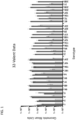
- FIG. 1 provides the geometric mean titer for each of the 32 indicated serotypes in a 32-valent vaccine of the present invention, relative to a polysaccharide/alum formulation and Prevnar-13 TM , as described in the examples.
- the invention generally concerns immunogenic conjugates.
- conjugates comprise a carrier polypeptide according to claim 1 which is covalently linked to an antigen.
- This linking can convert a T-cell independent immunogen (such as a saccharide) into a T-cell dependent immunogen, thereby enhancing the immune response which is elicited (particularly in children).
- Conjugates used herein include covalent linkages which are formed between an antigen and a non-natural amino acid ( ⁇ nnAA') residue within the carrier polypeptide. These nnAA residues can provide functional groups which facilitate reactivity with an antigen of interest.
- a single carrier polypeptide will be linked to multiple antigen molecules.
- the antigens can have a single linking group per molecule (e.g. the reducing terminus of a saccharide) for attaching to a carrier polypeptide, or can have multiple linking groups (e.g. multiple aldehyde or cyanate ester groups). Where an antigen molecule has multiple linking groups this generally leads to the formation of high molecular weight cross-linked or lattice conjugates, involving links between multiple carrier polypeptides via the antigens.
- Cross-linked conjugates are preferred herein (particularly for pneumococcus), and thus antigens with multiple linking groups are also preferred.
- Covalent linkages are formed between the antigen and a nnAA residue within the carrier polypeptide.
- the antigen is not conjugated to a lysine residue in the carrier polypeptide; more preferably, the antigen is not conjugated to a natural amino acid residue in the carrier polypeptide.
- Useful carrier polypeptides contain a T-cell epitope.
- Various such carrier polypeptides are known in the art, and within approved vaccines it is known to use diphtheria toxoid (chemically treated toxin from Corynebacterium diphtheriae; 'Dt'), tetanus toxoid (chemically treated tetanospasmin toxin from Clostridium tetani; ⁇ Tt'), protein D from Haemophilus influenzae ('PD' or ⁇ HiD'), the outer membrane protein complex of serogroup B meningococcus ( ⁇ OMPC'), and the CRM197 mutant C.diphtheriae toxin.
- diphtheria toxoid chemically treated toxin from Corynebacterium diphtheriae
- tetanus toxoid chemically treated tetanospasmin toxin from Clostridium tetani
- ⁇ Tt' protein
- CRM197 is well-known in the art (e.g. see Bröker et al. 2011 Biologicals 39:195-204 ) and has the following amino acid sequence (SEQ ID NO: 1), where the underlined residue (Glu-52) differs from the natural diphtheria toxin, whereby the substitution of Gly ⁇ Glu leads to the loss of toxic enzymatic activity in the protein:
- the invention does not use native CRM197.
- a modified amino acid sequence is used which (i) has at least 90% sequence identity to SEQ ID NO: 1; (ii) is free from an Arg-Arg dipeptide sequence; and (iii) comprises nnAA residues substituted for K33, K212, K244, K264, K385, and K526 in SEQ ID NO: 1.
- modified CRM197 carrier polypeptides are described in more detail below.
- T-cell epitopes in carrier polypeptides can bind to MHC class II and interact with T-cell receptors on the surface of CD4+ T-cells, thereby enhancing antibody responses against antigens or haptens conjugated thereto (e.g. see Costantino et al. 2011, Expert Opin Drug Discov 6:1045-66 ).
- Tontini et al. (2016) Vaccine 34:4235-42 discuss pre-clinical studies of 28 carrier polypeptides, including tests of their ability to induce antibodies against saccharide antigens.
- Polyepitope carrier polypeptides containing multiple broadly-reactive i.e.
- Tt, PD, CRM197 Various detoxified bacterial toxins have been successfully used as carriers e.g. Tt, Dt, the P.aeruginosa exotoxin, the C.difficile A & B toxins, etc.
- Many different carrier polypeptides have been used for pneumococcal saccharides e.g. CRM197 in Prevnar TM , PD, Tt and Dt in Synflorix TM , and various peptides in Velasco et al. (1995) Infect Immun 63:961-8 .
- the invention uses a carrier polypeptide comprising an amino acid sequence which (i) has at least 90% sequence identity to SEQ ID NO: 1; (ii) is free from an Arg-Arg dipeptide sequence; and (iii) comprises nnAA residues substituted for K33, K212, K244, K264, K385, and K526 in SEQ ID NO:1.
- Carrier polypeptides to be used with the invention can be prepared in general using the techniques disclosed in section 6 ('Carrier Protein Production Methods') of WO2018/126229 .
- Preferred carriers contain nnAAs outside of at least one T-cell epitope of the carrier. If the T-cell epitope regions for a carrier are unknown then one can identify the epitopes using standard techniques e.g. see Reece et al. (1993) IJ Immunol 151:6175-84 , Beissbarth et al. (2005) Bioinformatics 21 Suppl 1: i29-37 , Maciel Jr et al. (2008) Virol 378:105-17 , Fridman et al.
- a preferred group of carriers do not contain any modification, including insertion or substitution of a nnAA, within a T-cell epitope.
- Particularly preferred carriers may also have a maximum of 10, 9, 8, 7 or 6 nnAAs.
- antigens can be included within immunogenic conjugates used herein.
- the antigen is a saccharide.
- saccharide includes polysaccharides having 50 or more repeat units, and oligosaccharides having fewer than 50 repeating units.
- polysaccharides have from about 50, 55, 60, 65, 70, 75, 80, 85, 90, or 95 repeating units to about 2,000 (sometimes more) repeating units, and optionally from about 100, 150, 200, 250, 300, 350, 400, 500, 600, 700, 800, 900 or 1000 repeating units to about, 1100, 1200, 1300, 1400, 1500, 1600, 1700, 1800, or 1900 repeating units.
- Oligosaccharides typically have from about 6, 7, 8, 9, or 10 repeating units to about 15, 20, 25, 30, or 35 to about 40 or 45 repeating units.
- Useful saccharides for incorporation into immunogenic conjugates include those found in bacteria. These can be non-capsular saccharides (such as an exopolysaccharide e.g. the S.aureus exopolysaccharide) but are preferably bacterial capsular saccharides.
- Bacterial capsular saccharides are high molecular weight saccharides found in the capsule of Gram-positive or Gram-negative bacteria and they can be used as vaccine antigens. Such capsular saccharides are generally prepared from whole cell lysates or culture supernatant of the corresponding bacterium via processes that involve diafiltration, protein removal, ethanol precipitation, nucleic acid removal, and freeze drying. Bacterial saccharides used with the invention can be intact as found in the bacteria, or can be fragments obtained from intact saccharides e.g. obtained by hydrolysis of saccharides purified from the bacteria.
- Saccharide antigens of particular interest include, but are not limited to:
- Antigens often do not intrinsically contain functional groups that are suitable or ideal for conjugation. Thus an antigen might need to be functionalized prior to its conjugation to the nnAA. Further details of such functionalization are given below.
- S.pneumoniae is an encapsulated Gram-positive bacterium that can cause pneumonia, bacteremia, and meningitis.
- serotypes of S.pneumoniae see e.g. Kalin, M. Thorax 1998;53:159-162 ) which bear capsular saccharides with serotype-specific repeating unit structures.
- S.pneumoniae serotype 20 is actually made up of two closely related serotypes, the capsular polysaacharides of which are largely cross-protecting ( Calix et al.
- serotype 20 refers to a saccharide that would have previously been classified in the field as serotype 20, and could therefore structurally be either 20A or 20B (from a strain which would have previously been classified in the field as serotype 20, but could genotypically be either 20A or 20B) as disclosed by Calix et al.
- the strain used to produce serotype 20 polysaccharide in Pneumovax TM (Merck) is now believed to be serotype 20A.
- 20A may be preferred.
- 20B may be preferred.
- Prevalence in a target population could be a basis for selecting between these serotypes. Nevertheless, because of strains classified as 20, 20A and 20B are serologically similar, they are largely cross-protective in a vaccine and the choice among strain may not be critical.
- the antigen used with the invention can be a capsular saccharide from any of Spneumoniae serotypes 1, 2, 3, 4, 5, 6A, 6B, 7F, 7A, 7B, 7C, 8, 9A, 9L, 9N, 9V, 10F, 10A, 10B, 10C, 11F, 11A, 11B, 11C, 11D, 12F, 12A, 12B, 13, 14, 15F, 15A, 15B, 15C, 16F, 16A, 17F, 17A, 18F, 18A, 18B, 18C, 19F, 19A, 19B, 19C, 20, 21, 22F, 22A, 23F, 23A, 23B, 24F, 24A, 24B, 25F, 25A, 27, 28F, 28A, 29, 31, 32F, 32A, 33F, 33A, 33B, 33C, 33D, 34, 35F, 35A, 35B, 35C, 36, 37, 38, 39, 40, 41F, 41A, 42, 43, 44, 45, 46, 47F
- the antigen can be a capsular saccharide from any of S.pneumoniae serotypes 1, 2, 3, 4, 5, 6A, 6B, 7F, 8, 9V, 9N, 10A, 11A, 12F, 13, 14, 15B, 16, 17F, 18C, 19A, 19F, 20, 22F, 23F, 24F, 31, and 33F.
- Serotypes 6C, 7C, 15A, 15C, 16F, 20A, 20B, 23A, 23B, 24B, 31, 34, 35B, 35F, 37 and 38 have also become of clinical concern, so the antigen can be a capsular saccharide from one of these S.pneumoniae serotypes.
- a composition includes 14 or more serotypes
- these preferably include the 13 serotypes 1, 3, 4, 5, 6A, 6B, 7F, 9V, 14, 18C, 19A, 19F, and 23F.
- a compositions preferably includes one or more of serotypes 2, 8, 9N, 10A, 11A, 12F, 15B, 17F, 20 (alternatively, 20A or 20B), 22F, and/or 33F.
- a composition preferably includes one or more S.pneumoniae serotypes 2, 6C, 8, 9N, 10A, 12F, 15A, 15B, 15C, 16F, 17F, 20, 20A, 20B, 22F, 23A, 23B, 24F, 24B, 31, 33F, 34, 35B, 35F and 38.
- a useful combination of 15 or more (e.g., 16 or more) serotypes includes each of S.pneumoniae serotypes 1, 3, 4, 5, 6A, 6B, 7F, 9V, 14, 18C, 19A, 19F, 22F, 23F and 33F, and may also include serotype 8.
- a useful combination of 20 or more e.g.
- S.pneumoniae serotypes includes each of serotypes 1, 3, 4, 5, 6A, 6B, 7F, 8, 9V, 10A, 11A, 12F, 14, 15B, 18C, 19A, 19F, 22F, 23F and 33F.
- a useful combination of 24 or more serotypes includes each of S.pneumoniae serotypes 1, 2, 3, 4, 5, 6A, 6B, 7F, 8, 9V, 9N, 10A, 11A, 12F, 14, 15B, 17F, 18C, 19A, 19F, 20, 22F, 23F and 33F.
- the capsular saccharide can be O-acetylated.
- the capsular saccharide from serotype 1, 2, 3, 4, 5, 6A, 6B, 7F, 8, 9V, 9N, 10A, 11A, 12F, 13, 14, 15B, 16, 17F, 18C, 19A, 19F, 20, 22F, 23F, 24F, 31, and 33F comprises a saccharide which has a degree of O-acetylation of between 10-100%, between 20-100%, between 30-100%, between 40-100%, between 50-100%, between 60-100%, between 70-100%, between 75-100%, 80-100%, 90-100%, 50-90%, 60-90%, 70-90% or 80-90%.
- the degree of O-acetylation is greater than 10%, greater than 20%, greater than 30%, greater than 40%, greater than 50%, greater than 60%, greater than 70%, greater than 80%, greater than 90%, or about 100%.
- the degree of O-acetylation of the saccharide can determined by proton NMR (see for example Lemercinier & Jones (1996) Carbohydrate Research 296:83-96 ; Jones et al. (2002) J. Pharmaceutical and Biomedical Analysis 30:1233-1247 ). Normally the saccharide used to prepare a conjugate will retain at least 50% (e.g. 75%, or even 100%) of the O-acetylation levels seen in the starting capsular saccharide purified from a bacterium.
- the S.pneumoniae capsular saccharides can be obtained directly from bacteria using isolation procedures known to one of ordinary skill in the art (see for example methods disclosed in U.S. Patent App. Pub. Nos. 2006/0228380 , 2006/0228381 , 2007/0184071 , 2007/0184072 , 2007/0231340 , and 2008/0102498 and WO 2008/118752 ). As an alternative, they may be obtained from a commercial source (e.g., ATCC).
- ATCC ATCC
- a pneumococcal capsular saccharide antigen used with the invention can usefully have a molecular weight between 10kDa and 4,000kDa e.g. between 50 kDa and 3,000 kDa, or between 100 kDa and 2,000 kDa.
- the molecular weight can be between 100 kDa and 2,000 kDa; between 100 kDa and 1,750 kDa; between 100 kDa and 1,500 kDa; between 100 kDa and 1,250 kDa; between 100 kDa and 1,000 kDa; between 100 kDa and 750 kDa; between 100 kDa and 500 kDa; between 200 kDa and 4,000 kDa; between 200 kDa and 3,500 kDa; between 200 kDa and 3,000 kDa; between 200 kDa and 2,500 kDa; between 200 kDa and 2,000 kDa; between 200 kDa and 2,000 kDa; between 200 kDa and 1,750 kDa; between 200 kDa and 1,500 kDa; between 200 kDa and 1,250 kDa; between 200 kDa and 1,000 kDa; between 200 kDa and 750 kD
- the capsular saccharide is optionally chemically modified relative to the capsular saccharide found in nature.
- the saccharide is optionally de-O-acetylated (partially or fully), de-N-acetylated (partially or fully), N-propionated (partially or fully), etc.
- De-acetylation optionally occurs before, during or after activation, derivatization, or conjugation, but typically occurs before conjugation.
- Some embodiments of the invention involve the use of two or more different conjugates.
- this means (when using a single type of carrier polypeptide for each conjugate) that each 'different' conjugate has a saccharide from a different pneumococcal serotype.
- compositions of the invention involve the use of two or more different conjugates according to the claims. These embodiments are also referred to as multivalent. When any two conjugates are described as 'different', or provide different valencies in a 'multivalent' composition, this refers to a difference between the combination of carrier polypeptide and antigen in those two conjugates.
- a single type of modified CRM197 e.g. SEQ ID NO: 4
- the reaction product will contain many different types of molecule (different molecular weights, different patterns of linkages within each molecule, etc .) , but are considered as a single conjugate herein.
- Two 'different' conjugates have a different carrier polypeptide ( i.e . having a different amino acid sequence) and/or a different antigen ( i.e . having a different antigenic structure).
- capsular saccharide antigens may be purified from two different serotypes of pneumococcus. These two different capsular saccharides can be separately conjugated to a carrier polypeptide (which may be the same or different) to provide two different conjugates.
- a carrier polypeptide which may be the same or different
- the difference between two 'different' conjugates will typically be that one contains capsular saccharide from a first serotype or serogroup of a bacterial species whereas the other contains capsular saccharide from a second serotype or serogroup of that bacterial species e.g. capsular saccharides from different serotypes of Spneumoniae, or capsular saccharides from different serogroups of N.meningitidis.
- Two conjugates would also be 'different' if they included antigenically distinct capsular saccharides from multiple bacterial species e.g. a Hib saccharide conjugate and a meningococcal saccharide conjugate.
- compositions of the invention include n different immunogenic saccharide conjugates, wherein the saccharide antigen in each of the n immunogenic conjugates is distinct from the saccharide antigen of the other n-1 immunogenic conjugates.
- the composition includes antigens from a single bacterial species, there can be capsular saccharides from n different serotypes or n different serogroups of that species.
- the PCV7 Prevnar TM vaccine has 7 different conjugates
- the PCV13 Prevnar TM vaccine has 13 different conjugates
- the Menveo TM vaccine has 4 different conjugates
- the Menactra TM vaccine has 4 different conjugates
- the Nimenrix TM vaccine has 4 different conjugates
- the Menitorix TM vaccine has 2 different conjugates
- the Menhibrix TM vaccine has 3 different conjugates
- the Synflorix TM vaccine has 10 different conjugates, etc.
- Multivalent compositions of pneumococcal conjugates preferably include more than 13 different conjugates e.g. 14, 15, 20, 21, 24, 25, or more. Suitable choices of serotypes for these >13-valent compositions are discussed above.
- n-y different antigens e.g., the capsular saccharides from different bacterial serotypes or serogroups
- second polypeptide carrier is conjugated to the remaining y antigens.
- three, four or more carriers could be used with the n antigens divided among them.
- conjugates used herein include covalent linkages between an antigen and a functional group within a nnAA residue in the carrier polypeptide.
- the side chains of nnAA residues can provide reactive functional groups which are useful for conjugating antigens to discrete sites in the carrier polypeptide.
- nnAA can be any amino acid that can be incorporated into a polypeptide during translation but is not one of the 20 common amino acids.
- a nnAA can be conveniently incorporated into a polypeptide by converting a tRNA molecule such that its codon incorporates the nnAA rather than the natural cognate amino acid.
- One technique for achieving this involves using a "suppression codon" i.e.
- nucleotide triplet that is introduced into a coding sequence at a desired position and is recognized by a specific tRNA that can recognize a natural stop codon (e.g., an amber, ochre or opal stop codon) but allows translation to continue, with incorporation of the nnAA (thereby suppressing the natural stop codon).
- a natural stop codon e.g., an amber, ochre or opal stop codon
- the nnAA residue can be any of the nnAA residues described herein, or any other that has been identified as compatible with cell-based or cell-free protein synthesis (see, e.g., Schultz et al. Annu Rev Biochem. 2010;79:413-44 particularly pp.418-420 ; and Chin et al. Annu Rev Biochem. 2014;83:5.1-5.30 ).
- the nnAA is not one which arises naturally within a cell by modification of one of the 20 common amino acids (e.g. pyrolysine, selenocysteine, phosphotyrosine, formyl-methionine, etc .) .
- nnAA for use herein are those which can be incorporated during translation (in a cellular or a cell-free system) with a side chain that provides a functional group which is not found in the side chain of any of the 20 naturally occurring amino acids.
- Various techniques for incorporating such amino acids into polypeptides are known e.g. see Young & Schultz (2010) J Biol Chem 285:11039-44 , Maza et al. (2015) Bioconjugate Chem. 26:1884-9 , and Zimmerman et al. (2014) Bioconjugate Chem. 25:351-61 .
- WO2018/126229 discloses in detail how nnAA residues can be incorporated into carrier polypeptides e.g. using cell-free expression mixtures, orthogonal tRNA/aminoacyl-tRNA synthetase pairs specific for the nnAA, suppression codons, etc. See also US patent application US-2017/0267637 .
- the nnAA can include a chemical group suitable for "click” chemistry reaction with a corresponding group on an antigen of interest.
- the nnAA can be any of 2-amino-3-(4-azidophenyl)propanoic acid (para-azido-L-phenylalanine or pAF), 2-amino-3-(4-(azidomethyl)phenyl)propanoic acid (para-azidomethyl-L-phenylalanine or pAMF), 2-amino-3-(5-(azidomethyl)pyridin-2-yl)propanoic acid, 2-amino-3-(4-(azidomethyl)pyridin-2-yl)propanoic acid, 2-amino-3-(6-(azidomethyl)pyridin-3-yl)propanoic acid, or 2-amino-5-azidopentanoic acid.
- 2-amino-3-(4-azidophenyl)propanoic acid para-azido-L-phenylalanine or pAF
- nnAA for use herein is pAMF: pAMF provides very favorable reaction kinetics for producing conjugates (e.g. much faster than using pAF when reacting with an alkyne-containing carbohydrate antigen in a SPAAC method).
- the nnAA can be a 2,3-disubstituted propanoic acid bearing: an amino substituent at the 2-position; and an azido-containing substituent, a 1,2,4,5-tetrazinyl-containing substituent, or an ethynyl-containing substituent at the 3-position.
- the substituent at the 3-position is an azido-containing substituent, particularly an azido-containing substituent comprising a terminal azido group bound to the carbon atom at the 3-position through a linking group.
- the linking group may comprise an arylene moiety that is optionally substituted and optionally heteroatom-containing.
- the linking group may comprise a 5- or 6-membered arylene moiety containing 0 to 4 heteroatoms and 0 to 4 non-hydrogen ring substituents.
- the nnAA can have the structure of formula XII: wherein: Ar comprises a 5-membered or 6-membered aromatic ring optionally containing at least one heteroatom; W 5 is selected from C 1 -C 10 alkylene, -NH-, -O- and -S-; Q1 is zero or 1; and W 6 is selected from azido, 1,2,4,5-tetrazinyl optionally C-substituted with a lower alkyl group, and ethynyl.
- Ar does not contain any heteroatoms, in which case the preferred linker is an unsubstituted phenylene group ( i.e. Ar is -C 6 H 4 -).
- Ar contains a nitrogen heteroatom and at least one additional heteroatom selected from N, O, and S.
- exemplary nitrogen heterocycles are described infra and Ar may be e.g. a pyridine or a pyridazine.
- Q1 is 1, W 5 is lower alkylene, and W 6 is azido.
- the nnAA can be an azido-containing nnAA, such as a nnAA of formula I: wherein: D is -Ar-W3- or -W1-Y1-C(O)-Y2-W2-;each of W1, W2, and W3 is independently a single bond or lower alkylene; each X 1 is independently -NH-, -O-, or -S-; each Y1 is independently a single bond, -NH-, or -O-; each Y2 is independently a single bond, -NH-, -O-, or an N-linked or C-linked pyrrolidinylene; Ar is and one of Z 1 , Z 2 , and Z 3 is -N- and the others of Z 1 , Z 2 , and Z 3 are independently -CH-.
- D is -Ar-W3- or -W1-Y1-C(O)-Y2-W2-;each of W1, W2, and W3 is independently a
- the nnAA has formula II: wherein W 4 is C 1 -C 10 alkylene.
- the nnAA can be a 1,2,4,5-tetrazine-containing nnAA.
- formula III wherein: Ar is V is a single bond, lower alkylene, or -W1-W2-; one of W1 and W2 is absent or lower alkylene, and the other is -NH-, -O-, or -S-; each one of Z 1 , Z 2 , and Z 3 is independently -CH- or -N-; and X 1 is independently -NH-, -O-, or -S-; and R is lower alkyl.
- the nnAA can be an alkyne-containing nnAA. In one embodiment, this is a propargyl group.
- propargyl-containing amino acids including syntheses thereof, are found in Beatty et al. Angew. Chem. Int. Ed. 2006, 45, 7364-7 ; Beatty et al. J. Am. Chem. Soc. 2005(127): 14150-1 ; Nguyen et al. JACS 2009 (131):8720-1 .
- Such propargyl-containing amino acids are suitable for incorporation into proteins using cell-based systems.
- the propargyl-containing nnAA is selected from the group consisting of homopropargylglycine, ethynylphenylalanine, and N6-[(2-propynyloxy)carbonyl]-L-lysine.
- nnAA used herein are generally ⁇ -amino acids with a chiral center at the ⁇ -carbon, and they are preferably L-stereoisomers.
- a polypeptide carrier used with the invention includes nnAA residues substituted for K33, K212, K244, K264, K385, and K526 in SEQ ID NO: 1. Carrier polypeptides with fewer than 10 nnAA residues are preferred.
- nnAA in the carrier polypeptide
- the only nnAA in the carrier is pAMF.
- This permits the same conjugation chemistry to be used simultaneously at each nnAA. If it is desired to attach two different antigens to a single carrier molecule, this can be achieved by using different nnAA species within a single carrier and conjugating each antigen to a different nnAA, but conjugation to a single species of nnAA in a carrier is preferred.
- multiple different conjugates e.g. different pneumococcal serotypes
- each conjugate includes the same single species of nnAA.
- a composition includes multiple different conjugates (e.g. different pneumococcal serotypes) it is sometimes preferred that each conjugate includes the same carrier polypeptide.
- a nnAA can be incorporated into a carrier polypeptide by substitution or by insertion (or by C-terminal or N-terminal extension).
- the nnAA can be substituted for a lysine residue in the native polypeptide.
- the substitution can occur at one or more of positions K24, K33, K37, K39, K212, K214, K227, K244, K264, K385, K522 and K526 in SEQ ID NO: 1 or 2.
- the claimed carrier polypeptides comprise a nnAA (e.g. pAMF) substituted at each of K33, K212, K244, K264, K385, and K526 (and in one embodiment at no other positions).
- nnAA within a carrier polypeptide are ideally surface-accessible residues. This can be assessed using a 3D structure of the polypeptide, or by performing a comprehensive replacement of natural amino acids for nnAAs followed by conjugation tests, to assess the utility of each site.
- nnAA a T-cell activating epitope of the carrier polypeptide.
- the use of nnAA allows the selective placement of sites for conjugation and so the T-cell activating epitopes of a carrier polypeptide can be avoided as sites for antigen conjugation.
- these epitopes can easily be identified.
- studies of CRM197 by Raju et al., Bixler et al., Leonard et al., and Pillai et al. e.g. Eur J Immunol. 1995 Dec;25(12):3207-14 , WO89/06974 ) have identified various T-cell epitopes e.g. within residues P271-D290, V321-G383, and Q411-1457.
- Conjugation involves formation of a covalent linkage between the nnAA residue and the antigen. This requires a reactive functional group in both the nnAA and the antigen.
- a nnAA for the carrier polypeptide will generally be chosen because it already has a suitable functional group (e.g. the azido group of pAMF), but antigens often do not intrinsically contain functional groups that are suitable or ideal for conjugation. Thus an antigen might need to be functionalised prior to its conjugation to the nnAA.
- nnAA include a functional group (e.g. an azido group) which is suitable for a "click" chemistry reaction with a functional group on the antigen.
- a functionalised antigen ideally includes a group suitable for such "click" reactions.
- conjugation thus takes place by a process comprising 3 steps: (a) activating the antigen; (b) optionally derivatizing the activated antigen (e.g. with a linker or nucleophilic group) to introduce a reactive functional group not normally present in the antigen; and (c) conjugating the antigen to the carrier polypeptide via a group introduced in step (a) or, if present, step (b).
- step (a) includes a first step of removing a blocking group on the antigen, such that certain functional groups (e.g. hydroxyls, amines, thiols) are more accessible to activation.
- the steps (a)-(c) can occur essentially simultaneously (e.g. where a reactive moiety such as N-hydroxysuccinimide is added to the antigen), but in other embodiments two or more of steps (a)-(c) are discrete, with optional purification between steps.
- cross-linked conjugates are preferred, so it is also preferred to introduce multiple reactive functional groups per antigen molecule.
- multiple aldehyde or cyanate ester groups can be introduced when activating a saccharide molecule. These groups can then be derivatised e.g. to introduce a reactive cyclooctyne which can then react with azido groups in the nnAA.
- An antigen can be activated using various chemistry, including but not limited to: periodate oxidation (e.g. to oxidize hydroxyl groups on adjacent carbon atoms to give reactive aldehyde groups), for instance as disclosed in WO2011/110531 ; cyanylation e.g. using 1-cyano-4-dimethylamino pyridinium tetrafluoroborate (CDAP); hydroxyl activation with 1,1'-carbonyldiimidazole (CDI) followed by nucleophilic addition; or unmasking of an intrinsic aldehyde (e.g. a reducing terminus of a saccharide).
- periodate oxidation e.g. to oxidize hydroxyl groups on adjacent carbon atoms to give reactive aldehyde groups
- cyanylation e.g. using 1-cyano-4-dimethylamino pyridinium tetrafluoroborate (CDAP)
- CDI 1,1'-carbonyldiimid
- Periodate oxidation and CDAP cyanylation are two preferred activation techniques. Periodate oxidation has been shown to be useful for activating inter alia pneumococcal serotypes 1, 2, 3, 7F, 8, 9N, and 11A. CDAP cyanylation has been shown to be useful for activating inter alia pneumococcal serotypes 3, 7F, and 10A.
- the activated antigen can be conjugated to a nnAA directly, but usually the activated group is derivatized to introduce a functional group which shows better reactivity towards the nnAA's functional group.
- a functional group which shows better reactivity towards the nnAA's functional group.
- an alkynyl group can be introduced.
- a bifunctional reagent with an amino group and an alkyne group can react with an aldehyde group which has been introduced into an antigen ( e.g. via reductive amination) thereby leaving a pendant alkyne which can react with a nnAA.
- bifunctional reagents including amino and DBCO functional groups can be used.
- the nnAA reacts with an alkynyl group in the antigen (e.g. a propargyl group).
- An alkyne group in an antigen is ideal for reacting with an azido group in a nnAA e.g. using the reactions known in the art as copper-catalyzed azide-alkyne cycloaddition (CuAAC), ruthenium-catalyzed azide-alkyne cycloaddition (RuAAC), or Huisgen azide-alkyne 1,3-dipolar cycloaddition.
- the alkynyl group may have a molecular context that increases its reactivity e.g. it can be within a ring.
- the alkylene can be within a cyclooctyne ring (optionally including a heteroatom), such as a diaryl-strained cyclooctyne ring (e.g. DBCO).
- This reaction can be a [3+2] cycloaddition referred to in the art as strain-promoted azide-alkyne cycloaddition (SPAAC). DIFO- and DBCO-based reagents are readily available for these reactions.
- Alkyne-containing rings useful in SPAAC reactions include difluorinated cyclooctyne (DIFO) and dibenzocyclooctynes. These are available with pendant functional groups for linking to activated antigens (e.g. with a pendant amino for linking to an aldehyde or a cyanate ester), for instance using any of the following reagents: DBCO-PEGn-NH 2 DBCO-PEGn-NH 2 DBCO carboxylic acids DBCO-NH 2 DIFO carboxylic acid
- n' in 'PEGn' represents the number of oxyethylene repeat units.
- the value of n is in the range 1-20 e.g. within 2-18, 3-16, or 4-14. Thus n can be, for example, any of 4, 5, 11, 12 or 13.
- click chemistry reactions which can be used for conjugation of an antigen and a nnAA include, but are not limited to, tetrazine-alkene ligation and Staudinger ligation between a phosphine and an azide.
- a conjugate of the invention can have a molecular weight of at least about 750 kDa, at least about 1,000 kDa, or at least about 1,500 kDa, or more. In some embodiments, the conjugate has a molecular weight of between about 750 kDa and about 5,000 kDa. In some embodiments, the conjugate has a molecular weight of between about 800 kDa and about 2,800 kDa. In some embodiments, the conjugate has a molecular weight of between about 850 kDa and about 2,800 kDa. In some embodiments, the conjugate has a molecular weight of between about 900 kDa and about 2,800 kDa.
- the conjugate has a molecular weight of between about 950 kDa and about 2,800 kDa. In some embodiments, the conjugate has a molecular weight of between about 1,000 kDa and about 2,800 kDa.
- the molecular weight of a conjugate is calculated by size exclusion chromatography (SEC) combined with multiangle laser light scattering (MALS).
- Conjugates of the invention include antigen (e.g., saccharide) and carrier polypeptide, and the weight ratio of these two components can be used as a parameter to define the conjugate.
- Antigen e.g., saccharide
- carrier polypeptide e.g., poly(ethylene glycol)
- Higher antigen:carrier weight ratios for saccharide-carrier conjugates allow for more saccharide antigen to be delivered with a lower amount of carrier polypeptide.
- the ratio is typically in the range 0.3-3.0, but this can vary with the serotype and aspects of the conjugation chemistry ( Annex 2: Recommendations for the production and control of pneumococcal conjugate vaccines; WHO Technical Report Series, No. 927, 2005 ).
- the ratio of the commercial vaccine Prevnar-13 TM is 0.9.
- the ratio for the complete composition is ideally above 1.0 (i.e. a weight excess of pneumococcal saccharide antigen) and is preferably 1.5 or more ( e.g. within the range 1.5-3.0, or preferably 1.5-2.0).
- the carrier polypeptides of main interest herein are modified forms of CRM197.
- the claimed carrier polypeptides comprise an amino acid sequence which has at least 90% sequence identity (e.g. ⁇ 95%, ⁇ 96%, ⁇ 97%, or preferably ⁇ 98%) to SEQ ID NO: 1.
- SEQ ID NO: 1 includes an Arg-Arg dipeptide sequence at positions 192-193. This sequence can be subject to proteolytic cleavage in some circumstances. This site can be modified to prevent cleavage and improve yield.
- the claimed modified CRM197 carrier polypeptide is free from an Arg-Arg dipeptide sequence. For instance, Arg-192 and/or Arg-193 of SEQ ID NO: 1 can be deleted or can be substituted with a different amino acid.
- the claimed carrier polypeptide comprises an amino acid sequence which (i) has at least 90% (e.g.
- sequence identity to SEQ ID NO: 1; (ii) is free from an Arg-Arg dipeptide sequence; and (iii) comprises nnAA residues substituted for K33, K212, K244, K264, K385, and K526 in SEQ ID NO: 1.
- SEQ ID NO: 2 differs from SEQ ID NO: 1 by having an Arg ⁇ Asn substitution at position 193:
- a carrier polypeptide comprising amino acid sequence SEQ ID NO: 2, wherein SEQ ID NO: 2 has been modified to include nnAA residues substituted for K33, K212, K244, K264, K385, and K526 (e.g. SEQ ID NO: 4). Residue Asn-193 of SEQ ID NO: 2 is preferably not substituted by a nnAA.
- This carrier polypeptide can be used to prepare immunogenic conjugates (e.g. of saccharide antigens) via the nnAA residue(s) therein.
- these carrier polypeptides include amino acid sequences upstream and/or downstream of SEQ ID NO: 1 or 2.
- they can include a methionine residue upstream of the N-terminus amino acid residue of SEQ ID NO: 1 or 2.
- This methionine residue may be formylated.
- a methionine residue is not present at this position in wild-type CRM197 but it can be included herein for initiating translation ( e.g. in a cell-free polypeptide synthesis system) without requiring the whole native leader sequence.
- a carrier polypeptide includes (i) no amino acids upstream of the N-terminus of SEQ ID NO: 1 or 2, except for an optional methionine, and (ii) no amino acids downstream of the C-terminus of SEQ ID NO: 1 or 2.
- nnAA nnAA i.e. only Lys residues are substituted. It is preferred that the same nnAA is used at each substitution position e.g. pAMF at each substitution position.
- carrier polypeptides comprising amino acid sequence SEQ ID NO: 1 or 2 with from 2-9 substitutions by nnAA residues (e.g. Lys ⁇ nnAA substitutions, preferably Lys ⁇ pAMF), e.g. with from 2-8, 2-6, 3-8, 3-6, 4-9, 4-8, or 4-6 nnAA substitutions e.g. 4, 5 or 6 nnAA residues.
- nnAA residues e.g. Lys ⁇ nnAA substitutions, preferably Lys ⁇ pAMF
- nnAA substitutions e.g. 4, 5 or 6 nnAA residues.
- a carrier polypeptide which includes at least one nnAA in the first region and at least one nnAA in the second region e.g. at least 2 nnAA in each region, or at least 3 nnAA in each region. This permits conjugated antigens to be spatially separated when attached to the carrier. Also described herein but not claimed is a carrier with 3 nnAA in the first region and 3 nnAA in the second region.
- the first region contains 27 Lys residues, and the second region contains 12 Lys residues.
- carrier polypeptides in which one or more ( e.g. 3) Lys residues within the N-terminal 374 amino acids and one or more ( e.g. 3) Lys residues within the C-terminal 162 amino acids of SEQ ID NO: 1 or 2 are be substituted with a nnAA e.g. within pAMF.
- nnAA-containing carriers based on CRM197 which have the amino acid sequence of SEQ ID NO: 1 or SEQ ID NO: 2 in which one or more of residues K24, K33, K37, K39, K212, K214, K227, K264, K385, K522 and K526 is/are replaced by a nnAA (such as pAMF).
- a nnAA such as pAMF
- One such sequence is SEQ ID NO:3, in which each X represents a nnAA (preferably the same nnAA, such as pAMF):
- the carrier polypeptide according to the claims may have the amino acid sequence of SEQ ID NO: 4, in which each X represents a nnAA (preferably the same nnAA, such as pAMF):
- SEQ ID NOs: 3 & 4 can be very well-expressed in a cell-free protein synthesis system, while retaining good solubility and providing good immunogenic responses when conjugated to pneumococcal capsular saccharides.
- SEQ ID NO: 4 lacks the native Arg-Arg dipeptide.
- WO2018/126229 describes several amino acid residues which are suitable for nnAA substitution (e.g. Lys-24, Lys-33, Lys-37, Lys-39, Lys-212, Lys-214, Lys-227, Lys-244, Lys-264, Lys-385, Lys-522, Lys-526, Phe-12, Phe-53, Phe-123, Phe-127, Phe-140, Phe-167, Phe-250, Phe-389, Phe-530, or Phe-531, numbered according to SEQ ID NO: 1 herein).
- residues which can be substituted are: Asp-211; Asp-295; Asp-352; Asp-392; Asp-465; Asp-467; Asp-507; Asp-519; Asn-296; Asn-359; Asn-399; Asn-481; Asn-486; Asn-502; Asn-524; Glu-240; Glu-248; Glu-249; Glu-256; Glu-259; Glu-292; Glu-362; Gln-252; Gln-287; Lys-212; Lys-218; Lys-221; Lys-229; Lys-236; Lys-264; Lys-299; Lys-385; Lys-456; Lys-474; Lys-498; Lys-516; Lys-522; Lys-534; Arg-377; Arg-407; Arg-455; Arg-460; Arg-462; Arg-472; Arg-493; Ser-198; Ser-200; Ser-231; Ser-233; Ser-2
- polypeptide comprising an amino acid sequence which (i) has at least 90% (e.g. ⁇ 95%, ⁇ 96%, ⁇ 97%, or preferably ⁇ 98%) sequence identity to SEQ ID NO: 1; (ii) is free from an Arg-Arg dipeptide sequence; and (iii) comprises nnAA residues substituted for K33, K212, K244, K264, K385, and K526 in SEQ ID NO:1; and wherein the polypeptide has a N-terminus methionine and/or is in monomeric form.
- CRM197-derived carrier polypeptides can be used in the same manner for conjugation as CRM197 has been used in the prior art (e.g. see Bröker et al. 2011 supra, WO2015/117093 , etc. ) , but with the improvement of permitting site-specific conjugation via the nnAA residue(s). They will generally be used in monomeric form, rather than being associated with other CRM197 or CRM197-derived subunits to form polypeptide multimers. Similarly, they will generally include at least one disulfide bridge e.g. between Cys-186 & Cys-201 (numbered according to SEQ ID NO: 1) and, optionally, between Cys-461 & Cys-471.
- immunogenic conjugate comprising any of the claimed carrier polypeptides conjugated via nnAA residues therein to a saccharide antigen.
- the carrier polypeptides are particularly useful for conjugating to pneumococcal capsular saccharides via the nnAA residue(s) therein.
- Immunogenic conjugates prepared in this way can be combined to form multivalent compositions as discussed elsewhere herein.
- an immunogenic conjugate comprising a carrier polypeptide and a saccharide antigen, wherein (i) the carrier polypeptide has amino acid sequence SEQ ID NO: 4 e.g. where each X is pAMF; and (ii) the saccharide antigen is covalently bonded to the carrier polypeptide via at least one nnAA residue within SEQ ID NO: 4.
- the carrier polypeptide has amino acid sequence SEQ ID NO: 4 e.g. where each X is pAMF; and (ii) the saccharide antigen is covalently bonded to the carrier polypeptide via at least one nnAA residue within SEQ ID NO: 4.
- each conjugate includes a carrier polypeptide having amino acid sequence SEQ ID NO: 4.
- an immunogenic conjugate comprising a carrier polypeptide and a saccharide antigen, wherein (i) the carrier polypeptide has amino acid sequence SEQ ID NO: 4; (ii) the saccharide antigen is covalently bonded to the carrier polypeptide via at least one nnAA residue within SEQ ID NO: 4; and (iii) the saccharide antigen is a capsular saccharide from any of pneumococcal serotypes 1, 2, 3, 4, 5, 6A, 6B, 7F, 8, 9N, 9V, 10A, 11A, 12F, 14, 15B, 17F, 18C, 19A, 19F, 20, 22F, 23F and 33F.
- These individual conjugates can be combined to make multivalent pharmaceutical compositions of the invention.
- compositions of the invention can include an aluminum salt adjuvant.
- the adjuvant can enhance the immunogenicity of conjugates within the pharmaceutical composition.
- Conjugates within the composition may be adsorbed to the aluminum salt adjuvant.
- Useful aluminum salt adjuvants include, but are not limited to, aluminum hydroxide adjuvants and aluminum phosphate adjuvants. These adjuvants are described e.g. in chapters 8 & 9 of Vaccine Design... (1995) eds. Powell & Newman. ISBN: 030644867X. Plenum .
- the adjuvants commonly known as "aluminum hydroxide” are typically aluminum oxyhydroxide salts, which are usually at least partially crystalline.
- Aluminum oxyhydroxide which can be represented by the formula AlO(OH)
- IR infrared
- the degree of crystallinity of an aluminum hydroxide adjuvant is reflected by the width of the diffraction band at half height (WHH), with poorly-crystalline particles showing greater line broadening due to smaller crystallite sizes.
- the surface area increases as WHH increases, and adjuvants with higher WHH values have been seen to have greater capacity for antigen adsorption.
- a fibrous morphology e.g. as seen in transmission electron micrographs
- aluminum hydroxide adjuvants e.g. with needle-like particles with diameters about 2nm.
- the pI of aluminum hydroxide adjuvants is typically about 11 i.e. the adjuvant itself has a positive surface charge at physiological pH.
- Adsorptive capacities of between 1.8-2.6 mg protein per mg Al +++ at pH 7.4 have been reported for aluminum hydroxide adjuvants.
- the adjuvants commonly known as "aluminum phosphate” are typically aluminum hydroxyphosphates, often also containing a small amount of sulfate (i.e. aluminum hydroxyphosphate sulfate). They may be obtained by precipitation, and the reaction conditions and concentrations during precipitation influence the degree of substitution of phosphate for hydroxyl in the salt. Hydroxyphosphates generally have a PO 4 /Al molar ratio between 0.3 and 1.2. Hydroxyphosphates can be distinguished from strict AlPO 4 by the presence of hydroxyl groups. For example, an IR spectrum band at 3164cm -1 ( e.g. when heated to 200°C) indicates the presence of structural hydroxyls (chapter 9 of Powell & Newman).
- the PO 4 /Al 3+ molar ratio of an aluminum phosphate adjuvant will generally be between 0.3 and 1.2, preferably between 0.8 and 1.2, and more preferably 0.95+0.1.
- the aluminum phosphate will generally be amorphous, particularly for hydroxyphosphate salts.
- a typical adjuvant is amorphous aluminum hydroxyphosphate with PO 4 /Al molar ratio between 0.84 and 0.92, included at 0.6mg Al 3+ /ml.
- the aluminum phosphate will generally be particulate ( e.g. plate-like morphology as seen in transmission electron micrographs, with primary particles in the range of 50nm). Typical diameters of the particles are in the range 0.5-20 ⁇ m (e.g. about 5-10 ⁇ m) after any antigen adsorption.
- Adsorptive capacities of between 0.7-1.5 mg protein per mg Al +++ at pH 7.4 have been reported for aluminum phosphate adjuvants.
- Aluminum phosphates used according to the invention will generally have a PZC of between 4.0 and 7.0, more preferably between 5.0 and 6.5 e.g. about 5.7.
- the concentration of aluminum ions in a composition for administration to a patient is preferably less than 2.5mg/ml e.g. ⁇ 2 mg/ml, ⁇ 1 mg/ml, etc.
- a preferred maximum concentration is ⁇ 1.7mg/mL.
- the range of Al +++ in a composition of the invention can be from 0.3-1mg/ml or from 0.3-0.5mg/ml. A maximum of 0.85mg/dose is preferred.
- a composition can include a mixture of both an aluminum hydroxide adjuvant and an aluminum phosphate adjuvant.
- each conjugate can be adsorbed to an aluminum salt individually and then mixed, or they can each be added in sequence to an aluminum salt, thereby forming the mixed conjugate composition.
- a mixture of both approaches can also be used.
- compositions of the invention will generally include one or more pharmaceutically acceptable excipient(s).
- excipients can be found in Handbook of Pharmaceutical Excipients (ed. Rowe et al.), 6th edition 2009 .
- compositions are preferably in aqueous form, particularly at the point of administration, but they can also be presented in dried forms ( e.g. as lyophilisates, etc. ) which can be converted into aqueous forms for administration.
- compositions can include a buffer or pH adjusting agent.
- the buffer can be selected from the group consisting of a phosphate buffer, an acetate buffer, a histidine buffer, a citrate buffer, a succinate buffer, a Tris buffer, a HEPES buffer, etc. Buffer salts will typically be included in the 5-20mM range.
- compositions can include a physiological salt, such as a sodium salt e.g. to control tonicity.
- a physiological salt such as a sodium salt e.g. to control tonicity.
- Sodium chloride (NaCl) is typical, which may be present at from 1-20 mg/ml e.g. 10 ⁇ 2 mg/ml or 9 mg/ml.
- Other salts that may be present include potassium chloride, potassium dihydrogen phosphate, disodium phosphate dehydrate, magnesium chloride, calcium chloride, etc.
- Other useful salts may have sodium, potassium or ammonium cations and chloride, citrate, ascorbate, borate, phosphate, bicarbonate, sulfate, thiosulfate or bisulfite anions.
- compositions can include an organic acid, such as acetic acid or succinic acid. This may be part of a buffer system.
- compositions can include a sugar alcohol such as mannitol or sorbitol.
- Pharmaceutical compositions can include a sugar such as sucrose or glucose.
- compositions can include a surfactant.
- Suitable surfactants include, but are not limited to, polysorbate 20, polysorbate 80, and sodium dodecyl sulfate (SDS).
- the surface active agent is present at a concentration from 0.0003% and 0.3% (w/w) e.g. from 0.01-0.03%.
- Polysorbate 80 is a preferred surfactant.
- compositions can include a preservative such as thiomersal or 2-phenoxyethanol. It is preferred that a composition should be substantially free from ( e.g. ⁇ 10 ⁇ g/ml) mercurial material e.g. thiomersal-free. Compositions containing no mercury are more preferred.
- a preservative can be particularly useful when a composition includes an aluminum salt adjuvant because their insolubility means that the composition is generally a suspension having a cloudy appearance which can mask contaminating bacterial growth.
- a preservative is also particularly useful if a composition is to be used more than once e.g. in a multidose vial. Often, however, a pharmaceutical composition can be preservative-free.
- compositions can have an osmolality of from 200 mOsm/kg and 400 mOsm/kg, e.g. from 240-360 mOsm/kg, or from 290-310 mOsm/kg.
- compositions typically have a pH from 5.0 to 9.5 e.g. from 5.0 to 8.0 or from 6.0 to 8.0.
- compositions are preferably non-pyrogenic e.g. containing ⁇ 1 EU (endotoxin unit, a standard measure) per dose, and preferably ⁇ 0.1 EU per dose.
- ⁇ 1 EU endotoxin unit, a standard measure
- compositions may have an osmolality from 200-400 mOsm/kg e.g. from 240-360 mOsm/kg, or from 280-320 mOsm/kg.
- compositions are preferably gluten free.
- compositions are suitable for administration to animal (and, in particular, human) patients, and thus include both human and veterinary uses.
- compositions may be prepared in unit dose form.
- a unit dose may have a volume of from 0.1-1.0ml e.g. about 0.25mL or preferably about 0.5ml. Such volumes are ideal for injection in humans.
- compositions of the invention can include, for instance, from 3 to 50 different conjugates (e.g. 14, 15, 20, 21, 24, 25, or more).
- each of these conjugates can include a capsular saccharide from a different serotype or serogroup of the same bacterial species (e.g. multiple meningococcal serogroups or multiple pneumococcal serotypes).
- the claimed pharmaceutical composition includes n different immunogenic conjugates.
- the total amount of carrier polypeptide in those n conjugates can be less than or equal to 3n ⁇ g per dose. In other words, the average amount of carrier polypeptide per conjugate can be less than 3 ⁇ g.
- the total amount can, for instance, be from n-2.5n ⁇ g per dose.
- the total amount of saccharide antigen in those n conjugates can be less than or equal to 4.4n ⁇ g per dose.
- the average amount of saccharide per conjugate can be less than 4.4 ⁇ g.
- the total amount can, for instance, be from 0.4 n -4.4 n ⁇ g per dose e.g. from 1.1 n- 2.2 n .
- the total concentration of carrier polypeptide for those n conjugates can be less than or equal to 6n ⁇ g/mL.
- the average concentration of carrier polypeptide per conjugate can be less than 6 ⁇ g/mL.
- the total concentration can, for instance, be from n-4n ⁇ g/mL.
- the total concentration of saccharide antigen for those n conjugates can be less than or equal to 8.8n ⁇ g/mL.
- the average concentration of saccharide per conjugate can be less than 8.8 ⁇ g/mL.
- the total concentration can, for instance, be from 0.8 n -8.8 n ⁇ g/mL e.g. from 2.2 n- 4.4 n ⁇ g/mL.
- the total amount of conjugated carrier polypeptide in a unit dose of a multivalent pharmaceutical composition of the invention can be from 4-128 ⁇ g e.g. from 8-64 ⁇ g, or from 16-48 ⁇ g.
- the concentration of conjugated carrier polypeptide in a multivalent pharmaceutical composition of the invention can be from 8-256 ⁇ g/mL e.g. from 16-128 ⁇ g/mL, or from 32-96 ⁇ g/mL.
- the total amount of conjugated saccharide antigen in a unit dose of a multivalent pharmaceutical composition of the invention can be from 10-120 ⁇ g e.g. from 20-90 ⁇ g, or from 30-60 ⁇ g.
- the concentration of conjugated saccharide antigen in a multivalent pharmaceutical composition of the invention can be from 20-240 ⁇ g/mL e.g. from 40-180 ⁇ g/mL, or from 60-120 ⁇ g/mL.
- the claimed pharmaceutical composition includes multiple different immunogenic conjugates according to the claims e.g. from 3 to 50 different conjugates ( e.g. 14, 15, 20, 21, 24, 25, or more).
- each of these conjugates can include a capsular saccharide from a different serotype or serogroup of the same bacterial species.
- the composition is free from the conjugates' carrier polypeptide(s) in unconjugated form. In other embodiments, there is a low level of unconjugated carrier polypeptide(s), provided that the mass of the unconjugated carrier polypeptide(s) in the composition is ⁇ 10% ( e.g. ⁇ 5% or ⁇ 2%) of the mass of the carrier polypeptide(s) in the n immunogenic conjugates of the composition as a whole.
- the composition is free from the conjugates' saccharides in unconjugated form. In other embodiments, there is a low level of unconjugated saccharide, provided that the mass of the unconjugated saccharide in the composition is ⁇ 10% ( e.g. ⁇ 5% or ⁇ 2%) of the total mass of saccharides in the n immunogenic conjugates of the composition.
- Containers Containers, delivery devices, etc.
- compositions including immunogenic conjugates can be packaged within sterile containers, delivery devices, etc. Sterility can be maintained by hermetically sealing a container to make it airtight. Suitable containers include, but are not limited to, vials, syringes, nebulisers, sprayers, inhalers, dermal patches, etc. Vials and syringes are preferred.
- Immunogenic compositions are often contained within vials.
- the vial is preferably made of a plastic material or, preferably, of glass.
- a vial is sealed after being filled, and the seal can be broken at the point of use.
- the vial is preferably sterilized before a composition is added to it, and is then sealed.
- vials can be sealed with a latex-free stopper, and the absence of latex in all packaging material is preferred.
- the vial ideally includes a single unit dose of a composition, but it may sometimes include more than one dose (a 'multidose' vial) e.g. 10 doses.
- Preferred vials are made of colorless glass.
- a vial can have a cap (e.g. a Luer lock) adapted such that a syringe can be inserted into the cap to facilitate transfer of material between vial and syringe (in both directions). After removal of the syringe from the vial, a needle can then be attached and the composition can be administered to a subject.
- the cap is preferably located inside a seal or cover, such that the seal or cover has to be removed before the cap can be accessed.
- a vial may have a cap that permits aseptic removal of its contents, particularly for multidose vials.
- compositions can be contained within delivery devices, ready for administration to a subject.
- the composition can be transferred into the delivery device at the point of use (e.g. from a vial), or it can be put into the delivery device at the manufacturing stage (e.g. in the form of a pre-filled syringe).
- a syringe used with the invention may be made of glass or of a plastic ( e.g. made of a cyclo-olefin polymer or a cyclo-olefin co-polymer).
- a syringe (particularly a glass syringe) may be a siliconized syringe.
- Non-siliconized syringes can also be used e.g.
- i-Coating TM system from Terumo, which is available in their PLAJEX TM syringes, or using Daikyo CZ TM syringes having an ethylene-tetrafluoroethylene (ETFE) copolymer, or using a TriboGlide TM syringe having a perfluoropolyether (PFPE).
- ETFE ethylene-tetrafluoroethylene
- PFPE perfluoropolyether
- Carbon films may be used instead of siliconization (e.g. see JP2001190665 ).
- Silicone-free syringes are also disclosed in JP2011212183 .
- a non-siliconized syringe including a plunger stopper as disclosed in EP-A-0375778 may be used i.e. where the stopper has a thermoplastic elastomer layer which is covered at least in part by a thermoplastic resin layer of low dynamic friction coefficient.
- the syringe may have a needle attached to it, for injection of the syringe's contents into a subject or into a container.
- the syringe may be supplied with a needle already attached. If a needle is not attached, a separate needle may be supplied with the syringe for assembly and use, or a needle can be separately sourced. Such a needle should be sterile at the time of use, and may be sheathed.
- Safety needles can be used. 1-inch 23-gauge, 1-inch 25-gauge and 5/8-inch 25-gauge needles are typical. Needles 1 ⁇ 2-11 ⁇ 2 inch, 22-25 gauge, can be used. If the syringe and needle are packaged separately then the needle is preferably fitted with a butyl rubber shield.
- Syringes may be provided with peel-off labels on which a lot number and expiration date of the contents may be printed, to facilitate record keeping.
- a plunger in a syringe can have a stopper to prevent the plunger from being accidentally removed during aspiration.
- the syringes may have a latex rubber cap and/or plunger, but latex-free rubbers can be used eg. latex-free chlorobutyl rubber or latex-free isoprene bromobutyl rubber.
- the syringe will generally have a tip cap to seal the tip prior to attachment of a needle, and the tip cap is preferably made of a butyl rubber e.g. latex-free isoprene bromobutyl rubber.
- Useful syringes are, for instance, those marketed under the trade name "Tip-Lok" TM .
- Containers may be marked to show a half-dose volume e.g. to facilitate delivery to children.
- a syringe containing a 0.5ml dose may have a mark showing a 0.25ml volume.
- the syringe itself may have a volume larger than the dose e.g. 1 ml syringe can be used to contain a 0.5ml dose of a pharmaceutical composition.
- Disposable or pre-filled syringes usually contain a single dose of vaccine.
- a glass container e.g. a syringe or a vial
- a glass container e.g. a syringe or a vial
- it is preferably made from a borosilicate glass rather than from a soda lime glass.
- a container may be packaged (e.g. in the same box) with a leaflet including details of the vaccine e.g. instructions for administration, details of the antigens within the vaccine, etc.
- the instructions may also contain warnings e.g. to keep a solution of adrenaline readily available in case of anaphylactic reaction following vaccination, etc.
- Multiple containers may be packaged together e.g. in the same box.
- compositions can be presented in unit dose form, with a single dose per container ( e.g. per syringe or per vial). Rather than manufacture each unit dose individually, a bulk composition is prepared and unit doses are extracted and individually packaged within their containers. Thus, for instance, a plurality of unit doses are extracted from the bulk and each unit dose is placed into a separate container e.g. into a syringe or a vial.
- An immunogenic conjugate can be administered to a mammalian subject to elicit a protective immune response against the antigen in that conjugate. It will be administered in the form of a pharmaceutical composition.
- the claimed compositions include multiple different immunogenic conjugates according to the claims, so protective immune responses can be elicited against many antigens simultaneously.
- composition comprising two or more different immunogenic conjugates according to the claims, for use in eliciting a protective antibody response.
- the ability to elicit a protective immune response means that the conjugates can be used, for example, to provide active immunization for the prevention of invasive disease caused by S.pneumoniae, for the prevention of otitis media caused by S.pneumoniae, for the prevention of pneumonia caused by S.pneumoniae, for active immunization of subjects at risk of exposure to N.meningitidis to prevent invasive disease, etc.
- compositions can be prepared in various forms.
- the compositions may be prepared as injectables e.g. as liquid solutions or suspensions.
- injectables for intramuscular administration are typical.
- An injection volume of about 0.5ml is preferred for humans.
- a preferred unit dose volume is about 0.5ml.
- Administration by intramuscular injection is typical e.g. in anterolateral aspect of the thigh in infants, or the deltoid muscle of the upper arm in toddlers, children and adults.
- Conjugates will typically be administered according to a multiple dose schedule. Multiple doses may be used in a primary immunization schedule and/or in a booster immunization schedule. Administration of more than one dose (typically two doses) is particularly useful in immunologically naive patients. Multiple doses will typically be administered at least 1 week apart ( e.g. about 2 weeks, about 3 weeks, about 4 weeks, about 6 weeks, about 8 weeks, about 10 weeks, about 12 weeks, etc .) .
- composition comprising X may consist exclusively of X or may include something additional e.g. X + Y.
- sequence identity in the context of two amino acid sequences refers to two sequences that are the same or have a specified percentage of amino acid residues that are the same, when compared and aligned for maximum correspondence over a comparison window, as measured using a sequence comparison algorithm (e.g., BLASTP). The percent identity is determined over the full-length reference sequence disclosed herein, such as the reference sequence set forth in SEQ ID NO:1 or 2.
- the method for calculating the sequence identity as provided herein is the BLASTP program having its defaults set at a wordlength (W) of 3, an expectation (E) of 10, and the BLOSUM62 scoring matrix (see, e.g., Henikoff & Henikoff, 1989, Proc Natl Acad Sci USA 89:10915 ). See e.g ., the BLAST alignment tool available on the WWW at blast.ncbi.nlm.nih.gov / Blast.cgi or elsewhere.
- lower alkyl refers to a saturated straight or branched hydrocarbon having one to six carbon atoms, i.e., C 1 to C 6 alkyl.
- the lower alkyl group is a primary, secondary, or tertiary hydrocarbon.
- the term includes both substituted and unsubstituted moieties. See also US-2014/0066598 .
- lower alkylene refers to an alkylene radical of a lower alkyl.
- WO2018/126229 describe in full detail the synthesis of single-site eCRM moieties (e.g. K11TAG). These were expressed in a cell-free protein synthesis (CFPS) extract, and pAMF was incorporated in place of natural Lys.
- CFPS cell-free protein synthesis
- Variants of CRM containing multiple nnAA per polypeptide were also expressed, with various different numbers of Lys-pAMF substitutions per protein. In general it was found that higher numbers of substitutions gave carriers which led to higher MW conjugates but the carriers had lower solubility. Carriers with six pAMF residues generally provided both good solubility (>>50mg/mL) and immunogenicity. The high solubility was surprising because replacement of charged Lys residues in the native sequence with hydrophobic pAMF residues increased the hydrophobicity of CRM197, which is a protein whose hydrophobicity has already been reported to affect its solubility. Thus it was shown that it is possible to maintain the same attachment sites which have been used in known CRM197 conjugates (namely Lys residues) without causing insolubility when the charged residues are lost.
- This set of six substitutions can be combined with disruption of the Arg-Arg dipeptide at residues 192-193 of SEQ ID NO: 1 (RR ⁇ RN) to provide SEQ ID NO: 4, where each X is pAMF.
- WO2018/126229 further describe general protocols for saccharide activation with sodium meta-periodate, for periodate-oxidized polysaccharide derivatization with DBCO, for saccharide activation with CDAP, and for conjugation of saccharide-DBCO with eCRM. See also U.S. Serial No. 62/693,978 .
- the immunogenicity of this multivalent composition was confirmed using a 3-dose schedule in groups of 7 rabbits, by intramuscular injection of 0.25mL vaccine. Each dose included 24 ⁇ g saccharide (1 ⁇ g per serotype), giving a concentration of 96 ⁇ g/mL.
- a combination of conjugates for each of 32 pneumococcal serotypes 1, 2, 3, 4, 5, 6A, 6B, 6C, 7C, 7F, 8, 9N, 9V, 10A, 11A, 12F, 14, 15A, 15B, 16F, 17F, 18C, 19A, 19F, 20, 22F, 23A, 23B, 23F, 31, 33F, and 35B was then prepared and immunogenicity confirmed in a similar manner.
- the 13-valent Prevnar TM conjugate vaccine was also tested, along with a 24-valent unconjugated vaccine made of the 23-valent Pneumovax TM vaccine supplemented by unconjugated serotype 6A polysaccharide.
- These three compositions had equivalent polysaccharide doses per serotype (except for 6B, where Prevnar TM includes a double dosage), which involved diluting the Prevnar TM and Pneumovax TM .
- All three compositions included aluminum phosphate adjuvant (60 ⁇ g Al +++ per dose), which involved adding the adjuvant to Pneumovax TM .
- the compositions were preservative-free.
- the 24-valent conjugate composition included a lower amount of carrier polypeptide than in the approved Prevnar-13 TM vaccine, even though it also includes capsular saccharides from 11 additional serotypes.
- the overall weight ratio of capsular saccharide to carrier polypeptide in the 24-valent conjugate composition was about double that seen in Prevnar TM .
- IgG and OPA responses were measured in the rabbits. After the third dose both of these responses were much greater in rabbits which received the two conjugated vaccines than in those which received the unconjugated vaccine. Moreover, IgG and OPA responses using the 24-valent composition were comparable to those achieved using Prevnar TM in the 13 serotypes covered by the approved vaccine, but were in addition superior against the 11 serotypes which are not included in Prevnar TM . Surprisingly, there was no evidence of carrier induced epitopic suppression using the 24-valent composition.
- FIG. 1 provides the geometric mean titer for each of the 32 serotypes in the 32-valent conjugate composition relative to the polysaccharide/alum formulation and Prevnar-13 TM .
- the multivalent conjugate composition can usefully be packaged into a pre-filled sterile syringe so that it can be easily distributed in unit dose form, and can then be administered at the point of use without needing to transfer the contents of a vial into a syringe for injection etc.
- the best 72 mutants showed increased expression levels of both total and soluble proteins and had substitutions at the following residues, numbered according to SEQ ID NO: 1: Ser-198, Ser-200, Asp-211, Lys-212, Lys-218, Lys-221, Lys-229, Ser-231, Ser-233, Lys-236, Ser-239, Glu-240, Glu-248, Glu-249, Gln-252, Thr-253, Glu-256, Glu-259, Ser-261, Lys-264, Thr-265, Thr-267, Thr-269, Gln-287, Glu-292, Thr-293, Asp-295, Asn-296, Ser-297, Lys-299, Asp-352, Asn-359, Glu-362, Ser-374, Arg-377, Ser-381, Lys-385, Thr-386, Asp-392, Ser-397, Asn-399, Thr-400, Arg-407, Thr-408, Ser-451, Arg-455, Lys
Landscapes
- Health & Medical Sciences (AREA)
- Life Sciences & Earth Sciences (AREA)
- Chemical & Material Sciences (AREA)
- Medicinal Chemistry (AREA)
- Public Health (AREA)
- Veterinary Medicine (AREA)
- Pharmacology & Pharmacy (AREA)
- Animal Behavior & Ethology (AREA)
- General Health & Medical Sciences (AREA)
- Epidemiology (AREA)
- Immunology (AREA)
- Mycology (AREA)
- Microbiology (AREA)
- Bioinformatics & Cheminformatics (AREA)
- Engineering & Computer Science (AREA)
- Chemical Kinetics & Catalysis (AREA)
- General Chemical & Material Sciences (AREA)
- Proteomics, Peptides & Aminoacids (AREA)
- Organic Chemistry (AREA)
- Oncology (AREA)
- Nuclear Medicine, Radiotherapy & Molecular Imaging (AREA)
- Communicable Diseases (AREA)
- Molecular Biology (AREA)
- Virology (AREA)
- Medicines Containing Antibodies Or Antigens For Use As Internal Diagnostic Agents (AREA)
- Peptides Or Proteins (AREA)
- Medicinal Preparation (AREA)
- Medical Preparation Storing Or Oral Administration Devices (AREA)
Priority Applications (1)
| Application Number | Priority Date | Filing Date | Title |
|---|---|---|---|
| EP24197275.1A EP4483896A3 (en) | 2018-07-04 | 2019-07-01 | Improvements in immunogenic conjugates |
Applications Claiming Priority (2)
| Application Number | Priority Date | Filing Date | Title |
|---|---|---|---|
| US201862693981P | 2018-07-04 | 2018-07-04 | |
| PCT/US2019/040131 WO2020009993A1 (en) | 2018-07-04 | 2019-07-01 | Improvements in immunogenic conjugates |
Related Child Applications (1)
| Application Number | Title | Priority Date | Filing Date |
|---|---|---|---|
| EP24197275.1A Division EP4483896A3 (en) | 2018-07-04 | 2019-07-01 | Improvements in immunogenic conjugates |
Publications (2)
| Publication Number | Publication Date |
|---|---|
| EP3817775A1 EP3817775A1 (en) | 2021-05-12 |
| EP3817775B1 true EP3817775B1 (en) | 2024-09-04 |
Family
ID=67439412
Family Applications (2)
| Application Number | Title | Priority Date | Filing Date |
|---|---|---|---|
| EP19745001.8A Active EP3817775B1 (en) | 2018-07-04 | 2019-07-01 | Improvements in immunogenic conjugates |
| EP24197275.1A Pending EP4483896A3 (en) | 2018-07-04 | 2019-07-01 | Improvements in immunogenic conjugates |
Family Applications After (1)
| Application Number | Title | Priority Date | Filing Date |
|---|---|---|---|
| EP24197275.1A Pending EP4483896A3 (en) | 2018-07-04 | 2019-07-01 | Improvements in immunogenic conjugates |
Country Status (16)
| Country | Link |
|---|---|
| EP (2) | EP3817775B1 (https=) |
| JP (2) | JP7399934B2 (https=) |
| KR (1) | KR20210042904A (https=) |
| CN (1) | CN112543649B (https=) |
| AU (2) | AU2019299836B2 (https=) |
| BR (1) | BR112020026899A2 (https=) |
| CA (1) | CA3105361A1 (https=) |
| DK (1) | DK3817775T3 (https=) |
| EA (1) | EA202190168A1 (https=) |
| ES (1) | ES2989087T3 (https=) |
| IL (1) | IL279855B2 (https=) |
| MX (1) | MX2020014118A (https=) |
| PH (1) | PH12020552282A1 (https=) |
| SG (1) | SG11202012905PA (https=) |
| WO (1) | WO2020009993A1 (https=) |
| ZA (1) | ZA202100761B (https=) |
Families Citing this family (3)
| Publication number | Priority date | Publication date | Assignee | Title |
|---|---|---|---|---|
| WO2022035816A1 (en) * | 2020-08-10 | 2022-02-17 | Inventprise, Llc | Multivalent pneumococcal glycoconjugate vaccines containing emerging serotype 24f |
| EP4200268A4 (en) | 2020-08-19 | 2024-10-16 | Vaxcyte, Inc. | CARRIER PROTEIN POLYSACCHARIDE CONJUGATION PROCESS |
| GB202108648D0 (en) * | 2021-06-17 | 2021-08-04 | Inst De Medicina Molecular Joaeo Lobo Antunes | CRM197 protein carrier |
Citations (9)
| Publication number | Priority date | Publication date | Assignee | Title |
|---|---|---|---|---|
| WO2006082530A2 (en) * | 2005-02-01 | 2006-08-10 | Novartis Vaccines And Diagnostics Srl | Conjugation of streptococcal capsular saccharides to carrier proteins |
| WO2010150230A1 (en) * | 2009-06-25 | 2010-12-29 | Consorzio Interuniversitario Per Lo Sviluppo Dei Sistemi A Grande Interfase Csgi | Bacterial expression of an artificial gene for the production of crm197 and its derivatives |
| WO2013068949A1 (en) * | 2011-11-07 | 2013-05-16 | Novartis Ag | Carrier molecule comprising a spr0096 and a spr2021 antigen |
| WO2014102265A1 (en) * | 2012-12-27 | 2014-07-03 | Glycovaxyn Ag | Methods and compositions relating to crm197 |
| US20160257946A1 (en) * | 2013-10-11 | 2016-09-08 | Sutro Biopharma, Inc. | NON-NATURAL AMINO ACID tRNA SYNTHETASES FOR PARA-METHYLAZIDO-L-PHENYLALANINE |
| US20170143821A1 (en) * | 2013-01-31 | 2017-05-25 | Biosynth S.R. L. | Multivalent glycoconjugate vaccines |
| WO2017173415A2 (en) * | 2016-03-31 | 2017-10-05 | Liffey Biotech Limited | Saccharide-polypeptide conjugate compositions and methods of use thereof |
| WO2018064444A1 (en) * | 2016-09-30 | 2018-04-05 | Biological E Limited | Multivalent pneumococcal vaccine compositions comprising polysaccharide-protein conjugates |
| WO2018126229A2 (en) * | 2016-12-30 | 2018-07-05 | Sutrovax, Inc. | Polypeptide-antigen conjugates with non-natural amino acids |
Family Cites Families (31)
| Publication number | Priority date | Publication date | Assignee | Title |
|---|---|---|---|---|
| EP0375778B1 (en) | 1987-06-19 | 1993-09-08 | Terumo Kabushiki Kaisha | Medical instrument and production thereof |
| ATE109008T1 (de) | 1988-02-01 | 1994-08-15 | Praxis Biolog Inc | T-zellen-epitope als träger für einen konjugierten impfstoff. |
| FR2763244B1 (fr) | 1997-05-14 | 2003-08-01 | Pasteur Merieux Serums Vacc | Composition vaccinale multivalente a porteur mixte |
| GB9808932D0 (en) | 1998-04-27 | 1998-06-24 | Chiron Spa | Polyepitope carrier protein |
| JP2001190665A (ja) | 2000-01-14 | 2001-07-17 | Terumo Corp | シリンジ |
| WO2001070763A1 (en) * | 2000-03-22 | 2001-09-27 | The Children's Hospital Of Philadelphia | Modified blood clotting factors and methods of use |
| US20070184072A1 (en) | 2005-04-08 | 2007-08-09 | Wyeth | Multivalent pneumococcal polysaccharide-protein conjugate composition |
| CA2604363C (en) | 2005-04-08 | 2015-06-16 | Wyeth | Multivalent pneumococcal polysaccharide-protein conjugate composition |
| NZ562719A (en) | 2005-04-08 | 2008-12-24 | Wyeth Corp | Separation of contaminants from streptococcus pneumoniae polysaccharide by pH manipulation |
| US7955605B2 (en) | 2005-04-08 | 2011-06-07 | Wyeth Llc | Multivalent pneumococcal polysaccharide-protein conjugate composition |
| US7709001B2 (en) | 2005-04-08 | 2010-05-04 | Wyeth Llc | Multivalent pneumococcal polysaccharide-protein conjugate composition |
| NZ598367A (en) * | 2005-09-01 | 2013-10-25 | Novartis Vaccines & Diagnostic | Multiple vaccination including serogroup C meningococcus |
| PL1973564T3 (pl) | 2005-12-22 | 2017-04-28 | Glaxosmithkline Biologicals S.A. | Szczepionki zawierające koniugaty polisacharydu otoczkowego streptococcus pneumoniae |
| WO2007116409A2 (en) * | 2006-04-11 | 2007-10-18 | Yeda Research And Development Co. Ltd. At The Weizmann Institute Of Science | Improved vaccines comprising multimeric hsp60 peptide carriers |
| PT2074221E (pt) | 2006-10-10 | 2010-09-06 | Wyeth Llc | Métodos melhorados para a separação de polissacáridos tipo 3 de streptococcus pneumoniae |
| PT2129693T (pt) | 2007-03-23 | 2017-02-14 | Wyeth Llc | Processo de purificação abreviado para a produção de polissacáridos capsulares de streptococcus pneumoniae |
| CN102307905B (zh) * | 2008-12-10 | 2015-11-25 | 斯克利普斯研究院 | 利用化学反应性非天然氨基酸产生载体-肽偶联物 |
| EP3017826A1 (en) | 2009-03-24 | 2016-05-11 | Novartis AG | Combinations of meningococcal factor h binding protein and pneumococcal saccharide conjugates |
| GB201003922D0 (en) | 2010-03-09 | 2010-04-21 | Glaxosmithkline Biolog Sa | Conjugation process |
| GB201003924D0 (en) | 2010-03-09 | 2010-04-21 | Glaxosmithkline Biolog Sa | Immunogenic composition |
| JP2011212183A (ja) | 2010-03-31 | 2011-10-27 | Terumo Corp | プレフィルドシリンジ |
| CN102807621B (zh) | 2011-06-01 | 2016-04-13 | 厦门大学 | 包含白喉毒素无毒突变体crm197或其片段的融合蛋白 |
| HRP20220455T1 (hr) | 2012-08-31 | 2022-05-27 | Sutro Biopharma, Inc. | Modificirane aminokiseline koje sadrže azid grupu |
| WO2014053521A2 (en) | 2012-10-02 | 2014-04-10 | Novartis Ag | Nonlinear saccharide conjugates |
| KR20140075196A (ko) | 2012-12-11 | 2014-06-19 | 에스케이케미칼주식회사 | 다가 폐렴구균 다당류-단백질 접합체 조성물 |
| EP3055298B1 (en) | 2013-10-11 | 2020-04-29 | Sutro Biopharma, Inc. | Modified amino acids comprising tetrazine functional groups, methods of preparation, and methods of their use |
| IL312327B2 (en) | 2014-01-21 | 2026-02-01 | Pfizer | Immunogenic preparations comprising conjugated capsular saccharide antigens and their uses |
| BR112016016580B1 (pt) | 2014-01-21 | 2024-01-09 | Pfizer Inc | Processo para a preparação de um conjugado imunogênico, conjugado imunogênico, composição imunogênica, e vacina |
| CN120718167A (zh) | 2014-01-21 | 2025-09-30 | 辉瑞大药厂 | 肺炎链球菌荚膜多糖及其缀合物 |
| AU2015210674B2 (en) | 2014-01-31 | 2017-08-24 | Fina Biosolutions, Llc | Expression and purification of CRM197 and related proteins |
| AR101455A1 (es) * | 2014-08-05 | 2016-12-21 | Glaxosmithkline Biologicals Sa | Molécula portadora |
-
2019
- 2019-07-01 CN CN201980044169.8A patent/CN112543649B/zh active Active
- 2019-07-01 IL IL279855A patent/IL279855B2/en unknown
- 2019-07-01 KR KR1020217003324A patent/KR20210042904A/ko active Pending
- 2019-07-01 EP EP19745001.8A patent/EP3817775B1/en active Active
- 2019-07-01 JP JP2021500060A patent/JP7399934B2/ja active Active
- 2019-07-01 EA EA202190168A patent/EA202190168A1/ru unknown
- 2019-07-01 ES ES19745001T patent/ES2989087T3/es active Active
- 2019-07-01 SG SG11202012905PA patent/SG11202012905PA/en unknown
- 2019-07-01 WO PCT/US2019/040131 patent/WO2020009993A1/en not_active Ceased
- 2019-07-01 AU AU2019299836A patent/AU2019299836B2/en active Active
- 2019-07-01 DK DK19745001.8T patent/DK3817775T3/da active
- 2019-07-01 BR BR112020026899-2A patent/BR112020026899A2/pt unknown
- 2019-07-01 CA CA3105361A patent/CA3105361A1/en active Pending
- 2019-07-01 MX MX2020014118A patent/MX2020014118A/es unknown
- 2019-07-01 EP EP24197275.1A patent/EP4483896A3/en active Pending
-
2020
- 2020-12-29 PH PH12020552282A patent/PH12020552282A1/en unknown
-
2021
- 2021-02-03 ZA ZA2021/00761A patent/ZA202100761B/en unknown
-
2023
- 2023-12-06 JP JP2023206041A patent/JP7796716B2/ja active Active
-
2025
- 2025-10-21 AU AU2025256067A patent/AU2025256067A1/en active Pending
Patent Citations (9)
| Publication number | Priority date | Publication date | Assignee | Title |
|---|---|---|---|---|
| WO2006082530A2 (en) * | 2005-02-01 | 2006-08-10 | Novartis Vaccines And Diagnostics Srl | Conjugation of streptococcal capsular saccharides to carrier proteins |
| WO2010150230A1 (en) * | 2009-06-25 | 2010-12-29 | Consorzio Interuniversitario Per Lo Sviluppo Dei Sistemi A Grande Interfase Csgi | Bacterial expression of an artificial gene for the production of crm197 and its derivatives |
| WO2013068949A1 (en) * | 2011-11-07 | 2013-05-16 | Novartis Ag | Carrier molecule comprising a spr0096 and a spr2021 antigen |
| WO2014102265A1 (en) * | 2012-12-27 | 2014-07-03 | Glycovaxyn Ag | Methods and compositions relating to crm197 |
| US20170143821A1 (en) * | 2013-01-31 | 2017-05-25 | Biosynth S.R. L. | Multivalent glycoconjugate vaccines |
| US20160257946A1 (en) * | 2013-10-11 | 2016-09-08 | Sutro Biopharma, Inc. | NON-NATURAL AMINO ACID tRNA SYNTHETASES FOR PARA-METHYLAZIDO-L-PHENYLALANINE |
| WO2017173415A2 (en) * | 2016-03-31 | 2017-10-05 | Liffey Biotech Limited | Saccharide-polypeptide conjugate compositions and methods of use thereof |
| WO2018064444A1 (en) * | 2016-09-30 | 2018-04-05 | Biological E Limited | Multivalent pneumococcal vaccine compositions comprising polysaccharide-protein conjugates |
| WO2018126229A2 (en) * | 2016-12-30 | 2018-07-05 | Sutrovax, Inc. | Polypeptide-antigen conjugates with non-natural amino acids |
Non-Patent Citations (3)
| Title |
|---|
| ERIK S. ZIMMERMAN ET AL: "Production of Site-Specific Antibody–Drug Conjugates Using Optimized Non-Natural Amino Acids in a Cell-Free Expression System", BIOCONJUGATE CHEMISTRY, vol. 25, no. 2, 17 January 2014 (2014-01-17), pages 351 - 361, XP055107336, ISSN: 1043-1802, DOI: 10.1021/bc400490z * |
| HOSAKA M ET AL: "ARG-X-LYS/ARG-ARG MOTIF AS A SIGNAL FOR PRECURSOR CLEAVAGE CATALYZED BY FURIN WITHIN THE CONSTITUTIVE SECRETORY PATHWAY", JOURNAL OF BIOLOGICAL CHEMISTRY, AMERICAN SOCIETY FOR BIOCHEMISTRY AND MOLECULAR BIOLOGY, US, vol. 266, no. 19, 5 July 1991 (1991-07-05), pages 12127 - 12130, XP000672721, ISSN: 0021-9258 * |
| NEERAJ KAPOOR ET AL: "Malaria Derived Glycosylphosphatidylinositol Anchor Enhances Anti-Pfs25 Functional Antibodies That Block Malaria Transmission", BIOCHEMISTRY, vol. 57, no. 5, 16 January 2018 (2018-01-16), pages 516 - 519, XP055625458, ISSN: 0006-2960, DOI: 10.1021/acs.biochem.7b01099 * |
Also Published As
| Publication number | Publication date |
|---|---|
| CN112543649A (zh) | 2021-03-23 |
| JP7399934B2 (ja) | 2023-12-18 |
| KR20210042904A (ko) | 2021-04-20 |
| EP4483896A3 (en) | 2025-04-02 |
| IL279855A (en) | 2021-03-01 |
| JP2021530468A (ja) | 2021-11-11 |
| CN112543649B (zh) | 2026-03-31 |
| WO2020009993A1 (en) | 2020-01-09 |
| CA3105361A1 (en) | 2020-01-09 |
| EP4483896A2 (en) | 2025-01-01 |
| ES2989087T3 (es) | 2024-11-25 |
| SG11202012905PA (en) | 2021-01-28 |
| ZA202100761B (en) | 2025-05-28 |
| IL279855B1 (en) | 2025-09-01 |
| IL279855B2 (en) | 2026-01-01 |
| MX2020014118A (es) | 2021-06-18 |
| DK3817775T3 (da) | 2024-09-16 |
| AU2019299836B2 (en) | 2025-08-21 |
| PH12020552282A1 (en) | 2021-06-28 |
| EP3817775A1 (en) | 2021-05-12 |
| JP2024037805A (ja) | 2024-03-19 |
| EA202190168A1 (ru) | 2021-06-07 |
| AU2025256067A1 (en) | 2025-11-13 |
| BR112020026899A2 (pt) | 2021-03-30 |
| AU2019299836A1 (en) | 2021-02-25 |
| JP7796716B2 (ja) | 2026-01-09 |
Similar Documents
| Publication | Publication Date | Title |
|---|---|---|
| CN103209708B (zh) | 免疫原性组合物 | |
| US9533032B2 (en) | Protein matrix vaccines and related methods of making and administering such vaccines | |
| JP7796716B2 (ja) | 免疫原性複合体の改良 | |
| US10736959B2 (en) | Conjugation of Staphylococcus aureus type 5 and type 8 capsular polysaccharides | |
| IE58977B1 (en) | Covalently-modified neutral bacterial polysaccharides, stable covalent conjugates of such plysaccharides and immunogenic proteins, and methods of preparing such polysaccharides and conjugates | |
| JP2013504588A (ja) | 免疫原性の高いタンパク質マトリックスワクチン | |
| HK40121270A (en) | Improvements in immunogenic conjugates | |
| HK40050310A (en) | Improvements in immunogenic conjugates | |
| HK40050310B (en) | Improvements in immunogenic conjugates | |
| JP2026071217A (ja) | 免疫原性複合体の改良 | |
| EA048282B1 (ru) | Усовершенствования в иммуногенных конъюгатах |
Legal Events
| Date | Code | Title | Description |
|---|---|---|---|
| STAA | Information on the status of an ep patent application or granted ep patent |
Free format text: STATUS: UNKNOWN |
|
| STAA | Information on the status of an ep patent application or granted ep patent |
Free format text: STATUS: THE INTERNATIONAL PUBLICATION HAS BEEN MADE |
|
| PUAI | Public reference made under article 153(3) epc to a published international application that has entered the european phase |
Free format text: ORIGINAL CODE: 0009012 |
|
| STAA | Information on the status of an ep patent application or granted ep patent |
Free format text: STATUS: REQUEST FOR EXAMINATION WAS MADE |
|
| 17P | Request for examination filed |
Effective date: 20210204 |
|
| AK | Designated contracting states |
Kind code of ref document: A1 Designated state(s): AL AT BE BG CH CY CZ DE DK EE ES FI FR GB GR HR HU IE IS IT LI LT LU LV MC MK MT NL NO PL PT RO RS SE SI SK SM TR |
|
| REG | Reference to a national code |
Ref country code: HK Ref legal event code: DE Ref document number: 40050310 Country of ref document: HK |
|
| RAP3 | Party data changed (applicant data changed or rights of an application transferred) |
Owner name: VAXCYTE, INC. |
|
| PUAG | Search results despatched under rule 164(2) epc together with communication from examining division |
Free format text: ORIGINAL CODE: 0009017 |
|
| STAA | Information on the status of an ep patent application or granted ep patent |
Free format text: STATUS: EXAMINATION IS IN PROGRESS |
|
| 17Q | First examination report despatched |
Effective date: 20230703 |
|
| B565 | Issuance of search results under rule 164(2) epc |
Effective date: 20230703 |
|
| RIC1 | Information provided on ipc code assigned before grant |
Ipc: A61K 39/39 20060101ALI20230628BHEP Ipc: A61P 37/00 20060101ALI20230628BHEP Ipc: A61K 47/65 20170101AFI20230628BHEP |
|
| P01 | Opt-out of the competence of the unified patent court (upc) registered |
Effective date: 20240117 |
|
| REG | Reference to a national code |
Ref country code: DE Ref legal event code: R079 Free format text: PREVIOUS MAIN CLASS: A61K0047650000 Ipc: A61K0047640000 Ref country code: DE Ref legal event code: R079 Ref document number: 602019058297 Country of ref document: DE Free format text: PREVIOUS MAIN CLASS: A61K0047650000 Ipc: A61K0047640000 |
|
| GRAP | Despatch of communication of intention to grant a patent |
Free format text: ORIGINAL CODE: EPIDOSNIGR1 |
|
| STAA | Information on the status of an ep patent application or granted ep patent |
Free format text: STATUS: GRANT OF PATENT IS INTENDED |
|
| RIC1 | Information provided on ipc code assigned before grant |
Ipc: A61K 39/09 20060101ALI20240306BHEP Ipc: A61K 39/00 20060101ALI20240306BHEP Ipc: A61K 39/39 20060101ALI20240306BHEP Ipc: A61P 37/00 20060101ALI20240306BHEP Ipc: A61K 47/65 20170101AFI20240306BHEP |
|
| RIC1 | Information provided on ipc code assigned before grant |
Ipc: A61K 39/09 20060101ALI20240308BHEP Ipc: A61K 39/00 20060101ALI20240308BHEP Ipc: A61K 39/39 20060101ALI20240308BHEP Ipc: A61P 37/00 20060101ALI20240308BHEP Ipc: A61K 47/65 20170101ALI20240308BHEP Ipc: A61K 47/64 20170101AFI20240308BHEP |
|
| INTG | Intention to grant announced |
Effective date: 20240402 |
|
| GRAS | Grant fee paid |
Free format text: ORIGINAL CODE: EPIDOSNIGR3 |
|
| GRAA | (expected) grant |
Free format text: ORIGINAL CODE: 0009210 |
|
| STAA | Information on the status of an ep patent application or granted ep patent |
Free format text: STATUS: THE PATENT HAS BEEN GRANTED |
|
| AK | Designated contracting states |
Kind code of ref document: B1 Designated state(s): AL AT BE BG CH CY CZ DE DK EE ES FI FR GB GR HR HU IE IS IT LI LT LU LV MC MK MT NL NO PL PT RO RS SE SI SK SM TR |
|
| REG | Reference to a national code |
Ref country code: GB Ref legal event code: FG4D |
|
| REG | Reference to a national code |
Ref country code: CH Ref legal event code: EP |
|
| REG | Reference to a national code |
Ref country code: DK Ref legal event code: T3 Effective date: 20240910 |
|
| REG | Reference to a national code |
Ref country code: IE Ref legal event code: FG4D Ref country code: NL Ref legal event code: FP |
|
| REG | Reference to a national code |
Ref country code: DE Ref legal event code: R096 Ref document number: 602019058297 Country of ref document: DE |
|
| REG | Reference to a national code |
Ref country code: SE Ref legal event code: TRGR |
|
| REG | Reference to a national code |
Ref country code: ES Ref legal event code: FG2A Ref document number: 2989087 Country of ref document: ES Kind code of ref document: T3 Effective date: 20241125 |
|
| REG | Reference to a national code |
Ref country code: LT Ref legal event code: MG9D |
|
| PG25 | Lapsed in a contracting state [announced via postgrant information from national office to epo] |
Ref country code: NO Free format text: LAPSE BECAUSE OF FAILURE TO SUBMIT A TRANSLATION OF THE DESCRIPTION OR TO PAY THE FEE WITHIN THE PRESCRIBED TIME-LIMIT Effective date: 20241204 |
|
| PG25 | Lapsed in a contracting state [announced via postgrant information from national office to epo] |
Ref country code: GR Free format text: LAPSE BECAUSE OF FAILURE TO SUBMIT A TRANSLATION OF THE DESCRIPTION OR TO PAY THE FEE WITHIN THE PRESCRIBED TIME-LIMIT Effective date: 20241205 Ref country code: FI Free format text: LAPSE BECAUSE OF FAILURE TO SUBMIT A TRANSLATION OF THE DESCRIPTION OR TO PAY THE FEE WITHIN THE PRESCRIBED TIME-LIMIT Effective date: 20240904 Ref country code: PL Free format text: LAPSE BECAUSE OF FAILURE TO SUBMIT A TRANSLATION OF THE DESCRIPTION OR TO PAY THE FEE WITHIN THE PRESCRIBED TIME-LIMIT Effective date: 20240904 |
|
| PG25 | Lapsed in a contracting state [announced via postgrant information from national office to epo] |
Ref country code: BG Free format text: LAPSE BECAUSE OF FAILURE TO SUBMIT A TRANSLATION OF THE DESCRIPTION OR TO PAY THE FEE WITHIN THE PRESCRIBED TIME-LIMIT Effective date: 20240904 |
|
| PG25 | Lapsed in a contracting state [announced via postgrant information from national office to epo] |
Ref country code: LV Free format text: LAPSE BECAUSE OF FAILURE TO SUBMIT A TRANSLATION OF THE DESCRIPTION OR TO PAY THE FEE WITHIN THE PRESCRIBED TIME-LIMIT Effective date: 20240904 |
|
| PG25 | Lapsed in a contracting state [announced via postgrant information from national office to epo] |
Ref country code: HR Free format text: LAPSE BECAUSE OF FAILURE TO SUBMIT A TRANSLATION OF THE DESCRIPTION OR TO PAY THE FEE WITHIN THE PRESCRIBED TIME-LIMIT Effective date: 20240904 |
|
| PG25 | Lapsed in a contracting state [announced via postgrant information from national office to epo] |
Ref country code: RS Free format text: LAPSE BECAUSE OF FAILURE TO SUBMIT A TRANSLATION OF THE DESCRIPTION OR TO PAY THE FEE WITHIN THE PRESCRIBED TIME-LIMIT Effective date: 20241204 |
|
| PG25 | Lapsed in a contracting state [announced via postgrant information from national office to epo] |
Ref country code: RS Free format text: LAPSE BECAUSE OF FAILURE TO SUBMIT A TRANSLATION OF THE DESCRIPTION OR TO PAY THE FEE WITHIN THE PRESCRIBED TIME-LIMIT Effective date: 20241204 Ref country code: PL Free format text: LAPSE BECAUSE OF FAILURE TO SUBMIT A TRANSLATION OF THE DESCRIPTION OR TO PAY THE FEE WITHIN THE PRESCRIBED TIME-LIMIT Effective date: 20240904 Ref country code: NO Free format text: LAPSE BECAUSE OF FAILURE TO SUBMIT A TRANSLATION OF THE DESCRIPTION OR TO PAY THE FEE WITHIN THE PRESCRIBED TIME-LIMIT Effective date: 20241204 Ref country code: LV Free format text: LAPSE BECAUSE OF FAILURE TO SUBMIT A TRANSLATION OF THE DESCRIPTION OR TO PAY THE FEE WITHIN THE PRESCRIBED TIME-LIMIT Effective date: 20240904 Ref country code: HR Free format text: LAPSE BECAUSE OF FAILURE TO SUBMIT A TRANSLATION OF THE DESCRIPTION OR TO PAY THE FEE WITHIN THE PRESCRIBED TIME-LIMIT Effective date: 20240904 Ref country code: GR Free format text: LAPSE BECAUSE OF FAILURE TO SUBMIT A TRANSLATION OF THE DESCRIPTION OR TO PAY THE FEE WITHIN THE PRESCRIBED TIME-LIMIT Effective date: 20241205 Ref country code: FI Free format text: LAPSE BECAUSE OF FAILURE TO SUBMIT A TRANSLATION OF THE DESCRIPTION OR TO PAY THE FEE WITHIN THE PRESCRIBED TIME-LIMIT Effective date: 20240904 Ref country code: BG Free format text: LAPSE BECAUSE OF FAILURE TO SUBMIT A TRANSLATION OF THE DESCRIPTION OR TO PAY THE FEE WITHIN THE PRESCRIBED TIME-LIMIT Effective date: 20240904 |
|
| REG | Reference to a national code |
Ref country code: AT Ref legal event code: MK05 Ref document number: 1719686 Country of ref document: AT Kind code of ref document: T Effective date: 20240904 |
|
| PG25 | Lapsed in a contracting state [announced via postgrant information from national office to epo] |
Ref country code: PT Free format text: LAPSE BECAUSE OF FAILURE TO SUBMIT A TRANSLATION OF THE DESCRIPTION OR TO PAY THE FEE WITHIN THE PRESCRIBED TIME-LIMIT Effective date: 20250106 Ref country code: IS Free format text: LAPSE BECAUSE OF FAILURE TO SUBMIT A TRANSLATION OF THE DESCRIPTION OR TO PAY THE FEE WITHIN THE PRESCRIBED TIME-LIMIT Effective date: 20250104 |
|
| PG25 | Lapsed in a contracting state [announced via postgrant information from national office to epo] |
Ref country code: RO Free format text: LAPSE BECAUSE OF FAILURE TO SUBMIT A TRANSLATION OF THE DESCRIPTION OR TO PAY THE FEE WITHIN THE PRESCRIBED TIME-LIMIT Effective date: 20240904 Ref country code: SM Free format text: LAPSE BECAUSE OF FAILURE TO SUBMIT A TRANSLATION OF THE DESCRIPTION OR TO PAY THE FEE WITHIN THE PRESCRIBED TIME-LIMIT Effective date: 20240904 |
|
| PG25 | Lapsed in a contracting state [announced via postgrant information from national office to epo] |
Ref country code: AT Free format text: LAPSE BECAUSE OF FAILURE TO SUBMIT A TRANSLATION OF THE DESCRIPTION OR TO PAY THE FEE WITHIN THE PRESCRIBED TIME-LIMIT Effective date: 20240904 Ref country code: EE Free format text: LAPSE BECAUSE OF FAILURE TO SUBMIT A TRANSLATION OF THE DESCRIPTION OR TO PAY THE FEE WITHIN THE PRESCRIBED TIME-LIMIT Effective date: 20240904 |
|
| PG25 | Lapsed in a contracting state [announced via postgrant information from national office to epo] |
Ref country code: CZ Free format text: LAPSE BECAUSE OF FAILURE TO SUBMIT A TRANSLATION OF THE DESCRIPTION OR TO PAY THE FEE WITHIN THE PRESCRIBED TIME-LIMIT Effective date: 20240904 |
|
| PG25 | Lapsed in a contracting state [announced via postgrant information from national office to epo] |
Ref country code: SK Free format text: LAPSE BECAUSE OF FAILURE TO SUBMIT A TRANSLATION OF THE DESCRIPTION OR TO PAY THE FEE WITHIN THE PRESCRIBED TIME-LIMIT Effective date: 20240904 |
|
| REG | Reference to a national code |
Ref country code: DE Ref legal event code: R097 Ref document number: 602019058297 Country of ref document: DE |
|
| VS25 | Lapsed in a validation state [announced via postgrant information from nat. office to epo] |
Ref country code: MD Free format text: LAPSE BECAUSE OF FAILURE TO SUBMIT A TRANSLATION OF THE DESCRIPTION OR TO PAY THE FEE WITHIN THE PRESCRIBED TIME-LIMIT Effective date: 20240904 |
|
| PLBE | No opposition filed within time limit |
Free format text: ORIGINAL CODE: 0009261 |
|
| STAA | Information on the status of an ep patent application or granted ep patent |
Free format text: STATUS: NO OPPOSITION FILED WITHIN TIME LIMIT |
|
| 26N | No opposition filed |
Effective date: 20250605 |
|
| PGFP | Annual fee paid to national office [announced via postgrant information from national office to epo] |
Ref country code: NL Payment date: 20250721 Year of fee payment: 7 |
|
| PGFP | Annual fee paid to national office [announced via postgrant information from national office to epo] |
Ref country code: ES Payment date: 20250827 Year of fee payment: 7 |
|
| PGFP | Annual fee paid to national office [announced via postgrant information from national office to epo] |
Ref country code: DE Payment date: 20250722 Year of fee payment: 7 Ref country code: DK Payment date: 20250725 Year of fee payment: 7 |
|
| PGFP | Annual fee paid to national office [announced via postgrant information from national office to epo] |
Ref country code: IT Payment date: 20250724 Year of fee payment: 7 |
|
| PGFP | Annual fee paid to national office [announced via postgrant information from national office to epo] |
Ref country code: BE Payment date: 20250718 Year of fee payment: 7 Ref country code: GB Payment date: 20250722 Year of fee payment: 7 |
|
| PGFP | Annual fee paid to national office [announced via postgrant information from national office to epo] |
Ref country code: FR Payment date: 20250725 Year of fee payment: 7 |
|
| PGFP | Annual fee paid to national office [announced via postgrant information from national office to epo] |
Ref country code: CH Payment date: 20250801 Year of fee payment: 7 Ref country code: SE Payment date: 20250722 Year of fee payment: 7 |
|
| PGFP | Annual fee paid to national office [announced via postgrant information from national office to epo] |
Ref country code: IE Payment date: 20250723 Year of fee payment: 7 |
|
| PG25 | Lapsed in a contracting state [announced via postgrant information from national office to epo] |
Ref country code: LU Free format text: LAPSE BECAUSE OF NON-PAYMENT OF DUE FEES Effective date: 20250701 |
|
| VS25 | Lapsed in a validation state [announced via postgrant information from nat. office to epo] |
Ref country code: MA Free format text: LAPSE BECAUSE OF FAILURE TO SUBMIT A TRANSLATION OF THE DESCRIPTION OR TO PAY THE FEE WITHIN THE PRESCRIBED TIME-LIMIT; INVALID AB INITIO Effective date: 20190701 |