EP3811859B1 - Detection of sleep condition - Google Patents
Detection of sleep condition Download PDFInfo
- Publication number
- EP3811859B1 EP3811859B1 EP20191182.3A EP20191182A EP3811859B1 EP 3811859 B1 EP3811859 B1 EP 3811859B1 EP 20191182 A EP20191182 A EP 20191182A EP 3811859 B1 EP3811859 B1 EP 3811859B1
- Authority
- EP
- European Patent Office
- Prior art keywords
- sleep
- state
- sleep state
- respiratory
- flow
- Prior art date
- Legal status (The legal status is an assumption and is not a legal conclusion. Google has not performed a legal analysis and makes no representation as to the accuracy of the status listed.)
- Active
Links
Images













Classifications
-
- A—HUMAN NECESSITIES
- A61—MEDICAL OR VETERINARY SCIENCE; HYGIENE
- A61B—DIAGNOSIS; SURGERY; IDENTIFICATION
- A61B5/00—Measuring for diagnostic purposes; Identification of persons
- A61B5/02—Detecting, measuring or recording for evaluating the cardiovascular system, e.g. pulse, heart rate, blood pressure or blood flow
- A61B5/024—Measuring pulse rate or heart rate
- A61B5/02405—Determining heart rate variability
-
- A—HUMAN NECESSITIES
- A61—MEDICAL OR VETERINARY SCIENCE; HYGIENE
- A61B—DIAGNOSIS; SURGERY; IDENTIFICATION
- A61B5/00—Measuring for diagnostic purposes; Identification of persons
- A61B5/48—Other medical applications
- A61B5/4806—Sleep evaluation
- A61B5/4809—Sleep detection, i.e. determining whether a subject is asleep or not
-
- A—HUMAN NECESSITIES
- A61—MEDICAL OR VETERINARY SCIENCE; HYGIENE
- A61B—DIAGNOSIS; SURGERY; IDENTIFICATION
- A61B5/00—Measuring for diagnostic purposes; Identification of persons
- A61B5/48—Other medical applications
- A61B5/4806—Sleep evaluation
- A61B5/4812—Detecting sleep stages or cycles
-
- A—HUMAN NECESSITIES
- A61—MEDICAL OR VETERINARY SCIENCE; HYGIENE
- A61B—DIAGNOSIS; SURGERY; IDENTIFICATION
- A61B5/00—Measuring for diagnostic purposes; Identification of persons
- A61B5/48—Other medical applications
- A61B5/4806—Sleep evaluation
- A61B5/4815—Sleep quality
-
- A—HUMAN NECESSITIES
- A61—MEDICAL OR VETERINARY SCIENCE; HYGIENE
- A61B—DIAGNOSIS; SURGERY; IDENTIFICATION
- A61B5/00—Measuring for diagnostic purposes; Identification of persons
- A61B5/48—Other medical applications
- A61B5/4806—Sleep evaluation
- A61B5/4818—Sleep apnoea
-
- A—HUMAN NECESSITIES
- A61—MEDICAL OR VETERINARY SCIENCE; HYGIENE
- A61B—DIAGNOSIS; SURGERY; IDENTIFICATION
- A61B5/00—Measuring for diagnostic purposes; Identification of persons
- A61B5/74—Details of notification to user or communication with user or patient; User input means
- A61B5/7475—User input or interface means, e.g. keyboard, pointing device, joystick
-
- A—HUMAN NECESSITIES
- A61—MEDICAL OR VETERINARY SCIENCE; HYGIENE
- A61M—DEVICES FOR INTRODUCING MEDIA INTO, OR ONTO, THE BODY; DEVICES FOR TRANSDUCING BODY MEDIA OR FOR TAKING MEDIA FROM THE BODY; DEVICES FOR PRODUCING OR ENDING SLEEP OR STUPOR
- A61M16/00—Devices for influencing the respiratory system of patients by gas treatment, e.g. ventilators; Tracheal tubes
- A61M16/0057—Pumps therefor
- A61M16/0066—Blowers or centrifugal pumps
- A61M16/0069—Blowers or centrifugal pumps the speed thereof being controlled by respiratory parameters, e.g. by inhalation
-
- A—HUMAN NECESSITIES
- A61—MEDICAL OR VETERINARY SCIENCE; HYGIENE
- A61M—DEVICES FOR INTRODUCING MEDIA INTO, OR ONTO, THE BODY; DEVICES FOR TRANSDUCING BODY MEDIA OR FOR TAKING MEDIA FROM THE BODY; DEVICES FOR PRODUCING OR ENDING SLEEP OR STUPOR
- A61M16/00—Devices for influencing the respiratory system of patients by gas treatment, e.g. ventilators; Tracheal tubes
- A61M16/021—Devices for influencing the respiratory system of patients by gas treatment, e.g. ventilators; Tracheal tubes operated by electrical means
- A61M16/022—Control means therefor
- A61M16/024—Control means therefor including calculation means, e.g. using a processor
-
- A—HUMAN NECESSITIES
- A61—MEDICAL OR VETERINARY SCIENCE; HYGIENE
- A61B—DIAGNOSIS; SURGERY; IDENTIFICATION
- A61B5/00—Measuring for diagnostic purposes; Identification of persons
- A61B5/02—Detecting, measuring or recording for evaluating the cardiovascular system, e.g. pulse, heart rate, blood pressure or blood flow
- A61B5/0205—Simultaneously evaluating both cardiovascular conditions and different types of body conditions, e.g. heart and respiratory condition
-
- A—HUMAN NECESSITIES
- A61—MEDICAL OR VETERINARY SCIENCE; HYGIENE
- A61B—DIAGNOSIS; SURGERY; IDENTIFICATION
- A61B5/00—Measuring for diagnostic purposes; Identification of persons
- A61B5/08—Measuring devices for evaluating the respiratory organs
- A61B5/087—Measuring breath flow
-
- A—HUMAN NECESSITIES
- A61—MEDICAL OR VETERINARY SCIENCE; HYGIENE
- A61B—DIAGNOSIS; SURGERY; IDENTIFICATION
- A61B5/00—Measuring for diagnostic purposes; Identification of persons
- A61B5/08—Measuring devices for evaluating the respiratory organs
- A61B5/087—Measuring breath flow
- A61B5/0871—Peak expiratory flowmeters
-
- A—HUMAN NECESSITIES
- A61—MEDICAL OR VETERINARY SCIENCE; HYGIENE
- A61B—DIAGNOSIS; SURGERY; IDENTIFICATION
- A61B5/00—Measuring for diagnostic purposes; Identification of persons
- A61B5/72—Signal processing specially adapted for physiological signals or for diagnostic purposes
- A61B5/7235—Details of waveform analysis
- A61B5/7264—Classification of physiological signals or data, e.g. using neural networks, statistical classifiers, expert systems or fuzzy systems
- A61B5/7267—Classification of physiological signals or data, e.g. using neural networks, statistical classifiers, expert systems or fuzzy systems involving training the classification device
-
- A—HUMAN NECESSITIES
- A61—MEDICAL OR VETERINARY SCIENCE; HYGIENE
- A61M—DEVICES FOR INTRODUCING MEDIA INTO, OR ONTO, THE BODY; DEVICES FOR TRANSDUCING BODY MEDIA OR FOR TAKING MEDIA FROM THE BODY; DEVICES FOR PRODUCING OR ENDING SLEEP OR STUPOR
- A61M16/00—Devices for influencing the respiratory system of patients by gas treatment, e.g. ventilators; Tracheal tubes
- A61M16/0057—Pumps therefor
- A61M16/0066—Blowers or centrifugal pumps
-
- A—HUMAN NECESSITIES
- A61—MEDICAL OR VETERINARY SCIENCE; HYGIENE
- A61M—DEVICES FOR INTRODUCING MEDIA INTO, OR ONTO, THE BODY; DEVICES FOR TRANSDUCING BODY MEDIA OR FOR TAKING MEDIA FROM THE BODY; DEVICES FOR PRODUCING OR ENDING SLEEP OR STUPOR
- A61M16/00—Devices for influencing the respiratory system of patients by gas treatment, e.g. ventilators; Tracheal tubes
- A61M16/06—Respiratory or anaesthetic masks
- A61M16/0666—Nasal cannulas or tubing
-
- A—HUMAN NECESSITIES
- A61—MEDICAL OR VETERINARY SCIENCE; HYGIENE
- A61M—DEVICES FOR INTRODUCING MEDIA INTO, OR ONTO, THE BODY; DEVICES FOR TRANSDUCING BODY MEDIA OR FOR TAKING MEDIA FROM THE BODY; DEVICES FOR PRODUCING OR ENDING SLEEP OR STUPOR
- A61M16/00—Devices for influencing the respiratory system of patients by gas treatment, e.g. ventilators; Tracheal tubes
- A61M16/0003—Accessories therefor, e.g. sensors, vibrators, negative pressure
- A61M2016/0027—Accessories therefor, e.g. sensors, vibrators, negative pressure pressure meter
-
- A—HUMAN NECESSITIES
- A61—MEDICAL OR VETERINARY SCIENCE; HYGIENE
- A61M—DEVICES FOR INTRODUCING MEDIA INTO, OR ONTO, THE BODY; DEVICES FOR TRANSDUCING BODY MEDIA OR FOR TAKING MEDIA FROM THE BODY; DEVICES FOR PRODUCING OR ENDING SLEEP OR STUPOR
- A61M16/00—Devices for influencing the respiratory system of patients by gas treatment, e.g. ventilators; Tracheal tubes
- A61M16/0003—Accessories therefor, e.g. sensors, vibrators, negative pressure
- A61M2016/003—Accessories therefor, e.g. sensors, vibrators, negative pressure with a flowmeter
- A61M2016/0033—Accessories therefor, e.g. sensors, vibrators, negative pressure with a flowmeter electrical
- A61M2016/0036—Accessories therefor, e.g. sensors, vibrators, negative pressure with a flowmeter electrical in the breathing tube and used in both inspiratory and expiratory phase
-
- A—HUMAN NECESSITIES
- A61—MEDICAL OR VETERINARY SCIENCE; HYGIENE
- A61M—DEVICES FOR INTRODUCING MEDIA INTO, OR ONTO, THE BODY; DEVICES FOR TRANSDUCING BODY MEDIA OR FOR TAKING MEDIA FROM THE BODY; DEVICES FOR PRODUCING OR ENDING SLEEP OR STUPOR
- A61M2205/00—General characteristics of the apparatus
- A61M2205/15—Detection of leaks
-
- A—HUMAN NECESSITIES
- A61—MEDICAL OR VETERINARY SCIENCE; HYGIENE
- A61M—DEVICES FOR INTRODUCING MEDIA INTO, OR ONTO, THE BODY; DEVICES FOR TRANSDUCING BODY MEDIA OR FOR TAKING MEDIA FROM THE BODY; DEVICES FOR PRODUCING OR ENDING SLEEP OR STUPOR
- A61M2205/00—General characteristics of the apparatus
- A61M2205/50—General characteristics of the apparatus with microprocessors or computers
-
- A—HUMAN NECESSITIES
- A61—MEDICAL OR VETERINARY SCIENCE; HYGIENE
- A61M—DEVICES FOR INTRODUCING MEDIA INTO, OR ONTO, THE BODY; DEVICES FOR TRANSDUCING BODY MEDIA OR FOR TAKING MEDIA FROM THE BODY; DEVICES FOR PRODUCING OR ENDING SLEEP OR STUPOR
- A61M2205/00—General characteristics of the apparatus
- A61M2205/50—General characteristics of the apparatus with microprocessors or computers
- A61M2205/502—User interfaces, e.g. screens or keyboards
-
- A—HUMAN NECESSITIES
- A61—MEDICAL OR VETERINARY SCIENCE; HYGIENE
- A61M—DEVICES FOR INTRODUCING MEDIA INTO, OR ONTO, THE BODY; DEVICES FOR TRANSDUCING BODY MEDIA OR FOR TAKING MEDIA FROM THE BODY; DEVICES FOR PRODUCING OR ENDING SLEEP OR STUPOR
- A61M2205/00—General characteristics of the apparatus
- A61M2205/50—General characteristics of the apparatus with microprocessors or computers
- A61M2205/52—General characteristics of the apparatus with microprocessors or computers with memories providing a history of measured variating parameters of apparatus or patient
-
- Y—GENERAL TAGGING OF NEW TECHNOLOGICAL DEVELOPMENTS; GENERAL TAGGING OF CROSS-SECTIONAL TECHNOLOGIES SPANNING OVER SEVERAL SECTIONS OF THE IPC; TECHNICAL SUBJECTS COVERED BY FORMER USPC CROSS-REFERENCE ART COLLECTIONS [XRACs] AND DIGESTS
- Y02—TECHNOLOGIES OR APPLICATIONS FOR MITIGATION OR ADAPTATION AGAINST CLIMATE CHANGE
- Y02A—TECHNOLOGIES FOR ADAPTATION TO CLIMATE CHANGE
- Y02A90/00—Technologies having an indirect contribution to adaptation to climate change
- Y02A90/10—Information and communication technologies [ICT] supporting adaptation to climate change, e.g. for weather forecasting or climate simulation
Definitions
- the present technology relates to methods and apparatus for detection of a condition of sleep and related characteristics.
- Patients with OSA may experience recurrent apnoeas or hypopnoeas during sleep that are only terminated by the patient arousing. These recurrent respiratory dysfunction events cause sleep fragmentation and stimulation of the sympathetic nervous system. This can have severe consequences for the patient including day-time sleepiness (with the attendant possibility of motor-vehicle accidents), poor mentation, memory problems, depression and hypertension. Patients with OSA are also likely to snore loudly, thus also disturbing their partner's sleep.
- CPAP constant positive airway pressure
- the positive pressure prevents collapse of the patient's airway during inspiration, thus preventing recurrent respiratory system events (e.g., apnoeas or hypopnoeas) and their sequelae.
- a respiratory treatment apparatus can function to supply the patient with a supply of clean breathable gas (usually air, with or without supplemental oxygen) at the therapeutic pressure or pressures, at appropriate times during the subject's breathing cycle.
- Respiratory treatment apparatus typically include a flow generator, an air filter, a mask or cannula, an air delivery conduit connecting the flow generator to the mask, various sensors and a microprocessor-based controller.
- the flow generator may include a servo-controlled motor and an impeller.
- the flow generator may also include a valve capable of discharging air to atmosphere as a means for altering the pressure delivered to the patient as an alternative to motor speed control.
- the sensors measure, amongst other things, motor speed, gas volumetric flow rate and outlet pressure, such as with a pressure transducer, flow sensor or the like.
- the apparatus may optionally include a humidifier and/or heater elements in the path of the air delivery circuit.
- the controller may include data storage capacity with or without integrated data retrieval/transfer and display functions.
- While these devices may typically be configured to detect sleep disordered breathing events of the apnea or hypopnea type, they do not usually provide more detailed information to the user about sleep. Thus, it may be desirable to develop methods and apparatus for detecting these and other conditions of sleep to more completely assess sleep quality.
- WO 02/100482 is considered to be the closest prior art disclosing a method and device for detecting sleep onset comprising: determining a set of respiratory features from a measure of respiratory flow; thresholding the set of respiratory features, wherein one or more threshold functions are applied to each feature of the set of respiratory features; determining a sleep state score based on the thresholding, the sleep state score being indicative of a sleep state; and detecting sleep onset as a function of the thresholding and the determined sleep state score.
- the present invention relates to methods and devices for detecting sleep onset.
- the present invention is a method for detecting sleep onset comprising: determining a set of respiratory features from a measure of respiratory flow; thresholding the set of respirator features, wherein one or more threshold functions are applied to each feature of the set of respiratory features; determining a sleep state score based on the thresholding, the sleep state score being indicative of a sleep state of a plurality of sleep states, the plurality of sleep states comprising an awake state, a non-REM sleep state, and a REM sleep state; and detecting sleep onset as a function of the thresholding and the determined sleep state score; wherein the one or more threshold functions comprise an output value for each of the plurality of sleep states.
- the present invention is a device to detect sleep onset comprising: a processor configured to: determine a set of respiratory features from a measure of respiratory flow; threshold the set of respirator features, wherein one or more threshold functions are applied to each feature of the set of respiratory features; determine a sleep state score based on the thresholding, the sleep state score being indicative of a sleep state of a plurality of sleep states, the plurality of sleep states comprising an awake state, a non-REM sleep state, and a REM sleep state; and detect a sleep onset based on the thresholding and the determined sleep state score; wherein the one or more threshold functions comprise an output value for each of the plurality of sleep states.
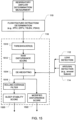
- embodiments of the present technology may include a sleep condition detection device 102 or apparatus having a controller 104 that may have one or more processors to implement particular sleep state and/or sleep arousal detection methodologies such as the algorithms described in more detail herein.
- the system of the controller may have multiple components or modules that control the various aspects of the controller.
- the components or modules may be implemented with integrated chips, a memory and/or other control instruction, data or information storage medium.
- programmed instructions encompassing such detection methodologies may be coded on integrated chips in the memory of the device or apparatus to form an application specific integrated chip (ASIC).
- ASIC application specific integrated chip
- Such instructions may also or alternatively be loaded as software or firmware using an appropriate data storage medium in which they reside to then control one or more programmable processors.
- the controller 104 may have access to data from a respiratory flow signal or may otherwise include an optional flow measurement module 105. With such a module, the controller may directly measure respiratory flow.
- the processor may control the assessment or detection of sleep conditions as described in more detail herein based on previously recorded respiratory flow data from a prior sleep session. Alternatively, the detection may be performed during a sleep session contemporaneously with the measuring of a respiratory flow signal using a present measuring of flow data with a flow sensor.
- the device itself may optionally be implemented with a flow sensor for measuring a respiratory flow signal for use with implemented methodologies.
- flow to or through a nasal cannula or mask may be measured using a pneumotachograph and differential pressure transducer or similar device such as one employing a bundle of tubes or ducts to derive a flow signal.
- a flow signal may be inferred from other sensors, such as, a motor current sensor as described in PCT/AU2005/001688 filed on Nov. 2, 2005 , the entire disclosure of which is incorporated herein by cross reference.
- flow data may be processed by optional modules such as a flow limitation detection module 106, apnea and/or hypopnea (AHI) detection module 108, respiratory flow characteristic or feature extraction module 110 and leak detection module 112.
- AHI detection module 108 may also utilize input from the sleep state detection module 114 in the determination of apnea and/or hypopnea events.
- Output signals or data from the flow limitation detection module 106, AHI detection module 108 and respiratory feature extraction module 110 may be processed by the arousal detection module 114.
- output from the leak detection module 112 and respiratory feature extraction module 110 may be processed by the sleep state detection module 118.
- output signals or data from the arousal detection module 114 and patient characteristics data store 122 may be processed by the sleep stability detection module 116.
- a sleep quality detection/assessment module 120 may then process output data or signals from the sleep stability detection module 116, the patient characteristics data store 122 module and the sleep state detection module 118.
- Output signals or data from the sleep quality assessment module 120 may then be displayed with a user interface module 124 and/or serve as input to a feedback control module 126, which serves to modify or make adjustments to the settings of a therapy control processing module 128, such as a pressure treatment therapy setting.
- the detectors and modules of the controller may be implemented with to the following features and functions.
- This module may control the storing of data and information characteristics of patients utilizing the sleep condition detection device 102.
- the data may be input via the user interface module 124, which may optionally include a keyboard, buttons of a panel, touch screen etc.
- the device may prompt a patient or clinician to select or enter one or more patient characteristics such as: age, sex, weight, height, BMI and/or pre-existing condition data (e.g., a health condition that may potentially affect heart rate variability, a health condition that may potentially be involved in creating differences in airflow patterns, other current physiological condition, etc.).
- Such health conditions may include asthma, emphysema, chronic cardiovascular disease, for example.
- the stored data may in turn be utilized by other modules of the device.
- patient characteristics may be utilized to weight an output of the methodologies described herein. For example, there may not be an absolute airflow feature that can be used as a mean for every patient to compare to in detection of different sleep states. Thus, the patient characteristics may be used to adjust sensitivity of the feature extractor (or the thresholds to which the respiratory characteristics are compared). In this way, the significance of the characteristics of the airflow may be more accurately assessed for different patients. For example, a patient who is above the age of 50 will naturally have lesser stability in the upper airway. Therefore, a system or method of the present technology may be selectively less severe on assessing flow stability for such patients.
- the AHI may optionally be combined with a flattening indicator and leak indicator to provide a simple sleep quality score that may yield an elementary insight into sleep quality.
- the flow data may be processed to detect the presence of a leak, such as a leak associated with the dislodgement of a mask or a high leak.
- a high leak may be considered a leak in excess of a certain quantity threshold (e.g., a leak of greater than about 0.4 Liters per second (l/s)).
- the device may be configured to detect when a leak is occurring or has occurred by any of the methods described in U.S. Patent Nos. 6,152,129 and/or 6,532,957 , the entire disclosures of which are incorporated herein by cross reference. Leak detection may optionally serve to assist in classifying arousal from sleep that is due to mask leak as well as to exclude AHI scoring in the presence of leak as previously mentioned.
- One or more respiratory flow characteristics may be determined by the feature extraction module 110.
- the features may be determined by processing respiratory flow data.
- the features may optionally be calculated on a breath-by-breath basis or by use of a sliding window comprising several breath cycles.
- the features may then serve as indicators or input for the other modules of the system. For example, depending on the data from one or more of the measured characteristics, various conclusions may be drawn in other modules about sleep conditions with the flow data.
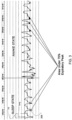
- This respiratory flow characteristic may be determined by calculating a variance of the Inspiratory Peak Flow. Such a characteristic is illustrated in FIG. 2 .
- the variation may be determined with a sliding window including a plurality of breaths (e.g., 5 breaths).
- the calculation utilizes the inspiratory peak flow values 202 for a group of consecutive breaths. When assessed by the state detector with suitable thresholds, this value may be indicative of different sleep states as follows:
- This respiratory flow characteristic may be determined by calculating a variance of the Expiratory Peak Flow. Such a characteristic is illustrated in FIG. 2 .
- the variation may be determined with a sliding window including a plurality of breaths (e.g., 5 breaths).
- the calculation utilizes the expiratory peak flow values 204 for a group of consecutive breaths. When assessed by the state detector with suitable thresholds, this value may be indicative of different sleep states as follows:
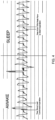
- this respiratory flow characteristic may be calculated as a ratio between a time taken to reach Expiratory Peak Flow (TPE) from the beginning of expiration to the total Expiratory Time (TE). The ratio is illustrated in FIG. 3 .
- TPE Expiratory Peak Flow
- TE Total Expiratory Time
- This respiratory flow characteristic may be calculated as a variation (e.g., variance) of the ratio of the prior characteristic.
- the variation may be determined with a sliding window including a plurality of breaths (e.g., 5 breaths).
- this value may be indicative of different sleep states as follows:
- This respiratory flow characteristic may be calculated as a proportion of the area of the Expiratory Flow curve (e.g., between 75% and 100%) of Expiratory Peak Flow.
- An example of the expiratory peak flow area 306 is illustrated in FIG. 3 .
- this value may be indicative of different sleep states as follows:
- This respiratory flow characteristic may be calculated as a variation (e.g., variance) of the area of the prior characteristic.
- the variation may be determined with a sliding window including a plurality of breaths (e.g., 5 breaths).
- this value may be indicative of different sleep states as follows:
- This respiratory flow characteristic may be calculated as a time between a proportion (e.g., 75%) of Peak Flow of the rising part of the Expiratory Peak Flow and a start of the next Inspiration. This characteristic is illustrated in FIG. 4 .
- this value may be indicative of different sleep states as follows:
- This respiratory flow characteristic may be calculated as a time from the last confirmed inspiration. The characteristic is illustrated in FIG. 4 . Such a characteristic may be assessed with suitable thresholds by the arousal detector described in more detail herein.
- This respiratory flow characteristic may be calculated as a variation (e.g., variance) of the time from last confirmed inspiration of the prior characteristic.
- the variation may be determined with a sliding window including a plurality of breaths (e.g., 5 breaths).
- this value may be indicative of different sleep states as follows:
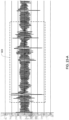
- This respiratory flow characteristic may be calculated by a scan for any small sections of high frequency breathing over a sliding breath epoch (e.g., 15 breaths). The feature is illustrated in FIG. 5 . When assessed by the state detector with suitable thresholds, this value may be indicative of REM breathing.
- This respiratory flow characteristic may be calculated as a variation (e.g., variance) in the inspiratory time.
- the variation may be determined with a sliding window including a plurality of breaths (e.g., 5 breaths).
- this value may be indicative of different sleep states as follows:
- This feature may be implemented to determine whether there is consistency in the following respiratory flow characteristics from breath to breath over a period of a number of breaths (e.g., 5 breaths).
- the consistency check considers Inspiration Time, Inspiratory Peak Flow Location, Expiration Time, Expiratory Peak Flow Location. Minor differences in the characteristics may be deemed consistent.
- This feature checks for a variation in the respiratory flow characteristics previously identified (e.g., characteristics 1-12) over a multiple breath period (e.g., 30 breaths). For example, an automated analysis of any of the features over a period of a number of breaths (e.g., 30) may identify whether any feature is consistent or has significant variation. For example, in an awake period, a Peak Flow Variability feature will be on average higher than in a sleep period. Such a value may not be above a required awake threshold each time it is calculated, such as over a period of 30 breaths, but there may be a significant proportion above the threshold that may be evaluated.
- This respiratory flow characteristic may be calculated as a time it takes for a breath to reach a proportion (e.g., 95%) of inspiratory peak flow from the beginning of inspiration. This 95% time characteristic is shown in FIG. 6 with reference character T_95. This respiratory flow characteristic feature may be utilized in the assessment by the arousal detection module 114.
- This respiratory flow characteristic may be calculated as the area of the inspiratory peak flow curve above a proportion (e.g., 75%) of Inspiratory Peak Flow.
- This respiratory flow characteristic feature may be utilized in the assessment by the arousal detection module 114.
- a 75% time characteristic (T_75) which is a time at which a breath reaches a proportion (e.g., 95%) of inspiratory peak flow, may be determined to then calculate the area as shown by the shaded region of FIG. 6 .
- This Area above 75% Inspiratory Peak Flow feature may be labeled herein as "IP75A".
- This respiratory flow characteristic may be calculated as the variance in the area of the preceding respiratory flow characteristic.
- the variance may be determined with a sliding window including a plurality of breaths (e.g., 5 breaths).
- This respiratory flow characteristic feature may be utilized in the assessment by the arousal detection module 114. This Area above 75% Inspiratory Peak Flow Variation feature may be labeled herein as "I75AV".
- This respiratory flow characteristic may be calculated as a time between a proportion (e.g., 95%) of the rising side of the Inspiratory Peak Flow curve and the Expiratory Peak Flow location. This respiratory flow characteristic may be utilized in the assessment by the arousal detection module 114.
- a 3mvTtot Ratio may be calculated as the 3mvTtot from the current breath divided by the 3mvTtot from a previous breath.
- the 3mvTtot may be determined as the ratio between the average minute ventilation (e.g., a three minute ventilation) and a total breath period (e.g., time period for the duration of the current breath).
- the minute ventilation may be determined as the average ventilation taken during preceding minutes (e.g., in a range of about two to five minutes, but preferably three minutes).
- the output weights are then provided to a pattern applier 2014.
- data for patterns of various individual features are combined.
- weights associated with several subsets of features are likely to contain information more indicative of sleep stage than compared to individual features.
- a pattern may be considered one or more features that collectively represent information indicative of sleep stage.
- a range of patterns may be collectively utilized to identify sleep stage.
- an ideal set of these patterns will contain information that meet the following conditions:
- the second condition can be more challenging. Given the nature of the respiratory flow signal and subsequently calculated features, it is a difficult task to produce patterns with little or no overlap. Thus, a judicious combination of these patterns may be implemented in order to obtain the necessary information.
- the pattern applier may implement the following patterns (P1, P2, P3, P4 and P5) : Pattern ID Feature Subset P1 IPFV, EPFV, TSLBV P2 IPFV, EPFV P3 TSLBV P4 IPFV P5 IPFV, I75AV
- the feature weights from the thresholder for each sleep state are combined, for example, by summing the weights.
- I x N pattern scores produced for each pattern (P 1 ...P N ), and each state (S 1 ...S I ) there will be I x N pattern scores produced.
- there will be twenty pattern scores i.e., P1_awake, P1_NREM_sleep, P1_rem, ..., P5_awake, P5_NREM_sleep, P5_nrem).
- biasing factors ⁇ , ⁇ , ⁇ , ⁇ 1, ⁇ 1, ⁇ 1, ⁇ 2, ⁇ 2 and ⁇ 2 may be implemented as shown above.
- the factors may permit some adjustment to the pattern scoring based on one or more of the patient characteristics of the patient characteristics data 122. For example, one or more of these may be set to 1 if none of the particular patient characteristics would tend to make the particular pattern more or less indicative of a particular state. However, other values may used and may be determined empirically based on the patient characteristics.
- a REM enhancer factor (designated "REM_Enhancer_Index") may be utilized. This factor is produced by the REM State Enhancer 2030 shown in FIG. 20 . The processing of the REM State Enhancer 2030 is discussed in more detail herein. This essentially provides an additional weight for adjusting (e.g. by multiplication) the raw REM sleep score.
- the weights are calculated only for pattern-based scores such as the NREM state, REM state or Awake state.
- the NREM Sleep T state of the graph of FIG. 21 may be considered a "state" dependant score rather than a pattern dependant score.
- any values for this transition state are based on a Periodic State and Arousal State at the time of probability calculation as discussed in more detail herein with regard to the transition probabilities of FIGs. 27 .
- the raw state scores are then processed by the state transition probability calculator 2018.
- This processing generally involves a determination of state transition probabilities such as the transition probabilities identified in the chart of FIG. 21 according to the probability methods discussed herein. These probabilities may be considered a further conditioning step in the sleep stage calculation process. Example probability values are shown in the tables of FIGs. 26 and 27 .
- the transition probabilities may be combined with the raw score for a given state, for example, by multiplication, to generate a modified sleep state score. In this way, the raw sleep scores may be biased by the transition probabilities.
- its raw state score may be assumed to be 1 such that the transition probabilities will become the modified state score for this state.
- the first awake phase i.e., prior to the onset of sleep
- the first sleep stage of the night should not be a REM phase unless the patient has a specific REM sleep disorder.
- certain rules may be applied in determining the state transition probabilities to account for some of these conditions. Examples of these transition conditions and their associated probabilities are discussed in more detail herein in reference to FIGs. 26 and 27 .
- the transition probabilities may be based on a Sleep Onset Index, which is discussed in more detail herein.
- the sleep onset index may be a binary index. For example, if it reads a value 1, this represents that the patient is in sleep (either NREM Sleep or NREM Sleep T). Similarly, if it reads 0, this represents that the patient is in Awake State. However, if the patient is in the first Awake state for the night and this index reads 0, all transition probabilities that govern a state change to any of the three sleep states will be zero, (e.g., T12, T13 and T14 will be zero if Sleep Onset Index is 0).
- a state selector 2020 may then determine the next sleep state. By comparison of the modified sleep state scores, a next state may be selected. For example, the modified sleep state score with the greatest score may be considered the detected state of the states of the state machine of FIG. 21 .
- REM state is the most difficult sleep state to detect when analyzing only the respiratory airflow signal. Therefore, some specialized features can be specifically implemented to capture features of "REM-type" airflow so as to enhance REM sleep detection. The combined output of these features provides an Enhanced REM State and may be, in part, implemented by the processing of the REM State Enhancer 2030 shown in FIG. 20 .
- REM-specific features may be determined, which may optionally, at least in part, be implemented by the processing feature extractor 110.
- a respiratory airflow is captured and processed to calculate the following REM-specific features:
- the Feature Consistency Index may then be output by the REM State Enhancer 2030 to serve as the RemEnhancer Index as previously discussed.
- transition probabilities condition raw sleep scores in order to produce the modified sleep score.
- some general points about the natural sleep cycle may be considered:
- rules have been defined. However, there are many ways to interpret the above information ((a) to (d)) and to define corresponding rules. Thus, the following rules and the transition probabilities values associated therewith are merely examples. Other rules and values may be derived by machine learning or pattern recognition techniques. Examples of such techniques which may be adopted include cluster analysis, support vector machines and Bayesian classification.
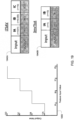
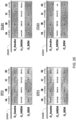
- the tables of FIG. 26 summarize the association of these rules with probability values that may be implemented to govern the state transition probabilities.
- only one specific rule may be applicable at any one time.
- the output of the tables may be applied as the transition probabilities as previously discussed. For example, if processing determines that Rule 5 is true and the current state of the machine is Awake, then the transition probability T11 will be 0.9, T13 will be 0.05 and T14 will be 0.05. The remaining transition probabilities of the tables may be similarly determined.
- another set of rules in the determination of transition probabilities by the state transition probability calculator 2018 may be based on the output of the periodic breathing detector and the arousal detector.
- the periodic state detector controls the transitions to and from NREM Sleep T state.
- the following example rules and the related values that are illustrated in the tables of FIG. 27 may also govern the state transition probability values.
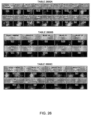
- the tables of FIG. 27 summarize the association of these rules with probability values that may be implemented to govern the state transition probabilities. Based on the assessment of one or more of the rules and depending on the particular state that the machine previously detected in the last breath, the output of the tables may be applied as the transition probabilities as previously discussed. For example, if processing determines that Rule 11 is true and the current state of the machine is NREM Sleep T state 2116, then the transition probability T22 will be 0 (as illustrated in Table 2700C). The remaining transition probabilities of the tables may be similarly determined.
- An arousal detection module 114 may determine whether the respiratory flow data represents an arousal from sleep.
- an arousal from sleep can result in a disturbance in the flow signal.
- a basic function of this module is to scan the data from the flow signal for such disturbances to indicate whether or not they have occurred. For example, if a disturbance is detected from the respiratory characteristics of the feature extraction module 110, the module may generate a signal or data containing the passage of flow disturbance to the sleep stability module.
- a data packet may be generated to contain data from the flow disturbance as well as data from a period of the flow signal preceding the disturbance (e.g., up to fifteen breaths prior). The data may be used for further classifying the disturbance, such as described in more detail herein.
- An embodiment may then detect the disturbance using one or more of the respiratory characteristics.
- a flow disturbance may be detected by assessing respiratory characteristics 1-4 recited immediately above. These features may be considered indicators of a flow disturbance.
- these characteristics may be compared to a set of empirically determined thresholds to detect the disturbance. If the comparisons show that a sufficient disturbance has occurred in the flow signal the module may so indicate, for example, by outputting a positive signal or data indication (e.g., a 1 if yes otherwise a 0 if no).
- an example methodology of the module may proceed on a breath-by-breath basis as follows:
- the features may be applied to a threshold function so that a weight may be associated with each feature.
- a flow disturbance feature is derived from the weighted outputs of the threshold function.
- the flow signal is further analyzed to see which of the above mentioned events preceded the flow disturbance. Subsequently, the flow disturbance may be characterized as an arousal.
- Outputs of the module may optionally include (a) Arousal Type and (b) Arousal Duration.
- This subset of features may optionally only include the IP75A (i.e., the area of the inspiratory flow curve above 75% inspiratory peak flow) feature, the 3mvTtot (i.e., the ratio between current 3 minute ventilation to Ttot (total breath time)) feature and the PF75PF (i.e., the ratio between inspiratory peak flow and 75% inspiratory peak flow) feature discussed above.
- IP75A i.e., the area of the inspiratory flow curve above 75% inspiratory peak flow
- 3mvTtot i.e., the ratio between current 3 minute ventilation to Ttot (total breath time)
- PF75PF i.e., the ratio between inspiratory peak flow and 75% inspiratory peak flow
- Each feature is provided to a thresholder 1310 where one or more threshold function (s), such as the examples illustrated in FIG. 14 , are applied to each feature of the feature subset.
- this example uses particular features, it will be understood that other embodiments may be
- an output value which may be considered a disturbance weight, of 0.05 is selected as the output that is attributable to the IP75A feature.
- output weights are selected for the 3mvTtot feature.
- the input and output values for function of graph 1450 will be based on the values of the 3mvTtot table (shown as table at reference character 1440B).
- output weights are selected for the PF75PF feature by the function of graph 1450 and based on the values of the PF75PF table (shown as table at reference character 1440C). It is noted that although specific values are illustrated in the tables of FIG.
- the three weights output from the thresholder are combined, such as by summing the weights, in the processing of the flow disturbance calculator 1312 to produce a flow disturbance feature.
- the processing of the flow disturbance calculator 1312 further compares the weight of the disturbance feature to an arousal threshold, which may be chosen empirically, to indicate whether or not the disturbance feature represents an arousal event. If it does, an arousal flag is set.
- the flow data associated with arousal event is evaluated by the preceding event classifier 1314, to identify particular events that may have led to or caused the arousal.
- the identified preceding event may be respiratory related (e.g., an obstructive or central apnea event, an obstructive or central hypopnea event, or a flow limitation event) or non-respiratory related (e.g., a Periodic Leg Movement (PLM) event and/or a Leak event (e.g., mouth leak or high leak)). If none of these events are found, then the arousal may be classified as a spontaneous arousal.
- respiratory related e.g., an obstructive or central apnea event, an obstructive or central hypopnea event, or a flow limitation event
- non-respiratory related e.g., a Periodic Leg Movement (PLM) event and/or a Leak event (e.g., mouth
- the processing for identification of these preceding events may be integrated with the processing of the classifier 1314. However, as illustrated in FIG. 13 , they may also optionally be implemented by discrete detectors that communicate the detection results to the classifier 1314.
- the arousal detector 114 will output the arousal feature, which may be a signal or data indicating the type and/or duration of the arousal. For example, it may be identified as a mouth leak related arousal, an apnea related arousal, a flow limitation related arousal, a PLM related arousal, a spontaneous arousal, etc.
- the duration of the arousal may be determined as the time period from which the arousal flag is set to indicate the arousal until the time it changes to indicate that no arousal is occurring. Alternately, the time period may be a number of breaths.
- the implemented sleep stability detection module 116 may be implemented with multiple functions. For example, in conjunction with the arousal detection module, the module may (1) classify a detected flow disturbance, (2) grade the level of flow disturbance intensity (e.g., a degree of the arousal) and/or (3) infer a level of autonomic activation.
- the module may (1) classify a detected flow disturbance, (2) grade the level of flow disturbance intensity (e.g., a degree of the arousal) and/or (3) infer a level of autonomic activation.
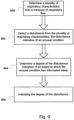
- FIG. 8 An example methodology associated with the arousal detection module 114 and sleep stability detection module 116 is illustrated in FIG. 8 .
- the modules may be implemented with a methodology to detect or classify a sleep arousal condition from data representing a measured flow of breathable gas.
- the methodology may include determining a plurality of respiratory characteristics from a measure of respiratory flow. This may be integrated with the detection modules or provided from another module such as the feature extraction module 110.
- a disturbance is detected from the plurality of respiratory characteristics as previously discussed. The disturbance may be indicative of an arousal condition.
- the methodology may assess whether the disturbance is a non-respiratory related arousal.
- the module may then indicate that the detected disturbance represents an arousal based from an event other than a symptom of respiratory dysfunction. For example, it may store data representing the determination in memory, apply it to the input of another module (e.g., the sleep quality module 120) and/or produce it as output such as on a display of the user interface module 124.
- a non-respiratory dysfunction related event may be, for example, an event associated with a periodic leg movement.
- the detected non-respiratory arousal may be attributed to a periodic leg movement or detected leak.
- one or more occurrences of periodic leg movement or a period of periodic leg movement may be identified from detecting arousals or disturbances and detecting a contemporaneous or synchronous absence of respiratory dysfunction symptoms (e.g., no or insignificant flow limitation, no or insignificant flow flattening, no or insignificant obstruction etc.).
- the modules may be implemented with a methodology to assess sleep stability from a measured flow of breathable gas.
- the method may include determining a plurality of respiratory characteristics from a measure of respiratory flow. This may be integrated with the detection modules or provided from another module such as the feature extraction module 110.
- a disturbance is detected from the plurality of respiratory characteristics, which may be indicative of an arousal condition, as previously discussed.
- a degree of the disturbance is determined. The degree of the disturbance may be indicative of an extent to which the arousal condition has interrupted sleep.
- the processor may then indicate the degree of the disturbance. For example, it may store data representing a calculated degree of disturbance in a memory, apply it to the input of another module (e.g., the sleep quality module 120) and/or produce it as output such as on a display of the user interface module 124.
- the flow disturbance is classified, graded and then also used as an index to infer a level of autonomic activation for the patient.
- the following steps may be implemented:
- the disturbance of the packet may be regarded as a respiratory related arousal. If no such event has occurred prior to the flow disturbance, it may be classified as non-respiratory such as an arousal attributable to periodic leg movement rather than a respiratory dysfunction.
- the device may classify the arousal or disturbance as non-respiratory but attributable to a valve-like leak of the mask.
- the length of the disturbance may be a determined or calculated duration or time taken for the disturbance (e.g., seconds or minutes).
- the intensity e.g., degree of the disturbance
- an intensity value may be calculated as a ratio of the disturbance data and respiratory breath data prior to the disturbance.
- the intensity value may be calculated as a ratio of (a) a variance of the flow disturbance section of the data packet (e.g., samples from the flow signal during the flow disturbance) and (b) a variance of the flow data for a number of breaths (e.g., 15 breaths) prior to the disturbance (e.g., samples from the flow signal prior to the flow disturbance). Any of the respiratory characteristics may also be utilized in the calculation of such a ratio.
- the determined intensity value may be utilized to imply autonomic activation for the patient during the disturbance.
- the module may include or have access to a memory with a look-up table.
- the look-up table may contain data mappings of flow disturbance intensities to levels of autonomic activation (e.g., values for heart rate variability, values of pulse transit time (PTT), etc.).
- the intensity may be utilized as an index to a autonomic activation value.
- the table may be further indexed by data processed by the patient characteristics store module 122. In such a case, the table may include data for different classes of patients.
- the determination of inferred autonomic activation may be further indexed according to particular patient characteristics, such as the age, body mass index (BMI), weight, height, and/or other disease condition or current physiological condition, etc. for the particular patient utilizing the device.
- BMI body mass index
- Such a table may optionally be developed through a large scale data mining exercise to compare and associate flow disturbance intensities and subsequent autonomic changes (e.g., Heart Rate Variability (HRV) and Pulse Transit Time (PTT)) in different classes of patients.
- HRV Heart Rate Variability
- PTT Pulse Transit Time
- the intensity value, length, autonomic activation values, type of disturbance identified, etc. may optionally be stored in a memory of the device, used by other assessment modules (e.g., the sleep quality assessment module 120) and/or displayed on a visual output display of the user interface module 124.
- an objective of respiratory treatment (e.g., positive airway pressure) therapy is to reduce respiratory related disturbances for a patient, and thereby increase sleep stability.
- the sleep stability detection module quantify a level of sleep related disturbance that occurs during the patient's sleep session. For example, a detector with such a module may generate a score between 0 and 1 at the end of each breath cycle indicating the level of sleep disturbance. In such a case, a score of 1 can indicate maximum sleep stability. The score may then grade progressively lower levels of sleep stability as the score decreases to 0.
- a weight may be applied to each feature.
- these threshold functions may be adjusted by some or all of the patient characteristics from the patient characteristics data 122.
- a respiratory disturbance value may then be calculated from the weighted outputs of the threshold function(s). This value may then be de-weighted by outputs from the leak detection 112 and arousal detection modules 114 discussed herein.
- a sleep stability score may then be calculated as a rolling average of the de-weighted values determined over a number of breaths (e.g., a range of about 5 to 30 such as a 15 breath rolling average).
- Such an example embodiment of the sleep stability detection module 116 may be configured with the processing illustrated in the block flow diagram of FIG. 15 .
- a respiratory airflow or filtered flow associated with a flow sensor of a flow generator is provided to and processed by the feature extractor.
- the feature extractor In this process, a particular subset of the previously described respiratory features determined by a feature extractor are utilized.
- This subset of features may optionally only include the IPFV (i.e., Inspiratory Peak Flow Variation) feature, the EPFV (i.e., Expiratory Peak Flow Variation) feature, the TSLBV (i.e., Time Since Last Breath Variation) and the I75AV (i.e., Area above 75% Inspiratory Peak Flow Variation) feature, which are each previously discussed.
- Each feature is provided to a thresholder 1410 where one or more threshold function(s) such as the examples illustrated in FIG. 16 are applied to each feature of the feature subset.
- this example uses particular features, it will be understood that other embodiments may be based on other sets (e.g., all features) or subsets with any combination of the previously mentioned respiratory flow based features determined by the feature extractor.
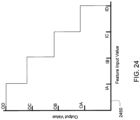
- the function of graph 1650 of FIG. 16 may be implemented with the example input values IA, IB, IC and ID and example output values OA, OB, OC and OD taken from table IPFV (shown as table at reference character 1640A).
- the input values IA, IB, IC etc. represent consecutive ranges for the output values.
- IA is a range from less than 0.001 up to and including 0.001.
- IB is a value of a range greater than the range of IA up to and including 0.003.
- IC is a value of a range greater than the range of IB up to and including 0.009.
- ID is a value of a range greater than the range of IC up to and including 10, which may be considered a maximum possible input value.
- an output value which may be considered a disturbance weight, of 0.8 is selected as the output that is attributable to the IPFV feature.
- output weights are selected for the EPFV feature.
- the input and output values for function of graph 1650 will be based on the values of the EPFV table (shown as table at reference character 1640B).
- output weights are selected for the TSLBV feature by the function of graph 1650 and based on the values of the TSLBV table (shown as table at reference character 1640C).
- output weights are selected for the I75AV feature by the function of graph 1650 and based on the values of the I75AV table (shown as table at reference character 1640D). It is noted that although specific values are illustrated in the tables of FIG. 16 it will be understood that these are merely examples. Other values may be implemented and may be empirically determined either from a group of patients or for a particular patient. Thus, these values may be learned with processing based on machine learning and pattern recognition techniques. Examples of techniques that may be adopted for this include cluster analysis, support vector machines and Bayesian classification.
- a raw disturbance score is then determined by combining the weights, such as by summing the weights from thresholder 1510 in the raw score processing at scorer component 1512.
- the raw score from scorer component 1512 may then be adjusted or de-weighted based on certain system conditions. For example, it may be adjusted based on a detected leak and/or arousal conditions from a leak detection module or arousal module as illustrated in FIG. 15 .
- a modified disturbance score 1522 which is from a current breath, may be determined by de-weighting the raw disturbance score by a de-weighting factor determined from a de-weighting function such as the example function illustrated in FIG. 17 .
- the function of FIG. 17 may be employed to take into account current leak levels.
- the signal-to-noise ratio (SNR) for the actual respiratory airflow signal may be greatly reduced.
- the raw disturbance score may be de-weighted to take into account this low SNR.
- the threshold of FIG. 17 linearly de-weights the sleep stability using the output de-weighting factor once leak levels reach 0.3 l/s. Once leak reaches 0.5 l/s, the Sleep Stability score will be 0.
- the de-weighting component may be employed to consider the current arousal status from the arousal detector. For example, respiratory, leak and PLM related arousals are disruptive to the patient's sleep and the sleep stability score should be utilized during these types of arousals. However, a detected spontaneous arousal may be considered a part of the natural sleep pattern of the patient. In such a case, a determined sleep stability score for a particular breath may be disregarded if it coincides with a detected spontaneous arousal. Therefore, the de-weighter 1514 may assess the input arousal feature, and if a spontaneous arousal is detected, it may be configured to prevent the modified disturbance score from being counted in the sleep stability score for the current breath.
- a filter 1516 such as a rolling average filter, may then process the modified disturbance scores from the de-weighter 1514.
- the output of the de-weighter may be averaged over a past number of determined scores, such as a number in a range from 10 to 20 scores, but preferably 15.
- the output of the filter may be considered the sleep stability score 1520 which may be considered a sleep stability index.
- a sleep quality assessment module 120 may be implemented to assess sleep quality. In some embodiments, the assessment or detection may be based on outputs of other modules.
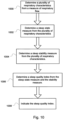
- An example methodology associated with the sleep quality assessment module 120 is illustrated in FIG. 10 . Essentially, the methodology determines a sleep quality indicator from a measured flow of breathable gas.
- a plurality of respiratory characteristics from a measure of respiratory flow are determined. This may be integrated as part of the module or as part of another module (e.g., the feature extraction module 110).
- the method then involves a determination a sleep state measure and a sleep stability measure from the plurality of respiratory characteristics as previously discussed.
- the method determines and indicates one or more a sleep quality index/indices from the sleep state measure and the stability measure.
- the index or indices may be stored in a memory of the device, used by other assessment modules (e.g., the feedback module 126) and/or displayed on a visual output display of the user interface module 124.
- an embodiment may be implemented with the following steps:
- this module may also monitor or record as an index a number of breakdowns of awake to sleep periods from one night to the next for feedback purposes.
- a figure or figures can be a simple number that can be calculated as the number of Awake periods, the total awake time, the number of sleep periods and/or total sleep time.
- this can be provided as a figure(s) averaged over a period of time such as a month.
- a day by day figure(s) may also be provided. Such information can provide some simple feedback to the patient about their sleep architecture.
- the output of this module may be recorded, used for feedback purposes and/or displayed for the patient and/or a clinician. For example, it may be displayed through the user interface module 124 and/or returned or fed back into the therapy algorithm processing module 128 to implement adaptive control of a flow generator in real time.
- the feedback may serve to implement short term changes to therapy and/or longer term changes (e.g., weeks or months).
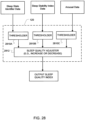
- a further example embodiment of a sleep quality assessment module 120 may be considered in reference to FIGs. 28 to 31 .
- the processing in this sleep quality detector will involve an assessment of other processed data of the system such as the sleep stability index, the sleep state identifier and/or the arousal index.
- the input data can serve as a dynamic force(s) to change the sleep quality index (SQI) on a breath-by-breath basis.
- the processing of the assessment module is illustrated in the block diagram of FIG. 28 . In this embodiment, the input data are applied to thresholders 2810A, 2810B and 2810C.
- thresholder 2810A may be implemented with a function such as the function illustrated in FIG. 29 .
- the output of the thresholder 2810A may be a weight in a range of -0.05 and 0.5 based on the sleep state identifier.
- the function of FIG. 29 indicates that NREM Sleep will have the highest positive influence while Awake will have the highest negative influence.
- the input state identifier represents the Awake State 2110
- the output weight is -0.5.
- the state identifier represents the NRem Sleep T state 2116
- the output weight is -0.3.
- the state identifier represents the NRem Sleep state 2114, then the output weight is 0.5.
- additional weight values may be implemented by the thresholder.
- detection of a REM state may also result in an adjustment to the sleep quality index. For example, if REM state periods are detected, then the sleep quality index may be positively weighted. Thus, in some embodiments, the sleep quality index may be increased as a function of a length of overall time spent in one or more REM states. Optionally, it may be increased as a function of an increase in a number of REM periods detected. Still further, it may be increased as a function of a particular point in time of the nights sleep that the REM state detection occurs. In still further embodiments, detection of REM state (s) may not result in any adjustment to the sleep quality index.
- thresholder 2810B may be implemented with a function such as the function illustrated in FIG. 30 .
- the output of the thresholder 2810B may also be a weight in a range of -.05 and 0.5 based on the sleep stability index.
- the association between the input sleep stability index and the output weight is represented by function line 3010. For example, an input of a sleep stability index of about 0.3 may result in an output weight of about 0.1.
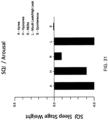
- thresholder 2810C may be implemented with a function such as the function illustrated in FIG. 31 .
- the output of the thresholder 2810C may also be a weight in a range of -0.05 and 0.5 based on the sleep stability index.
- the input arousal type represents an apnea
- the output weight is -0.5.
- the input arousal type represents an hypopnea
- the output weight is -0.4.
- the input arousal type represents a RERA (respiratory effort related arousal)
- the output weight is -0.1.
- the input arousal type represents a leak, such as a mouth leak or high leak, then the output weight is -0.5.
- the output weight is 0.
- the sleep quality adjuster 2812 sets the sleep quality index, which may be a real value between 0 and 1. For example, an existing sleep quality index may be raised or lowered by applying the weights of the thresholders as factors to a sleep quality index. For example, a sleep quality index may be reduced by multiplication with a negative weight factor or increased by multiplication by a positive weight factor.
- the thresholders may simply output true or false values if the threshold function is positive or negative respectively based on the input data. The true or false values may then control respectively incrementing or decrementing a sleep quality index, such as an integer value. This assessment may generally be based on the premise that (a) certain arousals will generally decrease sleep quality whereas an absence may increase sleep quality, (b) a decrease in sleep stability will decrease sleep quality, and (c) some sleep states will be indicative of better sleep quality.
- the weights have been chosen to permit output of a sleep quality index that may be between 0 and 1 as a suitable indicator of sleep quality where 1 is the best quality and 0 is the lowest quality.
- a sleep quality index may be between 0 and 1 as a suitable indicator of sleep quality where 1 is the best quality and 0 is the lowest quality.
- other weight values and indicator values may be chosen depending on the nature of the desired sleep quality index.
- the output of these modules of the system may serve to control changes to a therapy control algorithm, such as a pressure treatment therapy (e.g., continuous positive airway pressure therapy ("CPAP")) provided by a processor controlled flow generator.
- a therapy control algorithm such as a pressure treatment therapy (e.g., continuous positive airway pressure therapy ("CPAP")) provided by a processor controlled flow generator.
- CPAP continuous positive airway pressure therapy
- sleep quality assessment output or sleep state output may be fed back into a feedback control module 126.
- the feedback control module may then control, for example, a level of instantaneous and long term amounts of pressure therapy given to the patient.
- This feedback control module may implement dynamic or short term and/or static or long term changes to the delivered therapy by sending instructions or control signals to a flow generator or therapy control processing module 128.
- a dynamic feedback control may be based on different sleep state outputs. For example, if a patient is initially in a detected awake state, delivered therapy may be kept at minimal levels. Similarly, the respiratory detection routines (e.g., AHI module) may be set to be disabled or otherwise be weighted to be less sensitive to any flow disturbances and otherwise avoid or minimize the making of pressure adjustments to treat AHI events. As the patient transitions into a detected sleep state, the feedback control module may set the controller to be more sensitive to flow disturbances or AHI events. In periods of detected deep sleep (e.g., a deep REM state or REM state), the sensitivity levels of the pressure therapy algorithm may be set at its maximum to fully treat/respond to detected events. Still optionally, if the device detects a patient waking up with a detected arousal and/or awake state, the therapy may then be ramped down or decreased at gradual steady rate to permit the patient to more comfortably return to sleep.
- the respiratory detection routines e.g., AHI module
- the feedback control module may implement static changes to therapy control.
- a sleep quality index may be used for long term feedback.
- the sensitivity levels of the therapy algorithm may be adjusted accordingly.
- improvements in sleep quality indices may control a reduction to therapy levels.
- decreases in sleep quality indices may control an increase in therapy levels.
- Such long term changes may optionally be implemented at controlled time periods, e.g., only after a certain number of treatment sessions, at the beginning of each month, or a period of therapy equivalent to a month, etc.
- an additional awake to sleep breakdown score may also be implemented to control changes to the therapy. For example, if there is a larger or increasing proportion of awake periods over a long term period (e.g., 1 month) then the pressure control algorithms may be weighted by a factor based on the score to provide a greater degree of therapy.
- pressure control may include an Expiratory Pressure Relief (EPR) feature.
- EPR Expiratory Pressure Relief
- An EPR feature can provide patient comfort to allow a patient to achieve sleep more easily.
- the EPR control automatically reduces a delivered treatment pressure by some amount (e.g., cm H 2 O) from a therapeutic pressure treatment setting upon the detection of each patient expiration while delivering the therapeutic treatment pressure during inspiration.
- a pressure treatment control may be modified based on the current technology.
- a ramp time may be implemented based on the detected sleep state which may in turn control the EPR. For example, whenever the device detects that that patient is in the Awake state, the EPR control may be turned on or otherwise operate as described above to reduce pressure during expiration. However, once the sleep state detection module detects that a patient falls into either NREM Sleep T, NREM Sleep or REM Sleep, the EPR function may be disengaged to prevent the reduction during expiration.
- the EPR control function may be gradually disengaged by gradually ramping down the amount of reduction of the therapeutic treatment pressure during a number of breathing cycles or period of time upon the detection of a transition from an awake state to a sleep related state. While this disengaging of the EPR function may be implemented at sleep onset, it may even optionally be implemented dynamically throughout a treatment session. For example, if after the sleep onset, the sleep state detection module detects that the patient has returned to an awake state from a sleep state (for example, by entering an awake state and remaining there for a certain period of time), the EPR function may be reengaged (or gradually re-engaged by gradually ramping up the amount of reduction of the therapeutic treatment pressure during a number of breathing cycles or period of time). The EPR may then subsequently be disengaged (e.g., gradually) as discussed above upon the further detection of patient's sleeping state.
- the sleep state detection may control how detected events are scored. For example, some events that may be detected by the respiratory treatment apparatus may not be reported as part of an event score even though these are detected by the device. For example, detected respiratory events such as apneas, hypopneas, arousals, mask leak, and/or mouth leak may not be reported as part of a particular event type score if the event is detected concurrently with a detected awake state.
- the control algorithm of the treatment device may confirm that the patient is in NREM Sleep T, NREM Sleep or REM Sleep states before the detection algorithm will score such events.
- all of the events may be scored but the scoring of each of the events may be categorized based the different detected sleep states during which they occurred or even more simply whether they occurred during either awake or sleep time. For example, a number of apneas may be scored for the awake time of a treatment session and a number of apneas may be separately scored for the sleep time (e.g., the sleep related states) of the treatment session. Thus, the scored events may be reported as output by the device based on the detected states such as in association with the detected sleep state during which they occurred.
- a therapeutic treatment pressure may be automatically set by the device.
- some pressure treatment devices may analyze the respiratory flow signal for abnormalities in the patients breathing and adjust the pressure for treatment of the abnormalities. For OSA patients, these abnormalities may be considered Flow limitation, Snoring and Obstructive Apneas.
- the pressure treatment device detects one or more of these events, it will control an increase in the pressure therapy based on the severity of the event up to some predefined maximum.
- the device can automatically control a reduction in the pressure therapy to permit it to fall back down to some predefined minimum value (e.g., set by the doctor for the patient).
- such a pressure control algorithm may be modified.
- the pressure control algorithm may be configured to treat the detected abnormalities and, rather than simply reducing the pressure in the further absence of detecting these abnormalities, the control may hold the therapy at the raised treatment level until the aforementioned sleep stability index is restored to a "high/acceptable" level based on comparing the sleep stability index against a threshold. Upon reaching the threshold after a treatment pressure increase, the pressure may then be reduced, or gradually ramped down, to the pre-determined minimum.
- the threshold representative of such a "high/acceptable" level may be pre-determined empirically, for example, by data mining of existing clinical data.
- reductions in the therapy pressure setting may be based on the sleep stability index instead of, or in addition to, the absence of the detection of the breathing abnormalities.
- CPC is an interesting quantity which measures the coupling between heart rate and breath rate. There are many uses for it but two of the most relevant are being able to distinguish between central and obstructive apneas and also measuring overall sleep quality.
- the breath is easily derived via the respiratory flow signal.
- deriving heart rate is a bit more difficult.
- a measure of heart rate from the respiratory flow is done by analyzing the cardiogenic flow element of the overall respiratory flow signal.
- U.S. Patent No. 5,704,345 describes several methods for detecting cardiogenic airflow, the disclosure of which is incorporated herein by reference. Cardiogenic flow is small oscillations in the respiratory flow signal due to the pounding of the heart onto the lung. They are not easily distinguishable during all times of therapy.
- an automated method for detection of cardiogenic flow may be controlled so as to wait for the detection of a stable section of sleep to occur and during these sections of sleep, the device may then perform the procedure to determine the cardigenic airflow and/or calculate a CPC index.
- the detection of particular sleep states e.g., the NREM sleep state
- other states e.g., NREM T, REM or awake
- the cardiogenic airflow determination procedure may be based on the sleep state detection.
- a cardiogenic airflow determination procedure can be used if an apnea is detected to distinguish between obstructive and central apneas.
- a controller of a treatment device detects the onset of an apnea, and the controller detects that the sleep state is a stable state (e.g., the NREM state)
- a CPC detector, or a process of the controller may then be enabled to permit a decision on which type of apnea has occurred (e.g., central or obstructive) based on the cardiogenic airflow detection (e.g., the presence or absence of the cardiogenic airflow respectively).
- the sleep condition detection device 102 may implement a periodic breathing state detection module 1880 such as the module illustrated in FIG. 18 .
- a periodic breathing state detection module 1880 such as the module illustrated in FIG. 18 .
- sleep sections with high levels of breathing instability. More often than not, this can be periodic nature.
- the body's respiratory controller can lose rhythm and in turn cause unstable breathing patterns.
- a purpose of a periodic breathing state detection module is to identify such sections during sleep.
- this may be detected by processing of respiratory flow signal data from a respiratory flow sensor and outputting a periodic breath state output signifying whether or not the patient is experiencing periodic breathing (e.g., a periodic breath state variable is 1 for yes and 0 for no) for a given breath.
- a periodic breath state variable is 1 for yes and 0 for no
- such a module may be based on an analysis of one or more of the features of the feature extractor 110 as discussed above. Processing associated with such an embodiment of the module may be considered in conjunction with the details of FIG. 18 .
- the feature extractor 110 may determine one or more of the features discussed above.
- the 3mvTtot feature and the IP75A feature may be analyzed.
- the IP75A feature is the area of the Inspiratory Flow curve above 75% Inspiratory Peak Flow and the 3mvTtot feature is the ratio between current 3 minute ventilation to Ttot (total breath time).
- Each feature is provided to a thresholder 1810 where one or more threshold function(s) such as the examples illustrated in FIG. 19 are applied to each feature of the feature subset.
- the function of graph 1950 of FIG. 19 may be implemented with the example input values IA, IB and IC and example output values OA, OB and OC taken from table I75AV (shown as table at reference character 1940A).
- the input values IA, IB, IC etc. represent consecutive ranges for the output values.
- IA is a range from less than 0.01 up to and including 0.01.
- IB is a value of a range greater than the range of IA up to and including 0.035.
- IC is a value of a range greater than the range of IB up to and including 10, which may be considered a maximum possible input value.
- an output value which may be considered a periodic state weight, of 1 is selected as the output that is attributable to the I75AV feature.
- output weights are selected for the 3mvTtot feature.
- the input and output values for function of graph 1950 will be based on the values of the 3mvTtot table (shown as table at reference character 1940B).
- the raw periodic state score may be determined by the following method:
- the periodic state output (e.g., whether or not a periodic breath state has been detected) may then be determined according to the following methodology:
- a suitable Counter Threshold may be set to 10, it may be some other empirically determined value.
- the counter threshold may be set as a result of processing based on machine learning and pattern recognition techniques. Such techniques may include cluster analysis, support vector machines and Bayesian classification or other similar machine learning techniques.
- an index may be implemented to detect or calculate the first transition into sleep from awake in a particular sleep session.
- the transition to sleep may be either NREM Sleep or NREM Sleep T, which may depend on which state has a higher transition probability in the implementation discussed below. Subsequent transitions into sleep states may then be governed by sleep state modules previously discussed herein.
- the sleep onset detection module may utilize as input data representing one or more respiratory flow based features taken from the feature extractor 110.
- sleep onset detection may be implemented by analysis of the following set of features:
- Sleep onset detection may also be based on the following: 3.) Raw Sleep State Score - This may be a score output from the sleep state detector as previously discussed for a sleep state.
- the sleep onset detector may then be implemented with the following processing methodology in the detection of sleep onset based on the above mentioned input data. This may be determined on a breath-by-breath basis at least until the patient has transitioned into the sleep onset:
- the T1, T2 and T3 thresholds may be determined empirically with known data for a group of patients. It may also be determined and set in a device for a particular patient.
- the Sleep Onset Index may be considered a binary switch or flag that is preset (e.g., to 0), such as at startup, to represent that the first onset of sleep has not occurred.
- the index is subsequently set to 1
- the person using the detector is considered to be in sleep (e.g., the first onset of sleep for a sleep session (e.g. a night)).
- the patient may be considered to be in an awake state (e.g., not yet in an initial sleep state for the particular session using the detector).
- the device may be configured to distinguish the onset of sleep (the initial transition to sleep) from subsequent transitions to sleep of a common or particular treatment session having multiple transitions from an awake state into a sleep state.
- the controller may be implemented without feedback, in a monitoring type device or data analysis device, some embodiments as previously discussed may implement the controller with a flow generator.
- the sleep condition detection device may be optionally implemented with a flow generator 1110 such as a servo controlled blower with suitable sensors for such control (e.g., a pressure sensor and/or flow sensor 1106) .
- a respiratory treatment or pressure therapy regime such as a therapeutic pressure level associated with CPAP treatment, may be delivered by the controller of the device.
- Such therapeutic pressure levels may be automatically adjusted in response to the detection of sleep conditions as previously described herein that may be suitable for treatment of patients with Sleep Disorder Breathing (SDB).
- SDB Sleep Disorder Breathing
- Other pressure adjustment schemes may also be implemented.
- Pressure may be delivered to a patient via a patient interface 1108 such as a mask, cannula and supply tube.
- the display 1120 is mounted on an exterior surface of the housing of the sleep condition detection device 102.
- the controller 104 may then be housed within the same housing as display. Output from the modules of the device may then optionally be displayed to the user or clinician on a display 1120 of the device or otherwise transferred from a memory of the device to other devices, systems or computers.
- the controller may then also optionally be configured to communicate with other external equipment including, for example, over the Internet with other computer based systems via a wired communications port (e.g., an Ethernet communications card and connection) (not shown) or a wireless communications port (e.g., a Bluetooth transceiver) (not shown).
- a wired communications port e.g., an Ethernet communications card and connection
- a wireless communications port e.g., a Bluetooth transceiver
- a sleep condition detection device 102 may be implemented by a general purpose computer with one or more programmable processors 1208.
- the device may also include a display interface 1210 to output data from the modules as previously discussed (e.g., sleep states, durations, sleep quality indices, AHI, leak detection data, and/or stability indices, etc.), results or graphs as described herein to a display such as on a monitor or LCD panel.
- a user control/input interface 1214 for example, for a keyboard, touch panel, control buttons, mouse etc.
- the device may also be included as previously discussed and for adjusting a therapy of a flow generator, inputting data, or otherwise activating or operating the methodologies described herein.
- the device may also include a sensor or data interface 1214, such as a bus, for receiving/transmitting data such as programming instructions, flow data, pressure data, sleep quality data, sleep state data, sleep stability data, arousal data and other output or input of the previously described modules.
- the device also includes memory/data storage components 1220 containing control instructions and data of the aforementioned methodologies and modules.
- memory/data storage components 1220 containing control instructions and data of the aforementioned methodologies and modules.
- they may include stored processor control instructions for flow signal processing such as measuring and/or feature extraction.
- these may also include stored processor control instructions for flow limitation detection, AHI detection, leak detection, arousal detection, sleep state detection, sleep stability detection and/or sleep quality detection as discussed in more detail herein.
- processor control instructions for respiratory treatment control such as feedback processing and pressure control adjustment, etc.
- they may also include stored data at 1228 for these methodologies such as flow data, detected respiratory characteristics, disturbance data, detected hypopnea and apnea events (AHI), sleep states, stability and arousal events and indices, sleep period times, sleep quality indices, patient characteristics, reports and graphs, etc.
- flow data detected respiratory characteristics, disturbance data, detected hypopnea and apnea events (AHI), sleep states, stability and arousal events and indices, sleep period times, sleep quality indices, patient characteristics, reports and graphs, etc.
- the processor control instructions and data for controlling the above described methodologies may be contained in a computer readable recording medium as software for use by a general purpose computer so that the general purpose computer may serve as a specific purpose computer according to any of the methodologies discussed herein upon loading the software into the general purpose computer.
- the distinct features may separately, or in different combinations, be implemented in other respiratory treatment and/or monitoring systems.
- tables with particular values and thresholds are illustrated, it will be understood that other values may be utilized, which may be determined from empirical data and/or machine learning.
Landscapes
- Health & Medical Sciences (AREA)
- Life Sciences & Earth Sciences (AREA)
- Animal Behavior & Ethology (AREA)
- Veterinary Medicine (AREA)
- Public Health (AREA)
- General Health & Medical Sciences (AREA)
- Engineering & Computer Science (AREA)
- Biomedical Technology (AREA)
- Heart & Thoracic Surgery (AREA)
- Pathology (AREA)
- Surgery (AREA)
- Medical Informatics (AREA)
- Biophysics (AREA)
- Physics & Mathematics (AREA)
- Molecular Biology (AREA)
- Anesthesiology (AREA)
- Cardiology (AREA)
- Pulmonology (AREA)
- Physiology (AREA)
- Emergency Medicine (AREA)
- Hematology (AREA)
- Measurement Of The Respiration, Hearing Ability, Form, And Blood Characteristics Of Living Organisms (AREA)
- Measuring Volume Flow (AREA)
Priority Applications (1)
| Application Number | Priority Date | Filing Date | Title |
|---|---|---|---|
| EP24217870.5A EP4544992A3 (en) | 2009-07-16 | 2010-07-14 | Detection of sleep condition |
Applications Claiming Priority (4)
| Application Number | Priority Date | Filing Date | Title |
|---|---|---|---|
| US22606909P | 2009-07-16 | 2009-07-16 | |
| PCT/AU2010/000894 WO2011006199A1 (en) | 2009-07-16 | 2010-07-14 | Detection of sleep condition |
| EP10799282.8A EP2453794B1 (en) | 2009-07-16 | 2010-07-14 | Detection of sleep condition |
| EP16205617.0A EP3205267B1 (en) | 2009-07-16 | 2010-07-14 | Detection of sleep condition |
Related Parent Applications (2)
| Application Number | Title | Priority Date | Filing Date |
|---|---|---|---|
| EP16205617.0A Division EP3205267B1 (en) | 2009-07-16 | 2010-07-14 | Detection of sleep condition |
| EP10799282.8A Division EP2453794B1 (en) | 2009-07-16 | 2010-07-14 | Detection of sleep condition |
Related Child Applications (1)
| Application Number | Title | Priority Date | Filing Date |
|---|---|---|---|
| EP24217870.5A Division EP4544992A3 (en) | 2009-07-16 | 2010-07-14 | Detection of sleep condition |
Publications (2)
| Publication Number | Publication Date |
|---|---|
| EP3811859A1 EP3811859A1 (en) | 2021-04-28 |
| EP3811859B1 true EP3811859B1 (en) | 2024-12-11 |
Family
ID=43448798
Family Applications (4)
| Application Number | Title | Priority Date | Filing Date |
|---|---|---|---|
| EP20191182.3A Active EP3811859B1 (en) | 2009-07-16 | 2010-07-14 | Detection of sleep condition |
| EP24217870.5A Pending EP4544992A3 (en) | 2009-07-16 | 2010-07-14 | Detection of sleep condition |
| EP16205617.0A Not-in-force EP3205267B1 (en) | 2009-07-16 | 2010-07-14 | Detection of sleep condition |
| EP10799282.8A Not-in-force EP2453794B1 (en) | 2009-07-16 | 2010-07-14 | Detection of sleep condition |
Family Applications After (3)
| Application Number | Title | Priority Date | Filing Date |
|---|---|---|---|
| EP24217870.5A Pending EP4544992A3 (en) | 2009-07-16 | 2010-07-14 | Detection of sleep condition |
| EP16205617.0A Not-in-force EP3205267B1 (en) | 2009-07-16 | 2010-07-14 | Detection of sleep condition |
| EP10799282.8A Not-in-force EP2453794B1 (en) | 2009-07-16 | 2010-07-14 | Detection of sleep condition |
Country Status (7)
| Country | Link |
|---|---|
| US (3) | US9687177B2 (enExample) |
| EP (4) | EP3811859B1 (enExample) |
| JP (4) | JP5798553B2 (enExample) |
| CN (4) | CN102665546B (enExample) |
| AU (1) | AU2010273173B2 (enExample) |
| NZ (5) | NZ615010A (enExample) |
| WO (1) | WO2011006199A1 (enExample) |
Families Citing this family (157)
| Publication number | Priority date | Publication date | Assignee | Title |
|---|---|---|---|---|
| US8381729B2 (en) | 2003-06-18 | 2013-02-26 | Breathe Technologies, Inc. | Methods and devices for minimally invasive respiratory support |
| US7588033B2 (en) | 2003-06-18 | 2009-09-15 | Breathe Technologies, Inc. | Methods, systems and devices for improving ventilation in a lung area |
| US7406966B2 (en) | 2003-08-18 | 2008-08-05 | Menlo Lifesciences, Llc | Method and device for non-invasive ventilation with nasal interface |
| CN101454041B (zh) | 2005-09-20 | 2012-12-12 | 呼吸科技公司 | 对患者进行呼吸支持的系统、方法和装置 |
| EP2023987B1 (en) | 2006-05-18 | 2016-11-09 | Breathe Technologies, Inc. | Tracheotomy device |
| WO2008037020A1 (en) | 2006-09-27 | 2008-04-03 | Resmed Ltd | Methods and apparatus for assessing sleep quality |
| WO2008144589A1 (en) | 2007-05-18 | 2008-11-27 | Breathe Technologies, Inc. | Methods and devices for sensing respiration and providing ventilation therapy |
| CN101888868B (zh) | 2007-09-26 | 2014-01-22 | 呼吸科技公司 | 用于治疗睡眠呼吸暂停的方法和设备 |
| CA2700878C (en) | 2007-09-26 | 2018-07-24 | Breathe Technologies, Inc. | Methods and devices for providing inspiratory and expiratory flow relief during ventilation therapy |
| WO2009151791A2 (en) | 2008-04-18 | 2009-12-17 | Breathe Technologies, Inc. | Methods and devices for sensing respiration and controlling ventilator functions |
| WO2009129506A1 (en) | 2008-04-18 | 2009-10-22 | Breathe Technologies, Inc. | Methods and devices for sensing respiration and controlling ventilator functions |
| CN102196837B (zh) | 2008-08-22 | 2015-09-09 | 呼吸科技公司 | 利用开放的气道界面提供机械通气的方法和装置 |
| US10252020B2 (en) | 2008-10-01 | 2019-04-09 | Breathe Technologies, Inc. | Ventilator with biofeedback monitoring and control for improving patient activity and health |
| US10695519B2 (en) | 2009-04-02 | 2020-06-30 | Breathe Technologies, Inc. | Methods, systems and devices for non-invasive open ventilation with gas delivery nozzles within nasal pillows |
| US9132250B2 (en) | 2009-09-03 | 2015-09-15 | Breathe Technologies, Inc. | Methods, systems and devices for non-invasive ventilation including a non-sealing ventilation interface with an entrainment port and/or pressure feature |
| US9962512B2 (en) | 2009-04-02 | 2018-05-08 | Breathe Technologies, Inc. | Methods, systems and devices for non-invasive ventilation including a non-sealing ventilation interface with a free space nozzle feature |
| CA2774902C (en) | 2009-09-03 | 2017-01-03 | Breathe Technologies, Inc. | Methods, systems and devices for non-invasive ventilation including a non-sealing ventilation interface with an entrainment port and/or pressure feature |
| JP5779186B2 (ja) | 2009-11-16 | 2015-09-16 | レスメド・リミテッドResMedLimited | 睡眠時呼吸障害の適応性のある圧力治療のための方法及び装置 |
| EP2368490B1 (en) * | 2010-03-26 | 2013-01-16 | Dräger Medical GmbH | A system and method for providing an indication of cardiovascular function |
| AU2011292111B2 (en) | 2010-08-16 | 2015-03-26 | Breathe Technologies, Inc. | Methods, systems and devices using LOX to provide ventilatory support |
| US8939152B2 (en) | 2010-09-30 | 2015-01-27 | Breathe Technologies, Inc. | Methods, systems and devices for humidifying a respiratory tract |
| EP2673032A4 (en) | 2011-02-11 | 2016-07-13 | Resmed Ltd | METHOD AND DEVICE FOR TREATING SLEEP DISORDERS |
| WO2012112186A1 (en) * | 2011-02-15 | 2012-08-23 | The General Hospital Corporation | Systems and methods to monitor and quantify physiological stages |
| US10828438B2 (en) | 2011-04-07 | 2020-11-10 | Fisher & Paykel Healthcare Limited | Electronic apparatus control using a breathing assistance apparatus |
| US10029058B2 (en) | 2011-09-13 | 2018-07-24 | Resmed Limited | Vent arrangement for respiratory mask |
| JP5430034B2 (ja) * | 2011-10-14 | 2014-02-26 | 株式会社タニタ | 睡眠評価処理システム及び睡眠評価装置 |
| WO2013054712A1 (ja) * | 2011-10-14 | 2013-04-18 | 株式会社タニタ | 睡眠評価システム及び睡眠評価装置 |
| JP5748290B2 (ja) * | 2012-02-15 | 2015-07-15 | 株式会社タニタ | 睡眠評価装置及び睡眠評価システム |
| RU2014121000A (ru) * | 2011-10-25 | 2015-12-10 | Конинклейке Филипс Н.В. | Система описания стадий сна для младенцев |
| JP5788293B2 (ja) * | 2011-10-31 | 2015-09-30 | オムロンヘルスケア株式会社 | 睡眠評価装置および睡眠評価用プログラム |
| JP5870706B2 (ja) * | 2012-01-20 | 2016-03-01 | オムロンヘルスケア株式会社 | 睡眠表示プログラム、睡眠表示方法及び睡眠表示装置 |
| EP2840959B1 (en) * | 2012-05-18 | 2018-08-22 | Fisher&Paykel Healthcare Limited | Control of flow and/or pressure provided by breathing apparatus |
| US9814426B2 (en) | 2012-06-14 | 2017-11-14 | Medibotics Llc | Mobile wearable electromagnetic brain activity monitor |
| US9445729B2 (en) * | 2012-07-20 | 2016-09-20 | Resmed Sensor Technologies Limited | Range gated radio frequency physiology sensor |
| US10076619B2 (en) | 2012-09-11 | 2018-09-18 | Resmed Limited | Vent arrangement for respiratory mask |
| CN107647868B (zh) | 2012-09-19 | 2021-05-11 | 瑞思迈传感器技术有限公司 | 用于确定睡眠阶段的系统和方法 |
| US10492720B2 (en) | 2012-09-19 | 2019-12-03 | Resmed Sensor Technologies Limited | System and method for determining sleep stage |
| US9440036B2 (en) * | 2012-10-12 | 2016-09-13 | InovaLabs, LLC | Method and systems for the delivery of oxygen enriched gas |
| US9839756B2 (en) | 2012-11-27 | 2017-12-12 | Resmed Limited | Methods and apparatus for ionization therapy |
| NZ777422A (en) | 2013-03-14 | 2023-01-27 | ResMed Pty Ltd | Vent arrangement for a respiratory device |
| US10328222B2 (en) | 2013-03-14 | 2019-06-25 | ResMed Pty Ltd | Vent device for use with a respiratory device |
| WO2014170855A2 (en) | 2013-04-17 | 2014-10-23 | Fisher & Paykel Healthcare Limited | Distinguishing between central and obstructive sleep apnea |
| NZ733221A (en) * | 2013-07-01 | 2019-02-22 | ResMed Pty Ltd | Motor drive system for respiratory apparatus |
| US11648373B2 (en) | 2013-07-08 | 2023-05-16 | Resmed Sensor Technologies Limited | Methods and systems for sleep management |
| JP6698521B2 (ja) | 2013-07-08 | 2020-05-27 | レスメッド センサー テクノロジーズ リミテッド | 睡眠管理の方法及びシステム |
| EP3039592A2 (de) * | 2013-08-29 | 2016-07-06 | Weinmann Geräte für Medizin GmbH & Co. KG | Verfahren und vorrichtung zur bedienung von beatmungsgeräten |
| US9668692B2 (en) * | 2013-09-06 | 2017-06-06 | Breathe Technologies, Inc. | Apnea and hypopnea detection |
| CN103495249B (zh) * | 2013-10-12 | 2016-04-20 | 中山大学 | 一种呼吸机的控制方法及其控制系统 |
| US20150119664A1 (en) * | 2013-10-28 | 2015-04-30 | Covidien Lp | Systems and methods for identifying ventilated breathing |
| US10022068B2 (en) | 2013-10-28 | 2018-07-17 | Covidien Lp | Systems and methods for detecting held breath events |
| JP6629199B2 (ja) * | 2013-11-22 | 2020-01-15 | コーニンクレッカ フィリップス エヌ ヴェKoninklijke Philips N.V. | 無呼吸安全管理 |
| CN103654744B (zh) * | 2013-12-19 | 2016-02-24 | 惠州市德赛工业研究院有限公司 | 一种睡眠质量监测方法 |
| CN104740735B (zh) * | 2013-12-26 | 2018-07-20 | 北京谊安医疗系统股份有限公司 | 呼气潮气量vte计算方法 |
| CN103750842A (zh) * | 2014-01-09 | 2014-04-30 | 北京大学 | 一种人性化睡眠监测闹钟及其控制方法 |
| EP2905006B8 (fr) * | 2014-02-11 | 2017-06-07 | Sorin CRM SAS | Dispositif de discrimination des stades de sommeil d'un patient. |
| NZ630750A (en) * | 2014-02-13 | 2016-03-31 | Resmed Ltd | Diagnosis and treatment of respiratory disorders |
| US9731089B2 (en) * | 2014-02-14 | 2017-08-15 | Breathe Technologies, Inc. | Sleep detection for controlling continuous positive airway pressure therapy |
| US10369310B2 (en) * | 2014-03-05 | 2019-08-06 | ResMed Pty Ltd | Method and apparatus for treatment of respiratory disorders |
| FR3019468B1 (fr) * | 2014-04-02 | 2024-07-12 | Fisher & Paykel Healthcare Ltd | Apport de ventilation en pression positive variable en fonction de troubles respiratoires et de l'etat eveille |
| US9839760B2 (en) | 2014-04-11 | 2017-12-12 | Vyaire Medical Capital Llc | Methods for controlling mechanical lung ventilation |
| US9956365B2 (en) | 2014-04-11 | 2018-05-01 | Vyaire Medical Capital Llc | Lung ventilation apparatus |
| US10183139B2 (en) * | 2014-04-11 | 2019-01-22 | Vyaire Medical Capital Llc | Methods for controlling mechanical lung ventilation |
| US10179064B2 (en) | 2014-05-09 | 2019-01-15 | Sleepnea Llc | WhipFlash [TM]: wearable environmental control system for predicting and cooling hot flashes |
| NZ765842A (en) | 2014-06-10 | 2022-02-25 | ResMed Pty Ltd | Method and apparatus for treatment of respiratory disorders |
| US20160192218A1 (en) * | 2014-07-14 | 2016-06-30 | Under Armour, Inc. | Techniques for classifying sleep sessions |
| US10112022B2 (en) * | 2014-09-18 | 2018-10-30 | Devilbiss Healthcare Llc | Method for detecting an inspiratory flow limitation during sleep-disordered breathing |
| US20160089089A1 (en) * | 2014-09-25 | 2016-03-31 | Aedio, Inc. | Systems and methods for digital predictive disease exacerbation and pre-emptive treatment |
| US10850054B2 (en) | 2014-10-27 | 2020-12-01 | ResMed Pty Ltd | Method and apparatus for treating hyperarousal disorders |
| JP6720178B2 (ja) * | 2014-12-18 | 2020-07-08 | コーニンクレッカ フィリップス エヌ ヴェKoninklijke Philips N.V. | 心肺睡眠段階分類のためのシステム及び方法 |
| EP3270994B1 (en) | 2015-03-20 | 2020-10-14 | ResMed Pty Ltd | Apparatus for ventilatory treatment of respiratory disorders |
| EP3275494A4 (en) * | 2015-03-27 | 2018-10-10 | Sony Corporation | Information-processing device, information-processing method, and program |
| EP3286577B1 (en) | 2015-04-20 | 2021-03-17 | ResMed Sensor Technologies Limited | Detection and identification of a human from characteristic signals |
| EP3294115B1 (en) | 2015-05-13 | 2024-04-10 | ResMed Pty Ltd | Systems and methods for screening, diagnosis, and monitoring of sleep-disordered breathing |
| US10751490B2 (en) * | 2015-08-14 | 2020-08-25 | ResMed Pty Ltd | Monitoring respiratory pressure therapy |
| WO2017032873A2 (en) | 2015-08-26 | 2017-03-02 | Resmed Sensor Technologies Limited | Systems and methods for monitoring and management of chronic desease |
| WO2017067010A1 (zh) * | 2015-10-24 | 2017-04-27 | 深圳市迈迪加科技发展有限公司 | 睡眠评价显示方法和装置及评价设备 |
| CN105232049A (zh) * | 2015-11-17 | 2016-01-13 | 北京怡和嘉业医疗科技有限公司 | 一种云平台 |
| EP3383463B1 (en) * | 2015-12-01 | 2022-09-07 | Koninklijke Philips N.V. | Device for treating ataxic breathing |
| US11298074B2 (en) | 2015-12-08 | 2022-04-12 | Fisher & Paykel Healthcare Limited | Flow-based sleep stage determination |
| MX2018006874A (es) | 2015-12-10 | 2019-10-07 | ResMed Pty Ltd | Metodos y aparatos para tratamiento respiratorio. |
| US11433201B2 (en) | 2016-02-02 | 2022-09-06 | ResMed Pty Ltd | Methods and apparatus for treating respiratory disorders |
| JP6439729B2 (ja) * | 2016-03-24 | 2018-12-19 | トヨタ自動車株式会社 | 睡眠状態推定装置 |
| US11324950B2 (en) | 2016-04-19 | 2022-05-10 | Inspire Medical Systems, Inc. | Accelerometer-based sensing for sleep disordered breathing (SDB) care |
| US11458274B2 (en) | 2016-05-03 | 2022-10-04 | Inova Labs, Inc. | Method and systems for the delivery of oxygen enriched gas |
| CN106108844B (zh) * | 2016-06-17 | 2019-01-29 | 美的集团股份有限公司 | 一种确定睡眠阶段的方法和装置 |
| US11103661B2 (en) * | 2016-09-14 | 2021-08-31 | ResMed Pty Ltd | Apparatus and method for adaptive ramped control of positive airway pressure (PAP) |
| CA3040975C (en) | 2016-10-21 | 2023-09-05 | Novaresp Technologies Inc. | Method and apparatus for breathing assistance |
| JP6609087B1 (ja) * | 2016-11-02 | 2019-11-20 | コーニンクレッカ フィリップス エヌ ヴェKoninklijke Philips N.V. | 睡眠監視 |
| EP3537961B1 (en) | 2016-11-10 | 2025-06-25 | The Research Foundation for The State University of New York | System, method and biomarkers for airway obstruction |
| US10111615B2 (en) * | 2017-03-11 | 2018-10-30 | Fitbit, Inc. | Sleep scoring based on physiological information |
| CA3057315A1 (en) * | 2017-03-26 | 2018-10-04 | Massachussetts Institute Of Technology | Learning sleep stages from radio signals |
| US10511585B1 (en) * | 2017-04-27 | 2019-12-17 | EMC IP Holding Company LLC | Smoothing of discretized values using a transition matrix |
| EP3454745A4 (en) * | 2017-06-28 | 2020-02-26 | Incyphae Inc. | DIAGNOSTIC ADJUSTMENT FOR HEALTH AND DISEASE |
| US20190000375A1 (en) * | 2017-06-29 | 2019-01-03 | Koninklijke Philips N.V. | Method to increase ahi estimation accuracy in home sleep tests |
| JP7395460B2 (ja) * | 2017-07-10 | 2023-12-11 | コーニンクレッカ フィリップス エヌ ヴェ | 睡眠の質を監視するための方法及びシステム |
| CN107198805A (zh) * | 2017-07-17 | 2017-09-26 | 太仓秦风广告传媒有限公司 | 一种基于自然呼吸的智能雾化治疗设备 |
| JP6919415B2 (ja) * | 2017-08-23 | 2021-08-18 | 富士通株式会社 | 眠気検知装置、および眠気検知プログラム |
| US10792449B2 (en) | 2017-10-03 | 2020-10-06 | Breathe Technologies, Inc. | Patient interface with integrated jet pump |
| JP6869167B2 (ja) * | 2017-11-30 | 2021-05-12 | パラマウントベッド株式会社 | 異常報知装置、プログラム及び異常報知方法 |
| CN111511429B (zh) * | 2017-12-20 | 2023-11-07 | 皇家飞利浦有限公司 | 用于与呼吸辅助设备一起使用的控制单元 |
| DE102019103543A1 (de) * | 2018-02-28 | 2019-08-29 | Löwenstein Medical Technology S.A. Luxembourg | Atemgasanalysator zur Auswertung eines Atemgases |
| KR102021701B1 (ko) * | 2018-06-15 | 2019-09-16 | 선문대학교 산학협력단 | 수면행동장애 모니터링 장치 |
| SG11202012735XA (en) | 2018-06-19 | 2021-01-28 | Mycardio Llc | Systems and methods for evaluation of health situation or condition |
| JP2020014539A (ja) * | 2018-07-23 | 2020-01-30 | 株式会社プロアシスト | 睡眠状態判定装置並びにこれを用いた睡眠状態判定方法及び居眠り防止装置 |
| JP2022500206A (ja) * | 2018-09-07 | 2022-01-04 | レヴェニオ リサーチ オーワイ | 呼吸測定のための方法および装置 |
| AU2019345287B2 (en) * | 2018-09-17 | 2025-05-15 | Mycardio Llc | Systems and methods for analysis of sleep disordered breathing events |
| WO2020070170A1 (en) * | 2018-10-01 | 2020-04-09 | Koninklijke Philips N.V. | Systems and methods for using breath events in sleep staging |
| CN109431509A (zh) * | 2018-11-01 | 2019-03-08 | 思澜科技(成都)有限公司 | 一种用于评估受试者气流受限的方法和装置 |
| US11633560B2 (en) | 2018-11-10 | 2023-04-25 | Novaresp Technologies Inc. | Method and apparatus for continuous management of airway pressure for detection and/or prediction of respiratory failure |
| CN109394188B (zh) * | 2018-11-27 | 2022-03-08 | 中山大学 | 一种基于心率变异性的呼吸异常检测方法、装置及设备 |
| US20220022809A1 (en) * | 2018-12-19 | 2022-01-27 | Northwestern University | Systems and methods to detect and treat obstructive sleep apnea and upper airway obstruction |
| EP3928325B1 (en) | 2019-02-21 | 2023-07-05 | Theator Inc. | Systems and methods to enable automatically populating a post-operative report of a surgical procedure |
| US11065079B2 (en) | 2019-02-21 | 2021-07-20 | Theator inc. | Image-based system for estimating surgical contact force |
| FR3093434B1 (fr) * | 2019-03-08 | 2021-12-10 | Sleepinnov Tech | Dispositif lumineux de ventilation respiratoire |
| CN109999314B (zh) * | 2019-05-15 | 2020-08-04 | 江南大学 | 一种基于脑电波监测智能助眠系统及其睡眠耳机 |
| US11712180B2 (en) * | 2019-06-20 | 2023-08-01 | Hb Innovations, Inc. | System and method for monitoring/detecting and responding to infant breathing |
| US11950910B2 (en) | 2019-07-07 | 2024-04-09 | Proactive Life Inc. | Valence state memory association |
| AU2020315918B2 (en) | 2019-07-25 | 2025-09-18 | Inspire Medical Systems, Inc. | Systems and methods for operating an implantable medical device based upon sensed posture information |
| EP4003163A1 (en) | 2019-07-25 | 2022-06-01 | Inspire Medical Systems, Inc. | Respiration detection |
| US20220265207A1 (en) * | 2019-07-31 | 2022-08-25 | ResMed Pty Ltd | Systems and methods for tailoring therapy provided by respiratory systems based on sleep stage |
| CN110464303B (zh) * | 2019-08-15 | 2022-04-01 | 深圳数联天下智能科技有限公司 | 睡眠质量评估方法及装置 |
| CN112401867B (zh) * | 2019-08-21 | 2024-12-20 | 西门子(深圳)磁共振有限公司 | 确定呼吸阶段的方法及装置、磁共振成像方法及系统 |
| CN110623652B (zh) * | 2019-09-17 | 2021-10-19 | 荣耀终端有限公司 | 数据显示方法及电子设备 |
| EP4030994A4 (en) * | 2019-09-21 | 2023-10-11 | Mycardio LLC | SYSTEMS AND METHODS FOR DESIGNATING RAPID EYE MOVEMENT (REM) AND WAKE-UP STATES |
| EP4051091B1 (en) * | 2019-10-31 | 2023-08-02 | ResMed Sensor Technologies Limited | Systems for insomnia screening and management |
| CN110811558B (zh) * | 2019-11-18 | 2022-07-05 | 郑州大学 | 基于深度学习的睡眠觉醒分析方法 |
| CN112923528B (zh) * | 2019-12-06 | 2022-08-26 | 佛山市云米电器科技有限公司 | 新风系统的控制方法、新风系统及计算机可读存储介质 |
| EP4096757B1 (en) * | 2020-01-31 | 2025-10-29 | ResMed Sensor Technologies Limited | System for detecting mouth leak |
| JP7471437B2 (ja) * | 2020-02-26 | 2024-04-19 | ノバレスプ テクノロジーズ インコーポレイテッド | 気道圧の管理のための睡眠および呼吸行動の決定および/または予測のための方法および装置 |
| EP4119052A4 (en) * | 2020-03-11 | 2023-08-09 | Panasonic Intellectual Property Management Co., Ltd. | SIGNAL PROCESSING SYSTEM, SENSOR SYSTEM, BIOLOGICAL MANAGEMENT SYSTEM, ENVIRONMENT CONTROL SYSTEM, SIGNAL PROCESSING METHOD, AND PROGRAM |
| CN111358435B (zh) * | 2020-03-13 | 2023-02-28 | 珠海向量科技有限公司 | 一种提高深度神经网络精度的数据增强方法 |
| AU2021247681B2 (en) * | 2020-03-31 | 2026-02-12 | Resmed Sensor Technologies Limited | Systems and methods for detecting rem behavior disorder |
| US20210312949A1 (en) | 2020-04-05 | 2021-10-07 | Theator inc. | Systems and methods for intraoperative video review |
| CN116601721A (zh) * | 2020-06-05 | 2023-08-15 | 瑞思迈传感器技术有限公司 | 用于识别用户接口的系统和方法 |
| CN115916312A (zh) * | 2020-06-25 | 2023-04-04 | 瑞思迈亚洲私人有限公司 | 用于维持患者参与慢性呼吸疾病治疗的连接式氧气治疗系统 |
| JP7833448B2 (ja) * | 2020-09-19 | 2026-03-19 | レズメド ピーティーワイ リミテッド | 快眠度を最適化するためのシステムおよび方法 |
| CN116600845A (zh) * | 2020-10-30 | 2023-08-15 | 瑞思迈传感器技术有限公司 | 治疗期间的睡眠表现评分 |
| US12443157B2 (en) | 2020-11-18 | 2025-10-14 | Proactive Life Inc. | Sleep tracking method and device |
| US11925473B2 (en) * | 2020-12-10 | 2024-03-12 | Whoop, Inc. | Detecting sleep intention |
| US11903582B2 (en) | 2021-03-24 | 2024-02-20 | Cilag Gmbh International | Leveraging surfaces for cartridge installation |
| EP4088651A1 (en) | 2021-05-12 | 2022-11-16 | Ectosense NV | Method for detecting sleep disordering events |
| US20230071214A1 (en) * | 2021-09-03 | 2023-03-09 | West Affum Holdings Corp | Multi-function wearable monitoring system with sleep disorder warning |
| AU2022407555A1 (en) * | 2021-12-10 | 2024-06-27 | The Alfred E. Mann Foundation For Scientific Research | Wakefulness and sleep stage detection using respiration effort variability |
| US20250128003A1 (en) | 2022-02-03 | 2025-04-24 | Ectosense NV | Systems and methods for screening, diagnosis, detection, monitoring and/or therapy |
| CA3251451A1 (en) * | 2022-02-11 | 2023-08-17 | Eduard Johannis Adrianus Reuvers | Wearable respiratory monitoring device, system and method of operation of a wearable respiratory monitoring device |
| US12420045B2 (en) | 2022-03-15 | 2025-09-23 | GE Precision Healthcare LLC | System and method for patient-ventilator synchronization/onset detection utilizing time-frequency analysis of EMG signals |
| US20230385946A1 (en) | 2022-05-30 | 2023-11-30 | Theator inc. | Correlating a medical malpractice claim with a portion of a video |
| TWI835213B (zh) * | 2022-07-22 | 2024-03-11 | 國立中興大學 | 多重條件下進行睡眠呼吸中止嚴重度之估測方法 |
| CN120814268A (zh) | 2022-09-09 | 2025-10-17 | 瑞思迈传感器技术有限公司 | 用于实现呼吸疗法装置连通性的方法和设备 |
| CN120322970A (zh) | 2022-10-03 | 2025-07-15 | 瑞思迈数字健康公司 | 用于疗法数据的压缩机制 |
| EP4608258A1 (en) * | 2022-10-26 | 2025-09-03 | The Alfred E. Mann Foundation for Scientific Research | Systems and methods for determining sleep stage and a sleep quality metric |
| CN115630290B (zh) * | 2022-11-17 | 2023-04-07 | 北京理工大学 | 基于同步挤压变换的心肺耦合特征提取方法与系统 |
| WO2024180488A1 (en) * | 2023-02-28 | 2024-09-06 | Sleep Advice Technologies S.R.L. | Rule-based sleep apnea automatic detection |
| IT202400003919A1 (it) * | 2023-02-28 | 2025-08-23 | Sleep Advice Tech S R L | Rilevamento automatico dell'apnea del sonno basato su regole |
| CN117504074A (zh) * | 2023-11-21 | 2024-02-06 | 飞依诺科技股份有限公司 | 呼吸机输出压力控制方法及系统 |
| CN117577261B (zh) * | 2024-01-15 | 2024-04-16 | 深圳瑞利声学技术股份有限公司 | 助眠头枕智能感知方法、装置、设备及存储介质 |
| CN119366902B (zh) * | 2024-09-27 | 2025-12-26 | 深圳来福士雾化医学有限公司 | 呼吸状态下的气体流速计算方法和装置、设备及存储介质 |
Family Cites Families (66)
| Publication number | Priority date | Publication date | Assignee | Title |
|---|---|---|---|---|
| US5522382A (en) * | 1987-06-26 | 1996-06-04 | Rescare Limited | Device and method for treating obstructed breathing having a delay/ramp feature |
| JPH0341926A (ja) * | 1989-07-07 | 1991-02-22 | Matsushita Electric Works Ltd | 睡眠の状態変化検出装置および睡眠状態制御装置 |
| IL100080A (en) * | 1991-11-19 | 1994-12-29 | Sleep Disorders Diagnostic And | A presentation system for determining a person's sleep stages |
| US5732696A (en) * | 1992-03-17 | 1998-03-31 | New York University | Polysomnograph scoring |
| DE69433051T2 (de) | 1993-11-05 | 2004-06-03 | Resmed Ltd., North Ryde | Sensor für Apnoe und Hindernis im Luftweg eines Atmungssystems |
| US6675797B1 (en) | 1993-11-05 | 2004-01-13 | Resmed Limited | Determination of patency of the airway |
| US5485851A (en) | 1994-09-21 | 1996-01-23 | Medtronic, Inc. | Method and apparatus for arousal detection |
| AUPN627395A0 (en) | 1995-10-31 | 1995-11-23 | Compumedics Sleep Pty Ltd | Integrated diagnostic and therapeutic device for gas delivery to patient |
| AUPO163896A0 (en) | 1996-08-14 | 1996-09-05 | Resmed Limited | Determination of respiratory airflow |
| AUPO247496A0 (en) | 1996-09-23 | 1996-10-17 | Resmed Limited | Assisted ventilation to match patient respiratory need |
| AUPP370198A0 (en) * | 1998-05-25 | 1998-06-18 | Resmed Limited | Control of the administration of continuous positive airway pressure treatment |
| US6360741B2 (en) | 1998-11-25 | 2002-03-26 | Respironics, Inc. | Pressure support system with a low leak alarm and method of using same |
| DE10031079A1 (de) * | 2000-06-30 | 2002-02-07 | Map Gmbh | Vorrichtung zur Erfassung der Atmungsstätigkeit einer Person sowie Vorrichtung zur Vorgabe physikalischer Parameter bei der Zufuhr eines Atemgases |
| US6814073B2 (en) * | 2000-08-29 | 2004-11-09 | Resmed Limited | Respiratory apparatus with improved flow-flattening detection |
| SE0003531D0 (sv) | 2000-10-02 | 2000-10-02 | Breas Medical Ab | Auto CPAP |
| DE10103973A1 (de) * | 2001-01-30 | 2002-08-01 | Peter L Kowallik | Verfahren und Vorrichtung zur Schlafüberwachung |
| AU2002308423B2 (en) * | 2001-05-23 | 2007-11-01 | Resmed Limited | Ventilator patient synchronization |
| US6731984B2 (en) * | 2001-06-07 | 2004-05-04 | Medtronic, Inc. | Method for providing a therapy to a patient involving modifying the therapy after detecting an onset of sleep in the patient, and implantable medical device embodying same |
| US7938114B2 (en) * | 2001-10-12 | 2011-05-10 | Ric Investments Llc | Auto-titration bi-level pressure support system and method of using same |
| AU2002951984A0 (en) * | 2002-10-10 | 2002-10-31 | Compumedics Limited | Sleep quality and auto cpap awakening |
| KR20050072435A (ko) * | 2002-10-09 | 2005-07-11 | 컴퓨메딕스 리미티드 | 치료 처리중 수면 품질을 유지하고 모니터하기 위한 방법및 장치 |
| UA90651C2 (uk) | 2002-10-09 | 2010-05-25 | Компьюмедикс Лимитед | Спосіб та пристрій для підтримування та контролювання якості сну при терапевтичному лікуванні |
| US7189204B2 (en) * | 2002-12-04 | 2007-03-13 | Cardiac Pacemakers, Inc. | Sleep detection using an adjustable threshold |
| CN1767785B (zh) * | 2003-01-30 | 2015-08-26 | 康普麦迪克斯有限公司 | 用于自动化正气压滴定的算法 |
| US7727161B2 (en) * | 2003-04-10 | 2010-06-01 | Vivometrics, Inc. | Systems and methods for monitoring cough |
| AU2003903138A0 (en) | 2003-06-20 | 2003-07-03 | Resmed Limited | Method and apparatus for improving the comfort of cpap |
| US7118536B2 (en) | 2003-07-25 | 2006-10-10 | Ric Investments, Llc. | Apnea/hypopnea detection system and method |
| US7896812B2 (en) * | 2003-08-14 | 2011-03-01 | New York University | System and method for diagnosis and treatment of a breathing pattern of a patient |
| WO2007040988A2 (en) * | 2003-08-14 | 2007-04-12 | New York University | System and method for diagnosis and treatment of a breathing pattern of a patient |
| US6988994B2 (en) * | 2003-08-14 | 2006-01-24 | New York University | Positive airway pressure system and method for treatment of sleeping disorder in patient |
| ATE397475T1 (de) * | 2003-08-18 | 2008-06-15 | Cardiac Pacemakers Inc | Steuerungsgerät für unregelmässige atmung |
| US8002553B2 (en) * | 2003-08-18 | 2011-08-23 | Cardiac Pacemakers, Inc. | Sleep quality data collection and evaluation |
| US7572225B2 (en) * | 2003-09-18 | 2009-08-11 | Cardiac Pacemakers, Inc. | Sleep logbook |
| US7469697B2 (en) * | 2003-09-18 | 2008-12-30 | Cardiac Pacemakers, Inc. | Feedback system and method for sleep disordered breathing therapy |
| WO2005034750A1 (ja) * | 2003-10-07 | 2005-04-21 | Olympus Corporation | 睡眠時呼吸状態測定装置 |
| JP3733133B2 (ja) | 2003-10-14 | 2006-01-11 | 三洋電機株式会社 | 睡眠状態推定装置 |
| NZ567377A (en) * | 2003-11-26 | 2009-11-27 | Resmed Ltd | Macro-control of treatment for sleep disordered breathing |
| US20070118054A1 (en) * | 2005-11-01 | 2007-05-24 | Earlysense Ltd. | Methods and systems for monitoring patients for clinical episodes |
| US8794236B2 (en) * | 2004-02-25 | 2014-08-05 | Resmed Limited | Cardiac monitoring and therapy using a device for providing pressure treatment of sleep disordered breathing |
| US7717848B2 (en) | 2004-03-16 | 2010-05-18 | Medtronic, Inc. | Collecting sleep quality information via a medical device |
| DE102004014538A1 (de) * | 2004-03-23 | 2005-10-13 | Seleon Gmbh | Verfahren zur Steuerung eines BiLevel-Geräts sowie BiLevel-Gerät |
| US7276031B2 (en) | 2004-05-12 | 2007-10-02 | New York University | System and method for classifying patient's breathing using artificial neural network |
| US7734334B2 (en) | 2004-05-17 | 2010-06-08 | Beth Israel Deaconess Medical Center, Inc. | Assessment of sleep quality and sleep disordered breathing based on cardiopulmonary coupling |
| US20070208269A1 (en) * | 2004-05-18 | 2007-09-06 | Mumford John R | Mask assembly, system and method for determining the occurrence of respiratory events using frontal electrode array |
| JP4502712B2 (ja) | 2004-06-02 | 2010-07-14 | 株式会社デルタツーリング | 心身状態判定システム |
| US9289566B2 (en) | 2004-06-04 | 2016-03-22 | New York University | System and method for automated titration of continuous positive airway pressure using an obstruction index |
| US7717110B2 (en) * | 2004-10-01 | 2010-05-18 | Ric Investments, Llc | Method and apparatus for treating Cheyne-Stokes respiration |
| US7578793B2 (en) * | 2004-11-22 | 2009-08-25 | Widemed Ltd. | Sleep staging based on cardio-respiratory signals |
| JP4582642B2 (ja) * | 2005-04-01 | 2010-11-17 | 株式会社タニタ | 睡眠段階判定装置 |
| JP4595651B2 (ja) * | 2005-04-25 | 2010-12-08 | 株式会社デンソー | 生体センサ、睡眠情報処理方法、及び睡眠情報処理装置 |
| US8528551B2 (en) * | 2005-06-14 | 2013-09-10 | Resmed Limited | Acclimatization therapy for first time users |
| JP5356808B2 (ja) * | 2005-06-14 | 2013-12-04 | レスメド・リミテッド | Cpap治療におけるマスク漏れを制御する方法及び装置 |
| CN101309716B (zh) * | 2005-09-30 | 2013-03-20 | 纽约大学 | 用于诊断和治疗患者呼吸模式的系统和方法 |
| JP2007260127A (ja) * | 2006-03-28 | 2007-10-11 | Matsushita Electric Works Ltd | 呼吸測定器、並びに、睡眠状態判定システム |
| JP4993980B2 (ja) * | 2006-09-15 | 2012-08-08 | Gac株式会社 | 呼気時間を出力可能な装置および方法 |
| WO2008037020A1 (en) * | 2006-09-27 | 2008-04-03 | Resmed Ltd | Methods and apparatus for assessing sleep quality |
| JP4345805B2 (ja) * | 2006-12-07 | 2009-10-14 | ソニー株式会社 | 撮像装置、表示制御方法、およびプログラム |
| JP4103925B1 (ja) * | 2006-12-08 | 2008-06-18 | ダイキン工業株式会社 | 睡眠判定装置 |
| CN119075110A (zh) * | 2007-05-11 | 2024-12-06 | 瑞思迈私人有限公司 | 针对流量限制检测的自动控制 |
| JP5073371B2 (ja) | 2007-06-06 | 2012-11-14 | 株式会社タニタ | 睡眠評価装置 |
| EP2164564B1 (en) | 2007-06-27 | 2013-08-21 | St. Jude Medical AB | A device for collecting rem sleep data |
| US20090078255A1 (en) * | 2007-09-21 | 2009-03-26 | Bowman Bruce R | Methods for pressure regulation in positive pressure respiratory therapy |
| US9743841B2 (en) * | 2007-09-25 | 2017-08-29 | Ric Investments, Llc | Automated sleep phenotyping |
| US8834387B2 (en) | 2008-06-13 | 2014-09-16 | Sagatech Electronics Inc. | Detection of airway resistance |
| TWI355260B (en) * | 2008-11-21 | 2012-01-01 | Univ Yuan Ze | Remote sleeping quality detecting system and metho |
| US8876737B2 (en) | 2008-12-15 | 2014-11-04 | Intel-Ge Care Innovations Llc | Monitoring sleep stages to determine optimal arousal times and to alert an individual to negative states of wakefulness |
-
2010
- 2010-07-14 WO PCT/AU2010/000894 patent/WO2011006199A1/en not_active Ceased
- 2010-07-14 JP JP2012519848A patent/JP5798553B2/ja not_active Expired - Fee Related
- 2010-07-14 EP EP20191182.3A patent/EP3811859B1/en active Active
- 2010-07-14 EP EP24217870.5A patent/EP4544992A3/en active Pending
- 2010-07-14 NZ NZ615010A patent/NZ615010A/en not_active IP Right Cessation
- 2010-07-14 NZ NZ735906A patent/NZ735906A/en not_active IP Right Cessation
- 2010-07-14 AU AU2010273173A patent/AU2010273173B2/en not_active Ceased
- 2010-07-14 CN CN201080041492.9A patent/CN102665546B/zh not_active Expired - Fee Related
- 2010-07-14 EP EP16205617.0A patent/EP3205267B1/en not_active Not-in-force
- 2010-07-14 NZ NZ596452A patent/NZ596452A/en unknown
- 2010-07-14 CN CN201510714197.XA patent/CN105342563B/zh not_active Expired - Fee Related
- 2010-07-14 NZ NZ719495A patent/NZ719495A/en not_active IP Right Cessation
- 2010-07-14 EP EP10799282.8A patent/EP2453794B1/en not_active Not-in-force
- 2010-07-14 CN CN201910111846.5A patent/CN109998482B/zh active Active
- 2010-07-14 CN CN202410244242.9A patent/CN117898680A/zh active Pending
- 2010-07-14 US US13/383,341 patent/US9687177B2/en active Active
- 2010-07-14 NZ NZ702309A patent/NZ702309A/en not_active IP Right Cessation
-
2015
- 2015-08-19 JP JP2015161906A patent/JP6122472B2/ja active Active
-
2017
- 2017-03-30 JP JP2017067424A patent/JP6423912B2/ja not_active Expired - Fee Related
- 2017-05-18 US US15/598,834 patent/US10874328B2/en active Active
-
2018
- 2018-10-16 JP JP2018194982A patent/JP6815362B2/ja active Active
-
2020
- 2020-12-07 US US17/113,576 patent/US20210085214A1/en active Pending
Also Published As
Similar Documents
| Publication | Publication Date | Title |
|---|---|---|
| US20210085214A1 (en) | Detection of sleep condition | |
| US11717626B2 (en) | Automated control for detection of flow limitation | |
| US11992344B2 (en) | Discrimination of cheyne stokes breathing patterns | |
| EP3636150B1 (en) | Distinguishing between central and obstructive sleep apnea | |
| CA2501607C (en) | Method and apparatus for maintaining and monitoring sleep quality during therapeutic treatments | |
| CN115052648B (zh) | 用于确定和/或预测管理气道压力的睡眠和呼吸行为的方法和设备 | |
| US20110192400A9 (en) | Method and apparatus for maintaining and monitoring sleep quality during therapeutic treatments | |
| CN109045429B (zh) | 孕妇通气控制系统 | |
| JP2013532565A (ja) | 漏れ検出を用いた方法及びデバイス | |
| AU2013267068B2 (en) | Detection of Sleep Condition | |
| AU2015203494A1 (en) | Detection of Sleep Condition |
Legal Events
| Date | Code | Title | Description |
|---|---|---|---|
| PUAI | Public reference made under article 153(3) epc to a published international application that has entered the european phase |
Free format text: ORIGINAL CODE: 0009012 |
|
| STAA | Information on the status of an ep patent application or granted ep patent |
Free format text: STATUS: THE APPLICATION HAS BEEN PUBLISHED |
|
| AC | Divisional application: reference to earlier application |
Ref document number: 3205267 Country of ref document: EP Kind code of ref document: P Ref document number: 2453794 Country of ref document: EP Kind code of ref document: P |
|
| AK | Designated contracting states |
Kind code of ref document: A1 Designated state(s): AL AT BE BG CH CY CZ DE DK EE ES FI FR GB GR HR HU IE IS IT LI LT LU LV MC MK MT NL NO PL PT RO SE SI SK SM TR |
|
| STAA | Information on the status of an ep patent application or granted ep patent |
Free format text: STATUS: REQUEST FOR EXAMINATION WAS MADE |
|
| 17P | Request for examination filed |
Effective date: 20211026 |
|
| RBV | Designated contracting states (corrected) |
Designated state(s): AL AT BE BG CH CY CZ DE DK EE ES FI FR GB GR HR HU IE IS IT LI LT LU LV MC MK MT NL NO PL PT RO SE SI SK SM TR |
|
| STAA | Information on the status of an ep patent application or granted ep patent |
Free format text: STATUS: EXAMINATION IS IN PROGRESS |
|
| 17Q | First examination report despatched |
Effective date: 20220524 |
|
| GRAP | Despatch of communication of intention to grant a patent |
Free format text: ORIGINAL CODE: EPIDOSNIGR1 |
|
| STAA | Information on the status of an ep patent application or granted ep patent |
Free format text: STATUS: GRANT OF PATENT IS INTENDED |
|
| RIC1 | Information provided on ipc code assigned before grant |
Ipc: A61M 16/06 20060101ALN20240614BHEP Ipc: A61M 16/00 20060101ALN20240614BHEP Ipc: A61B 5/0205 20060101ALN20240614BHEP Ipc: A61B 5/00 20060101ALI20240614BHEP Ipc: A61B 5/087 20060101ALI20240614BHEP Ipc: A61B 5/024 20060101AFI20240614BHEP |
|
| INTG | Intention to grant announced |
Effective date: 20240701 |
|
| GRAS | Grant fee paid |
Free format text: ORIGINAL CODE: EPIDOSNIGR3 |
|
| GRAA | (expected) grant |
Free format text: ORIGINAL CODE: 0009210 |
|
| STAA | Information on the status of an ep patent application or granted ep patent |
Free format text: STATUS: THE PATENT HAS BEEN GRANTED |
|
| AC | Divisional application: reference to earlier application |
Ref document number: 2453794 Country of ref document: EP Kind code of ref document: P Ref document number: 3205267 Country of ref document: EP Kind code of ref document: P |
|
| AK | Designated contracting states |
Kind code of ref document: B1 Designated state(s): AL AT BE BG CH CY CZ DE DK EE ES FI FR GB GR HR HU IE IS IT LI LT LU LV MC MK MT NL NO PL PT RO SE SI SK SM TR |
|
| REG | Reference to a national code |
Ref country code: GB Ref legal event code: FG4D |
|
| REG | Reference to a national code |
Ref country code: CH Ref legal event code: EP |
|
| REG | Reference to a national code |
Ref country code: DE Ref legal event code: R096 Ref document number: 602010069614 Country of ref document: DE |
|
| REG | Reference to a national code |
Ref country code: IE Ref legal event code: FG4D |
|
| REG | Reference to a national code |
Ref country code: LT Ref legal event code: MG9D |
|
| PG25 | Lapsed in a contracting state [announced via postgrant information from national office to epo] |
Ref country code: HR Free format text: LAPSE BECAUSE OF FAILURE TO SUBMIT A TRANSLATION OF THE DESCRIPTION OR TO PAY THE FEE WITHIN THE PRESCRIBED TIME-LIMIT Effective date: 20241211 |
|
| PG25 | Lapsed in a contracting state [announced via postgrant information from national office to epo] |
Ref country code: FI Free format text: LAPSE BECAUSE OF FAILURE TO SUBMIT A TRANSLATION OF THE DESCRIPTION OR TO PAY THE FEE WITHIN THE PRESCRIBED TIME-LIMIT Effective date: 20241211 |
|
| PG25 | Lapsed in a contracting state [announced via postgrant information from national office to epo] |
Ref country code: BG Free format text: LAPSE BECAUSE OF FAILURE TO SUBMIT A TRANSLATION OF THE DESCRIPTION OR TO PAY THE FEE WITHIN THE PRESCRIBED TIME-LIMIT Effective date: 20241211 |
|
| REG | Reference to a national code |
Ref country code: NL Ref legal event code: MP Effective date: 20241211 |
|
| PG25 | Lapsed in a contracting state [announced via postgrant information from national office to epo] |
Ref country code: ES Free format text: LAPSE BECAUSE OF FAILURE TO SUBMIT A TRANSLATION OF THE DESCRIPTION OR TO PAY THE FEE WITHIN THE PRESCRIBED TIME-LIMIT Effective date: 20241211 |
|
| PG25 | Lapsed in a contracting state [announced via postgrant information from national office to epo] |
Ref country code: NO Free format text: LAPSE BECAUSE OF FAILURE TO SUBMIT A TRANSLATION OF THE DESCRIPTION OR TO PAY THE FEE WITHIN THE PRESCRIBED TIME-LIMIT Effective date: 20250311 |
|
| PG25 | Lapsed in a contracting state [announced via postgrant information from national office to epo] |
Ref country code: GR Free format text: LAPSE BECAUSE OF FAILURE TO SUBMIT A TRANSLATION OF THE DESCRIPTION OR TO PAY THE FEE WITHIN THE PRESCRIBED TIME-LIMIT Effective date: 20250312 Ref country code: LV Free format text: LAPSE BECAUSE OF FAILURE TO SUBMIT A TRANSLATION OF THE DESCRIPTION OR TO PAY THE FEE WITHIN THE PRESCRIBED TIME-LIMIT Effective date: 20241211 |
|
| PG25 | Lapsed in a contracting state [announced via postgrant information from national office to epo] |
Ref country code: NL Free format text: LAPSE BECAUSE OF FAILURE TO SUBMIT A TRANSLATION OF THE DESCRIPTION OR TO PAY THE FEE WITHIN THE PRESCRIBED TIME-LIMIT Effective date: 20241211 |
|
| REG | Reference to a national code |
Ref country code: AT Ref legal event code: MK05 Ref document number: 1749692 Country of ref document: AT Kind code of ref document: T Effective date: 20241211 |
|
| PG25 | Lapsed in a contracting state [announced via postgrant information from national office to epo] |
Ref country code: SM Free format text: LAPSE BECAUSE OF FAILURE TO SUBMIT A TRANSLATION OF THE DESCRIPTION OR TO PAY THE FEE WITHIN THE PRESCRIBED TIME-LIMIT Effective date: 20241211 |
|
| PG25 | Lapsed in a contracting state [announced via postgrant information from national office to epo] |
Ref country code: PL Free format text: LAPSE BECAUSE OF FAILURE TO SUBMIT A TRANSLATION OF THE DESCRIPTION OR TO PAY THE FEE WITHIN THE PRESCRIBED TIME-LIMIT Effective date: 20241211 |
|
| PG25 | Lapsed in a contracting state [announced via postgrant information from national office to epo] |
Ref country code: IS Free format text: LAPSE BECAUSE OF FAILURE TO SUBMIT A TRANSLATION OF THE DESCRIPTION OR TO PAY THE FEE WITHIN THE PRESCRIBED TIME-LIMIT Effective date: 20250411 |
|
| PG25 | Lapsed in a contracting state [announced via postgrant information from national office to epo] |
Ref country code: PT Free format text: LAPSE BECAUSE OF FAILURE TO SUBMIT A TRANSLATION OF THE DESCRIPTION OR TO PAY THE FEE WITHIN THE PRESCRIBED TIME-LIMIT Effective date: 20250411 |
|
| PG25 | Lapsed in a contracting state [announced via postgrant information from national office to epo] |
Ref country code: EE Free format text: LAPSE BECAUSE OF FAILURE TO SUBMIT A TRANSLATION OF THE DESCRIPTION OR TO PAY THE FEE WITHIN THE PRESCRIBED TIME-LIMIT Effective date: 20241211 |
|
| PG25 | Lapsed in a contracting state [announced via postgrant information from national office to epo] |
Ref country code: AT Free format text: LAPSE BECAUSE OF FAILURE TO SUBMIT A TRANSLATION OF THE DESCRIPTION OR TO PAY THE FEE WITHIN THE PRESCRIBED TIME-LIMIT Effective date: 20241211 Ref country code: RO Free format text: LAPSE BECAUSE OF FAILURE TO SUBMIT A TRANSLATION OF THE DESCRIPTION OR TO PAY THE FEE WITHIN THE PRESCRIBED TIME-LIMIT Effective date: 20241211 |
|
| PG25 | Lapsed in a contracting state [announced via postgrant information from national office to epo] |
Ref country code: SK Free format text: LAPSE BECAUSE OF FAILURE TO SUBMIT A TRANSLATION OF THE DESCRIPTION OR TO PAY THE FEE WITHIN THE PRESCRIBED TIME-LIMIT Effective date: 20241211 |
|
| PG25 | Lapsed in a contracting state [announced via postgrant information from national office to epo] |
Ref country code: CZ Free format text: LAPSE BECAUSE OF FAILURE TO SUBMIT A TRANSLATION OF THE DESCRIPTION OR TO PAY THE FEE WITHIN THE PRESCRIBED TIME-LIMIT Effective date: 20241211 |
|
| PG25 | Lapsed in a contracting state [announced via postgrant information from national office to epo] |
Ref country code: IT Free format text: LAPSE BECAUSE OF FAILURE TO SUBMIT A TRANSLATION OF THE DESCRIPTION OR TO PAY THE FEE WITHIN THE PRESCRIBED TIME-LIMIT Effective date: 20241211 |
|
| PG25 | Lapsed in a contracting state [announced via postgrant information from national office to epo] |
Ref country code: SE Free format text: LAPSE BECAUSE OF FAILURE TO SUBMIT A TRANSLATION OF THE DESCRIPTION OR TO PAY THE FEE WITHIN THE PRESCRIBED TIME-LIMIT Effective date: 20241211 |
|
| REG | Reference to a national code |
Ref country code: DE Ref legal event code: R097 Ref document number: 602010069614 Country of ref document: DE |
|
| PG25 | Lapsed in a contracting state [announced via postgrant information from national office to epo] |
Ref country code: DK Free format text: LAPSE BECAUSE OF FAILURE TO SUBMIT A TRANSLATION OF THE DESCRIPTION OR TO PAY THE FEE WITHIN THE PRESCRIBED TIME-LIMIT Effective date: 20241211 |
|
| PLBE | No opposition filed within time limit |
Free format text: ORIGINAL CODE: 0009261 |
|
| STAA | Information on the status of an ep patent application or granted ep patent |
Free format text: STATUS: NO OPPOSITION FILED WITHIN TIME LIMIT |
|
| REG | Reference to a national code |
Ref country code: CH Ref legal event code: L10 Free format text: ST27 STATUS EVENT CODE: U-0-0-L10-L00 (AS PROVIDED BY THE NATIONAL OFFICE) Effective date: 20251022 |
|
| 26N | No opposition filed |
Effective date: 20250912 |
|
| REG | Reference to a national code |
Ref country code: DE Ref legal event code: R119 Ref document number: 602010069614 Country of ref document: DE |
|
| REG | Reference to a national code |
Ref country code: CH Ref legal event code: H13 Free format text: ST27 STATUS EVENT CODE: U-0-0-H10-H13 (AS PROVIDED BY THE NATIONAL OFFICE) Effective date: 20260224 |
|
| PG25 | Lapsed in a contracting state [announced via postgrant information from national office to epo] |
Ref country code: LU Free format text: LAPSE BECAUSE OF NON-PAYMENT OF DUE FEES Effective date: 20250714 |
|
| GBPC | Gb: european patent ceased through non-payment of renewal fee |
Effective date: 20250714 |
|
| REG | Reference to a national code |
Ref country code: BE Ref legal event code: MM Effective date: 20250731 |
|
| PG25 | Lapsed in a contracting state [announced via postgrant information from national office to epo] |
Ref country code: GB Free format text: LAPSE BECAUSE OF NON-PAYMENT OF DUE FEES Effective date: 20250714 |
|
| PG25 | Lapsed in a contracting state [announced via postgrant information from national office to epo] |
Ref country code: DE Free format text: LAPSE BECAUSE OF NON-PAYMENT OF DUE FEES Effective date: 20260203 |
|
| PG25 | Lapsed in a contracting state [announced via postgrant information from national office to epo] |
Ref country code: BE Free format text: LAPSE BECAUSE OF NON-PAYMENT OF DUE FEES Effective date: 20250731 |
|
| PG25 | Lapsed in a contracting state [announced via postgrant information from national office to epo] |
Ref country code: FR Free format text: LAPSE BECAUSE OF NON-PAYMENT OF DUE FEES Effective date: 20250731 |
|
| PG25 | Lapsed in a contracting state [announced via postgrant information from national office to epo] |
Ref country code: CH Free format text: LAPSE BECAUSE OF NON-PAYMENT OF DUE FEES Effective date: 20250731 |