EP3798709B1 - Zoomobjektiv und bildgebungsvorrichtung damit - Google Patents
Zoomobjektiv und bildgebungsvorrichtung damit Download PDFInfo
- Publication number
- EP3798709B1 EP3798709B1 EP20196739.5A EP20196739A EP3798709B1 EP 3798709 B1 EP3798709 B1 EP 3798709B1 EP 20196739 A EP20196739 A EP 20196739A EP 3798709 B1 EP3798709 B1 EP 3798709B1
- Authority
- EP
- European Patent Office
- Prior art keywords
- lens
- lens unit
- wide
- zoom lens
- zoom
- Prior art date
- Legal status (The legal status is an assumption and is not a legal conclusion. Google has not performed a legal analysis and makes no representation as to the accuracy of the status listed.)
- Active
Links
Images





Classifications
-
- G—PHYSICS
- G02—OPTICS
- G02B—OPTICAL ELEMENTS, SYSTEMS OR APPARATUS
- G02B15/00—Optical objectives with means for varying the magnification
- G02B15/14—Optical objectives with means for varying the magnification by axial movement of one or more lenses or groups of lenses relative to the image plane for continuously varying the equivalent focal length of the objective
- G02B15/16—Optical objectives with means for varying the magnification by axial movement of one or more lenses or groups of lenses relative to the image plane for continuously varying the equivalent focal length of the objective with interdependent non-linearly related movements between one lens or lens group, and another lens or lens group
- G02B15/163—Optical objectives with means for varying the magnification by axial movement of one or more lenses or groups of lenses relative to the image plane for continuously varying the equivalent focal length of the objective with interdependent non-linearly related movements between one lens or lens group, and another lens or lens group having a first movable lens or lens group and a second movable lens or lens group, both in front of a fixed lens or lens group
- G02B15/167—Optical objectives with means for varying the magnification by axial movement of one or more lenses or groups of lenses relative to the image plane for continuously varying the equivalent focal length of the objective with interdependent non-linearly related movements between one lens or lens group, and another lens or lens group having a first movable lens or lens group and a second movable lens or lens group, both in front of a fixed lens or lens group having an additional fixed front lens or group of lenses
- G02B15/173—Optical objectives with means for varying the magnification by axial movement of one or more lenses or groups of lenses relative to the image plane for continuously varying the equivalent focal length of the objective with interdependent non-linearly related movements between one lens or lens group, and another lens or lens group having a first movable lens or lens group and a second movable lens or lens group, both in front of a fixed lens or lens group having an additional fixed front lens or group of lenses arranged +-+
-
- G—PHYSICS
- G02—OPTICS
- G02B—OPTICAL ELEMENTS, SYSTEMS OR APPARATUS
- G02B15/00—Optical objectives with means for varying the magnification
- G02B15/14—Optical objectives with means for varying the magnification by axial movement of one or more lenses or groups of lenses relative to the image plane for continuously varying the equivalent focal length of the objective
- G02B15/145—Optical objectives with means for varying the magnification by axial movement of one or more lenses or groups of lenses relative to the image plane for continuously varying the equivalent focal length of the objective having five groups only
- G02B15/1451—Optical objectives with means for varying the magnification by axial movement of one or more lenses or groups of lenses relative to the image plane for continuously varying the equivalent focal length of the objective having five groups only the first group being positive
-
- G—PHYSICS
- G02—OPTICS
- G02B—OPTICAL ELEMENTS, SYSTEMS OR APPARATUS
- G02B15/00—Optical objectives with means for varying the magnification
- G02B15/14—Optical objectives with means for varying the magnification by axial movement of one or more lenses or groups of lenses relative to the image plane for continuously varying the equivalent focal length of the objective
- G02B15/146—Optical objectives with means for varying the magnification by axial movement of one or more lenses or groups of lenses relative to the image plane for continuously varying the equivalent focal length of the objective having more than five groups
- G02B15/1461—Optical objectives with means for varying the magnification by axial movement of one or more lenses or groups of lenses relative to the image plane for continuously varying the equivalent focal length of the objective having more than five groups the first group being positive
-
- G—PHYSICS
- G02—OPTICS
- G02B—OPTICAL ELEMENTS, SYSTEMS OR APPARATUS
- G02B15/00—Optical objectives with means for varying the magnification
- G02B15/14—Optical objectives with means for varying the magnification by axial movement of one or more lenses or groups of lenses relative to the image plane for continuously varying the equivalent focal length of the objective
- G02B15/145—Optical objectives with means for varying the magnification by axial movement of one or more lenses or groups of lenses relative to the image plane for continuously varying the equivalent focal length of the objective having five groups only
- G02B15/1451—Optical objectives with means for varying the magnification by axial movement of one or more lenses or groups of lenses relative to the image plane for continuously varying the equivalent focal length of the objective having five groups only the first group being positive
- G02B15/145105—Optical objectives with means for varying the magnification by axial movement of one or more lenses or groups of lenses relative to the image plane for continuously varying the equivalent focal length of the objective having five groups only the first group being positive arranged +-+--
Definitions
- the present invention relates to a zoom lens, and is effectively applicable to a digital video camera, a digital still camera, a broadcast camera, a silver-halide film camera, a monitoring camera, and the like.
- U.S. Patent Application Publication No. 2018/0210178 discusses a positive lead-type zoom lens in which lens units are arranged in such a manner that the lens units have positive, negative, positive, negative, positive, and negative refractive powers in order from the object side to the image side.
- the positive lead-type zoom lens is suitable to acquire a high magnification ratio while compactly configuring an entire system. Further, it is possible to construct the positive lead-type zoom lens in a, so-called, telephoto-type power arrangement to make it further advantageous for size reduction by disposing a plurality of lens units, each having a negative refractive power, at positions relatively close to an image plane.
- disposing the plurality of lens units each having a negative refractive power on the image plane side can make it difficult to correct a spherical aberration or an axial chromatic aberration.
- the present invention is directed to providing a zoom lens small in size and excellent in optical characteristic.
- a zoom lens as claimed in claims 1-11.
- the present invention also provides an image pickup apparatus as claimed in claim 12.
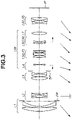
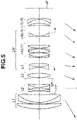
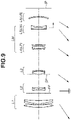
- FIGS. 1 , 3 , 5 , 7 , 9 , and 11 are lens cross-sectional views when zoom lenses according to first to sixth embodiments of the present invention are focused at infinity at a wide-angle end.
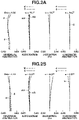
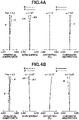
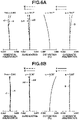
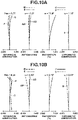
- FIGS. 2A, 2B , 4A, 4B , 6A, 6B , 8A, 8B , 10A, 10B , 12A, and 12B are aberration diagrams of the zoom lenses according to the first to sixth embodiments.
- the zoom lenses according to the embodiments can be employed in an image pickup apparatus such as a digital video camera, a digital still camera, a broadcast camera, a silver-halide film camera, and a monitoring camera.
- the zoom lenses according to the embodiments each include a plurality of lens units.
- the lens unit refers to a set of lenses that integrally move or stay still at the time of zooming.
- an interval between adjacent lens units changes during zooming from the wide-angle end to a telephoto end.
- the wide-angle end and the telephoto end refer to zoom states where each of the lens units that moves for zooming is located at either of ends of a range in which the lens unit can mechanically move in an optical axis direction.
- the lens unit may be formed by one lens or may be formed by a plurality of lenses.
- An aperture stop may be included in the lens unit or may be a different member from the lens unit.
- Li represents an i-th lens unit, where i indicates the order when the lens units are numbered sequentially, starting from the object side.
- the zoom lens includes an aperture stop SP.
- a flare-cut stop FP cuts unnecessary light.
- Each of the lens cross-sectional views also illustrates an image plane IP.
- a zoom lens L0 according to each of the embodiments is used as an imaging optical system in a digital video camera or a digital still camera, an imaging plane of a solid-state image sensor (photoelectric conversion element), such as a charge coupled device (CCD) sensor and a complementary metal-oxide semiconductor (CMOS) sensor, is placed on the image plane IP.
- CMOS complementary metal-oxide semiconductor
- each of the lens units moves as indicated by an arrow (solid line) in each of the lens cross-sectional views during zooming from the wide-angle end to the telephoto end. Further, each of the lens units moves as indicated by an arrow (dotted line) at the time of focusing from infinity to a short range.
- FIGS. 2A and 2B , 4A and 4B , 6A and 6B , 8A and 8B , 10A and 10B , and 12A and 12B are aberration diagrams of the zoom lenses L0 according to the first to sixth embodiments, respectively.
- FIGS. 2A , 4A , 6A , 8A , 10A , and 12A each illustrate an aberration in a state focused at infinity at the wide-angle end
- FIGS. 2B , 4B , 6B , 8B , 10B , and 12B each illustrate an aberration in a state focused at infinity at the telephoto end.
- Fno represents the f-number.
- spherical aberration amounts with respect to the d-line (wavelength 587.6 nm) and the g-line (wavelength 435.8 nm) are indicated by a solid line and an alternate long and two short dashes line, respectively.
- S represents an astigmatism amount (solid line) on a sagittal image plane
- M represents an astigmatism amount (broken line) on a meridional image plane.
- a distortion amount with respect to the d-line is indicated in a distortion diagram.
- a chromatic aberration amount with respect to the g-line is indicated in a chromatic aberration diagram.
- the symbol ⁇ represents a half angle of view (degrees).
- Each of the zoom lenses L0 includes a first lens unit L1 having a positive refractive power, a second lens unit L2 having a negative refractive power, a third lens unit L3 having a positive refractive power, an intermediate lens group LM including a plurality of lens units, and a last lens unit LR having a negative refractive power, which are arranged in order from the object side to the image side.
- the intermediate lens group LM includes at least a negative lens unit LN having a negative refractive power. Both the negative lens unit LN and the last lens unit LR move to the object side during zooming from the wide-angle end to the telephoto end.
- the intermediate lens group LM includes a fourth lens unit L4 to a sixth lens unit L6, and the sixth lens unit L6 corresponds to the negative lens unit LN.
- a seventh lens unit L7 corresponds to the last lens unit LR.
- the intermediate lens group LM includes the fourth lens unit L4 to the seventh lens unit L7, and the sixth lens unit L6 corresponds to the negative lens unit LN.
- An eighth lens unit L8 corresponds to the last lens unit LR.
- the intermediate lens group LM includes the fourth lens unit L4 and the fifth lens unit L5, and the fourth lens unit L4 corresponds to the negative lens unit LN.
- the sixth lens unit L6 corresponds to the last lens unit LR.
- the intermediate lens group LM includes the fourth lens unit L4 and the fifth lens unit L5, and the fifth lens unit L5 corresponds to the negative lens unit LN.
- the sixth lens unit L6 corresponds to the last lens unit LR.
- the intermediate lens group LM includes the fourth lens unit L4 to the sixth lens unit L6, and the fifth lens unit L5 corresponds to the negative lens unit LN.
- the seventh lens unit L7 corresponds to the last lens unit LR.
- each of the zoom lenses L0 according to the embodiments is a positive lead-type zoom lens, and at least two lens units each having a negative refractive power, the negative lens unit LN and the last lens unit LR, are disposed closer to the image than the third lens unit L3 is. Due to this configuration, the zoom lens L0 is constructed in a telephoto-type power arrangement. Further, the zoom lens L0 causes both the negative lens unit LN and the last lens unit LR to move during zooming from the wide-angle end to the telephoto end, thereby causing them to work for magnification. Due to these characteristics, each of the zoom lenses L0 according to the embodiments guarantees the magnification ratio while achieving the size reduction at the same time.
- disposing a plurality of lens units each having a negative refractive power on the image plane side leads to an axial ray diverging near the image plane, thereby increasing a height of the axial ray passing through near the stop and raising a problem with corrections of a spherical aberration and an axial chromatic aberration. Further, an increase in the number of lens units each having a negative refractive power makes the Petzval sum tend to have a large negative value, thereby raising a problem with a correction of a curvature of field.
- each of the zoom lenses L0 according to the embodiments powers and movement amounts of the lens units and a position of the aperture stop SP are appropriately set with the aim of achieving the size reduction while enhancing the performance at the same time. More specifically, each of the zoom lenses L0 according to the embodiments is configured to satisfy all of the following conditional inequalities (1) to (3). 0.10 ⁇ fLN / f 2 ⁇ 1.20 0.25 ⁇ ML 3 / MLN ⁇ 0.70 0.45 ⁇ DSPw / TDw ⁇ 0.95
- fLN is the focal length of the negative lens unit LN.
- the variable f2 is the focal length of the second lens unit L2.
- the variable ML3 is the movement amount of the third lens unit L3 during zooming from the wide-angle end to the telephoto end when the zoom lens L0 is focused at infinity.
- the variable MLN is the movement amount of the negative lens unit LN during zooming from the wide-angle end to the telephoto end when the zoom lens L0 is focused at infinity.
- the variable DSPw is the distance on the optical axis from the aperture stop SP to a lens surface of the zoom lens L0 located closest to the image at the wide-angle end.
- the variable TDw is the distance on the optical axis from a lens surface of the zoom lens L0 located closest to the object to the lens surface of the zoom lens L0 located closest to the image at the wide-angle end.
- a surface thereof is not counted as the lens surface in terms of the values of DSPw and TDw.
- the conditional inequality (1) defines a condition regarding the focal length fLN of the negative lens unit LN and the focal length f2 of the second lens unit L2. Both the size reduction and the increase in the image quality can be achieved at the same time by appropriately setting a ratio between the focal lengths of these lens units. A value of the ratio lower than a lower limit value defined by the conditional inequality (1) is undesirable because this means that the focal length of the negative lens unit LN is excessively short compared to the focal length of the second lens unit L2, thereby leading to a large negative value of the Petzval sum and making it difficult to correct a curvature of field.
- the value of the ratio higher than an upper limit value defined by the conditional inequality (1) is undesirable because this means that the focal length of the negative lens unit LN is excessively long compared to the focal length of the second lens unit L2, thereby making it difficult to establish the telephoto-type power arrangement, and thus making it difficult to reduce the size of the zoom lens L0 as a result thereof.
- the conditional inequality (2) defines a condition regarding the movement amount ML3 of the third lens unit L3 and the movement amount MLN of the negative lens unit LN during zooming from the wide-angle end to the telephoto end. Appropriately setting a ratio between these movement amounts facilitates the size reduction of the zoom lens L0. Setting the movement amount of the negative lens unit LN to a greater amount than the movement amount of the third lens unit L3 can reduce an interval between the second lens unit L2 and the third lens unit L3 at the wide-angle end, thereby facilitating the size reduction.
- a value of the ratio lower than a lower limit value defined by the conditional inequality (2) is undesirable because this means that the movement amount of the negative lens unit LN is excessively great compared to the movement amount of the third lens unit L3, thereby making it difficult to reduce the size of the zoom lens L0.
- the value of the ratio higher than an upper limit value defined by the conditional inequality (2) is undesirable because this means that the movement amount of the negative lens unit LN is excessively small compared to the movement amount of the third lens unit L3, thereby making it difficult to reduce the size of the zoom lens L0.
- the conditional inequality (3) defines a condition regarding the distance on the optical axis from the aperture stop SP to the lens surface located closest to the image and the distance on the optical axis from the lens surface located closest to the object to the lens surface located closest to the image at the wide-angle end. Disposing the aperture stop SP at an appropriate position facilitates reducing the size while enlarging the aperture of the zoom lens L0.
- a value of the ratio lower than a lower limit value defined by the conditional inequality (3) is undesirable because this means that the aperture stop SP is excessively close to the image plane IP, thereby leading to an increase in the size of a lens disposed at a position close to the object. As a result, such a value makes it difficult to reduce the size of the zoom lens L0.
- the value of the ratio higher than an upper limit value defined by the conditional inequality (3) is undesirable because this means that the aperture stop SP is located excessively close to the object, thereby making it difficult to dispose the aperture stop SP.
- the advantageous effects of the present invention can be acquired by satisfying these conditions.
- the advantageous effects of the present invention can be acquired as long as the intermediate lens group LM includes a plurality of lens units and further includes at least one negative lens unit LN satisfying the above-described conditions.
- the intermediate lens group LM may include two or more lens units corresponding to the negative lens unit LN.
- the numerical ranges of the conditional inequalities (1) to (3) are set to ranges according to the following conditional inequalities (1a) to (3a). 0.30 ⁇ fLN / f 2 ⁇ 1.17 0.26 ⁇ ML 3 / MLN ⁇ 0.69 0.50 ⁇ DSPw / TDw ⁇ 0.90
- conditional inequalities (1) to (3) are further more desirably set to ranges according to the following conditional inequalities (1b) to (3b). 0.50 ⁇ fLN / f 2 ⁇ 1.15 0.26 ⁇ ML 3 / MLN ⁇ 0.68 0.55 ⁇ DSPw / TDw ⁇ 0.80
- the first lens unit L1 moves to the object side during zooming from the wide-angle end to the telephoto end.
- This configuration allows the zoom lens L0 to have a reduced total optical length at the wide-angle end, thereby allowing the zoom lens L0 to achieve the size reduction.
- both the negative lens unit LN and the last lens unit LR are each composed of three or less lenses. This configuration allows the zoom lens L0 to achieve the size reduction while acquiring a sufficient performance with respect to the negative lens unit LN and the last lens unit LR.
- the aperture stop SP is disposed closer to the object than the intermediate lens group LM is.
- This configuration allows the zoom lens L0 to achieve the enlargement of the aperture of the zoom lens L0 while achieving the reduction of the size of the lens unit(s) disposed closer to the object than the aperture stop SP is at the same time.
- the negative lens unit LN is caused to move toward the image side at the time of the focusing from infinity to a short range.
- a great movement amount is necessary for the focusing from infinity to a close range at the telephoto end.
- the zoom lens L0 carries out the focusing by moving the negative lens unit LN toward the image side, thereby being able to make effective use of the space on the image side of the negative lens unit LN especially at the telephoto end.
- the size reduction of the zoom lens L0 and the reduction of a focusing distance to the closest range are achieved.
- any one of the lens units may be entirely or partially caused to move in a direction having a component perpendicular to the optical axis when an image blur is corrected.
- the movement amount can be reduced when the image blur is corrected by especially moving the second lens unit L2 when the image blur is corrected.
- the zoom lens L0 can easily achieve the size reduction (especially the radial size).
- the second lens unit L2 does not move for zooming because this can simplify a driving mechanism for an image blur correction and a holding mechanism of the lens unit.
- a positive lens unit LP having a positive refractive power is disposed at a position adjacent to the negative lens unit LN on the object side.
- the presence of the positive lens unit LP allows the negative lens unit LN to have a smaller lens diameter.
- the positive lens unit LP is the fifth lens unit L5 in the first to third embodiments, the third lens unit L3 in the fourth embodiment, and the fourth lens unit L4 in the fifth and sixth embodiments. In this manner, the positive lens unit LP does not necessarily have to be disposed in the intermediate lens group LM, and the third lens unit L3 may function as the positive lens unit LP.
- each of the zoom lenses L0 satisfies one or more conditional inequalities among the following conditional inequalities (4) to (12).
- ⁇ D1 is a difference between (a) an interval on the optical axis between a lens surface of the first lens unit L1 located closest to the image and a lens surface of the second lens unit L2 located closest to the object at the wide-angle end and (b) an interval on the optical axis between the lens surface of the first lens unit L1 located closest to the image and the lens surface of the second lens unit L2 located closest to the object at the telephoto end.
- the variable ⁇ D2 is a difference between (a)an interval on the optical axis between a lens surface of the second lens unit L2 located closest to the image and a lens surface of the third lens unit L3 located closest to the object at the wide-angle end and (b) an interval on the optical axis between the lens surface of the second lens unit L2 located closest to the image and the lens surface of the third lens unit L3 located closest to the obj ect at the telephoto end.
- the variable SKw is a backfocus of the zoom lens L0 at the wide-angle end.
- the variable fw is a focal length of the zoom lens L0 at the wide-angle end.
- the variable SKt is a backfocus of the zoom lens L0 at the telephoto end.
- the variable LDw is a total optical length (distance from the lens surface located closest to the object to the image plane IP) of the zoom lens L0 at the wide-angle end.
- the variable fLP is a focal length of the positive lens unit LP disposed adjacent to the negative lens unit LN on the object side.
- the variable f1 is a focal length of the first lens unit L1.
- the variable fLR is a focal length of the last lens unit LR.
- the variable ML1 is a movement amount of the first lens unit L1 during zooming from the wide-angle end to the telephoto end when focused at infinity.
- the variable t ⁇ LN is a lateral magnification of the negative lens unit LN at the telephoto end.
- variable w ⁇ LN is a lateral magnification of the negative lens unit LN at the wide-angle end.
- the variable vd1Pave is an average value of Abbe number(s) of the positive lens(es) included in the first lens unit L1 with respect to the d-line.
- the conditional inequality (4) defines a condition regarding the change amount ⁇ D1 of an interval between the first lens unit L1 and the second lens unit L2 during zooming from the wide-angle end to the telephoto end and the change amount ⁇ D2 of an interval between the second lens unit L2 and the third lens unit L3 during zooming from the wide-angle end to the telephoto end.
- the aperture stop SP or the flare-cut stop FP is disposed in a range extending from the first lens unit L1 to the third lens unit L3, the aperture stop SP or the flare-cut stop FP is not taken into consideration when ⁇ D1 and ⁇ D2 are calculated.
- An excessive increase in ⁇ D2 enough to cause the ratio to fall below the lower limit value defined by the conditional inequality (4) is undesirable because the sufficient size reduction becomes difficult especially at the wide-angle end.
- An excessive reduction in ⁇ D2 enough to cause the ratio to exceed the upper limit value defined by the conditional inequality (4) is undesirable because a share of zooming ratio assigned to the second lens unit L2 and the third lens unit L3 is reduced, thereby making it difficult to achieve the provision of a sufficiently high zooming ratio.
- the conditional inequality (5) defines a condition regarding the backfocus SKw at the wide-angle end and the focal length fw of the entire system at the wide-angle end.
- a value of the ratio lower than a lower limit value defined by the conditional inequality (5) is undesirable because this means that the backfocus is short, thereby making it difficult to dispose an optical element such as a low-pass filter near the image sensor.
- a value of the ratio higher than an upper limit value defined by the conditional inequality (5) is undesirable because this means that the backfocus is long, thereby making it impossible to sufficiently reduce the total optical length at the wide-angle end.
- the conditional inequality (6) defines a condition regarding the backfocus SKt at the telephoto end and the backfocus SKw at the wide-angle end.
- a value of the ratio lower than a lower limit value defined by the conditional inequality (6) is undesirable because this means that the backfocus is excessively short at the wide-angle end, thereby making it difficult to dispose an optical element such as a low-pass filter near the image sensor.
- a value of the ratio higher than an upper limit value defined by the conditional inequality (6) is undesirable because this means that the backfocus is excessively long at the wide-angle end, thereby making it impossible to sufficiently reduce the total optical length at the wide-angle end.
- the conditional inequality (7) defines a condition regarding the total optical length LDw at the wide-angle end and the focal length fw of the entire system at the wide-angle end.
- a value of the ratio lower than a lower limit value defined by the conditional inequality (7) is undesirable because this means that the focal length of the entire system is excessively long at the wide-angle end, thereby making it difficult to provide a sufficiently high magnification ratio.
- a value of the ratio higher than an upper limit value defined by the conditional inequality (7) is undesirable because sufficiently reducing the total optical length at the wide-angle end becomes impossible.
- the conditional inequality (8) defines a condition regarding the focal length fLP of the positive lens unit LP and the focal length f1 of the first lens unit L1.
- a value of the ratio lower than a lower limit value defined by the conditional inequality (8) is undesirable because this means that the focal length of the positive lens unit LP is excessively short, thereby making it difficult to sufficiently correct a spherical aberration especially at the telephoto end.
- a value of the ratio higher than an upper limit value defined by the conditional inequality (8) is undesirable because this means that the focal length of the positive lens unit LP is extremely long, resulting in a reduction in a share of zooming ratio assigned to the positive lens unit LP, thereby making it difficult to achieve the provision of a sufficiently high zooming ratio.
- the conditional inequality (9) defines a condition regarding the focal length fLN of the negative lens unit LN and the focal length fLR of the last lens unit LR.
- a value of the ratio lower than a lower limit value defined by the conditional inequality (9) means that the focal length of the last lens unit LR is long, thereby making it difficult to establish the telephoto-type power arrangement, and thus making it difficult to sufficiently reduce the size of the zoom lens L0 as a result thereof.
- a value of the ratio higher than an upper limit value defined by the conditional inequality (9) means that the focal length of the last lens unit LR is short, thereby leading to a further asymmetric power arrangement and thus making it difficult to sufficiently correct a coma aberration and a distortion especially at the telephoto end.
- the conditional inequality (10) defines a condition regarding the movement amount ML1 of the first lens unit L1 during zooming from the wide-angle end to the telephoto end and the movement amount ML3 of the third lens unit L3 during zooming from the wide-angle end to the telephoto end.
- a value of the ratio lower than a lower limit value defined by the conditional inequality (10) is undesirable because this means that the movement amount of the first lens unit L1 is great during zooming from the wide-angle end to the telephoto end, thereby making it difficult to achieve the sufficient size reduction especially at the telephoto end.
- a value of the ratio higher than an upper limit value defined by the conditional inequality (10) is undesirable because this means that the movement amount of the positive lens unit LP having a positive refractive power is great during zooming from the wide-angle end to the telephoto end, thereby making it difficult to achieve the sufficient size reduction.
- the conditional inequality (11) defines a condition regarding the lateral magnification t ⁇ LN of the negative lens unit LN at the telephoto end and the lateral magnification w ⁇ LN of the negative lens unit LN at the wide-angle end, and a focal length ft of the entire system at the telephoto end and the focal length fw of the entire system at the wide-angle end.
- a value of the ratio lower than a lower limit value defined by the conditional inequality (11) leads to a reduction in a share of zooming ratio assigned to the negative lens unit LN and thus leads to increases in shares of zooming ratio assigned to the second lens unit L2 and the third lens unit L3 as a result thereof, thereby raising necessity of increasing the interval between the second lens unit L2 and the third lens unit L3 at the wide-angle end. This case makes it difficult to sufficiently reduce the size of the zoom lens L0, and therefore is undesirable.
- a value of the ratio higher than an upper limit value defined by the conditional inequality (11) is undesirable because the provision of a sufficiently high zooming ratio becomes difficult.
- the conditional inequality (12) is a condition regarding the average value vd1Pave of the Abbe number(s) of the positive lens(es) included in the first lens unit L1 with respect to the d-line.
- a value of vd1Pave smaller than a lower limit value defined by the conditional inequality (12) is undesirable because sufficiently correcting an axial chromatic aberration and a chromatic aberration of magnification at the telephoto end becomes difficult.
- a value of vd1Pave larger than an upper limit value defined by the conditional inequality (12) is undesirable because an excessive reduction in dispersion of the positive lens(es) in the first lens unit L1 occurs, thereby making it difficult to sufficiently correct a chromatic aberration of magnification at the wide-angle end.
- the number of positive lenses included in the first lens unit L1 may be one, but is desirably two or more.
- the numerical ranges of the conditional inequalities (4) to (12) are set to ranges according to the following conditional inequalities (4a) to (12a). ⁇ 0.33 ⁇ ⁇ D 2 / ⁇ D1 ⁇ ⁇ 0.05 0.07 ⁇ SKw / fw ⁇ 0.40 0.10 ⁇ SKw / SKt ⁇ 0.55 1.2 ⁇ LDw / fw ⁇ 3.0 0.15 ⁇ fLP / f1 ⁇ 0.60 0.10 ⁇ fLN / fLR ⁇ 1.40 0.05 ⁇ ML 3 / ML 1 ⁇ 0.40 0.17 ⁇ t ⁇ LN / w ⁇ LN / ft / fw ⁇ 0.60 70.00 ⁇ vd 1 Pave ⁇ 98.00
- the numerical ranges of the conditional inequalities (4) to (12) are further more desirably set to ranges according to the following conditional inequalities (4b) to (12b).
- r represents a curvature radius of each optical surface
- d (mm) represents an axial interval (distance on the optical axis) between an m-th surface and an (m+1)-th surface.
- m is the number of the surface when it is numbered sequentially, starting from the light incident side.
- nd represents a refractive index of each optical member with respect to the d-line
- vd represents an Abbe number of each optical member.
- all the focal length (mm), the f-number, and the half angle of view (degrees) are values when each of the zoom lenses L0 according to the embodiments is focused on an object at infinity.
- a backfocus SK is an air-equivalent distance from the last lens surface to the image plane IP.
- a total lens length is a value obtained by adding the backfocus SK to the distance on the optical axis from the first lens surface to the last lens surface.
- a symbol ⁇ is added to the right side of the surface number.
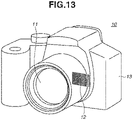
- the digital still camera 10 includes a camera main body 13 and an imaging optical system 11 formed of any of the zoom lenses L0 described in the first to sixth embodiments.
- a solid-state image sensor (photoelectric conversion element) 12 is, for example, a CCD sensor or a CMOS sensor built in the camera main body 13 and configured to receive an optical image formed by the imaging optical system 11 and to photoelectrically convert the optical image.
- the camera main body 13 may be a so-called single-lens reflex camera including a quick return mirror or may be a so-called mirrorless camera including no quick return mirror.
- an image pickup apparatus small in size yet advanced in optical performance can be acquired by applying any of the zoom lenses L0 according to the embodiments of the present invention to an image pickup apparatus such as a digital still camera.
- a zoom lens small in size and excellent in optical characteristic can be realized.
Landscapes
- Physics & Mathematics (AREA)
- General Physics & Mathematics (AREA)
- Optics & Photonics (AREA)
- Nonlinear Science (AREA)
- Lenses (AREA)
Claims (12)
- Zoomobjektiv, umfassend in der Reihenfolge von einer Objektseite zu einer Bildseite:eine erste Linseneinheit (L1) mit positiver Brechkraft;eine zweite Linseneinheit (L2) mit negativer Brechkraft;eine dritte Linseneinheit (L3) mit positiver Brechkraft;eine Zwischenlinsengruppe (LM), die mehrere Linseneinheiten enthält; undeine am nächsten zur Bildseite angeordnete letzte Linseneinheit (LR) mit negativer Brechkraft,wobei das Zoomobjektiv eine Aperturblende (SP) enthält,wobei ein Abstand zwischen den einander benachbarten Linseneinheiten konfiguriert ist, sich während des Zoomens zu ändern,wobei die Zwischenlinsengruppe (LM) eine Negativlinseneinheit (LN) mit negativer Brechkraft enthält,wobei eine Linseneinheit (LP), die benachbart zur Negativlinseneinheit auf der Objektseite angeordnet ist, eine positive Brechkraft aufweist,wobei sich sowohl die Negativlinseneinheit (LN) als auch die letzte Linseneinheit (LR) während des Zoomens von einem Weitwinkelende zu einem Telefotoende zur Objektseite bewegen, unddadurch gekennzeichnet, dass die folgenden Ungleichungsbedingungen erfüllt sind:


 TDw ein Abstand auf der optischen Achse am Weitwinkelende ist von einer Linsenfläche des Zoomobjektivs, die sich am nächsten zum Objekt befindet, zu der Linsenfläche des Zoomobjektivs, die sich am nächsten zur Bildseite befindet, ΔD1 eine Differenz ist zwischen (a) einem Abstand auf der optischen Achse am Weitwinkelende zwischen einer Linsenfläche der ersten Linseneinheit, die sich am nächsten zum Bild befindet, und einer Linsenfläche der zweiten Linseneinheit, die sich am nächsten zum Objekt befindet, und (b) einem Abstand auf der optischen Achse am Telefotoende zwischen der Linsenfläche der ersten Linseneinheit, die sich am nächsten zum Bild befindet, und der Linsenfläche der zweiten Linseneinheit, die sich am nächsten zum Objekt befindet, ΔD2 eine Differenz ist zwischen (a) einem Abstand auf der optischen Achse am Weitwinkelende zwischen einer Linsenfläche der zweiten Linseneinheit, die sich am nächsten zum Bild befindet, und einer Linsenfläche der dritten Linseneinheit, die sich am nächsten zum Objekt befindet, und (b) einem Abstand auf der optischen Achse am Telefotoende zwischen der Linsenfläche der zweiten Linseneinheit, die sich am nächsten zum Bild befindet, und der Linsenfläche der dritten Linseneinheit, die sich am nächsten zum Objekt befindet, fLP eine Brennweite der Linseneinheit ist, die benachbart zur Negativlinseneinheit auf der Objektseite angeordnet ist, und f1 eine Brennweite der ersten Linseneinheit ist.
 - Zoomobjektiv nach Anspruch 1, wobei die folgende bedingte Ungleichung erfüllt ist:

- Zoomobjektiv nach Anspruch 1 oder 2, wobei die folgende bedingte Ungleichung erfüllt ist:

- Zoomobjektiv nach einem der Ansprüche 1 bis 3, wobei die folgende bedingte Ungleichung erfüllt ist:

- Zoomobjektiv nach einem der Ansprüche 1 bis 4, wobei die folgende bedingte Ungleichung erfüllt ist:

- Zoomobjektiv nach einem der Ansprüche 1 bis 5, wobei die folgende bedingte Ungleichung erfüllt ist:

- Zoomobjektiv nach einem der Ansprüche 1 bis 6, wobei die folgende bedingte Ungleichung erfüllt ist:

- Zoomobjektiv nach einem der Ansprüche 1 bis 7, wobei die folgende bedingte Ungleichung erfüllt ist:

- Zoomobjektiv nach einem der Ansprüche 1 bis 8, wobei sowohl die Negativlinseneinheit (LN) als auch die letzte Linseneinheit (LR) jeweils aus drei oder weniger Linsen bestehen.
- Zoomobjektiv nach einem der Ansprüche 1 bis 9, wobei die Negativlinseneinheit (LN) konfiguriert ist, sich während des Fokussierens von unendlich auf eine kurze Distanz zur Bildseite zu bewegen.
- Zoomobjektiv nach einem der Ansprüche 1 bis 10, wobei sich die zweite Linseneinheit (L2) zum Zoomen nicht bewegt.
- Bildaufnahmevorrichtung (10), umfassend:das Zoomobjektiv nach einem der Ansprüche 1 bis 11; undeinen Bildsensor (12), der konfiguriert ist, ein durch das Zoomobjektiv gebildetes optisches Bild fotoelektrisch umzuwandeln.
Applications Claiming Priority (1)
| Application Number | Priority Date | Filing Date | Title |
|---|---|---|---|
| JP2019180371A JP6977007B2 (ja) | 2019-09-30 | 2019-09-30 | ズームレンズおよびそれを有する撮像装置 |
Publications (2)
| Publication Number | Publication Date |
|---|---|
| EP3798709A1 EP3798709A1 (de) | 2021-03-31 |
| EP3798709B1 true EP3798709B1 (de) | 2022-11-16 |
Family
ID=72560503
Family Applications (1)
| Application Number | Title | Priority Date | Filing Date |
|---|---|---|---|
| EP20196739.5A Active EP3798709B1 (de) | 2019-09-30 | 2020-09-17 | Zoomobjektiv und bildgebungsvorrichtung damit |
Country Status (4)
| Country | Link |
|---|---|
| US (1) | US11448862B2 (de) |
| EP (1) | EP3798709B1 (de) |
| JP (1) | JP6977007B2 (de) |
| CN (1) | CN112578542B (de) |
Families Citing this family (3)
| Publication number | Priority date | Publication date | Assignee | Title |
|---|---|---|---|---|
| JP7150625B2 (ja) * | 2019-01-23 | 2022-10-11 | キヤノン株式会社 | ズームレンズ、撮像装置、レンズ装置 |
| JP7700463B2 (ja) | 2020-03-03 | 2025-07-01 | 株式会社リコー | ズームレンズ、レンズ鏡筒及び撮像装置 |
| CN120693555A (zh) * | 2023-02-22 | 2025-09-23 | 富士胶片株式会社 | 变倍光学系统及摄像装置 |
Family Cites Families (13)
| Publication number | Priority date | Publication date | Assignee | Title |
|---|---|---|---|---|
| WO2012137421A1 (ja) * | 2011-04-06 | 2012-10-11 | 株式会社ニコン | ズーム光学系及びこれを有する撮像装置 |
| WO2014115565A1 (ja) * | 2013-01-28 | 2014-07-31 | 株式会社ニコン | 変倍光学系、光学装置、及び、変倍光学系の製造方法 |
| JP6230267B2 (ja) * | 2013-05-23 | 2017-11-15 | キヤノン株式会社 | ズームレンズ及びそれを有する撮像装置 |
| JP6340923B2 (ja) * | 2014-06-02 | 2018-06-13 | コニカミノルタ株式会社 | ズームレンズ,撮像光学装置及びデジタル機器 |
| JP6548485B2 (ja) * | 2015-07-01 | 2019-07-24 | キヤノン株式会社 | ズームレンズ及びそれを有する撮像装置 |
| JP6706737B2 (ja) * | 2015-12-25 | 2020-06-10 | パナソニックIpマネジメント株式会社 | ズームレンズ系、撮像装置、カメラ |
| JP6685942B2 (ja) | 2017-01-20 | 2020-04-22 | 富士フイルム株式会社 | 撮像レンズおよび撮像装置 |
| JP6576381B2 (ja) | 2017-03-03 | 2019-09-18 | キヤノン株式会社 | ズームレンズおよびそれを有する撮像装置 |
| JP6951857B2 (ja) * | 2017-03-30 | 2021-10-20 | 株式会社タムロン | ズームレンズ及び撮像装置 |
| JP6566991B2 (ja) | 2017-05-31 | 2019-08-28 | キヤノン株式会社 | ズームレンズおよびそれを有する撮像装置 |
| JP6968606B2 (ja) * | 2017-07-21 | 2021-11-17 | キヤノン株式会社 | ズームレンズ及びそれを有する撮像装置 |
| JP7123579B2 (ja) * | 2018-03-08 | 2022-08-23 | キヤノン株式会社 | ズームレンズ及び撮像装置 |
| JP7155912B2 (ja) * | 2018-11-15 | 2022-10-19 | コニカミノルタ株式会社 | ズームレンズ,撮像光学装置及びデジタル機器 |
-
2019
- 2019-09-30 JP JP2019180371A patent/JP6977007B2/ja active Active
-
2020
- 2020-09-17 EP EP20196739.5A patent/EP3798709B1/de active Active
- 2020-09-22 US US17/028,525 patent/US11448862B2/en active Active
- 2020-09-30 CN CN202011065028.5A patent/CN112578542B/zh active Active
Also Published As
| Publication number | Publication date |
|---|---|
| JP6977007B2 (ja) | 2021-12-08 |
| EP3798709A1 (de) | 2021-03-31 |
| JP2021056407A (ja) | 2021-04-08 |
| CN112578542B (zh) | 2023-03-21 |
| US20210096342A1 (en) | 2021-04-01 |
| CN112578542A (zh) | 2021-03-30 |
| US11448862B2 (en) | 2022-09-20 |
Similar Documents
| Publication | Publication Date | Title |
|---|---|---|
| EP3719555B1 (de) | Zoomobjektiv und abbildungsvorrichtung damit | |
| US9575296B2 (en) | Zoom lens and image pickup device including the same | |
| US9453992B2 (en) | Zoom lens and imaging apparatus including the same | |
| US8488251B2 (en) | Zoom lens and image pickup apparatus including the zoom lens | |
| US11022783B2 (en) | Zoom lens and image pickup apparatus | |
| US10310240B2 (en) | Zoom lens and image pickup apparatus including the same | |
| US8873169B2 (en) | Zoom lens and image pickup apparatus using the same | |
| US8159758B2 (en) | Zoom lens system and image pickup apparatus having same | |
| EP4636453A2 (de) | Zoomobjektiv | |
| EP3640697A1 (de) | Optisches system und bildgebungsvorrichtung damit | |
| EP3798709B1 (de) | Zoomobjektiv und bildgebungsvorrichtung damit | |
| EP4036627A1 (de) | Zoomobjektiv und bildaufnahmevorrichtung damit | |
| US8649106B2 (en) | Zoom lens and image pickup apparatus equipped with the zoom lens | |
| CN112346210B (zh) | 光学系统和摄像设备 | |
| EP3112915B1 (de) | Zoomobjektiv und bildaufnahmevorrichtung damit | |
| JP5462081B2 (ja) | ズームレンズおよび撮像装置 | |
| JP2010237453A (ja) | ズームレンズ及びそれを有する撮像装置 | |
| US11782252B2 (en) | Optical system and image capturing apparatus including the same | |
| US11635602B2 (en) | Zoom lens and imaging apparatus including the same | |
| US11073741B2 (en) | Zoom lens and optical apparatus | |
| US8988782B2 (en) | Zoom lens and image pickup apparatus including the same | |
| JP2012123032A (ja) | テレコンバータレンズおよびそれを有する撮像装置 | |
| US12411324B2 (en) | Zoom lens and imaging apparatus including the same | |
| US20240248287A1 (en) | Zoom lens and imaging apparatus including the same | |
| JP2024005834A (ja) | ズームレンズおよびそれを有する撮像装置 |
Legal Events
| Date | Code | Title | Description |
|---|---|---|---|
| PUAI | Public reference made under article 153(3) epc to a published international application that has entered the european phase |
Free format text: ORIGINAL CODE: 0009012 |
|
| STAA | Information on the status of an ep patent application or granted ep patent |
Free format text: STATUS: THE APPLICATION HAS BEEN PUBLISHED |
|
| AK | Designated contracting states |
Kind code of ref document: A1 Designated state(s): AL AT BE BG CH CY CZ DE DK EE ES FI FR GB GR HR HU IE IS IT LI LT LU LV MC MK MT NL NO PL PT RO RS SE SI SK SM TR |
|
| AX | Request for extension of the european patent |
Extension state: BA ME |
|
| STAA | Information on the status of an ep patent application or granted ep patent |
Free format text: STATUS: REQUEST FOR EXAMINATION WAS MADE |
|
| 17P | Request for examination filed |
Effective date: 20210930 |
|
| RBV | Designated contracting states (corrected) |
Designated state(s): AL AT BE BG CH CY CZ DE DK EE ES FI FR GB GR HR HU IE IS IT LI LT LU LV MC MK MT NL NO PL PT RO RS SE SI SK SM TR |
|
| RIC1 | Information provided on ipc code assigned before grant |
Ipc: G02B 15/14 20060101AFI20220519BHEP |
|
| INTG | Intention to grant announced |
Effective date: 20220629 |
|
| RAP3 | Party data changed (applicant data changed or rights of an application transferred) |
Owner name: CANON KABUSHIKI KAISHA |
|
| STAA | Information on the status of an ep patent application or granted ep patent |
Free format text: STATUS: GRANT OF PATENT IS INTENDED |
|
| GRAS | Grant fee paid |
Free format text: ORIGINAL CODE: EPIDOSNIGR3 |
|
| GRAA | (expected) grant |
Free format text: ORIGINAL CODE: 0009210 |
|
| STAA | Information on the status of an ep patent application or granted ep patent |
Free format text: STATUS: THE PATENT HAS BEEN GRANTED |
|
| AK | Designated contracting states |
Kind code of ref document: B1 Designated state(s): AL AT BE BG CH CY CZ DE DK EE ES FI FR GB GR HR HU IE IS IT LI LT LU LV MC MK MT NL NO PL PT RO RS SE SI SK SM TR |
|
| REG | Reference to a national code |
Ref country code: GB Ref legal event code: FG4D |
|
| REG | Reference to a national code |
Ref country code: CH Ref legal event code: EP |
|
| REG | Reference to a national code |
Ref country code: IE Ref legal event code: FG4D |
|
| REG | Reference to a national code |
Ref country code: DE Ref legal event code: R096 Ref document number: 602020006305 Country of ref document: DE |
|
| REG | Reference to a national code |
Ref country code: AT Ref legal event code: REF Ref document number: 1532114 Country of ref document: AT Kind code of ref document: T Effective date: 20221215 |
|
| REG | Reference to a national code |
Ref country code: LT Ref legal event code: MG9D |
|
| REG | Reference to a national code |
Ref country code: NL Ref legal event code: MP Effective date: 20221116 |
|
| REG | Reference to a national code |
Ref country code: AT Ref legal event code: MK05 Ref document number: 1532114 Country of ref document: AT Kind code of ref document: T Effective date: 20221116 |
|
| PG25 | Lapsed in a contracting state [announced via postgrant information from national office to epo] |
Ref country code: SE Free format text: LAPSE BECAUSE OF FAILURE TO SUBMIT A TRANSLATION OF THE DESCRIPTION OR TO PAY THE FEE WITHIN THE PRESCRIBED TIME-LIMIT Effective date: 20221116 Ref country code: PT Free format text: LAPSE BECAUSE OF FAILURE TO SUBMIT A TRANSLATION OF THE DESCRIPTION OR TO PAY THE FEE WITHIN THE PRESCRIBED TIME-LIMIT Effective date: 20230316 Ref country code: NO Free format text: LAPSE BECAUSE OF FAILURE TO SUBMIT A TRANSLATION OF THE DESCRIPTION OR TO PAY THE FEE WITHIN THE PRESCRIBED TIME-LIMIT Effective date: 20230216 Ref country code: LT Free format text: LAPSE BECAUSE OF FAILURE TO SUBMIT A TRANSLATION OF THE DESCRIPTION OR TO PAY THE FEE WITHIN THE PRESCRIBED TIME-LIMIT Effective date: 20221116 Ref country code: FI Free format text: LAPSE BECAUSE OF FAILURE TO SUBMIT A TRANSLATION OF THE DESCRIPTION OR TO PAY THE FEE WITHIN THE PRESCRIBED TIME-LIMIT Effective date: 20221116 Ref country code: ES Free format text: LAPSE BECAUSE OF FAILURE TO SUBMIT A TRANSLATION OF THE DESCRIPTION OR TO PAY THE FEE WITHIN THE PRESCRIBED TIME-LIMIT Effective date: 20221116 Ref country code: AT Free format text: LAPSE BECAUSE OF FAILURE TO SUBMIT A TRANSLATION OF THE DESCRIPTION OR TO PAY THE FEE WITHIN THE PRESCRIBED TIME-LIMIT Effective date: 20221116 |
|
| PG25 | Lapsed in a contracting state [announced via postgrant information from national office to epo] |
Ref country code: RS Free format text: LAPSE BECAUSE OF FAILURE TO SUBMIT A TRANSLATION OF THE DESCRIPTION OR TO PAY THE FEE WITHIN THE PRESCRIBED TIME-LIMIT Effective date: 20221116 Ref country code: PL Free format text: LAPSE BECAUSE OF FAILURE TO SUBMIT A TRANSLATION OF THE DESCRIPTION OR TO PAY THE FEE WITHIN THE PRESCRIBED TIME-LIMIT Effective date: 20221116 Ref country code: LV Free format text: LAPSE BECAUSE OF FAILURE TO SUBMIT A TRANSLATION OF THE DESCRIPTION OR TO PAY THE FEE WITHIN THE PRESCRIBED TIME-LIMIT Effective date: 20221116 Ref country code: IS Free format text: LAPSE BECAUSE OF FAILURE TO SUBMIT A TRANSLATION OF THE DESCRIPTION OR TO PAY THE FEE WITHIN THE PRESCRIBED TIME-LIMIT Effective date: 20230316 Ref country code: HR Free format text: LAPSE BECAUSE OF FAILURE TO SUBMIT A TRANSLATION OF THE DESCRIPTION OR TO PAY THE FEE WITHIN THE PRESCRIBED TIME-LIMIT Effective date: 20221116 Ref country code: GR Free format text: LAPSE BECAUSE OF FAILURE TO SUBMIT A TRANSLATION OF THE DESCRIPTION OR TO PAY THE FEE WITHIN THE PRESCRIBED TIME-LIMIT Effective date: 20230217 |
|
| PG25 | Lapsed in a contracting state [announced via postgrant information from national office to epo] |
Ref country code: NL Free format text: LAPSE BECAUSE OF FAILURE TO SUBMIT A TRANSLATION OF THE DESCRIPTION OR TO PAY THE FEE WITHIN THE PRESCRIBED TIME-LIMIT Effective date: 20221116 |
|
| PG25 | Lapsed in a contracting state [announced via postgrant information from national office to epo] |
Ref country code: SM Free format text: LAPSE BECAUSE OF FAILURE TO SUBMIT A TRANSLATION OF THE DESCRIPTION OR TO PAY THE FEE WITHIN THE PRESCRIBED TIME-LIMIT Effective date: 20221116 Ref country code: RO Free format text: LAPSE BECAUSE OF FAILURE TO SUBMIT A TRANSLATION OF THE DESCRIPTION OR TO PAY THE FEE WITHIN THE PRESCRIBED TIME-LIMIT Effective date: 20221116 Ref country code: EE Free format text: LAPSE BECAUSE OF FAILURE TO SUBMIT A TRANSLATION OF THE DESCRIPTION OR TO PAY THE FEE WITHIN THE PRESCRIBED TIME-LIMIT Effective date: 20221116 Ref country code: DK Free format text: LAPSE BECAUSE OF FAILURE TO SUBMIT A TRANSLATION OF THE DESCRIPTION OR TO PAY THE FEE WITHIN THE PRESCRIBED TIME-LIMIT Effective date: 20221116 Ref country code: CZ Free format text: LAPSE BECAUSE OF FAILURE TO SUBMIT A TRANSLATION OF THE DESCRIPTION OR TO PAY THE FEE WITHIN THE PRESCRIBED TIME-LIMIT Effective date: 20221116 |
|
| REG | Reference to a national code |
Ref country code: DE Ref legal event code: R097 Ref document number: 602020006305 Country of ref document: DE |
|
| PG25 | Lapsed in a contracting state [announced via postgrant information from national office to epo] |
Ref country code: SK Free format text: LAPSE BECAUSE OF FAILURE TO SUBMIT A TRANSLATION OF THE DESCRIPTION OR TO PAY THE FEE WITHIN THE PRESCRIBED TIME-LIMIT Effective date: 20221116 Ref country code: AL Free format text: LAPSE BECAUSE OF FAILURE TO SUBMIT A TRANSLATION OF THE DESCRIPTION OR TO PAY THE FEE WITHIN THE PRESCRIBED TIME-LIMIT Effective date: 20221116 |
|
| PLBE | No opposition filed within time limit |
Free format text: ORIGINAL CODE: 0009261 |
|
| STAA | Information on the status of an ep patent application or granted ep patent |
Free format text: STATUS: NO OPPOSITION FILED WITHIN TIME LIMIT |
|
| 26N | No opposition filed |
Effective date: 20230817 |
|
| PG25 | Lapsed in a contracting state [announced via postgrant information from national office to epo] |
Ref country code: SI Free format text: LAPSE BECAUSE OF FAILURE TO SUBMIT A TRANSLATION OF THE DESCRIPTION OR TO PAY THE FEE WITHIN THE PRESCRIBED TIME-LIMIT Effective date: 20221116 |
|
| REG | Reference to a national code |
Ref country code: CH Ref legal event code: PL |
|
| PG25 | Lapsed in a contracting state [announced via postgrant information from national office to epo] |
Ref country code: LU Free format text: LAPSE BECAUSE OF NON-PAYMENT OF DUE FEES Effective date: 20230917 |
|
| REG | Reference to a national code |
Ref country code: BE Ref legal event code: MM Effective date: 20230930 |
|
| PG25 | Lapsed in a contracting state [announced via postgrant information from national office to epo] |
Ref country code: LU Free format text: LAPSE BECAUSE OF NON-PAYMENT OF DUE FEES Effective date: 20230917 Ref country code: IT Free format text: LAPSE BECAUSE OF FAILURE TO SUBMIT A TRANSLATION OF THE DESCRIPTION OR TO PAY THE FEE WITHIN THE PRESCRIBED TIME-LIMIT Effective date: 20221116 Ref country code: MC Free format text: LAPSE BECAUSE OF FAILURE TO SUBMIT A TRANSLATION OF THE DESCRIPTION OR TO PAY THE FEE WITHIN THE PRESCRIBED TIME-LIMIT Effective date: 20221116 |
|
| REG | Reference to a national code |
Ref country code: IE Ref legal event code: MM4A |
|
| PG25 | Lapsed in a contracting state [announced via postgrant information from national office to epo] |
Ref country code: IE Free format text: LAPSE BECAUSE OF NON-PAYMENT OF DUE FEES Effective date: 20230917 |
|
| PG25 | Lapsed in a contracting state [announced via postgrant information from national office to epo] |
Ref country code: CH Free format text: LAPSE BECAUSE OF NON-PAYMENT OF DUE FEES Effective date: 20230930 |
|
| PG25 | Lapsed in a contracting state [announced via postgrant information from national office to epo] |
Ref country code: IE Free format text: LAPSE BECAUSE OF NON-PAYMENT OF DUE FEES Effective date: 20230917 Ref country code: FR Free format text: LAPSE BECAUSE OF NON-PAYMENT OF DUE FEES Effective date: 20230930 Ref country code: CH Free format text: LAPSE BECAUSE OF NON-PAYMENT OF DUE FEES Effective date: 20230930 |
|
| PG25 | Lapsed in a contracting state [announced via postgrant information from national office to epo] |
Ref country code: BE Free format text: LAPSE BECAUSE OF NON-PAYMENT OF DUE FEES Effective date: 20230930 |
|
| PG25 | Lapsed in a contracting state [announced via postgrant information from national office to epo] |
Ref country code: BG Free format text: LAPSE BECAUSE OF FAILURE TO SUBMIT A TRANSLATION OF THE DESCRIPTION OR TO PAY THE FEE WITHIN THE PRESCRIBED TIME-LIMIT Effective date: 20221116 |
|
| PG25 | Lapsed in a contracting state [announced via postgrant information from national office to epo] |
Ref country code: BG Free format text: LAPSE BECAUSE OF FAILURE TO SUBMIT A TRANSLATION OF THE DESCRIPTION OR TO PAY THE FEE WITHIN THE PRESCRIBED TIME-LIMIT Effective date: 20221116 |
|
| PG25 | Lapsed in a contracting state [announced via postgrant information from national office to epo] |
Ref country code: CY Free format text: LAPSE BECAUSE OF FAILURE TO SUBMIT A TRANSLATION OF THE DESCRIPTION OR TO PAY THE FEE WITHIN THE PRESCRIBED TIME-LIMIT; INVALID AB INITIO Effective date: 20200917 |
|
| PG25 | Lapsed in a contracting state [announced via postgrant information from national office to epo] |
Ref country code: HU Free format text: LAPSE BECAUSE OF FAILURE TO SUBMIT A TRANSLATION OF THE DESCRIPTION OR TO PAY THE FEE WITHIN THE PRESCRIBED TIME-LIMIT; INVALID AB INITIO Effective date: 20200917 |
|
| PGFP | Annual fee paid to national office [announced via postgrant information from national office to epo] |
Ref country code: DE Payment date: 20250820 Year of fee payment: 6 |
|
| PGFP | Annual fee paid to national office [announced via postgrant information from national office to epo] |
Ref country code: GB Payment date: 20250820 Year of fee payment: 6 |
|
| PG25 | Lapsed in a contracting state [announced via postgrant information from national office to epo] |
Ref country code: TR Free format text: LAPSE BECAUSE OF FAILURE TO SUBMIT A TRANSLATION OF THE DESCRIPTION OR TO PAY THE FEE WITHIN THE PRESCRIBED TIME-LIMIT Effective date: 20221116 |