EP3779360B1 - Innenpositionierungsverfahren, innenpositionierungssystem, innenpositionierungsvorrichtung und computerlesbares medium - Google Patents
Innenpositionierungsverfahren, innenpositionierungssystem, innenpositionierungsvorrichtung und computerlesbares medium Download PDFInfo
- Publication number
- EP3779360B1 EP3779360B1 EP19755264.9A EP19755264A EP3779360B1 EP 3779360 B1 EP3779360 B1 EP 3779360B1 EP 19755264 A EP19755264 A EP 19755264A EP 3779360 B1 EP3779360 B1 EP 3779360B1
- Authority
- EP
- European Patent Office
- Prior art keywords
- positioning
- key frame
- matched key
- target object
- frame group
- Prior art date
- Legal status (The legal status is an assumption and is not a legal conclusion. Google has not performed a legal analysis and makes no representation as to the accuracy of the status listed.)
- Active
Links
Images

Classifications
-
- G—PHYSICS
- G01—MEASURING; TESTING
- G01C—MEASURING DISTANCES, LEVELS OR BEARINGS; SURVEYING; NAVIGATION; GYROSCOPIC INSTRUMENTS; PHOTOGRAMMETRY OR VIDEOGRAMMETRY
- G01C11/00—Photogrammetry or videogrammetry, e.g. stereogrammetry; Photographic surveying
- G01C11/04—Interpretation of pictures
-
- G—PHYSICS
- G01—MEASURING; TESTING
- G01C—MEASURING DISTANCES, LEVELS OR BEARINGS; SURVEYING; NAVIGATION; GYROSCOPIC INSTRUMENTS; PHOTOGRAMMETRY OR VIDEOGRAMMETRY
- G01C21/00—Navigation; Navigational instruments not provided for in groups G01C1/00 - G01C19/00
- G01C21/20—Instruments for performing navigational calculations
- G01C21/206—Instruments for performing navigational calculations specially adapted for indoor navigation
-
- G—PHYSICS
- G01—MEASURING; TESTING
- G01C—MEASURING DISTANCES, LEVELS OR BEARINGS; SURVEYING; NAVIGATION; GYROSCOPIC INSTRUMENTS; PHOTOGRAMMETRY OR VIDEOGRAMMETRY
- G01C21/00—Navigation; Navigational instruments not provided for in groups G01C1/00 - G01C19/00
- G01C21/005—Navigation; Navigational instruments not provided for in groups G01C1/00 - G01C19/00 with correlation of navigation data from several sources, e.g. map or contour matching
-
- G—PHYSICS
- G01—MEASURING; TESTING
- G01S—RADIO DIRECTION-FINDING; RADIO NAVIGATION; DETERMINING DISTANCE OR VELOCITY BY USE OF RADIO WAVES; LOCATING OR PRESENCE-DETECTING BY USE OF THE REFLECTION OR RERADIATION OF RADIO WAVES; ANALOGOUS ARRANGEMENTS USING OTHER WAVES
- G01S5/00—Position-fixing by co-ordinating two or more direction or position line determinations; Position-fixing by co-ordinating two or more distance determinations
- G01S5/01—Determining conditions which influence positioning, e.g. radio environment, state of motion or energy consumption
- G01S5/011—Identifying the radio environment
-
- G—PHYSICS
- G01—MEASURING; TESTING
- G01S—RADIO DIRECTION-FINDING; RADIO NAVIGATION; DETERMINING DISTANCE OR VELOCITY BY USE OF RADIO WAVES; LOCATING OR PRESENCE-DETECTING BY USE OF THE REFLECTION OR RERADIATION OF RADIO WAVES; ANALOGOUS ARRANGEMENTS USING OTHER WAVES
- G01S5/00—Position-fixing by co-ordinating two or more direction or position line determinations; Position-fixing by co-ordinating two or more distance determinations
- G01S5/02—Position-fixing by co-ordinating two or more direction or position line determinations; Position-fixing by co-ordinating two or more distance determinations using radio waves
-
- G—PHYSICS
- G01—MEASURING; TESTING
- G01S—RADIO DIRECTION-FINDING; RADIO NAVIGATION; DETERMINING DISTANCE OR VELOCITY BY USE OF RADIO WAVES; LOCATING OR PRESENCE-DETECTING BY USE OF THE REFLECTION OR RERADIATION OF RADIO WAVES; ANALOGOUS ARRANGEMENTS USING OTHER WAVES
- G01S5/00—Position-fixing by co-ordinating two or more direction or position line determinations; Position-fixing by co-ordinating two or more distance determinations
- G01S5/02—Position-fixing by co-ordinating two or more direction or position line determinations; Position-fixing by co-ordinating two or more distance determinations using radio waves
- G01S5/0257—Hybrid positioning
-
- G—PHYSICS
- G06—COMPUTING OR CALCULATING; COUNTING
- G06T—IMAGE DATA PROCESSING OR GENERATION, IN GENERAL
- G06T7/00—Image analysis
- G06T7/70—Determining position or orientation of objects or cameras
- G06T7/73—Determining position or orientation of objects or cameras using feature-based methods
- G06T7/74—Determining position or orientation of objects or cameras using feature-based methods involving reference images or patches
-
- H—ELECTRICITY
- H04—ELECTRIC COMMUNICATION TECHNIQUE
- H04W—WIRELESS COMMUNICATION NETWORKS
- H04W4/00—Services specially adapted for wireless communication networks; Facilities therefor
- H04W4/02—Services making use of location information
- H04W4/029—Location-based management or tracking services
-
- H—ELECTRICITY
- H04—ELECTRIC COMMUNICATION TECHNIQUE
- H04W—WIRELESS COMMUNICATION NETWORKS
- H04W4/00—Services specially adapted for wireless communication networks; Facilities therefor
- H04W4/30—Services specially adapted for particular environments, situations or purposes
- H04W4/33—Services specially adapted for particular environments, situations or purposes for indoor environments, e.g. buildings
-
- G—PHYSICS
- G01—MEASURING; TESTING
- G01S—RADIO DIRECTION-FINDING; RADIO NAVIGATION; DETERMINING DISTANCE OR VELOCITY BY USE OF RADIO WAVES; LOCATING OR PRESENCE-DETECTING BY USE OF THE REFLECTION OR RERADIATION OF RADIO WAVES; ANALOGOUS ARRANGEMENTS USING OTHER WAVES
- G01S2205/00—Position-fixing by co-ordinating two or more direction or position line determinations; Position-fixing by co-ordinating two or more distance determinations
- G01S2205/01—Position-fixing by co-ordinating two or more direction or position line determinations; Position-fixing by co-ordinating two or more distance determinations specially adapted for specific applications
- G01S2205/02—Indoor
Definitions
- the present disclosure relates to the field of indoor positioning technology, and in particular, relates to an indoor positioning method, an indoor positioning system, an indoor positioning apparatus and a computer readable medium.
- WO 2012024516 A2 discloses fusion of wireless and visual positioning techniques.
- a grid visual map is obtained from camera images and imaged objects are assigned to grids and tracked.
- CN 106793086 A discloses an indoor positioning method combining WiFi fingerprint positioning and visual positioning, obtaining continuous image sequences. Position information and visual sensor information are fused.
- the invention is directed to an indoor positioning method according to claim 1, an indoor positioning system according to claim 6, an indoor positioning apparatus according to claim 9 and a computer readable medium according to claim 10.
- an embodiment of the present disclosure provides an indoor positioning method, including steps of: determining an initial position of a target object using combination of wireless positioning and visual feature map matching positioning; and according to the initial position of the target object, performing real-time positioning on the target object using combination of short-time interframe feature matching positioning and the visual feature map matching positioning.
- the step of determining the initial position of the target object using combination of wireless positioning and visual feature map matching positioning includes steps of: determining a first position coordinate of the target object using wireless positioning method; screening a first to-be-matched key frame group in a visual feature map using the first position coordinate, to acquire a second to-be-matched key frame group; and computing the initial position of the target object using the second to-be-matched key frame group, wherein, the first to-be-matched key frame group is obtained by: acquiring the visual feature map and visual words of a current frame of an image of the target object; and searching the visual feature map, to find out all key frames which have a common visual word with the current frame of the image of the target object and are not connected to the current frame.
- the step of, according to the initial position of the target object, performing real-time positioning on the target object using combination of short-time interframe feature matching positioning and the visual feature map matching positioning includes steps of: performing real-time positioning on the target object by employing short-time interframe feature matching positioning to obtain a first positioning result; every predetermined time, performing visual feature map matching positioning on the target object, and obtaining a second positioning result according to the initial position; and correcting the first positioning result using the second positioning result.
- the step of screening the first to-be-matched key frame group in the visual feature map using the first position coordinate, to acquire the second to-be-matched key frame group includes steps of: determining whether a to-be-matched key frame in the first to-be-matched key frame group satisfies the following relationships: x a ⁇ ⁇ d ⁇ x i ⁇ x a + ⁇ d y a ⁇ ⁇ d ⁇ y i ⁇ y a + ⁇ d
- (x i , y i , z i ) is a position coordinate of an i-th to-be-matched key frame in the first to-be-matched key frame group
- (x a , y a ) is the first position coordinate of the target object
- ⁇ d is a maximum position error of wireless positioning
- the step of computing the initial position of the target object using the second to-be-matched key frame group includes steps of: acquiring the current frame of the image of the target object and determining visual words of the current frame; according to at least one of a number of same visual words and a visual word matching degree of each to-be-matched key frame in the second to-be-matched key frame group compared with the current frame, giving a score to each to-be-matched key frame in the second to-be-matched key frame group; computing the initial position of the target object, according to a to-be-matched key frame having a highest score and the current frame of the image of the target object.
- the step of, every predetermined time, performing visual feature map matching positioning on the target object, and obtaining the second positioning result according to the initial position includes steps of: screening a third to-be-matched key frame group in a visual feature map using the first positioning result, to acquire a fourth to-be-matched key frame group; and computing the second positioning result of the target object using the fourth to-be-matched key frame group and according to the initial position, wherein, the third to-be-matched key frame group is obtained by: acquiring the visual feature map and visual words of a current frame of an image of the target object; and searching the visual feature map, to find out all key frames which have a common visual word with the current frame of the image of the target object and are not connected to the current frame.
- the step of screening the third to-be-matched key frame group in the visual feature map using the first positioning result, to acquire the fourth to-be-matched key frame group includes steps of: determining whether a to-be-matched key frame in the third to-be-matched key frame group satisfies the following relationships: x b ⁇ ⁇ ⁇ x j ⁇ x b + ⁇ y b ⁇ ⁇ ⁇ y j ⁇ y b + ⁇ where, (x j , y j , z j ) is a position coordinate of a j-th to-be-matched key frame in the third to-be-matched key frame group, a coordinate of the first positioning result is (x b , y b ), ⁇ is an accumulative error threshold of interframe feature matching positioning within the predetermined time; in a case where the relationships are satisfied, the to-be-matched key frame is retained; in a case where the relationships are not satisfied, the to
- the step of computing the second positioning result of the target object using the fourth to-be-matched key frame group and according to the initial position includes steps of: acquiring the current frame of the image of the target object and determining visual words of the current frame; according to at least one of a number of same visual words and a visual word matching degree of each to-be-matched key frame in the fourth to-be-matched key frame group compared with the current frame, giving a score to each to-be-matched key frame in the fourth to-be-matched key frame group; according to a to-be-matched key frame having a highest score and the current frame of the image of the target object, computing a coordinate transformation matrix of the current frame relative to the initial position; computing the second positioning result of the target object according to the coordinate transformation matrix.
- the step of correcting the first positioning result using the second positioning result includes step of: obtaining a corrected first positioning result by using extended Kalman filter algorithm to perform data fusion on the first positioning result and the second positioning result, wherein, the first positioning result is treated as a state priori estimator, the second positioning result is treated as a state observation value.
- the indoor positioning method further includes: constructing a visual feature map of an indoor environment where the target object is located.
- an embodiment of the present disclosure provides an indoor positioning system, including: a positioning initialization device, configured to determine an initial position of a target object using combination of wireless positioning and visual feature map matching positioning; and an online positioning device, configured to perform, according to the initial position of the target object, real-time positioning on the target object using combination of short-time interframe feature matching positioning and the visual feature map matching positioning.
- the positioning initialization device includes: a first positioning circuit, configured to determine a first position coordinate of the target object using wireless positioning technique; and a second positioning circuit, configured to: screen a first to-be-matched key frame group in a visual feature map using the first position coordinate, to acquire a second to-be-matched key frame group; and compute the initial position of the target object using the second to-be-matched key frame group, wherein, the first to-be-matched key frame group is obtained by: acquiring the visual feature map and visual words of a current frame of an image of the target object; and searching the visual feature map, to find out all key frames which have a common visual word with the current frame of the image of the target object and are not connected to the current frame.
- the online positioning device includes: a third positioning circuit, configured to perform real-time positioning on the target object by employing short-time interframe feature matching positioning, and obtain a first positioning result; and a fourth positioning circuit, configured to perform, every predetermined time, visual feature map matching positioning on the target object, and obtain a second positioning result according to the initial position, and correct the first positioning result using the second positioning result.
- the second positioning circuit includes: a first screening sub-circuit, configured to determine whether an i-th to-be-matched key frame in the first to-be-matched key frame group satisfies the following relationships: x a ⁇ ⁇ d ⁇ x i ⁇ x a + ⁇ d y a ⁇ ⁇ d ⁇ y i ⁇ y a + ⁇ d
- (x i , y i , z i ) is a position coordinate of the i-th to-be-matched key frame in the first to-be-matched key frame group
- (x a , y a ) is the first position coordinate of the target object
- ⁇ d is a maximum position error of wireless positioning
- the fourth positioning circuit includes: a positioning sub-circuit, configured to: screen a third to-be-matched key frame group in a visual feature map using the first positioning result, to acquire a fourth to-be-matched key frame group; and compute the second positioning result of the target object using the fourth to-be-matched key frame group and according to the initial position; a timing sub-circuit, configured to trigger, every predetermined time, operation of the positioning sub-circuit; and a correcting sub-circuit, configured to correct the first positioning result using the second positioning result, wherein, the third to-be-matched key frame group is obtained by: acquiring the visual feature map and visual words of a current frame of an image of the target object; and searching the visual feature map, to find out all key frames which have a common visual word with the current frame of the image of the target object and are not connected to the current frame.
- a positioning sub-circuit configured to: screen a third to-be-matched key frame group in a visual feature map using the first positioning result, to acquire a fourth to-
- the positioning sub-circuit includes: a second screening sub-circuit, configured to determine whether a to-be-matched key frame in the third to-be-matched key frame group satisfies the following relationships: x b ⁇ ⁇ ⁇ x j ⁇ x b + ⁇ y b ⁇ ⁇ ⁇ y j ⁇ y b + ⁇ wherein, (x j , y j , z j ) is a position coordinate of a to-be-matched key frame in the third to-be-matched key frame group, a coordinate of the first positioning result is (x b , y b ), ⁇ is an accumulative error threshold of interframe feature matching positioning within the predetermined time; in a case where the relationships are satisfied, the to-be-matched key frame is retained; in a case where the relationships are not satisfied, the to-be-matched key frame is discarded; a set of retained to-be-matched key frames is the fourth to-
- the correcting sub-circuit is configured to obtain a corrected first positioning result by performing, using extended Kalman filter algorithm, data fusion on the first positioning result and the second positioning result, wherein, the first positioning result is treated as a state priori estimator, the second positioning result is treated as a state observation value.
- an embodiment of the present disclosure provides an indoor positioning apparatus, including: one or more processors; and one or more memories, wherein, the one or more memories store computer executable instructions, the computer executable instructions, when run by the one or more processors, perform the indoor positioning method.
- an embodiment of the present disclosure provides a computer readable medium, stored with computer executable instructions, wherein the computer executable instructions, when run by a processor, perform the indoor positioning method.
- a method based on wireless positioning such as Bluetooth positioning, RFID positioning, WiFi positioning and the like, has small amount of computation, and real-time positioning is achievable simply at a mobile phone or tablet terminal carried by a user, but the positioning accuracy is not high, susceptible to interference from environment.
- a positioning method based on vision has a high positioning accuracy, but performs positioning generally in the form of matching with visual feature map search, and the visual feature map has a huge amount of data, which is not operable on an electronic device carried by a user; moreover, in the positioning method using vison, when there is high similarity in surrounding environment (for example, two rooms with similar decoration styles), a positioning error may occur. How to reduce the amount of computation in positioning, while avoiding positioning errors under high similarity environment, has become today's pressing technical problem to be solved.
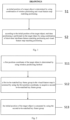
- Fig. 1 is a flow chart of an indoor positioning method according to an embodiment of the present disclosure, the indoor positioning method of the present embodiment, in general, may include steps S1 and S2.
- an initial position of a target object is determined by using combination of wireless positioning and visual feature map matching positioning.
- the wireless positioning is a technology in which a wireless technology is used for positioning
- the visual feature map matching positioning is a technology in which a visual technology is used to extract visual features and performing positioning by feature matching based on the extracted visual features.
- the wireless positioning may be Bluetooth positioning, RFID positioning, WiFi positioning and the like
- the present embodiment will take Bluetooth positioning as an example for description.
- the target object may be an electronic device having Bluetooth and camera function carried by a user in an indoor environment, for example, a mobile phone, a tablet PC or a notebook and so on; the target object is used to run a Bluetooth positioning program, a visual positioning program of interframe matching and a data fusion program; the initial position of the target object refers to a position of the target object when the positioning starts after it enters the indoor environment.
- step S1 (in which an initial position of a target object is determined by using combination of wireless positioning and visual feature map matching positioning) is referred to as positioning initialization stage.
- step S2 according to the initial position of the target object, real-time positioning is performed on the target object by using combination of short-time interframe feature matching positioning and visual feature map matching positioning.
- step S2 in which real-time positioning is performed, according to the initial position of the target object, on the target object using combination of short-time interframe feature matching positioning and visual feature map matching positioning
- online positioning stage in which real-time positioning is performed, according to the initial position of the target object, on the target object using combination of short-time interframe feature matching positioning and visual feature map matching positioning
- the indoor positioning method further includes: constructing a visual feature map of the indoor environment where the target object is located.
- the visual feature map is constructed by means of a camera of the target object.
- indoor environment image data is collected by the camera.
- the camera needs to tilt by a certain angle obliquely upwards relative to a horizontal plane, in one embodiment of the present disclosure, the angle is 30° to 45 ° , in order to avoid collecting dynamic environment information of the surroundings; according to the invention synchronous positioning and construction of sparse three-dimensional feature point map are performed based on ORB_SLAM (ORB_Simultaneous Localization And Mapping) algorithm (the ORB_SLAM algorithm is disclosed in " ORB-SLAM:A Versatile and Accurate Monocular SLAM System, in IEEE Transactionson Robotics, vol.31, no.5, pp.1147-1163, Oct.2015 "), and according to the invention after the construction, key frames of image information and relevant parameters of 3D feature points of the map are saved into a server, as the constructed offline map data, to load and apply at backend server side, thereby the construction of the visual feature map is finished.
- ORB_SLAM ORB_Simultaneous Localization And Mapping
- the server is used to receive Bluetooth positioning data and photograph data transmitted back by the device of the target object, perform matching positioning with the offline map data, and return positioning coordinate values of the target object.
- Fig. 2 is a flow chart of the positioning initialization stage of the indoor positioning method according to an embodiment of the present disclosure, and specifically, the positioning initialization stage includes steps S11 to S13.
- a first position coordinate of the target object is determined by using wireless (for example, Bluetooth) positioning method.
- the target object is positioned by employing three-point weighted centroid algorithm, to obtain the first position coordinate of the target object.
- the wireless positioning may be Bluetooth positioning, RFID positioning, WiFi positioning and the like, the present embodiment will take Bluetooth positioning as an example for description.
- Bluetooth beacon nodes may be disposed in the indoor environment, optionally, a Bluetooth beacon node is disposed every 3-5m.
- the first position coordinate is sent to the server by wired connection or wireless connection.
- a first to-be-matched key frame group in the visual feature map is screened by using the first position coordinate, to acquire a second to-be-matched key frame group, wherein a range of the second to-be-matched key frame group is smaller than a range of the first to-be-matched key frame group;
- this to-be-matched key frame is considered to fall within a credible range, and this to-be-matched key frame is retained; otherwise, this to-be-matched key frame is discarded, and in the end a set of all the retained to-be-matched key frames is treated as the second to-be-matched key frame group.
- the range of the second to-be-matched key frame group is smaller than the range of the first to-be-matched key frame group, that is, the number of to-be-matched key frames in the second to-be-matched key frame group is smaller than the number of to-be-matched key frames in the first to-be-matched key frame group.
- the method further includes acquiring the first to-be-matched key frame group.
- ORB Oriented FAST and Rotated BRIEF
- image which is obtained by collecting a current position of the target object in real time by a camera of the apparatus of the target object
- the offline map is searched, to find out, as candidate frames, all key frames which have a common visual word with a current frame of the image of the target object and are not connected to the current frame, thereby constituting the first to-be-matched key frame group.
- the step of the computing the initial position of the target object using the second to-be-matched key frame group includes steps S131 to S133.
- step S131 the current frame of the image of the target object is acquired, and visual words of the current frame are determined
- step S132 according to a number of same visual words and a visual word matching degree of each to-be-matched key frame in the second to-be-matched key frame group compared with the current frame, a score is given to each to-be-matched key frame in the second to-be-matched key frame group, and a final to-be-matched key frame is obtained.
- the number of same words is counted, indicating how many same visual words as the current frame each to-be-matched key frame in the second to-be-matched key frame group has, and then, among the to-be-matched key frames, those to-be-matched key frames, whose number of same words, indicating the number of visual words same as those in the current frame, is greater than a first threshold, and whose word matching degree is greater than a second threshold, are selected as common view frames; each common view frame gathers top ten frames having the highest degree of common view with itself (that is, the number of same words indicating the number of same visual words is the greatest, and word matching degree is great) into a group, and calculates an accumulative score; finally, the to-be-matched key frame having the highest score is selected out, as the final to-be-matched key frame.
- scores may be given solely according to the number of same visual words to obtain the final to-be-matched key frame, or scores may be given solely according to the visual word matching degree, to obtain the final to-be-matched key frame.
- the initial position of the target object is computed according to the final to-be-matched key frame and the current frame of the image of the target object.
- iterative attitude estimation based on EPnP algorithm is performed on the current frame of the target object and the final to-be-matched key frame, finally a coordinate transformation matrix of the current frame relative to the origin of the visual offline map coordinate system is found, thereby computing a coordinate of the current frame of the target object, namely, determining the initial position of the target object, finishing the positioning initialization stage.
- EPnP algorithm is mainly used in ORB-SLAM to rapidly establish an initial attitude of the current camera.
- the iterative attitude estimation based on EPnP algorithm is performed at device end.
- the target object is roughly positioned using wireless positioning technique, to obtain the first position coordinate of the target object, and to-be-matched key frames in the first to-be-matched key frame group in the visual feature map are screened using the first position coordinate, which substantially narrows the range of to-be-matched key frames, reduces the amount of computation, and improves the speed of finding the initial position of the target object; at the same time, mismatching in the visual positioning under high similarity environment is effectively prevented.
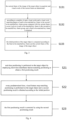
- Fig. 4 is a flow chart of the online positioning stage in the indoor positioning method according to an embodiment of the present disclosure.
- the online positioning stage includes steps S21 to S23.
- step S22 every predetermined time, visual feature map matching positioning is performed on the target object and a second positioning result is obtained according to the initial position.
- a timer is started, if the value of the timer reaches the predetermined time, then the operation of performing the visual feature map matching positioning on the target object and obtaining the second positioning result is triggered, and the timer is reset to zero, the above process is repeated, to realize "every predetermined time, visual feature map matching positioning is performed on the target object, and the second positioning result is obtained".
- the predetermined time takes a value of 10-50s, and optionally, takes a value of 20s or 30s.
- the first positioning result is corrected by using the second positioning result.
- data fusion is performed on the two positioning results, wherein, the first positioning result is treated as a state priori estimator, the second positioning result as a state observation value, obtaining the corrected first positioning result, to eliminate accumulative error in the online positioning stage short-time interframe feature matching positioning.
- performing real-time positioning on the target object by employing short-time interframe feature matching positioning, obtaining the first positioning result is a continuous dynamic process; and every predetermined time, performing visual feature map matching positioning on the target object, obtaining the second positioning result, is also a continuous dynamic process, but it needs to be performed once every predetermined time; the above two steps are performed simultaneously, when the predetermined time passes, visual feature map matching positioning is performed on the target object, obtaining the second positioning result, and the first positioning result of the current moment is corrected using the second positioning result, to eliminate accumulative error of the current first positioning result; positioning of the target object by short-time interframe feature matching at the next moment, is then to compute target object position value of the current moment according to the first positioning result corrected at the previous moment.
- the first positioning result at the initial moment in the online positioning stage is obtained by computation according to the initial position of the target object (that is, the initial position of the target object obtained in the positioning initialization stage). And at the next moment, position coordinate of the target object corresponding to the previous frame is equivalent to the corrected first positioning result obtained by computation at the previous moment, thereby finding feature of the current frame.
- This online positioning stage is repeated in this manner, until the end of the positioning.
- accumulative error can be eliminated, improving accuracy of real-time positioning.
- step reference numbers in the present disclosure do not define order of the steps. In other embodiments of the present disclosure, the steps illustrated in the present disclosure may be performed in reverse order or in parallel.
- Fig. 5 is a flow chart of the step S22 in the indoor positioning method according to an embodiment of the present disclosure. Specifically, referring to Fig. 5 , according to the invention the step of, every predetermined time, performing visual feature map matching positioning on the target object, and obtaining the second positioning result, includes steps S221 to S222.
- a third to-be-matched key frame group in the visual feature map is screened by using the first positioning result, to acquire a fourth to-be-matched key frame group, wherein a range of the fourth to-be-matched key frame group is smaller than a range of the third to-be-matched key frame group.
- ⁇ is an accumulative error threshold of interframe feature matching positioning within the predetermined time, if this to-be-matched key frame satisfies the following relationships at the same time : x b ⁇ ⁇ ⁇ x j ⁇ x b + ⁇ y b ⁇ ⁇ ⁇ y j ⁇ y b + ⁇
- this to-be-matched key frame is considered to fall within a credible range, and this to-be-matched key frame is retained; otherwise, this to-be-matched key frame is discarded, and in the end a set of all the retained to-be-matched key frames is treated as the fourth to-be-matched key frame group.
- the range of the fourth to-be-matched key frame group is smaller than the range of the third to-be-matched key frame group.
- the method further includes acquiring the third to-be-matched key frame group.
- ORB feature extraction is performed on the offline map data and an image of the target object, to acquire corresponding visual words; then, the offline map is searched, to find out, as candidate frames, all key frames which have a common visual word with a current frame of the image of the target object and are not connected to the current frame, thereby constituting according to the invention the third to-be-matched key frame group.
- the second positioning result of the target object is computed by using the fourth to-be-matched key frame group.
- Fig. 6 is a flow chart of the step S222 in the indoor positioning method according to an embodiment of the present disclosure.
- the step of computing the second positioning result of the target object using the fourth to-be-matched key frame group includes steps S2221 to S2223.
- step S2221 the current frame of the image of the target object is acquired, and visual words of the current frame is determined.
- step S2222 according to a number of same visual words and a visual word matching degree of each to-be-matched key frame in the fourth to-be-matched key frame group compared with the current frame, a score is given to each to-be-matched key frame in the fourth to-be-matched key frame group, and a final to-be-matched key frame is obtained.
- the number of same words is counted, indicating how many same visual words as the current frame each to-be-matched key frame in the fourth to-be-matched key frame group has, and then, from among the to-be-matched key frames, those to-be-matched key frames whose number of same words, indicating the number of visual words same as those of the current frame, is greater than a first threshold, and whose word matching degree is greater than a second threshold, are selected as common view frames; each common view frame gathers top ten frames having the highest degree of common view with itself (that is, the number of words indicating the number of same visual words is the greatest, and word matching degree is great) into a group, and calculates an accumulative score; finally, the to-be-matched key frame having the highest group score is selected out, as the final to-be-matched key frame.
- scores may be given solely according to the number of same visual words to obtain the final to-be-matched key frame, or scores may be given solely according to the visual word matching degree, to obtain the final to-be-matched key frame.
- a coordinate transformation matrix of the current frame relative to the initial position is computed; further, the second positioning result of the target object is computed according to the coordinate transformation matrix.
- iterative attitude estimation based on EPnP algorithm is performed on the current frame of the target object and the final to-be-matched key frame, to find coordinate transformation matrix T cw of the current frame relative to the initial position of the target object, thereby computing coordinate of the current frame of the target object according to the coordinate transformation matrix, then obtaining the second positioning result of the target object.
- the core idea of the short-time interframe feature matching positioning is to compute and obtain position coordinate of the current frame, that is, the first position result, via difference between feature of the current frame and feature of the previous frame, and in combination with position coordinate of the target object corresponding to the previous frame.
- the first positioning result at the initial moment in the online positioning stage is obtained by computation according to the initial position of the target object (that is, the initial position of the target object obtained in the positioning initialization stage).
- position coordinate of the target object corresponding to the previous frame is equivalent to the corrected first positioning result obtained by computation at the previous moment, thereby finding feature of the current frame.
- This online positioning stage is repeated in this manner, until the end of the positioning.
- the obtained first positioning result may have a relatively large accumulative error, decreasing the accuracy of real-time positioning result. Therefore, it is necessary to perform visual feature map matching positioning on the target object every predetermined time, obtain the second positioning result, and correct the current first positioning result using the second positioning result, to eliminate accumulative error, and obtain the corrected positioning result, thereby improving the accuracy of the online positioning result.
- the range of to-be-matched key frames in the visual feature map is substantially narrowed down using Bluetooth positioning result, which reduces the amount of computation in feature matching, and improves the speed of finding the initial position; at the same time, mismatching in the visual positioning under high similarity environment is effectively prevented.
- short-time interframe feature matching positioning is employed, and every predetermined time, visual feature map matching positioning is performed, and accumulative error of short-time interframe feature matching positioning is eliminated using the positioning result of visual feature map matching positioning, which can obtain a relatively high indoor positioning accuracy.
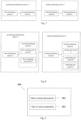
- Fig. 7 is a block diagram of an indoor positioning system according to an embodiment of the present disclosure.
- an embodiment of the present disclosure provides an indoor positioning system 700, including a positioning initialization device 1 and an online positioning device 2, wherein,
- the positioning initialization device 1 is configured to determine an initial position of a target object using combination of wireless positioning and visual feature map matching positioning;
- the wireless positioning may be Bluetooth positioning, RFID positioning, WiFi positioning and the like
- the present embodiment will take Bluetooth positioning as an example for description.
- the target object may be an electronic device having Bluetooth and camera function carried by a user in an indoor environment, for example, a mobile phone, a tablet PC or a notebook and so on; the target object is used to run a Bluetooth positioning program, a visual positioning program of interframe matching and a data fusion program; the initial position of the target object refers to a position of the target object when the positioning starts after it enters the indoor environment.
- the online positioning device 2 is configured to, after success of the positioning initialization, perform, according to the initial position of the target object, real-time positioning on the target object using combination of short-time interframe feature matching positioning and visual feature map matching positioning.
- the positioning initialization device 1 includes a first positioning circuit 3 and a second positioning circuit 4;
- the first positioning circuit 3 is configured to determine a first position coordinate of the target object using wireless (for example, Bluetooth) positioning method; in practical applications, indoor space may be disposed with Bluetooth beacon nodes, optionally, a Bluetooth beacon node may be disposed every 3-5 meters.
- wireless for example, Bluetooth
- the second positioning circuit 4 is configured to: screen a first to-be-matched key frame group in the visual feature map using the first position coordinate, to acquire a second to-be-matched key frame group, wherein a range of the second to-be-matched key frame group is smaller than a range of the first to-be-matched key frame group; and compute the initial position of the target object using the second to-be-matched key frame group.
- the online positioning device 2 includes a third positioning circuit 5 and a fourth positioning circuit 6.
- the third positioning circuit 5 is configured to perform real-time positioning on the target object by employing short-time interframe feature matching positioning, and obtain a first positioning result.
- the fourth positioning circuit 6 is configured to perform, every predetermined time, visual feature map matching positioning on the target object, and obtain a second positioning result according to the initial position, and correct the first positioning result using the second positioning result.
- Fig. 8 is another block diagram of an indoor positioning system 800 according to an embodiment of the present disclosure.
- the second positioning circuit 4 further includes a first screening sub-circuit 7 and a first computing sub-circuit 8.
- the first screening sub-circuit 7 is configured to determine whether a position coordinate of an i-th to-be-matched key frame in the first to-be-matched key frame group satisfies the following relationships: x a ⁇ ⁇ d ⁇ x i ⁇ x a + ⁇ d y a ⁇ ⁇ d ⁇ y i ⁇ y a + ⁇ d
- the to-be-matched key frame is retained; if the relationships are not satisfied, then the to-be-matched key frame is discarded; a set of the retained to-be-matched key frames is the second to-be-matched key frame group.
- the first computing sub-circuit 8 is configured to compute the initial position of the target object using the second to-be-matched key frame group.
- the fourth positioning circuit 6 includes:
- the positioning sub-circuit 10 includes a second screening sub-circuit and a second computing sub-circuit.
- the second screening sub-circuit is configured to determine whether a to-be-matched key frame in the third to-be-matched key frame group satisfies the following relationships: x b ⁇ ⁇ ⁇ x j ⁇ x b + ⁇ y b ⁇ ⁇ ⁇ y j ⁇ y b + ⁇
- (x j , y j , z j ) is a position coordinate of the j-th to-be-matched key frame in the third to-be-matched key frame group, the coordinate of the first positioning result is (x b , y b ), ⁇ is an accumulative error threshold of interframe feature matching positioning within the predetermined time;
- the to-be-matched key frame is retained; if the relationships are not satisfied, then the to-be-matched key frame is discarded; a set of the retained to-be-matched key frames is the fourth to-be-matched key frame group.
- the second computing sub-circuit is configured to compute the second positioning result of the target object using the fourth to-be-matched key frame group and according to the initial position.
- the correcting sub-circuit 11 is configured to perform data fusion on the two positioning results, using extended Kalman filter algorithm, wherein, the first positioning result is treated as a state priori estimator, the second positioning result as a state observation value, obtaining the corrected first positioning result, to eliminate accumulative error of short-time interframe feature matching positioning in the online positioning stage.
- the first positioning circuit 3 and the third positioning circuit 5 have low amount of computation, optionally, the first positioning circuit 3 and the third positioning circuit 5 may be integrated at a user device end, and since the second positioning circuit 4 and the positioning sub-circuit 10 have relatively large amount of computation, optionally, the second positioning circuit 4, the positioning sub-circuit 10, the timing sub-circuit 9 and the correcting sub-circuit 11 may be integrated at a server end, the user device may communicate with the server via wired connection or wireless connection, thereby reducing communication frequency of the user device and the server.
- the above is merely one configuration, but is not limited thereto, all of them may be placed at the server end, but the communication frequency of the user device and the server may be higher in this configuration.
- Fig. 9 is an exemplarily block diagram of an indoor positioning apparatus according to an embodiment of the present disclosure.
- an embodiment of the present disclosure provides an indoor positioning apparatus 900, including: one or more processors 901; one or more memories 902, wherein the one or more memories store computer executable instructions, the executable instructions, when run by the one or more processors, perform the above indoor positioning method.
Landscapes
- Engineering & Computer Science (AREA)
- Radar, Positioning & Navigation (AREA)
- Remote Sensing (AREA)
- Physics & Mathematics (AREA)
- General Physics & Mathematics (AREA)
- Automation & Control Theory (AREA)
- Signal Processing (AREA)
- Computer Networks & Wireless Communication (AREA)
- Computer Vision & Pattern Recognition (AREA)
- Theoretical Computer Science (AREA)
- Multimedia (AREA)
- Navigation (AREA)
- Image Analysis (AREA)
- Position Fixing By Use Of Radio Waves (AREA)
- Length Measuring Devices With Unspecified Measuring Means (AREA)
- Length Measuring Devices By Optical Means (AREA)
- Health & Medical Sciences (AREA)
- Artificial Intelligence (AREA)
- Computing Systems (AREA)
- Databases & Information Systems (AREA)
- Evolutionary Computation (AREA)
- General Health & Medical Sciences (AREA)
- Medical Informatics (AREA)
- Software Systems (AREA)
Claims (8)
- Verfahren zur Positionierung in Innenräumen, folgende Schritte umfassend:Sammeln von Innenraumumgebungsbilddaten einer gesamten Innenraumumgebung, in der sich das Zielobjekt befindet, durch eine Kamera eines Zielobjekts, um eine visuelle Merkmalskarte der Innenraumumgebung, in der sich das Zielobjekt befindet, zu erstellen;Bestimmen einer Anfangsposition des Zielobjekts unter Verwendung einer Kombination aus drahtloser Positionierung und visueller Merkmalskartenabgleichspositionierung (S1); undentsprechend der Anfangsposition des Zielobjekts, Durchführen einer Echtzeit-Positionierung an dem Zielobjekt unter Verwendung einer Kombination aus Kurzzeit-Interframe-Merkmalsabgleichspositionierung und der visuellen Merkmalskartenabgleichspositionierung (S2),dadurch gekennzeichnet, dassder Schritt des Bestimmens der Anfangsposition des Zielobjekts unter Verwendung der Kombination drahtloser Positionierung und der visuellen Merkmalskartenabgleichspositionierung folgende Schritte umfasst:Bestimmen einer ersten Positionskoordinate des Zielobjekts unter Verwendung eines drahtlosen Positionierungsverfahrens (S11);Screening einer ersten abzugleichenden Schlüsselrahmengruppe in einer visuellen Merkmalskarte einer Innenraumumgebung unter Verwendung der ersten Positionskoordinate, um eine zweite abzugleichende Schlüsselrahmengruppe zu erfassen (S12); undBerechnen der Anfangsposition des Zielobjekts unter Verwendung der zweiten abzugleichenden Schlüsselrahmengruppe (S13),wobei die erste abzugleichende Schlüsselrahmengruppe erhalten wird durch: Erfassen der visuellen Merkmalskarte und visueller Wörter eines aktuellen Rahmens eines Bildes des Zielobjekts; undDurchsuchen der visuellen Merkmalskarte, um sämtliche Schlüsselrahmen herauszufinden, die ein gemeinsames visuelles Wort mit dem aktuellen Rahmen des Bildes des Zielobjekts haben und nicht mit dem aktuellen Rahmen verbunden sind;der Schritt des Durchführens einer Echtzeit-Positionierung an dem Zielobjekt entsprechend der Anfangsposition des Zielobjekts unter Verwendung einer Kombination aus Kurzzeit-Interframe-Merkmalsabgleichspositionierung und der visuellen Merkmalskartenabgleichspositionierung, folgende Schritte umfasst:Durchführen einer Echtzeit-Positionierung an dem Zielobjekt durch Verwenden einer Kurzzeit-Interframe-Merkmalsabgleichspositionierung, um ein erstes Positionierungsergebnis (S21) zu erhalten;zu jeder vorbestimmten Zeit, Durchführen einer visuellen Merkmalskartenabgleichspositionierung an dem Zielobjekt und Erhalten eines zweiten Positionierungsergebnisses entsprechend der Anfangsposition (S22); undKorrigieren des ersten Positionierungsergebnisses unter Verwendung des zweiten Positionierungsergebnisses (S23);wobei der Schritt des Durchführens einer visuellen Merkmalskartenabgleichspositionierung an dem Zielobjekt zu jeder vorbestimmten Zeit und des Erhaltens des zweiten Positionierungsergebnisses entsprechend der Anfangsposition folgende Schritte umfasst:Screening einer dritten abzugleichenden Schlüsselrahmengruppe in einer visuellen Merkmalskarte unter Verwendung des ersten Positionierungsergebnisses, um eine vierte abzugleichende Schlüsselrahmengruppe zu erfassen (S221); undBerechnen des zweiten Positionierungsergebnisses des Zielobjekts unter Verwendung der vierten abzugleichenden Schlüsselrahmengruppe und entsprechend der Anfangsposition (S222),wobei die dritte abzugleichende Schlüsselrahmengruppe erhalten wird durch: Erfassen der visuellen Merkmalskarte einer Innenraumumgebung und visueller Wörter eines aktuellen Rahmens eines Bildes des Zielobjekts; und Durchsuchen der visuellen Merkmalskarte, um sämtliche Schlüsselrahmen herauszufinden, die ein gemeinsames visuelles Wort mit dem aktuellen Rahmen des Bildes des Zielobjekts haben und nicht mit dem aktuellen Rahmen verbunden sind, undwobei der Schritt des Korrigierens des ersten Positionierungsergebnisses unter Verwendung des zweiten Positionierungsergebnisses folgende Schritte umfasst:Erhalten eines korrigierten ersten Positionierungsergebnisses durch Verwenden eines erweiterten Kalman-Filter-Algorithmus, um eine Datenfusion an dem ersten Positionierungsergebnis und dem zweiten Positionierungsergebnis durchzuführen, wobei das erste Positionierungsergebnis als ein Zustands-Priori-Schätzer behandelt wird, das zweite Positionierungsergebnis als ein Zustandsbeobachtungswert behandelt wird, undder Schritt des Konstruierens der visuellen Merkmalskarte der Innenraumumgebung, in der sich das Zielobjekt befindet, umfasst:Durchführen einer synchronen Positionierung und Konstruktion einer dünnen dreidimensionalen Merkmalspunktekarte auf der Grundlage eines ORB-Algorithmus (Oriented FAST and Rotated BRIEF) zur gleichzeitigen Lokalisierung und Kartierung;nachdem die Konstruktion abgeschlossen ist, Speichern von Schlüsselrahmen von Bildinformationen und relevanten Parametern von 3D-Merkmalspunkten der Karte auf einem Server als die konstruierten Offline-Kartendaten; undKo-Registrieren des visuellen Offline-Kartenkoordinatensystems mit einem Koordinatensystem des drahtlosen Positionierungssystems, um sicherzustellen, dass die beiden Positionierungssysteme demselben Weltkoordinatensystem unterliegen.
- Innenraum-Positionierungsverfahren nach Anspruch 1, wobei der Schritt des Screenings der ersten abzugleichenden Schlüsselrahmengruppe in der visuellen Merkmalskarte unter Verwendung der ersten Positionskoordinate, um die zweite abzugleichende Schlüsselrahmengruppe zu erfassen, folgende Schritte umfasst:Bestimmen, ob ein abzugleichender Schlüsselrahmen in der ersten abzugleichenden Schlüsselrahmengruppe die folgenden Beziehungen erfüllt (S221):

 wobei (xi, yi, zi) eine Positionskoordinate eines i-ten abzugleichenden Schlüsselrahmens in der ersten abzugleichenden Schlüsselrahmengruppe ist, (xa, ya) die erste Positionskoordinate des Zielobjekts ist, Δd ein maximaler Positionsfehler der drahtlosen Positionierung ist;in einem Fall, in dem die Beziehungen erfüllt sind, der abzugleichende Schlüsselrahmen beibehalten wird; in einem Fall, in dem die Beziehungen nicht erfüllt sind, der abzugleichende Schlüsselrahmen verworfen wird; wobei ein Satz von beibehaltenen abzugleichenden Schlüsselrahmen die zweite abzugleichende Schlüsselrahmengruppe ist.
 - Innenraum-Positionierungsverfahren nach Anspruch 1, wobei der Schritt des Berechnens der Anfangsposition des Zielobjekts unter Verwendung der zweiten abzugleichenden Schlüsselrahmengruppe folgende Schritte umfasst:Erfassen des aktuellen Rahmens des Bildes des Zielobjekts und Bestimmen visueller Wörter des aktuellen Rahmens (S131);entsprechend mindestens einem aus einer Anzahl gleicher visueller Wörter und einem visuellen Wortübereinstimmungsgrad jedes abzugleichenden Schlüsselrahmens in der zweiten abzugleichenden Schlüsselrahmengruppe im Vergleich mit dem aktuellen Rahmen, Vergeben einer Punktzahl an jeden abzugleichenden Schlüsselrahmen in der zweiten abzugleichenden Schlüsselrahmengruppe (S132);Berechnen der Anfangsposition des Zielobjekts entsprechend einem abzugleichenden Schlüsselrahmen mit einer höchsten Punktzahl und dem aktuellen Rahmen des Bildes des Zielobjekts (S133).
- Innenraum-Positionierungsverfahren nach Anspruch 1, wobei der Schritt des Screenings der dritten abzugleichenden Schlüsselrahmengruppe in der visuellen Merkmalskarte unter Verwendung des ersten Positionierungsergebnisses, um die vierte abzugleichende Schlüsselrahmengruppe zu erfassen, folgende Schritte umfasst:Bestimmen, ob ein abzugleichender Schlüsselrahmen in der dritten abzugleichenden Schlüsselrahmengruppe die folgenden Beziehungen erfüllt:

 wobei (xj, yj, zj) eine Positionskoordinate eines j-ten abzugleichenden Schlüsselrahmens in der dritten abzugleichenden Schlüsselrahmengruppe ist, eine Koordinate des ersten Positionierungsergebnisses (xb, yb) ist, δ eine kumulative Fehlerschwelle der Interframe-Merkmalsabgleichspositionierung innerhalb der vorbestimmten Zeit ist;in einem Fall, in dem die Beziehungen erfüllt sind, der abzugleichende Schlüsselrahmen beibehalten wird; in einem Fall, in dem die Beziehungen nicht erfüllt sind, der abzugleichende Schlüsselrahmen verworfen wird; wobei ein Satz von beibehaltenen abzugleichenden Schlüsselrahmen die vierte abzugleichende Schlüsselrahmengruppe ist.
 - Innenraum-Positionierungsverfahren nach Anspruch 1, wobei der Schritt des Berechnens des zweiten Positionierungsergebnisses des Zielobjekts unter Verwendung der vierten abzugleichenden Schlüsselrahmengruppe und entsprechend der Anfangsposition folgende Schritte umfasst:Erfassen des aktuellen Rahmens des Bildes des Zielobjekts und Bestimmen visueller Wörter des aktuellen Rahmens (S2221);entsprechend mindestens einem aus einer Anzahl gleicher visueller Wörter und einem visuellen Wortübereinstimmungsgrad jedes abzugleichenden Schlüsselrahmens in der vierten abzugleichenden Schlüsselrahmengruppe im Vergleich mit dem aktuellen Rahmen, Vergeben einer Punktzahl an jeden abzugleichenden Schlüsselrahmen in der vierten abzugleichenden Schlüsselrahmengruppe (S2222);entsprechend einem abzugleichenden Schlüsselrahmen mit einer höchsten Punktzahl und dem aktuellen Rahmen des Bildes des Zielobjekts, Berechnen einer Koordinatentransformationsmatrix des aktuellen Rahmens in Bezug auf die Anfangsposition;Berechnen des zweiten Positionierungsergebnisses des Zielobjekts entsprechend der Koordinatentransformationsmatrix (S2223).
- Innenraum-Positionierungssystem, aufweisend:eine Kamera eines Zielobjekts, die konfiguriert ist, um Innenraumumgebungsbilddaten einer gesamten Innenraumumgebung, in der sich das Zielobjekt befindet, zu sammeln, um eine visuelle Merkmalskarte der Innenraumumgebung, in der sich das Zielobjekt befindet, zu erstellen;eine Positionierungsinitialisierungsvorrichtung (1), die konfiguriert ist, um eine Anfangsposition des Zielobjekts unter Verwendung einer Kombination aus drahtloser Positionierung und visueller Merkmalskartenabgleichspositionierung zu bestimmen; undeine Online-Positionierungsvorrichtung (2), die konfiguriert ist, um entsprechend der Anfangsposition des Zielobjekts eine Echtzeit-Positionierung an dem Zielobjekt unter Verwendung einer Kombination aus Kurzzeit-Interframe-Merkmalsabgleichspositionierung und der visuellen Merkmalskartenabgleichspositionierung durchzuführen,dadurch gekennzeichnet, dassdie Positionierungsinitialisierungsvorrichtung (1) aufweist:eine erste Positionierungsschaltung (3), die konfiguriert ist, um eine erste Positionskoordinate des Zielobjekts unter Verwendung drahtloser Positionierungstechnik zu bestimmen; undeine zweite Positionierungsschaltung (4), die konfiguriert ist, um: eine erste abzugleichende Schlüsselrahmengruppe in einer visuellen Merkmalskarte unter Verwendung der ersten Positionskoordinate zu screenen, um eine zweite abzugleichende Schlüsselrahmengruppe zu erfassen; und die Anfangsposition des Zielobjekts unter Verwendung der zweiten abzugleichenden Schlüsselrahmengruppe zu berechnen,wobei die erste abzugleichende Schlüsselrahmengruppe erhalten wird durch: Erfassen der visuellen Merkmalskarte und visueller Wörter eines aktuellen Rahmens eines Bildes des Zielobjekts; und Durchsuchen der visuellen Merkmalskarte, um sämtliche Schlüsselrahmen herauszufinden, die ein gemeinsames visuelles Wort mit dem aktuellen Rahmen des Bildes des Zielobjekts haben und nicht mit dem aktuellen Rahmen verbunden sind,die Online-Positionierungsvorrichtung (2) aufweist:eine dritte Positionierungsschaltung (5), die konfiguriert ist, um eine Echtzeit-Positionierung an dem Zielobjekt durch Verwenden von Kurzzeit-Interframe-Merkmalsabgleichspositionierung durchzuführen, um ein erstes Positionierungsergebnis zu erhalten; undeine vierte Positionierungsschaltung (6), die konfiguriert ist, um zu jeder vorbestimmten Zeit visuelle Merkmalskartenabgleichspositionierung an dem Zielobjekt durchzuführen, um ein zweites Positionierungsergebnis entsprechend der Anfangsposition zu erhalten, und das erste Positionierungsergebnis unter Verwendung des zweiten Positionierungsergebnisses zu korrigieren,die vierte Positionierungsschaltung (6) aufweist:eine Positionierungs-Teilschaltung (10), die konfiguriert ist, um: eine dritte abzugleichende Schlüsselrahmengruppe in einer visuellen Merkmalskarte unter Verwendung des ersten Positionierungsergebnisses zu durchsuchen, um eine vierte abzugleichende Schlüsselrahmengruppe zu erfassen; und das zweite Positionierungsergebnis des Zielobjekts unter Verwendung der vierten abzugleichenden Schlüsselrahmengruppe und entsprechend der Anfangsposition zu berechnen;eine Zeitsteuerungs-Teilschaltung (9), die konfiguriert ist, um zu jeder vorbestimmten Zeit einen Betrieb der Positionierungs-Teilschaltung (10) auszulösen; undeine Korrektur-Teilschaltung (11), die konfiguriert ist, um das erste Positionierungsergebnis unter Verwendung des zweiten Positionierungsergebnisses zu korrigieren,wobei die dritte abzugleichende Schlüsselrahmengruppe erhalten wird durch: Erfassen der visuellen Merkmalskarte und visueller Wörter eines aktuellen Rahmens eines Bildes des Zielobjekts; und Durchsuchen der visuellen Merkmalskarte, um sämtliche Schlüsselrahmen herauszufinden, die ein gemeinsames visuelles Wort mit dem aktuellen Rahmen des Bildes des Zielobjekts haben und nicht mit dem aktuellen Rahmen verbunden sind, unddie Korrektur-Teilschaltung (11) konfiguriert ist, um ein korrigiertes erstes Positionierungsergebnis zu erhalten, indem sie unter Verwendung eines erweiterten Kalman-Filter-Algorithmus eine Datenfusion an dem ersten Positionierungsergebnis und an dem zweiten Positionierungsergebnis durchführt, wobei das erste Positionierungsergebnis als ein Zustands-Priori-Schätzer behandelt wird, das zweite Positionierungsergebnis als ein Zustandsbeobachtungswert behandelt wird, unddie visuelle Merkmalskarte der Innenraumumgebung, in der sich das Zielobjekt befindet, konstruiert wird durch:Durchführen einer synchronen Positionierung und Konstruktion einer dünnen dreidimensionalen Merkmalspunktekarte auf der Grundlage eines ORB-Algorithmus (Oriented FAST and Rotated BRIEF) zur gleichzeitigen Lokalisierung und Kartierung;nachdem die Konstruktion abgeschlossen ist, Speichern von Schlüsselrahmen von Bildinformationen und relevanten Parametern von 3D-Merkmalspunkten der Karte auf einem Server als die konstruierten Offline-Kartendaten; undKo-Registrieren des visuellen Offline-Kartenkoordinatensystems mit einem Koordinatensystem des drahtlosen Positionierungssystems, um sicherzustellen, dass die beiden Positionierungssysteme demselben Weltkoordinatensystem unterliegen.
- Innenraum-Positionierungssystem nach Anspruch 6, wobei die zweite Positionierungsschaltung (4) aufweist:eine erste Screening-Teilschaltung (7), die konfiguriert ist, um zu bestimmen, ob ein i-ter abzugleichender Schlüsselrahmen in der ersten abzugleichenden Schlüsselrahmengruppe die folgenden Beziehungen erfüllt:

 wobei (xi, yi, zi) eine Positionskoordinate des i-ten abzugleichenden Schlüsselrahmens in der ersten abzugleichenden Schlüsselrahmengruppe ist, (xa, ya) die erste Positionskoordinate des Zielobjekts ist, Δd ein maximaler Positionsfehler der drahtlosen Positionierung ist;in einem Fall, in dem die Beziehungen erfüllt sind, wird der abzugleichende Schlüsselrahmen beibehalten; in einem Fall, in dem die Beziehungen nicht erfüllt sind, wird der abzugleichende Schlüsselrahmen verworfen; wobei ein Satz von beibehaltenen abzugleichenden Schlüsselrahmen die zweite abzugleichende Schlüsselrahmengruppe. ist; undeine erste Berechnungs-Teilschaltung (8), die konfiguriert ist, um die Anfangsposition des Zielobjekts unter Verwendung der zweiten abzugleichenden Schlüsselrahmengruppe zu berechnen.
 - Innenraum-Positionierungssystem nach Anspruch 6, wobei die Positionierungs-Teilschaltung (10) aufweist:eine zweite Screening-Teilschaltung, die konfiguriert ist, um zu bestimmen, ob ein abzugleichender Schlüsselrahmen in der dritten abzugleichenden Schlüsselrahmengruppe die folgenden Beziehungen erfüllt:

 wobei (xj, yj, zj) eine Positionskoordinate eines j-ten abzugleichenden Schlüsselrahmens in der dritten abzugleichenden Schlüsselrahmengruppe ist, eine Koordinate des ersten Positionierungsergebnisses (xb, yb) ist, δ eine kumulative Fehlerschwelle der Interframe-Merkmalsabgleichspositionierung innerhalb der vorbestimmten Zeit ist;in einem Fall, in dem die Beziehungen erfüllt sind, der abzugleichende Schlüsselrahmen beibehalten wird; in einem Fall, in dem die Beziehungen nicht erfüllt sind, der abzugleichende Schlüsselrahmen verworfen wird; wobei ein Satz von beibehaltenen abzugleichenden Schlüsselrahmen die vierte abzugleichende Schlüsselrahmengruppe ist; undeine zweite Berechnungs-Teilschaltung, die konfiguriert ist, um das zweite Positionierungsergebnis des Zielobjekts unter Verwendung der vierten abzugleichenden Schlüsselrahmengruppe und entsprechend der Anfangsposition zu berechnen.
Applications Claiming Priority (2)
| Application Number | Priority Date | Filing Date | Title |
|---|---|---|---|
| CN201810253021.2A CN110360999B (zh) | 2018-03-26 | 2018-03-26 | 室内定位方法、室内定位系统和计算机可读介质 |
| PCT/CN2019/070093 WO2019184542A1 (zh) | 2018-03-26 | 2019-01-02 | 室内定位方法、室内定位系统、室内定位设备和计算机可读介质 |
Publications (3)
| Publication Number | Publication Date |
|---|---|
| EP3779360A1 EP3779360A1 (de) | 2021-02-17 |
| EP3779360A4 EP3779360A4 (de) | 2022-01-05 |
| EP3779360B1 true EP3779360B1 (de) | 2024-09-11 |
Family
ID=68062186
Family Applications (1)
| Application Number | Title | Priority Date | Filing Date |
|---|---|---|---|
| EP19755264.9A Active EP3779360B1 (de) | 2018-03-26 | 2019-01-02 | Innenpositionierungsverfahren, innenpositionierungssystem, innenpositionierungsvorrichtung und computerlesbares medium |
Country Status (5)
| Country | Link |
|---|---|
| US (1) | US11395100B2 (de) |
| EP (1) | EP3779360B1 (de) |
| JP (1) | JP7247186B2 (de) |
| CN (1) | CN110360999B (de) |
| WO (1) | WO2019184542A1 (de) |
Families Citing this family (19)
| Publication number | Priority date | Publication date | Assignee | Title |
|---|---|---|---|---|
| CN112020630B (zh) * | 2018-04-27 | 2024-06-28 | 北京嘀嘀无限科技发展有限公司 | 用于更新建筑物的3d模型的系统和方法 |
| WO2020222790A1 (en) * | 2019-04-30 | 2020-11-05 | Hewlett-Packard Development Company, L.P. | Positioning autonomous vehicles |
| CN110889349A (zh) * | 2019-11-18 | 2020-03-17 | 哈尔滨工业大学 | 一种基于vslam的稀疏三维点云图的视觉定位方法 |
| TWI842024B (zh) * | 2019-12-20 | 2024-05-11 | 美商尼安蒂克公司 | 合併來自地圖建立裝置之局部地圖 |
| KR102830221B1 (ko) * | 2020-01-08 | 2025-07-07 | 엘지전자 주식회사 | 로봇의 위치 인식 |
| CN113137968B (zh) * | 2020-01-16 | 2023-03-14 | 浙江舜宇智能光学技术有限公司 | 基于多传感器融合的重定位方法、重定位装置和电子设备 |
| CN111986261B (zh) * | 2020-08-13 | 2023-08-18 | 清华大学苏州汽车研究院(吴江) | 一种车辆定位方法、装置、电子设备及存储介质 |
| CN112163502B (zh) * | 2020-09-24 | 2022-07-12 | 电子科技大学 | 一种室内动态场景下的视觉定位方法 |
| CN112325883B (zh) * | 2020-10-19 | 2022-06-21 | 湖南大学 | 一种WiFi和视觉多源融合的移动机器人室内定位方法 |
| CN112362047A (zh) * | 2020-11-26 | 2021-02-12 | 浙江商汤科技开发有限公司 | 定位方法及装置、电子设备和存储介质 |
| CN113284224B (zh) * | 2021-04-20 | 2024-06-18 | 北京行动智能科技有限公司 | 基于单纯码的自动建图方法和装置、定位方法及设备 |
| US12000945B2 (en) * | 2021-05-28 | 2024-06-04 | Nec Corporation | Visual and RF sensor fusion for multi-agent tracking |
| CN113872693B (zh) * | 2021-09-29 | 2022-08-23 | 佛山市南海区广工大数控装备协同创新研究院 | 基于关键帧选取的可见光定位与深度相机的紧耦合方法 |
| CN113989372B (zh) * | 2021-10-28 | 2025-04-01 | 歌尔科技有限公司 | 标识定位方法、装置、电子设备及计算机可读存储介质 |
| CN114025320A (zh) * | 2021-11-08 | 2022-02-08 | 易枭零部件科技(襄阳)有限公司 | 一种基于5g信号的室内定位方法 |
| WO2024001339A1 (zh) * | 2022-07-01 | 2024-01-04 | 华为云计算技术有限公司 | 确定位姿的方法、装置以及计算设备 |
| CN116772860A (zh) * | 2023-06-26 | 2023-09-19 | 浙江弘锐物联科技有限公司 | 基于无线定位技术与视觉人工智能融合的新型室内定位系统 |
| CN118244310B (zh) * | 2024-05-28 | 2024-08-09 | 深圳市飞易通科技有限公司 | 车辆定位方法及装置、汽车 |
| CN119687934B (zh) * | 2025-02-27 | 2025-06-27 | 西安达升科技股份有限公司 | Agv导航方法、装置、设备、介质及程序产品 |
Family Cites Families (20)
| Publication number | Priority date | Publication date | Assignee | Title |
|---|---|---|---|---|
| JP4952360B2 (ja) * | 2007-04-26 | 2012-06-13 | 日本電気株式会社 | 動画像復号方法、動画像復号装置、動画像復号プログラム |
| US8265817B2 (en) * | 2008-07-10 | 2012-09-11 | Lockheed Martin Corporation | Inertial measurement with an imaging sensor and a digitized map |
| US9151822B2 (en) * | 2009-12-31 | 2015-10-06 | Optimal Ranging, Inc. | Precise positioning using a distributed sensor network |
| JP2011209203A (ja) * | 2010-03-30 | 2011-10-20 | Sony Corp | 自己位置推定装置および自己位置推定方法 |
| WO2012024516A2 (en) | 2010-08-18 | 2012-02-23 | Nearbuy Systems, Inc. | Target localization utilizing wireless and camera sensor fusion |
| CN102435172A (zh) * | 2011-09-02 | 2012-05-02 | 北京邮电大学 | 一种球形机器人视觉定位系统及视觉定位方法 |
| US9613388B2 (en) * | 2014-01-24 | 2017-04-04 | Here Global B.V. | Methods, apparatuses and computer program products for three dimensional segmentation and textured modeling of photogrammetry surface meshes |
| CN104936283B (zh) * | 2014-03-21 | 2018-12-25 | 中国电信股份有限公司 | 室内定位方法、服务器和系统 |
| JP6474126B2 (ja) * | 2015-02-27 | 2019-02-27 | Kddi株式会社 | オブジェクト追跡方法、装置およびプログラム |
| CN104819723B (zh) * | 2015-04-29 | 2017-10-13 | 京东方科技集团股份有限公司 | 一种定位方法和定位服务器 |
| CN105188135B (zh) * | 2015-08-17 | 2019-06-25 | 京东方科技集团股份有限公司 | 终端定位方法及系统、目标终端及定位服务器 |
| CN106470478B (zh) * | 2015-08-20 | 2020-03-24 | 西安云景智维科技有限公司 | 一种定位数据处理方法、装置和系统 |
| CN105246039B (zh) * | 2015-10-20 | 2018-05-29 | 深圳大学 | 一种基于图像处理的室内定位方法及系统 |
| CN105371847B (zh) * | 2015-10-27 | 2018-06-29 | 深圳大学 | 一种室内实景导航方法及系统 |
| EP3239729B1 (de) * | 2016-04-25 | 2024-12-11 | Viavi Solutions UK Limited | Sensorbasierte geolokalisierung einer benutzervorrichtung |
| CN106793086B (zh) * | 2017-03-15 | 2020-01-14 | 河北工业大学 | 一种室内定位方法 |
| CN107356252B (zh) | 2017-06-02 | 2020-06-16 | 青岛克路德机器人有限公司 | 一种融合视觉里程计与物理里程计的室内机器人定位方法 |
| CN107478214A (zh) * | 2017-07-24 | 2017-12-15 | 杨华军 | 一种基于多传感器融合的室内定位方法及系统 |
| CN107246868B (zh) * | 2017-07-26 | 2021-11-02 | 上海舵敏智能科技有限公司 | 一种协同导航定位系统及导航定位方法 |
| CN107677279B (zh) * | 2017-09-26 | 2020-04-24 | 上海思岚科技有限公司 | 一种定位建图的方法及系统 |
-
2018
- 2018-03-26 CN CN201810253021.2A patent/CN110360999B/zh not_active Expired - Fee Related
-
2019
- 2019-01-02 US US16/488,341 patent/US11395100B2/en active Active
- 2019-01-02 EP EP19755264.9A patent/EP3779360B1/de active Active
- 2019-01-02 WO PCT/CN2019/070093 patent/WO2019184542A1/zh not_active Ceased
- 2019-01-02 JP JP2020528385A patent/JP7247186B2/ja active Active
Also Published As
| Publication number | Publication date |
|---|---|
| JP7247186B2 (ja) | 2023-03-28 |
| EP3779360A4 (de) | 2022-01-05 |
| CN110360999B (zh) | 2021-08-27 |
| WO2019184542A1 (zh) | 2019-10-03 |
| US20210360368A1 (en) | 2021-11-18 |
| CN110360999A (zh) | 2019-10-22 |
| JP2021517284A (ja) | 2021-07-15 |
| EP3779360A1 (de) | 2021-02-17 |
| US11395100B2 (en) | 2022-07-19 |
Similar Documents
| Publication | Publication Date | Title |
|---|---|---|
| EP3779360B1 (de) | Innenpositionierungsverfahren, innenpositionierungssystem, innenpositionierungsvorrichtung und computerlesbares medium | |
| CN111199564B (zh) | 智能移动终端的室内定位方法、装置与电子设备 | |
| US11105638B2 (en) | Method, apparatus, and computer readable storage medium for updating electronic map | |
| CN111028358B (zh) | 室内环境的增强现实显示方法、装置及终端设备 | |
| CN109993793B (zh) | 视觉定位方法及装置 | |
| JP5722502B2 (ja) | モバイルデバイスのための平面マッピングおよびトラッキング | |
| CN103530881B (zh) | 适用于移动终端的户外增强现实无标志点跟踪注册方法 | |
| CN111174799A (zh) | 地图构建方法及装置、计算机可读介质、终端设备 | |
| CN113048980B (zh) | 位姿优化方法、装置、电子设备及存储介质 | |
| CN104936283A (zh) | 室内定位方法、服务器和系统 | |
| CN106529538A (zh) | 一种飞行器的定位方法和装置 | |
| CN113516707B (zh) | 基于图像的对象定位方法及装置 | |
| CN113312435B (zh) | 高精度地图更新方法和设备 | |
| CN103761539B (zh) | 一种基于环境特征物体的室内定位方法 | |
| CN102214000A (zh) | 用于移动增强现实系统的目标物体混合注册方法及系统 | |
| CN106767810A (zh) | 一种基于移动终端的wifi和视觉信息的室内定位方法及系统 | |
| US20170039450A1 (en) | Identifying Entities to be Investigated Using Storefront Recognition | |
| CN117665869B (zh) | 基于信号特征与机器学习的卫星导航非视距观测检测方法 | |
| CN115773759B (zh) | 自主移动机器人的室内定位方法、装置、设备及存储介质 | |
| KR102407802B1 (ko) | 인공신경망 학습 기반의 실내외 3차원 좌표 및 방위 추정 장치 | |
| CN112634368A (zh) | 场景目标的空间与或图模型生成方法、装置及电子设备 | |
| CN115908557A (zh) | 目标检测方法、目标检测装置、电子设备及存储介质 | |
| CN111783849A (zh) | 一种室内定位方法、装置、电子设备及存储介质 | |
| CN112405526A (zh) | 一种机器人的定位方法及装置、设备、存储介质 | |
| CN111132309B (zh) | 一种定位方法、装置、服务器及存储介质 |
Legal Events
| Date | Code | Title | Description |
|---|---|---|---|
| STAA | Information on the status of an ep patent application or granted ep patent |
Free format text: STATUS: UNKNOWN |
|
| STAA | Information on the status of an ep patent application or granted ep patent |
Free format text: STATUS: THE INTERNATIONAL PUBLICATION HAS BEEN MADE |
|
| PUAI | Public reference made under article 153(3) epc to a published international application that has entered the european phase |
Free format text: ORIGINAL CODE: 0009012 |
|
| STAA | Information on the status of an ep patent application or granted ep patent |
Free format text: STATUS: REQUEST FOR EXAMINATION WAS MADE |
|
| 17P | Request for examination filed |
Effective date: 20190826 |
|
| AK | Designated contracting states |
Kind code of ref document: A1 Designated state(s): AL AT BE BG CH CY CZ DE DK EE ES FI FR GB GR HR HU IE IS IT LI LT LU LV MC MK MT NL NO PL PT RO RS SE SI SK SM TR |
|
| AX | Request for extension of the european patent |
Extension state: BA ME |
|
| DAV | Request for validation of the european patent (deleted) | ||
| DAX | Request for extension of the european patent (deleted) | ||
| A4 | Supplementary search report drawn up and despatched |
Effective date: 20211202 |
|
| RIC1 | Information provided on ipc code assigned before grant |
Ipc: G01C 21/00 20060101AFI20211126BHEP |
|
| RIC1 | Information provided on ipc code assigned before grant |
Ipc: G01S 5/02 20100101ALI20231101BHEP Ipc: G01S 5/00 20060101ALI20231101BHEP Ipc: G01C 21/20 20060101ALI20231101BHEP Ipc: G01C 21/00 20060101AFI20231101BHEP |
|
| GRAP | Despatch of communication of intention to grant a patent |
Free format text: ORIGINAL CODE: EPIDOSNIGR1 |
|
| STAA | Information on the status of an ep patent application or granted ep patent |
Free format text: STATUS: GRANT OF PATENT IS INTENDED |
|
| INTG | Intention to grant announced |
Effective date: 20240523 |
|
| GRAS | Grant fee paid |
Free format text: ORIGINAL CODE: EPIDOSNIGR3 |
|
| GRAA | (expected) grant |
Free format text: ORIGINAL CODE: 0009210 |
|
| STAA | Information on the status of an ep patent application or granted ep patent |
Free format text: STATUS: THE PATENT HAS BEEN GRANTED |
|
| AK | Designated contracting states |
Kind code of ref document: B1 Designated state(s): AL AT BE BG CH CY CZ DE DK EE ES FI FR GB GR HR HU IE IS IT LI LT LU LV MC MK MT NL NO PL PT RO RS SE SI SK SM TR |
|
| REG | Reference to a national code |
Ref country code: GB Ref legal event code: FG4D |
|
| REG | Reference to a national code |
Ref country code: CH Ref legal event code: EP |
|
| REG | Reference to a national code |
Ref country code: DE Ref legal event code: R096 Ref document number: 602019058717 Country of ref document: DE |
|
| REG | Reference to a national code |
Ref country code: IE Ref legal event code: FG4D |
|
| REG | Reference to a national code |
Ref country code: LT Ref legal event code: MG9D |
|
| PG25 | Lapsed in a contracting state [announced via postgrant information from national office to epo] |
Ref country code: NO Free format text: LAPSE BECAUSE OF FAILURE TO SUBMIT A TRANSLATION OF THE DESCRIPTION OR TO PAY THE FEE WITHIN THE PRESCRIBED TIME-LIMIT Effective date: 20241211 |
|
| REG | Reference to a national code |
Ref country code: NL Ref legal event code: MP Effective date: 20240911 |
|
| PG25 | Lapsed in a contracting state [announced via postgrant information from national office to epo] |
Ref country code: GR Free format text: LAPSE BECAUSE OF FAILURE TO SUBMIT A TRANSLATION OF THE DESCRIPTION OR TO PAY THE FEE WITHIN THE PRESCRIBED TIME-LIMIT Effective date: 20241212 Ref country code: FI Free format text: LAPSE BECAUSE OF FAILURE TO SUBMIT A TRANSLATION OF THE DESCRIPTION OR TO PAY THE FEE WITHIN THE PRESCRIBED TIME-LIMIT Effective date: 20240911 |
|
| PG25 | Lapsed in a contracting state [announced via postgrant information from national office to epo] |
Ref country code: BG Free format text: LAPSE BECAUSE OF FAILURE TO SUBMIT A TRANSLATION OF THE DESCRIPTION OR TO PAY THE FEE WITHIN THE PRESCRIBED TIME-LIMIT Effective date: 20240911 |
|
| PG25 | Lapsed in a contracting state [announced via postgrant information from national office to epo] |
Ref country code: LV Free format text: LAPSE BECAUSE OF FAILURE TO SUBMIT A TRANSLATION OF THE DESCRIPTION OR TO PAY THE FEE WITHIN THE PRESCRIBED TIME-LIMIT Effective date: 20240911 |
|
| PG25 | Lapsed in a contracting state [announced via postgrant information from national office to epo] |
Ref country code: HR Free format text: LAPSE BECAUSE OF FAILURE TO SUBMIT A TRANSLATION OF THE DESCRIPTION OR TO PAY THE FEE WITHIN THE PRESCRIBED TIME-LIMIT Effective date: 20240911 |
|
| PG25 | Lapsed in a contracting state [announced via postgrant information from national office to epo] |
Ref country code: RS Free format text: LAPSE BECAUSE OF FAILURE TO SUBMIT A TRANSLATION OF THE DESCRIPTION OR TO PAY THE FEE WITHIN THE PRESCRIBED TIME-LIMIT Effective date: 20241211 Ref country code: ES Free format text: LAPSE BECAUSE OF FAILURE TO SUBMIT A TRANSLATION OF THE DESCRIPTION OR TO PAY THE FEE WITHIN THE PRESCRIBED TIME-LIMIT Effective date: 20240911 |
|
| PG25 | Lapsed in a contracting state [announced via postgrant information from national office to epo] |
Ref country code: RS Free format text: LAPSE BECAUSE OF FAILURE TO SUBMIT A TRANSLATION OF THE DESCRIPTION OR TO PAY THE FEE WITHIN THE PRESCRIBED TIME-LIMIT Effective date: 20241211 Ref country code: NO Free format text: LAPSE BECAUSE OF FAILURE TO SUBMIT A TRANSLATION OF THE DESCRIPTION OR TO PAY THE FEE WITHIN THE PRESCRIBED TIME-LIMIT Effective date: 20241211 Ref country code: LV Free format text: LAPSE BECAUSE OF FAILURE TO SUBMIT A TRANSLATION OF THE DESCRIPTION OR TO PAY THE FEE WITHIN THE PRESCRIBED TIME-LIMIT Effective date: 20240911 Ref country code: HR Free format text: LAPSE BECAUSE OF FAILURE TO SUBMIT A TRANSLATION OF THE DESCRIPTION OR TO PAY THE FEE WITHIN THE PRESCRIBED TIME-LIMIT Effective date: 20240911 Ref country code: GR Free format text: LAPSE BECAUSE OF FAILURE TO SUBMIT A TRANSLATION OF THE DESCRIPTION OR TO PAY THE FEE WITHIN THE PRESCRIBED TIME-LIMIT Effective date: 20241212 Ref country code: FI Free format text: LAPSE BECAUSE OF FAILURE TO SUBMIT A TRANSLATION OF THE DESCRIPTION OR TO PAY THE FEE WITHIN THE PRESCRIBED TIME-LIMIT Effective date: 20240911 Ref country code: ES Free format text: LAPSE BECAUSE OF FAILURE TO SUBMIT A TRANSLATION OF THE DESCRIPTION OR TO PAY THE FEE WITHIN THE PRESCRIBED TIME-LIMIT Effective date: 20240911 Ref country code: BG Free format text: LAPSE BECAUSE OF FAILURE TO SUBMIT A TRANSLATION OF THE DESCRIPTION OR TO PAY THE FEE WITHIN THE PRESCRIBED TIME-LIMIT Effective date: 20240911 |
|
| REG | Reference to a national code |
Ref country code: AT Ref legal event code: MK05 Ref document number: 1723066 Country of ref document: AT Kind code of ref document: T Effective date: 20240911 |
|
| PG25 | Lapsed in a contracting state [announced via postgrant information from national office to epo] |
Ref country code: NL Free format text: LAPSE BECAUSE OF FAILURE TO SUBMIT A TRANSLATION OF THE DESCRIPTION OR TO PAY THE FEE WITHIN THE PRESCRIBED TIME-LIMIT Effective date: 20240911 |
|
| PG25 | Lapsed in a contracting state [announced via postgrant information from national office to epo] |
Ref country code: PT Free format text: LAPSE BECAUSE OF FAILURE TO SUBMIT A TRANSLATION OF THE DESCRIPTION OR TO PAY THE FEE WITHIN THE PRESCRIBED TIME-LIMIT Effective date: 20250113 Ref country code: IS Free format text: LAPSE BECAUSE OF FAILURE TO SUBMIT A TRANSLATION OF THE DESCRIPTION OR TO PAY THE FEE WITHIN THE PRESCRIBED TIME-LIMIT Effective date: 20250111 |
|
| PG25 | Lapsed in a contracting state [announced via postgrant information from national office to epo] |
Ref country code: RO Free format text: LAPSE BECAUSE OF FAILURE TO SUBMIT A TRANSLATION OF THE DESCRIPTION OR TO PAY THE FEE WITHIN THE PRESCRIBED TIME-LIMIT Effective date: 20240911 Ref country code: SM Free format text: LAPSE BECAUSE OF FAILURE TO SUBMIT A TRANSLATION OF THE DESCRIPTION OR TO PAY THE FEE WITHIN THE PRESCRIBED TIME-LIMIT Effective date: 20240911 |
|
| PG25 | Lapsed in a contracting state [announced via postgrant information from national office to epo] |
Ref country code: AT Free format text: LAPSE BECAUSE OF FAILURE TO SUBMIT A TRANSLATION OF THE DESCRIPTION OR TO PAY THE FEE WITHIN THE PRESCRIBED TIME-LIMIT Effective date: 20240911 Ref country code: EE Free format text: LAPSE BECAUSE OF FAILURE TO SUBMIT A TRANSLATION OF THE DESCRIPTION OR TO PAY THE FEE WITHIN THE PRESCRIBED TIME-LIMIT Effective date: 20240911 |
|
| PG25 | Lapsed in a contracting state [announced via postgrant information from national office to epo] |
Ref country code: CZ Free format text: LAPSE BECAUSE OF FAILURE TO SUBMIT A TRANSLATION OF THE DESCRIPTION OR TO PAY THE FEE WITHIN THE PRESCRIBED TIME-LIMIT Effective date: 20240911 Ref country code: PL Free format text: LAPSE BECAUSE OF FAILURE TO SUBMIT A TRANSLATION OF THE DESCRIPTION OR TO PAY THE FEE WITHIN THE PRESCRIBED TIME-LIMIT Effective date: 20240911 |
|
| PG25 | Lapsed in a contracting state [announced via postgrant information from national office to epo] |
Ref country code: SK Free format text: LAPSE BECAUSE OF FAILURE TO SUBMIT A TRANSLATION OF THE DESCRIPTION OR TO PAY THE FEE WITHIN THE PRESCRIBED TIME-LIMIT Effective date: 20240911 Ref country code: IT Free format text: LAPSE BECAUSE OF FAILURE TO SUBMIT A TRANSLATION OF THE DESCRIPTION OR TO PAY THE FEE WITHIN THE PRESCRIBED TIME-LIMIT Effective date: 20240911 |
|
| REG | Reference to a national code |
Ref country code: DE Ref legal event code: R097 Ref document number: 602019058717 Country of ref document: DE |
|
| PG25 | Lapsed in a contracting state [announced via postgrant information from national office to epo] |
Ref country code: DK Free format text: LAPSE BECAUSE OF FAILURE TO SUBMIT A TRANSLATION OF THE DESCRIPTION OR TO PAY THE FEE WITHIN THE PRESCRIBED TIME-LIMIT Effective date: 20240911 |
|
| PLBE | No opposition filed within time limit |
Free format text: ORIGINAL CODE: 0009261 |
|
| STAA | Information on the status of an ep patent application or granted ep patent |
Free format text: STATUS: NO OPPOSITION FILED WITHIN TIME LIMIT |
|
| 26N | No opposition filed |
Effective date: 20250612 |
|
| REG | Reference to a national code |
Ref country code: CH Ref legal event code: PL |
|
| PG25 | Lapsed in a contracting state [announced via postgrant information from national office to epo] |
Ref country code: SE Free format text: LAPSE BECAUSE OF FAILURE TO SUBMIT A TRANSLATION OF THE DESCRIPTION OR TO PAY THE FEE WITHIN THE PRESCRIBED TIME-LIMIT Effective date: 20240911 |
|
| PG25 | Lapsed in a contracting state [announced via postgrant information from national office to epo] |
Ref country code: LU Free format text: LAPSE BECAUSE OF NON-PAYMENT OF DUE FEES Effective date: 20250102 Ref country code: MC Free format text: LAPSE BECAUSE OF FAILURE TO SUBMIT A TRANSLATION OF THE DESCRIPTION OR TO PAY THE FEE WITHIN THE PRESCRIBED TIME-LIMIT Effective date: 20240911 |
|
| PG25 | Lapsed in a contracting state [announced via postgrant information from national office to epo] |
Ref country code: BE Free format text: LAPSE BECAUSE OF NON-PAYMENT OF DUE FEES Effective date: 20250131 |
|
| PG25 | Lapsed in a contracting state [announced via postgrant information from national office to epo] |
Ref country code: FR Free format text: LAPSE BECAUSE OF NON-PAYMENT OF DUE FEES Effective date: 20250131 |
|
| PG25 | Lapsed in a contracting state [announced via postgrant information from national office to epo] |
Ref country code: CH Free format text: LAPSE BECAUSE OF NON-PAYMENT OF DUE FEES Effective date: 20250131 |
|
| REG | Reference to a national code |
Ref country code: BE Ref legal event code: MM Effective date: 20250131 |
|
| PG25 | Lapsed in a contracting state [announced via postgrant information from national office to epo] |
Ref country code: IE Free format text: LAPSE BECAUSE OF NON-PAYMENT OF DUE FEES Effective date: 20250102 |
|
| PGFP | Annual fee paid to national office [announced via postgrant information from national office to epo] |
Ref country code: GB Payment date: 20260123 Year of fee payment: 8 |
|
| PGFP | Annual fee paid to national office [announced via postgrant information from national office to epo] |
Ref country code: DE Payment date: 20260121 Year of fee payment: 8 |