EP3772928B1 - Compositions and methods for somatic cell reprogramming and modulating imprinting - Google Patents
Compositions and methods for somatic cell reprogramming and modulating imprinting Download PDFInfo
- Publication number
- EP3772928B1 EP3772928B1 EP19780971.8A EP19780971A EP3772928B1 EP 3772928 B1 EP3772928 B1 EP 3772928B1 EP 19780971 A EP19780971 A EP 19780971A EP 3772928 B1 EP3772928 B1 EP 3772928B1
- Authority
- EP
- European Patent Office
- Prior art keywords
- cell
- xist
- scnt
- cells
- human
- Prior art date
- Legal status (The legal status is an assumption and is not a legal conclusion. Google has not performed a legal analysis and makes no representation as to the accuracy of the status listed.)
- Active
Links
Images












Classifications
-
- C—CHEMISTRY; METALLURGY
- C12—BIOCHEMISTRY; BEER; SPIRITS; WINE; VINEGAR; MICROBIOLOGY; ENZYMOLOGY; MUTATION OR GENETIC ENGINEERING
- C12N—MICROORGANISMS OR ENZYMES; COMPOSITIONS THEREOF; PROPAGATING, PRESERVING, OR MAINTAINING MICROORGANISMS; MUTATION OR GENETIC ENGINEERING; CULTURE MEDIA
- C12N15/00—Mutation or genetic engineering; DNA or RNA concerning genetic engineering, vectors, e.g. plasmids, or their isolation, preparation or purification; Use of hosts therefor
- C12N15/09—Recombinant DNA-technology
- C12N15/87—Introduction of foreign genetic material using processes not otherwise provided for, e.g. co-transformation
- C12N15/873—Techniques for producing new embryos, e.g. nuclear transfer, manipulation of totipotent cells or production of chimeric embryos
- C12N15/877—Techniques for producing new mammalian cloned embryos
-
- A—HUMAN NECESSITIES
- A01—AGRICULTURE; FORESTRY; ANIMAL HUSBANDRY; HUNTING; TRAPPING; FISHING
- A01K—ANIMAL HUSBANDRY; AVICULTURE; APICULTURE; PISCICULTURE; FISHING; REARING OR BREEDING ANIMALS, NOT OTHERWISE PROVIDED FOR; NEW BREEDS OF ANIMALS
- A01K67/00—Rearing or breeding animals, not otherwise provided for; New or modified breeds of animals
- A01K67/027—New or modified breeds of vertebrates
-
- C—CHEMISTRY; METALLURGY
- C12—BIOCHEMISTRY; BEER; SPIRITS; WINE; VINEGAR; MICROBIOLOGY; ENZYMOLOGY; MUTATION OR GENETIC ENGINEERING
- C12N—MICROORGANISMS OR ENZYMES; COMPOSITIONS THEREOF; PROPAGATING, PRESERVING, OR MAINTAINING MICROORGANISMS; MUTATION OR GENETIC ENGINEERING; CULTURE MEDIA
- C12N15/00—Mutation or genetic engineering; DNA or RNA concerning genetic engineering, vectors, e.g. plasmids, or their isolation, preparation or purification; Use of hosts therefor
- C12N15/09—Recombinant DNA-technology
- C12N15/11—DNA or RNA fragments; Modified forms thereof; Non-coding nucleic acids having a biological activity
- C12N15/113—Non-coding nucleic acids modulating the expression of genes, e.g. antisense oligonucleotides; Antisense DNA or RNA; Triplex- forming oligonucleotides; Catalytic nucleic acids, e.g. ribozymes; Nucleic acids used in co-suppression or gene silencing
-
- C—CHEMISTRY; METALLURGY
- C12—BIOCHEMISTRY; BEER; SPIRITS; WINE; VINEGAR; MICROBIOLOGY; ENZYMOLOGY; MUTATION OR GENETIC ENGINEERING
- C12N—MICROORGANISMS OR ENZYMES; COMPOSITIONS THEREOF; PROPAGATING, PRESERVING, OR MAINTAINING MICROORGANISMS; MUTATION OR GENETIC ENGINEERING; CULTURE MEDIA
- C12N15/00—Mutation or genetic engineering; DNA or RNA concerning genetic engineering, vectors, e.g. plasmids, or their isolation, preparation or purification; Use of hosts therefor
- C12N15/09—Recombinant DNA-technology
- C12N15/87—Introduction of foreign genetic material using processes not otherwise provided for, e.g. co-transformation
- C12N15/873—Techniques for producing new embryos, e.g. nuclear transfer, manipulation of totipotent cells or production of chimeric embryos
- C12N15/877—Techniques for producing new mammalian cloned embryos
- C12N15/8775—Murine embryos
-
- C—CHEMISTRY; METALLURGY
- C12—BIOCHEMISTRY; BEER; SPIRITS; WINE; VINEGAR; MICROBIOLOGY; ENZYMOLOGY; MUTATION OR GENETIC ENGINEERING
- C12N—MICROORGANISMS OR ENZYMES; COMPOSITIONS THEREOF; PROPAGATING, PRESERVING, OR MAINTAINING MICROORGANISMS; MUTATION OR GENETIC ENGINEERING; CULTURE MEDIA
- C12N15/00—Mutation or genetic engineering; DNA or RNA concerning genetic engineering, vectors, e.g. plasmids, or their isolation, preparation or purification; Use of hosts therefor
- C12N15/09—Recombinant DNA-technology
- C12N15/87—Introduction of foreign genetic material using processes not otherwise provided for, e.g. co-transformation
- C12N15/89—Introduction of foreign genetic material using processes not otherwise provided for, e.g. co-transformation using microinjection
-
- C—CHEMISTRY; METALLURGY
- C12—BIOCHEMISTRY; BEER; SPIRITS; WINE; VINEGAR; MICROBIOLOGY; ENZYMOLOGY; MUTATION OR GENETIC ENGINEERING
- C12N—MICROORGANISMS OR ENZYMES; COMPOSITIONS THEREOF; PROPAGATING, PRESERVING, OR MAINTAINING MICROORGANISMS; MUTATION OR GENETIC ENGINEERING; CULTURE MEDIA
- C12N5/00—Undifferentiated human, animal or plant cells, e.g. cell lines; Tissues; Cultivation or maintenance thereof; Culture media therefor
- C12N5/06—Animal cells or tissues; Human cells or tissues
- C12N5/0602—Vertebrate cells
- C12N5/0608—Germ cells
- C12N5/0609—Oocytes, oogonia
-
- C—CHEMISTRY; METALLURGY
- C12—BIOCHEMISTRY; BEER; SPIRITS; WINE; VINEGAR; MICROBIOLOGY; ENZYMOLOGY; MUTATION OR GENETIC ENGINEERING
- C12N—MICROORGANISMS OR ENZYMES; COMPOSITIONS THEREOF; PROPAGATING, PRESERVING, OR MAINTAINING MICROORGANISMS; MUTATION OR GENETIC ENGINEERING; CULTURE MEDIA
- C12N5/00—Undifferentiated human, animal or plant cells, e.g. cell lines; Tissues; Cultivation or maintenance thereof; Culture media therefor
- C12N5/10—Cells modified by introduction of foreign genetic material
- C12N5/12—Fused cells, e.g. hybridomas
- C12N5/16—Animal cells
-
- C—CHEMISTRY; METALLURGY
- C12—BIOCHEMISTRY; BEER; SPIRITS; WINE; VINEGAR; MICROBIOLOGY; ENZYMOLOGY; MUTATION OR GENETIC ENGINEERING
- C12N—MICROORGANISMS OR ENZYMES; COMPOSITIONS THEREOF; PROPAGATING, PRESERVING, OR MAINTAINING MICROORGANISMS; MUTATION OR GENETIC ENGINEERING; CULTURE MEDIA
- C12N9/00—Enzymes; Proenzymes; Compositions thereof; Processes for preparing, activating, inhibiting, separating or purifying enzymes
- C12N9/0004—Oxidoreductases (1.)
- C12N9/0071—Oxidoreductases (1.) acting on paired donors with incorporation of molecular oxygen (1.14)
-
- A—HUMAN NECESSITIES
- A01—AGRICULTURE; FORESTRY; ANIMAL HUSBANDRY; HUNTING; TRAPPING; FISHING
- A01K—ANIMAL HUSBANDRY; AVICULTURE; APICULTURE; PISCICULTURE; FISHING; REARING OR BREEDING ANIMALS, NOT OTHERWISE PROVIDED FOR; NEW BREEDS OF ANIMALS
- A01K2217/00—Genetically modified animals
- A01K2217/07—Animals genetically altered by homologous recombination
-
- A—HUMAN NECESSITIES
- A01—AGRICULTURE; FORESTRY; ANIMAL HUSBANDRY; HUNTING; TRAPPING; FISHING
- A01K—ANIMAL HUSBANDRY; AVICULTURE; APICULTURE; PISCICULTURE; FISHING; REARING OR BREEDING ANIMALS, NOT OTHERWISE PROVIDED FOR; NEW BREEDS OF ANIMALS
- A01K2227/00—Animals characterised by species
- A01K2227/10—Mammal
- A01K2227/105—Murine
-
- C—CHEMISTRY; METALLURGY
- C12—BIOCHEMISTRY; BEER; SPIRITS; WINE; VINEGAR; MICROBIOLOGY; ENZYMOLOGY; MUTATION OR GENETIC ENGINEERING
- C12N—MICROORGANISMS OR ENZYMES; COMPOSITIONS THEREOF; PROPAGATING, PRESERVING, OR MAINTAINING MICROORGANISMS; MUTATION OR GENETIC ENGINEERING; CULTURE MEDIA
- C12N2310/00—Structure or type of the nucleic acid
- C12N2310/10—Type of nucleic acid
- C12N2310/20—Type of nucleic acid involving clustered regularly interspaced short palindromic repeats [CRISPR]
-
- C—CHEMISTRY; METALLURGY
- C12—BIOCHEMISTRY; BEER; SPIRITS; WINE; VINEGAR; MICROBIOLOGY; ENZYMOLOGY; MUTATION OR GENETIC ENGINEERING
- C12N—MICROORGANISMS OR ENZYMES; COMPOSITIONS THEREOF; PROPAGATING, PRESERVING, OR MAINTAINING MICROORGANISMS; MUTATION OR GENETIC ENGINEERING; CULTURE MEDIA
- C12N2510/00—Genetically modified cells
Definitions
- Mammalian oocytes are capable of reprogramming somatic cells into a totipotent state through somatic cell nuclear transfer (SCNT).
- SCNT is used in therapeutic cloning which involves the generation of tissues from a donor organism that is genetically identical to or similar to the intended host.
- SCNT also enables cloning of animals. This technique has great potential in agro-biotechnology, as well as in the conservation of endangered species. However, the extremely low success rate of cloning makes the actual use of this technique difficult. For example, in the case of mouse, only about 30% of SCNT embryos develop to blastocysts and only 1-2 % of embryos transferred to surrogate mothers can reach term.
- the invention provides methods for improving cloning efficiency.
- the invention provides methods for improving non-human somatic cell nuclear transfer efficiency that involve Kdm4d overexpression is an Xist knockout donor cell.
- the invention provides a method for obtaining a cloned non-human, mammalian blastocyst that includes (a) transferring a donor nucleus obtained from an isolated or cultured non-human, mammalian somatic cell lacking Xist activity into a non-human, mammalian enucleated oocyte; and (b) overexpressing Kdm4d in the oocyte, thereby obtaining a cloned non-human, mammalian blastocyst, wherein the somatic cell lacking Xist activity is produced by the use of: genome editing; a CRISPR system which introduces a deletion of inactivity mutation in a genomic Xist polynucleotide; siRNA; shRNA; or RNAi.
- the oocyte is injected with a Kdm4d mRNA.
- the donor cell nucleus is obtained from a non-human embryoic fibroblast comprising a deletion in Xist or comprising an inactive form of Xist.
- the donor nucleus is obtained from a cat, cow, dog, pig, or horse.
- the method also includes transferring the blastocyst into a host uterus for gestation.
- the method increases the rate of live births relative to conventional somatic cell nuclear transfer by at least about 10-20%.
- Some aspects of the invention include a non-human blastocyst produced by the method described above.
- Some aspects of the invention include a non-human cloned organism produced by implanting the blastocyst produced by the method described above.
- the invention provides a method for obtaining a cell or tissue suitable for transplantation into a non-human, mammalian subject, the method comprising: (a) inactivating Xist or reducing Xist activity or expression in a cultured cell obtained from a non-human, mammalian subject; (b) transferring the nucleus from the cultured cell into anon-human, mammalian enucleated oocyte, thereby activating the oocyte; and (c) injecting the activated non-human, mammalian oocyte obtained in step (b) with a Kdm4d mRNA; overexpressing Kdm4d in the oocyte; and culturing the resulting oocyte, thereby obtaining a non-human, mammalian cell or tissue suitable for transplantation into the non-human, mammalian subject.
- Xist is inactivated by genome editing of the cultured cell of step (a).
- Xist is inactivated by using a CRISPR system to introduce a deletion or inactivating mutation in a genomic Xist polynucleotide in the cultured cell of step (a).
- Xist polynucleotide expression or activity is reduced by using siRNA or shRNA in the cultured cell of step (a).
- a non-human cell comprising a deletion in Xist or a level of of Xist expression reduced by the use of genome editing, a CRISPR system which introduces a deletion or inactivity mutation in a genomic Xist polynucleotide, siRNA, shRNA, or RNAi and comprisong a heterologous polynucleotide encoding Kdm4d, which is expressed at an increased level in the non-human cell.
- additional aspects include a non-human oocyte comprising a donor nucleus obtained from a somatic cell lacking Xist activity and expressing an increased level of Kdm4d relative to a conventional oocyte.
- KDM4D polypeptide is meant a polypeptide or fragment thereof having at least about 85% amino acid sequence identity to NCBI Reference No. Q6B0I6 and having demethylase activity.
- An exemplary KDM4D amino acid sequence is provided below: >sp
- KDM4D polynucleotide is meant a nucleic acid molecule encoding a KDM4D polypeptide.
- An exemplary KDM4D nucleic acid is provided below:
- EZH1 polypeptide histone-lysine N-methyltransferase EZH1
- NP_001982 a fragment thereof, and having methyltransferase activity.
- An exemplary H3K27 methyltransferase amino acid sequence is provided below:
- EZH1 polynucleotide is meant a nucleic acid molecule encoding the EZH1 polypeptide.
- An exemplary EZH1 polynucleotide sequence is provided at NM_001991.4 and reproduced below:
- EZH2 polypeptide histone-lysine N-methyltransferase EZH2
- EZH2 polypeptide histone-lysine N-methyltransferase EZH2
- An exemplary H3K27 methyltransferase amino acid sequence is provided below:
- EZH2 polynucleotide is meant a nucleic acid molecule encoding an EZH2 polypeptide.
- An exemplary EZH2 polynucleotide sequence is provided at NM_001203248.1 and is provided below:
- KDM6A polypeptide lysine-specific demethylase 6A, also referred to as histone demethylase UTX
- An exemplary KDM6A amino acid sequence is provided below:
- KDM6A polynucleotide is meant a nucleic acid molecule encoding a KDM6A polypeptide.
- An exemplary KDM6A polynucleotide sequence is provided at NM_001291415.1.
- KDM6B polypeptide lysine-specific demethylase 6, also referred to as JmjC domain-containing protein 3
- JmjC domain-containing protein 3 a protein having at least about 85% amino acid identity to the sequence provided at NCBI Reference Sequence: 015054.4, or a fragment thereof, and having demethylase activity.
- An exemplary KDM6B amino acid sequence is provided below:
- KDM6B polynucleotide is meant a nucleic acid molecule encoding a KDM6B polypeptide.
- An exemplary KDM6B polynucleotide sequence is provided at NM_001080424.2 and reproduced below:
- KDM6C polypeptide histone demethylase UTY, also referred to as ubiquitously-transcribed TPR protein on the Y chromosome
- KDM6C polypeptide histone demethylase UTY, also referred to as ubiquitously-transcribed TPR protein on the Y chromosome
- An exemplary KDM6C amino acid sequence is provided below:
- KDM6C polynucleotide is meant a nucleic acid molecule encoding a KDM6C polypeptide.
- An exemplary KDM6A polynucleotide sequence is provided at NM_001258249.1, which sequence is reproduced below:
- Gab1 polypeptide (GRB2-associated-binding protein 1) is meant a protein having at least about 85% amino acid identity to the sequence provided at NCBI Reference Sequence: NP_997006.1, or a fragment thereof.
- An exemplary Gab1 amino acid sequence is provided below:
- Gab1 polynucleotide is meant a nucleic acid molecule encoding a Gab1 polypeptide.
- An exemplary Gab1 polynucleotide sequence is provided at NM_002039.3, which is reproduced below:
- Sfmbt2 polypeptide (scm-like with four MBT domains protein 2) is meant a protein having at least about 85% amino acid identity to the sequence provided at NCBI Reference Sequence: NP_001018049.1, or a fragment thereof.
- An exemplary Sfmbt2 amino acid sequence is provided below:
- Sfmbt2 polynucleotide is meant a polypeptide encoding an Sfmbt2 polypeptide.
- An exemplary Sfmbt2 polynucleotide sequence is provided at NM_001018039.1, which is reproduced below:
- Smoc1 polypeptide SPARC related modular calcium binding 1
- SPARC related modular calcium binding 1 a protein having at least about 85% amino acid identity to the sequence provided at NCBI Reference Sequence: NP_001030024, or a fragment thereof.
- An exemplary Smoc1 amino acid sequence is provided below:
- Smoc1 polynucleotide is meant a nucleic acid molecule encoding a Smoc1 polypeptide.
- An exemplary Smoc1 polynucleotide sequence is provided at XM_005267995.1, which is reproduced below:
- tri-methylated histone H3 at lysine 27 is meant the trimethylation of lysine 27 on histone H3 protein subunit.
- the H3K27me3 modification is generally associated with gene repression.
- agent is meant a peptide, nucleic acid molecule, or small compound.
- allele is meant one of two or more alternative forms of a gene that are found at the same place on a chromosome.
- alteration is meant a change (increase or decrease) in the expression levels or activity of a gene or polypeptide as detected by standard art known methods such as those described herein.
- an alteration includes a 10% change in expression levels, preferably a 25% change, more preferably a 40% change, and most preferably a 50% or greater change in expression levels.
- ameliorate decrease, suppress, attenuate, diminish, arrest, or stabilize the development or progression of a disease.
- Detect refers to identifying the presence, absence or amount of the analyte to be detected.
- disease is meant any condition or disorder that damages, or interferes with the normal function of a cell, tissue, or organ.
- disorders include those associated with undesirable repression of an allele by H3K27me3-dependent imprinting.
- DNA deoxyribonucleic acid.
- DNA refers to genomic DNA, recombinant DNA, or cDNA.
- the DNA comprises a "target region.”
- DNA libraries contemplated herein include genomic DNA libraries, and cDNA libraries constructed from RNA, e.g., an RNA expression library.
- the DNA libraries comprise one or more additional DNA sequences and/or tags.
- an effective amount is meant the amount of a required to ameliorate the symptoms of a disease relative to an untreated patient.
- the effective amount of active compound(s) used to practice the present invention for therapeutic treatment of a disease varies depending upon the manner of administration, the age, body weight, and general health of the subject. Ultimately, the attending physician or veterinarian will decide the appropriate amount and dosage regimen. Such amount is referred to as an "effective" amount.
- fragment is meant a portion of a polypeptide or nucleic acid molecule. This portion contains, preferably, at least 10%, 20%, 30%, 40%, 50%, 60%, 70%, 80%, or 90% of the entire length of the reference nucleic acid molecule or polypeptide.
- a fragment may contain 10, 20, 30, 40, 50, 60, 70, 80, 90, or 100, 200, 300, 400, 500, 600, 700, 800, 900, or 1000 nucleotides or amino acids.
- isolated refers to material that is free to varying degrees from components which normally accompany it as found in its native state.
- Isolate denotes a degree of separation from original source or surroundings.
- Purify denotes a degree of separation that is higher than isolation.
- a “purified” or “biologically pure” protein is sufficiently free of other materials such that any impurities do not materially affect the biological properties of the protein or cause other adverse consequences. That is, a nucleic acid or peptide of this invention is purified if it is substantially free of cellular material, viral material, or culture medium when produced by recombinant DNA techniques, or chemical precursors or other chemicals when chemically synthesized.
- Purity and homogeneity are typically determined using analytical chemistry techniques, for example, polyacrylamide gel electrophoresis or high performance liquid chromatography.
- the term "purified" can denote that a nucleic acid or protein gives rise to essentially one band in an electrophoretic gel.
- modifications for example, phosphorylation or glycosylation, different modifications may give rise to different isolated proteins, which can be separately purified.
- isolated polynucleotide is meant a nucleic acid (e.g., a DNA) that is free of the genes which, in the naturally-occurring genome of the organism from which the nucleic acid molecule of the invention is derived, flank the gene.
- the term therefore includes, for example, a recombinant DNA that is incorporated into a vector; into an autonomously replicating plasmid or virus; or into the genomic DNA of a prokaryote or eukaryote; or that exists as a separate molecule (for example, a cDNA or a genomic or cDNA fragment produced by PCR or restriction endonuclease digestion) independent of other sequences.
- the term includes an RNA molecule that is transcribed from a DNA molecule, as well as a recombinant DNA that is part of a hybrid gene encoding additional polypeptide sequence.
- an “isolated polypeptide” is meant a polypeptide of the invention that has been separated from components that naturally accompany it.
- the polypeptide is isolated when it is at least 60%, by weight, free from the proteins and naturally-occurring organic molecules with which it is naturally associated.
- the preparation is at least 75%, more preferably at least 90%, and most preferably at least 99%, by weight, a polypeptide of the invention.
- An isolated polypeptide of the invention may be obtained, for example, by extraction from a natural source, by expression of a recombinant nucleic acid encoding such a polypeptide; or by chemically synthesizing the protein. Purity can be measured by any appropriate method, for example, column chromatography, polyacrylamide gel electrophoresis, or by HPLC analysis.
- Ranges provided herein are understood to be shorthand for all of the values within the range.
- a range of 1 to 50 is understood to include any number, combination of numbers, or sub-range from the group consisting 1, 2, 3, 4, 5, 6, 7, 8, 9, 10, 11, 12, 13, 14, 15, 16, 17, 18, 19, 20, 21, 22, 23, 24, 25, 26, 27, 28, 29, 30, 31, 32, 33, 34, 35, 36, 37, 38, 39, 40, 41, 42, 43, 44, 45, 46, 47, 48, 49, or 50.
- reduces is meant a negative alteration of at least 10%, 25%, 50%, 75%, or 100%.
- reference is meant a standard or control condition.
- a “reference sequence” is a defined sequence used as a basis for sequence comparison.
- a reference sequence may be a subset of or the entirety of a specified sequence; for example, a segment of a full-length cDNA or gene sequence, or the complete cDNA or gene sequence.
- the length of the reference polypeptide sequence will generally be at least about 16 amino acids, preferably at least about 20 amino acids, more preferably at least about 25 amino acids, and even more preferably about 35 amino acids, about 50 amino acids, or about 100 amino acids.
- the length of the reference nucleic acid sequence will generally be at least about 50 nucleotides, preferably at least about 60 nucleotides, more preferably at least about 75 nucleotides, and even more preferably about 100 nucleotides or about 300 nucleotides or any integer thereabout or therebetween.
- Nucleic acid molecules useful in the methods of the invention include any nucleic acid molecule that encodes a polypeptide of the invention or a fragment thereof. Such nucleic acid molecules need not be 100% identical with an endogenous nucleic acid sequence, but will typically exhibit substantial identity. Polynucleotides having "substantial identity" to an endogenous sequence are typically capable of hybridizing with at least one strand of a double-stranded nucleic acid molecule. Nucleic acid molecules useful in the methods of the invention include any nucleic acid molecule that encodes a polypeptide of the invention or a fragment thereof. Such nucleic acid molecules need not be 100% identical with an endogenous nucleic acid sequence, but will typically exhibit substantial identity.
- Polynucleotides having "substantial identity" to an endogenous sequence are typically capable of hybridizing with at least one strand of a double-stranded nucleic acid molecule.
- hybridize is meant pair to form a double-stranded molecule between complementary polynucleotide sequences (e.g., a gene described herein), or portions thereof, under various conditions of stringency.
- complementary polynucleotide sequences e.g., a gene described herein
- stringent salt concentration will ordinarily be less than about 750 mM NaCl and 75 mM trisodium citrate, preferably less than about 500 mM NaCl and 50 mM trisodium citrate, and more preferably less than about 250 mM NaCl and 25 mM trisodium citrate.
- Low stringency hybridization can be obtained in the absence of organic solvent, e.g., formamide, while high stringency hybridization can be obtained in the presence of at least about 35% formamide, and more preferably at least about 50% formamide.
- Stringent temperature conditions will ordinarily include temperatures of at least about 30° C, more preferably of at least about 37° C, and most preferably of at least about 42° C.
- Varying additional parameters, such as hybridization time, the concentration of detergent, e.g., sodium dodecyl sulfate (SDS), and the inclusion or exclusion of carrier DNA, are well known to those skilled in the art.
- concentration of detergent e.g., sodium dodecyl sulfate (SDS)
- SDS sodium dodecyl sulfate
- Various levels of stringency are accomplished by combining these various conditions as needed.
- hybridization will occur at 30° C in 750 mM NaCl, 75 mM trisodium citrate, and 1% SDS.
- hybridization will occur at 37° C in 500 mM NaCl, 50 mM trisodium citrate, 1% SDS, 35% formamide, and 100 .mu.g/ml denatured salmon sperm DNA (ssDNA).
- hybridization will occur at 42° C in 250 mM NaCl, 25 mM trisodium citrate, 1% SDS, 50% formamide, and 200 ⁇ g/ml ssDNA. Useful variations on these conditions will be readily apparent to those skilled in the art.
- wash stringency conditions can be defined by salt concentration and by temperature. As above, wash stringency can be increased by decreasing salt concentration or by increasing temperature.
- stringent salt concentration for the wash steps will preferably be less than about 30 mM NaCl and 3 mM trisodium citrate, and most preferably less than about 15 mM NaCl and 1.5 mM trisodium citrate.
- Stringent temperature conditions for the wash steps will ordinarily include a temperature of at least about 25° C, more preferably of at least about 42° C, and even more preferably of at least about 68° C.
- wash steps will occur at 25° C in 30 mM NaCl, 3 mM trisodium citrate, and 0.1% SDS. In a more preferred embodiment, wash steps will occur at 42 C in 15 mM NaCl, 1.5 mM trisodium citrate, and 0.1% SDS. In a more preferred embodiment, wash steps will occur at 68° C in 15 mM NaCl, 1.5 mM trisodium citrate, and 0.1% SDS. Additional variations on these conditions will be readily apparent to those skilled in the art. Hybridization techniques are well known to those skilled in the art and are described, for example, in Benton and Davis (Science 196:180, 1977 ); Grunstein and Hogness (Proc. Natl. Acad.
- substantially identical is meant a polypeptide or nucleic acid molecule exhibiting at least 50% identity to a reference amino acid sequence (for example, any one of the amino acid sequences described herein) or nucleic acid sequence (for example, any one of the nucleic acid sequences described herein).
- a reference amino acid sequence for example, any one of the amino acid sequences described herein
- nucleic acid sequence for example, any one of the nucleic acid sequences described herein.
- such a sequence is at least 60%, more preferably 80% or 85%, and more preferably 90%, 95% or even 99% identical at the amino acid level or nucleic acid to the sequence used for comparison.
- Sequence identity is typically measured using sequence analysis software (for example, Sequence Analysis Software Package of the Genetics Computer Group, University of Wisconsin Biotechnology Center, 1710 University Avenue, Madison, Wis. 53705, BLAST, BESTFIT, GAP, or PILEUP/PRETTYBOX programs). Such software matches identical or similar sequences by assigning degrees of homology to various substitutions, deletions, and/or other modifications. Conservative substitutions typically include substitutions within the following groups: glycine, alanine; valine, isoleucine, leucine; aspartic acid, glutamic acid, asparagine, glutamine; serine, threonine; lysine, arginine; and phenylalanine, tyrosine. In an exemplary approach to determining the degree of identity, a BLAST program may be used, with a probability score between e -3 and e -100 indicating a closely related sequence.
- sequence analysis software for example, Sequence Analysis Software Package of the Genetics Computer Group, University of Wisconsin Bio
- Somatic Cell Nuclear Transfer or “SCNT” is meant the transfer of a donor nucleus from a somatic cell into an enucleated oocyte.
- the process can be used in either reproductive or therapeutic cloning and may be accomplished by fusion of the somatic cell with the enucleated oocyte, injection of the nucleus into the enucleated oocyte, or by any other method.
- the somatic cell and the enucleated oocyte are non-human.
- the nucleus of the somatic cell provides the genetic information, while the oocyte provides the nutrients and other energy-producing materials that are necessary for development of an embryo. Once fusion has occurred, the cell is totipotent, and eventually develops into a blastocyst, at which point the inner cell mass is isolated.
- nuclear transfer refers to a gene manipulation technique allowing an identical characteristics and qualities acquired by artificially combining an enucleated oocytes with a cell nuclear genetic material or a nucleus of a somatic cell.
- the nuclear transfer procedure is where a nucleus or nuclear genetic material from a donor somatic cell is transferred into an enucleated egg or oocyte (an egg or oocyte from which the nucleus/pronuclei have been removed).
- the donor nucleus can come from a somatic cell.
- the somatic cell and the enucleated oocyte are non-human.
- nuclear genetic material refers to structures and/or molecules found in the nucleus which comprise polynucleotides (e.g., DNA) which encode information about the individual.
- Nuclear genetic material includes the chromosomes and chromatin.
- nuclear genetic material e.g., chromosomes
- nuclear genetic material does not include mitochondrial DNA.
- SCNT embryo refers to a cell, or the totipotent progeny thereof, of an enucleated oocyte which has been fused with the nucleus or nuclear genetic material of a somatic cell.
- the SCNT embryo can develop into a blastocyst and develop post-implantation into living offspring.
- the SCNT embryo can be a 1-cell embryo, 2-cell embryo, 4-cell embryo, or any stage embryo prior to becoming a blastocyst.
- the SCNT embryo is non-human
- the term "somatic cell” refers to a plant or animal cell which is not a reproductive cell or reproductive cell precursor. In some embodiments, a differentiated cell is not a germ cell. A somatic cell does not relate to pluripotent or totipotent cells. In some embodiments the somatic cell is a "non-embryonic somatic cell”, by which is meant a somatic cell that is not present in or obtained from an embryo and does not result from proliferation of such a cell in vitro. In some embodiments the somatic cell is an "adult somatic cell”, by which is meant a cell that is present in or obtained from an organism other than an embryo or a fetus or results from proliferation of such a cell in vitro. In the context of the present invention, the somatic cell is non-human.
- oocyte refers to a mature oocyte which has reached metaphase II of meiosis.
- An oocyte is also used to describe a female gamete or germ cell involved in reproduction, and is commonly also called an egg.
- a mature egg has a single set of maternal chromosomes (23, X in a human primate) and is halted at metaphase II.
- the oocyte is non-human.
- hybrid oocyte refers to an enucleated oocyte that has the cytoplasm from a first human oocyte (termed a "recipient") but does not have the nuclear genetic material of the recipient oocyte; it has the nuclear genetic material from another human cell, termed a "donor.”
- the hybrid oocyte can also comprise mitochondrial DNA (mtDNA) that is not from the recipient oocyte, but is from a donor cell (which can be the same donor cell as the nuclear genetic material, or from a different donor, e.g., from a donor oocyte).
- the oocyte is non-human.
- nucleated oocyte refers to a non-human oocyte which its nucleus has been removed.
- enucleation refers to a process whereby the nuclear material of a cell is removed, leaving only the cytoplasm. When applied to an egg, enucleation refers to the removal of the maternal chromosomes, which are not surrounded by a nuclear membrane.
- enucleated oocyte refers to an oocyte where the nuclear material or nuclei is removed.
- fusion refers to a combination of a nuclear donor cell and a lipid membrane of a recipient oocyte.
- the lipid membrane may be the plasma membrane or nuclear membrane of a cell. Fusion may occur upon application of an electrical stimulus between a nuclear donor cell and a recipient oocyte when they are placed adjacent to each other or when a nuclear donor cell is placed in a perivitelline space of a recipient oocyte.
- living offspring means a non-human animal that can survive ex utero. Preferably, it is an animal that can survive for one second, one minute, one day, one week, one month, six months or more than one year. The animal may not require an in utero environment for survival.
- prenatal refers to existing or occurring before birth.
- postnatal is existing or occurring after birth.
- blastocyst refers to a preimplantation non-human embryo in placental mammals (about 3 days after fertilization in the mouse, about 5 days after fertilization in humans) of about 30-150 cells.
- the blastocyst stage follows the morula stage, and can be distinguished by its unique morphology.
- the blastocyst consists of a sphere made up of a layer of cells (the trophectoderm), a fluid-filled cavity (the blastocoel or blastocyst cavity), and a cluster of cells on the interior (the inner cell mass, or ICM).
- the ICM consisting of undifferentiated cells, gives rise to what will become the fetus if the blastocyst is implanted in a uterus. These same ICM cells, if grown in culture, can give rise to embryonic stem cell lines. At the time of implantation the mouse blastocyst is made up of about 70 trophoblast cells and 30 ICM cells.
- blastula refers to an early stage in the development of a non-human embryo consisting of a hollow sphere of cells enclosing a fluid-filled cavity called the blastocoel.
- blastula sometimes is used interchangeably with blastocyst.
- blastomere is used throughout to refer to at least one blastomere (e.g., 1, 2, 3, 4, etc.) obtained from a non-human preimplantation embryo.
- cluster of two or more blastomeres is used interchangeably with “blastomere-derived outgrowths” to refer to the cells generated during the in vitro culture of a blastomere.
- a blastomere is obtained from a SCNT embryo and initially cultured, it generally divides at least once to produce a cluster of two or more blastomeres (also known as a blastomere-derived outgrowth).
- the cluster can be further cultured with embryonic or fetal cells.
- the blastomere-derived outgrowths will continue to divide. From these structures, ES cells, totipotent stem (TS) cells, and partially differentiated cell types will develop over the course of the culture method.
- TS totipotent stem
- cloned refers to a gene manipulation technique for preparing a new individual unit to have a gene set identical to another individual unit.
- the term “cloned” as used herein refers to a non-human cell, embryonic cell, fetal cell, and/or animal cell has a nuclear DNA sequence that is substantially similar or identical to the nuclear DNA sequence of another non-human cell, embryonic cell, fetal cell, differentiated cell, and/or animal cell.
- substantially similar and “identical” are described herein.
- the cloned SCNT embryo can arise from one nuclear transfer, or alternatively, the cloned SCNT embryo can arise from a cloning process that includes at least one re-cloning step.
- transgenic organism refers to a non-human organism into which genetic material from another organism has been experimentally transferred, so that the host acquires the genetic traits of the transferred genes in its chromosomal composition.
- SCNT embryos refers to impregnating a surrogate non-human female animal with a SCNT embryo described herein. This technique is well known to a person of ordinary skill in the art. See, e.g., Seidel and Elsden, 1997, Embryo Transfer in Dairy Cattle, W. D. Hoard & Sons, Co., Hoards Dairyman. The embryo may be allowed to develop in utero, or alternatively, the fetus may be removed from the uterine environment before parturition.
- subject is meant a non-human mammal, including, but not limited toan agriculturally significant mammal (e.g., bovine, equine, ovine, porcine), a pet (e.g., canine, feline), or a rare or endangered mammal (e.g., panda).
- an agriculturally significant mammal e.g., bovine, equine, ovine, porcine
- a pet e.g., canine, feline
- a rare or endangered mammal e.g., panda
- treat refers to reducing or ameliorating a disorder and/or symptoms associated therewith. It will be appreciated that, although not precluded, treating a disorder or condition does not require that the disorder, condition or symptoms associated therewith be completely eliminated.
- the term "about” is understood as within a range of normal tolerance in the art, for example within 2 standard deviations of the mean. About can be understood as within 10%, 9%, 8%, 7%, 6%, 5%, 4%, 3%, 2%, 1%, 0.5%, 0.1%, 0.05%, or 0.01% of the stated value. Unless otherwise clear from context, all numerical values provided herein are modified by the term about.
- compositions or methods provided herein can be combined with one or more of any of the other compositions and methods provided herein.
- the invention provides methods for improving non-human cloning efficiency.
- the invention provides methods for improving non-human somatic cell nuclear transfer efficiency that involve Kdm4d overexpression is an Xist knockout donor cell.
- the invention is based, at least in part, on the discovery that Xist knockout donor cells coupled with Kdm4d mRNA injection can improve somatic cell nuclear transfer efficiency. This combined approach resulted in the highest efficiency ever reported in mouse cloning using differentiated somatic donor cells. However, many of the SCNT embryos still exhibit postimplantation developmental arrest and the surviving embryos have abnormally large placenta, suggesting some reprogramming defects still persist. Comparative methylome and transcriptome analysis revealed abnormal DNA methylation and loss of H3K27me3-dependent imprinting in SCNT blastocyst embryos, which are likely the cause of the observed developmental defects.
- H3K27me3 is a DNA methylation-independent imprinting mechanism
- DHSs DNase I hypersensitive sites
- Table 1 H3K27me3-dependent imprinted genes gene name gene chr gene start gene end Rbp2 chr9 98390956 98410190 Runx1 chr16 92601711 92826311 Sfmbt2 chr2 10292078 10516880 Slc38a2 chr15 96517823 96530129 Slc38a4 chr15 96825254 96886387 Gramd1b chr9 40105492 40263349 Bbx chr16 50191957 50432502 Sox21 chr14 118632456 118636252 Mbnl2 chr14 120674891 120830920 Prdm11 chr2 92815063 92886301 1700067G17Rik chr1 90912688 90918785 1700095B10Rik chr5 113222312 113230721 Mir692-2b chr4 125181992 125182101 Sh3
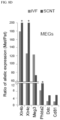
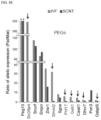
- H3K27me3-dependent imprinting was largely lost in the embryonic cell lineage, but at least 5 genes maintained their imprinting in the extra-embryonic cell lineage.
- the 5 genes include all previously identified DNA methylation-independent imprinted autosomal genes.
- Maternal H3K27me3 is a DNA methylation-independent imprinting mechanism.
- the methods of the invention involve the use of an H3K27me3 selective methylase.
- H3K27me3 is important for X chromosome inactivation
- X chromosome inactivation provides an excellent model for understanding mechanisms of epigenetic silencing.
- XCI can take place in either imprinted or random manners.
- the paternal X chromosome (Xp) is selectively inactivated during preimplantation development.
- imprinted XCI is maintained in the extra-embryonic cell lineage, it is lost in the inner cell mass (ICM) of late blastocysts.
- epiblast cells undergo random XCI resulting in the silencing of either Xp or maternal X chromosome (Xm).
- Xm maternal X chromosome
- Previous studies have demonstrated a critical role of Xist, an X-linked long non-coding RNA, in both imprinted and random XCI.
- the Xist RNA participates in XCI by coating and inactivating X chromosome in cis.
- Genomic imprinting allows parent-of-origin specific gene regulation.
- the Xist gene is imprinted for silencing in the Xm with a long sought-after, but yet-to-be-identified, mechanism.
- Previous studies using nuclear transfer approaches have suggested that genomic imprinting of Xist is established during oogenesis, like that of autosomal imprinted genes.
- Xp paternal X chromosome
- XCI paternal X chromosome inactivation
- Xist Central to the imprinted paternal X chromosome inactivation (XCI) is a long non-coding RNA, Xist, which is expressed from Xp and acts in cis to coat and silence the entire Xp. To achieve Xp-specific inactivation, the maternal Xist gene must be silenced, yet the silencing mechanism is not yet clear. As described but not specifically claimed herein, the Xist locus is coated with a broad H3K27me3 domain in mouse oocytes, which persists through preimplantation development. Ectopic removal of H3K27me3 induces maternal Xist expression and maternal XCI. Thus, maternal H3K27me3 serves as the imprinting mark of Xist.
- the methods of the invention involve administering a pharmaceutical composition comprising a selective H3K27me3 demethylase inhibitor.
- Histone H3 lysine 9 trimethylation (H3K9me3) in donor somatic cells is an epigenetic barrier for SCNT reprogramming.
- H3K9me3 in donor cells prevents transcriptional activation of the associated regions at zygotic genome activation and leads to developmental arrest of SCNT embryos at preimplantation stages in both mouse and human.
- removal of the H3K9me3 barrier by overexpressing a H3K9me3-specific demethylase, Kdm4d allows SCNT embryos to develop to the blastocyst stage at a rate similar to that of IVF. Consequently, the overall cloning efficiency for term rate is increased 8-9 fold.
- Xist is important for postimplantation development of mouse SCNT embryos. Abnormal expression of Xist from maternal X chromosome leads to ectopic X chromosome inactivation (XCI) and global transcriptional alteration in preimplantation embryos, resulting in postimplantation developmental failure of SCNT embryos. Importantly, this developmental failure caused by ectopic Xist expression can be overcome by using Xist knockout (KO) somatic cells as donor cells or by injecting small interfering RNA against Xist into 1-cell male SCNT embryos leading to an 8-10 fold increase of term rate.
- XCI ectopic X chromosome inactivation
- XCI ectopic X chromosome inactivation
- this developmental failure caused by ectopic Xist expression can be overcome by using Xist knockout (KO) somatic cells as donor cells or by injecting small interfering RNA against Xist into 1-cell male SCNT embryos leading to an 8-10 fold increase of term rate.
- KO Xist knock
- Inhibitory nucleic acid molecules are those oligonucleotides that inhibit the expression or activity of a polypeptide or polynucleotide (e.g., an Xist polynucleotide).
- oligonucleotides include single and double stranded nucleic acid molecules (e.g., DNA, RNA, and analogs thereof) that bind a nucleic acid molecule that encodes an Xist polynucleotide (e.g., antisense molecules, siRNA, shRNA).
- Short twenty-one to twenty-five nucleotide double-stranded RNAs are effective at down-regulating gene expression ( Zamore et al., Cell 101: 25-33 ; Elbashir et al., Nature 411: 494-498, 2001 ).
- the effectiveness of an siRNA approach in mammals was demonstrated in vivo by McCaffrey et al. (Nature 418: 38-39.2002 ).
- siRNAs may be designed to inactivate that gene. Such siRNAs, for example, could be administered directly to an affected tissue, or administered systemically.
- the nucleic acid sequence of a gene can be used to design small interfering RNAs (siRNAs).
- siRNAs small interfering RNAs
- the 21 to 25 nucleotide siRNAs may be used, for example, to reduce Xist expression.
- RNAi RNA interference
- expression of an Xist gene is reduced in a somatic cell.
- RNAi is a method for decreasing the cellular expression of specific proteins of interest (reviewed in Tuschl, Chembiochem 2:239-245, 2001 ; Sharp, Genes & Devel. 15:485-490, 2000 ; Hutvagner and Zamore, Curr. Opin. Genet. Devel. 12:225-232, 2002 ; and Hannon, Nature 418:244-251, 2002 ).
- the introduction of siRNAs into cells either by transfection of dsRNAs or through expression of siRNAs using a plasmid-based expression system is increasingly being used to create loss-of-function phenotypes in mammalian cells.
- a double-stranded RNA (dsRNA) molecule is made that includes between eight and nineteen consecutive nucleobases of a nucleobase oligomer of the invention.
- the dsRNA can be two distinct strands of RNA that have duplexed, or a single RNA strand that has self-duplexed (small hairpin (sh)RNA).
- small hairpin (sh)RNA small hairpin
- dsRNAs are about 21 or 22 base pairs, but may be shorter or longer (up to about 29 nucleobases) if desired.
- dsRNA can be made using standard techniques (e.g., chemical synthesis or in vitro transcription).
- Small hairpin RNAs comprise an RNA sequence having a stem-loop structure.
- a "stem-loop structure” refers to a nucleic acid having a secondary structure that includes a region of nucleotides which are known or predicted to form a double strand or duplex (stem portion) that is linked on one side by a region of predominantly single-stranded nucleotides (loop portion).
- the term “hairpin” is also used herein to refer to stem-loop structures. Such structures are well known in the art and the term is used consistently with its known meaning in the art.
- the secondary structure does not require exact base-pairing.
- the stem can include one or more base mismatches or bulges.
- small hairpin RNA includes a conventional stem-loop shRNA, which forms a precursor miRNA (pre-miRNA). While there may be some variation in range, a conventional stem-loop shRNA can comprise a stem ranging from 19 to 29 bp, and a loop ranging from 4 to 30 bp. "shRNA” also includes micro-RNA embedded shRNAs (miRNA-based shRNAs), wherein the guide strand and the passenger strand of the miRNA duplex are incorporated into an existing (or natural) miRNA or into a modified or synthetic (designed) miRNA. In some instances the precursor miRNA molecule can include more than one stem-loop structure.
- MicroRNAs are endogenously encoded RNA molecules that are about 22-nucleotides long and generally expressed in a highly tissue- or developmental-stage-specific fashion and that post-transcriptionally regulate target genes. More than 200 distinct miRNAs have been identified in plants and animals. These small regulatory RNAs are believed to serve important biological functions by two prevailing modes of action: (1) by repressing the translation of target mRNAs, and (2) through RNA interference (RNAi), that is, cleavage and degradation of mRNAs. In the latter case, miRNAs function analogously to small interfering RNAs (siRNAs). Thus, one can design and express artificial miRNAs based on the features of existing miRNA genes.
- RNAi RNA interference
- shRNAs can be expressed from DNA vectors to provide sustained silencing and high yield delivery into almost any cell type.
- the vector is a viral vector.
- Exemplary viral vectors include retroviral, including lentiviral, adenoviral, baculoviral and avian viral vectors, and including such vectors allowing for stable, single-copy genomic integrations.
- Retroviruses from which the retroviral plasmid vectors can be derived include, but are not limited to, Moloney murine leukemia virus, spleen necrosis virus, Rous sarcoma virus, Harvey sarcoma virus, avian leukosis virus, gibbon ape leukemia virus, human immunodeficiency virus, myeloproliferative sarcoma virus, and mammary tumor virus.
- a retroviral plasmid vector can be employed to transduce packaging cell lines to form producer cell lines.
- packaging cells which can be transfected include, but are not limited to, the PE50l, PA3l7, R-2, R-AM, PA12, T19-14x, VT-19-17-H2, RCRE, RCRIP, GP+E-86, GP+envAm12, and DAN cell lines as described in Miller, Human Gene Therapy 1:5-14 (1990 ).
- the vector can transduce the packaging cells through any means known in the art.
- a producer cell line generates infectious retroviral vector particles which include polynucleotide encoding a DNA replication protein. Such retroviral vector particles then can be employed, to transduce eukaryotic cells, either in vitro or in vivo. The transduced eukaryotic cells will express a DNA replication protein.
- Catalytic RNA molecules or ribozymes that include an antisense sequence of the present invention can be used to inhibit expression of a nucleic acid molecule in vivo (e.g., Xist).
- a nucleic acid molecule in vivo e.g., Xist
- the inclusion of ribozyme sequences within antisense RNAs confers RNA-cleaving activity upon them, thereby increasing the activity of the constructs.
- the design and use of target RNA-specific ribozymes is described in Haseloff et al., Nature 334:585-591. 1988 , and U.S. Patent Application Publication No. 2003/0003469 A1 .
- the invention as described but not specifically claimed herein also features a catalytic RNA molecule that includes, in the binding arm, an antisense RNA having between eight and nineteen consecutive nucleobases.
- the catalytic nucleic acid molecule is formed in a hammerhead or hairpin motif. Examples of such hammerhead motifs are described by Rossi et al., Aids Research and Human Retroviruses, 8:183, 1992 . Example of hairpin motifs are described by Hampel et al., "RNA Catalyst for Cleaving Specific RNA Sequences," filed Sep. 20, 1989 , which is a continuation-in-part of U.S. Ser. No.
- any method for introducing a nucleic acid construct into cells can be employed.
- Physical methods of introducing nucleic acids include injection of a solution containing the construct, bombardment by particles covered by the construct, soaking a cell, tissue sample or organism in a solution of the nucleic acid, or electroporation of cell membranes in the presence of the construct.
- a viral construct packaged into a viral particle can be used to accomplish both efficient introduction of an expression construct into the cell and transcription of the encoded shRNA.
- Other methods known in the art for introducing nucleic acids to cells can be used, such as lipid-mediated carrier transport, chemical mediated transport, such as calcium phosphate, and the like.
- shRNA-encoding nucleic acid construct can be introduced along with components that perform one or more of the following activities: enhance RNA uptake by the cell, promote annealing of the duplex strands, stabilize the annealed strands, or otherwise increase inhibition of the target gene.
- DNA vectors for example plasmid vectors comprising either an RNA polymerase II or RNA polymerase III promoter can be employed.
- Expression of endogenous miRNAs is controlled by RNA polymerase II (Pol II) promoters and in some cases, shRNAs are most efficiently driven by Pol II promoters, as compared to RNA polymerase III promoters ( Dickins et al., 2005, Nat. Genet. 39: 914-921 ).
- expression of the shRNA can be controlled by an inducible promoter or a conditional expression system, including, without limitation, RNA polymerase type II promoters.
- tetracycline-inducible promoters including TRE-tight
- IPTG-inducible promoters tetracycline transactivator systems
- rtTA reverse tetracycline transactivator
- Constitutive promoters can also be used, as can cell- or tissue-specific promoters. Many promoters will be ubiquitous, such that they are expressed in all cell and tissue types.
- a certain embodiment as described but not specifically claimed herein uses tetracycline-responsive promoters, one of the most effective conditional gene expression systems in in vitro and in vivo studies. See International Patent Application PCT/US2003/030901 (Publication No. WO 2004-029219 A2 ) and Fewell et al., 2006, Drug Discovery Today 11: 975-982 , for a description of inducible shRNA.
- Naked polynucleotides, or analogs thereof, are capable of entering mammalian cells and inhibiting expression of a gene of interest. Nonetheless, it may be desirable to utilize a formulation that aids in the delivery of oligonucleotides or other nucleobase oligomers to cells (see, e.g., U.S. Pat. Nos. 5,656,611 ; 5,753,613 ; 5,785,992 ; 6,120,798 ; 6,221,959 ; 6,346,613 ; and 6,353,055 ).
- oligonucleotides induce the cleavage of RNA by RNase H: polydeoxynucleotides with phosphodiester (PO) or phosphorothioate (PS) linkages.
- PO phosphodiester
- PS phosphorothioate
- 2'-OMe-RNA sequences exhibit a high affinity for RNA targets, these sequences are not substrates for RNase H.
- a desirable oligonucleotide is one based on 2'-modified oligonucleotides containing oligodeoxynucleotide gaps with some or all internucleotide linkages modified to phosphorothioates for nuclease resistance.
- methylphosphonate modifications increases the affinity of the oligonucleotide for its target RNA and thus reduces the IC 50 .
- This modification also increases the nuclease resistance of the modified oligonucleotide.
- CMAS covalently-closed multiple antisense
- oligonucleotides Moon et al., Biochem J. 346:295-303, 2000 ; PCT Publication No. WO 00/61595
- Ribbon-type antisense (RiAS) oligonucleotides Moon et al., J. Biol. Chem. 275:4647-4653, 2000 ; PCT Publication No. WO 00/61595
- large circular antisense oligonucleotides U.S. Patent Application Publication No. US 2002/0168631 A1 ).
- nucleoside is a nucleobase-sugar combination.
- the base portion of the nucleoside is normally a heterocyclic base.
- the two most common classes of such heterocyclic bases are the purines and the pyrimidines.
- Nucleotides are nucleosides that further include a phosphate group covalently linked to the sugar portion of the nucleoside.
- the phosphate group can be linked to either the 2', 3' or 5' hydroxyl moiety of the sugar.
- the phosphate groups covalently link adjacent nucleosides to one another to form a linear polymeric compound.
- this linear polymeric structure can be further joined to form a circular structure; open linear structures are generally preferred.
- the phosphate groups are commonly referred to as forming the backbone of the oligonucleotide.
- the normal linkage or backbone of RNA and DNA is a 3' to 5' phosphodiester linkage.
- nucleobase oligomers useful in this invention include oligonucleotides containing modified backbones or non-natural internucleoside linkages.
- nucleobase oligomers having modified backbones include those that retain a phosphorus atom in the backbone and those that do not have a phosphorus atom in the backbone.
- modified oligonucleotides that do not have a phosphorus atom in their internucleoside backbone are also considered to be nucleobase oligomers.
- Nucleobase oligomers that have modified oligonucleotide backbones include, for example, phosphorothioates, chiral phosphorothioates, phosphorodithioates, phosphotriesters, aminoalkyl-phosphotriesters, methyl and other alkyl phosphonates including 3'-alkylene phosphonates and chiral phosphonates, phosphinates, phosphoramidates including 3'-amino phosphoramidate and aminoalkylphosphoramidates, thionophosphoramidates, thionoalkylphosphonates, thionoalkylphosphotriesters, and boranophosphates having normal 3'-5' linkages, 2'-5' linked analogs of these, and those having inverted polarity, wherein the adjacent pairs of nucleoside units are linked 3'-5' to 5'-3' or 2'-5' to 5'-2'.
- Nucleobase oligomers having modified oligonucleotide backbones that do not include a phosphorus atom therein have backbones that are formed by short chain alkyl or cycloalkyl internucleoside linkages, mixed heteroatom and alkyl or cycloalkyl internucleoside linkages, or one or more short chain heteroatomic or heterocyclic internucleoside linkages.
- morpholino linkages formed in part from the sugar portion of a nucleoside
- siloxane backbones sulfide, sulfoxide and sulfone backbones
- formacetyl and thioformacetyl backbones methylene formacetyl and thioformacetyl backbones
- alkene containing backbones sulfamate backbones
- sulfonate and sulfonamide backbones amide backbones; and others having mixed N, O, S and CH.sub.2 component parts.
- nucleobase oligomers In other nucleobase oligomers, both the sugar and the internucleoside linkage, i.e., the backbone, are replaced with novel groups.
- the nucleobase units are maintained for hybridization with an Xist gene listed.
- One such nucleobase oligomer is referred to as a Peptide Nucleic Acid (PNA).
- PNA Peptide Nucleic Acid
- the sugar-backbone of an oligonucleotide is replaced with an amide containing backbone, in particular an aminoethylglycine backbone.
- the nucleobases are retained and are bound directly or indirectly to aza nitrogen atoms of the amide portion of the backbone.
- the nucleobase oligomers have phosphorothioate backbones and nucleosides with heteroatom backbones, and in particular -CH 2- NH-O-CH 2 -, -CH 2 -N(CH 3 )-O-CH 2 - (known as a methylene (methylimino) or MMI backbone), -CH 2 -O-N(CH 3 )-CH 2 -, -CH 2 -N(CH 3 )-N(CH 3 )-CH 2 -, and -O-N(CH 3 )-CH 2 -CH 2 -.
- the oligonucleotides have morpholino backbone structures described in U.S. Pat. No. 5,034,506 .
- Nucleobase oligomers as described but not specifically claimed herein may also contain one or more substituted sugar moieties.
- Nucleobase oligomers comprise one of the following at the 2' position: OH; F; O-, S-, or N-alkyl; O-, S-, or N-alkenyl; O-, S- or N-alkynyl; or O-alkyl-O-alkyl, wherein the alkyl, alkenyl, and alkynyl may be substituted or unsubstituted C 1 to C 10 alkyl or C 2 to C 10 alkenyl and alkynyl.
- nucleobase oligomers include one of the following at the 2' position: C 1 to C 10 lower alkyl, substituted lower alkyl, alkaryl, aralkyl, O-alkaryl, or O-aralkyl, SH, SCH 3 , OCN, Cl, Br, CN, CF 3 , OCF 3 , SOCH 3 , SO 2 CH 3 , ONO 2 , NO 2 , NH 2 , heterocycloalkyl, heterocycloalkaryl, aminoalkylamino, polyalkylamino, substituted silyl, an RNA cleaving group, a reporter group, an intercalator, a group for improving the pharmacokinetic properties of a nucleobase oligomer, or a group for improving the pharmacodynamic properties of an nucleobase oligomer, and other substituents having similar properties.
- Preferred modifications are 2'-O-methyl and 2'-methoxyethoxy (2'-O-CH 2 CH 2 OCH 3 , also known as 2'-O-(2-methoxyethyl) or 2'-MOE).
- Another desirable modification is 2'-dimethylaminooxyethoxy (i.e., O(CH 2 ) 2 ON(CH 3 ) 2 ), also known as 2'-DMAOE.
- Other modifications include, 2'-aminopropoxy (2'-OCH 2 CH 2 CH 2 NH 2 ) and 2'-fluoro (2'-F).
- nucleobase oligomers may also have sugar mimetics such as cyclobutyl moieties in place of the pentofuranosyl sugar.
- Representative United States patents that teach the preparation of such modified sugar structures include, but are not limited to, U.S. Pat. Nos.
- Nucleobase oligomers may also include nucleobase modifications or substitutions.
- "unmodified” or “natural” nucleobases include the purine bases adenine (A) and guanine (G), and the pyrimidine bases thymine (T), cytosine (C) and uracil (U).
- Modified nucleobases include other synthetic and natural nucleobases, such as 5-methylcytosine (5-me-C), 5-hydroxymethyl cytosine, xanthine, hypoxanthine, 2-aminoadenine, 6-methyl and other alkyl derivatives of adenine and guanine; 2-propyl and other alkyl derivatives of adenine and guanine; 2-thiouracil, 2-thiothymine and 2-thiocytosine; 5-halouracil and cytosine; 5-propynyl uracil and cytosine; 6-azo uracil, cytosine and thymine; 5-uracil (pseudouracil); 4-thiouracil; 8-halo, 8-amino, 8-thiol, 8-thioalkyl, 8-hydroxyl and other 8-substituted adenines and guanines; 5-halo (e.g., 5-bromo), 5-trifluoromethyl and
- nucleobases include those disclosed in U.S. Pat. No. 3,687,808 , those disclosed in The Concise Encyclopedia Of Polymer Science And Engineering, pages 858-859, Kroschwitz, J. I., ed. John Wiley & Sons, 1990 , those disclosed by Englisch et al., Angewandte Chemie, International Edition, 1991, 30, 613 , and those disclosed by Sanghvi, Y. S., Chapter 15, Antisense Research and Applications, pages 289-302, Crooke, S. T. and Lebleu, B., ed., CRC Press, 1993 . Certain of these nucleobases are particularly useful for increasing the binding affinity of an antisense oligonucleotide of the invention.
- 5-substituted pyrimidines include 5-substituted pyrimidines, 6-azapyrimidines, and N-2, N-6 and 0-6 substituted purines, including 2-aminopropyladenine, 5-propynyluracil and 5-propynylcytosine.
- 5-methylcytosine substitutions have been shown to increase nucleic acid duplex stability by 0.6-1.2°C ( Sanghvi, Y. S., Crooke, S. T. and Lebleu, B., eds., Antisense Research and Applications, CRC Press, Boca Raton, 1993, pp. 276-278 ) and are desirable base substitutions, even more particularly when combined with 2'-O-methoxyethyl or 2'-O-methyl sugar modifications.
- nucleobase oligomer of the invention involves chemically linking to the nucleobase oligomer one or more moieties or conjugates that enhance the activity, cellular distribution, or cellular uptake of the oligonucleotide.
- moieties include but are not limited to lipid moieties such as a cholesterol moiety ( Letsinger et al., Proc. Natl. Acad. Sci. USA, 86:6553-6556, 1989 ), cholic acid ( Manoharan et al., Bioorg. Med. Chem.
- a thioether e.g., hexyl-S-tritylthiol ( Manoharan et al., Ann. N.Y. Acad. Sci., 660:306-309, 1992 ; Manoharan et al., Bioorg. Med. Chem. Let., 3:2765-2770, 1993 ), a thiocholesterol ( Oberhauser et al., Nucl.
- Acids Res., 18:3777-3783, 1990 a polyamine or a polyethylene glycol chain ( Manoharan et al., Nucleosides & Nucleotides, 14:969-973, 1995 ), adamantane acetic acid ( Manoharan et al., Tetrahedron Lett., 36:3651-3654, 1995 ), a palmityl moiety ( Mishra et al., Biochim. Biophys. Acta, 1264:229-237, 1995 ), or an octadecylamine or hexylamino-carbonyl-oxycholesterol moiety ( Crooke et al., J. Pharmacol. Exp.
- nucleobase oligomers that are chimeric compounds.
- "Chimeric" nucleobase oligomers are nucleobase oligomers, particularly oligonucleotides, that contain two or more chemically distinct regions, each made up of at least one monomer unit, i.e., a nucleotide in the case of an oligonucleotide.
- These nucleobase oligomers typically contain at least one region where the nucleobase oligomer is modified to confer, upon the nucleobase oligomer, increased resistance to nuclease degradation, increased cellular uptake, and/or increased binding affinity for the target nucleic acid.
- An additional region of the nucleobase oligomer may serve as a substrate for enzymes capable of cleaving RNA:DNA or RNA:RNA hybrids.
- RNase H is a cellular endonuclease which cleaves the RNA strand of an RNA:DNA duplex. Activation of RNase H, therefore, results in cleavage of the RNA target, thereby greatly enhancing the efficiency of nucleobase oligomer inhibition of gene expression. Consequently, comparable results can often be obtained with shorter nucleobase oligomers when chimeric nucleobase oligomers are used, compared to phosphorothioate deoxyoligonucleotides hybridizing to the same target region.
- Chimeric nucleobase oligomers of the invention may be formed as composite structures of two or more nucleobase oligomers as described above. Such nucleobase oligomers, when oligonucleotides, have also been referred to in the art as hybrids or gapmers. Representative United States patents that teach the preparation of such hybrid structures include U.S. Pat. Nos. 5,013,830 ; 5,149,797 ; 5,220,007 ; 5,256,775 ; 5,366,878 ; 5,403,711 ; 5,491,133 ; 5,565,350 ; 5,623,065 ; 5,652,355 ; 5,652,356 ; and 5,700,922 .
- nucleobase oligomers used in accordance with this invention may be conveniently and routinely made through the well-known technique of solid phase synthesis.
- Equipment for such synthesis is sold by several vendors including, for example, Applied Biosystems (Foster City, Calif.). Any other means for such synthesis known in the art may additionally or alternatively be employed. It is well known to use similar techniques to prepare oligonucleotides such as the phosphorothioates and alkylated derivatives.
- nucleobase oligomers of the invention may also be admixed, encapsulated, conjugated or otherwise associated with other molecules, molecule structures or mixtures of compounds, as for example, liposomes, receptor targeted molecules, oral, rectal, topical or other formulations, for assisting in uptake, distribution and/or absorption.
- Representative United States patents that teach the preparation of such uptake, distribution and/or absorption assisting formulations include U.S. Pat. Nos.
- Gene editing is a major focus of biomedical research, embracing the interface between basic and clinical science.
- novel "gene editing" tools provides the ability to manipulate the DNA sequence of a cell at a specific chromosomal locus, without introducing mutations at other sites of the genome.
- This technology effectively enables the researcher to manipulate the genome of a subject's cells in vitro or in vivo.
- non-human cells comprising a KO in Xist are generated using CRISPR.
- gene editing involves targeting an endonuclease (an enzyme that causes DNA breaks internally within a DNA molecule) to a specific site of the genome and thereby triggering formation of a chromosomal double strand break (DSB) at the chosen site.
- an endonuclease an enzyme that causes DNA breaks internally within a DNA molecule
- a donor DNA molecule is introduced (for example, by plasmid or oligonucleotide introduction)
- interactions between the broken chromosome and the introduced DNA can occur, especially if the two sequences share homology.
- a process termed "gene targeting” can occur, in which the DNA ends of the chromosome invade homologous sequences of the donor DNA by homologous recombination (HR).
- the donor plasmid sequence As a template for HR, a seamless knock out of the gene of interest can be accomplished.
- the donor DNA molecule includes a deletion within the target gene (e.g., Xist )
- HR-mediated DSB repair will introduce the donor sequence into the chromosome, resulting in the deletion being introduced within the chromosomal locus.
- the concept is to use DSB formation to stimulate HR and to thereby replace the functional target gene with a deleted form of the gene.
- the advantage of the HR pathway is that it has the potential to generate seamlessly a knockout of the gene in place of the previous wild-type allele.
- DDBs double strand breaks
- ZFNs zinc finger nucleases
- Such methods include zinc finger nucleases (ZFNs; described for example in U.S. Patent Nos. 6,534,261 ; 6,607,882 ; 6,746,838 ; 6,794,136 ; 6,824,978 ; 6,866,997 ; 6,933,113 ; 6,979,539 ; 7,013,219 ; 7,030,215 ; 7,220,719 ; 7,241,573 ; 7,241,574 ; 7,585,849 ; 7,595,376 ; 6,903,185 ; and 6,479,626 ; and U.S. Pat. Publ. Nos.
- TALENs and CRISPR/Cas9 cleave not only at the desired site, but often at other "off-target” sites, as well. These methods have significant issues connected with off-target double-stranded break induction and the potential for deleterious mutations, including indels, genomic rearrangements, and chromosomal rearrangements, associated with these off-target effects.
- ZFNs and TALENs entail use of modular sequence-specific DNA binding proteins to generate specificity for ⁇ 18 bp sequences in the genome.
- RNA-guided nucleases-mediated genome editing based on Type 2 CRISPR (Clustered Regularly Interspaced Short Palindromic Repeat)/Cas (CRISPR Associated) systems, offers a valuable approach to alter the genome.
- Cas9 a nuclease guided by single-guide RNA (sgRNA), binds to a targeted genomic locus next to the protospacer adjacent motif (PAM) and generates a double-strand break (DSB).
- the DSB is then repaired either by non-homologous end joining (NHEJ), which leads to insertion/deletion (indel) mutations, or by homology-directed repair (HDR), which requires an exogenous template and can generate a precise modification at a target locus ( Mali et al., Science. 2013 Feb 15;339(6121):823-6 ).
- NHEJ non-homologous end joining
- HDR homology-directed repair
- CRISPR repeats range in size from 24 to 48 base pairs. They usually show some dyad symmetry, implying the formation of a secondary structure such as a hairpin, but are not truly palindromic. Repeats are separated by spacers of similar length. Some CRISPR spacer sequences exactly match sequences from plasmids and phages, although some spacers match the prokaryote's genome (self-targeting spacers). New spacers can be added rapidly in response to phage infection.
- CRISPR-associated (cas) genes are often associated with CRISPR repeat-spacer arrays.
- Cas protein families As of 2013, more than forty different Cas protein families had been described. Of these protein families, Cas1 appears to be ubiquitous among different CRISPR/Cas systems. Particular combinations of cas genes and repeat structures have been used to define 8 CRISPR subtypes (Ecoli, Ypest, Nmeni, Dvulg, Tneap, Hmari, Apern, and Mtube), some of which are associated with an additional gene module encoding repeat-associated mysterious proteins (RAMPs). More than one CRISPR subtype may occur in a single genome. The sporadic distribution of the CRISPR/Cas subtypes suggests that the system is subject to horizontal gene transfer during microbial evolution.
- Exogenous DNA is apparently processed by proteins encoded by Cas genes into small elements (about 30 base pairs in length), which are then somehow inserted into the CRISPR locus near the leader sequence.
- RNAs from the CRISPR loci are constitutively expressed and are processed by Cas proteins to small RNAs composed of individual, exogenously-derived sequence elements with a flanking repeat sequence. The RNAs guide other Cas proteins to silence exogenous genetic elements at the RNA or DNA level.
- Evidence suggests functional diversity among CRISPR subtypes.
- the Cse (Cas subtype Ecoli) proteins (called CasA-E in E. coli) form a functional complex, Cascade, that processes CRISPR RNA transcripts into spacer-repeat units that Cascade retains.
- Cas6 processes the CRISPR transcripts.
- CRISPR-based phage inactivation in E. coli requires Cascade and Cas3, but not Cas1 and Cas2.
- the Cmr (Cas RAMP module) proteins found in Pyrococcus furiosus and other prokaryotes form a functional complex with small CRISPR RNAs that recognizes and cleaves complementary target RNAs.
- RNA-guided CRISPR enzymes are classified as type V restriction enzymes.
- Cas9 is a nuclease, an enzyme specialized for cutting DNA, with two active cutting sites, one for each strand of the double helix. The team demonstrated that they could disable one or both sites while preserving Cas9's ability to home located its target DNA.
- Cas9 proteins are highly enriched in pathogenic and commensal bacteria. CRISPR/Cas-mediated gene regulation may contribute to the regulation of endogenous bacterial genes, particularly during bacterial interaction with eukaryotic hosts.
- Cas protein Cas9 of Francisella novicida uses a unique, small, CRISPR/Cas-associated RNA (scaRNA) to repress an endogenous transcript encoding a bacterial lipoprotein that is critical for F. novicida to dampen host response and promote virulence.
- scaRNA CRISPR/Cas-associated RNA
- Cas9 requires a short RNA to direct the recognition of DNA targets. Though Cas9 preferentially interrogates DNA sequences containing a PAM sequence NGG it can bind here without a protospacer target. However, the Cas9-gRNA complex requires a close match to the gRNA to create a double strand break. CRISPR sequences in bacteria are expressed in multiple RNAs and then processed to create guide strands for RNA. Because Eukaryotic systems lack some of the proteins required to process CRISPR RNAs the synthetic construct gRNA was created to combine the essential pieces of RNA for Cas9 targeting into a single RNA expressed with the RNA polymerase type 2I promoter U6). Synthetic gRNAs are slightly over 100 bp at the minimum length and contain a portion which is targets the 20 protospacer nucleotides immediately preceding the PAM sequence NGG; gRNAs do not contain a PAM sequence.
- one or more cells of a subject are altered to delete or inactivate Xist using a CRISPR-Cas system.
- Cas9 can be used to target an Xist gene. Upon target recognition, Cas9 induces double strand breaks in the Xist target gene. Homology-directed repair (HDR) at the double-strand break site can allow insertion of an inactive or deleted form of the Xist sequence.
- HDR Homology-directed repair
- Agents modulating H3K27me3 imprinting present in an imprinting control region are useful in generating cloned full term non-human organisms using SCNT.
- Agents that add H3K27me3 imprinting can be used in combination with an Xist KO cell injected with a Kdm4d polynucleotide.
- an agent that inhibits H3K27me3 demethylase is used in combination with SCNT.
- the dosage of the administered agent depends on a number of factors, including the size and health of the individual patient. For any particular subject, the specific dosage regimes should be adjusted over time according to the individual need and the professional judgement of the person administering or supervising the administration of the compositions.
- Somatic cell nuclear transfer is a technique that may be used, for example, for the reproductive cloning of livestock (e.g., cows, horses, sheep, goats, pigs) or for therapeutic cloning, in which desired tissues are produced for cell replacement therapy.
- livestock e.g., cows, horses, sheep, goats, pigs
- therapeutic cloning in which desired tissues are produced for cell replacement therapy.
- cloned animals suffer from certain defects arising from improper imprinting, such as a deficiency in trimethylation of lysine 27 on histone H3 protein subunit. This deficiency can be remedied by providing an mRNA encoding an enzyme that carries out the trimethylation event during the SCNT procedure.
- an mRNA encoding an enzyme capable of carrying out the trimethylation event (e.g., EZH1, EZH2, PRC2) is injected into the recipient cell or the nuclear donor cell prior to or during the SCNT procedure.
- an enzyme capable of carrying out the trimethylation event e.g., EZH1, EZH2, PRC2
- Somatic cell nuclear transfer involves obtaining a nuclear donor cell, then fusing this nuclear donor cell into an enucleated recipient cell, most preferably an enucleated oocyte, to form a nuclear transfer embryo, activating this embryo, and finally culturing the embryo or transferring this embryo into a maternal host.
- enucleated recipient cell most preferably an enucleated oocyte
- nuclear transfer embryo a full complement of nuclear DNA from one cell is introduced to an enucleated cell.
- Nuclear transfer methods are well known to a person of ordinary skill in the art. See, U.S. Pat. No. 4,994,384 to Prather et al., entitled "Multiplying Bovine Embryos," issued on Feb. 19, 1991 ; U.S. Pat. No.
- a nuclear donor cell or the nucleus thereof, is introduced into a recipient cell.
- a recipient cell is preferably an oocyte and is preferably enucleated.
- the invention relates in part to nuclear transfer, where a nucleus of an oocyte is not physically extracted from the oocyte. It is possible to establish a nuclear transfer embryo where nuclear DNA from the donor cell is replicated during cellular divisions. See, e.g., Wagoner et al., 1996, "Functional enucleation of bovine oocytes: effects of centrifugation and ultraviolet light," Theriogenology 46: 279-284 .
- nuclear transfer may be accomplished by combining one nuclear donor and more than one enucleated oocyte.
- nuclear transfer may be accomplished by combining one nuclear donor, one or more enucleated oocytes, and the cytoplasm of one or more enucleated oocytes.
- the resulting combination of a nuclear donor cell and a recipient cell can be referred to as a "hybrid cell.”
- nuclear donor refers to any cell, or nucleus thereof, having nuclear DNA that can be translocated into an oocyte.
- a nuclear donor may be a nucleus that has been isolated from a cell. Multiple techniques are available to a person of ordinary skill in the art for isolating a nucleus from a cell and then utilizing the nucleus as a nuclear donor. See, e.g., U.S. Pat. Nos. 4,664,097 , 6,011,197 , and 6,107,543 . Any type of cell can serve as a nuclear donor.
- nuclear donor cells include, but are not limited to, cultured and non-cultured cells isolated from an embryo arising from the union of two gametes in vitro or in vivo; embryonic stem cells (ES cells) arising from cultured embryonic cells (e.g., pre-blastocyst cells and inner cell mass cells); cultured and non-cultured cells arising from inner cell mass cells isolated from embryos; cultured and non-cultured pre-blastocyst cells; cultured and non-cultured fetal cells; cultured and non-cultured adult cells; cultured and non-cultured primordial germ cells; cultured and non-cultured germ cells (e.g., embryonic germ cells); cultured and non-cultured somatic cells isolated from an animal; cultured and non-cultured cumulus cells; cultured and non-cultured amniotic cells; cultured and non-cultured fetal fibroblast cells; cultured and non-cultured genital ridge cells; cultured and non-cultured differentiated cells; cultured and non-culture
- a nuclear donor may be a cell that was previously frozen or cryopreserved.
- Hybrid cells made by the process of nuclear transfer may be used, for example, in reproductive cloning or in regenerative cloning.
- SCNT experiments showed that nuclei from adult differentiated somatic cells can be reprogrammed to a totipotent state. Accordingly, a SCNT embryo generated using the methods as disclosed herein can be cultured in a suitable in vitro culture medium for the generation of totipotent or embryonic stem cell or stem-like cells and cell colonies. Culture media suitable for culturing and maturation of embryos are well known in the art.
- Examples of known media which may be used for bovine embryo culture and maintenance, include Ham's F-10+10% fetal calf serum (FCS), Tissue Culture Medium-199 (TCM-199)+10% fetal calf serum, Tyrodes-Albumin-Lactate-Pyruvate (TALP), Dulbecco's Phosphate Buffered Saline (PBS), Eagle's and Whitten's media.
- a preferred maintenance medium includes TCM-199 with Earl salts, 10% fetal calf serum, 0.2 Ma pyruvate and 50 ug/ml gentamicin sulphate. Any of the above may also involve co-culture with a variety of cell types such as granulosa cells, oviduct cells, BRL cells and uterine cells and STO cells.
- epithelial cells of the endometrium secrete leukemia inhibitory factor (LIF) during the preimplantation and implantation period. Therefore, in some embodiments, as described but not specifically claimed herein, the addition of LIF to the culture medium is encompassed to enhancing the in vitro development of the SCNT-derived embryos.
- LIF leukemia inhibitory factor
- CR1 contains the nutritional substances necessary to support an embryo.
- CR1 contains hemicalcium L-lactate in amounts ranging from 1.0 mM to 10 mM, preferably 1.0 mM to 5.0 mM.
- Hemicalcium L-lactate is L-lactate with a hemicalcium salt incorporated thereon.
- suitable culture medium for maintaining human embryonic stem cells in culture as discussed in Thomson et al., Science, 282:1145-1147 (1998 ) and Proc. Natl. Acad. Sci., USA, 92:7844-7848 (1995 ).
- the feeder cells will comprise mouse embryonic fibroblasts.
- Means for preparation of a suitable fibroblast feeder layer are described in the example which follows and is well within the skill of the ordinary artisan.
- ES cells e.g., NT-ESCs or hNT-ESCs
- SCNT embryos e.g., NT-ESCs or hNT-ESCs
- Such techniques can be used to derive ES cells (e.g., hNT-ESCs) from SCNT embryos, where the SCNT embryos used to generate hNT-ESCs have a reduced level of H3K9me3 in the nuclear genetic material donated from the somatic donor cell, as compared to SCNTs which were not treated with a member of the KDM4 demethylase family and/or an inhibitor of the histone methyltransferase SUV39h1/SUV39h2.
- hNT-ESCs can be derived from cloned SCNT embryos during earlier stages of development.
- blastomeres generated from SCNT embryos generated using the methods, compositions and kits as disclosed herein can be dissociated using a glass pipette to obtain totipotent cells.
- dissociation may occur in the presence of 0.25% trypsin ( Collas and Robl, 43 BIOL. REPROD. 877-84, 1992 ; Stice and Robl, 39 BIOL. REPROD. 657-664, 1988 ; Kanka et al., 43 MOL. REPROD. DEV. 135-44, 1996 ).
- the resultant blastocysts, or blastocyst-like clusters from the SCNT embryos can be used to obtain embryonic stem cell lines, eg., nuclear transfer ESC (ntESC) cell lines.
- embryonic stem cell lines eg., nuclear transfer ESC (ntESC) cell lines.
- ntESC nuclear transfer ESC
- Pluripotent embryonic stem cells can also be generated from a single blastomere removed from a SCNT embryo without interfering with the embryo's normal development to birth. See U.S. application Nos. 60/624,827, filed Nov. 4, 2004 ; 60/662,489, filed Mar. 14, 2005 ; 60/687,158, filed Jun. 3, 2005 ; 60/723,066, filed Oct. 3, 2005 ; 60/726,775, filed Oct. 14, 2005 ; 11/267,555 filed Nov. 4, 2005 ; PCT application no. PCT/US05/39776, filed Nov. 4, 2005 ; see also Chung et al., Nature, Oct. 16, 2005 (electronically published ahead of print) and Chung et al., Nature V. 439, pp. 216-219 (2006 )). In such a case, an SCNT embryo is not destroyed for the generation of pluripotent stem cells.
- the method comprises the utilization of cells derived from the SCNT embryo in research and in therapy.
- pluripotent stem cells PSCs
- TSC totipotent stem cells
- Such pluripotent stem cells (PSCs) or totipotent stem cells can be differentiated into any of the cells in the body including, without limitation, skin, cartilage, bone, skeletal muscle, cardiac muscle, renal, hepatic, blood and blood forming, vascular precursor and vascular endothelial, pancreatic beta, neurons, glia, retinal, inner ear follicle, intestinal, or lung cells.
- the SCNT embryo, or blastocyst, or pluripotent or totipotent cells obtained from a SCNT embryo can be exposed to one or more inducers of differentiation to yield other therapeutically-useful cells such as retinal pigment epithelium, hematopoietic precursors and hemangioblastic progenitors as well as many other useful cell types of the ectoderm, mesoderm, and endoderm.
- Such inducers include but are not limited to: cytokines such as interleukin-alpha A, interferon-alpha A/D, interferon-beta, interferon-gamma, interferon-gamma-inducible protein-10, interleukin-1-17, keratinocyte growth factor, leptin, leukemia inhibitory factor, macrophage colony-stimulating factor, and macrophage inflammatory protein-1 alpha, 1-beta, 2, 3 alpha, 3 beta, and monocyte chemotactic protein 1-3, 6kine, activin A, amphiregulin, angiogenin, B-endothelial cell growth factor, beta cellulin, brain-derived neurotrophic factor, C10, cardiotrophin-1, ciliary neurotrophic factor, cytokine-induced neutrophil chemoattractant-1, eotaxin, epidermal growth factor, epithelial neutrophil activating peptide-78, erythropoietin, estrogen receptor-
- inducers include cells or components derived from cells from defined tissues used to provide inductive signals to the differentiating cells derived from the reprogrammed cells of the present invention.
- inducer cells may derive from human, non-human mammal, or avian, such as specific pathogen-free (SPF) embryonic or adult cells.
- SPF specific pathogen-free
- the SCNT embryos can be used to generate blastomeres and utilize in vitro techniques related to those currently used in pre-implantation genetic diagnosis (PGD) to isolate single blastomeres from a SCNT embryo, generated by the methods as disclosed herein, without destroying the SCNT embryos or otherwise significantly altering their viability.
- PGD pre-implantation genetic diagnosis
- hES pluripotent embryonic stem
- pluripotent or totipotent cells obtained from a SCNT embryo can be optionally differentiated, and introduced into the tissues in which they normally reside in order to exhibit therapeutic utility.
- pluripotent or totipotent cells obtained from a SCNT embryo can be introduced into the tissues.
- pluripotent or totipotent cells obtained from a SCNT embryo can be introduced systemically or at a distance from a cite at which therapeutic utility is desired. In such embodiments, the pluripotent or totipotent cells obtained from a SCNT embryo can act at a distance or may hone to the desired cite.
- cloned cells, pluripotent or totipotent cells obtained from a SCNT embryo can be utilized in inducing the differentiation of other pluripotent stem cells.
- the generation of single cell-derived populations of cells capable of being propagated in vitro while maintaining an embryonic pattern of gene expression is useful in inducing the differentiation of other pluripotent stem cells.
- Cell-cell induction is a common means of directing differentiation in the early embryo. Many potentially medically-useful cell types are influenced by inductive signals during normal embryonic development including spinal cord neurons, cardiac cells, pancreatic beta cells, and definitive hematopoietic cells.
- Single cell-derived populations of cells capable of being propagated in vitro while maintaining an embryonic pattern of gene expression can be cultured in a variety of in vitro, in ovo, or in vivo culture conditions to induce the differentiation of other pluripotent stem cells to become desired cell or tissue types.
- the pluripotent or totipotent cells obtained from a SCNT embryo can be used to obtain any desired differentiated cell type. Therapeutic usages of such differentiated cells are unparalleled.
- the donor cell, or the recipient oocyte, the hybrid oocyte or SCNT embryo can be treated with a KDM4 histone dimethylase activator and/or H3K9 methyltransferase inhibitor according to the methods as disclosed herein.
- the donor cells can be adult somatic cells from a subject with a disorder
- the generated SCNT embryos can be used to produce animal models of disease or disease-specific pluripotent or totipotent cells which can be cultured under differentiation conditions to produce cell models of disease.
- the great advantage of the present invention is that by increasing the efficiency of SCNT, it provides an essentially limitless supply of isogenic or syngeneic ES cells, particularly pluripotent that are not induced pluripotent stem cells (e.g., not iPSCs).
- Such NT-ESCs have advantages over iPSCs and are suitable for transplantation, as they do not partially pluripotent, and do not have viral transgenes or forced expression of reprogramming factors to direct their reprogramming.
- Example 1 Kdm4d injection does not alleviate SCNT-associated abnormal Xist activation
- the inactive X chromosome is marked by its punctate staining with an anti-H3K27me3 antibody. Consistently, such punctate staining is detectable only in female (XX) cells but not in male (XY) cells in in vitro fertilized (IVF) embryos. In contrast, such punctate staining was observed in SCNT embryos when male Sertoli cells were used as donor cells ( FIG. 1A ), suggesting abnormal Xist activation in SCNT embryos. Importantly, Kdm4d injection does not alter the punctate staining pattern or its frequency compared to no-injection control SCNT embryos ( FIGs. 1A , 1B ). These results demonstrated that H3K9me3 in donor cells and ectopic activation of Xist in SCNT embryos are two independent barriers in SCNT reprogramming.
- Example 2 Combinational use of Xist mutant donor cell and Kdm4d mRNA injection greatly improves cloning efficiency
- Kdm4d mRNA injection increased the pup rate to 8.4%, consistent with previous observations ( Matoba et al., Proc. Natl. Acad. Sci. U. S. A. 108, 20621-20626, 2014 ).
- the pup rate increased to 18.7% ( FIG. 1C ; Table S1).
- the pup rate of Sertoli cell-derived SCNT embryos was improved from 1.8% to 9.1% by Kdm4d mRNA injection, and further increased to 23.5% by combining Xist KO with Kdm4d mRNA injection ( FIG.
- Example 3 Extensive DNA methylation reprogramming is achieved in combinational reprogrammed SCNT blastocysts
- WGBS datasets were also obtained for MEF ( Yu et al., Proc. Natl. Acad. Sci. U. S. A. 111, 5890-5895, 2014 ), sperm and oocyte ( Wang et al., Cell 157, 979-991, 2014 ) from public database.
- MEF Yu et al., Proc. Natl. Acad. Sci. U. S. A. 111, 5890-5895, 2014
- sperm and oocyte Wang et al., Cell 157, 979-991, 2014
- the average DNA methylation level of all covered CpGs was calculated. It was found that the average methylation levels in sperm and oocyte are 82.2% and 58.8%, respectively.
- the average methylation level of sperm and oocyte, which serves as the starting methylation level of IVF zygotes, is 70.5% ( FIG. 3B ).
- the highly methylated gametes were globally
- hyperDMRs 7,925 regions with higher DNA methylation in SCNT compared to that of IVF were identified and were termed hyperDMRs.
- the average length of hyperDMRs (741 bp) is much shorter than that of hypoDMRs (5,743 bp) ( FIG. 5B ).
- a representative hyperDMR is present in the promoter/enhancer region as a sharp peak, while a representative hypoDMR covers an entire gene-coding region ( FIGs. 6A, 6B ).
- hyperDMRs and hypoDMRs exhibit distinct genomic distributions with hyperDMR enriched in intergenic regions, while hypoDMR enriched in gene body ( FIG. 5C ).
- the methylation level at hypoDMRs was significantly higher than the flanking regions ( ⁇ 90% vs ⁇ 80%) ( FIG. 5D ).
- the methylation difference between hypoDMRs and the flanking regions is even greater ( ⁇ 75% vs ⁇ 60%) ( FIG. 3D ).
- the methylation difference between hypoDMRs and the flanking regions is much smaller in MEFs ( FIG. 5D ).
- hypoDMRs of SCNT blastocyst correlate well with their relatively higher DNA methylation levels in gametes, which remain to be at a higher level in the IVF blastocysts should both SCNT and IVF embryos go through the same number of replication-dependent dilution.
- a visual inspection of representative hypoDMRs in genome browser view revealed that the methylation peaks in oocytes clearly overlap with those in IVF blastocysts ( FIG. 6B ).
- Allelic DNA methylation analysis also supports this notion as the methylation pattern in IVF blastocysts are strongly biased to maternal allele ( FIG. 5E ).
- hyperDMRs were analyzed.
- the methylation levels at hyperDMRs and flanking regions are similar ( ⁇ 50%) in oocytes, while it is significantly lower than the flanking regions ( ⁇ 55% vs ⁇ 80%) in sperm ( FIG. 5G ).
- both hyperDMRs and flanking regions were demethylated to a very low level ( ⁇ 20%) in IVF blastocysts ( FIG. 5G ).
- hyperDMRs were heavily methylated ( ⁇ 80%) with even higher methylation level than that of the flanking regions in MEFs ( FIG. 5G ).
- hyperDMRs were heavily methylated in MEF but not in gametes suggest that low methylation at these regions might be a unique feature of germline.
- analyses of public DNA methylome datasets of different cell types revealed that hyperDMRs are indeed heavily methylated in all somatic cell types analyzed, but are less methylated only in spermatocyte, spermatid and oocyte ( FIG. 5H ).
- GO analysis of the genes associated with hyperDMRs revealed significant enrichment of germline related functions such as spermatogenesis and gametogenesis ( FIG. 6C ).
- HyperDMRs appear to be demethylated during primordial germ cell (PGC) development by Tet1 ( Yamaguchi et al., Nature 504, 460-464, 2013 ) as hydroxymethylcytosines (5hmC) was significantly enriched in the hyperDMRs in PGCs ( FIG. 6D ). This suggests that hyperDMRs are mostly related to germline development but not embryonic development.
- RNAseq datasets were analyzed focusing on the 126 known imprinted genes. Of the 45 imprinted genes reliably detectable in IVF blastocysts (FPKM > 1), only 6 were significantly upregulated in SCNT blastocysts compared to that in IVF blastocysts (FC > 1.5) ( FIG. 8C ).
- the 7 PEGs that lost imprinted expression in SCNT blastocysts include Slc38a4, Sfmbt2, Phf17 and Gab1 (darker bars in FIG. 8E ) whose imprinted expression is known to be independent of DNA methylation, but dependent on maternally deposited H3K27me3 ( Inoue et al., Nature 547, 419-424, 2017 ).
- H3K27me3-dependent imprinted genes lose imprinting in SCNT blastocysts? Since imprinting status of these genes is regulated by maternal allele-specific H3K27me3 domains deposited during oogenesis, it is possible that the H3K27me3 pattern in donor MEFs may differ from that in oocytes.
- Analysis of available H3K27me3 ChIP-seq datasets of fully grown oocyte and MEF cells revealed that the H3K27me3 domains at these imprinted genes in oocyte were completely absent in MEF cells ( FIGs. 7C and 8F ). The analysis was expanded to include other somatic cell types.
- hyperDMRs are enriched in genomic regions demethylated in germline, which is consistent with the fact that germ cell-specific genes are demethylated by Tet1 during germ cell development, particularly at the primordial germ cell (PGC) stage. Yet SCNT bypasses this demethylation processes.
- the list of hyperDMR- associated genes does not include a few germline genes reported to be quickly demethylated at 1cell SCNT embryos, indicating that some germline genes, but not the majority, are subjected to demethylation after SCNT.
- hypoDMRs mainly overlap with regions that are methylated in oocytes.
- Maternal DNA methylation at these regions appears to escape the demethylation processes particularly before the 8-cell stage in IVF embryos.
- the underlying mechanism for the maternal allele-specific maintenance of DNA methylation before the 8-cell stage is of interest for future study.
- the SCNT specific DMRs either high or low, are formed due to the unique feature of gametogenesis which are inherited to the blastocysts through normal fertilization.
- Maternal DNA methylation passed down from oocyte to embryos through fertilization has been shown to play important roles in early stage trophoblast development ( Branco et al., Dev. Cell 36, 152-163, 2016 ). Therefore, loss of oocyte-like DNA methylation pattern in SCNT blastocysts may contribute to developmental phenotypes of SCNT embryos.
- DNA methylation and transcriptome analysis of DNA methylation-imprinted genes revealed that most ICRs largely maintain their normal imprinting status and that most canonical imprinted genes indeed maintain allelic expression pattern in SCNT blastocysts.
- H3K27me3-mediated non-canonical imprinted genes Inoue et al., 2017 are totally dysregulated and exhibit biallelic expression in SCNT blastocysts.
- the list of dysregulated non-canonical imprinted genes in SCNT blastocysts included Slc38a4, Sfmbt2 and Gab1, consistent with a previous report of loss-of-imprint (LOI) of these three genes in placenta of E13.5 SCNT embryos ( Okae et al., Hum. Mol. Genet. 23, 992-1001, 2014 ). Given all of the three genes have been shown to play important roles in placental growth, LOI of these genes likely contribute to the placenta overgrowth phenotype of SCNT embryos.
- LOI loss-of-imprint
- Runx1, Otx2 and Etv6 have been shown to play critical roles in mouse early embryonic development, therefore LOI of these genes at the blastocyst stage may contribute to embryonic lethality phenotype of postimplantation SCNT embryos.
- the causes of LOI of non-canonical imprinted genes in SCNT are most likely due to the absence of H3K27me3 at these loci in the donor somatic cells. Further detailed analysis on the regulatory mechanisms of the H3K27me3-imprinted genes will provide clues for improving SCNT embryo development.
- H3K27me3 imprinting was uncovered as a potential barrier preventing efficient animal cloning.
- LOI at the H3K27me3-dependent imprinted genes most likely accounted for the postimplantation phenotypes of SCNT embryos, although the possibility of potential contribution of abnormal DNA methylation identified in this study cannot be excluded.
- defective postimplantation development and abnormal placental phenotypes in SCNT embryos are commonly observed in mammalian species, investigation of H3K27me3-dependent imprinting status in cloned embryos of other species may warrant future investigation.
- MII-stage oocytes were collected from 8 week-old B6D2F1/J (BDF1) females superovulated by injecting 7.5 I.U. of PMSG (Millipore) and hCG (Millipore).
- IVF in vitro fertilization
- MII oocytes were inseminated with activated spermatozoa obtained from the caudal epididymis of adult BDF1 male mice in HTF medium supplemented with 10 mg/ml bovine serum albumin (BSA; Sigma-Aldrich). Spermatozoa capacitation was attained by 1 h incubation in the HTF medium.
- BSA bovine serum albumin
- Zygotes were cultured in a humidified atmosphere with 5% CO 2 /95% air at 37.8°C.
- zygotes were transferred into M2 media containing 10 ⁇ g/ml cytochalasin B (Sigma-Aldrich).
- Zona pellucidae were cut by a Piezo impact-driven micromanipulator (Prime Tech Ltd., Ibaraki, Japan) and the pronuclei were isolated from the zygotes.
- hpf PN5-stage
- isolated pronuclei were washed with 0.2% BSA/PBS, transferred into Eppendorf LoBind 1.5 ml tubes, and placed on ice until DNase I treatment.
- 150-200 pronuclei were collected and prepared for liDNase-seq.
- the parental pronuclei were distinguished by (1) the distance from the second polar body and (2) the size of the pronucleus.
- MII oocytes were collected from 8 week-old superovulated BDF1 females and inseminated with BDF1 sperm. At 7 hpf, zygotes were transferred into M2 media containing 5 ⁇ g/ml cytochalasin B, and parental pronuclei were exchanged by using a Piezo impact-driven micromanipulator.
- the sendai virus HVJ, Cosmo-bio was used for fusing karyoplasts with cytoplasms as previously described. After reconstruction, embryos were cultured in KSOM.
- RNA-seq When collecting embryos for RNA-seq or/and liDNase-seq, zona pellucida (ZP) was removed by a brief exposure to Acid tyrode's solution (Sigma-Aldrich), then the embryos were washed with M2 media, and then 0.2% BSA/PBS.
- liDNase-seq 10 morula embryos were transferred into an Eppendorf LoBind 1.5 ml tube, and placed on ice until DNase I treatment.
- RNA-seq seven to ten embryos were transferred into a thin-walled RNase-free PCR tubes (Ambion). The 2-cell and morula embryos were collected at 30 and 78 hpf, respectively.
- Fully-grown GV-stage oocytes were obtained from 3-week-old BDF1 mice 44-48 h after injection with 5 I.U. PMSG. The ovaries were transferred to M2 media. The ovarian follicles were punctured with a 30-gauge needle, and the cumulus cells were gently removed from the cumulus-oocyte complexes using a narrow-bore glass pipette.
- the oocytes were then transferred into ⁇ -MEM (Life technologies, 12571-063) supplemented with 5% Fetal Bovine Serum (FBS) (Sigma-Aldrich, F0926), 10 ng/ml Epidermal Growth Factor (Sigma-Aldrich, E4127), and 0.2 mM 3-isobutyl-1-methylxanthine (IBMX; Sigma-Aldrich).
- FBS Fetal Bovine Serum
- E4127 10 ng/ml Epidermal Growth Factor
- IBMX 3-isobutyl-1-methylxanthine
- GV nuclei were isolated by using a Piezo-driven micromanipulator. After washing with 0.2% BSA/PBS, the GV nuclei were transferred into an Eppendorf LoBind 1.5 ml tube. For each experiment, 115-150 GV nuclei were collected for liDNase-seq.
- C57BL6(B6)/PWK hybrid embryos a natural mating scheme was used.
- PWK/B6 hybrid embryos in vitro fertilization of PWK oocytes with B6 sperm was used, and the 2-cell embryos were transferred into surrogate ICR strain mothers. Dissection of E6.5 embryos into EPI, EXE, and VE was performed.
- B6 GFP mice from Jackson laboratory were purchased [C57BL/6-Tg(CAG-EGFP)131Osb/LeySopJ, Stock number 006567]. MII oocytes and sperms were collected from superovulated 8-week old B6 GFP or PWK mice.
- the 2-cell embryos were transferred into surrogate ICR strain mothers.
- placentae were harvested, cut into ⁇ 0.5 mm pieces, transferred into 50 ml tubes, and treated with 2 ml of 0.25% Trypsin-EDTA (Thermo Fisher Scientific, 25200) at 30°C for 15 min in a shaker at 200 rpm to dissociate placental cells. Trypsin treatment was stopped by the addition of 2 ml DMEM containing 10% FBS. After pipetting, the tubes were centrifuged and the pelleted cells were washed with 0.2%BSA/PBS three times. DAPI was added at the final concentration of 1 ⁇ M in the final cell suspension.
- the GFP-positive cells were sorted using a BD FACSaria machine (BD Biosciences) with DAPI positive cells excluded as dead cells. Approximately 10,000-20,000 GFP-positive cells were collected from each placenta, which corresponded to 40-60% of total placental cells.
- the cDNA encoding the carboxyl-terminal part containing the catalytic domain (amino acid 1025-End) was amplified.
- the PCR amplicon was cloned between a Flag tag and poly(A) of the pcDNA3.1-Flag-poly(A)83 plasmid.
- the H1390A Kdm6b MUT construct were generated by using PrimeSTAR mutagenesis (TAKARA). Primers used for the mutagenesis are 5'-CCAGGCgctCAAGAGAATAACAATTTCTGCTCAGTCAACATCAAC-3' and 5'-CTCTTGagcGCCTGGCGTTCGGCTGCCAGGGACCTTCATG-3'. All constructs were verified by DNA sequencing.
- the plasmids for wild-type and H189A mutant Kdm4d were previously described.
- MII oocytes were collected from superovulated 8 week-old BDF1 females and inseminated with BDF1 sperm. At 2.5 hpf, fertilized oocytes were transferred into M2 media and mRNA was injected using a Piezo impact-driven micromanipulator. mRNA injection was completed by 4 hpf.
- the mRNA concentrations of Kdm6b WT and Kdm6b MUT were 1.8 ⁇ g/ ⁇ l, and those of Kdm4d WT and Kdm4d MUT were 1.5 ⁇ g/ ⁇ l.
- MII oocytes were chemically activated by treating with 3 mM SrCl 2 in Ca 2+ -free KSOM containing 5 ⁇ g/ml cytochalasin B. At 4 hrs post-activation (hpa), the embryos were washed with KSOM. At 5 hpa, they were injected with mRNA.
- Zygotes were fixed in 3.7% paraformaldehyde (PFA) in PBS containing 0.2% Triton for 20 min. After 4x washes with PBS containing 10 mg/ml BSA (PBS/BSA), zygotes were treated with primary antibodies at 4°C overnight.
- the primary antibodies used in this study were mouse-anti-H3K27me3 (1/500, Active Motif, 61017), rabbit anti-H3K9me3 (1/500, Millipore, 07-442), and rabbit anti-FLAG (1/2000, Sigma-Aldrich, F7524).
- the fluorescent signal intensity was quantified with the Axiovision software. Briefly, the signal intensity within the maternal pronuclei was determined, and the cytoplasmic signal was subtracted as background. Then, the averaged signal intensity of the no-injection control zygotes was set as 1.0.
- Low-input DNase-seq libraries were prepared as previously described with minor modifications. Embryos or nuclei collected in 1.5 ml tubes were resuspended in 36 ⁇ l lysis buffer (10 mM Tris-HCl, pH 7.5, 10 mM NaCl, 3 mM MgCl2, 0.1% Triton X-100) and incubated on ice for 5 min. DNase I (10 U/ ⁇ l, Roche) was added to the final concentration of 80 U/ml (for the GV nucleus sample) or 40 U/ml (for all the other samples) and incubated at 37 °C for exactly 5 min.
- lysis buffer 10 mM Tris-HCl, pH 7.5, 10 mM NaCl, 3 mM MgCl2, 0.1% Triton X-100
- the reaction was stopped by adding 80 ⁇ l Stop Buffer (10 mM Tris-HCl, pH 7.5, 10 mM NaCl, 0.15% SDS, 10 mM EDTA) containing 2 ⁇ l Proteinase K (20 mg/ml, Life technologies). Then 20 ng of a circular carrier DNA [a pure plasmid DNA without any mammalian genes purified with 0.5x Beckman SPRIselect beads (Beckman Coulter) to remove small DNA fragments] was added. The mixture was incubated at 50 °C for 1 hr, then DNA was purified by extraction with phenol-chloroform and precipitated by ethanol in the presence of linear acrylamide (Life technologies) overnight at -20 °C. Precipitated DNA was resuspended in 50 ⁇ l TE (2.5 mM Tris, pH 7.6, 0.05 mM EDTA), and the entire volume was used for sequencing library construction.
- Stop Buffer 10 mM Tris-HCl, pH 7.5,
- Sequencing library was prepared using NEBNext Ultra II DNA Library Prep Kit for Illumina (New England Biolabs) according to the manufactures' instruction with the exception that the adaptor ligation was performed with 0.03 ⁇ M adaptor in the ligation reaction for 30 minutes at 20 °C and that PCR amplification was performed using Kapa Hifi hotstart readymix (Kapa Biosystems) for 8-cycles.
- the PCR products were purified with x1.3 volume of SPRIselect beads (Beckman Coulter) and then size selected with x0.65 volume followed by x0.7 volume of SPRIselect beads. The sample was eluted in 24 ⁇ l TE.
- the number of cycles needed for the second PCR amplification was determined by qPCR using 1 ⁇ l of the 1:1,000 diluted samples. The remaining 23 ⁇ l of the samples was then amplified with Kapa Hifi hotstart readymix (we used 7 cycles for all samples in this study).
- the PCR product was purified with x1.3 volume of SPRIselect beads and then size selected with x0.65 volume followed by x0.7 volume of SPRIselect beads.
- the DNA was eluted in 30 ⁇ l of TE and quantified by Qubit dsDNA HS assay kit (Thermo Fisher Scientific, Q32854) and Agilent high sensitivity assay kit (Agilent Technologies). The libraries were sequenced on a Hiseq2500 with single-end 100 bp reads (Illumina).
- RNA-seq libraries were prepared as previously described. Briefly, reverse transcription and cDNA amplification were performed using whole embryo lysates with SMARTer Ultra Low Input RNA cDNA preparation kit (Clontech, 634890). When processing 2-cell AG, GG and ⁇ -amanitin-treated IVF embryo samples, 1 ⁇ l of 1:40,000 diluted ERCC (External RNA Controls Consortium) standard RNA (Life technologies) was added to each of the tubes at the step of cell lysis. cDNAs were then fragmented using the Covaris M220 sonicator (Covaris) with microTUBE-50 (Covaris) into average 150-160 bp fragments.
- Covaris M220 sonicator Covaris
- microTUBE-50 Covaris
- the fragmented cDNAs were end-repaired, adaptor ligated and amplified using NEBNext Ultra DNA Library Prep Kit for Illumina according to the manufacturer's instruction (New England Biolabs). Single end 100 bp sequencing was performed on a HiSeq2500 sequencer (Illumina).
- Reads of liDNase-seq data were firstly trimmed of low quality and adapter with trim_galore, and then mapped to the mouse genome (mm9) using Bowtie v0.12.9. '-m 1' parameter to keep unique mapping hits.
- the reads with mapping quality (MAPQ) ⁇ 10 or redundant reads that mapped to the same location with the same orientation were removed with SAMtools.
- the number of reads in each DHS for each library was calculated using 'multiBamSummary' from deepTools and normalized to the total number of mapped reads and to the length of DHS (possibility of a tag located on a position per 1 kb per million mapped reads).
- Reads of sex chromosomes were removed because the number of sex chromosomes is different between the parental pronuclei and between androgenetic and gynogenetic embryos.
- the Pearson correlation coefficient (r) of tag densities at genome-wide DHSs was calculated to measure the correlation between replicates.
- RNA-seq A custom reference sequence combining mouse genome (mm9) with the ERCC control was constructed. Reads of RNA-seq were mapped to the reference genome with TopHat v2.0.6 or STAR (github.com/alexdobin/STAR). All programs were run with default parameters unless otherwise specified. Uniquely mapped reads were subsequently assembled into transcripts guided by the reference annotation (UCSC gene models) with featureCounts from subread-v1.5.1. For all 2-cell RNA-seq libraries, library size factors were estimated with 'estimateSizeFactors' function form R package DESeq only using ERCC read counts.
- the DNA methylation level at DHSs was calculated using methpipe v3.4.2. When calculating the DNA methylation level at each DHS, to get enough coverage of WGBS reads, each DHS was extended to both up and downstream 2 kb to include more nearby CpG sites.
- the oocyte-methylated gDMR was defined by >80% methylation in oocytes and ⁇ 20% in sperm.
- "bedtools makewindows" were used to generate a set of non-overlapped 1 kb bins for the ⁇ 100 kb flanking region of Ps-DHSs.
- Bed files were downloaded from Zheng et al., 2016 and converted to the bigWig format using 'bedClip' and 'bedGraphToBigWig' from UCSC Genome Browser database. 'multiBigwigSummary' from deepTools was used to compute H3K27me3 signal over the DHS and surrounding region.
- FIGs. 6B and 10D were generated with R function 'heatmap.2'.
- FIGs. 7D , 10C, and 12A-12D were generated with R function 'pheatmap'.
- FIGs. 1B and 7B were generated using 'computeMatrix' and 'plotHeatmap' function in deepTools. Position-wise coverage of the genome by sequencing reads was determined by normalizing to the total unique mapped reads in the library using macs2 v2.1.0 and visualized as custom tracks in the IGV genome browser.
- MII-stage oocytes were collected from 8 week-old B6D2F1/J (BDF1) females superovulated by injecting 7.5 I.U. of PMSG (Millipore) and hCG (Millipore).
- IVF in vitro fertilization
- MII oocytes were inseminated with activated spermatozoa obtained from the caudal epididymis of adult BDF1 or PWK (Jackson Laboratory, 003715) males in HTF medium supplemented with 10 mg/ml bovine serum albumin (BSA; Sigma-Aldrich).
- BSA bovine serum albumin
- zygotes were transferred into M2 media and mRNA was injected using a Piezo impact-driven micromanipulator (Prime Tech Ltd., Ibaraki, Japan).
- Piezo impact-driven micromanipulator Principal Engineering Automation Inc., Ibaraki, Japan.
- concentrations of injected mRNA of Kdm6b WT and Kdm6b MUT were 1.8 ⁇ g/ ⁇ l, and those of Kdm4d WT and Kdm4d MUT were 1.5 ⁇ g/ ⁇ l.
- a probe for Xist RNA was prepared by using Nick translation reagent kit (Abbott Molecular, 07J00-001) with Cy3-dCTP (GE healthcare, PA53021), according to the manufacturer's instruction.
- the template DNA used for the probe preparation was a plasmid coding the full-length mouse Xist gene, a gift from Rudolf Jaenisch (pCMV-Xist-PA, 26760) (Wutz and Jaenisch, 2000).
- a probe for DNA FISH was prepared using the same kit with Green-dUTP (Abbott Molecular, 02N32-050).
- the template DNA was a BAC clone containing the Rnf12 locus (RP23-36C20).
- the fluorescent probes were ethanol precipitated with 5 ⁇ g Cot-1 DNA (Life technologies), 5 ⁇ g herring sperm DNA (Thermo Fisher Scientific), and 2.5 ng yeast tRNA (Thermo Fisher Scientific, AM7119), and then dissolved with 20 ⁇ l formamide (Thermo Fisher Scientific, 17899).
- the probes were stored at 4°C. Before being used, the probes (0.75 ⁇ l each) were mixed with 0.75 ⁇ l Cot-1 DNA, which had been ethanol precipitated and dissolved in formamide, and 2.25 ⁇ l of 4xSSC/20% Dextran (Millipore S4030). The probe mixtures were heated at 80°C for 30 min and then transferred to a 37°C incubator ('pre-annealed probes').
- Morula embryos were fixed at 78 hpf in 2% paraformaldehyde (PFA) in PBS containing 0.5% Triton X-100 for 20 min at room temperature. After 3x washes with PBS containing 1 mg/ml BSA (PBS/BSA), embryos were treated with 0.1 N HCl containing 0.02% Triton X-100 for 15 min at 4°C. After 3x washes with 2xSSC containing 0.1% BSA, embryos were incubated in 15 ⁇ l of 10% formamide/2xSSC in a glass dish ( Electron Microscopy Science, 705430-30 ). All embryos were sunk and attached to the bottom of the glass dish by gentle pipetting.
- PFA paraformaldehyde
- Embryos were washed with pre-warmed (42°C) 2xSSC containing 0.1%BSA and left in the last drop for 30 min. After 3x wash with 1%BSA/PBS, they were mounted on a glass slide in Vectashield anti-bleaching solution with 4',6-diamidino-2-phenylindole (DAPI) (Vector Laboratories, Burlingame, CA). Fluorescence was detected under a laser-scanning confocal microscope Zeiss LSM800.
- DAPI 4',6-diamidino-2-phenylindole
- the bed files including RPKM values in 100 bp bins for H3K27me3 ChIP-seq in inner cell mass (ICM) were downloaded from GEO under the number GSE76687.
- Bed files labeled maternal or paternal containing RPKM values for two parental alleles and allelic reads were normalized to total reads number.
- 'bedtools makewindows' was used to generate 1000 bp bins for mm9 genome, then RPKM value for each bin was calculated by 'bedtools map'. All the bins are classified to three categories of no signal, biallelic, maternal bias using a signal cutoff of 1 and a fold change cutoff of 4.
- a sliding window approach was used to identify windows containing maternal biased H3K27me3 bins with criteria of the window size of 20 kb, the minimum bin number of 3 and the percentage of maternal biased H3K27me3 bins larger than 50%. Overlapped windows were merged with "bedtools merge”. A total of 5986 windows were identified in the genome.
- RNA-seq libraries were prepared as described above with minor modifications. Briefly, reverse transcription and cDNA amplification were performed using whole embryo lysates with SMARTer Ultra Low Input RNA cDNA preparation kit (Clontech, 634890). cDNAs were then fragmented using Tagmentation with Nextera XT DNA library prep kit (Illumina). The fragmented cDNAs were amplified using Nextera PCR master mix according to the manufacturer's instruction. Single end 100 bp sequencing was performed on a HiSeq2500 sequencer (Illumina).
- RNA-seq Reads of RNA-seq were mapped to the reference genome with STAR (github.com/alexdobin/STAR). All programs were run with default parameters unless otherwise specified. Uniquely mapped reads were subsequently assembled into transcripts guided by the reference annotation (UCSC gene models) with featureCounts from subread-v1.5.1. After the library size was normalized, the expression level of each gene was quantified with normalized FPKM (fragments per kilobase of exon per million mapped fragments). The Pearson correlation coefficient (r) of gene expression level was calculated to indicate the correlation between duplicates.
- RNA-seq datasets generated in this study were deposited at GEO database under accession number GSEXXXX.
- WGBS reads from same 100 bp bins were pooled together to calculate the average methylation level and minimal coverage of 10 reads was required.
- H3K27me3 ChIP-seq datasets of sperm, MII oocytes, and SNP-tracked maternal and paternal alleles of 1-cell, 2-cell, and inner cell mass of blastocyst embryos were downloaded from a previous study (GSE76687).
- the oocyte DNaseI-seq datasets were from above (GSE92605).
- B6D2F1/J mice were used for the collection of recipient oocytes for SCNT.
- BDF1 mice For mouse embryonic fibroblast (MEF) cell preparation, Xist KO female mice maintained in 129S1/SvImj background (Marahrens et al., 1997) were mated with CAST/EiJ males to generate Xist heterozygous KO embryos in 129/CAST F1 background.
- MEF mouse embryonic fibroblast
- Xist KO female mice maintained in 129S1/SvImj background (Marahrens et al., 1997) were mated with CAST/EiJ males to generate Xist heterozygous KO embryos in 129/CAST F1 background.
- Xist KO female mice in C57BL/6N background Sado et al., 2005
- DBA/2N males to generate Xist heterozygous KO embryos in BDF1 background. All animal experiments were approved by the Institutional Animal
- MEF cells were derived from Xist KO male mouse embryos at 13.5 dpc. After removal of head and all organs, minced tissue from remaining corpus was dissociated in 500 ⁇ l of 0.25% Trypsin with 1 mM EDTA (Thermo Fisher Scientific # 25200056) for 10 min at 37°C. Cell suspension was diluted with equal amount of DMEM (Thermo Fisher Scientific # 11995-073) containing 10% FBS and Penicillin/Streptomycin (Thermo Fisher Scientific # 15140-022) and pipetted up and down 20 times. The cell suspension was diluted with fresh medium and plated onto 100 mm dishes and cultured at 37°C. Two days later, MEF cells were harvested and frozen. Frozen stocks of MEF cells were thawed and used for experiments after one passage.
- Cumulus cells were collected from wildtype (WT) and Xist heterozygous KO adult females (RIKEN BioResource Center, RBRC01260) through superovulation by injecting 7.5 IU of pregnant mare serum gonadotropin (PMSG; Millipore # 367222) and 7.5 IU of human chorionic gonadotropin (hCG; Millipore # 230734).
- PMSG pregnant mare serum gonadotropin
- hCG human chorionic gonadotropin
- COCs cumulus-oocyte complexes
- Sertoli cells were collected from testes of 3-5 day-old WT or Xist KO male mice as described (Matoba et al., 2011). Testicular masses were incubated in PBS containing 0.1 mg/ml collagenase (Thermo Fisher Scientific # 17104-019) for 30 min at 37°C followed by 5 min treatment with 0.25% Trypsin with 1 mM EDTA at room temperature. After washing for four times with PBS containing 3 mg/ml bovine serum albumin, the dissociated cells were suspended in Hepes-KSOM medium.
- Kdm4d mRNA was synthesized by in vitro transcription (IVT) as described previously (Matoba et al., 2014). Briefly, a pcDNA3.1 plasmid containing full length mouse Kdm4d followed by poly(A)83 (Addgene # 61553) was linearized by Xba I. After purification, the linearized plasmid DNA was used as a template for IVT using mMESSAGE mMACHINE T7 Ultra Kit (Thermo Fisher Scientific # AM1345). The synthesized mRNA was dissolved in nuclease-free water and quantified by NanoDrop ND-1000 spectrophotometer (NanoDrop Technologies). After the mRNA is diluted to 1500 ng/ ⁇ l, aliquots were stored at -80°C.
- IVTT in vitro transcription
- MII oocytes were collected from adult BDF1 female mice through superovulation by injecting 7.5 IU of PMSG and 7.5 IU of hCG. Fifteen to seventeen hours after the hCG injection, cumulus-oocyte complexes (COCs) were collected from the oviducts and treated briefly with Hepes- KSOM containing 300 U/ml bovine testicular hyaluronidase to obtain MII oocytes.
- COCs cumulus-oocyte complexes
- Isolated MII oocytes were enucleated in Hepes-buffered KSOM medium containing 7.5 ⁇ g/ml of cytochalasin B (Calbiochem # 250233) by using Piezo-driven micromanipulator (Primetech # PMM-150FU). The nuclei of cumulus or Sertoli cells were injected into the enucleated oocytes. MEF cells were fused with enucleated oocytes by inactivated Sendai virus envelope (GenomOne CF; Ishihara Sangyo #CF001).
- SCNT oocytes were activated by incubating in Ca-free KSOM containing 3 mM strontium chloride (SrCl2) and 5 ⁇ g/ml cytochalasin B for 1 h, and further cultured in KSOM with 5 ⁇ g/ml cytochalasin B for 4 h.
- Activated SCNT embryos were washed 5 h after the onset of SrCl 2 treatment (hours post activation, hpa) and cultured in KSOM in a humidified atmosphere with 5% CO 2 at 37.8°C.
- Some SCNT embryos were injected with ⁇ 10 pl of 1500 ng/ ⁇ l mouse Kdm4d mRNA at 5-6 hpa by using a Piezo-driven micromanipulator.
- Placentae at E19.5 were fixed in 4% paraformaldehyde (PFA) 4°C overnight and routinely embedded in paraffin. Serial sections (4 ⁇ m in thickness) were subjected to periodic acid Schiff (PAS) staining.
- PFA paraformaldehyde
- Blastocysts were fixed with 4% paraformaldehyde (PFA) for 20 min at room temperature. After washing with PBS containing 10 mg/ml BSA (PBS/BSA), the fixed embryos were permeabilized by 15 min incubation with 0.5% Triton-X 100. After blocking in PBS/BSA for 1 h at room temperature, they were incubated in a mixture of primary antibodies including rabbit anti-H3K27me3 antibody (1/500, Millipore, 07-449), goat anti-Oct4 antibody (1/500, SantaCruz, sc-8628) and mouse anti-Cdx2 antibody (1/100, BioGenex, AM392-5M) at 4°C overnight.
- PFA paraformaldehyde
- the embryos were incubated with a mixture of secondary antibodies including fluorescein isothiocyanate-conjugated anti-mouse IgG (1/400, Jackson Immuno-Research), Alexa Flour 546 donkey anti-rabbit IgG (1/400, Thermo Fisher Scientific) and Alexa Flour 647 donkey anti-goat IgG (1/400, Thermo Fisher Scientific) for 1 h at room temperature. Finally, they were mounted with Vectashield with 4',6-diamidino-2-phenylindole (DAPI) (Vector Laboratories # H-1200). The fluorescent signals were observed using a laser-scanning confocal microscope (Zeiss LSM510) and an EM-CCD camera (Hamamatsu ImagEM).
- DAPI 4',6-diamidino-2-phenylindole
- IVF and SCNT embryos of the early blastocyst stage were directly subjected to bisulfite conversion using the EZ DNA Methylation-Direct Kit (Zymo Research, D5020). Thirty-nine and 36 embryos were used for preparing the IVF and SCNT samples, respectively. A small amount (0.01 ng) of unmethylated Lambda DNA (Promega, D152A) was added to each sample before bisulfite conversion to serve as spike-in controls for evaluating bisulfite conversion efficiency. Sequencing libraries were prepared using the EpiGnome Methyl-Seq kit (Epicenter, EGMK81312) following the manufacturer's instructions.
- WGBS and reduced representation bisulfite sequencing (RRBS) reads were first trimmed using trim_galore to remove low-quality sequences and adapter sequences.
- Bismark version 0.15.0 was used to align reads to a bisulfite converted reference genome (mm9). The coverage depth and methylation level of each cytosine were extracted from the aligned reads with bismark_methylation_extractor. When calculating methylation level for CpG sites, information from both strands was combined, and a coverage of at least five reads was required.
- DMRs were identified using methpipe (version 3.4.3) and were further filtered requiring at least 10 CpG sites and at least 10% methylation difference.
- DMR associated genes i.e., genes with a DMR located in the TSS ⁇ 3kb region
- clusterProfiler version 2.4.3
- TopHat version 2.0.14
- Cufflinks version 2.2.1
- Expression levels of each gene was quantified with normalized FPKM (fragments per kilobase of exon per million mapped fragments). The Pearson correlation coefficient of gene expression level was calculated to indicate the correlation between duplicates.
- ChIP-seq and DIP-seq reads were mapped to the mouse genome (mm9) using Bowtie (version 2.1.0) with parameters "-D 20 -R 3 -N 1 -L 20 -i S,1,0.50" to obtain only those reads that are mapped uniquely with at most 3 mismatches.
- wig track files for each data set with MACS2 (version 2.1.1) by extending the uniquely mapped reads (keeping at most two read at the same genomic position) to 200 bp toward the 3' end and binning the read count to 50 bp intervals. Tag counts were further normalized in each bin to the total number of uniquely mapped reads (reads per million reads, RPM).
- the 'computeMatrix' program from deepTools was used to compute the ChIP-seq and DIP-seq signals over the DMRs or ICRs and their flanking regions.
- Maternal and paternal DNA methylation of the preimplantation embryos (2-cell, 4-cell, and ICM) was obtained from GSE56697 (Wang et al., 2014).
- RRBS data of different cells and somatic tissues were obtained from GSE11034 and GSE43719 (Soumillon et al., 2013).
- H3K27me3 ChIP-seq data were obtained from GSE49847 (Yue et al., 2014) and GSE76687 (Zheng et al., 2016).
- DIP-seq data of 5mC and 5hmC during PGC development were downloaded from SRP016940 (Hackett et al., 2013).
Landscapes
- Life Sciences & Earth Sciences (AREA)
- Health & Medical Sciences (AREA)
- Engineering & Computer Science (AREA)
- Genetics & Genomics (AREA)
- Chemical & Material Sciences (AREA)
- Zoology (AREA)
- Organic Chemistry (AREA)
- Biomedical Technology (AREA)
- Wood Science & Technology (AREA)
- Bioinformatics & Cheminformatics (AREA)
- Biotechnology (AREA)
- General Engineering & Computer Science (AREA)
- Microbiology (AREA)
- General Health & Medical Sciences (AREA)
- Biochemistry (AREA)
- Molecular Biology (AREA)
- Developmental Biology & Embryology (AREA)
- Environmental Sciences (AREA)
- Cell Biology (AREA)
- Plant Pathology (AREA)
- Biophysics (AREA)
- Physics & Mathematics (AREA)
- Medicinal Chemistry (AREA)
- Animal Behavior & Ethology (AREA)
- Animal Husbandry (AREA)
- Biodiversity & Conservation Biology (AREA)
- Peptides Or Proteins (AREA)
- Micro-Organisms Or Cultivation Processes Thereof (AREA)
- Materials For Medical Uses (AREA)
- Medicines Containing Material From Animals Or Micro-Organisms (AREA)
Applications Claiming Priority (2)
| Application Number | Priority Date | Filing Date | Title |
|---|---|---|---|
| US201862654199P | 2018-04-06 | 2018-04-06 | |
| PCT/US2019/026074 WO2019195738A1 (en) | 2018-04-06 | 2019-04-05 | Compositions and methods for somatic cell reprogramming and modulating imprinting |
Publications (3)
| Publication Number | Publication Date |
|---|---|
| EP3772928A1 EP3772928A1 (en) | 2021-02-17 |
| EP3772928A4 EP3772928A4 (en) | 2021-12-29 |
| EP3772928B1 true EP3772928B1 (en) | 2025-02-26 |
Family
ID=68101536
Family Applications (1)
| Application Number | Title | Priority Date | Filing Date |
|---|---|---|---|
| EP19780971.8A Active EP3772928B1 (en) | 2018-04-06 | 2019-04-05 | Compositions and methods for somatic cell reprogramming and modulating imprinting |
Country Status (8)
| Country | Link |
|---|---|
| US (1) | US20210155959A1 (https=) |
| EP (1) | EP3772928B1 (https=) |
| JP (1) | JP7522038B2 (https=) |
| KR (1) | KR20200141470A (https=) |
| CN (2) | CN112272516B (https=) |
| AU (1) | AU2019247490A1 (https=) |
| CA (1) | CA3096274A1 (https=) |
| WO (1) | WO2019195738A1 (https=) |
Families Citing this family (5)
| Publication number | Priority date | Publication date | Assignee | Title |
|---|---|---|---|---|
| EP3194581A4 (en) | 2014-09-15 | 2018-04-25 | Children's Medical Center Corporation | Methods and compositions to increase somatic cell nuclear transfer (scnt) efficiency by removing histone h3-lysine trimethylation |
| ES3060151T3 (en) * | 2019-11-15 | 2026-03-25 | Vitrolife Sweden Ab | Use of perfluoro-n-octane for piezo-mediated intracytoplasmic sperm injection |
| CN114522233B (zh) * | 2021-11-30 | 2023-07-14 | 首都医科大学附属北京口腔医院 | Kdm6b的多肽序列及对间充质干细胞功能的调控应用 |
| JP2023153603A (ja) * | 2022-04-05 | 2023-10-18 | 学校法人東海大学 | Xist遺伝子を脱メチル化する方法、xist遺伝子が人為的に脱メチル化されている細胞、及び該細胞の製造方法 |
| CN117538545B (zh) * | 2024-01-09 | 2024-07-05 | 上海众启生物科技有限公司 | 一种用于阿尔茨海默症检测的蛋白抗原组合及应用 |
Family Cites Families (218)
| Publication number | Priority date | Publication date | Assignee | Title |
|---|---|---|---|---|
| US3687808A (en) | 1969-08-14 | 1972-08-29 | Univ Leland Stanford Junior | Synthetic polynucleotides |
| US4469863A (en) | 1980-11-12 | 1984-09-04 | Ts O Paul O P | Nonionic nucleic acid alkyl and aryl phosphonates and processes for manufacture and use thereof |
| US4426330A (en) | 1981-07-20 | 1984-01-17 | Lipid Specialties, Inc. | Synthetic phospholipid compounds |
| US4534899A (en) | 1981-07-20 | 1985-08-13 | Lipid Specialties, Inc. | Synthetic phospholipid compounds |
| US5023243A (en) | 1981-10-23 | 1991-06-11 | Molecular Biosystems, Inc. | Oligonucleotide therapeutic agent and method of making same |
| US4476301A (en) | 1982-04-29 | 1984-10-09 | Centre National De La Recherche Scientifique | Oligonucleotides, a process for preparing the same and their application as mediators of the action of interferon |
| JPS5927900A (ja) | 1982-08-09 | 1984-02-14 | Wakunaga Seiyaku Kk | 固定化オリゴヌクレオチド |
| FR2540122B1 (fr) | 1983-01-27 | 1985-11-29 | Centre Nat Rech Scient | Nouveaux composes comportant une sequence d'oligonucleotide liee a un agent d'intercalation, leur procede de synthese et leur application |
| US4605735A (en) | 1983-02-14 | 1986-08-12 | Wakunaga Seiyaku Kabushiki Kaisha | Oligonucleotide derivatives |
| US4948882A (en) | 1983-02-22 | 1990-08-14 | Syngene, Inc. | Single-stranded labelled oligonucleotides, reactive monomers and methods of synthesis |
| US4824941A (en) | 1983-03-10 | 1989-04-25 | Julian Gordon | Specific antibody to the native form of 2'5'-oligonucleotides, the method of preparation and the use as reagents in immunoassays or for binding 2'5'-oligonucleotides in biological systems |
| US4587044A (en) | 1983-09-01 | 1986-05-06 | The Johns Hopkins University | Linkage of proteins to nucleic acids |
| US5118802A (en) | 1983-12-20 | 1992-06-02 | California Institute Of Technology | DNA-reporter conjugates linked via the 2' or 5'-primary amino group of the 5'-terminal nucleoside |
| US5118800A (en) | 1983-12-20 | 1992-06-02 | California Institute Of Technology | Oligonucleotides possessing a primary amino group in the terminal nucleotide |
| US4664097A (en) | 1984-05-09 | 1987-05-12 | The Wistar Institute Of Anatomy & Biology | Nuclear transplantation in the mammalian embryo by microsurgery and cell fusion |
| US5550111A (en) | 1984-07-11 | 1996-08-27 | Temple University-Of The Commonwealth System Of Higher Education | Dual action 2',5'-oligoadenylate antiviral derivatives and uses thereof |
| FR2567892B1 (fr) | 1984-07-19 | 1989-02-17 | Centre Nat Rech Scient | Nouveaux oligonucleotides, leur procede de preparation et leurs applications comme mediateurs dans le developpement des effets des interferons |
| US5430136A (en) | 1984-10-16 | 1995-07-04 | Chiron Corporation | Oligonucleotides having selectably cleavable and/or abasic sites |
| US5367066A (en) | 1984-10-16 | 1994-11-22 | Chiron Corporation | Oligonucleotides with selectably cleavable and/or abasic sites |
| US5258506A (en) | 1984-10-16 | 1993-11-02 | Chiron Corporation | Photolabile reagents for incorporation into oligonucleotide chains |
| US4828979A (en) | 1984-11-08 | 1989-05-09 | Life Technologies, Inc. | Nucleotide analogs for nucleic acid labeling and detection |
| FR2575751B1 (fr) | 1985-01-08 | 1987-04-03 | Pasteur Institut | Nouveaux nucleosides de derives de l'adenosine, leur preparation et leurs applications biologiques |
| US5405938A (en) | 1989-12-20 | 1995-04-11 | Anti-Gene Development Group | Sequence-specific binding polymers for duplex nucleic acids |
| US5235033A (en) | 1985-03-15 | 1993-08-10 | Anti-Gene Development Group | Alpha-morpholino ribonucleoside derivatives and polymers thereof |
| US5166315A (en) | 1989-12-20 | 1992-11-24 | Anti-Gene Development Group | Sequence-specific binding polymers for duplex nucleic acids |
| US5185444A (en) | 1985-03-15 | 1993-02-09 | Anti-Gene Deveopment Group | Uncharged morpolino-based polymers having phosphorous containing chiral intersubunit linkages |
| US5034506A (en) | 1985-03-15 | 1991-07-23 | Anti-Gene Development Group | Uncharged morpholino-based polymers having achiral intersubunit linkages |
| US4762779A (en) | 1985-06-13 | 1988-08-09 | Amgen Inc. | Compositions and methods for functionalizing nucleic acids |
| US5317098A (en) | 1986-03-17 | 1994-05-31 | Hiroaki Shizuya | Non-radioisotope tagging of fragments |
| JPS638396A (ja) | 1986-06-30 | 1988-01-14 | Wakunaga Pharmaceut Co Ltd | ポリ標識化オリゴヌクレオチド誘導体 |
| EP0260032B1 (en) | 1986-09-08 | 1994-01-26 | Ajinomoto Co., Inc. | Compounds for the cleavage at a specific position of RNA, oligomers employed for the formation of said compounds, and starting materials for the synthesis of said oligomers |
| US4994384A (en) | 1986-12-31 | 1991-02-19 | W. R. Grace & Co.-Conn. | Multiplying bovine embryos |
| US5276019A (en) | 1987-03-25 | 1994-01-04 | The United States Of America As Represented By The Department Of Health And Human Services | Inhibitors for replication of retroviruses and for the expression of oncogene products |
| US5264423A (en) | 1987-03-25 | 1993-11-23 | The United States Of America As Represented By The Department Of Health And Human Services | Inhibitors for replication of retroviruses and for the expression of oncogene products |
| US5057420A (en) | 1987-06-05 | 1991-10-15 | Granada Biosciences, Inc. | Bovine nuclear transplantation |
| US4904582A (en) | 1987-06-11 | 1990-02-27 | Synthetic Genetics | Novel amphiphilic nucleic acid conjugates |
| EP0366685B1 (en) | 1987-06-24 | 1994-10-19 | Howard Florey Institute Of Experimental Physiology And Medicine | Nucleoside derivatives |
| US5585481A (en) | 1987-09-21 | 1996-12-17 | Gen-Probe Incorporated | Linking reagents for nucleotide probes |
| US5188897A (en) | 1987-10-22 | 1993-02-23 | Temple University Of The Commonwealth System Of Higher Education | Encapsulated 2',5'-phosphorothioate oligoadenylates |
| US4924624A (en) | 1987-10-22 | 1990-05-15 | Temple University-Of The Commonwealth System Of Higher Education | 2,',5'-phosphorothioate oligoadenylates and plant antiviral uses thereof |
| US5525465A (en) | 1987-10-28 | 1996-06-11 | Howard Florey Institute Of Experimental Physiology And Medicine | Oligonucleotide-polyamide conjugates and methods of production and applications of the same |
| DE3738460A1 (de) | 1987-11-12 | 1989-05-24 | Max Planck Gesellschaft | Modifizierte oligonukleotide |
| ATE151467T1 (de) | 1987-11-30 | 1997-04-15 | Univ Iowa Res Found | Durch modifikationen an der 3'-terminalen phosphodiesterbindung stabilisierte dna moleküle, ihre verwendung als nukleinsäuresonden sowie als therapeutische mittel zur hemmung der expression spezifischer zielgene |
| US5403711A (en) | 1987-11-30 | 1995-04-04 | University Of Iowa Research Foundation | Nucleic acid hybridization and amplification method for detection of specific sequences in which a complementary labeled nucleic acid probe is cleaved |
| US5082830A (en) | 1988-02-26 | 1992-01-21 | Enzo Biochem, Inc. | End labeled nucleotide probe |
| JPH03503894A (ja) | 1988-03-25 | 1991-08-29 | ユニバーシィティ オブ バージニア アランミ パテンツ ファウンデイション | オリゴヌクレオチド n‐アルキルホスホラミデート |
| US5278302A (en) | 1988-05-26 | 1994-01-11 | University Patents, Inc. | Polynucleotide phosphorodithioates |
| US5109124A (en) | 1988-06-01 | 1992-04-28 | Biogen, Inc. | Nucleic acid probe linked to a label having a terminal cysteine |
| US5216141A (en) | 1988-06-06 | 1993-06-01 | Benner Steven A | Oligonucleotide analogs containing sulfur linkages |
| US5175273A (en) | 1988-07-01 | 1992-12-29 | Genentech, Inc. | Nucleic acid intercalating agents |
| US5262536A (en) | 1988-09-15 | 1993-11-16 | E. I. Du Pont De Nemours And Company | Reagents for the preparation of 5'-tagged oligonucleotides |
| US5512439A (en) | 1988-11-21 | 1996-04-30 | Dynal As | Oligonucleotide-linked magnetic particles and uses thereof |
| US5599923A (en) | 1989-03-06 | 1997-02-04 | Board Of Regents, University Of Tx | Texaphyrin metal complexes having improved functionalization |
| US5457183A (en) | 1989-03-06 | 1995-10-10 | Board Of Regents, The University Of Texas System | Hydroxylated texaphyrins |
| US5354844A (en) | 1989-03-16 | 1994-10-11 | Boehringer Ingelheim International Gmbh | Protein-polycation conjugates |
| US5108921A (en) | 1989-04-03 | 1992-04-28 | Purdue Research Foundation | Method for enhanced transmembrane transport of exogenous molecules |
| US5391723A (en) | 1989-05-31 | 1995-02-21 | Neorx Corporation | Oligonucleotide conjugates |
| US5256775A (en) | 1989-06-05 | 1993-10-26 | Gilead Sciences, Inc. | Exonuclease-resistant oligonucleotides |
| US4958013A (en) | 1989-06-06 | 1990-09-18 | Northwestern University | Cholesteryl modified oligonucleotides |
| US5227170A (en) | 1989-06-22 | 1993-07-13 | Vestar, Inc. | Encapsulation process |
| US5451463A (en) | 1989-08-28 | 1995-09-19 | Clontech Laboratories, Inc. | Non-nucleoside 1,3-diol reagents for labeling synthetic oligonucleotides |
| US5134066A (en) | 1989-08-29 | 1992-07-28 | Monsanto Company | Improved probes using nucleosides containing 3-dezauracil analogs |
| US5254469A (en) | 1989-09-12 | 1993-10-19 | Eastman Kodak Company | Oligonucleotide-enzyme conjugate that can be used as a probe in hybridization assays and polymerase chain reaction procedures |
| US5591722A (en) | 1989-09-15 | 1997-01-07 | Southern Research Institute | 2'-deoxy-4'-thioribonucleosides and their antiviral activity |
| US5527528A (en) | 1989-10-20 | 1996-06-18 | Sequus Pharmaceuticals, Inc. | Solid-tumor treatment method |
| US5013556A (en) | 1989-10-20 | 1991-05-07 | Liposome Technology, Inc. | Liposomes with enhanced circulation time |
| US5356633A (en) | 1989-10-20 | 1994-10-18 | Liposome Technology, Inc. | Method of treatment of inflamed tissues |
| US5399676A (en) | 1989-10-23 | 1995-03-21 | Gilead Sciences | Oligonucleotides with inverted polarity |
| DE69034150T2 (de) | 1989-10-24 | 2005-08-25 | Isis Pharmaceuticals, Inc., Carlsbad | 2'-Modifizierte Oligonukleotide |
| US5264562A (en) | 1989-10-24 | 1993-11-23 | Gilead Sciences, Inc. | Oligonucleotide analogs with novel linkages |
| US5264564A (en) | 1989-10-24 | 1993-11-23 | Gilead Sciences | Oligonucleotide analogs with novel linkages |
| US5292873A (en) | 1989-11-29 | 1994-03-08 | The Research Foundation Of State University Of New York | Nucleic acids labeled with naphthoquinone probe |
| US5177198A (en) | 1989-11-30 | 1993-01-05 | University Of N.C. At Chapel Hill | Process for preparing oligoribonucleoside and oligodeoxyribonucleoside boranophosphates |
| US5130302A (en) | 1989-12-20 | 1992-07-14 | Boron Bilogicals, Inc. | Boronated nucleoside, nucleotide and oligonucleotide compounds, compositions and methods for using same |
| US5469854A (en) | 1989-12-22 | 1995-11-28 | Imarx Pharmaceutical Corp. | Methods of preparing gas-filled liposomes |
| US5580575A (en) | 1989-12-22 | 1996-12-03 | Imarx Pharmaceutical Corp. | Therapeutic drug delivery systems |
| US5486603A (en) | 1990-01-08 | 1996-01-23 | Gilead Sciences, Inc. | Oligonucleotide having enhanced binding affinity |
| US5670633A (en) | 1990-01-11 | 1997-09-23 | Isis Pharmaceuticals, Inc. | Sugar modified oligonucleotides that detect and modulate gene expression |
| US5459255A (en) | 1990-01-11 | 1995-10-17 | Isis Pharmaceuticals, Inc. | N-2 substituted purines |
| US5646265A (en) | 1990-01-11 | 1997-07-08 | Isis Pharmceuticals, Inc. | Process for the preparation of 2'-O-alkyl purine phosphoramidites |
| US5681941A (en) | 1990-01-11 | 1997-10-28 | Isis Pharmaceuticals, Inc. | Substituted purines and oligonucleotide cross-linking |
| US5623065A (en) | 1990-08-13 | 1997-04-22 | Isis Pharmaceuticals, Inc. | Gapped 2' modified oligonucleotides |
| US5587470A (en) | 1990-01-11 | 1996-12-24 | Isis Pharmaceuticals, Inc. | 3-deazapurines |
| US5587361A (en) | 1991-10-15 | 1996-12-24 | Isis Pharmaceuticals, Inc. | Oligonucleotides having phosphorothioate linkages of high chiral purity |
| US5578718A (en) | 1990-01-11 | 1996-11-26 | Isis Pharmaceuticals, Inc. | Thiol-derivatized nucleosides |
| US5149797A (en) | 1990-02-15 | 1992-09-22 | The Worcester Foundation For Experimental Biology | Method of site-specific alteration of rna and production of encoded polypeptides |
| US5220007A (en) | 1990-02-15 | 1993-06-15 | The Worcester Foundation For Experimental Biology | Method of site-specific alteration of RNA and production of encoded polypeptides |
| AU7579991A (en) | 1990-02-20 | 1991-09-18 | Gilead Sciences, Inc. | Pseudonucleosides and pseudonucleotides and their polymers |
| US5214136A (en) | 1990-02-20 | 1993-05-25 | Gilead Sciences, Inc. | Anthraquinone-derivatives oligonucleotides |
| US5321131A (en) | 1990-03-08 | 1994-06-14 | Hybridon, Inc. | Site-specific functionalization of oligodeoxynucleotides for non-radioactive labelling |
| US5470967A (en) | 1990-04-10 | 1995-11-28 | The Dupont Merck Pharmaceutical Company | Oligonucleotide analogs with sulfamate linkages |
| US5264618A (en) | 1990-04-19 | 1993-11-23 | Vical, Inc. | Cationic lipids for intracellular delivery of biologically active molecules |
| GB9009980D0 (en) | 1990-05-03 | 1990-06-27 | Amersham Int Plc | Phosphoramidite derivatives,their preparation and the use thereof in the incorporation of reporter groups on synthetic oligonucleotides |
| ES2116977T3 (es) | 1990-05-11 | 1998-08-01 | Microprobe Corp | Soportes solidos para ensayos de hibridacion de acidos nucleicos y metodos para inmovilizar oligonucleotidos de modo covalente. |
| JP3375957B2 (ja) | 1990-07-09 | 2003-02-10 | アムラド・コーポレイション・リミテッド | 白血病抑制因子を用いる胚の増強移植、増殖及び維持 |
| US5096822A (en) | 1990-07-26 | 1992-03-17 | W. R. Grace & Co.- Conn. | Bovine embryo medium |
| US5610289A (en) | 1990-07-27 | 1997-03-11 | Isis Pharmaceuticals, Inc. | Backbone modified oligonucleotide analogues |
| JPH0874B2 (ja) | 1990-07-27 | 1996-01-10 | アイシス・ファーマシューティカルス・インコーポレーテッド | 遺伝子発現を検出および変調するヌクレアーゼ耐性、ピリミジン修飾オリゴヌクレオチド |
| US5608046A (en) | 1990-07-27 | 1997-03-04 | Isis Pharmaceuticals, Inc. | Conjugated 4'-desmethyl nucleoside analog compounds |
| US5618704A (en) | 1990-07-27 | 1997-04-08 | Isis Pharmacueticals, Inc. | Backbone-modified oligonucleotide analogs and preparation thereof through radical coupling |
| US5602240A (en) | 1990-07-27 | 1997-02-11 | Ciba Geigy Ag. | Backbone modified oligonucleotide analogs |
| US5489677A (en) | 1990-07-27 | 1996-02-06 | Isis Pharmaceuticals, Inc. | Oligonucleoside linkages containing adjacent oxygen and nitrogen atoms |
| US5688941A (en) | 1990-07-27 | 1997-11-18 | Isis Pharmaceuticals, Inc. | Methods of making conjugated 4' desmethyl nucleoside analog compounds |
| US5218105A (en) | 1990-07-27 | 1993-06-08 | Isis Pharmaceuticals | Polyamine conjugated oligonucleotides |
| US5623070A (en) | 1990-07-27 | 1997-04-22 | Isis Pharmaceuticals, Inc. | Heteroatomic oligonucleoside linkages |
| US5541307A (en) | 1990-07-27 | 1996-07-30 | Isis Pharmaceuticals, Inc. | Backbone modified oligonucleotide analogs and solid phase synthesis thereof |
| US5677437A (en) | 1990-07-27 | 1997-10-14 | Isis Pharmaceuticals, Inc. | Heteroatomic oligonucleoside linkages |
| US5138045A (en) | 1990-07-27 | 1992-08-11 | Isis Pharmaceuticals | Polyamine conjugated oligonucleotides |
| US5245022A (en) | 1990-08-03 | 1993-09-14 | Sterling Drug, Inc. | Exonuclease resistant terminally substituted oligonucleotides |
| MY107332A (en) | 1990-08-03 | 1995-11-30 | Sterling Drug Inc | Compounds and methods for inhibiting gene expression. |
| US5177196A (en) | 1990-08-16 | 1993-01-05 | Microprobe Corporation | Oligo (α-arabinofuranosyl nucleotides) and α-arabinofuranosyl precursors thereof |
| US5512667A (en) | 1990-08-28 | 1996-04-30 | Reed; Michael W. | Trifunctional intermediates for preparing 3'-tailed oligonucleotides |
| US5214134A (en) | 1990-09-12 | 1993-05-25 | Sterling Winthrop Inc. | Process of linking nucleosides with a siloxane bridge |
| US5561225A (en) | 1990-09-19 | 1996-10-01 | Southern Research Institute | Polynucleotide analogs containing sulfonate and sulfonamide internucleoside linkages |
| JPH06505704A (ja) | 1990-09-20 | 1994-06-30 | ギリアド サイエンシズ,インコーポレイテッド | 改変ヌクレオシド間結合 |
| US5432272A (en) | 1990-10-09 | 1995-07-11 | Benner; Steven A. | Method for incorporating into a DNA or RNA oligonucleotide using nucleotides bearing heterocyclic bases |
| KR930702373A (ko) | 1990-11-08 | 1993-09-08 | 안토니 제이. 페이네 | 합성 올리고누클레오티드에 대한 다중 리포터(Reporter)그룹의 첨합 |
| JP3220180B2 (ja) | 1991-05-23 | 2001-10-22 | 三菱化学株式会社 | 薬剤含有タンパク質結合リポソーム |
| US5539082A (en) | 1993-04-26 | 1996-07-23 | Nielsen; Peter E. | Peptide nucleic acids |
| US5714331A (en) | 1991-05-24 | 1998-02-03 | Buchardt, Deceased; Ole | Peptide nucleic acids having enhanced binding affinity, sequence specificity and solubility |
| US5719262A (en) | 1993-11-22 | 1998-02-17 | Buchardt, Deceased; Ole | Peptide nucleic acids having amino acid side chains |
| US5371241A (en) | 1991-07-19 | 1994-12-06 | Pharmacia P-L Biochemicals Inc. | Fluorescein labelled phosphoramidites |
| US5571799A (en) | 1991-08-12 | 1996-11-05 | Basco, Ltd. | (2'-5') oligoadenylate analogues useful as inhibitors of host-v5.-graft response |
| US5521291A (en) | 1991-09-30 | 1996-05-28 | Boehringer Ingelheim International, Gmbh | Conjugates for introducing nucleic acid into higher eucaryotic cells |
| NZ244306A (en) | 1991-09-30 | 1995-07-26 | Boehringer Ingelheim Int | Composition for introducing nucleic acid complexes into eucaryotic cells, complex containing nucleic acid and endosomolytic agent, peptide with endosomolytic domain and nucleic acid binding domain and preparation |
| EP0538194B1 (de) | 1991-10-17 | 1997-06-04 | Novartis AG | Bicyclische Nukleoside, Oligonukleotide, Verfahren zu deren Herstellung und Zwischenprodukte |
| US5594121A (en) | 1991-11-07 | 1997-01-14 | Gilead Sciences, Inc. | Enhanced triple-helix and double-helix formation with oligomers containing modified purines |
| US5484908A (en) | 1991-11-26 | 1996-01-16 | Gilead Sciences, Inc. | Oligonucleotides containing 5-propynyl pyrimidines |
| US5359044A (en) | 1991-12-13 | 1994-10-25 | Isis Pharmaceuticals | Cyclobutyl oligonucleotide surrogates |
| US5700922A (en) | 1991-12-24 | 1997-12-23 | Isis Pharmaceuticals, Inc. | PNA-DNA-PNA chimeric macromolecules |
| US5595726A (en) | 1992-01-21 | 1997-01-21 | Pharmacyclics, Inc. | Chromophore probe for detection of nucleic acid |
| US5565552A (en) | 1992-01-21 | 1996-10-15 | Pharmacyclics, Inc. | Method of expanded porphyrin-oligonucleotide conjugate synthesis |
| FR2687679B1 (fr) | 1992-02-05 | 1994-10-28 | Centre Nat Rech Scient | Oligothionucleotides. |
| US5633360A (en) | 1992-04-14 | 1997-05-27 | Gilead Sciences, Inc. | Oligonucleotide analogs capable of passive cell membrane permeation |
| US5434257A (en) | 1992-06-01 | 1995-07-18 | Gilead Sciences, Inc. | Binding compentent oligomers containing unsaturated 3',5' and 2',5' linkages |
| EP0577558A2 (de) | 1992-07-01 | 1994-01-05 | Ciba-Geigy Ag | Carbocyclische Nukleoside mit bicyclischen Ringen, Oligonukleotide daraus, Verfahren zu deren Herstellung, deren Verwendung und Zwischenproduckte |
| US5272250A (en) | 1992-07-10 | 1993-12-21 | Spielvogel Bernard F | Boronated phosphoramidate compounds |
| US5652355A (en) | 1992-07-23 | 1997-07-29 | Worcester Foundation For Experimental Biology | Hybrid oligonucleotide phosphorothioates |
| US6107543A (en) | 1992-08-20 | 2000-08-22 | Infigen, Inc. | Culture of totipotent embryonic inner cells mass cells and production of bovine animals |
| US5583020A (en) | 1992-11-24 | 1996-12-10 | Ribozyme Pharmaceuticals, Inc. | Permeability enhancers for negatively charged polynucleotides |
| US5658780A (en) | 1992-12-07 | 1997-08-19 | Ribozyme Pharmaceuticals, Inc. | Rel a targeted ribozymes |
| US5574142A (en) | 1992-12-15 | 1996-11-12 | Microprobe Corporation | Peptide linkers for improved oligonucleotide delivery |
| JP3351476B2 (ja) | 1993-01-22 | 2002-11-25 | 三菱化学株式会社 | リン脂質誘導体及びそれを含有するリポソーム |
| US5476925A (en) | 1993-02-01 | 1995-12-19 | Northwestern University | Oligodeoxyribonucleotides including 3'-aminonucleoside-phosphoramidate linkages and terminal 3'-amino groups |
| US5395619A (en) | 1993-03-03 | 1995-03-07 | Liposome Technology, Inc. | Lipid-polymer conjugates and liposomes |
| GB9304618D0 (en) | 1993-03-06 | 1993-04-21 | Ciba Geigy Ag | Chemical compounds |
| CA2159631A1 (en) | 1993-03-30 | 1994-10-13 | Sanofi | Acyclic nucleoside analogs and oligonucleotide sequences containing them |
| HU9501974D0 (en) | 1993-03-31 | 1995-09-28 | Sterling Winthrop Inc | Oligonucleotides with amide linkages replacing phosphodiester linkages |
| DE4311944A1 (de) | 1993-04-10 | 1994-10-13 | Degussa | Umhüllte Natriumpercarbonatpartikel, Verfahren zu deren Herstellung und sie enthaltende Wasch-, Reinigungs- und Bleichmittelzusammensetzungen |
| US5462854A (en) | 1993-04-19 | 1995-10-31 | Beckman Instruments, Inc. | Inverse linkage oligonucleotides for chemical and enzymatic processes |
| US5534259A (en) | 1993-07-08 | 1996-07-09 | Liposome Technology, Inc. | Polymer compound and coated particle composition |
| US5543158A (en) | 1993-07-23 | 1996-08-06 | Massachusetts Institute Of Technology | Biodegradable injectable nanoparticles |
| US5417978A (en) | 1993-07-29 | 1995-05-23 | Board Of Regents, The University Of Texas System | Liposomal antisense methyl phosphonate oligonucleotides and methods for their preparation and use |
| US5502177A (en) | 1993-09-17 | 1996-03-26 | Gilead Sciences, Inc. | Pyrimidine derivatives for labeled binding partners |
| US5457187A (en) | 1993-12-08 | 1995-10-10 | Board Of Regents University Of Nebraska | Oligonucleotides containing 5-fluorouracil |
| DE733059T1 (de) | 1993-12-09 | 1997-08-28 | Univ Jefferson | Verbindungen und verfahren zur ortsspezifischen mutation in eukaryotischen zellen |
| US5446137B1 (en) | 1993-12-09 | 1998-10-06 | Behringwerke Ag | Oligonucleotides containing 4'-substituted nucleotides |
| US5595756A (en) | 1993-12-22 | 1997-01-21 | Inex Pharmaceuticals Corporation | Liposomal compositions for enhanced retention of bioactive agents |
| US5519134A (en) | 1994-01-11 | 1996-05-21 | Isis Pharmaceuticals, Inc. | Pyrrolidine-containing monomers and oligomers |
| US5596091A (en) | 1994-03-18 | 1997-01-21 | The Regents Of The University Of California | Antisense oligonucleotides comprising 5-aminoalkyl pyrimidine nucleotides |
| US5627053A (en) | 1994-03-29 | 1997-05-06 | Ribozyme Pharmaceuticals, Inc. | 2'deoxy-2'-alkylnucleotide containing nucleic acid |
| US5625050A (en) | 1994-03-31 | 1997-04-29 | Amgen Inc. | Modified oligonucleotides and intermediates useful in nucleic acid therapeutics |
| US5525711A (en) | 1994-05-18 | 1996-06-11 | The United States Of America As Represented By The Secretary Of The Department Of Health And Human Services | Pteridine nucleotide analogs as fluorescent DNA probes |
| US5543152A (en) | 1994-06-20 | 1996-08-06 | Inex Pharmaceuticals Corporation | Sphingosomes for enhanced drug delivery |
| US5597696A (en) | 1994-07-18 | 1997-01-28 | Becton Dickinson And Company | Covalent cyanine dye oligonucleotide conjugates |
| US5597909A (en) | 1994-08-25 | 1997-01-28 | Chiron Corporation | Polynucleotide reagents containing modified deoxyribose moieties, and associated methods of synthesis and use |
| US5580731A (en) | 1994-08-25 | 1996-12-03 | Chiron Corporation | N-4 modified pyrimidine deoxynucleotides and oligonucleotide probes synthesized therewith |
| EP1179340A3 (en) | 1994-09-30 | 2003-05-07 | INEX Pharmaceutical Corp. | Compositions for the introduction of polyanionic materials into cells |
| US5753613A (en) | 1994-09-30 | 1998-05-19 | Inex Pharmaceuticals Corporation | Compositions for the introduction of polyanionic materials into cells |
| US5591721A (en) | 1994-10-25 | 1997-01-07 | Hybridon, Inc. | Method of down-regulating gene expression |
| US5512295A (en) | 1994-11-10 | 1996-04-30 | The Board Of Trustees Of The Leland Stanford Junior University | Synthetic liposomes for enhanced uptake and delivery |
| US6353055B1 (en) | 1994-11-18 | 2002-03-05 | Supratek Pharma Inc. | Polynucleotide compositions |
| US5656611A (en) | 1994-11-18 | 1997-08-12 | Supratek Pharma Inc. | Polynucleotide compositions |
| US6221959B1 (en) | 1994-11-18 | 2001-04-24 | Supratek Pharma, Inc. | Polynucleotide compositions |
| US5652356A (en) | 1995-08-17 | 1997-07-29 | Hybridon, Inc. | Inverted chimeric and hybrid oligonucleotides |
| GB9517780D0 (en) | 1995-08-31 | 1995-11-01 | Roslin Inst Edinburgh | Biological manipulation |
| GB2331751B (en) | 1995-08-31 | 2000-01-19 | Roslin Inst | Quiescent cell populations for nuclear transfer |
| US5994619A (en) | 1996-04-01 | 1999-11-30 | University Of Massachusetts, A Public Institution Of Higher Education Of The Commonwealth Of Massachusetts, As Represented By Its Amherst Campus | Production of chimeric bovine or porcine animals using cultured inner cell mass cells |
| US6011197A (en) | 1997-03-06 | 2000-01-04 | Infigen, Inc. | Method of cloning bovines using reprogrammed non-embryonic bovine cells |
| GB9710809D0 (en) | 1997-05-23 | 1997-07-23 | Medical Res Council | Nucleic acid binding proteins |
| JP2002508765A (ja) | 1997-06-23 | 2002-03-19 | アルザ コーポレイション | リポソーム被包ポリヌクレオチド組成物および方法 |
| IE970794A1 (en) | 1997-09-24 | 2000-08-23 | Elan Corp Plc | Composition and method for enhancing paracellular transport across cell layers |
| ES2341926T3 (es) | 1998-03-02 | 2010-06-29 | Massachusetts Institute Of Technology | Poliproteinas con dedos de cinc que tienen enlazadores mejorados. |
| US7013219B2 (en) | 1999-01-12 | 2006-03-14 | Sangamo Biosciences, Inc. | Regulation of endogenous gene expression in cells using zinc finger proteins |
| US6534261B1 (en) | 1999-01-12 | 2003-03-18 | Sangamo Biosciences, Inc. | Regulation of endogenous gene expression in cells using zinc finger proteins |
| US20030104526A1 (en) | 1999-03-24 | 2003-06-05 | Qiang Liu | Position dependent recognition of GNN nucleotide triplets by zinc fingers |
| US6794136B1 (en) | 2000-11-20 | 2004-09-21 | Sangamo Biosciences, Inc. | Iterative optimization in the design of binding proteins |
| US7030215B2 (en) | 1999-03-24 | 2006-04-18 | Sangamo Biosciences, Inc. | Position dependent recognition of GNN nucleotide triplets by zinc fingers |
| KR20000065690A (ko) | 1999-04-08 | 2000-11-15 | 박종구 | 반응 특이성 및 안정성을 개선시킨 안티센스 올리고 뉴클레오타이드, 안티센스 dna 및 그 제조방법 |
| KR100397275B1 (ko) | 2001-03-08 | 2003-09-17 | 주식회사 웰진 | 단방향성 안티센스 cDNA 라이브러리 구축을 통한 신규대규모 유전자 검색 및 기능 분석 시스템 |
| WO2003080809A2 (en) | 2002-03-21 | 2003-10-02 | Sangamo Biosciences, Inc. | Methods and compositions for using zinc finger endonucleases to enhance homologous recombination |
| CA2499188A1 (en) | 2002-09-27 | 2004-04-08 | Cold Spring Harbor Laboratory | Cell-based rna interference and related methods and compositions |
| US8293461B2 (en) | 2007-05-21 | 2012-10-23 | Vectraone Technologies, Llc | Direct emulsion process for making printed circuits |
| WO2011072246A2 (en) | 2009-12-10 | 2011-06-16 | Regents Of The University Of Minnesota | Tal effector-mediated dna modification |
| US9637739B2 (en) | 2012-03-20 | 2017-05-02 | Vilnius University | RNA-directed DNA cleavage by the Cas9-crRNA complex |
| AU2013266968B2 (en) | 2012-05-25 | 2017-06-29 | Emmanuelle CHARPENTIER | Methods and compositions for RNA-directed target DNA modification and for RNA-directed modulation of transcription |
| IL239344B2 (en) | 2012-12-12 | 2024-06-01 | Broad Inst Inc | Systems engineering, methods and optimal guiding components for sequence manipulation |
| EP2840140B2 (en) | 2012-12-12 | 2023-02-22 | The Broad Institute, Inc. | Crispr-Cas based method for mutation of prokaryotic cells |
| EP3031921B1 (en) | 2012-12-12 | 2025-03-12 | The Broad Institute, Inc. | Delivery, engineering and optimization of systems, methods and compositions for sequence manipulation and therapeutic applications |
| WO2014093655A2 (en) | 2012-12-12 | 2014-06-19 | The Broad Institute, Inc. | Engineering and optimization of systems, methods and compositions for sequence manipulation with functional domains |
| EP2931899A1 (en) | 2012-12-12 | 2015-10-21 | The Broad Institute, Inc. | Functional genomics using crispr-cas systems, compositions, methods, knock out libraries and applications thereof |
| US20140186843A1 (en) | 2012-12-12 | 2014-07-03 | Massachusetts Institute Of Technology | Methods, systems, and apparatus for identifying target sequences for cas enzymes or crispr-cas systems for target sequences and conveying results thereof |
| US8697359B1 (en) | 2012-12-12 | 2014-04-15 | The Broad Institute, Inc. | CRISPR-Cas systems and methods for altering expression of gene products |
| US20140310830A1 (en) | 2012-12-12 | 2014-10-16 | Feng Zhang | CRISPR-Cas Nickase Systems, Methods And Compositions For Sequence Manipulation in Eukaryotes |
| CN113355357B (zh) | 2012-12-12 | 2024-12-03 | 布罗德研究所有限公司 | 对用于序列操纵的改进的系统、方法和酶组合物进行的工程化和优化 |
| CN112301024A (zh) | 2013-03-15 | 2021-02-02 | 通用医疗公司 | 使用RNA引导的FokI核酸酶(RFN)提高RNA引导的基因组编辑的特异性 |
| US20140273230A1 (en) | 2013-03-15 | 2014-09-18 | Sigma-Aldrich Co., Llc | Crispr-based genome modification and regulation |
| CN105683376A (zh) | 2013-05-15 | 2016-06-15 | 桑格摩生物科学股份有限公司 | 用于治疗遗传病状的方法和组合物 |
| US9267135B2 (en) | 2013-06-04 | 2016-02-23 | President And Fellows Of Harvard College | RNA-guided transcriptional regulation |
| US11306328B2 (en) | 2013-07-26 | 2022-04-19 | President And Fellows Of Harvard College | Genome engineering |
| US9163284B2 (en) | 2013-08-09 | 2015-10-20 | President And Fellows Of Harvard College | Methods for identifying a target site of a Cas9 nuclease |
| US9526784B2 (en) | 2013-09-06 | 2016-12-27 | President And Fellows Of Harvard College | Delivery system for functional nucleases |
| US9322037B2 (en) | 2013-09-06 | 2016-04-26 | President And Fellows Of Harvard College | Cas9-FokI fusion proteins and uses thereof |
| CN105940013B (zh) | 2013-12-09 | 2020-03-27 | 桑格摩生物科学股份有限公司 | 用于治疗血友病的方法和组合物 |
| US20150165054A1 (en) | 2013-12-12 | 2015-06-18 | President And Fellows Of Harvard College | Methods for correcting caspase-9 point mutations |
| EP3194581A4 (en) * | 2014-09-15 | 2018-04-25 | Children's Medical Center Corporation | Methods and compositions to increase somatic cell nuclear transfer (scnt) efficiency by removing histone h3-lysine trimethylation |
| US20180291400A1 (en) | 2015-10-09 | 2018-10-11 | Children's Medical Center Corporation | Methods and compositions to increase human somatic cell nuclear transfer (scnt) efficiency by removing histone h3-lysine trimethylation, and derivation of human nt-esc |
| US12178854B2 (en) * | 2017-07-19 | 2024-12-31 | Children's Medical Center Corporation | Compositions and methods for treating diseases associated with an imprinting defect |
-
2019
- 2019-04-05 JP JP2020554407A patent/JP7522038B2/ja active Active
- 2019-04-05 KR KR1020207031724A patent/KR20200141470A/ko active Pending
- 2019-04-05 AU AU2019247490A patent/AU2019247490A1/en not_active Abandoned
- 2019-04-05 EP EP19780971.8A patent/EP3772928B1/en active Active
- 2019-04-05 CN CN201980037877.9A patent/CN112272516B/zh not_active Expired - Fee Related
- 2019-04-05 CA CA3096274A patent/CA3096274A1/en active Pending
- 2019-04-05 US US17/045,412 patent/US20210155959A1/en active Pending
- 2019-04-05 CN CN202310540490.3A patent/CN116536272A/zh active Pending
- 2019-04-05 WO PCT/US2019/026074 patent/WO2019195738A1/en not_active Ceased
Also Published As
| Publication number | Publication date |
|---|---|
| EP3772928A1 (en) | 2021-02-17 |
| WO2019195738A1 (en) | 2019-10-10 |
| CN116536272A (zh) | 2023-08-04 |
| KR20200141470A (ko) | 2020-12-18 |
| EP3772928A4 (en) | 2021-12-29 |
| AU2019247490A1 (en) | 2020-10-22 |
| CA3096274A1 (en) | 2019-10-10 |
| US20210155959A1 (en) | 2021-05-27 |
| JP2021520781A (ja) | 2021-08-26 |
| JP7522038B2 (ja) | 2024-07-24 |
| CN112272516B (zh) | 2023-05-30 |
| CN112272516A (zh) | 2021-01-26 |
Similar Documents
| Publication | Publication Date | Title |
|---|---|---|
| EP3772928B1 (en) | Compositions and methods for somatic cell reprogramming and modulating imprinting | |
| US20230015276A1 (en) | Methods and compositions to increase somatic cell nuclear transfer (scnt) efficiency by removing histone h3-lysine trimethylation | |
| Tian et al. | Functional oocytes derived from granulosa cells | |
| US20200181648A1 (en) | Methods and compositions to increase human somatic cell nuclear transfer (scnt) efficiency by removing histone h3-lysine trimethylation, and derivation of human nt-esc | |
| Morgan et al. | mRNA 3′ uridylation and poly (A) tail length sculpt the mammalian maternal transcriptome | |
| Hosseini et al. | Epigenetic modification with trichostatin A does not correct specific errors of somatic cell nuclear transfer at the transcriptomic level; highlighting the non-random nature of oocyte-mediated reprogramming errors | |
| Cecchini et al. | Mouse pachytene piRNAs cleave hundreds of transcripts, but alter the steady-state abundance of only a minority of targets | |
| HK40047167A (en) | Compositions and methods for somatic cell reprogramming and modulating imprinting | |
| HK40047167B (en) | Compositions and methods for somatic cell reprogramming and modulating imprinting | |
| CN113316457A (zh) | 用于生成生理性x染色体失活的组合物和方法 | |
| Zhang et al. | A simple and efficient method to transfect small interference RNA into bovine SCNT embryos | |
| US20250034520A1 (en) | Increasing developmental potential of human preimplantation embryos by reducing genetic instability, aneuploidies and chromosomal mosaicism | |
| Tscherner | MicroRNA expression and regulation in the cumulus-oocyte complex and preimplantation embryo | |
| Adams | The knockdown of Dnmt1 using small inhibitory RNA: a method to assist in the reprogramming of a donor genome during nuclear transfer | |
| HK40061962A (en) | Compositions and methods for generating physiological x chromosome inactivation | |
| Leichsenring | The function of the Gadd45 protein family during pluripotency and differentiation Dissertation Zur Erlangung des Grades Doktor der Naturwissenschaften |
Legal Events
| Date | Code | Title | Description |
|---|---|---|---|
| STAA | Information on the status of an ep patent application or granted ep patent |
Free format text: STATUS: THE INTERNATIONAL PUBLICATION HAS BEEN MADE |
|
| PUAI | Public reference made under article 153(3) epc to a published international application that has entered the european phase |
Free format text: ORIGINAL CODE: 0009012 |
|
| STAA | Information on the status of an ep patent application or granted ep patent |
Free format text: STATUS: REQUEST FOR EXAMINATION WAS MADE |
|
| 17P | Request for examination filed |
Effective date: 20201009 |
|
| AK | Designated contracting states |
Kind code of ref document: A1 Designated state(s): AL AT BE BG CH CY CZ DE DK EE ES FI FR GB GR HR HU IE IS IT LI LT LU LV MC MK MT NL NO PL PT RO RS SE SI SK SM TR |
|
| AX | Request for extension of the european patent |
Extension state: BA ME |
|
| DAV | Request for validation of the european patent (deleted) | ||
| DAX | Request for extension of the european patent (deleted) | ||
| REG | Reference to a national code |
Ref country code: HK Ref legal event code: DE Ref document number: 40047167 Country of ref document: HK |
|
| A4 | Supplementary search report drawn up and despatched |
Effective date: 20211126 |
|
| RIC1 | Information provided on ipc code assigned before grant |
Ipc: C12N 15/877 20100101ALI20211122BHEP Ipc: C12N 15/873 20100101ALI20211122BHEP Ipc: C12N 15/85 20060101ALI20211122BHEP Ipc: C12N 15/113 20100101ALI20211122BHEP Ipc: C12N 9/02 20060101ALI20211122BHEP Ipc: A01K 67/027 20060101AFI20211122BHEP |
|
| STAA | Information on the status of an ep patent application or granted ep patent |
Free format text: STATUS: EXAMINATION IS IN PROGRESS |
|
| 17Q | First examination report despatched |
Effective date: 20221111 |
|
| GRAP | Despatch of communication of intention to grant a patent |
Free format text: ORIGINAL CODE: EPIDOSNIGR1 |
|
| STAA | Information on the status of an ep patent application or granted ep patent |
Free format text: STATUS: GRANT OF PATENT IS INTENDED |
|
| INTG | Intention to grant announced |
Effective date: 20240517 |
|
| GRAJ | Information related to disapproval of communication of intention to grant by the applicant or resumption of examination proceedings by the epo deleted |
Free format text: ORIGINAL CODE: EPIDOSDIGR1 |
|
| STAA | Information on the status of an ep patent application or granted ep patent |
Free format text: STATUS: EXAMINATION IS IN PROGRESS |
|
| GRAP | Despatch of communication of intention to grant a patent |
Free format text: ORIGINAL CODE: EPIDOSNIGR1 |
|
| STAA | Information on the status of an ep patent application or granted ep patent |
Free format text: STATUS: GRANT OF PATENT IS INTENDED |
|
| INTC | Intention to grant announced (deleted) | ||
| INTG | Intention to grant announced |
Effective date: 20240920 |
|
| P01 | Opt-out of the competence of the unified patent court (upc) registered |
Free format text: CASE NUMBER: APP_56089/2024 Effective date: 20241014 |
|
| GRAS | Grant fee paid |
Free format text: ORIGINAL CODE: EPIDOSNIGR3 |
|
| GRAA | (expected) grant |
Free format text: ORIGINAL CODE: 0009210 |
|
| STAA | Information on the status of an ep patent application or granted ep patent |
Free format text: STATUS: THE PATENT HAS BEEN GRANTED |
|
| AK | Designated contracting states |
Kind code of ref document: B1 Designated state(s): AL AT BE BG CH CY CZ DE DK EE ES FI FR GB GR HR HU IE IS IT LI LT LU LV MC MK MT NL NO PL PT RO RS SE SI SK SM TR |
|
| REG | Reference to a national code |
Ref country code: GB Ref legal event code: FG4D |
|
| REG | Reference to a national code |
Ref country code: CH Ref legal event code: EP |
|
| REG | Reference to a national code |
Ref country code: DE Ref legal event code: R096 Ref document number: 602019066532 Country of ref document: DE |
|
| REG | Reference to a national code |
Ref country code: IE Ref legal event code: FG4D |
|
| REG | Reference to a national code |
Ref country code: NL Ref legal event code: MP Effective date: 20250226 |
|
| PG25 | Lapsed in a contracting state [announced via postgrant information from national office to epo] |
Ref country code: RS Free format text: LAPSE BECAUSE OF FAILURE TO SUBMIT A TRANSLATION OF THE DESCRIPTION OR TO PAY THE FEE WITHIN THE PRESCRIBED TIME-LIMIT Effective date: 20250526 |
|
| PG25 | Lapsed in a contracting state [announced via postgrant information from national office to epo] |
Ref country code: FI Free format text: LAPSE BECAUSE OF FAILURE TO SUBMIT A TRANSLATION OF THE DESCRIPTION OR TO PAY THE FEE WITHIN THE PRESCRIBED TIME-LIMIT Effective date: 20250226 |
|
| PG25 | Lapsed in a contracting state [announced via postgrant information from national office to epo] |
Ref country code: PL Free format text: LAPSE BECAUSE OF FAILURE TO SUBMIT A TRANSLATION OF THE DESCRIPTION OR TO PAY THE FEE WITHIN THE PRESCRIBED TIME-LIMIT Effective date: 20250226 |
|
| PGFP | Annual fee paid to national office [announced via postgrant information from national office to epo] |
Ref country code: DE Payment date: 20250513 Year of fee payment: 7 |
|
| PG25 | Lapsed in a contracting state [announced via postgrant information from national office to epo] |
Ref country code: ES Free format text: LAPSE BECAUSE OF FAILURE TO SUBMIT A TRANSLATION OF THE DESCRIPTION OR TO PAY THE FEE WITHIN THE PRESCRIBED TIME-LIMIT Effective date: 20250226 |
|
| PGFP | Annual fee paid to national office [announced via postgrant information from national office to epo] |
Ref country code: GB Payment date: 20250515 Year of fee payment: 7 |
|
| REG | Reference to a national code |
Ref country code: LT Ref legal event code: MG9D |
|
| PG25 | Lapsed in a contracting state [announced via postgrant information from national office to epo] |
Ref country code: IS Free format text: LAPSE BECAUSE OF FAILURE TO SUBMIT A TRANSLATION OF THE DESCRIPTION OR TO PAY THE FEE WITHIN THE PRESCRIBED TIME-LIMIT Effective date: 20250626 Ref country code: NO Free format text: LAPSE BECAUSE OF FAILURE TO SUBMIT A TRANSLATION OF THE DESCRIPTION OR TO PAY THE FEE WITHIN THE PRESCRIBED TIME-LIMIT Effective date: 20250526 |
|
| PG25 | Lapsed in a contracting state [announced via postgrant information from national office to epo] |
Ref country code: NL Free format text: LAPSE BECAUSE OF FAILURE TO SUBMIT A TRANSLATION OF THE DESCRIPTION OR TO PAY THE FEE WITHIN THE PRESCRIBED TIME-LIMIT Effective date: 20250226 |
|
| PG25 | Lapsed in a contracting state [announced via postgrant information from national office to epo] |
Ref country code: HR Free format text: LAPSE BECAUSE OF FAILURE TO SUBMIT A TRANSLATION OF THE DESCRIPTION OR TO PAY THE FEE WITHIN THE PRESCRIBED TIME-LIMIT Effective date: 20250226 |
|
| PG25 | Lapsed in a contracting state [announced via postgrant information from national office to epo] |
Ref country code: PT Free format text: LAPSE BECAUSE OF FAILURE TO SUBMIT A TRANSLATION OF THE DESCRIPTION OR TO PAY THE FEE WITHIN THE PRESCRIBED TIME-LIMIT Effective date: 20250626 Ref country code: LV Free format text: LAPSE BECAUSE OF FAILURE TO SUBMIT A TRANSLATION OF THE DESCRIPTION OR TO PAY THE FEE WITHIN THE PRESCRIBED TIME-LIMIT Effective date: 20250226 |
|
| PGFP | Annual fee paid to national office [announced via postgrant information from national office to epo] |
Ref country code: FR Payment date: 20250514 Year of fee payment: 7 |
|
| PG25 | Lapsed in a contracting state [announced via postgrant information from national office to epo] |
Ref country code: GR Free format text: LAPSE BECAUSE OF FAILURE TO SUBMIT A TRANSLATION OF THE DESCRIPTION OR TO PAY THE FEE WITHIN THE PRESCRIBED TIME-LIMIT Effective date: 20250527 Ref country code: BG Free format text: LAPSE BECAUSE OF FAILURE TO SUBMIT A TRANSLATION OF THE DESCRIPTION OR TO PAY THE FEE WITHIN THE PRESCRIBED TIME-LIMIT Effective date: 20250226 |
|
| REG | Reference to a national code |
Ref country code: AT Ref legal event code: MK05 Ref document number: 1769703 Country of ref document: AT Kind code of ref document: T Effective date: 20250226 |
|
| PG25 | Lapsed in a contracting state [announced via postgrant information from national office to epo] |
Ref country code: SE Free format text: LAPSE BECAUSE OF FAILURE TO SUBMIT A TRANSLATION OF THE DESCRIPTION OR TO PAY THE FEE WITHIN THE PRESCRIBED TIME-LIMIT Effective date: 20250226 |
|
| PG25 | Lapsed in a contracting state [announced via postgrant information from national office to epo] |
Ref country code: SM Free format text: LAPSE BECAUSE OF FAILURE TO SUBMIT A TRANSLATION OF THE DESCRIPTION OR TO PAY THE FEE WITHIN THE PRESCRIBED TIME-LIMIT Effective date: 20250226 |
|
| PG25 | Lapsed in a contracting state [announced via postgrant information from national office to epo] |
Ref country code: DK Free format text: LAPSE BECAUSE OF FAILURE TO SUBMIT A TRANSLATION OF THE DESCRIPTION OR TO PAY THE FEE WITHIN THE PRESCRIBED TIME-LIMIT Effective date: 20250226 |
|
| PG25 | Lapsed in a contracting state [announced via postgrant information from national office to epo] |
Ref country code: IT Free format text: LAPSE BECAUSE OF FAILURE TO SUBMIT A TRANSLATION OF THE DESCRIPTION OR TO PAY THE FEE WITHIN THE PRESCRIBED TIME-LIMIT Effective date: 20250226 |
|
| PG25 | Lapsed in a contracting state [announced via postgrant information from national office to epo] |
Ref country code: AT Free format text: LAPSE BECAUSE OF FAILURE TO SUBMIT A TRANSLATION OF THE DESCRIPTION OR TO PAY THE FEE WITHIN THE PRESCRIBED TIME-LIMIT Effective date: 20250226 |
|
| PG25 | Lapsed in a contracting state [announced via postgrant information from national office to epo] |
Ref country code: EE Free format text: LAPSE BECAUSE OF FAILURE TO SUBMIT A TRANSLATION OF THE DESCRIPTION OR TO PAY THE FEE WITHIN THE PRESCRIBED TIME-LIMIT Effective date: 20250226 Ref country code: CZ Free format text: LAPSE BECAUSE OF FAILURE TO SUBMIT A TRANSLATION OF THE DESCRIPTION OR TO PAY THE FEE WITHIN THE PRESCRIBED TIME-LIMIT Effective date: 20250226 |
|
| PG25 | Lapsed in a contracting state [announced via postgrant information from national office to epo] |
Ref country code: RO Free format text: LAPSE BECAUSE OF FAILURE TO SUBMIT A TRANSLATION OF THE DESCRIPTION OR TO PAY THE FEE WITHIN THE PRESCRIBED TIME-LIMIT Effective date: 20250226 |
|
| PG25 | Lapsed in a contracting state [announced via postgrant information from national office to epo] |
Ref country code: SK Free format text: LAPSE BECAUSE OF FAILURE TO SUBMIT A TRANSLATION OF THE DESCRIPTION OR TO PAY THE FEE WITHIN THE PRESCRIBED TIME-LIMIT Effective date: 20250226 |
|
| REG | Reference to a national code |
Ref country code: CH Ref legal event code: H13 Free format text: ST27 STATUS EVENT CODE: U-0-0-H10-H13 (AS PROVIDED BY THE NATIONAL OFFICE) Effective date: 20251125 |
|
| REG | Reference to a national code |
Ref country code: DE Ref legal event code: R097 Ref document number: 602019066532 Country of ref document: DE |
|
| PG25 | Lapsed in a contracting state [announced via postgrant information from national office to epo] |
Ref country code: LU Free format text: LAPSE BECAUSE OF NON-PAYMENT OF DUE FEES Effective date: 20250405 |
|
| PG25 | Lapsed in a contracting state [announced via postgrant information from national office to epo] |
Ref country code: MC Free format text: LAPSE BECAUSE OF FAILURE TO SUBMIT A TRANSLATION OF THE DESCRIPTION OR TO PAY THE FEE WITHIN THE PRESCRIBED TIME-LIMIT Effective date: 20250226 |
|
| REG | Reference to a national code |
Ref country code: BE Ref legal event code: MM Effective date: 20250430 |
|
| PLBE | No opposition filed within time limit |
Free format text: ORIGINAL CODE: 0009261 |
|
| STAA | Information on the status of an ep patent application or granted ep patent |
Free format text: STATUS: NO OPPOSITION FILED WITHIN TIME LIMIT |
|
| PG25 | Lapsed in a contracting state [announced via postgrant information from national office to epo] |
Ref country code: BE Free format text: LAPSE BECAUSE OF NON-PAYMENT OF DUE FEES Effective date: 20250430 |
|
| PG25 | Lapsed in a contracting state [announced via postgrant information from national office to epo] |
Ref country code: CH Free format text: LAPSE BECAUSE OF NON-PAYMENT OF DUE FEES Effective date: 20250430 |
|
| 26N | No opposition filed |
Effective date: 20251127 |
|
| PG25 | Lapsed in a contracting state [announced via postgrant information from national office to epo] |
Ref country code: IE Free format text: LAPSE BECAUSE OF NON-PAYMENT OF DUE FEES Effective date: 20250405 |