EP3768246B1 - Saposin c pharmaceutical compositions and their use in treating cancer - Google Patents
Saposin c pharmaceutical compositions and their use in treating cancer Download PDFInfo
- Publication number
- EP3768246B1 EP3768246B1 EP18816295.2A EP18816295A EP3768246B1 EP 3768246 B1 EP3768246 B1 EP 3768246B1 EP 18816295 A EP18816295 A EP 18816295A EP 3768246 B1 EP3768246 B1 EP 3768246B1
- Authority
- EP
- European Patent Office
- Prior art keywords
- composition
- sapc
- percent
- concentration
- buffer
- Prior art date
- Legal status (The legal status is an assumption and is not a legal conclusion. Google has not performed a legal analysis and makes no representation as to the accuracy of the status listed.)
- Active
Links
Images




Classifications
-
- A—HUMAN NECESSITIES
- A61—MEDICAL OR VETERINARY SCIENCE; HYGIENE
- A61K—PREPARATIONS FOR MEDICAL, DENTAL OR TOILETRY PURPOSES
- A61K9/00—Medicinal preparations characterised by special physical form
- A61K9/10—Dispersions; Emulsions
- A61K9/127—Synthetic bilayered vehicles, e.g. liposomes or liposomes with cholesterol as the only non-phosphatidyl surfactant
-
- A—HUMAN NECESSITIES
- A61—MEDICAL OR VETERINARY SCIENCE; HYGIENE
- A61K—PREPARATIONS FOR MEDICAL, DENTAL OR TOILETRY PURPOSES
- A61K38/00—Medicinal preparations containing peptides
- A61K38/16—Peptides having more than 20 amino acids; Gastrins; Somatostatins; Melanotropins; Derivatives thereof
- A61K38/17—Peptides having more than 20 amino acids; Gastrins; Somatostatins; Melanotropins; Derivatives thereof from animals; from humans
- A61K38/1703—Peptides having more than 20 amino acids; Gastrins; Somatostatins; Melanotropins; Derivatives thereof from animals; from humans from vertebrates
- A61K38/1709—Peptides having more than 20 amino acids; Gastrins; Somatostatins; Melanotropins; Derivatives thereof from animals; from humans from vertebrates from mammals
-
- A—HUMAN NECESSITIES
- A61—MEDICAL OR VETERINARY SCIENCE; HYGIENE
- A61K—PREPARATIONS FOR MEDICAL, DENTAL OR TOILETRY PURPOSES
- A61K38/00—Medicinal preparations containing peptides
- A61K38/16—Peptides having more than 20 amino acids; Gastrins; Somatostatins; Melanotropins; Derivatives thereof
- A61K38/17—Peptides having more than 20 amino acids; Gastrins; Somatostatins; Melanotropins; Derivatives thereof from animals; from humans
-
- A—HUMAN NECESSITIES
- A61—MEDICAL OR VETERINARY SCIENCE; HYGIENE
- A61K—PREPARATIONS FOR MEDICAL, DENTAL OR TOILETRY PURPOSES
- A61K38/00—Medicinal preparations containing peptides
- A61K38/16—Peptides having more than 20 amino acids; Gastrins; Somatostatins; Melanotropins; Derivatives thereof
- A61K38/17—Peptides having more than 20 amino acids; Gastrins; Somatostatins; Melanotropins; Derivatives thereof from animals; from humans
- A61K38/18—Growth factors; Growth regulators
-
- A—HUMAN NECESSITIES
- A61—MEDICAL OR VETERINARY SCIENCE; HYGIENE
- A61K—PREPARATIONS FOR MEDICAL, DENTAL OR TOILETRY PURPOSES
- A61K47/00—Medicinal preparations characterised by the non-active ingredients used, e.g. carriers or inert additives; Targeting or modifying agents chemically bound to the active ingredient
- A61K47/06—Organic compounds, e.g. natural or synthetic hydrocarbons, polyolefins, mineral oil, petrolatum or ozokerite
- A61K47/08—Organic compounds, e.g. natural or synthetic hydrocarbons, polyolefins, mineral oil, petrolatum or ozokerite containing oxygen, e.g. ethers, acetals, ketones, quinones, aldehydes, peroxides
- A61K47/10—Alcohols; Phenols; Salts thereof, e.g. glycerol; Polyethylene glycols [PEG]; Poloxamers; PEG/POE alkyl ethers
-
- A—HUMAN NECESSITIES
- A61—MEDICAL OR VETERINARY SCIENCE; HYGIENE
- A61K—PREPARATIONS FOR MEDICAL, DENTAL OR TOILETRY PURPOSES
- A61K47/00—Medicinal preparations characterised by the non-active ingredients used, e.g. carriers or inert additives; Targeting or modifying agents chemically bound to the active ingredient
- A61K47/06—Organic compounds, e.g. natural or synthetic hydrocarbons, polyolefins, mineral oil, petrolatum or ozokerite
- A61K47/08—Organic compounds, e.g. natural or synthetic hydrocarbons, polyolefins, mineral oil, petrolatum or ozokerite containing oxygen, e.g. ethers, acetals, ketones, quinones, aldehydes, peroxides
- A61K47/12—Carboxylic acids; Salts or anhydrides thereof
-
- A—HUMAN NECESSITIES
- A61—MEDICAL OR VETERINARY SCIENCE; HYGIENE
- A61K—PREPARATIONS FOR MEDICAL, DENTAL OR TOILETRY PURPOSES
- A61K47/00—Medicinal preparations characterised by the non-active ingredients used, e.g. carriers or inert additives; Targeting or modifying agents chemically bound to the active ingredient
- A61K47/06—Organic compounds, e.g. natural or synthetic hydrocarbons, polyolefins, mineral oil, petrolatum or ozokerite
- A61K47/16—Organic compounds, e.g. natural or synthetic hydrocarbons, polyolefins, mineral oil, petrolatum or ozokerite containing nitrogen, e.g. nitro-, nitroso-, azo-compounds, nitriles, cyanates
- A61K47/18—Amines; Amides; Ureas; Quaternary ammonium compounds; Amino acids; Oligopeptides having up to five amino acids
-
- A—HUMAN NECESSITIES
- A61—MEDICAL OR VETERINARY SCIENCE; HYGIENE
- A61K—PREPARATIONS FOR MEDICAL, DENTAL OR TOILETRY PURPOSES
- A61K47/00—Medicinal preparations characterised by the non-active ingredients used, e.g. carriers or inert additives; Targeting or modifying agents chemically bound to the active ingredient
- A61K47/06—Organic compounds, e.g. natural or synthetic hydrocarbons, polyolefins, mineral oil, petrolatum or ozokerite
- A61K47/24—Organic compounds, e.g. natural or synthetic hydrocarbons, polyolefins, mineral oil, petrolatum or ozokerite containing atoms other than carbon, hydrogen, oxygen, halogen, nitrogen or sulfur, e.g. cyclomethicone or phospholipids
-
- A—HUMAN NECESSITIES
- A61—MEDICAL OR VETERINARY SCIENCE; HYGIENE
- A61K—PREPARATIONS FOR MEDICAL, DENTAL OR TOILETRY PURPOSES
- A61K47/00—Medicinal preparations characterised by the non-active ingredients used, e.g. carriers or inert additives; Targeting or modifying agents chemically bound to the active ingredient
- A61K47/06—Organic compounds, e.g. natural or synthetic hydrocarbons, polyolefins, mineral oil, petrolatum or ozokerite
- A61K47/26—Carbohydrates, e.g. sugar alcohols, amino sugars, nucleic acids, mono-, di- or oligo-saccharides; Derivatives thereof, e.g. polysorbates, sorbitan fatty acid esters or glycyrrhizin
-
- A—HUMAN NECESSITIES
- A61—MEDICAL OR VETERINARY SCIENCE; HYGIENE
- A61K—PREPARATIONS FOR MEDICAL, DENTAL OR TOILETRY PURPOSES
- A61K9/00—Medicinal preparations characterised by special physical form
- A61K9/0012—Galenical forms characterised by the site of application
- A61K9/0019—Injectable compositions; Intramuscular, intravenous, arterial, subcutaneous administration; Compositions to be administered through the skin in an invasive manner
-
- A—HUMAN NECESSITIES
- A61—MEDICAL OR VETERINARY SCIENCE; HYGIENE
- A61K—PREPARATIONS FOR MEDICAL, DENTAL OR TOILETRY PURPOSES
- A61K9/00—Medicinal preparations characterised by special physical form
- A61K9/08—Solutions
-
- A—HUMAN NECESSITIES
- A61—MEDICAL OR VETERINARY SCIENCE; HYGIENE
- A61K—PREPARATIONS FOR MEDICAL, DENTAL OR TOILETRY PURPOSES
- A61K9/00—Medicinal preparations characterised by special physical form
- A61K9/10—Dispersions; Emulsions
- A61K9/127—Synthetic bilayered vehicles, e.g. liposomes or liposomes with cholesterol as the only non-phosphatidyl surfactant
- A61K9/1271—Non-conventional liposomes, e.g. PEGylated liposomes or liposomes coated or grafted with polymers
- A61K9/1273—Polymersomes; Liposomes with polymerisable or polymerised bilayer-forming substances
-
- A—HUMAN NECESSITIES
- A61—MEDICAL OR VETERINARY SCIENCE; HYGIENE
- A61K—PREPARATIONS FOR MEDICAL, DENTAL OR TOILETRY PURPOSES
- A61K9/00—Medicinal preparations characterised by special physical form
- A61K9/14—Particulate form, e.g. powders, Processes for size reducing of pure drugs or the resulting products, Pure drug nanoparticles
- A61K9/19—Particulate form, e.g. powders, Processes for size reducing of pure drugs or the resulting products, Pure drug nanoparticles lyophilised, i.e. freeze-dried, solutions or dispersions
-
- A—HUMAN NECESSITIES
- A61—MEDICAL OR VETERINARY SCIENCE; HYGIENE
- A61P—SPECIFIC THERAPEUTIC ACTIVITY OF CHEMICAL COMPOUNDS OR MEDICINAL PREPARATIONS
- A61P35/00—Antineoplastic agents
-
- C—CHEMISTRY; METALLURGY
- C07—ORGANIC CHEMISTRY
- C07K—PEPTIDES
- C07K14/00—Peptides having more than 20 amino acids; Gastrins; Somatostatins; Melanotropins; Derivatives thereof
- C07K14/435—Peptides having more than 20 amino acids; Gastrins; Somatostatins; Melanotropins; Derivatives thereof from animals; from humans
- C07K14/46—Peptides having more than 20 amino acids; Gastrins; Somatostatins; Melanotropins; Derivatives thereof from animals; from humans from vertebrates
- C07K14/47—Peptides having more than 20 amino acids; Gastrins; Somatostatins; Melanotropins; Derivatives thereof from animals; from humans from vertebrates from mammals
- C07K14/4701—Peptides having more than 20 amino acids; Gastrins; Somatostatins; Melanotropins; Derivatives thereof from animals; from humans from vertebrates from mammals not used
- C07K14/4702—Regulators; Modulating activity
- C07K14/4705—Regulators; Modulating activity stimulating, promoting or activating activity
-
- C—CHEMISTRY; METALLURGY
- C12—BIOCHEMISTRY; BEER; SPIRITS; WINE; VINEGAR; MICROBIOLOGY; ENZYMOLOGY; MUTATION OR GENETIC ENGINEERING
- C12Q—MEASURING OR TESTING PROCESSES INVOLVING ENZYMES, NUCLEIC ACIDS OR MICROORGANISMS; COMPOSITIONS OR TEST PAPERS THEREFOR; PROCESSES OF PREPARING SUCH COMPOSITIONS; CONDITION-RESPONSIVE CONTROL IN MICROBIOLOGICAL OR ENZYMOLOGICAL PROCESSES
- C12Q1/00—Measuring or testing processes involving enzymes, nucleic acids or microorganisms; Compositions therefor; Processes of preparing such compositions
- C12Q1/34—Measuring or testing processes involving enzymes, nucleic acids or microorganisms; Compositions therefor; Processes of preparing such compositions involving hydrolase
-
- C—CHEMISTRY; METALLURGY
- C12—BIOCHEMISTRY; BEER; SPIRITS; WINE; VINEGAR; MICROBIOLOGY; ENZYMOLOGY; MUTATION OR GENETIC ENGINEERING
- C12Q—MEASURING OR TESTING PROCESSES INVOLVING ENZYMES, NUCLEIC ACIDS OR MICROORGANISMS; COMPOSITIONS OR TEST PAPERS THEREFOR; PROCESSES OF PREPARING SUCH COMPOSITIONS; CONDITION-RESPONSIVE CONTROL IN MICROBIOLOGICAL OR ENZYMOLOGICAL PROCESSES
- C12Q1/00—Measuring or testing processes involving enzymes, nucleic acids or microorganisms; Compositions therefor; Processes of preparing such compositions
- C12Q1/34—Measuring or testing processes involving enzymes, nucleic acids or microorganisms; Compositions therefor; Processes of preparing such compositions involving hydrolase
- C12Q1/40—Measuring or testing processes involving enzymes, nucleic acids or microorganisms; Compositions therefor; Processes of preparing such compositions involving hydrolase involving amylase
-
- C—CHEMISTRY; METALLURGY
- C12—BIOCHEMISTRY; BEER; SPIRITS; WINE; VINEGAR; MICROBIOLOGY; ENZYMOLOGY; MUTATION OR GENETIC ENGINEERING
- C12Q—MEASURING OR TESTING PROCESSES INVOLVING ENZYMES, NUCLEIC ACIDS OR MICROORGANISMS; COMPOSITIONS OR TEST PAPERS THEREFOR; PROCESSES OF PREPARING SUCH COMPOSITIONS; CONDITION-RESPONSIVE CONTROL IN MICROBIOLOGICAL OR ENZYMOLOGICAL PROCESSES
- C12Q2334/00—O-linked chromogens for determinations of hydrolase enzymes, e.g. glycosidases, phosphatases, esterases
- C12Q2334/20—Coumarin derivatives
- C12Q2334/22—4-Methylumbelliferyl, i.e. beta-methylumbelliferone, 4MU
-
- G—PHYSICS
- G01—MEASURING; TESTING
- G01N—INVESTIGATING OR ANALYSING MATERIALS BY DETERMINING THEIR CHEMICAL OR PHYSICAL PROPERTIES
- G01N2333/00—Assays involving biological materials from specific organisms or of a specific nature
- G01N2333/90—Enzymes; Proenzymes
- G01N2333/914—Hydrolases (3)
- G01N2333/924—Hydrolases (3) acting on glycosyl compounds (3.2)
Definitions
- the present invention relates to compositions containing saposin C and to such compositions for use in methods of treating various cancer conditions.
- Saposins a family of small ( ⁇ 80 amino acids) heat stable glycoproteins, are essential for the in vivo hydrolytic activity of several lysosomal enzymes in the catabolic pathway of glycosphingolipids. Saposins A, B, C, and D are described in US Patent Nos. 7,834,147 and 9,271,932 .
- Nanovesicles comprising saposin C (“SapC”) and dioleoyl phosphatidylserine (DOPS) have high affinity for phosphatidylserine-rich membranes in vitro and in vivo, and can induce apoptosis and/necrosis in target cells ( Qi et al. (2009), Clin Cancer Res 2009; 15: 5840-5851 ).
- SapC saposin C
- DOPS dioleoyl phosphatidylserine
- the proposed mechanism by which the SapC-DOPS nanovesicles induce apoptosis is via ceramide elevation through activation of ⁇ -glucosidase and acid sphingomyelinase (with subsequent degradation of glucosylceramide and sphingomyelin, respectively), which leads to activation of caspases.
- the nanovesicle preparation was found to be efficacious against a wide variety of tumor types in vitro and in orthotopic murine tumor models (Qi et al. (2009); Wojton et al. (2013), Mol Ther, 21: 1517-1525 ; Abu-Baker et al. (2012), J Cancer Ther, 3: 321-326 ; Chu et al.
- WO2014078522 discloses nanovesicles comprising saposin C and dioleoyl phosphatidylserine useful for treating cancers such as glioblastoma.
- This disclosure pertains to aqueous and solid compositions comprising saposin C and methods of using such compositions in the treatment of cancer.
- a composition includes: a polypeptide including the amino acid sequence of SEQ ID NO: 1 with zero to four amino acid insertions, substitutions, or deletions; a phosphatidylserine lipid; a buffer at pH 5.0 to 8.0; trehalose at 1.5 to 9 percent w/w; t-butyl alcohol at 0 to 35 percent; and water.
- the polypeptide is at a concentration of 0.4 to 5.0 mg/ml, and the molar ratio of the phosphatidylserine lipid to the polypeptide is in the range of 8:1 to 20:1.
- the buffer is tris(hydroxymethyl)aminomethane (Tris) at a concentration of 10 to 50 mM, and the pH of the composition is pH 6.8 to 7.6.
- the buffer is citrate buffer at a concentration of 10 to 50 mM.
- the buffer is acetate buffer at a concentration of 10 to 50 mM.
- the phosphatidylserine lipid comprises one or more of dioleoyl phosphatidylserine (DOPS), dihexanoyl phosphatidylserine lipid, dioctanoyl phosphatidylserine lipid, didecanoyl phosphatidylserine lipid, dilauroyl phosphatidylserine lipid, dimyristoyl phosphatidylserine lipid, dipalmitoyl phosphatidylserine lipid, palmitoyl-oleoyl phosphatidylserine lipid, 1-stearoyl-2-oleoyl phosphatidylserine lipid, or diphytanoyl phosphatidylserine lipid.
- DOPS dioleoyl phosphatidylserine
- dihexanoyl phosphatidylserine lipid dio
- the phosphatidylserine lipid is preferably DOPS, which may be in the form of a salt such as a sodium salt.
- the polypeptide includes or consists of amino acid sequence of SEQ ID NO: 1 or the sequence of SEQ ID NO:1 with one or two amino acid insertions, substitutions, or deletions.
- the composition includes: a polypeptide including the amino acid sequence of SEQ ID NO: 1, at a concentration of 1.9 to 2.5 mg/ml; DOPS at a concentration of 2.0 to 2.8 mg/ml; Tris at a concentration of 23 to 27 mM; trehalose at a concentration of 4 to 6 percent w/w; and t-butyl alcohol at a concentration of about 15 to 25 percent w/w; with pH in the range of pH 6.8 to 7.6.
- composition in solid form e.g., a lyophilized powder composition
- a polypeptide including the amino acid sequence of SEQ ID NO: 1 with zero to four amino acid insertions, substitutions, or deletions a phosphatidylserine lipid; a buffer; and trehalose at 75 to 90 percent w/w.
- the polypeptide in this composition is at a concentration of 3.2 to 4.4 percent w/w, and the molar ratio of phosphatidylserine lipid to polypeptide is in the range of 8:1 to 20:1.
- the buffer is Tris at 5.6 to 7.6 percent w/w.
- the buffer is citrate buffer at 9 to 13 percent w/w. In some embodiments, the buffer is acetate buffer at 3 to 5 percent w/w.
- the phosphatidylserine lipid includes one or more of dioleoyl phosphatidylserine (DOPS), dihexanoyl phosphatidylserine lipid, dioctanoyl phosphatidylserine lipid, didecanoyl phosphatidylserine lipid, dilauroyl phosphatidylserine lipid, dimyristoyl phosphatidylserine lipid, dipalmitoyl phosphatidylserine lipid, palmitoyl-oleoyl phosphatidylserine lipid, 1-stearoyl-2-oleoyl phosphatidylserine lipid, or diphytanoyl phosphatidyl
- DOPS diole
- the composition includes or consists of the polypeptide amino acid sequence of SEQ ID NO: 1, or includes the sequence of SEQ ID NO:1 with one or two amino acid insertions, substitutions, or deletions. In some embodiments, this composition includes t-butyl alcohol in an amount less than 3 percent w/w.
- the solid composition includes: a polypeptide including the amino acid sequence of SEQ ID NO: 1 at a concentration of 3.3 to 4.3 percent w/w; DOPS (e.g., the sodium salt) at a concentration of 3.4 to 4.8 percent w/w; Tris at a concentration of 6.0 to 7.2 percent w/w; trehalose at a concentration of 81 to 87.3 percent w/w; and t-butyl alcohol at a concentration of less than 3 percent w/w.
- DOPS e.g., the sodium salt
- a pharmaceutical composition that includes: a polypeptide including the amino acid sequence of SEQ ID NO: 1 with zero to four amino acid insertions, substitutions, or deletions; a phosphatidylserine lipid; a buffer at pH 5.0 to 8; trehalose at 1.5 to 9 percent w/v; and water.
- the polypeptide is at a concentration of 0.4 to 5 mg/ml, and the molar ratio of phosphatidylserine lipid to polypeptide is in the range of 8:1 to 20:1.
- the buffer is Tris at a concentration of 10 to 50 mM, and the pH of the composition is pH 6.8 to 7.6.
- the buffer is citrate buffer at a concentration of 10 to 50 mM. In some embodiments, the buffer is acetate buffer at a concentration of 10 to 50 mM.
- the phosphatidylserine lipid comprises one or more of DOPS, dihexanoyl phosphatidylserine lipid, dioctanoyl phosphatidylserine lipid, didecanoyl phosphatidylserine lipid, dilauroyl phosphatidylserine lipid, dimyristoyl phosphatidylserine lipid, dipalmitoyl phosphatidylserine lipid, palmitoyl-oleoyl phosphatidylserine lipid, 1-stearoyl-2-oleoyl phosphatidylserine lipid, or diphytanoyl phosphatidylserine lipid, and preferably is DOPS, dihexanoy
- the polypeptide comprises or consists of the amino acid sequence of SEQ ID NO: 1, or comprises or consists of the sequence of SEQ ID NO: 1 with one or two amino acid insertions, substitutions, or deletions.
- this composition includes t-butyl alcohol in an amount less than 3 percent.
- the composition includes: a polypeptide including the amino acid sequence of SEQ ID NO: 1 at a concentration of 1.9 to 2.5 mg/ml; DOPS (preferably in its sodium salt form) at a concentration of 2.0 to 2.8 mg/ml; Tris at a concentration of 23 to 27 mM; trehalose at a concentration of 4 to 6 percent w/w; t-butyl alcohol in an amount less than 0.5 percent w/w; with pH in the range of pH 6.8 to 7.6 (more preferably pH 7.0 to 7.4, or pH 7.1 to 7.3). Also described is a method for treating cancer, which may be a solid tumor.
- DOPS preferably in its sodium salt form
- Tris at a concentration of 23 to 27 mM
- trehalose at a concentration of 4 to 6 percent w/w
- t-butyl alcohol in an amount less than 0.5 percent w/w
- pH in the range of pH 6.8 to 7.6 more preferably pH 7.0 to 7.4, or pH 7.1 to 7.3
- Examples of cancers treatable in the method include glioma, ependymoma, and gastrointestinal cancer such as rectal adenocarcinoma.
- the method includes administering to a human cancer patient a pharmaceutical composition described herein.
- the method includes reconstituting the solid composition described herein in water or saline to produce a reconstituted composition, and intravenously administering a dose of the reconstituted composition to the patient.
- the composition is delivered intravenously in a dose ranging from 0.4 mg/kg to 7 mg/kg SapC, and the ratio of SapC to DOPS in the composition is in the range of 1.8 to 1:20.
- the composition is delivered intravenously in a dose of 2.3-2.5 mg/kg SapC, and the ratio of SapC to DOPS in the composition is in the range of 1:11 to 1:13.
- the composition is administered repeatedly to the patient over at least two cycles, as follows:
- compositions which are also for use in a method of treating cancer such as solid tumors, including brain cancers.
- the compositions include a saposin polypeptide, such as saposin C (SapC), and a phosphatidylserine or structural analog thereof, for example dioleoylphosphatidylserine (DOPS).
- a saposin polypeptide such as saposin C (SapC)
- DOPS dioleoylphosphatidylserine
- amino acid or “amino acid sequence,” as used herein, refer to an oligopeptide, peptide, polypeptide, or protein sequence, or a fragment of any of these, and to naturally occurring or synthetic molecules. Where "amino acid sequence” is recited herein to refer to an amino acid sequence of a naturally occurring protein molecule, “amino acid sequence” and like terms are not meant to limit the amino acid sequence to the complete native amino acid sequence associated with the recited protein molecule.
- a “deletion,” as the term is used herein, refers to a change in the amino acid or nucleotide sequence that results in the absence of one or more amino acid residues or nucleotides.
- insertion or “addition,” as used herein, refer to changes in an amino acid or nucleotide sequence resulting in the addition of one or more amino acid residues or nucleotides, respectively, to the sequence found in the naturally occurring molecule.
- fusogenic protein or polypeptide refers to a protein or peptide that when added to two separate bilayer membranes can bring about their fusion into a single membrane.
- the fusogenic protein forces the cell or model membranes into close contact and causes them to fuse.
- Suitable lysosomal fusogenic proteins and polypeptides for use in this invention include proteins of the saposin family.
- saposin refers to the family of prosaposin-derived proteins and polypeptides, including naturally occurring saposins A, B, C and D (from human or other animal species such as mouse, rat, pig, and cow; see, e.g., Qi et al. (1996) J. Biol. Chem. 271(12):6874-6880 ), as well as synthetic saposin-derived proteins and peptides and peptide analogs showing fusogenic activity.
- the saposin polypeptide comprises or consists of the amino acid sequence of human SapC: Ser Asp Val Tyr Cys Glu Val Cys Glu Phe Leu Val Lys Glu Val Thr Lys Leu Ile Asp Asn Asn Lys Thr Glu Lys Glu Ile Leu Asp Ala Phe Asp Lys Met Cys Ser Lys Leu ProLys Ser Leu Ser Glu Glu Cys Gln Glu Val Val Asp Thr Tyr Gly Ser Ser Ile Leu Ser Ile Leu Leu Glu Glu Val Ser Pro Glu Leu Val Cys Ser Met Leu His Leu Cys Ser Gly (SEQ ID NO:1).
- the SapC polypeptide comprises the amino acid sequence of SEQ ID NO:1 with zero to four amino acid insertions, substitutions, or deletions, e.g., a total of one, two, three or four of such changes.
- the SapC polypeptide's amino acid sequence comprises SEQ ID NO:1 with one or two amino acid insertions, substitutions, or deletions, or a combination of such changes.
- polypeptides analogs possessing some degree of the fusogenic activity of human SapC By “analog” is meant a polypeptide with substitutions or other alterations in the amino acid sequence of SapC, which substitutions or alterations do not adversely affect the fusogenic properties of the polypeptide.
- an analog might be a polypeptide having an amino acid sequence substantially identical to SEQ ID NO:1 and in which one or more amino acid residues have been conservatively substituted with chemically similar amino acids.
- conservative substitutions include the substitution of a non-polar (hydrophobic) residue such as isoleucine, valine, leucine or methionine for another.
- the present invention contemplates the substitution of one polar (hydrophilic) residue such as between arginine and lysine, between glutamine and asparagine, and between glycine and serine.
- the substitution of a basic residue such as lysine, arginine or histidine for another or the substitution of one acidic residue such as aspartic acid or glutamic acid for another is also contemplated.
- SapC and polypeptides derived therefrom may be produced by any useful method, such as, for example, chemically, enzymatically, or recombinantly.
- Methods for producing polypeptides and fragments thereof are known in the art and include, but are not limited to, chemical peptide synthesis, in vitro translation systems, and expression (and purification from) a recombinant host organism.
- Lipid vesicle and “liposome” are used interchangeably to refer to a generally spherical cluster or aggregate of amphipathic lipids, typically in the form of one or more concentric layers, for example, bilayers.
- phosphatidylserine and “phosphatidylserine lipid” are used interchangeably to refer to lipids that have two fatty acids attached in ester linkage to the first and second carbon of glycerol and a serine moiety attached through a phosphodiester linkage to the third carbon of the glycerol.
- phosphatidylserine lipids examples include the following: dioleoyl phosphatidylserine lipid (DOPS); dihexanoyl phosphatidylserine lipid; dioctanoyl phosphatidylserine lipid; didecanoyl phosphatidylserine lipid; dilauroyl phosphatidylserine lipid; dimyristoyl phosphatidylserine lipid; dipalmitoyl phosphatidylserine lipid; palmitoyl-oleoyl phosphatidylserine lipid; 1-stearoyl-2-oleoyl phosphatidylserine lipid; and diphytanoyl phosphatidylserine lipid, with DOPS being preferred.
- DOPS dioleoyl phosphatidylserine lipid
- DOPS dioleoyl phosphat
- phosphatidylserine lipids typically exist in the form of a salt with a cation, and so references to DOPS and other phosphatidylserine lipids used in the present compositions are meant to include both the salt and non-salt forms of the lipids.
- Suitable cations include any pharmaceutically acceptable cation that forms a salt with the phosphatidylserine lipid, such as any of the following: ammonium ion; L-arginine ion; benzathine ion; deanol ion; diethanolamine (2,2'-iminodiethanol) ion; hydrabamine ion; lysine ion; potassium ion; sodium ion; triethanolamine (2,2',2"-nitrilotri(ethan-1-ol)) ion; and tromethamine (2-amino-2-(hydroxymetlyl)propane-1,3-diol ion.
- the sodium, potassium, and ammonium salts are preferred.
- compositions of the present invention may contain buffering agents.
- buffering agents include acetate, citrate, histidine, succinate, and tris(hydroxymethyl)aminomethane (Tris; also known as tromethamine), as well as known derivatives of Tris, such as those in which the amino group is modified.
- Tris tris(hydroxymethyl)aminomethane
- the present aqueous compositions contain Tris at a concentration of 10 to 50 mM (preferably 20 to 30 mM, e.g., 25 mM), and the pH of these compositions ranges from pH 6.8 to 7.6 (e.g., pH 7 to 7.4, e.g., pH 7.1 to 7.3).
- the compositions contain citrate buffer or acetate buffer at a concentration of 10 to 50 mM, and the pH of the compositions ranges from pH 5.0 to 8.0.
- Biocompatible polymers useful as stabilizing materials and/or bulking agents may be of natural, semi-synthetic (modified natural) or synthetic origin.
- polymer denotes a compound comprised of two or more repeating monomeric units, and preferably 10 or more repeating monomeric units.
- semi-synthetic polymer or modified natural polymer
- exemplary natural polymers suitable for use in the present invention include naturally occurring polysaccharides.
- Such polysaccharides include, for example, arabinans, fructans, fucans, galactans, galacturonans, glucans, mannans, xylans (such as inulin), levan, fucoidan, carrageenan, galatocarolose, pectic acid, pectin, amylose, pullulan, glycogen, amylopectin, cellulose, dextran, dextrin, dextrose, polydextrose, pustulan, chitin, agarose, keratan, chondroitan, dermatan, hyaluronic acid, alginic acid, xanthan gum, starch, and various other natural homopolymers or heteropolymers, such as those containing one or more of the following aldoses, ketoses, acids or amines: erythrose, threose, ribose, arabinose, xylose, lyxose, allose, altrose, luco
- Exemplary semi-synthetic polymers include carboxymethylcellulose, hydroxymethylcellulose, hydroxypropylmethylcellulose, methylcellulose, and methoxycellulose.
- Exemplary synthetic polymers suitable for use in the present invention include polyethylenes (such as, for example, polyethylene glycol (PEG), polyoxyethylene, and polyethylene terephthalate), polypropylenes (such as, for example, polypropylene glycol), polyurethanes (such as, for example, polyvinyl alcohol (PVA), polyvinyl chloride and polyvinylpyrrolidone (PVP)), polyamides including nylon, polystyrene, polylactic acids, fluorinated hydrocarbons, fluorinated carbons (such as polytetrafluoroethylene), and polymethylmethacrylate, and derivatives of any of these.
- PEG polyethylene glycol
- PEG polyoxyethylene
- polyethylene terephthalate polypropylenes
- polyurethanes such as, for example, polyvinyl alcohol (P
- the present compositions contain one or more of mannitol, lactose, trehalose, sucrose, PEG, PVP, sorbitol, or glucose.
- DOPS or another phosphatidylserine lipid is solubilized with organic solvent and then combined with the aqueous-based ingredients, including SapC, at ambient temperature for 5-15 minutes.
- organic solvents that may be used for this purpose include ethanol, DMSO, n-butanol, and t-butanol (also known as t-butyl alcohol, TBA).
- the organic solvent is t-butanol, e.g., at over 98% purity.
- the lipid and SapC together form into vesicles suspended in the aqueous solution. Lyophilization of the mixture drives off not only the water, but also most or all of the organic solvent.
- the lyophilized powder contains less than 3% w/w TBA.
- liposome compositions can be prepared using techniques known to those of ordinary skill in the art. These techniques include, for example, solvent dialysis, French press, extrusion (with or without freeze-thaw), reverse phase evaporation, simple freeze-thaw, sonication, chelate dialysis, homogenization, solvent infusion, microemulsification, spontaneous formation, solvent vaporization, solvent dialysis, controlled detergent dialysis, and others. See, e.g., Madden et al., Chemistry and Physics of Lipids, 1990 53, 37-46 . Suitable freeze-thaw techniques are described, for example, in International Application Ser. No. PCT/US89/05040, filed Nov. 8, 1989 .
- Preparation of the liposomes may be carried out in a solution, such as an aqueous saline solution, aqueous phosphate buffer solution, or sterile water.
- a solution such as an aqueous saline solution, aqueous phosphate buffer solution, or sterile water.
- the liposomes may be prepared by various processes that involve shaking or vortexing.
- any of the vesicle compositions may be lyophilized for storage and reconstituted, for example, with a sterile aqueous medium suitable for administration to a patient (such as water, phosphate buffered solution, Tris buffered solution, or aqueous saline solution), if necessary with the aid of vigorous agitation.
- a sterile aqueous medium suitable for administration to a patient such as water, phosphate buffered solution, Tris buffered solution, or aqueous saline solution
- the liposomes may be lyophilized according to methods known in the art, including those described in Rey, L. (2010), Freeze-Drying/Lyophilization of Pharmaceutical and Biological Products. ISBN 9781439825754 .
- Exemplary lyophilization methods utilize freezing, primary drying, and secondary drying phases according to parameters disclosed in Table I. Table I.
- Exemplary ranges of lyophilization parameters Cycle Step Temperature, C Pressure, mTorr Duration, minutes Freezing -40 to -50 (no higher than -40) - 340 - 960 Primary Drying -15 to -25 30 - 65 2200 - 4300 Secondary Drying 25 to 35 35 - 65 500 - 2300 Total Cycle - - 3040 - 7560
- Additives that may be useful include sorbitol, mannitol, sodium chloride, glucose, trehalose, polyvinylpyrrolidone (PVP) and poly(ethylene glycol) (PEG), for example, PEG 400. These and other additives are described in the literature, such as in the U.S.
- stable and stabilized as applied to vesicles, mean that the vesicles are substantially resistant to degradation, including, for example, loss of vesicle structure or encapsulated gas or gaseous precursor, for a useful period of time.
- stable and stabilized as applied to the present aqueous compositions containing SapC/lipid vesicles (before lyophilization or after reconstitution of the lyophilized powder) mean that there is no significant loss of content or purity of protein or of phosphatidylserine lipid and no significant changes in the physical properties.
- stable and “stabilized” as applied to the present lyophilized powder compositions mean that, upon reconstitution with water for injection, there is no significant loss on content or purity of protein and phosphatidylserine lipid and no significant changes on the physical properties.
- Cancers that are treatable with the present compositions include, for example, any solid tumors or neurological cancer, e.g., prostate cancer, liver cancer, lung cancer, pancreatic cancer, renal cell carcinoma, breast cancer, ovarian cancer, testicular cancer, ependymoma ,brain cancers such as high grade gliomas (HGG) including glioblastoma multiforme (GBM), and gastrointestinal (GI) cancers including appendiceal and colorectal.
- HMG high grade gliomas
- GBM glioblastoma multiforme
- GI gastrointestinal
- the compositions are useful for treating metastatic tumors regardless of the primary tumor type or the organ where it metastasizes.
- a metastatic tumor can arise from a multitude of primary tumor types, including but not limited to those of prostate, colon, lung, breast, and liver origin.
- cancer and “neoplasm” can include malignancies of the various organ systems, such as those affecting the lung, breast, thyroid, lymphoid, gastrointestinal, or genito-urinary tract, as well as adenocarcinomas which include malignancies such as most colon cancers, renal-cell carcinoma, prostate cancer and/or testicular tumors, non-small cell carcinoma of the lung, cancer of the small intestine and cancer of the esophagus.
- adenocarcinomas which include malignancies such as most colon cancers, renal-cell carcinoma, prostate cancer and/or testicular tumors, non-small cell carcinoma of the lung, cancer of the small intestine and cancer of the esophagus.
- carcinoma is art recognized and refers to malignancies of epithelial or endocrine tissues including respiratory system carcinomas, gastrointestinal system carcinomas, genitourinary system carcinomas, testicular carcinomas, breast carcinomas, prostatic carcinomas, endocrine system carcinomas, and melanomas.
- Exemplary carcinomas include those forming from tissue of the cervix, lung, prostate, breast, head and neck, colon and ovary.
- carcinosarcomas which include malignant tumors composed of carcinomatous and sarcomatous tissues.
- An "adenocarcinoma” refers to a carcinoma derived from glandular tissue or in which the tumor cells form recognizable glandular structures. Further details can be found in, for example, US Patent No. 7,834,147 .
- Patient or “subject” refers to an animal, including a mammal, preferably a human.
- a therapeutically effective dose or amount of the composition is an amount useful to treat a patient's cancer.
- a single therapeutically effective dose of the present composition will contain an amount of SapC (or its derivative) in the range of about 0.01 to 30 mg/kg body weight, preferably about 0.05 to 20 mg/kg body weight, more preferably about 0.1 to 15 mg/kg body weight, and even more preferably about 0.5 to 10 mg/kg.
- the amount of SapC in a single intravenous dose can be about 0.7 mg/kg, 1.1 mg/kg, 1.4 mg/kg, 1.8 mg/kg, 2.4 mg/kg, 2.8 mg/kg, 3.0 mg/kg, 3.2 mg/kg, 3.6 mg/kg, or more.
- a given patient may receive a given dose level for one or more initial administrations and a different (lower or higher) level for further administrations.
- the delivery may be by any suitable injectable route, e.g., intravenous, intra-arterial, intradermal, intramuscular, intracardiac, intracranial, subcutaneous, or intraperitoneal.
- the composition of the invention is reconstituted in sterile water for injection and is delivered by intravenous infusion in an IV bag containing an isotonic carrier, such as saline, PBS, or dextrose 5% by weight (D5W).
- an isotonic carrier such as saline, PBS, or dextrose 5% by weight (D5W).
- Administration can occur at least once a day for some number of consecutive days, e.g., for 3, 4, 5, 6, 7, 8, 9, or more consecutive days, or can be, e.g., every other day, or 3 times a week, or once every 7 ⁇ 3 days, or once every 14 ⁇ 3 days, or once every 28 ⁇ 3 days.
- the timing of administrations can start with one of those schedules and after a suitable period of treatment change to another that is more or less frequent.
- the entire period of treatment can be completed in, e.g., eight or twelve or sixteen weeks, or up to six months, but more preferably will continue as long as the patient appears to be benefiting from the treatment.
- the dosing schedule might be:
- the molar ratio of the SapC polypeptide to the phosphatidylserine lipid in a composition of the invention can be in the range from 1:2 to 1:50, for example 1:5 to 1:30, or 1:8 to 1:20, or 1:11 to 1:13. Suitable molar ratios include 1:10, 1:11, 1:12, 1:13, 1:14, and 1:15.
- the mass ratio of the polypeptide to the phosphatidlyserine lipid is in the range from about 1:0.18 to about 1:4.5, or about 1:0.45 to about 1:2.7, or about 1:0.72 to about 1:1.81, or about 1:1 to about 1:1.2. It is recognized that the preferred ratio of the polypeptide and lipid in a composition of the invention may be affected by certain factors such as the target cell type and the route of delivery.
- compositions and methods are further supported by the information provided in the following Examples.
- the following reagents were purchased from commercial vendors: sodium citrate dihydrate, citric acid anhydrous, glycine, sodium phosphate monobasic monohydrate (EMD), sodium phosphate dibasic heptahydrate (Thermo Scientific), tris(hydroxymethyl)aminomethane ("Tris;" J. T.
- Saposin C (“SapC”) was prepared by standard methods utilizing recombinant expression in E. coli cells.
- compositions of SapC in select buffering agents listed in Tables 1 and 2 were prepared and analyzed by differential scanning calorimetry (DSC) and circular dichroism (CD).
- Table 1 Compositions prepared for DSC analysis UID Description 75312-F9 5 mg/mL SapC, 10 mM citrate pH 6 75312-F10 5 mg/mL SapC, 10 mM phosphate pH 7 75312-F11 5 mg/mL SapC, 10 mM Tris pH 7.5 75312-F12 5 mg/mL SapC, 10 mM Tris pH 8 75312-F13 5 mg/mL SapC, 10 mM phosphate pH 7.5, 1.68 % w/v NaCl 75312-F14 5 mg/mL SapC, 50 mM phosphate pH 7.5, 1.20 % w/v NaCl 75312-F15 5 mg/mL SapC, 10 mM glycine pH 9
- Table 2 Compositions prepared for CD analysis UID Description 75312-F1 1 mg/mL SapC, 10 mM citrate pH 6 75312-F2 1 mg/mL SapC, 10 mM glycine pH 9
- Table 2
- DSC measurements were performed using a MicroCalTM VP-DSC calorimeter (Northampton, MA). Run parameters included a temperature range of 10 to 110 °C, scan rate of 60 °C per hour, and filtering period of 16 seconds. The samples were pre-equilibrated for 15 minutes prior to each scan. The thermograms were processed using the MicroCalTM VP-DSC calorimeter add-on module for Origin version 7.
- a DSC melt detects the unfolding of a protein by monitoring the change in enthalpy associated with the event. Protein unfolding is commonly exothermic and is marked by a peak in the thermogram reading, with the apex depicting the transition at which half of the protein molecules are unfolded.
- a high melting temperature (Tm) signifies a high intrinsic conformational stability.
- CD measurements were performed using a ChirascanTM-plus spectropolarimeter (Leatherhead, UK) with a 4-position peltier temperature controller.
- a far-UV spectrum of each sample was obtained over a wavelength range of 180-260 nm at 10 °C using a 0.1 cm path length cuvette.
- the spectra of respective control samples were subtracted from the spectra for corresponding test samples.
- the percent of secondary structure was estimated using CDNN software provided with the instrument. It was determined that samples with 1 mg/mL SapC concentration needed to be diluted to avoid saturation at the lower wavelengths of the CD spectra. Therefore, a 6-fold dilution was performed for each of the samples prior to CD measurements.
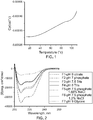
- Fig. 1 is a graph depicting results of DSC analysis of sample 75312-F10.
- Fig. 2 is a graph depicting results of CD analysis of samples listed in Table 2.
- the CD spectra of all samples exhibit minima at approximately 208 and 220 nm, a characteristic indicative of significant ⁇ -helix content.
- Analysis of the spectra revealed a pH-dependence in the magnitudes of the spectra in order of pH 7.0 > 7.5 ⁇ 6.0 > 8.0 > 9.0.
- Fig. 3 is a graph depicting the percentage of ⁇ -helix and random coil as estimated from CD analysis of samples listed in Table 2. Notably, the highest and lowest amounts of ⁇ -helix correlated with sample pH, with highest amount in 75312-F2 (pH 7) and the lowest in 75312-F7 (pH 9).
- Example 2 Determination of how select buffering agents (and concentrations) affect stability and purity of SapC compositions stored at 60 °C
- compositions of SapC in select buffering agents listed in Table 4 were prepared, stored at 60 °C, and analyzed by visual appearance, total protein content, and purity of protein content.
- the frozen samples were then thawed to room temperature and the following properties were assayed: (1) appearance assessed by visual characterization of liquid under bright light to observe clarity, color, and presence of any particulate matter in the sample; (2) pH quantified by pH meter; (3) total protein content quantified by UV analysis at 280 nm using an extinction coefficient of 0.395 mg -1 mL cm -1 ; (4) purity of protein content, specifically the percentage of full length SapC in the sample and the presence of (and concentration of) SapC degradation products as assessed by SE-HPLC, RP-HPLC, and IEX-HPLC.
- SE-HPLC, RP-HPLC, and IEX-HPLC are chromatography methods that separate the analyte by size, by hydrophobicity, and by charge variants, respectively.
- Table 4 List of compositions UID Description 183-001-01-095-F1 2 mg/mL SapC, 10 mM histidine pH 6 183-001-01-095-F2 2 mg/mL SapC, 50 mM histidine pH 6 183-001-01-095-F3 5 mg/mL SapC, 10 mM histidine pH 6 183-001-01-095-F4 5 mg/mL SapC, 50 mM histidine pH 6 183-001-01-095-F5 2 mg/mL SapC, 10 mM phosphate pH 6.8 183-001-01-095-F6 2 mg/mL SapC, 50 mM phosphate pH 6.8 183-001-01-095-F7 5 mg/mL SapC, 10 mM phosphate pH 6.8 183-
- the pH of each sample is reported in Table 6.
- the samples buffered by phosphate (183-001-01-095-F5, -F6, -F7, -F8) drifted to a more basic pH than their target pH of 6.8, at both time points.
- the pH of samples buffered by 10 mM phosphate (183-001-01-095-F5 and -F7) drifted more than the samples buffered with 50 mM phosphate (183-001-01-095-F6 and -F8).
- the samples 183-001-01-095-F9, -F10, and -F12 buffered by Tris at pH 7.6 exhibited minimal increases in scattering after 10 days.
- the samples buffered by histidine at pH 6 (183-001-01-095-F1, -F2, -F3, and -F4) and samples buffered by phosphate at pH 6.8 (183-001-01-095-F5, -F6, -F7, and -F8) that exhibited increased scattering at OD 310 nm were expected to contain higher order molecular weight species (i.e., aggregates); however, no such species were observed by SE-HPLC in these samples. If these supposed aggregates were too large to pass through the column, then the apparent concentration of the protein (based on chromatographic area) would have decreased. This, too, was not observed, as SapC main peak recovery was high even after 10 days in those samples. Without wishing to be bound to a particular theory, applicants note a possibility that could explain these results is that the particulate matter observed in F1-F8 does not comprise, or comprises a negligible amount of, SapC or fragments of SapC.
- Example 3 Determination of how select concentrations of citrate at pH 6.2 affects stability and purity of compositions comprising SapC exposed to 60 °C
- compositions of SapC in citrate at pH 6.2 were prepared, stored at 60 °C, and analyzed by appearance, pH, protein content, and chromatography methods.
- the frozen compositions were thawed to room temperature, and the following properties were assayed as described in Example 2: visual appearance, pH, total protein content, and purity of protein content.
- Table 8 Citrate-containing compositions UID Description 82014-F1 2 mg/mL SapC, 10 mM citrate pH 6.2 82014-F2 2 mg/mL SapC, 50 mM citrate pH 6.2 82014-F3 5 mg/mL SapC, 10 mM citrate pH 6.2 82014-F4 5 mg/mL SapC, 50 mM citrate pH 6.2 82014-citrate control 1 10 mM citrate pH 6.2 82014-citrate control 2 50 mM citrate pH 6.2
- compositions comprising SapC and 25 mM Tris pH 7.2 following exposure to mechanical or thermal stress
- the compositions were exposed to mechanical or thermal stress and analyzed by visual appearance, pH, and total protein content.
- Composition 183-001-01-220-F1 comprising 5 mg/mL SapC, 25 mM Tris pH 7.1-7.2 was prepared, and samples of it were exposed either to free-thaw stress or to agitation stress. For each sample, the following properties were assayed as described in Example 2: visual appearance, pH, and total protein content.
- samples were divided into 1.3 mL aliquots in 5 mL PETG vials and were subjected to five freeze-thaw cycles. For each cycle, the vials were frozen at -70 °C and thawed to room temperature. After each thaw, the contents of each vial were mixed by gently inverting approximately 5 times before being returned to -70 °C for the next cycle.
- samples were divided into 1.3 mL aliquots in eight PETG vials.
- Four of the vials were agitated on an orbital shaker (Thermo Scientific, Model #2309) at 220 RPM for 15 or 24 hours at ambient temperature.
- the remaining four vials were placed on the bench top near the shaker as stationary controls.
- 15 and 24 hours two vials from the test group and two from the control group were analyzed.
- TSA t-butanol
- DOPS dioleoyl phosphatidylserine
- compositions comprising the concentrations of TBA listed in Table 10 were prepared, filtered, and analyzed for visual appearance, total protein content, and DOPS content.
- compositions listed in Table 10 were prepared and assessed before and after standard sterile filtration through a 0.2 micron filter. All percentages are w/w.
- the visual appearance and total protein content in each composition were assayed as described in Example 2.
- the total DOPS content in each composition was assayed by HPLC-ELSD.
- Table 10 Compositions containing TBA UID Description 183-001-01-050-F1 2.3 mg/mL SapC, SapC:DOPS molar ratio of 1:12, 9 percent trehalose, 30 percent TBA, 50 mM Tris pH 7.2 183-001-01-050-F2 2.3 mg/mL SapC, SapC:DOPS molar ratio of 1:12, 9 percent trehalose, 25 percent TBA, 50 mM Tris pH 7.2 183-001-01-050-F3 2.3 mg/mL SapC, SapC:DOPS molar ratio of 1:12, 9 percent trehalose, 20 percent TBA, 50 mM Tris pH 7.2 183-001-050-F4 2.3 mg/mL SapC, SapC:DOPS molar ratio of 1:12, 9 percent trehalose, 15 percent TBA, 50 mM Tris pH 7.2
- Table 12 Total protein content (mg/mL) in each composition before and after filtration UID Before filtration After filtration 183-001-01-050-F1 2.25 2.3 183-001-01-050-F2 2.59 2.55 183-001-01-050-F3 2.21 2.26 183-001-050-F4 2.49 2.51
- Table 13 The total DOPS content in each sample is reported in Table 13. The compositions exhibited no significant change in DOPS content before and after filtration. Table 13: Total DOPS content (mg/mL) in each composition before and after filtration UID Before filtration After filtration 183-001-01-050-F1 3.06 3.10 183-001-01-050-F2 2.98 3.04 183-001-01-050-F3 2.97 2.97 183-001-050-F4 3.00 2.94
- compositions listed in Table 14 were prepared, and the stability and purity of each composition was evaluated.
- compositions listed in Table 14 were prepared and 1.2 ml aliquots were lyophilized according to the lyophilization procedure described in Table 15. Each lyophilized sample was then reconstituted with 1.2 mL of HyCloneTM purified water, and the lyophilized cakes were allowed to dissolve completely.
- Example 2 The following properties were assayed as described in Example 2: visual appearance; total protein content, and purity of protein content.
- the moisture content in each lyophilized sample was determined by a coulometric method.
- the percentage of TBA in each sample was determined by a GC-MS head space method. (The TBA in the samples was what remained from the TBA used as solvent for DOPS, after sublimation of most of the TBA from the samples during the lyophilization process.)
- each reconstituted composition was stored at 50 °C for either 2 or 5 weeks and its stability assessed by visual appearance and purity of protein content analyzed as described in Example 2, by purity as measured using RP-HPLC, and by particle size distribution.
- Table 14 Compositions prepared for lyophilization and reconstitution UID Description 76114-F1 0.4 mg/mL SapC, SapC:DOPS molar ratio of 1:12, 25 percent TBA, 9 percent sucrose, 10 mM Tris pH 8 76114-F2 0.4 mg/mL SapC, SapC:DOPS molar ratio of 1:12, 25 percent TBA, 9 percent trehalose, 10 mM Tris pH 8 76114-F3 0.4 mg/mL SapC, SapC:DOPS molar ratio of 1:12, 25 percent TBA, 4 percent mannitol, 1 percent sucrose, 10 mM Tris pH 8 76114-F4 0.4 mg/mL SapC, SapC:DOPS molar ratio of 1:12, 25 percent TBA, 9 percent sucrose, 10 mM Tris pH 7.2 76114-F5 0.4 mg/mL SapC, SapC:DOPS molar ratio of 1:12, 25 percent TBA, 9 percent trehalose, 10 mM Tris pH
- Table 17 The total protein content of each reconstituted composition is reported in Table 17.
- TBA in each reconstituted composition is reported in Table 19. All reconstituted compositions comprising 9 percent sucrose (F1, F4, and F7) contained higher levels of residual TBA compared to the other compositions tested.
- the purity of SapC after 2 weeks at 50 °C remained greater than 90 percent in all samples buffered with histidine at pH 6.5 (76114-F7, -F8, and -F9), as well as in the 76114-F6 sample (buffered with Tris at pH 7.2). All other samples exhibited less than 85 percent SapC purity after 2 weeks at 50 °C.
- the compositions comprising 9 percent trehalose (F2, F5, F8) showed the most uniform and reproducible particle size volume distribution by dynamic light scattering compared to all other compositions tested.
- compositions comprising SapC and DOPS are more stable in 10 mM Tris at pH 6.5 or pH 7.2 compared to in 10 mM Tris at pH 8.
- Example 7 Determination of how select concentrations of SapC and DOPS (at a constant SapC to DOPS molar ratio) affect the stability and purity of compositions comprising SapC and DOPS
- compositions listed in Table 21 were prepared, and the stability and purity of each composition were evaluated.
- Table 21 Compositions pre-lyophilization UID Description 76733-F1 4.2 mg/mL SapC, SapC:DOPS molar ratio of 1:12, 25 percent TBA, 10 mg/mL trehalose, 25 mM phosphate pH 7.4 76733-F2 2.2 mg/mL SapC, SapC:DOPS molar ratio of 1:12, 25 percent TBA, 10 mg/mL trehalose, 25 mM phosphate pH 7.4 76733-F3 1.3 mg/mL SapC, SapC:DOPS molar ratio of 1:12, 25 percent TBA, 10 mg/mL trehalose, 25 mM phosphate pH 7.4 76733-F4 0.82 mg/mL SapC, SapC:DOPS molar ratio of 1:12, 25 percent TBA, 10 mg/mL trehalose, 25 mM phosphate pH 7.4 76733-F5 0.42 mg/mL SapC, SapC:DOPS molar ratio of 1:12, 25 percent TBA, 10
- Fig. 18 is a graph depicting change in dynamic light scattering for each reconstituted sample over time.
- the preferred concentration of SapC is less than or equal to 2.2 mg/mL SapC, at a SapC to DOPS molar ratio of 1:12.
- Example 8 Determination of how various concentrations of mannitol and trehalose affect the stability of compositions comprising DOPS
- compositions described in Tables 22 and 23 were prepared, lyophilized, and reconstituted in water.
- compositions listed in Table 22 were prepared and 0.8 ml aliquots in 2 ml vials or 4 ml aliquots in 10 ml vials were lyophilized according to the lyophilization process described in Example 6. Each vial of lyophilized sample was reconstituted with HyCloneTM water; the lyophilized cakes were allowed to completely dissolve. The visual appearance of the lyophilized cakes and the percentage of TBA in each reconstituted sample were assayed as described in Example 6.
- compositions listed in Table 23 were prepared and lyophilized according to the lyophilization process described in Example 6, with one modification: primary drying temperature hold at -45 °C instead of hold at -40 °C.
- Each lyophilized sample was reconstituted with 1.2 mL of HyCloneTM water; the lyophilized cakes were allowed to completely dissolve.
- the following properties were assayed as described in Example 6: visual appearance of lyophilized cakes, percentage TBA in each reconstituted sample, and particle size distribution in each reconstituted sample.
- Tables 24 and 25 includes qualitative observations of the lyophilized compositions, including whether or not cake formed and if cake formed, the integrity and quality of the cake.
- Table 24 Appearance of lyophilized cake from Table 22 compositions UID Observations 81494-F1 No cake formed 81494-F2 No cake formed 81494-F3 No cake formed 81494-F4 No cake formed 81494-F5 No cake formed 81494-F6 No cake formed 81494-F7 Compact, fluffy cake with no cracks 81494-F8 Compact, fluffy cake with no cracks 81494-F9 Compact, fluffy cake with no cracks 81494-F10 Compact, fluffy cake with no cracks 81494-F11 Compact, fluffy cake with no cracks 81494-F12 Compact, fluffy cake with some shrinkage
- Table 25 Appearance of lyophilized cake from Table 23 compositions UID Observations 183-001-01-114-F1 4 of 4 vials exhibited compact, fluffy cake with no cracks 183-001-01-114
- Fig. 19 is a graph depicting TBA percentage in each reconstituted sample of the Table 22 compositions.
- Fig. 20 is a graph depicting TBA percentage in each reconstituted sample of the Table 23 compositions.
- Fig. 21 is a graph showing particle size distributions for three replicates of reconstituted liquids for the Table 23 compositions.
- Panel A shows data for 183-001-01-114-F1;
- panel B shows data for 183-001-01-114-F4;
- panel C shows data for 183-001-01-114-F5;
- panel D shows data for 183-001-01-114-F6.
- a subset of the Table 22 compositions, namely 81494-F7, -F8, -F9, -F10, -F11, and -F12, formed high quality lyophilized cakes. When reconstituted in water, all six of those compositions contained less than 3 percent TBA.
- the reconstituted 81494-F9 and 81494-F10 compositions contained the lowest percent of TBA, at less than 0.5 percent. These data indicate that the constituents of the 81494-F7, F8, F9, F10, and F11 compositions may confer beneficial properties on both the lyophilized cake and reconstituted solution.
- compositions prepared with the modified lyophilization process (the Table 23 compositions), and all of those compositions, when reconstituted, had TBA levels below 0.5 percent.
- a preferred composition for a SapC-DOPS pharmaceutical product was determined to be 2.2 mg/mL SapC, 2.4 mg/mL DOPS (SapC:DOPS molar ratio of 1:12), 25 mM Tris pH 7.2, 5 percent trehalose.
- the compositions listed in Table 26 were prepared and evaluated.
- compositions listed in Table 26 were prepared. 4 ml aliquots were placed in vials and lyophilized according to lyophilization process described in Example 6, with one modification: the secondary drying time was 25 hours instead of 15 hours.
- the lyophilized cakes were stored at 50 °C for 4 weeks (or stored at 25 °C for 2 or 4 weeks) before analysis and reconstitution with 1.2 mL of HyCloneTM water.
- the following properties were assayed as described in Example 2: visual appearance, pH, total protein content, and purity of protein content in the reconstituted samples.
- the following properties were assayed as described in Example 6: visual appearance of lyophilized cakes, percentage TBA in the reconstituted samples, and particle size distribution in each reconstituted sample.
- Table 26 Compositions, pre-lyophilization UID Description 183-001-01-141-F1 2.2 mg/mL SapC, SapC:DOPS molar ratio of 1:12, 25 mM Tris pH 7.2, 5 percent trehalose 183-001-01-141-F2 3.4 mg/mL SapC, SapC:DOPS molar ratio of 1:12, 25 mM Tris pH 6.8, 7.5 percent trehalose 183-001-01-141-F3 1.0 mg/mL SapC, SapC:DOPS molar ratio of 1:12, 25 mM Tris pH 7.6, 7.5 percent trehalose 183-001-01-141-F4 3.4 mg/mL SapC, SapC:DOPS molar ratio of 1:12, 25 mM Tris pH 7.6, 2.5 percent trehalose 183-001-01-141-F5 1.0 mg/mL SapC, SapC:DOPS molar ratio of 1:12, 25 mM Tris pH 6.8, 2.5 percent trehalose 183-001-01-141
- Table 27 includes qualitative observations of the lyophilized compositions stored at 50 °C for 4 weeks and of reconstituted compositions prepared from the stored lyophilized compositions and then analyzed immediately.
- the pH of each reconstituted sample is reported in Table 28, and the percentage TBA is shown in Table 29.
- Table 27 Appearance of lyophilized cake stored at 50 °C for 4 weeks and appearance of reconstituted liquid prepared from the stored cake UID Lyophilized cake Reconstituted solution 183-001-01-141-F1 Compact, fluffy cake with no cracks Slightly cloudy 183-001-01-141-F2 Compact, fluffy cake with no cracks Slightly cloudy 183-001-01-141-F3 Compact, fluffy cake with no cracks Clear 183-001-01-141-F4 Compact, fluffy cake with no cracks Cloudy 183-001-01-141-F5 Compact, fluffy cake with no cracks Slightly cloudy 183-001-01-141-F6 Compact, fluffy cake with no cracks Slightly cloudy 183-001-01-141-F7 Compact, fluffy cake with no cracks Slightly cloudy 183-001-01-141-F8 Compact, fluffy cake with no cracks Slightly cloudy 183-001-01-141-F9 Compact, fluffy cake with no cracks Slightly cloudy 183-001-01-141-F10 Compact, fluffy
- Fig. 22 is a graph depicting RP-HPLC measurements of SapC purity in each reconstituted composition prepared from lyophilized powder that had been stored at 25 °C for 2 or 4 weeks.
- Fig. 23 is a graph depicting IEX-HPLC measurements of SapC purity in each reconstituted composition prepared from lyophilized powder that had been stored at 25 °C for 2 or 4 weeks.
- Fig. 24 is a graph depicting average particle size over time in each reconstituted composition prepared from lyophilized powder that had been stored at 25 °C for 2 or 4 weeks.
- composition comprising a molar ratio of phosphatidylserine lipid to polypeptide in the range of 8:1 to 20:1, Tris buffer, trehalose, and TBA provided the preferred physical and chemical properties of a clinical composition.
- Saposin C in the presence of an anionic phospholipid (DOPS), is known to activate the enzyme glucocerebrosidase (GBA) to catalyze the hydrolysis of cerebroside into ceremide and glucose.
- GBA glucocerebrosidase
- SapC-DOPS will activate rhGBA to cleave 4-MUG into 4-methylumbellierone (4-MU), which gives off a fluorescent signal, and glucose.
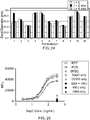
- the positive control sample was found to have 102% relative potency of the reference (REF) standard.
- a passing result of this assay is 70-160% relative potency.
- a specificity (SPEC) sample was also tested to show decreased activity if the SapC is damaged in some way.
- the SPEC sample contained SapC treated at 70°C for 48 hours, then compounded with DOPS. Relative potency was unable to be determined for the SPEC sample because the curves are deemed to be different.
- the top of the best-fit curve of the SPEC sample was 79% of the top of the best-fit curve of the REF sample.
- a passing result for specificity is ⁇ 90%.
- controls were utilized that include different combinations of some but not all of the critical components of the assay.
- Fig. 25 is a graph showing results of a GBA enzyme assay testing activity of SapC-DOPS.
- Example 11 Protocol for treatment with a pharmaceutical composition comprising SapC and DOPS.
- BXQ-350 Patients 18 years of age or older with advanced solid tumors or recurrent high-grade gliomas (HGG) were enrolled in a Phase 1, open-label, dose-escalation clinical trial of a SapC/DOPS composition designated BXQ-350.
- the lyophilized BXQ-350 product (supplied as a lyophilized powder in a vial) is reconstituted with sterile water for injection to produce an aqueous solution containing human SapC at 2.2 mg/ml (+/- 0.3 mg/ml); the sodium salt of DOPS at 2.4 mg/ml (+/- 0.4 mg/ml); Tris at 25 mM (+/- 2 mM), pH 7.2 (+/- 0.4); trehalose at 5 percent w/v (+/- 1 percent). If t-butyl alcohol is present, it is at less than 2 percent w/w.
- BXQ-350 a BXQ-350 dose that delivers 2.4 mg of SapC per kg body weight was selected for further study.
- the administration protocol includes at least one cycle of treatment. Treatment may continue through six cycles of treatment or until disease progression, as described, for example, in Table 30.
- BXQ-350 is supplied as a lyophilized powder in glass vials.
- the solid drug product Prior to administration, the solid drug product is reconstituted in the vials by adding to the vial 4 mL sterile water for injection, USP, resulting in a reconstituted drug strength of 2.2 mg/mL of SapC in the vial. The reconstituted drug product is then diluted to the target IV administration concentration in sterile 0.9% saline in IV bags.
- Table 30 Administration Schedule Administration Schedule of BXQ-350 Cycle 1 - Week 1 Cycle 1 - Week 2 Cycle 1 - Weeks 3 & 4 Cycles 2 - 6 Days 1-5 (5 consecutive days) Days 8, 10, & 12 (Every other day) Days 15 & 22 (Once every 7 + 3 days) Days 29, 57, 85, 113, & 141 (Once every 28 ⁇ 3 days )
- FIG. 26 is a table showing Phase 1a demographics and adverse events by dosing group. No treatment-related serious adverse events were reported.
- Preclinical PK/TK was allometrically scaled to predict human PK and exposure (Area Under Curve (AUC)) at 0.7-2.4 mg/kg therapeutic doses.
- Human clearance, terminal volume of distribution (Vz), half-life, and AUC (at 0.7 - 2.4 mg/kg doses) from the First In Human (FIH) trial are summarized as follows: clearance (Cl) 57-76 mL/kg/hr, Vz 314-509 mL/kg, and half-life 3.5-5 hr.
- the corresponding AUCs ranged from 10,020 to 42,330 hr*ng/mL.
- FIGs. 27A-C are three sets of graphs illustrating the pharmacokinetic results on Day 1 ( FIG. 27A ), Day 4 ( FIG. 27B ), and Day 22 ( FIG. 27C ) of the Phase 1 trial. Data are presented as a semi-log plot (top of each set). Pharmacokinetics were doseproportional.
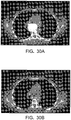
- FIG. 29 is a swimmer plot illustrating patient outcomes in the Phase 1a trial. Some of the individual subjects are discussed below in Examples 12-14.
- Example 12 Use of pharmaceutical composition comprising SapC and DOPS to treat a patient diagnosed with parietal anaplastic ependymoma
- Ependymomas are rare primary nervous system tumors accounting for about 3% of adult brain tumors in the US. Standard of care includes maximal surgical resection and radiation therapy. There is no FDA-approved drug therapy.
- a 67-year old white male with a history of prostate cancer was diagnosed in October 2014 with a left parietal anaplastic ependymoma. He underwent a gross total resection, followed by adjuvant radiation. Repeat brain MRI in April 2017 showed a local recurrence. He received 3 cycles of temolozomide with no response. He was enrolled in the BXQ-350 trial in September 2017; at the time of enrollment, his Eastern Cooperative Oncology Group (ECOG) performance status was 1, and his main symptoms were aphasia and right sidedweakness.
- ECOG Eastern Cooperative Oncology Group
- BXQ-350 2.4 mg/kg IV infusion at Day 1-5, 8, 10, 12, 15, 22
- 3 additional cycles (1x28 days) were followed until death for safety, response, Revised Assessment in Neuro-Oncology (RANO), and ECOG performance status.
- FIGs. 28A-D depict results from post-mortem histology and gross anatomy analysis; from left to right:
- A The initial surgical specimen showed little evidence of ependymal differentiation and abundant mitotic figures. H&E at 40x;
- B Gross brain examination at autopsy showed extensive tumor necrosis;
- C Microscopic examination of sections of tumor shows necrosis and little viable tumor (H&E at 4x with insert at 40x);
- D At autopsy there was extensive chondroid differentiation at the site where tumor extended through the surgical defect and scalp.
- Example 13 Use of a pharmaceutical composition comprising SapC and DOPS to treat patients diagnosed with high-grade glioma
- HGG high-grade glioma
- Example 14 Use of a pharmaceutical composition comprising SapC and DOPS to treat a patient diagnosed with adenocarcinoma of the appendix
- Example 15 Use of a pharmaceutical composition comprising SapC and DOPS to treat patients diagnosed with rectal adenocarcinoma
Landscapes
- Health & Medical Sciences (AREA)
- Chemical & Material Sciences (AREA)
- Life Sciences & Earth Sciences (AREA)
- General Health & Medical Sciences (AREA)
- Medicinal Chemistry (AREA)
- Public Health (AREA)
- Veterinary Medicine (AREA)
- Animal Behavior & Ethology (AREA)
- Pharmacology & Pharmacy (AREA)
- Epidemiology (AREA)
- Engineering & Computer Science (AREA)
- Chemical Kinetics & Catalysis (AREA)
- General Chemical & Material Sciences (AREA)
- Oil, Petroleum & Natural Gas (AREA)
- Organic Chemistry (AREA)
- Proteomics, Peptides & Aminoacids (AREA)
- Molecular Biology (AREA)
- Bioinformatics & Cheminformatics (AREA)
- Zoology (AREA)
- Biophysics (AREA)
- Biochemistry (AREA)
- Gastroenterology & Hepatology (AREA)
- Immunology (AREA)
- Nuclear Medicine, Radiotherapy & Molecular Imaging (AREA)
- Dispersion Chemistry (AREA)
- Dermatology (AREA)
- Genetics & Genomics (AREA)
- Wood Science & Technology (AREA)
- Toxicology (AREA)
- Biotechnology (AREA)
- Physics & Mathematics (AREA)
- Microbiology (AREA)
- Analytical Chemistry (AREA)
- General Engineering & Computer Science (AREA)
- Marine Sciences & Fisheries (AREA)
- Medicinal Preparation (AREA)
- Medicines That Contain Protein Lipid Enzymes And Other Medicines (AREA)
- Pharmaceuticals Containing Other Organic And Inorganic Compounds (AREA)
- Peptides Or Proteins (AREA)
Priority Applications (2)
| Application Number | Priority Date | Filing Date | Title |
|---|---|---|---|
| EP21192293.5A EP4005562A1 (en) | 2018-03-23 | 2018-11-02 | Saposin c pharmaceutical compositions and their use in treating cancer |
| PL18816295T PL3768246T3 (pl) | 2018-03-23 | 2018-11-02 | Kompozycje farmaceutyczne sapozyny c i ich zastosowanie w leczeniu nowotworu |
Applications Claiming Priority (3)
| Application Number | Priority Date | Filing Date | Title |
|---|---|---|---|
| US201862647058P | 2018-03-23 | 2018-03-23 | |
| US201862678668P | 2018-05-31 | 2018-05-31 | |
| PCT/US2018/059016 WO2019182650A1 (en) | 2018-03-23 | 2018-11-02 | Saposin c pharmaceutical compositions and methods of treating cancer |
Related Child Applications (1)
| Application Number | Title | Priority Date | Filing Date |
|---|---|---|---|
| EP21192293.5A Division EP4005562A1 (en) | 2018-03-23 | 2018-11-02 | Saposin c pharmaceutical compositions and their use in treating cancer |
Publications (2)
| Publication Number | Publication Date |
|---|---|
| EP3768246A1 EP3768246A1 (en) | 2021-01-27 |
| EP3768246B1 true EP3768246B1 (en) | 2021-08-25 |
Family
ID=64664378
Family Applications (2)
| Application Number | Title | Priority Date | Filing Date |
|---|---|---|---|
| EP18816295.2A Active EP3768246B1 (en) | 2018-03-23 | 2018-11-02 | Saposin c pharmaceutical compositions and their use in treating cancer |
| EP21192293.5A Pending EP4005562A1 (en) | 2018-03-23 | 2018-11-02 | Saposin c pharmaceutical compositions and their use in treating cancer |
Family Applications After (1)
| Application Number | Title | Priority Date | Filing Date |
|---|---|---|---|
| EP21192293.5A Pending EP4005562A1 (en) | 2018-03-23 | 2018-11-02 | Saposin c pharmaceutical compositions and their use in treating cancer |
Country Status (16)
| Country | Link |
|---|---|
| US (3) | US10682411B2 (https=) |
| EP (2) | EP3768246B1 (https=) |
| JP (3) | JP7081865B2 (https=) |
| KR (2) | KR102370952B1 (https=) |
| CN (2) | CN111902133B (https=) |
| AU (1) | AU2018414543B2 (https=) |
| BR (1) | BR112020018334A2 (https=) |
| CA (1) | CA3094928A1 (https=) |
| ES (1) | ES2895180T3 (https=) |
| IL (1) | IL277313B (https=) |
| MX (1) | MX2020009829A (https=) |
| PL (1) | PL3768246T3 (https=) |
| PT (1) | PT3768246T (https=) |
| RU (1) | RU2767199C1 (https=) |
| SG (1) | SG11202007884UA (https=) |
| WO (1) | WO2019182650A1 (https=) |
Families Citing this family (1)
| Publication number | Priority date | Publication date | Assignee | Title |
|---|---|---|---|---|
| CN111902133B (zh) * | 2018-03-23 | 2022-04-15 | 百祥制药公司 | 皂化蛋白c药物组合物和治疗癌症的方法 |
Family Cites Families (29)
| Publication number | Priority date | Publication date | Assignee | Title |
|---|---|---|---|---|
| US4162282A (en) | 1976-04-22 | 1979-07-24 | Coulter Electronics, Inc. | Method for producing uniform particles |
| US4310505A (en) | 1979-11-08 | 1982-01-12 | California Institute Of Technology | Lipid vesicles bearing carbohydrate surfaces as lymphatic directed vehicles for therapeutic and diagnostic substances |
| US4533254A (en) | 1981-04-17 | 1985-08-06 | Biotechnology Development Corporation | Apparatus for forming emulsions |
| US4728575A (en) | 1984-04-27 | 1988-03-01 | Vestar, Inc. | Contrast agents for NMR imaging |
| US4921706A (en) | 1984-11-20 | 1990-05-01 | Massachusetts Institute Of Technology | Unilamellar lipid vesicles and method for their formation |
| US4857319A (en) * | 1985-01-11 | 1989-08-15 | The Regents Of The University Of California | Method for preserving liposomes |
| US4737323A (en) | 1986-02-13 | 1988-04-12 | Liposome Technology, Inc. | Liposome extrusion method |
| IL79559A0 (en) | 1986-07-29 | 1986-10-31 | Univ Ramot | Contrast agents for nmr medical imaging |
| US4728578A (en) | 1986-08-13 | 1988-03-01 | The Lubrizol Corporation | Compositions containing basic metal salts and/or non-Newtonian colloidal disperse systems and vinyl aromatic containing polymers |
| US5205290A (en) | 1991-04-05 | 1993-04-27 | Unger Evan C | Low density microspheres and their use as contrast agents for computed tomography |
| US6271196B1 (en) * | 1996-03-05 | 2001-08-07 | Regents Of The University Of Ca | Methods of alleviating neuropathic pain using prosaposin-derived peptides |
| US6872406B2 (en) | 2000-02-11 | 2005-03-29 | Children's Hospital Research Foundation | Fusogenic properties of saposin C and related proteins and polypeptides for application to transmembrane drug delivery systems |
| CN100366286C (zh) * | 2003-04-28 | 2008-02-06 | 常州南云科技有限公司 | Saposin C-DOPS:一种抗癌新药 |
| US7834147B2 (en) | 2003-04-28 | 2010-11-16 | Childrens Hospital Medical Center | Saposin C-DOPS: a novel anti-tumor agent |
| EP2020988B1 (en) * | 2006-04-28 | 2017-08-16 | Children's Hospital Medical Center | Compositions comprising fusogenic proteins or polypeptides derived from prosaposin for application in transmembrane drug delivery systems |
| CN101437485A (zh) | 2006-05-09 | 2009-05-20 | 高露洁-棕榄公司 | 口腔护理方案 |
| JP5253402B2 (ja) | 2006-10-20 | 2013-07-31 | チルドレンズ ホスピタル メディカル センター | 自発的に形成する楕円体の単層リン脂質小胞 |
| CN101209251A (zh) | 2006-12-28 | 2008-07-02 | 中国科学院理化技术研究所 | 含有紫杉醇或多烯紫杉醇的弹性纳米囊泡制剂及其制备方法 |
| WO2009049421A1 (en) * | 2007-10-18 | 2009-04-23 | The Hospital For Sick Children | Compositions and methods for enhancing enzyme activity in gaucher, gm1-gangliosidosis/morquio b disease, and parkinson's disease |
| WO2010053489A1 (en) * | 2008-11-07 | 2010-05-14 | Children's Hospital Medical Center | Fusogenic properties of saposin c and related proteins and peptides for application to transmembrane drug delivery systems |
| US7794969B1 (en) | 2009-07-09 | 2010-09-14 | Joule Unlimited, Inc. | Methods and compositions for the recombinant biosynthesis of n-alkanes |
| CN102614125B (zh) * | 2011-02-01 | 2018-11-02 | 常州长吉生物技术开发有限公司 | SapC-磷脂纳米囊泡冻干制剂、其制备方法及用途 |
| US20130247924A1 (en) | 2012-03-23 | 2013-09-26 | Mark Scatterday | Electronic cigarette having a flexible and soft configuration |
| CN104684546A (zh) * | 2012-06-07 | 2015-06-03 | 哈佛大学校长及研究员协会 | 用于药物靶向的纳米疗法 |
| US9757432B2 (en) | 2012-11-14 | 2017-09-12 | Ohio State Innovation Foundation | Materials and methods useful for treating glioblastorna |
| US10760112B2 (en) * | 2014-12-18 | 2020-09-01 | Shire Human Genetic Therapies, Inc. | Enzymatic activity assays for glucocerebrosidase |
| US9802942B2 (en) * | 2015-07-01 | 2017-10-31 | Northwestern University | Substituted 4-methyl-pyrrolo[1,2-A]pyrimidine-8-carboxamide compounds and uses thereof for modulating glucocerebrosidase activity |
| AU2017361541A1 (en) | 2016-11-21 | 2019-07-11 | Bexion Pharmaceuticals, Inc. | A combination therapy including SapC-DOPS for the treatment of pancreatic cancer |
| CN111902133B (zh) * | 2018-03-23 | 2022-04-15 | 百祥制药公司 | 皂化蛋白c药物组合物和治疗癌症的方法 |
-
2018
- 2018-11-02 CN CN201880091701.7A patent/CN111902133B/zh active Active
- 2018-11-02 SG SG11202007884UA patent/SG11202007884UA/en unknown
- 2018-11-02 PL PL18816295T patent/PL3768246T3/pl unknown
- 2018-11-02 MX MX2020009829A patent/MX2020009829A/es unknown
- 2018-11-02 AU AU2018414543A patent/AU2018414543B2/en active Active
- 2018-11-02 CA CA3094928A patent/CA3094928A1/en active Pending
- 2018-11-02 BR BR112020018334-2A patent/BR112020018334A2/pt unknown
- 2018-11-02 ES ES18816295T patent/ES2895180T3/es active Active
- 2018-11-02 US US16/179,139 patent/US10682411B2/en active Active
- 2018-11-02 CN CN202210300239.5A patent/CN114642720A/zh active Pending
- 2018-11-02 PT PT188162952T patent/PT3768246T/pt unknown
- 2018-11-02 WO PCT/US2018/059016 patent/WO2019182650A1/en not_active Ceased
- 2018-11-02 EP EP18816295.2A patent/EP3768246B1/en active Active
- 2018-11-02 RU RU2020134655A patent/RU2767199C1/ru active
- 2018-11-02 KR KR1020207030474A patent/KR102370952B1/ko active Active
- 2018-11-02 JP JP2021500778A patent/JP7081865B2/ja active Active
- 2018-11-02 KR KR1020227006894A patent/KR102483046B1/ko active Active
- 2018-11-02 EP EP21192293.5A patent/EP4005562A1/en active Pending
-
2020
- 2020-05-01 US US16/865,168 patent/US11590227B2/en active Active
- 2020-09-13 IL IL277313A patent/IL277313B/en active IP Right Grant
-
2022
- 2022-05-19 JP JP2022082176A patent/JP7313091B2/ja active Active
-
2023
- 2023-01-20 US US18/157,689 patent/US12194099B2/en active Active
- 2023-07-04 JP JP2023109939A patent/JP2023118847A/ja active Pending
Also Published As
Similar Documents
| Publication | Publication Date | Title |
|---|---|---|
| US20190388348A1 (en) | Compositions and methods for treating cardiovascular and pulmonary diseases with apelin | |
| EP2586459B1 (en) | Vegf antagonist formulations | |
| ES2387886T3 (es) | Composiciones que transportan lípidos con una mejor estabilidad sanguínea | |
| CN105396122B (zh) | 重建高密度脂蛋白制剂及其生产方法 | |
| JPH06104622B2 (ja) | リポソ−ム製剤の製造法 | |
| WO1996034109A1 (en) | Single-vial formulations of dna/lipid complexes | |
| US8349794B2 (en) | Reconstitution medium for protein and peptide formulations | |
| US20100311844A1 (en) | Spontaneously Forming Ellipsoidal Phospholipid Unilamellar Vesicles | |
| US12194099B2 (en) | Saposin C pharmaceutical compositions and methods of treating cancer | |
| KR20230147038A (ko) | 테가비빈트의 동결건조된 제형 | |
| CN114126584A (zh) | 重组蛋白质稳定制剂 | |
| HK40075391A (en) | Saposin c pharmaceutical compositions and methods of treating cancer | |
| HK40036949A (en) | Saposin c pharmaceutical compositions and methods of treating cancer | |
| HK40036949B (en) | Saposin c pharmaceutical compositions and methods of treating cancer | |
| KR20230008759A (ko) | Il-2 융합 폴리펩티드 조성물 및 그의 제조 및 사용 방법 | |
| WO2022115179A1 (en) | Compositions comprising dominant negative tnf protein and methods for therapeutic delivery |
Legal Events
| Date | Code | Title | Description |
|---|---|---|---|
| STAA | Information on the status of an ep patent application or granted ep patent |
Free format text: STATUS: UNKNOWN |
|
| STAA | Information on the status of an ep patent application or granted ep patent |
Free format text: STATUS: THE INTERNATIONAL PUBLICATION HAS BEEN MADE |
|
| PUAI | Public reference made under article 153(3) epc to a published international application that has entered the european phase |
Free format text: ORIGINAL CODE: 0009012 |
|
| STAA | Information on the status of an ep patent application or granted ep patent |
Free format text: STATUS: REQUEST FOR EXAMINATION WAS MADE |
|
| 17P | Request for examination filed |
Effective date: 20201022 |
|
| AK | Designated contracting states |
Kind code of ref document: A1 Designated state(s): AL AT BE BG CH CY CZ DE DK EE ES FI FR GB GR HR HU IE IS IT LI LT LU LV MC MK MT NL NO PL PT RO RS SE SI SK SM TR |
|
| AX | Request for extension of the european patent |
Extension state: BA ME |
|
| REG | Reference to a national code |
Ref country code: DE Ref legal event code: R079 Ref document number: 602018022568 Country of ref document: DE Free format text: PREVIOUS MAIN CLASS: A61K0009190000 Ipc: A61K0047260000 |
|
| GRAP | Despatch of communication of intention to grant a patent |
Free format text: ORIGINAL CODE: EPIDOSNIGR1 |
|
| STAA | Information on the status of an ep patent application or granted ep patent |
Free format text: STATUS: GRANT OF PATENT IS INTENDED |
|
| RIC1 | Information provided on ipc code assigned before grant |
Ipc: A61P 35/00 20060101ALI20210317BHEP Ipc: A61K 9/08 20060101ALI20210317BHEP Ipc: A61K 47/26 20060101AFI20210317BHEP |
|
| INTG | Intention to grant announced |
Effective date: 20210413 |
|
| DAV | Request for validation of the european patent (deleted) | ||
| DAX | Request for extension of the european patent (deleted) | ||
| GRAS | Grant fee paid |
Free format text: ORIGINAL CODE: EPIDOSNIGR3 |
|
| GRAA | (expected) grant |
Free format text: ORIGINAL CODE: 0009210 |
|
| STAA | Information on the status of an ep patent application or granted ep patent |
Free format text: STATUS: THE PATENT HAS BEEN GRANTED |
|
| AK | Designated contracting states |
Kind code of ref document: B1 Designated state(s): AL AT BE BG CH CY CZ DE DK EE ES FI FR GB GR HR HU IE IS IT LI LT LU LV MC MK MT NL NO PL PT RO RS SE SI SK SM TR |
|
| REG | Reference to a national code |
Ref country code: CH Ref legal event code: EP |
|
| REG | Reference to a national code |
Ref country code: PT Ref legal event code: SC4A Ref document number: 3768246 Country of ref document: PT Date of ref document: 20210907 Kind code of ref document: T Free format text: AVAILABILITY OF NATIONAL TRANSLATION Effective date: 20210831 |
|
| REG | Reference to a national code |
Ref country code: IE Ref legal event code: FG4D Ref country code: AT Ref legal event code: REF Ref document number: 1423122 Country of ref document: AT Kind code of ref document: T Effective date: 20210915 |
|
| REG | Reference to a national code |
Ref country code: DE Ref legal event code: R096 Ref document number: 602018022568 Country of ref document: DE |
|
| REG | Reference to a national code |
Ref country code: NL Ref legal event code: FP |
|
| REG | Reference to a national code |
Ref country code: LT Ref legal event code: MG9D |
|
| PG25 | Lapsed in a contracting state [announced via postgrant information from national office to epo] |
Ref country code: FI Free format text: LAPSE BECAUSE OF FAILURE TO SUBMIT A TRANSLATION OF THE DESCRIPTION OR TO PAY THE FEE WITHIN THE PRESCRIBED TIME-LIMIT Effective date: 20210825 Ref country code: RS Free format text: LAPSE BECAUSE OF FAILURE TO SUBMIT A TRANSLATION OF THE DESCRIPTION OR TO PAY THE FEE WITHIN THE PRESCRIBED TIME-LIMIT Effective date: 20210825 Ref country code: SE Free format text: LAPSE BECAUSE OF FAILURE TO SUBMIT A TRANSLATION OF THE DESCRIPTION OR TO PAY THE FEE WITHIN THE PRESCRIBED TIME-LIMIT Effective date: 20210825 Ref country code: LT Free format text: LAPSE BECAUSE OF FAILURE TO SUBMIT A TRANSLATION OF THE DESCRIPTION OR TO PAY THE FEE WITHIN THE PRESCRIBED TIME-LIMIT Effective date: 20210825 Ref country code: BG Free format text: LAPSE BECAUSE OF FAILURE TO SUBMIT A TRANSLATION OF THE DESCRIPTION OR TO PAY THE FEE WITHIN THE PRESCRIBED TIME-LIMIT Effective date: 20211125 Ref country code: HR Free format text: LAPSE BECAUSE OF FAILURE TO SUBMIT A TRANSLATION OF THE DESCRIPTION OR TO PAY THE FEE WITHIN THE PRESCRIBED TIME-LIMIT Effective date: 20210825 Ref country code: NO Free format text: LAPSE BECAUSE OF FAILURE TO SUBMIT A TRANSLATION OF THE DESCRIPTION OR TO PAY THE FEE WITHIN THE PRESCRIBED TIME-LIMIT Effective date: 20211125 |
|
| REG | Reference to a national code |
Ref country code: ES Ref legal event code: FG2A Ref document number: 2895180 Country of ref document: ES Kind code of ref document: T3 Effective date: 20220217 |
|
| PG25 | Lapsed in a contracting state [announced via postgrant information from national office to epo] |
Ref country code: LV Free format text: LAPSE BECAUSE OF FAILURE TO SUBMIT A TRANSLATION OF THE DESCRIPTION OR TO PAY THE FEE WITHIN THE PRESCRIBED TIME-LIMIT Effective date: 20210825 Ref country code: GR Free format text: LAPSE BECAUSE OF FAILURE TO SUBMIT A TRANSLATION OF THE DESCRIPTION OR TO PAY THE FEE WITHIN THE PRESCRIBED TIME-LIMIT Effective date: 20211126 |
|
| PG25 | Lapsed in a contracting state [announced via postgrant information from national office to epo] |
Ref country code: DK Free format text: LAPSE BECAUSE OF FAILURE TO SUBMIT A TRANSLATION OF THE DESCRIPTION OR TO PAY THE FEE WITHIN THE PRESCRIBED TIME-LIMIT Effective date: 20210825 |
|
| REG | Reference to a national code |
Ref country code: DE Ref legal event code: R097 Ref document number: 602018022568 Country of ref document: DE |
|
| PG25 | Lapsed in a contracting state [announced via postgrant information from national office to epo] |
Ref country code: SM Free format text: LAPSE BECAUSE OF FAILURE TO SUBMIT A TRANSLATION OF THE DESCRIPTION OR TO PAY THE FEE WITHIN THE PRESCRIBED TIME-LIMIT Effective date: 20210825 Ref country code: SK Free format text: LAPSE BECAUSE OF FAILURE TO SUBMIT A TRANSLATION OF THE DESCRIPTION OR TO PAY THE FEE WITHIN THE PRESCRIBED TIME-LIMIT Effective date: 20210825 Ref country code: RO Free format text: LAPSE BECAUSE OF FAILURE TO SUBMIT A TRANSLATION OF THE DESCRIPTION OR TO PAY THE FEE WITHIN THE PRESCRIBED TIME-LIMIT Effective date: 20210825 Ref country code: EE Free format text: LAPSE BECAUSE OF FAILURE TO SUBMIT A TRANSLATION OF THE DESCRIPTION OR TO PAY THE FEE WITHIN THE PRESCRIBED TIME-LIMIT Effective date: 20210825 Ref country code: CZ Free format text: LAPSE BECAUSE OF FAILURE TO SUBMIT A TRANSLATION OF THE DESCRIPTION OR TO PAY THE FEE WITHIN THE PRESCRIBED TIME-LIMIT Effective date: 20210825 Ref country code: AL Free format text: LAPSE BECAUSE OF FAILURE TO SUBMIT A TRANSLATION OF THE DESCRIPTION OR TO PAY THE FEE WITHIN THE PRESCRIBED TIME-LIMIT Effective date: 20210825 |
|
| PG25 | Lapsed in a contracting state [announced via postgrant information from national office to epo] |
Ref country code: MC Free format text: LAPSE BECAUSE OF FAILURE TO SUBMIT A TRANSLATION OF THE DESCRIPTION OR TO PAY THE FEE WITHIN THE PRESCRIBED TIME-LIMIT Effective date: 20210825 |
|
| REG | Reference to a national code |
Ref country code: CH Ref legal event code: PL |
|
| PLBE | No opposition filed within time limit |
Free format text: ORIGINAL CODE: 0009261 |
|
| STAA | Information on the status of an ep patent application or granted ep patent |
Free format text: STATUS: NO OPPOSITION FILED WITHIN TIME LIMIT |
|
| PG25 | Lapsed in a contracting state [announced via postgrant information from national office to epo] |
Ref country code: LU Free format text: LAPSE BECAUSE OF NON-PAYMENT OF DUE FEES Effective date: 20211102 Ref country code: BE Free format text: LAPSE BECAUSE OF NON-PAYMENT OF DUE FEES Effective date: 20211130 |
|
| REG | Reference to a national code |
Ref country code: BE Ref legal event code: MM Effective date: 20211130 |
|
| 26N | No opposition filed |
Effective date: 20220527 |
|
| PG25 | Lapsed in a contracting state [announced via postgrant information from national office to epo] |
Ref country code: LI Free format text: LAPSE BECAUSE OF NON-PAYMENT OF DUE FEES Effective date: 20211130 Ref country code: CH Free format text: LAPSE BECAUSE OF NON-PAYMENT OF DUE FEES Effective date: 20211130 |
|
| PG25 | Lapsed in a contracting state [announced via postgrant information from national office to epo] |
Ref country code: IE Free format text: LAPSE BECAUSE OF NON-PAYMENT OF DUE FEES Effective date: 20211102 |
|
| REG | Reference to a national code |
Ref country code: AT Ref legal event code: UEP Ref document number: 1423122 Country of ref document: AT Kind code of ref document: T Effective date: 20210825 |
|
| P01 | Opt-out of the competence of the unified patent court (upc) registered |
Effective date: 20230508 |
|
| PG25 | Lapsed in a contracting state [announced via postgrant information from national office to epo] |
Ref country code: CY Free format text: LAPSE BECAUSE OF FAILURE TO SUBMIT A TRANSLATION OF THE DESCRIPTION OR TO PAY THE FEE WITHIN THE PRESCRIBED TIME-LIMIT Effective date: 20210825 |
|
| PG25 | Lapsed in a contracting state [announced via postgrant information from national office to epo] |
Ref country code: HU Free format text: LAPSE BECAUSE OF FAILURE TO SUBMIT A TRANSLATION OF THE DESCRIPTION OR TO PAY THE FEE WITHIN THE PRESCRIBED TIME-LIMIT; INVALID AB INITIO Effective date: 20181102 |
|
| PG25 | Lapsed in a contracting state [announced via postgrant information from national office to epo] |
Ref country code: SI Free format text: LAPSE BECAUSE OF FAILURE TO SUBMIT A TRANSLATION OF THE DESCRIPTION OR TO PAY THE FEE WITHIN THE PRESCRIBED TIME-LIMIT Effective date: 20210825 |
|
| PG25 | Lapsed in a contracting state [announced via postgrant information from national office to epo] |
Ref country code: MK Free format text: LAPSE BECAUSE OF FAILURE TO SUBMIT A TRANSLATION OF THE DESCRIPTION OR TO PAY THE FEE WITHIN THE PRESCRIBED TIME-LIMIT Effective date: 20210825 |
|
| PG25 | Lapsed in a contracting state [announced via postgrant information from national office to epo] |
Ref country code: MT Free format text: LAPSE BECAUSE OF FAILURE TO SUBMIT A TRANSLATION OF THE DESCRIPTION OR TO PAY THE FEE WITHIN THE PRESCRIBED TIME-LIMIT Effective date: 20210825 |
|
| PGFP | Annual fee paid to national office [announced via postgrant information from national office to epo] |
Ref country code: PT Payment date: 20250821 Year of fee payment: 8 |
|
| PGFP | Annual fee paid to national office [announced via postgrant information from national office to epo] |
Ref country code: PL Payment date: 20250818 Year of fee payment: 8 |
|
| PGFP | Annual fee paid to national office [announced via postgrant information from national office to epo] |
Ref country code: NL Payment date: 20251122 Year of fee payment: 8 |
|
| PGFP | Annual fee paid to national office [announced via postgrant information from national office to epo] |
Ref country code: DE Payment date: 20251118 Year of fee payment: 8 |
|
| PGFP | Annual fee paid to national office [announced via postgrant information from national office to epo] |
Ref country code: GB Payment date: 20251018 Year of fee payment: 8 |
|
| PGFP | Annual fee paid to national office [announced via postgrant information from national office to epo] |
Ref country code: AT Payment date: 20251118 Year of fee payment: 8 |
|
| PGFP | Annual fee paid to national office [announced via postgrant information from national office to epo] |
Ref country code: IT Payment date: 20251118 Year of fee payment: 8 |
|
| PGFP | Annual fee paid to national office [announced via postgrant information from national office to epo] |
Ref country code: FR Payment date: 20251126 Year of fee payment: 8 |
|
| PGFP | Annual fee paid to national office [announced via postgrant information from national office to epo] |
Ref country code: TR Payment date: 20251015 Year of fee payment: 8 |
|
| PGFP | Annual fee paid to national office [announced via postgrant information from national office to epo] |
Ref country code: ES Payment date: 20251201 Year of fee payment: 8 |
|
| REG | Reference to a national code |
Ref country code: DE Ref legal event code: R082 Ref document number: 602018022568 Country of ref document: DE |