EP3765846B1 - Verfahren zur verbesserung der lebensfähigkeit von zellen in einem produktionsbioreaktor - Google Patents
Verfahren zur verbesserung der lebensfähigkeit von zellen in einem produktionsbioreaktor Download PDFInfo
- Publication number
- EP3765846B1 EP3765846B1 EP19714056.9A EP19714056A EP3765846B1 EP 3765846 B1 EP3765846 B1 EP 3765846B1 EP 19714056 A EP19714056 A EP 19714056A EP 3765846 B1 EP3765846 B1 EP 3765846B1
- Authority
- EP
- European Patent Office
- Prior art keywords
- per day
- ppm
- day
- cell
- per
- Prior art date
- Legal status (The legal status is an assumption and is not a legal conclusion. Google has not performed a legal analysis and makes no representation as to the accuracy of the status listed.)
- Active
Links
Images





Classifications
-
- C—CHEMISTRY; METALLURGY
- C12—BIOCHEMISTRY; BEER; SPIRITS; WINE; VINEGAR; MICROBIOLOGY; ENZYMOLOGY; MUTATION OR GENETIC ENGINEERING
- C12M—APPARATUS FOR ENZYMOLOGY OR MICROBIOLOGY; APPARATUS FOR CULTURING MICROORGANISMS FOR PRODUCING BIOMASS, FOR GROWING CELLS OR FOR OBTAINING FERMENTATION OR METABOLIC PRODUCTS, i.e. BIOREACTORS OR FERMENTERS
- C12M27/00—Means for mixing, agitating or circulating fluids in the vessel
- C12M27/18—Flow directing inserts
- C12M27/20—Baffles; Ribs; Ribbons; Auger vanes
-
- C—CHEMISTRY; METALLURGY
- C12—BIOCHEMISTRY; BEER; SPIRITS; WINE; VINEGAR; MICROBIOLOGY; ENZYMOLOGY; MUTATION OR GENETIC ENGINEERING
- C12M—APPARATUS FOR ENZYMOLOGY OR MICROBIOLOGY; APPARATUS FOR CULTURING MICROORGANISMS FOR PRODUCING BIOMASS, FOR GROWING CELLS OR FOR OBTAINING FERMENTATION OR METABOLIC PRODUCTS, i.e. BIOREACTORS OR FERMENTERS
- C12M41/00—Means for regulation, monitoring, measurement or control, e.g. flow regulation
- C12M41/30—Means for regulation, monitoring, measurement or control, e.g. flow regulation of concentration
- C12M41/32—Means for regulation, monitoring, measurement or control, e.g. flow regulation of concentration of substances in solution
-
- C—CHEMISTRY; METALLURGY
- C12—BIOCHEMISTRY; BEER; SPIRITS; WINE; VINEGAR; MICROBIOLOGY; ENZYMOLOGY; MUTATION OR GENETIC ENGINEERING
- C12M—APPARATUS FOR ENZYMOLOGY OR MICROBIOLOGY; APPARATUS FOR CULTURING MICROORGANISMS FOR PRODUCING BIOMASS, FOR GROWING CELLS OR FOR OBTAINING FERMENTATION OR METABOLIC PRODUCTS, i.e. BIOREACTORS OR FERMENTERS
- C12M41/00—Means for regulation, monitoring, measurement or control, e.g. flow regulation
- C12M41/42—Means for regulation, monitoring, measurement or control, e.g. flow regulation of agitation speed
-
- C—CHEMISTRY; METALLURGY
- C12—BIOCHEMISTRY; BEER; SPIRITS; WINE; VINEGAR; MICROBIOLOGY; ENZYMOLOGY; MUTATION OR GENETIC ENGINEERING
- C12M—APPARATUS FOR ENZYMOLOGY OR MICROBIOLOGY; APPARATUS FOR CULTURING MICROORGANISMS FOR PRODUCING BIOMASS, FOR GROWING CELLS OR FOR OBTAINING FERMENTATION OR METABOLIC PRODUCTS, i.e. BIOREACTORS OR FERMENTERS
- C12M41/00—Means for regulation, monitoring, measurement or control, e.g. flow regulation
- C12M41/46—Means for regulation, monitoring, measurement or control, e.g. flow regulation of cellular or enzymatic activity or functionality, e.g. cell viability
-
- C—CHEMISTRY; METALLURGY
- C12—BIOCHEMISTRY; BEER; SPIRITS; WINE; VINEGAR; MICROBIOLOGY; ENZYMOLOGY; MUTATION OR GENETIC ENGINEERING
- C12M—APPARATUS FOR ENZYMOLOGY OR MICROBIOLOGY; APPARATUS FOR CULTURING MICROORGANISMS FOR PRODUCING BIOMASS, FOR GROWING CELLS OR FOR OBTAINING FERMENTATION OR METABOLIC PRODUCTS, i.e. BIOREACTORS OR FERMENTERS
- C12M47/00—Means for after-treatment of the produced biomass or of the fermentation or metabolic products, e.g. storage of biomass
- C12M47/12—Purification
-
- C—CHEMISTRY; METALLURGY
- C12—BIOCHEMISTRY; BEER; SPIRITS; WINE; VINEGAR; MICROBIOLOGY; ENZYMOLOGY; MUTATION OR GENETIC ENGINEERING
- C12Q—MEASURING OR TESTING PROCESSES INVOLVING ENZYMES, NUCLEIC ACIDS OR MICROORGANISMS; COMPOSITIONS OR TEST PAPERS THEREFOR; PROCESSES OF PREPARING SUCH COMPOSITIONS; CONDITION-RESPONSIVE CONTROL IN MICROBIOLOGICAL OR ENZYMOLOGICAL PROCESSES
- C12Q1/00—Measuring or testing processes involving enzymes, nucleic acids or microorganisms; Compositions therefor; Processes of preparing such compositions
- C12Q1/02—Measuring or testing processes involving enzymes, nucleic acids or microorganisms; Compositions therefor; Processes of preparing such compositions involving viable microorganisms
- C12Q1/025—Measuring or testing processes involving enzymes, nucleic acids or microorganisms; Compositions therefor; Processes of preparing such compositions involving viable microorganisms for testing or evaluating the effect of chemical or biological compounds, e.g. drugs, cosmetics
-
- C—CHEMISTRY; METALLURGY
- C12—BIOCHEMISTRY; BEER; SPIRITS; WINE; VINEGAR; MICROBIOLOGY; ENZYMOLOGY; MUTATION OR GENETIC ENGINEERING
- C12Q—MEASURING OR TESTING PROCESSES INVOLVING ENZYMES, NUCLEIC ACIDS OR MICROORGANISMS; COMPOSITIONS OR TEST PAPERS THEREFOR; PROCESSES OF PREPARING SUCH COMPOSITIONS; CONDITION-RESPONSIVE CONTROL IN MICROBIOLOGICAL OR ENZYMOLOGICAL PROCESSES
- C12Q1/00—Measuring or testing processes involving enzymes, nucleic acids or microorganisms; Compositions therefor; Processes of preparing such compositions
- C12Q1/26—Measuring or testing processes involving enzymes, nucleic acids or microorganisms; Compositions therefor; Processes of preparing such compositions involving oxidoreductase
- C12Q1/32—Measuring or testing processes involving enzymes, nucleic acids or microorganisms; Compositions therefor; Processes of preparing such compositions involving oxidoreductase involving dehydrogenase
-
- G—PHYSICS
- G01—MEASURING; TESTING
- G01N—INVESTIGATING OR ANALYSING MATERIALS BY DETERMINING THEIR CHEMICAL OR PHYSICAL PROPERTIES
- G01N33/00—Investigating or analysing materials by specific methods not covered by groups G01N1/00 - G01N31/00
- G01N33/48—Biological material, e.g. blood, urine; Haemocytometers
- G01N33/50—Chemical analysis of biological material, e.g. blood, urine; Testing involving biospecific ligand binding methods; Immunological testing
- G01N33/5005—Chemical analysis of biological material, e.g. blood, urine; Testing involving biospecific ligand binding methods; Immunological testing involving human or animal cells
- G01N33/5008—Chemical analysis of biological material, e.g. blood, urine; Testing involving biospecific ligand binding methods; Immunological testing involving human or animal cells for testing or evaluating the effect of chemical or biological compounds, e.g. drugs, cosmetics
- G01N33/5014—Chemical analysis of biological material, e.g. blood, urine; Testing involving biospecific ligand binding methods; Immunological testing involving human or animal cells for testing or evaluating the effect of chemical or biological compounds, e.g. drugs, cosmetics for testing toxicity
Definitions
- This disclosure is related to methods of improving cell viability in a production bioreactor and the fields of biotechnology and cell biology.
- Process intensification provides many advantages for the production of recombinant therapeutic proteins.
- One of the strategies for process intensification is to maintain high cell densities to improve recombinant protein production, which further requires high oxygen demand.
- Oxygen sparge in a production bioreactor leads to foaming in the production bioreactor. Foaming often occurs in both intensified fed batch and perfusion processes.
- antifoaming agents are usually added in these processes.
- the addition and accumulation of antifoam agents can make cells become sensitive to shear, leading to increased cell death.
- sensitizer antifoam C a polydimethylsiloxane-based antifoam agent
- Schroeder et al Biotechnology and Bionengineering ,Volume92, Issue7, 30 December 2005, Pages 920-933 ; US2016177361A1
- Q7-2587 a simethicone antifoam agent
- Hesse et al Biotechnol. Prog. 2003, 19, 833-843 ; US2013131634A1
- the present invention is based, e.g., on the discovery that the presently claimed methods that utilize data obtained in a test culture vessel (e.g., a baffled shake flask) can be used to accurately predict the effect of a concentration of a sensitizer on cell viability in a production bioreactor, accurately select a condition that is optimal for cell viability in a production bioreactor, predict cell viability in a production bioreactor, and accurately identify a set of conditions that can be used to culture a cell in a production bioreactor.
- a test culture vessel e.g., a baffled shake flask
- the disclosure is related to methods of predicting the effect of a concentration of a sensitizer on cell viability in a production bioreactor.
- the methods involve (a) determining cell viability under a plurality of test conditions in a test culture vessel, wherein the plurality of test conditions are defined by a set of parameters, wherein the plurality of testing conditions are selected based on full factorial screening and/or inscribed center composite design; and (b) based on the cell viability in the test culture vessel under the plurality of conditions, predicting the effect of a concentration of a sensitizer on cell viability in a production bioreactor.
- the set of parameters comprises shear stress, concentration of the sensitizer, and concentration of a protectant.
- the sensitizer is an antifoam agent.
- the antifoam is a polydimethylsiloxane-based antifoam, or simethicone.
- the test culture vessel has a volume of about 5 mL to about 5 L, or has a volume of about 10 mLto about 500 mL. In some embodiments, the test culture vessel is a baffled shake flask.
- the production bioreactor has a volume of about 5 L to about 20,000 L, or has a volume of about 50 L to about 10,000 L. In some embodiments, the production bioreactor is a perfusion bioreactor or a fed batch bioreactor.
- the methods further comprise culturing a cell in the production bioreactor using a concentration of the sensitizer predicted to have a specific cell death rate of less 40% per day during the culturing of the cell in the production bioreactor.
- the methods further comprise culturing a cell in the production bioreactor using a concentration of the sensitizer predicted to have a specific cell death rate of less than 20% per day during the culturing of the cell in the production bioreactor.
- the methods further comprise culturing a cell in the production bioreactor using a concentration of the sensitizer predicted to result in a cell specific LDH production of less than 150 nU/cell/day during the culturing of the cell in the production bioreactor.
- the methods further comprise culturing a cell in the production bioreactor using a concentration of the sensitizer predicted to result in a cell specific LDH production of less than 100 nU/cell/day during the culturing of the cell in the production bioreactor.
- the methods further comprise culturing a cell in the production bioreactor using a concentration of the sensitizer predicted to result in an apparent growth rate of greater than 1% per day during the culturing of the cell in the production bioreactor.
- the methods further comprise culturing a cell in the production bioreactor using a concentration of the sensitizer predicted to result in an apparent growth rate of greater than 5% per day during the culturing of the cell in the production bioreactor.
- the cell contains a nucleic acid encoding a recombinant therapeutic protein.
- the cell is a bacterium, a yeast, or a mammalian cell.
- the cell viability is determined by measuring a concentration of lactic acid dehydrogenase (LDH) in the test culture vessel.
- LDH lactic acid dehydrogenase
- test culture vessel is a baffled shake flask and the plurality of test conditions comprise one or more of:
- the protectant is a poloxamer, a poloxamine, or a pluronic polyol.
- the poloxamer is poloxamer-188, poloxamer-401, poloxamer-402, or poloxamer-407.
- the poloxamine is poloxamine-904 or poloxamine-908.
- the disclosure is related to methods of improving cell viability in a production bioreactor.
- the methods involve
- the set of parameters comprises shear stress, concentration of a sensitizer, and concentration of a protectant.
- the sensitizer is an antifoam agent.
- the antifoam is a polydimethylsiloxane-based antifoam or simethicone.
- the test culture vessel has a volume of about 5 mL to about 5 L. In some embodiments, the test culture vessel has a volume of about 10 mL to about 500 mL. In some embodiments, the test culture vessel is a baffled shake flask.
- the production bioreactor has a volume of about 5 L to about 20,000 L. In some embodiments, the production bioreactor has a volume of about 50 L to about 10,000 L. In some embodiments, the production bioreactor is a perfusion bioreactor or a fed batch bioreactor.
- step (c) results in a specific cell death rate of less than 40% per day during the culturing of the cell in the production bioreactor. In some embodiments, step (c) results in a specific cell death rate of less than 20% per day during the culturing of the cell in the production bioreactor. In some embodiments, step (c) results in a cell specific LDH production of less than 150 nU/cell/day during the culturing of the cell in the production bioreactor. In some embodiments, step (c) results in a cell specific LDH production of less than 100 nU/cell/day during the culturing of the cell in the production bioreactor.
- step (c) results in an apparent growth rate of greater than 1% per day during the culturing of the cell in the production bioreactor. In some embodiments, step (c) results in an apparent growth rate of greater than 5% per day during the culturing of the cell in the production bioreactor.
- the cell contains a nucleic acid encoding a recombinant therapeutic protein.
- the cell is a bacterium, a yeast, or a mammalian cell.
- the cell viability is determined by measuring a concentration of lactic acid dehydrogenase (LDH) in the test culture vessel.
- LDH lactic acid dehydrogenase
- test culture vessel is a baffled shake flask and the plurality of test conditions comprise one or more of:
- the protectant is a poloxamer, a poloxamine, or a pluronic polyol.
- the poloxamer is poloxamer-188, poloxamer-401, poloxamer-402, or poloxamer-407.
- the poloxamine is poloxamine-904 or poloxamine-908.
- a noun represents one or more of the particular noun.
- a cell represents “one or more cells.”
- protectant means an agent that decreases a cell's sensitivity (e.g., a mammalian cell's sensitivity) to shear stress during culturing in a vessel (e.g., a test culture vessel or a production bioreactor).
- a non-limiting examples of protectants include, e.g., poloxamers (e.g., poloxamer-188, poloxamer-401, poloxamer-402, and poloxamer-407), poloxamines (e.g., poloxamine-904 or poloxaminer-908), and pluronic polyols. Additional examples of protectants are described herein and are known in the art.
- sensitizer means an agent that is added to and/or is present in a liquid culture medium of a culture of cells (e.g., a mammalian cell culture) that increases the cells' sensitivity to shear stress during culturing in a vessel (e.g., a test culture vessel or a production bioreactor).
- a vessel e.g., a test culture vessel or a production bioreactor.
- sensitizers include antifoam (e.g., a polydimethylsiloxane-based antifoam or simethicone). Additional examples of sensitizers are described herein and are known in the art.
- mammalian cell means any cell from or derived from any mammal (e.g., a human, a hamster, a mouse, a green monkey, a rat, a pig, a cow, or a rabbit).
- a mammalian cell can be an immortalized cell.
- the mammalian cell is a differentiated cell.
- the mammalian cell is an undifferentiated cell.
- Non-limiting examples of mammalian cells are described herein. Additional examples of mammalian cells are known in the art.
- culturing or “cell culturing” means the maintenance or proliferation of a mammalian cell under a controlled set of physical conditions.
- culture of cells means a liquid culture medium containing a plurality of cells that is maintained or proliferated under a controlled set of physical conditions.
- liquid culture medium means a fluid that contains sufficient nutrients to allow a cell (e.g., a mammalian cell) to grow or proliferate in vitro.
- a liquid culture medium can contain one or more of: amino acids (e.g., 20 amino acids), a purine (e.g., hypoxanthine), a pyrimidine (e.g., thymidine), choline, inositol, thiamine, folic acid, biotin, calcium, niacinamide, pyridoxine, riboflavin, thymidine, cyanocobalamin, pyruvate, lipoic acid, magnesium, glucose, sodium, potassium, iron, copper, zinc, and sodium bicarbonate.
- amino acids e.g., 20 amino acids
- a purine e.g., hypoxanthine
- a pyrimidine e.g., thymidine
- choline inositol
- thiamine
- a liquid culture medium can contain serum from a mammal. In some embodiments, a liquid culture medium does not contain serum or another extract from a mammal (a defined liquid culture medium). In some embodiments, a liquid culture medium can contain trace metals, a mammalian growth hormone, and/or a mammalian growth factor. Another example of liquid culture medium is minimal medium (e.g., a medium containing only inorganic salts, a carbon source, and water). Non-limiting examples of liquid culture medium are described herein. Additional examples of liquid culture medium are known in the art and are commercially available. A liquid culture medium can contain any density of mammalian cells. For example, as used herein, a volume of liquid culture medium removed from a bioreactor can be substantially free of mammalian cells.
- animal-derived component free liquid culture medium means a liquid culture medium that does not contain any components (e.g., proteins or serum) derived from a mammal.
- serum-free liquid culture medium means a liquid culture medium that does not contain a mammalian serum.
- serum-containing liquid culture medium means a liquid culture medium that contains a mammalian serum.
- chemically-defined liquid culture medium is a term of art and means a liquid culture medium in which all of the chemical components are known.
- a chemically-defined liquid culture medium does not contain fetal bovine serum, bovine serum albumin, or human serum albumin, as these preparations typically contain a complex mix of albumins and lipids.
- protein-free liquid culture medium means a liquid culture medium that does not contain any protein (e.g., any detectable protein).
- perfusion bioreactor means a bioreactor containing a plurality of cells (e.g., mammalian cells) in a first liquid culture medium, wherein the culturing of the cells present in the bioreactor includes periodic or continuous removal of the first liquid culture medium and at the same time or shortly thereafter adding substantially the same volume of a second liquid culture medium to the bioreactor.
- the second liquid culture medium can be the same as the first liquid culture medium.
- an incremental change e.g., increase or decrease
- incremental periods e.g., an about 24-hour period, a period of between about 1 minute and about 24-hours, or a period of greater than 24 hours
- the fraction of media removed and replaced each day can vary depending on the particular cells being cultured, the initial seeding density, and the cell density at a particular time.
- RV or "reactor volume” means the volume of the culture medium present at the beginning of the culturing process (e.g., the total volume of the culture medium present after seeding).
- fed-batch bioreactor is a term of art and means a bioreactor containing a plurality of cells (e.g., mammalian cells) in a first liquid culture medium, wherein the culturing of the cells present in the bioreactor includes the periodic or continuous addition of a second liquid culture medium to the first liquid culture medium without substantial or significant removal of the first liquid culture medium or second liquid culture medium from the cell culture.
- the second liquid culture medium can be the same as the first liquid culture medium.
- the second liquid culture medium is a concentrated form of the first liquid culture medium.
- the second liquid culture medium is added as a dry powder.
- the second liquid culture medium is completely different formulation as compared to the first liquid culture medium.
- concentrated fed-batch bioreactor is a term of art and means a bioreactor containing a plurality of cells (e.g., mammalian cells) in a first liquid culture medium, wherein the culturing of the cells present in the bioreactor includes the periodic or continuous addition of a second liquid culture medium to the first liquid culture medium with substantial or significant removal of the first liquid culture medium or second liquid culture medium from the cell culture while without removing product from the bioreactor.
- the second liquid culture medium can be the same as the first liquid culture medium.
- the second liquid culture medium is a concentrated form of the first liquid culture medium.
- the second liquid culture medium is added as a dry powder.
- the second liquid culture medium is completely different formulation of the first liquid culture medium.
- Rotary agitation is a term well-known in the art and refers to the movement of a shake flask in a generally circular fashion, e.g., clock-wise or counter-clockwise, in order to, e.g., increase the dissolved O2 concentration in a liquid culture medium contained therein. Agitation can be performed using any art-known method, e.g., an instrument that moves the shake flask in a circular or ellipsoidal motion, such as a rotary shaker. Exemplary devices that can be used to perform rotary agitation are described herein. Additional examples of such devices are also known in the art and are commercially available.
- shake flask is meant a vessel (e.g., a sterile vessel) that can hold a volume of liquid culture medium that has at least one gas permeable surface (e.g., an end that has at a gas-permeable element, e.g., a membrane, which may also act as a sterile barrier) and/or at least one vent cap, and at least a portion of its shape is approximately frustoconical.
- a shake flask can be a baffled shake flask or an Erlenmeyer flask, or any art-recognized modified version thereof.
- production bioreactor is a term of art and means a large-scale bioreactor (e.g., having an internal volume over 5 L, 1,000 L, 5,000 L, 10,000 L, 20,000 L, 50,000 L, or 100,000 L).
- a production bioreactor can be a perfusion bioreactor.
- test culture vessel is a term of art and means a small-scale bioreactor (e.g., relative to a production bioreactor) having a volume of about 2 mL to about 500 mL.
- the height and width ratio of the test culture vessel corresponds to about the height and width ratio of the production bioreactor in the methods described herein.
- the test culture vessel is a shake flask (e.g., a baffled shake flask). Additional examples of a test culture vessel are described herein and are known in the art.
- batch culturing is a term of art and means a vessel (e.g., bioreactor) containing a plurality of cells (e.g., mammalian cells) in a liquid culture medium, wherein the culturing of the cells present in the vessel (e.g., bioreactor) does not include the addition of a substantial or significant amount of fresh liquid culture medium to the cell culture and does not include the removal of a substantial or significant amount of liquid culture medium from the cell culture during culturing.
- a vessel e.g., bioreactor
- cells e.g., mammalian cells
- fed-batch culturing is a term of art and means a vessel (e.g., a production bioreactor) including a plurality of cells (e.g., mammalian cells) in a liquid culture medium, wherein the culturing of the cells present in the vessel (e.g., production bioreactor) includes the periodic or continuous addition of fresh liquid culture medium to the vessel without substantial or significant removal of liquid culture medium from the vessel during culturing.
- the fresh liquid culture medium can be the same as the liquid culture medium present in the vessel at the start of the culturing.
- the fresh liquid culture medium is a concentrated form of the liquid culture medium present in the vessel at the start of culturing.
- the fresh culture medium is added as a dry powder.
- the fresh culture medium is a completely different formulation compared to the liquid culture medium present in the vessel at the start of culturing.
- the methods described herein provide several advantages. For example, it can align different scales, predict ⁇ parameters, and optimize existing design space. It can also increase predictability/alignment of performance across scales, create more representative small scale models, increase process robustness, improve shear tolerance for process intensification, and provide guidance on sensitizer and protectant addition across different shear profiles ( FIG. 12 ).
- the disclosure is related to a small scale test culture vessel (e.g., baffled shake flask) model that can characterize an operation space as defined by various operation parameters, e.g., protectant (e.g., poloxamer-188) concentration, sensitizer (e.g., antifoam), shear stress (e.g., agitation rate or oxygen sparging rate), media components and additives, pH, and time etc.
- protectant e.g., poloxamer-188
- sensitizer e.g., antifoam
- shear stress e.g., agitation rate or oxygen sparging rate
- media components and additives e.g., pH, and time etc.
- Orthogonal approaches have been used to correlate shear stress between small scale and larger scale models, and the predicted operation space has been validated by the data at the benchtop scale and at the production scale.
- Process intensification refers to improvements in manufacturing and processing by optimizing existing operation schemes so that the manufacturing process can be more precise and more efficient. These improvements can bring various advantages, e.g., increasing biomass, improving volumetric productivity, optimizing facility capacity utilization, reducing cost of goods, maintaining or improving product quality consistency, reducing facility footprint, and/or reducing unit operations. At the molecular level, process intensification can also involve enhancing mixing, improving reaction kinetics, and/or increasing yields and specificity.
- the present disclosure is related to process intensification for the production of proteins or polypeptides (e.g., recombinant therapeutic proteins, recombinant proteins, or recombinant polypeptides).
- proteins or polypeptides e.g., recombinant therapeutic proteins, recombinant proteins, or recombinant polypeptides.
- One strategy to increase recombinant therapeutic protein or polypeptide production is to increase cell densities.
- High cell densities usually require high oxygen consumption, and the required oxygen sparge often leads to foaming issues ( i.e., bubbles).
- bubbles can lead to cell death, e.g., through cell-bubble contact, cell bubble attachment, or lethal force from bubble rupture.
- Formula 1 shows the relationship between cell death rate, volumetric aeration, and bubble size.
- antifoaming agents are often added to the cell culture process.
- the addition and/or accumulation of antifoam agents can cause a negative impact on cell culture performance (e.g., mammalian cell culture performance).
- the addition and accumulation of antifoam agents can lead to increased cell death rate, particularly at the production scale (production bioreactor scale). Therefore, it is important to assess the effects of operation parameters or changes in these operation parameters (e.g., antifoam agents or some other parameters) at the production scale (production bioreactor scale).
- test culture vessels e.g., shake flasks, laboratory fermenters, or pilot fermenters
- test culture vessels can be operated to test the effects of various parameters, e.g., agitation, sensitizer concentration, protectant concentration, temperature, pH, nutrient composition, biomass loading and feeding strategy at a small scale, and correlate the observed effects with effects at the production scale (production bioreactor scale).
- power/volume (P/V), volumetric mass transfer coefficient (kLa), tip speed, mixing time, computational fluid dynamics (CFD) modelling are often used to correlate the results in test culture vessels with the effects at the production scale (production bioreactor scale).
- a sensitizer can be an antifoam agent (e.g., simethicone, simethicone emulsion, or a polydimethylsiloxane (PDMS)-based oil).
- an antifoam agent e.g., simethicone, simethicone emulsion, or a polydimethylsiloxane (PDMS)-based oil.
- PDMS polydimethylsiloxane
- sensitizers include, e.g., organic oil-based sensitizers, silicone oil-based sensitizers, and mixed liquid-solid mixture/emulsified sensitizers (e.g., fumed silica, oil combination antifoams).
- a sensitizer can be a silicone foam control agent, e.g., XIAMETER ® ACP-0100 Antifoam Compound, XIAMETER ® ACP-1500 Antifoam Compound, XIAMETER ® AFE-1510 Antifoam Emulsion, XIAMETER ® AFE-1520 Antifoam Emulsion, XIAMETER ® AFE-1530 Antifoam Emulsion, XIAMETER ® ACP-1400 Antifoam Compound, XIAMETER ® AFE-0700 Antifoam Emulsion, XIAMETER ® ACP-1920 Powdered Antifoam, and XIAMETER ® PMX-200 Silicone Fluid.
- silicone foam control agent e.g., XIAMETER ® ACP-0100 Antifoam Compound, XIAMETER ® ACP-1500 Antifoam Compound, XIAMETER ® AFE-1510 Antifoam Emulsion, X
- sensitizers include Dow Corning ® antifoam C emulsion, Antifoam 204 (Sigma Aldrich), Antifoam A (Sigma Aldrich), Antifoam B emulsion (Sigma Aldrich), Antifoam C emulsion (Sigma Aldrich), Antifoam Y-30 Emulsion (Sigma Aldrich), Antifoam O-30 (Sigma Aldrich), and Antifoam SE-15 (Sigma Aldrich).
- Anon-limiting example of an organic, non-silicone polypropylene-based polyether sensitizer is antifoam 204.
- a non-limiting example of a simethicone emulsion is Antifoam EX-Cell.
- Non-limiting examples of mixed solid-liquid antifoams include silicone oil (PDMS), compound A, modified CA (MCA), emulsion A (EA), and analogue of EA(AEA) described in Marinova et al., Langmuir 17:2426-2436, 2001 .
- Non-limiting examples of polydimethylsiloxane (PMSA)-based antifoams are described in Bergeron et al., Colloids and Surfaces A: Physiochemical and Engineering Aspects 122:103-120, 1997 .
- sensitizers are known in the art. See, e.g., Rashmika et al., Biotechnol. Prog. 34(1):262-270, 2018 .
- sensitizer parameters e.g., concentration of an antifoam agent
- these sensitizer parameters often have non-linear relation in the scale-up process, and are geometrically un-related across different scales. Therefore, traditional models are usually powerless in terms of predicting the effects of the sensitizer parameters at the production scale.
- the sensitizer parameter can change in the entire production period. For example, during the production process (e.g., the culturing of a cell in a production bioreactor), the cell density increases, and a higher oxygen sparge is required. Therefore, more antifoam agents are required and are added to the production bioreactor. The increased concentration of antifoam agents make the cells even more sensitive to shear stress, and moves the operating condition quickly out of acceptable operating space ( FIG. 2 ).
- protectants can protect cells from the increased shear stress and are often added to the liquid culture medium.
- the increased protectant concentration may be necessary to mitigate the negative impacts of sensitizers, but the interaction of protectants with other parameters makes it difficult to determine the exact amount of protectant that is needed.
- Some common protectants include, e.g., poloxamer, poloxamine, and/or pluronic polyol.
- the protectant is a poloxamer (e.g., poloxamer-188, poloxamer-401, poloxamer-402, or poloxamer-407).
- the protectant is a poloxamine (e.g., poloxamine-904 or poloxamine-908).
- the protectant is a pluronic polyol (e.g., L-61, L-121, P-103, P-123, P-84, P-104, P-65, P-105, L-35, F-127, F-38, F-68, or F-108) or a reverse pluronic polyol (e.g., 25 R-2, 25 R-4, 25 R-5, 25 R-8, 10 R-5, or 10 R-8).
- a pluronic polyol e.g., L-61, L-121, P-103, P-123, P-84, P-104, P-65, P-105, L-35, F-127, F-38, F-68, or F-108
- a reverse pluronic polyol e.g., 25 R-2, 25 R-4, 25 R-5, 25 R-8, 10 R-5, or 10 R-8.
- the disclosure provides modeling methods to capture the effects (e.g., cell viability, cell death rate, recombinant therapeutic protein production, or yield) of various operation parameters, e.g., protectants (media component/additive, e.g., pluronic), sensitizers (e.g., antifoam agents), and shear stress (agitation) for the purposes of optimizing reactors at any scale based on the results from test culture vessel models.
- protectants media component/additive, e.g., pluronic
- sensitizers e.g., antifoam agents
- shear stress agitation
- the methods involve determining cell viability under a plurality of test conditions in a test culture vessel, where the plurality of test conditions are defined by a set of parameters, wherein the plurality of testing conditions are selected based on full factorial screening and/or inscribed center composite design; and based on the cell viability in the test culture vessel under the plurality of conditions, predicting the effect of a concentration of a sensitizer on cell viability in a production bioreactor.
- the test culture vessel can be a spin tube (e.g. baffled spin tube), a flask (e.g., a shake flask having a volume of about 3 L) (e.g., baffled shake flask.), an automated laboratory fermenter (Ambr 15 and Amber 250 from Sartorius), a laboratory fermenter, or a pilot fermenter.
- the test culture vessel can have a volume of less than 5 L, less than 3 L, less than 1L, less than 500 ml, or less than 100 ml (e.g., less than 1 L, or from 50 ml to 500 ml).
- the test culture vessel has a volume (an interior volume) of about 5 mL to about 5 L (e.g., about 10 mL to about 500 mL, or about 2.5 L to about 3.5 L).
- a test culture vessel can have a volume (an interior volume) of about 5 mL to about 5 L, about 5 mL to about 4.5 L, about 5 mL to about 4.0 L, about 5 mL to about 3.5 L, about 5 mL to about 3.0 L, about 5 mL to about 2.5 L, about 5 mL to about 2 L, about 5 mL to about 1.5 L, about 5 mL to about 1 L, about 5 mL to about 900 mL, about 5 mL to about 800 mL, about 5 mL to about 700 mL, about 5 mL to about 600 mL, about 5 mL to about 500 mL, about 5 mL to about 450 mL, about 5 mL to about 400 mL,
- the volume of liquid culture medium disposed in the test culture vessel (during culturing) can range from about 0.5 mL to about 1.5 L, about 0.5 mL to about 1.4 L, about 0.5 mL to about 1.3 L, about 0.5 mL to about 1.2 L, about 0.5 mL to about 1.1 L, about 0.5 mL to about 1.0 L, about 0.5 mL to about 900 mL, about 0.5 mL to about 800 mL, about 0.5 mL to about 700 mL, about 0.5 mL to about 600 mL, about 0.5 mL to about 500 mL, about 0.5 mL to about 400 mL, about 0.5 mL to about 300 mL, about 0.5 mL to about 250 mL, about 0.5 mL to about 200 mL, about 0.5 mL to about 150 mL, about 0.5 mL to about 100 mL, about 0.5 mL to about 80 m
- the test culture vessel is a shake flask, e.g., a baffled shake flask.
- a shake flask can have a volume, for example, of about 250 mL to about 300 mL, about 300 mL to about 400 mL, or about 400 mL to about 500 mL.
- the shake flask can include at least one gas permeable surface (e.g., at least one surface having a gas permeable membrane which may also act as a sterile barrier) and/or at least one vented cap.
- a shake flask may have on its outer surface a structure that allows the shake flask to be stably placed in a tissue culture incubator (e.g., a rotary incubator).
- the interior surface of a shake flask may have at least one coating (e.g., at least one coating of gelatin, collagen, poly-L-ornithine, polystyrene, and laminin).
- exemplary shake flasks that can be used in any of the methods described herein can be purchased from Corning Inc. (Tewsbury, MA), Presens (Brondby, Denmark), Nalge-Nunc International (Rochester, NY).
- Exemplary shake flasks include baffled shake flasks or Erlenmeyer flasks, or any art-recognized modified versions thereof. Additional examples of shake flasks (e.g., different shapes and dimensions of shake flasks) and interior surface coatings of shake flasks are known in the art and can be used in the present methods.
- the test culture vessel can have a rotary agitation of about 125 RPM to about 400 RPM (e.g., about 150 RPM to about 350 RPM, or about 200 RPM to about 300 RPM).
- the test culture vessel can have a rotary agitation of about 125 RPM to about 400 RPM, about 125 RPM to about 380 RPM, about 125 RPM to about 360 RPM, about 125 RPM to about 340 RPM, about 125 RPM to about 320 RPM, about 125 RPM to about 300 RPM, about 125 RPM to about 280 RPM, about 125 RPM to about 260 RPM, about 125 RPM to about 240 RPM, about 125 RPM to about 220 RPM, about 125 RPM to about 200 RPM, about 125 RPM to about 180 RPM, about 125 RPM to about 160 RPM, about 125 RPM to about 140 RPM, about 140 RPM to about 400 RPM, about 140 RPM to about 380 RPM,
- rotary agitation of the test culture vessel can be performed using a rotary incubator with a throw (orbit) diameter of between about 25 mm to about 50 mm.
- the test culture vessel can have a concentration of a sensitizer of about 0 ppm to about 5,000 ppm (e.g., about 0 ppm to about 120 ppm, about 30 ppm to about 120 ppm, or about 50 ppm to about 100 ppm).
- the test culture vessel can have a concentration of a sensitizer (e.g., an antifoam, e.g., any of the antifoams described herein) of 0 ppm to about 200 ppm, 0 ppm to about 190 ppm, 0 ppm to about 180 ppm, 0 ppm to about 170 ppm, 0 ppm to about 160 ppm, 0 ppm to about 150 ppm, 0 ppm to about 140 ppm, 0 ppm to about 130 ppm, 0 ppm to about 120 ppm, 0 ppm to about 110 ppm, 0 ppm to about 100 ppm, 0 ppm, to about 90 ppm, 0 ppm to about 80 ppm, 0 ppm to about 70 ppm, 0 ppm to about 60 ppm, 0 ppm to about 50 ppm, 0 ppm to about 40
- the test culture vessel can have a concentration of a sensitizer (e.g., an antifoam, e.g., any of the antifoams described herein) of 0 ppm to about 5,000 ppm, 0 ppm to about 4,500 ppm, 0 ppm to about 4,000 ppm, 0 ppm to about 3,500 ppm, 0 ppm to about 3,000 ppm, 0 ppm to about 2,500 ppm, 0 ppm to about 2,000 ppm, 0 ppm to about 1,500 ppm, 0 ppm to about 1,000 ppm, 0 ppm to about 800 ppm, 0 ppm to about 600 ppm, 0 ppm to about 500 ppm, 0 ppm to about 450 ppm, 0 ppm to about 400 ppm, 0 ppm to about 350 ppm, 0 ppm to about 300 ppm, 0 ppm to about
- the test culture vessel can have a concentration of a protectant that is about 1 g/L to about 10 g/L (e.g., from about 2 g/L to about 8 g/L, from about 3 g/L to about 7 g/L, from about 4 g/L to about 6 g/L, or about 5 g/L).
- a protectant that is about 1 g/L to about 10 g/L (e.g., from about 2 g/L to about 8 g/L, from about 3 g/L to about 7 g/L, from about 4 g/L to about 6 g/L, or about 5 g/L).
- the test culture vessel can have a concentration of a protectant (e.g., any of the protectants described herein or known in the art) of about 1.0 g/L to about 10.0 g/L, about 1.0 g/L to about 9.5 g/L, about 1.0 g/L to about 9.0 g/L, about 1.0 g/L to about 8.5 g/L, about 1.0 g/L to about 8.0 g/L, about 1.0 g/L to about 7.5 g/L, about 1.0 g/L to about 7.0 g/L, about 1.0 g/L to about 6.5 g/L, about 1.0 g/L to about 6.0 g/L, about 1.0 g/L to about 5.5 g/L, about 1.0 g/L to about 5.0 g/L, about 1.0 g/L to about 4.5 g/L, about 1.0 g/L to about 4.0 g/L, about 1.0 g/L,
- the production bioreactor can be a perfusion bioreactor, a fed batch bioreactor, or a concentrated fed-batch bioreactor.
- the production bioreactor can have a volume of about 5L to about 20,000 L (e.g., about 50 L to about 10,000 L).
- the production bioreactor can have a volume of more than 5L, more than 10 L, more than 50 L, more than 100 L, more than 1000 L, more than 2000 L, more than 5000 L, more than 20000 L, more than 100000 L, or more than 150000 L (e.g., more than 1000 L).
- the production bioreactor can have a volume of about 5 L to about 20,000 L, about 5 L to about 18,000 L, about 5 L to about 16,000 L, about 5 L to about 14,000 L, about 5 L to about 12,000 L, about 5 L to about 10,000 L, about 5 L to about 9,500 L, about 5 L to about 9,000 L, about 5 L to about 8,500 L, about 5 L to about 8,000 L, about 5 L to about 7,500 L, about 5 L to about 7,000 L, about 5 L to about 6,500 L, about 5 L to about 6,000 L, about 5 L to about 5,500 L, about 5 L to about 5,000 L, about 5 L to about 4,500 L, about 5 L to about 4,000 L, about 5 L to about 3,500 L, about 5 L to about 3,000 L, about 5 L to about 2,500 L, about 5 L to about 2,000 L, about 5 L to about 1,500 L, about 5 L to about 1,000 L, about 5 L to about 900 L, about 5 L to about 800 L, about 5 L to about 700 L,
- the operation parameters can be any parameter that are related to cell viability or cell death (e.g., shear stress, concentration of a sensitizer, concentration of a protectant, temperature, pH, nutrient composition, biomass loading and feeding strategy).
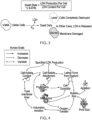
- the cell viability or cell death rate can be measured by using cells that can express lactate dehydrogenase (LDH). When the cell that can express LDH dies, LDH in the cell is released into the liquid culture medium. Thus, the cell viability or the cell death rate can be measured orthogonally with LDH, and is proportional to specific LDH production (sLDHp) ( FIG. 3 ).
- LDH lactate dehydrogenase
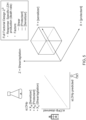
- FIG. 4 shows how pluronic (e.g., protectants), sensitizer, and shear (e.g., agitation) can affect specific LDH production.
- protectants can decrease cell-bubble attachment and increase cell durability, thus maintaining high cell viability and protecting cells from death.
- sensitizers can increase cell-bubble attachments and decrease cell durability, thus decreasing cell viability.
- these parameters are interconnected with each other, it is often very difficult to predict the exact effects of sensitizers, agitation, and/or protectants by traditional models.
- FIG. 5 shows that the specific LDH production in the small scale model is a function of sensitizer concentration, protectant concentration, and agitation. Because of the interaction among there parameters, the specific LDH production usually does not have a linear relationship with any of these parameters. The effects of these parameters on the specific LDH production are determined by full factorial design.
- Factorial design involves performing experiments under a set of conditions, and the conditions are defined by a set of parameters (e.g., operation parameters). In the set of conditions, each parameter can have two or more levels.
- the purpose of factorial design is to study the main effects and the interaction effects among different parameters (e.g., sensitizer concentration, protectant concentration, and agitation).
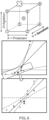
- the term "full factorial design" refers to an experiment design that includes all possible combinations of different levels across all parameters. For example, with three parameters ( i.e., factors) each taking two levels, a full factorial design will have 8 combinations in total, and is usually called a 2 3 factorial design ( FIG. 6 ).
- fractional factorial designs refers to experimental designs consisting of a carefully chosen subset (fraction) of the experimental runs of a full factorial design.
- the subset is chosen so as to exploit the sparsity-of-effects principle to expose information about the most important features of the problem studied, while using a fraction of the effort of a full factorial design in terms of experimental runs and resources.
- the inoperable region e.g., the combination of values of parameters that make the operation fail
- the factorial design is known in the art, and is described, e.g., in Box, G. E.; Hunter, W. G.; Hunter, J. S. (2005).
- a center composite design is an experimental design that contains an imbedded factorial or fractional factorial design with center points that is augmented with a group of axial points that allow estimation of curvature.
- the composite design is known in the art, and a detailed description regarding center composite design can be found, e.g., in Box, G. E.; Hunter, W. G.; Hunter, J. S. (2005). Statistics for Experimenters: Design, Innovation, and Discovery (2nd ed.). Wiley.
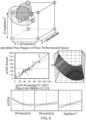
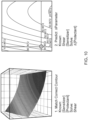
- the selected testing conditions can maximize regions of interest and minimize regions of potential failure ( FIG. 8 and FIG. 9 ).
- the experiment results of these test conditions in test culture vessels provide an estimated contour that illustrates the relationship among the selected parameters.
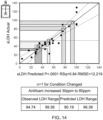
- the small scale model can be used to predict the missing values. For example, with the knowledge of antifoam concentration or shear stress, it can predict how much pluronic is required for operations. This relationship is determined by correlating cell growth rate and death rates across different scales (e.g., small scale, benchtop, production, etc.).
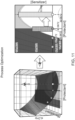
- the estimated contour of the small scale model can be used to match the data points collected at a different scale (e.g., the production scale). Because the concentration of sensitizer and protectants are known, it is possible to determine the shear stress in the small scale model that corresponds to the shear stress in the production bioreactor from the contour ( FIG. 10 ). Based on shear stress that corresponds to the shear stress in the production bioreactor and the concentration of sensitizer, the effect of protectant concentration change ( ⁇ [Protectant]) can be determined from the estimated contour ( FIG. 11 ). For example, as shown in FIG.
- the far left point (circle), the left center point (circle), the right center point (circle), and the far right point (circle) all have the same shear stress and sensitizer concentration.
- the shaded region is inoperable space.
- the model as described herein can be used to determine interactive effects among different parameters.
- the traditional models usually study the effect of each parameter individually.
- the models as described herein can study the effects of three parameters at once rather than the effect of each parameter individually.
- this model described herein can predict where the expected cell culture performance will be if any single parameter is changed.
- the models as described herein can be used to establish an operating design space for reactors at any scale given any individual parameter or combination of parameters (e.g., pluronic, antifoam, and shear).
- the model can be used to determine maximum amount of antifoam agents that the cell culture can tolerate before failure for a given shear condition.
- the model can be used to determine maximum amount of antifoam agents that the pluronic concentration can sustain before losing its efficacy for a given shear condition.
- the model can be used to test different types of antifoam agents (antifoam C, autoclaved antifoam, irradiated antifoams, etc.) against different pluronic.
- antifoam agents antifoam C, autoclaved antifoam, irradiated antifoams, etc.
- the model can be cell-density-range independent, and need not apply only to intensified perfusion cultures, as it uses LDH to normalize across scales.
- the model can also test antifoam concentrations either with absolute addition (1 time bolus at beginning) or daily addition.
- the model can be used to test for the kinetics behind antifoam deactivation and its impact to cell culture.
- the methods provided herein can be used to culture a variety of different cells (e.g., mammalian cells, bacterial cells, and yeast cells).
- cells e.g., mammalian cells, bacterial cells, and yeast cells.
- Non-limiting examples of bacterial cells include E. coli, Clostridium difficile, Clostridium sporogenes, Clostridium beijerinkii, and Clostridium acetobutylicum.
- Exemplary commercially available bacterial cells that can be used in any of the methods described herein include BL21(DE3) (Novagen), BL21(DE3)-pLysS (Novagen), BL21 Star-pLysS (Invitrogen), BL21-SI (Invitrogen), BL21-AI (Invitrogen), Tuner (Novagen), Tuner pLysS (Novagen), Origami (Novagen), Origami D (Novagen), Origami B pLysS (Novagen), Rosetta (Novagen), Rosetta pLysS (Novagen), Rosetta-gami-pLysS (Novagen), BL21 CodonPlus (Stratagene), AD494 (Novagen), BL21
- Non-limiting examples of yeast cells include: S. cerevisiae, S. exiguus, and Pichia pastoris. Additional examples of yeast cells that can be used in any of the methods described herein include those from the genera Saccharomyces, Pichia, Kluyveromyces, Hansenula, and Yarrowia. Additional examples of yeast cells that can be used in any of the methods described herein are described in Nielsen, Methods in Enzymology 536:133-147, 2014 .
- Non-limiting examples of mammalian cells that can be cultured using any of the methods described herein include: Chinese hamster ovary (CHO) cells (e.g., CHO DG44 cells, CHO-K1s cells, and CHO-DXB11 cells), Sp2.0, myeloma cells (e.g., NS/0), B-cells, hybridoma cells, T-cells, human embryonic kidney (HEK) cells (e.g, HEK 293E and HEK 293F), African green monkey kidney epithelial cells (Vero) cells, and Madin-Darby Canine (Cocker Dog) kidney epithelial cells (MDCK) cells.
- CHO Chinese hamster ovary
- CHO DG44 cells e.g., CHO DG44 cells, CHO-K1s cells, and CHO-DXB11 cells
- Sp2.0 eloma cells
- myeloma cells e.g., NS/0
- the concentration of mammalian cells present in a test culture vessel and/or a production bioreactor at the start of culturing is about 0.1 ⁇ 10 6 cells/mL to about 10 ⁇ 10 6 cells/mL (e.g., about 0.1 ⁇ 10 6 cells/mL to about 9 ⁇ 10 6 cells/mL, about 0.1 ⁇ 10 6 cells/mL to about 8 ⁇ 10 6 cells/mL, about 0.1 ⁇ 10 6 cells/mL to about 7 ⁇ 10 6 cells/mL, about 0.1 ⁇ 10 6 cells/mL to about 6 ⁇ 10 6 cells/mL, about 0.1 ⁇ 10 6 cells/mL to about 5 ⁇ 10 6 cells/mL, about 0.1 ⁇ 10 6 cells/mL to about 4 ⁇ 10 6 cells/mL, about 0.1 ⁇ 10 6 cells/mL to about 3 ⁇ 10 6 cells
- the cell e.g., mammalian cell
- a recombinant nucleic acid e.g., a nucleic acid stably integrated in the cell's genome
- a recombinant therapeutic protein e.g., a recombinant therapeutic protein that is secreted by the cell.
- recombinant therapeutic proteins are described herein and are known in the art.
- a recombinant therapeutic protein can be a secreted protein that is released by the cell (e.g., mammalian cell) into the liquid culture medium of the cell culture.
- a nucleic acid sequence encoding a soluble recombinant protein can contain a sequence that encodes a secretion signal peptide at the N- or C-terminus of the recombinant protein, which is cleaved by an enzyme present in the cell (e.g., mammalian cell), and subsequently released into the liquid culture medium of the cell culture.
- the recombinant protein is a soluble protein that is not secreted, and the recombinant protein is recovered from within the cell (e.g., mammalian cell).
- Non-limiting examples of recombinant proteins include immunoglobulins (including light and heavy chain immunoglobulins, antibodies, or antibody fragments (e.g., any of the antibody fragments described herein), enzymes (e.g., a galactosidase (e.g., an alpha-galactosidase), Myozyme, or Cerezyme), proteins (e.g., human erythropoietin, tumor necrosis factor (TNF), or an interferon alpha or beta), or immunogenic or antigenic proteins or protein fragments (e.g., proteins for use in a vaccine).
- immunoglobulins including light and heavy chain immunoglobulins, antibodies, or antibody fragments (e.g., any of the antibody fragments described herein)
- enzymes e.g., a galactosidase (e.g., an alpha-galactosidase), Myozyme, or Cerezyme)
- proteins e.g
- the recombinant protein is an engineered antigen-binding polypeptide that contains at least one multifunctional recombinant protein scaffold (see, e.g., the recombinant antigen-binding proteins described in Gebauer et al., Current Opin. Chem. Biol. 13:245-255, 2009 ; and U.S. Patent Application Publication No. 2012/0164066 ).
- Non-limiting examples of recombinant proteins that are antibodies include: panitumumab, omalizumab, abagovomab, abciximab, actoxumab, adalimumab, adecatumumab, afelimomab, afutuzumab, alacizumab, alacizumab, alemtuzumab, alirocumab, altumomab, amatuximab, anatumomab, apolizumab, atinumab, tocilizumab, basilizimab, bectumomab, belimumab, bevacizumab, biciromab, canakinumab, cetuximab, daclizumab, densumab, eculizumab, edrecolomab, efalizumab, efungumab, ertumaxo
- Additional examples of therapeutic antibodies are known in the art. Additional non-limiting examples of recombinant proteins include: alglucosidase alfa, laronidase, abatacept, galsulfase, lutropin alfa, antihemophilic factor, agalsidase beta, interferon beta-1a, darbepoetin alfa, tenecteplase, etanercept, coagulation factor IX, follicle stimulating hormone, interferon beta-1a, imiglucerase, domase alfa, epoetin alfa, and alteplase.
- a secreted, soluble recombinant protein can be recovered from the liquid culture medium.
- a variety of different methods for removing liquid culture medium from cells are known in the art, including, for example, centrifugation, filtration, pipetting, and/or aspiration.
- the secreted recombinant protein can then be recovered and further purified from the liquid culture medium using a variety of biochemical techniques including various types of chromatography (e.g., affinity chromatography, molecular sieve chromatography, cation exchange chromatography, or anion exchange chromatography) and/or filtration (e.g., molecular weight cut-off filtration).
- the cell e.g., mammalian cell
- the cell can be lysed.
- methods for lysing cells include, for example, sonication and/or detergent, enzymatic, and/or chemical lysis.
- a recombinant protein can be purified from a cell lysate (e.g., a mammalian cell lysate) using a variety of biochemical methods known in the art, typically starting with a step of centrifugation to remove the cellular debris, and then one or more additional steps (e.g., one or more types of chromatography (e.g., affinity chromatography, molecular sieve chromatography, cation exchange chromatography, or anion exchange chromatography) and/or filtration (e.g., molecular weight cut-off filtration)).
- chromatography e.g., affinity chromatography, molecular sieve chromatography, cation exchange chromatography, or anion exchange chromatography
- filtration e.g., molecular weight cut-off filtration
- the recovered recombinant protein is at least or about 50% pure by weight, e.g., at least or about 55% pure by weight, at least 60% pure by weight, at least 65% pure by weight, at least 70% pure by weight, at least 75% pure by weight, at least 80% pure by weight, at least 85% pure by weight, at least 90% pure by weight, at least 95% pure by weight, at least 96% pure by weight, at least 97% pure by weight, at least 98% pure by weight, or at least or about 99% pure by weight, or greater than 99% pure by weight.
- the recovered recombinant protein is a recombinant human therapeutic protein that has one or more different biophysical properties as compared to the same native protein in a human (e.g., differences in the type or amount of glycosylation, differences in phosphorylation, differences in acylation, differences in metallation or metal stoichiometry, and/or differences in cofactor binding).
- Also provided herein is a recombinant therapeutic protein produced by any of the methods described herein.
- liquid culture media are known in the art.
- the liquid culture medium can be supplemented with a mammalian serum (e.g., fetal calf serum and bovine serum), and/or a growth hormone or growth factor (e.g., insulin, transferrin, and epidermal growth factor).
- a mammalian serum e.g., fetal calf serum and bovine serum
- a growth hormone or growth factor e.g., insulin, transferrin, and epidermal growth factor
- liquid culture medium can be a chemically-defined liquid culture medium, an animal-derived component free liquid culture medium, a serum-free liquid culture medium, or a serum-containing liquid culture medium.
- Non-limiting examples of chemically-defined liquid culture media, animal-derived component free liquid culture media, serum-free liquid culture media, and serum-containing liquid culture media are commercially available.
- a liquid culture medium typically contains an energy source (e.g., a carbohydrate, such as glucose), essential amino acids (e.g., the basic set of twenty amino acids plus cysteine), vitamins and/or other organic compounds required at low concentrations, free fatty acids, and/or trace elements.
- an energy source e.g., a carbohydrate, such as glucose
- essential amino acids e.g., the basic set of twenty amino acids plus cysteine
- vitamins and/or other organic compounds required at low concentrations e.g., free fatty acids, and/or trace elements.
- the liquid culture medium can, if desired, be supplemented with, e.g., a mammalian hormone or growth factor (e.g., insulin, transferrin, or epidermal growth factor), salts and buffers (e.g., calcium, magnesium, and phosphate salts), nucleosides and bases (e.g., adenosine, thymidine, and hypoxanthine), protein and tissue hydrolysates, and/or any combination of these or other additives.
- a mammalian hormone or growth factor e.g., insulin, transferrin, or epidermal growth factor
- salts and buffers e.g., calcium, magnesium, and phosphate salts
- nucleosides and bases e.g., adenosine, thymidine, and hypoxanthine
- protein and tissue hydrolysates e.g., adenosine, thymidine, and hypoxanthine
- Non-limiting examples of liquid culture media that are particularly useful in the presently described methods include, e.g., CD CHO, Opti CHO, and Forti CHO (all available from Life Technologies; Grand Island, NY), Hycell CHO medium (Thermo Fisher Scientific, Inc.; Waltham, MA), Ex-cell CD CHO Fusion medium (Sigma-Aldrich Co.; St. Louis, MO), and PowerCHO medium (Lonza Group, Ltd.; Basel, Switzerland).
- Medium components that also may be useful in the present methods include, but are not limited to, chemically-defined (CD) hydrolysates, e.g., CD peptone, CD polypeptides (two or more amino acids), and CD growth factors. Additional examples of liquid tissue culture medium and medium components are known in the art.
- Perfusion culturing a cell in a vessel includes the removal from the vessel of a first volume of a first liquid culture medium (e.g., containing any concentration of mammalian cells, e.g., a first volume of a first liquid culture medium that is substantially free of cells), and adding to the first liquid culture medium a second volume of a second liquid culture medium. Removal and adding can be performed simultaneously or sequentially, or a combination of the two.
- a first liquid culture medium e.g., containing any concentration of mammalian cells, e.g., a first volume of a first liquid culture medium that is substantially free of cells
- removal and adding can be performed continuously (e.g., at a rate that removes and replaces a volume of between 0.1% to 800% (e.g., between 1% and 700%, between 1% and 600%, between 1% and 500%, between 1% and 400%, between 1% and 350%, between 1% and 300%, between 1% and 250%, between 1% and 100%, between 100% and 200%, between 5% and 150%, between 10% and 50%, between 15% and 40%, between 8% and 80%, and between 4% and 30%) of the volume of the vessel or the first liquid culture medium volume over any given time period (e.g., over a 24-hour period, over an incremental time period of about 1 hour to about 24 hours, or over an incremental time period of greater than 24 hours)) or periodically (e.g., once every third day, once every other day, once a day, twice a day, three times a day, four times a day, or five times a day), or any combination thereof.
- 0.1% to 800% e.g.,
- the volume that is removed or replaced can be, e.g., between 0.1% to 800% (e.g., between 1% and 700%, between 1% and 600%, between 1% and 500%, between 1% and 400%, between 1% and 300%, between 1% and 200%, between 1% and 100%, between 100% and 200%, between 5% and 150%, between 10% and 50%, between 15% and 40%, between 8% and 80%, and between 4% and 30%) of the volume of the vessel or the first liquid culture medium volume.
- 0.1% to 800% e.g., between 1% and 700%, between 1% and 600%, between 1% and 500%, between 1% and 400%, between 1% and 300%, between 1% and 200%, between 1% and 100%, between 100% and 200%, between 5% and 150%, between 10% and 50%, between 15% and 40%, between 8% and 80%, and between 4% and 30%
- the first volume of the first liquid culture medium removed and the second volume of the second liquid culture medium added can in some instances be held approximately the same over each 24-hour period (or, alternatively, an incremental time period of about 1 hour to about 24 hours or an incremental time period of greater than 24 hours) over the entire or part of the culturing period.
- the rate at which the first volume of the first liquid culture medium is removed (volume/unit of time) and the rate at which the second volume of the second liquid culture medium is added (volume/unit of time) can be varied.
- the rate at which the first volume of the first liquid culture medium is removed (volume/unit of time) and the rate at which the second volume of the second liquid culture medium is added (volume/unit of time) can be about the same or can be different.
- the volume removed and added can change (e.g., gradually increase) over each 24-hour period (or alternatively, an incremental time period of between 1 hour and about 24 hours or an incremental time period of greater than 24 hours) during the culturing period.
- the volume of the first liquid culture medium removed and the volume of the second liquid culture medium added within each 24-hour period (or alternatively, an incremental time period of between about 1 hour and above 24 hours or an incremental time period of greater than 24 hours) over the culturing period can be increased (e.g., gradually or through staggered increments) over the culturing period from a volume that is between 0.5% to about 20% of the vessel volume or the first liquid culture medium volume to about 25% to about 150% of the vessel volume or the first liquid culture medium volume.
- first liquid culture medium and the second liquid culture medium can be the same type of media. In other instances, the first liquid culture medium and the second liquid culture medium can be different.
- the first volume of the first liquid culture medium can be removed, e.g., by a mechanical system that can remove the first volume of the first liquid culture medium from the vessel (e.g., the first volume of the first liquid culture medium that is substantially free of cells from the bioreactor).
- the first volume of the first liquid culture medium can be removed by seeping or gravity flow of the first volume of the first liquid culture medium through a sterile membrane with a molecular weight cut-off that excludes the cell (e.g., mammalian cell).
- the second volume of the second liquid culture medium can be added to the first liquid culture medium in an automated fashion, e.g., by perfusion pump.
- removing the first volume of the first liquid culture medium e.g., a first volume of the first liquid culture medium that is substantially free of mammalian cells
- adding to the first liquid culture medium a second volume of the second liquid culture medium does not occur within at least 1 hour (e.g., within 2 hours, within 3 hours, within 4 hours, within 5 hours, within 6 hours, within 7 hours, within 8 hours, within 9 hours, within 10 hours, within 12 hours, within 14 hours, within 16 hours, within 18 hours, within 24 hours, within 36 hours, within 48 hours, within 72 hours, within 96 hours, or after 96 hours) of the seeding of the vessel with a cell (e.g., a mammalian cell).
- a cell e.g., a mammalian cell
- the culturing of a cell can be performed using fed-batch culturing.
- Fed-batch culturing a cell includes, over the majority of the culturing period, the addition (e.g., periodic or continuous addition) to a first liquid culture medium of a second volume of a second liquid culture medium.
- the adding of the second liquid culture medium can be performed continuously (e.g., at a rate that adds a volume of between 0.1% to 300% (e.g., between 1% and 250%, between 1% and 100%, between 100% and 200%, between 5% and 150%, between 10% and 50%, between 15% and 40%, between 8% and 80%, and between 4% and 30%) of the volume of the vessel or the first liquid culture medium volume over any given time period (e.g., over a 24-hour period, over an incremental time period of about 1 hour to about 24 hours, or over an incremental time period of greater than 24 hours)) or periodically (e.g., once every third day, once every other day, once a day, twice a day, three times a day, four times a day, or five times a day), or any combination thereof.
- a rate that adds a volume of between 0.1% to 300% e.g., between 1% and 250%, between 1% and 100%, between 100% and 200%, between 5% and 150%, between 10% and
- the volume that is added can be, e.g., between 0.1% to 300% (e.g., between 1% and 200%, between 1% and 100%, between 100% and 200%, between 5% and 150%, between 10% and 50%, between 15% and 40%, between 8% and 80%, and between 4% and 30%) of the volume of the vessel or the first liquid culture medium volume.
- 0.1% to 300% e.g., between 1% and 200%, between 1% and 100%, between 100% and 200%, between 5% and 150%, between 10% and 50%, between 15% and 40%, between 8% and 80%, and between 4% and 30%
- the second volume of the second liquid culture medium added can in some instances be held approximately the same over each 24-hour period (or, alternatively, an incremental time period of about 1 hour to about 24 hours or an incremental time period of greater than 24 hours) over the entire or part of the culturing period.
- the rate at which the second volume of the second liquid culture medium is added can be varied over the entire or part of the culturing period.
- the volume of the second liquid culture medium added can change (e.g., gradually increase) over each 24-hour period (or alternatively, an incremental time period of between 1 hour and about 24 hours or an incremental time period of greater than 24 hours) during the culturing period.
- the volume of the second liquid culture medium added within each 24-hour period (or alternatively, an incremental time period of between about 1 hour and above 24 hours or an incremental time period of greater than 24 hours) over the culturing period can be increased (e.g., gradually or through staggered increments) over the culturing period from a volume that is between 0.5% to about 20% of the vessel volume or the first liquid culture medium volume to about 25% to about 150% of the vessel volume or the first liquid culture medium volume.
- the rate at which the second volume of the second liquid culture medium is added can be about the same over the entire or part of the culturing period.
- first liquid culture medium and the second liquid culture medium can be the same type of media. In other instances, the first liquid culture medium and the second liquid culture medium can be different.
- the volume of the second liquid culture medium can be added to the first liquid culture medium in an automated fashion, e.g., by perfusion pump.
- adding to the first liquid culture medium a second volume of the second liquid culture medium does not occur within at least 1 hour (e.g., within 2 hours, within 3 hours, within 4 hours, within 5 hours, within 6 hours, within 7 hours, within 8 hours, within 9 hours, within 10 hours, within 12 hours, within 14 hours, within 16 hours, within 18 hours, within 24 hours, within 36 hours, within 48 hours, within 72 hours, within 96 hours, or after 96 hours) of the seeding of the vessel with a cell (e.g., a mammalian cell).
- a cell e.g., a mammalian cell
- the cell culture medium in fed-batch cultures is typically harvested at the end of culture period and used in any of the processes described herein, however, the cell culture medium in fed-batch cultures can also be harvested at one or more time points during the culturing period and used in any of the processes described herein.
- Culturing can be performed at a temperature of 32 °C to about 39 °C, e.g., about 32 °C to about 37 °C. Skilled practitioners will appreciate that the temperature can be changed at specific time point(s) in the culturing method (e.g., during one or more of the first time period, the second time period, and the third time period), e.g., on an hourly or daily basis.
- the temperature can be changed or shifted (e.g., increased or decreased) at about one day, two days, three days, four days, five days, six days, seven days, eight days, nine days, ten days, eleven days, twelve days, fourteen days, fifteen days, sixteen days, seventeen days, eighteen days, nineteen days, or about twenty days or more after the initial seeding of the shake flask with the mammalian cell) or at any time point within the first, second, and/or third time periods described herein.
- the temperature can be shifted upwards (e.g., a change of up to or about 0.1, 0.2, 0.3, 0.4, 0.5, 0.6, 0.7, 0.8, 0.9, 1.0, 1.5, 2.0, 2.5, 3.0, 3.5, 4.0, 4.5, 5.0, 5.5, 6.0, 6.5, 7.0, 7.5, 8.0, 8.5, 9.0, 9.5, or 10.0 °C).
- the temperature can be shifted downwards (e.g., a change of up to or about 0.1, 0.2, 0.3, 0.4, 0.5, 0.6, 0.7, 0.8, 0.9, 1.0, 1.5, 2.0, 2.5, 3.0, 3.5, 4.0, 4.5, 5.0, 5.5, 6.0, 6.5, 7.0, 7.5, 8.0, 8.5, 9.0, 9.5, or 10 °C).
- Culturing can include incubating a cell culture in an atmosphere containing at most or about 1% to 15% CO 2 (e.g., at most or about 14% CO 2 , 12% CO 2 , 10% CO 2 , 8% CO 2 , 6% CO 2 , 5% CO 2 , 4% CO 2 , 3% CO 2 , 2% CO 2 , or at most or about 1% CO 2 ).
- Culturing can include incubating a cell culture in a humidified atmosphere (e.g., at least or about 20%, 30%, 40%, 50%, 60%, 70%, 85%, 80%, 85%, 90%, or at least or about 95% humidity, or about 100% humidity).
- LDH lactate dehydrogenase
- a variety of different dyes which are excluded by viable cells, but selectively taken up by non-viable cells are used to determine cell viability.
- Non-limiting examples of these dyes include propidium iodide, trypan blue, and 7-aminoactinomycin D.
- the viability of the cells is determined by visualizing or otherwise detecting the staining of the cells after incubation with the dye.
- Additional assays for determining cell viability of a culture of cells include the detection of mitochondrial activity or caspase activity in the cells (e.g., Resazurin and Formazan). Additional methods for determining cell viability in a culture of cells are known in the art.
- a concentration of a sensitizer e.g., any of the sensitizers described herein or known in the art
- methods of predicting the effect of a concentration of a sensitizer include: (a) determining cell viability under a plurality of test conditions in a test culture vessel (e.g., any of the test culture vessels described herein), where the plurality of test conditions are defined by a set of parameters; and (b) based on the cell viability in the test culture vessel under the plurality of conditions, predicting the effect of a concentration of a sensitizer on cell viability in a production bioreactor (e.g., any of the production bioreactors described herein).
- a concentration of a sensitizer e.g., any of the sensitizers described herein or known in the art
- the set of parameters includes, consists, or consists essentially of shear stress, concentration of the sensitizer, and concentration of a protectant (e.g., any of the protectants described herein).
- the sensitizer is an antifoam (e.g., a polydimethylsiloxane-based antifoam, simethicone, or any other antifoam described herein or known in the art).
- the test culture vessel (e.g., any of the exemplary test culture vessels described herein or known in the art) has a volume of about 5 mL to about 5 L (or any of the subranges of this range described herein).
- the test culture vessel is a shake flask, e.g., a baffled shake flask.
- the production bioreactor (e.g., any of the exemplary production bioreactors described herein or known in the art) has a volume of about 5 L to about 20,000 L (or any of the subranges of this range described herein).
- the production bioreactor is a perfusion bioreactor.
- the production bioreactor is a fed batch bioreactor.
- Specific cell death rate specific LDH production / LDH content per cell .
- Some embodiments of these methods further include culturing a cell (e.g., any of the cells described herein) in the production bioreactor using a concentration of the sensitizer predicted to have a specific cell death rate of less 40% per day, less than 39% per day, less than 38% per day, less than 37% per day, less than 36% per day, less than 35% per day, less than 34% per day, less than 33% per day, less than 32% per day, less than 31% per day, less than 30% per day, less than 29% per day, less than 28% per day, less than 27% per day, less than 26% per day, less than 25% per day, less than 24% per day, less than 23% per day, less than 22% per day, less than 21% per day, less than 20% per day, less than 19% per day, less than 18% per day, less than 17% per day, less than 16% per day, less than 15% per day, less than 14% per day, less than 13% per day, less than 12% per day, less than 1
- Some embodiments of any of the methods described herein further include culturing a cell (e.g., any of the cells described herein) in the production bioreactor using a concentration of the sensitizer predicted to have a specific cell death rate of about 0.1% to about 40% per day, about 0.1% to about 38% per day, about 0.1% to about 36% per day, about 0.1% to about 34% per day, about 0.1% to about 32% per day, about 0.1% to about 30% per day, about 0.1% to about 28% per day, about 0.1% to about 26% per day, about 0.1% to about 24% per day, about 0.1% to about 22% per day, about 0.1% to about 20% per day, about 0.1% to about 18% per day, about 0.1% to about 16% per day, about 0.1% to about 14% per day, about 0.1% to about 12% per day, about 0.1% to about 10% per day, about 0.1% to about 8% per day, about 0.1% to about 6% per day, about 0.1% to about 5% per day, about 0.1% to about 4.5% per day
- Some embodiments of these methods further include culturing a cell (e.g., any of the cells described herein) in the production bioreactor (e.g., any of the production bioreactors described herein) using a concentration of the sensitizer predicted to result in a cell specific LDH production of less than 150 nU/cell/day, less than 145 nU/cell/day, less than 140 nU/cell/day, less than 135 nU/cell/day, less than 130 nU/cell/day, less than 125 nU/cell/day, less than 120 nU/cell/day, less than 115 nU/cell/day, less than 150 nU/cell/day, less than 110 nU/cell/day, less than 105 nU/cell/day, less than 100 nU/cell/day, less than 95 nU/cell/day, less than 90 nU/cell/day, less than 85 nU/cell/day, less than 80 nU/cell/day
- Some embodiments of these methods further include culturing a cell (e.g., any of the cells described herein) in the production bioreactor (e.g., any of the production bioreactors described herein) using a concentration of the sensitizer predicted to result in a cell specific LDH production of about 0.1 nU/cell/day to about 150 nU/cell/day, about 0.1 nU/cell/day to about 140 nU/cell/day, about 0.1 nU/cell/day to about 130 nU/cell/day, about 0.1 nU/cell/day to about 120 nU/cell/day, about 0.1 nU/cell/day to about 110 nU/cell/day, about 0.1 nU/cell/day to about 100 nU/cell/day, about 0.1 nU/cell/day to about 95 nU/cell/day, about 0.1 nU/cell/day to about 90 nU/cell/day, about 0.1 nU/cell/day to about
- the growth rate is the compound growth calculation, which can be determined using the equation below.
- Final cell density Initial density ⁇ e kt , where k is the growth constant and t is the time in days.
- the apparent growth rate is the sum of the calculated death rate added to the growth rate.
- Some embodiments of any of the methods described herein further include culturing a cell (e.g., any of the cells described herein) in the production bioreactor (e.g., any of the production bioreactors described herein) using a concentration of the sensitizer predicted to result in an apparent growth rate of greater than 1% per day, greater than 1.5% per day, greater than 2% per day, greater than 2.5% per day, greater than 3% per day, greater than 3.5% per day, greater than 4.0% per day, greater than 4.5% per day, greater than 5.0% per day, greater than 5.5% per day, greater than 6.0% per day, greater than 6.5% per day, greater than 7.0% per day, greater than 7.5% per day, greater than 8.0% per day, greater than 8.5% per day, greater than 9.0% per day, greater than 9.5% per day, greater than 10.0% per day, greater than 10.5% per day, greater than 11.0% per day, greater than 11.5% per day, greater than 12.0% per day, greater than 12.5% per day, greater than 13.0% per day, greater than 13.
- Some embodiments of any of the methods described herein further include culturing a cell (e.g., any of the cells described herein) in the production bioreactor (e.g., any of the production bioreactors described herein) using a concentration of the sensitizer predicted to result in an apparent growth rate of about 0.1% per day to about 150% per day, about 0.1% per day to about 140% per day, about 0.1% per day to about 135% per day, about 0.1% per day to about 130% per day, about 0.1% per day to about 125% per day, about 0.1% per day to about 120% per day, about 0.1% per day to about 115% per day, about 0.1% per day to about 110% per day, about 0.1% per day to about 105% per day, about 0.1% per day to about 100% per day, about 0.1% per day to about 95% per day, about 0.1% per day to about 90% per day, about 0.1% per day to about 85% per day, about 0.1% per day to about 80% per day, about 0.1% per day to about 75% per day,
- the cell contains a nucleic acid encoding a recombinant therapeutic protein.
- the cell is a bacterium (e.g., any of the exemplary bacteria described herein or known in the art), a yeast (e.g., any of the exemplary yeast cells described herein or known in the art), or a mammalian cell (e.g., any of the exemplary mammalian cells described herein or known in the art).
- a bacterium e.g., any of the exemplary bacteria described herein or known in the art
- yeast e.g., any of the exemplary yeast cells described herein or known in the art
- a mammalian cell e.g., any of the exemplary mammalian cells described herein or known in the art.
- the cell viability is determined by measuring a concentration of lactic acid dehydrogenase (LDH) in the test culture vessel.
- LDH lactic acid dehydrogenase
- the test culture vessel is a baffled shake flask (e.g., any of the baffled shake flasks described herein or known in the art) and the plurality of test conditions include one or more of: (a) a rotary agitation of about 125 RPM to about 400 RPM (or any of the subranges of this range described herein); (b) a concentration of the sensitizer (e.g., any of the sensitizers described herein or known in the art) of about 0 ppm to about 120 ppm (or any of the subranges of this range described herein); and (c) a concentration of a protectant (e.g., any of the protectants described herein or known in the art) that is about 1 g/L to about 10 g/L (or any of the subranges of this range described herein).
- a rotary agitation of about 125 RPM to about 400 RPM or any of the subranges of this range described herein
- the protectant is a poloxamer (e.g., poloxamer-188, poloxamer-401, poloxamer-402, or poloxamer-407), a poloxamine (e.g., poloxamine-904 or poloxamine-908), or a pluronic polyol.
- a poloxamer e.g., poloxamer-188, poloxamer-401, poloxamer-402, or poloxamer-407
- a poloxamine e.g., poloxamine-904 or poloxamine-908
- pluronic polyol e.g., pluronic polyol
- the rotary agitation (RPM 3 ), the concentration of the sensitizer, and the concentration of a protectant were selected as parameters.
- Full factorial design combined with inscribed center composite design were used to determine a set of test conditions ( FIG. 7 ).
- the specific LDH production values were measured at each test condition.
- the results were used to provide an estimated contour of the selected parameters. Regions of poor performance and regions of operation failure were identified ( FIG. 9 ).
- the concentration of protectants in the benchtop scale were set to three different levels. For each level, two benchtop culturing bioreactors were tested. The peak specific LDH production values were measured due to perfusion process, and were compared against the predicted values.
Landscapes
- Health & Medical Sciences (AREA)
- Chemical & Material Sciences (AREA)
- Life Sciences & Earth Sciences (AREA)
- Engineering & Computer Science (AREA)
- Organic Chemistry (AREA)
- Bioinformatics & Cheminformatics (AREA)
- Zoology (AREA)
- Wood Science & Technology (AREA)
- Biomedical Technology (AREA)
- Biotechnology (AREA)
- Biochemistry (AREA)
- Microbiology (AREA)
- General Health & Medical Sciences (AREA)
- Immunology (AREA)
- General Engineering & Computer Science (AREA)
- Genetics & Genomics (AREA)
- Analytical Chemistry (AREA)
- Molecular Biology (AREA)
- Sustainable Development (AREA)
- Toxicology (AREA)
- Proteomics, Peptides & Aminoacids (AREA)
- Physics & Mathematics (AREA)
- Hematology (AREA)
- Urology & Nephrology (AREA)
- Cell Biology (AREA)
- Medicinal Chemistry (AREA)
- Biophysics (AREA)
- Pathology (AREA)
- General Physics & Mathematics (AREA)
- Food Science & Technology (AREA)
- Tropical Medicine & Parasitology (AREA)
- Micro-Organisms Or Cultivation Processes Thereof (AREA)
- Apparatus Associated With Microorganisms And Enzymes (AREA)
- Preparation Of Compounds By Using Micro-Organisms (AREA)
- Measuring Or Testing Involving Enzymes Or Micro-Organisms (AREA)
- Investigating Or Analysing Biological Materials (AREA)
Claims (15)
- Verfahren zum Vorhersagen der Wirkung einer Konzentration eines Sensibilisators auf die Lebensfähigkeit von Zellen in einem Produktionsbioreaktor, wobei das Verfahren umfasst:(a) Bestimmen der Lebensfähigkeit von Zellen unter einer Vielzahl von Testbedingungen in einem Testkulturgefäß, wobei die Vielzahl von Testbedingungen durch einen Satz von Parametern definiert wird, wobei die Vielzahl von Testbedingungen ausgewählt ist anhand von vollfaktoriellem Screening und/oder eingetragenem zentral zusammengesetzten Versuchsplan; und(b) basierend auf der Lebensfähigkeit von Zellen in dem Testkulturgefäß unter der Vielzahl von Bedingungen, Vorhersagen der Wirkung einer Konzentration eines Sensibilisators auf die Lebensfähigkeit von Zellen in einem Produktionsbioreaktor.
- Verfahren nach Anspruch 1, wobei der Satz von Parametern Scherspannung, Konzentration des Sensibilisators und Konzentration eines Schutzmittels umfasst.
- Verfahren nach einem der Ansprüche 1-2, wobei der Sensibilisator ein Schaumverhinderungsmittel ist, bevorzugt das Schaumverhinderungsmittel ein Polydimethylsiloxan-basiertes Schaumverhinderungsmittel ist oder das Schaumverhinderungsmittel Simethicon ist.
- Verfahren nach einem der Ansprüche 1-3, wobei das Testkulturgefäß ein Volumen von etwa 5 ml bis etwa 5 l, bevorzugt ein Volumen von etwa 10 ml bis etwa 500 ml, aufweist.
- Verfahren nach einem der Ansprüche 1-4, wobei das Testkulturgefäß ein Schüttelkolben mit Schikanen ist.
- Verfahren nach einem der Ansprüche 1-5, wobei der Produktionsbioreaktor ein Volumen von etwa 5 l bis etwa 20.000 l aufweist, bevorzugt der Produktionsbioreaktor ein Volumen von etwa 50 l bis etwa 10.000 l aufweist.
- Verfahren nach einem der Ansprüche 1-6, wobei der Produktionsbioreaktor ein Perfusionsbioreaktor oder ein Fed-Batch-Bioreaktor ist.
- Verfahren nach einem der Ansprüche 1-7, ferner umfassend das Kultivieren einer Zelle in dem Produktionsbioreaktor unter Verwendung einer Konzentration des Sensibilisators, von der vorhergesagt wird, dass sie eine spezifische Zelltodrate von weniger als 40 % pro Tag, bevorzugt weniger als 20 % pro Tag, während des Kultivierens der Zelle in dem Produktionsbioreaktor aufweist.
- Verfahren nach einem der Ansprüche 1-7, ferner umfassend das Kultivieren einer Zelle in dem Produktionsbioreaktor unter Verwendung einer Konzentration des Sensibilisators, von der vorhergesagt wird, dass sie zu einer zellspezifischen LDH-Produktion von weniger als 150 nU/Zelle/Tag, bevorzugt weniger als 100 nU/Zelle/Tag, während des Kultivierens der Zelle in dem Produktionsbioreaktor führt.
- Verfahren nach einem der Ansprüche 1-7, ferner umfassend das Kultivieren einer Zelle in dem Produktionsbioreaktor unter Verwendung einer Konzentration des Sensibilisators, von der vorhergesagt wird, dass sie zu einer sichtbaren Wachstumsrate von mehr als 1 % pro Tag, bevorzugt mehr als 5 % pro Tag, während des Kultivierens der Zelle in dem Produktionsbioreaktor führt.
- Verfahren nach einem der Ansprüche 8-10, wobei die Zelle eine Nukleinsäure enthält, die ein rekombinantes therapeutisches Protein kodiert.
- Verfahren nach einem der Ansprüche 1-11, wobei die Zelle ein Bakterium, eine Hefe oder eine Säugerzelle ist.
- Verfahren nach einem der Ansprüche 1-12, wobei die Lebensfähigkeit der Zellen durch Messen einer Konzentration von Laktatdehydrogenase (LDH) in dem Testkulturgefäß bestimmt wird.
- Verfahren nach einem der Ansprüche 1-4 und 6-13, wobei das Testkulturgefäß ein Schüttelkolben mit Schikanen ist und die Vielzahl der Testbedingungen eines oder mehr umfasst aus:(a) einer Drehbewegung von etwa 125 RPM bis etwa 400 RPM;(b) einer Konzentration des Sensibilisators von etwa 0 ppm bis etwa 120 ppm; und(c) einer Konzentration eines Schutzmittels, die etwa 1 g/l bis etwa 10 g/l beträgt.
- Verfahren nach Anspruch 2 oder 14, wobei das Schutzmittel ein Poloxamer, bevorzugt ausgewählt aus Poloxamer-188, Poloxamer-401, Poloxamer-402 oder Poloxamer-407, ein Poloxamin, bevorzugt ausgewählt aus Poloxamin-904 oder Poloxamin-908, oder ein Pluronic-Polyol ist.
Priority Applications (1)
| Application Number | Priority Date | Filing Date | Title |
|---|---|---|---|
| EP24209426.6A EP4512887A3 (de) | 2018-03-16 | 2019-03-15 | Verfahren zur verbesserung der lebensfähigkeit von zellen in einem produktionsbioreaktor |
Applications Claiming Priority (3)
| Application Number | Priority Date | Filing Date | Title |
|---|---|---|---|
| US201862644339P | 2018-03-16 | 2018-03-16 | |
| US201862645755P | 2018-03-20 | 2018-03-20 | |
| PCT/US2019/022530 WO2019178508A1 (en) | 2018-03-16 | 2019-03-15 | Methods for improving cell viability in a production bioreactor |
Related Child Applications (1)
| Application Number | Title | Priority Date | Filing Date |
|---|---|---|---|
| EP24209426.6A Division EP4512887A3 (de) | 2018-03-16 | 2019-03-15 | Verfahren zur verbesserung der lebensfähigkeit von zellen in einem produktionsbioreaktor |
Publications (3)
| Publication Number | Publication Date |
|---|---|
| EP3765846A1 EP3765846A1 (de) | 2021-01-20 |
| EP3765846C0 EP3765846C0 (de) | 2024-10-30 |
| EP3765846B1 true EP3765846B1 (de) | 2024-10-30 |
Family
ID=65952204
Family Applications (2)
| Application Number | Title | Priority Date | Filing Date |
|---|---|---|---|
| EP19714056.9A Active EP3765846B1 (de) | 2018-03-16 | 2019-03-15 | Verfahren zur verbesserung der lebensfähigkeit von zellen in einem produktionsbioreaktor |
| EP24209426.6A Pending EP4512887A3 (de) | 2018-03-16 | 2019-03-15 | Verfahren zur verbesserung der lebensfähigkeit von zellen in einem produktionsbioreaktor |
Family Applications After (1)
| Application Number | Title | Priority Date | Filing Date |
|---|---|---|---|
| EP24209426.6A Pending EP4512887A3 (de) | 2018-03-16 | 2019-03-15 | Verfahren zur verbesserung der lebensfähigkeit von zellen in einem produktionsbioreaktor |
Country Status (18)
| Country | Link |
|---|---|
| US (2) | US11391725B2 (de) |
| EP (2) | EP3765846B1 (de) |
| JP (2) | JP2021515584A (de) |
| KR (2) | KR20250016476A (de) |
| CN (2) | CN112136045B (de) |
| AU (1) | AU2019236246B2 (de) |
| BR (1) | BR112020018823A2 (de) |
| CA (1) | CA3094076A1 (de) |
| ES (1) | ES3009097T3 (de) |
| HU (1) | HUE069711T2 (de) |
| IL (2) | IL277352B2 (de) |
| MA (1) | MA52007A (de) |
| MX (2) | MX2020009605A (de) |
| PL (1) | PL3765846T3 (de) |
| SG (1) | SG11202009047TA (de) |
| TW (2) | TW202513790A (de) |
| WO (1) | WO2019178508A1 (de) |
| ZA (2) | ZA202005741B (de) |
Families Citing this family (3)
| Publication number | Priority date | Publication date | Assignee | Title |
|---|---|---|---|---|
| EP4410957A1 (de) | 2021-09-30 | 2024-08-07 | FUJIFILM Corporation | Zellkulturverfahren und herstellungsverfahren für nützliche substanzen |
| US12157873B2 (en) | 2022-09-28 | 2024-12-03 | Genzyme Corporation | Systems and devices for producing biological products and methods of using the same |
| US20240263122A1 (en) * | 2023-02-08 | 2024-08-08 | National Central University | Bioreactor apparatus, ion-exchange substrate and method for regulation of ion concentration and cell culture thereof |
Family Cites Families (16)
| Publication number | Priority date | Publication date | Assignee | Title |
|---|---|---|---|---|
| US5563068A (en) * | 1994-04-21 | 1996-10-08 | Genetic Therapy, Inc. | Bioreactor |
| US20080145364A1 (en) * | 2005-02-15 | 2008-06-19 | Yale University | Method for High Throughput Screening for Anitbodies and Proteins Inducing Apoptosis |
| EP2500415A1 (de) * | 2006-09-13 | 2012-09-19 | Abbott Laboratories | Verbesserungen an Zellkulturen |
| MX345141B (es) * | 2006-09-13 | 2017-01-18 | Abbvie Inc * | Mejoras de cultivos celulares. |
| RU2468076C2 (ru) * | 2007-05-07 | 2012-11-27 | Проталикс Лтд. | Одноразовое устройство для культивирования и сбора растительной ткани и/или клеток, способ и система культивирования и сбора растительной ткани и/или растительных клеток |
| US8728479B2 (en) | 2009-03-31 | 2014-05-20 | The Trustees Of The University Of Pennsylvania | Antigen-binding proteins comprising recombinant protein scaffolds |
| US8313926B2 (en) * | 2009-07-31 | 2012-11-20 | Baxter International Inc. | Methods for expressing ADAMTS proteins in cell culture medium supplemented with zinc |
| WO2014110433A1 (en) * | 2013-01-10 | 2014-07-17 | Biogen Idec Ma Inc. | Medium supplements for improved process performance |
| MX367025B (es) * | 2013-02-22 | 2019-08-02 | Genzyme Corp | Metodos de cultivo por perfusion con microportadores y usos de los mismos. |
| US20140271633A1 (en) * | 2013-03-14 | 2014-09-18 | Abbvie Inc. | Mammalian cell culture performance through surfactant supplementation of feed media |
| SG11201506034TA (en) * | 2013-03-15 | 2015-09-29 | Alder Biopharmaceuticals Inc | Temperature shift for high yield expression of polypeptides in yeast and other transformed cells |
| EP3003325A4 (de) * | 2013-05-29 | 2017-01-11 | Biogen MA Inc. | Verfahren zur bewertung von zellkultur-zusatzstoffen |
| CN106133146B (zh) * | 2014-02-27 | 2021-05-04 | 豪夫迈·罗氏有限公司 | 重组糖蛋白生产中的细胞生长和糖基化的调节 |
| KR102769649B1 (ko) | 2014-12-22 | 2025-02-19 | 젠자임 코포레이션 | 포유류 세포의 배양 방법 |
| TWI541353B (zh) * | 2014-12-25 | 2016-07-11 | 財團法人工業技術研究院 | 產生嗜熱性鹼性蛋白酶生產菌屬(Tepidimonas)之胞外蛋白的方法 |
| MX2018002121A (es) * | 2015-08-17 | 2018-06-18 | Alexion Pharma Inc | Elaboracion de fosfatasas alcalinas. |
-
2019
- 2019-03-15 EP EP19714056.9A patent/EP3765846B1/de active Active
- 2019-03-15 WO PCT/US2019/022530 patent/WO2019178508A1/en not_active Ceased
- 2019-03-15 EP EP24209426.6A patent/EP4512887A3/de active Pending
- 2019-03-15 IL IL277352A patent/IL277352B2/en unknown
- 2019-03-15 MX MX2020009605A patent/MX2020009605A/es unknown
- 2019-03-15 JP JP2020549634A patent/JP2021515584A/ja active Pending
- 2019-03-15 CN CN201980031298.3A patent/CN112136045B/zh active Active
- 2019-03-15 IL IL319295A patent/IL319295A/en unknown
- 2019-03-15 TW TW113106091A patent/TW202513790A/zh unknown
- 2019-03-15 MA MA052007A patent/MA52007A/fr unknown
- 2019-03-15 TW TW108108883A patent/TWI835779B/zh active
- 2019-03-15 HU HUE19714056A patent/HUE069711T2/hu unknown
- 2019-03-15 CN CN202411691320.6A patent/CN119709931A/zh active Pending
- 2019-03-15 KR KR1020257001617A patent/KR20250016476A/ko active Pending
- 2019-03-15 BR BR112020018823-9A patent/BR112020018823A2/pt unknown
- 2019-03-15 US US16/355,387 patent/US11391725B2/en active Active
- 2019-03-15 SG SG11202009047TA patent/SG11202009047TA/en unknown
- 2019-03-15 ES ES19714056T patent/ES3009097T3/es active Active
- 2019-03-15 KR KR1020207029405A patent/KR102757905B1/ko active Active
- 2019-03-15 PL PL19714056.9T patent/PL3765846T3/pl unknown
- 2019-03-15 CA CA3094076A patent/CA3094076A1/en active Pending
- 2019-03-15 AU AU2019236246A patent/AU2019236246B2/en active Active
-
2020
- 2020-09-15 MX MX2024009056A patent/MX2024009056A/es unknown
- 2020-09-16 ZA ZA2020/05741A patent/ZA202005741B/en unknown
-
2022
- 2022-06-16 US US17/842,528 patent/US20220308042A1/en active Pending
- 2022-08-01 ZA ZA2022/08613A patent/ZA202208613B/en unknown
-
2023
- 2023-12-01 JP JP2023203588A patent/JP2024023489A/ja active Pending
Also Published As
Similar Documents
| Publication | Publication Date | Title |
|---|---|---|
| US20220308042A1 (en) | Methods for Improving Cell Viability In A Production BioReactor | |
| JP6915992B2 (ja) | 灌流培養方法およびその使用 | |
| AU2013334602B2 (en) | Perfusion culturing methods and uses thereof | |
| AU2014218715B2 (en) | Microcarrier perfusion culturing methods and uses thereof | |
| AU2014218723B2 (en) | Microcarrier perfusion culturing methods and uses thereof | |
| IL297191A (en) | A method for treating the medium before inoculation | |
| HK40120937A (en) | Methods for improving cell viability in a production bioreactor | |
| HK40036189A (en) | Methods for improving cell viability in a production bioreactor | |
| HK40036189B (en) | Methods for improving cell viability in a production bioreactor | |
| RU2786815C2 (ru) | Способы прогнозирования жизнеспособности клеток | |
| HK40005716A (en) | Microcarrier perfusion culturing methods and uses thereof | |
| HK1214292B (en) | Perfusion culturing methods and uses thereof |
Legal Events
| Date | Code | Title | Description |
|---|---|---|---|
| STAA | Information on the status of an ep patent application or granted ep patent |
Free format text: STATUS: UNKNOWN |
|
| STAA | Information on the status of an ep patent application or granted ep patent |
Free format text: STATUS: THE INTERNATIONAL PUBLICATION HAS BEEN MADE |
|
| PUAI | Public reference made under article 153(3) epc to a published international application that has entered the european phase |
Free format text: ORIGINAL CODE: 0009012 |
|
| STAA | Information on the status of an ep patent application or granted ep patent |
Free format text: STATUS: REQUEST FOR EXAMINATION WAS MADE |
|
| 17P | Request for examination filed |
Effective date: 20201016 |
|
| AK | Designated contracting states |
Kind code of ref document: A1 Designated state(s): AL AT BE BG CH CY CZ DE DK EE ES FI FR GB GR HR HU IE IS IT LI LT LU LV MC MK MT NL NO PL PT RO RS SE SI SK SM TR |
|
| AX | Request for extension of the european patent |
Extension state: BA ME |
|
| REG | Reference to a national code |
Ref country code: HK Ref legal event code: DE Ref document number: 40036189 Country of ref document: HK |
|
| STAA | Information on the status of an ep patent application or granted ep patent |
Free format text: STATUS: EXAMINATION IS IN PROGRESS |
|
| 17Q | First examination report despatched |
Effective date: 20220905 |
|
| GRAP | Despatch of communication of intention to grant a patent |
Free format text: ORIGINAL CODE: EPIDOSNIGR1 |
|
| STAA | Information on the status of an ep patent application or granted ep patent |
Free format text: STATUS: GRANT OF PATENT IS INTENDED |
|
| INTG | Intention to grant announced |
Effective date: 20231127 |
|
| GRAJ | Information related to disapproval of communication of intention to grant by the applicant or resumption of examination proceedings by the epo deleted |
Free format text: ORIGINAL CODE: EPIDOSDIGR1 |
|
| STAA | Information on the status of an ep patent application or granted ep patent |
Free format text: STATUS: EXAMINATION IS IN PROGRESS |
|
| INTC | Intention to grant announced (deleted) | ||
| GRAP | Despatch of communication of intention to grant a patent |
Free format text: ORIGINAL CODE: EPIDOSNIGR1 |
|
| STAA | Information on the status of an ep patent application or granted ep patent |
Free format text: STATUS: GRANT OF PATENT IS INTENDED |
|
| INTG | Intention to grant announced |
Effective date: 20240522 |
|
| GRAS | Grant fee paid |
Free format text: ORIGINAL CODE: EPIDOSNIGR3 |
|
| GRAA | (expected) grant |
Free format text: ORIGINAL CODE: 0009210 |
|
| STAA | Information on the status of an ep patent application or granted ep patent |
Free format text: STATUS: THE PATENT HAS BEEN GRANTED |
|
| AK | Designated contracting states |
Kind code of ref document: B1 Designated state(s): AL AT BE BG CH CY CZ DE DK EE ES FI FR GB GR HR HU IE IS IT LI LT LU LV MC MK MT NL NO PL PT RO RS SE SI SK SM TR |
|
| REG | Reference to a national code |
Ref country code: GB Ref legal event code: FG4D |
|
| REG | Reference to a national code |
Ref country code: CH Ref legal event code: EP |
|
| REG | Reference to a national code |
Ref country code: IE Ref legal event code: FG4D |
|
| REG | Reference to a national code |
Ref country code: DE Ref legal event code: R096 Ref document number: 602019061095 Country of ref document: DE |
|
| U01 | Request for unitary effect filed |
Effective date: 20241125 |
|
| U07 | Unitary effect registered |
Designated state(s): AT BE BG DE DK EE FI FR IT LT LU LV MT NL PT RO SE SI Effective date: 20241202 |
|
| PGFP | Annual fee paid to national office [announced via postgrant information from national office to epo] |
Ref country code: IE Payment date: 20241231 Year of fee payment: 7 |
|
| U20 | Renewal fee for the european patent with unitary effect paid |
Year of fee payment: 7 Effective date: 20250205 |
|
| REG | Reference to a national code |
Ref country code: ES Ref legal event code: FG2A Ref document number: 3009097 Country of ref document: ES Kind code of ref document: T3 Effective date: 20250326 |
|
| PGFP | Annual fee paid to national office [announced via postgrant information from national office to epo] |
Ref country code: MC Payment date: 20250227 Year of fee payment: 7 |
|
| PG25 | Lapsed in a contracting state [announced via postgrant information from national office to epo] |
Ref country code: IS Free format text: LAPSE BECAUSE OF FAILURE TO SUBMIT A TRANSLATION OF THE DESCRIPTION OR TO PAY THE FEE WITHIN THE PRESCRIBED TIME-LIMIT Effective date: 20250228 Ref country code: HR Free format text: LAPSE BECAUSE OF FAILURE TO SUBMIT A TRANSLATION OF THE DESCRIPTION OR TO PAY THE FEE WITHIN THE PRESCRIBED TIME-LIMIT Effective date: 20241030 |
|
| PGFP | Annual fee paid to national office [announced via postgrant information from national office to epo] |
Ref country code: HU Payment date: 20250205 Year of fee payment: 7 |
|
| PGFP | Annual fee paid to national office [announced via postgrant information from national office to epo] |
Ref country code: SE Payment date: 20250113 Year of fee payment: 7 |
|
| PGFP | Annual fee paid to national office [announced via postgrant information from national office to epo] |
Ref country code: NO Payment date: 20250312 Year of fee payment: 7 |
|
| PG25 | Lapsed in a contracting state [announced via postgrant information from national office to epo] |
Ref country code: GR Free format text: LAPSE BECAUSE OF FAILURE TO SUBMIT A TRANSLATION OF THE DESCRIPTION OR TO PAY THE FEE WITHIN THE PRESCRIBED TIME-LIMIT Effective date: 20250131 |
|
| PGFP | Annual fee paid to national office [announced via postgrant information from national office to epo] |
Ref country code: CZ Payment date: 20250224 Year of fee payment: 7 Ref country code: PL Payment date: 20250113 Year of fee payment: 7 |
|
| PGFP | Annual fee paid to national office [announced via postgrant information from national office to epo] |
Ref country code: GB Payment date: 20250102 Year of fee payment: 7 |
|
| REG | Reference to a national code |
Ref country code: HU Ref legal event code: AG4A Ref document number: E069711 Country of ref document: HU |
|
| PG25 | Lapsed in a contracting state [announced via postgrant information from national office to epo] |
Ref country code: RS Free format text: LAPSE BECAUSE OF FAILURE TO SUBMIT A TRANSLATION OF THE DESCRIPTION OR TO PAY THE FEE WITHIN THE PRESCRIBED TIME-LIMIT Effective date: 20250130 |
|
| PGFP | Annual fee paid to national office [announced via postgrant information from national office to epo] |
Ref country code: TR Payment date: 20250305 Year of fee payment: 7 |
|
| PG25 | Lapsed in a contracting state [announced via postgrant information from national office to epo] |
Ref country code: SM Free format text: LAPSE BECAUSE OF FAILURE TO SUBMIT A TRANSLATION OF THE DESCRIPTION OR TO PAY THE FEE WITHIN THE PRESCRIBED TIME-LIMIT Effective date: 20241030 |
|
| PGFP | Annual fee paid to national office [announced via postgrant information from national office to epo] |
Ref country code: ES Payment date: 20250408 Year of fee payment: 7 |
|
| VS25 | Lapsed in a validation state [announced via postgrant information from nat. office to epo] |
Ref country code: MD Free format text: LAPSE BECAUSE OF FAILURE TO SUBMIT A TRANSLATION OF THE DESCRIPTION OR TO PAY THE FEE WITHIN THE PRESCRIBED TIME-LIMIT Effective date: 20241030 |
|
| PGFP | Annual fee paid to national office [announced via postgrant information from national office to epo] |
Ref country code: CH Payment date: 20250401 Year of fee payment: 7 |
|
| PG25 | Lapsed in a contracting state [announced via postgrant information from national office to epo] |
Ref country code: SK Free format text: LAPSE BECAUSE OF FAILURE TO SUBMIT A TRANSLATION OF THE DESCRIPTION OR TO PAY THE FEE WITHIN THE PRESCRIBED TIME-LIMIT Effective date: 20241030 |
|
| PLBE | No opposition filed within time limit |
Free format text: ORIGINAL CODE: 0009261 |
|
| STAA | Information on the status of an ep patent application or granted ep patent |
Free format text: STATUS: NO OPPOSITION FILED WITHIN TIME LIMIT |
|
| 26N | No opposition filed |
Effective date: 20250731 |
|
| PGFP | Annual fee paid to national office [announced via postgrant information from national office to epo] |
Ref country code: CY Payment date: 20250214 Year of fee payment: 7 |