EP3756262B1 - Mehrspannungsladevorrichtung - Google Patents
Mehrspannungsladevorrichtung Download PDFInfo
- Publication number
- EP3756262B1 EP3756262B1 EP18906778.8A EP18906778A EP3756262B1 EP 3756262 B1 EP3756262 B1 EP 3756262B1 EP 18906778 A EP18906778 A EP 18906778A EP 3756262 B1 EP3756262 B1 EP 3756262B1
- Authority
- EP
- European Patent Office
- Prior art keywords
- voltage
- terminal
- transistor switch
- charging
- coupled
- Prior art date
- Legal status (The legal status is an assumption and is not a legal conclusion. Google has not performed a legal analysis and makes no representation as to the accuracy of the status listed.)
- Active
Links
Images




Classifications
-
- H—ELECTRICITY
- H02—GENERATION; CONVERSION OR DISTRIBUTION OF ELECTRIC POWER
- H02J—CIRCUIT ARRANGEMENTS OR SYSTEMS FOR SUPPLYING OR DISTRIBUTING ELECTRIC POWER; SYSTEMS FOR STORING ELECTRIC ENERGY
- H02J7/00—Circuit arrangements for charging or depolarising batteries or for supplying loads from batteries
- H02J7/00047—Circuit arrangements for charging or depolarising batteries or for supplying loads from batteries with provisions for charging different types of batteries
-
- H—ELECTRICITY
- H02—GENERATION; CONVERSION OR DISTRIBUTION OF ELECTRIC POWER
- H02J—CIRCUIT ARRANGEMENTS OR SYSTEMS FOR SUPPLYING OR DISTRIBUTING ELECTRIC POWER; SYSTEMS FOR STORING ELECTRIC ENERGY
- H02J1/00—Circuit arrangements for DC mains or DC distribution networks
- H02J1/10—Parallel operation of DC sources
- H02J1/122—Provisions for temporary connection of DC sources of essentially the same voltage, e.g. jumpstart cables
-
- B—PERFORMING OPERATIONS; TRANSPORTING
- B60—VEHICLES IN GENERAL
- B60L—PROPULSION OF ELECTRICALLY-PROPELLED VEHICLES; SUPPLYING ELECTRIC POWER FOR AUXILIARY EQUIPMENT OF ELECTRICALLY-PROPELLED VEHICLES; ELECTRODYNAMIC BRAKE SYSTEMS FOR VEHICLES IN GENERAL; MAGNETIC SUSPENSION OR LEVITATION FOR VEHICLES; MONITORING OPERATING VARIABLES OF ELECTRICALLY-PROPELLED VEHICLES; ELECTRIC SAFETY DEVICES FOR ELECTRICALLY-PROPELLED VEHICLES
- B60L53/00—Methods of charging batteries, specially adapted for electric vehicles; Charging stations or on-board charging equipment therefor; Exchange of energy storage elements in electric vehicles
- B60L53/30—Constructional details of charging stations
-
- B—PERFORMING OPERATIONS; TRANSPORTING
- B60—VEHICLES IN GENERAL
- B60L—PROPULSION OF ELECTRICALLY-PROPELLED VEHICLES; SUPPLYING ELECTRIC POWER FOR AUXILIARY EQUIPMENT OF ELECTRICALLY-PROPELLED VEHICLES; ELECTRODYNAMIC BRAKE SYSTEMS FOR VEHICLES IN GENERAL; MAGNETIC SUSPENSION OR LEVITATION FOR VEHICLES; MONITORING OPERATING VARIABLES OF ELECTRICALLY-PROPELLED VEHICLES; ELECTRIC SAFETY DEVICES FOR ELECTRICALLY-PROPELLED VEHICLES
- B60L53/00—Methods of charging batteries, specially adapted for electric vehicles; Charging stations or on-board charging equipment therefor; Exchange of energy storage elements in electric vehicles
- B60L53/50—Charging stations characterised by energy-storage or power-generation means
- B60L53/53—Batteries
-
- B—PERFORMING OPERATIONS; TRANSPORTING
- B60—VEHICLES IN GENERAL
- B60R—VEHICLES, VEHICLE FITTINGS, OR VEHICLE PARTS, NOT OTHERWISE PROVIDED FOR
- B60R16/00—Electric or fluid circuits specially adapted for vehicles and not otherwise provided for; Arrangement of elements of electric or fluid circuits specially adapted for vehicles and not otherwise provided for
- B60R16/02—Electric or fluid circuits specially adapted for vehicles and not otherwise provided for; Arrangement of elements of electric or fluid circuits specially adapted for vehicles and not otherwise provided for electric constitutive elements
- B60R16/03—Electric or fluid circuits specially adapted for vehicles and not otherwise provided for; Arrangement of elements of electric or fluid circuits specially adapted for vehicles and not otherwise provided for electric constitutive elements for supply of electrical power to vehicle subsystems or for
- B60R16/033—Electric or fluid circuits specially adapted for vehicles and not otherwise provided for; Arrangement of elements of electric or fluid circuits specially adapted for vehicles and not otherwise provided for electric constitutive elements for supply of electrical power to vehicle subsystems or for characterised by the use of electrical cells or batteries
-
- E—FIXED CONSTRUCTIONS
- E05—LOCKS; KEYS; WINDOW OR DOOR FITTINGS; SAFES
- E05B—LOCKS; ACCESSORIES THEREFOR; HANDCUFFS
- E05B47/00—Operating or controlling locks or other fastening devices by electric or magnetic means
- E05B47/02—Movement of the bolt by electromagnetic means; Adaptation of locks, latches, or parts thereof, for movement of the bolt by electromagnetic means
-
- E—FIXED CONSTRUCTIONS
- E05—LOCKS; KEYS; WINDOW OR DOOR FITTINGS; SAFES
- E05B—LOCKS; ACCESSORIES THEREFOR; HANDCUFFS
- E05B47/00—Operating or controlling locks or other fastening devices by electric or magnetic means
- E05B47/02—Movement of the bolt by electromagnetic means; Adaptation of locks, latches, or parts thereof, for movement of the bolt by electromagnetic means
- E05B47/023—Movement of the bolt by electromagnetic means; Adaptation of locks, latches, or parts thereof, for movement of the bolt by electromagnetic means the bolt moving pivotally or rotatively
-
- H—ELECTRICITY
- H02—GENERATION; CONVERSION OR DISTRIBUTION OF ELECTRIC POWER
- H02J—CIRCUIT ARRANGEMENTS OR SYSTEMS FOR SUPPLYING OR DISTRIBUTING ELECTRIC POWER; SYSTEMS FOR STORING ELECTRIC ENERGY
- H02J1/00—Circuit arrangements for DC mains or DC distribution networks
- H02J1/08—Three-wire systems; Systems having more than three wires
- H02J1/082—Plural DC voltage, e.g. DC supply voltage with at least two different DC voltage levels
-
- H—ELECTRICITY
- H02—GENERATION; CONVERSION OR DISTRIBUTION OF ELECTRIC POWER
- H02J—CIRCUIT ARRANGEMENTS OR SYSTEMS FOR SUPPLYING OR DISTRIBUTING ELECTRIC POWER; SYSTEMS FOR STORING ELECTRIC ENERGY
- H02J7/00—Circuit arrangements for charging or depolarising batteries or for supplying loads from batteries
- H02J7/0029—Circuit arrangements for charging or depolarising batteries or for supplying loads from batteries with safety or protection devices or circuits
- H02J7/0031—Circuit arrangements for charging or depolarising batteries or for supplying loads from batteries with safety or protection devices or circuits using battery or load disconnect circuits
-
- H—ELECTRICITY
- H02—GENERATION; CONVERSION OR DISTRIBUTION OF ELECTRIC POWER
- H02J—CIRCUIT ARRANGEMENTS OR SYSTEMS FOR SUPPLYING OR DISTRIBUTING ELECTRIC POWER; SYSTEMS FOR STORING ELECTRIC ENERGY
- H02J7/00—Circuit arrangements for charging or depolarising batteries or for supplying loads from batteries
- H02J7/0029—Circuit arrangements for charging or depolarising batteries or for supplying loads from batteries with safety or protection devices or circuits
- H02J7/0034—Circuit arrangements for charging or depolarising batteries or for supplying loads from batteries with safety or protection devices or circuits using reverse polarity correcting or protecting circuits
-
- H—ELECTRICITY
- H02—GENERATION; CONVERSION OR DISTRIBUTION OF ELECTRIC POWER
- H02J—CIRCUIT ARRANGEMENTS OR SYSTEMS FOR SUPPLYING OR DISTRIBUTING ELECTRIC POWER; SYSTEMS FOR STORING ELECTRIC ENERGY
- H02J7/00—Circuit arrangements for charging or depolarising batteries or for supplying loads from batteries
- H02J7/0042—Circuit arrangements for charging or depolarising batteries or for supplying loads from batteries characterised by the mechanical construction
-
- H—ELECTRICITY
- H02—GENERATION; CONVERSION OR DISTRIBUTION OF ELECTRIC POWER
- H02J—CIRCUIT ARRANGEMENTS OR SYSTEMS FOR SUPPLYING OR DISTRIBUTING ELECTRIC POWER; SYSTEMS FOR STORING ELECTRIC ENERGY
- H02J7/00—Circuit arrangements for charging or depolarising batteries or for supplying loads from batteries
- H02J7/007—Regulation of charging or discharging current or voltage
- H02J7/00712—Regulation of charging or discharging current or voltage the cycle being controlled or terminated in response to electric parameters
- H02J7/007182—Regulation of charging or discharging current or voltage the cycle being controlled or terminated in response to electric parameters in response to battery voltage
-
- H—ELECTRICITY
- H02—GENERATION; CONVERSION OR DISTRIBUTION OF ELECTRIC POWER
- H02J—CIRCUIT ARRANGEMENTS OR SYSTEMS FOR SUPPLYING OR DISTRIBUTING ELECTRIC POWER; SYSTEMS FOR STORING ELECTRIC ENERGY
- H02J7/00—Circuit arrangements for charging or depolarising batteries or for supplying loads from batteries
- H02J7/34—Parallel operation in networks using both storage and other DC sources, e.g. providing buffering
- H02J7/342—The other DC source being a battery actively interacting with the first one, i.e. battery to battery charging
-
- H—ELECTRICITY
- H01—ELECTRIC ELEMENTS
- H01M—PROCESSES OR MEANS, e.g. BATTERIES, FOR THE DIRECT CONVERSION OF CHEMICAL ENERGY INTO ELECTRICAL ENERGY
- H01M10/00—Secondary cells; Manufacture thereof
- H01M10/42—Methods or arrangements for servicing or maintenance of secondary cells or secondary half-cells
- H01M10/44—Methods for charging or discharging
- H01M10/441—Methods for charging or discharging for several batteries or cells simultaneously or sequentially
-
- H—ELECTRICITY
- H01—ELECTRIC ELEMENTS
- H01M—PROCESSES OR MEANS, e.g. BATTERIES, FOR THE DIRECT CONVERSION OF CHEMICAL ENERGY INTO ELECTRICAL ENERGY
- H01M2220/00—Batteries for particular applications
- H01M2220/20—Batteries in motive systems, e.g. vehicle, ship, plane
-
- H—ELECTRICITY
- H02—GENERATION; CONVERSION OR DISTRIBUTION OF ELECTRIC POWER
- H02J—CIRCUIT ARRANGEMENTS OR SYSTEMS FOR SUPPLYING OR DISTRIBUTING ELECTRIC POWER; SYSTEMS FOR STORING ELECTRIC ENERGY
- H02J2310/00—The network for supplying or distributing electric power characterised by its spatial reach or by the load
- H02J2310/40—The network being an on-board power network, i.e. within a vehicle
- H02J2310/46—The network being an on-board power network, i.e. within a vehicle for ICE-powered road vehicles
-
- H—ELECTRICITY
- H02—GENERATION; CONVERSION OR DISTRIBUTION OF ELECTRIC POWER
- H02J—CIRCUIT ARRANGEMENTS OR SYSTEMS FOR SUPPLYING OR DISTRIBUTING ELECTRIC POWER; SYSTEMS FOR STORING ELECTRIC ENERGY
- H02J7/00—Circuit arrangements for charging or depolarising batteries or for supplying loads from batteries
- H02J7/0029—Circuit arrangements for charging or depolarising batteries or for supplying loads from batteries with safety or protection devices or circuits
- H02J7/00304—Overcurrent protection
-
- Y—GENERAL TAGGING OF NEW TECHNOLOGICAL DEVELOPMENTS; GENERAL TAGGING OF CROSS-SECTIONAL TECHNOLOGIES SPANNING OVER SEVERAL SECTIONS OF THE IPC; TECHNICAL SUBJECTS COVERED BY FORMER USPC CROSS-REFERENCE ART COLLECTIONS [XRACs] AND DIGESTS
- Y02—TECHNOLOGIES OR APPLICATIONS FOR MITIGATION OR ADAPTATION AGAINST CLIMATE CHANGE
- Y02E—REDUCTION OF GREENHOUSE GAS [GHG] EMISSIONS, RELATED TO ENERGY GENERATION, TRANSMISSION OR DISTRIBUTION
- Y02E60/00—Enabling technologies; Technologies with a potential or indirect contribution to GHG emissions mitigation
- Y02E60/10—Energy storage using batteries
-
- Y—GENERAL TAGGING OF NEW TECHNOLOGICAL DEVELOPMENTS; GENERAL TAGGING OF CROSS-SECTIONAL TECHNOLOGIES SPANNING OVER SEVERAL SECTIONS OF THE IPC; TECHNICAL SUBJECTS COVERED BY FORMER USPC CROSS-REFERENCE ART COLLECTIONS [XRACs] AND DIGESTS
- Y02—TECHNOLOGIES OR APPLICATIONS FOR MITIGATION OR ADAPTATION AGAINST CLIMATE CHANGE
- Y02T—CLIMATE CHANGE MITIGATION TECHNOLOGIES RELATED TO TRANSPORTATION
- Y02T10/00—Road transport of goods or passengers
- Y02T10/60—Other road transportation technologies with climate change mitigation effect
- Y02T10/70—Energy storage systems for electromobility, e.g. batteries
-
- Y—GENERAL TAGGING OF NEW TECHNOLOGICAL DEVELOPMENTS; GENERAL TAGGING OF CROSS-SECTIONAL TECHNOLOGIES SPANNING OVER SEVERAL SECTIONS OF THE IPC; TECHNICAL SUBJECTS COVERED BY FORMER USPC CROSS-REFERENCE ART COLLECTIONS [XRACs] AND DIGESTS
- Y02—TECHNOLOGIES OR APPLICATIONS FOR MITIGATION OR ADAPTATION AGAINST CLIMATE CHANGE
- Y02T—CLIMATE CHANGE MITIGATION TECHNOLOGIES RELATED TO TRANSPORTATION
- Y02T10/00—Road transport of goods or passengers
- Y02T10/60—Other road transportation technologies with climate change mitigation effect
- Y02T10/7072—Electromobility specific charging systems or methods for batteries, ultracapacitors, supercapacitors or double-layer capacitors
-
- Y—GENERAL TAGGING OF NEW TECHNOLOGICAL DEVELOPMENTS; GENERAL TAGGING OF CROSS-SECTIONAL TECHNOLOGIES SPANNING OVER SEVERAL SECTIONS OF THE IPC; TECHNICAL SUBJECTS COVERED BY FORMER USPC CROSS-REFERENCE ART COLLECTIONS [XRACs] AND DIGESTS
- Y02—TECHNOLOGIES OR APPLICATIONS FOR MITIGATION OR ADAPTATION AGAINST CLIMATE CHANGE
- Y02T—CLIMATE CHANGE MITIGATION TECHNOLOGIES RELATED TO TRANSPORTATION
- Y02T90/00—Enabling technologies or technologies with a potential or indirect contribution to GHG emissions mitigation
- Y02T90/10—Technologies relating to charging of electric vehicles
- Y02T90/12—Electric charging stations
Definitions
- the inventive concepts relate to vehicle electrical systems, and in particular to multi-voltage battery systems for vehicles.
- Some vehicles may include 24 volt (24V) electrical systems for powering various loads in the vehicle.
- a 24V vehicle electrical system typically includes first and second 12-volt (12V) batteries, namely, a lower battery and an upper battery, arranged in series to provide a total of 24 volts for powering 24V loads.
- the batteries are referred to as the "lower battery” and the “upper battery,” because the positive terminal of the upper battery is at a higher electric potential than the positive terminal of the lower battery.
- 24V loads can be powered from the positive terminal of the upper battery
- 12V loads can be powered from the positive terminal of the lower battery.
- the batteries are charged by a 24V alternator that is connected across both batteries.
- US 2014091761 A1 discloses a multi-voltage charging apparatus according to the preamble of claim 1.
- One embodiment of the inventive concepts is directed to a multi-voltage charging apparatus that includes at least one housing including a first compartment and a second compartment, a first access door connected to the housing and covering the first compartment, the first access door being movable from an open position to a closed position, a second access door connected to the housing and covering the second compartment, the second access door being movable from an open position to a closed position, a first releasable latching mechanism configured to latch the first access door in the closed position, a second releasable latching mechanism configured to latch the second access door in the closed position, a first charging terminal in the first compartment, a second charging terminal in the second compartment, a voltage sensing terminal, and a door release circuit coupled to the voltage sensing terminal and to the first and second releasable latching mechanisms and configured to sense a charging voltage applied to the voltage sensing terminal.
- the door release circuit is configured to selectively unlatch the first releasable latching mechanism in response to a first voltage being applied to the voltage sensing terminal, and to selectively unlatch the second releasable latching mechanism in response to a second voltage being applied to the voltage sensing terminal, the second voltage being different from the first voltage.
- a charging apparatus includes at least one housing including a compartment, an access door connected to the housing and covering the compartment, the access door being movable from an open position to a closed position, a releasable latching mechanism configured to latch the access door in the closed position, a charging terminal in the compartment, a voltage sensing terminal, and a door release circuit coupled to the voltage sensing terminal and to the releasable latching mechanisms and configured to sense a charging voltage applied to the voltage sensing terminal.
- a charging apparatus includes a charging terminal, a ground terminal, and a coupling circuit coupled to the charging terminal, the coupling circuit is configured to sense a charging voltage applied to the charging terminal and to selectively couple the charging terminal to a first charging node in response to a first voltage being applied to the charging terminal, and to selectively couple the charging terminal to a second charging node in response to a second voltage being applied to the voltage sensing terminal, the second voltage being different from the first voltage.
- a multi-voltage charging apparatus includes at least one housing including a first compartment and a second compartment, a first access door connected to the housing and covering the first compartment, the first access door being movable from an open position to a closed position, a second access door connected to the housing and covering the second compartment, the second access door being movable from an open position to a closed position, a first releasable latching mechanism configured to latch the first access door in the closed position, a second releasable latching mechanism configured to latch the second access door in the closed position, a first charging terminal in the first compartment, a second charging terminal in the second compartment, a voltage sensing terminal, and a door release circuit coupled to the voltage sensing terminal and to the first and second releasable latching mechanisms and configured to sense a charging voltage applied to the voltage sensing terminal.
- the door release circuit is configured to selectively unlatch the first releasable latching mechanism in response to a first voltage being applied to the voltage sensing terminal, and to selectively unlatch the second releasable latching mechanism in response to a second voltage being applied to the voltage sensing terminal, the second voltage being different from the first voltage.
- the first releasable latching mechanism includes a first solenoid and the second releasable latching mechanism includes a second solenoid.
- the door release circuit includes a voltage regulator configured to supply a third voltage, and a sensing node coupled to the voltage sensing terminal.
- the door release circuit includes a first transistor switch having an output terminal coupled to the first solenoid and a control terminal coupled to the sensing node, and a second transistor switch coupled in series with the first transistor switch having an input terminal coupled to the voltage regulator, an output terminal coupled to an input terminal of the first transistor switch, and a control terminal coupled to the sensing node.
- the first transistor switch includes a depletion mode MOSFET that is configured to turn off in response to a first voltage being applied to the sensing node
- the second transistor switch includes an enhancement mode MOSFET that is configured to turn on in response to a second voltage being applied to the sensing node, the first voltage is higher than the second voltage
- the multi-voltage charging apparatus includes a third transistor switch having an output terminal coupled to the second solenoid and a control terminal coupled to the sensing node, a fourth transistor switch coupled in series with the third transistor switch having an input terminal coupled to the voltage regulator, an output terminal coupled to an input terminal of the third transistor switch, and a control terminal coupled to the sensing node.
- the third transistor switch includes a depletion mode MOSFET that is configured to turn off in response to a third voltage being applied to the sensing node
- the fourth transistor switch includes an enhancement mode MOSFET that is configured to turn on in response to a fourth voltage being applied to the sensing node, the third voltage is higher than the fourth voltage, and the second voltage is higher than the third voltage.
- the first transistor switch and the second transistor switch are arranged to apply the third voltage that is output by the voltage regulator to the first solenoid when a voltage supplied applied to the sensing node is greater than the second voltage and less than the first voltage.
- the third transistor switch and the fourth transistor switch are arranged to apply the third voltage that is output by the voltage regulator to the second solenoid when the voltage supplied applied to the sensing node is greater than the fourth voltage and less than the third voltage.
- the multi-voltage charging apparatus includes a rectifier diode between the voltage regulator and the input terminal of the second transistor switch.
- the door release circuit includes a microcontroller, and first, second, third and fourth transistor switches, each of the first, second, third and fourth transistor switches including a control terminal coupled to the sensing node, an output terminal coupled to the microcontroller, and an input terminal coupled to the voltage regulator.
- the first and second solenoids are coupled to the microcontroller, and the microcontroller is configured to control the first and second solenoids in response to signals output by the first, second, third and fourth transistors.
- the first, second, third and fourth transistor switches include normally off enhancement mode MOSFETs, the first, second, third and fourth transistor switches have respective first, second, third and fourth different turn-on voltages.
- the microcontroller is configured to activate the first solenoid when a voltage applied to the sensing node is between the third and fourth turn-on voltages, and the microcontroller is configured to activate the second solenoid when the voltage applied to the sensing node is between the first and second turn-on voltages.
- the multi-voltage charging apparatus includes a light emitting diode (LED) coupled to the microcontroller, the microcontroller is configured to cause the LED to emit light in response to the voltage applied at the sensing node not being between the first voltage and the second voltage or between the third voltage and the fourth voltage.
- LED light emitting diode
- the multi-voltage charging apparatus includes a rectifier diode coupled to an output of the voltage regulator.
- a charging apparatus includes at least one housing including a compartment, an access door connected to the housing and covering the compartment, the access door being movable from an open position to a closed position, a releasable latching mechanism configured to latch the access door in the closed position, a charging terminal in the compartment, a voltage sensing terminal, and a door release circuit coupled to the voltage sensing terminal and to the releasable latching mechanisms and configured to sense a charging voltage applied to the voltage sensing terminal.
- the door release circuit is configured to selectively unlatch the releasable latching mechanism in response to a voltage within a predetermined voltage range being applied to the voltage sensing terminal.
- a charging apparatus includes a charging terminal, a ground terminal, and a coupling circuit coupled to the charging terminal, the coupling circuit is configured to sense a charging voltage applied to the charging terminal and to selectively couple the charging terminal to a first charging node in response to a first voltage being applied to the charging terminal, and to selectively couple the charging terminal to a second charging node in response to a second voltage being applied to the voltage sensing terminal, the second voltage being different from the first voltage.
- the coupling circuit includes a voltage regulator configured to supply a third voltage, a microcontroller, first, second, third and fourth transistor switches, each of the first, second, third and fourth transistor switches including a control terminal coupled to the charging node, an output terminal coupled to the microcontroller, and an input terminal coupled to the voltage regulator, a first relay coupled to the microcontroller, the charging terminal, and the first charging node, and a second relay coupled to the microcontroller, the charging terminal, and the second charging node.
- the microcontroller is configured to cause the first relay to controllably couple the charging terminal to the first charging node and the second relay to controllably couple the charging terminal to the second charging node in response to signals output by the first, second, third and fourth transistor switches.
- the first, second, third and fourth transistor switches include normally off enhancement mode MOSFETs, the first, second, third and fourth transistor switches have respective first, second, third and fourth different turn-on voltages.
- the relays include optically triggered relays that isolate the charging terminal and the first and second charging nodes from the microcontroller.
- multi-voltage vehicles may have both a 12V electrical system and a 24V electrical system.
- a vehicle operator needs to jump start the system, it is desirable to be able to provide external charge from a 12V source or a 24V source.
- attaching a 24V source to a 12V electrical system can damage the 12V electrical system of the vehicle. Attaching an external charge source to a vehicle for jump starting is often performed in harsh environments, possibly in the dark or with little available light. It is possible that an operator may incorrectly attach a charging source to the wrong charging terminal on the vehicle being jump started, e.g., attaching a 24V charging source to a 12V terminal.
- Some vehicles may even have more than two electrical systems, e.g., 12V, 24V and 48V systems in the same vehicle.
- Some embodiments address one or more of the issues described above by providing a multi-voltage charging apparatus that physically controls access to first and second charging terminals, such as a 12V charging terminal and a 24V charging terminal, so that only the correct charging terminal is available for connection to an external charge source. These embodiments sense the external charging voltage at an exposed sensing terminal and then selectively provide physical access only to the charging terminal corresponding to the external charging voltage.
- Some further embodiments address one or more of the issues described above by sensing an external charging voltage and selectively connecting the charging voltage only to an internal charging node that corresponds to the external charging voltage.
- a multi-voltage charging system includes multiple charging terminals configured to accept different ranges of charging voltages.
- only a single charging terminal configured to accept a single range of charging voltages is provided.
- a single charging terminal configured to accept a plurality of ranges of charging voltages is provided.
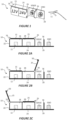
- a multi-voltage charging system 10 includes at least one housing 22 mounted on a support plate 20. Although illustrated as a single housing in the figures, it will be appreciated that the housing 22 may include multiple separate housings joined together and/or mounted separately.
- the housing 22 includes a first compartment 18 and a second compartment 28 in which a first charging terminal 12 and a second charging terminal 24 are positioned, respectively.
- the charging terminals 12, 24 may be provided as conductive metallic posts that are electrically connected to an electronics system of a vehicle.
- Each of the first and second compartments 18, 28 is covered by respective first and second access doors 15, 25 that cover the respective compartments and physically obstruct access to the charging terminal 12, 24 provided within the respective compartment.
- the first charging terminal 12 may be connected to a 12V electrical subsystem of a vehicle on which the multi-voltage charging system 10 is provided, and the second charging terminal 24 may be connected to a 24V electrical subsystem of the vehicle.
- the multi-voltage charging system 10 is illustrated as having two charging terminals, the system may have more charging terminals to support additional electrical subsystems having different voltage levels, such as 36V, 48V, etc.
- the open position Figure 2C
- the first charging terminal 12 is exposed for access by an operator.
- the closed position Figure 2A
- the first charging terminal 12 is obstructed from access by an operator.
- the first access door 15 may be connected to the housing 22 by a first spring-biased hinge 16 which is biased to move the first access door to the open position when the first access door 15 is unlatched, while the second access door 25 may be connected to the housing 22 by a second spring-biased hinge 26 which is biased to move the second access door to the open position when the second access door 25 is unlatched. That is, when one of the access doors is unlatched, it will spring open to provide physical access to the underlying charging terminal. To close the door, an operator may manually push the access door 15, 25 shut until it latches in place in the closed position.
- the multi-voltage charging system 10 may further include a first releasable latching mechanism 40 ( Figures 6A-6H ) that is configured to latch the first access door 15 in the closed position and a second releasable latching mechanism 40 that is configured to latch the second access door 25 in the closed position.
- a first releasable latching mechanism 40 ( Figures 6A-6H ) that is configured to latch the first access door 15 in the closed position
- a second releasable latching mechanism 40 that is configured to latch the second access door 25 in the closed position.
- the first and second releasable latching mechanisms 40 may cooperate with latching pins or features 50 provided on the first and second access doors 15, 25.
- the multi-voltage charging system 10 may further include a voltage sensing terminal SENSE and a ground terminal GND that may optionally be separated by a divider 36.
- a voltage sensing terminal SENSE and a ground terminal GND that may optionally be separated by a divider 36.
- an operator connects a ground connector from an external charging source to the ground terminal GND and connects a charging connector 11 from the external charging source to the voltage sensing terminal SENSE.
- the multi-voltage charging system 10 includes a door release circuit 60 ( Figures 3, 4 , and 5B ) coupled to the voltage sensing terminal SENSE and to the first and second releasable latching mechanisms 40.
- the door release circuit 60 is configured to sense a charging voltage applied to the voltage sensing terminal and selectively operate the first and second releasable latching mechanisms 40 to open the first access door 15 or the second access door 25 depending on the voltage applied at the sensing terminal SENSE.
- the door release circuit 60 may operate to cause the first releasable latching mechanism 40 to open the first access door 15, and if the charging voltage applied to the voltage sensing terminal SENSE is within a second acceptable voltage range, such as between 24 volts and 30 volts, the door release circuit 60 may operate to cause the second releasable latching mechanism 40 to open the second access door 25. If the charging voltage applied to the voltage sensing terminal SENSE is outside both the first acceptable voltage range and the second acceptable voltage range, the door release circuit 60 may operate to keep both the first access door 15 and the second access door 25 latched and closed.
- a first acceptable voltage range such as between 12 volts and 16 volts
- the door release circuit 60 may operate to cause the first releasable latching mechanism 40 to open the first access door 15
- a second acceptable voltage range such as between 24 volts and 30 volts
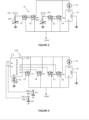
- a door release circuit 60 is illustrated in Figure 3 .
- the door release circuit comprises first through fourth transistor switches Q1 to Q4.
- the first through fourth transistor switches Q1 to Q4 are illustrated as MOSFET switches; however, it will be appreciated that other types of electrically controlled switches, such as bipolar junction transistor (BJT) switches, junction field effect transistor (JFET) switches, thyristors, or other types of elements may be used to form the transistor switches.
- BJT bipolar junction transistor
- JFET junction field effect transistor
- thyristors thyristors
- the first through fourth transistor switches Q1 to Q4 are illustrated as individual transistors, it will be appreciated that one or more of the first through fourth transistor switches Q1 to Q4 may include a plurality of transistors and/or other circuit elements connected together to form switching circuits when properly arranged.
- Control terminals, such as gate terminals, of the first through fourth transistor switches Q1 to Q4 are connected to the voltage sensing terminal SENSE, so that a voltage applied to the voltage sensing terminal SENSE will appear at the gate terminals of the first through fourth transistor switches Q1 to Q4.
- Input terminals, such as source terminals, of the second and fourth transistor switches Q2 and Q4 are connected to an output of a voltage regulator 92 that is arranged to supply a regulated DC voltage of, for example, five volts.
- a rectifier 94 may be provided at the output of the voltage regulator 92 between the voltage regulator 92 and the input terminals of the second and fourth transistor switches Q2 and Q4. The rectifier 94 may be arranged to obstruct a voltage from the second and fourth transistor switches Q2 and Q4 from being applied to the output of the voltage regulator 92.
- An output terminal, e.g. a drain terminal, of the second transistor switch Q2 is connected to an input (source) terminal of the first transistor switch Q1, and a drain terminal of the fourth transistor switch Q2 is connected to a source terminal of the third transistor switch Q3.
- An output (drain) terminal of the first transistor switch Q1 is coupled to a solenoid 80A which controls a first piston 78A, while a drain terminal of the third transistor switch Q3 is coupled to a solenoid 80B which controls a second piston 78B.
- the first piston 78A operates the releasable latch mechanism 40 to selectively unlatch the first access door 15, while the second piston 78B operates the releasable latch mechanism 40 to selectively unlatch the second access door 25.
- the first through fourth transistor switches Q1 to Q4 have respective different threshold voltages.
- the first transistor switch Q1 includes a normally ON depletion mode MOSFET that has a threshold voltage of 16V
- the second transistor switch Q2 includes a normally OFF enhancement mode MOSFET that has a threshold voltage of 12V.
- the third transistor switch Q3 includes a normally ON depletion mode MOSFET that has a threshold voltage of 30V
- the fourth transistor switch Q4 includes a normally OFF enhancement mode MOSFET that has a threshold voltage of 24V.
- the fourth transistor switch Q4 turns ON while the third transistor switch Q3 remains ON, thereby applying the voltage output by the voltage regulator 92 to the second solenoid 80B, which moves the second piston 78B to cause the releasable latching mechanism 40 to unlatch the second access door 25.
- the first transistor switch Q1 When the voltage applied to the voltage sensing terminal SENSE is greater than 16 volts and less than 24 volts, the first transistor switch Q1 is turned OFF, obstructing the voltage output by the voltage regulator 92 from being applied to the first solenoid 80A, and the fourth transistor switch Q4 remains OFF, obstructing the voltage output by the voltage regulator 92 from being applied to the second solenoid 80B.
- Table 1 The operation of the door release circuit 60 is summarized in Table 1.
- the 12V access door 15 is opened only when the applied voltage is between 12V and 15V, while the 24V access door 25 is opened only when the applied voltage is between 24V and 29V. In all other cases, both access doors remain closed.
- the multi-voltage charging system 10 could be modified to support additional voltage ranges by providing additional charging terminals in additional compartments. Moreover, it will be appreciated that the charging system 10 could be modified to support only a single voltage range by providing only a single charging terminal in a single compartment and modifying the door release circuit 60 to check for the single voltage range. Such a single terminal system may still physically restrict access to the single charging terminal unless an appropriate charging voltage is sensed at the voltage sensing terminal.
- FIG. 4 illustrates a door release circuit 60B according to further embodiments.
- the door release circuit 60B includes first to fourth transistor switches Q5, Q6, Q7 and Q8, each of which has a control terminal (gate) connected to the voltage sensing terminal SENSE.
- each of the first to fourth transistor switches Q5, Q6, Q7 and Q8 includes a normally OFF enhancement mode MOSFET.
- BJT switches, JFET switches, thyristors, or other types of elements may be used to form the transistor switches.
- first through fourth transistor switches Q5 to Q8 are illustrated as individual transistors, it will be appreciated that one or more of the first through fourth transistor switches Q5 to Q8 may include a plurality of transistors and/or other circuit elements connected together to form switching circuits when properly arranged.
- Each of the first to fourth transistor switches Q5, Q6, Q7 and Q8 has a different threshold voltage at which the transistor turns ON.
- transistor switch Q5 may have a turn on voltage of 12 volts
- transistor switch Q6 may have a turn on voltage of 16 volts
- transistor switch Q7 may have a turn on voltage of 24 volts
- transistor switch Q8 may have a turn on voltage of 30 volts.
- Input terminals, such as source terminals, of each of the first to fourth transistor switches Q5, Q6, Q7 and Q8 are connected to an output of a voltage regulator 92 that is arranged to supply a regulated DC voltage of, for example, five volts.
- a rectifier 94 may be provided at the output of the voltage regulator 92 between the voltage regulator 92 and the input terminals of the first to fourth transistor switches Q5 to Q8. The rectifier 94 may be arranged to obstruct a voltage from the first to fourth transistor switches Q5 to Q8 from being applied to the output of the voltage regulator 92.
- Output terminals, such as drain terminals, of each of the first to fourth transistor switches Q5 to Q8 are connected to respective data inputs D0 to D3 of a microcontroller 100.
- the microcontroller 100 includes three data outputs, namely, A0, A1 and INC.
- Output A0 is connected to the first solenoid 80A which operates the first piston 78A to unlatch the first access door 15 that covers the 12V charging terminal, while output A1 is connected to the second solenoid 80B which operates the second piston 78B to unlatch the second access door 25 that covers the 24V charging terminal.
- the INC output drives an indicator lamp, such as LED 96.
- circuit diagram of Figure 4 is a highly simplified diagram, and that other components may be included in a final design, such as driver circuits, bias circuits, current limiting resistors, etc.
- the microcontroller 100 may not be capable of directly supplying sufficient current from an output pin to operate a solenoid.
- a current limiting resistor would be provided in series with the LED 96 to prevent overcurrent. Such modifications are within the ordinary skill in the art and are omitted for clarity.
- the microcontroller 100 may, for example, be an 8- 16- or 32-bit microcontroller.
- the microcontroller 100 may include a 16F1507 8-bit programmable microcontroller manufactured by Microchip Technology Inc. or similar device.
- the microcontroller 100 sets the output signals A0, A1 and INC in response to the input signals D0 to D3. In particular, the microcontroller 100 sets the output signal A0 to HIGH so that the first solenoid 80A is activated to open the first access door 15 when the input voltage is greater than 12 volts but less than 16 volts (i.e., when input D0 is HIGH and inputs D1 to D3 are LOW).
- the microcontroller 100 sets the output signal A1 to HIGH so that the second solenoid 80B is activated to open the second access door 25 when the input voltage is greater than 24 volts but less than 30 volts (i.e., when inputs D0, D1 and D2 are HIGH and input D3 is LOW). In all other instances, the microcontroller 100 sets the output signal INC to HIGH to cause the indicator lamp 96 to light to indicate that an improper voltage (i.e. a voltage that was not between 12 and 16 volts or between 24 and 30 volts) was applied.
- an improper voltage i.e. a voltage that was not between 12 and 16 volts or between 24 and 30 volts
- door release circuit 60B of Figure 4 could be modified to support additional voltages by providing additional inputs and outputs to the microcontroller 110 and by providing additional solenoids to operate additional access doors.
- FIGS 5A and 5B illustrate a multi-voltage charging apparatus 110 according to further embodiments.
- the multi-voltage charging apparatus 110 includes a charging terminal CHARGE and a ground terminal GND mounted on a support plate 20.
- the charging terminal CHARGE and the ground terminal GND may optionally be separated by a divider 36.
- the multi-voltage charging apparatus 110 includes a coupling circuit 160 that selectively couples the charging terminal CHARGE to an internal charging node 112, 124 based on a voltage level applied to the charging terminal CHARGE.
- the coupling circuit 160 includes first to fourth transistor switches Q5, Q6, Q7 and Q8, each of which has a control terminal (gate) connected to the charging terminal CHARGE, and a microcontroller 100 including inputs D0 to D3 coupled to outputs of the respective transistor switches Q5, Q6, Q7 and Q8 and outputs A0 and A1.
- the configuration of the microcontroller 100, the transistor switches Q5, Q6, Q7 and Q8, the indicator lamp 96 and the voltage regulator 92 is similar to that shown in the door release circuit 60B of Figure 4 and further description thereof will be omitted for brevity except for differences in the circuits.
- the first output A0 is connected to a first solid state relay 102A, while the second output A1 is connected to a second solid state relay 102B.
- the first solid state relay 102A includes a photodiode and a photosensitive relay circuit that is configured to conduct when the photodiode is energized.
- the LED in the first solid state relay 102A is energized, which activates the photosensitive relay circuit therein. This causes the charging node CHARGE to be coupled to an internal 12 volt charging node 112, and allows a 12-volt battery system to which the internal 12 volt charging node 112 is connected to be charged by the external charge source.
- the LED in the second solid state relay 102B is energized, which activates the photosensitive relay circuit therein.
- This causes the charging node CHARGE to be coupled to an internal 24 volt charging node 124, and allows a 24-volt battery system to which the internal 24 volt charging node 124 is connected to be charged by the external charge source.
- a first indicator lamp 104A is coupled to the first output A0 to indicate when the 12V system is being charged, while a second indicator lamp 104B is coupled to the second output A1 to indicate when the 24V system is being charged.
- multi-voltage charging apparatus 110 of Figures 5A and 5B could be modified to support additional voltages by providing additional inputs and outputs to the microcontroller 110 and by providing additional solid state relays.
- the microcontroller 100 sets the output signals A0, A1 and INC in response to the input signals D0 to D3. In particular, the microcontroller 100 sets the output signal A0 to HIGH so that the first solid state relay 102A is activated to connect the charging terminal CHARGE to the 12 V internal charging node 112 when the input voltage is greater than 12 volts but less than 16 volts (i.e., when input D0 is HIGH and inputs D1 to D3 are LOW).
- the microcontroller 100 sets the output signal A1 to HIGH so that the second solid state relay 102B is activated to connect the charging terminal CHARGE to the 24 V internal charging node 124 when the input voltage is greater than 24 volts but less than 30 volts (i.e., when inputs D0, D1 and D2 are HIGH and input D3 is LOW).
- the microcontroller 100 sets the output signal INC to HIGH to cause the indicator lamp 96 to light to indicate that an improper voltage (i.e. a voltage that was not between 12 and 16 volts or between 24 and 30 volts) was applied.
- the operation of the coupling circuit 160 is the same as that shown in Table 2 for the door release circuit 60B.
- the microcontroller 100 may latch the output signal A0, A1 at HIGH so that the solid state relay 102A, 102B that was activated remains on even if the input voltage at the charging terminal CHARGE drops when the starter of the vehicle is engaged.
- separate resettable latch circuits may be provided between the microcontroller 100 and the solid state relays 102A, 102B.
- the design of resettable latch circuits, such as SR flip flop circuits, is well known in the art.
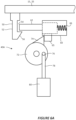
- Figures 6A and 6B illustrate a releasable latching mechanism 40A according to some embodiments.
- the releasable latching mechanism 40A includes a latching pin 50 including a body 52, a notch 54 in the body 52 and a wedge 56 at the end of the body 52.
- the latching pin 50 is affixed to one of the access doors 15, 25.
- a latching arm 62 extends from a housing 60 into the notch 54 when the access door 15, 25 is in the latched (closed) position.
- the latching arm 62 is biased against the latching pin 50 by a bias spring 66 within the housing 60.
- An extension 65 of the latching arm 62 extends from the housing 60 in a longitudinal slot (not shown) that allows the latching arm 60 and the extension 65 to move longitudinally within the housing 60.
- a rotating cam 72 includes a tooth 74 that engages the extension 65 of the latching arm 62 to move the latching arm 62 away from the latching pin 50 when the cam 72 is rotated in the clockwise direction.
- the bias spring 66 pushes the latching arm back towards the latching pin 50.
- the cam 72 is rotated by a solenoid 80 that drives a piston 78 attached to the cam 72 by a pin 76.
- the solenoid 80 is controlled by a circuit, such as the door release circuit 60, 60B shown in Figures 3 and 4 .
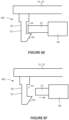
- Figures 6C and 6DB illustrate a simplified releasable latching mechanism 40B according to further embodiments.
- the releasable latching mechanism 40A includes a latching pin 50 including a body 52, a notch 54 in the body 52 and a wedge 56 at the end of the body 52.
- the latching pin 50 is affixed to one of the access doors 15, 25.
- a rotating cam 72 is connected to a latching arm 65 that holds the latching pin in place when held in the latched position shown in Figure 6C , and rotates away from the latching pin 50 to an unlatched position when the cam 72 is rotated in the clockwise direction.
- a coil spring 75 in the cam urges the cam to rotate back in the counterclockwise direction, pushing the latching arm back towards the latching pin 50.
- the cam 72 is rotated in the clockwise direction by a solenoid 80 that drives a piston 78 attached to the cam 72 by a pin 76.
- the solenoid 80 is controlled by a circuit, such as the door release circuit 60, 60B shown in Figures 3 and 4 .
- FIGS. 6E and 6F illustrate an even more simplified releasable latching mechanism 40C in which a latching arm 67 is driven directly as a piston by a solenoid 80 to engage or disengage a latching pin 50 to latch and unlatch an access door 15, 25.
- FIGS 6G and 6H illustrate a magnetic releasable latching mechanism 40D that includes a ferrous latching arm 68 mounted in a housing 69 and biased against the latching pin 50 by a spring 73.
- a coil 81 acts as an electromagnet to move the ferrous latching arm 68 out of engagement with the latching pin 50 to unlatch the access door 15, 25.
- the coil 81 is energized by a signal generated by a circuit, such as the door release circuit 60, 60B shown in Figures 3 and 4 .
- latching mechanisms may be used to selectively unlatch one or more access doors that provide access to charging terminals.
- Some embodiments of the inventive concepts described herein are not limited by the particular latching mechanism employed.
- the terms “comprise”, “comprising”, “comprises”, “include”, “including”, “includes”, “have”, “has”, “having”, or variants thereof are open-ended, and include one or more stated features, integers, elements, steps, components or functions but do not preclude the presence or addition of one or more other features, integers, elements, steps, components, functions or groups thereof.
- the common abbreviation “e.g.” which derives from the Latin phrase “exempli gratia,” may be used to introduce or specify a general example or examples of a previously mentioned item, and is not intended to be limiting of such item.
- the common abbreviation “i.e.”, which derives from the Latin phrase “id est,” may be used to specify a particular item from a more general recitation.
Landscapes
- Engineering & Computer Science (AREA)
- Power Engineering (AREA)
- Mechanical Engineering (AREA)
- Physics & Mathematics (AREA)
- Electromagnetism (AREA)
- Transportation (AREA)
- Manufacturing & Machinery (AREA)
- Chemical & Material Sciences (AREA)
- Chemical Kinetics & Catalysis (AREA)
- Electrochemistry (AREA)
- General Chemical & Material Sciences (AREA)
- Charge And Discharge Circuits For Batteries Or The Like (AREA)
Claims (13)
- Mehrspannungsladevorrichtung (10), umfassend:ein erstes Fach (18) und ein zweites Fach (28), die in mindestens einem Gehäuse (22) definiert sind;einen ersten Ladeanschluss (12) in dem ersten Fach (18);einen zweiten Ladeanschluss (24) in dem zweiten Fach (28);eine erste Zugangstür (15), die mit dem mindestens einen Gehäuse (22) verbunden ist und das erste Fach (18) abdeckt, wobei die erste Zugangstür (15) von einer offenen Position in eine geschlossene Position beweglich ist;einen ersten lösbaren Verriegelungsmechanismus (40), der dazu konfiguriert ist, die erste Zugangstür (15) in der geschlossenen Position zu verriegeln;dadurch gekennzeichnet, dass sie ferner Folgendes umfasst:eine zweite Zugangstür (25), die mit dem mindestens einen Gehäuse (22) verbunden ist und das zweite Fach (28) abdeckt, wobei die zweite Zugangstür (25) von einer offenen Position in eine geschlossene Position beweglich ist;einen zweiten lösbaren Verriegelungsmechanismus (40), der dazu konfiguriert ist, die zweite Zugangstür (25) in der geschlossenen Position zu verriegeln;einen Spannungserfassungsanschluss (SENSE); undeine Türfreigabeschaltung (60), die an den Spannungserfassungsanschluss (SENSE) und an den ersten und den zweiten lösbaren Verriegelungsmechanismus (40) gekoppelt ist und dazu konfiguriert ist, eine Ladespannung zu erfassen, die an den Spannungserfassungsanschluss (SENSE) angelegt wird;wobei die Türfreigabeschaltung (60) dazu konfiguriert ist, selektiv den ersten lösbaren Verriegelungsmechanismus (40) als Reaktion darauf zu entriegeln, dass eine erste Spannung an den Spannungserfassungsanschluss (SENSE) angelegt wird, und selektiv den zweiten lösbaren Verriegelungsmechanismus (40) als Reaktion darauf zu entriegeln, dass eine zweite Spannung an den Spannungserfassungsanschluss (SENSE) angelegt wird, wobei sich die zweite Spannung von der ersten Spannung unterscheidet.
- Mehrspannungsladevorrichtung (10) nach Anspruch 1, wobei der erste lösbare Verriegelungsmechanismus (40) ein erstes Solenoid (80A) umfasst und der zweite lösbare Verriegelungsmechanismus (40) ein zweites Solenoid (80B) umfasst.
- Mehrspannungsladevorrichtung (10) nach Anspruch 2, wobei die Türfreigabeschaltung (60) Folgendes umfasst:einen Spannungsregler (92), der dazu konfiguriert ist, eine dritte Spannung zu liefern; undeinen Erfassungsknoten, der an den Spannungserfassungsanschluss (SENSE) gekoppelt ist.
- Mehrspannungsladevorrichtung (10) nach Anspruch 3, wobei die Türfreigabeschaltung (60) ferner Folgendes umfasst:einen ersten Transistorschalter (Q1), der einen Ausgangsanschluss, der an das erste Solenoid (80A) gekoppelt ist, und einen Steueranschluss, der an den Erfassungsknoten gekoppelt ist, aufweist; undeinen zweiten Transistorschalter (Q2), der in Reihe mit dem ersten Transistorschalter (Q1) gekoppelt ist, der einen Eingangsanschluss, der an den Spannungsregler (92) gekoppelt ist, einen Ausgangsanschluss, der an einen Eingangsanschluss des ersten Transistorschalters (Q1) gekoppelt ist, und einen Steueranschluss, der an den Erfassungsknoten gekoppelt ist, aufweist.
- Mehrspannungsladevorrichtung (10) nach Anspruch 4, wobei der erste Transistorschalter (Q1) einen Verarmungsmodus-MOSFET umfasst, der dazu konfiguriert ist, als Reaktion darauf, dass eine erste Spannung an den Erfassungsknoten angelegt wird, abgeschaltet zu werden, und wobei der zweite Transistorschalter (Q2) einen Anreicherungsmodus-MOSFET umfasst, der dazu konfiguriert ist, als Reaktion darauf, dass eine zweite Spannung an den Erfassungsknoten angelegt wird, angeschaltet zu werden, wobei die erste Spannung höher als die zweite Spannung ist.
- Mehrspannungsladevorrichtung (10) nach Anspruch 5, ferner umfassend:einen dritten Transistorschalter (Q3), der einen Ausgangsanschluss, der an das zweite Solenoid (80B) gekoppelt ist, und einen Steueranschluss, der an den Erfassungsknoten gekoppelt ist, aufweist;einen vierten Transistorschalter (Q4), der in Reihe mit dem dritten Transistorschalter (Q3) gekoppelt ist, der einen Eingangsanschluss, der an den Spannungsregler (92) gekoppelt ist, einen Ausgangsanschluss, der an einen Eingangsanschluss des dritten Transistorschalters (Q3) gekoppelt ist, und einen Steueranschluss, der an den Erfassungsknoten gekoppelt ist, aufweist.
- Mehrspannungsladevorrichtung (10) nach Anspruch 6, wobei der dritte Transistorschalter (Q3) einen Verarmungsmodus-MOSFET umfasst, der dazu konfiguriert ist, als Reaktion darauf, dass eine dritte Spannung an den Erfassungsknoten angelegt wird, abgeschaltet zu werden, und wobei der vierte Transistorschalter (Q4) einen Anreicherungsmodus-MOSFET umfasst, der dazu konfiguriert ist, als Reaktion darauf, dass eine vierte Spannung an den Erfassungsknoten angelegt wird, angeschaltet zu werden, wobei die dritte Spannung höher als die vierte Spannung ist und wobei die zweite Spannung höher als die dritte Spannung ist.
- Mehrspannungsladevorrichtung (10) nach Anspruch 7, wobei der erste Transistorschalter (Q1) und der zweite Transistorschalter (Q2) dazu angeordnet sind, die dritte Spannung, die durch den Spannungsregler (92) ausgegeben wird, an das erste Solenoid (80A) anzulegen, wenn eine an den Erfassungsknoten angelegte Spannung größer als die zweite Spannung und kleiner als die erste Spannung ist.
- Mehrspannungsladevorrichtung (10) nach Anspruch 8, wobei der dritte Transistorschalter (Q3) und der vierte Transistorschalter (Q4) dazu angeordnet sind, die dritte Spannung, die durch den Spannungsregler (92) ausgegeben wird, an das zweite Solenoid (80B) anzulegen, wenn die an den Erfassungsknoten angelegte Spannung größer als die vierte Spannung und kleiner als die dritte Spannung ist.
- Mehrspannungsladevorrichtung (10) nach einem der Ansprüche 4-9, ferner umfassend eine Gleichrichterdiode (94) zwischen dem Spannungsregler (92) und dem Eingangsanschluss des zweiten Transistorschalters (Q2).
- Mehrspannungsladevorrichtung (10) nach Anspruch 3, wobei die Türfreigabeschaltung (60) ferner Folgendes umfasst:einen Mikrocontroller (100); undeinen ersten, einen zweiten, einen dritten und einen vierten Transistorschalter (Q5, Q6, Q7, Q8), wobei jeder von dem ersten, dem zweiten, dem dritten und dem vierten Transistorschalter einen Steueranschluss, der an den Erfassungsknoten gekoppelt ist, einen Ausgangsanschluss, der an den Mikrocontroller (100) gekoppelt ist, und einen Eingangsanschluss, der an den Spannungsregler (92) gekoppelt ist, umfasst;wobei das erste und das zweite Solenoid (80A, 80B) an den Mikrocontroller (100) gekoppelt sind und wobei der Mikrocontroller (100) dazu konfiguriert ist, das erste und das zweite Solenoid (80A, 80B) als Reaktion auf Signale zu steuern, die von dem ersten, dem zweiten, dem dritten und dem vierten Transistor (Q5, Q6, Q7, Q8) ausgegeben werden.
- Mehrspannungsladevorrichtung (10) nach Anspruch 11, wobei der erste, der zweite, der dritte und der vierte Transistorschalter (Q5, Q6, Q7, Q8) normalerweise ausgeschaltete Anreicherungsmodus-MOSFETs umfassen, wobei der erste, der zweite, der dritte und der vierte Transistorschalter (Q5, Q6, Q7, Q8) eine jeweilige erste, zweite, dritte und vierte unterschiedliche Anschaltspannung aufweisen.
- Mehrspannungsladevorrichtung (10) nach Anspruch 12, wobei der Mikrocontroller (100) dazu konfiguriert ist, das erste Solenoid (80A) zu aktivieren, wenn eine an den Erfassungsknoten angelegte Spannung zwischen der dritten und der vierten Anschaltspannung liegt, und wobei der Mikrocontroller (100) dazu konfiguriert ist, das zweite Solenoid (80B) zu aktivieren, wenn die an den Erfassungsknoten angelegte Spannung zwischen der ersten und der zweiten Anschaltspannung liegt.
Applications Claiming Priority (1)
| Application Number | Priority Date | Filing Date | Title |
|---|---|---|---|
| PCT/US2018/019098 WO2019164486A1 (en) | 2018-02-22 | 2018-02-22 | Multi-voltage charging apparatus |
Publications (4)
| Publication Number | Publication Date |
|---|---|
| EP3756262A1 EP3756262A1 (de) | 2020-12-30 |
| EP3756262A4 EP3756262A4 (de) | 2022-01-19 |
| EP3756262C0 EP3756262C0 (de) | 2024-01-10 |
| EP3756262B1 true EP3756262B1 (de) | 2024-01-10 |
Family
ID=67687822
Family Applications (1)
| Application Number | Title | Priority Date | Filing Date |
|---|---|---|---|
| EP18906778.8A Active EP3756262B1 (de) | 2018-02-22 | 2018-02-22 | Mehrspannungsladevorrichtung |
Country Status (4)
| Country | Link |
|---|---|
| US (2) | US11764574B2 (de) |
| EP (1) | EP3756262B1 (de) |
| CN (1) | CN111742457A (de) |
| WO (1) | WO2019164486A1 (de) |
Families Citing this family (4)
| Publication number | Priority date | Publication date | Assignee | Title |
|---|---|---|---|---|
| CN111742457A (zh) * | 2018-02-22 | 2020-10-02 | 沃尔沃卡车集团 | 多电压充电装置 |
| DE102021105676A1 (de) * | 2021-03-09 | 2022-09-15 | Compleo Charging Solutions Ag | Versorgungsstation und Versorgungsfunktionsgrundanordnung hierfür |
| US20220307301A1 (en) * | 2021-03-29 | 2022-09-29 | Ford Global Technologies, Llc | Traction battery securing assembly and method |
| CN115476818B (zh) * | 2022-10-31 | 2024-04-26 | 重庆金康赛力斯新能源汽车设计院有限公司 | 无机械钥匙搭电方法 |
Family Cites Families (44)
| Publication number | Priority date | Publication date | Assignee | Title |
|---|---|---|---|---|
| US3267347A (en) * | 1961-04-18 | 1966-08-16 | Fox Prod Co | Battery chargers |
| US4532418A (en) * | 1982-08-30 | 1985-07-30 | The Detroit Edison Company | Microprocessor electric vehicle charging and parking meter system structure and method |
| US4972135A (en) * | 1989-08-04 | 1990-11-20 | Bates Bobby L | Switching system for battery jumper cables |
| JP3391525B2 (ja) * | 1993-11-12 | 2003-03-31 | 株式会社タツノ・メカトロニクス | 電気自動車用充電装置 |
| IL108040A (en) * | 1993-12-16 | 1997-01-10 | Integral Ind Ltd | Dual voltage charge controller device |
| US5642030A (en) * | 1995-06-30 | 1997-06-24 | Seelye Equipment Specialists | Charge control circuit |
| US5781399A (en) * | 1996-08-05 | 1998-07-14 | Lanigan; William P. | Energy efficient control circuit for solenoid actuated locking device |
| US5995384A (en) * | 1997-07-31 | 1999-11-30 | Philips Electronics North America Corporation | Functional on/off switch for switched-mode power supply circuit with burst mode operation |
| DE19946744A1 (de) * | 1999-09-29 | 2001-05-10 | Tyco Electronics Logistics Ag | Verfahren zur sicheren Ankopplung eines Fremdspannungsnetzes an ein Betriebsspannungsnetz und Schaltungsanordnung zur Durchführung des Verfahrens |
| US6803743B2 (en) | 2002-10-04 | 2004-10-12 | Delphi Technologies, Inc. | Jump start and reverse battery protection circuit |
| DE10313752B4 (de) * | 2003-03-27 | 2021-06-24 | Bayerische Motoren Werke Aktiengesellschaft | Vorrichtung und Verfahren zum Laden von Batterien eines Mehrspannungsbordnetzes eines Kraftfahrzeuges |
| CN2760832Y (zh) * | 2004-06-08 | 2006-02-22 | 吴月琴 | 电源箱 |
| US7301303B1 (en) * | 2004-08-16 | 2007-11-27 | International Specialty Services, Inc. | Portable battery jump start in a soft-sided carrying case |
| DE202005006945U1 (de) * | 2005-04-28 | 2006-05-04 | Grass Gmbh | Öffnungs- und Schließsystem, insbesondere für Möbelteile |
| FR2888620B1 (fr) * | 2005-07-12 | 2007-10-12 | Ariance Sarl | Interface intelligente de demarrage |
| JP5313445B2 (ja) * | 2006-11-06 | 2013-10-09 | パナソニック株式会社 | 電気錠コントローラ |
| CN101304180B (zh) * | 2007-05-11 | 2011-07-06 | 胜德国际研发股份有限公司 | 复合式节能不断电系统及双向转换器模块与电力转换方法 |
| US20090174362A1 (en) * | 2008-01-03 | 2009-07-09 | F.D. Richardson Enterprises, Inc. Doing Business As Richardson Jumpstarters | Method and apparatus for providing supplemental power to an engine |
| US20110174875A1 (en) | 2010-01-15 | 2011-07-21 | Wurzer David T | Charging station for electric vehicles |
| CN102111077B (zh) * | 2011-02-24 | 2013-12-11 | 丰汇新能源有限公司 | 充电电源系统 |
| EP2710208B1 (de) * | 2011-05-16 | 2019-11-27 | Fire & Security Hardware Pty Ltd | Sperrvorrichtung |
| CN202510270U (zh) * | 2012-02-23 | 2012-10-31 | 泉州开普勒车用电机有限公司 | 一种起动机智能起动保护系统 |
| DE102012006488A1 (de) * | 2012-03-29 | 2013-10-02 | GM Global Technology Operations LLC (n. d. Gesetzen des Staates Delaware) | Hochvoltmodul mit Trennschalter für Kraftfahrzeuge |
| US8800206B2 (en) * | 2012-08-20 | 2014-08-12 | New Visions Yezirot Aluminum, Ltd. | Motorized closure assembly |
| JP5884699B2 (ja) | 2012-09-28 | 2016-03-15 | 三菱自動車工業株式会社 | トラック形電動車両の充電コネクタ収容装置 |
| CN103855732A (zh) * | 2012-11-28 | 2014-06-11 | 林广生 | 多电压充电装置 |
| JP5761229B2 (ja) * | 2013-02-26 | 2015-08-12 | トヨタ自動車株式会社 | 車両の充電装置 |
| SG2013019005A (en) * | 2013-03-14 | 2014-10-30 | Ev World Pte Ltd | Portable battery pack |
| CN203800631U (zh) * | 2013-12-27 | 2014-08-27 | 武汉航达电源科技有限公司 | 一种用于电源充电器的智能电池组切换模块 |
| US11787297B2 (en) * | 2014-07-03 | 2023-10-17 | The Noco Company | Battery charging device for charging a deeply discharged battery, and battery charging system and method |
| CN104393713B (zh) * | 2014-09-17 | 2016-08-17 | 柏科(常熟)电机有限公司 | 一种汽车起动机的再制造方法 |
| CN109944729A (zh) * | 2014-12-04 | 2019-06-28 | 瑞美技术有限责任公司 | 具有控制继电器开关的起动机系统 |
| US9912183B2 (en) * | 2015-03-13 | 2018-03-06 | Vanair Manufacturing, Inc. | Jump starter |
| US10211671B2 (en) * | 2015-03-24 | 2019-02-19 | Keepvendingusa Holdings Llc | Auxiliary A/C power supply system for vending machines |
| CN106374549B (zh) * | 2015-07-23 | 2019-05-17 | 比亚迪股份有限公司 | 汽车电池的充电系统及汽车电池的充电方法及汽车 |
| CN206225827U (zh) * | 2016-12-12 | 2017-06-06 | 苏州特勒普电气有限公司 | 一种带拔插式电容补偿的智能低压综合配电箱 |
| DE102016124155A1 (de) * | 2016-12-13 | 2018-06-14 | HELLA GmbH & Co. KGaA | System, mit einer Klappe, einem Aktor und einer Steuerung |
| CN206542324U (zh) * | 2016-12-16 | 2017-10-03 | 上海传英信息技术有限公司 | 电源管理系统 |
| DE102017110346A1 (de) * | 2017-05-12 | 2018-11-15 | Keba Ag | Verfahren zum Betreiben eines Distributionsautomaten |
| CN106985671B (zh) * | 2017-05-31 | 2019-07-26 | 北京新能源汽车股份有限公司 | 一种车载双向充电机、车载双向供电方法及装置 |
| CN207530573U (zh) * | 2017-11-22 | 2018-06-22 | 汪玉华 | 汽车应急启动电源 |
| US10862231B2 (en) * | 2017-12-25 | 2020-12-08 | Cytherean Mandelbrot LLC | Automotive battery booster cable battery clamp |
| CN207984765U (zh) * | 2018-02-08 | 2018-10-19 | 安徽贵博新能科技有限公司 | 一种电动汽车点火启动辅助装置 |
| CN111742457A (zh) * | 2018-02-22 | 2020-10-02 | 沃尔沃卡车集团 | 多电压充电装置 |
-
2018
- 2018-02-22 CN CN201880089978.6A patent/CN111742457A/zh active Pending
- 2018-02-22 EP EP18906778.8A patent/EP3756262B1/de active Active
- 2018-02-22 US US16/971,717 patent/US11764574B2/en active Active
- 2018-02-22 WO PCT/US2018/019098 patent/WO2019164486A1/en not_active Ceased
-
2023
- 2023-09-12 US US18/244,955 patent/US20230420935A1/en active Pending
Also Published As
| Publication number | Publication date |
|---|---|
| EP3756262C0 (de) | 2024-01-10 |
| EP3756262A1 (de) | 2020-12-30 |
| CN111742457A (zh) | 2020-10-02 |
| US11764574B2 (en) | 2023-09-19 |
| WO2019164486A1 (en) | 2019-08-29 |
| US20230420935A1 (en) | 2023-12-28 |
| EP3756262A4 (de) | 2022-01-19 |
| US20210384743A1 (en) | 2021-12-09 |
Similar Documents
| Publication | Publication Date | Title |
|---|---|---|
| US20230420935A1 (en) | Multi-voltage charging apparatus | |
| US5012381A (en) | Motor drive circuit with reverse-battery protection | |
| KR102066367B1 (ko) | 보호 회로 및 보호 회로의 동작 방법, 및 반도체 집적 회로 장치 | |
| DE19922331C1 (de) | Verfahren zum Betrieb einer Sicherheitseinrichtung für Kraftfahrzeuge | |
| EP2441909A2 (de) | Steuervorrichtung zum Öffnen und Schließen von Fahrzeugfenstern | |
| US6927514B2 (en) | Integrated actuator | |
| JP2003037933A (ja) | 電子機器の保護装置 | |
| DE102022209158A1 (de) | Vorrichtung und Verfahren zum Schutz von Fahrzeugtürsystemen vor Spannung gegenelektromotorischer Kraft (Gegen-EMK-Spannung) | |
| US6578912B2 (en) | Seat module electrification system | |
| CN112054792A (zh) | 高侧开关 | |
| DE102015105274A1 (de) | Einklemmsensor für ein Verschliesselement eines Kraftfahrzeugs | |
| ES2218616T3 (es) | Un sistema de fuente de alimentacion para una pluralidad de dispositivos o unidades electronicas a bordo de un vehiculo automovil. | |
| KR102434048B1 (ko) | 전자식 릴레이 장치 | |
| US4683403A (en) | Dimmer passing device for headlamp of vehicle | |
| US10829967B2 (en) | Bus configured latching solenoid | |
| US11342767B2 (en) | Multi-voltage charging terminal access port | |
| US10784675B2 (en) | Vehicle accessory power switch | |
| US7492056B2 (en) | Electrical locking system | |
| EP0999354B1 (de) | Treiberschaltung für eine Brennstoff-Einspritzdüse mit grossem Betriebsspannungsbereichen | |
| US6559614B2 (en) | Electrical circuit arrangement for controlling an electromotor in a motor vehicle | |
| US11456593B2 (en) | Battery protection circuit | |
| JP2005051668A (ja) | 負荷駆動ユニット | |
| JPWO2016208357A1 (ja) | 電磁スイッチ及びエンジン始動装置 | |
| KR102754695B1 (ko) | 배터리 제어 장치 | |
| JP2023094318A (ja) | 車両用電源装置及びドアラッチ装置 |
Legal Events
| Date | Code | Title | Description |
|---|---|---|---|
| STAA | Information on the status of an ep patent application or granted ep patent |
Free format text: STATUS: THE INTERNATIONAL PUBLICATION HAS BEEN MADE |
|
| PUAI | Public reference made under article 153(3) epc to a published international application that has entered the european phase |
Free format text: ORIGINAL CODE: 0009012 |
|
| STAA | Information on the status of an ep patent application or granted ep patent |
Free format text: STATUS: REQUEST FOR EXAMINATION WAS MADE |
|
| 17P | Request for examination filed |
Effective date: 20200917 |
|
| AK | Designated contracting states |
Kind code of ref document: A1 Designated state(s): AL AT BE BG CH CY CZ DE DK EE ES FI FR GB GR HR HU IE IS IT LI LT LU LV MC MK MT NL NO PL PT RO RS SE SI SK SM TR |
|
| AX | Request for extension of the european patent |
Extension state: BA ME |
|
| DAV | Request for validation of the european patent (deleted) | ||
| DAX | Request for extension of the european patent (deleted) | ||
| A4 | Supplementary search report drawn up and despatched |
Effective date: 20211220 |
|
| RIC1 | Information provided on ipc code assigned before grant |
Ipc: H02J 7/04 20060101ALI20211214BHEP Ipc: H01M 10/44 20060101ALI20211214BHEP Ipc: B60L 50/00 20190101ALI20211214BHEP Ipc: H02J 7/00 20060101AFI20211214BHEP |
|
| STAA | Information on the status of an ep patent application or granted ep patent |
Free format text: STATUS: EXAMINATION IS IN PROGRESS |
|
| 17Q | First examination report despatched |
Effective date: 20221201 |
|
| GRAP | Despatch of communication of intention to grant a patent |
Free format text: ORIGINAL CODE: EPIDOSNIGR1 |
|
| STAA | Information on the status of an ep patent application or granted ep patent |
Free format text: STATUS: GRANT OF PATENT IS INTENDED |
|
| INTG | Intention to grant announced |
Effective date: 20230809 |
|
| GRAS | Grant fee paid |
Free format text: ORIGINAL CODE: EPIDOSNIGR3 |
|
| GRAA | (expected) grant |
Free format text: ORIGINAL CODE: 0009210 |
|
| STAA | Information on the status of an ep patent application or granted ep patent |
Free format text: STATUS: THE PATENT HAS BEEN GRANTED |
|
| AK | Designated contracting states |
Kind code of ref document: B1 Designated state(s): AL AT BE BG CH CY CZ DE DK EE ES FI FR GB GR HR HU IE IS IT LI LT LU LV MC MK MT NL NO PL PT RO RS SE SI SK SM TR |
|
| REG | Reference to a national code |
Ref country code: GB Ref legal event code: FG4D |
|
| REG | Reference to a national code |
Ref country code: CH Ref legal event code: EP |
|
| REG | Reference to a national code |
Ref country code: DE Ref legal event code: R096 Ref document number: 602018064126 Country of ref document: DE |
|
| REG | Reference to a national code |
Ref country code: IE Ref legal event code: FG4D |
|
| U01 | Request for unitary effect filed |
Effective date: 20240206 |
|
| U07 | Unitary effect registered |
Designated state(s): AT BE BG DE DK EE FI FR IT LT LU LV MT NL PT SE SI Effective date: 20240214 |
|
| U20 | Renewal fee for the european patent with unitary effect paid |
Year of fee payment: 7 Effective date: 20240223 |
|
| PG25 | Lapsed in a contracting state [announced via postgrant information from national office to epo] |
Ref country code: IS Free format text: LAPSE BECAUSE OF FAILURE TO SUBMIT A TRANSLATION OF THE DESCRIPTION OR TO PAY THE FEE WITHIN THE PRESCRIBED TIME-LIMIT Effective date: 20240510 |
|
| PG25 | Lapsed in a contracting state [announced via postgrant information from national office to epo] |
Ref country code: GR Free format text: LAPSE BECAUSE OF FAILURE TO SUBMIT A TRANSLATION OF THE DESCRIPTION OR TO PAY THE FEE WITHIN THE PRESCRIBED TIME-LIMIT Effective date: 20240411 |
|
| PG25 | Lapsed in a contracting state [announced via postgrant information from national office to epo] |
Ref country code: RS Free format text: LAPSE BECAUSE OF FAILURE TO SUBMIT A TRANSLATION OF THE DESCRIPTION OR TO PAY THE FEE WITHIN THE PRESCRIBED TIME-LIMIT Effective date: 20240410 Ref country code: HR Free format text: LAPSE BECAUSE OF FAILURE TO SUBMIT A TRANSLATION OF THE DESCRIPTION OR TO PAY THE FEE WITHIN THE PRESCRIBED TIME-LIMIT Effective date: 20240110 |
|
| PG25 | Lapsed in a contracting state [announced via postgrant information from national office to epo] |
Ref country code: ES Free format text: LAPSE BECAUSE OF FAILURE TO SUBMIT A TRANSLATION OF THE DESCRIPTION OR TO PAY THE FEE WITHIN THE PRESCRIBED TIME-LIMIT Effective date: 20240110 |
|
| PG25 | Lapsed in a contracting state [announced via postgrant information from national office to epo] |
Ref country code: RS Free format text: LAPSE BECAUSE OF FAILURE TO SUBMIT A TRANSLATION OF THE DESCRIPTION OR TO PAY THE FEE WITHIN THE PRESCRIBED TIME-LIMIT Effective date: 20240410 Ref country code: NO Free format text: LAPSE BECAUSE OF FAILURE TO SUBMIT A TRANSLATION OF THE DESCRIPTION OR TO PAY THE FEE WITHIN THE PRESCRIBED TIME-LIMIT Effective date: 20240410 Ref country code: IS Free format text: LAPSE BECAUSE OF FAILURE TO SUBMIT A TRANSLATION OF THE DESCRIPTION OR TO PAY THE FEE WITHIN THE PRESCRIBED TIME-LIMIT Effective date: 20240510 Ref country code: HR Free format text: LAPSE BECAUSE OF FAILURE TO SUBMIT A TRANSLATION OF THE DESCRIPTION OR TO PAY THE FEE WITHIN THE PRESCRIBED TIME-LIMIT Effective date: 20240110 Ref country code: GR Free format text: LAPSE BECAUSE OF FAILURE TO SUBMIT A TRANSLATION OF THE DESCRIPTION OR TO PAY THE FEE WITHIN THE PRESCRIBED TIME-LIMIT Effective date: 20240411 Ref country code: ES Free format text: LAPSE BECAUSE OF FAILURE TO SUBMIT A TRANSLATION OF THE DESCRIPTION OR TO PAY THE FEE WITHIN THE PRESCRIBED TIME-LIMIT Effective date: 20240110 |
|
| PG25 | Lapsed in a contracting state [announced via postgrant information from national office to epo] |
Ref country code: PL Free format text: LAPSE BECAUSE OF FAILURE TO SUBMIT A TRANSLATION OF THE DESCRIPTION OR TO PAY THE FEE WITHIN THE PRESCRIBED TIME-LIMIT Effective date: 20240110 |
|
| PG25 | Lapsed in a contracting state [announced via postgrant information from national office to epo] |
Ref country code: PL Free format text: LAPSE BECAUSE OF FAILURE TO SUBMIT A TRANSLATION OF THE DESCRIPTION OR TO PAY THE FEE WITHIN THE PRESCRIBED TIME-LIMIT Effective date: 20240110 |
|
| REG | Reference to a national code |
Ref country code: CH Ref legal event code: PL |
|
| REG | Reference to a national code |
Ref country code: DE Ref legal event code: R097 Ref document number: 602018064126 Country of ref document: DE |
|
| PG25 | Lapsed in a contracting state [announced via postgrant information from national office to epo] |
Ref country code: SM Free format text: LAPSE BECAUSE OF FAILURE TO SUBMIT A TRANSLATION OF THE DESCRIPTION OR TO PAY THE FEE WITHIN THE PRESCRIBED TIME-LIMIT Effective date: 20240110 |
|
| PG25 | Lapsed in a contracting state [announced via postgrant information from national office to epo] |
Ref country code: CH Free format text: LAPSE BECAUSE OF NON-PAYMENT OF DUE FEES Effective date: 20240229 |
|
| PG25 | Lapsed in a contracting state [announced via postgrant information from national office to epo] |
Ref country code: CZ Free format text: LAPSE BECAUSE OF FAILURE TO SUBMIT A TRANSLATION OF THE DESCRIPTION OR TO PAY THE FEE WITHIN THE PRESCRIBED TIME-LIMIT Effective date: 20240110 |
|
| PG25 | Lapsed in a contracting state [announced via postgrant information from national office to epo] |
Ref country code: SK Free format text: LAPSE BECAUSE OF FAILURE TO SUBMIT A TRANSLATION OF THE DESCRIPTION OR TO PAY THE FEE WITHIN THE PRESCRIBED TIME-LIMIT Effective date: 20240110 |
|
| PG25 | Lapsed in a contracting state [announced via postgrant information from national office to epo] |
Ref country code: SM Free format text: LAPSE BECAUSE OF FAILURE TO SUBMIT A TRANSLATION OF THE DESCRIPTION OR TO PAY THE FEE WITHIN THE PRESCRIBED TIME-LIMIT Effective date: 20240110 Ref country code: SK Free format text: LAPSE BECAUSE OF FAILURE TO SUBMIT A TRANSLATION OF THE DESCRIPTION OR TO PAY THE FEE WITHIN THE PRESCRIBED TIME-LIMIT Effective date: 20240110 Ref country code: RO Free format text: LAPSE BECAUSE OF FAILURE TO SUBMIT A TRANSLATION OF THE DESCRIPTION OR TO PAY THE FEE WITHIN THE PRESCRIBED TIME-LIMIT Effective date: 20240110 Ref country code: CZ Free format text: LAPSE BECAUSE OF FAILURE TO SUBMIT A TRANSLATION OF THE DESCRIPTION OR TO PAY THE FEE WITHIN THE PRESCRIBED TIME-LIMIT Effective date: 20240110 Ref country code: CH Free format text: LAPSE BECAUSE OF NON-PAYMENT OF DUE FEES Effective date: 20240229 |
|
| PG25 | Lapsed in a contracting state [announced via postgrant information from national office to epo] |
Ref country code: MC Free format text: LAPSE BECAUSE OF FAILURE TO SUBMIT A TRANSLATION OF THE DESCRIPTION OR TO PAY THE FEE WITHIN THE PRESCRIBED TIME-LIMIT Effective date: 20240110 |
|
| PLBE | No opposition filed within time limit |
Free format text: ORIGINAL CODE: 0009261 |
|
| STAA | Information on the status of an ep patent application or granted ep patent |
Free format text: STATUS: NO OPPOSITION FILED WITHIN TIME LIMIT |
|
| PG25 | Lapsed in a contracting state [announced via postgrant information from national office to epo] |
Ref country code: MC Free format text: LAPSE BECAUSE OF FAILURE TO SUBMIT A TRANSLATION OF THE DESCRIPTION OR TO PAY THE FEE WITHIN THE PRESCRIBED TIME-LIMIT Effective date: 20240110 |
|
| 26N | No opposition filed |
Effective date: 20241011 |
|
| GBPC | Gb: european patent ceased through non-payment of renewal fee |
Effective date: 20240410 |
|
| PG25 | Lapsed in a contracting state [announced via postgrant information from national office to epo] |
Ref country code: GB Free format text: LAPSE BECAUSE OF NON-PAYMENT OF DUE FEES Effective date: 20240410 |
|
| PG25 | Lapsed in a contracting state [announced via postgrant information from national office to epo] |
Ref country code: IE Free format text: LAPSE BECAUSE OF NON-PAYMENT OF DUE FEES Effective date: 20240222 |
|
| PG25 | Lapsed in a contracting state [announced via postgrant information from national office to epo] |
Ref country code: IE Free format text: LAPSE BECAUSE OF NON-PAYMENT OF DUE FEES Effective date: 20240222 Ref country code: GB Free format text: LAPSE BECAUSE OF NON-PAYMENT OF DUE FEES Effective date: 20240410 |
|
| PG25 | Lapsed in a contracting state [announced via postgrant information from national office to epo] |
Ref country code: CY Free format text: LAPSE BECAUSE OF FAILURE TO SUBMIT A TRANSLATION OF THE DESCRIPTION OR TO PAY THE FEE WITHIN THE PRESCRIBED TIME-LIMIT; INVALID AB INITIO Effective date: 20180222 |
|
| PG25 | Lapsed in a contracting state [announced via postgrant information from national office to epo] |
Ref country code: HU Free format text: LAPSE BECAUSE OF FAILURE TO SUBMIT A TRANSLATION OF THE DESCRIPTION OR TO PAY THE FEE WITHIN THE PRESCRIBED TIME-LIMIT; INVALID AB INITIO Effective date: 20180222 |
|
| U90 | Renewal fees not paid: noting of loss of rights |
Free format text: RENEWAL FEE NOT PAID FOR YEAR 08 Effective date: 20250919 |
|
| PG25 | Lapsed in a contracting state [announced via postgrant information from national office to epo] |
Ref country code: TR Free format text: LAPSE BECAUSE OF FAILURE TO SUBMIT A TRANSLATION OF THE DESCRIPTION OR TO PAY THE FEE WITHIN THE PRESCRIBED TIME-LIMIT Effective date: 20240110 |