EP3754145B1 - Vakuumisolierglas - Google Patents
Vakuumisolierglas Download PDFInfo
- Publication number
- EP3754145B1 EP3754145B1 EP20180896.1A EP20180896A EP3754145B1 EP 3754145 B1 EP3754145 B1 EP 3754145B1 EP 20180896 A EP20180896 A EP 20180896A EP 3754145 B1 EP3754145 B1 EP 3754145B1
- Authority
- EP
- European Patent Office
- Prior art keywords
- insulating glazing
- vacuum insulating
- glass
- vig
- sealant composition
- Prior art date
- Legal status (The legal status is an assumption and is not a legal conclusion. Google has not performed a legal analysis and makes no representation as to the accuracy of the status listed.)
- Active
Links
Images


Classifications
-
- E—FIXED CONSTRUCTIONS
- E06—DOORS, WINDOWS, SHUTTERS, OR ROLLER BLINDS IN GENERAL; LADDERS
- E06B—FIXED OR MOVABLE CLOSURES FOR OPENINGS IN BUILDINGS, VEHICLES, FENCES OR LIKE ENCLOSURES IN GENERAL, e.g. DOORS, WINDOWS, BLINDS, GATES
- E06B3/00—Window sashes, door leaves, or like elements for closing wall or like openings; Layout of fixed or moving closures, e.g. windows in wall or like openings; Features of rigidly-mounted outer frames relating to the mounting of wing frames
- E06B3/66—Units comprising two or more parallel glass or like panes permanently secured together
- E06B3/6612—Evacuated glazing units
-
- B—PERFORMING OPERATIONS; TRANSPORTING
- B01—PHYSICAL OR CHEMICAL PROCESSES OR APPARATUS IN GENERAL
- B01D—SEPARATION
- B01D53/00—Separation of gases or vapours; Recovering vapours of volatile solvents from gases; Chemical or biological purification of waste gases, e.g. engine exhaust gases, smoke, fumes, flue gases, aerosols
- B01D53/14—Separation of gases or vapours; Recovering vapours of volatile solvents from gases; Chemical or biological purification of waste gases, e.g. engine exhaust gases, smoke, fumes, flue gases, aerosols by absorption
-
- B—PERFORMING OPERATIONS; TRANSPORTING
- B01—PHYSICAL OR CHEMICAL PROCESSES OR APPARATUS IN GENERAL
- B01D—SEPARATION
- B01D53/00—Separation of gases or vapours; Recovering vapours of volatile solvents from gases; Chemical or biological purification of waste gases, e.g. engine exhaust gases, smoke, fumes, flue gases, aerosols
- B01D53/26—Drying gases or vapours
- B01D53/28—Selection of materials for use as drying agents
-
- C—CHEMISTRY; METALLURGY
- C03—GLASS; MINERAL OR SLAG WOOL
- C03C—CHEMICAL COMPOSITION OF GLASSES, GLAZES OR VITREOUS ENAMELS; SURFACE TREATMENT OF GLASS; SURFACE TREATMENT OF FIBRES OR FILAMENTS MADE FROM GLASS, MINERALS OR SLAGS; JOINING GLASS TO GLASS OR OTHER MATERIALS
- C03C27/00—Joining pieces of glass to pieces of other inorganic material; Joining glass to glass other than by fusing
- C03C27/06—Joining glass to glass by processes other than fusing
- C03C27/10—Joining glass to glass by processes other than fusing with the aid of adhesive specially adapted for that purpose
-
- C—CHEMISTRY; METALLURGY
- C08—ORGANIC MACROMOLECULAR COMPOUNDS; THEIR PREPARATION OR CHEMICAL WORKING-UP; COMPOSITIONS BASED THEREON
- C08G—MACROMOLECULAR COMPOUNDS OBTAINED OTHERWISE THAN BY REACTIONS ONLY INVOLVING UNSATURATED CARBON-TO-CARBON BONDS
- C08G59/00—Polycondensates containing more than one epoxy group per molecule; Macromolecules obtained by polymerising compounds containing more than one epoxy group per molecule using curing agents or catalysts which react with the epoxy groups
- C08G59/18—Macromolecules obtained by polymerising compounds containing more than one epoxy group per molecule using curing agents or catalysts which react with the epoxy groups ; e.g. general methods of curing
- C08G59/20—Macromolecules obtained by polymerising compounds containing more than one epoxy group per molecule using curing agents or catalysts which react with the epoxy groups ; e.g. general methods of curing characterised by the epoxy compounds used
- C08G59/22—Di-epoxy compounds
-
- C—CHEMISTRY; METALLURGY
- C08—ORGANIC MACROMOLECULAR COMPOUNDS; THEIR PREPARATION OR CHEMICAL WORKING-UP; COMPOSITIONS BASED THEREON
- C08G—MACROMOLECULAR COMPOUNDS OBTAINED OTHERWISE THAN BY REACTIONS ONLY INVOLVING UNSATURATED CARBON-TO-CARBON BONDS
- C08G59/00—Polycondensates containing more than one epoxy group per molecule; Macromolecules obtained by polymerising compounds containing more than one epoxy group per molecule using curing agents or catalysts which react with the epoxy groups
- C08G59/18—Macromolecules obtained by polymerising compounds containing more than one epoxy group per molecule using curing agents or catalysts which react with the epoxy groups ; e.g. general methods of curing
- C08G59/20—Macromolecules obtained by polymerising compounds containing more than one epoxy group per molecule using curing agents or catalysts which react with the epoxy groups ; e.g. general methods of curing characterised by the epoxy compounds used
- C08G59/32—Epoxy compounds containing three or more epoxy groups
- C08G59/3218—Carbocyclic compounds
-
- C—CHEMISTRY; METALLURGY
- C08—ORGANIC MACROMOLECULAR COMPOUNDS; THEIR PREPARATION OR CHEMICAL WORKING-UP; COMPOSITIONS BASED THEREON
- C08G—MACROMOLECULAR COMPOUNDS OBTAINED OTHERWISE THAN BY REACTIONS ONLY INVOLVING UNSATURATED CARBON-TO-CARBON BONDS
- C08G59/00—Polycondensates containing more than one epoxy group per molecule; Macromolecules obtained by polymerising compounds containing more than one epoxy group per molecule using curing agents or catalysts which react with the epoxy groups
- C08G59/18—Macromolecules obtained by polymerising compounds containing more than one epoxy group per molecule using curing agents or catalysts which react with the epoxy groups ; e.g. general methods of curing
- C08G59/40—Macromolecules obtained by polymerising compounds containing more than one epoxy group per molecule using curing agents or catalysts which react with the epoxy groups ; e.g. general methods of curing characterised by the curing agents used
- C08G59/50—Amines
- C08G59/5033—Amines aromatic
-
- C—CHEMISTRY; METALLURGY
- C08—ORGANIC MACROMOLECULAR COMPOUNDS; THEIR PREPARATION OR CHEMICAL WORKING-UP; COMPOSITIONS BASED THEREON
- C08G—MACROMOLECULAR COMPOUNDS OBTAINED OTHERWISE THAN BY REACTIONS ONLY INVOLVING UNSATURATED CARBON-TO-CARBON BONDS
- C08G59/00—Polycondensates containing more than one epoxy group per molecule; Macromolecules obtained by polymerising compounds containing more than one epoxy group per molecule using curing agents or catalysts which react with the epoxy groups
- C08G59/18—Macromolecules obtained by polymerising compounds containing more than one epoxy group per molecule using curing agents or catalysts which react with the epoxy groups ; e.g. general methods of curing
- C08G59/40—Macromolecules obtained by polymerising compounds containing more than one epoxy group per molecule using curing agents or catalysts which react with the epoxy groups ; e.g. general methods of curing characterised by the curing agents used
- C08G59/50—Amines
- C08G59/504—Amines containing an atom other than nitrogen belonging to the amine group, carbon and hydrogen
-
- C—CHEMISTRY; METALLURGY
- C08—ORGANIC MACROMOLECULAR COMPOUNDS; THEIR PREPARATION OR CHEMICAL WORKING-UP; COMPOSITIONS BASED THEREON
- C08K—Use of inorganic or non-macromolecular organic substances as compounding ingredients
- C08K3/00—Use of inorganic substances as compounding ingredients
- C08K3/02—Elements
- C08K3/04—Carbon
-
- C—CHEMISTRY; METALLURGY
- C08—ORGANIC MACROMOLECULAR COMPOUNDS; THEIR PREPARATION OR CHEMICAL WORKING-UP; COMPOSITIONS BASED THEREON
- C08K—Use of inorganic or non-macromolecular organic substances as compounding ingredients
- C08K3/00—Use of inorganic substances as compounding ingredients
- C08K3/18—Oxygen-containing compounds, e.g. metal carbonyls
- C08K3/20—Oxides; Hydroxides
- C08K3/22—Oxides; Hydroxides of metals
-
- C—CHEMISTRY; METALLURGY
- C08—ORGANIC MACROMOLECULAR COMPOUNDS; THEIR PREPARATION OR CHEMICAL WORKING-UP; COMPOSITIONS BASED THEREON
- C08K—Use of inorganic or non-macromolecular organic substances as compounding ingredients
- C08K3/00—Use of inorganic substances as compounding ingredients
- C08K3/18—Oxygen-containing compounds, e.g. metal carbonyls
- C08K3/24—Acids; Salts thereof
-
- C—CHEMISTRY; METALLURGY
- C08—ORGANIC MACROMOLECULAR COMPOUNDS; THEIR PREPARATION OR CHEMICAL WORKING-UP; COMPOSITIONS BASED THEREON
- C08K—Use of inorganic or non-macromolecular organic substances as compounding ingredients
- C08K3/00—Use of inorganic substances as compounding ingredients
- C08K3/34—Silicon-containing compounds
-
- C—CHEMISTRY; METALLURGY
- C08—ORGANIC MACROMOLECULAR COMPOUNDS; THEIR PREPARATION OR CHEMICAL WORKING-UP; COMPOSITIONS BASED THEREON
- C08K—Use of inorganic or non-macromolecular organic substances as compounding ingredients
- C08K3/00—Use of inorganic substances as compounding ingredients
- C08K3/34—Silicon-containing compounds
- C08K3/36—Silica
-
- C—CHEMISTRY; METALLURGY
- C09—DYES; PAINTS; POLISHES; NATURAL RESINS; ADHESIVES; COMPOSITIONS NOT OTHERWISE PROVIDED FOR; APPLICATIONS OF MATERIALS NOT OTHERWISE PROVIDED FOR
- C09J—ADHESIVES; NON-MECHANICAL ASPECTS OF ADHESIVE PROCESSES IN GENERAL; ADHESIVE PROCESSES NOT PROVIDED FOR ELSEWHERE; USE OF MATERIALS AS ADHESIVES
- C09J11/00—Features of adhesives not provided for in group C09J9/00, e.g. additives
- C09J11/02—Non-macromolecular additives
- C09J11/04—Non-macromolecular additives inorganic
-
- C—CHEMISTRY; METALLURGY
- C09—DYES; PAINTS; POLISHES; NATURAL RESINS; ADHESIVES; COMPOSITIONS NOT OTHERWISE PROVIDED FOR; APPLICATIONS OF MATERIALS NOT OTHERWISE PROVIDED FOR
- C09J—ADHESIVES; NON-MECHANICAL ASPECTS OF ADHESIVE PROCESSES IN GENERAL; ADHESIVE PROCESSES NOT PROVIDED FOR ELSEWHERE; USE OF MATERIALS AS ADHESIVES
- C09J163/00—Adhesives based on epoxy resins; Adhesives based on derivatives of epoxy resins
-
- C—CHEMISTRY; METALLURGY
- C09—DYES; PAINTS; POLISHES; NATURAL RESINS; ADHESIVES; COMPOSITIONS NOT OTHERWISE PROVIDED FOR; APPLICATIONS OF MATERIALS NOT OTHERWISE PROVIDED FOR
- C09J—ADHESIVES; NON-MECHANICAL ASPECTS OF ADHESIVE PROCESSES IN GENERAL; ADHESIVE PROCESSES NOT PROVIDED FOR ELSEWHERE; USE OF MATERIALS AS ADHESIVES
- C09J163/00—Adhesives based on epoxy resins; Adhesives based on derivatives of epoxy resins
- C09J163/04—Epoxynovolacs
-
- C—CHEMISTRY; METALLURGY
- C09—DYES; PAINTS; POLISHES; NATURAL RESINS; ADHESIVES; COMPOSITIONS NOT OTHERWISE PROVIDED FOR; APPLICATIONS OF MATERIALS NOT OTHERWISE PROVIDED FOR
- C09J—ADHESIVES; NON-MECHANICAL ASPECTS OF ADHESIVE PROCESSES IN GENERAL; ADHESIVE PROCESSES NOT PROVIDED FOR ELSEWHERE; USE OF MATERIALS AS ADHESIVES
- C09J5/00—Adhesive processes in general; Adhesive processes not provided for elsewhere, e.g. relating to primers
- C09J5/06—Adhesive processes in general; Adhesive processes not provided for elsewhere, e.g. relating to primers involving heating of the applied adhesive
-
- E—FIXED CONSTRUCTIONS
- E06—DOORS, WINDOWS, SHUTTERS, OR ROLLER BLINDS IN GENERAL; LADDERS
- E06B—FIXED OR MOVABLE CLOSURES FOR OPENINGS IN BUILDINGS, VEHICLES, FENCES OR LIKE ENCLOSURES IN GENERAL, e.g. DOORS, WINDOWS, BLINDS, GATES
- E06B3/00—Window sashes, door leaves, or like elements for closing wall or like openings; Layout of fixed or moving closures, e.g. windows in wall or like openings; Features of rigidly-mounted outer frames relating to the mounting of wing frames
- E06B3/66—Units comprising two or more parallel glass or like panes permanently secured together
- E06B3/663—Elements for spacing panes
- E06B3/66304—Discrete spacing elements, e.g. for evacuated glazing units
-
- E—FIXED CONSTRUCTIONS
- E06—DOORS, WINDOWS, SHUTTERS, OR ROLLER BLINDS IN GENERAL; LADDERS
- E06B—FIXED OR MOVABLE CLOSURES FOR OPENINGS IN BUILDINGS, VEHICLES, FENCES OR LIKE ENCLOSURES IN GENERAL, e.g. DOORS, WINDOWS, BLINDS, GATES
- E06B3/00—Window sashes, door leaves, or like elements for closing wall or like openings; Layout of fixed or moving closures, e.g. windows in wall or like openings; Features of rigidly-mounted outer frames relating to the mounting of wing frames
- E06B3/66—Units comprising two or more parallel glass or like panes permanently secured together
- E06B3/663—Elements for spacing panes
- E06B3/66309—Section members positioned at the edges of the glazing unit
- E06B3/66333—Section members positioned at the edges of the glazing unit of unusual substances, e.g. wood or other fibrous materials, glass or other transparent materials
-
- E—FIXED CONSTRUCTIONS
- E06—DOORS, WINDOWS, SHUTTERS, OR ROLLER BLINDS IN GENERAL; LADDERS
- E06B—FIXED OR MOVABLE CLOSURES FOR OPENINGS IN BUILDINGS, VEHICLES, FENCES OR LIKE ENCLOSURES IN GENERAL, e.g. DOORS, WINDOWS, BLINDS, GATES
- E06B3/00—Window sashes, door leaves, or like elements for closing wall or like openings; Layout of fixed or moving closures, e.g. windows in wall or like openings; Features of rigidly-mounted outer frames relating to the mounting of wing frames
- E06B3/66—Units comprising two or more parallel glass or like panes permanently secured together
- E06B3/673—Assembling the units
- E06B3/67326—Assembling spacer elements with the panes
- E06B3/6733—Assembling spacer elements with the panes by applying, e.g. extruding, a ribbon of hardenable material on or between the panes
-
- E—FIXED CONSTRUCTIONS
- E06—DOORS, WINDOWS, SHUTTERS, OR ROLLER BLINDS IN GENERAL; LADDERS
- E06B—FIXED OR MOVABLE CLOSURES FOR OPENINGS IN BUILDINGS, VEHICLES, FENCES OR LIKE ENCLOSURES IN GENERAL, e.g. DOORS, WINDOWS, BLINDS, GATES
- E06B3/00—Window sashes, door leaves, or like elements for closing wall or like openings; Layout of fixed or moving closures, e.g. windows in wall or like openings; Features of rigidly-mounted outer frames relating to the mounting of wing frames
- E06B3/66—Units comprising two or more parallel glass or like panes permanently secured together
- E06B3/673—Assembling the units
- E06B3/67339—Working the edges of already assembled units
- E06B3/6736—Heat treatment
-
- E—FIXED CONSTRUCTIONS
- E06—DOORS, WINDOWS, SHUTTERS, OR ROLLER BLINDS IN GENERAL; LADDERS
- E06B—FIXED OR MOVABLE CLOSURES FOR OPENINGS IN BUILDINGS, VEHICLES, FENCES OR LIKE ENCLOSURES IN GENERAL, e.g. DOORS, WINDOWS, BLINDS, GATES
- E06B3/00—Window sashes, door leaves, or like elements for closing wall or like openings; Layout of fixed or moving closures, e.g. windows in wall or like openings; Features of rigidly-mounted outer frames relating to the mounting of wing frames
- E06B3/66—Units comprising two or more parallel glass or like panes permanently secured together
- E06B3/677—Evacuating or filling the gap between the panes ; Equilibration of inside and outside pressure; Preventing condensation in the gap between the panes; Cleaning the gap between the panes
-
- E—FIXED CONSTRUCTIONS
- E06—DOORS, WINDOWS, SHUTTERS, OR ROLLER BLINDS IN GENERAL; LADDERS
- E06B—FIXED OR MOVABLE CLOSURES FOR OPENINGS IN BUILDINGS, VEHICLES, FENCES OR LIKE ENCLOSURES IN GENERAL, e.g. DOORS, WINDOWS, BLINDS, GATES
- E06B3/00—Window sashes, door leaves, or like elements for closing wall or like openings; Layout of fixed or moving closures, e.g. windows in wall or like openings; Features of rigidly-mounted outer frames relating to the mounting of wing frames
- E06B3/66—Units comprising two or more parallel glass or like panes permanently secured together
- E06B3/677—Evacuating or filling the gap between the panes ; Equilibration of inside and outside pressure; Preventing condensation in the gap between the panes; Cleaning the gap between the panes
- E06B3/6775—Evacuating or filling the gap during assembly
-
- F—MECHANICAL ENGINEERING; LIGHTING; HEATING; WEAPONS; BLASTING
- F25—REFRIGERATION OR COOLING; COMBINED HEATING AND REFRIGERATION SYSTEMS; HEAT PUMP SYSTEMS; MANUFACTURE OR STORAGE OF ICE; LIQUEFACTION SOLIDIFICATION OF GASES
- F25D—REFRIGERATORS; COLD ROOMS; ICE-BOXES; COOLING OR FREEZING APPARATUS NOT OTHERWISE PROVIDED FOR
- F25D23/00—General constructional features
- F25D23/06—Walls
- F25D23/065—Details
-
- C—CHEMISTRY; METALLURGY
- C08—ORGANIC MACROMOLECULAR COMPOUNDS; THEIR PREPARATION OR CHEMICAL WORKING-UP; COMPOSITIONS BASED THEREON
- C08K—Use of inorganic or non-macromolecular organic substances as compounding ingredients
- C08K3/00—Use of inorganic substances as compounding ingredients
- C08K3/18—Oxygen-containing compounds, e.g. metal carbonyls
- C08K3/20—Oxides; Hydroxides
- C08K3/22—Oxides; Hydroxides of metals
- C08K2003/2206—Oxides; Hydroxides of metals of calcium, strontium or barium
-
- C—CHEMISTRY; METALLURGY
- C08—ORGANIC MACROMOLECULAR COMPOUNDS; THEIR PREPARATION OR CHEMICAL WORKING-UP; COMPOSITIONS BASED THEREON
- C08K—Use of inorganic or non-macromolecular organic substances as compounding ingredients
- C08K3/00—Use of inorganic substances as compounding ingredients
- C08K3/34—Silicon-containing compounds
- C08K2003/343—Peroxyhydrates, peroxyacids or salts thereof
-
- C—CHEMISTRY; METALLURGY
- C08—ORGANIC MACROMOLECULAR COMPOUNDS; THEIR PREPARATION OR CHEMICAL WORKING-UP; COMPOSITIONS BASED THEREON
- C08K—Use of inorganic or non-macromolecular organic substances as compounding ingredients
- C08K2201/00—Specific properties of additives
- C08K2201/014—Additives containing two or more different additives of the same subgroup in C08K
-
- C—CHEMISTRY; METALLURGY
- C09—DYES; PAINTS; POLISHES; NATURAL RESINS; ADHESIVES; COMPOSITIONS NOT OTHERWISE PROVIDED FOR; APPLICATIONS OF MATERIALS NOT OTHERWISE PROVIDED FOR
- C09J—ADHESIVES; NON-MECHANICAL ASPECTS OF ADHESIVE PROCESSES IN GENERAL; ADHESIVE PROCESSES NOT PROVIDED FOR ELSEWHERE; USE OF MATERIALS AS ADHESIVES
- C09J2463/00—Presence of epoxy resin
-
- E—FIXED CONSTRUCTIONS
- E06—DOORS, WINDOWS, SHUTTERS, OR ROLLER BLINDS IN GENERAL; LADDERS
- E06B—FIXED OR MOVABLE CLOSURES FOR OPENINGS IN BUILDINGS, VEHICLES, FENCES OR LIKE ENCLOSURES IN GENERAL, e.g. DOORS, WINDOWS, BLINDS, GATES
- E06B3/00—Window sashes, door leaves, or like elements for closing wall or like openings; Layout of fixed or moving closures, e.g. windows in wall or like openings; Features of rigidly-mounted outer frames relating to the mounting of wing frames
- E06B3/66—Units comprising two or more parallel glass or like panes permanently secured together
- E06B3/663—Elements for spacing panes
- E06B3/66309—Section members positioned at the edges of the glazing unit
- E06B3/66333—Section members positioned at the edges of the glazing unit of unusual substances, e.g. wood or other fibrous materials, glass or other transparent materials
- E06B2003/66338—Section members positioned at the edges of the glazing unit of unusual substances, e.g. wood or other fibrous materials, glass or other transparent materials of glass
-
- Y—GENERAL TAGGING OF NEW TECHNOLOGICAL DEVELOPMENTS; GENERAL TAGGING OF CROSS-SECTIONAL TECHNOLOGIES SPANNING OVER SEVERAL SECTIONS OF THE IPC; TECHNICAL SUBJECTS COVERED BY FORMER USPC CROSS-REFERENCE ART COLLECTIONS [XRACs] AND DIGESTS
- Y02—TECHNOLOGIES OR APPLICATIONS FOR MITIGATION OR ADAPTATION AGAINST CLIMATE CHANGE
- Y02A—TECHNOLOGIES FOR ADAPTATION TO CLIMATE CHANGE
- Y02A30/00—Adapting or protecting infrastructure or their operation
- Y02A30/24—Structural elements or technologies for improving thermal insulation
- Y02A30/249—Glazing, e.g. vacuum glazing
-
- Y—GENERAL TAGGING OF NEW TECHNOLOGICAL DEVELOPMENTS; GENERAL TAGGING OF CROSS-SECTIONAL TECHNOLOGIES SPANNING OVER SEVERAL SECTIONS OF THE IPC; TECHNICAL SUBJECTS COVERED BY FORMER USPC CROSS-REFERENCE ART COLLECTIONS [XRACs] AND DIGESTS
- Y02—TECHNOLOGIES OR APPLICATIONS FOR MITIGATION OR ADAPTATION AGAINST CLIMATE CHANGE
- Y02B—CLIMATE CHANGE MITIGATION TECHNOLOGIES RELATED TO BUILDINGS, e.g. HOUSING, HOUSE APPLIANCES OR RELATED END-USER APPLICATIONS
- Y02B80/00—Architectural or constructional elements improving the thermal performance of buildings
- Y02B80/22—Glazing, e.g. vaccum glazing
Definitions
- the present invention refers to a novel Vacuum Insulating Glazing (VIG) system that provides excellent thermal insulation to the transparent components in several applications, ranging from curtain walling systems in buildings to cabinets for domestic and commercial refrigerators, and to a process for the manufacture of said VIG.
- VIG Vacuum Insulating Glazing
- a conventional Vacuum Insulated Glazing consists of two parallel plane sheets of glass kept separated through interposed spacers and sealed together along the edges, and containing a narrow, evacuated space created by spacers placed between the two sheets of glass.
- a getter that is known to be able to absorb residual gases or impurities in vacuum tubes, has also been disclosed for inclusion in VIG devices in order to absorb or bind residual impurities and gases that may remain in the evacuated space between the glass sheets after sealing (i.e. outgassing process) or that may permeate within from the outside environment (i.e. permeation process).
- the VIG devices have been described for the first time in patent literature in 1913 but, despite the simplicity of the concept and many decades of research since then, the first VIG device was actually made only in 1989, while a first commercial version appeared on the market not earlier than 1996.
- the VIG devices represent a typical example of how ideas come much earlier than their practical realization, since many technical aspects hinder the realization of a practical working device.
- the material, shape and positioning of spacers can be mentioned, as well as the material and processing of the edge sealant; the quality of the glass and its coatings, usually providing low emittance and anti-reflective properties; and ports, tube and process for VIG evacuation.
- a high vacuum level (10 -3 Torr or lower) has to be maintained: the lesser is the atmospheric gases permeation into the sealed space in the device from the external environment, the lower will be the pressure within the inner evacuated space.
- Glass and metals are materials with negligible permeation rates, thus at first glance they can be considered as perfect barriers, but this is not true for polymeric materials that, at different extent, are prone to gas permeation. In this sense, the use of glass frit or soldered metallic strips provides a hermetic edge sealant and the pressure evolution in the VIG device comes only from the outgassing process.
- a getter system may be useful in handling the atmospheric gases by absorption of N 2 , O 2 , CO 2 , CO and H 2 O; but a large gas permeability cannot be borne and would result in an unfeasible load for the getter.
- the target of barrier properties for a VIG application is defined by the sealant Ar permeability, sufficiently low to guarantee an Ar pressure evolution inside the VIG not exceeding 10 -3 Torr in the whole VIG service life.
- this target Ar permeability may be estimated in the range of 10 -2 ⁇ 10 -3 barrer. So far, commercial polymers used as secondary sealants in insulating glasses have an Ar permeability one-two orders of magnitude higher than the target for VIG. More efficient solutions are therefore required in order to provide VIG devices enabled by polymer-based sealants.
- US patent application publication No. US2007178256 also claims for organic gas sealants, but it just refers to insulated, non-evacuated glass that uses a low thermal-conductivity gas filling to provide insulation.
- Insulating glasses (IGs) that use filling gas are spread diffused on market, but they are a completely different category of devices from VIGs, having much worse thermal performances than VIGs and a much simpler production process.
- one of the problems in using polymers and organic materials in VIG applications is that they typically have a water content overpassing 1% w/w and they generate outgassing products, primarily water molecules that, if not eliminated, would cause the vacuum pressure to rise above service pressure in the space between the glass sheets.
- CN107285650 discloses a sealant composition for air-tight tempered glasses containing a silicon resin sealant, a catalyst and graphene microparticles.
- silicon resins are known to be very permeable to gases, several orders of magnitude worse than the above-mentioned epoxy resins as disclosed, for example, in " The behaviour of water in poly(dimethylsiloxane)" J.M. Watson, M.G. Baron, Journal of Membrane Science 110 (1996) 47-57 .
- the sealant must provide a glass adhesion strength and a yield stress higher than the maximum shear stress that could be generated by the glass temperature lift (e.g. for a 2.5m by 1.5m glass panes estimated maximum stress: 7MPa). Moreover, the sealant must be rigid enough to avoid significant sliding between glass panes that would result in pillars movement.
- VOG Vacuum Insulating Glazing
- a further subject of the present invention is a window or a façade potentially used also as door and/or skylight element in buildings or in greenhouse agricultural farming and/or as flat widows for vehicles such as automobiles, high-speed rail and aircrafts, comprising the above said vacuum insulating glazing.
- Still a further subject of the present invention is a cabinet for domestic and/or commercial refrigerators comprising the above said vacuum insulating glazing, (e.g. freezers, wine cabinet, display cases).
- said vacuum insulating glazing e.g. freezers, wine cabinet, display cases.
- Still a further subject of the present invention is a process with the features of claim 16 for the manufacture of the above said Vacuum Insulating Glazing that may be at least partially automated and allows obtaining the VIG device with a suitable sealing edge.
- the latter means a homogeneous deposit, without voids or bubbles, and straight contours without spreading issues that may appear in the thermal curing process with sealant viscosity decreasing at increasing temperatures.
- the aim of the present invention is to provide an improved Vacuum Insulating Glazing (herein also indicated as "VIG”) first of all from the point of view of the thermal insulation and energetic efficiency.
- VIP Vacuum Insulating Glazing
- the Applicant has developed a novel device based on the Vacuum Insulating Glass technology, which is able to provide an excellent thermal insulation and barrier to gas permeability thanks to an innovative system involving the use of both a getter and a special sealant composition.
- a preferred embodiment of a vacuum insulating glazing 1 is illustrated, wherein two glass panes 2 and 2' facing one another are spaced apart from one another by a plurality of pillars 3, 3', 3"..., so as to create a void volume 4 therebetween. Pillars 3, 3', 3"... have to be placed in between the glass panes 2 and 2' to maintain them at a predetermined distance imposed by the pillar's height. Preferably pillars are equally distributed over the whole glass surface; their number may vary depending on how large is the surface and can be easily established by any person with ordinary skills in the art.
- the glass panes 2 and 2' in the present VIG device are tempered glasses, with at least one of the surfaces covered by a low emissivity layer facing to the inner volume 4 of the VIG.
- the lateral size of the glass panes 2 and 2' are typically comprised between 0.25 and 3 m, with the thickness of the pillars 3, 3', 3"... ranging from 0.1 to 0.6 mm.
- a polymer-based sealant 6 is deposited on the edges of the glass panes so as to define an inner, closed space between the glass panes 2 and 2'. After curing, taking into account the typical size details of the present VIG, a corresponding preferred width of the sealing edge along the VIG perimeter is comprised between 5 and 35 mm.
- the sealing edge 6 in the present VIG device is obtained by deposition and curing of a sealant composition comprising:
- the non-halogenated polyepoxide resin in the present sealant composition is a phenol-formaldehyde resin or polyphenol diglycidyl ethers also known as Novolac resins, and more preferably it has the following formula (I): wherein n is an integer comprised in the range between 0 and 8.
- the aromatic diamine in the present sealant composition preferably comprises sulphonated and/or phenol groups, and more preferably is 4,4'-diamino-diphenylsulphone.
- the present sealant composition as above described has preferably a glass transition temperature higher than 100°C and more preferably higher than 150°C as determined by differential scanning calorimetry (DSC) measurements according to ISO 11357-2:2013.
- DSC differential scanning calorimetry
- the present sealant composition can be used in combination with other sealant elements suitable to reduce even more the permeation gas load, essentially working on geometrical factors: it can be possible to add a peripheral impermeable frame (such as a metallic or glassy or ceramic U shaped profile clamping the assembly) glued with the present sealant composition on the outer VIG edge or at least on a portion of it. In such configuration, the permeation can be reduced and even when the width of the sealant should be considerably lowered for aesthetical or technical reasons.
- a peripheral impermeable frame such as a metallic or glassy or ceramic U shaped profile clamping the assembly
- a non-evaporable getter system indicated in Figure 1 as 5 and 5', is placed within the void volume 4, created between the glass panes 2 and 2'.
- the non-evaporable getter is a Zr alloy having a N 2 absorption capacity ⁇ 1 cctorr/g measured by ASTM absorption test at room temperature.
- a Zr alloy of possible use in the getter of this invention an alloy selected from the group consisting of ZrTiV, ZrTiVAl, ZrVAl, ZrVFe, and ZrVFeMn-RE, wherein RE is one or more rare earth elements, optionally sintered in mixtures comprising Zr powders.
- pills such as a getter alloy like TiVFeAlSi
- preferred according to this invention are powder getters laminated on metal strips or coated on metal tapes, the getter being deposited on one side or on both sides of the metal support.
- the metal support for the getter is 5-20 mm large and 0.05-0.3 mm thick, with an amount of active getter material loaded on the support ranging for instance between 10 and 30 mg/cm.
- Figure 1 shows also the presence of an evacuation hole 7 in at least one of the glass panes 2 or 2", that is required by the most common manufacturing processes of VIGs devices.
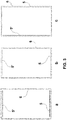
- FIGs 3a to 3c alternative designs of a VIG according to the present invention are shown, with a lower number of getter strips contained in them with respect to the design in Figure 2 . These alternative designs have two strips on two different edges in order to simplify the activation process. By reducing the number of strips, we lose the symmetry that can result in asymmetric total edge widths ( Fig 3a ) or in asymmetric sealant widths ( Fig 3b and 3c ). Designs of Figures 3b and 3c are equivalent and they differ in the location of getter strips, on the short edges for design of Figure 3b and on the long edges for design of Figure 3c .
- the deposition process could be carried out by choosing a sealant curb equivalent to the narrow sealant deposit and by using multiples of that curb to produce the wide sealant deposits.
- the inorganic dryer in the present sealant composition can be selected from irreversible dryers, such as CaO, other oxides, perchlorate dryers, and hygroscopic salts or from reversible dryers, such as zeolites or active carbon or a mixture thereof.
- irreversible dryers such as CaO, other oxides, perchlorate dryers, and hygroscopic salts
- reversible dryers such as zeolites or active carbon or a mixture thereof.
- the present sealant composition further comprises one or more passive fillers, that may be organic or inorganic fillers, such as poly(vinyl alcohol) (PVOH), polyimides, SiO 2 , TiO 2 , glass beads, glass fibers that may be either chopped or in strain form, metal or glass ribbons, and metal or glass wires.
- passive fillers such as poly(vinyl alcohol) (PVOH), polyimides, SiO 2 , TiO 2 , glass beads, glass fibers that may be either chopped or in strain form, metal or glass ribbons, and metal or glass wires.
- Table 1 exemplary composition of the polymer-based sealant Component Function Additive size ( ⁇ m) Composition Range % [w/w] Phenol-formaldehyde resin (Novolac) Matrix - 75 ⁇ 60 4,4'-diaminodiphenyl sulfone (Dapsone) Curing Agent ⁇ 63 25 ⁇ 40 (% eq/eq: 0.5 ⁇ 1) • Reversible: Zeolites e.g. LTA-Na, FAU 13X; Dryer ⁇ 10 5 ⁇ 30 • Irreversible: e.g. CaO • Organic: e.g. PVOH Passive Filler ⁇ 10 0 ⁇ 50 • Inorganic e.g. SiO 2 , glass beads, TiO 2
- subject of this invention is a process for manufacturing a vacuum insulating glazing comprising the steps of:
- the sealant deposition can be carried out by means of traditional deposition techniques, e.g. needle dispensing by deposition of the sealant composition from pre-filled syringes, or by positioning pre-formed laminated strips of the sealant composition.
- the curing step iii) is carried out at about 200°C for 1 hour.
- the curing step iii) is carried out at about 170°C for 1 hour.
- the steps i) and ii) above may be performed in a large evacuated chamber enclosing the entire VIG, without the need for a subsequent pumping out.
- the present VIG device has shown high barrier properties towards atmospheric gases and moisture too thanks to the presence of a dryer comprised in the sealant composition, not separated from it in the inner volume 4 of the VIG device.
- the present sealant compositions have been tested as illustrated in the following experimental part, and found that they are able to yield vacuum grade under any of the aging protocols tested, while the comparison compositions fail, especially for longer time aging.
- the presence of the dryer in the sealant formulation allows reaching the same high efficiency with a lower amount of getter or alternatively with the use even in conditions of a not fully-activated getter according to the temperature limits imposed by the VIG production process.
- the present VIG device is in fact able to accommodate the large stress due to the pressure difference between the inner volume 4 and external atmosphere. It is also able to accommodate the different thermal dilation between inner and outer glass panes, as well as to sustain, at the end of the manufacturing process, outgassing procedures at temperatures higher than 100°C, but below the sealant T g , to remove the gases and moisture from the inner volume of the VIG device.
- High yield stress and adhesion strength on glass surfaces (>7MPa) of the present devices are shown in the following experimental part following lap-shear tests, in comparison with devices comprising different sealant compositions.
- the present sealant edge in particular in that it has a curing temperature below 250°C and a glass transition temperature higher than 100°C. Moreover, it was observed that no gaseous species is released during polymerization.
- a further important advantage of the present invention is that the process for the manufacture of the present VIG device is simple and cost-effective.
- a VIG size of 300mm x 300mm has been chosen with sealing edge width of 1cm and a vacuum gap of 0.25mm.
- Sealant Samples A, B and C with formulations of the present invention are reported in Table 2. Comparative sealant compositions 1, 2, 3, 4 and 5, wherein other resins have been used as sealants have been considered for comparison; they are also listed in the same Table 3 below. All these polymer-based sealants were tested after the above reported aging protocols and results have been reported in Table 3. All the tests were carried out with a fully-activated getter in the form of ZrVAl alloy laminated on both sides of 0.1 mm thick nickel-plated iron 8mm-wide strips. For each VIG sample, four getter strips were used as illustrated in Figure 2 . Table 2.
- compositions of sealant sample investigated in the test examples Component Composition% (w/w) Sample A Phenol-formaldehyde resin 67.5 4,4' diaminodiphenyl sulphone 22.5 calcium oxide 10 Sample B Phenol-formaldehyde resin 67.5 4,4' diaminodiphenyl sulphone 22.5 Zeolites LTA 10 Sample C Phenol-formaldehyde resin 62.8 4,4' diaminodiphenyl sulphone 20.9 calcium oxide 9.3 silicon dioxide 7 Comparative 1 Phenol-formaldehyde resin 75 4,4' diaminodiphenyl sulphone 25 Comparative 2 Bisphenol F 73.75 4,4' diaminodiphenyl sulphone 26.25 Comparative 3 Polysulfide 100 Comparative 4 ethylene-octene copolymer 50.5 calcium oxide 33 Silicon dioxide 16.5 Comparative 5 polydimethylsiloxane 100
Landscapes
- Chemical & Material Sciences (AREA)
- Organic Chemistry (AREA)
- Chemical Kinetics & Catalysis (AREA)
- Health & Medical Sciences (AREA)
- Medicinal Chemistry (AREA)
- Polymers & Plastics (AREA)
- Engineering & Computer Science (AREA)
- Civil Engineering (AREA)
- Structural Engineering (AREA)
- General Chemical & Material Sciences (AREA)
- Physics & Mathematics (AREA)
- Thermal Sciences (AREA)
- Inorganic Chemistry (AREA)
- Analytical Chemistry (AREA)
- Oil, Petroleum & Natural Gas (AREA)
- Ceramic Engineering (AREA)
- Materials Engineering (AREA)
- Combustion & Propulsion (AREA)
- Mechanical Engineering (AREA)
- General Engineering & Computer Science (AREA)
- Geochemistry & Mineralogy (AREA)
- Life Sciences & Earth Sciences (AREA)
- Joining Of Glass To Other Materials (AREA)
- Securing Of Glass Panes Or The Like (AREA)
- Sealing Material Composition (AREA)
- Glass Compositions (AREA)
Claims (20)
- Eine Vakuumisolierverglasung (1), die:- zwei Glasscheiben (2, 2'), die einander gegenüberstehen und voneinander durch einen oder mehrere Abstandshalter (3, 3', 3") derart beabstandet sind, dass dazwischen ein leeres Volumen (4) erzeugt wird,- ein nicht verdampfbares Gettersystem (5, 5'), das in diesem Volumen (4) angeordnet ist, und- einen polymerbasierten Randverbund (6), der dieses Volumen (4) versiegelt, um einen verschlossenen Zwischenraum zwischen diesen Glasscheiben (2, 2') zu bilden, umfasst, wobei- diese Vakuumisolierverglasung dadurch gekennzeichnet ist, dass dieser Randverbund (6) erhalten wird durch Aushärten einer Versiegelungszusammensetzung, umfassend:a) ein vernetzbares wärmeaushärtbares nichthalogeniertes Polyepoxidharz, das im Mittel mindestens zwei Epoxygruppen pro Molekül enthält,b) ein aromatisches Diamin-Vernetzungsmittel mit einem Anteil, der ausreicht, 0,5 bis 2,0 Äquivalente Amin-N-H pro Äquivalent Epoxygruppen in dem Epoxidharz zu liefern, undc) ein anorganisches Trocknungsmittel mit einem Anteil von zwischen 5 und 25 Gew.-%, bezogen auf das Gesamtgewicht dieser organischen Zusammensetzung.
- Die Vakuumisolierverglasung nach Anspruch 1, wobei der Anteil an dem aromatischen Diamin-Vernetzungsmittel 0,5 bis 1,0 Äquivalent Amin-N-H pro Äquivalent Epoxygruppen des Epoxidharzes liefert.
- Die Vakuumisolierverglasung nach Anspruch 1, wobei das anorganische Trocknungsmittel aus der Gruppe ausgewählt ist, die aus Oxiden, vorzugsweise CaO, hygroskopischen Salzen wie Perchlorat-Trocknungsmitteln, vorzugsweise Mg(ClO4)2, und reversiblen Trocknungsmitteln wie Zeolithen und Aktivkohle oder einem Gemisch davon besteht.
- Die Vakuumisolierverglasung nach einem der vorhergehenden Ansprüche, wobei die Versiegelungszusammensetzung weiterhin einen oder mehrere passive Füllstoffe umfasst.
- Die Vakuumisolierverglasung nach Anspruch 4, wobei der passive Füllstoff aus der Gruppe ausgewählt ist, die aus Polyvinylalkohol, Polyimiden, SiO2, TiO2, Glaskügelchen, Glasfasern, Metall- oder Glasbändern und Metall- oder Glasdrähten besteht.
- Die Vakuumisolierverglasung nach einem der vorhergehenden Ansprüche, wobei das nichthalogenierte Polyepoxidharz ein Phenol-Formaldehyd-Harz ist.
- Die Vakuumisolierverglasung nach Anspruch 6, wobei das Phenol-Formaldehyd-Harz die Formel (I)

- Die Vakuumisolierverglasung nach einem der vorhergehenden Ansprüche, wobei das aromatische Diamin-Vernetzungsmittel sulfonierte und/oder PhenolGruppen enthält.
- Die Vakuumisolierverglasung nach einem der vorhergehenden Ansprüche, wobei das aromatische Diamin-Vernetzungsmittel 4,4'-Diamino-diphenylsulfon ist.
- Die Vakuumisolierverglasung nach einem der vorhergehenden Ansprüche, wobei die Versiegelungszusammensetzung eine Glasübergangstemperatur Tg aufweist, bestimmt durch Differentialscanningkalorimetrie-(DSC-)Messungen entsprechend ISO 11357-2:2013, die höher als 100 °C ist.
- Die Vakuumisolierverglasung nach einem der vorhergehenden Ansprüche, wobei das nicht verdampfbare Gettersystem eine Zr-Legierung mit einer N2-Absorptionskapazität von ≥ 1 cm3Torr/g gemäß ASTM-Absorptionstest bei Raumtemperatur umfasst.
- Die Vakuumisolierverglasung nach Anspruch 11, wobei die Zr-Legierung aus der Gruppe ausgewählt ist, die aus ZrTiV-, ZrTiVAl-, ZrVAl-, ZrVFe- und ZrVFeMn-SE-Legierungen besteht, wobei SE ein oder mehrere Seltenerdmetalle bedeutet, wahlweise in Gemischen gesintert, die ferner Zr-Pulver enthalten.
- Die Vakuumisolierverglasung nach einem der vorhergehenden Ansprüche, wobei das Gettersystem einen pulverförmigen Getter umfasst, der auf mindestens einer Seite eines Metallstreifens verteilt ist.
- Ein Fenster oder eine Fassade, das/die die in den Ansprüchen 1 bis 13 definierte Vakuumisolierverglasung umfasst.
- Ein Abteil für einen kommerziellen oder Haushaltskühlschrank, das die in den Ansprüchen 1 bis 13 definierte Vakuumisolierverglasung umfasst.
- Ein Verfahren zur Herstellung einer Vakuumisolierverglasung, umfassend die Schritte:i) Bereitstellen einer oberen und einer unteren Glasscheibe und Bearbeiten der unteren Glasscheibe in den folgenden Schritten a bis c in einer beliebigen Reihenfolge:a. Anbringen der Abstandshalter,b. Anbringen eines nicht verdampfbaren Gettersystems auf einer Fläche der Glasscheibe oder in einem dafür vorgesehenen Zwischenraum und wahlweise Verkleben dieses Getters undc. Aufbringen einer wie in Anspruch 1 definierten Versiegelungszusammensetzung,ii) Anordnen dieser oberen Glasscheibe auf dieser unteren Glasscheibe zu einem Paar,iii) Aushärten dieser Versiegelungszusammensetzung, wodurch sich eine VIG-Kammer bildet,iv) Leerpumpen dieser VIG-Kammer,v) Aktivieren des Getters undvi) Versiegeln der Evakuierungsöffnung.
- Das Verfahren nach Anspruch 16, wobei der Schritt i)c. durch Anbringen vorgeformter laminierter Streifen mit dieser Versiegelungszusammensetzung oder durch Aufbringen der Versiegelungszusammensetzung aus vorher gefüllten Spritzen durchgeführt wird.
- Das Verfahren nach Anspruch 16 oder 17, wobei der Schritt iii) des Aushärtens der Versiegelungszusammensetzung durch Erhitzen und wahlweise auch durch UV-Bestrahlung durchgeführt wird.
- Das Verfahren nach einem der Ansprüche 16 bis 18, wobei der Schritt v) des Aktivierens des Getters durch Hochfrequenz-(HF-)Erhitzen innerhalb eines Temperaturbereichs von 300 °C bis 600 °C durchgeführt wird.
- Das Verfahren nach einem der Ansprüche 16 bis 19, wobei die Schritte ii) und iii) der Anordnung der Glasscheiben zu einem Paar und des Aushärtens der Versiegelungszusammensetzung in einer großen evakuierten Kammer durchgeführt werden, welche die gesamte VIG aufnimmt.
Applications Claiming Priority (1)
| Application Number | Priority Date | Filing Date | Title |
|---|---|---|---|
| IT102019000009759A IT201900009759A1 (it) | 2019-06-21 | 2019-06-21 | Vetri evacuati |
Publications (2)
| Publication Number | Publication Date |
|---|---|
| EP3754145A1 EP3754145A1 (de) | 2020-12-23 |
| EP3754145B1 true EP3754145B1 (de) | 2021-10-06 |
Family
ID=68234245
Family Applications (1)
| Application Number | Title | Priority Date | Filing Date |
|---|---|---|---|
| EP20180896.1A Active EP3754145B1 (de) | 2019-06-21 | 2020-06-18 | Vakuumisolierglas |
Country Status (8)
| Country | Link |
|---|---|
| US (1) | US11352530B2 (de) |
| EP (1) | EP3754145B1 (de) |
| JP (1) | JP7339369B2 (de) |
| KR (1) | KR102679483B1 (de) |
| CN (1) | CN113966430B (de) |
| IT (1) | IT201900009759A1 (de) |
| TW (1) | TW202110928A (de) |
| WO (1) | WO2020255031A1 (de) |
Families Citing this family (3)
| Publication number | Priority date | Publication date | Assignee | Title |
|---|---|---|---|---|
| WO2024018689A1 (ja) * | 2022-07-22 | 2024-01-25 | パナソニックIpマネジメント株式会社 | ガラスパネルユニットの製造方法及びガラスパネルユニットの組立て品 |
| CN220163644U (zh) * | 2023-07-24 | 2023-12-12 | 龙口市永安车窗有限公司 | 一种透光模组及包含它的房车车窗 |
| US20260028872A1 (en) * | 2024-07-29 | 2026-01-29 | LuxWall, Inc. | Vacuum insulated panel configured for measurement of pressure in evacuated gap |
Family Cites Families (20)
| Publication number | Priority date | Publication date | Assignee | Title |
|---|---|---|---|---|
| JPH0826297B2 (ja) * | 1991-11-29 | 1996-03-13 | 住友ベークライト株式会社 | 接着剤組成物 |
| NZ281449A (en) | 1994-03-31 | 1997-07-27 | Ppg Industries Inc | Barrier coatings based on polyepoxide-polyamine resin |
| DE69514084T2 (de) | 1995-01-27 | 2000-04-27 | Mitsubishi Pencil Corporation Of America, Chatsworth | Halterahmen für eine Tintenkassette und Vorrichtung zum Auffüllen der Tinte |
| JPH08218742A (ja) * | 1995-02-09 | 1996-08-27 | Sanyo Electric Co Ltd | 複層ガラス |
| JP2001206740A (ja) * | 2000-01-25 | 2001-07-31 | Central Glass Co Ltd | 低圧複層ガラスおよびその製造方法 |
| JP2003089557A (ja) * | 2001-09-14 | 2003-03-28 | Central Glass Co Ltd | 低圧複層ガラスおよび製造方法 |
| JP2003183624A (ja) * | 2001-12-13 | 2003-07-03 | Asahi Glass Co Ltd | 封着用組成物および封着構造体 |
| EP1630344A1 (de) * | 2004-08-30 | 2006-03-01 | Glaverbel | Verglasungsscheibe |
| US8597741B2 (en) * | 2005-11-18 | 2013-12-03 | Momentive Performance Materials Inc. | Insulated glass unit possessing room temperature-cured siloxane sealant composition of reduced gas permeability |
| US20070178256A1 (en) | 2006-02-01 | 2007-08-02 | Landon Shayne J | Insulated glass unit with sealant composition having reduced permeability to gas |
| US7541076B2 (en) * | 2006-02-01 | 2009-06-02 | Momentive Performance Materials Inc. | Insulated glass unit with sealant composition having reduced permeability to gas |
| JP2010100676A (ja) * | 2008-10-21 | 2010-05-06 | Kaneka Corp | 複層ガラス用ホットメルト型シーリング材組成物 |
| CN102630233B (zh) * | 2009-12-01 | 2014-09-10 | 长濑化成株式会社 | 环氧树脂组合物 |
| EP2552847A4 (de) * | 2010-03-27 | 2013-10-02 | Robert S Jones | Vakuumisolierungsglaseinheit mit viskoser randdichtung |
| US8950162B2 (en) | 2010-06-02 | 2015-02-10 | Eversealed Windows, Inc. | Multi-pane glass unit having seal with adhesive and hermetic coating layer |
| JP5158240B2 (ja) * | 2011-07-27 | 2013-03-06 | 横浜ゴム株式会社 | 複層ガラス用二次シーリング材組成物及びそれを用いた複層ガラス |
| WO2016051714A1 (ja) * | 2014-09-30 | 2016-04-07 | パナソニックIpマネジメント株式会社 | ガラスパネルユニット及びその検査方法 |
| AU2015359391A1 (en) * | 2014-12-12 | 2017-06-29 | Agc Glass Europe | Insulating window unit |
| CN107285650A (zh) | 2017-05-15 | 2017-10-24 | 淮北蓄煌新能源科技有限公司 | 一种钢化玻璃制成玻璃组件的低温气密封接方法 |
| CN108104680B (zh) * | 2017-12-19 | 2019-03-22 | 福建奋安智能门窗系统有限公司 | 基于双层密封结构的组合窗 |
-
2019
- 2019-06-21 IT IT102019000009759A patent/IT201900009759A1/it unknown
-
2020
- 2020-06-18 JP JP2021576101A patent/JP7339369B2/ja active Active
- 2020-06-18 EP EP20180896.1A patent/EP3754145B1/de active Active
- 2020-06-18 CN CN202080043927.7A patent/CN113966430B/zh active Active
- 2020-06-18 US US17/614,427 patent/US11352530B2/en active Active
- 2020-06-18 WO PCT/IB2020/055733 patent/WO2020255031A1/en not_active Ceased
- 2020-06-18 KR KR1020217041277A patent/KR102679483B1/ko active Active
- 2020-06-19 TW TW109120744A patent/TW202110928A/zh unknown
Also Published As
| Publication number | Publication date |
|---|---|
| WO2020255031A1 (en) | 2020-12-24 |
| CN113966430B (zh) | 2022-08-05 |
| KR102679483B1 (ko) | 2024-07-02 |
| JP7339369B2 (ja) | 2023-09-05 |
| IT201900009759A1 (it) | 2020-12-21 |
| CN113966430A (zh) | 2022-01-21 |
| EP3754145A1 (de) | 2020-12-23 |
| TW202110928A (zh) | 2021-03-16 |
| US20220145145A1 (en) | 2022-05-12 |
| US11352530B2 (en) | 2022-06-07 |
| KR20220024071A (ko) | 2022-03-03 |
| JP2022536988A (ja) | 2022-08-22 |
Similar Documents
| Publication | Publication Date | Title |
|---|---|---|
| US11352530B2 (en) | Vacuum insulating glazing | |
| US6635321B2 (en) | Vacuum IG window unit with edge seal formed via microwave curing, and corresponding method of making the same | |
| US6558494B1 (en) | Vacuum IG window unit with edge seal at least partially diffused at temper and completed via microwave curing, and corresponding method of making the same | |
| US8950162B2 (en) | Multi-pane glass unit having seal with adhesive and hermetic coating layer | |
| DK2855816T3 (en) | PROCEDURE FOR PREPARING A VACUUM-INSULATED GLASS (VIG) WINDOW UNIT WITH REDUCED SEAL HEIGHT VARIATION | |
| CN104685148B (zh) | 真空绝缘玻璃窗单元以及制备其的方法 | |
| US20020035852A1 (en) | Vacuum IG window unit with edge seal at least partially diffused at temper and completed via microwave curing, and corresponding method of making the same | |
| US11913277B2 (en) | Method for manufacturing glass panel unit | |
| KR20190103358A (ko) | 진공 유리 및 이의 제조 방법 | |
| US12065873B2 (en) | Spacer having improved adhesion | |
| US20180252021A1 (en) | Corner connector with capillaries | |
| EP1794404B1 (de) | Verglasungsscheibe | |
| JP2018203549A (ja) | 真空断熱部材及びその製造方法 | |
| EP4553265A2 (de) | Spezifisches beschichtetes glas für vig-anordnung | |
| JP2022536988A5 (de) | ||
| CN201679400U (zh) | 带有三道密封的镀膜中空玻璃 | |
| CN101761291B (zh) | 带有三道密封的镀膜中空玻璃 | |
| US20250249660A1 (en) | Aerogel mounting and encapsulation technology, manufacturing methods, insulating glass units and related subassemblies | |
| EA043067B1 (ru) | Специальное стекло с покрытием для vig в сборе | |
| JP2003089557A (ja) | 低圧複層ガラスおよび製造方法 |
Legal Events
| Date | Code | Title | Description |
|---|---|---|---|
| PUAI | Public reference made under article 153(3) epc to a published international application that has entered the european phase |
Free format text: ORIGINAL CODE: 0009012 |
|
| STAA | Information on the status of an ep patent application or granted ep patent |
Free format text: STATUS: THE APPLICATION HAS BEEN PUBLISHED |
|
| STAA | Information on the status of an ep patent application or granted ep patent |
Free format text: STATUS: REQUEST FOR EXAMINATION WAS MADE |
|
| AK | Designated contracting states |
Kind code of ref document: A1 Designated state(s): AL AT BE BG CH CY CZ DE DK EE ES FI FR GB GR HR HU IE IS IT LI LT LU LV MC MK MT NL NO PL PT RO RS SE SI SK SM TR |
|
| AX | Request for extension of the european patent |
Extension state: BA ME |
|
| 17P | Request for examination filed |
Effective date: 20201119 |
|
| RBV | Designated contracting states (corrected) |
Designated state(s): AL AT BE BG CH CY CZ DE DK EE ES FI FR GB GR HR HU IE IS IT LI LT LU LV MC MK MT NL NO PL PT RO RS SE SI SK SM TR |
|
| RIC1 | Information provided on ipc code assigned before grant |
Ipc: E06B 3/673 20060101ALI20210216BHEP Ipc: C09J 163/04 20060101ALI20210216BHEP Ipc: C08K 3/22 20060101ALI20210216BHEP Ipc: C08G 59/50 20060101ALI20210216BHEP Ipc: E06B 3/66 20060101AFI20210216BHEP Ipc: C09J 163/00 20060101ALI20210216BHEP |
|
| GRAP | Despatch of communication of intention to grant a patent |
Free format text: ORIGINAL CODE: EPIDOSNIGR1 |
|
| STAA | Information on the status of an ep patent application or granted ep patent |
Free format text: STATUS: GRANT OF PATENT IS INTENDED |
|
| INTG | Intention to grant announced |
Effective date: 20210409 |
|
| GRAS | Grant fee paid |
Free format text: ORIGINAL CODE: EPIDOSNIGR3 |
|
| GRAJ | Information related to disapproval of communication of intention to grant by the applicant or resumption of examination proceedings by the epo deleted |
Free format text: ORIGINAL CODE: EPIDOSDIGR1 |
|
| GRAL | Information related to payment of fee for publishing/printing deleted |
Free format text: ORIGINAL CODE: EPIDOSDIGR3 |
|
| STAA | Information on the status of an ep patent application or granted ep patent |
Free format text: STATUS: REQUEST FOR EXAMINATION WAS MADE |
|
| GRAP | Despatch of communication of intention to grant a patent |
Free format text: ORIGINAL CODE: EPIDOSNIGR1 |
|
| STAA | Information on the status of an ep patent application or granted ep patent |
Free format text: STATUS: GRANT OF PATENT IS INTENDED |
|
| INTC | Intention to grant announced (deleted) | ||
| INTG | Intention to grant announced |
Effective date: 20210708 |
|
| GRAA | (expected) grant |
Free format text: ORIGINAL CODE: 0009210 |
|
| STAA | Information on the status of an ep patent application or granted ep patent |
Free format text: STATUS: THE PATENT HAS BEEN GRANTED |
|
| AK | Designated contracting states |
Kind code of ref document: B1 Designated state(s): AL AT BE BG CH CY CZ DE DK EE ES FI FR GB GR HR HU IE IS IT LI LT LU LV MC MK MT NL NO PL PT RO RS SE SI SK SM TR |
|
| REG | Reference to a national code |
Ref country code: GB Ref legal event code: FG4D |
|
| REG | Reference to a national code |
Ref country code: CH Ref legal event code: EP Ref country code: AT Ref legal event code: REF Ref document number: 1436383 Country of ref document: AT Kind code of ref document: T Effective date: 20211015 |
|
| REG | Reference to a national code |
Ref country code: IE Ref legal event code: FG4D |
|
| REG | Reference to a national code |
Ref country code: DE Ref legal event code: R096 Ref document number: 602020000682 Country of ref document: DE |
|
| REG | Reference to a national code |
Ref country code: LT Ref legal event code: MG9D |
|
| REG | Reference to a national code |
Ref country code: NL Ref legal event code: MP Effective date: 20211006 |
|
| REG | Reference to a national code |
Ref country code: AT Ref legal event code: MK05 Ref document number: 1436383 Country of ref document: AT Kind code of ref document: T Effective date: 20211006 |
|
| PG25 | Lapsed in a contracting state [announced via postgrant information from national office to epo] |
Ref country code: RS Free format text: LAPSE BECAUSE OF FAILURE TO SUBMIT A TRANSLATION OF THE DESCRIPTION OR TO PAY THE FEE WITHIN THE PRESCRIBED TIME-LIMIT Effective date: 20211006 Ref country code: LT Free format text: LAPSE BECAUSE OF FAILURE TO SUBMIT A TRANSLATION OF THE DESCRIPTION OR TO PAY THE FEE WITHIN THE PRESCRIBED TIME-LIMIT Effective date: 20211006 Ref country code: FI Free format text: LAPSE BECAUSE OF FAILURE TO SUBMIT A TRANSLATION OF THE DESCRIPTION OR TO PAY THE FEE WITHIN THE PRESCRIBED TIME-LIMIT Effective date: 20211006 Ref country code: BG Free format text: LAPSE BECAUSE OF FAILURE TO SUBMIT A TRANSLATION OF THE DESCRIPTION OR TO PAY THE FEE WITHIN THE PRESCRIBED TIME-LIMIT Effective date: 20220106 Ref country code: AT Free format text: LAPSE BECAUSE OF FAILURE TO SUBMIT A TRANSLATION OF THE DESCRIPTION OR TO PAY THE FEE WITHIN THE PRESCRIBED TIME-LIMIT Effective date: 20211006 |
|
| PG25 | Lapsed in a contracting state [announced via postgrant information from national office to epo] |
Ref country code: IS Free format text: LAPSE BECAUSE OF FAILURE TO SUBMIT A TRANSLATION OF THE DESCRIPTION OR TO PAY THE FEE WITHIN THE PRESCRIBED TIME-LIMIT Effective date: 20220206 Ref country code: SE Free format text: LAPSE BECAUSE OF FAILURE TO SUBMIT A TRANSLATION OF THE DESCRIPTION OR TO PAY THE FEE WITHIN THE PRESCRIBED TIME-LIMIT Effective date: 20211006 Ref country code: PT Free format text: LAPSE BECAUSE OF FAILURE TO SUBMIT A TRANSLATION OF THE DESCRIPTION OR TO PAY THE FEE WITHIN THE PRESCRIBED TIME-LIMIT Effective date: 20220207 Ref country code: PL Free format text: LAPSE BECAUSE OF FAILURE TO SUBMIT A TRANSLATION OF THE DESCRIPTION OR TO PAY THE FEE WITHIN THE PRESCRIBED TIME-LIMIT Effective date: 20211006 Ref country code: NO Free format text: LAPSE BECAUSE OF FAILURE TO SUBMIT A TRANSLATION OF THE DESCRIPTION OR TO PAY THE FEE WITHIN THE PRESCRIBED TIME-LIMIT Effective date: 20220106 Ref country code: NL Free format text: LAPSE BECAUSE OF FAILURE TO SUBMIT A TRANSLATION OF THE DESCRIPTION OR TO PAY THE FEE WITHIN THE PRESCRIBED TIME-LIMIT Effective date: 20211006 Ref country code: LV Free format text: LAPSE BECAUSE OF FAILURE TO SUBMIT A TRANSLATION OF THE DESCRIPTION OR TO PAY THE FEE WITHIN THE PRESCRIBED TIME-LIMIT Effective date: 20211006 Ref country code: HR Free format text: LAPSE BECAUSE OF FAILURE TO SUBMIT A TRANSLATION OF THE DESCRIPTION OR TO PAY THE FEE WITHIN THE PRESCRIBED TIME-LIMIT Effective date: 20211006 Ref country code: GR Free format text: LAPSE BECAUSE OF FAILURE TO SUBMIT A TRANSLATION OF THE DESCRIPTION OR TO PAY THE FEE WITHIN THE PRESCRIBED TIME-LIMIT Effective date: 20220107 Ref country code: ES Free format text: LAPSE BECAUSE OF FAILURE TO SUBMIT A TRANSLATION OF THE DESCRIPTION OR TO PAY THE FEE WITHIN THE PRESCRIBED TIME-LIMIT Effective date: 20211006 |
|
| REG | Reference to a national code |
Ref country code: DE Ref legal event code: R097 Ref document number: 602020000682 Country of ref document: DE |
|
| PG25 | Lapsed in a contracting state [announced via postgrant information from national office to epo] |
Ref country code: SM Free format text: LAPSE BECAUSE OF FAILURE TO SUBMIT A TRANSLATION OF THE DESCRIPTION OR TO PAY THE FEE WITHIN THE PRESCRIBED TIME-LIMIT Effective date: 20211006 Ref country code: SK Free format text: LAPSE BECAUSE OF FAILURE TO SUBMIT A TRANSLATION OF THE DESCRIPTION OR TO PAY THE FEE WITHIN THE PRESCRIBED TIME-LIMIT Effective date: 20211006 Ref country code: RO Free format text: LAPSE BECAUSE OF FAILURE TO SUBMIT A TRANSLATION OF THE DESCRIPTION OR TO PAY THE FEE WITHIN THE PRESCRIBED TIME-LIMIT Effective date: 20211006 Ref country code: EE Free format text: LAPSE BECAUSE OF FAILURE TO SUBMIT A TRANSLATION OF THE DESCRIPTION OR TO PAY THE FEE WITHIN THE PRESCRIBED TIME-LIMIT Effective date: 20211006 Ref country code: DK Free format text: LAPSE BECAUSE OF FAILURE TO SUBMIT A TRANSLATION OF THE DESCRIPTION OR TO PAY THE FEE WITHIN THE PRESCRIBED TIME-LIMIT Effective date: 20211006 Ref country code: CZ Free format text: LAPSE BECAUSE OF FAILURE TO SUBMIT A TRANSLATION OF THE DESCRIPTION OR TO PAY THE FEE WITHIN THE PRESCRIBED TIME-LIMIT Effective date: 20211006 |
|
| PLBE | No opposition filed within time limit |
Free format text: ORIGINAL CODE: 0009261 |
|
| STAA | Information on the status of an ep patent application or granted ep patent |
Free format text: STATUS: NO OPPOSITION FILED WITHIN TIME LIMIT |
|
| 26N | No opposition filed |
Effective date: 20220707 |
|
| PG25 | Lapsed in a contracting state [announced via postgrant information from national office to epo] |
Ref country code: AL Free format text: LAPSE BECAUSE OF FAILURE TO SUBMIT A TRANSLATION OF THE DESCRIPTION OR TO PAY THE FEE WITHIN THE PRESCRIBED TIME-LIMIT Effective date: 20211006 |
|
| PG25 | Lapsed in a contracting state [announced via postgrant information from national office to epo] |
Ref country code: SI Free format text: LAPSE BECAUSE OF FAILURE TO SUBMIT A TRANSLATION OF THE DESCRIPTION OR TO PAY THE FEE WITHIN THE PRESCRIBED TIME-LIMIT Effective date: 20211006 |
|
| PG25 | Lapsed in a contracting state [announced via postgrant information from national office to epo] |
Ref country code: MC Free format text: LAPSE BECAUSE OF FAILURE TO SUBMIT A TRANSLATION OF THE DESCRIPTION OR TO PAY THE FEE WITHIN THE PRESCRIBED TIME-LIMIT Effective date: 20211006 |
|
| PG25 | Lapsed in a contracting state [announced via postgrant information from national office to epo] |
Ref country code: LU Free format text: LAPSE BECAUSE OF NON-PAYMENT OF DUE FEES Effective date: 20220618 Ref country code: IE Free format text: LAPSE BECAUSE OF NON-PAYMENT OF DUE FEES Effective date: 20220618 |
|
| P01 | Opt-out of the competence of the unified patent court (upc) registered |
Effective date: 20230515 |
|
| REG | Reference to a national code |
Ref country code: CH Ref legal event code: PL |
|
| PG25 | Lapsed in a contracting state [announced via postgrant information from national office to epo] |
Ref country code: MK Free format text: LAPSE BECAUSE OF FAILURE TO SUBMIT A TRANSLATION OF THE DESCRIPTION OR TO PAY THE FEE WITHIN THE PRESCRIBED TIME-LIMIT Effective date: 20211006 Ref country code: CY Free format text: LAPSE BECAUSE OF FAILURE TO SUBMIT A TRANSLATION OF THE DESCRIPTION OR TO PAY THE FEE WITHIN THE PRESCRIBED TIME-LIMIT Effective date: 20211006 Ref country code: CH Free format text: LAPSE BECAUSE OF NON-PAYMENT OF DUE FEES Effective date: 20230630 |
|
| PG25 | Lapsed in a contracting state [announced via postgrant information from national office to epo] |
Ref country code: HU Free format text: LAPSE BECAUSE OF FAILURE TO SUBMIT A TRANSLATION OF THE DESCRIPTION OR TO PAY THE FEE WITHIN THE PRESCRIBED TIME-LIMIT; INVALID AB INITIO Effective date: 20200618 |
|
| PG25 | Lapsed in a contracting state [announced via postgrant information from national office to epo] |
Ref country code: TR Free format text: LAPSE BECAUSE OF FAILURE TO SUBMIT A TRANSLATION OF THE DESCRIPTION OR TO PAY THE FEE WITHIN THE PRESCRIBED TIME-LIMIT Effective date: 20211006 |
|
| PG25 | Lapsed in a contracting state [announced via postgrant information from national office to epo] |
Ref country code: MT Free format text: LAPSE BECAUSE OF FAILURE TO SUBMIT A TRANSLATION OF THE DESCRIPTION OR TO PAY THE FEE WITHIN THE PRESCRIBED TIME-LIMIT Effective date: 20211006 |
|
| PGFP | Annual fee paid to national office [announced via postgrant information from national office to epo] |
Ref country code: DE Payment date: 20250618 Year of fee payment: 6 |
|
| PGFP | Annual fee paid to national office [announced via postgrant information from national office to epo] |
Ref country code: GB Payment date: 20250620 Year of fee payment: 6 |
|
| PGFP | Annual fee paid to national office [announced via postgrant information from national office to epo] |
Ref country code: BE Payment date: 20250617 Year of fee payment: 6 |
|
| PGFP | Annual fee paid to national office [announced via postgrant information from national office to epo] |
Ref country code: FR Payment date: 20250626 Year of fee payment: 6 |
|
| PGFP | Annual fee paid to national office [announced via postgrant information from national office to epo] |
Ref country code: IT Payment date: 20250630 Year of fee payment: 6 |