EP3743726B1 - L2a5 antibody or functional fragment thereof against tumour antigens - Google Patents
L2a5 antibody or functional fragment thereof against tumour antigens Download PDFInfo
- Publication number
- EP3743726B1 EP3743726B1 EP19702492.0A EP19702492A EP3743726B1 EP 3743726 B1 EP3743726 B1 EP 3743726B1 EP 19702492 A EP19702492 A EP 19702492A EP 3743726 B1 EP3743726 B1 EP 3743726B1
- Authority
- EP
- European Patent Office
- Prior art keywords
- antibody
- stn
- antibody according
- cells
- seq
- Prior art date
- Legal status (The legal status is an assumption and is not a legal conclusion. Google has not performed a legal analysis and makes no representation as to the accuracy of the status listed.)
- Active
Links
Images




Classifications
-
- G—PHYSICS
- G01—MEASURING; TESTING
- G01N—INVESTIGATING OR ANALYSING MATERIALS BY DETERMINING THEIR CHEMICAL OR PHYSICAL PROPERTIES
- G01N33/00—Investigating or analysing materials by specific methods not covered by groups G01N1/00 - G01N31/00
- G01N33/48—Biological material, e.g. blood, urine; Haemocytometers
- G01N33/50—Chemical analysis of biological material, e.g. blood, urine; Testing involving biospecific ligand binding methods; Immunological testing
- G01N33/53—Immunoassay; Biospecific binding assay; Materials therefor
- G01N33/575—Immunoassay; Biospecific binding assay; Materials therefor for cancer
-
- A—HUMAN NECESSITIES
- A61—MEDICAL OR VETERINARY SCIENCE; HYGIENE
- A61K—PREPARATIONS FOR MEDICAL, DENTAL OR TOILETRY PURPOSES
- A61K39/00—Medicinal preparations containing antigens or antibodies
- A61K39/395—Antibodies; Immunoglobulins; Immune serum, e.g. antilymphocytic serum
- A61K39/39533—Antibodies; Immunoglobulins; Immune serum, e.g. antilymphocytic serum against materials from animals
- A61K39/3955—Antibodies; Immunoglobulins; Immune serum, e.g. antilymphocytic serum against materials from animals against proteinaceous materials, e.g. enzymes, hormones, lymphokines
-
- C—CHEMISTRY; METALLURGY
- C07—ORGANIC CHEMISTRY
- C07K—PEPTIDES
- C07K16/00—Immunoglobulins [IG], e.g. monoclonal or polyclonal antibodies
- C07K16/18—Immunoglobulins [IG], e.g. monoclonal or polyclonal antibodies against material from animals or humans
- C07K16/28—Immunoglobulins [IG], e.g. monoclonal or polyclonal antibodies against material from animals or humans against receptors, cell surface antigens or cell surface determinants
- C07K16/30—Immunoglobulins [IG], e.g. monoclonal or polyclonal antibodies against material from animals or humans against receptors, cell surface antigens or cell surface determinants from tumour cells
- C07K16/3076—Immunoglobulins [IG], e.g. monoclonal or polyclonal antibodies against material from animals or humans against receptors, cell surface antigens or cell surface determinants from tumour cells against structure-related tumour-associated moieties
- C07K16/3092—Immunoglobulins [IG], e.g. monoclonal or polyclonal antibodies against material from animals or humans against receptors, cell surface antigens or cell surface determinants from tumour cells against structure-related tumour-associated moieties against tumour-associated mucins
-
- G—PHYSICS
- G01—MEASURING; TESTING
- G01N—INVESTIGATING OR ANALYSING MATERIALS BY DETERMINING THEIR CHEMICAL OR PHYSICAL PROPERTIES
- G01N33/00—Investigating or analysing materials by specific methods not covered by groups G01N1/00 - G01N31/00
- G01N33/48—Biological material, e.g. blood, urine; Haemocytometers
- G01N33/50—Chemical analysis of biological material, e.g. blood, urine; Testing involving biospecific ligand binding methods; Immunological testing
- G01N33/53—Immunoassay; Biospecific binding assay; Materials therefor
- G01N33/575—Immunoassay; Biospecific binding assay; Materials therefor for cancer
- G01N33/5758—Immunoassay; Biospecific binding assay; Materials therefor for cancer involving compounds serving as markers for tumours, cancers or neoplasias, e.g. cellular determinants, receptors, heat shock/stress proteins, A-protein, oligosaccharides or metabolites
- G01N33/5759—Immunoassay; Biospecific binding assay; Materials therefor for cancer involving compounds serving as markers for tumours, cancers or neoplasias, e.g. cellular determinants, receptors, heat shock/stress proteins, A-protein, oligosaccharides or metabolites involving compounds localised on the membrane of tumour or cancer cells
-
- A—HUMAN NECESSITIES
- A61—MEDICAL OR VETERINARY SCIENCE; HYGIENE
- A61K—PREPARATIONS FOR MEDICAL, DENTAL OR TOILETRY PURPOSES
- A61K39/00—Medicinal preparations containing antigens or antibodies
- A61K39/395—Antibodies; Immunoglobulins; Immune serum, e.g. antilymphocytic serum
- A61K39/39533—Antibodies; Immunoglobulins; Immune serum, e.g. antilymphocytic serum against materials from animals
- A61K39/39558—Antibodies; Immunoglobulins; Immune serum, e.g. antilymphocytic serum against materials from animals against tumor tissues, cells, antigens
-
- A—HUMAN NECESSITIES
- A61—MEDICAL OR VETERINARY SCIENCE; HYGIENE
- A61P—SPECIFIC THERAPEUTIC ACTIVITY OF CHEMICAL COMPOUNDS OR MEDICINAL PREPARATIONS
- A61P35/00—Antineoplastic agents
-
- C—CHEMISTRY; METALLURGY
- C07—ORGANIC CHEMISTRY
- C07K—PEPTIDES
- C07K16/00—Immunoglobulins [IG], e.g. monoclonal or polyclonal antibodies
- C07K16/18—Immunoglobulins [IG], e.g. monoclonal or polyclonal antibodies against material from animals or humans
- C07K16/28—Immunoglobulins [IG], e.g. monoclonal or polyclonal antibodies against material from animals or humans against receptors, cell surface antigens or cell surface determinants
- C07K16/2896—Immunoglobulins [IG], e.g. monoclonal or polyclonal antibodies against material from animals or humans against receptors, cell surface antigens or cell surface determinants against molecules with a "CD"-designation, not provided for elsewhere
-
- C—CHEMISTRY; METALLURGY
- C07—ORGANIC CHEMISTRY
- C07K—PEPTIDES
- C07K16/00—Immunoglobulins [IG], e.g. monoclonal or polyclonal antibodies
- C07K16/18—Immunoglobulins [IG], e.g. monoclonal or polyclonal antibodies against material from animals or humans
- C07K16/28—Immunoglobulins [IG], e.g. monoclonal or polyclonal antibodies against material from animals or humans against receptors, cell surface antigens or cell surface determinants
- C07K16/30—Immunoglobulins [IG], e.g. monoclonal or polyclonal antibodies against material from animals or humans against receptors, cell surface antigens or cell surface determinants from tumour cells
-
- C—CHEMISTRY; METALLURGY
- C07—ORGANIC CHEMISTRY
- C07K—PEPTIDES
- C07K16/00—Immunoglobulins [IG], e.g. monoclonal or polyclonal antibodies
- C07K16/18—Immunoglobulins [IG], e.g. monoclonal or polyclonal antibodies against material from animals or humans
- C07K16/28—Immunoglobulins [IG], e.g. monoclonal or polyclonal antibodies against material from animals or humans against receptors, cell surface antigens or cell surface determinants
- C07K16/30—Immunoglobulins [IG], e.g. monoclonal or polyclonal antibodies against material from animals or humans against receptors, cell surface antigens or cell surface determinants from tumour cells
- C07K16/3076—Immunoglobulins [IG], e.g. monoclonal or polyclonal antibodies against material from animals or humans against receptors, cell surface antigens or cell surface determinants from tumour cells against structure-related tumour-associated moieties
-
- C—CHEMISTRY; METALLURGY
- C12—BIOCHEMISTRY; BEER; SPIRITS; WINE; VINEGAR; MICROBIOLOGY; ENZYMOLOGY; MUTATION OR GENETIC ENGINEERING
- C12N—MICROORGANISMS OR ENZYMES; COMPOSITIONS THEREOF; PROPAGATING, PRESERVING, OR MAINTAINING MICROORGANISMS; MUTATION OR GENETIC ENGINEERING; CULTURE MEDIA
- C12N1/00—Microorganisms; Compositions thereof; Processes of propagating, maintaining or preserving microorganisms or compositions thereof; Processes of preparing or isolating a composition containing a microorganism; Culture media therefor
-
- C—CHEMISTRY; METALLURGY
- C12—BIOCHEMISTRY; BEER; SPIRITS; WINE; VINEGAR; MICROBIOLOGY; ENZYMOLOGY; MUTATION OR GENETIC ENGINEERING
- C12N—MICROORGANISMS OR ENZYMES; COMPOSITIONS THEREOF; PROPAGATING, PRESERVING, OR MAINTAINING MICROORGANISMS; MUTATION OR GENETIC ENGINEERING; CULTURE MEDIA
- C12N15/00—Mutation or genetic engineering; DNA or RNA concerning genetic engineering, vectors, e.g. plasmids, or their isolation, preparation or purification; Use of hosts therefor
- C12N15/09—Recombinant DNA-technology
-
- C—CHEMISTRY; METALLURGY
- C12—BIOCHEMISTRY; BEER; SPIRITS; WINE; VINEGAR; MICROBIOLOGY; ENZYMOLOGY; MUTATION OR GENETIC ENGINEERING
- C12N—MICROORGANISMS OR ENZYMES; COMPOSITIONS THEREOF; PROPAGATING, PRESERVING, OR MAINTAINING MICROORGANISMS; MUTATION OR GENETIC ENGINEERING; CULTURE MEDIA
- C12N5/00—Undifferentiated human, animal or plant cells, e.g. cell lines; Tissues; Cultivation or maintenance thereof; Culture media therefor
- C12N5/10—Cells modified by introduction of foreign genetic material
- C12N5/12—Fused cells, e.g. hybridomas
-
- C—CHEMISTRY; METALLURGY
- C12—BIOCHEMISTRY; BEER; SPIRITS; WINE; VINEGAR; MICROBIOLOGY; ENZYMOLOGY; MUTATION OR GENETIC ENGINEERING
- C12P—FERMENTATION OR ENZYME-USING PROCESSES TO SYNTHESISE A DESIRED CHEMICAL COMPOUND OR COMPOSITION OR TO SEPARATE OPTICAL ISOMERS FROM A RACEMIC MIXTURE
- C12P21/00—Preparation of peptides or proteins
-
- G—PHYSICS
- G01—MEASURING; TESTING
- G01N—INVESTIGATING OR ANALYSING MATERIALS BY DETERMINING THEIR CHEMICAL OR PHYSICAL PROPERTIES
- G01N33/00—Investigating or analysing materials by specific methods not covered by groups G01N1/00 - G01N31/00
- G01N33/48—Biological material, e.g. blood, urine; Haemocytometers
- G01N33/50—Chemical analysis of biological material, e.g. blood, urine; Testing involving biospecific ligand binding methods; Immunological testing
- G01N33/53—Immunoassay; Biospecific binding assay; Materials therefor
- G01N33/575—Immunoassay; Biospecific binding assay; Materials therefor for cancer
- G01N33/5756—Immunoassay; Biospecific binding assay; Materials therefor for cancer involving tumour-associated glycolinkage [TAG]
-
- G—PHYSICS
- G01—MEASURING; TESTING
- G01N—INVESTIGATING OR ANALYSING MATERIALS BY DETERMINING THEIR CHEMICAL OR PHYSICAL PROPERTIES
- G01N33/00—Investigating or analysing materials by specific methods not covered by groups G01N1/00 - G01N31/00
- G01N33/48—Biological material, e.g. blood, urine; Haemocytometers
- G01N33/50—Chemical analysis of biological material, e.g. blood, urine; Testing involving biospecific ligand binding methods; Immunological testing
- G01N33/53—Immunoassay; Biospecific binding assay; Materials therefor
- G01N33/575—Immunoassay; Biospecific binding assay; Materials therefor for cancer
- G01N33/5758—Immunoassay; Biospecific binding assay; Materials therefor for cancer involving compounds serving as markers for tumours, cancers or neoplasias, e.g. cellular determinants, receptors, heat shock/stress proteins, A-protein, oligosaccharides or metabolites
-
- G—PHYSICS
- G01—MEASURING; TESTING
- G01N—INVESTIGATING OR ANALYSING MATERIALS BY DETERMINING THEIR CHEMICAL OR PHYSICAL PROPERTIES
- G01N33/00—Investigating or analysing materials by specific methods not covered by groups G01N1/00 - G01N31/00
- G01N33/48—Biological material, e.g. blood, urine; Haemocytometers
- G01N33/50—Chemical analysis of biological material, e.g. blood, urine; Testing involving biospecific ligand binding methods; Immunological testing
- G01N33/53—Immunoassay; Biospecific binding assay; Materials therefor
- G01N33/577—Immunoassay; Biospecific binding assay; Materials therefor involving monoclonal antibodies binding reaction mechanisms characterised by the use of monoclonal antibodies
-
- A—HUMAN NECESSITIES
- A61—MEDICAL OR VETERINARY SCIENCE; HYGIENE
- A61K—PREPARATIONS FOR MEDICAL, DENTAL OR TOILETRY PURPOSES
- A61K39/00—Medicinal preparations containing antigens or antibodies
- A61K2039/505—Medicinal preparations containing antigens or antibodies comprising antibodies
-
- A—HUMAN NECESSITIES
- A61—MEDICAL OR VETERINARY SCIENCE; HYGIENE
- A61K—PREPARATIONS FOR MEDICAL, DENTAL OR TOILETRY PURPOSES
- A61K2300/00—Mixtures or combinations of active ingredients, wherein at least one active ingredient is fully defined in groups A61K31/00 - A61K41/00
-
- C—CHEMISTRY; METALLURGY
- C07—ORGANIC CHEMISTRY
- C07K—PEPTIDES
- C07K2317/00—Immunoglobulins specific features
- C07K2317/30—Immunoglobulins specific features characterized by aspects of specificity or valency
- C07K2317/33—Crossreactivity, e.g. for species or epitope, or lack of said crossreactivity
-
- C—CHEMISTRY; METALLURGY
- C07—ORGANIC CHEMISTRY
- C07K—PEPTIDES
- C07K2317/00—Immunoglobulins specific features
- C07K2317/40—Immunoglobulins specific features characterized by post-translational modification
- C07K2317/41—Glycosylation, sialylation, or fucosylation
-
- C—CHEMISTRY; METALLURGY
- C07—ORGANIC CHEMISTRY
- C07K—PEPTIDES
- C07K2317/00—Immunoglobulins specific features
- C07K2317/50—Immunoglobulins specific features characterized by immunoglobulin fragments
- C07K2317/56—Immunoglobulins specific features characterized by immunoglobulin fragments variable (Fv) region, i.e. VH and/or VL
- C07K2317/565—Complementarity determining region [CDR]
-
- C—CHEMISTRY; METALLURGY
- C07—ORGANIC CHEMISTRY
- C07K—PEPTIDES
- C07K2317/00—Immunoglobulins specific features
- C07K2317/60—Immunoglobulins specific features characterized by non-natural combinations of immunoglobulin fragments
- C07K2317/62—Immunoglobulins specific features characterized by non-natural combinations of immunoglobulin fragments comprising only variable region components
- C07K2317/622—Single chain antibody (scFv)
-
- C—CHEMISTRY; METALLURGY
- C07—ORGANIC CHEMISTRY
- C07K—PEPTIDES
- C07K2319/00—Fusion polypeptide
- C07K2319/01—Fusion polypeptide containing a localisation/targetting motif
- C07K2319/03—Fusion polypeptide containing a localisation/targetting motif containing a transmembrane segment
-
- C—CHEMISTRY; METALLURGY
- C07—ORGANIC CHEMISTRY
- C07K—PEPTIDES
- C07K2319/00—Fusion polypeptide
- C07K2319/33—Fusion polypeptide fusions for targeting to specific cell types, e.g. tissue specific targeting, targeting of a bacterial subspecies
-
- C—CHEMISTRY; METALLURGY
- C12—BIOCHEMISTRY; BEER; SPIRITS; WINE; VINEGAR; MICROBIOLOGY; ENZYMOLOGY; MUTATION OR GENETIC ENGINEERING
- C12R—INDEXING SCHEME ASSOCIATED WITH SUBCLASSES C12C - C12Q, RELATING TO MICROORGANISMS
- C12R2001/00—Microorganisms ; Processes using microorganisms
- C12R2001/91—Cell lines ; Processes using cell lines
Definitions
- the present invention provides an antibody or functional antibody fragments, or probe thereof directed against a group of antigens identified in cancer.
- the sialyl Tn is a short O-glycan antigen, a disaccharide consisting of sialic acid linked to N-acetyl galactosamine, i.e. Neu5Ac ⁇ -2,6GalNAc, which is in turn O-linked to serine or threonine residues in a polypeptide chain, in an alpha configuration trough the GalNAc residue. Its relevance has to do with the fact of being absent in normal healthy tissues but detected at various frequencies in almost all kind of carcinomas (Julien, Videira, & Delannoy, 2012).
- STn is a target for metastatic, drug resistant and high malignant cancer cells. Their motivating characteristics include:
- Alpha-2,6 sialic acids are typically terminating cancer biomarkers. Short alpha 2,6 sialylated O-glycans are overexpressed in several types of cancer. They are generally involved in cancer progression and metastasis. In addition, they may contribute to immune evasion through their recognition by a number of immune receptors such as the sialic acid binding proteins (Siglecs) (Crocker, Paulson, & Varki, 2007; Nicoll et al., 2003).
- Siglecs sialic acid binding proteins
- the present invention provides an antibody, functional antibody fragments or probes that bind specifically cancer biomarkers. Besides the specific identification of tumour cells, these antibodies have the potential to block the recognition of such ligands by host cell receptors, involved in the mechanism underlying tumour progression, including immune tolerance.
- the patent application EP2680004 (A2 ) claims the antibodies against sialylated glycans, including STn antigen that contains N-acetylneuraminic acid (NeuAc) or N-glycolylneuraminic acid (NeuGc), whereas the present invention regards of an antibody that is specific for STn antigen mainly with NeuAc and for a group of glycans terminated by alpha-2,6 sialic acids.
- patent applications WO 1998046246 A1 and WO 1995029927 A3 claim methods to produce ⁇ -O-linked glycoconjugates or glycosides of tumour-associated carbohydrate antigens, which include the 2,6 sialyl T antigen. While mentioning the possibility of being used to develop antibodies for treating cancer, none of these patent applications provide an antibody sequence to detect the 2,6-sialyl T antigen, nor the group of related 2,6-sialic acid-containing antigens that are subject of the present patent.
- the EP 2261255 A1 patent application described the production of antibodies in chicken recognizing the monosaccharide NeuAc and the US 20110034676 A1 patent application claims the production and purification of polyclonal antibodies against both Neu5Ac and Neu5Gc structures. Yet, the present invention claims nucleic acids encoding mAbs produced in mouse that target the oligosaccharides STn antigen and a group of glycans terminated by alpha-2,6-linked sialic acids. This is an advantage, as the present invention will allow distinguishing tumour associated glycans, and not just the monosaccharide NeuAc, which is also expressed in normal cells.
- US 2010/0034825 A1 patent application claims the production of antibodies against MUC1 glycoprotein, using immunization with long Tn- or STn-MUC1 tandem repeat glycopeptides.
- This work differs from the present invention, as the target structure is different, i.e. targets MUC1 glycoprotein, and not glycan structures, STn nor glycans terminated by alpha-2,6-linked sialic acids.
- WO2017/040529A1 provides compositions for adoptive cell therapies for cancers that express the glycoepitope STn on TAG-72.
- the WO2016057916A1 patent antibodies recognize STn antigen and not the glycans terminated by alpha-2,6-linked sialic acids.
- tumour antigens are often not tumour-specific due to its concurrent expression in normal cells. Therefore, target therapies typically show associated toxicity due to off target effects.
- Tumour antigens are not pan-tumour antigens and are confined to specific types or grades of cancers. Therefore, target therapies are typically confined to specific subsets of cancers.
- the present invention relates with nucleotide sequences encoding mAbs against the STn and a group of glycans terminated by alpha-2,6-linked sialic acids.
- These antigens are short-chain glycans that are overexpressed in cancer but not expressed by normal cells.
- These antigens are also ligands for immune receptors and dampen the activity of the immune system against tumour cells, thus can also be considered ligands for immune checkpoints.
- Monoclonal antibody refers to an antibody that is produced by a single B cell clone.
- MAbs can be also produced by an hybridoma, which is a hybrid between a B cell and myeloma cell, or cell lines that express recombinant DNA coding for the immunoglobulin heavy and light chain, and therefore will produce a single and specific antibody.
- the antibodies are expressed to the extracellular milieu and then purified from there.
- the specificity of an antibody is its ability to react with one antigen or a group of antigens that share a certain epitope.
- An epitope also known as antigenic determinant, is the part of an antigen that is recognized by the antibody.
- An antibody belongs to the immunoglobulin class of proteins and it is an assembling of two identical heavy chains ( ⁇ 50-70 kDa) and two identical light chains ( ⁇ 25 kDa). In the amino-terminal of each heavy or light chain there is a sequence of 100-130 amino acids that code the variable region. In the carboxyl-terminal of each heavy or light chain there is a sequence that codes the constant region. Each antibody binds twice the same antigen, i.e. is bivalent.
- the antigen-binding fragment is the antibody fragment that binds to antigens.
- Each Fab is composed of one constant and one variable domain from each heavy and light chain of the antibody.
- the Fragment crystallisable (Fc) region is composed of 2 or 3 domains of the carboxy-terminal of the two heavy chains. While the Fab ensures binding to the antigen, the Fc region ensures that each antibody generates an effector immune response.
- the Fc region binds to various cell receptors, such as Fc receptors, and other molecules, such as complement proteins, mediating different physiological effects including opsonisation to facilitate phagocytosis by phagocytes, cell lysis by Natural killer cells, and degranulation of mast cells, basophils and eosinophils.
- variable domain or “variable region” is the amino-terminal part of the light or heavy chains of an antibody that interacts with the antigen. It has a length of about 120 to 130 amino acids in the heavy chain and about 100 to 110 amino acids in the light chain.
- the sequences of each of the variable regions are substantially varied, particularly in the complementary determining regions (CDRs), responsible for the interaction with the specific antigen.
- the CDRs are flanked by less varied framework regions (FR).
- FR framework regions
- the CDRs of each of the light and heavy chains are three.
- the CDRs L1, L2, and L3 are within the light chain.
- the CDRs H1, H2 and H3 are within the heavy chain.
- the expression "functional antibody fragment or probe” is a part of the antibody that includes the variable region of the heavy and the light chain of the antibody, or includes either the variable region of the heavy or the variable region of the light chain of the antibody.
- the functional antibody fragment or probe retains most or all the binding activity of the initial antibody from which the fragment or probe was derived.
- Such functional antibody fragments or probes can include the single chain Fv (scFv), diabody, triabody, tetrabody and minibody.
- nucleotide sequences refers to a sequence of nucleotides of any length, either deoxy ribonucleotides or ribonucleotides or analogues thereof.
- the nucleotide sequence can be transcribed to produce mRNA, which is then translated into a polypeptide and/or a fragment thereof.
- the potential treatment derived from the present invention refers to the use in the treatment, management or amelioration of a disease associated with expression of STn or a group of alpha-2,6 sialylated glycans.
- a possible treatment refers to an antibody, functional antibody fragment or probe derived from the invention, in its native or modified form.
- a possible treatment can also be included in the present invention in combination with an agent which is well known to be useful for, or has been or is currently being used for the treatment, management or amelioration of a disease.
- the potential use as diagnostic agent refers to a substance that when administered into a subject will help in the diagnosis of a disease. Such substances can be used to detect and/or define the localization of a disease of a process that derives from the progression of the disease. It also includes a substance that can help to predict response to a certain treatment or the prognostic of a disease.
- the use of a diagnostic agent implies the conjugation of the antibody or functional antibody fragment or probe of the present invention with a reporter molecule, such as fluorescence, enzyme, or secondary antibody.
- sialyl Tn, a.k.a, STn, sialosyl Tn, sialylated Tn, Neu5Ac- ⁇ 2, 6GalNAc ⁇ -O-Ser/Thr or also referred to as CD175s by the "cluster of differentiation" nomenclature is the simplest sialylated mucin-type O-glycan.
- the STn is a truncated O-glycan containing a sialic acid (Neu5Ac) ⁇ -2,6 linked (via carbon 6) to N-acetyl-galactosamine (GalNAc)alpha-O-linked to a Serine/Threonine (Ser/Thr) (Neu5Ac- ⁇ 2, 6GalNAc ⁇ -O-Ser/Thr).
- the sialylation prevents the formation of various core structures otherwise found in mucin-type O-glycans.
- STn is associated with an adverse outcome and poor prognosis in cancer patients.
- the biosynthesis of the STn antigen has been linked to the expression of the sialyltransferase ST6GalNAc1, and to mutations or loss of heterozygosity of the COSMC gene.
- STn is expressed by more than 80% of human carcinomas and is linked to poor prognosis in cancer patients.
- the invention provides nucleotide sequences encoding an antibody heavy or light chain or a functional antibody fragment or a probe thereof, wherein the antibody heavy or light chain or functional antibody fragment or probe thereof encoded by the nucleotide sequence of the invention has one or more of the CDRs listed in Tables 1 and 2.
- An antibody or functional antibody fragment or probe thereof that includes one or more of the CDRs can specifically bind to STn or a group of alpha-2,6 sialylated glycans. Specifically binding includes the specificity, affinity and/or avidity as provided in Example I.
- an antibody or functional fragment thereof encoded by the polynucleotides of the invention can include the complement dependent cytotoxicity activity and/or antibody-dependent cell-mediated cytotoxicity (ADCC) activity.
- ADCC antibody-dependent cell-mediated cytotoxicity
- the method for the production of the antibody of the invention can include fusion between two cells producing an hybridoma, introducing a nucleotide sequence of the invention into a host cell, culturing the host cell under conditions and for a sufficient time to produce the encoded heavy and/or light chain of an antibody or functional fragment of the invention, and purifying the heavy and/or light chain of an antibody or functional fragment.
- Recombinant expression of an antibody or functional antibody fragment or probe thereof of the invention that binds to STn or a group of alpha-2,6 sialylated antigens can include construction of an expression vector containing a nucleotide sequence that encodes the heavy and/or light chain of an antibody or functional antibody fragment or probe thereof of the invention.
- the vector can be produced by recombinant DNA technology.
- Such vectors can also include other coding nucleotide sequences, originating a chimeric sequence.
- the expression vector can be transferred to a host cell by Transfection/Transduction techniques and the resulting cells produce the antibody or functional fragment thereof of the invention.
- the invention includes host cells containing nucleotide sequences encoding the antibody or functional antibody fragment or probe thereof of the invention.
- the host cell can be chosen to modify the characteristics of the product derived from the inserted nucleotide sequences.
- these host cells can add glycosylation or phosphorylation sites or other modifications to the coded proteins. In another embodiment, the host cells can provide the correct processing and cell trafficking/secretion of the proteins.
- a single-chain fragment variable antibody refers to a functional antibody fragment containing only the VL and VH regions, which are joined via a linker, forming a monovalent antigen binding site.
- Diabodies, tribodies and tetrabodies are antibodies including dimers, trimers or tetramers of scFv, i.e. containing two, three and four polypeptide chains, respectively, and forming two, three and four antigen binding sites, respectively, which can be the same or different.
- the resulting antibody, functional antibody fragments or probes thereof of this invention can have one or more binding sites. If containing more than one binding site, these sites can be identical to one another or can be different. In case of two different binding sites, the antibody, functional antibody fragment or probe is named a "bispecific" antibody.
- Site-directed and PCR-mediated mutagenesis which results in amino acid substitutions can be used to introduce mutations in the CDR regions that improve affinity, while preserving the specificity of the antibody of the invention.
- the antibody, functional antibody fragment or probe of the invention is conjugated or fused to one or more diagnostic agent, or therapeutic agent or any other desired molecule.
- the resulting conjugated antibody, functional antibody fragment or probe can be useful for monitoring or diagnosing the onset, development, progression and/or severity of a disease associated with the expression of STn or alpha-2,6 sialylated glycans.
- the antibody may be conjugated to a therapeutic agent to induce cell killing or other effect.
- a therapeutic agent can be a chemotherapeutic drug; a taxan; an antimetabolite, an alkylating agent, an antibiotic, an antimitotic agent, a hormone, a nucleoside analogue, a kinase inhibitor, a radioactive metal ion, a toxin, a cytokine, or an antiangiogenic agent.
- the antibody or functional fragment of the invention can also be used to detect the expression of STn or alpha-2,6 sialylated glycans in any biological sample using classical immunohistological methods or immunoassays, such as the enzyme linked immunosorbent assay (ELISA) and the radioimmunoassay (RIA), flow cytometry, and immunoblotting.
- immunohistological methods or immunoassays such as the enzyme linked immunosorbent assay (ELISA) and the radioimmunoassay (RIA), flow cytometry, and immunoblotting.
- the antibody, functional antibody fragment or probe thereof of the invention can be included alone or conjugated or in combination in a pharmaceutical composition, provided in an effective concentration, to wield a therapeutically useful effect, with minimal side effects.
- the present invention provides an antibody, or functional antibody fragments thereof as claimed that specifically bind sialyl Tn (STn) and a group of glycans terminated by alpha 2,6-linked sialic acids.
- the antibody, or functional antibody fragment thereof binds to the antigen binding site.
- An example of nucleotide sequences code for the variable heavy and light chains, are SEQ ID Nos. 1 and 2, respectively.
- VH variable heavy chain
- H-CDR1 GGCTACTCCATCACCAGTGGTTATTAC, amino acid SEQ ID No. 12
- H-CDR2 ATAAACTACGACGGTAGCAAT, amino acid SEQ ID No. 14
- H-CDR3 GCAAGAGGGGGGGACTAC, amino acid SEQ ID No. 16
- VL variable light chain
- L-CDR1 TAAAGTGTAAGTTAC, amino acid SEQ ID No. 6
- L-CDR2 GACACATCC, amino acid SEQ ID No. 8
- L-CDR3 CAGCAGTGGAGTAGTGACCCACCCATGCTCACG, amino acid SEQ ID No. 10.
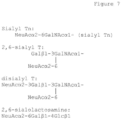
- the combination of the L-CDR1, L-CDR2, and L-CDR3 of the light chain and the H-CDR1, H-CDR2, and H-CDR3 of the heavy chain generate unique sequences that code for peptide sequences which recognize not only the disaccharide STn antigen, but unexpectedly, it also recognizes a group of glycans terminated by alpha-2,6 sialic acids also overexpressed in cancer. These peptide sequences are used to generate further antibodies, functional antibody fragments or probes. This overall group of glycans recognized by the antibodies, functional antibody fragments or probes comprises the
- Antibodies with such specificity are particularly interesting because of their high tumour specificity and low or absent reactivity to normal cells, contrary to current antibodies and antibody-based anticancer therapies.
- the isolated polynucleotide as disclosed herein can also include a nucleic acid sequence provided herein, wherein the nucleic acid sequence encodes the variable heavy and light chain domain of the antibody, functional antibody fragments or probes.
- the nucleic acid sequence are SEQ ID Nos. 1 and 2, respectively.
- the present invention provides an antibody, or functional antibody fragments thereof as claimed that specifically bind STn and a group of glycans terminated by alpha 2,6-linked sialic acids for use in medicine, or for use in treating cancer, including a method of detecting a tumour in a subject.
- the invention also provides pharmaceutical compositions comprising the antibody, or functional antibody fragments thereof, as claimed, and a pharmaceutically acceptable carrier.
- the invention may provide pharmaceutical compositions comprising the antibody, functional antibody fragments or probes that block cell-cell or receptor-ligand interactions.
- the invention provides a pharmaceutical composition of the invention as claimed for use in treating or preventing a disease in a subject in need, which treatment may comprise administering a therapeutically effective amount of a pharmaceutical composition of the invention.
- the present invention provides an antibody, or functional antibody fragments thereof as claimed that specifically bind STn and a group of glycans terminated by alpha 2,6-linked sialic acids.
- the antibody, or functional antibody fragment thereof binds to the antigen binding site.
- An example of nucleotide sequences code for the variable heavy and light chains, are SEQ ID Nos. 1 and 2, respectively.
- the isolated polynucleotide as disclosed hereincan also include a nucleic acid sequence provided herein, wherein the nucleic acid sequence encodes the variable heavy and light chain domain of the antibody, functional antibody fragments or probes.
- compositions as claimed may be used to produce an antibody, functional antibody fragments or probes thereof that specifically bind STn and a group of glycans terminated by alpha 2,6-linked sialic acids.
- compositions include nucleotide sequences encoding the antigen binding site of an antibody, a functional antibody fragment or probes.
- compositions include nucleotide sequences that code for the variable heavy and light chains.
- the isolated polynucleotide as disclosed herein can also include a nucleic acid sequence provided herein, wherein the nucleic acid sequence encodes the variable heavy and light chain domain of the antibody, functional antibody fragments or probes.
- the invention may provide pharmaceutical compositions comprising the nucleotide sequences encoding the antibody, or functional antibody fragments thereof as claimed and a pharmaceutically acceptable carrier.
- the method comprises the following steps:
- Biological sample as used herein, comprises isolated cells, or tissue, or tumour derived proteins.
- Sialylated glycans are over-expressed in several types of cancer cells compared to the matching healthy cells, where its expression was negligible.
- the highest STn frequencies is found in pancreas, colorectal and ovarian cancers, where almost 100% of the cancer cells express STn (Julien et al 2012).
- Frequency in bladder cancers is 75% (Ferreira et al 205).
- Lung adenocarcinoma expresses nearly 80% and cervical cancer, cholangiocarcinoma, oesophagus, colon and breast cancer have frequencies between 50 and 70%.
- STn over-expression occurs earlier in carcinogenesis and the loss of cell differentiation, which often participates in a high histological grade classification, positively modulates the STn expression (Julien et al).
- Sialylated glycans can be targetable by antibodies, functional antibody fragments or probes with high affinity and specificity.
- the present invention further provides compositions for producing antibodies, functional antibody fragments or probes that bind STn and a group of glycans terminated by alpha-2,6 sialic acids.
- compositions were obtained by immunization of 6 weeks old female Balb/c mice with ovine serum mucins, using methods such as those described in example I.
- mice serum showing reactivity for STn-positive cell lines, STn-positive mucins or cell lysates were selected, by means of the methods, such as those described in examples II or III or VI.
- Splenocytes from those immunized mice showing serum with reactivity for STn were harvested and fused with a myeloma cell (Sp2/0) to obtain an immortalized hybridoma cell expressing antibodies.
- Hybridoma supernatants were screened for the presence of antibodies against STn by methods, such as those described in examples II or III or VI. Selected hybridomas were expanded for antibody production and characterization. From the several anti-STn mAbs obtained, mAb L2A5 was selected as lead candidate and used for further analysis. Reactivity against mucin proteins with a heavy content of STn and the antibody titre of L2A5 mAb was determined by using methods as described in example II and represented in Figure 1 . In addition, desialylation by means of the sialidase treatment was performed to assess recognition of sialylated structures by L2A5 antibody.
- the reactivity of the L2A5 mAb increases with the mAb concentrations in a logarithmic manner.
- a high immunoreactivity to BSM was observed, reaching the endpoint titre of 6 000.
- treatment with sialidase clearly demonstrated a reduction of reactivity of this antibody to BSM, showing the specific and dependent binding to sialylated structures.
- the L2A5 antibody displayed no reactivity.
- Sialylated glycans are overexpressed in cancer cells and can be targetable by antibodies, functional antibody fragments or probes with high affinity and specificity.
- the present invention provides compositions for producing an antibody, functional antibody fragments or probes thereof that bind STn and a group of glycans terminated by alpha-2,6 sialic acids.
- Glycosylation is critical for the quality and development of therapeutic mAbs. Glycosylation patterns change with selected expression system or culture conditions with a significant impact on its pharmacokinetics and pharmacodynamics. The control of glycosylation is therefore essential to ensure the safety and efficacy of the molecules.
- antibody-dependent cell-mediated cytotoxicity ADCC
- complement-dependent cytotoxicity CDC
- antibody dependent cell-mediated phagocytosis ADCP
- direct cell apoptosis are critical for efficacies.
- MAbs produced in murine myeloma cell line SP2/0 can add sugars that are not naturally found on normal human IgG with impact in terms of immunogenicity.
- Changes in glycan composition of IgG molecule may be done at the glycosylation sites Asn88 and Asn297 through the manipulation of the mannose, sialic acids, fucose and galactose residues in order to increase the efficacy of the therapeutic antibody (review in Liming Liu 2015).
- Non-human antibodies can be humanized, which refers to the construction of chimeric immunoglobulins, that contain the amino acid sequence of interest derived from the original non-human antibody (e.g. the mouse antibody) included in a human immunoglobulin (recipient antibody).
- the CDR amino acid residues of the human antibody are replaced by residues from the CDRs of a non-human species (e.g. the mouse antibody) having the desired specificity, affinity and capacity.
- humanized antibodies will comprise at least one, and typically two, variable domains, in which all or almost all of the CDR regions correspond to those of a non-human antibody and all or part of the FR regions are those of a human immunoglobulin.
- Immune cells such as the T cells may be modified to express the antibody (all or part) or receptors that bind an antibody, i.e. a chimeric antigen receptors (CAR).
- CARs are molecules that combine antibody specificity for a desired antigen (e.g., tumor antigen) with a T cell receptor-activating intracellular domain to generate a chimeric receptor that exhibits a specific anti-tumour cellular immune activity.
- the antigen recognition domain of these modified T cells may bind to a tumour associated antigen. It may relate to the adoptive cell transfer of T cells modified to express a CAR.
- CAR can be produced using a variety of techniques known in the art, including but not limited to the use of RNA-guided endonucleases, in particular Cas9/CRISPR system, to specifically engineered T cells to express CARs ( WO 2014191128 A1 ).
- a target module composed of a binding moiety specific for a certain human cell surface protein and a tag, wherein the tag is derived from any human nuclear protein, preferably from human nuclear La protein may be used ( WO2016030414 A1 ).
- the antibody or functional fragment of the invention could be linked to nanoparticles, insert in liposomes membrane in order to be used as specific vector to delivery in situ toxic compounds inducing apoptosis as well metal ions useful for hyperthermia therapy.
- compositions for producing an antibody, functional antibody fragments or probes thereof of the present invention were obtained by immunization of 6 weeks old female Balb/c mice with ovine serum mucins, using methods such as those described in example I.
- Mice serum showing reactivity for STn-positive cell lines, STn-positive mucins or cell lysates were selected, by means of the methods, such as those described in examples II or III or VI.
- Splenocytes from those immunized mice showing serum with reactivity for STn were harvested and fused with a myeloma cell in order to obtain an immortalized hybridoma cell expressing anti-STn antibodies.
- Methods for hybridoma technique such as the one described in example IV are well described in the art.
- Hybridoma supernatants were screened for the presence of antibodies against STn by methods, such as those described in examples II or III or VI. Selected hybridomas were expanded for antibody production and characterization. From the several anti-STn mAbs obtained, mAb L2A5 was selected as lead candidate and used for further analysis. Reactivity against mucin proteins with a heavy content of STn and the antibody titre of L2A5 mAb was determined by using methods as described in example II and represented in Figure 1 . In addition, desialylation by means of the sialidase treatment was performed to assess recognition of sialylated structures by L2A5 antibody. As shown in Figure 1 , the reactivity of the L2A5 mAb increases with the mAb concentrations in a logarithmic manner.
- L2A5 mAb Binding of L2A5 mAb to viable MDA-MB-231 cancer cells was confirmed by using methods as described in example III. As a model, it was used MDA-MB-231 cancer cells that express the STn antigen, due to the overexpression of the gene ST6GalNAc1. As shown in Figure 2 , the L2A5 mAb shows a high reactivity to 80 to 88% of STn + cells. The reactivity was considerably decreased after treatment of the cancer cell lines with sialidase. As also shown in Figure 2 , the L2A5 presented no binding to wild type MDA-MB-231 cancer cells, which do not express the STn antigen.
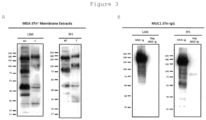
- L2A5 demonstrated a robust binding to MUC1 STn-IgG (approximately 180 kDa) but not to no glycosylated MUC1 STn-IgG.
- the results indicate that L2A5 mAb recognizes STn-antigen in membrane extracts of STn expressing cancer cells as well as on STn carrier proteins such as MUC1.
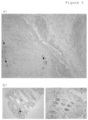
- the L2A5 is mainly reactive with tumour cells and not lymphocytic population, vessels or connective tissues.
- the L2A5 (left) present unspecific stain in the enterocytes while B72.3 (right) reacts with goblet cells.
- L2A5 staining is exclusive tumoral.
- L2A5 presents a specific stain in the urothelial tumour cells, including additional spots in invasive and metastasis sites with low density of STn.
- L2A5 reacts with cancer tissues, but also with non-pathological tissue.
- the staining is located essentially in the enterocytes, while the unspecific staining obtained with B72.3 or TKH2 is present in the goblet cells.
- there is no specific location of stain although L2A5 was able to detect the presence of weak staining in the dysplastic tissue with L2A5.
- Monoclonal antibody (mAb) production was performed according to the hybridoma technology.
- Female Balb/c mice aged 6 weeks (Harlan, UK) were immunized intraperitoneally with 10 ⁇ g of ovine submaxillary mucin (OSM) emulsified 1:1 (V/V) with complete Freund's adjuvant (Sigma-Aldrich) followed by 2 additional injections of OSM emulsified with incomplete Freund's adjuvant (Sigma Aldrich) with intervals of 21 days.
- Blood samples were collected from the mice cheek and collected serum was screened for STn binding specificity by ELISA. If the serum showed the desired and specific immune response, a final boost injection to the corresponding mice would be performed three days before killing and harvesting the spleen.
- BSM bovine submaxillary mucin
- PBS-T PBS containing 0.05% Tween 20
- HRP horseradish peroxidase
- BD Pharmingen horseradish peroxidase-conjugated goat anti-mouse Ig (1:1000) (BD Pharmingen) for 60 min.
- 50 ⁇ l of tetramethylbenzidine (Thermofisher Scientific) substrate was added to each well, plates were incubated in the dark and the reaction was stopped by adding 50 ⁇ l of 1M HCl.
- the Optical Density was measured at 450 nm on a microplate reader. The mouse producing the highest titre of antibodies of interest was selected for fusion. To screen the antibody production of hybridoma cells, the same procedure was implemented.
- Binding of the antibodies or hybridoma supernatants were determined by flow cytometry using human bladder and breast cell lines stably expressing STn and non-STn expressing parental cells. Approximately 3 ⁇ 10 5 cells were harvested per condition and resuspended in PBS buffer. To assess the specific binding of screened hybridoma supernatants and antibodies to sialylated structures, samples were treated with sialidase at 100 mU/ml, for 90 min at 37°C. After sialidase treatment, cells were washed and incubated for 30 min at 4°C with anti-STn mAbs B72.3, 3F1, TKH2 and hybridoma supernatants.
- Splenocytes from the immunized mouse were mixed with Sp2/0 myeloma (ATCC, USA) cells at a ratio of 3:1 and fused in the presence of polyethylene glycol/dimethylsulphoxide using a standard protocol.
- Cells were then plated into 96-well flat bottom micro plates (Orange Scientific) and maintained in RPMI medium supplemented with HAT (1 ⁇ 10 -4 M Hypoxanthine, 4 ⁇ 10 -7 M Aminopterin, 1.6 ⁇ 10 -5 M Thymidine, Sigma-Aldrich), 10% FBS, 2 mM L-glutamine, 0.2 mg/ml Gentamycin (Sigma-Aldrich), 1 mM sodium pyruvate (Gibco), 1% (v/v) MEM non-essential amino acids (Gibco) and incubated at 37°C for 7-12 days.
- Hybridoma cells producing antibodies reactive to BSM were expanded and screened by indirect ELISA and cloned by the limited dilution method at least three times to obtain stable single clone cell lines. Selected hybridomas were cultured in the selection medium without HAT supplementation at 37°C. One hybridoma L2A5 specific to the sialylated structures, particularly the STn, was selected and cloned by limiting dilution four times.
- FFPE Formalin-fixed, paraffin embedded
- FFPE tissue sections were deparaffinised with xylene, rehydrated with a graded series of alcohol washes and subjected to heat-induced antigen retrieval using citrate buffer pH 6.0 (Vector, Burlingame, USA) for 15 min in the microwave, after preheating of the solution at maximum power rating for 5 minutes. Sections were incubated with 0.3% hydrogen peroxide (Merck KGaA, Darmstadt, Germany) for 25 min, blocked with UV Block ® (Thermo Scientific, Fremont, USA) and incubated overnight at 4°C in a wet chamber with anti-STn mAbs B72.3, TKH2 (Kjeldsen et al., 1988) and L2A5.
- Tumours were classified as positive when immunoreactivity of anti-STn TKH2 antibody was observed by microscopic presence of brown chromogenic product in tumour cells.
- STn expression and L2A5 staining were assessed double-blindly by two independent observers and validated by an experienced pathologist. Whenever there was a disagreement, the slides were reviewed, and consensus was reached.
- sialidase treatment was performed after the incubation with hydrogen peroxide, in which sialic acids are removed from the STn antigen, thereby impairing recognition by the antibody. Therefore, positive staining after this enzymatic treatment (4h at 37°C; 0.2U/mL) was considered as unspecific.
- Membrane proteins were isolated from cell lines using Membrane Protein Extraction Kits, according to the manufacturer's instructions. The amount of protein obtained was estimated using Protein Assay Kits, following manufacturer's recommendations. Membrane protein extracts (50 pg) or purified proteins containing STn (1 pg) - BSM and MUC1 STn-IgG- were denatured and loaded onto 8% gradient acrylamide gel, submitted to SDS- PAGE electrophoresis under reducing conditions and electrophoretically transferred onto polyvinylidene difluoride (PVDF) membranes (Amersham Hybond P 0.2 ⁇ m PVDF, GE Healthcare Life Sciences) in accordance with standard procedures.
- PVDF polyvinylidene difluoride
- Membranes were blocked with 10% skim milk powder in TBS Tween 0.1% (TBS-T) for 1h followed by incubation with primary antibodies anti-STn B72.3, 3F1 or L2A5 supernatant diluted in TBS-T overnight at 4°C. After washing with TBS-T, labelled proteins were revealed using HRP conjugated goat Anti-Mouse Ig diluted 1:2500 in TBS-T for 1h. After washing, labelled proteins were revealed by Lumi-Light Western Blotting Substrate (Roche), and then exposed to an X-ray film.
- TBS Tween 0.1% TBS Tween 0.1%
- RNA isolation Between 1 ⁇ 10 6 and 5 ⁇ 10 6 hybridoma cells were used for RNA isolation. Cells were centrifuged for 5 min at 300 ⁇ g and the supernatant was discarded. Cell pellet was washed with PBS and total RNA was isolated using GenElute TM Mammalian Total RNA Miniprep Kit (Sigma-Aldrich), according to manufacturer's instructions. Total RNA extracted was quantified using Nanodrop and up to 2 ⁇ g was used for reverse transcription as described in High-Capacity cDNA Transcription Kit (Applied Biosystems). cDNA synthesis was performed using the following thermal cycling conditions: 25°C for 10 min, followed by 37°C for 120 min and 85°C for 5 sec. The reactions were finally held and cooled at 4°C.
- V H and V L domains of L2A5 MAb were amplified from the cDNA using the primer pair V H Forward (TTTTTGGATCCSARGTNMAGCTGSAGSAGTCWGG)/V H Reverse (ATTGGGACTAGTTTCTGCGACAGCTGGATT) and V L Forward (TTTTTGAATTCTGAYATTGTGMTSACMCARWCTMCA)/V L Reverse (TTTTTGGGCCCGGATACAGTTGGTGCAGCATC). All PCRs were performed with the Advantage HF 2 PCR Kit (Clontech) .
- compositions can be produced in consistent quality for clinical and diagnostic applications.
- VH and VL nucleotide sequences coding for the amino acid sequences of FR and CDRs domains of L2A5 mAb were determined searching the IMGT V domain delineation system (international ImMunoGeneTics database; http://imgt.cines.fr) using the sequence analysis tool IgBLAST.
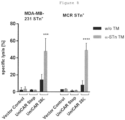
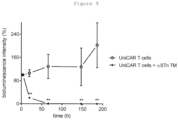
- Anti-STn target module was performed as described (Cartellieri et al 2016), but replacing the CDR regions by the LA25 nucleic acid sequences. T cell mediated tumour killing was measured using standard chromium release assays. MDA-MB-231 and MCR STn+ cell lines were incubated with T cells engrafted with either the vector control (vector backbone encoding only the EGFP marker protein), UniCAR Stop construct (lacking intracellular signaling domains) or ⁇ -E5B9 signaling construct (UniCAR 28/ ⁇ ) (Mitwasi 2017). Both cell lines were cultivated with the respective genetically engineered T cells in the presence or absence of 80 nM of anti-STn TM (a-STn TM) for 24h in an effector-to-target (E:T) ratio of 5:1.
- MDA-MB-231 STn cells were transduced to express firefly luciferase (Luc) resulting in MDA-MB-231 STn-Luc cells.
- Anti-STn target module (TM) was performed as described (Cartellieri et al 2016), but replacing the CDR regions by the LA25 nucleic acid sequences.
- 1,5 ⁇ 106 tumour cells were mixed with 1 ⁇ 106 UniCAR 28/ ⁇ T cells and 10 ⁇ g of anti-STn TM.
- MDA-MB-231 STn-Luc cells (1,5 ⁇ 106) alone or mixed with 1 ⁇ 106 UniCAR 28/ ⁇ T cells without TM were used as untreated controls.
- Respective mixture was injected subcutaneously into female NMRI-Foxn1nu/Foxn1nu mice resulting in three groups of animals each consisting of five mice.
- Luminescence imaging of anesthetized mice was performed 10min after i.p. injection of 200 ⁇ L of D-luciferin potassium salt (15 mg/mL) starting at day 0 and followed at day 1, 3, 6 and 8.
- Table 1 shows an example of the nucleotide sequence of the variable heavy (VH) and variable light (VL) chains of the clone L2A5 identified as SEQ ID Nos. 1 and 2, respectively and the encoded amino acid sequence of the variable heavy (VH) and variable light (VL) chains identified as SEQ ID Nos. 3 and 4 respectively.
- Table 1 Example of nucleotide sequence and the encoded amino acid sequence of the variable light (VL) and variable heavy (VH) chains of the clone L2A5.
- SEQ ID No. Chain (mu) 1 Nucleotide sequence of the variable heavy (VH) chain 2
- Table 2 shows the encoded amino acid sequence of the six framework (FR) and six complementarity determining regions (CDR) (H-CDR1, H-CDR2 and H-CDR3, L-CDR1, L-CDR2, LCDR3) for the clone L2A5 and are identified as the nucleotide sequence of SEQ ID NO: 5 to 16.
- Table 2 Encoded amino acid sequence of the three framework (FR) and three complementarity determining regions (CDR) (H-CDR1, H-CDR2 and H-CDR3, L-CDR1, L-CDR2, LCDR3) for the clone L2A5.
Landscapes
- Health & Medical Sciences (AREA)
- Life Sciences & Earth Sciences (AREA)
- Chemical & Material Sciences (AREA)
- Immunology (AREA)
- Engineering & Computer Science (AREA)
- Organic Chemistry (AREA)
- General Health & Medical Sciences (AREA)
- Medicinal Chemistry (AREA)
- Molecular Biology (AREA)
- Genetics & Genomics (AREA)
- Biochemistry (AREA)
- Biomedical Technology (AREA)
- Biotechnology (AREA)
- Microbiology (AREA)
- Cell Biology (AREA)
- Bioinformatics & Cheminformatics (AREA)
- Wood Science & Technology (AREA)
- Zoology (AREA)
- Urology & Nephrology (AREA)
- Hematology (AREA)
- Biophysics (AREA)
- Proteomics, Peptides & Aminoacids (AREA)
- General Engineering & Computer Science (AREA)
- Physics & Mathematics (AREA)
- Veterinary Medicine (AREA)
- Chemical Kinetics & Catalysis (AREA)
- Animal Behavior & Ethology (AREA)
- Public Health (AREA)
- Pharmacology & Pharmacy (AREA)
- Analytical Chemistry (AREA)
- Food Science & Technology (AREA)
- General Physics & Mathematics (AREA)
- Pathology (AREA)
- General Chemical & Material Sciences (AREA)
- Nuclear Medicine, Radiotherapy & Molecular Imaging (AREA)
- Epidemiology (AREA)
- Mycology (AREA)
- Oncology (AREA)
- Virology (AREA)
- Tropical Medicine & Parasitology (AREA)
Applications Claiming Priority (2)
| Application Number | Priority Date | Filing Date | Title |
|---|---|---|---|
| PT110526A PT110526B (pt) | 2018-01-26 | 2018-01-26 | Anticorpo, fragmento funcional ou sonda do mesmo contra antigénios tumorais |
| PCT/PT2019/000001 WO2019147152A1 (en) | 2018-01-26 | 2019-01-17 | L2a5 antibody or functional fragment thereof against tumour antigens |
Publications (2)
| Publication Number | Publication Date |
|---|---|
| EP3743726A1 EP3743726A1 (en) | 2020-12-02 |
| EP3743726B1 true EP3743726B1 (en) | 2024-06-12 |
Family
ID=65244573
Family Applications (1)
| Application Number | Title | Priority Date | Filing Date |
|---|---|---|---|
| EP19702492.0A Active EP3743726B1 (en) | 2018-01-26 | 2019-01-17 | L2a5 antibody or functional fragment thereof against tumour antigens |
Country Status (14)
| Country | Link |
|---|---|
| US (1) | US11353460B2 (https=) |
| EP (1) | EP3743726B1 (https=) |
| JP (1) | JP7324777B2 (https=) |
| CN (1) | CN113287018B (https=) |
| AU (1) | AU2019211035B2 (https=) |
| BR (1) | BR112020014931A2 (https=) |
| CA (1) | CA3089300A1 (https=) |
| EA (1) | EA202091760A1 (https=) |
| IL (1) | IL276208B1 (https=) |
| MX (1) | MX2020007828A (https=) |
| PT (1) | PT110526B (https=) |
| SG (1) | SG11202006897VA (https=) |
| WO (1) | WO2019147152A1 (https=) |
| ZA (1) | ZA202005023B (https=) |
Families Citing this family (5)
| Publication number | Priority date | Publication date | Assignee | Title |
|---|---|---|---|---|
| WO2022195797A1 (ja) * | 2021-03-18 | 2022-09-22 | 国立大学法人弘前大学 | 末端シアル酸残基がα2,6結合でガラクトースに結合した糖鎖に特異的に結合するモノクローナル抗体、及び、末端シアル酸残基がα2,6結合でガラクトースに結合した糖鎖の測定方法 |
| WO2022224242A1 (en) * | 2021-04-20 | 2022-10-27 | Ramot At Tel-Aviv University Ltd. | Humanized anti-sialyl-tn glycan antibodies and uses thereof |
| GB2619976A (en) * | 2022-06-24 | 2023-12-27 | Cellmabs S A | Humanised antibodies or functional fragments thereof against tumour antigens |
| CN121219019A (zh) | 2023-05-05 | 2025-12-26 | 百欧恩泰欧洲股份公司 | 用于增强靶向癌症相关抗原的采用新型连接子-有效载荷系统的抗体药物偶联物 |
| WO2026057354A1 (en) * | 2024-09-10 | 2026-03-19 | Invox Pharma Limited | Anti-sialyl-tn antigen-binding proteins |
Family Cites Families (23)
| Publication number | Priority date | Publication date | Assignee | Title |
|---|---|---|---|---|
| EP0216846B2 (en) | 1985-04-01 | 1995-04-26 | Celltech Limited | Transformed myeloma cell-line and a process for the expression of a gene coding for a eukaryotic polypeptide employing same |
| GB8717430D0 (en) | 1987-07-23 | 1987-08-26 | Celltech Ltd | Recombinant dna product |
| DE68922806T2 (de) * | 1988-03-11 | 1996-02-29 | Biomembrane Inst | Monoklonale antikörper und herstellung eines impfstoffes gegen menschliche krebsantigene durch immunisierung mit menschlichem und tierischem mucin und mit synthetischen gluciden-trägerkonjugaten. |
| WO1995029927A2 (en) | 1994-05-02 | 1995-11-09 | Biomira, Inc. | Process for preparation of glycosides of tumor-associated carbohydrate antigens |
| WO1998046246A1 (en) | 1997-04-16 | 1998-10-22 | Sloan-Kettering Institute For Cancer Research | α-O-LINKED GLYCOCONJUGATES WITH CLUSTERED (2,6)-ST EPITOPES, METHODS OF PREPARATION AND USES THEREOF |
| CU22731A1 (es) * | 1998-02-05 | 2002-02-28 | Centro Inmunologia Molecular | Anticuerpo monoclonal que reconoce el oligosacárido ácido siálico n´glicolilado-galactosa-glucosa (ngcneu-gal-glu) en tumores malignos y composiciones farmacéuticas que los contienen |
| JP3809277B2 (ja) | 1998-03-05 | 2006-08-16 | 生化学工業株式会社 | N−アセチルグルコサミン−6−o−硫酸基転移酵素のポリペプチド及びそれをコードするdna |
| GB9917012D0 (en) | 1999-07-20 | 1999-09-22 | Pharmacia & Upjohn Spa | Combined preparations comprising antitumor agents |
| EP2261255A1 (en) | 2003-07-15 | 2010-12-15 | The Regents of The University of California | Methods for purifying sialic acid-specific antibodies and composition comprising affinity-purified antibodies |
| US8148335B2 (en) * | 2004-06-23 | 2012-04-03 | Children's Hospital & Research Center Oakland | De-N-acetyl sialic acid antigens, antibodies thereto, and methods of use in cancer therapy |
| AU2007304590A1 (en) | 2006-10-04 | 2008-04-10 | Cancer Research Technology Limited | Generation of a cancer-specific immune response toward MUC1 and cancer specific MUC1 antibodies |
| JP5156887B2 (ja) * | 2007-02-14 | 2013-03-06 | 独立行政法人科学技術振興機構 | 2−6シアリル6−スルホ糖鎖に対する抗体 |
| EP2014302A1 (en) | 2007-07-12 | 2009-01-14 | Institut Curie | An antibody specific for the Tn antigen for the treatment of cancer |
| FI20070853A0 (fi) * | 2007-11-09 | 2007-11-09 | Glykos Finland Oy | Glykaania sitovat monoklonaaliset vasta-aineet |
| EP2287202A1 (en) | 2009-08-07 | 2011-02-23 | Dublin City University | Anti-sialic acid antibody molecules |
| EP2524233A4 (en) | 2010-01-15 | 2013-07-31 | Univ California | COMPOSITIONS AND METHOD FOR DETECTING CANCER |
| US9796785B2 (en) | 2013-05-02 | 2017-10-24 | National Institute Of Advanced Industrial Science And Technology | Monoclonal antibody recognizing sialylated sugar chains |
| WO2014191128A1 (en) | 2013-05-29 | 2014-12-04 | Cellectis | Methods for engineering t cells for immunotherapy by using rna-guided cas nuclease system |
| AU2014332442B2 (en) | 2013-08-26 | 2019-12-19 | Biontech Research And Development, Inc. | Nucleic acids encoding human antibodies to Sialyl-Lewis |
| EP2990416B1 (en) | 2014-08-29 | 2018-06-20 | GEMoaB Monoclonals GmbH | Universal chimeric antigen receptor expressing immune cells for targeting of diverse multiple antigens and method of manufacturing the same and use of the same for treatment of cancer, infections and autoimmune disorders |
| WO2016057916A1 (en) * | 2014-10-10 | 2016-04-14 | Siamab Therapeutics, Inc. | Glycan-interacting compounds and methods of use |
| WO2017040529A1 (en) * | 2015-08-31 | 2017-03-09 | Bluebird Bio, Inc. | Anti-sialyl tn chimeric antigen receptors |
| WO2018217116A1 (en) * | 2017-05-25 | 2018-11-29 | Instituto De Patologia E Imunologia Da Universidade Do Porto (Ipatimup) | Detection and isolation of cancer cells from body fluids based on a glycosylation pattern and methods of use thereof |
-
2018
- 2018-01-26 PT PT110526A patent/PT110526B/pt active IP Right Grant
-
2019
- 2019-01-17 EA EA202091760A patent/EA202091760A1/ru unknown
- 2019-01-17 IL IL276208A patent/IL276208B1/en unknown
- 2019-01-17 BR BR112020014931-4A patent/BR112020014931A2/pt unknown
- 2019-01-17 CN CN201980022395.6A patent/CN113287018B/zh active Active
- 2019-01-17 US US16/964,900 patent/US11353460B2/en active Active
- 2019-01-17 MX MX2020007828A patent/MX2020007828A/es unknown
- 2019-01-17 EP EP19702492.0A patent/EP3743726B1/en active Active
- 2019-01-17 SG SG11202006897VA patent/SG11202006897VA/en unknown
- 2019-01-17 CA CA3089300A patent/CA3089300A1/en active Pending
- 2019-01-17 JP JP2020560859A patent/JP7324777B2/ja active Active
- 2019-01-17 AU AU2019211035A patent/AU2019211035B2/en active Active
- 2019-01-17 WO PCT/PT2019/000001 patent/WO2019147152A1/en not_active Ceased
-
2020
- 2020-08-13 ZA ZA2020/05023A patent/ZA202005023B/en unknown
Also Published As
| Publication number | Publication date |
|---|---|
| CN113287018A (zh) | 2021-08-20 |
| IL276208B1 (en) | 2026-02-01 |
| CN113287018B (zh) | 2025-10-28 |
| EA202091760A1 (ru) | 2020-11-23 |
| IL276208A (en) | 2020-09-30 |
| AU2019211035A1 (en) | 2020-08-06 |
| WO2019147152A1 (en) | 2019-08-01 |
| PT110526A (pt) | 2019-07-26 |
| JP2021516254A (ja) | 2021-07-01 |
| CA3089300A1 (en) | 2019-08-01 |
| KR20210005546A (ko) | 2021-01-14 |
| SG11202006897VA (en) | 2020-08-28 |
| EP3743726A1 (en) | 2020-12-02 |
| JP7324777B2 (ja) | 2023-08-10 |
| AU2019211035B2 (en) | 2025-08-14 |
| BR112020014931A2 (pt) | 2020-12-08 |
| US11353460B2 (en) | 2022-06-07 |
| MX2020007828A (es) | 2020-11-24 |
| US20210033616A1 (en) | 2021-02-04 |
| PT110526B (pt) | 2021-02-04 |
| ZA202005023B (en) | 2022-01-26 |
Similar Documents
| Publication | Publication Date | Title |
|---|---|---|
| EP3743726B1 (en) | L2a5 antibody or functional fragment thereof against tumour antigens | |
| JP5918540B2 (ja) | 抗dll3抗体 | |
| JP6025904B2 (ja) | Egfファミリーリガンドのアンタゴニストを成分とする医薬組成物 | |
| EP2050466B1 (en) | Diagnosis and treatment of cancer using anti-desmoglein-3 antibodies | |
| AU2008321840B2 (en) | Diagnosis and treatment of cancer using anti-GPR49 antibody | |
| US9920129B2 (en) | Diagnosis and treatment of cancer using anti-ITM2A antibody | |
| JPWO2009001840A1 (ja) | ADCC活性又はCDC活性を有する抗Prominin−1抗体 | |
| SG172427A1 (en) | Diagnosis and treatment of cancer using anti-lgr7 antibody | |
| JP5746018B2 (ja) | 抗tmprss11e抗体を用いた癌の診断と治療 | |
| EP2303924B1 (en) | Lm-antibodies, functional fragments, lm-1 target antigen, and methods for making and using same | |
| KR20250029205A (ko) | 종양 항원에 대한 인간화 항체 또는 이의 기능적 단편 | |
| KR102933657B1 (ko) | 종양 항원에 대한 l2a5 항체, 그것의 기능적 단편 또는 그것의 프로브 | |
| HK40038572A (en) | L2a5 antibody or functional fragment thereof against tumour antigens | |
| HK40038572B (en) | L2a5 antibody or functional fragment thereof against tumour antigens | |
| ES2988943T3 (es) | Anticuerpo L2a5 o fragmento funcional del mismo contra antígenos tumorales | |
| HK1198042A (en) | Anti-human trop-2 antibody exhibiting antitumor activity in vivo | |
| HK1157361B (en) | Diagnosis and treatment of cancer using anti-gpr49 antibody |
Legal Events
| Date | Code | Title | Description |
|---|---|---|---|
| STAA | Information on the status of an ep patent application or granted ep patent |
Free format text: STATUS: UNKNOWN |
|
| STAA | Information on the status of an ep patent application or granted ep patent |
Free format text: STATUS: THE INTERNATIONAL PUBLICATION HAS BEEN MADE |
|
| PUAI | Public reference made under article 153(3) epc to a published international application that has entered the european phase |
Free format text: ORIGINAL CODE: 0009012 |
|
| STAA | Information on the status of an ep patent application or granted ep patent |
Free format text: STATUS: REQUEST FOR EXAMINATION WAS MADE |
|
| 17P | Request for examination filed |
Effective date: 20200817 |
|
| AK | Designated contracting states |
Kind code of ref document: A1 Designated state(s): AL AT BE BG CH CY CZ DE DK EE ES FI FR GB GR HR HU IE IS IT LI LT LU LV MC MK MT NL NO PL PT RO RS SE SI SK SM TR |
|
| AX | Request for extension of the european patent |
Extension state: BA ME |
|
| DAV | Request for validation of the european patent (deleted) | ||
| DAX | Request for extension of the european patent (deleted) | ||
| REG | Reference to a national code |
Ref country code: HK Ref legal event code: DE Ref document number: 40038572 Country of ref document: HK |
|
| STAA | Information on the status of an ep patent application or granted ep patent |
Free format text: STATUS: EXAMINATION IS IN PROGRESS |
|
| 17Q | First examination report despatched |
Effective date: 20220311 |
|
| GRAP | Despatch of communication of intention to grant a patent |
Free format text: ORIGINAL CODE: EPIDOSNIGR1 |
|
| STAA | Information on the status of an ep patent application or granted ep patent |
Free format text: STATUS: GRANT OF PATENT IS INTENDED |
|
| INTG | Intention to grant announced |
Effective date: 20240104 |
|
| GRAS | Grant fee paid |
Free format text: ORIGINAL CODE: EPIDOSNIGR3 |
|
| GRAA | (expected) grant |
Free format text: ORIGINAL CODE: 0009210 |
|
| STAA | Information on the status of an ep patent application or granted ep patent |
Free format text: STATUS: THE PATENT HAS BEEN GRANTED |
|
| AK | Designated contracting states |
Kind code of ref document: B1 Designated state(s): AL AT BE BG CH CY CZ DE DK EE ES FI FR GB GR HR HU IE IS IT LI LT LU LV MC MK MT NL NO PL PT RO RS SE SI SK SM TR |
|
| REG | Reference to a national code |
Ref country code: GB Ref legal event code: FG4D |
|
| REG | Reference to a national code |
Ref country code: CH Ref legal event code: EP |
|
| REG | Reference to a national code |
Ref country code: DE Ref legal event code: R096 Ref document number: 602019053514 Country of ref document: DE |
|
| REG | Reference to a national code |
Ref country code: IE Ref legal event code: FG4D |
|
| REG | Reference to a national code |
Ref country code: DK Ref legal event code: T3 Effective date: 20240813 |
|
| PG25 | Lapsed in a contracting state [announced via postgrant information from national office to epo] |
Ref country code: BG Free format text: LAPSE BECAUSE OF FAILURE TO SUBMIT A TRANSLATION OF THE DESCRIPTION OR TO PAY THE FEE WITHIN THE PRESCRIBED TIME-LIMIT Effective date: 20240612 |
|
| PG25 | Lapsed in a contracting state [announced via postgrant information from national office to epo] |
Ref country code: FI Free format text: LAPSE BECAUSE OF FAILURE TO SUBMIT A TRANSLATION OF THE DESCRIPTION OR TO PAY THE FEE WITHIN THE PRESCRIBED TIME-LIMIT Effective date: 20240612 Ref country code: HR Free format text: LAPSE BECAUSE OF FAILURE TO SUBMIT A TRANSLATION OF THE DESCRIPTION OR TO PAY THE FEE WITHIN THE PRESCRIBED TIME-LIMIT Effective date: 20240612 |
|
| REG | Reference to a national code |
Ref country code: LT Ref legal event code: MG9D |
|
| PG25 | Lapsed in a contracting state [announced via postgrant information from national office to epo] |
Ref country code: GR Free format text: LAPSE BECAUSE OF FAILURE TO SUBMIT A TRANSLATION OF THE DESCRIPTION OR TO PAY THE FEE WITHIN THE PRESCRIBED TIME-LIMIT Effective date: 20240913 |
|
| REG | Reference to a national code |
Ref country code: NL Ref legal event code: MP Effective date: 20240612 |
|
| PG25 | Lapsed in a contracting state [announced via postgrant information from national office to epo] |
Ref country code: LV Free format text: LAPSE BECAUSE OF FAILURE TO SUBMIT A TRANSLATION OF THE DESCRIPTION OR TO PAY THE FEE WITHIN THE PRESCRIBED TIME-LIMIT Effective date: 20240612 |
|
| PG25 | Lapsed in a contracting state [announced via postgrant information from national office to epo] |
Ref country code: NO Free format text: LAPSE BECAUSE OF FAILURE TO SUBMIT A TRANSLATION OF THE DESCRIPTION OR TO PAY THE FEE WITHIN THE PRESCRIBED TIME-LIMIT Effective date: 20240912 Ref country code: LV Free format text: LAPSE BECAUSE OF FAILURE TO SUBMIT A TRANSLATION OF THE DESCRIPTION OR TO PAY THE FEE WITHIN THE PRESCRIBED TIME-LIMIT Effective date: 20240612 Ref country code: HR Free format text: LAPSE BECAUSE OF FAILURE TO SUBMIT A TRANSLATION OF THE DESCRIPTION OR TO PAY THE FEE WITHIN THE PRESCRIBED TIME-LIMIT Effective date: 20240612 Ref country code: GR Free format text: LAPSE BECAUSE OF FAILURE TO SUBMIT A TRANSLATION OF THE DESCRIPTION OR TO PAY THE FEE WITHIN THE PRESCRIBED TIME-LIMIT Effective date: 20240913 Ref country code: FI Free format text: LAPSE BECAUSE OF FAILURE TO SUBMIT A TRANSLATION OF THE DESCRIPTION OR TO PAY THE FEE WITHIN THE PRESCRIBED TIME-LIMIT Effective date: 20240612 Ref country code: BG Free format text: LAPSE BECAUSE OF FAILURE TO SUBMIT A TRANSLATION OF THE DESCRIPTION OR TO PAY THE FEE WITHIN THE PRESCRIBED TIME-LIMIT Effective date: 20240612 Ref country code: RS Free format text: LAPSE BECAUSE OF FAILURE TO SUBMIT A TRANSLATION OF THE DESCRIPTION OR TO PAY THE FEE WITHIN THE PRESCRIBED TIME-LIMIT Effective date: 20240912 |
|
| PG25 | Lapsed in a contracting state [announced via postgrant information from national office to epo] |
Ref country code: NL Free format text: LAPSE BECAUSE OF FAILURE TO SUBMIT A TRANSLATION OF THE DESCRIPTION OR TO PAY THE FEE WITHIN THE PRESCRIBED TIME-LIMIT Effective date: 20240612 |
|
| REG | Reference to a national code |
Ref country code: ES Ref legal event code: FG2A Ref document number: 2988943 Country of ref document: ES Kind code of ref document: T3 Effective date: 20241122 |
|
| PG25 | Lapsed in a contracting state [announced via postgrant information from national office to epo] |
Ref country code: NL Free format text: LAPSE BECAUSE OF FAILURE TO SUBMIT A TRANSLATION OF THE DESCRIPTION OR TO PAY THE FEE WITHIN THE PRESCRIBED TIME-LIMIT Effective date: 20240612 |
|
| PG25 | Lapsed in a contracting state [announced via postgrant information from national office to epo] |
Ref country code: PT Free format text: LAPSE BECAUSE OF FAILURE TO SUBMIT A TRANSLATION OF THE DESCRIPTION OR TO PAY THE FEE WITHIN THE PRESCRIBED TIME-LIMIT Effective date: 20241014 |
|
| PG25 | Lapsed in a contracting state [announced via postgrant information from national office to epo] |
Ref country code: PT Free format text: LAPSE BECAUSE OF FAILURE TO SUBMIT A TRANSLATION OF THE DESCRIPTION OR TO PAY THE FEE WITHIN THE PRESCRIBED TIME-LIMIT Effective date: 20241014 |
|
| PG25 | Lapsed in a contracting state [announced via postgrant information from national office to epo] |
Ref country code: PL Free format text: LAPSE BECAUSE OF FAILURE TO SUBMIT A TRANSLATION OF THE DESCRIPTION OR TO PAY THE FEE WITHIN THE PRESCRIBED TIME-LIMIT Effective date: 20240612 |
|
| PG25 | Lapsed in a contracting state [announced via postgrant information from national office to epo] |
Ref country code: EE Free format text: LAPSE BECAUSE OF FAILURE TO SUBMIT A TRANSLATION OF THE DESCRIPTION OR TO PAY THE FEE WITHIN THE PRESCRIBED TIME-LIMIT Effective date: 20240612 |
|
| PG25 | Lapsed in a contracting state [announced via postgrant information from national office to epo] |
Ref country code: IS Free format text: LAPSE BECAUSE OF FAILURE TO SUBMIT A TRANSLATION OF THE DESCRIPTION OR TO PAY THE FEE WITHIN THE PRESCRIBED TIME-LIMIT Effective date: 20241012 |
|
| PG25 | Lapsed in a contracting state [announced via postgrant information from national office to epo] |
Ref country code: CZ Free format text: LAPSE BECAUSE OF FAILURE TO SUBMIT A TRANSLATION OF THE DESCRIPTION OR TO PAY THE FEE WITHIN THE PRESCRIBED TIME-LIMIT Effective date: 20240612 |
|
| PG25 | Lapsed in a contracting state [announced via postgrant information from national office to epo] |
Ref country code: SK Free format text: LAPSE BECAUSE OF FAILURE TO SUBMIT A TRANSLATION OF THE DESCRIPTION OR TO PAY THE FEE WITHIN THE PRESCRIBED TIME-LIMIT Effective date: 20240612 Ref country code: RO Free format text: LAPSE BECAUSE OF FAILURE TO SUBMIT A TRANSLATION OF THE DESCRIPTION OR TO PAY THE FEE WITHIN THE PRESCRIBED TIME-LIMIT Effective date: 20240612 |
|
| PG25 | Lapsed in a contracting state [announced via postgrant information from national office to epo] |
Ref country code: SM Free format text: LAPSE BECAUSE OF FAILURE TO SUBMIT A TRANSLATION OF THE DESCRIPTION OR TO PAY THE FEE WITHIN THE PRESCRIBED TIME-LIMIT Effective date: 20240612 |
|
| PG25 | Lapsed in a contracting state [announced via postgrant information from national office to epo] |
Ref country code: SM Free format text: LAPSE BECAUSE OF FAILURE TO SUBMIT A TRANSLATION OF THE DESCRIPTION OR TO PAY THE FEE WITHIN THE PRESCRIBED TIME-LIMIT Effective date: 20240612 Ref country code: SK Free format text: LAPSE BECAUSE OF FAILURE TO SUBMIT A TRANSLATION OF THE DESCRIPTION OR TO PAY THE FEE WITHIN THE PRESCRIBED TIME-LIMIT Effective date: 20240612 Ref country code: RO Free format text: LAPSE BECAUSE OF FAILURE TO SUBMIT A TRANSLATION OF THE DESCRIPTION OR TO PAY THE FEE WITHIN THE PRESCRIBED TIME-LIMIT Effective date: 20240612 Ref country code: PL Free format text: LAPSE BECAUSE OF FAILURE TO SUBMIT A TRANSLATION OF THE DESCRIPTION OR TO PAY THE FEE WITHIN THE PRESCRIBED TIME-LIMIT Effective date: 20240612 Ref country code: IS Free format text: LAPSE BECAUSE OF FAILURE TO SUBMIT A TRANSLATION OF THE DESCRIPTION OR TO PAY THE FEE WITHIN THE PRESCRIBED TIME-LIMIT Effective date: 20241012 Ref country code: EE Free format text: LAPSE BECAUSE OF FAILURE TO SUBMIT A TRANSLATION OF THE DESCRIPTION OR TO PAY THE FEE WITHIN THE PRESCRIBED TIME-LIMIT Effective date: 20240612 Ref country code: CZ Free format text: LAPSE BECAUSE OF FAILURE TO SUBMIT A TRANSLATION OF THE DESCRIPTION OR TO PAY THE FEE WITHIN THE PRESCRIBED TIME-LIMIT Effective date: 20240612 |
|
| REG | Reference to a national code |
Ref country code: DE Ref legal event code: R097 Ref document number: 602019053514 Country of ref document: DE |
|
| PLBE | No opposition filed within time limit |
Free format text: ORIGINAL CODE: 0009261 |
|
| STAA | Information on the status of an ep patent application or granted ep patent |
Free format text: STATUS: NO OPPOSITION FILED WITHIN TIME LIMIT |
|
| 26N | No opposition filed |
Effective date: 20250313 |
|
| PG25 | Lapsed in a contracting state [announced via postgrant information from national office to epo] |
Ref country code: SE Free format text: LAPSE BECAUSE OF FAILURE TO SUBMIT A TRANSLATION OF THE DESCRIPTION OR TO PAY THE FEE WITHIN THE PRESCRIBED TIME-LIMIT Effective date: 20240612 |
|
| PG25 | Lapsed in a contracting state [announced via postgrant information from national office to epo] |
Ref country code: LU Free format text: LAPSE BECAUSE OF NON-PAYMENT OF DUE FEES Effective date: 20250117 Ref country code: MC Free format text: LAPSE BECAUSE OF FAILURE TO SUBMIT A TRANSLATION OF THE DESCRIPTION OR TO PAY THE FEE WITHIN THE PRESCRIBED TIME-LIMIT Effective date: 20240612 |
|
| REG | Reference to a national code |
Ref country code: DE Ref legal event code: R079 Ref document number: 602019053514 Country of ref document: DE Free format text: PREVIOUS MAIN CLASS: G01N0033574000 Ipc: G01N0033575000 |
|
| PGFP | Annual fee paid to national office [announced via postgrant information from national office to epo] |
Ref country code: DK Payment date: 20251223 Year of fee payment: 8 |
|
| REG | Reference to a national code |
Ref country code: CH Ref legal event code: U11 Free format text: ST27 STATUS EVENT CODE: U-0-0-U10-U11 (AS PROVIDED BY THE NATIONAL OFFICE) Effective date: 20260201 |
|
| PGFP | Annual fee paid to national office [announced via postgrant information from national office to epo] |
Ref country code: GB Payment date: 20260115 Year of fee payment: 8 |
|
| PGFP | Annual fee paid to national office [announced via postgrant information from national office to epo] |
Ref country code: ES Payment date: 20260210 Year of fee payment: 8 |
|
| PGFP | Annual fee paid to national office [announced via postgrant information from national office to epo] |
Ref country code: DE Payment date: 20260127 Year of fee payment: 8 Ref country code: IE Payment date: 20260120 Year of fee payment: 8 |
|
| PGFP | Annual fee paid to national office [announced via postgrant information from national office to epo] |
Ref country code: AT Payment date: 20260119 Year of fee payment: 8 |
|
| PGFP | Annual fee paid to national office [announced via postgrant information from national office to epo] |
Ref country code: BE Payment date: 20260123 Year of fee payment: 8 Ref country code: IT Payment date: 20260122 Year of fee payment: 8 |
|
| PGFP | Annual fee paid to national office [announced via postgrant information from national office to epo] |
Ref country code: FR Payment date: 20260126 Year of fee payment: 8 |
|
| PGFP | Annual fee paid to national office [announced via postgrant information from national office to epo] |
Ref country code: TR Payment date: 20260107 Year of fee payment: 8 |
|
| PGFP | Annual fee paid to national office [announced via postgrant information from national office to epo] |
Ref country code: CH Payment date: 20260201 Year of fee payment: 8 |