EP3732991A1 - Beverage and method for producing same - Google Patents
Beverage and method for producing same Download PDFInfo
- Publication number
- EP3732991A1 EP3732991A1 EP18896937.2A EP18896937A EP3732991A1 EP 3732991 A1 EP3732991 A1 EP 3732991A1 EP 18896937 A EP18896937 A EP 18896937A EP 3732991 A1 EP3732991 A1 EP 3732991A1
- Authority
- EP
- European Patent Office
- Prior art keywords
- beverage
- xanthohumol
- content
- isoxanthohumol
- acid
- Prior art date
- Legal status (The legal status is an assumption and is not a legal conclusion. Google has not performed a legal analysis and makes no representation as to the accuracy of the status listed.)
- Withdrawn
Links
- 235000013361 beverage Nutrition 0.000 title claims abstract description 160
- 238000004519 manufacturing process Methods 0.000 title claims abstract description 21
- YKGCBLWILMDSAV-GOSISDBHSA-N Isoxanthohumol Natural products O(C)c1c2C(=O)C[C@H](c3ccc(O)cc3)Oc2c(C/C=C(\C)/C)c(O)c1 YKGCBLWILMDSAV-GOSISDBHSA-N 0.000 claims abstract description 125
- 235000008209 xanthohumol Nutrition 0.000 claims abstract description 98
- UVBDKJHYMQEAQV-UHFFFAOYSA-N xanthohumol Natural products OC1=C(CC=C(C)C)C(OC)=CC(OC)=C1C(=O)C=CC1=CC=C(O)C=C1 UVBDKJHYMQEAQV-UHFFFAOYSA-N 0.000 claims abstract description 98
- FUSADYLVRMROPL-UHFFFAOYSA-N demethylxanthohumol Natural products CC(C)=CCC1=C(O)C=C(O)C(C(=O)C=CC=2C=CC(O)=CC=2)=C1O FUSADYLVRMROPL-UHFFFAOYSA-N 0.000 claims abstract description 72
- ORXQGKIUCDPEAJ-YRNVUSSQSA-N xanthohumol Chemical compound COC1=CC(O)=C(CC=C(C)C)C(O)=C1C(=O)\C=C\C1=CC=C(O)C=C1 ORXQGKIUCDPEAJ-YRNVUSSQSA-N 0.000 claims abstract description 61
- YKGCBLWILMDSAV-SFHVURJKSA-N isoxanthohumol Chemical compound C1([C@H]2OC=3C(CC=C(C)C)=C(O)C=C(C=3C(=O)C2)OC)=CC=C(O)C=C1 YKGCBLWILMDSAV-SFHVURJKSA-N 0.000 claims abstract description 53
- 150000001875 compounds Chemical class 0.000 claims abstract description 22
- 238000009825 accumulation Methods 0.000 claims description 11
- 238000000034 method Methods 0.000 claims description 10
- 230000003579 anti-obesity Effects 0.000 claims description 6
- 150000003733 xanthohumol Chemical class 0.000 abstract description 18
- 206010013911 Dysgeusia Diseases 0.000 abstract description 11
- 230000000052 comparative effect Effects 0.000 description 42
- CURLTUGMZLYLDI-UHFFFAOYSA-N Carbon dioxide Chemical compound O=C=O CURLTUGMZLYLDI-UHFFFAOYSA-N 0.000 description 32
- 230000000694 effects Effects 0.000 description 21
- LFQSCWFLJHTTHZ-UHFFFAOYSA-N Ethanol Chemical compound CCO LFQSCWFLJHTTHZ-UHFFFAOYSA-N 0.000 description 17
- 235000008694 Humulus lupulus Nutrition 0.000 description 16
- 238000009835 boiling Methods 0.000 description 16
- 239000001569 carbon dioxide Substances 0.000 description 16
- 229910002092 carbon dioxide Inorganic materials 0.000 description 16
- XLYOFNOQVPJJNP-UHFFFAOYSA-N water Substances O XLYOFNOQVPJJNP-UHFFFAOYSA-N 0.000 description 16
- -1 xanthohumol compound Chemical class 0.000 description 15
- 239000007789 gas Substances 0.000 description 14
- 238000002156 mixing Methods 0.000 description 10
- 238000002360 preparation method Methods 0.000 description 9
- GXCLVBGFBYZDAG-UHFFFAOYSA-N N-[2-(1H-indol-3-yl)ethyl]-N-methylprop-2-en-1-amine Chemical compound CN(CCC1=CNC2=C1C=CC=C2)CC=C GXCLVBGFBYZDAG-UHFFFAOYSA-N 0.000 description 8
- 238000011156 evaluation Methods 0.000 description 8
- 239000000796 flavoring agent Substances 0.000 description 8
- 235000000346 sugar Nutrition 0.000 description 8
- 235000013334 alcoholic beverage Nutrition 0.000 description 7
- 230000001766 physiological effect Effects 0.000 description 7
- XEKOWRVHYACXOJ-UHFFFAOYSA-N Ethyl acetate Chemical compound CCOC(C)=O XEKOWRVHYACXOJ-UHFFFAOYSA-N 0.000 description 6
- 235000014171 carbonated beverage Nutrition 0.000 description 6
- 239000000706 filtrate Substances 0.000 description 6
- 238000001914 filtration Methods 0.000 description 6
- 239000002994 raw material Substances 0.000 description 6
- 238000006243 chemical reaction Methods 0.000 description 5
- 235000019634 flavors Nutrition 0.000 description 5
- 239000004615 ingredient Substances 0.000 description 5
- 239000007788 liquid Substances 0.000 description 5
- 239000000203 mixture Substances 0.000 description 5
- 230000003078 antioxidant effect Effects 0.000 description 4
- 235000011194 food seasoning agent Nutrition 0.000 description 4
- MLFHJEHSLIIPHL-UHFFFAOYSA-N isoamyl acetate Chemical compound CC(C)CCOC(C)=O MLFHJEHSLIIPHL-UHFFFAOYSA-N 0.000 description 4
- JVTAAEKCZFNVCJ-UHFFFAOYSA-N lactic acid Chemical compound CC(O)C(O)=O JVTAAEKCZFNVCJ-UHFFFAOYSA-N 0.000 description 4
- 230000003405 preventing effect Effects 0.000 description 4
- 239000013049 sediment Substances 0.000 description 4
- 239000000126 substance Substances 0.000 description 4
- 240000004808 Saccharomyces cerevisiae Species 0.000 description 3
- 238000004458 analytical method Methods 0.000 description 3
- 239000003963 antioxidant agent Substances 0.000 description 3
- 235000006708 antioxidants Nutrition 0.000 description 3
- 235000013339 cereals Nutrition 0.000 description 3
- 239000003795 chemical substances by application Substances 0.000 description 3
- KRKNYBCHXYNGOX-UHFFFAOYSA-N citric acid Chemical compound OC(=O)CC(O)(C(O)=O)CC(O)=O KRKNYBCHXYNGOX-UHFFFAOYSA-N 0.000 description 3
- 230000035622 drinking Effects 0.000 description 3
- 238000000855 fermentation Methods 0.000 description 3
- 230000004151 fermentation Effects 0.000 description 3
- 235000013355 food flavoring agent Nutrition 0.000 description 3
- 238000001294 liquid chromatography-tandem mass spectrometry Methods 0.000 description 3
- 239000000463 material Substances 0.000 description 3
- 235000019520 non-alcoholic beverage Nutrition 0.000 description 3
- 239000000049 pigment Substances 0.000 description 3
- 235000014214 soft drink Nutrition 0.000 description 3
- MIDXCONKKJTLDX-UHFFFAOYSA-N 3,5-dimethylcyclopentane-1,2-dione Chemical compound CC1CC(C)C(=O)C1=O MIDXCONKKJTLDX-UHFFFAOYSA-N 0.000 description 2
- YHWNASRGLKJRJJ-KRWDZBQOSA-N 6-prenylnaringenin Chemical compound C1([C@H]2OC3=CC(O)=C(C(=C3C(=O)C2)O)CC=C(C)C)=CC=C(O)C=C1 YHWNASRGLKJRJJ-KRWDZBQOSA-N 0.000 description 2
- CIWBSHSKHKDKBQ-JLAZNSOCSA-N Ascorbic acid Chemical compound OC[C@H](O)[C@H]1OC(=O)C(O)=C1O CIWBSHSKHKDKBQ-JLAZNSOCSA-N 0.000 description 2
- IJGRMHOSHXDMSA-UHFFFAOYSA-N Atomic nitrogen Chemical compound N#N IJGRMHOSHXDMSA-UHFFFAOYSA-N 0.000 description 2
- RTZKZFJDLAIYFH-UHFFFAOYSA-N Diethyl ether Chemical compound CCOCC RTZKZFJDLAIYFH-UHFFFAOYSA-N 0.000 description 2
- 240000005979 Hordeum vulgare Species 0.000 description 2
- 235000007340 Hordeum vulgare Nutrition 0.000 description 2
- 208000008589 Obesity Diseases 0.000 description 2
- 230000001476 alcoholic effect Effects 0.000 description 2
- 229910052782 aluminium Inorganic materials 0.000 description 2
- XAGFODPZIPBFFR-UHFFFAOYSA-N aluminium Chemical compound [Al] XAGFODPZIPBFFR-UHFFFAOYSA-N 0.000 description 2
- 150000001413 amino acids Chemical class 0.000 description 2
- 235000013405 beer Nutrition 0.000 description 2
- 235000013736 caramel Nutrition 0.000 description 2
- 238000004587 chromatography analysis Methods 0.000 description 2
- 238000004040 coloring Methods 0.000 description 2
- 235000014113 dietary fatty acids Nutrition 0.000 description 2
- 238000000605 extraction Methods 0.000 description 2
- 229930195729 fatty acid Natural products 0.000 description 2
- 239000000194 fatty acid Substances 0.000 description 2
- 230000002349 favourable effect Effects 0.000 description 2
- 239000012467 final product Substances 0.000 description 2
- 239000012530 fluid Substances 0.000 description 2
- 238000009472 formulation Methods 0.000 description 2
- 239000011521 glass Substances 0.000 description 2
- 230000001771 impaired effect Effects 0.000 description 2
- 229940117955 isoamyl acetate Drugs 0.000 description 2
- 239000004310 lactic acid Substances 0.000 description 2
- 235000014655 lactic acid Nutrition 0.000 description 2
- 238000012423 maintenance Methods 0.000 description 2
- 235000020824 obesity Nutrition 0.000 description 2
- 239000003960 organic solvent Substances 0.000 description 2
- 238000012856 packing Methods 0.000 description 2
- 239000000047 product Substances 0.000 description 2
- 108090000623 proteins and genes Proteins 0.000 description 2
- 102000004169 proteins and genes Human genes 0.000 description 2
- 230000001953 sensory effect Effects 0.000 description 2
- 238000000926 separation method Methods 0.000 description 2
- 239000007787 solid Substances 0.000 description 2
- LPEPZZAVFJPLNZ-SFHVURJKSA-N sophoraflavanone B Chemical compound C1([C@@H]2CC(=O)C=3C(O)=CC(O)=C(C=3O2)CC=C(C)C)=CC=C(O)C=C1 LPEPZZAVFJPLNZ-SFHVURJKSA-N 0.000 description 2
- YHWNASRGLKJRJJ-UHFFFAOYSA-N sophoraflavanone B Natural products C1C(=O)C2=C(O)C(CC=C(C)C)=C(O)C=C2OC1C1=CC=C(O)C=C1 YHWNASRGLKJRJJ-UHFFFAOYSA-N 0.000 description 2
- 235000019640 taste Nutrition 0.000 description 2
- 230000004584 weight gain Effects 0.000 description 2
- 235000019786 weight gain Nutrition 0.000 description 2
- VMSLCPKYRPDHLN-UHFFFAOYSA-N (R)-Humulone Chemical compound CC(C)CC(=O)C1=C(O)C(CC=C(C)C)=C(O)C(O)(CC=C(C)C)C1=O VMSLCPKYRPDHLN-UHFFFAOYSA-N 0.000 description 1
- BJEPYKJPYRNKOW-REOHCLBHSA-N (S)-malic acid Chemical compound OC(=O)[C@@H](O)CC(O)=O BJEPYKJPYRNKOW-REOHCLBHSA-N 0.000 description 1
- 239000004382 Amylase Substances 0.000 description 1
- 102000013142 Amylases Human genes 0.000 description 1
- 108010065511 Amylases Proteins 0.000 description 1
- OKTJSMMVPCPJKN-UHFFFAOYSA-N Carbon Chemical compound [C] OKTJSMMVPCPJKN-UHFFFAOYSA-N 0.000 description 1
- 239000004278 EU approved seasoning Substances 0.000 description 1
- 102000004190 Enzymes Human genes 0.000 description 1
- 108090000790 Enzymes Proteins 0.000 description 1
- 208000003076 Osteolysis Diseases 0.000 description 1
- 229920002472 Starch Polymers 0.000 description 1
- 229910000831 Steel Inorganic materials 0.000 description 1
- 239000002253 acid Substances 0.000 description 1
- 239000000654 additive Substances 0.000 description 1
- 150000001298 alcohols Chemical class 0.000 description 1
- BJEPYKJPYRNKOW-UHFFFAOYSA-N alpha-hydroxysuccinic acid Natural products OC(=O)C(O)CC(O)=O BJEPYKJPYRNKOW-UHFFFAOYSA-N 0.000 description 1
- 235000019418 amylase Nutrition 0.000 description 1
- 230000000844 anti-bacterial effect Effects 0.000 description 1
- 235000010323 ascorbic acid Nutrition 0.000 description 1
- 229960005070 ascorbic acid Drugs 0.000 description 1
- 239000011668 ascorbic acid Substances 0.000 description 1
- 235000019658 bitter taste Nutrition 0.000 description 1
- 230000005907 cancer growth Effects 0.000 description 1
- 229910052799 carbon Inorganic materials 0.000 description 1
- 238000005352 clarification Methods 0.000 description 1
- 238000007872 degassing Methods 0.000 description 1
- 235000005911 diet Nutrition 0.000 description 1
- 230000037213 diet Effects 0.000 description 1
- 238000004090 dissolution Methods 0.000 description 1
- 235000015897 energy drink Nutrition 0.000 description 1
- 235000019985 fermented beverage Nutrition 0.000 description 1
- 229930003935 flavonoid Natural products 0.000 description 1
- 150000002215 flavonoids Chemical class 0.000 description 1
- 235000017173 flavonoids Nutrition 0.000 description 1
- 239000004088 foaming agent Substances 0.000 description 1
- 235000003599 food sweetener Nutrition 0.000 description 1
- 235000015203 fruit juice Nutrition 0.000 description 1
- 238000011835 investigation Methods 0.000 description 1
- 238000006317 isomerization reaction Methods 0.000 description 1
- 235000020094 liqueur Nutrition 0.000 description 1
- 208000029791 lytic metastatic bone lesion Diseases 0.000 description 1
- 239000001630 malic acid Substances 0.000 description 1
- 235000011090 malic acid Nutrition 0.000 description 1
- 235000021577 malt beverage Nutrition 0.000 description 1
- 230000000873 masking effect Effects 0.000 description 1
- 229910052751 metal Inorganic materials 0.000 description 1
- 239000002184 metal Substances 0.000 description 1
- 229910052757 nitrogen Inorganic materials 0.000 description 1
- 239000008363 phosphate buffer Substances 0.000 description 1
- 239000000843 powder Substances 0.000 description 1
- 108090000765 processed proteins & peptides Proteins 0.000 description 1
- 238000010298 pulverizing process Methods 0.000 description 1
- 239000011347 resin Substances 0.000 description 1
- 229920005989 resin Polymers 0.000 description 1
- 235000013533 rum Nutrition 0.000 description 1
- 235000020083 shōchū Nutrition 0.000 description 1
- 239000002904 solvent Substances 0.000 description 1
- 235000019698 starch Nutrition 0.000 description 1
- 239000008107 starch Substances 0.000 description 1
- 239000010959 steel Substances 0.000 description 1
- 230000000638 stimulation Effects 0.000 description 1
- 239000000725 suspension Substances 0.000 description 1
- 239000003765 sweetening agent Substances 0.000 description 1
- 238000003786 synthesis reaction Methods 0.000 description 1
- 238000012360 testing method Methods 0.000 description 1
- 235000013522 vodka Nutrition 0.000 description 1
- 235000015041 whisky Nutrition 0.000 description 1
Images
Classifications
-
- A—HUMAN NECESSITIES
- A23—FOODS OR FOODSTUFFS; TREATMENT THEREOF, NOT COVERED BY OTHER CLASSES
- A23L—FOODS, FOODSTUFFS OR NON-ALCOHOLIC BEVERAGES, NOT OTHERWISE PROVIDED FOR; PREPARATION OR TREATMENT THEREOF
- A23L2/00—Non-alcoholic beverages; Dry compositions or concentrates therefor; Preparation or treatment thereof
- A23L2/52—Adding ingredients
- A23L2/56—Flavouring or bittering agents
-
- A—HUMAN NECESSITIES
- A23—FOODS OR FOODSTUFFS; TREATMENT THEREOF, NOT COVERED BY OTHER CLASSES
- A23L—FOODS, FOODSTUFFS OR NON-ALCOHOLIC BEVERAGES, NOT OTHERWISE PROVIDED FOR; PREPARATION OR TREATMENT THEREOF
- A23L2/00—Non-alcoholic beverages; Dry compositions or concentrates therefor; Preparation or treatment thereof
- A23L2/38—Other non-alcoholic beverages
-
- A—HUMAN NECESSITIES
- A23—FOODS OR FOODSTUFFS; TREATMENT THEREOF, NOT COVERED BY OTHER CLASSES
- A23L—FOODS, FOODSTUFFS OR NON-ALCOHOLIC BEVERAGES, NOT OTHERWISE PROVIDED FOR; PREPARATION OR TREATMENT THEREOF
- A23L2/00—Non-alcoholic beverages; Dry compositions or concentrates therefor; Preparation or treatment thereof
- A23L2/38—Other non-alcoholic beverages
- A23L2/382—Other non-alcoholic beverages fermented
-
- A—HUMAN NECESSITIES
- A23—FOODS OR FOODSTUFFS; TREATMENT THEREOF, NOT COVERED BY OTHER CLASSES
- A23L—FOODS, FOODSTUFFS OR NON-ALCOHOLIC BEVERAGES, NOT OTHERWISE PROVIDED FOR; PREPARATION OR TREATMENT THEREOF
- A23L2/00—Non-alcoholic beverages; Dry compositions or concentrates therefor; Preparation or treatment thereof
- A23L2/52—Adding ingredients
-
- A—HUMAN NECESSITIES
- A23—FOODS OR FOODSTUFFS; TREATMENT THEREOF, NOT COVERED BY OTHER CLASSES
- A23L—FOODS, FOODSTUFFS OR NON-ALCOHOLIC BEVERAGES, NOT OTHERWISE PROVIDED FOR; PREPARATION OR TREATMENT THEREOF
- A23L27/00—Spices; Flavouring agents or condiments; Artificial sweetening agents; Table salts; Dietetic salt substitutes; Preparation or treatment thereof
- A23L27/84—Flavour masking or reducing agents
-
- A—HUMAN NECESSITIES
- A23—FOODS OR FOODSTUFFS; TREATMENT THEREOF, NOT COVERED BY OTHER CLASSES
- A23L—FOODS, FOODSTUFFS OR NON-ALCOHOLIC BEVERAGES, NOT OTHERWISE PROVIDED FOR; PREPARATION OR TREATMENT THEREOF
- A23L27/00—Spices; Flavouring agents or condiments; Artificial sweetening agents; Table salts; Dietetic salt substitutes; Preparation or treatment thereof
- A23L27/86—Addition of bitterness inhibitors
-
- A—HUMAN NECESSITIES
- A23—FOODS OR FOODSTUFFS; TREATMENT THEREOF, NOT COVERED BY OTHER CLASSES
- A23L—FOODS, FOODSTUFFS OR NON-ALCOHOLIC BEVERAGES, NOT OTHERWISE PROVIDED FOR; PREPARATION OR TREATMENT THEREOF
- A23L33/00—Modifying nutritive qualities of foods; Dietetic products; Preparation or treatment thereof
- A23L33/10—Modifying nutritive qualities of foods; Dietetic products; Preparation or treatment thereof using additives
- A23L33/105—Plant extracts, their artificial duplicates or their derivatives
-
- A—HUMAN NECESSITIES
- A23—FOODS OR FOODSTUFFS; TREATMENT THEREOF, NOT COVERED BY OTHER CLASSES
- A23L—FOODS, FOODSTUFFS OR NON-ALCOHOLIC BEVERAGES, NOT OTHERWISE PROVIDED FOR; PREPARATION OR TREATMENT THEREOF
- A23L33/00—Modifying nutritive qualities of foods; Dietetic products; Preparation or treatment thereof
- A23L33/30—Dietetic or nutritional methods, e.g. for losing weight
-
- C—CHEMISTRY; METALLURGY
- C12—BIOCHEMISTRY; BEER; SPIRITS; WINE; VINEGAR; MICROBIOLOGY; ENZYMOLOGY; MUTATION OR GENETIC ENGINEERING
- C12C—BEER; PREPARATION OF BEER BY FERMENTATION; PREPARATION OF MALT FOR MAKING BEER; PREPARATION OF HOPS FOR MAKING BEER
- C12C5/00—Other raw materials for the preparation of beer
- C12C5/02—Additives for beer
-
- C—CHEMISTRY; METALLURGY
- C12—BIOCHEMISTRY; BEER; SPIRITS; WINE; VINEGAR; MICROBIOLOGY; ENZYMOLOGY; MUTATION OR GENETIC ENGINEERING
- C12C—BEER; PREPARATION OF BEER BY FERMENTATION; PREPARATION OF MALT FOR MAKING BEER; PREPARATION OF HOPS FOR MAKING BEER
- C12C5/00—Other raw materials for the preparation of beer
- C12C5/02—Additives for beer
- C12C5/026—Beer flavouring preparations
-
- C—CHEMISTRY; METALLURGY
- C12—BIOCHEMISTRY; BEER; SPIRITS; WINE; VINEGAR; MICROBIOLOGY; ENZYMOLOGY; MUTATION OR GENETIC ENGINEERING
- C12G—WINE; PREPARATION THEREOF; ALCOHOLIC BEVERAGES; PREPARATION OF ALCOHOLIC BEVERAGES NOT PROVIDED FOR IN SUBCLASSES C12C OR C12H
- C12G3/00—Preparation of other alcoholic beverages
- C12G3/04—Preparation of other alcoholic beverages by mixing, e.g. for preparation of liqueurs
- C12G3/05—Preparation of other alcoholic beverages by mixing, e.g. for preparation of liqueurs with health-improving ingredients, e.g. flavonoids, flavones, polyphenols or polysaccharides
- C12G3/055—Preparation of other alcoholic beverages by mixing, e.g. for preparation of liqueurs with health-improving ingredients, e.g. flavonoids, flavones, polyphenols or polysaccharides extracted from plants
-
- C—CHEMISTRY; METALLURGY
- C12—BIOCHEMISTRY; BEER; SPIRITS; WINE; VINEGAR; MICROBIOLOGY; ENZYMOLOGY; MUTATION OR GENETIC ENGINEERING
- C12G—WINE; PREPARATION THEREOF; ALCOHOLIC BEVERAGES; PREPARATION OF ALCOHOLIC BEVERAGES NOT PROVIDED FOR IN SUBCLASSES C12C OR C12H
- C12G3/00—Preparation of other alcoholic beverages
- C12G3/04—Preparation of other alcoholic beverages by mixing, e.g. for preparation of liqueurs
- C12G3/06—Preparation of other alcoholic beverages by mixing, e.g. for preparation of liqueurs with flavouring ingredients
-
- A—HUMAN NECESSITIES
- A23—FOODS OR FOODSTUFFS; TREATMENT THEREOF, NOT COVERED BY OTHER CLASSES
- A23V—INDEXING SCHEME RELATING TO FOODS, FOODSTUFFS OR NON-ALCOHOLIC BEVERAGES AND LACTIC OR PROPIONIC ACID BACTERIA USED IN FOODSTUFFS OR FOOD PREPARATION
- A23V2002/00—Food compositions, function of food ingredients or processes for food or foodstuffs
-
- A—HUMAN NECESSITIES
- A23—FOODS OR FOODSTUFFS; TREATMENT THEREOF, NOT COVERED BY OTHER CLASSES
- A23V—INDEXING SCHEME RELATING TO FOODS, FOODSTUFFS OR NON-ALCOHOLIC BEVERAGES AND LACTIC OR PROPIONIC ACID BACTERIA USED IN FOODSTUFFS OR FOOD PREPARATION
- A23V2200/00—Function of food ingredients
- A23V2200/16—Taste affecting agent
-
- A—HUMAN NECESSITIES
- A23—FOODS OR FOODSTUFFS; TREATMENT THEREOF, NOT COVERED BY OTHER CLASSES
- A23V—INDEXING SCHEME RELATING TO FOODS, FOODSTUFFS OR NON-ALCOHOLIC BEVERAGES AND LACTIC OR PROPIONIC ACID BACTERIA USED IN FOODSTUFFS OR FOOD PREPARATION
- A23V2200/00—Function of food ingredients
- A23V2200/30—Foods, ingredients or supplements having a functional effect on health
- A23V2200/332—Promoters of weight control and weight loss
Definitions
- the present invention relates to a beverage containing one or more types of compounds selected from xanthohumols and an iso- ⁇ -acid, and a method for producing the same.
- Xanthohumol is a prenylated flavonoid derived from hops which is known to have various physiological activities including an effect of suppressing growth of cancer cell, an antioxidant effect, an osteolysis suppressing effect and an antibacterial effect. Recent animal tests showed that xanthohumol has an effect of suppressing fat accumulation (Non-patent document 1: Phytochemistry. 91, Jul. 2013, 236 , and Non-patent document 2: Arch Biochem Biophys. 599, Jun. 2016, 22 ), and thus xanthohumol is also receiving attention as a component useful for maintaining and improving health, for example, preventing or improving obesity by suppressing accumulation of fat.
- Patent document 2 Japanese Patent Application Publication No. 2002-345433
- Patent document 3 Japanese Patent Application Publication No. 2003-310240
- Xanthohumol and isoxanthohumol contents in beverages are generally very small.
- xanthohumol and isoxanthohumol have a distinctive unpleasant sour aftertaste, they have a problem of ruining the flavor inherent in the beverage when they are added in more than a certain amount.
- the present inventors have gone through intensive investigation to solve the above-described problem, and as a result of which found that addition of a predetermined amount of an iso- ⁇ -acid can mask the unpleasant sour aftertaste distinctive of xanthohumol compounds such as xanthohumol and isoxanthohumol, so that the content of the xanthohumol compounds in a beverage can be increased, thereby accomplishing the present invention.
- iso- ⁇ -acids have distinctive bitterness, the taste quality is likely to be worsen if it is combined with a xanthohumol compound that distinctively has an unpleasant sour aftertaste. For this reason, its effect of masking the unpleasant sour aftertaste distinctive of xanthohumol compounds was a surprise.
- the present invention comprises the following aspects of the invention.
- the unpleasant sour aftertaste distinctive of a xanthohumol compound such as xanthohumol or isoxanthohumol can be masked by adjusting the content of the iso- ⁇ -acid to lie in a predetermined range, and thus the content of the xanthohumol compound in a beverage can be increased as compared to conventional beverages.
- a beverage of the present invention comprises one or more types of compounds selected from xanthohumols and an iso- ⁇ -acid, wherein the total content of the one or more types of compounds selected from xanthohumols is 3 mass ppm or more while the content of the iso- ⁇ -acid is 0.5-80 mass ppm.
- xanthohumol compounds such as xanthohumol and isoxanthohumol
- unpleasant sour aftertaste distinctive of xanthohumol compounds such as xanthohumol and isoxanthohumol
- the content of the xanthohumol compound can be increased in the beverage as compared to conventional products.
- maintenance and improvement of health can be expected by continuously drinking the beverage of the present invention owing to the physiological activities exerted by the xanthohumol compound (for example, xanthohumol or isoxanthohumol).
- the beverage of the present invention comprises one or more types of compounds selected from xanthohumols, where examples of the xanthohumol compound include xanthohumol, isoxanthohumol, 6-prenylnaringenin and 8-prenylnaringenin.
- the one or more types of compounds selected from xanthohumols are xanthohumol.
- Xanthohumol is a component derived from hops, which can be extracted from hops by using a solvent.
- a solvent For example, dried hops pelletized by pulverization of the like are subjected to extraction by immersing in an organic solvent such as alcohol. Subsequently, the resulting extract is concentrated and dried and then separated/purified by chromatography or the like, thereby obtaining xanthohumol.
- Isoxanthohumol can be obtained by isomerizing xanthohumol.
- xanthohumol dissolved in a water-containing ethanol solution can be boiled at 100°C for 12 hours or longer to isomerize xanthohumol, thereby obtaining a reaction solution containing isoxanthohumol.
- the resulting reaction solution can be lyophilized to obtain isoxanthohumol powder.
- xanthohumol dissolved in a phosphate buffer (pH 6) can be boiled at 100°C for 3-4 hours to isomerize xanthohumol, thereby obtaining a reaction solution containing isoxanthohumol.
- the resulting reaction solution can be subjected to extraction using an organic solvent such as ether. Subsequently, the resulting extract is concentrated and dried and then separated/purified by chromatography or the like, thereby obtaining isoxanthohumol.
- xanthohumol or isoxanthohumol used for the present invention is preferably derived from hops, they may also be obtained through organic synthesis.
- xanthohumol and isoxanthohumol are also commercially available.
- the total content of the one or more types of compounds selected from xanthohumols is 3 mass ppm or more, preferably 6 mass ppm or more, more preferably 30 mass ppm or more, and still more preferably 60 mass ppm or more.
- the total content of the one or more types of compounds selected from xanthohumols is preferably 6-500 mass ppm, more preferably 30-400 mass ppm and still more preferably 60-200 mass ppm.
- the content of xanthohumol compounds can be measured, for example, by using LC-MS/MS system (TSQ Quantiva, Thermo Fisher Scientific).
- the content of xanthohumol is 3 mass ppm or more, preferably 6 mass ppm or more, more preferably 30 mass ppm or more, and still more preferably 60 mass ppm or more.
- the content of xanthohumol is preferably 6-500 mass ppm, more preferably 30-400 mass ppm, and still more preferably 60-200 mass ppm.
- the content of isoxanthohumol is 3 mass ppm or more, preferably 6 mass ppm or more, more preferably 30 mass ppm or more and still more preferably 60 mass ppm or more.
- the content of isoxanthohumol is preferably 6-500 mass ppm, more preferably 30-400 mass ppm, and still more preferably 60-200 mass ppm.
- the total content of the one or more types of compounds selected from xanthohumols in the beverage of the present invention is preferably 500 mass ppm or less, and more preferably 200 mass ppm or less.
- the beverage of the present invention may contain a compound selected from xanthohumols (e.g., xanthohumol and isoxanthohumol) alone, or may contain different types of compounds selected from xanthohumols.
- xanthohumols e.g., xanthohumol and isoxanthohumol
- isoxanthohumol may be added directly to the beverage, or xanthohumol may be partially changed into isoxanthohumol.
- the term “contain” may mean either dissolution in the beverage or suspension in the beverage.
- the preferable content of a xanthohumol compound can suitably be adjusted according to the type and purpose of the beverage.
- the total content of the xanthohumol compounds can be adjusted by separately adding xanthohumol compounds such as xanthohumol or isoxanthohumol to the beverage. If a beverage used as the base of the beverage of the present invention essentially contains one or more types of xanthohumol compounds, the total amount of these components may be adjusted to lie in the above-mentioned range.
- the iso- ⁇ -acid used in the present invention is not particularly limited as long as it is a substance that can be used in a beverage.
- the iso- ⁇ -acid is an isomerized alpha acid, which is a bitter component derived from hops, a material mainly used in producing a beer-taste beverage.
- the iso- ⁇ -acid used in the present invention may be an extract from hops or a commercially available iso- ⁇ -acid formulation.
- An iso- ⁇ -acid can be extracted from hops by means of a known method.
- a combination of an extract from hops and a commercially available iso- ⁇ -acid formulation can also be used as the iso- ⁇ -acid.
- the content of the iso- ⁇ -acid in the beverage of the present invention is 0.5-80 mass ppm, preferably 1.0-70 mass ppm, and more preferably 1.0-65 mass ppm. As long as the content of the iso- ⁇ -acid lies in the above-mentioned range, the unpleasant sour aftertaste distinctive of xanthohumol compounds such as xanthohumol and isoxanthohumol can be suppressed.
- the content of the iso- ⁇ -acid in the beverage can be measured according to Method 7.7 of "Analytica-EBC" (standard analysis methods) published by EBC (European Brewery Convention).
- a beverage used as the base of the beverage of the present invention is not particularly limited as long as a xanthohumol compound and an iso- ⁇ -acid can be blended therewith.
- it may be an alcoholic beverage or a non-alcoholic beverage.
- the beverage used as the base of the beverage of the present invention also includes an alcoholic beverage obtained by adding an alcohol to a beverage used as the base.
- the alcohol contained in an alcoholic beverage is not particularly limited as long as it is drinkable as a general alcoholic drink.
- a distilled alcoholic beverage such as whiskey, vodka, rum, shochu (Japanese distilled liquor) or a spirit, or a mixed liquor such as a liqueur can be used.
- a single type of alcohol or a different types of alcohols may be used.
- the alcohol concentration of the alcoholic beverage is not particularly limited, it is preferably 1-15 vol% and more preferably 2-9 vol%.
- a non-alcoholic beverage is not particularly limited as long as it is a beverage with an ethanol content of less than 1.00 vol%, where examples thereof include non-alcoholic beer-taste beverages, carbonated drinks, fruit juice drinks, soft drinks and energy drinks.
- the total content of the xanthohumol compounds and the content of the iso- ⁇ -acid can suitably be adjusted in accordance with the type and the purpose of the beverage.
- the beverage of the present invention is a beer-taste beverage (a beer-taste beverage containing a fermented or non-fermented alcohol, a non-alcoholic beer-taste beverage or a beer-taste soft drink)
- the total content of the one or more types of compounds selected from xanthohumols is 3 mass ppm or more, preferably 6 mass ppm or more, more preferably 30 mass ppm or more, and still more preferably 60 mass ppm or more.
- the total content of the one or more types of compounds selected from xanthohumols is preferably 6-500 mass ppm, more preferably 30-400 mass ppm, and still more preferably 60-200 mass ppm.
- the content of the iso- ⁇ -acid is adjusted to be 0.5-80 mass ppm, preferably 1.0-70 mass ppm, and more preferably 1.0-65 mass ppm.
- beer-taste beverage refers to a carbonated drink that has a beer-like flavor.
- An "unfermented beer-taste beverage” refers to a beer-taste beverage that is produced without a fermentation step using yeast, whereas a “fermented beer-taste beverage” refers to a beer-taste beverage that is produced through a fermentation step using yeast.
- the beverage of the present invention is preferably a beer-taste beverage.
- a beer-taste beverage may be either a non-alcoholic beverage or an alcoholic beverage containing alcohol, or may be a beer-taste soft drink.
- a beer-taste beverage may be either a fermented beer-taste beverage or an unfermented beer-taste beverage.
- the beverage of the present invention may contain carbon dioxide gas to give a carbonated drink.
- the present invention can be applied to a carbonated drink to improve the drawback of a beverage containing a bitter substance and citric acid and/or malic acid in terms of taste, as well as to suitably alleviate the stimulation caused by carbon dioxide gas. Therefore, a carbonated drink is one of the more preferred aspects of the present invention.
- Carbon dioxide gas can be provided in a beverage according to a method generally known to those skilled in the art.
- carbon dioxide may be dissolved in the beverage under pressure or carbon dioxide can be mixed with the beverage in a piping using a mixer such as a carbonator from Tuchenhargen.
- beverage may be sprayed in a tank filled with carbon dioxide so as to let the beverage absorb carbon dioxide, or the beverage may be mixed with carbonated water.
- the beverage of the present invention is a carbonated drink, it has a carbon dioxide gas pressure of preferably 1.0-3.5 kg/cm 2 , and more preferably 1.2-2.5 kg/cm 2 .
- the carbon dioxide gas pressure can be measured using a gas volume meter GVA-500A available from Kyoto Electronics Manufacturing Co., Ltd.
- a carbon dioxide gas pressure can be measured at a sample temperature of 20°C after degassing (snifting) and shaking the container in the gas volume meter.
- the total content of the xanthohumol compounds having various physiological activities such as xanthohumol and isoxanthohumol can be made high in the beverage of the present invention while suppressing the associated unpleasant sour aftertaste. Therefore, one can continuously drink the beverage of the present invention without undue stress, and thus various effects can be expected.
- xanthohumol is known to have an effect of suppressing fat accumulation (see Non-patent documents 1 and 2), and is known to have an effect of preventing or improving obesity by suppressing fat accumulation.
- isoxanthohumol is known to have an anti-obesity effect, a fat accumulation suppressing effect and a weight gain preventing effect (see Patent document 1).
- the beverage of the present invention can be used as an anti-obesity beverage and further as a fat accumulation suppressing beverage.
- pH of the beverage of the present invention is not particularly limited, it is preferably in a range of 2-8.
- various additives may be added to the beverage of the present invention as long as the effect of the present invention is not impaired.
- a coloring, a foaming agent, a flavoring agent, a bittering agent, a sweetener, a protein-based substance such as a peptide-containing substance, seasonings such as an amino acid, an antioxidant such as ascorbic acid, an acidulant, an alcohol or the like may be added as necessary as long as the effect of the present invention is not impaired.
- a beverage of the present invention can be produced by adjusting the content of xanthohumol and isoxanthohumol as well as the content of the iso- ⁇ -acid to lie in respective predetermined ranges.
- a method for producing a beverage of the present invention comprises the steps of: adjusting the total content of the xanthohumol compounds in the beverage; and adjusting the content of the iso- ⁇ -acid in the beverage.
- the total content of the xanthohumol compounds can be adjusted either during or after the production of the beverage.
- adjustment may be carried out before, during or after any of the production steps, or before, during or after multiple steps, as long as the total content of the xanthohumol compounds in the resulting beverage lies in the predetermined range.
- the method comprises: a saccharification step for converting the raw material containing malt into sugar; a filtration step for filtrating the mash to obtain wort; a boiling step for adding hops to the wort and boiling the resultant; a separation step for separating sediment from the hot wort after the boiling step; a fermentation step for adding yeast to the wort to allow the wort to ferment; and a filtration step for filtrating the fermented liquid.
- the content of xanthohumol is preferably adjusted anytime after the boiling step. Meanwhile, since isoxanthohumol is stable to heat, the content of isoxanthohumol can be adjusted at any point.
- the content of isoxanthohumol can be adjusted at any timing whereas the content of xanthohumol is preferably adjusted anytime after a step involving heat, if any.
- the xanthohumol content and the isoxanthohumol content are preferably adjusted as later as possible. Moreover, in any case, the total content of the xanthohumol compounds should lie in the predetermined range.
- the method comprises: a saccharification step for converting the raw material containing malt into sugar; a filtration step for filtrating the mash to obtain wort; a boiling step for adding hops to the wort and boiling the resultant; a separation step for separating sediment from the hot wort after the boiling step; a filtration step for filtrating the resulting separated liquid; and a product preparation step for adding degassed water, carbon dioxide gas, seasoning ingredients and, if necessary, alcohol to the filtrated liquid.
- an enzyme suitable for the need such as amylase is added to a mixture containing raw materials, namely, barley such as malt, and, if necessary, other grains, starch, sugar, a bittering agent or a coloring and water to allow gelatinization and saccharification.
- the resultant is filtrated to obtain mash.
- hops, a bittering agent and the like are added to the mash, and the resultant is boiled. Solid matter such as coagulated protein is removed in a clarification tank.
- An alternative to this mash may be obtained by adding hops to a mixture of malt extract and warm water, and boiling the resultant.
- Hops may be blended at any point from the beginning to the end of the boiling. Any known conditions for the saccharification step, the boiling step and the solid matter removing step can be employed. After boiling, the resulting wort is filtrated, and water, carbon dioxide gas, seasoning ingredients and, if necessary, alcohol can be added to the filtrated liquid to give an unfermented beer-taste beverage. In order to acquire more favorable flavor as a beer-taste beverage, aroma ingredients such as fatty acid ester, ethyl acetate or isoamyl acetate may be added in any of the above-described steps prior to packing.
- aroma ingredients such as fatty acid ester, ethyl acetate or isoamyl acetate may be added in any of the above-described steps prior to packing.
- liquid sugar containing a carbon source, a nitrogen source as an amino-acid-containing material other than barley or malt, hops, pigment and the like are mixed with warm water to obtain a sugar solution.
- This sugar solution is boiled. If hops are used as a raw material, they may be mixed with the sugar solution during boiling rather than prior to boiling. Water, carbon dioxide gas, seasoning ingredients and, if necessary, alcohol may be added to the boiled sugar solution to obtain an unfermented beer-taste beverage.
- aroma ingredients such as fatty acid ester, ethyl acetate or isoamyl acetate may be added in any of the above-described steps prior to packing.
- the content of xanthohumol is preferably adjusted anytime after the boiling step. Meanwhile, since isoxanthohumol is stable to heat, the content of isoxanthohumol can be adjusted at any point.
- the content of isoxanthohumol can be adjusted at any timing whereas the content of xanthohumol is preferably adjusted anytime after a step involving heat, if any.
- the xanthohumol content and the isoxanthohumol content are preferably adjusted as later as possible. Moreover, in any case, the total content of the xanthohumol compounds should lie in the predetermined range.
- the production method of the present invention comprises a step of adjusting the iso- ⁇ -acid content in the beverage to be 0.5-80 mass ppm.
- the content of iso- ⁇ -acid can be adjusted either during or after the production of the beverage. For example, adjustment may be carried out before, during or after any of the production steps, or before, during or after multiple steps, as long as the total content of the iso- ⁇ -acid in the resulting beverage lies in the predetermined range.
- the order of the adjustment steps is not particularly limited and two or more adjustment steps can be carried out at the same time.
- the beer-taste beverage of the present invention can be packed and sealed in a container to be provided as a container-packed beverage.
- a container made from any material in any form can be used. Any container generally used for beverage compositions, for example, a resin container such as a PET bottle, a paper container such as a paper package, a glass container such as a glass bottle, a metal container such as an aluminum can or a steel can, an aluminum pouch or the like can be used.
- a xanthohumol subjected to the preparations of the beer-taste beverages of Examples 1-12 and Comparative examples 1-4 was Xantho-Flav Pure (available from Hopsteiner).
- Beer-taste beverages were prepared as follows. 20 kg of malt was pulverized into a suitable grain size and placed into a preparation tank, to which 120 L of warm water was added to prepare the mash at about 50°C. After keeping the mash at 50°C for 30 minutes, the temperature was gradually raised to allow saccharification at 65°C-72°C for 60 minutes. The temperature of the mash that completed the saccharification was raised to 77°C, and then the mash was transferred to and filtrated in a wort filtrating tank, where a filtrate was obtained.
- a part of the cooled solution was diluted in a suitable amount of cool water such that the total amount of the extract in the final product was 0.3 wt%.
- suitable amounts of the pH controller, an antioxidant, a flavoring agent and carbon dioxide gas were added to the diluted fluid, and the resultant was subjected to filtration. Thereafter, xanthohumol and an iso- ⁇ -acid were added to the concentrations indicated in Table 1 to give the beer-taste beverages of Examples 1-12 and Comparative examples 1-4.
- the xanthohumol content was measured using LC-MS/MS system (TSQ Quantiva, Thermo Fisher Scientific) while the iso- ⁇ -acid content was measured according to Method 7.7 of "Analytica-EBC" (standard analysis methods) published by EBC (European Brewery Convention).
- Example 12 Mixing amount of xanthohumol (mg/L) 6 6 6 6 60 60 60 60 200 200 200 200 500 500 500 500 500 Mixing amount of iso- ⁇ -acid (mg/L) 0 1 25 65 0 1 25 65 0 1 25 65 0 1 25 65 0 1 25 65 0 1 25 65 0 1 25 65 [Table 2] Table 2 Comparative example 1 Example 1 Example 2 Example 3 Comparative example 2 Example 4 Example 5 Example 6 Comparative example 3 Example 7 Example 8 Example 9 Comparative example 4 Example 10 Example 11 Example 12 Mixing amount of xanthohumol (mg/L) 6 6 6 6 60 60 60 60 60 200 200 200 500 500 500 500 500 500 500 500 500 500 500 500 500 500 Mixing amount of iso- ⁇ -acid (mg/L) 0 1 25 65 0 1 25
- the unpleasant sourness distinctive to xanthohumol was found to be improved by adjusting the iso- ⁇ -acid content in the beer-taste beverages to lie in the predetermined range.
- Iso-Xantho-Flav available from Hopsteiner
- Beer-taste beverages were prepared as follows. 20 kg of malt was pulverized into a suitable grain size and placed into a preparation tank, to which 120 L of warm water was added to prepare the mash at about 50°C. After keeping the mash at 50°C for 30 minutes, the temperature was gradually raised to allow saccharification at 65°C-72°C for 60 minutes. The temperature of the mash that completed the saccharification was raised to 77°C, and then the mash was transferred to and filtrated in a wort filtrating tank, where a filtrate was obtained.
- a part of the cooled solution was diluted in a suitable amount of cool water such that the total amount of the extract in the final product was 0.3 wt%.
- suitable amounts of the pH controller, an antioxidant, a flavoring agent and carbon dioxide gas were added to the diluted fluid, and the resultant was subjected to filtration. Thereafter, isoxanthohumol and an iso- ⁇ -acid were added to the concentrations indicated in Table 3 to give the beer-taste beverages of Examples 13-24 and Comparative examples 5-8.
- the isoxanthohumol content was measured using LC-MS/MS system (TSQ Quantiva, Thermo Fisher Scientific) while the iso- ⁇ -acid content was measured according to Method 7.7 of "Analytica-EBC" (standard analysis methods) published by EBC (European Brewery Convention).
- Example 21 Comparative example 8 Example 22
- Example 24 Mixing amount of xanthohumol (mg/L) 6 60 200 500 Mixing amount of iso- ⁇ -acid (mg/L) 0 1 25 65 0 1 25 65 0 1 25 65 0 1 25 65 0 1 25 65 0 1 25 65 0 1 25 65 0 1 25 65 0 1 25 65
- Example 14 Example 15 Comparative example 6
- Example 16 Example 17
- Example 18 Comparative example 7
- Example 20 Example 21 Comparative example 8
- Example 22 Example 23
- Example 24 Mixing amount of xanthohumol (mg/L) 6 60 200 500 Mixing 0 1 25 65 0 1 25 65 0 1 25 65 0 1 25 65 0 1 25 65 amount of iso- ⁇ -acid (mg/L) Relative degree of unpleasant sourness (Median of evaluation scores by 5 panelists) 100 80 70 50 100 80 60 50 100 90 75 65 100 90 80 60 Improvement relative to Comparative example 5 Improvement relative to Comparative example 6 Improvement relative to Comparative example 7 Improvement relative to Comparative example 8
- the unpleasant sourness distinctive to isoxanthohumol was found to be improved by adjusting the iso- ⁇ -acid content in the beer-taste beverages to lie in the predetermined range.
- the content of an iso- ⁇ -acid can be adjusted to lie in a predetermined range to suppress unpleasant sour aftertaste distinctive to a xanthohumol compound so that the content of the xanthohumol compound can be increased.
- maintenance and improvement of health can be expected by continuously drinking the beverage of the present invention owing to the physiological activities exerted by the xanthohumol compound.
Landscapes
- Life Sciences & Earth Sciences (AREA)
- Chemical & Material Sciences (AREA)
- Engineering & Computer Science (AREA)
- Health & Medical Sciences (AREA)
- Food Science & Technology (AREA)
- Nutrition Science (AREA)
- Polymers & Plastics (AREA)
- Organic Chemistry (AREA)
- Wood Science & Technology (AREA)
- Genetics & Genomics (AREA)
- General Health & Medical Sciences (AREA)
- Zoology (AREA)
- General Engineering & Computer Science (AREA)
- Bioinformatics & Cheminformatics (AREA)
- Biochemistry (AREA)
- Mycology (AREA)
- Botany (AREA)
- Non-Alcoholic Beverages (AREA)
- Distillation Of Fermentation Liquor, Processing Of Alcohols, Vinegar And Beer (AREA)
- Coloring Foods And Improving Nutritive Qualities (AREA)
- Tea And Coffee (AREA)
Abstract
Description
- The present invention relates to a beverage containing one or more types of compounds selected from xanthohumols and an iso-α-acid, and a method for producing the same.
- Xanthohumol is a prenylated flavonoid derived from hops which is known to have various physiological activities including an effect of suppressing growth of cancer cell, an antioxidant effect, an osteolysis suppressing effect and an antibacterial effect. Recent animal tests showed that xanthohumol has an effect of suppressing fat accumulation (Non-patent document 1: Phytochemistry. 91, Jul. 2013, 236, and Non-patent document 2: Arch Biochem Biophys. 599, Jun. 2016, 22), and thus xanthohumol is also receiving attention as a component useful for maintaining and improving health, for example, preventing or improving obesity by suppressing accumulation of fat. We found from our study that isoxanthohumol, which is obtained through isomerization of xanthohumol, shows an anti-obesity effect, an effect of suppressing fat accumulation, and an effect of preventing weight gain (Patent document 1: International Patent Application Publication
WO2018/117041 (specification of Japanese Patent Application No.2016-246974 - In expectation of the effects of maintaining and improving health realized by the physiological activities of xanthohumol and isoxanthohumol, attempts have been made to increase the contents of these components in various beverages (Patent document 2: Japanese Patent Application Publication No.
2002-345433 2003-310240 -
- Patent document 1: International Patent Application Publication
WO2018/117041 - Patent document 2: Japanese Patent Application Publication No.
2002-345433 - Patent document 3: Japanese Patent Application Publication No.
2003-310240 -
- Non-patent document 1: Phytochemistry. 91, Jul. 2013, 236
- Non-patent document 2: Arch Biochem Biophys. 599, Jun. 2016, 22
- Under such circumstances, there has been a need for a beverage in which xanthohumol content is increased while suppressing unpleasant sour aftertaste distinctive of xanthohumol compounds including xanthohumol and isoxanthohumol, and a method for producing the same.
- The present inventors have gone through intensive investigation to solve the above-described problem, and as a result of which found that addition of a predetermined amount of an iso-α-acid can mask the unpleasant sour aftertaste distinctive of xanthohumol compounds such as xanthohumol and isoxanthohumol, so that the content of the xanthohumol compounds in a beverage can be increased, thereby accomplishing the present invention. Since iso-α-acids have distinctive bitterness, the taste quality is likely to be worsen if it is combined with a xanthohumol compound that distinctively has an unpleasant sour aftertaste. For this reason, its effect of masking the unpleasant sour aftertaste distinctive of xanthohumol compounds was a surprise.
- The present invention comprises the following aspects of the invention.
- [1] A beverage comprising one or more types of compounds selected from xanthohumols and an iso-α-acid, wherein the total content of the one or more types of compounds selected from xanthohumols is 3 mass ppm or more while the content of the iso-α-acid is 0.5-80 mass ppm.
- [2] The beverage according to [1], wherein the one or more types of compounds selected from xanthohumols are xanthohumol.
- [3] The beverage according to [2], wherein the content of xanthohumol is 6-500 mass ppm.
- [4] The beverage according to either one of [2] and [3], wherein the content of xanthohumol is 60-200 mass ppm.
- [5] The beverage according to [1], wherein the one or more types of compounds selected from xanthohumols are isoxanthohumol.
- [6] The beverage according to [5], wherein the content of isoxanthohumol is 6-500 mass ppm.
- [7] The beverage according to either one of [5] and [6], wherein the content of isoxanthohumol is 60-200 mass ppm.
- [8] The beverage according to any one of [1]-[4], which is an anti-obesity beverage.
- [8-1] The beverage according to any one of [1]-[5], which is an anti-obesity beverage
- [9] The beverage according to any one of [1]-[4], which is a fat accumulation suppressing beverage.
- [9-1] The beverage according to any one of [1]-[6], which is a fat accumulation suppressing beverage.
- [10] The beverage according to any one of [1]-[4], [8] and [9], which is a beer-taste beverage.
- [10-1] The beverage according to any one of [1]-[7], [8-1] and [9-1], which is a beer-taste beverage.
- [11] A method for producing the beverage according to any one of [1]-[4] and [8]-[10], the method comprising the steps of:
- adjusting the total content of xanthohumols in the beverage; and
- adjusting the content of the iso-α-acid in the beverage.
- [11] A method for producing the beverage according to any one of [1]-[7], [8-1], [9-1] and [10-1], the method comprising the steps of:
- adjusting the total content of xanthohumols in the beverage; and
- adjusting the content of the iso-α-acid in the beverage.
- According to the present invention, the unpleasant sour aftertaste distinctive of a xanthohumol compound such as xanthohumol or isoxanthohumol can be masked by adjusting the content of the iso-α-acid to lie in a predetermined range, and thus the content of the xanthohumol compound in a beverage can be increased as compared to conventional beverages.
-
- [
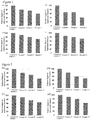
Figure 1 ] Charts showing effects of improving unpleasant sourness in respective examples.Figure 1(a) shows the degree of unpleasant sourness relative to Comparative example 1,Figure 1(b) shows the degree of unpleasant sourness relative to Comparative example 2,Figure 1(c) shows the degree of unpleasant sourness relative to Comparative example 3, andFigure 1(d) shows the degree of unpleasant sourness relative to Comparative example 4. Smaller degree means that the sourness was more reduced and thus the effect of reducing the sourness was higher relative to the comparative example. - [
Figure 2 ] Charts showing effects of improving unpleasant sourness in respective examples.Figure 2(a) shows the degree of unpleasant sourness relative to Comparative example 5,Figure 2(b) shows the degree of unpleasant sourness relative to Comparative example 6,Figure 2(c) shows the degree of unpleasant sourness relative to Comparative example 7, andFigure 2(d) shows the degree of unpleasant sourness relative to Comparative example 8. Smaller degree means that the sourness was more reduced and thus the effect of reducing the sourness was higher relative to the comparative example. - Hereinafter, a beverage of the present invention and a method for producing the same will be described in detail.
- A beverage of the present invention comprises one or more types of compounds selected from xanthohumols and an iso-α-acid, wherein the total content of the one or more types of compounds selected from xanthohumols is 3 mass ppm or more while the content of the iso-α-acid is 0.5-80 mass ppm.
- In the beverage of the present invention, unpleasant sour aftertaste distinctive of xanthohumol compounds such as xanthohumol and isoxanthohumol can be masked by adjusting the content of the iso-α-acid to lie in a predetermined range, and thus the content of the xanthohumol compound can be increased in the beverage as compared to conventional products. In a preferred aspect of the present invention, maintenance and improvement of health can be expected by continuously drinking the beverage of the present invention owing to the physiological activities exerted by the xanthohumol compound (for example, xanthohumol or isoxanthohumol).
- The beverage of the present invention comprises one or more types of compounds selected from xanthohumols, where examples of the xanthohumol compound include xanthohumol, isoxanthohumol, 6-prenylnaringenin and 8-prenylnaringenin. In one aspect of the present invention, the one or more types of compounds selected from xanthohumols are xanthohumol.
- Xanthohumol is a component derived from hops, which can be extracted from hops by using a solvent. For example, dried hops pelletized by pulverization of the like are subjected to extraction by immersing in an organic solvent such as alcohol. Subsequently, the resulting extract is concentrated and dried and then separated/purified by chromatography or the like, thereby obtaining xanthohumol.
- Isoxanthohumol can be obtained by isomerizing xanthohumol. For example, xanthohumol dissolved in a water-containing ethanol solution can be boiled at 100°C for 12 hours or longer to isomerize xanthohumol, thereby obtaining a reaction solution containing isoxanthohumol. At end of the reaction, the resulting reaction solution can be lyophilized to obtain isoxanthohumol powder. Alternatively, xanthohumol dissolved in a phosphate buffer (pH 6) can be boiled at 100°C for 3-4 hours to isomerize xanthohumol, thereby obtaining a reaction solution containing isoxanthohumol. The resulting reaction solution can be subjected to extraction using an organic solvent such as ether. Subsequently, the resulting extract is concentrated and dried and then separated/purified by chromatography or the like, thereby obtaining isoxanthohumol.
- While xanthohumol or isoxanthohumol used for the present invention is preferably derived from hops, they may also be obtained through organic synthesis. In this regard, xanthohumol and isoxanthohumol are also commercially available.
- According to one embodiment of the beverage of the present invention, the total content of the one or more types of compounds selected from xanthohumols is 3 mass ppm or more, preferably 6 mass ppm or more, more preferably 30 mass ppm or more, and still more preferably 60 mass ppm or more. According to another embodiment of the beverage of the present invention, the total content of the one or more types of compounds selected from xanthohumols is preferably 6-500 mass ppm, more preferably 30-400 mass ppm and still more preferably 60-200 mass ppm. The content of xanthohumol compounds can be measured, for example, by using LC-MS/MS system (TSQ Quantiva, Thermo Fisher Scientific).
- According to one embodiment of the beverage of the present invention, the content of xanthohumol is 3 mass ppm or more, preferably 6 mass ppm or more, more preferably 30 mass ppm or more, and still more preferably 60 mass ppm or more. According to another embodiment of the beverage of the present invention, the content of xanthohumol is preferably 6-500 mass ppm, more preferably 30-400 mass ppm, and still more preferably 60-200 mass ppm.
- Moreover, according to another embodiment of the beverage of the present invention, the content of isoxanthohumol is 3 mass ppm or more, preferably 6 mass ppm or more, more preferably 30 mass ppm or more and still more preferably 60 mass ppm or more. According to another embodiment of the beverage of the present invention, the content of isoxanthohumol is preferably 6-500 mass ppm, more preferably 30-400 mass ppm, and still more preferably 60-200 mass ppm.
- As long as the contents of xanthohumol and isoxanthohumol lie within the above-mentioned range, xanthohumol and isoxanthohumol are more likely to effectively exert their physiological activities in the beverage. In particular, while xanthohumol and isoxanthohumol are more likely to exert their physiological activities when used in larger contents, from the viewpoint of retaining the flavor inherent in the beverage, the total content of the one or more types of compounds selected from xanthohumols in the beverage of the present invention is preferably 500 mass ppm or less, and more preferably 200 mass ppm or less.
- The beverage of the present invention may contain a compound selected from xanthohumols (e.g., xanthohumol and isoxanthohumol) alone, or may contain different types of compounds selected from xanthohumols.
- If the beverage of the present invention is to contain isoxanthohumol as the xanthohumol compound, isoxanthohumol may be added directly to the beverage, or xanthohumol may be partially changed into isoxanthohumol.
- Herein, the term "contain" may mean either dissolution in the beverage or suspension in the beverage.
- The preferable content of a xanthohumol compound can suitably be adjusted according to the type and purpose of the beverage.
- According to the present invention, the total content of the xanthohumol compounds can be adjusted by separately adding xanthohumol compounds such as xanthohumol or isoxanthohumol to the beverage. If a beverage used as the base of the beverage of the present invention essentially contains one or more types of xanthohumol compounds, the total amount of these components may be adjusted to lie in the above-mentioned range.
- The iso-α-acid used in the present invention is not particularly limited as long as it is a substance that can be used in a beverage. The iso-α-acid is an isomerized alpha acid, which is a bitter component derived from hops, a material mainly used in producing a beer-taste beverage. The iso-α-acid used in the present invention may be an extract from hops or a commercially available iso-α-acid formulation. An iso-α-acid can be extracted from hops by means of a known method. Furthermore, a combination of an extract from hops and a commercially available iso-α-acid formulation can also be used as the iso-α-acid.
- The content of the iso-α-acid in the beverage of the present invention is 0.5-80 mass ppm, preferably 1.0-70 mass ppm, and more preferably 1.0-65 mass ppm. As long as the content of the iso-α-acid lies in the above-mentioned range, the unpleasant sour aftertaste distinctive of xanthohumol compounds such as xanthohumol and isoxanthohumol can be suppressed. The content of the iso-α-acid in the beverage can be measured according to Method 7.7 of "Analytica-EBC" (standard analysis methods) published by EBC (European Brewery Convention).
- A beverage used as the base of the beverage of the present invention is not particularly limited as long as a xanthohumol compound and an iso-α-acid can be blended therewith. For example, it may be an alcoholic beverage or a non-alcoholic beverage. Moreover, the beverage used as the base of the beverage of the present invention also includes an alcoholic beverage obtained by adding an alcohol to a beverage used as the base.
- The alcohol contained in an alcoholic beverage is not particularly limited as long as it is drinkable as a general alcoholic drink. For example, a distilled alcoholic beverage such as whiskey, vodka, rum, shochu (Japanese distilled liquor) or a spirit, or a mixed liquor such as a liqueur can be used. Either a single type of alcohol or a different types of alcohols may be used. While the alcohol concentration of the alcoholic beverage is not particularly limited, it is preferably 1-15 vol% and more preferably 2-9 vol%.
- A non-alcoholic beverage is not particularly limited as long as it is a beverage with an ethanol content of less than 1.00 vol%, where examples thereof include non-alcoholic beer-taste beverages, carbonated drinks, fruit juice drinks, soft drinks and energy drinks.
- In the beverage of the present invention, the total content of the xanthohumol compounds and the content of the iso-α-acid can suitably be adjusted in accordance with the type and the purpose of the beverage.
- For example, if the beverage of the present invention is a beer-taste beverage (a beer-taste beverage containing a fermented or non-fermented alcohol, a non-alcoholic beer-taste beverage or a beer-taste soft drink), the total content of the one or more types of compounds selected from xanthohumols is 3 mass ppm or more, preferably 6 mass ppm or more, more preferably 30 mass ppm or more, and still more preferably 60 mass ppm or more. According to another embodiment of the beverage of the present invention, the total content of the one or more types of compounds selected from xanthohumols is preferably 6-500 mass ppm, more preferably 30-400 mass ppm, and still more preferably 60-200 mass ppm. The content of the iso-α-acid is adjusted to be 0.5-80 mass ppm, preferably 1.0-70 mass ppm, and more preferably 1.0-65 mass ppm. The term "beer-taste beverage" as used herein refers to a carbonated drink that has a beer-like flavor. An "unfermented beer-taste beverage" refers to a beer-taste beverage that is produced without a fermentation step using yeast, whereas a "fermented beer-taste beverage" refers to a beer-taste beverage that is produced through a fermentation step using yeast.
- According to one embodiment of the present invention, the beverage of the present invention is preferably a beer-taste beverage. A beer-taste beverage may be either a non-alcoholic beverage or an alcoholic beverage containing alcohol, or may be a beer-taste soft drink. Furthermore, a beer-taste beverage may be either a fermented beer-taste beverage or an unfermented beer-taste beverage.
- According to another embodiment the present invention, the beverage of the present invention may contain carbon dioxide gas to give a carbonated drink. The present invention can be applied to a carbonated drink to improve the drawback of a beverage containing a bitter substance and citric acid and/or malic acid in terms of taste, as well as to suitably alleviate the stimulation caused by carbon dioxide gas. Therefore, a carbonated drink is one of the more preferred aspects of the present invention.
- Carbon dioxide gas can be provided in a beverage according to a method generally known to those skilled in the art. For example, but without limitation, carbon dioxide may be dissolved in the beverage under pressure or carbon dioxide can be mixed with the beverage in a piping using a mixer such as a carbonator from Tuchenhargen. Alternatively, beverage may be sprayed in a tank filled with carbon dioxide so as to let the beverage absorb carbon dioxide, or the beverage may be mixed with carbonated water. These means can appropriately be employed to adjust the pressure of the carbon dioxide gas.
- If the beverage of the present invention is a carbonated drink, it has a carbon dioxide gas pressure of preferably 1.0-3.5 kg/cm2, and more preferably 1.2-2.5 kg/cm2. The carbon dioxide gas pressure can be measured using a gas volume meter GVA-500A available from Kyoto Electronics Manufacturing Co., Ltd. For example, a carbon dioxide gas pressure can be measured at a sample temperature of 20°C after degassing (snifting) and shaking the container in the gas volume meter.
- The total content of the xanthohumol compounds having various physiological activities such as xanthohumol and isoxanthohumol can be made high in the beverage of the present invention while suppressing the associated unpleasant sour aftertaste. Therefore, one can continuously drink the beverage of the present invention without undue stress, and thus various effects can be expected.
- In particular, xanthohumol is known to have an effect of suppressing fat accumulation (see
Non-patent documents 1 and 2), and is known to have an effect of preventing or improving obesity by suppressing fat accumulation. Moreover, isoxanthohumol is known to have an anti-obesity effect, a fat accumulation suppressing effect and a weight gain preventing effect (see Patent document 1). Accordingly, in a preferred aspect of the present invention, the beverage of the present invention can be used as an anti-obesity beverage and further as a fat accumulation suppressing beverage. By continuously drinking the beverage of the present invention, accumulation of fat in the body due to daily diet can be suppressed and thus effects of maintaining and improving health can be expected. - While pH of the beverage of the present invention is not particularly limited, it is preferably in a range of 2-8.
- If necessary, various additives may be added to the beverage of the present invention as long as the effect of the present invention is not impaired. For example, a coloring, a foaming agent, a flavoring agent, a bittering agent, a sweetener, a protein-based substance such as a peptide-containing substance, seasonings such as an amino acid, an antioxidant such as ascorbic acid, an acidulant, an alcohol or the like may be added as necessary as long as the effect of the present invention is not impaired.
- A beverage of the present invention can be produced by adjusting the content of xanthohumol and isoxanthohumol as well as the content of the iso-α-acid to lie in respective predetermined ranges. Specifically, a method for producing a beverage of the present invention comprises the steps of: adjusting the total content of the xanthohumol compounds in the beverage; and adjusting the content of the iso-α-acid in the beverage.
- According to the production method of the present invention, the total content of the xanthohumol compounds can be adjusted either during or after the production of the beverage. For example, adjustment may be carried out before, during or after any of the production steps, or before, during or after multiple steps, as long as the total content of the xanthohumol compounds in the resulting beverage lies in the predetermined range.
- For example, in a case where a beer or a fermented beer-taste beverage, i.e., a fermented malt beverage such as a low-malt beer, is to be produced, the method comprises: a saccharification step for converting the raw material containing malt into sugar; a filtration step for filtrating the mash to obtain wort; a boiling step for adding hops to the wort and boiling the resultant; a separation step for separating sediment from the hot wort after the boiling step; a fermentation step for adding yeast to the wort to allow the wort to ferment; and a filtration step for filtrating the fermented liquid. Since xanthohumol is isomerized and changes into isoxanthohumol by undergoing heat at about 96°C, the content of xanthohumol is preferably adjusted anytime after the boiling step. Meanwhile, since isoxanthohumol is stable to heat, the content of isoxanthohumol can be adjusted at any point.
- The same also applies to production of other fermented beverages, and therefore the content of isoxanthohumol can be adjusted at any timing whereas the content of xanthohumol is preferably adjusted anytime after a step involving heat, if any.
- In terms of yield, the xanthohumol content and the isoxanthohumol content are preferably adjusted as later as possible. Moreover, in any case, the total content of the xanthohumol compounds should lie in the predetermined range.
- Furthermore, in a case where an unfermented beer-taste beverage is to be produced, the method comprises: a saccharification step for converting the raw material containing malt into sugar; a filtration step for filtrating the mash to obtain wort; a boiling step for adding hops to the wort and boiling the resultant; a separation step for separating sediment from the hot wort after the boiling step; a filtration step for filtrating the resulting separated liquid; and a product preparation step for adding degassed water, carbon dioxide gas, seasoning ingredients and, if necessary, alcohol to the filtrated liquid.
- In order to produce an unfermented beer-taste beverage by using malt as a raw material, first, an enzyme suitable for the need such as amylase is added to a mixture containing raw materials, namely, barley such as malt, and, if necessary, other grains, starch, sugar, a bittering agent or a coloring and water to allow gelatinization and saccharification. The resultant is filtrated to obtain mash. In accordance with the need, hops, a bittering agent and the like are added to the mash, and the resultant is boiled. Solid matter such as coagulated protein is removed in a clarification tank. An alternative to this mash may be obtained by adding hops to a mixture of malt extract and warm water, and boiling the resultant. Hops may be blended at any point from the beginning to the end of the boiling. Any known conditions for the saccharification step, the boiling step and the solid matter removing step can be employed. After boiling, the resulting wort is filtrated, and water, carbon dioxide gas, seasoning ingredients and, if necessary, alcohol can be added to the filtrated liquid to give an unfermented beer-taste beverage. In order to acquire more favorable flavor as a beer-taste beverage, aroma ingredients such as fatty acid ester, ethyl acetate or isoamyl acetate may be added in any of the above-described steps prior to packing.
- Alternatively, in order to produce an unfermented beer-taste beverage that does not use malt as a raw material, first, liquid sugar containing a carbon source, a nitrogen source as an amino-acid-containing material other than barley or malt, hops, pigment and the like are mixed with warm water to obtain a sugar solution. This sugar solution is boiled. If hops are used as a raw material, they may be mixed with the sugar solution during boiling rather than prior to boiling. Water, carbon dioxide gas, seasoning ingredients and, if necessary, alcohol may be added to the boiled sugar solution to obtain an unfermented beer-taste beverage. In order to acquire more favorable flavor as a beer-taste beverage, aroma ingredients such as fatty acid ester, ethyl acetate or isoamyl acetate may be added in any of the above-described steps prior to packing.
- Since xanthohumol is isomerized and changes into isoxanthohumol by undergoing heat at about 96°C, the content of xanthohumol is preferably adjusted anytime after the boiling step. Meanwhile, since isoxanthohumol is stable to heat, the content of isoxanthohumol can be adjusted at any point.
- The same also applies to production of other beverages, and therefore the content of isoxanthohumol can be adjusted at any timing whereas the content of xanthohumol is preferably adjusted anytime after a step involving heat, if any.
- In terms of yield, the xanthohumol content and the isoxanthohumol content are preferably adjusted as later as possible. Moreover, in any case, the total content of the xanthohumol compounds should lie in the predetermined range.
- The production method of the present invention comprises a step of adjusting the iso-α-acid content in the beverage to be 0.5-80 mass ppm.
- The content of iso-α-acid can be adjusted either during or after the production of the beverage. For example, adjustment may be carried out before, during or after any of the production steps, or before, during or after multiple steps, as long as the total content of the iso-α-acid in the resulting beverage lies in the predetermined range.
- According to the production method of the present invention, the order of the adjustment steps is not particularly limited and two or more adjustment steps can be carried out at the same time.
- The beer-taste beverage of the present invention can be packed and sealed in a container to be provided as a container-packed beverage. A container made from any material in any form can be used. Any container generally used for beverage compositions, for example, a resin container such as a PET bottle, a paper container such as a paper package, a glass container such as a glass bottle, a metal container such as an aluminum can or a steel can, an aluminum pouch or the like can be used.
- Hereinafter, the present invention will be described in more detail by way of examples, although the present invention is not limited to these examples.
- A xanthohumol subjected to the preparations of the beer-taste beverages of Examples 1-12 and Comparative examples 1-4 was Xantho-Flav Pure (available from Hopsteiner).
- Beer-taste beverages were prepared as follows. 20 kg of malt was pulverized into a suitable grain size and placed into a preparation tank, to which 120 L of warm water was added to prepare the mash at about 50°C. After keeping the mash at 50°C for 30 minutes, the temperature was gradually raised to allow saccharification at 65°C-72°C for 60 minutes. The temperature of the mash that completed the saccharification was raised to 77°C, and then the mash was transferred to and filtrated in a wort filtrating tank, where a filtrate was obtained.
- Warm water was added to a part of the resulting filtrate. In doing so, the mixing proportion of the filtrate and warm water was adjusted such that the total amount of the extract at the end of boiling was about 4.0 wt%. In a production scale of 100 L, about 40 g of a commercially available caramel pigment (Class I) was added and the resultant was boiled at 100°C for 80 minutes. Sediments were removed from the boiled solution and the resultant was cooled to about 2°C.
- A part of the cooled solution was diluted in a suitable amount of cool water such that the total amount of the extract in the final product was 0.3 wt%. Using lactic acid as a pH controller, suitable amounts of the pH controller, an antioxidant, a flavoring agent and carbon dioxide gas were added to the diluted fluid, and the resultant was subjected to filtration. Thereafter, xanthohumol and an iso-α-acid were added to the concentrations indicated in Table 1 to give the beer-taste beverages of Examples 1-12 and Comparative examples 1-4. The xanthohumol content was measured using LC-MS/MS system (TSQ Quantiva, Thermo Fisher Scientific) while the iso-α-acid content was measured according to Method 7.7 of "Analytica-EBC" (standard analysis methods) published by EBC (European Brewery Convention).
- For the respective beer-taste beverages, sensory evaluation (relative degree of unpleasant sourness) was conducted by five trained panelists based on the following criteria to determine the median of the evaluation scores. The results are shown in Table 2 and
Figure 1 . - Provided that unpleasant sourness of each of the comparative examples was 100, the degree of unpleasant sourness was evaluated relative thereto.
[Table 1] Table 1 Comparative example 1 Example 1 Example 2 Example 3 Comparative example 2 Example 4 Example 5 Example 6 Comparative example 3 Example 7 Example 8 Example 9 Comparative example 4 Example 10 Example 11 Example 12 Mixing amount of xanthohumol (mg/L) 6 6 6 6 60 60 60 60 200 200 200 200 500 500 500 500 Mixing amount of iso-α-acid (mg/L) 0 1 25 65 0 1 25 65 0 1 25 65 0 1 25 65 [Table 2] Table 2 Comparative example 1 Example 1 Example 2 Example 3 Comparative example 2 Example 4 Example 5 Example 6 Comparative example 3 Example 7 Example 8 Example 9 Comparative example 4 Example 10 Example 11 Example 12 Mixing amount of xanthohumol (mg/L) 6 6 6 6 60 60 60 60 200 200 200 200 500 500 500 500 Mixing amount of iso-α-acid (mg/L) 0 1 25 65 0 1 25 65 0 1 25 65 0 1 25 65 Relative degree of unpleasant sourness (Median of evaluation scores by 5 panelists) 100 80 78 60 100 67 67 40 100 90 80 70 100 86 80 71 Improvement relative to Comparative example 1 Improvement relative to Comparative example 2 Improvement relative to Comparative example 3 Improvement relative to Comparative example 4 - As can be appreciated from the results shown above, the unpleasant sourness distinctive to xanthohumol was found to be improved by adjusting the iso-α-acid content in the beer-taste beverages to lie in the predetermined range.
- As isoxanthohumol subjected to preparations of beer-taste beverages of Examples 13-24 and Comparative examples 5-8, Iso-Xantho-Flav (available from Hopsteiner) was used.
- Beer-taste beverages were prepared as follows. 20 kg of malt was pulverized into a suitable grain size and placed into a preparation tank, to which 120 L of warm water was added to prepare the mash at about 50°C. After keeping the mash at 50°C for 30 minutes, the temperature was gradually raised to allow saccharification at 65°C-72°C for 60 minutes. The temperature of the mash that completed the saccharification was raised to 77°C, and then the mash was transferred to and filtrated in a wort filtrating tank, where a filtrate was obtained.
- Warm water was added to a part of the resulting filtrate. In doing so, the mixing proportion of the filtrate and warm water was adjusted such that the total amount of the extract at the end of boiling was about 4.0 wt%. In a production scale of 100 L, about 40 g of a commercially available caramel pigment (Class I) was added and the resultant was boiled at 100°C for 80 minutes. Sediments were removed from the boiled solution and the resultant was cooled to about 2°C.
- A part of the cooled solution was diluted in a suitable amount of cool water such that the total amount of the extract in the final product was 0.3 wt%. Using lactic acid as a pH controller, suitable amounts of the pH controller, an antioxidant, a flavoring agent and carbon dioxide gas were added to the diluted fluid, and the resultant was subjected to filtration. Thereafter, isoxanthohumol and an iso-α-acid were added to the concentrations indicated in Table 3 to give the beer-taste beverages of Examples 13-24 and Comparative examples 5-8. The isoxanthohumol content was measured using LC-MS/MS system (TSQ Quantiva, Thermo Fisher Scientific) while the iso-α-acid content was measured according to Method 7.7 of "Analytica-EBC" (standard analysis methods) published by EBC (European Brewery Convention).
- For the respective beer-taste beverages, sensory evaluation (relative degree of unpleasant sourness) was conducted by five trained panelists based on the following criteria to determine the median of the evaluation scores. The results are shown in Table 4 and
Figure 2 . - Provided that unpleasant sourness of each of the comparative examples was 100, the degree of unpleasant sourness was evaluated relative thereto.
-
Table 3 Comparative example 5 Example 13 Example 14 Example 15 Comparative example 6 Example 16 Example 17 Example 18 Comparative example 7 Example 19 Example 20 Example 21 Comparative example 8 Example 22 Example 23 Example 24 Mixing amount of xanthohumol (mg/L) 6 60 200 500 Mixing amount of iso-α-acid (mg/L) 0 1 25 65 0 1 25 65 0 1 25 65 0 1 25 65 -
Table 4 Comparative example 5 Example 13 Example 14 Example 15 Comparative example 6 Example 16 Example 17 Example 18 Comparative example 7 Example 19 Example 20 Example 21 Comparative example 8 Example 22 Example 23 Example 24 Mixing amount of xanthohumol (mg/L) 6 60 200 500 Mixing 0 1 25 65 0 1 25 65 0 1 25 65 0 1 25 65 amount of iso-α-acid (mg/L) Relative degree of unpleasant sourness (Median of evaluation scores by 5 panelists) 100 80 70 50 100 80 60 50 100 90 75 65 100 90 80 60 Improvement relative to Comparative example 5 Improvement relative to Comparative example 6 Improvement relative to Comparative example 7 Improvement relative to Comparative example 8 - As can be appreciated from the results shown above, the unpleasant sourness distinctive to isoxanthohumol was found to be improved by adjusting the iso-α-acid content in the beer-taste beverages to lie in the predetermined range.
- According to the present invention, the content of an iso-α-acid can be adjusted to lie in a predetermined range to suppress unpleasant sour aftertaste distinctive to a xanthohumol compound so that the content of the xanthohumol compound can be increased. In a preferred aspect of the present invention, maintenance and improvement of health can be expected by continuously drinking the beverage of the present invention owing to the physiological activities exerted by the xanthohumol compound.
Claims (11)
- A beverage comprising one or more types of compounds selected from xanthohumols and an iso-α-acid, wherein the total content of the one or more types of compounds selected from xanthohumols is 3 mass ppm or more while the content of the iso-α-acid is 0.5-80 mass ppm.
- The beverage according to Claim 1, wherein the one or more types of compounds selected from xanthohumols are xanthohumol.
- The beverage according to Claim 2, wherein the content of xanthohumol is 6-500 mass ppm.
- The beverage according to either one of Claims 2 and 3, wherein the content of xanthohumol is 60-200 mass ppm.
- The beverage according to Claim 1, wherein the one or more types of compounds selected from xanthohumols are isoxanthohumol.
- The beverage according to Claim 5, wherein the content of isoxanthohumol is 6-500 mass ppm.
- The beverage according to either one of Claims 5 and 6, wherein the content of isoxanthohumol is 60-200 mass ppm.
- The beverage according to any one of Claims 1-7, which is an anti-obesity beverage.
- The beverage according to any one of Claims 1-7, which is a fat accumulation suppressing beverage.
- The beverage according to any one of Claims 1-9, which is a beer-taste beverage.
- A method for producing the beverage according to any one of Claims 1-10, the method comprising the steps of:adjusting the total content of xanthohumols in the beverage; andadjusting the content of the iso-α-acid in the beverage.
Applications Claiming Priority (2)
| Application Number | Priority Date | Filing Date | Title |
|---|---|---|---|
| JP2017250945 | 2017-12-27 | ||
| PCT/JP2018/047708 WO2019131697A1 (en) | 2017-12-27 | 2018-12-26 | Beverage and method for producing same |
Publications (2)
| Publication Number | Publication Date |
|---|---|
| EP3732991A1 true EP3732991A1 (en) | 2020-11-04 |
| EP3732991A4 EP3732991A4 (en) | 2021-11-17 |
Family
ID=67067426
Family Applications (1)
| Application Number | Title | Priority Date | Filing Date |
|---|---|---|---|
| EP18896937.2A Withdrawn EP3732991A4 (en) | 2017-12-27 | 2018-12-26 | BEVERAGE AND METHOD FOR MANUFACTURING THEREOF |
Country Status (9)
| Country | Link |
|---|---|
| US (1) | US20200323242A1 (en) |
| EP (1) | EP3732991A4 (en) |
| JP (1) | JP7218304B2 (en) |
| KR (1) | KR20200101944A (en) |
| CN (1) | CN111526725A (en) |
| AU (1) | AU2018397890A1 (en) |
| SG (1) | SG11202005948PA (en) |
| TW (1) | TWI781267B (en) |
| WO (1) | WO2019131697A1 (en) |
Families Citing this family (4)
| Publication number | Priority date | Publication date | Assignee | Title |
|---|---|---|---|---|
| CN112584709A (en) * | 2018-08-10 | 2021-03-30 | 三得利控股株式会社 | Microorganism proliferation inhibitor, method for preventing microorganism contamination, and beverage |
| JP7212576B2 (en) * | 2019-04-26 | 2023-01-25 | サントリーホールディングス株式会社 | beer-taste beverages |
| WO2022004430A1 (en) * | 2020-07-02 | 2022-01-06 | サントリーホールディングス株式会社 | Beer-flavored beverage |
| US20230189835A1 (en) * | 2021-12-20 | 2023-06-22 | Starbucks Corporation | Widgetless canned nitrogen infused beverages |
Family Cites Families (20)
| Publication number | Priority date | Publication date | Assignee | Title |
|---|---|---|---|---|
| JP4374123B2 (en) * | 2000-08-08 | 2009-12-02 | アサマ化成株式会社 | Food preservative and food preservative method |
| JP2002345433A (en) | 2001-05-28 | 2002-12-03 | Takara Bio Inc | Method for producing food, beverage or seasoning |
| JP4002780B2 (en) | 2002-04-24 | 2007-11-07 | サッポロビール株式会社 | Method for producing malt alcoholic beverage |
| DE50302729D1 (en) * | 2002-12-18 | 2006-05-11 | Doehler Gmbh | Xanthohumol-containing beverage |
| DE602004016486D1 (en) * | 2003-04-08 | 2008-10-23 | Kirin Brewery | COMPOSITION FOR INHIBITING OR PREVENTING THE REDUCTION OF BONE DENSITY |
| JP4095502B2 (en) | 2003-06-27 | 2008-06-04 | アサヒビール株式会社 | Nourishing tonic beer drink and sparkling liquor drink |
| JP2006028143A (en) * | 2004-07-21 | 2006-02-02 | Shiseido Co Ltd | MITF gene expression promoting substance |
| DE102004063125B4 (en) | 2004-12-22 | 2007-03-15 | Ta-Xan-Ag | Natural xanthohumol-containing extract and the process for its preparation and drinks made therefrom |
| EP2248532A1 (en) * | 2005-08-09 | 2010-11-10 | Metaproteomics, LLP | Protein kinase modulation by hops and acacia products cross-reference to related applications |
| DE202007000739U1 (en) * | 2007-01-12 | 2007-03-29 | Hertel, Marcus, Dipl.-Ing. | Hops powder for the subsequent strengthening of bitterness and hops taste of manufactured beer, comprises a carrier material on which isomerized and/or reduced form of hop components are added |
| CN101602987B (en) | 2009-07-22 | 2011-12-14 | 北京燕京啤酒股份有限公司 | Method for preparing beer rich in xanthohumol |
| RU2423417C1 (en) * | 2009-12-28 | 2011-07-10 | Людмила Николаевна Третьяк | Method of producing beer |
| JP5073784B2 (en) | 2010-05-25 | 2012-11-14 | 麒麟麦酒株式会社 | A beer-taste beverage with a refreshing fruit scent, such as Muscat, lychee, mango and passion fruit, and a method for producing the same |
| JP2013043850A (en) * | 2011-08-23 | 2013-03-04 | Lion Corp | Lipolysis promoter |
| KR102231544B1 (en) | 2013-05-29 | 2021-03-23 | 아사히비루 가부시키가이샤 | Unfermented beer-flavoured beverage containing indigestible dextrin, and bitter substance |
| JP6444658B2 (en) | 2014-08-29 | 2018-12-26 | キリン株式会社 | Non-fermented beer-taste beverage and method for producing the same |
| US20180193287A1 (en) * | 2015-07-02 | 2018-07-12 | John I. Haas, Inc. | Hops-based substance and use of the substance |
| CN105087204B (en) * | 2015-09-21 | 2017-10-31 | 青岛啤酒股份有限公司 | Evaluate the method that different hops brewage performance in Lager brewings |
| WO2018117041A1 (en) | 2016-12-20 | 2018-06-28 | サントリーホールディングス株式会社 | Lipid metabolism-promoting composition including isoxanthohumol |
| JP6934300B2 (en) | 2017-01-18 | 2021-09-15 | 株式会社ディスコ | Processing method of plate-shaped work and processing equipment using it |
-
2018
- 2018-12-26 US US16/957,570 patent/US20200323242A1/en not_active Abandoned
- 2018-12-26 JP JP2019562064A patent/JP7218304B2/en active Active
- 2018-12-26 TW TW107147175A patent/TWI781267B/en not_active IP Right Cessation
- 2018-12-26 CN CN201880083663.0A patent/CN111526725A/en not_active Withdrawn
- 2018-12-26 WO PCT/JP2018/047708 patent/WO2019131697A1/en not_active Ceased
- 2018-12-26 SG SG11202005948PA patent/SG11202005948PA/en unknown
- 2018-12-26 KR KR1020207020382A patent/KR20200101944A/en not_active Abandoned
- 2018-12-26 EP EP18896937.2A patent/EP3732991A4/en not_active Withdrawn
- 2018-12-26 AU AU2018397890A patent/AU2018397890A1/en not_active Abandoned
Also Published As
| Publication number | Publication date |
|---|---|
| AU2018397890A1 (en) | 2020-07-16 |
| US20200323242A1 (en) | 2020-10-15 |
| TW201929683A (en) | 2019-08-01 |
| JPWO2019131697A1 (en) | 2020-12-10 |
| WO2019131697A1 (en) | 2019-07-04 |
| JP7218304B2 (en) | 2023-02-06 |
| CN111526725A (en) | 2020-08-11 |
| SG11202005948PA (en) | 2020-07-29 |
| TWI781267B (en) | 2022-10-21 |
| EP3732991A4 (en) | 2021-11-17 |
| KR20200101944A (en) | 2020-08-28 |
Similar Documents
| Publication | Publication Date | Title |
|---|---|---|
| AU2012324000B2 (en) | Non-alcohol, beer-taste beverage having improved finish | |
| AU2016306247A1 (en) | Beer-like effervescent beverage | |
| US20200323242A1 (en) | Beverage and method for producing same | |
| WO2022044410A1 (en) | Beer taste beverage | |
| JP2022090024A (en) | Beer taste beverage | |
| JP7138053B2 (en) | Packaged non-fermented beverage and method for producing the same | |
| WO2022044412A1 (en) | Beer-flavored beverage | |
| JP2022177283A (en) | beer-taste beverages | |
| JP7281345B2 (en) | Beer-taste beverage and method for producing beer-taste beverage | |
| JP7212576B2 (en) | beer-taste beverages | |
| JP7138052B2 (en) | Packaged fermented beverage and method for producing the same | |
| EP4230715A1 (en) | Container-packed carbonated beverage | |
| WO2022044411A1 (en) | Beer-flavored beverage | |
| WO2022004430A1 (en) | Beer-flavored beverage | |
| JP7270862B1 (en) | beer-like sparkling beverage | |
| JP2024095278A (en) | Beer-flavored beverages | |
| JP2024095279A (en) | Beer-flavored beverages | |
| JP2024095277A (en) | Beer-flavored beverages | |
| JP2024170109A (en) | Beer-flavored beverages | |
| JP2024082775A (en) | Non-alcoholic beer-flavored beverage | |
| JP2024170107A (en) | Beer-flavored alcoholic beverages | |
| CN120435541A (en) | beer-flavored drinks | |
| HK1184336A (en) | Non-alcoholic beer with improved aftertaste |
Legal Events
| Date | Code | Title | Description |
|---|---|---|---|
| STAA | Information on the status of an ep patent application or granted ep patent |
Free format text: STATUS: THE INTERNATIONAL PUBLICATION HAS BEEN MADE |
|
| PUAI | Public reference made under article 153(3) epc to a published international application that has entered the european phase |
Free format text: ORIGINAL CODE: 0009012 |
|
| STAA | Information on the status of an ep patent application or granted ep patent |
Free format text: STATUS: REQUEST FOR EXAMINATION WAS MADE |
|
| 17P | Request for examination filed |
Effective date: 20200725 |
|
| AK | Designated contracting states |
Kind code of ref document: A1 Designated state(s): AL AT BE BG CH CY CZ DE DK EE ES FI FR GB GR HR HU IE IS IT LI LT LU LV MC MK MT NL NO PL PT RO RS SE SI SK SM TR |
|
| AX | Request for extension of the european patent |
Extension state: BA ME |
|
| DAV | Request for validation of the european patent (deleted) | ||
| DAX | Request for extension of the european patent (deleted) | ||
| A4 | Supplementary search report drawn up and despatched |
Effective date: 20211020 |
|
| RIC1 | Information provided on ipc code assigned before grant |
Ipc: C12G 3/06 20060101ALI20211013BHEP Ipc: C12G 3/055 20190101ALI20211013BHEP Ipc: C12C 5/02 20060101ALI20211013BHEP Ipc: A23L 27/00 20160101ALI20211013BHEP Ipc: A23L 33/105 20160101ALI20211013BHEP Ipc: A23L 2/56 20060101ALI20211013BHEP Ipc: A23L 2/52 20060101ALI20211013BHEP Ipc: A23L 2/38 20210101ALI20211013BHEP Ipc: A23L 2/00 20060101AFI20211013BHEP |
|
| STAA | Information on the status of an ep patent application or granted ep patent |
Free format text: STATUS: THE APPLICATION HAS BEEN WITHDRAWN |
|
| 18W | Application withdrawn |
Effective date: 20230111 |