EP3723781B1 - Peptides and other agents for treating pain and increasing pain sensitivity - Google Patents
Peptides and other agents for treating pain and increasing pain sensitivity Download PDFInfo
- Publication number
- EP3723781B1 EP3723781B1 EP18887737.7A EP18887737A EP3723781B1 EP 3723781 B1 EP3723781 B1 EP 3723781B1 EP 18887737 A EP18887737 A EP 18887737A EP 3723781 B1 EP3723781 B1 EP 3723781B1
- Authority
- EP
- European Patent Office
- Prior art keywords
- magi
- seq
- peptide
- pain
- chosen
- Prior art date
- Legal status (The legal status is an assumption and is not a legal conclusion. Google has not performed a legal analysis and makes no representation as to the accuracy of the status listed.)
- Active
Links
Images









Classifications
-
- A—HUMAN NECESSITIES
- A61—MEDICAL OR VETERINARY SCIENCE; HYGIENE
- A61P—SPECIFIC THERAPEUTIC ACTIVITY OF CHEMICAL COMPOUNDS OR MEDICINAL PREPARATIONS
- A61P23/00—Anaesthetics
-
- A—HUMAN NECESSITIES
- A61—MEDICAL OR VETERINARY SCIENCE; HYGIENE
- A61K—PREPARATIONS FOR MEDICAL, DENTAL OR TOILETRY PURPOSES
- A61K38/00—Medicinal preparations containing peptides
- A61K38/04—Peptides having up to 20 amino acids in a fully defined sequence; Derivatives thereof
- A61K38/08—Peptides having 5 to 11 amino acids
-
- A—HUMAN NECESSITIES
- A61—MEDICAL OR VETERINARY SCIENCE; HYGIENE
- A61K—PREPARATIONS FOR MEDICAL, DENTAL OR TOILETRY PURPOSES
- A61K38/00—Medicinal preparations containing peptides
- A61K38/16—Peptides having more than 20 amino acids; Gastrins; Somatostatins; Melanotropins; Derivatives thereof
- A61K38/43—Enzymes; Proenzymes; Derivatives thereof
- A61K38/45—Transferases (2)
-
- A—HUMAN NECESSITIES
- A61—MEDICAL OR VETERINARY SCIENCE; HYGIENE
- A61P—SPECIFIC THERAPEUTIC ACTIVITY OF CHEMICAL COMPOUNDS OR MEDICINAL PREPARATIONS
- A61P25/00—Drugs for disorders of the nervous system
- A61P25/04—Centrally acting analgesics, e.g. opioids
-
- A—HUMAN NECESSITIES
- A61—MEDICAL OR VETERINARY SCIENCE; HYGIENE
- A61P—SPECIFIC THERAPEUTIC ACTIVITY OF CHEMICAL COMPOUNDS OR MEDICINAL PREPARATIONS
- A61P29/00—Non-central analgesic, antipyretic or antiinflammatory agents, e.g. antirheumatic agents; Non-steroidal antiinflammatory drugs [NSAID]
-
- C—CHEMISTRY; METALLURGY
- C07—ORGANIC CHEMISTRY
- C07K—PEPTIDES
- C07K14/00—Peptides having more than 20 amino acids; Gastrins; Somatostatins; Melanotropins; Derivatives thereof
- C07K14/435—Peptides having more than 20 amino acids; Gastrins; Somatostatins; Melanotropins; Derivatives thereof from animals; from humans
- C07K14/705—Receptors; Cell surface antigens; Cell surface determinants
-
- C—CHEMISTRY; METALLURGY
- C07—ORGANIC CHEMISTRY
- C07K—PEPTIDES
- C07K7/00—Peptides having 5 to 20 amino acids in a fully defined sequence; Derivatives thereof
- C07K7/04—Linear peptides containing only normal peptide links
- C07K7/08—Linear peptides containing only normal peptide links having 12 to 20 amino acids
-
- A—HUMAN NECESSITIES
- A61—MEDICAL OR VETERINARY SCIENCE; HYGIENE
- A61K—PREPARATIONS FOR MEDICAL, DENTAL OR TOILETRY PURPOSES
- A61K45/00—Medicinal preparations containing active ingredients not provided for in groups A61K31/00 - A61K41/00
- A61K45/06—Mixtures of active ingredients without chemical characterisation, e.g. antiphlogistics and cardiaca
-
- C—CHEMISTRY; METALLURGY
- C12—BIOCHEMISTRY; BEER; SPIRITS; WINE; VINEGAR; MICROBIOLOGY; ENZYMOLOGY; MUTATION OR GENETIC ENGINEERING
- C12Y—ENZYMES
- C12Y207/00—Transferases transferring phosphorus-containing groups (2.7)
- C12Y207/04—Phosphotransferases with a phosphate group as acceptor (2.7.4)
- C12Y207/04008—Guanylate kinase (2.7.4.8)
Definitions
- Nociceptive neurons are endowed with a specific subset of voltage-dependent sodium channels (Nav) allowing neurons to uniquely respond to noxious and inflammatory stimuli. Therefore, a current strategy for new analgesic development relies on targeting nociceptor-specific sodium channels.
- the Nav1.8 channel SCN10A
- AP repetitively fire action potentials
- channels also traffic to the membrane during inflammatory signaling, an alternative approach to affect Na V 1.8 channel functioning would be to perturb their trafficking.
- the precise molecular mechanisms controlling Na V 1.8 channel trafficking are not completely understood and therefore, specific agents targeting Nav1.8 still remain elusive.
- the present disclosure also provides a pharmaceutical composition
- a pharmaceutical composition comprising a pharmaceutically acceptable carrier, a peptide of the present invention, optionally, a Magi-1 targeting shRNA or Magi-1 targeting siRNA and, optionally, one or more analgesic agents (e.g., nonsteroidal anti-inflammatory drugs (NSAIDS)) and/or one or more anesthetic agent.
- analgesic agents e.g., nonsteroidal anti-inflammatory drugs (NSAIDS)
- NSAIDS nonsteroidal anti-inflammatory drugs
- analgesic agents or anesthetic agents include bupivacaine, etidocaine, levobupivacaine, lidocaine, mepivacaine, prilocaine, ropivacaine, procaine, chloroprocaine, meloxicam, ketorolac, diclofenac, ketoprofen, piroxicam, metamizole, or a combination thereof.
- Additional examples of analgesics include acetaminophen, aspirin, ibuprofen, naproxen, and the like, and salts thereof.
- the compositions can be formulated as intramuscular, intradermal, intrathecal or nerve injections, topical creams or transdermal patches.
- the present disclosure provides a method of inducing local analgesia in a subject comprising administering a composition of the invention comprising a peptide having the sequence of any one of SEQ ID Nos. 1-7 or 15-21, and optionally Magi-1 targeting shRNA, or Magi-1 targeting siRNA to the subject in analgesic effective amount (e.g., a therapeutically effective amount).
- analgesic effective amount e.g., a therapeutically effective amount.
- the present disclosure further provides a method of increasing pain sensitivity of a subject comprising administering a composition of the invention comprising a peptide having the sequence of any one of SEQ ID NOs. 8-14 or 21-35 to the subject at an amount effective to increase pain sensitivity.
- References to methods of treatment by therapy in this paragraph are to be interpreted as references to pharmaceutical compositions for use in those methods.
- Also disclosed herein is the use of peptides of SEQ ID NOs:36-70 as research tools. As such, they can be administered to research subjects, such as mice and rats. The peptides are also useful for in vitro testing.
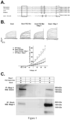
- Figure 1 shows PDZ binding motif regulates K Na channel expression.
- A Amino acid alignment of the distal C-termini from orthologous Slack subunits ( Xenopus, chicken, rat, and human Slack) and the rat Slick subunit. The final four, evolutionarily conserved amino acids (ETQL) (SEQ ID NO: 112) (long and short dashed line on the C-terminus) represent a consensus Type 1 PDZ motif (X-S/T-X-V/L/I).
- EQL evolutionarily conserved amino acids
- Scrambled peptide B (myristoyl-QPNTRLDETE) (SEQ ID NO:113) (23/23) (top left) and untreated neurons (17/17) (top middle) fired one action potential followed by firing accommodation during suprathreshold stimulation (400 pA) for 1000 ms.
- Neurons treated with PDZ peptide exhibited repetitive firing (11/21) (top right).
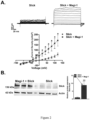
- FIG. 2 shows Magi-1 regulates Slick channels in CHO cells.
- A Representative current traces of Slick currents recombinantly expressed with or without Magi-1 in CHO cells (top), (bottom) current density analysis of Slick currents for each condition. 25 cells were analyzed and values expressed as +/- SEM, *p ⁇ 0.05, vs. respective controls.
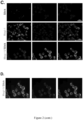
- C Immunolabeling of recombinant Slick channels and Magi-1 when expressed alone or in combination in CHO cells.
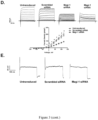
- D Co-immunolabeling of recombinant Slick channels and Magi-1 when expressed in CHO cells.
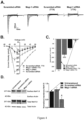
- FIG. 3 shows Magi-1 knockdown decreases ionic currents and excitability in DRG neurons.
- FIG. 4 shows Magi-1 knockdown decreases Na V 1.8 plasma membrane expression.
- A Representative whole cell voltage-clamp current traces of total I Na and TTX-resistant I Na in cultured DRG neurons 3 days after transfection with Magi-1 targeting siRNA or non-targeting scrambled siRNA.
- B Current density analysis of I Na currents with different conditions. Sodium currents in neurons were recorded either in the presence or absence of 25 nM TTX. The total and TTX-resistant I Na was significantly reduced after siRNA mediated-Magi-1 knockdown in cultured DRG neurons. A total of 9-12 cells/experimental group were analyzed and values are expressed as mean +/- SEM.
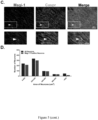
- FIG. 5 shows Magi-1 is expressed in DRG neurons, spinal cord, sciatic nerve and at Nodes of Ranvier.
- A Representative immunoblots depicting Magi-1 expression from intact DRG (left) and spinal cord (right)
- B Immunolabeling images showing Magi-1 expression in cultured DRG neurons (panel 1), DRG sections (panels 2 and 3) and the spinal cord (panels 4 and 5) using a previously validated monoclonal antibody.
- Panel 4 demonstrates control immunolabeling, stained with secondary antibody only.
- C Double immunolabeling depicting Magi-1 and the paranodal marker Caspr in sciatic nerve sections (top). Scale bar, 50 ⁇ m.
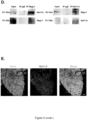
- FIG. 6 shows Magi-1 complexes Nav1.8 channels with Slack K Na channels in DRG neurons.
- A Representative whole immunoblots from co-immunoprecipitation (Co-IP) assays demonstrating binding between Magi-1 and Na V 1.8 using intact adult DRG tissue. IP product samples were run in duplicate. The polyclonal Magi-1 antibody also recognized a 50 kDa band during blotting thought to be a degradation product (as per manufacturer's description)
- D CoIP showing the interaction between Magi-1 and Nav1.8 in mouse DRGs. DRG lysate was immunoprecipitated with either anti-Magi-1 antibody (left) or anti-Nav1.8 antibody (right), and immunoblotted with anti-Nav1.8 or anti Magi-1 antibody as indicated. This experiment was repeated at least three times.
- E Double immunolabeling showing co-localization of Slack and Na V 1.8 in intact DRG neurons. The scale bar represents 20 ⁇ m.
- Figure 7 shows in vivo Magi-1 knockdown attenuates thermal nociception and acute inflammatory pain behavior.
- A Experimental timeline before and after Magi-1 knockdown in vivo.
- B Hargreaves test for thermal nociception showed increased paw withdrawal latency in ipsilateral paw injected with Magi-1 targeting shRNA when compared to the contralateral paw. No significant difference was seen in paw withdrawal latency between paws in mice injected with non-targeting shRNA. Behavior was taken from nine (9) different animals (3 females and 6 males) per experimental condition and analyzed. Values are expressed as mean+/-SEM. ***p ⁇ 0.001 vs respective controls.
- C Difference score analysis determined a ⁇ 3 sec difference in withdrawal latency between ipsilateral and contralateral paw after Magi-1 shRNA in vivo transfection (Days 7, 11 and 15). *p ⁇ 0.05 vs control.
- Figure 8 shows Na V 1.8 expression decreases after Magi-1 knockdown in vivo.
- A Representative immunolabeling of sciatic nerve depicting Na V 1.8 expression in paw injected with non-targeting shRNA after 15 days (top), expression of Na V 1.8 at Nodes of Ranvier was detected using the paranodal marker Caspr. Boxed area is shown below as a high magnification image of Nav1.8 and Caspr immunoreactivity. Bottom, Nav1.8 immunoreactivity was absent in sciatic nerve and at nodes in paw injected with Magi-1 targeting shRNA after 15 days.
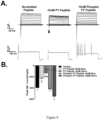
- Figure 9 shows cell penetrating WW motif peptidomimetics alter neuronal excitability and affect pain behavior.
- A Representative voltage-clamp recordings depicting decreased I Na (arrow) in cultured DRG neurons after 24 hr pre-treatment with peptide mimetic designated 'PY peptide' whereas the phospho-PY peptide increased I Na (top).
- Bottom representative AP traces from cultured DRG neurons pretreated with PY peptide or phospho-PY peptide for 24 hrs during suprathreshold stimulation (400 pA) for 1000 ms (bottom).
- B Peak I Na (at voltage step -20 mV) with different peptide treatments in DRG neurons.
- Phase II formalin inflammatory pain was measured by nocifensive behaviors (paw licking (left), lifting (middle) and whole body flinches (right)) in each interval of 5 min, is reduced by intraplantar pre-treatment (24 hrs) with 100 ⁇ M (20 ⁇ l), of PY peptide whereas phospho-PY peptide increased nocifensive behavioral responses compared to scrambled peptide control.
- Peptides were administered 24 hr before the formalin injection (5%, ⁇ l). Behavior from six different animals per experimental condition were analyzed and values are expressed as mean +/- SEM. *p ⁇ 0.05, **p ⁇ 0.01 vs controls.
- FIG 10 shows additional images of scrambled siRNA treated and Magi-1 siRNA treated neurons.
- Transfection of scrambled siRNA (upper panels) and Magi-1 siRNA (lower panels) of cultured DRG neurons was generally non-cytotoxic and equivalent numbers of neurons were used for the quantitative analyses of immunofluorescence.
- FIG 11 shows Magi-1 Knockdown DRG neurons alters AP properties.
- A Representative traces of increasing current injection used to elicit APs. Magi-1 knockdown caused graded potentials rather than typical all-or-none APs.
- Input resistances for untreated and scrambled siRNA treated neurons ranged from 200-300 M ⁇ and 400-500 M ⁇ for Magi-1 siRNA treated neurons.
- Figure 12 shows Magi-1 in vivo knockdown.
- A Time course of inflammatory pain responses after 5% formalin injection taken from the entire cohort (6 males and 3 females). No animals were excluded. Nocifensive behaviors were measured over a period of 60 minutes in mice injected with Magi-1 shRNA or control shRNA. Injection with formalin produced the typical biphasic response of this model for inflammatory pain. Mice injected with shRNA showed significant reduction in phase II (10-60 minutes) inflammatory pain.
- B Non-quantitative qRT-PCR confirmed reductions in Magi-1 RNA in ipsilateral paw injected with Magi-1 shRNA as compared to contralateral paw from the same mice and animals injected with control shRNA.
- C No change in Nav1.8 transcripts in ipsilateral paw injected with Magi-1 shRNA was observed compared to contralateral paw from the same mouse and an animal injected with control shRNA.
- Figure 13 shows evolutionarily conserved PY motif in Nav channels.
- WW binding motifs in Nav channels Sequence alignment of rat Nav channels that have the consensus WW binding motifs.
- PPSY (SEQ ID NO:73) is the WW motif.
- Phosphoproteomic data from PhosphoSitePlus ® on Nav1.8 channel indicates that threonine 1 924 in rat, which is threonine1926 in mice (third residue from the C-terminus) is phosphorylated.
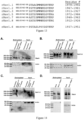
- Figure 14 shows representative whole blots for membrane biotinylation experiments. DRG Neuronal biotinylation; (A) Figure 3E , (B) Figure 4D, and (C) Figure 9C , and CHO cell biotinylation (D) Figure 1E .
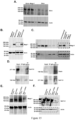
- Figure 15 shows representative full blots for Western blots and co-immunoprecipitation assays.
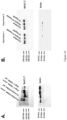
- Figure 16 shows Nav1.7 protein expression was diminished during in vivo Magi-1 knockdown but surface expression was unaltered after treatment with WW motif peptidomimetics.
- Ranges of values are disclosed herein. The ranges set out a lower limit value and an upper limit value. Unless otherwise stated, the ranges include all values to the magnitude of the smallest value (either lower limit value or upper limit value) and ranges between the values of the stated range.
- treatment refers to reduction in one or more symptoms or features associated with the presence of the particular condition being treated. Treatment does not necessarily mean complete cure or remission, nor does it preclude recurrence or relapses.
- treatment in the present disclosure means reducing pain (e.g., decreasing pain sensitivity) or increasing pain sensitivity.
- Treatment refers to an amount of an agent sufficient to achieve, in a single or multiple doses, the intended purpose of treatment. Treatment does not have to lead to complete cure, although it may. Treatment can mean alleviation of one or more of the symptoms or markers of the indication. The exact amount desired or required will vary depending on the particular compound or composition used, its mode of administration, patient specifics and the like. Appropriate effective amount can be determined by one of ordinary skill in the art informed by the instant disclosure using only routine experimentation. Treatment can be orientated symptomatically, for example, to suppress symptoms. It can be effected over a short period, over a medium term, or can be a long-term treatment, such as, for example within the context of a maintenance therapy. Treatment can be continuous or intermittent.
- Nav1.8 channels determine the depolarizing phase of the action potential (AP) in nociceptive neurons.
- Nav1.8 channel plasma membrane localization, retention and stability occurs through a direct interaction with the PDZ- and WW-domain containing scaffold protein called Magi-1.
- DRG dorsal root ganglion
- the present disclosure describes a competing, cell-penetrating, peptide mimetic derived from Nav1.8 WW binding motif.
- a peptide of the present disclosure triggered a decrease in sodium current, an almost complete loss ofNav1.8 expression and stunted AP firing in DRG neurons.
- a peptide of the present disclosure can also trigger an increase in sodium current.
- the present disclosure provides a peptide consisting of the following sequence: X 1 X 2 X 3 X 4 X 5 X 6 PX 7 YX 8 X 9 VX 10 X 11 X 12 (SEQ ID NO:75), wherein X 1 is S, P, or A; X 2 is T, S, or A ;X 3 is A or T; X 4 is A, T, I, or S; X 5 is C, S, or F; X 6 is P or L; X 7 is any amino acid residue, X 8 is E, D, or Y; X 9 is S or R; X 10 is T, A, E, or D, and T is optionally phosphorylated; X 11 is K or R; and X 12 is P, A, or G, and wherein X 1 , X 2 , X 3 , X 4 , X 10 , X 11 , or a combination thereof is acylated (e.g., and n is 4
- a peptide of the present disclosure is acylated at the N-terminus. In another embodiment, a peptide of the present disclosure is acylated at a nucleophilic atom of an amino acid residue (e.g., the sidechain oxygen atom of a serine or threonine, the sidechain nitrogen of a lysine, and the like).
- a nucleophilic atom of an amino acid residue e.g., the sidechain oxygen atom of a serine or threonine, the sidechain nitrogen of a lysine, and the like.
- X 1 is S or P and is acylated (e.g., myristoylated) at the amine N-terminal amine of X 1 .
- the sequence further comprises -PPX 7 Y- at the -X 6 PX 7 Y- portion of the peptide sequence, where X is any amino acid residue.
- X 7 is S.
- the present disclosure provides a peptide wherein a myristoylated amino acid is S, an at least one intervening amino acid residue is TAAC (SEQ ID:72), a first amino acid sequence is PPSY (SEQ ID NO:73) and a terminal amino acid sequence is DRVTKP (SEQ ID NO:74).
- the sequences of Table 1 were derived from the WW binding domains in sodium channels SCN1A, SCN2A, SCN3A, SCNSA, SCN8A, SCN9A, SCN10A and further modified (e.g., acylated).
- the peptides of SEQ ID NOs. 1-14 use threonine as the third last amino acid of the sequence. Threonine is capable of being phosphorylated and dephosphorylated.
- alanine replaces threonine negating any putative in vivo phosphorylation of peptide that may limit potency.
- glutamic acid replaces threonine.
- aspartic acid replaces glutamic acid.
- the glutamate and the aspartic acid respectively, mimic a permanently phosphorylated threonine (resistant to endogenous phosphatase action). Neither the glutamate nor the aspartic acid is actually phosphorylated. Without intending to be bound by any particular theory, these peptides may provide longer action due to retained negative charge at this amino acid site resistant to phosphatase action.
- a peptide of the current disclosure may increase or decreases inward sodium current of neurons.
- Sodium current is typically measured at peak.
- a peptide of the present disclosure increases or decrease sodium current of neurons in a local/targeted area (e.g., an area of treatment).
- a peptide of the present disclosure is not an anesthetic agent.
- a peptide of the present disclosure that decreases sodium current does not act as a sodium channel blocker, but rather induces degradation of sodium channels.
- the present invention also provides a pharmaceutical composition
- a pharmaceutical composition comprising a pharmaceutically acceptable carrier, a peptide of the present invention, optionally, a Magi-1 targeting shRNA or Magi-1 targeting siRNA and, optionally, one or more analgesic agents (e.g., nonsteroidal anti-inflammatory drugs (NSAIDS)) and/or one or more anesthetic agent.
- analgesic agents e.g., nonsteroidal anti-inflammatory drugs (NSAIDS)
- NSAIDS nonsteroidal anti-inflammatory drugs
- analgesic agents or anesthetic agents include bupivacaine, etidocaine, levobupivacaine, lidocaine, mepivacaine, prilocaine, ropivacaine, procaine, chloroprocaine, meloxicam, ketorolac, diclofenac, ketoprofen, piroxicam, metamizole, or a combination thereof.
- Additional examples of analgesics include acetaminophen, aspirin, ibuprofen, naproxen, and the like, and salts thereof. Using techniques and carriers known to those of skill in the art (e.g., Remington: The Science and Practice of Pharmacy (2005) 21st Edition, Philadelphia, PA.
- compositions can be formulated as intramuscular, intradermal, intrathecal or nerve injections, topical creams or transdermal patches.
- siRNA include GGAAAGACAGCCAGAAUAGUU (SEQ ID NO:88), GCCCAAGCUCCAGAUCAAACU (SEQ ID NO:89), GUGGAUGGGACGCCAGUAAUU (SEQ ID NO:90); GAAGCAUUCUCGAGCUAUAGA (SEQ ID NO:91), GUUUCCCCUAUUCACCAGUGU (SEQ ID NO:92), GCCUCUCGCACCAUGUGAUUA (SEQ ID NO:93), GACCAAGAGCGAAGGAAUGUU (SEQ ID NO:94), GUUCCUCAGAUCCAAUUGUUA (SEQ ID NO:95), GACCAUCUGAGCCCACUACUA (SEQ ID NO:96), GGAAACAUGUGACUAUACCUU (SEQ ID NO:97), and GAUCUUUACAU
- the agent is a siRNA for use in RNA interference (RNAi) mediated silencing or downregulation of MAGI-1 mRNA.
- RNAi agents are commonly expressed in cells as short hairpin RNAs (shRNA).
- shRNA is a RNA molecule that contains a sense strand, antisense strand, and a short loop sequence between the sense and antisense fragments.
- shRNA is exported into the cytoplasm where it is processed by dicer into short interfering RNA (siRNA).
- siRNA are typically 20-23 nucleotide double-stranded RNA molecules that are recognized by the RNA-induced silencing complex (RISC). Once incorporated into RISC, siRNA facilitate cleavage and degradation of targeted mRNA.
- RISC RNA-induced silencing complex
- the polynucleotide agent can be either a siRNA or a shRNA.
- shRNA can be expressed from any suitable vector such as a recombinant viral vector either as two separate, complementary RNA molecules, or as a single RNA molecule with two complementary regions.
- any viral vector capable of accepting the coding sequences for the shRNA molecule(s) to be expressed can be used.
- compositions of the invention comprising at least one peptide of the present disclosure.
- compositions include solutions, suspensions, emulsions, solid injectable compositions that are dissolved or suspended in a solvent before use, and the like.
- the injections may be prepared by dissolving, suspending or emulsifying one or more of the active ingredients in a diluent.
- diluents include, but are not limited to distilled water for injection, physiological saline, vegetable oil, alcohol, and a combination thereof.
- the injections may contain stabilizers, solubilizers, suspending agents, emulsifiers, soothing agents, buffers, preservatives, etc.
- the injections may be sterilized in the final formulation step or prepared by sterile procedure.
- the composition of the disclosure may also be formulated into a sterile solid preparation, for example, by freeze-drying, and can be used after sterilized or dissolved in sterile injectable water or other sterile diluent(s) immediately before use.
- compositions may include one or more pharmaceutically acceptable carrier.
- Pharmaceutically-acceptable carriers include, but are not limited to, sugars, such as lactose, glucose and sucrose; starches, such as corn starch and potato starch; cellulose, including sodium carboxymethyl cellulose, ethyl cellulose and cellulose acetate; powdered tragacanth; malt; gelatin; talc; excipients, such as cocoa butter and suppository waxes; oils, such as peanut oil, cottonseed oil, safflower oil, sesame oil, olive oil, corn oil and soybean oil; glycols, such as propylene glycol; polyols, such as glycerin, sorbitol, mannitol and polyethylene glycol; esters, such as ethyl oleate and ethyl laurate; agar; buffering agents, such as magnesium hydroxide and aluminum hydroxide; alginic acid; pyrogen-free water; isot
- composition if desired, can also contain minor amounts of wetting or emulsifying agents, or pH buffering agents. Additional non-limiting examples of pharmaceutically acceptable carriers can be found in: Remington: The Science and Practice of Pharmacy (2005) 21st Edition, Philadelphia, PA. Lippincott Williams & Wilkins .
- a therapeutically effective amount of a composition of the invention comprising a peptide having a sequence chosen from SEQ ID NO: 1-7, or 15-21 is used to decrease a subject's pain sensitivity (e.g., a subject in need of treatment for pain), or a therapeutically effective amount of a composition of the invention comprising a peptide having a sequence chosen from SEQ ID NOs: 8-14, 22-35 is used to increase a subject's pain sensitivity (e.g., a subject in need of treatment for pain sensitivity).
- a subject's pain is decreased (e.g., ameliorated) when the subject's pain sensitivity is decreased.
- a subject's pain sensitivity is increased.
- a therapeutically effective amount of a composition of the invention comprising a peptide having a sequence chosen from SEQ ID NO: 1-7, or 15-21, and optionally Magi-1 targeting shRNA, or Magi-1 targeting siRNA is used to manage pain (e.g., pain control).
- pain e.g., pain control.
- References to methods of treatment by therapy in this paragraph are to be interpreted as references to pharmaceutical compositions for use in those methods.
- the present disclosure further provides a method of treating a subject afflicted with pain comprising administering a composition of the invention comprising a peptide having the sequence of SEQ ID NOs: 1-7, 15-21, and optionally Magi-1 targeting shRNA, or Magi-1 targeting siRNA to the subject in an amount effective to treat the pain.
- Treating pain includes, but is not limited to, decreasing the subject's sensitivity to pain.
- a subject in need of treatment may be a human or non-human mammal.
- Non-limiting examples of non-human mammals include cows, pigs, mice, rats, rabbits, cats, dogs, or other agricultural, pet, or service animals, and the like. References to methods of treatment by therapy in this paragraph are to be interpreted as references to pharmaceutical compositions for use in those methods.
- a subject's pain e.g., pain sensitivity, pain intensity, pain relief in response to an intervention/treatment, patient ratings of improvement and satisfaction with intervention/treatment, pain interference with physical functioning, pain interference with emotional functioning
- VAS visual analog pain scale
- NRS numeric rating pain
- VRS categorical verbal rating pain scale
- multidimensional scales assessing the sensory components and also cognitive and psychological dimensions of pain, health-related quality-of-life assessment, pain-related functional assessments.
- Non-limiting examples of pain measurement tools include the VAS, NRS, VRS, the McGill Pain Questionnaire (MPQ) and its Short Form, The Brief Pain Inventory (BPI), Neuropathic Pain Score (NPS), The Pain Self-Efficacy Questionnaire, Patient Global Impression of Change scale, The European Quality of Life Instrument (EQ 5D), Pain Disability Index (PDI), The Oswestry Disability Index (ODI), the Beck Depression Inventory and Profile of Mood States, the Wong-Baker faces pain scale, the FLACC scale (face, legs, activity, cry, and consolability), the CRIES scale (crying, requires O 2 for SaO 2 ⁇ 95%, increased vital signs (BP and HR), expression, sleepless), the COMFORT scale, Mankoski pain scale, descriptor differential scale of pain intensity, and the like, and combinations thereof.
- the Magi-1 targeting shRNA, or Magi-1 targeting siRNA may be human Magi-1 targeting shRNA or human Magi-1 targeting siRNA.
- a subject's pain may be ameliorated when the subject's pain (e.g., pain sensitivity) decreased.
- a subject's pain is ameliorated when the subject's pain (e.g., pain sensitivity) is at a desired level (e.g., the pain is not uncomfortable).
- the subject is in need of said peptide, Magi-1 targeting shRNA, or Magi-1 targeting siRNA.
- a subject's pain is nociceptive. In another embodiment, a subject's pain is neuropathic.
- a subject's pain may be a symptom of any disease, condition, or occurrence, such as injury (e.g., spinal cord injury, nerve injury, or bums), chronic disease (e.g., diabetes, Herpes zoster, major depressive disorder, fibromyalgia arthritis, or cancer), chronic inflammation (e.g., chronic inflammation associated with repetitive stress, such as, for example, carpal tunnel syndrome), chemotherapy, radiation, or Morton's neuroma.
- the pain may also be post-surgical pain.
- a subject is treated preemptively for pain (e.g., prior to anticipated pain, such as pain caused during, for example, surgery, chemotherapy, dental work, radiation treatment, and the like).
- the subject is treated for pain following a procedure that induces pain.
- procedures include, for example, surgery, chemotherapy, radiation treatment, and the like, and combinations thereof.
- the subject has chronic pain and/or acute pain.
- Chronic pain is any pain lasting for more than around 12 weeks.
- chronic pain is pain that extends beyond the expected period of healing.
- Acute pain is sharp, and does not typically last longer than around six months. Acute pain goes away when there is no longer underlying cause of pain.
- Causes for acute pain include, but are not limited to, surgery, broken bones, dental work, burns, cuts, labor/childbirth, and combinations thereof, and the like.
- the subject does not take opioids, cannot take opioids, suffers from opioid addiction, or is at risk of relapse for opioid addiction.
- the present disclosure further relates to a method of increasing pain sensitivity of a subject comprising administering a composition of the invention comprising a peptide having the sequence of any one of SEQ ID NOs. 8-14 or 21-35 to the subject at an amount effective to increase pain sensitivity.
- a composition of the invention comprising a peptide having the sequence of any one of SEQ ID NOs. 8-14 or 21-35 to the subject at an amount effective to increase pain sensitivity.
- References to methods of treatment by therapy in this paragraph are to be interpreted as references to pharmaceutical compositions for use in those methods.
- a composition of the invention can be used to alter pain sensitivity locally (e.g., in an area of treatment).
- References to methods of treatment by therapy in this paragraph are to be interpreted as references to pharmaceutical compositions for use in those methods.
- the subject may be afflicted with a disease or condition having a symptom of pain hyposensitivity.
- diseases or conditions include, but are not limited to, amyotrophic lateral sclerosis, multiple sclerosis, schizophrenia, autism spectrum disorders (e.g., Asperger's syndrome and the like), congenital hyposensitivity to pain, and diabetes-induced nerve loss.
- compositions of the invention comprising a peptide having a sequence chosen from SEQ ID NO: 1-7, or 15-21, and optionally Magi-1 targeted shRNA, or Magi-1 targeted siRNA may be administered or used in combination with one or more analgesic and/or one or more anesthetic (e.g., lidocaine) agent and/or with an anti-inflammatory agent (e.g., glucorticoid).
- analgesic and/or one or more anesthetic e.g., lidocaine
- an anti-inflammatory agent e.g., glucorticoid
- any of the foregoing are used or administered in combination, the use or administration may occur simultaneously or sequentially. Any of the foregoing may be formulated in combined formulation or in separate formulations.
- An exemplary co-administration is the co-administration of i) a peptide having the sequence of any one of SEQ ID NOs: 1-7, 15-21, Magi-1 targeting shRNA or Magi-1 targeting siRNA and ii) a peptide having the sequence of any one of SEQ ID NOs:8-14 or 22-35, where i) is administered after ii) or ii) is administered after i). There may be a delay between the administration of i) and ii) or ii) and i). In another example, i) is administered immediately (e.g., without delay) after ii) or ii) is administered immediately (e.g., without delay) after i). Co-administration may be used to reverse the first added peptide.
- a subject who has been treated for pain (e.g., the subject's pain sensitivity has been decreased) using a peptide of having the sequence of any one of SEQ ID NOs: 1-7 or 15-21 may administered a peptide having the sequence of any one of SEQ ID NOs: 8-14 or 22-35, such that the subject's pain sensitivity increases.
- the subject may be administered a peptide having the sequence of any one of SEQ ID NOs:8-14 or 22-35 to increase pain sensitivity.
- a subject may be administered a peptide having the sequence of any one of SEQ ID NOs: 1-7 or 15-21 to decrease the subject's pain sensitivity.
- References to methods of treatment by therapy in this paragraph are to be interpreted as references to pharmaceutical compositions for use in those methods.
- composition of the invention optionally comprising, a Magi-1 targeting shRNA, or Magi-1 targeting siRNA is used for pain management.
- the peptides of present disclosure, Magi-1 targeting shRNA, or Magi-1 targeting siRNA may be administered to the subject in a variety of ways. For example, they may be injected into spinal nerves or nerve endings during and/or after surgery.
- the peptides, Magi-1 targeting shRNA, or Magi-1 targeting siRNA may also be administered intramuscularly or intradermally. Additionally, the peptides may be administered topically. Without intending to be bound by any particular theory, the most effective route or the administration of shRNAs is administration directly into nerves.
- one or more composition of the invention comprising a peptide having a sequence chosen from SEQ ID NO: 1-7, or 15-21 or a peptide having a sequence chosen from SEQ ID NOs: 8-14, 22-35, is administered to a subject in need of treatment using any known method and route, including, but not limited to, oral, parenteral, subcutaneous, intraperitoneal, intrapulmonary, intranasal and intracranial injections.
- Parenteral infusions include, but are not limited to intramuscular, intravenous, intraarterial, intraperitoneal, and subcutaneous administration.
- Topical and/or transdermal administrations are also encompassed. Further encompassed are methods of application involving needleless injections. References to methods of treatment by therapy in this paragraph are to be interpreted as references to pharmaceutical compositions for use in those methods.
- a subject in need of treatment is administered a therapeutically effective amount of a composition of the invention comprising (i) a peptide having a sequence chosen from SEQ ID NO: 1-7, or 15-21; or (ii) a peptide having a sequence chosen from SEQ ID NOs: 8-14, 22-35.
- a dose of a therapeutically effective amount of a peptide of the present disclosure may have a concentration of 10 nM to 10 mM (e.g., 100 ⁇ M), including all 0.1 nM values and ranges therebetween.
- a dose of a therapeutically effective amount of a peptide of the present disclosure may have a concentration of 1-500 ⁇ M, 50-500 ⁇ M, 1-250 ⁇ M, 10-250 ⁇ M, 25-250 ⁇ M, 25-150 ⁇ M, 50-250 ⁇ M, or 50-150 ⁇ M.
- References to methods of treatment by therapy in this paragraph are to be interpreted as references to pharmaceutical compositions for use in those methods.
- a subject in need of treatment is administered a composition of the invention comprising (i) a peptide having a sequence chosen from SEQ ID NO: 1-7, or 15-21; or (ii) a peptide having a sequence chosen from SEQ ID NOs: 8-14, 22-35 in multiple doses dose (e.g., multiple administration steps).
- the subject's pain is ameliorated or the subject's pain sensitivity is increased for 1-120 hours (e.g., 24-120 hours, 1-48 hours, 12-48 hours, or 24-48 hours), including all second values and ranges therebetween.
- the subject's pain is ameliorated or the subject's pain sensitivity is increased in the absence of any other active components (e.g., an additional analgesic agent and/or an anesthetic agent) for 1-120 hours (e.g., 24-120 hours, 1-48 hours, 12-48 hours, or 24-48 hours), including all second values and ranges therebetween.
- active components e.g., an additional analgesic agent and/or an anesthetic agent
- kits although said kits are not according to the present invention.
- the kit comprises pharmaceutical preparations containing any one or any combination of compounds of the present disclosure.
- the kit comprises a package (e.g., a closed or sealed package) that contains a pharmaceutical preparation, such as, for example, one or more closed or sealed vials, bottles, blister (bubble) packs, or any other suitable packaging for the sale, distribution, or use of the pharmaceutical compounds and compositions comprising them.
- a package e.g., a closed or sealed package
- a pharmaceutical preparation such as, for example, one or more closed or sealed vials, bottles, blister (bubble) packs, or any other suitable packaging for the sale, distribution, or use of the pharmaceutical compounds and compositions comprising them.
- the printed material includes, but not limited to, printed information.
- the printed information may be provided on a label, or on a paper insert, or printed on the packaging material itself.
- the printed information may include information that, for example, identifies the composition in the package, the amounts and types of other active and/or inactive ingredients, and instructions for taking the composition, such as, for example, the number of doses to take over a given period of time, and/or information directed to a pharmacist and/or another health care provider, such as a physician, or a patient.
- the printed material may include, for example, an indication that the pharmaceutical composition and/or any other agent provided with it is for treatment of a subject having a bacterial infection.
- the product includes a label describing the contents of the container and providing indications and/or instructions regarding use of the contents of the container to treat a subject having any bacterial infection.
- Slack and Slick channels contain a type 1 PDZ binding motif at their respective distal C-termini ( Fig. 1A ).
- PDZ protein interactive predictor PDZPedInt, University of Freiburg
- Slack amino acid sequence Magi-1 was identified as a Slack channel interactor, specifically the second and fifth PDZ domain of Magi-1.
- Heterologous co-expression of Magi-1 and the Slack-B subunit increased Slack current density ( Fig. 1B ), however, co-expression of Magi-1 with a mutated Slack construct with a truncated PDZ motif did not affect Slack current density ( Fig. 1B ).
- Magi-1 knockdown suppressed I K but produced hypoexcitability in cultured DRG neurons.
- the neurophysiological function of Magi-1 was examined by using knockdown strategies, with previously validated small interfering RNAs (siRNAs) in cultured DRG neurons.
- Magi-1 knockdown was verified by immunolabeling and Western blot analyses ( Figs. 3A,B ) using a previously validated polyclonal Magi-1 antibody.
- Substantial Magi-1 knockdown was achieved as it was observed approximately 70-75% reduction in Magi-1 protein when compared to a non-coding scrambled control siRNA 72 hrs after transfection ( Figs. 3A,B ). Additional immunofluorescence images depicting knockdown can be found in Figure 10 .
- Magi-1 knockdown also decreased I Na and Na V 1.8 plasma membrane expression in DRG neurons.
- the effects of Magi-1 knockdown were examined on the inward sodium current (I Na ) in DRG neurons using whole-cell voltage-clamp recordings.
- Magi-1 knockdown produced a significant reduction in total I Na ( Figs. 4A-C ).
- the peak tetrodotoxin (TTX)-sensitive and the TTX-resistant components of I Na were both significantly reduced compared to neurons treated with control siRNA accounting for the hypoexcitability phenotype seen in DRG neurons during Magi-1 knockdown despite decreased membrane Slack expression.
- the culture conditions of these DRG neurons favor TrkA positive, nociceptive DRG neurons (see Methods) that express high levels ofNav1.8 channels.
- Magi-1 is expressed in small- and medium- sized DRG neurons, in their axonal tracts and at some Nodes of Ranvier. The expression of Magi-1 in intact DRG neurons was verified for indication of its broader physiological function.
- the Allen Mouse Spinal Cord Atlas and BioGPS support high Magi-1 message within DRG neurons. According to BioGPS DRG tissue has the second highest Magi-1 mRNA tissue expression profile, with the hypothalamus accounting for the highest expression.
- the Allen Spinal Cord Atlas depicts differential Magi-1 expression in small- and medium-sized, presumably nociceptive DRG neurons.
- Magi-1 immunolabeling was also previously shown in the growth cones of cultured DRG neurons and within the dorsal root entry zone of embryonic spinal cords.
- Double immunolabeling studies also depicted a co-localization between Magi-1 and Nav1.8 in cultured and intact DRG neurons and within the spinal cord ( Fig. 6B ).
- Co-IP experiments using Slack and Nav1.8 specific antibodies from intact DRG lysates were performed and successfully co-immunoprecipitated Slack with Nav 1.8 ( Fig. 6C ) indicating that Nav1.8 and Slack K Na channels are complexed together in DRG neurons.
- Na V 1.8 channels were reported to contain multiple internal putative PDZ binding motifs and bind to the PDZ domain containing protein Pdzd2. However, Pdzd2 knockout mice failed to show any alterations in pain behavior.
- Na V 1.8 channels also contain PY motifs (PPXY (SEQ ID NO:76)) ( Figure 13 ) at their distal C-termini and this motif was postulated to regulate the interaction with Nedd4-2 ubiquitin ligase for targeted protein degradation.
- mice were given a single i.pl. injection of either PY, phospho-PY, or a scrambled PY peptide (100 ⁇ M, 20 ⁇ l) to the right hindpaw, 24 hrs before injection with 5% formalin into the same paw.
- Pretreatment with the PY peptide significantly reduced Phase II acute inflammatory pain, and the phospho-PY peptide pretreated mice exhibited a contrasting increase in phase II response when compared to scrambled peptide-treated mice ( Fig. 9D ).
- Thr1926 is predicted to be either a Casein II kinase or a GSK-3 ⁇ kinase consensus phosphorylation site. Both kinases are constitutively active kinases suggesting that Thr1926 is likely basally phosphorylated. Without intending to be bound by any particular theory, it is speculated that the phospho-PY peptide competed with phosphorylated Nav1.8 channels at ULs, preventing a significant proportion ofNav1.8 channels from being ubiquitinylated and retained within the cytosol ( Fig. 9E ).
- the phospho-PY peptide drove Nav1.8 channels to the DRG neuronal membrane and exacerbated nocifensive behavior and therefore has potential value for pain insensitivity-related diseases.
- Myristoylation allows the peptide to partition through the membrane, possibly by a flip-flop mechanism but keeps most of the peptide tethered to the inner surface of the membrane. This membrane-delimited feature may enhance the ability of peptides to exert their mimetic effects, especially for membrane-associated proteins.
- myristoylation of peptides and their inherent hydrophobic nature likely ensure that peptides are localized to the site of injection.
- EXPERIMENTAL PROCEDURES Animals- All animals used in the present study were housed at the University at Buffalo (UB) Laboratory Animal Facility on a 12/12 light/dark cycle with free access to food and water. All experimental procedures were in accordance with the guidelines in " Guide for the Care and Use of Laboratory Animals" from the National Institute of Health and were approved by the University at Buffalo Institutional Animal Care Use Committee.
- DRG neuronal cultures Timed-pregnant Sprague-Dawley rats (Harlan, Indianapolis, IN) were used for culturing neurons. On the day of the dissection, rats were euthanized by CO 2 asphyxiation and E15 embryos were extracted. DRG neurons were dissected from the embryos and enzymatically digested with Trypsin (2.5 mg/ml) at 37°C for 45 min, followed by dissociation and plating. DRG neurons were plated onto poly-D-lysine (Sigma; 100 ⁇ g/ml) and laminin (Invitrogen; 3 ⁇ g/ml) coated coverslips.
- Neurons were maintained at 37°C in a 7% CO 2 humidified incubator in serum-free medium, comprised of the trophic factors N2 (Gemini Bio products; 1%), l-Glutamine (Invitrogen; 200 ⁇ g/ml), and Nerve Growth Factor (NGF) (Harlan; 100 ng/ml; essential for embryonic neuronal survival) in 50% DMEM and 50% F-12.
- NGF Nerve Growth Factor
- DRG neurons were cultured in C2 media containing the anti-mitotic agent cytosine ⁇ -d-arabinofuranoside hydrochloride (Sigma; 3 ⁇ M). This was followed by two days of recovery were neurons received regular serum free media before neurons were used for experiments. All subsequent experiments using embryonic cultures were performed on days 5-10 of neuronal culture.
- C2 media containing the anti-mitotic agent cytosine ⁇ -d-arabinofuranoside hydrochloride (Sigma; 3 ⁇ M).
- CHO cells were cultured at 37 °C in 5% CO 2 in Iscove's Modified Dulbecco's Medium (IMDM) supplemented with 10% FBS, 1% hypoxanthine/thymidine (HT) supplement (Life Technologies) and 1% penicillin-streptomycin.
- IMDM Iscove's Modified Dulbecco's Medium
- HT hypoxanthine/thymidine
- penicillin-streptomycin 1% penicillin-streptomycin.
- CHO cells were plated on 12mm coverslips for immunolabeling experiments, in 35 mm dishes for all electrophysiology experiments, and in six-well culture plates for biochemical experiments.
- DRG siRNA Transfection- Small interfering RNA (siRNA) directed against Magi-1 was purchased from Santa Cruz Biotechnology (Santa Cruz, CA, USA). A negative control siRNA composed of a scrambled sequence was obtained from the same vendor. For each experiment, neurons were transfected with Magi-1 siRNA or a non-targeting control siRNA. Cultured DRG neurons (described above) were transfected using lipofectamine 2000 (ThermoScientific) following the manufacturer's protocol. Briefly, we diluted 1.5 ⁇ l lipofectamine 2000 in 50 ⁇ l of Opti-mem Medium and allow the mixture to sit at room temperature for 5 minutes.
- lipofectamine 2000 ThermoScientific
- the bath solution for all cells contained (in mM) 140 NaCl, 5.4 KCl, 1 CaCl 2 , 1 MgCl 2 , 10 HEPES, and 10 glucose (pH 7.4).
- Identical bath and pipette solutions were used in both the voltage-clamp and current-clamp modes.
- voltage-clamp mode macroscopic currents were recorded at voltages ranging from -120 to +120.
- Cells were clamped at -70 mV and voltage steps of 20 mV applied for 200 millisecond durations.
- the cell capacitance for CHO cells ranged from 10-15 pF and for cultured DRG neurons 20-25 pF recorded under these conditions.
- a current-clamp protocol consisting of depolarizing steps in increments of 10 pA from 10 to 200 pA (20 ms duration) was used to examine action potential firing. Firing frequency of individual neurons was assessed by measurement of repetitive discharge upon injecting of a supra-threshold stimulus of 400 pA for 1000 ms.
- the pipette solution contained (in mM): 130 CsCl, 13 CsF, 10 tetraethylammonium chloride, 1 MgCl 2 , 1 EGTA, 2.5 Na 2 ATP, 10 HEPES, pH was adjusted to 7.2 with CsOH.
- DRGs After two days DRGs, SN and SC were removed from sucrose and embedded in freezing media and store at -80 °C for future use. 16 ⁇ m sections of DRGs, 10 ⁇ m sections of SN, and 20 ⁇ m sections of SC were made using a cryostat. Slices were permeabilized with a PBS solution containing 0.4% Triton X-100. Sections were then blocked for 2 hr at room temperature with PBS containing 5% BSA. Then sections were incubated with a mixture of primary antibodies in PBS containing 5% BSA overnight at 4 °C.
- Membranes were probed overnight at 4 °C with antibodies against Slack anti-mouse (1:500; NeuroMab), rabbit anti- ⁇ -Actin (1:500; Millipore), rabbit anti-Magi-1 (1:100; Abcam), mouse anti-Magi-1 (1:100; Novus Biochemical), mouse anti-Nav1.8 (1:200; NeuroMab), mouse anti-Nav1.7 (1:200; NeuroMab), mouse anti-Flag (1:500; Sigma) in 5% milk prepared in 1X Tris-buffered saline tween (TBST).
- TST Tris-buffered saline tween
- the membrane was washed three times for five minutes in 1X TBST before being incubated for 1 hour at room temperature in Anti-mouse or Anti-rabbit horseradish peroxidase conjugate (1:5000; Promega) and 0.1% BSA prepared in 1X PBS. The membrane was again washed 3 times for 5 minutes before being developed and imaged. Bands were visualized with enhanced chemiluminescence (Thermo Scientific) and quantified with Image J Software (NIH). Each experiment was repeated at least three times. Co-Immunoprecipitation- CHO cells in six-well plates were transiently transfected with WT or mutated Slack with or without Magi-1 plasmids respectively.
- Lysates were collected and incubated with 500 uL of NeutrAvidin Agarose for 60 mins at room temperature with rotation. Following incubation, the column underwent centrifugation to collect the unbiotinylated protein. To elute the biotinylated proteins, sodium dodecyl sulfate (SDS) and dithiothreitol (DDT) were added to column membrane and incubated with rotation for 1 hour at room temperature. Biotinylated and unbiotinylated samples were probed for Slack or Na V 1.8 and Actin protein by Western blot, as described above.
- SDS sodium dodecyl sulfate
- DDT dithiothreitol
- Nociception Testing- Baseline thermal nociceptive behavior was measured using the automated Hargreaves Apparatus by Ugo Basile (Varese, Italy). Naive C57Bl/6 Mice (8-10 weeks) (Envigo) underwent two days of habituation followed by three days of measurements. On days 1 and 2 (habituation), mice spent 30 min in homecages adjusting to the testing room and were then transferred to testing chambers for 1 hr. On days 3 through 5, mice underwent testing. An infrared stimulus (IR 40) was delivered through the plexiglass floor to the plantar surface of the hind paw, and the latency to withdrawal was measured automatically. For each subject, three to six measurements per hind paw were taken and used to calculate the average latency to withdraw (seconds). A maximum IR exposure time of 15 s was established to ensure no tissue damage occurred, and at least 5 min was allowed between measurements taken from the same mouse.
- IR 40 infrared stimulus
- mice were anesthetized using isoflurane (induction: 4% and maintenance: 2%), and placed in a prone position. A 3-cm posterior longitudinal skin incision was made at the lumbar segment of the spine. The ipsilateral paraspinal muscles were carefully separated, using a pair of sterile toothpicks, from their attachments at the L4-S1 levels of the vertebral column.
- Formalin test- Mice were habituated in the behavior room for 15 minutes, then 30 minutes in the formalin chamber before formalin injection. 20 microliters of 5% formalin (in sterile saline) was injected intraplantarly into the right hind paw and mice were placed back in chamber for video recording. The total time spent lifting, the total number of licks, and the number of flinches were recorded in 5 minute intervals for 60 minutes. The measurements from two observers blinded to the experimental condition for each video recording were averaged to obtain final measurements at each time point.
- RNA Extraction and cDNA Synthesis- RNeasy Micro Kit (Qian) was used for total RNA extraction from mouse lumbar DRG neurons.
- RNA was reverse transcribed with SuperScript III Reverse Transcriptase (Life Technologies). Polymerase chain reaction was performed using this cDNA as the template with previously validated primers against Magi-1 and Nav1.8. Transcriptional abundance was measured by thermocycler using SYBR Green PCR Master Mix. For quantification, a 50 cycle two step denaturing and annealing protocol was used, with a 15 second absorbance reading on BioRad iQ5 cycler. Each sample was performed in triplicates.
- Peptides- We designed the N-terminal myristoylated PDZ peptide peptidomimetic NPETRDETQL (SEQ ID NO:79) based upon the C-terminal sequence of the rat Slack channel. This peptide and the scrambled variant peptide, QPNTRLDETE (SEQ ID NO:80), were synthesized by GenScript. Similarly, the PY peptide SATSFPPSYDSVTRG (SEQ ID NO:77) and the phospho-PY peptide SATSFPPSYDSV(pT)RG (SEQ ID NO:77, where T is phosphorylated) were designed based upon the WW binding domain in rat Nav1.8 channels.
- peptides and the scrambled peptide SDRPVTSYSFSAPG were also synthesized by GenScript. Peptides were initially dissolved in DMSO and diluted to final working concentration in saline. Peptide concentration of 10 ⁇ M was used on primary neurons as previously described; final DMSO concentration was 0.05%. Intraplantar dosing was chosen based on a prior study demonstrating the analgesic effects of hindpaw intradermal injections of a different myristoylated peptide.
- threonine is protected by trityl ethers [Fmoc-Thr(Trt)-OH].
- the trityl-protected derivatives can be selectively deprotected on resin, which is useful for preparing and phosphothreonine-containing peptides by global phosphorylation methodology.
- Global phosphorylation involves selective phosphitylation of the appropriate hydroxyl threonine on the solid phase, with a protected phosphoramidite, followed by oxidation of the resultant P(III) triester to the P(V) triester.
- myristoylation was achieved by N-myristoyltransferase, the enzyme that catalyzes protein N-myristoylation (at the N-terminus).
- Plasmid DNA encoding MAGI-1 shRNAs for humans To make a therapeutic shRNA for pain treatment, we would screen the human Magi-1 mRNA sequence for 3 unique interfering RNA sequences, and then each one of those sequences (in DNA form) would be inserted into a plasmid containing the minimal promoter for the human Nav1.8 channel, thus creating 3 plasmids. Expression of the shRNA driven under the minimal Nav 1.8 channel promoter would ensure that that Magi-1 targeted shRNAs are only expressed in pain sensing neurons.
Landscapes
- Health & Medical Sciences (AREA)
- Chemical & Material Sciences (AREA)
- Life Sciences & Earth Sciences (AREA)
- Organic Chemistry (AREA)
- General Health & Medical Sciences (AREA)
- Medicinal Chemistry (AREA)
- Pharmacology & Pharmacy (AREA)
- Veterinary Medicine (AREA)
- Public Health (AREA)
- Animal Behavior & Ethology (AREA)
- Proteomics, Peptides & Aminoacids (AREA)
- Molecular Biology (AREA)
- Bioinformatics & Cheminformatics (AREA)
- Chemical Kinetics & Catalysis (AREA)
- General Chemical & Material Sciences (AREA)
- Nuclear Medicine, Radiotherapy & Molecular Imaging (AREA)
- Immunology (AREA)
- Genetics & Genomics (AREA)
- Biophysics (AREA)
- Biochemistry (AREA)
- Gastroenterology & Hepatology (AREA)
- Engineering & Computer Science (AREA)
- Pain & Pain Management (AREA)
- Epidemiology (AREA)
- Rheumatology (AREA)
- Anesthesiology (AREA)
- Toxicology (AREA)
- Zoology (AREA)
- Cell Biology (AREA)
- Biomedical Technology (AREA)
- Neurology (AREA)
- Neurosurgery (AREA)
- Medicines That Contain Protein Lipid Enzymes And Other Medicines (AREA)
- Peptides Or Proteins (AREA)
- Pharmaceuticals Containing Other Organic And Inorganic Compounds (AREA)
Applications Claiming Priority (2)
| Application Number | Priority Date | Filing Date | Title |
|---|---|---|---|
| US201762598067P | 2017-12-13 | 2017-12-13 | |
| PCT/US2018/065545 WO2019118779A2 (en) | 2017-12-13 | 2018-12-13 | Peptides and other agents for treating pain and increasing pain sensitivity |
Publications (3)
| Publication Number | Publication Date |
|---|---|
| EP3723781A2 EP3723781A2 (en) | 2020-10-21 |
| EP3723781A4 EP3723781A4 (en) | 2021-07-21 |
| EP3723781B1 true EP3723781B1 (en) | 2024-12-11 |
Family
ID=66820711
Family Applications (1)
| Application Number | Title | Priority Date | Filing Date |
|---|---|---|---|
| EP18887737.7A Active EP3723781B1 (en) | 2017-12-13 | 2018-12-13 | Peptides and other agents for treating pain and increasing pain sensitivity |
Country Status (8)
| Country | Link |
|---|---|
| US (3) | US11535649B2 (https=) |
| EP (1) | EP3723781B1 (https=) |
| JP (2) | JP2021506794A (https=) |
| CN (1) | CN111712252A (https=) |
| AU (1) | AU2018383669B2 (https=) |
| CA (1) | CA3085576A1 (https=) |
| IL (1) | IL275340A (https=) |
| WO (1) | WO2019118779A2 (https=) |
Families Citing this family (5)
| Publication number | Priority date | Publication date | Assignee | Title |
|---|---|---|---|---|
| CN111712252A (zh) * | 2017-12-13 | 2020-09-25 | 纽约州立大学研究基金会 | 用于治疗疼痛和提高疼痛敏感性的肽和其它药剂 |
| WO2021072392A1 (en) * | 2019-10-10 | 2021-04-15 | The Research Foundation For The State University Of New York | Analgesic and anesthetic peptides and other agents |
| WO2022193185A1 (en) * | 2021-03-17 | 2022-09-22 | Jiangyin Usun Pharmaceutical Co., Ltd. | New conjugates |
| WO2025102083A1 (en) * | 2023-11-12 | 2025-05-15 | The Research Foundation For The State University Of New York | Compositions and methods for treating pain or for increasing pain sensitivity |
| WO2025123001A1 (en) * | 2023-12-08 | 2025-06-12 | Washington University | Targeted protein degradation compositions and methods of use thereof for pain control |
Family Cites Families (29)
| Publication number | Priority date | Publication date | Assignee | Title |
|---|---|---|---|---|
| US6187533B1 (en) * | 1996-09-10 | 2001-02-13 | Arch Development Corporation | Mutations in the diabetes susceptibility genes hepatocyte nuclear factor (HNF) 1 alpha (α), HNF1β and HNF4α |
| HUP0200575A3 (en) * | 1999-03-25 | 2004-11-29 | Abbott Gmbh & Co Kg | Human antibodies that bind human il-12 and methods for producing |
| DE1252330T1 (de) | 1999-11-26 | 2003-11-27 | Mcgill University, Montreal | Loci der idiopathischen epilepsie, mutationen derselben und verfahren zu deren verwendung zur feststellung, prognose und behandlung von epilepsie |
| US20030216310A1 (en) | 2001-05-25 | 2003-11-20 | Thornton Michael B. | Transporters and ion channels |
| US20090087436A1 (en) | 2001-07-13 | 2009-04-02 | Myriad Genetics, Incorporated | Compositions and methods for treating diseases |
| WO2004045535A2 (en) | 2002-11-14 | 2004-06-03 | Arbor Vita Corporation | Molecular interactions in neurons |
| CA2462732A1 (en) * | 2001-10-01 | 2003-04-10 | Buck Institute | Target assisted iterative screening (tais) : a novel screening format for large molecular repertoires |
| US20040101874A1 (en) | 2002-04-12 | 2004-05-27 | Mitokor Inc. | Targets for therapeutic intervention identified in the mitochondrial proteome |
| US20040180848A1 (en) | 2003-03-10 | 2004-09-16 | Fesik Stephen W. | Method of killing cancer cells |
| BRPI0417531A (pt) | 2003-12-12 | 2007-03-20 | Wyeth Corp | canal de sódio |
| EP1709084A4 (en) | 2003-12-23 | 2008-05-28 | Nono Inc | POLYPEPTIDES FOR MODULATING BINDING OF TRP-CHANNEL PROTEINS AND TRP-ASSOCIATED PROTEINS |
| WO2005118614A1 (en) * | 2004-04-08 | 2005-12-15 | Avigen, Inc. | Methods and compositions for treating neuropathic pain |
| US7485468B2 (en) | 2004-10-15 | 2009-02-03 | Galapagos Bv | Molecular targets and compounds, and methods to identify the same, useful in the treatment of joint degenerative and inflammatory diseases |
| EP1904630A4 (en) | 2005-06-16 | 2009-10-21 | Bionomics Ltd | METHODS OF TREATING AND DIAGNOSING EPILEPSY BY DETECTING MUTATIONS OF THE SCN1A GENE |
| AU2008261951A1 (en) | 2007-06-08 | 2008-12-18 | Asuragen, Inc. | miR-34 regulated genes and pathways as targets for therapeutic intervention |
| WO2009006555A2 (en) | 2007-07-02 | 2009-01-08 | Yu, Ming | Methods, composition, targets for combinational cancer treatments |
| US20090118301A1 (en) | 2007-11-02 | 2009-05-07 | Arbor Vita Corporation | Compositions and Methods for Treating Cancer |
| CN102088990A (zh) | 2008-05-16 | 2011-06-08 | 阿尔伯维塔公司 | 癫痫的治疗 |
| EP2334379A2 (en) | 2008-09-26 | 2011-06-22 | INSERM (Institut National de la Santé et de la Recherche Médicale) | Host cell kinases as targets for antiviral therapies against hcv infection |
| EP2275545A1 (en) | 2009-07-16 | 2011-01-19 | Julius-Maximilians-Universität Würzburg | Use of microRNA-24 and/or its targets for the treatment and prevention of ischemia and induction of angiogenesis |
| US8575112B2 (en) * | 2009-09-18 | 2013-11-05 | University Of Houston System | Small peptide modulators of potassium channel trafficking |
| US9279003B2 (en) * | 2010-07-07 | 2016-03-08 | Purdue Pharma L.P. | Analogs of sodium channel peptide toxin |
| JP5998131B2 (ja) | 2010-07-14 | 2016-09-28 | カッパーアールエヌエー,インコーポレイテッド | Discslargehomolog(dlg)dlg1への天然アンチセンス転写物の阻害によるdlg関連疾患の治療 |
| ES2655112T3 (es) | 2010-08-12 | 2018-02-16 | Nono Inc. | Tratamiento de una lesión penetrante en el cerebro |
| US9765115B2 (en) | 2011-04-01 | 2017-09-19 | Board of Supervisors of Louisiana State University acting on behalf of the University of Louisiana at Monroe | Inhibitors of metastasis, methods of generating such inhibitors and their therapeutic applications |
| EP2773366B1 (en) * | 2011-11-04 | 2017-03-01 | Lipotec, S.A. | Peptides which inhibit activated receptors and their use in cosmetic or pharmaceutical compositions |
| US9241970B2 (en) | 2011-12-13 | 2016-01-26 | Nono Inc. | Therapy for subarachnoid hemorrhage and ischemia |
| EP3419621A4 (en) * | 2016-02-26 | 2019-10-30 | The Johns Hopkins University | PHARMACOLOGICAL MODULATORS OF NAV1.1 VOLTAGE-CONTROLLED SODIUM CHANNELS ASSOCIATED WITH MECHANICAL PAIN |
| CN111712252A (zh) * | 2017-12-13 | 2020-09-25 | 纽约州立大学研究基金会 | 用于治疗疼痛和提高疼痛敏感性的肽和其它药剂 |
-
2018
- 2018-12-13 CN CN201880089341.7A patent/CN111712252A/zh active Pending
- 2018-12-13 AU AU2018383669A patent/AU2018383669B2/en active Active
- 2018-12-13 WO PCT/US2018/065545 patent/WO2019118779A2/en not_active Ceased
- 2018-12-13 JP JP2020532629A patent/JP2021506794A/ja active Pending
- 2018-12-13 EP EP18887737.7A patent/EP3723781B1/en active Active
- 2018-12-13 US US16/771,204 patent/US11535649B2/en active Active
- 2018-12-13 CA CA3085576A patent/CA3085576A1/en active Pending
-
2020
- 2020-06-14 IL IL275340A patent/IL275340A/en unknown
-
2022
- 2022-09-29 US US17/956,031 patent/US12077610B2/en active Active
-
2023
- 2023-11-17 JP JP2023195583A patent/JP2024026109A/ja active Pending
-
2024
- 2024-08-28 US US18/818,129 patent/US20250154199A1/en active Pending
Non-Patent Citations (2)
| Title |
|---|
| PRYCE KERRI D ET AL: "Functional Regulation of Ion Channels in Dorsal Root Ganglion Neurons by Magi-1: Implications in Pain Signaling", 1 April 2018 (2018-04-01), XP055781951, Retrieved from the Internet <URL:https://ubir.buffalo.edu/xmlui/bitstream/handle/10477/78105/Pryce_buffalo_0656A_15847.pdf?sequence=3> [retrieved on 20210304] * |
| PRYCE KERRI D. ET AL: "Magi?1 scaffolds Na v 1?8 and Slack K Na channels in dorsal root ganglion neurons regulating excitability and pain", THE FASEB JOURNAL, vol. 33, no. 6, 12 March 2019 (2019-03-12), US, pages 7315 - 7330, XP055782076, ISSN: 0892-6638, Retrieved from the Internet <URL:https://onlinelibrary.wiley.com/doi/full-xml/10.1096/fj.201802454RR> DOI: 10.1096/fj.201802454RR * |
Also Published As
| Publication number | Publication date |
|---|---|
| JP2024026109A (ja) | 2024-02-28 |
| JP2021506794A (ja) | 2021-02-22 |
| US20230046305A1 (en) | 2023-02-16 |
| AU2018383669A1 (en) | 2020-07-02 |
| US20250154199A1 (en) | 2025-05-15 |
| WO2019118779A3 (en) | 2019-07-25 |
| US11535649B2 (en) | 2022-12-27 |
| AU2018383669B2 (en) | 2023-05-18 |
| EP3723781A4 (en) | 2021-07-21 |
| US20200369726A1 (en) | 2020-11-26 |
| EP3723781A2 (en) | 2020-10-21 |
| CA3085576A1 (en) | 2019-06-20 |
| US12077610B2 (en) | 2024-09-03 |
| WO2019118779A2 (en) | 2019-06-20 |
| IL275340A (en) | 2020-07-30 |
| CN111712252A (zh) | 2020-09-25 |
Similar Documents
| Publication | Publication Date | Title |
|---|---|---|
| US12077610B2 (en) | Peptides and other agents for treating pain and increasing pain sensitivity | |
| JP2017524382A (ja) | 偽アレルギー薬物反応を検出するためおよび有害反応を予防する遮断薬を同定するためのmrgprx2/mrgprb2発現細胞ベースのアッセイ | |
| US20250215052A1 (en) | Inhibitors of pick1 and uses thereof | |
| Pryce et al. | Magi-1 scaffolds NaV1. 8 and Slack KNa channels in dorsal root ganglion neurons regulating excitability and pain | |
| US10036016B2 (en) | Methods for inducing glucose uptake | |
| JP2019522989A (ja) | TATκ−CDKL5融合タンパク質、組成物、製剤、及びそれらの使用 | |
| US10047140B2 (en) | Methods and compositions for the inhibition of TRPV4 | |
| DK2904009T3 (en) | RELATIONSHIPS FOR TREATING THE REMYELINIZATION BLOCK IN DISEASES RELATED TO THE EXPRESSION OF HERV-W COAT PROTEIN | |
| US10640768B2 (en) | Method of treating pain with an antibody against netrin-4, UNC5B or neogenin | |
| KR102772298B1 (ko) | 미엘린 장애의 치료를 위한 조성물 및 방법 | |
| HK40037093A (en) | Peptides and other agents for treating pain and increasing pain sensitivity | |
| HK40037093B (en) | Peptides and other agents for treating pain and increasing pain sensitivity | |
| US20240294571A1 (en) | Analgesic and anesthetic peptides and other agents | |
| WO2026056985A1 (zh) | 抑郁症的治疗方法和药物组合物 | |
| Pryce | Functional Regulation of Ion Channels in Dorsal Root Ganglion Neurons by Magi-1: Implications in Pain Signaling | |
| US20220193113A1 (en) | Novel therapeutic agent for gastrointestinal cancer and method for screening for the same | |
| US10246712B2 (en) | Genetic or pharmacological reduction of PERK enhances cortical- and hippocampus-dependent cognitive function | |
| Heuermann | The Role of HCN Channels and TRIP8b in Depression and Epilepsy | |
| NZ749459A (en) | TATĸ-CDKL5 FUSION PROTEINS, COMPOSITIONS, FORMULATIONS, AND USE THEREOF |
Legal Events
| Date | Code | Title | Description |
|---|---|---|---|
| STAA | Information on the status of an ep patent application or granted ep patent |
Free format text: STATUS: THE INTERNATIONAL PUBLICATION HAS BEEN MADE |
|
| PUAI | Public reference made under article 153(3) epc to a published international application that has entered the european phase |
Free format text: ORIGINAL CODE: 0009012 |
|
| STAA | Information on the status of an ep patent application or granted ep patent |
Free format text: STATUS: REQUEST FOR EXAMINATION WAS MADE |
|
| 17P | Request for examination filed |
Effective date: 20200612 |
|
| AK | Designated contracting states |
Kind code of ref document: A2 Designated state(s): AL AT BE BG CH CY CZ DE DK EE ES FI FR GB GR HR HU IE IS IT LI LT LU LV MC MK MT NL NO PL PT RO RS SE SI SK SM TR |
|
| AX | Request for extension of the european patent |
Extension state: BA ME |
|
| DAV | Request for validation of the european patent (deleted) | ||
| DAX | Request for extension of the european patent (deleted) | ||
| REG | Reference to a national code |
Ref country code: HK Ref legal event code: DE Ref document number: 40037093 Country of ref document: HK |
|
| A4 | Supplementary search report drawn up and despatched |
Effective date: 20210618 |
|
| RIC1 | Information provided on ipc code assigned before grant |
Ipc: A61K 38/00 20060101AFI20210614BHEP Ipc: C12N 15/113 20100101ALI20210614BHEP Ipc: A61P 23/00 20060101ALI20210614BHEP Ipc: A61P 25/04 20060101ALI20210614BHEP Ipc: C07K 7/08 20060101ALI20210614BHEP |
|
| STAA | Information on the status of an ep patent application or granted ep patent |
Free format text: STATUS: EXAMINATION IS IN PROGRESS |
|
| 17Q | First examination report despatched |
Effective date: 20220506 |
|
| GRAP | Despatch of communication of intention to grant a patent |
Free format text: ORIGINAL CODE: EPIDOSNIGR1 |
|
| STAA | Information on the status of an ep patent application or granted ep patent |
Free format text: STATUS: GRANT OF PATENT IS INTENDED |
|
| INTG | Intention to grant announced |
Effective date: 20240213 |
|
| GRAJ | Information related to disapproval of communication of intention to grant by the applicant or resumption of examination proceedings by the epo deleted |
Free format text: ORIGINAL CODE: EPIDOSDIGR1 |
|
| STAA | Information on the status of an ep patent application or granted ep patent |
Free format text: STATUS: EXAMINATION IS IN PROGRESS |
|
| GRAP | Despatch of communication of intention to grant a patent |
Free format text: ORIGINAL CODE: EPIDOSNIGR1 |
|
| STAA | Information on the status of an ep patent application or granted ep patent |
Free format text: STATUS: GRANT OF PATENT IS INTENDED |
|
| INTC | Intention to grant announced (deleted) | ||
| INTG | Intention to grant announced |
Effective date: 20240701 |
|
| GRAS | Grant fee paid |
Free format text: ORIGINAL CODE: EPIDOSNIGR3 |
|
| GRAA | (expected) grant |
Free format text: ORIGINAL CODE: 0009210 |
|
| STAA | Information on the status of an ep patent application or granted ep patent |
Free format text: STATUS: THE PATENT HAS BEEN GRANTED |
|
| RIN1 | Information on inventor provided before grant (corrected) |
Inventor name: PRYCE, KERRI Inventor name: BHATTACHARJEE, ARINDAM |
|
| AK | Designated contracting states |
Kind code of ref document: B1 Designated state(s): AL AT BE BG CH CY CZ DE DK EE ES FI FR GB GR HR HU IE IS IT LI LT LU LV MC MK MT NL NO PL PT RO RS SE SI SK SM TR |
|
| P01 | Opt-out of the competence of the unified patent court (upc) registered |
Free format text: CASE NUMBER: APP_60004/2024 Effective date: 20241106 |
|
| REG | Reference to a national code |
Ref country code: GB Ref legal event code: FG4D |
|
| REG | Reference to a national code |
Ref country code: CH Ref legal event code: EP |
|
| REG | Reference to a national code |
Ref country code: IE Ref legal event code: FG4D |
|
| REG | Reference to a national code |
Ref country code: DE Ref legal event code: R096 Ref document number: 602018077599 Country of ref document: DE |
|
| REG | Reference to a national code |
Ref country code: LT Ref legal event code: MG9D |
|
| PG25 | Lapsed in a contracting state [announced via postgrant information from national office to epo] |
Ref country code: HR Free format text: LAPSE BECAUSE OF FAILURE TO SUBMIT A TRANSLATION OF THE DESCRIPTION OR TO PAY THE FEE WITHIN THE PRESCRIBED TIME-LIMIT Effective date: 20241211 |
|
| PG25 | Lapsed in a contracting state [announced via postgrant information from national office to epo] |
Ref country code: FI Free format text: LAPSE BECAUSE OF FAILURE TO SUBMIT A TRANSLATION OF THE DESCRIPTION OR TO PAY THE FEE WITHIN THE PRESCRIBED TIME-LIMIT Effective date: 20241211 |
|
| PG25 | Lapsed in a contracting state [announced via postgrant information from national office to epo] |
Ref country code: BG Free format text: LAPSE BECAUSE OF FAILURE TO SUBMIT A TRANSLATION OF THE DESCRIPTION OR TO PAY THE FEE WITHIN THE PRESCRIBED TIME-LIMIT Effective date: 20241211 |
|
| REG | Reference to a national code |
Ref country code: NL Ref legal event code: MP Effective date: 20241211 |
|
| PG25 | Lapsed in a contracting state [announced via postgrant information from national office to epo] |
Ref country code: ES Free format text: LAPSE BECAUSE OF FAILURE TO SUBMIT A TRANSLATION OF THE DESCRIPTION OR TO PAY THE FEE WITHIN THE PRESCRIBED TIME-LIMIT Effective date: 20241211 |
|
| PG25 | Lapsed in a contracting state [announced via postgrant information from national office to epo] |
Ref country code: NO Free format text: LAPSE BECAUSE OF FAILURE TO SUBMIT A TRANSLATION OF THE DESCRIPTION OR TO PAY THE FEE WITHIN THE PRESCRIBED TIME-LIMIT Effective date: 20250311 |
|
| PG25 | Lapsed in a contracting state [announced via postgrant information from national office to epo] |
Ref country code: LV Free format text: LAPSE BECAUSE OF FAILURE TO SUBMIT A TRANSLATION OF THE DESCRIPTION OR TO PAY THE FEE WITHIN THE PRESCRIBED TIME-LIMIT Effective date: 20241211 Ref country code: GR Free format text: LAPSE BECAUSE OF FAILURE TO SUBMIT A TRANSLATION OF THE DESCRIPTION OR TO PAY THE FEE WITHIN THE PRESCRIBED TIME-LIMIT Effective date: 20250312 |
|
| PG25 | Lapsed in a contracting state [announced via postgrant information from national office to epo] |
Ref country code: RS Free format text: LAPSE BECAUSE OF FAILURE TO SUBMIT A TRANSLATION OF THE DESCRIPTION OR TO PAY THE FEE WITHIN THE PRESCRIBED TIME-LIMIT Effective date: 20250311 |
|
| PG25 | Lapsed in a contracting state [announced via postgrant information from national office to epo] |
Ref country code: NL Free format text: LAPSE BECAUSE OF FAILURE TO SUBMIT A TRANSLATION OF THE DESCRIPTION OR TO PAY THE FEE WITHIN THE PRESCRIBED TIME-LIMIT Effective date: 20241211 |
|
| REG | Reference to a national code |
Ref country code: AT Ref legal event code: MK05 Ref document number: 1749858 Country of ref document: AT Kind code of ref document: T Effective date: 20241211 |
|
| PG25 | Lapsed in a contracting state [announced via postgrant information from national office to epo] |
Ref country code: SM Free format text: LAPSE BECAUSE OF FAILURE TO SUBMIT A TRANSLATION OF THE DESCRIPTION OR TO PAY THE FEE WITHIN THE PRESCRIBED TIME-LIMIT Effective date: 20241211 |
|
| PG25 | Lapsed in a contracting state [announced via postgrant information from national office to epo] |
Ref country code: PL Free format text: LAPSE BECAUSE OF FAILURE TO SUBMIT A TRANSLATION OF THE DESCRIPTION OR TO PAY THE FEE WITHIN THE PRESCRIBED TIME-LIMIT Effective date: 20241211 |
|
| PG25 | Lapsed in a contracting state [announced via postgrant information from national office to epo] |
Ref country code: IS Free format text: LAPSE BECAUSE OF FAILURE TO SUBMIT A TRANSLATION OF THE DESCRIPTION OR TO PAY THE FEE WITHIN THE PRESCRIBED TIME-LIMIT Effective date: 20250411 |
|
| PG25 | Lapsed in a contracting state [announced via postgrant information from national office to epo] |
Ref country code: PT Free format text: LAPSE BECAUSE OF FAILURE TO SUBMIT A TRANSLATION OF THE DESCRIPTION OR TO PAY THE FEE WITHIN THE PRESCRIBED TIME-LIMIT Effective date: 20250411 |
|
| PG25 | Lapsed in a contracting state [announced via postgrant information from national office to epo] |
Ref country code: EE Free format text: LAPSE BECAUSE OF FAILURE TO SUBMIT A TRANSLATION OF THE DESCRIPTION OR TO PAY THE FEE WITHIN THE PRESCRIBED TIME-LIMIT Effective date: 20241211 |
|
| PG25 | Lapsed in a contracting state [announced via postgrant information from national office to epo] |
Ref country code: RO Free format text: LAPSE BECAUSE OF FAILURE TO SUBMIT A TRANSLATION OF THE DESCRIPTION OR TO PAY THE FEE WITHIN THE PRESCRIBED TIME-LIMIT Effective date: 20241211 Ref country code: AT Free format text: LAPSE BECAUSE OF FAILURE TO SUBMIT A TRANSLATION OF THE DESCRIPTION OR TO PAY THE FEE WITHIN THE PRESCRIBED TIME-LIMIT Effective date: 20241211 |
|
| PG25 | Lapsed in a contracting state [announced via postgrant information from national office to epo] |
Ref country code: SK Free format text: LAPSE BECAUSE OF FAILURE TO SUBMIT A TRANSLATION OF THE DESCRIPTION OR TO PAY THE FEE WITHIN THE PRESCRIBED TIME-LIMIT Effective date: 20241211 |
|
| PG25 | Lapsed in a contracting state [announced via postgrant information from national office to epo] |
Ref country code: CZ Free format text: LAPSE BECAUSE OF FAILURE TO SUBMIT A TRANSLATION OF THE DESCRIPTION OR TO PAY THE FEE WITHIN THE PRESCRIBED TIME-LIMIT Effective date: 20241211 |
|
| PG25 | Lapsed in a contracting state [announced via postgrant information from national office to epo] |
Ref country code: IT Free format text: LAPSE BECAUSE OF FAILURE TO SUBMIT A TRANSLATION OF THE DESCRIPTION OR TO PAY THE FEE WITHIN THE PRESCRIBED TIME-LIMIT Effective date: 20241211 |
|
| PG25 | Lapsed in a contracting state [announced via postgrant information from national office to epo] |
Ref country code: LU Free format text: LAPSE BECAUSE OF NON-PAYMENT OF DUE FEES Effective date: 20241213 |
|
| PG25 | Lapsed in a contracting state [announced via postgrant information from national office to epo] |
Ref country code: SE Free format text: LAPSE BECAUSE OF FAILURE TO SUBMIT A TRANSLATION OF THE DESCRIPTION OR TO PAY THE FEE WITHIN THE PRESCRIBED TIME-LIMIT Effective date: 20241211 |
|
| REG | Reference to a national code |
Ref country code: DE Ref legal event code: R097 Ref document number: 602018077599 Country of ref document: DE |
|
| PG25 | Lapsed in a contracting state [announced via postgrant information from national office to epo] |
Ref country code: MC Free format text: LAPSE BECAUSE OF FAILURE TO SUBMIT A TRANSLATION OF THE DESCRIPTION OR TO PAY THE FEE WITHIN THE PRESCRIBED TIME-LIMIT Effective date: 20241211 |
|
| PG25 | Lapsed in a contracting state [announced via postgrant information from national office to epo] |
Ref country code: DK Free format text: LAPSE BECAUSE OF FAILURE TO SUBMIT A TRANSLATION OF THE DESCRIPTION OR TO PAY THE FEE WITHIN THE PRESCRIBED TIME-LIMIT Effective date: 20241211 |
|
| PLBE | No opposition filed within time limit |
Free format text: ORIGINAL CODE: 0009261 |
|
| STAA | Information on the status of an ep patent application or granted ep patent |
Free format text: STATUS: NO OPPOSITION FILED WITHIN TIME LIMIT |
|
| REG | Reference to a national code |
Ref country code: CH Ref legal event code: L10 Free format text: ST27 STATUS EVENT CODE: U-0-0-L10-L00 (AS PROVIDED BY THE NATIONAL OFFICE) Effective date: 20251022 |
|
| 26N | No opposition filed |
Effective date: 20250912 |
|
| REG | Reference to a national code |
Ref country code: CH Ref legal event code: U11 Free format text: ST27 STATUS EVENT CODE: U-0-0-U10-U11 (AS PROVIDED BY THE NATIONAL OFFICE) Effective date: 20260101 |
|
| PGFP | Annual fee paid to national office [announced via postgrant information from national office to epo] |
Ref country code: DE Payment date: 20251222 Year of fee payment: 8 |
|
| PGFP | Annual fee paid to national office [announced via postgrant information from national office to epo] |
Ref country code: GB Payment date: 20251215 Year of fee payment: 8 |
|
| PGFP | Annual fee paid to national office [announced via postgrant information from national office to epo] |
Ref country code: FR Payment date: 20251215 Year of fee payment: 8 |
|
| PGFP | Annual fee paid to national office [announced via postgrant information from national office to epo] |
Ref country code: BE Payment date: 20251216 Year of fee payment: 8 |
|
| PGFP | Annual fee paid to national office [announced via postgrant information from national office to epo] |
Ref country code: IE Payment date: 20251215 Year of fee payment: 8 |
|
| PGFP | Annual fee paid to national office [announced via postgrant information from national office to epo] |
Ref country code: CH Payment date: 20260101 Year of fee payment: 8 |