EP3723168B1 - Secondary battery structure having windable flexible polymer matrix solid electrolyte and manufacturing method thereof - Google Patents
Secondary battery structure having windable flexible polymer matrix solid electrolyte and manufacturing method thereof Download PDFInfo
- Publication number
- EP3723168B1 EP3723168B1 EP20168839.7A EP20168839A EP3723168B1 EP 3723168 B1 EP3723168 B1 EP 3723168B1 EP 20168839 A EP20168839 A EP 20168839A EP 3723168 B1 EP3723168 B1 EP 3723168B1
- Authority
- EP
- European Patent Office
- Prior art keywords
- solid electrolyte
- secondary battery
- cloth
- carbide
- polymer matrix
- Prior art date
- Legal status (The legal status is an assumption and is not a legal conclusion. Google has not performed a legal analysis and makes no representation as to the accuracy of the status listed.)
- Active
Links
Images
Classifications
-
- H—ELECTRICITY
- H01—ELECTRIC ELEMENTS
- H01M—PROCESSES OR MEANS, e.g. BATTERIES, FOR THE DIRECT CONVERSION OF CHEMICAL ENERGY INTO ELECTRICAL ENERGY
- H01M10/00—Secondary cells; Manufacture thereof
- H01M10/05—Accumulators with non-aqueous electrolyte
- H01M10/056—Accumulators with non-aqueous electrolyte characterised by the materials used as electrolytes, e.g. mixed inorganic/organic electrolytes
- H01M10/0564—Accumulators with non-aqueous electrolyte characterised by the materials used as electrolytes, e.g. mixed inorganic/organic electrolytes the electrolyte being constituted of organic materials only
- H01M10/0565—Polymeric materials, e.g. gel-type or solid-type
-
- H—ELECTRICITY
- H01—ELECTRIC ELEMENTS
- H01M—PROCESSES OR MEANS, e.g. BATTERIES, FOR THE DIRECT CONVERSION OF CHEMICAL ENERGY INTO ELECTRICAL ENERGY
- H01M10/00—Secondary cells; Manufacture thereof
- H01M10/05—Accumulators with non-aqueous electrolyte
- H01M10/058—Construction or manufacture
- H01M10/0587—Construction or manufacture of accumulators having only wound construction elements, i.e. wound positive electrodes, wound negative electrodes and wound separators
-
- H—ELECTRICITY
- H01—ELECTRIC ELEMENTS
- H01M—PROCESSES OR MEANS, e.g. BATTERIES, FOR THE DIRECT CONVERSION OF CHEMICAL ENERGY INTO ELECTRICAL ENERGY
- H01M10/00—Secondary cells; Manufacture thereof
- H01M10/05—Accumulators with non-aqueous electrolyte
-
- H—ELECTRICITY
- H01—ELECTRIC ELEMENTS
- H01M—PROCESSES OR MEANS, e.g. BATTERIES, FOR THE DIRECT CONVERSION OF CHEMICAL ENERGY INTO ELECTRICAL ENERGY
- H01M10/00—Secondary cells; Manufacture thereof
- H01M10/05—Accumulators with non-aqueous electrolyte
- H01M10/052—Li-accumulators
- H01M10/0525—Rocking-chair batteries, i.e. batteries with lithium insertion or intercalation in both electrodes; Lithium-ion batteries
-
- H—ELECTRICITY
- H01—ELECTRIC ELEMENTS
- H01M—PROCESSES OR MEANS, e.g. BATTERIES, FOR THE DIRECT CONVERSION OF CHEMICAL ENERGY INTO ELECTRICAL ENERGY
- H01M10/00—Secondary cells; Manufacture thereof
- H01M10/05—Accumulators with non-aqueous electrolyte
- H01M10/056—Accumulators with non-aqueous electrolyte characterised by the materials used as electrolytes, e.g. mixed inorganic/organic electrolytes
- H01M10/0561—Accumulators with non-aqueous electrolyte characterised by the materials used as electrolytes, e.g. mixed inorganic/organic electrolytes the electrolyte being constituted of inorganic materials only
- H01M10/0562—Solid materials
-
- H—ELECTRICITY
- H01—ELECTRIC ELEMENTS
- H01M—PROCESSES OR MEANS, e.g. BATTERIES, FOR THE DIRECT CONVERSION OF CHEMICAL ENERGY INTO ELECTRICAL ENERGY
- H01M4/00—Electrodes
- H01M4/02—Electrodes composed of, or comprising, active material
- H01M4/13—Electrodes for accumulators with non-aqueous electrolyte, e.g. for lithium-accumulators; Processes of manufacture thereof
- H01M4/133—Electrodes based on carbonaceous material, e.g. graphite-intercalation compounds or CFx
-
- H—ELECTRICITY
- H01—ELECTRIC ELEMENTS
- H01M—PROCESSES OR MEANS, e.g. BATTERIES, FOR THE DIRECT CONVERSION OF CHEMICAL ENERGY INTO ELECTRICAL ENERGY
- H01M4/00—Electrodes
- H01M4/02—Electrodes composed of, or comprising, active material
- H01M4/13—Electrodes for accumulators with non-aqueous electrolyte, e.g. for lithium-accumulators; Processes of manufacture thereof
- H01M4/134—Electrodes based on metals, Si or alloys
-
- H—ELECTRICITY
- H01—ELECTRIC ELEMENTS
- H01M—PROCESSES OR MEANS, e.g. BATTERIES, FOR THE DIRECT CONVERSION OF CHEMICAL ENERGY INTO ELECTRICAL ENERGY
- H01M4/00—Electrodes
- H01M4/02—Electrodes composed of, or comprising, active material
- H01M4/13—Electrodes for accumulators with non-aqueous electrolyte, e.g. for lithium-accumulators; Processes of manufacture thereof
- H01M4/139—Processes of manufacture
- H01M4/1393—Processes of manufacture of electrodes based on carbonaceous material, e.g. graphite-intercalation compounds or CFx
-
- H—ELECTRICITY
- H01—ELECTRIC ELEMENTS
- H01M—PROCESSES OR MEANS, e.g. BATTERIES, FOR THE DIRECT CONVERSION OF CHEMICAL ENERGY INTO ELECTRICAL ENERGY
- H01M4/00—Electrodes
- H01M4/02—Electrodes composed of, or comprising, active material
- H01M4/13—Electrodes for accumulators with non-aqueous electrolyte, e.g. for lithium-accumulators; Processes of manufacture thereof
- H01M4/139—Processes of manufacture
- H01M4/1395—Processes of manufacture of electrodes based on metals, Si or alloys
-
- H—ELECTRICITY
- H01—ELECTRIC ELEMENTS
- H01M—PROCESSES OR MEANS, e.g. BATTERIES, FOR THE DIRECT CONVERSION OF CHEMICAL ENERGY INTO ELECTRICAL ENERGY
- H01M4/00—Electrodes
- H01M4/02—Electrodes composed of, or comprising, active material
- H01M4/36—Selection of substances as active materials, active masses, active liquids
- H01M4/38—Selection of substances as active materials, active masses, active liquids of elements or alloys
-
- H—ELECTRICITY
- H01—ELECTRIC ELEMENTS
- H01M—PROCESSES OR MEANS, e.g. BATTERIES, FOR THE DIRECT CONVERSION OF CHEMICAL ENERGY INTO ELECTRICAL ENERGY
- H01M4/00—Electrodes
- H01M4/02—Electrodes composed of, or comprising, active material
- H01M4/64—Carriers or collectors
- H01M4/66—Selection of materials
- H01M4/663—Selection of materials containing carbon or carbonaceous materials as conductive part, e.g. graphite, carbon fibres
-
- H—ELECTRICITY
- H01—ELECTRIC ELEMENTS
- H01M—PROCESSES OR MEANS, e.g. BATTERIES, FOR THE DIRECT CONVERSION OF CHEMICAL ENERGY INTO ELECTRICAL ENERGY
- H01M4/00—Electrodes
- H01M4/02—Electrodes composed of, or comprising, active material
- H01M4/64—Carriers or collectors
- H01M4/66—Selection of materials
- H01M4/665—Composites
- H01M4/667—Composites in the form of layers, e.g. coatings
-
- H—ELECTRICITY
- H01—ELECTRIC ELEMENTS
- H01M—PROCESSES OR MEANS, e.g. BATTERIES, FOR THE DIRECT CONVERSION OF CHEMICAL ENERGY INTO ELECTRICAL ENERGY
- H01M4/00—Electrodes
- H01M4/02—Electrodes composed of, or comprising, active material
- H01M4/64—Carriers or collectors
- H01M4/70—Carriers or collectors characterised by shape or form
- H01M4/80—Porous plates, e.g. sintered carriers
- H01M4/806—Nonwoven fibrous fabric containing only fibres
-
- H—ELECTRICITY
- H01—ELECTRIC ELEMENTS
- H01M—PROCESSES OR MEANS, e.g. BATTERIES, FOR THE DIRECT CONVERSION OF CHEMICAL ENERGY INTO ELECTRICAL ENERGY
- H01M50/00—Constructional details or processes of manufacture of the non-active parts of electrochemical cells other than fuel cells, e.g. hybrid cells
- H01M50/40—Separators; Membranes; Diaphragms; Spacing elements inside cells
- H01M50/409—Separators, membranes or diaphragms characterised by the material
- H01M50/411—Organic material
- H01M50/414—Synthetic resins, e.g. thermoplastics or thermosetting resins
-
- H—ELECTRICITY
- H01—ELECTRIC ELEMENTS
- H01M—PROCESSES OR MEANS, e.g. BATTERIES, FOR THE DIRECT CONVERSION OF CHEMICAL ENERGY INTO ELECTRICAL ENERGY
- H01M50/00—Constructional details or processes of manufacture of the non-active parts of electrochemical cells other than fuel cells, e.g. hybrid cells
- H01M50/40—Separators; Membranes; Diaphragms; Spacing elements inside cells
- H01M50/409—Separators, membranes or diaphragms characterised by the material
- H01M50/411—Organic material
- H01M50/414—Synthetic resins, e.g. thermoplastics or thermosetting resins
- H01M50/417—Polyolefins
-
- H—ELECTRICITY
- H01—ELECTRIC ELEMENTS
- H01M—PROCESSES OR MEANS, e.g. BATTERIES, FOR THE DIRECT CONVERSION OF CHEMICAL ENERGY INTO ELECTRICAL ENERGY
- H01M50/00—Constructional details or processes of manufacture of the non-active parts of electrochemical cells other than fuel cells, e.g. hybrid cells
- H01M50/40—Separators; Membranes; Diaphragms; Spacing elements inside cells
- H01M50/409—Separators, membranes or diaphragms characterised by the material
- H01M50/411—Organic material
- H01M50/414—Synthetic resins, e.g. thermoplastics or thermosetting resins
- H01M50/423—Polyamide resins
-
- H—ELECTRICITY
- H01—ELECTRIC ELEMENTS
- H01M—PROCESSES OR MEANS, e.g. BATTERIES, FOR THE DIRECT CONVERSION OF CHEMICAL ENERGY INTO ELECTRICAL ENERGY
- H01M50/00—Constructional details or processes of manufacture of the non-active parts of electrochemical cells other than fuel cells, e.g. hybrid cells
- H01M50/40—Separators; Membranes; Diaphragms; Spacing elements inside cells
- H01M50/409—Separators, membranes or diaphragms characterised by the material
- H01M50/411—Organic material
- H01M50/429—Natural polymers
- H01M50/4295—Natural cotton, cellulose or wood
-
- H—ELECTRICITY
- H01—ELECTRIC ELEMENTS
- H01M—PROCESSES OR MEANS, e.g. BATTERIES, FOR THE DIRECT CONVERSION OF CHEMICAL ENERGY INTO ELECTRICAL ENERGY
- H01M50/00—Constructional details or processes of manufacture of the non-active parts of electrochemical cells other than fuel cells, e.g. hybrid cells
- H01M50/40—Separators; Membranes; Diaphragms; Spacing elements inside cells
- H01M50/409—Separators, membranes or diaphragms characterised by the material
- H01M50/44—Fibrous material
-
- H—ELECTRICITY
- H01—ELECTRIC ELEMENTS
- H01M—PROCESSES OR MEANS, e.g. BATTERIES, FOR THE DIRECT CONVERSION OF CHEMICAL ENERGY INTO ELECTRICAL ENERGY
- H01M50/00—Constructional details or processes of manufacture of the non-active parts of electrochemical cells other than fuel cells, e.g. hybrid cells
- H01M50/40—Separators; Membranes; Diaphragms; Spacing elements inside cells
- H01M50/46—Separators, membranes or diaphragms characterised by their combination with electrodes
-
- H—ELECTRICITY
- H01—ELECTRIC ELEMENTS
- H01M—PROCESSES OR MEANS, e.g. BATTERIES, FOR THE DIRECT CONVERSION OF CHEMICAL ENERGY INTO ELECTRICAL ENERGY
- H01M10/00—Secondary cells; Manufacture thereof
- H01M10/05—Accumulators with non-aqueous electrolyte
- H01M10/052—Li-accumulators
-
- H—ELECTRICITY
- H01—ELECTRIC ELEMENTS
- H01M—PROCESSES OR MEANS, e.g. BATTERIES, FOR THE DIRECT CONVERSION OF CHEMICAL ENERGY INTO ELECTRICAL ENERGY
- H01M10/00—Secondary cells; Manufacture thereof
- H01M10/05—Accumulators with non-aqueous electrolyte
- H01M10/054—Accumulators with insertion or intercalation of metals other than lithium, e.g. with magnesium or aluminium
-
- H—ELECTRICITY
- H01—ELECTRIC ELEMENTS
- H01M—PROCESSES OR MEANS, e.g. BATTERIES, FOR THE DIRECT CONVERSION OF CHEMICAL ENERGY INTO ELECTRICAL ENERGY
- H01M4/00—Electrodes
- H01M4/02—Electrodes composed of, or comprising, active material
- H01M2004/026—Electrodes composed of, or comprising, active material characterised by the polarity
- H01M2004/027—Negative electrodes
-
- H—ELECTRICITY
- H01—ELECTRIC ELEMENTS
- H01M—PROCESSES OR MEANS, e.g. BATTERIES, FOR THE DIRECT CONVERSION OF CHEMICAL ENERGY INTO ELECTRICAL ENERGY
- H01M4/00—Electrodes
- H01M4/02—Electrodes composed of, or comprising, active material
- H01M2004/026—Electrodes composed of, or comprising, active material characterised by the polarity
- H01M2004/028—Positive electrodes
-
- H—ELECTRICITY
- H01—ELECTRIC ELEMENTS
- H01M—PROCESSES OR MEANS, e.g. BATTERIES, FOR THE DIRECT CONVERSION OF CHEMICAL ENERGY INTO ELECTRICAL ENERGY
- H01M2300/00—Electrolytes
- H01M2300/0017—Non-aqueous electrolytes
- H01M2300/0065—Solid electrolytes
- H01M2300/0082—Organic polymers
-
- H—ELECTRICITY
- H01—ELECTRIC ELEMENTS
- H01M—PROCESSES OR MEANS, e.g. BATTERIES, FOR THE DIRECT CONVERSION OF CHEMICAL ENERGY INTO ELECTRICAL ENERGY
- H01M2300/00—Electrolytes
- H01M2300/0088—Composites
- H01M2300/0094—Composites in the form of layered products, e.g. coatings
-
- Y—GENERAL TAGGING OF NEW TECHNOLOGICAL DEVELOPMENTS; GENERAL TAGGING OF CROSS-SECTIONAL TECHNOLOGIES SPANNING OVER SEVERAL SECTIONS OF THE IPC; TECHNICAL SUBJECTS COVERED BY FORMER USPC CROSS-REFERENCE ART COLLECTIONS [XRACs] AND DIGESTS
- Y02—TECHNOLOGIES OR APPLICATIONS FOR MITIGATION OR ADAPTATION AGAINST CLIMATE CHANGE
- Y02E—REDUCTION OF GREENHOUSE GAS [GHG] EMISSIONS, RELATED TO ENERGY GENERATION, TRANSMISSION OR DISTRIBUTION
- Y02E60/00—Enabling technologies; Technologies with a potential or indirect contribution to GHG emissions mitigation
- Y02E60/10—Energy storage using batteries
-
- Y—GENERAL TAGGING OF NEW TECHNOLOGICAL DEVELOPMENTS; GENERAL TAGGING OF CROSS-SECTIONAL TECHNOLOGIES SPANNING OVER SEVERAL SECTIONS OF THE IPC; TECHNICAL SUBJECTS COVERED BY FORMER USPC CROSS-REFERENCE ART COLLECTIONS [XRACs] AND DIGESTS
- Y02—TECHNOLOGIES OR APPLICATIONS FOR MITIGATION OR ADAPTATION AGAINST CLIMATE CHANGE
- Y02P—CLIMATE CHANGE MITIGATION TECHNOLOGIES IN THE PRODUCTION OR PROCESSING OF GOODS
- Y02P70/00—Climate change mitigation technologies in the production process for final industrial or consumer products
- Y02P70/50—Manufacturing or production processes characterised by the final manufactured product
Definitions
- the present invention relates to a secondary battery structure and a manufacturing method thereof, especially for the secondary battery structure having a windable flexible polymer matrix solid electrolyte and the manufacturing method of preparing the same.
- a secondary battery is also known as storage battery or rechargeable battery.
- Most of the secondary batteries used around the world today are lithium batteries containing liquid electrolyte.
- the use of liquid electrolyte-containing lithium batteries may have the disadvantages of leakage, hazards to human health and the environment, and explosion. Therefore, in recent years, solid-state batteries with solid electrolytes have been developed to replace batteries containing liquid electrolytes.
- Taiwan patent No. TWI617067B issued on 1st Mar. 2018 , has disclosed a magnesium-rich solid salt conductive ion material and a manufacturing method thereof.
- the manufacturing method comprises the steps of preparing metal magnesium (e.g. pure magnesium, a magnesium oxide or a magnesium alloy); and mixing the metal magnesium with an acid solution for reaction at a temperature of 25°C to 65°C for 1 to 12 hours so as to form a magnesium-rich solid salt conductive ion material.
- metal magnesium e.g. pure magnesium, a magnesium oxide or a magnesium alloy
- the magnesium-rich solid salt conductive ion material can be formed into an all solid state secondary battery after being pasted with a positive electrode and a negative electrode to form positive electrode/magnesium-rich solid salt conductive ion material/negative electrode, and thus can replace a liquid electrolyte for preventing electrolyte leakage and effectively improving battery performance and life.
- the China patent No. CN110085904A published on 2nd Aug. 2019 , has disclosed a flexible composite solid-state electrolyte, a full-solid-state lithium-ion battery and a preparation method thereof.
- the flexible composite solid-state electrolyte is mainly prepared by mixing a sulfide solid-state electrolyte or a modifier thereof (low toxic), a thermoplastic polymer or a modifier thereof and lithium salt.
- the flexible full-solid-state lithium-ion battery comprising the flexible composite solid-state electrolyte has good mechanical performance and bending performance, and high cycle life and energy density.
- the China patent No. CN109786817A published on 21st May. 2019 , has disclosed a solid-state lithium battery, an application thereof and a method for preparing a solid-state electrolyte membrane reinforced by non-woven fabric.
- the solid-state lithium battery comprises a solid-state electrolyte membrane reinforced by non-woven fabric, a positive electrode, a negative electrode and a buffer layer.
- the solid-state electrolyte membrane further comprises a first solid sulfide electrolyte (low toxic), a non-woven fabric, and a first binder. Therefore, the solid-state electrolyte membrane reinforced by non-woven fabric can prevent short circuit between the positive and negative electrodes during the assembly and use of the solid-state battery, has a very high success rate in mass production, and has relatively high mechanical strength.
- a lithium-sulfur battery that has a separator interposed between the negative electrode and the positive electrode, wherein the separator comprises a non-woven web layer and an electrode reactive layer disposed on one surface of the non-woven web layer.
- the object of the present invention is to provide a secondary battery structure having a windable flexible polymer matrix solid electrolyte and a manufacturing method thereof by using non-woven technology.
- the secondary battery comprising a cloth solid electrolyte can be bent and rolled for use.
- the method comprises the features of claim 1. Further embodiments are subject-matter of the dependent claims.
- the method according to the invention comprises the steps of (a) sputtering or evaporating a positive electrode on a first side of a cloth solid electrolyte; (b) sputtering or evaporating a negative electrode on a second side opposite to the first side of the cloth solid electrolyte; and (c) conducting a heat treatment process to form a first carbonized layer between the positive electrode and the cloth solid electrolyte and a second carbonized layer between the negative electrode and the cloth solid electrolyte. Both of the first carbonized layer and the second carbonized layer are metal carbides.
- the heat treatment process is an infrared treatment or a microwave treatment and conducted in an environment with a temperature of 80°C to 150°C for 30 to 300 seconds.
- a secondary battery structure having a windable flexible polymer matrix solid electrolyte is also disclosed herein.
- the secondary battery structure has the features of claim 7. Further embodiments are subject-matter of the dependent claims. It comprises a cloth solid electrolyte; a positive electrode disposed on a first side of the cloth solid electrolyte; a negative electrode disposed on a second side of the cloth solid electrolyte; a first carbonized layer disposed between the positive electrode and the cloth solid electrolyte; and a second carbonized layer disposed between the negative electrode and the cloth solid electrolyte. Both of the first carbonized layer and the second carbonized layer are metal carbides.
- the positive electrode is made of magnesium-based metal, lithium-based metal, sodium-based metal, gallium-based metal, tin-based metal or alloy metal foil thereof, and the negative electrode is made of a metal film, or an alloy film.
- the cloth solid electrolyte is a non-woven fabric or cotton cloth
- the non-woven fabric is preferably made of polypropylene (PP), polyethylene (PE), polyethylene terephthalate (PET) or nylon.
- the metal carbide of the first carbonized layer and the second carbonized layer is, for instance, selected from the group consisting of magnesium carbide (MgC), lithium carbide (LiC), sodium carbide (NaC), gallium carbide (GaC) and tin carbide (SnC).
- MgC magnesium carbide
- LiC lithium carbide
- NaC sodium carbide
- GaC gallium carbide
- SnC tin carbide
- the solid electrolyte of the present invention made by non-woven technology is non-toxic, and allows the secondary battery of the present invention to be bent and wound. Furthermore, the present invention prevents problems of leakage and explosion due to the liquid electrolyte used in the conventional secondary battery and achieves effects of high temperature resistance and rapid charge and discharge.
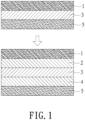
- FIG. 1 is a flow diagram showing a heat treatment process of a secondary battery structure according to the present invention.
- a method for manufacturing a secondary battery structure having a windable flexible polymer matrix solid electrolyte comprises the steps of:
- a secondary battery structure having a windable flexible polymer matrix solid electrolyte comprises a cloth solid electrolyte; a positive electrode disposed on a first side of the cloth solid electrolyte; a negative electrode disposed on a second side of the cloth solid electrolyte, a first carbonized layer disposed between the positive electrode and the cloth solid electrolyte; and a second carbonized layer disposed between the negative electrode and the cloth solid electrolyte.
- the positive electrode is made of magnesium-based metal, lithium-based metal, sodium-based metal, gallium-based metal, tin-based metal or alloy metal foil thereof; and the negative electrode is made of a metal film, or an alloy film.
- the cloth solid electrolyte is a non-woven fabric or cotton cloth
- the non-woven fabric is made of polypropylene (PP), polyethylene (PE), polyethylene terephthalate (PET) or nylon.
- Both of the first carbonized layer and the second carbonized layer are metal carbides.
- the metal carbide is selected from the group consisting of magnesium carbide (MgC), lithium carbide (LiC), sodium carbide (NaC), gallium carbide (GaC) and tin carbide (SnC).
- Example 1 manufacturing a secondary battery structure having a windable flexible polymer matrix solid electrolyte
- a flow diagram showing a heat treatment process of a secondary battery structure according to the present invention is disclosed. That is, a method for preparing a secondary battery with two layers of cloth solid electrolyte, which has charge and discharge characteristics.
- the method comprises the steps of (a) sputtering or evaporating a positive electrode (1) (e.g. made of magnesium-based metal, lithium-based metal, sodium-based metal, gallium-based metal, tin-based metal or alloy metal foil thereof) on a first side of a cloth solid electrolyte (3) (e.g. a non-woven fabric or cotton cloth); (b) sputtering or evaporating a negative electrode (5) (e.g.
- the non-woven fabric is made of polypropylene (PP), polyethylene (PE), polyethylene terephthalate (PET) or nylon.
- the heat treatment process is an infrared treatment or a microwave treatment and conducted in an environment with a temperature of 80°C to 150°C for 30 to 300 seconds.
- Both of the first carbonized layer (2) and the second carbonized layer (4) are metal carbides, and the metal carbide is selected from the group consisting of magnesium carbide (MgC), lithium carbide (LiC), sodium carbide (NaC), gallium carbide (GaC), tin carbide (SnC) and the like so as to make the secondary batteries have high temperature resistance.
- MgC magnesium carbide
- LiC lithium carbide
- NaC sodium carbide
- GaC gallium carbide
- SnC tin carbide
- the secondary battery structure having a windable flexible polymer matrix solid electrolyte of the present invention comprises a cloth solid electrolyte (3); a positive electrode (1) disposed on a first side of the cloth solid electrolyte (3); a negative electrode (5) disposed on a second side of the cloth solid electrolyte (3); a first carbonized layer (2) disposed between the positive electrode (1) and the cloth solid electrolyte (3); and a second carbonized layer (4) disposed between the negative electrode (5) and the cloth solid electrolyte (3).
- the positive electrode (1) is made of magnesium-based metal, lithium-based metal, sodium-based metal, gallium-based metal, tin-based metal or alloy metal foil thereof and formed by sputtering, spraying, evaporation, painting or the like.
- the negative electrode (5) is made of a metal film, or an alloy film and formed by sputtering, spraying, evaporation, painting or the like.
- the cloth solid electrolyte (3) is a non-woven fabric or cotton cloth, and the non-woven fabric is made of polypropylene (PP), polyethylene (PE), polyethylene terephthalate (PET) or nylon, so it can be bent, rolled or stacked.
- the present invention has the following advantages:
Landscapes
- Chemical & Material Sciences (AREA)
- Chemical Kinetics & Catalysis (AREA)
- Electrochemistry (AREA)
- General Chemical & Material Sciences (AREA)
- Engineering & Computer Science (AREA)
- Manufacturing & Machinery (AREA)
- Materials Engineering (AREA)
- Physics & Mathematics (AREA)
- Inorganic Chemistry (AREA)
- General Physics & Mathematics (AREA)
- Condensed Matter Physics & Semiconductors (AREA)
- Dispersion Chemistry (AREA)
- Composite Materials (AREA)
- Life Sciences & Earth Sciences (AREA)
- Wood Science & Technology (AREA)
- Secondary Cells (AREA)
- Battery Electrode And Active Subsutance (AREA)
Description
- The present invention relates to a secondary battery structure and a manufacturing method thereof, especially for the secondary battery structure having a windable flexible polymer matrix solid electrolyte and the manufacturing method of preparing the same.
- A secondary battery is also known as storage battery or rechargeable battery. Most of the secondary batteries used around the world today are lithium batteries containing liquid electrolyte. However, the use of liquid electrolyte-containing lithium batteries may have the disadvantages of leakage, hazards to human health and the environment, and explosion. Therefore, in recent years, solid-state batteries with solid electrolytes have been developed to replace batteries containing liquid electrolytes.
- For instance, the Taiwan patent No.
TWI617067B, issued on 1st Mar. 2018 - However, most batteries having solid electrolyte are still in initial stage and cannot be wound. To solve this problem, flexible and bendable batteries were developed. For instance, the China patent No.
CN110085904A, published on 2nd Aug. 2019 , has disclosed a flexible composite solid-state electrolyte, a full-solid-state lithium-ion battery and a preparation method thereof. The flexible composite solid-state electrolyte is mainly prepared by mixing a sulfide solid-state electrolyte or a modifier thereof (low toxic), a thermoplastic polymer or a modifier thereof and lithium salt. The flexible full-solid-state lithium-ion battery comprising the flexible composite solid-state electrolyte has good mechanical performance and bending performance, and high cycle life and energy density. - The China patent No.
CN109786817A, published on 21st May. 2019 , has disclosed a solid-state lithium battery, an application thereof and a method for preparing a solid-state electrolyte membrane reinforced by non-woven fabric. The solid-state lithium battery comprises a solid-state electrolyte membrane reinforced by non-woven fabric, a positive electrode, a negative electrode and a buffer layer. The solid-state electrolyte membrane further comprises a first solid sulfide electrolyte (low toxic), a non-woven fabric, and a first binder. Therefore, the solid-state electrolyte membrane reinforced by non-woven fabric can prevent short circuit between the positive and negative electrodes during the assembly and use of the solid-state battery, has a very high success rate in mass production, and has relatively high mechanical strength. - Due to the large demand for secondary batteries in the market, it is still necessary to continue to develop various secondary batteries with solid electrolytes and improved capacity and charge/discharge efficiency.
- In the publication Boris Dyatkin et. al., "Electrode Surface Composition of Dual-Intercalation, All-Graphite Batteries", C, vol. 3, no. 4, 9 February 2017, , a battery structure is described that comprises the following layer structure: aluminum foil - carbon coating - carbon coating - non-woven PP fiber mat - carbon coating - copper foil.
- From patent application publication
EP 3422439 A1 a lithium-sulfur battery is known that has a separator interposed between the negative electrode and the positive electrode, wherein the separator comprises a non-woven web layer and an electrode reactive layer disposed on one surface of the non-woven web layer. - In view of the above-mentioned problems, the object of the present invention is to provide a secondary battery structure having a windable flexible polymer matrix solid electrolyte and a manufacturing method thereof by using non-woven technology. The secondary battery comprising a cloth solid electrolyte can be bent and rolled for use.
- Disclosed herein is a method for manufacturing a secondary battery structure having a windable flexible polymer matrix solid electrolyte. The method comprises the features of
claim 1. Further embodiments are subject-matter of the dependent claims. The method according to the invention comprises the steps of (a) sputtering or evaporating a positive electrode on a first side of a cloth solid electrolyte; (b) sputtering or evaporating a negative electrode on a second side opposite to the first side of the cloth solid electrolyte; and (c) conducting a heat treatment process to form a first carbonized layer between the positive electrode and the cloth solid electrolyte and a second carbonized layer between the negative electrode and the cloth solid electrolyte. Both of the first carbonized layer and the second carbonized layer are metal carbides. Preferably, the heat treatment process is an infrared treatment or a microwave treatment and conducted in an environment with a temperature of 80°C to 150°C for 30 to 300 seconds. - A secondary battery structure having a windable flexible polymer matrix solid electrolyte is also disclosed herein. The secondary battery structure has the features of claim 7. Further embodiments are subject-matter of the dependent claims. It comprises a cloth solid electrolyte; a positive electrode disposed on a first side of the cloth solid electrolyte; a negative electrode disposed on a second side of the cloth solid electrolyte; a first carbonized layer disposed between the positive electrode and the cloth solid electrolyte; and a second carbonized layer disposed between the negative electrode and the cloth solid electrolyte. Both of the first carbonized layer and the second carbonized layer are metal carbides.
- According to an embodiment of the present invention, the positive electrode is made of magnesium-based metal, lithium-based metal, sodium-based metal, gallium-based metal, tin-based metal or alloy metal foil thereof, and the negative electrode is made of a metal film, or an alloy film.
- According to an embodiment of the present invention, the cloth solid electrolyte is a non-woven fabric or cotton cloth, and the non-woven fabric is preferably made of polypropylene (PP), polyethylene (PE), polyethylene terephthalate (PET) or nylon.
- The metal carbide of the first carbonized layer and the second carbonized layer is, for instance, selected from the group consisting of magnesium carbide (MgC), lithium carbide (LiC), sodium carbide (NaC), gallium carbide (GaC) and tin carbide (SnC).
- Accordingly, the solid electrolyte of the present invention made by non-woven technology is non-toxic, and allows the secondary battery of the present invention to be bent and wound. Furthermore, the present invention prevents problems of leakage and explosion due to the liquid electrolyte used in the conventional secondary battery and achieves effects of high temperature resistance and rapid charge and discharge.
-
FIG. 1 is a flow diagram showing a heat treatment process of a secondary battery structure according to the present invention. - Hereinafter, an exemplary embodiment of the present invention will be described in detail with reference to the accompanying drawings.
- A method for manufacturing a secondary battery structure having a windable flexible polymer matrix solid electrolyte is disclosed herein. The method comprises the steps of:
- (a) sputtering or evaporating a positive electrode on a first side of a cloth solid electrolyte;
- (b) sputtering or evaporating a negative electrode on a second side opposite to the first side of the cloth solid electrolyte; and
- (c) conducting a heat treatment process to form a first carbonized layer between the positive electrode and the cloth solid electrolyte and a second carbonized layer between the negative electrode and the cloth solid electrolyte. Preferably, the heat treatment process is an infrared treatment or a microwave treatment and conducted in an environment with a temperature of 80°C to 150°C for 30 to 300 seconds.
- Additionally, a secondary battery structure having a windable flexible polymer matrix solid electrolyte is also disclosed herein. It comprises a cloth solid electrolyte; a positive electrode disposed on a first side of the cloth solid electrolyte; a negative electrode disposed on a second side of the cloth solid electrolyte, a first carbonized layer disposed between the positive electrode and the cloth solid electrolyte; and a second carbonized layer disposed between the negative electrode and the cloth solid electrolyte.
- Preferably, the positive electrode is made of magnesium-based metal, lithium-based metal, sodium-based metal, gallium-based metal, tin-based metal or alloy metal foil thereof; and the negative electrode is made of a metal film, or an alloy film.
- Preferably, the cloth solid electrolyte is a non-woven fabric or cotton cloth, and the non-woven fabric is made of polypropylene (PP), polyethylene (PE), polyethylene terephthalate (PET) or nylon.
- Both of the first carbonized layer and the second carbonized layer are metal carbides. For instance, the metal carbide is selected from the group consisting of magnesium carbide (MgC), lithium carbide (LiC), sodium carbide (NaC), gallium carbide (GaC) and tin carbide (SnC).
- In addition, through the following specific examples, the scope of the present invention can be further proved, but it is not intended to limit the scope of the present invention in any form.
- Referring to
Fig. 1 , a flow diagram showing a heat treatment process of a secondary battery structure according to the present invention is disclosed. That is, a method for preparing a secondary battery with two layers of cloth solid electrolyte, which has charge and discharge characteristics. The method comprises the steps of (a) sputtering or evaporating a positive electrode (1) (e.g. made of magnesium-based metal, lithium-based metal, sodium-based metal, gallium-based metal, tin-based metal or alloy metal foil thereof) on a first side of a cloth solid electrolyte (3) (e.g. a non-woven fabric or cotton cloth); (b) sputtering or evaporating a negative electrode (5) (e.g. a metal film, or an alloy film) on a second side opposite to the first side of the cloth solid electrolyte (3); and (c) conducting a heat treatment process to form a first carbonized layer (2) between the positive electrode (1) and the cloth solid electrolyte (3) and a second carbonized layer (4) between the negative electrode (5) and the cloth solid electrolyte (3). The order of steps (a) and (b) can be reversed. The non-woven fabric is made of polypropylene (PP), polyethylene (PE), polyethylene terephthalate (PET) or nylon. Preferably, the heat treatment process is an infrared treatment or a microwave treatment and conducted in an environment with a temperature of 80°C to 150°C for 30 to 300 seconds. - Both of the first carbonized layer (2) and the second carbonized layer (4) are metal carbides, and the metal carbide is selected from the group consisting of magnesium carbide (MgC), lithium carbide (LiC), sodium carbide (NaC), gallium carbide (GaC), tin carbide (SnC) and the like so as to make the secondary batteries have high temperature resistance.
- Accordingly, the secondary battery structure having a windable flexible polymer matrix solid electrolyte of the present invention is formed. It comprises a cloth solid electrolyte (3); a positive electrode (1) disposed on a first side of the cloth solid electrolyte (3); a negative electrode (5) disposed on a second side of the cloth solid electrolyte (3); a first carbonized layer (2) disposed between the positive electrode (1) and the cloth solid electrolyte (3); and a second carbonized layer (4) disposed between the negative electrode (5) and the cloth solid electrolyte (3). The positive electrode (1) is made of magnesium-based metal, lithium-based metal, sodium-based metal, gallium-based metal, tin-based metal or alloy metal foil thereof and formed by sputtering, spraying, evaporation, painting or the like. The negative electrode (5) is made of a metal film, or an alloy film and formed by sputtering, spraying, evaporation, painting or the like. The cloth solid electrolyte (3) is a non-woven fabric or cotton cloth, and the non-woven fabric is made of polypropylene (PP), polyethylene (PE), polyethylene terephthalate (PET) or nylon, so it can be bent, rolled or stacked.
- Different solid state batteries with positive electrode/cloth solid electrolyte (abbreviated with the symbol "B")/carbon electrode (not according to the invention) are manufactured. The test results of the average charge and discharge capacity (mAh/g) (charging: 12V-1h, charging and discharging times: 100) of the different solid-state batteries at various temperature conditions are shown in Table 1.
Table 1 mAh/g Li/B/C Mg/B/C Na/B/C -1 5°C 961 885 1024 Room temperature 822 638 861 55°C 348 549 783 85°C 262 312 400 - Different solid state batteries with magnesium positive electrode/cloth solid electrolyte (abbreviated with the symbol "B")/ negative electrode are manufactured. The test results of the average charge and discharge capacity (mAh/g) (charging: 12V-1h, charging and discharging times: 100) of the different solid-state batteries at various temperature conditions are shown in Table 2. The example Mg/B/C is not according to the invention.
Table 2 mAh/g Mg/B/C Mg/B/Ga Mg/B/Sn -15°C 885 1110 1008 Room temperature 638 1186 876 55°C 549 878 772 85°C 312 710 609 - Compared with the technique available now, the present invention has the following advantages:
- 1. The present invention uses a macromolecular-based solid electrolyte instead of the liquid electrolyte, so it can avoid the hazards to human health and the environment due to leakage.
- 2. The present invention adopts environmental protection and safety materials. Moreover, magnesium is an alkaline earth metal, and its valence number is 2. Compared with lithium with a valence number of 1, magnesium can provide nearly twice the amount of electricity. In addition, magnesium does not generate dendrites, which can prevent explosion.
- 3. The secondary battery of the present invention can achieve effects of high temperature resistance, high capacity and rapid charge and discharge.
- 4. The present invention uses the cloth solid electrolyte, so the finished product of the secondary battery can be bent and wound.
Claims (10)
- A method for manufacturing a secondary battery structure having a windable flexible polymer matrix solid electrolyte, comprising the steps of:(a) sputtering or evaporating a positive electrode (1) on a first side of a cloth solid electrolyte (3);(b) sputtering or evaporating a negative electrode (5) on a second side opposite to the first side of the cloth solid electrolyte (3); and(c) conducting a heat treatment process to form a first carbonized layer (2) between the positive electrode (1) and the cloth solid electrolyte (3) and a second carbonized layer (4) between the negative electrode (5) and the cloth solid electrolyte (3), wherein both of the first carbonized layer (2) and the second carbonized layer (4) are metal carbides.
- The method for manufacturing a secondary battery structure having a windable flexible polymer matrix solid electrolyte as claimed in claim 1, wherein the positive electrode (1) is made of magnesium-based metal, lithium-based metal, sodium-based metal, gallium-based metal, tin-based metal or alloy metal foil thereof.
- The method for manufacturing a secondary battery structure having a windable flexible polymer matrix solid electrolyte as claimed in claim 1, wherein the negative electrode (5) is made of a metal film, or an alloy film.
- The method for manufacturing a secondary battery structure having a windable flexible polymer matrix solid electrolyte as claimed in claim 1, wherein the cloth solid electrolyte (3) is a non-woven fabric or cotton cloth, and the non-woven fabric is made of polypropylene (PP), polyethylene (PE), polyethylene terephthalate (PET) or nylon.
- The method for manufacturing a secondary battery structure having a windable flexible polymer matrix solid electrolyte as claimed in claim 1, wherein the heat treatment process is an infrared treatment or a microwave treatment and conducted in an environment with a temperature of 80°C to 150°C for 30 to 300 seconds.
- The method for manufacturing a secondary battery structure having a windable flexible polymer matrix solid electrolyte as claimed in claim 1, wherein the metal carbide is selected from the group consisting of magnesium carbide, lithium carbide, sodium carbide, gallium carbide and tin carbide.
- A secondary battery structure having a windable flexible polymer matrix solid electrolyte, comprisinga cloth solid electrolyte (3);a positive electrode (1) disposed on a first side of the cloth solid electrolyte (3);a negative electrode (5) disposed on a second side of the cloth solid electrolyte (3);a first carbonized layer (2) disposed between the positive electrode (1) and the cloth solid electrolyte (3); anda second carbonized layer (4) disposed between the negative electrode (5) and the cloth solid electrolyte (3),wherein both of the first carbonized layer (2) and the second carbonized layer (4) are metal carbides.
- The secondary battery structure having a windable flexible polymer matrix solid electrolyte as claimed in claim 7, wherein the positive electrode (1) is made of magnesium-based metal, lithium-based metal, sodium-based metal, gallium-based metal, tin-based metal or alloy metal foil thereof, and wherein the negative electrode (5) is made of a metal film, or an alloy film.
- The secondary battery structure having a windable flexible polymer matrix solid electrolyte as claimed in claim 7, wherein the cloth solid electrolyte (3) is a non-woven fabric or cotton cloth, and the non-woven fabric is made of polypropylene (PP), polyethylene (PE), polyethylene terephthalate (PET) or nylon.
- The secondary battery structure having a windable flexible polymer matrix solid electrolyte as claimed in claim 7, the metal carbide is selected from the group consisting of magnesium carbide, lithium carbide, sodium carbide, gallium carbide and tin carbide.
Applications Claiming Priority (1)
| Application Number | Priority Date | Filing Date | Title |
|---|---|---|---|
| US201962833093P | 2019-04-12 | 2019-04-12 |
Publications (3)
| Publication Number | Publication Date |
|---|---|
| EP3723168A1 EP3723168A1 (en) | 2020-10-14 |
| EP3723168B1 true EP3723168B1 (en) | 2023-08-16 |
| EP3723168C0 EP3723168C0 (en) | 2023-08-16 |
Family
ID=70277258
Family Applications (1)
| Application Number | Title | Priority Date | Filing Date |
|---|---|---|---|
| EP20168839.7A Active EP3723168B1 (en) | 2019-04-12 | 2020-04-08 | Secondary battery structure having windable flexible polymer matrix solid electrolyte and manufacturing method thereof |
Country Status (6)
| Country | Link |
|---|---|
| US (1) | US11876175B2 (en) |
| EP (1) | EP3723168B1 (en) |
| JP (1) | JP6994072B2 (en) |
| KR (1) | KR102498231B1 (en) |
| CN (1) | CN111816914B (en) |
| TW (1) | TWI738280B (en) |
Families Citing this family (1)
| Publication number | Priority date | Publication date | Assignee | Title |
|---|---|---|---|---|
| TWI853187B (en) * | 2021-08-30 | 2024-08-21 | 康那香企業股份有限公司 | Solid-state battery having zinc electrode and manufacturing method thereof |
Family Cites Families (19)
| Publication number | Priority date | Publication date | Assignee | Title |
|---|---|---|---|---|
| JP3070328B2 (en) * | 1993-03-22 | 2000-07-31 | 松下電器産業株式会社 | Fibrous solid electrolyte molded body |
| JPH11185815A (en) * | 1997-12-16 | 1999-07-09 | Fujitsu Ltd | Battery and method for manufacturing battery |
| JP2002313322A (en) * | 2001-04-10 | 2002-10-25 | Nissan Motor Co Ltd | Negative electrode for solid polymer electrolyte battery, method for producing the same, and solid polymer electrolyte battery using the same |
| KR100569186B1 (en) * | 2002-11-15 | 2006-04-10 | 한국과학기술연구원 | Composite Polymer Electrolyte, Lithium Secondary Battery Using the Same and Method for Manufacturing the Same |
| KR101506045B1 (en) | 2007-05-11 | 2015-03-25 | 나믹스 코포레이션 | Lithium ion rechargeable battery and process for producing the lithium ion rechargeable battery |
| US10263277B2 (en) * | 2008-02-25 | 2019-04-16 | Alliance For Sustainable Energy, Llc | Flexible thin film solid state lithium ion batteries |
| JP2010215442A (en) | 2009-03-16 | 2010-09-30 | National Institute Of Advanced Industrial Science & Technology | Method and device for manufacturing carbide |
| KR101607232B1 (en) * | 2009-04-09 | 2016-03-29 | 삼성전자주식회사 | Process for preparing anode active composite material |
| JP5283188B2 (en) | 2009-09-03 | 2013-09-04 | 日本碍子株式会社 | All-solid secondary battery and manufacturing method thereof |
| JP5660210B2 (en) * | 2011-06-02 | 2015-01-28 | トヨタ自動車株式会社 | Solid electrolyte material, solid battery, and method for producing solid electrolyte material |
| KR102331721B1 (en) * | 2014-12-31 | 2021-11-26 | 삼성전자 주식회사 | Composite anode active material, preparing method thereof, anode and lithium secondary battery comprising the same |
| JP2017033656A (en) * | 2015-07-29 | 2017-02-09 | 国立大学法人福井大学 | Negative electrode active material for energy storage device electrode |
| KR20170092327A (en) * | 2016-02-03 | 2017-08-11 | 삼성전자주식회사 | Solid electrolyte, lithium battery comprising solid electrolyte |
| CN105552302A (en) * | 2016-02-04 | 2016-05-04 | 中山大学 | Foldable sulfur cathode composite electrode structure |
| JP2017199539A (en) * | 2016-04-27 | 2017-11-02 | 日本特殊陶業株式会社 | Solid electrolyte structure, lithium battery, and manufacturing method of solid electrolyte structure |
| CN109075293B (en) * | 2016-11-29 | 2021-06-22 | 株式会社Lg化学 | Separator comprising laser-induced carbonized graphene layer and lithium-sulfur battery comprising the same |
| TWI617067B (en) | 2017-04-27 | 2018-03-01 | 康那香企業股份有限公司 | Solid magnesium-rich salty conductive ion material and manufacturing method thereof |
| CN109786817B (en) | 2019-01-23 | 2021-09-21 | 蜂巢能源科技有限公司 | Solid lithium battery, application thereof and method for preparing non-woven fabric reinforced solid electrolyte membrane |
| CN110085904B (en) | 2019-05-08 | 2022-03-01 | 中国空间技术研究院 | Flexible composite solid electrolyte, all-solid-state lithium ion battery and preparation method thereof |
-
2020
- 2020-04-01 TW TW109111256A patent/TWI738280B/en not_active IP Right Cessation
- 2020-04-07 US US16/842,104 patent/US11876175B2/en active Active
- 2020-04-08 EP EP20168839.7A patent/EP3723168B1/en active Active
- 2020-04-09 CN CN202010273102.6A patent/CN111816914B/en not_active Expired - Fee Related
- 2020-04-10 KR KR1020200044089A patent/KR102498231B1/en active Active
- 2020-04-10 JP JP2020071007A patent/JP6994072B2/en not_active Expired - Fee Related
Also Published As
| Publication number | Publication date |
|---|---|
| KR102498231B1 (en) | 2023-02-09 |
| EP3723168A1 (en) | 2020-10-14 |
| US20200328472A1 (en) | 2020-10-15 |
| KR20200120880A (en) | 2020-10-22 |
| CN111816914B (en) | 2021-10-29 |
| CN111816914A (en) | 2020-10-23 |
| JP6994072B2 (en) | 2022-01-14 |
| EP3723168C0 (en) | 2023-08-16 |
| JP2020174040A (en) | 2020-10-22 |
| TWI738280B (en) | 2021-09-01 |
| US11876175B2 (en) | 2024-01-16 |
| TW202038501A (en) | 2020-10-16 |
Similar Documents
| Publication | Publication Date | Title |
|---|---|---|
| JP7199038B2 (en) | Negative electrode material and battery using the same | |
| US9276259B2 (en) | Secondary battery of improved lithium ion mobility and cell capacity | |
| CN105518922B (en) | All-solid-state battery | |
| KR102764108B1 (en) | High energy density all-solid state battery and process for preparing thereof | |
| JP7680766B2 (en) | Secondary battery and its manufacturing method | |
| WO2021184262A1 (en) | Lithium-ion battery cell, preparation method for same, and lithium-ion battery having same | |
| WO2017190367A1 (en) | Secondary battery and preparation method therefor | |
| WO2019146296A1 (en) | Positive electrode material and battery using same | |
| JP6660662B2 (en) | Lithium ion secondary battery | |
| JP7047667B2 (en) | All solid state battery | |
| JP4144335B2 (en) | Negative electrode and secondary battery using the same | |
| JP7584812B2 (en) | All-solid-state battery including thin-film current collector and method for manufacturing same | |
| JP4148665B2 (en) | Electrode for lithium secondary battery and lithium secondary battery | |
| JP7226359B2 (en) | Negative electrode for all-solid-state battery | |
| CN115117344A (en) | Silicon-based composite negative electrode material and preparation method thereof, and all-solid-state lithium battery | |
| EP3723168B1 (en) | Secondary battery structure having windable flexible polymer matrix solid electrolyte and manufacturing method thereof | |
| JPH0922700A (en) | Polymer electrolyte secondary battery | |
| JPH11144735A (en) | Battery | |
| WO2021215086A1 (en) | Battery | |
| JPH07105952A (en) | Lithium secondary battery and its current collecting body | |
| JP2002246027A (en) | Lithium secondary battery | |
| JPH08124597A (en) | Solid electrolytic secondary cell | |
| US20240039036A1 (en) | Flexible solid electrolyte membrane for all-solid-state battery, all-solid-state battery comprising the same, and manufacturing method thereof | |
| EP4287290B1 (en) | Lithium secondary battery and method for manufacturing same | |
| US20250174738A1 (en) | Method for producing all-solid-state battery |
Legal Events
| Date | Code | Title | Description |
|---|---|---|---|
| PUAI | Public reference made under article 153(3) epc to a published international application that has entered the european phase |
Free format text: ORIGINAL CODE: 0009012 |
|
| STAA | Information on the status of an ep patent application or granted ep patent |
Free format text: STATUS: THE APPLICATION HAS BEEN PUBLISHED |
|
| AK | Designated contracting states |
Kind code of ref document: A1 Designated state(s): AL AT BE BG CH CY CZ DE DK EE ES FI FR GB GR HR HU IE IS IT LI LT LU LV MC MK MT NL NO PL PT RO RS SE SI SK SM TR |
|
| AX | Request for extension of the european patent |
Extension state: BA ME |
|
| STAA | Information on the status of an ep patent application or granted ep patent |
Free format text: STATUS: REQUEST FOR EXAMINATION WAS MADE |
|
| 17P | Request for examination filed |
Effective date: 20210414 |
|
| RBV | Designated contracting states (corrected) |
Designated state(s): AL AT BE BG CH CY CZ DE DK EE ES FI FR GB GR HR HU IE IS IT LI LT LU LV MC MK MT NL NO PL PT RO RS SE SI SK SM TR |
|
| REG | Reference to a national code |
Ref country code: DE Free format text: PREVIOUS MAIN CLASS: H01M0004133000 Ipc: H01M0004134000 Ref country code: DE Ref legal event code: R079 Ref document number: 602020015689 Country of ref document: DE Free format text: PREVIOUS MAIN CLASS: H01M0004133000 Ipc: H01M0004134000 |
|
| GRAP | Despatch of communication of intention to grant a patent |
Free format text: ORIGINAL CODE: EPIDOSNIGR1 |
|
| STAA | Information on the status of an ep patent application or granted ep patent |
Free format text: STATUS: GRANT OF PATENT IS INTENDED |
|
| RIC1 | Information provided on ipc code assigned before grant |
Ipc: H01M 50/417 20210101ALI20230213BHEP Ipc: H01M 50/46 20210101ALI20230213BHEP Ipc: H01M 50/44 20210101ALI20230213BHEP Ipc: H01M 50/429 20210101ALI20230213BHEP Ipc: H01M 50/423 20210101ALI20230213BHEP Ipc: H01M 50/414 20210101ALI20230213BHEP Ipc: H01M 10/0587 20100101ALI20230213BHEP Ipc: H01M 10/0565 20100101ALI20230213BHEP Ipc: H01M 10/0562 20100101ALI20230213BHEP Ipc: H01M 10/05 20100101ALI20230213BHEP Ipc: H01M 4/38 20060101ALI20230213BHEP Ipc: H01M 4/1395 20100101ALI20230213BHEP Ipc: H01M 4/1393 20100101ALI20230213BHEP Ipc: H01M 4/133 20100101ALI20230213BHEP Ipc: H01M 4/134 20100101AFI20230213BHEP |
|
| INTG | Intention to grant announced |
Effective date: 20230227 |
|
| GRAS | Grant fee paid |
Free format text: ORIGINAL CODE: EPIDOSNIGR3 |
|
| GRAA | (expected) grant |
Free format text: ORIGINAL CODE: 0009210 |
|
| STAA | Information on the status of an ep patent application or granted ep patent |
Free format text: STATUS: THE PATENT HAS BEEN GRANTED |
|
| AK | Designated contracting states |
Kind code of ref document: B1 Designated state(s): AL AT BE BG CH CY CZ DE DK EE ES FI FR GB GR HR HU IE IS IT LI LT LU LV MC MK MT NL NO PL PT RO RS SE SI SK SM TR |
|
| REG | Reference to a national code |
Ref country code: CH Ref legal event code: EP |
|
| REG | Reference to a national code |
Ref country code: DE Ref legal event code: R096 Ref document number: 602020015689 Country of ref document: DE |
|
| REG | Reference to a national code |
Ref country code: IE Ref legal event code: FG4D |
|
| U01 | Request for unitary effect filed |
Effective date: 20230918 |
|
| U07 | Unitary effect registered |
Designated state(s): AT BE BG DE DK EE FI FR IT LT LU LV MT NL PT SE SI Effective date: 20230922 |
|
| PG25 | Lapsed in a contracting state [announced via postgrant information from national office to epo] |
Ref country code: GR Free format text: LAPSE BECAUSE OF FAILURE TO SUBMIT A TRANSLATION OF THE DESCRIPTION OR TO PAY THE FEE WITHIN THE PRESCRIBED TIME-LIMIT Effective date: 20231117 |
|
| PG25 | Lapsed in a contracting state [announced via postgrant information from national office to epo] |
Ref country code: IS Free format text: LAPSE BECAUSE OF FAILURE TO SUBMIT A TRANSLATION OF THE DESCRIPTION OR TO PAY THE FEE WITHIN THE PRESCRIBED TIME-LIMIT Effective date: 20231216 |
|
| PG25 | Lapsed in a contracting state [announced via postgrant information from national office to epo] |
Ref country code: RS Free format text: LAPSE BECAUSE OF FAILURE TO SUBMIT A TRANSLATION OF THE DESCRIPTION OR TO PAY THE FEE WITHIN THE PRESCRIBED TIME-LIMIT Effective date: 20230816 Ref country code: NO Free format text: LAPSE BECAUSE OF FAILURE TO SUBMIT A TRANSLATION OF THE DESCRIPTION OR TO PAY THE FEE WITHIN THE PRESCRIBED TIME-LIMIT Effective date: 20231116 Ref country code: IS Free format text: LAPSE BECAUSE OF FAILURE TO SUBMIT A TRANSLATION OF THE DESCRIPTION OR TO PAY THE FEE WITHIN THE PRESCRIBED TIME-LIMIT Effective date: 20231216 Ref country code: HR Free format text: LAPSE BECAUSE OF FAILURE TO SUBMIT A TRANSLATION OF THE DESCRIPTION OR TO PAY THE FEE WITHIN THE PRESCRIBED TIME-LIMIT Effective date: 20230816 Ref country code: GR Free format text: LAPSE BECAUSE OF FAILURE TO SUBMIT A TRANSLATION OF THE DESCRIPTION OR TO PAY THE FEE WITHIN THE PRESCRIBED TIME-LIMIT Effective date: 20231117 |
|
| PG25 | Lapsed in a contracting state [announced via postgrant information from national office to epo] |
Ref country code: PL Free format text: LAPSE BECAUSE OF FAILURE TO SUBMIT A TRANSLATION OF THE DESCRIPTION OR TO PAY THE FEE WITHIN THE PRESCRIBED TIME-LIMIT Effective date: 20230816 |
|
| PG25 | Lapsed in a contracting state [announced via postgrant information from national office to epo] |
Ref country code: ES Free format text: LAPSE BECAUSE OF FAILURE TO SUBMIT A TRANSLATION OF THE DESCRIPTION OR TO PAY THE FEE WITHIN THE PRESCRIBED TIME-LIMIT Effective date: 20230816 |
|
| PG25 | Lapsed in a contracting state [announced via postgrant information from national office to epo] |
Ref country code: SM Free format text: LAPSE BECAUSE OF FAILURE TO SUBMIT A TRANSLATION OF THE DESCRIPTION OR TO PAY THE FEE WITHIN THE PRESCRIBED TIME-LIMIT Effective date: 20230816 Ref country code: RO Free format text: LAPSE BECAUSE OF FAILURE TO SUBMIT A TRANSLATION OF THE DESCRIPTION OR TO PAY THE FEE WITHIN THE PRESCRIBED TIME-LIMIT Effective date: 20230816 Ref country code: ES Free format text: LAPSE BECAUSE OF FAILURE TO SUBMIT A TRANSLATION OF THE DESCRIPTION OR TO PAY THE FEE WITHIN THE PRESCRIBED TIME-LIMIT Effective date: 20230816 Ref country code: CZ Free format text: LAPSE BECAUSE OF FAILURE TO SUBMIT A TRANSLATION OF THE DESCRIPTION OR TO PAY THE FEE WITHIN THE PRESCRIBED TIME-LIMIT Effective date: 20230816 Ref country code: SK Free format text: LAPSE BECAUSE OF FAILURE TO SUBMIT A TRANSLATION OF THE DESCRIPTION OR TO PAY THE FEE WITHIN THE PRESCRIBED TIME-LIMIT Effective date: 20230816 |
|
| REG | Reference to a national code |
Ref country code: DE Ref legal event code: R097 Ref document number: 602020015689 Country of ref document: DE |
|
| PLBE | No opposition filed within time limit |
Free format text: ORIGINAL CODE: 0009261 |
|
| STAA | Information on the status of an ep patent application or granted ep patent |
Free format text: STATUS: NO OPPOSITION FILED WITHIN TIME LIMIT |
|
| 26N | No opposition filed |
Effective date: 20240517 |
|
| PG25 | Lapsed in a contracting state [announced via postgrant information from national office to epo] |
Ref country code: MC Free format text: LAPSE BECAUSE OF FAILURE TO SUBMIT A TRANSLATION OF THE DESCRIPTION OR TO PAY THE FEE WITHIN THE PRESCRIBED TIME-LIMIT Effective date: 20230816 |
|
| PG25 | Lapsed in a contracting state [announced via postgrant information from national office to epo] |
Ref country code: MC Free format text: LAPSE BECAUSE OF FAILURE TO SUBMIT A TRANSLATION OF THE DESCRIPTION OR TO PAY THE FEE WITHIN THE PRESCRIBED TIME-LIMIT Effective date: 20230816 |
|
| REG | Reference to a national code |
Ref country code: CH Ref legal event code: PL |
|
| U90 | Renewal fees not paid: noting of loss of rights |
Free format text: RENEWAL FEE NOT PAID FOR YEAR 05 Effective date: 20241119 |
|
| GBPC | Gb: european patent ceased through non-payment of renewal fee |
Effective date: 20240408 |
|
| PG25 | Lapsed in a contracting state [announced via postgrant information from national office to epo] |
Ref country code: GB Free format text: LAPSE BECAUSE OF NON-PAYMENT OF DUE FEES Effective date: 20240408 |
|
| PG25 | Lapsed in a contracting state [announced via postgrant information from national office to epo] |
Ref country code: GB Free format text: LAPSE BECAUSE OF NON-PAYMENT OF DUE FEES Effective date: 20240408 Ref country code: CH Free format text: LAPSE BECAUSE OF NON-PAYMENT OF DUE FEES Effective date: 20240430 |
|
| U93 | Unitary patent lapsed |
Free format text: RENEWAL FEE NOT PAID Effective date: 20240430 |
|
| PG25 | Lapsed in a contracting state [announced via postgrant information from national office to epo] |
Ref country code: IE Free format text: LAPSE BECAUSE OF NON-PAYMENT OF DUE FEES Effective date: 20240408 |
|
| PG25 | Lapsed in a contracting state [announced via postgrant information from national office to epo] |
Ref country code: CY Free format text: LAPSE BECAUSE OF FAILURE TO SUBMIT A TRANSLATION OF THE DESCRIPTION OR TO PAY THE FEE WITHIN THE PRESCRIBED TIME-LIMIT; INVALID AB INITIO Effective date: 20200408 |
|
| PG25 | Lapsed in a contracting state [announced via postgrant information from national office to epo] |
Ref country code: HU Free format text: LAPSE BECAUSE OF FAILURE TO SUBMIT A TRANSLATION OF THE DESCRIPTION OR TO PAY THE FEE WITHIN THE PRESCRIBED TIME-LIMIT; INVALID AB INITIO Effective date: 20200408 |