EP3715937B1 - Image capture apparatus and control method thereof - Google Patents
Image capture apparatus and control method thereof Download PDFInfo
- Publication number
- EP3715937B1 EP3715937B1 EP20161743.8A EP20161743A EP3715937B1 EP 3715937 B1 EP3715937 B1 EP 3715937B1 EP 20161743 A EP20161743 A EP 20161743A EP 3715937 B1 EP3715937 B1 EP 3715937B1
- Authority
- EP
- European Patent Office
- Prior art keywords
- image
- capture apparatus
- mode
- image capture
- image sensor
- Prior art date
- Legal status (The legal status is an assumption and is not a legal conclusion. Google has not performed a legal analysis and makes no representation as to the accuracy of the status listed.)
- Active
Links
Images


Classifications
-
- H—ELECTRICITY
- H04—ELECTRIC COMMUNICATION TECHNIQUE
- H04N—PICTORIAL COMMUNICATION, e.g. TELEVISION
- H04N23/00—Cameras or camera modules comprising electronic image sensors; Control thereof
- H04N23/60—Control of cameras or camera modules
- H04N23/68—Control of cameras or camera modules for stable pick-up of the scene, e.g. compensating for camera body vibrations
- H04N23/682—Vibration or motion blur correction
- H04N23/685—Vibration or motion blur correction performed by mechanical compensation
- H04N23/687—Vibration or motion blur correction performed by mechanical compensation by shifting the lens or sensor position
-
- G—PHYSICS
- G02—OPTICS
- G02B—OPTICAL ELEMENTS, SYSTEMS OR APPARATUS
- G02B27/00—Optical systems or apparatus not provided for by any of the groups G02B1/00 - G02B26/00, G02B30/00
- G02B27/64—Imaging systems using optical elements for stabilisation of the lateral and angular position of the image
- G02B27/646—Imaging systems using optical elements for stabilisation of the lateral and angular position of the image compensating for small deviations, e.g. due to vibration or shake
-
- H—ELECTRICITY
- H04—ELECTRIC COMMUNICATION TECHNIQUE
- H04N—PICTORIAL COMMUNICATION, e.g. TELEVISION
- H04N23/00—Cameras or camera modules comprising electronic image sensors; Control thereof
- H04N23/60—Control of cameras or camera modules
- H04N23/68—Control of cameras or camera modules for stable pick-up of the scene, e.g. compensating for camera body vibrations
- H04N23/681—Motion detection
- H04N23/6812—Motion detection based on additional sensors, e.g. acceleration sensors
-
- H—ELECTRICITY
- H04—ELECTRIC COMMUNICATION TECHNIQUE
- H04N—PICTORIAL COMMUNICATION, e.g. TELEVISION
- H04N23/00—Cameras or camera modules comprising electronic image sensors; Control thereof
- H04N23/50—Constructional details
- H04N23/54—Mounting of pick-up tubes, electronic image sensors, deviation or focusing coils
-
- H—ELECTRICITY
- H04—ELECTRIC COMMUNICATION TECHNIQUE
- H04N—PICTORIAL COMMUNICATION, e.g. TELEVISION
- H04N23/00—Cameras or camera modules comprising electronic image sensors; Control thereof
- H04N23/50—Constructional details
- H04N23/55—Optical parts specially adapted for electronic image sensors; Mounting thereof
-
- H—ELECTRICITY
- H04—ELECTRIC COMMUNICATION TECHNIQUE
- H04N—PICTORIAL COMMUNICATION, e.g. TELEVISION
- H04N23/00—Cameras or camera modules comprising electronic image sensors; Control thereof
- H04N23/60—Control of cameras or camera modules
- H04N23/667—Camera operation mode switching, e.g. between still and video, sport and normal or high- and low-resolution modes
-
- H—ELECTRICITY
- H04—ELECTRIC COMMUNICATION TECHNIQUE
- H04N—PICTORIAL COMMUNICATION, e.g. TELEVISION
- H04N23/00—Cameras or camera modules comprising electronic image sensors; Control thereof
- H04N23/60—Control of cameras or camera modules
- H04N23/67—Focus control based on electronic image sensor signals
-
- H—ELECTRICITY
- H04—ELECTRIC COMMUNICATION TECHNIQUE
- H04N—PICTORIAL COMMUNICATION, e.g. TELEVISION
- H04N23/00—Cameras or camera modules comprising electronic image sensors; Control thereof
- H04N23/60—Control of cameras or camera modules
- H04N23/68—Control of cameras or camera modules for stable pick-up of the scene, e.g. compensating for camera body vibrations
- H04N23/682—Vibration or motion blur correction
-
- H—ELECTRICITY
- H04—ELECTRIC COMMUNICATION TECHNIQUE
- H04N—PICTORIAL COMMUNICATION, e.g. TELEVISION
- H04N23/00—Cameras or camera modules comprising electronic image sensors; Control thereof
- H04N23/70—Circuitry for compensating brightness variation in the scene
-
- H—ELECTRICITY
- H04—ELECTRIC COMMUNICATION TECHNIQUE
- H04N—PICTORIAL COMMUNICATION, e.g. TELEVISION
- H04N23/00—Cameras or camera modules comprising electronic image sensors; Control thereof
- H04N23/70—Circuitry for compensating brightness variation in the scene
- H04N23/73—Circuitry for compensating brightness variation in the scene by influencing the exposure time
Definitions
- the present invention relates to an image capture apparatus and a control method thereof, and particularly relates to an image capture apparatus in which the position of an image sensor is variable, and to a control method thereof.
- Japanese Patent Laid-Open No. 2011-81417 discloses an image capture apparatus that corrects image blurring by controlling the position of an image sensor in accordance with movement of the image capture apparatus.
- JP 2004 048346 A discloses a an image capture apparatus that corrects image blurring by controlling the position an image sensor in accordance to the movement of the image capture apparatus and according to a plurality of image stabilization modes including a vignetting suppression priority mode and a blur suppression mode.
- This problem can be reduced by enlarging the opening in the shutter frame, but doing so increases the scale, weight, and so on of the shutter mechanism and, by extension, the image capture apparatus as a whole. Furthermore, the travel distance of the shutter curtain also increases, which increases the amount of power consumed and reduces the upper limit value of the shutter speed.
- the present invention has been conceived in light of these problems with conventional techniques.
- One aspect of the present invention makes it possible, in an image capture apparatus capable of correcting image blurring by moving an image sensor and a method for controlling the image capture apparatus, to suppress light-fall-off in periphery areas of an image while using the image stabilization.
- the present invention in its first aspect provides an image capture apparatus as specified in claims 1 to 10.
- the present invention in its second aspect provides a control method for an image capture apparatus as specified in claims 11 and 12.
- the present invention in its third aspect provides a computer-readable medium as specified in claim 13.
- Embodiments in which the present invention is applied in an interchangeable lens-type digital camera will be described hereinafter, but the present invention can be applied in any image capture apparatus having a focal plane shutter and capable of controlling the position of an image sensor, or in an electronic device including such an image capture apparatus.
- FIG. 1 is a block diagram schematically illustrating an example of the functional configuration of a camera system according to a first embodiment.
- the camera system is constituted by a camera body (a digital camera 100) and a lens unit 200 which can be attached to and removed from the camera body.
- a microcomputer (“MPU” hereinafter) 101 functions as a control unit that controls the operations of the various units in the digital camera 100 by loading programs stored in ROM 115 into RAM 110 and executing those programs. Also, by executing programs, the MPU 101 controls the operations of peripheral devices which can communicate with the digital camera 100 (the lens unit 200, a flash device, and so on). Unless otherwise specified, the operations carried out by the MPU 101 in the following descriptions are realized by the MPU 101 executing programs.
- the MPU 101 may actually be realized by a plurality of microprocessors.
- the MPU 101 communicates with a lens control circuit 202 of the lens unit 200, and mount contact points 21.
- the mount contact points 21 of the digital camera 100 and the lens unit 200 make contact, and the digital camera 100 and the lens unit 200 are electrically connected as a result.
- the MPU 101 recognizes that communication with the lens control circuit 202 is possible by receiving a signal through the mount contact points 21.
- the ROM 115 stores programs executed by the MPU 101, as well as various types of setting values, GUI data, and the like for the digital camera 100. As will be described later, in the present embodiment, the ROM 115 also stores information expressing a relationship between the f-number of a diaphragm in the lens unit and the aperture size, information of a relationship between the f-number and the maximum range of movement of an image sensor 430, and so on.
- the RAM 110 is system memory used by the MPU 101 to load programs, temporarily store variables, and is also used as a data buffer.
- the lens control circuit 202 drives a mobile lens included in a shooting lens 201 through an autofocus (AF) driving circuit 203, on the basis of control signals from the MPU 101.
- the shooting lens form an imaging optical system of the digital camera 100.
- a focus lens is one of mobile lenses that the shooting lens 201 may include.
- mobile lenses such as a magnifying lens, an anti-shake lens, and the like are also included.
- the lens control circuit 202 also drives a diaphragm 205 through a diaphragm driving circuit 204, on the basis of control signals from the MPU 101.
- the shooting lens 201 is actually constituted by a plurality of lens groups.
- the image sensor 430 is a CMOS image sensor, for example, and has a plurality of photoelectric conversion elements arranged two-dimensionally.
- the image sensor 430 uses the photoelectric conversion elements to convert an optical image, formed by the shooting lens 201 on an imaging plane, into an electrical signal, and outputs that signal as an image signal.
- the image sensor 430 has a configuration in which a plurality of photoelectric conversion elements are shared by each of microlenses which constitute a microlens array.
- the MPU 101 can execute AF using the imaging plane phase difference detection method on the basis of the signals output from the image sensor 430.
- the MPU 101 may execute AF using the contrast detection method on the basis of the signals output from the image sensor 430.
- the MPU 101 may also execute AF using a phase difference detection method by employing signals obtained from an AF sensor separate from the image sensor 430.
- the MPU 101 transmits a defocus amount and a defocus direction obtained through the phase difference detection AF to the lens control circuit 202.
- the lens control circuit 202 controls the AF driving circuit 203 on the basis of the received defocus amount and direction, and moves the focus lens to an in-focus position.
- the diaphragm driving circuit 204 controls the f-number (i.e., the opening diameter or opened amount) of the diaphragm 205 in accordance with control signals from the lens control circuit 202.
- a shutter unit 32 is a mechanical focal plane shutter, and includes front curtain blades 32a, rear curtain blades 32b, and a frame-shaped shutter aperture 32c having a quadrangular opening that blocks unneeded stray light.
- the front curtain blades 32a and the rear curtain blades 32b are fixed at an exposure position (a fully-open state) when not shooting, as well as when shooting a moving image. As such, the range of light beams entering in the direction of the image sensor 430 from the shutter unit 32 is limited by the opening in the shutter aperture 32c.
- the front curtain blades 32a move from the exposure position to a light-blocking position, thus entering a shooting standby state. In this state, all of the light beams passing through the opening in the shutter aperture 32c are blocked by the front curtain blades 32a. The front curtain blades 32a then move from the light-blocking position to the exposure position, and the light beams passing through the shutter aperture 32c are incident on the image sensor 430 as a result.
- the image sensor 430 accumulates a charge produced by the incident light beams in each of the photoelectric conversion elements. Once a set exposure time (shutter speed) has passed, the rear curtain blades 32b move from the exposure position to the light-blocking position, resulting in all of the light beams passing through the opening in the shutter aperture 32c being blocked by the rear curtain blades 32b; this ends the exposure period for one frame's worth of a still image.
- the charges accumulated by the photoelectric conversion elements during the exposure period are converted into voltages and then read out, and are processed as an image signal.
- the operations of the shutter unit 32 are controlled by a shutter driving circuit 104 on the basis of control commands from the MPU 101.
- a shake detection sensor 50 outputs a signal expressing movement in the image capture apparatus.
- the shake detection sensor 50 may be an angular velocity sensor such as a gyrosensor, or an accelerometer, for example.
- the shake detection sensor 50 outputs, for example, signals (shake detection signals) expressing an angular velocity in each of a horizontal direction (an X direction, here) orthogonal to the optical axis of the lens unit 200, a vertical direction (a Y direction, here) orthogonal to the optical axis, and a direction of rotation about the optical axis (a roll direction).
- the shake detection signals are output to the MPU 101.
- the MPU 101 determines a movement direction and movement amount of the image sensor 430 to correct image blurring on the basis of the shake detection signals.
- the MPU 101 then outputs a control signal based on the determined movement direction and movement amount to an image blurring correction driving circuit 109.
- An image capturing unit 400 includes, in addition to the image sensor 430, an optical low-pass filter 410 that reduces high-frequency components in the light incident on the image sensor 430, position detection sensors 480 that detect the position of the image sensor 430, and driving coils 460 that control the position of the image sensor 430.
- the position detection sensors 480 and the driving coils 460 are parts of an image blurring correction mechanism.
- the driving coils 460 are capable of moving the image sensor 430 in the X direction and the Y direction independently. Note that the range over which the image sensor 430 can be moved in each direction is, for example, mechanically limited to a predetermined range centered on a default position.
- the image blurring correction driving circuit 109 controls the position of the image sensor 430 to suppress image blurring caused by movement in the digital camera 100, and image blurring is corrected as a result.
- the position detection sensors 480 include a Hall effect device or the like, detect displacement of the image sensor 430 in the X direction, the Y direction, and rotationally about the optical axis, and output position detection signals indicating the detection results to the MPU 101.
- An image processing circuit 105 applies predetermined signal processing to image signals read out from the image sensor 430, and generates image data for display and/or recording.
- the image processing circuit 105 also outputs, to the MPU 101, information obtained by applying signal processing to the image data.
- the image processing circuit 105 may, for example, be a dedicated hardware circuit, such as an ASIC, designed to implement specific functions, or may be realized by a programmable processor, such as a DSP, which is configured to implement specific functions by executing software.
- the signal processing applied by the image processing circuit 105 includes preprocessing, color interpolation processing, correction processing, detection processing, data processing, evaluation value calculation processing, and so on.
- the preprocessing includes A/D conversion, noise removal, gain adjustment, missing pixel correction, and so on.
- Color interpolation processing is processing for interpolating the values of color components not included in the image data read out from the pixels, and is also called "demosaicing".
- the correction processing includes white balance adjustment, processing for correcting image luminance, processing for correcting optical aberration from a lens group 10, color correction processing, and so on.
- the detection processing includes processing for detecting and tracking a characteristic region (e.g., a face region or a human body region), processing for recognizing a person, and so on.
- the data processing includes scaling processing, encoding and decoding processing, header information generation processing, and so on.
- the evaluation value calculation processing is processing for calculating evaluation values used in automatic exposure control (AE) processing, AF processing, and so on carried out by the MPU 101. Note that these are merely examples of the signal processing which the image processing circuit 105 can carry out, and are not intended to limit the signal processing which the image processing circuit 105 carries out. Note that if the image sensor 430 has an A/D conversion function and outputs digital image data, A/D conversion carried out by the image processing circuit 105 is not necessary.
- the image processing circuit 105 also executes processing for recording and playing back image data into and from a memory card 113.
- the recording processing also includes processing for generating a data file in a predetermined format, the data file holding the image data for recording.
- a liquid crystal driving circuit 112 causes images to be displayed in a liquid crystal monitor 19 in accordance with the image data for display generated by the image processing circuit 105.
- the liquid crystal monitor 19 can be caused to function as an electronic viewfinder (EVF), caused to display images that have been shot, and so on.
- EMF electronic viewfinder
- FIG. 1 illustrates a release SW 41 (41a, 41b), an image blurring correction setting SW 42, a power SW 43, and a shooting mode setting dial 44 as representative examples of the operation members, but the operation members are not limited thereto.
- the release SW 41 is a starting switch used when a user instructs the digital camera 100 to start shooting, and has a switch structure which is operated in steps.
- a first switch SW1 (41a in FIG. 1 ) turns on with a first stroke, and a second switch SW2 (41b in FIG. 1 ) turns on with a second stroke.
- the image blurring correction setting SW 42 is a setting switch for correcting image blurring.
- the power SW 43 is a switch for turning the power of the image capture apparatus on and off.
- the shooting mode setting dial 44 is a rotational operation member used to set a shooting mode.
- the present embodiment assumes that when the shooting mode setting dial 44 is set to a moving image shooting mode, moving images are shot by operating the release switch 41. However, a separate operation member for instructing moving image shooting to start and stop may be provided as well. Additionally, if the liquid crystal monitor 19 is a touch display, a switch sensor circuit 106 notifies the MPU 101 of a touch operation detection result.
- a tripod detection unit 120 is constituted by a mechanical switch, a noncontact sensor, and the like, detects whether or not a tripod is attached to the digital camera 100, and outputs a result of the detection to the MPU 101.
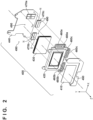
- FIG. 2 is an exploded perspective view of the image capturing unit 400.
- the optical axis of the lens unit 200 is denoted as a Z axis
- an axis in the horizontal direction perpendicular to the Z axis is denoted as an X axis
- an axis in the vertical direction orthogonal to both the Z axis and the X axis is denoted as a Y axis.
- the positive direction of the Z axis corresponds to a subject direction
- the negative direction of the Z axis corresponds to an image sensor direction. The following will describe the positional relationship in which the subject direction is toward the front and the image sensor direction is toward the rear.
- the image capturing unit 400 holds the image sensor 430 in a mobile state in order to suppress image blurring.
- the optical low-pass filter 410 is, for example, a birefringent plate constituted by a crystal, and is disposed on the forward side of the image sensor 430.
- the surface of the optical low-pass filter 410 is subjected to a coating treatment in order to cut infrared rays, prevent reflection, and so on.
- a shift holder 420 is a mobile member capable of moving in the X direction, the Y direction, and the roll direction, and holds the optical low-pass filter 410 and the image sensor 430.
- the image sensor 430 is fixed to the shift holder 420 by screws, an adhesive, or the like, for example.
- a shift base 440 constitutes part of a base member of the image capturing unit 400, and is disposed on the rear side of the image sensor 430.
- a front base 450 is a member which is substantially L-shaped when viewed from the front, and is disposed on the side of the shift holder 420 opposite from the side on which the shift base 440 is disposed (i.e., the forward side).
- the shift base 440 and the front base 450 are formed from a soft magnetic material such as iron.
- Part of the front base 450 is linked to the shift base 440, and is integrated with the shift base 440.
- the shift base 440 and the front base 450 constitute the base member (fixing member) of the image capturing unit 400, and hold the shift holder 420 in a mobile state.
- the shift base 440 is fixed to the digital camera 100.
- An X direction driving coil 460a and Y direction driving coils 460b and 460c are fixed to the shift holder 420.
- the X direction driving coil 460a and the Y direction driving coils 460b and 460c constitute the driving coil 460 illustrated in FIG. 1 .
- the X direction driving coil 460a is disposed on the right side of the image sensor 430 when viewed from the front, so that the center of the coil is disposed along an XZ plane.
- the Y direction driving coils 460b and 460c are disposed on a lower side of the image sensor 430, symmetrically with respect to a YZ plane and with a predetermined gap between the coils in the X direction.
- the X direction driving coil 460a and the Y direction driving coils 460b and 460c constitute an electromagnetic driving unit of the image capturing unit 400.
- the X direction magnet 470a and the Y direction magnets 470b and 470c are fixed to a surface of the shift base 440 which opposes the front base 450.
- the N pole and the S pole are arranged in the X direction
- the Y direction magnets 470b and 470c the N pole and the S pole are arranged in the Y direction.
- the magnets 470a, 470b, and 470c are disposed opposing the driving coils 460a, 460b, and 460c, respectively.
- the X direction driving coil 460a is always positioned within the magnetic field of the X direction magnet 470a.
- a right side part of the driving coil 460a always overlaps with the N pole of the X direction magnet 470a, and a left side part of the driving coil 460a always overlaps with the S pole of the X direction magnet 470a.
- the Y direction driving coil 460b is always positioned within the magnetic field of the Y direction magnet 470b.
- an upper side part of the driving coil 460b always overlaps with the N pole of the magnet 470b
- a lower side part of the driving coil 460b always overlaps with the S pole of the magnet 470b.
- the Y direction driving coil 460c is always positioned within the magnetic field of the Y direction magnet 470c. Viewed from the positive direction of the Z axis, an upper side part of the driving coil 460c always overlaps with the N pole of the magnet 470c, and a lower side part of the driving coil 460c always overlaps with the S pole of the magnet 470c.
- the image blurring correction driving circuit 109 can supply power to the X direction driving coil 460a and the Y direction driving coils 460b and 460c independently.
- a magnetic flux produced by the driving coil 460a and a magnetic flux produced by the X direction magnet 470a interfere magnetically, which produces Lorentz force.
- the shift holder 420 attempts to move linearly in the X direction relative to the shift base 440, with the Lorentz force produced by the electromagnetic driving unit acting as thrust (driving force).
- the shift holder 420 can be moved linearly in the X direction (the left and right directions) by using the image blurring correction driving circuit 109 to adjust the current flowing in the X direction driving coil 460a.
- the Lorentz force is substantially proportional to the magnitude of the coil current, and thus increasing the current flowing in the X direction driving coil 460a increases the thrust in the X direction.
- the shift holder 420 can be moved in the X direction at a speed based on the speed of hand shake or the like in the X direction, by using the image blurring correction driving circuit 109 to adjust the magnitude of the current flowing in the X direction driving coil 460a.
- the shift holder 420 can be moved linearly in the Y direction (the up and down directions) by using the image blurring correction driving circuit 109 to set the currents supplied to the Y direction driving coils 460b and 460c to the same magnitude and adjusting the directions of the currents.
- different Y direction thrusts can be produced in the driving coils 460b and 460c, so as to rotate the shift holder 420 about the Z axis, by setting the currents supplied to the Y direction driving coils 460b and 460c to different magnitudes.
- the speed at which the shift holder 420 moves in the Y direction and the rotation direction can be controlled using the magnitudes of the currents supplied to the Y direction driving coils 460b and 460c.
- the shift holder 420 can be moved in the Y direction, the rotation direction, and so on at a speed based on the speed of hand shake or the like in the Y direction, by using the image blurring correction driving circuit 109 to adjust the magnitude of the current flowing in the Y direction driving coils 460b and 460c.
- the driving coils 460a to 460c and the magnets 470a to 470c constitute an image sensor driving mechanism.
- the position detection sensor 480a is provided in a position near the X direction driving coil 460a of the shift holder 420, opposing the magnetization boundary of the X direction magnet 470a.
- the position detection sensor 480a is, for example, a Hall effect device, and outputs an electrical signal based on changes in a magnetic flux received from the X direction magnet 470a. Accordingly, displacement of the shift holder 420 (including the members fixed to the shift holder 420, such as the image sensor 430) in the X direction can be detected on the basis of the output from the position detection sensor 480a.
- the position detection sensors 480b and 480c are provided in positions near the Y direction driving coils 460b and 460c of the shift holder 420, opposing the magnetization boundaries of the Y direction magnets 470b and 470c, respectively.
- the position detection sensors 480b and 480c are, for example, Hall effect devices, and output electrical signals based on changes in magnetic fluxes received from the Y direction magnets 470b and 470c, respectively. Accordingly, displacement of the shift holder 420 (including the members fixed to the shift holder 420, such as the image sensor 430) in the Y direction, a rotation amount and direction about the Z axis, and so on can be detected on the basis of the outputs from the position detection sensors 480b and 480c.
- the position detection sensor 480b is disposed to the left of the Y direction driving coil 460b, and the position detection sensor 480c is disposed to the right of the Y direction driving coil 460c. Accordingly, more distance can be provided between the position detection sensors 480b and 480c than if the position detection sensor 480b were disposed to the right of the Y direction driving coil 460b and the position detection sensor 480c to the left of the Y direction driving coil 460c.
- the difference between the outputs of the position detection sensors 480b and 480c per amount of rotation in the shift holder 420 can therefore be increased, which in turn makes it possible to accurately detect the amount of rotation of the shift holder 420 and ultimately improves the accuracy with which rotational shake can be corrected.
- a plurality of balls 490 (three, in the example illustrated in FIG. 2 ) contact both the shift holder 420 and the shift base 440, and are held in a mobile state. By interposing the balls 490 between the shift holder 420 and the shift base 440, the shift holder 420 moves within a plane parallel to the shift base 440.
- Image blurring correction operations carried out using the image capturing unit 400 will be described next.
- the image blurring correction operations are operations for moving the image sensor 430 opposite from movement of the digital camera 100.
- the image blurring correction operations are executed when an image blurring correction function is set to "on” (active) by the image blurring correction setting SW 42.
- the MPU 101 integrates the output signals from the shake detection sensor 50, and calculates angular shake amounts in each direction (here, the X direction, the Y direction, and the direction about the optical axis (the roll direction)). The MPU 101 then determines target values for controlling the movement of the image sensor 430, which is required to suppress image blurring, on the basis of the angular shake amounts. These target values may be movement target positions in the X direction, the Y direction, and the roll direction. The MPU 101 outputs control signals, for moving the image sensor 430 to the target positions, to the image blurring correction driving circuit 109.
- the image blurring correction driving circuit 109 controls the magnitudes and directions of the currents supplied to the X direction driving coil 460a and the Y direction driving coils 460b and 460c, and moves the image sensor 430 to the target positions.
- the MPU 101 detects the position (X direction displacement, Y direction displacement, and rotational displacement in the roll direction) of the shift holder 420 (the image sensor 430) on the basis of output signals from the position detection sensors 480a to 480c.
- the MPU 101 compares the detected positions in each direction for the shift holder 420 with the target positions, and outputs, to the image blurring correction driving circuit 109, control signals specifying movement amounts and movement directions for reducing differences between the two.
- Image blurring correction which tracks movement of the digital camera 100 is realized by continuously executing this type of feedback control.
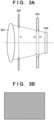
- FIG. 3A is a cross-sectional view, taken along the YZ plane, schematically illustrating a range in which light beams are incident on the image sensor 430 from the lens unit 200 in the camera system according to the present embodiment.
- An aperture size d1 of the diaphragm 205 is variable, and increases as the f-number decreases. As the aperture size d1 increases, a range d2 of incident light on the shutter aperture 32c also increases. Because a size d3 of the opening in the shutter aperture 32c is fixed, the difference between d2 and d3 decreases as the f-number of the diaphragm 205 decreases.
- the opening in the shutter aperture 32c is designed to have a size such that when the center of the image sensor 430 intersects with the optical axis as in FIG. 3A , no light is blocked by the shutter aperture 32c (i.e., the image sensor 430 is not hidden) even when the diaphragm 205 is at maximum aperture. Thus even when the f-number of the diaphragm 205 is low, the periphery areas in the image obtained by the image sensor 430 will not be dark ( FIG. 3B ).
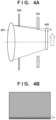
- FIG. 4A schematically illustrates a luminance distribution in an image obtained from the state illustrated in FIG. 4A .
- This problem can be reduced by making the opening in the shutter aperture 32c larger.
- making the opening in the shutter aperture 32c also increases the size of the shutter unit.
- the increased travel distance for the blades means it is necessary to drive the blades at a correspondingly higher speed, which also results in an increased size for the driving mechanism.
- This phenomenon is more likely to arise with lower f-numbers, and with higher amounts of movement in the image sensor 430, and the range D broadens as well.
- the phenomenon is also more noticeable when the subject appearing in the range D has a uniform luminance.
- the phenomenon is more noticeable in moving images than in still images. This is because changes over time in the range, extent, and so on of the phenomenon are more easily recognizable as flicker or the like in moving images.
- a second image blurring correction mode an image quality priority mode
- a first image blurring correction mode a correction priority mode
- the second image blurring correction mode limiting the range of movement of the image sensor 430 during image blurring correction to a range at which the brightness in the periphery areas of an image does not decrease or decreases less
- the first image blurring correction mode not imparting such a limitation.
- the second image blurring correction mode limits the movement range or movement distance of the image sensor in a first direction perpendicular to the optical axis of an imaging optical system to a range (distance) that is smaller than the maximum movement range or movement distance in the first image blurring correction mode.
- the movement range will be called a "first range” and the movement distance will be called a "first distance”.
- the movement range will be called a "second range” and the movement distance will be called a "second distance”. Note that the maximum values of the first range and the first distance are determined by mechanical restrictions.
- the MPU 101 determines the maximum range of movement of the image sensor 430 according to the current f-number, on the basis of information expressing a relationship between the f-number and aperture size in the lens unit 200 which is mounted.
- the maximum range of movement of the image sensor 430 is a range at which the brightness of the periphery areas of an image obtained by the image sensor 430 does not drop, or does drop but not as much as when in the correction priority mode.
- the MPU 101 sets the detected movement target position for the image sensor 430 to a position that does not exceed the maximum range of movement, and executes the image blurring correction operations.
- the maximum range of movement of the image sensor 430 in the image quality priority mode is set to a range at which the brightness of the periphery areas of an image obtained by the image sensor 430 does not drop.
- the MPU 101 can obtain the information expressing the relationship between the f-number and the aperture size of the mounted lens unit 200 from the lens control circuit 202 when the lens unit 200 is mounted to the digital camera 100.
- the information expressing the relationship between the f-number and the aperture size can be stored in the ROM 115 in association with model information of the lens unit.
- the MPU 101 obtains the model information from the lens control circuit 202 when the lens unit 200 is mounted to the digital camera 100.
- the MPU 101 can then refer to the ROM 115 on the basis of the obtained model information, read out the corresponding information expressing the relationship between the f-number and the aperture size to the RAM 110, and use that information.
- these methods are merely examples, and the information expressing the relationship between the f-number and the aperture size of the mounted lens unit 200 may be obtained through another method, such as obtaining the information from an external device.
- the maximum range of movement corresponding to the aperture size of the diaphragm can be stored in the ROM 115, as a function that takes the aperture size as a variable, or by associating a plurality of discrete aperture sizes with the maximum range of movement. In the latter case, aperture sizes not stored can be found by interpolating values which are stored. Note that rather than finding the aperture size from the f-number and then finding the maximum range of movement from the aperture size, the f-number and the maximum range of movement may be associated directly and stored for each lens unit model, for example. Note also that the maximum range of movement can be defined by a maximum value for each direction from a reference position (a position in a state where the image sensor 430 has not moved), for example.
- the image sensor 430 moves in a range at which the sensor is not hidden by the shutter aperture 32c, and thus the brightness of the periphery areas of the image does not vary.
- the maximum correctable value of the image blurring is lower than when in the correction priority mode.
- the image blurring correction mode may be explicitly selected (set) by the user, or may be set automatically by the MPU 101 in accordance with shooting conditions, the subject, and so on.
- the user can select whether to set the correction priority mode or the image quality priority mode when the image blurring correction operations have been turned on (activated) by the image blurring correction setting SW 42.
- the image quality priority mode can also be set automatically in the following cases, for example.
- the correction priority mode can also be set automatically in the following cases, for example.
- the configuration may be such that the image blurring correction mode is set automatically under other conditions.
- the conditions given as examples here can be selected and used as appropriate, and conditions may be used in combination with each other, and the conditions may be given priority rankings. For example, in a situation where conditions for automatically setting the image quality priority mode and conditions for automatically setting the correction priority mode can be satisfied at the same time, the mode to be given priority can be set. Additionally, the user can set the image blurring correction mode to be used when the relationship between the f-number of the lens unit and the aperture size of the diaphragm is unknown in advance as variable information.
- step S101 the MPU 101 determines whether or not the power SW 43 has been turned on, on the basis of an output from the switch sensor circuit 106.
- the MPU 101 repeats the determination process of step S 101 until it is determined that the power SW 43 has been turned on. Once it is determined that the power SW 43 has been turned on, the MPU 101 moves the process to step S102.
- step S102 the MPU 101 executes a camera system startup process.
- the MPU 101 supplies power to the various circuits from a power source, and makes initial settings, executes an operation check process, and so on.
- the MPU 101 communicates with the lens control circuit 202 of the mounted lens unit 200, and obtains information pertaining to the relationship between the f-number of the lens unit 200 and the aperture size of the diaphragm, the model information, and so on.
- the MPU 101 finds the f-number of the lens unit 200, and the corresponding maximum range of movement of the image sensor 430 during the image blurring correction process in the image quality priority mode, and stores those items in the RAM 110.
- step S103 the MPU 101 starts executing a standby process.
- the standby process is a process for causing the liquid crystal monitor 19 to function as an EVF.
- the MPU 101 fixes the front curtain blades 32a and the rear curtain blades 32b of the shutter unit 32 to the exposure position.
- the MPU 101 also drives the image sensor 430 in the moving image shooting mode to shoot frame images in a continuous manner.
- the MPU 101 then causes the image processing circuit 105 to generate a moving image for display, and causes the generated moving image to be displayed in the liquid crystal monitor 19 through the liquid crystal driving circuit 112.
- step S104 the MPU 101 determines whether or not the SW2 41b of the release SW 41 has turned on. When it is determined that the SW2 41b is on, the MPU 101 moves the process to step S105. However, if it is not determined that the SW2 41b is on, the MPU 101 continuously executes the standby process while monitoring the state of the SW241b.
- step S105 the MPU 101 sets the image blurring correction mode on the basis of conditions such as those described above. If subject information is needed to set the image blurring correction mode, a result of the image processing circuit 105 analyzing the frame images of the moving image shot during the standby process can be used. The MPU 101 moves the process to step S107 if the correction priority mode has been set, and to step S207 if the image quality priority mode has been set.
- step S107 the MPU 101 starts image blurring correction operations in the correction priority mode.
- the MPU 101 determines a movement direction and movement amount for the image sensor 430 which cancel out the movement of the digital camera 100 detected on the basis of output signals from the shake detection sensor 50.
- the MPU 101 determines the target position for the image sensor 430, within the physical maximum range of movement of the image sensor 430, generates corresponding control signals, and outputs the signals to the image blurring correction driving circuit 109.
- step S207 the MPU 101 starts image blurring correction operations in the image quality priority mode.
- the MPU 101 refers to the RAM 110 using the aperture value (f-number) currently set, and obtains the corresponding maximum range of movement. Then, the MPU 101 determines the target position for the image sensor 430, within a maximum range of movement that is based on the aperture value and is narrower than the physical maximum range of movement of the image sensor 430, generates corresponding control signals, and outputs the signals to the image blurring correction driving circuit 109.
- the MPU 101 carries out a shooting process and a recording process.
- the MPU 101 if the moving image shooting mode is set, the MPU 101 carries out a shooting process and a recording process for moving images, whereas if the still image shooting mode is set, the MPU 101 carries out a shooting process in a recording process for still images.
- the shooting processes and recording processes for moving images and still images can be executed on the basis of known techniques, and will therefore not be described in detail here.
- the MPU 101 continuously executes the image blurring correction operations, the shooting process, and the recording process until the shooting ends. Once the shooting ends, the MPU 101 ends the image blurring correction operations in steps S109 and S209.
- step S110 the MPU 101 determines whether or not the power SW 43 has been turned off, in the same manner as in step S101. If it is determined that the power SW 43 has been turned off, the MPU 101 moves the process to step S111, whereas if it is not determined that the power SW 43 has been turned off, the MPU 101 returns the process to step S103 and resumes the standby process.
- step S111 the MPU 101 executes a predetermined termination process (shutdown process), such as storing necessary information in the ROM 115.
- the MPU 101 may store information newly obtained from the lens unit 200 in the ROM 115 during the termination process.
- the MPU 101 cuts off the supply of power to the various circuits.
- an image blurring correction mode which prioritizes image quality by limiting the movement range of the image sensor to a range at which the brightness of periphery areas of an image drops less. Accordingly, shooting which uses image blurring correction can be carried out while also suppressing both an increase in the size of a shutter mechanism, and a drop in the brightness of periphery areas of an image caused by the image blurring correction operations.
- Embodiment(s) of the present invention can also be realized by a computer of a system or apparatus that reads out and executes computer executable instructions (e.g., one or more programs) recorded on a storage medium (which may also be referred to more fully as a 'non-transitory computer-readable storage medium') to perform the functions of one or more of the above-described embodiment(s) and/or that includes one or more circuits (e.g., application specific integrated circuit (ASIC)) for performing the functions of one or more of the above-described embodiment(s), and by a method performed by the computer of the system or apparatus by, for example, reading out and executing the computer executable instructions from the storage medium to perform the functions of one or more of the above-described embodiment(s) and/or controlling the one or more circuits to perform the functions of one or more of the above-described embodiment(s).
- computer executable instructions e.g., one or more programs
- a storage medium which may also be referred to more fully as
- the computer may comprise one or more processors (e.g., central processing unit (CPU), micro processing unit (MPU)) and may include a network of separate computers or separate processors to read out and execute the computer executable instructions.
- the computer executable instructions may be provided to the computer, for example, from a network or the storage medium.
- the storage medium may include, for example, one or more of a hard disk, a random-access memory (RAM), a read only memory (ROM), a storage of distributed computing systems, an optical disk (such as a compact disc (CD), digital versatile disc (DVD), or Blu-ray Disc (BD) TM ), a flash memory device, a memory card, and the like.
Landscapes
- Engineering & Computer Science (AREA)
- Multimedia (AREA)
- Signal Processing (AREA)
- Physics & Mathematics (AREA)
- General Physics & Mathematics (AREA)
- Optics & Photonics (AREA)
- Studio Devices (AREA)
- Adjustment Of Camera Lenses (AREA)
Applications Claiming Priority (1)
| Application Number | Priority Date | Filing Date | Title |
|---|---|---|---|
| JP2019057088A JP7299729B2 (ja) | 2019-03-25 | 2019-03-25 | 撮像装置およびその制御方法 |
Publications (2)
| Publication Number | Publication Date |
|---|---|
| EP3715937A1 EP3715937A1 (en) | 2020-09-30 |
| EP3715937B1 true EP3715937B1 (en) | 2023-08-23 |
Family
ID=69784124
Family Applications (1)
| Application Number | Title | Priority Date | Filing Date |
|---|---|---|---|
| EP20161743.8A Active EP3715937B1 (en) | 2019-03-25 | 2020-03-09 | Image capture apparatus and control method thereof |
Country Status (4)
| Country | Link |
|---|---|
| US (1) | US11218637B2 (enExample) |
| EP (1) | EP3715937B1 (enExample) |
| JP (1) | JP7299729B2 (enExample) |
| CN (1) | CN111741213B (enExample) |
Families Citing this family (3)
| Publication number | Priority date | Publication date | Assignee | Title |
|---|---|---|---|---|
| KR102947895B1 (ko) * | 2021-01-11 | 2026-04-03 | 삼성전자주식회사 | 흔들림 보정을 수행하는 전자 장치 및 그 동작 방법 |
| KR20220133525A (ko) | 2021-03-25 | 2022-10-05 | 삼성전자주식회사 | 이미지 안정화 어셈블리를 포함하는 카메라 모듈 및 상기 카메라 모듈을 포함하는 전자 장치 |
| JP2024141577A (ja) * | 2023-03-29 | 2024-10-10 | 富士フイルム株式会社 | 絞り駆動制御装置、絞り駆動制御装置の作動方法、絞り駆動制御装置の作動プログラム、並びに撮像装置 |
Family Cites Families (13)
| Publication number | Priority date | Publication date | Assignee | Title |
|---|---|---|---|---|
| JP2004048346A (ja) * | 2002-07-11 | 2004-02-12 | Minolta Co Ltd | 撮像装置、画像再生装置およびプログラム |
| JP2006319824A (ja) * | 2005-05-16 | 2006-11-24 | Konica Minolta Photo Imaging Inc | 撮像装置 |
| JP2007025616A (ja) | 2005-06-15 | 2007-02-01 | Pentax Corp | ステージ装置及びこのステージ装置を利用したカメラの像振れ補正装置 |
| CN101614940B (zh) | 2005-06-15 | 2013-01-23 | 宾得理光映像有限公司 | 台架设备和利用该台架设备的照相机图像移动校正设备 |
| JP2008187617A (ja) * | 2007-01-31 | 2008-08-14 | Canon Inc | 撮像装置、撮像装置の制御方法、および撮像装置の制御プログラム |
| JP6025470B2 (ja) | 2012-09-13 | 2016-11-16 | キヤノン株式会社 | 撮像装置、制御方法、プログラム及び記憶媒体 |
| JP6506517B2 (ja) * | 2014-08-25 | 2019-04-24 | キヤノン株式会社 | 画像処理装置及びその制御方法、及び撮像装置 |
| JP2016161884A (ja) * | 2015-03-04 | 2016-09-05 | キヤノン株式会社 | 撮像装置及びその制御方法 |
| JP2017191140A (ja) * | 2016-04-11 | 2017-10-19 | キヤノン株式会社 | 撮像装置、及びその制御方法 |
| JP7086591B2 (ja) * | 2017-12-20 | 2022-06-20 | キヤノン株式会社 | 撮像装置およびその制御方法 |
| JP2019128362A (ja) * | 2018-01-19 | 2019-08-01 | パナソニックIpマネジメント株式会社 | 撮像装置 |
| US11202001B2 (en) * | 2018-11-15 | 2021-12-14 | Canon Kabushiki Kaisha | Image stabilization apparatus and method, and image capturing apparatus |
| JP7325216B2 (ja) * | 2019-05-08 | 2023-08-14 | キヤノン株式会社 | 防振制御装置及び方法、及び、撮像装置 |
-
2019
- 2019-03-25 JP JP2019057088A patent/JP7299729B2/ja active Active
-
2020
- 2020-03-09 EP EP20161743.8A patent/EP3715937B1/en active Active
- 2020-03-19 US US16/823,407 patent/US11218637B2/en active Active
- 2020-03-24 CN CN202010212465.9A patent/CN111741213B/zh active Active
Also Published As
| Publication number | Publication date |
|---|---|
| JP2020160163A (ja) | 2020-10-01 |
| US20200314343A1 (en) | 2020-10-01 |
| US11218637B2 (en) | 2022-01-04 |
| EP3715937A1 (en) | 2020-09-30 |
| CN111741213B (zh) | 2022-06-07 |
| CN111741213A (zh) | 2020-10-02 |
| JP7299729B2 (ja) | 2023-06-28 |
Similar Documents
| Publication | Publication Date | Title |
|---|---|---|
| US11523059B2 (en) | Image stabilization apparatus, image stabilization control method, and computer-readable storage medium | |
| US10244170B2 (en) | Image-shake correction apparatus and control method thereof | |
| US8279293B2 (en) | Image stabilizing apparatus and image pickup apparatus | |
| US8027578B2 (en) | Optical apparatus including image blur correction device | |
| US9426371B2 (en) | Optical apparatus with image shake correction and control method | |
| US11445113B2 (en) | Stabilization control apparatus, image capture apparatus, and stabilization control method | |
| US10498965B2 (en) | Image stabilization apparatus, method of controlling the same, and storage medium | |
| US20160073027A1 (en) | Image processing apparatus, control method therefor, and storage medium | |
| CN104683688B (zh) | 摄像装置和摄像方法 | |
| US11218637B2 (en) | Image capture apparatus and control method having image stabilization which reduces peripheral light variation | |
| JP2008289032A (ja) | 撮像装置 | |
| US10306162B2 (en) | Image pickup apparatus | |
| US11272109B2 (en) | Blur correction control apparatus, method, and storage medium | |
| CN107360360A (zh) | 具有图像稳定功能的摄像设备及其控制方法和存储介质 | |
| US20180309932A1 (en) | Image stabilization apparatus, image stabilization method, image capturing apparatus, image capturing system and non-transitory storage medium | |
| JP2017215350A (ja) | 像ブレ補正装置、光学機器、撮像装置および制御方法 | |
| US11575833B2 (en) | Control apparatus, image pickup apparatus, control method, and memory medium | |
| JP6395401B2 (ja) | 像振れ補正装置およびその制御方法、光学機器、撮像装置 | |
| JP2019132917A (ja) | 撮像装置およびその制御方法 | |
| US20240236490A1 (en) | Image stabilization apparatus and method, and image capturing system | |
| JP5967885B2 (ja) | 光学機器およびそれを備えた撮像装置、光学機器の制御方法 | |
| JP2023099646A (ja) | 焦点検出装置 | |
| JP2006325083A (ja) | 手ぶれ検出装置および撮影装置 |
Legal Events
| Date | Code | Title | Description |
|---|---|---|---|
| PUAI | Public reference made under article 153(3) epc to a published international application that has entered the european phase |
Free format text: ORIGINAL CODE: 0009012 |
|
| STAA | Information on the status of an ep patent application or granted ep patent |
Free format text: STATUS: THE APPLICATION HAS BEEN PUBLISHED |
|
| AK | Designated contracting states |
Kind code of ref document: A1 Designated state(s): AL AT BE BG CH CY CZ DE DK EE ES FI FR GB GR HR HU IE IS IT LI LT LU LV MC MK MT NL NO PL PT RO RS SE SI SK SM TR |
|
| AX | Request for extension of the european patent |
Extension state: BA ME |
|
| STAA | Information on the status of an ep patent application or granted ep patent |
Free format text: STATUS: REQUEST FOR EXAMINATION WAS MADE |
|
| 17P | Request for examination filed |
Effective date: 20210330 |
|
| RBV | Designated contracting states (corrected) |
Designated state(s): AL AT BE BG CH CY CZ DE DK EE ES FI FR GB GR HR HU IE IS IT LI LT LU LV MC MK MT NL NO PL PT RO RS SE SI SK SM TR |
|
| RIC1 | Information provided on ipc code assigned before grant |
Ipc: G02B 27/64 20060101AFI20230120BHEP |
|
| GRAP | Despatch of communication of intention to grant a patent |
Free format text: ORIGINAL CODE: EPIDOSNIGR1 |
|
| STAA | Information on the status of an ep patent application or granted ep patent |
Free format text: STATUS: GRANT OF PATENT IS INTENDED |
|
| INTG | Intention to grant announced |
Effective date: 20230315 |
|
| GRAS | Grant fee paid |
Free format text: ORIGINAL CODE: EPIDOSNIGR3 |
|
| GRAA | (expected) grant |
Free format text: ORIGINAL CODE: 0009210 |
|
| STAA | Information on the status of an ep patent application or granted ep patent |
Free format text: STATUS: THE PATENT HAS BEEN GRANTED |
|
| AK | Designated contracting states |
Kind code of ref document: B1 Designated state(s): AL AT BE BG CH CY CZ DE DK EE ES FI FR GB GR HR HU IE IS IT LI LT LU LV MC MK MT NL NO PL PT RO RS SE SI SK SM TR |
|
| REG | Reference to a national code |
Ref country code: GB Ref legal event code: FG4D |
|
| REG | Reference to a national code |
Ref country code: CH Ref legal event code: EP |
|
| REG | Reference to a national code |
Ref country code: IE Ref legal event code: FG4D |
|
| REG | Reference to a national code |
Ref country code: DE Ref legal event code: R096 Ref document number: 602020016030 Country of ref document: DE |
|
| REG | Reference to a national code |
Ref country code: LT Ref legal event code: MG9D |
|
| REG | Reference to a national code |
Ref country code: NL Ref legal event code: MP Effective date: 20230823 |
|
| REG | Reference to a national code |
Ref country code: AT Ref legal event code: MK05 Ref document number: 1603278 Country of ref document: AT Kind code of ref document: T Effective date: 20230823 |
|
| PG25 | Lapsed in a contracting state [announced via postgrant information from national office to epo] |
Ref country code: GR Free format text: LAPSE BECAUSE OF FAILURE TO SUBMIT A TRANSLATION OF THE DESCRIPTION OR TO PAY THE FEE WITHIN THE PRESCRIBED TIME-LIMIT Effective date: 20231124 |
|
| PG25 | Lapsed in a contracting state [announced via postgrant information from national office to epo] |
Ref country code: IS Free format text: LAPSE BECAUSE OF FAILURE TO SUBMIT A TRANSLATION OF THE DESCRIPTION OR TO PAY THE FEE WITHIN THE PRESCRIBED TIME-LIMIT Effective date: 20231223 |
|
| PG25 | Lapsed in a contracting state [announced via postgrant information from national office to epo] |
Ref country code: SE Free format text: LAPSE BECAUSE OF FAILURE TO SUBMIT A TRANSLATION OF THE DESCRIPTION OR TO PAY THE FEE WITHIN THE PRESCRIBED TIME-LIMIT Effective date: 20230823 Ref country code: RS Free format text: LAPSE BECAUSE OF FAILURE TO SUBMIT A TRANSLATION OF THE DESCRIPTION OR TO PAY THE FEE WITHIN THE PRESCRIBED TIME-LIMIT Effective date: 20230823 Ref country code: PT Free format text: LAPSE BECAUSE OF FAILURE TO SUBMIT A TRANSLATION OF THE DESCRIPTION OR TO PAY THE FEE WITHIN THE PRESCRIBED TIME-LIMIT Effective date: 20231226 Ref country code: NO Free format text: LAPSE BECAUSE OF FAILURE TO SUBMIT A TRANSLATION OF THE DESCRIPTION OR TO PAY THE FEE WITHIN THE PRESCRIBED TIME-LIMIT Effective date: 20231123 Ref country code: NL Free format text: LAPSE BECAUSE OF FAILURE TO SUBMIT A TRANSLATION OF THE DESCRIPTION OR TO PAY THE FEE WITHIN THE PRESCRIBED TIME-LIMIT Effective date: 20230823 Ref country code: LV Free format text: LAPSE BECAUSE OF FAILURE TO SUBMIT A TRANSLATION OF THE DESCRIPTION OR TO PAY THE FEE WITHIN THE PRESCRIBED TIME-LIMIT Effective date: 20230823 Ref country code: LT Free format text: LAPSE BECAUSE OF FAILURE TO SUBMIT A TRANSLATION OF THE DESCRIPTION OR TO PAY THE FEE WITHIN THE PRESCRIBED TIME-LIMIT Effective date: 20230823 Ref country code: IS Free format text: LAPSE BECAUSE OF FAILURE TO SUBMIT A TRANSLATION OF THE DESCRIPTION OR TO PAY THE FEE WITHIN THE PRESCRIBED TIME-LIMIT Effective date: 20231223 Ref country code: HR Free format text: LAPSE BECAUSE OF FAILURE TO SUBMIT A TRANSLATION OF THE DESCRIPTION OR TO PAY THE FEE WITHIN THE PRESCRIBED TIME-LIMIT Effective date: 20230823 Ref country code: GR Free format text: LAPSE BECAUSE OF FAILURE TO SUBMIT A TRANSLATION OF THE DESCRIPTION OR TO PAY THE FEE WITHIN THE PRESCRIBED TIME-LIMIT Effective date: 20231124 Ref country code: FI Free format text: LAPSE BECAUSE OF FAILURE TO SUBMIT A TRANSLATION OF THE DESCRIPTION OR TO PAY THE FEE WITHIN THE PRESCRIBED TIME-LIMIT Effective date: 20230823 Ref country code: AT Free format text: LAPSE BECAUSE OF FAILURE TO SUBMIT A TRANSLATION OF THE DESCRIPTION OR TO PAY THE FEE WITHIN THE PRESCRIBED TIME-LIMIT Effective date: 20230823 |
|
| PG25 | Lapsed in a contracting state [announced via postgrant information from national office to epo] |
Ref country code: PL Free format text: LAPSE BECAUSE OF FAILURE TO SUBMIT A TRANSLATION OF THE DESCRIPTION OR TO PAY THE FEE WITHIN THE PRESCRIBED TIME-LIMIT Effective date: 20230823 |
|
| PG25 | Lapsed in a contracting state [announced via postgrant information from national office to epo] |
Ref country code: ES Free format text: LAPSE BECAUSE OF FAILURE TO SUBMIT A TRANSLATION OF THE DESCRIPTION OR TO PAY THE FEE WITHIN THE PRESCRIBED TIME-LIMIT Effective date: 20230823 |
|
| PG25 | Lapsed in a contracting state [announced via postgrant information from national office to epo] |
Ref country code: SM Free format text: LAPSE BECAUSE OF FAILURE TO SUBMIT A TRANSLATION OF THE DESCRIPTION OR TO PAY THE FEE WITHIN THE PRESCRIBED TIME-LIMIT Effective date: 20230823 Ref country code: RO Free format text: LAPSE BECAUSE OF FAILURE TO SUBMIT A TRANSLATION OF THE DESCRIPTION OR TO PAY THE FEE WITHIN THE PRESCRIBED TIME-LIMIT Effective date: 20230823 Ref country code: ES Free format text: LAPSE BECAUSE OF FAILURE TO SUBMIT A TRANSLATION OF THE DESCRIPTION OR TO PAY THE FEE WITHIN THE PRESCRIBED TIME-LIMIT Effective date: 20230823 Ref country code: EE Free format text: LAPSE BECAUSE OF FAILURE TO SUBMIT A TRANSLATION OF THE DESCRIPTION OR TO PAY THE FEE WITHIN THE PRESCRIBED TIME-LIMIT Effective date: 20230823 Ref country code: DK Free format text: LAPSE BECAUSE OF FAILURE TO SUBMIT A TRANSLATION OF THE DESCRIPTION OR TO PAY THE FEE WITHIN THE PRESCRIBED TIME-LIMIT Effective date: 20230823 Ref country code: CZ Free format text: LAPSE BECAUSE OF FAILURE TO SUBMIT A TRANSLATION OF THE DESCRIPTION OR TO PAY THE FEE WITHIN THE PRESCRIBED TIME-LIMIT Effective date: 20230823 Ref country code: SK Free format text: LAPSE BECAUSE OF FAILURE TO SUBMIT A TRANSLATION OF THE DESCRIPTION OR TO PAY THE FEE WITHIN THE PRESCRIBED TIME-LIMIT Effective date: 20230823 |
|
| REG | Reference to a national code |
Ref country code: DE Ref legal event code: R097 Ref document number: 602020016030 Country of ref document: DE |
|
| PG25 | Lapsed in a contracting state [announced via postgrant information from national office to epo] |
Ref country code: IT Free format text: LAPSE BECAUSE OF FAILURE TO SUBMIT A TRANSLATION OF THE DESCRIPTION OR TO PAY THE FEE WITHIN THE PRESCRIBED TIME-LIMIT Effective date: 20230823 |
|
| PLBE | No opposition filed within time limit |
Free format text: ORIGINAL CODE: 0009261 |
|
| STAA | Information on the status of an ep patent application or granted ep patent |
Free format text: STATUS: NO OPPOSITION FILED WITHIN TIME LIMIT |
|
| 26N | No opposition filed |
Effective date: 20240524 |
|
| PG25 | Lapsed in a contracting state [announced via postgrant information from national office to epo] |
Ref country code: SI Free format text: LAPSE BECAUSE OF FAILURE TO SUBMIT A TRANSLATION OF THE DESCRIPTION OR TO PAY THE FEE WITHIN THE PRESCRIBED TIME-LIMIT Effective date: 20230823 |
|
| REG | Reference to a national code |
Ref country code: CH Ref legal event code: PL |
|
| PG25 | Lapsed in a contracting state [announced via postgrant information from national office to epo] |
Ref country code: BG Free format text: LAPSE BECAUSE OF FAILURE TO SUBMIT A TRANSLATION OF THE DESCRIPTION OR TO PAY THE FEE WITHIN THE PRESCRIBED TIME-LIMIT Effective date: 20230823 |
|
| PG25 | Lapsed in a contracting state [announced via postgrant information from national office to epo] |
Ref country code: LU Free format text: LAPSE BECAUSE OF NON-PAYMENT OF DUE FEES Effective date: 20240309 |
|
| PG25 | Lapsed in a contracting state [announced via postgrant information from national office to epo] |
Ref country code: MC Free format text: LAPSE BECAUSE OF FAILURE TO SUBMIT A TRANSLATION OF THE DESCRIPTION OR TO PAY THE FEE WITHIN THE PRESCRIBED TIME-LIMIT Effective date: 20230823 |
|
| GBPC | Gb: european patent ceased through non-payment of renewal fee |
Effective date: 20240309 |
|
| PG25 | Lapsed in a contracting state [announced via postgrant information from national office to epo] |
Ref country code: MC Free format text: LAPSE BECAUSE OF FAILURE TO SUBMIT A TRANSLATION OF THE DESCRIPTION OR TO PAY THE FEE WITHIN THE PRESCRIBED TIME-LIMIT Effective date: 20230823 Ref country code: LU Free format text: LAPSE BECAUSE OF NON-PAYMENT OF DUE FEES Effective date: 20240309 Ref country code: BG Free format text: LAPSE BECAUSE OF FAILURE TO SUBMIT A TRANSLATION OF THE DESCRIPTION OR TO PAY THE FEE WITHIN THE PRESCRIBED TIME-LIMIT Effective date: 20230823 |
|
| REG | Reference to a national code |
Ref country code: BE Ref legal event code: MM Effective date: 20240331 |
|
| PG25 | Lapsed in a contracting state [announced via postgrant information from national office to epo] |
Ref country code: BE Free format text: LAPSE BECAUSE OF NON-PAYMENT OF DUE FEES Effective date: 20240331 |
|
| PG25 | Lapsed in a contracting state [announced via postgrant information from national office to epo] |
Ref country code: GB Free format text: LAPSE BECAUSE OF NON-PAYMENT OF DUE FEES Effective date: 20240309 |
|
| PG25 | Lapsed in a contracting state [announced via postgrant information from national office to epo] |
Ref country code: FR Free format text: LAPSE BECAUSE OF NON-PAYMENT OF DUE FEES Effective date: 20240331 |
|
| PG25 | Lapsed in a contracting state [announced via postgrant information from national office to epo] |
Ref country code: IE Free format text: LAPSE BECAUSE OF NON-PAYMENT OF DUE FEES Effective date: 20240309 |
|
| PG25 | Lapsed in a contracting state [announced via postgrant information from national office to epo] |
Ref country code: IE Free format text: LAPSE BECAUSE OF NON-PAYMENT OF DUE FEES Effective date: 20240309 Ref country code: GB Free format text: LAPSE BECAUSE OF NON-PAYMENT OF DUE FEES Effective date: 20240309 Ref country code: FR Free format text: LAPSE BECAUSE OF NON-PAYMENT OF DUE FEES Effective date: 20240331 Ref country code: BE Free format text: LAPSE BECAUSE OF NON-PAYMENT OF DUE FEES Effective date: 20240331 Ref country code: CH Free format text: LAPSE BECAUSE OF NON-PAYMENT OF DUE FEES Effective date: 20240331 |
|
| PG25 | Lapsed in a contracting state [announced via postgrant information from national office to epo] |
Ref country code: CY Free format text: LAPSE BECAUSE OF FAILURE TO SUBMIT A TRANSLATION OF THE DESCRIPTION OR TO PAY THE FEE WITHIN THE PRESCRIBED TIME-LIMIT; INVALID AB INITIO Effective date: 20200309 |
|
| PG25 | Lapsed in a contracting state [announced via postgrant information from national office to epo] |
Ref country code: HU Free format text: LAPSE BECAUSE OF FAILURE TO SUBMIT A TRANSLATION OF THE DESCRIPTION OR TO PAY THE FEE WITHIN THE PRESCRIBED TIME-LIMIT; INVALID AB INITIO Effective date: 20200309 |
|
| PG25 | Lapsed in a contracting state [announced via postgrant information from national office to epo] |
Ref country code: TR Free format text: LAPSE BECAUSE OF FAILURE TO SUBMIT A TRANSLATION OF THE DESCRIPTION OR TO PAY THE FEE WITHIN THE PRESCRIBED TIME-LIMIT Effective date: 20230823 |
|
| PGFP | Annual fee paid to national office [announced via postgrant information from national office to epo] |
Ref country code: DE Payment date: 20260219 Year of fee payment: 7 |