EP3706513B1 - Led-treiberschaltung und led-beleuchtungsvorrichtung dafür - Google Patents
Led-treiberschaltung und led-beleuchtungsvorrichtung dafür Download PDFInfo
- Publication number
- EP3706513B1 EP3706513B1 EP20161373.4A EP20161373A EP3706513B1 EP 3706513 B1 EP3706513 B1 EP 3706513B1 EP 20161373 A EP20161373 A EP 20161373A EP 3706513 B1 EP3706513 B1 EP 3706513B1
- Authority
- EP
- European Patent Office
- Prior art keywords
- module
- end connected
- voltage drop
- voltage
- diode
- Prior art date
- Legal status (The legal status is an assumption and is not a legal conclusion. Google has not performed a legal analysis and makes no representation as to the accuracy of the status listed.)
- Active
Links
Images
Classifications
-
- H—ELECTRICITY
- H05—ELECTRIC TECHNIQUES NOT OTHERWISE PROVIDED FOR
- H05B—ELECTRIC HEATING; ELECTRIC LIGHT SOURCES NOT OTHERWISE PROVIDED FOR; CIRCUIT ARRANGEMENTS FOR ELECTRIC LIGHT SOURCES, IN GENERAL
- H05B45/00—Circuit arrangements for operating light-emitting diodes [LED]
- H05B45/30—Driver circuits
- H05B45/345—Current stabilisation; Maintaining constant current
-
- H—ELECTRICITY
- H05—ELECTRIC TECHNIQUES NOT OTHERWISE PROVIDED FOR
- H05B—ELECTRIC HEATING; ELECTRIC LIGHT SOURCES NOT OTHERWISE PROVIDED FOR; CIRCUIT ARRANGEMENTS FOR ELECTRIC LIGHT SOURCES, IN GENERAL
- H05B45/00—Circuit arrangements for operating light-emitting diodes [LED]
- H05B45/30—Driver circuits
- H05B45/37—Converter circuits
- H05B45/3725—Switched mode power supply [SMPS]
- H05B45/385—Switched mode power supply [SMPS] using flyback topology
Definitions
- the present invention relates to electronic circuitry, and more particularly, to a LED driver circuit according to claim 1 and a LED lighting device according to claim 8 utilizing the LED driver circuit.
- Preferred embodiments of the invention are defined by the dependent claims.
- a conventional light apparatus is more likely driven via a constant current output. And its output current is constant. Also, its output voltage matches the LED light apparatus's input voltage requirements. Its output power decreases in proportional to the LED apparatus's input voltage. When its driving output voltage is lower, its driving power is correspondingly lower. And it significantly limits the LED apparatus's driving function. In other words, the conventional LED apparatus's driving function is significantly limited because of a lower driving power that comes from a smaller driver output voltage.
- the present invention aims at disclosing a LED driver circuit and a driver device that relieve the conventional LED apparatus of its significantly limited driving functions caused by when it confronts a lower driving output voltage and in turn a lower driving power.
- the present invention discloses a LED driver circuit that includes a first voltage drop module, a constant current driving module, an auxiliary winding module, a second voltage drop module, a DIP switch module, and a control module.
- the first voltage drop module is connected to a power source.
- the first voltage drop module converts the direct current voltage.
- the constant current driving module is connected to the first voltage drop module.
- the constant current driving module receives the converted direct current voltage for driving a loading module.
- the auxiliary winding module is connected to the first voltage drop module and the constant current driving module.
- the auxiliary winding module receives the converted direct current voltage to output an actual voltage level for driving.
- the second voltage drop module is connected to the first voltage drop module.
- the second voltage drop module bucks the converted direct current voltage to output an optimized voltage.
- the DIP switch module is connected to the second voltage drop module. And the DIP switch module receives the optimized voltage, selects a predetermined current level, and outputs an electrical signal.
- the control module is connected to the DIP switch module, the second voltage drop module, the auxiliary winding module and the constant current driving module. The control module outputs a pulse signal to control that corresponds to the electrical signal for controlling the constant current driving module.
- the constant current driving module calculates the required voltage level and determines the working status of the loading module based on a voltage level relationship between the required voltage level and the actual voltage level.
- the present invention discloses a driver device that includes the loading module and the disclosed LED driver circuit.
- the disclosed LED driver circuit and the disclosed driver device include: a first voltage drop module, a constant current driving module, a second voltage drop module, a DIP switch module, an auxiliary winding module, a control module and a loading module.
- a direct current voltage is converted for driving a loading module.
- the converted direct current voltage is bucked to generate an optimized voltage that powers the DIP switch module and the control module.
- the DIP switch module selects a level of a predetermined current and correspondingly outputs an electrical signal to the control module. In this fashion, the control module outputs a corresponding pulse signal for regulating a current passing through the loading module.
- the control module calculates a required voltage level for driving. And the control module compares the required voltage level with the actual voltage level output by the auxiliary winding module for determining the working status of the loading module.
- the disclosed driver circuit and the disclosed driver device regulate various levels of currents to drive various types of LED apparatuses. Also, they determine the output loading voltage to keep the output power constant. On top of that, the disclosed driver circuit and the disclosed driver device relieve the conventional LED apparatus of its significantly limited driving function introduced by a smaller driving output voltage and in turn a smaller driving power.
- the disclosed LED driver circuit and the disclosed driver device include a first voltage drop module, a constant current driver module, a second voltage drop module, a DIP switch module, an auxiliary winding module, a control module and a loading module.
- a direct current voltage is converted to drive a loading module.
- the converted direct current voltage is bucked to generate an optimized voltage that powers the DIP switch module and the control module.
- the DIP switch module selects a level of a predetermined current and in turn outputs an electrical signal to the control module. Such that the control module outputs a corresponding pulse signal for regulating a current passing through the loading module. Meanwhile, the control module calculates a required voltage level for driving.
- control module compares the required voltage level with an actual voltage level output by the auxiliary winding module and in turn determines the working status of the loading module.
- the disclosed driver circuit and the disclosed driver device regulate various levels of currents to drive various types of LED apparatuses.
- they determine the output loading voltage to keep the output power constant.
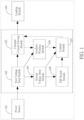
- Figure 1 demonstrates a LED driver circuit's module structure according to one embodiment of the present invention.
- Figure 1 demonstrates a LED driver circuit's module structure according to one embodiment of the present invention.
- Only the parts related to the disclosed embodiment are shown. Detailed explanations are as follows:
- the disclosed LED driver circuit includes a first voltage drop module 102, a constant current driving module 103, an auxiliary winding module 108, a second voltage drop module 105, a DIP switch module 106 and a control module 107.
- the first voltage drop module 102 is connected to a power source 101 for converting a direct current voltage.
- the constant driving module 103 is connected to the first voltage drop module 102 for receiving the converted direct current voltage that is then used for driving the loading module 104.
- the auxiliary winding module 108 is connected to the first voltage drop module 102 and the constant driving module 103. And the auxiliary winding module 108 receives the converted direct current voltage and in turn outputs an actual voltage level for driving.
- the second voltage drop module 105 is connected to the first voltage drop module 102. In addition, the second voltage drop module 105 bucks the converted direct current voltage and then outputs an optimized voltage.
- the DIP switch module 106 is connected to the second voltage drop module 105. Moreover, the DIP switch module 106 receives the optimized voltage, selects a predetermined current level, and in turn outputs an electrical signal.
- the control module 107 is connected to the DIP switch module 106, the second voltage drop module 105, the auxiliary winding module 108 and the constant current driving module 103. Besides, the control module 107 outputs a pulse signal that corresponds to the electrical signal for controlling the constant current driving module 103. In addition, the control module 107 calculates the required voltage level for driving and determines the working status of the loading module 104 based on a voltage level relationship between the required voltage level and the actual voltage level.
- determining the loading module 104's working status according to the voltage level relationship between the required voltage level and the actual voltage level includes: (1) When the actual voltage level is lower than the required voltage level, the actual output power conforms to the required driving output power. Therefore, the control module 107 determines that the loading module 104 is under a normal working status. (2) When the actual voltage level is higher than the required voltage level, the actual output power is higher than the required driving output power. In this fashion, the control module 107 determines that the loading module 104 pauses its work.
- the power source 101 may be a direct current power source or an alternating current power source that is rectified to generate another direct current voltage to the first voltage drop module 102.
- the LED driver circuit includes a transformer T1.
- the transformer T1 has a primary winding that is connected to the constant current driver module 103, and has a secondary winding that is connected to the loading module 104.
- the DIP switch module 106 selects a predetermined current level and then outputs an electrical signal to the control module 107. Also, the control module 107 converts the electrical signal from analog to digital. Such that the control module 107 identifies a current level set by the DIP switch module 106. Moreover, the control module 107 then calculates an actual output current and outputs a PWM signal that has a corresponding duty ratio. In this way, the control module 107 regulates a current that passes through the loading module 104. Meanwhile, the control module 107 calculates a required power that corresponds to the constant output power according to the predetermined current level set by the DIP switch module 106.
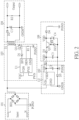
- Figure 2 exemplarily demonstrates how the first voltage drop module 102, the auxiliary winding module 108, the constant driving module 103 are connected to the loading module 104 in the disclosed LED driver circuit according to one embodiment.
- the first voltage drop module 102 includes a voltage drop chip U2, a second capacitor C2, and a fifth diode D5.
- the voltage drop chip U2 has an input end that is connected to the power source 101.
- the output end VSEN of the voltage drop chip U2 has an output end VSEN that is connected to the auxiliary winding module 108. Also, the second capacitor C2 has a first end that is connected to the auxiliary winding module 108.
- the voltage drop chip U2 has a ground end GND that is connected to ground.
- the fifth diode device D5 has a negative end that is connected to ground.
- the second capacitor C2 has a second end that is connected to the fifth diode device D5's positive end.
- the constant current driving module 103 includes a driver chip U1, a transistor Q1, a first diode D1 and a first resistor R1.
- the driver chip U1 has an input end Vin that is connected to the first voltage drop module 102.
- the driver chip U1 has a control end PWM that is connected to the control module 107.
- the driver chip U1 has a driver end IRV that is connected to the first diode D1's negative end.
- the second diode D1's positive end is connected to the first transistor Q1's control end.
- the driver chip U1's output end ISEN, the first transistor Q1's input end, and the first resistor R1's first end are connected to each other.
- the driver chip U1's ground GND and the first resistor R1's second end are connected to ground.
- the first transistor Q1's output end is connected to the loading module 104.
- the first transistor Q1 may be a transistor or a field effect transistor.
- a collector end, an emitting end and a base end of the transistor are respectively the input end, the output end and the control end of the first transistor Q1.
- a drain end, a source end and a gate end of the field effect transistor are respectively the input end, the output end and the control end of the first transistor Q1.
- the auxiliary winding module 108 includes a third diode D3, a fourth diode D4, a third capacitor C3, a fourth capacitor C4, a fourth resistor R4, a Zener diode DZ1, a second transistor Q2 and an inductor P.
- the third diode device D3's negative end, and the third capacitor C3's first end are connected to the first voltage drop module 102.
- the third diode device D3's positive end is connected to the second transistor Q2's output end.
- the second transistor Q2's control end, the Zener diode DZ1's negative end and the fourth resistor R4's first end are connected to each other.
- the second transistor Q2's input end, the fourth diode D4's negative end, the fourth resistor R4's second end, and the fourth capacitor C4's first end are connected to each other.
- the third capacitor C3's second end, the Zener diode DZ1's positive end, and the fourth capacitor C4's second end are connected to each other.
- the fourth diode D4's positive end is connected to ground via the inductor P.
- the second transistor Q2 may be a transistor or a field effect transistor.
- the collecting end, the emitting end and the base end of the transistor are respectively an input end, an output end and a control end of the second transistor Q2.
- the drain end, the source end and the gate end of the field effect transistor are respectively the input end, the output end and the control end of the second transistor Q2.
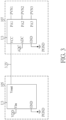
- the second voltage drop module 105 includes a voltage drop chip U3.
- the voltage drop chip U3's input end Vin is connected to the first voltage drop module 102.
- the voltage drop chip U3's output end Vout is connected to the DIP switch module 106.
- the voltage drop chip U3's ground end GND is connected to ground.
- the control module 107 includes a main control chip U4.
- the main control chip U4's input end VCC is connected to the second voltage drop module 105.
- the main control chip U4's first receiver end PA2 and second receiver end PA3 are connected to the DIP switch module 106.
- the main control chip U4's control end PA1 is connected to the constant driving module 103.
- the main control chip U4's input end ADC is connected to the auxiliary winding module 108.
- the main control chip U4's ground end GND is connected to ground.
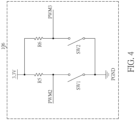
- the DIP switch module 106 includes a fifth resistor R5, a sixth resistor R6, a first DIP switch SW1 and a second DIP switch SW2.
- the fifth resistor R5's first end and the sixth resistor R6's first end are connected to the second voltage drop module 105.
- the fifth resistor R5's second end and the first DIP switch SW 1's first end are connected to the control module 107.
- the sixth resistor R6's second end and the second DIP switch SW2's first end are connected to the control module 107.
- the first DIP switch SW1's second end and the second DIP switch SW2's second end are connected to ground.
- the present invention also discloses a driver device that includes a loading module 104 and the above-disclosed LED driver circuit.
- the loading module 104 includes a second diode D2, a first capacitor C1, a second resistor R2, and a light emit diode LED.
- the second diode D2's positive end is connected to the constant current driving module 103.
- the second diode D2's negative end, the first capacitor C1's first end, and the second resistor R2's first end are connected to the light emit diode LED's first end.
- the first capacitor C1's second end and the second resistor R2's second end are connected to the light emit diode LED's second end.
- the constant current driving module 103 forwards the bucked direct current voltage to drive the loading module 104.
- the second voltage drop module 105 provides a stable operating voltage to the control module 107 and the DIP switch module 106 via the double-bucked direct current voltage.
- the DIP switch module 106 selects a required output current level and sets a corresponding amount of DIPs that correspond to the required output current level. For example: one DIP switch controls two levels of currents, and N DIP switches control 2 ⁇ N (i.e., 2 to the power of N) levels of currents, where N is a positive integer.
- the DIP switch module 106 includes a DIP switch and a pull-up resistor. A common end of the DIP switch and the pull-up resistor is used for outputting signals. When the DIP switch is turned on, the common end outputs a low electrical level. Also, when the DIP switch is turned off, the common end outputs a high electrical level.
- the DIP switch module 106's PWN (IN) end is connected to the control module 107's PWN (IN) end. Through high and low electrical levels input by the PWM(IN) end, a desired current level is determined.
- the control module 107 calculates using both a maximal output current and the current level signal input by the DIP switch module 106 to generate a PWM signal. Via the control module 107's PWM (OUT) end, the PWM signal is transmitted to the constant current driving module 103 for outputting a corresponding current level. Meanwhile, based on the control module 107 calculates a maximal output voltage level Vmax that corresponds to a constant output power according to the current level selected by the DIP switch module 106.
- the auxiliary winding module 108 After connecting to the loading module 104, the auxiliary winding module 108 is connected to the control module 107's ADC end.
- the control module 107 converts the input voltage at its ADC end from analog to digital. Also, the control module 107 calculates the driving output voltage level Vout and compares the driving output voltage level Vout with the maximal output voltage Vmax.
- the actual loading voltage level Vout fails to exceed the maximal output voltage Vmax, it indicates that the actual output power conforms to the required output power. Such that the loading module 104 operates normally. If the actual loading voltage level Vout exceeds the maximal output voltage Vmax, it indicates that the actual output power is higher than the required output power. Such that the loading module 104 pauses its operation.
- the DIP switch module 106 regulates the output current.
- the regulated output current automatically matches the corresponding output voltage. Such that the driving constant output power stays constant.
- the disclosed LED driver circuit has various types of luminance loading constant output power that cover lighting apparatuses of multiple types of serial connections and in turn relieve clients' burdens in dealing with more driving models.
- the disclosed LED driver circuit and the disclosed driver device that includes a first voltage drop module, a constant current driving module, a second voltage drop module, a DIP switch module, an auxiliary winding module, a control module and a loading module.
- a direct current voltage is converted to drive the loading module.
- the converted direct current voltage is then bucked to generate an optimized voltage for powering the DIP switch module and the control module.
- the DIP switch module selects the predetermined current level and correspondingly outputs the electrical signal to the control module. Such that the control module outputs the corresponding pulse signal to regulate the current that passes through the loading module.
- control module calculates the required voltage level for driving. Also, the control module compares the required voltage level with the actual voltage level output by the auxiliary winding module to determine the working status of the loading module. Therefore, various current levels can be regulated to drive different types of LED lighting apparatuses, and it leads to a broader range of applications.
- the disclosed driver circuit and the disclosed driver device additionally determine the output loading voltage for keeping the output power stable. In this fashion, the disclosed driver circuit and the disclosed driver device relieves the conventional LED driving circuit of its driving limit that comes from a smaller driving output power and an accompanying lower driving power.
Landscapes
- Circuit Arrangement For Electric Light Sources In General (AREA)
- Dc-Dc Converters (AREA)
Claims (9)
- LED-Treiberschaltung, die Folgendes umfasst:ein erstes Spannungsabfallmodul (102) zum Verbinden mit einer Stromquelle (101) und konfiguriert zum Umwandeln einer Gleichspannung;ein Konstantstrom-Treibermodul (103), das mit dem ersten Spannungsabfallmodul (102) verbunden ist und dazu konfiguriert ist, die umgewandelte Gleichspannung zu empfangen, um ein Lademodul (104) anzusteuern;ein Hilfswicklungsmodul (108), das mit dem ersten Spannungsabfallmodul (102) und dem Konstantstrom-Treibermodul (103) verbunden ist und dazu konfiguriert ist, die umgewandelte Gleichspannung zu empfangen und entsprechend einen Ist-Spannungspegel auszugeben;dadurch gekennzeichnet, dass die LED-Treiberschaltung ferner Folgendes umfasst:ein zweites Spannungsabfallmodul (105), das mit dem ersten Spannungsabfallmodul (102) verbunden ist und dazu konfiguriert ist, die umgewandelte Gleichspannung abzusenken und entsprechend eine abgesenkte Spannung auszugeben;ein DIP-Schaltermodul (106), das mit dem zweiten Spannungsabfallmodul (105) verbunden ist und dazu konfiguriert ist, die abgesenkte Spannung zum Versorgen des DIP-Schaltermoduls mit Strom zu empfangen, einen vorbestimmten Strompegel auszuwählen und ein elektrisches Signal auszugeben; undein Steuermodul (107), das mit dem DIP-Schaltermodul (106), dem zweiten Spannungsabfallmodul (105), dem Hilfswicklungsmodul (108) und dem Konstantstrom-Treibermodul (103) verbunden ist, wobei das Steuermodul (107) angeordnet ist, um das elektrische Signal zu empfangen, wobei die abgesenkte Spannung zum Versorgen des Steuermoduls mit Strom dient, und die von dem DIP-Schaltermodul eingestellte Stromstärke zu erkennen und ein entsprechendes Impulssignal auszugeben, das dem elektrischen Signal entspricht, wobei das Impulssignal zum Steuern des Konstantstrom-Treibermoduls (103) dient, unddas Steuermodul (107) dazu konfiguriert ist, einen Soll-Spannungspegel zu berechnen und einen Arbeitsstatus des Lademoduls (104) basierend auf einer Spannungspegelbeziehung zwischen dem Soll-Spannungspegel und dem Ist-Spannungspegel zu bestimmen;wobei das Steuermodul (107) dazu konfiguriert ist, zu bestimmen, dass der Arbeitsstatus des Lademoduls (104) unter einem normalen Arbeitsstatus ist, wenn der Ist-Spannungspegel niedriger als der Soll-Spannungspegel ist, und zu bestimmen, dass der Arbeitsstatus des Lademoduls (104) ein Pausen-Arbeitsstatus ist, wenn der Ist-Spannungspegel höher als der Soll-Spannungspegel ist.
- LED-Treiberschaltung nach Anspruch 1, wobei das erste Spannungsabfallmodul (102) Folgendes umfasst:einen Spannungsabfallchip mit einem Eingangsende zum Verbinden mit der Stromquelle (101), mit einem Ausgangsende, das mit dem Hilfswicklungsmodul (108) verbunden ist, und mit einem Masseende, das mit Masse verbunden ist;einen zweiten Kondensator mit einem ersten Ende, das mit dem Hilfswicklungsmodul (108) verbunden ist; undeine fünfte Diodenvorrichtung mit einem negativen Ende, das mit Masse verbunden ist, und einem positiven Ende, das mit einem zweiten Ende des zweiten Kondensators verbunden ist.
- LED-Treiberschaltung nach einem der Ansprüche 1 bis 2, wobei das Konstantstrom-Treibermodul (103) Folgendes umfasst:einen Treiberchip mit einem Eingangsende, das mit dem ersten Spannungsabfallmodul (102) verbunden ist, mit einem Steuerende, das mit dem Steuermodul (107) verbunden ist, und mit einem Masseende, das mit Masse verbunden ist;einen ersten Transistor mit einem Eingangsende, das mit einem Ausgangsende des Treiberchips verbunden ist, und mit einem Ausgangsende, das mit dem Lademodul (104) verbunden ist;eine erste Diode mit einem negativen Ende, das mit einem Treiberende des Treiberchips verbunden ist, und mit einem positiven Ende, das mit einem Steuerende des ersten Transistors verbunden ist; undeinen ersten Widerstand mit einem ersten Ende, das mit dem Ausgangsende des Treiberchips verbunden ist, und mit einem zweiten Ende, das mit Masse verbunden ist.
- LED-Treiberschaltung nach einem der Ansprüche 1 bis 3, wobei das zweite Spannungsabfallmodul (105) Folgendes umfasst: einen Spannungsabfallchip mit einem Eingangsende, das mit dem ersten Spannungsabfallmodul (102) verbunden ist, einem Ausgangsende, das mit dem DIP-Schaltermodul (106) verbunden ist, und einem Masseende, das mit Masse verbunden ist.
- LED-Treiberschaltung nach einem der Ansprüche 1 bis 4, wobei das Hilfswicklungsmodul (108) Folgendes umfasst:eine dritte Diode mit einem negativen Ende, das mit dem ersten Spannungsabfallmodul (102) verbunden ist;eine vierte Diode;einen dritten Kondensator mit einem ersten Ende, das mit dem ersten Spannungsabfallmodul (102) verbunden ist;einen vierten Kondensator mit einem ersten Ende, das mit einem positiven Ende der vierten Diode verbunden ist, und mit einem zweite Ende, das mit dem zweiten Ende des dritten Kondensators verbunden ist;einen vierten Widerstand mit einem zweiten Ende, das mit dem ersten Ende des vierten Kondensators verbunden ist;eine Zener-Diode mit einem negativen Ende, das mit dem zweiten Ende des dritten Kondensators verbunden ist;einen zweiten Transistor mit einem Ausgangsende, das mit einem positiven Ende der dritten Diode verbunden ist, mit einem Steuerende, das mit einem positiven Ende der Zener-Diode undeinem ersten Anschluss des vierten Widerstands verbunden ist, und mit einem Eingangsende, das mit dem ersten Ende des vierten Kondensators verbunden ist; undeinen Induktor, der mit einem negativen Ende der vierten Diode und mit Masse verbunden ist.
- LED-Treiberschaltung nach einem der Ansprüche 1 bis 5, wobei das DIP-Schaltermodul (106) Folgendes umfasst:einen fünften Widerstand mit einem zweiten Ende, das mit dem Steuermodul (107) verbunden ist;einen sechsten Widerstand mit einem ersten Ende, das mit einem ersten Ende des fünften Widerstands und mit dem zweiten Spannungsabfallmodul (105) verbunden ist, und mit einem zweiten Ende, das mit dem Steuermodul (107) verbunden ist;einen ersten DIP-Schalter mit einem ersten Ende, das mit dem zweiten Ende des fünften Widerstands verbunden ist, und mit einem zweiten Ende, das mit Masse verbunden ist. undeinen zweiten DIP-Schalter mit einem ersten Ende, das mit dem zweiten Ende des sechsten Widerstand verbunden ist, und mit einem zweiten Ende, das mit Masse verbunden ist.
- LED-Treiberschaltung nach einem der Ansprüche 1 bis 6, wobei das Steuermodul (107) Folgendes umfasst: einen Hauptsteuerchip mit einem Eingangsende, das mit dem zweiten Spannungsabfallmodul (105) verbunden ist, einem ersten Empfängerende und einem zweiten Empfängerende, die mit dem DIP-Schaltermodul (106) verbunden sind, einem Steuerende, das mit dem Konstantstrom-Treibermodul (103) verbunden ist, einem Eingangsende, das mit dem Hilfswicklungsmodul (108) verbunden ist, und einem Masseende, das mit Masse verbunden ist.
- Treibervorrichtung, dadurch gekennzeichnet, dass sie ein Lademodul (104) und die LED-Treiberschaltung nach einem der Ansprüche 1 bis 7 umfasst.
- Treibervorrichtung nach Anspruch 8, wobei das Lademodul (104) ferner Folgendes umfasst:eine zweite Diode mit einem positiven Ende, das mit dem Konstantstrom-Treibermodul (103) verbunden ist;einen ersten Kondensator mit einem ersten Ende, das mit einem negativen Ende der zweiten Diode verbunden ist;einen zweiten Widerstand mit einem ersten Ende, das mit dem negative Ende der zweite Diode verbunden ist; undeine Leuchtdiode mit einem ersten Ende, das mit dem negativen Ende der zweiten Diode verbunden ist, und einem zweiten Ende, das sowohl mit einem zweiten Ende des ersten Kondensators als auch mit einem zweiten Ende des zweiten Widerstands verbunden ist.
Applications Claiming Priority (1)
| Application Number | Priority Date | Filing Date | Title |
|---|---|---|---|
| CN201920284763.1U CN209982783U (zh) | 2019-03-06 | 2019-03-06 | 一种led驱动电路及驱动装置 |
Publications (2)
| Publication Number | Publication Date |
|---|---|
| EP3706513A1 EP3706513A1 (de) | 2020-09-09 |
| EP3706513B1 true EP3706513B1 (de) | 2023-03-01 |
Family
ID=69253945
Family Applications (1)
| Application Number | Title | Priority Date | Filing Date |
|---|---|---|---|
| EP20161373.4A Active EP3706513B1 (de) | 2019-03-06 | 2020-03-06 | Led-treiberschaltung und led-beleuchtungsvorrichtung dafür |
Country Status (2)
| Country | Link |
|---|---|
| EP (1) | EP3706513B1 (de) |
| CN (1) | CN209982783U (de) |
Families Citing this family (2)
| Publication number | Priority date | Publication date | Assignee | Title |
|---|---|---|---|---|
| CN111741569A (zh) * | 2020-08-13 | 2020-10-02 | 深圳市比尔达科技有限公司 | Led开关电源控制功率恒定的电路及方法 |
| CN115767823B (zh) * | 2022-11-29 | 2025-10-21 | 厦门立林科技有限公司 | 一种led驱动器及其功率自适应调节方法 |
Family Cites Families (3)
| Publication number | Priority date | Publication date | Assignee | Title |
|---|---|---|---|---|
| US8058815B1 (en) * | 2007-05-31 | 2011-11-15 | Spectrum Illumination Co., Inc. | LED drivers and driver controllers |
| US8884548B2 (en) * | 2013-02-28 | 2014-11-11 | Asahi Kasei Microdevices Corporation | Power factor correction converter with current regulated output |
| CN108882450B (zh) * | 2018-07-10 | 2023-08-01 | 赛尔富电子有限公司 | 恒流led电源最高输出功率的限制电路及恒流led电源电路 |
-
2019
- 2019-03-06 CN CN201920284763.1U patent/CN209982783U/zh not_active Expired - Fee Related
-
2020
- 2020-03-06 EP EP20161373.4A patent/EP3706513B1/de active Active
Also Published As
| Publication number | Publication date |
|---|---|
| EP3706513A1 (de) | 2020-09-09 |
| CN209982783U (zh) | 2020-01-21 |
Similar Documents
| Publication | Publication Date | Title |
|---|---|---|
| US8787040B2 (en) | Voltage-regulating circuit with input voltage detecting circuit and parallel voltage-regulating circuit system using the same | |
| US7525259B2 (en) | Primary side regulated power supply system with constant current output | |
| JP6900832B2 (ja) | 調光装置および電力変換装置 | |
| US8384305B2 (en) | LED driver with direct AC-DC conversion and control, and method and integrated circuit therefor | |
| US10542600B2 (en) | LED driving apparatus and lighting apparatus | |
| US10104732B2 (en) | LED drive method and LED drive device | |
| US10256715B2 (en) | Switching power supply device | |
| KR101241470B1 (ko) | 전류 조절 장치 | |
| US20080291709A1 (en) | Switching power supply apparatus | |
| US6845019B2 (en) | Flyback converter | |
| JP2009201342A (ja) | Ac/dc変換器の電源供給回路 | |
| KR20060044625A (ko) | 전압검출회로, 전원장치 및 반도체 장치 | |
| JP2008283818A (ja) | スイッチング電源装置 | |
| US11489448B2 (en) | Isolated switching converter with high feedback accuracy and control method | |
| US7271544B2 (en) | Lighting apparatus for illumination light source | |
| EP3706513B1 (de) | Led-treiberschaltung und led-beleuchtungsvorrichtung dafür | |
| US7336057B2 (en) | DC/DC converter | |
| US10856386B2 (en) | LED driver circuit and LED lighting device thereof | |
| US11602020B2 (en) | Dimming signal generation circuit, dimming signal generation method and LED driver | |
| JP2011034728A (ja) | 照明用光源装置 | |
| US6798671B1 (en) | Switching power supply unit | |
| JP6603763B2 (ja) | 照明システム | |
| KR20140070126A (ko) | 조명 구동 장치 및 조명 구동 방법 | |
| KR20060011060A (ko) | 전자장치 | |
| JP6813235B2 (ja) | 点灯装置 |
Legal Events
| Date | Code | Title | Description |
|---|---|---|---|
| PUAI | Public reference made under article 153(3) epc to a published international application that has entered the european phase |
Free format text: ORIGINAL CODE: 0009012 |
|
| STAA | Information on the status of an ep patent application or granted ep patent |
Free format text: STATUS: REQUEST FOR EXAMINATION WAS MADE |
|
| 17P | Request for examination filed |
Effective date: 20200306 |
|
| AK | Designated contracting states |
Kind code of ref document: A1 Designated state(s): AL AT BE BG CH CY CZ DE DK EE ES FI FR GB GR HR HU IE IS IT LI LT LU LV MC MK MT NL NO PL PT RO RS SE SI SK SM TR |
|
| AX | Request for extension of the european patent |
Extension state: BA ME |
|
| STAA | Information on the status of an ep patent application or granted ep patent |
Free format text: STATUS: EXAMINATION IS IN PROGRESS |
|
| 17Q | First examination report despatched |
Effective date: 20200925 |
|
| GRAP | Despatch of communication of intention to grant a patent |
Free format text: ORIGINAL CODE: EPIDOSNIGR1 |
|
| STAA | Information on the status of an ep patent application or granted ep patent |
Free format text: STATUS: GRANT OF PATENT IS INTENDED |
|
| INTG | Intention to grant announced |
Effective date: 20220929 |
|
| GRAS | Grant fee paid |
Free format text: ORIGINAL CODE: EPIDOSNIGR3 |
|
| GRAA | (expected) grant |
Free format text: ORIGINAL CODE: 0009210 |
|
| STAA | Information on the status of an ep patent application or granted ep patent |
Free format text: STATUS: THE PATENT HAS BEEN GRANTED |
|
| AK | Designated contracting states |
Kind code of ref document: B1 Designated state(s): AL AT BE BG CH CY CZ DE DK EE ES FI FR GB GR HR HU IE IS IT LI LT LU LV MC MK MT NL NO PL PT RO RS SE SI SK SM TR |
|
| REG | Reference to a national code |
Ref country code: GB Ref legal event code: FG4D |
|
| REG | Reference to a national code |
Ref country code: CH Ref legal event code: EP Ref country code: AT Ref legal event code: REF Ref document number: 1551922 Country of ref document: AT Kind code of ref document: T Effective date: 20230315 |
|
| REG | Reference to a national code |
Ref country code: DE Ref legal event code: R096 Ref document number: 602020008362 Country of ref document: DE |
|
| REG | Reference to a national code |
Ref country code: IE Ref legal event code: FG4D |
|
| REG | Reference to a national code |
Ref country code: LT Ref legal event code: MG9D |
|
| REG | Reference to a national code |
Ref country code: NL Ref legal event code: MP Effective date: 20230301 |
|
| PG25 | Lapsed in a contracting state [announced via postgrant information from national office to epo] |
Ref country code: RS Free format text: LAPSE BECAUSE OF FAILURE TO SUBMIT A TRANSLATION OF THE DESCRIPTION OR TO PAY THE FEE WITHIN THE PRESCRIBED TIME-LIMIT Effective date: 20230301 Ref country code: NO Free format text: LAPSE BECAUSE OF FAILURE TO SUBMIT A TRANSLATION OF THE DESCRIPTION OR TO PAY THE FEE WITHIN THE PRESCRIBED TIME-LIMIT Effective date: 20230601 Ref country code: LV Free format text: LAPSE BECAUSE OF FAILURE TO SUBMIT A TRANSLATION OF THE DESCRIPTION OR TO PAY THE FEE WITHIN THE PRESCRIBED TIME-LIMIT Effective date: 20230301 Ref country code: LT Free format text: LAPSE BECAUSE OF FAILURE TO SUBMIT A TRANSLATION OF THE DESCRIPTION OR TO PAY THE FEE WITHIN THE PRESCRIBED TIME-LIMIT Effective date: 20230301 Ref country code: HR Free format text: LAPSE BECAUSE OF FAILURE TO SUBMIT A TRANSLATION OF THE DESCRIPTION OR TO PAY THE FEE WITHIN THE PRESCRIBED TIME-LIMIT Effective date: 20230301 Ref country code: ES Free format text: LAPSE BECAUSE OF FAILURE TO SUBMIT A TRANSLATION OF THE DESCRIPTION OR TO PAY THE FEE WITHIN THE PRESCRIBED TIME-LIMIT Effective date: 20230301 |
|
| REG | Reference to a national code |
Ref country code: AT Ref legal event code: MK05 Ref document number: 1551922 Country of ref document: AT Kind code of ref document: T Effective date: 20230301 |
|
| PG25 | Lapsed in a contracting state [announced via postgrant information from national office to epo] |
Ref country code: SE Free format text: LAPSE BECAUSE OF FAILURE TO SUBMIT A TRANSLATION OF THE DESCRIPTION OR TO PAY THE FEE WITHIN THE PRESCRIBED TIME-LIMIT Effective date: 20230301 Ref country code: PL Free format text: LAPSE BECAUSE OF FAILURE TO SUBMIT A TRANSLATION OF THE DESCRIPTION OR TO PAY THE FEE WITHIN THE PRESCRIBED TIME-LIMIT Effective date: 20230301 Ref country code: NL Free format text: LAPSE BECAUSE OF FAILURE TO SUBMIT A TRANSLATION OF THE DESCRIPTION OR TO PAY THE FEE WITHIN THE PRESCRIBED TIME-LIMIT Effective date: 20230301 Ref country code: GR Free format text: LAPSE BECAUSE OF FAILURE TO SUBMIT A TRANSLATION OF THE DESCRIPTION OR TO PAY THE FEE WITHIN THE PRESCRIBED TIME-LIMIT Effective date: 20230602 Ref country code: FI Free format text: LAPSE BECAUSE OF FAILURE TO SUBMIT A TRANSLATION OF THE DESCRIPTION OR TO PAY THE FEE WITHIN THE PRESCRIBED TIME-LIMIT Effective date: 20230301 |
|
| PG25 | Lapsed in a contracting state [announced via postgrant information from national office to epo] |
Ref country code: SM Free format text: LAPSE BECAUSE OF FAILURE TO SUBMIT A TRANSLATION OF THE DESCRIPTION OR TO PAY THE FEE WITHIN THE PRESCRIBED TIME-LIMIT Effective date: 20230301 Ref country code: RO Free format text: LAPSE BECAUSE OF FAILURE TO SUBMIT A TRANSLATION OF THE DESCRIPTION OR TO PAY THE FEE WITHIN THE PRESCRIBED TIME-LIMIT Effective date: 20230301 Ref country code: PT Free format text: LAPSE BECAUSE OF FAILURE TO SUBMIT A TRANSLATION OF THE DESCRIPTION OR TO PAY THE FEE WITHIN THE PRESCRIBED TIME-LIMIT Effective date: 20230703 Ref country code: EE Free format text: LAPSE BECAUSE OF FAILURE TO SUBMIT A TRANSLATION OF THE DESCRIPTION OR TO PAY THE FEE WITHIN THE PRESCRIBED TIME-LIMIT Effective date: 20230301 Ref country code: CZ Free format text: LAPSE BECAUSE OF FAILURE TO SUBMIT A TRANSLATION OF THE DESCRIPTION OR TO PAY THE FEE WITHIN THE PRESCRIBED TIME-LIMIT Effective date: 20230301 Ref country code: AT Free format text: LAPSE BECAUSE OF FAILURE TO SUBMIT A TRANSLATION OF THE DESCRIPTION OR TO PAY THE FEE WITHIN THE PRESCRIBED TIME-LIMIT Effective date: 20230301 |
|
| REG | Reference to a national code |
Ref country code: CH Ref legal event code: PL |
|
| PG25 | Lapsed in a contracting state [announced via postgrant information from national office to epo] |
Ref country code: SK Free format text: LAPSE BECAUSE OF FAILURE TO SUBMIT A TRANSLATION OF THE DESCRIPTION OR TO PAY THE FEE WITHIN THE PRESCRIBED TIME-LIMIT Effective date: 20230301 Ref country code: IS Free format text: LAPSE BECAUSE OF FAILURE TO SUBMIT A TRANSLATION OF THE DESCRIPTION OR TO PAY THE FEE WITHIN THE PRESCRIBED TIME-LIMIT Effective date: 20230701 |
|
| REG | Reference to a national code |
Ref country code: BE Ref legal event code: MM Effective date: 20230331 |
|
| REG | Reference to a national code |
Ref country code: DE Ref legal event code: R097 Ref document number: 602020008362 Country of ref document: DE |
|
| PG25 | Lapsed in a contracting state [announced via postgrant information from national office to epo] |
Ref country code: LU Free format text: LAPSE BECAUSE OF NON-PAYMENT OF DUE FEES Effective date: 20230306 |
|
| PLBE | No opposition filed within time limit |
Free format text: ORIGINAL CODE: 0009261 |
|
| STAA | Information on the status of an ep patent application or granted ep patent |
Free format text: STATUS: NO OPPOSITION FILED WITHIN TIME LIMIT |
|
| PG25 | Lapsed in a contracting state [announced via postgrant information from national office to epo] |
Ref country code: MC Free format text: LAPSE BECAUSE OF FAILURE TO SUBMIT A TRANSLATION OF THE DESCRIPTION OR TO PAY THE FEE WITHIN THE PRESCRIBED TIME-LIMIT Effective date: 20230301 |
|
| REG | Reference to a national code |
Ref country code: IE Ref legal event code: MM4A |
|
| PG25 | Lapsed in a contracting state [announced via postgrant information from national office to epo] |
Ref country code: SI Free format text: LAPSE BECAUSE OF FAILURE TO SUBMIT A TRANSLATION OF THE DESCRIPTION OR TO PAY THE FEE WITHIN THE PRESCRIBED TIME-LIMIT Effective date: 20230301 Ref country code: MC Free format text: LAPSE BECAUSE OF FAILURE TO SUBMIT A TRANSLATION OF THE DESCRIPTION OR TO PAY THE FEE WITHIN THE PRESCRIBED TIME-LIMIT Effective date: 20230301 Ref country code: LI Free format text: LAPSE BECAUSE OF NON-PAYMENT OF DUE FEES Effective date: 20230331 Ref country code: IE Free format text: LAPSE BECAUSE OF NON-PAYMENT OF DUE FEES Effective date: 20230306 Ref country code: FR Free format text: LAPSE BECAUSE OF NON-PAYMENT OF DUE FEES Effective date: 20230501 Ref country code: DK Free format text: LAPSE BECAUSE OF FAILURE TO SUBMIT A TRANSLATION OF THE DESCRIPTION OR TO PAY THE FEE WITHIN THE PRESCRIBED TIME-LIMIT Effective date: 20230301 Ref country code: CH Free format text: LAPSE BECAUSE OF NON-PAYMENT OF DUE FEES Effective date: 20230331 |
|
| 26N | No opposition filed |
Effective date: 20231204 |
|
| PG25 | Lapsed in a contracting state [announced via postgrant information from national office to epo] |
Ref country code: BE Free format text: LAPSE BECAUSE OF NON-PAYMENT OF DUE FEES Effective date: 20230331 |
|
| PG25 | Lapsed in a contracting state [announced via postgrant information from national office to epo] |
Ref country code: IT Free format text: LAPSE BECAUSE OF FAILURE TO SUBMIT A TRANSLATION OF THE DESCRIPTION OR TO PAY THE FEE WITHIN THE PRESCRIBED TIME-LIMIT Effective date: 20230301 |
|
| PG25 | Lapsed in a contracting state [announced via postgrant information from national office to epo] |
Ref country code: BG Free format text: LAPSE BECAUSE OF FAILURE TO SUBMIT A TRANSLATION OF THE DESCRIPTION OR TO PAY THE FEE WITHIN THE PRESCRIBED TIME-LIMIT Effective date: 20230301 |
|
| GBPC | Gb: european patent ceased through non-payment of renewal fee |
Effective date: 20240306 |
|
| PG25 | Lapsed in a contracting state [announced via postgrant information from national office to epo] |
Ref country code: BG Free format text: LAPSE BECAUSE OF FAILURE TO SUBMIT A TRANSLATION OF THE DESCRIPTION OR TO PAY THE FEE WITHIN THE PRESCRIBED TIME-LIMIT Effective date: 20230301 |
|
| PG25 | Lapsed in a contracting state [announced via postgrant information from national office to epo] |
Ref country code: GB Free format text: LAPSE BECAUSE OF NON-PAYMENT OF DUE FEES Effective date: 20240306 |
|
| PG25 | Lapsed in a contracting state [announced via postgrant information from national office to epo] |
Ref country code: GB Free format text: LAPSE BECAUSE OF NON-PAYMENT OF DUE FEES Effective date: 20240306 |
|
| PGFP | Annual fee paid to national office [announced via postgrant information from national office to epo] |
Ref country code: DE Payment date: 20250228 Year of fee payment: 6 |
|
| PG25 | Lapsed in a contracting state [announced via postgrant information from national office to epo] |
Ref country code: CY Free format text: LAPSE BECAUSE OF FAILURE TO SUBMIT A TRANSLATION OF THE DESCRIPTION OR TO PAY THE FEE WITHIN THE PRESCRIBED TIME-LIMIT; INVALID AB INITIO Effective date: 20200306 |
|
| PG25 | Lapsed in a contracting state [announced via postgrant information from national office to epo] |
Ref country code: HU Free format text: LAPSE BECAUSE OF FAILURE TO SUBMIT A TRANSLATION OF THE DESCRIPTION OR TO PAY THE FEE WITHIN THE PRESCRIBED TIME-LIMIT; INVALID AB INITIO Effective date: 20200306 |
|
| PG25 | Lapsed in a contracting state [announced via postgrant information from national office to epo] |
Ref country code: TR Free format text: LAPSE BECAUSE OF FAILURE TO SUBMIT A TRANSLATION OF THE DESCRIPTION OR TO PAY THE FEE WITHIN THE PRESCRIBED TIME-LIMIT Effective date: 20230301 |