EP3703722B1 - Adenovirus und verwendungen davon - Google Patents
Adenovirus und verwendungen davon Download PDFInfo
- Publication number
- EP3703722B1 EP3703722B1 EP18796011.7A EP18796011A EP3703722B1 EP 3703722 B1 EP3703722 B1 EP 3703722B1 EP 18796011 A EP18796011 A EP 18796011A EP 3703722 B1 EP3703722 B1 EP 3703722B1
- Authority
- EP
- European Patent Office
- Prior art keywords
- vector
- seq
- fluc
- vectors
- gluc
- Prior art date
- Legal status (The legal status is an assumption and is not a legal conclusion. Google has not performed a legal analysis and makes no representation as to the accuracy of the status listed.)
- Active
Links
Images








Classifications
-
- A—HUMAN NECESSITIES
- A61—MEDICAL OR VETERINARY SCIENCE; HYGIENE
- A61K—PREPARATIONS FOR MEDICAL, DENTAL OR TOILETRY PURPOSES
- A61K39/00—Medicinal preparations containing antigens or antibodies
- A61K39/12—Viral antigens
- A61K39/235—Adenoviridae
-
- C—CHEMISTRY; METALLURGY
- C12—BIOCHEMISTRY; BEER; SPIRITS; WINE; VINEGAR; MICROBIOLOGY; ENZYMOLOGY; MUTATION OR GENETIC ENGINEERING
- C12N—MICROORGANISMS OR ENZYMES; COMPOSITIONS THEREOF; PROPAGATING, PRESERVING, OR MAINTAINING MICROORGANISMS; MUTATION OR GENETIC ENGINEERING; CULTURE MEDIA
- C12N7/00—Viruses; Bacteriophages; Compositions thereof; Preparation or purification thereof
-
- C—CHEMISTRY; METALLURGY
- C12—BIOCHEMISTRY; BEER; SPIRITS; WINE; VINEGAR; MICROBIOLOGY; ENZYMOLOGY; MUTATION OR GENETIC ENGINEERING
- C12N—MICROORGANISMS OR ENZYMES; COMPOSITIONS THEREOF; PROPAGATING, PRESERVING, OR MAINTAINING MICROORGANISMS; MUTATION OR GENETIC ENGINEERING; CULTURE MEDIA
- C12N15/00—Mutation or genetic engineering; DNA or RNA concerning genetic engineering, vectors, e.g. plasmids, or their isolation, preparation or purification; Use of hosts therefor
- C12N15/09—Recombinant DNA-technology
- C12N15/63—Introduction of foreign genetic material using vectors; Vectors; Use of hosts therefor; Regulation of expression
- C12N15/79—Vectors or expression systems specially adapted for eukaryotic hosts
- C12N15/85—Vectors or expression systems specially adapted for eukaryotic hosts for animal cells
- C12N15/86—Viral vectors
-
- A—HUMAN NECESSITIES
- A61—MEDICAL OR VETERINARY SCIENCE; HYGIENE
- A61K—PREPARATIONS FOR MEDICAL, DENTAL OR TOILETRY PURPOSES
- A61K35/00—Medicinal preparations containing materials or reaction products thereof with undetermined constitution
- A61K35/66—Microorganisms or materials therefrom
- A61K35/76—Viruses; Subviral particles; Bacteriophages
- A61K35/761—Adenovirus
-
- C—CHEMISTRY; METALLURGY
- C07—ORGANIC CHEMISTRY
- C07K—PEPTIDES
- C07K14/00—Peptides having more than 20 amino acids; Gastrins; Somatostatins; Melanotropins; Derivatives thereof
- C07K14/005—Peptides having more than 20 amino acids; Gastrins; Somatostatins; Melanotropins; Derivatives thereof from viruses
-
- A—HUMAN NECESSITIES
- A61—MEDICAL OR VETERINARY SCIENCE; HYGIENE
- A61K—PREPARATIONS FOR MEDICAL, DENTAL OR TOILETRY PURPOSES
- A61K39/00—Medicinal preparations containing antigens or antibodies
- A61K2039/51—Medicinal preparations containing antigens or antibodies comprising whole cells, viruses or DNA/RNA
- A61K2039/525—Virus
-
- C—CHEMISTRY; METALLURGY
- C12—BIOCHEMISTRY; BEER; SPIRITS; WINE; VINEGAR; MICROBIOLOGY; ENZYMOLOGY; MUTATION OR GENETIC ENGINEERING
- C12N—MICROORGANISMS OR ENZYMES; COMPOSITIONS THEREOF; PROPAGATING, PRESERVING, OR MAINTAINING MICROORGANISMS; MUTATION OR GENETIC ENGINEERING; CULTURE MEDIA
- C12N2710/00—MICROORGANISMS OR ENZYMES; COMPOSITIONS THEREOF; PROPAGATING, PRESERVING, OR MAINTAINING MICROORGANISMS; MUTATION OR GENETIC ENGINEERING; CULTURE MEDIA dsDNA viruses
- C12N2710/00011—Details
- C12N2710/10011—Adenoviridae
- C12N2710/10311—Mastadenovirus, e.g. human or simian adenoviruses
- C12N2710/10321—Viruses as such, e.g. new isolates, mutants or their genomic sequences
-
- C—CHEMISTRY; METALLURGY
- C12—BIOCHEMISTRY; BEER; SPIRITS; WINE; VINEGAR; MICROBIOLOGY; ENZYMOLOGY; MUTATION OR GENETIC ENGINEERING
- C12N—MICROORGANISMS OR ENZYMES; COMPOSITIONS THEREOF; PROPAGATING, PRESERVING, OR MAINTAINING MICROORGANISMS; MUTATION OR GENETIC ENGINEERING; CULTURE MEDIA
- C12N2710/00—MICROORGANISMS OR ENZYMES; COMPOSITIONS THEREOF; PROPAGATING, PRESERVING, OR MAINTAINING MICROORGANISMS; MUTATION OR GENETIC ENGINEERING; CULTURE MEDIA dsDNA viruses
- C12N2710/00011—Details
- C12N2710/10011—Adenoviridae
- C12N2710/10311—Mastadenovirus, e.g. human or simian adenoviruses
- C12N2710/10322—New viral proteins or individual genes, new structural or functional aspects of known viral proteins or genes
-
- C—CHEMISTRY; METALLURGY
- C12—BIOCHEMISTRY; BEER; SPIRITS; WINE; VINEGAR; MICROBIOLOGY; ENZYMOLOGY; MUTATION OR GENETIC ENGINEERING
- C12N—MICROORGANISMS OR ENZYMES; COMPOSITIONS THEREOF; PROPAGATING, PRESERVING, OR MAINTAINING MICROORGANISMS; MUTATION OR GENETIC ENGINEERING; CULTURE MEDIA
- C12N2710/00—MICROORGANISMS OR ENZYMES; COMPOSITIONS THEREOF; PROPAGATING, PRESERVING, OR MAINTAINING MICROORGANISMS; MUTATION OR GENETIC ENGINEERING; CULTURE MEDIA dsDNA viruses
- C12N2710/00011—Details
- C12N2710/10011—Adenoviridae
- C12N2710/10311—Mastadenovirus, e.g. human or simian adenoviruses
- C12N2710/10334—Use of virus or viral component as vaccine, e.g. live-attenuated or inactivated virus, VLP, viral protein
-
- C—CHEMISTRY; METALLURGY
- C12—BIOCHEMISTRY; BEER; SPIRITS; WINE; VINEGAR; MICROBIOLOGY; ENZYMOLOGY; MUTATION OR GENETIC ENGINEERING
- C12N—MICROORGANISMS OR ENZYMES; COMPOSITIONS THEREOF; PROPAGATING, PRESERVING, OR MAINTAINING MICROORGANISMS; MUTATION OR GENETIC ENGINEERING; CULTURE MEDIA
- C12N2710/00—MICROORGANISMS OR ENZYMES; COMPOSITIONS THEREOF; PROPAGATING, PRESERVING, OR MAINTAINING MICROORGANISMS; MUTATION OR GENETIC ENGINEERING; CULTURE MEDIA dsDNA viruses
- C12N2710/00011—Details
- C12N2710/10011—Adenoviridae
- C12N2710/10311—Mastadenovirus, e.g. human or simian adenoviruses
- C12N2710/10341—Use of virus, viral particle or viral elements as a vector
- C12N2710/10342—Use of virus, viral particle or viral elements as a vector virus or viral particle as vehicle, e.g. encapsulating small organic molecule
-
- C—CHEMISTRY; METALLURGY
- C12—BIOCHEMISTRY; BEER; SPIRITS; WINE; VINEGAR; MICROBIOLOGY; ENZYMOLOGY; MUTATION OR GENETIC ENGINEERING
- C12N—MICROORGANISMS OR ENZYMES; COMPOSITIONS THEREOF; PROPAGATING, PRESERVING, OR MAINTAINING MICROORGANISMS; MUTATION OR GENETIC ENGINEERING; CULTURE MEDIA
- C12N2710/00—MICROORGANISMS OR ENZYMES; COMPOSITIONS THEREOF; PROPAGATING, PRESERVING, OR MAINTAINING MICROORGANISMS; MUTATION OR GENETIC ENGINEERING; CULTURE MEDIA dsDNA viruses
- C12N2710/00011—Details
- C12N2710/10011—Adenoviridae
- C12N2710/10311—Mastadenovirus, e.g. human or simian adenoviruses
- C12N2710/10341—Use of virus, viral particle or viral elements as a vector
- C12N2710/10343—Use of virus, viral particle or viral elements as a vector viral genome or elements thereof as genetic vector
Definitions
- This invention relates to biotechnology. More particularly, to the field and use of adenoviral vectors, such as replication defective adenoviral vectors to deliver antigens and elicit an immune response in hosts.
- adenoviral vectors such as replication defective adenoviral vectors to deliver antigens and elicit an immune response in hosts.
- AdV-5 vector-based vaccines have been shown to elicit potent and protective immune responses in a variety of animal models (see, e.g., WO2001/02607 ; WO2002/22080 ; Shiver et al., Nature 415:331 (2002 ); Letvin et al., Ann. Rev. Immunol. 20:73 (2002 ); Shiver and Emini, Ann. Rev. Med. 55:355 (2004 )).
- the utility of recombinant AdV-5 vector-based vaccines will likely be limited by the high seroprevalence of AdV-5-specific neutralizing antibodies (NAbs) in human populations.
- NAbs AdV-5-specific neutralizing antibodies
- One such strategy is based on the use of non-human simian adenoviruses since these do not typically infect humans and exhibit low seroprevalence in human samples.
- Non-human simian adenoviruses are applicable for human use since it was shown that these viruses could infect human cells in vitro ( WO2003/000283 ; WO2004/037189 ).
- the fiber polypeptide comprises the amino acid sequence of the BB24 fiber polypeptide set forth in SEQ ID NO:4.
- the hexon polypeptide comprises the amino acid sequence of the BB24 hexon polypeptide set forth in SEQ ID NO:8.
- isolated nucleic acid sequences encoding a hexon polypeptide comprising the amino acid sequence of the BB24 hexon polypeptide set forth in SEQ ID NO:8.
- Embodiments of the invention also include isolated fiber and hexon polypeptides encoded by the fiber and hexon nucleic acid sequences of the invention.
- nucleic acids comprising a hexon nucleic acid sequence encoding at least one of the hexon polypeptides disclosed herein, and a nucleic acid sequence encoding at least one of the fiber polypeptides disclosed herein.
- vectors comprising the isolated nucleic acids described herein.
- the vector is a viral vector.
- the vector is an expression vector.
- the vector is an adenoviral vector. More preferably, the vector further comprises a transgene.
- recombinant cells comprising the vectors described herein. Such cells can be used for recombinant protein production, recombinant protein expression, or the production of vectors or viral particles. Also provided are methods of producing a vector. The methods comprise (a) growing the recombinant cell disclosed herein under conditions for production of the vector; and (b) isolating the vector from the recombinant cell.
- immunogenic compositions comprising the vectors disclosed herein. Also provided are methods of inducing an immune response in a subject in need thereof, comprising administering to the subject the immunogenic compositions disclosed herein.
- adenoviral vectors comprising (a) at least one transgene insertion site; and (b) a nucleic acid sequence encoding a fiber polypeptide, wherein the fiber polypeptide comprises the amino acid sequence of the BB24 fiber polypeptide set forth in SEQ ID NO:4.
- adenoviral vector further comprises a hexon nucleic acid sequence encoding a hexon polypeptide comprising the amino acid sequence of the BB24 hexon polypeptide set forth in SEQ ID NO:8.
- adenoviral vectors comprising (a) at least one transgene insertion site; and (b) a nucleic acid sequence encoding a hexon polypeptide, wherein the hexon polypeptide comprises the amino acid sequence of the BB24 hexon polypeptide set forth in SEQ ID NO:8).
- the adenoviral vectors provided herein are replication-defective adenovirus vectors (rAd).
- the adenoviral vectors can comprise an E1 deletion.
- the adenoviral vectors provided herein can further comprise an E3 deletion.
- the adenoviral vectors can be simian adenoviral vectors comprising adenoviral nucleic acid sequences from one or more simian adenoviruses (SAdV), such as chimpanzee adenoviruses (e.g., ChAd3); gorilla adenoviruses; or rhesus adenoviruses (e.g., rhAd51, rhAd52 or rhAd53).
- SAdV simian adenoviral vectors comprising adenoviral nucleic acid sequences from one or more simian adenoviruses (SAdV), such as chimpanzee adenoviruses (e.g., ChAd3); gorilla adenoviruses; or rhesus adenoviruses (e.g., rhAd51, rhAd52 or rhAd53).
- the adenoviral vectors can be human adenoviral vectors comprising adenoviral sequences from one or more human adenoviruses (e.g., hAdV-4, hAdV-5, hAdV-26, hAdV-35).
- the adenoviral vector is a chimeric adenoviral vector comprising one or more human adenoviral nucleic acid sequences.
- the human adenoviral nucleic acid sequences can, for example, be from human adenovirus-4 (hAdV-4), human adenovirus-5 (hAdV-5), human adenovirus-26 (hAdV-26), or human adenovirus-35 (hAdV-35).
- the adenoviral vectors can, for example, comprise a human adenovirus-5 (hAdV-5) E4 orf6 and orf 6/7.
- the transgene insertion site is adjacent to an inverted terminal repeat (ITR).
- ITR inverted terminal repeat
- a transgene is inserted at one or more transgene insertion sites selected from the group consisting of a transgene insertion site at or adjacent to the E1 deletion, a transgene insertion site at or adjacent to the E3 deletion, and the transgene insertion site adjacent to the ITR, e.g., in between the E4 region and the right ITR (RITR).
- the adenoviral vectors provided herein comprise a nucleic acid sequence selected from the group consisting of SEQ ID NO:30, SEQ ID NO:31, and SEQ ID NO:53.
- compositions or vaccines comprising the adenoviral vectors described herein and a pharmaceutically acceptable carrier.
- methods for inducing an immune response in a subject in need thereof comprise administering to the subject the vaccines disclosed herein.
- methods of producing a vaccine comprise combining an adenoviral vector disclosed herein with a pharmaceutically acceptable carrier.
- This disclosure is based upon, at least in part, the isolation and identification of new chimpanzee adenovirus isolates, allocated into human adenovirus species E, as well as construction and evaluation of vaccine vectors comprising the nucleic acids encoding variable regions of the chimpanzee hexon and fiber polypeptides.
- This disclosure is additionally based upon, at least in part, the creation of chimeric adenoviral vectors comprising a human adenovirus backbone and at least one of a chimeric hexon or fiber polypeptide sequences or chimpanzee hexon or fiber polypeptide sequences.
- the adenoviral vectors are capable of eliciting an immune response and, furthermore, have low seroprevalence in humans.
- the adenoviral vectors can be formulated for vaccines and used to induce protective immunity against specific antigens of interest.
- any numerical values such as a concentration or a concentration range described herein, are to be understood as being modified in all instances by the term "about.”
- a numerical value typically includes ⁇ 10% of the recited value.
- a concentration of 1 mg/mL includes 0.9 mg/mL to 1.1 mg/mL.
- a concentration range of 1% to 10% (w/v) includes 0.9% (w/v) to 11% (w/v).
- the use of a numerical range expressly includes all possible subranges, all individual numerical values within that range, including integers within such ranges and fractions of the values unless the context clearly indicates otherwise.
- the terms "comprises,” “comprising,” “includes,” “including,” “has,” “having,” “contains” or “containing,” or any other variation thereof, will be understood to imply the inclusion of a stated integer or group of integers but not the exclusion of any other integer or group of integers and are intended to be non-exclusive or open-ended.
- a composition, a mixture, a process, a method, an article, or an apparatus that comprises a list of elements is not necessarily limited to only those elements but can include other elements not expressly listed or inherent to such composition, mixture, process, method, article, or apparatus.
- “or” refers to an inclusive or and not to an exclusive or. For example, a condition A or B is satisfied by any one of the following: A is true (or present) and B is false (or not present), A is false (or not present) and B is true (or present), and both A and B are true (or present).
- the conjunctive term "and/or" between multiple recited elements is understood as encompassing both individual and combined options. For instance, where two elements are conjoined by "and/or", a first option refers to the applicability of the first element without the second. A second option refers to the applicability of the second element without the first. A third option refers to the applicability of the first and second elements together. Any one of these options is understood to fall within the meaning, and therefore satisfy the requirement of the term "and/or” as used herein. Concurrent applicability of more than one of the options is also understood to fall within the meaning, and therefore satisfy the requirement of the term "and/or.”
- subject means any animal, preferably a mammal, most preferably a human, to whom will be or has been vaccinated by a method according to an embodiment of the invention.
- mammal encompasses any mammal. Examples of mammals include, but are not limited to, cows, horses, sheep, pigs, cats, dogs, mice, rats, rabbits, guinea pigs, monkeys, humans, etc., more preferably a human.
- nucleic acids or polypeptide sequences e.g., hexon and fiber polypeptides and polynucleotides that encode them
- sequences or subsequences that are the same or have a specified percentage of amino acid residues or nucleotides that are the same, when compared and aligned for maximum correspondence, as measured using one of the following sequence comparison algorithms or by visual inspection.
- sequence comparison typically one sequence acts as a reference sequence, to which test sequences are compared.
- test and reference sequences are input into a computer, subsequence coordinates are designated, if necessary, and sequence algorithm program parameters are designated.
- sequence comparison algorithm then calculates the percent sequence identity for the test sequence(s) relative to the reference sequence, based on the designated program parameters.
- Optimal alignment of sequences for comparison can be conducted, e.g., by the local homology algorithm of Smith & Waterman, Adv. Appl. Math. 2:482 (1981 ), by the homology alignment algorithm of Needleman & Wunsch, J. Mol. Biol. 48:443 (1970 ), by the search for similarity method of Pearson & Lipman, Proc. Nat'l. Acad. Sci. USA 85:2444 (1988 ), by computerized implementations of these algorithms (GAP, BESTFIT, FASTA, and TFASTA in the Wisconsin Genetics Software Package, Genetics Computer Group, 575 Science Dr., Madison, WI), or by visual inspection ( see generally, Current Protocols in Molecular Biology, F.M. Ausubel et al., eds., Current Protocols, a joint venture between Greene Publishing Associates, Inc. and John Wiley & Sons, Inc., (1995 Supplement) (Ausubel )).
- Cumulative scores are calculated using, for nucleotide sequences, the parameters M (reward score for a pair of matching residues; always > 0) and N (penalty score for mismatching residues; always ⁇ 0).
- M forward score for a pair of matching residues; always > 0
- N penalty score for mismatching residues; always ⁇ 0.
- a scoring matrix is used to calculate the cumulative score. Extension of the word hits in each direction are halted when: the cumulative alignment score falls off by the quantity X from its maximum achieved value; the cumulative score goes to zero or below, due to the accumulation of one or more negative-scoring residue alignments; or the end of either sequence is reached.
- the BLAST algorithm parameters W, T, and X determine the sensitivity and speed of the alignment.
- W wordlength
- E expectation
- the BLASTP program uses as defaults a wordlength (W) of 3, an expectation (E) of 10, and the BLOSUM62 scoring matrix ( see Henikoff & Henikoff, Proc. Natl. Acad. Sci. USA 89:10915 (1989 )).
- the BLAST algorithm In addition to calculating percent sequence identity, the BLAST algorithm also performs a statistical analysis of the similarity between two sequences (see, e.g., Karlin & Altschul, Proc. Nat'l. Acad. Sci. USA 90:5873-5787 (1993 )).
- One measure of similarity provided by the BLAST algorithm is the smallest sum probability (P(N)), which provides an indication of the probability by which a match between two nucleotide or amino acid sequences would occur by chance.
- P(N) the smallest sum probability
- a nucleic acid is considered similar to a reference sequence if the smallest sum probability in a comparison of the test nucleic acid to the reference nucleic acid is less than about 0.1, more preferably less than about 0.01, and most preferably less than about 0.001.
- a further indication that two nucleic acid sequences or polypeptides are substantially identical is that the polypeptide encoded by the first nucleic acid is immunologically cross reactive with the polypeptide encoded by the second nucleic acid, as described below.
- a polypeptide is typically substantially identical to a second polypeptide, for example, where the two peptides differ only by conservative substitutions.
- Another indication that two nucleic acid sequences are substantially identical is that the two molecules hybridize to each other under stringent conditions, as described below.
- the term "protective immunity” or “protective immune response” means that the vaccinated subject is able to control an infection with the pathogenic agent against which the vaccination was done.
- the pathogenic agent can, for example, be an antigenic gene product or antigenic protein, or a fragment thereof.
- the subject having developed a "protective immune response” develops only mild to moderate clinical symptoms or no symptoms at all.
- a subject having a "protective immune response” or “protective immunity” against a certain agent will not die as a result of the infection with said agent.
- adjuvant is defined as one or more substances that cause stimulation of the immune system.
- an adjuvant is used to enhance an immune response to the adenovirus vectors of the invention.
- an antigenic gene product or fragment thereof' or “antigenic protein” can include a bacterial, viral, parasitic, or fungal protein, or a fragment thereof.
- an antigenic protein or antigenic gene product is capable of raising in a host a protective immune response, e.g., inducing an immune response against a disease or infection (e.g., a bacterial, viral, parasitic, or fungal disease or infection), and/or producing an immunity in (i.e., vaccinating) a subject against a disease or infection, that protects the subject against the disease or infection.
- Exposure to certain adenoviruses has resulted in immune responses against certain adenoviral serotypes, which can affect efficacy of adenoviral vectors. Because infections with human adenoviruses are common in humans, the prevalence of neutralizing antibodies against human adenoviruses in human populations is high. The presence of such neutralizing antibodies in individuals may be expected to reduce the efficacy of a gene transfer vector based on a human adenoviral backbone.
- One way to circumvent the reduction of efficacy is to replace the epitopes on the adenoviral capsid proteins that are the targets of neutralizing antibodies. The target sequences on the capsid proteins can be replaced with protein sequences from other adenoviruses which are of low prevalence, and therefore against which neutralizing antibodies are rare in human populations.
- capsid protein refers to a protein on the capsid of an adenovirus (e.g., BB21, BB24, HAdV-4) or a functional fragment or derivative thereof that is involved in determining the serotype and/or tropism of a particular adenovirus.
- Capsid proteins typically include the fiber, penton and/or hexon proteins.
- the capsid protein is an entire or full length capsid protein of the adenovirus.
- the capsid protein is a fragment or a derivative of a full length capsid protein of the adenovirus.
- the hexon, penton and fiber encoded by an adenoviral vector of the invention are of the same or different adenoviral background (i.e., a BB21 hexon and a BB21 fiber, a BB24 hexon and a BB24 fiber, a PrtoAdV-1 hexon and a BB21 fiber variant, a PtroAdV-13 hexon and a BB24 fiber, etc).
- hexon polypeptide refers to adenovirus hexon coat proteins, functional fragments, and derivatives thereof.
- a “fiber polypeptide” refers to adenovirus fiber proteins, functional fragments, and derivatives thereof.
- One target of neutralizing antibodies against adenoviruses is the major coat protein, the hexon protein.
- Replacing the hexon protein or the variable sequences within the hexon protein, which define serotype and bind to neutralizing antibodies, with the hexon protein or variable sequences within the hexon protein from adenoviruses that are rare in the human population, such as those chimpanzee adenovirus sequences described herein, can allow for the construction of adenovirus vectors that would be less susceptible to neutralization by antibodies commonly found in humans.
- a second target of neutralizing antibodies against adenoviruses is the fiber protein.
- Replacing the fiber protein or variable sequences within the fiber protein with the fiber protein or variable sequences within the fiber protein from adenoviruses that are rare in the human population, such as those chimpanzee adenovirus sequences described herein, can also allow for the construction of adenovirus vectors that would be less susceptible to neutralization by antibodies commonly found in humans.
- a combination of the fiber replacement with hexon replacements described above can confer additional resistance to neutralization by antibodies commonly present in human populations.
- This disclosure provides isolated and chimeric nucleic acid sequences encoding hexon polypeptides and/or fiber polypeptides derived from isolated human and simian adenovirus serotypes and adenoviral vectors comprising at least one of the isolated and/or chimeric nucleic acid sequences.
- adenoviral vector refers to a recombinant vector derived from or containing at least a portion of an adenoviral genome.
- the isolated nucleic acid sequences encode a fiber polypeptide comprising the amino acid sequence of the BB24 fiber polypeptide set forth in SEQ ID NO:4. In certain preferred embodiments, the isolated nucleic acid sequence further comprises a nucleic acid sequence encoding a hexon polypeptide comprising the amino acid sequence of the BB24 hexon polypeptide set forth in SEQ ID NO:8.
- the isolated nucleic acid sequences encode a hexon polypeptide comprising the amino acid sequence of the BB24 hexon polypeptide set forth in SEQ ID NO:8.
- an isolated nucleic acid comprising a hexon nucleic acid sequence encoding at least one of the hexon polypeptides disclosed herein and a nucleic acid sequence encoding at least one of the fiber polypeptides disclosed herein.
- vectors preferably adenoviral vectors, comprising at least one of an isolated nucleic acid sequence encoding a hexon polypeptide and/or an isolated nucleic acid sequence encoding a fiber polypeptide according to embodiments of the invention.
- the adenoviral vectors can, for example, comprise at least one transgene insertion site; and a nucleic acid sequence encoding a hexon polypeptide and/or a fiber polypeptide, wherein the hexon polypeptide comprises a polypeptide comprising a hexon polypeptide hypervariable regions-encompassing polypeptide disclosed herein and the fiber polypeptide comprises a fiber polypeptide described herein.
- an adenoviral vector of the invention comprises the entire recombinant adenoviral genome on, e.g., a plasmid, cosmid, or baculovirus vector.
- the nucleic acid molecules of the invention can be in the form of RNA or in the form of DNA obtained by cloning or produced synthetically.
- the DNA can be doublestranded or single-stranded.
- a chimeric adenovirus vector that combines desirable properties from different serotypes can be produced.
- a chimeric adenovirus vector of the invention could combine the absence of pre-existing immunity of a simian hexon and/or fiber polypeptide sequences with the high level antigen delivery and presentation capacity of an existing adenoviral vectors, such as rAd4, rAd5, rAd26 or rAd35.
- adenoviral vectors for use as vaccines include ease of manipulation, good manufacturability at large scale, and an excellent safety record based on many years of experience in research, development, manufacturing and clinical trials with numerous adenoviral vectors that have been reported.
- Adenoviral vectors that are used as vaccines generally provide a good immune response to the transgene-encoded protein, including a cellular immune response.
- An adenoviral vector according to the invention can be based on any type of adenovirus, and in certain embodiments is a human adenovirus, which can be of any group or serotype.
- the recombinant adenovirus is based upon a human adenovirus from group A, B, C, D, E, F or G. In other preferred embodiments, the recombinant adenovirus is based upon a human adenovirus serotype 5, 11, 26, 34, 35, 48, 49, or 50. In other embodiments, it is a simian adenovirus, such as chimpanzee or gorilla adenovirus, which can be of any serotype.
- the recombinant adenovirus is based upon chimpanzee adenovirus type 1, 3, 7, 8, 21, 22, 23, 24, 25, 26, 27.1, 28.1, 29, 30, 31.1, 32, 33, 34, 35.1, 36, 37.2, 39, 40.1, 41.1, 42.1, 43, 44, 45, 46, 48, 49, 50, 67, or SA7P.
- the chimpanzee adenovirus vector of the second composition is ChAdV3.
- Recombinant chimpanzee adenovirus serotype 3 (ChAd3 or cAd3) is a subgroup C adenovirus with properties similar to those of human adenovirus serotype 5 (Ad5).
- ChAd3 has been shown to be safe and immunogenic in human studies evaluating candidate vaccines for hepatitis C virus (HCV) ( Barnes E, et al. 2012 Science translational medicine 4: 115ra1 ). It was reported that ChAd3-based vaccines were capable of inducing an immune response comparable to a human Ad5 vectored vaccine.
- adenoviral vectors typically involve the use of standard molecular biological techniques, such as those described in, for example, Sambrook et al., Molecular Cloning, a Laboratory Manual, 2d ed., Cold Spring Harbor Press, Cold Spring Harbor, N.Y. (1989 ), Watson et al., Recombinant DNA, 2d ed., Scientific American Books (1992 ), and Ausubel et al., Current Protocols in Molecular Biology, Wiley Interscience Publishers, NY (1995 ), and other references mentioned herein.
- the adenoviral vector comprises an E1 deletion and/or an E3 deletion.
- An E1 or E3 deletion can, for example, include a complete deletion of the gene or a partial deletion, which renders the E1 or E3 gene product functionally defective.
- the adenovirus is replication deficient, e.g. because it contains a deletion in the E1 region of the genome.
- the functions encoded by these regions have to be provided in trans, preferably by the producer cell, i.e.
- E1, E2 and/or E4 regions when parts or whole of E1, E2 and/or E4 regions are deleted from the adenovirus, these have to be present in the producer cell, for instance integrated in the genome thereof, or in the form of so-called helper adenovirus or helper plasmids.
- the adenovirus may also have a deletion in the E3 region, which is dispensable for replication, and hence such a deletion does not have to be complemented.
- One or more of the E1, E2, E3 and E4 regions can also be inactivated by other means, such as by inserting a transgene of interest (usually linked to a promoter) into the regions to be inactivated.
- a producer cell (sometimes also referred to in the art and herein as ⁇ packaging cell' or ⁇ complementing cell') that can be used can be any producer cell wherein a desired adenovirus can be propagated.
- the propagation of recombinant adenovirus vectors is done in producer cells that complement deficiencies in the adenovirus.
- Such producer cells preferably have in their genome at least an adenovirus E1 sequence, and thereby are capable of complementing recombinant adenoviruses with a deletion in the E1 region.
- Any E1-complementing producer cell can be used, such as human retina cells immortalized by E1, e.g.
- the producer cells are for instance HEK293 cells, or PER.C6 cells, or 911 cells, or IT293 SF cells, and the like. Production of adenoviral vectors in producer cells is reviewed in ( Kovesdi et al., 2010, Viruses 2: 1681-703 ).
- the adenoviral vector is a chimeric adenoviral vector comprising one or more human adenoviral nucleic acid sequences.
- the human adenoviral nucleic acids can, for example, be selected from human adenovirus-4 (Ad-4), human adenovirus-5 (Ad-5), human adenovirus-26 (Ad-26), or human adenovirus-35 (Ad-35).
- an E1-deficient adenoviral vector comprises the E4-orf6 coding sequence of an adenovirus of human Ad5.
- the adenoviral vector comprises a transgene.
- a "transgene” refers to a heterologous nucleic acid, which is a nucleic acid that is not naturally present in the vector, and according to the present invention the transgene can encode an antigenic gene product or antigenic protein that elicits an immune response in the subject.
- the transgene can, for example, be introduced into the vector by standard molecular biology techniques.
- the transgene can, for example, be cloned into a deleted E1 or E3 region of an adenoviral vector, or in the region between the E4 region and the rITR.
- a transgene is generally operably linked to expression control sequences.
- the transgene is inserted at a transgene insertion site.
- nucleic acid sequence encoding a hexon or fiber polypeptide according to embodiments of the invention, and/or the transgene can be codon-optimized to ensure proper expression in the treated host (e.g., human). Codon-optimization is a technology widely applied in the art.
- the transgene can be under the control of (i.e., operably linked to) an adenovirus-derived promoter (e.g., the Major Late Promoter) or can be under the control of a heterologous promoter.
- adenovirus-derived promoter e.g., the Major Late Promoter
- suitable heterologous promoters include the CMV promoter and the RSV promoter.
- the promoter is located upstream of the heterologous gene of interest within an expression cassette.
- the adenoviral vector comprises a nucleic acid sequence selected from the group consisting of SEQ ID NO:28, SEQ ID NO:29, SEQ ID NO:30, SEQ ID NO:31, SEQ ID NO:53, and SEQ ID NO:57.
- Immunogenic compositions are compositions comprising an immunologically effective amount of purified or partially purified human or simian (e.g., chimpanzee) adenoviral vectors for use in the invention.
- Said compositions can be formulated as a vaccine (also referred to as an "immunogenic composition") according to methods well known in the art.
- Such compositions can include adjuvants to enhance immune responses.
- the optimal ratios of each component in the formulation can be determined by techniques well known to those skilled in the art in view of the present disclosure.
- Liquid pharmaceutical compositions can be made using methods known to those of skill in the art in view of the present disclosure.
- Liquid pharmaceutical compositions generally include a liquid carrier such as water, petroleum, animal or vegetable oils, mineral oil or synthetic oil.
- Physiological saline solution, dextrose or other saccharide solution or glycols such as ethylene glycol, propylene glycol or polyethylene glycol can be included.
- the immunogenic compositions useful in the invention can comprise adjuvants.
- Adjuvants suitable for co-administration in accordance with the invention should be ones that are potentially safe, well tolerated and effective in people including QS-21, Detox-PC, MPL- SE, MoGM-CSF, TiterMax-G, CRL- 1005, GERBU, TERamide, PSC97B, Adjumer, PG-026, GSK-I,AS01, AS03, AS04, AS15, GcMAF, B-alethine, MPC-026, Adjuvax, CpG ODN, Betafectin, Alum, and MF59.
- adjuvants that can be administered include lectins, growth factors, cytokines and lymphokines such as alpha-interferon, gamma interferon, platelet derived growth factor (PDGF), granulocyte-colony stimulating factor (gCSF), granulocyte macrophage colony stimulating factor (gMCSF), tumor necrosis factor (TNF), epidermal growth factor (EGF), IL-I, IL-2, IL-4, IL-6, IL-8, IL-10, and IL-12 or encoding nucleic acids therefore.
- PDGF platelet derived growth factor
- gCSF granulocyte-colony stimulating factor
- gMCSF granulocyte macrophage colony stimulating factor
- TNF tumor necrosis factor
- EGF epidermal growth factor
- IL-I IL-2, IL-4, IL-6, IL-8, IL-10, and IL-12 or encoding nucleic acids therefore.
- compositions of the invention can comprise a pharmaceutically acceptable excipient, carrier, buffer, stabilizer or other materials well known to those skilled in the art. Such materials should be non-toxic and should not interfere with the efficacy of the active ingredient.
- the precise nature of the carrier or other material can depend on the route of administration, e.g., intramuscular, subcutaneous, oral, intravenous, cutaneous, intramucosal (e.g., gut), intranasal or intraperitoneal routes.
- any of the immunogenic compositions according to embodiments of the invention can be used in methods of the invention as a vaccine.
- Administration of the immunogenic compositions/vaccines comprising the vectors is typically intramuscular or subcutaneous.
- Other modes of administration such as intravenous, cutaneous, intradermal, genital, or nasal can be envisaged as well.
- Intramuscular administration of the immunogenic compositions can be achieved by using a needle to inject a suspension of the adenovirus vector.
- An alternative is the use of a needleless injection device to administer the composition (using, e.g., Biojector TM ) or a freeze-dried powder containing the vaccine.
- the vector will be in the form of a parenterally acceptable aqueous solution which is pyrogen-free and has suitable pH, isotonicity and stability.
- a parenterally acceptable aqueous solution which is pyrogen-free and has suitable pH, isotonicity and stability.
- Those of skill in the art are well able to prepare suitable solutions using, for example, isotonic vehicles such as Sodium Chloride Injection, Ringer's Injection, Lactated Ringer's Injection.
- Preservatives, stabilizers, buffers, antioxidants and/or other additives can be included, as required.
- a slow-release formulation can also be employed.
- administration will have a prophylactic aim to generate an immune response against an antigen of interest (e.g., a bacterial, viral, parasitic, and/or fungal pathogen) before infection or development of symptoms.
- an antigen of interest e.g., a bacterial, viral, parasitic, and/or fungal pathogen
- Diseases and disorders that can be treated or prevented in accordance with the invention include those in which an immune response can play a protective or therapeutic role.
- the adenovirus vectors can be administered for post-exposure prophylactics.
- the immunogenic compositions containing the human or simian (e.g., chimpanzee) adenovirus vectors are administered to a subject, giving rise to an immune response to the antigen of interest in the subject.
- An amount of a composition sufficient to induce a detectable immune response is defined to be an "immunologically effective dose" or an "effective amount” of the composition.
- the immunogenic compositions of the invention can induce a humoral as well as a cell-mediated immune response. In a typical embodiment the immune response is a protective immune response.
- the actual amount administered, and rate and time-course of administration, will depend on the nature and severity of what is being treated. Prescription of treatment, e.g., decisions on dosage etc., is within the responsibility of general practitioners and other medical doctors, or in a veterinary context a veterinarian, and typically takes account of the disorder to be treated, the condition of the individual patient, the site of delivery, the method of administration and other factors known to practitioners. Examples of the techniques and protocols mentioned above can be found in Remington's Pharmaceutical Sciences, 16th edition, Osol, A. ed., 1980 .
- the vectors can be administered to an individual, particularly human or other primate. Administration can be to humans, or another mammal, e.g., mouse, rat, hamster, guinea pig, rabbit, sheep, goat, pig, horse, cow, donkey, monkey, dog or cat. Delivery to a non-human mammal need not be for a therapeutic purpose, but can be for use in an experimental context, for instance in investigation of mechanisms of immune responses to the adenovirus vectors.
- the adenoviral vector can be administered in a concentration of about 10 7 vp/ml, 10 8 vp/ml, 10 9 vp/ml, 10 10 vp/ml, 5 ⁇ 10 10 vp/ml, 10 11 vp/ml, or 10 12 vp/ml.
- the adenoviral vector is administered in an amount of about 10 9 to about 10 12 viral particles (vp) to a human subject during one administration, more typically in an amount of about 10 10 to about 10 12 vp.
- the initial vaccination can be followed by a boost or a kick from a vaccine/composition comprising the same adenoviral vector encoding an antigen of interest or a vaccine/composition comprising a different adenoviral vector encoding the same antigen of interest.
- composition can, if desired, be presented in a kit, pack or dispenser, which can contain one or more unit dosage forms containing the active ingredient.
- the kit for example, can comprise metal or plastic foil, such as a blister pack.
- the kit, pack, or dispenser can be accompanied by instructions for administration.
- compositions of the invention can be administered alone or in combination with other treatments, either simultaneously or sequentially dependent upon the condition to be treated.
- Example 1 Generation of E1- and E3-deleted vectors based on novel adenovirus isolates BB21 and BB24
- BB21 also designated JAd2-WT
- BB24 also designated JAd3-WT
- the chimpanzee adenovirus isolates were found to phylogenetically belong to the human adenovirus species E (HAdV-E) group.
- the full genome nucleotide sequence of BB21 and BB24 were determined to be SEQ ID NO:13 and SEQ ID NO:14, respectively.
- the BB21 hexon and fiber polypeptide sequences were determined to be SEQ ID NOs:7 and 2, respectively.
- the BB24 hexon and fiber polypeptide sequences were determined to be SEQ ID NOs:8 and 4, respectively.
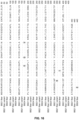
- An alignment of the BB21 and BB24 fiber polypeptide sequences is provided in Figure 15 .
- pBB21.dE1.dE3 (SEQ ID NO:15; Figure 9 ), pBB21.dE1.dE3.5IXP (SEQ ID NO:16; Figure 10 ), pBB24.dE1.dE3 (SEQ ID NO:17; Figure 11 ), and pBB24.dE1.dE3.5IXP (SEQ ID NO:18; Figure 12 ) are plasmids carrying full-length, E1- and E3-deleted adenoviral vector genomes based on isolates BB21 and BB24.
- the Ad vector genome sequences contained within these plasmids are set forth in SEQ ID NO:28, SEQ ID NO:29, SEQ ID NO:30, and SEQ ID NO:31, respectively.
- the adenoviral vector genome is flanked by two SwaI restriction enzyme sites (i.e. one SwaI site is located at either end of the vector genome). These SwaI sites are meant to facilitate excision of the Ad vector genome from the plasmid backbone prior to viral rescue by transfection of suitable E1-complementing cells (such as HEK293, 911, and PER.C6 cells).
- E1-complementing cells such as HEK293, 911, and PER.C6 cells.
- the Ad vector genomes comprised by these plasmids further carry certain restriction enzyme sites introduced in the location of the E1 deletion, in the E3 deletion, and adjacent to the right inverted terminal repeat (RITR). These restriction enzyme sites were selected to be unique in the context of the complete Ad genome plasmids.
- transgene insertion sites that allow for the facile construction, by standard molecular cloning techniques, of Ad vectors carrying one or more transgene expression cassettes inserted at any of said respective locations or any combinations thereof.
- Ad vector designs and plasmid constructions are described in more detail in the sections below.
- the BB21- and BB24-based Ad vector genomes were each designed to comprise an E1 deletion, an E3 deletion, different transgene insertion sites, and a replacement of the native E4 open reading frame (orf) 6 and orf6/7 with that of human adenovirus-5 (HAdV-5).
- the E1 region of each adenovirus was deleted and replaced with a transgene insertion site comprising an AsiSI restriction enzyme site sequence.
- the E3 region of each adenovirus was deleted and replaced with a transgene insertion site comprising an RsrII restriction enzyme site sequence.
- Another transgene insertion site was created by insertion of a PacI restriction enzyme site sequence adjacent to the inverted terminal repeat (ITR) of each adenovirus.
- the BB21 and BB24 sequences comprising E4 orf6 and orf6/7 coding sequences were replaced by SEQ ID NO:32 and SEQ ID NO:42, respectively. These replacing sequences comprise the E4 orf6 and orf6/7 coding sequences of human adenovirus-5 (HAdV-5) (base pairs 32914-34077 of GenBank sequence AC_000008) modified to carry one silent mutation eliminating a certain AseI site (for cloning purposes).
- HdV-5 human adenovirus-5
- the BB21- and BB24-based Ad vector genomes respectively comprised by pBB21.dE1.dE3.5IXP and pBB24.dE1.dE3.5IXP carry a larger E1 region-comprising sequence deletion that removes all the E1 coding sequences of BB21 or BB24 (i.e. nucleotides 456 to 3418 of SEQ ID NO: 13 or nucleotides 457 to 3420 of SEQ ID NO: 14, respectively).
- These latter two Ad vector genomes were additionally designed to carry a replacement of the non-coding sequence stretch between E1B 55K and pIX coding sequences by that of HAdV-5 (i.e.
- sequences corresponding to nucleotides 3419 to 3502 of SEQ ID NO: 13 or 3421 to 3504 of SEQ ID NO: 14 were replaced by nucleotides 3510-3608 of GenBank AC_000008 (i.e. by SEQ ID NO:27)).
- pBB21.dE1.dE3 (SEQ ID NO:15) was constructed by several steps of gene synthesis (performed by GenScript; Piscataway, NJ) and standard molecular cloning procedures. First, a 3576 bp DNA fragment (SEQ ID NO:33) containing the right end of the desired Ad vector genome (i.e. harboring the aforementioned E3 deletion, partial E4 sequence replacement, and transgene insertion site adjacent to the RITR) was synthesized and ligated, as an EcoRI-AseI restriction fragment, into EcoRI- and NdeI-digested pBR322 (GenBank accession number - J01749.1), leading to BB21 intermediate plasmid 1.
- a 4256 bp fragment (SEQ ID NO:34) containing the left end of the desired Ad vector genome (i.e. harboring the aforementioned E1 deletion) was synthesized and ligated, as an SnaBI-EcoRI restriction fragment, into ZraI- and EcoRI-digested BB21 intermediate plasmid 1, leading to BB21 intermediate plasmid 2.
- a 4077 bp fragment (SEQ ID NO:35) containing a middle Ad vector genome fragment was synthesized and ligated as a EcoRI-HpaI restriction fragment into EcoRI- and HpaI-digested BB21 intermediate plasmid 2, leading to BB21 intermediate plasmid 3 (SEQ ID NO:36).
- pBB21.dE1.dE3.5IXP (SEQ ID NO:16) was constructed in the same way as pBB21.dE1.dE3 except that abovementioned BB21 intermediate plasmid 3 (SEQ ID NO:36) was first modified to contain the desired E1 deletion and Ad5 pIX promoter insertion. This was done by synthesis of a 224 bp fragment (SEQ ID NO:37) that was subsequently ligated as an AsiSI-FseI restriction fragment into AsiSI- and FseI-digested BB21 intermediate plasmid 3.
- pBB21.FLuc (SEQ ID NO:38) and pBB21.RSVF-2A-GLuc (SEQ ID NO:39) are pBB21.dE1.dE3-derived plasmids that each harbor a BB21-based Ad vector genome equipped with a transgene expression cassette inserted at the location of the E1 deletion.
- the Ad vector genome sequences carried within these plasmids are set forth in SEQ ID NO:40 and SEQ ID NO:41, respectively.
- pBB21.FLuc carries a transgene expression cassette for firefly luciferase (FLuc). This cassette is driven by the cytomegalovirus major immediate early promoter (i.e.
- pBB21.RSVF-2A-Gluc carries a transgene expression cassette for "RSV-F A2 -2A-GLuc" (RSVF-2A-GLuc), which is a chimeric protein composed of the respiratory syncytial virus strain A2 fusion glycoprotein, a foot-and-mouth-disease virus 2A peptide, and Gaussia luciferase (GLuc). Like the FLuc cassette, this cassette is driven by a CMV promoter and carries an SV40 polyadenlyation signal. In addition, this cassette contains within its 5'untranslated region a sequence comprising intron 2 of the human Apolipoprotein A1 gene.
- the Flue and RSVF-2A-GLuc expression cassettes were each constructed by several standard gene synthesis and molecular cloning steps after which they were ligated into the unique AsiSI restriction enzyme site of pBB21.dE1.dE3, generating pBB21.FLuc and pBB21.RSVF-2A-Gluc, respectively.
- pBB24.dE1.dE3 (SEQ ID NO:17) was constructed by several steps of gene synthesis (performed by GenScript) and standard molecular cloning procedures. First, a 8144 bp DNA fragment (SEQ ID NO:43) containing the left and rights ends of the desired Ad vector genome (i.e. harboring the aforementioned E1 deletion, E3 deletion, partial E4 sequence replacement, and transgene insertion site adjacent to the RITR) was synthesized and ligated, as an MfeI-AseI restriction fragment, into EcoRI- and NdeI-digested pBR322 (GenBank accession number J01749.1), leading to BB24 intermediate plasmid 1 (SEQ ID NO:44).
- pBB24.dE1.dE3.5IXP (SEQ ID NO:18) was constructed in a similar manner.
- the abovementioned BB24 intermediate plasmid 1 (SEQ ID NO:44) was modified to carry the desired E1 deletion and Ad5 pIX promoter insertion. This was done by synthesis of a 2671 bp fragment (SEQ ID NO:45) that was subsequently ligated as an AsiSI-EcoRI restriction fragment into AsiSI- and EcoRI-digested BB24 intermediate plasmid 1.
- the 19470 bp XbaI-EcoRI restriction fragment of the BB24 viral genome (SEQ ID NO:14) was ligated into the modified plasmid (digested with XbaI and EcoRI).
- pBB24.FLuc (SEQ ID NO:46) and pBB24.RSVF-2A-GLuc (SEQ ID NO:47) are pBB24.dE1.dE3-derived plasmids that each contain a BB24-based Ad vector genome equipped with a transgene expression cassette inserted at the location of the E1 deletion.
- the Ad vector genome sequences carried within these plasmids are set forth in SEQ ID NO:48 and SEQ ID NO:49, respectively.
- pBB24.FLuc carries the same FLuc expression cassette as described herein for pBB21.FLuc.
- pBB24.RSVF-2A-GLuc carries the same RSVF-2A-GLuc expression cassette as described herein for pBB21.RSVF-2A-GLuc. These two cassettes were each constructed by several standard gene synthesis and molecular cloning steps after which they were ligated into the unique AsiSI restriction enzyme site of pBB24.dE1.dE3, generating pBB24.FLuc and pBB24.RSVF-2A-GLuc, respectively.
- Adenoviral vectors BB21.FLuc also designated JAd2NVT003
- BB21.RSVF-2A-GLuc also designated JAd2NVT001
- BB24.FLuc also designated JAd3NVT003
- BB24.RSVF-2A-GLuc also designated JAd3NVT001
- SEQ ID NO:40, SEQ ID NO:41, SEQ ID NO:48, and SEQ ID NO:49 were generated by transfection of the corresponding Ad vector genome plasmids (i.e.
- PER.C6 cells E1-complementing PER.C6 cells.
- DMEM Dulbecco's modified Eagle's medium
- FBS fetal bovine serum
- 10 mM MgCl 2 the Ad vector genome plasmids were digested with SwaI to release the respective adenoviral vector genomes from the plasmid. The transfections were performed according to standard procedures using Lipofectamine transfection reagent (Invitrogen; Carlsbad, CA).
- viruses were further amplified by several successive infection rounds on PER.C6 cell cultures.
- the viruses were purified from crude viral harvests using a two-step cesium chloride (CsCl) density gradient ultracentrifugation procedure as described before ( Havenga et al., "Novel replication-incompetent adenoviral B-group vectors: high vector stability and yield in PER.C6 cells," J. Gen. Virol. 87(8):2135-43 (2006 )).
- Viral particle (VP) titers were measured by a spectrophotometry-based procedure described previously ( Maizel et al., "The polypeptides of adenovirus: I. Evidence for multiple protein components in the virion and a comparison of types 2, 7A, and 12," Virology, 36(1):115-25 (1968 )).
- Example 2 Generation of E1- and E3-deleted vectors based on the HAdV-4 harboring hexon and fiber sequences from ape adenoviruses.
- adenoviral vectors based on human adenovirus type 4 (HAdV-4) that are modified in hexon, or hexon and fiber sequences
- plasmids were constructed carrying a complete HAdV-4 vector genome harboring the E1 and E3 deletions, transgene insertions, and hexon and/or fiber replacements as described below.
- Transgene expression cassettes were inserted into the E1 deletion of the vector.
- a single plasmid carrying a HAdV-4 based vector genome (harboring deletions to render it replication-incompetent, as well as to create space for the insertion of foreign transgene cassettes) was created using standard molecular biology and DNA cloning techniques. Briefly, DNA fragments comprising the left and right ends of the desired HAdV-4-based Ad vector were synthesized at GenScript and cloned into pBR322.
- a HindIII-HindIII restriction fragment of approximately 19 kbp was obtained from purified wild type HAdV-4 genomic DNA (by restriction enzyme digestion) and then ligated into the left and right end-containing pBR322-based plasmid. This resulted in the generation of plasmid pAd4.dE1.dE3.
- This plasmid carries an E1- and E3-deleted HAdV-4-based Ad vector genome flanked by SwaI sites.
- SwaI sites allow for excision of the vector genome from the plasmid for rescue of the adenoviral vector by transfection of an E1-complementing cell line, such as a PER.C6 or HEK293 cell line.
- the plasmid carries a transgene insertion site comprised by an AsiSI restriction enzyme site.
- Another transgene insertion site, comprised by a PacI site is located adjacent to the right inverted terminal repeat.
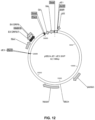
- pAd4.dE1.dE3 An E4 region-modified version of pAd4.dE1.dE3, pAd4.5orf6 (SEQ ID NO:20; Figure 13 ) was also made. While pAd4.dE1.dE3 was created to contain the native HAdV-4 E4 sequence, pAd4.5orf6 was created to contain a modified E4 region in which nucleotides 33018-34165 of the native HAdV-4 sequence were replaced with a sequence containing E4 orf6 and orf6/7 sequences from HAdV-5 (i.e., nucleotides 32914-34077 of HAdV-5 GenBank Sequence AC_000008 (SEQ ID NO:50).
- pAd4.5orf6 was generated by excision and replacement, using standard cloning techniques, of a 2.9 kb PsiI-PacI fragment of pAd4.dE1.dE3 by a synthesized sequence (generated by GenScript) carrying the described modification.
- the plasmids pAd4.dE1.dE3 and pAd4.5orf6 are the same.
- a map of pAd4.5orf6 is shown in Figure 12 . The E1 and E3 deletions, as well as regions coding for hexon and fiber are indicated.
- pAd4.dE1.dE3 and pAd4.5orf6 each carry within the Ad vector genome a unique AsiSI restriction site at the location of the E1 deletion and a unique PacI restriction site adjacent to the right inverted terminal repeat. These sites allow for insertion of transgene expression cassettes at the respective locations of the Ad vector genome by standard cloning techniques. For example, one or more of such cassettes may be inserted at one or both of these locations.
- HAdV-4-based vector genome plasmids were constructed in which hexon and fiber coding sequences were replaced by those of certain chimpanzee adenovirus isolates that like HAdV-4 have been allocated to human Ad species E.
- Adenovirus isolates that served as hexon sequence donor for these constructions are PtroAdV-1 and PtroAdV-13, for which partial hexon nucleotide sequence were previously deposited in GenBank (under JN163971 and JN163983, respectively).
- Fiber sequences used for the constructions came from the novel chimpanzee adenovirus isolates BB21 and BB24, which are described in Example 1 herein.
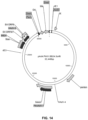
- Constructed plasmids carrying said first combination of hexon and fiber sequence replacements are pAd4.Ptr01.BB24.5orf6 (SEQ ID NO:23; Figure 13 ), pAd4.Ptr01.BB24.5orf6.Fluc (SEQ ID NO:21), and pAd4.Ptr01.BB24.5orf6.RSVF-2A-Gluc (SEQ ID NO:52), which harbor the Ad vector genome sequences as set forth in SEQ ID NO:53, SEQ ID NO:54, and SEQ ID NO:55, respectively.
- Constructed plasmids carrying said second combination of hexon and fiber sequence replacements are pAd4.Ptr13.BB21.5orf6 (SEQ ID NO:24; Figure 14 ), pAd4.Ptr13.BB21.5orf6.Fluc (SEQ ID NO:22), and pAd4.Ptr13.BB21.5orf6.RSVF-2A-Gluc (SEQ ID NO:56), which contain the Ad vector genome sequences as set forth in SEQ ID NO:57, SEQ ID NO:58, and SEQ ID NO:59, respectively.
- Ad vector genome plasmids were each constructed by standard gene synthesis and molecular cloning procedures. Sequence fragments comprising the respective modified hexon and fiber sequences were synthesized (by GenScript) and then subjected to sequential subcloning steps that together amounted to insertion of those sequences into pAd4.5orf6 (replacing therein the corresponding native HAdV-4 hexon- and fiber-comprising sequences).
- hexon sequence replacements carried out herein resulted in the construction of chimeric hexon-encoding sequences "Ptr01” (SEQ ID NO:9) and “Ptr13” (SEQ ID NO:11). These sequences constitute HAdV-4 hexon genes wherein the hypervariable regions (HVRs)-encoding sequences were replaced by those of PtroAdV-1 and PtroAdV-13, respectively.
- the chimeric hexon polypeptides encoded by Ptr01 and Ptr13 are set forth in SEQ ID NO:10 and SEQ ID NO:12, respectively.
- Ad4Ptr01-BB24.FLuc also designated Ad4C1NVT003
- Ad4Ptr01-BB24.RSVF-2A-GLuc also designated Ad4C1NVT001
- Ad4Ptr13-BB21.FLuc also designated Ad4C2NVT003
- Ad4Ptr13-BB21.RSVF-2A-GLuc also designated Ad4C2NVT001
- Ad4C2NVT001 which respectively comprise adenoviral vector genome sequences SEQ ID NO:54, SEQ ID NO:55, SEQ ID NO:58, and SEQ ID NO:59
- control adenoviral vectors Ad4.FLuc and Ad4.RSVF-2A-GLuc were generated from plasmids pAd4.FLuc and pAd4.RSVF-2A-GLuc, respectively. All transfections and subsequent vector amplifications, purifications, and titrations were done according to the same standard procedures as described for the BB21- and BB24-based vectors in Example 1 herein.
- Recombinant adenoviruses expressing firefly luciferase were used to determine whether replacing the capsid proteins, hexon and fiber, with homologous proteins from ape adenoviruses resulted in reduction in neutralization by human serum samples that harbored anti-HAdV-4 neutralizing activity.
- Ad4.FLuc a HAdV-4-based vector
- Ad4Ptr01-BB24.FLuc and Ad4Ptr13-BB21.Fluc proved to be serologically distinct from their parental HAdV-4-based vector Ad4.Fluc.
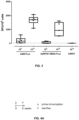
- Examples 3 to 8 describe experiments performed to assess the immunogenicity of four novel vectors generate herein, adenoviral vectors BB21, BB24, Ad4Ptr13-BB21, and Ad4Ptr01-BB24.
- the novel vectors were assessed for their abilities to induce humoral and cellular immune responses against vector-encoded (model) antigens in mice after intramuscular immunization.
- the vectors were tested using two different antigens: Firefly luciferase (FLuc) and RSV-F A2 -2A-GLuc (RSVF-2A-GLuc).
- RSVF-2A-GLuc is a chimeric protein composed of the respiratory syncytial virus strain A2 fusion glycoprotein, a foot-and-mouth-disease virus 2A peptide, and Gaussia luciferase (GLuc).
- Each vector was compared side-by-side with a benchmark vector based on human adenovirus type 26 (HAdV-26, also referred to herein as Ad26) carrying the same antigen-encoding transgene cassette.
- HdV-26 human adenovirus type 26
- Immune responses against the respective antigens were measured using well-known immunological assays, such as enzyme-linked immunospot assay (ELISPOT), enzyme-linked immunosorbent assay (ELISA), and, in case of the RSVF-2A-GLuc antigen, a respiratory syncytial virus neutralization assay (VNA).
- ELISPOT enzyme-linked immunospot assay
- ELISA enzyme-linked immunosorbent assay
- VNA respiratory syncytial virus neutralization assay
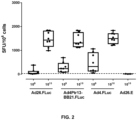
- Example 3 Cellular immune responses induced by BB21.FLuc and BB24.FLuc
- mice were immunized intramuscularly with Ad26.FLuc (positive control), BB21 or BB24 vectors expressing Firefly luciferase (i.e. BB21.FLuc or BB24.FLuc), or with an adenovector not encoding a transgene (Ad26 empty).
- Ad26.FLuc positive control
- BB21 or BB24 vectors expressing Firefly luciferase i.e. BB21.FLuc or BB24.FLuc
- Ad26 empty adenovector not encoding a transgene
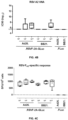
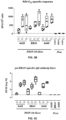
- Example 6 Cellular and humoral immune responses induced by BB21.RSVF-2A-GLuc
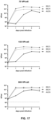
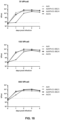
- RSVF-2A-GLuc-expressing vectors The ability of the RSVF-2A-GLuc-expressing vectors to elicit RSV-F A2 -specific IgG antibodies was assessed by ELISA. Sera collected 8 weeks post-immunization from the mice immunized with Ad26, Ad48, orBB24 vectors expressing RSVF-2A-GLuc or Firefly luciferase were tested in an anti-RSV F A2 IgG antibody ELISA. Specifically, this ELISA detects IgG antibodies capable of binding to a recombinant stable pre-fusion RSV-F A2 protein (pre-RSV-F).
- Virus neutralization assays were performed in order to assess the capacity of Ad4Ptr01-BB24.RSVF-2A-GLuc and Ad4Ptr13-BB21.RSVF-2A-GLuc to elicit respiratory syncytial virus-neutralizing antibodies.
- Example 9 Evaluation of serological cross-neutralization among novel and existing adenoviral vectors
- the novel adenoviral vectors created herein would preferably be serologically distinct from existing adenoviral vectors currently already in development as vaccine vectors, such as vectors based on human adenovirus serotypes HAdV-5 and HAdV-35. Therefore, cross-neutralization tests were performed among the novel adenoviral vectors BB21, BB24, Ad4Ptr13-BB21, and Ad4Ptr01-BB24 and several existing vectors based on HAdV-4, HAdV-5, HAdV-26, HAdV-35 and HAdV49.
- mice antisera each raised against one of these adenoviral vectors, were tested against each of the different vectors in an adenovirus neutralization assay.
- the mice antisera used for this assay were collected from Balb/C mice two or eight weeks after their immunization with 10 10 vector particles per mouse.
- the adenovirus neutralization assay was carried out as described previously ( Spangers et al 2003. J.Clin. Microbiol. 41:5046-5052 ).
- the sera were 2-fold serially diluted, then pre-mixed with the adenoviral vectors expressing firefly luciferase (FLuc), and subsequently incubated overnight with A549 cells (at a multiplicity of infection of 500 virus particles per cell).
- Luciferase activity levels in infected cell lysates measured 24 hours post-infection represented vector infection efficiencies.
- Neutralization titers against a given vector were defined as the highest serum dilution capable of giving a 90% reduction of vector infection efficiency. The neutralization titers were arbitrarily divided into the following categories: ⁇ 16 (no neutralization), 16 to 200, 200 to 2,000, and >2,000.
- the new adenoviral vectors BB21, BB24, Ad4Ptr13-BB21, and Ad4Ptr01-BB24 could each potentially be used in combination with one or more of these or other distinct adenoviral vectors in sequential immunizations, for example in the context of a heterologous prime-boost vaccination regimen or, alternatively or additionally, in the context of a series of two or more consecutive vaccination regimens against different diseases or antigens.
- Example 10 Seroprevalence of novel adenoviral vectors in human populations
- vectors BB21, BB24, Ad4Ptr13-BB21, and Ad4Ptr01-BB24 were each evaluated for their seroprevalence within 200 human cohort serum samples from adults, ages 18 to 55 years, living in the United States (US) and the European Union (EU). Each vector was tested for neutralization by the human serum samples by performing a standard adenovirus neutralization assay as carried out in Example 9 and described previously ( Sprangers et al 2003. J.Clin. Microbiol. 41:5046-5052 ).
- the sera were 2-fold serially diluted, then pre-mixed with the adenoviral vectors expressing firefly luciferase (FLuc), and subsequently incubated overnight with A549 cells (at multiplicity of infection of 500 virus particles per cell).
- Luciferase activity levels in infected cell lysates measured 24 hours post-infection, represented vector infection efficiencies.
- Neutralization titers against a given vector were defined as the highest serum dilution capable of giving a 90% reduction of vector infection efficiency. The neutralization titers were arbitrarily divided into the following categories: ⁇ 16 (no neutralization), 16 to 300, 300 to 1000, 1000 to 4000 and >4000.
- Example 11 Adenoviral vector productivity in suspension PER.C6 cells
- Suspension-adapted PER.C6 ® cells also referred to herein as suspension PER.C6 cells or sPER.C6, represent such a platform as they have been shown to support large-scale manufacturing of adenoviral vectors in bioreactors, achieving large quantities of high-titer, clinical grade vector preparations, e.g. of E1-deleted vectors based on HAdV-26 or HAdV-35 ( EP 2536829 B1 , EP 2350268 B1 ).
- Suspension PER.C6 cell cultures seeded into shaker flasks at a density of 1 ⁇ 10 6 cells/ml in a total volume of 10ml of PERMEXCIS ® medium (available from Lonza) supplemented with 4 mM L-Glutamine (Lonza), were infected with the different vectors at different virus particle (VP)-to-cell ratios and then incubated for 4 days.
- the different VP-to-cell ratios used for infection were 70, 150 and 900.
- qPCR quantitative PCR
- the two chimeric vectors Ad4Ptr01-BB24.FLuc and Ad4Ptr13-BB21.FLuc displayed good productivities, yielding VP titers that were either higher than or appearing equivalent to those obtained for Ad26.Fluc (depending on the VP-to-cell infection ratio used). Additionally, these two chimeric vectors showed uncompromised productivities compared to the parental, non-capsid-modified vector Ad4.Fluc.
- the studies of humoral and cellular immune responses induced by the novel recombinant adenoviral vectors of the invention clearly indicate potent immunogenicity of these vectors in mice.
- the new vectors showed low seroprevalence in humans.
- the new vectors can be readily produced at high yields.
- the combination of low seroprevalence, potent immunogenicity and producibility suggests that the novel adenoviral vectors of the invention can be useful as novel vaccine vector candidates against a variety of pathogens and may additionally have utility in gene therapy and/or diagnostics.
Landscapes
- Health & Medical Sciences (AREA)
- Life Sciences & Earth Sciences (AREA)
- Chemical & Material Sciences (AREA)
- Genetics & Genomics (AREA)
- Organic Chemistry (AREA)
- Engineering & Computer Science (AREA)
- Virology (AREA)
- Bioinformatics & Cheminformatics (AREA)
- General Health & Medical Sciences (AREA)
- Zoology (AREA)
- Wood Science & Technology (AREA)
- Biotechnology (AREA)
- Microbiology (AREA)
- General Engineering & Computer Science (AREA)
- Biomedical Technology (AREA)
- Medicinal Chemistry (AREA)
- Biochemistry (AREA)
- Molecular Biology (AREA)
- Biophysics (AREA)
- Animal Behavior & Ethology (AREA)
- Epidemiology (AREA)
- Physics & Mathematics (AREA)
- Veterinary Medicine (AREA)
- Immunology (AREA)
- Mycology (AREA)
- Pharmacology & Pharmacy (AREA)
- Public Health (AREA)
- Plant Pathology (AREA)
- Gastroenterology & Hepatology (AREA)
- Proteomics, Peptides & Aminoacids (AREA)
- Micro-Organisms Or Cultivation Processes Thereof (AREA)
- Medicines Containing Material From Animals Or Micro-Organisms (AREA)
- Medicines Containing Antibodies Or Antigens For Use As Internal Diagnostic Agents (AREA)
- Medicines That Contain Protein Lipid Enzymes And Other Medicines (AREA)
- Peptides Or Proteins (AREA)
Claims (12)
- Adenoviraler Vektor, umfassend eine Nukleinsäuresequenz, die ein Faser- und ein Hexonpolypeptid codiert, wobei das Faserpolypeptid die Aminosäuresequenz des in SEQ ID NO:4 dargelegten BB24-Faserpolypeptids umfasst und wobei das Hexonpolypeptid die Aminosäuresequenz des in SEQ ID NO:8 dargelegten BB24-Hexonpolypeptids umfasst.
- Vektor nach Anspruch 1, ferner umfassend ein Transgen.
- Rekombinante Zelle, umfassend den Vektor nach Anspruch 1 oder 2.
- Verfahren zum Herstellen eines Vektors, umfassend;(a) Züchten der rekombinanten Zelle nach Anspruch 3 unter Bedingungen für die Herstellung des Vektors;(b) Isolieren des Vektors aus der rekombinanten Zelle.
- Immunogene Zusammensetzung, umfassend den Vektor nach Anspruch 2.
- Immunogene Zusammensetzung nach Anspruch 5 zur Verwendung bei einem Induzieren einer Immunantwort in einem Subjekt, das diese benötigt.
- Adenoviraler Vektor nach einem der Ansprüche 1 bis 2, wobei der adenovirale Vektor ferner eine E1-Deletion umfasst.
- Adenoviraler Vektor nach Anspruch 7, wobei der adenovirale Vektor ferner eine E3-Deletion umfasst.
- Adenoviraler Vektor nach einem der Ansprüche 7 bis 8, wobei sich das Transgen an der E1-Deletionsstelle, an der E3-Deletionsstelle oder angrenzend an den rechten invertierten terminalen Repeat (rITR) befindet.
- Impfstoff, umfassend einen adenoviralen Vektor nach einem der Ansprüche 7 bis 9 und einen pharmazeutisch verträglichen Träger.
- Impfstoff nach Anspruch 10 zur Verwendung bei dem Induzieren einer Immunantwort in einem Subjekt, das diese benötigt.
- Verfahren zum Herstellen eines Impfstoffs, umfassend ein Kombinieren eines adenoviralen Vektors nach einem der Ansprüche 7 bis 9 mit einem pharmazeutisch verträglichen Träger.
Applications Claiming Priority (2)
| Application Number | Priority Date | Filing Date | Title |
|---|---|---|---|
| EP17199347 | 2017-10-31 | ||
| PCT/EP2018/079704 WO2019086450A1 (en) | 2017-10-31 | 2018-10-30 | Adenovirus and uses thereof |
Publications (2)
| Publication Number | Publication Date |
|---|---|
| EP3703722A1 EP3703722A1 (de) | 2020-09-09 |
| EP3703722B1 true EP3703722B1 (de) | 2024-06-12 |
Family
ID=60413036
Family Applications (1)
| Application Number | Title | Priority Date | Filing Date |
|---|---|---|---|
| EP18796011.7A Active EP3703722B1 (de) | 2017-10-31 | 2018-10-30 | Adenovirus und verwendungen davon |
Country Status (13)
| Country | Link |
|---|---|
| US (1) | US11872281B2 (de) |
| EP (1) | EP3703722B1 (de) |
| JP (1) | JP7438943B2 (de) |
| KR (1) | KR20200083510A (de) |
| CN (1) | CN111356466B (de) |
| AU (1) | AU2018359492B2 (de) |
| BR (1) | BR112020007698A2 (de) |
| CA (1) | CA3079210A1 (de) |
| EA (1) | EA202091104A1 (de) |
| IL (1) | IL274220A (de) |
| MX (1) | MX2020004492A (de) |
| SG (1) | SG11202003200VA (de) |
| WO (1) | WO2019086450A1 (de) |
Families Citing this family (6)
| Publication number | Priority date | Publication date | Assignee | Title |
|---|---|---|---|---|
| CA2903582C (en) | 2013-03-14 | 2021-06-08 | Salk Institute For Biological Studies | Oncolytic adenovirus compositions |
| WO2017147265A1 (en) | 2016-02-23 | 2017-08-31 | Salk Institute For Biological Studies | High throughput assay for measuring adenovirus replication kinetics |
| JP7015551B2 (ja) | 2016-02-23 | 2022-02-15 | ソーク インスティテュート フォー バイオロジカル スタディーズ | ウイルス動態への影響を最小限にするための治療用アデノウイルスにおける外因性遺伝子発現 |
| CA3045892A1 (en) | 2016-12-12 | 2018-06-21 | Salk Institute For Biological Studies | Tumor-targeting synthetic adenoviruses and uses thereof |
| AU2019251356B2 (en) | 2018-04-09 | 2025-06-12 | Salk Institute For Biological Studies | Oncolytic adenovirus compositions with enhanced replication properties |
| IL291852A (en) * | 2019-10-03 | 2022-06-01 | Janssen Vaccines & Prevention Bv | Adenovirus vectors and their use |
Family Cites Families (31)
| Publication number | Priority date | Publication date | Assignee | Title |
|---|---|---|---|---|
| FR2705686B1 (fr) | 1993-05-28 | 1995-08-18 | Transgene Sa | Nouveaux adénovirus défectifs et lignées de complémentation correspondantes. |
| WO1995034671A1 (en) | 1994-06-10 | 1995-12-21 | Genvec, Inc. | Complementary adenoviral vector systems and cell lines |
| US5851806A (en) | 1994-06-10 | 1998-12-22 | Genvec, Inc. | Complementary adenoviral systems and cell lines |
| US5559099A (en) | 1994-09-08 | 1996-09-24 | Genvec, Inc. | Penton base protein and methods of using same |
| US5846782A (en) | 1995-11-28 | 1998-12-08 | Genvec, Inc. | Targeting adenovirus with use of constrained peptide motifs |
| US5965541A (en) | 1995-11-28 | 1999-10-12 | Genvec, Inc. | Vectors and methods for gene transfer to cells |
| DE69638058D1 (de) | 1995-06-15 | 2009-11-26 | Crucell Holland Bv | Verpackungssysteme für humane rekombinante Adenoviren zur Gentherapie |
| US5837511A (en) | 1995-10-02 | 1998-11-17 | Cornell Research Foundation, Inc. | Non-group C adenoviral vectors |
| US5891690A (en) | 1996-04-26 | 1999-04-06 | Massie; Bernard | Adenovirus E1-complementing cell lines |
| EP0973866A4 (de) | 1997-03-04 | 2000-04-19 | Baxter Int | Adenovirus e1-komplementierende zellinien |
| US6020191A (en) | 1997-04-14 | 2000-02-01 | Genzyme Corporation | Adenoviral vectors capable of facilitating increased persistence of transgene expression |
| US5981225A (en) | 1998-04-16 | 1999-11-09 | Baylor College Of Medicine | Gene transfer vector, recombinant adenovirus particles containing the same, method for producing the same and method of use of the same |
| US6113913A (en) | 1998-06-26 | 2000-09-05 | Genvec, Inc. | Recombinant adenovirus |
| CA2378539A1 (en) | 1999-07-06 | 2001-01-11 | Merck & Co., Inc. | Adenovirus carrying gag gene hiv vaccine |
| DE19955558C2 (de) | 1999-11-18 | 2003-03-20 | Stefan Kochanek | Permanente Amniozyten-Zelllinie, ihre Herstellung und Verwendung zur Herstellung von Gentransfervektoren |
| CA2422882A1 (en) | 2000-09-15 | 2002-03-21 | Merck & Co., Inc. | Enhanced first generation adenovirus vaccines expressing codon optimized hiv1-gag, pol, nef and modifications |
| CZ304169B6 (cs) | 2001-06-22 | 2013-12-04 | The Wistar Institute Of Anatomy And Biology | Replikacne defektní opicí adenovirový vektor, zpusob jeho prípravy a lécivo, imunogenní kompozice a vakcína obsahující rekombinantní adenovirus |
| PT1497438E (pt) | 2002-04-25 | 2010-02-04 | Crucell Holland Bv | Meios e métodos para a produção de vectores de adenovírus |
| PL376792A1 (pl) | 2002-10-23 | 2006-01-09 | Glaxosmithkline Biologicals S.A. | Sposoby szczepienia przeciwko malarii |
| PL1711518T3 (pl) | 2004-01-23 | 2010-06-30 | St Di Richerche Di Biologia Molecolare P Angeletti S P A | Nośniki szczepionek pochodzące od szympansich adenowirusów |
| NZ553889A (en) | 2004-10-13 | 2009-11-27 | Crucell Holland Bv | Replication-defective adenovirus comprising a chimeric hexon protein and replaced hypervariable ragions HVR1-7 |
| WO2007104792A2 (en) | 2006-03-16 | 2007-09-20 | Crucell Holland B.V. | Recombinant adenoviruses based on serotype 26 and 48, and use thereof |
| EP2220241B1 (de) | 2007-11-28 | 2016-09-14 | The Trustees Of The University Of Pennsylvania | Adenovirus mit Hexon-Hüllprotein des Affen-E-Adenoviren SAdV-39 und seine Verwendung |
| NZ593235A (en) | 2008-11-03 | 2013-02-22 | Crucell Holland Bv | Method for the production of recombinant adenovirus serotype 35 |
| WO2010085984A1 (en) * | 2009-02-02 | 2010-08-05 | Okairos Ag | Simian adenovirus nucleic acid- and amino acid-sequences, vectors containing same, and uses thereof |
| CN102300872A (zh) | 2009-02-02 | 2011-12-28 | 奥凯罗斯股份公司 | 猿腺病毒核酸和氨基酸序列,包含其的载体及其用途 |
| EA023816B1 (ru) | 2010-02-15 | 2016-07-29 | Круселл Холланд Б.В. | СПОСОБ ПРОДУЦИРОВАНИЯ ВИРУСНЫХ ЧАСТИЦ Ad26 |
| EP2560680B1 (de) | 2010-04-16 | 2018-11-28 | The Government of the United States of America as represented by the Secretary of the Department of Health and Human Services | Filovirus-impfstoffe auf schimpansen-adenovirenvektor-basis |
| WO2013016591A1 (en) | 2011-07-26 | 2013-01-31 | Zuvachem, Inc. | High efficiency isoprene synthases produced by protein engineering |
| US9580476B2 (en) | 2011-10-05 | 2017-02-28 | Genvec, Inc. | Adenoviral vector-based respiratory syncytial virus (RSV) vaccine |
| BR112014028684A2 (pt) * | 2012-05-18 | 2017-07-25 | Univ Pennsylvania | subfamília e adenovírus de símio a1302, a1320, a1331 e a1337 e usos dos mesmos |
-
2018
- 2018-10-30 EP EP18796011.7A patent/EP3703722B1/de active Active
- 2018-10-30 EA EA202091104A patent/EA202091104A1/ru unknown
- 2018-10-30 BR BR112020007698-8A patent/BR112020007698A2/pt unknown
- 2018-10-30 KR KR1020207014973A patent/KR20200083510A/ko active Pending
- 2018-10-30 MX MX2020004492A patent/MX2020004492A/es unknown
- 2018-10-30 JP JP2020524224A patent/JP7438943B2/ja active Active
- 2018-10-30 SG SG11202003200VA patent/SG11202003200VA/en unknown
- 2018-10-30 CA CA3079210A patent/CA3079210A1/en active Pending
- 2018-10-30 AU AU2018359492A patent/AU2018359492B2/en active Active
- 2018-10-30 US US16/760,269 patent/US11872281B2/en active Active
- 2018-10-30 WO PCT/EP2018/079704 patent/WO2019086450A1/en not_active Ceased
- 2018-10-30 CN CN201880070184.5A patent/CN111356466B/zh active Active
-
2020
- 2020-04-26 IL IL274220A patent/IL274220A/en unknown
Also Published As
| Publication number | Publication date |
|---|---|
| CA3079210A1 (en) | 2019-05-09 |
| CN111356466B (zh) | 2024-08-09 |
| IL274220A (en) | 2020-06-30 |
| AU2018359492B2 (en) | 2023-12-14 |
| BR112020007698A2 (pt) | 2020-10-06 |
| CN111356466A (zh) | 2020-06-30 |
| AU2018359492A1 (en) | 2020-04-16 |
| MX2020004492A (es) | 2020-11-24 |
| JP7438943B2 (ja) | 2024-02-27 |
| EA202091104A1 (ru) | 2020-08-12 |
| JP2021500911A (ja) | 2021-01-14 |
| US11872281B2 (en) | 2024-01-16 |
| KR20200083510A (ko) | 2020-07-08 |
| US20200323977A1 (en) | 2020-10-15 |
| EP3703722A1 (de) | 2020-09-09 |
| SG11202003200VA (en) | 2020-05-28 |
| WO2019086450A1 (en) | 2019-05-09 |
Similar Documents
| Publication | Publication Date | Title |
|---|---|---|
| US11236361B2 (en) | Adenovirus and uses thereof | |
| US11459583B2 (en) | Adenovirus vectors and uses thereof | |
| US11142551B2 (en) | Adenovirus and uses thereof | |
| EP3703722B1 (de) | Adenovirus und verwendungen davon | |
| JP7711050B2 (ja) | アデノウイルスベクターおよびその使用 | |
| EA044813B1 (ru) | Аденовирус и его применения | |
| EA044526B1 (ru) | Аденовирус и пути его применения | |
| EA042952B1 (ru) | Аденовирус и пути его применения | |
| EA045436B1 (ru) | Аденовирусные векторы и пути их применения | |
| EA047117B1 (ru) | Аденовирусные векторы и их применения | |
| BR112020008198A2 (pt) | adenovírus e seus usos |
Legal Events
| Date | Code | Title | Description |
|---|---|---|---|
| STAA | Information on the status of an ep patent application or granted ep patent |
Free format text: STATUS: UNKNOWN |
|
| STAA | Information on the status of an ep patent application or granted ep patent |
Free format text: STATUS: THE INTERNATIONAL PUBLICATION HAS BEEN MADE |
|
| PUAI | Public reference made under article 153(3) epc to a published international application that has entered the european phase |
Free format text: ORIGINAL CODE: 0009012 |
|
| STAA | Information on the status of an ep patent application or granted ep patent |
Free format text: STATUS: REQUEST FOR EXAMINATION WAS MADE |
|
| 17P | Request for examination filed |
Effective date: 20200430 |
|
| AK | Designated contracting states |
Kind code of ref document: A1 Designated state(s): AL AT BE BG CH CY CZ DE DK EE ES FI FR GB GR HR HU IE IS IT LI LT LU LV MC MK MT NL NO PL PT RO RS SE SI SK SM TR |
|
| AX | Request for extension of the european patent |
Extension state: BA ME |
|
| REG | Reference to a national code |
Ref country code: HK Ref legal event code: DE Ref document number: 40026097 Country of ref document: HK |
|
| DAV | Request for validation of the european patent (deleted) | ||
| DAX | Request for extension of the european patent (deleted) | ||
| STAA | Information on the status of an ep patent application or granted ep patent |
Free format text: STATUS: EXAMINATION IS IN PROGRESS |
|
| 17Q | First examination report despatched |
Effective date: 20220728 |
|
| GRAP | Despatch of communication of intention to grant a patent |
Free format text: ORIGINAL CODE: EPIDOSNIGR1 |
|
| STAA | Information on the status of an ep patent application or granted ep patent |
Free format text: STATUS: GRANT OF PATENT IS INTENDED |
|
| INTG | Intention to grant announced |
Effective date: 20240111 |
|
| GRAS | Grant fee paid |
Free format text: ORIGINAL CODE: EPIDOSNIGR3 |
|
| GRAA | (expected) grant |
Free format text: ORIGINAL CODE: 0009210 |
|
| STAA | Information on the status of an ep patent application or granted ep patent |
Free format text: STATUS: THE PATENT HAS BEEN GRANTED |
|
| AK | Designated contracting states |
Kind code of ref document: B1 Designated state(s): AL AT BE BG CH CY CZ DE DK EE ES FI FR GB GR HR HU IE IS IT LI LT LU LV MC MK MT NL NO PL PT RO RS SE SI SK SM TR |
|
| REG | Reference to a national code |
Ref country code: GB Ref legal event code: FG4D |
|
| REG | Reference to a national code |
Ref country code: CH Ref legal event code: EP |
|
| REG | Reference to a national code |
Ref country code: IE Ref legal event code: FG4D |
|
| REG | Reference to a national code |
Ref country code: DE Ref legal event code: R096 Ref document number: 602018070563 Country of ref document: DE |
|
| PG25 | Lapsed in a contracting state [announced via postgrant information from national office to epo] |
Ref country code: BG Free format text: LAPSE BECAUSE OF FAILURE TO SUBMIT A TRANSLATION OF THE DESCRIPTION OR TO PAY THE FEE WITHIN THE PRESCRIBED TIME-LIMIT Effective date: 20240612 |
|
| PG25 | Lapsed in a contracting state [announced via postgrant information from national office to epo] |
Ref country code: HR Free format text: LAPSE BECAUSE OF FAILURE TO SUBMIT A TRANSLATION OF THE DESCRIPTION OR TO PAY THE FEE WITHIN THE PRESCRIBED TIME-LIMIT Effective date: 20240612 Ref country code: FI Free format text: LAPSE BECAUSE OF FAILURE TO SUBMIT A TRANSLATION OF THE DESCRIPTION OR TO PAY THE FEE WITHIN THE PRESCRIBED TIME-LIMIT Effective date: 20240612 |
|
| REG | Reference to a national code |
Ref country code: LT Ref legal event code: MG9D |
|
| PG25 | Lapsed in a contracting state [announced via postgrant information from national office to epo] |
Ref country code: GR Free format text: LAPSE BECAUSE OF FAILURE TO SUBMIT A TRANSLATION OF THE DESCRIPTION OR TO PAY THE FEE WITHIN THE PRESCRIBED TIME-LIMIT Effective date: 20240913 |
|
| REG | Reference to a national code |
Ref country code: NL Ref legal event code: MP Effective date: 20240612 |
|
| PG25 | Lapsed in a contracting state [announced via postgrant information from national office to epo] |
Ref country code: ES Free format text: LAPSE BECAUSE OF FAILURE TO SUBMIT A TRANSLATION OF THE DESCRIPTION OR TO PAY THE FEE WITHIN THE PRESCRIBED TIME-LIMIT Effective date: 20240612 |
|
| PG25 | Lapsed in a contracting state [announced via postgrant information from national office to epo] |
Ref country code: LV Free format text: LAPSE BECAUSE OF FAILURE TO SUBMIT A TRANSLATION OF THE DESCRIPTION OR TO PAY THE FEE WITHIN THE PRESCRIBED TIME-LIMIT Effective date: 20240612 |
|
| PG25 | Lapsed in a contracting state [announced via postgrant information from national office to epo] |
Ref country code: NO Free format text: LAPSE BECAUSE OF FAILURE TO SUBMIT A TRANSLATION OF THE DESCRIPTION OR TO PAY THE FEE WITHIN THE PRESCRIBED TIME-LIMIT Effective date: 20240912 Ref country code: LV Free format text: LAPSE BECAUSE OF FAILURE TO SUBMIT A TRANSLATION OF THE DESCRIPTION OR TO PAY THE FEE WITHIN THE PRESCRIBED TIME-LIMIT Effective date: 20240612 Ref country code: HR Free format text: LAPSE BECAUSE OF FAILURE TO SUBMIT A TRANSLATION OF THE DESCRIPTION OR TO PAY THE FEE WITHIN THE PRESCRIBED TIME-LIMIT Effective date: 20240612 Ref country code: GR Free format text: LAPSE BECAUSE OF FAILURE TO SUBMIT A TRANSLATION OF THE DESCRIPTION OR TO PAY THE FEE WITHIN THE PRESCRIBED TIME-LIMIT Effective date: 20240913 Ref country code: FI Free format text: LAPSE BECAUSE OF FAILURE TO SUBMIT A TRANSLATION OF THE DESCRIPTION OR TO PAY THE FEE WITHIN THE PRESCRIBED TIME-LIMIT Effective date: 20240612 Ref country code: ES Free format text: LAPSE BECAUSE OF FAILURE TO SUBMIT A TRANSLATION OF THE DESCRIPTION OR TO PAY THE FEE WITHIN THE PRESCRIBED TIME-LIMIT Effective date: 20240612 Ref country code: BG Free format text: LAPSE BECAUSE OF FAILURE TO SUBMIT A TRANSLATION OF THE DESCRIPTION OR TO PAY THE FEE WITHIN THE PRESCRIBED TIME-LIMIT Effective date: 20240612 Ref country code: RS Free format text: LAPSE BECAUSE OF FAILURE TO SUBMIT A TRANSLATION OF THE DESCRIPTION OR TO PAY THE FEE WITHIN THE PRESCRIBED TIME-LIMIT Effective date: 20240912 |
|
| PG25 | Lapsed in a contracting state [announced via postgrant information from national office to epo] |
Ref country code: NL Free format text: LAPSE BECAUSE OF FAILURE TO SUBMIT A TRANSLATION OF THE DESCRIPTION OR TO PAY THE FEE WITHIN THE PRESCRIBED TIME-LIMIT Effective date: 20240612 |
|
| REG | Reference to a national code |
Ref country code: AT Ref legal event code: MK05 Ref document number: 1693662 Country of ref document: AT Kind code of ref document: T Effective date: 20240612 |
|
| PGFP | Annual fee paid to national office [announced via postgrant information from national office to epo] |
Ref country code: LU Payment date: 20241011 Year of fee payment: 7 |
|
| PG25 | Lapsed in a contracting state [announced via postgrant information from national office to epo] |
Ref country code: NL Free format text: LAPSE BECAUSE OF FAILURE TO SUBMIT A TRANSLATION OF THE DESCRIPTION OR TO PAY THE FEE WITHIN THE PRESCRIBED TIME-LIMIT Effective date: 20240612 |
|
| PG25 | Lapsed in a contracting state [announced via postgrant information from national office to epo] |
Ref country code: PT Free format text: LAPSE BECAUSE OF FAILURE TO SUBMIT A TRANSLATION OF THE DESCRIPTION OR TO PAY THE FEE WITHIN THE PRESCRIBED TIME-LIMIT Effective date: 20241014 |
|
| PG25 | Lapsed in a contracting state [announced via postgrant information from national office to epo] |
Ref country code: PT Free format text: LAPSE BECAUSE OF FAILURE TO SUBMIT A TRANSLATION OF THE DESCRIPTION OR TO PAY THE FEE WITHIN THE PRESCRIBED TIME-LIMIT Effective date: 20241014 |
|
| PGFP | Annual fee paid to national office [announced via postgrant information from national office to epo] |
Ref country code: DE Payment date: 20241001 Year of fee payment: 7 |
|
| PGFP | Annual fee paid to national office [announced via postgrant information from national office to epo] |
Ref country code: MC Payment date: 20241010 Year of fee payment: 7 |
|
| PG25 | Lapsed in a contracting state [announced via postgrant information from national office to epo] |
Ref country code: PL Free format text: LAPSE BECAUSE OF FAILURE TO SUBMIT A TRANSLATION OF THE DESCRIPTION OR TO PAY THE FEE WITHIN THE PRESCRIBED TIME-LIMIT Effective date: 20240612 |
|
| PGFP | Annual fee paid to national office [announced via postgrant information from national office to epo] |
Ref country code: BE Payment date: 20241007 Year of fee payment: 7 |
|
| PGFP | Annual fee paid to national office [announced via postgrant information from national office to epo] |
Ref country code: GB Payment date: 20241001 Year of fee payment: 7 |
|
| PG25 | Lapsed in a contracting state [announced via postgrant information from national office to epo] |
Ref country code: EE Free format text: LAPSE BECAUSE OF FAILURE TO SUBMIT A TRANSLATION OF THE DESCRIPTION OR TO PAY THE FEE WITHIN THE PRESCRIBED TIME-LIMIT Effective date: 20240612 |
|
| PG25 | Lapsed in a contracting state [announced via postgrant information from national office to epo] |
Ref country code: AT Free format text: LAPSE BECAUSE OF FAILURE TO SUBMIT A TRANSLATION OF THE DESCRIPTION OR TO PAY THE FEE WITHIN THE PRESCRIBED TIME-LIMIT Effective date: 20240612 Ref country code: IS Free format text: LAPSE BECAUSE OF FAILURE TO SUBMIT A TRANSLATION OF THE DESCRIPTION OR TO PAY THE FEE WITHIN THE PRESCRIBED TIME-LIMIT Effective date: 20241012 |
|
| PGFP | Annual fee paid to national office [announced via postgrant information from national office to epo] |
Ref country code: FR Payment date: 20241001 Year of fee payment: 7 |
|
| PG25 | Lapsed in a contracting state [announced via postgrant information from national office to epo] |
Ref country code: CZ Free format text: LAPSE BECAUSE OF FAILURE TO SUBMIT A TRANSLATION OF THE DESCRIPTION OR TO PAY THE FEE WITHIN THE PRESCRIBED TIME-LIMIT Effective date: 20240612 |
|
| PGFP | Annual fee paid to national office [announced via postgrant information from national office to epo] |
Ref country code: IE Payment date: 20241001 Year of fee payment: 7 |
|
| PG25 | Lapsed in a contracting state [announced via postgrant information from national office to epo] |
Ref country code: SK Free format text: LAPSE BECAUSE OF FAILURE TO SUBMIT A TRANSLATION OF THE DESCRIPTION OR TO PAY THE FEE WITHIN THE PRESCRIBED TIME-LIMIT Effective date: 20240612 Ref country code: RO Free format text: LAPSE BECAUSE OF FAILURE TO SUBMIT A TRANSLATION OF THE DESCRIPTION OR TO PAY THE FEE WITHIN THE PRESCRIBED TIME-LIMIT Effective date: 20240612 |
|
| PG25 | Lapsed in a contracting state [announced via postgrant information from national office to epo] |
Ref country code: SM Free format text: LAPSE BECAUSE OF FAILURE TO SUBMIT A TRANSLATION OF THE DESCRIPTION OR TO PAY THE FEE WITHIN THE PRESCRIBED TIME-LIMIT Effective date: 20240612 |
|
| PG25 | Lapsed in a contracting state [announced via postgrant information from national office to epo] |
Ref country code: SM Free format text: LAPSE BECAUSE OF FAILURE TO SUBMIT A TRANSLATION OF THE DESCRIPTION OR TO PAY THE FEE WITHIN THE PRESCRIBED TIME-LIMIT Effective date: 20240612 Ref country code: SK Free format text: LAPSE BECAUSE OF FAILURE TO SUBMIT A TRANSLATION OF THE DESCRIPTION OR TO PAY THE FEE WITHIN THE PRESCRIBED TIME-LIMIT Effective date: 20240612 Ref country code: RO Free format text: LAPSE BECAUSE OF FAILURE TO SUBMIT A TRANSLATION OF THE DESCRIPTION OR TO PAY THE FEE WITHIN THE PRESCRIBED TIME-LIMIT Effective date: 20240612 Ref country code: PL Free format text: LAPSE BECAUSE OF FAILURE TO SUBMIT A TRANSLATION OF THE DESCRIPTION OR TO PAY THE FEE WITHIN THE PRESCRIBED TIME-LIMIT Effective date: 20240612 Ref country code: IS Free format text: LAPSE BECAUSE OF FAILURE TO SUBMIT A TRANSLATION OF THE DESCRIPTION OR TO PAY THE FEE WITHIN THE PRESCRIBED TIME-LIMIT Effective date: 20241012 Ref country code: EE Free format text: LAPSE BECAUSE OF FAILURE TO SUBMIT A TRANSLATION OF THE DESCRIPTION OR TO PAY THE FEE WITHIN THE PRESCRIBED TIME-LIMIT Effective date: 20240612 Ref country code: CZ Free format text: LAPSE BECAUSE OF FAILURE TO SUBMIT A TRANSLATION OF THE DESCRIPTION OR TO PAY THE FEE WITHIN THE PRESCRIBED TIME-LIMIT Effective date: 20240612 Ref country code: AT Free format text: LAPSE BECAUSE OF FAILURE TO SUBMIT A TRANSLATION OF THE DESCRIPTION OR TO PAY THE FEE WITHIN THE PRESCRIBED TIME-LIMIT Effective date: 20240612 |
|
| PGFP | Annual fee paid to national office [announced via postgrant information from national office to epo] |
Ref country code: CH Payment date: 20241101 Year of fee payment: 7 |
|
| PG25 | Lapsed in a contracting state [announced via postgrant information from national office to epo] |
Ref country code: IT Free format text: LAPSE BECAUSE OF FAILURE TO SUBMIT A TRANSLATION OF THE DESCRIPTION OR TO PAY THE FEE WITHIN THE PRESCRIBED TIME-LIMIT Effective date: 20240612 |
|
| REG | Reference to a national code |
Ref country code: DE Ref legal event code: R097 Ref document number: 602018070563 Country of ref document: DE |
|
| PG25 | Lapsed in a contracting state [announced via postgrant information from national office to epo] |
Ref country code: DK Free format text: LAPSE BECAUSE OF FAILURE TO SUBMIT A TRANSLATION OF THE DESCRIPTION OR TO PAY THE FEE WITHIN THE PRESCRIBED TIME-LIMIT Effective date: 20240612 |
|
| PLBE | No opposition filed within time limit |
Free format text: ORIGINAL CODE: 0009261 |
|
| STAA | Information on the status of an ep patent application or granted ep patent |
Free format text: STATUS: NO OPPOSITION FILED WITHIN TIME LIMIT |
|
| 26N | No opposition filed |
Effective date: 20250313 |
|
| PG25 | Lapsed in a contracting state [announced via postgrant information from national office to epo] |
Ref country code: SE Free format text: LAPSE BECAUSE OF FAILURE TO SUBMIT A TRANSLATION OF THE DESCRIPTION OR TO PAY THE FEE WITHIN THE PRESCRIBED TIME-LIMIT Effective date: 20240612 |