EP3703362B1 - Türklingelsystem basierend auf kameraauswahl - Google Patents
Türklingelsystem basierend auf kameraauswahl Download PDFInfo
- Publication number
- EP3703362B1 EP3703362B1 EP20158955.3A EP20158955A EP3703362B1 EP 3703362 B1 EP3703362 B1 EP 3703362B1 EP 20158955 A EP20158955 A EP 20158955A EP 3703362 B1 EP3703362 B1 EP 3703362B1
- Authority
- EP
- European Patent Office
- Prior art keywords
- camera
- stream
- doorbell
- video stream
- cameras
- Prior art date
- Legal status (The legal status is an assumption and is not a legal conclusion. Google has not performed a legal analysis and makes no representation as to the accuracy of the status listed.)
- Active
Links
Images



Classifications
-
- H—ELECTRICITY
- H04—ELECTRIC COMMUNICATION TECHNIQUE
- H04N—PICTORIAL COMMUNICATION, e.g. TELEVISION
- H04N7/00—Television systems
- H04N7/18—Closed-circuit television [CCTV] systems, i.e. systems in which the video signal is not broadcast
- H04N7/183—Closed-circuit television [CCTV] systems, i.e. systems in which the video signal is not broadcast for receiving images from a single remote source
- H04N7/186—Video door telephones
-
- G—PHYSICS
- G06—COMPUTING OR CALCULATING; COUNTING
- G06N—COMPUTING ARRANGEMENTS BASED ON SPECIFIC COMPUTATIONAL MODELS
- G06N3/00—Computing arrangements based on biological models
- G06N3/02—Neural networks
- G06N3/04—Architecture, e.g. interconnection topology
-
- G—PHYSICS
- G06—COMPUTING OR CALCULATING; COUNTING
- G06N—COMPUTING ARRANGEMENTS BASED ON SPECIFIC COMPUTATIONAL MODELS
- G06N3/00—Computing arrangements based on biological models
- G06N3/02—Neural networks
- G06N3/04—Architecture, e.g. interconnection topology
- G06N3/0464—Convolutional networks [CNN, ConvNet]
-
- G—PHYSICS
- G08—SIGNALLING
- G08B—SIGNALLING OR CALLING SYSTEMS; ORDER TELEGRAPHS; ALARM SYSTEMS
- G08B13/00—Burglar, theft or intruder alarms
- G08B13/18—Actuation by interference with heat, light, or radiation of shorter wavelength; Actuation by intruding sources of heat, light, or radiation of shorter wavelength
- G08B13/189—Actuation by interference with heat, light, or radiation of shorter wavelength; Actuation by intruding sources of heat, light, or radiation of shorter wavelength using passive radiation detection systems
- G08B13/19—Actuation by interference with heat, light, or radiation of shorter wavelength; Actuation by intruding sources of heat, light, or radiation of shorter wavelength using passive radiation detection systems using infrared-radiation detection systems
-
- G—PHYSICS
- G08—SIGNALLING
- G08B—SIGNALLING OR CALLING SYSTEMS; ORDER TELEGRAPHS; ALARM SYSTEMS
- G08B3/00—Audible signalling systems; Audible personal calling systems
- G08B3/10—Audible signalling systems; Audible personal calling systems using electric transmission; using electromagnetic transmission
- G08B3/1008—Personal calling arrangements or devices, i.e. paging systems
- G08B3/1016—Personal calling arrangements or devices, i.e. paging systems using wireless transmission
-
- H—ELECTRICITY
- H04—ELECTRIC COMMUNICATION TECHNIQUE
- H04N—PICTORIAL COMMUNICATION, e.g. TELEVISION
- H04N21/00—Selective content distribution, e.g. interactive television or video on demand [VOD]
- H04N21/40—Client devices specifically adapted for the reception of or interaction with content, e.g. set-top-box [STB]; Operations thereof
- H04N21/43—Processing of content or additional data, e.g. demultiplexing additional data from a digital video stream; Elementary client operations, e.g. monitoring of home network or synchronising decoder's clock; Client middleware
- H04N21/4302—Content synchronisation processes, e.g. decoder synchronisation
- H04N21/4307—Synchronising the rendering of multiple content streams or additional data on devices, e.g. synchronisation of audio on a mobile phone with the video output on the TV screen
-
- H—ELECTRICITY
- H04—ELECTRIC COMMUNICATION TECHNIQUE
- H04N—PICTORIAL COMMUNICATION, e.g. TELEVISION
- H04N7/00—Television systems
- H04N7/18—Closed-circuit television [CCTV] systems, i.e. systems in which the video signal is not broadcast
- H04N7/181—Closed-circuit television [CCTV] systems, i.e. systems in which the video signal is not broadcast for receiving images from a plurality of remote sources
Definitions
- the present invention relates to an electronic monitoring system, and more particularly, to an electronic doorbell system being configured to communicate with a user.
- An electronic doorbell system can be configured to allow simultaneous video and audio communication to a user on a computing device in which the video is provided by a camera that is selected from among multiple available cameras provided at different locations, while the audio is provided by a microphone of the doorbell system, such as a microphone associated with the doorbell or a selected camera.
- User input can allow selection of one or more cameras. When multiple cameras are selected, the system can take an audio/video feed from the cameras in predetermined sequence or random sequence based on events observed by the system. In one aspect, audio can be streamed from the microphone of another camera in the system, while audio form the doorbell is recorded to be played back later or immediately after the audio from camera is stopped.
- the camera could be selected by default, based on user input, and/or automatically using artificial intelligence.
- Selection by artificial intelligence could comprise, for example, selecting a camera based on a detected motion and/or sound, a captured image matching a predetermined image and/or a captured sound matching a predetermined sound.
- the doorbell system can communicate the video and audio to the user as a synchronized media stream, such as during a Voice over Internet Protocol (VoIP) call, and the source of the video and/or audio can be dynamically switched mid-stream, during the VoIP call, upon selection of alternate camera.
- VoIP Voice over Internet Protocol
- one aspect of the present invention can provide an electronic doorbell system, including: an electronic doorbell configured to capture an audio stream; at least two cameras, each camera being configured to capture a video and/or audio stream; and a hub in communication with the electronic doorbell and the cameras, the hub having a processor.
- the processor is configured to execute a program stored in a non-transient medium operable to select a camera from the multiple cameras for capturing a video stream, and synchronize the video stream from the selected camera with the audio stream from the electronic doorbell to produce a synchronized media stream.
- Another aspect of the present invention can provide a method for electronic monitoring, including: configuring an electronic doorbell to capture an audio stream; configuring multiple cameras to each capture a video and/or audio stream; selecting a camera from the multiple cameras for capturing a video stream; and synchronizing the video stream from the selected camera with the audio stream from the electronic doorbell to produce a synchronized media stream.
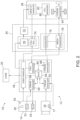
- the system 10 can comprise an electronic doorbell system 12, including an electronic doorbell 14, two or more cameras 16, such as first and second cameras 16a and 16b, respectively, a hub or base station 18, and/or a chime 20.
- the base station 18 can communicate with the doorbell 14, the cameras 16 and/or the chime 20 through a wireless local network, such as an IEEE 802.11 wireless Local Area Network (LAN).
- the base station 18, in turn, can connect to network access equipment 22, such as modem and/or router, for communicating with a backend system 24 through a Wide Area Network (WAN) 26 such as the Internet.
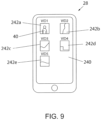
- the backend system 24, which could comprise one or more servers, in turn, can communicate with an electronic device 28, such a smart phone, tablet computer, or laptop or desktop computer operated by a user 30.
- WAN Wide Area Network
- the doorbell system 12 can be arranged with respect to a building 32, such as a home or office building.
- the doorbell 14 can be arranged proximal to a door 34 of the building 32. This location may, for example, be in a traditional location customarily found by visitors, such as against an exterior wall or doorframe of the building 32 adjacent to the door 34 at a height just above a door knob 36.
- Each camera 16 can also be arranged with respect to a building 32, but advantageously at separate locations from the doorbell 14 to provide optimum viewing angles of visitor(s).
- a first camera 16a can be arranged against the exterior wall of the building 32, several feet above the door 34, to provide an optimum angle for viewing a visitor 40 standing in front of the door.
- a second camera 16b can be arranged against a different area of the building 32, such as several feet above a side or back window 42, distal from the first camera 16a, to provide an optimum angle for viewing any person proximal to such alternative access point.
- “Distal” refers to a physical separation between devices such that views and/or sounds captured by the devices far enough away from one another such that the devices are operable provide distinctly different points of observation that are useful to the user 30.
- a camera (not shown) could be mounted on a post or tree located several feet away from the building with a view of the door 34.
- a computer 44 can be connected directly to the system, such as through the network access equipment 22, for allowing a user in the building 32 direct access to the doorbell system 12 like the device 28.
- the computer 44 could, for example, comprise a tablet, laptop, or desktop computer. This can serve as a back-up to the device 28 when the user 30 is in the building 32 for communicating over the VoIP telephone call with the visitor 40 as described herein.
- a visitor 40 approaching the door 34 can cause a trigger event.
- trigger events could comprise, for example: the visitor 40 pressing or otherwise actuating a button on the doorbell 14; motion of the visitor 40 being detected by a motion sensor of the doorbell 14 and/or in a floodlight, a camera, or other device located in the vicinity of the doorbell and in communication with thee base station 18; and/or a sound of the visitor 40 being detected by a microphone of the doorbell 14.
- the system 12 is configured to immediately call the user 30 via the device 28.
- the call is an audio form, possibly accompanied by video data, enabled by the base station 18 making a Voice over Internet Protocol (VoIP) call to the device 28.
- VoIP Voice over Internet Protocol
- the system 12 may reduce latency by omitting push notifications to the device 28, which otherwise would require the user 30 to open an application program on the device 28 before making any calls. In this case, the system proceeds to immediately call the user's device. The remainder of the specific example contained herein assumes such a telephone call.
- an audio stream captured by a microphone of the doorbell 14, and a video stream captured by a camera 16, such as the first camera 16a can be synchronized by the base station 18 to communicate a synchronized media stream in near real time to the device 28.
- Near real time refers to the time delay introduced, by automated data processing and/or network transmission, between the occurrence of an event and the use of the processed data, such as for display or feedback and control purposes. For example, a near real time display depicts an event or situation as it existed at the current time minus the processing time, as nearly the time of the live event.
- an audio stream captured by a microphone of the device 28 can be returned to the base station 18 to communicate to the doorbell 14 to allow a near real time VoIP conversation between the user 30 and the visitor 40 during a call.
- the doorbell 14 can include a button 50, a built-in camera 51, a microphone 52, a speaker 54 and/or a motion sensor 56. As mentioned, some of these functionalities could be provided on or duplicated on devices located apart from the doorbell.
- the doorbell 14 can also include processing and circuitry contained in a doorbell housing configured to be arranged proximal to the door 34.
- the button 50 can be a doorbell button or switch that is sensed by the base station 18 when actuated by the visitor 40.
- the microphone 52 can be configured to capture an incoming audio stream for communication in the system and for detection of sound (such as the voice of visitor 40).
- the speaker 54 can be configured to play an outgoing audio stream for communication to the visitor 40.
- the motion sensor 56 could be an active or passive Infrared (IR) motion sensor for detection of motion (such as by the visitor 40).
- IR Infrared
- the camera 16 can include a lens, a microphone, a speaker and/or a motion sensor.
- the camera 16 can also include processing and circuitry contained in a camera housing configured to be arranged in diverse locations, such as against an exterior wall of the building 32 or even apart from but facing the building.
- the camera 16 can be configured to capture a video stream for communication in the system.
- the camera 16 can also be configured for detection of motion (such as from the visitor 40).
- an operation for a VoIP telephone call to the device 28, triggered by the system 12 is provided in accordance with an aspect of the invention.
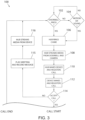
- the system 12 can monitor for a trigger event near the doorbell continuously in a loop.
- the base station 18 can monitor the button 50 of the doorbell 14 for actuation by a visitor 40.
- the base station 18 can proceed to decision step 104 to monitor for another triggering event such as the detection of motion and/or sound near the doorbell, such as motion detected by the motion sensor 56, sound detected by the microphone 52, and/or motion or sound detected by the camera 16. If another trigger event is not detected (“No"), the base station 18 can return to decision step 102 in a loop. However, if the button 50 is actuated or pressed at decision step 102 ("Yes"), and/or if another trigger event such as motion and/or sound is detected at decision step 104 ("Yes"), the process 100 can break the monitoring loop and proceed to step 106. Such trigger events can be detected by an event handler 58 of the base station 18.
- the system 12 can proceed to take any or all of several actions near simultaneously.
- the base station 18 can control the chime 20 to ring in the building 32, causing an audible alarm to alert occupants of the building 32 of the presence by the visitor 40.
- the base station 18 can stream audio captured by the doorbell 14 and video captured by the camera 16 (it being understood that the camera may be any of several cameras 16a, 16b, etc. that are active at that time).
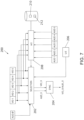
- an audio stream manager 60 of the base station 18 can capture the audio stream from the doorbell 14, and a video stream manager 62 of the base station 18 can capture the video stream from the camera 16, along with an audio stream from a microphone 17 of the camera 16, if the camera 16 is so equipped.
- a multiplexor 66 of the base station 18 can synchronize the audio stream from the audio stream manager 60 with the video stream from the video stream manager 62 for later communicating a synchronized media stream to the device 28 after communication has been established.
- the base station 18 can proceed to wake the device 28 for the call.
- the base station 18 can register itself for the VoIP call, through the backend system 24.
- the base station 18 can wake the device 28 for the telephone call by the event handler 58 contacting a system events service 70 of the backend system 24.
- the event handler 58 can request, through the system events service 70, an endpoint for making the call.
- the system events service 70 in turn, can send a wake-up notification to a notify service 72.
- the notify service 72 in turn, can send the wake-up notification to a wake-up handler 80 executing on the device 28.
- the base station 18 can register for the call through the backend system 24 by the event handler 58 contacting a call registration service 74.
- the device 28 can wake via the wake-up handler 80. Also, the device 28 can register to receive the VoIP call through the backend system 24. With the call registered at each endpoint, a call manager 64 of the base station 18 can send a call invite to the device 28 through a signaling service 76.
- the signaling service 76 can provide Session Initiation Protocol (SIP) signaling for initiating, maintaining, and terminating real-time sessions that include voice, video and messaging applications between the system 12 and the device 28.
- SIP Session Initiation Protocol
- a call manager 82 of the device 28, in turn, can receive the invitation. This can appear to the user 30 as the device 28 spontaneously waking and ringing with an immediate incoming phone call with a caller identification (Caller ID) indicating the system 12 as being the caller.
- Caller ID caller identification
- the user 30 can choose to accept or decline the call, such as by tapping an appropriate selection on a touchscreen of the device 28, like other incoming phone calls. If the user chooses to decline the call ("No"), the process 100 can proceed to step 115 in which the base station 18, being operable to detect a failure of the electronic device to answer the call, controls the doorbell 14 to play a predetermined greeting and record a voice message with a defined start and stop from the visitor 40 in response to the greeting. For example, the doorbell 14 may relay "I cannot come to the door right now.” The voice message, in turn, can be sent by the base station 18 to device 28.
- a SIP call is not initiated between the doorbell 14 (through the base station 18) and the device 28. Instead, a prerecorded audio message can be played at the doorbell 14, such as: "We are not able to come to the door right now. Please leave a message.”
- a loaded application program executing on the device 28 can receive the synchronized media stream to the device 28.
- a hub stream manager 68 of the base station 18 can send the synchronized media stream from the multiplexor 66 ("mux") to a media transport tunneling service 78 of the backend system 24.
- the media transport tunneling service 78 can provide Real Time Streaming Protocol (RTSP) signaling to control the media stream as Real-time Transport Protocol (RTP) packets between the base station 18 and the device 28.
- RTSP Real Time Streaming Protocol
- RTP Real-time Transport Protocol
- An application stream manager 84 of the device 28, executing as part of the application program can receive the media stream.
- the user 30 can open the application program on the device 28 to see and hear the media stream in real time through the application program. Alternatively, the user 30 can place the device 28 back into sleep with the possibility of returning to the application program later for viewing the media stream as a recorded event.
- the process 100 can proceed to a telephone call routine ("Call Start") at process 130.
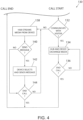
- a SIP call is initiated between the doorbell 14 (through the base station 18) and the device 28.
- the microphone of the device 28 can be muted.
- the user 30 can choose whether to communicate directly or indirectly with the visitor 40, such as by tapping another selection on the touchscreen of the device 28.
- the process 130 can proceed to step 134 in which the microphone of the device 28 is unmuted, and the base station 18 and the device 28 exchange bi-directional media streams in a VoIP call that is near real time.
- the exchange of bi-directional media streams can comprise outgoing video and audio streams from the system 12 (and the doorbell 18) to the device 28, and only an incoming audio stream from the device 28 to the system 12.
- the doorbell 14 can be configured with a display, and the exchange of bi-directional media streams can comprise outgoing video and audio streams from the system 12 (and the doorbell 18) to the device 28, and incoming video and audio streams from the device 28 to the system 12.
- the process can then proceed to decision step 136 in which the user 30 can choose to end the call at any time. If the user 30 does not end the call ("No"), the process can return to step 134 in which the base station 18 and the device 28 continue to exchange bi-directional media streams. In other words, the SIP session stays active until the user 30 ends the call via the device 28. However, if the user 30 does end the call ("Yes"), the process can return to the process 100 of FIG. 3 ("Call End"), returning to decision steps 102 and 104, monitoring for another trigger event.
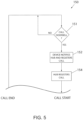
- the user 30 can type or dictate a custom message, and/or select any of multiple predetermined messages, including messages pre-recorded by the user 30 and/or "stock” messages selectable by the user from a pre-programmed list, for playing to the speaker 54 of the doorbell 14.
- One exemplar message could be: "Please leave your package by the door.”
- Another exemplar message could be: "Sorry I cannot come to the door right now. Please contact me later.” If the user 30 decides to send a predetermined message ("Yes"), the process can proceed to step 142 in which the user 30 selects the message at the device 28 for the base station 18 to play at the doorbell 14.
- the third camera 16c could be selected according to an image captured by such camera matching a predetermined image of a person.
- the predetermined image could be captured by the system itself or could be provided to the system from an external source.
- the artificial intelligence system 208 could be configured to select a camera according to a sound captured by the camera 16 matching one or more predetermined sounds 212 stored in the non-transient medium.
- the fourth camera 16d could be selected according to a sound captured by a microphone 17 of such camera matching a predetermined sound of glass breaking.
Landscapes
- Engineering & Computer Science (AREA)
- Physics & Mathematics (AREA)
- Signal Processing (AREA)
- Multimedia (AREA)
- General Physics & Mathematics (AREA)
- Theoretical Computer Science (AREA)
- Biophysics (AREA)
- Mathematical Physics (AREA)
- Data Mining & Analysis (AREA)
- Evolutionary Computation (AREA)
- General Health & Medical Sciences (AREA)
- Molecular Biology (AREA)
- Computing Systems (AREA)
- General Engineering & Computer Science (AREA)
- Biomedical Technology (AREA)
- Computational Linguistics (AREA)
- Software Systems (AREA)
- Artificial Intelligence (AREA)
- Life Sciences & Earth Sciences (AREA)
- Health & Medical Sciences (AREA)
- Computer Networks & Wireless Communication (AREA)
- Electromagnetism (AREA)
- Interconnected Communication Systems, Intercoms, And Interphones (AREA)
- Closed-Circuit Television Systems (AREA)
Claims (12)
- Ein elektronisches Türklingelsystem (12), aufweisend:eine elektronische Türklingel (14), die zum Erfassen eines Audiostroms konfiguriert ist; undeine Vielzahl von Kameras (16a, 16b), wobei jede Kamera (16a, 16b) zum Erfassen eines Videostroms und eines Audiostroms konfiguriert ist;einen Hub (18), der mit der elektronischen Türklingel (14) und der Vielzahl von Kameras (16a, 16b) in Verbindung steht, wobei der Hub (18) einen Prozessor aufweist, der ein in einem nichtflüchtigen Medium gespeichertes Programm ausführt und betreibbar ist, um:eine erste Kamera aus der Vielzahl von Kameras (16a, 16b) zum Erfassen eines Videostroms auszuwählen;gekennzeichnet durchEmpfangen von Benutzereingaben von einem elektronischen Gerät (28), das mit dem Hub (18) in Verbindung steht, wobei die erste Kamera (16a) entsprechend den Benutzereingaben ausgewählt wird oder alternativ der Prozessor so betrieben werden kann, dass er die Kamera ohne Benutzereingaben automatisch auswählt;Erfassen des Videostroms von der ersten Kamera (16a) mit einem ersten Strommanager (62);Erfassen eines Audiostroms von der elektronischen Türklingel (14) oder von einer zweiten Kamera (16b) aus der Vielzahl von Kameras (16a, 16b) mit einem zweiten Strommanager (60);Synchronisieren des Videostreams von der ersten Kamera (16a) mit dem Audiostream von der elektronischen Türklingel (14) oder von der zweiten Kamera (16b) nahezu in Echtzeit, um einen synchronisierten Medienstream zu erzeugen; undÜbertragen des synchronisierten Medienstroms an das elektronische Gerät (28).
- Das System (12) nach Anspruch 1, wobei der Hub (18) ein künstliches Intelligenzsystem implementiert, das so betreibbar ist, dass es automatisch die erste Kamera auswählt.
- Das System (12) nach Anspruch 2, wobei das künstliche Intelligenzsystem ein neuronales Netzwerk aufweist.
- Das System (12) nach Anspruch 2, wobei das künstliche Intelligenzsystem so konfiguriert ist, dass es eine Kamera gemäß mindestens einem der folgenden Kriterien auswählt: 1) einer von der Kamera erfassten Bewegung und/oder einem von ihr erfassten Geräusch, 2) einem von der Kamera aufgenommenen Bild, das mit einem vorab festgelegten Bild übereinstimmt, und 3) einem Geräusch, das mit einem erfassten Geräusch übereinstimmt.
- Das System (12) nach einem der vorstehenden Ansprüche, wobei die erste Kamera (16a) einen ersten Videostream erfasst und wobei der Prozessor ferner so konfiguriert ist, dass er eine zweite Kamera (16b) aus der Vielzahl von Kameras (16a, 16b) zum Erfassen eines zweiten Videostreams auswählt, und wobei der synchronisierte Medienstream aktualisiert wird, um den zweiten Videostream von der zweiten Kamera (16b) anstelle des ersten Videostroms von der ersten Kamera (16a), mit dem Audiostrom von der elektronischen Türklingel (14) synchronisiert wird.
- Das System (12) nach einem der vorstehenden Ansprüche, wobei der Prozessor ferner so konfiguriert ist, dass er den synchronisierten Medienstrom während eines Voice-over-Internet-Protocol-Telefonats (VolP) sendet.
- Das System (12) nach einem der vorstehenden Ansprüche, wobei die elektronische Türklingel (14) ein Mikrofon (52), einen Lautsprecher (54) und eine eingebaute Kamera (51) aufweist, wobei der Audiostream durch das Mikrofon (52) erfasst wird und wobei die elektronische Türklingel (14) über ein lokales Netzwerk (LAN) mit dem Hub (18) in Verbindung steht.
- Das System nach Anspruch 7, wobei die elektronische Türklingel (14) in einem Türklingengehäuse enthalten ist, das so konfiguriert ist, dass es an einer ersten Stelle in der Nähe einer Tür (34) angeordnet werden kann, und wobei jede Kamera (16a, 16b) in einem Kameragehäuse enthalten ist, das so konfiguriert ist, dass es an Stellen angeordnet werden kann, die von der ersten Stelle entfernt sind.
- Ein Verfahren zur elektronischen Überwachung, aufweisend:Konfigurieren einer elektronischen Türklingel (14) zum Erfassen eines Audiostroms;Konfigurieren einer Vielzahl von Kameras (16a, 16b), die jeweils einen Videostrom erfassen;Auswählen einer ersten Kamera (16a) aus der Vielzahl von Kameras (16a, 16b) zum Erfassen eines Videostroms;gekennzeichnet durchEmpfangen von Benutzereingaben von einem elektronischen Gerät (28) und Auswählen der ersten Kamera (16a) entsprechend den Benutzereingaben oder alternativ automatisches Auswählen der ersten Kamera (16a) ohne Benutzereingaben;Erfassen des Videostroms von der ersten Kamera (16a) mit einem ersten Strommanager (62);Erfassen eines Audiostroms von der elektronischen Türklingel (14) oder von einer zweiten Kamera (16b) aus der Vielzahl von Kameras (16a, 16b) mit einem zweiten Strommanager (60);Synchronisieren des Videostreams von der ersten Kamera (16a) mit dem Audiostream von der elektronischen Türklingel (14) oder von der zweiten Kamera (16b) nahezu in Echtzeit, um einen synchronisierten Medienstream zu erzeugen; undÜbertragen des synchronisierten Medienstreams an das elektronische Gerät (28).
- Das Verfahren nach Anspruch 9, ferner aufweisend das Auswählen der ersten Kamera gemäß mindestens einem von einem von der Kamera aufgenommenen Bild, das mit einem vorbestimmten Bild übereinstimmt, und einem von der Kamera aufgenommenen Ton, der mit einem vorbestimmten Ton übereinstimmt.
- Das Verfahren nach einem der Ansprüche 9 bis 10, wobei die erste Kamera (16a) einen ersten Videostream erfasst, und ferner aufweisend: Auswählen einer zweiten Kamera (16b) aus der Vielzahl von Kameras (16a, 16b) zum Erfassen eines zweiten Videostroms auszuwählen und den synchronisierten Mediastrom zu aktualisieren, um den zweiten Videostrom von der zweiten Kamera (16b) anstelle des ersten Videostroms von der ersten Kamera (16a) mit dem Audiostrom von der elektronischen Türklingel (14) zu synchronisieren.
- Das Verfahren nach einem der Ansprüche 9 bis 11, ferner aufweisend das Senden des synchronisierten Mediastroms während eines VoIP-Telefonanrufs.
Applications Claiming Priority (1)
| Application Number | Priority Date | Filing Date | Title |
|---|---|---|---|
| US16/289,183 US11159772B2 (en) | 2019-02-28 | 2019-02-28 | Electronic doorbell system with camera selection |
Publications (3)
| Publication Number | Publication Date |
|---|---|
| EP3703362A1 EP3703362A1 (de) | 2020-09-02 |
| EP3703362C0 EP3703362C0 (de) | 2025-07-02 |
| EP3703362B1 true EP3703362B1 (de) | 2025-07-02 |
Family
ID=69740122
Family Applications (1)
| Application Number | Title | Priority Date | Filing Date |
|---|---|---|---|
| EP20158955.3A Active EP3703362B1 (de) | 2019-02-28 | 2020-02-24 | Türklingelsystem basierend auf kameraauswahl |
Country Status (2)
| Country | Link |
|---|---|
| US (1) | US11159772B2 (de) |
| EP (1) | EP3703362B1 (de) |
Families Citing this family (5)
| Publication number | Priority date | Publication date | Assignee | Title |
|---|---|---|---|---|
| US12450962B1 (en) * | 2020-10-14 | 2025-10-21 | 1Ahead Technologies | Entry management system |
| US12488644B2 (en) * | 2020-10-14 | 2025-12-02 | 1Ahead Technologies | Entry management system |
| US11589204B2 (en) * | 2019-11-26 | 2023-02-21 | Alarm.Com Incorporated | Smart speakerphone emergency monitoring |
| GB2616605A (en) * | 2022-03-13 | 2023-09-20 | Olusegun Muyiwa Awoyomi Daniel | Smart doorbell with a retractable camera |
| TWI871760B (zh) * | 2023-09-12 | 2025-02-01 | 宏碁股份有限公司 | 視訊會議的切換方法與視訊會議系統 |
Family Cites Families (32)
| Publication number | Priority date | Publication date | Assignee | Title |
|---|---|---|---|---|
| US5428388A (en) | 1992-06-15 | 1995-06-27 | Richard von Bauer | Video doorbell system |
| US5729471A (en) | 1995-03-31 | 1998-03-17 | The Regents Of The University Of California | Machine dynamic selection of one video camera/image of a scene from multiple video cameras/images of the scene in accordance with a particular perspective on the scene, an object in the scene, or an event in the scene |
| GB9918248D0 (en) | 1999-08-04 | 1999-10-06 | Matra Bae Dynamics Uk Ltd | Improvements in and relating to surveillance systems |
| US6940998B2 (en) | 2000-02-04 | 2005-09-06 | Cernium, Inc. | System for automated screening of security cameras |
| US20030081120A1 (en) * | 2001-10-30 | 2003-05-01 | Steven Klindworth | Method and system for providing power and signals in an audio/video security system |
| US8154581B2 (en) | 2002-10-15 | 2012-04-10 | Revolutionary Concepts, Inc. | Audio-video communication system for receiving person at entrance |
| US7062291B2 (en) * | 2003-01-06 | 2006-06-13 | Vtech Telecommunications Limited | Wireless multi-handset telephone system with integrated video monitoring accessories |
| US8897433B2 (en) | 2009-02-02 | 2014-11-25 | Alarmforce Industries Inc. | Security system with two-way communication and video |
| CA2800398A1 (en) * | 2010-05-25 | 2011-12-01 | Vidyo, Inc. | Systems and methods for scalable video communication using multiple cameras and multiple monitors |
| US9215429B2 (en) * | 2011-10-31 | 2015-12-15 | Rosco, Inc. | Mirror monitor using two levels of reflectivity |
| US20130315404A1 (en) * | 2012-05-25 | 2013-11-28 | Bruce Goldfeder | Optimum broadcast audio capturing apparatus, method and system |
| US20140009609A1 (en) * | 2012-07-06 | 2014-01-09 | Conexant Systems, Inc. | Video door monitor using smarttv with voice wakeup |
| US9179109B1 (en) | 2013-12-06 | 2015-11-03 | SkyBell Technologies, Inc. | Doorbell communication systems and methods |
| US20160330413A1 (en) | 2013-12-06 | 2016-11-10 | SkyBell Technologies, Inc. | Doorbell communication systems and methods |
| US9888216B2 (en) * | 2015-09-22 | 2018-02-06 | SkyBell Technologies, Inc. | Doorbell communication systems and methods |
| GB2528060B (en) * | 2014-07-08 | 2016-08-03 | Ibm | Peer to peer audio video device communication |
| US10326964B2 (en) * | 2014-08-06 | 2019-06-18 | Smart Blonde Co. | Interactive broadcast television |
| US10313656B2 (en) * | 2014-09-22 | 2019-06-04 | Samsung Electronics Company Ltd. | Image stitching for three-dimensional video |
| US10133935B2 (en) | 2015-01-13 | 2018-11-20 | Vivint, Inc. | Doorbell camera early detection |
| WO2016179570A1 (en) * | 2015-05-07 | 2016-11-10 | BOT Home Automation, Inc. | Wireless audio/video recording and communication doorbells with integrated image sensor/button |
| US10057172B2 (en) * | 2015-05-17 | 2018-08-21 | At&T Intellectual Property I, L.P. | Optimized routing in connected environments |
| US20180047269A1 (en) | 2015-06-23 | 2018-02-15 | SkyBell Technologies, Inc. | Doorbell communities |
| CN108604400A (zh) | 2015-12-15 | 2018-09-28 | 亚马逊技术股份有限公司 | 用于音频/视频记录和通信设备的视频点播 |
| KR102459633B1 (ko) * | 2016-02-26 | 2022-10-28 | 아마존 테크놀로지스, 인크. | 오디오/비디오 레코딩 및 통신 디바이스로부터의 비디오 장면의 공유 |
| US10572530B2 (en) * | 2016-07-03 | 2020-02-25 | Apple Inc. | Prefetching accessory data |
| US20180233010A1 (en) | 2017-02-13 | 2018-08-16 | Ring Inc. | Neighborhood alert mode for triggering multi-device recording, multi-camera motion tracking, and multi-camera event stitching for audio/video recording and communication devices |
| WO2018200343A1 (en) * | 2017-04-25 | 2018-11-01 | Ring Inc. | Sharing identification data with audio/video recording and communication devices and local processing of the shared data |
| US20180342329A1 (en) * | 2017-05-24 | 2018-11-29 | Happie Home, Inc. | Happie home system |
| US10885396B2 (en) * | 2017-05-24 | 2021-01-05 | Amazon Technologies, Inc. | Generating composite images using audio/video recording and communication devices |
| WO2018226882A1 (en) * | 2017-06-07 | 2018-12-13 | Amazon Technologies, Inc. | Behavior-aware security systems and associated methods |
| US20190007656A1 (en) * | 2017-06-30 | 2019-01-03 | AVAST Software s.r.o. | Sending network camera video streams to active screens |
| US10805613B2 (en) * | 2018-02-20 | 2020-10-13 | Netgear, Inc. | Systems and methods for optimization and testing of wireless devices |
-
2019
- 2019-02-28 US US16/289,183 patent/US11159772B2/en active Active
-
2020
- 2020-02-24 EP EP20158955.3A patent/EP3703362B1/de active Active
Also Published As
| Publication number | Publication date |
|---|---|
| EP3703362C0 (de) | 2025-07-02 |
| EP3703362A1 (de) | 2020-09-02 |
| US20200280702A1 (en) | 2020-09-03 |
| US11159772B2 (en) | 2021-10-26 |
Similar Documents
| Publication | Publication Date | Title |
|---|---|---|
| US11145171B2 (en) | Electronic doorbell system with text communication | |
| EP3703362B1 (de) | Türklingelsystem basierend auf kameraauswahl | |
| US11316974B2 (en) | Cloud-based assistive services for use in telecommunications and on premise devices | |
| US11570292B1 (en) | Providing hands-free service to multiple devices | |
| KR101273654B1 (ko) | 아이피 카메라가 부착된 브이오아이피 기반의 방범용 비상벨 시스템 및 이를 포함하는 방범 시스템 | |
| US20120098918A1 (en) | Video analytics as a trigger for video communications | |
| US20150379982A1 (en) | Synthesized audio message over communication links | |
| US10440327B1 (en) | Methods and systems for video-conferencing using a native operating system and software development environment | |
| JP2021525979A (ja) | ドアベル通信および電気システム | |
| KR20120093332A (ko) | 전화 대기 메커니즘 | |
| JP2012100185A (ja) | テレビ会議システム、テレビ会議方法、プログラムおよび記録媒体 | |
| WO2015157385A1 (en) | Method and system for communication | |
| WO2022068608A1 (zh) | 信号处理的方法和电子设备 | |
| US11089541B2 (en) | Managing communication sessions with respect to multiple transport media | |
| US20040136515A1 (en) | Off-hold alert for telecommunications devices | |
| JP2012178621A (ja) | テレビ電話装置 | |
| US10869005B2 (en) | Electronic doorbell system with reduced latency | |
| EP1770969A1 (de) | Verfahren und System zur Steuerung der Bereitstellung von Multimedia-Informationen | |
| KR102165377B1 (ko) | 스마트폰을 이용한 비상시 원격 모니터링 방법 | |
| JP2013005253A (ja) | Ip電話装置およびip電話装置を用いた通信方法 | |
| US11222523B2 (en) | Apparatus, system, and method of establishing a communication link | |
| JP2009152885A (ja) | インターホンシステムの通話路確立方法およびインターホンシステムならびに転送装置 | |
| CN113691687A (zh) | 报警方法、报警设备、电子装置和存储介质 | |
| CN119449944A (zh) | 音频控制方法、装置及存储介质 | |
| JP2011061359A (ja) | 電話機応答メッセージ送信装置 |
Legal Events
| Date | Code | Title | Description |
|---|---|---|---|
| PUAI | Public reference made under article 153(3) epc to a published international application that has entered the european phase |
Free format text: ORIGINAL CODE: 0009012 |
|
| STAA | Information on the status of an ep patent application or granted ep patent |
Free format text: STATUS: THE APPLICATION HAS BEEN PUBLISHED |
|
| AK | Designated contracting states |
Kind code of ref document: A1 Designated state(s): AL AT BE BG CH CY CZ DE DK EE ES FI FR GB GR HR HU IE IS IT LI LT LU LV MC MK MT NL NO PL PT RO RS SE SI SK SM TR |
|
| AX | Request for extension of the european patent |
Extension state: BA ME |
|
| STAA | Information on the status of an ep patent application or granted ep patent |
Free format text: STATUS: REQUEST FOR EXAMINATION WAS MADE |
|
| 17P | Request for examination filed |
Effective date: 20210507 |
|
| RBV | Designated contracting states (corrected) |
Designated state(s): AL AT BE BG CH CY CZ DE DK EE ES FI FR GB GR HR HU IE IS IT LI LT LU LV MC MK MT NL NO PL PT RO RS SE SI SK SM TR |
|
| STAA | Information on the status of an ep patent application or granted ep patent |
Free format text: STATUS: EXAMINATION IS IN PROGRESS |
|
| 17Q | First examination report despatched |
Effective date: 20220831 |
|
| GRAP | Despatch of communication of intention to grant a patent |
Free format text: ORIGINAL CODE: EPIDOSNIGR1 |
|
| STAA | Information on the status of an ep patent application or granted ep patent |
Free format text: STATUS: GRANT OF PATENT IS INTENDED |
|
| INTG | Intention to grant announced |
Effective date: 20250219 |
|
| GRAS | Grant fee paid |
Free format text: ORIGINAL CODE: EPIDOSNIGR3 |
|
| GRAA | (expected) grant |
Free format text: ORIGINAL CODE: 0009210 |
|
| STAA | Information on the status of an ep patent application or granted ep patent |
Free format text: STATUS: THE PATENT HAS BEEN GRANTED |
|
| AK | Designated contracting states |
Kind code of ref document: B1 Designated state(s): AL AT BE BG CH CY CZ DE DK EE ES FI FR GB GR HR HU IE IS IT LI LT LU LV MC MK MT NL NO PL PT RO RS SE SI SK SM TR |
|
| REG | Reference to a national code |
Ref country code: GB Ref legal event code: FG4D |
|
| REG | Reference to a national code |
Ref country code: CH Ref legal event code: EP |
|
| REG | Reference to a national code |
Ref country code: DE Ref legal event code: R096 Ref document number: 602020053629 Country of ref document: DE |
|
| REG | Reference to a national code |
Ref country code: IE Ref legal event code: FG4D |
|
| U01 | Request for unitary effect filed |
Effective date: 20250702 |
|
| U07 | Unitary effect registered |
Designated state(s): AT BE BG DE DK EE FI FR IT LT LU LV MT NL PT RO SE SI Effective date: 20250709 |
|
| PG25 | Lapsed in a contracting state [announced via postgrant information from national office to epo] |
Ref country code: IS Free format text: LAPSE BECAUSE OF FAILURE TO SUBMIT A TRANSLATION OF THE DESCRIPTION OR TO PAY THE FEE WITHIN THE PRESCRIBED TIME-LIMIT Effective date: 20251102 |
|
| PG25 | Lapsed in a contracting state [announced via postgrant information from national office to epo] |
Ref country code: NO Free format text: LAPSE BECAUSE OF FAILURE TO SUBMIT A TRANSLATION OF THE DESCRIPTION OR TO PAY THE FEE WITHIN THE PRESCRIBED TIME-LIMIT Effective date: 20251002 |
|
| PG25 | Lapsed in a contracting state [announced via postgrant information from national office to epo] |
Ref country code: HR Free format text: LAPSE BECAUSE OF FAILURE TO SUBMIT A TRANSLATION OF THE DESCRIPTION OR TO PAY THE FEE WITHIN THE PRESCRIBED TIME-LIMIT Effective date: 20250702 |
|
| PG25 | Lapsed in a contracting state [announced via postgrant information from national office to epo] |
Ref country code: GR Free format text: LAPSE BECAUSE OF FAILURE TO SUBMIT A TRANSLATION OF THE DESCRIPTION OR TO PAY THE FEE WITHIN THE PRESCRIBED TIME-LIMIT Effective date: 20251003 |
|
| PG25 | Lapsed in a contracting state [announced via postgrant information from national office to epo] |
Ref country code: CZ Free format text: LAPSE BECAUSE OF FAILURE TO SUBMIT A TRANSLATION OF THE DESCRIPTION OR TO PAY THE FEE WITHIN THE PRESCRIBED TIME-LIMIT Effective date: 20250702 |
|
| PG25 | Lapsed in a contracting state [announced via postgrant information from national office to epo] |
Ref country code: PL Free format text: LAPSE BECAUSE OF FAILURE TO SUBMIT A TRANSLATION OF THE DESCRIPTION OR TO PAY THE FEE WITHIN THE PRESCRIBED TIME-LIMIT Effective date: 20250702 |
|
| PG25 | Lapsed in a contracting state [announced via postgrant information from national office to epo] |
Ref country code: RS Free format text: LAPSE BECAUSE OF FAILURE TO SUBMIT A TRANSLATION OF THE DESCRIPTION OR TO PAY THE FEE WITHIN THE PRESCRIBED TIME-LIMIT Effective date: 20251002 |
|
| PG25 | Lapsed in a contracting state [announced via postgrant information from national office to epo] |
Ref country code: ES Free format text: LAPSE BECAUSE OF FAILURE TO SUBMIT A TRANSLATION OF THE DESCRIPTION OR TO PAY THE FEE WITHIN THE PRESCRIBED TIME-LIMIT Effective date: 20250702 |