EP3703166A1 - Methode zur mechanischen stabilisation von polybenzimidazolen und ionenleitende membranen davon - Google Patents
Methode zur mechanischen stabilisation von polybenzimidazolen und ionenleitende membranen davon Download PDFInfo
- Publication number
- EP3703166A1 EP3703166A1 EP19160073.3A EP19160073A EP3703166A1 EP 3703166 A1 EP3703166 A1 EP 3703166A1 EP 19160073 A EP19160073 A EP 19160073A EP 3703166 A1 EP3703166 A1 EP 3703166A1
- Authority
- EP
- European Patent Office
- Prior art keywords
- cross
- membrane
- linked
- pbi
- porous
- Prior art date
- Legal status (The legal status is an assumption and is not a legal conclusion. Google has not performed a legal analysis and makes no representation as to the accuracy of the status listed.)
- Granted
Links
Images
Classifications
-
- H—ELECTRICITY
- H01—ELECTRIC ELEMENTS
- H01M—PROCESSES OR MEANS, e.g. BATTERIES, FOR THE DIRECT CONVERSION OF CHEMICAL ENERGY INTO ELECTRICAL ENERGY
- H01M8/00—Fuel cells; Manufacture thereof
- H01M8/10—Fuel cells with solid electrolytes
- H01M8/1016—Fuel cells with solid electrolytes characterised by the electrolyte material
- H01M8/1018—Polymeric electrolyte materials
- H01M8/102—Polymeric electrolyte materials characterised by the chemical structure of the main chain of the ion-conducting polymer
- H01M8/103—Polymeric electrolyte materials characterised by the chemical structure of the main chain of the ion-conducting polymer having nitrogen, e.g. sulfonated polybenzimidazoles [S-PBI], polybenzimidazoles with phosphoric acid, sulfonated polyamides [S-PA] or sulfonated polyphosphazenes [S-PPh]
-
- H—ELECTRICITY
- H01—ELECTRIC ELEMENTS
- H01M—PROCESSES OR MEANS, e.g. BATTERIES, FOR THE DIRECT CONVERSION OF CHEMICAL ENERGY INTO ELECTRICAL ENERGY
- H01M8/00—Fuel cells; Manufacture thereof
- H01M8/10—Fuel cells with solid electrolytes
- H01M8/1016—Fuel cells with solid electrolytes characterised by the electrolyte material
- H01M8/1018—Polymeric electrolyte materials
- H01M8/1041—Polymer electrolyte composites, mixtures or blends
- H01M8/1046—Mixtures of at least one polymer and at least one additive
- H01M8/1048—Ion-conducting additives, e.g. ion-conducting particles, heteropolyacids, metal phosphate or polybenzimidazole with phosphoric acid
-
- H—ELECTRICITY
- H01—ELECTRIC ELEMENTS
- H01M—PROCESSES OR MEANS, e.g. BATTERIES, FOR THE DIRECT CONVERSION OF CHEMICAL ENERGY INTO ELECTRICAL ENERGY
- H01M8/00—Fuel cells; Manufacture thereof
- H01M8/10—Fuel cells with solid electrolytes
- H01M8/1016—Fuel cells with solid electrolytes characterised by the electrolyte material
- H01M8/1018—Polymeric electrolyte materials
- H01M8/1069—Polymeric electrolyte materials characterised by the manufacturing processes
- H01M8/1086—After-treatment of the membrane other than by polymerisation
- H01M8/1088—Chemical modification, e.g. sulfonation
-
- H—ELECTRICITY
- H01—ELECTRIC ELEMENTS
- H01M—PROCESSES OR MEANS, e.g. BATTERIES, FOR THE DIRECT CONVERSION OF CHEMICAL ENERGY INTO ELECTRICAL ENERGY
- H01M8/00—Fuel cells; Manufacture thereof
- H01M8/10—Fuel cells with solid electrolytes
- H01M2008/1095—Fuel cells with polymeric electrolytes
-
- Y—GENERAL TAGGING OF NEW TECHNOLOGICAL DEVELOPMENTS; GENERAL TAGGING OF CROSS-SECTIONAL TECHNOLOGIES SPANNING OVER SEVERAL SECTIONS OF THE IPC; TECHNICAL SUBJECTS COVERED BY FORMER USPC CROSS-REFERENCE ART COLLECTIONS [XRACs] AND DIGESTS
- Y02—TECHNOLOGIES OR APPLICATIONS FOR MITIGATION OR ADAPTATION AGAINST CLIMATE CHANGE
- Y02E—REDUCTION OF GREENHOUSE GAS [GHG] EMISSIONS, RELATED TO ENERGY GENERATION, TRANSMISSION OR DISTRIBUTION
- Y02E60/00—Enabling technologies; Technologies with a potential or indirect contribution to GHG emissions mitigation
- Y02E60/30—Hydrogen technology
- Y02E60/50—Fuel cells
-
- Y—GENERAL TAGGING OF NEW TECHNOLOGICAL DEVELOPMENTS; GENERAL TAGGING OF CROSS-SECTIONAL TECHNOLOGIES SPANNING OVER SEVERAL SECTIONS OF THE IPC; TECHNICAL SUBJECTS COVERED BY FORMER USPC CROSS-REFERENCE ART COLLECTIONS [XRACs] AND DIGESTS
- Y02—TECHNOLOGIES OR APPLICATIONS FOR MITIGATION OR ADAPTATION AGAINST CLIMATE CHANGE
- Y02P—CLIMATE CHANGE MITIGATION TECHNOLOGIES IN THE PRODUCTION OR PROCESSING OF GOODS
- Y02P70/00—Climate change mitigation technologies in the production process for final industrial or consumer products
- Y02P70/50—Manufacturing or production processes characterised by the final manufactured product
Definitions
- the present invention relates to a process for mechanical stabilization of polybenzimidazoles (PBIs) and preparation of ion-conductive polymer electrolyte membranes from these mechanically stabilized PBIs, a polymer electrolyte membrane obtainable by said process and being suitable for use in fuel cells, electrolyzer cells, batteries, capacitors, electrochemical sensors, electrodialysis and electroosmosis devices, and all other devices and cells comprising such membranes.
- PBIs polybenzimidazoles
- Polymer electrolyte membrane fuel cellsand electrolyzers are receiving a growing interest for many potential power source applications (stationary, automotive and portable) because of their high-power density, high-energy conversion efficiency and environmental friendliness. Over the last decade, there has been a very intense research activity focused on improving the properties of polymer electrolyte membranes - higher conductivity, higher selectivity of the ion conduction, better mechanical properties, higher chemical stability, low gas permeability, etc.
- PEMFCs and PEMWEs use proton-exchange (or -conductive) membranes (PEMs) as electrolytes that separate the two electrodes (anode and cathode), while AEMFCs and AEMWEs use anion-exchange (or -conductive) membranes for this purpose.
- PEMFCs and PEMWEs use proton-exchange (or -conductive) membranes (PEMs) as electrolytes that separate the two electrodes (anode and cathode), while AEMFCs and AEMWEs use anion-exchange (or -conductive) membranes for this purpose.
- PEMFCs and PEMWEs use proton-exchange (or -conductive) membranes (PEMs) as electrolytes that separate the two electrodes (anode and cathode), while AEMFCs and AEMWEs use anion-exchange (or -conductive) membranes for this purpose.
- PEMFCs and PEMWEs use proton-exchange (or -conductive
- PBIs polybenzimidazoles
- a classic conductive PBI membrane comprises the polymer and the dopant (acid or base). The ratio of retained acid/base by a single polymer repeating unit is denoted as doping degree (DD) - molecules acid/base per repeating unit.
- DD doping degree
- the Celtec®-P membrane (product of BASF Fuel Cell GmbH) contains 5 wt.% p-PBI and 95 wt.% 70% phosphoric acid (PA), i.e. every PBI unit retains 40 molecules PA.
- PA phosphoric acid
- the DD is 40.
- the ion conductivity strongly depends on the temperature and water content of the membrane, i.e. the relative humidity (RH) at which the proton conductivity is measured.
- PA-doped p-PBI membranes are usually operated at 160 °C. If operated above this temperature for a longer time, membranes with a very high DD (like Celtec®-P) become too soft and start to flow - creep is observed. The result is deterioration of MEA performance.
- highly KOH doped m- and AB-PBI membranes In several cases, when performing conductivity measurements of such membranes at 110 °C and 100% relative humidity, softening and even melting of the membrane was observed.
- Another problem is the O 2 , N 2 and especially hydrogen, methanol permeability through the solid polymer electrolyte membrane leading to energy losses and accelerated aging of the electrochemical devices.
- the ion transport selectivity is also a broadly discussed problem in RedOx flow batteries, lithium batteries and other electrochemical systems.
- PA doped membranes containing MMT [3,4] exhibit higher DD than the already reported in the literature and enhanced proton conductivity compared to the same p-PBI membranes with no filler.
- the DD and the anion conductivity are also higher than the values of the p-PBI/KOH membranes.
- ion-conductive MMT containing p-PBI membranes considerable improvement of the mechanical properties has been observed.
- m-PBI can be cross-linked in a dimethylacetamide (DMAc) solution, using dibromo-p-xylene.
- DMAc dimethylacetamide
- Such membranes have shown good mechanical stability and after doping with PA the proton conductivity reaches 120 mS.cm -1 .
- the major drawback is the elaborated procedure which includes several steps and the use of the hazardous organic solvent DMAc. This process is non-applicable for other PBIs (p-PBI, AB-PBI) which are insoluble in DMAc.
- PA doped p-PBI membranes can be stabilized or cross-linked in a solution comprising phosphoric acid (PA) and aldehyde (formaldehyde, glutaraldehyde or tris(alkoxycarbonylamino) triazine).Treatment is performed at temperatures 125-160 °C for several hours.
- aldehyde formaldehyde, glutaraldehyde or tris(alkoxycarbonylamino) triazine
- PA phosphoric acid
- aldehyde formaldehyde, glutaraldehyde or tris(alkoxycarbonylamino) triazine
- PA phosphoric acid
- aldehyde formaldehyde, glutaraldehyde or tris(alkoxycarbonylamino) triazine
- PA phosphoric acid
- aldehyde formaldehyde, glutaraldehyde or tris(alkoxycarbony
- the inventive process for mechanical stabilization of polybenzimidazoles comprises the following steps:
- the term "ion-conductive" polymer electrolyte membrane shall cover all membrane types which are obtainable by doping porous cross-linked polybenzimidazole membrane with a dopant selected from the group consisting of acids, bases, ionic liquids or other ion containing solutions. For instance, when doping the cross-linked PBI membrane with an acid, a proton-conductive polymer electrolyte membrane is obtained, when doping the cross-linked polybenzimidazole membrane with a base, an anion-conductive polymer electrolyte membrane is obtained.
- the porous self-supporting water-containing polybenzimidazole membrane is obtained in the following way: A non-self-supporting (polybenzimidazole) film is cast from the polybenzimidazole solution on a proper support. After treating the film with an aqueous precipitation solution (e.g. deionized water) rapid phase transition takes place - a process known as "phase inversion", widely used for preparation of membranes for micro- and nano-filtration. The result is a porous self-supporting water-containing polybenzimidazole membrane.
- aqueous precipitation solution e.g. deionized water
- This process of obtaining the porous self-supporting water-containing polybenzimidazole membrane is preferred as by treating the film with the aqueous solution it is possible to rapidly replace any dopant and/or solvent from the film with ab appropriate solution (i.e. deionized water) and to initiate a rapid phase transition. During phase transition the non-supporting film precipitates rapidly, forming a porous solid phase in seconds, the solvent being exchanged with water.
- the porous self-supporting water-containing polybenzimidazole membrane can be prepared within few hours in a simple and uncomplicated route.
- the polybenzimidazole solution comprises polymers, containing repeating benzimidazole units.
- the cross-linking solution comprises at least one peroxide as cross-linker.
- This peroxide may be an organic peroxide like benzoyl peroxide.
- the cross-linking solution can comprize an organic solvent like acetone, dioxane, ethyl acetate and the like or mixtures thereof and water.
- the cross-linking solution is an aqueous cross-linking solution containing at least one peroxide compound, used as cross-linker, which is completely soluble in the aqueous cross-linking solution.
- aqueous cross-linking solution containing at least one peroxide compound, used as cross-linker, which is completely soluble in the aqueous cross-linking solution.
- the cross-linking solution comprises water and at least one inorganic peroxide as cross-linker and that the cross-linking solution has a pH value preferably in the range of 6 - 8.
- the above-mentioned advantages are further enhanced.
- the use of an inorganic peroxide allows the usage of water only and makes it superfluous to add any organic solvent for solubility reasons. Keeping the pH value of the solution in the range of 6 - 8 (i.e. the solution is free of any strong acid or base) ensures that the peroxide is not chemically quenched.
- the cross-linking solution comprises 0.01 - 2.0 wt.%, preferably 0.3 - 0.4 wt.%, of an inorganic peroxide.
- the porous self-supporting water-containing polybenzimidazole membrane is treated with the cross-linking solution at temperature in the range 20 - 60 °C for a time period of 1 - 5 minutes.
- the cross-linking solution comprises an inorganic peroxodisulfate as cross-linker. It was found that inorganic peroxodisulfates surpass all other peroxides (like, for example, H 2 O 2 , benzoyl peroxide etc.) with regard to reaction speed, amount of cross-linker required and reaction temperature. In other words, when using inorganic peroxodisulfates as cross-linkers, the smallest amount of cross-linker is necessary, the reaction is very fast and it can be carried out even at low temperatures. Furthermore, inorganic persulfates are rather inexpensive.
- the cross-linking solution comprises an organic solvent and at least one organic peroxide as cross-linker.
- the inventive process can be carried out with inorganic or organic peroxides making the process very flexible and universally usable.
- the doping is performed by treating the porous cross-linked polybenzimidazole membrane with acids for preferably 2 - 5 hours to obtain the proton-conductive polymer electrolyte membrane.
- This doping method is fast and uncomplicated (doping at room or elevated temperatures up to 90 °C is possible) and results in high DD.
- 85% phosphoric acid is used.
- the proton-conductive polymer electrolyte membrane is treated with 70% phosphoric acid for 2 - 5 hours for reconditioning the membrane after doping.
- an anion-conductive membrane doping is performed by treating the porous cross-linked polybenzimidazole membrane with 20 - 50 wt.% aqueous solution of a water soluble strong base, e.g. KOH, NaOH, CeOH etc. for 2 - 5 hours.
- a water soluble strong base e.g. KOH, NaOH, CeOH etc.
- the doping is performed by imbibing the porous cross-linked polybenzimidazole membrane in an organic ionic liquid or mixture of these, for example: 1-butyl-3-methylimidazolium chloride [BMIM]Cl, 1-butyl-3-methylimidazolium hydroxide [BMIM]OH, 1-butyl-3-methylimidazolium tetra fluoroborate [BMIM][BF4] and others, acting as good solvents for the uncross-linked PBIs.
- BMIM 1-butyl-3-methylimidazolium chloride
- BMIM 1-butyl-3-methylimidazolium hydroxide
- BMIM][BF4] 1-butyl-3-methylimidazolium tetra fluoroborate
- the porous self-supporting water-containing polybenzimidazole membrane comprises preferably between 0.5 and 50 wt.% of at least one filler, preferably montmorillonite.
- montmorillonite is a preferred inorganic filler
- other fillers (or mixtures thereof) can be used.
- Some examples for fillers are:
- the present invention further relates to a proton or anion-conductive polymer electrolyte membranes and membranes imbibed in ionic liquids, obtainable by the process described above, the use of the proton or anion-conductive polymer electrolyte membranes for preparation of membrane-electrode assemblies, applicable in polymer electrolyte membrane fuel cells, electrolyzer cells, batteries, capacitors, electrochemical sensors, electrodialysis and electroosmosis devices, and all other cells and devices comprising such membranes.
- the essential step of the inventive process for the mechanical stabilization of polybenzimidazoles is the cross-linking of the porous self-supporting water containing polybenzimidazole membrane provided in step a) of the process.
- the reaction mixture (2 wt. % p-PBI in polyphosphoric acid) is used as a starting material.
- the solution is heated and stirred for 30 min under inert gas at 180 °C, then a non-self-supporting film is cast on a glass plate using a doctor blade (gap 0.6 mm). After 15 min in air (cooling down to RT) the film is dipped in a bath containing deionized water. Rapid phase inversion takes place, resulting in a solid porous film, filled with water.
- the film is washed at least 5 times in deionized water, then in diluted ammonia till a neutral pH (removing the residues of the acid), then again in deionized water.
- m-PBI dissolved in dimethylacetamide
- DMAc 26 wt.% solution, product of PBI Advanced Products, denoted S26
- S26 product of PBI Advanced Products
- a non-self-supporting film is cast on a glass plate using a doctor blade (gap 0.6 mm). After 10 min in air (cooling down to room temperature) the film is dipped in a bath containing deionized water. Rapid phase inversion takes place, resulting in a solid porous film, filled with water. The film is washed at least 5 times in a deionized water, then boiled in a deionized water for 2 hours (removing the residues of DMAc).
- the reaction mixture (6 wt. % AB-PBI in methanesulfonic acid, containing 10% phosphorus pentoxide) is used as starting material.
- a non-self-supporting film is cast on a glass plate using a doctor blade (gap 0.6 mm). After 10 min in air the film is dipped in a bath containing a deionized water. Rapid phase inversion takes place, resulting in a solid porous film, filled with water. The film is washed at least 5 times in a deionized water, then in diluted ammonia (removing the acid residues), then again in a deionzed water.
- the reaction mixture (6 wt. % AB-PBI in methanesulfonic acid, containing 10 wt.% phosphorus pentoxide - Eaton's reagent) is used as a starting material.
- a calculated amount of MMT (50% from the weight of the polymer in the reaction mixture) is dispersed in Eaton's reagent and under inert gas and constant stirring is slowly added to the reaction mixture.
- a non-self-supporting film is cast on a glass plate using a doctor blade (gap 0.6 mm).
- the film is dipped in a bath containing deionized water. Rapid phase inversion takes place, resulting in a solid porous film, filled with water.
- the film is washed at least 5 times in a deionized water, then in diluted ammonia (removing rests of acid), then again in a deionized water.
- Cross-linking bath 0.4 g potassium persulfate (K 2 S 2 O 8 , p.a.) is dissolved in 400 ml of deionized water (Becher glass) and heated to 60 °C under magnetic stirring.
- Cross-linking The p-PBI film from Example 1 is immersed in the cross-linking bath for 3 min. Darkening of the color as well as a small reduction in size is observed. The film becomes stiffer.
- the film is then abundantly washed with a deionized water. In this way a porous cross-linked PBI film, filled with water is obtained. It can be stored for longer time in a deionized water, desiccator (humidified air) or sealed in a pack.
- Solubility tests insoluble in concentarted sulfuric acid (90 °C, over 24h) and 100% PA (90 °C, over 24h).
- Mechanical properties p-PBI film Elastic modulus E [MPa] Elongation at brake A [%] p-PBI film before treatment with KPS (non-cross-linked) 2.1 150 p-PBI film after treatment with KPS 3 min (cross-linked) 21.5 8.0
- Cross-linking bath 10 wt. % BPO in acetone/water 9:1 preheated at 60 °C.
- Cross-linking the porous p-PBI film from Example 1 is immersed in the bath and after 10 min the film changes its color and dimensions. The film, treated 30 min, swells too much in 100% PA, while the one treated for 60 min shows negligible dimension change. The film is then abundantly washed with a deionized water. In this way a porous cross-linked PBI film, filled with a deionized water is obtained. Can be stored for longer time in water, desiccator (humidified air) or sealed in a pack.
- Cross-linking bath 0.5 wt. % ammonium persulfate in water, preheated at 60 °C.
- Cross-linking bath 0.5 wt. % potassium persulfate in water, preheated at 60 °C.
- Cross-linking bath 0.5 wt. % potassium persulfate in water, preheated at 60 °C.
- the wet cross-linked p-PBI film from Example 5 is immersed in a bath containing 85% phosphoric acid (RT) and kept in it for at least 6 hours.
- the water from the membrane is exchange with PA.
- the membrane is then treated in a second bath, containing 70% PA for several hours at RT, taken out, gently wiped for removing excessive PA and sealed in a pack.
- Proton conductivity (mS.cm -1 ) , measured at 180 °C and different relative humidities (RH): PA doped cross-linked p-PBI RH 5 % - 178; RH 10 % - 233; RH 15 % - 266; RH 20% - 367.
- the wet cross-linked m-PBI film from Example 5 is immersed in a bath containing 85% phosphoric acid at room temperature and kept in it for at least 6 hours.
- the water from the membrane is exchange with PA.
- the membrane is then treated in a second bath, containing 70% PA for several hours, taken out, gently wiped for removing excessive PA and sealed in a pack.
- the wet cross-linked AB-PBI film from Example 8 is immersed in a bath containing 85% phosphoric acid at a room temperature and kept in it for at least 6 hours.
- the water from the membrane is exchange with PA.
- the membrane is then treated in a second bath, containing 70% PA for several hours, taken out, gently wiped for removing excessive PA and sealed in a pack.
- the wet cross-linked p-PBI film from Example 5 is immersed in a bath containing 50% KOH water solution and kept in it for at least 6 hours.
- the water from the membrane is exchanged with KOH solution.
- the membrane is then taken out, gently wiped for removing excessive dopant solution and sealed in a pack.
- Anion conductivity (mS.cm 1 ) , measured at 110 °C and different relative humidity (RH): KOH doped cross-linked p-PBI RH 50% - 316; RH 80% - 800; RH 100% - 894
- the wet cross-linked m-PBI film from Example 7 is immersed in a bath containing 50% KOH water solution and kept in it for at least 6 hours.
- the water from the membrane is exchanged with KOH solution.
- the membrane is then taken out, gently wiped for removing excessive dopant solution and sealed in a pack.
- the wet cross-linked AB-PBI film from Example 8 is immersed in a bath containing 50% KOH water solution and kept in it for at least 6 hours.
- the water from the membrane is exchanged with KOH solution.
- the membrane is then taken out, gently wiped for removing excessive dopant solution and sealed in a pack.
- Anion conductivity (mS.cm 1 ) , measured at 110 °C and different relative humidity (RH): KOH doped cross-linked AB-PBI RH 50% - 115; RH 80% - 348; RH 100% - 770
- Example 16 Preparation of cross-linked anion conductive AB-PBI membrane, containing montmorillonite (MMT), (doped with KOH)
- the wet cross-linked AB-PBI/MMT film from Example 9 is immersed in a bath containing 50% KOH water solution and kept in it for at least 6 hours.
- the water from the membrane is exchanged with KOH solution.
- the membrane is then taken out, gently wiped for removing excessive dopant solution and sealed in a pack.
- Anion conductivity (mS.cm 1 ) , measured at 110 °C and different relative humidity (RH): KOH doped cross-linked AB-PBI/MMT RH 50% - 427; RH 80% - 999; RH 100% - 1245
- Table 1 summarizes the results from the stress-strain measurements of PBI membranes, filled with water (non-cross-linked and cross-linked) in accordance with Examples 5 - 9.
- Table 1 Mechanical properties of non-doped PBI membranes, filled with water: elastic modulus (a) and elongation break (b)
- Sample Elastic modulus E [MPa] Cross-linked Non-cross-linked p-PBI film 21.5 2.1 (cross-linker KPS) p-PBI film 73.5 2.3 (cross-linker BPO) m-PBI film 58.0 36.0 (cross-linker APS) AB-PBI film 20.5 12.1 (cross-linker KPS) AB-PBI/MMT film 51.1 29.8 (cross-linker KPS)
- Sample Elongation at brake A [%] Cross-linked Non-cross-linked p-PBI film 8.0 150.0 (cross-linker KPS) p-PBI film 14.4 176.0 (cross-linker BPO) m-P
- Table 2 summarizes the results from the stress-strain measurements of PBI-membranes, doped with PA (non-cross-linked and cross-linked) in accordance with Examples 10, 11 and 12.
- P-PBI non-cross-linked
- PA PA
- Table 3 summarizes the results from the stress-strain measurements of PBI-membranes, doped with KOH (non-cross-linked and cross-linked) in accordance with Examples 13 - 16.
- membranes are operated at very harsh conditions (high acidity or basicity, high temperatures), they have to fulfill stringent requirements. Most important are high ionic conductivity, good mechanical properties, long term thermal and chemical stability, low gas permeability and high selectivity of the ion conduction.
- the cross-linked membranes have a much higher proton conductivity than the non-cross-linked reference membranes in accordance with the prior art.
- the proton conductivity of the PA doped cross-linked m-PBI membrane is in the range of the best prior art p-PBI membrane (Celtic® P). Due to the procedure applied for the synthesis of p-PBI (solvent PPA (stirring for more than 24h at temperatures from 160 to 220 °C), the production costs are much higher (up to 5 times) than these for the preparation of (the costs for preparing) m- and AB-PBI.
- the proton conductivity of the cross-linked AB-PBI, doped with PA is about two times higher than that of the Celtec® P membrane at all RHs.
- the conductivity is practically the same as this of Celtec® P.
- Example 16 shows that the properties of the AB-PBI/50% MMT membrane prepared in accordance with the inventive process are excellent, superior to all OH - -conductive membranes of the prior art with regard to the anion conductivity (about 10 times higher than the highest reported in the literature).
- the membrane can compete with the p-PBI membrane doped with 50%KOH in every aspect - ease of preparation, costs, better mechanical properties and even higher OH - conductivity.
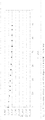
- Figure 1 shows the amendment of the anion conductivity of a cross-linked AB-PBI/MMT membrane doped with KOH (DD - 22 mol KOH/PBI unit) at 110 °C and 80% RH over a time of 60 minutes.
- KOH DD - 22 mol KOH/PBI unit
- the inventive process for the mechanical stabilization of PBIs can be applied not only to p-, m- and AB-PBI but to every polymer with benzimidazole rings in the chain.
- the cross-linked ones exhibit much better mechanical properties, as well as usually higher ion conductivity.
- the doping with PA and KOH should be considered as an example and not limited for all of the other possible dopants.
- a further advantage is the possibility of using water and aqueous solutions for the cross-linking step and the low costs of the cross-linkers as such. The process is therefore very flexible and cost-effective compared to the known processes.
Landscapes
- Chemical & Material Sciences (AREA)
- General Chemical & Material Sciences (AREA)
- Engineering & Computer Science (AREA)
- Manufacturing & Machinery (AREA)
- Life Sciences & Earth Sciences (AREA)
- Sustainable Development (AREA)
- Sustainable Energy (AREA)
- Chemical Kinetics & Catalysis (AREA)
- Electrochemistry (AREA)
- Composite Materials (AREA)
- Crystallography & Structural Chemistry (AREA)
- Fuel Cell (AREA)
- Conductive Materials (AREA)
- Separation Using Semi-Permeable Membranes (AREA)
Priority Applications (1)
| Application Number | Priority Date | Filing Date | Title |
|---|---|---|---|
| EP19160073.3A EP3703166B1 (de) | 2019-02-28 | 2019-02-28 | Methode zur mechanischen stabilisation von polybenzimidazolen und ionenleitende membranen davon |
Applications Claiming Priority (1)
| Application Number | Priority Date | Filing Date | Title |
|---|---|---|---|
| EP19160073.3A EP3703166B1 (de) | 2019-02-28 | 2019-02-28 | Methode zur mechanischen stabilisation von polybenzimidazolen und ionenleitende membranen davon |
Publications (3)
| Publication Number | Publication Date |
|---|---|
| EP3703166A1 true EP3703166A1 (de) | 2020-09-02 |
| EP3703166C0 EP3703166C0 (de) | 2024-11-06 |
| EP3703166B1 EP3703166B1 (de) | 2024-11-06 |
Family
ID=65657269
Family Applications (1)
| Application Number | Title | Priority Date | Filing Date |
|---|---|---|---|
| EP19160073.3A Active EP3703166B1 (de) | 2019-02-28 | 2019-02-28 | Methode zur mechanischen stabilisation von polybenzimidazolen und ionenleitende membranen davon |
Country Status (1)
| Country | Link |
|---|---|
| EP (1) | EP3703166B1 (de) |
Cited By (10)
| Publication number | Priority date | Publication date | Assignee | Title |
|---|---|---|---|---|
| CN112803053A (zh) * | 2021-04-07 | 2021-05-14 | 常州创氢能源科技有限公司 | 一种氨基功能化聚苯并咪唑质子交换膜的制备方法 |
| CN113097613A (zh) * | 2021-03-25 | 2021-07-09 | 宁德新能源科技有限公司 | 电化学装置及其制备方法和电子装置 |
| CN113299959A (zh) * | 2021-06-04 | 2021-08-24 | 中国科学院化学研究所 | 一种复合质子交换膜及其制备方法和应用 |
| CN114583201A (zh) * | 2020-11-30 | 2022-06-03 | 中国科学院大连化学物理研究所 | 一种液流电池用高性能离子传导膜及其制备和应用 |
| EP4012072A1 (de) * | 2020-12-09 | 2022-06-15 | Korea Institute of Science and Technology | Verfahren zur herstellung einer hydroxidionenleitenden pbi-membran |
| CN115084610A (zh) * | 2022-05-17 | 2022-09-20 | 中国科学院深圳先进技术研究院 | 质子交换膜及其制备方法 |
| CN115498231A (zh) * | 2022-08-29 | 2022-12-20 | 辽宁师范大学 | 一种具有宽pH适应性的水系有机液流电池用复合膜材料及其制备和应用 |
| CN115594847A (zh) * | 2022-09-06 | 2023-01-13 | 上海四羿科技有限公司(Cn) | 一种高抗氧化性聚苯并咪唑离子交换膜及其制备方法和应用 |
| CN115948051A (zh) * | 2022-07-20 | 2023-04-11 | 中国科学院大连化学物理研究所 | 一种交联型碱性阴离子交换膜及其制备方法 |
| CN117276611A (zh) * | 2023-11-22 | 2023-12-22 | 佛山科学技术学院 | 一种纳米中空的聚苯并咪唑复合膜的制备方法 |
Citations (2)
| Publication number | Priority date | Publication date | Assignee | Title |
|---|---|---|---|---|
| WO2011003538A1 (de) | 2009-07-09 | 2011-01-13 | Basf Se | Methode zur mechanischen stabilisierung von stickstoffhaltigen polymeren |
| WO2012127311A1 (en) | 2011-03-24 | 2012-09-27 | Basf Se | Method for mechanical stabilization of nitrogen-containing polymers |
-
2019
- 2019-02-28 EP EP19160073.3A patent/EP3703166B1/de active Active
Patent Citations (2)
| Publication number | Priority date | Publication date | Assignee | Title |
|---|---|---|---|---|
| WO2011003538A1 (de) | 2009-07-09 | 2011-01-13 | Basf Se | Methode zur mechanischen stabilisierung von stickstoffhaltigen polymeren |
| WO2012127311A1 (en) | 2011-03-24 | 2012-09-27 | Basf Se | Method for mechanical stabilization of nitrogen-containing polymers |
Non-Patent Citations (12)
| Title |
|---|
| DIAZ LILIANA A.; HNAT JAROMIR; HEREDIA NAYRA; BRUNO MARIANO M.; FEDERICO A. VIVA; PAIDAR MARTIN; CORTI HORACIO R.; BOUZEK KAREL; A, JOURNAL OF POWER SOURCES, vol. 312, 2016, pages 128 - 136 |
| FILIP UBLEKOV ET AL: "Composite anion conductive membranes based on para-polybenzimidazole and montmorillonite", MATERIALS LETTERS, vol. 219, 1 May 2018 (2018-05-01), AMSTERDAM, NL, pages 131 - 133, XP055583390, ISSN: 0167-577X, DOI: 10.1016/j.matlet.2018.02.082 * |
| HRISTO PENCHEV ET AL: "Highly KOH doped para-polybenzimidazole anion exchange membrane and its performance in Pt/TinO2n-1 catalyzed water electrolysis cell", MATERIALS LETTERS, vol. 221, 1 June 2018 (2018-06-01), AMSTERDAM, NL, pages 128 - 130, XP055583386, ISSN: 0167-577X, DOI: 10.1016/j.matlet.2018.03.094 * |
| I RADEV; G GEORGIEV; V SINIGERSKY; E SLAVCHEVA: "Proton conductivity measurements of PEM performed in EasyTest Cell", INT J HYDROGEN ENERGY, vol. 33, no. 18, 2008, pages 4849 - 4855, XP025407425, DOI: doi:10.1016/j.ijhydene.2008.06.056 |
| I. RADEV; E. SLAVCHEVA; E. BUDEVSKI: "Investigation of nanostructured platinum based membrane electrode assemblies in ''EasyTest'' cell", INT J HYDROGEN ENERGY, vol. 32, no. 7, 2007, pages 872 - 877, XP022060119, DOI: doi:10.1016/j.ijhydene.2007.01.015 |
| L. D. LOAN: "Peroxide crosslinking reactions of polymers", PURE & APPLIED CHEMISTRY, vol. 30, no. 1-2, 1 January 1972 (1972-01-01), GB, pages 173 - 180, XP055583438, ISSN: 0033-4545, DOI: 10.1351/pac197230010173 * |
| LAI SHIAUWU ET AL: "Mechanical property enhancement of ultra-thin PBI membrane by electron beam irradiation for PEM fuel cell", INTERNATIONAL JOURNAL OF HYDROGEN ENERGY, ELSEVIER SCIENCE PUBLISHERS B.V., BARKING, GB, vol. 41, no. 22, 10 May 2016 (2016-05-10), pages 9556 - 9562, XP029557658, ISSN: 0360-3199, DOI: 10.1016/J.IJHYDENE.2016.04.111 * |
| SUNG-KONKIM; TAE-HO KIM; TAEYUN KO; JONG-CHAN LEE, JOURNAL OF MEMBRANE SCIENCE, vol. 373, no. 1-2, 2011, pages 80 - 88 |
| UBLEKOV F.; PENCHEV HR.; GEORGIEV V.; RADEV IV.; SINIGERSKY V., MATERIALS LETTERS, vol. 135, 2014, pages 5 - 7 |
| UBLEKOV F.; RADEV IV.; SINIGERSKY, V.; NATOVA, M.; PENCHEV, H, MATERIALS LETTERS, vol. 219, 2018, pages 131 - 133 |
| WAINRIGHT J.S.; WANG J.T.; WENG D.; SAVINELL R.F.; LITT M., J. ELECTROCHEM. SOC., vol. 142, 1995, pages L121 |
| XING B.; SAVADOGO 0., ELECTROCHEM. COMMUN., vol. 2, 2000, pages 697 - 702 |
Cited By (14)
| Publication number | Priority date | Publication date | Assignee | Title |
|---|---|---|---|---|
| CN114583201A (zh) * | 2020-11-30 | 2022-06-03 | 中国科学院大连化学物理研究所 | 一种液流电池用高性能离子传导膜及其制备和应用 |
| EP4012072A1 (de) * | 2020-12-09 | 2022-06-15 | Korea Institute of Science and Technology | Verfahren zur herstellung einer hydroxidionenleitenden pbi-membran |
| CN113097613A (zh) * | 2021-03-25 | 2021-07-09 | 宁德新能源科技有限公司 | 电化学装置及其制备方法和电子装置 |
| CN112803053B (zh) * | 2021-04-07 | 2021-06-25 | 常州创氢能源科技有限公司 | 一种氨基功能化聚苯并咪唑质子交换膜的制备方法 |
| CN112803053A (zh) * | 2021-04-07 | 2021-05-14 | 常州创氢能源科技有限公司 | 一种氨基功能化聚苯并咪唑质子交换膜的制备方法 |
| CN113299959B (zh) * | 2021-06-04 | 2022-07-08 | 中国科学院化学研究所 | 一种复合质子交换膜及其制备方法和应用 |
| CN113299959A (zh) * | 2021-06-04 | 2021-08-24 | 中国科学院化学研究所 | 一种复合质子交换膜及其制备方法和应用 |
| CN115084610A (zh) * | 2022-05-17 | 2022-09-20 | 中国科学院深圳先进技术研究院 | 质子交换膜及其制备方法 |
| CN115948051A (zh) * | 2022-07-20 | 2023-04-11 | 中国科学院大连化学物理研究所 | 一种交联型碱性阴离子交换膜及其制备方法 |
| CN115498231A (zh) * | 2022-08-29 | 2022-12-20 | 辽宁师范大学 | 一种具有宽pH适应性的水系有机液流电池用复合膜材料及其制备和应用 |
| CN115594847A (zh) * | 2022-09-06 | 2023-01-13 | 上海四羿科技有限公司(Cn) | 一种高抗氧化性聚苯并咪唑离子交换膜及其制备方法和应用 |
| CN115594847B (zh) * | 2022-09-06 | 2023-08-22 | 上海四羿科技有限公司 | 一种高抗氧化性聚苯并咪唑离子交换膜及其制备方法和应用 |
| CN117276611A (zh) * | 2023-11-22 | 2023-12-22 | 佛山科学技术学院 | 一种纳米中空的聚苯并咪唑复合膜的制备方法 |
| CN117276611B (zh) * | 2023-11-22 | 2024-02-23 | 佛山科学技术学院 | 一种纳米中空的聚苯并咪唑复合膜的制备方法 |
Also Published As
| Publication number | Publication date |
|---|---|
| EP3703166C0 (de) | 2024-11-06 |
| EP3703166B1 (de) | 2024-11-06 |
Similar Documents
| Publication | Publication Date | Title |
|---|---|---|
| EP3703166B1 (de) | Methode zur mechanischen stabilisation von polybenzimidazolen und ionenleitende membranen davon | |
| Park et al. | Chemically durable polymer electrolytes for solid-state alkaline water electrolysis | |
| US7462223B2 (en) | Method for producing a membrane from a crosslinked polymer blend, and corresponding fuel cell | |
| US7285325B2 (en) | Membranes having improved mechanical properties, for use in fuel cells | |
| RU2224583C2 (ru) | Мембрана и ее применение | |
| JP4588035B2 (ja) | 燃料電池用高分子電解質膜とその製造方法、及び燃料電池 | |
| EP1085034B1 (de) | Protonenleitendes Polymer, Herstellungsverfahren dafür, fester Polymerelektrolyt und Elektrode | |
| Suzuki et al. | Phosphoric acid-doped sulfonated polyimide and polybenzimidazole blend membranes: high proton transport at wide temperatures under low humidity conditions due to new proton transport pathways | |
| WO2002070592A2 (de) | Verfahren zur herstellung einer membran aus verbrücktem polymer und brennstoffzelle | |
| KR101461417B1 (ko) | 아민 화합물로 개질된 과불소화설폰산 멤브레인 및 이의 제조방법 | |
| EP1474839B1 (de) | Polymerelektrolytmembranen zur verwendung in brennstoffzellen | |
| US20040072045A1 (en) | Proton-conductive polymer film and process for producing the same | |
| KR100701473B1 (ko) | 계면활성제 및 무기충진제를 포함하는 수소이온전도성고분자복합막 및 이를 포함하는 연료전지 | |
| Barjola et al. | Diffusivity and free anion concentration of ionic liquid composite polybenzimidazole membranes | |
| EP1873789A1 (de) | Vernetztes polymer-elektrolyt und herstellungsverfahren dafür | |
| JP2001160407A (ja) | プロトン伝導性ポリマーおよびその製造方法、高分子固体電解質、ならびに電極 | |
| JP4790225B2 (ja) | ゲル電解質および燃料電池用電極および燃料電池並びにゲル電解質の製造方法 | |
| US20070148520A1 (en) | Novel metal (III) -chromium-phosphate complex and use thereof | |
| KR100727212B1 (ko) | 수소이온 전해질막 | |
| US6303053B1 (en) | Method for producing meta type polyaniline | |
| KR101395040B1 (ko) | 알킬 사슬 변성 술폰화 폴리에테르술폰 공중합체 및 그 제조 방법 | |
| KR102699314B1 (ko) | 높은 함수율과 이온전도도를 갖는 고분자전해질 막 | |
| KR101082672B1 (ko) | 아릴렌에테르기를 함유하는 폴리벤즈이미다졸 공중합체 및이를 포함하는 전해질막 | |
| KR20080100607A (ko) | 유기/무기 복합 전해질막 및 이를 포함하는 연료전지 | |
| KR20060055717A (ko) | 신규한 술폰화 블록 공중합체 및 이를 이용한 전해질막 |
Legal Events
| Date | Code | Title | Description |
|---|---|---|---|
| PUAI | Public reference made under article 153(3) epc to a published international application that has entered the european phase |
Free format text: ORIGINAL CODE: 0009012 |
|
| STAA | Information on the status of an ep patent application or granted ep patent |
Free format text: STATUS: THE APPLICATION HAS BEEN PUBLISHED |
|
| AK | Designated contracting states |
Kind code of ref document: A1 Designated state(s): AL AT BE BG CH CY CZ DE DK EE ES FI FR GB GR HR HU IE IS IT LI LT LU LV MC MK MT NL NO PL PT RO RS SE SI SK SM TR |
|
| AX | Request for extension of the european patent |
Extension state: BA ME |
|
| STAA | Information on the status of an ep patent application or granted ep patent |
Free format text: STATUS: REQUEST FOR EXAMINATION WAS MADE |
|
| 17P | Request for examination filed |
Effective date: 20210302 |
|
| RBV | Designated contracting states (corrected) |
Designated state(s): AL AT BE BG CH CY CZ DE DK EE ES FI FR GB GR HR HU IE IS IT LI LT LU LV MC MK MT NL NO PL PT RO RS SE SI SK SM TR |
|
| RIC1 | Information provided on ipc code assigned before grant |
Ipc: H01M 8/10 20160101ALN20240606BHEP Ipc: H01M 8/1018 20160101ALN20240606BHEP Ipc: H01M 8/1088 20160101ALI20240606BHEP Ipc: H01M 8/1048 20160101ALI20240606BHEP Ipc: H01M 8/103 20160101AFI20240606BHEP |
|
| GRAP | Despatch of communication of intention to grant a patent |
Free format text: ORIGINAL CODE: EPIDOSNIGR1 |
|
| STAA | Information on the status of an ep patent application or granted ep patent |
Free format text: STATUS: GRANT OF PATENT IS INTENDED |
|
| RIC1 | Information provided on ipc code assigned before grant |
Ipc: H01M 8/10 20160101ALN20240627BHEP Ipc: H01M 8/1018 20160101ALN20240627BHEP Ipc: H01M 8/1088 20160101ALI20240627BHEP Ipc: H01M 8/1048 20160101ALI20240627BHEP Ipc: H01M 8/103 20160101AFI20240627BHEP |
|
| INTG | Intention to grant announced |
Effective date: 20240719 |
|
| GRAS | Grant fee paid |
Free format text: ORIGINAL CODE: EPIDOSNIGR3 |
|
| GRAA | (expected) grant |
Free format text: ORIGINAL CODE: 0009210 |
|
| STAA | Information on the status of an ep patent application or granted ep patent |
Free format text: STATUS: THE PATENT HAS BEEN GRANTED |
|
| AK | Designated contracting states |
Kind code of ref document: B1 Designated state(s): AL AT BE BG CH CY CZ DE DK EE ES FI FR GB GR HR HU IE IS IT LI LT LU LV MC MK MT NL NO PL PT RO RS SE SI SK SM TR |
|
| REG | Reference to a national code |
Ref country code: GB Ref legal event code: FG4D |
|
| REG | Reference to a national code |
Ref country code: CH Ref legal event code: EP |
|
| REG | Reference to a national code |
Ref country code: DE Ref legal event code: R096 Ref document number: 602019061382 Country of ref document: DE |
|
| REG | Reference to a national code |
Ref country code: IE Ref legal event code: FG4D |
|
| U01 | Request for unitary effect filed |
Effective date: 20241204 |
|
| U07 | Unitary effect registered |
Designated state(s): AT BE BG DE DK EE FI FR IT LT LU LV MT NL PT RO SE SI Effective date: 20241212 |
|
| PG25 | Lapsed in a contracting state [announced via postgrant information from national office to epo] |
Ref country code: HR Free format text: LAPSE BECAUSE OF FAILURE TO SUBMIT A TRANSLATION OF THE DESCRIPTION OR TO PAY THE FEE WITHIN THE PRESCRIBED TIME-LIMIT Effective date: 20241106 Ref country code: IS Free format text: LAPSE BECAUSE OF FAILURE TO SUBMIT A TRANSLATION OF THE DESCRIPTION OR TO PAY THE FEE WITHIN THE PRESCRIBED TIME-LIMIT Effective date: 20250306 |
|
| U20 | Renewal fee for the european patent with unitary effect paid |
Year of fee payment: 7 Effective date: 20250312 |
|
| PG25 | Lapsed in a contracting state [announced via postgrant information from national office to epo] |
Ref country code: ES Free format text: LAPSE BECAUSE OF FAILURE TO SUBMIT A TRANSLATION OF THE DESCRIPTION OR TO PAY THE FEE WITHIN THE PRESCRIBED TIME-LIMIT Effective date: 20241106 |
|
| PG25 | Lapsed in a contracting state [announced via postgrant information from national office to epo] |
Ref country code: NO Free format text: LAPSE BECAUSE OF FAILURE TO SUBMIT A TRANSLATION OF THE DESCRIPTION OR TO PAY THE FEE WITHIN THE PRESCRIBED TIME-LIMIT Effective date: 20250206 |
|
| PG25 | Lapsed in a contracting state [announced via postgrant information from national office to epo] |
Ref country code: GR Free format text: LAPSE BECAUSE OF FAILURE TO SUBMIT A TRANSLATION OF THE DESCRIPTION OR TO PAY THE FEE WITHIN THE PRESCRIBED TIME-LIMIT Effective date: 20250207 |
|
| PG25 | Lapsed in a contracting state [announced via postgrant information from national office to epo] |
Ref country code: PL Free format text: LAPSE BECAUSE OF FAILURE TO SUBMIT A TRANSLATION OF THE DESCRIPTION OR TO PAY THE FEE WITHIN THE PRESCRIBED TIME-LIMIT Effective date: 20241106 |
|
| PG25 | Lapsed in a contracting state [announced via postgrant information from national office to epo] |
Ref country code: RS Free format text: LAPSE BECAUSE OF FAILURE TO SUBMIT A TRANSLATION OF THE DESCRIPTION OR TO PAY THE FEE WITHIN THE PRESCRIBED TIME-LIMIT Effective date: 20250206 |
|
| PG25 | Lapsed in a contracting state [announced via postgrant information from national office to epo] |
Ref country code: SM Free format text: LAPSE BECAUSE OF FAILURE TO SUBMIT A TRANSLATION OF THE DESCRIPTION OR TO PAY THE FEE WITHIN THE PRESCRIBED TIME-LIMIT Effective date: 20241106 |
|
| PG25 | Lapsed in a contracting state [announced via postgrant information from national office to epo] |
Ref country code: SK Free format text: LAPSE BECAUSE OF FAILURE TO SUBMIT A TRANSLATION OF THE DESCRIPTION OR TO PAY THE FEE WITHIN THE PRESCRIBED TIME-LIMIT Effective date: 20241106 |
|
| PG25 | Lapsed in a contracting state [announced via postgrant information from national office to epo] |
Ref country code: CZ Free format text: LAPSE BECAUSE OF FAILURE TO SUBMIT A TRANSLATION OF THE DESCRIPTION OR TO PAY THE FEE WITHIN THE PRESCRIBED TIME-LIMIT Effective date: 20241106 |
|
| PLBE | No opposition filed within time limit |
Free format text: ORIGINAL CODE: 0009261 |
|
| STAA | Information on the status of an ep patent application or granted ep patent |
Free format text: STATUS: NO OPPOSITION FILED WITHIN TIME LIMIT |
|
| PG25 | Lapsed in a contracting state [announced via postgrant information from national office to epo] |
Ref country code: MC Free format text: LAPSE BECAUSE OF FAILURE TO SUBMIT A TRANSLATION OF THE DESCRIPTION OR TO PAY THE FEE WITHIN THE PRESCRIBED TIME-LIMIT Effective date: 20241106 |
|
| REG | Reference to a national code |
Ref country code: CH Ref legal event code: PL |
|
| 26N | No opposition filed |
Effective date: 20250807 |
|
| PG25 | Lapsed in a contracting state [announced via postgrant information from national office to epo] |
Ref country code: CH Free format text: LAPSE BECAUSE OF NON-PAYMENT OF DUE FEES Effective date: 20250228 |
|
| GBPC | Gb: european patent ceased through non-payment of renewal fee |
Effective date: 20250228 |
|
| PG25 | Lapsed in a contracting state [announced via postgrant information from national office to epo] |
Ref country code: GB Free format text: LAPSE BECAUSE OF NON-PAYMENT OF DUE FEES Effective date: 20250228 |
|
| PG25 | Lapsed in a contracting state [announced via postgrant information from national office to epo] |
Ref country code: IE Free format text: LAPSE BECAUSE OF NON-PAYMENT OF DUE FEES Effective date: 20250228 |
|
| U20 | Renewal fee for the european patent with unitary effect paid |
Year of fee payment: 8 Effective date: 20260302 |