EP3693430A1 - Thermisch erweichbares klebeband und verfahren zum ummanteln von langestrecktem gut, insbesondere leitungen - Google Patents
Thermisch erweichbares klebeband und verfahren zum ummanteln von langestrecktem gut, insbesondere leitungen Download PDFInfo
- Publication number
- EP3693430A1 EP3693430A1 EP20156125.5A EP20156125A EP3693430A1 EP 3693430 A1 EP3693430 A1 EP 3693430A1 EP 20156125 A EP20156125 A EP 20156125A EP 3693430 A1 EP3693430 A1 EP 3693430A1
- Authority
- EP
- European Patent Office
- Prior art keywords
- tape
- adhesive tape
- cable
- elongated
- adhesive
- Prior art date
- Legal status (The legal status is an assumption and is not a legal conclusion. Google has not performed a legal analysis and makes no representation as to the accuracy of the status listed.)
- Granted
Links
Images
Classifications
-
- C—CHEMISTRY; METALLURGY
- C09—DYES; PAINTS; POLISHES; NATURAL RESINS; ADHESIVES; COMPOSITIONS NOT OTHERWISE PROVIDED FOR; APPLICATIONS OF MATERIALS NOT OTHERWISE PROVIDED FOR
- C09J—ADHESIVES; NON-MECHANICAL ASPECTS OF ADHESIVE PROCESSES IN GENERAL; ADHESIVE PROCESSES NOT PROVIDED FOR ELSEWHERE; USE OF MATERIALS AS ADHESIVES
- C09J7/00—Adhesives in the form of films or foils
- C09J7/20—Adhesives in the form of films or foils characterised by their carriers
- C09J7/22—Plastics; Metallised plastics
- C09J7/25—Plastics; Metallised plastics based on macromolecular compounds obtained otherwise than by reactions involving only carbon-to-carbon unsaturated bonds
- C09J7/255—Polyesters
-
- C—CHEMISTRY; METALLURGY
- C09—DYES; PAINTS; POLISHES; NATURAL RESINS; ADHESIVES; COMPOSITIONS NOT OTHERWISE PROVIDED FOR; APPLICATIONS OF MATERIALS NOT OTHERWISE PROVIDED FOR
- C09J—ADHESIVES; NON-MECHANICAL ASPECTS OF ADHESIVE PROCESSES IN GENERAL; ADHESIVE PROCESSES NOT PROVIDED FOR ELSEWHERE; USE OF MATERIALS AS ADHESIVES
- C09J7/00—Adhesives in the form of films or foils
- C09J7/20—Adhesives in the form of films or foils characterised by their carriers
- C09J7/21—Paper; Textile fabrics
-
- C—CHEMISTRY; METALLURGY
- C09—DYES; PAINTS; POLISHES; NATURAL RESINS; ADHESIVES; COMPOSITIONS NOT OTHERWISE PROVIDED FOR; APPLICATIONS OF MATERIALS NOT OTHERWISE PROVIDED FOR
- C09J—ADHESIVES; NON-MECHANICAL ASPECTS OF ADHESIVE PROCESSES IN GENERAL; ADHESIVE PROCESSES NOT PROVIDED FOR ELSEWHERE; USE OF MATERIALS AS ADHESIVES
- C09J7/00—Adhesives in the form of films or foils
- C09J7/30—Adhesives in the form of films or foils characterised by the adhesive composition
- C09J7/35—Heat-activated
-
- C—CHEMISTRY; METALLURGY
- C09—DYES; PAINTS; POLISHES; NATURAL RESINS; ADHESIVES; COMPOSITIONS NOT OTHERWISE PROVIDED FOR; APPLICATIONS OF MATERIALS NOT OTHERWISE PROVIDED FOR
- C09J—ADHESIVES; NON-MECHANICAL ASPECTS OF ADHESIVE PROCESSES IN GENERAL; ADHESIVE PROCESSES NOT PROVIDED FOR ELSEWHERE; USE OF MATERIALS AS ADHESIVES
- C09J7/00—Adhesives in the form of films or foils
- C09J7/20—Adhesives in the form of films or foils characterised by their carriers
- C09J7/205—Adhesives in the form of films or foils characterised by their carriers characterised by the backing impregnating composition
-
- C—CHEMISTRY; METALLURGY
- C09—DYES; PAINTS; POLISHES; NATURAL RESINS; ADHESIVES; COMPOSITIONS NOT OTHERWISE PROVIDED FOR; APPLICATIONS OF MATERIALS NOT OTHERWISE PROVIDED FOR
- C09J—ADHESIVES; NON-MECHANICAL ASPECTS OF ADHESIVE PROCESSES IN GENERAL; ADHESIVE PROCESSES NOT PROVIDED FOR ELSEWHERE; USE OF MATERIALS AS ADHESIVES
- C09J7/00—Adhesives in the form of films or foils
- C09J7/30—Adhesives in the form of films or foils characterised by the adhesive composition
-
- H—ELECTRICITY
- H01—ELECTRIC ELEMENTS
- H01B—CABLES; CONDUCTORS; INSULATORS; SELECTION OF MATERIALS FOR THEIR CONDUCTIVE, INSULATING OR DIELECTRIC PROPERTIES
- H01B13/00—Apparatus or processes specially adapted for manufacturing conductors or cables
- H01B13/0016—Apparatus or processes specially adapted for manufacturing conductors or cables for heat treatment
-
- H—ELECTRICITY
- H01—ELECTRIC ELEMENTS
- H01B—CABLES; CONDUCTORS; INSULATORS; SELECTION OF MATERIALS FOR THEIR CONDUCTIVE, INSULATING OR DIELECTRIC PROPERTIES
- H01B13/00—Apparatus or processes specially adapted for manufacturing conductors or cables
- H01B13/012—Apparatus or processes specially adapted for manufacturing conductors or cables for manufacturing wire harnesses
- H01B13/01263—Tying, wrapping, binding, lacing, strapping or sheathing harnesses
-
- H—ELECTRICITY
- H01—ELECTRIC ELEMENTS
- H01B—CABLES; CONDUCTORS; INSULATORS; SELECTION OF MATERIALS FOR THEIR CONDUCTIVE, INSULATING OR DIELECTRIC PROPERTIES
- H01B13/00—Apparatus or processes specially adapted for manufacturing conductors or cables
- H01B13/22—Sheathing; Armouring; Screening; Applying other protective layers
- H01B13/26—Sheathing; Armouring; Screening; Applying other protective layers by winding, braiding or longitudinal lapping
-
- H—ELECTRICITY
- H01—ELECTRIC ELEMENTS
- H01B—CABLES; CONDUCTORS; INSULATORS; SELECTION OF MATERIALS FOR THEIR CONDUCTIVE, INSULATING OR DIELECTRIC PROPERTIES
- H01B3/00—Insulators or insulating bodies characterised by the insulating materials; Selection of materials for their insulating or dielectric properties
- H01B3/18—Insulators or insulating bodies characterised by the insulating materials; Selection of materials for their insulating or dielectric properties mainly consisting of organic substances
- H01B3/30—Insulators or insulating bodies characterised by the insulating materials; Selection of materials for their insulating or dielectric properties mainly consisting of organic substances plastics; resins; waxes
- H01B3/42—Insulators or insulating bodies characterised by the insulating materials; Selection of materials for their insulating or dielectric properties mainly consisting of organic substances plastics; resins; waxes polyesters; polyethers; polyacetals
- H01B3/421—Polyesters
-
- H—ELECTRICITY
- H01—ELECTRIC ELEMENTS
- H01B—CABLES; CONDUCTORS; INSULATORS; SELECTION OF MATERIALS FOR THEIR CONDUCTIVE, INSULATING OR DIELECTRIC PROPERTIES
- H01B7/00—Insulated conductors or cables characterised by their form
- H01B7/0045—Cable-harnesses
-
- C—CHEMISTRY; METALLURGY
- C09—DYES; PAINTS; POLISHES; NATURAL RESINS; ADHESIVES; COMPOSITIONS NOT OTHERWISE PROVIDED FOR; APPLICATIONS OF MATERIALS NOT OTHERWISE PROVIDED FOR
- C09J—ADHESIVES; NON-MECHANICAL ASPECTS OF ADHESIVE PROCESSES IN GENERAL; ADHESIVE PROCESSES NOT PROVIDED FOR ELSEWHERE; USE OF MATERIALS AS ADHESIVES
- C09J2203/00—Applications of adhesives in processes or use of adhesives in the form of films or foils
- C09J2203/302—Applications of adhesives in processes or use of adhesives in the form of films or foils for bundling cables
-
- C—CHEMISTRY; METALLURGY
- C09—DYES; PAINTS; POLISHES; NATURAL RESINS; ADHESIVES; COMPOSITIONS NOT OTHERWISE PROVIDED FOR; APPLICATIONS OF MATERIALS NOT OTHERWISE PROVIDED FOR
- C09J—ADHESIVES; NON-MECHANICAL ASPECTS OF ADHESIVE PROCESSES IN GENERAL; ADHESIVE PROCESSES NOT PROVIDED FOR ELSEWHERE; USE OF MATERIALS AS ADHESIVES
- C09J2400/00—Presence of inorganic and organic materials
- C09J2400/20—Presence of organic materials
- C09J2400/26—Presence of textile or fabric
- C09J2400/263—Presence of textile or fabric in the substrate
-
- C—CHEMISTRY; METALLURGY
- C09—DYES; PAINTS; POLISHES; NATURAL RESINS; ADHESIVES; COMPOSITIONS NOT OTHERWISE PROVIDED FOR; APPLICATIONS OF MATERIALS NOT OTHERWISE PROVIDED FOR
- C09J—ADHESIVES; NON-MECHANICAL ASPECTS OF ADHESIVE PROCESSES IN GENERAL; ADHESIVE PROCESSES NOT PROVIDED FOR ELSEWHERE; USE OF MATERIALS AS ADHESIVES
- C09J2467/00—Presence of polyester
-
- C—CHEMISTRY; METALLURGY
- C09—DYES; PAINTS; POLISHES; NATURAL RESINS; ADHESIVES; COMPOSITIONS NOT OTHERWISE PROVIDED FOR; APPLICATIONS OF MATERIALS NOT OTHERWISE PROVIDED FOR
- C09J—ADHESIVES; NON-MECHANICAL ASPECTS OF ADHESIVE PROCESSES IN GENERAL; ADHESIVE PROCESSES NOT PROVIDED FOR ELSEWHERE; USE OF MATERIALS AS ADHESIVES
- C09J2467/00—Presence of polyester
- C09J2467/006—Presence of polyester in the substrate
Definitions
- the invention relates to an adhesive tape and a method for sheathing elongated material, in particular cable sets.
- Adhesive tapes have been used in the industry to make wire harnesses for some time.
- the adhesive tapes are used to bundle a large number of electrical cables before installation or in an already assembled state, for example to reduce the space required by the cable bundle by bandaging and to achieve additional protective functions such as protection against mechanical and / or thermal stress.
- Common forms of adhesive tapes include films or textile backings, which are usually coated on one side with pressure-sensitive adhesives.
- Adhesive tapes for sheathing elongated goods are for example from the EP 1 848 006 A2 , of the DE 10 2013 213 726 A1 , and the EP 2 497 805 A1 known.
- a wiring harness plan corresponds to the actual spatial arrangement of the individual wiring harnesses in the wiring harness, i.e. which wiring harness is bent at which point at which angle, where the positions of branches or ties are and which connectors are used at the ends of the wiring harnesses.
- injection molded parts are usually attached afterwards around the cable harness wrapped with adhesive tape.
- WO 2015/004190 A1 discloses a method for sheathing elongated material such as, in particular, lines or cable harnesses, in which the elongated material is wrapped in an adhesive tape with a curable adhesive applied to it in a helical or axial direction and the adhesive applied to the adhesive tape is supplied with radiant energy such as heat is cured. A temperature of 175 ° C is used for thermal curing.
- the disadvantage of this method is the high curing temperature, which is not very practical when assembling cable looms during the manufacturing process, for example in the automotive industry, in particular because the cable insulation, which is often made of PVC, can be damaged. As a result, cable plans have so far been laid in prefabricated injection molds. This is associated with high manufacturing costs.
- adhesive tapes whose adhesive masses cure at a maximum of 110 ° C., preferably a maximum of 100 ° C., more preferably between 60 ° C. and 100 ° C., or which can be processed at this temperature and are rigid after cooling, so that the wrapping of adhesive tapes in the manufacturing process Cable harnesses or cable plans can be integrated.
- the adhesive tapes After curing, the adhesive tapes must meet the required dimensional stability requirements. On the other hand, the adhesives must not cure during storage, since otherwise they can no longer be used. Finally, the curing should take place within the cycle time of the manufacturing process (approx. 6 minutes).
- the object of the present invention is therefore to provide an adhesive tape for wrapping elongated material which meets the requirements described above.
- the object of the present invention is also a method for sheathing elongated material using the inventive method to provide rigid adhesive tape and a product obtainable with the method.
- a tape for sheathing elongated material comprising a tape-shaped carrier, characterized in that the tape-shaped carrier is provided on at least one side with a binder which is thermally softenable at a temperature of 50 ° C to 100 ° C, comprising a polycaprolactone.
- the elongated good is a cable harness which comprises a bundle of several cables, such as 3 to 1000 cables, preferably 10 to 500 cables, in particular between 50 and 300 cables.
- Polycaprolactones and their preparation are well known in the art.
- the WO 2017/155441 A1 and the WO 2017/155442 A1 each process for the production of polycaprolactones.
- M n average molecular weight
- the polycaprolactones have a softening point between 50 ° C and 100 ° C.
- Preferred polycaprolactones are available, for example, under the trade name Capa TM from Perstorp AB, Sweden.
- Preferred polycaprolactones are Capa TM 6400, Capa TM 6500, Capa TM 6800.
- all known films and textile carriers such as knitted fabrics, scrims, ribbons, braids, Nadelflortextilien, felts, (including plain, twill and satin weave), knitted fabrics (comprising warp-knitted fabric and knitted fabric) is used or nonwoven fabric, the term "web” at least textile fabrics according to EN 29092 (1988) as well as stitchbonded nonwovens and similar systems are to be understood.
- An adhesive tape in which a woven fabric, a fleece or a knitted fabric is used as the carrier is particularly advantageous.
- Such carriers are for example in the WO 2015/004190 A1 which are incorporated herein by reference.
- Spacer fabrics and knitted fabrics with lamination can also be used. Such spacer fabrics are in the EP 0 071 212 B1 disclosed. Spacer fabrics are mat-shaped laminated bodies with a cover layer made of a fiber or filament fleece, an underlayer and individual or tufts of retaining fibers between these layers, which are distributed over the surface of the laminate through the particle layer and connect the cover layer and the underlayer to one another.
- Nonwovens are particularly consolidated staple fiber nonwovens, but also filament, meltblown and spunbond nonwovens, which usually need to be additionally consolidated, are suitable as nonwovens.
- Mechanical, thermal and chemical consolidation are known as possible consolidation methods for nonwovens.
- Nonwovens have proven to be particularly advantageous which are consolidated in particular by sewing over them with separate threads or by intermeshing.
- Such consolidated nonwovens are produced, for example, on stitchbonding machines of the "Malimo" type from Karl Mayer, formerly Malimo, and can be obtained from Hoftex Group AG, among others.
- a fleece of the Kunit or Multiknit type can also be used as a carrier.
- a Kunit fleece is characterized in that it arises from the processing of a longitudinally oriented fiber fleece into a flat structure which has meshes on one side and mesh webs or pile fiber folds on the other, but has neither threads nor prefabricated flat structures. Such a nonwoven has also been produced for a long time on stitchbonding machines of the "Malimo" type from Karl Mayer.
- a multiknit fleece is characterized in comparison to the Kunit fleece in that the fleece is solidified by piercing with needles on both sides, both on the top and on the underside.
- the starting product for a Multiknit is usually one or two single-sided meshed pile fiber nonwoven fabrics produced using the Kunit process.
- both nonwoven tops are formed into a closed surface by intermingling fibers and are connected to one another by almost vertical fibers. The additional possibility of introducing further pierceable flat structures and / or spreadable media is given.
- sewn nonwovens are also suitable as a preliminary product for forming a carrier according to the invention and an adhesive tape according to the invention.
- a stitched fleece is formed from a fleece material with a large number of seams running parallel to one another. These seams are created by sewing in or stitching continuous textile threads.
- stitchbonding machines of the "Malimo" type from Karl Mayer are known.
- Needle felts are also particularly suitable.
- a pile of fibers is made into a flat structure with the help of barbed needles.
- the material is solidified on a needle bar, whereby the individual fibers intertwine to form a solid sheet.
- a fleece of this type is characterized in that the fibers are laid wet or, for example, a staple fiber fleece is pre-consolidated through the formation of stitches from fibers of the fleece by needling, sewing, air and / or water jet processing.
- the heat setting takes place, whereby the strength of the fleece is increased again by melting or melting the melt fibers.
- the carrier has a surface that is ground smooth on one or both sides, preferably a surface that is ground smooth over the entire area.
- the smoothly ground surface may be chintzy, as is the case, for example, in the EP 1 448 744 A1 is explained. In this way, the repellability of dirt is improved.
- the starting materials for the carrier are in particular (chemical) fibers (staple fiber or continuous filament) made of synthetic polymers, also called synthetic fibers, made of polyester such as polyethylene terephthalate, polyamide, polyimide, aramid, polyolefin, polyacrylonitrile or glass, and (chemical) fibers made of natural polymers such as cellulosic fibers (viscose, modal, lyocell, cupro, acetate, triacetate, cellulon), such as rubber fibers, such as vegetable protein fibers and / or such as animal protein fibers and / or natural fibers made of cotton, sisal, flax, silk, hemp, linen, coconut or wool intended.
- the present invention is not restricted to the materials mentioned, but rather a large number of other fibers can be used to produce the fleece, which is evident to the person skilled in the art without having to be inventive.
- yarns made from the specified raw materials are also suitable.
- individual threads can be made from a mixed yarn, i.e. have synthetic and natural components.
- the warp threads and the weft threads are each made of one type.
- Polyester is preferably used as the material for the carrier because of its excellent aging resistance and excellent media resistance to chemicals and operating media such as oil, gasoline, antifreeze, etc.
- polyester has the advantage that it leads to a very abrasion-resistant and temperature-resistant carrier, which is of particular importance for the special purpose of bundling cables in automobiles and, for example, in the engine compartment.
- the weight per unit area of the textile carrier is advantageously between 30 g / m 2 and 300 g / m 2 , further advantageously between 50 g / m 2 and 200 g / m 2 , particularly advantageously between 50 g / m 2 and 150 g / m 2 , very particularly advantageously between 70 g / m 2 and 130 g / m 2 .
- the carrier used is a woven fabric or a nonwoven made of polyester which has a weight per unit area of between 50 g / m 2 and 150 g / m 2 .
- the tape with the polycaprolactone-containing binding agent additionally comprises a pressure-sensitive adhesive, so that the tape is fixed to the elongated product after it has been wrapped and before it has hardened.
- the pressure-sensitive adhesive is a pressure-sensitive adhesive, that is to say an adhesive which allows a permanent bond with almost all substrates even under relatively light pressure and can be removed again from the substrate after use essentially without leaving any residue.
- a pressure-sensitive adhesive acts at room temperature permanently tacky, i.e. has a sufficiently low viscosity and high tack so that it wets the surface of the respective adhesive base even with a slight pressure.
- the bondability of the adhesive is based on its adhesive properties and the redetachability on its cohesive properties.
- a structural adhesive (construction adhesive, assembly adhesive) is used as the pressure-sensitive adhesive (see Römpp, Georg Thieme Verlag, document ID RD-19-04489, last update: September 2012 ).
- structural adhesives are adhesives that form adhesive bonds that can maintain a specified strength in a structure for a specified longer period of time (according to ASTM definition: " bonding agents used for transferring required loads between adherends exposed to service environments typical for the structure involved ") .
- adhesives for chemically and physically highly stressable bonds which, when cured, contribute to the solidification of the bonded substrates and are used for the production of structures made of metals, ceramics, concrete, wood or reinforced plastics.
- the structural adhesives according to the invention are based in particular on reactive adhesives (phenolic resins, epoxy resins, polyimides, polyurethanes and others).
- the adhesive composition can be elastic in order to ensure a permanent coating that is insensitive to vibrations and twisting.
- Pressure-sensitive adhesives such as those described in the published European patent applications are preferred EP 2 520 627 A1 , EP 2 522 705 A1 , EP 2 520 628 A1 , EP 2 695 926 A1 , EP 2 520 629 A1 and EP 3 433 330 A1 to which reference is made here in this regard.
- the PSA is in the form of a dried polymer dispersion, the polymer being composed of: 5 to 25% by weight, preferably 10 to 22% Wt .-% ethylene, 30 to 69 wt .-%, preferably 40 to 60 wt .-% alkyl acrylate ester with C 4 - to C 12 -alkyl radicals, 20 to 55 wt .-%, preferably 28 to 38 wt .-% vinyl acetate , 0 to 10% by weight of other ethylenically unsaturated compounds and the pressure-sensitive adhesive contains between 15 and 100 parts by weight of a tackifier (based on the weight of the dried polymer dispersion), as in EP 2 520 627 A1 described.
- a tackifier based on the weight of the dried polymer dispersion
- the alkyl acrylate ester is preferably n-butyl acrylate and / or 2-ethylhexyl acrylate.
- Other ethylenically unsaturated compounds include alkyl (meth) acrylates, preferably C 1 - to C 20 -alkyl (meth) acrylates with the exception of the monomers forming the alkyl acrylate esters with C 4 - to C 12 -alkyl radicals, aromatic vinyl monomers such as styrene, ⁇ -methylstyrene and Vinyl toluene, C 1 - to C 10 -hydroxyalkyl (meth) acrylates such as, in particular, hydroxyethyl or hydroxypropyl (meth) acrylate, vinyl esters from carboxylic acids containing up to 20 carbon atoms such as vinyl laurate, vinyl ethers from alcohols containing up to 10 carbon atoms such as vinyl methyl ether or vinyl isobutyl ether, vinyl
- a difunctional or polyfunctional monomer can also advantageously be added to the polymer as a monomer, specifically preferably in an amount of from 0 to 2% by weight and particularly preferably from 0 to 1% by weight.
- polyfunctional ethylenically unsaturated monomers (e) are divinylbenzene, alkyl diacrylates such as 1,2-ethylene glycol diacrylate, 1,4-butanediol diacrylate, 1,6-hexanediol diacrylate, 1,8-octanediol diacrylate or 1,12-dodecanediol diacrylate, triacrylates such as trimethylolpropane tri-acrylate Tetraacrylates such as pentaerythritol tetraacrylate.
- the polymer dispersion is produced by the process of emulsion polymerization of the components mentioned. Particularly preferred embodiments and detailed descriptions of the starting materials and the manufacturing processes can be found in EP 0 017 986 B1 such as EP 0 185 356 B1 .
- the PSA is in the form of a dried polymer dispersion, the polymer being composed of: (a) 90 to 99% by weight of n-butyl acrylate and / or 2-ethylhexyl acrylate, preferably 2-ethylhexyl acrylate, (b) 0 to 10% by weight of an ethylenically unsaturated monomer having an acid or acid anhydride function, (c) 10 to 1% by weight of one or more of (a) and (b) different ethylenically unsaturated monofunctional monomers such as acrylonitrile and / or methacrylonitrile , (d) 0 to 1% by weight of a di- or polyfunctional monomer and the pressure-sensitive adhesive contains between 15 and 100 parts by weight of a tackifier (based on the mass of the dried polymer dispersion), as in EP 2 522 705 A1 described.
- a tackifier based on the mass of the dried polymer dispersion
- a particularly preferred embodiment of the invention thus comprises a mixture of 2-ethylhexyl acrylate as monomer (a) and acrylonitrile as monomer (c).
- suitable monomers (b) are acrylic acid, methacrylic acid, itaconic acid, maleic acid, fumaric acid and / or maleic anhydride. Acrylic acid or methacrylic acid, optionally a mixture of the two, are preferred.
- polyfunctional ethylenically unsaturated monomers (d) are divinylbenzene, alkyl diacrylates such as 1,2-ethylene glycol diacrylate, 1,4-butanediol diacrylate, 1,6-hexanediol diacrylate, 1,8-octanediol diacrylate or 1,12-dodecanediol diacrylate, triacrylates such as trimethylolpropane triacrylate Pentaerythritol tetraacrylate.
- the polymer dispersion is produced by the process of emulsion polymerization of the components mentioned. Descriptions of this procedure are given in, for example EP 1 378 527 B1 described.
- the PSA is in the form of a dried polymer dispersion, the polymer being composed of: (a) 40 to 90% by weight of n-butyl acrylate and / or 2-ethylhexyl acrylate, preferably (b) 2-ethylhexyl acrylate, 0 up to 10% by weight of an ethylenically unsaturated monomer having an acid or acid anhydride function, (c) 60 to 10% by weight of one or more of (a) and (b) different ethylenically unsaturated monofunctional monomers, (d) 0 to 1% by weight of a di- or polyfunctional monomer and the pressure-sensitive adhesive contains between 15 and 100 parts by weight of a tackifier (based on the mass of the dried polymer dispersion), as in EP 2 520 628 A1 described.
- a tackifier based on the mass of the dried polymer dispersion
- Monomers (b) are acrylic acid, methacrylic acid, itaconic acid, maleic acid, fumaric acid and / or maleic anhydride. Acrylic acid or methacrylic acid, optionally a mixture of the two, are preferred.
- Monomers (c) include alkyl (meth) acrylates, preferably C 1 - to C 20 -alkyl (meth) acrylates with the exception of the monomers forming (a), aromatic vinyl monomers such as styrene, ⁇ -methylstyrene and vinyl toluene, C 1 - to C 10 hydroxyalkyl (meth) acrylates such as, in particular, hydroxyethyl or hydroxypropyl (meth) acrylate, vinyl esters from carboxylic acids containing up to 20 carbon atoms such as vinyl acetate or vinyl laurate, vinyl ethers from alcohols containing up to 10 carbon atoms such as vinyl methyl ether or vinyl isobutyl ether, vinyl halides such
- Ethyl acrylate is particularly preferred according to the invention.
- polyfunctional ethylenically unsaturated monomers (d) are divinylbenzene, alkyl diacrylates such as 1,2-ethylene glycol diacrylate, 1,4-butanediol diacrylate, 1,6-hexanediol diacrylate, 1,8-octanediol diacrylate or 1,12-dodecanediol diacrylate, triacrylates such as trimethylolpropane triacrylate Pentaerythritol tetraacrylate.
- the polymer dispersion is produced by the process of emulsion polymerization of the components mentioned. Descriptions of this procedure are given in, for example EP 1 378 527 B1 described.
- the pressure-sensitive adhesive is in the form of a dried and electron beam (EBC) crosslinked polymeric acrylate dispersion, in particular an aqueous acrylate dispersion, preferably with a gel value of greater than or equal to 40%, determined by Soxhlet extraction, the polymeric acrylate dispersion comprising polymers that have built up are composed of (a) monomeric acrylates and optionally (b) ethylenically unsaturated comonomers which are not acrylates, the pressure-sensitive adhesive comprising between 15 and 100 parts by weight of a tackifier (based on the mass of the dried polymeric dispersion), as in EP 2 695 926 A1 described.
- EBC dried and electron beam
- the PSA has a shear viscosity at a temperature of 25 ° C. during coating from the dispersion from 200 to 100,000 Pa ⁇ s at a shear rate of 10 -2 s -1 and from 0.1 to 10 Pa ⁇ s at a shear rate of 100 s -1 .
- the pressure-sensitive adhesive preferably consists of an aqueous acrylate dispersion, that is to say a polyacrylic acid ester finely dispersed in water with pressure-sensitive adhesive properties, as described, for example, in the Handbook of Pressure Sensitive Technology by D. Satas.
- Acrylic PSAs are typically free-radically polymerized copolymers of acrylic acid alkyl esters or methacrylic acid alkyl esters of C 1 to C 20 alcohols, such as methyl acrylate, ethyl (meth) acrylate, n-butyl (meth) acrylate, t-butyl (meth) acrylate, cyclohexyl (meth) acrylate, 2-ethylhexyl (meth) acrylate, n-octyl (meth) acrylate, iso-octyl (meth) acrylate, n-decyl (meth) acrylate, n-dodecyl (meth) acrylate, tetradecyl (meth) acrylate, Lauryl (meth) acrylate, oleyl (meth) acrylate, palmityl (meth) acrylate and stearyl (meth) acrylate in addition to other (me
- esters of ethylenically unsaturated di- and tricarboxylic acids and anhydrides such as ethyl maleate, dimethyl fumarate and ethyl methyl itaconate.
- Vinyl aromatic monomers such as, for example, styrene, vinyl toluene, methyl styrene, n-butyl styrene, decyl styrene also fall under this, as in FIG EP 2 520 629 A1 described.
- the PSA is in the form of a dried polymer dispersion, the polymer being composed of: (a) 95.0 to 100.0% by weight of n-butyl acrylate and / or 2-ethylhexyl acrylate and (b) 0.0 to 5.0% by weight of an ethylenically unsaturated monomer having an acid or acid anhydride function, as in FIG EP 2 433 330 A1 described.
- the polymer preferably consists of 95.0 to 99.5% by weight of n-butyl acrylate and / or 2-ethylhexyl acrylate and 0.5 to 5% by weight of an ethylenically unsaturated monomer with an acid or acid anhydride function, more preferably 98 , 0 to 99.0% by weight of n-butyl acrylate and / or 2-ethylhexyl acrylate and 1.0 to 2.0% by weight of an ethylenically unsaturated monomer having an acid or acid anhydride function.
- the tackifiers and / or additives mentioned further below can also be added to the PSA in the amounts likewise mentioned below.
- the pressure-sensitive adhesive does not contain any further polymers, such as elastomers, that is to say that the polymers of the pressure-sensitive adhesive consist only of monomers (a) and (b) in the stated proportions.
- the pressure-sensitive adhesive is in the form of a dried and polymer dispersion, the polymer being composed of: (a) 97.0 to 98.0% by weight of n-butyl acrylate and / or 2-ethylhexyl acrylate, (b) 2 , 0 to 3.0% by weight of an ethylenically unsaturated monomer having an acid or acid anhydride function.
- the polymer preferably consists of 97.2 to 97.7% by weight of n-butyl acrylate and / or 2-ethylhexyl acrylate, preferably n-butyl acrylate, and 2.3 to 2.8% by weight of an ethylenically unsaturated monomer with an acid - or acid anhydride function.
- suitable monomers (b) are acrylic acid, methacrylic acid, itaconic acid, maleic acid, fumaric acid and / or maleic anhydride.
- the PSAs are crosslinking-free.
- crosslinker-free means that no compounds capable of crosslinking are added to the PSA.
- Crosslinkers are those - especially bifunctional or polyfunctional, mostly low molecular weight - compounds which, under the selected crosslinking conditions, can react with suitable - especially functional - groups of the polymers to be crosslinked, thus linking two or more polymers or polymer sites with one another ("bridging") and thus creating a network from the polymer to be crosslinked or the polymers to be crosslinked. This usually leads to an increase in cohesion.
- Typical examples of crosslinkers are chemical compounds which have two or more identical or different functional groups within the molecule or at both ends of the molecule and consequently can crosslink molecules of the same or different structures with one another.
- a crosslinker can react with the reactive monomer or reactive resin, as defined above, without polymerization in the actual sense of the word. In contrast to the activator, as described above, a crosslinker can be incorporated into the polymer network.
- the mass application of the binder applied to the carrier and / or introduced into the carrier is advantageously between 30 g / m 2 and 300 g / m 2 , more advantageously between 40 g / m 2 and 200 g / m 2 , particularly advantageously between 50 g / m 2 and 200 g / m 2 .
- the introduction into the carrier, in particular into a nonwoven or fabric carrier, can take place, for example, by impregnating the carrier with the UV-curable composition.
- the adhesive and the binder are preferably applied in separate operations.
- the finished coated material is preferably cut to a width of 20 ⁇ 2 mm (any other width is also conceivable) and wrapped in a spiral shape with an overlap of 50% around the shaped cable bundle.
- a temperature of 60 ° C to 100 ° C for about 10 seconds to 4 minutes is necessary.
- the temperature can be applied using a hot air dryer, IR radiator, oven, heating jacket, or the like. respectively.
- more than 10%, preferably more than 25%, more preferably more than 50% of the binder has sunk into the carrier.
- a numerical value of, for example, 25% means that the adhesive has penetrated over a layer thickness of 25% of the thickness of the textile carrier, i.e. in the case of a carrier with a thickness of 100 ⁇ m over a layer thickness of 25 ⁇ m within the carrier, starting from the surface of the carrier on which the adhesive is coated, and in a direction perpendicular to the plane spanned by the longitudinal or transverse direction.
- the present invention also relates to a method for sheathing elongated material such as, in particular, lines or cable harnesses, wherein a coated tape according to one of the preceding claims is softened by the supply of heat at a temperature between 60 ° C and 100 ° C and then in a Helical line is guided around the elongated good or the elongated good is enveloped in the axial direction by the adhesive tape, the elongated good together with the enveloping adhesive tape is brought into the desired arrangement, in particular in the cable set plan, the elongated good is held in this arrangement until the tape has solidified again by cooling.
- a coated tape according to one of the preceding claims is softened by the supply of heat at a temperature between 60 ° C and 100 ° C and then in a Helical line is guided around the elongated good or the elongated good is enveloped in the axial direction by the adhesive tape, the elongated good together with the enveloping adhesive tape is brought into the desired arrangement, in particular in
- the thermal energy is supplied over a period of 10 seconds to 2 minutes, which is compatible with the cycle times of the manufacturing process, so that the elongated product is completely cured after about 6 minutes as soon as it is in the target object Automobiles, watercraft or aircraft is installed.
- the thermal energy is supplied to the band and the band is kept at a desired temperature range until it is guided around the elongated material and / or until it encases the elongated material.
- the tape is preferably wrapped around the elongated material in a spiral shape with an overlap of 30% to 70%, more preferably 40 to 50%, in particular about 50%.
- the present invention also relates to a cable loom sheathed with the hardened adhesive tape according to the invention and to a cable loom produced by the method according to the invention.
- a 20 mm wide and 100 ⁇ m thick PET fabric carrier with a basis weight of 130 g / m 2 was deposited with Polycaprolactone Capa TM 6400 in a single-screw extruder using a temperature profile of 85 ° C. to 100 ° C. and pressed into the fabric carrier in a calender gap. With the help of a roller heated to 20 ° C, the material is cooled to room temperature and then wrapped into a bale.
- test sample consisting of 250 individual cables with a cable cross-section of 0.35 mm 2 , was bundled into a sample cable set using 9 mm wide adhesive tape (tesa 51618) so that the sample cable set had a diameter of 23 ⁇ 5 mm and a length of 300 ⁇ 50 mm.
- the heated stiffening material from Example 1 was wrapped spirally around this sample line set, with an overlap of 50% being ensured. The stiffening material was then allowed to cool to room temperature.
- the cured sample wiring harness was subjected to a flexural test to determine the influence of the stiffening material on the stiffness.
- the bending test was carried out on a tensile testing machine. For this, the sample line set was placed on two jaws with a distance of 70 mm and pressed in in the middle with a pressure fin by a distance of 30 mm and loaded. The force required to deform the measuring path was recorded in Newtons by a tensile testing machine. The test speed was 100 mm / min, both when loading and when relieving the sample line set. The test was carried out at 3 different points on the wiring harness (beginning, middle and end). The bending force results from the mean value of the three individual measurements and was rated in three categories as follows:
- Example 3 C-shape test to determine the stiffness at different temperatures
- a test procedure was developed to determine the rigidity of a bent cable sample (C-cable sample bending test).
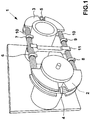
- C-cable sample bending test To create a C-cable sample (see Fig. 1 ) a cable line (10) with a line cross section of 0.35 mm 2 is wrapped 100 times around a holder (1) to form a sample line set.
- the holder (1) has two opposite, semicircular guides (2, 3) with a diameter of 120 mm, which are spaced apart by a distance (A) of about 210 mm.
- the coiled cable set is in Fig. 1 shown.
- the number of cable windings is 100.
- the result is a sample cable set with a diameter of 15 ⁇ 5 mm and a circumference of 690 mm.
- the cable bundle (10) is tied together with cable ties (4, 5, 6, 7, 8, 9) with a tensile force of 210 ⁇ 10 N at the apices of the semicircular segments and on two straight sections (legs), so that the The cable bundle (10) has sufficient rigidity after it has been removed from the holder so that it does not deform.
- a support (11) is positioned between the legs of the cable bundle and also fixed with cable ties.
- the cable bundle (10) produced in this way is removed from the holder and wrapped with the previously heated adhesive tape to be tested (width 19 mm-20 mm) with a 50% overlap.
- a cable tie e.g. 6 or (7)
- the wrapping reaches the cable tie (4) or (5) at the apex of the semicircle segment, this is removed and the wrapping continues to the next cable tie ((4) -> (8) or (5) -> (9)) of the opposite leg continued.
- the same procedure is followed on the other side, on the other semicircle segment.
- the samples prepared in this way are fed to the corresponding stiffening method (cooling to room temperature).
- the patterns are made adjacent to the Cut any existing cable ties to obtain two "C-shaped" cable patterns (C-cable patterns), each of which also has a non-wrapped section on either side of the semicircular, wrapped section.
- the cut is made at a distance of the diameter (120 mm) from the apex of the semicircle segment, projected onto the center of the circle.
- a piece of cable is used to tie loops to the leg ends of the samples so that they can be hung at one end and a weight can be hung at the other end.
- the remaining cable ties are now removed as they can falsify the test result.
- the distance between the legs is now determined.
- One of the two samples is stored at room temperature and the other at 60 ° C.
- a 1 kg weight is hung from the respective lower leg of the "C test item". After one hour, the deflection of the cable bundle is noted (deflection behavior 1 h at room temperature or 60 ° C.) and the weight is removed. The deflection is determined again after one minute (resetting behavior 1 min at RT or 60 ° C.). After one hour, the deflection is then determined again and noted (recovery behavior 1 h at room temperature or 60 ° C.).
- the determined values of the C-shape deformation were classified into three categories: well suited for the application, suitable for the application to a limited extent and not suitable for the application.
- the categories were rated as follows:
Landscapes
- Chemical & Material Sciences (AREA)
- Organic Chemistry (AREA)
- Engineering & Computer Science (AREA)
- Manufacturing & Machinery (AREA)
- Physics & Mathematics (AREA)
- Spectroscopy & Molecular Physics (AREA)
- Chemical Kinetics & Catalysis (AREA)
- Thermal Sciences (AREA)
- Adhesives Or Adhesive Processes (AREA)
- Adhesive Tapes (AREA)
Abstract
Description
- Die Erfindung betrifft ein Klebeband und ein Verfahren zum Ummanteln von langgestrecktem Gut, insbesondere Kabelsätzen.
- Seit geraumer Zeit werden in der Industrie Klebebänder zur Herstellung von Kabelbäumen verwendet. Die Klebebebänder werden zum Bündeln einer Vielzahl von elektrischen Leitungen vor dem Einbau oder in bereits montiertem Zustand eingesetzt, um beispielsweise den Raumbedarf des Leitungsbündels durch Bandagieren zu reduzieren und zusätzlich Schutzfunktionen wie Schutz gegen mechanische und/oder thermische Beanspruchung zu erreichen. Gängige Formen von Klebebändern umfassen Folienoder Textilträger, die in der Regel einseitig mit Haftklebemassen beschichtet sind. Klebebänder zum Ummanteln von langgestreckten Gütern sind beispielsweise aus der
EP 1 848 006 A2 , derDE 10 2013 213 726 A1 , und derEP 2 497 805 A1 bekannt. - Derzeitige mit Klebeband umwickelte Kabelsätze sind in der Regel flexibel. Dies ist jedoch aus fertigungstechnischen Gründen oft unerwünscht. In der Fertigung werden die Kabelstränge in der Regel zu einem Kabelplan vorgefertigt und dann in das zu bestückende Objekt wie beispielsweise Automobile eingesetzt. Ein Kabelsatzplan entspricht der tatsächlichen räumlichen Anordnung der einzelnen Kabelstränge in dem Kabelsatz, also welcher Kabelstrang an welcher Stelle in welchem Winkel gebogen ist, wo sich Positionen von Abzweigen oder Ausbindungen befinden und mit welchen Steckern die Enden der Kabelstränge belegt sind.
- Um die einzelnen Stränge des Kabelsatzes in einer bestimmten Form zu halten, so dass sie zum Beispiel im Motorraum um den Motor herumgeführt werden können, ohne mit dem Motor in Kontakt zu kommen, werden um den mit Klebeband umwickelten Kabelbaum üblicherweise nachträglich Spritzgussteile angebracht.
- Diese Spritzgussteile haben aber den Nachteil, dass ein zusätzlicher Material- und Montageaufwand anfällt.
- In der
WO 2015/004190 A1 wird ein Verfahren zum Ummanteln von langgestrecktem Gut wie insbesondere Leitungen oder Kabelsätzen offenbart, bei dem das langgestreckte Gut mit einem Klebeband mit darauf aufgebrachter aushärtbarer Klebemasse in einer Schraubenlinie oder in axialer Richtung umhüllt wird und die auf dem Klebeband aufgebrachte Klebemasse durch Zufuhr von Strahlungsenergie wie Wärme ausgehärtet wird. Zur thermischen Aushärtung wird dabei eine Temperatur von 175°C angewendet. - Nachteilig bei diesem Verfahren ist die hohe Aushärtungstemperatur, die bei der Montage von Kabelsträngen während des Fertigungsprozesses beispielsweise in der Automobilindustrie wenig praktikabel ist, insbesondere weil die oft aus PVC gefertigten Kabelisolierungen beschädigt werden können. Folglich werden bislang Kabelpläne in vorgefertigen Spritzgussformen verlegt. Dies ist mit hohem Fertigungsaufwand verbunden.
- Daher sind Klebebänder wünschenswert, deren Klebemassen bei höchstens 110°C, bevorzugt höchstens 100°C, weiter bevorzugt zwischen 60°C und 100°C aushärten oder bei dieser Temperatur verarbeitbar und nach Abkühlung rigide sind, damit die Umhüllung von Klebebändern in den Fertigungsprozess der Kabelbäume bzw. Kabelpläne integriert werden kann. Die Klebebänder müssen nach dem Aushärten die geforderten Anforderungen an Formstabilität aufweisen. Andererseits dürfen die Klebemassen nicht schon bei der Lagerung aushärten, da sie ansonsten nicht mehr verwendbar sind. Schließlich soll die Aushärtung innerhalb der Taktzeit des Herstellungsprozesses (ca. 6 Min.) stattfinden.
- Aufgabe der vorliegenden Erfindung ist es daher ein Klebeband zum Ummanteln von langgestrecktem Gut zur Verfügung zu stellen, das die oben beschriebenen Anforderungen erfüllt. Aufgabe der vorliegenden Erfindung ist es auch ein Verfahren zum Ummanteln von langgestrecktem Gut unter Verwendung des erfindungsgemäßen rigiden Klebebands sowie ein mit dem Verfahren erhältliches Produkt zur Verfügung zu stellen.
- Zur Lösung der technischen Probleme wird ein Band zum Ummanteln von langgestrecktem Gut vorgeschlagen, umfassend einen bandförmigen Träger, dadurch gekennzeichnet, dass der Bandförmige Träger auf mindestens einer Seite mit einem bei einer Temperatur von 50°C bis 100°C thermisch erweichbaren Bindemittel versehen ist, das ein Polycaprolacton umfasst.
- Gemäß einer Ausführungsform der Erfindung handelt es sich bei dem langgestreckten Gut um einen Kabelstrang, der ein Bündel aus mehreren Kabeln, wie 3 bis 1000 Kabeln, bevorzugt 10 bis 500 Kabeln, insbesondere zwischen 50 und 300 Kabeln umfasst.
- Polycaprolactone und ihre Herstellung sind in der Technik gut bekannt. Beispielsweise offenbaren die
WO 2017/155441 A1 und dieWO 2017/155442 A1 jeweils Verfahren zur Herstellung von Polycaprolactonen. Hinsichtlich der Herstellung von Polycaprolactonen wird auf diese Dokumente Bezug genommen. Bevorzugt sind Polycaprolactone mit einem mittleren Molekulargewicht (Mn) zwischen 20.000 und 150.000, bevorzugt zwischen 30.000 und 80.000, bevorzugter zwischen 30.000 und 50.000. Die Polycaprolactone haben einen Erweichungspunkt zwischen 50°C und 100°C. Bevorzugte Polycaprolactone sind beispielsweise unter dem Handelsnamen Capa™ von der Perstorp AB, Schweden erhältlich. Bevorzugte Polycaprolactone sind Capa™ 6400, Capa™ 6500, Capa™ 6800. - Das gewichtsmittlere Molekulargewicht Mw wird dabei mittels Gelpermeationschromatographie (GPC) bestimmt. Als Eluent wird THF mit 0,1 Vol.-% Trifluoressigsäure eingesetzt. Die Messung erfolgt bei 25 °C. Als Vorsäule wird PSS-SDV, 5 µ, 103 Å, ID 8,0 mm x 50 mm verwendet. Zur Auftrennung werden die Säulen PSS-SDV, 5 µ, 103 Ä sowie 105 Å und 106 Å mit jeweils ID 8,0 mm x 300 mm eingesetzt. Die Probenkonzentration beträgt 4 g/l, die Durchflussmenge 1,0 ml pro Minute. Es wird gegen PMMA Standards gemessen. (µ = µm; 1 Å = 10-10 m). Das gewichtsmittlere Molekulargewicht kann unter Kenntnis des Monomerengewichts in das Zahlenmittlere Molekulargewicht (Mn) umgerechnet werden.
- Als Träger können alle bekannten Folien und textilen Träger wie Gestricke, Gelege, Bänder, Geflechte, Nadelflortextilien, Filze, Gewebe (umfassend Leinwand-, Köper und Atlasbindung), Gewirke (umfassend Kettenwirkware und Strickware) oder Vliese verwendet werden, wobei unter "Vlies" zumindest textile Flächengebilde gemäß EN 29092 (1988) sowie Nähwirkvliese und ähnliche Systeme zu verstehen sind. Besonders vorteilhaft ist ein Klebeband, bei dem als Träger ein Gewebe, ein Vlies oder ein Gewirke eingesetzt wird. Derartige Träger sind beispielsweise in der
WO 2015/004190 A1 beschrieben, auf die hier vollständig Bezug genommen wird. - Des Weiteren können Abstandsgewebe und -gewirke mit Kaschierung verwendet werden. Derartige Abstandsgewebe werden in der
EP 0 071 212 B1 offenbart. Abstandsgewebe sind mattenförmige Schichtkörper mit einer Deckschicht aus einem Faseroder Filamentvlies, einer Unterlagsschicht und zwischen diesen Schichten vorhandene einzelne oder Büschel von Haltefasern, die über die Fläche des Schichtkörpers verteilt durch die Partikelschicht hindurchgenadelt sind und die Deckschicht und die Unterlagsschicht untereinander verbinden. - Als Vliesstoffe kommen besonders verfestigte Stapelfaservliese, jedoch auch Filament-, Meltblown sowie Spinnvliese in Frage, die meist zusätzlich zu verfestigen sind. Als mögliche Verfestigungsmethoden sind für Vliese die mechanische, die thermische sowie die chemische Verfestigung bekannt. Besonders vorteilhaft haben sich Vliese erwiesen, die insbesondere durch ein Übernähen mit separaten Fäden oder durch Vermaschen verfestigt sind. Derartige verfestigte Vliese werden beispielsweise auf Nähwirkmaschinen des Typs "Malimo" der Firma Karl Mayer, ehemals Malimo, hergestellt und sind unter anderem bei der Firma Hoftex Group AG beziehbar.
- Als Träger kann weiterhin ein Vlies vom Typ Kunit oder Multiknit verwendet werden. Ein Kunitvlies ist dadurch gekennzeichnet, dass es aus der Verarbeitung eines längsorientierten Faservlieses zu einem Flächengebilde hervorgeht, das auf einer Seite Maschen und auf der anderen Maschenstege oder Polfaser-Falten aufweist, aber weder Fäden noch vorgefertigte Flächengebilde besitzt. Auch ein derartiges Vlies wird beispielsweise auf Nähwirkmaschinen des Typs "Malimo" der Firma Karl Mayer schon seit längerer Zeit hergestellt.
- Ein Multiknitvlies ist gegenüber dem Kunitvlies dadurch gekennzeichnet, dass das Vlies durch das beidseitige Durchstechen mit Nadeln sowohl auf der Ober- als auch auf der Unterseite eine Verfestigung erfährt. Als Ausgangsprodukt für ein Multiknit dienen in der Regel ein beziehungsweise zwei nach dem Kunit-Verfahren hergestellte einseitig vermaschte Polfaser-Vlieswirkstoffe. Im Endprodukt sind beide Vliesstoffoberseiten durch Faservermaschungen zu einer geschlossenen Oberfläche geformt und durch nahezu senkrecht stehenden Fasern miteinander verbunden. Die zusätzliche Einbringbarkeit weiterer durchstechbarer Flächengebilde und/oder streufähiger Medien ist gegeben.
- Schließlich sind auch Nähvliese als Vorprodukt geeignet, einen erfindungsgemäßen Träger und ein erfindungsgemäßes Klebeband zu bilden. Ein Nähvlies wird aus einem Vliesmaterial mit einer Vielzahl parallel zueinander verlaufender Nähte gebildet. Diese Nähte entstehen durch das Einnähen oder Nähwirken von durchgehenden textilen Fäden. Für diesen Typ Vlies sind Nähwirkmaschinen des Typs "Malimo" der Firma Karl Mayer bekannt.
- Besonders geeignet sind auch Nadelvliese. Beim Nadelvlies wird ein Faserflor zu einem Flächengebilde mit Hilfe von mit Widerhaken versehenen Nadeln. Durch wechselndes Einstechen und Ausziehen der Nadeln wird das Material auf einem Nadelbalken verfestigt, wobei sich die Einzelfasern zu einem festen Flächengebilde verschlingen.
- Weiterhin besonders vorteilhaft ist ein Stapelfaservlies, das im ersten Schritt durch mechanische Bearbeitung vorverfestigt wird oder das ein Nassvlies ist, das hydrodynamisch gelegt wurde, wobei zwischen 2 Gew.-% und 50 Gew.-% der Fasern des Vlieses Schmelzfasern sind, insbesondere zwischen 5 Gew.-% und 40 Gew.-% der Fasern des Vlieses. Ein derartiges Vlies ist dadurch gekennzeichnet, dass die Fasern nass gelegt werden oder zum Beispiel ein Stapelfaservlies durch die Bildung von Maschen aus Fasern des Vlieses durch Nadelung, Vernähung, Luft und/oder Wasserstrahlbearbeitung vorverfestigt wird. In einem zweiten Schritt erfolgt die Thermofixierung, wobei die Festigkeit des Vlieses durch das Auf- oder Anschmelzen der Schmelzfasern nochmals erhöht wird.
- Vorteilhaft und zumindest bereichsweise weist der Träger eine ein- oder beidseitig glattgeschliffene Oberfläche auf, vorzugsweise jeweils eine vollflächig glattgeschliffene Oberfläche. Die glattgeschliffene Oberfläche mag gechintzt sein, wie es beispielsweise in der
EP 1 448 744 A1 erläutert wird. Auf diese Weise wird die Abweisbarkeit von Schmutz verbessert. - Als Ausgangsmaterialien für den Träger sind insbesondere (Chemie-)Fasern (Stapelfaser oder Endlosfilament) aus synthetischen Polymeren, auch synthetische Fasern genannt, aus Polyester wie Polyethylenterephthalat, Polyamid, Polyimid, Aramid, Polyolefin, Polyacrylnitril oder Glas, (Chemie)Fasern aus natürlichen Polymeren wie zellulosische Fasern (Viskose, Modal, Lyocell, Cupro, Acetat, Triacetat, Cellulon), wie Gummifasern, wie Pflanzeneiweißfasern und/oder wie Tiereiweißfasern und/oder natürliche Fasern aus Baumwolle, Sisal, Flachs, Seide, Hanf, Leinen, Kokos oder Wolle vorgesehen. Die vorliegende Erfindung ist aber nicht auf die genannten Materialien beschränkt, sondern es können, für den Fachmann erkenntlich ohne erfinderisch tätig werden zu müssen, eine Vielzahl weiterer Fasern zur Herstellung des Vlieses eingesetzt werden.
- Des Weiteren sind Garne, gefertigt aus den angegebenen Rohstoffen, ebenfalls geeignet. Bei Geweben oder Gelegen können einzelne Fäden aus einem Mischgarn hergestellt werden, also synthetische und natürliche Bestandteile aufweisen. In der Regel sind die Kettfäden und die Schussfäden jedoch jeweils sortenrein ausgebildet.
- Bevorzugt wird als Material für den Träger Polyester verwendet, aufgrund der hervorragenden Alterungsbeständigkeit und der hervorragenden Medienbeständigkeit gegenüber Chemikalien und Betriebsmitteln wie Öl, Benzin, Frostschutzmittel u.ä. Darüber hinaus hat Polyester den Vorteil, dass sie zu einem sehr abriebfesten und temperaturbeständigen Träger führen, was für den speziellen Einsatzzweck zur Bündelung von Kabeln in Automobilen und beispielsweise im Motorraum von besonderer Wichtigkeit ist.
- Vorteilhaft liegt das Flächengewicht des textilen Trägers zwischen 30 g/m2 und 300 g/m2, weiter vorteilhaft zwischen 50 g/m2 und 200 g/m2, besonders vorteilhaft zwischen 50 g/m2 und 150 g/m2, ganz besonders vorteilhaft zwischen 70 g/m2 und 130 g/m2.
- Gemäß einer besonders vorteilhaften Ausführungsform der Erfindung werden als Träger ein Gewebe oder ein Vlies aus Polyester eingesetzt, die ein Flächengewicht zwischen 50 g/m2 und 150 g/m2 aufweisen.
- Gemäß einer Ausführungsform der Erfindung umfasst das Band mit dem Polycaprolacton enthaltenden Bindemittel zusätzlich noch ein Haftklebstoff, so dass das Band nach dem Umwickeln und vor dem Aushärten auf dem langgestreckten Gut fixiert ist.
- Der Haftklebstoff ist eine Haftklebemasse, also eine Klebemasse, die bereits unter relativ schwachem Andruck eine dauerhafte Verbindung mit fast allen Haftgründen erlaubt und nach Gebrauch im Wesentlichen rückstandsfrei vom Haftgrund wieder abgelöst werden kann. Eine Haftklebemasse wirkt bei Raumtemperatur permanent haftklebrig, weist also eine hinreichend geringe Viskosität und eine hohe Anfassklebrigkeit auf, so dass sie die Oberfläche des jeweiligen Klebegrunds bereits bei geringem Andruck benetzt. Die Verklebbarkeit der Klebemasse beruht auf ihren adhäsiven Eigenschaften und die Wiederablösbarkeit auf ihren kohäsiven Eigenschaften.
- Erfindungsgemäß wird als Haftklebstoff eine Strukturklebemasse (Konstruktionsklebstoff, Montageklebstoff) verwendet (siehe Römpp, Georg Thieme Verlag, Dokumentkennung RD-19-04489, letzte Aktualisierung: September 2012). Nach DIN EN 923: 2006-01 sind Strukturklebstoffe Klebstoffe, die Klebverbindungen bilden, die in einem Gefüge für eine vorgegebene längere Zeitspanne eine festgelegte Festigkeit beibehalten können (nach ASTM-Definition: "bonding agents used for transferring required loads between adherends exposed to Service environments typical for the structure involved"). Es sind also Klebstoffe für chemisch und physikalisch hoch beanspruchbare Klebungen, die im ausgehärteten Zustand zur Verfestigung der geklebten Substrate beitragen und zur Herstellung von Konstruktionen aus Metallen, Keramik, Beton, Holz oder verstärkten Kunststoffen verwendet werden. Die erfindungsgemäßen Strukturklebstoffe basieren insbesondere auf Reaktionsklebstoffen (Phenolharze, Epoxidharze, Polyimide, Polyurethane und andere).
- Die Klebemasse kann nach dem Aushärten elastisch sein, um eine dauerhafte, gegen Schwingungen und Verwindungen unempfindliche Ummantelung sicherzustellen.
- Bevorzugt sind Haftklebstoffe, wie sie in den veröffentlichten europäischen Patentanmeldungen
EP 2 520 627 A1 ,EP 2 522 705 A1 ,EP 2 520 628 A1 ,EP 2 695 926 A1 ,EP 2 520 629 A1 undEP 3 433 330 A1 beschrieben werden, auf die hier diesbezüglich Bezug genommen wird. - Gemäß einer ersten Ausführungsform liegt die Haftklebemasse in Form einer getrockneten Polymerdispersion vor, wobei das Polymer aufgebaut ist aus: 5 bis 25 Gew.-%, vorzugsweise 10 bis 22 Gew.-% Ethylen, 30 bis 69 Gew.-%, vorzugsweise 40 bis 60 Gew.-% Alkylacrylatester mit C4- bis C12-Alkylresten, 20 bis 55 Gew.-%, vorzugsweise 28 bis 38 Gew.-% Vinylacetat, 0 bis 10 Gew.-% andere ethylenisch ungesättigte Verbindungen und die Haftklebemasse zwischen 15 und 100 Gewichtsteile eines Klebrigmachers (bezogen auf die Masse der getrockneten Polymerdispersion) enthält, wie in
EP 2 520 627 A1 beschrieben. Bevorzugt handelt es sich bei dem Alkylacrylatester um n-Butylacrylat und/oder 2-Ethylhexyl-acrylat. Andere ethylenisch ungesättigte Verbindungen umfassen Alkyl(meth)acrylate, bevorzugt C1- bis C20-Alkyl(meth)acrylate mit Ausnahme der die Alkylacrylatester mit C4- bis C12-Alkylresten bildenden Monomere, aromatische Vinylmonomere wie Styrol, α-Methylstyrol und Vinyltoluol, C1- bis C10-Hydroxyalkyl(meth)acrylate wie insbesondere Hydroxyethyl- oder Hydroxypropyl(meth)acrylat, Vinylester aus bis zu 20 Kohlenstoffatomen enthaltenden Carbonsäuren wie Vinyllaurat, Vinylether aus bis zu 10 Kohlenstoffatomen enthaltenden Alkoholen wie Vinylmethylether oder Vinylisobutylether, Vinylhalogenide wie Vinylchlorid oder Vinylidendichlorid, Säureamide wie Acrylamid oder Methacrylamid und ungesättigte Kohlenwasserstoffe mit 3 bis 8 Kohlenstoffatomen wie Propen, Butadien, Isopren, 1-Hexen oder 1-Octen oder deren Mischungen. Darüber hinaus können dem Polymer als Monomer weiterhin vorteilhafterweise ein di- oder mehrfunktionelles Monomer zugesetzt sein, und zwar vorzugsweise zu 0 bis 2 Gew.-% und besonders vorzugsweise zu 0 bis 1 Gew.-%. Beispiele für mehrfunktionale ethylenisch ungesättigte Monomere (e) sind Divinylbenzol, Alkyldiacrylate wie 1,2-Ethylenglykoldiacrylat, 1,4-Butandioldiacrylat, 1,6-Hexandioldiacrylat, 1,8-Octandioldiacrylat oder 1,12-Dodecandioldiacrylat, Triacrylate wie Trimethylolpropantri-acrylat und Tetraacrylate wie Pentaerythritoltetraacrylat. Die Polymerdispersion wird hergestellt durch das Verfahren der Emulsionspolymerisation der genannten Komponenten. Besonders bevorzugte Ausführungsformen und ausführliche Beschreibungen der Einsatzstoffe sowie der Herstellungsverfahren findet man inEP 0 017 986 B1 sowieEP 0 185 356 B1 . - Gemäß einer weiteren Ausführungsform liegt die Haftklebemasse in Form einer getrockneten Polymerdispersion vor, wobei das Polymer aufgebaut ist aus: (a) 90 bis 99 Gew.-% n-Butylacrylat und/oder 2-Ethylhexylacrylat, bevorzugt 2-Ethylhexylacrylat, (b) 0 bis 10 Gew.-% eines ethylenisch ungesättigten Monomers mit einer Säure- oder Säureanhydridfunktion, (c) 10 bis 1 Gew.-% eines oder mehreren von (a) und (b) verschiedenen ethylenisch ungesättigten monofunktionellen Monomeren, wie Acrylnitril und/oder Methacrylnitril, (d) 0 bis 1 Gew.-% eines di-oder mehrfunktionellen Monomers und die Haftklebemasse zwischen 15 und 100 Gewichtsteile eines Klebrigmachers (bezogen auf die Masse der getrockneten Polymerdispersion) enthält, wie in
EP 2 522 705 A1 beschrieben. Eine besonders bevorzugte Ausführungsform der Erfindung umfasst also eine Mischung aus 2-Ethylhexylacrylat als Monomer (a) und Acrylnitril als Monomer (c). Als Monomer (b) kommen vorteilhaft in Betracht zum Beispiel Acrylsäure, Methacrylsäure, Itaconsäure, Maleinsäure, Fumarsäure und/oder Maleinsäureanhydrid. Bevorzugt sind Acrylsäure oder Methacrylsäure, gegebenenfalls die Mischung aus beiden. Beispiele für mehrfunktionale ethylenisch ungesättigte Monomere (d) sind Divinylbenzol, Alkyldiacrylate wie 1,2-Ethylenglykoldiacrylat, 1,4-Butandioldiacrylat, 1,6-Hexandioldiacrylat, 1,8-Octandioldiacrylat oder 1,12-Dodecandioldiacrylat, Triacrylate wie Trimethylolpropantriacrylat und Tetraacrylate wie Pentaerythritoltetraacrylat. Die Polymerdispersion wird hergestellt durch das Verfahren der Emulsionspolymerisation der genannten Komponenten. Beschreibungen dieses Verfahrens werden zum Beispiel gegeben in derEP 1 378 527 B1 beschrieben. - Gemäß einer weiteren Ausführungsform liegt die Haftklebemasse in Form einer getrockneten Polymerdispersion vor, wobei das Polymer aufgebaut ist aus: (a) 40 bis 90 Gew.-% n-Butylacrylat und/oder 2-Ethylhexylacrylat, bevorzugt (b) 2-Ethylhexylacrylat, 0 bis 10 Gew.-% eines ethylenisch ungesättigten Monomers mit einer Säure- oder Säureanhydridfunktion, (c) 60 bis 10 Gew.-% eines oder mehreren von (a) und (b) verschiedenen ethylenisch ungesättigten monofunktionellen Monomeren, (d) 0 bis 1 Gew.-% eines di- oder mehrfunktionellen Monomers und die Haftklebemasse zwischen 15 und 100 Gewichtsteile eines Klebrigmachers (bezogen auf die Masse der getrockneten Polymerdispersion) enthält, wie in
EP 2 520 628 A1 beschrieben. Als Monomer (b) kommen vorteilhaft in Betracht zum Beispiel Acrylsäure, Methacrylsäure, Itaconsäure, Maleinsäure, Fumarsäure und/oder Maleinsäureanhydrid. Bevorzugt sind Acrylsäure oder Methacrylsäure, gegebenenfalls die Mischung aus beiden. Unter Monomere (c) fallen Alkyl(meth)acrylate, bevorzugt C1- bis C20-Alkyl (meth) acrylate mit Ausnahme der (a) bildenden Monomere, aromatische Vinylmonomere wie Styrol, α-Methylstyrol und Vinyltoluol, C1- bis C10-Hydroxyalkyl-(meth)acrylate wie insbesondere Hydroxyethyl- oder Hydroxypropyl(meth)acrylat, Vinylester aus bis zu 20 Kohlenstoffatomen enthaltenden Carbonsäuren wie Vinylacetat oder Vinyllaurat, Vinylether aus bis zu 10 Kohlenstoffatomen enthaltenden Alkoholen wie Vinylmethylether oder Vinylisobutylether, Vinylhalogenide wie Vinylchlorid oder Vinylidendichlorid, Säureamide wie Acrylamid oder Methacrylamid und ungesättigte Kohlenwasserstoffe mit 2 bis 8 Kohlenstoffatomen wie Ethylen, Propen, Butadien, Isopren, 1-Hexen oder 1-Octen. Erfindungsgemäß besonders bevorzugt ist Ethylacrylat. Beispiele für mehrfunktionale ethylenisch ungesättigte Monomere (d) sind Divinylbenzol, Alkyldiacrylate wie 1,2-Ethylenglykoldiacrylat, 1,4-Butandioldiacrylat, 1,6-Hexandioldiacrylat, 1,8-Octandioldiacrylat oder 1,12-Dodecandioldiacrylat, Triacrylate wie Trimethylolpropantriacrylat und Tetraacrylate wie Pentaerythritoltetraacrylat. Die Polymerdispersion wird hergestellt durch das Verfahren der Emulsionspolymerisation der genannten Komponenten. Beschreibungen dieses Verfahrens werden zum Beispiel gegeben in derEP 1 378 527 B1 beschrieben. - Gemäß einer weiteren Ausführungsform liegt die Haftklebemasse in Form einer getrockneten und Elektronenstrahl (ESH) vernetzten polymeren Acrylatdispersion, insbesondere einer wässrigen Acrylatdisperion, bevorzugt mit einem Gelwert von größer gleich 40 %, bestimmt mittels Soxhlet-Extraktion, wobei die polymere Acrylatdispersion Polymere umfasst, die aufgebaut sind aus (a) monomeren Acrylaten und optional (b) ethylenisch ungesättigten Comonomeren, die keine Acrylate sind, wobei die Haftklebemasse zwischen 15 und 100 Gewichtsteile eines Klebrigmachers (bezogen auf die Masse der getrockneten polymeren Dispersion) enthält, wie in
EP 2 695 926 A1 beschrieben. - Gemäß einer weiteren Ausführungsform weist die Haftklebemasse eine Scherviskosität ei einer Temperatur von 25°C während der Beschichtung aus Dispersion 200 bis 100.000 Pa·s bei einer Schergeschwindigkeit von 10-2 s-1 und 0,1 bis 10 Pa·s bei einer Schergeschwindigkeit von 100 s-1 auf. Die Haftklebemasse besteht vorzugsweise aus einer wässrigen Acrylatdispersion, also einem in Wasser fein dispergierten Polyacrylsäureester mit Haftklebeeigenschaften, wie sie zum Beispiel im Handbook of Pressure Sensitive Technology von D. Satas beschrieben sind. Acrylathaftklebemassen sind typischerweise radikalisch polymerisierte Copolymere aus Acrylsäurealkylestern oder Methacrylsäurealkylestern von C1- bis C20-Alkoholen wie zum Beispiel Methylacrylat, Ethyl(meth)acrylat, n-Butyl(meth)acrylat, t-Butyl(meth)acrylat, Cyclohexyl(meth)acrylat, 2-Ethylhexyl(meth)acrylat, n-Octyl(meth)acrylat, iso-Octyl(meth)-acrylat, n-Decyl(meth)acrylat, n-Dodecyl(meth)acrylat, Tetradecyl-(meth)acrylat, Lauryl(meth)acrylat, Oleyl(meth)acrylat, Palmityl-(meth)acrylat und Stearyl(meth)acrylat neben weiteren (Meth)acrylsäureestern wie Isobornyl(meth)acrylat, Benzyl(meth)-acrylat, Phenyl(meth)acrylat und 2-Bromoethyl(meth)acrylat, Alkoxyalkyl(meth)acrylate wie Ethoxyethyl(meth)acrylat. Weiterhin fallen darunter Ester von ethylenisch ungesättigten Di- und Tricarbonsäuren und Anhydriden wie Ethylmaleat, Dimethylfumarat und Ethyl-methylitaconat. Ebenfalls fallen vinylaromatische Monomere wie zum Beispiel Styrol, Vinyltoluol, Methylstyrol, n-Butylstyrol, Decylstyrol darunter, wie in der
EP 2 520 629 A1 beschrieben. - Gemäß einer weiteren Ausführungsform liegt die Haftklebemasse in Form einer getrockneten Polymerdispersion vor, wobei das Polymer aufgebaut ist aus: (a) 95,0 bis 100,0 Gew.-% n-Butylacrylat und/oder 2-Ethylhexylacrylat und (b) 0,0 bis 5,0 Gew.-% eines ethylenisch ungesättigten Monomers mit einer Säure- oder Säureanhydridfunktion, wie in der
EP 2 433 330 A1 beschrieben. Vorzugsweise besteht das Polymer aus 95,0 bis 99,5 Gew.-% n-Butylacrylat und/oder 2-Ethylhexylacrylat und 0,5 bis 5 Gew.-% eines ethylenisch ungesättigten Monomers mit einer Säure- oder Säureanhydridfunktion, weiter vorzugsweise aus 98,0 bis 99,0 Gew.-% n-Butylacrylat und/oder 2-Ethylhexylacrylat und 1,0 bis 2,0 Gew.-% eines ethylenisch ungesättigten Monomers mit einer Säure- oder Säureanhydridfunktion. Neben den aufgeführten Acrylatpolymeren können der Haftklebemasse neben gegebenenfalls vorhandenen Restmonomeren zusätzlich die weiter unten erwähnten Klebrigmacher und/oder Zuschlagstoffe wie Lichtschutz- oder Alterungsschutzmitteln in den ebenfalls unten genannten Mengen zugesetzt werden. Insbesondere sind keine weiteren Polymere wie Elastomere in der Haftklebemasse enthalten, das heißt, das die Polymere der Haftklebemasse bestehen nur aus den Monomeren (a) und (b) in den angegebenen Mengenverhältnissen. - Gemäß einer weiteren Ausführungsform liegt die Haftklebemasse in Form einer getrockneten und Polymerdispersion vor, wobei das Polymer aufgebaut ist aus: (a) 97,0 bis 98,0 Gew.-% n-Butylacrylat und/oder 2-Ethylhexylacrylat, (b) 2,0 bis 3,0 Gew.-% eines ethylenisch ungesättigten Monomers mit einer Säure- oder Säureanhydridfunktion. Vorzugsweise besteht das Polymer aus 97,2 bis 97,7 Gew.-% n-Butylacrylat und/oder 2-Ethylhexylacrylat, bevorzugt n-Butylacrylat, und 2,3 bis 2,8 Gew.-% eines ethylenisch ungesättigten Monomers mit einer Säure- oder Säureanhydridfunktion. Als Monomer (b) kommen vorteilhaft in Betracht zum Beispiel Acrylsäure, Methacrylsäure, Itaconsäure, Maleinsäure, Fumarsäure und/oder Maleinsäureanhydrid.
- Gemäß einer weiteren Ausführungsform sind die Haftklebemassen verntzerfrei. "Vernetzerfrei" im Sinne dieser Erfindung bedeutet, dass der Haftklebemasse keine zur Vernetzung befähigten Verbindungen zugesetzt werden. Wie hier verwendet, steht der Begriff Vernetzer für chemische Verbindungen, die imstande sind, Molekülketten miteinander zu verbinden, damit sich aus den zweidimensionalen Strukturen über Ausbildung intermolekularer Brücken dreidimensional-vernetzte Strukturen bilden können. Vernetzer sind solche - insbesondere bi- oder polyfunktionelle, meist niedermolekulare - Verbindungen, die unter den gewählten Vernetzungsbedingungen mit geeigneten - insbesondere funktionellen - Gruppen der zu vernetzenden Polymere reagieren können, somit zwei oder mehrere Polymere oder Polymerstellen miteinander verknüpfen ("Brücken" bilden) und somit ein Netzwerk aus dem zu vernetzenden Polymer beziehungsweise den zu vernetzenden Polymeren schaffen. Hierdurch kommt es in der Regel zur Kohäsionserhöhung. Typische Beispiele für Vernetzer sind chemische Verbindungen, die innerhalb des Moleküls oder an den beiden Molekülenden zwei oder mehr gleiche oder unterschiedliche funktionelle Gruppen aufweisen und folglich Moleküle gleicher oder auch unterschiedlicher Strukturen miteinander vernetzen können. Außerdem kann ein Vernetzer mit dem reaktiven Monomer oder Reaktivharz, wie oben definiert, reagieren, ohne dass es dabei zu einer Polymerisation im eigentlichen Sinne kommt. Denn im Gegensatz zum Aktivator, wie oben beschrieben, kann ein Vernetzer in das Polymer-Netzwerk eingebaut werden.
- Vorteilhaft liegt der Masseauftrag des auf den Träger aufgebrachten und/oder in den Träger eingebrachten Bindemittels zwischen 30 g/m2 und 300 g/m2, weiter vorteilhaft zwischen 40 g/m2 und 200 g/m2, besonders vorteilhaft zwischen 50 g/m2 und 200 g/m2.
- Das Einbringen in den Träger, insbesondere in einen Vlies- oder Gewebeträger kann beispielsweise durch Tränken des Trägers mit der UV-härtbaren Zusammensetzung erfolgen.
- Besonders bevorzugt ist ferner die Variante der Erfindung, bei der der Haftklebemasse keinerlei Klebharze zugesetzt sind.
- Die Klebemasse und das Bindemittel werden bevorzugt in separaten Arbeitsgängen aufgetragen.
- Das fertig beschichtete Material wird vorzugsweise in eine Breite von 20±2 mm (jede andere Breite ist ebenfalls denkbar) geschnitten und spiralförmig mit einer Überlappung von 50% um das in Form gebrachte Kabelbündel gewickelt. Für die Erweichung des Polycaprolactons ist eine Temperaturbeaufschlagung von 60°C bis 100°C für etwa 10 Sek. bis 4 Min. nötig. Die Temperaturbeaufschlagung kann durch Heißluftfön, IR-Strahler, Ofen, Heizmanschette, o.ä. erfolgen.
- Gemäß einer bevorzugten Ausführungsform der Erfindung ist das Bindemittel nach dem Aufbringen auf den Träger zu mehr als 10%, vorzugsweise zu mehr als 25%, weiter vorzugsweise zu mehr als 50% in den Träger eingesunken. Ein Zahlenwert von beispielsweise 25% bedeutet dabei, dass die Klebemasse über eine Schichtdicke von 25% der Dicke des textilen Trägers eingedrungen ist, also bei einem Träger mit einer Dicke von 100 µm über eine Schichtdicke von 25 µm innerhalb des Trägers, und zwar beginnend von der Fläche des Trägers, auf der die Klebemasse beschichtet ist, und in senkrechter Richtung zu der von der Längs-beziehungsweise Quererrichtung aufgespannten Ebene.
- Gegenstand der vorliegenden Erfindung ist auch ein Verfahren zum Ummanteln von langgestrecktem Gut wie insbesondere Leitungen oder Kabelsätzen, wobei ein beschichtetes Band gemäß einem der vorangehenden Ansprüche durch die Zufuhr von Wärme bei einer Temperatur zwischen 60°C und 100°C erweicht wird und anschließend in einer Schraubenlinie um das langgestreckte Gut geführt wird oder das langgestreckte Gut in axialer Richtung von dem Klebeband umhüllt wird, das langgestreckte Gut mitsamt dem umhüllenden Klebeband in die gewünschte Anordnung, insbesondere in den Kabelsatzplan gebracht wird, das langgestreckte Gut in dieser Anordnung gehalten wird, bis sich das Klebeband durch Abkühlen wieder verfestigt hat.
- Gemäß einer Ausführungsform der Erfindung wird die thermische Energie über einen Zeitraum von 10 Sek. bis 2 Min. zugeführt, der mit den Taktzeiten des Fertigungsprozesses kompatibel ist, so dass das langgestreckte Gut nach etwa 6 Min. vollständig ausgehärtet ist, sobald es im Zielobjekt wie Automobilen, Wasserfahrzeugen oder Flugzeugen verbaut wird.
- Gemäß einer weiteren Ausführungsform der Erfindung wird die thermische Energie dem Band zugeführt und das Band bei einem gewünschten Temperaturbereich gehalten, bis es um das langgestreckte Gut geführt ist und/oder bis es das langgestreckte Gut ummantelt.
- Das Band wird vorzugsweise spiralförmig mit einer Überlappung von 30% bis 70%, bevorzugter 40 bis 50%, insbesondere etwa 50% um das langgestreckte Gut umwickelt.
- Schließlich bezieht sich die vorliegende Erfindung auch auf einen mit dem erfindungsgemäßen, gehärteten Klebeband ummantelten Kabelstrang und auf einen nach dem erfindungsmäßen Verfahren hergestellten Kabelstrang.
- Ein 20 mm breiter und 100 µm dicker PET Gewebeträger mit einem Flächengewicht von 130 g/m2 wurde mit Polycaprolacton Capa™ 6400 in einem Einschneckenextruder mittel Temperaturprofil von 85°C bis 100°C abgelegt und in einem Kalanderspalt in den Gewebeträger hineingedrückt. Mit Hilfe einer auf 20°C temperierten Walze wird das Materials auf Raumtemperatur gekühlt und anschließend zu einem Ballen gewickelt.
- Ein Prüfmuster, bestehend aus 250 Einzelleitungen mit einem Leitungsquerschnitt von 0,35 mm2, wurde mithilfe eines 9 mm breiten Klebebandes (tesa 51618) zu einem Musterleitungssatz gebündelt, so dass der Musterleitungssatz einen Durchmesser von 23±5 mm und eine Länge von 300±50 mm aufwies. Dieser Musterleitungssatz wurde mit dem erwärmten versteifenden Material aus Beispiel 1 spiralförmig umwickelt, wobei ein Überlapp von 50% gewährleistet wurde. Anschließend wurde das versteifende Material auf Raumtemperatur abkühlen gelassen.
- Der gehärtete Musterleitungssatz wurde einer Biegeprüfung unterzogen, um den Einfluss des versteifenden Materials auf die Steifigkeit zu bestimmen. Die Biegeprüfung wurde an einer Zugprüfmaschine vorgenommen. Dafür wurde der Musterleitungssatz auf zwei Backen mit einem Abstand von 70 mm gelegt und mittig mit einer Druckfinne um einen Weg von 30 mm eingedrückt und belastet. Die für die Verformung des Messwegs nötige Kraft wurde von einer Zugprüfmaschine in Newton aufgezeichnet. Die Prüfgeschwindigkeit betrug 100 mm/min, sowohl bei der Belastung, als auch bei der Entlastung des Musterleitungssatzes. Die Prüfung wurde an 3 verschiedenen Stellen des Leitungssatzes (Anfang, Mitte und Ende) durchgeführt. Die Biegekraft resultiert aus dem Mittelwert der drei Einzelmessungen und wurde in drei Kategorien wie folgt bewertet:
-
- +
- gut geeignet für die Anwendung (500-750 N)
- ○
- eingeschränkt geeignet für die Anwendung (400-500 N und 700-800 N)
- -
- nicht geeignet für die Anwendung (<400 und >800 N)
- Zum Vergleich wurde ein kommerziell erhältliches Klebeband, tesa® 51036, dem gleichen Versuch unterworfen. Die Ergebnisse sind in der nachfolgenden Tabelle 1 aufgeführt.
- Zur Ermittlung der Steifigkeit eines gebogenen Kabelmusters wurde ein Testverfahren entwickelt (C-Kabelmuster-Biegeprüfung). Zur Herstellung eines C-Kabelmusters (siehe
Fig. 1 ) wird eine Kabelleitung (10) mit einem Leitungsquerschnitt von 0,35 mm2 100 mal um eine Halterung (1) zu einem Musterleitungssatz gewickelt. Die Halterung (1) weist zwei gegenüberliegende, halbkreisförmige Führungen (2, 3) mit einem Durchmesser von 120 mm auf, die mit einem Abstand (A) von etwa 210 mm beabstandet sind. Der gewickelte Kabelsatz ist inFig. 1 dargestellt. - Die Zahl der Kabelwicklungen beträgt 100. Es entsteht ein Musterleitungssatz mit einem Durchmesser von 15±5 mm und einem Umfang von 690 mm. An den Apizes der Halbkreissegmente und an jeweils zwei Geradenabschnitten (Schenkeln) wird das Kabelbündel (10) mit Kabelbindern (4, 5, 6, 7, 8, 9) mit einer Zugkraft von 210±10 N zusammengeschnürt und fixiert, so dass das das Kabelbündel (10) nach Herausnahme aus der Halterung eine ausreichende Steifigkeit besitzt, um sich nicht zu verformen. Um sie Steifigkeit des Kabelbündels (10) weiter zu verbessern, wird zwischen den Schenkeln des Kabelbündels eine Stütze (11) positioniert und ebenfalls mit Kabelbindern fixiert.
- Das so hergestellte Kabelbündel (10) wird aus der Halterung herausgenommen und mit dem zu prüfenden und zuvor erwärmten Klebeband (Breite 19 mm-20 mm) mit einer 50%igen Überlappung umwickelt. Dazu wird mit der Umwicklung an einem Kabelbinder (z.B. 6 oder (7)) des Schenkels in Richtung Kreissegment ((6)->(4) oder (7)->(5)) begonnen. Wenn die Umwicklung den Kabelbinder (4) bzw. (5) am Apex des Halbkreissegments erreicht, wird dieser entfernt und die Wicklung bis zum nächsten Kabelbinder ((4)->(8) bzw. (5)->(9)) des gegenüberliegenden Schenkels fortgeführt. Genauso wird auch an der anderen Seite, am anderen Halbkreissegment verfahren.
- Die so präparierten Muster werden der entsprechenden Versteifungsmethode (Abkühlung auf Raumtemperatur) zugeführt. Mit einem Seitenschneider werden die Muster, benachbart zu den noch vorhandenen Kabelbindern geschnitten, um zwei "C-förmige" Kabelmuster (C-Kabelmuster) zu erhalten, die an beiden Seiten des halbkreisförmigen, umwickelten Abschnitts jeweils auch einen nicht umwickelten Abschnitt aufweisen. Der Schnitt erfolgt im Abstand des Durchmessers (120 mm) vom Apex des Halbkreissegments, projiziert auf die Kreismitte.
- Mit je einem Stück Kabel werden Schlaufen an die Schenkelenden der Muster gebunden, damit sie an dem einen Ende aufgehängt und am anderen Ende ein Gewicht angehängt werden kann. Die verbliebenen Kabelbinder werden jetzt entfernt, da sie das Prüfergebnis verfälschen können. Der Abstand zwischen den Schenkeln wird nun bestimmt.
- Eines der beiden Muster wird unter Raumtemperatur gelagert und das andere bei 60°C.
- An den jeweiligen unteren Schenkel des "C-Prüflings" wird ein 1 kg-Gewicht gehängt. Nach einer Stunde wird die Auslenkung des Kabelbündels notiert (Auslenkverhalten 1 h bei RT bzw. 60°C) und das Gewicht entfernt. Nach einer Minute wird die Auslenkung erneut bestimmt (Rückstellverhalten 1 min bei RT bzw. 60°C). Nach einer Stunde wird die Auslenkung dann wieder bestimmt und notiert (Rückstellverhalten 1 h bei RT bzw. 60°C) .
- Die ermittelten Werte der C-Form-Verformung wurden in drei Kategorien eingestuft, gut geeignet für die Anwendung, eingeschränkt geeignet für die Anwendung und nicht geeignet für die Anwendung. Die Kategorien wurden wie folgt bewertet:
-
- +
- gut geeignet für die Anwendung (< 15% Auslenkung)
- ○
- eingeschränkt geeignet für die Anwendung (>15-30%)
- -
- nicht geeignet für die Anwendung (>30%)
-
- +
- gut geeignet für die Anwendung (< 25% Auslenkung)
- ○
- eingeschränkt geeignet für die Anwendung (>25-40%)
- -
- nicht geeignet für die Anwendung (>40%)
-
- +
- gut geeignet für die Anwendung (< 10% Auslenkung)
- ○
- eingeschränkt geeignet für die Anwendung (10-30%)
- -
- nicht geeignet für die Anwendung (>30%)
- Zum Vergleich wurde ein kommerziell erhältliches Klebeband, tesa® 51036, dem gleichen Versuch unterworfen. Die Ergebnisse sind ebenfalls in der nachfolgenden Tabelle 1 aufgeführt.

-
- +
- gut geeignet für die Anwendung
- o
- eingeschränkt geeignet für die Anwendung
- -
- nicht geeignet für die Anwendung
Claims (10)
- Band zum Ummanteln von langgestrecktem Gut, umfassend einen bandförmigen Träger, dadurch gekennzeichnet, dass der bandförmige Träger auf mindestens einer Seite mit einem bei einer Temperatur von 50°C bis 100°C thermisch erweichbaren Bindemittel versehen ist, das ein Polycaprolacton umfasst.
- Band nach Anspruch 1 dadurch gekennzeichnet, dass das Polycaprolacton ein mittleres Molekulargewicht (Mn) zwischen 20.000 und 150.000 aufweist
- Band nach Anspruch 2, dadurch gekennzeichnet, dass das Polycaprolacton ein mittleres Molekulargewicht (Mn) zwischen 30.000 und 80.000 aufweist.
- Band nach einem der vorangehenden Ansprüche, dadurch gekennzeichnet, dass das Band zusätzlich noch einen Haftklebstoff umfasst.
- Band nach einem der vorangehenden Ansprüche, dadurch gekennzeichnet, dass das Trägermaterial ein Polyestervlies umfasst.
- Band nach einem der vorangehenden Ansprüche, dadurch gekennzeichnet, dass das Bindemittel zu mehr als 10%, in den Träger eingesunken ist.
- Verfahren zum Ummanteln von langgestrecktem Gut wie insbesondere Leitungen oder Kabelsätzen, wobei ein beschichtetes Band gemäß einem der vorangehenden Ansprüche durch die Zufuhr von Wärme bei einer Temperatur zwischen 60°C und 100°C erweicht wird und anschließend in einer Schraubenlinie um das langgestreckte Gut geführt wird oder das langgestreckte Gut in axialer Richtung von dem Klebeband umhüllt wird, das langgestreckte Gut mitsamt dem umhüllenden Klebeband in die gewünschte Anordnung, insbesondere in den Kabelsatzplan gebracht wird, das langgestreckte Gut in dieser Anordnung gehalten wird, bis sich das Klebeband durch Abkühlen wieder verfestigt hat.
- Verfahren nach Anspruch 7, dadurch gekennzeichnet, dass die aushärtbare Klebemasse durch die Zufuhr von thermischer Energie bei einer Temperatur von 50°C bis 100°C erweicht wird.
- Verfahren nach Anspruch 8, dadurch gekennzeichnet, dass die thermische Energie über einen Zeitraum von 0,5 Sek. bis 2 Min. zugeführt wird.
- Kabelstrang, der mit einem Klebeband gemäß einem der Ansprüche 1 bis 6 ummantelt ist oder nach einem Verfahren gemäß einem der Patentansprüche 7 bis 9 herstellbar ist.
Applications Claiming Priority (1)
| Application Number | Priority Date | Filing Date | Title |
|---|---|---|---|
| DE102019103123.0A DE102019103123A1 (de) | 2019-02-08 | 2019-02-08 | Thermisch erweichbares Klebeband und Verfahren zum Ummanteln von langgestrecktem Gut insbesondere Leitungen |
Publications (2)
| Publication Number | Publication Date |
|---|---|
| EP3693430A1 true EP3693430A1 (de) | 2020-08-12 |
| EP3693430B1 EP3693430B1 (de) | 2024-07-24 |
Family
ID=69528582
Family Applications (1)
| Application Number | Title | Priority Date | Filing Date |
|---|---|---|---|
| EP20156125.5A Active EP3693430B1 (de) | 2019-02-08 | 2020-02-07 | Verfahren zum ummanteln von langestrecktem gut, insbesondere leitungen |
Country Status (4)
| Country | Link |
|---|---|
| US (1) | US11680189B2 (de) |
| EP (1) | EP3693430B1 (de) |
| CN (1) | CN111548745B (de) |
| DE (1) | DE102019103123A1 (de) |
Families Citing this family (2)
| Publication number | Priority date | Publication date | Assignee | Title |
|---|---|---|---|---|
| EP4017927A1 (de) * | 2019-08-23 | 2022-06-29 | tesa SE | Thermisch erweichbares band und verfahren zum ummanteln von langgestrecktem gut insbesondere leitungen |
| CN113964753B (zh) * | 2021-11-11 | 2023-01-31 | 芜湖天海电装有限公司 | 一种整车线束波纹管双向花缠工艺 |
Citations (23)
| Publication number | Priority date | Publication date | Assignee | Title |
|---|---|---|---|---|
| EP0017986B1 (de) | 1979-04-19 | 1982-12-15 | Wacker-Chemie GmbH | Copolymerisate von Acrylestern, Vinylacetat und Äthylen, Verfahren zu deren Herstellung und deren Verwendung als Haftkleber |
| EP0071212B1 (de) | 1981-07-27 | 1986-04-09 | Günter TESCH | Mattenförmiger Schichtkörper und Verfahren zu seiner Herstellung |
| DE3605192A1 (de) * | 1985-05-09 | 1986-11-13 | Giulini Chemie Gmbh, 6700 Ludwigshafen | Versteifungsmaterial mit schmelzklebereigenschaften und seine herstellung |
| EP0185356B1 (de) | 1984-12-20 | 1991-03-06 | Wacker-Chemie Gmbh | Wärmefester Haftklebstoff |
| DE69311349T2 (de) | 1992-09-07 | 1997-12-11 | Liegeois Jean Marie | FLEXIBLE ODER STARRE, FORMBARE UND ADHÄSIVE VERBUNDWERKSTOFFE MIT EINER VERARBEITUNGSTEMPERATUR UNTER 90 oC |
| DE19807752A1 (de) | 1998-02-24 | 1999-08-26 | Beiersdorf Ag | Foggingfreies Klebeband |
| EP1029521A2 (de) | 1999-02-19 | 2000-08-23 | Karl Otto Braun KG | Thermoplastisches Verbandmaterial und Verfahren zu dessen Herstellung |
| EP1448744A1 (de) | 2001-10-16 | 2004-08-25 | certoplast Vorwerk & Sohn GmbH | Klebeband mit glattgeschliffener trägeroberfläche |
| DE202004019761U1 (de) * | 2004-12-22 | 2006-05-04 | Coroplast Fritz Müller Gmbh & Co. Kg | Technisches Klebeband |
| EP1848006A2 (de) | 2006-04-20 | 2007-10-24 | Coroplast Fritz Müller GmbH & Co. KG | "Klebeband zum Ummanteln von langgestrecktem Gut, Verwendung dieses Klebebandes sowie Kabelbaum mit diesem Klebeband" |
| EP1378527B1 (de) | 2002-07-02 | 2008-11-12 | Basf Se | Haftklebstoffe für Träger aus Weich-PVC |
| EP2433330A1 (de) | 2009-05-20 | 2012-03-28 | Infinite Power Solutions, Inc. | Verfahren zur integration elektrochemischer geräte in und auf armaturen |
| EP2497805A1 (de) | 2011-03-07 | 2012-09-12 | tesa SE | Klebeband zum Ummanteln von Kabelsätzen |
| EP2520629A1 (de) | 2011-05-03 | 2012-11-07 | Tesa AG | Verfahren zur Herstellung eines Klebebandes zum Umwickeln von Kabeln aus einem offenen textilen Träger und einer darauf einseitig beschichteten Haftklebemasse |
| EP2520627A1 (de) | 2011-05-03 | 2012-11-07 | Tesa AG | Klebeband zum Ummanteln von langgestrecktem Gut wie insbesondere Kabelsätzen und Verfahren zur Ummantelung |
| EP2520628A1 (de) | 2011-05-03 | 2012-11-07 | tesa SE | Klebeband zum Ummanteln von langgestrecktem Gut wie insbesondere Kabelsätzen und Verfahren zur Ummantelung |
| EP2522705A1 (de) | 2011-05-03 | 2012-11-14 | Tesa AG | Klebeband zum Ummanteln von langgestrecktem Gut wie insbesondere Kabelsätzen und Verfahren zur Ummantelung |
| EP2695926A1 (de) | 2012-08-07 | 2014-02-12 | tesa SE | ESH-vernetztes Klebeband zum Ummanteln von insbesondere Kabelsätzen und Verwendung zur Ummantelung |
| WO2015004190A1 (de) | 2013-07-12 | 2015-01-15 | Tesa Se | Verfahren zum ummanteln von langgestrecktem gut wie insbesondere leitungen oder kabelsätzen |
| DE102013213726A1 (de) | 2013-07-12 | 2015-01-15 | Tesa Se | Verfahren zum Ummanteln von langgestrecktem Gut wie insbesondere Leitungen oder Kabelsätzen |
| WO2017155442A1 (en) | 2016-03-09 | 2017-09-14 | Perstorp Ab | Production equipment for production of a caprolactone |
| WO2017155441A1 (en) | 2016-03-09 | 2017-09-14 | Perstorp Ab | Production equipment for production of caprolactone |
| EP3433330A1 (de) | 2016-03-23 | 2019-01-30 | tesa SE | Klebeband zum ummanteln von langgestrecktem gut wie insbesondere kabelsätzen und verfahren zur ummantelung |
Family Cites Families (60)
| Publication number | Priority date | Publication date | Assignee | Title |
|---|---|---|---|---|
| US3018262A (en) | 1957-05-01 | 1962-01-23 | Shell Oil Co | Curing polyepoxides with certain metal salts of inorganic acids |
| NL128404C (de) | 1959-12-24 | |||
| US3729313A (en) | 1971-12-06 | 1973-04-24 | Minnesota Mining & Mfg | Novel photosensitive systems comprising diaryliodonium compounds and their use |
| US3741769A (en) | 1972-10-24 | 1973-06-26 | Minnesota Mining & Mfg | Novel photosensitive polymerizable systems and their use |
| US3848953A (en) * | 1973-02-22 | 1974-11-19 | Tridair Industries | Device for inserting and clamping a printed circuit board |
| AU497960B2 (en) | 1974-04-11 | 1979-01-25 | Minnesota Mining And Manufacturing Company | Photopolymerizable compositions |
| US4058401A (en) | 1974-05-02 | 1977-11-15 | General Electric Company | Photocurable compositions containing group via aromatic onium salts |
| US4020832A (en) | 1974-12-24 | 1977-05-03 | Reichhold Chemicals, Inc. | Package and method for preparing orthopedic cast-making materials |
| US4256828A (en) | 1975-09-02 | 1981-03-17 | Minnesota Mining And Manufacturing Company | Photocopolymerizable compositions based on epoxy and hydroxyl-containing organic materials |
| US4138255A (en) | 1977-06-27 | 1979-02-06 | General Electric Company | Photo-curing method for epoxy resin using group VIa onium salt |
| US4231951A (en) | 1978-02-08 | 1980-11-04 | Minnesota Mining And Manufacturing Company | Complex salt photoinitiator |
| US4411262A (en) | 1978-04-21 | 1983-10-25 | Bayer Aktiengesellschaft | Constructional material |
| US4250053A (en) | 1979-05-21 | 1981-02-10 | Minnesota Mining And Manufacturing Company | Sensitized aromatic iodonium or aromatic sulfonium salt photoinitiator systems |
| US4502479A (en) | 1979-09-04 | 1985-03-05 | Minnesota Mining And Manufacturing Company | Water-activated casting material |
| US4433680A (en) | 1982-02-10 | 1984-02-28 | Johnson & Johnson Products, Inc. | Polyurethane casting material |
| US5089536A (en) | 1982-11-22 | 1992-02-18 | Minnesota Mining And Manufacturing Company | Energy polmerizable compositions containing organometallic initiators |
| US4667661A (en) | 1985-10-04 | 1987-05-26 | Minnesota Mining And Manufacturing Company | Curable resin coated sheet having reduced tack |
| DE3631769A1 (de) | 1986-09-18 | 1988-04-07 | Dsg Schrumpfschlauch Gmbh | Verfahren und vorrichtung zum laengswasserabdichten vieladriger kabelbuendel |
| DE3803318A1 (de) | 1988-02-04 | 1989-08-17 | Dsg Schrumpfschlauch Gmbh | Verfahren und vorrichtung zum abschnittsweisen ummanteln von objekten mit kunststoff |
| US4877728A (en) | 1988-03-28 | 1989-10-31 | Miles Inc. | Biotransformation of L-tyrosine and L-phenylalanine to 2,5-dihydroxyphenylacetic acid followed by polymerization to melanin pigments |
| US4821150A (en) * | 1988-03-31 | 1989-04-11 | Hubbell Incorporated | Printed circuit board mounting for communication termination |
| US5204985A (en) * | 1990-06-04 | 1993-04-20 | Motorola, Inc. | Housing fastener and power source contact |
| JPH04181609A (ja) | 1990-11-14 | 1992-06-29 | Fujikura Ltd | 架橋絶縁電線 |
| JPH04210182A (ja) | 1990-12-13 | 1992-07-31 | Three Bond Co Ltd | ワイヤハーネスの固定方法 |
| DE4334039A1 (de) | 1993-10-06 | 1995-04-13 | Coroplast Fritz Mueller Kg | Klebeband sowie Verwendung des Klebebandes zum Umwickeln eines Leitungssatzes |
| DE4419169A1 (de) | 1994-06-01 | 1995-12-07 | Beiersdorf Ag | Gewebeklebeband |
| JPH08216253A (ja) | 1994-09-13 | 1996-08-27 | Nitto Denko Corp | 熱収縮性成形体およびそれを用いた熱収縮性粘着部材ならびにそれらを用いた被覆製品の製法および発泡剥離性部材とその剥離方法 |
| US6019475A (en) * | 1994-09-30 | 2000-02-01 | Donnelly Corporation | Modular rearview mirror assembly including an electronic control module |
| US6005191A (en) | 1996-05-02 | 1999-12-21 | Parker-Hannifin Corporation | Heat-shrinkable jacket for EMI shielding |
| US5807292A (en) | 1996-06-24 | 1998-09-15 | Minnesota Mining And Manufacturing Company | Orthopedic casting article having soft and hard regions |
| DE19729161A1 (de) | 1997-07-08 | 1999-01-14 | Basf Ag | Thermisch härtbare, wässrige Zusammensetzungen |
| US6723428B1 (en) * | 1999-05-27 | 2004-04-20 | Foss Manufacturing Co., Inc. | Anti-microbial fiber and fibrous products |
| US20020182955A1 (en) | 2001-03-29 | 2002-12-05 | Weglewski James T. | Structural bonding tapes and articles containing the same |
| US6712556B2 (en) * | 2001-05-18 | 2004-03-30 | G. Gregory Penza | Method and apparatus for routing cable in existing pipelines |
| SG120873A1 (en) | 2001-06-29 | 2006-04-26 | Jsr Corp | Acid generator, sulfonic acid, sulfonic acid derivatives and radiation-sensitive resin composition |
| JP3990132B2 (ja) * | 2001-10-04 | 2007-10-10 | 株式会社小糸製作所 | 車輌用灯具 |
| DE10151569A1 (de) | 2001-10-23 | 2003-04-30 | Basf Ag | Thermisch härtbare Bindemittel |
| GB0217520D0 (en) | 2002-07-29 | 2002-09-04 | Borealis Tech Oy | Product |
| DE10242254A1 (de) * | 2002-09-12 | 2004-03-25 | Nexans | Elektrisches Kabel zum Anschluß von bewegbaren elektrischen Verbrauchern |
| DE10342858A1 (de) | 2003-09-15 | 2005-04-21 | Basf Ag | Verwendung formaldehydfreier wässriger Bindemittel für Substrate |
| WO2008066116A1 (fr) | 2006-12-01 | 2008-06-05 | Kaneka Corporation | Composition de polysiloxane |
| JP2008226587A (ja) | 2007-03-12 | 2008-09-25 | Auto Network Gijutsu Kenkyusho:Kk | 自動車用ワイヤハーネスの製造方法および自動車用ワイヤハーネス |
| JP5638939B2 (ja) | 2010-12-28 | 2014-12-10 | 矢崎総業株式会社 | ワイヤハーネス及びワイヤハーネスの製造方法 |
| JP2012248527A (ja) | 2011-05-31 | 2012-12-13 | Auto Network Gijutsu Kenkyusho:Kk | ワイヤーハーネス及びその製造方法 |
| WO2013132570A1 (ja) | 2012-03-05 | 2013-09-12 | 住友電装株式会社 | 電線保護構造部の製造方法及び電線保護構造部 |
| US10070856B1 (en) * | 2012-05-03 | 2018-09-11 | Wayne Jay Black | Soft suture anchor |
| US20150013874A1 (en) | 2013-07-12 | 2015-01-15 | Tesa Se | Method for jacketing elongate material, especially leads or cable looms |
| TWM491152U (zh) * | 2014-06-19 | 2014-12-01 | Yi-Hong Chen | 即時行動影音通報裝置 |
| DE102015217860A1 (de) | 2015-05-05 | 2016-11-10 | Tesa Se | Klebeband mit Klebemasse mit kontinuierlicher Polymerphase |
| ES2828697T5 (es) | 2015-08-05 | 2024-04-09 | Synthomer Usa Llc | Composiciones adhesivas sensibles a la presión y métodos para prepararlas |
| MX2018011923A (es) | 2016-04-04 | 2019-01-10 | Tesa Se | Cinta adhesiva sensible a la presion activable por radiacion que tiene reaccion oscura y uso de la misma. |
| DE102016220166A1 (de) | 2016-10-14 | 2018-04-19 | Leoni Bordnetz-Systeme Gmbh | Kabelsatz sowie Verfahren zur Herstellung eines Kabelsatzes |
| DE102017001696A1 (de) | 2017-02-22 | 2018-08-23 | Lohmann Gmbh & Co. Kg | UV-aktivierbares strukturelles Haftklebeband |
| KR101976534B1 (ko) * | 2017-03-16 | 2019-05-09 | 임석범 | 차량용 백라이트 장치 및 그의 제조 방법 |
| CN107592688B (zh) * | 2017-10-11 | 2020-08-28 | 陈名海 | 一种电热膜及其制备方法与应用 |
| US10297370B1 (en) | 2017-12-14 | 2019-05-21 | Tesa Se | Forming a rigid cable harness with a curable sleeve |
| DE102019103121A1 (de) | 2019-02-08 | 2020-08-13 | Tesa Se | Schrumpffolie und Verfahren zum Ummanteln von langgestrecktem Gut insbesondere Leitungen |
| JP7393197B2 (ja) * | 2019-12-18 | 2023-12-06 | 株式会社村上開明堂 | ランプユニット、及びランプユニットの製造方法 |
| US10974643B1 (en) * | 2019-12-30 | 2021-04-13 | Giving Industrial Co., Ltd. | Warning light device for a backview mirror |
| US11072287B1 (en) * | 2020-03-31 | 2021-07-27 | Tks Industrial Co., Ltd. | Vehicle rear mirror device |
-
2019
- 2019-02-08 DE DE102019103123.0A patent/DE102019103123A1/de not_active Withdrawn
-
2020
- 2020-02-07 EP EP20156125.5A patent/EP3693430B1/de active Active
- 2020-02-07 US US16/785,339 patent/US11680189B2/en active Active
- 2020-02-10 CN CN202010084322.4A patent/CN111548745B/zh active Active
Patent Citations (23)
| Publication number | Priority date | Publication date | Assignee | Title |
|---|---|---|---|---|
| EP0017986B1 (de) | 1979-04-19 | 1982-12-15 | Wacker-Chemie GmbH | Copolymerisate von Acrylestern, Vinylacetat und Äthylen, Verfahren zu deren Herstellung und deren Verwendung als Haftkleber |
| EP0071212B1 (de) | 1981-07-27 | 1986-04-09 | Günter TESCH | Mattenförmiger Schichtkörper und Verfahren zu seiner Herstellung |
| EP0185356B1 (de) | 1984-12-20 | 1991-03-06 | Wacker-Chemie Gmbh | Wärmefester Haftklebstoff |
| DE3605192A1 (de) * | 1985-05-09 | 1986-11-13 | Giulini Chemie Gmbh, 6700 Ludwigshafen | Versteifungsmaterial mit schmelzklebereigenschaften und seine herstellung |
| DE69311349T2 (de) | 1992-09-07 | 1997-12-11 | Liegeois Jean Marie | FLEXIBLE ODER STARRE, FORMBARE UND ADHÄSIVE VERBUNDWERKSTOFFE MIT EINER VERARBEITUNGSTEMPERATUR UNTER 90 oC |
| DE19807752A1 (de) | 1998-02-24 | 1999-08-26 | Beiersdorf Ag | Foggingfreies Klebeband |
| EP1029521A2 (de) | 1999-02-19 | 2000-08-23 | Karl Otto Braun KG | Thermoplastisches Verbandmaterial und Verfahren zu dessen Herstellung |
| EP1448744A1 (de) | 2001-10-16 | 2004-08-25 | certoplast Vorwerk & Sohn GmbH | Klebeband mit glattgeschliffener trägeroberfläche |
| EP1378527B1 (de) | 2002-07-02 | 2008-11-12 | Basf Se | Haftklebstoffe für Träger aus Weich-PVC |
| DE202004019761U1 (de) * | 2004-12-22 | 2006-05-04 | Coroplast Fritz Müller Gmbh & Co. Kg | Technisches Klebeband |
| EP1848006A2 (de) | 2006-04-20 | 2007-10-24 | Coroplast Fritz Müller GmbH & Co. KG | "Klebeband zum Ummanteln von langgestrecktem Gut, Verwendung dieses Klebebandes sowie Kabelbaum mit diesem Klebeband" |
| EP2433330A1 (de) | 2009-05-20 | 2012-03-28 | Infinite Power Solutions, Inc. | Verfahren zur integration elektrochemischer geräte in und auf armaturen |
| EP2497805A1 (de) | 2011-03-07 | 2012-09-12 | tesa SE | Klebeband zum Ummanteln von Kabelsätzen |
| EP2520628A1 (de) | 2011-05-03 | 2012-11-07 | tesa SE | Klebeband zum Ummanteln von langgestrecktem Gut wie insbesondere Kabelsätzen und Verfahren zur Ummantelung |
| EP2520627A1 (de) | 2011-05-03 | 2012-11-07 | Tesa AG | Klebeband zum Ummanteln von langgestrecktem Gut wie insbesondere Kabelsätzen und Verfahren zur Ummantelung |
| EP2520629A1 (de) | 2011-05-03 | 2012-11-07 | Tesa AG | Verfahren zur Herstellung eines Klebebandes zum Umwickeln von Kabeln aus einem offenen textilen Träger und einer darauf einseitig beschichteten Haftklebemasse |
| EP2522705A1 (de) | 2011-05-03 | 2012-11-14 | Tesa AG | Klebeband zum Ummanteln von langgestrecktem Gut wie insbesondere Kabelsätzen und Verfahren zur Ummantelung |
| EP2695926A1 (de) | 2012-08-07 | 2014-02-12 | tesa SE | ESH-vernetztes Klebeband zum Ummanteln von insbesondere Kabelsätzen und Verwendung zur Ummantelung |
| WO2015004190A1 (de) | 2013-07-12 | 2015-01-15 | Tesa Se | Verfahren zum ummanteln von langgestrecktem gut wie insbesondere leitungen oder kabelsätzen |
| DE102013213726A1 (de) | 2013-07-12 | 2015-01-15 | Tesa Se | Verfahren zum Ummanteln von langgestrecktem Gut wie insbesondere Leitungen oder Kabelsätzen |
| WO2017155442A1 (en) | 2016-03-09 | 2017-09-14 | Perstorp Ab | Production equipment for production of a caprolactone |
| WO2017155441A1 (en) | 2016-03-09 | 2017-09-14 | Perstorp Ab | Production equipment for production of caprolactone |
| EP3433330A1 (de) | 2016-03-23 | 2019-01-30 | tesa SE | Klebeband zum ummanteln von langgestrecktem gut wie insbesondere kabelsätzen und verfahren zur ummantelung |
Non-Patent Citations (1)
| Title |
|---|
| "Römpp", vol. 923, September 2012, GEORG THIEME VERLAG, pages: 2006 - 01 |
Also Published As
| Publication number | Publication date |
|---|---|
| CN111548745B (zh) | 2022-10-21 |
| EP3693430B1 (de) | 2024-07-24 |
| CN111548745A (zh) | 2020-08-18 |
| US11680189B2 (en) | 2023-06-20 |
| US20200255696A1 (en) | 2020-08-13 |
| DE102019103123A1 (de) | 2020-08-13 |
Similar Documents
| Publication | Publication Date | Title |
|---|---|---|
| EP2522705B1 (de) | Verwendung eines Klebebandes zum Ummanteln von langgestrecktem Gut wie insbesondere Kabelsätzen und langestrecktes Gut ummantelt mit einem Klebeband | |
| EP2520628B1 (de) | Verwendung eines Klebebandes zum Ummanteln von langgestrecktem Gut wie insbesondere Kabelsätzen und langgestrecktes Gut umantelt mit dem Klebeband | |
| EP2520627B1 (de) | Verwendung eines Klebebandes zum Ummanteln von langgestrecktem Gut wie insbesondere Kabelsätzen und langgestrecktes Gut umantelt mit dem Klebeband | |
| EP2695926A1 (de) | ESH-vernetztes Klebeband zum Ummanteln von insbesondere Kabelsätzen und Verwendung zur Ummantelung | |
| EP3693226B1 (de) | Verfahren zum ummanteln von langestrecktem gut insbesondere leitungen und kabelstrang | |
| EP3540024A1 (de) | Klebeband zum ummanteln von langgestrecktem gut wie insbesondere kabelsätzen und verfahren zur ummantelung | |
| DE102013213726A1 (de) | Verfahren zum Ummanteln von langgestrecktem Gut wie insbesondere Leitungen oder Kabelsätzen | |
| DE102016204898A1 (de) | Klebeband zum Ummanteln von langgestrecktem Gut wie insbesondere Kabelsätzen und Verfahren zur Ummantelung | |
| DE102019210708B4 (de) | Verwendung eines thermisch härtbaren Klebebands zum Ummanteln von langgestrecktem Gut, insbesondere Kabelsätzen | |
| DE102011075160A1 (de) | Verfahren zur Herstellung eines Klebebandes insbesondere zum Umwickeln von Kabeln aus einem offenen textilen Träger und einer darauf einseitig beschichteten Haftklebemasse | |
| WO2021018766A1 (de) | Verfahren zum ummanteln von langgestrecktem gut insbesondere leitungen | |
| DE102019206929B4 (de) | Verwendung eines Klebebandes zum Ummanteln von langgestrecktem Gut insbesondere Leitungen | |
| EP2806005B1 (de) | UV-vernetzbare, harzmodifizierte Klebemasse | |
| EP3693430B1 (de) | Verfahren zum ummanteln von langestrecktem gut, insbesondere leitungen | |
| DE102019103124B4 (de) | Thermisch härtbares Klebeband, Verwendung zum Ummanteln von langgestrecktem Gut insbesondere Leitungen und Kabelstrang | |
| EP3693428B1 (de) | Mit feuchtigkeit härtbares klebeband und verfahren zum ummanteln von langestrecktem gut insbesondere leitungen | |
| DE102019211874A1 (de) | Klebeband zum Ummanteln von langgestrecktem Gut wie insbesondere Kabelsätzen und Verfahren zur Ummantelung | |
| DE102021210731B4 (de) | Klebeband und Verfahren zum Ummanteln von langgestrecktem Gut insbesondere Leitungen sowie Kabelstrang | |
| EP4010444A1 (de) | Klebeband zum ummanteln von langgestrecktem gut wie insbesondere kabelsätzen und verfahren zur ummantelung | |
| EP4602121A1 (de) | Klebeband und verfahren zum ummanteln von langgestrecktem gut insbesondere leitungen | |
| WO2022253985A1 (de) | Klebeband und verfahren zum ummanteln von langgestrecktem gut insbesondere leitungen | |
| WO2021037688A1 (de) | Thermisch erweichbares band und verfahren zum ummanteln von langgestrecktem gut insbesondere leitungen |
Legal Events
| Date | Code | Title | Description |
|---|---|---|---|
| PUAI | Public reference made under article 153(3) epc to a published international application that has entered the european phase |
Free format text: ORIGINAL CODE: 0009012 |
|
| STAA | Information on the status of an ep patent application or granted ep patent |
Free format text: STATUS: THE APPLICATION HAS BEEN PUBLISHED |
|
| AK | Designated contracting states |
Kind code of ref document: A1 Designated state(s): AL AT BE BG CH CY CZ DE DK EE ES FI FR GB GR HR HU IE IS IT LI LT LU LV MC MK MT NL NO PL PT RO RS SE SI SK SM TR |
|
| AX | Request for extension of the european patent |
Extension state: BA ME |
|
| STAA | Information on the status of an ep patent application or granted ep patent |
Free format text: STATUS: REQUEST FOR EXAMINATION WAS MADE |
|
| TPAC | Observations filed by third parties |
Free format text: ORIGINAL CODE: EPIDOSNTIPA |
|
| 17P | Request for examination filed |
Effective date: 20210211 |
|
| RBV | Designated contracting states (corrected) |
Designated state(s): AL AT BE BG CH CY CZ DE DK EE ES FI FR GB GR HR HU IE IS IT LI LT LU LV MC MK MT NL NO PL PT RO RS SE SI SK SM TR |
|
| STAA | Information on the status of an ep patent application or granted ep patent |
Free format text: STATUS: EXAMINATION IS IN PROGRESS |
|
| 17Q | First examination report despatched |
Effective date: 20231114 |
|
| GRAP | Despatch of communication of intention to grant a patent |
Free format text: ORIGINAL CODE: EPIDOSNIGR1 |
|
| STAA | Information on the status of an ep patent application or granted ep patent |
Free format text: STATUS: GRANT OF PATENT IS INTENDED |
|
| INTG | Intention to grant announced |
Effective date: 20240215 |
|
| GRAJ | Information related to disapproval of communication of intention to grant by the applicant or resumption of examination proceedings by the epo deleted |
Free format text: ORIGINAL CODE: EPIDOSDIGR1 |
|
| STAA | Information on the status of an ep patent application or granted ep patent |
Free format text: STATUS: EXAMINATION IS IN PROGRESS |
|
| GRAP | Despatch of communication of intention to grant a patent |
Free format text: ORIGINAL CODE: EPIDOSNIGR1 |
|
| STAA | Information on the status of an ep patent application or granted ep patent |
Free format text: STATUS: GRANT OF PATENT IS INTENDED |
|
| GRAS | Grant fee paid |
Free format text: ORIGINAL CODE: EPIDOSNIGR3 |
|
| INTC | Intention to grant announced (deleted) | ||
| GRAA | (expected) grant |
Free format text: ORIGINAL CODE: 0009210 |
|
| STAA | Information on the status of an ep patent application or granted ep patent |
Free format text: STATUS: THE PATENT HAS BEEN GRANTED |
|
| INTG | Intention to grant announced |
Effective date: 20240531 |
|
| AK | Designated contracting states |
Kind code of ref document: B1 Designated state(s): AL AT BE BG CH CY CZ DE DK EE ES FI FR GB GR HR HU IE IS IT LI LT LU LV MC MK MT NL NO PL PT RO RS SE SI SK SM TR |
|
| REG | Reference to a national code |
Ref country code: GB Ref legal event code: FG4D Free format text: NOT ENGLISH |
|
| REG | Reference to a national code |
Ref country code: CH Ref legal event code: EP |
|
| REG | Reference to a national code |
Ref country code: IE Ref legal event code: FG4D Free format text: LANGUAGE OF EP DOCUMENT: GERMAN Ref country code: DE Ref legal event code: R096 Ref document number: 502020008638 Country of ref document: DE |
|
| REG | Reference to a national code |
Ref country code: LT Ref legal event code: MG9D |
|
| REG | Reference to a national code |
Ref country code: NL Ref legal event code: MP Effective date: 20240724 |
|
| PG25 | Lapsed in a contracting state [announced via postgrant information from national office to epo] |
Ref country code: PT Free format text: LAPSE BECAUSE OF FAILURE TO SUBMIT A TRANSLATION OF THE DESCRIPTION OR TO PAY THE FEE WITHIN THE PRESCRIBED TIME-LIMIT Effective date: 20241125 |
|
| PG25 | Lapsed in a contracting state [announced via postgrant information from national office to epo] |
Ref country code: NL Free format text: LAPSE BECAUSE OF FAILURE TO SUBMIT A TRANSLATION OF THE DESCRIPTION OR TO PAY THE FEE WITHIN THE PRESCRIBED TIME-LIMIT Effective date: 20240724 |
|
| PG25 | Lapsed in a contracting state [announced via postgrant information from national office to epo] |
Ref country code: PT Free format text: LAPSE BECAUSE OF FAILURE TO SUBMIT A TRANSLATION OF THE DESCRIPTION OR TO PAY THE FEE WITHIN THE PRESCRIBED TIME-LIMIT Effective date: 20241125 Ref country code: NL Free format text: LAPSE BECAUSE OF FAILURE TO SUBMIT A TRANSLATION OF THE DESCRIPTION OR TO PAY THE FEE WITHIN THE PRESCRIBED TIME-LIMIT Effective date: 20240724 |
|
| PG25 | Lapsed in a contracting state [announced via postgrant information from national office to epo] |
Ref country code: NO Free format text: LAPSE BECAUSE OF FAILURE TO SUBMIT A TRANSLATION OF THE DESCRIPTION OR TO PAY THE FEE WITHIN THE PRESCRIBED TIME-LIMIT Effective date: 20241024 |
|
| PG25 | Lapsed in a contracting state [announced via postgrant information from national office to epo] |
Ref country code: FI Free format text: LAPSE BECAUSE OF FAILURE TO SUBMIT A TRANSLATION OF THE DESCRIPTION OR TO PAY THE FEE WITHIN THE PRESCRIBED TIME-LIMIT Effective date: 20240724 Ref country code: GR Free format text: LAPSE BECAUSE OF FAILURE TO SUBMIT A TRANSLATION OF THE DESCRIPTION OR TO PAY THE FEE WITHIN THE PRESCRIBED TIME-LIMIT Effective date: 20241025 Ref country code: PL Free format text: LAPSE BECAUSE OF FAILURE TO SUBMIT A TRANSLATION OF THE DESCRIPTION OR TO PAY THE FEE WITHIN THE PRESCRIBED TIME-LIMIT Effective date: 20240724 |
|
| PG25 | Lapsed in a contracting state [announced via postgrant information from national office to epo] |
Ref country code: BG Free format text: LAPSE BECAUSE OF FAILURE TO SUBMIT A TRANSLATION OF THE DESCRIPTION OR TO PAY THE FEE WITHIN THE PRESCRIBED TIME-LIMIT Effective date: 20240724 |
|
| PG25 | Lapsed in a contracting state [announced via postgrant information from national office to epo] |
Ref country code: LV Free format text: LAPSE BECAUSE OF FAILURE TO SUBMIT A TRANSLATION OF THE DESCRIPTION OR TO PAY THE FEE WITHIN THE PRESCRIBED TIME-LIMIT Effective date: 20240724 |
|
| PG25 | Lapsed in a contracting state [announced via postgrant information from national office to epo] |
Ref country code: IS Free format text: LAPSE BECAUSE OF FAILURE TO SUBMIT A TRANSLATION OF THE DESCRIPTION OR TO PAY THE FEE WITHIN THE PRESCRIBED TIME-LIMIT Effective date: 20241124 |
|
| PG25 | Lapsed in a contracting state [announced via postgrant information from national office to epo] |
Ref country code: HR Free format text: LAPSE BECAUSE OF FAILURE TO SUBMIT A TRANSLATION OF THE DESCRIPTION OR TO PAY THE FEE WITHIN THE PRESCRIBED TIME-LIMIT Effective date: 20240724 |
|
| PG25 | Lapsed in a contracting state [announced via postgrant information from national office to epo] |
Ref country code: RS Free format text: LAPSE BECAUSE OF FAILURE TO SUBMIT A TRANSLATION OF THE DESCRIPTION OR TO PAY THE FEE WITHIN THE PRESCRIBED TIME-LIMIT Effective date: 20241024 Ref country code: ES Free format text: LAPSE BECAUSE OF FAILURE TO SUBMIT A TRANSLATION OF THE DESCRIPTION OR TO PAY THE FEE WITHIN THE PRESCRIBED TIME-LIMIT Effective date: 20240724 |
|
| PG25 | Lapsed in a contracting state [announced via postgrant information from national office to epo] |
Ref country code: RS Free format text: LAPSE BECAUSE OF FAILURE TO SUBMIT A TRANSLATION OF THE DESCRIPTION OR TO PAY THE FEE WITHIN THE PRESCRIBED TIME-LIMIT Effective date: 20241024 Ref country code: PL Free format text: LAPSE BECAUSE OF FAILURE TO SUBMIT A TRANSLATION OF THE DESCRIPTION OR TO PAY THE FEE WITHIN THE PRESCRIBED TIME-LIMIT Effective date: 20240724 Ref country code: NO Free format text: LAPSE BECAUSE OF FAILURE TO SUBMIT A TRANSLATION OF THE DESCRIPTION OR TO PAY THE FEE WITHIN THE PRESCRIBED TIME-LIMIT Effective date: 20241024 Ref country code: LV Free format text: LAPSE BECAUSE OF FAILURE TO SUBMIT A TRANSLATION OF THE DESCRIPTION OR TO PAY THE FEE WITHIN THE PRESCRIBED TIME-LIMIT Effective date: 20240724 Ref country code: IS Free format text: LAPSE BECAUSE OF FAILURE TO SUBMIT A TRANSLATION OF THE DESCRIPTION OR TO PAY THE FEE WITHIN THE PRESCRIBED TIME-LIMIT Effective date: 20241124 Ref country code: HR Free format text: LAPSE BECAUSE OF FAILURE TO SUBMIT A TRANSLATION OF THE DESCRIPTION OR TO PAY THE FEE WITHIN THE PRESCRIBED TIME-LIMIT Effective date: 20240724 Ref country code: GR Free format text: LAPSE BECAUSE OF FAILURE TO SUBMIT A TRANSLATION OF THE DESCRIPTION OR TO PAY THE FEE WITHIN THE PRESCRIBED TIME-LIMIT Effective date: 20241025 Ref country code: FI Free format text: LAPSE BECAUSE OF FAILURE TO SUBMIT A TRANSLATION OF THE DESCRIPTION OR TO PAY THE FEE WITHIN THE PRESCRIBED TIME-LIMIT Effective date: 20240724 Ref country code: ES Free format text: LAPSE BECAUSE OF FAILURE TO SUBMIT A TRANSLATION OF THE DESCRIPTION OR TO PAY THE FEE WITHIN THE PRESCRIBED TIME-LIMIT Effective date: 20240724 Ref country code: BG Free format text: LAPSE BECAUSE OF FAILURE TO SUBMIT A TRANSLATION OF THE DESCRIPTION OR TO PAY THE FEE WITHIN THE PRESCRIBED TIME-LIMIT Effective date: 20240724 |
|
| PG25 | Lapsed in a contracting state [announced via postgrant information from national office to epo] |
Ref country code: SM Free format text: LAPSE BECAUSE OF FAILURE TO SUBMIT A TRANSLATION OF THE DESCRIPTION OR TO PAY THE FEE WITHIN THE PRESCRIBED TIME-LIMIT Effective date: 20240724 Ref country code: DK Free format text: LAPSE BECAUSE OF FAILURE TO SUBMIT A TRANSLATION OF THE DESCRIPTION OR TO PAY THE FEE WITHIN THE PRESCRIBED TIME-LIMIT Effective date: 20240724 Ref country code: RO Free format text: LAPSE BECAUSE OF FAILURE TO SUBMIT A TRANSLATION OF THE DESCRIPTION OR TO PAY THE FEE WITHIN THE PRESCRIBED TIME-LIMIT Effective date: 20240724 |
|
| PG25 | Lapsed in a contracting state [announced via postgrant information from national office to epo] |
Ref country code: EE Free format text: LAPSE BECAUSE OF FAILURE TO SUBMIT A TRANSLATION OF THE DESCRIPTION OR TO PAY THE FEE WITHIN THE PRESCRIBED TIME-LIMIT Effective date: 20240724 |
|
| PG25 | Lapsed in a contracting state [announced via postgrant information from national office to epo] |
Ref country code: CZ Free format text: LAPSE BECAUSE OF FAILURE TO SUBMIT A TRANSLATION OF THE DESCRIPTION OR TO PAY THE FEE WITHIN THE PRESCRIBED TIME-LIMIT Effective date: 20240724 |
|
| REG | Reference to a national code |
Ref country code: DE Ref legal event code: R097 Ref document number: 502020008638 Country of ref document: DE |
|
| PG25 | Lapsed in a contracting state [announced via postgrant information from national office to epo] |
Ref country code: SK Free format text: LAPSE BECAUSE OF FAILURE TO SUBMIT A TRANSLATION OF THE DESCRIPTION OR TO PAY THE FEE WITHIN THE PRESCRIBED TIME-LIMIT Effective date: 20240724 Ref country code: IT Free format text: LAPSE BECAUSE OF FAILURE TO SUBMIT A TRANSLATION OF THE DESCRIPTION OR TO PAY THE FEE WITHIN THE PRESCRIBED TIME-LIMIT Effective date: 20240724 |
|
| PLBE | No opposition filed within time limit |
Free format text: ORIGINAL CODE: 0009261 |
|
| STAA | Information on the status of an ep patent application or granted ep patent |
Free format text: STATUS: NO OPPOSITION FILED WITHIN TIME LIMIT |
|
| 26N | No opposition filed |
Effective date: 20250425 |
|
| PG25 | Lapsed in a contracting state [announced via postgrant information from national office to epo] |
Ref country code: SE Free format text: LAPSE BECAUSE OF FAILURE TO SUBMIT A TRANSLATION OF THE DESCRIPTION OR TO PAY THE FEE WITHIN THE PRESCRIBED TIME-LIMIT Effective date: 20240724 |
|
| PG25 | Lapsed in a contracting state [announced via postgrant information from national office to epo] |
Ref country code: MC Free format text: LAPSE BECAUSE OF FAILURE TO SUBMIT A TRANSLATION OF THE DESCRIPTION OR TO PAY THE FEE WITHIN THE PRESCRIBED TIME-LIMIT Effective date: 20240724 |
|
| REG | Reference to a national code |
Ref country code: CH Ref legal event code: PL |
|
| PG25 | Lapsed in a contracting state [announced via postgrant information from national office to epo] |
Ref country code: LU Free format text: LAPSE BECAUSE OF NON-PAYMENT OF DUE FEES Effective date: 20250207 |
|
| PG25 | Lapsed in a contracting state [announced via postgrant information from national office to epo] |
Ref country code: CH Free format text: LAPSE BECAUSE OF NON-PAYMENT OF DUE FEES Effective date: 20250228 |
|
| GBPC | Gb: european patent ceased through non-payment of renewal fee |
Effective date: 20250207 |
|
| REG | Reference to a national code |
Ref country code: BE Ref legal event code: MM Effective date: 20250228 |
|
| PG25 | Lapsed in a contracting state [announced via postgrant information from national office to epo] |
Ref country code: GB Free format text: LAPSE BECAUSE OF NON-PAYMENT OF DUE FEES Effective date: 20250207 |
|
| PG25 | Lapsed in a contracting state [announced via postgrant information from national office to epo] |
Ref country code: FR Free format text: LAPSE BECAUSE OF NON-PAYMENT OF DUE FEES Effective date: 20250228 |
|
| PG25 | Lapsed in a contracting state [announced via postgrant information from national office to epo] |
Ref country code: BE Free format text: LAPSE BECAUSE OF NON-PAYMENT OF DUE FEES Effective date: 20250228 |
|
| PG25 | Lapsed in a contracting state [announced via postgrant information from national office to epo] |
Ref country code: IE Free format text: LAPSE BECAUSE OF NON-PAYMENT OF DUE FEES Effective date: 20250207 |
|
| PGFP | Annual fee paid to national office [announced via postgrant information from national office to epo] |
Ref country code: DE Payment date: 20260218 Year of fee payment: 7 |
|
| PG25 | Lapsed in a contracting state [announced via postgrant information from national office to epo] |
Ref country code: AT Free format text: LAPSE BECAUSE OF NON-PAYMENT OF DUE FEES Effective date: 20250207 |
|
| REG | Reference to a national code |
Ref country code: AT Ref legal event code: MM01 Ref document number: 1706321 Country of ref document: AT Kind code of ref document: T Effective date: 20250207 |