EP3681505B1 - Improved treatment of atopic dermatitis with tradipitant - Google Patents
Improved treatment of atopic dermatitis with tradipitant Download PDFInfo
- Publication number
- EP3681505B1 EP3681505B1 EP18778635.5A EP18778635A EP3681505B1 EP 3681505 B1 EP3681505 B1 EP 3681505B1 EP 18778635 A EP18778635 A EP 18778635A EP 3681505 B1 EP3681505 B1 EP 3681505B1
- Authority
- EP
- European Patent Office
- Prior art keywords
- tradipitant
- patient
- ige
- treatment
- atopic dermatitis
- Prior art date
- Legal status (The legal status is an assumption and is not a legal conclusion. Google has not performed a legal analysis and makes no representation as to the accuracy of the status listed.)
- Active
Links
Images




Classifications
-
- A—HUMAN NECESSITIES
- A61—MEDICAL OR VETERINARY SCIENCE; HYGIENE
- A61K—PREPARATIONS FOR MEDICAL, DENTAL OR TOILETRY PURPOSES
- A61K31/00—Medicinal preparations containing organic active ingredients
- A61K31/33—Heterocyclic compounds
- A61K31/395—Heterocyclic compounds having nitrogen as a ring hetero atom, e.g. guanethidine or rifamycins
- A61K31/535—Heterocyclic compounds having nitrogen as a ring hetero atom, e.g. guanethidine or rifamycins having six-membered rings with at least one nitrogen and one oxygen as the ring hetero atoms, e.g. 1,2-oxazines
- A61K31/5375—1,4-Oxazines, e.g. morpholine
- A61K31/5377—1,4-Oxazines, e.g. morpholine not condensed and containing further heterocyclic rings, e.g. timolol
-
- A—HUMAN NECESSITIES
- A61—MEDICAL OR VETERINARY SCIENCE; HYGIENE
- A61K—PREPARATIONS FOR MEDICAL, DENTAL OR TOILETRY PURPOSES
- A61K31/00—Medicinal preparations containing organic active ingredients
- A61K31/33—Heterocyclic compounds
- A61K31/395—Heterocyclic compounds having nitrogen as a ring hetero atom, e.g. guanethidine or rifamycins
- A61K31/435—Heterocyclic compounds having nitrogen as a ring hetero atom, e.g. guanethidine or rifamycins having six-membered rings with one nitrogen as the only ring hetero atom
- A61K31/44—Non condensed pyridines; Hydrogenated derivatives thereof
- A61K31/4427—Non condensed pyridines; Hydrogenated derivatives thereof containing further heterocyclic ring systems
- A61K31/444—Non condensed pyridines; Hydrogenated derivatives thereof containing further heterocyclic ring systems containing a six-membered ring with nitrogen as a ring heteroatom, e.g. amrinone
-
- A—HUMAN NECESSITIES
- A61—MEDICAL OR VETERINARY SCIENCE; HYGIENE
- A61P—SPECIFIC THERAPEUTIC ACTIVITY OF CHEMICAL COMPOUNDS OR MEDICINAL PREPARATIONS
- A61P17/00—Drugs for dermatological disorders
- A61P17/04—Antipruritics
-
- A—HUMAN NECESSITIES
- A61—MEDICAL OR VETERINARY SCIENCE; HYGIENE
- A61P—SPECIFIC THERAPEUTIC ACTIVITY OF CHEMICAL COMPOUNDS OR MEDICINAL PREPARATIONS
- A61P29/00—Non-central analgesic, antipyretic or antiinflammatory agents, e.g. antirheumatic agents; Non-steroidal antiinflammatory drugs [NSAID]
-
- C—CHEMISTRY; METALLURGY
- C12—BIOCHEMISTRY; BEER; SPIRITS; WINE; VINEGAR; MICROBIOLOGY; ENZYMOLOGY; MUTATION OR GENETIC ENGINEERING
- C12Q—MEASURING OR TESTING PROCESSES INVOLVING ENZYMES, NUCLEIC ACIDS OR MICROORGANISMS; COMPOSITIONS OR TEST PAPERS THEREFOR; PROCESSES OF PREPARING SUCH COMPOSITIONS; CONDITION-RESPONSIVE CONTROL IN MICROBIOLOGICAL OR ENZYMOLOGICAL PROCESSES
- C12Q1/00—Measuring or testing processes involving enzymes, nucleic acids or microorganisms; Compositions therefor; Processes of preparing such compositions
- C12Q1/68—Measuring or testing processes involving enzymes, nucleic acids or microorganisms; Compositions therefor; Processes of preparing such compositions involving nucleic acids
- C12Q1/6876—Nucleic acid products used in the analysis of nucleic acids, e.g. primers or probes
- C12Q1/6883—Nucleic acid products used in the analysis of nucleic acids, e.g. primers or probes for diseases caused by alterations of genetic material
-
- C—CHEMISTRY; METALLURGY
- C12—BIOCHEMISTRY; BEER; SPIRITS; WINE; VINEGAR; MICROBIOLOGY; ENZYMOLOGY; MUTATION OR GENETIC ENGINEERING
- C12Q—MEASURING OR TESTING PROCESSES INVOLVING ENZYMES, NUCLEIC ACIDS OR MICROORGANISMS; COMPOSITIONS OR TEST PAPERS THEREFOR; PROCESSES OF PREPARING SUCH COMPOSITIONS; CONDITION-RESPONSIVE CONTROL IN MICROBIOLOGICAL OR ENZYMOLOGICAL PROCESSES
- C12Q2600/00—Oligonucleotides characterized by their use
- C12Q2600/106—Pharmacogenomics, i.e. genetic variability in individual responses to drugs and drug metabolism
-
- C—CHEMISTRY; METALLURGY
- C12—BIOCHEMISTRY; BEER; SPIRITS; WINE; VINEGAR; MICROBIOLOGY; ENZYMOLOGY; MUTATION OR GENETIC ENGINEERING
- C12Q—MEASURING OR TESTING PROCESSES INVOLVING ENZYMES, NUCLEIC ACIDS OR MICROORGANISMS; COMPOSITIONS OR TEST PAPERS THEREFOR; PROCESSES OF PREPARING SUCH COMPOSITIONS; CONDITION-RESPONSIVE CONTROL IN MICROBIOLOGICAL OR ENZYMOLOGICAL PROCESSES
- C12Q2600/00—Oligonucleotides characterized by their use
- C12Q2600/156—Polymorphic or mutational markers
-
- C—CHEMISTRY; METALLURGY
- C12—BIOCHEMISTRY; BEER; SPIRITS; WINE; VINEGAR; MICROBIOLOGY; ENZYMOLOGY; MUTATION OR GENETIC ENGINEERING
- C12Q—MEASURING OR TESTING PROCESSES INVOLVING ENZYMES, NUCLEIC ACIDS OR MICROORGANISMS; COMPOSITIONS OR TEST PAPERS THEREFOR; PROCESSES OF PREPARING SUCH COMPOSITIONS; CONDITION-RESPONSIVE CONTROL IN MICROBIOLOGICAL OR ENZYMOLOGICAL PROCESSES
- C12Q2600/00—Oligonucleotides characterized by their use
- C12Q2600/158—Expression markers
Definitions
- Atopic dermatitis is a common, chronic, and relapsing inflammatory skin disorder caused by a hypersensitivity reaction in the skin, and characterized by the symptom of intense and persistent pruritus or itch, which may be localized or even generalized, and may not be relieved by scratching. Other clinical features include erythema, excoriation, edema, lichenification, oozing, and xerosis. Scratching due to the itching may contribute to raw, sensitive, swollen skin, and render skin susceptible to infection. AD is also known as atopic eczema or eczema, and frequently presents during childhood.
- Immunoglobulin E (IgE)-mediated allergy plays a central role in the pathophysiology of atopic dermatitis and other clinical phenotypes such as asthma and food allergy.
- Atopy and plasma IgE concentration are genetically complex traits, and the specific genetic risk factors that lead to IgE dysregulation and clinical atopy are an area of active investigation.
- CTNNA3 encodes a structural cadherin that is important for cell-cell adhesion. CTNNA3 is also important in allergy and asthma. Reduced CTNNA3 levels are found in the bronchial biopsies of asthmatics, and are correlated inversely with eosinophil numbers. Variants in CTNNA3 have been associated with response to glucocorticoid therapy in childhood asthma in a genome-wide association study (GWAS).
- GWAS genome-wide association study
- INADL is a gene that encodes a protein with multiple PDZ domains that localize to tight junctions and to the apical membrane of epithelial cells. Tight junction defects have been shown in patients with atopic dermatitis; specifically, tight junctions reside immediately below the stratum corneum and regulate the selective permeability of the paracellular pathway.
- the itch sensation is believed to be induced at least in part through the action of the endogenous neuropeptide substance P (SP), through the binding at NK-1Rs expressed on multiple skin cells.
- SP endogenous neuropeptide substance P
- the NK-1R is expressed throughout different tissues of the body, with major activity found in neuronal tissue. SP and NK-1R interactions in neuronal tissue regulate neurogenic inflammation locally and the pain perception pathway through the central nervous system. Other tissues, including endothelial cells and immune cells, have also exhibited SP and NK-1R activity.
- the activation of NK-1R by the natural ligand SP is involved in numerous physiological processes, including the perception of pain, behavioral stressors, cravings, and the processes of nausea and vomiting.
- An inappropriate over-expression of SP either in nervous tissue or peripherally could result in pathological conditions such as substance dependence, anxiety, nausealvomiting, and pruritus.
- An NK-1R antagonist may possess the ability to reduce this over-stimulation of the NK-1R, and as a result address the underlying pathophysiology of the symptoms in these conditions.
- Tradipitant is a potent and selective neurokinin-1 receptor antagonist formerly known as VLY-686, having the chemical names 2-[1-[[3,5-bis(trifluoromethyl)phenyl]methyl]-5-(4-pyridinyl)-1H-1,2,3-triazol-4-yl]-3-pyridinyl](2-chlorophenyl)-methanone and f 2-[1-(3,5-Bistrifluoromethylbenzyl)-5-pyridin-4-yl-1H-[1,2,3]triazol-4-yl]-pyridin-3-yl ⁇ -(2-chlorophenyl)-methanone, and the following chemical structure:
- Tradipitant is disclosed in US Pat. 7,320,994 , and contains six main structural components: the 3,5-bis-trifluoromethylphenyl moiety, two pyridine rings, the triazol ring, the chlorophenyl ring and the methanone. Crystalline Forms IV and V of tradipitant are disclosed in US Pat. 7,381,826 . A process for synthesizing tradipitant is disclosed in US Pats. 8,772,496 ; 9,708,291 ; and 10,035,787 .
- the invention is defined in the appended claims.
- Various aspects of the invention disclosed herein related to improved methods for treating pruritus or atopic dermatitis in an individual in need thereof by administering tradipitant in amounts effective for such treatment.
- One such improvement provides that the patient may be selected for treatment based upon a determination that the patient's genotype includes a genotype that is associated with a high IgE level or a positive tradipitant treatment response otherwise.
- one aspect of the disclosure is the improvement comprising selecting the patient for treatment based upon a determination that the patient's genotype includes a genotype associated with a high IgE level or a positive tradipitant treatment response.
- the genotype associated with a high IgE level may be selected from the group consisting of: rs4575660 TT, rs276555 CC, rs74416548 ATAT, rs276556 GG, rs276560 CC, rs276561 TT, rs276562 GG, rs276563 CC, rs276563 CC, rs276564 GG, rs276571 GG, rs140796 TATTGTATTG, rs276573 TT, rs276574 GG, rs4895474 TT, rs4895475 GG, rs9483989 TT, rs9373178 CC, rs4896234 CC, rs2327798 GG, rs62420823 GG, rs17252967 CC, rs9494657 AA, rs9373178 CC, rs4896
- the genotype associated with a positive tradipitant treatment response may be selected from the group consisting of: rs16847120 GG, rs249122 AA, rs6862796 CC, rs249137 TT, rs249138 TT, rs144713688 GAGAA, rs73258486 GG/GA, rs6480251 CC/CT, rs6480252 TT/TC, rs 10822978 TT/TA, rs 10997525 GG/GA, rs 10997527 CC/CA, rs7074325 CC/CT, rs57930837 CC/CA, rs11453660 CACA/CAC, rs2199792 AA/AG, rs4963245 non-CC, rs12990449 non-TT, rs727162 non-CC, rs58161637 non-GG, rs62622847
- Another aspect of the present invention in a method consisting of administering an amount of tradipitant effective to treat a patient with pruritus or atopic dermatitis, includes the improvement comprising selecting the patient for such treatment based upon a determination that the patient has a level of IgE of greater than or equal to 100 kU/L, 150 kU/L, 200 kU/L, or 300 kU/L.
- such improved methods above may be practiced by internally administering tradipitant to such a patient at a dose of 170 mg/day.
- the daily dose may comprise internally administering tradipitant to the patient at a dose of 85 mg bid.
- the present disclosure further provides an improved method for treating a patient suffering from pruritus or atopic dermatitis with tradipitant comprising, first, selecting a dosage effective for treating the patient based upon identifying the patient's genotype at one or more SNP that is associated with IgE level or with tradipitant treatment effect, and then:
- the foregoing method may be practiced by identifying the patient's genotype at a SNP that is associated with a high IgE level, and the SNP is selected from the group consisting of: rs4575660, rs276555, rs74416548, rs276556, rs276560, rs276561, rs276562, rs276563, rs276563, rs276564, rs276564, rs276571, rs140796, rs276573, rs276574, rs4895474, rs4895475, rs9483989, rs9373178, rs4896234, rs2327798, rs62420823, rs17252967, rs9494657, rs9402871, rs9402872, rs9399201, rs4896235, rs719640,
- this method may be practiced wherein the genotype associated with a high IgE level is selected from the group consisting of: rs4575660 TT, rs276555 CC, rs74416548 ATAT, rs276556 GG, rs276560 CC, rs276561 TT, rs276562 GG, rs276563 CC, rs276563 CC, rs276564 GG, rs276571 GG, rs140796 TATTGTATTG, rs276573 TT, rs276574 GG, rs4895474 TT, rs4895475 GG, rs9483989 TT, rs9373178 CC, rs4896234 CC, rs2327798 GG, rs62420823 GG, rs17252967 CC, rs94946
- this method may be practiced by identifying the patient's genotype at a SNP that is associated with a positive response to treatment with tradipitant, and the SNP is selected from the group consisting of: rs16847120, rs249122, rs6862796, rs249137, rs249138, rs144713688, rs73258486, rs6480251, rs6480252, rs10822978, rs10997525, rs10997527, rs7074325, rs57930837, rs11453660, rs2199792, rs4963245, rs12990449, rs727162, rs58161637, rs62622847, rs3213755, rs41521946, rs28362678, rs35624343, rs28362677, rs11207832,
- the foregoing method may be practiced wherein the genotype associated with a positive response to treatment with tradipitant is selected from the group consisting of: rs16847120 GG, rs249122 AA, rs6862796 CC, rs249137 TT, rs249138 TT, rs144713688 GAGAA, rs73258486 GG/GA, rs6480251 CC/CT, rs6480252 TT/TC, rs10822978 TT/TA, rs10997525 GG/GA, rs10997527 CC/CA, rs7074325 CC/CT, rs57930837 CC/CA, rs11453660 CACA/CAC, rs2199792 AA/AG, rs4963245 non-CC, rs12990449 non-TT, rs727162 non-CC, rs58161637
- Another aspect of the disclosure relates to a method for treating a patient with pruritus or atopic dermatitis by administering an amount of tradipitant effective for such treatment, comprising selecting a dosage effective for treating the patient based upon identifying the patient's baseline IgE level;
- the foregoing method may further involve identifying the patient's baseline IgE level by testing a biological sample from the patient to determine an amount of IgE in the biological sample.
- a patient identified with a baseline IgE level greater than about 100 kU/L has a dosage selected of 170 mg/day, e.g., 85 mg bid.
- a method for selecting a dosage of tradipitant effective for treatment of a patient suffering from atopic dermatitis comprising:
- the present invention also includes a method for determining a dosage of tradipitant effective to treat a patient suffering from atopic dermatitis, whose baseline IgE level has been identified, comprising selecting a dosage of about 170 mg/day if the patient has a baseline IgE level greater than about 100 kU/L.
- the present disclosure includes a method of determining that a patient is likely to respond to treatment of atopic dermatitis with tradipitant, comprising:
- the present invention includes a method for identifying a patient whose IgE level has been identified as likely to respond to treatment of atopic dermatitis with tradipitant, comprising determining the patient is likely to respond to tradipitant treatment if the patient's baseline IgE level is greater than about 100 kU/L.
- an improved method for treating pruritus or atopic dermatitis in an individual in need thereof being internally administering tradipitant.
- a method comprises treating pruritus and/or atopic dermatitis in an individual in need thereof by internally administering tradipitant to the individual.
- the patient may be selected for treatment based upon a determination that the patient has a level of IgE that is greater than or equal to a threshold that is 100 kU/L.
- the dose of tradipitant is 170 mg/day, which may be administered as 85 mg bid.
- a method for treating a patient with tradipitant comprising the steps of: identifying the patient's genotype at one or more SNP that is associated with IgE level or with tradipitant treatment effect; and if the patient has a genotype associated with a high IgE level or with a positive response to treatment with tradipitant, then internally administering tradipitant to the patient at a first dosage; and if the patient has a genotype that is not associated with a high IgE level or with a positive response to treatment with tradipitant, then internally administering tradipitant to the patient at a second dosage that is greater than the first dosage, or internally administering an active pharmaceutical ingredient other than tradipitant.
- a method for treating a patient with tradipitant, wherein the patient is suffering from pruritus and/or atopic dermatitis.
- the method comprises the steps of: identifying the patient's baseline IgE level; and if the patient has a baseline level of IgE that is greater than or equal to a threshold is 100 kU/L, then internally administering tradipitant to the patient at a first dosage, and if the patient does not have a baseline IgE level greater than the threshold, then internally administering tradipitant to the patient at a second dosage that is greater than the first dosage, or internally administering an active pharmaceutical ingredient other than tradipitant.
- the first dosage may be about 170 mg/day, which may be administered as 85 mg bid
- the second dosage may be, e.g., about >170-340 mg/day, or about >170-255 mg/day.
- a method for selecting a dosage of tradipitant for treatment of a patient suffering from atopic dermatitis comprising: identifying a genotype of the patient at one or more SNPs associated with a high IgE level or with a positive tradipitant treatment response, wherein the dosage is about 170 mg/day if the patient's genotype includes one or more variants associated with a high IgE level; and the dosage is greater than about 170 mg/day if the patient's genotype does not include a variant associated with a high IgE or with a positive tradipitant treatment response.
- a method for selecting a dosage of tradipitant for treatment of a patient suffering from atopic dermatitis comprising: identifying a baseline IgE level in a biological sample of the patient, wherein the dosage is about 170 mg/day if the patient's baseline IgE is equal to or greater than a threshold level that is 100 kU/L; and the dosage is greater than about 170 mg/day if the patient's baseline IgE is lower than the threshold level.
- a method for predicting whether a patient is likely to respond to treatment of atopic dermatitis and/or pruritus with tradipitant comprising: identifying a genotype of the patient at one or more SNPs associated with a high IgE or with a positive tradipitant treatment response, wherein the patient is likely to respond to said tradipitant treatment if the patient's genotype includes one or more variants associated with a high IgE; and the patient is unlikely to respond to said treatment if the patient's genotype does not include a variant associated with a high IgE or with a positive tradipitant treatment response.
- the improved methods described herein include methods for treating pruritus and/or atopic dermatitis using tradipitant, methods for selecting a dosage of tradipitant for use in the treatment of a patient suffering from atopic dermatitis and/or pruritus, and methods of determining that a patient is likely to respond to tradipitant treatment for atopic dermatitis and/or pruritus.
- a method of using tradipitant to treat atopic dermatitis and/or pruritus in a patient may include first identifying the patient's genotype at one or more SNPs that are associated with one or both of IgE level or tradipitant treatment effect.
- baseline Immunoglobulin E (IgE) level is associated with tradipitant treatment effect.
- genetic modifiers of IgE may also be considered markers for tradipitant treatment effect.
- a number of genetic markers are identified herein which are directly associated with tradipitant treatment effect independently of IgE level. Examples of such SNPs are presented herein, for example in tables 8, 10, 11, and 12.
- the identifying step may include a number of different methods of identification.
- identifying a genotype may include performing a genotyping assay on a biological sample collected from the patient to be treated.
- the biological sample may include, e.g., blood, serum, saliva, urine, et al. as is known in the art.
- identifying a genotype may include reviewing a patient's medical history, result report, or other document containing the result of a previously-performed assay or genetic test.
- the identifying may include causing or requesting an assay to be performed by another individual, or causing or requesting the review of the patient's medical history, result report, or other document containing the result of a previously-performed assay or genetic test.
- the method further includes internally administering tradipitant to the patient at a first dosage.
- the first dosage may be, e.g., 100 to 400 mg/day, 100 to 300 mg/day, 100 to 200 mg/day, or about 85-170 mg/day, which may be administered as, e.g., 50 to 200 mg bid, 50 to 150 mg bid, 50 to 100 mg bid, or about 85 mg bid.
- the method includes alternative treatment.
- Such alternative treatment may include, for example, internal administration of tradipitant at a second dosage that is greater than the first dosage.
- the second dosage may be 150%, 200%, 250%, or 300% of the first dosage, or may be from greater than 170 mg/day to 255 mg/day, or greater than 170 mg/day to 340 mg/day. Greater than 170 mg/day may mean, e.g., 25% greater.
- the alternative treatment may include internally administering an active pharmaceutical ingredient other than tradipitant.
- the method of using tradipitant to treat atopic dermatitis and/or pruritus in a patient includes first identifying the patient's baseline IgE level.
- the patient's IgE level may be identified, for example, by obtaining a biological sample from the patient and quantifying an amount of IgE present in the biological sample.
- the biological sample may be, e.g., a blood sample, serum sample, or similar as may be known in the art.
- the patient can be expected to demonstrate a significant tradipitant treatment effect.
- Such patient may be internally administered tradipitant at a first dosage.
- the patient may be internally administered tradipitant at a second dosage that is greater than the first dosage, or may be internally administered an active pharmaceutical ingredient other than tradipitant.
- the first dosage and second dosage may be substantially as previously described.
- Such a method may include identifying a genotype of the patient at one or more SNPs described herein as being associated with one or both of IgE level or tradipitant treatment effect, or alternatively, identifying the patient's IgE level.
- the methods of identifying said genotype or IgE level may include those methods previously discussed. Based on the identification or determination of the individual's genotype or IgE level, a dosage may be selected for the particular patient.
- a dosage of greater than about 170 mg/day may be selected for the patient.
- Such dosage may be, for example, 150%, 200%, 250%, or 300% of the first dosage of about 170 mg/day.
- the dosage may be, for example, from greater than about 170 mg/day to 255 mg/day, or from greater than about 170 mg/day to 340 mg/day.
- Such methods may include identifying a genotype of the patient at one or more SNPs described herein as being associated with one or both of IgE level or tradipitant treatment effect, or alternatively, identifying the patient's IgE level.
- the methods of identifying said genotype or IgE level may include those methods previously discussed. Based on the identification or determination of the individual's genotype or IgE level, it can be predicted whether the patient is likely to respond favorably to treatment of atopic dermatitis and/or pruritus with tradipitant.
- the patient's genotype includes one or more variants associated with a high IgE or with a positive tradipitant treatment response, or if the patient's IgE level is identified as being greater than a threshold value, for example, 50 kU/L, 75 kU/L, 100 kU/L, 150 kU/L, 200 kU/L, or 300 kU/L, then the patient is likely to respond to the tradipitant treatment.
- a threshold value for example, 50 kU/L, 75 kU/L, 100 kU/L, 150 kU/L, 200 kU/L, or 300 kU/L
- Such information is useful to patients and medical professionals for its value in prospectively identifying patients who will particularly benefit from treatment with tradipitant, and for reducing trial and error attempts to identify a successful therapy , particularly in the case of individuals who are unlikely to respond to tradipitant treatment at a dose of 170 mg/day.
- Such individuals may benefit from treatment with, e.g., a different active pharmaceutical ingredient, or with a larger dose of tradipitant.
- the terms "patient” and “individual” refer to a mammal that is afflicted with one or more disorders ameliorated by administration of tradipitant, e.g., atopic dermatitis, pruritus, and pruritus associated with atopic dermatitis.
- tradipitant e.g., atopic dermatitis, pruritus, and pruritus associated with atopic dermatitis.
- Guinea pigs, dogs, cats, rats, mice, horses, cattle, sheep, and humans are examples of mammals within the scope of the meaning of the term. It will be understood that the most preferred patient is a human.
- treatment and “treating” are intended to refer to all processes wherein there may be a slowing, interrupting, arresting, controlling, or stopping of the progression of the diseases or disorders described herein, and is intended to include prophylactic treatment of such disorders, but does not necessarily indicate a total elimination of all disorder symptoms.
- the term "effective amount" of tradipitant refers to an amount that is effective in treating the disorders described herein.
- qd refers to dosing once per day; and bid dosing typically means dosing once in the morning and once in the evening, generally no less than about 8 hours or more than about 16 hours apart, e.g., 10 to 14 hours apart, or 12 hours apart (Q12H).
- the terms “first,” “second,” and the like, do not denote any order, quantity, or importance, but rather are used to distinguish one element from another, and the terms “a” and “an” herein do not denote a limitation of quantity, but rather denote the presence of at least one of the referenced item.
- the modifier “about” used in connection with a quantity is inclusive of the stated value and has the meaning dictated by the context (e.g., includes the degree of error associated with measurement of the particular quantity).
- the suffix "(s)” as used herein is intended to include both the singular and the plural of the term that it modifies, thereby including one or more of that term (e.g., the metal(s) includes one or more metals).
- Ranges disclosed herein are inclusive and independently combinable (e.g., ranges of "up to about 25 mg, or, more specifically, about 5 mg to about 20 mg,” is inclusive of the endpoints and all intermediate values of the ranges of "about 5 mg to about 25 mg,” etc.).
- Example 1 Tradipitant monotherapy for treatment of chronic pruritus in patients with atopic dermatitis
- the pre-specified primary endpoint of the Phase II proof of concept clinical study is the change from baseline on the Visual Analog Scale (VAS) for itch. Due to high placebo effect, there is no significant difference from placebo on this pre-specified endpoint. However, in subsequent analyses it has been discovered that there is an exposure response relationship. It is observed that there is a significant and clinically meaningful response across several pruritus related outcomes evaluated in individuals with higher blood plasma levels of tradipitant. Based on the data examined across the study, lower blood plasma levels of tradipitant may be below a threshold of efficacy to ameliorate the itch sensation in patients.
- tradipitant In the tradipitant arm of the study, tradipitant is orally administered to patients in capsules with standard excipients in an amount of 100 mg in the evening.
- Clinical assessments are made after 3 or 4 weeks of daily treatment, or at both 3 weeks and 4 weeks, each assessment being done in the morning of the day after last treatment or in the afternoon of the day after last treatment.
- the tradipitant is administered in an immediate release form comprising tradipitant and pharmaceutically acceptable excipients in a capsule.
- the tradipitant particle size is approximately: D 10 : ⁇ 5 um, D 50 : ⁇ 10 um, and D 90 : ⁇ 25 um, wherein D 10 means that 10% of the particles are of the indicated mean particle size, D 50 means that 50% of the particles are of the indicated mean particle size, and D 90 means that 90% of the particles are of the indicated mean particle size.
- Baseline VAS scores are 76.1 and 77.2 for the tradipitant and placebo arms respectively. Efficacy is evaluated through a number of clinical research instruments. In addition, at the time of efficacy evaluation blood samples are collected for PK analysis in order to determine the plasma levels of tradipitant.
- a PK-PD (pharmacokinetic-pharmacodynamics) analysis in the tradipitant treatment arm shows a significant correlation between blood levels of tradipitant and the VAS change from baseline (p ⁇ 0.05). Individuals with higher circulating levels of tradipitant at the time of the efficacy evaluation demonstrate higher magnitude of response.
- a separate PK analysis of the time of pruritus assessment, shown in FIG. 2 reveals that approximately half of the patients in the study came in for morning (AM group, ⁇ 12 hours post-dose) visits for their pruritus assessments and that these patients also have higher blood levels of tradipitant than those who came in the afternoon (PM group, ⁇ 18 hours post-dose).
- the average plasma concentrations of tradipitant across AM and PM-evaluated patients are between about 125 ng/mL and about 225 ng/mL.
- the average plasma concentration in the PM group is about 125 ng/mL
- the average plasma concentration in the AM group is about 225 ng/mL, the difference being largely attributable to the length of time post-administration.
- tradipitant e.g., Form IV or Form V (or a pharmaceutically acceptable salt thereof) in amounts and at a dosing frequency required to achieve plasma concentrations of at least about 100 ng/mL, e.g., 125 ng/mL or greater, 150 ng/mL or greater, 175 ng/mL or greater, 200 ng/mL or greater, or 225 ng/mL or greater.
- Such plasma concentration levels can be achieved, e.g., by orally administering the tradipitant in immediate release solid dosage forms once per day at a higher dose or in immediate release forms with improved bioavailability or in controlled release forms, or by orally administering the tradipitant multiple times per day, e.g., twice or more times per day, at a lower dose in immediate release or controlled release forms. While the study data show that an effective plasma concentration can be achieved at about 12-18 hours, e.g., about 15 hours, post treatment with 100 mg/day tradipitant in solid form in immediate release capsules, it will be appreciated that it may be possible to achieve effective plasma concentrations using different doses and/or different formulations, including but not limited to controlled release formulations.
- Treatment of a patient can be continued until the patient's symptoms of pruritus are ameliorated or eliminated, e.g., ameliorated such that the patient is able to function more or less normally during wake time hours and sleep more or less normally during sleep time hours.
- Example 2 Plasma concentration levels of tradipitant
- a study is conducted in which healthy subject participants are orally administered 85 mg tradipitant on study day 3, and then 85 mg tradipitant Q12H on study days 4-16. Plasma concentration levels of tradipitant are measured on each of day 3, day 7, and day 11.
- tradipitant e.g., Form IV or Form V (or a pharmaceutically acceptable salt thereof) in an amount of 85 mg bid, e.g., 85 mg Q12H, in order to achieve plasma concentrations that are greater than the 125 ng/mL observed in the PM group in Example 1.
- Example 3 Tradipitant treatment of chronic pruritus associated with atopic dermatitis
- a phase II, multicenter, randomized, double-blind, placebo-controlled clinical study ("Tradipitant in Treatment-resistant Pruritus Associated with Atopic Dermatitis," clinicaltrials.gov Study ID NCT02651714) is conducted to determine the efficacy of tradipitant relative to placebo in reducing chronic pruritus as measured by the VAS.
- Inclusion criteria for the study include chronic ( ⁇ 6 weeks) itch related to AD that is refractory to treatment by patient history, average itch score by VAS of ⁇ 70 mm (out of 100 mm), verbal response score (VRS) of ⁇ 3 on at least one of the past three days prior to randomization, and a SCORAD of ⁇ 80. Study demographics are reported in Table 2 below.
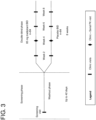
- Patients are randomized to receive either 85 mg of tradipitant or placebo (1:1) bid.
- the design for the randomized, placebo-controlled, double-blind study is depicted in FIG. 3 .
- Individuals with chronic pruritus associated with AD are administered 85 mg of tradipitant bid or placebo for eight weeks. Average itch severity and worst itch severity are assessed by VAS, and VRS is assessed every two weeks.
- treatment is assessed biweekly using both the objective and subjective SCORing Atopic Dermatitis (SCORAD) Index ( Severity Scoring of Atopic Dermatitis: The SCORAD Index, Consensus Report of the European Task Force on Atopic Dermatitis, Dermatology 1993; 186:23-31 ) and the Eczema Area and Severity Index (EASI) ( Hanifin et al., The eczema area and severity index (EASI): assessment of reliability in atopic dermatitis, Experimental Dermatology 10(1):11-18 (2001 )).
- SCORAD Severity Scoring of Atopic Dermatitis: The SCORAD Index, Consensus Report of the European Task Force on Atopic Dermatitis, Dermatology 1993; 186:23-31
- EASI Eczema Area and Severity Index
- EASI Eczema Area and Severity Index
- CGI-C Clinical Global Impressions of Change
- PGIC Patient Global Impression of Change
- PBI Patient Benefit Index
- SKINDEX-16 scales are also used for assessments. Twice daily questionnaires are completed to report worst and average itch by numeric rating scale (NRS).
- the objective SCORAD assessment includes parameters including extension, intensity, excoriations, erythema, oozing or crusting, the presence of edema or papules, lichenification, and skin dryness.
- the subjective SCORAD assessment includes patient assessments of itch and insomnia.
- 56 patients complete the study with 28 discontinuing.
- 59 complete the study with 25 discontinuing.
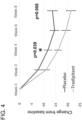
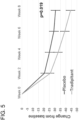
- Tradipitant improves the intensity of the worst itch patients experience, as well as atopic dermatitis disease severity.
- Example 3 An exploratory analysis is conducted to analyze Immunoglobulin E (IgE) levels and the effect of treatment with tradipitant on atopic dermatitis and pruritus.
- IgE Immunoglobulin E
- study participants having an IgE level greater than or equal to 100 kU/L are deemed to have a high IgE level, while study participants having an IgE level of less than 100 kU/L are deemed to have a low IgE level.
- the baseline mean and range SCORAD total for each of the total study population, the high IgE group, and the low IgE group are shown below in Table 5.
- Table 5 Baseline SCORAD measures Treatment Group N Mean (SCORAD total) Std.
- Table 5 The mean and range of SCORAD totals shown in Table 5 illustrate that the study population spans different strata of disease severity, from mild to severe. Table 5 also illustrates the similarity in disease severity between the high IgE and low IgE groups.
- Table 6 presents the study results of tradipitant in treatment-resistant pruritus associated with atopic dermatitis in individuals having high baseline IgE levels (IgE ⁇ 100 kU/L), while Table 7 (below) presents the study results of tradipitant in treatment-resistant pruritus associated with atopic dermatitis in individuals having low baseline IgE levels (IgE ⁇ 100 kU/L).
- Tables 6-7 represent a separation by IgE level of the data appearing in Table 4 above.
- Tables 6-7 show results as compared with baseline measures.
- tradipitant shows significant effects (p ⁇ 0.05) in most parameters studied including, e.g., Worst Itch and Sleep.
- the individuals having high IgE levels also show significant treatment effects in atopic dermatitis disease severity measures.
- a consistently stronger treatment effect is observed in the high IgE group compared to the low IgE group, regardless of whether the high IgE group is defined by, e.g., IgE ⁇ 50 kU/L, ⁇ 100 kU/L, or ⁇ 300 kU/L, and whether the low IgE group is defined by, e.g., IgE ⁇ 50 kU/L, ⁇ 100 kU/L, or ⁇ 300 kU/L. Greater than or equal to 100 kU/L is chosen as the cutoff for the high IgE group for the most detailed analysis (Tables 6-7) as a value that is considered to be the upper limit of normal range for adults by reference labs. Based on these results and extrapolating the normal range in children, a high IgE group in a pediatric population can also be defined for tradipitant effects in itch and disease severity in atopic dermatitis.
- individuals having IgE levels of greater than 75 kU/L, greater than 100 kU/L, greater than 150 kU/L, greater than 200 kU/L, 30-700 kU/L, 50-200 kU/L, 100-200 kU/L, or 200-2,000 kU/L may be selected for, e.g., treatment with an NK-1 receptor antagonist such as tradipitant.
- an NK-1 receptor antagonist such as tradipitant.
- tradipitant has a significant disease-modifying effect relative to atopic dermatitis. This effect is quantifiable using measures such as, for example, IGA, EASI, SCORAD, CGIC, and PGIC, and their respective atopic dermatitis signs and symptoms.
- the SNPs that are associated with IgE dysregulation include a strong signal within the 6q23 region which contains immune response genes such as Interleukin 20 Receptor Subunit Alpha (IL20RA) and Interleukin 22 Receptor Subunit Alpha (IL22RA2).
- IL20RA Interleukin 20 Receptor Subunit Alpha
- IL22RA2 Interleukin 22 Receptor Subunit Alpha
- This family of cytokines may have a pro-inflammatory effect and may have involvement in skin inflammation.
- Top loci out of this analysis are enriched in cytokine receptor activity and interleukin-20 binding (GO:0042018, GO:0042020).
- the rs276571 SNP (Table 8) is an example of a SNP associated with higher levels of IgE, such that individuals having a GG rs276571 genotype have higher IgE levels than individuals having AG or AA rs276571 genotypes.
- the identified variant is not only a modifier of IgE level, but also has a significant effect on baseline SCORAD.
- the GG rs276571 genotype confers significantly higher baseline SCORAD measures of AD disease severity compared with AA or AG rs276571 genotypes.
- the risk allele is also correlated with higher expression of IL20RA.
- the rs276571 locus has been shown to be a significant expression quantitative trait locus (eQTL) for IL20RA in genotype tissue expression (GTEx).
- Table 9 appearing below, provides population frequencies for rs276571 alleles.
- Table 9 Population frequencies for rs276571 Population Allele Count Allele Number Number of Homozygotes Allele Frequency European (Finnish) 2011 3486 574 0.5769 European (non-Finnish) 8000 14970 2110 0.5344 Other 513 980 131 0.5235 East Asian 839 1616 232 0.5192 Latino 345 838 66 0.4117 Ashkenazi Jewish 113 302 21 0.3742 African 2415 8708 350 0.2773 South Asian 0 0 0 n/a Total 14236 30900 3484 0.4607
- rs4575660 (Table 8), found within the LRP1B gene, is also associated with IgE level. As shown in FIG. 8 , individuals having a TT rs4575660 genotype have significantly higher IgE levels than individuals having TG or GG rs4575660 genotypes. At the rs4575660 locus, the minor allele confers higher IgE level. As discussed further below, variants in LRP1B are of particular interest due to their association with VAS and SCORAD as discussed in Example 6 (below).
- missense variant rs2280090 found within a disintegrin and metalloprotease 33 gene (ADAM33), is also associated with IgE dysregulation.
- ADAM33 disintegrin and metalloprotease 33 gene
- FIG. 9 individuals having heterozygous AG rs2280090 genotypes demonstrate significantly higher IgE levels than individuals having a GG rs2280090 genotype.
- n 0 individuals having an AA rs2280090 genotype.
- VAS Visual Analog Scale
- the rs57930837 variant is found to have an increased minor allele frequency (MAF) (0.44) when compared to controls (0.04).
- MAF minor allele frequency
- a significant difference in IgE level distribution is found between individuals having CC/CA genotypes as compared to AA at this locus, as shown in FIG. 12 .
- LRP1B nonsynonymous variant
- MYO10 low density lipoprotein receptor activity
- NRXN3 lipoproteins enriched in low density lipoprotein receptor activity (GO:0005041), and bioactive lipid receptor activity (GO:0045125).
- the rs57930837 SNP maps to a region of open chromatin, characterized by DNase hypersensitivity, and shows evidence of presence of Foxp1 and other regulatory motifs.
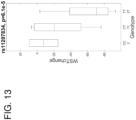
- the rs11207834 minor allele is associated with decreased response to treatment with 85 mg tradipitant bid, as measured by change of Worst Itch (VAS).
- VAS Worst Itch
- patients suffering from atopic dermatitis whose rs11207834 genotype is TT are associated with itch scale improvement, and such individuals can be expected to demonstrate a larger effect post treatment.
Landscapes
- Health & Medical Sciences (AREA)
- Chemical & Material Sciences (AREA)
- Life Sciences & Earth Sciences (AREA)
- General Health & Medical Sciences (AREA)
- Organic Chemistry (AREA)
- Medicinal Chemistry (AREA)
- Public Health (AREA)
- Veterinary Medicine (AREA)
- Pharmacology & Pharmacy (AREA)
- Animal Behavior & Ethology (AREA)
- Proteomics, Peptides & Aminoacids (AREA)
- Engineering & Computer Science (AREA)
- Epidemiology (AREA)
- Analytical Chemistry (AREA)
- Genetics & Genomics (AREA)
- Zoology (AREA)
- Wood Science & Technology (AREA)
- Bioinformatics & Cheminformatics (AREA)
- Nuclear Medicine, Radiotherapy & Molecular Imaging (AREA)
- General Chemical & Material Sciences (AREA)
- Chemical Kinetics & Catalysis (AREA)
- Molecular Biology (AREA)
- Pathology (AREA)
- Biotechnology (AREA)
- Immunology (AREA)
- Microbiology (AREA)
- Biophysics (AREA)
- Physics & Mathematics (AREA)
- General Engineering & Computer Science (AREA)
- Biochemistry (AREA)
- Dermatology (AREA)
- Pain & Pain Management (AREA)
- Rheumatology (AREA)
- Measuring Or Testing Involving Enzymes Or Micro-Organisms (AREA)
- Pharmaceuticals Containing Other Organic And Inorganic Compounds (AREA)
- Medicines Containing Material From Animals Or Micro-Organisms (AREA)
- Investigating Or Analysing Biological Materials (AREA)
- Physical Education & Sports Medicine (AREA)
Priority Applications (1)
| Application Number | Priority Date | Filing Date | Title |
|---|---|---|---|
| EP24211922.0A EP4487912A3 (en) | 2017-09-13 | 2018-08-30 | Improved treatment of atopic dermatitis with tradipitant |
Applications Claiming Priority (3)
| Application Number | Priority Date | Filing Date | Title |
|---|---|---|---|
| US201762558303P | 2017-09-13 | 2017-09-13 | |
| US201762572456P | 2017-10-14 | 2017-10-14 | |
| PCT/US2018/048825 WO2019055225A1 (en) | 2017-09-13 | 2018-08-30 | ENHANCED TREATMENT OF ATOPIC DERMATITIS USING TRADIPITANT |
Related Child Applications (2)
| Application Number | Title | Priority Date | Filing Date |
|---|---|---|---|
| EP24211922.0A Division-Into EP4487912A3 (en) | 2017-09-13 | 2018-08-30 | Improved treatment of atopic dermatitis with tradipitant |
| EP24211922.0A Division EP4487912A3 (en) | 2017-09-13 | 2018-08-30 | Improved treatment of atopic dermatitis with tradipitant |
Publications (3)
| Publication Number | Publication Date |
|---|---|
| EP3681505A1 EP3681505A1 (en) | 2020-07-22 |
| EP3681505B1 true EP3681505B1 (en) | 2024-12-18 |
| EP3681505C0 EP3681505C0 (en) | 2024-12-18 |
Family
ID=63684468
Family Applications (2)
| Application Number | Title | Priority Date | Filing Date |
|---|---|---|---|
| EP18778635.5A Active EP3681505B1 (en) | 2017-09-13 | 2018-08-30 | Improved treatment of atopic dermatitis with tradipitant |
| EP24211922.0A Pending EP4487912A3 (en) | 2017-09-13 | 2018-08-30 | Improved treatment of atopic dermatitis with tradipitant |
Family Applications After (1)
| Application Number | Title | Priority Date | Filing Date |
|---|---|---|---|
| EP24211922.0A Pending EP4487912A3 (en) | 2017-09-13 | 2018-08-30 | Improved treatment of atopic dermatitis with tradipitant |
Country Status (11)
| Country | Link |
|---|---|
| US (1) | US11549147B2 (enExample) |
| EP (2) | EP3681505B1 (enExample) |
| JP (1) | JP7347743B2 (enExample) |
| KR (2) | KR20250036264A (enExample) |
| CN (1) | CN111093671A (enExample) |
| AU (1) | AU2018331267B2 (enExample) |
| CA (1) | CA3073998A1 (enExample) |
| CL (1) | CL2020000655A1 (enExample) |
| IL (1) | IL272949B2 (enExample) |
| MX (2) | MX2020002852A (enExample) |
| WO (1) | WO2019055225A1 (enExample) |
Families Citing this family (7)
| Publication number | Priority date | Publication date | Assignee | Title |
|---|---|---|---|---|
| RU2770050C2 (ru) * | 2015-03-04 | 2022-04-14 | Ванда Фармасьютиклз Инк. | Способ лечения с применением традипитанта |
| CN112218636B (zh) | 2018-06-08 | 2025-05-06 | 万达制药公司 | 使用川地匹坦进行治疗的方法 |
| KR20220145844A (ko) | 2020-02-25 | 2022-10-31 | 반다 파마슈티칼즈, 인코퍼레이티드. | 트라디피탄트를 이용한 아토피 피부염의 개선된 치료 |
| WO2021195205A1 (en) | 2020-03-26 | 2021-09-30 | Vanda Pharmaceuticals Inc. | Treatment of lower respiratory tract infection with tradipitant |
| EP3996169B1 (en) | 2020-05-07 | 2025-02-26 | LG Energy Solution, Ltd. | High-nickel electrode sheet and method for manufacturing same |
| US20240350469A1 (en) | 2021-08-31 | 2024-10-24 | Vanda Pharmaceuticals Inc. | Treatment of lower respiratory tract infection with tradipitant |
| AU2023413130A1 (en) | 2022-12-21 | 2025-06-05 | Vanda Pharmaceuticals Inc. | Methods of treatment with tradipitant |
Family Cites Families (15)
| Publication number | Priority date | Publication date | Assignee | Title |
|---|---|---|---|---|
| TW263498B (enExample) | 1993-11-10 | 1995-11-21 | Takeda Pharm Industry Co Ltd | |
| AU2003230829B8 (en) | 2002-04-26 | 2008-12-11 | Eli Lilly And Company | Triazole derivatives as tachykinin receptor antagonists |
| SI1501808T1 (sl) | 2002-04-26 | 2008-10-31 | Lilly Co Eli | Antagonisti tahikininskega receptorja |
| JP2004250329A (ja) | 2002-12-26 | 2004-09-09 | Dainippon Pharmaceut Co Ltd | イサチン誘導体 |
| US7135575B2 (en) | 2003-03-03 | 2006-11-14 | Array Biopharma, Inc. | P38 inhibitors and methods of use thereof |
| WO2005042515A1 (en) | 2003-10-24 | 2005-05-12 | Eli Lilly And Company | Novel crystalline forms of {2-[1-(3,5-bis-trifluoromethylbenzyl)-5-pyridin-4-yl-1h-[1,2,3]triazol-4-yl]-pyridin-3-yl}-(2-chlorophenyl)-methanone |
| JP4673068B2 (ja) | 2005-01-19 | 2011-04-20 | 独立行政法人科学技術振興機構 | Th1型アレルギー疾患治療用組成物 |
| DE102005006217B4 (de) | 2005-02-07 | 2007-08-16 | Universitätsklinikum Hamburg-Eppendorf | Diagnose von allergischen Erkrankungen und/oder atopischen Erkrankungen durch Nachweis von Autoantikörpern gegen CD28 in humanem Serum |
| WO2007096782A2 (en) | 2006-02-22 | 2007-08-30 | Valorisation Recherche Hscm, Limited Partnership | Compositions for disorders associated wtth metachromatic cell activation |
| EP2121610B1 (en) | 2006-12-20 | 2014-04-02 | Eli Lilly & Company | Novel intermediate and process useful in the preparation of {2-[1-(3,5-bis-trifluoromethyl-benzyl)-5-pyridin-4-yl-1h-[1,2,3]triazol-4-yl]-pyridin-3-yl}-(2-chlorophenyl)-methanone |
| JP6644328B2 (ja) | 2013-02-28 | 2020-02-12 | ロート製薬株式会社 | アトピー性疾患の発症又は重症化リスクの評価法 |
| US8906951B1 (en) | 2013-06-24 | 2014-12-09 | Tigercat Pharma, Inc. | Use of NK-1 receptor antagonists in pruritus |
| CA2915474A1 (en) | 2013-06-24 | 2014-12-31 | Tigercat Pharma, Inc. | Use of nk-1 receptor antagonist serlopitant in pruritus |
| RU2770050C2 (ru) * | 2015-03-04 | 2022-04-14 | Ванда Фармасьютиклз Инк. | Способ лечения с применением традипитанта |
| IL281569B2 (en) | 2018-09-28 | 2025-04-01 | Vanda Pharmaceuticals Inc | Use of tradipient in motion sickness |
-
2018
- 2018-08-30 CA CA3073998A patent/CA3073998A1/en active Pending
- 2018-08-30 KR KR1020257006413A patent/KR20250036264A/ko active Pending
- 2018-08-30 JP JP2020515146A patent/JP7347743B2/ja active Active
- 2018-08-30 US US16/644,567 patent/US11549147B2/en active Active
- 2018-08-30 WO PCT/US2018/048825 patent/WO2019055225A1/en not_active Ceased
- 2018-08-30 KR KR1020207010029A patent/KR20200054232A/ko not_active Ceased
- 2018-08-30 MX MX2020002852A patent/MX2020002852A/es unknown
- 2018-08-30 IL IL272949A patent/IL272949B2/en unknown
- 2018-08-30 AU AU2018331267A patent/AU2018331267B2/en active Active
- 2018-08-30 EP EP18778635.5A patent/EP3681505B1/en active Active
- 2018-08-30 EP EP24211922.0A patent/EP4487912A3/en active Pending
- 2018-08-30 CN CN201880059276.3A patent/CN111093671A/zh active Pending
-
2020
- 2020-03-12 CL CL2020000655A patent/CL2020000655A1/es unknown
- 2020-03-13 MX MX2024004377A patent/MX2024004377A/es unknown
Also Published As
| Publication number | Publication date |
|---|---|
| EP3681505A1 (en) | 2020-07-22 |
| JP2020533381A (ja) | 2020-11-19 |
| AU2018331267B2 (en) | 2024-03-07 |
| US11549147B2 (en) | 2023-01-10 |
| IL272949A (en) | 2020-04-30 |
| CA3073998A1 (en) | 2019-03-21 |
| KR20250036264A (ko) | 2025-03-13 |
| IL272949B2 (en) | 2025-07-01 |
| CL2020000655A1 (es) | 2020-10-09 |
| AU2018331267A1 (en) | 2020-04-16 |
| EP4487912A3 (en) | 2025-03-26 |
| CN111093671A (zh) | 2020-05-01 |
| MX2024004377A (es) | 2024-04-26 |
| WO2019055225A1 (en) | 2019-03-21 |
| US20210062262A1 (en) | 2021-03-04 |
| BR112020004964A2 (pt) | 2020-09-15 |
| KR20200054232A (ko) | 2020-05-19 |
| JP7347743B2 (ja) | 2023-09-20 |
| EP3681505C0 (en) | 2024-12-18 |
| MX2020002852A (es) | 2020-07-22 |
| IL272949B1 (en) | 2025-03-01 |
| RU2020112222A (ru) | 2021-10-13 |
| EP4487912A2 (en) | 2025-01-08 |
Similar Documents
| Publication | Publication Date | Title |
|---|---|---|
| US11549147B2 (en) | Treatment of atopic dermatitis with tradipitant | |
| Yoshida et al. | Skin barrier defects in atopic dermatitis: from old idea to new opportunity | |
| Martin et al. | Stimulator of interferon genes (STING) activation exacerbates experimental colitis in mice | |
| US12564582B2 (en) | Use of pridopidine for treating dystonias | |
| US12318375B2 (en) | Method of treatment with tradipitant | |
| Hershkovich et al. | Biochemical analysis of saliva and taste acuity evaluation in patients with burning mouth syndrome, xerostomia and/or gustatory disturbances | |
| Busse et al. | Safety and efficacy of the prostaglandin D2 receptor antagonist AMG 853 in asthmatic patients | |
| Shi et al. | PET imaging of dopamine transporter and drug craving during methadone maintenance treatment and after prolonged abstinence in heroin users | |
| Werth et al. | Brief Report: Pharmacodynamics, Safety, and Clinical Efficacy of AMG 811, a Human Anti–Interferon‐γ Antibody, in Patients With Discoid Lupus Erythematosus | |
| Horak et al. | The CRTH 2 antagonist OC 000459 reduces nasal and ocular symptoms in allergic subjects exposed to grass pollen, a randomised, placebo‐controlled, double‐blind trial | |
| EP4005570B1 (en) | Pridopidine for use in treating rett syndrome | |
| Ge et al. | Stress aggravates imiquimod-induced psoriasiform inflammation by promoting M1 macrophage polarization | |
| Xu et al. | A loss-of-function human ADAR variant activates innate immune response and promotes bowel inflammation | |
| Thomson et al. | Corticosteroid insensitivity in smokers with asthma: clinical evidence, mechanisms, and management | |
| EA024450B1 (ru) | Молекулярно-генетический подход к лечению и диагностике алкогольной и наркотической зависимости | |
| Liao et al. | Calprotectin is a circulating biomarker and potential therapeutic target for sarcopenia in Chronic Obstructive Pulmonary Disease | |
| CN120129834A (zh) | 用于评估和治疗神经退行性疾病的蛋白质标志物 | |
| US20230073637A1 (en) | Treatment of atopic dermatitis with tradipitant | |
| RU2812890C2 (ru) | Усовершенствованное лечение атопического дерматита традипитантом | |
| RU2793237C2 (ru) | Усовершенствованное лечение атопического дерматита традипитантом | |
| BR112020004964B1 (pt) | Método para determinar uma dose eficaz de tradipitant ou um sal farmaceuticamente aceitável do mesmo | |
| US20230226046A1 (en) | Improved treatment of atopic dermatitis with tradipitant | |
| Spears et al. | Factors influencing individual variability in the therapeutic response to corticosteroids in asthma | |
| Politiek | The Challenge of Hand Eczema: Pathogenesis, Treatment, and Burden of Disease | |
| MARTINI | Cutaneous biomarkers of advanced glycation in paediatric psoriasis: a comparative study |
Legal Events
| Date | Code | Title | Description |
|---|---|---|---|
| STAA | Information on the status of an ep patent application or granted ep patent |
Free format text: STATUS: UNKNOWN |
|
| STAA | Information on the status of an ep patent application or granted ep patent |
Free format text: STATUS: THE INTERNATIONAL PUBLICATION HAS BEEN MADE |
|
| PUAI | Public reference made under article 153(3) epc to a published international application that has entered the european phase |
Free format text: ORIGINAL CODE: 0009012 |
|
| STAA | Information on the status of an ep patent application or granted ep patent |
Free format text: STATUS: REQUEST FOR EXAMINATION WAS MADE |
|
| 17P | Request for examination filed |
Effective date: 20200319 |
|
| AK | Designated contracting states |
Kind code of ref document: A1 Designated state(s): AL AT BE BG CH CY CZ DE DK EE ES FI FR GB GR HR HU IE IS IT LI LT LU LV MC MK MT NL NO PL PT RO RS SE SI SK SM TR |
|
| AX | Request for extension of the european patent |
Extension state: BA ME |
|
| DAV | Request for validation of the european patent (deleted) | ||
| DAX | Request for extension of the european patent (deleted) | ||
| STAA | Information on the status of an ep patent application or granted ep patent |
Free format text: STATUS: EXAMINATION IS IN PROGRESS |
|
| 17Q | First examination report despatched |
Effective date: 20220211 |
|
| GRAP | Despatch of communication of intention to grant a patent |
Free format text: ORIGINAL CODE: EPIDOSNIGR1 |
|
| STAA | Information on the status of an ep patent application or granted ep patent |
Free format text: STATUS: GRANT OF PATENT IS INTENDED |
|
| INTG | Intention to grant announced |
Effective date: 20240717 |
|
| GRAS | Grant fee paid |
Free format text: ORIGINAL CODE: EPIDOSNIGR3 |
|
| GRAA | (expected) grant |
Free format text: ORIGINAL CODE: 0009210 |
|
| STAA | Information on the status of an ep patent application or granted ep patent |
Free format text: STATUS: THE PATENT HAS BEEN GRANTED |
|
| AK | Designated contracting states |
Kind code of ref document: B1 Designated state(s): AL AT BE BG CH CY CZ DE DK EE ES FI FR GB GR HR HU IE IS IT LI LT LU LV MC MK MT NL NO PL PT RO RS SE SI SK SM TR |
|
| REG | Reference to a national code |
Ref country code: GB Ref legal event code: FG4D |
|
| REG | Reference to a national code |
Ref country code: CH Ref legal event code: EP |
|
| REG | Reference to a national code |
Ref country code: DE Ref legal event code: R096 Ref document number: 602018077739 Country of ref document: DE |
|
| REG | Reference to a national code |
Ref country code: IE Ref legal event code: FG4D |
|
| U01 | Request for unitary effect filed |
Effective date: 20250115 |
|
| U07 | Unitary effect registered |
Designated state(s): AT BE BG DE DK EE FI FR IT LT LU LV MT NL PT RO SE SI Effective date: 20250122 |
|
| PG25 | Lapsed in a contracting state [announced via postgrant information from national office to epo] |
Ref country code: HR Free format text: LAPSE BECAUSE OF FAILURE TO SUBMIT A TRANSLATION OF THE DESCRIPTION OR TO PAY THE FEE WITHIN THE PRESCRIBED TIME-LIMIT Effective date: 20241218 |
|
| PG25 | Lapsed in a contracting state [announced via postgrant information from national office to epo] |
Ref country code: NO Free format text: LAPSE BECAUSE OF FAILURE TO SUBMIT A TRANSLATION OF THE DESCRIPTION OR TO PAY THE FEE WITHIN THE PRESCRIBED TIME-LIMIT Effective date: 20250318 |
|
| PG25 | Lapsed in a contracting state [announced via postgrant information from national office to epo] |
Ref country code: GR Free format text: LAPSE BECAUSE OF FAILURE TO SUBMIT A TRANSLATION OF THE DESCRIPTION OR TO PAY THE FEE WITHIN THE PRESCRIBED TIME-LIMIT Effective date: 20250319 |
|
| PG25 | Lapsed in a contracting state [announced via postgrant information from national office to epo] |
Ref country code: RS Free format text: LAPSE BECAUSE OF FAILURE TO SUBMIT A TRANSLATION OF THE DESCRIPTION OR TO PAY THE FEE WITHIN THE PRESCRIBED TIME-LIMIT Effective date: 20250318 |
|
| PG25 | Lapsed in a contracting state [announced via postgrant information from national office to epo] |
Ref country code: SM Free format text: LAPSE BECAUSE OF FAILURE TO SUBMIT A TRANSLATION OF THE DESCRIPTION OR TO PAY THE FEE WITHIN THE PRESCRIBED TIME-LIMIT Effective date: 20241218 |
|
| PG25 | Lapsed in a contracting state [announced via postgrant information from national office to epo] |
Ref country code: PL Free format text: LAPSE BECAUSE OF FAILURE TO SUBMIT A TRANSLATION OF THE DESCRIPTION OR TO PAY THE FEE WITHIN THE PRESCRIBED TIME-LIMIT Effective date: 20241218 |
|
| PG25 | Lapsed in a contracting state [announced via postgrant information from national office to epo] |
Ref country code: ES Free format text: LAPSE BECAUSE OF FAILURE TO SUBMIT A TRANSLATION OF THE DESCRIPTION OR TO PAY THE FEE WITHIN THE PRESCRIBED TIME-LIMIT Effective date: 20241218 |
|
| PG25 | Lapsed in a contracting state [announced via postgrant information from national office to epo] |
Ref country code: IS Free format text: LAPSE BECAUSE OF FAILURE TO SUBMIT A TRANSLATION OF THE DESCRIPTION OR TO PAY THE FEE WITHIN THE PRESCRIBED TIME-LIMIT Effective date: 20250418 |
|
| PG25 | Lapsed in a contracting state [announced via postgrant information from national office to epo] |
Ref country code: SK Free format text: LAPSE BECAUSE OF FAILURE TO SUBMIT A TRANSLATION OF THE DESCRIPTION OR TO PAY THE FEE WITHIN THE PRESCRIBED TIME-LIMIT Effective date: 20241218 |
|
| PG25 | Lapsed in a contracting state [announced via postgrant information from national office to epo] |
Ref country code: CZ Free format text: LAPSE BECAUSE OF FAILURE TO SUBMIT A TRANSLATION OF THE DESCRIPTION OR TO PAY THE FEE WITHIN THE PRESCRIBED TIME-LIMIT Effective date: 20241218 |
|
| PGFP | Annual fee paid to national office [announced via postgrant information from national office to epo] |
Ref country code: GB Payment date: 20250827 Year of fee payment: 8 |
|
| PLBE | No opposition filed within time limit |
Free format text: ORIGINAL CODE: 0009261 |
|
| STAA | Information on the status of an ep patent application or granted ep patent |
Free format text: STATUS: NO OPPOSITION FILED WITHIN TIME LIMIT |
|
| REG | Reference to a national code |
Ref country code: CH Ref legal event code: L10 Free format text: ST27 STATUS EVENT CODE: U-0-0-L10-L00 (AS PROVIDED BY THE NATIONAL OFFICE) Effective date: 20251029 |
|
| U21 | Renewal fee for the european patent with unitary effect paid with additional fee |
Year of fee payment: 8 Effective date: 20250929 |
|
| 26N | No opposition filed |
Effective date: 20250919 |
|
| REG | Reference to a national code |
Ref country code: CH Ref legal event code: H13 Free format text: ST27 STATUS EVENT CODE: U-0-0-H10-H13 (AS PROVIDED BY THE NATIONAL OFFICE) Effective date: 20260324 |
|
| PG25 | Lapsed in a contracting state [announced via postgrant information from national office to epo] |
Ref country code: MC Free format text: LAPSE BECAUSE OF FAILURE TO SUBMIT A TRANSLATION OF THE DESCRIPTION OR TO PAY THE FEE WITHIN THE PRESCRIBED TIME-LIMIT Effective date: 20241218 |
|
| PG25 | Lapsed in a contracting state [announced via postgrant information from national office to epo] |
Ref country code: CH Free format text: LAPSE BECAUSE OF NON-PAYMENT OF DUE FEES Effective date: 20250831 |
|
| PG25 | Lapsed in a contracting state [announced via postgrant information from national office to epo] |
Ref country code: IE Free format text: LAPSE BECAUSE OF NON-PAYMENT OF DUE FEES Effective date: 20250830 |