EP3672622B1 - Recombinant human acid sphingomyelinase for use in treating abnormal bone conditions in acid sphingomyelinase deficiency patients - Google Patents
Recombinant human acid sphingomyelinase for use in treating abnormal bone conditions in acid sphingomyelinase deficiency patients Download PDFInfo
- Publication number
- EP3672622B1 EP3672622B1 EP18768948.4A EP18768948A EP3672622B1 EP 3672622 B1 EP3672622 B1 EP 3672622B1 EP 18768948 A EP18768948 A EP 18768948A EP 3672622 B1 EP3672622 B1 EP 3672622B1
- Authority
- EP
- European Patent Office
- Prior art keywords
- patient
- rhasm
- doses
- bone
- acid sphingomyelinase
- Prior art date
- Legal status (The legal status is an assumption and is not a legal conclusion. Google has not performed a legal analysis and makes no representation as to the accuracy of the status listed.)
- Active
Links
Images


Classifications
-
- A—HUMAN NECESSITIES
- A61—MEDICAL OR VETERINARY SCIENCE; HYGIENE
- A61K—PREPARATIONS FOR MEDICAL, DENTAL OR TOILETRY PURPOSES
- A61K38/00—Medicinal preparations containing peptides
- A61K38/16—Peptides having more than 20 amino acids; Gastrins; Somatostatins; Melanotropins; Derivatives thereof
- A61K38/43—Enzymes; Proenzymes; Derivatives thereof
- A61K38/46—Hydrolases (3)
- A61K38/465—Hydrolases (3) acting on ester bonds (3.1), e.g. lipases, ribonucleases
-
- A—HUMAN NECESSITIES
- A61—MEDICAL OR VETERINARY SCIENCE; HYGIENE
- A61P—SPECIFIC THERAPEUTIC ACTIVITY OF CHEMICAL COMPOUNDS OR MEDICINAL PREPARATIONS
- A61P19/00—Drugs for skeletal disorders
-
- A—HUMAN NECESSITIES
- A61—MEDICAL OR VETERINARY SCIENCE; HYGIENE
- A61P—SPECIFIC THERAPEUTIC ACTIVITY OF CHEMICAL COMPOUNDS OR MEDICINAL PREPARATIONS
- A61P19/00—Drugs for skeletal disorders
- A61P19/08—Drugs for skeletal disorders for bone diseases, e.g. rachitism, Paget's disease
-
- A—HUMAN NECESSITIES
- A61—MEDICAL OR VETERINARY SCIENCE; HYGIENE
- A61P—SPECIFIC THERAPEUTIC ACTIVITY OF CHEMICAL COMPOUNDS OR MEDICINAL PREPARATIONS
- A61P19/00—Drugs for skeletal disorders
- A61P19/08—Drugs for skeletal disorders for bone diseases, e.g. rachitism, Paget's disease
- A61P19/10—Drugs for skeletal disorders for bone diseases, e.g. rachitism, Paget's disease for osteoporosis
-
- A—HUMAN NECESSITIES
- A61—MEDICAL OR VETERINARY SCIENCE; HYGIENE
- A61P—SPECIFIC THERAPEUTIC ACTIVITY OF CHEMICAL COMPOUNDS OR MEDICINAL PREPARATIONS
- A61P3/00—Drugs for disorders of the metabolism
-
- C—CHEMISTRY; METALLURGY
- C12—BIOCHEMISTRY; BEER; SPIRITS; WINE; VINEGAR; MICROBIOLOGY; ENZYMOLOGY; MUTATION OR GENETIC ENGINEERING
- C12N—MICROORGANISMS OR ENZYMES; COMPOSITIONS THEREOF; PROPAGATING, PRESERVING, OR MAINTAINING MICROORGANISMS; MUTATION OR GENETIC ENGINEERING; CULTURE MEDIA
- C12N9/00—Enzymes; Proenzymes; Compositions thereof; Processes for preparing, activating, inhibiting, separating or purifying enzymes
- C12N9/14—Hydrolases (3)
- C12N9/16—Hydrolases (3) acting on ester bonds (3.1)
-
- C—CHEMISTRY; METALLURGY
- C12—BIOCHEMISTRY; BEER; SPIRITS; WINE; VINEGAR; MICROBIOLOGY; ENZYMOLOGY; MUTATION OR GENETIC ENGINEERING
- C12Y—ENZYMES
- C12Y301/00—Hydrolases acting on ester bonds (3.1)
- C12Y301/04—Phosphoric diester hydrolases (3.1.4)
Definitions
- This application relates to human acid sphingomyelinase for use in a method of treating abnormal bone conditions in patients with acid sphingomyelinase deficiency (ASMD).
- ASMD acid sphingomyelinase deficiency
- Acid sphingomyelinase deficiency is a rare life-threatening lysosomal storage disorder. It is an autosomal recessive genetic disease that results from mutations in the SMPD1 gene encoding the lysosomal enzyme acid sphingomyelinase (ASM) ( Schuchman et al., Mol. Genet. Metab. 120(1-2):27-33 (2017 )). ASMD patients are unable to metabolize sphingomyelin, which as a result accumulates in lysosomes in multiple organs, causing visceral disease and neurodegeneration in severe cases. ASMD patients have increased cholesterol and other lipids in spleen, liver, lung and bone marrow.
- ASM acid sphingomyelinase
- Infantile neurovisceral ASMD (historically known as Niemann-Pick disease type A or NPD A), the most severe disease phenotype, is characterized as the early-onset and acute neuropathic form, and results in failure to thrive, hepatosplenomegaly, and rapidly progressive neurodegeneration. Patients die in early childhood ( McGovern et al., Neurology 66(2):228-232 (2006 )). Patients with chronic visceral ASMD (NPD B) and chronic neurovisceral ASMD (NPD A/B) have onset that varies from infancy to adulthood ( Wasserstein et al., Pediatrics 114(6):e672-677 (2004 ); Wasserstein et al., J. Pediatr.
- NPD B patients are usually diagnosed in childhood, typically after the age of 2 years. Most NPD B patients live to adulthood. NPD A/B patients are classified as having an intermediate form, with manifestation of childhood neurologic symptoms that may develop as neurodegenerative disease.
- Morbidity from liver, lung, and hematologic diseases occurs in all patients with chronic ASMD and includes hepatosplenomegaly, liver dysfunction, infiltrative lung disease and thrombocytopenia ( McGovern et al., Genet. Med. 15(8):618-623 (2013 ); McGovern et al., Orphanet J. Rare Dis. 12(1):41 (2017 )). Growth restriction during childhood and bone disorders such as low bone density are also common features of chronic ASMD ( Wasserstein et al., J. Pediatr. 142(4):424-428 (2003 )).
- Pulmonary and liver diseases are the main causes of death in these patients ( McGovern et al., Pediatrics 122(2):e341-349 (2008 ); Cassiman et al., Mol. Genet. Metab. 118(3):206-213 (2016 )).
- the present invention provides recombinant human acid sphingomyelinase (rhASM) for use in a method of treating an abnormal bone condition in a patient with acid sphingomyelinase deficiency (ASMD), comprising the steps of administering to the patient a plurality of doses of recombinant human acid sphingomyelinase (rhASM), measuring a bone indicator of the patient, and comparing the bone indicator of the patient to the baseline bone indicator of the patient before the administering step, wherein the patient's bone indicator improves or does not worsen after the plurality of doses of rhASM.
- rhASM recombinant human acid sphingomyelinase
- the bone indicator is bone mineral density (BMD), wherein the BMD improves (e.g., increases) or does not worsen after the plurality of doses of rhASM.
- the bone indicator is bone marrow burden (BNM), wherein the BMB decreases or does not increase after the plurality of doses of rhASM.
- the bone indicator is skeletal development (e.g., bone maturation and/or linear growth), wherein the skeletal development improves after the plurality of doses of rhASM.
- the abnormal bone condition is osteopenia or osteoporosis.
- the present invention also provides recombinant human acid sphingomyelinase (rhASM) for use in a method for decreasing bone marrow burden (BMB) in an acid sphingomyelinase deficiency patient in need thereof, comprising the steps of determining the BMB of the patient, and administering to the patient a plurality of doses of recombinant human acid sphingomyelinase (rhASM), thereby decreasing the BMB of the patient.
- rhASM recombinant human acid sphingomyelinase
- the present invention also provides recombinant human acid sphingomyelinase (rhASM) for use in a method for improving bone mineral density (BMD) in an acid sphingomyelinase deficiency patient in need thereof, comprising the steps of determining the BMD of the patient, and administering to the patient a plurality of doses of recombinant human acid sphingomyelinase (rhASM), thereby improving the BMD of the patient.
- rhASM recombinant human acid sphingomyelinase
- the present invention also provides recombinant human acid sphingomyelinase (rhASM) for use in a method for decreasing bone marrow burden (BMB) in an acid sphingomyelinase deficiency patient in need thereof, comprising the steps of selecting a patient with acid sphingomyelinase deficiency who is not receiving bisphosphonate therapy, and administering to the patient a plurality of doses of recombinant human acid sphingomyelinase (rhASM), thereby decreasing the BMB of the patient.
- rhASM recombinant human acid sphingomyelinase
- the present invention also provides recombinant human acid sphingomyelinase (rhASM) for use in a method for improving (e.g., increasing) bone mineral density (BMD) in an acid sphingomyelinase deficiency patient in need thereof, comprising the steps of selecting a patient with acid sphingomyelinase deficiency who is not receiving bisphosphonate therapy, and administering to the patient a plurality of doses of recombinant human acid sphingomyelinase (rhASM), thereby improving the BMD of the patient.
- rhASM recombinant human acid sphingomyelinase
- the present invention also provides a recombinant human acid sphingomyelinase (rhASM) for use in a method of improving bone maturation in an acid sphingomyelinase deficiency (ASMD) patient in need thereof, comprising the steps of selecting an ASMD patient for improvement of skeletal development, and administering to the patient a plurality of doses of recombinant human acid sphingomyelinase (rhASM), thereby improving skeletal development in the patient.
- rhASM recombinant human acid sphingomyelinase
- the present invention also provides recombinant human acid sphingomyelinase (rhASM) for use in a method of treating osteopenia in an acid sphingomyelinase deficiency (ASMD) patient in need thereof, comprising the steps of selecting an ASMD patient for treatment of osteopenia, and administering to the patient a plurality of doses of recombinant human acid sphingomyelinase (rhASM).
- ASMD acid sphingomyelinase deficiency
- the present invention also provides recombinant human acid sphingomyelinase (rhASM) for use in a method of treating osteoporosis in an acid sphingomyelinase deficiency patient in need thereof, comprising the steps of selecting an ASMD patient for treatment of osteoporosis, and administering to the patient a plurality of doses of recombinant human acid sphingomyelinase (rhASM).
- rhASM recombinant human acid sphingomyelinase
- the plurality of doses may be administered to the patient over a period of six to thirty months.
- the recited effect of the rhASM plurality of doses thus is obtained in said period.
- the patient may have, e.g., chronic visceral ASMD (Niemann-Pick disease type B) or chronic neurovisceral ASMD (NPD A/B).
- the patient may be an adult or pediatric patient.
- the first two or more doses of rhASM may be escalating doses and may be administered at a successively increasing amount.
- the doses after the escalating doses are maintenance doses (which may start with, e.g., the highest maintenance dose) and may be administered in the same amount as or less than the last escalating dose.
- the highest maintenance dose is the highest dose tolerated by the patient.
- the first dose may be, e.g., 0.1 mg/kg, for either adult or pediatric patients.
- the highest maintenance dose may be, e.g., in the amount of 0.3 mg/kg to 3 mg/kg (e.g., 1 mg/k to 3 mg/kg), such as 1 mg/kg, 2 mg/kg, or 3 mg/kg.
- Maintenance doses may be, e.g., in the amount of 0.1 mg/kg to 3 mg/kg, or 0.3 mg/kg to 3 mg/kg, such as, for example, 0.1 mg/kg, 0.2 mg/kg, 0.3 mg/kg, 0.4 mg/kg, 0.5 mg/kg, 0.6 mg/kg, 0.7 mg/kg, 0.8 mg/kg, 0.9 mg/kg, 1 mg/kg, 1.5 mg/kg, 2 mg/kg, 2.5 mg/kg, or 3 mg/kg.
- the escalating doses may be administered in the order of 0.1 mg/kg, 0.3 mg/kg, 0.3 mg/kg, 0.6 mg/kg, 0.6 mg/kg, 1.0 mg/kg, 2.0 mg/kg, and 3.0 mg/kg.
- the plurality of doses in any of the treatment methods described herein are administered at an interval of every 2 weeks. Administration of the plurality of doses may be, e.g., through intravenous injection.
- the rhASM may be olipudase alfa (SEQ ID NO:2).
- the present invention also provides a recombinant human ASM (e.g., olipudase alfa) for use in any of the embodiments described herein.
- a recombinant human ASM e.g., olipudase alfa
- the present invention is based on the discovery that ASM enzyme replacement therapy (ERT) alleviates abnormal bone conditions in ASMD patients, including increasing their bone density and decreasing their bone marrow burden. This improvement may be seen within as few as 6-30 months of therapy.
- ERT ASM enzyme replacement therapy
- This discovery was unexpected because it was not clear whether an ASM ERT would reverse all symptoms of ASMD, including low bone density, and if so, how long it would take for the therapy to achieve the reversal of the symptoms.
- ERT alone is very slow in improving bone mineral density.
- Gaucher Disease another genetic lipid storage disorder
- patients' response to treatment with ERT is slower for bone mineral density (BMD) than for hematologic and visceral aspects of GD.
- the present invention provides recombinant human acid sphingomyelinase (rhASM) for use in methods of treating an abnormal bone condition in an ASMD patient by using ASM ERT.
- ASMD causes accumulation of sphingomyelin in bone marrow cells, especially precursor cells of the mononuclear-macrophage lineage. These cells become engorged and trapped in the bone marrow, causing bone marrow infiltration and a high bone marrow burden (BMB).
- ASMD patients often have chronic inflammation as well, including in the bones. Bone disease in ASMD adversely impacts bone metabolism and structure. Patients suffer from a number of symptoms, including growth delays, growth retardation, maturation delays, bone pain, and fractures.
- an abnormal bone condition or a bone disease refers to any bone issue associated with ASMD and the resulting manifestations such as high bone marrow burden, low bone mineral density, osteopenia, osteoporosis, delayed skeletal development (e.g., delayed bone age (maturation) and delayed linear growth), increased disability, bone pain, decreased mobility, osteonecrosis, and increased risk of fractures.
- the abnormal bone condition treated in the ASMD patient by the methods of the invention is osteopenia or osteoporosis.
- the patients are adults (e.g., patients 18 years or older, including geriatric patients who are 65 years or older).
- the patients are pediatric patients (patients who are younger than 18 years old, e.g., patients who are newborn to 6 years old, who are 6 to 12 years old, or who are 12 to 18 years old).
- the patient may have Niemann-Pick Disease type A, Niemann-Pick Disease type B, or Niemann-Pick Disease type A/B.
- the methods described herein are used to treat adult patients with chronic visceral ASMD (NPD B).
- the methods described herein are used to treat pediatric patients with chronic visceral ASMD (NPD B).
- the methods described herein are used to treat adult and pediatric patients with non-neurological manifestations of ASMD.
- Bone conditions in a subject can be assessed by analyzing bone parameters, collectively referred herein as "bone indicators," using various methods.
- Bone indicators may comprise, e.g., bone mineral density (BMD), bone marrow burden (BNM), bone age, linear growth, and the status of certain bone biomarkers.
- abnormal bone conditions may be assessed by bone imaging such as X-ray imaging and magnetic resonance imaging (MRI).
- Bone scan images may be obtained from, for example, femur and lumbar spine at various time points to evaluate bone mineral density (BMD) and bone marrow burden (BMB) as indicators of bone condition in patients before, during, and after treatment with a composition of the present invention.
- the images are obtained using DXA (dual-energy X-ray absorptiometry) or MRI.
- bone scan images may be obtained approximately every week, 2 weeks, 3 weeks, 4 weeks, 5 weeks, six weeks, month, 2 months, 3 months, 4 months, 5 months, 6 months, 7 months, 8 months, 9 months, 10 months, 11 months, year, 2 years, 3 years, 4 years, or 5 years, and compared to baseline images obtained before treatment of the present invention.
- the bone scan images may be obtained approximately every 6 months or every year.
- the BMD may be calculated for each patient using T- and Z- scores.
- the T-score ranks a patient's bone density compared to that of a healthy person of the same gender.
- the Z-score rank a patient's bone density compared to that of a healthy person of the same age, gender, weight, and ethnicity.
- BMB may be evaluated using the BMB scoring system, which relies on a bone marrow signal intensity scoring system giving a categorical score out of a possible eight points each for the lumbar spine and femur - femur scores averaged from the left and right femur - for a total score of 16 points.
- the bone marrow signal intensity scoring system is described in, for example, Hangartner et al., Skeletal Radiol. 37(3): 185-188 (2008 ); Robertson et al., AJM Am J Roentgenol. 188(6): 1521-1528 (2007 ); and Maas et al., Radiology 229(2): 554-561 (2003 ), all of which are incorporated herein by reference in their entirety.
- bone biomarkers will be analyzed to assess bone conditions of a subject.
- “Bone biomarkers,” as used herein, refer to biomarkers associated with bone formation and resorption.
- bone biomarkers such as serum bone-specific alkaline phosphatase (ALP) and C-telopeptide may be analyzed in samples collected from a patient.
- ALP alkaline phosphatase
- C-telopeptide an indicator of bone resorption
- bone biomarkers may be analyzed approximately every 1, 2, 3, 4, 5, 6, 7, 8, 9, 10, or 11 months, or every 1, 2, 3, 4, or 5 years, and compared to baseline levels obtained before treatment of the present invention. In certain embodiments, the bone biomarkers may be analyzed every 3 or 6 months.
- the Z scores for height and weight in ASMD pediatric patients are often lower than in children unaffected by ASMD.
- additional bone indicators such as bone age (e.g., as determined by hand X-ray) and linear growth may be analyzed to assess bone growth or skeletal development.
- hand X-ray may be performed to collect images of the patients' hands, fingers and wrists.
- Bone age (maturation) may be calculated from the X-ray using the Greulich & Pyle Atlas (1959).
- Linear growth, as measured by height Z-score is another bone indicator to assess growth in pediatric patients.
- ASM ERT Patients with abnormal bone conditions, such as ASMD patients, can be treated with ASM ERT.
- “treat,” “treating” and “treatment” refer to a method of alleviating, abrogating, or preventing or delaying the onset or worsening (i.e., progression) of a biological disorder or condition and/or at least one of its attendant symptoms.
- to "alleviate” a disease, disorder or condition means reducing the severity and/or occurrence frequency of the symptoms of the disease, disorder, or condition.
- the ASM used in the ASM ERT may be human ASM, e.g., a recombinant human ASM (rhASM).
- the recombinant ASM may be produced using recombinant technology in prokaryotic or eukaryotic host cells such as mammalian host cells (e.g., Chinese hamster ovary (CHO) cells).
- the rhASM is olipudase alfa, the glycoform alpha of a human ASM (EC-3.1.4.12) produced in CHO cells.
- Mature olipudase alfa is a 570 amino acid polypeptide that retains the enzymatic and lysosomal targeting activity of the native human protein.
- olipudase alfa The amino acid sequence of olipudase alfa, including its leader sequence (residues 1-57), is shown below, where the leader sequence is italicized and in boldface.
- the mature olipudase alfa sequence (SEQ ID NO:2, which spans residues 58-627 of the following sequence) does not have the leader sequence.
- the ASM is 99%, 98%, 97%, 96%, or 95% identical in amino acid sequence to olipudase alfa.
- an ASM useful in the present invention has the ASM sequence shown in U.S. Patent 6,541,218 . That sequence is shown below, with the leader sequence italicized and boldfaced, where the mature protein does not have the leader sequence:
- An ASM useful in the present invention may also be identical in amino acid sequence to the human ASM disclosed in the UTIIPROT database as sequence P17405-1, or polymorphic variants thereof.
- sequence P17405-1 is shown below, with the leader sequence italicized and boldfaced, where the mature protein does not have the leader sequence:
- ASMKO ASM knock-out mice model
- Those studies showed that repeated intravenous administration of olipudase to ASMKO mice led to dose-dependent reduction of sphingomyelin in visceral organs. Sphingomyelin reduction was also observed in the lungs.
- the ASMKO studies also showed that olipudase alfa may cause toxicity when given in high doses. However, when the ASMKO mice were given multiple low doses followed by a high dose, olipudase alfa did not cause the toxicity observed with a single high dose.
- Olipudase alfa has been used in clinical studies for the treatment of non-neurologic ASMD manifestations. The observations in mice led to the development of a Phase 1 study to evaluate the safety and pharmacokinetics of olipudase alfa treatment, in which single, ascending doses of olipudase alfa (0.03, 0.1, 0.3, 0.6 and 1.0 mg/kg) were evaluated in 11 patients ( McGovern et al., Genet. Med. 15(8):618-623 (2013 ) and WO 2011025996 . The patients in that study showed dose-related increases in acute phase reactants including ceramide, bilirubin, and high sensitivity C-reactive protein (hsCRP). Dose-related adverse events involving constitutional symptoms (pain, fever, nausea, and vomiting) consistent with first-dose toxicity were also reported.
- a Phase 1b study to evaluate the safety and tolerability of olipudase alfa during a 26-week treatment period was conducted with 5 adult patients ( Wasserstein et al., Mol. Genet. Metab. 116(1-2):88-97 (2015 ).
- the patients in this study were given olipudase alfa in a dose-escalated manner with an initial dose of 0.1 mg/kg followed by stepwise biweekly increases to reach the target dose of 3.0 mg/kg.
- the study showed that the dose escalation regimen was well tolerated with no serious or severe adverse events, and resulted in gradual debulking of sphingomyelin and its catabolites.
- Debulking refers to the removal of sphingomyelin that has been accumulated in a patient's visceral organs due to ASMD. Improvements observed in the patients included decreased spleen and liver volumes, decreased interstitial lung disease scores, increased lung function, and reduction in serum chitotriosidase, CCL18, ACE, and other disease biomarkers. The inventors have now found that when these patients continued to be treated and monitored for 30 months in a long-term safety and efficacy assessment, they showed sustained safety profile and continued improvement in clinically relevant parameters, including spleen and liver volumes, lung disease score, lipid profiles, and ASM biomarkers.
- BMD bone mineral density
- BMB bone marrow burden
- compositions comprising an ASM as described herein will be administered in a therapeutically effective amount for treatment of the condition in question (e.g., an ASMD-associated abnormal bone condition), i.e., at dosages and for periods of time necessary to achieve a desired result.
- a therapeutically effective amount may vary according to factors such as the particular condition being treated, the age, sex, and weight of the patient, and whether the enzyme replacement therapy is being administered as a stand-alone treatment or in combination with one or more additional treatments.
- “Therapeutically effective amount” refers to the amount of the therapeutic agent being administered that will relieve to some extent or prevent the worsening of one or more of the symptoms of the disorder or condition being treated.
- the ASM compositions may be administered through intravenous injection.
- efficacy may be indicated as improvement in bone mineral density T-scores (e.g., spinal and/or femur T-scores). In certain embodiments, the T-score is improved by at least 0.5 points. In some embodiments, efficacy may be indicated as improvement in bone mineral density Z-scores (e.g., spinal and/or femur Z-scores). In certain embodiments, the Z-score is improved by at least 0.1 points. In some embodiments, efficacy may be indicated as improvement, non-worsening, or a delay in progression of bone diseases such as osteopenia or osteoporosis.
- efficacy may be indicated by improvements in skeletal development such as linear growth or bone age (maturation).
- the improvement in skeletal development may be measured against data collected from study of pediatric patients ( Wasserstein et al., J Pediatr 142(4):424-428 (2003 )).
- improvement in skeletal development may be measured against each patient's growth chart before ASM therapy.
- Some embodiments involve a dose escalation protocol in which increasing doses of ASM (e.g., an rhASM such as olipudase alfa) are administered over an appropriate period to gradually debulk previously accumulated sphingomyelin and to minimize toxic side effects caused by sphingomyelin catabolites.
- ASM e.g., an rhASM such as olipudase alfa
- treatment may involve the administration of one or more initial, low, non-toxic doses of ASM to a patient to reduce the amount of sphingomyelin that has accumulated in the patient.
- Each escalating dose may be separated from the previous dose by one week, two weeks, or three weeks. In particular embodiments, the escalating doses are given two weeks apart.
- non-toxic dose(s) refers to a dosage of an ASM administered to ASMD patients without resulting in one, two, three or all of the following: (i) a moderate or severe related adverse event as defined by a clinical symptom that interferes with normal daily functioning and requires additional monitoring, intervention, or treatment, or, an abnormal laboratory value or procedural result of clinical concern that requires further monitoring, treatment, or investigation.
- the "non-toxic dose" of ASM may vary depending upon, e.g., the stability of the enzyme used, the activity of the enzyme used, and/or the route of administration of the enzyme.
- the dosage of a modified ASM enzyme with increased activity may be lower than the dosage of an unmodified ASM.
- One skilled in the art would be able to adjust the dose of enzyme administered based on the stability of the enzyme, the activity of the enzyme, and/or the route of administration of the enzyme.
- the dose of ASM can be escalated until the highest therapeutically effective dosage tolerated by the patient is achieved. Once this dosage is identified, it can be used as a maintenance dose to treat the patient. Alternatively, the maintenance dose may be reduced from the highest escalating dose once the patient's ASMD condition has stabilized after the dose escalation regimen. Maintenance doses can be administered every 1, 2, 3, or 4 weeks to the patient. In certain embodiments, the maintenance dose is administered biweekly.
- the term "maintenance dose” refers to a dosage of an ASM described herein administered to ASMD patients to maintain the desired therapeutic effect, e.g., an improvement or non-worsening in one or more abnormal bone conditions such as those described herein.
- the maintenance dose(s) maintains one, two, three, four or more of the following desired therapeutic effects: (i) a reduction in spleen volume as assessed by techniques known in the art, e.g., MRI; (ii) a reduction in liver sphingomyelin levels as assessed by techniques known in the art, e.g., biochemical analysis and/or histomorphometric analysis of liver samples; (iii) an increase in exercise capacity as assessed by techniques known in the art, e.g., maximum workload by cycle ergometry, including percent predicted maximum workload, peak oxygen consumption and carbon dioxide production; (iv) an increase in pulmonary function as assessed by techniques known in the art, e.g., techniques described in American Thoracic Society, Am.
- the highest maintenance dose is the highest or maximum dose tolerated by a patient.
- a patient receiving a maintenance dose is monitored every 1, 2, 3, 4, 5, 6, 7, 8, 9, 10, or 11 months, or every year or every two years for one or more of the following: (i) related adverse events; (ii) total/direct/indirect bilirubin concentrations; (iii) plasma ceramide concentration; or (iv) an acute phase response.
- the patient is monitored every 3 months, every 6 months, or yearly.
- the dose administered to the patient can be evaluated by a physician or other medical professional to determine whether the dose should be adjusted.
- Certain embodiments comprise: (a) a dose-escalation regimen (e.g., for debulking accumulated sphingomyelin substrate in the human patient) comprising: (i) administering an initial dose (e.g., a low non-toxic dose such as 0.1 mg/kg) of an ASM (e.g., olipudase alfa) as described herein to the human patient; (ii) administering successively higher doses of the ASM to the human patient, and (iii) monitoring the patient for one or more adverse side effects after each successive dose as indicated by, e.g., elevated total bilirubin concentration, elevated plasma ceramide concentration, lyso-sphingomyelin, chitotriosidase, the production of acute phase reactants, the production of inflammatory mediators, or an adverse event (e.g., as defined by the Clinical Data Interchange Standards Consortium Study Data Tabulation Model standard terminology v.3.1.1); and (b) a maintenance regimen comprising administering a dose
- Certain embodiments comprise: (a) a dose-escalation regimen (e.g., for debulking accumulated sphingomyelin substrate in the human patient) comprising: (i) administering an initial dose (e.g., a low non-toxic dose such as 0.1 mg/kg) of an ASM (e.g., olipudase alfa) as described herein to the human patient; (ii) administering successively higher doses of the ASM to the human patient if the patient does not manifest one or more adverse side effects as indicated by, e.g., elevated total bilirubin concentration, elevated plasma ceramide concentration, the production of acute phase reactants, lyso-sphingomyelin, chitotriosidase, the production of inflammatory mediators, or an adverse event (e.g., as defined by the Clinical Data Interchange Standards Consortium Study Data Tabulation Model standard terminology v.3.1.1); and (b) a maintenance regimen comprising repeated administration of a maintenance dose that is equal to or less
- the patient is monitored for a period of time after administration of a dose of ASM (e.g., 6 hours, 12 hours, 16 hours, 24 hours, 48 hours, 72 hours, weekly, or up until the next dose) for one or more adverse side effects.
- a dose of ASM e.g., 6 hours, 12 hours, 16 hours, 24 hours, 48 hours, 72 hours, weekly, or up until the next dose
- the maintenance dose that is administered may be adjusted during the course of treatment of the patient.
- the highest maintenance dose administered to the patient is the highest dose tolerated by the patient.
- the initial dose ranges from 0.025 to 0.275 mg/kg, e.g., 0.03 mg/kg to 0.5 mg/kg, 0.01 to 0.5 mg/kg, or 0.1 mg/kg to 1 mg/kg, of ASM (e.g., olipudase alfa).
- the initial dose is 0.03 mg/kg or 0.1 mg/kg.
- the initial dose for a pediatric patient may be 0.03 mg/kg; and the initial dose for an adult patient may be 0.1 mg/kg.
- the initial dose for a pediatric or adult patient may be 0.1 mg/kg.
- the patients will be given the same dose of olipudase alfa at least twice before escalation to a next higher dose.
- the successively higher doses are administered one, two, three or four weeks after the previous dose.
- the successively higher doses are each administered two weeks after the previous dose.
- the successively higher dose is 0.05-1.0 mg/kg, 0.1-3.0 mg/kg, or 0.5-2.0 mg/kg higher than the previous dose, e.g., approximately 0.07 mg/kg, 0.2 mg/kg, 0.3 mg/kg, 0.4 mg/kg, or 1 mg/kg higher than the previous dose.
- the highest therapeutically effective dose tolerated by a patient is 1 mg/kg to 2.5 mg/kg, 2 mg/kg to 3 mg/kg, 3 mg/kg to 5 mg/kg. In some embodiments, the highest therapeutically effective dose tolerated by a patient is 1 mg/kg, 2 mg/kg, 3 mg/kg, 4 mg/kg, or 5 mg/kg. In certain embodiments, the highest dose tolerated by the patient is 1 mg/kg to 3 mg/kg, e.g., 1 mg/kg to 2.5 mg/kg. In some embodiments, the highest dose is administered to the human patient as the highest maintenance dose.
- the highest maintenance dose is in the amount of, e.g., 0.3 mg/kg, 0.6 mg/kg, 1 mg/kg, 2 mg/kg or 3 mg/kg. In particular embodiments, the highest maintenance dose is 3 mg/kg. Subsequent maintenance doses may be administered in the same amount or less than the highest maintenance dose. In some embodiments, the maintenance doses are 0.3-3 mg/kg.
- the dose escalation regimen may entail administering the ASM in a plurality of doses in the order of, for example, 0.1 mg/kg, 0.3 mg/kg, 0.3 mg/kg, 0.6 mg/kg, 0.6 mg/kg, 1.0 mg/kg, 2.0 mg/kg, and 3.0 mg/kg (highest maintenance dose), where the successive doses are each administered two weeks after the previous dose.
- the dose escalation regimen may entail administering the ASM in a plurality of doses in the order of, for example, 0.03 mg/kg, 0.1 mg/kg, 0.3 mg/kg, 0.3 mg/kg, 0.6 mg/kg, 0.6 mg/kg, 1.0 mg/kg, 2.0 mg/kg, and 3.0 mg/kg (highest maintenance dose), where the successive doses are each administered two weeks after the previous dose.
- a dose of an ASM as described herein is administered every week, every 2 weeks, every 3 weeks, or every 4 weeks to a patient.
- the doses are administered at an interval of every two weeks, through, e.g., intravenous injection.
- Some embodiments involve administration of the ASM doses over a period of 6 to 30 months, e.g., over a period of no more than 6 months, 7 months, 8 months, 9 months, 10 months, 11 months, 12 months, 13 months, 14 months, 15 months, 16 months, 17 months, 18 months, 19 months, 20 months, 21 months, 22 months, 23 months, 24 months, 25 months, 26 months, 27 months, 28 months, 29 months, or 30 months, for the targeted bone condition(s) to improve.
- the ASM doses are administered over a period of no more than 30 months.
- Additional embodiments involve dosing protocols and/or routes of administration as described in, e.g., WO 2011/025996 .
- the dose escalation regimen used to treat adult or pediatric ASMD patients may be, e.g., as shown in the table below: Table 1 Dose Escalation Schedule Treatment week Dose of olipudase alfa (mg/kg) 0 0.1 2 0.3 4 0.3 6 0.6 8 0.6 10 1.0 12 2.0 14 3.0 16 3.0
- the dose escalation regimen used to treat pediatric ASMD patients may be, e.g., as shown in the table below: Table 2 Dose Escalation Schedule for Pediatric Patients Treatment week Dose of olipudase alfa (mg/kg) 0 0.03 2 0.1 4 0.3 6 0.3 8 0.6 10 0.6 12 1.0 14 2.0 16 3.0
- the pediatric patient populations include ASMD adolescent cohort (ages 12 to ⁇ 18 years), ASMD child cohort (ages 6 to ⁇ 12 years) and infant/early child cohort (birth to ⁇ 6 years).
- the present disclosure also provides articles of manufacture and kits comprising an ASM as described herein.
- Articles of manufacture and kits are not claimed herein.
- the articles and kits are suitable for treating a patient as described herein, e.g., a patient with ASMD.
- the articles and kits may be suitable for treating an abnormal bone condition described herein in a patient with ASMD.
- the pharmaceutically active ingredients in the articles and kits are prepared for administration at doses described herein, and are formulated for administration by methods described herein.
- the objective of the study is to obtain information on the safety and efficacy of olipudase alfa in patients with ASMD following long-term administration.
- This ongoing, open-label, long-term study (LTS) (NCT02004704; EudraCT Number: 2013-000051-40) follows 5 adult patients with chronic ASMD who previously participated in the Phase 1b study ( Wasserstein et al. Mol Genet Metab 116(1-2):88-97 (2015 )).
- LTS long-term study
- Phase 1b study Eligibility criteria for the Phase 1b study were previously described. Id. Patients completing the Phase 1b study with an acceptable safety profile were eligible to continue in the LTS and continued at the same olipudase alfa dose they were receiving at the end of the Phase 1b study.
- Lung field HRCT images were scored subjectively for ground glass appearance (GG), interstitial lung disease (ILD), and reticulonodular density (RND) from 0 (no disease) to 3 (severe disease) as previously described in McGovern et al., 2015, supra, and Wasserstein et al., 2015, supra.
- GG ground glass appearance
- ILD interstitial lung disease
- RTD reticulonodular density
- TC total cholesterol
- LDL-C low density lipoprotein
- HDL-C high density lipoprotein
- triglycerides triglycerides
- Bone marrow burden was determined from MRIs of lumbar spine and both femurs, where image quantification indicated the degree of bone marrow infiltration by lipid-loaded cells ( Robertson et al, AJR. Am. J. Roentgenol. 188(6): 1521-1528 (2007 )).
- Bone mineral density was determined from dual-energy X-ray absorptiometry (DXA) bone scan images of lumbar spine and both femurs and determination of T- and Z-scores ( WHO JAMA 285(6):785-795 (2001 )). BMD was assessed using the guidance provided by the International Society for Clinical Densitometry (ISCD 2015).
- Descriptive statistics were provided for categorical and continuous variables, change from baseline and percent change from baseline were calculated for organ volumes and DLco, and differences determined by paired t-test and the Wilcoxon-Mann-Whitney test.
- Liver function enzyme levels remained within normal ranges for all patients until month 30 when Patient 4 had transient elevations in ALT (1.4x normal) and AST (2.9x normal), without corresponding AEs, and with subsequent normal levels.
- Total bilirubin and GGT levels remained similar to or below baseline levels for all patients. Iron levels fluctuated over time, but remained within or close to normal ranges.
- Phase 1b dose escalation Patient 2 experienced IARs leading to repeat of the 2 mg/kg dose ( Wasserstein et al. Mol. Genet. Metab. 116(1-2):88-97 (2015 )).
- the patient subsequently received the target dose of 3 mg/kg through the Phase 1b trial and during the first 6 months of the LTS, at which time the patient reported mild AEs 7-10 days after most infusions including nausea, headache, fatigue, achiness, intermittent abdominal pain, and occasional fever (38.3 to 40.0°C). Episodes lasted ⁇ 3 days and were completely resolved by the next infusion.
- Olipudase alfa was decreased (2 mg/kg for 6 months, then to the current dose of 1 mg/kg). Decreasing the dose did not change the timing, frequency, or types of events reported.
- Spleen and liver volumes decreased in all patients relative to baseline ( FIG. 2A ).
- Mean spleen volumes decreased from 12.8 multiples of normal (MN) at baseline to 6.7 MN at 30 months, a 47.3% decrease from baseline (p ⁇ 0.0001).
- FIG. 2B Percent predicted DLco increased in all patients relative to baseline values ( FIG. 2B ) and improved from a mean of 53.2% (moderate) at baseline to 67.1% at 30 months (mild). The greatest changes occurred in the three patients with the lowest % predicted DLco values at baseline ( ⁇ 40%, in the severe range).
- FIG. 2B also shows assessment of infiltrative lung disease with mean scores for components at baseline, 6 months, 18 months, and 30 months. The data show progressive decreases in all parameters, particularly in GG appearance and RND, which almost completely resolved.
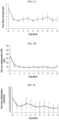
- FIGS. 4A-4D Fasting lipid profiles are shown in FIGS. 4A-4D .
- Non-HDL cholesterol level (total cholesterol minus HDL-C), was >3.37 mmol/L (>130 mg/dL) in 4/5 patients at baseline (mean 3.91 mmol/L) and was ⁇ 3.37 mmol/L in all patients at 30 months (mean 2.66 mmol/L).
- Mean femur T- and Z-scores were in the normal range at baseline (-0.38 ⁇ 1.35 and -0.27 ⁇ 1.46, respectively) and at 30 months (-0.28 ⁇ 1.27 and -0.13 ⁇ 1.4, respectively).
- Patient 2 had a baseline femur T-score in the osteopenic range (-2.23) and a Z-score indicating low BMD (-2.18); both improved slightly (-1.89 and -1.82, respectively) at 30 months.
- Mean BFI ⁇ SD fatigue scores were 3.04 ⁇ 2.29 at baseline and 2.44 ⁇ 3.44 at 30 months.
- Mean BPI ⁇ SD pain severity scores were 3.45 ⁇ 2.77 at baseline and 2.90 ⁇ 2.70 at 30 months, and mean BPI ⁇ SD pain interference scores were 2.03 ⁇ 1.58 at baseline and 3.29 ⁇ 3.51 at 30 months.
- Most of the individual BFI and BPI pain severity scores were in the mild (0-3) or moderate (4-6) categories at all time points. Exceptions were Patient 5, whose BPI pain was severe (7-10) at both baseline (6.8) and 30 months (7).
- BPI pain interference scores increased for Patients 2 (2 at baseline, 8.1 at 30 months) and 3 (1.9 at baseline, 5.3 at 30 months). Fatigue reported by Patient 2 was moderate (5.8) at baseline and severe (8.3) at 30 months.
- IARs were not immunologic reactions, they are likely related to release of biologically active sphingomyelin metabolites, principally ceramide, which is a signaling intermediary in cytokine release, inflammation, and apoptosis ( Spiegel et al., Curr. Opin. Cell Biol. 8(2):159-167 (1996 ); Gulbins et al., J. Mol. Med. 82(6):357-363 (2004 )).
- olipudase alfa doses elicited transient increases in plasma ceramide levels that generally peaked at 48 hour post-infusion ( Wasserstein et al. Mol. Genet. Metab. 116(1-2):88-97 (2015 )). Both pre- and post-infusion ceramide levels steadily decreased with each successive olipudase alfa infusion, plateauing after 3 months of treatment, and remaining stable through 30 months.
- Atherogenic lipid profiles typically worsen with age in patients with chronic ASMD ( Wasserstein et al., Pediatrics 114(6):e672-677(2004 )), and lipid abnormalities may be associated with early coronary artery disease ( McGovern et al., J. Pediatr. 145(1):77-81(2004 )).
- patients were at mild-to-moderate risk for cardiovascular disease based on lipid profiles ( Wasserstein et al. Mol. Genet. Metab. 116(1-2): 88-97(2015 )), and profiles improved over 30 months of treatment.
- Non-HDL cholesterol level is considered a good predictor of cardiovascular risk in many patient populations, and a desirable level is ⁇ 3.37 mmol/L ( ⁇ 130 mg/dL) ( Jacobson et al., J. Clin. Lipidol. 9(2): 129-169 (2015 )). All but one patient had non-HDL levels above 3.37 mmol/L before ERT, and at 30 months total cholesterol and HDL levels improved for all patients with non-HDL below the 3.37 mmol/L cutoff.
- olipudase alfa Decreasing olipudase alfa to 1 mg/kg/week in this patient has had no impact on AE incidence, fatigue or pain.
- the patient continues to have clinical benefit including reduced spleen and liver volumes as well as improvement in percent predicted DLco, sustained clearance of infiltrative HRCT parameters, and stabilization of biomarkers.
Landscapes
- Health & Medical Sciences (AREA)
- Life Sciences & Earth Sciences (AREA)
- Chemical & Material Sciences (AREA)
- Engineering & Computer Science (AREA)
- Bioinformatics & Cheminformatics (AREA)
- Organic Chemistry (AREA)
- Physical Education & Sports Medicine (AREA)
- General Health & Medical Sciences (AREA)
- Medicinal Chemistry (AREA)
- Pharmacology & Pharmacy (AREA)
- Animal Behavior & Ethology (AREA)
- Public Health (AREA)
- Veterinary Medicine (AREA)
- Nuclear Medicine, Radiotherapy & Molecular Imaging (AREA)
- General Chemical & Material Sciences (AREA)
- Chemical Kinetics & Catalysis (AREA)
- Orthopedic Medicine & Surgery (AREA)
- Rheumatology (AREA)
- Wood Science & Technology (AREA)
- Genetics & Genomics (AREA)
- Zoology (AREA)
- General Engineering & Computer Science (AREA)
- Biochemistry (AREA)
- Diabetes (AREA)
- Proteomics, Peptides & Aminoacids (AREA)
- Obesity (AREA)
- Hematology (AREA)
- Gastroenterology & Hepatology (AREA)
- Epidemiology (AREA)
- Immunology (AREA)
- Biotechnology (AREA)
- Molecular Biology (AREA)
- Microbiology (AREA)
- Biomedical Technology (AREA)
- Medicines That Contain Protein Lipid Enzymes And Other Medicines (AREA)
- Pharmaceuticals Containing Other Organic And Inorganic Compounds (AREA)
- Enzymes And Modification Thereof (AREA)
Applications Claiming Priority (3)
| Application Number | Priority Date | Filing Date | Title |
|---|---|---|---|
| US201762549732P | 2017-08-24 | 2017-08-24 | |
| EP17306720 | 2017-12-07 | ||
| PCT/IB2018/056346 WO2019038685A2 (en) | 2017-08-24 | 2018-08-22 | TREATMENT OF ABNORMAL BONE CONDITIONS IN PATIENTS WITH ACIDIC SPHINGOMYELASE DISEASE |
Publications (2)
| Publication Number | Publication Date |
|---|---|
| EP3672622A2 EP3672622A2 (en) | 2020-07-01 |
| EP3672622B1 true EP3672622B1 (en) | 2023-11-08 |
Family
ID=63556374
Family Applications (1)
| Application Number | Title | Priority Date | Filing Date |
|---|---|---|---|
| EP18768948.4A Active EP3672622B1 (en) | 2017-08-24 | 2018-08-22 | Recombinant human acid sphingomyelinase for use in treating abnormal bone conditions in acid sphingomyelinase deficiency patients |
Country Status (16)
| Country | Link |
|---|---|
| US (2) | US11898175B2 (enExample) |
| EP (1) | EP3672622B1 (enExample) |
| JP (3) | JP7216075B2 (enExample) |
| KR (2) | KR102769578B1 (enExample) |
| CN (2) | CN118453843A (enExample) |
| AU (2) | AU2018319565B2 (enExample) |
| BR (1) | BR112020003541A2 (enExample) |
| CA (1) | CA3073648A1 (enExample) |
| CO (1) | CO2020001801A2 (enExample) |
| ES (1) | ES2970423T3 (enExample) |
| IL (1) | IL272757B2 (enExample) |
| MX (2) | MX2020002106A (enExample) |
| PL (1) | PL3672622T3 (enExample) |
| SG (1) | SG11202001544VA (enExample) |
| TW (1) | TWI791040B (enExample) |
| WO (1) | WO2019038685A2 (enExample) |
Families Citing this family (6)
| Publication number | Priority date | Publication date | Assignee | Title |
|---|---|---|---|---|
| CA2773133A1 (en) * | 2009-08-28 | 2011-03-03 | Edward H. Schuchman | Dose escalation enzyme replacement therapy for treating acid sphingomyelinase deficiency |
| PL3672622T3 (pl) * | 2017-08-24 | 2024-04-02 | Genzyme Corporation | Rekombinowana ludzka kwaśna sfingomielinaza do zastosowania w leczeniu nieprawidłowych stanów kości u pacjentów z niedoborem kwaśnej sfingomielinazy |
| PY1939780A (es) * | 2018-05-25 | 2019-12-04 | Genzyme Corp | Composiciones farmacéuticas para el tratamiento de la deficiencia de esfingomielinasa ácida |
| JP7568648B2 (ja) * | 2019-05-31 | 2024-10-16 | ジェンザイム・コーポレーション | 二次元lc-ms/msシステム |
| CN112773779B (zh) * | 2021-02-04 | 2022-08-16 | 上海交通大学医学院附属新华医院 | 氨溴索、千金藤和汉防已在治疗酸性鞘磷脂酶缺乏症中的应用 |
| TW202403043A (zh) * | 2022-03-18 | 2024-01-16 | 美商健臻公司 | 重組人類酸性鞘磷脂酶醫藥組合物及方法 |
Family Cites Families (8)
| Publication number | Priority date | Publication date | Assignee | Title |
|---|---|---|---|---|
| US5773278A (en) | 1991-05-03 | 1998-06-30 | Mount Sinai Medical Center | Acid sphingomyelinase gene |
| CN1302897A (zh) | 1999-10-28 | 2001-07-11 | 上海博容基因开发有限公司 | 一种新的多肽——人酸性鞘磷酯酶相似的磷酸二酯酶21和编码这种多肽的多核苷酸 |
| US8158582B2 (en) * | 2005-06-02 | 2012-04-17 | Tercica, Inc. | Methods for treatment of insulin-like growth factor-1 deficiency |
| CA2773133A1 (en) * | 2009-08-28 | 2011-03-03 | Edward H. Schuchman | Dose escalation enzyme replacement therapy for treating acid sphingomyelinase deficiency |
| WO2013130963A1 (en) | 2012-03-02 | 2013-09-06 | Shire Human Genetic Therapies, Inc. | Compositions and methods for treating type iii gaucher disease |
| AR093908A1 (es) | 2012-12-12 | 2015-06-24 | Teva Pharma | Fusion de la hormona de crecimiento humana y albumina, formulacion y usos de la misma |
| MX370570B (es) * | 2013-06-07 | 2019-12-17 | Genzyme Corp | Marcador para trastornos de la esfingomielinasa acida y sus usos. |
| PL3672622T3 (pl) * | 2017-08-24 | 2024-04-02 | Genzyme Corporation | Rekombinowana ludzka kwaśna sfingomielinaza do zastosowania w leczeniu nieprawidłowych stanów kości u pacjentów z niedoborem kwaśnej sfingomielinazy |
-
2018
- 2018-08-22 PL PL18768948.4T patent/PL3672622T3/pl unknown
- 2018-08-22 MX MX2020002106A patent/MX2020002106A/es unknown
- 2018-08-22 CN CN202410508209.2A patent/CN118453843A/zh active Pending
- 2018-08-22 US US16/641,116 patent/US11898175B2/en active Active
- 2018-08-22 JP JP2020511325A patent/JP7216075B2/ja active Active
- 2018-08-22 TW TW107129257A patent/TWI791040B/zh active
- 2018-08-22 ES ES18768948T patent/ES2970423T3/es active Active
- 2018-08-22 WO PCT/IB2018/056346 patent/WO2019038685A2/en not_active Ceased
- 2018-08-22 CN CN201880067498.XA patent/CN111344003B/zh active Active
- 2018-08-22 IL IL272757A patent/IL272757B2/en unknown
- 2018-08-22 BR BR112020003541-6A patent/BR112020003541A2/pt unknown
- 2018-08-22 EP EP18768948.4A patent/EP3672622B1/en active Active
- 2018-08-22 KR KR1020207008213A patent/KR102769578B1/ko active Active
- 2018-08-22 CA CA3073648A patent/CA3073648A1/en active Pending
- 2018-08-22 KR KR1020257004704A patent/KR20250025051A/ko active Pending
- 2018-08-22 AU AU2018319565A patent/AU2018319565B2/en active Active
- 2018-08-22 SG SG11202001544VA patent/SG11202001544VA/en unknown
-
2020
- 2020-02-18 CO CONC2020/0001801A patent/CO2020001801A2/es unknown
- 2020-02-24 MX MX2023010908A patent/MX2023010908A/es unknown
-
2023
- 2023-01-18 JP JP2023005602A patent/JP7431356B2/ja active Active
-
2024
- 2024-01-10 US US18/409,535 patent/US20240218338A1/en not_active Abandoned
- 2024-01-31 JP JP2024012534A patent/JP2024050732A/ja active Pending
-
2025
- 2025-05-12 AU AU2025203384A patent/AU2025203384A1/en active Pending
Also Published As
Similar Documents
| Publication | Publication Date | Title |
|---|---|---|
| US20240218338A1 (en) | Treatment of abnormal bone conditions in acid sphingomyelinase deficiency patients | |
| Marcucci et al. | Gaucher disease and bone manifestations | |
| Schuchman et al. | Types A and B niemann-pick disease | |
| Pogoryelova et al. | GNE myopathy: from clinics and genetics to pathology and research strategies | |
| US8709408B2 (en) | Dose escalation enzyme replacement therapy for treating acid sphingomyelinase deficiency | |
| Langeveld et al. | Bone health in patients with inborn errors of metabolism | |
| Rang et al. | Re-imagining cystic fibrosis care: next generation thinking | |
| RU2795570C2 (ru) | Лечение патологических состояний кости у пациентов с дефицитом кислой сфингомиелиназы | |
| WO2022173987A1 (en) | Alkaline phosphatase polypeptides and methods of use thereof | |
| BR122025022093A2 (pt) | Uso de uma esfingomielinase ácida humana recombinante (rhasm) no tratamento de condições ósseas anormais em pacientes com deficiência de esfingomielinase ácida | |
| Kasapkara et al. | The evaluation of skeletal manifestations in patients with Gaucher disease | |
| Negri et al. | Bone densitometry in a patient with hypophosphatemic osteomalacia | |
| Lang et al. | Metabolic masqueraders of paediatric and adult rheumatic diseases | |
| Laron et al. | Recommended by ISPED and SIMA | |
| Wang et al. | A study on the nutritional status and body composition of children with Hutchinson–Gilford progeria syndrome | |
| Younes et al. | Serum Uric Acid Level Is Positively Associated With Higher Bone Mineral Density at Multiple Skeletal Sites Among Healthy Qataris | |
| Manoli et al. | Osteoporosis in frail patients | |
| MISHRA | KRISHNANU DUTTA¹, TRISHNA DAS* 1, DIPANKAR SAHA¹, TAPASH CHAKRABORTY¹ | |
| Misra et al. | Obesity and Metabolic Syndrome |
Legal Events
| Date | Code | Title | Description |
|---|---|---|---|
| STAA | Information on the status of an ep patent application or granted ep patent |
Free format text: STATUS: UNKNOWN |
|
| STAA | Information on the status of an ep patent application or granted ep patent |
Free format text: STATUS: THE INTERNATIONAL PUBLICATION HAS BEEN MADE |
|
| PUAI | Public reference made under article 153(3) epc to a published international application that has entered the european phase |
Free format text: ORIGINAL CODE: 0009012 |
|
| STAA | Information on the status of an ep patent application or granted ep patent |
Free format text: STATUS: REQUEST FOR EXAMINATION WAS MADE |
|
| 17P | Request for examination filed |
Effective date: 20200324 |
|
| AK | Designated contracting states |
Kind code of ref document: A2 Designated state(s): AL AT BE BG CH CY CZ DE DK EE ES FI FR GB GR HR HU IE IS IT LI LT LU LV MC MK MT NL NO PL PT RO RS SE SI SK SM TR |
|
| AX | Request for extension of the european patent |
Extension state: BA ME |
|
| DAV | Request for validation of the european patent (deleted) | ||
| DAX | Request for extension of the european patent (deleted) | ||
| GRAP | Despatch of communication of intention to grant a patent |
Free format text: ORIGINAL CODE: EPIDOSNIGR1 |
|
| STAA | Information on the status of an ep patent application or granted ep patent |
Free format text: STATUS: GRANT OF PATENT IS INTENDED |
|
| INTG | Intention to grant announced |
Effective date: 20221206 |
|
| GRAJ | Information related to disapproval of communication of intention to grant by the applicant or resumption of examination proceedings by the epo deleted |
Free format text: ORIGINAL CODE: EPIDOSDIGR1 |
|
| STAA | Information on the status of an ep patent application or granted ep patent |
Free format text: STATUS: REQUEST FOR EXAMINATION WAS MADE |
|
| INTC | Intention to grant announced (deleted) | ||
| GRAP | Despatch of communication of intention to grant a patent |
Free format text: ORIGINAL CODE: EPIDOSNIGR1 |
|
| STAA | Information on the status of an ep patent application or granted ep patent |
Free format text: STATUS: GRANT OF PATENT IS INTENDED |
|
| INTG | Intention to grant announced |
Effective date: 20230601 |
|
| RAP1 | Party data changed (applicant data changed or rights of an application transferred) |
Owner name: GENZYME CORPORATION |
|
| GRAS | Grant fee paid |
Free format text: ORIGINAL CODE: EPIDOSNIGR3 |
|
| GRAA | (expected) grant |
Free format text: ORIGINAL CODE: 0009210 |
|
| STAA | Information on the status of an ep patent application or granted ep patent |
Free format text: STATUS: THE PATENT HAS BEEN GRANTED |
|
| AK | Designated contracting states |
Kind code of ref document: B1 Designated state(s): AL AT BE BG CH CY CZ DE DK EE ES FI FR GB GR HR HU IE IS IT LI LT LU LV MC MK MT NL NO PL PT RO RS SE SI SK SM TR |
|
| REG | Reference to a national code |
Ref country code: GB Ref legal event code: FG4D |
|
| REG | Reference to a national code |
Ref country code: CH Ref legal event code: EP |
|
| REG | Reference to a national code |
Ref country code: DE Ref legal event code: R096 Ref document number: 602018060827 Country of ref document: DE |
|
| REG | Reference to a national code |
Ref country code: IE Ref legal event code: FG4D |
|
| REG | Reference to a national code |
Ref country code: PT Ref legal event code: SC4A Ref document number: 3672622 Country of ref document: PT Date of ref document: 20240201 Kind code of ref document: T Free format text: AVAILABILITY OF NATIONAL TRANSLATION Effective date: 20240125 |
|
| REG | Reference to a national code |
Ref country code: NL Ref legal event code: FP |
|
| P01 | Opt-out of the competence of the unified patent court (upc) registered |
Effective date: 20240111 |
|
| REG | Reference to a national code |
Ref country code: LT Ref legal event code: MG9D |
|
| REG | Reference to a national code |
Ref country code: GR Ref legal event code: EP Ref document number: 20240400337 Country of ref document: GR Effective date: 20240312 |
|
| PG25 | Lapsed in a contracting state [announced via postgrant information from national office to epo] |
Ref country code: IS Free format text: LAPSE BECAUSE OF FAILURE TO SUBMIT A TRANSLATION OF THE DESCRIPTION OR TO PAY THE FEE WITHIN THE PRESCRIBED TIME-LIMIT Effective date: 20240308 |
|
| PG25 | Lapsed in a contracting state [announced via postgrant information from national office to epo] |
Ref country code: LT Free format text: LAPSE BECAUSE OF FAILURE TO SUBMIT A TRANSLATION OF THE DESCRIPTION OR TO PAY THE FEE WITHIN THE PRESCRIBED TIME-LIMIT Effective date: 20231108 |
|
| PG25 | Lapsed in a contracting state [announced via postgrant information from national office to epo] |
Ref country code: LT Free format text: LAPSE BECAUSE OF FAILURE TO SUBMIT A TRANSLATION OF THE DESCRIPTION OR TO PAY THE FEE WITHIN THE PRESCRIBED TIME-LIMIT Effective date: 20231108 Ref country code: IS Free format text: LAPSE BECAUSE OF FAILURE TO SUBMIT A TRANSLATION OF THE DESCRIPTION OR TO PAY THE FEE WITHIN THE PRESCRIBED TIME-LIMIT Effective date: 20240308 Ref country code: BG Free format text: LAPSE BECAUSE OF FAILURE TO SUBMIT A TRANSLATION OF THE DESCRIPTION OR TO PAY THE FEE WITHIN THE PRESCRIBED TIME-LIMIT Effective date: 20240208 |
|
| REG | Reference to a national code |
Ref country code: ES Ref legal event code: FG2A Ref document number: 2970423 Country of ref document: ES Kind code of ref document: T3 Effective date: 20240528 |
|
| PG25 | Lapsed in a contracting state [announced via postgrant information from national office to epo] |
Ref country code: SE Free format text: LAPSE BECAUSE OF FAILURE TO SUBMIT A TRANSLATION OF THE DESCRIPTION OR TO PAY THE FEE WITHIN THE PRESCRIBED TIME-LIMIT Effective date: 20231108 Ref country code: RS Free format text: LAPSE BECAUSE OF FAILURE TO SUBMIT A TRANSLATION OF THE DESCRIPTION OR TO PAY THE FEE WITHIN THE PRESCRIBED TIME-LIMIT Effective date: 20231108 Ref country code: NO Free format text: LAPSE BECAUSE OF FAILURE TO SUBMIT A TRANSLATION OF THE DESCRIPTION OR TO PAY THE FEE WITHIN THE PRESCRIBED TIME-LIMIT Effective date: 20240208 Ref country code: LV Free format text: LAPSE BECAUSE OF FAILURE TO SUBMIT A TRANSLATION OF THE DESCRIPTION OR TO PAY THE FEE WITHIN THE PRESCRIBED TIME-LIMIT Effective date: 20231108 Ref country code: HR Free format text: LAPSE BECAUSE OF FAILURE TO SUBMIT A TRANSLATION OF THE DESCRIPTION OR TO PAY THE FEE WITHIN THE PRESCRIBED TIME-LIMIT Effective date: 20231108 |
|
| PG25 | Lapsed in a contracting state [announced via postgrant information from national office to epo] |
Ref country code: DK Free format text: LAPSE BECAUSE OF FAILURE TO SUBMIT A TRANSLATION OF THE DESCRIPTION OR TO PAY THE FEE WITHIN THE PRESCRIBED TIME-LIMIT Effective date: 20231108 |
|
| PG25 | Lapsed in a contracting state [announced via postgrant information from national office to epo] |
Ref country code: CZ Free format text: LAPSE BECAUSE OF FAILURE TO SUBMIT A TRANSLATION OF THE DESCRIPTION OR TO PAY THE FEE WITHIN THE PRESCRIBED TIME-LIMIT Effective date: 20231108 |
|
| PG25 | Lapsed in a contracting state [announced via postgrant information from national office to epo] |
Ref country code: SK Free format text: LAPSE BECAUSE OF FAILURE TO SUBMIT A TRANSLATION OF THE DESCRIPTION OR TO PAY THE FEE WITHIN THE PRESCRIBED TIME-LIMIT Effective date: 20231108 |
|
| PG25 | Lapsed in a contracting state [announced via postgrant information from national office to epo] |
Ref country code: SM Free format text: LAPSE BECAUSE OF FAILURE TO SUBMIT A TRANSLATION OF THE DESCRIPTION OR TO PAY THE FEE WITHIN THE PRESCRIBED TIME-LIMIT Effective date: 20231108 Ref country code: SK Free format text: LAPSE BECAUSE OF FAILURE TO SUBMIT A TRANSLATION OF THE DESCRIPTION OR TO PAY THE FEE WITHIN THE PRESCRIBED TIME-LIMIT Effective date: 20231108 Ref country code: RO Free format text: LAPSE BECAUSE OF FAILURE TO SUBMIT A TRANSLATION OF THE DESCRIPTION OR TO PAY THE FEE WITHIN THE PRESCRIBED TIME-LIMIT Effective date: 20231108 Ref country code: EE Free format text: LAPSE BECAUSE OF FAILURE TO SUBMIT A TRANSLATION OF THE DESCRIPTION OR TO PAY THE FEE WITHIN THE PRESCRIBED TIME-LIMIT Effective date: 20231108 Ref country code: DK Free format text: LAPSE BECAUSE OF FAILURE TO SUBMIT A TRANSLATION OF THE DESCRIPTION OR TO PAY THE FEE WITHIN THE PRESCRIBED TIME-LIMIT Effective date: 20231108 Ref country code: CZ Free format text: LAPSE BECAUSE OF FAILURE TO SUBMIT A TRANSLATION OF THE DESCRIPTION OR TO PAY THE FEE WITHIN THE PRESCRIBED TIME-LIMIT Effective date: 20231108 |
|
| REG | Reference to a national code |
Ref country code: DE Ref legal event code: R097 Ref document number: 602018060827 Country of ref document: DE |
|
| PLBE | No opposition filed within time limit |
Free format text: ORIGINAL CODE: 0009261 |
|
| STAA | Information on the status of an ep patent application or granted ep patent |
Free format text: STATUS: NO OPPOSITION FILED WITHIN TIME LIMIT |
|
| 26N | No opposition filed |
Effective date: 20240809 |
|
| PG25 | Lapsed in a contracting state [announced via postgrant information from national office to epo] |
Ref country code: SI Free format text: LAPSE BECAUSE OF FAILURE TO SUBMIT A TRANSLATION OF THE DESCRIPTION OR TO PAY THE FEE WITHIN THE PRESCRIBED TIME-LIMIT Effective date: 20231108 |
|
| PG25 | Lapsed in a contracting state [announced via postgrant information from national office to epo] |
Ref country code: SI Free format text: LAPSE BECAUSE OF FAILURE TO SUBMIT A TRANSLATION OF THE DESCRIPTION OR TO PAY THE FEE WITHIN THE PRESCRIBED TIME-LIMIT Effective date: 20231108 |
|
| PG25 | Lapsed in a contracting state [announced via postgrant information from national office to epo] |
Ref country code: LU Free format text: LAPSE BECAUSE OF NON-PAYMENT OF DUE FEES Effective date: 20240822 |
|
| PG25 | Lapsed in a contracting state [announced via postgrant information from national office to epo] |
Ref country code: MC Free format text: LAPSE BECAUSE OF FAILURE TO SUBMIT A TRANSLATION OF THE DESCRIPTION OR TO PAY THE FEE WITHIN THE PRESCRIBED TIME-LIMIT Effective date: 20231108 |
|
| PG25 | Lapsed in a contracting state [announced via postgrant information from national office to epo] |
Ref country code: IE Free format text: LAPSE BECAUSE OF NON-PAYMENT OF DUE FEES Effective date: 20240822 |
|
| PGFP | Annual fee paid to national office [announced via postgrant information from national office to epo] |
Ref country code: NL Payment date: 20250704 Year of fee payment: 8 |
|
| PG25 | Lapsed in a contracting state [announced via postgrant information from national office to epo] |
Ref country code: FI Free format text: LAPSE BECAUSE OF FAILURE TO SUBMIT A TRANSLATION OF THE DESCRIPTION OR TO PAY THE FEE WITHIN THE PRESCRIBED TIME-LIMIT Effective date: 20231108 |
|
| PGFP | Annual fee paid to national office [announced via postgrant information from national office to epo] |
Ref country code: ES Payment date: 20250909 Year of fee payment: 8 Ref country code: PT Payment date: 20250814 Year of fee payment: 8 |
|
| PGFP | Annual fee paid to national office [announced via postgrant information from national office to epo] |
Ref country code: DE Payment date: 20250624 Year of fee payment: 8 |
|
| PGFP | Annual fee paid to national office [announced via postgrant information from national office to epo] |
Ref country code: GR Payment date: 20250716 Year of fee payment: 8 |
|
| PGFP | Annual fee paid to national office [announced via postgrant information from national office to epo] |
Ref country code: IT Payment date: 20250722 Year of fee payment: 8 Ref country code: TR Payment date: 20250807 Year of fee payment: 8 |
|
| PGFP | Annual fee paid to national office [announced via postgrant information from national office to epo] |
Ref country code: BE Payment date: 20250703 Year of fee payment: 8 Ref country code: GB Payment date: 20250703 Year of fee payment: 8 |
|
| PGFP | Annual fee paid to national office [announced via postgrant information from national office to epo] |
Ref country code: FR Payment date: 20250703 Year of fee payment: 8 Ref country code: AT Payment date: 20250725 Year of fee payment: 8 |
|
| PGFP | Annual fee paid to national office [announced via postgrant information from national office to epo] |
Ref country code: CH Payment date: 20250901 Year of fee payment: 8 |
|
| PG25 | Lapsed in a contracting state [announced via postgrant information from national office to epo] |
Ref country code: CY Free format text: LAPSE BECAUSE OF FAILURE TO SUBMIT A TRANSLATION OF THE DESCRIPTION OR TO PAY THE FEE WITHIN THE PRESCRIBED TIME-LIMIT; INVALID AB INITIO Effective date: 20180822 |
|
| PG25 | Lapsed in a contracting state [announced via postgrant information from national office to epo] |
Ref country code: HU Free format text: LAPSE BECAUSE OF FAILURE TO SUBMIT A TRANSLATION OF THE DESCRIPTION OR TO PAY THE FEE WITHIN THE PRESCRIBED TIME-LIMIT; INVALID AB INITIO Effective date: 20180822 |
|
| REG | Reference to a national code |
Ref country code: AT Ref legal event code: UEP Ref document number: 1629032 Country of ref document: AT Kind code of ref document: T Effective date: 20231108 |
|
| PGFP | Annual fee paid to national office [announced via postgrant information from national office to epo] |
Ref country code: PL Payment date: 20260612 Year of fee payment: 9 |