EP3664591B1 - Maschinenlernen im landwirtschaftlichen pflanz-, zucht- und erntekontext - Google Patents
Maschinenlernen im landwirtschaftlichen pflanz-, zucht- und erntekontext Download PDFInfo
- Publication number
- EP3664591B1 EP3664591B1 EP18759523.6A EP18759523A EP3664591B1 EP 3664591 B1 EP3664591 B1 EP 3664591B1 EP 18759523 A EP18759523 A EP 18759523A EP 3664591 B1 EP3664591 B1 EP 3664591B1
- Authority
- EP
- European Patent Office
- Prior art keywords
- crop
- information
- land
- operations
- soil
- Prior art date
- Legal status (The legal status is an assumption and is not a legal conclusion. Google has not performed a legal analysis and makes no representation as to the accuracy of the status listed.)
- Active
Links
Images



Classifications
-
- G—PHYSICS
- G06—COMPUTING OR CALCULATING; COUNTING
- G06Q—INFORMATION AND COMMUNICATION TECHNOLOGY [ICT] SPECIALLY ADAPTED FOR ADMINISTRATIVE, COMMERCIAL, FINANCIAL, MANAGERIAL OR SUPERVISORY PURPOSES; SYSTEMS OR METHODS SPECIALLY ADAPTED FOR ADMINISTRATIVE, COMMERCIAL, FINANCIAL, MANAGERIAL OR SUPERVISORY PURPOSES, NOT OTHERWISE PROVIDED FOR
- G06Q50/00—Information and communication technology [ICT] specially adapted for implementation of business processes of specific business sectors, e.g. utilities or tourism
- G06Q50/02—Agriculture; Fishing; Forestry; Mining
-
- A—HUMAN NECESSITIES
- A01—AGRICULTURE; FORESTRY; ANIMAL HUSBANDRY; HUNTING; TRAPPING; FISHING
- A01B—SOIL WORKING IN AGRICULTURE OR FORESTRY; PARTS, DETAILS, OR ACCESSORIES OF AGRICULTURAL MACHINES OR IMPLEMENTS, IN GENERAL
- A01B79/00—Methods for working soil
- A01B79/005—Precision agriculture
-
- A—HUMAN NECESSITIES
- A01—AGRICULTURE; FORESTRY; ANIMAL HUSBANDRY; HUNTING; TRAPPING; FISHING
- A01B—SOIL WORKING IN AGRICULTURE OR FORESTRY; PARTS, DETAILS, OR ACCESSORIES OF AGRICULTURAL MACHINES OR IMPLEMENTS, IN GENERAL
- A01B79/00—Methods for working soil
- A01B79/02—Methods for working soil combined with other agricultural processing, e.g. fertilising, planting
-
- A—HUMAN NECESSITIES
- A01—AGRICULTURE; FORESTRY; ANIMAL HUSBANDRY; HUNTING; TRAPPING; FISHING
- A01C—PLANTING; SOWING; FERTILISING
- A01C21/00—Methods of fertilising, sowing or planting
-
- G—PHYSICS
- G05—CONTROLLING; REGULATING
- G05B—CONTROL OR REGULATING SYSTEMS IN GENERAL; FUNCTIONAL ELEMENTS OF SUCH SYSTEMS; MONITORING OR TESTING ARRANGEMENTS FOR SUCH SYSTEMS OR ELEMENTS
- G05B13/00—Adaptive control systems, i.e. systems automatically adjusting themselves to have a performance which is optimum according to some preassigned criterion
- G05B13/02—Adaptive control systems, i.e. systems automatically adjusting themselves to have a performance which is optimum according to some preassigned criterion electric
- G05B13/0205—Adaptive control systems, i.e. systems automatically adjusting themselves to have a performance which is optimum according to some preassigned criterion electric not using a model or a simulator of the controlled system
- G05B13/024—Adaptive control systems, i.e. systems automatically adjusting themselves to have a performance which is optimum according to some preassigned criterion electric not using a model or a simulator of the controlled system in which a parameter or coefficient is automatically adjusted to optimise the performance
- G05B13/025—Adaptive control systems, i.e. systems automatically adjusting themselves to have a performance which is optimum according to some preassigned criterion electric not using a model or a simulator of the controlled system in which a parameter or coefficient is automatically adjusted to optimise the performance using a perturbation signal
-
- G—PHYSICS
- G06—COMPUTING OR CALCULATING; COUNTING
- G06F—ELECTRIC DIGITAL DATA PROCESSING
- G06F18/00—Pattern recognition
- G06F18/20—Analysing
- G06F18/21—Design or setup of recognition systems or techniques; Extraction of features in feature space; Blind source separation
- G06F18/217—Validation; Performance evaluation; Active pattern learning techniques
-
- G—PHYSICS
- G06—COMPUTING OR CALCULATING; COUNTING
- G06F—ELECTRIC DIGITAL DATA PROCESSING
- G06F30/00—Computer-aided design [CAD]
- G06F30/20—Design optimisation, verification or simulation
- G06F30/27—Design optimisation, verification or simulation using machine learning, e.g. artificial intelligence, neural networks, support vector machines [SVM] or training a model
-
- G—PHYSICS
- G06—COMPUTING OR CALCULATING; COUNTING
- G06N—COMPUTING ARRANGEMENTS BASED ON SPECIFIC COMPUTATIONAL MODELS
- G06N20/00—Machine learning
-
- G—PHYSICS
- G06—COMPUTING OR CALCULATING; COUNTING
- G06N—COMPUTING ARRANGEMENTS BASED ON SPECIFIC COMPUTATIONAL MODELS
- G06N3/00—Computing arrangements based on biological models
- G06N3/02—Neural networks
-
- G—PHYSICS
- G06—COMPUTING OR CALCULATING; COUNTING
- G06N—COMPUTING ARRANGEMENTS BASED ON SPECIFIC COMPUTATIONAL MODELS
- G06N3/00—Computing arrangements based on biological models
- G06N3/02—Neural networks
- G06N3/04—Architecture, e.g. interconnection topology
- G06N3/047—Probabilistic or stochastic networks
-
- G—PHYSICS
- G06—COMPUTING OR CALCULATING; COUNTING
- G06N—COMPUTING ARRANGEMENTS BASED ON SPECIFIC COMPUTATIONAL MODELS
- G06N3/00—Computing arrangements based on biological models
- G06N3/02—Neural networks
- G06N3/08—Learning methods
-
- G—PHYSICS
- G06—COMPUTING OR CALCULATING; COUNTING
- G06N—COMPUTING ARRANGEMENTS BASED ON SPECIFIC COMPUTATIONAL MODELS
- G06N5/00—Computing arrangements using knowledge-based models
- G06N5/04—Inference or reasoning models
-
- G—PHYSICS
- G06—COMPUTING OR CALCULATING; COUNTING
- G06N—COMPUTING ARRANGEMENTS BASED ON SPECIFIC COMPUTATIONAL MODELS
- G06N7/00—Computing arrangements based on specific mathematical models
- G06N7/01—Probabilistic graphical models, e.g. probabilistic networks
-
- G—PHYSICS
- G06—COMPUTING OR CALCULATING; COUNTING
- G06Q—INFORMATION AND COMMUNICATION TECHNOLOGY [ICT] SPECIALLY ADAPTED FOR ADMINISTRATIVE, COMMERCIAL, FINANCIAL, MANAGERIAL OR SUPERVISORY PURPOSES; SYSTEMS OR METHODS SPECIALLY ADAPTED FOR ADMINISTRATIVE, COMMERCIAL, FINANCIAL, MANAGERIAL OR SUPERVISORY PURPOSES, NOT OTHERWISE PROVIDED FOR
- G06Q10/00—Administration; Management
- G06Q10/04—Forecasting or optimisation specially adapted for administrative or management purposes, e.g. linear programming or "cutting stock problem"
-
- G—PHYSICS
- G06—COMPUTING OR CALCULATING; COUNTING
- G06Q—INFORMATION AND COMMUNICATION TECHNOLOGY [ICT] SPECIALLY ADAPTED FOR ADMINISTRATIVE, COMMERCIAL, FINANCIAL, MANAGERIAL OR SUPERVISORY PURPOSES; SYSTEMS OR METHODS SPECIALLY ADAPTED FOR ADMINISTRATIVE, COMMERCIAL, FINANCIAL, MANAGERIAL OR SUPERVISORY PURPOSES, NOT OTHERWISE PROVIDED FOR
- G06Q30/00—Commerce
- G06Q30/02—Marketing; Price estimation or determination; Fundraising
-
- G—PHYSICS
- G06—COMPUTING OR CALCULATING; COUNTING
- G06V—IMAGE OR VIDEO RECOGNITION OR UNDERSTANDING
- G06V10/00—Arrangements for image or video recognition or understanding
- G06V10/70—Arrangements for image or video recognition or understanding using pattern recognition or machine learning
- G06V10/82—Arrangements for image or video recognition or understanding using pattern recognition or machine learning using neural networks
-
- G—PHYSICS
- G06—COMPUTING OR CALCULATING; COUNTING
- G06V—IMAGE OR VIDEO RECOGNITION OR UNDERSTANDING
- G06V10/00—Arrangements for image or video recognition or understanding
- G06V10/70—Arrangements for image or video recognition or understanding using pattern recognition or machine learning
- G06V10/84—Arrangements for image or video recognition or understanding using pattern recognition or machine learning using probabilistic graphical models from image or video features, e.g. Markov models or Bayesian networks
-
- G—PHYSICS
- G06—COMPUTING OR CALCULATING; COUNTING
- G06V—IMAGE OR VIDEO RECOGNITION OR UNDERSTANDING
- G06V20/00—Scenes; Scene-specific elements
- G06V20/10—Terrestrial scenes
- G06V20/188—Vegetation
-
- G—PHYSICS
- G06—COMPUTING OR CALCULATING; COUNTING
- G06T—IMAGE DATA PROCESSING OR GENERATION, IN GENERAL
- G06T2207/00—Indexing scheme for image analysis or image enhancement
- G06T2207/20—Special algorithmic details
- G06T2207/20081—Training; Learning
-
- G—PHYSICS
- G06—COMPUTING OR CALCULATING; COUNTING
- G06T—IMAGE DATA PROCESSING OR GENERATION, IN GENERAL
- G06T2207/00—Indexing scheme for image analysis or image enhancement
- G06T2207/30—Subject of image; Context of image processing
- G06T2207/30181—Earth observation
- G06T2207/30188—Vegetation; Agriculture
-
- Y—GENERAL TAGGING OF NEW TECHNOLOGICAL DEVELOPMENTS; GENERAL TAGGING OF CROSS-SECTIONAL TECHNOLOGIES SPANNING OVER SEVERAL SECTIONS OF THE IPC; TECHNICAL SUBJECTS COVERED BY FORMER USPC CROSS-REFERENCE ART COLLECTIONS [XRACs] AND DIGESTS
- Y02—TECHNOLOGIES OR APPLICATIONS FOR MITIGATION OR ADAPTATION AGAINST CLIMATE CHANGE
- Y02A—TECHNOLOGIES FOR ADAPTATION TO CLIMATE CHANGE
- Y02A40/00—Adaptation technologies in agriculture, forestry, livestock or agroalimentary production
- Y02A40/10—Adaptation technologies in agriculture, forestry, livestock or agroalimentary production in agriculture
- Y02A40/28—Adaptation technologies in agriculture, forestry, livestock or agroalimentary production in agriculture specially adapted for farming
-
- Y—GENERAL TAGGING OF NEW TECHNOLOGICAL DEVELOPMENTS; GENERAL TAGGING OF CROSS-SECTIONAL TECHNOLOGIES SPANNING OVER SEVERAL SECTIONS OF THE IPC; TECHNICAL SUBJECTS COVERED BY FORMER USPC CROSS-REFERENCE ART COLLECTIONS [XRACs] AND DIGESTS
- Y02—TECHNOLOGIES OR APPLICATIONS FOR MITIGATION OR ADAPTATION AGAINST CLIMATE CHANGE
- Y02P—CLIMATE CHANGE MITIGATION TECHNOLOGIES IN THE PRODUCTION OR PROCESSING OF GOODS
- Y02P60/00—Technologies relating to agriculture, livestock or agroalimentary industries
- Y02P60/20—Reduction of greenhouse gas [GHG] emissions in agriculture, e.g. CO2
-
- Y—GENERAL TAGGING OF NEW TECHNOLOGICAL DEVELOPMENTS; GENERAL TAGGING OF CROSS-SECTIONAL TECHNOLOGIES SPANNING OVER SEVERAL SECTIONS OF THE IPC; TECHNICAL SUBJECTS COVERED BY FORMER USPC CROSS-REFERENCE ART COLLECTIONS [XRACs] AND DIGESTS
- Y02—TECHNOLOGIES OR APPLICATIONS FOR MITIGATION OR ADAPTATION AGAINST CLIMATE CHANGE
- Y02P—CLIMATE CHANGE MITIGATION TECHNOLOGIES IN THE PRODUCTION OR PROCESSING OF GOODS
- Y02P90/00—Enabling technologies with a potential contribution to greenhouse gas [GHG] emissions mitigation
- Y02P90/70—Combining sequestration of CO2 and exploitation of hydrocarbons by injecting CO2 or carbonated water in oil wells
-
- Y—GENERAL TAGGING OF NEW TECHNOLOGICAL DEVELOPMENTS; GENERAL TAGGING OF CROSS-SECTIONAL TECHNOLOGIES SPANNING OVER SEVERAL SECTIONS OF THE IPC; TECHNICAL SUBJECTS COVERED BY FORMER USPC CROSS-REFERENCE ART COLLECTIONS [XRACs] AND DIGESTS
- Y02—TECHNOLOGIES OR APPLICATIONS FOR MITIGATION OR ADAPTATION AGAINST CLIMATE CHANGE
- Y02P—CLIMATE CHANGE MITIGATION TECHNOLOGIES IN THE PRODUCTION OR PROCESSING OF GOODS
- Y02P90/00—Enabling technologies with a potential contribution to greenhouse gas [GHG] emissions mitigation
- Y02P90/80—Management or planning
- Y02P90/84—Greenhouse gas [GHG] management systems
Definitions
- This invention relates generally to the application of machine learning operations to data from disparate sources to optimize agricultural production.
- a grower is a farmer or other agricultural producer that plants, grows, and harvests crops, such as grain (e.g., wheat), fibers (e.g., cotton), vegetables, fruits, and so forth.
- crops such as grain (e.g., wheat), fibers (e.g., cotton), vegetables, fruits, and so forth.
- Various geographic, weather-related, agronomic, and environmental factors may affect crop production. Some of these factors are within the control of the grower, whereas others are not.
- the grower can change planting strategies or affect soil composition, but cannot control the weather.
- the quantity of information associated with these factors that is readily available to a grower can be so large as to limit the amount of the information a grower can utilize when making planting, growing, and harvesting decisions, even when utilizing existing crop production models. Accordingly, growers are often making decisions that can affect crop production based on an incomplete set of information or an imperfect understanding and analysis of available information.
- WO 2016/090212 describes methods and related systems for precision crop modeling and management using the same.
- US 2015/242970 provides environmental management zone modeling and analysis.
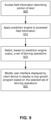
- a system optimizes crop productivity by accessing crop growth information describing, for each of a plurality of plots of land, 1) characteristics of the plots of land, 2) a type of crop planted on the plot of land, 3) characteristics of farming operations performed for the planted crop, and 4) a corresponding crop productivity.
- the system normalizes the crop growth information by formatting similar portions of the crop growth information into a unified format and a unified scale and stores the normalized crop growth information in a columnar database.
- the system trains a crop prediction engine by applying one or more machine learning operations to the stored normalized crop growth information.
- the crop prediction engine maps, for a particular type of crop, a combination of one or more characteristics of the plot of land and characteristics of farming operations performed for the planted crop to an expected corresponding crop productivity.
- the request identifying a first set of farming operations to be performed by the grower, the system accesses field information describing characteristics of the first portion of land and applies the crop prediction engine to the accessed field information and the first set of farming operations to produce a first expected crop productivity.
- the system applies the crop prediction engine to the accessed field information to identify a second set of farming operations that can produce a second expected crop productivity and modifies the first set of farming operations based on the second set of farming operations to produce a modified set of farming operations. Responsive to the second expected productivity being greater than the first expected productivity, the system presents, within an interface of a device associated with the grower, the modified set of farming operations. The grower performs the modified set of farming operations for the first type of crop on the first portion of land.
- a system executes a method for crop productivity optimization by accessing, for a first portion of land associated with a user, field information describing characteristics of the first portion of land related to crop growth from a plurality of data sources.
- the system applies a prediction model to the accessed field information.
- the prediction model is trained on crop growth information and maps, for sets of land characteristics, one or more farming operations to crop productivities by performing one or more machine learning operations.
- the system selects a set of farming operations that maximize crop productivity and modifies a user interface displayed by a client device of the user to display a crop growth program based on the selected set of farming operations.
- Normalizing the crop growth information can include one or more of: removing format-specific content from the crop growth information, removing or modifying portions of the crop growth information associated with values that fall outside of one or more predefined ranges, and scaling image information such that each image pixel represents a same distance.
- the one or more machine learning operations can include one or more of: a generalized linear model, a generalized additive model, a non-parametric regression operation, a random forest classifier, a spatial regression operation, a Bayesian regression model, a time series analysis, a Bayesian network, a Gaussian network, a decision tree learning operation, an artificial neural network, a recurrent neural network, a reinforcement learning operation, linear/non-linear regression operations, a support vector machine, a clustering operation, and a genetic algorithm operation.
- the growth information can include information about one or more of corn, rice, cotton, and soybeans.
- the growth information includes information about crop varieties, date ranges for planting crops, crop planting rate ranges, crop planting depth, soil temperatures for planting crops, atmospheric temperatures for planting crops, soil textures for planting crops, soil types for planting crops, weather conditions for planting crops, drainage conditions for planting crops, crop seedbed preparation methods, and crop planting locations.
- the growth information includes information about one or more of: row spacing, a number of rows, a type of irrigation, a type of tillage, a type of seed treatment, a type of foliar treatment, a type of floral treatment, a type of soil treatment, a soil type, a soil pH, soil nutrient composition, previously planted crop types and varieties, effects of microbial composition or treatment, microbial composition application rate and date, effects of insecticide and insecticide application rate and date, effects of fungicide and fungicide application rate and date, and effects of fertilizer and fertilizer application rate and date.
- the growth information includes information about one or more of: a microbial community composition, a microbial community gene expression, a microbial community protein production, a microbial community volatile organic compound production, a plant gene expression, a plant protein production, a plant volatile organic compound production, a microbial community metabolite production, and a plant metabolite production.
- the growth information can be collected from a plurality of fields in a plurality of locations associated with a threshold geographic and/or environmental diversity.
- the growth information is collected over a plurality of growing seasons, and over a plurality of times within each season.
- the field information can include one or more of: information describing historical characteristics of the first portion of land and information describing current characteristics of the first portion of land.
- accessing field information comprises collecting the field information from one or more sensors located at the first portion of land.
- accessing field information collected from the sensors includes one or more of: soil temperature, air temperature, soil moisture, leaf temperature, leaf wetness, and spectral data over multiple wave length bands reflected from or absorbed by ground.
- field information collected from the sensors is used to compute additional field information, including one or more of: a ratio of soil to air temperature, a ratio of leaf to air temperature, a soil wetness index, a number of cumulative growing degree days, a chlorophyll content, evapotranspiration, a daily light integral, a daily minimum temperature, a daily mean temperature, a daily maximum temperature, and a change in the normalized difference vegetation index.
- the one or more sensors include thermometers, barometers, weather detection sensors, soil composition sensors, soil moisture sensors, hygrometers, pyranometers, pyrheliometers, spectrometers, spectrophotometers, spectrographs, spectral analyzers, refractometers, spectroradiometers, radiometers, electrical conductivity sensors, and pH sensors.
- accessing the field information comprises collecting images of the first portion of land from one or more a satellite, an aircraft, an unmanned aerial vehicle, a land-based vehicle, and a land-based camera system.
- the crop prediction engine can map combinations of field information inputs and farming operation inputs to crop productivity probability distributions based on one or more machine-learned relationships between combinations of portions of the crop growth information and corresponding crop productivities.
- applying the crop prediction engine to the accessed field information and the first set of farming operations comprises determining, based on the one or more machine-learned relationships, the first expected crop productivity for the first type of crop planted and grown at the first portion of land using the first set of farming operations.
- applying the crop prediction engine to the accessed field information comprises identifying, based on the one or more machine-learned relationships, the second set of farming operations that maximize the crop productivity probability distribution for the first type of crop.
- the second set of operation can include one or more of: a seeding rate operation, a seeding date range operation, an operation to not plant a crop, an operation to plant a different type of crop than the first type of crop, and a fertilizer application operation.
- the fertilizer application operation specifies an application of one or more macronutrient and/or micronutrient.
- the second set of operations includes one or more of: a seeding depth operation, a harvest date range operation, a seed treatment operation, a foliar treatment operation, a floral treatment operation, a soil treatment operation, a reseeding operation, a microbial composition application operation, an insecticide application operation, an herbicide application operation, and a pesticide application operation.
- the prediction model can be applied to the accessed field information before planting a crop within the first portion of land.
- prediction model is applied to the accessed field information after planting a crop within the first portion of land.
- field information is updated and accessed periodically, and wherein the prediction model is re-applied to the periodically accessed field information.
- the crop growth program is periodically modified in response to re-applying the prediction model to the periodically accessed field information.
- the prediction model is applied to the accessed field information prior to harvesting a crop from the first portion of land.
- the prediction model is applied to the accessed field information after an occurrence of a triggering event.
- the triggering event comprises one of: a weather event, a temperature event, a plant growth stage event, a water event, a pest event, a fertilizing event, and a farming machinery-related event.
- prediction model is applied to the accessed field information in response to a request from a grower, a technology provider, a service provider, a commodity trader, a broker, an insurance provider, an agronomist, or other entity associated with the first portion of the land.
- the selected set of farming operations can identify one or more of: a type or variety of crop to plant if any, an intercrop to plant, a cover crop to plant, a portion of the first portion of land on which to plant a crop, a date to plant a crop, a planting rate, a planting depth, a microbial composition, a portion of the first portion of land on which to apply a microbial composition, a date to apply a microbial composition, a rate of application for a microbial composition, an agricultural chemical to apply, a portion of the first portion of land on which to apply an agricultural chemical, a date to apply an agricultural chemical, a rate of application for an agricultural chemical, type of irrigation if any, a date to apply irrigation, and a rate of application for irrigation.
- the selected set of farming operations identifies one or more of a type, a method of application, an application location, and an application volume of one or more of a plant growth regulator, a defoliant, and a desiccant. In an embodiment, the selected set of farming operations identifies one or more of: whether to replant the crop within the first portion of land, whether to replant a different crop within the first portion of land, and a replant date.
- the selected set of farming operations identifies one or more of: a type of nutrient to apply, a quantity of nutrient to apply, a location to apply a nutrient, a date to apply a nutrient, a frequency to apply a nutrient, and a nutrient application method.
- an identified nutrient comprises one or more of: N, P, K, Ca, Mg, S, B, Cl, Cu, Fe, Mn, Mo, and Zn.
- the selected set of farming operations identifies a quantity of water to apply.
- the selected set of farming operations identifies one or more of: a location to apply water, a date to apply water, a frequency to apply water, and a water application method.
- the selected set of farming operations identifies one or more of: a type of treatment to apply, a quantity of treatment to apply, a location to apply treatment, a date to apply treatment, a frequency to apply treatment, and a treatment application method.
- an identified treatment comprises one or more of: an herbicide, a pesticide, and a fungicide.
- the selected set of farming operations identifies one or more of: a harvest date, a harvest method, and a harvest order.
- the selected set of farming operations identifies one or more of: a piece of equipment to use or purchase, a drainage method to implement, a crop insurance policy to purchase, one or more potential crop brokers, one or more potential crop purchasers, one or more harvested crop qualities, and one or more harvested crop purchase prices.
- the accessed field information can describe one or more of: rainfall associated with the first portion of land, canopy temperature associated with the first portion of land, soil temperature of the first portion of land, soil moisture of the first portion of land, soil nutrients within the first portion of land, soil type of the first portion of land, topography within the first portion of land, humidity associated with the first portion of land, growing degree days associated with the first portion of land, microbial community associated with the first portion of land, pathogen presence associated with the first portion of land, prior farming operations performed at the first portion of land, prior crops grown at the first portion of land, and other historical field information associated with the first portion of land.
- the accessed field information describes characteristics of a crop planted within the first portion of land, including one or more of: a plant stage of the crop, a color of the crop, a stand count of the crop, a crop height, a root length of the crop, a root architecture of the crop, an immune response of the crop, flowering of the crop, and tasseling of the crop.
- the crop growth program can include a set of instructions associated with planting, growing, and harvesting one or more of corn, rice, cotton, and soybeans.
- the crop growth program identifies a plurality of sub-portions of the first portion of land, and comprises a set of instructions associated with planting, growing, and harvesting a different crop type or crop variety within each of the plurality of sub-portions.
- the accessed field information can be collected from one or more of: sensors located at the first portion of land, satellites, aircraft, unmanned aerial vehicles, land-based vehicles, and land-based camera systems.
- the prediction model can map characteristics described by the field information to the selected set of farming operations.
- a measure of crop productivity associated with the selected set of farming operations is greater than similar measures of crop productivity associated with other sets of farming operations.
- the system further accesses growth data associated with crop growth resulting in an implementation of the crop growth program and retrains the prediction model using one or more machine learning operations based additionally on the accessed growth data.
- the first portion of land can be associated with multiple sub-portions of land, and the system applies the prediction model by identifying a cluster of the sub-portions with a threshold similarity, applying the prediction model to accessed field data with the cluster of the sub-portions of land, and selects the set of farming operations comprising farming operations that maximize crop productivity for the cluster of the sub-portions of land.
- the identified cluster of the sub-portions of land are associated with one or more common field information characteristics.
- the selected set of farming operations can be provided directly to a recipient smart equipment or sensor for execution by the recipient smart equipment and sensor.
- the recipient smart equipment includes a harvesting system and the selected set of farming operations include a harvest route, path, plan, or order.
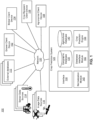
- FIG. 1 is a block diagram of a system environment 100 in which a machine learning crop prediction system operates.
- the system environment 100 shown in FIG. 1 includes a grower client device 102, a broker client device 104, a crop recipient client device 106, an agronomist client device 108, external databases 112, sensor data sources 114, image data sources 116, and the crop prediction system 125.
- different, additional, and/or fewer components may be included in the system environment 100.
- one or more of the components illustrated in Fig. 1 may be implemented within the same computing device.
- the grower client devices 102, broker client devices 104, crop recipient client devices 106, and agronomist client devices 108 are computing devices capable of receiving user input, displaying information to a user, and transmitting and/or receiving data via the network 120.
- a "client device” can refer to any of the grower client device 102, broker client device 104, crop recipient client device 106, and agronomist client device 108.
- a client device may be any device having computer functionality, such as a personal digital assistant (PDA), a mobile telephone, a smartphone, a tablet computer, a desktop or laptop computer, a server, a workstation, smart farming equipment (such as a smart tractor, sprinkler system, and the like), unmanned aerial and ground based vehicles both remotely controlled and autonomous, or another suitable device.
- PDA personal digital assistant
- a client device is configured to communicate with the crop prediction system 125 via the network 120, for example using a native application executed by the client device, a web browser running on the client device, or through an application programming interface (API) accessed by a native operating system of the client device, such as IOS ® or ANDROID TM .
- API application programming interface
- the grower client device 102 communicates with the crop prediction system 125 via the network 120 to request and receive crop prediction information, such as predictions of crop production, selections of crops to plant, and farming operations that, when performed, optimize crop productivity.
- the grower client device 102 accesses the crop prediction system 125 via an interface 130 generated by the crop prediction system 125.
- the grower client device 102 receives user input from a grower describing geographic and agricultural data associated with one or more portions of land farmed by a user of the grower client device, for instance in conjunction with a request for crop prediction information.
- the geographic and agricultural data from the grower client device 102 can be used by the crop prediction system 125, for instance to train one or more crop prediction models and/or as an input to previously trained crop prediction models in order to predict crop production and identify a set of farming operations that can optimize crop production.
- a “crop prediction model” refers to any model that uses one or more machine learning operations to predict a measure of crop production based on information comprising field information, or that is trained on information comprising field information using one or more machine learning operations.
- crop prediction models produce crop prediction information, including a predicted measure of crop production and a set of farming operations that, when performed, is expected to produce the predicted measure of crop production.
- a crop prediction model can use or be trained by any machine learning operation, such as those described herein, or any combination of machine learning operations for predictions of crop production.
- crop prediction information can refer to any measure of an expected crop production, such as crop yield, crop quality, crop value, or any other suitable measure of crop production (including those described herein), and can refer to a set of farming operations expected to result in the measure of expected crop production when performed in a specified manner, at a specified time/location, and the like.
- field information can include one or more of past and present crop production information, past and present geographic information, past and present agricultural information, past and present agronomic information, past and present sensor data associated with crop production, any other information related to the planting, growing, and harvesting of a crop, and any other field parameters as described herein.
- crop quality can refer to any aspect of a crop that adds value to a grower, broker, or crop recipient.
- crop quality refers to a physical or chemical attribute of a crop, for instance one or more of: a crop content (e.g., moisture, protein, carbohydrate, fat, oil); a crop color or hardness; a number or percentage of broken kernels; a measure of wet gluten; toxin levels (for example, mycotoxin levels, including vomitoxin, fumonisin, ochratoxin, or aflatoxin levels); damage levels (for example, mold, insect, heat, cold, frost or other material damage); and the like.
- a crop content e.g., moisture, protein, carbohydrate, fat, oil
- crop color or hardness e.g., a crop color or hardness
- a number or percentage of broken kernels e.g., a measure of wet gluten
- toxin levels for example, mycotoxin levels, including vomitoxin, fumonisin
- crop quality may be one or more of: a genetic trait, modification, or edit (or lack thereof); an epigenetic signature or lack thereof; a crop content (e.g. ash, fiber); whiteness, weight, transparency; percent chalky grains, proportion of corneous endosperm, presence of foreign matter, absorption of water, milling degree, kernel size distribution or volume, average grain length or breadth, density, or length/breadth ratio; a number or percentage of kernels with stress cracks; a falling number; a farinograph; a number or percentage of immature grains; and a sodium dodecyl sulfate sedimentation.
- a genetic trait, modification, or edit or lack thereof
- an epigenetic signature or lack thereof e.g. ash, fiber
- whiteness, weight, transparency e.g. ash, fiber
- percent chalky grains proportion of corneous endosperm
- presence of foreign matter e.g. ash, fiber
- percent chalky grains proportion of corneous endosperm
- crop quality refers to an attribute of a production method or environment, for instance one or more of: a soil type, chemistry, or structure; a climate type, weather type, or magnitude or frequency of weather events; a soil or air temperature or moisture; a number of degree days; a rain quantity; an irrigation type or lack thereof; a tillage frequency; a cover crop (past and present); a crop rotation; levels and types of fertilizer, chemical, herbicide, or pesticide use or lack thereof; a geography of production (for example, country of origin, American Viticultural Area, mountain grown); and the like.
- crop quality is one or more of: whether the crop is organic, shade grown, greenhouse grown, fair-wage grown, no-till, pollution-free, or carbon neutral
- crop quality is affected by, or may be inferred from, the timing of one or more production practice.
- the food grade quality may be inferred from the variety of plant, damage levels, and one or more production practices used to grow the plant.
- one or more qualities may be inferred from the maturity or growth stage of a crop.
- quality is an attribute of a method of storing a harvested crop (e.g., the type of storage: bin, bag, pile, in-field, box, tank, other containerization), the environmental conditions (e.g. temperature, light, moisture/relative humidity, presence of pests, CO2 levels) to which the good encountered during storage, method of preserving the good (e.g.
- quality is a calculated, derived, inferred, or subjective classification based on one or more measured or observed physical or chemical attributes of a crop, or a farming operation used in its production.
- a quality metric is a grading or certification by an organization or agency, for example grading by the USDA, organic certification, or non-GMO certification.
- a quality metric is inferred from one or more measurements made of crops during the growing season, for example wheat grain protein content may be inferred from measurement of crop canopies using hyperspectral sensors and or NIR or visible spectroscopy of whole wheat grains.
- one or more quality metric is collected, measured or observed during harvest, for example dry matter content of corn may be measured using near-infrared spectroscopy on a combine.
- the broker client device 104 communicates with the crop prediction system 125 via the network 120 to receive information about crop production for one or more portions of land, and to send requests for harvested crops (for instance, to the grower client device 102).
- the user of the broker client device 104 is in communication with a grower and enters into an agreement to obtain from the grower some or all of a harvested crop.
- the user of the broker client device may be a crop recipient.
- the broker client device 104 accesses the crop prediction system 125 via an interface 130 generated by the crop prediction system 125 that allows the user of the broker client device 104 to identify predicted crop production information from one or more growers, to identify sets of farming operations to suggest or provide to the one or more growers in order to optimize crop production, to identify one or more prospective crop recipients in addition to the crop broker, and to automate the generation of crop acquisition agreements with the one or more prospective crop recipients.
- a crop recipient may receive a harvested crop from a grower or from a crop broker.
- the crop recipient client device 106 communicates with the crop prediction system 125 via the network 120 to receive information about predicted crop production of one or more growers. For instance, a user of the crop recipient client device 106 can identify expected crop productions of one or more growers, including a type of crop produced by a grower, an expected quantity of the crop produced by a grower, and a comparison of alternative crop types and total crop quantities across a set of growers (such as all growers in a geographic region). A user of the crop recipient client device 106 can use this information to enter into crop acquisition agreements with one or more growers or one or more brokers (via one or more broker client devices 104).
- the agronomist client device 108 communicates with the crop prediction system 125 via the network 120 to access crop prediction information generated by the crop prediction system.
- a user of the agronomist client device 108 can review the crop prediction information, including a set of farming operations identified by the crop prediction system 125 to optimize a predicted crop production, and can modify the identified set of farming operations.
- a user of the agronomist client device 108 may access prediction information and a corresponding set of farming operations identified by the crop prediction system 125 that includes the application of a particular type of fertilizer and a harvest date.
- the user of the agronomist client device 108 can change the type of fertilizer to be applied, for instance based on the type of fertilizer being unavailable to a particular grower, and can change the harvest date, for instance by moving the harvest date up based on expected inclement weather.
- a user of the agronomist client device 108 can modify farming operations identified by the crop prediction system 125 as optimal based on information available to the user but not available to the crop prediction system 125 at the time the predictions were made.
- an agronomist can modify field information on which the crop prediction system 125 is applied (such as a field location, a crop type, an expected rainfall, and the like), and can request that the crop prediction information generated by the crop prediction system be re-generated in order to observe the effect of the modified field information on the crop prediction information.
- field information on which the crop prediction system 125 is applied such as a field location, a crop type, an expected rainfall, and the like
- the crop prediction information generated by the crop prediction system can be re-generated in order to observe the effect of the modified field information on the crop prediction information.
- the agronomist client device 108 and the broker client device 104 can be the same device, and the broker and agronomist can be the same entity.
- the external databases 112 are one or more sources of data describing past or present actions, events, and characteristics associated with crop production that can be used by machine learning processes of the crop prediction system 125 to train crop prediction models, to apply crop prediction models to predict future crop production, and to identify farming operations that optimize future crop production.
- Each external database 112 may be connected to, or accessible over, one or more wireless computer networks, such as a WiFi, an LTE network, an ad hoc network (e.g., a mesh network), personal area networks (e.g., Bluetooth, near field communication, etc.), and the like.
- External databases 112 may include one or more Web-based servers which may provide access to stored and/or real time information.
- the crop prediction system 125 accesses information from the external databases 112 directly, while in other examples, the information is manually entered (for instance, by a grower, an agronomist, or an entity associated with the crop prediction system (for instance, via a GUI generated by the interface module 130 and displayed via the grower client device 102, the agronomist client device 108, or the like).
- external databases 112 can include:
- the sensor data sources 114 are one or more sources of data taken from sensors describing past or current measurements associated with crop production that can be used by machine learning processes of the crop prediction system 125 to train crop prediction models, to apply crop prediction models to predict future crop production, and to identify farming operations that optimize future crop production.
- sensor data sources are one or more sources of data taken from sensors describing past or current measurements associated with crop growth, the environment and/or portions of land.
- each sensor data source 114 may be connected to, or accessible over, one or more wireless computer networks, such as a WiFi, an LTE network, an ad hoc network (e.g., a mesh network), personal area networks (e.g., Bluetooth, near field communication, etc.), and the like.
- the crop prediction system 125 may directly couple with one or more sensor data sources 114 and can receive sensor data without human intervention.
- a smart tractor can collect information such as temperature and sunlight information while operating within a field, and can communicatively couple with the crop prediction system 125 (for instance, via an LTE network) to provide the collected temperature and sunlight information in association with information identifying the field.
- data from sensor data sources 114 may be manually entered (e.g., by growers or agronomists) within a data entry GUI generated by the interface module 130 and presented by a client device.
- Sensor data from sensor data sources 114 may be taken at one or more times during a growing season or across multiple growing seasons, at manual or automated triggers (e.g., a threshold time since a previous measurement; a request by a grower to receive a measurement).
- Sensor data sources 114 may be deployed across diverse locations (e.g., spatially along the surface of a field, at different depths or elevations relative to the ground) and at different times during the growing season.
- Sensor data sources 114 may additionally be located at fixed points (e.g., a sensor placed at a designated point on a field) or may be coupled to moving objects (e.g., an autonomous, manned, or remotely controlled land or aerial vehicle).
- sensor health data (such as available power, component malfunction or degradation, diminished communication strength, etc.) and other sensor metadata (such as GPS location data) can be collected for use in verifying the quality of measurement data collected by the sensors and determining the health of the sensors themselves.
- sensor data sources 114 can include:
- the image data sources 116 are one or more sources of image data that can be used by machine learning operation of the crop prediction system 125 to train crop prediction models, to apply crop prediction models to predict future crop production, and to identify farming operations that optimize future crop production.
- each image data source 116 may be connected to, or accessible over, one or more wireless computer networks, such as a WiFi, an LTE network, an ad hoc network (e.g., a mesh network), personal area networks (e.g., Bluetooth, near field communication, etc.), and the like.
- the crop prediction system 125 may directly couple with one or more image data sources 116 and can receive image data without human intervention.
- a drone can collect images during operation and can communicatively couple with the crop prediction system 125 (for instance, via an LTE network) to provide the collected images in association with information identifying the field.
- image data source can refer individually to the instrument capturing the image (such as the camera, radiometer, and the like) and collectively to the instrument capturing the image and any infrastructure (such as a vehicle, stand, machinery, and the like) to which the instrument is coupled.
- image data can refer to viewable image files (for instance, in the .JPG or .PNG format), to reflectance and absorbance data at one or more spectral bands including a continuous range of spectra (e.g.
- image data sources 116 can include:
- the crop prediction system 125 receives data from the external databases 112, sensor data sources 114, and image data sources 116, and performs machine learning operations on the received data to produce one or more crop prediction models.
- the data from these data sources can be combined, and a standard feature set can be extracted from the combined data, enabling crop prediction models to be generated across different temporal systems, different spatial coordinate systems, and measurement systems.
- sensor data streams can be a time series of scalar values linked to a specific latitude/longitude coordinate.
- LiDAR data can be an array of scalar elevation values on a 10m rectangular coordinate system
- satellite imagery can be spatial aggregates of bands of wavelengths within specific geographic boundaries.
- feature sets can be extracted and combined (such as a soil wetness index from raw elevation data, or cumulative growing degree days from crop types and planting dates).
- the crop prediction system 125 is configured to communicate with the network 120 and may be accessed by client devices via the network such as grower client devices 102, broker devices 104, crop recipient client devices 106, and agronomist devices 108.
- the crop prediction system shown in FIG. 1 includes an interface 130, a geographic database 135, an agricultural database 140, a normalization module 145, a database interface module 150, and the crop prediction engine 155.
- the crop prediction system 125 may contain additional, fewer, or different components for various applications. Conventional components such as network interfaces, security components, load balancers, failover servers, management and network operations consoles, and the like are not shown so as to not obscure the details of the system architecture.
- the interface 130 coordinates communications for the crop prediction system 125 within the environment 100, communicatively coupling to, transmitting data to, and receiving data from the other components of Fig. 1 as needed.
- the interface 130 generates a user interface for display by one or more of the grower client device 102, the broker client device 104, the crop recipient client device 106, and the agronomist client device 108, or by a display or monitor associated with the crop prediction system 125 or another entity within the environment 100.
- the user interface allows users to interact with the crop prediction system 125 in a variety of ways.
- the communicative capabilities of the interface 130 are customized based on permissions associated with different kinds of users.
- the interface 130 can allow a grower client device 102 to request crop production prediction information and a set of farming operations that optimize crop production for a plot of land owned by a user of the grower client device 102, while prohibiting users that don't own the plot of land from accessing such information via other grower client devices 102.
- the interface 130 can allow an agronomist client device 108 to access sets of farming operations being performed by various growers and sets of data from the geographic database 135 and the agricultural database 140 while preventing a crop recipient client device 106 from accessing such data.
- the interface 130 can generate a map interface of a portion of land, and can display icons or other information identifying a location of sensors, farming equipment, and/or laborers within the map interface (for instance based on location information received from each entity).
- the geographic database 135 stores and maintains data describing geographic characteristics of portions of land (such as fields, plots, sub-portions of the same, and the like) that may impact crop production.
- a "portion of land” refers to any amount of land in any shape or size.
- a "portion of land” can refer to a grower's entire property, a field, a plot of land, a planting region, a zone or management zone, and the like.
- a portion of land can include one or more "sub-portions" of land, which refers to a subset of the portion of land of any shape or size.
- Various types and formats of data may be stored in the geographic database 135 for access by the other components of the crop prediction system 125, on which to perform one or more machine learning operations in order to train a crop prediction model, to predict a crop production for a portion of land, and to identify a set of farming operations that optimize crop production.
- the geographic database 135 can be organized in any suitable format.
- data including geo-referenced data, may be stored as flat files, columnar storage, binary format, etc. which may be accessed via relational databases, columnar databases, NoSQL stores, horizontally scaled databases, etc.
- the geographic database 135 is further discussed in conjunction with FIG. 2 .
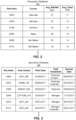
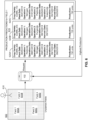
- FIG. 2 illustrates an example geographic database 135 for a machine learning crop prediction system.
- information describing geographic characteristics that may impact crop production are associated with a plot index that uniquely identifies a particular field or plot of land associated with the characteristics.
- the geographic database 135 associates each uniquely identified plot with one or more sets of associated data ("County,” "Avg. Rainfall,” and "Avg. Temp").
- the example database of FIG. 2 organizes geographic information by plot of land, in other examples, the geographic database 135 can be organized in other ways, for instance by land category (field, mountain, city, etc.), by land owner, or by any other suitable characteristic.
- the example database of FIG. 2 only includes three characteristics mapped to each land plot, in practice, the geographic database 135 can include any number of characteristics, for instance 50 or more. Examples of geographic information stored by the geographic database 135 can include:
- the agricultural database 140 stores and maintains data describing agricultural characteristics associated with the planting, growing, and harvesting of a crop that may impact crop production.
- Various types and formats of data may be stored in the agricultural database 140 for access by the other components of the crop prediction system 125, on which to perform one or more machine learning operations in order to train a crop prediction model, to predict a crop production for a portion of land, and to identify a set of farming operations that optimize crop production.
- the agricultural database 140 can be organized in any suitable format, such as a columnar relational database.
- the agricultural database 140 includes metadata that describes, for example, a product associated with a farming operation (e.g., a brand of fertilizer; a crop variant).
- the crop prediction system 125 can infer the missing metadata based on other available metadata, including time, location, events that occurred prior to/with/after an operation, input or measured value having missing metadata, an identity of a corresponding grower, an identity of a corresponding farm, row spacing, a type of machine, and the like.
- a crop prediction model is trained on other samples for which the metadata is available and applied to samples with missing metadata, for instance using a random forest classifier, a k-nearest neighbor classifier, an AdaBoost classifier, or a Naive Bayes classifier.
- the agricultural database 140 is further discussed in conjunction with FIG. 3 .
- FIG. 3 illustrates an example agricultural database 140 for a machine learning crop prediction system.
- information describing agricultural factors that may impact crop production are associated with a plot index that uniquely identifies a particular field or plot of land and a crop variety.
- the agricultural database 140 identifies one or more sets of data ("Plant Date,” “Field Treatments,” and “Harvest Date") associated with a plot index and crop variant.
- Plant Date "Plant Treatments”
- Hardvest Date” associated with a plot index and crop variant.
- a plot index "A395" associated with a field and a crop variant "SOY_005" is associated with a planting date "04/29/2017," field treatments including "pesticide, [and] nitrogen,” and a harvest date "08/25/2017.”
- FIG. 3 illustrates an example agricultural database 140 for a machine learning crop prediction system.
- FIG. 3 information describing agricultural factors that may impact crop production are associated with a plot index that uniquely identifies a particular field or plot of land and a crop variety.
- the agricultural database 140 can be organized in other ways, for instance by land category (field, mountain, city, elevation, slope, soil texture or composition, etc.), by crop variant or category, by land owner, or by any other suitable characteristic.
- land category field, mountain, city, elevation, slope, soil texture or composition, etc.
- crop variant or category by land owner, or by any other suitable characteristic.
- the example database of FIG. 3 only includes four characteristics mapped to each land plot, in practice, the agricultural database 140 can include any number of characteristics, for instance 50 or more. Likewise, it should be appreciated that reference is made in Fig.
- an agricultural database can include specific details of applied crop treatments (such as the specific treatment applied, the method of application, the application rate, date and location, etc.)
- Examples of agricultural information stored by the agricultural database 140 can include:
- the normalization module 145 receives data in a variety of formats from the external databases 112, sensor data sources 114, image data sources 116, or other data sources and normalizes the data for storage in the geographic database 135 and the agricultural database 140 and use by the crop prediction engine 155. Due to the large number and disparate nature of prospective external data sources, data received by the normalization module 150 may be represented in a variety of different formats. For example, images received from a satellite and from a drone may be in different image file formats, at different resolutions, and at different scales (e.g., a pixel in each image may represent a different geographic distance). Likewise, rainfall measurement data received from a rain sensor at a field may include a first unit (such as inches) while rainfall estimate data from a weather monitoring entity may include a second unit (such as centimeters).
- the normalization module 145 selects a common format, normalizes received data of the particular type into the common format, and stores the normalized data within the geographic database 135 and the agricultural database 140.
- the normalization module 145 can "clean" various types of data, for instance by upscaling/downscaling image data, by removing outliers from quantitative or measurement data, and interpolating sparsely populated portions of datasets.
- the normalization module 145 can apply one or more normalization operations including but not limited to: standardizing the crop growth information to a common spatial grid and common units of measure; interpolating data using operations that include Thiessen polygons, kriging, isohyetal, and inverse distance weighting; detecting and correcting inconsistent data such as erroneously abrupt changes in a time-series of measurements that are physically implausible; associating geographic locations with pixels in an image; identifying missing values that are encoded in different ways by different data sources; imputing missing values by estimating them using values of nearest neighbors and/or using multiple imputation; and the like.
- normalization operations including but not limited to: standardizing the crop growth information to a common spatial grid and common units of measure; interpolating data using operations that include Thiessen polygons, kriging, isohyetal, and inverse distance weighting; detecting and correcting inconsistent data such as erroneously abrupt changes in a time-series of measurements that are physically implausible; associating
- the normalization module 145 generates, maintains, and/or normalizes metadata corresponding to data received from external data sources.
- metadata can include the source of the corresponding data, the date the corresponding data was received, the original format of the corresponding data, whether the corresponding data has been modified by a user of the crop prediction system 125, whether the corresponding data is considered reliable, the type of processing or normalization performed on the corresponding data, and other characteristics associated with the normalized data.
- the database interface module 150 provides an interface between the components of the crop prediction system 125 and the geographic database 135 and agricultural database 140. For instance, the database interface module 150 receives normalized data from the normalization module 145 and stores the normalized data in the geographic database 135 and the agricultural database 140. The database interface module 150 may additionally modify, delete, sort, or perform other operations to maintain the geographic database 135 and the agricultural database 140. For instance, the normalization module 145 can receive and normalize an updated set of historic temperature data, and the database interface module 150 can replace the previous historic temperature data stored within the geographic database 135 with the updated normalized temperature data.
- the database interface module 150 can generate a view table of data, such as historic corn harvesting data within the state of Illinois between 1988 and 1996 in response to a request received from a user of a client device 108 via the interface 130.
- the database interface module 150 additionally accesses the geographic database 135 and the agricultural database 140 to retrieve data for use by the crop prediction engine 155.
- the crop prediction engine 155 can request cotton fertilization information for plots of land with a low soil acidity via the database interface module 150.
- the database interface module 150 can query the "soil acidity" column within the geographic database 135 to identify plots of land associated with a below threshold soil acidity, and can query the agricultural database 140 to obtain fertilization information (such as type of fertilizers applied, quantity of fertilization applied, data of application, and resulting crop production) associated with the identified plots of land.
- the crop prediction engine can then provide the retrieved fertilization information to the crop prediction engine 155, which in turn can apply, for instance, a neural network to the fertilization information to generate a crop prediction model mapping low soil acidity and fertilization operations to crop production.
- the crop prediction engine 155 can request information associated with the particular field via the database interface module 150, which in turn can retrieve it from the geographic database 135 (e.g., geographic information associated with the particular field, geographic information associated with other fields within a threshold similarity to the requested field, etc.) and from the agricultural database 140 (e.g., agricultural information describing crop variants previously grown in the particular field and similar fields, farming operations performed on the previously grown crop variants, and corresponding crop production information). The database interface module 150 can then provide the requested and retrieved data to the crop prediction engine 155 for use in applying the crop prediction models to generate crop production predictions.
- the geographic database 135 e.g., geographic information associated with the particular field, geographic information associated with other fields within a threshold similarity to the requested field, etc.
- the agricultural database 140 e.g., agricultural information describing crop variants previously grown in the particular field and similar fields, farming operations performed on the previously grown crop variants, and corresponding crop production information.
- the database interface module 150 can then provide the requested and retrieved data to the
- the crop prediction engine 155 trains and applies crop prediction models by performing one or more machine learning operations to determine predictions for crop production and corresponding sets of farming operations that result in the predicted crop production.
- the crop prediction engine 155 can request data from the various external data sources described herein for storage within the geographic database 135 and the agricultural database 140, and can perform the machine learning operations on the stored data.
- the crop prediction engine 155 can apply a Bayesian network to information describing plots of land within 500 meters of a body of water and corresponding rice production in order to train a crop prediction model that maps proximity to water to rice production.
- the crop prediction engine 155 can also receive requests, for instance from a grower client device 102 or a broker device 104, to predict a crop production for a particular plot of land, a particular crop, and a particular set of farming operations. In addition to predicting the requested crop production, the crop prediction engine 155 can also identify a modified set of farming operations or an alternative crop that will optimize crop production. Likewise, a grower can simply identify a portion of land and request a set of farming operations to perform (including an identification of a type or variety of crop to plant) to optimize crop production, and the crop prediction engine 155 can apply one or more trained crop prediction models to information associated with the identified portion of land to identify the set of farming operations that optimizes crop production. The crop prediction engine 155 is described further in conjunction with FIG. 5 .
- the crop prediction system 125 and other devices shown in FIG. 1 are configured to communicate via the network 120, which may include any combination of local area and/or wide area networks, using both wired and/or wireless communication systems.
- the network 120 uses standard communications technologies and/or protocols.
- the network 120 includes communication links using technologies such as Ethernet, 802.11, worldwide interoperability for microwave access (WiMAX), 3G, 4G, code division multiple access (CDMA), digital subscriber line (DSL), etc.
- networking protocols used for communicating via the network 120 include multiprotocol label switching (MPLS), transmission control protocol/Internet protocol (TCP/IP), hypertext transport protocol (HTTP), simple mail transfer protocol (SMTP), and file transfer protocol (FTP).
- Data exchanged over the network 120 may be represented using any suitable format, such as hypertext markup language (HTML) or extensible markup language (XML).
- all or some of the communication links of the network 120 may be encrypted using any suitable technique or techniques.
- Crop production may be optimized for a current season or over a time period of multiple seasons.
- “crop production” can refer to any measure associated with the planting, growing, and/or harvesting of crops, including but not limited to crop yield for a current year or for multiple seasons, current or future profit, expected planting/growing/harvesting costs, soil health over one or more season, carbon sequestration, production at a particular date or within a range of dates (e.g., early or late maturing), composition profiles of crops (e.g., percent moisture, oil, protein, carbohydrate, or with a particular fatty acid profile, amino acid profile, or sugar content), and the like.
- the crop prediction system 125 can comprehensively account for this large quantity of crop production information, and can perform one or more machine learning operations identify a set farming operations and decisions for growers without requiring growers to spend the time manually accounting for this crop production information. The result is that the grower is able to efficiently harness the power of complex machine learning processes to identify farming operations that, when performed, can increase or optimize the grower's crop yield, overhead, and profitability.
- the crop prediction system 125 can enable a grower to receive updated farming operations throughout the course of a planting season as crop conditions (e.g., weather, price of fertilizer, etc.) change, thereby allowing the grower to harness machine learning processes to account for unpredictable phenomena and conditions, and to further optimize crop production as a season progresses.
- crop conditions e.g., weather, price of fertilizer, etc.
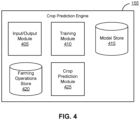
- FIG. 4 is a block diagram of a machine learning crop prediction engine 155.
- the crop prediction engine 155 performs one or more machine learning operations to data from the data sources 112, 114, and 116 of Fig. 1 to train prediction models associated with crop production.
- the crop prediction models which when applied can perform one or more machine learning operations, can generate prediction information for crop production, and can identify a set of farming operations that, if performed, optimize crop production.
- the crop prediction engine 155 includes an input/output module 405, a training module 410, a model store 415, a farming operations store 420, and a crop prediction module 425.
- the crop prediction engine 155 may contain more, fewer, or different components than those shown in FIG. 4 .
- the input/output module 405 accesses information for use in training and applying crop prediction models. For instance, the input/output module 405 receives a request from a grower client device 102 requesting crop production prediction information and including information describing a field. In another instance, the input/output module 405 accesses the geographic database 135 and the agricultural database 140 to retrieve data for use by the training module 410 to train prediction models. The input/output module 405 can coordinate the transfer of information between modules of the crop prediction engine 155, and can output information generated by the crop prediction engine, for instance, crop production prediction information and/or a set of farming operations that optimize crop production.
- the training module 410 trains crop prediction models by performing machine learning operations on training data accessed by the crop prediction system 125, for instance from the geographic database 135 and the agricultural database 140.
- the crop prediction models are generated based on geographic information describing various plots of land, agricultural data describing types and varieties of crops planted on the plots of land and farming operations performed on the planted crops, and harvest information describing the resulting harvest for the planted crops.
- the geographic database 135 and the agricultural database 140 include information describing past, present, and predicted future conditions that impact crop production on various fields.
- the training module 410 generates a training set of data corresponding to a given crop variant or a given set of field parameters.
- the training module 410 can then perform one or more machine learning operations to identify patterns or relationships within the training set of data based on feature values within the training set of data deemed potentially relevant to crop production associated with the field parameters or crop variant.
- the training module 410 can perform various types of machine learning operations to train crop prediction models using all or part of accessed training data or feature values of the training data as inputs to the machine learning operations.
- Various machine learning operations may be performed in different contexts to train the crop prediction models, and the crop prediction models can perform various machine learning operations when applied, including but not limited to: a generalized linear model, a generalized additive model, non-parametric regression, random forest, spatial regression, a Bayesian regression model, a time series analysis, a Bayesian network, a Gaussian network, decision tree learning, artificial neural networks, recurrent neural network, reinforcement learning, linear/non-linear regression, support vector machines, clustering operations, genetic algorithm operations, and any combination or order thereof.
- time series analysis operations performed by the training module 410 can include vector autoregression, ARIMA, and time-series decomposition.
- the machine learning operations when performed on input parameters describing a field or a crop variant, generate a crop prediction model for the field or crop variant associated with the input parameters.
- Crop prediction models can be generated upon receiving a request from a grower client device 102 for a crop production prediction, or can be generated in advance of receiving such a request.
- the training module 410 stores generated crop prediction models in the model store 415 for subsequent access and application, for instance by the crop prediction module 425.
- the training module 410 may periodically update crop prediction models in response to a triggering condition. For example, the training module 410 can update a crop prediction model after a set amount of time has passed since the model was last updated, after a threshold amount of additional training data is received corresponding to the field and crop variant associated with the model (e.g., new data is received for fields with a threshold similarity to the field; new data is received for the crop variant; new data is received from the corresponding grower client device 102 about applied farming operations), or after a threshold amount of field information is obtained for an already-planted crop (e.g., a current crop growth rate, a pest infestation rate, etc.).
- the training module 410 can update a crop prediction model responsive to a market event (e.g., a midseason weather event that affects the availability of a crop supply, a greater-than-threshold increase or decrease in crop price, etc.).
- a market event e.g., a midseason weather event that affects the availability of a crop supply, a greater-than-threshold increase or decrease in crop price, etc.
- the training module 410 can update a crop prediction model responsive to an agricultural event (e.g., a planted crop achieves a plant growth stage, such as germination, flowering, and the like). Likewise, the training module 410 can update a crop prediction model responsive to a request received by the crop prediction engine 155 (e.g., by a grower or an agronomist). In some embodiments, the training module 410 updates the crop prediction models iteratively, such that a crop prediction output from a crop prediction model is incorporated into a training set of data used to train crop prediction models.
- an agricultural event e.g., a planted crop achieves a plant growth stage, such as germination, flowering, and the like.
- the training module 410 can update a crop prediction model responsive to a request received by the crop prediction engine 155 (e.g., by a grower or an agronomist).
- the training module 410 updates the crop prediction models iteratively, such that a crop prediction output from a
- the training module 410 can incorporate the set of farming operations into a training set for use in training or retraining crop prediction models.
- the model store 415 stores and maintains the crop prediction models generated by the training module 410.
- the model store 415 stores the crop prediction models in association with a corresponding plot index uniquely representing the field or fields of the data used to train the model.
- the model store 415 can also receive and store updates to the models from the training module 410, and can provide stored prediction models, for instance in response to a request from the crop prediction module 425.
- the farming operations store 420 stores data describing various farming operations that can be performed by a grower on a field. Farming operations can be associated with sets of information including an expected impact on a crop or a field, timing data describing when the farming operation should be performed, and a method of performing the farming operation (e.g., for farming operations requiring products such as pesticides and fertilizers, a method may identify one or more versions of available product).
- the farming operations store 420 can provide information describing farming operations for use as inputs to crop prediction models, for instance by the crop prediction module 425 when attempting to identify a set of farming operations that optimize crop production. Examples of farming operations stored by the farming operations store 420 can include:
- the crop prediction module 425 receives a request to generate an optimized crop production prediction for a field (which can include multiple fields or plots of land, adjacent or otherwise) and applies one or more crop prediction models data associated with the field to determine a set of farming operations to optimize a crop production for the field.
- the request is received from a grower via client device 102.
- the request is received via a GUI generated by the interface module 130 and displayed on a client device of third party, such as a technology or service provider, a commodity trader, or a manufacturer of a good utilizing one or more agricultural inputs.
- a technology provider can include a manufacturer of a technology such as an agricultural chemical, microbial composition, sensor, satellite, aircraft, unmanned aerial vehicle, land-based vehicle, land-based camera system, and the like.
- “optimizing crop production” can refer to optimizing the use of a technology or service provided by such a third party (for instance, optimizing the cost of or resulting crop yield from using a technology or service), including the date and location of the use of a technology or service and any targeted field parameters associated with such use.
- a service provider can include a data provider (e.g., data describing weather, crop production, crop input use, imagery (drone, satellite, or land-based), data from a sensor, and/or commodity prices); an agronomist or other advisor; a service provider (e.g. grain marketing services), a broker or exporter, a procurement services provider, a delivery or transportation service provider, and the like.
- a data provider e.g., data describing weather, crop production, crop input use, imagery (drone, satellite, or land-based), data from a sensor, and/or commodity prices
- an agronomist or other advisor e.g. grain marketing services
- a broker or exporter e.g. grain marketing services
- procurement services provider e.g., a procurement services provider, a delivery or transportation service provider, and the like.
- the request to generate an optimized crop production prediction is generated in response to conditions associated with a triggering event being satisfied.
- triggering events include but are not limited to: a market event (such as an above- or below-threshold quantity of harvested crop being available for purchase), a contracting event (such as the grower and crop broker entering into an agreement wherein the crop broker obtains from the grower some or all of a crop to be harvested), a product supply event (such as the price of a particular fertilizer exceeding a threshold), a crop growth event (such as a growth rate of a planted crop exceeding a threshold), a weather event (such as a below-threshold amount of rain over a pre-determined time period), and the like.
- a market event such as an above- or below-threshold quantity of harvested crop being available for purchase
- a contracting event such as the grower and crop broker entering into an agreement wherein the crop broker obtains from the grower some or all of a crop to be harvested
- a product supply event such as the price
- the request to generate an optimized crop production can come from a grower or broker immediately before planting, shortly after planting, or mid-season, for instance in response to a grower manually adjusting one or more field parameters or farming operations previously provided by the crop prediction module 425.
- the set of farming operations performed by a grower can be iteratively optimized, accounting for mid-season changes or events related to growing, land, or market characteristics.
- the crop prediction module 425 accesses geographic information associated with the field.
- the crop prediction module 425 accesses the model store 415 to retrieve one or more crop prediction models associated with the request, and applies the retrieved prediction models to the accessed geographic information.
- the crop prediction models can iterate through various combinations of farming operations to identify a set of farming operations that optimizes for crop production.
- the type of crop production e.g., crop yield, cost reduction, etc.
- the crop prediction models optimize for can be included within the request received by the crop prediction module 425, can be specified by a user associated with the crop prediction engine 155, can be a default crop production type, or can be selected based on any suitable criteria.
- field parameters are represented by variables field 1 , field 2 , ..., field x , and farming operations farmop 1 , farmop 1 , ..., farmop y .
- a "field parameter" is any type of field information that describes a geographic or agricultural characteristic associated with the land, the environment, or the planting, growing, and harvesting of a crop.
- the field parameters used as inputs to the crop prediction model are included within a request for prediction information.
- a farmer can use a grower client device 102 to request prediction information for a crop planted at a particular portion of the farmer's field, and the farmer can specify the soil type of the field portion, historic crops planted at the field portion, and an available irrigation system for the field portion.
- the field parameters are retrieved from the geographic database 135, the agricultural database 140, or an external source (such as an entity of FIG. 1 ).
- the crop prediction engine 155 can access historic sunlight information for the field portion from the geographic database 135, crop yield information for similar fields from the agricultural database 140, and an expected future rainfall for the field portion from a weather database.
- a "farming operation” refers to the performance of an action by a grower or other entity with regards to the planting, growing, harvesting, and/or storage of a crop.
- the entity requesting the prediction information can provide one or more farming operations that they intend to perform, and/or the crop prediction module 425 can access farming operations from the farming operations store 420.
- the crop prediction module 425 applies the prediction model P to the field parameters and a set of farming operations to generate a prediction of crop production for the field parameters and the set of farming operations.
- the crop prediction module 425 can apply a corresponding crop prediction model that, when applied, performs one or more machine learning operations on these farming parameters to identify a set of farming operations and a predicted crop production for the field portion if the selected set of farming operations are performed.
- the machine learning operations performed by the crop prediction module 425 can iterate through multiple combinations of farming operations in order to identify a set of operations that optimizes predicted crop production.
- the set of available farming operations are constrained by the resources available to the grower (e.g. farm equipment such as tractors or drones, labor, capital, field size, input availability or prices in the region comprising the land, etc.).
- the crop prediction module 425 can perform a random forest classifier or a gradient boosting operation to identify the set of farming operations that produces the optimized crop prediction without having to exhaustively iterate through every combination of possible farming operations.
- crop prediction models are applied to a particular crop type or variant, such as a crop variety specified by a grower.
- a "variant" of a crop or plant (or element thereof, e.g. a seed) represents a particular instance of natural or artificially introduced genetic or epigenetic diversity of a crop or plant.
- a genetic variant may be a crop variety, a genetically modified trait (such as represented by transgenic events MON87460 (Genuity ® DroughtGard TM ), DP73496 (Optimum ® Gly), SYN-000H2-5, or genome engineering including genetic variants introduced by targeted nucleases such as a targeted nuclease transcription activator-like effector nuclease (TALEN), zinc finger nuclease (ZNF), clustered regulatory interspaced short palindromic repeats (CRISPR), CRISPR/Cas9, CRISPR/CPF1, and combinations thereof), or an epigenetic trait such as introduced by treatment with a DNA methyltransferase inhibitor such as 5-azacytidine, or a histone deacetylase inhibitor such as 2-amino-7-methoxy-3H-phenoxazin-3-one or genomic perturbation such as via tissue culture.
- targeted nucleases such as a targeted nuclease transcription activator-like
- the crop prediction module 425 additionally modifies the crop type or variant when applying a crop prediction model to determine a crop type or variant that optimizes the crop production. In these examples, the crop prediction module 425 identifies a crop variant and a set of farming operations corresponding to the identified crop variant, for instance for display on the grower client device 102.
- a crop prediction model can be a neural network trained on geographic and agricultural data, including for instance, land characteristics, crop types planted, farming operations performed, and resulting crop productions.
- the resulting neural network can map combinations of geographic and agricultural inputs to resulting crop productions, including geographic, agricultural inputs, and crop productions (and combinations thereof) that did't included in the training data.
- the crop prediction module 425 applies the neural network to a set of field parameters (for instance, included within a request received from a grower or broker), the neural network can vary possible combinations of farming operations to identify a set of farming operations mapped to an optimized crop production.
- an "optimized crop production” may refer to a maximum crop production over a threshold number of iterations or time.
- a predicted optimized crop production may refer to a local maximum crop production discovered over the course of applying a machine learning operation or a crop prediction model to a set of inputs, but not necessarily a global maximum over all possible combinations of farming operations.
- a crop prediction model can be a Bayesian classifier trained on geographic and agricultural data, including for instance, land characteristics, crop types planted, farming operations performed, and resulting crop productions.
- the resulting Bayesian classifier can identify a set of farming operations that optimizes a prediction crop production by 1) enumerating all possible combinations of farming operations and all possible outcomes, 2) determining the probability distribution of each outcome for each combination of farming operations (using a Bayesian model), 3) computing the expected utility for each outcome (e.g., a tradeoff of profit, risk, costs, and environmental impact), and 4) choosing the combination of farming operations with the highest expected utility.
- the Bayesian classifier can select a set of farming operations associated with a predicted crop production probability distribution that stochastically dominates the predicted crop production probability distributions associated with other possible sets of farming operations.
- a crop prediction model can be an ensemble machine learning model including one or more of a convolutional neural network, a spatial regression operation, a random forest classifier, and a partial least square regression operation trained on one or more of crop reflectance data, crop tissue samples, rainfall information, irrigation information, soil moisture information, solar radiation information, temperature information, and nitrogen application information.
- the resulting ensemble model can identify a set of operations that is likely to result in a particular protein content for wheat crops by 1) processing images (including image stitching and cloud cover correction) to obtain current season reflectance data, 2) joining the reflectance data with current season tissue sample data and rainfall/solar radiation time series data, and 3) selecting farming operations (including nitrogen application and irrigation operations) that are expected to result in the particular protein content.
- the ensemble model can identify a set of farming operations that, if performed, are expected to result in a particular wheat protein content based on current season conditions. It should be noted that in some examples, the ensemble model can also select an optimized wheat protein content, for instance based on current market prices, costs of requisite treatments, and the like, and can identify a set of farming operations expected to produce the optimized wheat protein content.
- a crop prediction model can be a multivariable regression model trained on one or more of historic planting dates, planting rates, harvest dates, weather conditions, and solar radiation.
- the resulting multivariable regression model can predict whether a crop replant will result in an optimized crop production, and can identify a type of crop (either the same crop or a different crop) to replant that will result in the optimized crop production.
- the multivariable regression model can predict a probable range of yields for a planted crop based on various conditions and characteristics of the crop (such as current crop growth rate, current and expected weather conditions, and planting date), and can likewise predict a set of probable yield ranges for replanting under various conditions (varying planting date, crop type, treatments applied, etc.) If a predicted probable yield range of the set of probable yield ranges stochastically dominates the predicted probable range for the planted crop, the multivariable regression model can then recommend a replant, and can identify a set of farming operations (including the type of crop to plant, planting date, and the like) that will optimize crop production for the replant.
- a crop prediction model can be a Bayesian model that includes Gaussian processes or splines, trained on historic soil samples, information describing trends in soil nutrient contents and composition, and information describing soil variation over geographic regions.
- the resulting Bayesian model can interpolate soil sample information over a portion of land, such as a grower's field, for instance using Markov Chain Monte Carlo sampling or variational inference estimations.
- the Bayesian model can be queried for a soil characteristic or measurement (such as pH) at a particular location within the portion of land, and the Bayesian model can provide an inferred soil characteristic or measurement (or a probable range) in response.
- crop prediction models that perform one or more machine learning operations include but are not limited to:
- the crop prediction module 425 determines an optimized crop production by comparing multiple predictions from multiple sets of farming operations and/or field parameters. In one example, the crop prediction module 425 identifies a crop production prediction and corresponding set of farming operations with a greatest expected utility.
- the expected utility may be determined by a number of factors, for instance prioritized based on user input from a grower client device 102 including yield, profitability, long-term impact to the field or environment (e.g., addition or reduction of nutrients to the soil), composition of the crop or of the field, and the like.
- the output of the crop prediction models applied by the crop prediction module 425 may be formatted in a variety of ways.
- the crop prediction module 425 outputs a measure of crop productivity for a particular set of farming operations.
- the crop prediction module 425 can output a numerical value representing a predicted crop yield; a probability distribution (e.g., a 20% chance of a decrease in crop production and an 80% chance of an increase in productivity); a map overlay representing an area of land including a planting region corresponding to a request showing management zones of application of one or more farming operations and a predicted productivity corresponding to the management zones; a predicted cost/profit ratio per acre; a yield or profitability delta relative to similar or nearby groups of fields; a yield or profitability delta relative to historical practices or productivity of the same planting region; and the like.
- the crop prediction module 425 outputs a set of farming operations identified to result in an optimized crop production.
- the crop prediction module 425 can output a crop type to plant, a planting date range, dates and quantities of nitrogen application, watering timing instructions, and the like.
- the crop prediction module 425 modifies a crop growth program or a set of farming operations, which may be identified by a grower, and outputs the modified crop growth program or modified set of farming operations, for instance by highlighting the modifications made.
- the interface 130 causes a grower client device 102, an agronomist client device 108, or any other entity of FIG. 1 or otherwise to display the crop prediction model output.
- the crop prediction module 425 outputs one or more farming operations in the set of farming operations directly to farming equipment (e.g., a smart tractor or sprinkler system) for implementation, such as a route to traverse, a crop treatment to apply, or an instruction to capture images of an identified portion of a field.
- farming equipment e.g., a smart tractor or sprinkler system
- the interface 130 modifies a user interface displayed by an external device (such as the grower client device 102) to display (for instance) a set of farming operations to perform and an expected crop yield that will result from performing the displayed set of farming operations.
- FIG. 5 illustrates an example land plot 500 partitioned into one or more planting regions 515.
- the land plot 500 includes features such as a house 505 and a river 510 that may impact the crop production of neighboring planting regions.
- one or more planting regions may be part of a single field (e.g., one field is split into four planting regions: a first planting region 515A, a second planting region 515B, a third planting region 515C, and a fourth planting region 515D).
- the one or more planting regions are associated with one or more sets of data describing the conditions, composition, and other characteristics that may impact crop production and that may vary from planting to region to planting region (even among planting regions within a same field).
- the crop prediction system 125 applies a prediction model to the cluster of the one or more planting regions. In other examples where various planting regions do not satisfy a threshold similarity, the crop prediction system 125 can apply the prediction model to each planting region individually.
- FIG. 5 describes the portions of land as "planting regions", it should be noted that in other embodiments, the planting regions of FIG. 5 can be referred to as "sub-portions" of a field, "zones", or any other suitable terminology.
- a planting region 5151 located near a river 510 may have a higher soil moisture content than a second region 515A located farther from the river, and may be better suited to a different crop variant and set of farming operations than to the second region (e.g., the first planting region 5151 might require less frequent or intensive watering than the second planting region 515A; the second planting region 515A might be better suited to a hardier crop variant).
- a first region 515E may be located on a slope and experience a greater volume of runoff during rainfall than a second region 515F located at the peak of a hill.
- a crop prediction system 125 may prescribe a different crop variant and set of farming operations to the first region 515E than to the second region 515F despite the two regions being geographically close to each other.
- the first region 515E may require a more frequent application of pesticides to prevent pesticide dilution from the runoff during rainfall than the second region 515F.
- FIG. 6 illustrates an example process for using machine learning to optimize crop production information and identify a set of farming operations that optimize crop production for a portion of land before planting a crop within the portion of land.
- One or more unplanted fields 605 are associated with a grower 610.
- the unplanted fields are sub-portions of a portion of land 602 and are represented by unique plot indices, such that a field 605A, a field 605B, a field 605C, and a field 605D are each associated with one or more sets of field parameters.
- the grower 610 accesses the crop prediction system 125 via a grower client device 102 and transmits a request to the crop prediction system including a set of field parameters associated with the field 605A. Responsive to receiving the request, the crop prediction system 125 applies the crop prediction engine 155 to the set of field parameters to optimize the predicted crop production for the field 605A.
- the crop prediction engine 155 can, for instance, perform various machine learning operations to predict crop productions 615 for the field 605A.
- the crop prediction system 125 iterates through multiple sets of farming operations 620 and identifies the set of farming operations associated with an optimized predicted crop production.
- a first set of farming operations 620A specifies that the crop variety is the corn variant "CORN_008", the plant date is 06/20172018, a pesticide application date is 08/01/2018, and so forth.
- a second set of farming operations 620B specifies that the crop variety is the corn variant "CORN_015", the plant date is 06/01/2018, a nitrogen application date is 6/25/2018, and so forth.
- a third set of farming operations 620C specifies that the crop variety is the corn variant "CORN_110", the planting date is 06/01/2018, and so forth.
- each of the sets of farming operations 620 for which the crop prediction system 125 makes a prediction for crop production is different.
- each set of farming operations 620 is associated with a different predicted crop production.
- the first set of farming operations 620A is associated with a predicted production of 750 units
- the second set of farming operations 620B is associated with a predicted production of 735 units
- the third set of farming operations 620C is associated with a predicted production of 790 units.
- the crop prediction system 125 will iterate through hundreds, thousands, or more sets of farming operations, and that the three sets of farming operations displayed within FIG. 6 is done so for the purposes of simplicity.
- the optimized predicted crop production may be a highest predicted crop yield for a growing season, in which case the third set of farming operations 620C is selected and provided to the grower client device 102.
- the optimized predicted crop production may be identified based on other factors for a current season or over a time period of multiple seasons, and may additionally prioritize crop yield, profit, soil health, carbon sequestration, production at a particular date, composition profile of crops, and the like.
- the crop prediction system 125 transmits the identified set of farming operations corresponding to the optimized predicted crop production to the grower client device 102 to modify a user interface of the grower client device to display the identified set of farming operations.
- the grower 610 in turn can perform the identified set of farming operations on the field 605A.
- FIG. 7 illustrates an example process for using machine learning to predict updated crop production information and identify an updated set of farming operations that further optimize crop production for a portion of land after planting a crop within the portion of land.
- One or more planted fields 705 are associated with a grower 610, a crop variant planted on the field or fields, and a set of factors describing the field or fields.
- the planted fields 705 are sub-portions of a portion of land 702, and are represented by unique plot indices 705A, 705B, 705C, and 705D.
- each planted field (planted field 705A, planted field 705B, planted field 705C, and planted field 705D) is associated with a unique set of parameters and conditions that may impact the crop production of the field.
- the planted field 705A may be planted with a first crop variant that is different from a second crop variant planted in the planted field 705B.
- the grower 610 selected the set of operations 620C from the example of FIG. 6 , and began implementing the set of operations 620C in the planted field 705A.
- the grower 610 accesses the crop prediction system 125 via a grower client device 102 on 07/01/2018, and transmits a request to the crop prediction system for an updated crop production prediction and an updated set of farming operations to perform to optimize the crop production of the planted field 705A.
- the request includes information describing a current state of the planted field 705A, including a crop variant planted in the field and any farming operations that have been performed on the field.
- the crop prediction engine 155 performs machine learning operations to generate an updated/mid-season production prediction 715 for the field 705A.
- the crop prediction system 125 iterates through multiple sets of updated farming operations 720 and identifies the set of farming operations associated with an optimized predicted crop production.
- a set of updated farming operations 720 identifies previous farming operations that have been performed in addition to a set of future farming operations to perform.
- the first set of updated farming operations 720A is the set of farming operations 620C selected at the time of planting the crop within the planted field 705A.
- the second set of updated farming operations 720B includes different future operations to perform, such as an insecticide application on 08/15/2018, a nitrogen application on 09/15/2018, and a harvest date of 10/01/2018.
- a third set of updated farming operations 720C includes a pesticide application on 09/15/2018, an insecticide application on 9/15/2018, and a harvest date of 09/28/2018.
- the sets of updated farming operations 720B and 720C represent a set of future operations to perform than the originally selected set of farming operations 720A.
- Each set of updated farming operations 720 is associated with a different predicted crop production.
- the first set of updated farming operations 720A is associated with an updated predicted production of 730 units
- the second set of updated farming operations 720B is associated with an updated predicted production of 805 units
- the third set of updated farming operations 720C is associated with an updated predicted production of 790 units.
- the set of farming operations 620C was determined before planting to represent an optimized set of farming operations and to result in a predicted production of 790 units
- the same set of farming operations 720A is determined to result in a prediction production of only 730 units after the crop prediction model is re-applied mid-season. This discrepancy can be the result of a change in expected weather conditions, a market event, or an unexpected infestation of insects.
- the optimized predicted crop production may be a highest predicted crop yield for a growing season, in which case the second set of updated farming operations 720B is selected and provided to the grower client device 102.
- the optimized predicted crop production may be identified based on other factors for a current season or over a time period of multiple seasons, and may additionally prioritize crop yield, profit, soil health, carbon sequestration, production at a particular date, composition profile of crops, and the like.
- the crop prediction system 125 transmits the set of updated farming operations 720B to the grower client device 102 and modifies a user interface of the grower client device to display the set of updated farming operations.
- the grower 610 in turn can perform the identified set of farming operations on the planted field 705A.
- the crop prediction system 125 can iterate through hundreds, thousands, or more sets of farming operations, and that the three sets of updated farming operations displayed within FIG. 7 is done so for the purposes of simplicity.
- FIGs. 6 and 7 can include specific details of crop treatment operations (such as the type of crop treatment applied, the method of application, the area and date of application, etc.) It should also be noted that although the crop prediction example of FIGs. 6 and 7 is limited to field 1, in practice, a separate set of farming operations can be identified for each of fields 1-4, for sub-portions of one or more of fields 1-4, or for the entirety of the land portions 602/702.
- a set of farming operations can identify many possible dates for planting (e.g., 9/1, 9/2, ..., 11/29).
- a Bayesian regression model can be trained to map (for instance) crop productivity to each possible planting date, and the possible planting date associated with the greatest expected crop productivity can be included within the set of farming operations.
- a set of farming operations can include a planting date range, for instance where each date within the planting date range is associated with an above-threshold expected crop productivity.
- FIG. 8 is a flowchart illustrating a process for applying a machine learning engine to historic and current field information to generate predictions of crop production and to identify a set of farming operations that optimize crop production.
- the method may include different and/or additional steps than those described in conjunction with FIG. 8 .
- a crop prediction system 125 accesses crop growth information 805 from one or more sources.
- the crop growth information can include geographic information, agricultural information, and crop production information.
- the crop prediction system 125 normalizes 810 the crop growth information and stores 815 the normalized crop growth information in one or more databases, such as the geographic database 135 and the agricultural database 140.
- the crop prediction system 125 trains 820 a crop prediction engine 155 by applying machine learning operations to the normalized crop growth information in the one or more databases to produce machine-learned crop prediction models.
- the crop prediction models can be learned with or without human guidance, and can be learned using supervised machine learning, unsupervised machine learning, and/or reinforcement machine learning.
- the crop prediction system 125 accesses 830 field information corresponding to the request.
- field information corresponding to the request can include a plot index or other field location data, and information describing the conditions of the field, such as soil composition and moisture levels.
- the crop prediction system 125 applies 835 the crop prediction engine 155 to the accessed field information and a first set of farming operations (such as a set of farming operations selected by the requesting entity, or by the crop prediction engine itself) to produce a first predicted crop production.
- the crop prediction system 125 then applies 840 the crop prediction engine 155 to the accessed field information and a second set of farming operations (such as a set of farming operations selected by the crop prediction engine) to produce a second predicted crop production.
- the second set of farming operations includes one or more farming operations that differ from the farming operations in the first set of farming operations (e.g., in identity, in application or lack thereof, in application method, in timing of application, in rate of application, or the like). If the second predicted crop production is greater than the first predicted crop production, the crop prediction system 125 modifies 845 the first set of operations based on the second set of operations.
- the crop prediction system 125 then provides 850 the modified set of farming operations to the requesting entity such that the modified set of farming operations may be performed 855 by the requesting entity or another entity.
- FIG. 9 is a flowchart illustrating a process for applying a machine learning engine to historic and current field information to identify a set of farming operations that optimize crop production.
- the method may include different and/or additional steps than those described in conjunction with FIG. 9 .
- a crop prediction system 125 accesses 905 field information describing a portion of land and applies 910 a crop prediction engine 155 to the accessed field information.
- the crop prediction engine 155 applies a Gaussian network machine learning model to the accessed field information in order to iterate through various combinations of farming operations to predict corresponding crop productions.
- the crop prediction system 125 selects 915 a set of farming operations to optimize crop productivity for the portion of land and modifies 920 a user interface displayed by a client device associated with the request for predicted crop production information to displayed a crop growth program for the portion of land based on the selected set of farming operations.
- FIG. 10 is a high-level block diagram illustrating physical components of a computer used as part or all of one or more of the components, systems, vehicles, or entities described herein.
- instances of the illustrated computer 1000 may be used as a server implementing the crop prediction system 125, as a client device (such as the grower client device 102) of FIG. 1 , as a piece of smart farming equipment, as a field-based sensor, as a drone, and the like.
- Illustrated are at least one processor 1002 coupled to a chipset 1004.
- Also coupled to the chipset 1004 are a memory 1006, a storage device 1008, a keyboard 1010, a graphics adapter 1012, a pointing device 1014, and a network adapter 1016.
- a display 1018 is coupled to the graphics adapter 1012.
- the functionality of the chipset 1004 is provided by a memory controller hub 1020 and an I/O hub 1022.
- the memory 1006 is coupled directly to the processor 1002 instead of the chipset 1004.
- one or more sound devices e.g., a loudspeaker, audio driver, etc. are coupled to the chipset 1004.
- the storage device 1008 is any non-transitory computer-readable storage medium, such as a hard drive, compact disk read-only memory (CD-ROM), DVD, or a solid-state memory device.
- the memory 1006 holds instructions and data used by the processor 1002.
- the pointing device 1014 may be a mouse, track ball, or other type of pointing device, and is used in combination with the keyboard 1010 to input data into the computer 1000.
- the graphics adapter 1012 displays images and other information on the display 1018.
- the network adapter 1016 couples the computer system 1000 to a local or wide area network.
- a computer 1000 can have different and/or additional components than those shown in FIG. 10 .
- the computer 1000 can lack certain illustrated components.
- a computer 1000 acting as a server may lack a keyboard 1010, pointing device 1014, graphics adapter 1012, and/or display 1018.
- the storage device 1008 can be local and/or remote from the computer 1000 (such as embodied within a storage area network (SAN)).
- SAN storage area network
- a smart tractor may not include a pointing device 1014, and a field sensor may include one or more I/O mechanisms (not illustrated in FIG. 10 ) configured to capture external data (such as soil pH and altitude).
- the computer 1000 is adapted to execute computer program modules for providing functionality described herein.
- module refers to computer program logic utilized to provide the specified functionality.
- a module can be implemented in hardware, firmware, and/or software.
- program modules are stored on the storage device 1008, loaded into the memory 1006, and executed by the processor 1002.
- the crop prediction system 125 can access information describing geographic and agricultural characteristics of a portion of land, and can perform one or more machine learning operations to identify a set of farming operations that, if performed, is expected to optimize crop production.
- various entities such as a grower, a crop broker, a crop recipient, technology manufacturer, services provider, and an agronomist
- accessing predicted crop production information can better inform the grower about which crop types and variants to plant in order to maximize end-of-season or future season profits, about which crop types and varieties to plant in order to minimize crop treatment and watering costs, about the effects of reducing crop treatment and watering costs on the expected crop yield, about the effects of storing a crop after harvest, about the long-term benefits of planting a cover crop, and the like.
- Having access to such information can beneficially enable growers to efficiently and profitably allocate resources, improve crop yield stability, reduce or account for short- and long-term risks, and evaluate expected market conditions months or years in advance.
- growers may wait until late in a growing season to enter into a contract with a crop recipient in order to ensure they will avoid penalties for being unable to satisfy the conditions of the contract due to a lower-than-expected crop yield, or to seek a higher price for a harvested crop.
- crop recipients may be able to extract more favorable contract terms, to the detriment of the growers.
- crop recipients may have access to a broader view of market conditions and may thus have a better understanding of the direction of market-wide yields, creating an information asymmetry that benefits crop recipients.
- having access to such crop prediction information can enable a grower to close the information deficient with crop recipients and to enter contracts with crop recipients or crop brokers early in the growing season, at a time when fewer growers are willing to enter into contracts, enabling the grower to potentially 1) extract more favorable contract terms, 2) to optimize profit or another measure of crop production per unit of land, and/or 3) to provide the grower with access to resources (such as working capital or a contract down payment) resulting from an early-season agreement with a crop broker or recipient.
- resources such as working capital or a contract down payment
- predicted crop production information can better inform the crop recipient about expected availabilities of particular crop types and variants. In turn, this can enable a crop recipient to evaluate abundance or scarcity of a desired harvested crop within the market, to evaluate an expected price for the desired harvested crop, and to reduce risk when entering into contractual agreements with growers or brokers based on the expected price.
- predicted crop production information can enable a crop recipient to evaluate alternative crop types and varieties in the event that a desired harvested crop is too scarce or expensive. For example, a vegan energy bar maker can adjust a recipe for the bar prior to manufacture if a necessary ingredient is unlikely to be available or is likely to be prohibitively expensive at the end of a growing season.
- a crop broker can leverage predicted crop production information to better evaluate expected harvested crop availability and costs in order to establish contracts with growers and or crop recipients.
- a crop broker can enter into a contract with a grower at the beginning or just before a growing season with terms determined using one or more crop prediction models or machine learning operations as described herein.
- the contract can require:
- a broker can enter into a contract with a grower for a soybean crop harvest.
- the grower can be required to sell 80% of her crop to the broker at a rate of $9.50/bushel, determined by applying a crop prediction model that predicts end-of-season soybean market costs.
- the broker can be obligated to provide products and working capital to the grower over a series of months corresponding to key phases of the lifecycle of the soybean crop. For example, payments of working capital for the soybean crop may be made in three installments: 1) 15% of the expected value of the crop paid two weeks before planting, 2) 15% of the expected value of the crop after the emergence of 8+ leaves on a majority of the plants, and 3) 20% of the value of the crop after flowering has begun on a majority of the plants.
- 70% of the expected value of the crop can be paid at the time of crop storage, with the balance due upon delivery of the crop.
- the total expected value of the crop, and thus the value of each working capital installment can determined by applying the crop prediction model at the time of each installment condition. For instance, the crop prediction model can be applied two weeks before planting to determine the first installment paid to the grower, can be applied again after a majority of the plants have 8+ leaves to determine the second installment paid to the grower, and can be applied again after a majority of the plants have flowered to determine the third installment paid to the grower.
- an agronomist can use crop prediction models that identify mid-season crop treatments that increase an end-of-season crop value more than the cost of the crop treatments. The agronomist can then market such advice to growers, beneficially increasing the grower's profitability and enabling the agronomist to charge for such advice.
- an insurer can use crop prediction models to calculate crop risks, and can in turn calculate the costs and coverage of insurance policies for growers with greater accuracy than without access to the crop prediction models.
- a technology manufacturer or service provider may partner with a grower, agronomist, and/or crop broker to test their products on one or more growers' farms or with a dataset comprising data from one or more growers' farms.
- the crop prediction models may be utilized to identify and validate a set of farming operations and field parameters with which their services or technologies are most efficaciously deployed. It should be noted that any other suitable entity can apply the crop prediction models described herein, and that the examples given herein are intended to be illustrative and not limiting in any way.
- a software module is implemented with a computer program product comprising a computer-readable medium containing computer program code, which can be executed by a computer processor for performing any or all of the steps, operations, or processes described.
- One embodiment relates a system for performing the operations herein.
- Examples may also relate to an apparatus for performing the operations herein.
- Such an apparatus or system may be specially constructed for the required purposes, and/or it may comprise a general-purpose computing device selectively activated or reconfigured by a computer program stored in the computer.
- Such a computer program may be stored in a non-transitory, tangible computer readable storage medium, or any type of media suitable for storing electronic instructions, which may be coupled to a computer system bus.
- any computing systems referred to in the specification may include a single processor or may be architectures employing multiple processor designs for increased computing capability.
- Examples may also relate to a product that is produced by a computing process described herein.
- a product may include information resulting from a computing process, where the information is stored on a non-transitory, computer readable storage medium and may include any example of a computer program product or other data described herein.
Landscapes
- Engineering & Computer Science (AREA)
- Theoretical Computer Science (AREA)
- Physics & Mathematics (AREA)
- Life Sciences & Earth Sciences (AREA)
- General Physics & Mathematics (AREA)
- Business, Economics & Management (AREA)
- Evolutionary Computation (AREA)
- Software Systems (AREA)
- Artificial Intelligence (AREA)
- Health & Medical Sciences (AREA)
- Data Mining & Analysis (AREA)
- General Engineering & Computer Science (AREA)
- Strategic Management (AREA)
- Soil Sciences (AREA)
- General Health & Medical Sciences (AREA)
- Computing Systems (AREA)
- Economics (AREA)
- Human Resources & Organizations (AREA)
- Computer Vision & Pattern Recognition (AREA)
- Mathematical Physics (AREA)
- Environmental Sciences (AREA)
- General Business, Economics & Management (AREA)
- Marketing (AREA)
- Medical Informatics (AREA)
- Tourism & Hospitality (AREA)
- Computational Linguistics (AREA)
- Mechanical Engineering (AREA)
- Development Economics (AREA)
- Game Theory and Decision Science (AREA)
- Entrepreneurship & Innovation (AREA)
- Molecular Biology (AREA)
- Biophysics (AREA)
- Biomedical Technology (AREA)
- Multimedia (AREA)
- Probability & Statistics with Applications (AREA)
- Agronomy & Crop Science (AREA)
- Primary Health Care (AREA)
- Quality & Reliability (AREA)
- Operations Research (AREA)
- Animal Husbandry (AREA)
Claims (15)
- Verfahren zum Optimieren der Nutzpflanzenproduktivität mit den Schritten:Zugreifen auf Nutzflanzenwachstumsinformation, die für jede von mehreren Parzellen 1) Eigenschaften der Parzelle (602), 2) eine Art von Nutzpflanze, die auf der Parzelle angepflanzt wird, 3) Eigenschaften von landwirtschaftlichen Arbeitsschritten (602A), die für die angepflanzte Nutzpflanze durchgeführt werden, und 4) eine entsprechende Nutzpflanzenproduktivität beschreibt;Normieren der Nutzflanzenwachstumsinformation durch Formatieren ähnlicher Teile der Nutzpflanzenwachstumsinformation auf ein einheitliches Format und eine einheitliche Skala;Speichern der normierten Nutzpflanzenwachstumsinformation in einer spaltenförmigen Datenbank;Trainieren einer Erntevorhersage-Engine durch Anwenden einer oder mehrerer maschineller Lernoperationen auf die gespeicherte normierte Nutzflanzenwachstumsinformation, wobei die Erntevorhersage-Engine für eine bestimmte Nutzpflanzenart eine Kombination aus einem oder mehreren Merkmalen der Parzelle und Merkmalen der für die angebaute Nutzpflanze durchgeführten landwirtschaftlichen Arbeitsschritte einer erwarteten entsprechenden Nutzpflanzenproduktivität zuordnet;als Reaktion auf den Erhalt einer Anfrage eines Landwirts zum Optimieren der Nutzpflanzenproduktivität für eine erste Nutzpflanzenart und ein erstes Stück Land, auf dem die erste Nutzpflanzenart angebaut werden soll, wobei die Anfrage einen ersten Satz von landwirtschaftlichen Arbeitsschritten identifiziert, die vom Landwirt durchzuführen sind:Zugreifen auf Feldinformationen, die Merkmale des ersten Stücks Land beschreiben;Anwenden der Erntevorhersage-Engine auf die abgerufene Feldinformation und den ersten Satz von landwirtschaftlichen Arbeitsschritten, um eine erste erwartete Nutzpflanzenproduktivität zu erzielen;Anwenden der Erntevorhersage-Engine auf die abgerufene Feldinformation, um einen zweiten Satz von landwirtschaftlichen Arbeitsschritten (620B) zu identifizieren, die eine zweite erwartete Nutzpflanzenproduktivität erzielen können;Modifizieren des ersten Satzes von landwirtschaftlichen Arbeitsschritten (620A) auf der Grundlage des zweiten Satzes von landwirtschaftlichen Arbeitsschritten (620B), um einen modifizierten Satz von landwirtschaftlichen Arbeitsschritten zu erzeugen; undals Reaktion darauf, dass die zweite erwartete Produktivität größer ist als die erste erwartete Produktivität, Darstellen des modifizierten Satzes von landwirtschaftlichen Arbeitsschritten auf einer Schnittstelle eines dem Landwirt zugeordneten Geräts.
- Verfahren nach Anspruch 1, bei dem das Normieren der Nutzflanzenwachstumsinformation umfasst: Entfernen von formatspezifischem Inhalt aus der Nutzpflanzenwachstumsinformation, Entfernen oder Modifizieren von Teilen der Nutzpflanzenwachstumsinformation, die mit Werten verknüpft sind, die außerhalb eines oder mehrerer vorgegebener Bereiche liegen, und/oder Skalieren von Bildinformation, so dass jedes Bildpixel einen gleichen Abstand darstellt.
- Verfahren nach Anspruch 1, bei dem die ein oder mehreren maschinellen Lernoperationen eine oder mehrere von einem verallgemeinerten linearen Modell, einem verallgemeinerten additiven Modell, einer nichtparametrischen Regressionsoperation, einem Random-Forest-Klassifikator, einer räumlichen Regressionsoperation, einem Bayesschen Regressionsmodell, einer Zeitreihenanalyse, einem Bayesschen Netzwerk, einem Gaußschen Netzwerk, einer Entscheidungsbaum-Lernoperation, einem künstlichen neuronalen Netzwerk, einem rekurrenten neuronalen Netzwerk, einer Verstärkungslernoperation, linearen/nichtlinearen Regressionsoperationen, einer Support-Vector-Machine, einer Clustering-Operation und einer genetischen Algorithmus-Operation umfassen.
- Verfahren nach Anspruch 1, bei dem die Wachstumsinformation Information über eine oder mehrere von Reis, Baumwolle, Weizen, Roggen, Hafer, Gerste, Sorghum und Sojabohnen umfasst; oderbei dem die Wachstumsinformation Information über eine oder mehrere von Nutzpflanzenvarianten, Datumsbereiche für den Pflanzenanbau, Anbaupflanzratenbereiche, Anbautiefe, Bodentemperaturen für den Pflanzenanbau, Lufttemperaturen für den Pflanzenanbau, Bodenbeschaffenheit für den Pflanzenanbau, Bodentypen für den Pflanzenanbau, Wetterbedingungen für den Pflanzenanbau, Drainagebedingungen für den Pflanzenanbau, Saatbettvorbereitungsmethoden für den Pflanzenanbau und Anbaustandorte für den Pflanzenanbau umfasst; oderbei dem die Wachstumsinformation Information über einen oder mehrere von Reihenabstand, Anzahl der Reihen, Art der Bewässerung, Art der Bodenbearbeitung, Art der Saatgutbehandlung, Art der Blattbehandlung, Art der Blütenbehandlung, Art der Bodenbehandlung, Bodentyp, BodenpH-Wert , Nährstoffzusammensetzung des Bodens, zuvor angebaute Nutzpflanzenarten und -sorten, Auswirkungen von mikrobieller Zusammensetzung oder Behandlung, Ausbringungsmenge und -datum der mikrobiellen Zusammensetzung, Auswirkungen von Insektiziden und Ausbringungsmenge und -datum von Insektiziden, Auswirkungen von Fungiziden und Ausbringungsmenge und - datum von Fungiziden, und Auswirkungen von Düngemitteln und Ausbringungsmenge und -datum von Düngemitteln umfasst; oderbei dem die Wachstumsinformation Informationen über eines oder mehrere von einer Zusammensetzung einer Mikrobengemeinschaft, einer Genexpression einer Mikrobengemeinschaft, einer Proteinproduktion einer Mikrobengemeinschaft, einer Produktion von flüchtigen organischen Verbindungen durch eine Mikrobengemeinschaft, einer Genexpression einer Pflanze, einer Proteinproduktion einer Pflanze, einer Produktion von flüchtigen organischen Verbindungen durch eine Pflanze, einer Metabolitenproduktion einer Mikrobengemeinschaft und einer Metabolitenproduktion einer Pflanze umfasst.
- Verfahren nach Anspruch 1, bei dem die Wachstumsinformation von einer Mehrzahl von Feldern an einer Mehrzahl von Orten gesammelt wird, die mit einem von einer geografischen und/oder umweltbezogenen Diversitätsschwelle und einer geografischen und/oder umweltbezogenen Ähnlichkeitsschwelle verknüpft sind;
oder bei dem die Wachstumsinformation über eine Mehrzahl von Vegetationsperioden und über eine Mehrzahl von Zeitpunkten innerhalb jeder Periode gesammelt wird. - Verfahren nach Anspruch 1, bei dem die Feldinformation Information, die historische Eigenschaften des ersten Stücks Land beschreibt, und/oder Information, die aktuelle Eigenschaften des ersten Stücks Land beschreibt, umfasst.
- Verfahren nach Anspruch 1, bei dem das Zugreifen auf die Feldinformation das Sammeln der Feldinformation von einem oder mehreren Sensoren, die sich an dem ersten Stück Land befinden, umfasst; oder
bei dem das Zugreifen auf die Feldinformationen das Sammeln von Bildern des ersten Stücks Land von Satelliten, einem Flugzeug, einem unbemannten Luftfahrzeug, einem landgestützten Fahrzeug und/oder einem landgestützten Kamerasystem umfasst. - Verfahren nach Anspruch 7, bei dem das Zugreifen auf die von den Sensoren gesammelte Feldinformation Bodentemperatur, Lufttemperatur, Bodenfeuchtigkeit, Blatttemperatur, Blattnässe und/oder Spektraldaten über mehrere vom Boden reflektierte oder vom Boden absorbierte Wellenlängenbänder umfasst; oderbei dem die von den Sensoren gesammelte Feldinformation verwendet wird, um zusätzliche Feldinformation zu berechnen, darunter: ein Verhältnis von Boden- zu Lufttemperatur, ein Verhältnis von Blatt- zu Lufttemperatur, ein Bodenfeuchtigkeitsindex, eine Anzahl kumulativer Wachstumsgradtage, ein Chlorophyllgehalt, eine Evapotranspiration, ein Tageslichtintegral, eine Tagesmindesttemperatur, einer Tagesdurchschnittstemperatur, eine Tageshöchsttemperatur und/oder eine Änderung des normierten Differenz-Vegetationsindex; oderbei dem die ein oder mehreren Sensoren Thermometer, Barometer, Wettererkennungssensoren, Bodenzusammensetzungssensoren, Bodenfeuchtesensoren, Hygrometer, Pyranometer, Pyrheliometer, Kameras, Spektrometer, Spektrophotometer, Spektrographen, Spektralanalysatoren, Refraktometer, Spektroradiometer, Radiometer, elektrische Leitfähigkeitssensoren und pH-Sensoren umfassen.
- Verfahren nach Anspruch 1, bei dem die Erntevorhersage-Engine Kombinationen von Eingaben von Feldinformation und Eingaben von landwirtschaftlichen Arbeitsschritten auf Wahrscheinlichkeitsverteilungen der Nutzpflanzenproduktivität abbildet, basierend auf einer oder mehreren maschinell erlernten Beziehungen zwischen Kombinationen von Teilen der Nutzpflanzenwachstumsinformation und entsprechenden Nutzpflanzenproduktivitäten, und bei dem das Anwenden der Erntevorhersage-Engine auf die abgerufene Feldinformation und den ersten Satz von landwirtschaftlichen Arbeitsschritten das Bestimmen der ersten erwarteten Nutzpflanzenproduktivität für die erste Art von Nutzpflanze, die auf dem ersten Stück Land unter Verwendung des ersten Satzes von landwirtschaftlichen Arbeitsschritten angepflanzt und angebaut wird, auf der Grundlage der einen oder mehreren maschinell erlernten Beziehungen umfasst.
- Verfahren nach Anspruch 9, bei dem das Anwenden der Erntevorhersage-Engine auf die abgerufene Feldinformation das Identifizieren des zweiten Satzes von landwirtschaftlichen Arbeitsschritten, die die Wahrscheinlichkeitsverteilung der Nutzpflanzenproduktivität für die erste Art von Nutzpflanze maximieren, auf der Grundlage der einen oder mehreren maschinell erlernten Beziehungen umfasst.
- Verfahren nach Anspruch 1, bei dem der zweite Satz von Arbeitsschritten eine Aussaatmengenoperation, eine Aussaatdatumsbereichoperation, eine Operation, keine Nutzpflanze anzupflanzen, eine Operation, eine andere Nutzpflanzenart als die erste Nutzpflanzenart anzupflanzen, und/oder eine Düngemittelanwendungsoperation umfasst; oder
bei dem der zweite Satz von Arbeitsschritten eine Aussaattiefenoperation, eine Erntedatumsbereichsoperation, eine Saatgutbehandlungsoperation, eine Blattbehandlungsoperation, eine Blütenbehandlungsoperation, eine Bodenbehandlungsoperation, eine Nachsaatoperation, eine Mikrobenzusammensetzungsanwendungsoperation, eine Insektizidanwendungsoperation, eine Herbizidanwendungsoperation, eine Pestizidanwendungsoperation, eine Implementierung einer Pflanzenproduktionstechnologie und/oder eine Implementierung eines Pflanzenproduktionsdienstes umfasst. - Verfahren nach Anspruch 11, bei dem, wenn der zweite Satz von Arbeitsschritten einen Arbeitsschritt der Düngemittelanwendung umfasst, der Arbeitsschritt der Düngemittelanwendung eine Anwendung eines oder mehrerer Makro- und/oder Mikronährstoffe vorsieht.
- Verfahren nach Anspruch 1, bei dem das Zugreifen auf die Feldinformation das Sammeln der Feldinformation von mindestens einem ersten Sensor, der sich an einem festen Ort befindet, und von mindestens einem zweiten Sensor, der mit einem mobilen Objekt gekoppelt ist, umfasst.
- Verfahren nach Anspruch 13, bei dem das mobile Objekt ein Satellit, ein Flugzeug, ein unbemanntes Luftfahrzeug, ein landgestütztes Fahrzeug oder ein landgestütztes Kamerasystem ist; oderbei dem der erste Sensor und der zweite Sensor denselben Sensortyp umfassen; oderbei dem der erste Sensor und der zweite Sensor einen unterschiedlichen Sensortyp umfassen.
- Verfahren nach Anspruch 1, bei dem die Nutzpflanze eine Nahrungspflanze, eine Faserpflanze oder eine Industriepflanze ist.
Priority Applications (1)
| Application Number | Priority Date | Filing Date | Title |
|---|---|---|---|
| EP24205060.7A EP4508962A1 (de) | 2017-08-08 | 2018-08-08 | Maschinenlernen im landwirtschaftlichen pflanz-, zucht- und erntekontext |
Applications Claiming Priority (3)
| Application Number | Priority Date | Filing Date | Title |
|---|---|---|---|
| US201762542705P | 2017-08-08 | 2017-08-08 | |
| US16/057,387 US11263707B2 (en) | 2017-08-08 | 2018-08-07 | Machine learning in agricultural planting, growing, and harvesting contexts |
| PCT/US2018/045719 WO2019032648A1 (en) | 2017-08-08 | 2018-08-08 | MACHINE LEARNING IN AGRICULTURAL PLANTATION, CULTIVATION AND HARVEST CONTEXTS |
Related Child Applications (1)
| Application Number | Title | Priority Date | Filing Date |
|---|---|---|---|
| EP24205060.7A Division EP4508962A1 (de) | 2017-08-08 | 2018-08-08 | Maschinenlernen im landwirtschaftlichen pflanz-, zucht- und erntekontext |
Publications (3)
| Publication Number | Publication Date |
|---|---|
| EP3664591A1 EP3664591A1 (de) | 2020-06-17 |
| EP3664591B1 true EP3664591B1 (de) | 2024-10-23 |
| EP3664591C0 EP3664591C0 (de) | 2024-10-23 |
Family
ID=63364220
Family Applications (2)
| Application Number | Title | Priority Date | Filing Date |
|---|---|---|---|
| EP24205060.7A Withdrawn EP4508962A1 (de) | 2017-08-08 | 2018-08-08 | Maschinenlernen im landwirtschaftlichen pflanz-, zucht- und erntekontext |
| EP18759523.6A Active EP3664591B1 (de) | 2017-08-08 | 2018-08-08 | Maschinenlernen im landwirtschaftlichen pflanz-, zucht- und erntekontext |
Family Applications Before (1)
| Application Number | Title | Priority Date | Filing Date |
|---|---|---|---|
| EP24205060.7A Withdrawn EP4508962A1 (de) | 2017-08-08 | 2018-08-08 | Maschinenlernen im landwirtschaftlichen pflanz-, zucht- und erntekontext |
Country Status (3)
| Country | Link |
|---|---|
| US (4) | US11263707B2 (de) |
| EP (2) | EP4508962A1 (de) |
| WO (1) | WO2019032648A1 (de) |
Families Citing this family (418)
| Publication number | Priority date | Publication date | Assignee | Title |
|---|---|---|---|---|
| US11147257B2 (en) * | 2018-10-11 | 2021-10-19 | Kenneth T. Warren, JR. | Software process for tending crops using a UAV |
| EP4245126B1 (de) * | 2016-10-24 | 2025-09-24 | Board of Trustees of Michigan State University | Verfahren zur kartierung von zeitlicher und räumlicher nachhaltigkeit eines anbausystems |
| US10586105B2 (en) | 2016-12-30 | 2020-03-10 | International Business Machines Corporation | Method and system for crop type identification using satellite observation and weather data |
| US10664702B2 (en) * | 2016-12-30 | 2020-05-26 | International Business Machines Corporation | Method and system for crop recognition and boundary delineation |
| US11006563B2 (en) * | 2017-05-04 | 2021-05-18 | Dawn Equipment Company | Seed firming device for improving seed to soil contact in a planter furrow with feature designed to prevent the buildup of soil on the outer surfaces by discharging pressurized fluid |
| WO2019028325A1 (en) * | 2017-08-04 | 2019-02-07 | Aeris Communications, Inc. | DISTINCTION OF WORKING STATUS THROUGH MOTION ANALYSIS |
| US11263707B2 (en) * | 2017-08-08 | 2022-03-01 | Indigo Ag, Inc. | Machine learning in agricultural planting, growing, and harvesting contexts |
| US20190050741A1 (en) * | 2017-08-10 | 2019-02-14 | Iteris, Inc. | Modeling and prediction of below-ground performance of agricultural biological products in precision agriculture |
| BR112020003688B1 (pt) * | 2017-08-21 | 2023-02-07 | The Climate Corporation | Método e sistema para modelagem digital e rastreamento de campos para implementação de testes de campo agrícola |
| US20220309595A1 (en) * | 2017-10-13 | 2022-09-29 | Atp Labs Ltd. | System and Method for Managing and Operating an Agricultural-Origin-Product Manufacturing Supply Chain |
| US11821887B2 (en) * | 2018-01-25 | 2023-11-21 | Trace Genomics, Inc. | Soil health indicators using microbial composition |
| US10621434B2 (en) * | 2018-01-25 | 2020-04-14 | International Business Machines Corporation | Identification and localization of anomalous crop health patterns |
| US12201044B2 (en) | 2018-02-05 | 2025-01-21 | FarmWise Labs, Inc. | Method for autonomously weeding crops in an agricultural field |
| EP3755139A1 (de) * | 2018-02-20 | 2020-12-30 | OSRAM GmbH | Gesteuertes landwirtschaftliches system und verfahren für die landwirtschaft |
| US11367093B2 (en) | 2018-04-24 | 2022-06-21 | Indigo Ag, Inc. | Satellite-based agricultural modeling |
| US20190325534A1 (en) | 2018-04-24 | 2019-10-24 | Indigo Ag, Inc. | Agricultural transportation entity identification and selection |
| US10692200B2 (en) * | 2018-04-25 | 2020-06-23 | Microsoft Technology Licensing, Llc | Sensor location determination for geographical region |
| US10936870B2 (en) * | 2018-07-05 | 2021-03-02 | Iron Ox, Inc. | Method for selectively deploying sensors within an agricultural facility |
| US11596119B2 (en) * | 2018-08-13 | 2023-03-07 | Climate Llc | Digital nutrient models using spatially distributed values unique to an agronomic field |
| EP3844432B1 (de) * | 2018-08-30 | 2025-06-04 | Veo Robotics, Inc. | Systeme und verfahren zur automatischen sensorregistrierung und -konfiguration |
| US11861737B1 (en) * | 2018-08-31 | 2024-01-02 | Climate Llc | Hybrid seed supply management based on prescription of hybrid seed placement |
| US10684612B2 (en) * | 2018-10-10 | 2020-06-16 | The Climate Corporation | Agricultural management recommendations based on blended model |
| US11079725B2 (en) * | 2019-04-10 | 2021-08-03 | Deere & Company | Machine control using real-time model |
| US11653588B2 (en) * | 2018-10-26 | 2023-05-23 | Deere & Company | Yield map generation and control system |
| US11672203B2 (en) | 2018-10-26 | 2023-06-13 | Deere & Company | Predictive map generation and control |
| US11589509B2 (en) | 2018-10-26 | 2023-02-28 | Deere & Company | Predictive machine characteristic map generation and control system |
| US11240961B2 (en) * | 2018-10-26 | 2022-02-08 | Deere & Company | Controlling a harvesting machine based on a geo-spatial representation indicating where the harvesting machine is likely to reach capacity |
| US12069978B2 (en) | 2018-10-26 | 2024-08-27 | Deere & Company | Predictive environmental characteristic map generation and control system |
| US11957072B2 (en) | 2020-02-06 | 2024-04-16 | Deere & Company | Pre-emergence weed detection and mitigation system |
| US11178818B2 (en) | 2018-10-26 | 2021-11-23 | Deere & Company | Harvesting machine control system with fill level processing based on yield data |
| US11641800B2 (en) | 2020-02-06 | 2023-05-09 | Deere & Company | Agricultural harvesting machine with pre-emergence weed detection and mitigation system |
| US11467605B2 (en) | 2019-04-10 | 2022-10-11 | Deere & Company | Zonal machine control |
| US12430697B2 (en) * | 2018-11-28 | 2025-09-30 | Soilmetrix, Inc. | Enhanced management zones for precision agriculture |
| US10918008B2 (en) * | 2018-11-30 | 2021-02-16 | Cnh Industrial America Llc | System and method for generating a prescription map for an agricultural implement based on soil compaction |
| US11406056B2 (en) * | 2018-12-05 | 2022-08-09 | H2Gr0, Llc | Social farming network and control system for agricultural chemical management |
| CN113196294B (zh) * | 2018-12-11 | 2024-12-10 | 克莱米特有限责任公司 | 用于预测子田地土壤属性的计算机实现的方法以及相关联的计算机可读介质 |
| WO2020139781A1 (en) * | 2018-12-24 | 2020-07-02 | The Climate Corporation | Predictive seed scripting for soybeans |
| US11423465B2 (en) * | 2019-01-07 | 2022-08-23 | Masters Choice | Systems and methods for facilitating agricultural transactions |
| NL2022611B1 (en) | 2019-02-21 | 2020-08-31 | Exel Ind | Agricultural device for working a field |
| MX2021010120A (es) | 2019-02-21 | 2021-09-23 | Climate Llc | Modelado y seguimiento digital de campos agricolas para implementar ensayos de campo agricola. |
| US11120552B2 (en) * | 2019-02-27 | 2021-09-14 | International Business Machines Corporation | Crop grading via deep learning |
| CN109978234A (zh) * | 2019-03-01 | 2019-07-05 | 北京农业信息技术研究中心 | 墒情预测、灌溉决策方法和装置 |
| CN109919083B (zh) * | 2019-03-06 | 2020-11-17 | 武汉大学 | 一种基于Sentinel-2影像数据的早期自动化冬小麦制图方法 |
| CN113544714A (zh) * | 2019-03-08 | 2021-10-22 | Assest 株式会社 | 农作物的收获量预测程序、栽培环境判别程序 |
| CN109886603B (zh) * | 2019-03-12 | 2020-11-06 | 北京同城必应科技有限公司 | 订单推送方法、装置、设备及存储介质 |
| GB2582547B (en) | 2019-03-18 | 2022-08-10 | Vivent Sa | Apparatus and method for assessing a characteristic of a plant |
| WO2020188114A1 (en) * | 2019-03-21 | 2020-09-24 | Basf Se | Method for predicting yield performance of a crop plant |
| CN110135555B (zh) * | 2019-03-25 | 2021-02-26 | 东莞理工学院 | 一种水资源承载力的前向神经网络预测模型 |
| CN109978265B (zh) * | 2019-03-28 | 2021-01-22 | 中国农业科学院农业信息研究所 | 一种控释肥农田养分释放速率估算方法及系统 |
| EP3716579B1 (de) | 2019-03-29 | 2022-08-10 | Sony Group Corporation | Verfahren und vorrichtung zur überwachung |
| US20220167605A1 (en) * | 2019-03-29 | 2022-06-02 | Basf Agro Trademarks Gmbh | Method for plantation treatment of a plantation field |
| WO2020205769A1 (en) * | 2019-03-29 | 2020-10-08 | Birger Iftach | Methods and systems for agricultural block mapping |
| CA3135259A1 (en) * | 2019-03-29 | 2020-10-08 | Basf Agro Trademarks Gmbh | Method for plantation treatment of a plantation field |
| WO2020208633A1 (en) * | 2019-04-08 | 2020-10-15 | Migal Galilee Research Institute Ltd. | Remote sensing of plant photosynthetic capacity |
| US11234366B2 (en) * | 2019-04-10 | 2022-02-01 | Deere & Company | Image selection for machine control |
| US11778945B2 (en) * | 2019-04-10 | 2023-10-10 | Deere & Company | Machine control using real-time model |
| CN110119086B (zh) * | 2019-04-19 | 2022-03-18 | 淮阴工学院 | 一种基于anfis神经网络的番茄温室环境参数智能监测装置 |
| US11763916B1 (en) * | 2019-04-19 | 2023-09-19 | X Development Llc | Methods and compositions for applying machine learning to plant biotechnology |
| CN109975250B (zh) * | 2019-04-24 | 2020-03-24 | 中国科学院遥感与数字地球研究所 | 一种叶面积指数反演方法及装置 |
| US20220091089A1 (en) * | 2019-04-25 | 2022-03-24 | Agco Corporation | Apparatus and methods for measuring soil conditions |
| BR112021018421A2 (pt) | 2019-04-26 | 2021-11-23 | Agco Corp | Método de operação de um implemento de lavoura |
| US11908547B2 (en) | 2019-05-08 | 2024-02-20 | X Development Llc | Methods and compositions for governing phenotypic outcomes in plants |
| US20200359550A1 (en) * | 2019-05-13 | 2020-11-19 | Bao Tran | Farm ecosystem |
| CN114144061A (zh) * | 2019-05-20 | 2022-03-04 | 巴斯夫农化商标有限公司 | 用于基于图像识别的种植物处理的方法 |
| US11537889B2 (en) * | 2019-05-20 | 2022-12-27 | ClimateAI, Inc. | Systems and methods of data preprocessing and augmentation for neural network climate forecasting models |
| CA3138800C (en) * | 2019-05-30 | 2025-05-20 | Kakuichi.Co.,Ltd. | DEVICE AND METHOD FOR AIDING CULTIVATION |
| CN110414334B (zh) * | 2019-06-20 | 2021-05-11 | 浙江大学 | 一种基于无人机巡视的智能水质识别方法 |
| CN110245444B (zh) * | 2019-06-21 | 2020-09-04 | 中国气象科学研究院 | 一种基于作物对环境的响应与适应机制的发育期模拟方法 |
| CN110297921A (zh) * | 2019-06-24 | 2019-10-01 | 南京邮电大学 | 一种基于大数据技术的大气污染物无人机溯源系统及方法 |
| CN114026609A (zh) * | 2019-06-28 | 2022-02-08 | 巴斯夫农化商标有限公司 | 传感器融合 |
| CN110199643B (zh) * | 2019-07-06 | 2021-09-24 | 广东省生物工程研究所(广州甘蔗糖业研究所) | 一种确定甘蔗田磷肥施用量的方法 |
| EP3766344A1 (de) * | 2019-07-15 | 2021-01-20 | BASF Agro Trademarks GmbH | Verfahren zur erzeugung einer anwendungskarte zur behandlung eines feldes mit einer landwirtschaftlichen ausrüstung |
| CN110245881A (zh) * | 2019-07-16 | 2019-09-17 | 重庆邮电大学 | 一种基于机器学习的污水处理的水质预测方法及系统 |
| AU2020312596A1 (en) * | 2019-07-17 | 2021-12-02 | Farmers Edge Inc. | Automatic crop classification system and method |
| US20210015045A1 (en) * | 2019-07-19 | 2021-01-21 | Deere And Company | Federated harvester control |
| CN110361505B (zh) * | 2019-07-25 | 2021-06-22 | 中南大学 | 一种车外大气污染环境下列车乘员健康预警系统的方法 |
| CN110414738B (zh) * | 2019-08-01 | 2022-03-22 | 吉林高分遥感应用研究院有限公司 | 一种农作物产量预测方法及系统 |
| CN110443420B (zh) * | 2019-08-05 | 2023-05-09 | 山东农业大学 | 一种基于机器学习的作物产量预测方法 |
| CN112418473A (zh) * | 2019-08-20 | 2021-02-26 | 阿里巴巴集团控股有限公司 | 农作物信息的处理方法、装置、设备及计算机存储介质 |
| CN110455340B (zh) * | 2019-08-21 | 2020-05-15 | 池州市农产品质量安全监测中心 | 一种基于大数据的农产品种植环境检测系统 |
| DE102019122905A1 (de) * | 2019-08-27 | 2021-03-04 | Exel Industries | Bestimmungsvorrichtung zur Bestimmung eines Datums beim Ernten von Früchten, entsprechende Behandlungsvorrichtung und Erntemaschine |
| WO2021041666A1 (en) | 2019-08-27 | 2021-03-04 | Indigo Ag, Inc. | Imagery-based boundary identification for agricultural fields |
| CN110837911B (zh) * | 2019-09-06 | 2021-02-05 | 沈阳农业大学 | 一种大尺度地表节肢动物空间分布模拟方法 |
| US11836656B2 (en) * | 2019-09-06 | 2023-12-05 | International Business Machines Corporation | Cognitive enabled blockchain based resource prediction |
| CN110456753A (zh) * | 2019-09-09 | 2019-11-15 | 南京天纬农业科技有限公司 | 粮食生产农业物联网智能采集系统 |
| AU2020345092A1 (en) * | 2019-09-11 | 2022-03-24 | Gadot Agro Ltd. | System and method for crop monitoring and management |
| DE102019125341A1 (de) * | 2019-09-20 | 2021-03-25 | 365FarmNet Group GmbH & Co. KG | Verfahren zur Ausführung einer landwirtschaftlichen Dienstleistung |
| WO2021061094A1 (en) * | 2019-09-23 | 2021-04-01 | Advanced New Technologies Co., Ltd. | System and method for routing optimization |
| WO2021062147A1 (en) * | 2019-09-27 | 2021-04-01 | Indigo Ag, Inc. | Modeling field irrigation with remote sensing imagery |
| BR112022006135A2 (pt) * | 2019-09-30 | 2022-06-21 | Nutrien Ag Solutions Inc | Plataforma de serviço agrícola |
| EP3798899A1 (de) * | 2019-09-30 | 2021-03-31 | Basf Se | Quantifizierung von pflanzenbefall durch schätzung der anzahl der insekten auf blättern durch neuronale faltungsnetze, die dichtekarten bereitstellen |
| US11238283B2 (en) * | 2019-10-04 | 2022-02-01 | The Climate Corporation | Hybrid vision system for crop land navigation |
| JP7140086B2 (ja) * | 2019-10-04 | 2022-09-21 | オムロン株式会社 | 果菜類植物及び果樹栽培管理装置、学習装置、果菜類植物及び果樹栽培管理方法、学習モデル生成方法、果菜類植物及び果樹栽培管理プログラム及び学習モデル生成プログラム |
| US11636672B2 (en) * | 2019-10-15 | 2023-04-25 | A.U.G. Signals Ltd. | Crop phenology estimation and tracking with remote sensing imagery |
| US11337360B2 (en) * | 2019-10-24 | 2022-05-24 | Deere & Company | Methods and systems for reducing soil compaction using worksite treatment based on determined soil properties |
| AT16964U1 (de) * | 2019-10-29 | 2021-01-15 | Maschinenring Agrar Concept Gmbh | Verfahren zur Analyse und/oder Kartierung einer landwirtschaftlich genutzten Fläche |
| CN110991811A (zh) * | 2019-11-08 | 2020-04-10 | 云南农业大学 | 一种对混合间栽种植模式下作物产量评价的方法 |
| WO2021089825A1 (en) * | 2019-11-08 | 2021-05-14 | Basf Agro Trade Marks | Method for automated buffer zone management |
| DE102019130269A1 (de) * | 2019-11-09 | 2021-05-12 | 365Farmnet Group Kgaa Mbh & Co Kg | Assistenzsystem zur Ermittlung einer Gewinnprognose eines landwirtschaftlichen Feldes |
| EP4061112A4 (de) * | 2019-11-20 | 2023-12-13 | Farmwise Labs, Inc. | Verfahren zur analyse einzelner pflanzen in einem landwirtschaftlichen feld |
| CN110887798B (zh) * | 2019-11-27 | 2020-11-17 | 中国科学院西安光学精密机械研究所 | 基于极端随机树的非线性全光谱水体浊度定量分析方法 |
| JP7321910B2 (ja) * | 2019-12-02 | 2023-08-07 | 株式会社クボタ | 農業用ロボット |
| CN110809931A (zh) * | 2019-12-02 | 2020-02-21 | 含山县青峰含翠果业有限公司 | 一种利用老茶园改植高标准果园的整地方法 |
| EP3832524A1 (de) * | 2019-12-03 | 2021-06-09 | Basf Se | System und verfahren zur bestimmung von schäden an nutzpflanzen |
| JP7264027B2 (ja) * | 2019-12-04 | 2023-04-25 | トヨタ自動車株式会社 | 農業支援システム |
| WO2021115676A1 (en) * | 2019-12-11 | 2021-06-17 | Husqvarna Ab | Watering schedule control system |
| US11508092B2 (en) * | 2019-12-16 | 2022-11-22 | X Development Llc | Edge-based crop yield prediction |
| JP6974662B2 (ja) * | 2019-12-17 | 2021-12-01 | 株式会社ミライ菜園 | 予測装置 |
| US11540447B2 (en) * | 2019-12-17 | 2023-01-03 | Deere & Company | Predictive crop characteristic mapping for product application |
| KR20210079705A (ko) * | 2019-12-20 | 2021-06-30 | 엘지전자 주식회사 | 스마트 팜 플랫폼 |
| US11580389B2 (en) * | 2020-01-14 | 2023-02-14 | International Business Machines Corporation | System and method for predicting fall armyworm using weather and spatial dynamics |
| US12416620B1 (en) * | 2020-01-29 | 2025-09-16 | Arva Intelligence Corp. | Optimal sampling with soil stratification |
| US11704576B1 (en) | 2020-01-29 | 2023-07-18 | Arva Intelligence Corp. | Identifying ground types from interpolated covariates |
| US11715024B1 (en) * | 2020-02-20 | 2023-08-01 | Arva Intelligence Corp. | Estimating soil chemistry at different crop field locations |
| US11610272B1 (en) | 2020-01-29 | 2023-03-21 | Arva Intelligence Corp. | Predicting crop yield with a crop prediction engine |
| US11704581B1 (en) * | 2020-01-29 | 2023-07-18 | Arva Intelligence Corp. | Determining crop-yield drivers with multi-dimensional response surfaces |
| KR102558966B1 (ko) * | 2020-01-30 | 2023-07-25 | 사그리 씨오., 엘티디. | 정보 처리 장치 |
| US11382260B2 (en) | 2020-02-03 | 2022-07-12 | International Business Machines Corporation | Estimation of crop type and/or sowing date |
| AU2021200024B2 (en) | 2020-02-06 | 2026-04-09 | Deere & Company | Agricultural harvesting machine with pre-emergence weed detection and mitigation system |
| US12035648B2 (en) | 2020-02-06 | 2024-07-16 | Deere & Company | Predictive weed map generation and control system |
| US12329148B2 (en) | 2020-02-06 | 2025-06-17 | Deere & Company | Predictive weed map and material application machine control |
| US12225846B2 (en) | 2020-02-06 | 2025-02-18 | Deere & Company | Machine control using a predictive map |
| JP7314825B2 (ja) * | 2020-02-07 | 2023-07-26 | 横河電機株式会社 | 予測装置、予測システム、及び予測方法 |
| US20230066394A1 (en) * | 2020-02-17 | 2023-03-02 | Premex, Inc. | Virtual and digital research model and related methods for improving animal health and performance outcomes |
| US12052943B1 (en) * | 2020-02-21 | 2024-08-06 | Climate Llc | Digital modeling of probabilistic crop yields for implementing agricultural field trials |
| CN111359907B (zh) * | 2020-02-24 | 2021-08-20 | 南京农业大学 | 基于嵌入式深度学习的小麦感染赤霉病病粒率实时在线检测系统及方法 |
| JP7605216B2 (ja) * | 2020-03-06 | 2024-12-24 | ソニーグループ株式会社 | 時間間隔にわたる数値の推移を予測するシステム、方法及びコンピュータプログラム |
| WO2021183306A1 (en) | 2020-03-11 | 2021-09-16 | Aerobotics (Pty) Ltd | Systems and methods for predicting crop size and yield |
| CN111508569B (zh) * | 2020-03-19 | 2023-05-09 | 中国科学院南京土壤研究所 | 一种基于土壤传递函数的目标土壤性质含量预测方法 |
| US11477940B2 (en) | 2020-03-26 | 2022-10-25 | Deere & Company | Mobile work machine control based on zone parameter modification |
| CN111461435A (zh) * | 2020-04-01 | 2020-07-28 | 中国农业科学院农业信息研究所 | 一种农作物产量的预测方法和系统 |
| TWI745934B (zh) * | 2020-04-16 | 2021-11-11 | 林泰佑 | 依據歷史氣候及種植歷史判斷種植風險之系統、方法及儲存媒體 |
| CN116018065B (zh) * | 2020-04-16 | 2026-03-27 | 先正达农作物保护股份公司 | 使用可变速率施用来优化残留物受限的作物保护产品的施用的方法和算法 |
| CN111582324A (zh) * | 2020-04-20 | 2020-08-25 | 广州海睿信息科技有限公司 | 农业大数据分析的方法及装置 |
| CN111651411B (zh) * | 2020-04-21 | 2023-03-10 | 成都信息工程大学 | 一种复杂地形遥感土壤水分产品降尺度方法 |
| EP4139877A4 (de) * | 2020-04-22 | 2024-01-24 | Opti-Harvest, Inc. | Plattform zur integration und analyse landwirtschaftlicher daten |
| BR112022021184A2 (pt) | 2020-05-01 | 2022-12-06 | Indigo Ag Inc | Agrupamento lado a lado de dados dinâmicos |
| IT202000009739A1 (it) * | 2020-05-04 | 2021-11-04 | Evja S R L | Sistema elettronico per agricoltori e agronomi comprendente un server |
| US11748984B2 (en) * | 2020-05-05 | 2023-09-05 | Planttagg, Inc. | System and method for horticulture viability prediction and display |
| US12423659B2 (en) | 2020-05-05 | 2025-09-23 | Planttagg, Inc. | System and method for horticulture viability prediction and display |
| WO2021225528A1 (en) * | 2020-05-08 | 2021-11-11 | Vulcan Ai Pte. Ltd. | System and method for ai-based improvement of harvesting operations |
| US12141730B2 (en) | 2020-05-11 | 2024-11-12 | International Business Machines Corporation | Estimation of crop pest risk and/or crop disease risk at sub-farm level |
| US11645308B2 (en) * | 2020-05-27 | 2023-05-09 | International Business Machines Corporation | Customizing agricultural practices to maximize crop yield |
| EP4156892A1 (de) * | 2020-05-29 | 2023-04-05 | BASF Agro Trademarks GmbH | Verfahren zur sofortigen behandlung eines landwirtschaftlichen feldes mit einem bodensensor |
| CA3177648A1 (en) * | 2020-06-11 | 2021-12-16 | Enrico B. Scheuermann | Method for controlling actions of a mobile entity on a field management unit |
| EP4172898B1 (de) * | 2020-06-25 | 2025-07-30 | The Toro Company | Rasenverwaltungssysteme und -verfahren |
| US11295331B2 (en) * | 2020-07-01 | 2022-04-05 | X Development Llc | Analyzing crop fields based on agricultural management practices |
| CN111932388B (zh) * | 2020-07-06 | 2021-07-16 | 广东技术师范大学 | 基于多层级变量分析的作物产量预测方法和装置 |
| CN111798132B (zh) * | 2020-07-06 | 2023-05-02 | 北京师范大学 | 基于多源时序遥感深度协同下的耕地动态监测方法及系统 |
| CN111783987A (zh) * | 2020-07-14 | 2020-10-16 | 中国水利水电科学研究院 | 基于改进bp神经网络的农田参考作物蒸散量预测方法 |
| WO2022015944A1 (en) * | 2020-07-16 | 2022-01-20 | The Climate Corporation | Computer vision-based yield-to-picking area mapping for horticultural product |
| US11379865B2 (en) | 2020-07-17 | 2022-07-05 | Sap Se | Machine learned models for item price planning |
| CN111885146B (zh) * | 2020-07-21 | 2022-06-24 | 合肥学院 | 一种工业数据云端服务平台数据传输方法 |
| CA3186476A1 (en) | 2020-07-21 | 2022-01-27 | Eli Kellen Melaas | Remote sensing algorithms for mapping regenerative agriculture |
| US20220036482A1 (en) * | 2020-07-31 | 2022-02-03 | University Of South Florida | Systems and methods utilizing real data-driven models for predicting and optimizing crop production |
| CN112016596B (zh) * | 2020-08-10 | 2024-04-09 | 西安科技大学 | 基于卷积神经网络的农田土壤肥力评价方法 |
| US11651452B2 (en) | 2020-08-12 | 2023-05-16 | Nutrien Ag Solutions, Inc. | Pest and agronomic condition prediction and alerts engine |
| CN116348902A (zh) * | 2020-08-17 | 2023-06-27 | 陆地扫描有限责任公司 | 用于农业的位点表征 |
| DE102020123019A1 (de) * | 2020-09-03 | 2022-03-03 | 365Farmnet Group Kgaa Mbh & Co Kg | Computergestütztes landwirtschaftliches Verwaltungssystem |
| EP4208001B1 (de) | 2020-09-04 | 2026-04-08 | Aquasys LLC | Synthetischer landwirtschaftlicher sensor |
| GB2598914B (en) * | 2020-09-17 | 2024-12-11 | Vivent Sa | Apparatus and method for controlling a growth environment of a plant |
| US20250095084A1 (en) * | 2020-09-21 | 2025-03-20 | Advanced Agrilytics Holdings, Llc | Method and system for spatial-economic analysis of agricultural fields |
| JP6956839B1 (ja) * | 2020-09-29 | 2021-11-02 | ソフトバンク株式会社 | 二酸化炭素吸収量推定システム及び方法 |
| EP3979193A1 (de) * | 2020-10-02 | 2022-04-06 | Sensilize Ltd | System zur auswertung und überwachung von pflanzen |
| US11666004B2 (en) | 2020-10-02 | 2023-06-06 | Ecoation Innovative Solutions Inc. | System and method for testing plant genotype and phenotype expressions under varying growing and environmental conditions |
| US12131393B2 (en) | 2020-10-02 | 2024-10-29 | Ecoation Innovative Solutions Inc. | Platform for real-time identification and resolution of spatial production anomalies in agriculture |
| US11825768B2 (en) | 2020-10-09 | 2023-11-28 | Deere & Company | Machine control using a predictive map |
| US12550802B2 (en) | 2020-10-08 | 2026-02-17 | Deere & Company | Predictive machine characteristic map generation and control system |
| US11711995B2 (en) | 2020-10-09 | 2023-08-01 | Deere & Company | Machine control using a predictive map |
| US12069986B2 (en) | 2020-10-09 | 2024-08-27 | Deere & Company | Map generation and control system |
| US11946747B2 (en) | 2020-10-09 | 2024-04-02 | Deere & Company | Crop constituent map generation and control system |
| US11592822B2 (en) | 2020-10-09 | 2023-02-28 | Deere & Company | Machine control using a predictive map |
| EP3981234B1 (de) * | 2020-10-08 | 2024-07-17 | Deere & Company | System zur erzeugung einer prädiktiven karte und steuerung |
| US11871697B2 (en) | 2020-10-09 | 2024-01-16 | Deere & Company | Crop moisture map generation and control system |
| US11849671B2 (en) | 2020-10-09 | 2023-12-26 | Deere & Company | Crop state map generation and control system |
| US12419220B2 (en) | 2020-10-09 | 2025-09-23 | Deere & Company | Predictive map generation and control system |
| US11635765B2 (en) | 2020-10-09 | 2023-04-25 | Deere & Company | Crop state map generation and control system |
| US20220110238A1 (en) | 2020-10-09 | 2022-04-14 | Deere & Company | Machine control using a predictive map |
| US11727680B2 (en) | 2020-10-09 | 2023-08-15 | Deere & Company | Predictive map generation based on seeding characteristics and control |
| US11675354B2 (en) | 2020-10-09 | 2023-06-13 | Deere & Company | Machine control using a predictive map |
| US11845449B2 (en) | 2020-10-09 | 2023-12-19 | Deere & Company | Map generation and control system |
| US11983009B2 (en) | 2020-10-09 | 2024-05-14 | Deere & Company | Map generation and control system |
| US20220132722A1 (en) * | 2020-11-02 | 2022-05-05 | Deere & Company | Topographic confidence and control |
| US11927459B2 (en) | 2020-10-09 | 2024-03-12 | Deere & Company | Machine control using a predictive map |
| US11874669B2 (en) | 2020-10-09 | 2024-01-16 | Deere & Company | Map generation and control system |
| BR112023006066A2 (pt) * | 2020-10-08 | 2023-05-09 | Basf Agro Trademarks Gmbh | Métodos para previsão de um valor e para aplicação de um produto agrícola, sistemas para previsão de um valor e aplicação de um produto, elemento de programa de computador e usos de uma estrutura e de um valor do parâmetro |
| US12178158B2 (en) | 2020-10-09 | 2024-12-31 | Deere & Company | Predictive map generation and control system for an agricultural work machine |
| US20220110258A1 (en) | 2020-10-09 | 2022-04-14 | Deere & Company | Map generation and control system |
| US11864483B2 (en) | 2020-10-09 | 2024-01-09 | Deere & Company | Predictive map generation and control system |
| US11650587B2 (en) | 2020-10-09 | 2023-05-16 | Deere & Company | Predictive power map generation and control system |
| US11844311B2 (en) | 2020-10-09 | 2023-12-19 | Deere & Company | Machine control using a predictive map |
| US11895948B2 (en) | 2020-10-09 | 2024-02-13 | Deere & Company | Predictive map generation and control based on soil properties |
| US12386354B2 (en) | 2020-10-09 | 2025-08-12 | Deere & Company | Predictive power map generation and control system |
| US11889788B2 (en) | 2020-10-09 | 2024-02-06 | Deere & Company | Predictive biomass map generation and control |
| US11474523B2 (en) | 2020-10-09 | 2022-10-18 | Deere & Company | Machine control using a predictive speed map |
| US12422847B2 (en) | 2020-10-09 | 2025-09-23 | Deere & Company | Predictive agricultural model and map generation |
| US12013245B2 (en) * | 2020-10-09 | 2024-06-18 | Deere & Company | Predictive map generation and control system |
| US11849672B2 (en) | 2020-10-09 | 2023-12-26 | Deere & Company | Machine control using a predictive map |
| US12250905B2 (en) * | 2020-10-09 | 2025-03-18 | Deere & Company | Machine control using a predictive map |
| US11889787B2 (en) | 2020-10-09 | 2024-02-06 | Deere & Company | Predictive speed map generation and control system |
| WO2022076855A1 (en) * | 2020-10-09 | 2022-04-14 | AquaSys LLC | Anonymous training of a learning model |
| WO2022087400A1 (en) * | 2020-10-23 | 2022-04-28 | Dowdy Crop Innovations, LLC | Systems and methods for crop management |
| CN112364725B (zh) * | 2020-10-27 | 2022-04-01 | 广东技术师范大学 | 基于小型无人机群的棉花虫害立体监测方法与系统 |
| US12008663B2 (en) * | 2020-11-02 | 2024-06-11 | Texas State University | Comprehensive multi-criteria multi-objective economic analysis tool for growing crops |
| US12364181B2 (en) * | 2020-11-02 | 2025-07-22 | Deere & Company | Agricultural characteristic confidence and control |
| US12352586B2 (en) | 2020-11-04 | 2025-07-08 | Deere & Company | Farming vehicle field boundary identification |
| JP7772789B2 (ja) * | 2020-11-05 | 2025-11-18 | アピール テクノロジー,インコーポレイテッド | 植物の潜伏感染の収穫前検出のシステム及び方法 |
| US12067711B2 (en) | 2020-11-13 | 2024-08-20 | Ecoation Innovative Solutions Inc. | Data processing platform for analyzing stereo-spatio-temporal crop condition measurements to support plant growth and health optimization |
| US12456060B2 (en) * | 2020-11-17 | 2025-10-28 | International Business Machines Corporation | Discovering farming practices |
| EP4022556A4 (de) * | 2020-11-18 | 2022-07-06 | Hijo Ip Pte Ltd. | Nutzpflanzenkrankheitsvorhersage und -behandlung auf basis von modellen von künstlicher intelligenz (ki) und maschinellem lernen (ml) |
| US11185007B1 (en) * | 2020-11-20 | 2021-11-30 | Advanced Agrilytics Holdings, Llc | Methods and systems for prioritizing management of agricultural fields |
| CN112966705A (zh) * | 2020-11-24 | 2021-06-15 | 大禹节水集团股份有限公司 | 一种基于adaboost对农业灌溉滴灌头质量的在线识别方法 |
| US12105772B2 (en) * | 2020-12-01 | 2024-10-01 | International Business Machines Corporation | Dynamic and continuous composition of features extraction and learning operation tool for episodic industrial process |
| CA3102341C (en) * | 2020-12-10 | 2022-05-03 | Semiosbio Technologies Inc. | Method for managing crop irrigation, and system using same |
| CA3203218A1 (en) * | 2020-12-23 | 2022-06-30 | Mauricio Lopes Agnese | Method for determining field- or zone-specific seeding rate, depth, and time for planting a crop in an agricultural field based on multiple data inputs such as crop, field, yield, weather, and/or soil data |
| WO2022140201A1 (en) * | 2020-12-23 | 2022-06-30 | Indigo Ag, Inc. | Intervention and field characteristic machine-learned modeling |
| CN113723653B (zh) * | 2020-12-30 | 2025-01-10 | 京东城市(北京)数字科技有限公司 | 基于多源数据的自然灾害预警方法、装置及计算机设备 |
| CN112535155B (zh) * | 2021-01-04 | 2022-03-08 | 河南省农业科学院农业经济与信息研究所 | 一种农作物虫害信息采集装置 |
| WO2022161798A1 (en) * | 2021-01-26 | 2022-08-04 | Bayer Aktiengesellschaft | Method, vehicle and system for abiotic stress management |
| US12127500B2 (en) | 2021-01-27 | 2024-10-29 | Deere & Company | Machine control using a map with regime zones |
| EP4036799A1 (de) * | 2021-01-27 | 2022-08-03 | Tata Consultancy Services Limited | Verfahren und system zur bereitstellung eines verallgemeinerten ansatzes zur ernteabbildung über bereiche mit variierenden eigenschaften hinweg |
| CN112906948B (zh) * | 2021-02-02 | 2023-12-22 | 湖南大学 | 一种基于私家车轨迹大数据的城市区域吸引力预测方法、设备及介质 |
| CN112906298B (zh) * | 2021-02-05 | 2023-05-26 | 重庆邮电大学 | 一种基于机器学习的蓝莓产量预测方法 |
| US20220253757A1 (en) * | 2021-02-06 | 2022-08-11 | Grownetics, Inc. | Metaheuristics optimizer for controlled environment agriculture |
| US20220270015A1 (en) * | 2021-02-22 | 2022-08-25 | David M. Vanderpool | Agricultural assistance mobile applications, systems, and methods |
| AU2021203604A1 (en) * | 2021-03-09 | 2022-09-29 | Cotton Seed Distributors Ltd | Method and system for monitoring a cotton crop |
| US11895942B2 (en) * | 2021-03-10 | 2024-02-13 | Earth Scout GBC | Plant growth platform |
| BR112023019612A2 (pt) * | 2021-03-26 | 2023-11-14 | Basf Agro Trademarks Gmbh | Método para gerar uma previsão de fenologia de cultura, sistema para gerar uma previsão de fenologia de cultura, elemento de programa de computador e usos |
| US12092625B2 (en) | 2021-03-31 | 2024-09-17 | Landscan Llc | Precision site characterization using digital twin |
| EP4080451B1 (de) * | 2021-04-21 | 2025-06-04 | Tata Consultancy Services Limited | Verfahren und system zur identifizierung von agrophänologischen zonen und zur aktualisierung von agrophänologischen zonen |
| RS20210504A1 (sr) | 2021-04-22 | 2022-10-31 | Culibrk Dubravko | Sistem i metod za estimaciju dinamičkih parametara zemljišta na bazi multisprektralnih ili hiperspektralnih slika |
| CN113139461A (zh) * | 2021-04-23 | 2021-07-20 | 塔里木大学 | 一种农业种植用小麦叶片病虫害检测系统及其管理方法 |
| US11937560B2 (en) * | 2021-04-27 | 2024-03-26 | Zordi, Inc. | Autonomous greenhouse control system |
| USD1028646S1 (en) | 2021-04-30 | 2024-05-28 | Opti-Harvest, Inc. | Canopy unit for light harvesting |
| CN113159439B (zh) * | 2021-04-30 | 2024-06-14 | 兰州里丰正维智能科技有限公司 | 一种作物产量的预测方法、系统、存储介质和电子设备 |
| US11369055B1 (en) * | 2021-05-21 | 2022-06-28 | Advanced Agrilytics Holdings, Llc | Methods and systems for modeling soil processes and properties |
| CA3219689A1 (en) * | 2021-05-21 | 2022-11-24 | Anna SOYK | Computer-implemented method for applying a glutamine synthetase inhibitor on an agricultural field |
| IL308622A (en) * | 2021-05-21 | 2024-01-01 | Basf Se | A computerized method for estimating consumption of an agricultural product for a geographic area |
| US12567262B2 (en) * | 2021-05-24 | 2026-03-03 | Croptimistic Technology Inc. | Method and system for automatically capturing and extracting data from images of agricultural field crops and weeds using machine learning processes |
| CN113361765B (zh) * | 2021-05-31 | 2023-12-12 | 大连海事大学 | 一种船载无人机协同监测港口船舶大气污染路径规划的方法 |
| US12481876B2 (en) * | 2021-05-31 | 2025-11-25 | Cibo Technologies, Inc. | Method and apparatus for employing deep learning to infer implementation of regenerative tillage practices |
| US12620214B2 (en) | 2021-05-31 | 2026-05-05 | Cibo Technologies, Inc. | Method and apparatus for employing deep learning neural network to predict cropland data layer |
| US12481875B2 (en) * | 2021-05-31 | 2025-11-25 | Cibo Technologies, Inc. | Method and apparatus for employing deep learning neural network to infer regenerative cover crop practices |
| US12265921B2 (en) | 2021-06-08 | 2025-04-01 | Deere & Company | Milestone prediction of fuel and chemical usage |
| CN113379228A (zh) * | 2021-06-08 | 2021-09-10 | 天津大学 | 一种垃圾清运车的调度优化方法 |
| CN113326925B (zh) * | 2021-06-22 | 2023-11-28 | 华南农业大学 | 基于密度图回归的卷积神经网络的花量统计方法、系统、设备及介质 |
| US12073356B2 (en) | 2021-07-07 | 2024-08-27 | Agtools Inc. | Systems and methods for supply chain intelligence |
| CN113822523A (zh) * | 2021-07-09 | 2021-12-21 | 腾讯科技(深圳)有限公司 | 温室种植模拟系统的训练方法、系统、装置、设备及介质 |
| JP7416025B2 (ja) * | 2021-07-30 | 2024-01-17 | 横河電機株式会社 | 栽培支援システム、栽培支援方法、及びプログラム |
| CN113592664B (zh) * | 2021-08-05 | 2023-07-18 | 四川省农业科学院农业信息与农村经济研究所 | 农作物生产空间预测模拟方法、设备、模型及存储介质 |
| EP4138026B1 (de) * | 2021-08-16 | 2025-09-03 | Tata Consultancy Services Limited | Systeme und verfahren zum detektieren verdeckter notleidender aktiva (npas) und zum vorhersagen potenzieller npas in der landwirtschaft |
| US12250894B2 (en) | 2021-08-21 | 2025-03-18 | Deere & Company | Machine learning optimization through randomized autonomous crop planting |
| WO2023034118A1 (en) | 2021-08-30 | 2023-03-09 | Indigo Ag, Inc. | Systems for management of location-aware market data |
| CA3230474A1 (en) | 2021-08-31 | 2023-03-09 | Eleanor Elizabeth Campbell | Systems and methods for ecosystem credit recommendations |
| WO2022118095A1 (en) * | 2021-09-03 | 2022-06-09 | Bagheri Hamed | Hamed fd: farming, ai-based doctor for all |
| EP4145365B1 (de) * | 2021-09-03 | 2023-11-01 | Tata Consultancy Services Limited | Verfahren und system zum bewerten der kohlenstoffbindung im boden eines landwirtschaftlichen betriebes basierend auf fernerkundung |
| US12530850B2 (en) | 2021-09-28 | 2026-01-20 | Deere & Company | Generating three-dimensional rowview representation(s) of row(s) of an agricultural field and use thereof |
| JP7128337B1 (ja) | 2021-09-30 | 2022-08-30 | 損害保険ジャパン株式会社 | モニタリング装置、モニタリング方法、モニタリングプログラム、および契約管理システム |
| US12229886B2 (en) | 2021-10-01 | 2025-02-18 | Deere & Company | Historical crop state model, predictive crop state map generation and control system |
| US12031964B2 (en) | 2021-10-06 | 2024-07-09 | International Business Machines Corporation | Enhancing spatial and temporal resolution of greenhouse gas emission estimates for agricultural fields using cohort analysis techniques |
| US12118626B2 (en) * | 2021-10-06 | 2024-10-15 | International Business Machines Corporation | Generating context-aware process-based model determinations for greenhouse gas emissions from agricultural fields |
| US20230108027A1 (en) * | 2021-10-06 | 2023-04-06 | Benson Hill Holdings, Inc. | Agricultural product placement system using machine learning |
| US12622345B2 (en) * | 2021-10-07 | 2026-05-12 | Motivo Engineering, Llc | Active node control planting mode |
| JP7476863B2 (ja) * | 2021-10-12 | 2024-05-01 | 横河電機株式会社 | 栽培支援システム、栽培支援方法、及びプログラム |
| WO2023072980A1 (en) * | 2021-10-26 | 2023-05-04 | Basf Agro Trademarks Gmbh | Monitoring the treatment of an agricultural field |
| CN113987937A (zh) * | 2021-10-27 | 2022-01-28 | 北京航空航天大学 | 基于卷积神经网络的热强化sve有害气体浓度检测方法 |
| US12231616B2 (en) * | 2021-10-28 | 2025-02-18 | Deere & Company | Sparse and/or dense depth estimation from stereoscopic imaging |
| US11770307B2 (en) | 2021-10-29 | 2023-09-26 | T-Mobile Usa, Inc. | Recommendation engine with machine learning for guided service management, such as for use with events related to telecommunications subscribers |
| EP4178107A1 (de) * | 2021-11-05 | 2023-05-10 | TotalEnergies OneTech | Verfahren zur bewertung des betriebs einer photovoltaischen anlage in einer umgebung |
| CN113853868B (zh) * | 2021-11-08 | 2022-10-28 | 包钢集团矿山研究院(有限责任公司) | 利用铁尾矿对荒漠化草原矿区废弃地进行生态修复的方法 |
| CN113988465A (zh) * | 2021-11-17 | 2022-01-28 | 广西中以水肥一体生物科技有限公司 | 一种基于机器学习的香蕉植物营养判断方法 |
| KR102397428B1 (ko) * | 2021-11-26 | 2022-05-12 | 한국건설기술연구원 | 인공지능을 이용한 시추주상도 정보 자동 저장 시스템 및 방법 |
| CN114066665A (zh) * | 2021-11-30 | 2022-02-18 | 北京飞花科技有限公司 | 一种棉花延迟型低温冷害天气指数保险理赔方法 |
| US20230169416A1 (en) * | 2021-12-01 | 2023-06-01 | X Development Llc | Pest distribution modeling with hybrid mechanistic and machine learning models |
| CN113888386B (zh) * | 2021-12-03 | 2022-02-15 | 中国科学院、水利部成都山地灾害与环境研究所 | 一种高分辨率的时空无缝地表土壤水分估算方法及系统 |
| US12310286B2 (en) | 2021-12-14 | 2025-05-27 | Deere & Company | Crop constituent sensing |
| CN114219149A (zh) * | 2021-12-14 | 2022-03-22 | 芸豆数字科技有限公司 | 基于机器学习的中药材供求关系预测方法、装置和介质 |
| US12302791B2 (en) | 2021-12-20 | 2025-05-20 | Deere & Company | Crop constituents, predictive mapping, and agricultural harvester control |
| US12067718B2 (en) * | 2021-12-27 | 2024-08-20 | Deere & Company | Crop yield component map |
| CA3242689A1 (en) * | 2021-12-31 | 2023-07-06 | Benson Hill, Inc. | Machine-learning model for predictive plant breeding using phenomic selection to predict grain composition |
| WO2023129708A1 (en) * | 2021-12-31 | 2023-07-06 | Basf Corporation | Field-scale crop phenology model for computing plant development stages |
| US12245549B2 (en) | 2022-01-11 | 2025-03-11 | Deere & Company | Predictive response map generation and control system |
| US12082531B2 (en) | 2022-01-26 | 2024-09-10 | Deere & Company | Systems and methods for predicting material dynamics |
| US12520759B2 (en) | 2022-01-26 | 2026-01-13 | Deere & Company | Systems and methods for predicting material dynamics |
| JP2025503183A (ja) * | 2022-01-28 | 2025-01-30 | ビーエーエスエフ アグロ トレードマークス ゲーエムベーハー | 発症段階における植物病検出 |
| BR102022002541A2 (pt) * | 2022-02-10 | 2023-12-26 | Pedro Teixeira Spinola | Método quantitativo e qualitativo implementado em computador para indicação de herbicidas e dosagens a fim de formar tratamentos para culturas diversas no controle de plantas daninhas e indicação de aplicação resultante |
| CN114819538B (zh) * | 2022-02-18 | 2024-08-23 | 北京工商大学 | 一种粮食主要污染物风险预测及控制方法 |
| WO2023164633A1 (en) * | 2022-02-24 | 2023-08-31 | Auburn University | Tree seedling inventory system |
| US12548253B2 (en) | 2022-03-01 | 2026-02-10 | International Business Machines Corporation | Operational efficiencies in IOT agricultural ecosystems |
| US20230289683A1 (en) * | 2022-03-09 | 2023-09-14 | Payton Seats | System and method for valuing and comparing certain choices for project development |
| CN114662742B (zh) * | 2022-03-09 | 2025-10-17 | 北京市农林科学院智能装备技术研究中心 | 大田灌溉施肥制度动态决策方法及装置 |
| CN114648214B (zh) * | 2022-03-14 | 2023-09-05 | 江西省农业科学院园艺研究所 | 一种设施作物生理生化指标比重调配方法及系统 |
| US20250232388A1 (en) * | 2022-03-25 | 2025-07-17 | Basf Agro Trademarks Gmbh | Hybrid model to optimize the fungicide application schedule |
| KR102732615B1 (ko) | 2022-03-29 | 2024-11-25 | 주식회사 쉘파스페이스 | 환경 영향 평가에 기반한 영농 활동 의사 결정 시스템 및 방법 |
| US11861520B2 (en) * | 2022-03-31 | 2024-01-02 | Planet Watchers Ltd. | Crop monitoring system and method thereof |
| US12295288B2 (en) | 2022-04-05 | 2025-05-13 | Deere &Company | Predictive machine setting map generation and control system |
| CN114430536B (zh) * | 2022-04-06 | 2022-07-19 | 广东邦盛北斗科技股份公司 | 基于北斗定位模块的农业物联网方法、系统及云平台 |
| US12400145B2 (en) * | 2022-04-07 | 2025-08-26 | Deere & Company | Ingesting schema-less agricultural data for machine learning pipeline(s) |
| US12302788B2 (en) | 2022-04-08 | 2025-05-20 | Deere &Company | Residue characteristic confidence and control |
| US12058951B2 (en) | 2022-04-08 | 2024-08-13 | Deere & Company | Predictive nutrient map and control |
| US12582035B2 (en) | 2022-04-08 | 2026-03-24 | Deere & Company | Systems and methods for predictive power requirements and control |
| US12358493B2 (en) | 2022-04-08 | 2025-07-15 | Deere & Company | Systems and methods for predictive power requirements and control |
| US12298767B2 (en) | 2022-04-08 | 2025-05-13 | Deere & Company | Predictive material consumption map and control |
| US12284934B2 (en) | 2022-04-08 | 2025-04-29 | Deere & Company | Systems and methods for predictive tractive characteristics and control |
| US20230324314A1 (en) * | 2022-04-11 | 2023-10-12 | Cnh Industrial Canada, Ltd. | Determining soil moisture based on radar data using a machine-learned model and associated agricultural machines |
| CN114973024B (zh) * | 2022-04-15 | 2024-11-01 | 石河子大学 | 一种机采棉脱叶效果综合评价指标监测与评价方法及系统 |
| US20230334507A1 (en) * | 2022-04-18 | 2023-10-19 | Solectrac, Inc. | Electric tractor total cost of ownership analysis |
| US12417532B2 (en) * | 2022-05-07 | 2025-09-16 | John Benedict Allasas Estrada | Systems, apparatuses, and methods for detecting early drought stress in plants |
| CN114970119B (zh) * | 2022-05-09 | 2023-04-18 | 山东高速云南发展有限公司 | 一种带状区域内的树木碳汇量预测方法 |
| CN115017798B (zh) * | 2022-05-13 | 2025-01-17 | 东华大学 | 基于深度学习的土壤耕作层水分温度预测方法 |
| AU2023276557A1 (en) * | 2022-05-25 | 2024-12-05 | Mars, Incorporated | Systems and methods for agricultural risk management |
| WO2023235235A1 (en) * | 2022-05-31 | 2023-12-07 | Climate Llc | Systems and methods for use in planting seeds in growing spaces |
| US20230394400A1 (en) * | 2022-06-02 | 2023-12-07 | Oracle International Corporation | Machine learning system and method for simulating sequence of activities based on weather risk |
| US12393995B2 (en) | 2022-06-08 | 2025-08-19 | International Business Machines Corporation | Enhancing greenhouse gas emission estimates for stubble burning areas |
| US20230403968A1 (en) * | 2022-06-21 | 2023-12-21 | Agco Corporation | Farming Machine Settings Database and Generation Thereof Using Computing Systems |
| US20230419660A1 (en) * | 2022-06-23 | 2023-12-28 | Sharper Shape Oy | System and method for remote labelling of hyperspectral data |
| US20230418293A1 (en) * | 2022-06-23 | 2023-12-28 | Deere & Company | Automatic field boundary generation |
| CN115088606A (zh) * | 2022-06-24 | 2022-09-23 | 苏州碳感科技有限公司 | 一种植物种植柜及种植方法 |
| EP4548280A4 (de) * | 2022-06-28 | 2026-06-10 | Raven Ind Inc | Änderungsprotokollverarbeitung für verkettete arbeitsabläufe |
| JP2024007313A (ja) * | 2022-07-05 | 2024-01-18 | 吉谷土木株式会社 | 作付け支援方法と圃場作業支援システム等 |
| CN115410053B (zh) * | 2022-07-05 | 2024-03-12 | 中国科学院地理科学与资源研究所 | 一种基于随机森林模型和迁移学习cdl知识的作物识别方法 |
| US12682406B2 (en) * | 2022-07-08 | 2026-07-14 | Deere & Company | Agricultural system control based on progressive time horizon model output |
| CN115128701B (zh) * | 2022-07-13 | 2025-09-16 | 西南石油大学 | 一种基于rf-gam的砂体地震智能预测方法 |
| WO2024030401A1 (en) * | 2022-08-01 | 2024-02-08 | Indigo Ag, Inc. | Field-scale harvest date estimation based on satellite imagery |
| CN115191212B (zh) * | 2022-08-05 | 2023-06-27 | 中国热带农业科学院农业机械研究所 | 一种木薯收获机的挖掘深度自动控制装置及控制方法 |
| US20260065382A1 (en) * | 2022-08-16 | 2026-03-05 | Basf Se | Crop rotation based computer-implemented method for estimating a consumption of an agricultural product for a geographical region |
| US20240062114A1 (en) * | 2022-08-18 | 2024-02-22 | X Development Llc | Mapping coastal ecosystems |
| WO2024039880A1 (en) * | 2022-08-19 | 2024-02-22 | Monsanto Technology Llc | Methods and systems for use in growth stage prediction |
| CN115392964A (zh) * | 2022-08-23 | 2022-11-25 | 西安建筑科技大学 | 基于信号分解和深度学习的农产品价格预测方法及系统 |
| EP4331342B1 (de) | 2022-08-26 | 2026-04-08 | CLAAS Selbstfahrende Erntemaschinen GmbH | Landwirtschaftliche arbeitsmaschine mit fahrerassistenzsystem |
| US20240070527A1 (en) * | 2022-08-31 | 2024-02-29 | Bank Of America Corporation | Digital twin based evaluation, prediction, and forecasting for agricultural products |
| CN115168478B (zh) * | 2022-09-06 | 2022-11-29 | 深圳市明源云科技有限公司 | 数据类型转换方法、电子设备及可读存储介质 |
| CN115349340B (zh) * | 2022-09-19 | 2023-05-19 | 沈阳农业大学 | 基于人工智能的高粱施肥控制方法及系统 |
| CN115271560B (zh) * | 2022-09-28 | 2023-01-10 | 中国石油大学(华东) | 一种海洋石油钻井溢油风化定量评估系统及评估方法 |
| WO2024091514A1 (en) * | 2022-10-25 | 2024-05-02 | Mars, Incorporated | System, method, and apparatus for predicting and reducing pre-harvest and post-harvest aflatoxin contamination in maize using machine learning |
| CN115436239B (zh) * | 2022-11-07 | 2023-02-07 | 四川亿欣新材料有限公司 | 一种碳酸钙颗粒度检测方法 |
| IT202200023067A1 (it) | 2022-11-08 | 2024-05-08 | Orma Lab S R L | Metodo per la gestione di un suolo, agricolo o forestale, e/o di un fertilizzante biostimolante e/o compost e relativo sistema |
| FR3141595B1 (fr) * | 2022-11-09 | 2024-10-25 | Naio Tech | Système de protection de cultures pour véhicule agricole et procédé de protection associé |
| CN115564145B (zh) * | 2022-11-17 | 2023-06-30 | 北京市农林科学院信息技术研究中心 | 基于分布式数据的农作物品种产量预测方法及装置 |
| CN115753663A (zh) * | 2022-12-13 | 2023-03-07 | 淮阴工学院 | 一种金银花中农药残留预测方法 |
| CN116304524B (zh) * | 2022-12-20 | 2024-04-09 | 宁夏回族自治区气象科学研究所 | 土壤含水量监测方法、设备、存储介质及装置 |
| PT118418A (pt) * | 2022-12-20 | 2024-06-20 | Altice Labs S A | Sistema e método para melhorar plantações de bananeiras |
| US12660806B2 (en) * | 2022-12-22 | 2026-06-23 | Deere & Company | Intelligent weed treatment |
| CN116186392B (zh) * | 2022-12-29 | 2026-04-17 | 深圳市五谷网络科技有限公司 | 柑橘品种的种植推荐方法、装置、终端设备和存储介质 |
| US20240224838A1 (en) * | 2023-01-09 | 2024-07-11 | Verge Technologies Ip Corp. | Method and apparatus for generating cluster contours and curved tracks and for improving farming efficiency |
| US20240242121A1 (en) * | 2023-01-13 | 2024-07-18 | Climate Llc | Systems and methods for treating crop diseases in growing spaces |
| US12429880B2 (en) | 2023-02-03 | 2025-09-30 | Deere & Company | Generating characteristics with a remote classifier and control system |
| WO2024168068A1 (en) | 2023-02-07 | 2024-08-15 | FarmWise Labs, Inc. | Crop detection system and/or method |
| US12310285B2 (en) | 2023-02-27 | 2025-05-27 | Deere & Company | Agricultural operation evaluation system and method |
| WO2024182706A1 (en) * | 2023-03-02 | 2024-09-06 | Pioneer Hi-Bred International, Inc. | Automated adjustment of crop development estimates |
| US20240346392A1 (en) * | 2023-04-13 | 2024-10-17 | Dark Horse Ag Ventures Ltd. | Methods and systems for agricultural nutrient management |
| CN116399401B (zh) * | 2023-04-14 | 2024-02-09 | 浙江年年发农业开发有限公司 | 一种基于人工智能的农业种植系统及方法 |
| WO2024013577A1 (en) * | 2023-04-27 | 2024-01-18 | Moradkhani Faras | An intelligent farm task management system |
| US20240362568A1 (en) * | 2023-04-28 | 2024-10-31 | Cibo Technologies, Inc. | Machine learning method and system for estimating agricultural field management practices |
| WO2024229378A1 (en) * | 2023-05-03 | 2024-11-07 | C3.Ai, Inc. | Machine learning-based production optimizers |
| US20240365704A1 (en) * | 2023-05-03 | 2024-11-07 | Deere & Company | Crop residue spread monitoring and control system and method |
| CN117132883B (zh) * | 2023-05-08 | 2024-03-19 | 江苏商贸职业学院 | 一种基于gis的智慧农业灾害判别方法及系统 |
| EP4710335A1 (de) | 2023-05-08 | 2026-03-18 | Sixone Labs Ltd. | Verfahren und systeme zur behandlung einer heterogenen mischung aus materialien |
| CN117033810B (zh) * | 2023-05-23 | 2024-04-23 | 上海华维可控农业科技集团股份有限公司 | 一种基于大数据的农业数据分析管理系统及方法 |
| CN116543323A (zh) * | 2023-05-30 | 2023-08-04 | 赣南师范大学 | 一种柑橘黄龙病传媒木虱的监测及应急防控系统 |
| CN116660206B (zh) * | 2023-05-31 | 2024-05-28 | 浙江省农业科学院 | 一种作物产量预估方法及系统 |
| CN116362570B (zh) * | 2023-06-02 | 2023-08-08 | 北京建工环境修复股份有限公司 | 一种基于大数据平台的多维度污染分析方法及系统 |
| CN116612814B (zh) * | 2023-06-14 | 2024-08-27 | 上海睿璟生物科技有限公司 | 基于回归模型的基因样本污染批量检测方法、装置、设备及介质 |
| CN116881652B (zh) * | 2023-06-26 | 2024-04-05 | 成都理工大学 | 基于优选负样本和随机森林模型的滑坡易发性评价方法 |
| KR102898573B1 (ko) * | 2023-06-27 | 2025-12-10 | 경상국립대학교 산학협력단 | 드론을 활용한 토지 측량 방법 및 이를 위한 장치 |
| US12628810B2 (en) | 2023-06-29 | 2026-05-19 | Deere & Company | Plant treatment model selection based on agricultural image interaction |
| US12657691B2 (en) * | 2023-06-29 | 2026-06-16 | Deere & Company | Plant treatment model training based on agricultural image interaction |
| CN116523352B (zh) * | 2023-07-05 | 2023-09-22 | 浙江榧圣农业科技有限公司 | 一种森林资源信息的管理方法及系统 |
| US12639770B2 (en) * | 2023-07-12 | 2026-05-26 | International Business Machines Corporation | Method to cultivate green energy practices and predict risk from terrace-based agriculture |
| US12572716B2 (en) * | 2023-07-14 | 2026-03-10 | Inari Agriculture Technology, Inc. | Predictive agricultural system and dynamic modeling tool |
| CN116930459B (zh) * | 2023-07-25 | 2024-03-12 | 江苏龙环环境科技有限公司 | 一种土壤原位探测装置及其探测方法 |
| KR102765471B1 (ko) * | 2023-07-25 | 2025-02-11 | 주식회사 에이투엠 | 위성정보를 이용한 농산물 가격 예측 시스템 및 방법 |
| US12696831B2 (en) * | 2023-07-28 | 2026-08-04 | Moray Tecnologia Ltda. | Autonomous agricultural vehicle systems and methods |
| CN116976671B (zh) * | 2023-08-01 | 2024-04-16 | 哈尔滨市大地勘察测绘有限公司 | 一种无人农场综合信息化管理方法及系统 |
| US12524714B2 (en) * | 2023-08-03 | 2026-01-13 | Deere &Company | Systems and methods for time estimation for machine operations |
| CN117084200B (zh) * | 2023-08-22 | 2024-01-19 | 盐城工业职业技术学院 | 应用大数据分析的水产养殖投药控制系统 |
| WO2025040806A1 (en) * | 2023-08-24 | 2025-02-27 | Basf Agro Trademarks Gmbh | Apparatus and method for controlling and/or monitoring an agronomical resource |
| CN116862320B (zh) * | 2023-09-04 | 2023-11-14 | 北京佳格天地科技有限公司 | 一种农村生态环境评估监管方法、系统及存储介质 |
| US20250094906A1 (en) * | 2023-09-14 | 2025-03-20 | Dark Horse Ag Ventures Ltd. | Methods and systems for agricultural moisture management |
| US12650381B2 (en) * | 2023-09-25 | 2026-06-09 | Craig Ellins | Organic plant material microbial test kit devices and processing method |
| US12228511B1 (en) * | 2023-09-25 | 2025-02-18 | Craig Ellins | Organic plant material microbial test kit devices and processing method |
| CN117114627A (zh) * | 2023-10-18 | 2023-11-24 | 日照市自然资源和规划局 | 土地资源管理系统 |
| PL446575A1 (pl) * | 2023-10-31 | 2025-05-05 | Seth Software Spółka Z Ograniczoną Odpowiedzialnością | Metoda prognozowania plonów roślin uprawnych z wykorzystaniem elementów sztucznej inteligencji |
| CN117196659B (zh) * | 2023-11-07 | 2024-02-09 | 山东五棵松电气科技有限公司 | 基于区块链技术的产品追溯方法及系统 |
| CN117252395B (zh) * | 2023-11-10 | 2024-02-06 | 南京信息工程大学 | 基于双染色体遗传算法的带服务约束多物流车调度方法 |
| CN117322214B (zh) * | 2023-11-30 | 2024-02-09 | 余姚市农业技术推广服务总站 | 一种基于神经网络的农作物肥料精准施用方法与系统 |
| CN117313563B (zh) * | 2023-11-30 | 2024-02-27 | 江汉大学 | 物理约束与深度学习耦合下土壤水分重建模型的配置方法 |
| US20250185530A1 (en) * | 2023-12-06 | 2025-06-12 | Deere And Company | Methods and apparatus for determining performance of agricultrual operations |
| US20250218601A1 (en) * | 2023-12-29 | 2025-07-03 | Utah State University | Assessing Health Effects of Landscape Designs |
| WO2025149881A1 (en) * | 2024-01-09 | 2025-07-17 | Gsi Electronique Inc | Commodity monitoring systems, cable assemblies, cable sensor nodes, and related methods and systems |
| US20250238877A1 (en) * | 2024-01-19 | 2025-07-24 | Collin MAUNE | Method for assessing risk of toxin formation in crops |
| CN117688404B (zh) * | 2024-02-02 | 2024-05-10 | 北京市农林科学院智能装备技术研究中心 | 智能施肥配方决策方法、装置、设备、介质及程序产品 |
| JP2025126733A (ja) * | 2024-02-19 | 2025-08-29 | トヨタ自動車株式会社 | 情報処理装置、システム、及びシステムの動作方法 |
| US12499667B2 (en) | 2024-02-26 | 2025-12-16 | Deere & Company | Systems and methods for worksite imagery selection |
| CN118114818B (zh) * | 2024-02-27 | 2024-07-23 | 威尔芬(北京)科技发展有限公司 | 基于大数据的甜橙花精油产量智能预测方法 |
| CN117898188B (zh) * | 2024-03-19 | 2024-05-14 | 内蒙古农业大学 | 一种荒漠化治理履带式植树机器人 |
| CN118036830B (zh) * | 2024-04-11 | 2024-06-14 | 成都信息工程大学 | 多熟栽培模式下花魔芋产量预测方法 |
| WO2025235397A1 (en) * | 2024-05-06 | 2025-11-13 | Automated Fruit Scouting Inc. | Managing crop harvesting standards using trained classifier models |
| WO2025250624A1 (en) * | 2024-05-30 | 2025-12-04 | Pioneer Hi-Bred International, Inc. | Methods and systems to enhance seed production |
| WO2025255220A1 (en) * | 2024-06-05 | 2025-12-11 | Nutrien Ag Solutions, Inc. | System for variable rate seeding |
| CN118297365B (zh) * | 2024-06-06 | 2024-10-11 | 杭州城市大脑技术与服务有限公司 | 一种基于生态农业的智慧农业管理系统及方法 |
| WO2025259174A1 (en) * | 2024-06-10 | 2025-12-18 | Arianetech Pte. Ltd. | Smart autonomous vertical farming system |
| CN118397297B (zh) * | 2024-06-28 | 2024-09-10 | 杨凌数字农业科技有限公司 | 一种基于机器学习的玉米产量预测方法及系统 |
| CN118823598A (zh) * | 2024-07-19 | 2024-10-22 | 中科合肥智慧农业谷有限责任公司 | 混合像元分解的土壤有机质分布图获取方法、设备及介质 |
| CN118734716B (zh) * | 2024-08-30 | 2025-01-21 | 中国农业科学院烟草研究所(中国烟草总公司青州烟草研究所) | 一种烟草抑芽剂配方优化方法 |
| CN119318260B (zh) * | 2024-09-30 | 2026-04-17 | 中国农业科学院农业环境与可持续发展研究所 | 基于物联网的旱地补灌追肥的智能化控制方法及系统 |
| CN119273371B (zh) * | 2024-10-12 | 2025-07-08 | 广东科技学院 | 一种基于人工智能的改进农业生产过程溯源方法 |
| WO2026104373A1 (en) * | 2024-11-13 | 2026-05-21 | Eagronom Oü | System and method for automatic agricultural data collection |
| CN119250377B (zh) * | 2024-12-05 | 2025-02-25 | 厦门占取科技有限公司 | 国土资源数据管理方法及系统 |
| CN119949286B (zh) * | 2025-01-09 | 2025-09-19 | 江苏岚江智能科技有限公司 | 一种基于视觉识别的大田药物喷洒控制方法及系统 |
| CN120430884B (zh) * | 2025-04-14 | 2025-12-26 | 河南省地球物理空间信息研究院有限公司 | 一种基于深度学习的农作物种植结构自动监测方法 |
| CN120952231B (zh) * | 2025-07-30 | 2026-06-12 | 中国农业科学院农业环境与可持续发展研究所 | 一种基于人工智能的小麦生长调控与产量预测一体化方法 |
| CN120746343B (zh) * | 2025-09-01 | 2025-11-14 | 湖南盛鼎科技发展有限责任公司 | 一种耕地作物适应性评价与种植建议系统 |
| CN120762432B (zh) * | 2025-09-11 | 2025-12-05 | 浙江航御智控科技有限公司 | 一种基于涵道电机的无人机降落自动纠偏控制系统 |
| CN120875186B (zh) * | 2025-09-26 | 2025-11-28 | 长春师范大学 | 基于盐碱地区域农作物产量预估的种植优化方法及系统 |
| CN121481344B (zh) * | 2025-11-17 | 2026-06-23 | 江苏佳博信息技术有限公司 | 基于机器视觉与ai的车间生产质量在线检测系统 |
| CN121153394A (zh) * | 2025-11-20 | 2025-12-19 | 山西地质集团检测技术有限公司 | 一种农业地质数据遥感系统 |
| CN121533302A (zh) * | 2025-11-26 | 2026-02-17 | 绍兴市农业科学研究院 | 一种提升瓜类栽培商品性的高效搭架栽培方法 |
Family Cites Families (333)
| Publication number | Priority date | Publication date | Assignee | Title |
|---|---|---|---|---|
| US1119501A (en) | 1913-02-28 | 1914-12-01 | Franklin Railway Supply Co | Flexible pipe-coupling. |
| US2200532A (en) | 1938-08-24 | 1940-05-14 | Kalo Inoculant Company | Bacterial inoculant for leguminous plants |
| GB1465979A (en) | 1973-03-02 | 1977-03-02 | Fruitgrowers Chemical Co Ltd | Coated seeds |
| US4903201A (en) | 1983-11-03 | 1990-02-20 | World Energy Exchange Corporation | Automated futures trading exchange |
| US4735015A (en) | 1983-11-25 | 1988-04-05 | Basf Corporation | Seed protective coating |
| US4940834A (en) | 1983-12-05 | 1990-07-10 | Lofts, Inc. | Plants having endophytio-fungus-enhanced performance and method of producing same |
| US4677552A (en) | 1984-10-05 | 1987-06-30 | Sibley Jr H C | International commodity trade exchange |
| US4674044A (en) | 1985-01-30 | 1987-06-16 | Merrill Lynch, Pierce, Fenner & Smith, Inc. | Automated securities trading system |
| GB8503793D0 (en) | 1985-02-14 | 1985-03-20 | Ici Plc | Treatment of seeds |
| US5365575A (en) | 1985-07-10 | 1994-11-15 | First Data Resources Inc. | Telephonic-interface lottery system |
| US5041290A (en) | 1985-10-02 | 1991-08-20 | Ciba-Geigy Corporation | Method of protecting useful plants from diseases caused by soil-borne and seed-borne pathogens by treating seeds with cultures of microorganisms |
| EP0223662A1 (de) | 1985-10-17 | 1987-05-27 | Fertil France Diffusion | Verfahren zur Herstellung eines stabilen Pulvers von Mikroorganismen und Bakterieninokulum |
| US5229291A (en) | 1985-12-30 | 1993-07-20 | Novo Industri A/S | Rhizobia transformants which symbiotically fixes nitrogen in non-legumes, a material for treating seeds of a non-legume plant, non-legume seeds, a non-legume plant and a method for producing rhizobia transconjungants |
| US5292507A (en) | 1986-08-01 | 1994-03-08 | Imperial Oil Limited | Method of using polysaccharides to stabilize microorganisms for inoculating plant seeds |
| EP0358718B1 (de) | 1987-05-20 | 1994-10-05 | Crop Genetics International Corporation | Verabreichung von vorteilhaften mikroorganismen an saat und pflanzen |
| GB8900313D0 (en) | 1989-01-06 | 1989-03-08 | Agricultural Genetics Co | Seed coatings |
| US5113619A (en) | 1989-01-30 | 1992-05-19 | Leps Walter T | Method of adhering bacteria to seed and composition therefor |
| US5077665A (en) | 1989-05-25 | 1991-12-31 | Reuters Limited | Distributed matching system |
| US5136501A (en) | 1989-05-26 | 1992-08-04 | Reuters Limited | Anonymous matching system |
| US5297031A (en) | 1990-03-06 | 1994-03-22 | Chicago Board Of Trade | Method and apparatus for order management by market brokers |
| US5063507A (en) | 1990-09-14 | 1991-11-05 | Plains Cotton Cooperative Association | Goods database employing electronic title or documentary-type title |
| GB9027249D0 (en) | 1990-12-17 | 1991-02-06 | Reuters Ltd | Offer matching system |
| FR2671265A1 (fr) | 1991-01-03 | 1992-07-10 | Pioneer France Mais Sa | Graines revetues de preparations deshydratees de miccoorganismes et leur procede d'obtention. |
| US5970479A (en) | 1992-05-29 | 1999-10-19 | Swychco Infrastructure Services Pty. Ltd. | Methods and apparatus relating to the formulation and trading of risk management contracts |
| GB9300281D0 (en) | 1993-01-08 | 1993-03-03 | Zeneca Ltd | Antimicrobial-protein-producing endosymbiotic micro-organisms |
| US5794207A (en) | 1996-09-04 | 1998-08-11 | Walker Asset Management Limited Partnership | Method and apparatus for a cryptographically assisted commercial network system designed to facilitate buyer-driven conditional purchase offers |
| DE4404702A1 (de) | 1994-02-15 | 1995-08-31 | Hoechst Schering Agrevo Gmbh | Wasserdispergierbare Granulate auf der Basis lebender Organismen |
| CA2119921C (en) | 1994-03-23 | 2009-09-29 | Sydney H. Belzberg | Computerized stock exchange trading system |
| US5884286A (en) | 1994-07-29 | 1999-03-16 | Daughtery, Iii; Vergil L. | Apparatus and process for executing an expirationless option transaction |
| GB9416673D0 (en) | 1994-08-17 | 1994-10-12 | Reuters Ltd | Data exchange filtering system |
| EP0800582B1 (de) | 1994-12-30 | 2007-08-15 | Seminis Vegetable Seeds, Inc. | Transgene pflanzen, die dna-konstrukteexpremieren, die mehrere virusresistenz-verleihende gene enthalten |
| US5732400A (en) | 1995-01-04 | 1998-03-24 | Citibank N.A. | System and method for a risk-based purchase of goods |
| US5845266A (en) | 1995-12-12 | 1998-12-01 | Optimark Technologies, Inc. | Crossing network utilizing satisfaction density profile with price discovery features |
| US6393406B1 (en) | 1995-10-03 | 2002-05-21 | Value Mines, Inc. | Method of and system for valving elements of a business enterprise |
| US5715402A (en) | 1995-11-09 | 1998-02-03 | Spot Metals Online | Method and system for matching sellers and buyers of spot metals |
| US5706442A (en) | 1995-12-20 | 1998-01-06 | Block Financial Corporation | System for on-line financial services using distributed objects |
| US5994117A (en) | 1995-12-29 | 1999-11-30 | The United States Of America As Represented By The Department Of Agriculture | Use of Bacillus Subtilis as an endophyte for the control of diseases caused by fungi |
| US5916029A (en) | 1996-06-26 | 1999-06-29 | Liphatech, Inc. | Process for producing seeds coated with a microbial composition |
| US5775734A (en) | 1996-08-02 | 1998-07-07 | George, Jr.; Ralph N. | Investment administration system |
| US5930767A (en) | 1997-05-28 | 1999-07-27 | Motorola, Inc. | Transaction methods systems and devices |
| US5919447A (en) | 1996-11-18 | 1999-07-06 | Agraquest, Inc. | Strain of bacillus for controlling plant disease |
| US5812462A (en) | 1997-04-03 | 1998-09-22 | Micron Technology, Inc. | Integrated circuit clock input buffer |
| US5873071A (en) | 1997-05-15 | 1999-02-16 | Itg Inc. | Computer method and system for intermediated exchange of commodities |
| US6072107A (en) | 1997-05-27 | 2000-06-06 | New Zealand Pastoral Agriculture Research Institute Limited | Ryegrass endophytes |
| US6077505A (en) | 1997-06-11 | 2000-06-20 | Wisconsin Alumni Research Foundation | Biological seed treatment to improve emergence, vigor, uniformity and yield of sweet corn |
| WO1999000359A1 (en) | 1997-06-27 | 1999-01-07 | Fujisawa Pharmaceutical Co., Ltd. | Aromatic ring derivatives |
| US6058379A (en) | 1997-07-11 | 2000-05-02 | Auction Source, L.L.C. | Real-time network exchange with seller specified exchange parameters and interactive seller participation |
| US5960411A (en) | 1997-09-12 | 1999-09-28 | Amazon.Com, Inc. | Method and system for placing a purchase order via a communications network |
| US6131087A (en) | 1997-11-05 | 2000-10-10 | The Planning Solutions Group, Inc. | Method for automatically identifying, matching, and near-matching buyers and sellers in electronic market transactions |
| JPH11232354A (ja) | 1997-12-08 | 1999-08-27 | Nippon Steel Corp | 商品取引装置、商品取引システム、及び記憶媒体 |
| US6495133B1 (en) | 1998-09-30 | 2002-12-17 | Her Majesty The Queen In Right Of Canada, As Represented By The Minister Of Agriculture & Agri-Food Canada | Gliocladium roseum strains useful for the control of fungal pathogens in plants |
| US6418417B1 (en) | 1998-10-08 | 2002-07-09 | Strategic Weather Services | System, method, and computer program product for valuating weather-based financial instruments |
| US6317728B1 (en) | 1998-10-13 | 2001-11-13 | Richard L. Kane | Securities and commodities trading system |
| US6338050B1 (en) | 1998-11-16 | 2002-01-08 | Trade Access, Inc. | System and method for providing and updating user supplied context for a negotiations system |
| WO2000029607A1 (en) | 1998-11-17 | 2000-05-25 | The Regents Of The University Of California | Novel enhancers of plant growth |
| US20030009013A1 (en) | 1998-12-30 | 2003-01-09 | Genentech, Inc. | Secreted and transmembrane polypeptides and nucleic acids encoding the same |
| US6584451B1 (en) | 1999-01-12 | 2003-06-24 | Ariba, Inc. | Facilitator for aggregating buyer power in an on-line market system |
| US6635261B2 (en) | 1999-07-13 | 2003-10-21 | Wyeth Holdings Corporation | Adjuvant and vaccine compositions containing monophosphoryl lipid A |
| US8126794B2 (en) | 1999-07-21 | 2012-02-28 | Longitude Llc | Replicated derivatives having demand-based, adjustable returns, and trading exchange therefor |
| US7996296B2 (en) | 1999-07-21 | 2011-08-09 | Longitude Llc | Digital options having demand-based, adjustable returns, and trading exchange therefor |
| US6418419B1 (en) | 1999-07-23 | 2002-07-09 | 5Th Market, Inc. | Automated system for conditional order transactions in securities or other items in commerce |
| US7251629B1 (en) | 1999-10-14 | 2007-07-31 | Edge Capture, Llc | Automated trading system in an electronic trading exchange |
| US6598027B1 (en) | 1999-11-16 | 2003-07-22 | Xs, Inc. | Systems, methods and computer program products for conducting regulation-compliant commercial transactions of regulated goods via a computer network |
| US20020023039A1 (en) | 1999-12-03 | 2002-02-21 | Fritsch Daniel Scott | Computerized system and method for conducting an online virtual auction |
| US7349879B2 (en) | 1999-12-06 | 2008-03-25 | Alsberg Peter A | Methods and systems for market clearance |
| AU2589401A (en) | 1999-12-21 | 2001-07-03 | Net Horsepower, Inc. | Method and apparatus for internet connectivity for agriculture buyers, sellers and transporters |
| US6865582B2 (en) * | 2000-01-03 | 2005-03-08 | Bechtel Bwxt Idaho, Llc | Systems and methods for knowledge discovery in spatial data |
| US6390472B1 (en) | 2000-02-02 | 2002-05-21 | Michael A. Vinarsky | Pseudo-commodities interactive futures trading game |
| SE0000385D0 (sv) | 2000-02-07 | 2000-02-07 | Om Technology Ab | A trading system |
| US6622129B1 (en) | 2000-02-14 | 2003-09-16 | Brian L. Whitworth | Method of creating an index of residual values for leased assets, transferring residual value risk, and creating lease securitizations |
| US20010034663A1 (en) | 2000-02-23 | 2001-10-25 | Eugene Teveler | Electronic contract broker and contract market maker infrastructure |
| US7318045B2 (en) | 2000-02-29 | 2008-01-08 | Accenture Llp | Event-driven trade link between trading and clearing systems |
| US7373320B1 (en) | 2000-03-30 | 2008-05-13 | Mcdonough Timothy Francis | Mechanism and business method for implementing a service contract futures exchange |
| AU5665901A (en) | 2000-04-04 | 2001-10-15 | Nagarjuna Holdings Private Limited | Agricultural management system for providing agricultural solutions and enablingcommerce |
| US6422508B1 (en) | 2000-04-05 | 2002-07-23 | Galileo Group, Inc. | System for robotic control of imaging data having a steerable gimbal mounted spectral sensor and methods |
| AU2000246809A1 (en) | 2000-04-28 | 2001-11-12 | Aventis Cropscience N.V. | Glufosinate tolerant rice |
| US7080034B1 (en) | 2000-05-04 | 2006-07-18 | Reams John M | Interactive specialty commodities information and exchange system and method |
| US6401041B1 (en) | 2000-05-11 | 2002-06-04 | Clayton Petersen | Automated graphical representation of agricutural information |
| JP4372975B2 (ja) | 2000-06-22 | 2009-11-25 | 株式会社テイエス植物研究所 | 種子病害防除方法 |
| AU2001271474A1 (en) | 2000-07-05 | 2002-01-14 | Renessen Llc | Apparatus and methods for selecting farms to grow a crop of interest |
| US8180698B2 (en) | 2000-07-18 | 2012-05-15 | Lerner Julie A | System for physicals commodity trading |
| US7584136B2 (en) | 2000-07-20 | 2009-09-01 | Agspan, Inc. | Systems and methods for interactive beef cattle marketplace |
| WO2002013616A2 (en) | 2000-08-15 | 2002-02-21 | The Board Of Trustees Of The University Of Arkansas | Plants infected with non-toxic endophytes |
| US20050137964A1 (en) | 2000-08-31 | 2005-06-23 | Optionable, Inc. | System and method for real-time options trading over a computer network |
| US6681186B1 (en) | 2000-09-08 | 2004-01-20 | Paracel, Inc. | System and method for improving the accuracy of DNA sequencing and error probability estimation through application of a mathematical model to the analysis of electropherograms |
| EP1322773A2 (de) | 2000-09-29 | 2003-07-02 | Monsanto Technology LLC | Glyphosat-toleranter weizen 33391 und zusammensetzungen und verfahren zu dessen detektion |
| US20020046127A1 (en) | 2000-10-18 | 2002-04-18 | Gary Reding | System and method for automated commodities transactions including an automatic hedging function |
| US7076452B2 (en) | 2000-10-23 | 2006-07-11 | Costar Group, Inc. | System and method for collection, distribution, and use of information in connection with commercial real estate |
| US6988083B2 (en) | 2000-11-02 | 2006-01-17 | Cargill, Inc. | Sales transactions for transfer of agricultural products |
| AU2002213455A1 (en) | 2000-11-02 | 2002-05-15 | Realtoolbox | A method and system to capture data pertaining to an agricultural product, to record a chain of custody for an agricultural product, automatically to certify an agricultural product, and to communicate agricultural product information to consumer |
| US20020087453A1 (en) | 2001-01-02 | 2002-07-04 | Nicolaisen Royce Arne | Trading system with anonymous rating of participants |
| US20020095369A1 (en) | 2001-01-12 | 2002-07-18 | Kaplan Harry A. | Anonymous auctioning of structured financial products over a computer network |
| US20020138393A1 (en) | 2001-01-22 | 2002-09-26 | Tatge Jason G. | Computerized system and method for conducting an online virtual auction |
| US7200572B2 (en) | 2001-02-02 | 2007-04-03 | E-Markets, Inc. | Method and apparatus for pricing a commodity |
| CA2438232A1 (en) | 2001-02-20 | 2002-08-29 | Paul Stamets | Delivery systems for mycotechnologies, mycofiltration and mycoremediation |
| US6889620B2 (en) | 2001-02-28 | 2005-05-10 | The Mosaic Company | Method for prescribing site-specific fertilizer application in agricultural fields |
| US6673479B2 (en) | 2001-03-15 | 2004-01-06 | Hydrogenics Corporation | System and method for enabling the real time buying and selling of electricity generated by fuel cell powered vehicles |
| US7840475B2 (en) | 2002-08-01 | 2010-11-23 | Farms Technology, Llc | Methods and systems for purchase of commodities |
| WO2002088883A2 (en) | 2001-04-26 | 2002-11-07 | Optionable, Inc. | A system and method for real-time options trading over a global computer network |
| US20020184135A1 (en) | 2001-05-29 | 2002-12-05 | Deere & Company, A Delaware Corporation | Computer-implemented equipment brokering method and system |
| WO2003023679A1 (en) | 2001-09-07 | 2003-03-20 | Thomas Eugene Jester | Method for automating price discovery |
| US20030084791A1 (en) | 2001-11-08 | 2003-05-08 | Trenhaile Sara J. | Method and system for optimizing ingredient blending |
| GB0128134D0 (en) | 2001-11-23 | 2002-01-16 | Syngenta Participations Ag | A product for use in agriculture or horticulture |
| US7084331B2 (en) | 2002-01-15 | 2006-08-01 | Society for Techno-Innovation of Agriculture Forestry and Fisheries | Rice containing endophytic bacteria and method of producing it |
| CA2481167A1 (en) | 2002-04-09 | 2003-10-23 | Vector Tobacco Ltd. | Tobacco having reduced nicotine and nitrosamines |
| JP4313980B2 (ja) | 2002-04-10 | 2009-08-12 | 社団法人農林水産先端技術産業振興センター | 共生菌を用いたイネ科植物の病虫害防除方法、防除剤および防除剤を結合した種子 |
| WO2004000017A2 (en) | 2002-06-21 | 2003-12-31 | Montana State University | The use of endophytic fungi to treat plants |
| US20040032973A1 (en) | 2002-08-13 | 2004-02-19 | Eastman Kodak Company | Method for using remote imaging to predict quality parameters for agricultural commodities |
| US7974853B1 (en) | 2003-02-10 | 2011-07-05 | South Dakota School Of Mines And Technology | Techniques for minimizing nitrous oxide emissions and increasing certainty in generating, quantifying and verifying standardized environmental attributes relating to nitrous oxide |
| US7415418B2 (en) | 2003-02-10 | 2008-08-19 | South Dakota School Of Mines And Technology | Method and apparatus for generating standardized environmental benefit credits |
| US7335816B2 (en) | 2003-02-28 | 2008-02-26 | Kws Saat Ag | Glyphosate tolerant sugar beet |
| EP1473370A3 (de) | 2003-04-24 | 2005-03-09 | BioMerieux, Inc. | Gattungs-, gruppen-, art- und/oder stammspezifische 16S rDNA-Sequenzen |
| US7341868B2 (en) | 2003-04-29 | 2008-03-11 | Council Of Scientific And Industrial Research | Plasmid encoding IAA and a method thereof |
| AU2004254292A1 (en) | 2003-07-07 | 2005-01-13 | Flinders Technologies Pty. Ltd. | A method and agents for improving plant productivity involving endophytic actinomycetes and metabolites thereof |
| BRPI0413917B1 (pt) | 2003-08-29 | 2018-09-25 | Instituto Nacional De Tech Agropecuaria | ácido nucleico ahas de arroz mutagenizado não transgênico, polipeptídeo ahas isolado, e, método de controle de ervas daninhas dentro da vizinhança de uma planta de arroz |
| US7702597B2 (en) | 2004-04-20 | 2010-04-20 | George Mason Intellectual Properties, Inc. | Crop yield prediction using piecewise linear regression with a break point and weather and agricultural parameters |
| US20100114753A1 (en) | 2004-07-12 | 2010-05-06 | Rosenthal Collins Group, L.L.C. | Method and system for automatic commodities futures contract management and delivery balancing |
| US20060075522A1 (en) | 2004-07-31 | 2006-04-06 | Jaclyn Cleveland | Genes and uses for plant improvement |
| CA2575481C (en) | 2004-09-02 | 2018-06-12 | Basf Plant Science Gmbh | Disarmed agrobacterium strains, ri-plasmids, and methods of transformation based thereon |
| US20060111845A1 (en) | 2004-10-01 | 2006-05-25 | Forbis Jonathan M | Method for managing agricultural produce inventories |
| GB0422052D0 (en) | 2004-10-04 | 2004-11-03 | Dansico As | Enzymes |
| US7485451B2 (en) | 2004-11-18 | 2009-02-03 | Regents Of The University Of California | Storage stable compositions of biological materials |
| US20060271262A1 (en) | 2005-05-24 | 2006-11-30 | Mclain Harry P Iii | Wireless agricultural network |
| PT1885176T (pt) | 2005-05-27 | 2016-11-28 | Monsanto Technology Llc | Evento mon89788 de soja e métodos para a sua deteção |
| NZ541606A (en) | 2005-08-16 | 2008-07-31 | Grasslanz Technology Ltd | Grass endophyte enhanced attributes |
| US20070055456A1 (en) | 2005-08-31 | 2007-03-08 | Daniel Raftery | NMR method for differentiating complex mixtures |
| WO2007032458A1 (ja) | 2005-09-16 | 2007-03-22 | Sakata Seed Corporation | 拮抗微生物コーティング種子、その製造方法、及び作物における病害の防除方法 |
| JP5120849B2 (ja) | 2006-03-03 | 2013-01-16 | 株式会社前川製作所 | 新規細菌及びそれを用いた植物病害の防除方法 |
| BRPI0709328B1 (pt) | 2006-03-22 | 2019-09-10 | Adjuvants Plus Inc | método de estimulação e provimento de um efeito aditivo com o rizóbio na produção de nódulos de fixadores de nitrogênio em legumes e para acentuar o crescimento da planta |
| TW200819540A (en) | 2006-07-11 | 2008-05-01 | Genelux Corp | Methods and compositions for detection of microorganisms and cells and treatment of diseases and disorders |
| US20080215167A1 (en) | 2006-07-27 | 2008-09-04 | Beck James F | Feed delivery system for enhancing ruminant animal nutrition |
| US7928295B2 (en) | 2006-08-24 | 2011-04-19 | Bayer Bioscience N.V. | Herbicide tolerant rice plants and methods for identifying same |
| US8455395B2 (en) | 2006-10-24 | 2013-06-04 | Irving Licensing, Inc. | Endophyte enhanced seedlings with increased pest tolerance |
| CA2793664C (en) | 2006-10-24 | 2020-01-07 | J.D. Irving, Limited | Endophyte enhanced seedlings with increased pest tolerance and methods |
| US9195891B2 (en) | 2006-11-07 | 2015-11-24 | The Curators Of The University Of Missouri | Method of predicting crop yield loss due to n-deficiency |
| BRPI0718634A2 (pt) | 2006-11-17 | 2013-11-26 | Basf Se | Método para aumentar o sequestro de dióxido de carbono da atmosfera por uma planta, e, uso de um inseticida. |
| WO2008100902A1 (en) | 2007-02-12 | 2008-08-21 | Pricelock, Inc. | System and method for estimating forward retail commodity price within a geographic boundary |
| US7892813B2 (en) | 2007-02-12 | 2011-02-22 | The Samuel Roberts Noble Foundation | Fungal endophytes of Elymus canadensis |
| US20080201255A1 (en) | 2007-02-16 | 2008-08-21 | Green Mark L | Facilitating creation and sale of carbon credits |
| US9049814B2 (en) | 2007-02-23 | 2015-06-09 | Vamtech, Llc | Coated seeds and methods of making coated seeds |
| CN101311262B (zh) | 2007-05-22 | 2011-06-08 | 上海市农药研究所 | 一种灰色产色链霉菌及其应用 |
| BRPI0814265A8 (pt) | 2007-07-19 | 2017-04-18 | Univ Montana State | Isolados fúngicos e seu uso para conferir tolerância à salinidade e à seca em plantas |
| EP2735619A3 (de) | 2007-08-29 | 2014-08-13 | Monsanto Technology LLC | Verfahren und Zusammensetzungen für die Zucht bevorzugter Merkmale verbunden mit Goss' Wilt Resistenz in Pflanzen |
| JP2009072168A (ja) | 2007-09-18 | 2009-04-09 | Univ Of Occupational & Environmental Health Japan | 微生物の判別方法 |
| EP2594645A3 (de) | 2007-09-21 | 2013-11-06 | BASF Plant Science GmbH | Pflanzen mit erhöhtem Ertrag |
| CA2635401C (en) | 2007-09-21 | 2009-11-24 | One Pass Implements Inc. | Air seeder/fertilizer apparatus having metering means and distribution manifold with selectively openable ports |
| US8965812B2 (en) | 2007-10-09 | 2015-02-24 | Archer Daniels Midland Company | Evaluating commodity conditions using aerial image data |
| AU2008321220A1 (en) | 2007-11-15 | 2009-05-22 | Monsanto Technology Llc | Soybean plant and seed corresponding to transgenic event MON87701 and methods for detection thereof |
| EP2070417A1 (de) | 2007-12-14 | 2009-06-17 | Plant Research International B.V. | Neue Mikroorganismen zur Kontrolle von Pflanzenpathogenen |
| MX345067B (es) | 2008-04-07 | 2017-01-16 | Bayer Cropscience Lp | Formulación acuosa estable que contiene esporas. |
| US20100064392A1 (en) | 2008-06-10 | 2010-03-11 | Ceres, Inc. | Nucleotide sequences and corresponding polypeptides conferring improved agricultural and/or ornamental characteristics to plants by modulating abscission |
| US8732047B2 (en) | 2008-10-24 | 2014-05-20 | Sciquest, Inc. | System and method for contract execution against expressive contracts |
| CN101423810B (zh) | 2008-12-11 | 2011-05-18 | 浙江大学 | 一种恰塔努加链霉菌及培养方法 |
| US20120015806A1 (en) | 2009-03-25 | 2012-01-19 | Sitaram Prasad Paikray | Novel formulation of microbial consortium based bioinoculant for wide spread use in agriculture practices |
| US20110182862A1 (en) | 2009-04-03 | 2011-07-28 | Green Wayne A | Endophytic fungus and uses therefor |
| CN102438453A (zh) | 2009-04-07 | 2012-05-02 | 塔明克股份有限公司 | 植物生长调节剂添加剂 |
| KR101066283B1 (ko) | 2009-04-16 | 2011-09-20 | 경북대학교 산학협력단 | 오크로박트럼 sp.KUDC1013과 상기 균주를 이용한 식물병 방제제 및 식물생장 촉진제 |
| CN101570738B (zh) | 2009-04-28 | 2011-01-12 | 廊坊盖雅环境科技有限公司 | 具有异养硝化-好氧反硝化性能的土壤杆菌及其在含氮废水处理中的应用 |
| US10102476B2 (en) | 2009-06-30 | 2018-10-16 | Agrigenetics, Inc. | Application of machine learning methods for mining association rules in plant and animal data sets containing molecular genetic markers, followed by classification or prediction utilizing features created from these association rules |
| FR2947553B1 (fr) | 2009-07-03 | 2012-02-03 | Toulouse Inst Nat Polytech | Esters gras de cellulose, procede de synthese et utilisations |
| KR101091151B1 (ko) | 2009-07-28 | 2011-12-09 | 한국생명공학연구원 | 신규 엔테로박터속 균주 및 그를 이용한 식물 생장조절방법 |
| US20110055220A1 (en) | 2009-07-31 | 2011-03-03 | Carbon Auditors Inc. | Greenhouse gas grid and tracking system |
| CA2768428C (en) | 2009-08-04 | 2021-08-17 | Evogene Ltd. | Isolated polynucleotides and polypeptides, and methods of using same for increasing abiotic stress tolerance, yield, growth rate, vigor, biomass, oil content, and/or nitrogen use efficiency of plants |
| CA2810773C (en) | 2009-09-17 | 2016-12-13 | University Of Saskatchewan | Method for increasing plant growth using the fungus trichoderma harzianum |
| WO2011034540A1 (en) | 2009-09-18 | 2011-03-24 | Intuit Inc. | Matching parties to a transaction for an agricultural commodity |
| CN101693881B (zh) | 2009-10-16 | 2012-08-15 | 天津大学 | 高产菌株利迪链霉菌和选育及发酵 |
| WO2011064445A1 (en) | 2009-11-25 | 2011-06-03 | Nokia Corporation | Method and apparatus for agricultural resource mapping |
| DK2521442T3 (en) | 2010-01-07 | 2016-10-03 | Agriculture Victoria Serv Pty | Endophytes and related methods |
| WO2011112781A2 (en) | 2010-03-12 | 2011-09-15 | Brookhaven Science Associates/Brookhaven National Laboratory | Enterobacter sp. 638 and methods of use thereof |
| US8709399B2 (en) | 2010-03-24 | 2014-04-29 | Georg-August-Universität Göttingen Stiftung Öffentlichen Rechts | Bio-pesticide and method for pest control |
| EP2577532A4 (de) * | 2010-05-28 | 2016-04-06 | Geostellar Inc | System und verfahren zur geomatik-modellierung einer vielfältigen und viele landschaften übergreifenden rohstoffbasis |
| JP5485020B2 (ja) | 2010-05-28 | 2014-05-07 | 株式会社日立ソリューションズ | 農作物トレーサビリティシステム及びそれに用いるサーバ、方法、プログラム |
| EP2577293B1 (de) | 2010-06-04 | 2018-01-10 | The University of Sydney | Verfahren zur quantifizierung von kohlenstoff im boden |
| US20130233501A1 (en) | 2010-06-08 | 2013-09-12 | Stellenbosch University | Modification of xylan |
| CN102010835B (zh) | 2010-07-27 | 2012-04-18 | 江苏丘陵地区镇江农业科学研究所 | 一种黄麻链霉菌nf0919菌株、用途及其活性发酵液的制备方法 |
| IT1405680B1 (it) | 2010-09-13 | 2014-01-24 | Inalco Spa | Processo per la produzione di l-fucosio. |
| US20120116943A1 (en) | 2010-11-04 | 2012-05-10 | Abramson Bruce D | System and Method for Processing Contracts for Conditional and Unconditional Forward Sales of Retail Goods |
| US8975489B2 (en) | 2010-12-02 | 2015-03-10 | The Samuel Roberts Noble Foundation | Grass fungal endophytes and uses thereof |
| EA201390851A1 (ru) | 2010-12-10 | 2014-01-30 | Оберн Юниверсити | Инокуляты, включающие бактерии bacillus для индукции продукции летучих органических соединений в растениях |
| CN102168022B (zh) | 2010-12-28 | 2012-05-23 | 北京师范大学 | 一株来自植物窝儿七的内生真菌斯氏青霉及其应用 |
| GB201100427D0 (en) | 2011-01-11 | 2011-02-23 | Stichting Dienst Landbouwkundi | Agents for biological control of bacterial plant pathogens |
| US20120246050A1 (en) | 2011-03-22 | 2012-09-27 | Mcnew Kevin Patrick | Systems and Methods For Locating the Best Cash Market For a Commodity |
| US9756844B2 (en) | 2011-05-13 | 2017-09-12 | The Climate Corporation | Method and system to map biological pests in agricultural fields using remotely-sensed data for field scouting and targeted chemical application |
| US9563945B2 (en) | 2012-07-05 | 2017-02-07 | Bernard Fryshman | Object image recognition and instant active response with enhanced application and utility |
| US9381646B1 (en) | 2012-07-05 | 2016-07-05 | Bernard Fryshman | Insect and other small object image recognition and instant active response with enhanced application and utility |
| MX351864B (es) | 2011-07-25 | 2017-10-30 | Monsanto Technology Llc | Composiciones y metodos para controlar la fusariosis. |
| KR101279044B1 (ko) | 2011-08-29 | 2013-07-02 | 전남대학교산학협력단 | 판토이아 디스퍼사 wcu35 균주, 이를 함유하는 식물병 방제용 조성물 및 식물병 방제방법 |
| WO2013029112A1 (en) | 2011-09-01 | 2013-03-07 | Merritt Kyle | Microbial composition, method and kit for enhancing plant growth |
| CN102352327A (zh) | 2011-09-06 | 2012-02-15 | 大连理工大学 | 一株海洋放线菌l131及其代谢物、代谢物的制法及应用 |
| GB201116194D0 (en) | 2011-09-20 | 2011-11-02 | Monford Ag Systems Ltd | System and method for measuring the quantity of an agricultural product |
| IN2014CN02911A (de) | 2011-09-23 | 2015-07-03 | Novozymes Bioag As | |
| JP6243347B2 (ja) | 2011-12-13 | 2017-12-06 | モンサント テクノロジー エルエルシー | 植物成長促進微生物およびその使用 |
| US20160026940A1 (en) | 2011-12-30 | 2016-01-28 | Aglytix, Inc. | Methods, apparatus and systems for generating, updating and executing a crop-harvesting plan |
| CN102533601B (zh) | 2012-01-05 | 2013-10-16 | 陕西延长石油(集团)有限责任公司研究院 | 一株简单芽孢杆菌及其培养方法与应用 |
| ES3076041T3 (en) | 2012-02-17 | 2026-08-11 | Keygene N V | Improving drought resistance in plants: pectinesterase |
| WO2013148290A1 (en) | 2012-03-29 | 2013-10-03 | Telvent Dtn Llc | Grain position platform manager apparatuses, methods and systems |
| AU2013203272C1 (en) | 2012-06-01 | 2019-01-17 | Agriculture Victoria Services Pty Ltd | Novel organisms |
| US20130332205A1 (en) | 2012-06-06 | 2013-12-12 | David Friedberg | System and method for establishing an insurance policy based on various farming risks |
| EP2676536A1 (de) | 2012-06-22 | 2013-12-25 | AIT Austrian Institute of Technology GmbH | Verfahren zur Herstellung von Pflanzensamen mit endophytischen Mikroorganismen |
| US9113590B2 (en) | 2012-08-06 | 2015-08-25 | Superior Edge, Inc. | Methods, apparatus, and systems for determining in-season crop status in an agricultural crop and alerting users |
| US20140074688A1 (en) | 2012-09-13 | 2014-03-13 | Rawllin International Inc. | Behavioral based score |
| US9732335B2 (en) | 2012-09-19 | 2017-08-15 | Biodiscovery New Zealand Limited | Methods of screening for microorganisms that impart beneficial properties to plants |
| US9777267B2 (en) | 2012-09-19 | 2017-10-03 | Biodiscovery New Zealand Limited | Methods of screening for microorganisms that impart beneficial properties to plants |
| ES3041278T3 (en) | 2012-09-19 | 2025-11-11 | Bioconsortia Inc | Methods of screening for microorganisms that impart beneficial properties to plants |
| US20140089045A1 (en) | 2012-09-27 | 2014-03-27 | Superior Edge, Inc. | Methods, apparatus and systems for determining stand population, stand consistency and stand quality in an agricultural crop and alerting users |
| US10234439B2 (en) | 2012-11-07 | 2019-03-19 | Airscout Inc. | Methods and systems for analyzing a field |
| MX2015006491A (es) | 2012-11-23 | 2015-12-03 | Seres Health Inc | Composiciones bacterianas sinergicas y metodos de produccion y uso de las mismas. |
| BR122020019349B1 (pt) | 2012-11-30 | 2021-05-11 | Bayer Cropscience Ag | composição, seu processo de preparação, método para controlar um ou mais microrganismos nocivos, semente resistente a microorganismos nocivos e seu método de tratamento |
| CA2894568C (en) | 2012-12-17 | 2019-12-10 | Precision Planting Llc | Plot placement systems and methods |
| WO2014121366A1 (en) | 2013-02-05 | 2014-08-14 | University Of Saskatchewan | Endophytic microbial symbionts in plant prenatal care |
| WO2014140688A1 (en) | 2013-03-12 | 2014-09-18 | Ashish Kumar | System for management and activation of conditional bid offers |
| US20140279343A1 (en) | 2013-03-15 | 2014-09-18 | Input Capital Corp. | Streaming production of agricultural commodities |
| US20140263822A1 (en) | 2013-03-18 | 2014-09-18 | Chester Charles Malveaux | Vertical take off and landing autonomous/semiautonomous/remote controlled aerial agricultural sensor platform |
| US10136646B2 (en) | 2013-06-26 | 2018-11-27 | Indigo Ag, Inc. | Agricultural endophyte-plant compositions, and methods of use |
| MX380891B (es) | 2013-06-26 | 2025-03-12 | Indigo Ag Inc | Poblaciones endofitas derivadas de semillas, composiciones y metodos de uso |
| US9770022B2 (en) | 2013-06-26 | 2017-09-26 | Bayer Cropscience Ag | N-cycloalkyl-N-[(bicyclylphenyl)methylene]-(thio)carboxamide derivatives |
| WO2015006675A2 (en) | 2013-07-11 | 2015-01-15 | Blue River Technology, Inc. | Method for automatic phenotype measurement and selection |
| US20150025926A1 (en) | 2013-07-17 | 2015-01-22 | O & B Marketing, LLC | Systems and methods for enhanced use of data in agriculture management |
| AR097075A1 (es) | 2013-07-26 | 2016-02-17 | Adaptive Symbiotic Tech Llc | Composiciones y métodos relacionados con endófitos aislados |
| HUE048666T2 (hu) | 2013-09-04 | 2020-08-28 | Indigo Ag Inc | Mezõgazdasági endofita-növény kompozíciók és alkalmazási eljárások |
| US20160247082A1 (en) | 2013-10-03 | 2016-08-25 | Farmers Business Network, Llc | Crop Model and Prediction Analytics System |
| BR112016010082A2 (pt) | 2013-11-06 | 2017-12-05 | Texas A & M Univ Sys | endófitos fúngicos para melhorar a produtividade de culturas e proteção contra pragas |
| EP3827654A1 (de) | 2013-11-20 | 2021-06-02 | Rowbot Systems LLC | Agrarroboter zur durchführung mehrerer funktionen in agrarsystemen |
| CN103642725B (zh) | 2013-11-28 | 2016-05-04 | 上海交通大学 | 拮抗植物病原菌的生防菌株及其用途 |
| CA3101008A1 (en) | 2013-12-24 | 2015-07-02 | Indigo Ag, Inc. | Plants containing beneficial endophytes |
| WO2015100432A2 (en) | 2013-12-24 | 2015-07-02 | Symbiota, Inc. | Method for propagating microorganisms within plant bioreactors and stably storing microorganisms within agricultural seeds |
| US9364005B2 (en) | 2014-06-26 | 2016-06-14 | Ait Austrian Institute Of Technology Gmbh | Plant-endophyte combinations and uses therefor |
| US10387977B2 (en) | 2014-02-25 | 2019-08-20 | Pioneer Hi-Bred International, Inc. | Environmental management zone modeling and analysis |
| US9489576B2 (en) | 2014-03-26 | 2016-11-08 | F12 Solutions, LLC. | Crop stand analysis |
| US9974226B2 (en) | 2014-04-21 | 2018-05-22 | The Climate Corporation | Generating an agriculture prescription |
| US11751545B2 (en) | 2014-04-24 | 2023-09-12 | Jason Licamele | Integrated multi-trophic farming process |
| US9551616B2 (en) | 2014-06-18 | 2017-01-24 | Innopix, Inc. | Spectral imaging system for remote and noninvasive detection of target substances using spectral filter arrays and image capture arrays |
| US10000733B2 (en) | 2014-06-19 | 2018-06-19 | Arizona Board Of Regents On Behalf Of The University Of Arizona | Method for affecting phenotypic activity of endophytic fungi |
| CA2952057A1 (en) | 2014-06-20 | 2015-12-23 | The Flinders University Of South Australia | Inoculants comprising actinobacterial microorganism(s) for enhancing leguminous plant growth parameter(s) |
| WO2015200489A1 (en) | 2014-06-24 | 2015-12-30 | 360 Yield Center, Llc | Agronomic system, methods and apparatuses |
| EP3763214A3 (de) | 2014-06-26 | 2021-03-31 | Indigo Ag, Inc. | Endophyten, entsprechende zusammensetzungen und verfahren zur verwendung davon |
| US9336584B2 (en) | 2014-06-30 | 2016-05-10 | Trimble Navigation Limited | Active imaging systems for plant growth monitoring |
| CN107148633B (zh) | 2014-08-22 | 2020-12-01 | 克莱米特公司 | 用于使用无人机系统进行农艺和农业监测的方法 |
| US10109024B2 (en) | 2014-09-05 | 2018-10-23 | The Climate Corporation | Collecting data to generate an agricultural prescription |
| US10667456B2 (en) | 2014-09-12 | 2020-06-02 | The Climate Corporation | Methods and systems for managing agricultural activities |
| US11069005B2 (en) | 2014-09-12 | 2021-07-20 | The Climate Corporation | Methods and systems for determining agricultural revenue |
| US10564316B2 (en) | 2014-09-12 | 2020-02-18 | The Climate Corporation | Forecasting national crop yield during the growing season |
| US9519861B1 (en) | 2014-09-12 | 2016-12-13 | The Climate Corporation | Generating digital models of nutrients available to a crop over the course of the crop's development based on weather and soil data |
| US9652840B1 (en) | 2014-10-30 | 2017-05-16 | AgriSight, Inc. | System and method for remote nitrogen monitoring and prescription |
| CN104388356B (zh) | 2014-11-27 | 2018-02-06 | 沈阳化工研究院有限公司 | 桑普逊链霉菌菌株、其分离方法及应用 |
| US10165722B2 (en) | 2014-12-05 | 2019-01-01 | Deere & Company | Scouting systems |
| WO2016090212A1 (en) | 2014-12-05 | 2016-06-09 | Board Of Trustees Of Michigan State University | Methods and systems for precision crop management |
| US9953241B2 (en) | 2014-12-16 | 2018-04-24 | The Board Of Trustees Of The Leland Stanford Junior University | Systems and methods for satellite image processing to estimate crop yield |
| CA2972904C (en) | 2014-12-30 | 2023-11-14 | Indigo Agriculture, Inc. | Seed endophytes across cultivars and species, associated compositions, and methods of use thereof |
| US9792557B2 (en) | 2015-01-14 | 2017-10-17 | Accenture Global Services Limited | Precision agriculture system |
| CN104560742B (zh) | 2015-01-14 | 2018-03-23 | 浙江省林业科学研究院 | 农杆菌介导茭白黑粉菌转化子菌株及其制备方法和应用 |
| US9140824B1 (en) | 2015-01-23 | 2015-09-22 | Iteris, Inc. | Diagnosis and prediction of in-field dry-down of a mature small grain, coarse grain, or oilseed crop using field-level analysis and forecasting of weather conditions, crop characteristics, and observations and user input of harvest condition states |
| US20160232621A1 (en) | 2015-02-06 | 2016-08-11 | The Climate Corporation | Methods and systems for recommending agricultural activities |
| US20160260021A1 (en) | 2015-03-06 | 2016-09-08 | William Marek | System and method for improved agricultural yield and efficiency using statistical analysis |
| US10028426B2 (en) | 2015-04-17 | 2018-07-24 | 360 Yield Center, Llc | Agronomic systems, methods and apparatuses |
| US20160309646A1 (en) | 2015-04-24 | 2016-10-27 | 360 Yield Center, Llc | Agronomic systems, methods and apparatuses |
| US20170270446A1 (en) | 2015-05-01 | 2017-09-21 | 360 Yield Center, Llc | Agronomic systems, methods and apparatuses for determining yield limits |
| RU2017141632A (ru) | 2015-05-01 | 2019-06-03 | Индиго Агрикултуре, Инк. | Изолированные комплексные эндофитные композиции и способы улучшения признаков растений |
| WO2016179047A1 (en) | 2015-05-01 | 2016-11-10 | Indigo Agriculture, Inc. | Designed complex endophyte compositions and methods for improved plant traits |
| US11216758B2 (en) | 2015-05-14 | 2022-01-04 | Board Of Trustees Of Michigan State University | Methods and systems for crop land evaluation and crop growth management |
| US20160350855A1 (en) | 2015-06-01 | 2016-12-01 | Julie A. Lerner | Commodities Trading Platform |
| AU2016274683B2 (en) | 2015-06-08 | 2021-06-24 | Indigo Ag, Inc. | Streptomyces endophyte compositions and methods for improved agronomic traits in plants |
| US20180213800A1 (en) | 2015-06-26 | 2018-08-02 | Indigo Ag, Inc. | Penicillium endophyte compositions and methods for improved agronomic traits in plants |
| US9745060B2 (en) | 2015-07-17 | 2017-08-29 | Topcon Positioning Systems, Inc. | Agricultural crop analysis drone |
| US9969492B2 (en) | 2015-09-04 | 2018-05-15 | Nutech Ventures | Crop height estimation with unmanned aerial vehicles |
| US10025983B2 (en) | 2015-09-21 | 2018-07-17 | The Climate Corporation | Ponding water detection on satellite imagery |
| US10303677B2 (en) | 2015-10-14 | 2019-05-28 | The Climate Corporation | Computer-generated accurate yield map data using expert filters and spatial outlier detection |
| US10342174B2 (en) | 2015-10-16 | 2019-07-09 | The Climate Corporation | Method for recommending seeding rate for corn seed using seed type and sowing row width |
| US11266056B2 (en) | 2015-10-23 | 2022-03-08 | Deere & Company | System and method for residue detection and implement control |
| US10586158B2 (en) | 2015-10-28 | 2020-03-10 | The Climate Corporation | Computer-implemented calculation of corn harvest recommendations |
| AU2016349965A1 (en) | 2015-11-03 | 2018-05-10 | Decisive Farming Corp. | Agricultural enterprise management method and system |
| US11062223B2 (en) | 2015-12-02 | 2021-07-13 | The Climate Corporation | Forecasting field level crop yield during a growing season |
| US10359514B2 (en) | 2015-12-10 | 2019-07-23 | The Climate Corporation | Generating estimates of uncertainty for radar based precipitation estimates |
| US10628895B2 (en) | 2015-12-14 | 2020-04-21 | The Climate Corporation | Generating digital models of relative yield of a crop based on nitrate values in the soil |
| US10599926B2 (en) | 2015-12-16 | 2020-03-24 | Regents Of The University Of Minnesota | Automated detection of nitrogen deficiency in crop |
| US10251347B2 (en) | 2016-01-07 | 2019-04-09 | The Climate Corporation | Generating digital models of crop yield based on crop planting dates and relative maturity values |
| US10491879B2 (en) | 2016-01-15 | 2019-11-26 | Blue River Technology Inc. | Plant feature detection using captured images |
| US10529036B2 (en) | 2016-01-22 | 2020-01-07 | The Climate Corporation | Forecasting national crop yield during the growing season using weather indices |
| US10331931B2 (en) | 2016-02-05 | 2019-06-25 | The Climate Corporation | Modeling trends in crop yields |
| US20170231213A1 (en) | 2016-02-17 | 2017-08-17 | International Business Machines Corporation | Pest abatement utilizing an aerial drone |
| US10827672B2 (en) | 2016-03-14 | 2020-11-10 | Cutter Technologies, LLC | Field monitoring, analysis, and treatment system |
| JP6639300B2 (ja) * | 2016-03-24 | 2020-02-05 | 株式会社日立ソリューションズ東日本 | 農作物の正常株率推定装置、農作物の収穫量予測装置および農作物の正常株率推定方法 |
| US20170286574A1 (en) | 2016-03-31 | 2017-10-05 | United States Of America As Represented By The Secretary Of The Army | Predictive soil analysis |
| US20180020622A1 (en) * | 2016-07-25 | 2018-01-25 | CiBo Technologies Inc. | Agronomic Database and Data Model |
| US20180060771A1 (en) | 2016-08-25 | 2018-03-01 | AXI System, Inc. | Systems and methods for creating volume/market weighted average price benchmark indices for fresh foods |
| WO2018049290A1 (en) * | 2016-09-09 | 2018-03-15 | Cibo Technologies, Inc. | Systems for determining agronomic outputs for a farmable region, and related methods and apparatus |
| WO2018049289A1 (en) * | 2016-09-09 | 2018-03-15 | Cibo Technologies, Inc. | Systems for adjusting agronomic inputs using remote sensing, and related apparatus and methods |
| WO2018049288A1 (en) * | 2016-09-09 | 2018-03-15 | Cibo Technologies, Inc. | Systems for learning farmable zones, and related methods and apparatus |
| WO2018068036A1 (en) | 2016-10-07 | 2018-04-12 | Agrarian Labs, Llc | Deriving farming operations from gps location data |
| US10028451B2 (en) * | 2016-11-16 | 2018-07-24 | The Climate Corporation | Identifying management zones in agricultural fields and generating planting plans for the zones |
| AU2017366699A1 (en) | 2016-12-01 | 2019-07-18 | Indigo Ag, Inc. | Modulated nutritional quality traits in seeds |
| US11807586B2 (en) | 2016-12-23 | 2023-11-07 | The Texas A&M University System | Fungal endophytes for improved crop yields and protection from pests |
| US10445877B2 (en) * | 2016-12-30 | 2019-10-15 | International Business Machines Corporation | Method and system for crop recognition and boundary delineation |
| US10664702B2 (en) * | 2016-12-30 | 2020-05-26 | International Business Machines Corporation | Method and system for crop recognition and boundary delineation |
| US10699185B2 (en) | 2017-01-26 | 2020-06-30 | The Climate Corporation | Crop yield estimation using agronomic neural network |
| CA3091731A1 (en) | 2017-03-01 | 2018-09-07 | Indigo Ag, Inc. | Endophyte compositions and methods for improvement of plant traits |
| AU2017401833A1 (en) | 2017-03-01 | 2019-10-03 | Indigo Ag, Inc. | Endophyte compositions and methods for improvement of plant traits |
| SG10201704222VA (en) * | 2017-05-24 | 2018-12-28 | Remote Grid Pte Ltd | System, method and apparatus for management of agricultural resource |
| US20180349520A1 (en) * | 2017-06-01 | 2018-12-06 | Pioneer Hi-Bred International, Inc. | Methods for agricultural land improvement |
| EP3641531A1 (de) * | 2017-06-22 | 2020-04-29 | Aalto University Foundation sr | Verfahren und system zur auswahl einer pflanzenvarietät |
| CN111164623B (zh) * | 2017-08-02 | 2024-10-01 | 拜耳公司 | 用于农业管理的设备 |
| US11263707B2 (en) | 2017-08-08 | 2022-03-01 | Indigo Ag, Inc. | Machine learning in agricultural planting, growing, and harvesting contexts |
| US11100579B1 (en) | 2017-08-09 | 2021-08-24 | Bushel, Inc. | Commodity tracking system and method |
| US20190050741A1 (en) * | 2017-08-10 | 2019-02-14 | Iteris, Inc. | Modeling and prediction of below-ground performance of agricultural biological products in precision agriculture |
| WO2019049048A1 (en) * | 2017-09-08 | 2019-03-14 | 9337-4791 Quebec, Inc. | SYSTEM AND METHOD FOR CONTROLLING GROWTH ENVIRONMENT OF CULTURE |
| WO2019046967A1 (en) | 2017-09-11 | 2019-03-14 | Farmers Edge Inc. | GENERATING A YIELD CARD FOR AN AGRICULTURAL FIELD USING REGRESSION AND CLASSIFICATION PROCESSES |
| US10853377B2 (en) * | 2017-11-15 | 2020-12-01 | The Climate Corporation | Sequential data assimilation to improve agricultural modeling |
| US11151500B2 (en) * | 2017-11-21 | 2021-10-19 | The Climate Corporation | Digital modeling of disease on crops on agronomic fields |
| US11551212B2 (en) | 2018-01-10 | 2023-01-10 | Rajeev Malhotra | Methods and systems for management of a blockchain-based computer-enabled networked ecosystem |
| US10909368B2 (en) * | 2018-01-23 | 2021-02-02 | X Development Llc | Crop type classification in images |
| EP3764769A4 (de) | 2018-03-16 | 2021-12-08 | Alinda Chandra Mondal | Verwaltung eines bodenökosystems und intelligente landwirtschaftliche anordnung |
| US20190325534A1 (en) | 2018-04-24 | 2019-10-24 | Indigo Ag, Inc. | Agricultural transportation entity identification and selection |
| US11367093B2 (en) | 2018-04-24 | 2022-06-21 | Indigo Ag, Inc. | Satellite-based agricultural modeling |
| US11037343B2 (en) | 2018-05-11 | 2021-06-15 | The Climate Corporation | Digital visualization of periodically updated in-season agricultural fertility prescriptions |
| US11406053B1 (en) * | 2018-05-21 | 2022-08-09 | Climate Llc | Using casual learning algorithms to assist in agricultural management decisions |
| US20200005166A1 (en) * | 2018-07-02 | 2020-01-02 | The Climate Corporation | Automatically assigning hybrids or seeds to fields for planting |
| US20200042890A1 (en) * | 2018-08-02 | 2020-02-06 | The Climate Corporation | Automatic prediction of yields and recommendation of seeding rates based on weather data |
| US12541791B2 (en) | 2018-08-17 | 2026-02-03 | Bushel, Inc. | Qualitative commodity matching |
| WO2020041861A1 (en) | 2018-08-31 | 2020-03-05 | Farmers Edge Inc. | Method and system for estimating effective crop nitrogen applications |
| US11676244B2 (en) | 2018-10-19 | 2023-06-13 | Mineral Earth Sciences Llc | Crop yield prediction at field-level and pixel-level |
| US20200127844A1 (en) | 2018-10-23 | 2020-04-23 | Vopy Technology As | Apparatus, systems, and methods for stemmed blockchain operation with secured participant identities |
| WO2020132092A1 (en) | 2018-12-19 | 2020-06-25 | The Board Of Trustees Of The University Of Illinois | Apparatus and method for crop yield prediction |
| US20200359550A1 (en) | 2019-05-13 | 2020-11-19 | Bao Tran | Farm ecosystem |
| US11477940B2 (en) | 2020-03-26 | 2022-10-25 | Deere & Company | Mobile work machine control based on zone parameter modification |
| US20220061236A1 (en) | 2020-08-25 | 2022-03-03 | The Board Of Trustees Of The University Of Illinois | Accessing agriculture productivity and sustainability |
| US12245536B2 (en) | 2020-10-26 | 2025-03-11 | Arizona Board Of Regents On Behalf Of Arizona State University | Systems, methods, and apparatuses for implementing automated data modeling and scaling of a soil health data fabric |
| US11775906B2 (en) | 2020-10-30 | 2023-10-03 | Cibo Technologies, Inc. | Method and system for verification of carbon footprint in agricultural parcels |
| US11763271B2 (en) | 2020-10-30 | 2023-09-19 | Cibo Technologies, Inc. | Method and system for carbon footprint determination based on regenerative practice implementation |
| US11861625B2 (en) | 2020-10-30 | 2024-01-02 | Cibo Technologies, Inc. | Method and system for carbon footprint monitoring based on regenerative practice implementation |
| EP4036799A1 (de) | 2021-01-27 | 2022-08-03 | Tata Consultancy Services Limited | Verfahren und system zur bereitstellung eines verallgemeinerten ansatzes zur ernteabbildung über bereiche mit variierenden eigenschaften hinweg |
| KR20240024787A (ko) | 2021-04-27 | 2024-02-26 | 패트릭 그루버 | 탄소 집약도 자동 계산 및 추적을 위한 시스템들 및 방법들 |
| CA3230474A1 (en) | 2021-08-31 | 2023-03-09 | Eleanor Elizabeth Campbell | Systems and methods for ecosystem credit recommendations |
| US12031964B2 (en) | 2021-10-06 | 2024-07-09 | International Business Machines Corporation | Enhancing spatial and temporal resolution of greenhouse gas emission estimates for agricultural fields using cohort analysis techniques |
-
2018
- 2018-08-07 US US16/057,387 patent/US11263707B2/en active Active
- 2018-08-08 EP EP24205060.7A patent/EP4508962A1/de not_active Withdrawn
- 2018-08-08 WO PCT/US2018/045719 patent/WO2019032648A1/en not_active Ceased
- 2018-08-08 EP EP18759523.6A patent/EP3664591B1/de active Active
-
2021
- 2021-03-11 US US17/198,257 patent/US11776071B2/en active Active
-
2023
- 2023-08-25 US US18/456,129 patent/US12243112B2/en active Active
-
2025
- 2025-01-17 US US19/027,517 patent/US20250378507A1/en active Pending
Also Published As
| Publication number | Publication date |
|---|---|
| US20250378507A1 (en) | 2025-12-11 |
| US11263707B2 (en) | 2022-03-01 |
| US12243112B2 (en) | 2025-03-04 |
| WO2019032648A1 (en) | 2019-02-14 |
| US20210224927A1 (en) | 2021-07-22 |
| US11776071B2 (en) | 2023-10-03 |
| EP4508962A1 (de) | 2025-02-19 |
| EP3664591C0 (de) | 2024-10-23 |
| US20190050948A1 (en) | 2019-02-14 |
| EP3664591A1 (de) | 2020-06-17 |
| US20240127367A1 (en) | 2024-04-18 |
Similar Documents
| Publication | Publication Date | Title |
|---|---|---|
| US12243112B2 (en) | Machine learning in agricultural planting, growing, and harvesting contexts | |
| Padhiary et al. | Emerging technologies for smart and sustainable precision agriculture | |
| Nasrallah et al. | Sentinel-1 data for winter wheat phenology monitoring and mapping | |
| EP3528613B1 (de) | Verfahren zur kartierung von zeitlicher und räumlicher nachhaltigkeit eines anbausystems | |
| Pedersen et al. | Precision agriculture–from mapping to site-specific application | |
| Bushong et al. | Development of an in-season estimate of yield potential utilizing optical crop sensors and soil moisture data for winter wheat | |
| Trivedi et al. | Remote sensing and geographic information system applications for precision farming and natural resource management | |
| CA3108078A1 (en) | Automatic prediction of yields and recommendation of seeding rates based on weather data | |
| Ali et al. | Broad scope of site‐specific crop management and specific role of remote sensing technologies within it—A review | |
| Gammanpila et al. | Advancing horticultural crop loss reduction through robotic and AI technologies: Innovations, applications, and practical implications | |
| US20230359889A1 (en) | Machine learning methods and systems for characterizing corn growth efficiency | |
| Paccioretti et al. | Site-specific drivers of sensor-based nitrogen management in on-farm corn and wheat experiments | |
| Kumar et al. | Digital convergence in Agri‐Tech: Reviewing the role of advanced technologies in enabling precision and sustainability | |
| Ghosh et al. | Data-driven decision making in agriculture with sensors, satellite imagery and AI analytics by digital farming | |
| El-Baki et al. | Water status and plant traits of dry bean assessment using integrated spectral reflectance and RGB image indices with artificial intelligence | |
| Dutta et al. | Transforming agriculture and securing food using digital technologies: past evolution, present practices and challenges, and future perspectives | |
| Padmavathi et al. | Impact of Advanced Sensing Technologies in Agriculture with Soil, Crop, Climate and Farmland-Based Approaches Using Internet of Things | |
| Santaga et al. | Using Sentinel 2 data to guide nitrogen fertilization in central Italy: comparison between flat, low VRT and high VRT rates application in wheat | |
| Farhat et al. | 12| innovative technologies for alleviating | |
| Johnson et al. | Remote sensing for viticultural research and production | |
| Rashid et al. | Multispectral approach for wheat yield estimation using deep learning | |
| Lee | Remote sensing-based assessment of Gross Primary Production (GPP) in agricultural ecosystems | |
| Taylor et al. | Applications of optical sensing of crop health and vigour | |
| CN114364256B (zh) | 收获物产品中的植物保护剂残留的预测 | |
| Gough | Applications of Precision Agriculture (PA) tools to manage climate variability in pastures in Southeast Australia. |
Legal Events
| Date | Code | Title | Description |
|---|---|---|---|
| STAA | Information on the status of an ep patent application or granted ep patent |
Free format text: STATUS: UNKNOWN |
|
| STAA | Information on the status of an ep patent application or granted ep patent |
Free format text: STATUS: THE INTERNATIONAL PUBLICATION HAS BEEN MADE |
|
| PUAI | Public reference made under article 153(3) epc to a published international application that has entered the european phase |
Free format text: ORIGINAL CODE: 0009012 |
|
| STAA | Information on the status of an ep patent application or granted ep patent |
Free format text: STATUS: REQUEST FOR EXAMINATION WAS MADE |
|
| 17P | Request for examination filed |
Effective date: 20200303 |
|
| AK | Designated contracting states |
Kind code of ref document: A1 Designated state(s): AL AT BE BG CH CY CZ DE DK EE ES FI FR GB GR HR HU IE IS IT LI LT LU LV MC MK MT NL NO PL PT RO RS SE SI SK SM TR |
|
| AX | Request for extension of the european patent |
Extension state: BA ME |
|
| DAV | Request for validation of the european patent (deleted) | ||
| DAX | Request for extension of the european patent (deleted) | ||
| STAA | Information on the status of an ep patent application or granted ep patent |
Free format text: STATUS: EXAMINATION IS IN PROGRESS |
|
| 17Q | First examination report despatched |
Effective date: 20211029 |
|
| GRAP | Despatch of communication of intention to grant a patent |
Free format text: ORIGINAL CODE: EPIDOSNIGR1 |
|
| STAA | Information on the status of an ep patent application or granted ep patent |
Free format text: STATUS: GRANT OF PATENT IS INTENDED |
|
| INTG | Intention to grant announced |
Effective date: 20240607 |
|
| GRAS | Grant fee paid |
Free format text: ORIGINAL CODE: EPIDOSNIGR3 |
|
| GRAA | (expected) grant |
Free format text: ORIGINAL CODE: 0009210 |
|
| STAA | Information on the status of an ep patent application or granted ep patent |
Free format text: STATUS: THE PATENT HAS BEEN GRANTED |
|
| AK | Designated contracting states |
Kind code of ref document: B1 Designated state(s): AL AT BE BG CH CY CZ DE DK EE ES FI FR GB GR HR HU IE IS IT LI LT LU LV MC MK MT NL NO PL PT RO RS SE SI SK SM TR |
|
| REG | Reference to a national code |
Ref country code: GB Ref legal event code: FG4D |
|
| REG | Reference to a national code |
Ref country code: CH Ref legal event code: EP |
|
| RIN2 | Information on inventor provided after grant (corrected) |
Inventor name: PATE, WILLIAM Inventor name: MOORES, LAUREN Inventor name: KEATING, GERARD Inventor name: WEISMAN, DAVID Inventor name: CRANE, JEREMY Inventor name: MOSCARDINI, CHRIS Inventor name: SHANKAR, JYOTI Inventor name: ALLEN, BEN Inventor name: ABRAMSON, STEVE Inventor name: CREAGH, DAN Inventor name: LOWENTHAL, ROB Inventor name: LAMONT, EWAN Inventor name: DEROSSI, FERNANDO Inventor name: BACHNER, DANIEL Inventor name: ALLEN, MARK Inventor name: BECCO, CARLOS Inventor name: HENNECK, JONATHAN Inventor name: LAMBERT, JORDAN Inventor name: SINHA, NAVEEN NEIL Inventor name: BRUMMITT, CHARLES DAVID Inventor name: FLAHERTY, ANDREA LEE Inventor name: TADI, PRANAV RAM Inventor name: LEIST, CASEY JAMES Inventor name: MICHELL, CHARLES, VINCENT JR. Inventor name: MEUNIER, MARC-CEDRIC JOSEPH Inventor name: RAJDEV, NEAL HITESH Inventor name: WONG, JUSTIN Y.H. Inventor name: TRIVISVAVET, PONSI Inventor name: RAYMOND, RACHEL ARIEL Inventor name: KNIGHT, BARRY LLOYD Inventor name: JECK, ERIC MICHAEL Inventor name: BERENDES, ROBERT Inventor name: VON MALTZAHN, GEOFFREY ALBERT Inventor name: PERRY, DAVID PATRICK |
|
| REG | Reference to a national code |
Ref country code: DE Ref legal event code: R096 Ref document number: 602018075731 Country of ref document: DE |
|
| REG | Reference to a national code |
Ref country code: IE Ref legal event code: FG4D |
|
| U01 | Request for unitary effect filed |
Effective date: 20241106 |
|
| U07 | Unitary effect registered |
Designated state(s): AT BE BG DE DK EE FI FR IT LT LU LV MT NL PT RO SE SI Effective date: 20241114 |
|
| PG25 | Lapsed in a contracting state [announced via postgrant information from national office to epo] |
Ref country code: HR Free format text: LAPSE BECAUSE OF FAILURE TO SUBMIT A TRANSLATION OF THE DESCRIPTION OR TO PAY THE FEE WITHIN THE PRESCRIBED TIME-LIMIT Effective date: 20241023 Ref country code: IS Free format text: LAPSE BECAUSE OF FAILURE TO SUBMIT A TRANSLATION OF THE DESCRIPTION OR TO PAY THE FEE WITHIN THE PRESCRIBED TIME-LIMIT Effective date: 20250223 |
|
| PG25 | Lapsed in a contracting state [announced via postgrant information from national office to epo] |
Ref country code: ES Free format text: LAPSE BECAUSE OF FAILURE TO SUBMIT A TRANSLATION OF THE DESCRIPTION OR TO PAY THE FEE WITHIN THE PRESCRIBED TIME-LIMIT Effective date: 20241023 |
|
| PG25 | Lapsed in a contracting state [announced via postgrant information from national office to epo] |
Ref country code: NO Free format text: LAPSE BECAUSE OF FAILURE TO SUBMIT A TRANSLATION OF THE DESCRIPTION OR TO PAY THE FEE WITHIN THE PRESCRIBED TIME-LIMIT Effective date: 20250123 |
|
| PG25 | Lapsed in a contracting state [announced via postgrant information from national office to epo] |
Ref country code: GR Free format text: LAPSE BECAUSE OF FAILURE TO SUBMIT A TRANSLATION OF THE DESCRIPTION OR TO PAY THE FEE WITHIN THE PRESCRIBED TIME-LIMIT Effective date: 20250124 |
|
| PG25 | Lapsed in a contracting state [announced via postgrant information from national office to epo] |
Ref country code: PL Free format text: LAPSE BECAUSE OF FAILURE TO SUBMIT A TRANSLATION OF THE DESCRIPTION OR TO PAY THE FEE WITHIN THE PRESCRIBED TIME-LIMIT Effective date: 20241023 |
|
| PG25 | Lapsed in a contracting state [announced via postgrant information from national office to epo] |
Ref country code: RS Free format text: LAPSE BECAUSE OF FAILURE TO SUBMIT A TRANSLATION OF THE DESCRIPTION OR TO PAY THE FEE WITHIN THE PRESCRIBED TIME-LIMIT Effective date: 20250123 |
|
| PG25 | Lapsed in a contracting state [announced via postgrant information from national office to epo] |
Ref country code: SM Free format text: LAPSE BECAUSE OF FAILURE TO SUBMIT A TRANSLATION OF THE DESCRIPTION OR TO PAY THE FEE WITHIN THE PRESCRIBED TIME-LIMIT Effective date: 20241023 |
|
| PG25 | Lapsed in a contracting state [announced via postgrant information from national office to epo] |
Ref country code: SK Free format text: LAPSE BECAUSE OF FAILURE TO SUBMIT A TRANSLATION OF THE DESCRIPTION OR TO PAY THE FEE WITHIN THE PRESCRIBED TIME-LIMIT Effective date: 20241023 |
|
| PG25 | Lapsed in a contracting state [announced via postgrant information from national office to epo] |
Ref country code: CZ Free format text: LAPSE BECAUSE OF FAILURE TO SUBMIT A TRANSLATION OF THE DESCRIPTION OR TO PAY THE FEE WITHIN THE PRESCRIBED TIME-LIMIT Effective date: 20241023 |
|
| U20 | Renewal fee for the european patent with unitary effect paid |
Year of fee payment: 8 Effective date: 20250723 |
|
| PLBE | No opposition filed within time limit |
Free format text: ORIGINAL CODE: 0009261 |
|
| STAA | Information on the status of an ep patent application or granted ep patent |
Free format text: STATUS: NO OPPOSITION FILED WITHIN TIME LIMIT |
|
| 26N | No opposition filed |
Effective date: 20250724 |
|
| PGFP | Annual fee paid to national office [announced via postgrant information from national office to epo] |
Ref country code: GB Payment date: 20250724 Year of fee payment: 8 |
|
| REG | Reference to a national code |
Ref country code: GB Ref legal event code: 732E Free format text: REGISTERED BETWEEN 20251204 AND 20251210 |
|
| U1K | Transfer of rights of the unitary patent after the registration of the unitary effect |
Owner name: INNOVATION ASSET COLLECTIVE; CA |
|
| REG | Reference to a national code |
Ref country code: CH Ref legal event code: H13 Free format text: ST27 STATUS EVENT CODE: U-0-0-H10-H13 (AS PROVIDED BY THE NATIONAL OFFICE) Effective date: 20260324 |
|
| PG25 | Lapsed in a contracting state [announced via postgrant information from national office to epo] |
Ref country code: MC Free format text: LAPSE BECAUSE OF FAILURE TO SUBMIT A TRANSLATION OF THE DESCRIPTION OR TO PAY THE FEE WITHIN THE PRESCRIBED TIME-LIMIT Effective date: 20241023 |
|
| PG25 | Lapsed in a contracting state [announced via postgrant information from national office to epo] |
Ref country code: CH Free format text: LAPSE BECAUSE OF NON-PAYMENT OF DUE FEES Effective date: 20250831 |
|
| PG25 | Lapsed in a contracting state [announced via postgrant information from national office to epo] |
Ref country code: IE Free format text: LAPSE BECAUSE OF NON-PAYMENT OF DUE FEES Effective date: 20250808 |