EP3663307B1 - Herstellungsverfahren für radioaktiv markierte arylverbindung - Google Patents
Herstellungsverfahren für radioaktiv markierte arylverbindung Download PDFInfo
- Publication number
- EP3663307B1 EP3663307B1 EP18842323.0A EP18842323A EP3663307B1 EP 3663307 B1 EP3663307 B1 EP 3663307B1 EP 18842323 A EP18842323 A EP 18842323A EP 3663307 B1 EP3663307 B1 EP 3663307B1
- Authority
- EP
- European Patent Office
- Prior art keywords
- solution
- phenylalanine
- group
- formula
- aqueous
- Prior art date
- Legal status (The legal status is an assumption and is not a legal conclusion. Google has not performed a legal analysis and makes no representation as to the accuracy of the status listed.)
- Active
Links
Images


Classifications
-
- C—CHEMISTRY; METALLURGY
- C07—ORGANIC CHEMISTRY
- C07B—GENERAL METHODS OF ORGANIC CHEMISTRY; APPARATUS THEREFOR
- C07B59/00—Introduction of isotopes of elements into organic compounds ; Labelled organic compounds per se
- C07B59/001—Acyclic or carbocyclic compounds
-
- C—CHEMISTRY; METALLURGY
- C07—ORGANIC CHEMISTRY
- C07B—GENERAL METHODS OF ORGANIC CHEMISTRY; APPARATUS THEREFOR
- C07B59/00—Introduction of isotopes of elements into organic compounds ; Labelled organic compounds per se
- C07B59/004—Acyclic, carbocyclic or heterocyclic compounds containing elements other than carbon, hydrogen, halogen, oxygen, nitrogen, sulfur, selenium or tellurium
-
- C—CHEMISTRY; METALLURGY
- C07—ORGANIC CHEMISTRY
- C07F—ACYCLIC, CARBOCYCLIC OR HETEROCYCLIC COMPOUNDS CONTAINING ELEMENTS OTHER THAN CARBON, HYDROGEN, HALOGEN, OXYGEN, NITROGEN, SULFUR, SELENIUM OR TELLURIUM
- C07F13/00—Compounds containing elements of Groups 7 or 17 of the Periodic Table
-
- C—CHEMISTRY; METALLURGY
- C07—ORGANIC CHEMISTRY
- C07F—ACYCLIC, CARBOCYCLIC OR HETEROCYCLIC COMPOUNDS CONTAINING ELEMENTS OTHER THAN CARBON, HYDROGEN, HALOGEN, OXYGEN, NITROGEN, SULFUR, SELENIUM OR TELLURIUM
- C07F13/00—Compounds containing elements of Groups 7 or 17 of the Periodic Table
- C07F13/005—Compounds without a metal-carbon linkage
-
- C—CHEMISTRY; METALLURGY
- C07—ORGANIC CHEMISTRY
- C07F—ACYCLIC, CARBOCYCLIC OR HETEROCYCLIC COMPOUNDS CONTAINING ELEMENTS OTHER THAN CARBON, HYDROGEN, HALOGEN, OXYGEN, NITROGEN, SULFUR, SELENIUM OR TELLURIUM
- C07F5/00—Compounds containing elements of Groups 3 or 13 of the Periodic Table
- C07F5/02—Boron compounds
- C07F5/025—Boronic and borinic acid compounds
-
- C—CHEMISTRY; METALLURGY
- C07—ORGANIC CHEMISTRY
- C07B—GENERAL METHODS OF ORGANIC CHEMISTRY; APPARATUS THEREFOR
- C07B2200/00—Indexing scheme relating to specific properties of organic compounds
- C07B2200/05—Isotopically modified compounds, e.g. labelled
Definitions
- the present invention relates to a production method of radiolabeled aryl compound applicable to RI internal therapy or diagnosis for cancer.
- RI internal therapy or diagnosis for cancer by use of radionuclides that emit ⁇ -ray, ⁇ -ray, ⁇ -ray and the like utilizes specific bindings of radionuclide-labeled drugs to target molecules, i.e., molecules specifically expressed or overexpressed in cancer cells, and it has been applied in a clinical practice.
- target molecules i.e., molecules specifically expressed or overexpressed in cancer cells
- it has been applied in a clinical practice for example, Na 131 I has been applied to therapy for thyroid cancer, and 223 RaCl 2 has been applied to therapy for prostate cancer bone metastasis.
- 211 At is expected as new RI internal therapy for cancer (e.g., 4- 211 At-L-phenylalanine (Non-Patent Document 1), Na 211 At, etc.).
- 211 At is a radionuclide produced by an accelerator such as cyclotron and the like, and has a short half-life of 7.2 hours. Therefore, a sequence of processes containing production of 211 At, labelling of a drug with 211 At, formulation of the drug, administration of the drug to patient with cancer, and RI internal therapy by the drug should be promptly carried out. In particular, since the labelling and the subsequent formulation should be easily carried out in a short time, the formulation is desirably carried out immediately after the labelling.
- the labeling is desirably carried out without using toxic reagent, under an organic solvent-free condition composed only of water, and the like, in terms of prompt formulation after the labelling.
- 123 I for diagnosis also has a short half-life of 13.23 hours, and therefore, the labelling and the subsequent formulation should be easily carried out in a short time, as in the case in 211 At.
- Non-Patent Document 1 discloses that 4- 211 At-L-phenylalanine can be applied to RI internal therapy for brain tumor, and a precursor, N-Boc-4-tributylstannyl-L-phenylalanine is produced in a radiochemical yield of 35-50%, by electrophilic destannylation according to a method described in Non-Patent Document 2.
- the precursor is an N-Boc form, it cannot be dissolved in a solvent composed only of water, and use of an organic solvent for dissolution requires evaporation.
- the above method requires de-Boc step after the electrophilic destannylation.
- Non-Patent Document 2 does not disclose specific methods for the de-Boc step, only specifically discloses labelling of 4-iodo-L-phenylalanine with 211 At by halogen exchange reaction in the presence of CuSO 4 , SnSO 4 and an acid, at 120°C for 60 minutes.
- the method requires removal of toxic Cu and Sn, and the reaction at 120°C for 60 minutes is not easy method in a short time.
- the labelling by the above-mentioned methods is not desirable, and labelling and the subsequent formulation cannot be easily carried out in a short time.
- the radiochemical yield is low and most-unsatisfactory.
- Non-Patent Document 3 discloses that aryl boronic acid or an ester thereof is labeled with Na 123 I by electrophilic substitution reaction in the presence of 1,10-phenanthroline and a Cu catalyst such as Cu 2 O, Cu(OCOCF 3 ) 2 and the like, at 80°C, in water/methanol.
- a Cu catalyst such as Cu 2 O, Cu(OCOCF 3 ) 2 and the like, at 80°C
- the method is not desirable in terms of use of methanol and a Cu catalyst, and reaction at high temperature.
- the radiochemical yield is at most 87% and unsatisfactory.
- the document also discloses that aryl boronic acid or an ester thereof is labeled with Na 123 I by electrophilic substitution reaction in the presence of chliramine-T, in water/tetrahydrofuran.
- the method is not desirable in terms of use of tetrahydrofuran, and the method cannot be applied to an electron deficient arene.
- Patent Documents 1 to 4 discloses the aryl trialkyltin is labeled with Na 123 I, Na 211 At and the like by electrophilic destannylation reaction. However, none of the reactions is not desirable in terms of use of an organic solvent and toxic Sn.
- Samnick (2007, abstract of WO 2007/060012 ) provides the use of a L-phenylalanine conjugated to an alpha-, beta- or Auger-electron emitting isotope selected from the group consisting of bromine-76, bromine-77, bromine-82, iodine-124, iodine-125, iodine-131 and astatine-211 for the preparation of a pharmaceutical composition for the treatment of hormone dependent carcinoma and hormone-refractory or metastasized carcinoma derived from hormone dependent carcinoma.
- a L-phenylalanine conjugated to an alpha-, beta- or Auger-electron emitting isotope selected from the group consisting of bromine-76, bromine-77, bromine-82, iodine-124, iodine-125, iodine-131 and astatine-211 for the preparation of a pharmaceutical composition for the treatment of hormone dependent carcinoma and hormone-refractory or metastasized carcinoma derived from hormone dependent carcinoma.
- the present invention aims to produce a radiolabeled aryl compound by a method that enables an easy labelling with a high radiochemical yield in a short time, and that enables formulation immediately after the labelling.
- the present inventors have conducted intensive studies in an attempt to solve the above-mentioned problems and found that, by the following method, a radiolabeled aryl compound can be easily produced in a high radiochemical yield in a short time, and the formulation can be carried out immediately after the labelling, which resulted in the completion of the present invention.
- the radiolabeled aryl compound (I) can be easily produced in a high radiochemical yield in a short time, and the formulation can be carried out immediately after the labelling. Therefore, the labelling and formulation can be easily carried out in a short time, and a sequence of processes from preparation of a radionuclide to RI internal therapy or diagnosis for cancer can be promptly carried out.
- examples of the "C 6-14 aryl group” include phenyl, 1-naphthyl, 2-naphthyl, 1-anthryl, 2-anthryl and 9-anthryl.
- halogen atom examples include a fluorine atom, a chlorine atom, a bromine atom and an iodine atom.
- examples of the "C 1-6 alkyl group” include methyl, ethyl, propyl, isopropyl, butyl, isobutyl, sec-butyl, tert-butyl, pentyl, isopentyl, neo-pentyl, 1-ethylpropyl, hexyl, isohexyl, 1,1-dimethylbutyl, 2,2-dimethylbutyl, 3,3-dimethylbutyl and 2-ethylbutyl.
- Ar is a C 6-14 aryl group optionally having substituent(s).
- the "C 6-14 aryl group" of the "C 6-14 aryl group optionally having substituent(s)” represented by Ar is preferably phenyl.
- Examples of the "substituent" of the "C 6-14 aryl group optionally having substituent(s)” represented by Ar include groups capable of binding specifically to a target molecule. Examples of the target molecule include antigens, transporters, receptors, enzymes, genes and the like, which are specifically expressed or overexpressed in cancer cells.
- substituted include C 1-6 alkyl groups (preferably methyl, ethyl) substituted by a carboxy group and an amino group; a carboxy group; an amino group; a guanidino group; groups having a tropane skeleton; fatty-acid residues (groups obtained by removing any one hydrogen atom from fatty-acids); residues of biologically related substances such as peptides, proteins, antibodies, nucleic acids and the like (groups obtained by removing any one hydrogen atom from biologically related substances); and the like.
- Ar is preferably a C 6-14 aryl group having substituent(s), more preferably a phenyl group having substituent(s), still more preferably a residue derived from an amino acid having phenyl group(s), or a residue derived from a peptide having phenyl group(s).
- the above-mentioned "residue derived from an amino acid having phenyl group(s)” means a group obtained by removing, from an amino acid having phenyl group(s) (e.g., phenylalanine or phenylglycine optionally substituted by halogen atom(s), etc.), any one hydrogen atom on the phenyl ring.
- more preferable example is a group represented by the formula: wherein
- residue derived from a peptide having phenyl group(s) means a group obtained by removing, from a peptide having phenyl group(s) (e.g., a peptide containing phenylalanine or phenylglycine optionally substituted by halogen atom(s), etc.), any one hydrogen atom on the phenyl ring.
- Preferable example is a group derived from a peptide having a partial structure represented by the formula: wherein
- More preferable example is a group derived from a peptide having a partial structure represented by the formula: wherein
- more preferable example is a group derived from a peptide having a partial structure represented by the formula: wherein
- halogen atom represented by R 2 or R 3 is preferably a fluorine atom.
- Y is a borono group (-B(OH) 2 ) or an ester group thereof.
- esters group of borono group represented by Y include the following ester groups.
- X is a radionuclide 211 At, 210 At, 123 I, 124 I, 125 I or 131 I.
- radiolabeled aryl compound (I) or aryl boronic acid compound (II) is in the form of a salt
- examples of such salts include metal salts (e.g., alkali metal salts such as sodium salt, potassium salt etc.; alkaline-earth metal salts such as calcium salt, magnesium salt, barium salt etc.), an ammonium salt, salts with an organic base (e.g., trimethylamine, triethylamine, pyridine, picoline, 2,6-lutidine), salts with an inorganic acid (e.g., hydrochloric acid, hydrobromic acid, nitric acid, sulfuric acid), salts with an organic acid (e.g., formic acid, acetic acid, trifluoroacetic acid, phthalic acid, fumaric acid, oxalic acid, tartaric acid, maleic acid, citric acid, succinic acid, malic acid), and the like.
- metal salts e.g., alkali metal
- the radiolabeled aryl compound (I) is produced by reacting the aryl boronic acid compound (II) with a radionuclide 211 At or 210 At in the presence of an oxidizing agent selected from an alkali metal iodide, an alkali metal bromide, N-bromosuccinimide, N-chlorosuccinimide and hydrogen peroxide, in water, in an organic solvent-free system.
- an oxidizing agent selected from an alkali metal iodide, an alkali metal bromide, N-bromosuccinimide, N-chlorosuccinimide and hydrogen peroxide
- the aryl boronic acid compound (II) is preferably an amino acid having a borono-substituted phenyl group(s), or a peptide containing the amino acid, more preferably an amino acid having a borono-substituted phenyl group(s).
- the borono-substituted phenyl group optionally has additional substituent(s) such as a halogen and the like.
- the aryl boronic acid compound (II) is more preferably 4-boronophenylalanine, 4-borono-2-fluorophenylalanine, 4-boronophenylglycine or 4-borono-2-fluorophenylglycine, particularly preferably 4-boronophenylalanine or 4-borono-2-fluorophenylalanine.
- the aryl boronic acid compound (II) is more preferably 4-boronophenylalanine, 4-borono-2-fluorophenylalanine, 4-boronophenylglycine, 4-borono-2-fluorophenylglycine, 3-boronophenylalanine or 3-boronophenylglycine, particularly preferably 4-boronophenylalanine, 4-borono-2-fluorophenylalanine or 3-boronophenylalanine.
- aryl boronic acid compound (II) is not limited to the compounds exemplified above, and the radiolabelling method of aryl compound of the present invention can also be applied to various aryl boronic acid compounds, for example, boronohydroxybenzene and boronocarboxybenzene (carboxyphenylboronic acid).
- the aryl boronic acid compound (II) is the above-mentioned amino acid having a borono-substituted phenyl group(s), it is used generally in the form of an aqueous solution, preferably in the form of a solution dissolved in an aqueous alkali solution such as an aqueous sodium hydrogencarbonate solution and the like.
- alkali metal iodide examples include sodium iodide, potassium iodide and the like. Among them, preferred is sodium iodide.
- alkali metal bromide examples include sodium bromide, potassium bromide and the like. Among them, preferred is sodium bromide.
- the combination of the radionuclide and the oxidizing agent is a combination of the radionuclide of 211 At or 210 At, and the oxidizing agent selected from sodium iodide, sodium bromide, N-bromosuccinimide, N-chlorosuccinimide and hydrogen peroxide.
- the combination of the radionuclide and the oxidizing agent is a combination of the radionuclide of 123 I, 124 I, 125 I or 131 I, and the oxidizing agent selected from N-bromosuccinimide and N-chlorosuccinimide.
- the oxidizing agent may be used alone or in combination of two or more kinds thereof.
- the oxidizing agent is used generally in the form of an aqueous solution.
- the oxidizing agent is used in an amount sufficient to oxidize the radionuclide, generally in a large excess amount relative to the radionuclide. It is used preferably in a concentration of 0.0001 to 0.2 mol/L, more preferably in a concentration of 0.001 to 0.1 mol/L, in terms of reaction efficiency and economic efficiency.
- the radionuclide is used in the reaction generally in the form of an aqueous solution, preferably in the form of a solution prepared by dissolving in an aqueous alkali solution such as an aqueous sodium hydrogencarbonate solution and the like, in terms of stability.
- the radionuclide is 211 At
- bismuth is irradiated with helium particles accelerated to 28 MeV by cyclotron, and 211 At is generated by the resulting 209 Bi ( ⁇ , 2n) 211 At nuclear reaction.
- the target substance 209 Bi is melted, but the 211 At is vaporized, and then the vaporized 211 At is trapped in liquid nitrogen, and dissolved in water to prepare an 211 At undiluted solution.
- an aqueous alkali solution such as an aqueous sodium hydrogencarbonate solution and the like is added to the undiluted solution to prepare an aqueous 211 At alkali solution.
- radionuclide is 210 At
- bismuth is irradiated with helium particles accelerated to 29 MeV or more by cyclotron, and 210 At is generated by the resulting 209 Bi ( ⁇ , 3n) 210 At nuclear reaction.
- an aqueous 210 At solution is prepared.
- radionuclide is 123 I
- it is available as an aqueous Na 123 I solution.
- the radionuclide is 124 I
- tellurium is irradiated with proton particles accelerated by cyclotron, and 124 I is generated by the resulting 124 Te (p,n) 124 I nuclear reaction.
- the target substance 124 Te is melted, and the remaining 124 I is dissolved in an aqueous sodium hydroxide solution to prepare an aqueous 124 I sodium hydroxide solution.
- the radionuclide is 125 I
- it is available as an aqueous Na 125 I solution.
- the radionuclide is 131 I
- it is available as an aqueous Na 131 I solution.
- radionuclides should be used in the subsequent reaction immediately after the preparation.
- 123 I has a short half-life of 13.2 hours
- this radionuclide should be used in the subsequent reaction immediately after the preparation.
- 124 I has a relatively long half-life of 4.2 days
- 125 I has a relatively long half-life of 59.4 days
- 131 I has a relatively long half-life of 8.04 days
- these radionuclides are also preferably used in the subsequent reaction immediately after the preparation.
- the aryl boronic acid compound (II) is used generally in a large excess amount relative to the radionuclide, preferably in a concentration of 0.0001 mol/l to 0.5 mol/l, more preferably in a concentration of 0.001 mol/l to 0.2 mol/l, per 1 Bq to 1,000 GBq of the radionuclide, in terms of reaction efficiency and economic efficiency.
- the above-mentioned reaction is carried out by mixing the aryl boronic acid compound (II), an oxidizing agent and a radionuclide, and the mixing order is not particularly limited.
- the reaction is preferably carried out by adding an aqueous radionuclide alkali solution and an aqueous oxidizing agent solution, in this order, to an aqueous solution (preferably an aqueous sodium hydrogencarbonate solution) of the aryl boronic acid compound (II), or by adding an aqueous oxidizing agent solution and an aqueous radionuclide alkali solution, in this order, to an aqueous solution (preferably an aqueous sodium hydrogencarbonate solution) of the aryl boronic acid compound (II), more preferably by adding an aqueous radionuclide alkali solution and an aqueous oxidizing agent solution, in this order, to an aqueous solution (preferably an aqueous sodium hydrogencarbonate solution) of the aryl boronic
- reaction is carried out in water, i.e., in an organic solvent-free system.
- the above-mentioned reaction is carried out at room temperature, specifically at 0°C - 40°C, preferably 10°C - 35°C.
- the reaction proceeds rapidly in a short time, even at room temperature. For example, the reaction is completed for 1 minute to 3 hours, particularly 1 minute to 30 minutes.
- the radiolabeled aryl compound (I) can be obtained in a high radiochemical yield of 75% or more, particularly 80% or more, especially 90% or more.
- reaction solution contains neither an organic solvent nor a toxic reagent, the reaction solution can be formulated into an injection and the like immediately after the completion of the reaction, without isolation of the radiolabeled aryl compound (I).
- the labeling can be easily carried out in a high radiochemical yield in a short time, without use of an organic solvent and a toxic reagent. Therefore, a sequence of processes from preparation of a radionuclide to RI internal therapy or diagnosis for cancer can be promptly carried out.
- the radiolabeled aryl compound (I) produced by such method according to the claimed invention is preferably
- the radiolabeled aryl compound (I) produced by such method not according to the claimed invention is preferably
- 3-astato ( 211 At)phenylalanine is a novel compound.
- the compound is taken up in large amounts by cancer cells, and therefore, it is particularly expected to be applied to RI internal therapy for cancer.
- radiochemical yield (%) (radioactivity of the desired compound on thin-layer plate or electrophoretic membrane/total radioactivity on thin-layer plate or electrophoretic membrane) ⁇ 100
- the thin-layer plate and electrophoretic membrane was exposed on BAS imaging plate (GE Healthcare), and the BAS imaging plate was analyzed by an image analyzer (Tyhoon FLA7000, GE Healthcare). The data processing was performed using ImageQuantTL Analysis Toolbox (GE Healthcare).
- 211 At was generated by 209 Bi ( ⁇ , 2n) 211 At nuclear reaction, irradiating bismuth with helium particles accelerated (28 MeV) by cyclotron. After the irradiation, by heating, the target substance 209 Bi was melted, but the 211 At was vaporized, and then the vaporized 211 At was trapped in liquid nitrogen, and dissolved in a small amount of water to give an 211 At undiluted solution. To the obtained 211 At undiluted solution was added a 7% aqueous sodium hydrogencarbonate solution to prepare an aqueous 211 At solution having a radioactive concentration of about 5 MBq/ml (immediately after the production).
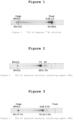
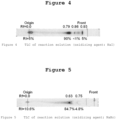
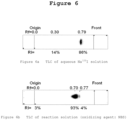
- TLC thin layer chromatography
- TLC thin layer chromatography
- the purity of the product was 98.9%.
- the impurity was L-phenylalanine (1.1%) alone, and 4-bromo-L-phenylalanine and the like were not detected.
- 3-Borono-D,L-phenylalanine (3-Bpa) was dissolved in a 1.4% aqueous sodium hydrogencarbonate solution to prepared a 10 mg/ml of solution.
- the solution (0.2 ml) was put into a small glass vial, and the aqueous 211 At solution (5 MBq/ml, 0.2 ml) prepared in Reference Example 1 was added thereto, and then an aqueous N-bromosuccinimide (NBS) solution (4 mg/ml, 0.04 ml) was slowly added dropwise thereto at room temperature.
- NBS N-bromosuccinimide
- 2-Boronohydroxybenzene was dissolved in a 7% aqueous sodium hydrogencarbonate solution to prepared an aqueous solution having a concentration of 5 mg/ml.
- the aqueous solution was put into a small glass vial, and the aqueous 211 At solution (5 MBq/ml, 0.2 ml) prepared in Reference Example 1 was added thereto, and then an aqueous N-bromosuccinimide (NBS) solution (4 mg/ml, 0.04 ml) was slowly added dropwise thereto at room temperature. After 30 minutes, an aqueous ascorbic acid solution (3 mg/ml, 0.03 ml) was added to the reaction solution to quench the reaction.
- NBS N-bromosuccinimide
- the reaction solution was analyzed by thin layer chromatography (TLC) (thin-layer plate: silica gel G60 (Merck), developing solvent: ACN:water:TFA (66:33:1)).
- TLC thin layer chromatography
- 4-Barboxyphenylboronic acid was dissolved in a 7% aqueous sodium hydrogencarbonate solution to prepared an aqueous solution having a concentration of 16 mg/ml.
- the aqueous solution was put into a small glass vial, and the aqueous 211 At solution (5 MBq/ml, 0.2 ml) prepared in Reference Example 1 was added thereto, and then an aqueous N-bromosuccinimide (NBS) solution (4 mg/ml, 0.04 ml) was slowly added dropwise thereto at room temperature. After 30 minutes, an aqueous ascorbic acid solution (3 mg/ml, 0.03 ml) was added to the reaction solution to quench the reaction.
- NBS N-bromosuccinimide
- the reaction solution was analyzed by thin layer chromatography (TLC) (thin-layer plate: silica gel G60 (Merck), developing solvent: ACN:water:TFA (66:33:1)).
- TLC thin layer chromatography
- This result demonstrates that the method of radiolabelling an aryl compound of the present invention can be applied not only to boronophenylalanine but also to boronocarboxybenzene (carboxyphenylboronic acid).
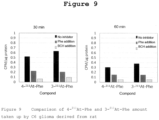
- the concentration of the 4- 211 At-L-phenylalanine (4- 211 At-Phe) solution prepared in Example 2 and the 3- 211 At-D,L-phenylalanine (3- 211 At-Phe) solution prepared in Example 7 were each adjusted to 5 MBq/2mg.ml.
- C6 glioma cell derived from rat was seeded on each well of 24-well plate by 5 ⁇ 10 5 cells/well, and the cells were used in the next day's experiment (cell number: about 1 ⁇ 10 6 cells/well). Before the experiment, the medium was replaced with an amino acid-free HBSS medium (0.5 ml/well) .
- 4- 211 At-Phe or 3- 211 At-Phe was added to each well of the plate by 10 ⁇ l, and the wells were divided into three groups of inhibitor-free group, 1% Phe addition group (competitive inhibitor) and 100 mM BCH addition group (LAT1 inhibitor), and incubated at 37°C for 30 minutes or 60 minutes. After the incubation, the culture solution was removed, and the cells were washed with PBS, and lysed, and the amount of radioactivity taken up intracellularly was measured. The results are shown in Figure 9 . 4- 211 At-Phe and 3- 211 At-Phe were both taken up by the cell, and the cell uptake of 3- 211 At-Phe was slightly more than that of 4- 211 At-Phe.
- the cell uptake after 60 minutes was reduced, compared to that after 30 minutes.
- the competitive inhibitor (Phe) reduced the cell uptake of 4- 211 At-Phe and 3- 211 At-Phe to 1/2 to 1/3
- LAT1 inhibitor (BCH) reduced the cell uptake of 4- 211 At-Phe and 3- 211 At-Phe to 1/4 to 1/8. That is to say, the results demonstrated that 4- 211 At-Phe and 3- 211 At-Phe were both specifically taken up by the cells via LAT1, and therefore, 4- 211 At-Phe and 3- 211 At-Phe can be expected to be applied to RI internal therapy for cancer.
- the cell uptake of 3- 211 At-Phe was more than that of 4- 211 At-Phe, and therefore, 3- 211 At-Phe can be further expected for the above-mentioned application.
- the 4- 211 At-L-phenylalanine (4- 211 At-Phe) (1 MBq) prepared in Example 2 was administered to the tail vein of the glioma-transplanted rat, and the rat was imaged by SPECT camera (E-cam, Siemens). The SPECT images 30 minutes and 3 hours after the administration are shown in Figure 10 . In both images, the accumulation of 4- 211 At-Phe in the tumor (both flanks, indicated by arrows in the figure) was observed. Therefore, 4- 211 At-Phe can be expected to be applied to RI internal therapy or diagnosis for cancer.
- the radiolabeled aryl compound (I) can be easily produced in a high radiochemical yield in a short time, and the formulation can be carried out immediately after the labelling. Therefore, the labelling and formulation can be easily carried out in a short time, and a sequence of processes from preparation of a radionuclide to RI internal therapy or diagnosis for cancer can be promptly carried out.
Landscapes
- Chemical & Material Sciences (AREA)
- Organic Chemistry (AREA)
- Organic Low-Molecular-Weight Compounds And Preparation Thereof (AREA)
- Pharmaceuticals Containing Other Organic And Inorganic Compounds (AREA)
- Acyclic And Carbocyclic Compounds In Medicinal Compositions (AREA)
- Medicines Containing Antibodies Or Antigens For Use As Internal Diagnostic Agents (AREA)
- Medicines That Contain Protein Lipid Enzymes And Other Medicines (AREA)
Claims (7)
- Verfahren zur Herstellung einer radiomarkierten ArylVerbindung, dargestellt durch die Formel (I):
Ar-X (I)
worinAr eine C6-14-Arylgruppe ist, die gegebenenfalls Substituent(en) aufweist, undX 211At oder 210At ist,oder eines Salzes davon, welches die Umsetzung einer Arylboronsäure-Verbindung der Formel (II):
Ar Y (II)
worinAr wie oben definiert ist, undY eine Borono-Gruppe (-B(OH)2) oder eine Estergruppe davon ist,oder eines Salzes davon, mit einem Radionuklid, 211At oder 210At, in Gegenwart eines Oxidationsmittels, ausgewählt aus einem Alkalimetalliodid, einem Alkalimetallbromid, N-Bromsuccinimid, N-Chlorsuccinimid und Wasserstoffperoxid, in Wasser, in einem System ohne organische Lösungsmittel umfasst. - Verfahren nach Anspruch 1, wobei die Reaktion bei Raumtemperatur durchgeführt wird.
- Verfahren nach Anspruch 1 oder 2, wobei das Oxidationsmittel ausgewählt ist aus Natriumiodid, Natriumbromid, N-Bromsuccinimid und N-Chlorsuccinimid.
- Verfahren nach einem der Ansprüche 1 bis 3, wobei Y eine Borono-Gruppe (-B(OH)2) ist.
- Verfahren nach einem der Ansprüche 1 bis 4, wobei Ar eine Gruppe ist, die dargestellt wird durch die Formel:
 R2 ein Halogenatom ist,m 0 oder 1 ist,n 0 oder eine ganze Zahl von 1 bis 4 ist, und* eine Bindungsstelle zu X oder Y ist, odereine Gruppe, die von einem Peptid mit einer Teilstruktur abgeleitet ist, die dargestellt wird durch die Formel:
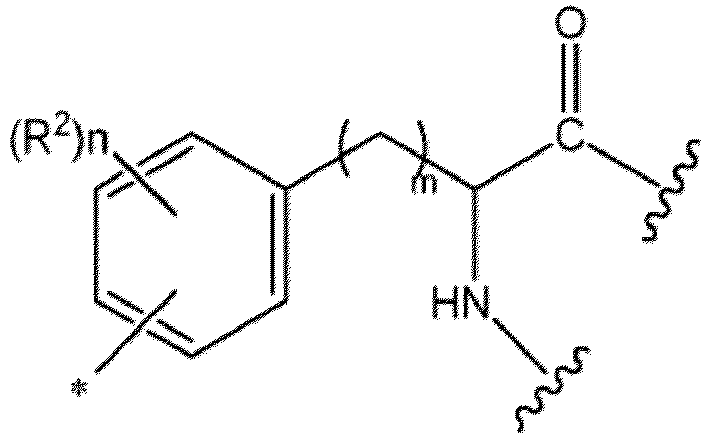 R2 ein Halogenatom ist,m 0 oder 1 ist,n 0 oder eine ganze Zahl von 1 bis 4 ist, und* eine Bindungsstelle zu X oder Y ist.
 - Verfahren nach einem der Ansprüche 1 bis 4, wobei Ar eine Gruppe ist, die dargestellt wird durch die Formel:
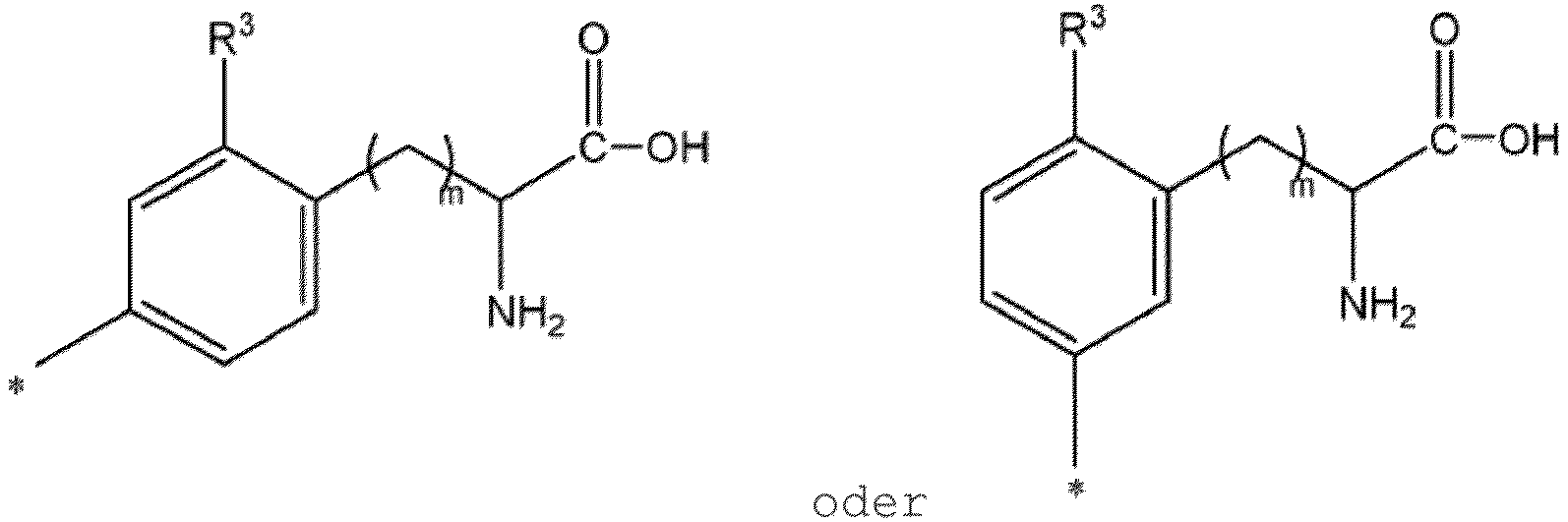 R3 ein Wasserstoffatom oder ein Halogenatom ist,m 0 oder 1 ist, und* eine Bindungsstelle zu X oder Y ist, odereine Gruppe, die von einem Peptid mit einer Teilstruktur abgeleitet ist, die dargestellt wird durch die Formel:
 R3 ein Wasserstoffatom oder ein Halogenatom ist,m 0 oder 1 ist, und* eine Bindungsstelle zu X oder Y ist.
 - Verfahren nach einem der Ansprüche 1 bis 4, wobei die durch Formel (II) dargestelle Arylboronsäure-Verbindung 4-Boronophenylalanin, 4-Borono-2-fluorphenylalanin oder 3-Boronophenylalanin ist und die durch Formel (I) dargestellte radiomarkierte Arylverbindung 4-Astato-(211At)-Phenylalanin, 4-Astato-(211At) -2-fluorphenylalanin oder 3-Astato-(211At) - Phenylalanin ist.
Priority Applications (1)
| Application Number | Priority Date | Filing Date | Title |
|---|---|---|---|
| EP24193023.9A EP4438608A3 (de) | 2017-08-04 | 2018-08-03 | Herstellungsverfahren für radioaktiv markierte arylverbindung |
Applications Claiming Priority (2)
| Application Number | Priority Date | Filing Date | Title |
|---|---|---|---|
| JP2017151632 | 2017-08-04 | ||
| PCT/JP2018/030006 WO2019027059A1 (ja) | 2017-08-04 | 2018-08-03 | 放射標識されたアリール化合物の製造方法 |
Related Child Applications (2)
| Application Number | Title | Priority Date | Filing Date |
|---|---|---|---|
| EP24193023.9A Division-Into EP4438608A3 (de) | 2017-08-04 | 2018-08-03 | Herstellungsverfahren für radioaktiv markierte arylverbindung |
| EP24193023.9A Division EP4438608A3 (de) | 2017-08-04 | 2018-08-03 | Herstellungsverfahren für radioaktiv markierte arylverbindung |
Publications (4)
| Publication Number | Publication Date |
|---|---|
| EP3663307A1 EP3663307A1 (de) | 2020-06-10 |
| EP3663307A4 EP3663307A4 (de) | 2021-03-24 |
| EP3663307B1 true EP3663307B1 (de) | 2024-10-02 |
| EP3663307C0 EP3663307C0 (de) | 2024-10-02 |
Family
ID=65233830
Family Applications (2)
| Application Number | Title | Priority Date | Filing Date |
|---|---|---|---|
| EP24193023.9A Pending EP4438608A3 (de) | 2017-08-04 | 2018-08-03 | Herstellungsverfahren für radioaktiv markierte arylverbindung |
| EP18842323.0A Active EP3663307B1 (de) | 2017-08-04 | 2018-08-03 | Herstellungsverfahren für radioaktiv markierte arylverbindung |
Family Applications Before (1)
| Application Number | Title | Priority Date | Filing Date |
|---|---|---|---|
| EP24193023.9A Pending EP4438608A3 (de) | 2017-08-04 | 2018-08-03 | Herstellungsverfahren für radioaktiv markierte arylverbindung |
Country Status (6)
| Country | Link |
|---|---|
| US (2) | US11731917B2 (de) |
| EP (2) | EP4438608A3 (de) |
| JP (1) | JP7232527B2 (de) |
| AU (1) | AU2018312327B2 (de) |
| ES (1) | ES2993952T3 (de) |
| WO (1) | WO2019027059A1 (de) |
Families Citing this family (13)
| Publication number | Priority date | Publication date | Assignee | Title |
|---|---|---|---|---|
| EP4438608A3 (de) | 2017-08-04 | 2024-10-30 | Osaka University | Herstellungsverfahren für radioaktiv markierte arylverbindung |
| AU2018395495B2 (en) | 2017-12-29 | 2024-09-05 | Osaka University | Astatine solution and method for producing same |
| EP3766521B1 (de) * | 2018-03-15 | 2025-06-25 | Osaka University | Pharmazeutische zusammensetzung mit 211at-markiertem aminosäurederivat und verfahren zur herstellung dieser pharmazeutischen zusammensetzung |
| CN115443259A (zh) * | 2020-02-21 | 2022-12-06 | 国立大学法人北海道大学 | 芳香族砹化合物的制造方法 |
| US20240124496A1 (en) * | 2021-03-25 | 2024-04-18 | Osaka University | Boronic acid compound and method for producing same |
| KR20240072996A (ko) * | 2021-07-30 | 2024-05-24 | 오사카 유니버시티 | 방사성 표지된 화합물 및 이의 용도 |
| AU2023223808A1 (en) * | 2022-02-22 | 2024-09-19 | Osaka University | RADIOLABELED FAPα-AFFINITY COMPOUND AND USE THEREOF |
| WO2023171617A1 (ja) | 2022-03-08 | 2023-09-14 | 国立大学法人大阪大学 | 電解酸化反応による放射標識アリール化合物の製造方法 |
| AU2023246242A1 (en) * | 2022-03-31 | 2024-10-10 | Atransen Pharma Ltd. | Tetrahydronaphthalene derivative |
| WO2024063095A1 (ja) * | 2022-09-21 | 2024-03-28 | 国立大学法人大阪大学 | 放射標識されたチロシン誘導体およびその用途 |
| CN118344391A (zh) * | 2023-01-13 | 2024-07-16 | 浙江普利药业有限公司 | 一种新的用于硼中子捕获疗法的含硼化合物 |
| CN116655670A (zh) * | 2023-05-22 | 2023-08-29 | 中国科学院近代物理研究所 | 一种基于氨基酸转运体作用机制的化合物及其合成方法与应用 |
| WO2025122904A1 (en) * | 2023-12-06 | 2025-06-12 | The University Of North Carolina At Chapel Hill | Radiolabeled amino acids for cancer imaging, therapy and corresponding labeling methods thereof |
Family Cites Families (8)
| Publication number | Priority date | Publication date | Assignee | Title |
|---|---|---|---|---|
| US4826672A (en) | 1985-06-07 | 1989-05-02 | President And Fellows Of Harvard College | Astatinated organic compounds |
| US5077035A (en) | 1990-05-14 | 1991-12-31 | The University Of Michigan | Radioiodinated benzovesamicol analogs for cholinergic nerve mapping |
| CA2270242A1 (en) | 1996-10-29 | 1998-05-07 | Guilford Pharmaceuticals Inc. | Process for the preparation of radiopharmaceuticals |
| WO2007060012A2 (en) * | 2005-11-25 | 2007-05-31 | Samuel Samnick | Use of l-phenylalanine conjugated to an emitting isotope for therapy of hormone dependent carcinoma |
| WO2007079953A2 (en) | 2005-12-21 | 2007-07-19 | Samuel Samnick | In vitro method to predict the tumor sensitivity to pharmacotherapy and endoradiotherapy |
| DK1968651T3 (da) | 2005-12-22 | 2013-06-17 | Univ Duke | Stabiliserede sammensætninger og fremgangsmåder til radioaktiv mærkning af lægemidler med alfa-partikelemittere |
| JP6677527B2 (ja) | 2016-02-23 | 2020-04-08 | 株式会社 ミックウェア | サーバ装置、およびプログラム |
| EP4438608A3 (de) | 2017-08-04 | 2024-10-30 | Osaka University | Herstellungsverfahren für radioaktiv markierte arylverbindung |
-
2018
- 2018-08-03 EP EP24193023.9A patent/EP4438608A3/de active Pending
- 2018-08-03 JP JP2019534611A patent/JP7232527B2/ja active Active
- 2018-08-03 WO PCT/JP2018/030006 patent/WO2019027059A1/ja not_active Ceased
- 2018-08-03 EP EP18842323.0A patent/EP3663307B1/de active Active
- 2018-08-03 US US16/636,236 patent/US11731917B2/en active Active
- 2018-08-03 ES ES18842323T patent/ES2993952T3/es active Active
- 2018-08-03 AU AU2018312327A patent/AU2018312327B2/en active Active
-
2023
- 2023-06-20 US US18/337,623 patent/US12421179B2/en active Active
Non-Patent Citations (5)
| Title |
|---|
| EL-MOHTY A A ET AL: "NO CARRIER ADDED ELECTROPHILIC RADIOIODINATION OF L-ot-METHYLTYROSINE VIA DIFFERENT OXIDIZING AGENTS", JOURNAL OF RADIOANALYTICAL AND NUCLEAR CHEMISTRY, 1 January 1995 (1995-01-01), pages 303 - 310, XP093122491, Retrieved from the Internet <URL:https://link.springer.com/content/pdf/10.1007/BF02038048.pdf> [retrieved on 20240123] * |
| HAUBNER ROLAND ET AL: "In vivo imaging of herpes simplex virus type 1 thymidine kinase gene expression: early kinetics of radiolabelled FIAU", EUROPEAN JOURNAL OF NUCLEAR MEDICINE AND MOLECULAR IMAGING, vol. 27, no. 3, 7 March 2000 (2000-03-07), Berlin/Heidelberg, pages 283 - 291, XP093122493, ISSN: 1619-7070, Retrieved from the Internet <URL:https://link.springer.com/content/pdf/10.1007/s002590050035.pdf> DOI: 10.1007/s002590050035 * |
| KOZIOROWSKI J: "Simple preparation of 76Br, 123I and 211At labeled 5-halo-2'-deoxyuridine", JOURNAL OF RADIOANALYTICAL AND NUCLEAR CHEMISTRY, 1 January 1997 (1997-01-01), pages 127 - 128, XP093122494, Retrieved from the Internet <URL:https://link.springer.com/content/pdf/10.1007/BF02040279.pdf> [retrieved on 20240123] * |
| PIMM MALCOLM V. ET AL: "Gamma Scintigraphy of the Biodistribution of 123 I-Labelled N-(2-Hydroxypropyl)methacrylamide Copolymer-Doxorubicin Conjugates in Mice with Transplanted Melanoma and Mammary Carcinoma", JOURNAL OF DRUG TARGETING, vol. 3, no. 5, 1 January 1996 (1996-01-01), GB, pages 375 - 383, XP093122492, ISSN: 1061-186X, Retrieved from the Internet <URL:https://dx.doi.org/10.3109/10611869608996828> DOI: 10.3109/10611869608996828 * |
| SHOUKRY MARWA ET AL: "Radioiodination and Biological Evaluation of some Drugs for Inflammatory Foci Imaging.", A THESIS SUBMITTED FOR FULFILLMENT OF THE REQUIREMENTS OF THE DEGREE OF DOCTOR OF PHILOSOPHY IN PHARMACEUTICAL SCIENCE (PHARMACEUTICS), 1 January 2011 (2011-01-01), pages 1 - 155, XP055960705, Retrieved from the Internet <URL:https://inis.iaea.org/collection/NCLCollectionStore/_Public/44/079/44079141.pdf> [retrieved on 20220914] * |
Also Published As
| Publication number | Publication date |
|---|---|
| EP3663307A4 (de) | 2021-03-24 |
| AU2018312327B2 (en) | 2022-05-12 |
| US20200369578A1 (en) | 2020-11-26 |
| JP7232527B2 (ja) | 2023-03-03 |
| US20230331640A1 (en) | 2023-10-19 |
| AU2018312327A1 (en) | 2020-02-27 |
| EP3663307A1 (de) | 2020-06-10 |
| JPWO2019027059A1 (ja) | 2020-09-17 |
| ES2993952T3 (en) | 2025-01-15 |
| WO2019027059A1 (ja) | 2019-02-07 |
| US12421179B2 (en) | 2025-09-23 |
| US11731917B2 (en) | 2023-08-22 |
| EP3663307C0 (de) | 2024-10-02 |
| EP4438608A2 (de) | 2024-10-02 |
| EP4438608A3 (de) | 2024-10-30 |
Similar Documents
| Publication | Publication Date | Title |
|---|---|---|
| EP3663307B1 (de) | Herstellungsverfahren für radioaktiv markierte arylverbindung | |
| US9096647B2 (en) | Simplified one-pot synthesis of [18F]SFB for radiolabeling | |
| US7744851B2 (en) | Methods and agents for preparing 18F-radiolabeled fluorinating agents | |
| JP2017520550A (ja) | 新規製剤及び合成方法 | |
| WO2023246830A1 (zh) | 一种化合物ⅰ液体组合物的制备方法、及其在心肌代谢pet显像上的用途 | |
| US20100228060A1 (en) | Perfluoro-aryliodonium salts in nucleophilic aromatic 18f-fluorination | |
| US20170334804A1 (en) | F-18 labeled tracer and methods of manufacture | |
| Dong et al. | Synthesis Principle and Practice with Radioactive Iodines and Astatine: Advances Made So Far | |
| Wagner et al. | The radiopharmaceutical chemistry of fluorine-18: electrophilic fluorinations | |
| KR20140102700A (ko) | 시트레이트 완충제 내 18f―플루시클로빈 조성물 | |
| HK40111817A (en) | Production method for radiolabeled aryl compound | |
| Vallabhajosula | Radiohalogens for Molecular Imaging (Fluorine and Iodine) | |
| RU2695365C2 (ru) | Набор для получения радиофармацевтического препарата | |
| CN107847617A (zh) | 含有取代的亚氨基二乙酸配体的金属三羰基复合物以及作为放射性同位素示踪物的用途 | |
| Behnam Azad et al. | Temperature effects on the stereospecificity of nucleophilic fluorination: formation of trans‐[18F] 4‐fluoro‐l‐proline during the synthesis of cis‐[18F] 4‐fluoro‐l‐proline | |
| US20100150835A1 (en) | Synthesis of [18F] Fluoromethyl Benzene Using Benzyl Pentafluorobenzenesulfonate | |
| US20250051245A1 (en) | Method for the preparation of a composition comprising dissolved [18f]fluoride and composition obtainable by the method | |
| KR20080074145A (ko) | 방사성 불소 표식 유기 화합물의 제조 방법 | |
| Liu et al. | Automated synthesis of N‐(2‐[18F] Fluoropropionyl)‐l‐glutamic acid as an amino acid tracer for tumor imaging on a modified [18F] FDG synthesis module | |
| Tada et al. | Resin-assisted synthesis of a neopentyl 211At-labeled activated ester possessing a triazole spacer and its application to the synthesis of in vivo stable 211At-labeled antibodies. | |
| Linsten | Radiolabeling of Aryl Boronic Ester Derivatives for Cu Catalyzed At-211 Astatination of Biomolecules | |
| AU2023230610A1 (en) | Method for producing radiolabeled aryl compound by electrolytic oxidation reaction | |
| Šimeček | PET Chemistry: New Approaches to Radiolabelling with Fluorine-18 and Carbon-11 | |
| Topley | The development of a simple process for producing medicinal diagnostic 18F agents for molecular imaging using positron-emission-tomography | |
| Zhang | The Use of Sulfonyl Fluorides in PET Radiochemistry |
Legal Events
| Date | Code | Title | Description |
|---|---|---|---|
| STAA | Information on the status of an ep patent application or granted ep patent |
Free format text: STATUS: THE INTERNATIONAL PUBLICATION HAS BEEN MADE |
|
| PUAI | Public reference made under article 153(3) epc to a published international application that has entered the european phase |
Free format text: ORIGINAL CODE: 0009012 |
|
| STAA | Information on the status of an ep patent application or granted ep patent |
Free format text: STATUS: REQUEST FOR EXAMINATION WAS MADE |
|
| 17P | Request for examination filed |
Effective date: 20200302 |
|
| AK | Designated contracting states |
Kind code of ref document: A1 Designated state(s): AL AT BE BG CH CY CZ DE DK EE ES FI FR GB GR HR HU IE IS IT LI LT LU LV MC MK MT NL NO PL PT RO RS SE SI SK SM TR |
|
| AX | Request for extension of the european patent |
Extension state: BA ME |
|
| DAV | Request for validation of the european patent (deleted) | ||
| DAX | Request for extension of the european patent (deleted) | ||
| A4 | Supplementary search report drawn up and despatched |
Effective date: 20210218 |
|
| RIC1 | Information provided on ipc code assigned before grant |
Ipc: C07B 59/00 20060101ALI20210212BHEP Ipc: C07F 13/00 20060101AFI20210212BHEP Ipc: C07F 5/02 20060101ALI20210212BHEP |
|
| STAA | Information on the status of an ep patent application or granted ep patent |
Free format text: STATUS: EXAMINATION IS IN PROGRESS |
|
| 17Q | First examination report despatched |
Effective date: 20210930 |
|
| GRAP | Despatch of communication of intention to grant a patent |
Free format text: ORIGINAL CODE: EPIDOSNIGR1 |
|
| STAA | Information on the status of an ep patent application or granted ep patent |
Free format text: STATUS: GRANT OF PATENT IS INTENDED |
|
| INTG | Intention to grant announced |
Effective date: 20240522 |
|
| GRAS | Grant fee paid |
Free format text: ORIGINAL CODE: EPIDOSNIGR3 |
|
| GRAA | (expected) grant |
Free format text: ORIGINAL CODE: 0009210 |
|
| STAA | Information on the status of an ep patent application or granted ep patent |
Free format text: STATUS: THE PATENT HAS BEEN GRANTED |
|
| AK | Designated contracting states |
Kind code of ref document: B1 Designated state(s): AL AT BE BG CH CY CZ DE DK EE ES FI FR GB GR HR HU IE IS IT LI LT LU LV MC MK MT NL NO PL PT RO RS SE SI SK SM TR |
|
| REG | Reference to a national code |
Ref country code: GB Ref legal event code: FG4D |
|
| REG | Reference to a national code |
Ref country code: CH Ref legal event code: EP |
|
| REG | Reference to a national code |
Ref country code: IE Ref legal event code: FG4D |
|
| REG | Reference to a national code |
Ref country code: DE Ref legal event code: R096 Ref document number: 602018075023 Country of ref document: DE |
|
| U01 | Request for unitary effect filed |
Effective date: 20241009 |
|
| U07 | Unitary effect registered |
Designated state(s): AT BE BG DE DK EE FI FR IT LT LU LV MT NL PT RO SE SI Effective date: 20241029 |
|
| REG | Reference to a national code |
Ref country code: ES Ref legal event code: FG2A Ref document number: 2993952 Country of ref document: ES Kind code of ref document: T3 Effective date: 20250115 |
|
| PG25 | Lapsed in a contracting state [announced via postgrant information from national office to epo] |
Ref country code: IS Free format text: LAPSE BECAUSE OF FAILURE TO SUBMIT A TRANSLATION OF THE DESCRIPTION OR TO PAY THE FEE WITHIN THE PRESCRIBED TIME-LIMIT Effective date: 20250202 Ref country code: HR Free format text: LAPSE BECAUSE OF FAILURE TO SUBMIT A TRANSLATION OF THE DESCRIPTION OR TO PAY THE FEE WITHIN THE PRESCRIBED TIME-LIMIT Effective date: 20241002 |
|
| PG25 | Lapsed in a contracting state [announced via postgrant information from national office to epo] |
Ref country code: NO Free format text: LAPSE BECAUSE OF FAILURE TO SUBMIT A TRANSLATION OF THE DESCRIPTION OR TO PAY THE FEE WITHIN THE PRESCRIBED TIME-LIMIT Effective date: 20250102 |
|
| PG25 | Lapsed in a contracting state [announced via postgrant information from national office to epo] |
Ref country code: GR Free format text: LAPSE BECAUSE OF FAILURE TO SUBMIT A TRANSLATION OF THE DESCRIPTION OR TO PAY THE FEE WITHIN THE PRESCRIBED TIME-LIMIT Effective date: 20250103 |
|
| PG25 | Lapsed in a contracting state [announced via postgrant information from national office to epo] |
Ref country code: PL Free format text: LAPSE BECAUSE OF FAILURE TO SUBMIT A TRANSLATION OF THE DESCRIPTION OR TO PAY THE FEE WITHIN THE PRESCRIBED TIME-LIMIT Effective date: 20241002 Ref country code: CZ Free format text: LAPSE BECAUSE OF FAILURE TO SUBMIT A TRANSLATION OF THE DESCRIPTION OR TO PAY THE FEE WITHIN THE PRESCRIBED TIME-LIMIT Effective date: 20241002 |
|
| PG25 | Lapsed in a contracting state [announced via postgrant information from national office to epo] |
Ref country code: RS Free format text: LAPSE BECAUSE OF FAILURE TO SUBMIT A TRANSLATION OF THE DESCRIPTION OR TO PAY THE FEE WITHIN THE PRESCRIBED TIME-LIMIT Effective date: 20250102 |
|
| PG25 | Lapsed in a contracting state [announced via postgrant information from national office to epo] |
Ref country code: SM Free format text: LAPSE BECAUSE OF FAILURE TO SUBMIT A TRANSLATION OF THE DESCRIPTION OR TO PAY THE FEE WITHIN THE PRESCRIBED TIME-LIMIT Effective date: 20241002 |
|
| PG25 | Lapsed in a contracting state [announced via postgrant information from national office to epo] |
Ref country code: SK Free format text: LAPSE BECAUSE OF FAILURE TO SUBMIT A TRANSLATION OF THE DESCRIPTION OR TO PAY THE FEE WITHIN THE PRESCRIBED TIME-LIMIT Effective date: 20241002 |
|
| PLBE | No opposition filed within time limit |
Free format text: ORIGINAL CODE: 0009261 |
|
| STAA | Information on the status of an ep patent application or granted ep patent |
Free format text: STATUS: NO OPPOSITION FILED WITHIN TIME LIMIT |
|
| 26N | No opposition filed |
Effective date: 20250703 |
|
| U20 | Renewal fee for the european patent with unitary effect paid |
Year of fee payment: 8 Effective date: 20250827 |
|
| PGFP | Annual fee paid to national office [announced via postgrant information from national office to epo] |
Ref country code: ES Payment date: 20250902 Year of fee payment: 8 |
|
| PGFP | Annual fee paid to national office [announced via postgrant information from national office to epo] |
Ref country code: TR Payment date: 20250716 Year of fee payment: 8 |
|
| PGFP | Annual fee paid to national office [announced via postgrant information from national office to epo] |
Ref country code: GB Payment date: 20250731 Year of fee payment: 8 |
|
| PGFP | Annual fee paid to national office [announced via postgrant information from national office to epo] |
Ref country code: CH Payment date: 20250901 Year of fee payment: 8 |