EP3661967B1 - Rekombinante flavin-adenin-dinucleotid-glucosedehydrogenase und verwendungen davon - Google Patents
Rekombinante flavin-adenin-dinucleotid-glucosedehydrogenase und verwendungen davon Download PDFInfo
- Publication number
- EP3661967B1 EP3661967B1 EP18841423.9A EP18841423A EP3661967B1 EP 3661967 B1 EP3661967 B1 EP 3661967B1 EP 18841423 A EP18841423 A EP 18841423A EP 3661967 B1 EP3661967 B1 EP 3661967B1
- Authority
- EP
- European Patent Office
- Prior art keywords
- recombinant protein
- gdh
- fad
- electrode
- seq
- Prior art date
- Legal status (The legal status is an assumption and is not a legal conclusion. Google has not performed a legal analysis and makes no representation as to the accuracy of the status listed.)
- Active
Links
Images





Classifications
-
- C—CHEMISTRY; METALLURGY
- C12—BIOCHEMISTRY; BEER; SPIRITS; WINE; VINEGAR; MICROBIOLOGY; ENZYMOLOGY; MUTATION OR GENETIC ENGINEERING
- C12N—MICROORGANISMS OR ENZYMES; COMPOSITIONS THEREOF; PROPAGATING, PRESERVING, OR MAINTAINING MICROORGANISMS; MUTATION OR GENETIC ENGINEERING; CULTURE MEDIA
- C12N9/00—Enzymes; Proenzymes; Compositions thereof; Processes for preparing, activating, inhibiting, separating or purifying enzymes
- C12N9/0004—Oxidoreductases (1.)
- C12N9/0006—Oxidoreductases (1.) acting on CH-OH groups as donors (1.1)
-
- A—HUMAN NECESSITIES
- A61—MEDICAL OR VETERINARY SCIENCE; HYGIENE
- A61B—DIAGNOSIS; SURGERY; IDENTIFICATION
- A61B5/00—Measuring for diagnostic purposes; Identification of persons
- A61B5/145—Measuring characteristics of blood in vivo, e.g. gas concentration or pH-value ; Measuring characteristics of body fluids or tissues, e.g. interstitial fluid or cerebral tissue
- A61B5/1468—Measuring characteristics of blood in vivo, e.g. gas concentration or pH-value ; Measuring characteristics of body fluids or tissues, e.g. interstitial fluid or cerebral tissue using chemical or electrochemical methods, e.g. by polarographic means
- A61B5/1486—Measuring characteristics of blood in vivo, e.g. gas concentration or pH-value ; Measuring characteristics of body fluids or tissues, e.g. interstitial fluid or cerebral tissue using chemical or electrochemical methods, e.g. by polarographic means using enzyme electrodes, e.g. with immobilised oxidase
-
- C—CHEMISTRY; METALLURGY
- C07—ORGANIC CHEMISTRY
- C07K—PEPTIDES
- C07K14/00—Peptides having more than 20 amino acids; Gastrins; Somatostatins; Melanotropins; Derivatives thereof
- C07K14/795—Porphyrin- or corrin-ring-containing peptides
- C07K14/80—Cytochromes
-
- C—CHEMISTRY; METALLURGY
- C12—BIOCHEMISTRY; BEER; SPIRITS; WINE; VINEGAR; MICROBIOLOGY; ENZYMOLOGY; MUTATION OR GENETIC ENGINEERING
- C12N—MICROORGANISMS OR ENZYMES; COMPOSITIONS THEREOF; PROPAGATING, PRESERVING, OR MAINTAINING MICROORGANISMS; MUTATION OR GENETIC ENGINEERING; CULTURE MEDIA
- C12N15/00—Mutation or genetic engineering; DNA or RNA concerning genetic engineering, vectors, e.g. plasmids, or their isolation, preparation or purification; Use of hosts therefor
- C12N15/09—Recombinant DNA-technology
- C12N15/11—DNA or RNA fragments; Modified forms thereof; Non-coding nucleic acids having a biological activity
- C12N15/62—DNA sequences coding for fusion proteins
-
- C—CHEMISTRY; METALLURGY
- C12—BIOCHEMISTRY; BEER; SPIRITS; WINE; VINEGAR; MICROBIOLOGY; ENZYMOLOGY; MUTATION OR GENETIC ENGINEERING
- C12Q—MEASURING OR TESTING PROCESSES INVOLVING ENZYMES, NUCLEIC ACIDS OR MICROORGANISMS; COMPOSITIONS OR TEST PAPERS THEREFOR; PROCESSES OF PREPARING SUCH COMPOSITIONS; CONDITION-RESPONSIVE CONTROL IN MICROBIOLOGICAL OR ENZYMOLOGICAL PROCESSES
- C12Q1/00—Measuring or testing processes involving enzymes, nucleic acids or microorganisms; Compositions therefor; Processes of preparing such compositions
- C12Q1/001—Enzyme electrodes
- C12Q1/005—Enzyme electrodes involving specific analytes or enzymes
- C12Q1/006—Enzyme electrodes involving specific analytes or enzymes for glucose
-
- C—CHEMISTRY; METALLURGY
- C12—BIOCHEMISTRY; BEER; SPIRITS; WINE; VINEGAR; MICROBIOLOGY; ENZYMOLOGY; MUTATION OR GENETIC ENGINEERING
- C12Y—ENZYMES
- C12Y101/00—Oxidoreductases acting on the CH-OH group of donors (1.1)
- C12Y101/05—Oxidoreductases acting on the CH-OH group of donors (1.1) with a quinone or similar compound as acceptor (1.1.5)
-
- G—PHYSICS
- G01—MEASURING; TESTING
- G01N—INVESTIGATING OR ANALYSING MATERIALS BY DETERMINING THEIR CHEMICAL OR PHYSICAL PROPERTIES
- G01N27/00—Investigating or analysing materials by the use of electric, electrochemical, or magnetic means
- G01N27/26—Investigating or analysing materials by the use of electric, electrochemical, or magnetic means by investigating electrochemical variables; by using electrolysis or electrophoresis
- G01N27/28—Electrolytic cell components
- G01N27/30—Electrodes, e.g. test electrodes; Half-cells
- G01N27/327—Biochemical electrodes, e.g. electrical or mechanical details for in vitro measurements
- G01N27/3271—Amperometric enzyme electrodes for analytes in body fluids, e.g. glucose in blood
-
- C—CHEMISTRY; METALLURGY
- C07—ORGANIC CHEMISTRY
- C07K—PEPTIDES
- C07K2319/00—Fusion polypeptide
-
- C—CHEMISTRY; METALLURGY
- C07—ORGANIC CHEMISTRY
- C07K—PEPTIDES
- C07K2319/00—Fusion polypeptide
- C07K2319/61—Fusion polypeptide containing an enzyme fusion for detection (lacZ, luciferase)
Definitions
- the present invention relates to recombinant proteins, methods of using the same such as for direct electron transfer in bio-electrochemical applications.
- Redox enzymes are proteins that participate in biocatalytic processes which involve electron transfer (ET). Depending on their redox potential, enzyme mediated redox reactions may be used in anodes and cathodes of biofuel cells as well as in biosensing applications. For the utilization of most redox enzymes in such devices, a mediator molecule should be used to mediate the ET between the enzyme and the electrode. The use of an external redox mediator results in a potential loss as well as in low power outputs.
- E electron transfer
- Redox mediator molecules introduce two major challenges to the system: the first is having a middle point potential value that affords an efficient electron transfer from an enzyme to the electrode, which results in insufficient energy production. The other, is the need for diffusion of the mediator molecule through solution towards the electrode which might cause an additional loss of energy.
- EP 2589659 described an electron mediator for glucose oxidoreductase comprising extracellular secretion type cytochrome, a fusion body in which the electron mediator is fused with glucose oxidoreductase, a composition for glucose measurement including the electron mediator or fusion body, a gene encoding a new extracellular secretion type cytochrome, and a measurement method using extracellular secretion type cytochrome and an enzyme, an electrode, and a sensor.
- WO2017094776A1 described a cytochrome b-glucose dehydrogenase fused protein having modified electron transfer characteristics, and a glucose measurement method and a measurement kit that use the fused protein.
- the present invention relates to a recombinant protein having superior FAD-GDH (flavin-adenine dinucleotide glucose dehydrogenase) activity and methods of using the same.
- FAD-GDH flavin-adenine dinucleotide glucose dehydrogenase
- a recombinant protein comprising: (a) a mutant of alpha subunit of a flavin-adenine dinucleotide glucose dehydrogenase (FAD-GDH); and (b) a magnetotactic bacterius minimal c-type cytochrome peptide being a cytochrome domain MCR-2 from a MamP protein, wherein said mutant of FAD-GDH is encoded by a DNA sequence being at least 70% identical to SEQ ID NO: 1, and wherein said recombinant protein is characterized by having both peroxidase activity and oxidative activity.
- FAD-GDH flavin-adenine dinucleotide glucose dehydrogenase
- composition comprising the recombinant protein of the invention, and the gamma subunit of an FAD-GDH.
- a DNA molecule comprising a nucleotide sequence encoding the recombinant protein of the invention with or without the gamma subunit of an FAD-GDH.
- an electrode coupled to a recombinant protein comprising: (a) a cofactor of a redox enzyme; (b) a redox enzyme; (c) a linker moiety configured to link any one of: the cofactor or the enzyme to an electron transfer (ET) domain; and (d) an ET domain configured to transfer electrons between the electrode and the cofactor; wherein a distance between the ET domain and the electrode is in the range of 0 to 14 ⁇ , and wherein the recombinant protein is the recombinant protein of the invention.
- a method for transferring an electron to an electrode comprising coupling the recombinant protein of the invention to an electrode, thereby transferring an electron to the electrode.
- a method for quantifying the amount of a reporter in a sample having a first detectable range of light absorbance in an oxidized state and a second range of light absorbance in a non-oxidized state comprising: (a) contacting the recombinant protein of the invention with the reporter in a non-oxidized state; and (b) measuring the amount of the reporter in an oxidized state, thereby quantifying the amount of a reporter in a sample.
- the alpha subunit of the FAD-GDH is: a Burkholderia cepacian alpha subunit of an FAD-GDH.
- the magnetotactic bacterius minimal cytochrome peptide being a cytochrome domain MCR-2 from a MamP protein comprises 11 to 30 amino acids.
- the recombinant protein is bound to: a porphyrin comprising a metal, a compound of formula I: wherein the R is any electron donor, the compound of formula I is bound to a metal, or a combination thereof.
- the metal is a trivalent metal or a divalent metal.
- the recombinant protein comprises an amino acid sequence selected from the group consisting SED ID NOs: 8 to 13.
- the DNA molecule comprises the nucleic acid sequence selected from the group consisting of: SEQ ID NOs: 5-7.
- the recombinant protein is coupled to an electrode.
- the recombinant protein is in the form of formula: (a)-(b)-(c)-(d).
- a recombinant protein comprising: (a) a mutant of alpha subunit of a flavin-adenine dinucleotide glucose dehydrogenase (FAD-GDH) enzyme; and (b) a magnetotactic bacterius minimal c-type cytochrome peptide being a cytochrome domain MCR-2 from a MamP protein, wherein the mutant of FAD-GDH is encoded by a DNA sequence being at least 70% identical to SEQ ID NO: 1, wherein the recombinant protein is characterized by having both peroxidase activity and oxidative activity, polynucleotides sequences encoding same, useful for direct electron transfer such as in bio-electrochemical applications, including, but not limited to, glucose monitoring.
- FAD-GDH flavin-adenine dinucleotide glucose dehydrogenase
- fusing the enzyme with a minimal cytochrome domain (MCD), instead of large cytochrome, allows to shorten the enzyme-electrode distance and improve the direct electron transfer (DET) capabilities of the enzyme.
- MCD minimal cytochrome domain
- DET direct electron transfer
- the fusion enzyme communicated with an electrode directly, without the use of a mediator molecule. Direct electron transfer between the redox enzyme and an electrode resulted in enhancement of chemical detection.
- the disclosed recombinant enzyme showed a substantially reduced redox potential, e.g., from +400 mV to 0 mV, thereby improving enzyme selectivity in various electrochemical applications including glucose sensing and monitoring as well as an electromotive force in a bio-electrochemical power device.
- the present invention provides, in some embodiments, a recombinant protein comprising: (a) an alpha subunit of an FAD-GDH; and (b) a magnetotactic bacterius minimal cytochrome peptide being a cytochrome domain MCR-2 from a MamP protein, wherein the mutant of FAD-GDH is encoded by a DNA sequence being at least 70% identical to SEQ ID NO: 1, and wherein said recombinant protein is characterized by having both peroxidase activity and oxidative activity.
- the alpha subunit of the FAD-GDH is derived or recovered from a prokaryotic cell. In one embodiment, the alpha subunit of the FAD-GDH is derived or recovered from a bacterial cell. In one embodiment, the alpha subunit of the FAD-GDH is Burkholderia cepacian alpha subunit of FAD-GDH. In one embodiment, the alpha subunit of the FAD-GDH of the present invention is derived from a thermostable enzyme, an oxygen independent enzyme, or both.
- thermostable enzyme refers to an enzyme that is relatively stable to heat.
- the thermostable enzymes can withstand the high temperature incubation used to remove the modifier groups, typically, but not exclusively, greater than 50° C, without suffering an irreversible loss of activity.
- the recombinant protein further comprises the gamma subunit of an FAD-GDH.
- the invention provides a composition comprising or consisting the recombinant protein with or without the gamma subunit of an FAD-GDH.
- the invention provides a composition comprising or consisting the recombinant protein and the gamma subunit of an FAD-GDH.
- the invention provides a composition comprising or consisting at least two different proteins: (a) the recombinant protein; and (b) the gamma subunit of an FAD-GDH. In one embodiment, the at least two different proteins are unbound.
- the gamma subunit is from the same FAD-GDH as the alpha subunit. In some embodiments, the gamma subunit is from a different FAD-GDH as the alpha subunit. In some embodiments, the gamma subunit is from the same or different FAD-GDH as the alpha subunit.
- the recombinant protein is devoid of the gamma subunit of the FAD-GDH.
- the magnetotactic bacterius minimal cytochrome peptide comprises a c-type cytochrome domain.
- the magnetotactic bacterius minimal cytochrome peptide does not comprise a b-type cytochrome domain.
- the magnetotactic bacterius minimal cytochrome peptide is a c-type cytochrome domain MCR-2 from a MamP protein.
- the minimal cytochrome peptide is a magnetotactic bacterius minimal cytochrome peptide.
- the magnetotactic bacterius minimal cytochrome peptide is a peptide comprising or consisting of 11 to 30 amino acids. In one embodiment, the magnetotactic bacterius minimal cytochrome peptide is a peptide comprising or consisting of 11 to 24 amino acids. In some embodiments, the magnetotactic bacterius minimal domain is a naturally occurring cytochrome. In some embodiments, the minimal domain is a synthetic cytochrome.
- the magnetotactic bacterius minimal cytochrome peptide is a cytochrome peptide (e.g., c-type cytochrome) comprising or consisting of 11, 12, 13, 14, 15, 16, 17, 18, 19, 20, 21, 22, 23, 24, 25, 26, 27, 28, 29, or 30 amino acids, including any range therebetween.
- the peptide comprises cytochrome functionality.
- the magnetotactic bacterius minimal cytochrome peptide comprises ET functionality.
- the magnetotactic bacterius minimal cytochrome peptide is linked to the amino terminus of the alpha subunit of an FAD-GDH. In one embodiment, the magnetotactic bacterius minimal cytochrome peptide is linked to the carboxy terminus of the alpha subunit of an FAD-GDH. In one embodiment, the magnetotactic bacterius minimal cytochrome peptide is linked to the amino terminus of the gamma subunit of an FAD-GDH. In one embodiment, the magnetotactic bacterius minimal cytochrome peptide is linked to the carboxy terminus of the gamma subunit of an FAD-GDH.
- the magnetotactic bacterius minimal cytochrome peptide is linked to the subunit of an FAD-GDH directly or indirectly. In one embodiment, the magnetotactic bacterius minimal cytochrome peptide is linked to the carboxy terminus of the subunit of an FAD-GDH directly or indirectly.
- the recombinant protein further comprises a linker. In one embodiment, the recombinant protein, further comprises a peptide linker. In one embodiment, the magnetotactic bacterius minimal cytochrome peptide is linked to the carboxy terminus or the amino terminus of the alpha subunit of an FAD-GDH via a peptide linker. In one embodiment, the magnetotactic bacterius minimal cytochrome peptide is linked to the carboxy terminus or the amino terminus of the gamma subunit of an FAD-GDH via a peptide linker.
- the magnetotactic bacterius minimal cytochrome peptide is linked to the amino or carboxy terminus of the subunit via a linker comprising or consisting 5 to 20 amino acids. In one embodiment, the magnetotactic bacterius minimal cytochrome peptide is linked to the amino or carboxy terminus of the subunit via a linker comprising or consisting 8 to 18 amino acids. In one embodiment, the magnetotactic bacterius minimal cytochrome peptide is linked to the amino or carboxy terminus of the subunit via a linker comprising or consisting 12 to 15 amino acids.
- the magnetotactic bacterius minimal cytochrome peptide is linked to the amino or carboxy terminus of the subunit via a linker comprising or consisting 5 to 15 amino acids.
- the linker is between 1 and 10, 1 and 9, 1 and 8, 1 and 7, 2 and 10, 2 and 9, 2 and 8, 2 and 7, 3 and 10, 3 and 9, 2 and 8 or 2 and 7 amino acids in length.
- the linker comprises 30% to 60% glycine. In some embodiments, the linker comprises 30% to 60% serine. In some embodiments, the linker is hydrophilic. In some embodiments, the linker does not cause steric hinderance. In some embodiments, the linker is a flexible linker. In some embodiments, the linker does not interfere with maturation of the porphyrin binding MCD. In some embodiments, the linker does not interfere with enzymatic activity of the other subunits. In some embodiments, the linker is not so short that the other subunit interferes with maturation of the porphyrin binding MCD. In some embodiments, the linker retains the subunits in close enough proximity to allow electron transfer.
- the linker has a length of up to 20 ⁇ , up to 25 ⁇ , or up to 30 ⁇ . In some embodiments, the linker has a length of greater than or equal to 5 ⁇ , 10 ⁇ , 12 ⁇ , 15 ⁇ or 17 ⁇ .
- Non-limiting exemplary linker is a peptide comprising GSGYGSG. In some embodiments, the linker comprises or consists of SEQ ID NO: 24. In some embodiments, the linker comprises or consists a non-peptide backbone.
- the linker is encoded by a DNA sequence comprising or consisting the nucleotide sequence: GAATTCGGTTCTGGTTATGGCTCTGGTCCGCCGGGTCCG (SEQ ID NO: 4). It will be understood by a skilled artisan that synonymous substitutions may be made to this sequence.
- the linker is encoded by a DNA sequence comprising or consisting of a nucleotide sequence synonymous with SEQ ID NO: 4).
- a shorter linker e.g., shorter than to 5 ⁇
- a longer linker e.g., longer than 30 ⁇
- the recombinant protein further comprises a short tag peptide (3 to 20 amino acids long).
- the short tag peptide is a histidine (his) tag.
- the tag is a 6 ⁇ his tag.
- Protein tags are well known in the art and any tag that does not interfere with the function (redox and ET) of the recombinant protein may be used.
- the short tag is between 1 and 30, 1 and 25, 1 and 20, 1 and 15, 1 and 10, 2 and 30, 2 and 25, 2 and 20, 2 and 25, 2 and 10, 3 and 30, 3 and 25, 3 and 20, 3 and 15 or 3 and 10 amino acids in length. Each possibility represents a separate embodiment of the invention.
- the recombinant protein has a molecular weight in the range of 58 to 75 kDa. In one embodiment, the recombinant protein has a molecular weight in the range of 60 to 70 kDa. In one embodiment, the recombinant protein has a molecular weight in the range of 63 to 65 kDa. In one embodiment, the recombinant protein has a molecular weight in the range of 62 to 68 kDa. In one embodiment, the recombinant protein has a molecular weight in the range of 63 to 65 kDa.
- amino acid sequence of the recombinant protein comprises or consists of the following sequence:
- amino acid sequence of the recombinant protein comprises or consists of the following sequence:
- amino acid sequence of the recombinant protein comprises or consists of the following sequence:
- amino acid sequence of the recombinant protein comprises or consists of the following sequence:
- an electrode coupled to a recombinant protein comprising A, B, C, and D, wherein:
- the A, B, C, and D are linked to each other under the following order: A-B-C-D.
- the cofactor when not bound to a linker moiety, comprises at least one pair of hydroxyl groups.
- the electrode comprises a material selected from, without being limited thereto, graphite and glassy carbon electrode (GCE).
- GCE glassy carbon electrode
- the electrode is made of or coated by an electrically conducting substance, such as, without being limited thereto gold, platinum, silver, conducting glass such as indium tin oxide (ITO).
- an electrically conducting substance such as, without being limited thereto gold, platinum, silver, conducting glass such as indium tin oxide (ITO).
- the term “chemically attach to” it is meant to refer to being attached via a covalent bond.
- the term “coupled” refers to a physical attachment, such that the two are bonded together.
- the bond is a covalent bond.
- the bond is a synthetic bond.
- the bond is a chemical bond.
- “chemically attach to” it is meant to refer to being attached to (“wiring") the electrode via a synthetic linker (also referred “electrode linker” or “mediator molecule” or “mediator”) being configured to link the recombinant protein to an electrode.
- a synthetic linker also referred “electrode linker” or “mediator molecule” or “mediator”
- the wiring can be obtained by a non-specific process, by using a chemical modification and conductive matrices such as, without limitation, graphene oxide and multi-walled carbon nanotubes.
- the wiring is a site-specific wiring, performed e.g., by inserting at least one non-canonical amino acid in a desired site of one of the groups (A to D) that, optionally, covalently links to a moiety that binds to an electrode as described herein.
- the recombinant protein disclosed herein e.g., in the form of A-B-C-D
- DET direct electron transfer
- the distance between the enzyme's active site and the electrode is 0 to 14 ⁇ .
- the ET domain when linked to the enzyme, is minimal so as not to introduce additional insulation to the system by a complex proteinaceous matrix.
- the ET domain is linked by a flexible linker. As described herein, the flexibility allows avoiding interruption of the catalytic redox activity.
- the minimal domain is not more than 10, 12, 15, 17, 20, 22, 25, 27, 30, 32, 35, 37, 40, 42, 45, 47 or 50 amino acids. Each possibility represents a separate embodiment of the invention.
- minimal domain e.g., for the magnetotactic bacterius minimal c-type cytochrome peptide.
- the cofactor is selected from, without being limited thereto, FAD, NAD + , and NADP + .
- the redox enzyme refers to an enzyme that can catalyze a redox reaction.
- the redox enzyme is selected from an oxidase, and a peroxidase
- the sugar is glucose
- the redox enzyme in the immobilized group is characterized by a redox potential of less than 50 mV. In one embodiment, the redox enzyme in the immobilized group is characterized by a redox potential of 50 mV, 40 mV, 30 mV, 20 mV, 10 mV, 0 V, -10 mV, -20 mV, -30 mV, -40 mV, -50 mV, -60 mV, -70 mV, -80 mV, -90 mV, -100 mV, -110 mV, -120 mV, -130 mV, -140 mV, -150 mV, -160 mV, -170 mV, -180 mV, -190 mV, or -200 mV (induced potential vs. Ag/AgCl) including any value and range therebetween.
- the linker moiety comprises a peptide. In one embodiment, the peptide comprises serine. In one embodiment, the linker moiety comprises a short peptide e.g. having 5 to 20 amino acids, or 5 to 15 amino acids, e.g., 5, 6, 7, 8, 9, 10, 11, 12, 13, 14, or 15 amino acids, including any range therebetween. In some embodiments, the linker is selected from any embodiments of a linker described hereinabove. In some embodiments, the linker moiety is a flexible linker. In some embodiments, the linker moiety is hydrophilic. In some embodiments, the linker moiety is synthetic. In some embodiments, the linker moiety is not from cellobiose dehydrogenase. In some embodiments, the linker moiety is not from pyranose dehydrogenase. In some embodiments, the linker moiety does not interfere with enzyme function and/or DET.
- a non-limiting example of a linker is a peptide comprising GSGYGSG.
- the linker is characterized by a length of: 5 to 40, or 20 to 30 ⁇ , e.g., 5, 10, 15, 20, 25, 30, 35, or 40 ⁇ , including any value and range therebetween.
- a method for transferring an electron to an electrode comprising coupling the disclosed recombinant protein in an embodiment thereof to an electrode, thereby transferring an electron to an electrode.
- coupling is in the absence of a mediator molecule.
- amino acid sequence of the recombinant protein comprises or consists of the following sequence:
- amino acid sequence of the recombinant protein comprises or consists of the following sequence:
- X 1 is R. In some embodiments, X 2 is S. In some embodiments, X 3 is D. In some embodiments, X 4 is T. In some embodiments, X 5 is P.
- one or more amino acids selected from X 1 to X 5 comprise at least one non-canonical amino acid (ncAA) residue.
- SEQ ID NO: 12-13 Exemplary embodiments of SEQ ID NO: 12-13 are presented in the Examples section below (e.g., SEQ ID NOs: 19-23).
- non-canonical amino acid residue refers to amino acid residues in D- or L-form that are not among the 20 canonical amino acids generally incorporated into naturally occurring proteins, for example, ⁇ -amino acids, homoamino acids, cyclic amino acids and amino acids with derivatized side chains.
- Non-canonical amino acid residues may be incorporated into a peptide within the scope of the invention by employing known techniques of protein engineering that use recombinantly expressing cells.
- one or more from X 1 to X 5 are present in proximity to the protein domain selected from, without being limited thereto: FAD binding domain, or MCD. In some embodiments one or more from X 1 to X 5 are present in a site that is distant from either FAD domain or MCD.
- proximity it is meant to refer to a distance of 10 to 25 ⁇ , e.g., 10, 15, 20, or 25 ⁇ , including any value and range therebetween.
- distal it is meant to refer to a distance of 30 to 100 ⁇ , e.g., 10, 15, 20, 25, 30, 35, 40, 45, 50, 55, 60, 65, 70, 75, 80, 85, 90, 95, or 100 ⁇ .
- the ncAA is a clickable ncAA.
- clickable ncAA it is meant to refer to ncAA attachable to another group or moiety by biorthogonal chemical mechanism.
- the ncAA comprises Propargyl-lysine (PrK).
- the ncAA has attached thereto an electrode linker (mediator) configured to couple the recombinant protein to an electrode.
- an electrode linker (mediator) configured to couple the recombinant protein to an electrode.
- the linker comprises an aromatic group.
- the aromatic group comprises polycyclic aromatic hydrocarbon system.
- polycyclic aromatic hydrocarbon system it is meant to refer to a system comprising e.g., 3, 4, 5, or 6, fused benzene rings, which, in some embodiments, is in the form in a flat aromatic system.
- the aromatic group is selected from, without being limited thereto, pyrene, perylene, benzopyrene, oxoperylene, rubrene, perylene bisimide, styrene, anthracene, tetracene, pentacene, or any derivative thereof.
- the aromatic group comprises pyrene or a derivative thereof.
- the linker further comprises an azide group.
- the azide group allows to bind to the PrK, for example, via an alkyne group, e.g., by "click” chemistry.
- the aromatic system e.g., pyrene group
- the azide group is present at the other pole of the mediator.
- the two groups are connected to each other by an alkyl oxide, for example, and without being limited thereto, tri-ethylene oxide, di-ethylene oxide or mono-ethylene oxide.
- the mediator is characterized by a length of 3 to 9 or 4 to 8 ⁇ , for example 3, 4, 5, 6, 7, 8, or 9 ⁇ , including any value and range therebetween.
- the recombinant protein is bound to a porphyrin comprising a metal. In one embodiment, the recombinant protein is bound to a compound of formula I: wherein R is any electron donor, or a compound as further described herein, wherein the compound of formula I is bound to a metal. In one embodiment, the recombinant protein but not the gamma subunit is bound to a porphyrin as described herein.
- R represents, independently and in each occurrence, a substituent selected from the group consisting of: alkyl, cycloalkyl, aryl, heteroalicyclic, heteroaryl, alkoxy, hydroxy, phosphonate, thiohydroxy, thioalkoxy, aryloxy, thioaryloxy, amino, nitro, halo, trihalomethyl, cyano, amide, amine, alkanoamine, carboxy, sulfonyl, sulfoxy, sulfinyl, and sulfonamide, or is absent.
- R represents, independently and in each occurrence, hydrogen.
- R represents -(C 1 -C 6 )alkyl. In some embodiments, R represents -(C 1 -C 6 )alkoxy. In some embodiments, R represents -(C 1 -C 6 )alkylthio. In some embodiments, R represents - (C 1 -C 6 )alkylsulfinyl. In some embodiments, R represents -(C 1 -C 6 )alkylsulfonyl. In some embodiments, R represents -[(C1-C6)alkyl]NH. In some embodiments, R represents -[(C1-C6)alkyl]COOH.
- alkyl comprises an aliphatic hydrocarbon including straight chain and branched chain groups.
- the alkyl group has 21 to 100 carbon atoms, and more preferably 21-50 carbon atoms.
- a numerical range; e.g., "21-100" is stated herein, it implies that the group, in this case the alkyl group, may contain 21 carbon atoms, 22 carbon atoms, 23 carbon atoms, etc., up to and including 100 carbon atoms.
- the term "long alkyl” comprises an alkyl having at least 20 carbon atoms in its main chain (the longest path of continuous covalently attached atoms). A short alkyl therefore has 20 or less main-chain carbons.
- an alkyl can be substituted or unsubstituted.
- the term "alkyl”, as used herein, also encompasses saturated or unsaturated hydrocarbon, hence this term further encompasses alkenyl and alkynyl.
- alkenyl describes an unsaturated alkyl, as defined herein, having at least two carbon atoms and at least one carbon-carbon double bond.
- the alkenyl may be substituted or unsubstituted by one or more substituents, as described hereinabove.
- alkynyl as defined herein, is an unsaturated alkyl having at least two carbon atoms and at least one carbon-carbon triple bond. The alkynyl may be substituted or unsubstituted by one or more substituents.
- cycloalkyl describes an all-carbon monocyclic or fused ring ( i.e., rings which share an adjacent pair of carbon atoms) group where one or more of the rings does not have a completely conjugated pi-electron system.
- the cycloalkyl group may be substituted or unsubstituted.
- aryl describes an all-carbon monocyclic or fused-ring polycyclic (i.e., rings which share adjacent pairs of carbon atoms) groups having a completely conjugated pi-electron system.
- an aryl group may be substituted or unsubstituted.
- alkoxy describes both an -O-alkyl and an -O-cycloalkyl group.
- aryloxy describes an -O-aryl.
- alkyl, cycloalkyl and aryl groups in the general formulas herein may be substituted by one or more substituents, whereby each substituent group can independently be, for example, halide, alkyl, alkoxy, cycloalkyl, alkoxy, nitro, amine, hydroxyl, thiol, thioalkoxy, thiohydroxy, carboxy, amide, aryl and aryloxy, depending on the substituted group and its position in the molecule.
- halide describes fluorine, chlorine, bromine or iodine.
- haloalkyl describes an alkyl group as defined herein, further substituted by one or more halide(s).
- haloalkoxy describes an alkoxy group as defined herein, further substituted by one or more halide(s).
- hydroxyl or “hydroxy” describes a -OH group.
- thiohydroxy or “thiol” describes a -SH group.
- thioalkoxy describes both an -S-alkyl group, and a -S-cycloalkyl group.
- the term "thioaryloxy” describes both an -S-aryl and a -S-heteroaryl group.
- the term "amine” describes a -NR'R" group, with R' and R".
- the term “heteroaryl” describes a monocyclic or fused ring ( i.e., rings which share an adjacent pair of atoms) group having in the ring(s) one or more atoms, such as, for example, nitrogen, oxygen and sulfur and, in addition, having a completely conjugated pi-electron system.
- heteroaryl groups examples include pyrrole, furane, thiophene, imidazole, oxazole, thiazole, pyrazole, pyridine, pyrimidine, quinoline, isoquinoline and purine.
- heteroalicyclic or “heterocyclyl” describes a monocyclic or fused ring group having in the ring(s) one or more atoms such as nitrogen, oxygen and sulfur.
- the rings may also have one or more double bonds.
- the rings do not have a completely conjugated pi-electron system.
- Representative examples are piperidine, piperazine, tetrahydrofurane, tetrahydropyrane, morpholino and the like.
- R' is as defined hereinabove.
- the above-terms also encompass thio-derivatives thereof (thiocarboxy and thiocarbonyl).
- nitro group refers to a -NO 2 group.
- cyano or nitrile refers to a -C ⁇ N group.
- azide refers to a -N 3 group.
- the term "phosphinyl” describes a -PR'R" group, with R' and R" as defined hereinabove.
- alkaryl describes an alkyl, as defined herein, which substituted by an aryl, as described herein. In one embodiment, alkaryl is benzyl.
- heteroaryl describes a monocyclic or fused ring ( i.e., rings which share an adjacent pair of atoms) group having in the ring(s) one or more atoms, such as, for example, nitrogen, oxygen and sulfur and, in addition, having a completely conjugated pi-electron system.
- heteroaryl groups include pyrrole, furane, thiophene, imidazole, oxazole, thiazole, pyrazole, pyridine, pyrimidine, quinoline, isoquinoline and purine.
- the heteroaryl group may be substituted or unsubstituted by one or more substituents, as described hereinabove. Representative examples are thiadiazole, pyridine, pyrrole, oxazole, indole, purine and the like.
- halo and “halide”, which are referred to herein interchangeably, describe an atom of a halogen, that is fluorine, chlorine, bromine or iodine, also referred to herein as fluoride, chloride, bromide and iodide.
- haloalkyl describes an alkyl group as defined above, further substituted by one or more halide(s).
- the metal is a trivalent metal or a divalent metal.
- the recombinant protein bound to a porphyrin comprising a metal comprises both peroxidase activity and oxidative activity. In one embodiment, the recombinant protein bound to a porphyrin comprising a metal comprises both peroxidase activity and oxidase activity.
- the recombinant protein is characterized by Michaelis-Menten constant K M app value which is at least 2, 3, 4 or 5, or more, higher compared to plain GDH, as measured under the same condition (e.g., glucose concentration) of glucose oxidation.
- the recombinant protein is characterized by higher selectivity towards glucose oxidation as compared to other sugar's molecules. In one embodiment, the means that the rate of glucose oxidation is higher by at least 10%, by at least 20%, by at least 30%, by at least 40%, or by at least 50% than a other sugar molecule.
- the terms “peptide”, “polypeptide” and “protein” are used interchangeably to refer to a polymer of amino acid residues.
- the peptides, polypeptides and proteins described herein have modifications rendering them more stable while in the body or more capable of penetrating into cells.
- the terms “peptide”, “polypeptide” and “protein” apply to naturally occurring amino acid polymers.
- the terms “peptide”, “polypeptide” and “protein” apply to amino acid polymers in which one or more amino acid residue is an artificial chemical analogue of a corresponding naturally occurring amino acid.
- the term “recombinant protein” refers to a protein which is coded for by a recombinant DNA, and is thus not naturally occurring.
- the term “recombinant DNA” refers to DNA molecules formed by laboratory methods of genetic recombination. Generally, this recombinant DNA is in the form of a vector used to express the recombinant protein in a cell.
- the recombinant protein is provided within a single composition or kit with the gamma subunit FAD-GDH. In one embodiment, the recombinant protein with the gamma subunit FAD-GDH are provided within a single composition or kit as two separate proteins (unbound).
- the recombinant protein is a hybrid protein. In some embodiments, the recombinant protein is a chimeric protein. In some embodiments, the c-type cytochrome peptide is from a different protein than the alpha subunit. In some embodiments, the c-type cytochrome peptide is not from FAD-GDH. In some embodiments, the c-type cytochrome peptide is not from GDH. In some embodiments, the nucleic acid sequence encoding the alpha subunit and the sequence encoding the c-type cytochrome peptide are operably linked, such that a full-length protein is produced following translation and/or transcription.
- operably linked is intended to mean that the two nucleotide sequences of interest are linked to each other in a manner that allows for expression of the nucleotide sequence (e.g. in an in vitro transcription/translation system or in a host cell when the vector is introduced into the host cell).
- vector refers to a nucleic acid molecule capable of transporting another nucleic acid to which it has been linked.
- Vectors include, but are not limited to, nucleic acid molecules that are single-stranded, double-stranded, or partially double-stranded; nucleic acid molecules that comprise one or more free ends, no free ends (e.g. circular); nucleic acid molecules that comprise DNA, RNA, or both; and other varieties of polynucleotides known in the art.
- plasmid refers to a circular double stranded DNA loop into which additional DNA segments can be inserted, such as by standard molecular cloning techniques.
- viral vectors Another type of vector, wherein virally-derived DNA or RNA sequences are present in the virus (e.g. retroviruses, replication defective retroviruses, adenoviruses, replication defective adenoviruses, and adeno-associated viruses).
- Viral vectors also include polynucleotides carried by a virus for transfecting into host cells.
- Certain vectors are capable of autonomous replication in a host cell into which they are introduced (e.g. bacterial vectors having a bacterial origin of replication and episomal mammalian vectors).
- Other vectors e.g., non-episomal mammalian vectors) are integrated into the genome of a host cell upon introduction into the host cell, and thereby are replicated along with the host genome.
- vectors are capable of directing the expression of genes to which they are operatively-linked. Such vectors are referred to herein as "expression vectors".
- Common expression vectors of utility in recombinant DNA techniques are often in the form of plasmids.
- Recombinant expression vectors can comprise a nucleic acid coding for the protein of the invention in a form suitable for expression of the nucleic acid in a host cell, which means that the recombinant expression vectors include one or more regulatory elements, which may be selected on the basis of the host cells to be used for expression, that is operatively-linked to the nucleic acid sequence to be expressed.
- operably linked is intended to mean that the nucleotide sequence of interest is linked to the regulatory element(s) in a manner that allows for expression of the nucleotide sequence (e.g. in an in vitro transcription/translation system or in a host cell when the vector is introduced into the host cell).
- a vector nucleic acid sequence generally contains at least an origin of replication for propagation in a cell and optionally additional elements, such as a heterologous polynucleotide sequence, expression control element (e.g., a promoter, enhancer), selectable marker (e.g., antibiotic resistance), poly-Adenine sequence.
- additional elements such as a heterologous polynucleotide sequence, expression control element (e.g., a promoter, enhancer), selectable marker (e.g., antibiotic resistance), poly-Adenine sequence.
- a vector or a plasmid is an artificial composite.
- a vector or a plasmid as described herein is man-made.
- a vector or a plasmid as described herein is not a product of nature.
- the vector may be a DNA plasmid delivered via non-viral methods or via viral methods.
- the viral vector may be a retroviral vector, a herpesviral vector, an adenoviral vector, an adeno-associated viral vector or a poxviral vector.
- the promoters may be active in mammalian cells.
- the promoters may be a viral promoter.
- the vector is introduced into the cell by standard methods including electroporation (e.g., as described in From et al., Proc. Natl. Acad. Sci. USA 82, 5824 (1985 )), Heat shock, infection by viral vectors, high velocity ballistic penetration by small particles with the nucleic acid either within the matrix of small beads or particles, or on the surface ( Klein et al., Nature 327. 70-73 (1987 )), and/or the like.
- electroporation e.g., as described in From et al., Proc. Natl. Acad. Sci. USA 82, 5824 (1985 )
- Heat shock e.g., as described in From et al., Proc. Natl. Acad. Sci. USA 82, 5824 (1985 )
- infection by viral vectors e.g., as described in From et al., Proc. Natl. Acad. Sci. USA 82, 5824 (1985 )
- a recombinant protein is produced by expressing the recombinant DNA in a cell and then purifying the protein.
- the cells expressing the DNA are cultured under effective conditions, which allow for the expression of high amounts of recombinant polypeptide.
- effective culture conditions include, but are not limited to, effective media, bioreactor, temperature, pH and oxygen conditions that permit protein production.
- an effective medium refers to any medium in which a cell is cultured to produce the recombinant polypeptide of the present invention.
- a medium typically includes an aqueous solution having assimilable carbon, nitrogen and phosphate sources, and appropriate salts, minerals, metals and other nutrients, such as vitamins.
- cells of the present invention can be cultured in conventional fermentation bioreactors, shake flasks, test tubes, microtiter dishes and petri plates.
- culturing is carried out at a temperature, pH and oxygen content appropriate for a recombinant cell.
- culturing conditions are within the expertise of one of ordinary skill in the art.
- Purification of a recombinant protein involves standard laboratory techniques for extracting a recombinant protein that is essentially free from contaminating cellular components, such as carbohydrate, lipid, or other proteinaceous impurities associated with the peptide in nature. Purification can be carried out using a tag that is part of the recombinant protein or thought immuno-purification with antibodies directed to the recombinant protein. Kits are commercially available for such purifications and will be familiar to one skilled in the art. Typically, a preparation of purified peptide contains the peptide in a highly-purified form, i.e., at least about 80% pure, at least about 90% pure, at least about 95% pure, greater than 95% pure, or greater than 99% pure.
- Mutations and deletions in a recombinant protein are created by introducing the mutation or deletion into the recombinant DNA. Methods of site-directed mutagenesis, and routine DNA recombination can be found in such standard textbooks as are enumerated above. Mutagenesis of one amino acid to another may require mutation of 1, 2, or 3 of the bases that make up the codon corresponding to the amino acid to be changed.
- coupled is directly bound.
- first detectable range of light absorbance is detectable in visible light and the second range of light absorbance is non- detectable in visible light.
- the reporter is 2,6-Dichloroindophenol.
- the reporter is coupled to glucose.
- 2,6-Dichloroindopheno is coupled to glucose.
- a DNA molecule encoding the recombinant protein In one embodiment, provided herein is a DNA molecule comprising: a transcription regulatory element, a translation regulatory element or both; operably linked to a nucleotide sequence encoding the recombinant protein. In one embodiment, the invention provides a DNA molecule encoding both the recombinant protein and the gamma subunit of an FAD-GDH. In one embodiment, the invention provides a single DNA molecule encoding both the recombinant protein and the gamma subunit of an FAD-GDH as two separate proteins.
- a DNA molecule comprising a nucleic acid sequence encoding the recombinant protein. In one embodiment, provided herein is a DNA molecule comprising a nucleic acid sequence encoding the recombinant protein and the gamma subunit of an FAD-GDH. In one embodiment, provided herein is a DNA molecule comprising the nucleic acid sequence selected from the group consisting SEQ ID NOs: 5-7.
- the alpha subunit of the FAD-GDH is encoded by a DNA sequence comprising or consisting of the nucleotide sequence: ATGGCGGATACGGATACCCAGAAAGCGGACGTGGTCGTGGTTGGATCCGGCGTGGCAGG CGCAATCGTGGCTCATCAACTGGCAATGGCAGGTAAAAGCGTGATCCTGCTGGAAGCTGG TCCGCGTATGCCGCGTTGGGAAATTGTTGAACGTTTCCGCAATCAAGTCGATAAAACCGA CTTTATGGCACCGTATCCGAGCAGCGCATGGGCACCGCATCCGGAATATGGTCCGCCGAA TGATTACCTGATCCTGAAAGGCGAACACAAATTTAACTCACAGTACATTCGTGCAGTGGG CGGCACCACGTGGCATTGGGCAGCCTCGGCATGGCGCTTCATCCCGAACGATTTTAAAAT GAAAACCGTGTATGGCGTTGGTCGTGACTGGCCGATTCAGTACGATGACATCGAACATTA TTACCAACGCGCGGAAGAA
- the alpha subunit of the FAD-GDH is encoded by a DNA sequence of 1200 to 1700 nucleotides. In one embodiment, the alpha subunit of the FAD-GDH is encoded by a DNA sequence of 1200 to 1650 nucleotides. In one embodiment, the alpha subunit of the FAD-GDH is encoded by a DNA sequence of 1300 to 1650 nucleotides. In one embodiment, the alpha subunit of the FAD-GDH is encoded by a DNA sequence of 1400 to 1700 nucleotides. In one embodiment, the alpha subunit of the FAD-GDH is encoded by a DNA sequence of 1500 to 1700 nucleotides.
- the alpha subunit of the FAD-GDH is encoded by a DNA sequence of 1500 to 1650 nucleotides. In one embodiment, the alpha subunit of the FAD-GDH is encoded by a DNA sequence of 1550 to 1640 nucleotides. In one embodiment, the alpha subunit of the FAD-GDH is encoded by a DNA sequence of 1600 to 1650 nucleotides.
- the alpha subunit of the FAD-GDH is a mutant of alpha FAD-GDH or a mutant of SEQ ID NO: 1.
- Active mutants of alpha FAD-GDH or SEQ ID NO: 1 are readily available to one of skill in the art.
- active mutant as used in conjunction with an FAD-GDH, is meant a mutated form of the naturally occurring FAD-GDH.
- FAD-GDH mutant or variants will typically but not exclusively have at least 70%, e.g., 80%, 85%, 90% to 95% or more, and for example 98% or more amino acid sequence identity to the amino acid sequence of the reference FAD-GDH molecule.
- the DNA sequence of a mutant of FAD-GDH or a mutant of SEQ ID NO: 1 is at least 70% identical to SEQ ID NO: 1. In one embodiment, the DNA sequence of a mutant of FAD-GDH or a mutant of SEQ ID NO: 1 is at least 75% identical to SEQ ID NO: 1. In one embodiment, the DNA sequence of a mutant of FAD-GDH or a mutant of SEQ ID NO: 1 is at least 80% identical to SEQ ID NO: 1. In one embodiment, the DNA sequence of a mutant of FAD-GDH or a mutant of SEQ ID NO: 1 is at least 85% identical to SEQ ID NO: 1.
- the DNA sequence of a mutant of FAD-GDH or a mutant of SEQ ID NO: 1 is at least 90% identical to SEQ ID NO: 1. In one embodiment, the DNA sequence of a mutant of FAD-GDH or a mutant of SEQ ID NO: 1 is at least 95% identical to SEQ ID NO: 1. In one embodiment, the DNA sequence of a mutant of FAD-GDH or a mutant of SEQ ID NO: 1 is at least 97% identical to SEQ ID NO: 1.
- the gamma subunit of the FAD-GDH is encoded by a DNA sequence comprising or consisting of the nucleotide sequence:
- the gamma subunit of the FAD-GDH is translated into a discrete protein.
- the gamma subunit of the FAD-GDH is encoded by a DNA sequence of 400 to 700 nucleotides.
- the gamma subunit of the FAD-GDH is encoded by a DNA sequence of 450 to 650 nucleotides.
- the gamma subunit of the FAD-GDH is encoded by a DNA sequence of 450 to 550 nucleotides.
- the gamma subunit of the FAD-GDH is encoded by a DNA sequence of 480 to 530 nucleotides.
- the gamma subunit of the FAD-GDH is encoded by a DNA sequence of 500 to 540 nucleotides. In one embodiment, the gamma subunit of the FAD-GDH is encoded by a DNA sequence of 500 to 530 nucleotides.
- the gamma subunit of the FAD-GDH is a mutant of gamma FAD-GDH or a mutant of SEQ ID NO: 2.
- active mutants of gamma FAD-GDH or SEQ ID NO: 2 are readily available to one of skill in the art.
- the DNA sequence of a mutant of FAD-GDH or a mutant of SEQ ID NO: 2 is at least 70% identical to SEQ ID NO: 2. In one embodiment, the DNA sequence of a mutant of FAD-GDH or a mutant of SEQ ID NO: 2 is at least 75% identical to SEQ ID NO: 2. In one embodiment, the DNA sequence of a mutant of FAD-GDH or a mutant of SEQ ID NO: 2 is at least 80% identical to SEQ ID NO: 2. In one embodiment, the DNA sequence of a mutant of FAD-GDH or a mutant of SEQ ID NO: 2 is at least 85% identical to SEQ ID NO: 2.
- the DNA sequence of a mutant of FAD-GDH or a mutant of SEQ ID NO: 2 is at least 90% identical to SEQ ID NO: 2. In one embodiment, the DNA sequence of a mutant of FAD-GDH or a mutant of SEQ ID NO: 2 is at least 95% identical to SEQ ID NO: 2. In one embodiment, the DNA sequence of a mutant of FAD-GDH or a mutant of SEQ ID NO: 2 is at least 97% identical to SEQ ID NO: 2.
- the magnetotactic bacterius minimal c-type cytochrome peptide is encoded by a DNA sequence comprising or consisting of the nucleotide sequence:
- the recombinant protein is encoded by a DNA sequence comprising or consisting of the nucleotide sequence:
- the recombinant protein is encoded by a DNA sequence comprising or consisting of the nucleotide sequence:
- the recombinant protein is encoded by a DNA sequence comprising or consisting of the nucleotide sequence: CCATGG CTCACAATGACAACACCCCGCACTCCCGCCGTACCGGCGATGCGGCCGTGACCGGTATTA CGCGTCGCCAGTGGCTGCAAGGCGCGCTGGCCCTGACCGCAGCTGGCCTGACGGGTTCCC TGGCCCTGCGCGCACTGGCTGATGATCCGGGCACCGCACCGCTGGATACCTTTATGACGC TGAGCGAAGCTCTGACGGGCAAAAAAAAGGTCTGTCTCGTGTTCTGGGCCAGCGTTTTCTGC AAGCGCTGCAAAAAGGTTCATTCAAAACCGCGGATTCGCTGCCGCAGCTGGCGGGCCC TGGCAAGCGGTTCTCTGAACCCGGACCAAGAAGCTCTGGCGCTGAAAATCCTGGAAGCAT GGTATCTGGGCATTGTTGATAATGTGGTTATCACCTACGAAGAAGCCCTGATGTTTAGTGT CGTGTCCGACACGCTGGTCATT
- the recombinant protein with or without the gamma subunit as described herein is encoded by a DNA sequence of 1500 to 3000 nucleotides. In one embodiment, the recombinant protein with or without the gamma subunit as described herein is encoded by a DNA sequence of 1600 to 2600 nucleotides. In one embodiment, the recombinant protein with or without the gamma subunit as described herein is encoded by a DNA sequence of 1800 to 2500 nucleotides. In one embodiment, the recombinant protein is encoded by a DNA sequence of 2000 to 2400 nucleotides.
- the recombinant protein is 350 to 700 amino acids long. In one embodiment, the recombinant protein is 220 to 600 amino acids long. In one embodiment, the recombinant protein is 250 to 550 amino acids long. In one embodiment, the recombinant protein is 450 to 850 amino acids long. In one embodiment, the recombinant protein is 470 to 750 amino acids long. In one embodiment, the recombinant protein is 500 to 700 amino acids long. In one embodiment, the recombinant protein is 710 to 780 amino acids long. In one embodiment, the recombinant protein is 500 to 600 amino acids long. In one embodiment, the recombinant protein is 520 to 580 amino acids long. In one embodiment, the recombinant protein is 350 to 550 amino acids long.
- a DNA sequence encoding the recombinant protein and the gamma subunit protein as described herein of SEQ ID NOs: 5 and 6 further comprises a Methionine codon (the initiation codon nucleotide sequence) 5' to SEQ ID NOs: 5 and/or 6.
- a DNA sequence encoding the recombinant protein of SEQ ID NOs: 5 and 6 further comprises a Methionine codon (the initiation codon nucleotide sequence) 5' to SEQ ID NOs: 5 and/or 6.
- a DNA sequence encoding the recombinant protein of SEQ ID NOs: 5 and 6 further comprises at its 5' end, a short DNA sequence comprising any 1-10 nucleotides sequence. In one embodiment, a DNA sequence encoding the recombinant protein of SEQ ID NOs: 5 and 6 further comprises at its 5' end, a short DNA sequence comprising 1-10 nucleotides sequence. In one embodiment, the 1-10 nucleotides sequence comprises the Methionine codon.
- a DNA sequence or molecule as described herein comprising a coding sequence encoding the recombinant protein, further encodes the gamma subunit protein as described herein (as a separate protein).
- the DNA sequence encoding the recombinant protein of the invention is any DNA molecule encoding the amino acid sequence encoded by anyone of SEQ ID NOs: 5-7 or the amino acid sequence of anyone of SEQ ID NOs: 8-11.
- the DNA sequence encoding the recombinant protein with or without the gamma subunit as described herein is at least 70% identical to anyone of SEQ ID NOs: 5-7.
- the DNA sequence encoding the recombinant protein with or without the gamma subunit as described herein is at least 75% identical to anyone of SEQ ID NOs: 5-7.
- the DNA sequence encoding the recombinant protein with or without the gamma subunit as described herein is at least 80% identical to anyone of SEQ ID NOs: 5-7. In one embodiment, the DNA sequence encoding the recombinant protein with or without the gamma subunit as described herein is at least 85% identical to anyone of SEQ ID NOs: 5-7. In one embodiment, the DNA sequence encoding the recombinant protein with or without the gamma subunit as described herein is at least 90% identical to anyone of SEQ ID NOs: 5-7.
- the DNA sequence encoding the recombinant protein with or without the gamma subunit as described herein is at least 95% identical to anyone of SEQ ID NOs: 5-7. In one embodiment, the DNA sequence encoding the recombinant protein with or without the gamma subunit as described herein is at least 95% identical to anyone of SEQ ID NOs: 5-7.
- a DNA molecule of the invention or a DNA sequence described herein comprises or consists any sequence encoding the recombinant protein including (but not limited to) the recombinant protein comprising or consisting anyone of SEQ ID NOs: 8-11.
- a DNA molecule of the invention or a DNA sequence described herein comprises or consists any sequence encoding the recombinant protein and the gamma subunit, as described herein, including (but not limited to) the amino acid sequences set forth in anyone of SEQ ID NOs: 8-11.
- the recombinant protein and/or the gamma subunit, as described herein is/are translated based on the DNA sequences provided herein.
- the recombinant protein has an amino acid sequence that is at least 70%, 80%, 90%, 95%, or 97% identical to: (a) a recombinant protein translated from the DNA sequences provided herein or (b) anyone of SEQ ID NOs: 8-11.
- the recombinant protein of the invention comprises a tag.
- the DNA encoding the recombinant proteins of the invention comprises sequence encoding the tag.
- the tag is selected from an n-terminal tag, a c-terminal tag and an internal tag. A skilled artisan will appreciate that the tag should be positioned so as not to interfere with the function of the recombinant protein. Thus, the tag will not interfere with the redox activity or the DET activity.
- the tag is a c-terminal tag.
- the tag is a His tag. In some embodiments, the tag is a 6x His tag.
- the His tag comprises or consists of the amino acid sequence HHHHHH.
- the DNA encoding the His tag comprises the sequence CATCACCATCACCATCAC (SEQ ID NO: 24) (e.g., in addition to SEQ ID NO: 19-23).
- Protein tags are well known in the art and include, but are not limited to, HA tags, His tags, GFP tags, Myc tags, biotin tags, FLAG tags, streptavidin tags, and many, many others. Tagging may be useful for purification of the protein, and the tag may be cleaved before the enzyme is used.
- the tag is small.
- the tag is equal to or smaller than 40, 35, 30, 25, 20, 15, 10, 7, or 5 amino acids. Each possibility represents a separate embodiment of the invention. A smaller tag may be advantageous in that it is less likely to interfere with DET.
- the tag is connected to the recombinant protein by a linker.
- the linker may be a linker such as has been described hereinabove.
- the linker comprises or consists of the sequence GSGSG.
- the DNA sequence that encodes the linker comprises or consists of the sequence GGCAGTGGTTCCGGC (SEQ ID NO: 25) (e.g., in addition to SEQ ID NO: 19-23).
- SEQ ID NO: 25 e.g., in addition to SEQ ID NO: 19-23.
- the linker is produced by the restriction site introduced into the DNA to produce the recombinant protein. Indeed, there may be a linker produced by restriction site insertion between any of the different parts of the recombinant protein.
- compositions comprising, “comprising”, “includes”, “including”, “having” and their conjugates mean “including but not limited to”.
- Consisting of means “including and limited to”.
- Consisting essentially of means that the composition, method or structure may include additional ingredients, steps and/or parts, but only if the additional ingredients, steps and/or parts do not materially alter the basic and novel characteristics of the claimed composition, method or structure.
- a compound or “at least one compound” may include a plurality of compounds, including mixtures thereof.
- method refers to manners, means, techniques and procedures for accomplishing a given task including, but not limited to, those manners, means, techniques and procedures either known to, or readily developed from known manners, means, techniques and procedures by practitioners of the chemical, and material arts.
- treating includes abrogating, substantially inhibiting, slowing or reversing the progression of a condition, of aesthetical symptoms of a condition.
- FAD-GDH ⁇ subunit as well as its catalytic ⁇ subunit were cloned into pTrcHis6A2 vector between Ncol and HindIII restriction sites.
- the partial FAD-GDH gene was followed by a short flexible polypeptide linker (13 amino-acids long) and the MCR2 (minimal cytochrome domain - MCD) DNA sequence with 6xHis tag at the sequence's C-terminal, as shown in Figure 6 in a map of the new fusion protein.
- MCR2 minimal cytochrome domain - MCD
- the first 6 nucleotides and the last 6 nucleotides are Ncol and HindIII restriction sites.
- the Gamma subunit is expressed as a separate protein encoded from nucleotide 3 to nucleotide 512 of the DNA molecule described herein.
- the Alpha subunit is from nucleotide 512 to nucleotide 2128.
- the flexible linker is from nucleotide 2129 to nucleotide 2167.
- the carboxy terminal MCD linker is from nucleotide 2168 to nucleotide 2238. 6 times His-Tag from nucleotide 2239 to nucleotide 2269.
- the complete pTrcHis6A2-FAD-GDH-MCD plasmid was transformed into E-coli BL21 cells for the expression of the fusion protein (FAD-GDH-MCD).
- Bacteria were cultured in an auto-induction medium (Formedium TM , Hunstanton, England) with 0.5% glycerol (Bio-Lab ltd., Jerusalem, Israel) and 10 ⁇ g/mL carbenicillin (Apollo, Manchester, England) and grown in 37°C, with shaking at 250 rpm, for 6 hours after which cells were transferred to 27°C for 18 additional hours.
- the fusion enzyme was purified using IMAC purification system (Bio-Rad, Profinia, Hercules, CA, USA) according to manufacturer instructions.
- peroxidase activity test was performed in the absence of hydrogen peroxide.
- 0.17 mM DMB and 172 mM glucose were mixed with 8 ⁇ L of 0.1 mg/mL Horseradish peroxidase (HRP, Sigma-Aldrich, Rehovot, Israel) to generate a reaction mix.
- Glassy carbon electrodes (GCE, 3mm in diameter; ALS, Tokyo, Japan) were polished using 0.05 ⁇ m alumina slurry on polishing pad for two minutes, then transferred to a 20 mL glass with 10 mL double-distilled water (DDW) and sonicated for five minutes in a sonication bath. The electrodes were then dried under nitrogen gas. 10 ⁇ L of enzyme solution in wanted concentrations was dropped on the electrode surface. The electrodes were incubated in 4°C overnight to generate an enzyme film on the GCE. Electrode's surfaces were then covered with 12-14 kDa dialysis membrane (Membrane Filtration Products, Seguin, TX, USA) and tightened using an O-ring rubber to prevent diffusion of the enzyme to the solution.
- 12-14 kDa dialysis membrane Membrane Filtration Products, Seguin, TX, USA
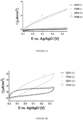
- Chronoamperometric measurements ( Figure 7 ) were performed under the same conditions with the application of 0mV vs. Ag/AgCl with the addition of varying concentrations of glucose or potential interfering molecules.
- Square wave voltammetry (SWV) measurements were performed under the same conditions.
- a fusion enzyme was designed in a combination of a biocatalytic function from a redox enzyme domain that was fused to a natural minimal ET domain via a short polypeptide linker as shown in Figure 1 .
- the catalytic domain the ⁇ subunit of an FAD-GDH from Burkholderia cepacia was used.
- the c-type cytochrome domain MCR-2 from a MamP protein which originates from a magnetotactic bacteria magnetoovoid bacterium MO-127 was chosen.
- MamP is part of the magnetosome, a unique organelle that is found in magnetotactic bacteria that allows magneto taxis to occur in these bacteria.
- MCR-2 is one of the shortest natural c-type cytochromes known today (23 amino-acids long), thus can be used to achieve DET.
- FGM FAD-GDH-MCD
- FGM catalytic redox activity and heme peroxidase activity were measured biochemically and compared to GDH as shown in Figure 3A .
- FGM has oxidized D-glucose as was measured by FAD-GDH activity assay in 50mM Tris-base (pH 7.0), 0.6mM 2,6-Dichloroindophenol (DCIP) and 0.6mM phenazine methyl sulfate (PMS) in 37 ° C.
- FGM has also shown peroxidase activity, measured by heme activity assay in 1mM 3,3' - Dimethoxybenzidine (DMB) and 1mM of hydrogen peroxide. Absorbance in 455nm was monitored while the DMB oxidation occurs by the MCD, resulted in an oxidized DMB (red color). Heme activity assay results indicate that FGM indeed binds a heme group while no heme molecules are bound by GDH.
- DMB 1,3' - Dimethoxybenzidine
- the apparent kinetic and thermodynamic parameters of FGM were calculated using FAD-GDH biochemical activity assay in 37°C (Table 1). FGM and GDH concentrations were first determined spectrophotometrically using a standard Bradford assay. Michaelis-Menten curves were transformed to Lineweaver-Burk curves in order to determine the kinetic and thermodynamic parameters of the enzyme.
- One enzyme activity unit was defined as amount of enzyme oxidizing 1 ⁇ M of substrate per minute.
- the molar absorption coefficient of DCIP was calculated to be 4.7 cm -1 mM -1 .
- FGM and GDH specific activity were calculated to be 16 mU.
- K M app values were 157 ⁇ 5 ⁇ M and 174 ⁇ 9 ⁇ M for FGM and GDH, respectively, showing different affinity of the enzymes toward the substrate.
- GDH's K M app value is lower than reported values but yet in the same order of magnitude of some.
- K M app value was ca. 3 times higher for FGM compared to GDH, indicating faster oxidation of D-glucose by FGM.
- FGM also showed more than 3 times higher catalytic efficiency (k) compared to GDH (Table 1).
- the electrochemical activity of the enzymes was measured to determine whether the addition of the minimal cytochrome domain improves enzyme-electrode ET.
- a standard 3 electrode electrochemical cell with 0.9 mm graphite rod as the auxiliary electrode were used, 3M KCl saturated Ag/AgCl reference electrode and 3mm diameter glassy carbon electrode (GCE) as the working electrode.
- 10 ⁇ L of ca. 30 ⁇ g/mL FGM or GDH enzyme solution were dropped on the GCE surface and dried in 4 ° C overnight.
- the electrodes surface was then covered with 12-14 kDa dialysis membrane tightened to the surface with an O-ring to keep the enzyme close to the electrode surface during measurements and to avoid enzyme diffusion to the surrounding buffer.
- Cyclic voltammetry (CV) measurements were performed to compare the enzyme-electrode communication of FGM to that of GDH.
- FGM demonstrated a higher electrocatalytic current compared to that of GDH with an onset potential of ca. (-) 150 mV.
- SWV square-wave voltammetry
- the electrochemical K M app is 2.84 ⁇ 0.57mM for GDH and 1.40 ⁇ 0.27mM for FGM, indicating no significant difference in the affinity towards glucose.
- the i max value is one order of magnitude higher for FGM compared to GDH - 2.04 ⁇ 0.45 ⁇ A ⁇ cm -2 and 0.4 ⁇ 0.17 ⁇ A ⁇ cm -2 , respectively.
- the difference in the i max value is indicative that the DET efficiency is different between the two enzymes where FGM shows five to seven times higher current then GDH for the same glucose concentrations.
- Table 2 Apparent electrochemical kinetic and thermodynamic parameters of FGM and GDH K M app (mM) i max ( ⁇ A ⁇ cm -2 ) GDH 2.8 ⁇ 0.6 0.4 ⁇ 0.2 FGM 1.4 ⁇ 0.3 2.0 ⁇ 0.5
- Burkholderia Cepacia is considered a good candidate for biosensing applications because of its stability in high temperatures and insensitivity to oxygen.
- an improved DET was provided, showing higher catalytic currents compered to GDH with almost the same affinity to the substrate.
- FGM showed much higher currents for the same substrate concentrations compared to GDH, which makes it more accurate for glucose biosensing with improved sensitivity than previously reported for GDH.
- Non-canonical amino acids (ncAAs) incorporation into FGM for site-specific wiring to an electrode ncAAs
- ncAAs non-canonical amino acids
- T558X and P560X are possible sites for incorporation, with 10 and 7 ⁇ from MCD, respectively.
- D395X black was found to be far from both FAD and MCD as it is about 37 ⁇ from FAD and 83 ⁇ from MCD.
- Mutated plasmids were transformed into super competent E. coli DH5 ⁇ cells and were plated on selective LB-agar plates. Bacterial colonies were isolated and plasmids were purified using miniprep kit followed by sequencing.
- Plasmids, with amber codon-containing FGM mutants sequences were co-transformed to E. coli BL21 strain containing the pEVOL plasmid expressing Pyrrolysyl orthogonal translation system to incorporate Propargyl-lysine (PrK) into the protein sequence.
- PrK containing protein was expressed in 20 mL auto-induction medium (AIM) in the presence of 1mM PrK, lysed using Bugbuster lysis solution and was isolated utilizing IMAC purification method.
- PrK is an example to a clickable nCAA, all clickable biorthogonal chemical handles can be considered for the site-specific wiring of this enzyme.
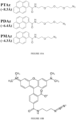
- the synthetic linker contained a pyrene group in one pole and an azide group at the other.
- the two groups were connected by a tri-ethylene oxide, di-ethylene oxide or mono-ethylene oxide, to get three different lengths of 8.3, 6.4 and 4.3 ⁇ , respectively.
- the pyrene group is a polycyclic aromatic hydrocarbon consisting of four fused benzene rings, results in a flat aromatic system. Due to overlapping of ⁇ -bonds between aromatic side chains, the pyrene group can be attached to glassy carbon electrodes surface through ⁇ - ⁇ stacking.
- the azide group was used to attach the alkyne group of PrK using "click" chemistry.
- Copper-catalyzed azide-alkyne cycloaddition (CuAAC) reaction is based on the formation of 1,4-disubstituted 1,2,3-triazoles between a terminal alkyne and an aliphatic azide in the presence of copper.
- the reaction is a facile, selective, high yielding with mild conditions and with few or no byproducts. It can be performed in room-temperature, what makes it relevant for use in proteins.
- CuAAC was used to link FGM to a pyrene-azide synthetic linker.
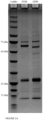
- TAMRA-azide is an azide-linked reporter tag that can be used for visualization of alkyne containing proteins (see Figure 11).
- purified FGM was clicked with the florescent marker TAMRA-azide.
- Clicked protein sample was loaded on SDS-PAGE and the protein gel was checked for florescence using LAS4000 camera.
- anti 6xHis-tag antibodies will be used for Western blot analysis. MS-MS analysis was performed on isolated protein to give another validation for PrK incorporation.
- FGM DNA sequences (all sequences are of the FAD-GDH ⁇ -subunit+MCD, without the ⁇ -subunit): R42X (SEQ ID NO: 14); S247X (SEQ ID NO: 15); D395X (SEQ ID NO: 16); T558X (SEQ ID NO: 17); P560X (SEQ ID NO: 18).
- FGM protein sequences (all sequences are of the FAD-GDH ⁇ -subunit+MCD, without the ⁇ -subunit): R42X (SEQ ID NO: 19); S247X (SEQ ID NO: 20); D395X (SEQ ID NO: 21); T558X (SEQ ID NO: 22); P560X (SEQ ID NO: 23).
Landscapes
- Health & Medical Sciences (AREA)
- Chemical & Material Sciences (AREA)
- Life Sciences & Earth Sciences (AREA)
- Organic Chemistry (AREA)
- Genetics & Genomics (AREA)
- Engineering & Computer Science (AREA)
- Zoology (AREA)
- Wood Science & Technology (AREA)
- General Health & Medical Sciences (AREA)
- Bioinformatics & Cheminformatics (AREA)
- Biochemistry (AREA)
- Molecular Biology (AREA)
- General Engineering & Computer Science (AREA)
- Biomedical Technology (AREA)
- Biotechnology (AREA)
- Physics & Mathematics (AREA)
- Microbiology (AREA)
- Biophysics (AREA)
- Medicinal Chemistry (AREA)
- Proteomics, Peptides & Aminoacids (AREA)
- Immunology (AREA)
- Chemical Kinetics & Catalysis (AREA)
- Pathology (AREA)
- Analytical Chemistry (AREA)
- Electrochemistry (AREA)
- Hematology (AREA)
- General Physics & Mathematics (AREA)
- Plant Pathology (AREA)
- Gastroenterology & Hepatology (AREA)
- Heart & Thoracic Surgery (AREA)
- Medical Informatics (AREA)
- Surgery (AREA)
- Animal Behavior & Ethology (AREA)
- Public Health (AREA)
- Veterinary Medicine (AREA)
- Emergency Medicine (AREA)
- Optics & Photonics (AREA)
- General Chemical & Material Sciences (AREA)
- Enzymes And Modification Thereof (AREA)
- Micro-Organisms Or Cultivation Processes Thereof (AREA)
Claims (14)
- Rekombinantes Protein, umfassend: (a) eine Mutante einer Alpha-Untereinheit einer Flavin-Adenin-Dinukleotid-Glukose-Dehydrogenase (FAD-GDH); und (b) ein magnetotaktisches Bacterius-Minimal-C-Typ-Cytochrom-Peptid, wobei es sich um eine Cytochrom-Domäne MCR-2 von einem MamP-Protein handelt, wobei die Mutante von FAD-GDH durch eine DNA-Sequenz kodiert wird, die zu mindestens 70% mit SEQ ID NO: 1 identisch ist, und wobei das rekombinante Protein dadurch gekennzeichnet ist, dass es sowohl Peroxidase-Aktivität als auch oxidative Aktivität aufweist.
- Rekombinantes Protein nach Anspruch 1, wobei die Alpha-Untereinheit der FAD-GDH eine Burkholderia cepacian Alpha-Untereinheit einer FAD-GDH ist.
- Rekombinantes Protein nach Anspruch 1 oder 2, wobei das magnetotaktische Bacterius-Minimal-C-Typ-Cytochrom-Peptid eine Cytochrom-Domäne MCR-2 von einem MamP-Protein ist und 11 bis 30 Aminosäuren umfasst.
- Rekombinantes Protein nach einem der Ansprüche 1 bis 3, gebunden an: ein Porphyrin, umfassend ein Metall, eine Verbindung der Formel I:

- Rekombinantes Protein nach Anspruch 4, wobei das Metall ein dreiwertiges Metall oder ein zweiwertiges Metall ist.
- Rekombinantes Protein nach einem der Ansprüche 1 bis 5, umfassend eine Aminosäuresequenz ausgewählt aus der Gruppe, bestehend aus SED ID NOs: 8 bis 13.
- Zusammensetzung, umfassend das rekombinante Protein nach einem der Ansprüche 1 bis 6 und die gamma-Untereinheit einer FAD-GDH.
- DNA-Molekül, umfassend eine Nukleotidsequenz, welche für das rekombinante Protein nach einem der Ansprüche 1 bis 6 mit oder ohne der gamma-Untereinheit einer FAD-GDH kodiert.
- DNA-Molekül nach Anspruch 8, umfassend die Nukleinsäuresequenz ausgewählt aus der Gruppe, bestehend aus: SEQ ID NOs: 5-7.
- Rekombinantes Protein nach einem der Ansprüche 1 bis 6, gekoppelt an eine Elektrode.
- Elektrode, welche an ein rekombinantes Protein gekoppelt ist, wobei das rekombinante Protein umfasst:(a) einen Cofaktor eines Redox-Enzyms;(b) ein Redox-Enzym;(c) eine Linkergruppe, welche dazu eingerichtet ist, entweder den Cofaktor oder das Enzym mit einer Elektronentransfer (ET)-Domäne zu verbinden; und(d) eine ET-Domäne, welche dazu eingerichtet ist, Elektronen zwischen der Elektrode und dem Cofaktor zu übertragen; wobei eine Distanz zwischen der ET-Domäne und der Elektrode im Bereich von 0 bis 14 Å liegt, und wobei das rekombinante Protein das rekombinante Protein nach einem der Ansprüche 1 bis 6 ist.
- Elektrode nach Anspruch 11, wobei das rekombinante Protein in der Form der Formel: (a)-(b)-(c)-(d) vorliegt.
- Verfahren zum Übertragen eines Elektrons auf eine Elektrode, umfassend Koppeln des rekombinanten Proteins nach einem der Ansprüche 1 bis 6 an eine Elektrode, wodurch ein Elektron auf diese Elektrode übertragen wird.
- Verfahren zur Quantifizierung der Menge eines Reporters in einer Probe, welche einen ersten detektierbaren Bereich von Lichtabsorption in einem oxidierten Zustand und einen zweiten Bereich von Lichtabsoprtion in einem nicht oxidierten Zustand aufweist, umfassend:(a) Inkontaktbringen des rekombinanten Proteins nach einem der Ansprüche 1 bis 6 mit dem Reporter in einem nicht oxidierten Zustand; und(b) Messen der Menge des Reporters in einem oxidierten Zustand, um dadurch die Menge eines Reporters in einer Probe zu quantifizieren.
Applications Claiming Priority (2)
| Application Number | Priority Date | Filing Date | Title |
|---|---|---|---|
| IL253801A IL253801A0 (en) | 2017-08-02 | 2017-08-02 | Recombinant flavin-adenine dinuclease glucose dehydrogenase and its uses |
| PCT/IL2018/050863 WO2019026082A1 (en) | 2017-08-02 | 2018-08-02 | FLAVIN ADENINE DINUCLEOTIDE OF RECOMBINANT GLUCOSE DEHYDROGENASE AND USES THEREOF |
Publications (3)
| Publication Number | Publication Date |
|---|---|
| EP3661967A1 EP3661967A1 (de) | 2020-06-10 |
| EP3661967A4 EP3661967A4 (de) | 2021-04-28 |
| EP3661967B1 true EP3661967B1 (de) | 2024-10-09 |
Family
ID=62454868
Family Applications (1)
| Application Number | Title | Priority Date | Filing Date |
|---|---|---|---|
| EP18841423.9A Active EP3661967B1 (de) | 2017-08-02 | 2018-08-02 | Rekombinante flavin-adenin-dinucleotid-glucosedehydrogenase und verwendungen davon |
Country Status (4)
| Country | Link |
|---|---|
| US (2) | US11365399B2 (de) |
| EP (1) | EP3661967B1 (de) |
| IL (2) | IL253801A0 (de) |
| WO (1) | WO2019026082A1 (de) |
Families Citing this family (3)
| Publication number | Priority date | Publication date | Assignee | Title |
|---|---|---|---|---|
| US12359238B2 (en) | 2017-08-02 | 2025-07-15 | B. G. Negev Technologies And Applications Ltd., At Ben-Gurion University | Recombinant flavin-adenine dinucleotide glucose dehydrogenase and uses thereof |
| US11293921B2 (en) * | 2018-10-03 | 2022-04-05 | Arkray, Inc. | Direct electron transfer-type oxidoreductase-modified molecular recognition element |
| EP4352211A4 (de) * | 2021-05-27 | 2026-02-18 | B G Negev Technologies And Applications Ltd At Ben Gurion Univ | Rekombinante flavin-adenin-dinukleotid-glucosedehydrogenase und verwendungen davon |
Family Cites Families (6)
| Publication number | Priority date | Publication date | Assignee | Title |
|---|---|---|---|---|
| KR100753747B1 (ko) | 2000-10-31 | 2007-08-31 | 고지 소데 | 신규 글루코오스 탈수소효소 및 해당 탈수소효소의제조방법 |
| JP5586818B2 (ja) | 2003-09-30 | 2014-09-10 | 有限会社アルティザイム・インターナショナル | グルコース脱水素酵素とシトクロームとの融合蛋白質 |
| EP2426200A4 (de) | 2009-04-30 | 2012-11-14 | Ikeda Food Res Co Ltd | Protein-elektronenmediator |
| CA2993600A1 (en) | 2015-07-23 | 2017-01-26 | Smartzyme Biopharma Ltd. | Compositions and methods for measuring blood glucose levels |
| JP6856344B2 (ja) * | 2015-10-29 | 2021-04-07 | アークレイ株式会社 | 変異グルコース脱水素酵素およびその利用 |
| WO2017094776A1 (ja) | 2015-11-30 | 2017-06-08 | キッコーマン株式会社 | シトクロム融合型グルコースデヒドロゲナーゼ及びグルコース測定法 |
-
2017
- 2017-08-02 IL IL253801A patent/IL253801A0/en unknown
-
2018
- 2018-08-02 US US16/636,013 patent/US11365399B2/en active Active
- 2018-08-02 EP EP18841423.9A patent/EP3661967B1/de active Active
- 2018-08-02 WO PCT/IL2018/050863 patent/WO2019026082A1/en not_active Ceased
- 2018-08-02 IL IL272404A patent/IL272404B2/en unknown
-
2022
- 2022-02-15 US US17/671,892 patent/US20220162569A1/en active Pending
Also Published As
| Publication number | Publication date |
|---|---|
| US20220162569A1 (en) | 2022-05-26 |
| IL272404B1 (en) | 2024-11-01 |
| US20200165579A1 (en) | 2020-05-28 |
| US11365399B2 (en) | 2022-06-21 |
| IL272404A (en) | 2020-03-31 |
| IL272404B2 (en) | 2025-03-01 |
| EP3661967A1 (de) | 2020-06-10 |
| WO2019026082A1 (en) | 2019-02-07 |
| EP3661967A4 (de) | 2021-04-28 |
| IL253801A0 (en) | 2017-09-28 |
Similar Documents
| Publication | Publication Date | Title |
|---|---|---|
| JP7843452B2 (ja) | グルコース測定用バイオセンサ | |
| CN101535476B (zh) | 修饰型黄素腺嘌呤二核苷酸依赖性葡萄糖脱氢酶 | |
| US9353395B2 (en) | Glucose dehydrogenase/cytochrome fusion protein | |
| US20220162569A1 (en) | Recombinant flavin-adenine dinucleotide glucose dehydrogenase and uses thereof | |
| US8999691B2 (en) | Glucose dehydrogenase | |
| JP5243878B2 (ja) | フルクトシルバリルヒスチジン測定用酵素、およびその利用法 | |
| US9200308B2 (en) | Penicillium amagasakiense glucose oxidase mutants | |
| JP2010057427A (ja) | グルコース脱水素酵素およびグルコースの電気化学測定法 | |
| JP2010115189A (ja) | フルクトシルアミノ酸オキシダーゼ改変体およびその利用 | |
| KR102159807B1 (ko) | 디히드로게나아제 활성이 향상된 아마도리아제 | |
| US9512459B2 (en) | Glucose dehydrogenase | |
| JP2010051312A (ja) | グルコース脱水素酵素を用いたグルコースの電気化学測定法 | |
| JP2010104278A (ja) | フルクトシルアミノ酸測定用酵素、およびその利用法 | |
| WO2017183717A1 (ja) | HbA1cデヒドロゲナーゼ | |
| KR101740099B1 (ko) | 라카아제를 포함하는 바이오연료전지 | |
| US12359238B2 (en) | Recombinant flavin-adenine dinucleotide glucose dehydrogenase and uses thereof | |
| US20240141303A1 (en) | Recombinant lactate dehydrogenase and uses thereof | |
| EP1437411A1 (de) | Glucose-dehydrogenase | |
| JP2010148358A (ja) | フルクトシル−l−バリルヒスチジン測定用酵素、およびその利用法 | |
| WO2022249186A1 (en) | Recombinant flavin-adenine dinucleotide glucose dehydrogenase and uses thereof | |
| CN116601286A (zh) | 突变葡萄糖脱氢酶 | |
| JP2729045B2 (ja) | サルコシンオキシダーゼおよびその製造法 | |
| JP2025030829A (ja) | 乳酸応答性酵素電極 | |
| WO2020003752A1 (ja) | フルクトシルバリルヒスチジンオキシダーゼ活性を有するタンパク質 | |
| JPH0813270B2 (ja) | キメラチトクロムp−450の製造方法 |
Legal Events
| Date | Code | Title | Description |
|---|---|---|---|
| STAA | Information on the status of an ep patent application or granted ep patent |
Free format text: STATUS: THE INTERNATIONAL PUBLICATION HAS BEEN MADE |
|
| PUAI | Public reference made under article 153(3) epc to a published international application that has entered the european phase |
Free format text: ORIGINAL CODE: 0009012 |
|
| STAA | Information on the status of an ep patent application or granted ep patent |
Free format text: STATUS: REQUEST FOR EXAMINATION WAS MADE |
|
| 17P | Request for examination filed |
Effective date: 20200302 |
|
| AK | Designated contracting states |
Kind code of ref document: A1 Designated state(s): AL AT BE BG CH CY CZ DE DK EE ES FI FR GB GR HR HU IE IS IT LI LT LU LV MC MK MT NL NO PL PT RO RS SE SI SK SM TR |
|
| AX | Request for extension of the european patent |
Extension state: BA ME |
|
| DAV | Request for validation of the european patent (deleted) | ||
| DAX | Request for extension of the european patent (deleted) | ||
| A4 | Supplementary search report drawn up and despatched |
Effective date: 20210330 |
|
| RIC1 | Information provided on ipc code assigned before grant |
Ipc: C07K 19/00 20060101AFI20210323BHEP Ipc: C12N 15/62 20060101ALI20210323BHEP Ipc: C12Q 1/32 20060101ALI20210323BHEP Ipc: G01N 33/66 20060101ALI20210323BHEP Ipc: C12N 9/04 20060101ALI20210323BHEP Ipc: C12Q 1/00 20060101ALI20210323BHEP Ipc: C07K 14/80 20060101ALI20210323BHEP Ipc: G01N 27/327 20060101ALN20210323BHEP Ipc: A61B 5/1486 20060101ALN20210323BHEP |
|
| STAA | Information on the status of an ep patent application or granted ep patent |
Free format text: STATUS: EXAMINATION IS IN PROGRESS |
|
| 17Q | First examination report despatched |
Effective date: 20230130 |
|
| GRAP | Despatch of communication of intention to grant a patent |
Free format text: ORIGINAL CODE: EPIDOSNIGR1 |
|
| STAA | Information on the status of an ep patent application or granted ep patent |
Free format text: STATUS: GRANT OF PATENT IS INTENDED |
|
| RIC1 | Information provided on ipc code assigned before grant |
Ipc: A61B 5/1486 20060101ALN20240416BHEP Ipc: G01N 27/327 20060101ALN20240416BHEP Ipc: C07K 14/80 20060101ALI20240416BHEP Ipc: C12Q 1/00 20060101ALI20240416BHEP Ipc: C12N 9/04 20060101ALI20240416BHEP Ipc: G01N 33/66 20060101ALI20240416BHEP Ipc: C12Q 1/32 20060101ALI20240416BHEP Ipc: C12N 15/62 20060101ALI20240416BHEP Ipc: C07K 19/00 20060101AFI20240416BHEP |
|
| INTG | Intention to grant announced |
Effective date: 20240510 |
|
| GRAS | Grant fee paid |
Free format text: ORIGINAL CODE: EPIDOSNIGR3 |
|
| GRAA | (expected) grant |
Free format text: ORIGINAL CODE: 0009210 |
|
| STAA | Information on the status of an ep patent application or granted ep patent |
Free format text: STATUS: THE PATENT HAS BEEN GRANTED |
|
| AK | Designated contracting states |
Kind code of ref document: B1 Designated state(s): AL AT BE BG CH CY CZ DE DK EE ES FI FR GB GR HR HU IE IS IT LI LT LU LV MC MK MT NL NO PL PT RO RS SE SI SK SM TR |
|
| P01 | Opt-out of the competence of the unified patent court (upc) registered |
Free format text: CASE NUMBER: APP_49654/2024 Effective date: 20240902 |
|
| REG | Reference to a national code |
Ref country code: CH Ref legal event code: EP |
|
| REG | Reference to a national code |
Ref country code: DE Ref legal event code: R096 Ref document number: 602018075312 Country of ref document: DE |
|
| REG | Reference to a national code |
Ref country code: IE Ref legal event code: FG4D |
|
| REG | Reference to a national code |
Ref country code: LT Ref legal event code: MG9D |
|
| REG | Reference to a national code |
Ref country code: NL Ref legal event code: MP Effective date: 20241009 |
|
| REG | Reference to a national code |
Ref country code: AT Ref legal event code: MK05 Ref document number: 1730522 Country of ref document: AT Kind code of ref document: T Effective date: 20241009 |
|
| PG25 | Lapsed in a contracting state [announced via postgrant information from national office to epo] |
Ref country code: NL Free format text: LAPSE BECAUSE OF FAILURE TO SUBMIT A TRANSLATION OF THE DESCRIPTION OR TO PAY THE FEE WITHIN THE PRESCRIBED TIME-LIMIT Effective date: 20241009 |
|
| PG25 | Lapsed in a contracting state [announced via postgrant information from national office to epo] |
Ref country code: NL Free format text: LAPSE BECAUSE OF FAILURE TO SUBMIT A TRANSLATION OF THE DESCRIPTION OR TO PAY THE FEE WITHIN THE PRESCRIBED TIME-LIMIT Effective date: 20241009 |
|
| PG25 | Lapsed in a contracting state [announced via postgrant information from national office to epo] |
Ref country code: IS Free format text: LAPSE BECAUSE OF FAILURE TO SUBMIT A TRANSLATION OF THE DESCRIPTION OR TO PAY THE FEE WITHIN THE PRESCRIBED TIME-LIMIT Effective date: 20250209 Ref country code: PT Free format text: LAPSE BECAUSE OF FAILURE TO SUBMIT A TRANSLATION OF THE DESCRIPTION OR TO PAY THE FEE WITHIN THE PRESCRIBED TIME-LIMIT Effective date: 20250210 Ref country code: HR Free format text: LAPSE BECAUSE OF FAILURE TO SUBMIT A TRANSLATION OF THE DESCRIPTION OR TO PAY THE FEE WITHIN THE PRESCRIBED TIME-LIMIT Effective date: 20241009 |
|
| PG25 | Lapsed in a contracting state [announced via postgrant information from national office to epo] |
Ref country code: FI Free format text: LAPSE BECAUSE OF FAILURE TO SUBMIT A TRANSLATION OF THE DESCRIPTION OR TO PAY THE FEE WITHIN THE PRESCRIBED TIME-LIMIT Effective date: 20241009 |
|
| PG25 | Lapsed in a contracting state [announced via postgrant information from national office to epo] |
Ref country code: BG Free format text: LAPSE BECAUSE OF FAILURE TO SUBMIT A TRANSLATION OF THE DESCRIPTION OR TO PAY THE FEE WITHIN THE PRESCRIBED TIME-LIMIT Effective date: 20241009 |
|
| PG25 | Lapsed in a contracting state [announced via postgrant information from national office to epo] |
Ref country code: ES Free format text: LAPSE BECAUSE OF FAILURE TO SUBMIT A TRANSLATION OF THE DESCRIPTION OR TO PAY THE FEE WITHIN THE PRESCRIBED TIME-LIMIT Effective date: 20241009 |
|
| PG25 | Lapsed in a contracting state [announced via postgrant information from national office to epo] |
Ref country code: NO Free format text: LAPSE BECAUSE OF FAILURE TO SUBMIT A TRANSLATION OF THE DESCRIPTION OR TO PAY THE FEE WITHIN THE PRESCRIBED TIME-LIMIT Effective date: 20250109 |
|
| PG25 | Lapsed in a contracting state [announced via postgrant information from national office to epo] |
Ref country code: GR Free format text: LAPSE BECAUSE OF FAILURE TO SUBMIT A TRANSLATION OF THE DESCRIPTION OR TO PAY THE FEE WITHIN THE PRESCRIBED TIME-LIMIT Effective date: 20250110 Ref country code: LV Free format text: LAPSE BECAUSE OF FAILURE TO SUBMIT A TRANSLATION OF THE DESCRIPTION OR TO PAY THE FEE WITHIN THE PRESCRIBED TIME-LIMIT Effective date: 20241009 Ref country code: AT Free format text: LAPSE BECAUSE OF FAILURE TO SUBMIT A TRANSLATION OF THE DESCRIPTION OR TO PAY THE FEE WITHIN THE PRESCRIBED TIME-LIMIT Effective date: 20241009 |
|
| PG25 | Lapsed in a contracting state [announced via postgrant information from national office to epo] |
Ref country code: PL Free format text: LAPSE BECAUSE OF FAILURE TO SUBMIT A TRANSLATION OF THE DESCRIPTION OR TO PAY THE FEE WITHIN THE PRESCRIBED TIME-LIMIT Effective date: 20241009 |
|
| PG25 | Lapsed in a contracting state [announced via postgrant information from national office to epo] |
Ref country code: RS Free format text: LAPSE BECAUSE OF FAILURE TO SUBMIT A TRANSLATION OF THE DESCRIPTION OR TO PAY THE FEE WITHIN THE PRESCRIBED TIME-LIMIT Effective date: 20250109 |
|
| PG25 | Lapsed in a contracting state [announced via postgrant information from national office to epo] |
Ref country code: SM Free format text: LAPSE BECAUSE OF FAILURE TO SUBMIT A TRANSLATION OF THE DESCRIPTION OR TO PAY THE FEE WITHIN THE PRESCRIBED TIME-LIMIT Effective date: 20241009 |
|
| PG25 | Lapsed in a contracting state [announced via postgrant information from national office to epo] |
Ref country code: DK Free format text: LAPSE BECAUSE OF FAILURE TO SUBMIT A TRANSLATION OF THE DESCRIPTION OR TO PAY THE FEE WITHIN THE PRESCRIBED TIME-LIMIT Effective date: 20241009 |
|
| PGFP | Annual fee paid to national office [announced via postgrant information from national office to epo] |
Ref country code: GB Payment date: 20250612 Year of fee payment: 8 |
|
| REG | Reference to a national code |
Ref country code: DE Ref legal event code: R097 Ref document number: 602018075312 Country of ref document: DE |
|
| PG25 | Lapsed in a contracting state [announced via postgrant information from national office to epo] |
Ref country code: EE Free format text: LAPSE BECAUSE OF FAILURE TO SUBMIT A TRANSLATION OF THE DESCRIPTION OR TO PAY THE FEE WITHIN THE PRESCRIBED TIME-LIMIT Effective date: 20241009 |
|
| PGFP | Annual fee paid to national office [announced via postgrant information from national office to epo] |
Ref country code: FR Payment date: 20250610 Year of fee payment: 8 |
|
| PG25 | Lapsed in a contracting state [announced via postgrant information from national office to epo] |
Ref country code: RO Free format text: LAPSE BECAUSE OF FAILURE TO SUBMIT A TRANSLATION OF THE DESCRIPTION OR TO PAY THE FEE WITHIN THE PRESCRIBED TIME-LIMIT Effective date: 20241009 |
|
| PG25 | Lapsed in a contracting state [announced via postgrant information from national office to epo] |
Ref country code: SK Free format text: LAPSE BECAUSE OF FAILURE TO SUBMIT A TRANSLATION OF THE DESCRIPTION OR TO PAY THE FEE WITHIN THE PRESCRIBED TIME-LIMIT Effective date: 20241009 |
|
| PG25 | Lapsed in a contracting state [announced via postgrant information from national office to epo] |
Ref country code: CZ Free format text: LAPSE BECAUSE OF FAILURE TO SUBMIT A TRANSLATION OF THE DESCRIPTION OR TO PAY THE FEE WITHIN THE PRESCRIBED TIME-LIMIT Effective date: 20241009 |
|
| PG25 | Lapsed in a contracting state [announced via postgrant information from national office to epo] |
Ref country code: IT Free format text: LAPSE BECAUSE OF FAILURE TO SUBMIT A TRANSLATION OF THE DESCRIPTION OR TO PAY THE FEE WITHIN THE PRESCRIBED TIME-LIMIT Effective date: 20241009 |
|
| PLBE | No opposition filed within time limit |
Free format text: ORIGINAL CODE: 0009261 |
|
| STAA | Information on the status of an ep patent application or granted ep patent |
Free format text: STATUS: NO OPPOSITION FILED WITHIN TIME LIMIT |
|
| PG25 | Lapsed in a contracting state [announced via postgrant information from national office to epo] |
Ref country code: SE Free format text: LAPSE BECAUSE OF FAILURE TO SUBMIT A TRANSLATION OF THE DESCRIPTION OR TO PAY THE FEE WITHIN THE PRESCRIBED TIME-LIMIT Effective date: 20241009 |
|
| 26N | No opposition filed |
Effective date: 20250710 |
|
| PGFP | Annual fee paid to national office [announced via postgrant information from national office to epo] |
Ref country code: DE Payment date: 20250611 Year of fee payment: 8 |
|
| REG | Reference to a national code |
Ref country code: CH Ref legal event code: H13 Free format text: ST27 STATUS EVENT CODE: U-0-0-H10-H13 (AS PROVIDED BY THE NATIONAL OFFICE) Effective date: 20260324 |
|
| PG25 | Lapsed in a contracting state [announced via postgrant information from national office to epo] |
Ref country code: MC Free format text: LAPSE BECAUSE OF FAILURE TO SUBMIT A TRANSLATION OF THE DESCRIPTION OR TO PAY THE FEE WITHIN THE PRESCRIBED TIME-LIMIT Effective date: 20241009 |
|
| PG25 | Lapsed in a contracting state [announced via postgrant information from national office to epo] |
Ref country code: LU Free format text: LAPSE BECAUSE OF NON-PAYMENT OF DUE FEES Effective date: 20250802 |
|
| PG25 | Lapsed in a contracting state [announced via postgrant information from national office to epo] |
Ref country code: CH Free format text: LAPSE BECAUSE OF NON-PAYMENT OF DUE FEES Effective date: 20250831 |