EP3660801A1 - Automatisierte erstellung eines unfallsberichts - Google Patents
Automatisierte erstellung eines unfallsberichts Download PDFInfo
- Publication number
- EP3660801A1 EP3660801A1 EP19020658.1A EP19020658A EP3660801A1 EP 3660801 A1 EP3660801 A1 EP 3660801A1 EP 19020658 A EP19020658 A EP 19020658A EP 3660801 A1 EP3660801 A1 EP 3660801A1
- Authority
- EP
- European Patent Office
- Prior art keywords
- accident
- mobile
- mobile terminals
- road user
- accident report
- Prior art date
- Legal status (The legal status is an assumption and is not a legal conclusion. Google has not performed a legal analysis and makes no representation as to the accuracy of the status listed.)
- Granted
Links
Images


Classifications
-
- G—PHYSICS
- G08—SIGNALLING
- G08B—SIGNALLING SYSTEMS, e.g. PERSONAL CALLING SYSTEMS; ORDER TELEGRAPHS; ALARM SYSTEMS
- G08B25/00—Alarm systems in which the location of the alarm condition is signalled to a central station, e.g. fire or police telegraphic systems
- G08B25/01—Alarm systems in which the location of the alarm condition is signalled to a central station, e.g. fire or police telegraphic systems characterised by the transmission medium
- G08B25/016—Personal emergency signalling and security systems
Definitions
- the present invention is directed to a method for the automated generation of an accident report, which enables rescue workers to be automatically notified on the basis of a comprehensive accident report and at the same time receive an indication of a number of people involved.
- the present invention is directed to a correspondingly configured system arrangement and to a computer program product with control commands which implement the proposed method.
- DE 10 2008 028 844 A1 shows a method for driver support by means of driver assistance systems, in which vehicle data and environmental data of the vehicle are evaluated.
- DE 10 2009 015 513 A1 shows an emergency call unit for a vehicle, a detection unit being provided for detecting a trigger event.
- DE 10 2011 080107 A1 shows a method for providing salvage-relevant information, wherein a detection formation is provided which informs about the impending or the occurrence of an accident event.
- DE 10 2008 039 831 A1 shows an emergency call device for a vehicle for network-based transmission of an emergency call to auxiliary units.
- the so-called eCall system which is integrated in vehicles and automatically makes an emergency call in the event of an accident.
- the disadvantage of the eCall system is that only the emergency call itself is made.
- a vehicle can be located in terms of its position, latency times between base stations and the vehicle being calculated. So signals are transmitted and it is measured how long the corresponding signal takes from the vehicle to a radio mast. The position determination can be improved by addressing several radio masts.
- the so-called honeycomb system is known, with individual cell towers spanning a cell, and the corresponding latency periods can be used to determine not only which cell a cell phone subscriber is in, but also his geographic position.
- Another disadvantage of the prior art is that a comprehensive sensor system has to be provided which, for example, determines the number of motor vehicle occupants, which in the event of an error even leads to an incorrect number of people being transmitted.
- Appropriate seat occupancy detection is, however, only reserved for luxury class vehicles or has to be expensive and time-consuming to retrofit.
- a method for the automated creation of an accident report for the coordination of rescue measures comprising a transmission of accident data of a road user to a Central processing unit, wherein a number of mobile terminals, which are within a predetermined spatial proximity to the road user, is determined and an accident report is provided as a function of the specific number of mobile terminals.
- the proposed method runs fully automatically, since the persons involved can be determined by means of their end devices by being in a predetermined spatial proximity to the road user involved in the accident.
- an accident report can be created and automatically transmitted to rescue workers.
- the accident report can a. Provide information that an accident happened, the geographical location of the accident and the number of people involved. Personal injury can thus be estimated and the rescue workers can be alerted accordingly.
- the accident report thus serves to coordinate rescue measures or to provide a suitable number of rescue units.
- the transmission of accident data of a road user to a central processing unit is proposed, as has already been shown in the prior art.
- the so-called eCall method can be used, for example, but this is expanded according to the invention. It is, among other things, an inventive contribution that the information is enriched and not only the information is transmitted that an accident has actually occurred or its position, but rather the people involved can be estimated, which conventional methods only require complex technical devices can afford.
- the position of mobile devices is determined and, consequently, the total number of mobile devices can also be determined.
- the number of mobile devices can thus be used to draw conclusions about the people involved. It is typically assumed that a person carries a mobile device in the form of a smartphone. This mobile device dials into a radio mast and uses a telecommunications infrastructure.
- the proposed method can thus act on the basis of air interfaces and only an existing telecommunication structure has to be provided and used. Further technical components are not necessary according to the invention. Only the road user must have a radio interface, such as that provided by the well-known eCall system.
- the invention it is proposed to determine a number of mobile terminals which are within a predetermined spatial proximity to the road user. In this way, empirical values can be entered into the system, which indicate what role a person has when they are in a certain spatial proximity to the accident-victim.
- a mobile device which is, for example, one meter from the road user involved in the accident, who can be assigned to a person who is involved in the accident and who may be injured.
- a mobile end device which is two meters away from the road user involved in the accident, can either be assigned to an injured occupant or to an assistant.
- mobile devices are more than two meters away, it can be assumed that these devices can be assigned to people who act as assistants and therefore do not need any rescue measures themselves. If a person is more than three meters away from the scene of the accident, it is more likely that they are not themselves affected and do not require any rescue measures. On the basis of such values, which are given only by way of example, it can consequently be determined how high the number of accident victims is.
- the predetermined spatial proximity is thus stored in preparatory process steps and can be determined empirically. For this purpose, experience from rescue workers can be used. In addition, several test runs can be carried out and the collected results can be fed back into the system. In addition, artificial intelligence must be provided, which can be trained by rescue workers. At the end of a mission, these rescue workers can indicate how many people were actually injured, and the system can learn iteratively how to set the spatial values. Patterns can thus be empirically recognized as to how the spatial proximity of a mobile terminal to the accident-affected road user has an effect, and consequently it can be determined within a few iterations whether a mobile terminal can be assigned to an accident victim or an assistant.
- the system is initially configured with estimated values
- an accident report can be created that is automatically sent to the emergency services.
- the proposed method can also be carried out iteratively, in such a way that accident reports are sent within certain time intervals, and thus the movements of the mobile terminals can also be included. If, for example, the position of a mobile terminal remains unchanged over a longer period of time, then it can be assumed, for example, that a person who is unable to move carries the mobile terminal with him. Since people generally draw conclusions from the mobile end devices or the vehicle electronics, it can be assumed that data is also present that is not valid, and an error can therefore be factored in if necessary.
- the proposed method can be configured in such a way that a larger number of rescue units is sent if the number of mobile terminals or accident victims is not clearly determined. If, for example, artificial intelligence provides a value that suggests that a person is likely to have had an accident, it is always assumed in doubt that that this person has an accident. Such behavior can also be learned iteratively using training data.
- the transmission of accident data takes place by means of an air interface which is set up to execute an eCall.
- This has the advantage that existing systems that will be used in future vehicles can be used, and consequently no further unit has to be provided.
- each person carries a mobile device with them and therefore no further sensors are necessary.
- the proposed method can therefore be based on a conventional telecommunications infrastructure that does not require any adjustments.
- the proposed aspects can only be accomplished by means of a new control of existing components.
- the accident data have geographical information. This has the advantage that both the position of the road user involved in the accident can be transmitted and the positions of the mobile terminals which are to be assigned to people who are involved in the accident. This means that a map can be drawn in advance, indicating where people who are unable to move may be, and the rescue workers do not have to search the scene of the accident first.
- determining the number of mobile terminals comprises determining the geographical position of the mobile terminals.
- This has the advantage that conventional methods are used which allow conclusions to be drawn about the geographical Allow position.
- satellite-based systems such as GPS are possible, or else the known location system, in which latency periods of mobile phone masts are used.
- the determination of the geographic positions can also be carried out fully automatically according to the invention and consequently does not imply any further technical effort.
- determining the number of mobile terminals comprises determining a current mobile radio cell of the road user and mobile terminals within this mobile radio cell are taken into account.
- the number of mobile terminals is determined iteratively on the basis of different predetermined spatial seams.
- This has the advantage that different spatial seams can be identified, and thus different groups of people can be identified. For example If the procedure is carried out on the basis of a spatial proximity of one meter, all persons who are directly involved in the accident can be identified. If the method is carried out in a further iteration in such a way that the spatial proximity is configured with five meters, people can be identified who obviously represent auxiliary workers but are not directly involved in the accident themselves. If the procedure is now carried out with a spatial proximity of 20 meters, people are identified who only attend the accident without helping to intervene. As a result, each iteration can determine how people who are at an accident site behave.
- a participation in the accident is estimated depending on the spatial proximity of a mobile terminal.
- an artificial intelligence can provide information about which person is involved in which accident and with which role.
- Estimating is generally about assigning probabilities to specific events or roles.
- a numerical value can be specified, which determines the likelihood of a person taking part in the accident as a victim or whether it is an assistant.
- a probability can be calculated from already empirically determined data as to whether a particular person needs help or not. This is determined based on the person's mobile device.
- a request message is sent to the mobile terminals which are within the predetermined spatial proximity to the road user.
- This has the advantage that the people present are interviewed whether they really need help or whether they can estimate how many people need help.
- the people present can provide further information regarding the accident. If an inquiry message remains unanswered, it can be assumed that the person concerned is helpless, and the accident report can therefore be designed accordingly and then transmitted to the emergency services.
- health parameters are recorded, which are transmitted with the accident data.
- Health parameters can be derived because a movement profile of the people can be created on the basis of the mobile end devices and thus it can be determined, for example, whether a person is not moving and is therefore possibly helpless or unable to move.
- other components can be used, such as a so-called wearable, which measures health parameters.
- an intelligent wristband can be used to measure whether an appropriate pulse is present in a person, or sensors of a mobile phone can be used.
- the accident report therefore contains health parameters that enable an assessment of the situation, and emergency personnel can react accordingly.
- a movement history of the mobile terminals is taken into account when preparing the accident report.
- This has the advantage that the mobile phones are analyzed before and after the accident. For example, four people are moving along a street at constant speed and if the movement stops abruptly, it can be assumed that four vehicle occupants have had an accident.
- the movement history at the accident site can be analyzed and it can in turn be determined which person is moving and which person is unable to move.
- other sensors can be evaluated in the mobile device, which record acceleration or vibration, for example.
- a detection of a communication termination by mobile terminals is carried out.
- This has the advantage that a failure of a mobile terminal can be detected, and it can thus be estimated whether the mobile terminal is damaged.
- a communication breakdown is an unforeseen event. If the communication abruptly breaks off in the case of an individual mobile terminal, it can be assumed that an increased force has exerted on the terminal or that the mobile terminal has been destroyed, for example, due to fire. The person assigned to the mobile terminal is therefore likely to have had an accident and needs help.
- the accident report that is created is transmitted to a further mobile terminal.
- emergency services can immediately receive an accident report on their mobile device, and other road users in the vicinity of the accident site can also be informed. The other participants are thus warned that there is an accident on a road that they are likely to drive on, and the other road users can also be asked for help.
- the accident report created is compared with a manually generated accident report. This has the advantage that after each use it can be checked whether the estimated data is valid and readjusted if necessary. In a further use, this empirically determined data can then be used and an underlying algorithm learns to assess the role of the participants depending on their position.
- a communication system for the automated generation of an accident report for the coordination of rescue measures comprising an interface unit set up for transmitting accident data of a road user to a central processing unit, a telecommunication unit set up for creating a number of mobile devices which are within a predetermined range spatial proximity to the road user, and a computing unit is set up to create an accident report depending on the determined number of mobile devices.
- the object is also achieved by a computer program product with control commands which execute the proposed method or operate the proposed communication arrangement.
- the proposed method has method steps which can be functionally simulated by the structural features of the communication arrangement or the communication system.
- the communication system thus provides structural features that offer a function that corresponds to the corresponding function of the method steps. Hence serves the proposed method of operating the proposed communication system, and the proposed communication system can execute the method.
- Fig. 1 shows below a road user, i.e. a passenger car, which has an accident.
- the motor vehicle shown has an air interface, via which it can communicate with a mobile telecommunications infrastructure.
- a corresponding cell tower is shown for this purpose.
- On the right side there is a database or a server system that is operated for the rescue workers. According to the invention, the disadvantage is overcome that only little data is available when an accident is reported automatically.
- the eCall system only reports that a certain vehicle had an accident.
- the number of vehicles in the vehicle People is already an optional feature, so it does not have to be available.
- step 1 a vehicle issues an eCall after a detected accident. This is done via a connection to an emergency call center. The precise position (GPS) of the vehicle is transmitted as part of this connection.
- GPS precise position
- Step 2 The mobile radio base station recognizes this emergency call (or is informed of this by the downstream operator of the MNO) and obtains position information from all participants in the mobile radio cell, including the eCall subscription. This means that in addition to the occupants of the vehicle, possible accident victims as well as bystanders in the vicinity of the accident site are also considered. However, these are not all of interest to the emergency physician, so a further selection must be made.
- step 3 This selection is made in step 3, which has several variants.
- Variant 3a are the mobile devices closest to the position; these are usually the occupants of the accident vehicle.
- Variant 3b are mobile devices located in the immediate vicinity of the vehicle. This could be accident victims.
- Variant 3c are mobile devices located in the wider area of the vehicle. They are usually not involved in the accident as victims.
- step 3 it is possible for the base station to contact the mobile devices that are in the immediate vicinity of the scene of the accident.
- participants can, for example, install an appropriate app on their mobile phone. This app receives the request from the base station and returns further data.
- a more advanced variant could be the transmission of health information (pulse, blood pressure), which is made available to the smartphone, for example, by a connected wearable.
- health information pulse, blood pressure
- the app only sends a warning about possible accident involvement to the base station instead of the data.
- the base station can collect further information by determining the devices that "disappeared" at the time of the accident. These are devices that were connected to the base station before the accident, but have not been available since the accident (and have not left the cell). This indicates severe damage or even destruction of the mobile device and thus an accident participation.
- Fig. 2 shows on the left side a road user, i.e. a vehicle with a communication interface. This vehicle communicates with a server in the emergency center. This is in the present Fig. 2 plotted as a database.
- a cell tower is shown, which represents a mobile communication infrastructure.
- a person is drawn in who is not involved in the accident. A patient is shown on the right who is injured and therefore needs help.
- the proposed method is initiated by an accident sensor that triggers a so-called crash report.
- This crash report is sent to the server, and also technical information provided.
- the flow of communication continues to the people involved, whereupon the accident data is transferred to the server in a final step.
- the individual communications can be encrypted. The exchange of appropriate keys is provided for this.
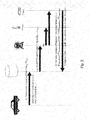
- Fig. 3 shows a schematic flowchart of a method for the automated creation of an accident report for the coordination of rescue measures, comprising a transmission 100 of accident data of a road user to a central processing unit, wherein a determination 101 of a number of mobile terminals that are within a predetermined spatial proximity to the road user are located, and a 102 creation of an accident report depending on the determined number of mobile devices is provided.
Landscapes
- Engineering & Computer Science (AREA)
- Computer Security & Cryptography (AREA)
- Business, Economics & Management (AREA)
- Emergency Management (AREA)
- Physics & Mathematics (AREA)
- General Physics & Mathematics (AREA)
- Alarm Systems (AREA)
- Traffic Control Systems (AREA)
Abstract
Description
- Die vorliegende Erfindung ist auf ein Verfahren zum automatisierten Erstellen eines Unfallberichts gerichtet, welches es ermöglicht, dass Rettungskräfte anhand eines umfangreichen Unfallberichts automatisiert benachrichtigt werden und hierbei gleichzeitig einen Hinweis auf eine Anzahl beteiligter Personen erhalten. Darüber hinaus ist die vorliegende Erfindung auf eine entsprechend eingerichtete Systemanordnung gerichtet sowie auf ein Computerprogrammprodukt mit Steuerbefehlen, welche das vorgeschlagene Verfahren implementieren.
-
DE 10 2008 028 844 A1 zeigt ein Verfahren zur Fahrerunterstützung mittels Fahrerassistenzsystemen, bei denen Fahrzeugdaten und Umgebungsdaten des Fahrzeugs ausgewertet werden. -
DE 10 2009 015 513 A1 zeigt eine Notrufeinheit für ein Fahrzeug, wobei eine Detektionseinheit zur Detektion eines Triggerereignisses vorgesehen ist. -
DE 10 2011 080107 A1 zeigt ein Verfahren zur Bereitstellung bergungsrelevanter Informationen, wobei eine Detektionsformation vorgesehen ist, welche über das Bevorstehen oder das Eintreten eines Unfallereignisses informiert. -
DE 10 2008 039 831 A1 zeigt eine Notrufeinrichtung für ein Fahrzeug zum netzwerkbasierten Übermitteln eines Notrufs an Hilfseinheiten. - Aus dem Stand der Technik ist es bekannt, eine Anzahl von Fahrzeuginsassen anhand einer Sensorik zu erkennen. Hierbei sind in den Sitzen Sitzbelegungssensoren verbaut, die anhand einer Druckeinwirkung detektieren können, ob ein Sitzplatz innerhalb eines Fahrzeugs belegt ist. Generell kann diese Information in einen Notruf integriert werden, wobei diverse Kraftfahrzeuge jedoch nicht über eine geeignete Sensorik verfügen und somit aufwändig aufgerüstet werden müssen. Zudem ist eine entsprechende Sensorik fehleranfällig und muss ggf. gewartet werden.
- Darüber hinaus ist das sogenannte eCall-System bekannt, welches in Fahrzeuge integriert ist und im Falle eines Unfalls automatisiert einen Notruf absetzt. Nachteil bei dem eCall-System ist es, dass lediglich der Notruf an sich abgesetzt wird. Generell kann ein Fahrzeug bezüglich seiner Position geortet werden, wobei Latenzzeiten zwischen Basisstationen und dem Fahrzeug berechnet werden. So werden Signale übermittelt und es wird gemessen, wie lange das entsprechende Signal von dem Fahrzeug bis zu einem Funkmasten benötigt. Die Positionsbestimmung kann hierbei verbessert werden, indem mehrere Funkmasten angesprochen werden. In diesem Zusammenhang ist das sogenannte Bienenwabensystem bekannt, wobei einzelne Mobilfunkmasten eine Mobilfunkzelle aufspannen, und anhand der entsprechenden Latenzzeiten kann nicht nur bestimmt werden, in welcher Funkzelle sich ein Mobilfunkteilnehmer befindet, sondern eben auch seine geographische Position.
- Generell ist es ein Nachteil des Stands der Technik, dass lediglich geringe Datenmengen bezüglich eines Unfalls bereitgestellt werden. So ist es jedoch erforderlich, dass Rettungskräfte auch Informationen erhalten, wieviele Personen an einem Unfall beteiligt sind, und dementsprechend müssen Einsatzkräfte planen, wieviele Einsatzfahrzeuge zu dem Unfallort geschickt werden.
- So ist es ferner ein Problem der bekannten Verfahren, dass entweder Rettungskräfte manuell telefonisch alarmiert werden und eine angemessene Zahl an Rettungskräften angefordert wird, oder aber auch die Rettungskräfte selbst müssen weitere Einheiten nach dem Antreffen am Unfallort anfordern. So verstreicht jedoch wertvolle Zeit, und es besteht ein Bedarf an einem automatisierten Verfahren, welches automatisiert weitere Informationen bezüglich eines Unfalls in Form eines Unfallberichts bereitstellt.
- Ein weiterer Nachteil aus dem Stand der Technik ist es, dass eine umfassende Sensorik bereitgestellt werden muss, welche beispielsweise die Anzahl der Kraftfahrzeuginsassen bestimmt, was in einem Fehlerfall sogar dazu führt, dass eine inkorrekte Anzahl an Personen übermittelt wird. Eine entsprechende Sitzbelegungserkennung ist jedoch insgesamt nur Fahrzeugen der Oberklasse vorbehalten bzw. muss teuer und aufwändig nachgerüstet werden.
- Folglich ist es eine Aufgabe der vorliegenden Erfindung, ein verbessertes Verfahren zum automatisierten Erstellen eines Unfallberichts vorzuschlagen, welches zuverlässig arbeitet und zudem mit geringem technischen Aufwand verbunden ist. Darüber hinaus ist es eine Aufgabe der vorliegenden Erfindung, ein entsprechend eingerichtetes Kommunikationssystem vorzuschlagen mitsamt einem Computerprogrammprodukt mit Steuerbefehlen, welche das vorgeschlagene Verfahren implementieren bzw. die vorgeschlagene Kommunikationseinrichtung betreiben.
- Die Aufgabe wird gelöst mit den Merkmalen der unabhängigen Patentansprüche. Weitere vorteilhafte Ausgestaltungen sind in den Unteransprüchen angegeben.
- Demgemäß wird ein Verfahren zum automatisierten Erstellen eines Unfallberichts zur Koordination von Rettungsmaßnahmen vorgeschlagen, aufweisend ein Übermitteln von Unfalldaten eines Verkehrsteilnehmers an eine zentrale Recheneinheit, wobei ein Bestimmen einer Anzahl von mobilen Endgeräten, welche sich innerhalb einer vorbestimmten räumlichen Nähe zu dem Verkehrsteilnehmer befinden, und ein Erstellen eines Unfallberichts in Abhängigkeit der bestimmten Anzahl von mobilen Endgeräten vorgesehen ist.
- Das vorgeschlagene Verfahren läuft vollautomatisiert ab, da die involvierten Personen mittels derer Endgeräte dadurch bestimmt werden können, dass sie sich in einer vorbestimmten räumlichen Nähe zu dem verunfallten Verkehrsteilnehmer befinden. Insofern kann ein Unfallbericht erstellt werden und an Rettungskräfte automatisiert übermittelt werden. Der Unfallbericht kann u. a. die Information aufweisen, dass ein Unfall passiert ist, die geographische Position des Unfalls sowie die Anzahl der involvierten Personen. Somit kann ein Personenschaden abgeschätzt werden und die Rettungskräfte können entsprechend alarmiert werden. Somit dient der Unfallbericht der Koordination von Rettungsmaßnahmen bzw. der Bereitstellung einer geeigneten Anzahl von Rettungseinheiten.
- Erfindungsgemäß wird ein Übermitteln von Unfalldaten eines Verkehrsteilnehmers an eine zentrale Recheneinheit vorgeschlagen, wie dies bereits im Stand der Technik gezeigt ist. Hierzu kann beispielsweise das sogenannte eCall-Verfahren Verwendung finden, welches jedoch erfindungsgemäß erweitert wird. So ist es u. a. ein erfinderischer Beitrag, dass die Informationen angereichert werden und nicht nur die Information übermittelt wird, dass ein Unfall an sich stattgefunden hat bzw. dessen Position, sondern vielmehr können die involvierten Personen abgeschätzt werden, was herkömmliche Verfahren lediglich mit aufwändigen technischen Vorrichtungen leisten können.
- Erfindungsgemäß besteht der Vorteil, dass die Position von mobilen Endgeräten bestimmt wird und insgesamt folglich auch die Anzahl der mobilen Endgeräte ermittelt werden kann. Somit kann von der Anzahl von mobilen Endgeräten ein Rückschluss auf die involvierten Personen stattfinden. Typischerweise wird davon ausgegangen, dass eine Person ein mobiles Endgerät in Form eines Smartphones mit sich führt. Dieses mobile Endgerät wählt sich bei einem Funkmasten ein und nutzt eine Telekommunikationsinfrastruktur. Somit kann das vorgeschlagene Verfahren anhand von Luftschnittstellen agieren und es muss lediglich eine bestehende Telekommunikationsstruktur bereitgestellt und genutzt werden. Weitere technische Komponenten sind erfindungsgemäß nicht notwendig. Lediglich der Verkehrsteilnehmer muss über eine Funkschnittstelle verfügen, wie sie beispielsweise das bekannte eCall-System bereitstellt.
- Erfindungsgemäß wird ein Bestimmen einer Anzahl von mobilen Endgeräten vorgeschlagen, welche sich innerhalb einer vorbestimmten räumlichen Nähe zu dem Verkehrsteilnehmer befinden. So können Erfahrungswerte in das System eingepflegt werden, welche angeben, welche Rolle einer Person zukommt, wenn sie sich in einer bestimmten räumlichen Nähe zu dem verunfallten Verkehrsteilnehmer befindet.
- Beispielhaft ist es möglich, einen Fahrer bzw. einen Fahrzeuginsassen des verunfallten Kraftfahrzeugs derart zu erkennen, dass die räumliche Nähe seines mobilen Endgeräts mit der Position des verunfallten Verkehrsteilnehmers übereinstimmt. Hierzu ist eine Positionsermittlung erforderlich, welche beispielsweise mittels eines 5G-Telekommunikationsstandards erfolgen kann. Dieser Standard ermöglicht eine sehr genaue Positionsbestimmung, und folglich kann die räumliche Nähe genau abgeschätzt werden. So kann erfindungsgemäß konfiguriert werden, dass ein mobiles Endgerät, welches sich beispielsweise einen Meter von dem verunfallten Verkehrsteilnehmer befindet, einer Person zuzuordnen ist, die an dem Unfall beteiligt ist und ggf. verletzt ist. Ein mobiles Endgerät, welches zwei Meter von dem verunfallten Verkehrsteilnehmer entfernt ist, kann entweder einem verletzten Insassen zugeordnet werden oder aber einer Hilfskraft. Befinden sich mobile Endgeräte weiter weg als zwei Meter, so ist davon auszugehen, dass diese Endgeräte Personen zuzuordnen sind, die als Hilfskraft auftreten und somit selbst keine Rettungsmaßnahme benötigen. Befindet sich eine Person weiter als drei Meter vom Unfallort entfernt, so ist diese mit größerer Wahrscheinlichkeit nicht selbst betroffen und benötigt ebenfalls keine Rettungsmaßnahme. Anhand solcher, lediglich beispielhaft angeführter, Werte kann folglich ermittelt werden, wie hoch die Anzahl der verunfallten Personen ist.
- Die vorbestimmte räumliche Nähe wird somit in vorbereitenden Verfahrensschritten hinterlegt und kann empirisch ermittelt werden. Hierzu kann auf Erfahrungswerte von Rettungskräften zurückgegriffen werden. Darüber hinaus können mehrere Testläufe erfolgen und die gesammelten Ergebnisse können wieder in das System eingepflegt werden. Darüber hinaus ist eine künstliche Intelligenz vorzusehen, welche von Rettungskräften trainiert werden kann. So können diese Rettungskräfte am Ende eines Einsatzes angeben, wieviele Personen tatsächlich verunfallt waren, und das System kann somit iterativ erlernen, wie die räumlichen Werte einzustellen sind. Empirisch können somit Muster erkannt werden, wie sich die räumliche Nähe eines mobilen Endgeräts zu dem verunfallten Verkehrsteilnehmer auswirkt, und folglich kann innerhalb von wenigen Iterationen festgestellt werden, ob ein mobiles Endgerät einer verunfallten Person oder einer Hilfskraft zuzuordnen ist. Initial wird das System mit Schätzwerten konfiguriert
- Insgesamt wird also von einem mobilen Endgerät auf eine natürliche Person geschlossen, und der Verkehrsteilnehmer wird anhand der Fahrzeugelektronik erkannt. So erfolgt also eine Zuordnung von den jeweiligen Endgeräten zu den Personen. Generell wird angenommen, dass eine Person genau ein mobiles Endgerät mit sich führt, und erfindungsgemäß wird ferner davon ausgegangen, dass ein verunfallter Verkehrsteilnehmer ein Meldesystem betreibt, wie es beispielsweise aus dem eCall-Verfahren bekannt ist.
- Wurde die Anzahl der mobilen Endgeräte in räumlicher Nähe bestimmt, so kann ein Unfallbericht erstellt werden, der automatisiert an Rettungskräfte übermittelt wird. Das vorgeschlagene Verfahren kann auch iterativ durchgeführt werden, derart, dass innerhalb bestimmter Zeitintervalle Unfallberichte gesendet werden, und somit können auch die Bewegungen der mobilen Endgeräte miteinbezogen werden. Ist beispielsweise ein mobiles Endgerät in seiner Position über einen längeren Zeitraum unverändert, so dann beispielsweise davon ausgegangen werden, dass eine bewegungsunfähige Person das mobile Endgerät mit sich führt. Da generell von den mobilen Endgeräten bzw. der Fahrzeugelektronik auf die Personen geschlossen wird, ist davon auszugehen, dass hierbei auch Daten vorliegen, die nicht valide sind, und somit kann ggf. ein Fehler miteinkalkuliert werden. Beispielsweise ist es auch möglich, dass ein Fahrzeuginsasse sein mobiles Endgerät einfach am Unfallort verliert und insofern bleibt dieses mobile Endgerät in seiner Position unverändert, obwohl die dazugehörige Person, also der Eigentümer, unverletzt ist. Im Zweifel kann das vorgeschlagene Verfahren jedoch so konfiguriert werden, dass bei einer nicht-eindeutigen Bestimmung der Anzahl von mobilen Endgeräten bzw. verunfallter Personen eine größere Anzahl an Rettungseinheiten gesendet wird. Liefert beispielsweise die künstliche Intelligenz einen Wert, der annehmen lässt, dass mit großer Wahrscheinlichkeit eine Person verunfallt ist, so wird im Zweifel immer davon ausgegangen, dass diese Person verunfallt ist. Auch ein solches Verhalten kann iterativ anhand von Trainingsdaten erlernt werden.
- Gemäß einem Aspekt der vorliegenden Erfindung erfolgt das Übermitteln von Unfalldaten mittels einer Luftschnittstelle, welche zum Ausführen eines eCall eingerichtet ist. Dies hat den Vorteil, dass bestehende Systeme, welche in zukünftigen Fahrzeug werden, verwendet werden können, und folglich muss keine weitere Einheit bereitgestellt werden. Somit können Komponenten wiederverwendet werden, die standardmäßig in Fahrzeugen verbaut sind. Darüber hinaus kann davon ausgegangen werden, dass jede Person ein mobiles Endgerät mit sich führt und somit sind also auch keine weiteren Sensoren notwendig. Das vorgeschlagene Verfahren kann somit auf einer herkömmlichen Telekommunikationsinfrastruktur basieren, die keinerlei Anpassungen bedarf. Die vorgeschlagenen Aspekte können lediglich mittels einer neuen Ansteuerung bestehender Komponenten bewerkstelligt werden.
- Gemäß einem weiteren Aspekt der vorliegenden Erfindung weisen die Unfalldaten eine geographische Information auf. Dies hat den Vorteil, dass sowohl die Position des verunfallten Verkehrsteilnehmers übermittelt werden kann, als auch die Positionen der mobilen Endgeräte, die Personen zuzuordnen sind, die in dem Unfall verwickelt sind. Somit kann bereits vorab eine Karte gezeichnet werden, welche angibt, wo sich ggf. bewegungsunfähige Personen aufhalten, und die Rettungskräfte müssen den Unfallort nicht erst absuchen.
- Gemäß einem weiteren Aspekt der vorliegenden Erfindung umfasst das Bestimmen der Anzahl von mobilen Endgeräten ein Ermitteln der geographischen Position der mobilen Endgeräte. Dies hat den Vorteil, dass herkömmliche Verfahren verwendet werden, welche einen Rückschluss auf die geographische Position zulassen. Hierzu sind Satelliten-basierte Systeme wie beispielsweise GPS möglich, oder aber auch das bekannte Ortungssystem, bei dem Latenzzeiten von Mobilfunkmasten verwendet werden. Das Ermitteln der geographischen Positionen kann erfindungsgemäß ebenfalls vollautomatisiert durchgeführt werden und impliziert folglich keinerlei weiteren technischen Aufwand.
- Gemäß einem weiteren Aspekt der vorliegenden Erfindung umfasst das Bestimmen der Anzahl von mobilen Endgeräten ein Bestimmen einer aktuellen Mobilfunkzelle des Verkehrsteilnehmers und mobile Endgeräte innerhalb dieser Mobilfunkzelle werden berücksichtigt. Dies hat den Vorteil, dass zu jedem Zeitpunkt klar ist, in welcher Mobilfunkzelle sich der Verkehrsteilnehmer befindet, da er mittels seiner Bordelektronik bei einem entsprechenden Funkmast registriert ist. Ein entsprechendes Subskriptionsprofil liegt typischerweise dem Netzwerkbetreiber vor, und dieser kann eine Auskunft darüber geben, wo sich der Verkehrsteilnehmer befindet Da nunmehr weitere mobile Endgeräte bezüglich ihrer Position abgeprüft werden müssen, kann die Anzahl der relevanten mobilen Endgeräte dadurch eingegrenzt werden, dass nur diejenigen mobilen Endgeräte überprüft werden, welche sich in der gleichen Funkzelle wie der Verkehrsteilnehmer befinden. Auf diese Art und Weise werden der Rechenaufwand und die Datenübertragungsmengen reduziert und die Anzahl der zu überprüfenden mobilen Endgeräte wird eingeschränkt.
- Gemäß einem weiteren Aspekt der vorliegenden Erfindung erfolgt das Bestimmen der Anzahl von mobilen Endgeräten iterativ anhand unterschiedlicher vorbestimmter räumlicher Nähen. Dies hat den Vorteil, dass unterschiedliche räumliche Nähen identifiziert werden können, und somit können unterschiedliche Personengruppen identifiziert werden. Wird beispielsweise das Verfahren anhand einer räumlichen Nähe von einem Meter durchgeführt, so können alle Personen identifiziert werden, welche unmittelbar an dem Unfall beteiligt sind. Wird das Verfahren in einer weiteren Iteration derart durchgeführt, dass die räumliche Nähe mit fünf Metern konfiguriert wird, so können Personen identifiziert werden, die offensichtlich Hilfskräfte darstellen, selbst aber nicht direkt am Unfall beteiligt sind. Wird nunmehr das Verfahren mit einer räumlichen Nähe von 20 Metern durchgeführt, so werden Personen identifiziert, die dem Unfallgeschehen lediglich beiwohnen, ohne hierbei helfend einzugreifen. Folglich kann in jeder Iteration festgestellt werden, wie sich Personen verhalten, die einem Unfallort beiwohnen.
- Gemäß einem weiteren Aspekt der vorliegenden Erfindung wird in Abhängigkeit der räumlichen Nähe eines mobilen Endgeräts eine Beteiligung an dem Unfallgeschehen geschätzt. Dies hat den Vorteil, dass eine künstliche Intelligenz Informationen darüber bereitstellen kann, welche Person an einem Unfallgeschehen mit welcher Rolle beteiligt ist. Bei einem Schätzen handelt es sich allgemein um das Zuweisen von Wahrscheinlichkeiten zu bestimmten Ereignissen bzw. Rollen. So kann ein numerischer Wert angegeben werden, der bestimmt, zu welcher Wahrscheinlichkeit eine Person als Geschädigter am Unfallgeschehen teilnimmt oder ob es sich hierbei um eine Hilfskraft handelt. So kann aus bereits empirisch ermittelten Daten eine Wahrscheinlichkeit errechnet werden, ob eine bestimmte Person Hilfe benötigt oder nicht. Dies wird anhand des mobilen Endgeräts der jeweiligen Person bestimmt.
- Gemäß einem weiteren Aspekt der vorliegenden Erfindung wird eine Anfragenachricht an die mobilen Endgeräte, welche sich innerhalb der vorbestimmten räumlichen Nähe zu dem Verkehrsteilnehmer befinden, übersendet. Dies hat den Vorteil, dass die anwesenden Personen befragt werden können, ob diese tatsächlich Hilfe benötigen bzw. ob diese einschätzen können, wieviele Personen Hilfe benötigen. Darüber hinaus können die anwesenden Personen weitere Informationen bezüglich des Unfalls bereitstellen. Bleibt eine Anfragenachricht unbeantwortet, so kann davon ausgegangen werden, dass die entsprechende Person hilfslos ist, und somit kann der Unfallbericht entsprechend ausgestaltet werden und sodann an die Einsatzkräfte übermittelt werden.
- Gemäß einem weiteren Aspekt der vorliegenden Erfindung erfolgt ein Erfassen von Gesundheitsparametern, welche mit den Unfalldaten übermittelt werden. Dies hat den Vorteil, dass weitere unfallrelevanten Daten gesammelt werden können und gleich im Unfallbericht bereitgestellt werden können. Gesundheitsparameter können abgeleitet werden, da anhand der mobilen Endgeräte ein Bewegungsprofil der Personen erstellt werden kann und somit beispielsweise festgestellt werden kann, ob sich eine Person nicht bewegt und somit ggf. hilflos bzw. bewegungsunfähig ist. Darüber hinaus können weitere Komponenten Anwendung finden, wie beispielsweise ein sogenanntes Wearable, welches Gesundheitsparameter misst. So kann anhand eines intelligenten Armbandes beispielsweise gemessen werden, ob ein angemessener Puls bei einer Person vorhanden ist, oder es können Sensoren eines Mobiltelefons verwendet werden. Somit enthält der Unfallbericht Gesundheitsparameter, welche eine Einschätzung der Lage ermöglichen, und somit können Einsatzkräfte entsprechend reagieren.
- Gemäß einem weiteren Aspekt der vorliegenden Erfindung wird eine Bewegungshistorie der mobilen Endgeräte bei dem Erstellen des Unfallberichts berücksichtigt. Dies hat den Vorteil, dass die mobilen Telefone vor dem Unfall analysiert werden und nach dem Unfall. Bewegen sich beispielsweise vier Personen mit gleichbleibender Geschwindigkeit entlang einer Straße und bricht die Bewegung abrupt ab, so kann davon ausgegangen werden, dass vier Fahrzeuginsassen verunfallt sind. Darüber hinaus kann die Bewegungshistorie am Unfallort analysiert werden und es kann wiederum festgestellt werden, welche Person sich bewegt und welche Person bewegungsunfähig ist. Neben der Bewegungshistorie können weitere Sensoren im mobilen Endgerät ausgewertet werden, die z.B. eine Beschleunigung oder Erschütterung erfassen.
- Gemäß einem weiteren Aspekt der vorliegenden Erfindung wird ein Erkennen eines Kommunikationsabbruchs von mobilen Endgeräten durchgeführt. Dies hat den Vorteil, dass ein Ausfall eines mobilen Endgeräts erkannt werden kann, und somit kann geschätzt werden, ob das mobile Endgerät beschädigt ist. Typischerweise verfügen alle Personen am Unfallort über die gleiche Netzabdeckung, und insofern handelt es sich bei einem Kommunikationsabbruch um ein unvorhergesehenes Ereignis. Bricht bei einem einzelnen mobilen Endgerät die Kommunikation unvermittelt ab, so kann davon ausgegangen werden, dass eine verstärkte Krafteinwirkung auf das Endgerät stattgefunden hat bzw. dass das mobile Endgerät beispielsweise aufgrund von Feuer zerstört wurde. Somit ist die dem mobilen Endgerät zugeordnete Person mit hoher Wahrscheinlichkeit verunfallt und benötigt Hilfe.
- Gemäß einem weiteren Aspekt der vorliegenden Erfindung wird der erstellte Unfallbericht an ein weiteres mobiles Endgerät übermittelt. Dies hat den Vorteil, dass Einsatzkräfte einen Unfallbericht sofort auf ihr mobiles Endgerät erhalten können, und zudem können weitere Verkehrsteilnehmer im Umkreis des Unfallortes informiert werden. Die weitere Teilnehmer werden somit gewarnt, dass ein Unfall auf einer Straße vorliegt, die sie voraussichtlich befahren, und zudem können die weiteren Verkehrsteilnehmer um Hilfe gebeten werden.
- Gemäß einem weiteren Aspekt der vorliegenden Erfindung wird der erstellte Unfallbericht mit einem manuell erstellten Unfallbericht abgeglichen. Dies hat den Vorteil, dass nach jedem Einsatz überprüft werden kann, ob die geschätzten Daten valide sind, und ggf. kann nachjustiert werden. Bei einem weiteren Einsatz können sodann diese empirisch ermittelten Daten verwendet werden und ein zugrundeliegender Algorithmus lernt die Rolle der Beteiligten in Abhängigkeit deren Position einzuschätzen.
- Die Aufgabe wird auch gelöst durch ein Kommunikationssystem zum automatisierten Erstellen eines Unfallberichts zur Koordination von Rettungsmaßnahmen, aufweisend eine Schnittstelleneinheit eingerichtet zum Übermitteln von Unfalldaten eines Verkehrsteilnehmers an eine zentrale Recheneinheit, wobei eine Telekommunikationseinheit eingerichtet zum Erstellen einer Anzahl von mobilen Endgeräten, welche sich innerhalb einer vorbestimmten räumlichen Nähe zu dem Verkehrsteilnehmer befinden, und eine Recheneinheit eingerichtet zum Erstellen eines Unfallberichts in Abhängigkeit der bestimmten Anzahl von mobilen Endgeräten vorgesehen ist.
- Die Aufgabe wird auch gelöst durch ein Computerprogrammprodukt mit Steuerbefehlen, welche das vorgeschlagene Verfahren ausführen bzw. die vorgeschlagene Kommunikationsanordnung betreiben.
- Erfindungsgemäß ist es besonders vorteilhaft, dass das vorgeschlagene Verfahren Verfahrensschritte aufweist, welche funktional durch die strukturellen Merkmale der Kommunikationsanordnung bzw. des Kommunikationssystems nachgebildet werden können. Somit stellt das Kommunikationssystem strukturelle Merkmale bereit, welche eine Funktion anbieten, der der entsprechenden Funktion der Verfahrensschritte entspricht. Folglich dient das vorgeschlagene Verfahren dem Betreiben des vorgeschlagenen Kommunikationssystems, und das vorgeschlagene Kommunikationssystem kann das Verfahren ausführen.
- Weitere vorteilhafte Ausgestaltungen werden anhand der beigefügten Figuren näher erläutert. Es zeigen:
- Fig. 1:
- ein schematischer Nachrichtenfluss gemäß des vorgeschlagenen Verfahrens zum automatisierten Erstellen eines Unfallberichts gemäß einem Aspekt der vorliegenden Erfindung;
- Fig. 2:
- ein weiterer Kommunikationsverlauf gemäß des vorgeschlagenen Verfahrens zum automatisierten Erstellen eines Unfallberichts; und
- Fig. 3:
- ein schematisches Ablaufdiagramm des vorgeschlagenen Verfahrens zum automatisierten Erstellen eines Unfallberichts.
-
Fig. 1 zeigt unten einen Verkehrsteilnehmer, also ein Personenkraftfahrzeug, welches verunfallt ist. Das gezeigte Kraftfahrzeug verfügt über eine Luftschnittstelle, über die es mit einer Mobiltelekommunikationsinfrastruktur kommunizieren kann. Hierzu ist ein entsprechender Mobilfunkmast eingezeichnet. Auf der rechten Seite befindet sich eine Datenbank bzw. ein Serversystem, welches für die Rettungskräfte betrieben wird. Erfindungsgemäß wird der Nachteil überwunden, dass bei einem automatisierten Melden eines Unfalls lediglich geringe Daten zur Verfügung stehen. - Das eCall-System meldet in der Standardimplementierung nur, dass ein bestimmtes Fahrzeug einen Unfall hatte. Die Anzahl der im Fahrzeug befindlichen Personen ist bereits ein optionales Leistungsmerkmal, muss also nicht vorliegen.
- Alle diese Informationen sind für Rettungskräfte jedoch in etlichen Situationen unzureichend bzw. unvollständig. Dies gilt insbesondere dann, wenn am Unfall Fußgänger oder Fahrzeuge beteiligt sind, die über kein eCall-System verfügen (bspw. Rad- oder Motorradfahrer).
- Im Folgenden wird anhand der beigefügten
Fig. 1 ein beispielhafter Ablauf des vorgeschlagenen Verfahrens aufgezeigt. Die verwendeten Aspekte sind hierbei lediglich beispielhaft zu verstehen. - In Schritt 1 setzt ein Fahrzeug nach einem detektierten Unfall einen eCall ab. Dies erfolgt über eine Verbindung mit einer Notrufzentrale. Im Rahmen dieser Verbindung wird unter anderem die genaue Position (GPS) des Fahrzeuges übermittelt.
- Schritt 2: Die Mobilfunkbasisstation erkennt diesen abgesetzten Notruf (oder wird von der nachgeschalteten Vermittlung des MNO darüber informiert) und holt Positionsinformationen von allen Teilnehmern in der Mobilfunkzelle ein, einschließlich der eCall-Subscription. Dies bedeutet, dass zunächst neben den Insassen des Fahrzeugs auch mögliche Unfallopfer, aber auch Unbeteiligte in der Nähe des Unfallortes betrachtet werden. Diese sind für den Notarzt jedoch nicht alle von Interesse, deshalb muss noch eine weitere Auswahl erfolgen.
- Diese Auswahl erfolgt in Schritt 3, der mehrere Varianten aufweist.
- Variante 3a) sind die von der Position her am nächsten liegenden Mobilgeräte, hierbei handelt es sich üblicherweise um die Insassen des Unfallfahrzeugs.
- Variante 3b) sind von der Position her im direkten Umfeld des Fahrzeugs befindliche Mobilgeräte. Hierbei könnte es sich um Unfallopfer handeln.
- Variante 3c) sind von der Position her im weiteren Umfeld des Fahrzeugs befindliche Mobilgeräte. Üblicherweise sind diese nicht als Opfer in den Unfall verwickelt.
- Hieraus ergeben sich zunächst folgende Informationen:
- Anzahl der Insassen des Fahrzeugs: 2
- Vermutliche Unfallopfer: 1
- Personen in der Nähe des Unfalls: 3
- Ebenfalls in Schritt 3 ist es möglich, dass die Basisstation Kontakt zu den Mobilgeräten aufnimmt, die sich in unmittelbarer Umgebung des Unfallortes aufhalten. Um diesen Schritt zu ermöglichen, können teilnehmende Personen beispielweise eine entsprechende App auf ihrem Mobiltelefon installieren. Diese App nimmt die Anfrage der Basisstation entgegen und liefert weitere Daten zurück.
- Hierbei kann es sich um Informationen des Bewegungssensors in den letzten 10-20 Sekunden (dem Unfallzeitpunkt) handeln - hat es starke, unübliche Bewegungen gegeben? Sollte dem so sein, ist es wahrscheinlich, dass der Besitzer des Geräts möglicherweise doch am Unfall beteiligt war.
- Mit diesem Verfahren ist es auch möglich, indirekte Unfallopfer zu erkennen. Eine Person, die den Unfall beobachtet hat und beispielsweise ohnmächtig wird, kann so einbezogen werden.
- Eine fortschrittlichere Variante könnte in der Übertragung von Gesundheitsinformationen (Puls, Blutdruck) bestehen, die dem Smartphone beispielweise durch ein verbundenes Wearable zur Verfügung gestellt werden. Um Datenübertragung zu vermeiden, ist es auch denkbar, dass die App statt der Daten nur eine Warnung auf mögliche Unfallbeteiligung an die Basisstation sendet.
- In Schritt 3 kann die Basisstation weitere Informationen sammeln, indem die zum Unfallzeitpunkt "verschwundenen" Geräte ermittelt werden. Dies sind Geräte, die vor dem Unfall mit der Basisstation verbunden waren, seit dem Unfall aber nicht mehr verfügbar sind (und die Mobilfunkzelle auch nicht verlassen haben). Dies deutet auf eine starke Beschädigung oder sogar Zerstörung des Mobilgerätes hin und somit auf eine Unfallbeteiligung.
- Somit ergeben sich verfahrensgemäß folgende Informationen:
- Anzahl der Insassen des Fahrzeugs: 2; bei einer Person meldet das Smartphone "Notfall"
- Anzahl Unfallopfer: unbekannt, jedoch ein Smartphone seit dem Unfall verschwunden
- Personen in der Nähe des Unfalls: 3; bei einer Person extreme Bewegungsmuster des Smartphones.
- Der Standard-eCall hingegen würde nur folgende Informationen liefern:
- Ein Fahrzeug meldet einen Unfall.
- Um die erfindungsgemäß vorliegenden Informationen für Menschen aussagekräftiger zu gestalten, ist es an dieser Stelle empfehlenswert, eine KI (Künstliche Intelligenz) zu integrieren, so dass in der Notrufzentrale besser entschieden werden kann.
- Das Lernen dieser KI geschieht durch den Vergleich
- Meldung von der Basisstation (siehe oben) zu
- tatsächlich zu behandelnde Opfer gemäß Unfallbericht.
- Dies bedeutet, dass eine KI mit jedem Unfall die von der Basisstation besser auswerten kann.
- Mit zukünftig vorhandenen Mitteln (5G) ist es möglich, mit geringem technischen Aufwand zusätzliche Informationen zu Unfällen und möglichen Unfallopfern zu sammeln. Dadurch können Rettungseinsätze schneller und besser koordiniert werden.
-
Fig. 2 zeigt auf der linken Seite einen Verkehrsteilnehmer, also ein Fahrzeug mit einer Kommunikationsschnittstelle. Dieses Fahrzeug kommuniziert mit einem Server im Notfallzentrum. Dies ist in der vorliegendenFig. 2 als eine Datenbank eingezeichnet. Daneben ist ein Mobilfunkmast eingezeichnet, der stellvertretend für eine mobile Kommunikationsinfrastruktur steht. Daneben ist eine Person eingezeichnet, die nicht in das Unfallgeschehen involviert ist. Auf der rechten Seite ist ein Patient eingezeichnet, der verletzt ist und somit Hilfe benötigt. - Das vorgeschlagene Verfahren wird vorliegend durch einen Unfallsensor initiiert, der einen sogenannten Crash Report auslöst. Dieser Crash Report wird an den Server übermittelt, und zudem werden technische Informationen bereitgestellt. Der Kommunikationsfluss geht weiter bis zu dem beteiligten Personen, worauf in einem finalen Schritt die Unfalldaten an den Server übermittelt werden. Wie aus der vorliegenden
Fig. 2 zu entnehmen ist, können die einzelnen Kommunikationen verschlüsselt werden. Hierzu ist der Austausch entsprechender Schlüssel vorgesehen. - In den
Fig. 1 und2 wurden gleiche Konzepte mit den gleichen Bezugszeichen versehen. Bei den textuellen Informationen ausFig. 2 handelt es sich um Funktionsaufrufe und Parameterübergaben. Diese sind in Pseudocode niedergeschrieben. -
Fig. 3 zeigt in einem schematischen Ablaufdiagramm ein Verfahren zum automatisierten Erstellen eines Unfallberichts zur Koordination von Rettungsmaßnahmen, aufweisend ein Übermitteln 100 von Unfalldaten eines Verkehrsteilnehmers an eine zentrale Recheneinheit, wobei ein Bestimmen 101 einer Anzahl von mobilen Endgeräten, welche sich innerhalb einer vorbestimmten räumlichen Nähe zu dem Verkehrsteilnehmer befinden, und ein Erstellen 102 eines Unfallberichts in Abhängigkeit der bestimmten Anzahl von mobilen Endgeräten vorgesehen ist. - Der Fachmann erkennt hierbei, dass einzelne Verfahrensschritte iterativ ausgeführt werden können und zudem Unterschritte aufweisen können.
Claims (15)
- Verfahren zum automatisierten Erstellen eines Unfallberichts zur Koordination von Rettungsmaßnahmen, aufweisend:- Übermitteln (100) von Unfalldaten eines Verkehrsteilnehmers an eine zentrale Recheneinheit, dadurch gekennzeichnet, dass- ein Bestimmen (101) einer Anzahl von mobilen Endgeräten, welche sich innerhalb einer vorbestimmten räumlichen Nähe zu dem Verkehrsteilnehmer befinden; und- ein Erstellen (102) eines Unfallberichts in Abhängigkeit der bestimmten Anzahl von mobilen Endgeräten vorgesehen ist.
- Verfahren nach Anspruch 1, dadurch gekennzeichnet, dass das Übermitteln (100) von Unfalldaten mittels einer Luftschnittstelle erfolgt, welche zum Ausführen eines eCall eingerichtet ist.
- Verfahren nach Anspruch 1 oder 2, dadurch gekennzeichnet, dass die Unfalldaten eine geographische Information aufweisen.
- Verfahren nach einem der vorhergehenden Ansprüche, dadurch gekennzeichnet, dass das Bestimmen (101) der Anzahl von mobilen Endgeräten ein Ermitteln der geographischen Position der mobilen Endgeräte umfasst.
- Verfahren nach einem der vorhergehenden Ansprüche, dadurch gekennzeichnet, dass das Bestimmen (101) der Anzahl von mobilen Endgeräten ein Bestimmen einer aktuellen Mobilfunkzelle des Verkehrsteilnehmers umfasst und mobile Endgeräte innerhalb dieser Mobilfunkzelle berücksichtigt werden.
- Verfahren nach einem der vorhergehenden Ansprüche, dadurch gekennzeichnet, dass das Bestimmen (101) der Anzahl von mobilen Endgeräten iterativ anhand unterschiedlicher vorbestimmter räumlicher Nähen erfolgt
- Verfahren nach einem der vorhergehenden Ansprüche, dadurch gekennzeichnet, dass in Abhängigkeit der räumlichen Nähe eines mobilen Endgeräts eine Beteiligung an dem Unfallgeschehen geschätzt wird.
- Verfahren nach einem der vorhergehenden Ansprüche, dadurch gekennzeichnet, dass eine Anfragenachricht an die mobilen Endgeräte, welche sich innerhalb der vorbestimmten räumlichen Nähe zu dem Verkehrsteilnehmer befinden, übersendet wird.
- Verfahren nach einem der vorhergehenden Ansprüche, dadurch gekennzeichnet, dass ein Erfassen von Gesundheitsparametern erfolgt, welche mit den Unfalldaten übermittelt (100) werden.
- Verfahren nach einem der vorhergehenden Ansprüche, dadurch gekennzeichnet, dass eine Bewegungshistorie der mobilen Endgeräte bei dem Erstellen (102) des Unfallberichts berücksichtigt wird.
- Verfahren nach einem der vorhergehenden Ansprüche, dadurch gekennzeichnet, dass ein Erkennen eines Kommunikationsabbruchs von mobilen Endgeräten durchgeführt wird.
- Verfahren nach einem der vorhergehenden Ansprüche, dadurch gekennzeichnet, dass der erstellte (102) Unfallbericht an ein weiteres mobiles Endgerät übermittelt wird.
- Verfahren nach einem der vorhergehenden Ansprüche, dadurch gekennzeichnet, dass der erstellte (102) Unfallbericht mit einem manuell erstellten Unfallbericht abgeglichen wird.
- Kommunikationssystem zum automatisierten Erstellen eines Unfallberichts zur Koordination von Rettungsmaßnahmen, aufweisend:- eine Schnittstelleneinheit eingerichtet zum Übermitteln (100) von Unfalldaten eines Verkehrsteilnehmers an eine zentrale Recheneinheit, dadurch gekennzeichnet, dass- eine Telekommunikationseinheit eingerichtet zum Bestimmen (101) einer Anzahl von mobilen Endgeräten, welche sich innerhalb einer vorbestimmten räumlichen Nähe zu dem Verkehrsteilnehmer befinden; und- eine Recheneinheit eingerichtet zum Erstellen (102) eines Unfallberichts in Abhängigkeit der bestimmten Anzahl von mobilen Endgeräten vorgesehen ist.
- Computerprogrammprodukt mit Steuerbefehlen, welche das Verfahren gemäß einem der Ansprüche 1 bis 13 ausführen, wenn sie auf einem Computer zur Ausführung gebracht werden.
Applications Claiming Priority (1)
| Application Number | Priority Date | Filing Date | Title |
|---|---|---|---|
| DE102018009360.4A DE102018009360A1 (de) | 2018-11-28 | 2018-11-28 | Automatisierte Erstellung eines Unfallberichts |
Publications (2)
| Publication Number | Publication Date |
|---|---|
| EP3660801A1 true EP3660801A1 (de) | 2020-06-03 |
| EP3660801B1 EP3660801B1 (de) | 2022-10-05 |
Family
ID=68696190
Family Applications (1)
| Application Number | Title | Priority Date | Filing Date |
|---|---|---|---|
| EP19020658.1A Active EP3660801B1 (de) | 2018-11-28 | 2019-11-21 | Automatisierte erstellung eines unfallsberichts |
Country Status (2)
| Country | Link |
|---|---|
| EP (1) | EP3660801B1 (de) |
| DE (1) | DE102018009360A1 (de) |
Cited By (1)
| Publication number | Priority date | Publication date | Assignee | Title |
|---|---|---|---|---|
| US12213020B2 (en) | 2022-05-18 | 2025-01-28 | Ford Global Technologies, Llc | Identification of a mobile device based on a proximate network |
Families Citing this family (1)
| Publication number | Priority date | Publication date | Assignee | Title |
|---|---|---|---|---|
| DE102022120851A1 (de) | 2022-08-18 | 2024-02-29 | Bayerische Motoren Werke Aktiengesellschaft | Verfahren, Vorrichtung und Computerprogramm zur Ansteuerung eines Fahrzeugs und/oder Anwendergeräts |
Citations (9)
| Publication number | Priority date | Publication date | Assignee | Title |
|---|---|---|---|---|
| DE102008028844A1 (de) | 2007-06-22 | 2009-01-08 | Continental Teves Ag & Co. Ohg | Verfahren und Vorrichtung zur Fahrerunterstützung mittels Fahrerassistenzsystemen |
| DE102008039831A1 (de) | 2007-08-29 | 2009-03-05 | Continental Teves Ag & Co. Ohg | Notrufeinrichtung für ein Fahrzeug |
| DE102009015513A1 (de) | 2008-04-14 | 2009-10-15 | Continental Teves Ag & Co. Ohg | Ortungssignal für Einsatzkräfte |
| DE102011080107A1 (de) | 2010-08-05 | 2012-02-09 | Continental Teves Ag & Co. Ohg | Verfahren und System zur Bereitstellung bergungsrelevanter Informationen |
| US20120252439A1 (en) * | 2011-04-02 | 2012-10-04 | Recursion Software, Inc. | System and method for estimating casualties |
| JP2015161977A (ja) * | 2014-02-26 | 2015-09-07 | 株式会社デンソー | 車両用緊急対応装置及び車両事故通報システム |
| DE102015010727A1 (de) * | 2015-08-17 | 2016-03-24 | Daimler Ag | Vorrichtung zur Notfallüberwachung eines Insassen eines Fahrzeugs |
| JP2017041177A (ja) * | 2015-08-21 | 2017-02-23 | 株式会社日本自動車部品総合研究所 | 乗車人数検知装置および異常通知装置 |
| DE102017107730A1 (de) * | 2017-04-10 | 2018-10-11 | Deutsche Telekom Ag | Verfahren und Einrichtung zur Informationsbereitstellung bei einem Verkehrsereignis |
Family Cites Families (5)
| Publication number | Priority date | Publication date | Assignee | Title |
|---|---|---|---|---|
| DE19917207C2 (de) * | 1999-04-16 | 2001-09-27 | Bosch Gmbh Robert | Notrufeinrichtung für Fahrzeuge |
| DE202004004379U1 (de) * | 2004-03-18 | 2004-07-01 | T-Mobile Deutschland Gmbh | Elektronisches Mautsystem für Verkehrswege |
| WO2011110227A1 (en) * | 2010-03-12 | 2011-09-15 | Telefonaktiebolaget Lm Ericsson (Publ) | Cellular network based assistant for vehicles |
| US8576066B2 (en) * | 2011-02-28 | 2013-11-05 | International Business Machines Corporation | Managing emergency response services using mobile communication devices |
| US10332385B2 (en) * | 2016-11-23 | 2019-06-25 | Sap Se | Location based support request messages responsive to alert recommendation |
-
2018
- 2018-11-28 DE DE102018009360.4A patent/DE102018009360A1/de not_active Withdrawn
-
2019
- 2019-11-21 EP EP19020658.1A patent/EP3660801B1/de active Active
Patent Citations (9)
| Publication number | Priority date | Publication date | Assignee | Title |
|---|---|---|---|---|
| DE102008028844A1 (de) | 2007-06-22 | 2009-01-08 | Continental Teves Ag & Co. Ohg | Verfahren und Vorrichtung zur Fahrerunterstützung mittels Fahrerassistenzsystemen |
| DE102008039831A1 (de) | 2007-08-29 | 2009-03-05 | Continental Teves Ag & Co. Ohg | Notrufeinrichtung für ein Fahrzeug |
| DE102009015513A1 (de) | 2008-04-14 | 2009-10-15 | Continental Teves Ag & Co. Ohg | Ortungssignal für Einsatzkräfte |
| DE102011080107A1 (de) | 2010-08-05 | 2012-02-09 | Continental Teves Ag & Co. Ohg | Verfahren und System zur Bereitstellung bergungsrelevanter Informationen |
| US20120252439A1 (en) * | 2011-04-02 | 2012-10-04 | Recursion Software, Inc. | System and method for estimating casualties |
| JP2015161977A (ja) * | 2014-02-26 | 2015-09-07 | 株式会社デンソー | 車両用緊急対応装置及び車両事故通報システム |
| DE102015010727A1 (de) * | 2015-08-17 | 2016-03-24 | Daimler Ag | Vorrichtung zur Notfallüberwachung eines Insassen eines Fahrzeugs |
| JP2017041177A (ja) * | 2015-08-21 | 2017-02-23 | 株式会社日本自動車部品総合研究所 | 乗車人数検知装置および異常通知装置 |
| DE102017107730A1 (de) * | 2017-04-10 | 2018-10-11 | Deutsche Telekom Ag | Verfahren und Einrichtung zur Informationsbereitstellung bei einem Verkehrsereignis |
Cited By (1)
| Publication number | Priority date | Publication date | Assignee | Title |
|---|---|---|---|---|
| US12213020B2 (en) | 2022-05-18 | 2025-01-28 | Ford Global Technologies, Llc | Identification of a mobile device based on a proximate network |
Also Published As
| Publication number | Publication date |
|---|---|
| DE102018009360A1 (de) | 2020-05-28 |
| EP3660801B1 (de) | 2022-10-05 |
Similar Documents
| Publication | Publication Date | Title |
|---|---|---|
| DE112012002184B4 (de) | Verbesserter Telematik-Notfallschutz | |
| EP2229298B1 (de) | Verfahren und system zum absetzen eines notrufs | |
| EP2953111B1 (de) | Verfahren und vorrichtung zur ermittlung freier abstellplätze auf lkw-parkplätzen und mitteilung an lkw-fahrer | |
| EP2704121B1 (de) | System zum Identifiziern von Nutzern in Fahrzeugen | |
| DE102014217453A1 (de) | Autonome fahrzeugregelung für beeinträchtigten fahrer | |
| DE202021105162U1 (de) | System zur Übermittlung positionsbezogener Notrufe von bzw. aus Fahrzeugen zu einer Leitstelle und zur Kommunikation zwischen Fahrzeuginsassen und einer Leitstelle | |
| DE102017113121A1 (de) | Verfahren und Einrichtung für die automatische Übertragung medizinischer Daten | |
| DE102017107730A1 (de) | Verfahren und Einrichtung zur Informationsbereitstellung bei einem Verkehrsereignis | |
| WO2020114778A1 (de) | Verfahren und vorrichtung zum ermitteln eines kollisionsrisikos eines fortbewegungsmittels | |
| WO2018153563A1 (de) | Künstliches neuronales netz und unbemanntes luftfahrzeug zum erkennen eines verkehrsunfalls | |
| DE102017205255A1 (de) | Meldesystem in einem Fahrzeug zur Meldung eines Vorfalls des Fahrzeugs und Verfahren zur Meldung eines Vorfalls eines Fahrzeugs | |
| EP3660801B1 (de) | Automatisierte erstellung eines unfallsberichts | |
| DE102015213526B4 (de) | Verfahren und System zum Warnen eines Fahrers eines Fahrzeugs | |
| DE102022116171A1 (de) | Fahrzeug mit notfallberichtsfunktion, und server | |
| EP3830807A1 (de) | Computerimplementiertes verfahren, softwareprogramm und vorrichtung zur aufforderung einer bildung einer einsatzgasse | |
| DE102013224279A1 (de) | Verfahren und System zum Bereitstellen eines Assistenzvorschlages für einen Benutzer eines Kraftfahrzeuges | |
| DE102017221901B4 (de) | System und Verfahren zum automatischen Steuern von Einsatzfahrzeugen | |
| DE10238805A1 (de) | Automatische Notruferzeugung | |
| EP3138221B1 (de) | Schätzen einer übertragungsrate für datenpakete | |
| DE102015010727A1 (de) | Vorrichtung zur Notfallüberwachung eines Insassen eines Fahrzeugs | |
| DE102013220306A1 (de) | Verfahren zur Benachrichtigung eines Fahrzeugs über eine Anweisung einer autorisierten Person | |
| DE102010053606B4 (de) | Client-Server-basiertes eCall-System | |
| DE102022003416A1 (de) | Verfahren zur Ermittlung von Daten eines sich in einer Notfallsituation befindenden Kraftwagens | |
| DE102015226729B4 (de) | Vorrichtung zur Generierung und Übertragung eines automatischen Notrufs, Fahrzeug und Verfahren für eine automatische Notfall-Meldung | |
| DE102024109765B4 (de) | Fahrzeugmanagementsystem eines host-fahrzeugs |
Legal Events
| Date | Code | Title | Description |
|---|---|---|---|
| PUAI | Public reference made under article 153(3) epc to a published international application that has entered the european phase |
Free format text: ORIGINAL CODE: 0009012 |
|
| STAA | Information on the status of an ep patent application or granted ep patent |
Free format text: STATUS: THE APPLICATION HAS BEEN PUBLISHED |
|
| AK | Designated contracting states |
Kind code of ref document: A1 Designated state(s): AL AT BE BG CH CY CZ DE DK EE ES FI FR GB GR HR HU IE IS IT LI LT LU LV MC MK MT NL NO PL PT RO RS SE SI SK SM TR |
|
| AX | Request for extension of the european patent |
Extension state: BA ME |
|
| STAA | Information on the status of an ep patent application or granted ep patent |
Free format text: STATUS: REQUEST FOR EXAMINATION WAS MADE |
|
| 17P | Request for examination filed |
Effective date: 20201203 |
|
| RBV | Designated contracting states (corrected) |
Designated state(s): AL AT BE BG CH CY CZ DE DK EE ES FI FR GB GR HR HU IE IS IT LI LT LU LV MC MK MT NL NO PL PT RO RS SE SI SK SM TR |
|
| RIC1 | Information provided on ipc code assigned before grant |
Ipc: G08B 25/01 20060101AFI20220228BHEP |
|
| GRAP | Despatch of communication of intention to grant a patent |
Free format text: ORIGINAL CODE: EPIDOSNIGR1 |
|
| STAA | Information on the status of an ep patent application or granted ep patent |
Free format text: STATUS: GRANT OF PATENT IS INTENDED |
|
| INTG | Intention to grant announced |
Effective date: 20220429 |
|
| GRAS | Grant fee paid |
Free format text: ORIGINAL CODE: EPIDOSNIGR3 |
|
| GRAA | (expected) grant |
Free format text: ORIGINAL CODE: 0009210 |
|
| STAA | Information on the status of an ep patent application or granted ep patent |
Free format text: STATUS: THE PATENT HAS BEEN GRANTED |
|
| AK | Designated contracting states |
Kind code of ref document: B1 Designated state(s): AL AT BE BG CH CY CZ DE DK EE ES FI FR GB GR HR HU IE IS IT LI LT LU LV MC MK MT NL NO PL PT RO RS SE SI SK SM TR |
|
| REG | Reference to a national code |
Ref country code: GB Ref legal event code: FG4D Free format text: NOT ENGLISH |
|
| REG | Reference to a national code |
Ref country code: CH Ref legal event code: EP |
|
| REG | Reference to a national code |
Ref country code: AT Ref legal event code: REF Ref document number: 1523223 Country of ref document: AT Kind code of ref document: T Effective date: 20221015 |
|
| REG | Reference to a national code |
Ref country code: DE Ref legal event code: R096 Ref document number: 502019005799 Country of ref document: DE |
|
| REG | Reference to a national code |
Ref country code: IE Ref legal event code: FG4D Free format text: LANGUAGE OF EP DOCUMENT: GERMAN |
|
| REG | Reference to a national code |
Ref country code: LT Ref legal event code: MG9D |
|
| REG | Reference to a national code |
Ref country code: NL Ref legal event code: MP Effective date: 20221005 |
|
| PG25 | Lapsed in a contracting state [announced via postgrant information from national office to epo] |
Ref country code: NL Free format text: LAPSE BECAUSE OF FAILURE TO SUBMIT A TRANSLATION OF THE DESCRIPTION OR TO PAY THE FEE WITHIN THE PRESCRIBED TIME-LIMIT Effective date: 20221005 |
|
| PG25 | Lapsed in a contracting state [announced via postgrant information from national office to epo] |
Ref country code: SE Free format text: LAPSE BECAUSE OF FAILURE TO SUBMIT A TRANSLATION OF THE DESCRIPTION OR TO PAY THE FEE WITHIN THE PRESCRIBED TIME-LIMIT Effective date: 20221005 Ref country code: PT Free format text: LAPSE BECAUSE OF FAILURE TO SUBMIT A TRANSLATION OF THE DESCRIPTION OR TO PAY THE FEE WITHIN THE PRESCRIBED TIME-LIMIT Effective date: 20230206 Ref country code: NO Free format text: LAPSE BECAUSE OF FAILURE TO SUBMIT A TRANSLATION OF THE DESCRIPTION OR TO PAY THE FEE WITHIN THE PRESCRIBED TIME-LIMIT Effective date: 20230105 Ref country code: LT Free format text: LAPSE BECAUSE OF FAILURE TO SUBMIT A TRANSLATION OF THE DESCRIPTION OR TO PAY THE FEE WITHIN THE PRESCRIBED TIME-LIMIT Effective date: 20221005 Ref country code: FI Free format text: LAPSE BECAUSE OF FAILURE TO SUBMIT A TRANSLATION OF THE DESCRIPTION OR TO PAY THE FEE WITHIN THE PRESCRIBED TIME-LIMIT Effective date: 20221005 Ref country code: ES Free format text: LAPSE BECAUSE OF FAILURE TO SUBMIT A TRANSLATION OF THE DESCRIPTION OR TO PAY THE FEE WITHIN THE PRESCRIBED TIME-LIMIT Effective date: 20221005 |
|
| RAP4 | Party data changed (patent owner data changed or rights of a patent transferred) |
Owner name: GIESECKE+DEVRIENT MOBILE SECURITY GMBH |
|
| PG25 | Lapsed in a contracting state [announced via postgrant information from national office to epo] |
Ref country code: RS Free format text: LAPSE BECAUSE OF FAILURE TO SUBMIT A TRANSLATION OF THE DESCRIPTION OR TO PAY THE FEE WITHIN THE PRESCRIBED TIME-LIMIT Effective date: 20221005 Ref country code: PL Free format text: LAPSE BECAUSE OF FAILURE TO SUBMIT A TRANSLATION OF THE DESCRIPTION OR TO PAY THE FEE WITHIN THE PRESCRIBED TIME-LIMIT Effective date: 20221005 Ref country code: LV Free format text: LAPSE BECAUSE OF FAILURE TO SUBMIT A TRANSLATION OF THE DESCRIPTION OR TO PAY THE FEE WITHIN THE PRESCRIBED TIME-LIMIT Effective date: 20221005 Ref country code: IS Free format text: LAPSE BECAUSE OF FAILURE TO SUBMIT A TRANSLATION OF THE DESCRIPTION OR TO PAY THE FEE WITHIN THE PRESCRIBED TIME-LIMIT Effective date: 20230205 Ref country code: HR Free format text: LAPSE BECAUSE OF FAILURE TO SUBMIT A TRANSLATION OF THE DESCRIPTION OR TO PAY THE FEE WITHIN THE PRESCRIBED TIME-LIMIT Effective date: 20221005 Ref country code: GR Free format text: LAPSE BECAUSE OF FAILURE TO SUBMIT A TRANSLATION OF THE DESCRIPTION OR TO PAY THE FEE WITHIN THE PRESCRIBED TIME-LIMIT Effective date: 20230106 |
|
| P01 | Opt-out of the competence of the unified patent court (upc) registered |
Effective date: 20230520 |
|
| REG | Reference to a national code |
Ref country code: CH Ref legal event code: PL |
|
| REG | Reference to a national code |
Ref country code: DE Ref legal event code: R097 Ref document number: 502019005799 Country of ref document: DE |
|
| REG | Reference to a national code |
Ref country code: BE Ref legal event code: MM Effective date: 20221130 |
|
| REG | Reference to a national code |
Ref country code: DE Ref legal event code: R081 Ref document number: 502019005799 Country of ref document: DE Owner name: GIESECKE+DEVRIENT EPAYMENTS GMBH, DE Free format text: FORMER OWNER: GIESECKE+DEVRIENT MOBILE SECURITY GMBH, 81677 MUENCHEN, DE |
|
| PG25 | Lapsed in a contracting state [announced via postgrant information from national office to epo] |
Ref country code: SM Free format text: LAPSE BECAUSE OF FAILURE TO SUBMIT A TRANSLATION OF THE DESCRIPTION OR TO PAY THE FEE WITHIN THE PRESCRIBED TIME-LIMIT Effective date: 20221005 Ref country code: RO Free format text: LAPSE BECAUSE OF FAILURE TO SUBMIT A TRANSLATION OF THE DESCRIPTION OR TO PAY THE FEE WITHIN THE PRESCRIBED TIME-LIMIT Effective date: 20221005 Ref country code: MC Free format text: LAPSE BECAUSE OF FAILURE TO SUBMIT A TRANSLATION OF THE DESCRIPTION OR TO PAY THE FEE WITHIN THE PRESCRIBED TIME-LIMIT Effective date: 20221005 Ref country code: LI Free format text: LAPSE BECAUSE OF NON-PAYMENT OF DUE FEES Effective date: 20221130 Ref country code: EE Free format text: LAPSE BECAUSE OF FAILURE TO SUBMIT A TRANSLATION OF THE DESCRIPTION OR TO PAY THE FEE WITHIN THE PRESCRIBED TIME-LIMIT Effective date: 20221005 Ref country code: DK Free format text: LAPSE BECAUSE OF FAILURE TO SUBMIT A TRANSLATION OF THE DESCRIPTION OR TO PAY THE FEE WITHIN THE PRESCRIBED TIME-LIMIT Effective date: 20221005 Ref country code: CZ Free format text: LAPSE BECAUSE OF FAILURE TO SUBMIT A TRANSLATION OF THE DESCRIPTION OR TO PAY THE FEE WITHIN THE PRESCRIBED TIME-LIMIT Effective date: 20221005 Ref country code: CH Free format text: LAPSE BECAUSE OF NON-PAYMENT OF DUE FEES Effective date: 20221130 |
|
| PLBE | No opposition filed within time limit |
Free format text: ORIGINAL CODE: 0009261 |
|
| STAA | Information on the status of an ep patent application or granted ep patent |
Free format text: STATUS: NO OPPOSITION FILED WITHIN TIME LIMIT |
|
| PG25 | Lapsed in a contracting state [announced via postgrant information from national office to epo] |
Ref country code: SK Free format text: LAPSE BECAUSE OF FAILURE TO SUBMIT A TRANSLATION OF THE DESCRIPTION OR TO PAY THE FEE WITHIN THE PRESCRIBED TIME-LIMIT Effective date: 20221005 Ref country code: LU Free format text: LAPSE BECAUSE OF NON-PAYMENT OF DUE FEES Effective date: 20221121 Ref country code: AL Free format text: LAPSE BECAUSE OF FAILURE TO SUBMIT A TRANSLATION OF THE DESCRIPTION OR TO PAY THE FEE WITHIN THE PRESCRIBED TIME-LIMIT Effective date: 20221005 |
|
| 26N | No opposition filed |
Effective date: 20230706 |
|
| PG25 | Lapsed in a contracting state [announced via postgrant information from national office to epo] |
Ref country code: IE Free format text: LAPSE BECAUSE OF NON-PAYMENT OF DUE FEES Effective date: 20221121 |
|
| PG25 | Lapsed in a contracting state [announced via postgrant information from national office to epo] |
Ref country code: SI Free format text: LAPSE BECAUSE OF FAILURE TO SUBMIT A TRANSLATION OF THE DESCRIPTION OR TO PAY THE FEE WITHIN THE PRESCRIBED TIME-LIMIT Effective date: 20221005 Ref country code: FR Free format text: LAPSE BECAUSE OF NON-PAYMENT OF DUE FEES Effective date: 20221205 Ref country code: BE Free format text: LAPSE BECAUSE OF NON-PAYMENT OF DUE FEES Effective date: 20221130 |
|
| PG25 | Lapsed in a contracting state [announced via postgrant information from national office to epo] |
Ref country code: HU Free format text: LAPSE BECAUSE OF FAILURE TO SUBMIT A TRANSLATION OF THE DESCRIPTION OR TO PAY THE FEE WITHIN THE PRESCRIBED TIME-LIMIT; INVALID AB INITIO Effective date: 20191121 |
|
| PG25 | Lapsed in a contracting state [announced via postgrant information from national office to epo] |
Ref country code: CY Free format text: LAPSE BECAUSE OF FAILURE TO SUBMIT A TRANSLATION OF THE DESCRIPTION OR TO PAY THE FEE WITHIN THE PRESCRIBED TIME-LIMIT Effective date: 20221005 |
|
| PG25 | Lapsed in a contracting state [announced via postgrant information from national office to epo] |
Ref country code: MK Free format text: LAPSE BECAUSE OF FAILURE TO SUBMIT A TRANSLATION OF THE DESCRIPTION OR TO PAY THE FEE WITHIN THE PRESCRIBED TIME-LIMIT Effective date: 20221005 Ref country code: IT Free format text: LAPSE BECAUSE OF FAILURE TO SUBMIT A TRANSLATION OF THE DESCRIPTION OR TO PAY THE FEE WITHIN THE PRESCRIBED TIME-LIMIT Effective date: 20221005 |
|
| PG25 | Lapsed in a contracting state [announced via postgrant information from national office to epo] |
Ref country code: TR Free format text: LAPSE BECAUSE OF FAILURE TO SUBMIT A TRANSLATION OF THE DESCRIPTION OR TO PAY THE FEE WITHIN THE PRESCRIBED TIME-LIMIT Effective date: 20221005 |
|
| GBPC | Gb: european patent ceased through non-payment of renewal fee |
Effective date: 20231121 |
|
| PG25 | Lapsed in a contracting state [announced via postgrant information from national office to epo] |
Ref country code: BG Free format text: LAPSE BECAUSE OF FAILURE TO SUBMIT A TRANSLATION OF THE DESCRIPTION OR TO PAY THE FEE WITHIN THE PRESCRIBED TIME-LIMIT Effective date: 20221005 |
|
| PG25 | Lapsed in a contracting state [announced via postgrant information from national office to epo] |
Ref country code: MT Free format text: LAPSE BECAUSE OF FAILURE TO SUBMIT A TRANSLATION OF THE DESCRIPTION OR TO PAY THE FEE WITHIN THE PRESCRIBED TIME-LIMIT Effective date: 20221005 |
|
| PG25 | Lapsed in a contracting state [announced via postgrant information from national office to epo] |
Ref country code: GB Free format text: LAPSE BECAUSE OF NON-PAYMENT OF DUE FEES Effective date: 20231121 |
|
| PG25 | Lapsed in a contracting state [announced via postgrant information from national office to epo] |
Ref country code: GB Free format text: LAPSE BECAUSE OF NON-PAYMENT OF DUE FEES Effective date: 20231121 |
|
| PGFP | Annual fee paid to national office [announced via postgrant information from national office to epo] |
Ref country code: DE Payment date: 20251118 Year of fee payment: 7 |
|
| PG25 | Lapsed in a contracting state [announced via postgrant information from national office to epo] |
Ref country code: AT Free format text: LAPSE BECAUSE OF NON-PAYMENT OF DUE FEES Effective date: 20241121 |
|
| REG | Reference to a national code |
Ref country code: AT Ref legal event code: MM01 Ref document number: 1523223 Country of ref document: AT Kind code of ref document: T Effective date: 20241121 |
|
| PGFP | Annual fee paid to national office [announced via postgrant information from national office to epo] |
Ref country code: AT Payment date: 20260410 Year of fee payment: 5 |