EP3658602B1 - Photopolymerizable compositions including a urethane component and a reactive diluent, orthodontic articles, and methods - Google Patents
Photopolymerizable compositions including a urethane component and a reactive diluent, orthodontic articles, and methods Download PDFInfo
- Publication number
- EP3658602B1 EP3658602B1 EP18839416.7A EP18839416A EP3658602B1 EP 3658602 B1 EP3658602 B1 EP 3658602B1 EP 18839416 A EP18839416 A EP 18839416A EP 3658602 B1 EP3658602 B1 EP 3658602B1
- Authority
- EP
- European Patent Office
- Prior art keywords
- photopolymerizable composition
- article
- inclusive
- urethane
- mol
- Prior art date
- Legal status (The legal status is an assumption and is not a legal conclusion. Google has not performed a legal analysis and makes no representation as to the accuracy of the status listed.)
- Active
Links
Images



Classifications
-
- C—CHEMISTRY; METALLURGY
- C08—ORGANIC MACROMOLECULAR COMPOUNDS; THEIR PREPARATION OR CHEMICAL WORKING-UP; COMPOSITIONS BASED THEREON
- C08G—MACROMOLECULAR COMPOUNDS OBTAINED OTHERWISE THAN BY REACTIONS ONLY INVOLVING UNSATURATED CARBON-TO-CARBON BONDS
- C08G71/00—Macromolecular compounds obtained by reactions forming a ureide or urethane link, otherwise, than from isocyanate radicals in the main chain of the macromolecule
- C08G71/04—Polyurethanes
-
- C—CHEMISTRY; METALLURGY
- C08—ORGANIC MACROMOLECULAR COMPOUNDS; THEIR PREPARATION OR CHEMICAL WORKING-UP; COMPOSITIONS BASED THEREON
- C08G—MACROMOLECULAR COMPOUNDS OBTAINED OTHERWISE THAN BY REACTIONS ONLY INVOLVING UNSATURATED CARBON-TO-CARBON BONDS
- C08G18/00—Polymeric products of isocyanates or isothiocyanates
- C08G18/04—Polymeric products of isocyanates or isothiocyanates with vinyl compounds
-
- A—HUMAN NECESSITIES
- A61—MEDICAL OR VETERINARY SCIENCE; HYGIENE
- A61C—DENTISTRY; APPARATUS OR METHODS FOR ORAL OR DENTAL HYGIENE
- A61C13/00—Dental prostheses; Making same
- A61C13/0003—Making bridge-work, inlays, implants or the like
- A61C13/0006—Production methods
- A61C13/0019—Production methods using three dimensional printing
-
- A—HUMAN NECESSITIES
- A61—MEDICAL OR VETERINARY SCIENCE; HYGIENE
- A61C—DENTISTRY; APPARATUS OR METHODS FOR ORAL OR DENTAL HYGIENE
- A61C7/00—Orthodontics, i.e. obtaining or maintaining the desired position of teeth, e.g. by straightening, evening, regulating, separating, or by correcting malocclusions
- A61C7/002—Orthodontic computer assisted systems
-
- A—HUMAN NECESSITIES
- A61—MEDICAL OR VETERINARY SCIENCE; HYGIENE
- A61C—DENTISTRY; APPARATUS OR METHODS FOR ORAL OR DENTAL HYGIENE
- A61C7/00—Orthodontics, i.e. obtaining or maintaining the desired position of teeth, e.g. by straightening, evening, regulating, separating, or by correcting malocclusions
- A61C7/08—Mouthpiece-type retainers or positioners, e.g. for both the lower and upper arch
-
- B—PERFORMING OPERATIONS; TRANSPORTING
- B29—WORKING OF PLASTICS; WORKING OF SUBSTANCES IN A PLASTIC STATE IN GENERAL
- B29C—SHAPING OR JOINING OF PLASTICS; SHAPING OF MATERIAL IN A PLASTIC STATE, NOT OTHERWISE PROVIDED FOR; AFTER-TREATMENT OF THE SHAPED PRODUCTS, e.g. REPAIRING
- B29C64/00—Additive manufacturing, i.e. manufacturing of three-dimensional [3D] objects by additive deposition, additive agglomeration or additive layering, e.g. by 3D printing, stereolithography or selective laser sintering
- B29C64/10—Processes of additive manufacturing
- B29C64/165—Processes of additive manufacturing using a combination of solid and fluid materials, e.g. a powder selectively bound by a liquid binder, catalyst, inhibitor or energy absorber
-
- B—PERFORMING OPERATIONS; TRANSPORTING
- B29—WORKING OF PLASTICS; WORKING OF SUBSTANCES IN A PLASTIC STATE IN GENERAL
- B29C—SHAPING OR JOINING OF PLASTICS; SHAPING OF MATERIAL IN A PLASTIC STATE, NOT OTHERWISE PROVIDED FOR; AFTER-TREATMENT OF THE SHAPED PRODUCTS, e.g. REPAIRING
- B29C64/00—Additive manufacturing, i.e. manufacturing of three-dimensional [3D] objects by additive deposition, additive agglomeration or additive layering, e.g. by 3D printing, stereolithography or selective laser sintering
- B29C64/30—Auxiliary operations or equipment
- B29C64/386—Data acquisition or data processing for additive manufacturing
-
- B—PERFORMING OPERATIONS; TRANSPORTING
- B29—WORKING OF PLASTICS; WORKING OF SUBSTANCES IN A PLASTIC STATE IN GENERAL
- B29C—SHAPING OR JOINING OF PLASTICS; SHAPING OF MATERIAL IN A PLASTIC STATE, NOT OTHERWISE PROVIDED FOR; AFTER-TREATMENT OF THE SHAPED PRODUCTS, e.g. REPAIRING
- B29C64/00—Additive manufacturing, i.e. manufacturing of three-dimensional [3D] objects by additive deposition, additive agglomeration or additive layering, e.g. by 3D printing, stereolithography or selective laser sintering
- B29C64/30—Auxiliary operations or equipment
- B29C64/386—Data acquisition or data processing for additive manufacturing
- B29C64/393—Data acquisition or data processing for additive manufacturing for controlling or regulating additive manufacturing processes
-
- B—PERFORMING OPERATIONS; TRANSPORTING
- B33—ADDITIVE MANUFACTURING TECHNOLOGY
- B33Y—ADDITIVE MANUFACTURING, i.e. MANUFACTURING OF THREE-DIMENSIONAL [3-D] OBJECTS BY ADDITIVE DEPOSITION, ADDITIVE AGGLOMERATION OR ADDITIVE LAYERING, e.g. BY 3-D PRINTING, STEREOLITHOGRAPHY OR SELECTIVE LASER SINTERING
- B33Y70/00—Materials specially adapted for additive manufacturing
-
- B—PERFORMING OPERATIONS; TRANSPORTING
- B33—ADDITIVE MANUFACTURING TECHNOLOGY
- B33Y—ADDITIVE MANUFACTURING, i.e. MANUFACTURING OF THREE-DIMENSIONAL [3-D] OBJECTS BY ADDITIVE DEPOSITION, ADDITIVE AGGLOMERATION OR ADDITIVE LAYERING, e.g. BY 3-D PRINTING, STEREOLITHOGRAPHY OR SELECTIVE LASER SINTERING
- B33Y70/00—Materials specially adapted for additive manufacturing
- B33Y70/10—Composites of different types of material, e.g. mixtures of ceramics and polymers or mixtures of metals and biomaterials
-
- C—CHEMISTRY; METALLURGY
- C08—ORGANIC MACROMOLECULAR COMPOUNDS; THEIR PREPARATION OR CHEMICAL WORKING-UP; COMPOSITIONS BASED THEREON
- C08F—MACROMOLECULAR COMPOUNDS OBTAINED BY REACTIONS ONLY INVOLVING CARBON-TO-CARBON UNSATURATED BONDS
- C08F222/00—Copolymers of compounds having one or more unsaturated aliphatic radicals, each having only one carbon-to-carbon double bond, and at least one being terminated by a carboxyl radical and containing at least one other carboxyl radical in the molecule; Salts, anhydrides, esters, amides, imides, or nitriles thereof
- C08F222/10—Esters
- C08F222/1006—Esters of polyhydric alcohols or polyhydric phenols
- C08F222/106—Esters of polycondensation macromers
- C08F222/1065—Esters of polycondensation macromers of alcohol terminated (poly)urethanes, e.g. urethane(meth)acrylates
-
- C—CHEMISTRY; METALLURGY
- C08—ORGANIC MACROMOLECULAR COMPOUNDS; THEIR PREPARATION OR CHEMICAL WORKING-UP; COMPOSITIONS BASED THEREON
- C08G—MACROMOLECULAR COMPOUNDS OBTAINED OTHERWISE THAN BY REACTIONS ONLY INVOLVING UNSATURATED CARBON-TO-CARBON BONDS
- C08G18/00—Polymeric products of isocyanates or isothiocyanates
- C08G18/06—Polymeric products of isocyanates or isothiocyanates with compounds having active hydrogen
- C08G18/28—Polymeric products of isocyanates or isothiocyanates with compounds having active hydrogen characterised by the compounds used containing active hydrogen
- C08G18/30—Low-molecular-weight compounds
- C08G18/32—Polyhydroxy compounds; Polyamines; Hydroxyamines
- C08G18/3203—Polyhydroxy compounds
- C08G18/3206—Polyhydroxy compounds aliphatic
-
- C—CHEMISTRY; METALLURGY
- C08—ORGANIC MACROMOLECULAR COMPOUNDS; THEIR PREPARATION OR CHEMICAL WORKING-UP; COMPOSITIONS BASED THEREON
- C08G—MACROMOLECULAR COMPOUNDS OBTAINED OTHERWISE THAN BY REACTIONS ONLY INVOLVING UNSATURATED CARBON-TO-CARBON BONDS
- C08G18/00—Polymeric products of isocyanates or isothiocyanates
- C08G18/06—Polymeric products of isocyanates or isothiocyanates with compounds having active hydrogen
- C08G18/28—Polymeric products of isocyanates or isothiocyanates with compounds having active hydrogen characterised by the compounds used containing active hydrogen
- C08G18/40—High-molecular-weight compounds
- C08G18/48—Polyethers
- C08G18/4833—Polyethers containing oxyethylene units
-
- C—CHEMISTRY; METALLURGY
- C08—ORGANIC MACROMOLECULAR COMPOUNDS; THEIR PREPARATION OR CHEMICAL WORKING-UP; COMPOSITIONS BASED THEREON
- C08G—MACROMOLECULAR COMPOUNDS OBTAINED OTHERWISE THAN BY REACTIONS ONLY INVOLVING UNSATURATED CARBON-TO-CARBON BONDS
- C08G18/00—Polymeric products of isocyanates or isothiocyanates
- C08G18/06—Polymeric products of isocyanates or isothiocyanates with compounds having active hydrogen
- C08G18/28—Polymeric products of isocyanates or isothiocyanates with compounds having active hydrogen characterised by the compounds used containing active hydrogen
- C08G18/67—Unsaturated compounds having active hydrogen
- C08G18/671—Unsaturated compounds having only one group containing active hydrogen
- C08G18/672—Esters of acrylic or alkyl acrylic acid having only one group containing active hydrogen
-
- C—CHEMISTRY; METALLURGY
- C08—ORGANIC MACROMOLECULAR COMPOUNDS; THEIR PREPARATION OR CHEMICAL WORKING-UP; COMPOSITIONS BASED THEREON
- C08G—MACROMOLECULAR COMPOUNDS OBTAINED OTHERWISE THAN BY REACTIONS ONLY INVOLVING UNSATURATED CARBON-TO-CARBON BONDS
- C08G18/00—Polymeric products of isocyanates or isothiocyanates
- C08G18/06—Polymeric products of isocyanates or isothiocyanates with compounds having active hydrogen
- C08G18/70—Polymeric products of isocyanates or isothiocyanates with compounds having active hydrogen characterised by the isocyanates or isothiocyanates used
- C08G18/72—Polyisocyanates or polyisothiocyanates
- C08G18/73—Polyisocyanates or polyisothiocyanates acyclic
-
- C—CHEMISTRY; METALLURGY
- C08—ORGANIC MACROMOLECULAR COMPOUNDS; THEIR PREPARATION OR CHEMICAL WORKING-UP; COMPOSITIONS BASED THEREON
- C08G—MACROMOLECULAR COMPOUNDS OBTAINED OTHERWISE THAN BY REACTIONS ONLY INVOLVING UNSATURATED CARBON-TO-CARBON BONDS
- C08G18/00—Polymeric products of isocyanates or isothiocyanates
- C08G18/06—Polymeric products of isocyanates or isothiocyanates with compounds having active hydrogen
- C08G18/70—Polymeric products of isocyanates or isothiocyanates with compounds having active hydrogen characterised by the isocyanates or isothiocyanates used
- C08G18/72—Polyisocyanates or polyisothiocyanates
- C08G18/74—Polyisocyanates or polyisothiocyanates cyclic
- C08G18/75—Polyisocyanates or polyisothiocyanates cyclic cycloaliphatic
- C08G18/751—Polyisocyanates or polyisothiocyanates cyclic cycloaliphatic containing only one cycloaliphatic ring
- C08G18/752—Polyisocyanates or polyisothiocyanates cyclic cycloaliphatic containing only one cycloaliphatic ring containing at least one isocyanate or isothiocyanate group linked to the cycloaliphatic ring by means of an aliphatic group
- C08G18/753—Polyisocyanates or polyisothiocyanates cyclic cycloaliphatic containing only one cycloaliphatic ring containing at least one isocyanate or isothiocyanate group linked to the cycloaliphatic ring by means of an aliphatic group containing one isocyanate or isothiocyanate group linked to the cycloaliphatic ring by means of an aliphatic group having a primary carbon atom next to the isocyanate or isothiocyanate group
- C08G18/755—Polyisocyanates or polyisothiocyanates cyclic cycloaliphatic containing only one cycloaliphatic ring containing at least one isocyanate or isothiocyanate group linked to the cycloaliphatic ring by means of an aliphatic group containing one isocyanate or isothiocyanate group linked to the cycloaliphatic ring by means of an aliphatic group having a primary carbon atom next to the isocyanate or isothiocyanate group and at least one isocyanate or isothiocyanate group linked to a secondary carbon atom of the cycloaliphatic ring, e.g. isophorone diisocyanate
-
- C—CHEMISTRY; METALLURGY
- C08—ORGANIC MACROMOLECULAR COMPOUNDS; THEIR PREPARATION OR CHEMICAL WORKING-UP; COMPOSITIONS BASED THEREON
- C08G—MACROMOLECULAR COMPOUNDS OBTAINED OTHERWISE THAN BY REACTIONS ONLY INVOLVING UNSATURATED CARBON-TO-CARBON BONDS
- C08G18/00—Polymeric products of isocyanates or isothiocyanates
- C08G18/06—Polymeric products of isocyanates or isothiocyanates with compounds having active hydrogen
- C08G18/70—Polymeric products of isocyanates or isothiocyanates with compounds having active hydrogen characterised by the isocyanates or isothiocyanates used
- C08G18/72—Polyisocyanates or polyisothiocyanates
- C08G18/77—Polyisocyanates or polyisothiocyanates having heteroatoms in addition to the isocyanate or isothiocyanate nitrogen and oxygen or sulfur
- C08G18/78—Nitrogen
- C08G18/79—Nitrogen characterised by the polyisocyanates used, these having groups formed by oligomerisation of isocyanates or isothiocyanates
- C08G18/791—Nitrogen characterised by the polyisocyanates used, these having groups formed by oligomerisation of isocyanates or isothiocyanates containing isocyanurate groups
-
- C—CHEMISTRY; METALLURGY
- C08—ORGANIC MACROMOLECULAR COMPOUNDS; THEIR PREPARATION OR CHEMICAL WORKING-UP; COMPOSITIONS BASED THEREON
- C08L—COMPOSITIONS OF MACROMOLECULAR COMPOUNDS
- C08L75/00—Compositions of polyureas or polyurethanes; Compositions of derivatives of such polymers
- C08L75/04—Polyurethanes
- C08L75/14—Polyurethanes having carbon-to-carbon unsaturated bonds
- C08L75/16—Polyurethanes having carbon-to-carbon unsaturated bonds having terminal carbon-to-carbon unsaturated bonds
-
- B—PERFORMING OPERATIONS; TRANSPORTING
- B33—ADDITIVE MANUFACTURING TECHNOLOGY
- B33Y—ADDITIVE MANUFACTURING, i.e. MANUFACTURING OF THREE-DIMENSIONAL [3-D] OBJECTS BY ADDITIVE DEPOSITION, ADDITIVE AGGLOMERATION OR ADDITIVE LAYERING, e.g. BY 3-D PRINTING, STEREOLITHOGRAPHY OR SELECTIVE LASER SINTERING
- B33Y10/00—Processes of additive manufacturing
-
- B—PERFORMING OPERATIONS; TRANSPORTING
- B33—ADDITIVE MANUFACTURING TECHNOLOGY
- B33Y—ADDITIVE MANUFACTURING, i.e. MANUFACTURING OF THREE-DIMENSIONAL [3-D] OBJECTS BY ADDITIVE DEPOSITION, ADDITIVE AGGLOMERATION OR ADDITIVE LAYERING, e.g. BY 3-D PRINTING, STEREOLITHOGRAPHY OR SELECTIVE LASER SINTERING
- B33Y50/00—Data acquisition or data processing for additive manufacturing
-
- B—PERFORMING OPERATIONS; TRANSPORTING
- B33—ADDITIVE MANUFACTURING TECHNOLOGY
- B33Y—ADDITIVE MANUFACTURING, i.e. MANUFACTURING OF THREE-DIMENSIONAL [3-D] OBJECTS BY ADDITIVE DEPOSITION, ADDITIVE AGGLOMERATION OR ADDITIVE LAYERING, e.g. BY 3-D PRINTING, STEREOLITHOGRAPHY OR SELECTIVE LASER SINTERING
- B33Y50/00—Data acquisition or data processing for additive manufacturing
- B33Y50/02—Data acquisition or data processing for additive manufacturing for controlling or regulating additive manufacturing processes
-
- B—PERFORMING OPERATIONS; TRANSPORTING
- B33—ADDITIVE MANUFACTURING TECHNOLOGY
- B33Y—ADDITIVE MANUFACTURING, i.e. MANUFACTURING OF THREE-DIMENSIONAL [3-D] OBJECTS BY ADDITIVE DEPOSITION, ADDITIVE AGGLOMERATION OR ADDITIVE LAYERING, e.g. BY 3-D PRINTING, STEREOLITHOGRAPHY OR SELECTIVE LASER SINTERING
- B33Y80/00—Products made by additive manufacturing
-
- C—CHEMISTRY; METALLURGY
- C08—ORGANIC MACROMOLECULAR COMPOUNDS; THEIR PREPARATION OR CHEMICAL WORKING-UP; COMPOSITIONS BASED THEREON
- C08F—MACROMOLECULAR COMPOUNDS OBTAINED BY REACTIONS ONLY INVOLVING CARBON-TO-CARBON UNSATURATED BONDS
- C08F222/00—Copolymers of compounds having one or more unsaturated aliphatic radicals, each having only one carbon-to-carbon double bond, and at least one being terminated by a carboxyl radical and containing at least one other carboxyl radical in the molecule; Salts, anhydrides, esters, amides, imides, or nitriles thereof
- C08F222/10—Esters
- C08F222/1006—Esters of polyhydric alcohols or polyhydric phenols
- C08F222/102—Esters of polyhydric alcohols or polyhydric phenols of dialcohols, e.g. ethylene glycol di(meth)acrylate or 1,4-butanediol dimethacrylate
-
- C—CHEMISTRY; METALLURGY
- C08—ORGANIC MACROMOLECULAR COMPOUNDS; THEIR PREPARATION OR CHEMICAL WORKING-UP; COMPOSITIONS BASED THEREON
- C08F—MACROMOLECULAR COMPOUNDS OBTAINED BY REACTIONS ONLY INVOLVING CARBON-TO-CARBON UNSATURATED BONDS
- C08F222/00—Copolymers of compounds having one or more unsaturated aliphatic radicals, each having only one carbon-to-carbon double bond, and at least one being terminated by a carboxyl radical and containing at least one other carboxyl radical in the molecule; Salts, anhydrides, esters, amides, imides, or nitriles thereof
- C08F222/10—Esters
- C08F222/1006—Esters of polyhydric alcohols or polyhydric phenols
- C08F222/102—Esters of polyhydric alcohols or polyhydric phenols of dialcohols, e.g. ethylene glycol di(meth)acrylate or 1,4-butanediol dimethacrylate
- C08F222/1025—Esters of polyhydric alcohols or polyhydric phenols of dialcohols, e.g. ethylene glycol di(meth)acrylate or 1,4-butanediol dimethacrylate of aromatic dialcohols
Definitions
- the present disclosure relates to orthodontic articles including a urethane component and at least one reactive diluent, and methods of making the articles, such as additive manufacturing methods.
- the desired 3D article is built up from a liquid, curable composition with the aid of a recurring, alternating sequence of two steps: in the first step, a layer of the liquid, curable composition, one boundary of which is the surface of the composition, is cured with the aid of appropriate radiation within a surface region which corresponds to the desired cross-sectional area of the shaped article to be formed, at the height of this layer, and in the second step, the cured layer is covered with a new layer of the liquid, curable composition, and the sequence of steps is repeated until a so-called green body (i.e., gelled article) of the desired shape is finished.
- This green body is often not yet fully cured and must, usually, be subjected to post-curing.
- 3D printing techniques use inks that are jetted through a print head as a liquid to form various three-dimensional articles.
- the print head may deposit curable photopolymers in a layer-by-layer fashion.
- Some jet printers deposit a polymer in conjunction with a support material or a bonding agent.
- the build material is solid at ambient temperatures and converts to liquid at elevated jetting temperatures. In other instances, the build material is liquid at ambient temperatures.
- trays also known as aligners or polymeric or shell appliances
- aligners are provided in a series and are intended to be worn in succession, over a period of months, in order to gradually move the teeth in incremental steps towards a desired target arrangement.
- Some types of clear tray aligners have a row of tooth-shaped receptacles for receiving each tooth of the patient's dental arch, and the receptacles are oriented in slightly different positions from one appliance to the next in order to incrementally urge each tooth toward its desired target position by virtue of the resilient properties of the polymeric material.
- a variety of methods have been proposed in the past for manufacturing clear tray aligners and other resilient appliances.
- positive dental arch models are fabricated for each dental arch using additive manufacturing methods such as stereolithography described above. Subsequently, a sheet of polymeric material is placed over each of the arch models and formed under heat, pressure and/or vacuum to conform to the model teeth of each model arch. The formed sheet is cleaned and trimmed as needed and the resulting arch-shaped appliance is shipped along with the desired number of other appliances to the treating professional.
- An aligner or other resilient appliance created directly by 3D printing would eliminate the need to print a mold of the dental arch and further thermoform the appliance. It also would allow new aligner designs and give more degrees of freedom in the treatment plan.
- Exemplary methods of direct printing clear tray aligners and other resilient orthodontic apparatuses are set forth in PCT Publication Nos. WO2016/109660 (Raby et al. ), WO2016/148960 (Cinader et al. ), and WO2016/149007 (Oda et al. ) as well as US Publication Nos. US2011/0091832 (Kim, et al. ) and US2013/0095446 (Kitching ).
- US 2017/007362 A1 discloses crosslinked polymers useful in orthodontic appliances, light polymerizable liquid compositions and formulations useful for making crosslinked polymers.
- curable liquid resin compositions to be used in the vat polymerization 3D printing process have low viscosity, a proper curing rate, and excellent mechanical properties in both the final cured article.
- compositions for inkjet printing processes need to be much lower viscosity to be able to jetted through nozzles, which is not the case for most vat polymerization resins.
- Urethane (meth)acrylates are a class of raw materials that have interesting properties, for example an elongation of over 100% when cured, and very high toughness. But these resins also have a very high viscosity; at room temperature they are basically solids. Therefore, they only have been used in small amounts in photosensitive resin formulations for vat polymerization or stereolithography, and the properties of these resins are dominated by the other components.
- a photopolymerizable composition for an orthodontic article includes (a) 50 to 90 wt.%, inclusive, of at least one urethane component and (b) 5 to 50 wt.%, inclusive, of at least one reactive diluent, wherein the at least one reactive diluent has a molecular weight of 400 grams per mole or less, is free of any urethane functional groups, and comprises a methacrylate.
- the photopolymerizable composition further includes (c) 0.1 to 5 wt.%, inclusive, of a photoinitiator and (d) an optional inhibitor in an amount of 0.001 to 1 wt.%, inclusive, if present; based on the total weight of the photopolymerizable composition.
- the photopolymerizable composition has a viscosity at a temperature of 40 degrees Celsius of 10 Pa s or less, as determined using a magnetic bearing rheometer using a 40 mm cone and plate measuring system at a shear rate of 0.1 1/s.
- the photopolymerizable composition is free of monofunctional components.
- a reaction product of the photopolymerizable composition exhibits an elongation at break of 25% or greater as determined according to ASTM D638-10 using test specimen Type V.
- the at least one urethane comprises a high Mn urethane component and a low Mn urethane component.
- the ratio of the high Mn urethane component to the low Mn urethane component ranges from 95:5 high Mn urethane component to low Mn urethane component to 80:20 high Mn urethane component to low Mn urethane component.
- the high Mn urethane component has a number average molecular weight of 1,000 grams per mole (g/mol) or greater, with the proviso that all branches off the backbone of the compound, if present, have a Mn of no more than 200 g/mol.
- the low Mn urethane component has either 1) a number average molecular weight of 100 g/mol or greater and up to but not including 1,000 g/mol, or 2) a number average molecular weight of 100 g/mol or greater and 2,000 g/mol or less, with the proviso that a number average molecular weight of any one or more linear portions between two reactive groups and/or branches is up to but not including 1,000 g/mol.
- an orthodontic article in a second aspect of the invention, includes a reaction product of a photopolymerizable composition including (a) 50 to 90 wt.%, inclusive, of at least one urethane component and (b) 5 to 50 wt.%, inclusive, of at least one reactive diluent, wherein the at least one reactive diluent has a molecular weight of 400 grams per mole or less, is free of any urethane functional groups, and comprises a methacrylate.
- the photopolymerizable composition further includes (c) 0.1 to 5 wt.%, inclusive, of a photoinitiator and (d) an optional inhibitor in an amount of 0.001 to 1 wt.%, inclusive, if present; based on the total weight of the photopolymerizable composition.
- the photopolymerizable composition is free of monofunctional components.
- the article exhibits an elongation at break of 25% or greater.
- a method of making an orthodontic article includes (i) providing a photopolymerizable composition and (ii) selectively curing the photopolymerizable composition to form an article.
- the method optionally also includes (iii) curing unpolymerized urethane component and/or reactive diluent remaining after step (ii).
- the photopolymerizable composition includes (a) 50 to 90 wt.%, inclusive, of at least one urethane component; (b) 5 to 50 wt.%, inclusive, of at least one reactive diluent, wherein the at least one reactive diluent has a molecular weight of 400 grams per mole or less, is free of any urethane functional groups, and comprises a methacrylate; (c) 0.1 to 5 wt.%, inclusive, of a photoinitiator; and (d) an optional inhibitor in an amount of 0.001 to 1 wt.%, inclusive, if present; based on the total weight of the photopolymerizable composition, wherein the photopolymerizable composition is free of monofunctional components. components and wherein the article exhibits an elongation at break of 25% or greater.
- a non-transitory machine readable medium has data representing a three-dimensional model of an article, when accessed by one or more processors interfacing with a 3D printer, causes the 3D printer to create an orthodontic article.
- the article includes a reaction product of a photopolymerizable composition including (a) 50 to 90 wt.%, inclusive, of at least one urethane component and (b) 5 to 50 wt.%, inclusive, of at least one reactive diluent, wherein the at least one reactive diluent has a molecular weight of 400 grams per mole or less, is free of any urethane functional groups, and comprises a methacrylate.
- the photopolymerizable composition further includes (c) 0.1 to 5 wt.%, inclusive, of a photoinitiator and (d) an optional inhibitor in an amount of 0.001 to 1 wt.%, inclusive, if present; based on the total weight of the photopolymerizable composition, wherein the photopolymerizable composition is free of monofunctional components.
- the article exhibits an elongation at break of 25% or greater.
- a method in a fifth aspect of the invention, includes retrieving, from a non-transitory machine readable medium, data representing a 3D model of an orthodontic article; executing, by one or more processors, a 3D printing application interfacing with a manufacturing device using the data; and generating, by the manufacturing device, a physical object of the article.
- the article includes a reaction product of a photopolymerizable composition including (a) 50 to 90 wt.%, inclusive, of at least one urethane component and (b) 5 to 50 wt.%, inclusive, of at least one reactive diluent, wherein the at least one reactive diluent has a molecular weight of 400 grams per mole or less, is free of any urethane functional groups, and comprises a methacrylate.
- the photopolymerizable composition further includes (c) 0.1 to 5 wt.%, inclusive, of a photoinitiator and (d) an optional inhibitor in an amount of 0.001 to 1 wt.%, inclusive, if present; based on the total weight of the photopolymerizable composition, wherein the photopolymerizable composition is free of monofunctional components.
- the article exhibits an elongation at break of 25% or greater.
- the method includes receiving, by a manufacturing device having one or more processors, a digital object comprising data specifying a plurality of layers of an orthodontic article; and generating, with the manufacturing device by an additive manufacturing process, the article based on the digital object.
- the article includes a reaction product of a photopolymerizable composition including (a) 50 to 90 wt.%, inclusive, of at least one urethane component and (b) 5 to 50 wt.%, inclusive, of at least one reactive diluent, wherein the at least one reactive diluent has a molecular weight of 400 grams per mole or less, is free of any urethane functional groups, and comprises a methacrylate.
- the photopolymerizable composition further includes (c) 0.1 to 5 wt.%, inclusive, of a photoinitiator and (d) an optional inhibitor in an amount of 0.001 to 1 wt.%, inclusive, if present; based on the total weight of the photopolymerizable composition, wherein the photopolymerizable composition is free of monofunctional components.
- the article exhibits an elongation at break of 25% or greater.
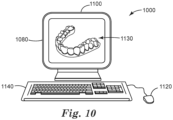
- a system in a seventh aspect of the disclosure, includes a display that displays a 3D model of an orthodontic article; and one or more processors that, in response to the 3D model selected by a user, cause a 3D printer to create a physical object of an article.
- the article includes a reaction product of a photopolymerizable composition including (a) 50 to 90 wt.%, inclusive, of at least one urethane component and (b) 5 to 50 wt.%, inclusive, of at least one reactive diluent, wherein the at least one reactive diluent has a molecular weight of 400 grams per mole or less, is free of any urethane functional groups, and comprises a methacrylate.
- the photopolymerizable composition further includes (c) 0.1 to 5 wt.%, inclusive, of a photoinitiator and (d) an optional inhibitor in an amount of 0.001 to 1 wt.%, inclusive, if present; based on the total weight of the photopolymerizable composition, wherein the photopolymerizable composition is free of monofunctional components.
- the article exhibits an elongation at break of 25% or greater.
- Clear tray aligners and tensile bars made according to at least certain embodiments of this disclosure were found to show low brittleness, good resistance to water, and good toughness.
- hardenable refers to a material that can be cured or solidified, e.g., by heating to remove solvent, heating to cause polymerization, chemical crosslinking, radiation-induced polymerization or crosslinking, or the like.
- curing means the hardening or partial hardening of a composition by any mechanism, e.g., by heat, light, radiation, e-beam, microwave, chemical reaction, or combinations thereof.
- cured refers to a material or composition that has been hardened or partially hardened (e.g., polymerized or crosslinked) by curing.
- integral refers to being made at the same time or being incapable of being separated without damaging one or more of the (integral) parts.
- (meth)acrylate is a shorthand reference to acrylate, methacrylate, or combinations thereof
- (meth)acrylic is a shorthand reference to acrylic, methacrylic, or combinations thereof.
- (meth)acrylate-functional compounds are compounds that include, among other things, a (meth)acrylate moiety.
- non-crosslinkable refers to a polymer that does not undergo crosslinking when exposed to actinic radiation or elevated heat.
- non-crosslinkable polymers are non-functionalized polymers such that they lack functional groups that would participate in crosslinking.
- oligomer refers to a molecule that has one or more properties that change upon the addition of a single further repeat unit.
- polymer refers to a molecule having one or more properties that do not change upon the addition of a single further repeat unit.
- polymerizable composition means a hardenable composition that can undergo polymerization upon initiation (e.g., free-radical polymerization initiation).
- initiation e.g., free-radical polymerization initiation
- the polymerizable composition has a viscosity profile consistent with the requirements and parameters of one or more 3D printing systems.
- hardening comprises irradiating with actinic radiation having sufficient energy to initiate a polymerization or cross-linking reaction.
- actinic radiation having sufficient energy to initiate a polymerization or cross-linking reaction.
- ultraviolet (UV) radiation e-beam radiation, or both, can be used.
- a "resin” contains all polymerizable components (monomers, oligomers and/or polymers) being present in a hardenable composition.
- the resin may contain only one polymerizable component compound or a mixture of different polymerizable compounds.
- thermoplastic refers to a polymer that flows when heated sufficiently above its glass transition point and become solid when cooled.
- thermoset refers to a polymer that permanently sets upon curing and does not flow upon subsequent heating.
- Thermoset polymers are typically crosslinked polymers.
- occlusal means in a direction toward the outer tips of the patient's teeth
- facial means in a direction toward the patient's lips or cheeks
- lingual means in a direction toward the patient's tongue.
- the term "generally”, unless otherwise specifically defined, means that the property or attribute would be readily recognizable by a person of ordinary skill but without requiring absolute precision or a perfect match (e.g., within +/- 20 % for quantifiable properties).
- the term “substantially”, unless otherwise specifically defined, means to a high degree of approximation (e.g., within +/- 10% for quantifiable properties) but again without requiring absolute precision or a perfect match. Terms such as same, equal, uniform, constant, strictly, and the like, are understood to be within the usual tolerances or measuring error applicable to the particular circumstance rather than requiring absolute precision or a perfect match.
- the present disclosure provides a photopolymerizable composition.
- the photopolymerizable composition comprises:
- the photopolymerizable compositions of the present disclosure include at least one urethane component.
- a "urethane component” refers to a compound including one or more carbamate functionalities in the backbone of the compound.
- the carbamate functionality is of Formula I: -N(H)-C(O)O- I.
- Urethanes are prepared by the reaction of an isocyanate with an alcohol to form carbamate linkages.
- polyurethane has been used more generically to refer to the reaction products of polyisocyanates with any polyactive hydrogen compound including polyfunctional alcohols, amines, and mercaptans.
- the at least one urethane component provides both toughness (e.g., at least a minimum tensile strength and/or modulus) and flexibility (e.g., at least a minimum elongation at break) to the final article.
- the urethane component in addition to the urethane functionality, further comprises one or more functional groups selected from hydroxyl groups, carboxyl groups, amino groups, and siloxane groups. These functional groups can be reactive with other components of the photopolymerizable composition during polymerization.
- the at least one urethane component often comprises a urethane (meth)acrylate, a urethane acrylamide, or combinations thereof, and wherein the at least one urethane component comprises a linking group selected from alkyl, polyalkylene, polyalkylene oxide, aryl, polycarbonate, polyester, polyamide, and combinations thereof.
- linking group refers to a functional group that connects two or more urethane groups.
- the linking group may be divalent, trivalent, or tetravalent.
- the at least one urethane component comprises a urethane (meth)acrylate comprising a polyalkylene oxide linking group, a polyamide linking group, or combinations thereof.
- the polymerizable component can include polyfunctional urethane acrylates or urethane methacrylates.
- urethane (meth)acrylates are known to the person skilled in the art and can be prepared in a known manner by, for example, reacting a hydroxyl-terminated polyurethane with acrylic acid, methacrylic acid, or isocyanatoethyl methacrylate, or by reacting an isocyanate-terminated prepolymer with hydroxyalkyl (meth)acrylates to give the urethane (meth)acrylate.
- Suitable processes are disclosed, inter alia, in US Patent Nos. 8,329,776 (Hecht et al. ) and 9,295,617 (Cub et al.
- Suitable urethane methacrylates can include PEGDMA (polyethyleneglycol dimethacrylate having a molecular weight of approximately 400), aliphatic urethane methacrylates, aliphatic polyester urethane methacrylates, and aliphatic polyester triurethane acrylates.
- PEGDMA polyethyleneglycol dimethacrylate having a molecular weight of approximately 400
- aliphatic urethane methacrylates aliphatic polyester urethane methacrylates
- aliphatic polyester triurethane acrylates aliphatic polyester triurethane acrylates.
- the urethane component comprises a number average molecular weight (Mn) of 200 grams per mole to 5,000 grams per mole.
- Mn number average molecular weight
- the number average molecular weight may be measured by matrix assisted laser deposition ionization mass spectrometry (MALDI).
- MALDI matrix assisted laser deposition ionization mass spectrometry
- the high Mn urethane component encompasses compounds including one or more urethane functionalities in the backbone of the compound and that have a number average molecular weight of 1,000 grams per mole (g/mol) or greater, with the proviso that all branches off the backbone of the compound, if present, have a Mn of no more than 200 g/mol.
- the high Mn urethane component typically has a Mn of 1,000 g/mol or greater, 1,100 g/mol or greater, 1,200 g/mol or greater, 1,300 g/mol or greater, 1,400 g/mol or greater, 1,500 g/mol or greater, 1,600 g/mol or greater, 1,700 g/mol or greater, 1,800 g/mol or greater, 2,000 g/mol or greater, 2,250 g/mol or greater, 2,500 g/mol or greater, 2,750 g/mol or greater, 3,000 g/mol or greater, 3,250 g/mol or greater, 3,500 g/mol or greater, 3,7500 g/mol or greater, or even 4,000 g/mol or greater; and 5,000 g/mol or less, 4,800 g/mol or less, 4,600 g/mol or less, 4,400 g/mol or less, 4,100 g/mol or less, 3,900 g/mol or less, 3,700 g/mol or less, 3,400 g/mol/mol, 1,
- the low Mn urethane component encompasses compounds including one or more urethane functionalities in the backbone of the compound and that have either 1) a number average molecular weight of 100 g/mol or greater and up to but not including 1,000 g/mol, or 2) a number average molecular weight of 100 g/mol or greater and 2,000 g/mol or less, with the proviso that a number average molecular weight of any one or more linear portions between two reactive groups and/or branches is up to but not including 1,000 g/mol.
- a branched urethane component can have a total Mn of greater than 1,000 g/mol but still be a low Mn urethane component due to having a linear segment between two branching points with a Mn of less than 1,000 g/mol.
- the 1) category of low Mn urethane components typically have a Mn of 100 g/mol or greater, 150 g/mol or greater, 200 g/mol or greater, 250 g/mol or greater, 300 g/mol or greater, 350 g/mol or greater, 400 g/mol or greater, 450 g/mol or greater, 500 g/mol or greater, 550 g/mol or greater, 600 g/mol or greater, 650 g/mol or greater, 700 g/mol or greater, 750 g/mol or greater, or 800 g/mol or greater; and up to but not including 1,000 g/mol, 975 g/mol or less, 925 g/mol or less, 875 g/mol or less, 825 g/mol or less, 775 g/mol or less, 725 g/mol or less, 675 g/mol or less, 625 g/mol or less, 575 g/mol or less, 525 g/mol or less, 475 g
- the 2) category of low Mn urethane components typically have a Mn of 200 g/mol or greater, 250 g/mol or greater, 300 g/mol or greater, 350 g/mol or greater, 400 g/mol or greater, 450 g/mol or greater, 500 g/mol or greater, 550 g/mol or greater, 600 g/mol or greater, 650 g/mol or greater, 700 g/mol or greater, 750 g/mol or greater, or 800 g/mol or greater; and 1,500 g/mol or less, 1,400 g/mol or less, 1,300 g/mol or less, 1,200 g/mol or less, 1,100 g/mol or less, 1,000 g/mol or less, 975 g/mol or less, 925 g/mol or less, 875 g/mol or less, 825 g/mol or less, 775 g/mol or less, 725 g/mol or less, 675 g/mol or less, 625 g/mol or less,
- Each of the foregoing second category of low Mn urethane components includes the proviso that a number average molecular weight of any one or more linear portions between two reactive groups and/or branches is up to but not including 1,000 g/mol, 950 g/mol or less, 900 g/mol or less, 850 g/mol or less, 800 g/mol or less, or 750 g/mol or less; and a number average molecular weight of any one or more linear portions between two reactive groups and/or branches is 100 g/mol or greater, 200 g/mol or greater, 250 g/mol or greater, 300 g/mol or greater, 350 g/mol or greater, 400 g/mol or greater, 450 g/mol or greater, or 500 g/mol or greater.
- high Mn urethane components having a number average molecular weight of 1,000 g/mol or greater tend to provide a final article having at least a certain desirable minimum elongation at break (e.g., 25% or greater).
- Eighty percent by weight or greater of the at least one urethane component is provided by one or more high Mn (e.g., long chain) urethane components.
- the ratio of the high number average molecular weight urethane component to the low number average molecular weight urethane component ranges from 95:5 high Mn urethane component to low Mn urethane component to 80:20 high Mn urethane component to low Mn urethane component.
- photopolymerizable compositions include 80 wt.% or more of the total urethane component as a high Mn urethane component, 85 wt.% or more, 87 wt.% or more, 90 wt.% or more, 92 wt.% or more, 95 wt.% or more, or even 97 wt.% or more of the total urethane component as a high Mn urethane component; and 100% or less of the total urethane component as a high Mn urethane component, 98 wt.% or less, 96 wt.% or less, 94 wt.% or less, 91 wt.% or less, 89 wt.% or less, or 86 wt.
- photopolymerizable compositions can include 2 wt.% or more of the total urethane component as a low Mn urethane component, 4 wt.% or more, 5 wt.% or more, 8 wt.% or more, 10 wt.% or more, 12 wt.
- % or more 15 wt.% or more, or even 17 wt.% or more of the total urethane component as a low Mn urethane component; and 20 wt.% or less of the total urethane component as a low Mn urethane component, 18 wt.% or less, 16 wt.% or less, 14 wt.% or less, 11 wt.% or less, 9 wt.% or less, 7 wt.% or less, 6 wt. % or less, or 3 wt.% or less of the total urethane component as a low Mn urethane component.
- At least one urethane component comprises at least one (meth)acrylate component having a urethane moiety, which may help to improve physical properties of the cured composition like flexural strength and/or elongation at break.
- a urethane component can be characterized by the following features alone or in combination:
- a combination of the features a) and b) or b) and c) or a) and d) can sometimes be preferred.
- Urethane (meth)acrylates may be obtained by a number of processes known to the skilled person.
- the urethane(meth)acrylates are typically obtained by reacting an NCO-terminated compound with a suitable monofunctional (meth)acrylate monomer such as hydroxyethyl acrylate, hydroxyethyl methacrylate, hydroxypropylmethacrylate, preferably hydroxyethyl- and hydroxypropylmethacrylate.
- a polyisocyanate and a polyol may be reacted to form an isocyanate-terminated urethane prepolymer that is subsequently reacted with a (meth)acrylate such as 2-hydroxy ethyl(meth)acrylate.
- These types of reactions may be conducted at room temperature or higher temperature, optionally in the presence of catalysts such as tin catalysts, tertiary amines and the like.
- Polyisocyanates which can be employed to form isocyanate-functional urethane prepolymers can be any organic isocyanate having at least two free isocyanate groups. Included are aliphatic cycloaliphatic, aromatic and araliphatic isocyanates. Any of the known polyisocyanates such as alkyl and alkylene polyisocyanates, cycloalkyl and cycloalkylene polyisocyanates, and combinations such as alkylene and cycloalkylene polyisocyanates can be employed.
- diisocyanates having the formula X(NCO) 2 can be used, with X representing an aliphatic hydrocarbon radical with 2 to 12 C atoms, a cycloaliphatic hydrocarbon radical with 5 to 18 C atoms, an aromatic hydrocarbon radical with 6 to 16 C atoms and/or an aliphatic hydrocarbon radical with 7 to 15 C atoms.
- suitable polyisocyanates include 2,2,4-trimethylhexamethylene-1,6-diisocyanate, hexamethylene-1,6-diisocyanate (HDI), cyclohexyl-1,4-diisocyanate, 4,4'-methylene-bis(cyclohexyl isocyanate), 1,1'-methylenebis(4-isocyanato) cyclohexane, isophorone diisocyanate, 4,4'-methylene diphenyl diisocyanate, 1,4-tetramethylene diisocycanate, meta- and para-tetra ⁇ methylxylene diisocycanate, 1,4-phenylene diisocycanate, 2,6- and 2,4-toluene diisocycanate, 1,5-naphthylene diisocycanate, 2,4' and 4,4'-diphenylmethane diisocycanate and mixtures thereof.
- HDI
- polyisocyanates known from polyurethane chemistry or else modified polyisocyanates, for example containing carbodiimide groups, allophanate groups, isocyanurate groups and/or biuret groups.
- Particularly preferred isocyanates are isophorone diisocyanate, 2,4,4-trimethyl-hexamethylene diisocyanate and higher-functional polyisocyanates with isocyanurate structure.
- the isocyanate terminated urethane compound is capped with a (meth)acrylate to produce a urethane(meth)acrylate compound.
- a (meth)acrylate-type capping agent having a terminal hydroxyl group and also having an acrylic or methacrylic moiety can be employed, with the methacrylic moiety being preferred.
- suitable capping agents include 2-hydroxyethyl(meth)acrylate, 2-hydroxypropyl (meth)acrylate, glycerol di(meth)acrylate and/or trimethylolpropane di(meth)acrylate. Particularly preferred are 2-hydroxyethyl methacrylate (HEMA) and/or 2-hydroxyethyl acrylate (HEA).
- the equivalence ratio of isocyanate groups to compounds reactive vis-à-vis isocyanate groups is 1.1:1 to 8: 1, preferably 1.5:1 to 4: 1.
- the isocyanate polyaddition reaction can take place in the presence of catalysts known from polyurethane chemistry, for example organotin compounds such as dibutyltin dilaurate or amine catalysts such as diazabicyclo[2.2.2]octane.
- organotin compounds such as dibutyltin dilaurate or amine catalysts such as diazabicyclo[2.2.2]octane.
- the synthesis can take place both in the melt or in a suitable solvent which can be added before or during the prepolymer preparation.
- suitable solvents are for example acetone, 2-butanone, tetrahydrofurane, dioxane, dimethylformamide, N-methyl-2-pyrrolidone (NMP), ethyl acetate, alkyl ethers of ethylene and propylene glycol and aromatic hydrocarbons.
- NMP N-methyl-2-pyrrolidone
- ethyl acetate alkyl
- Examples of commercially available urethane components include those available under the trade designations of EXOTHANE 108 (e.g., Formula I), EXOTHANE 8, and EXOTHANE 10 (e.g., Formula II) from Esstech Inc, and DESMA from 3M Company.
- EXOTHANE 108 e.g., Formula I
- EXOTHANE 8 e.g., Formula II
- DESMA is described in, e.g., paragraph [0135] and Table 3 of EP2167013B1 (Hecht et al. ).
- the urethane component is included in the photopolymerizable composition in an amount of 50 to 90 wt.%, inclusive, based on the total weight of the photopolymerizable composition, such as 60 to 80 wt.%, inclusive.
- the urethane component is included in the photopolymerizable composition in an amount of 50 wt.% or more, 52 wt.% or more, 55 wt.% or more, 57 wt.% or more, 60 wt.% or more, 61 wt.% or more, 62 wt.% or more, 63 wt.% or more, 64 wt.% or more, 65 wt.% or more, 70 wt.% or more, or 72 wt% or more; and 90 wt.% or less, 87 wt.% or less, 85 wt.% or less, 80 wt.% or less, 77 wt.% or less, or 75 wt.% or less,
- the photopolymerizable compositions of the present disclosure include at least one reactive diluent.
- a "reactive diluent,” for reference purposes herein, is a component that contains at least one free radically reactive group (e.g., an ethylenically-unsaturated group) that can co-react with the at least one urethane component (e.g., is capable of undergoing addition polymerization).
- the reactive diluent has a smaller molecular weight than at least one (e.g., high Mn) urethane component.
- the reactive diluent has a molecular weight of 400 grams per mole or less, and does not contain any urethane functional groups (e.g., is free of any urethane functional groups).
- the at least one reactive diluent comprises a methacrylate.
- the at least one reactive diluent comprises a (meth)acrylate, a polyalkylene oxide di(meth)acrylate, an alkane diol di(meth)acrylate, or combinations thereof, such as a (meth)acrylate.
- Suitable free-radically polymerizable reactant diluents include di-, tri-, or other polyacrylates and methacrylates such as glycerol diacrylate, ethoxylated bisphenol A dimethacrylate (D-zethacrylate), tetraethylene glycol dimethacrylate (TEGDMA), glycerol triacrylate, ethyleneglycol diacrylate, diethyleneglycol diacrylate, triethyleneglycol dimethacrylate, 1,3-propanediol diacrylate, 1,3-propanediol dimethacrylate, trimethylolpropane triacrylate, 1,2,4-butanetriol trimethacrylate, 1,4-cyclohexanediol diacrylate, pentaerythritol triacrylate, pentaerythritol tetraacrylate, pentaerythritol tetramethacrylate, sorbitol hexacrylate, bis[
- the reactive diluent can comprise one or more poly(meth)acrylates, for example, di-, tri-, tetra- or pentafunctional monomeric or oligomeric aliphatic, cycloaliphatic or aromatic acrylates or methacrylates.
- suitable aliphatic poly(meth)acrylates having more than two (meth)acrylate groups in their molecules are the triacrylates and trimethacrylates of hexane-2,4,6-triol; glycerol or 1,1,1-trimethylolpropane; ethoxylated or propoxylated glycerol or 1,1,1-trimethylolpropane; and the hydroxyl-containing tri(meth)acrylates which are obtained by reacting triepoxide compounds, for example the triglycidyl ethers of said triols, with (meth)acrylic acid.
- triepoxide compounds for example the triglycidyl ethers of said triols
- pentaerythritol tetraacrylate bistrimethylolpropane tetraacrylate, pentaerythritol monohydroxytriacrylate or -methacrylate, or dipentaerythritol monohydroxypentaacrylate or - methacrylate.
- Another suitable class of free radical polymerizable compounds includes aromatic di(meth)acrylate compounds and trifunctional or higher functionality (meth)acrylate compound.
- Trifunctional or higher functionality meth(acrylates) can be tri-, tetra- or pentafunctional monomeric or oligomeric aliphatic, cycloaliphatic or aromatic acrylates or methacrylates.
- Suitable aliphatic tri-, tetra- and pentafunctional (meth)acrylates are the triacrylates and trimethacrylates of hexane-2,4,6-triol; glycerol or 1,1,1-trimethylolpropane; ethoxylated or propoxylated glycerol or 1,1,1-trimethylolpropane; and the hydroxyl-containing tri(meth)acrylates which are obtained by reacting triepoxide compounds, for example the triglycidyl ethers of said triols, with (meth)acrylic acid.
- pentaerythritol tetraacrylate bistrimethylolpropane tetraacrylate, pentaerythritol monohydroxytriacrylate or -methacrylate, or dipentaerythritol monohydroxypentaacrylate or - methacrylate.
- tri(meth)acrylates comprise 1,1-trimethylolpropane triacrylate or methacrylate, ethoxylated or propoxylated 1,1,1-trimethylolpropanetriacrylate or methacrylate, ethoxylated or propoxylated glycerol triacrylate, pentaerythritol monohydroxy triacrylate or methacrylate, or tris(2-hydroxy ethyl) isocyanurate triacrylate.
- suitable aromatic tri(meth)acrylates are the reaction products of triglycidyl ethers of trihydroxy benzene and phenol or cresol novolaks containing three hydroxyl groups, with (meth)acrylic acid.
- a reactive diluent comprises diacrylate and/or dimethacrylate esters of aliphatic, cycloaliphatic or aromatic diols, including 1,3- or 1,4-butanediol, neopentyl glycol, 1,6-hexanediol, diethylene glycol, triethylene glycol, tetraethylene glycol, polyethylene glycol, tripropylene glycol, ethoxylated or propoxylated neopentyl glycol, 1,4-dihydroxymethylcyclohexane, 2,2-bis(4-hydroxycyclohexyl)propane or bis(4-hydroxycyclohexyl)methane, hydroquinone, 4,4'-dihydroxybiphenyl, bisphenol A, bisphenol F, bisphenol S, ethoxylated or propoxylated bisphenol A, ethoxylated or propoxylated bisphenol F or ethoxylated or propoxylated bisphenol
- a reactive diluent described herein comprises one or more higher functional acrylates or methacrylates such as dipentaerythritol monohydroxy pentaacrylate or bis(trimethylolpropane)tetraacrylate.
- the photopolymerizable composition consists essentially of multifunctional components or is free of monofunctional components. This means that the photopolymerizable composition contains 2 wt.% or less of monofunctional components.
- An advantage of such photopolymerizable compositions is that they tend to contain a minimal to zero amount of unreacted reactive diluent that is capable of leaching out of an article following cure. For applications in which the article is an orthodontic article, this minimizes release of unreacted reactive diluent into a patient's mouth.
- the at least one reactive diluent has a molecular weight of 400 grams per mole or less, 375 g/mol or less, 350 g/mol or less, 325 g/mol or less, 300 g/mol or less, 275 g/mol or less, 225 g/mol or less, or 200 g/mol or less. Including one or more reactive diluents with such molecular weights can assist in providing a photopolymerizable composition that has a sufficiently low viscosity for use with vat polymerization methods.
- the at least one reactive diluent comprises a molecular weight of 200 g/mol to 400 g/mol, inclusive.
- the reactive diluent is included in the photopolymerizable composition in an amount of 5 to 50 wt.%, inclusive, based on the total weight of the photopolymerizable composition, such as 25 to 50 wt.%, inclusive.
- the reactive diluent is included in the photopolymerizable composition in an amount of 5 wt.% or more, 10 wt.% or more, 15 wt.% or more, 20 wt.% or more, 25 wt.% or more, or 30 wt.% or more; and 50 wt.% or less, 45 wt.% or less, 40 wt.% or less, 35 wt.% or less, 30 wt.% or less, 25 wt.% or less, or 20 wt.% or less, based on the total weight of the photopolymerizable composition.
- Photopolymerizable compositions described herein further comprise one or more additives, such as one or more additives selected from the group consisting of photoinitiators, inhibitors, stabilizing agents, sensitizers, absorption modifiers, fillers and combinations thereof.
- the photopolymerizable composition further comprises one or more photoinitiators.
- Suitable exemplary photoinitiators are those available under the trade designations IRGACURE and DAROCUR from BASF (Ludwigshafen, Germany) and include 1-hydroxycyclohexyl phenyl ketone (IRGACURE 184), 2,2-dimethoxy-1,2-diphenylethan-1-one (IRGACURE 651), bis(2,4,6 trimethylbenzoyl)phenylphosphineoxide (IRGACURE 819), 1-[4-(2-hydroxyethoxy)phenyl]-2-hydroxy-2-methyl-1-propane-1-one (IRGACURE 2959), 2-benzyl-2-dimethylamino-1-(4-morpholinophenyl)butanone (IRGACURE 369), 2-methyl-1-[4-(methylthio)phenyl]-2-morpholinopropan-1-one (IRGACURE 907), Oligo[2-hydroxy-2-methyl-1-[4- (1-methylvinyl)phenyl]propanone] ES
- photoinitiators include for example and without limitation, benzyl dimethyl ketal, 2-methyl-2-hydroxypropiophenone, benzoin methyl ether, benzoin isopropyl ether, anisoin methyl ether, aromatic sulfonyl chlorides, photoactive oximes, and combinations thereof.
- a photoinitiator can be present in a photopolymerizable composition described herein in any amount according to the particular constraints of the additive manufacturing process.
- a photoinitiator is present in a photopolymerizable composition in an amount of up to about 5% by weight, based on the total weight of the photopolymerizable composition.
- a photoinitiator is present in an amount of about 0.1-5% by weight, based on the total weight of the photopolymerizable composition.
- a photopolymerizable material composition described herein can further comprise one or more sensitizers to increase the effectiveness of one or more photoinitiators that may also be present.
- a sensitizer comprises isopropylthioxanthone (ITX) or 2-chlorothioxanthone (CTX). Other sensitizers may also be used. If used in the photopolymerizable composition, a sensitizer can be present in an amount ranging of about 0.01% by weight or about 1% by weight, based on the total weight of the photopolymerizable composition.
- a photopolymerizable composition described herein optionally also comprises one or more polymerization inhibitors or stabilizing agents.
- a polymerization inhibitor is often included in a photopolymerizable composition to provide additional thermal stability to the composition.
- a stabilizing agent in some instances, comprises one or more anti-oxidants. Any anti-oxidant not inconsistent with the objectives of the present disclosure may be used.
- suitable anti-oxidants include various aryl compounds, including butylated hydroxytoluene (BHT), which can also be used as a polymerization inhibitor in embodiments described herein.
- BHT butylated hydroxytoluene
- a polymerization inhibitor comprises methoxyhydroquinone (MEHQ).
- a polymerization inhibitor if used, is present in an amount of about 0.001-2% by weight, 0.001 to 1% by weight, or 0.01-1% by weight, based on the total weight of the photopolymerizable composition.
- a stabilizing agent is present in a photopolymerizable composition described herein in an amount of about 0.1-5% by weight, about 0.5-4% by weight, or about 1-3% by weight, based on the total weight of the photopolymerizable composition.
- a photopolymerizable composition as described herein can also comprise one or more absorption modifiers (e.g., dyes, optical brighteners, pigments, particulate fillers, etc.) to control the penetration depth of actinic radiation.
- absorption modifiers e.g., dyes, optical brighteners, pigments, particulate fillers, etc.
- One particularly suitable absorption modifier is Tinopal OB, a benzoxazole, 2,2'-(2,5-thiophenediyl)bis[5-(1,1-dimethylethyl)], available from BASF Corporation, Florham Park, NJ.
- the absorption modifier, if used, can be present in an amount of about 0.001-5% by weight, about 0.01-1% by weight, about 0.1-3% by weight, or about 0.1-1% by weight, based on the total weight of the photopolymerizable composition.
- Photopolymerizable compositions may include fillers, including nano-scale fillers.
- suitable fillers are naturally occurring or synthetic materials including, but not limited to: silica (SiO 2 (e.g., quartz)); alumina (Al 2 O 3 ), zirconia, nitrides (e.g., silicon nitride); glasses and fillers derived from, for example, Zr, Sr, Ce, Sb, Sn, Ba, Zn, and Al; feldspar; borosilicate glass; kaolin (china clay); talc; zirconia; titania; and submicron silica particles (e.g., pyrogenic silicas such as those available under the trade designations AEROSIL, including "OX 50," "130,” “150” and “200” silicas from Degussa Corp., Akron, OH and CAB-O-SIL M5 and TS-720 silica from Cabot Corp., Tuscola, IL).
- compositions may further contain fibrous reinforcement and colorants such as dyes, pigments, and pigment dyes.
- fibrous reinforcement include PGA microfibrils, collagen microfibrils, and others as described in U.S. Pat. No. 6,183,593 (Narang et al. ).
- suitable colorants as described in U.S. Pat. No. 5,981,621 include 1-hydroxy-4-[4-methylphenylamino]-9,10-anthracenedione (FD&C violet No. 2); disodium salt of 6-hydroxy-5-[(4-sulfophenyl)oxo]-2-naphthalenesulfonic acid (FD&C Yellow No. 6); 9-(o-carboxyphenyl)-6-hydroxy-2,4,5,7-tetraiodo-3H-xanthen-3-one, disodium salt, monohydrate (FD&C Red No. 3); and the like.
- Discontinuous fibers are also suitable fillers, such as fibers comprising carbon, ceramic, glass, or combinations thereof.
- Suitable discontinuous fibers can have a variety of compositions, such as ceramic fibers.
- the ceramic fibers can be produced in continuous lengths, which are chopped or sheared to provide the discontinuous ceramic fibers.
- the ceramic fibers can be produced from a variety of commercially available ceramic filaments. Examples of filaments useful in forming the ceramic fibers include the ceramic oxide fibers sold under the trademark NEXTEL (3M Company, St. Paul, MN).
- NEXTEL is a continuous filament ceramic oxide fiber having low elongation and shrinkage at operating temperatures, and offers good chemical resistance, low thermal conductivity, thermal shock resistance, and low porosity.
- NEXTEL fibers include NEXTEL 312, NEXTEL 440, NEXTEL 550, NEXTEL 610 and NEXTEL 720.
- NEXTEL 312 and NEXTEL 440 are refractory aluminoborosilicate that includes Al 2 O 3 , SiO 2 and B 2 O 3 .
- NEXTEL 550 and NEXTEL 720 are aluminosilica and NEXTEL 610 is alumina.
- the NEXTEL filaments are coated with organic sizings or finishes which serves as aids in textile processing.
- Sizing can include the use of starch, oil, wax or other organic ingredients applied to the filament strand to protect and aid handling.
- the sizing can be removed from the ceramic filaments by heat cleaning the filaments or ceramic fibers as a temperature of 700 °C for one to four hours.
- the ceramic fibers can be cut, milled, or chopped so as to provide relatively uniform lengths, which can be accomplished by cutting continuous filaments of the ceramic material in a mechanical shearing operation or laser cutting operation, among other cutting operations. Given the highly controlled nature of certain cutting operations, the size distribution of the ceramic fibers is very narrow and allow to control the composite property.
- the length of the ceramic fiber can be determined, for instance, using an optical microscope (Olympus MX61, Tokyo, Japan) fit with a CCD Camera (Olympus DP72, Tokyo, Japan) and analytic software (Olympus Stream Essentials, Tokyo, Japan). Samples may be prepared by spreading representative samplings of the ceramic fiber on a glass slide and measuring the lengths of at least 200 ceramic fibers at 10X magnification.
- Suitable fibers include for instance ceramic fibers available under the trade name NEXTEL (available from 3M Company, St. Paul, MN), such as NEXTEL 312, 440, 610 and 720.
- NEXTEL 312, 440, 610 and 720 One presently preferred ceramic fiber comprises polycrystalline ⁇ -Al 2 O 3 .
- Suitable alumina fibers are described, for example, in U.S. Pat. No. 4,954,462 (Wood et al. ) and U.S. Pat. No. 5,185,299 (Wood et al. ).
- Exemplary alpha alumina fibers are marketed under the trade designation NEXTEL 610 (3M Company, St. Paul, MN).
- the alumina fibers are polycrystalline alpha alumina fibers and comprise, on a theoretical oxide basis, greater than 99 percent by weight Al 2 O 3 and 0.2-0.5 percent by weight SiO 2 , based on the total weight of the alumina fibers.
- some desirable polycrystalline, alpha alumina fibers comprise alpha alumina having an average grain size of less than one micrometer (or even, in some embodiments, less than 0.5 micrometer).
- polycrystalline, alpha alumina fibers have an average tensile strength of at least 1.6 GPa (in some embodiments, at least 2.1 GPa, or even, at least 2.8 GPa).
- Suitable aluminosilicate fibers are described, for example, in U.S. Pat. No. 4,047,965 (Karst et al ).
- Exemplary aluminosilicate fibers are marketed under the trade designations NEXTEL 440, and NEXTEL 720, by 3M Company (St. Paul, MN).
- Aluminoborosilicate fibers are described, for example, in U.S. Pat. No. 3,795,524 (Sowman ).
- Exemplary aluminoborosilicate fibers are marketed under the trade designation NEXTEL 312 by 3M Company.
- Boron nitride fibers can be made, for example, as described in U.S. Pat. No. 3,429,722 (Economy ) and U.S. Pat. No. 5,780,154 (Okano et al. ).
- Ceramic fibers can also be formed from other suitable ceramic oxide filaments.
- suitable ceramic oxide filaments include those available from Central Glass Fiber Co., Ltd. (e.g., EFH75-01, EFH150-31).
- aluminoborosilicate glass fibers which contain less than about 2% alkali or are substantially free of alkali (i.e., "E-glass" fibers).
- E-glass fibers are available from numerous commercial suppliers.
- useful pigments include, without limitation: white pigments, such as titanium oxide, zinc phosphate, zinc sulfide, zinc oxide and lithopone; red and red-orange pigments, such as iron oxide (maroon, red, light red), iron/chrome oxide, cadmium sulfoselenide and cadmium mercury (maroon, red, orange); ultramarine (blue, pink and violet), chrome-tin (pink) manganese (violet), cobalt (violet); orange, yellow and buff pigments such as barium titanate, cadmium sulfide (yellow), chrome (orange, yellow), molybdate (orange), zinc chromate (yellow), nickel titanate (yellow), iron oxide (yellow), nickel tungsten titanium, zinc ferrite and chrome titanate; brown pigments such as iron oxide (buff, brown), manganese/antimony/titanium oxide, manganese titanate, natural siennas (umbers), titanium
- florescent dyes and pigments can also be beneficial in enabling the printed composition to be viewed under black-light.
- a particularly useful hydrocarbon soluble fluorescing dye is 2,5-bis(5-tert-butyl-2-benzoxazolyl) 1 thiophene.
- Fluorescing dyes, such as rhodamine, may also be bound to cationic polymers and incorporated as part of the resin.
- compositions of the disclosure may contain other additives such as indicators, accelerators, surfactants, wetting agents, antioxidants, tartaric acid, chelating agents, buffering agents, and other similar ingredients that will be apparent to those skilled in the art. Additionally, medicaments or other therapeutic substances can be optionally added to the photopolymerizable compositions.
- Examples include, but are not limited to, fluoride sources, whitening agents, anticaries agents (e.g., xylitol), remineralizing agents (e.g., calcium phosphate compounds and other calcium sources and phosphate sources), enzymes, breath fresheners, anesthetics, clotting agents, acid neutralizers, chemotherapeutic agents, immune response modifiers, thixotropes, polyols, anti-inflammatory agents, antimicrobial agents, antifungal agents, agents for treating xerostomia, desensitizers, and the like, of the type often used in dental compositions.
- fluoride sources whitening agents, anticaries agents (e.g., xylitol), remineralizing agents (e.g., calcium phosphate compounds and other calcium sources and phosphate sources), enzymes, breath fresheners, anesthetics, clotting agents, acid neutralizers, chemotherapeutic agents, immune response modifiers, thixotropes, polyo
- Photopolymerizable compositions materials herein can also exhibit a variety of desirable properties, non-cured, cured, and as post-cured articles.
- a photopolymerizable composition, when non-cured, has a viscosity profile consistent with the requirements and parameters of one or more additive manufacturing devices (e.g., 3D printing systems).
- a photopolymerizable composition described herein when non-cured exhibits a dynamic viscosity of about 0.1-1,000 Pa ⁇ s, about 0.1-100 Pa ⁇ s, or about 1-10 Pa ⁇ s using a TA Instruments AR-G2 magnetic bearing rheometer using a 40 mm cone and plate measuring system at 40 degrees Celsius and at a shear rate of 0.1 1/s, when measured according to ASTM D4287, as set forth in the Example Test Method below.
- a photopolymerizable composition described herein when non-cured exhibits a dynamic viscosity of less than about 10 Pa ⁇ s, when measured according to modified ASTM D4287.
- the present disclosure provides an orthodontic article.
- the article comprises a reaction product of a photopolymerizable composition, the photopolymerizable composition comprising:
- the shape of the article is not limited, and may comprise a film or a shaped integral article.
- a film may readily be prepared by casting the photopolymerizable composition according to the first aspect, then subjecting the cast composition to actinic radiation to polymerize the photopolymerizable composition.
- the article comprises a shaped integral article, in which more than one variation in dimension is provided by a single integral article.
- the article can comprise one or more channels, one or more undercuts, one or more perforations, or combinations thereof. Such features are typically not possible to provide in an integral article using conventional molding methods.
- the article comprises an orthodontic article. Orthodontic articles are described in further detail below.
- the present disclosure provides a method of making an orthodontic article.
- the method comprises:
- the photopolymerizable composition is cured using actinic radiation comprising UV radiation, e-beam radiation, visible radiation, or a combination thereof.
- the method optionally further comprises postcuring the article using actinic radiation or heat.
- the method further comprises (iv) repeating steps (i) and (ii) to form multiple layers and create the article comprising a three dimensional structure prior to step (iii).
- the method comprises vat polymerization of the photopolymerizable composition.
- the radiation may be directed through a wall of a container (e.g., a vat) holding the photopolymerizable composition, such as a side wall or a bottom wall.
- a photopolymerizable composition described herein in a cured state can exhibit one or more desired properties.
- a photopolymerizable composition in a "cured" state can comprise a photopolymerizable composition that includes a polymerizable component that has been at least partially polymerized and/or crosslinked.
- a cured article is at least about 10% polymerized or crosslinked or at least about 30% polymerized or crosslinked.
- a cured photopolymerizable composition is at least about 50%, at least about 70%, at least about 80%, or at least about 90% polymerized or crosslinked.
- a cured photopolymerizable composition can also be between about 10% and about 99% polymerized or crosslinked.
- the conformability and durability of a cured article made from the photopolymerizable compositions of the present disclosure can be determined in part by standard tensile, modulus, and/or elongation testing.
- the photopolymerizable compositions can typically be characterized by at least one of the following parameters after hardening.
- the elongation at break is typically 25% or greater, 27% or greater, 30% or greater, 32% or greater, 35% or greater, 40% or greater, 45% or greater, 50% or greater, 55% or greater, or 60% or greater; and 200% or less, 100% or less, 90% or less, 80% or less, or 70% or less. Stated another way, the elongation at break of the cured article can range from 25% to 200%.
- the elongation at break is at least 30% and no greater than 100%.
- the ultimate tensile strength is typically 15 MegaPascals (MPa) or greater, 20 MPa or greater, 25 MPa or greater, or 30 MPa or greater, and is typically 80 MPa or less, each as determined according to ASTM D638-10. While the urethane component has the greatest effect on the elongation at break of an article, other components of the photopolymerizable composition also impact the elongation at break, e.g., the length of a linear chain or branch of a reactive diluent tends to be positively correlated to the elongation at break of the final article.
- the tensile modulus is typically 200 MPa or greater, as determined according to ASTM D638-10.
- Such elongation properties can be measured, for example, by the methods outlined in ASTM D638-10, using test specimen Type V.
- the mechanical properties above are particularly well suited for articles that require resiliency and flexibility, along with adequate wear strength and low hygroscopicity.
- Photopolymerizable compositions described herein can be mixed by known techniques.
- a method for the preparation of a photopolymerizable composition described herein comprises the steps of mixing all or substantially all of the components of the photopolymerizable composition, heating the mixture, and optionally filtering the heated mixture. Softening the mixture, in some embodiments, is carried out at a temperature of about 50°C or in a range from about 50°C to about 85°C.
- a photopolymerizable composition described herein is produced by placing all or substantially all components of the composition in a reaction vessel and heating the resulting mixture to a temperature ranging from about 50°C to about 85°C with stirring. The heating and stirring are continued until the mixture attains a substantially homogenized state.
- the photopolymerizable compositions of the present disclosure may be used in myriad additive manufacturing processes to create a variety of articles, including casting a film as noted above.
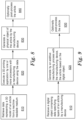
- a generalized method 100 for creating three-dimensional articles is illustrated in FIG. 1 . Each step in the method will be discussed in greater detail below.
- the desired photopolymerizable composition e.g., comprising at least one urethane component, at least one reactive diluent, and a photoinitiator
- the additive manufacturing device selectively cures the photopolymerizable composition according to a set of computerized design instructions in Step 120.
- Step 130 Step 110 and/or Step 120 is repeated to form multiple layers to create the article comprising a three dimensional structure (e.g., an orthodontic aligner).
- a three dimensional structure e.g., an orthodontic aligner.
- uncured photopolymerizable composition is removed from the article in Step 140, and further optionally, the article is subjected to additional curing to polymerize remaining uncured photopolymerizable components in the article in Step 150.
- Methods of printing a three dimensional article or object described herein can include forming the article from a plurality of layers of a photopolymerizable composition described herein in a layer-by-layer manner. Further, the layers of a build material composition can be deposited according to an image of the three dimensional article in a computer readable format. In some or all embodiments, the photopolymerizable composition is deposited according to preselected computer aided design (CAD) parameters.
- CAD computer aided design
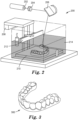
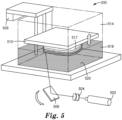
- methods of manufacturing a 3D article described herein can include so-called "stereolithography/vat polymerization" 3D printing methods.
- Other techniques for three-dimensional manufacturing are known, and may be suitably adapted to use in the applications described herein. More generally, three-dimensional fabrication techniques continue to become available. All such techniques may be adapted to use with photopolymerizable compositions described herein, provided they offer compatible fabrication viscosities and resolutions for the specified article properties. Fabrication may be performed using any of the fabrication technologies described herein, either alone or in various combinations, using data representing a three-dimensional object, which may be reformatted or otherwise adapted as necessary for a particular printing or other fabrication technology.
- a method of printing a 3D article comprises retaining a photopolymerizable composition described herein in a fluid state in a container and selectively applying energy to the photopolymerizable composition in the container to solidify at least a portion of a fluid layer of the photopolymerizable composition, thereby forming a hardened layer that defines a cross-section of the 3D article.
- a method described herein can further comprise raising or lowering the hardened layer of photopolymerizable composition to provide a new or second fluid layer of unhardened photopolymerizable composition at the surface of the fluid in the container, followed by again selectively applying energy to the photopolymerizable composition in the container to solidify at least a portion of the new or second fluid layer of the photopolymerizable composition to form a second solidified layer that defines a second cross-section of the 3D article.
- the first and second cross-sections of the 3D article can be bonded or adhered to one another in the z-direction (or build direction corresponding to the direction of raising or lowering recited above) by the application of the energy for solidifying the photopolymerizable composition.
- selectively applying energy to the photopolymerizable composition in the container can comprise applying actinic radiation, such as UV radiation, visible radiation, or e-beam radiation, having a sufficient energy to cure the photopolymerizable composition.
- a method described herein can also comprise planarizing a new layer of fluid photopolymerizable composition provided by raising or lowering an elevator platform. Such planarization can be carried out, in some cases, by utilizing a wiper or roller or a recoater bead. Planarization corrects the thickness of one or more layers prior to curing the material by evening the dispensed material to remove excess material and create a uniformly smooth exposed or flat up-facing surface on the support platform of the printer.
- the foregoing process can be repeated a selected number of times to provide the 3D article. For example, in some cases, this process can be repeated "n" number of times.
- one or more steps of a method described herein such as a step of selectively applying energy to a layer of photopolymerizable composition, can be carried out according to an image of the 3D article in a computer-readable format.
- Suitable stereolithography printers include the Viper Pro SLA, available from 3D Systems, Rock Hill, SC and the Asiga Pico Plus39, available from Asiga USA, Anaheim Hills, CA.
- FIG. 2 shows an exemplary stereolithography apparatus ("SLA") that may be used with the photopolymerizable compositions and methods described herein.
- the SLA 200 may include a laser 202, optics 204, a steering lens 206, an elevator 208, a platform 210, and a straight edge 212, within a vat 214 filled with the photopolymerizable composition.
- the laser 202 is steered across a surface of the photopolymerizable composition to cure a cross-section of the photopolymerizable composition, after which the elevator 208 slightly lowers the platform 210 and another cross section is cured.
- the straight edge 212 may sweep the surface of the cured composition between layers to smooth and normalize the surface prior to addition of a new layer.
- the vat 214 may be slowly filled with liquid resin while an article is drawn, layer by layer, onto the top surface of the photopolymerizable composition.
- vat polymerization with Digital Light Processing also employs a container of curable polymer (e.g., photopolymerizable composition).
- curable polymer e.g., photopolymerizable composition
- a two-dimensional cross section is projected onto the curable material to cure the desired section of an entire plane transverse to the projected beam at one time.
- All such curable polymer systems as may be adapted to use with the photopolymerizable compositions described herein are intended to fall within the scope of the term "vat polymerization system” as used herein.
- an apparatus adapted to be used in a continuous mode may be employed, such as an apparatus commercially available from Carbon 3D, Inc. (Redwood City, CA), for instance as described in U.S. Patent Nos. 9,205,601 and 9,360,757 (both to DeSimone et al. ).
- the apparatus 500 may include a laser 502, optics 504, a steering lens 506, an elevator 508, and a platform 510, within a vat 514 filled with the photopolymerizable composition 519.
- the laser 502 is steered through a wall 520 (e.g., the floor) of the vat 514 and into the photopolymerizable composition to cure a cross-section of the photopolymerizable composition 519 to form an article 517, after which the elevator 508 slightly raises the platform 510 and another cross section is cured.
- the photopolymerizable composition is typically cured using actinic radiation, such as UV radiation, e-beam radiation, visible radiation, or any combination thereof.
- actinic radiation such as UV radiation, e-beam radiation, visible radiation, or any combination thereof.
- the skilled practitioner can select a suitable radiation source and range of wavelengths for a particular application without undue experimentation.
- the 3D article After the 3D article has been formed, it is typically removed from the additive manufacturing apparatus and rinsed, (e.g., an ultrasonic, or bubbling, or spray rinse in a solvent, which would dissolve a portion of the uncured photopolymerizable composition but not the cured, solid state article (e.g., green body). Any other conventional method for cleaning the article and removing uncured material at the article surface may also be utilized.
- the three-dimensional article typically has sufficient green strength for handling in the remaining optional steps of method 100.
- the formed article obtained in Step 120 will shrink (i.e., reduce in volume) such that the dimensions of the article after (optional) Step 150 will be smaller than expected.
- a cured article may shrink less than 5% in volume, less than 4%, less than 3%, less than 2%, or even less than 1% in volume, which is contrast to other compositions that provide articles that shrink about 6-8% in volume upon optional postcuring.
- the amount of volume percent shrinkage will not typically result in a significant distortion in the shape of the final object. It is particularly contemplated, therefore, that dimensions in the digital representation of the eventual cured article may be scaled according to a global scale factor to compensate for this shrinkage.
- At least a portion of the digital article representation can be at least 101% of the desired size of the printed appliance, in some embodiments at least 102%, in some embodiments at least 104%, in some embodiments, at least 105%, and in some embodiments, at least 110%.
- a global scale factor may be calculated for any given photopolymerizable composition formulation by creating a calibration part according to Steps 110 and 120 above.
- the dimensions of the calibration article can be measured prior to postcuring.
- the three-dimensional article formed by initial additive manufacturing in Step 120 is not fully cured, by which is meant that not all of the photopolymerizable material in the composition has polymerized even after rinsing.
- Some uncured photopolymerizable material is typically removed from the surface of the printed article during a cleaning process (e.g., optional Step 140 ).
- the article surface, as well as the bulk article itself, typically still retains uncured photopolymerizable material, suggesting further cure. Removing residual uncured photopolymerizable composition is particularly useful when the article is going to subsequently be postcured, to minimize uncured residual photopolymerizable composition from undesirably curing directly onto the article.
- Further curing can be accomplished by further irradiating with actinic radiation, heating, or both.
- Exposure to actinic radiation can be accomplished with any convenient radiation source, generally UV radiation, visible radiation, and/or e-beam radiation, for a time ranging from about 10 to over 60 minutes. Heating is generally carried out at a temperature in the range of about 75-150°C, for a time ranging from about 10 to over 60 minutes in an inert atmosphere.
- post cure ovens which combine UV radiation and thermal energy, are particularly well suited for use in the postcure process of Step 150. In general, postcuring improves the mechanical properties and stability of the three-dimensional article relative to the same three-dimensional article that is not postcured.
- the photopolymerizable compositions can be used in the creation of indirect bonding trays, such as those described in International Publication No. WO2015/094842 (Paehl et al. ) and US Publication No. 2011/0091832 (Kim, et al. ) and other dental articles, including but not limited to crowns, bridges, veneers, inlays, onlays, fillings, and prostheses (e.g., partial or full dentures).
- Other orthodontic appliances and devices include, but not limited to, orthodontic brackets, buccal tubes, lingual retainers, orthodontic bands, class II and class III correctors, sleep apnea devices, bite openers, buttons, cleats, and other attachment devices.
- the photopolymerizable compositions can be used in other industries, such as aerospace, animation and entertainment, architecture and art, automotive, consumer goods and packaging, education, electronics, hearing aids, sporting goods, jewelry, medical, manufacturing, etc.
- the additive manufactured article 300 is a clear tray aligner and is removably positionable over some or all of a patient's teeth.
- the appliance 300 is one of a plurality of incremental adjustment appliances.
- the appliance 300 may comprise a shell having an inner cavity.
- the inner cavity is shaped to receive and resiliently reposition teeth from one tooth arrangement to a successive tooth arrangement.
- the inner cavity may include a plurality of receptacles, each of which is adapted to connect to and receive a respective tooth of the patient's dental arch.
- the receptacles are spaced apart from each other along the length of the cavity, although adjoining regions of adjacent receptacles can be in communication with each other.
- the shell fits over all teeth present in the upper jaw or lower jaw. Typically, only certain one(s) of the teeth will be repositioned while others of the teeth will provide a base or anchor region for holding the dental appliance in place as it applies the resilient repositioning force against the tooth or teeth to be treated.
- the appliance 300 may be configured to apply rotational and/or translational forces to the corresponding tooth of the patient when the appliance 300 is worn by the patient.
- the appliance 300 may be configured to provide only compressive or linear forces.
- the appliance 300 may be configured to apply translational forces to one or more of the teeth within receptacles.
- the shell of the appliance 300 fits over some or all anterior teeth present in an upper jaw or lower jaw.
- the teeth will be repositioned while others of the teeth will provide a base or anchor region for holding the appliance in place as it applies the resilient repositioning force against the tooth or teeth to be repositioned.
- An appliance 300 can accordingly be designed such that any receptacle is shaped to facilitate retention of the tooth in a particular position in order to maintain the current position of the tooth.
- a method 400 of creating an orthodontic appliance using the photopolymerizable compositions of the present disclosure can include general steps as outlined in FIG. 4 . Individual aspects of the process are discussed in further detail below.
- the process includes generating a treatment plan for repositioning a patient's teeth.
- a treatment plan can include obtaining data representing an initial arrangement of the patient's teeth (Step 410), which typically includes obtaining an impression or scan of the patient's teeth prior to the onset of treatment.
- the treatment plan will also include identifying a final or target arrangement of the patient's anterior and posterior teeth as desired (Step 420), as well as a plurality of planned successive or intermediary tooth arrangements for moving at least the anterior teeth along a treatment path from the initial arrangement toward the selected final or target arrangement (Step 430).
- One or more appliances can be virtually designed based on the treatment plan (Step 440), and image data representing the appliance designs can exported in STL format, or in any other suitable computer processable format, to an additive manufacturing device (e.g., a 3D printer system) (Step 450).
- An appliance can be manufactured using a photopolymerizable composition of the present disclosure retained in the additive manufacturing device (Step 460).
- a (e.g., non-transitory) machine-readable medium is employed in additive manufacturing of articles according to at least certain aspects of the present disclosure.
- Data is typically stored on the machine-readable medium.
- the data represents a three-dimensional model of an article, which can be accessed by at least one computer processor interfacing with additive manufacturing equipment (e.g., a 3D printer, a manufacturing device, etc.).
- the data is used to cause the additive manufacturing equipment to create an article comprising a reaction product of a photopolymerizable composition, the photopolymerizable composition comprising: (a) 50 to 90 wt.%, inclusive, of at least one urethane component; (b) 5 to 50 wt.%, inclusive, of at least one reactive diluent; (c) 0.1 to 5 wt.%, inclusive, of a photoinitiator; and (d) an optional inhibitor in an amount of 0.001 to 1 wt.%, inclusive, if present; based on the total weight of the photopolymerizable composition.
- the article is an orthodontic article.
- the article has an elongation at break of 25% or greater.
- Data representing an article may be generated using computer modeling such as computer aided design (CAD) data.
- Image data representing the (e.g., polymeric) article design can be exported in STL format, or in any other suitable computer processable format, to the additive manufacturing equipment.
- Scanning methods to scan a three-dimensional object may also be employed to create the data representing the article.
- One exemplary technique for acquiring the data is digital scanning. Any other suitable scanning technique may be used for scanning an article, including X-ray radiography, laser scanning, computed tomography (CT), magnetic resonance imaging (MRI), and ultrasound imaging. Other possible scanning methods are described, e.g., in U.S. Patent Application Publication No. 2007/0031791 (Cinader, Jr., et al. ).
- the initial digital data set which may include both raw data from scanning operations and data representing articles derived from the raw data, can be processed to segment an article design from any surrounding structures (e.g., a support for the article).
- scanning techniques may include, for example, scanning a patient's mouth to customize an orthodontic article for the patient.
- the computing device may have one or more processors, volatile memory (RAM), a device for reading machine-readable media, and input/output devices, such as a display, a keyboard, and a pointing device. Further, a computing device may also include other software, firmware, or combinations thereof, such as an operating system and other application software.
- a computing device may be, for example, a workstation, a laptop, a personal digital assistant (PDA), a server, a mainframe or any other general-purpose or application-specific computing device.
- PDA personal digital assistant
- a computing device may read executable software instructions from a computer-readable medium (such as a hard drive, a CD-ROM, or a computer memory), or may receive instructions from another source logically connected to computer, such as another networked computer.
- a computing device 1000 often includes an internal processor 1080, a display 1100 (e.g., a monitor), and one or more input devices such as a keyboard 1140 and a mouse 1120.
- an aligner 1130 is shown on the display 1100.
- the present disclosure provides a system 600.
- the system 600 comprises a display 620 that displays a 3D model 610 of an article (e.g., an aligner 1130 as shown on the display 1100 of FIG. 10 ); and one or more processors 630 that, in response to the 3D model 610 selected by a user, cause a 3D printer / additive manufacturing device 650 to create a physical object of the article 660.
- an input device 640 e.g., keyboard and/or mouse
- the display 620 and the at least one processor 630 is employed with the display 620 and the at least one processor 630, particularly for the user to select the 3D model 610.
- the article 660 comprises a reaction product of a photopolymerizable composition, the photopolymerizable composition comprising: (a) 50 to 90 wt.%, inclusive, of at least one urethane component; (b) 5 to 50 wt.%, inclusive, of at least one reactive diluent; (c) 0.1 to 5 wt.%, inclusive, of a photoinitiator; and (d) an optional inhibitor in an amount of 0.001 to 1 wt.%, inclusive, if present; based on the total weight of the photopolymerizable composition.
- a processor 720 (or more than one processor) is in communication with each of a machine-readable medium 710 (e.g., a non-transitory medium), a 3D printer / additive manufacturing device 740, and optionally a display 730 for viewing by a user.
- the 3D printer / additive manufacturing device 740 is configured to make one or more articles 750 based on instructions from the processor 720 providing data representing a 3D model of the article 750 (e.g., an aligner 1130 as shown on the display 1100 of FIG. 10 ) from the machine-readable medium 710.
- an additive manufacturing method comprises retrieving 810, from a (e.g., non-transitory) machine-readable medium, data representing a 3D model of an article according to at least one embodiment of the present disclosure.
- the method further includes executing 820, by one or more processors, an additive manufacturing application interfacing with a manufacturing device using the data; and generating 830, by the manufacturing device, a physical object of the article.
- the additive manufacturing equipment can selectively cure a photopolymerizable composition to form an article.
- the article comprises a reaction product of a photopolymerizable composition, the photopolymerizable composition comprising: (a) 50 to 90 wt.%, inclusive, of at least one urethane component; (b) 5 to 50 wt.%, inclusive, of at least one reactive diluent; (c) 0.1 to 5 wt.%, inclusive, of a photoinitiator; and (d) an optional inhibitor in an amount of 0.001 to 1 wt.%, inclusive, if present; based on the total weight of the photopolymerizable composition.
- One or more various optional post-processing steps 840 may be undertaken. Typically, remaining unpolymerized photopolymerizable component may be cured.
- the article comprises an orthodontic article.
- a method of making an article comprises receiving 910, by a manufacturing device having one or more processors, a digital object comprising data specifying a plurality of layers of an article; and generating 920, with the manufacturing device by an additive manufacturing process, the article based on the digital object. Again, the article may undergo one or more steps of post-processing 930.
- Resins were prepared according to the formulations listed in Table 2 below, by roller mixing the components overnight to ensure thorough mixing.
- Example 1 (E-1) formulation shown in Table 1 was mixed in a glass jar.
- the E-1 mixture was placed on a rolling mixer to make a homogenous mixture.
- the mixture was degassed and speed mixed in THINKY planetary mixer (Thinky Corporation, Tokyo, Japan), at 2000 rpm for 90 seconds under vacuum.
- the mixture was then poured in a silicone dogbone mold (Type V mold, ASTM D638-10).
- the filled mold was placed between two glass plates and cured in a broad spectrum UV chamber (Dymax Light Curing Systems Model 2000 Flood) for 5 minutes.
- the sample was demolded and cured for another 5 minutes in the chamber, according to ASTM D638-10.
- E-3 and E-7 resins were photopolymerized on the Asiga Pico 2 printer with a LED light source of 385 nm and ⁇ 23 mW/cm 2 of power.
- test bars were then post-cured under fusion lamps for 90 minutes on each side.
- the post-cured dogbones were tested on an Insight MTS with 5 kN load cell at the rate of 5 mm/minute. Five replicate samples were tested, and the average and standard deviation are reported. The tensile strength of the samples was determined according to ASTM D638-10 and shown in Table 5 below. Table 5.
- E-3 was photopolymerized on the Asiga Pico 2 HD printer with a LED light source of 385 nm and ⁇ 16 mW/cm 2 of power.
- An STL file of the aligner was loaded into the software and support structures were generated.
- the resin bath of the printer was heated to 35-40°C before photopolymerization to reduce the viscosity to be able to manufacture the article.
- the photopolymerized aligners were then cleaned in isopropanol to remove unreacted resin and then post-cured under fusion lamps for 90 minutes on each side.
- the photopolymerized aligners fit the models, showing precision of the additive manufacture part.
- the aligners also had acceptable strength and flexibility.
Landscapes
- Chemical & Material Sciences (AREA)
- Health & Medical Sciences (AREA)
- Engineering & Computer Science (AREA)
- Chemical Kinetics & Catalysis (AREA)
- Medicinal Chemistry (AREA)
- Polymers & Plastics (AREA)
- Organic Chemistry (AREA)
- Materials Engineering (AREA)
- Manufacturing & Machinery (AREA)
- Epidemiology (AREA)
- Life Sciences & Earth Sciences (AREA)
- Animal Behavior & Ethology (AREA)
- General Health & Medical Sciences (AREA)
- Public Health (AREA)
- Veterinary Medicine (AREA)
- Dentistry (AREA)
- Oral & Maxillofacial Surgery (AREA)
- Optics & Photonics (AREA)
- Physics & Mathematics (AREA)
- Mechanical Engineering (AREA)
- General Engineering & Computer Science (AREA)
- Ceramic Engineering (AREA)
- Civil Engineering (AREA)
- Composite Materials (AREA)
- Structural Engineering (AREA)
- Macromonomer-Based Addition Polymer (AREA)
- Dental Preparations (AREA)
- Polyurethanes Or Polyureas (AREA)
Applications Claiming Priority (2)
| Application Number | Priority Date | Filing Date | Title |
|---|---|---|---|
| US201762536568P | 2017-07-25 | 2017-07-25 | |
| PCT/US2018/042595 WO2019023009A1 (en) | 2017-07-25 | 2018-07-18 | PHOTOPOLYMERIZABLE COMPOSITIONS COMPRISING A URETHANE COMPONENT AND A REACTIVE DILUENT, ARTICLES AND METHODS |
Publications (3)
| Publication Number | Publication Date |
|---|---|
| EP3658602A1 EP3658602A1 (en) | 2020-06-03 |
| EP3658602A4 EP3658602A4 (en) | 2021-04-14 |
| EP3658602B1 true EP3658602B1 (en) | 2024-09-18 |
Family
ID=65041304
Family Applications (1)
| Application Number | Title | Priority Date | Filing Date |
|---|---|---|---|
| EP18839416.7A Active EP3658602B1 (en) | 2017-07-25 | 2018-07-18 | Photopolymerizable compositions including a urethane component and a reactive diluent, orthodontic articles, and methods |
Country Status (8)
| Country | Link |
|---|---|
| US (1) | US11584827B2 (enExample) |
| EP (1) | EP3658602B1 (enExample) |
| JP (2) | JP2020528479A (enExample) |
| KR (1) | KR102673971B1 (enExample) |
| CN (1) | CN110997744B (enExample) |
| BR (1) | BR112020001626A2 (enExample) |
| ES (1) | ES2998060T3 (enExample) |
| WO (1) | WO2019023009A1 (enExample) |
Families Citing this family (37)
| Publication number | Priority date | Publication date | Assignee | Title |
|---|---|---|---|---|
| BR112018077517A2 (pt) | 2016-06-30 | 2019-04-02 | 3M Innovative Properties Company | composições imprimíveis incluindo componentes altamente viscosos e métodos para criar artigos 3d a partir das mesmas |
| US11602412B2 (en) | 2016-12-23 | 2023-03-14 | 3M Innovative Properties Company | Printable compositions including polymeric and polymerizable components, articles, and methods of making articles therefrom |
| AU2018307762C1 (en) | 2017-07-25 | 2022-02-10 | 3M Innovative Properties Company | Water-resistant polymer-based dental articles |
| CN110997744B (zh) | 2017-07-25 | 2022-06-24 | 3M创新有限公司 | 包含氨基甲酸酯组分和反应性稀释剂的光致聚合型组合物、制品和方法 |
| CN111448071A (zh) * | 2017-10-02 | 2020-07-24 | 巴斯夫欧洲公司 | 具有可控机械和化学性能的uv可固化组合物,其制备方法及相关制品 |
| JP7350738B2 (ja) | 2017-11-22 | 2023-09-26 | スリーエム イノベイティブ プロパティズ カンパニー | ウレタン成分及び単官能性反応性希釈剤を含む光重合性組成物、物品、並びに方法 |
| US11904031B2 (en) | 2017-11-22 | 2024-02-20 | 3M Innovative Properties Company | Orthodontic articles comprising polymerized composition comprising at least two free-radical initiators |
| US12104000B2 (en) | 2018-03-15 | 2024-10-01 | Solventum Intellectual Properties Company | Photopolymerizable compositions including a polypropylene oxide component, articles, and methods |
| KR102743665B1 (ko) | 2018-04-20 | 2024-12-16 | 스트래터시스,인코포레이티드 | 적층 제조용 복사선 경화성 조성물 |
| CN112352002B (zh) | 2018-06-19 | 2022-10-14 | 3M创新有限公司 | 包含聚酯颗粒的水分散体、光致聚合型组合物、制品和方法 |
| CN112384188A (zh) | 2018-06-29 | 2021-02-19 | 3M创新有限公司 | 使用聚碳酸酯二醇制备的正畸制品、可聚合组合物以及制备制品的方法 |
| EP3813763A1 (en) | 2018-06-29 | 2021-05-05 | 3M Innovative Properties Company | Orthodontic articles comprising cured free-radically polymerizable composition with improved strength in aqueous environment |
| WO2020005411A1 (en) | 2018-06-29 | 2020-01-02 | 3M Innovative Properties Company | Photopolymerizable compositions including a polyurethane methacrylate polymer prepared using a polycarbonate diol, articles, and methods |
| WO2020005413A1 (en) | 2018-06-29 | 2020-01-02 | 3M Innovative Properties Company | Orthodontic articles prepared using a polycarbonate diol, and methods of making same |
| KR20210092211A (ko) * | 2018-10-19 | 2021-07-23 | 더 리전트 오브 더 유니버시티 오브 캘리포니아 | 광경화성 수지 조성물, 광경화성 수지 물품, 및 상기 물품의 제조 방법 |
| ES2913237T3 (es) | 2018-12-21 | 2022-06-01 | Ivoclar Vivadent Ag | Composiciones para la fabricación de piezas de trabajo dentales resistentes a la fractura mediante estereolitografía |
| EP3669856A1 (de) * | 2018-12-21 | 2020-06-24 | Ivoclar Vivadent AG | Zusammensetzungen für die herstellung von transparenten dentalwerkstücken mittels stereolithographie |
| CN113286560A (zh) | 2019-01-29 | 2021-08-20 | 3M创新有限公司 | 正畸制品及其制备和后处理方法 |
| WO2020234775A1 (en) * | 2019-05-21 | 2020-11-26 | 3M Innovative Properties Company | Orthodontic articles comprising polymerized composition with pendent cyclic moieties, methods, and polymerizable compositions |
| EP3980470B1 (en) * | 2019-06-10 | 2025-02-12 | Hewlett-Packard Development Company, L.P. | Three-dimensional printing with triethylene glycol fusing agents |
| JPWO2020250975A1 (enExample) * | 2019-06-12 | 2020-12-17 | ||
| GB201910106D0 (en) * | 2019-07-15 | 2019-08-28 | Johnson Matthey Plc | Process |
| DE102019120068A1 (de) * | 2019-07-24 | 2021-01-28 | Dyemansion Gmbh | Verfahren zum Färben von additiv gefertigten Formteilen |
| JP7546413B2 (ja) * | 2019-08-26 | 2024-09-06 | 株式会社松風 | 3dプリンタ用歯科用光重合性組成物 |
| CN114340874B (zh) | 2019-09-12 | 2024-06-14 | 舒万诺知识产权公司 | 后固化制品的设备、系统、方法及后固化的制品 |
| CN119955009A (zh) * | 2020-03-13 | 2025-05-09 | 阿莱恩技术有限公司 | 热固性材料中用于提高韧性的弱共价交联 |
| IT202000014725A1 (it) * | 2020-06-19 | 2021-12-19 | Mat3D S R L | Composizione di resine foto-polimerizzabili, metodo di fabbricazione di un manufatto impiegante la stessa e manufatto cosi’ ottenuto |
| CN111888022B (zh) * | 2020-08-11 | 2021-12-14 | 泰安市东方义齿有限公司 | 一种义齿的一次成型制造方法 |
| WO2022036384A1 (en) * | 2020-08-21 | 2022-02-24 | 3D Dental Technology Limited | Dental restorative material |
| US11110650B1 (en) * | 2020-10-02 | 2021-09-07 | Intrepid Automation | Vat-based additive manufacturing with dispensed material |
| CN116568238A (zh) | 2020-10-09 | 2023-08-08 | 阿莱恩技术有限公司 | 多材料牙科设备及其制造技术 |
| WO2023031693A1 (en) | 2021-08-31 | 2023-03-09 | 3M Innovative Properties Company | Infiltrated three-dimensional articles and methods of making same |
| KR102579548B1 (ko) * | 2021-09-10 | 2023-09-20 | 주식회사 에스엠티랩 | 우레탄 아크릴레이트기를 가지는 형광염료를 포함하는 3d 프린팅용 광경화성 수지 조성물 및 이의 제조 방법 |
| CN114316156A (zh) * | 2022-01-10 | 2022-04-12 | 深圳锐沣科技有限公司 | 一种用于3d打印矫治器的光固化树脂及其制备方法 |
| WO2024044330A1 (en) * | 2022-08-24 | 2024-02-29 | Pac-Dent, Inc. | Photocurable materials for the production of dental prostheses and devices |
| CN115417954B (zh) * | 2022-09-07 | 2025-04-01 | 万华化学(北京)有限公司 | 一种可光热双固化的聚氨酯聚合物、制备方法及其复合材料 |
| WO2024112295A1 (en) * | 2022-11-22 | 2024-05-30 | Crscam Teknoloji Anonim Sirketi | A photopolymer resin with high bending strength |
Citations (1)
| Publication number | Priority date | Publication date | Assignee | Title |
|---|---|---|---|---|
| US20140106082A1 (en) * | 2006-12-14 | 2014-04-17 | Dsm Ip Assets B.V. | D1364 bt secondary coatings on optical fiber |
Family Cites Families (64)
| Publication number | Priority date | Publication date | Assignee | Title |
|---|---|---|---|---|
| US3429722A (en) | 1965-07-12 | 1969-02-25 | Carborundum Co | Boron nitride fiber manufacture |
| US3795524A (en) | 1971-03-01 | 1974-03-05 | Minnesota Mining & Mfg | Aluminum borate and aluminum borosilicate articles |
| US4047965A (en) | 1976-05-04 | 1977-09-13 | Minnesota Mining And Manufacturing Company | Non-frangible alumina-silica fibers |
| AU3349984A (en) | 1983-11-16 | 1985-05-23 | Dentsply International Inc. | Photopolymerizable acrylabe compositions |
| NL8401981A (nl) | 1984-06-22 | 1986-01-16 | Philips Nv | Optische glasvezel voorzien van een kunststofbedekking en werkwijze voor de vervaardiging daarvan. |
| US4642126A (en) | 1985-02-11 | 1987-02-10 | Norton Company | Coated abrasives with rapidly curable adhesives and controllable curvature |
| US4652274A (en) | 1985-08-07 | 1987-03-24 | Minnesota Mining And Manufacturing Company | Coated abrasive product having radiation curable binder |
| CA1317978C (en) | 1987-06-05 | 1993-05-18 | Thomas E. Wood | Microcrystalline alumina-based ceramic articles |
| DE59209143D1 (de) | 1991-03-27 | 1998-02-26 | Ciba Geigy Ag | Photoempfindliches Gemisch auf Basis von Acrylaten |
| EP0525578A1 (en) * | 1991-08-02 | 1993-02-03 | E.I. Du Pont De Nemours And Company | Photopolymer composition for the production of three-dimensional objects |
| CA2092131A1 (en) * | 1992-03-27 | 1993-09-28 | Victor Kadziela (Nmi) | Low viscosity self-toughening acrylate composition |
| EP0699785B1 (en) | 1994-03-22 | 1998-07-29 | Tokuyama Corporation | Boron nitride fiber and process for producing the same |
| JPH0815179A (ja) | 1994-06-30 | 1996-01-19 | Nippon Steel Corp | 鋼板表面疵判別方法 |
| EP0753028A1 (en) * | 1994-11-04 | 1997-01-15 | The Kerr Corporation | Radiation curable molding compositions |
| GB9504995D0 (en) | 1995-03-11 | 1995-04-26 | Zeneca Ltd | Compositions |
| US5981621A (en) | 1996-02-29 | 1999-11-09 | Closure Medical Corporation | Monomeric compositions effective as wound closure devices |
| EP0802455B1 (en) | 1996-04-15 | 2002-10-16 | Teijin Seiki Co., Ltd. | Use of a photocurable resin composition for the production of a stereolithographed object |
| EP0807853B1 (en) | 1996-05-16 | 2003-10-08 | Teijin Seiki Co., Ltd. | Photocurable resin composition, method of producing photo-cured shaped object, vacuum casting mold, vacuum casting method and urethane acrylate |
| JPH1111986A (ja) | 1997-04-25 | 1999-01-19 | Takeda Chem Ind Ltd | 光ファイバ被覆用樹脂組成物 |
| JP4162738B2 (ja) * | 1997-09-10 | 2008-10-08 | 株式会社ジーシー | 光重合型歯科矯正用レジン組成物 |
| GB9812783D0 (en) * | 1998-06-12 | 1998-08-12 | Cenes Ltd | High throuoghput screen |
| US6183593B1 (en) | 1999-12-23 | 2001-02-06 | Closure Medical Corporation | 1,1-disubstituted ethylene adhesive compositions containing polydimethylsiloxane |
| JP2001302744A (ja) | 2000-04-26 | 2001-10-31 | Mitsubishi Rayon Co Ltd | 活性エネルギー線硬化性組成物 |
| JP4282873B2 (ja) | 2000-04-26 | 2009-06-24 | 三菱レイヨン株式会社 | 光造形用硬化性組成物および成形品 |
| US20050277084A1 (en) | 2004-06-10 | 2005-12-15 | 3M Innovative Properties Company | Orthodontic brace with polymeric arch member |
| US7641828B2 (en) | 2004-10-12 | 2010-01-05 | Align Technology, Inc. | Methods of making orthodontic appliances |
| US20070031791A1 (en) | 2005-08-03 | 2007-02-08 | 3M Innovative Properties Company | Scanning models for digital orthodontics |
| EP2008636A1 (en) | 2007-06-29 | 2008-12-31 | 3M Innovative Properties Company | Dental composition containing a polyfunctional (meth)acrylate comprising urethane, urea or amide groups, method of production and use thereof |
| WO2009014501A1 (en) | 2007-07-20 | 2009-01-29 | Agency For Science, Technology And Research | Two-photon stereolithography using photocurable compositions |
| EP2203144A2 (en) | 2007-10-01 | 2010-07-07 | 3M Innovative Properties Company | Orthodontic composition with polymeric fillers |
| DE112009000857T5 (de) | 2008-04-09 | 2011-05-05 | 3M Innovative Properties Co., Saint Paul | Linguale orthodontische Vorrichtung mit entfernbarem Teilstück |
| EP2299926B1 (en) | 2008-06-26 | 2019-12-18 | 3M Innovative Properties Company | Method for making a transfer tray for orthodontic appliances |
| WO2011143620A2 (en) | 2010-05-13 | 2011-11-17 | Symdent, Inc. | Dental appliance, dental appliance adhesive and related methods and uses |
| EP2436510A1 (en) | 2010-10-04 | 2012-04-04 | 3D Systems, Inc. | System and resin for rapid prototyping |
| EP2481390A1 (en) | 2011-01-31 | 2012-08-01 | 3M Innovative Properties Company | Dental composition, method of producing and use thereof |
| US20130103157A1 (en) | 2011-10-03 | 2013-04-25 | Lampros Kourtis | Polymeric adhesive for anchoring compliant materials to another surface |
| JP2013081785A (ja) | 2011-10-12 | 2013-05-09 | Ormco Corp | 歯列矯正アライナー器具の直接製造 |
| US9308056B2 (en) * | 2012-08-02 | 2016-04-12 | Bruce W. Hultgren | Fabrication of maxillofacial surgical splints |
| CN104853693B (zh) | 2012-11-14 | 2018-06-26 | 邓特斯普里国际公司 | 用于生产牙科产品的三维制作材料体系 |
| US9456963B2 (en) | 2012-12-18 | 2016-10-04 | Dentca, Inc. | Photo-curable resin compositions and method of using the same in three-dimensional printing for manufacturing artificial teeth and denture base |
| CA2898106A1 (en) | 2013-02-12 | 2014-08-21 | Carbon3D, Inc. | Continuous liquid interphase printing |
| US9360757B2 (en) | 2013-08-14 | 2016-06-07 | Carbon3D, Inc. | Continuous liquid interphase printing |
| JP2015043793A (ja) * | 2013-08-27 | 2015-03-12 | ディーダブルエス エス・アール・エル | 人工歯の製造方法 |
| EP2886077A1 (en) | 2013-12-18 | 2015-06-24 | 3M Innovative Properties Company | Method of making a transfer tray |
| US9827138B2 (en) * | 2014-01-27 | 2017-11-28 | Bruce W. Hultgren | Fabrication of maxillofacial splints |
| US10010488B2 (en) | 2014-02-18 | 2018-07-03 | 3M Innovative Properties Company | Dental composition and use thereof |
| JP6802712B2 (ja) * | 2014-06-23 | 2020-12-16 | カーボン,インコーポレイテッド | 三次元物体の製造に使用する多様な硬化機構を有するポリウレタン樹脂 |
| US9315695B2 (en) | 2014-06-26 | 2016-04-19 | Dymax Corporation | Actinic radiation and moisture dual curable composition |
| BR112017008731A2 (pt) | 2014-11-04 | 2018-01-02 | Dws Srl | método estereolitográfico e composição |
| CN104765251A (zh) | 2014-11-06 | 2015-07-08 | 青岛科技大学 | 一种高韧性3d打印用光敏树脂及其制备方法 |
| MX2017008545A (es) | 2014-12-30 | 2017-10-20 | 3M Innovative Properties Co | Aparato dental que proporciona superficies oclusales expuestas. |
| KR20170127481A (ko) | 2015-03-13 | 2017-11-21 | 쓰리엠 이노베이티브 프로퍼티즈 컴파니 | 아치 부재를 포함하는 치과교정용 기구 |
| US20180014916A1 (en) | 2015-03-13 | 2018-01-18 | 3M Innovative Properties Company | Orthodontic appliance including arch member |
| CN112940432B (zh) | 2015-03-31 | 2022-12-30 | 三井化学株式会社 | 牙科材料用聚合性单体、组合物、粘接性牙科材料及试剂盒 |
| WO2016182444A1 (en) | 2015-05-12 | 2016-11-17 | Rijksuniversiteit Groningen | 3d-printable antimicrobial composite resins, methods for manufacturing the same |
| WO2016187155A1 (en) | 2015-05-15 | 2016-11-24 | Dentsply Sirona Inc. | Three-dimensional fabricating method for rapidly producing objects |
| US10492888B2 (en) | 2015-07-07 | 2019-12-03 | Align Technology, Inc. | Dental materials using thermoset polymers |
| BR112018077517A2 (pt) | 2016-06-30 | 2019-04-02 | 3M Innovative Properties Company | composições imprimíveis incluindo componentes altamente viscosos e métodos para criar artigos 3d a partir das mesmas |
| JP7035011B2 (ja) | 2016-08-08 | 2022-03-14 | スリーエム イノベイティブ プロパティズ カンパニー | 空気フィルタの状態感知 |
| US11602412B2 (en) | 2016-12-23 | 2023-03-14 | 3M Innovative Properties Company | Printable compositions including polymeric and polymerizable components, articles, and methods of making articles therefrom |
| CN106923916A (zh) * | 2017-04-14 | 2017-07-07 | 四川点云生物科技有限公司 | 一种个性化牙冠的增材制造方法 |
| CN110997744B (zh) | 2017-07-25 | 2022-06-24 | 3M创新有限公司 | 包含氨基甲酸酯组分和反应性稀释剂的光致聚合型组合物、制品和方法 |
| JP7350738B2 (ja) | 2017-11-22 | 2023-09-26 | スリーエム イノベイティブ プロパティズ カンパニー | ウレタン成分及び単官能性反応性希釈剤を含む光重合性組成物、物品、並びに方法 |
| US12104000B2 (en) | 2018-03-15 | 2024-10-01 | Solventum Intellectual Properties Company | Photopolymerizable compositions including a polypropylene oxide component, articles, and methods |
-
2018
- 2018-07-18 CN CN201880050060.0A patent/CN110997744B/zh active Active
- 2018-07-18 WO PCT/US2018/042595 patent/WO2019023009A1/en not_active Ceased
- 2018-07-18 BR BR112020001626-8A patent/BR112020001626A2/pt not_active IP Right Cessation
- 2018-07-18 JP JP2020503274A patent/JP2020528479A/ja active Pending
- 2018-07-18 US US16/629,045 patent/US11584827B2/en active Active
- 2018-07-18 ES ES18839416T patent/ES2998060T3/es active Active
- 2018-07-18 KR KR1020207002576A patent/KR102673971B1/ko active Active
- 2018-07-18 EP EP18839416.7A patent/EP3658602B1/en active Active
-
2023
- 2023-08-03 JP JP2023126688A patent/JP2023159151A/ja active Pending
Patent Citations (1)
| Publication number | Priority date | Publication date | Assignee | Title |
|---|---|---|---|---|
| US20140106082A1 (en) * | 2006-12-14 | 2014-04-17 | Dsm Ip Assets B.V. | D1364 bt secondary coatings on optical fiber |
Also Published As
| Publication number | Publication date |
|---|---|
| ES2998060T3 (en) | 2025-02-18 |
| JP2023159151A (ja) | 2023-10-31 |
| EP3658602A1 (en) | 2020-06-03 |
| US11584827B2 (en) | 2023-02-21 |
| JP2020528479A (ja) | 2020-09-24 |
| EP3658602A4 (en) | 2021-04-14 |
| KR102673971B1 (ko) | 2024-06-12 |
| CN110997744A (zh) | 2020-04-10 |
| BR112020001626A2 (pt) | 2020-07-21 |
| US20200140614A1 (en) | 2020-05-07 |
| CN110997744B (zh) | 2022-06-24 |
| WO2019023009A1 (en) | 2019-01-31 |
| KR20200035264A (ko) | 2020-04-02 |
Similar Documents
| Publication | Publication Date | Title |
|---|---|---|
| EP3658602B1 (en) | Photopolymerizable compositions including a urethane component and a reactive diluent, orthodontic articles, and methods | |
| US11759298B2 (en) | Photopolymerizable compositions including a urethane component and a monofunctional reactive diluent, articles, and methods | |
| US20240417501A1 (en) | Photopolymerizable Compositions Including A Polypropylene Oxide Component, Articles, and Methods | |
| AU2017289257B2 (en) | Printable compositions including highly viscous components and methods of creating 3D articles therefrom | |
| JP2024038487A (ja) | 水性環境において改善された強度を有する硬化したフリーラジカル重合性組成物を含む歯科矯正物品 | |
| EP3713535A1 (en) | Orthodontic articles comprising cured free-radically polymerizable composition comprising polymer or macromolecule with photoinitiator group | |
| WO2019104079A1 (en) | Orthodontic articles comprising polymerized composition comprising at least two free-radical initiators | |
| US20210361389A1 (en) | Hydrated orthodontic articles, kits, and methods of making same |
Legal Events
| Date | Code | Title | Description |
|---|---|---|---|
| STAA | Information on the status of an ep patent application or granted ep patent |
Free format text: STATUS: THE INTERNATIONAL PUBLICATION HAS BEEN MADE |
|
| PUAI | Public reference made under article 153(3) epc to a published international application that has entered the european phase |
Free format text: ORIGINAL CODE: 0009012 |
|
| STAA | Information on the status of an ep patent application or granted ep patent |
Free format text: STATUS: REQUEST FOR EXAMINATION WAS MADE |
|
| 17P | Request for examination filed |
Effective date: 20200128 |
|
| AK | Designated contracting states |
Kind code of ref document: A1 Designated state(s): AL AT BE BG CH CY CZ DE DK EE ES FI FR GB GR HR HU IE IS IT LI LT LU LV MC MK MT NL NO PL PT RO RS SE SI SK SM TR |
|
| AX | Request for extension of the european patent |
Extension state: BA ME |
|
| DAV | Request for validation of the european patent (deleted) | ||
| DAX | Request for extension of the european patent (deleted) | ||
| A4 | Supplementary search report drawn up and despatched |
Effective date: 20210317 |
|
| RIC1 | Information provided on ipc code assigned before grant |
Ipc: C08G 18/04 20060101AFI20210311BHEP Ipc: A61C 7/08 20060101ALI20210311BHEP Ipc: C08F 222/10 20060101ALI20210311BHEP Ipc: A61C 7/00 20060101ALI20210311BHEP Ipc: A61C 13/00 20060101ALI20210311BHEP Ipc: C08G 18/48 20060101ALI20210311BHEP Ipc: C08G 18/67 20060101ALI20210311BHEP Ipc: C08G 18/75 20060101ALI20210311BHEP Ipc: C08G 18/73 20060101ALI20210311BHEP Ipc: C08G 18/79 20060101ALI20210311BHEP Ipc: C08G 18/32 20060101ALI20210311BHEP Ipc: B33Y 30/00 20150101ALN20210311BHEP Ipc: B33Y 10/00 20150101ALN20210311BHEP Ipc: B33Y 50/00 20150101ALN20210311BHEP Ipc: B33Y 80/00 20150101ALN20210311BHEP Ipc: B33Y 70/00 20200101ALN20210311BHEP Ipc: B29C 64/165 20170101ALN20210311BHEP |
|
| STAA | Information on the status of an ep patent application or granted ep patent |
Free format text: STATUS: EXAMINATION IS IN PROGRESS |
|
| 17Q | First examination report despatched |
Effective date: 20230301 |
|
| RAP1 | Party data changed (applicant data changed or rights of an application transferred) |
Owner name: SOLVENTUM INTELLECTUAL PROPERTIES COMPANY |
|
| RIC1 | Information provided on ipc code assigned before grant |
Ipc: B29C 64/165 20170101ALN20240221BHEP Ipc: B33Y 70/00 20200101ALN20240221BHEP Ipc: B33Y 80/00 20150101ALN20240221BHEP Ipc: B33Y 50/00 20150101ALN20240221BHEP Ipc: B33Y 10/00 20150101ALN20240221BHEP Ipc: B33Y 30/00 20150101ALN20240221BHEP Ipc: B33Y 70/10 20200101ALI20240221BHEP Ipc: C08G 18/32 20060101ALI20240221BHEP Ipc: C08G 18/79 20060101ALI20240221BHEP Ipc: C08G 18/73 20060101ALI20240221BHEP Ipc: C08G 18/75 20060101ALI20240221BHEP Ipc: C08G 18/67 20060101ALI20240221BHEP Ipc: C08G 18/48 20060101ALI20240221BHEP Ipc: A61C 13/00 20060101ALI20240221BHEP Ipc: A61C 7/00 20060101ALI20240221BHEP Ipc: C08F 222/10 20060101ALI20240221BHEP Ipc: A61C 7/08 20060101ALI20240221BHEP Ipc: C08G 18/04 20060101AFI20240221BHEP |
|
| GRAP | Despatch of communication of intention to grant a patent |
Free format text: ORIGINAL CODE: EPIDOSNIGR1 |
|
| STAA | Information on the status of an ep patent application or granted ep patent |
Free format text: STATUS: GRANT OF PATENT IS INTENDED |
|
| RIC1 | Information provided on ipc code assigned before grant |
Ipc: B29C 64/165 20170101ALN20240319BHEP Ipc: B33Y 70/00 20150101ALN20240319BHEP Ipc: B33Y 80/00 20150101ALN20240319BHEP Ipc: B33Y 50/00 20150101ALN20240319BHEP Ipc: B33Y 10/00 20150101ALN20240319BHEP Ipc: B33Y 30/00 20150101ALN20240319BHEP Ipc: B33Y 70/10 20200101ALI20240319BHEP Ipc: C08G 18/32 20060101ALI20240319BHEP Ipc: C08G 18/79 20060101ALI20240319BHEP Ipc: C08G 18/73 20060101ALI20240319BHEP Ipc: C08G 18/75 20060101ALI20240319BHEP Ipc: C08G 18/67 20060101ALI20240319BHEP Ipc: C08G 18/48 20060101ALI20240319BHEP Ipc: A61C 13/00 20060101ALI20240319BHEP Ipc: A61C 7/00 20060101ALI20240319BHEP Ipc: C08F 222/10 20060101ALI20240319BHEP Ipc: A61C 7/08 20060101ALI20240319BHEP Ipc: C08G 18/04 20060101AFI20240319BHEP |
|
| INTG | Intention to grant announced |
Effective date: 20240410 |
|
| GRAS | Grant fee paid |
Free format text: ORIGINAL CODE: EPIDOSNIGR3 |
|
| GRAA | (expected) grant |
Free format text: ORIGINAL CODE: 0009210 |
|
| STAA | Information on the status of an ep patent application or granted ep patent |
Free format text: STATUS: THE PATENT HAS BEEN GRANTED |
|
| AK | Designated contracting states |
Kind code of ref document: B1 Designated state(s): AL AT BE BG CH CY CZ DE DK EE ES FI FR GB GR HR HU IE IS IT LI LT LU LV MC MK MT NL NO PL PT RO RS SE SI SK SM TR |
|
| REG | Reference to a national code |
Ref country code: GB Ref legal event code: FG4D |
|
| REG | Reference to a national code |
Ref country code: CH Ref legal event code: EP |
|
| REG | Reference to a national code |
Ref country code: IE Ref legal event code: FG4D |
|
| REG | Reference to a national code |
Ref country code: DE Ref legal event code: R096 Ref document number: 602018074575 Country of ref document: DE |
|
| REG | Reference to a national code |
Ref country code: LT Ref legal event code: MG9D |
|
| PG25 | Lapsed in a contracting state [announced via postgrant information from national office to epo] |
Ref country code: NO Free format text: LAPSE BECAUSE OF FAILURE TO SUBMIT A TRANSLATION OF THE DESCRIPTION OR TO PAY THE FEE WITHIN THE PRESCRIBED TIME-LIMIT Effective date: 20241218 |
|
| PG25 | Lapsed in a contracting state [announced via postgrant information from national office to epo] |
Ref country code: GR Free format text: LAPSE BECAUSE OF FAILURE TO SUBMIT A TRANSLATION OF THE DESCRIPTION OR TO PAY THE FEE WITHIN THE PRESCRIBED TIME-LIMIT Effective date: 20241219 Ref country code: FI Free format text: LAPSE BECAUSE OF FAILURE TO SUBMIT A TRANSLATION OF THE DESCRIPTION OR TO PAY THE FEE WITHIN THE PRESCRIBED TIME-LIMIT Effective date: 20240918 |
|
| PG25 | Lapsed in a contracting state [announced via postgrant information from national office to epo] |
Ref country code: BG Free format text: LAPSE BECAUSE OF FAILURE TO SUBMIT A TRANSLATION OF THE DESCRIPTION OR TO PAY THE FEE WITHIN THE PRESCRIBED TIME-LIMIT Effective date: 20240918 |
|
| PG25 | Lapsed in a contracting state [announced via postgrant information from national office to epo] |
Ref country code: LV Free format text: LAPSE BECAUSE OF FAILURE TO SUBMIT A TRANSLATION OF THE DESCRIPTION OR TO PAY THE FEE WITHIN THE PRESCRIBED TIME-LIMIT Effective date: 20240918 |
|
| PG25 | Lapsed in a contracting state [announced via postgrant information from national office to epo] |
Ref country code: HR Free format text: LAPSE BECAUSE OF FAILURE TO SUBMIT A TRANSLATION OF THE DESCRIPTION OR TO PAY THE FEE WITHIN THE PRESCRIBED TIME-LIMIT Effective date: 20240918 |
|
| REG | Reference to a national code |
Ref country code: NL Ref legal event code: MP Effective date: 20240918 |
|
| PG25 | Lapsed in a contracting state [announced via postgrant information from national office to epo] |
Ref country code: RS Free format text: LAPSE BECAUSE OF FAILURE TO SUBMIT A TRANSLATION OF THE DESCRIPTION OR TO PAY THE FEE WITHIN THE PRESCRIBED TIME-LIMIT Effective date: 20241218 |
|
| PG25 | Lapsed in a contracting state [announced via postgrant information from national office to epo] |
Ref country code: RS Free format text: LAPSE BECAUSE OF FAILURE TO SUBMIT A TRANSLATION OF THE DESCRIPTION OR TO PAY THE FEE WITHIN THE PRESCRIBED TIME-LIMIT Effective date: 20241218 Ref country code: NO Free format text: LAPSE BECAUSE OF FAILURE TO SUBMIT A TRANSLATION OF THE DESCRIPTION OR TO PAY THE FEE WITHIN THE PRESCRIBED TIME-LIMIT Effective date: 20241218 Ref country code: LV Free format text: LAPSE BECAUSE OF FAILURE TO SUBMIT A TRANSLATION OF THE DESCRIPTION OR TO PAY THE FEE WITHIN THE PRESCRIBED TIME-LIMIT Effective date: 20240918 Ref country code: HR Free format text: LAPSE BECAUSE OF FAILURE TO SUBMIT A TRANSLATION OF THE DESCRIPTION OR TO PAY THE FEE WITHIN THE PRESCRIBED TIME-LIMIT Effective date: 20240918 Ref country code: GR Free format text: LAPSE BECAUSE OF FAILURE TO SUBMIT A TRANSLATION OF THE DESCRIPTION OR TO PAY THE FEE WITHIN THE PRESCRIBED TIME-LIMIT Effective date: 20241219 Ref country code: FI Free format text: LAPSE BECAUSE OF FAILURE TO SUBMIT A TRANSLATION OF THE DESCRIPTION OR TO PAY THE FEE WITHIN THE PRESCRIBED TIME-LIMIT Effective date: 20240918 Ref country code: BG Free format text: LAPSE BECAUSE OF FAILURE TO SUBMIT A TRANSLATION OF THE DESCRIPTION OR TO PAY THE FEE WITHIN THE PRESCRIBED TIME-LIMIT Effective date: 20240918 |
|
| REG | Reference to a national code |
Ref country code: AT Ref legal event code: MK05 Ref document number: 1724652 Country of ref document: AT Kind code of ref document: T Effective date: 20240918 |
|
| PG25 | Lapsed in a contracting state [announced via postgrant information from national office to epo] |
Ref country code: NL Free format text: LAPSE BECAUSE OF FAILURE TO SUBMIT A TRANSLATION OF THE DESCRIPTION OR TO PAY THE FEE WITHIN THE PRESCRIBED TIME-LIMIT Effective date: 20240918 |
|
| REG | Reference to a national code |
Ref country code: ES Ref legal event code: FG2A Ref document number: 2998060 Country of ref document: ES Kind code of ref document: T3 Effective date: 20250218 |
|
| PG25 | Lapsed in a contracting state [announced via postgrant information from national office to epo] |
Ref country code: IS Free format text: LAPSE BECAUSE OF FAILURE TO SUBMIT A TRANSLATION OF THE DESCRIPTION OR TO PAY THE FEE WITHIN THE PRESCRIBED TIME-LIMIT Effective date: 20250118 Ref country code: PT Free format text: LAPSE BECAUSE OF FAILURE TO SUBMIT A TRANSLATION OF THE DESCRIPTION OR TO PAY THE FEE WITHIN THE PRESCRIBED TIME-LIMIT Effective date: 20250120 |
|
| PG25 | Lapsed in a contracting state [announced via postgrant information from national office to epo] |
Ref country code: RO Free format text: LAPSE BECAUSE OF FAILURE TO SUBMIT A TRANSLATION OF THE DESCRIPTION OR TO PAY THE FEE WITHIN THE PRESCRIBED TIME-LIMIT Effective date: 20240918 Ref country code: SM Free format text: LAPSE BECAUSE OF FAILURE TO SUBMIT A TRANSLATION OF THE DESCRIPTION OR TO PAY THE FEE WITHIN THE PRESCRIBED TIME-LIMIT Effective date: 20240918 |
|
| PG25 | Lapsed in a contracting state [announced via postgrant information from national office to epo] |
Ref country code: AT Free format text: LAPSE BECAUSE OF FAILURE TO SUBMIT A TRANSLATION OF THE DESCRIPTION OR TO PAY THE FEE WITHIN THE PRESCRIBED TIME-LIMIT Effective date: 20240918 Ref country code: EE Free format text: LAPSE BECAUSE OF FAILURE TO SUBMIT A TRANSLATION OF THE DESCRIPTION OR TO PAY THE FEE WITHIN THE PRESCRIBED TIME-LIMIT Effective date: 20240918 |
|
| PG25 | Lapsed in a contracting state [announced via postgrant information from national office to epo] |
Ref country code: CZ Free format text: LAPSE BECAUSE OF FAILURE TO SUBMIT A TRANSLATION OF THE DESCRIPTION OR TO PAY THE FEE WITHIN THE PRESCRIBED TIME-LIMIT Effective date: 20240918 Ref country code: PL Free format text: LAPSE BECAUSE OF FAILURE TO SUBMIT A TRANSLATION OF THE DESCRIPTION OR TO PAY THE FEE WITHIN THE PRESCRIBED TIME-LIMIT Effective date: 20240918 |
|
| PG25 | Lapsed in a contracting state [announced via postgrant information from national office to epo] |
Ref country code: SK Free format text: LAPSE BECAUSE OF FAILURE TO SUBMIT A TRANSLATION OF THE DESCRIPTION OR TO PAY THE FEE WITHIN THE PRESCRIBED TIME-LIMIT Effective date: 20240918 Ref country code: IT Free format text: LAPSE BECAUSE OF FAILURE TO SUBMIT A TRANSLATION OF THE DESCRIPTION OR TO PAY THE FEE WITHIN THE PRESCRIBED TIME-LIMIT Effective date: 20240918 |
|
| REG | Reference to a national code |
Ref country code: DE Ref legal event code: R097 Ref document number: 602018074575 Country of ref document: DE |
|
| PG25 | Lapsed in a contracting state [announced via postgrant information from national office to epo] |
Ref country code: DK Free format text: LAPSE BECAUSE OF FAILURE TO SUBMIT A TRANSLATION OF THE DESCRIPTION OR TO PAY THE FEE WITHIN THE PRESCRIBED TIME-LIMIT Effective date: 20240918 |
|
| PGFP | Annual fee paid to national office [announced via postgrant information from national office to epo] |
Ref country code: GB Payment date: 20250619 Year of fee payment: 8 |
|
| PGFP | Annual fee paid to national office [announced via postgrant information from national office to epo] |
Ref country code: FR Payment date: 20250620 Year of fee payment: 8 |
|
| PLBE | No opposition filed within time limit |
Free format text: ORIGINAL CODE: 0009261 |
|
| STAA | Information on the status of an ep patent application or granted ep patent |
Free format text: STATUS: NO OPPOSITION FILED WITHIN TIME LIMIT |
|
| 26N | No opposition filed |
Effective date: 20250619 |
|
| PG25 | Lapsed in a contracting state [announced via postgrant information from national office to epo] |
Ref country code: SE Free format text: LAPSE BECAUSE OF FAILURE TO SUBMIT A TRANSLATION OF THE DESCRIPTION OR TO PAY THE FEE WITHIN THE PRESCRIBED TIME-LIMIT Effective date: 20240918 |
|
| PGFP | Annual fee paid to national office [announced via postgrant information from national office to epo] |
Ref country code: ES Payment date: 20250801 Year of fee payment: 8 |
|
| PGFP | Annual fee paid to national office [announced via postgrant information from national office to epo] |
Ref country code: DE Payment date: 20250620 Year of fee payment: 8 |