EP3658552B1 - Verfahren zur herstellung von n-(5-((4-(4-((dimethylamino)methyl)-3-phenyl-1h-pyrazol-1-yl)pyrimidin-2-yl)amino)-4-methoxy-2-morpholinophenyl)acrylamid durch umsetzung des entsprechenden amins mit einem 3-halo-propionylchlorid - Google Patents
Verfahren zur herstellung von n-(5-((4-(4-((dimethylamino)methyl)-3-phenyl-1h-pyrazol-1-yl)pyrimidin-2-yl)amino)-4-methoxy-2-morpholinophenyl)acrylamid durch umsetzung des entsprechenden amins mit einem 3-halo-propionylchlorid Download PDFInfo
- Publication number
- EP3658552B1 EP3658552B1 EP18837360.9A EP18837360A EP3658552B1 EP 3658552 B1 EP3658552 B1 EP 3658552B1 EP 18837360 A EP18837360 A EP 18837360A EP 3658552 B1 EP3658552 B1 EP 3658552B1
- Authority
- EP
- European Patent Office
- Prior art keywords
- phenyl
- pyrimidin
- methoxy
- reacting
- compound
- Prior art date
- Legal status (The legal status is an assumption and is not a legal conclusion. Google has not performed a legal analysis and makes no representation as to the accuracy of the status listed.)
- Active
Links
Classifications
-
- C—CHEMISTRY; METALLURGY
- C07—ORGANIC CHEMISTRY
- C07F—ACYCLIC, CARBOCYCLIC OR HETEROCYCLIC COMPOUNDS CONTAINING ELEMENTS OTHER THAN CARBON, HYDROGEN, HALOGEN, OXYGEN, NITROGEN, SULFUR, SELENIUM OR TELLURIUM
- C07F7/00—Compounds containing elements of Groups 4 or 14 of the Periodic Table
- C07F7/22—Tin compounds
- C07F7/2284—Compounds with one or more Sn-N linkages
-
- C—CHEMISTRY; METALLURGY
- C07—ORGANIC CHEMISTRY
- C07D—HETEROCYCLIC COMPOUNDS
- C07D413/00—Heterocyclic compounds containing two or more hetero rings, at least one ring having nitrogen and oxygen atoms as the only ring hetero atoms
- C07D413/14—Heterocyclic compounds containing two or more hetero rings, at least one ring having nitrogen and oxygen atoms as the only ring hetero atoms containing three or more hetero rings
-
- A—HUMAN NECESSITIES
- A61—MEDICAL OR VETERINARY SCIENCE; HYGIENE
- A61K—PREPARATIONS FOR MEDICAL, DENTAL OR TOILETRY PURPOSES
- A61K31/00—Medicinal preparations containing organic active ingredients
- A61K31/33—Heterocyclic compounds
- A61K31/395—Heterocyclic compounds having nitrogen as a ring hetero atom, e.g. guanethidine or rifamycins
- A61K31/495—Heterocyclic compounds having nitrogen as a ring hetero atom, e.g. guanethidine or rifamycins having six-membered rings with two or more nitrogen atoms as the only ring heteroatoms, e.g. piperazine or tetrazines
- A61K31/505—Pyrimidines; Hydrogenated pyrimidines, e.g. trimethoprim
- A61K31/506—Pyrimidines; Hydrogenated pyrimidines, e.g. trimethoprim not condensed and containing further heterocyclic rings
-
- A—HUMAN NECESSITIES
- A61—MEDICAL OR VETERINARY SCIENCE; HYGIENE
- A61K—PREPARATIONS FOR MEDICAL, DENTAL OR TOILETRY PURPOSES
- A61K31/00—Medicinal preparations containing organic active ingredients
- A61K31/33—Heterocyclic compounds
- A61K31/395—Heterocyclic compounds having nitrogen as a ring hetero atom, e.g. guanethidine or rifamycins
- A61K31/535—Heterocyclic compounds having nitrogen as a ring hetero atom, e.g. guanethidine or rifamycins having six-membered rings with at least one nitrogen and one oxygen as the ring hetero atoms, e.g. 1,2-oxazines
- A61K31/5375—1,4-Oxazines, e.g. morpholine
- A61K31/5377—1,4-Oxazines, e.g. morpholine not condensed and containing further heterocyclic rings, e.g. timolol
-
- C—CHEMISTRY; METALLURGY
- C07—ORGANIC CHEMISTRY
- C07D—HETEROCYCLIC COMPOUNDS
- C07D403/00—Heterocyclic compounds containing two or more hetero rings, having nitrogen atoms as the only ring hetero atoms, not provided for by group C07D401/00
- C07D403/02—Heterocyclic compounds containing two or more hetero rings, having nitrogen atoms as the only ring hetero atoms, not provided for by group C07D401/00 containing two hetero rings
- C07D403/04—Heterocyclic compounds containing two or more hetero rings, having nitrogen atoms as the only ring hetero atoms, not provided for by group C07D401/00 containing two hetero rings directly linked by a ring-member-to-ring-member bond
Definitions
- the present invention relates to an improved process for preparing an aminopyrimidine derivative or pharmaceutically acceptable salt thereof. And also, the present invention relates to novel intermediates useful for said process and processes for preparing the same.
- WO 2016/060443 has disclosed an aminopyrimidine derivative or pharmaceutically acceptable salt thereof having a selective inhibitory activity against protein kinases, especially against the protein kinases for mutant epidermal growth factor receptors. Said aminopyrimidine derivative or pharmaceutically acceptable salt thereof can provide an effective and safe therapy against non-small cell lung cancers.
- WO 2016/060443 has disclosed, as an aminopyrimidine derivative, for example N-(5-(4-(4-((dimethylamino)methyl)-3-phenyl-1H-pyrazol-1-yl)pyrimidin-2-ylamino)-4-methoxy-2-morpholinophenyl)acrylamide of the following Formula 1 and a process for preparing the same.
- WO 2016/060443 has also disclosed a process for preparing the aminopyrimidine derivative of Formula (I), for example a process according to the following Reaction Scheme.
- R 1 may be methoxy
- R 2 may be hydrogen
- R 3 may be morpholinyl
- R 4 may be hydrogen
- R 5 may be phenyl
- R 6 may be hydrogen
- R 7 may be dimethylamino.
- the process for preparing the compound of Formula (I) according to the above Reaction Scheme comprises reacting a compound of Formula (a) with a compound of Formula (b) by use of sodium hydride to obtain a compound of Formula (c); reacting the compound of Formula (c) with a compound of Formula (d) by use of sodium hydride to obtain a compound of Formula (e); performing reductive amination of the compound of Formula (e) to obtain a compound of Formula (f); reducing the compound of Formula (f) by use of iron and ammonium chloride to obtain a compound of Formula (g); and reacting the compound of Formula (g) with acryloyl chloride to obtain a compound of Formula (I).
- Said process includes the reactions using sodium hydride, in order to prepare the compound of Formula (c) and the compound of Formula (e).
- sodium hydride has a high possibility of fire and explosion, there is a problem that it is difficult to use in industrial mass production.
- said process includes the use of iron in the step for reducing the nitro group of the compound of Formula (f) to the amino group thereof.
- the use of iron may cause corrosion and contamination in a reactor, which makes it difficult to be applied to mass production.
- unknown tars and degradation products are produced; and the product (i.e., the compound of the Formula (g)) is obtained in black color. Therefore, in order to obtain the final product, the compound of formula (I), having a suitable purity, it is required to perform the purification process by column chromatography which is difficult to apply to mass production.
- the yield of the step for preparing the compound of Formula (g) is only about 60%.
- US 2010029610 A1 relates to compounds that are said to be useful as inhibitors as protein kinases, pharmaceutically acceptable compositions comprising the compounds, and methods of using the compositions in the treatment of various disorders.
- CN 104788427 A relates to a 3-(2-pyrimidine amino) phenyl acrylic amide compound in the structure of formula (I) or a pharmaceutically acceptable salt or a stereoisomer or a prodrug molecule.
- WO 2011060295 A1 relates to a group of reported protein kinase inhibitors, pyrropyrimidine and pyrazolopyrimidine derivatives, and pharmaceutically acceptable salts and prodrugs thereof, and their use in treating cell proliferative disease and disorder such as cancer, autoimmune diseases, infection, cardiovascular disease and neurodegenerative disease and disorder.
- WO 2013014448 A1 relates to certain 2-(2,4,5-substituted-anilino) pyrimidine compounds and pharmaceutically acceptable salts thereof which are said to be useful in the treatment or prevention of a disease or medical condition mediated through certain mutated forms of epidermal growth factor receptor.
- the present invention provides an improved process which is suitable for industrial mass production and which is able to produce N-(5-(4-(4-((dimethylamino)methyl)-3-phenyl-1H-pyrazol-1-yl)pyrimidin-2-ylamino)-4-methoxy-2-morpholinophenyl)acrylamide (the compound of Formula 1) or a pharmaceutically acceptable salt thereof with high purity and yield.
- the present invention provides novel intermediates useful for said process and processes for preparing the same.
- the N1-(4-(4-((dimethylamino)methyl)-3-phenyl-1H-pyrazol-1-yl)pyrimidin-2-yl)-6-metho xy-4-morpholinobenzene-1,3-diamine (the compound of Formula 3) used in Step (a) may be obtained by a process comprising (i) reacting 4-(4-((dimethylamino)methyl)-3-phenyl-1H-pyrazol-1-yl)-N-(2-methoxy-4-morpholin o-5-nitrophenyl)pyrimidin-2-amine (the compound of Formula 6) with tin chloride in the presence of hydrochloric acid to obtain a complex of Formula 5 and (ii) reacting the complex of Formula 5 with a base to obtain N1-(4-(4-((dimethylamino)methyl)-3-phenyl-1H-pyrazol-1-yl)pyrimidin-2-yl)-6-metho
- the 4-(4-((dimethylamino)methyl)-3-phenyl-1H-pyrazol-1-yl)-N-(2-methoxy-4-morpholin o-5-nitrophenyl)pyrimidin-2-amine (the compound of Formula 6) used in Step (i) may be obtained by reacting 1-(2-((2-methoxy-4-morpholino-5-nitrophenyl)amino)pyrimidin-4-yl)-3-phenyl-1H-py razole-4-carbaldehyde (the compound of Formula 7) with dimethylamine or a salt thereof.
- the 1-(2-((2-methoxy-4-morpholino-5-nitrophenyl)amino)pyrimidin-4-yl)-3-phenyl-1H-py razole-4-carbaldehyde (the compound of Formula 7) may be obtained by reacting 4-chloro-N-(2-methoxy-4-morpholino-5-nitrophenyl)pyrimidin-2-amine (the compound of Formula 9) with 3-phenyl-1H-pyrazole-4-carbaldehyde (the compound of Formula 10).
- the 4-chloro-N-(2-methoxy-4-morpholino-5-nitrophenyl)pyrimidin-2-amine (the compound of Formula 9) may be obtained by reacting N-(2-methoxy-4-morpholino-5-nitrophenyl)formamide (the compound of Formula 11) with 4-chloro-2-(methylsulfonyl)pyrimidine (the compound of Formula 12). And also, the N-(2-methoxy-4-morpholino-5-nitrophenyl)formamide (the compound of Formula 11) may be obtained by performing a formylation of 2-methoxy-4-morpholino-5-nitroaniline (the compound of Formula 13).
- the 4-chloro-2-(methylsulfonyl)pyrimidine (the compound of Formula 12) may be obtained by performing an oxidation of 4-chloro-2-(methylthio)pyrimidine (the compound of Formula 18).
- the 2-methoxy-4-morpholino-5-nitroaniline (the compound of Formula 13) may be obtained by reacting 4-fluoro-2-methoxy-5-nitroaniline (the compound of Formula 14) with morpholine (the compound of Formula 15).
- the 1-(2-((2-methoxy-4-morpholino-5-nitrophenyl)amino)pyrimidin-4-yl)-3-phenyl-1H-pyrazole-4-carbaldehyde may be obtained by reacting N-(2-methoxy-4-morpholino-5-nitrophenyl)formamide (the compound of Formula 11) with 1-(2-(methylsulfonyl)pyrimidin-4-yl)-3-phenyl-1H-pyrazole-4-carbaldehyde (the compound of Formula 16).
- the 1-(2-(methylsulfonyl)pyrimidin-4-yl)-3-phenyl-1H-pyrazole-4-carbaldehyde (the compound of Formula 16) may be obtained by reacting 1-(2-(methylthio)pyrimidin-4-yl)-3-phenyl-1H-pyrazole-4-carbaldehyde (the compound of Formula 17) with an oxidizing agent.
- the 1-(2-(methylthio)pyrimidin-4-yl)-3-phenyl-1H-pyrazole-4-carbaldehyde (the compound of Formula 17) may be obtained by reacting 4-chloro-2-(methylthio)pyrimidine (the compound of Formula 18) with 3-phenyl-1H-pyrazole-4-carbaldehyde (the compound of Formula 10).
- the process of the present invention avoids the use of acryloyl chloride in the step for converting N1-(4-(4-((dimethylamino)methyl)-3-phenyl-1H-pyrazol-1-yl)pyrimidin-2-yl)-6-methoxy-4-morpholinobenzene-1,3-diamine (the compound of Formula 3, i.e., corresponding to the compound of Formula (g) in WO 2016/060443 ) to N-(5-((4-(4-((dimethylamino)methyl)-3-phenyl-1H-pyrazol-1-yl)pyrimidin-2-yl)amino)-4-methoxy-2-morpholinophenyl)acrylamide (the compound of Formula 1, i.e., corresponding to the compound of Formula (I) in WO 2016/060443 ).
- the process of the present invention includes reacting the compound of Formula 3 with 3-halogenopropionyl chloride to obtain a compound of Formula 2 (which is a novel intermediate) and reacting the compound of Formula 2 with a base to obtain the compound of Formula 1, the process of which minimizes the production of degradation products, thereby being able to prepare the compound of Formula 1 in high purity and yield.
- the improved process of the present invention may avoid the use of iron and ammonium chloride in the step for converting 4-(4-((dimethylamino)methyl)-3-phenyl-1H-pyrazol-1-yl)-N-(2-methoxy-4-morpholino-5-nitrophenyl)pyrimidin-2-amine (the compound of Formula 6, i.e., corresponding to the compound of Formula (f) in WO 2016/060443 ) to N1-(4-(4-((dimethylamino)methyl)-3-phenyl-1H-pyrazol-1-yl)pyrimidin-2-yl)-6-metho xy-4-morpholinobenzene-1,3-diamine (the compound of Formula 3, i.e., corresponding to the compound of Formula (g) in WO 2016/060443 ).
- the process of the present invention includes reacting the compound of Formula 6 with tin chloride in the presence of an acid to obtain a complex of the compound of Formula 6 and tin chloride; and reacting the complex with a base to obtain the compound of Formula 3, the process of which makes it possible to prepare the compound of Formula 3 in high yield (e.g., 75% or more) and in high purity.
- said process is able to solve the problems of corrosion and contamination in a reactor which is caused by the use of iron.
- said process can avoid the production of unknown tars and degradation products; and therefore avoid performing the purification process by column chromatography unsuitable for industrial mass production.
- the improved process of the present invention is able to exclude the use of sodium hydride having a high possibility of fire and explosion in the steps for preparing the key intermediates, i.e., 4-chloro-N-(2-methoxy-4-morpholino-5-nitrophenyl)pyrimidin-2-amine (the compound of Formula 9, i.e., corresponding to the compound of Formula (c) in WO 2016/060443 ) and 1-(2-((2-methoxy-4-morpholino-5-nitrophenyl)amino)pyrimidin-4-yl)-3-phenyl-1H-py razole-4-carbaldehyde (the compound of Formula 7, i.e., corresponding to the compound of Formula (e) in WO 2016/060443 ). Therefore, the process of the present invention is suitable for industrial mass production.
- the present invention provides an improved process for preparing N-(5-((4-(4-((dimethylamino)methyl)-3-phenyl-1H-pyrazol-1-yl)pyrimidin-2-yl)amino)-4 -methoxy-2-morpholinophenyl)acrylamide or a pharmaceutically acceptable salt thereof.
- the overall reaction schemes of the process of the present invention are represented as the following Reaction Scheme 1 or 2.
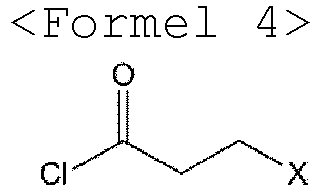
- the present invention provides a process for preparing N-(5-((4-(4-((dimethylamino)methyl)-3-phenyl-1H-pyrazol-1-yl)pyrimidin-2-yl)amino)-4 -methoxy-2-morpholinophenyl)acrylamide (the compound of formula 1) or a pharmaceutically acceptable salt thereof, the process comprising (a) reacting N1-(4-(4-((dimethylamino)methyl)-3-phenyl-1H-pyrazol-1-yl)pyrimidin-2-yl)-6-metho xy-4-morpholinobenzene-1,3-diamine (the compound of Formula 3) with a compound of Formula 4 to obtain a compound of Formula 2; and (b) reacting the compound of Formula 2 with a base to obtain N-(5-((4-(4-((dimethylamino)methyl)-3-phenyl-1H-pyrazol-1-yl)pyrimidin-2-y
- X is preferably chlorine or bromine.
- the reacting of Step (a) may be carried out in the presence of one or more base(s) selected from the group consisting of potassium tert-butoxide, sodium hydroxide, potassium hydroxide, lithium hydroxide, sodium hydride, sodium carbonate, sodium bicarbonate, potassium carbonate, potassium phosphate (including potassium phosphate monobasic, potassium phosphate dibasic, and potassium phosphate tribasic), sodium phosphate (including sodium phosphate monobasic, sodium phosphate dibasic, and sodium phosphate tribasic), 1,8-diazabicyclo[5.4.0]undec-7-ene (DBU), 1,4-diazabicyclo[2.2.2]octane (DABCO), 1,5-diazabicyclo[4.3.0]non-5-ene (DBN), pyridine, triethylamine, diisopropylamine and diisopropylethylamine.
- base(s) selected from the group consisting of potassium tert-butoxid
- the base may be sodium bicarbonate.
- the base may be used in an amount ranging from 1.0 to 5.0 equivalents, preferably from 1.0 to 3.0 equivalents, per 1 equivalent of the compound of Formula 3.
- the reacting of Step (a) may be carried out in the presence of a solvent selected from the group consisting of acetonitrile, methyl ethyl ketone, acetone, methyl isobutyl ketone, dichloromethane, dichloroethane, dimethylformamide, dimethylacetamide, dimethyl sulfoxide, tetrahydrofuran, C 1 ⁇ C 5 alcohol, toluene, ethyl acetate, isopropyl acetate, diethyl ether, water and a mixture thereof.
- a solvent selected from the group consisting of acetonitrile, methyl ethyl ketone, acetone, methyl isobutyl ketone, dichloromethane, dichloroethan
- the solvent may be selected from the group consisting of acetonitrile, tetrahydrofuran, methyl ethyl ketone, acetone, dichloromethane, water and a mixture thereof. More preferably, the solvent may be a mixed solvent of acetonitrile and water, a mixed solvent of methyl ethyl ketone and water or a mixed solvent of tetrahydrofuran and water.
- the reaction of the compound of Formula 3 with the compound of Formula 4 may be carried out at a temperature ranging from 0 to 50°C, preferably from 0 to 30°C.
- the compound of Formula 2 may be isolated according to conventional methods, such as concentration (e.g., concentration under reduced pressure etc.), filtration, drying, and so on.
- the base used in Step (b) may be one or more selected from the group consisting of potassium tert-butoxide, sodium hydroxide, potassium hydroxide, lithium hydroxide, sodium hydride, sodium carbonate, sodium bicarbonate, potassium carbonate, potassium phosphate (including potassium phosphate monobasic, potassium phosphate dibasic, and potassium phosphate tribasic), sodium phosphate (including sodium phosphate monobasic, sodium phosphate dibasic, and sodium phosphate tribasic), 1,8-diazabicyclo[5.4.0]undec-7-ene (DBU), 1,4-diazabicyclo[2.2.2]octane (DABCO), 1,5-diazabicyclo[4.3.0]non-5-ene (DBN), pyridine, triethylamine, diisopropylamine and diisopropylethylamine.
- DBU 1,8-diazabicyclo[5.4.0]undec-7-ene
- DABCO 1,
- the base may be one or more selected from the group consisting of sodium hydroxide, triethylamine and diisopropylamine. More preferably, the base may be triethylamine.
- the base may be used in an amount ranging from 1.0 to 20.0 equivalents, preferably from 5.0 to 10.0 equivalents, per 1 equivalent of the compound of Formula 2.
- Step (b) may be carried out in the presence of a solvent selected from the group consisting of acetonitrile, methyl ethyl ketone, acetone, methyl isobutyl ketone, dichloromethane, dichloroethane, dimethylformamide, dimethylacetamide, dimethyl sulfoxide, tetrahydrofuran, C 1 ⁇ C 5 alcohol, toluene, ethyl acetate, isopropyl acetate, diethyl ether, water and a mixture thereof.
- a solvent selected from the group consisting of acetonitrile, methyl ethyl ketone, acetone, methyl isobutyl ketone, dichloromethane, dichloroethane, dimethylformamide, dimethylacetamide, dimethyl sulfoxide, tetrahydrofuran, C 1 ⁇ C 5 alcohol, toluene, ethyl acetate, isoprop
- the solvent may be selected from the group consisting of acetonitrile, tetrahydrofuran, methyl ethyl ketone, acetone, dichloromethane, water and a mixture thereof. More preferably, the solvent may be a mixed solvent of acetonitrile and water, a mixed solvent of methyl ethyl ketone and water or a mixed solvent of tetrahydrofuran and water.
- the reaction of the compound of Formula 2 with the base may be carried out at a temperature ranging from 40 to 150°C, preferably at a temperature ranging from 60 to 100°C, more preferably at the reflux temperature of the used solvent.
- the compound of Formula 1 prepared from said reaction may be isolated in the form of free base or in the form of organic or inorganic salt (for example, in the form of mesylate salt) according to conventional methods.
- Step (a) and Step (b) may be carried out in a one-pot reaction, without isolating the compound of Formula 2. Therefore, the process of the present invention is suitable for industrial mass production.
- the N1-(4-(4-((dimethylamino)methyl)-3-phenyl-1H-pyrazol-1-yl)pyrimidin-2-yl)-6-metho xy-4-morpholinobenzene-1,3-diamine (the compound of Formula 3) used in Step (a) may be obtained by a process comprising (i) reacting 4-(4-((dimethylamino)methyl)-3-phenyl-1H-pyrazol-1-yl)-N-(2-methoxy-4-morpholin o-5-nitrophenyl)pyrimidin-2-amine (the compound of Formula 6) with tin chloride in the presence of hydrochloric acid to obtain a complex of Formula 5 and (ii) reacting the complex of Formula 5 with a base to obtain N1-(4-(4-((dimethylamino)methyl)-3-phenyl-1H-pyrazol-1-yl)pyrimidin-2-yl)-6-metho xy-4
- said tin chloride may be used in the form of anhydrate or hydrate (e.g., dihydrate).
- the tin chloride may be used in an amount ranging from 2.0 to 10.0 equivalents, preferably from 3.0 to 5.0 equivalents, per 1 equivalent of the compound of Formula 6.
- the acid may be used in an amount ranging from 2.0 to 10.0 equivalents per 1 equivalent of the compound of Formula 6.
- the reacting of Step (i) may be carried out at a temperature ranging from 0 to 100°C, preferably from 40 to 85°C. Therefore, the reaction may be carried out under a mild condition; and thus is suitable for industrial mass production.
- the reaction may be carried out in the presence of one or more solvent(s) selected from the group consisting of water, C 1 ⁇ C 10 alcohol (for example, methanol, ethanol, propanol, isopropanol, butanol, and so on), dichloromethane, tetrahydrofuran, acetonitrile and ethyl acetate.
- the solvent may be ethanol or a mixed solvent of ethanol and dichloromethane.
- the complex of Formula 5 produced from Step (i) may be subject to the subsequent step [i.e., Step (ii)], without the isolation thereof. And also, the complex of Formula 5 produced from Step (i) may be isolated from the reaction mixture per se or isolated by crystallization with an antisolvent.
- the antisolvent may be one or more selected from the group consisting of dichloromethane, ethyl acetate, C 1 ⁇ C 5 alcohol (for example, methanol, ethanol, isopropanol, butanol, and so on), acetone, acetonitrile, methyl ethyl ketone, tetrahydrofuran, hexamethylphosphoramide, dimethyl ether, diethyl ether, diisopropyl ether, ethyl acetate, dimethoxyethane and toluene.
- the antisolvent may be dichloromethane.
- the amount of the antisolvent to be used is not particularly limited, the antisolvent may be used in a weight ratio ranging from 2 to 20 times, preferably from 3 to 10 times, based on the complex of Formula 5.
- the crystallization may be also carried out at a temperature ranging from 0 to 40°C, preferably from 0 to 25°C.
- Step (ii) provides the N1-(4-(4-((dimethylamino)methyl)-3-phenyl-1H-pyrazol-1-yl)pyrimidin-2-yl)-6-metho xy-4-morpholinobenzene-1,3-diamine (the compound of Formula 3) through reacting the complex of Formula 5 with a base.
- the base may be one or more selected from the group consisting of sodium hydroxide, potassium hydroxide, sodium carbonate, sodium bicarbonate, potassium carbonate, potassium phosphate (including potassium phosphate monobasic, potassium phosphate dibasic, and potassium phosphate tribasic), and sodium phosphate (including sodium phosphate monobasic, sodium phosphate dibasic and sodium phosphate tribasic).
- the base may be sodium hydroxide.
- the 4-(4-((dimethylamino)methyl)-3-phenyl-1H-pyrazol-1-yl)-N-(2-methoxy-4-morpholin o-5-nitrophenyl)pyrimidin-2-amine (the compound of Formula 6) used in Step (i) may be obtained by reacting 1-(2-((2-methoxy-4-morpholino-5-nitrophenyl)amino)pyrimidin-4-yl)-3-phenyl-1H-py razole-4-carbaldehyde (the compound of Formula 7) with dimethylamine or a salt thereof.
- the reacting may be carried out in the presence of one or more reducing agent(s) selected from the group consisting of sodium triacetoxyborohydride, sodium cyanoborohydride and sodium borohydride, preferably the presence of sodium triacetoxyborohydride.
- the reducing agent may be used in an amount ranging from 1.0 to 5.0 equivalents, preferably from 1.0 to 2.0 equivalents, per 1 equivalent of the compound of Formula 7, although the amount thereof may vary according to the reducing agents.
- the reacting may be carried out in the presence of one or more base(s) selected from the group consisting of diisopropylethylamine and triethylamine.
- the reacting may be carried out in the presence of one or more solvent(s) selected from the group consisting of C 1 ⁇ C 10 alcohol (for example, methanol, ethanol, propanol, isopropanol, butanol, and so on), dimethylacetamide, dimethylformamide, dichloromethane, tetrahydrofuran, acetonitrile and ethyl acetate.
- the reacting may be carried out at a temperature ranging from 0 to 50°C, preferably from 20 to 30°C. Therefore, the reaction may be carried out under a mild condition; and thus is suitable for industrial mass production.
- the compound of Formula 6 produced from said reaction may be isolated from the reaction mixture per se or isolated by crystallization with an antisolvent.
- the antisolvent may be C 1 ⁇ C 5 alcohol (for example, methanol, ethanol, isopropanol, butanol, and so on), water, or a mixture thereof, preferably water.
- the amount of the antisolvent to be used is not particularly limited, the antisolvent may be used in a weight ratio ranging from 2 to 20 times, preferably from 3 to 10 times, based on the complex of Formula 7.
- the crystallization may be also carried out at a temperature ranging from 0 to 40°C, preferably from 20 to 30°C.
- the 1-(2-((2-methoxy-4-morpholino-5-nitrophenyl)amino)pyrimidin-4-yl)-3-phenyl-1H-py razole-4-carbaldehyde (the compound of Formula 7) may be obtained by reacting 4-chloro-N-(2-methoxy-4-morpholino-5-nitrophenyl)pyrimidin-2-amine (the compound of Formula 9) with 3-phenyl-1H-pyrazole-4-carbaldehyde (the compound of Formula 10) (see Reaction Scheme 1).
- the reaction of the compound of Formula 9 with the compound of Formula 10 may be carried out in the presence of one or more base(s) selected from the group consisting of potassium tert-butoxide, sodium hydroxide, potassium hydroxide, sodium hydride, sodium carbonate, potassium carbonate, potassium phosphate (including potassium phosphate monobasic, potassium phosphate dibasic, and potassium phosphate tribasic), sodium phosphate (including sodium phosphate monobasic, sodium phosphate dibasic, and sodium phosphate tribasic), 1,8-diazabicyclo[5.4.0]undec-7-ene (DBU), 1,4-diazabicyclo[2.2.2]octane (DABCO), 1,5-diazabicyclo[4.3.0]non-5-ene (DBN), pyridine, triethylamine, diisopropylamine and diisopropylethylamine.
- base(s) selected from the group consisting of potassium tert-butoxide, sodium hydro
- the base may be one or more selected from the group consisting of sodium carbonate, potassium carbonate, and potassium phosphate.
- the reaction may be carried out in the presence of one or more solvent(s) selected from the group consisting of dichloromethane, dichloroethane, dimethylformamide, dimethylacetamide, dimethyl sulfoxide, tetrahydrofuran, C 1 ⁇ C 5 alcohol, ethyl acetate, acetone, methyl ethyl ketone, acetonitrile and toluene.
- the solvent may be selected from the group consisting of dichloromethane, dimethylformamide and dimethylacetamide. More preferably, the solvent may be dimethylformamide.
- the reaction may be carried out at a temperature ranging from 0 to 100°C, preferably from 40 to 60°C.
- the 4-chloro-N-(2-methoxy-4-morpholino-5-nitrophenyl)pyrimidin-2-amine (the compound of Formula 9) may be obtained by reacting N-(2-methoxy-4-morpholino-5-nitrophenyl)formamide (the compound of Formula 11) with 4-chloro-2-(methylsulfonyl)pyrimidine (the compound of Formula 12) (see Reaction Scheme 1).
- the reaction of the compound of Formula 11 with the compound of Formula 12 may be carried out in the presence of one or more base(s) selected from the group consisting of sodium C 1 ⁇ C 6 alkoxide, potassium C 1 ⁇ C 6 alkoxide, sodium carbonate, potassium carbonate, lithium carbonate, cesium carbonate, sodium bicarbonate, potassium bicarbonate, potassium phosphate, 1,8-diazabicyclo[5.4.0]undec-7-ene (DBU), 1,4-diazabicyclo[2.2.2]octane (DABCO), 1,5-diazabicyclo[4.3.0]non-5-ene (DBN), pyridine, dimethylaminopyridine and triethylamine.
- base(s) selected from the group consisting of sodium C 1 ⁇ C 6 alkoxide, potassium C 1 ⁇ C 6 alkoxide, sodium carbonate, potassium carbonate, lithium carbonate, cesium carbonate, sodium bicarbonate, potassium bicarbonate, potassium phosphate, 1,8-d
- the base may be sodium C 1 ⁇ C 6 alkoxide or potassium C 1 ⁇ C 6 alkoxide.
- the reaction may be carried out in the presence of an inert solvent, for example in the presence of one or more solvent(s) selected from the group consisting of dimethylformamide, dimethylacetamide, dichloromethane, dimethyl sulfoxide, tetrahydrofuran, hexamethylphosphoramide, C 1 ⁇ C 5 alcohol, diethyl ether, ethyl acetate, acetonitrile and acetone.
- the solvent may be dimethylformamide, dimethylacetamide, tetrahydrofuran, or a mixture thereof.
- the reaction may be carried out at a temperature ranging from 0 to 50°C, preferably from 0 to 10°C.
- the N-(2-methoxy-4-morpholino-5-nitrophenyl)formamide (the compound of Formula 11) may be obtained by performing a formylation of 2-methoxy-4-morpholino-5-nitroaniline (the compound of Formula 13) (see Reaction Scheme 1).
- the formylation may be carried out with a mixture of acetic acid (e.g., anhydrous acetic acid) and formic acid.
- acetic acid and formic acid to be used may range from 2 to 5 moles, preferably from 2.5 to 3.5 moles, per 1 mole of the compound of Formula 13.
- the formylation may be carried out in the presence of an inert solvent, for example in the presence of one or more solvent(s) selected from the group consisting of dimethylformamide, dimethylacetamide, dichloromethane, dimethyl sulfoxide, tetrahydrofuran, hexamethylphosphoramide, C 1 ⁇ C 5 alcohol, diethyl ether, ethyl acetate, acetonitrile and acetone.
- the solvent may be dimethylformamide, dimethylacetamide, tetrahydrofuran, or a mixture thereof.
- the reaction may be carried out at a temperature ranging from 0 to 70°C, preferably from 20 to 50°C.
- the 4-chloro-2-(methylsulfonyl)pyrimidine (the compound of Formula 12) may be obtained by performing an oxidation of 4-chloro-2-(methylthio)pyrimidine (the compound of Formula 18).
- the oxidation may be carried out with one or more oxidizing agent(s) selected from the group consisting of potassium permanganate, chromic acid, oxygen, hydrogen peroxide and 3-chloroperbenzoic acid.
- the oxidizing agent may be hydrogen peroxide.
- the amount of the oxidizing agent to be used may range from 1.8 to 10.0 moles, preferably from 2.0 to 5.0 moles, per 1 mole of the compound of Formula 18.
- the reaction rate can be increased by performing the oxidation in the presence of a catalyst such as ammonium molybdate tetrahydrate.
- the reaction may be carried out in the presence of one or more solvent(s) selected from the group consisting of C 1 ⁇ C 5 alcohol, carbon tetrachloride, chloroform, dichloromethane, acetone, methyl ethyl ketone, methyl isobutyl ketone, cyclohexanone, pentane, hexane, heptane, octane, nonane, decane, undecane, dodecane, cyclohexane, petroleum ether, kerosene, toluene, xylene, mesitylene and benzene.
- the solvent may be C 1 ⁇ C 5 alcohol.
- the 2-methoxy-4-morpholino-5-nitroaniline (the compound of Formula 13) may be obtained by reacting 4-fluoro-2-methoxy-5-nitroaniline (the compound of Formula 14) with morpholine (the compound of Formula 15).
- the reaction may be carried out in the presence of one or more base(s) selected from the group consisting of sodium C 1 ⁇ C 6 alkoxide, potassium C 1 ⁇ C 6 alkoxide, sodium carbonate, potassium carbonate, lithium carbonate, cesium carbonate, sodium bicarbonate, potassium bicarbonate, potassium phosphate, 1,8-diazabicyclo[5.4.0]undec-7-ene (DBU), 1,4-diazabicyclo[2.2.2]octane (DABCO), 1,5-diazabicyclo[4.3.0]non-5-ene (DBN), pyridine, dimethylaminopyridine, triethylamine and diisopropylethylamine.
- base(s) selected from the group consisting of sodium C 1 ⁇ C 6 alkoxide, potassium C 1 ⁇ C 6 alkoxide, sodium carbonate, potassium carbonate, lithium carbonate, cesium carbonate, sodium bicarbonate, potassium bicarbonate, potassium phosphate, 1,8-diazabicyclo
- the base may be triethylamine or diisopropylethylamine.
- the reaction may be carried out in the presence of an inert solvent, for example in the presence of one or more solvent(s) selected from the group consisting of dimethylformamide, dimethylacetamide, dichloromethane, dimethyl sulfoxide, tetrahydrofuran, hexamethylphosphoramide, C 1 ⁇ C 5 alcohol, diethyl ether, ethyl acetate, acetonitrile and acetone.
- the solvent may be selected from the group consisting of acetonitrile, dimethylformamide and dimethylacetamide.
- the reaction may be carried out at a temperature ranging from 0 to 100°C, preferably from 70 to 80°C.
- the 1-(2-((2-methoxy-4-morpholino-5-nitrophenyl)amino)pyrimidin-4-yl)-3-phenyl-1H-py razole-4-carbaldehyde may be obtained by reacting N-(2-methoxy-4-morpholino-5-nitrophenyl)formamide (the compound of Formula 11) with 1-(2-(methylsulfonyl)pyrimidin-4-yl)-3-phenyl-1H-pyrazole-4-carbaldehyde (the compound of Formula 16) (see Reaction Scheme 2).
- the reaction of the compound of Formula 11 with the compound of Formula 16 may be carried out in the presence of one or more base(s) selected from the group consisting of sodium C 1 ⁇ C 6 alkoxide, potassium C 1 ⁇ C 6 alkoxide, sodium carbonate, potassium carbonate, lithium carbonate, cesium carbonate, sodium bicarbonate, potassium bicarbonate, potassium phosphate, 1,8-diazabicyclo[5.4.0]undec-7-ene (DBU), 1,4-diazabicyclo[2.2.2]octane (DABCO), 1,5-diazabicyclo[4.3.0]non-5-ene (DBN), pyridine, dimethylaminopyridine, and triethylamine.
- base(s) selected from the group consisting of sodium C 1 ⁇ C 6 alkoxide, potassium C 1 ⁇ C 6 alkoxide, sodium carbonate, potassium carbonate, lithium carbonate, cesium carbonate, sodium bicarbonate, potassium bicarbonate, potassium phosphate, 1,8-
- the base may be one or more selected from the group consisting of sodium C 1 ⁇ C 6 alkoxide, potassium C 1 ⁇ C 6 alkoxide, sodium carbonate, potassium carbonate, and potassium phosphate. If the compound of Formula 7 is prepared according to the Reaction Scheme 2, it is possible to avoid the use of sodium hydride.
- the reaction may be carried out in the presence of an inert solvent, for example in the presence of one or more solvent(s) selected from the group consisting of dimethylformamide, dimethylacetamide, dichloromethane, dimethyl sulfoxide, tetrahydrofuran, hexamethylphosphoramide, C 1 ⁇ C 5 alcohol, diethyl ether, ethyl acetate, acetonitrile and acetone.
- the solvent may be dimethylformamide, dimethylacetamide, tetrahydrofuran, or a mixture thereof.
- the reaction may be carried out at a temperature ranging from 0 to 50°C, preferably from 0 to 10°C.
- the 1-(2-(methylsulfonyl)pyrimidin-4-yl)-3-phenyl-1H-pyrazole-4-carbaldehyde may be obtained by reacting 1-(2-(methylthio)pyrimidin-4-yl)-3-phenyl-1H-pyrazole-4-carbaldehyde (the compound of Formula 17) with an oxidizing agent (see Reaction Scheme 2).
- the oxidation may be carried out with one or more oxidizing agent(s) selected from the group consisting of potassium permanganate, chromic acid, oxygen, hydrogen peroxide and 3-chloroperbenzoic acid.
- the oxidizing agent may be hydrogen peroxide.
- the amount of the oxidizing agent to be used may range from 1.8 to 10.0 moles, preferably from 2.0 to 5.0 moles, per 1 mole of the compound of Formula 17. And also, the reaction rate can be increased by performing the oxidation in the presence of a catalyst such as ammonium molybdate tetrahydrate.
- reaction may be carried out in the presence of one or more solvent(s) selected from the group consisting of C 1 ⁇ C 5 alcohol, carbon tetrachloride, chloroform, dichloromethane, acetone, methyl ethyl ketone, methyl isobutyl ketone, cyclohexanone, pentane, hexane, heptane, octane, nonane, decane, undecane, dodecane, cyclohexane, petroleum ether, kerosene, toluene, xylene, mesitylene and benzene.
- solvent(s) selected from the group consisting of C 1 ⁇ C 5 alcohol, carbon tetrachloride, chloroform, dichloromethane, acetone, methyl ethyl ketone, methyl isobutyl ketone, cyclohexanone, pentane, hexane, heptane
- the 1-(2-(methylthio)pyrimidin-4-yl)-3-phenyl-1H-pyrazole-4-carbaldehyde (the compound of Formula 17) may be obtained by reacting 4-chloro-2-(methylthio)pyrimidine (the compound of Formula 18) with 3-phenyl-1H-pyrazole-4-carbaldehyde (the compound of Formula 10).
- the reaction of the compound of Formula 18 with the compound of Formula 10 may be carried out in the presence of one or more base(s) selected from the group consisting of potassium tert-butoxide, sodium hydroxide, potassium hydroxide, sodium hydride, sodium carbonate, potassium carbonate, potassium phosphate (including potassium phosphate monobasic, potassium phosphate dibasic, and potassium phosphate tribasic), sodium phosphate (including sodium phosphate monobasic, sodium phosphate dibasic, and sodium phosphate tribasic), 1,8-diazabicyclo[5.4.0]undec-7-ene (DBU), 1,4-diazabicyclo[2.2.2]octane (DABCO), 1,5-diazabicyclo[4.3.0]non-5-ene (DBN), pyridine, triethylamine, diisopropylamine and diisopropylethylamine.
- base(s) selected from the group consisting of potassium tert-butoxide, sodium hydro
- the base may be selected from the group consisting of sodium carbonate, potassium carbonate, and potassium phosphate.
- the reaction may be carried out in the presence of one or more solvent(s) selected from the group consisting of dichloromethane, dichloroethane, dimethylformamide, dimethylacetamide, dimethyl sulfoxide, tetrahydrofuran, C 1 ⁇ C 5 alcohol, ethyl acetate, acetone, methyl ethyl ketone, acetonitrile and toluene.
- the solvent may be selected from the group consisting of dichloromethane, dimethylformamide and dimethylacetamide. More preferably, the solvent may be dimethylformamide.
- the reaction may be carried out at a temperature ranging from 0 to 100°C, preferably from 40 to 60°C.
- the present invention includes, within its scope, novel intermediates useful for said improved processes.
- the present invention provides a compound of Formula 2 or salt thereof: wherein, X is halogen.
- a 35% hydrogen peroxide solution (3.4 g, 30.3 mmol) and ammonium molybdate tetrahydrate (0.4 g, 0.3 mmol) were added to a solution of 1-(2-(methylthio)pyrimidin-4-yl)-3-phenyl-1H-pyrazole-4-carbaldehyde (3.0 g, 10.1 mmol) in ethanol (21.0 mL).
- the reaction mixture was stirred for 2 hours and then extracted with dichloromethane (30.0 mL) and purified water (30.0 mL). The separated organic layer was washed with a 10% sodium sulfite solution (21.0 mL) and purified water and then concentrated under reduced pressure.
- the reaction mixture was cooled to 20-30°C and then concentrated under reduced pressure to remove the solvent.
- Dichloromethane (15.0 mL) and purified water (10.0 mL) were added to the reaction mixture, which was then stirred.
- the separated organic layer was concentrated under reduced pressure and then n-propanol (20.0 mL) was added thereto, followed by refluxing under stirring.
- the reaction mixture was slowly cooled to 20-30°C and then stirred for 2 hours.
- the resulting solid was filtered under reduced pressure and then dried in vacuo to obtain 0.83 g of the titled compound.
- Triethylamine (2.0 g, 19.9 mmol) was added to the reaction mixture, which was then refluxed under stirring for 16 hours.
- the reaction mixture was cooled to 20-30°C and then concentrated under reduced pressure to remove the solvent.
- Dichloromethane (10.0 mL) and purified water (10.0 mL) were added to the reaction mixture, which was then stirred.
- the separated organic layer was concentrated under reduced pressure and then n-propanol (20.0 mL) was added thereto, followed by refluxing under stirring.
- the reaction mixture was slowly cooled to 20-30°C and then stirred for 2 hours.
- the resulting solid was filtered under reduced pressure and then dried in vacuo to obtain 0.88 g of the titled compound.
Landscapes
- Chemical & Material Sciences (AREA)
- Organic Chemistry (AREA)
- Health & Medical Sciences (AREA)
- Life Sciences & Earth Sciences (AREA)
- Pharmacology & Pharmacy (AREA)
- Epidemiology (AREA)
- Medicinal Chemistry (AREA)
- Animal Behavior & Ethology (AREA)
- General Health & Medical Sciences (AREA)
- Public Health (AREA)
- Veterinary Medicine (AREA)
- Pharmaceuticals Containing Other Organic And Inorganic Compounds (AREA)
- Plural Heterocyclic Compounds (AREA)
- Low-Molecular Organic Synthesis Reactions Using Catalysts (AREA)
- Catalysts (AREA)
Claims (12)
- Verfahren zur Herstellung von N-(5-((4-(4-((Dimethylamino)methyl)-3-phenyl-1H-pyrazol-1-yl)pyrimidin-2-yl)amino)-4-methoxy-2-morpholinophenyl)acrylamid:
 (a) Umsetzen von N1-(4-(4-((Dimethylamino)methyl)-3-phenyl-1H-pyrazol-1-yl)pyrimidin-2-yl)-6-methoxy-4-morpholinobenzol-1,3-diamin:
 (b) Umsetzen der Verbindung der Formel 2 mit einer Base zu N-(5-((4-(4-((Dimethylamino)methyl)-3-phenyl-1H-pyrazol-1-yl)pyrimidin-2-yl)amino)-4-methoxy-2-morpholinophenyl)acrylamid:
- Verfahren nach Anspruch 1:(i) wobei die Umsetzung von Schritt (a) in Gegenwart einer oder mehrerer Basen aus der Gruppe bestehend aus Kalium-tert-butoxid, Natriumhydroxid, Kaliumhydroxid, Lithiumhydroxid, Natriumhydrid, Natriumcarbonat, Natriumhydrogencarbonat, Kaliumcarbonat, Kaliumphosphat, Natriumphosphat, 1,8-Diazabicyclo[5.4.0]undec-7-en, 1,4-Diazabicyclo-[2.2.2]octan, 1,5-Diazabicyclo[4.3.0]non-5-en, Pyridin, Triethylamin, Diisopropylamin und Diisopropylethylamin durchgeführt wird oder(ii) wobei die Umsetzung von Schritt (a) in Gegenwart eines Lösungsmittels aus der Gruppe bestehend aus Acetonitril, Methylethylketon, Aceton, Methylisobutylketon, Dichlormethan, Dichlorethan, Dimethylformamid, Dimethylacetamid, Dimethylsulfoxid, Tetrahydrofuran, C1∼C5-Alkohol, Toluol, Essigsäureethylester, Essigsäureisopropylester, Diethylether, Wasser und einer Mischung davon durchgeführt wird, gegebenenfalls wobei das Lösungsmittel aus der Gruppe bestehend aus Acetonitril, Tetrahydrofuran, Methylethylketon, Aceton, Dichlormethan, Wasser und einer Mischung davon ausgewählt wird; oder(iii) wobei es sich bei der in Schritt (b) verwendeten Base um eine oder mehrere aus der Gruppe bestehend aus Kalium-tert-butoxid, Natriumhydroxid, Kaliumhydroxid, Lithiumhydroxid, Natriumhydrid, Natriumcarbonat, Natriumhydrogencarbonat, Kaliumcarbonat, Kaliumphosphat, Natriumphosphat, 1,8-Diazabicyclo[5.4.0]undec-7-en, 1,4-Diazabicyclo-[2.2.2]octan, 1,5-Diazabicyclo[4.3.0]non-5-en, Pyridin, Triethylamin, Diisopropylamin und Diisopropylethylamin handelt, gegebenenfalls wobei es sich bei der Base um eine oder mehrere aus der Gruppe bestehend aus Natriumhydroxid, Triethylamin und Diisopropylamin handelt; oder(iv) wobei die Umsetzung von Schritt (b) in Gegenwart eines Lösungsmittels aus der Gruppe bestehend aus Acetonitril, Methylethylketon, Aceton, Methylisobutylketon, Dichlormethan, Dichlorethan, Dimethylformamid, Dimethylacetamid, Dimethylsulfoxid, Tetrahydrofuran, C1∼C5-Alkohol, Toluol, Essigsäureethylester, Essigsäureisopropylester, Diethylether, Wasser und einer Mischung davon durchgeführt wird, gegebenenfalls wobei das Lösungsmittel aus der Gruppe bestehend aus Acetonitril, Tetrahydrofuran, Methylethylketon, Aceton, Dichlormethan, Wasser und einer Mischung davon ausgewählt wird; oder(v) wobei Schritt (a) und Schritt (b) in einer Eintopfreaktion durchgeführt werden.
- Verfahren nach einem der Ansprüche 1 bis 2, wobei das N1-(4-(4-((Dimethylamino)methyl)-3-phenyl-1H-pyrazol-1-yl)pyrimidin-2-yl)-6-methoxy-4-morpholinobenzol-1,3-diamin in Schritt (a) durch ein Verfahren erhalten wird, das Folgendes umfasst:(i) Umsetzen von 4-(4-((Dimethylamino)methyl)-3-phenyl-1H-pyrazol-1-yl)-N-(2-methoxy-4-morpholino-5-nitrophenyl)pyrimidin-2-amin:
 (ii) Umsetzen des Komplexes der Formel 5 mit einer Base zu N1-(4-(4-((Dimethylamino)methyl)-3-phenyl-1H-pyrazol-1-yl)pyrimidin-2-yl)-6-methoxy-4-morpholinobenzol-1,3-diamin:
- Verfahren nach Anspruch 3, wobei die Umsetzung von Schritt (i) in Gegenwart eines oder mehrerer Lösungsmittel aus der Gruppe bestehend aus Wasser, C1∼C10-Alkohol, Dichlormethan, Tetrahydrofuran, Acetonitril und Essigsäureethylester durchgeführt wird.
- Verfahren nach Anspruch 3, wobei es sich bei der in Schritt (ii) verwendeten Base um eine oder mehrere aus der Gruppe bestehend aus Natriumhydroxid, Kaliumhydroxid, Natriumcarbonat, Natriumhydrogencarbonat, Kaliumcarbonat, Kaliumphosphat und Natriumphosphat handelt.
- Verfahren nach Anspruch 3, wobei das 4-(4-((Dimethylamino)methyl)-3-phenyl-1H-pyrazol-1-yl)-N-(2-methoxy-4-morpholino-5-nitrophenyl)pyrimidin-2-amin durch Umsetzen von 1-(2-((2-Methoxy-4-morpholino-5-nitrophenyl)amino)pyrimidin-4-yl)-3-phenyl-1H-pyrazol-4-carbaldehyd:

- Verfahren nach Anspruch 6:(i) wobei die Umsetzung in Gegenwart eines oder mehrerer Reduktionsmittel aus der Gruppe bestehend aus Natriumtriacetoxyborhydrid, Natriumcyanoborhydrid und Natriumborhydrid durchgeführt wird oder(ii) wobei der 1-(2-((2-Methoxy-4-morpholino-5-nitrophenyl)amino)pyrimidin-4-yl)-3-phenyl-1H-pyrazol-4-carbaldehyd durch Umsetzen von 4-Chlor-N-(2-methoxy-4-morpholino-5-nitrophenyl)pyrimidin-2-amin:


- Verfahren nach Anspruch 7(ii), wobei das 4-Chlor-N-(2-methoxy-4-morpholino-5-nitrophenyl)pyrimidin-2-amin durch Umsetzen von N-(2-Methoxy-4-morpholino-5-nitrophenyl)formamid:


gegebenenfalls:a. wobei das N-(2-Methoxy-4-morpholino-5-nitrophenyl)formamid durch Durchführung einer Formylierung von 2-Methoxy-4-morpholino-5-nitro-anilin: b. wobei das N-(2-Methoxy-4-morpholino-5-nitrophenyl)formamid durch Durchführung einer Formylierung von 2-Methoxy-4-morpholino-5-nitro-anilin erhalten wird und wobei die Formylierung mit einer Mischung von Essigsäure und Ameisensäure durchgeführt wird oderc. wobei das 4-Chlor-2-(methylsulfonyl)pyrimidin durch Durchführung einer Oxidation von 4-Chlor-2-(methylthio)pyrimidin:
 d. wobei das 4-Chlor-2-(methylsulfonyl)pyrimidin durch Durchführung einer Oxidation von 4-Chlor-2-(methylthio)pyrimidin erhalten wird, und wobei die Oxidation mit einem oder mehreren Oxidationsmitteln aus der Gruppe bestehend aus Kaliumpermanganat, Chromsäure, Sauerstoff, Wasserstoffperoxid und 3-Chlorperbenzoesäure durchgeführt wird.
 - Verfahren nach Anspruch 6, wobei der 1-(2-((2-Methoxy-4-morpholino-5-nitrophenyl)amino)pyrimidin-4-yl)-3-phenyl-1H-pyrazol-4-carbaldehyd durch Umsetzen von N-(2-Methoxy-4-morpholino-5-nitrophenyl)formamid mit 1-(2-(Methylsulfonyl)pyrimidin-4-yl)-3-phenyl-1H-pyrazol-4-carbaldehyd:

gegebenenfalls:a. wobei die Umsetzung in Gegenwart einer oder mehrerer Basen aus der Gruppe bestehend aus Natrium-C1∼Ce-alkoxid, Kalium-C1∼C6-alkoxid, Natriumcarbonat, Kaliumcarbonat und Kaliumphosphat durchgeführt wird oderb. wobei die Umsetzung in Gegenwart eines oder mehrerer Lösungsmittel aus der Gruppe bestehend aus Dimethylformamid, Dimethylacetamid, Dichlormethan, Dimethylsulfoxid, Tetrahydrofuran, Hexamethylphosphoramid, C1∼C5-Alkohol, Diethylether, Essigsäureethylester, Acetonitril und Aceton durchgeführt wird oderc. wobei der 1-(2-(Methylsulfonyl)pyrimidin-4-yl)-3-phenyl-1H-pyrazol-4-carbaldehyd durch Umsetzen von 1-(2-(Methylthio)pyrimidin-4-yl)-3-phenyl-1H-pyrazol-4-carbaldehyd:
- Verfahren nach Anspruch 6, wobei der 1-(2-((2-Methoxy-4-morpholino-5-nitrophenyl)amino)pyrimidin-4-yl)-3-phenyl-1H-pyrazol-4-carbaldehyd durch Umsetzen von N-(2-Methoxy-4-morpholino-5-nitrophenyl)formamid mit 1-(2-(Methylsulfonyl)pyrimidin-4-yl)-3-phenyl-1H-pyrazol-4-carbaldehyd erhalten wird und wobei der 1-(2-(Methylsulfonyl)pyrimidin-4-yl)-3-phenyl-1H-pyrazol-4-carbaldehyd durch Umsetzen von 1-(2-(Methylthio)-pyrimidin-4-yl)-3-phenyl-1H-pyrazol-4-carbaldehyd mit einem Oxidationsmittel erhalten wird:(i) wobei es sich bei dem Oxidationsmittel um eines oder mehrere aus der Gruppe bestehend aus Kaliumpermanganat, Chromsäure, Sauerstoff, Wasserstoffperoxid und 3-Chlorperbenzoesäure handelt oder(ii) wobei die Umsetzung in Gegenwart eines oder mehrerer Lösungsmittel aus der Gruppe bestehend aus C1∼C5-Alkohol, Tetrachlorkohlenstoff, Chloroform, Dichlormethan, Aceton, Methylethylketon, Methylisobutylketon, Cyclohexanon, Pentan, Hexan, Heptan, Octan, Nonan, Decan, Undecan, Dodecan, Cyclohexan, Petrolether, Kerosin, Toluol, Xylol, Mesitylen und Benzol durchgeführt wird oder(iii) wobei der 1-(2-(Methylthio)pyrimidin-4-yl)-3-phenyl-1H-pyrazol-4-carbaldehyd durch Umsetzen von 4-Chlor-2-(methylthio)pyrimidin mit 3-Phenyl-1H-pyrazol-4-carbaldehyd erhalten wird.
- Verfahren nach Anspruch 10(iii):(i) wobei die Umsetzung in Gegenwart einer oder mehrerer Basen aus der Gruppe bestehend aus Kalium-tert-butoxid, Natriumhydroxid, Kaliumhydroxid, Natriumhydrid, Natriumcarbonat, Kaliumcarbonat, Kaliumphosphat, Natriumphosphat, 1,8-Diazabicyclo[5.4.0]-undec-7-en, 1,4-Diazabicyclo[2.2.2]octan, 1,5-Diazabicyclo[4.3.0]non-5-en, Pyridin, Triethylamin, Diisopropylamin und Diisopropylethylamin durchgeführt wird oder(ii) wobei die Umsetzung in Gegenwart eines oder mehrerer Lösungsmittel aus der Gruppe bestehend aus Dichlormethan, Dichlorethan, Dimethylformamid, Dimethylacetamid, Dimethylsulfoxid, Tetrahydrofuran, C1∼C5-Alkohol, Essigsäureethylester, Aceton, Methylethylketon, Acetonitril und Toluol durchgeführt wird.
- Verbindung der Formel 2 oder Salz davon:

Priority Applications (4)
| Application Number | Priority Date | Filing Date | Title |
|---|---|---|---|
| SM20230339T SMT202300339T1 (it) | 2017-07-28 | 2018-07-25 | Procedimento per preparare n-(5-((4-(4-((dimetilammino)metil)-3-fenil-1h-pirazol-1-il)pirimidin-2-il)ammino)-4-metossi-2-morfolinofenil)acrilammide facendo reagire l’ammina corrispondente con un cloruro di 3-alo-propionile |
| SI201830998T SI3658552T1 (sl) | 2017-07-28 | 2018-07-25 | Postopek za pripravo N-(5-((4-(4-((dimetilamino)metil)-3-fenil-1H-pirazol-1-il)pirimidin-2-il )amino)-4-metoksi-2-morfolinofenil)akrilamida z reagiranjem ustreznega amina s 3-halo-propionil kloridom |
| HRP20231191TT HRP20231191T1 (hr) | 2017-07-28 | 2018-07-25 | Postupak za proizvodnju n-(5-((4-(4-((dimetilamino)metil)-3-fenil-1h-pirazol-1-il)pirimidin-2-il)amino)-4-metoksi-2-morfolinofenil)akrilamida putem reakcije odgovarajućeg amina s 3-halo-propionilkloridom |
| RS20230834A RS64654B1 (sr) | 2017-07-28 | 2018-07-25 | Proces za pripremu n-(5-((4-(4-((dimetilamino)metil)-3-fenil-1h-pirazol-1-il)pirimidin-2-il)amino)-4-metoksi-2- morfolinofenil)akrilamida reakcijom odgovarajućeg amina sa 3-halo-propionil hloridom |
Applications Claiming Priority (2)
| Application Number | Priority Date | Filing Date | Title |
|---|---|---|---|
| KR20170096212 | 2017-07-28 | ||
| PCT/KR2018/008379 WO2019022485A1 (en) | 2017-07-28 | 2018-07-25 | IMPROVED PROCESS FOR THE PREPARATION OF AMINOPYRIMIDINE DERIVATIVES |
Publications (3)
| Publication Number | Publication Date |
|---|---|
| EP3658552A1 EP3658552A1 (de) | 2020-06-03 |
| EP3658552A4 EP3658552A4 (de) | 2021-06-23 |
| EP3658552B1 true EP3658552B1 (de) | 2023-09-13 |
Family
ID=65040211
Family Applications (1)
| Application Number | Title | Priority Date | Filing Date |
|---|---|---|---|
| EP18837360.9A Active EP3658552B1 (de) | 2017-07-28 | 2018-07-25 | Verfahren zur herstellung von n-(5-((4-(4-((dimethylamino)methyl)-3-phenyl-1h-pyrazol-1-yl)pyrimidin-2-yl)amino)-4-methoxy-2-morpholinophenyl)acrylamid durch umsetzung des entsprechenden amins mit einem 3-halo-propionylchlorid |
Country Status (32)
| Country | Link |
|---|---|
| US (4) | US10889578B2 (de) |
| EP (1) | EP3658552B1 (de) |
| JP (2) | JP7228562B2 (de) |
| KR (1) | KR102688084B1 (de) |
| CN (2) | CN116987112B (de) |
| AU (2) | AU2018308038B2 (de) |
| BR (1) | BR112020001278A2 (de) |
| CA (1) | CA3070069C (de) |
| CO (1) | CO2020000374A2 (de) |
| DK (1) | DK3658552T3 (de) |
| EA (1) | EA202090383A1 (de) |
| ES (1) | ES2962961T3 (de) |
| FI (1) | FI3658552T3 (de) |
| HR (1) | HRP20231191T1 (de) |
| HU (1) | HUE063533T2 (de) |
| IL (2) | IL271973B (de) |
| LT (1) | LT3658552T (de) |
| MA (1) | MA49700B1 (de) |
| MD (1) | MD3658552T2 (de) |
| MX (2) | MX393995B (de) |
| MY (1) | MY198379A (de) |
| PH (1) | PH12020500059A1 (de) |
| PL (1) | PL3658552T3 (de) |
| PT (1) | PT3658552T (de) |
| RS (1) | RS64654B1 (de) |
| SA (2) | SA522431428B1 (de) |
| SG (1) | SG11201913517UA (de) |
| SI (1) | SI3658552T1 (de) |
| SM (1) | SMT202300339T1 (de) |
| UA (1) | UA125317C2 (de) |
| WO (1) | WO2019022485A1 (de) |
| ZA (1) | ZA202001250B (de) |
Families Citing this family (10)
| Publication number | Priority date | Publication date | Assignee | Title |
|---|---|---|---|---|
| ES2962961T3 (es) | 2017-07-28 | 2024-03-22 | Yuhan Corp | Procedimiento de preparación de n-(5-((4-(4-(dimetilamino)metil)-3-fenil-1h-pirazol-1-il)pirimidin-2-il)amino)-4-metoxi-2-morfolinofenil)acrilamida haciendo reaccionar la amina correspondiente con un cloruro de 3-halo-propionilo |
| MY208668A (en) | 2019-05-14 | 2025-05-23 | Janssen Biotech Inc | Combination therapies with bispecific anti-egfr/c-met antibodies and 3rd generation egfr tyrosine kinase inhibitors |
| US11850248B2 (en) | 2019-05-14 | 2023-12-26 | Yuhan Corporation | Therapies with 3rd generation EGFR tyrosine kinase inhibitors |
| BR112022015140A2 (pt) | 2020-02-12 | 2022-10-11 | Janssen Biotech Inc | Tratamento de pacientes que têm mutações de salto do éxon 14 de c-met |
| TWI923583B (zh) | 2020-04-14 | 2026-05-01 | 美商健生生物科技公司 | 包含胺基嘧啶衍生物或其醫藥上可接受之鹽之用於經口投予之醫藥組成物 |
| US11780824B2 (en) * | 2020-12-16 | 2023-10-10 | Scinopharm Taiwan, Ltd. | Process for preparing osimertinib or a salt thereof |
| CN116199701A (zh) * | 2023-02-27 | 2023-06-02 | 安徽中医药大学 | 一种基于分子内自由基环加成制备吡唑并恶嗪草酮类化合物及其制备方法 |
| CA3228195A1 (en) | 2023-05-23 | 2025-06-30 | Janssen Biotech, Inc. | Methods for treatment of non-small cell lung cancer (nsclc) |
| IL326946A (en) | 2023-09-05 | 2026-05-01 | Janssen Biotech Inc | Methods of treating non-small cell lung cancer |
| WO2026042017A1 (en) | 2024-08-19 | 2026-02-26 | Janssen Biotech, Inc. | Amivantamab in combination with lazertinib for the treatment of non-small cell lung cancer (nsclc) |
Family Cites Families (31)
| Publication number | Priority date | Publication date | Assignee | Title |
|---|---|---|---|---|
| US5721237A (en) | 1991-05-10 | 1998-02-24 | Rhone-Poulenc Rorer Pharmaceuticals Inc. | Protein tyrosine kinase aryl and heteroaryl quinazoline compounds having selective inhibition of HER-2 autophosphorylation properties |
| US6821988B2 (en) | 2001-11-27 | 2004-11-23 | Wyeth Holdings Corporation | 3-cyanoquinolines as inhibitors of EGF-R and HER2 kinases |
| GB0305929D0 (en) | 2003-03-14 | 2003-04-23 | Novartis Ag | Organic compounds |
| RU2007123675A (ru) | 2004-11-24 | 2008-12-27 | Новартис АГ (CH) | Комбинации ингибиторов jak |
| US20060270600A1 (en) | 2005-05-26 | 2006-11-30 | Eisuke Mekada | Anti-cancer agents |
| TW200736232A (en) | 2006-01-26 | 2007-10-01 | Astrazeneca Ab | Pyrimidine derivatives |
| MX2009004426A (es) | 2006-10-23 | 2009-08-12 | Cephalon Inc | Derivados biciclicos fusionados de 2,4-diaminopirimidina como inhibidores alk y c-met. |
| TW200840581A (en) | 2007-02-28 | 2008-10-16 | Astrazeneca Ab | Novel pyrimidine derivatives |
| WO2008124085A2 (en) | 2007-04-03 | 2008-10-16 | Exelixis, Inc. | Methods of using combinations of mek and jak-2 inhibitors |
| AU2009262068C1 (en) | 2008-06-27 | 2015-07-02 | Celgene Car Llc | Heteroaryl compounds and uses thereof |
| KR20120114224A (ko) | 2009-10-12 | 2012-10-16 | 마이렉시스 인코포레이티드 | Ikk 엡실론 및/또는 tbk1의 억제제로서의 아미노-피리미딘 화합물 |
| CA2780892C (en) * | 2009-11-13 | 2017-02-14 | Genosco | Kinase inhibitors |
| PL2509602T3 (pl) | 2009-12-04 | 2017-08-31 | Senhwa Biosciences, Inc. | Pirazolopirymidyny i podobne heterocykle jako inhibitory ck2 |
| KR101594002B1 (ko) | 2010-10-06 | 2016-02-15 | 글락소스미스클라인 엘엘씨 | Pi3 키나제 억제제로서의 벤즈이미다졸 유도체 |
| JP5956999B2 (ja) | 2010-11-01 | 2016-07-27 | セルジーン アヴィロミクス リサーチ, インコーポレイテッド | ヘテロアリール化合物およびその使用 |
| UY33801A (es) | 2010-12-13 | 2013-06-28 | Array Biopharma Inc | COMPUESTOS SUSTITUIDOS DE N-(1H-INDAZOL-4IL)IMIDAZO[1,2-a]PIRIDIN-3-CARBOXAMIDA COMO INHIBIDORES DE LA TIROSINA QUINASA RECEPTORA DE TIPO III |
| DK3686193T3 (da) | 2011-07-27 | 2022-05-30 | Astrazeneca Ab | 2-(2,4,5-substitueret anilino)pyrimidinforbindelser |
| TW201331194A (zh) | 2011-12-23 | 2013-08-01 | Millennium Pharm Inc | 雜芳基化合物及其用途 |
| SG11201402765TA (en) | 2011-12-30 | 2014-06-27 | Hanmi Pharm Ind Co Ltd | THIENO[3,2-d]PYRIMIDINE DERIVATIVES HAVING INHIBITORY ACTIVITY FOR PROTEIN KINASES |
| CN104860891B (zh) | 2014-02-25 | 2017-06-30 | 上海海雁医药科技有限公司 | 芳氨基嘧啶类化合物及其应用以及由其制备的药物组合物和药用组合物 |
| US20170166598A1 (en) | 2014-05-13 | 2017-06-15 | Ariad Pharmaceuticals, Inc. | Heteroaryl compounds for kinase inhibition |
| CN111875585B (zh) | 2014-06-12 | 2023-06-23 | 上海艾力斯医药科技股份有限公司 | 一类激酶抑制剂 |
| EP3929190B1 (de) * | 2014-10-13 | 2024-12-25 | Yuhan Corporation | Verbindungen und zusammensetzungen zur modulation der kinaseaktivitäten von egfr-mutanten |
| CN104788427B (zh) * | 2015-02-05 | 2017-05-31 | 上海泓博智源医药股份有限公司 | 3‑(2‑嘧啶氨基)苯基丙烯酰胺类化合物及其应用 |
| AR102263A1 (es) | 2015-10-14 | 2017-02-15 | Yuhan Corp | Compuestos y composiciones para la modulación de las actividades quinasa del receptor de egf mutante |
| AR111469A1 (es) | 2017-04-21 | 2019-07-17 | Yuhan Corp | Sal de un compuesto del derivado de aminopiridina, una forma cristalina de la misma, y un proceso para preparar la misma |
| DE102017212159A1 (de) | 2017-07-14 | 2019-01-17 | Krones Aktiengesellschaft | Verfahren und Vorrichtung zur Handhabung von Stückgütern, Artikeln und/oder Gebinden |
| DK3658547T3 (da) | 2017-07-28 | 2023-10-16 | Yuhan Corp | Fremgangsmåde til fremstilling af n-(5-(4-(4-formyl-3-phenyl-1h-pyrazol-1-yl)pyrimidin-2-ylamino)-4-methoxy-2-morpholinophenyl)acrylamid |
| RS63497B1 (sr) | 2017-07-28 | 2022-09-30 | Yuhan Corp | Intermedijeri korisni za sintezu derivata aminopirimidina, proces za pripremu istih i proces za pripremu derivata aminopirimidina korišćenjem istih |
| ES2962961T3 (es) | 2017-07-28 | 2024-03-22 | Yuhan Corp | Procedimiento de preparación de n-(5-((4-(4-(dimetilamino)metil)-3-fenil-1h-pirazol-1-il)pirimidin-2-il)amino)-4-metoxi-2-morfolinofenil)acrilamida haciendo reaccionar la amina correspondiente con un cloruro de 3-halo-propionilo |
| CN108826170A (zh) | 2018-06-26 | 2018-11-16 | 深圳市远润欣电子有限公司 | 局部全般照明的模式、控制方法及台灯 |
-
2018
- 2018-07-25 ES ES18837360T patent/ES2962961T3/es active Active
- 2018-07-25 MY MYPI2020000438A patent/MY198379A/en unknown
- 2018-07-25 WO PCT/KR2018/008379 patent/WO2019022485A1/en not_active Ceased
- 2018-07-25 EA EA202090383A patent/EA202090383A1/ru unknown
- 2018-07-25 UA UAA202001303A patent/UA125317C2/uk unknown
- 2018-07-25 JP JP2020504203A patent/JP7228562B2/ja active Active
- 2018-07-25 MD MDE20200593T patent/MD3658552T2/ro unknown
- 2018-07-25 HU HUE18837360A patent/HUE063533T2/hu unknown
- 2018-07-25 PL PL18837360.9T patent/PL3658552T3/pl unknown
- 2018-07-25 SI SI201830998T patent/SI3658552T1/sl unknown
- 2018-07-25 CA CA3070069A patent/CA3070069C/en active Active
- 2018-07-25 KR KR1020180086376A patent/KR102688084B1/ko active Active
- 2018-07-25 CN CN202310702453.8A patent/CN116987112B/zh active Active
- 2018-07-25 AU AU2018308038A patent/AU2018308038B2/en active Active
- 2018-07-25 EP EP18837360.9A patent/EP3658552B1/de active Active
- 2018-07-25 MX MX2020001041A patent/MX393995B/es unknown
- 2018-07-25 PT PT188373609T patent/PT3658552T/pt unknown
- 2018-07-25 HR HRP20231191TT patent/HRP20231191T1/hr unknown
- 2018-07-25 RS RS20230834A patent/RS64654B1/sr unknown
- 2018-07-25 CN CN201880048638.9A patent/CN111315742B/zh active Active
- 2018-07-25 SM SM20230339T patent/SMT202300339T1/it unknown
- 2018-07-25 IL IL271973A patent/IL271973B/en unknown
- 2018-07-25 SG SG11201913517UA patent/SG11201913517UA/en unknown
- 2018-07-25 MA MA49700A patent/MA49700B1/fr unknown
- 2018-07-25 MX MX2022008743A patent/MX2022008743A/es unknown
- 2018-07-25 BR BR112020001278-5A patent/BR112020001278A2/pt unknown
- 2018-07-25 FI FIEP18837360.9T patent/FI3658552T3/fi active
- 2018-07-25 LT LTEPPCT/KR2018/008379T patent/LT3658552T/lt unknown
- 2018-07-25 DK DK18837360.9T patent/DK3658552T3/da active
- 2018-07-25 US US16/633,684 patent/US10889578B2/en active Active
-
2020
- 2020-01-07 PH PH12020500059A patent/PH12020500059A1/en unknown
- 2020-01-15 CO CONC2020/0000374A patent/CO2020000374A2/es unknown
- 2020-01-21 SA SA522431428A patent/SA522431428B1/ar unknown
- 2020-01-21 SA SA520411112A patent/SA520411112B1/ar unknown
- 2020-02-27 ZA ZA2020/01250A patent/ZA202001250B/en unknown
- 2020-12-08 US US17/115,037 patent/US11286253B2/en active Active
-
2022
- 2022-03-25 US US17/704,718 patent/US11708362B2/en active Active
- 2022-04-24 IL IL292429A patent/IL292429B2/en unknown
- 2022-05-03 AU AU2022202936A patent/AU2022202936B2/en active Active
- 2022-11-18 JP JP2022184867A patent/JP7539451B2/ja active Active
-
2023
- 2023-06-02 US US18/328,267 patent/US12187714B2/en active Active
Also Published As
Similar Documents
| Publication | Publication Date | Title |
|---|---|---|
| US12187714B2 (en) | Process for preparing aminopyrimidine derivatives | |
| US10858353B2 (en) | Intermediates useful for the synthesis of aminopyrimidine derivatives, process for preparing the same, and process for preparing aminopyrimidine derivatives using the same | |
| EA041485B1 (ru) | Усовершенствованный способ получения производных аминопиримидина | |
| HK40103024A (en) | Improved process for preparing aminopyrimidine derivatives | |
| HK40032181A (en) | Process for preparing aminopyrimidine derivatives | |
| HK40032181B (en) | Process for preparing aminopyrimidine derivatives | |
| BR112020001396B1 (pt) | Intermediários úteis na síntese de derivados de aminopirimidina, processo para preparar os mesmos e processo para preparar derivados de aminopirimidina usando os mesmos |
Legal Events
| Date | Code | Title | Description |
|---|---|---|---|
| REG | Reference to a national code |
Ref country code: HR Ref legal event code: TUEP Ref document number: P20231191T Country of ref document: HR |
|
| STAA | Information on the status of an ep patent application or granted ep patent |
Free format text: STATUS: THE INTERNATIONAL PUBLICATION HAS BEEN MADE |
|
| PUAI | Public reference made under article 153(3) epc to a published international application that has entered the european phase |
Free format text: ORIGINAL CODE: 0009012 |
|
| STAA | Information on the status of an ep patent application or granted ep patent |
Free format text: STATUS: REQUEST FOR EXAMINATION WAS MADE |
|
| 17P | Request for examination filed |
Effective date: 20200204 |
|
| AK | Designated contracting states |
Kind code of ref document: A1 Designated state(s): AL AT BE BG CH CY CZ DE DK EE ES FI FR GB GR HR HU IE IS IT LI LT LU LV MC MK MT NL NO PL PT RO RS SE SI SK SM TR |
|
| AX | Request for extension of the european patent |
Extension state: BA ME |
|
| RIC1 | Information provided on ipc code assigned before grant |
Ipc: C07D 413/14 20060101AFI20210211BHEP Ipc: A61K 31/5377 20060101ALI20210211BHEP Ipc: A61K 31/506 20060101ALI20210211BHEP |
|
| A4 | Supplementary search report drawn up and despatched |
Effective date: 20210525 |
|
| RIC1 | Information provided on ipc code assigned before grant |
Ipc: C07D 413/14 20060101AFI20210518BHEP Ipc: A61K 31/5377 20060101ALI20210518BHEP Ipc: A61K 31/506 20060101ALI20210518BHEP |
|
| GRAP | Despatch of communication of intention to grant a patent |
Free format text: ORIGINAL CODE: EPIDOSNIGR1 |
|
| STAA | Information on the status of an ep patent application or granted ep patent |
Free format text: STATUS: GRANT OF PATENT IS INTENDED |
|
| INTG | Intention to grant announced |
Effective date: 20221121 |
|
| GRAJ | Information related to disapproval of communication of intention to grant by the applicant or resumption of examination proceedings by the epo deleted |
Free format text: ORIGINAL CODE: EPIDOSDIGR1 |
|
| STAA | Information on the status of an ep patent application or granted ep patent |
Free format text: STATUS: REQUEST FOR EXAMINATION WAS MADE |
|
| GRAP | Despatch of communication of intention to grant a patent |
Free format text: ORIGINAL CODE: EPIDOSNIGR1 |
|
| STAA | Information on the status of an ep patent application or granted ep patent |
Free format text: STATUS: GRANT OF PATENT IS INTENDED |
|
| INTG | Intention to grant announced |
Effective date: 20230329 |
|
| GRAS | Grant fee paid |
Free format text: ORIGINAL CODE: EPIDOSNIGR3 |
|
| GRAA | (expected) grant |
Free format text: ORIGINAL CODE: 0009210 |
|
| STAA | Information on the status of an ep patent application or granted ep patent |
Free format text: STATUS: THE PATENT HAS BEEN GRANTED |
|
| AK | Designated contracting states |
Kind code of ref document: B1 Designated state(s): AL AT BE BG CH CY CZ DE DK EE ES FI FR GB GR HR HU IE IS IT LI LT LU LV MC MK MT NL NO PL PT RO RS SE SI SK SM TR |
|
| REG | Reference to a national code |
Ref country code: TN Ref legal event code: VAGR Ref document number: TN/P/2023/000239 Country of ref document: TN Ref country code: KH Ref legal event code: VAGR Ref document number: KH/P/2023/00054 E Country of ref document: KH |
|
| REG | Reference to a national code |
Ref country code: CH Ref legal event code: EP |
|
| REG | Reference to a national code |
Ref country code: MA Ref legal event code: VAGR Ref document number: 49700 Country of ref document: MA Kind code of ref document: B1 |
|
| REG | Reference to a national code |
Ref country code: DE Ref legal event code: R096 Ref document number: 602018057647 Country of ref document: DE |
|
| P01 | Opt-out of the competence of the unified patent court (upc) registered |
Effective date: 20230904 |
|
| REG | Reference to a national code |
Ref country code: IE Ref legal event code: FG4D |
|
| REG | Reference to a national code |
Ref country code: NL Ref legal event code: FP |
|
| REG | Reference to a national code |
Ref country code: PT Ref legal event code: SC4A Ref document number: 3658552 Country of ref document: PT Date of ref document: 20231103 Kind code of ref document: T Free format text: AVAILABILITY OF NATIONAL TRANSLATION Effective date: 20231026 |
|
| REG | Reference to a national code |
Ref country code: FI Ref legal event code: FGE |
|
| REG | Reference to a national code |
Ref country code: DK Ref legal event code: T3 Effective date: 20231115 |
|
| REG | Reference to a national code |
Ref country code: SE Ref legal event code: TRGR |
|
| REG | Reference to a national code |
Ref country code: NO Ref legal event code: T2 Effective date: 20230913 |
|
| REG | Reference to a national code |
Ref country code: GR Ref legal event code: EP Ref document number: 20230402150 Country of ref document: GR Effective date: 20231211 |
|
| REG | Reference to a national code |
Ref country code: SK Ref legal event code: T3 Ref document number: E 42670 Country of ref document: SK |
|
| REG | Reference to a national code |
Ref country code: HU Ref legal event code: AG4A Ref document number: E063533 Country of ref document: HU |
|
| REG | Reference to a national code |
Ref country code: HR Ref legal event code: T1PR Ref document number: P20231191 Country of ref document: HR |
|
| REG | Reference to a national code |
Ref country code: EE Ref legal event code: FG4A Ref document number: E023817 Country of ref document: EE Effective date: 20231108 |
|
| REG | Reference to a national code |
Ref country code: MD Ref legal event code: VAGR Ref document number: 3658552 Country of ref document: MD Date of ref document: 20240229 Kind code of ref document: T2 |
|
| REG | Reference to a national code |
Ref country code: ES Ref legal event code: FG2A Ref document number: 2962961 Country of ref document: ES Kind code of ref document: T3 Effective date: 20240322 |
|
| REG | Reference to a national code |
Ref country code: DE Ref legal event code: R097 Ref document number: 602018057647 Country of ref document: DE |
|
| PLBE | No opposition filed within time limit |
Free format text: ORIGINAL CODE: 0009261 |
|
| STAA | Information on the status of an ep patent application or granted ep patent |
Free format text: STATUS: NO OPPOSITION FILED WITHIN TIME LIMIT |
|
| REG | Reference to a national code |
Ref country code: HR Ref legal event code: ODRP Ref document number: P20231191 Country of ref document: HR Payment date: 20240624 Year of fee payment: 7 |
|
| REG | Reference to a national code |
Ref country code: AT Ref legal event code: UEP Ref document number: 1611214 Country of ref document: AT Kind code of ref document: T Effective date: 20230913 |
|
| 26N | No opposition filed |
Effective date: 20240614 |
|
| PGFP | Annual fee paid to national office [announced via postgrant information from national office to epo] |
Ref country code: SM Payment date: 20250630 Year of fee payment: 8 |
|
| PGFP | Annual fee paid to national office [announced via postgrant information from national office to epo] |
Ref country code: PL Payment date: 20250602 Year of fee payment: 8 |
|
| VSFP | Annual fee paid to validation state [announced via postgrant information from national office to epo] |
Ref country code: MD Payment date: 20250609 Year of fee payment: 8 |
|
| REG | Reference to a national code |
Ref country code: HR Ref legal event code: ODRP Ref document number: P20231191 Country of ref document: HR Payment date: 20250626 Year of fee payment: 8 |
|
| PGFP | Annual fee paid to national office [announced via postgrant information from national office to epo] |
Ref country code: HU Payment date: 20250630 Year of fee payment: 8 |
|
| VSFP | Annual fee paid to validation state [announced via postgrant information from national office to epo] |
Ref country code: MD Payment date: 20240607 Year of fee payment: 7 |
|
| PGFP | Annual fee paid to national office [announced via postgrant information from national office to epo] |
Ref country code: LU Payment date: 20250714 Year of fee payment: 8 |
|
| PGFP | Annual fee paid to national office [announced via postgrant information from national office to epo] |
Ref country code: ES Payment date: 20250805 Year of fee payment: 8 Ref country code: PT Payment date: 20250716 Year of fee payment: 8 Ref country code: FI Payment date: 20250715 Year of fee payment: 8 |
|
| PGFP | Annual fee paid to national office [announced via postgrant information from national office to epo] |
Ref country code: DE Payment date: 20250604 Year of fee payment: 8 Ref country code: DK Payment date: 20250714 Year of fee payment: 8 |
|
| PGFP | Annual fee paid to national office [announced via postgrant information from national office to epo] |
Ref country code: NO Payment date: 20250709 Year of fee payment: 8 |
|
| PGFP | Annual fee paid to national office [announced via postgrant information from national office to epo] |
Ref country code: TR Payment date: 20250710 Year of fee payment: 8 |
|
| PGFP | Annual fee paid to national office [announced via postgrant information from national office to epo] |
Ref country code: AL Payment date: 20250710 Year of fee payment: 8 Ref country code: AT Payment date: 20250625 Year of fee payment: 8 |
|
| PGFP | Annual fee paid to national office [announced via postgrant information from national office to epo] |
Ref country code: MT Payment date: 20250717 Year of fee payment: 8 Ref country code: CH Payment date: 20250801 Year of fee payment: 8 |
|
| PGFP | Annual fee paid to national office [announced via postgrant information from national office to epo] |
Ref country code: CZ Payment date: 20250701 Year of fee payment: 8 |
|
| PGFP | Annual fee paid to national office [announced via postgrant information from national office to epo] |
Ref country code: IS Payment date: 20250709 Year of fee payment: 8 |
|
| VSFP | Annual fee paid to validation state [announced via postgrant information from national office to epo] |
Ref country code: MA Payment date: 20240701 Year of fee payment: 7 |
|
| PGFP | Annual fee paid to national office [announced via postgrant information from national office to epo] |
Ref country code: MK Payment date: 20250610 Year of fee payment: 8 |
|
| VSFP | Annual fee paid to validation state [announced via postgrant information from national office to epo] |
Ref country code: MA Payment date: 20250805 Year of fee payment: 8 |
|
| PGFP | Annual fee paid to national office [announced via postgrant information from national office to epo] |
Ref country code: CY Payment date: 20250606 Year of fee payment: 8 |
|
| PGFP | Annual fee paid to national office [announced via postgrant information from national office to epo] |
Ref country code: GB Payment date: 20260608 Year of fee payment: 9 Ref country code: RS Payment date: 20260619 Year of fee payment: 9 |
|
| PGFP | Annual fee paid to national office [announced via postgrant information from national office to epo] |
Ref country code: IT Payment date: 20260622 Year of fee payment: 9 Ref country code: GR Payment date: 20260611 Year of fee payment: 9 Ref country code: MC Payment date: 20260630 Year of fee payment: 9 |
|
| PGFP | Annual fee paid to national office [announced via postgrant information from national office to epo] |
Ref country code: LT Payment date: 20260619 Year of fee payment: 9 |
|
| VSFP | Annual fee paid to validation state [announced via postgrant information from national office to epo] |
Ref country code: MD Payment date: 20260603 Year of fee payment: 9 |
|
| PGFP | Annual fee paid to national office [announced via postgrant information from national office to epo] |
Ref country code: SE Payment date: 20260610 Year of fee payment: 9 |
|
| PGFP | Annual fee paid to national office [announced via postgrant information from national office to epo] |
Ref country code: RO Payment date: 20260630 Year of fee payment: 9 Ref country code: BE Payment date: 20260615 Year of fee payment: 9 Ref country code: IE Payment date: 20260617 Year of fee payment: 9 |
|
| PGFP | Annual fee paid to national office [announced via postgrant information from national office to epo] |
Ref country code: EE Payment date: 20260605 Year of fee payment: 9 Ref country code: HR Payment date: 20260609 Year of fee payment: 9 |
|
| PGFP | Annual fee paid to national office [announced via postgrant information from national office to epo] |
Ref country code: NL Payment date: 20260615 Year of fee payment: 9 |
|
| PGFP | Annual fee paid to national office [announced via postgrant information from national office to epo] |
Ref country code: FR Payment date: 20260608 Year of fee payment: 9 |
|
| PGFP | Annual fee paid to national office [announced via postgrant information from national office to epo] |
Ref country code: LV Payment date: 20260603 Year of fee payment: 9 |
|
| PGFP | Annual fee paid to national office [announced via postgrant information from national office to epo] |
Ref country code: SK Payment date: 20260612 Year of fee payment: 9 |
|
| PGFP | Annual fee paid to national office [announced via postgrant information from national office to epo] |
Ref country code: BG Payment date: 20260615 Year of fee payment: 9 |
|
| PGFP | Annual fee paid to national office [announced via postgrant information from national office to epo] |
Ref country code: SI Payment date: 20260615 Year of fee payment: 9 |
|
| REG | Reference to a national code |
Ref country code: HR Ref legal event code: ODRP Ref document number: P20231191 Country of ref document: HR Payment date: 20260609 Year of fee payment: 9 |
|
| REG | Reference to a national code |
Ref country code: CH Ref legal event code: U11 Free format text: ST27 STATUS EVENT CODE: U-0-0-U10-U11 (AS PROVIDED BY THE NATIONAL OFFICE) Effective date: 20260801 |