EP3657430A1 - Information processing device, information processing method, and program - Google Patents
Information processing device, information processing method, and program Download PDFInfo
- Publication number
- EP3657430A1 EP3657430A1 EP18835835.2A EP18835835A EP3657430A1 EP 3657430 A1 EP3657430 A1 EP 3657430A1 EP 18835835 A EP18835835 A EP 18835835A EP 3657430 A1 EP3657430 A1 EP 3657430A1
- Authority
- EP
- European Patent Office
- Prior art keywords
- biological information
- provider
- information
- processing device
- information processing
- Prior art date
- Legal status (The legal status is an assumption and is not a legal conclusion. Google has not performed a legal analysis and makes no representation as to the accuracy of the status listed.)
- Ceased
Links
Images



Classifications
-
- G—PHYSICS
- G16—INFORMATION AND COMMUNICATION TECHNOLOGY [ICT] SPECIALLY ADAPTED FOR SPECIFIC APPLICATION FIELDS
- G16H—HEALTHCARE INFORMATICS, i.e. INFORMATION AND COMMUNICATION TECHNOLOGY [ICT] SPECIALLY ADAPTED FOR THE HANDLING OR PROCESSING OF MEDICAL OR HEALTHCARE DATA
- G16H10/00—ICT specially adapted for the handling or processing of patient-related medical or healthcare data
- G16H10/20—ICT specially adapted for the handling or processing of patient-related medical or healthcare data for electronic clinical trials or questionnaires
-
- A—HUMAN NECESSITIES
- A61—MEDICAL OR VETERINARY SCIENCE; HYGIENE
- A61B—DIAGNOSIS; SURGERY; IDENTIFICATION
- A61B5/00—Measuring for diagnostic purposes; Identification of persons
-
- G—PHYSICS
- G06—COMPUTING OR CALCULATING; COUNTING
- G06Q—INFORMATION AND COMMUNICATION TECHNOLOGY [ICT] SPECIALLY ADAPTED FOR ADMINISTRATIVE, COMMERCIAL, FINANCIAL, MANAGERIAL OR SUPERVISORY PURPOSES; SYSTEMS OR METHODS SPECIALLY ADAPTED FOR ADMINISTRATIVE, COMMERCIAL, FINANCIAL, MANAGERIAL OR SUPERVISORY PURPOSES, NOT OTHERWISE PROVIDED FOR
- G06Q30/00—Commerce
- G06Q30/02—Marketing; Price estimation or determination; Fundraising
- G06Q30/0207—Discounts or incentives, e.g. coupons or rebates
- G06Q30/0215—Including financial accounts
-
- G—PHYSICS
- G06—COMPUTING OR CALCULATING; COUNTING
- G06Q—INFORMATION AND COMMUNICATION TECHNOLOGY [ICT] SPECIALLY ADAPTED FOR ADMINISTRATIVE, COMMERCIAL, FINANCIAL, MANAGERIAL OR SUPERVISORY PURPOSES; SYSTEMS OR METHODS SPECIALLY ADAPTED FOR ADMINISTRATIVE, COMMERCIAL, FINANCIAL, MANAGERIAL OR SUPERVISORY PURPOSES, NOT OTHERWISE PROVIDED FOR
- G06Q30/00—Commerce
- G06Q30/02—Marketing; Price estimation or determination; Fundraising
- G06Q30/0207—Discounts or incentives, e.g. coupons or rebates
- G06Q30/0226—Incentive systems for frequent usage, e.g. frequent flyer miles programs or point systems
- G06Q30/0231—Awarding of a frequent usage incentive independent of the monetary value of a good or service purchased, or distance travelled
-
- G—PHYSICS
- G06—COMPUTING OR CALCULATING; COUNTING
- G06Q—INFORMATION AND COMMUNICATION TECHNOLOGY [ICT] SPECIALLY ADAPTED FOR ADMINISTRATIVE, COMMERCIAL, FINANCIAL, MANAGERIAL OR SUPERVISORY PURPOSES; SYSTEMS OR METHODS SPECIALLY ADAPTED FOR ADMINISTRATIVE, COMMERCIAL, FINANCIAL, MANAGERIAL OR SUPERVISORY PURPOSES, NOT OTHERWISE PROVIDED FOR
- G06Q30/00—Commerce
- G06Q30/02—Marketing; Price estimation or determination; Fundraising
- G06Q30/0207—Discounts or incentives, e.g. coupons or rebates
- G06Q30/0239—Online discounts or incentives
-
- G—PHYSICS
- G06—COMPUTING OR CALCULATING; COUNTING
- G06Q—INFORMATION AND COMMUNICATION TECHNOLOGY [ICT] SPECIALLY ADAPTED FOR ADMINISTRATIVE, COMMERCIAL, FINANCIAL, MANAGERIAL OR SUPERVISORY PURPOSES; SYSTEMS OR METHODS SPECIALLY ADAPTED FOR ADMINISTRATIVE, COMMERCIAL, FINANCIAL, MANAGERIAL OR SUPERVISORY PURPOSES, NOT OTHERWISE PROVIDED FOR
- G06Q30/00—Commerce
- G06Q30/02—Marketing; Price estimation or determination; Fundraising
- G06Q30/0241—Advertisements
- G06Q30/0251—Targeted advertisements
- G06Q30/0255—Targeted advertisements based on user history
-
- G—PHYSICS
- G06—COMPUTING OR CALCULATING; COUNTING
- G06Q—INFORMATION AND COMMUNICATION TECHNOLOGY [ICT] SPECIALLY ADAPTED FOR ADMINISTRATIVE, COMMERCIAL, FINANCIAL, MANAGERIAL OR SUPERVISORY PURPOSES; SYSTEMS OR METHODS SPECIALLY ADAPTED FOR ADMINISTRATIVE, COMMERCIAL, FINANCIAL, MANAGERIAL OR SUPERVISORY PURPOSES, NOT OTHERWISE PROVIDED FOR
- G06Q30/00—Commerce
- G06Q30/02—Marketing; Price estimation or determination; Fundraising
- G06Q30/0241—Advertisements
- G06Q30/0277—Online advertisement
-
- G—PHYSICS
- G06—COMPUTING OR CALCULATING; COUNTING
- G06Q—INFORMATION AND COMMUNICATION TECHNOLOGY [ICT] SPECIALLY ADAPTED FOR ADMINISTRATIVE, COMMERCIAL, FINANCIAL, MANAGERIAL OR SUPERVISORY PURPOSES; SYSTEMS OR METHODS SPECIALLY ADAPTED FOR ADMINISTRATIVE, COMMERCIAL, FINANCIAL, MANAGERIAL OR SUPERVISORY PURPOSES, NOT OTHERWISE PROVIDED FOR
- G06Q40/00—Finance; Insurance; Tax strategies; Processing of corporate or income taxes
- G06Q40/08—Insurance
-
- G—PHYSICS
- G06—COMPUTING OR CALCULATING; COUNTING
- G06Q—INFORMATION AND COMMUNICATION TECHNOLOGY [ICT] SPECIALLY ADAPTED FOR ADMINISTRATIVE, COMMERCIAL, FINANCIAL, MANAGERIAL OR SUPERVISORY PURPOSES; SYSTEMS OR METHODS SPECIALLY ADAPTED FOR ADMINISTRATIVE, COMMERCIAL, FINANCIAL, MANAGERIAL OR SUPERVISORY PURPOSES, NOT OTHERWISE PROVIDED FOR
- G06Q50/00—Information and communication technology [ICT] specially adapted for implementation of business processes of specific business sectors, e.g. utilities or tourism
- G06Q50/10—Services
- G06Q50/22—Social work or social welfare, e.g. community support activities or counselling services
Definitions
- the present disclosure relates to an information processing device, an information processing method, and a computer program.
- Patent Literature 1 JP 2013-117941 A
- the biological information provided by the providers is often used as a reference to healthcare, but in most cases is not used for improving the providers' motivation for healthcare. It is therefore desired to provide a technique that can improve motivation of providers of biological information for healthcare.
- an information processing device includes: a data acquisition unit configured to acquire information related to biological information, the biological information being provided by a provider; and a determination unit configured to determine a reward value provided to the provider as feedback for provision of the biological information, based on the information related to biological information.
- an information processing method includes: acquiring information related to biological information, the biological information being provided by a provider; and determining a reward value provided to the provider as feedback for provision of the biological information, based on the information related to biological information.
- a computer program causes a computer to function as an information processing device that includes: a data acquisition unit configured to acquire information related to biological information, the biological information being provided by a provider; and a determination unit configured to determine a reward value provided to the provider as feedback for provision of the biological information, based on the information related to biological information.
- the present disclosure provides a technique that can improve motivation of providers of biological information for healthcare.
- the effect above is not always limitative, and any effects illustrated in the present description or other effects that can be understood from the present description may be achieved in addition to the effect above or instead of the effect above.
- a plurality of components having substantially the same or similar functional configuration may be denoted by the same reference signs followed by different numerals to be distinguished from each other.
- the components having substantially the same or similar functional configuration need not be distinguished from each other, they are denoted only by the same reference signs.
- Similar components in different embodiments may be denoted by the same reference signs followed by different alphabets to be distinguished from each other.
- the similar components need not be distinguished from each other, they are denoted only by the same reference signs.
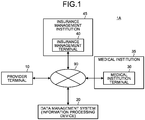
- FIG. 1 is a diagram illustrating a configuration example of the information processing system 1A according to the first embodiment of the present disclosure.
- the information processing system 1A according to the first embodiment of the present disclosure has a provider terminal 10, an information processing device (which hereinafter may be referred to as "data management system") 20, a medical institution terminal 30, and an insurance management terminal 40.
- the insurance management terminal 40 is used in an insurance management institution 45.
- An example of the insurance management institution 45 is a local government or the Ministry of Health, Labour and Welfare.
- the medical institution terminal 30 is used in a medical institution 35.
- the provider terminal 10, the data management system (information processing device) 20, the medical institution terminal 30, and the insurance management terminal 40 are connected to a network 90 and configured to be able to communicate through the network 90.
- the predetermined medium is not limited to a specific medium.
- the predetermined medium may be a paper medium or a computer-readable recording medium.
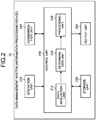
- FIG. 2 is a block diagram illustrating a functional configuration example of the data management system 20 according to the first embodiment of the present disclosure.
- the data management system 20 includes a control unit 210, an operation unit 220, a storage unit 230, a communication unit 240, and an output unit 250. These functional blocks of the data management system 20 will be described below.
- the control unit 210 may be configured with, for example, one or more processing devices such as central processing units (CPUs). When the blocks are configured with a processing device such as a CPU, such a processing device may be configured with an electronic circuit.
- the control unit 210 includes a data acquisition unit 212, a determination unit 214, and a processing unit 216. These functional blocks will be described in detail later.
- the operation unit 220 has the function of accepting input of operation by an organizer.
- a case where the operation unit 220 is configured with a touch panel is mainly described.
- the operation unit 220 is not limited to a touch panel.
- the operation unit 220 may include a mouse, a keyboard, a switch, and a lever.
- the operation unit 220 may include a microphone detecting voice of the organizer.
- the storage unit 230 includes a memory and is a recording device that stores a computer program executed by the control unit 210 and stores data necessary for execution of the computer program.
- the storage unit 230 temporarily stores data for arithmetic operation by the control unit 210.
- the storage unit 230 may be a magnetic storage device, may be a semiconductor storage device, may be an optical storage device, or may be a magnetic optical storage device.
- the communication unit 240 includes a communication circuit and has the function of communicating with another device through a network.
- the communication unit 240 is configured with a communication interface.
- the communication unit 240 can communicate with the provider terminal 10, with the medical institution terminal 30, and with the insurance management terminal 40 through the network 90.
- the output unit 250 outputs a variety of information.
- the output unit 250 may include a display capable of providing display visible to the organizer.
- the display may be a liquid crystal display or may be an organic electro-luminescence (EL) display.
- the output unit 250 may include a sound output device such as a speaker.
- the output unit 250 may include a tactile sense presenting device that presents tactile sense to the organizer.
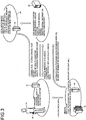
- FIG. 3 is a diagram for explaining the overall functions of the information processing system 1A according to the first embodiment of the present disclosure.
- the data management system 20 in addition to a provider P1 and the provider terminal 10, the data management system 20, the medical institution terminal 30 used in the medical institution 35, and the insurance management terminal 40 used in the insurance management institution 45 are present.
- health check data of the provider P1 is obtained.
- the health check data of the provider P1 may include test data obtained through a test (for example, test in a regular checkup) on the provider P1 during visit to a hospital or may include data of a complete physical checkup conducted on the provider P1.
- the health check data of the provider P1 obtained in the medical institution 35 is presented to the provider P1.
- the health check data may correspond to an example of biological information.
- the health check data may include data difficult to measure personally and may serve as effective data.
- the health check data of the provider P1 is transmitted from the medical institution terminal 30 to the provider terminal 10, received by the provider terminal 10, and displayed by the provider terminal 10 to be presented to the provider P1.
- the provider P1 wears a wearable device 16 containing a sensor, and the sensor detects sensor data (vital data).
- the sensor detecting vital data is not limited to a specific type.
- the sensor detecting vital data may be embedded in a medical instrument for home use or may be installed indoors or outdoors.
- the vital data may correspond to an example of biological information. While health check data is obtained in a particular condition such as on an empty stomach, vital data is also used as an example of the biological information, whereby biological information obtained in various conditions is used.
- the vital data is not limited to a specific kind.
- the vital data may include at least one of heart rate, blood pressure, blood sugar level, breathing rate, body temperature, brain wave, electrocardiogram, blood flow, cardiac sound, blood oxygen level, cholesterol, blood-alcohol level, perspiration, myogram, and the amount of physical activity of the provider P1.
- the amount of physical activity may include history (log) of the amount of physical activity.
- the amount of physical activity may be any amount related to physical activity of the provider P1.
- the amount of physical activity may include the number of steps, may include walking distance, or may include calories burned.
- the vital data is transmitted from the provider terminal 10 to the data management system 20 and received by the data management system 20.
- the health check data is transmitted from the provider terminal 10 to the data management system 20 and received by the data management system 20.
- the health check data may be directly transmitted from the medical institution terminal 30 to the data management system 20 and received by the data management system 20.
- such direct transmission of health check data may be performed for pay, for example, when the provider P1 subscribes a data provision service by a medical institution.
- the biological information (for example, vital data, health check data) provided by the provider P1 is received by the communication unit 240 in the data management system 20.
- the attribute data (or setting data) of the provider P1 is transmitted from the provider terminal 10
- the attribute data (or setting data) is received by the communication unit 240 in the data management system 20.
- the biological information and the attribute data (or setting data) received by the communication unit 240 may be private information and therefore kept secret, for example, through encryption and then securely stored in the storage unit 230.
- Examples of the attribute data (or setting data) of the provider P1 include name, domicile, age, gender, disease information, drug usage information, clinical research consent, and whether to deliver healthcare information.
- the attribute data (or setting data) of the provider P1 can be used for utilization of biological information in the data management system 20.
- the data acquisition unit 212 acquires information related to this biological information.
- the determination unit 214 determines a reward value provided to the provider P1 as feedback for provision of biological information, based on the information related to biological information. This configuration can improve the motivation of the provider P1 of biological information for healthcare. This configuration also encourages the provider P1 to provide biological information, and it is expected that biological information by provider P1 is utilized more efficiently.
- the processing unit 216 performs a predetermined process according to the reward value.
- the reward value is the amount of money.
- the reward value is not limited to the amount of money.
- the reward value may be a point having a value equivalent to the amount of money.
- the reward value is a discount on a health insurance premium.
- the reward value may be a discount on an insurance premium other than health insurance premiums.
- the information related to biological information includes a calculation result (hereinafter also referred to as "overall score") calculated based on biological information.
- the information related to biological information is not limited to the overall score.
- the calculation of the overall score is performed by the data acquisition unit 212.
- the calculation of the overall score may be performed outside the data management system 20.
- the calculation of the overall score (scoring of biological information) is specifically described. However, the calculation of the overall score may be performed by any method. For example, the data acquisition unit 212 calculates the overall score, based on at least one of an evaluation value of biological information, a period in which biological information is kept in a predetermined range, the tendency of change in biological information, the amount of physical activity of the provider when biological information is detected, and the confidence of biological information. An example in which the data acquisition unit 212 calculates the overall score based on all of them will be described below by way of example.
- the evaluation value of the biological information may be the difference between the value indicated by biological information provided by the provider P1 and a standard value. The smaller the difference, the larger a first score (health score).
- the period in which biological information is kept in a predetermined range is a period in which the value indicated by biological information continuously falls between a predetermined upper limit value and a predetermined lower limit value. The longer the period, the larger a second score (maintenance score).
- the tendency of change in biological information may be whether the tendency of change in biological information is “improving tendency” or “deteriorating tendency” or may be any other tendency.
- a third score improvement score
- the amount of physical activity of the provider when biological information is detected may be the amount of physical activity or history of the amount of physical activity.
- the overall score can be calculated based on these first score (health score), second score (maintenance score), third score (improvement score), fourth score (the amount of physical activity score), and fifth score (confidence). For example, the overall score may be calculated by adding up these scores. When only some of these scores are used, the overall score may be calculated by adding up some scores.
- the data acquisition unit 212 may calculate the confidence of biological information, based on at least one of the number of samples of biological information, the sampling period of biological information, and the average sampling interval of biological information. An example in which the data acquisition unit 212 calculates the confidence of biological information based on all of them will be described below by way of example.
- the wearable device 16 can measure a blood sugar level and the amount of physical activity and has the function of storing biological information into a storage device contained in the wearable device 16 or an external storage device (for example, a cloud storage).
- vital data for example, blood sugar level
- the wearable device 16 can measure a blood sugar level and the amount of physical activity and has the function of storing biological information into a storage device contained in the wearable device 16 or an external storage device (for example, a cloud storage).
- each individual sampling interval is t n-m - t n-m-1
- the data acquisition unit 212 also can classify the vital data (for example, blood sugar level) according to a state of the provider P1.
- the data acquisition unit 212 can classify the vital data (for example, blood sugar level) into any one of fasting data a n-m , after-meal data b n-m , and post-exercise data c n-m , based on a parameter in detecting vital data.
- the parameter may include at least one of the amount of physical activity, action history, positional information, and the amount of change in blood sugar level of the provider P1.
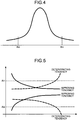
- FIG. 4 is a diagram illustrating an evaluation function.
- the blood sugar level on an empty stomach is indexed by a value of 70 to 99 (mg/dl).
- the evaluation value on an empty stomach S n-m can be calculated by an evaluation function S n-m (A hi , A lo , a n-m ) as illustrated in FIG. 4 .
- FIG. 5 is a diagram illustrating an example of the tendency of change in vital data.
- the tendency of change in evaluation value is "improving tendency”.
- the evaluation value tends to fall outside between the upper limit value A hi and the lower limit value A lo , it can be said that the tendency of change in evaluation value is "deteriorating tendency”.
- the evaluation value is "improving tendency"
- the improvement score is higher than when the evaluation value is "deteriorating tendency”.
- the overall score A score can be calculated by the function A score (S, F A , T) using the evaluation value S of vital data, the tendency F A of change in vital data, and the confidence T of vital data.
- the overall score is calculated using the evaluation value of vital data, the tendency of change in vital data, and the confidence of vital data
- the overall score may be calculated based on the amount of physical activity (act n , act n-1 ..., act 1 ) in addition to these data.
- the biological information constitutes one item (in the example above, blood sugar level) has mainly been described.
- the biological information may constitute a plurality of items (for example, blood sugar level and blood pressure).
- the data acquisition unit 212 may calculate a total score based on the overall score for each item and the weight for each item, and the total score may be used instead of the overall score.
- the data acquisition unit 212 may calculate the weight of an item, based on at least one of the amount of physical activity of the provider P1 and the confidence of biological information.
- the weight may be calculated by any method. For example, the weight may be calculated such that it is larger for an item with a larger amount of physical activity in the sampling period (provision period) of biological information. Alternatively, the weight may be calculated such that it is larger for an item with a larger confidence.
- the determination unit 214 determines a discount on a health insurance premium, based on the overall score. For example, since it can be assumed that the higher the overall score, the lower the risk for suffering a disease, the discount can be determined to be high. In this way, discounting a health insurance premium can reduce the burden of healthcare cost on the provider P1.
- the processing unit 216 calculates the health insurance premium to be paid by the provider P1 by deducting the discount from the health insurance premium as a basis.
- a possible discount method is discounting the ratio (here, 6.86%) of the income-based levy of the basic portion allocated to the medical expense born by a local government or deducting the personal portion of the per capita levy (1 ⁇ 35,400 yen).
- a similar discount method may be applied to the nursing care insurance portion of the income-based levy and the per capita levy.
- the health insurance premium to be paid by the provider P1 is transmitted by the communication unit 240 to the insurance management terminal 40 and displayed by the insurance management terminal 40.
- the insurance management institution 45 collects the discounted health insurance premium from the provider P1.
- the health insurance premium to be paid by the provider P1 is also transmitted by the communication unit 240 to the provider terminal 10 and displayed by the provider terminal 10.
- the health condition (for example, overall score) calculated by the data acquisition unit 212 is transmitted by the communication unit 240 to the provider terminal 10 and displayed by the provider terminal 10.
- This process enables the provider P1 to grasp his/her health condition.
- the provider P1 inputs a request to the provider terminal 10 and the request is transmitted to the data management system 20, the health condition calculated in the past is transmitted by the communication unit 240 to the provider terminal 10 and displayed by the provider terminal 10. This process enables the provider P1 to view the history of his/her health condition.
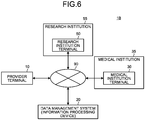
- FIG. 6 is a diagram illustrating a configuration example of the information processing system 1B according to the second embodiment of the present disclosure.
- the information processing system 1B according to the second embodiment of the present disclosure differs from the information processing system 1A according to the first embodiment of the present disclosure in that it has a research institution terminal 50 instead of the insurance management terminal 40.
- the research institution terminal 50 is used in a research institution 55.
- Examples of the research institution 55 include hospitals, universities, and pharmaceutical companies.
- the same configuration as the configuration of the information processing system 1A according to the first embodiment of the present disclosure will not be further elaborated, and a different configuration is mainly described below.
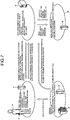
- FIG. 7 is a diagram for explaining the overall functions of the information processing system 1B according to the second embodiment of the present disclosure.
- the second embodiment of the present disclosure differs from the first embodiment of the present disclosure in that the research institution terminal 50 used in the research institution 55 is present instead of the insurance management terminal 40 used in the insurance management institution 45.
- the data acquisition unit 212 acquires information related to biological information.
- the determination unit 214 determines a reward value provided to the provider P1 as feedback for provision of biological information, based on information related to biological information.
- the processing unit 216 performs a predetermined process according to the reward value.
- the reward value is the amount of money in the same manner as in the first embodiment of the present disclosure.
- the research institution 55 asks for cooperation in clinical research (for example, as illustrated in FIG. 7 , through the data management system 20), and biological information is provided from the provider P1 as biological information to be used in clinical research in the research institution 55.
- the provider P1 provides biological information as the biological information used in clinical research, whereby the research institution 55 can search for desired biological information (for example, for pay) in chronological order in addition to age, gender, established disease, drug usage and can obtain subject data useful for clinical research.
- the reward value is the amount of money (research cooperation fee) paid to the provider P1 for cooperation on clinical research.
- the information related to biological information may include the data size of biological information provided by the provider P1 (may be pay-per-use), may include the number of items that constitute the biological information provided by the provider P1, or may include the period in which the biological information provided by the provider P1 is provided (for example, per month when a monthly use agreement is made, or per year when an annual use agreement is made).
- the determination unit 214 determines the research cooperation fee to be paid to the provider P1, based on the information related to biological information.
- the research cooperation fee is paid to the provider P1 to encourage the provider P1 to provide biological information.
- the biological information by the provider P1 is thus used in research more efficiently, which increases the possibility that undiscovered treatment for a disease is found early.
- the time taken for research development of disease treatment and drug discovery can be reduced, and it is expected that research spending can be reduced.
- the processing unit 216 may make a settlement process of transferring the research cooperation fee to the account of the provider P1.
- the research cooperation fee is transmitted by the communication unit 240 to the research institution terminal 50 and displayed by the research institution terminal 50.
- the research cooperation fee is also transmitted by the communication unit 240 to the provider terminal 10 and displayed by the provider terminal 10.
- the biological information provided by the provider P1 is used (for example, as anonymous data) in whole or in part for clinical research in the research institution 55.
- a data usage fee may be provided from the research institution 55 to the data management system 20.
- the determination unit 214 determines the amount of money (data usage fee) to be paid by the research institution 55, based on information related to biological information that is used by the user in the biological information provided by the provider P1.
- the information related to biological information used by the research institution 55 (user) may include the data size of biological information used by the research institution 55 (user) (may be pay-per-use), or may include the number of items that constitute the biological information used by the research institution 55 (user), or may include the period in which biological information is used by the research institution 55 (user) (for example, per month when a monthly use agreement is made, or per year when an annual use agreement is made).
- the determination unit 214 determines a data usage fee, based on the information related to the biological information used by the research institution 55 (user).
- the processing unit 216 may perform a settlement process of withdrawing the data usage fee from the account of the research institution 55 (user).
- the data usage fee is transmitted by the communication unit 240 to the research institution terminal 50 and displayed by the research institution terminal 50.
- the data usage fee is transmitted by the communication unit 240 to the provider terminal 10 and displayed by the provider terminal 10.
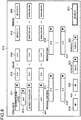
- FIG. 8 is a diagram illustrating an example of a search screen displayed by the research institution terminal 50.
- a search screen 810 displayed by the research institution terminal 50 includes a vital data item select field 811, a vital data upper limit value input field 813, a vital data lower limit value input field 814, a start date of vital data provision period input field 815, and an end date of vital data provision period input field 816.
- an item-to-item relation input field 812 is provided.
- the search screen 810 additionally includes a medical history of provider P1 select field 817, a medication of provider P1 select field 818, an age lower limit value input field 819, an age upper limit value input field 820, a gender select field 821, and a domicile select field 822.
- a search button 823 When a search button 823 is pressed, vital data that satisfies these conditions is retrieved from vital data provided from one or more providers.
- FIG. 9 is a diagram illustrating an example of a search result screen displayed by the research institution terminal 50.
- a search result screen 830 displayed by the research institution terminal 50 includes vital data (in FIG. 9 "blood sugar level” and “blood pressure” appear as an example), attribute data, and setting data (in FIG. 9 “medical history”, “medication”, “age”, “gender”, and “domicile” appear as an example) as the search result based on the search button 823 ( FIG. 8 ) pressed.
- the search result screen 830 may have the sorting function for each item.
- the search result screen 830 also includes data check boxes 831 to 833.
- a check mark appears in the data check box 831 and the data check box 833 to indicate that data has been selected.
- a target subject list register button 834 is pressed, the provider corresponding to the selected data is registered in a target subject list.
- a detail data view button 835 is pressed, a detail data screen corresponding to the selected data appears.
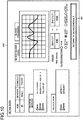
- FIG. 10 is a diagram illustrating an example of the detail data screen displayed by the research institution terminal 50.
- a detail data screen 840 displayed by the research institution terminal 50 includes age, gender, and domicile as well as the detail of medical history, and the detail of medication.
- the detail data screen 840 also includes temporal change for each item of vital data (in the example illustrated in FIG. 10 , blood sugar level and blood pressure).
- a period and a time range for the temporal change of vital data can be specified. This enables the user to examine not only a long-term change of vital data but also a short-term change (for example, change for one day).
- a filter condition of vital data can also be specified. Specifically, any one of the filter conditions “none”, “before meal”, “after meal”, “before exercise”, and “after exercise” can be specified so that vital data narrowed down by the specified filter condition appears.
- a return button 841 is pressed, the display is controlled to return to the search result screen 830.
- the biological information provided by the provider P1 is used in whole or in part by the research institution 55 (user).
- the research institution 55 may be tempted to ask the provider P1 for cooperation on research while the research institution 55 is using the biological information provided by the provider P1 in whole or in part.
- a consideration may be paid from the research institution 55 to the organizer of the data management system 20 for the success in matching between the provider P1 and the research institution 55.
- the organizer of the data management system 20 thus can enjoy the merit.
- the determination unit 214 determines a contingency fee to be paid by the research institution 55.
- the contingency fee may be, but not limited to, the amount of money obtained by multiplying the price paid by the research institution 55 for the cooperation by the provider P1 by a predetermined ratio (for example, a small percent).
- the processing unit 216 may perform a settlement process of withdrawing the contingency fee from the account of the research institution 55.
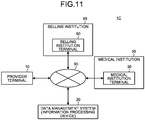
- FIG. 11 is a diagram illustrating a configuration example of the information processing system 1C according to the third embodiment of the present disclosure.
- the information processing system 1C according to the third embodiment of the present disclosure differs from the information processing system 1A according to the first embodiment of the present disclosure in that it has a selling institution terminal 60 instead of the insurance management terminal 40.
- the selling institution terminal 60 is used in a selling institution 65.
- the selling institution 65 may be an institution that provides products or services (specifically, an institution that aims to gain a profit by supporting personal healthcare), and examples include medical institutions, pharmaceutical companies, and sports gyms.
- the same configuration as the configuration of the information processing system 1A according to the first embodiment of the present disclosure will not be further elaborated, and a different configuration is mainly described below.
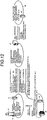
- FIG. 12 is a diagram for explaining the overall functions of the information processing system 1C according to the third embodiment of the present disclosure.
- the third embodiment of the present disclosure differs from the first embodiment of the present disclosure in that the selling institution terminal 60 used in the selling institution 65 is present instead of the insurance management terminal 40 used in the insurance management institution 45.
- the data acquisition unit 212 acquires information related to biological information.
- the determination unit 214 determines a reward value provided to the provider P1 as feedback for provision of biological information, based on information related to biological information.
- the processing unit 216 performs a predetermined process according to the reward value.
- the reward value is the amount of money in the same manner as in the first embodiment of the present disclosure.
- the selling institution 65 makes a request to present a targeted advertisement (for example, through the data management system 20 as illustrated in FIG. 12 ), and the provider P1 provides biological information as biological information to be used in data analysis for targeted advertisement presentation in the selling institution 65.
- the provider P1 provides biological information as the biological information to be used for data analysis, whereby the selling institution 65 can search for desired biological information in chronological order (for example, for pay) in addition to age, gender, established disease, and drug usage and present a targeted advertisement appropriate for the provider P1 (for example, a targeted advertisement is transmitted from the selling institution terminal 60 to the provider terminal 10).
- the selling institution 65 searches for a provider serving as a target through data analysis and additionally pays an advertising fee to present advertisements related to products or services or issue coupons. This process creates an awareness to a provider who notices few symptoms and attracts a new customer. Since a more appropriate targeted advertisement can be presented to the provider, the cost effectiveness for advertising fees can be increased.
- targeting advertisement has been used, which analyze the user's statement in a social networking service (SNS) and the like.
- SNS social networking service
- biological information can be used to find a target user more appropriately.
- the reward value is the amount of money (data analysis cooperation fee) paid to the provider P1 for cooperation on data analysis.
- the information related to biological information may include the data size of biological information provided by the provider P1 (may be pay-per-use), may include the number of items that constitute the biological information provided by the provider P1, or may include the period in which the biological information provided by the provider P1 is provided (for example, per month when a monthly use agreement is made, or per year when an annual use agreement is made).
- the determination unit 214 determines a data analysis cooperation fee paid to the provider P1, based on the information related to biological information.
- the processing unit 216 may perform a settlement process of transferring the data analysis cooperation fee to the account of the provider P1.
- the data analysis cooperation fee is transmitted by the communication unit 240 to the selling institution terminal 60 and displayed by the selling institution terminal 60.
- the data analysis cooperation fee is transmitted by the communication unit 240 to the provider terminal 10 and displayed by the provider terminal 10.
- the data analysis cooperation fee may be fixed or may vary depending on situations. For example, when the provider P1 accepts receiving advertisement presentation, the determination unit 214 may determine the data analysis cooperation fee provided to the provider P1 to be high compared with when the provider P1 rejects receiving advertisement presentation. If so, the provider P1 is encouraged to accept receiving advertisement presentation, and it is more likely that advertisements promote sales of products or services.
- a search screen displayed by the selling institution terminal 60 may be similar to the search screen 810 ( FIG. 8 ) described in the second embodiment of the present disclosure.
- the search button 823 is pressed in the search screen 810 ( FIG. 8 )
- vital data that satisfies these conditions is retrieved from vital data provided from one or more providers.
- FIG. 13 is a diagram illustrating an example of a search result screen displayed by the selling institution terminal 60.
- the search result screen 830 displayed by the selling institution terminal 60 differs from the search result screen 830 ( FIG. 9 ) described in the second embodiment of the present disclosure in that it includes a target user list register button 836 instead of the target subject list register button 834.
- the target user list register button 836 is pressed, the provider corresponding to the selected data is registered in the target user list.
- the detail data view button 835 is pressed, a detail data screen corresponding to the selected data appears.
- FIG. 14 is a diagram illustrating an example of the advertisement screen displayed by the provider terminal 10.
- an advertisement screen 850 displayed by the provider terminal 10 includes one or more items that constitute vital data (in the example illustrated in FIG. 14 , "blood sugar level", "blood pressure").
- vital data in the example illustrated in FIG. 14 , "blood sugar level", "blood pressure”
- the temporal change of vital data and the health score corresponding to the selected item appear.
- the advertisement screen 850 includes the temporal change and the health score "34" of vital data corresponding to the item "blood sugar level".
- the temporal change and the health score of vital data corresponding to each item may be displayed in the form of a list.
- the longer period of vital data is displayed according to the provision period of vital data, so that the transition of vital data can be examined retroactively in the advertisement screen 850.
- the advertisement screen 850 may include advice on health (health advice).
- health advice may include the result of data analysis conducted for the displayed health score of vital data by the data management system 20 or the selling institution 65.
- the health advice may include the risk of suffering a disease and advice such as proposal of a risk improving method.
- the selling institution 65 may include an advertisement related to its product (or serve) and a link to its site in the advertisement screen 850.
- the selling institution 65 may include a purchase button for its product (or service) in the advertisement screen 850.
- the biological information provided by the provider P1 is used in whole or in part (for example, as anonymous data) for data analysis in the selling institution 65.
- a data usage fee may be provided from the selling institution 65 to the data management system 20.
- the determination unit 214 determines the amount of money (data usage fee) to be paid by the selling institution 65, based on information related to biological information that is used by the user in the biological information provided by the provider P1.
- the information related to the biological information used by the selling institution 65 may include the data size of the biological information used by the selling institution 65, may include the number of items that constitute the biological information used by the selling institution 65, or may include the period in which biological information is used by the selling institution 65.
- the determination unit 214 determines a data usage fee, based on the information related to the biological information used by the selling institution 65.
- the processing unit 216 may perform a settlement process of withdrawing the data usage fee from the account of the selling institution 65.
- the data usage fee is transmitted by the communication unit 240 to the selling institution terminal 60 and displayed by the selling institution terminal 60.
- the data usage fee is transmitted by the communication unit 240 to the provider terminal 10 and displayed by the provider terminal 10.
- the selling institution terminal 60 determines an advertisement to be presented to the provider P1 from among advertisements related to products or services sold by the selling institution 65 (user), based on the information related to biological information.
- the provider P1 may be tempted to purchase a product or service related to the advertisement while viewing the presented advertisement.
- a consideration may be paid from the selling institution 65 to the organizer of the data management system 20 for the success in matching between the provider P1 and the selling institution 65 (user).
- the organizer of the data management system 20 thus can enjoy the merit.
- the determination unit 214 determines a contingency fee to be paid by the selling institution 65.
- the contingency fee may be, but not limited to, the amount of money obtained by multiplying the price of the product or service purchased by the provider P1 by a predetermined ratio (for example, a small percent).
- the processing unit 216 may perform a settlement process of withdrawing the contingency fee from the account of the selling institution 65.
- an advertisement to be presented to the provider P1 is determined from among advertisements related to products or services sold by the selling institution 65 (user) based on the information related to biological information
- a medical institution may be present as the user of biological information, instead of the selling institution 65.
- the medical institution may present advice (for example, charge-free advice) to the provider P1 instead of an advertisement (for example, advice may be transmitted from the medical institution terminal to the provider terminal 10).
- the advice presented to the provider P1 may be determined by the medical institution based on the information related to biological information, in the same manner as the advertisement.
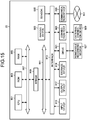
- FIG. 15 is a block diagram illustrating a hardware configuration example of the data management system 20 according to the embodiments of the present disclosure.
- FIG. 15 is a block diagram illustrating a hardware configuration example of the data management system 20 according to the embodiments of the present disclosure.
- the hardware configuration of a variety of terminals for example, the provider terminal 10, the medical institution terminal 30, the insurance management terminal 40, the research institution terminal 50, the selling institution terminal 60
- the hardware configuration of a variety of terminals for example, the provider terminal 10, the medical institution terminal 30, the insurance management terminal 40, the research institution terminal 50, the selling institution terminal 60
- the hardware configuration of a variety of terminals for example, the provider terminal 10, the medical institution terminal 30, the insurance management terminal 40, the research institution terminal 50, the selling institution terminal 60
- the hardware configuration of a variety of terminals for example, the provider terminal 10, the medical institution terminal 30, the insurance management terminal 40, the research institution terminal 50, the selling institution terminal 60
- the hardware configuration of a variety of terminals for example, the provider terminal 10, the medical institution terminal 30, the insurance
- the data management system 20 includes a central processing unit (CPU) 901, a read only memory (ROM) 903, and a random access memory (RAM) 905.
- the data management system 20 may also include a host bus 907, a bridge 909, an external bus 911, an interface 913, an input device 915, an output device 917, a storage device 919, a drive 921, a connection port 923, and a communication device 925.
- the data management system 20 may further include an imaging device 933 and a sensor 935 if necessary.
- the data management system 20 may have a processing circuit called a digital signal processor (DSP) or an application specific integrated circuit (ASIC), instead of or in addition to the CPU 901.
- DSP digital signal processor
- ASIC application specific integrated circuit
- the CPU 901 functions as an arithmetic processing unit and a control device and controls the entire operation or part of the operation in the data management system 20 under instructions of computer programs stored in the ROM 903, the RAM 905, the storage device 919, or a removable recording medium 927.
- the ROM 903 stores computer programs or arithmetic operation parameters to be used by the CPU 901.
- the RAM 905 temporarily stores a computer program used in execution of the CPU 901 and parameters changing as appropriate in the execution.
- the CPU 901, the ROM 903, and the RAM 905 are connected with each other through the host bus 907 configured with an internal bus such as a CPU bus.
- the host bus 907 is further connected to the external bus 911 such as a peripheral component interconnect/interface (PCI) bus through the bridge 909.
- PCI peripheral component interconnect/interface
- the input device 915 is a device operated by a user, such as a button.
- the input device 915 may include a mouse, a keyboard, a touch panel, a switch, and a lever.
- the input device 915 may include a microphone detecting user's voice.
- the input device 915 may be, for example, a remote controller using infrared radiation or other radio waves or may be an external connection device 929, such as a mobile phone, adapted to operate the data management system 20.
- the input device 915 includes an input control circuit that generates an input signal based on information input by the user and outputs the generated signal to the CPU 901.
- the user operates the input device 915 to input a variety of data or a processing operation instruction to the data management system 20.
- the imaging device 933 described later may also function as an input device by imaging the motion of the user's hand or the user's finger. In this case, the pointing position may be determined depending on the motion of the hand or the direction of the finger.
- the output device 917 is configured with a device that can give the acquired information to the user visually or acoustically.
- the output device 917 may be, for example, a display device such as a liquid crystal display (LCD) and an organic electro-luminescence (EL) display or a sound output device such as a speaker and headphones.
- the output device 917 may include a plasma display panel (PDP), a projector, a hologram, and a printer.
- the output device 917 outputs the result obtained by the processing by the data management system 20 in the form of image such as text or picture or in the form of sound such as voice or audio.
- the output device 917 may include a light for illuminating the surrounding.
- the storage device 919 is a device for data storage configured as an example of the storage unit of the data management system 20.
- the storage device 919 is configured with, for example, a magnetic storage device such as a hard disk drive (HDD), a semiconductor storage device, an optical storage device, or a magnetic optical storage device.
- This storage device 919 stores a computer program and a variety of data executed by the CPU 901, and a variety of data externally acquired.
- the drive 921 is a reader/writer for the removable recording medium 927 such as a magnetic disc, an optical disc, a magnetic optical disc, or a semiconductor memory and is contained in the data management system 20 or externally attached.
- the drive 921 reads information recorded on the attached removable recording medium 927 and outputs the read information to the RAM 905.
- the drive 921 also writes a record into the attached removable recording medium 927.
- the connection port 923 is a port for directly connecting a device to the data management system 20.
- the connection port 923 may be, for example, a universal serial bus (USB) port, an IEEE1394 port, or a small computer system interface (SCSI) port.
- the connection port 923 may be, for example, an RS-232C port, an optical audio terminal, a high-definition multimedia interface (HDMI) (registered trademark) port.
- HDMI high-definition multimedia interface
- the communication device 925 is a communication interface configured with, for example, a communication device for connecting to a network 931.
- the communication device 925 may be, for example, a communication card for a wired or wireless local area network (LAN), Bluetooth (registered trademark), or wireless USB (WUSB).
- the communication device 925 may be a router for optical communication, a router for asymmetric digital subscriber line (ADSL), or a variety of communication modems.
- the communication device 925 transmits/receives, for example, signals to/from the Internet or other communication devices using a predetermined protocol such as TCP/IP.
- the network 931 connected to the communication device 925 is a network connected by wire or wirelessly, and examples include the Internet, home LAN, infrared communication, radio wave communication, and satellite communication.
- the imaging device 933 is a device that images the real space, for example, using an imager such as charge coupled device (CCD) or complementary metal oxide semiconductor (CMOS) and a variety of members such as a lens for controlling image formation of a subject image on the imager, and generates a captured image.
- the imaging device 933 may capture still images or may capture moving images.
- the sensor 935 is a variety of sensors such as a distance-measurement sensor, an acceleration sensor, a gyro sensor, a geomagnetic sensor, a vibration sensor, an optical sensor, and an acoustic sensor.
- the sensor 935 acquires, for example, information about a state of the data management system 20 per se, such as the posture of the casing of the data management system 20, and information about the environment surrounding the data management system 20, such as brightness and noise in the surroundings of the data management system 20.
- the sensor 935 may include a global positioning system (GPS) sensor that receives GPS signals to measure the latitude, longitude, and altitude of the device.
- GPS global positioning system
- embodiments of the present disclosure provide the data management system 20 which includes the data acquisition unit 212 configured to acquire information related to biological information provided by the provider P1 and the determination unit 214 configured to determine the reward value provided to the provider P1 as feedback for provision of biological information, based on the information related to biological information.
- Such a configuration can improve the motivation of the provider P1 of biological information for healthcare.
- such a configuration encourages the provider P1 to provide biological information, and it is expected that the biological information by the provider P1 is utilized more efficiently.
- the data management system 20 is provided independently of the other terminals.
- any other terminal may have some or all of the functions of the data management system 20.
- some or all of the functions of the data management system 20 may be distributed over a plurality of terminals.
Landscapes
- Business, Economics & Management (AREA)
- Engineering & Computer Science (AREA)
- Accounting & Taxation (AREA)
- Finance (AREA)
- Strategic Management (AREA)
- Development Economics (AREA)
- Physics & Mathematics (AREA)
- General Physics & Mathematics (AREA)
- Economics (AREA)
- Marketing (AREA)
- General Business, Economics & Management (AREA)
- Theoretical Computer Science (AREA)
- Health & Medical Sciences (AREA)
- Game Theory and Decision Science (AREA)
- Entrepreneurship & Innovation (AREA)
- General Health & Medical Sciences (AREA)
- Primary Health Care (AREA)
- Public Health (AREA)
- Medical Informatics (AREA)
- Tourism & Hospitality (AREA)
- Life Sciences & Earth Sciences (AREA)
- Epidemiology (AREA)
- Technology Law (AREA)
- Biomedical Technology (AREA)
- Surgery (AREA)
- Biophysics (AREA)
- Pathology (AREA)
- Child & Adolescent Psychology (AREA)
- Heart & Thoracic Surgery (AREA)
- Molecular Biology (AREA)
- Human Resources & Organizations (AREA)
- Animal Behavior & Ethology (AREA)
- Veterinary Medicine (AREA)
- Medical Treatment And Welfare Office Work (AREA)
- Financial Or Insurance-Related Operations Such As Payment And Settlement (AREA)
- Measuring And Recording Apparatus For Diagnosis (AREA)
- Management, Administration, Business Operations System, And Electronic Commerce (AREA)
Applications Claiming Priority (2)
| Application Number | Priority Date | Filing Date | Title |
|---|---|---|---|
| JP2017139594A JP6996144B2 (ja) | 2017-07-19 | 2017-07-19 | 情報処理装置、情報処理方法およびプログラム |
| PCT/JP2018/017506 WO2019017039A1 (ja) | 2017-07-19 | 2018-05-02 | 情報処理装置、情報処理方法およびプログラム |
Publications (2)
| Publication Number | Publication Date |
|---|---|
| EP3657430A4 EP3657430A4 (en) | 2020-05-27 |
| EP3657430A1 true EP3657430A1 (en) | 2020-05-27 |
Family
ID=65015975
Family Applications (1)
| Application Number | Title | Priority Date | Filing Date |
|---|---|---|---|
| EP18835835.2A Ceased EP3657430A1 (en) | 2017-07-19 | 2018-05-02 | Information processing device, information processing method, and program |
Country Status (5)
| Country | Link |
|---|---|
| US (1) | US20200135304A1 (enExample) |
| EP (1) | EP3657430A1 (enExample) |
| JP (1) | JP6996144B2 (enExample) |
| CN (1) | CN110870023A (enExample) |
| WO (1) | WO2019017039A1 (enExample) |
Families Citing this family (9)
| Publication number | Priority date | Publication date | Assignee | Title |
|---|---|---|---|---|
| JP7263095B2 (ja) * | 2019-04-22 | 2023-04-24 | ジェネシスヘルスケア株式会社 | 研究支援システム、研究支援装置、研究支援方法及び研究支援プログラム |
| JP7192672B2 (ja) * | 2019-06-12 | 2022-12-20 | 日本電信電話株式会社 | 通知システム |
| CN111449641B (zh) * | 2020-04-20 | 2021-07-20 | 浙江大学 | 一种基于光电信号检测的肌肉功能状态的评估装置和评估方法 |
| JP7555755B2 (ja) * | 2020-08-07 | 2024-09-25 | キヤノンメディカルシステムズ株式会社 | 医用情報処理装置、医用情報処理システム及び医用情報処理プログラム |
| JP6887194B1 (ja) * | 2020-09-14 | 2021-06-16 | 株式会社Arblet | 情報処理システム、サーバ、情報処理方法及びプログラム |
| JP6869584B1 (ja) * | 2020-09-14 | 2021-05-12 | 株式会社Arblet | 情報処理システム、サーバ、情報処理方法及びプログラム |
| JP2024076442A (ja) * | 2022-11-25 | 2024-06-06 | 株式会社ジャパンディスプレイ | 報酬決定システム及び報酬決定方法 |
| JP2024124236A (ja) * | 2023-03-02 | 2024-09-12 | トヨタ自動車株式会社 | 情報処理装置、情報処理方法及びプログラム |
| JP7850462B2 (ja) * | 2024-01-24 | 2026-04-23 | 株式会社サンクスネット | 健康医療情報管理システム |
Family Cites Families (16)
| Publication number | Priority date | Publication date | Assignee | Title |
|---|---|---|---|---|
| JP2000148985A (ja) | 1998-11-17 | 2000-05-30 | Hitachi Ltd | 個人認証システム |
| AU2002255568B8 (en) * | 2001-02-20 | 2014-01-09 | Adidas Ag | Modular personal network systems and methods |
| US6758812B2 (en) * | 2001-02-23 | 2004-07-06 | Brook W. Lang | Emergency medical treatment system |
| US7353179B2 (en) * | 2002-11-13 | 2008-04-01 | Biomedical Systems | System and method for handling the acquisition and analysis of medical data over a network |
| JP2004358231A (ja) | 2003-05-15 | 2004-12-24 | Seiko Instruments Inc | 生体状態監視システム |
| JP2006258978A (ja) | 2005-03-15 | 2006-09-28 | Omron Healthcare Co Ltd | 広告システム |
| JP2006262993A (ja) | 2005-03-22 | 2006-10-05 | Nippon Telegr & Teleph Corp <Ntt> | 健康データ収集提供方法およびそのシステム |
| JP2007323528A (ja) | 2006-06-02 | 2007-12-13 | Matsushita Electric Ind Co Ltd | 生体情報活用システム |
| US20120296571A1 (en) | 2010-02-05 | 2012-11-22 | Nec Corporation | Organism information measuring instrument, portable terminal device, organism information measuring method, and program |
| JP2013117941A (ja) | 2011-10-31 | 2013-06-13 | Sony Corp | 体質判定装置、体質判定方法、健康支援装置、健康支援方法、プログラム、端末装置および健康支援システム |
| US20130262155A1 (en) * | 2012-04-03 | 2013-10-03 | Thomas J. HinKamp | System and method for collection and distibution of medical information |
| JP2014109826A (ja) * | 2012-11-30 | 2014-06-12 | International Business Maschines Corporation | 広域分散医療情報ネットワークの緊急時のためのデータ管理機構 |
| US20160282939A1 (en) * | 2013-06-28 | 2016-09-29 | Danmarks Tekniske Universitet | Brain-Computer Interface |
| CN204376948U (zh) * | 2014-11-05 | 2015-06-03 | 天津永兴泰科技有限公司 | 一种物联网远程网络云服务系统 |
| JP2015111438A (ja) | 2015-01-20 | 2015-06-18 | ヘルスグリッド株式会社 | 生体情報の評価システム及び評価方法 |
| CN105534493A (zh) * | 2015-12-18 | 2016-05-04 | 安徽寰智信息科技股份有限公司 | 一种穿戴式健康监测组件 |
-
2017
- 2017-07-19 JP JP2017139594A patent/JP6996144B2/ja active Active
-
2018
- 2018-05-02 WO PCT/JP2018/017506 patent/WO2019017039A1/ja not_active Ceased
- 2018-05-02 EP EP18835835.2A patent/EP3657430A1/en not_active Ceased
- 2018-05-02 US US16/630,221 patent/US20200135304A1/en not_active Abandoned
- 2018-05-02 CN CN201880046008.8A patent/CN110870023A/zh active Pending
Also Published As
| Publication number | Publication date |
|---|---|
| JP6996144B2 (ja) | 2022-01-17 |
| WO2019017039A1 (ja) | 2019-01-24 |
| JP2019021080A (ja) | 2019-02-07 |
| EP3657430A4 (en) | 2020-05-27 |
| CN110870023A (zh) | 2020-03-06 |
| US20200135304A1 (en) | 2020-04-30 |
Similar Documents
| Publication | Publication Date | Title |
|---|---|---|
| US20200135304A1 (en) | Information processing device, information processing method, and computer program | |
| Alexander et al. | Wearable technologies to measure clinical outcomes in multiple sclerosis: a scoping review | |
| US8793142B2 (en) | Methods and apparatuses for remote diagnosis and prescription | |
| US10664572B2 (en) | Recommendations for health benefit resources | |
| Doherty et al. | A multi-sensor monitoring system of human physiology and daily activities | |
| KR102297367B1 (ko) | 생체정보 수집 및 온라인 문진을 이용한 건강관리케어 서비스 제공 서버 | |
| US20140135592A1 (en) | Health band | |
| KR101500673B1 (ko) | 이동 통신 기기를 이용하는 건강 관리 시스템, 이동 통신 기기 및 건강 관리 방법 | |
| JP2016511890A (ja) | 個人データマーケットの提供 | |
| US20140114677A1 (en) | Assisted Medical and Associated Lifestyle Decision Making | |
| CN110832602A (zh) | 软件、健康状态判定装置及健康状态判定方法 | |
| US10769737B2 (en) | Information processing device, information processing method, and program | |
| Chung et al. | Relationship between life-space mobility and health characteristics in older adults using global positioning system watches | |
| Doherty et al. | Time‐Series Analysis of Continuously Monitored Blood Glucose: The Impacts of Geographic and Daily Lifestyle Factors | |
| EP3432254A1 (en) | Remote diagnostic aid system, remote diagnostic aid server, and remote diagnostic aid method | |
| Lohnari et al. | Use of mobile applications in healthcare: a review | |
| Coda et al. | Exploring the effectiveness of smart technologies in the management of type 2 diabetes mellitus | |
| JP7248094B2 (ja) | 情報処理装置、情報処理方法およびプログラム | |
| Saho et al. | Screening of apathetic elderly adults using kinematic information in gait and sit-to-stand/stand-to-sit movements measured with Doppler radar | |
| Hovey et al. | Community-based telemonitoring for hypertension management: practical challenges and potential solutions | |
| JP2021018550A (ja) | 支援装置、情報取得システム、及び支援プログラム | |
| Doherty | Exploring blood glucose variation over geographical space | |
| JP2008009501A (ja) | 課金方法 | |
| JP2018085083A (ja) | 健康管理プログラム | |
| KR20230024584A (ko) | 질병관리 가이드라인 제공 방법 및 시스템 |
Legal Events
| Date | Code | Title | Description |
|---|---|---|---|
| STAA | Information on the status of an ep patent application or granted ep patent |
Free format text: STATUS: THE INTERNATIONAL PUBLICATION HAS BEEN MADE |
|
| PUAI | Public reference made under article 153(3) epc to a published international application that has entered the european phase |
Free format text: ORIGINAL CODE: 0009012 |
|
| STAA | Information on the status of an ep patent application or granted ep patent |
Free format text: STATUS: REQUEST FOR EXAMINATION WAS MADE |
|
| 17P | Request for examination filed |
Effective date: 20200203 |
|
| A4 | Supplementary search report drawn up and despatched |
Effective date: 20200331 |
|
| AK | Designated contracting states |
Kind code of ref document: A1 Designated state(s): AL AT BE BG CH CY CZ DE DK EE ES FI FR GB GR HR HU IE IS IT LI LT LU LV MC MK MT NL NO PL PT RO RS SE SI SK SM TR |
|
| AX | Request for extension of the european patent |
Extension state: BA ME |
|
| DAV | Request for validation of the european patent (deleted) | ||
| DAX | Request for extension of the european patent (deleted) | ||
| STAA | Information on the status of an ep patent application or granted ep patent |
Free format text: STATUS: EXAMINATION IS IN PROGRESS |
|
| 17Q | First examination report despatched |
Effective date: 20201028 |
|
| RAP3 | Party data changed (applicant data changed or rights of an application transferred) |
Owner name: SONY GROUP CORPORATION |
|
| REG | Reference to a national code |
Ref country code: DE Ref legal event code: R003 |
|
| STAA | Information on the status of an ep patent application or granted ep patent |
Free format text: STATUS: THE APPLICATION HAS BEEN REFUSED |
|
| 18R | Application refused |
Effective date: 20221207 |