EP3649150B1 - Ror1 car t-cells - Google Patents
Ror1 car t-cells Download PDFInfo
- Publication number
- EP3649150B1 EP3649150B1 EP18742576.4A EP18742576A EP3649150B1 EP 3649150 B1 EP3649150 B1 EP 3649150B1 EP 18742576 A EP18742576 A EP 18742576A EP 3649150 B1 EP3649150 B1 EP 3649150B1
- Authority
- EP
- European Patent Office
- Prior art keywords
- amino acid
- seq
- set forth
- acid sequence
- chain variable
- Prior art date
- Legal status (The legal status is an assumption and is not a legal conclusion. Google has not performed a legal analysis and makes no representation as to the accuracy of the status listed.)
- Active
Links
Images





Classifications
-
- C—CHEMISTRY; METALLURGY
- C07—ORGANIC CHEMISTRY
- C07K—PEPTIDES
- C07K14/00—Peptides having more than 20 amino acids; Gastrins; Somatostatins; Melanotropins; Derivatives thereof
- C07K14/435—Peptides having more than 20 amino acids; Gastrins; Somatostatins; Melanotropins; Derivatives thereof from animals; from humans
- C07K14/705—Receptors; Cell surface antigens; Cell surface determinants
- C07K14/70578—NGF-receptor/TNF-receptor superfamily, e.g. CD27, CD30, CD40, CD95
-
- A—HUMAN NECESSITIES
- A61—MEDICAL OR VETERINARY SCIENCE; HYGIENE
- A61K—PREPARATIONS FOR MEDICAL, DENTAL OR TOILETRY PURPOSES
- A61K40/00—Cellular immunotherapy
- A61K40/10—Cellular immunotherapy characterised by the cell type used
- A61K40/11—T-cells, e.g. tumour infiltrating lymphocytes [TIL] or regulatory T [Treg] cells; Lymphokine-activated killer [LAK] cells
-
- A—HUMAN NECESSITIES
- A61—MEDICAL OR VETERINARY SCIENCE; HYGIENE
- A61K—PREPARATIONS FOR MEDICAL, DENTAL OR TOILETRY PURPOSES
- A61K40/00—Cellular immunotherapy
- A61K40/30—Cellular immunotherapy characterised by the recombinant expression of specific molecules in the cells of the immune system
- A61K40/31—Chimeric antigen receptors [CAR]
-
- A—HUMAN NECESSITIES
- A61—MEDICAL OR VETERINARY SCIENCE; HYGIENE
- A61K—PREPARATIONS FOR MEDICAL, DENTAL OR TOILETRY PURPOSES
- A61K40/00—Cellular immunotherapy
- A61K40/40—Cellular immunotherapy characterised by antigens that are targeted or presented by cells of the immune system
- A61K40/41—Vertebrate antigens
- A61K40/42—Cancer antigens
- A61K40/4202—Receptors, cell surface antigens or cell surface determinants
-
- A—HUMAN NECESSITIES
- A61—MEDICAL OR VETERINARY SCIENCE; HYGIENE
- A61K—PREPARATIONS FOR MEDICAL, DENTAL OR TOILETRY PURPOSES
- A61K40/00—Cellular immunotherapy
- A61K40/40—Cellular immunotherapy characterised by antigens that are targeted or presented by cells of the immune system
- A61K40/41—Vertebrate antigens
- A61K40/42—Cancer antigens
- A61K40/4202—Receptors, cell surface antigens or cell surface determinants
- A61K40/421—Immunoglobulin superfamily
- A61K40/4211—CD19 or B4
-
- A—HUMAN NECESSITIES
- A61—MEDICAL OR VETERINARY SCIENCE; HYGIENE
- A61K—PREPARATIONS FOR MEDICAL, DENTAL OR TOILETRY PURPOSES
- A61K40/00—Cellular immunotherapy
- A61K40/40—Cellular immunotherapy characterised by antigens that are targeted or presented by cells of the immune system
- A61K40/41—Vertebrate antigens
- A61K40/42—Cancer antigens
- A61K40/4256—Tumor associated carbohydrates
- A61K40/4258—Gangliosides, e.g. GM2, GD2 or GD3
-
- A—HUMAN NECESSITIES
- A61—MEDICAL OR VETERINARY SCIENCE; HYGIENE
- A61P—SPECIFIC THERAPEUTIC ACTIVITY OF CHEMICAL COMPOUNDS OR MEDICINAL PREPARATIONS
- A61P35/00—Antineoplastic agents
- A61P35/02—Antineoplastic agents specific for leukemia
-
- C—CHEMISTRY; METALLURGY
- C07—ORGANIC CHEMISTRY
- C07K—PEPTIDES
- C07K14/00—Peptides having more than 20 amino acids; Gastrins; Somatostatins; Melanotropins; Derivatives thereof
- C07K14/435—Peptides having more than 20 amino acids; Gastrins; Somatostatins; Melanotropins; Derivatives thereof from animals; from humans
- C07K14/705—Receptors; Cell surface antigens; Cell surface determinants
- C07K14/70503—Immunoglobulin superfamily
- C07K14/7051—T-cell receptor (TcR)-CD3 complex
-
- C—CHEMISTRY; METALLURGY
- C07—ORGANIC CHEMISTRY
- C07K—PEPTIDES
- C07K14/00—Peptides having more than 20 amino acids; Gastrins; Somatostatins; Melanotropins; Derivatives thereof
- C07K14/435—Peptides having more than 20 amino acids; Gastrins; Somatostatins; Melanotropins; Derivatives thereof from animals; from humans
- C07K14/705—Receptors; Cell surface antigens; Cell surface determinants
- C07K14/70503—Immunoglobulin superfamily
- C07K14/70517—CD8
-
- C—CHEMISTRY; METALLURGY
- C07—ORGANIC CHEMISTRY
- C07K—PEPTIDES
- C07K14/00—Peptides having more than 20 amino acids; Gastrins; Somatostatins; Melanotropins; Derivatives thereof
- C07K14/435—Peptides having more than 20 amino acids; Gastrins; Somatostatins; Melanotropins; Derivatives thereof from animals; from humans
- C07K14/705—Receptors; Cell surface antigens; Cell surface determinants
- C07K14/70503—Immunoglobulin superfamily
- C07K14/70521—CD28, CD152
-
- C—CHEMISTRY; METALLURGY
- C07—ORGANIC CHEMISTRY
- C07K—PEPTIDES
- C07K16/00—Immunoglobulins [IG], e.g. monoclonal or polyclonal antibodies
- C07K16/18—Immunoglobulins [IG], e.g. monoclonal or polyclonal antibodies against material from animals or humans
- C07K16/28—Immunoglobulins [IG], e.g. monoclonal or polyclonal antibodies against material from animals or humans against receptors, cell surface antigens or cell surface determinants
- C07K16/2803—Immunoglobulins [IG], e.g. monoclonal or polyclonal antibodies against material from animals or humans against receptors, cell surface antigens or cell surface determinants against the immunoglobulin superfamily
-
- C—CHEMISTRY; METALLURGY
- C07—ORGANIC CHEMISTRY
- C07K—PEPTIDES
- C07K16/00—Immunoglobulins [IG], e.g. monoclonal or polyclonal antibodies
- C07K16/18—Immunoglobulins [IG], e.g. monoclonal or polyclonal antibodies against material from animals or humans
- C07K16/28—Immunoglobulins [IG], e.g. monoclonal or polyclonal antibodies against material from animals or humans against receptors, cell surface antigens or cell surface determinants
- C07K16/30—Immunoglobulins [IG], e.g. monoclonal or polyclonal antibodies against material from animals or humans against receptors, cell surface antigens or cell surface determinants from tumour cells
-
- C—CHEMISTRY; METALLURGY
- C12—BIOCHEMISTRY; BEER; SPIRITS; WINE; VINEGAR; MICROBIOLOGY; ENZYMOLOGY; MUTATION OR GENETIC ENGINEERING
- C12N—MICROORGANISMS OR ENZYMES; COMPOSITIONS THEREOF; PROPAGATING, PRESERVING, OR MAINTAINING MICROORGANISMS; MUTATION OR GENETIC ENGINEERING; CULTURE MEDIA
- C12N15/00—Mutation or genetic engineering; DNA or RNA concerning genetic engineering, vectors, e.g. plasmids, or their isolation, preparation or purification; Use of hosts therefor
- C12N15/09—Recombinant DNA-technology
- C12N15/11—DNA or RNA fragments; Modified forms thereof; Non-coding nucleic acids having a biological activity
- C12N15/62—DNA sequences coding for fusion proteins
-
- C—CHEMISTRY; METALLURGY
- C12—BIOCHEMISTRY; BEER; SPIRITS; WINE; VINEGAR; MICROBIOLOGY; ENZYMOLOGY; MUTATION OR GENETIC ENGINEERING
- C12N—MICROORGANISMS OR ENZYMES; COMPOSITIONS THEREOF; PROPAGATING, PRESERVING, OR MAINTAINING MICROORGANISMS; MUTATION OR GENETIC ENGINEERING; CULTURE MEDIA
- C12N5/00—Undifferentiated human, animal or plant cells, e.g. cell lines; Tissues; Cultivation or maintenance thereof; Culture media therefor
- C12N5/06—Animal cells or tissues; Human cells or tissues
- C12N5/0602—Vertebrate cells
- C12N5/0634—Cells from the blood or the immune system
- C12N5/0636—T lymphocytes
-
- A—HUMAN NECESSITIES
- A61—MEDICAL OR VETERINARY SCIENCE; HYGIENE
- A61K—PREPARATIONS FOR MEDICAL, DENTAL OR TOILETRY PURPOSES
- A61K2239/00—Indexing codes associated with cellular immunotherapy of group A61K40/00
- A61K2239/31—Indexing codes associated with cellular immunotherapy of group A61K40/00 characterized by the route of administration
-
- A—HUMAN NECESSITIES
- A61—MEDICAL OR VETERINARY SCIENCE; HYGIENE
- A61K—PREPARATIONS FOR MEDICAL, DENTAL OR TOILETRY PURPOSES
- A61K2239/00—Indexing codes associated with cellular immunotherapy of group A61K40/00
- A61K2239/38—Indexing codes associated with cellular immunotherapy of group A61K40/00 characterised by the dose, timing or administration schedule
-
- A—HUMAN NECESSITIES
- A61—MEDICAL OR VETERINARY SCIENCE; HYGIENE
- A61K—PREPARATIONS FOR MEDICAL, DENTAL OR TOILETRY PURPOSES
- A61K2239/00—Indexing codes associated with cellular immunotherapy of group A61K40/00
- A61K2239/46—Indexing codes associated with cellular immunotherapy of group A61K40/00 characterised by the cancer treated
- A61K2239/48—Blood cells, e.g. leukemia or lymphoma
-
- C—CHEMISTRY; METALLURGY
- C07—ORGANIC CHEMISTRY
- C07K—PEPTIDES
- C07K2317/00—Immunoglobulins specific features
- C07K2317/20—Immunoglobulins specific features characterized by taxonomic origin
- C07K2317/24—Immunoglobulins specific features characterized by taxonomic origin containing regions, domains or residues from different species, e.g. chimeric, humanized or veneered
-
- C—CHEMISTRY; METALLURGY
- C07—ORGANIC CHEMISTRY
- C07K—PEPTIDES
- C07K2317/00—Immunoglobulins specific features
- C07K2317/30—Immunoglobulins specific features characterized by aspects of specificity or valency
- C07K2317/33—Crossreactivity, e.g. for species or epitope, or lack of said crossreactivity
-
- C—CHEMISTRY; METALLURGY
- C07—ORGANIC CHEMISTRY
- C07K—PEPTIDES
- C07K2317/00—Immunoglobulins specific features
- C07K2317/30—Immunoglobulins specific features characterized by aspects of specificity or valency
- C07K2317/34—Identification of a linear epitope shorter than 20 amino acid residues or of a conformational epitope defined by amino acid residues
-
- C—CHEMISTRY; METALLURGY
- C07—ORGANIC CHEMISTRY
- C07K—PEPTIDES
- C07K2317/00—Immunoglobulins specific features
- C07K2317/50—Immunoglobulins specific features characterized by immunoglobulin fragments
- C07K2317/52—Constant or Fc region; Isotype
- C07K2317/53—Hinge
-
- C—CHEMISTRY; METALLURGY
- C07—ORGANIC CHEMISTRY
- C07K—PEPTIDES
- C07K2317/00—Immunoglobulins specific features
- C07K2317/60—Immunoglobulins specific features characterized by non-natural combinations of immunoglobulin fragments
- C07K2317/62—Immunoglobulins specific features characterized by non-natural combinations of immunoglobulin fragments comprising only variable region components
- C07K2317/622—Single chain antibody (scFv)
-
- C—CHEMISTRY; METALLURGY
- C07—ORGANIC CHEMISTRY
- C07K—PEPTIDES
- C07K2317/00—Immunoglobulins specific features
- C07K2317/70—Immunoglobulins specific features characterized by effect upon binding to a cell or to an antigen
- C07K2317/73—Inducing cell death, e.g. apoptosis, necrosis or inhibition of cell proliferation
-
- C—CHEMISTRY; METALLURGY
- C07—ORGANIC CHEMISTRY
- C07K—PEPTIDES
- C07K2319/00—Fusion polypeptide
- C07K2319/01—Fusion polypeptide containing a localisation/targetting motif
- C07K2319/03—Fusion polypeptide containing a localisation/targetting motif containing a transmembrane segment
-
- C—CHEMISTRY; METALLURGY
- C07—ORGANIC CHEMISTRY
- C07K—PEPTIDES
- C07K2319/00—Fusion polypeptide
- C07K2319/33—Fusion polypeptide fusions for targeting to specific cell types, e.g. tissue specific targeting, targeting of a bacterial subspecies
-
- C—CHEMISTRY; METALLURGY
- C12—BIOCHEMISTRY; BEER; SPIRITS; WINE; VINEGAR; MICROBIOLOGY; ENZYMOLOGY; MUTATION OR GENETIC ENGINEERING
- C12N—MICROORGANISMS OR ENZYMES; COMPOSITIONS THEREOF; PROPAGATING, PRESERVING, OR MAINTAINING MICROORGANISMS; MUTATION OR GENETIC ENGINEERING; CULTURE MEDIA
- C12N2510/00—Genetically modified cells
Definitions
- the invention relates to a chimeric antigen receptor (CAR) which comprises an antigen binding domain which selectively binds to Receptor Tyrosine Kinase Like Orphan Receptor 1 (ROR1), and its use.
- CAR chimeric antigen receptor
- Receptor Tyrosine Kinase Like Orphan Receptor 1 (ROR1) (also known as Neurotrophic Tyrosine Kinase, Receptor-Related 1, NTRKR1) is an onco-foetal antigen expressed during embryogenesis but with limited expression on normal adult tissue.
- CLL Chronic Lymphocytic Leukaemia
- ALL Acute Lymphoblastic Leukaemia
- CAM Mantle Cell Leukaemia
- Hairy Cell Leukaemia Pancreatic cancer
- Prostate cancer colon cancer
- bladder cancer ovarian cancer
- glioblastoma testicular cancer
- adrenal cancer breast cancer
- lung cancer melanoma
- neuroblastoma sarcoma
- renal cancer Furthermore, ROR1 is expressed on a subset of cancer stem cells.
- CARs are proteins that allow T cells to recognize a specific, pre-selected protein, or antigen, found on targeted tumour cells.
- CAR-T cells can be cultured and expanded in the laboratory, then re-infused into a patient. Through the guidance of the engineered T cell receptor, CAR-T cells recognize and destroy the cancer cells that display the specific antigen on their surfaces.
- CAR-T chimeric antigen receptor T
- CTL019 received breakthrough drug designation from the US Food and Drug Administration for the treatment of relapsed and refractive acute lymphoblastic leukaemia (ALL) and has gone on to be used in CLL, lymphoma and myeloma.
- ALL acute lymphoblastic leukaemia
- CD19 based CAR-T cells have shown great promise in the clinic in early phase trials, these also target the normal B cell clones resulting in B cell aplasia and prolonged hypogammaglobulinaemia, something which would not occur with ROR1. Furthermore, most CAR-T cells target disease specific antigens and therefore a limited range of tumours, whilst ROR1 is able to target a broad range of malignancies both haematological and solid.
- WO 2016/016344 describes ROR1 (NTRKR1) specific chimeric antigen receptors for cancer immunotherapy.
- WO 2016/187216 describes anti-ROR1 chimeric antigen receptors.
- WO 2016/039321 describes a cancer-cell-specific antibody, anticancer agent, and cancer testing method.
- Gohil et al., Oncoimmunology, 2017, e1326437 refers to an ROR1 bi-specific T-cell engager providing effective targeting and cytotoxicity against a range of solid tumors.
- US 2015/306141 describes a method and compositions for cellular immunotherapy.
- Paredes-Moscosso, S., Thesis, 2017 (http://discovery.ucl.ac.uk/10038730/1/Thesis_Solange%20Paredes%20Moscosso_corr ected_nov2017.pdf ) describes ROR1 as a target for cancer immunotherapy.
- ROR1 as an attractive therapeutic target and generated CAR-T cells which specifically bind to ROR1 and can be used to treat the aforementioned cancers.
- the present invention provides a chimeric antigen receptor (CAR) which comprises an antigen binding domain which selectively binds to Receptor Tyrosine Kinase Like Orphan Receptor 1 (ROR1), wherein the antigen binding domain comprises a light chain variable domain and a heavy chain variable domain, wherein the light chain variable domain comprises a light chain complementarity determining region (LCDR)1, an LCDR2 and an LCDR3, wherein LCDR1 comprises the amino acid sequence set forth in SEQ ID NO: 16; LCDR2 comprises the amino acid sequence set forth in SEQ ID NO: 18; and LCDR3 comprises the amino acid sequence set forth in SEQ ID NO: 20; and wherein the heavy chain variable domain comprises a heavy chain complementarity determining region (HCDR)1, an HCDR2 and an HCDR3, wherein HCDR1 comprises the amino acid sequence set forth in SEQ ID NO: 23; HCDR2 comprises the amino acid sequence set forth in SEQ ID NO: 25; and HCDR3 comprises the amino acid sequence set forth in SEQ ID
- a chimeric antigen receptor which comprises an antigen binding domain which selectively binds to Receptor Tyrosine Kinase Like Orphan Receptor 1 (ROR1), wherein the antigen binding domain comprises a light chain variable domain and a heavy chain variable domain, wherein the light chain variable domain comprises a light chain complementarity determining region (LCDR)1, an LCDR2 and an LCDR3, wherein LCDR1 comprises the amino acid sequence set forth in SEQ ID NO: 58; LCDR2 comprises the amino acid sequence set forth in SEQ ID NO: 59; and LCDR3 comprises the amino acid sequence set forth in SEQ ID NO: 20; and wherein the heavy chain variable domain comprises a heavy chain complementarity determining region (HCDR)1, an HCDR2 and an HCDR3, wherein HCDR1 comprises the amino acid sequence set forth in SEQ ID NO: 60; HCDR2 comprises the amino acid sequence set forth in SEQ ID NO: 61; and HCDR3 comprises the amino acid sequence set forth in SEQ
- the invention relates to an isolated nucleic acid molecule encoding the CAR.
- the present invention also relates to a cell, preferably a T cell, which comprises the CAR and methods for making such cells.
- the cell can be a NK cell, gamma delta T cell or an iPS cell.
- the invention further relates to a cell comprising the CAR for use in the treatment of cancer in a subject wherein the cell comprising the ROR1 selective CAR is administered to the subject to cause selective depletion of malignant cells.
- Administration The introduction of a composition into a subject by a chosen route.
- Administration can be local or systemic.
- the composition is administered by introducing the composition into a vein of the subject.
- administration can be by oral and parenteral routes, intraperitoneally, intravenously, subcutaneously, transcutaneously, intramuscularly, or via local delivery for example by catheter or stent.
- a CAR specific for a ROR1 polypeptide is administered to a subject.
- a physician will determine the actual dosage which will be most suitable for an individual subject and it will vary with the age, weight and response of the particular patient. The dosage is such that it is sufficient to reduce or deplete the number of malignant cells.
- Agent Any substance or any combination of substances that is useful for achieving an end or result; for example, a substance or combination of substances useful for preventing or treating cancer.
- Agents include, and are not limited to, proteins, nucleic acid molecules, compounds, small molecules, organic compounds, inorganic compounds, or other molecules of interest.
- An agent can include a therapeutic agent (such as an antiviral agent), a diagnostic agent or a pharmaceutical agent.
- the agent may be a CAR, or a cell comprising a CAR. The skilled artisan will understand that particular agents may be useful to achieve more than one result.
- Amino acid substitution The replacement of one amino acid in a peptide with a different amino acid.
- Amplification A technique that increases the number of copies of a nucleic acid molecule (such as an RNA or DNA).
- An example of amplification is the polymerase chain reaction, in which a biological sample is contacted with a pair of oligonucleotide primers, under conditions that allow for the hybridization of the primers to a nucleic acid template in the sample.
- the primers are extended under suitable conditions, dissociated from the template, and then re-annealed, extended, and dissociated to amplify the number of copies of the nucleic acid.
- the product of amplification can be characterized by electrophoresis, restriction endonuclease cleavage patterns, oligonucleotide hybridization or ligation, and/or nucleic acid sequencing using standard techniques.
- Other examples of amplification include strand displacement amplification, as disclosed in U.S. Patent No. 5,744,311 ; transcription-free isothermal amplification, as disclosed in U.S. Patent No. 6,033,881 ; repair chain reaction amplification, as disclosed in PCT Publication No. WO 90/01069 ; ligase chain reaction amplification, as disclosed in European Patent Publication EP-A-320 308 ; gap filling ligase chain reaction amplification, as disclosed in U.S. Patent No. 5,427,930 ; and NASBA TM RNA transcription-free amplification, as disclosed in U.S. Patent No. 6,025,134 .
- Animal Living multi-cellular vertebrate organisms, a category that includes, for example, mammals and birds.
- mammal includes both human and non-human mammals.
- subject includes both human and veterinary subjects.
- Antibody A polypeptide substantially encoded by an immunoglobulin gene or immunoglobulin genes, or antigen binding fragments thereof, which specifically binds and recognizes an analyte (antigen) such as a ROR1 polypeptide, or an immunogenic fragment thereof.
- Immunoglobulin genes include the kappa, lambda, alpha, gamma, delta, epsilon and mu constant region genes, as well as the myriad immunoglobulin variable region genes.
- Antibodies exist, for example, as intact immunoglobulins and as a number of well characterised fragments produced by digestion with various peptidases. For instance, Fabs, Fvs, scFvs that specifically bind to a ROR1 polypeptide, or fragments of this polypeptide, are specific binding agents.
- a scFv protein is a fusion protein in which a light chain variable region of an immunoglobulin and a heavy chain variable region of an immunoglobulin are bound by a linker, while in dsFvs, the chains have been mutated to introduce a disulfide bond to stabilize the association of the chains.
- the term also includes genetically engineered forms such as chimeric antibodies and heteroconjugate antibodies such as bispecific antibodies. See also, Pierce Catalog and Handbook, 1994-1995 (Pierce Chemical Co., Rockford, IL ); Kuby, Immunology, 3rd Ed., W.H. Freeman & Co., New York, 1997 .
- Antibody fragments include, but are not limited to, the following: (1) Fab, the fragment which contains a monovalent antigen-binding fragment of an antibody molecule produced by digestion of whole antibody with the enzyme papain to yield an intact light chain and a portion of one heavy chain; (2) Fab', the fragment of an antibody molecule obtained by treating whole antibody with pepsin, followed by reduction, to yield an intact light chain and a portion of the heavy chain; two Fab' fragments are obtained per antibody molecule; (3) (Fab') 2 , the fragment of the antibody obtained by treating whole antibody with the enzyme pepsin without subsequent reduction; (4) F(ab') 2 , a dimer of two Fab' fragments held together by two disulfide bonds; (5) Fv, a genetically engineered fragment containing the variable region of the light chain and the variable region of the heavy chain expressed as two chains; and (6) single chain antibody (“SCA”), a genetically engineered molecule containing the variable region of the light chain, the variable region of the heavy chain, linked by
- Antigen binding fragments of an antibody can be produced by the modification of whole antibodies or those synthesized de novo using recombinant DNA methodologies.
- the term antibody includes the amino acid sequences of one or more of the CDRs from the antibody grafted onto a scaffold.
- a naturally occurring immunoglobulin has heavy (H) chains and light (L) chains interconnected by disulfide bonds.
- H heavy chain
- L light chain
- ⁇ lambda
- ⁇ kappa
- IgM immunoglobulin-like molecules
- IgD immunoglobulin-like molecules
- IgG immunoglobulin-like molecules
- IgA immunoglobulin-like molecules
- IgE immunoglobulin-chain interconnected by disulfide bonds
- ⁇ light chain
- ⁇ lambda
- ⁇ kappa
- the disclosed antibodies can be class switched.
- Each heavy and light chain contains a constant region and a variable region, (the regions are also known as "domains").
- the heavy and the light chain variable domains may combine to specifically bind the antigen. Only the heavy chain variable domain may be required.
- naturally occurring camelid antibodies consisting of a heavy chain only are functional and stable in the absence of light chain (see, e.g., Hamers-Casterman et al., Nature, 363:446-448, 1993 ; Sheriff et al., Nat. Struct. Biol., 3:733-736, 1996 ).
- Light and heavy chain variable domains contain a "framework" region interrupted by three hypervariable regions, also called “complementarity-determining regions” or "CDRs" (see, e.g., Kabat et al., Sequences o ⁇ Proteins of Immunological Interest, U.S. Department of Health and Human Services, 1991 ).
- CDRs complementarity-determining regions
- the sequences of the framework regions of different light or heavy chains are relatively conserved within a species.
- the framework region of an antibody that is the combined framework regions of the constituent light and heavy chains, serves to position and align the CDRs in three-dimensional space.
- the CDRs are primarily responsible for antigen binding.
- the sequences of the framework regions of different light or heavy chains are relatively conserved within a species.
- the framework region of an antibody that is the combined framework regions of the constituent light and heavy chains, serves to position and align the CDRs in three-dimensional space.
- the CDRs of each chain are typically referred to as CDR1, CDR2, and CDR3 (from the N-terminus to C-terminus), and are also typically identified by the chain in which the particular CDR is located.
- a V H CDR3 is located in the variable domain of the heavy chain of the antibody in which it is found
- a V L CDR1 is the CDR1 from the variable domain of the light chain of the antibody in which it is found.
- Light chain CDRs can also be referred to as CDR L1, CDR L2 and CDR L3, or LCDR1, LCDR2 and LCDR3.
- Heavy chain CDRs can be referred to as CDR H1, CDR H2 and CDR H3, or HCDR1, HCDR2 and HCDR3.
- V H or “VH” refer to the variable region of an immunoglobulin heavy chain, including that of an antibody fragment, such as Fv, scFv, dsFv or Fab.
- V L or “VL” refer to the variable region of an immunoglobulin light chain, including that of an Fv, scFv, dsFv or Fab.
- a “monoclonal antibody” is an antibody produced by a single clone of B-lymphocytes or by a cell into which the light and heavy chain genes of a single antibody have been transfected.
- Monoclonal antibodies are produced by methods known to those of skill in the art, for instance by making hybrid antibody-forming cells from a fusion of myeloma cells with immune spleen cells. These fused cells and their progeny are termed "hybridomas”.
- Monoclonal antibodies can be humanized monoclonal antibodies.
- Monoclonal antibodies can be chimeric antibodies. In some examples monoclonal antibodies are isolated from a subject. The amino acid sequences of such isolated monoclonal antibodies can be determined.
- a “humanised” antibody is an antibody including a human framework region and one or more CDRs from a non-human (such as a chimpanzee, mouse, rat, or synthetic) immunoglobulin.
- the non-human antibody providing the CDRs is termed a "donor”, and the human antibody providing the framework is termed an "acceptor”. All the CDRs may be from the donor antibody in a humanised antibody. Constant regions need not be present, but if they are, they must be substantially identical to human antibody constant regions, such as at least about 85-90%, such as about 95% or more identical. Hence, all parts of a humanised antibody, except possibly the CDRs, are substantially identical to corresponding parts of natural human antibody sequences.
- a “humanised antibody” can include a humanised light chain and a humanised heavy chain.
- a humanised antibody binds to the same antigen as the donor antibody that provides the CDRs.
- the acceptor framework of a humanised antibody may have a limited number of substitutions by amino acids taken from the donor framework.
- Humanised or other monoclonal antibodies can have additional conservative amino acid substitutions which have substantially no effect on antigen binding or other immunoglobulin functions.
- Humanised immunoglobulins can be constructed by means of genetic engineering (for example, see U.S. Patent No. 5,585,089 ).
- the antibodies of the present invention are humanised.
- a “chimeric” antibody is an antibody which includes sequences from two different antibodies, which typically are of different species.
- a chimeric antibody may comprise heavy and light chain variable regions derived from a first species and heavy and light chain constant regions derived from a second species.
- the variable and constant regions of the light chain may be derived from a first species while the variable region of the heavy chain may be derived from the first species and the constant region of the heavy chain is derived from a second species.
- a “neutralizing antibody” is an antibody which reduces effect of a virus, bacteria or tumour for example, by binding to a specific antigen on the virus, bacteria or tumour.
- an antibody, or CAR that s specific for a ROR1 neutralises the effect of the tumour.
- Antigen A compound, composition, or substance that can stimulate the production of antibodies or a T cell response in an animal, including compositions that are injected or absorbed into an animal.
- An antigen reacts with the products of specific humoral or cellular immunity, including those induced by heterologous antigens, such as the disclosed antigens.
- "Epitope” or “antigenic determinant” refers to the region of an antigen to which B and/or T cells respond. T cells may respond to the epitope, when the epitope is presented in conjunction with an MHC molecule. Epitopes can be formed both from contiguous amino acids or noncontiguous amino acids juxtaposed by tertiary folding of a protein.
- Epitopes formed from contiguous amino acids are typically retained on exposure to denaturing solvents whereas epitopes formed by tertiary folding are typically lost on treatment with denaturing solvents.
- An epitope typically includes at least 3, and more usually, at least 5, about 9, or about 8-10 amino acids in a unique spatial conformation. Methods of determining spatial conformation of epitopes include, for example, x-ray crystallography and nuclear magnetic resonance.
- antigens include, but are not limited to, peptides, lipids, polysaccharides, and nucleic acids containing antigenic determinants, such as those recognized by an immune cell.
- Antigens can include peptides derived from a pathogen of interest or from a cancerous cell. Exemplary pathogens include bacteria, fungi, viruses and parasites.
- An antigen may be derived from a cancerous cell such as a haematological cancerous cell (chronic lymphocytic leukaemia - CLL, acute lymphoblastic leukaemia, mantle cell lymphoma) or a solid malignancy (breast, pancreatic, melanoma).
- the antigen may be a ROR1 polypeptide or antigenic fragment thereof.
- a “target epitope” is a specific epitope on an antigen that specifically binds an antibody of interest, such as a monoclonal antibody.
- a target epitope includes the amino acid residues that contact the antibody or CAR of interest, such that the target epitope can be selected by the amino acid residues determined to be in contact with the antibody or CAR.
- Binding affinity Affinity of an antibody, antigen binding fragment or CAR thereof for an antigen. Affinity may be calculated by a modification of the Scatchard method described by Frankel et al., Mol. Immunol., 16:101-106, 1979 . Binding affinity may be measured by an antigen/antibody dissociation rate. A high binding affinity may be measured by a competition radioimmunoassay. In several examples, a high binding affinity is at least about 1 ⁇ 10 -9 M. A high binding affinity may be at least about 1.5 ⁇ 10 -9 , at least about 2 ⁇ 10 -9 , at least about 3 ⁇ 10 -9 , at least about 4 ⁇ 10 -9 , or at least about 5 ⁇ 10 -9 M.
- the present invention also relates to a cell, such as an immune cell, comprising a CAR.
- the cell may comprise a nucleic acid or a vector of the present invention.
- the cell may be a T cell or a natural killer (NK) cell.
- the cell may also be an iPS generated cell or a gamma delta T-cell.
- the T cell may be a T cell or T lymphocyte which are a type of lymphocyte that play a central role in cell-mediated immunity. They can be distinguished from other lymphocytes, such as B cells and natural killer cells (NK cells), by the presence of a T cell receptor (TCR) on the cell surface.
- T cell receptor TCR
- Helper T helper cells assist other white blood cells in immunologic processes, including maturation of B cells into plasma cells and memory B cells, and activation of cytotoxic T cells and macrophages.
- TH cells express CD4 on their surface.
- TH cells become activated when they are presented with peptide antigens by MHC class II molecules on the surface of antigen presenting cells (APCs).
- APCs antigen presenting cells
- These cells can differentiate into one of several subtypes, including TH1, TH2, TH3, TH17, Th9, or TFH, which secrete different cytokines to facilitate different types of immune responses.
- Cytolytic T cells destroy virally infected cells and tumor cells, and are also implicated in transplant rejection.
- CTLs express CD8 at their surface. These cells recognize their targets by binding to antigen associated with MHC class I, which is present on the surface of all nucleated cells.
- MHC class I MHC class I
- IL-10 adenosine and other molecules secreted by regulatory T cells, the CD8+ cells can be inactivated to an anergic state, which prevent autoimmune diseases such as experimental autoimmune encephalomyelitis.
- Memory T cells are a subset of antigen-specific T cells that persist long-term after an infection has resolved. They quickly expand to large numbers of effector T cells upon re-exposure to their cognate antigen, thus providing the immune system with "memory" against past infections.
- Memory T cells comprise three subtypes: central memory T cells (TCM cells) and two types of effector memory T cells (TEM cells and TEMRA cells). Memory cells may be either CD4+ or CD8+. Memory T cells typically express the cell surface protein CD45RO.
- Treg cells Regulatory T cells
- TSLP Regulatory T cells
- Treg cells can be distinguished from other T cells by the presence of an intracellular molecule called FoxP3. Mutations of the FOXP3 gene can prevent regulatory T cell development, causing the fatal autoimmune disease IPEX.
- Adaptive Treg cells also known as Tr1 cells or Th3 cells may originate during a normal immune response.
- the cell may be a Natural Killer cell (or NK cell).
- NK cells form part of the innate immune system. NK cells provide rapid responses to innate signals from virally infected cells in an MHC independent manner. NK cells (belonging to the group of innate lymphoid cells) are defined as large granular lymphocytes (LGL) and constitute the third kind of cells differentiated from the common lymphoid progenitor generating B and T lymphocytes. NK cells are known to differentiate and mature in the bone marrow, lymph node, spleen, tonsils and thymus where they then enter into the circulation.
- LGL large granular lymphocytes
- the CAR cells of the invention may be any of the cell types mentioned above.
- T or NK cells expressing a CAR according to the invention may either be created ex vivo either from a patient's own peripheral blood (1st party), or in the setting of a haematopoietic stem cell transplant from donor peripheral blood (2nd party), or peripheral blood from an unconnected donor (3rd party).
- T or NK cells expressing a CAR according to invention may be derived from ex vivo differentiation of inducible progenitor cells or embryonic progenitor cells to T or NK cells.
- an immortalized T-cell line which retains its lytic function and could act as a therapeutic may be used.
- CAR cells may be generated by introducing DNA or RNA coding for the CAR by one of many means including transduction with a viral vector, transfection with DNA or RNA.
- the CAR cell of the invention may be an ex vivo T or NK cell from a subject.
- the T or NK cell may be from a peripheral blood mononuclear cell (PBMC) sample.
- PBMC peripheral blood mononuclear cell
- T or NK cells may be activated and/or expanded prior to being transduced with nucleic acid encoding a CAR according to the first aspect of the invention, for example by treatment with an anti-CD3 monoclonal antibody.
- the T or NK cell of the invention may be made by:
- the T or NK cells may then by purified, for example, selected on the basis of expression of the antigen-binding domain of the antigen-binding polypeptide.
- kits which comprises a T or NK cell comprising a CAR according to the invention.
- Chimeric Antigen Receptor Chimeric antigen receptors (CARs), also known as chimeric T cell receptors, artificial T cell receptors and chimeric immunoreceptors, are engineered receptors, which graft an arbitrary specificity onto an immune effector cell.
- CAR Chimeric antigen receptors
- the specificity of a monoclonal antibody is grafted onto a T cell.
- CAR-encoding nucleic acids may be transferred to T cells using, for example, retroviral vectors. In this way, a large number of cancer-specific T cells can be generated for adoptive cell transfer.
- the target antigen binding domain of a CAR is commonly fused via a spacer and transmembrane domain to an endodomain, which comprises or associates with an intracellular T cell signalling domain.
- an endodomain which comprises or associates with an intracellular T cell signalling domain.
- the CAR may also comprise a transmembrane domain which spans the membrane. It may comprise a hydrophobic alpha helix.
- the transmembrane domain may be derived from CD28, which gives good receptor stability.
- the endodomain is the portion of the CAR involved in signal-transmission.
- the endodomain either comprises or associates with an intracellular T cell signalling domain. After antigen recognition, receptors cluster and a signal is transmitted to the cell.
- the most commonly used T cell signalling component is that of CD3-zeta which contains 3 ITAMs (Immunoreceptor tyrosine-based activation motifs). This transmits an activation signal to the T cell after antigen is bound.
- CD3-zeta may not provide a fully competent activation signal and additional co-stimulatory signalling may be needed.
- chimeric CD28, and OX40 can be used with CD3-Zeta to transmit a proliferative / survival signal, or all three can be used together.
- 41BB can be used with CD3-Zeta.
- any suitable co-stimulatory domains can be used.
- the endodomain of the CAR may comprise the CD28 endodomain and OX40 and CD3-Zeta endodomain.
- the endodomain of the CAR may comprise 41BB and CD3-Zeta endodomain.
- the CAR may comprise a signal peptide so that when the CAR is expressed inside a cell, such as a T cell, the nascent protein is directed to the endoplasmic reticulum and subsequently to the cell surface, where it is expressed.
- the CAR may comprise a spacer sequence to connect the ROR1-binding domain with the transmembrane domain and spatially separate the ROR1-binding domain from the endodomain.
- a flexible spacer allows the ROR1-binding domain to orient in different directions to enable ROR1 binding.
- any suitable spacer sequence can be used.
- the spacer sequence may, for example, comprise a short flexible linker, an IgG1 Fc region, an IgG1 hinge or a CD8 stalk, or a combination thereof.
- the linker may alternatively comprise an alternative linker sequence which has similar length and/or domain spacing properties as an IgG1 Fc region, an IgG1 hinge or a CD8 stalk.
- Clonal variant Any sequence, which differs by one or more nucleotides or amino acids, in presence of V region with identical mutations compared to the germline, identical VDJ or VJ gene usage, and identical D and J length.
- the "germline” sequence is intended to be the sequence coding for the antibody/immunoglobulin (or of any fragment thereof) deprived of mutations, for example somatic mutations.
- the percentage of homology represents an indication of the mutational events which any type of heavy chain portion undergoes after contact with an antigen.
- Conjugate A complex of two molecules linked together, for example, linked together by a covalent bond.
- a CAR may be linked to an effector molecule; for example, an antigen binding domain that specifically binds to a ROR1 polypeptide, covalently linked to an effector molecule or to a toxin.
- the linkage can be by chemical or recombinant means.
- the linkage may be chemical, wherein a reaction between the antigen binding domain and the effector molecule has produced a covalent bond formed between the two molecules to form one molecule.
- a peptide linker short peptide sequence
- conjugates can be prepared from two molecules with separate functionalities, such as a CAR and an effector molecule, they are also sometimes referred to as "chimeric molecules.”
- Antigen binding domain linked to an effector molecule may be further joined to a lipid or other molecule to a protein or peptide to increase its half-life in the body.
- Placement in direct physical association includes both in solid and liquid form, which can take place either in vivo or in vitro.
- Contacting includes contact between one molecule and another molecule, for example the amino acid on the surface of one polypeptide, such as an antigen, that contacts another polypeptide, such as an antigen binding domain.
- Contacting can also include contacting a cell for example by placing a CAR in direct physical association with a cell.
- Control A reference standard.
- the control may be a sample obtained from a healthy patient.
- the control may be a tissue sample obtained from a patient diagnosed with cancer that serves as a positive control.
- the control may be a historical control or standard reference value or range of values (such as a previously tested control sample, such as a group of infected patients with known prognosis or outcome, or group of samples that represent baseline or normal values).
- a difference between a test sample and a control can be an increase or conversely a decrease.
- the difference can be a qualitative difference or a quantitative difference, for example a statistically significant difference.
- a difference is an increase or decrease, relative to a control, of at least about 5%, such as at least about 10%, at least about 20%, at least about 30%, at least about 40%, at least about 50%, at least about 60%, at least about 70%, at least about 80%, at least about 90%, at least about 100%, at least about 150%, at least about 200%, at least about 250%, at least about 300%, at least about 350%, at least about 400%, at least about 500%, or greater than 500%.
- Detectable marker A detectable molecule (also known as a label) that is conjugated directly or indirectly to a second molecule, such as an antibody, to facilitate detection of the second molecule.
- the detectable marker can be capable of detection by ELISA, spectrophotometry, flow cytometry, microscopy or diagnostic imaging techniques (such as CT scans, MRIs, ultrasound, fiberoptic examination, and laparoscopic examination).
- detectable markers include fluorophores, fluorescent proteins, chemiluminescent agents, enzymatic linkages, radioactive isotopes and heavy metals or compounds (for example super paramagnetic iron oxide nanocrystals for detection by MRI).
- a "labelled antibody” refers to incorporation of another molecule in the antibody.
- the label is a detectable marker, such as the incorporation of a radiolabeled amino acid or attachment to a polypeptide of biotinyl moieties that can be detected by marked avidin (for example, streptavidin containing a fluorescent marker or enzymatic activity that can be detected by optical or colorimetric methods).
- marked avidin for example, streptavidin containing a fluorescent marker or enzymatic activity that can be detected by optical or colorimetric methods.
- Various methods of labelling polypeptides and glycoproteins are known in the art and may be used.
- labels for polypeptides include, but are not limited to, the following: radioisotopes or radionuclides (such as 35 S or 131 I), fluorescent labels (such as fluorescein isothiocyanate (FITC), rhodamine, lanthanide phosphors), enzymatic labels (such as horseradish peroxidase, beta-galactosidase, luciferase, alkaline phosphatase), chemiluminescent markers, biotinyl groups, predetermined polypeptide epitopes recognized by a secondary reporter (such as a leucine zipper pair sequences, binding sites for secondary antibodies, metal binding domains, epitope tags), or magnetic agents, such as gadolinium chelates.
- radioisotopes or radionuclides such as 35 S or 131 I
- fluorescent labels such as fluorescein isothiocyanate (FITC), rhodamine, lanthanide phosphors
- enzymatic labels
- Labels may be attached by spacer arms of various lengths to reduce potential steric hindrance. Methods for using detectable markers and guidance in the choice of detectable markers appropriate for various purposes are discussed for example in Sambrook et al. (Molecular Cloning: A Laboratory Manual, Cold Spring Harbor, New York, 1989 ) and Ausubel et al. (In Current Protocols in Molecular Biology, John Wiley & Sons, New York, 1998 ).
- the antigen binding domain or fragment thereof can be labelled with a detectable marker.
- Detecting To identify the existence, presence, or fact of something. General methods of detecting are known to the skilled artisan (see, for example, U.S. Patent No. 7,635,476 ) and may be supplemented with the protocols and reagents disclosed herein.
- Epitope An antigenic determinant. These are particular chemical groups or peptide sequences on a molecule that are antigenic, i.e. that elicit a specific immune response.
- An antigen binding domain or antibody specifically binds a particular antigenic epitope on a polypeptide. In some examples a disclosed antigen binding domain specifically binds to an epitope on the surface of ROR1.
- Framework Region Amino acid sequences interposed between CDRs.
- the term includes variable light and variable heavy framework regions.
- the framework regions serve to hold the CDRs in an appropriate orientation for antigen binding.
- Fc polypeptide The polypeptide comprising the constant region of an antibody excluding the first constant region immunoglobulin domain.
- Fc region generally refers to the last two constant region immunoglobulin domains of IgA, IgD, and IgG, and the last three constant region immunoglobulin domains of IgE and IgM.
- An Fc region may also include part or all of the flexible hinge N-terminal to these domains.
- an Fc region may or may not comprise the tailpiece, and may or may not be bound by the J chain.
- the Fc region comprises immunoglobulin domains Cgamma2 and Cgamma3 (C ⁇ 2 and C ⁇ 3) and the lower part of the hinge between Cgamma1 (C ⁇ 1) and Cy2.
- the human IgG heavy chain Fc region is usually defined to comprise residues C226 or P230 to its carboxyl-terminus, wherein the numbering is according to the EU index.
- the Fc region comprises immunoglobulin domains Calpha2 and Calpha3 (C ⁇ 2 and C ⁇ 3) and the lower part of the hinge between Calpha1 (C ⁇ 1) and C ⁇ 2. Encompassed within the definition of the Fc region are functionally equivalent analogs and variants of the Fc region.
- a functionally equivalent analog of the Fc region may be a variant Fc region, comprising one or more amino acid modifications relative to the wild-type or naturally existing Fc region.
- Variant Fc regions will possess at least 50% homology with a naturally existing Fc region, such as about 80%, and about 90%, or at least about 95% homology.
- Functionally equivalent analogs of the Fc region may comprise one or more amino acid residues added to or deleted from the N- or C-termini of the protein, such as no more than 30 or no more than 10 additions and/or deletions.
- Functionally equivalent analogs of the Fc region include Fc regions operably linked to a fusion partner.
- Fc region must comprise the majority of all of the Ig domains that compose Fc region as defined above; for example IgG and IgA Fc regions as defined herein must comprise the majority of the sequence encoding CH 2 and the majority of the sequence encoding CH 3 . Thus, the CH 2 domain on its own, or the CH 3 domain on its own, are not considered Fc region.
- the Fc region may refer to this region in isolation, or this region in the context of an Fc fusion polypeptide.
- Host cells Cells in which a vector can be propagated and its DNA expressed, for example a disclosed CAR can be expressed in a host cell.
- the cell may be prokaryotic or eukaryotic.
- the term also includes any progeny of the subject host cell. It is understood that all progeny may not be identical to the parental cell since there may be mutations that occur during replication. However, such progeny are included when the term "host cell" is used.
- Immune complex The binding of antibody to a soluble antigen forms an immune complex.
- the formation of an immune complex can be detected through conventional methods known to the skilled artisan, for instance immunohistochemistry, immunoprecipitation, flow cytometry, immunofluorescence microscopy, ELISA, immunoblotting (for example, Western blot), magnetic resonance imaging, CT scans, X-ray and affinity chromatography. Immunological binding properties of selected antibodies may be quantified using methods well known in the art.
- Immunologically reactive conditions Includes reference to conditions which allow an antibody or antigen binding domain raised against a particular epitope to bind to that epitope to a detectably greater degree than, and/or to the substantial exclusion of, binding to substantially all other epitopes. Immunologically reactive conditions are dependent upon the format of the antibody binding reaction and typically are those utilized in immunoassay protocols or those conditions encountered in vivo. See Harlow & Lane, supra , for a description of immunoassay formats and conditions. The immunologically reactive conditions employed in the methods are "physiological conditions" which include reference to conditions (e.g., temperature, osmolarity, pH) that are typical inside a living mammal or a mammalian cell.
- the intra-organismal and intracellular environment normally lies around pH 7 (e.g., from pH 6.0 to pH 8.0, more typically pH 6.5 to 7.5), contains water as the predominant solvent, and exists at a temperature above 0°C and below 50°C. Osmolarity is within the range that is supportive of cell viability and proliferation.
- Inhibiting or treating a disease Inhibiting the full development of a disease or condition, for example, in a subject who is at risk for cancer. “Treatment” refers to a therapeutic intervention that ameliorates a sign or symptom of a disease or pathological condition after it has begun to develop. The term “ameliorating,” with reference to a disease or pathological condition, refers to any observable beneficial effect of the treatment.
- the beneficial effect can be evidenced, for example, by a delayed onset of clinical symptoms of the disease in a susceptible subject, a reduction in severity of some or all clinical symptoms of the disease, a slower progression of the disease, a reduction in size of the tumour/cancer, an improvement in the overall health or well-being of the subject, or by other parameters well known in the art that are specific to the particular disease.
- a "prophylactic" treatment is a treatment administered to a subject who does not exhibit signs of a disease or exhibits only early signs for the purpose of decreasing the risk of developing pathology.
- Isolated An "isolated" biological component (such as a cell, for example a B-cell, a nucleic acid, peptide, protein, heavy chain domain or antibody) has been substantially separated, produced apart from, or purified away from other biological components in the cell of the organism in which the component naturally occurs, such as, other chromosomal and extrachromosomal DNA and RNA, and proteins.
- Nucleic acids, peptides and proteins which have been "isolated” thus include nucleic acids and proteins purified by standard purification methods. The term also embraces nucleic acids, peptides, and proteins prepared by recombinant expression in a host cell as well as chemically synthesized nucleic acids.
- K d The dissociation constant for a given interaction, such as a polypeptide ligand interaction or an antibody antigen interaction.
- a polypeptide ligand interaction such as any of the antigen binding domains disclosed herein
- an antigen such as a ROR1 polypeptide
- Label A detectable compound or composition that is conjugated directly or indirectly to another molecule, such as an antibody or a protein, to facilitate detection of that molecule.
- molecule such as an antibody or a protein
- labels include fluorescent tags, enzymatic linkages, and radioactive isotopes.
- a disclosed CAR may be labeled.
- Malignant Cells The term 'malignant' is used herein according to its standard meaning to refer to a cell which is not self-limited in its growth, may be capable of invading into adjacent tissues and may be capable of spreading to distant tissue.
- Nucleic acid A polymer composed of nucleotide units (ribonucleotides, deoxyribonucleotides, related naturally occurring structural variants, and synthetic non-naturally occurring analogs thereof) linked via phosphodiester bonds, related naturally occurring structural variants, and synthetic non-naturally occurring analogs thereof.
- nucleotide polymers in which the nucleotides and the linkages between them include non-naturally occurring synthetic analogs, such as, for example and without limitation, phosphorothioates, phosphoramidates, methyl phosphonates, chiral-methyl phosphonates, 2-O-methyl ribonucleotides, peptide-nucleic acids (PNAs), and the like.
- oligonucleotide typically refers to short polynucleotides, generally no greater than about 50 nucleotides. It will be understood that when a nucleotide sequence is represented by a DNA sequence (i.e., A, T, G, C), this also includes an RNA sequence (i.e., A, U, G, C) in which "U” replaces "T. "
- nucleotide sequences the left-hand end of a single-stranded nucleotide sequence is the 5'-end; the left-hand direction of a doublestranded nucleotide sequence is referred to as the 5'-direction.
- the direction of 5' to 3' addition of nucleotides to nascent RNA transcripts is referred to as the transcription direction.
- the DNA strand having the same sequence as an mRNA is referred to as the "coding strand;" sequences on the DNA strand having the same sequence as an mRNA transcribed from that DNA and which are located 5' to the 5'-end of the RNA transcript are referred to as "upstream sequences;” sequences on the DNA strand having the same sequence as the RNA and which are 3' to the 3' end of the coding RNA transcript are referred to as "downstream sequences.”
- cDNA refers to a DNA that is complementary or identical to an mRNA, in either single stranded or double stranded form.
- Encoding refers to the inherent property of specific sequences of nucleotides in a polynucleotide, such as a gene, a cDNA, or an mRNA, to serve as templates for synthesis of other polymers and macromolecules in biological processes having either a defined sequence of nucleotides (i.e., rRNA, tRNA and mRNA) or a defined sequence of amino acids and the biological properties resulting therefrom.
- a gene encodes a protein if transcription and translation of mRNA produced by that gene produces the protein in a cell or other biological system.
- coding strand the nucleotide sequence of which is identical to the mRNA sequence and is usually provided in sequence listings
- non-coding strand used as the template for transcription
- a "nucleotide sequence encoding an amino acid sequence" includes all nucleotide sequences that are degenerate versions of each other and that encode the same amino acid sequence. Nucleotide sequences that encode proteins and RNA may include introns.
- Recombinant nucleic acid refers to a nucleic acid having nucleotide sequences that are not naturally joined together. This includes nucleic acid vectors comprising an amplified or assembled nucleic acid which can be used to transform a suitable host cell. A host cell that comprises the recombinant nucleic acid is referred to as a "recombinant host cell.” The gene is then expressed in the recombinant host cell to produce, e.g., a "recombinant polypeptide.”
- a recombinant nucleic acid may serve a non-coding function (e.g., promoter, origin of replication, ribosome-binding site, etc.) as well.
- a first sequence is an "antisense" with respect to a second sequence if a polynucleotide whose sequence is the first sequence specifically hybridizes with a polynucleotide whose sequence is the second sequence.
- sequence relationships between two or more nucleotide sequences or amino acid sequences include “reference sequence,” “selected from,” “comparison window,” “identical,” “percentage of sequence identity,” “substantially identical,” “complementary,” and “substantially complementary.”
- sequence comparison For sequence comparison of nucleic acid sequences, typically one sequence acts as a reference sequence, to which test sequences are compared.
- test and reference sequences are entered into a computer, subsequence coordinates are designated, if necessary, and sequence algorithm program parameters are designated. Default program parameters are used.
- Methods of alignment of sequences for comparison are well known in the art. Optimal alignment of sequences for comparison can be conducted, e.g., by the local homology algorithm of Smith & Waterman, Adv. Appl. Math. 2:482, 1981 , by the homology alignment algorithm of Needleman & Wunsch, J. Mol. Biol. 48:443, 1970 , by the search for similarity method of Pearson & Lipman, Proc. Nat'l.
- PILEUP uses a simplification of the progressive alignment method of Feng & Doolittle, J. Mol. Evol. 35:351-360, 1987 . The method used is similar to the method described by Higgins & Sharp, CABIOS 5:151-153, 1989 .
- a reference sequence is compared to other test sequences to determine the percent sequence identity relationship using the following parameters: default gap weight (3.00), default gap length weight (0.10), and weighted end gaps.
- PII,EUP can be obtained from the GCG sequence analysis software package, e.g., version 7.0 ( Devereaux et al., Nuc. Acids Res. 12:387-395, 1984 .
- BLAST Altschul et al., J. Mol. Biol. 215:403-410, 1990 and Altschul et al., Nucleic Acids Res. 25:3389-3402, 1977 .
- Software for performing BLAST analyses is publicly available through the National Center for Biotechnology Information (ncbi.nlm.nih.gov).
- oligonucleotide is a linear polynucleotide sequence of up to about 100 nucleotide bases in length.
- ClustalW is a program that aligns three or more sequences in a computationally efficient manner. Aligning multiple sequences highlights areas of similarity which may be associated with specific features that have been more highly conserved than other regions. Thus, this program can classify sequences for phylogenetic analysis, which aims to model the substitutions that have occurred over evolution and derive the evolutionary relationships between sequences.
- the ClustalW multiple sequence alignment web form is available on the internet from EMBL-EBI (ebi.ac.uk/Tools/msa/clustalw2/), see also Larkin et al., Bioinformatics 2007 23(21): 2947-2948 .
- a polynucleotide or nucleic acid sequence refers to a polymeric form of nucleotide at least 10 bases in length.
- a recombinant polynucleotide includes a polynucleotide that is not immediately contiguous with both of the coding sequences with which it is immediately contiguous (one on the 5' end and one on the 3' end) in the naturally occurring genome of the organism from which it is derived.
- the term therefore includes, for example, a recombinant DNA which is incorporated into a vector; into an autonomously replicating plasmid or virus; or into the genomic DNA of a prokaryote or eukaryote, or which exists as a separate molecule (e.g., a cDNA) independent of other sequences.
- the nucleotides can be ribonucleotides, deoxyribonucleotides, or modified forms of either nucleotide.
- the term includes single- and double- stranded forms of DNA.
- compositions and formulations suitable for pharmaceutical delivery of the cells and CARs herein disclosed are conventional. Remington's Pharmaceutical Sciences, by E. W. Martin, Mack Publishing Co., Easton, PA, 19th Edition, 1995 , describes compositions and formulations suitable for pharmaceutical delivery of the cells and CARs herein disclosed.
- parenteral formulations usually comprise injectable fluids that include pharmaceutically and physiologically acceptable fluids, which include, but are not limited to, water, physiological saline, balanced salt solutions, aqueous dextrose, glycerol or the like as a vehicle.
- pharmaceutically and physiologically acceptable fluids include, but are not limited to, water, physiological saline, balanced salt solutions, aqueous dextrose, glycerol or the like as a vehicle.
- physiologically acceptable fluids include, but are not limited to, water, physiological saline, balanced salt solutions, aqueous dextrose, glycerol or the like as a vehicle.
- conventional non-toxic solid carriers can include, for example, pharmaceutical grades of mannitol, lactose, starch, or magnesium stearate.
- compositions to be administered can contain minor amounts of non-toxic auxiliary substances, such as wetting or emulsifying agents, preservatives, and pH buffering agents and the like, for example sodium acetate or sorbitan monolaurate.
- non-toxic auxiliary substances such as wetting or emulsifying agents, preservatives, and pH buffering agents and the like, for example sodium acetate or sorbitan monolaurate.
- Pharmaceutical agent A chemical compound or composition capable of inducing a desired therapeutic or prophylactic effect when properly administered to a subject or a cell.
- a pharmaceutical agent includes one or more of the disclosed cells expressing a CAR according to the invention.
- Polypeptide Any chain of amino acids, regardless of length or post-translational modification (e.g., glycosylation or phosphorylation).
- the polypeptide may be a ROR1 polypeptide.
- the polypeptide may be an antibody or a fragment thereof.
- a "residue” refers to an amino acid or amino acid mimetic incorporated in a polypeptide by an amide bond or amide bond mimetic.
- a polypeptide has an amino terminal (N-terminal) end and a carboxy terminal end. Conservative amino acid substitution tables providing functionally similar amino acids are well known to one of ordinary skill in the art. The following six groups are examples of amino acids that are considered to be conservative substitutions for one another:
- purified does not require absolute purity; rather, it is intended as a relative term.
- a purified peptide preparation is one in which the peptide or protein (such as an antibody) is more enriched than the peptide or protein is in its natural environment within a cell.
- a preparation may be purified such that the protein or peptide represents at least 50% of the total peptide or protein content of the preparation.
- a recombinant nucleic acid is one that has a sequence that is not naturally occurring or has a sequence that is made by an artificial combination of two otherwise separated segments of sequence. This artificial combination is often accomplished by chemical synthesis or, more commonly, by the artificial manipulation of isolated segments of nucleic acids, e.g. , by genetic engineering techniques.
- Sequence identity The similarity between amino acid sequences is expressed in terms of the similarity between the sequences, otherwise referred to as sequence identity. Sequence identity is frequently measured in terms of percentage identity (or similarity or homology); the higher the percentage, the more similar the two sequences are. Homologs or variants of a polypeptide will possess a relatively high degree of sequence identity when aligned using standard methods.
- NCBI Basic Local Alignment Search Tool ( Altschul et al., J. Mol. Biol. 215:403, 1990 ) is available from several sources, including the National Center for Biotechnology Information (NCBI, Bethesda, MD) and on the internet (along with a description of how to determine sequence identity using this program).
- Homologs and variants of a V L or a V H of an antigen binding domain that specifically binds a polypeptide are typically characterized by possession of at least about 75%, for example at least about 80%, 85%, 90%, 91%, 92%, 93%, 94%, 95%, 96%, 97%, 98% or 99% sequence identity counted over the full length alignment with the amino acid sequence of interest. Proteins with even greater similarity to the reference sequences will show increasing percentage identities when assessed by this method, such as at least 80%, at least 85%, at least 90%, at least 95%, at least 98%, or at least 99% sequence identity.
- homologs and variants When less than the entire sequence is being compared for sequence identity, homologs and variants will typically possess at least 80% sequence identity over short windows of 10-20 amino acids, and may possess sequence identities of at least 85% or at least 90% or 95% depending on their similarity to the reference sequence.
- sequence identity ranges are provided for guidance only; it is entirely possible that strongly significant homologs could be obtained that fall outside of the ranges provided.
- Nucleic acids that "selectively hybridise” or “selectively bind” do so under moderately or highly stringent conditions that excludes non-related nucleotide sequences.
- the conditions used to achieve a particular level of stringency will vary, depending on the nature of the nucleic acids being hybridised. For example, the length, degree of complementarity, nucleotide sequence composition (for example, GC v. AT content), and nucleic acid type (for example, RNA versus DNA) of the hybridising regions of the nucleic acids can be considered in selecting hybridisation conditions.
- An additional consideration is whether one of the nucleic acids is immobilised, for example, on a filter.
- a specific example of progressively higher stringency conditions is as follows: 2 ⁇ SSC/0.1% SDS at about room temperature (hybridization conditions); 0.2 ⁇ SSC/0.1% SDS at about room temperature (low stringency conditions); 0.2 ⁇ SSC/0.1% SDS at about 42°C (moderate stringency conditions); and 0.1 ⁇ SSC at about 68°C (high stringency conditions).
- Hybridization conditions 2 ⁇ SSC/0.1% SDS at about room temperature
- low stringency conditions low stringency conditions
- 0.2 ⁇ SSC/0.1% SDS at about 42°C moderate stringency conditions
- 0.1 ⁇ SSC at about 68°C high stringency conditions.
- Washing can be carried out using only one of these conditions, e.g., high stringency conditions, or each of the conditions can be used, e.g., for 10-15 minutes each, in the order listed above, repeating any or all of the steps listed.
- optimal conditions will vary, depending on the particular hybridization reaction involved, and can be determined empirically.
- an antibody or antigen binding domain refers to a binding reaction which determines the presence of a target protein, peptide, or polysaccharide in the presence of a heterogeneous population of proteins and other biologics.
- an antibody or antigen binding domain binds preferentially to a particular target protein, peptide or polysaccharide (such as an antigen present on the surface of a tumour, for example ROR1) and do not bind in a significant amount to other proteins or polysaccharides present in the sample or subject.
- Specific binding can be determined by methods known in the art.
- specific binding of the antigen and antibody has a K d of less than about 10 -7 Molar, such as less than about 10 -7 Molar, 10 -8 Molar, 10 -9 , or even less than about 10 -10 Molar.
- T Cell Receptor The T cell receptor (TCR) is expressed on the surface of T lymphocytes and is responsible for recognizing antigens bound to major histocompatibility complex (MHC) molecules.
- MHC major histocompatibility complex
- TCR engages with antigenic peptide and MHC (peptide/MHC)
- the T lymphocyte is activated through a series of biochemical events mediated by associated enzymes, co-receptors, specialized adaptor molecules, and activated or released transcription factors.
- the TCR is a disulfide-linked membrane-anchored heterodimer normally consisting of the highly variable alpha ( ⁇ ) and beta ( ⁇ ) chains expressed as part of a complex with the invariant CD3 chain molecules. T cells expressing this receptor are referred to as ⁇ : ⁇ (or a ⁇ ) T cells ( ⁇ 95% total T cells). A minority of T cells express an alternate receptor, formed by variable gamma ( ⁇ ) and delta ( ⁇ ) chains, and are referred to as ⁇ T cells ( ⁇ 5% total T cells).
- Each ⁇ and ⁇ chain is composed of two extracellular domains: a Variable (V) region and a Constant (C) region, both of Immunoglobulin superfamily (IgSF) domain forming antiparallel ⁇ -sheets.
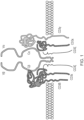
- the constant region is proximal to the cell membrane, followed by a transmembrane region and a short cytoplasmic tail, while the variable region binds to the peptide/MHC complex (see Figure 1 ).
- the constant region of the TCR consists of short connecting sequences in which a cysteine residue forms disulfide bonds, which forms a link between the two chains.
- variable domains of both the TCR ⁇ -chain and ⁇ -chain have three hypervariable or complementarity determining regions (CDRs).
- CDRs hypervariable or complementarity determining regions
- the variable region of the ⁇ -chain also has an additional area of hypervariability (HV4), however, this does not normally contact the antigen and is therefore not considered a CDR.
- the TCR also comprises up to five invariant chains ⁇ , ⁇ , ⁇ (collectively termed CD3) and ⁇ .
- CD3 and ⁇ subunits mediate TCR signalling through specific cytoplasmic domains which interact with second-messenger and adapter molecules following the recognition of the antigen by ⁇ or ⁇ .
- Cell surface expression of the TCR complex is preceded by the pair-wise assembly of subunits in which both the transmembrane and extracellular domains of TCR ⁇ and ⁇ and CD3 ⁇ and ⁇ play a role.
- TCRs are therefore commonly composed of the CD3 complex and the TCR ⁇ and ⁇ chains, which are in turn composed of variable and constant regions ( Figure 1 ).
- Therapeutic agent Used in a generic sense, it includes treating agents, prophylactic agents, and replacement agents.
- Therapeutically effective amount or effective amount A quantity of a specific substance, such as a disclosed antibody, sufficient to achieve a desired effect in a subject being treated. For instance, this can be the amount necessary to inhibit tumour growth. A therapeutically effective amount may be the amount necessary to reduce a symptom of the disease. When administered to a subject, a dosage will generally be used that will achieve target tissue concentrations that has been shown to achieve a desired in vitro effect.
- a nucleic acid molecule may be introduced into a host cell by a vector, thereby producing a transformed host cell.
- a vector may include nucleic acid sequences that permit it to replicate in a host cell, such as an origin of replication.
- a vector may also include one or more selectable marker genes and other genetic elements known in the art.
- the vector may, for example, be a plasmid or a viral vector, such as a retroviral vector or a lentiviral vector, or a transposon based vector or synthetic mRNA.
- the vector may be capable of transfecting or transducing a T cell or a NK cell.
- the antigen binding domain may specifically bind a ROR1 polypeptide with an equilibrium constant (K d ) of 6 nM or less.
- the antigen binding domain may bind the ROR1 polypeptide with a K D of about 1.6 ⁇ 10 -9 M or less, about 2 ⁇ 10 -9 M or less, about 3 ⁇ 10 -9 M or less, about 4 ⁇ 10 -9 M or less or about 5 ⁇ 10 -9 M or less.
- the antigen binding domains can be derived from rat antibodies, and can include a rat framework region.
- the antigen binding domains may be humanised, and thus include one or more human framework regions.
- the antigen binding domains may be chimeric.
- the antigen binding domains may include rat and human regions.
- the antigen binding domain may specifically bind a ROR1 polypeptide.
- the antigen binding domain can specifically bind a human ROR1 polypeptide.
- the antigen binding domain preferably comprises a heavy chain and a light chain and preferably each VH and VL is composed of three CDRs and four FWRs, arranged from amino-terminus to carboxy-terminus in the following order: FWR1, CDR1, FWR2, CDR2, FWR3, CDR3, FWR4 as described above.
- the antigen binding domain comprises a light chain variable domain and a heavy chain variable domain, wherein the light chain variable domain comprises a light chain complementarity determining region (LCDR)1, an LCDR2 and an LCDR3, wherein LCDR1 comprises the amino acid sequence set forth in SEQ ID NO: 16; LCDR2 comprises the amino acid sequence set forth in SEQ ID NO: 18; and LCDR3 comprises the amino acid sequence set forth in SEQ ID NO: 20; and wherein the heavy chain variable domain comprises a heavy chain complementarity determining region (HCDR)1, an HCDR2 and an HCDR3, wherein HCDR1 comprises the amino acid sequence set forth in SEQ ID NO: 23; HCDR2 comprises the amino acid sequence set forth in SEQ ID NO: 25; and HCDR3 comprises the amino acid sequence set forth in SEQ ID NO: 57
- heavy chain complementarity determining region 3 comprises an amino acid sequence selected from any of the sequences set forth in SEQ ID NOs: 27, 36, 44 and 49.
- HCDR3 comprises an amino acid sequence selected from any of the sequences set forth in SEQ ID NOs: 36, 44 and 49.
- the antigen binding domain may have a light chain variable domain which comprises a Light Chain Framework Region (LCFR)1 comprising the amino acid sequence as set forth as one of SEQ ID NOs: 15, 29, 50 and 53; an LCFR2 comprising the amino acid sequence as set forth as one of SEQ ID NOs: 17, 30, 38 and 46; an LCFR3 comprising the amino acid sequence as set forth as one of SEQ ID NOs: 19, 31, 39, 47 and 54; and an LCFR4 comprising the amino acid sequence as set forth as one of SEQ ID NOs: 21, 32 and 40.
- LCFR Light Chain Framework Region
- the antigen binding domain has a light chain variable domain which comprises an LCFR1 comprising the amino acid sequence as set forth as one of SEQ ID NOs: 29, 50 and 53; an LCFR2 comprising the amino acid sequence as set forth as one of SEQ ID NOs: 30, 38 and 46; an LCFR3 comprising the amino acid sequence as set forth as one of SEQ ID NOs: 31, 39, 47 and 54; and an LCFR4 comprising the amino acid sequence as set forth as one of SEQ ID NOs: 32 and 40.
- an LCFR1 comprising the amino acid sequence as set forth as one of SEQ ID NOs: 29, 50 and 53
- an LCFR2 comprising the amino acid sequence as set forth as one of SEQ ID NOs: 30, 38 and 46
- an LCFR3 comprising the amino acid sequence as set forth as one of SEQ ID NOs: 31, 39, 47 and 54
- an LCFR4 comprising the amino acid sequence as set forth as one of SEQ ID NOs: 32 and 40.
- the antigen binding domain may have a heavy chain variable domain which comprises a Heavy Chain Framework Region (HCFR)1 comprising the amino acid sequence as set forth as one of SEQ ID NOs: 22, 33, 41 and 55; an HCFR2 comprising the amino acid sequence as set forth as one of SEQ ID NOs: 24, 34, 42 and 51; an HCFR3 comprising the amino acid sequence as set forth as one of SEQ ID NOs: 26, 35, 43, 48, 52 and 56; and an HCFR4 comprising the amino acid sequence as set forth as one of SEQ ID NOs: 28, 37 and 45.
- HCFR Heavy Chain Framework Region
- the antigen binding domain may have a heavy chain variable domain which comprises an HCFR1 comprising the amino acid sequence as set forth as one of SEQ ID NOs: 33, 41 and 55; an HCFR2 comprising the amino acid sequence as set forth as one of SEQ ID NOs: 34, 42 and 51; an HCFR3 comprising the amino acid sequence as set forth as one of SEQ ID NOs: 35, 43, 48, 52 and 56; and an HCFR4 comprising the amino acid sequence as set forth as one of SEQ ID NOs: 37 and 45.
- HCFR1 comprising the amino acid sequence as set forth as one of SEQ ID NOs: 33, 41 and 55
- an HCFR2 comprising the amino acid sequence as set forth as one of SEQ ID NOs: 34, 42 and 51
- an HCFR3 comprising the amino acid sequence as set forth as one of SEQ ID NOs: 35, 43, 48, 52 and 56
- an HCFR4 comprising the amino acid sequence as set forth as one of SEQ ID NOs: 37 and
- each framework region referred to above may differ from the given sequence. For example, it may differ at up to 10 amino acid positions, although it is preferred that fewer than 10 amino acid substitutions are present so that there may be up to 9, 8, 7, 6, 5, 4, 3, 2 or 1 amino acid substitutions.
- each framework region may comprise an amino acid sequence which is at least 90%, 91%, 92%, 93%, 94%, 95%, 96%, 97%, 98% or 99% identical to the amino acid sequences as set forth in the sequence listing.
- the light chain variable domain comprises the amino acid sequence as set forth as one of SEQ ID NOs: 3, 4, 5, 6, 7 and 8. More preferably, the light chain variable domain comprises the amino acid sequence as set forth as one of SEQ ID NOs: 4, 5, 6, 7 and 8.
- the heavy chain variable domain comprises the amino acid sequence as set forth as one of SEQ ID NOs: 9, 10, 11, 12, 13 and 14. More preferably, the heavy chain variable domain comprises the amino acid sequence as set forth as one of SEQ ID NOs: 10, 11, 12, 13 and 14.
- SEQ ID NOs: 4, 5, 6, 7 and 8 are humanised light chain variable regions.
- SEQ ID NOs: 10, 11, 12, 13 and 14 are humanised light chain variable regions. The inventors tried all combinations of these light and heavy chain regions resulting in 25 different constructs.
- the light chain variable domain comprises the amino acid sequence as set forth as SEQ ID NO: 4 and the heavy chain variable domain comprises the amino acid sequence as set forth as one of SEQ ID NOs: 10, 11, 12, 13 and 14.
- the light chain variable domain comprises the amino acid sequence as set forth as SEQ ID NO: 4 and the heavy chain variable domain comprises the amino acid sequence as set forth as one of SEQ ID NOs: 10, 12 and 13.
- the light chain variable domain comprises the amino acid sequence as set forth as SEQ ID NO: 5 and the heavy chain variable domain comprises the amino acid sequence as set forth as one of SEQ ID NOs: 10, 11, 12, 13 and 14.
- the light chain variable domain comprises the amino acid sequence as set forth as SEQ ID NO: 6 and the heavy chain variable domain comprises the amino acid sequence as set forth as one of SEQ ID NOs: 10, 11, 12, 13 and 14.
- the light chain variable domain comprises the amino acid sequence as set forth as SEQ ID NO: 7 and the heavy chain variable domain comprises the amino acid sequence as set forth as one of SEQ ID NOs: 10, 11, 12, 13 and 14.
- the light chain variable domain comprises the amino acid sequence as set forth as SEQ ID NO: 8 and the heavy chain variable domain comprises the amino acid sequence as set forth as one of SEQ ID NOs: 10, 11, 12, 13 and 14.
- the heavy chain variable domain comprises the amino acid sequence as set forth as SEQ ID NO: 10 and the light chain variable domain comprises the amino acid sequence as set forth as one of SEQ ID NOs: 4, 5, 6, 7 and 8.
- the heavy chain variable domain comprises the amino acid sequence as set forth as SEQ ID NO: 11 and the light chain variable domain comprises the amino acid sequence as set forth as one of SEQ ID NOs: 4, 5, 6, 7 and 8.
- the heavy chain variable domain comprises the amino acid sequence as set forth as SEQ ID NO: 12 and the light chain variable domain comprises the amino acid sequence as set forth as one of SEQ ID NOs: 4, 5, 6, 7 and 8.
- the heavy chain variable domain comprises the amino acid sequence as set forth as SEQ ID NO: 13 and the light chain variable domain comprises the amino acid sequence as set forth as one of SEQ ID NOs: 4, 5, 6, 7 and 8.
- the heavy chain variable domain comprises the amino acid sequence as set forth as SEQ ID NO: 14 and the light chain variable domain comprises the amino acid sequence as set forth as one of SEQ ID NOs: 4, 5, 6, 7 and 8.
- each light chain variable domain and heavy chain variable domain referred to above may differ from the given sequence.
- the light/heavy chain variable domain may comprise a sequence which is at least 90%, 91%, 92%, 93%, 94%, 95%, 96%, 97%, 98% or 99% identical to the amino acid sequences as set forth in the sequence listing.
- the light/heavy chain variable domain sequence may differ at up to 10 amino acid positions, although it is preferred that fewer than 10 amino acid substitutions are present so that there may be up to 9, 8, 7, 6, 5, 4, 3, 2 or 1 amino acid substitutions.
- the Light Chain Framework Regions, the Heavy Chain Framework Regions, the Light Chain Variable Domains and the Heavy Chain Variable Domains comprise an amino acid sequence at least 90%, 91%, 92%, 93%, 94%, 95%, 96%, 97%, 98% or 99% identical to the amino acid sequences as set forth above.
- the Light Chain Framework Regions, the Heavy Chain Framework Regions, the Light Chain Variable Domains and the Heavy Chain Variable Domains may include at most 10, at most 9, at most 8, at most 7, at most 6, at most 5, at most 4, at most 3, at most two or at most one amino acid substitutions in the amino acid sequences as set forth above.
- the Light Chain Framework Regions and/or the Heavy Chain Framework Regions of the antibodies described above may comprise an amino acid sequence at least 90%, 91%, 92%, 93%, 94%, 95%, 96%, 97%, 98% or 99% identical to the amino acid sequences as set forth above.
- the Light Chain Framework Regions and/or the Heavy Chain Framework Regions may include at most 10, at most 9, at most 8, at most 7, at most 6, at most 5, at most 4, at most 3, at most two or at most one amino acid substitutions in the amino acid sequences as set forth above.
- the amino acid substitutions are conservative substitutions as described above.
- the framework regions may comprise such substitutions in order to humanise the sequence.
- the framework regions are humanised.
- the antigen binding domain comprises a light chain variable domain and a heavy chain variable domain
- the light chain variable domain comprises an LCDR1, an LCDR2 and an LCDR3, wherein LCDR1 comprises the amino acid sequence set forth in SEQ ID NO: 58; LCDR2 comprises the amino acid sequence set forth in SEQ ID NO: 59; and LCDR3 comprises the amino acid sequence set forth in SEQ ID NO: 20; and wherein the heavy chain variable domain comprises an HCDR1, an HCDR2 and an HCDR3, wherein HCDR1 comprises the amino acid sequence set forth in SEQ ID NO: 60; HCDR2 comprises the amino acid sequence set forth in SEQ ID NO: 61; and HCDR3 comprises the amino acid sequence set forth in SEQ ID NO: 62
- the light chain variable domain comprises the amino acid sequence as set forth as one of SEQ ID NOs: 3, 4, 5, 6, 7 and 8. More preferably, the light chain variable domain comprises the amino acid sequence as set forth as one of SEQ ID NOs: 4, 5, 6, 7 and 8.
- the heavy chain variable domain comprises the amino acid sequence as set forth as one of SEQ ID NOs: 9, 10, 11, 12, 13 and 14. More preferably, the heavy chain variable domain comprises the amino acid sequence as set forth as one of SEQ ID NOs: 10, 11, 12, 13 and 14.
- each light chain variable domain and heavy chain variable domain referred to above may differ from the given sequence.
- the light/heavy chain variable domain may comprise a sequence which is at least 90%, 91%, 92%, 93%, 94%, 95%, 96%, 97%, 98% or 99% identical to the amino acid sequences as set forth in the sequence listing.
- the light/heavy chain variable domain sequence may differ at up to 10 amino acid positions, although it is preferred that fewer than 10 amino acid substitutions are present so that there may be up to 9, 8, 7, 6, 5, 4, 3, 2 or 1 amino acid substitutions.
- the antigen binding domain may have the structure of an antibody fragment such as Fab, F(ab') 2 , and Fv which include a heavy chain and light chain variable region and are capable of binding the epitopic determinant on ROR1.
- antibody fragments retain the ability to selectively bind with the antigen and are described above. Methods of making these fragments are known in the art (see for example, Harlow and Lane, Antibodies: A Laboratory Manual, Cold Spring Harbor Laboratory, New York, 1988 ).
- the antigen binding domain may have the structure of an Fv antibody, which are typically about 25 kDa and contain a complete antigen-binding site with three CDRs per each heavy chain and each light chain.
- the V H and the V L can be expressed from two individual nucleic acid constructs in a host cell. If the V H and the V L are expressed non-contiguously, the chains of the Fv antibody are typically held together by noncovalent interactions. However, these chains tend to dissociate upon dilution, so methods have been developed to crosslink the chains through glutaraldehyde, intermolecular disulfides, or a peptide linker.
- the Fv can be a disulfide stabilized Fv (dsFv), wherein the heavy chain variable region and the light chain variable region are chemically linked by disulfide bonds.
- the Fv fragments comprise V H and V L chains connected by a peptide linker.
- These single-chain antigen binding proteins are prepared by constructing a structural gene comprising DNA sequences encoding the V H and V L domains connected by an oligonucleotide. The structural gene is inserted into an expression vector, which is subsequently introduced into a host cell such as E. coli. The recombinant host cells synthesize a single polypeptide chain with a linker peptide bridging the two V domains.
- Methods for producing scFvs are known in the art (see Whitlow et al., Methods: a Companion to Methods in Enzymology, Vol.
- Dimers of a single chain antibody are also contemplated.
- Antibody fragments comprising the antigen binding domain can be prepared by proteolytic hydrolysis of the antibody or by expression in E. coli of DNA encoding the fragment.
- Antibody fragments can be obtained by pepsin or papain digestion of whole antibodies by conventional methods.
- antibody fragments can be produced by enzymatic cleavage of antibodies with pepsin to provide a 5S fragment denoted F(ab') 2 .
- This fragment can be further cleaved using a thiol reducing agent, and optionally a blocking group for the sulfhydryl groups resulting from cleavage of disulfide linkages, to produce 3.5S Fab' monovalent fragments.
- cleaving antibodies such as separation of heavy chains to form monovalent light-heavy chain fragments, further cleavage of fragments, or other enzymatic, chemical, or genetic techniques may also be used, so long as the fragments bind to the antigen that is recognized by the intact antibody.
- the antigen binding domains, antibodies or antibody fragments disclosed herein can be derivatized or linked to another molecule (such as another peptide or protein).
- the antibody or portion thereof is derivatized such that the binding to the ROR1 polypeptide is not affected adversely by the derivatization or labelling.
- the antibody can be functionally linked, for example, by chemical coupling, genetic fusion, noncovalent association or otherwise to one or more other molecular entities, such as another antibody (for example, a bispecific antibody or a diabody), a detection agent, a pharmaceutical agent, and/or a protein or peptide that can mediate associate of the antibody or antibody portion with another molecule (such as a streptavidin core region or a polyhistidine tag).
- One type of derivatized antibody is produced by cross-linking two or more antibodies (of the same type or of different types, such as to create bispecific antibodies).
- Suitable crosslinkers include those that are heterobifunctional, having two distinctly reactive groups separated by an appropriate spacer (such as m-maleimidobenzoyl-N-hydroxysuccinimide ester) or homobifunctional (such as disuccinimidyl suberate).
- Such linkers are available from Pierce Chemical Company (Rockford, IL).
- An antigen binding domain that specifically binds a ROR1 polypeptide can be labelled with a detectable moiety or marker as described above.
- An antigen binding domain can also be labelled with a radiolabeled amino acid.
- radiolabels include, but are not limited to, the following radioisotopes or radionucleotides: 3 H, 14 C, 15 N, 35 S, 90 Y, 99 Tc, 111 In, 125 I, 131 I.
- the radiolabel may be used for both diagnostic and therapeutic purposes.
- radiolabels may be detected using photographic film or scintillation counters
- fluorescent markers may be detected using a photodetector to detect emitted illumination
- Enzymatic labels are typically detected by providing the enzyme with a substrate and detecting the reaction product produced by the action of the enzyme on the substrate, and colorimetric labels are detected by simply visualizing the colored label.
- An antigen binding domain can also be derivatized with a chemical group such as polyethylene glycol (PEG), a methyl or ethyl group, or a carbohydrate group. These groups may be useful to improve the biological characteristics of the antigen binding domain, such as to increase serum half-life or to increase tissue binding.
- Nucleotide sequences encoding an antigen binding domain that specifically binds a ROR1 polypeptide are also provided.
- Expression vectors are also provided for their efficient expression in cells (for example, T cells).
- Recombinant expression of an antigen binding domain generally requires construction of an expression vector containing a polynucleotide that encodes the antibody or antibody fragment.
- Replicable vectors are provided including a nucleotide sequence encoding an antibody molecule, a heavy or light chain of an antibody, a heavy or light chain variable domain of an antibody or a portion thereof, or a heavy or light chain CDR, operably linked to a promoter.
- Such vectors may include the nucleotide sequence encoding the constant region of an antibody molecule (see, e.g., US. Patent Nos.
- variable domain of the antibody may be cloned into such a vector for expression of the entire heavy, the entire light chain, or both the entire heavy and light chains.
- Nucleic acid molecules also referred to as polynucleotides
- encoding the polypeptides provided herein can readily be produced by one of skill in the art.
- these nucleic acids can be produced using the amino acid sequences provided herein (such as the CDR sequences, heavy chain and light chain sequences), sequences available in the art (such as framework sequences), and the genetic code.
- nucleic acids which differ in sequence but which encode the same antibody sequence, or encode a conjugate or fusion protein including the V L and/or V H nucleic acid sequence.
- Nucleic acid sequences encoding the antigen binding domains that specifically bind a ROR1 polypeptide can be prepared by any suitable method including, for example, cloning of appropriate sequences or by direct chemical synthesis by methods such as the phosphotriester method of Narang et al., Meth. Enzymol. 68:90-99, 1979 ; the phosphodiester method of Brown et al., Meth. Enzymol. 68:109-151, 1979 ; the diethylphosphoramidite method of Beaucage et al., Tetra. Lett. 22:1859-1862, 1981 ; the solid phase phosphoramidite triester method described by Beaucage & Caruthers, Tetra. Letts.
- Exemplary nucleic acids can be prepared by cloning techniques. Examples of appropriate cloning and sequencing techniques, and instructions sufficient to direct persons of skill through many cloning exercises are found in Sambrook et al. , supra , Berger and Kimmel (eds.), supra , and Ausubel, supra. Product information from manufacturers of biological reagents and experimental equipment also provide useful information. Such manufacturers include the SIGMA Chemical Company (Saint Louis, MO), R&D Systems (Minneapolis, MN), Pharmacia Amersham (Piscataway, NJ), CLONTECH Laboratories, Inc.
- Nucleic acids can also be prepared by amplification methods.
- Amplification methods include polymerase chain reaction (PCR), the ligase chain reaction (LCR), the transcription-based amplification system (TAS), the self-sustained sequence replication system (3SR).
- PCR polymerase chain reaction
- LCR ligase chain reaction
- TAS transcription-based amplification system
- 3SR self-sustained sequence replication system
- nucleic acids encoding any of the antigen binding domains, V H and/or V L , disclosed herein (or fragment thereof) can be expressed in a recombinantly engineered cell such as bacteria, plant, yeast, insect and mammalian cells. These antibodies can be expressed as individual V H and/or V L chain, or can be expressed as a fusion protein. An immunoadhesin can also be expressed. Thus, in some examples, nucleic acids encoding a V H and V L , and immunoadhesin are provided. The nucleic acid sequences can optionally encode a leader sequence.
- the V H - and V L -encoding DNA fragments are operatively linked to another fragment encoding a flexible linker, e.g., encoding the amino acid sequence (Gly 4 -Ser) 3 , such that the V H and V L sequences can be expressed as a contiguous single-chain protein, with the V L and V H domains joined by the flexible linker (see, e.g., Bird et al., Science 242:423-426, 1988 ; Huston et al., Proc. Natl. Acad. Sci. USA 85:5879-5883, 1988 ; McCafferty et al., Nature 348:552-554, 1990 ).
- a cleavage site can be included in a linker, such as a furin cleavage site.
- the nucleic acid encoding the V H and/or the V L optionally can encode an Fc domain (immunoadhesin).
- the Fc domain can be an IgA, IgM or IgG Fc domain.
- the Fc domain can be an optimized Fc domain, as described in U.S. Published Patent Application No. 20100/093979 .
- the immunoadhesin is an IgG 1 Fc.
- the expression vector is transferred to a host cell by conventional techniques, the transfected cells are then cultured by conventional techniques, such as to produce an antibody.
- host cells are provided containing a polynucleotide encoding an antigen binding domain, or a heavy or light chain thereof, or portion thereof, operably linked to a heterologous promoter.
- vectors encoding both the heavy and light chains may be co-expressed in the host cell for expression of the entire immunoglobulin molecule, as detailed below.
- Mammalian cell lines available as hosts for expression of recombinant antibodies are well known in the art and include many immortalized cell lines available from the American Type Culture Collection (ATCC), including but not limited to Chinese hamster ovary (CHO) cells, HeLa cells, baby hamster kidney (BHK) cells, monkey kidney cells (COS), human hepatocellular carcinoma cells (e.g., Hep G2), human epithelial kidney 293 cells, and a number of other cell lines.
- ATCC American Type Culture Collection
- CHO Chinese hamster ovary
- HeLa cells HeLa cells
- BHK baby hamster kidney
- COS monkey kidney cells
- human hepatocellular carcinoma cells e.g., Hep G2
- human epithelial kidney 293 cells e.g., Hep G2
- Different host cells have characteristic and specific mechanisms for the post-translational processing and modification of proteins and gene products. Appropriate cell lines or host systems can be chosen to ensure the correct modification and processing of the antibody or portion thereof
- eukaryotic host cells which possess the cellular machinery for proper processing of the primary transcript, glycosylation, and phosphorylation of the gene product may be used.
- mammalian host cells include but are not limited to CHO, VERY, BHK, Hela, COS, MDCK, 293, 3T3, W138, BT483, Hs578T, HTB2, BT2O and T47D, NS0 (a murine myeloma cell line that does not endogenously produce any functional immunoglobulin chains), SP20, CRL7O3O and HsS78Bst cells.
- Human cell lines may be of use.
- the human cell line PER.C6. (Crucell, Netherlands) can be used.
- Additional cell lines which may be used as hosts for expression of recombinant antibodies include, but are not limited to, insect cells (e.g. Sf21/Sf9, Trichoplusia ni Bti-Tn5b1-4) or yeast cells (e.g. S. cerevisiae, Pichia, US Patent No. 7,326,681 ), plant cells ( US Published Patent Application No. 20080066200 ); and chicken cells ( PCT Publication No. WO2008142124 ).
- insect cells e.g. Sf21/Sf9, Trichoplusia ni Bti-Tn5b1-4
- yeast cells e.g. S. cerevisiae, Pichia, US Patent No. 7,326,681
- plant cells US Published Patent Application No. 20080066200
- chicken cells PCT Publication No. WO2008142124 ).
- the host cell can be a gram positive bacteria including, but not limited to, Bacillus , Streptococcus, Streptomyces, Staphylococcus, Enterococcus, Lactobacillus, Lactococcus , Clostridium , Geobacillus , and Oceanobacillus.
- Methods for expressing protein in gram positive bacteria, such as Lactobaccillus are well known in the art, see for example, U.S. Published Patent Application No. 20100/080774 .
- Expression vectors for lactobacillus are described, for example in U.S. Pat. No. 6,100,388 , and U.S. Patent No. 5,728,571 . Leader sequences can be included for expression in Lactobacillus.
- Gram negative bacteria include, but not limited to, E. coli , Pseudomonas , Salmonella , Campylobacter, Helicobacter, Flavobacterium, Fusobacterium, Ilyobacter, Neisseria, and Ureaplasma.
- One or more DNA sequences encoding the antigen binding domain or fragment thereof can be expressed in vitro by DNA transfer into a suitable host cell.
- the term also includes any progeny of the subject host cell. It is understood that all progeny may not be identical to the parental cell since there may be mutations that occur during replication. Methods of stable transfer, meaning that the foreign DNA is continuously maintained in the host, are known in the art.
- nucleic acids encoding the isolated proteins described herein can be achieved by operably linking the DNA to a promoter (which is either constitutive or inducible), followed by incorporation into an expression cassette.
- the promoter can be any promoter of interest, including a cytomegalovirus promoter and a human T cell lymphotrophic virus promoter (HTLV)-1.
- an enhancer such as a cytomegalovirus enhancer, is included in the construct.
- the cassettes can be suitable for replication and integration in either prokaryotes or eukaryotes. Typical expression cassettes contain specific sequences useful for regulation of the expression of the DNA encoding the protein.
- the expression cassettes can include appropriate promoters, enhancers, transcription and translation terminators, initiation sequences, a start codon (i.e ., ATG) in front of a protein-encoding gene, splicing signal for introns, sequences for the maintenance of the correct reading frame of that gene to permit proper translation of mRNA, and stop codons.
- the vector can encode a selectable marker, such as a marker encoding drug resistance (for example, ampicillin or tetracycline resistance).
- expression cassettes which contain, at the minimum, a strong promoter to direct transcription, a ribosome binding site for translational initiation (internal ribosomal binding sequences), and a transcription/translation terminator.
- a strong promoter to direct transcription e. coli
- a ribosome binding site for translational initiation e. coli
- a transcription/translation terminator e. coli
- control sequences can include a promoter and/or an enhancer derived from, for example, an immunoglobulin gene, HTLV, SV40 or cytomegalovirus, and a polyadenylation sequence, and can further include splice donor and/or acceptor sequences (for example, CMV and/or HTLV splice acceptor and donor sequences).
- the cassettes can be transferred into the chosen host cell by well-known methods such as transformation or electroporation for E. coli and calcium phosphate treatment, electroporation or lipofection for mammalian cells. Cells transformed by the cassettes can be selected by resistance to antibiotics conferred by genes contained in the cassettes, such as the amp, gpt, neo and hyg genes.
- Eukaryotic cells can also be cotransformed with polynucleotide sequences encoding the antigen binding domain, labeled antigen binding domain, or functional fragment thereof, and a second foreign DNA molecule encoding a selectable phenotype, such as the herpes simplex thymidine kinase gene.
- Another method is to use a eukaryotic viral vector, such as simian virus 40 (SV40) or bovine papilloma virus, to transiently infect or transform eukaryotic cells and express the protein (see for example, Eukaryotic Viral Vectors, Cold Spring Harbor Laboratory, Gluzman ed., 1982 ).
- a eukaryotic viral vector such as simian virus 40 (SV40) or bovine papilloma virus
- SV40 simian virus 40
- bovine papilloma virus bovine papilloma virus
- Modifications can be made to a nucleic acid encoding a polypeptide described herein without diminishing its biological activity. Some modifications can be made to facilitate the cloning, expression, or incorporation of the targeting molecule into a fusion protein. Such modifications are well known to those of skill in the art and include, for example, termination codons, a methionine added at the amino terminus to provide an initiation, site, additional amino acids placed on either terminus to create conveniently located restriction sites, or additional amino acids (such as poly His) to aid in purification steps.
- the immunoconjugates, effector moieties, and antigen binding domains of the present disclosure can also be constructed in whole or in part using standard peptide synthesis well known in the art.
- the recombinant immunoconjugates, antigen binding domain, and/or effector molecules can be purified according to standard procedures of the art, including ammonium sulfate precipitation, affinity columns, column chromatography, and the like (see, generally, R. Scopes, PROTEIN PURIFICATION, Springer-Verlag, N.Y., 1982 ).
- the antigen binding domains, immunoconjugates and effector molecules need not be 100% pure. Once purified, partially or to homogeneity as desired, if to be used therapeutically, the polypeptides should be substantially free of endotoxin.
- Cells comprising the antigen binding domains discussed above for use in the treatment of cancer in a subject wherein the cell comprising the ROR1 selective CAR is administered to the subject to cause selective depletion of malignant cells are also disclosed as well as methods for treating cancer in a subject comprising administering to a subject a cell comprising the antigen binding domains discussed above to cause selective depletion of malignant cells.
- the cancer is leukaemia (such as Chronic Lymphocytic Leukaemia (CLL), Acute Lymphoblastic Leukaemia (ALL), Mantle Cell Leukaemia or Hairy Cell Leukaemia), pancreatic cancer, prostate cancer, colon cancer, bladder cancer, ovarian cancer, glioblastoma, testicular cancer, uterine cancer, adrenal cancer, breast cancer, lung cancer, melanoma, neuroblastoma, sarcoma, renal cancer.
- CLL Chronic Lymphocytic Leukaemia
- ALL Acute Lymphoblastic Leukaemia
- pancreatic cancer pancreatic cancer
- prostate cancer colon cancer
- bladder cancer ovarian cancer
- glioblastoma testicular cancer
- uterine cancer adrenal cancer
- breast cancer breast cancer
- lung cancer melanoma
- neuroblastoma sarcoma
- renal cancer a subset of cancer stem cells.
- the cancer or tumour does not need to be completely eliminated for the CAR T cells to be effective.
- the CAR T cells can reduce the tumour by a desired amount, for example by at least 10%, at least 20%, at least 50%, at least 60%, at least 70%, at least 80%, at least 90%, at least 95%, at least 98%, or 100%, as compared to the absence of the composition.
- Administration of the CAR T cells of the present invention may result in a 5, 10, 20, 50, 75, 90, 95 or 99% depletion, i.e. reduction in malignant cells.
- the subject can also be administered an effective amount of an additional agent, such as a chemotherapy agent.
- an additional agent such as a chemotherapy agent.
- the methods can include administration of one or more additional agents known in the art.
- the agent may be conjugated to the CAR T cell.
- the agent may be a chemotherapeutic entity.
- the chemotherapeutic entity may be a cytotoxic drug.
- a chemotherapeutic agent contemplated includes, without limitation, alkylating agents, nitrosoureas, ethylenimines/methylmelamine, alkyl sulfonates, antimetabolites, pyrimidine analogs, epipodophylotoxins, enzymes such as L-asparaginase; biological response modifiers such as IFNa, IL-2, G-CSF and GM-CSF; platinium coordination complexes such as cisplatin and carboplatin, anthracenediones, substituted urea such as hydroxyurea, methylhydrazine derivatives including N-methylhydrazine (MIH) and procarbazine, adrenocortical suppressants such as mitotane (o,p'-DDD) and aminoglutéthimide; hormones and antagonists including adrenocorticosteroid antagonists such as prednisone and equivalents, dexamethasone and aminoglutéthimide; prog
- a therapeutically effective amount of a ROR1-specific CAR T cell will depend upon the severity of the disease and the general state of the patient's health.
- a therapeutically effective amount of the CAR T cells can provide either subjective relief of a symptom(s) or an objectively identifiable improvement as noted by the clinician or other qualified observer.
- these compositions can be administered in conjunction with another therapeutic agent, either simultaneously or sequentially.
- the CAR T cells can be combined with chemotherapy.
- compositions including the CAR T cells are administered depending on the dosage and frequency as required and tolerated by the patient.
- the composition should provide a sufficient quantity of at least one of the antibodies disclosed herein to effectively treat the patient.
- the dosage can be administered once but may be applied periodically until either a therapeutic result is achieved or until side effects warrant discontinuation of therapy.
- a dose of the CAR T cells is infused for thirty minutes every other day.
- about one to about ten doses can be administered, such as three or six doses can be administered every other day.
- a continuous infusion is administered for about five to about ten days.
- the subject can be treated at regular intervals, such as monthly, until a desired therapeutic result is achieved.
- the dose is sufficient to treat or ameliorate symptoms or signs of disease without producing unacceptable toxicity to the patient.
- compositions are further disclosed that include the CAR T cells in a carrier.
- the compositions can be prepared in unit dosage forms for administration to a subject. The amount and timing of administration are at the discretion of the treating physician to achieve the desired purposes.
- the antibody and/or nucleic acid can be formulated for systemic or local administration.
- the CAR T cells are formulated for parenteral administration, such as intravenous administration. Administration may be intramuscular.
- Active ingredients can also be entrapped in microcapsules prepared, for example, by coacervation techniques or by interfacial polymerization, for example, hydroxymethylcellulose or gelatin-microcapsule and poly-(methylmethacylate) microcapsule, respectively, in colloidal drug delivery systems (for example, liposomes, albumin microspheres, microemulsions, nano-particles and nanocapsules) or in macroemulsions.
- colloidal drug delivery systems for example, liposomes, albumin microspheres, microemulsions, nano-particles and nanocapsules
- macroemulsions for example, liposomes, albumin microspheres, microemulsions, nano-particles and nanocapsules
- liposomes containing the immunogens or antibodies can be prepared by such methods as described in Epstein et al., Proc. Natl. Acad. Sci.
- Liposomes with enhanced circulation time are disclosed in U.S. Pat. No. 5,013,556 .
- the everse-phase evaporation method can be used with a lipid composition comprising phosphatidylcholine, cholesterol and PEG-derivatized phosphatidylethanolamine (PEG-PE).
- PEG-PE PEG-derivatized phosphatidylethanolamine
- Liposomes are extruded through filters of defined pore size to yield liposomes with the desired diameter.
- Polypeptides can be conjugated to the liposomes as described, for example, in Martin et al., J. Biol. Chem., 257:286-288 (1982 ) via a disulfide interchange reaction.
- compositions for administration can include a solution of the CAR T Cells, dissolved in a pharmaceutically acceptable carrier, such as an aqueous carrier.
- a pharmaceutically acceptable carrier such as an aqueous carrier.
- aqueous carriers can be used, for example, buffered saline and the like.
- These compositions may be sterilized by conventional, well known sterilization techniques.
- the compositions may contain pharmaceutically acceptable auxiliary substances as required to approximate physiological conditions such as pH adjusting and buffering agents, toxicity adjusting agents and the like, for example, sodium acetate, sodium chloride, potassium chloride, calcium chloride, sodium lactate and the like.
- concentration of CAR T Cells in these formulations can vary widely, and will be selected primarily based on fluid volumes, viscosities, body weight and the like in accordance with the particular mode of administration selected and the subject's needs. Administration may be intravenous.
- Controlled-release parenteral formulations can be made as implants, oily injections, or as particulate systems.
- Particulate systems include microspheres, microparticles, microcapsules, nanocapsules, nanospheres, and nanoparticles.
- Microcapsules contain the therapeutic protein, such as a cytotoxin or a drug, as a central core. In microspheres the therapeutic is dispersed throughout the particle.
- Particles, microspheres, and microcapsules smaller than about 1 ⁇ m are generally referred to as nanoparticles, nanospheres, and nanocapsules, respectively.
- Capillaries have a diameter of approximately 5 ⁇ m so that only nanoparticles are administered intravenously.
- Microparticles are typically around 100 ⁇ m in diameter and are administered subcutaneously or intramuscularly. See, for example, Kreuter, J., Colloidal Drug Delivery Systems, J. Kreuter, ed., Marcel Dekker, Inc., New York, NY, pp. 219-342 (1994 ); and Tice & Tabibi, Treatise on Controlled Drug Delivery, A. Kydonieus, ed., Marcel Dekker, Inc. New York, NY, pp. 315-339, (1992 ).
- Polymers can be used for ion-controlled release of the CAR T Cells disclosed herein.
- Various degradable and nondegradable polymeric matrices for use in controlled drug delivery are known in the art ( Langer, Accounts Chem. Res. 26:537-542, 1993 ).
- the block copolymer, polaxamer 407 exists as a viscous yet mobile liquid at low temperatures but forms a semisolid gel at body temperature. It has been shown to be an effective vehicle for formulation and sustained delivery of recombinant interleukin-2 and urease ( Johnston et al., Pharm. Res. 9:425-434, 1992 ; and Pec et al., J. Parent. Sci. Tech.
- hydroxyapatite has been used as a microcarrier for controlled release of proteins ( Ijntema et al., Int. J. Pharm. 112:215-224, 1994 ).
- liposomes are used for controlled release as well as drug targeting of the lipid-capsulated drug ( Betageri et al., Liposome Drug Delivery Systems, Technomic Publishing Co., Inc., Lancaster, PA (1993 )).
- a typical pharmaceutical composition for intravenous administration includes about 1 ⁇ 10 6 to 1 ⁇ 10 8 T cells/kg. Alternatively, this may be about 1 ⁇ 10 6 to 1 ⁇ 10 8 T cells/m 2 .
- Actual methods for preparing administrable compositions will be known or apparent to those skilled in the art and are described in more detail in such publications as Remington's Pharmaceutical Science, 19th ed., Mack Publishing Company, Easton, PA (1995 ).
- DNA cloning was undertaken using standard laboratory protocols. Restriction enzymes, Phusion Taq polymerase, Quickligase and DH5 ⁇ competent cells were obtained from New England Biolabs. DNA was run on 1 - 2% TBE Agarose Gels depending on the expected band size and stained with either Ethidium Bromide (Sigma-Aldrich), SybrSafe Gel Stain (Life Technologies) or Gelstar (Lonza). Gel extraction and PCR clean-up was undertaken with SV Wizard Gel and Purification Kit (Promega).
- DMEM Dulbecco's Modified Eagle's Medium
- IMDM Iscove's Modified Dulbecco's Medium
- RPMI Roswell Park Memorial Institute
- FCS Foetal Calf Serum
- Nalm-6, SupT1, K562 and SKW6.4 cells have been long established in the laboratory and all were grown in RPMI with 10% FCS.
- HEK293T cells were thawed from master stocks and grown in IMDM and 10% FCS.
- Qifikit beads were used to assess the number of target antigens per cell using the manufacturer's instructions (Dako, Agilent Technologies). In brief, the cells of interest were incubated with the same concentration of unconjugated murine anti-human ROR1 or CD19 antibodies, washed twice with PBS and then stained with anti-murine FC conjugated antibody linked to FITC or APC. Calibrated beads with known numbers of binding sites were stained in the same way allowing the construction of a standard curve with mean fluorescence intensity measurements relating to absolute antigens per cell.
- Second generation lentivirus was produced using standard laboratory protocols. Briefly, 1.7 ⁇ 10 6 HEK293T cells were plated in 10 cm dishes on day 1 followed by transfection with GeneJuice reagent (Merck Millipore) combined with transfer vector, packaging vector pCMVdR8.74 and VSVG pseudo-typed envelope vector pMD.G2 on day 3. Supernatant was harvested on day 5 and centrifuged for 5 minutes at 800G to remove contaminating cellular material and filtered through 0.2 micron PES filters (Merck Millipore) before being used directly for transduction or being frozen and stored at -80° C for subsequent use. Third generation lentiviral vectors were produced using pMDLg/RRE, pMDG2 and pRSV/Rev plasmids.
- PBMC Peripheral Blood Mononuclear Cells isolated by Ficoll-Paque Plus (GE Healthcare) centrifugation. PBMCs were re-suspended at 2 ⁇ 10 6 /ml and seeded at 1 ml per 24 well plate and activated with MACS GMP CD3 and CD28 antibodies at 0.5 mg/ml (Miltenyi Biotec) or CD3/28 beads (Invitrogen).
- the complete extracellular domain of ROR1 was synthesised and PCR amplification of the various domains (Immunoglobulin, Frizzled and Kringle) was undertaken. These primers, as well as the complete extracellular domain, had compatible ends and were inserted into the SFG transfer plasmid and transduced into SupT1 cells. The extracellular domains were tethered to the membrane with a transmembrane domain fused to eGFP.
- Antibodies for flow cytometry were obtained from Biolegend or eBioscience with the exception of CD107a (BD Bioscience). Flow cytometry was performed on either a BD Accuri, BD Facsverse, BD LRSII Fortessa or Beckman Coulter Cyan. Data was analysed on FlowJo Software. Fluorescence activated cell sorting (FACS) was undertaken on a MoFlo (Beckman Coulter) or FACS Aria (BD Bioscience).
- FACS Fluorescence activated cell sorting
- a chimeric ROR1 protein fused to the murine IgG2a Fc domain was utilised and produced in stably transduced K562 cells.
- CD19 CAR expression was detected with the use of chimeric CD19 fused to Rabbit Fc. Secondary staining was with non-cross reactive anti-Fc antibodies from Jackson Immunolabs.
- Target cells were transduced with eGFP to act as a marker and primary CLL cells were labelled with CFSE using standard protocols and were seeded at a density of 25,000 cells/well in a 96 well plate. They were cultured with effector cells in various effector to target ratio into a final volume of 200 ⁇ l and spun for 400G for 5 minutes before being incubated at 37°C and 5% CO 2 . The next day 100 ⁇ l of supernatant was removed for cytokine ELISA, the plate stained with CD3 antibodies and fixable viability dye (eBioscience) and samples transferred to FACS tubes with identical amounts of Flowcheck Microsphere counting beads (Beckman Coulter). Data was acquired by flow cytometry gating for 1000 events in the counting beads gate.
- Oligoclonal hybridomas from Aldevron GmBH were separated into single cell clones either by limited dilution or single cell sorting into 96 well plates and colonies grown until confluent (approximately 2 weeks). Supernatant was screened against ROR1 positive and negative cell lines to ensure the presence of a specific anti-ROR1 antibody and also used for isotyping using rat immunoglobulin isotyping kits (eBioscience or BD Bioscience).
- cDNA had a polyC tail added with Terminal Transferase (New England Biolabs) and nested PCR reactions were performed (Phusion Taq; New England Biolabs or Platinum Taq High Fidelity: Life Technologies) to identify the variable regions of the heavy and light chains, using primers specific for light chain isotype and heavy chain isotype.
- PCR products were run on a 1% TBE gel and post-stained with Gelstar (Lonza). Bands of the correct size were extracted and sent for direct sequencing or inserted into Topo subcloning vectors (Life Technologies) for subsequent sequencing. To allow us to directly sequence the PCR products, primers were designed such that they bound further within the constant regions and allowed read through of the sequencing reactions without omission of the terminal variable region thereby obviating the need for Topo subcloning.
- a secreted version of the ScFv was produced by cloning the ScFv sequence in frame with murine IgG2a constant region using Ncol and BamHI sites (or if needed the compatible BglII or BclI sites) and into the pCCL.PGK lentiviral backbone which included an extracellular spacer, 41BB and CD3 ⁇ using Sail and BamHI sites.
- Antibodies were generated by cloning the heavy chain variable sequence in frame with human constant region and the light chain with the kappa constant region.
- ROR1 is expressed on Primary CLL Cells
- ROR1 Primary CLL cells from peripheral blood of newly diagnosed and treated patients was analysed for expression of ROR1 by flow cytometry. ROR1 was detectable in all samples analysed (Biolegend Clone 2A2). Antigen density was assessed by Qifikit (Dako, Agilent Technologies). Median antigen binding capacity (ABC) for ROR1 was 2304 molecules/cell with a range of 800-4828 and CD19 was expressed at significantly higher levels with a median level of 12583 (Range 5894-23652). See Table 1 below. Table 1: Patient No.
- Table 2 Binding Domain Binds as whole immunoglobulin Binds in scFv format Clone G3 Ig Yes No Clone G5 Ig Yes Yes Clone E7 Ig Yes No Clone J Ig Yes No Clone F Fz Yes Yes Clone B Ig Yes Yes Clone A Ig Yes Yes Clone I Ig Yes Yes Clone O Ig Yes Yes Clone Pi Ig Yes Yes Clone Mu Ig Yes Yes Clone R Ig Yes Yes Clone V Between Ig and Fz Yes Yes Yes Yes Yes Yes
- clone F binds the frizzled domain. All the other clones (except V) bound the immunoglobulin domain. The prior art antibodies R12 and 4A5 also bind the immunoglobulin domain. Therefore, clone F shows different and distinct binding characteristics compared to prior art antibodies R12 and 4A5.
- Antibody sequences were obtained by 5' Rapid Amplification of cDNA ends. Oligoclonal hybridomas from Aldevron GmBH were separated into single cell clones either by dilution or single cell sorting into 96 well plates and colonies grown until confluent (approximately 2 weeks). Supernatant was screened against ROR1 positive and negative cell lines to ensure the presence of a specific anti-ROR1 antibody and also used for isotyping using rat immunoglobulin isotyping kits (eBioscience or BD Bioscience).
- cDNA had a polyC tail added with Terminal Transferase (New England Biolabs) and nested PCR reactions were performed (Phusion Taq; New England Biolabs or Platinum Taq High Fidelity: Life Technologies) to identify the variable regions of the heavy and light chains, using primers specific for light chain isotype and heavy chain isotype.
- PCR products were run on a 1% TBE gel and post-stained with Gelstar (Lonza). Bands of the correct size were extracted and sent for direct sequencing or inserted into Topo subcloning vectors (Life Technologies) for subsequent sequencing.
- a secreted version of the ScFv was produced by cloning the ScFv sequence in frame with murine IgG2a constant region using Ncol and BamHI sites (or if needed the compatible BglII or BclI sites).
- ROR1 antibodies were generated by cloning the variable sequence in frame with human or mouse heavy chain constant region and light chain with the corresponding human or mouse kappa constant region.
- variable domain sequences of rat scFvs were searched against the human IgG germline database. Five human framework sequences with high homology to each rat antibody were chosen as human acceptors for both light and heavy chains CDRs.
- the sequences of five humanized VLs and humanized VHs were obtained after directly grafting the CDRs of each rat antibody to the human acceptor frameworks.
- T-cells transduced to express the CAR were co-cultured with SupT1-ROR1 cells and resulted in significant cytotoxicity irrespective of the ScFv used, which was not seen with the corresponding ROR1 negative cell line.
- Clone F bearing T-cells were able to kill target cells in a comparable range to CD19 based CAR T-cells. See Figure 2 .
- CD107a assay which assesses surface expression of a lysosomal associated membrane protein (LAMP-1) usually present in cytoplasmic granule membranes but which translocate to the cell surface following T-cell activation at the time of activation.
- LAMP-1 lysosomal associated membrane protein
- the previously generated constructs contained the CD8 ⁇ spacer (81 amino acids (AA)) which was substituted for a full length IgG spacer (239 AA), IgG1 hinge only spacer (19 AA) or a short linker sequence (9 AA) which included the amino acid sequence GGGGS (SEQ ID NO. 2) in an attempt to allow flexibility of the ScFv on the cell surface membrane. See Figure 3 .
- T-cells transduced with these different spacer sequences showed marked difference in their ability to kill target cells which was consistent against cell lines expressing high and low levels of ROR1.
- Clone A and Clone F showed a reciprocal relationship with the longest IgG spacer still showing moderate efficacy for Clone F but poor killing for Clone A, which was reversed with the shortest linker spacer. This undoubtedly has to do with the optimum distance generated between target cell antigen epitope and the T-cell CAR structure.
- T-cells transduced with hinge spacer constructs showed no cytotoxicity against SupT1 ROR1 negative cells, but led to almost complete killing of SupT1 ROR1 positive cells at 24 hours, with the exception of clone V and this was consistent on repeated experiments.
- the hinge spacer improved cytotoxicity against SKW6.4 cells for all ScFv constructs even when the effector to target ratio was reduced to 1:1.
- the average percentage of target cells remaining with the CD8 ⁇ spacer was 80% compared to 40% with the hinge spacer. See Figure 4 .
- ROR1 CAR T-cells with a hinge spacer and 41BB and CD3zeta intracellular signalling domains were generated to express the ScFv sequences of Figure 5 .
- T-cells expressing a 2 nd generation CAR against ROR1 (Clone A and Clone F) were produced along with a CD19 ScFv CAR (based on the fmc63 ScFv).
- Clone F is unique to other antibodies generated (murine and rabbit) because of sequence homology
- Clone F binds to Q261, which was possible due to differences between rat and human amino acids at this position (the human amino acid at position 261 is glutamine (Q) whereas the corresponding amino acid at this position in rat is histidine (H)).
- the human amino acid at position 261 is glutamine (Q) whereas the corresponding amino acid at this position in rat is histidine (H)).
- this amino acid difference is recognised as an immunogen relative to the rat ROR1 sequence, against which an antibody is produced.
- the known antibody R12 (rabbit) and murine ROR1 binders show homology with human ROR1 at this site (i.e. they all have glutamine (Q) at this position).
- Q glutamine
- immunisation of rabbits or mice with human ROR1 does not result in antibody production directed to this position as it is not immunogenic.
- clone F is unique in its ability to bind to this epitope.
- ROR1 positive solid tumour cell lines representative of a range of malignancies were co-cultured with ROR1 CAR T-cells for 24 hours. Cytotoxicity was assessed with a MTS assay at 24 hours and IFN ⁇ measured. Clone F candidates demonstrated significant cytotoxicity against target cells with consequent IFN ⁇ secretion. Further, T-cell clustering and proliferation was seen with the candidates but not un-transduced or control CAR T-cells against PANC-1 cells.
- CD107a degranulation assay Based on the CD107a degranulation assay, ScFv constructs that resulted in CD107a degranulation were chosen for a formal cytotoxicity assay against SKW6.4, PCL12, Raji and Jeko1 cells, all of which express ROR1 as previously described.
- Co-culture of T-cells expressing one of the humanised constructs showed similar levels of cytotoxicity compared to the parental Clone F. Cytotoxicity was compared to T-cells transduced to express a GD2 specific CAR as control.
- CD19fmc63 and hF, R12, 4A5 ROR1 CAR T-cells were generated as previously described. These were co-cultured with primary CLL cells which had been CFSE labelled and isolated using a B-CLL isolation kit (Miltenyi Bioscience) in a 4:1 Effector:Target ratio. Cytotoxicity was assessed at 24 hours by comparing viable CLL cells left in the co-culture compared to CLL cells co-cultured with a control GD2 CAR.
- hF resulted in superior cytotoxicity compared to R12 and 4A5 ROR1 CAR T-cells. Cytotoxicity was lower compared to CD19 CAR T-cells in keeping with the lower antigen density of ROR1 compared to CD19. See Figure 9 .
- ROR1 CAR T cells lead to significant cytotoxicity of NB-1643 and NB-7 ROR1+ neuroblastoma cell lines but not Rh30 ROR1 negative cell lines at 5:1 and 10:1 target to effector ratios at 24 and 48 hours (see Figure 10 ).
- the UCSD group generated ROR1 antibodies D10, H10 and 4A5.
- Their lead construct was 4A5 and this data has been published (Deniger et al., 2015).
- Our Clone F CAR has been compared to 4A5 and shows superior cytotoxicity and cytokine secretion. Given this, the Clone F construct is also superior to D10 and H10.
- the D10 and H10 antibodies were generated following murine immunisation and thus will not bind to the same epitope as Clone F.
- amino acid sequences listed below are shown using standard one letter codes for amino acids. The sequences are for clone F and the five humanised variable sequences that were developed.
- variable regions of the heavy and light chains of Clone F described above and the humanised versions of this clone are as follows:
- the three CDR sequences in each of the variable regions above are underlined. These CDR sequences have been determined based on information on framework regions and CDRs from the IMGT (the international ImMunoGeneTics information system) database (see www.imgt.org).
- IMGT the international ImMunoGeneTics information system
- the CDRs when determined using the Kabat system are as follows: Sequence Description SEQ ID NO: KASQNIDRYLN Light Chain CDR1 58 NTNKLQT Light Chain CDR2 59 LQYNSLPLT Light Chain CDR3 20 EHNMA Heavy Chain CDR1 60 TISDDGRNTYYRDSMRG Heavy Chain CDR2 61 HRYNLFDS Heavy Chain CDR3 62
Landscapes
- Health & Medical Sciences (AREA)
- Life Sciences & Earth Sciences (AREA)
- Chemical & Material Sciences (AREA)
- Organic Chemistry (AREA)
- Immunology (AREA)
- General Health & Medical Sciences (AREA)
- Genetics & Genomics (AREA)
- Veterinary Medicine (AREA)
- Animal Behavior & Ethology (AREA)
- Public Health (AREA)
- Engineering & Computer Science (AREA)
- Zoology (AREA)
- Biochemistry (AREA)
- Medicinal Chemistry (AREA)
- Molecular Biology (AREA)
- Epidemiology (AREA)
- Biophysics (AREA)
- Biomedical Technology (AREA)
- Cell Biology (AREA)
- Proteomics, Peptides & Aminoacids (AREA)
- Biotechnology (AREA)
- Wood Science & Technology (AREA)
- Bioinformatics & Cheminformatics (AREA)
- Toxicology (AREA)
- Gastroenterology & Hepatology (AREA)
- Hematology (AREA)
- General Engineering & Computer Science (AREA)
- Microbiology (AREA)
- Pharmacology & Pharmacy (AREA)
- General Chemical & Material Sciences (AREA)
- Oncology (AREA)
- Chemical Kinetics & Catalysis (AREA)
- Nuclear Medicine, Radiotherapy & Molecular Imaging (AREA)
- Plant Pathology (AREA)
- Physics & Mathematics (AREA)
- Peptides Or Proteins (AREA)
- Micro-Organisms Or Cultivation Processes Thereof (AREA)
- Medicines Containing Material From Animals Or Micro-Organisms (AREA)
- Developmental Biology & Embryology (AREA)
- Virology (AREA)
Applications Claiming Priority (2)
| Application Number | Priority Date | Filing Date | Title |
|---|---|---|---|
| GBGB1710836.6A GB201710836D0 (en) | 2017-07-05 | 2017-07-05 | ROR1 Car T-Cells |
| PCT/GB2018/051915 WO2019008378A1 (en) | 2017-07-05 | 2018-07-05 | Ror1 car t-cells |
Publications (2)
| Publication Number | Publication Date |
|---|---|
| EP3649150A1 EP3649150A1 (en) | 2020-05-13 |
| EP3649150B1 true EP3649150B1 (en) | 2024-06-26 |
Family
ID=59592474
Family Applications (1)
| Application Number | Title | Priority Date | Filing Date |
|---|---|---|---|
| EP18742576.4A Active EP3649150B1 (en) | 2017-07-05 | 2018-07-05 | Ror1 car t-cells |
Country Status (9)
| Country | Link |
|---|---|
| US (1) | US11723925B2 (enExample) |
| EP (1) | EP3649150B1 (enExample) |
| JP (1) | JP7179030B2 (enExample) |
| CN (1) | CN110997709B (enExample) |
| AU (1) | AU2018295478A1 (enExample) |
| CA (1) | CA3068197A1 (enExample) |
| GB (1) | GB201710836D0 (enExample) |
| MX (1) | MX2019015352A (enExample) |
| WO (1) | WO2019008378A1 (enExample) |
Families Citing this family (18)
| Publication number | Priority date | Publication date | Assignee | Title |
|---|---|---|---|---|
| GB201710835D0 (en) * | 2017-07-05 | 2017-08-16 | Ucl Business Plc | ROR1 Antibodies |
| CN108441505B (zh) * | 2018-05-28 | 2023-07-07 | 上海恒润达生生物科技股份有限公司 | 一种靶向ror1的嵌合抗原受体及其用途 |
| WO2021057823A1 (en) * | 2019-09-27 | 2021-04-01 | Immuther Pharmtech (Shanghai) Co., Ltd. | Ror1 specific chimeric antigen receptors and their therapeutic applications |
| IL300760A (en) * | 2020-08-24 | 2023-04-01 | Epimab Biotherapeutics Hk Ltd | Anti-ROR1 antibodies and related bispecific binding proteins |
| AU2022227686A1 (en) | 2021-02-25 | 2023-07-27 | Lyell Immunopharma, Inc. | Ror1 targeting chimeric antigen receptor |
| JP2024540099A (ja) | 2021-10-28 | 2024-10-31 | ライエル・イミュノファーマ・インコーポレイテッド | Ror1結合タンパク質を発現する細胞を培養する方法 |
| CN114133457B (zh) * | 2021-12-08 | 2022-08-19 | 郑州源创吉因实业有限公司 | 一种靶向ror1和cd33的双特异性嵌合抗原受体(car)及其应用 |
| CN118974090A (zh) * | 2022-04-02 | 2024-11-15 | 山东先声生物制药有限公司 | 抗ror1的抗体及其用途 |
| WO2024064952A1 (en) | 2022-09-23 | 2024-03-28 | Lyell Immunopharma, Inc. | Methods for culturing nr4a-deficient cells overexpressing c-jun |
| WO2024064958A1 (en) | 2022-09-23 | 2024-03-28 | Lyell Immunopharma, Inc. | Methods for culturing nr4a-deficient cells |
| WO2024077174A1 (en) | 2022-10-05 | 2024-04-11 | Lyell Immunopharma, Inc. | Methods for culturing nr4a-deficient cells |
| CN118440200B (zh) * | 2023-04-21 | 2025-05-16 | 星奕昂(上海)生物科技有限公司 | 靶向ror1的抗体及其应用 |
| WO2025006880A1 (en) * | 2023-06-29 | 2025-01-02 | Caribou Biosciences, Inc. | Diagnostic and therapeutic methods for use with ror1 antagonists |
| US20250127728A1 (en) | 2023-10-05 | 2025-04-24 | Capstan Therapeutics, Inc. | Constrained Ionizable Cationic Lipids and Lipid Nanoparticles |
| WO2025076113A1 (en) | 2023-10-05 | 2025-04-10 | Capstan Therapeutics, Inc. | Ionizable cationic lipids with conserved spacing and lipid nanoparticles |
| WO2025217398A1 (en) | 2024-04-10 | 2025-10-16 | Lyell Immunopharma, Inc. | Methods for culturing cells with improved culture medium |
| WO2025217452A1 (en) | 2024-04-11 | 2025-10-16 | Capstan Therapeutics, Inc. | Constrained ionizable cationic lipids and lipid nanoparticles |
| WO2025217454A2 (en) | 2024-04-11 | 2025-10-16 | Capstan Therapeutics, Inc. | Ionizable cationic lipids and lipid nanoparticles |
Citations (3)
| Publication number | Priority date | Publication date | Assignee | Title |
|---|---|---|---|---|
| WO2010124188A1 (en) * | 2009-04-23 | 2010-10-28 | The United States Of America, As Represented By The Secretary, Department Of Health And Human Services | Anti-human ror1 antibodies |
| US20130281922A1 (en) * | 2010-12-10 | 2013-10-24 | Ingrid Teige | Antibodies against ror1 and uses thereof |
| WO2014031174A1 (en) * | 2012-08-24 | 2014-02-27 | The Regents Of The University Of California | Antibodies and vaccines for use in treating ror1 cancers and inhibiting metastasis |
Family Cites Families (43)
| Publication number | Priority date | Publication date | Assignee | Title |
|---|---|---|---|---|
| JPH0920798A (ja) * | 1995-07-11 | 1997-01-21 | Asahi Chem Ind Co Ltd | ヒト抗HBs抗体 |
| US8076459B2 (en) | 2003-10-16 | 2011-12-13 | Micromet Ag | Multispecfic deimmunized CD3-binders |
| BRPI0607315B1 (pt) * | 2005-02-07 | 2022-05-17 | Roche Glycart Ag | Molécula de ligação ao antígeno anti-egfr humanizada e seus usos, composição farmacêutica, e método para detectar a presença de egfr em uma amostra |
| WO2007146957A2 (en) | 2006-06-13 | 2007-12-21 | Irm Llc | Ror1 as a therapeutic target for lung cancer |
| MX2011012047A (es) * | 2009-05-13 | 2011-12-14 | Genzyme Corp | Inmunoglobulinas humanas anti-cd52. |
| WO2011054007A1 (en) | 2009-11-02 | 2011-05-05 | Oxford Biotherapeutics Ltd. | Ror1 as therapeutic and diagnostic target |
| US9150647B2 (en) | 2009-12-18 | 2015-10-06 | Kancera Ab | Biological inhibitors of ROR1 capable of inducing cell death |
| US9228023B2 (en) | 2010-10-01 | 2016-01-05 | Oxford Biotherapeutics Ltd. | Anti-ROR1 antibodies and methods of use for treatment of cancer |
| EP2646469B1 (en) | 2010-12-01 | 2017-11-01 | The United States of America, as represented by The Secretary, Department of Health and Human Services | Chimeric rabbit/human ror1 antibodies |
| EP3252076B1 (en) | 2011-01-14 | 2019-09-04 | The Regents Of The University Of California | Diagnostic use of antibodies against ror-1 protein |
| LT2884999T (lt) * | 2012-08-20 | 2021-04-12 | Fred Hutchinson Cancer Research Center | Ląstelinės imunoterapijos būdas ir kompozicijos |
| US20160017058A1 (en) * | 2013-03-14 | 2016-01-21 | The California Institute For Biomedical Research | Bispecific antibodies and uses thereof |
| EP2789630A1 (en) | 2013-04-09 | 2014-10-15 | EngMab AG | Bispecific antibodies against CD3e and ROR1 |
| US10647768B2 (en) | 2014-05-29 | 2020-05-12 | Macrogenics, Inc. | Multi-chain polypeptide-containing tri-specific binding molecules |
| US10752684B2 (en) * | 2014-07-29 | 2020-08-25 | Cellectis | ROR1 (NTRKR1) specific chimeric antigen receptors for cancer immunotherapy |
| WO2016016343A1 (en) | 2014-07-31 | 2016-02-04 | Cellectis | Ror1 specific multi-chain chimeric antigen receptor |
| AU2015313268B2 (en) | 2014-09-08 | 2018-12-20 | National Cancer Center | Cancer-cell-specific antibody, anticancer agent, and cancer testing method |
| EP3204415B1 (en) | 2014-10-09 | 2020-06-17 | EngMab Sàrl | Bispecific antibodies against cd3epsilon and ror1 |
| JP2017536341A (ja) | 2014-10-09 | 2017-12-07 | エンクマフ アーゲー | 卵巣がんの処置における使用のためのCD3εおよびROR1に対する二特異性抗体 |
| WO2016094873A2 (en) | 2014-12-12 | 2016-06-16 | Emergent Product Development Seattle, Llc | Receptor tyrosine kinase-like orphan receptor 1 binding proteins and related compositions and methods |
| RU2751362C2 (ru) * | 2014-12-29 | 2021-07-13 | Новартис Аг | Способы получения экспрессирующих химерный антигенный рецептор клеток |
| US20160208018A1 (en) * | 2015-01-16 | 2016-07-21 | Juno Therapeutics, Inc. | Antibodies and chimeric antigen receptors specific for ror1 |
| EP3253754B1 (en) | 2015-02-02 | 2021-03-31 | Kancera AB | 2-phenyl-3h-imidazo[4,5-b]pyridine derivates useful as inhibitors of mammalian tyrosine kinase ror1 activity |
| EP3283528B1 (en) * | 2015-04-14 | 2021-07-21 | Academia Sinica | Anti-vegfr2 human antibody for anti-angiogenic and targeted cancer therapy |
| CN108137669B (zh) * | 2015-05-18 | 2023-02-17 | 优瑞科生物技术公司 | 抗ror1嵌合抗原受体 |
| HK1253507A1 (zh) | 2015-05-18 | 2019-06-21 | Eureka Therapeutics, Inc. | 抗 ror1 抗体 |
| CA3001941A1 (en) | 2015-10-30 | 2017-05-04 | Nbe-Therapeutics Ag | Anti-ror1 antibodies |
| MX2018008926A (es) | 2016-01-20 | 2019-01-10 | Scripps Research Inst | Composiciones de anticuerpo contra ror1 y métodos relacionados. |
| CA3011419A1 (en) | 2016-01-22 | 2017-07-27 | Janssen Biotech, Inc. | Anti-ror1 antibodies, ror1 x cd3 bispecific antibodies, and methods of using the same |
| AR108034A1 (es) | 2016-02-17 | 2018-07-11 | Macrogenics Inc | Moléculas de unión a ror1, y métodos de uso de las mismas |
| WO2017156479A1 (en) | 2016-03-11 | 2017-09-14 | Bluebird Bio, Inc. | Ror1 chimeric antigen receptors |
| US11008318B2 (en) | 2016-07-11 | 2021-05-18 | Kancera Ab | 2-phenylimidazo[4,5-b]pyridin-7-amine derivates useful as inhibitors of mammalian tyrosine kinase ROR1 activity |
| US20200338210A1 (en) | 2016-12-22 | 2020-10-29 | Ardeagen Corporation | Anti-ror1 antibody and conjugates thereof |
| AU2018271872A1 (en) | 2017-05-23 | 2019-12-12 | Dragonfly Therapeutics, Inc. | A protein binding NKG2D, CD16 and ROR1 or ROR2 |
| TWI804499B (zh) | 2017-06-23 | 2023-06-11 | 美商維洛斯生物公司 | Ror1抗體免疫接合物 |
| EP3645741A4 (en) | 2017-06-25 | 2021-08-25 | Systimmune, Inc. | ANTI-4-1BB ANTIBODIES AND METHOD OF MANUFACTURING AND USING |
| GB201710835D0 (en) * | 2017-07-05 | 2017-08-16 | Ucl Business Plc | ROR1 Antibodies |
| US20210139579A1 (en) | 2017-07-20 | 2021-05-13 | Nbe-Therapeutics Ag | Multispecific antibody product that binds to different ror1 epitopes |
| KR20230008269A (ko) | 2017-08-07 | 2023-01-13 | 엔비이-테라퓨틱스 아게 | 생체 내 내성이 높은 항체 약물 결합체 |
| CN117756946A (zh) | 2017-11-03 | 2024-03-26 | 莱蒂恩技术公司 | 用于用抗ror1免疫治疗来治疗癌症的组合物和方法 |
| GB201721802D0 (en) | 2017-12-22 | 2018-02-07 | Almac Discovery Ltd | Ror1-specific antigen binding molecules |
| WO2019225777A1 (ko) | 2018-05-23 | 2019-11-28 | 에이비엘바이오 주식회사 | 항-ror1 항체 및 그 용도 |
| US11723926B2 (en) * | 2019-09-27 | 2023-08-15 | Starkage Therapeutics | Senescent cell-associated antigen-binding domains, antibodies and chimeric antigen receptors comprising the same, and uses thereof |
-
2017
- 2017-07-05 GB GBGB1710836.6A patent/GB201710836D0/en not_active Ceased
-
2018
- 2018-07-05 CA CA3068197A patent/CA3068197A1/en active Pending
- 2018-07-05 AU AU2018295478A patent/AU2018295478A1/en not_active Abandoned
- 2018-07-05 US US16/628,450 patent/US11723925B2/en active Active
- 2018-07-05 CN CN201880045348.9A patent/CN110997709B/zh not_active Expired - Fee Related
- 2018-07-05 WO PCT/GB2018/051915 patent/WO2019008378A1/en not_active Ceased
- 2018-07-05 EP EP18742576.4A patent/EP3649150B1/en active Active
- 2018-07-05 JP JP2019572402A patent/JP7179030B2/ja not_active Expired - Fee Related
- 2018-07-05 MX MX2019015352A patent/MX2019015352A/es unknown
Patent Citations (3)
| Publication number | Priority date | Publication date | Assignee | Title |
|---|---|---|---|---|
| WO2010124188A1 (en) * | 2009-04-23 | 2010-10-28 | The United States Of America, As Represented By The Secretary, Department Of Health And Human Services | Anti-human ror1 antibodies |
| US20130281922A1 (en) * | 2010-12-10 | 2013-10-24 | Ingrid Teige | Antibodies against ror1 and uses thereof |
| WO2014031174A1 (en) * | 2012-08-24 | 2014-02-27 | The Regents Of The University Of California | Antibodies and vaccines for use in treating ror1 cancers and inhibiting metastasis |
Non-Patent Citations (1)
| Title |
|---|
| YANG J ET AL: "Therapeutic potential and challenges of targeting receptor tyrosine kinase ROR1 with monoclonal antibodies in B-cell malignancies", vol. 6, no. 6, 1 June 2011 (2011-06-01), pages E21018.1 - E21018.15, XP002670875, ISSN: 1932-6203, Retrieved from the Internet <URL:http://www.plosone.org/article/info%3Adoi%2F10.1371%2Fjournal.pone.0021018> [retrieved on 20110615], DOI: 10.1371/JOURNAL.PONE.0021018 * |
Also Published As
| Publication number | Publication date |
|---|---|
| US20200405759A1 (en) | 2020-12-31 |
| MX2019015352A (es) | 2020-07-20 |
| JP2020529838A (ja) | 2020-10-15 |
| CN110997709B (zh) | 2023-12-05 |
| CA3068197A1 (en) | 2019-01-10 |
| AU2018295478A1 (en) | 2020-01-16 |
| US11723925B2 (en) | 2023-08-15 |
| EP3649150A1 (en) | 2020-05-13 |
| WO2019008378A1 (en) | 2019-01-10 |
| GB201710836D0 (en) | 2017-08-16 |
| CN110997709A (zh) | 2020-04-10 |
| JP7179030B2 (ja) | 2022-11-28 |
Similar Documents
| Publication | Publication Date | Title |
|---|---|---|
| US11723925B2 (en) | ROR1 CAR T-cells | |
| US20220204621A1 (en) | Bispecific antibodies to ror1 and cd3 | |
| US20250066472A1 (en) | Ror1 antibodies | |
| CN112789293B (zh) | 针对cll1的单结构域抗体及其构建体 | |
| CN113286879A (zh) | 用于细胞疗法之多样化抗原结合域、新颖平台及其他增强子 | |
| US20170334991A1 (en) | Anti-cldn chimeric antigen receptors and methods of use | |
| KR20170120158A (ko) | 항-dll3 키메라 항원 수용체 및 이의 사용 방법 | |
| JP2023505719A (ja) | Bcmaを標的とする単一ドメイン抗体及びキメラ抗原受容体、ならびにその使用方法 | |
| JP2024105603A (ja) | CARライブラリおよびscFvの製造方法 | |
| US20260035459A1 (en) | Humanized chimeric antigen receptors targeting the b-cell receptor of chronic lymphocytic leukemia and uses thereof | |
| HK40017255B (en) | Ror1 car t-cells | |
| HK40017255A (en) | Ror1 car t-cells | |
| WO2026061484A1 (en) | NKp80-BINDING PROTEINS AND USES THEREOF | |
| HK40071055A (en) | Bispecific antibodies to ror1 and cd3 | |
| WO2022253240A1 (en) | Antibodies targeting afp peptide/mhc complexes and uses thereof | |
| US20240122980A1 (en) | Use of tim-3 cytoplasmic tail in chimeric antigen receptors | |
| HK40017928A (en) | Bispecific antibodies to ror1 and cd3 | |
| HK40017928B (en) | Bispecific antibodies to ror1 and cd3 | |
| HK40105627A (en) | Antibodies targeting afp peptide/mhc complexes and uses thereof |
Legal Events
| Date | Code | Title | Description |
|---|---|---|---|
| STAA | Information on the status of an ep patent application or granted ep patent |
Free format text: STATUS: UNKNOWN |
|
| STAA | Information on the status of an ep patent application or granted ep patent |
Free format text: STATUS: THE INTERNATIONAL PUBLICATION HAS BEEN MADE |
|
| PUAI | Public reference made under article 153(3) epc to a published international application that has entered the european phase |
Free format text: ORIGINAL CODE: 0009012 |
|
| STAA | Information on the status of an ep patent application or granted ep patent |
Free format text: STATUS: REQUEST FOR EXAMINATION WAS MADE |
|
| 17P | Request for examination filed |
Effective date: 20200128 |
|
| AK | Designated contracting states |
Kind code of ref document: A1 Designated state(s): AL AT BE BG CH CY CZ DE DK EE ES FI FR GB GR HR HU IE IS IT LI LT LU LV MC MK MT NL NO PL PT RO RS SE SI SK SM TR |
|
| AX | Request for extension of the european patent |
Extension state: BA ME |
|
| REG | Reference to a national code |
Ref country code: HK Ref legal event code: DE Ref document number: 40017255 Country of ref document: HK |
|
| DAV | Request for validation of the european patent (deleted) | ||
| DAX | Request for extension of the european patent (deleted) | ||
| STAA | Information on the status of an ep patent application or granted ep patent |
Free format text: STATUS: EXAMINATION IS IN PROGRESS |
|
| 17Q | First examination report despatched |
Effective date: 20201216 |
|
| RAP3 | Party data changed (applicant data changed or rights of an application transferred) |
Owner name: UCL BUSINESS LTD |
|
| GRAP | Despatch of communication of intention to grant a patent |
Free format text: ORIGINAL CODE: EPIDOSNIGR1 |
|
| STAA | Information on the status of an ep patent application or granted ep patent |
Free format text: STATUS: GRANT OF PATENT IS INTENDED |
|
| INTG | Intention to grant announced |
Effective date: 20231213 |
|
| GRAJ | Information related to disapproval of communication of intention to grant by the applicant or resumption of examination proceedings by the epo deleted |
Free format text: ORIGINAL CODE: EPIDOSDIGR1 |
|
| STAA | Information on the status of an ep patent application or granted ep patent |
Free format text: STATUS: EXAMINATION IS IN PROGRESS |
|
| INTC | Intention to grant announced (deleted) | ||
| GRAP | Despatch of communication of intention to grant a patent |
Free format text: ORIGINAL CODE: EPIDOSNIGR1 |
|
| STAA | Information on the status of an ep patent application or granted ep patent |
Free format text: STATUS: GRANT OF PATENT IS INTENDED |
|
| GRAS | Grant fee paid |
Free format text: ORIGINAL CODE: EPIDOSNIGR3 |
|
| INTG | Intention to grant announced |
Effective date: 20240423 |
|
| GRAA | (expected) grant |
Free format text: ORIGINAL CODE: 0009210 |
|
| STAA | Information on the status of an ep patent application or granted ep patent |
Free format text: STATUS: THE PATENT HAS BEEN GRANTED |
|
| P01 | Opt-out of the competence of the unified patent court (upc) registered |
Effective date: 20240515 |
|
| AK | Designated contracting states |
Kind code of ref document: B1 Designated state(s): AL AT BE BG CH CY CZ DE DK EE ES FI FR GB GR HR HU IE IS IT LI LT LU LV MC MK MT NL NO PL PT RO RS SE SI SK SM TR |
|
| REG | Reference to a national code |
Ref country code: GB Ref legal event code: FG4D |
|
| REG | Reference to a national code |
Ref country code: CH Ref legal event code: EP |
|
| REG | Reference to a national code |
Ref country code: DE Ref legal event code: R096 Ref document number: 602018071007 Country of ref document: DE |
|
| PG25 | Lapsed in a contracting state [announced via postgrant information from national office to epo] |
Ref country code: BG Free format text: LAPSE BECAUSE OF FAILURE TO SUBMIT A TRANSLATION OF THE DESCRIPTION OR TO PAY THE FEE WITHIN THE PRESCRIBED TIME-LIMIT Effective date: 20240626 |
|
| PG25 | Lapsed in a contracting state [announced via postgrant information from national office to epo] |
Ref country code: FI Free format text: LAPSE BECAUSE OF FAILURE TO SUBMIT A TRANSLATION OF THE DESCRIPTION OR TO PAY THE FEE WITHIN THE PRESCRIBED TIME-LIMIT Effective date: 20240626 Ref country code: HR Free format text: LAPSE BECAUSE OF FAILURE TO SUBMIT A TRANSLATION OF THE DESCRIPTION OR TO PAY THE FEE WITHIN THE PRESCRIBED TIME-LIMIT Effective date: 20240626 |
|
| PGFP | Annual fee paid to national office [announced via postgrant information from national office to epo] |
Ref country code: DE Payment date: 20240808 Year of fee payment: 7 |
|
| REG | Reference to a national code |
Ref country code: LT Ref legal event code: MG9D |
|
| PG25 | Lapsed in a contracting state [announced via postgrant information from national office to epo] |
Ref country code: GR Free format text: LAPSE BECAUSE OF FAILURE TO SUBMIT A TRANSLATION OF THE DESCRIPTION OR TO PAY THE FEE WITHIN THE PRESCRIBED TIME-LIMIT Effective date: 20240927 |
|
| PGFP | Annual fee paid to national office [announced via postgrant information from national office to epo] |
Ref country code: FR Payment date: 20240808 Year of fee payment: 7 |
|
| PG25 | Lapsed in a contracting state [announced via postgrant information from national office to epo] |
Ref country code: LV Free format text: LAPSE BECAUSE OF FAILURE TO SUBMIT A TRANSLATION OF THE DESCRIPTION OR TO PAY THE FEE WITHIN THE PRESCRIBED TIME-LIMIT Effective date: 20240626 |
|
| REG | Reference to a national code |
Ref country code: NL Ref legal event code: MP Effective date: 20240626 |
|
| PG25 | Lapsed in a contracting state [announced via postgrant information from national office to epo] |
Ref country code: NO Free format text: LAPSE BECAUSE OF FAILURE TO SUBMIT A TRANSLATION OF THE DESCRIPTION OR TO PAY THE FEE WITHIN THE PRESCRIBED TIME-LIMIT Effective date: 20240926 Ref country code: LV Free format text: LAPSE BECAUSE OF FAILURE TO SUBMIT A TRANSLATION OF THE DESCRIPTION OR TO PAY THE FEE WITHIN THE PRESCRIBED TIME-LIMIT Effective date: 20240626 Ref country code: HR Free format text: LAPSE BECAUSE OF FAILURE TO SUBMIT A TRANSLATION OF THE DESCRIPTION OR TO PAY THE FEE WITHIN THE PRESCRIBED TIME-LIMIT Effective date: 20240626 Ref country code: GR Free format text: LAPSE BECAUSE OF FAILURE TO SUBMIT A TRANSLATION OF THE DESCRIPTION OR TO PAY THE FEE WITHIN THE PRESCRIBED TIME-LIMIT Effective date: 20240927 Ref country code: FI Free format text: LAPSE BECAUSE OF FAILURE TO SUBMIT A TRANSLATION OF THE DESCRIPTION OR TO PAY THE FEE WITHIN THE PRESCRIBED TIME-LIMIT Effective date: 20240626 Ref country code: BG Free format text: LAPSE BECAUSE OF FAILURE TO SUBMIT A TRANSLATION OF THE DESCRIPTION OR TO PAY THE FEE WITHIN THE PRESCRIBED TIME-LIMIT Effective date: 20240626 Ref country code: RS Free format text: LAPSE BECAUSE OF FAILURE TO SUBMIT A TRANSLATION OF THE DESCRIPTION OR TO PAY THE FEE WITHIN THE PRESCRIBED TIME-LIMIT Effective date: 20240926 |
|
| PG25 | Lapsed in a contracting state [announced via postgrant information from national office to epo] |
Ref country code: NL Free format text: LAPSE BECAUSE OF FAILURE TO SUBMIT A TRANSLATION OF THE DESCRIPTION OR TO PAY THE FEE WITHIN THE PRESCRIBED TIME-LIMIT Effective date: 20240626 |
|
| REG | Reference to a national code |
Ref country code: AT Ref legal event code: MK05 Ref document number: 1697634 Country of ref document: AT Kind code of ref document: T Effective date: 20240626 |
|
| PG25 | Lapsed in a contracting state [announced via postgrant information from national office to epo] |
Ref country code: NL Free format text: LAPSE BECAUSE OF FAILURE TO SUBMIT A TRANSLATION OF THE DESCRIPTION OR TO PAY THE FEE WITHIN THE PRESCRIBED TIME-LIMIT Effective date: 20240626 |
|
| PG25 | Lapsed in a contracting state [announced via postgrant information from national office to epo] |
Ref country code: PT Free format text: LAPSE BECAUSE OF FAILURE TO SUBMIT A TRANSLATION OF THE DESCRIPTION OR TO PAY THE FEE WITHIN THE PRESCRIBED TIME-LIMIT Effective date: 20241028 |
|
| PG25 | Lapsed in a contracting state [announced via postgrant information from national office to epo] |
Ref country code: PT Free format text: LAPSE BECAUSE OF FAILURE TO SUBMIT A TRANSLATION OF THE DESCRIPTION OR TO PAY THE FEE WITHIN THE PRESCRIBED TIME-LIMIT Effective date: 20241028 |
|
| PG25 | Lapsed in a contracting state [announced via postgrant information from national office to epo] |
Ref country code: PL Free format text: LAPSE BECAUSE OF FAILURE TO SUBMIT A TRANSLATION OF THE DESCRIPTION OR TO PAY THE FEE WITHIN THE PRESCRIBED TIME-LIMIT Effective date: 20240626 |
|
| PG25 | Lapsed in a contracting state [announced via postgrant information from national office to epo] |
Ref country code: EE Free format text: LAPSE BECAUSE OF FAILURE TO SUBMIT A TRANSLATION OF THE DESCRIPTION OR TO PAY THE FEE WITHIN THE PRESCRIBED TIME-LIMIT Effective date: 20240626 |
|
| PG25 | Lapsed in a contracting state [announced via postgrant information from national office to epo] |
Ref country code: AT Free format text: LAPSE BECAUSE OF FAILURE TO SUBMIT A TRANSLATION OF THE DESCRIPTION OR TO PAY THE FEE WITHIN THE PRESCRIBED TIME-LIMIT Effective date: 20240626 Ref country code: IS Free format text: LAPSE BECAUSE OF FAILURE TO SUBMIT A TRANSLATION OF THE DESCRIPTION OR TO PAY THE FEE WITHIN THE PRESCRIBED TIME-LIMIT Effective date: 20241026 |
|
| PG25 | Lapsed in a contracting state [announced via postgrant information from national office to epo] |
Ref country code: CZ Free format text: LAPSE BECAUSE OF FAILURE TO SUBMIT A TRANSLATION OF THE DESCRIPTION OR TO PAY THE FEE WITHIN THE PRESCRIBED TIME-LIMIT Effective date: 20240626 |
|
| PG25 | Lapsed in a contracting state [announced via postgrant information from national office to epo] |
Ref country code: RO Free format text: LAPSE BECAUSE OF FAILURE TO SUBMIT A TRANSLATION OF THE DESCRIPTION OR TO PAY THE FEE WITHIN THE PRESCRIBED TIME-LIMIT Effective date: 20240626 Ref country code: SK Free format text: LAPSE BECAUSE OF FAILURE TO SUBMIT A TRANSLATION OF THE DESCRIPTION OR TO PAY THE FEE WITHIN THE PRESCRIBED TIME-LIMIT Effective date: 20240626 |
|
| PG25 | Lapsed in a contracting state [announced via postgrant information from national office to epo] |
Ref country code: SM Free format text: LAPSE BECAUSE OF FAILURE TO SUBMIT A TRANSLATION OF THE DESCRIPTION OR TO PAY THE FEE WITHIN THE PRESCRIBED TIME-LIMIT Effective date: 20240626 Ref country code: ES Free format text: LAPSE BECAUSE OF FAILURE TO SUBMIT A TRANSLATION OF THE DESCRIPTION OR TO PAY THE FEE WITHIN THE PRESCRIBED TIME-LIMIT Effective date: 20240626 |
|
| PG25 | Lapsed in a contracting state [announced via postgrant information from national office to epo] |
Ref country code: SM Free format text: LAPSE BECAUSE OF FAILURE TO SUBMIT A TRANSLATION OF THE DESCRIPTION OR TO PAY THE FEE WITHIN THE PRESCRIBED TIME-LIMIT Effective date: 20240626 Ref country code: SK Free format text: LAPSE BECAUSE OF FAILURE TO SUBMIT A TRANSLATION OF THE DESCRIPTION OR TO PAY THE FEE WITHIN THE PRESCRIBED TIME-LIMIT Effective date: 20240626 Ref country code: RO Free format text: LAPSE BECAUSE OF FAILURE TO SUBMIT A TRANSLATION OF THE DESCRIPTION OR TO PAY THE FEE WITHIN THE PRESCRIBED TIME-LIMIT Effective date: 20240626 Ref country code: PL Free format text: LAPSE BECAUSE OF FAILURE TO SUBMIT A TRANSLATION OF THE DESCRIPTION OR TO PAY THE FEE WITHIN THE PRESCRIBED TIME-LIMIT Effective date: 20240626 Ref country code: IS Free format text: LAPSE BECAUSE OF FAILURE TO SUBMIT A TRANSLATION OF THE DESCRIPTION OR TO PAY THE FEE WITHIN THE PRESCRIBED TIME-LIMIT Effective date: 20241026 Ref country code: ES Free format text: LAPSE BECAUSE OF FAILURE TO SUBMIT A TRANSLATION OF THE DESCRIPTION OR TO PAY THE FEE WITHIN THE PRESCRIBED TIME-LIMIT Effective date: 20240626 Ref country code: EE Free format text: LAPSE BECAUSE OF FAILURE TO SUBMIT A TRANSLATION OF THE DESCRIPTION OR TO PAY THE FEE WITHIN THE PRESCRIBED TIME-LIMIT Effective date: 20240626 Ref country code: CZ Free format text: LAPSE BECAUSE OF FAILURE TO SUBMIT A TRANSLATION OF THE DESCRIPTION OR TO PAY THE FEE WITHIN THE PRESCRIBED TIME-LIMIT Effective date: 20240626 Ref country code: AT Free format text: LAPSE BECAUSE OF FAILURE TO SUBMIT A TRANSLATION OF THE DESCRIPTION OR TO PAY THE FEE WITHIN THE PRESCRIBED TIME-LIMIT Effective date: 20240626 |
|
| PG25 | Lapsed in a contracting state [announced via postgrant information from national office to epo] |
Ref country code: IT Free format text: LAPSE BECAUSE OF FAILURE TO SUBMIT A TRANSLATION OF THE DESCRIPTION OR TO PAY THE FEE WITHIN THE PRESCRIBED TIME-LIMIT Effective date: 20240626 |
|
| REG | Reference to a national code |
Ref country code: CH Ref legal event code: PL |
|
| PG25 | Lapsed in a contracting state [announced via postgrant information from national office to epo] |
Ref country code: LU Free format text: LAPSE BECAUSE OF NON-PAYMENT OF DUE FEES Effective date: 20240705 |
|
| PG25 | Lapsed in a contracting state [announced via postgrant information from national office to epo] |
Ref country code: MC Free format text: LAPSE BECAUSE OF FAILURE TO SUBMIT A TRANSLATION OF THE DESCRIPTION OR TO PAY THE FEE WITHIN THE PRESCRIBED TIME-LIMIT Effective date: 20240626 |
|
| REG | Reference to a national code |
Ref country code: DE Ref legal event code: R097 Ref document number: 602018071007 Country of ref document: DE |
|
| PG25 | Lapsed in a contracting state [announced via postgrant information from national office to epo] |
Ref country code: MC Free format text: LAPSE BECAUSE OF FAILURE TO SUBMIT A TRANSLATION OF THE DESCRIPTION OR TO PAY THE FEE WITHIN THE PRESCRIBED TIME-LIMIT Effective date: 20240626 Ref country code: LU Free format text: LAPSE BECAUSE OF NON-PAYMENT OF DUE FEES Effective date: 20240705 |
|
| PG25 | Lapsed in a contracting state [announced via postgrant information from national office to epo] |
Ref country code: DK Free format text: LAPSE BECAUSE OF FAILURE TO SUBMIT A TRANSLATION OF THE DESCRIPTION OR TO PAY THE FEE WITHIN THE PRESCRIBED TIME-LIMIT Effective date: 20240626 |
|
| PG25 | Lapsed in a contracting state [announced via postgrant information from national office to epo] |
Ref country code: BE Free format text: LAPSE BECAUSE OF NON-PAYMENT OF DUE FEES Effective date: 20240731 Ref country code: CH Free format text: LAPSE BECAUSE OF NON-PAYMENT OF DUE FEES Effective date: 20240731 |
|
| PLBE | No opposition filed within time limit |
Free format text: ORIGINAL CODE: 0009261 |
|
| STAA | Information on the status of an ep patent application or granted ep patent |
Free format text: STATUS: NO OPPOSITION FILED WITHIN TIME LIMIT |
|
| 26N | No opposition filed |
Effective date: 20250327 |
|
| REG | Reference to a national code |
Ref country code: BE Ref legal event code: MM Effective date: 20240731 |
|
| PG25 | Lapsed in a contracting state [announced via postgrant information from national office to epo] |
Ref country code: IE Free format text: LAPSE BECAUSE OF NON-PAYMENT OF DUE FEES Effective date: 20240705 |
|
| PG25 | Lapsed in a contracting state [announced via postgrant information from national office to epo] |
Ref country code: SE Free format text: LAPSE BECAUSE OF FAILURE TO SUBMIT A TRANSLATION OF THE DESCRIPTION OR TO PAY THE FEE WITHIN THE PRESCRIBED TIME-LIMIT Effective date: 20240626 |
|
| PGFP | Annual fee paid to national office [announced via postgrant information from national office to epo] |
Ref country code: GB Payment date: 20250702 Year of fee payment: 8 |
|
| PG25 | Lapsed in a contracting state [announced via postgrant information from national office to epo] |
Ref country code: CY Free format text: LAPSE BECAUSE OF FAILURE TO SUBMIT A TRANSLATION OF THE DESCRIPTION OR TO PAY THE FEE WITHIN THE PRESCRIBED TIME-LIMIT; INVALID AB INITIO Effective date: 20180705 |
|
| REG | Reference to a national code |
Ref country code: DE Ref legal event code: R119 Ref document number: 602018071007 Country of ref document: DE |
|
| PG25 | Lapsed in a contracting state [announced via postgrant information from national office to epo] |
Ref country code: HU Free format text: LAPSE BECAUSE OF FAILURE TO SUBMIT A TRANSLATION OF THE DESCRIPTION OR TO PAY THE FEE WITHIN THE PRESCRIBED TIME-LIMIT; INVALID AB INITIO Effective date: 20180705 |
|
| PG25 | Lapsed in a contracting state [announced via postgrant information from national office to epo] |
Ref country code: DE Free format text: LAPSE BECAUSE OF NON-PAYMENT OF DUE FEES Effective date: 20260203 |
|
| PG25 | Lapsed in a contracting state [announced via postgrant information from national office to epo] |
Ref country code: FR Free format text: LAPSE BECAUSE OF NON-PAYMENT OF DUE FEES Effective date: 20250731 |
|
| PG25 | Lapsed in a contracting state [announced via postgrant information from national office to epo] |
Ref country code: TR Free format text: LAPSE BECAUSE OF FAILURE TO SUBMIT A TRANSLATION OF THE DESCRIPTION OR TO PAY THE FEE WITHIN THE PRESCRIBED TIME-LIMIT Effective date: 20240626 |
|
| PG25 | Lapsed in a contracting state [announced via postgrant information from national office to epo] |
Ref country code: SI Free format text: LAPSE BECAUSE OF FAILURE TO SUBMIT A TRANSLATION OF THE DESCRIPTION OR TO PAY THE FEE WITHIN THE PRESCRIBED TIME-LIMIT Effective date: 20240626 |
|
| PG25 | Lapsed in a contracting state [announced via postgrant information from national office to epo] |
Ref country code: LT Free format text: LAPSE BECAUSE OF FAILURE TO SUBMIT A TRANSLATION OF THE DESCRIPTION OR TO PAY THE FEE WITHIN THE PRESCRIBED TIME-LIMIT Effective date: 20240626 |