EP3643628A1 - Verpackungsmaschine mit transportkette - Google Patents
Verpackungsmaschine mit transportkette Download PDFInfo
- Publication number
- EP3643628A1 EP3643628A1 EP19203453.6A EP19203453A EP3643628A1 EP 3643628 A1 EP3643628 A1 EP 3643628A1 EP 19203453 A EP19203453 A EP 19203453A EP 3643628 A1 EP3643628 A1 EP 3643628A1
- Authority
- EP
- European Patent Office
- Prior art keywords
- chain
- material blank
- packaging machine
- open
- transport
- Prior art date
- Legal status (The legal status is an assumption and is not a legal conclusion. Google has not performed a legal analysis and makes no representation as to the accuracy of the status listed.)
- Granted
Links
Images


Classifications
-
- B—PERFORMING OPERATIONS; TRANSPORTING
- B65—CONVEYING; PACKING; STORING; HANDLING THIN OR FILAMENTARY MATERIAL
- B65B—MACHINES, APPARATUS OR DEVICES FOR, OR METHODS OF, PACKAGING ARTICLES OR MATERIALS; UNPACKING
- B65B43/00—Forming, feeding, opening or setting-up containers or receptacles in association with packaging
- B65B43/12—Feeding flexible bags or carton blanks in flat or collapsed state; Feeding flat bags connected to form a series or chain
- B65B43/14—Feeding individual bags or carton blanks from piles or magazines
- B65B43/145—Feeding carton blanks from piles or magazines
-
- B—PERFORMING OPERATIONS; TRANSPORTING
- B65—CONVEYING; PACKING; STORING; HANDLING THIN OR FILAMENTARY MATERIAL
- B65G—TRANSPORT OR STORAGE DEVICES, e.g. CONVEYORS FOR LOADING OR TIPPING, SHOP CONVEYOR SYSTEMS OR PNEUMATIC TUBE CONVEYORS
- B65G17/00—Conveyors having an endless traction element, e.g. a chain, transmitting movement to a continuous or substantially-continuous load-carrying surface or to a series of individual load-carriers; Endless-chain conveyors in which the chains form the load-carrying surface
- B65G17/30—Details; Auxiliary devices
- B65G17/38—Chains or like traction elements; Connections between traction elements and load-carriers
- B65G17/40—Chains acting as load-carriers
-
- B—PERFORMING OPERATIONS; TRANSPORTING
- B31—MAKING ARTICLES OF PAPER, CARDBOARD OR MATERIAL WORKED IN A MANNER ANALOGOUS TO PAPER; WORKING PAPER, CARDBOARD OR MATERIAL WORKED IN A MANNER ANALOGOUS TO PAPER
- B31B—MAKING CONTAINERS OF PAPER, CARDBOARD OR MATERIAL WORKED IN A MANNER ANALOGOUS TO PAPER
- B31B70/00—Making flexible containers, e.g. envelopes or bags
- B31B70/02—Feeding or positioning sheets, blanks or webs
- B31B70/04—Feeding sheets or blanks
-
- B—PERFORMING OPERATIONS; TRANSPORTING
- B65—CONVEYING; PACKING; STORING; HANDLING THIN OR FILAMENTARY MATERIAL
- B65B—MACHINES, APPARATUS OR DEVICES FOR, OR METHODS OF, PACKAGING ARTICLES OR MATERIALS; UNPACKING
- B65B41/00—Supplying or feeding container-forming sheets or wrapping material
- B65B41/02—Feeding sheets or wrapper blanks
- B65B41/04—Feeding sheets or wrapper blanks by grippers
-
- B—PERFORMING OPERATIONS; TRANSPORTING
- B65—CONVEYING; PACKING; STORING; HANDLING THIN OR FILAMENTARY MATERIAL
- B65B—MACHINES, APPARATUS OR DEVICES FOR, OR METHODS OF, PACKAGING ARTICLES OR MATERIALS; UNPACKING
- B65B43/00—Forming, feeding, opening or setting-up containers or receptacles in association with packaging
- B65B43/12—Feeding flexible bags or carton blanks in flat or collapsed state; Feeding flat bags connected to form a series or chain
- B65B43/14—Feeding individual bags or carton blanks from piles or magazines
- B65B43/16—Feeding individual bags or carton blanks from piles or magazines by grippers
- B65B43/165—Feeding individual bags or carton blanks from piles or magazines by grippers specially adapted for carton blanks
-
- B—PERFORMING OPERATIONS; TRANSPORTING
- B65—CONVEYING; PACKING; STORING; HANDLING THIN OR FILAMENTARY MATERIAL
- B65B—MACHINES, APPARATUS OR DEVICES FOR, OR METHODS OF, PACKAGING ARTICLES OR MATERIALS; UNPACKING
- B65B43/00—Forming, feeding, opening or setting-up containers or receptacles in association with packaging
- B65B43/12—Feeding flexible bags or carton blanks in flat or collapsed state; Feeding flat bags connected to form a series or chain
- B65B43/14—Feeding individual bags or carton blanks from piles or magazines
- B65B43/16—Feeding individual bags or carton blanks from piles or magazines by grippers
- B65B43/18—Feeding individual bags or carton blanks from piles or magazines by grippers by suction-operated grippers
- B65B43/185—Feeding individual bags or carton blanks from piles or magazines by grippers by suction-operated grippers specially adapted for carton blanks
-
- B—PERFORMING OPERATIONS; TRANSPORTING
- B65—CONVEYING; PACKING; STORING; HANDLING THIN OR FILAMENTARY MATERIAL
- B65B—MACHINES, APPARATUS OR DEVICES FOR, OR METHODS OF, PACKAGING ARTICLES OR MATERIALS; UNPACKING
- B65B43/00—Forming, feeding, opening or setting-up containers or receptacles in association with packaging
- B65B43/12—Feeding flexible bags or carton blanks in flat or collapsed state; Feeding flat bags connected to form a series or chain
- B65B43/14—Feeding individual bags or carton blanks from piles or magazines
- B65B43/20—Feeding individual bags or carton blanks from piles or magazines by reciprocating or oscillating pushers
- B65B43/205—Feeding individual bags or carton blanks from piles or magazines by reciprocating or oscillating pushers specially adapted for carton blanks
-
- B—PERFORMING OPERATIONS; TRANSPORTING
- B65—CONVEYING; PACKING; STORING; HANDLING THIN OR FILAMENTARY MATERIAL
- B65B—MACHINES, APPARATUS OR DEVICES FOR, OR METHODS OF, PACKAGING ARTICLES OR MATERIALS; UNPACKING
- B65B43/00—Forming, feeding, opening or setting-up containers or receptacles in association with packaging
- B65B43/42—Feeding or positioning bags, boxes, or cartons in the distended, opened, or set-up state; Feeding preformed rigid containers, e.g. tins, capsules, glass tubes, glasses, to the packaging position; Locating containers or receptacles at the filling position; Supporting containers or receptacles during the filling operation
- B65B43/46—Feeding or positioning bags, boxes, or cartons in the distended, opened, or set-up state; Feeding preformed rigid containers, e.g. tins, capsules, glass tubes, glasses, to the packaging position; Locating containers or receptacles at the filling position; Supporting containers or receptacles during the filling operation using grippers
-
- B—PERFORMING OPERATIONS; TRANSPORTING
- B65—CONVEYING; PACKING; STORING; HANDLING THIN OR FILAMENTARY MATERIAL
- B65B—MACHINES, APPARATUS OR DEVICES FOR, OR METHODS OF, PACKAGING ARTICLES OR MATERIALS; UNPACKING
- B65B57/00—Automatic control, checking, warning, or safety devices
- B65B57/02—Automatic control, checking, warning, or safety devices responsive to absence, presence, abnormal feed, or misplacement of binding or wrapping material, containers, or packages
- B65B57/04—Automatic control, checking, warning, or safety devices responsive to absence, presence, abnormal feed, or misplacement of binding or wrapping material, containers, or packages and operating to control, or to stop, the feed of such material, containers, or packages
-
- B—PERFORMING OPERATIONS; TRANSPORTING
- B65—CONVEYING; PACKING; STORING; HANDLING THIN OR FILAMENTARY MATERIAL
- B65G—TRANSPORT OR STORAGE DEVICES, e.g. CONVEYORS FOR LOADING OR TIPPING, SHOP CONVEYOR SYSTEMS OR PNEUMATIC TUBE CONVEYORS
- B65G17/00—Conveyors having an endless traction element, e.g. a chain, transmitting movement to a continuous or substantially-continuous load-carrying surface or to a series of individual load-carriers; Endless-chain conveyors in which the chains form the load-carrying surface
- B65G17/06—Conveyors having an endless traction element, e.g. a chain, transmitting movement to a continuous or substantially-continuous load-carrying surface or to a series of individual load-carriers; Endless-chain conveyors in which the chains form the load-carrying surface having a load-carrying surface formed by a series of interconnected, e.g. longitudinal, links, plates, or platforms
-
- B—PERFORMING OPERATIONS; TRANSPORTING
- B65—CONVEYING; PACKING; STORING; HANDLING THIN OR FILAMENTARY MATERIAL
- B65G—TRANSPORT OR STORAGE DEVICES, e.g. CONVEYORS FOR LOADING OR TIPPING, SHOP CONVEYOR SYSTEMS OR PNEUMATIC TUBE CONVEYORS
- B65G17/00—Conveyors having an endless traction element, e.g. a chain, transmitting movement to a continuous or substantially-continuous load-carrying surface or to a series of individual load-carriers; Endless-chain conveyors in which the chains form the load-carrying surface
- B65G17/30—Details; Auxiliary devices
- B65G17/32—Individual load-carriers
- B65G17/326—Clamps, constituted by articulated chain links
-
- B—PERFORMING OPERATIONS; TRANSPORTING
- B65—CONVEYING; PACKING; STORING; HANDLING THIN OR FILAMENTARY MATERIAL
- B65G—TRANSPORT OR STORAGE DEVICES, e.g. CONVEYORS FOR LOADING OR TIPPING, SHOP CONVEYOR SYSTEMS OR PNEUMATIC TUBE CONVEYORS
- B65G17/00—Conveyors having an endless traction element, e.g. a chain, transmitting movement to a continuous or substantially-continuous load-carrying surface or to a series of individual load-carriers; Endless-chain conveyors in which the chains form the load-carrying surface
- B65G17/30—Details; Auxiliary devices
- B65G17/48—Controlling attitudes of load-carriers during movement
-
- B—PERFORMING OPERATIONS; TRANSPORTING
- B65—CONVEYING; PACKING; STORING; HANDLING THIN OR FILAMENTARY MATERIAL
- B65G—TRANSPORT OR STORAGE DEVICES, e.g. CONVEYORS FOR LOADING OR TIPPING, SHOP CONVEYOR SYSTEMS OR PNEUMATIC TUBE CONVEYORS
- B65G47/00—Article or material-handling devices associated with conveyors; Methods employing such devices
- B65G47/74—Feeding, transfer, or discharging devices of particular kinds or types
- B65G47/90—Devices for picking-up and depositing articles or materials
- B65G47/91—Devices for picking-up and depositing articles or materials incorporating pneumatic, e.g. suction, grippers
-
- B—PERFORMING OPERATIONS; TRANSPORTING
- B65—CONVEYING; PACKING; STORING; HANDLING THIN OR FILAMENTARY MATERIAL
- B65G—TRANSPORT OR STORAGE DEVICES, e.g. CONVEYORS FOR LOADING OR TIPPING, SHOP CONVEYOR SYSTEMS OR PNEUMATIC TUBE CONVEYORS
- B65G59/00—De-stacking of articles
- B65G59/06—De-stacking from the bottom of the stack
- B65G59/067—De-stacking from the bottom of the stack articles being separated substantially perpendicularly to the axis of the stack
- B65G59/068—De-stacking from the bottom of the stack articles being separated substantially perpendicularly to the axis of the stack by means of endless elements
-
- B—PERFORMING OPERATIONS; TRANSPORTING
- B65—CONVEYING; PACKING; STORING; HANDLING THIN OR FILAMENTARY MATERIAL
- B65H—HANDLING THIN OR FILAMENTARY MATERIAL, e.g. SHEETS, WEBS, CABLES
- B65H29/00—Delivering or advancing articles from machines; Advancing articles to or into piles
- B65H29/003—Delivering or advancing articles from machines; Advancing articles to or into piles by grippers
- B65H29/005—Delivering or advancing articles from machines; Advancing articles to or into piles by grippers by chains or bands having mechanical grippers engaging the side edges of articles, e.g. newspaper conveyors
-
- B—PERFORMING OPERATIONS; TRANSPORTING
- B65—CONVEYING; PACKING; STORING; HANDLING THIN OR FILAMENTARY MATERIAL
- B65H—HANDLING THIN OR FILAMENTARY MATERIAL, e.g. SHEETS, WEBS, CABLES
- B65H29/00—Delivering or advancing articles from machines; Advancing articles to or into piles
- B65H29/02—Delivering or advancing articles from machines; Advancing articles to or into piles by mechanical grippers engaging the leading edge only of the articles
- B65H29/04—Delivering or advancing articles from machines; Advancing articles to or into piles by mechanical grippers engaging the leading edge only of the articles the grippers being carried by endless chains or bands
- B65H29/045—Details of grippers
- B65H29/047—Gripper opening devices
-
- B—PERFORMING OPERATIONS; TRANSPORTING
- B65—CONVEYING; PACKING; STORING; HANDLING THIN OR FILAMENTARY MATERIAL
- B65H—HANDLING THIN OR FILAMENTARY MATERIAL, e.g. SHEETS, WEBS, CABLES
- B65H3/00—Separating articles from piles
- B65H3/02—Separating articles from piles using friction forces between articles and separator
- B65H3/04—Endless-belt separators
- B65H3/042—Endless-belt separators separating from the bottom of the pile
-
- B—PERFORMING OPERATIONS; TRANSPORTING
- B65—CONVEYING; PACKING; STORING; HANDLING THIN OR FILAMENTARY MATERIAL
- B65H—HANDLING THIN OR FILAMENTARY MATERIAL, e.g. SHEETS, WEBS, CABLES
- B65H5/00—Feeding articles separated from piles; Feeding articles to machines
- B65H5/02—Feeding articles separated from piles; Feeding articles to machines by belts or chains, e.g. between belts or chains
- B65H5/021—Feeding articles separated from piles; Feeding articles to machines by belts or chains, e.g. between belts or chains by belts
- B65H5/023—Feeding articles separated from piles; Feeding articles to machines by belts or chains, e.g. between belts or chains by belts between a pair of belts forming a transport nip
-
- B—PERFORMING OPERATIONS; TRANSPORTING
- B65—CONVEYING; PACKING; STORING; HANDLING THIN OR FILAMENTARY MATERIAL
- B65H—HANDLING THIN OR FILAMENTARY MATERIAL, e.g. SHEETS, WEBS, CABLES
- B65H5/00—Feeding articles separated from piles; Feeding articles to machines
- B65H5/08—Feeding articles separated from piles; Feeding articles to machines by grippers, e.g. suction grippers
- B65H5/085—Feeding articles separated from piles; Feeding articles to machines by grippers, e.g. suction grippers by combinations of endless conveyors and grippers
-
- B—PERFORMING OPERATIONS; TRANSPORTING
- B65—CONVEYING; PACKING; STORING; HANDLING THIN OR FILAMENTARY MATERIAL
- B65H—HANDLING THIN OR FILAMENTARY MATERIAL, e.g. SHEETS, WEBS, CABLES
- B65H9/00—Registering, e.g. orientating, articles; Devices therefor
- B65H9/06—Movable stops or gauges, e.g. rising and falling front stops
-
- B—PERFORMING OPERATIONS; TRANSPORTING
- B65—CONVEYING; PACKING; STORING; HANDLING THIN OR FILAMENTARY MATERIAL
- B65G—TRANSPORT OR STORAGE DEVICES, e.g. CONVEYORS FOR LOADING OR TIPPING, SHOP CONVEYOR SYSTEMS OR PNEUMATIC TUBE CONVEYORS
- B65G2201/00—Indexing codes relating to handling devices, e.g. conveyors, characterised by the type of product or load being conveyed or handled
- B65G2201/02—Articles
- B65G2201/0235—Containers
- B65G2201/0258—Trays, totes or bins
-
- B—PERFORMING OPERATIONS; TRANSPORTING
- B65—CONVEYING; PACKING; STORING; HANDLING THIN OR FILAMENTARY MATERIAL
- B65G—TRANSPORT OR STORAGE DEVICES, e.g. CONVEYORS FOR LOADING OR TIPPING, SHOP CONVEYOR SYSTEMS OR PNEUMATIC TUBE CONVEYORS
- B65G2203/00—Indexing code relating to control or detection of the articles or the load carriers during conveying
- B65G2203/02—Control or detection
- B65G2203/0208—Control or detection relating to the transported articles
- B65G2203/0225—Orientation of the article
-
- B—PERFORMING OPERATIONS; TRANSPORTING
- B65—CONVEYING; PACKING; STORING; HANDLING THIN OR FILAMENTARY MATERIAL
- B65G—TRANSPORT OR STORAGE DEVICES, e.g. CONVEYORS FOR LOADING OR TIPPING, SHOP CONVEYOR SYSTEMS OR PNEUMATIC TUBE CONVEYORS
- B65G2203/00—Indexing code relating to control or detection of the articles or the load carriers during conveying
- B65G2203/04—Detection means
- B65G2203/042—Sensors
-
- B—PERFORMING OPERATIONS; TRANSPORTING
- B65—CONVEYING; PACKING; STORING; HANDLING THIN OR FILAMENTARY MATERIAL
- B65G—TRANSPORT OR STORAGE DEVICES, e.g. CONVEYORS FOR LOADING OR TIPPING, SHOP CONVEYOR SYSTEMS OR PNEUMATIC TUBE CONVEYORS
- B65G2249/00—Aspects relating to conveying systems for the manufacture of fragile sheets
- B65G2249/04—Arrangements of vacuum systems or suction cups
-
- B—PERFORMING OPERATIONS; TRANSPORTING
- B65—CONVEYING; PACKING; STORING; HANDLING THIN OR FILAMENTARY MATERIAL
- B65H—HANDLING THIN OR FILAMENTARY MATERIAL, e.g. SHEETS, WEBS, CABLES
- B65H2404/00—Parts for transporting or guiding the handled material
- B65H2404/70—Other elements in edge contact with handled material, e.g. registering, orientating, guiding devices
- B65H2404/72—Stops, gauge pins, e.g. stationary
-
- B—PERFORMING OPERATIONS; TRANSPORTING
- B65—CONVEYING; PACKING; STORING; HANDLING THIN OR FILAMENTARY MATERIAL
- B65H—HANDLING THIN OR FILAMENTARY MATERIAL, e.g. SHEETS, WEBS, CABLES
- B65H2405/00—Parts for holding the handled material
- B65H2405/50—Gripping means
- B65H2405/55—Rail guided gripping means running in closed loop, e.g. without permanent interconnecting means
- B65H2405/552—Rail guided gripping means running in closed loop, e.g. without permanent interconnecting means with permanent interconnection and determined spacing between the grippers
-
- B—PERFORMING OPERATIONS; TRANSPORTING
- B65—CONVEYING; PACKING; STORING; HANDLING THIN OR FILAMENTARY MATERIAL
- B65H—HANDLING THIN OR FILAMENTARY MATERIAL, e.g. SHEETS, WEBS, CABLES
- B65H2405/00—Parts for holding the handled material
- B65H2405/50—Gripping means
- B65H2405/58—Means for achieving gripping/releasing operation
- B65H2405/581—Means for achieving gripping/releasing operation moving only one of the gripping parts towards the other
-
- B—PERFORMING OPERATIONS; TRANSPORTING
- B65—CONVEYING; PACKING; STORING; HANDLING THIN OR FILAMENTARY MATERIAL
- B65H—HANDLING THIN OR FILAMENTARY MATERIAL, e.g. SHEETS, WEBS, CABLES
- B65H2405/00—Parts for holding the handled material
- B65H2405/50—Gripping means
- B65H2405/58—Means for achieving gripping/releasing operation
- B65H2405/583—Details of gripper orientation
-
- B—PERFORMING OPERATIONS; TRANSPORTING
- B65—CONVEYING; PACKING; STORING; HANDLING THIN OR FILAMENTARY MATERIAL
- B65H—HANDLING THIN OR FILAMENTARY MATERIAL, e.g. SHEETS, WEBS, CABLES
- B65H2701/00—Handled material; Storage means
- B65H2701/10—Handled articles or webs
- B65H2701/17—Nature of material
- B65H2701/176—Cardboard
Definitions
- the present invention relates to a packaging machine with a transport chain for transporting a material blank and a method for operating the packaging machine.
- Packaging machines in particular for food products, usually have workstations for filling and then sealing packaging, as well as workstations for shaping the packaging itself from a supplied starting material. For example, deep-drawing processes are used to form packaging trays from a suitable bottom film, into which a food product is then placed and sealed airtight with an upper film.
- the bottom film is usually a plastic material which is continuously added in the form of an endless web by a dispenser roll.
- the packaging machines must also be adapted to use these materials.
- coated cardboard is used as the starting material for flat packaging documents, however, this cannot be fed from a dispenser roll to the packaging machine, but is usually in the form of a stack or row of flat material blanks. It would also be expedient to design the packaging machine in such a way that different starting materials can be used.
- the object of the present invention is to provide a packaging machine with a transport system for packaging material, the packaging machine being suitable for processing packaging material in the form of flat material blanks as multiple product runs or package lower parts. With multiple product runs, several areas can be covered with products per material cut, sealed and then separated into several packages.
- a packaging machine comprises a plurality of work stations, for example a sealing station and a cutting station, and a transport chain for transporting a flat material blank to the work stations, the material blank being the starting material for the packaging.
- the packaging machine also includes a Chain deflection on which the transport chain is mounted, the transport chain in turn comprising chain clips each having an upper part and a lower part, of which the upper part and / or the lower part can be pivoted and / or displaced in order to open and close the chain clips.
- the material blank can be introduced into the open chain clips and is fixed in the closed chain clips, so that the material blank can be moved along a transport direction, preferably intermittently, by means of the transport chain.
- the packaging machine has a chain opening mechanism, which is configured to actively switch from an open state to a closed state and vice versa, in order to reversibly open at least one chain clip of a just aligned section of the transport chain and / or to keep an already opened chain clip open the material blank can be inserted into the chain clip.
- the section of the transport chain which has just been aligned is preferably aligned at least substantially horizontally, that is to say within an angular range from -15 ° to + 15 ° to the horizontal.
- a flat material blank can thus be fed in the transport level of the transport chain and, fixed in one or more chain clips, can be conveyed onwards by the transport chain for processing.
- transport chain is to be understood generally as an endless means of transport and can also include, for example, a transport belt.
- the chain opening mechanism is preferably configured to reversibly open a chain clamp in a section downstream of the chain deflection.
- This section which can be defined as beginning with an upper vertex of the chain deflection, offers the earliest possibility of introducing the flat material blank, preferably horizontally, into the opened chain clip in order to subsequently fix the material blank by closing the chain clip. Accordingly, feeding the material blanks is most efficient here.
- the chain deflection has a run-on contour which is designed to form a chain clip which extends along a section of the chain deflection located to open.
- the chain clips can be opened, which are still in front of the flat section of the chain opening mechanism.
- the run-on contour is arranged in such a way that the chain clip is opened along a section in the region of an upper half of the chain deflection, or that the start-up contour is adjustable in order to adjust the section along the chain deflection in which the chain clip is opened.
- the chain clips usually run from below along a circumference to the upper vertex and would interfere with the feeding of the material cut when closed. Since the chain clips are already opened when they come in the area of the feed path of the material blank, this can be moved through the opened chain clips unhindered.
- plastic material in the form of a film web can also be fed to the transport chains by threading the film web into the chain clamps in said upper half of the chain deflection.
- the film web can optionally also be threaded in diagonally from below in the area of the chain deflection, and the dispenser roll can be arranged accordingly.
- the packaging machine is therefore suitable for processing both flat material blanks and endless plastic film webs or fibrous webs.
- the packaging machine expediently has a feed device which is configured to insert a material blank into the open chain clamp.
- the feed device can be designed, for example, as a conveyor belt or as a slide in the form of a pneumatically driven piston arrangement. In this way, the flat material blanks of the transport chain can be fed in synchronously with the work cycle of the work stations and consequently the transport chain, and thus without additional time requirements per work cycle.
- the packaging machine preferably has a support on which the material blank can be deposited by a destacker, the support being aligned with the open chain clamp in such a way that the material blank can be inserted into the chain clamp by means of the feed device.
- a stack of material blanks can be separated and the individual material blank, which is then on the support at the level of the opened chain clip, only has to be inserted into the chain clip in a linear movement in the direction of transport.
- This provides an easy-to-construct feed mechanism that can be adapted to the cycle of the workstation and to which the starting material can be made available in batches.
- the packaging machine has a lateral guide element and / or a slide, which are configured to align the material blank transversely to the transport direction. This ensures that the material cut is aligned parallel to the direction of transport as desired and is correctly aligned by the chain clamp. The material cut does not touch any other structures of the packaging machine during transport to the work station and is not damaged or shifted, which would otherwise impair further use in the work station.
- the packaging machine has an adjustable stop, which can in particular be positioned variably along the transport direction, in order to align the material blank along the transport direction.
- the stop also ensures the position of the material cut in the transport direction, so that the material cut is correctly positioned in the work station after the transport chain has been fed.
- the stop has at least one, preferably two or more centering contours.
- a centering contour can be, for example, a vertically arranged pin, which comes into engagement with a recess on a front edge of the material blank.
- two cylindrical pins can be arranged as a stop, each of which comes into engagement with a triangular recess in the material blank, as a result of which it is aligned both transversely and along the transport direction. This is a particularly easy to implement option for aligning the material blank, with which it is also conceivable to dispense with lateral guide elements.
- the stop is expediently movable, in particular pivotable or vertically movable, in order to be moved in and out in the transport path of the material blank. This enables the material to be transported further once it has been aligned.
- the stop is coupled to the chain opening mechanism.
- the movements of both components thus take place synchronously and it is possible to provide only a single, common drive, for example an electric motor.
- the packaging machine comprises one or more sensors that are configured to detect the position and orientation of the material blank. According to the data obtained, the feed device and side slides can be controlled, for example, in order to correctly position the material blank. Likewise, the end position can be recorded before the material cut is transported and, if this does not meet the requirements, a corresponding warning can be issued, processing the Material cuts are skipped in the workstation or the material cuts are sorted out. A feedback and readjustment system is therefore provided.
- the packaging machine comprises a suction gripper which is configured to insert the material blank into the open chain clamp.
- a suction pad it is possible, for example, to take the material blanks directly from the top of a stack, which means that a destacker is not required.
- the material cut can be inserted from above using the suction pad, which enables exact positioning.
- insertion parallel to the transport direction is also still possible.
- the chain opening mechanism can be selectively deactivated. This is advantageous, for example, if, instead of the flat material blanks, the packaging machine processes an endless plastic film web, which is threaded in the area of the chain deflection into the transport clamps opened by means of the run-on contour. It makes sense to close the chain clamps at the latest when leaving the chain deflection at the top vertex in order to securely fix the plastic film web.
- a material blank according to the invention in particular made of cardboard or fiber composite material, is suitable as a multiple product support or lower part of the pack, the material blank being a flat element, in particular in a rectangular shape.
- the material blank has at least two centering recesses, which are suitable for coming into contact with a stop of a packaging machine, so that the material blank is aligned longitudinally and transversely to a transport direction of the packaging machine. In this way, the material blank can be processed in the work station as intended, and further guide elements for alignment can be omitted.
- the flat material blank is preferably introduced into the at least one open chain clip by pushing the material blank into the chain clip using a feed device and / or inserting it into the chain clip using a suction gripper.
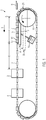
- Figure 1 shows a schematic view of a packaging machine 1 with two work stations 3, 4, for example a sealing station 3 and a cutting station 4, a transport chain 5 which comprises chain clamps 7 for transporting a material blank 9 along a transport direction T.
- the transport chain 5 is mounted on a chain deflection 11 and can also be driven by this.
- a chain opening mechanism 13 is arranged in the area of a flat, preferably horizontal, section H of the transport chain 5, which opens or keeps the chain clips 7 open, so that the material blank 9 can be introduced therein.
- the chain opening mechanism 13 can be brought from an open state A to a closed state B and vice versa via a drive 15 and thus the chain clamps 7 can be opened and closed.
- a run-up contour 21 is arranged in the area of the chain deflection 11, which in this exemplary embodiment ensures that the chain clips 7 are already opened in the area of an upper half C of the chain deflection 11.
- the run-on contour 21 provides for the chain clips 7 to be opened up to an upper vertex S of the chain deflection 11, and the chain opening mechanism 13 for opening the chain clips 7 in the subsequent flat section H.
- Downstream of the flat section H is an insertion area E, in which products are placed or inserted on the product supports or lower parts of the pack. In the loading area E, the product supports or lower packaging parts in the form of the material blanks 9 are fixed in the closed chain clips 7.
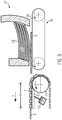
- Figure 2 shows a schematic view of a material blank 9 in two open chain clips 7 arranged on both sides of the transport direction T.
- the chain clips 7 are opened by pivoting the upper parts 17 up and to the side.
- the material blank 9 can be inserted both along the transport direction T, but can also be inserted from above by means of a suction gripper 23. The insertion can take place by simultaneously placing a horizontally oriented material blank 9 in the chain clips 7 arranged on both sides.
- the material blank 9 can also be inserted obliquely first into the chain clips 7 on one side and then folded down into the chain clips 7 on the other side.
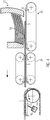
- Figure 3 shows a schematic view of a variant of a feed device 25 which pushes material blanks 9 from a denester 27 by means of a conveying device 29, for example a conveyor belt, into the opened chain clamps 7 in the transport direction T.
- the chain clips 7 in the upper half C of the chain deflection 11 and in the flat area H are opened so that the material blank 9 can be inserted into the chain clips 7 unhindered.
- Figure 4 shows a schematic view of a second variant of a feed device 25, in which an additional conveyor device 29 is present, which moves the material blank 9 in a clamping between two conveyor belts in the transport direction T.
- This variant ensures that the material blank 9 is transported further at a well-defined force and speed.
- Figure 5 shows a schematic view of a third variant of a feed device 25, in which the material blank 9 is placed on a support 31 by the destacker 27 and the feed device 25 is designed in the form of a slide 33 which pushes the material blank 9 into the chain clips 7.
- a guide element 35 and a further slide 37 are provided on one or both sides, which can also be arranged as an alternative to one another.
- a height-adjustable stop 39 with a drive 41 is shown, which enables the correct positioning of the material blank 9 along the transport direction T.
- the stop 39 is moved downwards after positioning.
- a sensor 43 detects the position of the material blank 9 and a control unit 45 can control the positioning of the material blank 9 depending on the sensor data determined.
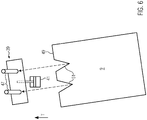
- Figure 6 shows a schematic view of an embodiment of a material blank 9 and a stop 39 for positioning the material blank 9.
- the stop 39 has two centering contours 47 in the form of cylindrical pins, which can be moved into the path of the material blank 9 by means of the drive 41.
- the material blank 9 has two, for example triangular centering recesses 51 on a front edge 49.
- the centering contours 47 come into engagement with the centering recesses 51 in such a way that the material blank 9 is aligned both longitudinally and transversely to the transport direction T.
- a material blank 9 is separated and fed to a feed device 25, for example by means of a destacker 27.
- the feed device 25 then moves the material blank 9 in the transport direction T into one or more in a flat, preferably horizontal, Section H of the transport chain 5 opened chain clips 7, which were previously opened by a chain opening mechanism 13.
- the chain opening mechanism 13 there is an active actuation of the chain opening mechanism 13, which thereby changes from a closed state B to an open state A and thus opens the chain clamps 7 in the section H of the transport chain 5 which has just been aligned.
- the material blank 9 When inserted, the material blank 9 can be actively aligned transversely to the transport direction T by means of one or more sliders 37 or passively by means of one or more guide elements 35. The position of the material blank 9 along the transport direction T can be aligned by controlling the feed device 25 and / or a stop 39.
- the material blank 9 can also be inserted into the chain clips 7 by means of a suction gripper 23. After the material blank 9 has been introduced into the chain clips 7, these are closed by changing the chain opening mechanism 13 from the open state A to the closed state B. The material blank 9 is then moved into the insertion area E and to the work station 3.
Landscapes
- Engineering & Computer Science (AREA)
- Mechanical Engineering (AREA)
- Auxiliary Devices For And Details Of Packaging Control (AREA)
- Supplying Of Containers To The Packaging Station (AREA)
- Advancing Webs (AREA)
- Containers And Plastic Fillers For Packaging (AREA)
Abstract
Description
- Die vorliegende Erfindung betrifft eine Verpackungsmaschine mit Transportkette zum Transportieren eines Materialzuschnitts sowie ein Verfahren zum Betrieb der Verpackungsmaschine.
- Verpackungsmaschinen, insbesondere für Lebensmittelprodukte, weisen üblicherweise neben Arbeitsstationen zum Befüllen und anschließendem Versiegeln von Verpackungen auch Arbeitsstationen zum Ausformen der Verpackung selbst aus einem zugeführten Ausgangsmaterial auf. So werden beispielsweise mittels Tiefziehverfahren aus einer geeigneten Unterfolie Verpackungsschalen ausgeformt, in welche anschließend ein Lebensmittelprodukt eingelegt wird und mit einer Oberfolie luftdicht versiegelt wird. Bei der Unterfolie handelt es sich üblicherweise um ein Kunststoffmaterial, welches in Form einer Endlosbahn von einer Spenderrolle kontinuierlich zugefügt wird. Da zunehmend die Verwendung alternativer Verpackungsmaterialien relevant wird, um Umweltverträglichkeit und Recyclingfähigkeit zu erhöhen, müssen auch die Verpackungsmaschinen zur Verwendung dieser Materialien angepasst werden. Bei der Verwendung von beispielsweise beschichtetem Karton als Ausgangsmaterial für ebene Verpackungsunterlagen kann dieser jedoch nicht von einer Spenderrolle der Verpackungsmaschine zugeführt werden, sondern liegt üblicherweise als Stapel oder Reihe von flächigen Materialzuschnitten vor. Es wäre außerdem zweckmäßig, die Verpackungsmaschine so zu gestalten, dass eine Verwendung unterschiedlicher Ausgangsmaterialien möglich ist.
- Aufgabe der vorliegenden Erfindung ist es, eine Verpackungsmaschine mit einem Transportsystem für Verpackungsmaterial bereitzustellen, wobei die Verpackungsmaschine dazu geeignet ist, Verpackungsmaterial in Form von flächigen Materialzuschnitten als Mehrfachproduktauflagen oder Packungsunterteile zu verarbeiten. Bei Mehrfachproduktauflagen können pro Materialzuschnitt mehrere Bereiche mit Produkten belegt, versiegelt und anschließend zu mehreren Verpackungen vereinzelt werden.
- Die Aufgabe wird erfindungsgemäß gelöst durch eine Verpackungsmaschine gemäß Anspruch 1 und ein Verfahren zum Betrieb einer Verpackungsmaschine gemäß Anspruch 14. Vorteilhafte Weiterbildungen der Erfindung sind in den Unteransprüchen angegeben.
- Eine erfindungsgemäße Verpackungsmaschine umfasst mehrere Arbeitsstationen, beispielsweise eine Siegelstation und eine Schneidstation, und eine Transportkette zum Transportieren eines flächigen Materialzuschnitts zu den Arbeitsstationen, wobei der Materialzuschnitt das Ausgangsmaterial für die Verpackung ist. Des Weiteren umfasst die Verpackungsmaschine eine Kettenumlenkung, auf welcher die Transportkette gelagert ist, wobei die Transportkette wiederum Kettenklammern mit jeweils einem Oberteil und einem Unterteil umfasst, wovon das Oberteil und/oder das Unterteil schwenkbar und/oder verschiebbar ist, um die Kettenklammern zu öffnen und zu schließen. In die geöffneten Kettenklammern ist der Materialzuschnitt einbringbar und in den geschlossenen Kettenklammern ist er in diesen fixiert, sodass der Materialzuschnitt mittels der Transportkette entlang einer Transportrichtung, vorzugsweise intermittierend, bewegbar ist. Die Verpackungsmaschine weist einen Kettenöffnungsmechanismus auf, welcher dazu konfiguriert ist, aktiv betätigbar von einem Öffnungszustand in einen Schließzustand und umgekehrt zu wechseln, um mindestens eine Kettenklammer eines eben ausgerichteten Abschnitts der Transportkette reversibel zu öffnen und/oder eine bereits geöffnete Kettenklammer offen zu halten, damit der Materialzuschnitt in die Kettenklammer einbringbar ist. Vorzugsweise ist der eben ausgerichtete Abschnitt der Transportkette zumindest im Wesentlichen horizontal, das heißt innerhalb eines Winkelbereichs von -15° bis +15° zur Horizontalen, ausgerichtet. Somit kann ein flächiger Materialzuschnitt in der Transportebene der Transportkette zugeführt werden und, fixiert in einer oder mehreren Kettenklammern, von der Transportkette zur Verarbeitung weiterbefördert werden. Dabei findet kein Knicken oder Biegen des Materialzuschnitts statt und entsprechende, möglicherweise dauerhafte Materialbeeinträchtigungen, wie Knicke oder gebogene Flächen, werden vermieden. Dementsprechend sind ein korrektes Funktionieren des Siegelprozesses in der Siegelstation und eine einwandfreie Optik der Verpackung sichergestellt. Um einen sicheren Transport des Materialzuschnitts zu gewährleisten, kann es zudem zweckmäßig sein, beidseitig entlang den seitlichen Rändern der Verpackungsmaschine jeweils eine Transportkette entlang der Transportrichtung anzuordnen. Somit wird der Materialzuschnitt symmetrisch jeweils mindestens in einer rechten und eine linken Kettenklammer fixiert. Im Sinne der Erfindung ist "Transportkette" allgemein als endloses Transportmittel zu verstehen und kann beispielsweise auch einen Transportriemen umfassen.
- Bevorzugt ist der Kettenöffnungsmechanismus dazu konfiguriert, eine Kettenklammer in einem Abschnitt stromabwärts der Kettenumlenkung reversibel zu öffnen. Dieser Abschnitt, welcher als mit einem oberen Scheitelpunkt der Kettenumlenkung beginnend definiert werden kann, bietet die früheste Möglichkeit, den flächigen Materialzuschnitt, vorzugsweise horizontal, in die geöffnete Kettenklammer einzubringen, um den Materialzuschnitt durch Schließen der Kettenklammer anschließend zu fixieren. Dementsprechend ist ein Zuführen der Materialzuschnitte hier am effizientesten.
- In einer vorteilhaften Variante weist die Kettenumlenkung eine Anlaufkontur auf, welche dazu ausgebildet ist, eine Kettenklammer, welche sich entlang eines Abschnitts der Kettenumlenkung befindet, zu öffnen. Somit können bereits die Kettenklammern geöffnet werden, welche sich noch vor dem ebenen Abschnitt des Kettenöffnungsmechanismus befinden.
- In einer weiteren Variante ist die Anlaufkontur derart angeordnet, dass die Kettenklammer entlang eines Abschnitts im Bereich einer oberen Hälfte der Kettenumlenkung geöffnet wird, oder dass die Anlaufkontur verstellbar ist, um den Abschnitt entlang der Kettenumlenkung, in welchem die Kettenklammer geöffnet wird, einzustellen. In der oberen Hälfte der Kettenumlenkung laufen die Kettenklammern üblicherweise von unten entlang eines Kreisumfangs auf den oberen Scheitelpunkt zu und würden im geschlossenen Zustand das Zuführen des Materialzuschnitts stören. Indem die Kettenklammern also bereits geöffnet werden, wenn sie in dem Bereich des Vorschubweges des Materialzuschnitts kommen, kann dieser ungehindert durch die geöffneten Kettenklammern hindurchbewegt werden. Durch geeignete Anordnung einer Spenderrolle kann auch Kunststoffmaterial in Form einer Folienbahn den Transportketten zugeführt werden, indem die Folienbahn in besagter oberen Hälfte der Kettenumlenkung in die Kettenklammern eingefädelt wird. Ist die Anlaufkontur verstellbar, so kann die Folienbahn wahlweise auch von schräg unten im Bereich der Kettenumlenkung eingefädelt werden, und die Spenderrolle dementsprechend angeordnet sein. In beiden Varianten ist die Verpackungsmaschine also dazu geeignet, sowohl flächige Materialzuschnitte als auch Endlos-Kunststofffolienbahnen oder Faserstoffbahnen zu verarbeiten.
- Zweckmäßig weist die Verpackungsmaschine eine Vorschubeinrichtung auf, welche dazu konfiguriert ist, einen Materialzuschnitt in die geöffnete Kettenklammer einzuschieben. Die Vorschubeinrichtung kann beispielsweise als Förderband oder als Schieber in Form einer pneumatisch angetriebenen Kolbenanordnung ausgebildet sein. So können die flächigen Materialzuschnitte der Transportkette synchron mit dem Arbeitstakt der Arbeitsstationen und folglich der Transportkette, und damit ohne zusätzlichen Zeitbedarf pro Arbeitstakt, zugeführt werden.
- Vorzugsweise weist die Verpackungsmaschine eine Auflage auf, auf welche der Materialzuschnitt von einem Entstapler ablegbar ist, wobei die Auflage zu der geöffneten Kettenklammer derart ausgerichtet ist, dass der Materialzuschnitt in die Kettenklammer mittels der Vorschubeinrichtung eingeschoben werden kann. So kann ein Stapel von Materialzuschnitten vereinzelt werden und der einzelne Materialzuschnitt, welcher sich dann auf der Auflage in Höhe der geöffneten Kettenklammer befindet, muss nur noch in einer linearen Bewegung in Transportrichtung in die Kettenklammer eingeschoben werden. Somit ist ein einfach zu konstruierender und dem Takt der Arbeitsstation anpassbarer Zuführmechanismus bereitgestellt, dem das Ausgangsmaterial stapelweise zur Verfügung gestellt werden kann.
- In einer gängigen Variante weist die Verpackungsmaschine ein seitliches Führungselement und/oder einen Schieber auf, welche dazu konfiguriert sind, den Materialzuschnitt quer zur Transportrichtung auszurichten. Dadurch ist sichergestellt, dass der Materialzuschnitt wie gewünscht parallel zur Transportrichtung ausgerichtet ist und korrekt ausgerichtet von der Kettenklammer fixiert wird. Der Materialzuschnitt berührt beim Transport zur Arbeitsstation damit keine weiteren Strukturen der Verpackungsmaschine und wird nicht beschädigt oder verschoben, was andernfalls die weitere Verwendung in der Arbeitsstation beeinträchtigen würde.
- In einer bevorzugten Variante weist die Verpackungsmaschine einen einstellbaren, insbesondere entlang der Transportrichtung variabel positionierbaren, Anschlag auf, um den Materialzuschnitt entlang der Transportrichtung auszurichten. Der Anschlag stellt also auch die Position des Materialzuschnitts in Transportrichtung sicher, sodass der Materialzuschnitt nach dem Vorschub der Transportkette korrekt in der Arbeitsstation platziert ist.
- Idealerweise weist der Anschlag mindestens eine, vorzugsweise zwei oder mehr Zentrierkonturen auf. Eine solche Zentrierkontur kann beispielsweise ein vertikal angeordneter Stift sein, welcher mit einer Ausnehmung an einer vorderen Kante des Materialzuschnitts in Eingriff kommt. Vorzugsweise können zwei zylindrische Stifte als Anschlag angeordnet sein, welche jeweils mit einer dreieckigen Ausnehmung des Materialzuschnitts in Eingriff kommen, wodurch dieser sowohl quer als auch längs der Transportrichtung ausgerichtet wird. Dies ist eine besonders einfach zu realisierende Möglichkeit zum Ausrichten des Materialzuschnitts, womit es auch denkbar ist, auf seitliche Führungselemente zu verzichten.
- Zweckmäßig ist der Anschlag bewegbar, insbesondere schwenkbar oder vertikal verfahrbar, um in den Transportweg des Materialzuschnitts ein- und ausgefahren zu werden. So wird nach erfolgter Ausrichtung des Materialzuschnitts dessen Weitertransport ermöglicht.
- In einer weiteren bevorzugten Variante ist der Anschlag mit dem Kettenöffnungsmechanismus gekoppelt. Damit erfolgen die Bewegungen beider Komponenten synchron und es ist möglich, nur einen einzigen, gemeinsamen Antrieb, beispielsweise einen Elektromotor, vorzusehen.
- In einer gängigen Variante umfasst die Verpackungsmaschine einen oder mehrere Sensoren, welche dazu konfiguriert sind, Position und Ausrichtung des Materialzuschnitts zu erfassen. Entsprechend den erhaltenen Daten können beispielsweise die Vorschubeinrichtung und seitliche Schieber gesteuert werden, um den Materialzuschnitt korrekt zu positionieren. Ebenso kann die Endlage vor dem Weitertransport des Materialzuschnitts erfasst werden und, falls diese nicht den Vorgaben entspricht, eine entsprechende Warnung ausgegeben, eine Verarbeitung des Materialzuschnitts in der Arbeitsstation übersprungen oder der Materialzuschnitt aussortiert werden. Es wird also ein Feedback- und Nachregelungssystem bereitgestellt.
- In einer weiteren zweckmäßigen Variante umfasst die Verpackungsmaschine einen Sauggreifer, welcher dazu konfiguriert ist, den Materialzuschnitt in die geöffnete Kettenklammer einzulegen. Mit einem Sauggreifer ist es beispielsweise möglich, die Materialzuschnitte direkt von der Oberseite eines Stapels zu nehmen, wodurch auf einen Entstapler verzichtet werden kann. Bei Kettenklammern, welche durch seitliches Aufklappen des Oberteils geöffnet werden, kann der Materialzuschnitt mittels des Sauggreifers von oben eingelegt werden, was eine exakte Positionierung ermöglicht. Ebenso ist jedoch auch weiterhin ein Einschieben parallel zur Transportrichtung möglich.
- Üblicherweise ist der Kettenöffnungsmechanismus selektiv deaktivierbar. Dies ist beispielsweise dann vorteilhaft, wenn die Verpackungsmaschine anstatt der flächigen Materialzuschnitte eine Endlos-Kunststofffolienbahn verarbeitet, welche im Bereich der Kettenumlenkung in die mittels der Anlaufkontur geöffneten Transportklammern eingefädelt wird. Dabei ist es sinnvoll, die Kettenklammern spätestens mit Verlassen der Kettenumlenkung am oberen Scheitel wieder zu schließen, um die Kunststofffolienbahn sicher zu fixieren.
- Ein erfindungsgemäßer Materialzuschnitt, insbesondere aus Karton oder Faserverbundstoff ist als Mehrfachproduktauflage oder Packungsunterteil geeignet, wobei der Materialzuschnitt ein flächiges Element, insbesondere in Rechteckform, ist. An einem vorderen Rand weist der Materialzuschnitt mindestens zwei Zentrierausnehmungen auf, welche dazu geeignet sind, mit einem Anschlag einer Verpackungsmaschine in Anlage zu kommen, so dass der Materialzuschnitt längs und quer einer Transportrichtung der Verpackungsmaschine ausgerichtet ist. So kann der Materialzuschnitt in der Arbeitsstation wie vorgesehen verarbeitet werden, und es können weitere Führungselemente zur Ausrichtung weggelassen werden.
- Ein erfindungsgemäßes Verfahren zum Betrieb einer Verpackungsmaschine, umfasst folgende Verfahrensschritte:
- Aktives Betätigen eines Kettenöffnungsmechanismus, welcher dadurch von einem Schließzustand in einen Öffnungszustand wechselt, was ein Öffnen oder Offenhalten von mindestens einer von mehreren an einer Transportkette angeordneten und sich in einem eben ausgerichteten Abschnitt der Transportkette befindlichen Kettenklammern bewirkt,
- Einbringen eines flächigen Materialzuschnitts in die mindestens eine geöffnete Kettenklammer,
- Schließen der Kettenklammer,
- Transport des Materialzuschnitts zu einer Arbeitsstation.
- Vorzugsweise findet das Einbringen des flächigen Materialzuschnitts in die mindestens eine geöffnete Kettenklammer statt, indem der Materialzuschnitt mittels einer Vorschubeinrichtung in die Kettenklammer eingeschoben und/oder mittels eines Sauggreifers in die Kettenklammer eingelegt wird.
- Im Folgenden werden Ausführungsbeispiele der Erfindung anhand der Figuren näher beschrieben. Dabei zeigen
- Figur 1:
- eine schematische Ansicht einer Verpackungsmaschine,
- Figur 2:
- eine schematische Ansicht eines Materialzuschnitts in zwei geöffneten Kettenklammern,
- Figur 3:
- eine schematische Ansicht einer ersten Variante einer Vorschubeinrichtung,
- Figur 4:
- eine schematische Ansicht einer zweiten Variante einer Vorschubeinrichtung,
- Figur 5:
- eine schematische Ansicht einer dritten Variante einer Vorschubeinrichtung,
- Figur 6:
- eine schematische Ansicht eines Materialzuschnitts und eines Anschlags.
- Einander entsprechende Komponenten sind in den Figuren jeweils mit gleichen Bezugszeichen versehen.
-
Figur 1 zeigt eine schematische Ansicht einer Verpackungsmaschine 1 mit zwei Arbeitsstationen 3, 4, beispielsweise einer Siegelstation 3 und einer Schneidstation 4, einer Transportkette 5, welche Kettenklammern 7 zum Transportieren eines Materialzuschnitts 9 entlang einer Transportrichtung T umfasst. Die Transportkette 5 ist auf einer Kettenumlenkung 11 gelagert und kann auch von dieser angetrieben werden. Im Bereich eines ebenen, vorzugsweise horizontalen, Abschnitts H der Transportkette 5 ist ein Kettenöffnungsmechanismus 13 angeordnet, welcher die Kettenklammern 7 öffnet oder offen hält, sodass der Materialzuschnitt 9 darin eingebracht werden kann. Über einen Antrieb 15 kann der Kettenöffnungsmechanismus 13 von einem Öffnungszustand A in einen Schließzustand B und umgekehrt gebracht und damit die Kettenklammern 7 geöffnet und geschlossen werden. Beim Öffnen der Kettenklammern 7 werden je ein Oberteil 17 und ein Unterteil 19 der Kettenklammern 7 gegeneinander verschoben und/oder verschwenkt, wobei eine oder beide Teile 17, 19 eine Bewegung ausführen können. Im Bereich der Kettenumlenkung 11 ist eine Anlaufkontur 21 angeordnet, welche in diesem Ausführungsbeispiel dafür sorgt, dass die Kettenklammern 7 bereits im Bereich einer oberen Hälfte C der Kettenumlenkung 11 geöffnet werden. Üblicherweise sorgt die Anlaufkontur 21 für ein Öffnen der Kettenklammern 7 bis zu einem oberen Scheitelpunkt S der Kettenumlenkung 11, und der Kettenöffnungsmechanismus 13 für das Öffnen der Kettenklammern 7 in dem anschließenden ebenen Abschnitt H. Stromabwärts schließt an den ebenen Abschnitt H ein Einlegebereich E an, in welchem Produkte auf die Produktauflagen bzw. Packungsunterteile auf- oder eingelegt werden. Im Einlegebereich E sind die Produktauflagen bzw. Packungsunterteile in Form der Materialzuschnitte 9 in den geschlossenen Kettenklammern 7 fixiert. -
Figur 2 zeigt eine schematische Ansicht eines Materialzuschnitts 9 in zwei geöffneten und beidseitig der Transportrichtung T angeordneten Kettenklammern 7. Die Kettenklammern 7 sind dabei durch nach oben und zur Seite Schwenken der Oberteile 17 geöffnet. Bei dieser Ausführungsform kann der Materialzuschnitt 9 sowohl entlang der Transportrichtung T eingeschoben werden, jedoch auch mittels eines Sauggreifers 23 von oben eingelegt werden. Das Einlegen kann dabei durch ein gleichzeitiges Ablegen eines horizontal ausgerichteten Materialzuschnitts 9 in die beidseitig angeordneten Kettenklammern 7 erfolgen. Der Materialzuschnitt 9 kann jedoch auch schräg zuerst in die Kettenklammern 7 einer Seite eingelegt und anschließend in die Kettenklammern 7 der anderen Seite heruntergeklappt werden. -
Figur 3 zeigt eine schematische Ansicht einer Variante einer Vorschubeinrichtung 25, welche Materialzuschnitte 9 von einem Entstapler 27 mittels einer Fördereinrichtung 29, beispielsweise einem Förderband, in die geöffneten Kettenklammern 7 in Transportrichtung T einschiebt. Dabei sind die Kettenklammern 7 in der oberen Hälfte C der Kettenumlenkung 11 sowie in dem ebenen Bereich H so geöffnet, dass der Materialzuschnitt 9 ungehindert in die Kettenklammern 7 eingeschoben werden kann. -
Figur 4 zeigt eine schematische Ansicht einer zweiten Variante einer Vorschubeinrichtung 25, bei welcher eine zusätzliche Fördereinrichtung 29 vorhanden ist, welche den Materialzuschnitt 9 in einer Klemmung zwischen zwei Förderbändern in Transportrichtung T bewegt. In dieser Variante ist sichergestellt, dass der Materialzuschnitt 9 mit einer wohldefinierten Kraft und Geschwindigkeit weiter transportiert wird. -
Figur 5 zeigt eine schematische Ansicht einer dritten Variante einer Vorschubeinrichtung 25, bei welcher der Materialzuschnitt 9 von dem Entstapler 27 auf einer Auflage 31 abgelegt wird und die Vorschubeinrichtung 25 in Form eines Schiebers 33 ausgebildet ist, welcher den Materialzuschnitt 9 in die Kettenklammern 7 einschiebt. Zur korrekten Positionierung quer zur Transportrichtung T sind ein- oder beidseitig ein Führungselement 35 und ein weiterer Schieber 37 vorhanden, welche auch alternativ zueinander angeordnet sein können. Desweiteren ist ein höhenverstellbarer Anschlag 39 mit einem Antrieb 41 gezeigt, welcher die korrekte Positionierung des Materialzuschnitts 9 längs der Transportrichtung T ermöglicht. Um den Transport des Materialzuschnitts 9 mittels der Transportkette 5 zu ermöglichen, wird der Anschlag 39 nach erfolgter Positionierung nach unten gefahren. Ein Sensor 43 erfasst die Position des Materialzuschnitts 9 und eine Steuerungseinheit 45 kann abhängig von ermittelten Sensordaten die Positionierung des Materialzuschnitts 9 steuern. -
Figur 6 zeigt eine schematische Ansicht einer Ausführungsform eines Materialzuschnitts 9 und eines Anschlags 39 zur Positionierung des Materialzuschnitts 9. Der Anschlag 39 weist zwei Zentrierkonturen 47 in Form von zylindrischen Stiften auf, welche mittels des Antriebs 41 in den Fahrweg des Materialzuschnitts 9 gefahren werden können. Der Materialzuschnitt 9 weist an einem vorderen Rand 49 zwei z.B. dreieckige Zentrierausnehmungen 51 auf. Beim Einschieben des Materialzuschnitts 9 mittels der Vorschubeinrichtung 25 kommen die Zentrierkonturen 47 mit den Zentrierausnehmungen 51 derart in Eingriff, dass der Materialzuschnitt 9 sowohl längs als auch quer zur Transportrichtung T ausgerichtet ist. - Im Folgenden wird die Funktionsweise der Verpackungsmaschine 1 anhand der Figuren näher beschrieben.
- Von einem Vorrat, beispielsweise einem Stapel, an Materialzuschnitten 9 wird ein Materialzuschnitt 9 vereinzelt und einer Vorschubeinrichtung 25 zugeführt, beispielsweise mittels eines Entstaplers 27. Die Vorschubeinrichtung 25 bewegt den Materialzuschnitt 9 sodann in Transportrichtung T in eine oder mehrere in einem ebenen, vorzugsweise horizontalen, Abschnitt H der Transportkette 5 geöffnete Kettenklammern 7, welche zuvor durch einen Kettenöffnungsmechanismus 13 geöffnet wurden. Dazu findet ein aktives Betätigen des Kettenöffnungsmechanismus 13 statt, welcher dadurch von einem Schließzustand B in einen Öffnungszustand A wechselt und so die Kettenklammern 7 in dem eben ausgerichteten Abschnitt H der Transportkette 5 öffnet. Beim Einschieben kann der Materialzuschnitt 9 aktiv mittels eines oder mehrerer Schieber 37 oder passiv mittels eines oder mehrerer Führungselemente 35 quer zur Transportrichtung T ausgerichtet werden. Die Position des Materialzuschnitts 9 längs der Transportrichtung T kann durch die Steuerung der Vorschubeinrichtung 25 und/oder einen Anschlag 39 ausgerichtet werden. Alternativ zum Einbringen des Materialzuschnitts 9 in die geöffneten Kettenklammern 7 mittels einer Vorschubeinrichtung 25 kann der Materialzuschnitt 9 auch mittels eines Sauggreifers 23 in die Kettenklammern 7 eingelegt werden. Nach dem Einbringen des Materialzuschnitts 9 in die Kettenklammern 7 werden diese durch Wechsel des Kettenöffnungsmechanismus 13 von dem Öffnungszustand A in den Schließzustand B geschlossen. Anschließend wird der Materialzuschnitt 9 in den Einlegebereich E sowie zu der Arbeitsstation 3 bewegt.
- Ausgehend von den oben dargestellten Ausführungsformen einer Verpackungsmaschine 1 sind vielerlei Variationen derselben möglich. So wäre es zum Beispiel denkbar, die Kettenklammern 7 in Gruppen entlang der Transportkette 5 anzuordnen, wobei zwischen den Gruppen Abstände vorhanden sind, so dass keine Kettenklammern 7 entlang eines oberen Abschnitts C der Kettenumlenkung 11 vorhanden sind, wenn der Materialzuschnitt 9 in die Kettenklammern 7 eines ebenen Abschnitts H der Transportkette 5 eingeschoben wird. Somit kann auf eine Anlaufkontur 21 entlang der Kettenumlenkung 11 verzichtet werden, da keine Kettenklammern 7 die horizontale Bewegung des Materialzuschnitts 9 behindern würden.
Claims (15)
- Verpackungsmaschine (1) mit mehreren Arbeitsstationen (3, 4), einer Transportkette (5) zum Transportieren eines flächigen Materialzuschnitts (9) zu den Arbeitsstationen (3, 4) und einer Kettenumlenkung (11), auf welcher die Transportkette (5) gelagert ist, wobei die Transportkette (5) Kettenklammern (7) mit jeweils einem Oberteil (17) und einem Unterteil (19) umfasst und das Oberteil (17) und/oder das Unterteil (19) schwenkbar und/oder verschiebbar ist, um die Kettenklammern (7) zu öffnen und zu schließen, wobei in die geöffneten Kettenklammern (7) der Materialzuschnitt (9) einbringbar ist und in den geschlossenen Kettenklammern (7) in diesen fixiert ist, sodass der Materialzuschnitt (9) mittels der Transportkette (5) entlang einer Transportrichtung (T) bewegbar ist, dadurch gekennzeichnet, dass die Verpackungsmaschine (1) einen Kettenöffnungsmechanismus (13) aufweist, welcher dazu konfiguriert ist, aktiv betätigbar von einem Öffnungszustand (A) in einen Schließzustand (B) und umgekehrt zu wechseln, um mindestens eine Kettenklammer (7) eines eben ausgerichteten Abschnitts (H) der Transportkette (5) reversibel zu öffnen und/oder eine bereits geöffnete Kettenklammer (7) offen zu halten, damit der Materialzuschnitt (9) in die Kettenklammer (7) einbringbar ist.
- Verpackungsmaschine nach Anspruch 1, dadurch gekennzeichnet, dass der Kettenöffnungsmechanismus (13) derart konfiguriert ist, eine Kettenklammer (7) in einem Abschnitt stromabwärts der Kettenumlenkung (11) reversibel zu öffnen.
- Verpackungsmaschine nach einem der vorangegangenen Ansprüche, dadurch gekennzeichnet, dass die Kettenumlenkung (11) eine Anlaufkontur (21) aufweist, welche dazu ausgebildet ist, eine Kettenklammer (7), welche sich entlang eines Abschnitts der Kettenumlenkung (11) befindet, zu öffnen.
- Verpackungsmaschine nach Anspruch 3, dadurch gekennzeichnet, dass die Anlaufkontur (21) derart angeordnet ist, dass die Kettenklammer (7) entlang eines Abschnitts im Bereich einer oberen Hälfte (C) der Kettenumlenkung (11) geöffnet wird, oder dass die Anlaufkontur (21) verstellbar ist, um den Abschnitt entlang der Kettenumlenkung (11), in welchem die Kettenklammer (7) geöffnet wird, einzustellen.
- Verpackungsmaschine nach einem der vorangegangenen Ansprüche, dadurch gekennzeichnet, eine Vorschubeinrichtung (25) aufzuweisen, welche dazu konfiguriert ist, einen Materialzuschnitt (9) in die geöffnete Kettenklammer (7) einzuschieben.
- Verpackungsmaschine nach Anspruch 5, dadurch gekennzeichnet, eine Auflage (31) aufzuweisen, auf welche der Materialzuschnitt (9) von einem Entstapler (27) ablegbar ist, wobei die Auflage (31) zu der geöffneten Kettenklammer (7) derart ausgerichtet ist, dass der Materialzuschnitt (9) in die Kettenklammer (7) mittels der Vorschubeinrichtung (25) eingeschoben werden kann.
- Verpackungsmaschine nach einem der vorangegangenen Ansprüche, dadurch gekennzeichnet, ein seitliches Führungselement (35) und/oder einen Schieber (37) aufzuweisen, welche dazu konfiguriert sind, den Materialzuschnitt (9) quer zur Transportrichtung (T) auszurichten.
- Verpackungsmaschine nach einem der vorangegangenen Ansprüche, dadurch gekennzeichnet, einen einstellbaren, insbesondere entlang der Transportrichtung (T) variabel positionierbaren, Anschlag (39) aufzuweisen, um den Materialzuschnitt (9) entlang der Transportrichtung (T) auszurichten.
- Verpackungsmaschine nach Anspruch 8, dadurch gekennzeichnet, dass der Anschlag (39) bewegbar, insbesondere schwenkbar oder vertikal verfahrbar ist, um in den Transportweg des Materialzuschnitts (9) ein- und ausgefahren zu werden.
- Verpackungsmaschine nach Anspruch 9, dadurch gekennzeichnet, dass der Anschlag (39) mit dem Kettenöffnungsmechanismus (13) gekoppelt ist.
- Verpackungsmaschine nach einem der vorangegangenen Ansprüche, gekennzeichnet durch einen oder mehrere Sensoren (43), welche dazu konfiguriert sind, Position und Ausrichtung des Materialzuschnitts (9) zu erfassen.
- Verpackungsmaschine nach einem der vorangegangenen Ansprüche, gekennzeichnet durch einen Sauggreifer (23), welcher dazu konfiguriert ist, den Materialzuschnitt (9) in die geöffnete Kettenklammer (7) einzulegen.
- Verpackungsmaschine nach einem der vorangegangenen Ansprüche, dadurch gekennzeichnet, dass der Kettenöffnungsmechanismus (13) selektiv deaktivierbar ist.
- Verfahren zum Betrieb einer Verpackungsmaschine (1), umfassend folgende Verfahrensschritte:- Aktives Betätigen eines Kettenöffnungsmechanismus (13), welcher dadurch von einem Schließzustand (B) in einen Öffnungszustand (A) wechselt, was ein Öffnen oder Offenhalten von mindestens einer von mehreren an einer Transportkette (5) angeordneten und sich in einem eben ausgerichteten Abschnitt (H) der Transportkette (5) befindlichen Kettenklammern (7) bewirkt,- Einbringen eines flächigen Materialzuschnitts (9) in die mindestens eine geöffnete Kettenklammer (7),- Schließen der Kettenklammer (7),- Transport des Materialzuschnitts (9) zu einer Arbeitsstation (3, 4).
- Verfahren nach Anspruch 14, dadurch gekennzeichnet, dass das Einbringen des flächigen Materialzuschnitts (9) in die mindestens eine geöffnete Kettenklammer (7) stattfindet, indem der Materialzuschnitt (9) mittels einer Vorschubeinrichtung (25) in die Kettenklammer (7) eingeschoben und/oder mittels eines Sauggreifers (23) in die Kettenklammer (7) eingelegt wird.
Applications Claiming Priority (1)
| Application Number | Priority Date | Filing Date | Title |
|---|---|---|---|
| DE102018218384.8A DE102018218384A1 (de) | 2018-10-26 | 2018-10-26 | Verpackungsmaschine mit transportkette |
Publications (2)
| Publication Number | Publication Date |
|---|---|
| EP3643628A1 true EP3643628A1 (de) | 2020-04-29 |
| EP3643628B1 EP3643628B1 (de) | 2021-08-11 |
Family
ID=68281114
Family Applications (1)
| Application Number | Title | Priority Date | Filing Date |
|---|---|---|---|
| EP19203453.6A Active EP3643628B1 (de) | 2018-10-26 | 2019-10-16 | Verpackungsmaschine mit transportkette |
Country Status (4)
| Country | Link |
|---|---|
| US (1) | US11021328B2 (de) |
| EP (1) | EP3643628B1 (de) |
| DE (1) | DE102018218384A1 (de) |
| ES (1) | ES2896061T3 (de) |
Cited By (1)
| Publication number | Priority date | Publication date | Assignee | Title |
|---|---|---|---|---|
| AT524968A1 (de) * | 2021-04-29 | 2022-11-15 | Starlinger & Co Gmbh | Vorrichtung und Verfahren zur Herstellung von Säcken aus Schlauchstücken |
Families Citing this family (4)
| Publication number | Priority date | Publication date | Assignee | Title |
|---|---|---|---|---|
| US10405863B2 (en) * | 2015-06-18 | 2019-09-10 | Ethicon Llc | Movable firing beam support arrangements for articulatable surgical instruments |
| JP7448141B2 (ja) * | 2020-03-30 | 2024-03-12 | ゼネラルパッカー株式会社 | 底受け装置を備えた包装機 |
| CN112849464B (zh) * | 2020-12-31 | 2022-12-23 | 江苏悦阳光伏科技有限公司 | 一种太阳能组件包装机 |
| CN116750291B (zh) * | 2023-08-24 | 2023-10-31 | 常州市正文印刷有限公司 | 纸制品生产系统及其工作方法 |
Citations (4)
| Publication number | Priority date | Publication date | Assignee | Title |
|---|---|---|---|---|
| DE2355921A1 (de) * | 1973-11-08 | 1975-05-15 | Waldner Kg H | Materialbahn-foerdereinrichtung |
| US4459093A (en) * | 1980-12-08 | 1984-07-10 | Kabushiki Kaisha Asano Kenkyusho | Apparatus for severing and feeding thermoplastic sheet |
| JPH0252703U (de) * | 1989-04-15 | 1990-04-16 | ||
| US20120035033A1 (en) * | 2009-04-17 | 2012-02-09 | Gima S.P.A. | Device for supplying sheets |
Family Cites Families (14)
| Publication number | Priority date | Publication date | Assignee | Title |
|---|---|---|---|---|
| US2996862A (en) * | 1959-08-26 | 1961-08-22 | Certain Teed Prod Corp | Shingle bundle wrapping equipment |
| US3204756A (en) * | 1962-12-11 | 1965-09-07 | Otto Hansel G M B H | Apparatus for the intermittent transport of workpieces, especially for the feeding of wrappers, labels, or the like in wrapping machines |
| DE3315419A1 (de) * | 1983-04-28 | 1984-10-31 | Multivac Sepp Haggenmüller KG, 8941 Wolfertschwenden | Transporteinrichtung zum fuehren einer materialbahn in einer verpackungsmaschine |
| US4674739A (en) * | 1985-08-02 | 1987-06-23 | Corrugated Paper Machinery Corp. | Sheet transfer device |
| CH670619A5 (de) * | 1986-04-29 | 1989-06-30 | Sft Ag Spontanfoerdertechnik | |
| EP0300171B1 (de) * | 1987-07-21 | 1990-12-19 | Ferag AG | Transporteur für flächige Erzeugnisse, insbesondere Druckprodukte |
| SE9103290L (sv) * | 1991-11-07 | 1993-05-08 | Wamag Idab Ab | Foerfarande och anordning foer att oeppna en sjaelvstaengande gripare paa en griparetransportoer |
| DE4201411A1 (de) * | 1992-01-21 | 1993-07-22 | Blohm Voss Ag | Niederhalter an behandlungsanlagen, insbesondere stanzmaschinen, fuer duenne flache gegenstaende, insbesondere boegen aus papier |
| JP2727281B2 (ja) * | 1992-09-28 | 1998-03-11 | 株式会社東京機械製作所 | 折機デリバリー装置 |
| US6286662B1 (en) * | 1997-07-03 | 2001-09-11 | Ferag Ag | Clamp for holding sheet-like objects |
| DE10251740A1 (de) * | 2002-11-05 | 2004-05-13 | Convenience Food Systems Wallau Gmbh & Co. Kg | Spannstück einer Transportkette für eine Folienbahn |
| DE10326727B3 (de) * | 2003-06-13 | 2004-08-05 | Multivac Sepp Haggenmüller Gmbh & Co. Kg | Verpackungsmaschine |
| DE102006006523A1 (de) * | 2006-02-10 | 2007-08-16 | Cfs Germany Gmbh | Verpackungsmaschine mit zwei hintereinander angeordneten Transportketten |
| EP2740677A1 (de) * | 2012-12-10 | 2014-06-11 | Multivac Sepp Haggenmüller GmbH & Co. KG | Transporteinrichtung für Tiefziehverpackungsmaschine |
-
2018
- 2018-10-26 DE DE102018218384.8A patent/DE102018218384A1/de not_active Withdrawn
-
2019
- 2019-10-16 ES ES19203453T patent/ES2896061T3/es active Active
- 2019-10-16 EP EP19203453.6A patent/EP3643628B1/de active Active
- 2019-10-25 US US16/663,816 patent/US11021328B2/en active Active
Patent Citations (4)
| Publication number | Priority date | Publication date | Assignee | Title |
|---|---|---|---|---|
| DE2355921A1 (de) * | 1973-11-08 | 1975-05-15 | Waldner Kg H | Materialbahn-foerdereinrichtung |
| US4459093A (en) * | 1980-12-08 | 1984-07-10 | Kabushiki Kaisha Asano Kenkyusho | Apparatus for severing and feeding thermoplastic sheet |
| JPH0252703U (de) * | 1989-04-15 | 1990-04-16 | ||
| US20120035033A1 (en) * | 2009-04-17 | 2012-02-09 | Gima S.P.A. | Device for supplying sheets |
Cited By (2)
| Publication number | Priority date | Publication date | Assignee | Title |
|---|---|---|---|---|
| AT524968A1 (de) * | 2021-04-29 | 2022-11-15 | Starlinger & Co Gmbh | Vorrichtung und Verfahren zur Herstellung von Säcken aus Schlauchstücken |
| AT524968B1 (de) * | 2021-04-29 | 2022-12-15 | Starlinger & Co Gmbh | Vorrichtung und Verfahren zur Herstellung von Säcken aus Schlauchstücken |
Also Published As
| Publication number | Publication date |
|---|---|
| ES2896061T3 (es) | 2022-02-23 |
| US20200130944A1 (en) | 2020-04-30 |
| US11021328B2 (en) | 2021-06-01 |
| DE102018218384A1 (de) | 2020-04-30 |
| EP3643628B1 (de) | 2021-08-11 |
Similar Documents
| Publication | Publication Date | Title |
|---|---|---|
| EP3643628B1 (de) | Verpackungsmaschine mit transportkette | |
| DE60303240T2 (de) | Verfahren und Vorrichtung zum Verpacken eines Produkts unter Verwendung einer flachen rohrförmigen Verpackung | |
| EP2881332B1 (de) | Transportvorrichtung zum Fördern von Produkten | |
| EP3017940B1 (de) | Verfahren und eine Vorrichtung zur Herstellung von Säcken aus schlauchförmigen Sackkörpern | |
| DE3307855A1 (de) | Verfahren und vorrichtung zum herstellen von sammelpackungen | |
| EP3482892B1 (de) | Verfahren für die durchführung von schneidoperationen offener formatkanten eines druckproduktes | |
| EP2517963B1 (de) | Verpackungsmaschine mit Transporteinrichtung | |
| EP2098468A1 (de) | Vorrichtung zum Übertragen von blattförmigen Gegenständen | |
| DE102009000893B4 (de) | Verfahren und Vorrichtung zum Transport von flachen Werkstücken | |
| EP2495193B1 (de) | Vorrichtung zum Ausschleusen von Behältern | |
| DE69104553T2 (de) | Vorrichtung zum Herstellen von Kartons aus flachen hülsenartigen Zuschnitten. | |
| EP3246260A2 (de) | Vorrichtung zur zuführung von produktträgern und vorrichtung zum verschwenken eines abdeckabschnitts eines produktträgers | |
| DE2633341A1 (de) | Vorrichtung zur herstellung von kunststoffbeuteln mit anschlusstutzen | |
| EP2397317B1 (de) | Vorrichtung zum Falten und/oder Falzen von Kartonagen | |
| DE69509041T2 (de) | Verfahren und Vorrichtung zur Verpackung von Gruppen von Produkten | |
| EP3248771A1 (de) | Verfahren und vorrichtung zum bearbeiten vorwiegend flächiger werkstücke | |
| EP3527500B1 (de) | Verpackungsvorrichtung für artikel und verfahren zum betreiben einer zur handhabung flächiger verpackungszuschnitte ausgebildeten verpackungsvorrichtung | |
| EP3643650B1 (de) | Verfahren zum taktweisen vorschub von materialzuschnitten in einer verpackungsmaschine | |
| DE4301169A1 (de) | Verfahren und Vorrichtung zur Handhabung von Zuschnitt-Stapeln mit Banderole | |
| DE102017208856A1 (de) | Transportvorrichtung und Verfahren zum Transport von Umverpackungen | |
| WO2019011448A1 (de) | Verfahren zum herstellen von verpackungen und tiefziehverpackungsmaschine | |
| EP1352864B1 (de) | Vorrichtung zum Packen von flachen Gegenständen in Transportbehälter, insbesondere von flach gefalteten Faltschachteln in Umkartons | |
| DE102008017443B4 (de) | Vorrichtung und Verfahren zur Herstellung von Säcken aus Schlauchstücken | |
| EP4201824B1 (de) | Verpackungsmaschine und verfahren zum verpacken mit dehnfolie | |
| WO2009121542A1 (de) | Vorrichtung und verfahren zur herstellung von säcken aus schlauchstücken |
Legal Events
| Date | Code | Title | Description |
|---|---|---|---|
| PUAI | Public reference made under article 153(3) epc to a published international application that has entered the european phase |
Free format text: ORIGINAL CODE: 0009012 |
|
| STAA | Information on the status of an ep patent application or granted ep patent |
Free format text: STATUS: THE APPLICATION HAS BEEN PUBLISHED |
|
| AK | Designated contracting states |
Kind code of ref document: A1 Designated state(s): AL AT BE BG CH CY CZ DE DK EE ES FI FR GB GR HR HU IE IS IT LI LT LU LV MC MK MT NL NO PL PT RO RS SE SI SK SM TR |
|
| AX | Request for extension of the european patent |
Extension state: BA ME |
|
| STAA | Information on the status of an ep patent application or granted ep patent |
Free format text: STATUS: REQUEST FOR EXAMINATION WAS MADE |
|
| 17P | Request for examination filed |
Effective date: 20201015 |
|
| RBV | Designated contracting states (corrected) |
Designated state(s): AL AT BE BG CH CY CZ DE DK EE ES FI FR GB GR HR HU IE IS IT LI LT LU LV MC MK MT NL NO PL PT RO RS SE SI SK SM TR |
|
| GRAP | Despatch of communication of intention to grant a patent |
Free format text: ORIGINAL CODE: EPIDOSNIGR1 |
|
| STAA | Information on the status of an ep patent application or granted ep patent |
Free format text: STATUS: GRANT OF PATENT IS INTENDED |
|
| RIC1 | Information provided on ipc code assigned before grant |
Ipc: B65H 5/16 20060101ALI20210301BHEP Ipc: B65H 29/00 20060101ALI20210301BHEP Ipc: B65H 7/14 20060101ALI20210301BHEP Ipc: B65B 43/14 20060101AFI20210301BHEP Ipc: B65G 59/06 20060101ALI20210301BHEP Ipc: B65H 3/04 20060101ALI20210301BHEP Ipc: B65B 43/46 20060101ALI20210301BHEP Ipc: B65H 5/02 20060101ALI20210301BHEP Ipc: B65B 57/04 20060101ALI20210301BHEP Ipc: B65H 5/34 20060101ALI20210301BHEP Ipc: B65B 43/18 20060101ALI20210301BHEP Ipc: B65B 41/04 20060101ALI20210301BHEP Ipc: B65H 5/10 20060101ALI20210301BHEP Ipc: B65H 29/04 20060101ALI20210301BHEP Ipc: B65G 17/32 20060101ALI20210301BHEP Ipc: B65B 43/16 20060101ALI20210301BHEP Ipc: B65B 43/20 20060101ALI20210301BHEP Ipc: B65H 5/08 20060101ALI20210301BHEP Ipc: B65H 9/06 20060101ALI20210301BHEP |
|
| INTG | Intention to grant announced |
Effective date: 20210316 |
|
| GRAS | Grant fee paid |
Free format text: ORIGINAL CODE: EPIDOSNIGR3 |
|
| GRAA | (expected) grant |
Free format text: ORIGINAL CODE: 0009210 |
|
| STAA | Information on the status of an ep patent application or granted ep patent |
Free format text: STATUS: THE PATENT HAS BEEN GRANTED |
|
| AK | Designated contracting states |
Kind code of ref document: B1 Designated state(s): AL AT BE BG CH CY CZ DE DK EE ES FI FR GB GR HR HU IE IS IT LI LT LU LV MC MK MT NL NO PL PT RO RS SE SI SK SM TR |
|
| REG | Reference to a national code |
Ref country code: CH Ref legal event code: EP |
|
| REG | Reference to a national code |
Ref country code: DE Ref legal event code: R096 Ref document number: 502019002027 Country of ref document: DE |
|
| REG | Reference to a national code |
Ref country code: IE Ref legal event code: FG4D Free format text: LANGUAGE OF EP DOCUMENT: GERMAN Ref country code: AT Ref legal event code: REF Ref document number: 1419175 Country of ref document: AT Kind code of ref document: T Effective date: 20210915 |
|
| REG | Reference to a national code |
Ref country code: NL Ref legal event code: FP |
|
| REG | Reference to a national code |
Ref country code: LT Ref legal event code: MG9D |
|
| PG25 | Lapsed in a contracting state [announced via postgrant information from national office to epo] |
Ref country code: SE Free format text: LAPSE BECAUSE OF FAILURE TO SUBMIT A TRANSLATION OF THE DESCRIPTION OR TO PAY THE FEE WITHIN THE PRESCRIBED TIME-LIMIT Effective date: 20210811 Ref country code: RS Free format text: LAPSE BECAUSE OF FAILURE TO SUBMIT A TRANSLATION OF THE DESCRIPTION OR TO PAY THE FEE WITHIN THE PRESCRIBED TIME-LIMIT Effective date: 20210811 Ref country code: BG Free format text: LAPSE BECAUSE OF FAILURE TO SUBMIT A TRANSLATION OF THE DESCRIPTION OR TO PAY THE FEE WITHIN THE PRESCRIBED TIME-LIMIT Effective date: 20211111 Ref country code: LT Free format text: LAPSE BECAUSE OF FAILURE TO SUBMIT A TRANSLATION OF THE DESCRIPTION OR TO PAY THE FEE WITHIN THE PRESCRIBED TIME-LIMIT Effective date: 20210811 Ref country code: PT Free format text: LAPSE BECAUSE OF FAILURE TO SUBMIT A TRANSLATION OF THE DESCRIPTION OR TO PAY THE FEE WITHIN THE PRESCRIBED TIME-LIMIT Effective date: 20211213 Ref country code: NO Free format text: LAPSE BECAUSE OF FAILURE TO SUBMIT A TRANSLATION OF THE DESCRIPTION OR TO PAY THE FEE WITHIN THE PRESCRIBED TIME-LIMIT Effective date: 20211111 Ref country code: FI Free format text: LAPSE BECAUSE OF FAILURE TO SUBMIT A TRANSLATION OF THE DESCRIPTION OR TO PAY THE FEE WITHIN THE PRESCRIBED TIME-LIMIT Effective date: 20210811 Ref country code: HR Free format text: LAPSE BECAUSE OF FAILURE TO SUBMIT A TRANSLATION OF THE DESCRIPTION OR TO PAY THE FEE WITHIN THE PRESCRIBED TIME-LIMIT Effective date: 20210811 |
|
| REG | Reference to a national code |
Ref country code: ES Ref legal event code: FG2A Ref document number: 2896061 Country of ref document: ES Kind code of ref document: T3 Effective date: 20220223 |
|
| PG25 | Lapsed in a contracting state [announced via postgrant information from national office to epo] |
Ref country code: PL Free format text: LAPSE BECAUSE OF FAILURE TO SUBMIT A TRANSLATION OF THE DESCRIPTION OR TO PAY THE FEE WITHIN THE PRESCRIBED TIME-LIMIT Effective date: 20210811 Ref country code: LV Free format text: LAPSE BECAUSE OF FAILURE TO SUBMIT A TRANSLATION OF THE DESCRIPTION OR TO PAY THE FEE WITHIN THE PRESCRIBED TIME-LIMIT Effective date: 20210811 Ref country code: GR Free format text: LAPSE BECAUSE OF FAILURE TO SUBMIT A TRANSLATION OF THE DESCRIPTION OR TO PAY THE FEE WITHIN THE PRESCRIBED TIME-LIMIT Effective date: 20211112 |
|
| PG25 | Lapsed in a contracting state [announced via postgrant information from national office to epo] |
Ref country code: DK Free format text: LAPSE BECAUSE OF FAILURE TO SUBMIT A TRANSLATION OF THE DESCRIPTION OR TO PAY THE FEE WITHIN THE PRESCRIBED TIME-LIMIT Effective date: 20210811 |
|
| REG | Reference to a national code |
Ref country code: DE Ref legal event code: R097 Ref document number: 502019002027 Country of ref document: DE |
|
| PG25 | Lapsed in a contracting state [announced via postgrant information from national office to epo] |
Ref country code: SM Free format text: LAPSE BECAUSE OF FAILURE TO SUBMIT A TRANSLATION OF THE DESCRIPTION OR TO PAY THE FEE WITHIN THE PRESCRIBED TIME-LIMIT Effective date: 20210811 Ref country code: SK Free format text: LAPSE BECAUSE OF FAILURE TO SUBMIT A TRANSLATION OF THE DESCRIPTION OR TO PAY THE FEE WITHIN THE PRESCRIBED TIME-LIMIT Effective date: 20210811 Ref country code: RO Free format text: LAPSE BECAUSE OF FAILURE TO SUBMIT A TRANSLATION OF THE DESCRIPTION OR TO PAY THE FEE WITHIN THE PRESCRIBED TIME-LIMIT Effective date: 20210811 Ref country code: EE Free format text: LAPSE BECAUSE OF FAILURE TO SUBMIT A TRANSLATION OF THE DESCRIPTION OR TO PAY THE FEE WITHIN THE PRESCRIBED TIME-LIMIT Effective date: 20210811 Ref country code: CZ Free format text: LAPSE BECAUSE OF FAILURE TO SUBMIT A TRANSLATION OF THE DESCRIPTION OR TO PAY THE FEE WITHIN THE PRESCRIBED TIME-LIMIT Effective date: 20210811 Ref country code: AL Free format text: LAPSE BECAUSE OF FAILURE TO SUBMIT A TRANSLATION OF THE DESCRIPTION OR TO PAY THE FEE WITHIN THE PRESCRIBED TIME-LIMIT Effective date: 20210811 |
|
| PLBE | No opposition filed within time limit |
Free format text: ORIGINAL CODE: 0009261 |
|
| STAA | Information on the status of an ep patent application or granted ep patent |
Free format text: STATUS: NO OPPOSITION FILED WITHIN TIME LIMIT |
|
| REG | Reference to a national code |
Ref country code: BE Ref legal event code: MM Effective date: 20211031 |
|
| PG25 | Lapsed in a contracting state [announced via postgrant information from national office to epo] |
Ref country code: MC Free format text: LAPSE BECAUSE OF FAILURE TO SUBMIT A TRANSLATION OF THE DESCRIPTION OR TO PAY THE FEE WITHIN THE PRESCRIBED TIME-LIMIT Effective date: 20210811 |
|
| 26N | No opposition filed |
Effective date: 20220512 |
|
| PG25 | Lapsed in a contracting state [announced via postgrant information from national office to epo] |
Ref country code: LU Free format text: LAPSE BECAUSE OF NON-PAYMENT OF DUE FEES Effective date: 20211016 Ref country code: BE Free format text: LAPSE BECAUSE OF NON-PAYMENT OF DUE FEES Effective date: 20211031 |
|
| PG25 | Lapsed in a contracting state [announced via postgrant information from national office to epo] |
Ref country code: SI Free format text: LAPSE BECAUSE OF FAILURE TO SUBMIT A TRANSLATION OF THE DESCRIPTION OR TO PAY THE FEE WITHIN THE PRESCRIBED TIME-LIMIT Effective date: 20210811 |
|
| PG25 | Lapsed in a contracting state [announced via postgrant information from national office to epo] |
Ref country code: IE Free format text: LAPSE BECAUSE OF NON-PAYMENT OF DUE FEES Effective date: 20211016 |
|
| PG25 | Lapsed in a contracting state [announced via postgrant information from national office to epo] |
Ref country code: CY Free format text: LAPSE BECAUSE OF FAILURE TO SUBMIT A TRANSLATION OF THE DESCRIPTION OR TO PAY THE FEE WITHIN THE PRESCRIBED TIME-LIMIT Effective date: 20210811 |
|
| PG25 | Lapsed in a contracting state [announced via postgrant information from national office to epo] |
Ref country code: HU Free format text: LAPSE BECAUSE OF FAILURE TO SUBMIT A TRANSLATION OF THE DESCRIPTION OR TO PAY THE FEE WITHIN THE PRESCRIBED TIME-LIMIT; INVALID AB INITIO Effective date: 20191016 |
|
| P01 | Opt-out of the competence of the unified patent court (upc) registered |
Effective date: 20230801 |
|
| PG25 | Lapsed in a contracting state [announced via postgrant information from national office to epo] |
Ref country code: MK Free format text: LAPSE BECAUSE OF FAILURE TO SUBMIT A TRANSLATION OF THE DESCRIPTION OR TO PAY THE FEE WITHIN THE PRESCRIBED TIME-LIMIT Effective date: 20210811 |
|
| PG25 | Lapsed in a contracting state [announced via postgrant information from national office to epo] |
Ref country code: TR Free format text: LAPSE BECAUSE OF FAILURE TO SUBMIT A TRANSLATION OF THE DESCRIPTION OR TO PAY THE FEE WITHIN THE PRESCRIBED TIME-LIMIT Effective date: 20210811 |
|
| PG25 | Lapsed in a contracting state [announced via postgrant information from national office to epo] |
Ref country code: MT Free format text: LAPSE BECAUSE OF FAILURE TO SUBMIT A TRANSLATION OF THE DESCRIPTION OR TO PAY THE FEE WITHIN THE PRESCRIBED TIME-LIMIT Effective date: 20210811 |
|
| REG | Reference to a national code |
Ref country code: CH Ref legal event code: U11 Free format text: ST27 STATUS EVENT CODE: U-0-0-U10-U11 (AS PROVIDED BY THE NATIONAL OFFICE) Effective date: 20251101 |
|
| PGFP | Annual fee paid to national office [announced via postgrant information from national office to epo] |
Ref country code: NL Payment date: 20251023 Year of fee payment: 7 |
|
| REG | Reference to a national code |
Ref country code: AT Ref legal event code: MM01 Ref document number: 1419175 Country of ref document: AT Kind code of ref document: T Effective date: 20241016 |
|
| PGFP | Annual fee paid to national office [announced via postgrant information from national office to epo] |
Ref country code: DE Payment date: 20251020 Year of fee payment: 7 |
|
| PGFP | Annual fee paid to national office [announced via postgrant information from national office to epo] |
Ref country code: GB Payment date: 20251024 Year of fee payment: 7 |
|
| PG25 | Lapsed in a contracting state [announced via postgrant information from national office to epo] |
Ref country code: AT Free format text: LAPSE BECAUSE OF NON-PAYMENT OF DUE FEES Effective date: 20241016 |
|
| PGFP | Annual fee paid to national office [announced via postgrant information from national office to epo] |
Ref country code: IT Payment date: 20251031 Year of fee payment: 7 |
|
| PGFP | Annual fee paid to national office [announced via postgrant information from national office to epo] |
Ref country code: FR Payment date: 20251027 Year of fee payment: 7 |
|
| PGFP | Annual fee paid to national office [announced via postgrant information from national office to epo] |
Ref country code: CH Payment date: 20251101 Year of fee payment: 7 |
|
| PGFP | Annual fee paid to national office [announced via postgrant information from national office to epo] |
Ref country code: ES Payment date: 20251114 Year of fee payment: 7 |
|
| PGFP | Annual fee paid to national office [announced via postgrant information from national office to epo] |
Ref country code: AT Payment date: 20260410 Year of fee payment: 5 |