EP3624940B1 - Methods of regenerating aromatization catalysts with a decoking step between chlorine and fluorine addition - Google Patents
Methods of regenerating aromatization catalysts with a decoking step between chlorine and fluorine addition Download PDFInfo
- Publication number
- EP3624940B1 EP3624940B1 EP18731934.8A EP18731934A EP3624940B1 EP 3624940 B1 EP3624940 B1 EP 3624940B1 EP 18731934 A EP18731934 A EP 18731934A EP 3624940 B1 EP3624940 B1 EP 3624940B1
- Authority
- EP
- European Patent Office
- Prior art keywords
- catalyst
- chlorine
- fluorine
- alternatively
- ppmw
- Prior art date
- Legal status (The legal status is an assumption and is not a legal conclusion. Google has not performed a legal analysis and makes no representation as to the accuracy of the status listed.)
- Active
Links
Images


Classifications
-
- B—PERFORMING OPERATIONS; TRANSPORTING
- B01—PHYSICAL OR CHEMICAL PROCESSES OR APPARATUS IN GENERAL
- B01J—CHEMICAL OR PHYSICAL PROCESSES, e.g. CATALYSIS OR COLLOID CHEMISTRY; THEIR RELEVANT APPARATUS
- B01J38/00—Regeneration or reactivation of catalysts, in general
- B01J38/04—Gas or vapour treating; Treating by using liquids vaporisable upon contacting spent catalyst
- B01J38/12—Treating with free oxygen-containing gas
-
- B—PERFORMING OPERATIONS; TRANSPORTING
- B01—PHYSICAL OR CHEMICAL PROCESSES OR APPARATUS IN GENERAL
- B01J—CHEMICAL OR PHYSICAL PROCESSES, e.g. CATALYSIS OR COLLOID CHEMISTRY; THEIR RELEVANT APPARATUS
- B01J29/00—Catalysts comprising molecular sieves
- B01J29/04—Catalysts comprising molecular sieves having base-exchange properties, e.g. crystalline zeolites
- B01J29/06—Crystalline aluminosilicate zeolites; Isomorphous compounds thereof
- B01J29/60—Crystalline aluminosilicate zeolites; Isomorphous compounds thereof of the type L, as exemplified by patent document US3216789
-
- B—PERFORMING OPERATIONS; TRANSPORTING
- B01—PHYSICAL OR CHEMICAL PROCESSES OR APPARATUS IN GENERAL
- B01J—CHEMICAL OR PHYSICAL PROCESSES, e.g. CATALYSIS OR COLLOID CHEMISTRY; THEIR RELEVANT APPARATUS
- B01J29/00—Catalysts comprising molecular sieves
- B01J29/04—Catalysts comprising molecular sieves having base-exchange properties, e.g. crystalline zeolites
- B01J29/06—Crystalline aluminosilicate zeolites; Isomorphous compounds thereof
- B01J29/60—Crystalline aluminosilicate zeolites; Isomorphous compounds thereof of the type L, as exemplified by patent document US3216789
- B01J29/61—Crystalline aluminosilicate zeolites; Isomorphous compounds thereof of the type L, as exemplified by patent document US3216789 containing iron group metals, noble metals or copper
- B01J29/62—Noble metals
-
- B—PERFORMING OPERATIONS; TRANSPORTING
- B01—PHYSICAL OR CHEMICAL PROCESSES OR APPARATUS IN GENERAL
- B01J—CHEMICAL OR PHYSICAL PROCESSES, e.g. CATALYSIS OR COLLOID CHEMISTRY; THEIR RELEVANT APPARATUS
- B01J29/00—Catalysts comprising molecular sieves
- B01J29/90—Regeneration or reactivation
-
- B—PERFORMING OPERATIONS; TRANSPORTING
- B01—PHYSICAL OR CHEMICAL PROCESSES OR APPARATUS IN GENERAL
- B01J—CHEMICAL OR PHYSICAL PROCESSES, e.g. CATALYSIS OR COLLOID CHEMISTRY; THEIR RELEVANT APPARATUS
- B01J38/00—Regeneration or reactivation of catalysts, in general
- B01J38/04—Gas or vapour treating; Treating by using liquids vaporisable upon contacting spent catalyst
-
- B—PERFORMING OPERATIONS; TRANSPORTING
- B01—PHYSICAL OR CHEMICAL PROCESSES OR APPARATUS IN GENERAL
- B01J—CHEMICAL OR PHYSICAL PROCESSES, e.g. CATALYSIS OR COLLOID CHEMISTRY; THEIR RELEVANT APPARATUS
- B01J38/00—Regeneration or reactivation of catalysts, in general
- B01J38/04—Gas or vapour treating; Treating by using liquids vaporisable upon contacting spent catalyst
- B01J38/42—Gas or vapour treating; Treating by using liquids vaporisable upon contacting spent catalyst using halogen-containing material
-
- B—PERFORMING OPERATIONS; TRANSPORTING
- B01—PHYSICAL OR CHEMICAL PROCESSES OR APPARATUS IN GENERAL
- B01J—CHEMICAL OR PHYSICAL PROCESSES, e.g. CATALYSIS OR COLLOID CHEMISTRY; THEIR RELEVANT APPARATUS
- B01J38/00—Regeneration or reactivation of catalysts, in general
- B01J38/04—Gas or vapour treating; Treating by using liquids vaporisable upon contacting spent catalyst
- B01J38/42—Gas or vapour treating; Treating by using liquids vaporisable upon contacting spent catalyst using halogen-containing material
- B01J38/44—Gas or vapour treating; Treating by using liquids vaporisable upon contacting spent catalyst using halogen-containing material and adding simultaneously or subsequently free oxygen; using oxyhalogen compound
-
- B—PERFORMING OPERATIONS; TRANSPORTING
- B01—PHYSICAL OR CHEMICAL PROCESSES OR APPARATUS IN GENERAL
- B01J—CHEMICAL OR PHYSICAL PROCESSES, e.g. CATALYSIS OR COLLOID CHEMISTRY; THEIR RELEVANT APPARATUS
- B01J38/00—Regeneration or reactivation of catalysts, in general
- B01J38/04—Gas or vapour treating; Treating by using liquids vaporisable upon contacting spent catalyst
- B01J38/42—Gas or vapour treating; Treating by using liquids vaporisable upon contacting spent catalyst using halogen-containing material
- B01J38/46—Gas or vapour treating; Treating by using liquids vaporisable upon contacting spent catalyst using halogen-containing material fluorine-containing
-
- B—PERFORMING OPERATIONS; TRANSPORTING
- B01—PHYSICAL OR CHEMICAL PROCESSES OR APPARATUS IN GENERAL
- B01J—CHEMICAL OR PHYSICAL PROCESSES, e.g. CATALYSIS OR COLLOID CHEMISTRY; THEIR RELEVANT APPARATUS
- B01J38/00—Regeneration or reactivation of catalysts, in general
- B01J38/48—Liquid treating or treating in liquid phase, e.g. dissolved or suspended
-
- C—CHEMISTRY; METALLURGY
- C07—ORGANIC CHEMISTRY
- C07C—ACYCLIC OR CARBOCYCLIC COMPOUNDS
- C07C5/00—Preparation of hydrocarbons from hydrocarbons containing the same number of carbon atoms
- C07C5/32—Preparation of hydrocarbons from hydrocarbons containing the same number of carbon atoms by dehydrogenation with formation of free hydrogen
- C07C5/373—Preparation of hydrocarbons from hydrocarbons containing the same number of carbon atoms by dehydrogenation with formation of free hydrogen with simultaneous isomerisation
- C07C5/393—Preparation of hydrocarbons from hydrocarbons containing the same number of carbon atoms by dehydrogenation with formation of free hydrogen with simultaneous isomerisation with cyclisation to an aromatic six-membered ring, e.g. dehydrogenation of n-hexane to benzene
- C07C5/41—Catalytic processes
- C07C5/412—Catalytic processes with metal oxides or metal sulfides
-
- C—CHEMISTRY; METALLURGY
- C07—ORGANIC CHEMISTRY
- C07C—ACYCLIC OR CARBOCYCLIC COMPOUNDS
- C07C5/00—Preparation of hydrocarbons from hydrocarbons containing the same number of carbon atoms
- C07C5/32—Preparation of hydrocarbons from hydrocarbons containing the same number of carbon atoms by dehydrogenation with formation of free hydrogen
- C07C5/373—Preparation of hydrocarbons from hydrocarbons containing the same number of carbon atoms by dehydrogenation with formation of free hydrogen with simultaneous isomerisation
- C07C5/393—Preparation of hydrocarbons from hydrocarbons containing the same number of carbon atoms by dehydrogenation with formation of free hydrogen with simultaneous isomerisation with cyclisation to an aromatic six-membered ring, e.g. dehydrogenation of n-hexane to benzene
- C07C5/41—Catalytic processes
- C07C5/415—Catalytic processes with metals
- C07C5/417—Catalytic processes with metals of the platinum group
-
- C—CHEMISTRY; METALLURGY
- C10—PETROLEUM, GAS OR COKE INDUSTRIES; TECHNICAL GASES CONTAINING CARBON MONOXIDE; FUELS; LUBRICANTS; PEAT
- C10G—CRACKING HYDROCARBON OILS; PRODUCTION OF LIQUID HYDROCARBON MIXTURES, e.g. BY DESTRUCTIVE HYDROGENATION, OLIGOMERISATION, POLYMERISATION; RECOVERY OF HYDROCARBON OILS FROM OIL-SHALE, OIL-SAND, OR GASES; REFINING MIXTURES MAINLY CONSISTING OF HYDROCARBONS; REFORMING OF NAPHTHA; MINERAL WAXES
- C10G35/00—Reforming naphtha
- C10G35/04—Catalytic reforming
-
- C—CHEMISTRY; METALLURGY
- C10—PETROLEUM, GAS OR COKE INDUSTRIES; TECHNICAL GASES CONTAINING CARBON MONOXIDE; FUELS; LUBRICANTS; PEAT
- C10G—CRACKING HYDROCARBON OILS; PRODUCTION OF LIQUID HYDROCARBON MIXTURES, e.g. BY DESTRUCTIVE HYDROGENATION, OLIGOMERISATION, POLYMERISATION; RECOVERY OF HYDROCARBON OILS FROM OIL-SHALE, OIL-SAND, OR GASES; REFINING MIXTURES MAINLY CONSISTING OF HYDROCARBONS; REFORMING OF NAPHTHA; MINERAL WAXES
- C10G35/00—Reforming naphtha
- C10G35/04—Catalytic reforming
- C10G35/06—Catalytic reforming characterised by the catalyst used
-
- C—CHEMISTRY; METALLURGY
- C10—PETROLEUM, GAS OR COKE INDUSTRIES; TECHNICAL GASES CONTAINING CARBON MONOXIDE; FUELS; LUBRICANTS; PEAT
- C10G—CRACKING HYDROCARBON OILS; PRODUCTION OF LIQUID HYDROCARBON MIXTURES, e.g. BY DESTRUCTIVE HYDROGENATION, OLIGOMERISATION, POLYMERISATION; RECOVERY OF HYDROCARBON OILS FROM OIL-SHALE, OIL-SAND, OR GASES; REFINING MIXTURES MAINLY CONSISTING OF HYDROCARBONS; REFORMING OF NAPHTHA; MINERAL WAXES
- C10G35/00—Reforming naphtha
- C10G35/04—Catalytic reforming
- C10G35/06—Catalytic reforming characterised by the catalyst used
- C10G35/085—Catalytic reforming characterised by the catalyst used containing platinum group metals or compounds thereof
-
- C—CHEMISTRY; METALLURGY
- C10—PETROLEUM, GAS OR COKE INDUSTRIES; TECHNICAL GASES CONTAINING CARBON MONOXIDE; FUELS; LUBRICANTS; PEAT
- C10G—CRACKING HYDROCARBON OILS; PRODUCTION OF LIQUID HYDROCARBON MIXTURES, e.g. BY DESTRUCTIVE HYDROGENATION, OLIGOMERISATION, POLYMERISATION; RECOVERY OF HYDROCARBON OILS FROM OIL-SHALE, OIL-SAND, OR GASES; REFINING MIXTURES MAINLY CONSISTING OF HYDROCARBONS; REFORMING OF NAPHTHA; MINERAL WAXES
- C10G35/00—Reforming naphtha
- C10G35/04—Catalytic reforming
- C10G35/06—Catalytic reforming characterised by the catalyst used
- C10G35/095—Catalytic reforming characterised by the catalyst used containing crystalline alumino-silicates, e.g. molecular sieves
-
- C—CHEMISTRY; METALLURGY
- C07—ORGANIC CHEMISTRY
- C07C—ACYCLIC OR CARBOCYCLIC COMPOUNDS
- C07C2529/00—Catalysts comprising molecular sieves
- C07C2529/04—Catalysts comprising molecular sieves having base-exchange properties, e.g. crystalline zeolites, pillared clays
- C07C2529/06—Crystalline aluminosilicate zeolites; Isomorphous compounds thereof
- C07C2529/064—Crystalline aluminosilicate zeolites; Isomorphous compounds thereof containing iron group metals, noble metals or copper
- C07C2529/068—Noble metals
-
- C—CHEMISTRY; METALLURGY
- C07—ORGANIC CHEMISTRY
- C07C—ACYCLIC OR CARBOCYCLIC COMPOUNDS
- C07C2529/00—Catalysts comprising molecular sieves
- C07C2529/04—Catalysts comprising molecular sieves having base-exchange properties, e.g. crystalline zeolites, pillared clays
- C07C2529/06—Crystalline aluminosilicate zeolites; Isomorphous compounds thereof
- C07C2529/60—Crystalline aluminosilicate zeolites; Isomorphous compounds thereof of the type L
- C07C2529/61—Crystalline aluminosilicate zeolites; Isomorphous compounds thereof of the type L containing iron group metals, noble metals or copper
- C07C2529/62—Noble metals
-
- C—CHEMISTRY; METALLURGY
- C07—ORGANIC CHEMISTRY
- C07C—ACYCLIC OR CARBOCYCLIC COMPOUNDS
- C07C5/00—Preparation of hydrocarbons from hydrocarbons containing the same number of carbon atoms
- C07C5/32—Preparation of hydrocarbons from hydrocarbons containing the same number of carbon atoms by dehydrogenation with formation of free hydrogen
- C07C5/373—Preparation of hydrocarbons from hydrocarbons containing the same number of carbon atoms by dehydrogenation with formation of free hydrogen with simultaneous isomerisation
- C07C5/393—Preparation of hydrocarbons from hydrocarbons containing the same number of carbon atoms by dehydrogenation with formation of free hydrogen with simultaneous isomerisation with cyclisation to an aromatic six-membered ring, e.g. dehydrogenation of n-hexane to benzene
- C07C5/41—Catalytic processes
- C07C5/415—Catalytic processes with metals
Definitions
- the present disclosure concerns a method for the regeneration of spent catalysts, and more particularly relates to the regeneration of spent catalysts containing a transition metal, such as platinum, and a catalyst support, in a metal reactor, the method comprising:
- the catalytic conversion of non-aromatic hydrocarbons into aromatic compounds is an important industrial process that may be used to produce benzene, toluene, xylenes, and the like.
- the aromatization or reforming process often is conducted in a reactor system that may contain one or more reactors containing transition metal based catalysts. These catalysts may increase the selectivity to and/or the yield of the desired aromatic compounds. However, under commercial reaction conditions, these catalysts slowly lose their activity, often indicated by a loss of selectivity to desired aromatic compounds and/or a reduction in conversion rates. Such catalysts are often referred to as "spent" catalysts once economic or operational thresholds are passed.
- US 2010/160147 discloses a method of reactivating a spent catalyst comprising a metal and a catalyst support, the method comprising redispersing the metal in the spent catalyst to produce a redispersed spent catalyst, contacting the redispersed spent catalyst with a reactivating composition to produce a redispersed, reactivated spent catalyst, and thermally treating the redispersed, reactivated spent catalyst to produce a reactivated catalyst.
- US 2013/231512 discloses methods for treating or rejuvenating a spent catalyst which employ a step of halogenating the spent catalyst, followed by decoking the halogenated spent catalyst. The halogenation step can utilize fluorine and chlorine together, or fluorine and chlorine can be applied sequentially.
- the method of the present invention is a method for regenerating a spent catalyst in a metal reactor comprising (1) contacting the spent catalyst with a chlorine-containing stream comprising a chlorine-containing compound to produce a chlorinated spent catalyst, wherein the spent catalyst has been deactivated after long-term use in an aromatization process; (2) a chlorine purging step comprising contacting the chlorinated spent catalyst with a chlorine purging stream consisting essentially of an inert gas; (3) contacting the chlorinated spent catalyst with a decoking gas stream comprising oxygen to produce a de-coked catalyst; and (4) contacting the de-coked catalyst with a fluorine-containing stream comprising a fluorine-containing compound.
- a “spent” catalyst generally refers to a catalyst that has unacceptable performance in one or more of catalyst activity, hydrocarbon feed conversion, yield to a desired product(s), selectivity to a desired product(s), or an operating parameter, such as output/production rate or reforming temperature, although the determination that a catalyst is "spent” is not limited only to these features.
- the "fresh" catalyst may have an activity X
- the "spent” catalyst may have an activity Z
- a "regenerated” catalyst or a "reactivated” catalyst may have an activity Y, such that Z ⁇ Y ⁇ X.
- Such catalyst activity comparisons are meant to use the same production run (batch) of catalyst, tested on the same equipment, and under the same test method and conditions.
- the "regenerated” catalyst encompasses catalysts regenerated using - at a minimum - the chlorination step, the decoking step, and the fluorination step described herein, while the “reactivated” catalyst is the “regenerated” catalyst that has been subjected to a reduction step (e.g., using hydrogen).
- the "regenerated" catalyst is a generic term; it includes a catalyst that has been chlorinated, de-coked, and fluorinated, but also encompasses catalysts that have been subjected to one or more of any other catalyst regeneration steps disclosed herein, such as a chlorine purging step after chlorination, an oxygen purging step after the decoking step, a fluorine purging step after fluorination, and so forth, as well as any combination thereof.
- any components or materials present on the catalysts described herein are on a weight basis, such as wt. % or ppmw (ppm by weight), unless otherwise specified.
- These components or materials may include, for instance, the amount of carbon, the amount of fluorine, the amount of chlorine, the amount of platinum, and so forth.
- these amounts are based on a "dry" catalyst, wherein the respective catalyst (e.g., fresh catalyst, spent catalyst, regenerated catalyst, or reactivated catalyst) has been dried to a solvent/water content of less than 10 wt. %.
- a “metal reactor” refers to any vessel (or vessels) capable of being used in a catalyst regeneration process, as described herein, that contains a metal material.
- the metal reactor may contain any suitable metal material (as opposed to a reactor or vessel constructed only of non-metal materials such as glass or quartz, and the like), non-limiting examples of which may include austenitic stainless steels, including 304, 316, 321, 347, 410S, 600, or 800 stainless steel, and the like.
- a coating or layer containing any suitable material, compound, alloy, or metal, such as tin may be used on any reactor/vessel surface, and the coating or layer may provide resistance to carburization and metal dusting.
- Representative suitable metal materials and protective layer materials that may be used in the "metal reactor” consistent with this invention are disclosed in U.S. Patent Nos. 5,866,743 , 6,548,030 , 8,119,203 , and 9,085,736 .
- carbon steels are those steels having no specified minimum quantity for any alloying element (other than the commonly accepted amounts of manganese, silicon and copper) and containing only an incidental amount of any element other than carbon, silicon, manganese, copper, sulfur and phosphorus.
- alloy steels are those carbon steels with a maximum of about 0.25 wt. % carbon.
- alloy steels are those steels containing specified quantities of alloying elements (other than carbon and the commonly accepted amounts of manganese, copper, silicon, sulfur and phosphorus) within the limits recognized for constructional alloy steels, added to effect changes in mechanical or physical properties. Alloy steels will contain less than about 10 wt. % chromium.
- stainless steels are any of several steels containing at least about 10 wt. %, alternatively about 12 wt. % to about 30 wt. %, chromium as the principal alloying element.
- austenitic stainless steels are those having an austenitic microstructure. These steels are known in the art.
- Examples include 300 series stainless steels such as 304, 310, 316, 321, and 347.
- Austenitic stainless steels typically contain between about 16 wt. % and about 20 wt. % chromium and between about 8 wt. % and about 15 wt. % nickel. Steels with less than about 5 wt. % nickel are less susceptible to halide stress corrosion cracking.
- Suitable substrates may comprise one or more of the foregoing metallurgies.
- groups of elements are indicated using the numbering scheme indicated in the version of the periodic table of elements published in Chemical and Engineering News, 63(5), 27, 1985 .
- a group of elements may be indicated using a common name assigned to the group; for example, alkali metals for Group 1 elements, alkaline earth metals for Group 2 elements, transition metals for Group 3-12 elements, and halogens or halides for Group 17 elements.
- any name or structure (general or specific) presented is intended to encompass all conformational isomers, regioisomers, stereoisomers, and mixtures thereof that may arise from a particular set of substituents, unless otherwise specified.
- the name or structure (general or specific) also encompasses all enantiomers, diastereomers, and other optical isomers (if there are any) whether in enantiomeric or racemic forms, as well as mixtures of stereoisomers, as would be recognized by a skilled artisan, unless otherwise specified.
- a general reference to hexane includes n-hexane, 2-methyl-pentane, 3-methyl-pentane, 2,2-dimethyl-butane, and 2,3-dimethyl-butane; and a general reference to a butyl group includes a n-butyl group, a sec-butyl group, an iso-butyl group, and a t-butyl group.
- a chemical "group” may be defined or described according to how that group is formally derived from a reference or “parent” compound, for example, by the number of hydrogen atoms removed from the parent compound to generate the group, even if that group is not literally synthesized in such a manner.
- These groups may be utilized as substituents or coordinated or bonded to metal atoms.
- an "alkyl group” formally may be derived by removing one hydrogen atom from an alkane.
- the disclosure that a substituent, ligand, or other chemical moiety may constitute a particular "group” implies that the well-known rules of chemical structure and bonding are followed when that group is employed as described.
- the molar ratio of C1:F may be in a range from about 0.5:1 to about 4:1
- the intent is to recite that the molar ratio may be any molar ratio within the range and, for example, may be equal to about 0.5:1, about 0.6:1, about 0.7:1, about 0.8:1, about 0.9:1, about 1:1, about 2:1, about 3:1, or about 4:1.
- the molar ratio of C1:F may be within any range from about 0.5:1 to about 4:1 (for example, the molar ratio may be in a range from about 0.5:1 to about 2:1), and this also includes any combination of ranges between about 0.5:1 and about 4:1.
- all other ranges disclosed herein should be interpreted in a manner similar to this example.
- hydrocarbon refers to a compound containing only carbon and hydrogen atoms.
- Other identifiers may be utilized to indicate the presence of particular groups, if any, in the hydrocarbon (e.g., halogenated hydrocarbon indicates that the presence of one or more halogen atoms replacing an equivalent number of hydrogen atoms in the hydrocarbon).
- Aromatic compound is a compound containing a cyclically conjugated double bond system that follows the Hückel (4n+2) rule and contains (4n+2) pi-electrons, where n is an integer from 1 to 5.
- substituted may be used to describe an aromatic group, arene, or heteroarene, wherein a non-hydrogen moiety formally replaces a hydrogen atom in the compound, and is intended to be non-limiting, unless specified otherwise.
- alkane refers to a saturated hydrocarbon compound.
- Other identifiers may be utilized to indicate the presence of particular groups, if any, in the alkane (e.g., halogenated alkane indicates that the presence of one or more halogen atoms replacing an equivalent number of hydrogen atoms in the alkane).
- alkyl group is used herein in accordance with the definition specified by IUPAC: a univalent group formed by removing a hydrogen atom from an alkane.
- the alkane or alkyl group may be linear or branched unless otherwise specified.
- a “cycloalkane” is a saturated cyclic hydrocarbon, with or without side chains, for example, cyclobutane, cyclopentane, cyclohexane, methyl cyclopentane, and methyl cyclohexane.
- Other identifiers may be utilized to indicate the presence of particular groups, if any, in the cycloalkane (e.g., halogenated cycloalkane indicates that the presence of one or more halogen atoms replacing an equivalent number of hydrogen atoms in the cycloalkane).
- halogen has its usual meaning. Examples of halogens include fluorine, chlorine, bromine, and iodine.
- contacting is used herein to describe methods, processes, and compositions wherein the components are contacted or combined together in any order, in any manner, and for any length of time, unless otherwise specified.
- the components may be contacted by blending or mixing.
- the contacting of any component may occur in the presence or absence of any other component of the methods, processes, and compositions described herein. Combining additional materials or components may be done by any suitable technique.
- "contacting" two or more components may result in a solution, a slurry, a mixture, a reaction mixture, or a reaction product.
- Conversion is defined as the number of moles converted per mol of "convertible" hydrocarbons fed:
- ⁇ indicates a molar flow rate in a continuous reactor or the number of moles in a batch reactor.
- the term "convertible hydrocarbon,” “convertible C 6 species,” or “convertible C 7 species” refers to a hydrocarbon compound which is readily reacted to form aromatic hydrocarbons under aromatization process conditions.
- a “non-convertible hydrocarbon” is a highly-branched hydrocarbon that is not readily reacted to form aromatic hydrocarbons under aromatization process conditions.
- a “non-convertible hydrocarbon” may comprise highly-branched hydrocarbons having six or seven carbon atoms with an internal quaternary carbon, or hydrocarbons having six carbons atoms and two adjacent internal tertiary carbons, or mixtures thereof.
- a “convertible C 6 species” is a hydrocarbon containing six carbons without an internal quaternary carbon or two adjacent internal tertiary carbons, for example, n-hexane, 2-methyl-pentane, 3-methyl-pentane, cyclohexane, and methyl cyclopentane.
- a “convertible C 7 species” is a hydrocarbon containing seven carbons without an internal quaternary carbon, for example, n-heptane, 2-methyl-hexane, 3-methyl- hexane, 2,3-dimethyl-pentane, 2,4-dimethyl-pentane, methyl cyclohexane, and dimethyl cyclopentane.
- the highly branched hydrocarbons with six or seven carbon atoms and an internal quaternary carbon may comprise, for example, 2,2-dimethylbutane, 2,2-dimethylpentane, 3,3-dimethylpentane, and 2,2,3-trimethylbutane.
- the highly branched hydrocarbons with six carbon atoms and an adjacent internal tertiary carbon may comprise, for example, 2,3-dimethylbutane.
- the non-convertible highly branched hydrocarbons do not easily convert to aromatic products, and instead tend to convert to light hydrocarbons under aromatization process conditions.
- a spent catalyst such as a spent aromatization catalyst
- the methods described herein e.g., a chlorination step before a decoking or carbon burn step, and a fluorination step after the decoking or carbon burn step - result in a regenerated catalyst with unexpectedly improved catalyst activity and selectivity, and reduced corrosivity in conventional metal or stainless steel reactors.
- the present invention provides a method of regenerating a spent catalyst in a metal reactor, the method comprising:
- the features of the method disclosed herein are independently described herein, and these features may be combined in any combination to further describe the disclosed method.
- other process steps may be conducted before, during, and/or after any of the steps listed in the disclosed method, unless stated otherwise.
- regenerated catalysts or reactivated catalysts produced in accordance with the method are within the scope of this disclosure and are encompassed herein.
- fluorination steps The steps that utilize a fluorine-containing stream often may be referred to as fluorination steps, while the steps of these methods that utilize a chlorine-containing stream often may be referred to as chlorination steps.
- Any compositional attributes of the fluorine-containing stream and the chlorine-containing stream are meant to refer to the respective incoming fluorine-containing stream and chlorine-containing stream, prior to contacting the catalyst, unless expressly stated otherwise.
- the outgoing fluorine-containing stream and chlorine-containing stream, after contacting the catalyst and the metal reactor may vary significantly in composition from the respective incoming fluorine-containing stream and chlorine-containing stream.
- the chlorine-containing compound in the chlorine-containing stream is any suitable chlorine-containing compound or any chlorine-containing compound disclosed herein.
- illustrative chlorine-containing compounds may include, but are not limited to, hydrochloric acid, chlorine gas (Cl 2 ), carbon tetrachloride, tetrachloroethylene, chlorobenzene, methyl chloride, methylene chloride, chloroform, allyl chloride, trichloroethylene, a chloramine, a chlorine oxide, a chlorine acid, chlorine dioxide, dichlorine monoxide, dichlorine heptoxide, chloric acid, perchloric acid, ammonium chloride, tetramethylammonium chloride, tetraethylammonium chloride, tetrapropylammonium chloride, tetrabutylammonium chloride, methyltriethylammonium chloride, and the like, or any combination thereof.
- Other suitable chlorine-containing compounds may include arenes
- the chlorine-containing compound may comprise (or consist essentially of, or consist of) hydrochloric acid; alternatively, chlorine gas (Cl 2 ); alternatively, carbon tetrachloride; alternatively, tetrachloroethylene; alternatively, chlorobenzene; alternatively, methyl chloride; alternatively, methylene chloride; alternatively, chloroform; alternatively, allyl chloride; alternatively, trichloroethylene; alternatively, a chloramine; alternatively, a chlorine oxide; alternatively, a chlorine acid; alternatively, chlorine dioxide; alternatively, dichlorine monoxide; alternatively, dichlorine heptoxide; alternatively, chloric acid; alternatively, perchloric acid; alternatively, ammonium chloride; alternatively, tetramethylammonium chloride; alternatively, tetraethylammonium chloride; alternatively, tetrapropylammonium chloride; alternatively, tetrabutylammonium chloride;
- the chlorine-containing compound may comprise (or consist essentially of, or consist of) chlorine gas (Cl 2 ).
- the chlorine-containing stream may further comprise an inert gas, such as helium, neon, argon, nitrogen, or combinations of two or more of these materials.
- the chlorine-containing stream may comprise (or consist essentially of, or consist of) a chlorine-containing compound and an inert gas, and the inert gas may be or may comprise nitrogen.
- the chlorine-containing stream may comprise (or consist essentially of, or consist of) chlorine gas (Cl 2 ) and nitrogen.
- the amount of chlorine (CI) in the chlorine-containing stream often may be less than about 15% by volume.
- the chlorine-containing stream may comprise an amount of the chlorine-containing compound that is controlled to give a concentration in ppmv (ppm by volume) of Cl in the chlorine-containing stream of less than about 100,000; alternatively, a ppmv of Cl of less than about 50,000; alternatively, a ppmv of Cl of less than about 25,000; alternatively, a ppmv of Cl of less than about 10,000.
- Suitable ranges for the concentration of Cl may include, but are not limited to, the following ranges: from about 50 to about 100,000 ppmv, from about 50 to about 50,000 ppmv, from about 50 to about 25,000 ppmv, from about 100 to about 20,000 ppmv, from about 250 to about 25,000 ppmv, from about 500 to about 25,000 ppmv, from about 1,000 to about 25,000 ppmv, from about 5,000 to about 50,000 ppmv, from about 2,500 to about 35,000 ppmv, or from about 7,500 to about 35,000 ppmv, and the like.
- the chlorine-containing stream may be substantially free of an oxygen-containing compound (e.g., oxygen (O 2 ) and water (H 2 O)), i.e., may contain less than 100 ppmw (ppm by weight) of an oxygen-containing compound. Therefore, it is contemplated that the amount of any oxygen-containing compound in the chlorine-containing stream may be less than 50 ppmw, less than 25 ppmw, less than 10 ppmw, less than 5 ppmw, or less than 3 ppmw, in certain aspects.
- an oxygen-containing compound e.g., oxygen (O 2 ) and water (H 2 O)
- the amount of any oxygen-containing compound in the chlorine-containing stream may be less than 50 ppmw, less than 25 ppmw, less than 10 ppmw, less than 5 ppmw, or less than 3 ppmw, in certain aspects.
- the amount of any oxygen-containing compound in the chlorine-containing stream may be in range from about 0.1 to 100 ppmw, from about 0.5 to 100 ppmw, from about 1 to 100 ppmw, from about 0.1 to about 50 ppmw, from about 0.1 to about 25 ppmw, from about 0.1 to about 10 ppmw, or from about 0.1 to about 5 ppmw. While not wishing to be bound by theory, it is believed that it may be beneficial to have substantially no oxygen added during the chlorination step of the method of regenerating a spent catalyst.
- the chlorine-containing stream may be substantially free of fluorine-containing compounds, i.e., may contain less than 100 ppmw (ppm by weight) of fluorine-containing compounds.
- the amount of fluorine-containing compounds in the chlorine-containing stream may be, for instance, less than 50 ppmw, less than 10 ppmw, in a range from about 0.1 to 100 ppmw, in a range from about 0.1 to about 50 ppmw, or in a range from about 0.1 to about 10 ppmw, and the like.
- the chlorination step may be conducted at a variety of temperatures and time periods.
- the chlorination step may be conducted at a chlorination temperature in a range from about 0 °C to about 500 °C; alternatively, from about 0 °C to about 300 °C; alternatively, from about 20 °C to about 400 °C; alternatively, from about 20 °C to about 300 °C; alternatively, from about 30 °C to about 300 °C; alternatively, from about 40 °C to about 300 °C; alternatively, from about 100 °C to about 250 °C; alternatively, from about 150 °C to about 300 °C; alternatively, from about 200 °C to about 300 °C; alternatively, or alternatively, from about 150 °C to about 275 °C.
- these temperature ranges also are meant to encompass circumstances where the chlorination step is conducted at a series of different temperatures, instead of at a single fixed temperature, falling within the respective ranges.
- the duration of the chlorination step is not limited to any particular period of time. Hence, the chlorination step may be conducted, for example, in a time period ranging from as little as 30-45 minutes to as long as 12-24 hours, 36-48 hours, or more.
- the appropriate chlorination time may depend upon, for example, the chlorination temperature and the amount of chlorine in the chlorine-containing stream, among other variables.
- the chlorination step may be conducted in a time period that may be in a range from about 45 minutes to about 48 hours, such as, for example, from about 1 hour to about 48 hours, from about 45 minutes to about 24 hours, from about 45 minutes to about 18 hours, from about 1 hour to about 12 hours, from about 2 hours to about 12 hours, from about 4 hours to about 10 hours, or from about 2 hours to about 8 hours.
- Step (3) of the method for regenerating a spent catalyst often is referred to as the carbon burn step, or decoking step, and in this step, a chlorinated spent catalyst is contacted with a decoking gas stream comprising oxygen.
- the decoking gas stream may comprise an inert gas, i.e., the decoking gas stream may comprise (or consist essentially of, or consist of) oxygen and an inert gas.
- Typical inert gasses useful in the carbon burn step may encompass helium, neon, argon, nitrogen, and the like, and this includes combinations of two or more of these materials.
- the decoking gas stream may comprise (or consist essentially of, or consist of) oxygen and nitrogen; alternatively, air and nitrogen; or alternatively, air.
- the decoking gas stream may comprise air
- the decoking gas stream may comprise about 20-21 mole % oxygen. More often, however, the amount of oxygen in the decoking gas stream may be less than about 10 mole %.
- the decoking gas stream may comprise less than about 8 mole %, less than about 5 mole %, or less than about 3 mole % oxygen.
- suitable ranges for the mole % of oxygen in the decoking gas stream may include, but are not limited to, the following ranges: from about 0.1 to about 25 mole %, from about 0.1 to about 20 mole %, from about 0.1 to about 10 mole %, from about 0.2 to about 10 mole %, from about 0.2 to about 5 mole %, from about 0.3 to about 5 mole %, from about 0.5 to about 5 mole %, from about 0.5 to about 4 mole %, from about 0.5 to about 3 mole %, or from about 1 to about 3 mole %, and the like.
- the decoking gas stream may be substantially halogen-free, i.e., substantially free of halogen-containing compounds.
- substantially halogen-free means less than 100 ppmw (ppm by weight) of halogen-containing compounds, such as chlorine-containing compounds, in the decoking gas stream. Therefore, it is contemplated that the amount of halogen-containing compounds in the decoking gas stream may be less than 50 ppmw, less than 40 ppmw, less than 25 ppmw, less than 10 ppmw, less than 5 ppmw, or less than 3 ppmw, in certain aspects.
- the amount of halogen-containing compounds in the decoking gas stream may be in range from about 0.1 to 100 ppmw, from about 0.5 to 100 ppmw, from about 1 to 100 ppmw, from about 0.1 to about 50 ppmw, from about 0.1 to about 25 ppmw, from about 0.1 to about 10 ppmw, or from about 0.1 to about 5 ppmw. While not wishing to be bound by theory, it is believed that it may be beneficial to have substantially no halogens, such as chlorine, added during the carbon burn step of the method of regenerating a spent catalyst.
- the decoking gas stream may be substantially free of water, and in this regard, “substantially free” means less than 100 ppmw (ppm by weight) of water in the decoking gas stream. Therefore, it is contemplated that the amount of water in the decoking gas stream may be less than 50 ppmw, less than 25 ppmw, less than 10 ppmw, less than 5 ppmw, or less than 3 ppmw, in certain aspects.
- the amount of water in the decoking gas stream may be in range from about 0.1 to 100 ppmw, from about 0.5 to 100 ppmw, from about 1 to 100 ppmw, from about 0.1 to about 50 ppmw, from about 0.1 to about 25 ppmw, from about 0.1 to about 10 ppmw, or from about 0.1 to about 5 ppmw. While not wishing to be bound by theory, it is believed that it may be beneficial to have substantially no water added during the carbon burn step of the method of regenerating a spent catalyst.
- any compositional attributes of the decoking gas stream are meant to refer to the incoming decoking gas stream, prior to contacting the chlorinated spent catalyst and the metal reactor, unless expressly stated otherwise.
- the outgoing decoking gas stream after contacting the chlorinated spent catalyst, may vary significantly in composition from the incoming decoking gas stream. For instance, chlorine deposited during the chlorination may elute, in some circumstances, from the catalyst during the carbon burn step. Moreover, water may be produced during the carbon burn step, and thus, water may be detected in the outgoing decoking gas stream.
- the carbon burn step may be conducted at a variety of temperatures and time periods.
- the carbon burn step may be conducted at a peak decoking temperature in a range from about 150 °C to about 600 °C; alternatively, from about 200 °C to about 500 °C; alternatively, from about 300 °Cto about 600 °C; alternatively, from about 300 °Cto about 550 °C; alternatively, from about 300 °C to about 500 °C; alternatively, from about 320 °Cto about 480 °C; alternatively, from about 340 °C to about 460 °C; or alternatively, from about 350 °C to about 450 °C.
- these temperature ranges also are meant to encompass circumstances where the carbon burn step is conducted at a series of different temperatures (e.g., an initial decoking temperature, a peak decoking temperature), instead of at a single fixed temperature, falling within the respective ranges.
- the carbon burn step may start at an initial decoking temperature which is the same as a chlorine purging temperature (discussed further herein below).
- the carbon burn step may commence at an initial decoking temperature in a range from about 0 °C to about 300 °C, from about 20 °C to about 250 °C, from about 50 °C to about 200 °C, or from about 150 °C to about 260 °C.
- the temperature of the carbon burn step may be increased to a peak decoking temperature, for example, in a range from about 300 °C to about 600 °C, or from about 350 °Cto about 450 °C.
- the duration of the carbon burn step is not limited to any particular period of time.
- the carbon burn step may be conducted, for example, in a time period ranging from as little as 30-45 minutes to as long as 48-72 hours, or more.
- the appropriate decoking time may depend upon, for example, the initial decoking temperature, the peak decoking temperature and the amount of oxygen in the decoking gas stream, among other variables.
- the carbon burn step may be conducted in a time period that may be in a range from about 45 minutes to about 72 hours, such as, for example, from about 1 hour to about 72 hours, from about 24 hours to about 72 hours, from about 12 hours to about 60 hours, from about 12 hours to about 48 hours, or from about 1 hour to about 6 hours.
- the carbon burn step may be conducted for a time period sufficient to reduce the wt. % of carbon on the chlorinated spent catalyst to less than about 1 wt. % (a de-coked catalyst). In some aspects, the carbon burn step may be conducted for a time period sufficient to reduce the wt. % of carbon on the chlorinated spent catalyst to less than about 0.75 wt. %, less than about 0.5 wt. %, or less than about 0.2 wt. %. In other aspects, the carbon burn step may be conducted for a time period determined by monitoring the CO 2 level in the outgoing or exiting decoking gas stream, after contacting the catalyst.
- the carbon burn step may be conducted for a time period sufficient to reduce the amount of CO 2 in the outgoing or exiting decoking gas stream, after contacting the catalyst, to less than about 100 ppmv, for example, less than about 50 ppmv, or less than about 20 ppmv.
- the carbon burn step may be conducted for a time period sufficient to result in a regenerated catalyst having an activity that is from about 50% to about 80% of the activity of the fresh catalyst, for example, from about 50% to about 75%, or from about 55% to about 75%.
- the activity of the regenerated catalyst is based on returning to within about 50%-80% of the fresh catalyst activity of the same production run of catalyst, tested on the same equipment and under the same method and conditions.
- Suitable fluorine-containing compounds may include, but are not limited to, hydrofluoric acid, fluorine gas (F 2 ), 2,2,2-trifluoroethanol, tetrafluoroethylene, carbon tetrafluoride, carbon trifluoride, fluoromethane, heptafluoropropane, decafluorobutane, hexafluoroisopropanol, tetrafluoropropanol, pentafluoropropanol, hexafluorophenylpropanol, perfluorobutyl alcohol, hexafluor-2-propanol, pentafluoro-1-propanol, tetrafluoro-1-propanol, 1,1,1,3,3,3-hexafluoro-2-propanol
- fluorine-containing compounds may include arenes and alkyl-substituted arenes (e.g., benzene, toluene, and xylenes) where at least one hydrogen atom is replaced with a F atom.
- the fluorine-containing compound may comprise (or consist essentially of, or consist of) hydrofluoric acid; alternatively, fluorine gas (F 2 ) ; alternatively, 2,2,2-trifluoroethanol; alternatively, tetrafluoroethylene; alternatively, carbon tetrafluoride; alternatively, carbon trifluoride; alternatively, fluoromethane; alternatively, heptafluoropropane; alternatively, decafluorobutane; alternatively, hexafluoroisopropanol; alternatively, tetrafluoropropanol; alternatively, pentafluoropropanol; alternatively, hexafluorophenylpropanol; alternatively, perfluorobutyl alcohol; alternatively, hexafluor-2-propanol; alternatively, pentafluoro-1-propanol; alternatively, tetrafluoro-1-propanol; alternatively, 1,1,1,3,
- the fluorine-containing compound may comprise (or consist essentially of, or consist of) fluorine gas (F 2 ).
- the fluorine-containing stream may further comprise an inert gas, such as helium, neon, argon, nitrogen, or combinations of two or more of these materials.
- the fluorine-containing stream may comprise (or consist essentially of, or consist of) a fluorine-containing compound and an inert gas, and the inert gas may be or may comprise nitrogen.
- the fluorine-containing stream may comprise (or consist essentially of, or consist of) fluorine gas (F 2 ) and nitrogen.
- the amount of fluorine (F) in the fluorine-containing stream often may be less than about 15% by volume.
- the fluorine-containing stream may comprise an amount of the fluorine-containing compound that is controlled to give a concentration in ppmv (ppm by volume) of F in the fluorine-containing stream of less than about 100,000; alternatively, a ppmv of F of less than about 50,000; alternatively, a ppmv of F of less than about 25,000; alternatively, a ppmv of F of less than about 10,000.
- Suitable ranges for the concentration of F may include, but are not limited to, the following ranges: from about 50 to about 150,000 ppmv, from about 50 to about 100,000 ppmv, from about 1,000 to about 15,000 ppmv, from about 50 to about 5,000 ppmv, from about 100 to about 20,000 ppmv, from about 250 to about 25,000 ppmv, from about 5,000 to about 50,000 ppmv, from about 1,000 to about 25,000 ppmv, from about 5,000 to about 25,000 ppmv, from about 2,500 to about 35,000 ppmv, or from about 7,500 to about 35,000 ppmv, and the like.
- the fluorine-containing stream may be substantially free of oxygen-containing compounds (e.g., oxygen (O 2 ) and water (H 2 O)), i.e., may contain less than 100 ppmw (ppm by weight) of oxygen-containing compounds. Therefore, it is contemplated that the amount of oxygen-containing compounds in the fluorine-containing stream may be less than 50 ppmw, less than 25 ppmw, less than 10 ppmw, less than 5 ppmw, or less than 3 ppmw, in certain aspects.
- oxygen-containing compounds e.g., oxygen (O 2 ) and water (H 2 O)
- the amount of oxygen-containing compounds in the fluorine-containing stream may be less than 50 ppmw, less than 25 ppmw, less than 10 ppmw, less than 5 ppmw, or less than 3 ppmw, in certain aspects.
- the amount of oxygen-containing compounds in the fluorine-containing stream may be in range from about 0.1 to 100 ppmw, from about 0.5 to 100 ppmw, from about 1 to 100 ppmw, from about 0.1 to about 50 ppmw, from about 0.1 to about 25 ppmw, from about 0.1 to about 10 ppmw, or from about 0.1 to about 5 ppmw. While not wishing to be bound by theory, it is believed that it may be beneficial to have substantially no oxygen added during the fluorination step of the method of regenerating a spent catalyst.
- the fluorine-containing stream may be substantially free of chlorine-containing compounds, i.e., may contain less than 100 ppmw (ppm by weight) of chlorine-containing compounds.
- the amount of chlorine-containing compounds in the fluorine-containing stream may be, for instance, less than 50 ppmw, less than 10 ppmw, in a range from about 0.1 to 100 ppmw, in a range from about 0.1 to about 50 ppmw, or in a range from about 0.1 to about 10 ppmw, and the like.
- the fluorination step may be conducted at a variety of temperatures and time periods.
- the fluorination step may be conducted at a fluorination temperature in a range from about 0 °C to about 500 °C; alternatively, from about 0 °C to about 300 °C; alternatively, from about 20 °C to about 300 °C; alternatively, from about 20 °C to about 250 °C; alternatively, from about 20 °C to about 150 °C; alternatively, from about 35 °C to about 300 °C; alternatively, from about 35 °C to about 200 °C; alternatively, from about 50 °C to about 250 °C; alternatively, from about 50 °C to about 200 °C; alternatively, from about 100 °C to about 300 °C; alternatively, from about 100 °C to about 250 °C; alternatively, from about 150 °C to about 275 °C; or alternatively, from about 15 °C to about 50 °C.
- the duration of the fluorination step is not limited to any particular period of time.
- the fluorination step may be conducted, for example, in a time period ranging from as little as 30-45 minutes to as long as 12-24 hours, 36-48 hours, or more.
- the appropriate fluorination time may depend upon, for example, the fluorination temperature and the amount of fluorine in the fluorine-containing stream, among other variables.
- the fluorination step may be conducted in a time period that may be in a range from about 45 minutes to about 48 hours, such as, for example, from about 1 hour to about 48 hours, from about 45 minutes to about 24 hours, from about 45 minutes to about 18 hours, from about 1 hour to about 12 hours, from about 2 hours to about 12 hours, from about 4 hours to about 10 hours, or from about 2 hours to about 8 hours.
- the method of regenerating a spent catalyst may further include one or more optional steps performed prior to the chlorination step and the carbon burn step.
- a method of regenerating a spent catalyst may further comprise a partial decoking step prior to the chlorination step, and/or may further comprise a pre-drying step prior to the chlorination step.
- These optional pre-chlorination steps are discussed in greater detail herein below.
- at least one of these optional steps may be performed in a method of regenerating a spent catalyst, while in another aspect, both of these optional steps may be performed.
- the pre-chlorination steps may be performed in any order, however, in a particular aspect, the partial decoking step may be performed first, followed by the pre-drying step.
- a method of regenerating a spent catalyst comprising a transition metal and a catalyst support comprising a chlorination step, followed by a carbon burn step, and then by a fluorination step may further comprise a partial decoking step prior to the chlorination step.
- This partial decoking step generally may comprise contacting the spent catalyst with a partial decoking gas stream comprising oxygen.
- the composition of the partial decoking gas stream may encompass the same potential attributes as that described above for the decoking gas stream employed in the carbon burn step.
- the partial decoking gas stream may comprise an inert gas, such as helium, neon, argon, nitrogen, or combinations of two or more of these materials.
- the partial decoking gas stream may comprise (or consist essentially of, or consist of) oxygen and nitrogen; alternatively, air and nitrogen; or alternatively, air.
- the partial decoking gas stream often may comprise, for example, from about 0.1 to about 25 mole % oxygen, from about 0.1 to about 20 mole % oxygen, from about 0.2 to about 10 mole % oxygen, from about 0.2 to about 5 mole % oxygen, from about 0.3 to about 5 mole % oxygen, from about 0.5 to about 5 mole % oxygen, from about 0.5 to about 4 mole % oxygen, from about 0.5 to about 3 mole % oxygen, or from about 1 to about 3 mole % oxygen, and the like.
- the partial decoking gas stream may be substantially halogen-free or substantially free of halogen-containing compounds, i.e., having less than 100 ppmw (ppm by weight) of halogen-containing compounds in the partial decoking gas stream, such as, for example, less than 50 ppmw, less than 25 ppmw, less than 10 ppmw, less than 5 ppmw, or less than 3 ppmw, of halogen-containing compounds in the partial decoking gas stream.
- the partial decoking gas stream may be substantially free of water, i.e., having less than 100 ppmw of water in the partial decoking gas stream, such as, for example, less than 50 ppmw, less than 25 ppmw, less than 10 ppmw, less than 5 ppmw, or less than 3 ppmw, of water in the partial decoking gas stream.
- the partial decoking step differs from the carbon burn step in that it may be conducted at a much lower temperature.
- the partial decoking step may be conducted at a partial decoking temperature in a range from about 125 °C to about 260 °C; alternatively, from about 125 °C to about 250 °C; alternatively, from about 150 °C to about 250 °C; alternatively, from about 175 °C to about 250 °C; alternatively, from about 150 °C to about 225 °C; or alternatively, from about 175 °C to about 225 °C.
- these temperature ranges also are meant to encompass circumstances where the partial decoking step is conducted at a series of different temperatures, instead of at a single fixed temperature, falling within the respective ranges.
- the duration of the partial decoking step is not limited to any particular period of time.
- the partial decoking step may be conducted in a time period ranging from as little as 30-45 minutes to as long as 48 hours (or more), but more typically, the partial decoking step may be conducted in a time period that may be in a range from about 1 hour to about 36 hours, such as, for example, from about 2 hours to about 36 hours, from about 1 hour to about 24 hours, from about 1 hour to about 18 hours, or from about 2 hours to about 24 hours.
- the partial decoking step may be conducted for a time period sufficient to reduce the wt. % of carbon on the spent catalyst to within a range from about 1 to about 10 wt. %, such as, for example, from about 2 to about 10 wt. %, from about 2 to about 8 wt. %, from about 1 to about 7 wt. %, from about 3 to about 6 wt. %, or from about 4 to about 5 wt. % carbon. While not wishing to be bound by theory, it is believed that operational health and safety benefits may be achieved by removing liquid hydrocarbons and light oligomers prior to opening an aromatization reactor, or storing or shipping the spent catalyst for off-site regeneration.
- a method of regenerating a spent catalyst comprising a transition metal and a catalyst support comprising a chlorination step, followed by a carbon burn step, and then by a fluorination step may further comprise a pre-drying step prior to the chlorination step.
- This pre-drying step generally may comprise contacting the spent catalyst with a pre-drying gas stream comprising (or consisting essentially of, or consisting of) an inert gas.
- the inert gas may be helium, neon, argon, nitrogen, or combinations of two or more of these materials; alternatively, helium; alternatively, neon; alternatively, argon; or alternatively, nitrogen.
- the pre-drying gas stream may be substantially free of oxygen-containing compounds (e.g., oxygen or water), as discussed above in relation to the chlorination step.
- oxygen-containing compounds e.g., oxygen or water
- the pre-drying step may be conducted in the presence of less than 100 ppmw of oxygen-containing compounds, or less than 50 ppmw, or less than 25 ppmw, or less than 10 ppmw, or less than 5 ppmw, or less than 3 ppmw.
- the pre-drying step may be performed at a pre-drying temperature which generally may encompass the same temperature range as the chlorination temperature used in the chlorination step. Accordingly, the pre-drying temperature may be in a range from about 0 °C to about 500 °C; alternatively, from about 0 °C to about 400 °C; alternatively, from about 20 °C to about 300 °C; alternatively, from about 20 °C to about 250 °C; alternatively, from about 20 °C to about 150 °C; alternatively, from about 35 °C to about 300 °C; alternatively, from about 35 °C to about 200 °C; alternatively, from about 50 °C to about 250 °C; alternatively, from about 50 °C to about 200 °C; alternatively, from about 100 °C to about 500 °C; alternatively, from about 100 °C to about 250 °C; or alternatively, from about 180 °C to about 280 °C. In these and other aspects, these
- the duration of the pre-drying step is not limited to any particular period of time.
- the pre-drying step may be conducted in a time period ranging from as little as 30-45 minutes to as long as 48-72 hours (or more), but more typically, the pre-drying step may be conducted in a time period that may be in a range from about 1 hour to about 72 hours, such as, for example, from about 1 hour to about 48 hours, from about 1 hour to about 36 hours, from about 2 hours to about 24 hours, or from about 2 hours to about 18 hours.
- the pre-drying step may be conducted for a time period sufficient to reduce the moisture content of the spent catalyst to less than about 4 wt. %, less than about 2 wt. %, less than about 1 wt. %, less than about 0.5 wt. %, or less than about 0.1 wt. %.
- dry halogens and dry halogen acids are not corrosive and may be in employed in carbon steel environments, however, once moisture is present, even stainless steel may not be sufficient, and high alloy steels may be required.
- the method of regenerating a spent catalyst of the present invention may further include one or more optional intermediate steps performed after the chlorination step, but prior to the carbon burn step.
- the method of the present invention involves a chlorine purging step prior to the carbon burn step.
- the method may further comprise a hydrocarbon treatment step prior to the carbon burn step.
- a chlorine purging step prior to the carbon burn step comprises contacting the chlorinated spent catalyst with a chlorine purging stream consisting essentially of an inert gas.
- the inert gas may be helium, neon, argon, or nitrogen, or combinations of two or more of these materials; alternatively, helium; alternatively, neon; alternatively, argon; or alternatively, nitrogen. While not wishing to be bound by theory, it is believed that it may be beneficial to have a chlorine purging step prior to the carbon burn step, in order to reduce the corrosivity of the high-temperature carbon burn step on the reactor metallurgy.
- the chlorine purging stream may be substantially free of oxygen-containing compounds (e.g., oxygen and water), as discussed above in relation to the chlorination step.
- oxygen-containing compounds e.g., oxygen and water
- the chlorine purging step may be conducted in the presence of less than 100 ppmw of oxygen-containing compounds, or less than 50 ppmw, or less than 25 ppmw, or less than 10 ppmw, or less than 5 ppmw, or less than 3 ppmw.
- the chlorine purging stream may be substantially free of halogen-containing compounds, as discussed above in relation to the carbon burn step.
- the chlorine purging step may be conducted in the presence of less than 100 ppmw of halogen-containing compounds, or less than 50 ppmw, or less than 25 ppmw, or less than 10 ppmw, or less than 5 ppmw, or less than 3 ppmw.
- the chlorine purging step may be performed at a chlorine purging temperature which generally may encompass the same temperature range as the chlorination temperature used in the chlorination step, although not limited thereto. Accordingly, the chlorine purging temperature often may be in a range from about 0 °C to about 500 °C; alternatively, from about 0 °C to about 400 °C; alternatively, from about 20 °C to about 300 °C; alternatively, from about 25 °C to about 250 °C; alternatively, from about 20 °C to about 150 °C; alternatively, from about 35 °C to about 300 °C; alternatively, from about 35 °C to about 200 °C; alternatively, from about 50 °C to about 250 °C; alternatively, from about 75 °C to about 250 °C; alternatively, from about 100 °C to about 300 °C; alternatively, from about 100 °C to about 250 °C; or alternatively, from about 150 °C to about 275 °C.
- the duration of the chlorine purging step is not limited to any particular period of time.
- the chlorine purging step may be conducted in a time period ranging from as little as 30-45 minutes to as long as 48-72 hours (or more), but more typically, the chlorine purging step may be conducted in a time period that may be in a range from about 1 hour to about 48 hours, such as, for example, from about 1 hour to about 36 hours, from about 2 hours to about 36 hours, from about 2 hours to about 24 hours, or from about 2 hours to about 18 hours.
- the chlorine purging step may be conducted for a time period sufficient to reduce the chlorine content of the outgoing purging effluent stream, after contacting the chlorinated spent catalyst, to less than 100 ppmw of chlorine-containing compounds (i.e., substantially chlorine-free).
- the chlorine content of the outgoing chlorine purging effluent stream, after contacting the chlorinated spent catalyst may be less than 50 ppmw, less than 25 ppmw, less than 10 ppmw, less than 5 ppmw, or less than 3 ppmw.
- a method of regenerating a spent catalyst may further comprise a hydrocarbon treatment step prior to the carbon burn step.
- This hydrocarbon treatment step may comprise contacting the chlorinated spent catalyst with a hydrocarbon treatment stream comprising a hydrocarbon feed.
- the hydrocarbon treatment stream may be the same as a feed stream to an aromatization process.
- the hydrocarbon treatment stream may comprise C 6 -C 8 alkanes and/or cycloalkanes.
- the hydrocarbon treatment step may be performed at a hydrocarbon treatment temperature which generally may encompass the same temperature range as the temperature range used in the aromatization process.
- the hydrocarbon treatment temperature may be in a range from about 300 °C to about 600 °C; alternatively, from about 350 °C to about 600 °C; alternatively, from about 400 °C to about 600 °C; alternatively, from about 350 °C to about 550 °C; or alternatively, from about 450 °C to about 550 °C.
- these temperature ranges also are meant to encompass circumstances where the hydrocarbon treatment step is conducted at a series of different temperatures, instead of at a single fixed temperature, falling within the respective ranges.
- the duration of the hydrocarbon treatment step is not limited to any particular period of time.
- the hydrocarbon treatment step may be conducted in a time period ranging from as little as 30-45 minutes to as long as 48-72 hours (or more), but more typically, the hydrocarbon treatment step may be conducted in a time period that may be in a range from about 1 hour to about 48 hours, such as, for example, from about 1 hour to about 36 hours, from about 1 hour to about 24 hours, from about 2 hours to about 24 hours, or from about 2 hours to about 18 hours.
- the method of regenerating a spent catalyst may further include an optional oxygen purging step after the carbon burn step, but prior to the fluorination step.
- This oxygen purging step may comprise contacting the de-coked catalyst with an oxygen purging stream comprising (or consisting essentially of, or consisting of) an inert gas.
- the inert gas may be helium, neon, argon, or nitrogen, or combinations of two or more of these materials; alternatively, helium; alternatively, neon; alternatively, argon; or alternatively, nitrogen.
- the oxygen purging stream may be substantially free of oxygen-containing compounds (e.g., oxygen or water), as discussed above in relation to the chlorine purging step.
- oxygen purging step may be conducted in the presence of less than 100 ppmw of oxygen-containing compounds, or less than 50 ppmw, or less than 25 ppmw, or less than 10 ppmw, or less than 5 ppmw, or less than 3 ppmw.
- the oxygen purging stream may be substantially free of halogen-containing compounds, as discussed above in relation to the chlorine purging step.
- the oxygen purging step may be conducted in the presence of less than 100 ppmw of halogen-containing compounds, or less than 50 ppmw, or less than 25 ppmw, or less than 10 ppmw, or less than 5 ppmw, or less than 3 ppmw.
- the oxygen purging step may be performed at an oxygen purging temperature which generally may encompass the same temperature range as the chlorine purging temperature. Accordingly, the oxygen purging temperature may be in a range from about 0 °C to about 500 °C; alternatively, from about 0 °C to about 400 °C; alternatively, from about 15 °C to about 300 °C; alternatively, from about 25 °C to about 250 °C; alternatively, from about 20 °C to about 150 °C; alternatively, from about 35 °C to about 300 °C; alternatively, from about 35 °C to about 200 °C; alternatively, from about 50 °C to about 250 °C; alternatively, from about 75 °C to about 250 °C; alternatively, from about 100 °C to about 300 °C; alternatively, from about 100 °C to about 250 °C; or alternatively, from about 150 °C to about 275 °C. In these and other aspects, these temperature ranges also are meant to encompass circumstances where the
- the duration of the oxygen purging step is not limited to any particular period of time.
- the oxygen purging step may be conducted in a time period ranging from as little as 30-45 minutes to as long as 48-72 hours (or more), but more typically, the oxygen purging step may be conducted in a time period that may be in a range from about 1 hour to about 48 hours, such as, for example, from about 1 hour to about 36 hours, from about 2 hours to about 36 hours, from about 2 hours to about 24 hours, or from about 2 hours to about 18 hours.
- the oxygen purging step may be conducted for a time period sufficient to reduce the oxygen content of the outgoing purging effluent stream, after contacting the de-coked catalyst, to less than 100 ppmw of oxygen-containing compounds (i.e., substantially oxygen-free).
- the oxygen content of the outgoing oxygen purging effluent stream, after contacting the de-coked catalyst may be less than 50 ppmw, less than 25 ppmw, less than 10 ppmw, less than 5 ppmw, or less than 3 ppmw. While not wishing to be bound by theory, it is believed that it may be beneficial to remove any oxygen-containing compounds, such as water, prior to the fluorination step.
- the method of regenerating a spent catalyst may further include an optional fluorine purging step after the fluorination step, but prior to a reducing step (discussed further herein below).
- This fluorine purging step may comprise contacting the de-coked and fluorinated catalyst with a fluorine purging stream comprising (or consisting essentially of, or consisting of) an inert gas.
- the inert gas may be helium, neon, argon, or nitrogen, or combinations of two or more of these materials; alternatively, helium; alternatively, neon; alternatively, argon; or alternatively, nitrogen. While not wishing to be bound by theory, it is believed that it may be beneficial to have a fluorine purging step after the fluorination step to reduce the corrosivity of excess or residual fluorine on the reactor metallurgy.
- the fluorine purging stream may be substantially free of oxygen-containing compounds (e.g., oxygen or water), as discussed above in relation to the chlorine purging step.
- oxygen-containing compounds e.g., oxygen or water
- the fluorine purging step may be conducted in the presence of less than 100 ppmw of oxygen-containing compounds, or less than 50 ppmw, or less than 25 ppmw, or less than 10 ppmw, or less than 5 ppmw, or less than 3 ppmw.
- the fluorine purging stream may be substantially free of halogen-containing compounds, as discussed above in relation to the chlorine purging step.
- the fluorine purging step may be conducted in the presence of less than 100 ppmw of halogen-containing compounds, or less than 50 ppmw, or less than 25 ppmw, or less than 10 ppmw, or less than 5 ppmw, or less than 3 ppmw.
- the fluorine purging step may be performed at a fluorine purging temperature which generally may encompass the same temperature range as the chlorine purging temperature, although not limited thereto. Accordingly, the fluorine purging temperature often may be in a range from about 0 °C to about 500 °C; alternatively, from about 0 °C to about 400 °C; alternatively, from about 15 °C to about 300 °C; alternatively, from about 25 °C to about 250 °C; alternatively, from about 20 °C to about 150 °C; alternatively, from about 35 °C to about 300 °C; alternatively, from about 35 °C to about 200 °C; alternatively, from about 50 °C to about 250 °C; alternatively, from about 75 °C to about 250 °C; alternatively, from about 100 °C to about 300 °C; alternatively, from about 100 °C to about 250 °C; or alternatively, from about 150 °C to about 275 °C.
- the duration of the fluorine purging step is not limited to any particular period of time.
- the fluorine purging step may be conducted in a time period ranging from as little as 30-45 minutes to as long as 48-72 hours (or more), but more typically, the fluorine purging step may be conducted in a time period that may be in a range from about 1 hour to about 48 hours, such as, for example, from about 1 hour to about 36 hours, from about 2 hours to about 36 hours, from about 2 hours to about 24 hours, or from about 2 hours to about 18 hours.
- the fluorine purging step may be conducted for a time period sufficient to reduce the fluorine content of the outgoing purging effluent stream, after contacting the de-coked and fluorinated catalyst, to less than 100 ppmw of fluorine-containing compounds (i.e., substantially fluorine-free).
- the fluorine content of the outgoing oxygen purging effluent stream, after contacting the de-coked and fluorinated catalyst may be less than 50 ppmw, less than 25 ppmw, less than 10 ppmw, less than 5 ppmw, or less than 3 ppmw.
- the method of regenerating a spent catalyst disclosed herein may further comprise a reducing step after the fluorination step, thereby forming a reactivated catalyst.
- This reducing step may comprise contacting the regenerated catalyst (e.g., a de-coked and fluorinated catalyst) with a reducing gas stream comprising molecular hydrogen.
- the reducing gas stream may comprise an inert gas, i.e., the reducing gas stream may comprise (or consist essentially of, or consist of) molecular hydrogen and an inert gas.
- Typical inert gasses useful in the reducing step may encompass helium, neon, argon, nitrogen, and the like, and this includes combinations of two or more of these materials.
- the reducing gas stream may comprise (or consist essentially of, or consist of) molecular hydrogen and nitrogen.
- molecular hydrogen may be the major component of the reducing gas stream, while in other aspects, molecular hydrogen may be a minor component.
- the reducing gas stream may comprise at least about 25 mole % molecular hydrogen, at least about 35 mole % molecular hydrogen, at least about 50 mole % molecular hydrogen, at least about 65 mole % molecular hydrogen, at least about 75 mole % molecular hydrogen, or 100 mole % molecular hydrogen.
- suitable ranges for the mole % of molecular hydrogen in the reducing gas stream may include, but are not limited to, the following ranges: from about 25 to 100 mole %, from about 50 to 100 mole %, from about 25 to 100 mole %, from about 35 to 100 mole %, from about 55 to 100 mole %, from about 25 to about 75 mole %, from about 35 to about 65 mole %, or from about 70 to 100 mole %, and the like.
- the reducing step may be conducted at a variety of temperatures and time periods.
- the reducing step may be conducted at a peak reducing temperature in a range from about 300 °C to about 600 °C; alternatively, from about 300 °C to about 550 °C; alternatively, from about 400 °C to about 600 °C; alternatively, from about 350 °C to about 575 °C; alternatively, from about 400 °C to about 550 °C; or alternatively, from about 450 °C to about 550 °C.
- these temperature ranges also are meant to encompass circumstances where the reducing step is conducted at a series of different temperatures (e.g., an initial reducing temperature, a peak reducing temperature), instead of at a single fixed temperature, falling within the respective ranges.
- the reducing step may start at an initial reducing temperature which is the same as the fluorine purging temperature or the fluorination temperature (e.g., in a range from about 0 °C to about 300 °C, in range from about 20 °C to about 250 °C, or in a range from 15 °C to about 50 °C).
- the temperature of the reducing step may be increased to a peak reducing temperature, for example, in a range from about 400 °C to about 600 °C.
- the duration of the reducing step is not limited to any particular period of time.
- the reducing step may be conducted, for example, in a time period ranging from as little as 1 hour to as long as 48-72 hours, or more.
- the reducing step may be conducted in a time period that may be in a range from about 2 hours to about 48 hours, from about 3 hours to about 36 hours, from about 5 hours to about 36 hours, from about 2 hours to about 30 hours, or from about 10 hours to about 30 hours.
- the reducing step may be performed ex-situ.
- the regenerated catalyst is converted to a reduced (or activated) catalyst according to the procedures described above. This reduction may occur at the catalyst regeneration site or another site.
- the reduced (or activated) catalyst may then be packaged under air or under an inert gas and is then stored prior to being loaded into the aromatization reactor and used in an aromatization reactor system.
- a reduction step may be performed to reduce any catalyst that became oxidized after the first reduction, for example during storage, transport and loading. This second reduction may require the same or less time than the in-situ reduction described below.
- the reducing step may be performed in situ.
- the regenerated catalyst is packaged after the regeneration process.
- the catalyst may be stored for an extended period of time prior to loading into an aromatization reactor. After loading into the aromatization reactor, the regenerated catalyst is then converted to a reduced (or activated) catalyst according to the procedures described above.
- the method of regenerating a spent catalyst comprises (i) contacting the spent catalyst with a chlorine-containing stream comprising a chlorine-containing compound to produce a chlorinated spent catalyst; (ii) contacting the chlorinated spent catalyst with a chlorine purging stream comprising an inert gas; (iii) contacting the chlorinated spent catalyst with a decoking gas stream comprising oxygen to produce a de-coked catalyst; (iv) contacting the de-coked catalyst with a fluorine-containing stream comprising a fluorine-containing compound to produce a de-coked and fluorinated catalyst; and (v) contacting the de-coked and fluorinated catalyst with a fluorine purging stream comprising an inert gas.
- other process steps may be conducted before, during, and/or after any of the steps listed in this method.
- regenerated catalysts or subsequent reactivated catalysts produced in accordance with this method are within the scope of this disclosure and are encompassed herein.
- the method disclosed herein is conducted in a reactor vessel or system comprising a metal (such as stainless steel), and with substantially no damage to the metallurgy of the reactor vessel or system.
- the method may be conducted in the presence of stainless steel and with substantially no damage to the stainless steel, for example, removing iron from the stainless steel to result in a regenerated catalyst or reactivated catalyst having less than about 400 ppmw, less than about 300 ppmw, less than about 250 ppmw, or less than about 200 ppmw iron.
- Illustrative and non-limiting ranges include from about 5 ppmw to about 400 ppmw, from about 50 ppmw to about 300 ppmw, or from about 50 ppmw to about 250 ppmw iron, based on the weight of the regenerated catalyst or reactivated catalyst.
- the regenerated catalysts or reactivated catalysts also may have low levels of carbon, including but not limited to the following representative ranges: from about 0.01 wt. % to about 1 wt. %, from about 0.1 wt. % to about 1 wt. %, from about 0.01 to about 0.5 wt. %, from about 0.1 wt. % to about 0.5 wt. %, from about 0.02 wt. % to about 1 wt. %, or from about 0.02 wt. % to about 0.5 wt. % carbon.
- the methods disclosed herein typically result in regenerated catalysts or reactivated catalysts containing from about 0.01 wt.
- the methods disclosed herein typically result in regenerated catalysts or reactivated catalysts containing from about 0.01 wt. % to about 5 wt. %, from about 0.05 wt. % to about 3 wt. %, from about 0.2 wt. % to about 4 wt. %, or from about 0.3 wt. % to about 1.3 wt. % chlorine.
- the methods disclosed herein typically result in regenerated catalysts or reactivated catalysts containing from about 0.01 wt. % to about 5 wt. %, from about 0.05 wt. % to about 3 wt. %, from about 0.2 wt. % to about 4 wt. %, or from about 0.3 wt. % to about 1.3 wt. % fluorine.
- the regenerated catalyst or reactivated catalyst may contain less than about 0.1 wt. % of barium, less than about 0.01 wt.
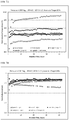
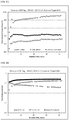
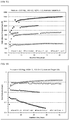
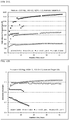
- the reactivated catalyst or regenerated catalyst may be characterized by a TEOR (end of run temperature) within about 10°C (50 °F), within about 4.4°C (40 °F), within about -1.1°C (30 °F), or within about -6.7°C (20 °F), of the TEOR of a fresh reference catalyst (from the same production run (or batch) of catalyst, tested on the same equipment, and under the same test method and conditions).
- a TEOR end of run temperature
- the reactivated catalyst or regenerated catalyst may be characterized by a TSOR (start of run temperature) within about 10°C (50 °F), within about 4.4°C (40 °F), within about -1.1°C (30 °F), or within about -6.7°C (20 °F), of the TSOR of a fresh reference catalyst (from the same production run (or batch) of catalyst, tested on the same equipment, and under the same test method and conditions).
- start of run temperature within about 10°C (50 °F), within about 4.4°C (40 °F), within about -1.1°C (30 °F), or within about -6.7°C (20 °F)
- the reactivated catalyst or regenerated catalyst may be characterized by relatively low fouling rates, as described herein.
- the reactivated catalyst or regenerated catalyst may have a fouling rate (FR, slope of temperature versus time) ranging from about - 17.77°C/hr (0.01 °F/hr) to about -17.64°C/hr (0.25 °F/hr), from about -17.77°C/hr (0.02 °F/hr) to about -17.67°C/hr (0.2 °F/hr), or from about -17.76°C/hr (0.03 °F/hr) to about -17.69°C/hr (0.15 °F/hr).
- FR fouling rate
- the reactivated catalyst or regenerated catalyst may be characterized by an aromatics selectivity or benzene + toluene selectivity in range from about 0.88 to about 0.95, or from about 0.89 to about 0.94.
- the aromatics selectivity or benzene + toluene selectivity may be greater than or within about 2 percent of the selectivity of the fresh reference catalyst.
- One such reforming process may comprise (or consist essentially of, or consist of):
- any of the reforming processes disclosed herein e.g., the metal reactor system, the hydrocarbon feed, the aromatization catalyst, the transition metal, the catalyst support, the reforming conditions, the fluorine-containing stream, the conditions under which the fluorination step is conducted, the chlorine-containing stream, the conditions under which the chlorination step is conducted, the decoking gas stream, the conditions under which the decoking step is conducted, among others
- these features may be combined in any combination to further describe the disclosed reforming processes.
- other process steps may be conducted before, during, and/or after any of the steps listed in the disclosed reforming processes, unless stated otherwise.
- chlorination, carbon burn, and fluorination steps are discussed herein above. Any aspects and features of the chlorination step and/or the carbon burn step and/or the fluorination step (as well as other steps that may be conducted before, during and/or after the chlorination step and/or the carbon burn step and/or the fluorination step) described herein may be utilized in the processes for reforming hydrocarbons and, accordingly, are encompassed herein.
- step (A) may comprise contacting a hydrocarbon feed with an aromatization catalyst under reforming conditions in a metal reactor system to produce an aromatic product.
- the metal reactor systems for reforming and the respective reforming conditions are well known to those of skill in the art and are described, for example, in U.S. Patent Nos. 4,456,527 , 5,389,235 , 5,401,386 , 5,401,365 , 6,207,042 , 6,548,030 , 7,544,335 , 7,582,272 , 7,932,425 , 8,119,203 , and 9,085,736 .
- hydrocarbon feeds are disclosed in these references.
- the hydrocarbon feed may be a naphtha stream or light naphtha stream.
- the hydrocarbon feed may comprise C 6 -C 8 alkanes and/or cycloalkanes (e.g., hexane, heptane, and cyclohexane).
- Step (B) in the reforming processes indicates that step (A) may be performed for a time period sufficient for the aromatization catalyst to become “spent.”
- a "spent" catalyst is typically a catalyst that has unacceptable performance in one or more of catalyst activity, hydrocarbon feed conversion, yield to a desired product(s), selectivity to a desired product(s), or an operating parameter, such as output/production rate or reforming temperature, although not limited thereto.
- the reforming process may be an in-situ process, for example, steps (A)-(E) may be performed in the same metal reactor system.
- the catalyst regeneration steps (C)-(E) may be conducted external to the reactor system, such as in another metal vessel and/or location.
- the chlorination, carbon burn, and fluorination steps may be conducted in a metal reactor that is not in the reforming reactor system.
- the reforming process may further comprise a step of reactivating the catalyst after step (E). Any catalyst reactivated or any catalyst regenerated by these processes is considered within the scope of this disclosure and encompassed herein.
- the aromatization catalyst (fresh, spent, regenerated, or reactivated) comprises a transition metal and a catalyst support.
- the catalyst support typically may comprise an inorganic oxide, examples of which may include, but are not limited to, bound medium and/or large pore zeolites (aluminosilicates), amorphous inorganic oxides, as well as mixtures thereof.
- Large pore zeolites often may have average pore diameters in a range of from about 7 ⁇ to about 12 ⁇ , and non-limiting examples of large pore zeolites include L-zeolite, Y-zeolite, mordenite, omega zeolite, beta zeolite, and the like.
- Medium pore zeolites often may have average pore diameters in a range of from about 5 ⁇ to about 7 ⁇ .
- Amorphous inorganic oxides may include, but are not limited to, aluminum oxide, silicon oxide, titania, and combinations thereof.
- zeolite generally refers to a particular group of hydrated, crystalline metal aluminosilicates. These zeolites exhibit a network of SiO 4 and AlO 4 tetrahedra in which aluminum and silicon atoms are crosslinked in a three-dimensional framework by sharing oxygen atoms. In the framework, the ratio of oxygen atoms to the total of aluminum and silicon atoms may be equal to 2.
- the framework exhibits a negative electrovalence that typically may be balanced by the inclusion of cations within the crystal, such as metals, alkali metals, alkaline earth metals, and/or hydrogen.
- the catalyst support may comprise an L-type zeolite.
- L-type zeolite supports are a sub-group of zeolitic supports, which may contain mole ratios of oxides in accordance with the formula: M 2/n OAl 2 O 3 xSiO 2 yH 2 O.
- M designates an exchangeable cation (one or more) such as barium, calcium, cerium, lithium, magnesium, potassium, sodium, strontium, cesium, and/or zinc, as well as non-metallic cations like hydronium and ammonium ions, which may be replaced by other exchangeable cations without causing a substantial alteration of the basic crystal structure of the L-type zeolite.
- the "n” in the formula represents the valence of "M”; “x” is 2 or greater; and “y” is the number of water molecules contained in the channels or interconnected voids of the zeolite.
- the catalyst support may comprise a bound potassium L-type zeolite, also referred to as a KL-zeolite, while in another aspect, the catalyst support may comprise a barium ion-exchanged L-zeolite.
- KL-zeolite refers to L-type zeolites in which the principal cation M incorporated in the zeolite is potassium.
- a KL-zeolite may be cation-exchanged (e.g., with barium or cesium) or impregnated with a transition metal and one or more halides to produce a transition metal impregnated, halided zeolite or a KL supported transition metal-halide zeolite catalyst.
- the zeolite may be bound with a binder, non-limiting examples of which may include silica, alumina, magnesia, boria, titania, zirconia, various clays, and the like, including mixed oxides thereof, as well as mixtures thereof.
- the catalyst support may comprise a binder comprising alumina, silica, a mixed oxide thereof, or a mixture thereof.
- the zeolite may be bound with the binder using any method known in the art.
- the aromatization catalyst may comprise a transition metal, and non-limiting examples of suitable transition metals may include iron, cobalt, nickel, ruthenium, rhodium, rhenium, palladium, osmium, iridium, platinum, gold, silver, copper, and the like, or a combination of two or more transition metals.
- the transition metal may comprise a Group 8-11 transition metal or a Group 8-10 transition metal (one or more), while in another aspect, the transition metal may comprise platinum (Pt).
- the catalyst fresh, spent, regenerated, or reactivated
- the catalyst may comprise from about 0.1 wt. % to about 10 wt. % transition metal.
- the catalyst may comprise from about 0.3 wt. % to about 5 wt. % transition metal.
- the catalyst may comprise from about 0.3 wt. % to about 3 wt. % transition metal, or from about 0.5 wt. % to about 2 wt. % transition metal.
- the catalyst may comprise from about 0.1 wt. % to about 10 wt. % platinum; alternatively, from about 0.3 wt. % to about 5 wt. % platinum; alternatively, from about 0.3 wt. % to about 3 wt. % platinum; or alternatively, from about 0.5 wt. % to about 2 wt. % platinum.
- the catalyst may comprise platinum on a KL-zeolite.
- the catalyst support may comprise from about 5 wt. % to about 35 wt. % binder.
- the catalyst may comprise from about 5 wt. % to about 30 wt. %, or from about 10 wt. % to about 30 wt. % binder.
- the aromatization catalyst (fresh, spent, regenerated, or reactivated) may further comprise a halogen, such as chlorine, fluorine, bromine, iodine, or a combination of two or more halogens.
- the catalyst may comprise chlorine, or fluorine, or both chlorine and fluorine.
- Chlorine may be present in the catalyst in an amount of from about 0.01 wt. % to about 5 wt. %, from about 0.05 wt. % to about 3 wt. %, or from about 0.3 wt. % to about 1.3 wt. %.
- the catalyst may comprise from about 0.01 wt. % to about 5 wt.
- the catalyst comprises chlorine and fluorine, and typically, the molar ratio of chlorine:fluorine may be in the range of from about 0.5:1 to about 4:1.
- Other suitable molar ratios of C1:F may include the following non-limiting ranges: from about 1:1 to about 4:1, from about 0.5:1 to about 3:1, from about 1:1 to about 3:1, from about 0.5:1 to about 2:1, or from about 1:1 to about 2.5:1.
- Weight percentages of Pt, Cl, F, and Fe were determined using X-ray fluorescence (XRF), and are based on the total weight of the aromatization catalyst, unless stated otherwise. Carbon (wt. %) was determined by CHNS analyzer (Carlo Erba). Platinum dispersions were determined by CO Chemisorption.
- the FR of a regenerated catalyst sample was determined by plotting the temperature required to maintain a total aromatics yield at 63 wt. % over time at standard test conditions, as described later herein. The FR's were then determined from the calculated slopes fit to the resulting data.
- the total time on stream was typically 40 hr, and the end of run temperature (abbreviated TEOR) also was determined.
- the following standard testing procedures were utilized.
- the catalysts were ground and sieved to about 25-45 mesh, and 1 g of the sieved catalyst was placed in a 1/4-inch OD stainless steel reactor vessel in a temperature controlled furnace.
- a feed stream of aliphatic hydrocarbons and molecular hydrogen was introduced to the reactor vessel at a feed rate of 22 mL/min, a pressure of 100 psig, a H 2 :hydrocarbon molar ratio of 1.3:1, and a liquid hourly space velocity (LHSV) of 12 hr -1 to obtain catalyst performance data over time.
- the aliphatic hydrocarbon feed contained from 22 to 26 wt.
- % n-hexane 4 to 8 wt. % n-heptane, 33 to 37 wt. % C 6 iso-paraffins, 17 to 21 wt. % C 7 iso-paraffins, 6 to 10 wt. % C 8 iso-paraffins, with the balance attributable to C 6 and C 7 olefins, naphthenes, and aromatics.
- the reactor effluent composition was analyzed by gas chromatography to determine the total aromatics and the benzene + toluene selectivity.
- the fresh aromatization catalyst was a Pt/KL-zeolite containing approximately 1 wt. % platinum, 0.85 wt. % Cl, and 0.70 wt. % F, with a BET surface area of approximately 177.5 m 2 /g, a mercury intruded pore volume of 0.19 cc/g, and a micropore volume of 0.0615 cc/g.
- the source of the spent catalyst was the fresh catalyst, but after it had been deactivated after long-term use in an aromatization process. Prior to usage in these examples, the spent catalyst was subjected to a mild partial decoking treatment to remove unreacted hydrocarbons and light carbonaceous deposits from the catalyst.
- Example 1 used the following regeneration procedure. Approximately 42 g of the spent catalyst was charged to a new metal fixed-bed reactor (stainless steel 347), unless noted otherwise, then contacted at 204.4°C (400 °F) with a nitrogen gas stream (1500 mL/min) for 12 hr, then contacted at 204.4°C (400 °F) with a chlorine-containing gas stream containing nitrogen (1463 mL/min) and chlorine gas (37 mL/min) for 3 hr, then contacted at 204.4°C (400 °F) with a nitrogen gas stream (1463 mL/min) for 3 hr, then contacted at 398.9°C (750 °F) with a decoking gas stream containing a mixture of air (75 mL/min) and nitrogen (1425 mL/min) for 44 hr, then contacted at 204.4°C (400 °F) with a fluorine-containing gas stream containing nitrogen (1350 mL/min) and flu
- FIG. 1A and FIG. 1B are plots of the yield adjusted temperature versus reaction time and the selectivity versus reaction time, respectively, for the regenerated catalyst of Example 1 compared with the fresh catalyst and spent catalyst. Unexpectedly, the regeneration process used in Example 1 restored the catalyst activity almost to that of the fresh catalyst, and the benzene + toluene selectivity was equivalent to or better than that of the fresh catalyst.
- Example 2 (reference) was performed similarly to that of Example 1, except that no carbon burn or decoking step was used.
- FIG. 2A and FIG. 2B are plots of the yield adjusted temperature versus reaction time and the selectivity versus reaction time, respectively, for the regenerated catalyst of Example 2 compared with the fresh catalyst and spent catalyst.
- Table I summarizes certain properties of the regenerated catalysts and key performance criteria derived from the figures. In Table I, the amounts of Cl and F on the regenerated catalyst are in wt. %, the amount of carbon is in wt. %, and the amount of iron is in ppmw (ppm by weight).
- the catalyst bed was split into four layers: Layer 1 was the top layer, Layer 4 was the bottom layer, and the composite was a physical mix of Layers 1-4. For some of the experiments, every layer was tested, and for other experiments, only one layer was tested.
- Example 2 As compared to the spent catalyst, some activity and selectivity were recovered using the regeneration procedure of Example 2; however, the catalyst fouled at nearly the same rate as the spent catalyst and the regeneration procedure did not remove any appreciable amount of carbon from the spent catalyst.
- Example 3 (reference) was performed similarly to that of Example 1, except that no halogenation steps were used (drying step with nitrogen followed by carbon burn).
- FIG. 3A and FIG. 3B are plots of the yield adjusted temperature versus reaction time and the selectivity versus reaction time, respectively, for the regenerated catalyst of Example 3 compared with the fresh catalyst and spent catalyst. As compared to the spent catalyst, no activity and selectivity were recovered using the regeneration procedure of Example 3.
- Example 4 (reference) was performed similarly to that of Example 1, except that no fluorination step was used.
- FIG. 4A and FIG. 4B are plots of the yield adjusted temperature versus reaction time and the selectivity versus reaction time, respectively, for the regenerated catalyst of Example 4 compared with the fresh catalyst and spent catalyst. As compared to the spent catalyst, some activity and selectivity were recovered using the regeneration procedure of Example 4; however, the catalyst fouled at a higher rate than that of the spent catalyst, indicating rapid deactivation of the regenerated catalyst of Example 4.
- Example 5 (reference) was performed similarly to that of Example 1, except that chlorine and fluorine were co-impregnated, followed by a nitrogen purge, and then a carbon burn step was used.
- FIG. 5A and FIG. 5B are plots of the yield adjusted temperature versus reaction time and the selectivity versus reaction time, respectively, for the regenerated catalyst of Example 5 compared with the fresh catalyst and spent catalyst. As compared to the spent catalyst, the activity and selectivity were significantly improved using the regeneration procedure of Example 5 in the new reactor; however, the fouling rate was higher than that of Example 7, as shown in Table I.
- Example 6 (reference) used the same procedure as that of Example 5, but with the used reactor from Example 5.
- FIG. 6A and FIG. 6B are plots of the yield adjusted temperature versus reaction time and the selectivity versus reaction time, respectively, for the regenerated catalyst of Example 6 compared with the fresh catalyst and spent catalyst.
- the regenerated catalyst of Example 6 was unusable. For instance, the top of the bed was dead (Layer 1, 470 ppmw Fe), and the overall amount of iron contamination in the catalyst was unacceptably high, indicating unacceptable corrosion using this regeneration procedure. Moreover, no appreciable amount of carbon was removed from the spent catalyst.
- Example 7 was performed using the same procedure as that of Example 1.
- FIG. 7A and FIG. 7B are plots of the yield adjusted temperature versus reaction time and the selectivity versus reaction time, respectively, for the regenerated catalyst of Example 7 compared with the fresh catalyst and spent catalyst. Surprisingly, both the top and bottom layers were regenerated with low fouling rates (Table I), and benzene + toluene selectivity's were comparable to or better than the fresh catalyst.
- Example 8 used the same procedure as that of Example 7, but with the used reactor from Example 7.
- FIG. 8A and FIG. 8B are plots of the yield adjusted temperature versus reaction time and the selectivity versus reaction time, respectively, for the regenerated catalyst of Example 8 compared with the fresh catalyst and spent catalyst.
- the regenerated catalyst of Example 8 unexpectedly performed the same as that of Example 7, indicating that there was no significant corrosion of the metal reactor.
- the iron levels in the regenerated catalysts of Examples 7 and 8 were similar.
- Example 9 (reference) was performed similarly to that of Example 1, except that the sequence of the halogenation steps were reversed (fluorination, carbon burn, chlorination).
- FIG. 9A and FIG. 9B are plots of the yield adjusted temperature versus reaction time and the selectivity versus reaction time, respectively, for the regenerated catalyst of Example 9 compared with the fresh catalyst and spent catalyst. Surprisingly, the spent catalyst could not be regenerated using the method of Example 9; note the high carbon levels in Table I.
- the opposite halogen sequence to that of Example 1 (and Example 7) was used, and these results demonstrates the unexpected advantage of adding chlorine before the carbon burn (Examples 1 and 7), instead of adding fluorine before the carbon burn step, in a metal reactor.
- Example 10 (reference) was performed similarly to that of Example 1, except that both halogenations steps were performed prior to carbon burn (chlorination, fluorination, carbon burn).
- FIG. 10A and FIG. 10B are plots of the yield adjusted temperature versus reaction time and the selectivity versus reaction time, respectively, for the regenerated catalyst of Example 10 compared with the fresh catalyst and spent catalyst.
- the spent catalyst could not be regenerated in a metal reactor using the method of Example 10; note the high carbon levels in Table 1.
- This example demonstrates the unexpected advantage of fluorination after the carbon burn step (Examples 1 and 7), instead of adding fluorine before the carbon burn step, without using a co-impregnation step.
- Example 11 was performed using the same procedure as that of Example 1, except that the chlorination and fluorination steps were conducted at 23.9°C (75 °F) instead of 204.4°C (400 °F). Catalyst activity and selectivity were similar to that of Example 7, but the regenerated catalyst of Example 11 had slightly lower iron content, likely due to less corrosivity at the lower chlorination and fluorination temperatures.
Landscapes
- Chemical & Material Sciences (AREA)
- Organic Chemistry (AREA)
- Chemical Kinetics & Catalysis (AREA)
- Engineering & Computer Science (AREA)
- Oil, Petroleum & Natural Gas (AREA)
- Materials Engineering (AREA)
- General Chemical & Material Sciences (AREA)
- Crystallography & Structural Chemistry (AREA)
- Catalysts (AREA)
- Organic Low-Molecular-Weight Compounds And Preparation Thereof (AREA)
- Production Of Liquid Hydrocarbon Mixture For Refining Petroleum (AREA)
Priority Applications (1)
| Application Number | Priority Date | Filing Date | Title |
|---|---|---|---|
| PL18731934T PL3624940T3 (pl) | 2017-05-17 | 2018-05-16 | Metody regeneracji katalizatorów aromatyzacji z etapem odkoksowania między dodawaniem chloru i fluoru |
Applications Claiming Priority (2)
| Application Number | Priority Date | Filing Date | Title |
|---|---|---|---|
| US15/597,189 US10300476B2 (en) | 2017-05-17 | 2017-05-17 | Methods of regenerating aromatization catalysts with a decoking step between chlorine and fluorine addition |
| PCT/US2018/032995 WO2018213466A1 (en) | 2017-05-17 | 2018-05-16 | Methods of regenerating aromatization catalysts with a decoking step between chlorine and fluorine addition |
Publications (2)
| Publication Number | Publication Date |
|---|---|
| EP3624940A1 EP3624940A1 (en) | 2020-03-25 |
| EP3624940B1 true EP3624940B1 (en) | 2021-12-01 |
Family
ID=62631160
Family Applications (1)
| Application Number | Title | Priority Date | Filing Date |
|---|---|---|---|
| EP18731934.8A Active EP3624940B1 (en) | 2017-05-17 | 2018-05-16 | Methods of regenerating aromatization catalysts with a decoking step between chlorine and fluorine addition |
Country Status (9)
| Country | Link |
|---|---|
| US (1) | US10300476B2 (pl) |
| EP (1) | EP3624940B1 (pl) |
| JP (1) | JP6801127B2 (pl) |
| KR (1) | KR102143731B1 (pl) |
| ES (1) | ES2916198T3 (pl) |
| PL (1) | PL3624940T3 (pl) |
| RU (1) | RU2720230C1 (pl) |
| SA (1) | SA519410547B1 (pl) |
| WO (1) | WO2018213466A1 (pl) |
Families Citing this family (6)
| Publication number | Priority date | Publication date | Assignee | Title |
|---|---|---|---|---|
| US10307740B2 (en) * | 2017-05-17 | 2019-06-04 | Chevron Phillips Chemical Company Lp | Methods of regenerating aromatization catalysts with a decoking step between chlorine and fluorine addition |
| CN110252420B (zh) * | 2019-07-09 | 2022-01-18 | 河北工业大学 | 一种中毒蜂窝催化剂的再生方法以及一种中毒蜂窝催化剂的再生装置 |
| US12533650B2 (en) | 2022-08-18 | 2026-01-27 | Chevron Phillips Chemical Company Lp | Use of a continuous catalyst regeneration type reformer for the aromax® catalyst process |
| WO2024197245A1 (en) * | 2023-03-22 | 2024-09-26 | Chevron Phillips Chemical Company Lp | Methods for releasing at least a portion of a halide from a surface |
| US12473498B2 (en) | 2023-04-10 | 2025-11-18 | Chevron Phillips Chemical Company Lp | In-reactor activation of a high chloride aromatization catalyst |
| US20250050323A1 (en) * | 2023-08-11 | 2025-02-13 | Chevron Phillips Chemical Company Lp | Methods for improving metal dispersion of a catalyst |
Family Cites Families (37)
| Publication number | Priority date | Publication date | Assignee | Title |
|---|---|---|---|---|
| US2906702A (en) | 1953-12-17 | 1959-09-29 | Standard Oil Co | Reactivation of platinum catalysts |
| US3898173A (en) * | 1971-08-26 | 1975-08-05 | Universal Oil Prod Co | Four-step procedure for regenerating a carbon-containing deactivated bimetallic acidic catalyst |
| US4456527A (en) | 1982-10-20 | 1984-06-26 | Chevron Research Company | Hydrocarbon conversion process |
| LU85614A1 (fr) * | 1984-10-29 | 1986-06-11 | Univ Leuven Kath | Procede d'activation de catalyseurs siliceux |
| US5196631A (en) | 1986-10-04 | 1993-03-23 | Research Association For Utilization Of Light Oil | Catalyst for production of aromatic hydrocarbons and process for production of aromatic hydrocarbons using same |
| US4851380A (en) * | 1986-12-19 | 1989-07-25 | Chevron Research Company | Process for regenerating sulfur contaminated reforming catalysts |
| US4855269A (en) | 1986-12-19 | 1989-08-08 | Chevron Research Company | Process for regenerating a monofunctional large-pore zeolite catalyst having high selectivity for paraffin dehydrocyclization |
| US4937215A (en) | 1987-11-13 | 1990-06-26 | Research Association For Utilization Of Light Oil | Process for restoring deactivated catalysts |
| JPH084748B2 (ja) * | 1987-11-13 | 1996-01-24 | 出光興産株式会社 | 失活触媒の再生方法 |
| US4810683A (en) | 1988-01-25 | 1989-03-07 | Uop Inc. | Regeneration of a platinum-containing zeolite |
| US5021377A (en) * | 1990-06-05 | 1991-06-04 | Phillips Petroleum Company | Demetallization and passivation of spent cracking catalysts |
| SA05260056B1 (ar) | 1991-03-08 | 2008-03-26 | شيفرون فيليبس كيميكال كمبني ال بي | جهاز لمعالجة الهيدروكربون hydrocarbon |
| JP2606991B2 (ja) | 1991-10-03 | 1997-05-07 | 出光興産株式会社 | 失活触媒の再生方法 |
| US5401386A (en) | 1992-07-24 | 1995-03-28 | Chevron Research And Technology Company | Reforming process for producing high-purity benzene |
| CA2146759A1 (en) | 1992-10-28 | 1994-05-11 | George T. Chen | High purity benzene production using extractive distillation |
| US5389235A (en) | 1992-12-02 | 1995-02-14 | Uop | Catalytic reaction zone for sulfur contaminant sensitive catalyst |
| SA94150056B1 (ar) | 1993-01-04 | 2005-10-15 | شيفرون ريسيرتش أند تكنولوجي كمبني | عمليات لإزالة الألكلة الهيدروجينية hydrodealkylation |
| BR9810013A (pt) | 1997-06-12 | 2000-09-12 | Idemitsu Kosan Co | Catalisador contendo halogênio, processo para sua preparação, e, processo para a produção de hidrocarbonetos aromáticos a partir de hidrocarbonetos não aromáticos |
| US6812180B2 (en) | 1997-12-10 | 2004-11-02 | Idemitsu Kosan Co., Ltd. | Method for preparing catalyst |
| US6207042B1 (en) | 1998-01-08 | 2001-03-27 | Chevron Chemical Company Llc | Reforming using a bound halided zeolite catalyst |
| US6190539B1 (en) | 1998-01-08 | 2001-02-20 | Chevron Chemical Company Llc | Reforming using a bound halided zeolite catalyst |
| US6121180A (en) * | 1998-01-09 | 2000-09-19 | Uop Llc | Precombustion of halogen-containing compounds in catalyst regeneration processes |
| US6406614B1 (en) | 1999-12-22 | 2002-06-18 | Phillips Petroleum Company | Method for zeolite platinization |
| US7153801B2 (en) | 2003-06-18 | 2006-12-26 | Chevron Phillips Chemical Company Lp | Aromatization catalyst and methods of making and using same |
| US7582272B2 (en) | 2004-03-12 | 2009-09-01 | Chevron Phillips Chemical Company Lp | Method of treating a catalytic reactor system prior to reactor servicing |
| US7544335B2 (en) | 2005-05-25 | 2009-06-09 | Chevron Phillips Chemical Company Lp | Floating top cover plate assembly for radial flow reactors |
| US8119203B2 (en) | 2005-06-02 | 2012-02-21 | Chevron Phillips Chemical Company Lp | Method of treating a surface to protect the same |
| US7932425B2 (en) | 2006-07-28 | 2011-04-26 | Chevron Phillips Chemical Company Lp | Method of enhancing an aromatization catalyst |
| DE102008015406A1 (de) * | 2008-03-22 | 2009-09-24 | Bayer Materialscience Ag | Verfahren zur Regeneration eines mit Schwefel in Form von Schwefelverbindungen vergifteten, Ruthenium oder Rutheniumverbindungen enthaltenden Katalysators |
| US8664144B2 (en) * | 2008-12-23 | 2014-03-04 | Chevron Phillips Chemical Company Lp | Methods of reactivating an aromatization catalyst |
| US9085736B2 (en) | 2011-10-26 | 2015-07-21 | Chevron Phillips Chemical Company Lp | System and method for on stream catalyst replacement |
| US8912108B2 (en) * | 2012-03-05 | 2014-12-16 | Chevron Phillips Chemical Company Lp | Methods of regenerating aromatization catalysts |
| US8716161B2 (en) * | 2012-03-05 | 2014-05-06 | Chevron Phillips Chemical Company | Methods of regenerating aromatization catalysts |
| JP6129931B2 (ja) * | 2015-11-05 | 2017-05-17 | アルケマ フランス | 気相触媒フッ素化 |
| MY193455A (en) * | 2016-09-08 | 2022-10-14 | Chevron Phillips Chemical Co Lp | Acid aromatization catalyst with improved activity and stability |
| US10118167B2 (en) * | 2016-12-20 | 2018-11-06 | Chevron Phillips Chemical Company Lp | Methods for regenerating sulfur-contaminated aromatization catalysts |
| US10307740B2 (en) * | 2017-05-17 | 2019-06-04 | Chevron Phillips Chemical Company Lp | Methods of regenerating aromatization catalysts with a decoking step between chlorine and fluorine addition |
-
2017
- 2017-05-17 US US15/597,189 patent/US10300476B2/en active Active
-
2018
- 2018-05-16 PL PL18731934T patent/PL3624940T3/pl unknown
- 2018-05-16 EP EP18731934.8A patent/EP3624940B1/en active Active
- 2018-05-16 RU RU2019141933A patent/RU2720230C1/ru active
- 2018-05-16 ES ES18731934T patent/ES2916198T3/es active Active
- 2018-05-16 WO PCT/US2018/032995 patent/WO2018213466A1/en not_active Ceased
- 2018-05-16 JP JP2019563396A patent/JP6801127B2/ja active Active
- 2018-05-16 KR KR1020197037225A patent/KR102143731B1/ko active Active
-
2019
- 2019-11-13 SA SA519410547A patent/SA519410547B1/ar unknown
Non-Patent Citations (1)
| Title |
|---|
| None * |
Also Published As
| Publication number | Publication date |
|---|---|
| JP2020520795A (ja) | 2020-07-16 |
| RU2720230C1 (ru) | 2020-04-28 |
| EP3624940A1 (en) | 2020-03-25 |
| US10300476B2 (en) | 2019-05-28 |
| KR20200009049A (ko) | 2020-01-29 |
| KR102143731B1 (ko) | 2020-08-13 |
| WO2018213466A1 (en) | 2018-11-22 |
| SA519410547B1 (ar) | 2022-09-21 |
| US20180333713A1 (en) | 2018-11-22 |
| JP6801127B2 (ja) | 2020-12-16 |
| PL3624940T3 (pl) | 2022-03-21 |
| ES2916198T3 (es) | 2022-06-29 |
Similar Documents
| Publication | Publication Date | Title |
|---|---|---|
| EP3624940B1 (en) | Methods of regenerating aromatization catalysts with a decoking step between chlorine and fluorine addition | |
| EP3332871B1 (en) | Method of regenerating aromatization catalysts | |
| US9943837B2 (en) | Methods of regenerating aromatization catalysts | |
| US8664144B2 (en) | Methods of reactivating an aromatization catalyst | |
| EP3634629B1 (en) | Methods of regenerating aromatization catalysts with a decoking step between chlorine and fluorine addition | |
| EP3554699B1 (en) | Methods for regenerating sulfur-contaminated aromatization catalysts |
Legal Events
| Date | Code | Title | Description |
|---|---|---|---|
| STAA | Information on the status of an ep patent application or granted ep patent |
Free format text: STATUS: UNKNOWN |
|
| STAA | Information on the status of an ep patent application or granted ep patent |
Free format text: STATUS: THE INTERNATIONAL PUBLICATION HAS BEEN MADE |
|
| PUAI | Public reference made under article 153(3) epc to a published international application that has entered the european phase |
Free format text: ORIGINAL CODE: 0009012 |
|
| STAA | Information on the status of an ep patent application or granted ep patent |
Free format text: STATUS: REQUEST FOR EXAMINATION WAS MADE |
|
| 17P | Request for examination filed |
Effective date: 20191209 |
|
| AK | Designated contracting states |
Kind code of ref document: A1 Designated state(s): AL AT BE BG CH CY CZ DE DK EE ES FI FR GB GR HR HU IE IS IT LI LT LU LV MC MK MT NL NO PL PT RO RS SE SI SK SM TR |
|
| AX | Request for extension of the european patent |
Extension state: BA ME |
|
| DAV | Request for validation of the european patent (deleted) | ||
| DAX | Request for extension of the european patent (deleted) | ||
| STAA | Information on the status of an ep patent application or granted ep patent |
Free format text: STATUS: EXAMINATION IS IN PROGRESS |
|
| 17Q | First examination report despatched |
Effective date: 20201028 |
|
| GRAP | Despatch of communication of intention to grant a patent |
Free format text: ORIGINAL CODE: EPIDOSNIGR1 |
|
| STAA | Information on the status of an ep patent application or granted ep patent |
Free format text: STATUS: GRANT OF PATENT IS INTENDED |
|
| INTG | Intention to grant announced |
Effective date: 20210429 |
|
| GRAJ | Information related to disapproval of communication of intention to grant by the applicant or resumption of examination proceedings by the epo deleted |
Free format text: ORIGINAL CODE: EPIDOSDIGR1 |
|
| STAA | Information on the status of an ep patent application or granted ep patent |
Free format text: STATUS: EXAMINATION IS IN PROGRESS |
|
| GRAP | Despatch of communication of intention to grant a patent |
Free format text: ORIGINAL CODE: EPIDOSNIGR1 |
|
| INTC | Intention to grant announced (deleted) | ||
| STAA | Information on the status of an ep patent application or granted ep patent |
Free format text: STATUS: GRANT OF PATENT IS INTENDED |
|
| INTG | Intention to grant announced |
Effective date: 20210902 |
|
| GRAS | Grant fee paid |
Free format text: ORIGINAL CODE: EPIDOSNIGR3 |
|
| GRAA | (expected) grant |
Free format text: ORIGINAL CODE: 0009210 |
|
| STAA | Information on the status of an ep patent application or granted ep patent |
Free format text: STATUS: THE PATENT HAS BEEN GRANTED |
|
| AK | Designated contracting states |
Kind code of ref document: B1 Designated state(s): AL AT BE BG CH CY CZ DE DK EE ES FI FR GB GR HR HU IE IS IT LI LT LU LV MC MK MT NL NO PL PT RO RS SE SI SK SM TR |
|
| REG | Reference to a national code |
Ref country code: GB Ref legal event code: FG4D |
|
| REG | Reference to a national code |
Ref country code: AT Ref legal event code: REF Ref document number: 1451248 Country of ref document: AT Kind code of ref document: T Effective date: 20211215 Ref country code: CH Ref legal event code: EP |
|
| REG | Reference to a national code |
Ref country code: IE Ref legal event code: FG4D |
|
| REG | Reference to a national code |
Ref country code: DE Ref legal event code: R096 Ref document number: 602018027497 Country of ref document: DE |
|
| REG | Reference to a national code |
Ref country code: NL Ref legal event code: FP |
|
| REG | Reference to a national code |
Ref country code: LT Ref legal event code: MG9D |
|
| REG | Reference to a national code |
Ref country code: AT Ref legal event code: MK05 Ref document number: 1451248 Country of ref document: AT Kind code of ref document: T Effective date: 20211201 |
|
| PG25 | Lapsed in a contracting state [announced via postgrant information from national office to epo] |
Ref country code: RS Free format text: LAPSE BECAUSE OF FAILURE TO SUBMIT A TRANSLATION OF THE DESCRIPTION OR TO PAY THE FEE WITHIN THE PRESCRIBED TIME-LIMIT Effective date: 20211201 Ref country code: LT Free format text: LAPSE BECAUSE OF FAILURE TO SUBMIT A TRANSLATION OF THE DESCRIPTION OR TO PAY THE FEE WITHIN THE PRESCRIBED TIME-LIMIT Effective date: 20211201 Ref country code: FI Free format text: LAPSE BECAUSE OF FAILURE TO SUBMIT A TRANSLATION OF THE DESCRIPTION OR TO PAY THE FEE WITHIN THE PRESCRIBED TIME-LIMIT Effective date: 20211201 Ref country code: BG Free format text: LAPSE BECAUSE OF FAILURE TO SUBMIT A TRANSLATION OF THE DESCRIPTION OR TO PAY THE FEE WITHIN THE PRESCRIBED TIME-LIMIT Effective date: 20220301 Ref country code: AT Free format text: LAPSE BECAUSE OF FAILURE TO SUBMIT A TRANSLATION OF THE DESCRIPTION OR TO PAY THE FEE WITHIN THE PRESCRIBED TIME-LIMIT Effective date: 20211201 |
|
| PG25 | Lapsed in a contracting state [announced via postgrant information from national office to epo] |
Ref country code: SE Free format text: LAPSE BECAUSE OF FAILURE TO SUBMIT A TRANSLATION OF THE DESCRIPTION OR TO PAY THE FEE WITHIN THE PRESCRIBED TIME-LIMIT Effective date: 20211201 Ref country code: NO Free format text: LAPSE BECAUSE OF FAILURE TO SUBMIT A TRANSLATION OF THE DESCRIPTION OR TO PAY THE FEE WITHIN THE PRESCRIBED TIME-LIMIT Effective date: 20220301 Ref country code: LV Free format text: LAPSE BECAUSE OF FAILURE TO SUBMIT A TRANSLATION OF THE DESCRIPTION OR TO PAY THE FEE WITHIN THE PRESCRIBED TIME-LIMIT Effective date: 20211201 Ref country code: HR Free format text: LAPSE BECAUSE OF FAILURE TO SUBMIT A TRANSLATION OF THE DESCRIPTION OR TO PAY THE FEE WITHIN THE PRESCRIBED TIME-LIMIT Effective date: 20211201 Ref country code: GR Free format text: LAPSE BECAUSE OF FAILURE TO SUBMIT A TRANSLATION OF THE DESCRIPTION OR TO PAY THE FEE WITHIN THE PRESCRIBED TIME-LIMIT Effective date: 20220302 |
|
| REG | Reference to a national code |
Ref country code: ES Ref legal event code: FG2A Ref document number: 2916198 Country of ref document: ES Kind code of ref document: T3 Effective date: 20220629 |
|
| PG25 | Lapsed in a contracting state [announced via postgrant information from national office to epo] |
Ref country code: SM Free format text: LAPSE BECAUSE OF FAILURE TO SUBMIT A TRANSLATION OF THE DESCRIPTION OR TO PAY THE FEE WITHIN THE PRESCRIBED TIME-LIMIT Effective date: 20211201 Ref country code: SK Free format text: LAPSE BECAUSE OF FAILURE TO SUBMIT A TRANSLATION OF THE DESCRIPTION OR TO PAY THE FEE WITHIN THE PRESCRIBED TIME-LIMIT Effective date: 20211201 Ref country code: RO Free format text: LAPSE BECAUSE OF FAILURE TO SUBMIT A TRANSLATION OF THE DESCRIPTION OR TO PAY THE FEE WITHIN THE PRESCRIBED TIME-LIMIT Effective date: 20211201 Ref country code: PT Free format text: LAPSE BECAUSE OF FAILURE TO SUBMIT A TRANSLATION OF THE DESCRIPTION OR TO PAY THE FEE WITHIN THE PRESCRIBED TIME-LIMIT Effective date: 20220401 Ref country code: EE Free format text: LAPSE BECAUSE OF FAILURE TO SUBMIT A TRANSLATION OF THE DESCRIPTION OR TO PAY THE FEE WITHIN THE PRESCRIBED TIME-LIMIT Effective date: 20211201 Ref country code: CZ Free format text: LAPSE BECAUSE OF FAILURE TO SUBMIT A TRANSLATION OF THE DESCRIPTION OR TO PAY THE FEE WITHIN THE PRESCRIBED TIME-LIMIT Effective date: 20211201 |
|
| REG | Reference to a national code |
Ref country code: DE Ref legal event code: R097 Ref document number: 602018027497 Country of ref document: DE |
|
| PG25 | Lapsed in a contracting state [announced via postgrant information from national office to epo] |
Ref country code: IS Free format text: LAPSE BECAUSE OF FAILURE TO SUBMIT A TRANSLATION OF THE DESCRIPTION OR TO PAY THE FEE WITHIN THE PRESCRIBED TIME-LIMIT Effective date: 20220401 |
|
| PLBE | No opposition filed within time limit |
Free format text: ORIGINAL CODE: 0009261 |
|
| STAA | Information on the status of an ep patent application or granted ep patent |
Free format text: STATUS: NO OPPOSITION FILED WITHIN TIME LIMIT |
|
| PG25 | Lapsed in a contracting state [announced via postgrant information from national office to epo] |
Ref country code: DK Free format text: LAPSE BECAUSE OF FAILURE TO SUBMIT A TRANSLATION OF THE DESCRIPTION OR TO PAY THE FEE WITHIN THE PRESCRIBED TIME-LIMIT Effective date: 20211201 Ref country code: AL Free format text: LAPSE BECAUSE OF FAILURE TO SUBMIT A TRANSLATION OF THE DESCRIPTION OR TO PAY THE FEE WITHIN THE PRESCRIBED TIME-LIMIT Effective date: 20211201 |
|
| 26N | No opposition filed |
Effective date: 20220902 |
|
| PG25 | Lapsed in a contracting state [announced via postgrant information from national office to epo] |
Ref country code: SI Free format text: LAPSE BECAUSE OF FAILURE TO SUBMIT A TRANSLATION OF THE DESCRIPTION OR TO PAY THE FEE WITHIN THE PRESCRIBED TIME-LIMIT Effective date: 20211201 |
|
| REG | Reference to a national code |
Ref country code: CH Ref legal event code: PL |
|
| REG | Reference to a national code |
Ref country code: BE Ref legal event code: MM Effective date: 20220531 |
|
| PG25 | Lapsed in a contracting state [announced via postgrant information from national office to epo] |
Ref country code: MC Free format text: LAPSE BECAUSE OF FAILURE TO SUBMIT A TRANSLATION OF THE DESCRIPTION OR TO PAY THE FEE WITHIN THE PRESCRIBED TIME-LIMIT Effective date: 20211201 Ref country code: LU Free format text: LAPSE BECAUSE OF NON-PAYMENT OF DUE FEES Effective date: 20220516 Ref country code: LI Free format text: LAPSE BECAUSE OF NON-PAYMENT OF DUE FEES Effective date: 20220531 Ref country code: CH Free format text: LAPSE BECAUSE OF NON-PAYMENT OF DUE FEES Effective date: 20220531 |
|
| PG25 | Lapsed in a contracting state [announced via postgrant information from national office to epo] |
Ref country code: IE Free format text: LAPSE BECAUSE OF NON-PAYMENT OF DUE FEES Effective date: 20220516 |
|
| PG25 | Lapsed in a contracting state [announced via postgrant information from national office to epo] |
Ref country code: IT Free format text: LAPSE BECAUSE OF FAILURE TO SUBMIT A TRANSLATION OF THE DESCRIPTION OR TO PAY THE FEE WITHIN THE PRESCRIBED TIME-LIMIT Effective date: 20211201 Ref country code: BE Free format text: LAPSE BECAUSE OF NON-PAYMENT OF DUE FEES Effective date: 20220531 |
|
| P01 | Opt-out of the competence of the unified patent court (upc) registered |
Effective date: 20230526 |
|
| PG25 | Lapsed in a contracting state [announced via postgrant information from national office to epo] |
Ref country code: MK Free format text: LAPSE BECAUSE OF FAILURE TO SUBMIT A TRANSLATION OF THE DESCRIPTION OR TO PAY THE FEE WITHIN THE PRESCRIBED TIME-LIMIT Effective date: 20211201 Ref country code: CY Free format text: LAPSE BECAUSE OF FAILURE TO SUBMIT A TRANSLATION OF THE DESCRIPTION OR TO PAY THE FEE WITHIN THE PRESCRIBED TIME-LIMIT Effective date: 20211201 |
|
| PG25 | Lapsed in a contracting state [announced via postgrant information from national office to epo] |
Ref country code: HU Free format text: LAPSE BECAUSE OF FAILURE TO SUBMIT A TRANSLATION OF THE DESCRIPTION OR TO PAY THE FEE WITHIN THE PRESCRIBED TIME-LIMIT; INVALID AB INITIO Effective date: 20180516 |
|
| PG25 | Lapsed in a contracting state [announced via postgrant information from national office to epo] |
Ref country code: MT Free format text: LAPSE BECAUSE OF FAILURE TO SUBMIT A TRANSLATION OF THE DESCRIPTION OR TO PAY THE FEE WITHIN THE PRESCRIBED TIME-LIMIT Effective date: 20211201 |
|
| PGFP | Annual fee paid to national office [announced via postgrant information from national office to epo] |
Ref country code: NL Payment date: 20250423 Year of fee payment: 8 |
|
| PGFP | Annual fee paid to national office [announced via postgrant information from national office to epo] |
Ref country code: PL Payment date: 20250424 Year of fee payment: 8 Ref country code: DE Payment date: 20250423 Year of fee payment: 8 |
|
| PGFP | Annual fee paid to national office [announced via postgrant information from national office to epo] |
Ref country code: GB Payment date: 20250423 Year of fee payment: 8 Ref country code: ES Payment date: 20250602 Year of fee payment: 8 |
|
| PGFP | Annual fee paid to national office [announced via postgrant information from national office to epo] |
Ref country code: FR Payment date: 20250423 Year of fee payment: 8 |
|
| PG25 | Lapsed in a contracting state [announced via postgrant information from national office to epo] |
Ref country code: TR Free format text: LAPSE BECAUSE OF FAILURE TO SUBMIT A TRANSLATION OF THE DESCRIPTION OR TO PAY THE FEE WITHIN THE PRESCRIBED TIME-LIMIT Effective date: 20211201 |