EP3620746B1 - Wegmessverfahren für verbundebene zur bilateralen vermessung mit doppelsystem - Google Patents
Wegmessverfahren für verbundebene zur bilateralen vermessung mit doppelsystem Download PDFInfo
- Publication number
- EP3620746B1 EP3620746B1 EP18794258.6A EP18794258A EP3620746B1 EP 3620746 B1 EP3620746 B1 EP 3620746B1 EP 18794258 A EP18794258 A EP 18794258A EP 3620746 B1 EP3620746 B1 EP 3620746B1
- Authority
- EP
- European Patent Office
- Prior art keywords
- measurement
- survey station
- observations
- level
- composite level
- Prior art date
- Legal status (The legal status is an assumption and is not a legal conclusion. Google has not performed a legal analysis and makes no representation as to the accuracy of the status listed.)
- Active
Links
Images
Classifications
-
- G—PHYSICS
- G01—MEASURING; TESTING
- G01C—MEASURING DISTANCES, LEVELS OR BEARINGS; SURVEYING; NAVIGATION; GYROSCOPIC INSTRUMENTS; PHOTOGRAMMETRY OR VIDEOGRAMMETRY
- G01C5/00—Measuring height; Measuring distances transverse to line of sight; Levelling between separated points; Surveyors' levels
-
- G—PHYSICS
- G01—MEASURING; TESTING
- G01B—MEASURING LENGTH, THICKNESS OR SIMILAR LINEAR DIMENSIONS; MEASURING ANGLES; MEASURING AREAS; MEASURING IRREGULARITIES OF SURFACES OR CONTOURS
- G01B11/00—Measuring arrangements characterised by the use of optical techniques
-
- G—PHYSICS
- G01—MEASURING; TESTING
- G01B—MEASURING LENGTH, THICKNESS OR SIMILAR LINEAR DIMENSIONS; MEASURING ANGLES; MEASURING AREAS; MEASURING IRREGULARITIES OF SURFACES OR CONTOURS
- G01B21/00—Measuring arrangements or details thereof, where the measuring technique is not covered by the other groups of this subclass, unspecified or not relevant
- G01B21/02—Measuring arrangements or details thereof, where the measuring technique is not covered by the other groups of this subclass, unspecified or not relevant for measuring length, width, or thickness
-
- G—PHYSICS
- G01—MEASURING; TESTING
- G01C—MEASURING DISTANCES, LEVELS OR BEARINGS; SURVEYING; NAVIGATION; GYROSCOPIC INSTRUMENTS; PHOTOGRAMMETRY OR VIDEOGRAMMETRY
- G01C15/00—Surveying instruments or accessories not provided for in groups G01C1/00 - G01C13/00
- G01C15/002—Active optical surveying means
-
- G—PHYSICS
- G01—MEASURING; TESTING
- G01C—MEASURING DISTANCES, LEVELS OR BEARINGS; SURVEYING; NAVIGATION; GYROSCOPIC INSTRUMENTS; PHOTOGRAMMETRY OR VIDEOGRAMMETRY
- G01C15/00—Surveying instruments or accessories not provided for in groups G01C1/00 - G01C13/00
- G01C15/002—Active optical surveying means
- G01C15/004—Reference lines, planes or sectors
-
- G—PHYSICS
- G01—MEASURING; TESTING
- G01C—MEASURING DISTANCES, LEVELS OR BEARINGS; SURVEYING; NAVIGATION; GYROSCOPIC INSTRUMENTS; PHOTOGRAMMETRY OR VIDEOGRAMMETRY
- G01C15/00—Surveying instruments or accessories not provided for in groups G01C1/00 - G01C13/00
- G01C15/02—Means for marking measuring points
- G01C15/06—Surveyors' staffs; Movable markers
-
- G—PHYSICS
- G01—MEASURING; TESTING
- G01C—MEASURING DISTANCES, LEVELS OR BEARINGS; SURVEYING; NAVIGATION; GYROSCOPIC INSTRUMENTS; PHOTOGRAMMETRY OR VIDEOGRAMMETRY
- G01C9/00—Measuring inclination, e.g. by clinometers, by levels
-
- G—PHYSICS
- G01—MEASURING; TESTING
- G01S—RADIO DIRECTION-FINDING; RADIO NAVIGATION; DETERMINING DISTANCE OR VELOCITY BY USE OF RADIO WAVES; LOCATING OR PRESENCE-DETECTING BY USE OF THE REFLECTION OR RERADIATION OF RADIO WAVES; ANALOGOUS ARRANGEMENTS USING OTHER WAVES
- G01S19/00—Satellite radio beacon positioning systems; Determining position, velocity or attitude using signals transmitted by such systems
- G01S19/01—Satellite radio beacon positioning systems transmitting time-stamped messages, e.g. GPS [Global Positioning System], GLONASS [Global Orbiting Navigation Satellite System] or GALILEO
- G01S19/03—Cooperating elements; Interaction or communication between different cooperating elements or between cooperating elements and receivers
- G01S19/07—Cooperating elements; Interaction or communication between different cooperating elements or between cooperating elements and receivers providing data for correcting measured positioning data, e.g. DGPS [differential GPS] or ionosphere corrections
-
- G—PHYSICS
- G01—MEASURING; TESTING
- G01S—RADIO DIRECTION-FINDING; RADIO NAVIGATION; DETERMINING DISTANCE OR VELOCITY BY USE OF RADIO WAVES; LOCATING OR PRESENCE-DETECTING BY USE OF THE REFLECTION OR RERADIATION OF RADIO WAVES; ANALOGOUS ARRANGEMENTS USING OTHER WAVES
- G01S5/00—Position-fixing by co-ordinating two or more direction or position line determinations; Position-fixing by co-ordinating two or more distance determinations
- G01S5/02—Position-fixing by co-ordinating two or more direction or position line determinations; Position-fixing by co-ordinating two or more distance determinations using radio waves
- G01S5/0205—Details
- G01S5/021—Calibration, monitoring or correction
Definitions
- the present invention relates to the field of measurement technologies; in particular, to a traverse-type measurement method for a dual-system bilateral-survey composite level which is specialized to ensure measurement precision, avoid invalid measurements and improve working efficiency.
- a traditional leveling device consists of one level and two leveling staffs. During measurement, the two leveling staffs are separately placed at points A and B on the ground first, and then the level is placed at the middle point between the points A and B. Elevation values of the two leveling staffs are read along the horizontal line of sight of a level telescope after leveling. A difference between the measured elevation values is a level height difference between the points A and B on the ground. If the elevation of one point is known, the elevation of the other point can be figured out according to the height difference.
- the traditional leveling device mainly has the following defects: (1) The measurement has low working efficiency and reliability.
- a ruler-instrument integrated composite level for dual-type observation (hereinafter referred to as a composite level), which has the following structure: a leveling staff and an observation unit (that is, the traditional level) that are parallel to the axis of a cylindrical ruler body are fixed on the same cylindrical surface of the cylindrical ruler body.
- the collimation axis of the observation unit is perpendicular to the axis of the cylindrical ruler body.
- the measurement method thereof includes the following steps: placing instruments, synchronous leveling, mutual alignment, bilateral survey, bidirectional inspection, and so on.
- Point-to-point direct leveling can be implemented effectively, and it is unnecessary to spend much time and energy to figure out a rational location and distance configuration of the level and leveling staff, thereby improving the working efficiency and reliability of leveling.
- Site selection and stationing of leveling are not restricted by terrain environments, so that leveling can be implemented in complex terrain environments such as steep slopes, hollows, ponds, canals and ditches, gullies, rivers, and mountainous areas conveniently.
- Chinese Patent Application No. 201310049994.1 discloses a leveling method suitable for a compound level, and specifically discloses a method for determining angle i (one of instrument parameters) of a composite level and a method for thoroughly eliminating impact of the angle i.
- Chinese Patent Application No. 201410585033.7 discloses a composite level own-side height determination method, and specifically discloses a method for precisely determining the height (one of instrument parameters) of an observation unit (that is, a level) and a method for combined determination of the height and angle i, thereby precisely determining the instrument parameters.
- the height difference measurement methods in the aforementioned patents still adopt a traverse-type measurement mode of the traditional leveling in which measurement proceeds through passing-on of two points.
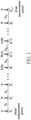
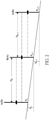
- the traverse-type measurement mode in which measurement proceeds through passing-on of two composite levels includes the following steps: measuring instrument parameter information, that is, measuring performance parameters of the composite level such as the height and angle i; determining start and end measurement points of a measurement section; and placing instruments and establishing survey stations. A lot of measurement points will be disposed between the start measurement point and the end measurement point of the measurement section, and these measurement points are referred to as transitional measurement points (also known as benchmarks). Starting from the first survey station, two composite levels are separately disposed at a rear measurement point and a front measurement point of the survey station. As shown in FIG. 1 and FIG.
- a measurement point P k is referred to as a rear measurement point and a measurement point P k+1 is referred to as a front measurement point.
- the distance between the rear measurement point and the front measurement point is a survey station distance D k .
- the survey station distance when the survey station is initially established is referred to as an initial survey station distance, which is denoted by D k 0 .
- the initial survey station distance D k 0 is determined based on the following principle: the initial survey station distance should not be greater than distance tolerance stipulated in national regulations (for fourth-grade measurement, the survey station distance tolerance is 150 m); and it should be ensured that a composite level A and a composite level B are located within height difference observation ranges of instruments (the height difference observation range of current composite levels is 1.5 m). After synchronous observation, an average of measured effective height differences of the two composite levels is calculated as a height difference h k of the current station.
- the composite level at the rear measurement point of the current survey station k is moved to the front measurement point of the next survey station (the front measurement point of the previous station becomes the rear measurement point of the next survey station) to continue to measure a height difference of the survey station k+1, and so on, until the measurement proceeds to the last survey station n and the last measurement point P n+1 (that is, the end measurement point).
- the sum of all survey station height differences is calculated as a measurement section height difference of this forward measurement (which is referred to as a forward measurement height difference).
- height difference measurement is performed by using the same method in a reverse direction starting from the last measurement point P n+1 (that is, the original end measurement point), until the measurement proceeds to the original start measurement point.
- the sum of all survey station height differences is calculated as a measurement section height difference of this reverse measurement (which is referred to as a reverse measurement height difference).
- a reverse measurement height difference the traverse-type measurement mode in which measurement proceeds through passing-on of two points requires a roundtrip along a traverse for leveling, so that forward and reverse measurements are carried out to implement closed-loop height difference inspection.
- Chinese Patent Application No. 201410044122.0 discloses a three-point closed layout measurement method for composite levels, and specifically discloses a three-point closed layout measurement method for composite levels that can realize closed inspection in a regional space at any time, ensure measurement precision, and improve overall leveling reliability and efficiency.
- This method extends the traditional two-point traverse-type leveling to three-point closed planar leveling, that is, leveling points are arranged in such a manner that connecting lines of every three adjacent leveling points form a triangle and every two adjacent triangles have one or two common leveling points.
- the three-point closed layout measurement method still has the following problems: (1) instruments and personnel need to be added, and the amount of work is enormous, that is, the method requires high manpower and resource costs; (2) the method has strict requirements on terrain conditions. In other words, unless there is a special need or higher precision and reliability are required in some regions, the three-point closed layout measurement method is not a preferred measurement method for composite levels considering the economic effectiveness, engineering requirement, and practicability for users.
- the present invention provides a traverse-type measurement method for a dual-system bilateral-survey composite level which is specialized to ensure the measurement precision, avoid invalid measurements, and improve working efficiency
- a traverse-type measurement method for a dual-system bilateral-survey composite level including the following steps:
- the present invention is an intelligent traverse-type measurement method for integrated three-level error control loop inspection with the dual-system bilateral survey compound level. Specifically, survey station single-instrument inspection, survey station dual-instrument cross-inspection, and multi-survey station dual-instrument cumulative cross-inspection are adopted, and the number of observations and distance between survey stations are adjusted, such that measurement error is dynamically controlled in real time, ensuring that height difference measurement of survey stations and of measurement sections meets a preset precision requirement regardless of location or time, avoiding the invalid measurements that frequently occur with traditional levels, and improving working efficiency and economic benefit of the composite level.
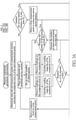
- the traverse-type measurement method for a dual-system bilateral-survey composite level includes the following steps:
- R A and R B of the observed readings exceed a limit, that is, whether
- R 0 6 mm.
- Ro can be derived according to national leveling grade requirements or obtained based on numerous practice statistics. It is also feasible to determine whether the standard deviations exceed a limit, that is, whether
- ⁇ ⁇ 0 . In this embodiment, ⁇ 0 1.5 mm.
- ⁇ 0 can be directly given according to the national leveling grade requirements or obtained based on numerous practice statistics.
- Step 7 is performed.
- the number of observations is increased (the number can be increased by 1 each time or increased based on a particular step size), and it is determined whether the number of observations exceeds a threshold M (M is set to 30 in this embodiment); if the number of observations does not exceed M, Step 5 is performed again, and if the number of observations exceeds M, a front measurement point is moved to reduce a survey station distance, and then it is determined whether the survey station distance D k is less than a threshold D 0 .
- the threshold D 0 can be directly given based on a particular ratio according to distance requirements of the national leveling grades or obtained based on numerous practice statistics.
- D o 1 3 D k o
- Step 1 to Step 6 above form a first-level error control loop.
- Step 9 is performed;
- Step 6 If
- Step 9 Calculate a height difference h k of the current survey station, that is, calculate an average h k of the survey station height differences h k A and h k B of the two levels as a height difference result of the current survey station k, wherein
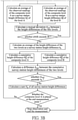
- Step 7 to Step 9 above form a second-level error control loop.
- Step 10 Calculate a cumulative survey station height difference H k A of the composite level A; and calculate a cumulative survey station height difference H k B of the composite level B; that is, separately calculate cumulative height differences of the composite level A and the composite level B from the first survey station to the current survey station k:
- Step 11 Calculate a difference ⁇ AB between the cumulative survey station height differences of the two levels.
- Step 12 Determine whether
- the tolerance ⁇ 0 can be directly given according to the national leveling grade requirements or obtained based on numerous practice statistics.
- Step 13 is performed.
- Step 13 Calculate a sum H k of all survey station height differences.
- Step 14 Determine whether the composite level A is placed at the end measurement point; if no, that is, if the composite level A has not arrived at the end measurement point yet, move a composite level on a rear measurement point of the current survey station k, and perform Step 3 again (place the moved composite level to a front measurement point of the next survey station to establish a new survey station); if yes, end the measurement.
- the composite level A (or the composite level B) is moved from the first measurement point (that is, the start measurement point) to the last measurement point (that is, the end measurement point) to ensure that the total number n+1 of measurement points (including the start measurement point and the end measurement point) is an odd number, and the total number n of survey stations is an even number, thereby further ensuring the precision of height difference measurement.
- Step 10 to Step 13 above form a third-level error control loop.
Landscapes
- Engineering & Computer Science (AREA)
- Physics & Mathematics (AREA)
- General Physics & Mathematics (AREA)
- Radar, Positioning & Navigation (AREA)
- Remote Sensing (AREA)
- Computer Networks & Wireless Communication (AREA)
- Length Measuring Devices With Unspecified Measuring Means (AREA)
- Position Fixing By Use Of Radio Waves (AREA)
- Length Measuring Devices By Optical Means (AREA)
- Testing Or Calibration Of Command Recording Devices (AREA)
Claims (1)
- Polygonzugartiges Messverfahren für ein zusammengesetztes Nivellier einer Doppelsystembilateralvermessung, das die folgenden Schritte umfasst:Schritt 1: Messen von Instrumentparameterinformationen;Schritt 2: Bestimmen von Start- und Endmessstellen eines Messbereichs und Platzieren eines zusammengesetzten Nivelliers A an die Startmessstelle;Schritt 3: Platzieren von Instrumenten und Einrichten von Vermessungspunkten;Schritt 4: Festlegen einer anfänglichen Anzahl von Beobachtungen;Schritt 5: separates Beobachten von Messwerten auf dem zusammengesetzten Nivellier A und einem zusammengesetzten Nivellier B gemäß der festgelegten Anzahl von Beobachtungen und separates Berechnen von Fehlern der Messwerte;Schritt 6: Bestimmen, ob die Fehler der Messwerte eine Grenze überschreiten, wobei, falls die Fehler die Grenze nicht überschreiten, Schritt 7 durchgeführt wird; falls ein beliebiger Fehler die Grenze überschreitet, die Anzahl der Beobachtungen erhöht wird und bestimmt wird, ob die Anzahl der Beobachtungen einen Schwellenwert M überschreitet; falls die Anzahl der Beobachtungen M nicht überschreitet, Schritt 5 erneut durchgeführt wird, und falls die Anzahl der Beobachtungen M überschreitet, eine vordere Messstelle bewegt wird, um eine Vermessungspunktentfernung zu verringern, und dann bestimmt wird, ob die Vermessungspunktentfernung Dk kleiner als ein Schwellenwert D0 ist; falls Dk kleiner als D 0 ist, die Messung beendet wird; andernfalls Schritt 3 erneut durchgeführt wird;Schritt 7: Berechnen eines durchschnittlichen Messwerts des zusammengesetzten Nivelliers A als einen Vermessungspunkthöhenunterschied

 Schritt 8: Bestimmen, ob |δ AB| eine Toleranz δ 0 überschreitet,wobei, falls |δ AB| δ 0 nicht überschreitet, Schritt 9 durchgeführt wird; undfalls |δ AB| δ 0 überschreitet, die Anzahl der Beobachtungen erhöht wird und dann bestimmt wird, ob die Anzahl der Beobachtungen den Schwellenwert M überschreitet; falls die Anzahl der Beobachtungen M nicht überschreitet, Schritt 5 erneut durchgeführt wird, und falls die Anzahl der Beobachtungen M überschreitet, die vordere Messstelle bewegt wird, um die Vermessungspunktentfernung zu verringern, und dann bestimmt wird, ob die Vermessungspunktentfernung Dk kleiner als der Schwellenwert D 0 ist; falls DK kleiner als D0 ist, die Messung beendet wird; andernfalls Schritt 3 erneut durchgeführt wird;Schritt 9: Berechnen eines Durchschnitts der Vermessungspunkthöhenunterschiede der zwei Nivelliere als eine Höhendifferenz hk des aktuellen Vermessungspunkts;Schritt 10: Berechnen eines kumulativen Vermessungspunkthöhenunterschieds
 Schritt 11: Berechnen einer Differenz ΔAB zwischen den kumulativen Vermessungspunkthöhenunterschieden der zwei Nivelliere;Schritt 12: Bestimmen, ob |AAB| die Toleranz Δ0 überschreitet,wobei, falls |ΔAB| Δ0 überschreitet, die vordere Messstelle bewegt wird, um die Vermessungspunktentfernung zu verringern, und dann bestimmt wird, ob die Vermessungspunktentfernung Dk kleiner als der Schwellenwert D0 ist; falls Dk kleiner als D0 ist, die Messung beendet wird; andernfalls Schritt 3 erneut durchgeführt wird; undfalls |ΔAB| Δ0 nicht überschreitet, Schritt 13 durchgeführt wird;Schritt 13: Berechnen einer Summe Hk aller Vermessungspunkthöhenunterschiede; undSchritt 14: Bestimmen, ob das zusammengesetzte Nivellier A an der Endmessstelle platziert ist; falls nicht, Bewegen eines zusammengesetzten Nivelliers auf eine hintere Messstelle und erneutes Durchführen von Schritt 3; falls ja, Beenden der Messung.
Applications Claiming Priority (2)
| Application Number | Priority Date | Filing Date | Title |
|---|---|---|---|
| CN201710304982.7A CN107228650B (zh) | 2017-05-03 | 2017-05-03 | 双系统对向观测复合水准仪的导线式测量方法 |
| PCT/CN2018/083633 WO2018201907A1 (zh) | 2017-05-03 | 2018-04-19 | 双系统对向观测复合水准仪的导线式测量方法 |
Publications (3)
| Publication Number | Publication Date |
|---|---|
| EP3620746A1 EP3620746A1 (de) | 2020-03-11 |
| EP3620746A4 EP3620746A4 (de) | 2020-12-30 |
| EP3620746B1 true EP3620746B1 (de) | 2022-01-26 |
Family
ID=59933222
Family Applications (1)
| Application Number | Title | Priority Date | Filing Date |
|---|---|---|---|
| EP18794258.6A Active EP3620746B1 (de) | 2017-05-03 | 2018-04-19 | Wegmessverfahren für verbundebene zur bilateralen vermessung mit doppelsystem |
Country Status (5)
| Country | Link |
|---|---|
| US (1) | US11029151B2 (de) |
| EP (1) | EP3620746B1 (de) |
| JP (1) | JP6695451B2 (de) |
| CN (1) | CN107228650B (de) |
| WO (1) | WO2018201907A1 (de) |
Families Citing this family (8)
| Publication number | Priority date | Publication date | Assignee | Title |
|---|---|---|---|---|
| CN107228650B (zh) * | 2017-05-03 | 2018-09-14 | 大连圣博尔测绘仪器科技有限公司 | 双系统对向观测复合水准仪的导线式测量方法 |
| CN108955635B (zh) * | 2018-08-09 | 2020-08-14 | 大连圣博尔测绘仪器科技有限公司 | 双观测单元复合水准仪对向观测水准测量方法 |
| CN110174665B (zh) * | 2019-05-31 | 2021-07-13 | 彩虹无人机科技有限公司 | 基于激光导引减小机载光电载荷与挂点指向偏差的方法 |
| CN111854796A (zh) * | 2020-06-28 | 2020-10-30 | 陕西铁道工程勘察有限公司 | 精密水准测量实时综合改正方法 |
| CN114353748A (zh) * | 2022-01-06 | 2022-04-15 | 中国十七冶集团有限公司 | 全站仪距棱镜20-40m设站三角高程往返测量方法 |
| CN115711606B (zh) * | 2022-11-22 | 2024-10-25 | 中国电建集团西北勘测设计研究院有限公司 | 一种小直径tbm隧洞掘进测量控制传递方法 |
| CN115822004B (zh) * | 2022-12-13 | 2025-09-12 | 天津市政工程设计研究总院有限公司 | 分台式高速公路路基沉降与收敛监测方法 |
| CN118463919A (zh) * | 2024-05-15 | 2024-08-09 | 山东黄河顺成水利水电工程有限公司 | 一种精密跨越黄河水准测量的方法 |
Family Cites Families (11)
| Publication number | Priority date | Publication date | Assignee | Title |
|---|---|---|---|---|
| GB556379A (en) * | 1942-09-09 | 1943-10-01 | Reginald Victor Edwards | Improvements in or relating to builder's levels |
| JPH0221211A (ja) * | 1988-07-08 | 1990-01-24 | Nippon Telegr & Teleph Corp <Ntt> | レベルと距離の自動計測装置 |
| CN102226697B (zh) * | 2011-04-12 | 2012-11-21 | 杨浩 | 全站仪精密沉降监测方法 |
| CN102636155A (zh) * | 2012-04-28 | 2012-08-15 | 天津二十冶建设有限公司 | 一种提高水准测量精度的两台仪器同时测量方法 |
| CN102778220A (zh) * | 2012-07-17 | 2012-11-14 | 刘雁春 | 对偶式观测用尺仪合一复合水准仪 |
| CN103115610B (zh) * | 2013-02-08 | 2015-08-12 | 刘雁春 | 适用于复合水准仪的水准测量方法 |
| CN104048644A (zh) * | 2013-03-11 | 2014-09-17 | 广东工业大学 | 一种用手机记录、计算水准测量数据的方法 |
| CN103759705B (zh) * | 2014-01-30 | 2017-02-15 | 大连圣博尔测绘仪器科技有限公司 | 用于复合水准仪的三点闭合布设测量法 |
| CZ2014489A3 (cs) * | 2014-07-15 | 2015-10-14 | R.O.G. S.R.O. | Způsob měření, zpracování a využívání dat digitálního modelu terénu pro objektivní hodnocení geometrických parametrů měřených objektů a měřící zařízení pro provádění uvedeného způsobu |
| CN104316027B (zh) * | 2014-10-28 | 2017-02-08 | 大连圣博尔测绘仪器科技有限公司 | 复合水准仪本方高度测定方法 |
| CN107228650B (zh) * | 2017-05-03 | 2018-09-14 | 大连圣博尔测绘仪器科技有限公司 | 双系统对向观测复合水准仪的导线式测量方法 |
-
2017
- 2017-05-03 CN CN201710304982.7A patent/CN107228650B/zh active Active
-
2018
- 2018-04-19 EP EP18794258.6A patent/EP3620746B1/de active Active
- 2018-04-19 WO PCT/CN2018/083633 patent/WO2018201907A1/zh not_active Ceased
- 2018-04-19 US US16/312,290 patent/US11029151B2/en active Active
- 2018-04-19 JP JP2018568406A patent/JP6695451B2/ja active Active
Also Published As
| Publication number | Publication date |
|---|---|
| CN107228650B (zh) | 2018-09-14 |
| WO2018201907A1 (zh) | 2018-11-08 |
| US20190204077A1 (en) | 2019-07-04 |
| US11029151B2 (en) | 2021-06-08 |
| CN107228650A (zh) | 2017-10-03 |
| JP6695451B2 (ja) | 2020-05-20 |
| EP3620746A4 (de) | 2020-12-30 |
| JP2019525154A (ja) | 2019-09-05 |
| EP3620746A1 (de) | 2020-03-11 |
Similar Documents
| Publication | Publication Date | Title |
|---|---|---|
| EP3620746B1 (de) | Wegmessverfahren für verbundebene zur bilateralen vermessung mit doppelsystem | |
| CN108280969B (zh) | 一种高边坡表面变形监测预警系统及其预警方法 | |
| CN104631419B (zh) | 监测基坑顶部水平位移的方法 | |
| CN104848845B (zh) | 一种地下隧道虚拟双导线控制测量方法 | |
| CN109358353B (zh) | 一种集电线路基础快速分坑放样方法 | |
| CN104674855B (zh) | 一种基于差分技术的基坑位移监测方法 | |
| CN110186426A (zh) | 一种远距离三角高程跨河水准测量方法 | |
| CN105423993A (zh) | 基于三维激光扫描的变形监测坐标基准建立方法及装置 | |
| CN105043342A (zh) | 单向精密测距三角高程测量方法 | |
| CN103526783A (zh) | 一种测量建筑基坑水平位移的方法 | |
| CN105806310A (zh) | 用激光测距仪监测隧道洞口边仰坡地表三维位移的方法 | |
| CN102620699A (zh) | 定向垂距法测量变形监测定向水平位移的方法 | |
| CN103115610A (zh) | 适用于复合水准仪的水准测量方法 | |
| CN111928828A (zh) | 一种快速标定井下弯道中线及腰线的方法 | |
| CN103344214B (zh) | 一种1.6次抛物线型特大桥墩测量及墩身线形控制方法 | |
| CN107386341A (zh) | 一种基于视准线法的水平位移测量系统 | |
| CN103759705B (zh) | 用于复合水准仪的三点闭合布设测量法 | |
| CN201653419U (zh) | 一种基线位移观测觇 | |
| CN207228180U (zh) | 一种基于视准线法的水平位移测量系统 | |
| CN117166547A (zh) | 基坑施工测量方法 | |
| CN105738933B (zh) | 一种施工桩位复测方法及装置 | |
| CN203891086U (zh) | 一套用于直线重置法监测深基坑水平位移的测读工具 | |
| CN108955635B (zh) | 双观测单元复合水准仪对向观测水准测量方法 | |
| CN102022999A (zh) | 一种提高经纬仪视距测量范围和测量精度的方法 | |
| CN108362247B (zh) | 基坑围护装置顶部水平位移监测的方法 |
Legal Events
| Date | Code | Title | Description |
|---|---|---|---|
| STAA | Information on the status of an ep patent application or granted ep patent |
Free format text: STATUS: THE INTERNATIONAL PUBLICATION HAS BEEN MADE |
|
| PUAI | Public reference made under article 153(3) epc to a published international application that has entered the european phase |
Free format text: ORIGINAL CODE: 0009012 |
|
| STAA | Information on the status of an ep patent application or granted ep patent |
Free format text: STATUS: REQUEST FOR EXAMINATION WAS MADE |
|
| 17P | Request for examination filed |
Effective date: 20190104 |
|
| AK | Designated contracting states |
Kind code of ref document: A1 Designated state(s): AL AT BE BG CH CY CZ DE DK EE ES FI FR GB GR HR HU IE IS IT LI LT LU LV MC MK MT NL NO PL PT RO RS SE SI SK SM TR |
|
| AX | Request for extension of the european patent |
Extension state: BA ME |
|
| DAV | Request for validation of the european patent (deleted) | ||
| DAX | Request for extension of the european patent (deleted) | ||
| A4 | Supplementary search report drawn up and despatched |
Effective date: 20201130 |
|
| RIC1 | Information provided on ipc code assigned before grant |
Ipc: G01C 15/00 20060101ALI20201124BHEP Ipc: G01C 5/00 20060101AFI20201124BHEP |
|
| RIN1 | Information on inventor provided before grant (corrected) |
Inventor name: LIU, YANCHUN Inventor name: MENG, QIANG Inventor name: LIU, YAO |
|
| GRAP | Despatch of communication of intention to grant a patent |
Free format text: ORIGINAL CODE: EPIDOSNIGR1 |
|
| STAA | Information on the status of an ep patent application or granted ep patent |
Free format text: STATUS: GRANT OF PATENT IS INTENDED |
|
| INTG | Intention to grant announced |
Effective date: 20211007 |
|
| GRAS | Grant fee paid |
Free format text: ORIGINAL CODE: EPIDOSNIGR3 |
|
| GRAA | (expected) grant |
Free format text: ORIGINAL CODE: 0009210 |
|
| STAA | Information on the status of an ep patent application or granted ep patent |
Free format text: STATUS: THE PATENT HAS BEEN GRANTED |
|
| AK | Designated contracting states |
Kind code of ref document: B1 Designated state(s): AL AT BE BG CH CY CZ DE DK EE ES FI FR GB GR HR HU IE IS IT LI LT LU LV MC MK MT NL NO PL PT RO RS SE SI SK SM TR |
|
| REG | Reference to a national code |
Ref country code: GB Ref legal event code: FG4D |
|
| REG | Reference to a national code |
Ref country code: CH Ref legal event code: EP |
|
| REG | Reference to a national code |
Ref country code: AT Ref legal event code: REF Ref document number: 1465609 Country of ref document: AT Kind code of ref document: T Effective date: 20220215 |
|
| REG | Reference to a national code |
Ref country code: IE Ref legal event code: FG4D |
|
| REG | Reference to a national code |
Ref country code: DE Ref legal event code: R096 Ref document number: 602018030149 Country of ref document: DE |
|
| REG | Reference to a national code |
Ref country code: LT Ref legal event code: MG9D |
|
| REG | Reference to a national code |
Ref country code: NL Ref legal event code: MP Effective date: 20220126 |
|
| REG | Reference to a national code |
Ref country code: AT Ref legal event code: MK05 Ref document number: 1465609 Country of ref document: AT Kind code of ref document: T Effective date: 20220126 |
|
| PG25 | Lapsed in a contracting state [announced via postgrant information from national office to epo] |
Ref country code: NL Free format text: LAPSE BECAUSE OF FAILURE TO SUBMIT A TRANSLATION OF THE DESCRIPTION OR TO PAY THE FEE WITHIN THE PRESCRIBED TIME-LIMIT Effective date: 20220126 |
|
| PG25 | Lapsed in a contracting state [announced via postgrant information from national office to epo] |
Ref country code: SE Free format text: LAPSE BECAUSE OF FAILURE TO SUBMIT A TRANSLATION OF THE DESCRIPTION OR TO PAY THE FEE WITHIN THE PRESCRIBED TIME-LIMIT Effective date: 20220126 Ref country code: RS Free format text: LAPSE BECAUSE OF FAILURE TO SUBMIT A TRANSLATION OF THE DESCRIPTION OR TO PAY THE FEE WITHIN THE PRESCRIBED TIME-LIMIT Effective date: 20220126 Ref country code: PT Free format text: LAPSE BECAUSE OF FAILURE TO SUBMIT A TRANSLATION OF THE DESCRIPTION OR TO PAY THE FEE WITHIN THE PRESCRIBED TIME-LIMIT Effective date: 20220526 Ref country code: NO Free format text: LAPSE BECAUSE OF FAILURE TO SUBMIT A TRANSLATION OF THE DESCRIPTION OR TO PAY THE FEE WITHIN THE PRESCRIBED TIME-LIMIT Effective date: 20220426 Ref country code: LT Free format text: LAPSE BECAUSE OF FAILURE TO SUBMIT A TRANSLATION OF THE DESCRIPTION OR TO PAY THE FEE WITHIN THE PRESCRIBED TIME-LIMIT Effective date: 20220126 Ref country code: HR Free format text: LAPSE BECAUSE OF FAILURE TO SUBMIT A TRANSLATION OF THE DESCRIPTION OR TO PAY THE FEE WITHIN THE PRESCRIBED TIME-LIMIT Effective date: 20220126 Ref country code: ES Free format text: LAPSE BECAUSE OF FAILURE TO SUBMIT A TRANSLATION OF THE DESCRIPTION OR TO PAY THE FEE WITHIN THE PRESCRIBED TIME-LIMIT Effective date: 20220126 Ref country code: BG Free format text: LAPSE BECAUSE OF FAILURE TO SUBMIT A TRANSLATION OF THE DESCRIPTION OR TO PAY THE FEE WITHIN THE PRESCRIBED TIME-LIMIT Effective date: 20220426 |
|
| PG25 | Lapsed in a contracting state [announced via postgrant information from national office to epo] |
Ref country code: PL Free format text: LAPSE BECAUSE OF FAILURE TO SUBMIT A TRANSLATION OF THE DESCRIPTION OR TO PAY THE FEE WITHIN THE PRESCRIBED TIME-LIMIT Effective date: 20220126 Ref country code: LV Free format text: LAPSE BECAUSE OF FAILURE TO SUBMIT A TRANSLATION OF THE DESCRIPTION OR TO PAY THE FEE WITHIN THE PRESCRIBED TIME-LIMIT Effective date: 20220126 Ref country code: GR Free format text: LAPSE BECAUSE OF FAILURE TO SUBMIT A TRANSLATION OF THE DESCRIPTION OR TO PAY THE FEE WITHIN THE PRESCRIBED TIME-LIMIT Effective date: 20220427 Ref country code: FI Free format text: LAPSE BECAUSE OF FAILURE TO SUBMIT A TRANSLATION OF THE DESCRIPTION OR TO PAY THE FEE WITHIN THE PRESCRIBED TIME-LIMIT Effective date: 20220126 Ref country code: AT Free format text: LAPSE BECAUSE OF FAILURE TO SUBMIT A TRANSLATION OF THE DESCRIPTION OR TO PAY THE FEE WITHIN THE PRESCRIBED TIME-LIMIT Effective date: 20220126 |
|
| PG25 | Lapsed in a contracting state [announced via postgrant information from national office to epo] |
Ref country code: IS Free format text: LAPSE BECAUSE OF FAILURE TO SUBMIT A TRANSLATION OF THE DESCRIPTION OR TO PAY THE FEE WITHIN THE PRESCRIBED TIME-LIMIT Effective date: 20220526 |
|
| REG | Reference to a national code |
Ref country code: DE Ref legal event code: R097 Ref document number: 602018030149 Country of ref document: DE |
|
| PG25 | Lapsed in a contracting state [announced via postgrant information from national office to epo] |
Ref country code: SM Free format text: LAPSE BECAUSE OF FAILURE TO SUBMIT A TRANSLATION OF THE DESCRIPTION OR TO PAY THE FEE WITHIN THE PRESCRIBED TIME-LIMIT Effective date: 20220126 Ref country code: SK Free format text: LAPSE BECAUSE OF FAILURE TO SUBMIT A TRANSLATION OF THE DESCRIPTION OR TO PAY THE FEE WITHIN THE PRESCRIBED TIME-LIMIT Effective date: 20220126 Ref country code: RO Free format text: LAPSE BECAUSE OF FAILURE TO SUBMIT A TRANSLATION OF THE DESCRIPTION OR TO PAY THE FEE WITHIN THE PRESCRIBED TIME-LIMIT Effective date: 20220126 Ref country code: EE Free format text: LAPSE BECAUSE OF FAILURE TO SUBMIT A TRANSLATION OF THE DESCRIPTION OR TO PAY THE FEE WITHIN THE PRESCRIBED TIME-LIMIT Effective date: 20220126 Ref country code: DK Free format text: LAPSE BECAUSE OF FAILURE TO SUBMIT A TRANSLATION OF THE DESCRIPTION OR TO PAY THE FEE WITHIN THE PRESCRIBED TIME-LIMIT Effective date: 20220126 Ref country code: CZ Free format text: LAPSE BECAUSE OF FAILURE TO SUBMIT A TRANSLATION OF THE DESCRIPTION OR TO PAY THE FEE WITHIN THE PRESCRIBED TIME-LIMIT Effective date: 20220126 |
|
| PG25 | Lapsed in a contracting state [announced via postgrant information from national office to epo] |
Ref country code: AL Free format text: LAPSE BECAUSE OF FAILURE TO SUBMIT A TRANSLATION OF THE DESCRIPTION OR TO PAY THE FEE WITHIN THE PRESCRIBED TIME-LIMIT Effective date: 20220126 |
|
| PLBE | No opposition filed within time limit |
Free format text: ORIGINAL CODE: 0009261 |
|
| STAA | Information on the status of an ep patent application or granted ep patent |
Free format text: STATUS: NO OPPOSITION FILED WITHIN TIME LIMIT |
|
| GBPC | Gb: european patent ceased through non-payment of renewal fee |
Effective date: 20220426 |
|
| 26N | No opposition filed |
Effective date: 20221027 |
|
| REG | Reference to a national code |
Ref country code: BE Ref legal event code: MM Effective date: 20220430 |
|
| PG25 | Lapsed in a contracting state [announced via postgrant information from national office to epo] |
Ref country code: MC Free format text: LAPSE BECAUSE OF FAILURE TO SUBMIT A TRANSLATION OF THE DESCRIPTION OR TO PAY THE FEE WITHIN THE PRESCRIBED TIME-LIMIT Effective date: 20220126 Ref country code: LU Free format text: LAPSE BECAUSE OF NON-PAYMENT OF DUE FEES Effective date: 20220419 Ref country code: GB Free format text: LAPSE BECAUSE OF NON-PAYMENT OF DUE FEES Effective date: 20220426 Ref country code: FR Free format text: LAPSE BECAUSE OF NON-PAYMENT OF DUE FEES Effective date: 20220430 |
|
| PG25 | Lapsed in a contracting state [announced via postgrant information from national office to epo] |
Ref country code: SI Free format text: LAPSE BECAUSE OF FAILURE TO SUBMIT A TRANSLATION OF THE DESCRIPTION OR TO PAY THE FEE WITHIN THE PRESCRIBED TIME-LIMIT Effective date: 20220126 Ref country code: BE Free format text: LAPSE BECAUSE OF NON-PAYMENT OF DUE FEES Effective date: 20220430 |
|
| PG25 | Lapsed in a contracting state [announced via postgrant information from national office to epo] |
Ref country code: IE Free format text: LAPSE BECAUSE OF NON-PAYMENT OF DUE FEES Effective date: 20220419 |
|
| PG25 | Lapsed in a contracting state [announced via postgrant information from national office to epo] |
Ref country code: IT Free format text: LAPSE BECAUSE OF FAILURE TO SUBMIT A TRANSLATION OF THE DESCRIPTION OR TO PAY THE FEE WITHIN THE PRESCRIBED TIME-LIMIT Effective date: 20220126 |
|
| PG25 | Lapsed in a contracting state [announced via postgrant information from national office to epo] |
Ref country code: MK Free format text: LAPSE BECAUSE OF FAILURE TO SUBMIT A TRANSLATION OF THE DESCRIPTION OR TO PAY THE FEE WITHIN THE PRESCRIBED TIME-LIMIT Effective date: 20220126 Ref country code: CY Free format text: LAPSE BECAUSE OF FAILURE TO SUBMIT A TRANSLATION OF THE DESCRIPTION OR TO PAY THE FEE WITHIN THE PRESCRIBED TIME-LIMIT Effective date: 20220126 |
|
| PG25 | Lapsed in a contracting state [announced via postgrant information from national office to epo] |
Ref country code: HU Free format text: LAPSE BECAUSE OF FAILURE TO SUBMIT A TRANSLATION OF THE DESCRIPTION OR TO PAY THE FEE WITHIN THE PRESCRIBED TIME-LIMIT; INVALID AB INITIO Effective date: 20180419 |
|
| PG25 | Lapsed in a contracting state [announced via postgrant information from national office to epo] |
Ref country code: MT Free format text: LAPSE BECAUSE OF FAILURE TO SUBMIT A TRANSLATION OF THE DESCRIPTION OR TO PAY THE FEE WITHIN THE PRESCRIBED TIME-LIMIT Effective date: 20220126 |
|
| PGFP | Annual fee paid to national office [announced via postgrant information from national office to epo] |
Ref country code: DE Payment date: 20250627 Year of fee payment: 8 |
|
| PGFP | Annual fee paid to national office [announced via postgrant information from national office to epo] |
Ref country code: CH Payment date: 20250707 Year of fee payment: 8 |
|
| PG25 | Lapsed in a contracting state [announced via postgrant information from national office to epo] |
Ref country code: TR Free format text: LAPSE BECAUSE OF FAILURE TO SUBMIT A TRANSLATION OF THE DESCRIPTION OR TO PAY THE FEE WITHIN THE PRESCRIBED TIME-LIMIT Effective date: 20220126 |