EP3606567B1 - Antibakterielle biomedizinische implantate und zugehörige materialien, vorrichtung und verfahren - Google Patents
Antibakterielle biomedizinische implantate und zugehörige materialien, vorrichtung und verfahren Download PDFInfo
- Publication number
- EP3606567B1 EP3606567B1 EP18774889.2A EP18774889A EP3606567B1 EP 3606567 B1 EP3606567 B1 EP 3606567B1 EP 18774889 A EP18774889 A EP 18774889A EP 3606567 B1 EP3606567 B1 EP 3606567B1
- Authority
- EP
- European Patent Office
- Prior art keywords
- implant
- silicon nitride
- biomedical implant
- peek
- biomedical
- Prior art date
- Legal status (The legal status is an assumption and is not a legal conclusion. Google has not performed a legal analysis and makes no representation as to the accuracy of the status listed.)
- Active
Links
Images




Classifications
-
- A—HUMAN NECESSITIES
- A61—MEDICAL OR VETERINARY SCIENCE; HYGIENE
- A61F—FILTERS IMPLANTABLE INTO BLOOD VESSELS; PROSTHESES; DEVICES PROVIDING PATENCY TO, OR PREVENTING COLLAPSING OF, TUBULAR STRUCTURES OF THE BODY, e.g. STENTS; ORTHOPAEDIC, NURSING OR CONTRACEPTIVE DEVICES; FOMENTATION; TREATMENT OR PROTECTION OF EYES OR EARS; BANDAGES, DRESSINGS OR ABSORBENT PADS; FIRST-AID KITS
- A61F2/00—Filters implantable into blood vessels; Prostheses, i.e. artificial substitutes or replacements for parts of the body; Appliances for connecting them with the body; Devices providing patency to, or preventing collapsing of, tubular structures of the body, e.g. stents
- A61F2/02—Prostheses implantable into the body
- A61F2/30—Joints
- A61F2/30767—Special external or bone-contacting surface, e.g. coating for improving bone ingrowth
-
- A—HUMAN NECESSITIES
- A61—MEDICAL OR VETERINARY SCIENCE; HYGIENE
- A61F—FILTERS IMPLANTABLE INTO BLOOD VESSELS; PROSTHESES; DEVICES PROVIDING PATENCY TO, OR PREVENTING COLLAPSING OF, TUBULAR STRUCTURES OF THE BODY, e.g. STENTS; ORTHOPAEDIC, NURSING OR CONTRACEPTIVE DEVICES; FOMENTATION; TREATMENT OR PROTECTION OF EYES OR EARS; BANDAGES, DRESSINGS OR ABSORBENT PADS; FIRST-AID KITS
- A61F2/00—Filters implantable into blood vessels; Prostheses, i.e. artificial substitutes or replacements for parts of the body; Appliances for connecting them with the body; Devices providing patency to, or preventing collapsing of, tubular structures of the body, e.g. stents
- A61F2/02—Prostheses implantable into the body
- A61F2/30—Joints
- A61F2/44—Joints for the spine, e.g. vertebrae, spinal discs
-
- A—HUMAN NECESSITIES
- A61—MEDICAL OR VETERINARY SCIENCE; HYGIENE
- A61L—METHODS OR APPARATUS FOR STERILISING MATERIALS OR OBJECTS IN GENERAL; DISINFECTION, STERILISATION OR DEODORISATION OF AIR; CHEMICAL ASPECTS OF BANDAGES, DRESSINGS, ABSORBENT PADS OR SURGICAL ARTICLES; MATERIALS FOR BANDAGES, DRESSINGS, ABSORBENT PADS OR SURGICAL ARTICLES
- A61L27/00—Materials for grafts or prostheses or for coating grafts or prostheses
- A61L27/02—Inorganic materials
- A61L27/04—Metals or alloys
- A61L27/06—Titanium or titanium alloys
-
- A—HUMAN NECESSITIES
- A61—MEDICAL OR VETERINARY SCIENCE; HYGIENE
- A61L—METHODS OR APPARATUS FOR STERILISING MATERIALS OR OBJECTS IN GENERAL; DISINFECTION, STERILISATION OR DEODORISATION OF AIR; CHEMICAL ASPECTS OF BANDAGES, DRESSINGS, ABSORBENT PADS OR SURGICAL ARTICLES; MATERIALS FOR BANDAGES, DRESSINGS, ABSORBENT PADS OR SURGICAL ARTICLES
- A61L27/00—Materials for grafts or prostheses or for coating grafts or prostheses
- A61L27/14—Macromolecular materials
- A61L27/18—Macromolecular materials obtained otherwise than by reactions only involving carbon-to-carbon unsaturated bonds
-
- A—HUMAN NECESSITIES
- A61—MEDICAL OR VETERINARY SCIENCE; HYGIENE
- A61L—METHODS OR APPARATUS FOR STERILISING MATERIALS OR OBJECTS IN GENERAL; DISINFECTION, STERILISATION OR DEODORISATION OF AIR; CHEMICAL ASPECTS OF BANDAGES, DRESSINGS, ABSORBENT PADS OR SURGICAL ARTICLES; MATERIALS FOR BANDAGES, DRESSINGS, ABSORBENT PADS OR SURGICAL ARTICLES
- A61L27/00—Materials for grafts or prostheses or for coating grafts or prostheses
- A61L27/28—Materials for coating prostheses
- A61L27/30—Inorganic materials
- A61L27/306—Other specific inorganic materials not covered by A61L27/303 - A61L27/32
-
- A—HUMAN NECESSITIES
- A61—MEDICAL OR VETERINARY SCIENCE; HYGIENE
- A61L—METHODS OR APPARATUS FOR STERILISING MATERIALS OR OBJECTS IN GENERAL; DISINFECTION, STERILISATION OR DEODORISATION OF AIR; CHEMICAL ASPECTS OF BANDAGES, DRESSINGS, ABSORBENT PADS OR SURGICAL ARTICLES; MATERIALS FOR BANDAGES, DRESSINGS, ABSORBENT PADS OR SURGICAL ARTICLES
- A61L27/00—Materials for grafts or prostheses or for coating grafts or prostheses
- A61L27/40—Composite materials, i.e. containing one material dispersed in a matrix of the same or different material
- A61L27/44—Composite materials, i.e. containing one material dispersed in a matrix of the same or different material having a macromolecular matrix
- A61L27/446—Composite materials, i.e. containing one material dispersed in a matrix of the same or different material having a macromolecular matrix with other specific inorganic fillers other than those covered by A61L27/443 or A61L27/46
-
- A—HUMAN NECESSITIES
- A61—MEDICAL OR VETERINARY SCIENCE; HYGIENE
- A61L—METHODS OR APPARATUS FOR STERILISING MATERIALS OR OBJECTS IN GENERAL; DISINFECTION, STERILISATION OR DEODORISATION OF AIR; CHEMICAL ASPECTS OF BANDAGES, DRESSINGS, ABSORBENT PADS OR SURGICAL ARTICLES; MATERIALS FOR BANDAGES, DRESSINGS, ABSORBENT PADS OR SURGICAL ARTICLES
- A61L27/00—Materials for grafts or prostheses or for coating grafts or prostheses
- A61L27/50—Materials characterised by their function or physical properties, e.g. injectable or lubricating compositions, shape-memory materials, surface modified materials
-
- A—HUMAN NECESSITIES
- A61—MEDICAL OR VETERINARY SCIENCE; HYGIENE
- A61L—METHODS OR APPARATUS FOR STERILISING MATERIALS OR OBJECTS IN GENERAL; DISINFECTION, STERILISATION OR DEODORISATION OF AIR; CHEMICAL ASPECTS OF BANDAGES, DRESSINGS, ABSORBENT PADS OR SURGICAL ARTICLES; MATERIALS FOR BANDAGES, DRESSINGS, ABSORBENT PADS OR SURGICAL ARTICLES
- A61L27/00—Materials for grafts or prostheses or for coating grafts or prostheses
- A61L27/50—Materials characterised by their function or physical properties, e.g. injectable or lubricating compositions, shape-memory materials, surface modified materials
- A61L27/54—Biologically active materials, e.g. therapeutic substances
-
- A—HUMAN NECESSITIES
- A61—MEDICAL OR VETERINARY SCIENCE; HYGIENE
- A61L—METHODS OR APPARATUS FOR STERILISING MATERIALS OR OBJECTS IN GENERAL; DISINFECTION, STERILISATION OR DEODORISATION OF AIR; CHEMICAL ASPECTS OF BANDAGES, DRESSINGS, ABSORBENT PADS OR SURGICAL ARTICLES; MATERIALS FOR BANDAGES, DRESSINGS, ABSORBENT PADS OR SURGICAL ARTICLES
- A61L31/00—Materials for other surgical articles, e.g. stents, stent-grafts, shunts, surgical drapes, guide wires, materials for adhesion prevention, occluding devices, surgical gloves, tissue fixation devices
- A61L31/02—Inorganic materials
- A61L31/022—Metals or alloys
-
- A—HUMAN NECESSITIES
- A61—MEDICAL OR VETERINARY SCIENCE; HYGIENE
- A61L—METHODS OR APPARATUS FOR STERILISING MATERIALS OR OBJECTS IN GENERAL; DISINFECTION, STERILISATION OR DEODORISATION OF AIR; CHEMICAL ASPECTS OF BANDAGES, DRESSINGS, ABSORBENT PADS OR SURGICAL ARTICLES; MATERIALS FOR BANDAGES, DRESSINGS, ABSORBENT PADS OR SURGICAL ARTICLES
- A61L31/00—Materials for other surgical articles, e.g. stents, stent-grafts, shunts, surgical drapes, guide wires, materials for adhesion prevention, occluding devices, surgical gloves, tissue fixation devices
- A61L31/14—Materials characterised by their function or physical properties, e.g. injectable or lubricating compositions, shape-memory materials, surface modified materials
- A61L31/16—Biologically active materials, e.g. therapeutic substances
-
- C—CHEMISTRY; METALLURGY
- C08—ORGANIC MACROMOLECULAR COMPOUNDS; THEIR PREPARATION OR CHEMICAL WORKING-UP; COMPOSITIONS BASED THEREON
- C08L—COMPOSITIONS OF MACROMOLECULAR COMPOUNDS
- C08L71/00—Compositions of polyethers obtained by reactions forming an ether link in the main chain; Compositions of derivatives of such polymers
- C08L71/08—Polyethers derived from hydroxy compounds or from their metallic derivatives
- C08L71/10—Polyethers derived from hydroxy compounds or from their metallic derivatives from phenols
- C08L71/12—Polyphenylene oxides
-
- A—HUMAN NECESSITIES
- A61—MEDICAL OR VETERINARY SCIENCE; HYGIENE
- A61F—FILTERS IMPLANTABLE INTO BLOOD VESSELS; PROSTHESES; DEVICES PROVIDING PATENCY TO, OR PREVENTING COLLAPSING OF, TUBULAR STRUCTURES OF THE BODY, e.g. STENTS; ORTHOPAEDIC, NURSING OR CONTRACEPTIVE DEVICES; FOMENTATION; TREATMENT OR PROTECTION OF EYES OR EARS; BANDAGES, DRESSINGS OR ABSORBENT PADS; FIRST-AID KITS
- A61F2/00—Filters implantable into blood vessels; Prostheses, i.e. artificial substitutes or replacements for parts of the body; Appliances for connecting them with the body; Devices providing patency to, or preventing collapsing of, tubular structures of the body, e.g. stents
- A61F2/02—Prostheses implantable into the body
- A61F2/30—Joints
- A61F2002/30001—Additional features of subject-matter classified in A61F2/28, A61F2/30 and subgroups thereof
- A61F2002/30316—The prosthesis having different structural features at different locations within the same prosthesis; Connections between prosthetic parts; Special structural features of bone or joint prostheses not otherwise provided for
- A61F2002/30317—The prosthesis having different structural features at different locations within the same prosthesis
- A61F2002/30321—The prosthesis having different structural features at different locations within the same prosthesis differing in roughness
-
- A—HUMAN NECESSITIES
- A61—MEDICAL OR VETERINARY SCIENCE; HYGIENE
- A61F—FILTERS IMPLANTABLE INTO BLOOD VESSELS; PROSTHESES; DEVICES PROVIDING PATENCY TO, OR PREVENTING COLLAPSING OF, TUBULAR STRUCTURES OF THE BODY, e.g. STENTS; ORTHOPAEDIC, NURSING OR CONTRACEPTIVE DEVICES; FOMENTATION; TREATMENT OR PROTECTION OF EYES OR EARS; BANDAGES, DRESSINGS OR ABSORBENT PADS; FIRST-AID KITS
- A61F2/00—Filters implantable into blood vessels; Prostheses, i.e. artificial substitutes or replacements for parts of the body; Appliances for connecting them with the body; Devices providing patency to, or preventing collapsing of, tubular structures of the body, e.g. stents
- A61F2/02—Prostheses implantable into the body
- A61F2/30—Joints
- A61F2002/30001—Additional features of subject-matter classified in A61F2/28, A61F2/30 and subgroups thereof
- A61F2002/30667—Features concerning an interaction with the environment or a particular use of the prosthesis
- A61F2002/30677—Means for introducing or releasing pharmaceutical products, e.g. antibiotics, into the body
-
- A—HUMAN NECESSITIES
- A61—MEDICAL OR VETERINARY SCIENCE; HYGIENE
- A61F—FILTERS IMPLANTABLE INTO BLOOD VESSELS; PROSTHESES; DEVICES PROVIDING PATENCY TO, OR PREVENTING COLLAPSING OF, TUBULAR STRUCTURES OF THE BODY, e.g. STENTS; ORTHOPAEDIC, NURSING OR CONTRACEPTIVE DEVICES; FOMENTATION; TREATMENT OR PROTECTION OF EYES OR EARS; BANDAGES, DRESSINGS OR ABSORBENT PADS; FIRST-AID KITS
- A61F2/00—Filters implantable into blood vessels; Prostheses, i.e. artificial substitutes or replacements for parts of the body; Appliances for connecting them with the body; Devices providing patency to, or preventing collapsing of, tubular structures of the body, e.g. stents
- A61F2/02—Prostheses implantable into the body
- A61F2/30—Joints
- A61F2/30767—Special external or bone-contacting surface, e.g. coating for improving bone ingrowth
- A61F2/30771—Special external or bone-contacting surface, e.g. coating for improving bone ingrowth applied in original prostheses, e.g. holes or grooves
- A61F2002/30838—Microstructures
-
- A—HUMAN NECESSITIES
- A61—MEDICAL OR VETERINARY SCIENCE; HYGIENE
- A61F—FILTERS IMPLANTABLE INTO BLOOD VESSELS; PROSTHESES; DEVICES PROVIDING PATENCY TO, OR PREVENTING COLLAPSING OF, TUBULAR STRUCTURES OF THE BODY, e.g. STENTS; ORTHOPAEDIC, NURSING OR CONTRACEPTIVE DEVICES; FOMENTATION; TREATMENT OR PROTECTION OF EYES OR EARS; BANDAGES, DRESSINGS OR ABSORBENT PADS; FIRST-AID KITS
- A61F2/00—Filters implantable into blood vessels; Prostheses, i.e. artificial substitutes or replacements for parts of the body; Appliances for connecting them with the body; Devices providing patency to, or preventing collapsing of, tubular structures of the body, e.g. stents
- A61F2/02—Prostheses implantable into the body
- A61F2/30—Joints
- A61F2/30767—Special external or bone-contacting surface, e.g. coating for improving bone ingrowth
- A61F2002/30906—Special external or bone-contacting surface, e.g. coating for improving bone ingrowth shot- sand- or grit-blasted
-
- A—HUMAN NECESSITIES
- A61—MEDICAL OR VETERINARY SCIENCE; HYGIENE
- A61F—FILTERS IMPLANTABLE INTO BLOOD VESSELS; PROSTHESES; DEVICES PROVIDING PATENCY TO, OR PREVENTING COLLAPSING OF, TUBULAR STRUCTURES OF THE BODY, e.g. STENTS; ORTHOPAEDIC, NURSING OR CONTRACEPTIVE DEVICES; FOMENTATION; TREATMENT OR PROTECTION OF EYES OR EARS; BANDAGES, DRESSINGS OR ABSORBENT PADS; FIRST-AID KITS
- A61F2310/00—Prostheses classified in A61F2/28 or A61F2/30 - A61F2/44 being constructed from or coated with a particular material
- A61F2310/00389—The prosthesis being coated or covered with a particular material
- A61F2310/00592—Coating or prosthesis-covering structure made of ceramics or of ceramic-like compounds
- A61F2310/00856—Coating or prosthesis-covering structure made of compounds based on metal nitrides
- A61F2310/00874—Coating made of silicon nitride
-
- A—HUMAN NECESSITIES
- A61—MEDICAL OR VETERINARY SCIENCE; HYGIENE
- A61L—METHODS OR APPARATUS FOR STERILISING MATERIALS OR OBJECTS IN GENERAL; DISINFECTION, STERILISATION OR DEODORISATION OF AIR; CHEMICAL ASPECTS OF BANDAGES, DRESSINGS, ABSORBENT PADS OR SURGICAL ARTICLES; MATERIALS FOR BANDAGES, DRESSINGS, ABSORBENT PADS OR SURGICAL ARTICLES
- A61L2300/00—Biologically active materials used in bandages, wound dressings, absorbent pads or medical devices
- A61L2300/40—Biologically active materials used in bandages, wound dressings, absorbent pads or medical devices characterised by a specific therapeutic activity or mode of action
- A61L2300/404—Biocides, antimicrobial agents, antiseptic agents
-
- A—HUMAN NECESSITIES
- A61—MEDICAL OR VETERINARY SCIENCE; HYGIENE
- A61L—METHODS OR APPARATUS FOR STERILISING MATERIALS OR OBJECTS IN GENERAL; DISINFECTION, STERILISATION OR DEODORISATION OF AIR; CHEMICAL ASPECTS OF BANDAGES, DRESSINGS, ABSORBENT PADS OR SURGICAL ARTICLES; MATERIALS FOR BANDAGES, DRESSINGS, ABSORBENT PADS OR SURGICAL ARTICLES
- A61L2400/00—Materials characterised by their function or physical properties
- A61L2400/18—Modification of implant surfaces in order to improve biocompatibility, cell growth, fixation of biomolecules, e.g. plasma treatment
-
- A—HUMAN NECESSITIES
- A61—MEDICAL OR VETERINARY SCIENCE; HYGIENE
- A61L—METHODS OR APPARATUS FOR STERILISING MATERIALS OR OBJECTS IN GENERAL; DISINFECTION, STERILISATION OR DEODORISATION OF AIR; CHEMICAL ASPECTS OF BANDAGES, DRESSINGS, ABSORBENT PADS OR SURGICAL ARTICLES; MATERIALS FOR BANDAGES, DRESSINGS, ABSORBENT PADS OR SURGICAL ARTICLES
- A61L2420/00—Materials or methods for coatings medical devices
- A61L2420/02—Methods for coating medical devices
-
- A—HUMAN NECESSITIES
- A61—MEDICAL OR VETERINARY SCIENCE; HYGIENE
- A61L—METHODS OR APPARATUS FOR STERILISING MATERIALS OR OBJECTS IN GENERAL; DISINFECTION, STERILISATION OR DEODORISATION OF AIR; CHEMICAL ASPECTS OF BANDAGES, DRESSINGS, ABSORBENT PADS OR SURGICAL ARTICLES; MATERIALS FOR BANDAGES, DRESSINGS, ABSORBENT PADS OR SURGICAL ARTICLES
- A61L2430/00—Materials or treatment for tissue regeneration
- A61L2430/38—Materials or treatment for tissue regeneration for reconstruction of the spine, vertebrae or intervertebral discs
Definitions
- the present disclosure generally relates to antibacterial biomedical implants, and in particular to materials, apparatuses and methods for improving the antibacterial characteristics of an intervertebral spinal implant.
- Polymeric materials are poor at both osteointegration and microbial resistance. Prior work to overcome this involves inclusion of either an antimicrobial or osteogenic materials onto or into the polymeric material. In these cases, hydroxyapatite is typically cited as the material that improves osteoconduction, whereas the antimicrobial compound is typically silver or an antibiotic. However, there is a need for the improvement of the osteogenic and anti-infective properties of the polymeric material using one
- US2013/302509 A discloses a method for improving the antibacterial characteristics of a biomedical implant, comprising applying a coating comprising a silicon nitride material; and increasing a surface roughness of at least a portion of the implant to a roughness profile having an arithmetic average of at least about 500 nm Ra.
- the present invention relates to a method for improving the antibacterial characteristics of a biomedical implant, the method comprising the steps of:providing a biomedical implant (200) comprising a polymeric or metallic substrate material; and loading the biomedical implant (200) with about 10 wt.% to about 20 wt.% of a powder comprising a ⁇ -silicon nitride material,wherein the loaded biomedical implant has increased bacterial resistance as compared to the substrate material alone.
- the method may further include increasing a surface roughness of at least a portion of the biomedical implant to a roughness profile having an arithmetic average of at least about 500 nm Ra to improve the antibacterial characteristics of the biomedical implant by at least one of micromachining, grinding, polishing, laser etching, laser texturing, sand- or other abrasive-blasting, chemical etching, thermal etching, and plasma etching.
- the silicon nitride material may be selected from the group consisting of ⁇ -SiYAlON, and combinations thereof.
- the biomedical implant may be an intervertebral spinal implant.
- the biomedical implant may include poly-ether-ether-ketone (PEEK), titanium, PEEK and ⁇ -Si 3 N 4 powder, or PEEK and ⁇ -SiYAlON powder.
- the method may further include applying a coating of silicon nitride to the biomedical implant.
- the step of increasing a surface roughness of at least a portion of the biomedical implant may be performed after the step of applying a coating to the biomedical implant, and the step of increasing a surface roughness of at least a portion of the biomedical implant may include increasing a surface roughness of at least a portion of the coating.
- the biomedical implant includes a polymeric or metallic substrate material; and about 10 wt.% to about 20 wt.% of a ⁇ -silicon nitride powder loaded in the substrate material, wherein the biomedical implant has increased bacterial resistance as compared to the substrate material alone.
- At least a portion of the implant may have an increased surface roughness profile having an arithmetic average of at least about 500 nm Ra created by at least one of micromachining, grinding, polishing, laser etching, laser texturing, sand- or other abrasive-blasting, chemical etching, thermal etching, and plasma etching.
- the silicon nitride material may be selected from the group consisting of ⁇ -Si 3 N 4 , ⁇ -SiYAlON, and combinations thereof.
- the substrate material may include poly-ether-ether-ketone (PEEK), titanium, PEEK ⁇ -Si 3 N 4 powder, or PEEK and 15% ⁇ -SiYAlON powder.
- the biomedical implant may be an intervertebral spinal implant, a hip implant, or a bone screw.
- the biomedical implant may include a hip implant with a silicon nitride coating on a femoral stem of the hip implant.
- the biomedical implant may further include a silicon nitride coating on the biomedical implant.
- silicon nitride ceramic implants are provided that may be, in some embodiments, treated so as to improve upon their antibacterial characteristics and/or other desirable characteristics.
- embodiments and implementations disclosed herein may result in improved inhibition of bacteria adsorption and biofilm formation, improved protein adsorption, and/or enhanced osteoconductive and osteointegration characteristics.
- Such embodiments may comprise a silicon nitride ceramic or doped silicon nitride ceramic substrate.
- such embodiments may comprise a silicon nitride or doped silicon nitride coating on a substrate of a different material.
- the implant and the coating may be made up of a silicon nitride material.
- one or more portions or regions of an implant may include a silicon nitride material and/or a silicon nitride coating, and other portions or regions may include other biomedical materials.
- silicon nitride or other similar ceramic materials may be incorporated into other materials used to form biomedical implants.
- silicon nitride may be used as a filler or otherwise incorporated into polymers or biodegradable polymers, such as poly-ether-ether-ketone (PEEK), poly(methyl methacrylate), poly(ethylene terephthalate), poly(dimethylsiloxane), poly(tetrafluoroethylene), polyacrylic acids, polylactic acids, polycarbonates, polyethylene, and/or polyurethane, in their porous scaffolds or bulk structures.
- PEEK poly-ether-ether-ketone
- poly(methyl methacrylate) poly(ethylene terephthalate)
- poly(dimethylsiloxane) poly(tetrafluoroethylene)
- polyacrylic acids polylactic acids, polycarbonates, polyethylene, and/or polyurethane, in their porous scaffolds or bulk structures.
- the silicon nitride filler may be ⁇ -silicon nitride and may be present in the biomedical implant in amounts ranging from about 1 wt.% to about 99 wt.%.
- a ⁇ -silicon powder may be incorporated into a PEEK biomedical implant in an amount from about 10 wt% to about 20 wt.%.
- Silicon nitride may also be used as a filler otherwise incorporated into other materials used to form other biomedical implants, such as metals, including Titanium, Silver, Nitinol, Platinum, Copper, Cobalt/Chromium, and related alloys, for example.
- silicon nitride may be used as a filler or otherwise incorporated into other materials, such as ceramics and cermets.
- the coating(s) can be applied by any number of methods such as chemical vapor deposition (CVD), physical vapor deposition (PVD), plasma spraying, electro-deposition or electrophoretic deposition, slurry coating and high-temperature diffusion, or any other application method known by those skilled in the art.
- CVD chemical vapor deposition
- PVD physical vapor deposition
- plasma spraying electro-deposition or electrophoretic deposition
- slurry coating and high-temperature diffusion or any other application method known by those skilled in the art.
- the coating thickness can range from between about 5 nanometers up to about 5 millimeters. In some such embodiments, the coating thickness may be between about 1 micrometer and about 125 micrometers.
- the coating may adhere to the surface of the implant, but need not necessarily be hermetic.
- Silicon nitride ceramics have tremendous flexural strength and fracture toughness. In some embodiments, such ceramics have been found to have a flexural strength greater than about 700 Mega-Pascal (MPa). Indeed, in some embodiments, the flexural strength of such ceramics have been measured at greater than about 800 MPa, greater than about 900 MPa, or about 1,000 MPa.
- the fracture toughness of silicon nitride ceramics in some embodiments exceeds about 7 Mega-Pascal root meter (MPa ⁇ m 1/2 ). Indeed, the fracture toughness of such materials in some embodiments is about 7-10 MPa ⁇ m 1/2 .
- dopants such as alumina (Al 2 O 3 ), yttria (Y 2 O 3 ), magnesium oxide (MgO), and strontium oxide (SrO), can be processed to form a doped composition of silicon nitride.
- the dopant amount may be optimized to achieve the highest density, mechanical, and/or antibacterial properties.
- the biocompatible ceramic may have a flexural strength greater than about 900 MPa, and a toughness greater than about 9 MPa ⁇ m 1/2 . Flexural strength can be measured on standard 3-point bend specimens per American Society for Testing of Metals (ASTM) protocol method C-1161, and fracture toughness can be measured using single edge notched beam specimens per ASTM protocol method E399.
- powders of silicon nitride may be used to form the ceramic implants, either alone or in combination with one or more of the dopants referenced above.
- Suitable silicon nitride materials are described in U.S. Patent No. 7,666,229 titled “Ceramic-Ceramic Articulation Surface Implants.” Still other examples of suitable silicon nitride materials are described in U.S. Patent No. 7,695,521 titled “Hip Prosthesis with Monoblock Ceramic Acetabular Cup.”
- Silicon nitride has been discovered to have unexpected antibacterial properties and increased bone formation properties. Indeed, as discussed in greater detail below, it has been recently demonstrated that the adhesion and growth of bacteria on silicon nitride materials is substantially reduced with respect to other common spinal implant materials, such as Titanium and polyetheretherketone (PEEK). As discussed in greater detail below, compared to medical grade titanium and PEEK, silicon nitride significantly inhibits in vitro and in vivo bacteria colonization, and bio-film formation. Silicon nitride also exhibits a much lower live count and live to dead ratio for bacteria during studies.
- PEEK polyetheretherketone
- silicon nitride materials provide significantly greater adsorption of vitronectin and fibronectin, which proteins are known to decrease bacteria function, than Titanium and PEEK. It is thought that these properties will be very useful in biomedical implants of all types by significantly reducing the possibility of infection. This may be accomplished by, for example, preventing or disrupting bacterial formation on/in the implant and/or killing bacteria that have been transferred to the implant.
- silicon nitride may facilitate the inhibition of bacteria growth and promote stem cell differentiation to osteoblasts. This preferential adsorption may be a cause for silicon nitride's ability to decrease bacteria function.
- the mechanisms for the enhanced antibacterial characteristics of silicon nitride may be a combination of its features. For example, its hydrophilic surface may lead to preferential adsorption of proteins that are responsible for reduced bacteria function. This effect may be enhanced by increasing the surface texture or roughness of a silicon nitride based implant or silicon nitride based coating on an implant made up of a different material. Because of these characteristics, silicon nitride also exhibits enhanced in vivo osteoconduction and osteointegration when compared with titanium or PEEK alone.
- silicon nitride coating or filler on one or more regions of an implant's surface may be used, in some embodiments and implementations, to inhibit bacterial adhesion, while increasing/fostering adsorption of proteins necessary for healing and bone reformation. This same effect may, in other embodiments, be accomplished using monolithic silicon nitride as an implant.
- the surface of the ceramic implant may be engineered to provide for an increased degree of micro-roughness and surface texture to enhance these desirable properties.
- the micro-roughness-i.e., the texture of the surface in between the peaks and valleys typically measured by Ra values- may also, or alternatively, be increased by suitable texturing.
- the micro-roughness of the implant and/or coating may be increased by micromachining, grinding, polishing, laser etching or texturing, sand- or other abrasive-blasting, chemical, thermal or plasma etching, and the like. Micro-roughness may be measured by measuring the height of surface asperities using cut-off limits on a profilometer.
- This method may be used to selectively assess the roughness of a surface between the peaks and valleys. Alternatively, or additionally, the skewness and/or kurtosis could be measured. These measurements consider the deviation of the surface from what might be expected of a normal Gaussian distribution of surface roughness. Such surface engineering may also be performed on a silicon nitride coating, rather than on a monolithic silicon nitride or silicon nitride composite implant.
- the density of the silicon nitride material, or doped silicon nitride material may vary throughout the implant, or throughout the portion of the implant made up of silicon nitride.
- the outermost layer, or a portion of the outermost layer may be more porous, or less dense, than the core or center of the implant. This may allow for bone to grow into or otherwise fuse with a less dense portion of the implant, and the denser portion of the implant can be wear-resistant, and may have a higher strength and/or toughness, for example.
- one or more inner portions of the implant may have a relatively low porosity or non-porous ceramic, and thus exhibit high density and high structural integrity generally consistent with, and generally mimicking the characteristics of, natural cortical bone.
- one or more of the surface coatings, layers, or linings formed at an outer surface of the implant can exhibit a comparatively greater or higher porosity that is generally consistent with and generally mimics the characteristics of natural cancellous bone.
- the higher porosity surface region(s), coating(s), or lining(s) can provide an effective bone ingrowth surface for achieving secure and stable bone ingrowth affixation of the ceramic portion of the implant (which, in some embodiments, comprises the entire implant) between a patient's vertebrae or another suitable location within the human body.
- the antibacterial behavior of other implant materials may be improved through the application of silicon nitride as an adherent coating.
- This coating may, in some implementations, be roughened or textured to provide for increased surface area of the silicon nitride material/coating.
- monolithic silicon nitride implantable devices may be provided which may be subjected to similar surface engineering.
- polished silicon nitride surfaces may have a roughness of 20 nm Ra or less.
- the antibacterial properties of certain embodiments may be improved by roughening, rather than polishing, all or one or more portions of the surface of a silicon nitride ceramic or another similar ceramic implant.
- a relatively rough surface may be created as part of the process of creating the material, such as during a firing stage, without further roughening or other surface engineering.
- the surface may be roughened to further increase the roughness beyond what would occur as a result of standard firing/curing alone.
- the surface roughness may be greater than about 1,250 nm Ra. In some such embodiments, the surface roughness may be greater than about 1,500 nm Ra. In some such embodiments, the surface roughness may be greater than about 2,000 nm Ra. In some such embodiments, the surface roughness may be greater than about 3,000 nm Ra. In other embodiments, the surface roughness may be between about 500 nm Ra and about 5,000 nm Ra. In some such embodiments, the surface roughness may be between about 1,500 nm Ra and about 5,000 nm Ra. In some such embodiments, the surface roughness may be between about 2,000 nm Ra and about 5,000 nm Ra. In some such embodiments, the surface roughness may be between about 3,000 nm Ra and about 5,000 nm Ra.
- metallic or polymeric implant surfaces are filled with about 10 wt.% to about 20 wt.% of a powder comprising a ⁇ -silicon nitride material.
- a powder comprising a ⁇ -silicon nitride material.
- filler silicon nitride powders include ⁇ -Si3N4 and ⁇ -SiYAlON. powders.
- Non-limiting examples of metallic or polymeric biomedical implant substrates that may be filled with silicon nitride powder include poly-ether-ether-ketone (PEEK), poly(methylmethacylate), poly(ethyleneterephthalate), poly(dimethylsiloxane), poly(tetrafluoroethylene), polyacrylic acids, polylactic acids, polycarbonates, polyethylene, polyurethane, Titanium, Silver, Nitinol, Platinum, Copper, and/or related alloys.
- PEEK implant may be filled with ⁇ -Si 3 N 4 or ⁇ -SiYAlON ground powders. The percentage of ground silicon nitride powder in the implant may range from about 1 wt.% to about 99 wt.%.
- the silicon nitride in the implant may range from about 1 wt.% to about 5 wt.%, from about 5 wt.% to about 15 wt.%, from about 10 wt.% to about 20 wt.%, from about 15 wt.% to about 25 wt.%, from about 20 wt.% to about 30 wt.%, from about 25 wt.% to about 35 wt.%, from about 30 wt.% to about 50 wt.%, from about 40 wt.% to about 60 wt.%, from about 50 wt.% to about 70 wt.%, from about 60 wt.% to about 80 wt.%, from about 70 wt.% to about 90 wt.%, and from about 80 wt.% to about 99 wt.%.
- a PEEK implant may include up to about 15% ⁇ -Si 3 N 4 or ⁇ -SiYAlON.
- the SiYAION and ⁇ -Si 3 N 4 materials may have added aluminum-oxide and yttrium-oxide.
- the functional surface chemistry of the implant may be enhanced by the additions of these oxide dopants.
- a polymeric implant filled with silicon nitride powder may improve the osteoconductivity and antibacterial activity of the implant compared to the implant without the silicon nitride filler.
- a PEEK implant filled with ⁇ -Si 3 N 4 or ⁇ -SiYAlON may improve osteoconductivity and antibacterial characteristics of the implant compared to a monolithic PEEK implant.
- the surface of the implant filled with silicon nitride powder may further be modified with a surface roughness and may or may not further include a silicon nitride coating.
- the addition of a relatively low fraction of ⁇ -Si 3 N 4 or ⁇ -SiYAlON or a suitable mixture thereof may enhance in vitro osteoconductivity and antibacterial resistance of PEEK.
- the silicon nitride filled PEEK implants have substantially better results than other substrates without a silicon nitride filler. It was unexpected that a PEEK implant filled with ⁇ -Si 3 N 4 exhibited an increased osteoconductivity and reduced antibacterial resistance while ⁇ -Si 3 N 4 or ⁇ -SiYAlON had both an increased osteoconductivity and antibacterial resistance.
- metall or polymeric substrates may be pre-engineered with a surface texture onto which a silicon nitride coating may be applied.
- This texture can range from as low as about 5 nanometers up to about 5,000 nanometers or more in average surface roughness (Ra).
- the surface texture of the silicon nitride coating itself can be increased, exclusive of the surface roughness of the substrate, to obtain a similar Ra range and resulting antibacterial effect.
- Some of the methods disclosed herein may therefore provide for engineering of the surface roughness of monolithic silicon nitride ceramic implants in order to improve their antibacterial performance, and other methods disclosed herein may provide for engineering the surface roughness of layers or coatings applied to substrates made up of any other suitable material available for use in biomedical implants.
- surface engineering may be applied to both the substrate and the coating.
- Increasing the surface roughness of the ceramic or ceramic filled implant can be accomplished using any number of known methods by those skilled in the art, including micromachining, grinding, polishing, laser etching or texturing, sand or other abrasive blasting, chemical etching, thermal etching, plasma etching, and the like.
- inventive techniques disclosed herein including but not limited to the silicon nitride coatings and roughened surface finishes, may be applied to any number and type of biomedical components including, without limitation, spinal cages, orthopedic screws, plates, wires, and other fixation devices, articulation devices in the spine, hip, knee, shoulder, ankle and phalanges, catheters, artificial blood vessels and shunts, implants for facial or other reconstructive plastic surgery, middle ear implants, dental devices, and the like.
- silicon nitride significantly inhibits in vitro and in vivo bio-film formation and bacterial colonization, and shows much lower bacteria live/dead ratios for bacteria, including but not limited to Staphylococcus epidermidis (Staph. Epi.), Staphylococcus aureus (Staph. aureus), Enterococcus, Pseudomonas aeruginosa ( Pseudo. aeruginosa ), and Escherichia Coli (E. Coli). Silicon nitride also demonstrates significantly higher in vitro adsorption of three proteins (Fibronectin, Vitronectin, and Laminin) which can displace or inhibit bacteria growth and promote stem cell differentiation to osteoblasts.
- Staphylococcus epidermidis Staph. Epi.
- Staphylococcus aureus Staphylococcus aureus
- Enterococcus Enterococcus
- bacteria are an ever present menace, particularly when associated with surgical intervention and the introduction of foreign material into the human body, such as orthopedic, cardiac or dental endoprostheses.
- Microorganisms introduced during surgery tend to initially populate the sterile surfaces of implants.
- Bacterial adhesion to the biomaterial surface is the essential step in the development of an infection.
- the human body's defensive mechanisms are triggered if the implant is excessively colonized by bacteria.
- Chronic infections arise when the bacterial colony reaches a critical size and overcomes the local host defenses. When this occurs, the body tends to encapsulate the infection and reject the implant. Consequently, patients typically must undergo re-operation, removal of the implant, treatment of the infection, and replacement of the implant.
- Deep wound infections associated with common orthopedic surgeries can be as high as 4% and cost up to $100,000 or more for corrective treatment. The reduction in quality of life and the associated cost of treating infections represents a significant burden for present day medical care.
- inventions and implementations disclosed herein will therefore provide materials and methods that resist bacterial adhesion, colonization, and growth, which, as discussed above, often lead to chronic infections.
- the embodiments and implementations disclosed herein may also provide for enhanced in vivo osteointegration and increased bone growth in comparison to other common implants, such as those made up of only Titanium and PEEK.
- Factors influencing bacteria adhesion to biomaterial surfaces may include chemical composition, surface charge, hydrophobicity, and surface roughness or physical characteristics of the surface and/or coating of an implant.
- Metals typically have a thin protective oxide layer on their surfaces (typically less than about 25 nm in thickness).
- Polymers may also have oxide surfaces, but the oxides are typically part of longer chain carboxyl or hydroxyl groups. Both metallic and polymeric surfaces are often low in hardness, and therefore are easily abraded and highly sensitive to chemical attack and dissolution.
- Ceramics, such as silicon nitride ceramics may also have oxide surfaces. However, unlike their metal counterparts, they are highly resistant to chemical and abrasive action.
- Metallic and polymeric devices are also typically hydrophobic. Consequently, bacteria do not have to displace aqueous bodily fluids in order to adhere to the implant's surface.
- ceramics, and silicon nitride in particular are known to be hydrophilic. For instance, sessile water drop studies demonstrate that silicon nitride has higher wettability than either medical grade titanium or PEEK. This higher wettability is thought to be directly attributable to the hydrophilic surface of silicon nitride based ceramics.
- hydrophilic surfaces typically inhibit bacterial adhesion more effectively than do hydrophobic surfaces. It has also been shown that implant surface finish and texture play important roles in bacteria colonization and growth. Irregularities on the surface of typical polymeric or metallic implants tend to promote bacterial adhesion, whereas smooth surfaces tend to inhibit attachment and bio-film formation. This is true because rough surfaces have greater surface area and include depressions that provide favorable sites for colonization.
- silicon nitride-based ceramic materials have been demonstrated to not only provide desirable antibacterial properties, but have also been demonstrated to provide further enhanced antibacterial properties with increased, rather than decreased, surface roughness.
- silicon nitride surfaces of higher roughness appear to be more resistant to bacterial adhesion than smooth surfaces. This is precisely the opposite of what is observed for many other implant materials, such as Titanium and PEEK.
- silicon nitride has been shown to significantly inhibit in vitro bacteria colonization and bio-film formation, and show a much lower live count and live to dead ratio for bacteria during studies.
- biomedical implant materials were tested.
- the study included silicon nitride materials, Biomedical grade 4 Titanium, and PEEK.
- Four types of bacteria were included in the study: Staphylococcus epidermidis, Staphylococcus aureus, Pseudomonas aeruginosa, Escherichia coli, and Enterococcus.
- Implant samples in the study were sterilized by UV light exposure for 24 hours and surface roughness was characterized using scanning electron microscopy. Bacteria were then inoculated on the surfaces of the samples and incubated for 4, 24, 48, and 72 hours.
- silicon nitride samples demonstrated lower bio-film formation, fewer live bacteria, and smaller live to dead bacteria ratios when compared with medical grade Titanium and PEEK. Rough silicon nitride surfaces were even more effective in inhibiting bacterial colonization than polished surfaces. In addition, silicon nitride implants with polished or rough surfaces were both significantly better in inhibition of bacterial colonization than either Titanium or PEEK.
- Bio-film formation was also much higher for Titanium and PEEK than for silicon nitride.
- bio-film formation for Staphylococcus aureus on Titanium was three times higher than polished silicon nitride after 72 hours of incubation and more than eight times higher than PEEK after 72 hours of incubation. And the results were even better using relatively rough silicon nitride having a surface roughness of about 1,250 nm Ra. Bio-film formation for Staphylococcus aureus on this rougher silicon nitride was less than half of that for the polished silicon nitride after 72 hours.
- Live bacteria counts followed similar patterns. Live bacteria counts after 72 hours of incubation were between 1.5x and 30x higher for Titanium and PEEK when compared with silicon nitride. And, again, rough silicon nitride outperformed polished silicon nitride. For example, for Pseudomonas aeruginosa, live bacteria count after 72 hours for rough silicon nitride (again, about 1,250 nm Ra) was about one-fifth of that for polished silicon nitride.
- Live/dead bacteria ratios were similarly lowest for silicon nitride, and generally lower for rough silicon nitride than for polished silicon nitride. For example, live/dead ratios after 72 hours of incubation for E . coli on polished silicon nitride were over three times as high as Titanium and about twice as high as PEEK. For rough silicon nitride, live/dead ratios were about six times as high for Titanium and nearly three times as high for PEEK.
- biomedical implant materials to adsorb common bone-forming proteins.
- rough silicon nitride, polished silicon nitride, medical grade Titanium, and PEEK were tested.
- the proteins tested were fibronectin, vitronectin, and laminin.
- Enzyme-linked immunosorbent assays (ELISA) were performed for 20 minutes, 1 hour, and 4 hours. Fibronectin, vitronectin, or laminin were directly linked with primary rabbit anti-bovine fibronectin, anti-vitronectin, and anti-laminin, respectively.
- the amount of each protein adsorbed to the surfaces was measured with an ABTS substrate kit. Light absorbance at 405 nm on a spectrophotometer was analyzed with computer software. ELISA was performed in duplicate and repeated three different times per substrate.
- silicon nitride exhibited significantly greater adsorption of fibronectin and vitronectin when compared with Titanium and PEEK. Silicon nitride also showed greater adsorption of laminin at 1 and 4 hours incubation in comparison to Titanium and PEEK. Rough silicon nitride surfaces (approximately 1,250 nm Ra) were more effective in adsorption of proteins than polished silicon nitride surfaces. However, both silicon nitride surfaces were generally better than either Titanium or PEEK, particularly for fibronectin and vitronectin. Without being limited by theory, it is thought that preferred adsorption of these proteins onto silicon nitride is a probable explanation for its improved bacterial resistance.
- the animals were sacrificed at 3, 7, 14, and 90 days. Histology was quantified for the number of macrophages, bacteria, and bio-film proteins surrounding each of the implant materials. In addition, push-out tests were performed to determine bone attachment results and performance.
- Titanium and PEEK implants were unstable, and thus no histology was able to be performed.
- the silicon nitride implants (surface roughness of approximately 1,250 nm Ra) exhibited about 3-5% bone-implant interface, as measured using microscopic linear analysis, and about 16-19% new bone growth in the surgical area, as measured using microscopic areal analysis, after 3 days.
- Titanium and PEEK implants were unstable, and thus no histology was able to be performed.
- the silicon nitride implants by contrast, exhibited about 19-21% bone-implant interface and about 28-32% new bone growth in the surgical area after 7 days.
- the Titanium implant After 14 days using the non-inoculated samples, the Titanium implant exhibited about 7% bone-implant interface and about 11% new bone growth in the surgical area.
- the PEEK implant exhibited about 2% bone-implant interface and about 14% new bone growth in the surgical area.
- the silicon nitride implants by contrast, exhibited about 23-38% bone-implant interface and about 49-51% new bone growth in the surgical area after 14 days.
- Titanium and PEEK implants exhibited about 19% and 8% bone-implant interface, respectively, and about 36% and 24% new bone growth, respectively.
- the silicon nitride implants again performed much better. These implants exhibited a bone-implant interface of about 52-65% and new bone growth of about 66-71%.
- the Titanium implant exhibited only about 1% bone-implant interface, 75% bacteria-implant interface (measured using microscopic linear analysis), about 9% new bone growth in the surgical area, and about 45% bacterial growth in the surgical area.
- PEEK exhibited essentially no bone-implant interface, about 2% new bone growth, and about 25% bacterial growth.
- the bacteria-implant interface with PEEK was unclear.
- the inoculated silicon nitride implants exhibited a bone-implant interface of about 3-13% after 14 days. New bone growth with the silicon nitride implants was about 25-28%, and bacterial growth was about 11-15%.
- the inoculated Titanium implant After 90 days, the inoculated Titanium implant exhibited about 9% bone-implant interface, about 67% bacteria-implant interface, about 26% new bone growth, and about 21% bacterial growth.
- the PEEK implant exhibited about 5% bone-implant interface, about 95% bacteria-implant interface, about 21% new bone growth, and about 88% bacterial growth.
- the inoculated silicon nitride implants exhibited a bone-implant interface of about 21-25% after 90 days. New bone growth with the silicon nitride implants was about 39-42%, and there was no measurable bacterial-implant interface or bacterial growth after 90 days. In fact, there were no bacteria detected on the silicon nitride implants after 90 days.
- Push-out strengths were also substantially better with the silicon nitride implants than with either the Titanium or PEEK implants after all implantation times were measured, both with and without inoculation. After 90 days implantation without inoculation, push-out strengths for the silicon nitride implants were more than twice as high as Titanium and more than two-and-a-half times as high as PEEK. With inoculation, silicon nitride push-out strengths were even better compared to Titanium and PEEK for all implantation times. Silicon nitride push-out strengths were more than five times those of either Titanium or PEEK. These results demonstrate substantial bone attachment for silicon nitride when compared to Titanium and PEEK.
- Push out strengths were measured by taking a sectioned portion of the calvaria including the implant and cementing the calvaria to wood blocks over a support plate. A load was then applied to the implant and the force required to dislodge the implant from the calvaria was measured.
- the histology results further confirm the tested push-out strengths. As discussed above, significantly greater new bone growth was observed in the calvaria defect area for silicon nitride when compared with Titanium and PEEK at all implantation times and under all inoculation conditions.
- FIGS. 6A-6D show fluorescence spectroscopy images of the SaOS-2 cells on the various substrates.
- FIG. 7 is a graph of the results of cell counting based on the fluorescence microscopy. All composites showed a greater than 600% quicker SaOS-2 cell proliferation in vitro as compared to the monolithic PEEK. The PEEK with 15% ⁇ -SiYAlON demonstrated the greatest rate of proliferation with an increase of about 770% over the monolithic PEEK.
- FIGS. 8A-8D show SEM images of the substrate materials before and after exposure to the SaOS-2 cells.
- FIG. 9 is a graph of the results of 3D laser microscopy of the substrate materials, showing the bony apatite volume. All composites behaved better than monolithic PEEK. PEEK with 15% Si 3 N 4 exhibited an about 100% increase of in vitro osteoconductivity as compared to monolithic PEEK with SaOS-2 cells.
- FIGS. 10A and 10B show the results of Raman microprobe spectroscopy on ⁇ -SiYAlON filled PEEK after 7 days of being exposed to SaOS-2 cells. The surface protrusion after 7 days exposure to SaOS-2 cells was confirmed to be bony hydroxyapatite on all the composite samples.
- All PEEK composites loaded with 15% Si 3 N 4 ( ⁇ - or ⁇ ) or ⁇ -SiYAlON have shown a greatly improved SaOS-2 cell proliferation as compared with monolithic PEEK.
- All PEEK composites loaded with 15% Si 3 N 4 ( ⁇ - or ⁇ ) or ⁇ -SiYAlON have shown significantly improved osteoconductivity with SaOS-2 cell line as compared with monolithic PEEK. The above results were confirmed by several different analytical tools and statistically validated.
- Staphylococcus epidermidis S. epidermis
- S. epidermis is an important opportunistic pathogen colonizing on human skin inducing high probability of orthopedic device contamination during insertion.
- Costs related to vascular catheter-related bloodstream infections caused by S. Epidermidis are about $2 billion per year in US alone. Treatment with antibiotics is complicated by its capability of immune evasion, with high risk of chronic diseases.
- Silicon nitride filled PEEK i.e., PEEK filled with 15% ⁇ -Si 3 N 4 , ⁇ -Si 3 N 4 , and ⁇ -SiYAlON powders
- monolithic PEEK substrate materials were used in the study.
- S. epidermis was cultured (1 ⁇ 10 7 CFU/ml) and then set in the samples of substrate materials in BHI Agar (1 ⁇ 10 8 /ml). After 24 hours, the bacteria and samples were assessed by Microbial Viability Assay (WST) and fluorescence spectroscopy by adding DAPI and CFDA and measuring concentration through absorbance at 450 nm.
- WST Microbial Viability Assay
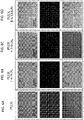
- FIGS. 11A-11D show fluorescence microscopy images with DAPI (nucleus) and CFDA (alive) staining of S. epidermis on the various substrates.
- FIG. 12 is a graph of the results of CFDA/DAPI stained positive cells on the various substrates.
- PEEK with 15% ⁇ -Si 3 N 4 showed about 1 order of magnitude increase of in vitro antibacterial resistance to S. epidermis as compared to monolithic PEEK.
- FIG. 13 is a graph of the results of the WST assay (absorbance at 450 nm) for each of the substrates.
- PEEK with 15% ⁇ -Si 3 N 4 showed about a 100% increase of in vitro antibacterial resistance to S. epidermis as compared to monolithic PEEK.
- PEEK composites loaded with 15% ⁇ -Si 3 N 4 or ⁇ -SiYAlON have shown a greatly improved antibacterial resistance as compared with monolithic PEEK.
- the PEEK composite with 15% ⁇ - Si 3 N 4 did not exhibit the same degree of antibacterial behavior as the other PEEK composites.
- the above results go clearly beyond a simple rule-of-mixture improvement and show how a relatively low fraction of ⁇ -Si 3 N 4 phase could at least lead to 100% improved antibacterial resistance as compared to monolithic PEEK.
- silicon nitride results in a substantially better inhibition of in vitro bacterial colonization and bio-film formation, and results in a much lower live to dead ratio for all studied bacteria at all incubation periods.
- Silicon nitride also demonstrates significantly higher in vitro adsorption of three proteins which may inhibit bacteria growth and promote stem cell differentiation to osteoblasts. This preferential adsorption correlates with, and may be a causative factor in, silicon nitride's ability to decrease bacterial function. Silicon nitride also exhibits enhanced in vivo osteogenesis and osteointegration and demonstrates significant resistance to bacteria compared to monolithic Titanium and PEEK.
- the surface roughness may be greater than about 1,500 nm Ra. In some such embodiments, the surface roughness may be greater than about 2,000 nm Ra. In some such embodiments, the surface roughness may be greater than about 3,000 nm Ra. In other embodiments, the surface roughness may be between about 500 nm Ra and about 5,000 nm Ra. In some such embodiments, the surface roughness may be between about 1,500 nm Ra and about 5,000 nm Ra. In some such embodiments, the surface roughness may be between about 2,000 nm Ra and about 5,000 nm Ra. In some such embodiments, the surface roughness may be between about 3,000 nm Ra and about 5,000 nm Ra.
- Some alternative ceramic materials such as alumina and zirconia (ZrO 2 ) for example, have certain properties that are similar to those of silicon nitride. As such, it is thought that these ceramic materials, or other similar materials, may exhibit similar antibacterial and osteogenic effects. It is thought that those of ordinary skill in the art, after having had the benefit of this disclosure, may be able to identify such alternative materials. It is also thought that these ceramic materials, or other similar materials, may exhibit improvement in antibacterial function with increased surface roughness, as is the case with silicon nitride ceramics.
- ZrO 2 zirconia
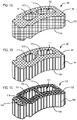
- FIG. 1A depicts a spinal implant 100.
- Spinal implant 100 has relatively smooth top, bottom, and side surfaces ( 102, 104, and 108, respectively).
- Spinal implant 100 may comprise a silicon nitride ceramic material or another similar ceramic material.
- Spinal implant 100 also comprises two openings 110 and 112 extending through the top and bottom surfaces of the implant.
- spinal implant 100 may comprise a doped silicon nitride material, as described in greater detail above.
- One or more of the surfaces of spinal implant 100 may be roughened or textured to provide for increased surface area of the silicon nitride material making up the surface(s).
- one or more surfaces of spinal implant 100 may be roughened or textured by micromachining, grinding, laser etching or texturing, sand or other abrasive blasting, chemical etching, thermal etching, plasma etching, and the like.
- FIG. 1B depicts spinal implant 100 after each of the exterior surfaces 102, 104 (surface not visible in the figure), and 108 has been roughened. As explained above, this surface roughening improves the antibacterial function and characteristics of the implant.
- One or more interior surfaces may also be roughened. For example, interior surfaces 111 and 113 that define openings 110 and 112, respectively, may also be roughened. The extent of roughening of the interior surfaces may be identical to, greater than, or less than, the roughening of exterior surfaces 102, 104, and 108, as desired.
- FIG. 1C depicts spinal implant 100 having a plurality of surface features or teeth 114 on the top and bottom surfaces.
- Surface features 114 may help prevent or at least minimize migration of the implant once positioned within a patient's intervertebral space.
- Surface features 114 may be formed from the implant 100 before or after the surface roughening has taken place.
- surface features 114 may, alternatively, comprise another material that is attached to the implant 100, again before or after surface roughening.
- FIG. 2A depicts an alternative embodiment of a spinal implant 200.
- Spinal implant 200 may comprise any suitable material or materials, such as metals, polymers, and/or ceramics.
- Spinal implant 200 also comprises a coating 220.
- Coating 220 preferably comprises a silicon nitride or doped silicon nitride ceramic material, although it is contemplated that other ceramic materials having certain properties similar to silicon nitride may alternatively be used as a coating.
- Coating 220 may be applied to any surface exposed or potentially exposed to biological material or activity. For example, in the depicted embodiment, coating 220 is applied to top surface 202, bottom surface 204, side surface 208, and to interior surfaces 211 and 213 that define openings 210 and 212, respectively.
- Coating 220 may be applied to take advantage of the unique antibacterial properties and characteristics of silicon nitride discussed elsewhere herein.
- the coating thickness can range from between about 5 nanometers up to about 5 millimeters. In some preferred embodiments, the coating thickness may be between about 1 micrometer and about 125 micrometers.
- silicon nitride ceramic coatings or layers may be applied to a PEEK spinal implant to improve the antibacterial function of the implant and/or to provide other advantages as discussed in greater detail above.
- the coating(s) may be applied by any suitable methodology known to those of ordinary skill in the art, such as chemical vapor deposition (CVD), physical vapor deposition (PVD), plasma spraying, electro-deposition or electrophoretic deposition, slurry coating and/or high-temperature diffusion.
- the coating 220 may be surface roughened, as illustrated in FIG. 2B .
- the coating surface roughening may be applied to any and all portions of the implant that are or could be exposed to biological activity or material.
- each of surfaces 202, 204, 208, 211, and 213 have been roughened or textured as described above.
- the surface of the implant may be roughened or textured before the coating is applied, either in lieu of, or in addition to surface roughening or texturing on the coating.
- FIGS. 3A-3B and 4A-4B illustrate a hip implant 300 comprising a femoral stem 330 that is configured to be received within a patient's femur, a neck 340, and a modular acetabular head 350 configured to receive a ball joint (not shown) that will ultimately be positioned in an acetabular cup, or within a patient's natural acetabulum.
- coatings 320 may be applied to the femoral stem 330 of hip implant 300, as shown in FIG. 3A .
- coating 320 comprises a silicon nitride ceramic material.
- other portions of the implant may also be coated with a silicon nitride ceramic or another similar material.
- coating 320 may also be applied to femoral stem 330, neck 340, and/or modular acetabular head 350, as desired.
- one or more surfaces/portions of the implant 300 may be roughened and/or textured.
- femoral stem 330 which comprises coating 320
- femoral stem 330 and/or any other desired region of implant 300 may be roughened and/or textured before coating 320 has been applied.
- one or more surfaces of the implant may be textured and/or roughened both before and after the antibacterial coating has been applied.
- FIG. 4A is a cross-sectional view taken along line 4A-4A in FIG. 3A .
- coating 320 extends only along the femoral stem 330 portion of implant 300.
- coating 320 may be applied to other portions of the implant as well (in some embodiments, the coating may be applied to the entire implant).
- FIG. 4B is a cross-sectional view taken along line 4B-4B in FIG. 3B . This figure illustrates the surface of the femoral stem 330 of implant 300 after the roughening/texturing process has been completed.
- Bone screw 500 may comprise a pedicle screw, for example.
- Bone screw 500 comprises a spherical head 510 and a threaded shaft 520.
- Bone screw 500, or one or more portions of bone screw 500 may comprise a silicon nitride ceramic material.
- One or more portions or surfaces of bone screw 500 may also be roughened or textured to improve antibacterial or other characteristics of the implant.
- threaded shaft 520 has been roughened.
- Head 510 of screw 500 may remain smooth, or may be polished smooth, to provide for desired articulation within a spinal fixation system connector.
- bone screw 500 may comprise another suitable material, such as Titanium.
- a silicon nitride coating may be applied to the implant rather than forming the entire implant from a silicon nitride material.
- the coating and/or the undersurface of the coating i.e., the surface of the original implant itself
- bone screw 500 may comprise a biomedical material, such as a metal, ceramic, or polymer that includes a silicon nitride filler, or that otherwise incorporate a silicon nitride material into the material used to form the implant.
- silicon nitride may be used as a filler or otherwise incorporated into polymers, such as poly-ether-ether-ketone (PEEK), poly(methylmethacrylate), poly(ethyleneterephthalate), poly(dimethylsiloxane), poly(tetrafluoroethylene), polyethylene, and/or polyurethane.
- PEEK poly-ether-ether-ketone
- Silicon nitride may also be used as a filler otherwise incorporated into other materials used to form other biomedical implants, such as metals, including Titanium, Silver, Nitinol, Platinum, Copper, and related alloys, for example.
- silicon nitride may be used as a filler or otherwise incorporated into other materials, such as ceramics and cermets. By incorporating silicon nitride into other materials, it is expected that some of the antibacterial advantages and/or other advantageous properties described herein may be realized. Silicon nitride may also be incorporated into another materials used as part of one or more of the coatings described herein to increase antibacterial function.
Landscapes
- Health & Medical Sciences (AREA)
- Chemical & Material Sciences (AREA)
- Life Sciences & Earth Sciences (AREA)
- Medicinal Chemistry (AREA)
- Veterinary Medicine (AREA)
- Public Health (AREA)
- General Health & Medical Sciences (AREA)
- Animal Behavior & Ethology (AREA)
- Transplantation (AREA)
- Oral & Maxillofacial Surgery (AREA)
- Epidemiology (AREA)
- Dermatology (AREA)
- Engineering & Computer Science (AREA)
- Inorganic Chemistry (AREA)
- Biomedical Technology (AREA)
- Heart & Thoracic Surgery (AREA)
- Vascular Medicine (AREA)
- Orthopedic Medicine & Surgery (AREA)
- Chemical Kinetics & Catalysis (AREA)
- Molecular Biology (AREA)
- Cardiology (AREA)
- Composite Materials (AREA)
- Materials Engineering (AREA)
- Surgery (AREA)
- Organic Chemistry (AREA)
- Polymers & Plastics (AREA)
- Neurology (AREA)
- Prostheses (AREA)
- Materials For Medical Uses (AREA)
- Surgical Instruments (AREA)
- Dental Prosthetics (AREA)
Claims (15)
- Verfahren zur Verbesserung der antibakteriellen Eigenschaften eines biomedizinischen Implantats, wobei das Verfahren die Schritte umfasst:Bereitstellen eines biomedizinischen Implantats (200), das ein polymeres oder metallisches Substratmaterial umfasst, undBeschicken des biomedizinischen Implantats (200) mit etwa 10 % bis etwa 20 % eines Pulvers, das ein β-Siliciumnitridmaterial umfasst,wobei das beschickte biomedizinische Implantat eine im Vergleich zum Substratmaterial allein erhöhte bakterielle Widerstandsfähigkeit besitzt.
- Verfahren nach Anspruch 1, weiter umfassend:
Erhöhen einer Oberflächenrauheit wenigstens eines Teils des biomedizinischen Implantats (200) auf ein Rauheitsprofil mit einem arithmetischen Mittel von wenigstens etwa 500 nm Ra, um die antibakteriellen Eigenschaften des biomedizinischen Implantats durch wenigstens eines von Mikrobearbeitung, Schleifen, Polieren, Laserätzen, Lasertexturieren, Sandstrahlen oder anderem abtragendem Strahlen, chemischem Ätzen, thermischem Ätzen und Plasmaätzen zu verbessern. - Verfahren nach einem der vorhergehenden Ansprüche, wobei das Siliciumnitridmaterial ausgewählt ist aus der Gruppe, bestehend aus β-Si3N4, β-SiYAlON und Kombinationen davon.
- Verfahren nach einem der vorhergehenden Ansprüche, wobei das biomedizinische Implantat (200) ein biomedizinisches Wirbelsäulen-Zwischenwirbel-Implantat umfasst.
- Verfahren nach einem der vorhergehenden Ansprüche, wobei das biomedizinische Implantat (200) wenigstens eines von Polyetheretheretherketon (PEEK) und Titan umfasst und wobei, wenn das biomedizinische Implantat Polyetheretheretherketon (PEEK) umfasst, das β-Siliciumnitridmaterial optional 15 Gew.-% β-Si3N4-Pulver oder 15 Gew.-% β-SiYAlON-Pulver umfasst.
- Verfahren nach Anspruch 2, weiter umfassend:
Aufbringen einer Beschichtung (220) aus Siliciumnitrid auf das biomedizinische Implantat (200). - Verfahren nach Anspruch 6, wobei der Schritt des Erhöhens einer Oberflächenrauheit wenigstens eines Teils des biomedizinischen Implantats (200) nach dem Schritt des Aufbringens einer Beschichtung (220) auf das biomedizinische Implantat (200) durchgeführt wird, und wobei der Schritt des Erhöhens einer Oberflächenrauheit wenigstens eines Teils des biomedizinischen Implantats (200) das Erhöhen einer Oberflächenrauheit wenigstens eines Teils der Beschichtung (220) umfasst.
- Verfahren nach Anspruch 2, wobei der Schritt des Erhöhens einer Oberflächenrauheit wenigstens eines Teils des biomedizinischen Implantats (200) auf ein Rauheitsprofil mit einem arithmetischen Mittel von wenigstens etwa 1.250 nm Ra erfolgt, bevorzugt zwischen etwa 2.000 nm Ra und etwa 5.000 nm Ra.
- Biomedizinisches Implantat (200/300) mit verbesserten antibakteriellen Eigenschaften, umfassend:ein polymeres oder metallisches Substratmaterial undetwa 10 Gew.-% bis etwa 20 Gew.-% eines β-Siliciumnitridpulvers, mit dem das Substratmaterial beschickt ist, wobei das biomedizinische Implantat eine im Vergleich zum Substratmaterial allein erhöhte bakterielle Widerstandsfähigkeit besitzt.
- Biomedizinisches Implantat (200) nach Anspruch 9, wobei wenigstens ein Teil des biomedizinischen Implantats (200) ein erhöhtes Oberflächenrauheitsprofil mit einem arithmetischen Mittel von wenigstens etwa 500 nm Ra aufweist, das durch wenigstens eines von Mikrobearbeitung, Schleifen, Polieren, Laserätzen, Lasertexturieren, Sandstrahlen oder anderem abtragendem Strahlen, chemischem Ätzen, thermischem Ätzen und Plasmaätzen erzeugt ist.
- Biomedizinisches Implantat (200) nach einem der Ansprüche 9 bis 10, wobei das β-Siliciumnitridmaterial ausgewählt ist aus der Gruppe, bestehend aus β-Si3N4, β-SiYAlON und Kombinationen davon.
- Biomedizinisches Implantat (200) nach einem der Ansprüche 9 bis 11, wobei das Substratmaterial wenigstens eines von Polyetheretheretherketon (PEEK) und Titan umfasst und wobei, wenn das biomedizinische Implantat Polyetheretheretherketon (PEEK) umfasst, das β-Siliciumnitridmaterial optional 15 Gew.-% β-Si3N4-Pulver oder 15 Gew.-% β-SiYAlON-Pulver umfasst.
- Biomedizinisches Implantat (200) nach einem der Ansprüche 9 bis 12, wobei das biomedizinische Implantat (200) ausgewählt ist aus einem Wirbelsäulen-Zwischenwirbel-Implantat (100), einem Hüftimplantat (300) oder einer Knochenschraube.
- Biomedizinisches Implantat nach einem der Ansprüche 9 bis 13, wobei das biomedizinische Implantat (300) ein Hüftimplantat (300) umfasst mit einer Siliciumnitridbeschichtung (320) auf einem Femurschaft (330) des Hüftimplantats (300).
- Biomedizinisches Implantat nach einem der Ansprüche 9 bis 14, weiter eine Siliciumnitridbeschichtung (220) auf dem biomedizinischen Implantat (200) umfassend.
Priority Applications (1)
| Application Number | Priority Date | Filing Date | Title |
|---|---|---|---|
| EP22212616.1A EP4176905A1 (de) | 2017-03-27 | 2018-01-23 | Antibakterielle biomedizinische implantat und verfahren zu dessen herstellung |
Applications Claiming Priority (2)
| Application Number | Priority Date | Filing Date | Title |
|---|---|---|---|
| US15/470,637 US10806831B2 (en) | 2012-05-09 | 2017-03-27 | Antibacterial biomedical implants and associated materials, apparatus, and methods |
| PCT/US2018/014781 WO2018182835A1 (en) | 2017-03-27 | 2018-01-23 | Antibacterial biomedical implants and associated materials, apparatus, and methods |
Related Child Applications (1)
| Application Number | Title | Priority Date | Filing Date |
|---|---|---|---|
| EP22212616.1A Division EP4176905A1 (de) | 2017-03-27 | 2018-01-23 | Antibakterielle biomedizinische implantat und verfahren zu dessen herstellung |
Publications (3)
| Publication Number | Publication Date |
|---|---|
| EP3606567A1 EP3606567A1 (de) | 2020-02-12 |
| EP3606567A4 EP3606567A4 (de) | 2020-12-09 |
| EP3606567B1 true EP3606567B1 (de) | 2022-12-21 |
Family
ID=63676700
Family Applications (2)
| Application Number | Title | Priority Date | Filing Date |
|---|---|---|---|
| EP22212616.1A Pending EP4176905A1 (de) | 2017-03-27 | 2018-01-23 | Antibakterielle biomedizinische implantat und verfahren zu dessen herstellung |
| EP18774889.2A Active EP3606567B1 (de) | 2017-03-27 | 2018-01-23 | Antibakterielle biomedizinische implantate und zugehörige materialien, vorrichtung und verfahren |
Family Applications Before (1)
| Application Number | Title | Priority Date | Filing Date |
|---|---|---|---|
| EP22212616.1A Pending EP4176905A1 (de) | 2017-03-27 | 2018-01-23 | Antibakterielle biomedizinische implantat und verfahren zu dessen herstellung |
Country Status (12)
| Country | Link |
|---|---|
| EP (2) | EP4176905A1 (de) |
| JP (3) | JP7114852B2 (de) |
| KR (1) | KR102590748B1 (de) |
| CN (1) | CN110461378A (de) |
| AU (2) | AU2018244062B2 (de) |
| BR (1) | BR112019018892B1 (de) |
| CA (1) | CA3055721C (de) |
| DK (1) | DK3606567T3 (de) |
| ES (1) | ES2937734T3 (de) |
| FI (1) | FI3606567T3 (de) |
| PT (1) | PT3606567T (de) |
| WO (1) | WO2018182835A1 (de) |
Cited By (1)
| Publication number | Priority date | Publication date | Assignee | Title |
|---|---|---|---|---|
| EP4480508A1 (de) * | 2023-06-21 | 2024-12-25 | Innojet Technology Co., Ltd. | Biokompatible schutzbeschichtung auf einer medizinischen implantatkomponente und verfahren zur herstellung davon |
Families Citing this family (19)
| Publication number | Priority date | Publication date | Assignee | Title |
|---|---|---|---|---|
| AU2018244062B2 (en) * | 2017-03-27 | 2020-10-01 | Sintx Technologies, Inc. | Antibacterial biomedical implants and associated materials, apparatus, and methods |
| US12433356B2 (en) | 2018-09-06 | 2025-10-07 | Sintx Technologies, Inc. | Antipathogenic fibrous material |
| US12433294B2 (en) | 2018-09-06 | 2025-10-07 | Sintx Technologies, Inc. | Antipathogenic devices and methods thereof for antifungal applications |
| US11857001B2 (en) | 2018-09-06 | 2024-01-02 | Sintx Technologies, Inc. | Antipathogenic face mask |
| JP7422137B2 (ja) * | 2018-09-06 | 2024-01-25 | シントクス テクノロジーズ インコーポレイテッド | 抗病原性組成物およびその方法 |
| BR112022014046A2 (pt) * | 2020-01-24 | 2022-09-13 | Sintx Technologies Inc | Compósitos antifúngicos e métodos dos mesmos |
| JP7409646B2 (ja) * | 2020-02-12 | 2024-01-09 | 国立研究開発法人宇宙航空研究開発機構 | 抗菌性成形体およびその製造方法 |
| BR112022020873A2 (pt) * | 2020-04-23 | 2023-02-28 | Sintx Technologies Inc | Métodos de cladeamento a laser de nitreto de silício |
| US20230200999A1 (en) * | 2020-05-29 | 2023-06-29 | Kyocera Corporation | Artificial joint stem |
| CN112545711A (zh) * | 2020-11-03 | 2021-03-26 | 武汉联影智融医疗科技有限公司 | 股骨柄假体及其制备方法 |
| WO2022133908A1 (zh) * | 2020-12-24 | 2022-06-30 | 刘晓东 | 陶瓷复合涂料、杀毒陶瓷复合涂料及其制备方法和涂层 |
| CN112280344B (zh) * | 2020-12-24 | 2021-07-06 | 北京银合汇新材料科技有限公司 | 陶瓷复合涂料、杀毒陶瓷复合涂料及其制备方法和涂层 |
| KR20230137386A (ko) * | 2021-01-29 | 2023-10-04 | 신티엑스 테크놀로지스, 잉크. | 항바이러스 조성물 및 디바이스, 및 이를 사용하는 방법 |
| KR102632436B1 (ko) | 2021-07-20 | 2024-02-01 | 재단법인 오송첨단의료산업진흥재단 | 의료용 금속 임플란트의 고분자 항균 코팅방법 |
| KR102384715B1 (ko) * | 2021-08-26 | 2022-04-11 | (주)제일메디칼코퍼레이션 | 골 유착능이 우수한 다공성 생체 임플란트 및 이의 제조방법 |
| CN120882313A (zh) | 2023-03-27 | 2025-10-31 | 电化株式会社 | 抗菌剂、以及将含有氮化硅的组合物用作抗菌剂的方法 |
| JPWO2024204262A1 (de) | 2023-03-27 | 2024-10-03 | ||
| JPWO2025023253A1 (de) * | 2023-07-26 | 2025-01-30 | ||
| KR20250077930A (ko) | 2023-11-24 | 2025-06-02 | 국립순천대학교산학협력단 | Peek/ 조개류 3d 프린팅 임플란트 |
Family Cites Families (14)
| Publication number | Priority date | Publication date | Assignee | Title |
|---|---|---|---|---|
| US5118645A (en) * | 1988-01-27 | 1992-06-02 | The Dow Chemical Company | Self-reinforced silicon nitride ceramic of high fracture toughness and a method of preparing the same |
| SE517365C2 (sv) * | 1998-03-19 | 2002-05-28 | Biomat System Ab | Keramiskt biomaterial av kiselnitrid samt metod för dess tillverkning |
| US7094717B2 (en) * | 2000-11-28 | 2006-08-22 | Kennametal Inc. | SiAlON containing ytterbium and method of making |
| US7695521B2 (en) | 2001-05-01 | 2010-04-13 | Amedica Corporation | Hip prosthesis with monoblock ceramic acetabular cup |
| EP1408874B1 (de) | 2001-06-14 | 2012-08-08 | Amedica Corporation | Metall-keramik-verbundgelenk |
| WO2008154593A1 (en) * | 2007-06-11 | 2008-12-18 | Smith & Nephew, Inc. | Ceramic layered medical implant |
| US20100256758A1 (en) * | 2009-04-02 | 2010-10-07 | Synvasive Technology, Inc. | Monolithic orthopedic implant with an articular finished surface |
| KR101155549B1 (ko) * | 2009-11-24 | 2012-06-19 | 한국기계연구원 | 다공성 반응소결질화규소의 제조 방법 및 그에 의해 제조된 다공성 반응소결질화규소 |
| EP2750726B1 (de) * | 2011-08-30 | 2019-03-13 | IHI Ionbond AG | Implantate mit verschleissfesten beschichtungen und verfahren dafür |
| US9925295B2 (en) * | 2012-05-09 | 2018-03-27 | Amedica Corporation | Ceramic and/or glass materials and related methods |
| JP2015516239A (ja) * | 2012-05-09 | 2015-06-11 | アメディカ コーポレイション | 生体用インプラント及び関連器具の表面の化学的性質を変化させる方法 |
| WO2017027426A1 (en) * | 2015-08-07 | 2017-02-16 | Amedica Corporation | Improved ceramic and/or glass materials and related methods |
| CN105565819B (zh) * | 2015-12-16 | 2018-06-19 | 苏州大学 | 一种调节氮化硅陶瓷生物活性和抑菌性能的方法及其应用 |
| AU2018244062B2 (en) * | 2017-03-27 | 2020-10-01 | Sintx Technologies, Inc. | Antibacterial biomedical implants and associated materials, apparatus, and methods |
-
2018
- 2018-01-23 AU AU2018244062A patent/AU2018244062B2/en not_active Ceased
- 2018-01-23 FI FIEP18774889.2T patent/FI3606567T3/fi active
- 2018-01-23 ES ES18774889T patent/ES2937734T3/es active Active
- 2018-01-23 WO PCT/US2018/014781 patent/WO2018182835A1/en not_active Ceased
- 2018-01-23 JP JP2019549564A patent/JP7114852B2/ja active Active
- 2018-01-23 KR KR1020197026376A patent/KR102590748B1/ko active Active
- 2018-01-23 EP EP22212616.1A patent/EP4176905A1/de active Pending
- 2018-01-23 EP EP18774889.2A patent/EP3606567B1/de active Active
- 2018-01-23 CN CN201880021458.1A patent/CN110461378A/zh active Pending
- 2018-01-23 BR BR112019018892-4A patent/BR112019018892B1/pt not_active IP Right Cessation
- 2018-01-23 DK DK18774889.2T patent/DK3606567T3/da active
- 2018-01-23 PT PT187748892T patent/PT3606567T/pt unknown
- 2018-01-23 CA CA3055721A patent/CA3055721C/en active Active
-
2020
- 2020-12-01 JP JP2020199903A patent/JP7181270B2/ja active Active
- 2020-12-07 AU AU2020286172A patent/AU2020286172B2/en active Active
-
2022
- 2022-11-17 JP JP2022184474A patent/JP7448292B2/ja active Active
Cited By (1)
| Publication number | Priority date | Publication date | Assignee | Title |
|---|---|---|---|---|
| EP4480508A1 (de) * | 2023-06-21 | 2024-12-25 | Innojet Technology Co., Ltd. | Biokompatible schutzbeschichtung auf einer medizinischen implantatkomponente und verfahren zur herstellung davon |
Also Published As
| Publication number | Publication date |
|---|---|
| CA3055721A1 (en) | 2018-10-04 |
| ES2937734T3 (es) | 2023-03-30 |
| AU2018244062A1 (en) | 2019-09-26 |
| DK3606567T3 (da) | 2023-01-30 |
| EP3606567A4 (de) | 2020-12-09 |
| PT3606567T (pt) | 2023-01-23 |
| EP3606567A1 (de) | 2020-02-12 |
| JP7181270B2 (ja) | 2022-11-30 |
| JP7448292B2 (ja) | 2024-03-12 |
| CN110461378A (zh) | 2019-11-15 |
| JP2023018024A (ja) | 2023-02-07 |
| BR112019018892B1 (pt) | 2023-04-04 |
| WO2018182835A1 (en) | 2018-10-04 |
| JP7114852B2 (ja) | 2022-08-09 |
| JP2020512072A (ja) | 2020-04-23 |
| AU2018244062B2 (en) | 2020-10-01 |
| JP2021049360A (ja) | 2021-04-01 |
| FI3606567T3 (fi) | 2023-01-31 |
| AU2020286172B2 (en) | 2022-03-17 |
| KR102590748B1 (ko) | 2023-10-18 |
| BR112019018892A2 (pt) | 2020-04-14 |
| CA3055721C (en) | 2022-08-30 |
| AU2020286172A1 (en) | 2021-01-07 |
| KR20190129041A (ko) | 2019-11-19 |
| EP4176905A1 (de) | 2023-05-10 |
Similar Documents
| Publication | Publication Date | Title |
|---|---|---|
| US11738122B2 (en) | Antibacterial biomedical implants and associated materials, apparatus, and methods | |
| AU2020286172B2 (en) | Antibacterial biomedical implants and associated materials, apparatus, and methods | |
| US20130302509A1 (en) | Antibacterial biomedical implants and associated materials, apparatus, and methods | |
| US9925295B2 (en) | Ceramic and/or glass materials and related methods | |
| Romanò et al. | Antibacterial coating of implants in orthopaedics and trauma: a classification proposal in an evolving panorama | |
| Wang et al. | Orthopaedic implant technology: biomaterials from past to future | |
| Wang et al. | Bimetallic ions regulated PEEK of bone implantation for antibacterial and osteogenic activities | |
| US20250222178A1 (en) | Antibacterial biomedical implants and associated materials, apparatus, and methods | |
| WO2017027426A1 (en) | Improved ceramic and/or glass materials and related methods | |
| CN107223041A (zh) | 用于由于感染双侧更换在肩部、膝部和髋部中的植入物的陶瓷间隔垫片(“Spacer”) | |
| HK40015993A (en) | Antibacterial biomedical implants and associated materials, apparatus, and methods | |
| Gouveia | Development Of Hybrid Coating Materials To Improve The Success Of Titanium Implants | |
| Prodana et al. | Innovative Coatings of Metallic Alloys Used as Bioactive Surfaces in Implantology: A Review. Coatings 2021, 11, 649 | |
| Of et al. | Western University Western University | |
| Soininen | Studies of diamond-like carbon and diamond-like carbon polymer hybrid coatings deposited with filtered pulsed arc discharge method for biomedical applications | |
| Wu et al. | The influence of surface bioactivated modification on titanium percutaneous implants anchored in bone | |
| US20240424165A1 (en) | New coating of implants | |
| Mannel et al. | Surface Activation of Implants | |
| O'Sullivan | Novel coatings for hard tissue implants | |
| Romanò et al. | Paradigm Change in Antibacterial Coatings: Efficacy of Short-Term Local Prophylaxis |
Legal Events
| Date | Code | Title | Description |
|---|---|---|---|
| STAA | Information on the status of an ep patent application or granted ep patent |
Free format text: STATUS: THE INTERNATIONAL PUBLICATION HAS BEEN MADE |
|
| PUAI | Public reference made under article 153(3) epc to a published international application that has entered the european phase |
Free format text: ORIGINAL CODE: 0009012 |
|
| STAA | Information on the status of an ep patent application or granted ep patent |
Free format text: STATUS: REQUEST FOR EXAMINATION WAS MADE |
|
| 17P | Request for examination filed |
Effective date: 20191021 |
|
| AK | Designated contracting states |
Kind code of ref document: A1 Designated state(s): AL AT BE BG CH CY CZ DE DK EE ES FI FR GB GR HR HU IE IS IT LI LT LU LV MC MK MT NL NO PL PT RO RS SE SI SK SM TR |
|
| AX | Request for extension of the european patent |
Extension state: BA ME |
|
| RIN1 | Information on inventor provided before grant (corrected) |
Inventor name: MCENTIRE, BRYAN J. Inventor name: DAVIS, KEVIN Inventor name: LAKSHMINARAYANAN, RAMASWAMY Inventor name: PEZOTTI, GIUSEPPE Inventor name: GRIMALDI, NICHOLAS |
|
| DAV | Request for validation of the european patent (deleted) | ||
| DAX | Request for extension of the european patent (deleted) | ||
| REG | Reference to a national code |
Ref country code: DE Ref legal event code: R079 Ref document number: 602018044529 Country of ref document: DE Free format text: PREVIOUS MAIN CLASS: A61L0027100000 Ipc: A61L0027060000 |
|
| A4 | Supplementary search report drawn up and despatched |
Effective date: 20201105 |
|
| RIC1 | Information provided on ipc code assigned before grant |
Ipc: C04B 35/597 20060101ALI20201030BHEP Ipc: A61L 27/06 20060101AFI20201030BHEP Ipc: A61L 27/44 20060101ALI20201030BHEP Ipc: A61L 27/54 20060101ALI20201030BHEP Ipc: A61L 27/18 20060101ALI20201030BHEP Ipc: A61L 27/30 20060101ALI20201030BHEP Ipc: C04B 35/58 20060101ALI20201030BHEP Ipc: C04B 35/599 20060101ALI20201030BHEP Ipc: A61L 27/50 20060101ALI20201030BHEP |
|
| GRAP | Despatch of communication of intention to grant a patent |
Free format text: ORIGINAL CODE: EPIDOSNIGR1 |
|
| STAA | Information on the status of an ep patent application or granted ep patent |
Free format text: STATUS: GRANT OF PATENT IS INTENDED |
|
| INTG | Intention to grant announced |
Effective date: 20220706 |
|
| GRAS | Grant fee paid |
Free format text: ORIGINAL CODE: EPIDOSNIGR3 |
|
| GRAA | (expected) grant |
Free format text: ORIGINAL CODE: 0009210 |
|
| STAA | Information on the status of an ep patent application or granted ep patent |
Free format text: STATUS: THE PATENT HAS BEEN GRANTED |
|
| AK | Designated contracting states |
Kind code of ref document: B1 Designated state(s): AL AT BE BG CH CY CZ DE DK EE ES FI FR GB GR HR HU IE IS IT LI LT LU LV MC MK MT NL NO PL PT RO RS SE SI SK SM TR |
|
| REG | Reference to a national code |
Ref country code: GB Ref legal event code: FG4D |
|
| REG | Reference to a national code |
Ref country code: CH Ref legal event code: EP |
|
| REG | Reference to a national code |
Ref country code: DE Ref legal event code: R096 Ref document number: 602018044529 Country of ref document: DE |
|
| REG | Reference to a national code |
Ref country code: AT Ref legal event code: REF Ref document number: 1538661 Country of ref document: AT Kind code of ref document: T Effective date: 20230115 |
|
| REG | Reference to a national code |
Ref country code: FI Ref legal event code: FGE |
|
| REG | Reference to a national code |
Ref country code: IE Ref legal event code: FG4D |
|
| REG | Reference to a national code |
Ref country code: PT Ref legal event code: SC4A Ref document number: 3606567 Country of ref document: PT Date of ref document: 20230123 Kind code of ref document: T Free format text: AVAILABILITY OF NATIONAL TRANSLATION Effective date: 20230117 |
|
| REG | Reference to a national code |
Ref country code: NL Ref legal event code: FP |
|
| REG | Reference to a national code |
Ref country code: DK Ref legal event code: T3 Effective date: 20230123 |
|
| REG | Reference to a national code |
Ref country code: SE Ref legal event code: TRGR |
|
| REG | Reference to a national code |
Ref country code: NO Ref legal event code: T2 Effective date: 20221221 |
|
| REG | Reference to a national code |
Ref country code: ES Ref legal event code: FG2A Ref document number: 2937734 Country of ref document: ES Kind code of ref document: T3 Effective date: 20230330 |
|
| REG | Reference to a national code |
Ref country code: LT Ref legal event code: MG9D |
|
| PG25 | Lapsed in a contracting state [announced via postgrant information from national office to epo] |
Ref country code: LT Free format text: LAPSE BECAUSE OF FAILURE TO SUBMIT A TRANSLATION OF THE DESCRIPTION OR TO PAY THE FEE WITHIN THE PRESCRIBED TIME-LIMIT Effective date: 20221221 |
|
| PG25 | Lapsed in a contracting state [announced via postgrant information from national office to epo] |
Ref country code: RS Free format text: LAPSE BECAUSE OF FAILURE TO SUBMIT A TRANSLATION OF THE DESCRIPTION OR TO PAY THE FEE WITHIN THE PRESCRIBED TIME-LIMIT Effective date: 20221221 Ref country code: LV Free format text: LAPSE BECAUSE OF FAILURE TO SUBMIT A TRANSLATION OF THE DESCRIPTION OR TO PAY THE FEE WITHIN THE PRESCRIBED TIME-LIMIT Effective date: 20221221 Ref country code: HR Free format text: LAPSE BECAUSE OF FAILURE TO SUBMIT A TRANSLATION OF THE DESCRIPTION OR TO PAY THE FEE WITHIN THE PRESCRIBED TIME-LIMIT Effective date: 20221221 Ref country code: GR Free format text: LAPSE BECAUSE OF FAILURE TO SUBMIT A TRANSLATION OF THE DESCRIPTION OR TO PAY THE FEE WITHIN THE PRESCRIBED TIME-LIMIT Effective date: 20230322 |
|
| P01 | Opt-out of the competence of the unified patent court (upc) registered |
Effective date: 20230526 |
|
| PG25 | Lapsed in a contracting state [announced via postgrant information from national office to epo] |
Ref country code: SM Free format text: LAPSE BECAUSE OF FAILURE TO SUBMIT A TRANSLATION OF THE DESCRIPTION OR TO PAY THE FEE WITHIN THE PRESCRIBED TIME-LIMIT Effective date: 20221221 Ref country code: RO Free format text: LAPSE BECAUSE OF FAILURE TO SUBMIT A TRANSLATION OF THE DESCRIPTION OR TO PAY THE FEE WITHIN THE PRESCRIBED TIME-LIMIT Effective date: 20221221 Ref country code: EE Free format text: LAPSE BECAUSE OF FAILURE TO SUBMIT A TRANSLATION OF THE DESCRIPTION OR TO PAY THE FEE WITHIN THE PRESCRIBED TIME-LIMIT Effective date: 20221221 Ref country code: CZ Free format text: LAPSE BECAUSE OF FAILURE TO SUBMIT A TRANSLATION OF THE DESCRIPTION OR TO PAY THE FEE WITHIN THE PRESCRIBED TIME-LIMIT Effective date: 20221221 |
|
| PG25 | Lapsed in a contracting state [announced via postgrant information from national office to epo] |
Ref country code: SK Free format text: LAPSE BECAUSE OF FAILURE TO SUBMIT A TRANSLATION OF THE DESCRIPTION OR TO PAY THE FEE WITHIN THE PRESCRIBED TIME-LIMIT Effective date: 20221221 Ref country code: PL Free format text: LAPSE BECAUSE OF FAILURE TO SUBMIT A TRANSLATION OF THE DESCRIPTION OR TO PAY THE FEE WITHIN THE PRESCRIBED TIME-LIMIT Effective date: 20221221 Ref country code: IS Free format text: LAPSE BECAUSE OF FAILURE TO SUBMIT A TRANSLATION OF THE DESCRIPTION OR TO PAY THE FEE WITHIN THE PRESCRIBED TIME-LIMIT Effective date: 20230421 Ref country code: AL Free format text: LAPSE BECAUSE OF FAILURE TO SUBMIT A TRANSLATION OF THE DESCRIPTION OR TO PAY THE FEE WITHIN THE PRESCRIBED TIME-LIMIT Effective date: 20221221 |
|
| REG | Reference to a national code |
Ref country code: DE Ref legal event code: R097 Ref document number: 602018044529 Country of ref document: DE |
|
| PG25 | Lapsed in a contracting state [announced via postgrant information from national office to epo] |
Ref country code: MC Free format text: LAPSE BECAUSE OF FAILURE TO SUBMIT A TRANSLATION OF THE DESCRIPTION OR TO PAY THE FEE WITHIN THE PRESCRIBED TIME-LIMIT Effective date: 20221221 Ref country code: LU Free format text: LAPSE BECAUSE OF NON-PAYMENT OF DUE FEES Effective date: 20230123 |
|
| REG | Reference to a national code |
Ref country code: BE Ref legal event code: MM Effective date: 20230131 |
|
| REG | Reference to a national code |
Ref country code: DE Ref legal event code: R082 Ref document number: 602018044529 Country of ref document: DE Representative=s name: MAIWALD GMBH, DE |
|
| PLBE | No opposition filed within time limit |
Free format text: ORIGINAL CODE: 0009261 |
|
| STAA | Information on the status of an ep patent application or granted ep patent |
Free format text: STATUS: NO OPPOSITION FILED WITHIN TIME LIMIT |
|
| 26N | No opposition filed |
Effective date: 20230922 |
|
| PG25 | Lapsed in a contracting state [announced via postgrant information from national office to epo] |
Ref country code: BE Free format text: LAPSE BECAUSE OF NON-PAYMENT OF DUE FEES Effective date: 20230131 |
|
| REG | Reference to a national code |
Ref country code: AT Ref legal event code: UEP Ref document number: 1538661 Country of ref document: AT Kind code of ref document: T Effective date: 20221221 |
|
| PG25 | Lapsed in a contracting state [announced via postgrant information from national office to epo] |
Ref country code: SI Free format text: LAPSE BECAUSE OF FAILURE TO SUBMIT A TRANSLATION OF THE DESCRIPTION OR TO PAY THE FEE WITHIN THE PRESCRIBED TIME-LIMIT Effective date: 20221221 Ref country code: IE Free format text: LAPSE BECAUSE OF NON-PAYMENT OF DUE FEES Effective date: 20230123 |
|
| PGFP | Annual fee paid to national office [announced via postgrant information from national office to epo] |
Ref country code: NL Payment date: 20240126 Year of fee payment: 7 |
|
| PGFP | Annual fee paid to national office [announced via postgrant information from national office to epo] |
Ref country code: AT Payment date: 20240119 Year of fee payment: 7 |
|
| PGFP | Annual fee paid to national office [announced via postgrant information from national office to epo] |
Ref country code: FI Payment date: 20240125 Year of fee payment: 7 Ref country code: CH Payment date: 20240202 Year of fee payment: 7 Ref country code: PT Payment date: 20240118 Year of fee payment: 7 |
|
| PGFP | Annual fee paid to national office [announced via postgrant information from national office to epo] |
Ref country code: SE Payment date: 20240127 Year of fee payment: 7 Ref country code: NO Payment date: 20240129 Year of fee payment: 7 Ref country code: DK Payment date: 20240125 Year of fee payment: 7 |
|
| PG25 | Lapsed in a contracting state [announced via postgrant information from national office to epo] |
Ref country code: BG Free format text: LAPSE BECAUSE OF FAILURE TO SUBMIT A TRANSLATION OF THE DESCRIPTION OR TO PAY THE FEE WITHIN THE PRESCRIBED TIME-LIMIT Effective date: 20221221 |
|
| PG25 | Lapsed in a contracting state [announced via postgrant information from national office to epo] |
Ref country code: BG Free format text: LAPSE BECAUSE OF FAILURE TO SUBMIT A TRANSLATION OF THE DESCRIPTION OR TO PAY THE FEE WITHIN THE PRESCRIBED TIME-LIMIT Effective date: 20221221 |
|
| PG25 | Lapsed in a contracting state [announced via postgrant information from national office to epo] |
Ref country code: CY Free format text: LAPSE BECAUSE OF FAILURE TO SUBMIT A TRANSLATION OF THE DESCRIPTION OR TO PAY THE FEE WITHIN THE PRESCRIBED TIME-LIMIT; INVALID AB INITIO Effective date: 20180123 |
|
| PG25 | Lapsed in a contracting state [announced via postgrant information from national office to epo] |
Ref country code: HU Free format text: LAPSE BECAUSE OF FAILURE TO SUBMIT A TRANSLATION OF THE DESCRIPTION OR TO PAY THE FEE WITHIN THE PRESCRIBED TIME-LIMIT; INVALID AB INITIO Effective date: 20180123 |
|
| REG | Reference to a national code |
Ref country code: DK Ref legal event code: EBP Effective date: 20250131 |
|
| REG | Reference to a national code |
Ref country code: CH Ref legal event code: PL |
|
| REG | Reference to a national code |
Ref country code: SE Ref legal event code: EUG |
|
| REG | Reference to a national code |
Ref country code: NL Ref legal event code: MM Effective date: 20250201 |
|
| REG | Reference to a national code |
Ref country code: AT Ref legal event code: MM01 Ref document number: 1538661 Country of ref document: AT Kind code of ref document: T Effective date: 20250123 |
|
| PG25 | Lapsed in a contracting state [announced via postgrant information from national office to epo] |
Ref country code: PT Free format text: LAPSE BECAUSE OF NON-PAYMENT OF DUE FEES Effective date: 20250723 |
|
| PG25 | Lapsed in a contracting state [announced via postgrant information from national office to epo] |
Ref country code: FI Free format text: LAPSE BECAUSE OF NON-PAYMENT OF DUE FEES Effective date: 20250123 |
|
| PG25 | Lapsed in a contracting state [announced via postgrant information from national office to epo] |
Ref country code: NO Free format text: LAPSE BECAUSE OF NON-PAYMENT OF DUE FEES Effective date: 20250131 |
|
| PG25 | Lapsed in a contracting state [announced via postgrant information from national office to epo] |
Ref country code: NL Free format text: LAPSE BECAUSE OF NON-PAYMENT OF DUE FEES Effective date: 20250201 |
|
| PG25 | Lapsed in a contracting state [announced via postgrant information from national office to epo] |
Ref country code: AT Free format text: LAPSE BECAUSE OF NON-PAYMENT OF DUE FEES Effective date: 20250123 |
|
| PG25 | Lapsed in a contracting state [announced via postgrant information from national office to epo] |
Ref country code: CH Free format text: LAPSE BECAUSE OF NON-PAYMENT OF DUE FEES Effective date: 20250131 |
|
| PG25 | Lapsed in a contracting state [announced via postgrant information from national office to epo] |
Ref country code: TR Free format text: LAPSE BECAUSE OF FAILURE TO SUBMIT A TRANSLATION OF THE DESCRIPTION OR TO PAY THE FEE WITHIN THE PRESCRIBED TIME-LIMIT Effective date: 20221221 |
|
| PG25 | Lapsed in a contracting state [announced via postgrant information from national office to epo] |
Ref country code: DK Free format text: LAPSE BECAUSE OF NON-PAYMENT OF DUE FEES Effective date: 20250131 |
|
| PGFP | Annual fee paid to national office [announced via postgrant information from national office to epo] |
Ref country code: GB Payment date: 20260127 Year of fee payment: 9 |
|
| PGFP | Annual fee paid to national office [announced via postgrant information from national office to epo] |
Ref country code: ES Payment date: 20260202 Year of fee payment: 9 |
|
| PGFP | Annual fee paid to national office [announced via postgrant information from national office to epo] |
Ref country code: DE Payment date: 20260128 Year of fee payment: 9 |
|
| PGFP | Annual fee paid to national office [announced via postgrant information from national office to epo] |
Ref country code: IT Payment date: 20260121 Year of fee payment: 9 |
|
| PGFP | Annual fee paid to national office [announced via postgrant information from national office to epo] |
Ref country code: FR Payment date: 20260126 Year of fee payment: 9 |