EP3595347B1 - Verfahren und vorrichtung zur erfassung des gesundheitszustandes eines netzwerkelements - Google Patents
Verfahren und vorrichtung zur erfassung des gesundheitszustandes eines netzwerkelements Download PDFInfo
- Publication number
- EP3595347B1 EP3595347B1 EP17904827.7A EP17904827A EP3595347B1 EP 3595347 B1 EP3595347 B1 EP 3595347B1 EP 17904827 A EP17904827 A EP 17904827A EP 3595347 B1 EP3595347 B1 EP 3595347B1
- Authority
- EP
- European Patent Office
- Prior art keywords
- kpi
- network element
- time window
- score
- health status
- Prior art date
- Legal status (The legal status is an assumption and is not a legal conclusion. Google has not performed a legal analysis and makes no representation as to the accuracy of the status listed.)
- Active
Links
Images


Classifications
-
- H—ELECTRICITY
- H04—ELECTRIC COMMUNICATION TECHNIQUE
- H04L—TRANSMISSION OF DIGITAL INFORMATION, e.g. TELEGRAPHIC COMMUNICATION
- H04L43/00—Arrangements for monitoring or testing data switching networks
- H04L43/08—Monitoring or testing based on specific metrics, e.g. QoS, energy consumption or environmental parameters
-
- H—ELECTRICITY
- H04—ELECTRIC COMMUNICATION TECHNIQUE
- H04W—WIRELESS COMMUNICATION NETWORKS
- H04W24/00—Supervisory, monitoring or testing arrangements
-
- H—ELECTRICITY
- H04—ELECTRIC COMMUNICATION TECHNIQUE
- H04L—TRANSMISSION OF DIGITAL INFORMATION, e.g. TELEGRAPHIC COMMUNICATION
- H04L43/00—Arrangements for monitoring or testing data switching networks
- H04L43/08—Monitoring or testing based on specific metrics, e.g. QoS, energy consumption or environmental parameters
- H04L43/091—Measuring contribution of individual network components to actual service level
-
- H—ELECTRICITY
- H04—ELECTRIC COMMUNICATION TECHNIQUE
- H04L—TRANSMISSION OF DIGITAL INFORMATION, e.g. TELEGRAPHIC COMMUNICATION
- H04L41/00—Arrangements for maintenance, administration or management of data switching networks, e.g. of packet switching networks
- H04L41/06—Management of faults, events, alarms or notifications
- H04L41/0631—Management of faults, events, alarms or notifications using root cause analysis; using analysis of correlation between notifications, alarms or events based on decision criteria, e.g. hierarchy, tree or time analysis
-
- H—ELECTRICITY
- H04—ELECTRIC COMMUNICATION TECHNIQUE
- H04L—TRANSMISSION OF DIGITAL INFORMATION, e.g. TELEGRAPHIC COMMUNICATION
- H04L41/00—Arrangements for maintenance, administration or management of data switching networks, e.g. of packet switching networks
- H04L41/08—Configuration management of networks or network elements
- H04L41/0803—Configuration setting
- H04L41/0823—Configuration setting characterised by the purposes of a change of settings, e.g. optimising configuration for enhancing reliability
- H04L41/0836—Configuration setting characterised by the purposes of a change of settings, e.g. optimising configuration for enhancing reliability to enhance reliability, e.g. reduce downtime
-
- H—ELECTRICITY
- H04—ELECTRIC COMMUNICATION TECHNIQUE
- H04L—TRANSMISSION OF DIGITAL INFORMATION, e.g. TELEGRAPHIC COMMUNICATION
- H04L41/00—Arrangements for maintenance, administration or management of data switching networks, e.g. of packet switching networks
- H04L41/50—Network service management, e.g. ensuring proper service fulfilment according to agreements
- H04L41/5003—Managing SLA; Interaction between SLA and QoS
- H04L41/5009—Determining service level performance parameters or violations of service level contracts, e.g. violations of agreed response time or mean time between failures [MTBF]
-
- H—ELECTRICITY
- H04—ELECTRIC COMMUNICATION TECHNIQUE
- H04L—TRANSMISSION OF DIGITAL INFORMATION, e.g. TELEGRAPHIC COMMUNICATION
- H04L43/00—Arrangements for monitoring or testing data switching networks
- H04L43/02—Capturing of monitoring data
- H04L43/022—Capturing of monitoring data by sampling
-
- H—ELECTRICITY
- H04—ELECTRIC COMMUNICATION TECHNIQUE
- H04W—WIRELESS COMMUNICATION NETWORKS
- H04W24/00—Supervisory, monitoring or testing arrangements
- H04W24/08—Testing, supervising or monitoring using real traffic
-
- H—ELECTRICITY
- H04—ELECTRIC COMMUNICATION TECHNIQUE
- H04W—WIRELESS COMMUNICATION NETWORKS
- H04W88/00—Devices specially adapted for wireless communication networks, e.g. terminals, base stations or access point devices
- H04W88/18—Service support devices; Network management devices
Definitions
- the present invention relates to communications technologies, and in particular, to a network element health status detection method and device.
- Network operation and maintenance management refers to a production organization management activity for ensuring a normal, safe, and effective operation of a network and a service.
- the network operation and maintenance management is mainly used to maintain stability of the network and the service and to rectify a fault and optimize the network in a timely manner.
- the network system is challenged by various problems such as system breakdown, overloading, and a hardware fault.
- high costs, long time consumed, and poor service quality are major challenges in current network operation and maintenance management. How to identify a health status of a network element and prevent a fault becomes a key to the network operation and maintenance management.
- a network status of a network element in the network operation and maintenance management is identified by using an active operation and maintenance service.
- a threshold detection system needs to be established for a network element. When an indicator value of the network element at a time point is lower than or exceeds a reference threshold, it indicates that the network element has a relatively low working efficiency and even cannot meet a minimum working requirement, and the network element is alerted.
- a current threshold alarm system considers only single-time-point performance data of a network device, and does not accurately identify the network element health status.
- US20150138988A1 relates to individually unique key performance indicator management which is utilized to enhance performance in a network.
- a warning alarm threshold for a key performance indicator associated with a mobile device may be determined. And upon receiving an alert message indicating that the warning alarm threshold has been exceeded, a network device may be modified.
- US20160248624A1 relates to a performance management engine which is implemented to continuously detecting entity performance issues. The performance management engine may calculate one or more key performance indicators (KPIs) that measure performance of an entity.
- KPIs key performance indicators
- Embodiments of the present invention provide a network element health status detection method and device, so as to resolve a problem that it is inaccurate to determine a network element health status by considering only single-point moment performance data of a network element and a baseline threshold.
- the present invention is defined in the attached claims.
- a first aspect provides a network element health status detection method.
- the method specifically includes: determining, by a detection device, sampled data of at least one key performance indicator (Key Performance Indicator, KPI) of a target network element in a first time window; obtaining, by the detection device, a fluctuation score of any KPI in the at least one KPI according to sampled data of the any KPI in the first time window and a steady state value of the any KPI; and determining, by the detection device, a health status of the target network element based on a fluctuation score of each of the at least one KPI.
- KPI Key Performance Indicator
- the fluctuation is used to represent a degree of deviation of the any KPI from a steady state represented by the steady state value.
- the "obtaining, by the detection device, a fluctuation score of any KPI in the at least one KPI according to sampled data of the any KPI in the first time window and a steady state value of the any KPI” may include: calculating a distance between the sampled data of the any KPI in the first time window and the steady state value of the any KPI; and obtaining the fluctuation score according to the distance between the sampled data of the any KPI in the first time window and the steady state value of the any KPI.
- the steady state value is used to represent a KPI steady state.
- the "calculating a distance between the sampled data of the any KPI in the first time window and the steady state value of the any KPI" may include calculating the distance between the sampled data of the any KPI in the first time window and the steady state value of the any KPI by using one of a standard deviation method, an average deviation method, and a variation coefficient method.
- the fluctuation score is obtained according to the distance between the sampled data of the any KPI in the first time window and the steady state value of the any KPI, and the health status of the target network element is determined by the fluctuation score. Therefore, the distance between the sampled data of the any KPI in the first time window and the steady state value is calculated by using one of the standard deviation method, the average deviation method, and the variation coefficient method, and then the fluctuation score is determined based on the distance between the sampled data and the steady state value. In this way, it can be ensured that a more accurate fluctuation score of the any KPI is obtained, so that the health status of the target network element is determined more accurately.
- the method further includes: determining, by the detection device, sampled data of the any KPI in a second time window, where an end time of the second time window is less than or equal to an end time of the first time window; and calculating, by the detection device, the steady state value of the any KPI based on the sampled data of the any KPI in the second time window.
- the second time window is greater than the first time window. Because the second time window is greater than the first time window, a large amount of data is collected in the second time window, and a state of the any KPI is better represented. Therefore, a fluctuation score that is obtained based on the sampled data in the first time window and by considering the steady state value calculated from the sampled data in the second time window is more accurate.
- the "calculating the steady state value of the any KPI based on the sampled data of the any KPI in the second time window" may include calculating the steady state value of the any KPI based on the sampled data of the any KPI in the second time window after an abnormal point and/or a noise point are/is removed.
- the sampled data in the second time window is not fully applied to calculate the steady state value of the any KPI. Therefore, in this method, the abnormal point and/or the noise point in the sampled data in the second time window need/needs to be removed, and the steady state value of the any KPI is calculated more accurately based on the sampled data of the any KPI after the abnormal point and/or the noise point are/is removed.
- the "determining a health status of the target network element based on a fluctuation score of each of the at least one KPI" may include: obtaining a reliability score of the any KPI through weighted calculation according to the fluctuation score and at least one of a trend score of the any KPI and a score of a distance between the any KPI and a network element hardware property threshold; and determining the health status of the target network element based on a reliability score of each of the at least one KPI. If the health status of the target network element is determined based only on a fluctuation score of each of the at least one KPI, the fluctuation score in the process is equivalent to the reliability score.
- a reliability score of the target network element is obtained through weighted calculation according to the fluctuation score and the score of the distance between the any KPI and the network element hardware property threshold, and the health status of the target network element may be determined based on the reliability score of the target network element.
- the health status of the target network element is determined accurately.
- a reliability score of the target network element is obtained through weighted calculation according to the fluctuation score of the any KPI and the trend score of the any KPI, and the health status of the target network element may be determined based on the reliability score of the target network element. In this method, not only the fluctuation score is considered, but also the trend score is considered. Therefore, in this method, the health status of the target network element is determined accurately.
- the method further includes: determining, by the detection device, sampled data of the any KPI of the target network element in a detection moment, where the detection moment is the end time of the first time window; and determining, by the detection device, a score of a distance between the any KPI and the network element hardware property threshold based on the sampled data of the any KPI in the detection moment and a preset network element hardware property threshold of the any KPI.
- the "obtaining a reliability score of the any KPI through weighted calculation according to the fluctuation score and at least one of a trend score of the any KPI and a score of a distance between the any KPI and a network element hardware property threshold" may include: obtaining a reliability score of the any KPI through weighted calculation according to the fluctuation score of the any KPI, the trend score of the any KPI, and a score of a distance between the any KPI and the network element hardware property threshold.
- network element performance is determined by using both the single-point performance data of the network element and the performance data in the network element time window, a reliability score is obtained according to the network element performance, and the network element health status is determined based on reliability. In the process, health of the network element is identified more accurately.
- the method further includes: determining, by the detection device, sampled data of the any KPI in a third time window, where the third time window is greater than the first time window, and an end time of the third time window is less than or equal to the end time of the first time window; sequentially sorting, by the detection device, the sampled data of the any KPI in the third time window based on a collection time of the sampled data to obtain sorted data, decomposing the sorted data, and determining a trend component of the any KPI; and obtaining the trend score of the any KPI according to the trend component of the any KPI.
- the collection time of the sampled data of the any KPI in the third time window is fully used to sequentially sort the sampled data to obtain the sorted data, decompose the sorted data to obtain the trend component of the any KPI, and determine the trend score of the any KPI based on the trend component of the any KPI. Therefore, in the process, a more accurate trend score can be obtained.
- the "at least one KPI includes a plurality of KPIs
- the determining the health status of the target network element based on a reliability score of each of the at least one KPI" may include: performing weighted calculation on a reliability score of each of the plurality of KPIs to determine a reliability score of the target network element; and determining the health status of the target network element based on the reliability score of the target network element.
- the reliability score of the target network element is determined through the weighted calculation. Therefore, accuracy of detecting the health status of the target network element is improved.
- the "health status of the target network element" may include: a fault state, a sub-healthy state, or a normal state. Based on the obtained reliability score, the health status of the target network element is determined, and the health status of the target network element is specifically divided into three states, so that the health status of the target network element can be obtained more visually. For example, if the target network element is in the sub-healthy state, an active warning may be prompted; or if the target network element is in the fault state, a fault may be prompted and a fault alarm is given.
- the "at least one KPI" may include a pre-correction bit error rate and/or a post-correction bit error rate.
- a second aspect provides a network element health status detection apparatus.
- the apparatus specifically includes: an obtaining module, configured to obtain sampled data of at least one key performance indicator KPI of a target network element; and a health status determining module, configured to: obtain a fluctuation score of any KPI in the at least one KPI according to sampled data of the any KPI in the first time window and a steady state value of the any KPI; and determine a health status of the target network element based on a fluctuation score of each of the at least one KPI.
- the detection apparatus further includes an application module, configured to present health status of the target network element.
- the fluctuation is used to represent a degree of deviation of the any KPI from a steady state represented by the steady state value.
- the health status determining module is specifically configured to: calculate a distance between the sampled data of the any KPI in the first time window and the steady state value of the any KPI; and obtain the fluctuation score according to the distance between the sampled data of the any KPI in the first time window and the steady state value of the any KPI.
- the health status determining module is specifically configured to: calculate the distance between the sampled data of the any KPI in the first time window and the steady state value of the any KPI by using one of a standard deviation method, an average deviation method, and a variation coefficient method.
- the health status determining module is further configured to: calculate the steady state value of the any KPI based on sampled data of the any KPI in a second time window, where an end time of the second time window is less than or equal to an end time of the first time window.
- the second time window is greater than the first time window. Because the second time window is greater than the first time window, a large amount of data is collected in the second time window, and a steady state of the any KPI is better represented. Therefore, a fluctuation score that is obtained based on the sampled data in the first time window and by considering the steady state value calculated from the sampled data in the second time window is more accurate.
- the health status determining module is specifically configured to: calculate the steady state value of the any KPI based on the sampled data of the any KPI in the second time window after an abnormal point and/or a noise point are/is removed.
- the health status determining module is specifically configured to: obtain a reliability score of the any KPI through weighted calculation according to the fluctuation score and at least one of a trend score of the any KPI and a score of a distance between the any KPI and a network element hardware property threshold; and determine the health status of the target network element based on a reliability score of each of the at least one KPI.
- the health status determining module is specifically configured to determine a score of a distance between the any KPI and the network element hardware property threshold based on the sampled data of the any KPI in the detection moment and a preset network element hardware property threshold corresponding to the any KPI, where the detection moment is the end time of the first time window.
- the health status determining module is further configured to: sequentially sort the sampled data of the any KPI in the third time window based on a collection time of the sampled data to obtain sorted data, decompose the sorted data, and determine a trend component of the any KPI; and obtain the trend score of the any KPI according to the trend component of the any KPI, where the third time window is greater than the first time window, and an end time of the third time window is less than or equal to the end time of the first time window.
- the at least one KPI includes a plurality of KPIs
- the health status determining module is specifically configured to: perform weighted calculation on a reliability score of each of the plurality of KPIs to determine a reliability score of the target network element; and determine the health status of the target network element based on the reliability score of the target network element.
- the at least one KPI includes a plurality of KPIs
- the health status determining module is specifically configured to: perform weighted calculation on a fluctuation score of each of the plurality of KPIs to determine a reliability score of the target network element; and determine the health status of the target network element based on the reliability score of the target network element.
- the health status of the target network element includes: a fault state, a sub-healthy state, or a normal state.
- the at least one KPI may include a pre-correction bit error rate and/or a post-correction bit error rate.
- a third aspect provides a network element health status detection device.
- the device includes a transceiver and a processor.
- the transceiver is configured to receive sampled data of at least one key performance indicator KPI of a target network element.
- the processor is configured to obtain a fluctuation score of any KPI in at least one KPI according to sampled data of the any KPI in a first time window and a steady state value of the any KPI.
- the processor is further configured to determine a health status of the target network element based on a fluctuation score of each of the at least one KPI.
- the fluctuation is used to represent a degree of deviation of the any KPI from a steady state represented by the steady state value.
- the processor is further configured to: calculate a distance between the sampled data of the any KPI in the first time window and the steady state value of the any KPI; and obtain the fluctuation score according to the distance between the sampled data of the any KPI in the first time window and the steady state value of the any KPI.
- the processor is further configured to: calculate the distance between the sampled data of the any KPI in the first time window and the steady state value of the any KPI by using one of a standard deviation method, an average deviation method, and a variation coefficient method.
- the fluctuation score is obtained according to the distance between the sampled data of the any KPI in the first time window and the steady state value of the any KPI, and the health status of the target network element is determined by the fluctuation score. Therefore, the distance between the sampled data of the any KPI in the first time window and the steady state value is calculated by using one of the standard deviation method, the average deviation method, and the variation coefficient method, and then the fluctuation score is determined based on the distance between the sampled data and the steady state value. In this way, it can be ensured that a more accurate fluctuation score of the any KPI is obtained, so that the health status of the target network element is determined more accurately.
- the processor is further configured to determine sampled data of the any KPI of the target network element in a second time window, where the second time window is greater than the first time window, and an end time of the second time window is less than or equal to an end time of the first time window.
- the processor is further configured to calculate a steady state value of the any KPI based on the sampled data of the any KPI in the second time window.
- the second time window is greater than the first time window.
- the end time of the second time window is less than or equal to the end time of the first time window. Because the second time window is greater than the first time window, a large amount of data is collected in the second time window, and a state of the any KPI is better represented. Therefore, a fluctuation score that is obtained based on the sampled data in the first time window and by considering the steady state value calculated from the sampled data in the second time window is more accurate.
- the processor is further configured to: calculate the steady state value of the any KPI based on the sampled data of the any KPI in the second time window after an abnormal point and/or a noise point are/is removed.
- the abnormal point and/or the noise point need/needs in the sampled data in the second time window to be removed, and the steady state value of the any KPI is calculated more accurately based on the sampled data of the any KPI after the abnormal point and/or the noise point are/is removed.
- the processor is further configured to: obtain a reliability score of the any KPI through weighted calculation according to the fluctuation score and at least one of a trend score of the any KPI and a score of a distance between the any KPI and a network element hardware property threshold; and determine the health status of the target network element based on a reliability score of each of the at least one KPI. If the health status of the target network element is determined based on a fluctuation score of each of the at least one KPI, the fluctuation score in the process is equivalent to the reliability score.
- a reliability score of the target network element is obtained through weighted calculation according to the fluctuation score and the score of the distance between the any KPI and the network element hardware property threshold, and the health status of the target network element may be determined based on the reliability score of the target network element.
- the health status of the target network element is determined accurately.
- a reliability score of the target network element is obtained through weighted calculation according to the fluctuation score of the any KPI and the trend score of the any KPI, and the health status of the target network element may be determined based on the reliability score of the target network element. In this method, not only the fluctuation score is considered, but also the trend score is considered. Therefore, in this method, the health status of the target network element is determined accurately.
- the processor is further configured to: determine sampled data of the any KPI of the target network element in a detection moment, where the detection moment is the end time of the first time window; and determine a score of a distance between the any KPI and the network element hardware property threshold based on the sampled data of the any KPI in the detection moment and a preset network element hardware property threshold of the any KPI.
- the processor is further configured to determine sampled data of the any KPI of the target network element in a third time window, where the third time window is greater than the first time window, and an end time of the third time window is less than or equal to the end time of the first time window.
- the processor is further configured to: sequentially sort the sampled data based on a collection time of the sampled data of the any KPI in the third time window to obtain sorted data, decompose the sorted data, and determine a trend component of the any KPI; and determine the trend score of the any KPI based on the trend component of the any KPI.
- the collection time of the sampled data of the any KPI in the third time window is fully used to sequentially sort the sampled data to obtain the sorted data, decompose the sorted data to obtain the trend component of the any KPI, and determine the trend score of the any KPI based on the trend component of the any KPI. Therefore, in the process, a more accurate trend score can be obtained.
- the processor is further configured to: perform weighted calculation on a reliability score of each of a plurality of KPIs to determine the reliability score of the target network element; and determine the health status of the target network element based on the reliability score of the target network element.
- the reliability score of the target network element is determined through the weighted calculation. Therefore, accuracy of detecting the health status of the target network element is improved.
- the processor is further configured to: perform weighted calculation on a fluctuation score of each of a plurality of KPIs to determine the reliability score of the target network element, and determine the health status of the target network element based on the reliability score of the target network element.
- the "health status of the target network element" may include: a fault state, a sub-healthy state, or a normal state. Based on the obtained reliability score, the health status of the target network element is determined, and the health status of the target network element is specifically divided into three states, so that the health status of the target network element can be obtained more visually. For example, if the target network element is in the sub-healthy state, an active warning may be prompted; or if the target network element is in the fault state, a fault may be prompted and a fault alarm is given.
- the "at least one KPI" may include a pre-correction bit error rate and/or a post-correction bit error rate.
- a fourth aspect provides a troubleshooting device.
- the troubleshooting device includes: a transceiver and a processor, where the transceiver is configured to determine sampled data of any KPI of a target network element in a first time window, and the processor is configured to: obtain a fluctuation score of the any KPI according to the sampled data of the any KPI in the first time window and a steady state value of the any KPI, and determine a health status of the target network element based on the fluctuation score of the any KPI.
- the processor executes a computer execution instruction stored in a memory, so that the troubleshooting device performs the troubleshooting method in the first aspect and the various optional manners of the first aspect.
- a fifth aspect provides a computer storage medium, configured to store a computer software instruction used by the troubleshooting device, where the computer software instruction includes a program designed for performing the first aspect and the optional implementations.
- a sixth aspect provides a computer program product, configured to store a computer software instruction used by the troubleshooting device, where the computer software instruction includes a program designed for performing the first aspect and the optional implementations.
- the embodiments of the present invention provide a network element health status detection method and device, and a network element health status is determined by using performance data in a time window. A problem of inaccurate judgment by considering only single-point moment performance data of the network element is resolved. Therefore, this solution can be used to identify the network element health status more accurately.
- FIG. 1 is an application scenario diagram of network element health status detection according to an embodiment of the present invention.
- the application scenario includes a network device layer 10 and a detection device 20.
- the network device layer 10 includes a network management device and at least one network element.
- Each of the at least one network element may periodically send sampled data to the detection device 20; or each of the at least one network element may periodically send sampled data to the network management device, and the network management device sends the sampled data of each of the at least one network element to the detection device 20.
- the sampled data of each of the at least one network element includes sampled data of at least one KPI of each of the at least one network element.
- the detection device 20 includes a transceiver and a processor.
- the transceiver is configured to receive the sampled data of the at least one KPI of each of the at least one network element.
- the processor is configured to: obtain a fluctuation score of any KPI in the at least one KPI according to sampled data of the any KPI and a steady state value of the any KPI, and determine a network element health status based on a fluctuation score of each of the at least one KPI.
- FIG. 2 is a schematic interaction diagram of a network element health status detection method according to an embodiment of the present invention. As shown in FIG. 2 , the method specifically includes the following steps.
- a network device layer 10 sends sampled data of at least one network element to a detection device 20.
- each of the at least one network element may periodically send sampled data to the detection device 20; or each of the at least one network element may periodically send sampled data to a network management device, and the network management device sends the sampled data of each of the at least one network element to the detection device 20.
- the sampled data of each of the at least one network element includes sampled data of at least one KPI of each of the at least one network element.
- the at least one KPI includes a pre-correction bit error rate and/or a post-correction bit error rate.
- the network device layer periodically sends sampled data of a target network element to an interface of the detection device.
- the network device layer periodically sends the sampled data of the target network element to the interface of the detection device by using the Common Object Request Broker Architecture (Common Object Request Broker Architecture, CORBA) protocol.
- CORBA Common Object Request Broker Architecture
- the detection device may configure a parameter in advance according to a service type provided by a to-be-detected network element.
- a configured parameter usually includes a KPI required for detection, and may further include a threshold (for example, a network element hardware property threshold) required for detection.
- a threshold for example, a network element hardware property threshold
- system configuration 1 and system configuration 2 may be configured through a configuration interface of the detection device. Fields corresponding to the system configuration 1 are respectively a Key1, a KPI1, and a KPI2....
- the Key1, the KPI1, and the KPI2 are respectively corresponding to a wavelength division service quality warning, a pre-correction bit error rate, and a post-correction bit error rate, and are used to indicate a quality warning of the wavelength division service.
- the network element health status is evaluated mainly by using two KPIs: the pre-correction bit error rate and the post-correction bit error rate.
- Fields corresponding to the system configuration 2 are respectively KPI, Board_type, and FEC_THD.
- the KPI, the Board_type, and FEC_THD are respectively corresponding to a pre-correction bit error rate, a wavelength division line board NS2, and a threshold 10 -6 , and are used to indicate that a network element hardware property threshold of KPI is 10 -6 for the pre-correction bit error rate of the wavelength division line board NS2.
- the system configuration 1 and the system configuration 2 may be preset.
- the detection device sends, to the network device layer, feedback information that includes the KPI required for detection.
- the network device layer periodically sends sampled data of the KPI required for detection to the detection device according to the feedback information.
- the feedback information may be directly sent by the detection device 20 to the at least one network element; or the feedback information may be first sent to the network management device, and then the network management device sends the feedback information to at least one target network element.
- the detection device determines sampled data of at least one KPI (for example, a pre-correction bit error rate and/or a post-correction bit error rate) of a to-be-detected network element (referred to as a target network element below) in a first time window.
- KPI for example, a pre-correction bit error rate and/or a post-correction bit error rate
- an end time of the first time window is a detection moment, and the detection moment is usually a moment corresponding to latest collection data collected before step S220 is performed.
- the first time window is a time range, for example, eight hours before the detection moment.
- the detection device obtains a fluctuation score of any KPI in the at least one KPI according to sampled data of the any KPI in the first time window and a steady state value of the any KPI.
- step S230 the fluctuation score of the any KPI in the at least one KPI is calculated. Specifically, if the at least one KPI includes only one KPI (for example, a pre-correction bit error rate), a fluctuation score of the KPI (for example, a pre-correction bit error rate) is calculated in step S230. If the at least one KPI includes a plurality of KPIs (for example, a pre-correction bit error rate and a post-correction bit error rate), a fluctuation score of each of the plurality of KPIs is calculated in step S230 (for example, a fluctuation score of the pre-correction bit error rate and a fluctuation score of the post-correction bit error rate).
- the any KPI is referred to as a target KPI below.
- the target KPI refers to the pre-correction bit error rate
- the target KPI refers to the post-correction bit error rate
- Fluctuation is one of important indicators for measuring the network element health status. Fluctuation of the target KPI is used to represent a degree of deviation of the target KPI from a steady state. For example, a fluctuation calculation method is to obtain the fluctuation score according to a distance (referred to as a fluctuation distance below) between the sampled data of the target KPI in the first time window and the steady state value of the target KPI. Specifically, the fluctuation distance may be calculated by using one of a standard deviation method, an average deviation method, and a variation coefficient method.
- the fluctuation distance is calculated by using the average deviation method.
- the average deviation method eliminates a positive or negative property of a deviation by using an absolute value.
- the average deviation method can use an average value or a median as a reference value.
- the fluctuation distance is calculated by using the variation coefficient method.
- a ratio of a standard deviation to a mean value is referred to as a variation coefficient.
- the variation coefficient method may be applied to compare discrete degrees of two groups of data. If measurement scales of the two groups of data have a large difference, or data dimensions of the two groups of data are different, the standard deviation is usually not used directly to compare the discrete degrees of the two groups of data. In this case, the variation coefficient method is used to eliminate impacts of the measurement scales and the measurement dimensions.
- a greater fluctuation distance indicates larger fluctuation.
- the larger fluctuation indicates a greater fluctuation score, and less fluctuation indicates a smaller fluctuation score.
- the steady state value of the target KPI is used to represent a steady state of the target KPI.
- the steady state value of the target KPI theoretically refers to an average value of the target KPI within a relatively long period of time.
- the detection device may specifically calculate the steady state value of the target KPI based on sampled data of the target KPI in a second time window.
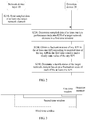
- the second time window is usually greater than or equal to the first time window, for example, a length of the second time window is 24 hours.
- An end time of the second time window may be less than or equal to the end time of the first time window. As shown in FIG. 3 , the end time of the second time window is equal to the end time of the first time window. As shown in FIG. 4 , the end time of the second time window is less than the end time of the first time window.
- the detection device calculates the steady state value of the target KPI based on the sampled data of the target KPI in the second time window after an abnormal point and/or a noise point are/is removed.
- an average value of the sampled data of the target KPI after the abnormal point and/or the noise point are/is removed may be used as the steady state value of the target KPI.
- normal distribution may be used to remove the abnormal point from the sampled data of the target KPI in the second time window.
- a 3 sigma principle may be used to remove the abnormal point from the sampled data of the target KPI in the second time window. As shown in FIG.
- a KPI data point outside [ u - 3 ⁇ , u + 3 ⁇ ] is the abnormal point.
- a principal component analysis method may be used to reduce a dimension of the sampled data of the target KPI in the second time window and to remove the noise point.
- the detection device determines a health status of the target network element based on a fluctuation score of each of the target KPI.
- the health status of the target network element may be a fault state, a sub-healthy state, or a normal state. Further, if the target network element is in the sub-healthy state, an active warning may be prompted; or if the target network element is in the fault state, a fault may be prompted and a fault alarm is given.
- the detection device may determine a reliability score of the target KPI based on the fluctuation score of the target KPI, and determine the health status of the target network element based on a reliability score of each KPI.
- a higher reliability score indicates a better network element health status.
- the fluctuation score of the target KPI may be directly used as the reliability score of the target KPI.
- the reliability score of the target KPI is determined based on at least two scores in the fluctuation score of the target KPI, a trend score of the target KPI, and a score of a distance (referred to as a threshold distance below) between the target KPI and the network element hardware property threshold, where the at least two scores are the fluctuation score of the target KPI and at least one of the trend score of the target KPI, and the score of the distance between the target KPI and the network element hardware property threshold, weighted calculation may be performed on the at least two scores to obtain the reliability score of the target KPI.
- the threshold distance refers to a distance between the sampled data of the target KPI (for example, the pre-correction bit error rate) and the network element hardware property threshold (for example, 10 -6 ) corresponding to the target KPI.
- the threshold distance score is used to represent reliability that is of the target KPI and that can be reflected by the threshold distance.
- a distance between the sampled data of the target KPI and the network element hardware property threshold is smaller, that is, a threshold distance is smaller, and a threshold distance score of the target KPI is lower. This indicates lower reliability of the target network element reflected by the target KPI.
- the network element hardware property threshold generally depends on a hardware property of the network element. For example, a network element hardware property threshold corresponding to the pre-correction bit error rate indicates that a post-correction bit error occurs after the pre-correction bit error rate reaches the network element hardware property threshold.
- a network element hardware property threshold corresponding to a pre-correction bit error rate of a 10G optical module is usually 10 to a power of-6
- a network element hardware property threshold corresponding to a pre-correction bit error rate of a 40G optical module is usually 10 to a power of -5
- a network element hardware property threshold corresponding to a pre-correction bit error rate of a 100G optical module is usually 10 to a power of -5.
- a network element hardware property threshold corresponding to a laser optical power KPI is usually -60 dB.
- One method for determining the threshold distance score by the detection device includes: determining, by the detection device, the threshold distance score based on sampled data of the target KPI in the detection moment (that is, the end time of the first time window) and a preset network element hardware property threshold corresponding to the target KPI.
- a distance between the sampled data in the detection moment and the network element hardware property threshold is smaller, that is, a threshold distance is smaller, and a threshold distance score of the target KPI is lower. This indicates lower reliability of the target network element reflected by the target KPI.
- the threshold distance score of the target KPI is 0, and this indicates that reliability of the target network element reflected by the target KPI is very low.
- Another method for determining the threshold distance score by the detection device includes: determining, by the detection device, the threshold distance score based on sampled data of the target KPI in a fourth time window and a preset network element hardware property threshold corresponding to the target KPI.
- An end time of the fourth time window is the same as the end time of the first time window, and the fourth time window is usually less than the first time window.
- the fourth time window is 1 hour.
- an average value is calculated for the sampled data in the fourth time window, and a difference between the average value and the network element hardware property threshold is used as the threshold distance.
- a trend is one of important indicators for measuring accuracy of the network element health status.
- a trend of the target KPI is used to represent a change trend of the target KPI.
- the trend score of the target KPI is used to represent a change (an increase or a decrease) of the target KPI and a change speed.
- the detection device may specifically calculate the trend score of the target KPI based on sampled data of the target KPI in a third time window.
- An end time of the third time window is less than or equal to the end time of the first time window. As shown in FIG. 3 , the end time of the third time window is equal to the end time of the first time window. As shown in FIG. 4 , the end time of the third time window is less than the end time of the first time window.
- the third time window is usually greater than the first time window, for example, a length of the third time window is three days.
- the detection device may sequentially sort the sampled data based on a collection time of the sampled data of the target KPI in the third time window to obtain sorted data, decompose the sorted data to obtain a trend component in the target KPI, and determine the trend score of the target KPI based on the trend component.
- the detection device uses an exponential smoothing model (Exponential smoothing model, HWSM) to decompose the sorted data into a trend component, a seasonal component, and a random component.
- the trend score is determined based on a slope k of the trend component.
- the detection device may specifically use the following formulas to obtain the reliability score of the target network element through the weighted calculation according to the fluctuation score of the at least one KPI, a trend score of the at least one KPI, and a score of a distance between the at least one KPI and the network element hardware property threshold.
- the detection device may perform weighted calculation on a reliability score of each of the plurality of KPIs to determine the reliability score of the target network element, and then determine the health status of the target network element based on reliability of the target network element.
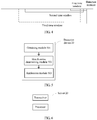
- FIG. 5 is a schematic diagram of another network element health status apparatus according to an embodiment of the present invention, where the network element health status apparatus may be configured to implement the detection method provided in the foregoing method embodiments of the present invention.
- a detection device 20 includes an obtaining module 501, a health status determining module 502, and may further include an application module 503 and a configuration interface.
- the obtaining module 501 is configured to obtain sampled data of at least one KPI of a target network element.
- the health status determining module 502 is configured to: obtain a fluctuation score of any KPI in the at least one KPI (referred to as a target KPI below) according to sampled data of the target KPI in a first time window and a steady state value of the target KPI, and determine a health status of the target network element based on a fluctuation score of each of the at least one KPI.
- the health status determining module 502 may specifically determine a network element health status by using the intelligent reliability evaluation model.
- the sampled data of the at least one key performance indicator KPI of the target network element is input to the intelligent reliability evaluation model, and the intelligent reliability evaluation model outputs the health status of the target network element.
- the application module 503 is configured to obtain a reliability distribution diagram of the target network element according to the health status of the target network element, where the reliability distribution diagram may include a fault area, a sub-healthy area, and a normal area.
- the fault area is used to display information about a network element in a fault state
- the sub-healthy area is used to display information about a network element in a sub-healthy state
- the normal area is used to display information about a network element in a normal state.
- the health status of the target network element is determined, and the health status of the target network element is specifically divided into three states, so that the health status of the target network element can be obtained more visually. For example, if the target network element is in the sub-healthy state, an active warning may be prompted; or if the target network element is in the fault state, a fault may be prompted and a fault alarm is given.
- the application module 503 is an application layer.
- the application module 503 in the detection device 20 provides a network element health status distribution diagram, and a display screen of the computer provides a visual picture. It can be visually observed in the visual picture that at least one target network element is in one of the fault area, the sub-healthy area, and the normal area.
- the configuration interface is configured to configure a parameter based on a service type of the at least one target network element at a network device layer that needs to be analyzed.
- configuration is performed according to the configuration method in S210, and details are not described herein again.
- fluctuation is used to represent a degree of deviation of the target KPI from a steady state represented by the steady state value.
- the health status determining module 502 is configured to: calculate a distance between the sampled data of the target KPI in the first time window and the steady state value of the target KPI, and obtain a fluctuation score according to the distance between the sampled data of the target KPI in the first time window and the steady state value of the target KPI.
- the health status determining module 502 may be specifically configured to calculate the distance between the sampled data of the target KPI in the first time window and the steady state value of the target KPI by using one of a standard deviation method, an average deviation method, and a variation coefficient method.
- the health status determining module 502 is further configured to calculate the steady state value of the target KPI based on sampled data of the target KPI in a second time window, where the second time window is greater than the first time window, and an end time of the second time window is less than or equal to an end time of the first time window. Because the second time window is greater than the first time window, a large amount of data is collected in the second time window, and a steady state of the target KPI is better represented. Therefore, a fluctuation score that is obtained based on the sampled data in the first time window and by considering the steady state value calculated from the sampled data in the second time window is more accurate.
- the health status determining module 502 may be specifically configured to calculate the steady state value of the target KPI based on the sampled data of the target KPI in the second time window after an abnormal point and/or a noise point are/is removed.
- the health status determining module 502 may be specifically configured to: obtain a reliability score of the target KPI through weighted calculation according to the fluctuation score and at least one of a trend score of the target KPI and a score of a distance between the target KPI and a network element hardware property threshold, and determine the health status of the target network element based on a reliability score of each of the at least one KPI. If the health status of the target network element is determined based only on a fluctuation score of each of the at least one KPI, the fluctuation score in the process is equivalent to the reliability score.
- a reliability score of the target network element is obtained through weighted calculation according to the fluctuation score and the score of the distance between the target KPI and the network element hardware property threshold, and the health status of the target network element may be determined based on the reliability score of the target network element.
- the method may accurately determine the health status of the target network element.
- a reliability score of the target network element is obtained through weighted calculation according to the fluctuation score of the target KPI and the trend score of the target KPI, and the health status of the target network element may be determined based on the reliability score of the target network element. In this method, not only the fluctuation score is considered, but also the trend score is considered. Therefore, the method may accurately determine the health status of the target network element.
- the health status determining module 502 is configured to determine sampled data of the target KPI of the target network element in a detection moment, where the detection moment is the end time of the first time window.
- the detection device determines a score of a distance between the target KPI and the network element hardware property threshold based on the sampled data of the target KPI in the detection moment and a preset network element hardware property threshold of the target KPI.
- the health status determining module 502 is configured to obtain the reliability score of the target KPI through weighted calculation according to the fluctuation score of the target KPI, the trend score of the target KPI, and the score of the distance between the target KPI and network element hardware property threshold. Because the fluctuation score of the target KPI, the trend score of the target KPI, and the score of the distance between the target KPI and the network element hardware property threshold are all considered, network element performance is determined by using both single-point performance data of a network element and performance data in a network element time window, a reliability score is obtained according to the network element performance, and the network element health status is determined based on reliability. In the process, health of the network element is identified more accurately.
- the health status determining module 502 is configured to: sequentially sort sampled data based on a collection time of the sampled data of the target KPI in a third time window to obtain sorted data, decompose the sorted data, and determine a trend component; and determine the trend score of the target KPI based on the trend component.
- the third time window is greater than the first time window, and an end time of the third time window is less than or equal to the end time of the first time window.
- the collection time of the sampled data of the target KPI in the third time window is fully used to sequentially sort the sampled data to obtain the sorted data, decompose the sorted data to obtain the trend component of the target KPI, and determine the trend score of the target KPI based on the trend component of the target KPI. Therefore, in the process, a more accurate trend score can be obtained.
- the health status determining module 502 is configured to: perform weighted calculation on a reliability score of each of a plurality of KPIs to determine the reliability score of the target network element; and determine the health status of the target network element based on the reliability score of the target network element.
- the reliability score of the target network element is determined through the weighted calculation. Therefore, accuracy of detecting the health status of the target network element is improved.
- FIG. 6 is a schematic diagram of a network element health status detection device according to an embodiment of the present invention. As shown in FIG. 6 , this embodiment of this application provides the network element health status detection device.
- the device includes a transceiver and a processor.
- the transceiver is configured to receive sampled data of at least one key performance indicator KPI of a target network element.
- the processor is configured to obtain a fluctuation score of any KPI in at least one KPI according to sampled data of the any KPI in a first time window and a steady state value of the any KPI.
- the processor is further configured to determine a health status of the target network element based on a fluctuation score of each of the at least one KPI.
- a network element health status is determined by using single-point performance data of a network element and performance data in a network element time window. A problem of inaccurate judgment by considering only single-point moment performance data of the network element is resolved. Therefore, this solution can be used to identify the network element health status more accurately.
- the foregoing fluctuation is used to represent a degree of deviation of the any KPI from a steady state represented by the steady state value.
- the processor is further configured to: calculate a distance between the sampled data of the any KPI in the first time window and the steady state value of the any KPI; and obtain the fluctuation score according to the distance between the sampled data of the any KPI in the first time window and the steady state value of the any KPI.
- the processor is further configured to calculate the distance between the sampled data of the any KPI in the first time window and the steady state value of the any KPI by using one of a standard deviation method, an average deviation method, and a variation coefficient method.
- the fluctuation score is obtained according to the distance between the sampled data of the any KPI in the first time window and the steady state value of the any KPI, and the health status of the target network element is determined by the fluctuation score. Therefore, the distance between the sampled data of the any KPI in the first time window and the steady state value is calculated by using one of the standard deviation method, the average deviation method, and the variation coefficient method, and then the fluctuation score is determined based on the distance between the sampled data and the steady state value. In this way, it can be ensured that a more accurate fluctuation score of the any KPI is obtained, so that the health status of the target network element is determined more accurately.
- the processor is further configured to determine sampled data of the any KPI in a second time window, where the second time window is greater than the first time window, and an end time of the second time window is less than or equal to an end time of the first time window.
- the processor is further configured to calculate a steady state value of the any KPI based on the sampled data of the any KPI in the second time window. Because the second time window is greater than the first time window, a large amount of data is collected in the second time window, and a state of the any KPI is better represented. Therefore, a fluctuation score that is obtained based on the sampled data in the first time window and by considering the steady state value calculated from the sampled data in the second time window is more accurate.
- the processor is further configured to calculate the steady state value of the any KPI based on the sampled data of the any KPI in the second time window after an abnormal point and/or a noise point are/is removed.
- the sampled data in the second time window is not fully applied to calculate the steady state value of the any KPI. Therefore, in this method, the abnormal point and/or the noise point in the sampled data in the second time window need/needs to be removed, and the steady state value of the any KPI is calculated accurately based on the sampled data of the any KPI after the abnormal point and/or the noise point are/is removed.
- the processor is further configured to: obtain a reliability score of the any KPI through weighted calculation according to the fluctuation score and at least one of a trend score of the any KPI and a score of a distance between the any KPI and a network element hardware property threshold; and determine the health status of the target network element based on a reliability score of each of the at least one KPI. If the health status of the target network element is determined based on a fluctuation score of each of the at least one KPI, the fluctuation score in the process is equivalent to the reliability score.
- a reliability score of the target network element is obtained through weighted calculation according to the fluctuation score and the score of the distance between the any KPI and the network element hardware property threshold, and the health status of the target network element may be determined based on the reliability score of the target network element.
- the health status of the target network element is determined accurately.
- a reliability score of the target network element is obtained through weighted calculation according to the fluctuation score of the any KPI and the trend score of the any KPI, and the health status of the target network element may be determined based on the reliability score of the target network element. In this method, not only the fluctuation score is considered, but also the trend score is considered. Therefore, in this method, the health status of the target network element is determined accurately.
- the processor is further configured to determine sampled data of the any KPI of the target network element in a detection moment, where the detection moment is the end time of the first time window.
- the detection device determines a score of a distance between the any KPI and the network element hardware property threshold based on the sampled data of the any KPI in the detection moment and a preset network element hardware property threshold of the any KPI.
- the processor is further configured to obtain a reliability score of the any KPI through weighted calculation according to the fluctuation score of the any KPI, the trend score of the any KPI, and the score of the distance between the any KPI and the network element hardware property threshold. Because the fluctuation score of the any KPI, the trend score of the any KPI, and the score of the distance between the any KPI and the network element hardware property threshold are all considered, network element performance is determined by using both the single-point performance data of the network element and the performance data in the network element time window, a reliability score is obtained according to the network element performance, and the network element health status is determined based on reliability. In the process, health of the network element is identified more accurately.
- the processor is further configured to determine sampled data of the any KPI of the target network element in a third time window, where the third time window is greater than the first time window, and an end time of the third time window is less than or equal to the end time of the first time window.
- the processor is further configured to: sequentially sort the sampled data based on a collection time of the sampled data of the any KPI in the third time window to obtain sorted data, decompose the sorted data, and determine a trend component of the any KPI; and determine the trend score of the any KPI based on the trend component of the any KPI.
- the collection time of the sampled data of the any KPI in the third time window is fully used to sequentially sort the sampled data to obtain the sorted data, decompose the sorted data to obtain the trend component of the any KPI, and determine the trend score of the any KPI based on the trend component of the any KPI. Therefore, in the process, a more accurate trend score can be obtained.
- the processor is further configured to: perform weighted calculation on a reliability score of each of a plurality of KPIs to determine the reliability score of the target network element; and determine the health status of the target network element based on the reliability score of the target network element.
- the reliability score of the target network element is determined through the weighted calculation. Therefore, accuracy of detecting the health status of the target network element is improved.
- the "health status of the target network element” may include: a fault state, a sub-healthy state, or a normal state. Based on the obtained reliability score, the health status of the target network element is determined, and the health status of the target network element is specifically divided into three states, so that the health status of the target network element can be obtained more visually. For example, if the target network element is in the sub-healthy state, an active warning may be prompted; or if the target network element is in the fault state, a fault may be prompted and a fault alarm is given.
- the "at least one KPI" may include a pre-correction bit error rate and/or a post-correction bit error rate.
- the disclosed system, apparatus, and method may be implemented in other manners.
- the described apparatus embodiment is merely an example.
- the module or unit division is merely logical function division and may be other division in actual implementation.
- a plurality of units or components may be combined or integrated into another system, or some features may be ignored or not performed.
- the displayed or discussed mutual couplings or direct couplings or communication connections may be implemented by using some interfaces.
- the indirect couplings or communication connections between the apparatuses or units may be implemented in electrical, mechanical, or other forms.
- the units described as separate parts may or may not be physically separate, and parts displayed as units may or may not be physical units, may be located in one position, or may be distributed on a plurality of network units. Some or all of the units may be selected according to actual requirements to achieve the objectives of the solutions in the embodiments.
- function units in the embodiments of the present invention may be integrated into one processing unit, or each of the units may exist alone physically, or two or more units are integrated into one unit.
- the integrated unit may be implemented in a form of hardware, or may be implemented in a form of a software function unit.
- the integrated unit When the integrated unit is implemented in the form of a software function unit and sold or used as an independent product, the integrated unit may be stored in a computer-readable storage medium. Based on such an understanding, the technical solutions of the present invention essentially, or the part contributing to the prior art, or all or some of the technical solutions may be implemented in the form of a software product.
- the computer software product is stored in a storage medium and includes several instructions for instructing a computer device (which may be a personal computer, a detection device, or a network device) or a processor (processor) to perform all or some of the steps of the methods described in the embodiments of the present invention.
- the foregoing storage medium includes: any medium that can store program code, such as a USB flash drive, a removable hard disk, a read-only memory (ROM, Read-Only Memory), a random access memory (RAM, Random Access Memory), a magnetic disk, or an optical disc.
- program code such as a USB flash drive, a removable hard disk, a read-only memory (ROM, Read-Only Memory), a random access memory (RAM, Random Access Memory), a magnetic disk, or an optical disc.
Landscapes
- Engineering & Computer Science (AREA)
- Computer Networks & Wireless Communication (AREA)
- Signal Processing (AREA)
- Environmental & Geological Engineering (AREA)
- Data Exchanges In Wide-Area Networks (AREA)
Claims (24)
- Verfahren zur Detektion eines Netzwerkelement-Gesundheitszustands, durchgeführt durch eine Einrichtung zur Detektion eines Netzwerkelement-Gesundheitszustands, Folgendes umfassend:Bestimmen (S220) von abgetasteten Daten von zumindest einer Leistungskennzahl, KPI, eines Zielnetzwerkelements in einem ersten Zeitfenster;dadurch gekennzeichnet, dass das Verfahren ferner Folgendes umfasst:Erhalten (S230) einer Schwankungsbewertung einer beliebigen KPI in der zumindest einen KPI gemäß den abgetasteten Daten der beliebigen KPI im ersten Zeitfenster und einem stabilen Zustandswert der beliebigen KPI, wobei die Schwankungsbewertung einen Grad von Abweichung der beliebigen KPI von einem stabilen Zustand repräsentiert, der durch den stabilen Zustandswert repräsentiert wird; undBestimmen (S240) eines Gesundheitszustands des Zielnetzwerkelements basierend auf der Schwankungsbewertung jeder der zumindest einen KPI.
- Verfahren nach Anspruch 1, wobei das Erhalten der Schwankungsbewertung einer beliebigen KPI in der zumindest einen KPI gemäß abgetasteten Daten der beliebigen KPI im ersten Zeitfenster und einem stabilen Zustandswert der beliebigen KPI Folgendes umfasst:Berechnen eines Abstands zwischen den abgetasteten Daten der beliebigen KPI im ersten Zeitfenster und dem stabilen Zustandswert der beliebigen KPI; undErhalten der Schwankungsbewertung gemäß dem Abstand zwischen den abgetasteten Daten der beliebigen KPI im ersten Zeitfenster und dem stabilen Zustandswert der beliebigen KPI.
- Verfahren nach Anspruch 2, wobei das Berechnen eines Abstands zwischen den abgetasteten Daten der beliebigen KPI im ersten Zeitfenster und dem stabilen Zustandswert der beliebigen KPI Folgendes umfasst:
Berechnen des Abstands zwischen den abgetasteten Daten der beliebigen KPI im ersten Zeitfenster und dem stabilen Zustandswert der beliebigen KPI unter Verwendung eines aus einem Standardabweichungsverfahren, einem Durchschnittsabweichungsverfahren und einem Variationskoeffizientenverfahren. - Verfahren nach einem der Ansprüche 1 bis 3, das ferner Folgendes umfasst:Bestimmen von abgetasteten Daten der beliebigen KPI in einem zweiten Zeitfenster, wobei das zweite Zeitfenster größer als das erste Zeitfenster ist, und wobei eine Endzeit des zweiten Zeitfensters kleiner als oder gleich einer Endzeit des ersten Zeitfensters ist; undBerechnen des stabilen Zustandswerts der beliebigen KPI basierend auf den abgetasteten Daten der beliebigen KPI im zweiten Zeitfenster.
- Verfahren nach Anspruch 4, wobei das Berechnen des stabilen Zustandswerts der beliebigen KPI basierend auf den abgetasteten Daten der beliebigen KPI im zweiten Zeitfenster Folgendes umfasst:
Berechnen des stabilen Zustandswerts der beliebigen KPI basierend auf den abgetasteten Daten der beliebigen KPI im zweiten Zeitfenster, nachdem ein abnormaler Punkt und/oder ein Geräuschpunkt entfernt wurde(n). - Verfahren nach einem der Ansprüche 1 bis 5, wobei das Bestimmen eines Gesundheitszustands des Zielnetzwerkelements basierend auf einer Schwankungsbewertung jeder der zumindest einen KPI Folgendes umfasst:
Erhalten einer Zuverlässigkeitsbewertung der beliebigen KPI durch gewichtete Berechnung entsprechend der Schwankungsbewertung und zumindest einem aus einer Trendbewertung der beliebigen KPI und einer Bewertung eines Abstands zwischen der beliebigen KPI und einer Schwelle einer Netzwerkelement-Hardwareeigenschaft; und Bestimmen des Gesundheitszustands des Zielnetzwerkelements basierend auf einer Zuverlässigkeitsbewertung jeder der zumindest einen KPI. - Verfahren nach Anspruch 6, das ferner Folgendes umfasst:Bestimmen von abgetasteten Daten der beliebigen KPI des Zielnetzwerkelements in einem Detektionsmoment, wobei der Detektionsmoment die Endzeit des ersten Zeitfensters ist, undBestimmen einer Bewertung eines Abstands zwischen der beliebigen KPI und der Schwelle einer Netzwerkelement-Hardwareeigenschaft basierend auf den abgetasteten Daten der beliebigen KPI im Detektionsmoment und einer voreingestellten Schwelle einer Netzwerkelement-Hardwareeigenschaft der beliebigen KPI.
- Verfahren nach Anspruch 7, das ferner Folgendes umfasst:Bestimmen von abgetasteten Daten der beliebigen KPI in einem dritten Zeitfenster, wobei das dritte Zeitfenster größer als das erste Zeitfenster ist, und wobei eine Endzeit des dritten Zeitfensters kleiner als oder gleich der Endzeit des ersten Zeitfensters ist;sequenzielles Sortieren der abgetasteten Daten der beliebigen KPI im dritten Zeitfenster basierend auf einer Sammlungszeit der abgetasteten Daten zum Erhalten von sortierten Daten, Zerlegen der sortierten Daten und Bestimmen einer Trendkomponente der beliebigen KPI; undErhalten der Trendbewertung der beliebigen KPI entsprechend der Trendkomponente der beliebigen KPI.
- Verfahren nach Anspruch 4, wobei die zumindest eine KPI mehrere KPIs umfasst, und wobei das Bestimmen des Gesundheitszustands des Zielnetzwerkelements basierend auf einer Zuverlässigkeitsbewertung jeder der zumindest einen KPI Folgendes umfasst:Durchführen einer gewichteten Berechnung auf einer Zuverlässigkeitsbewertung jeder der mehreren KPIs zum Bestimmen einer Zuverlässigkeitsbewertung des Zielnetzwerkelements; undBestimmen des Gesundheitszustands des Zielnetzwerkelements basierend auf der Zuverlässigkeitsbewertung des Zielnetzwerkelements.
- Verfahren nach Anspruch 1, wobei die zumindest eine KPI mehrere KPIs umfasst, und wobei das Bestimmen eines Gesundheitszustands des Zielnetzwerkelements basierend auf einer Schwankungsbewertung jeder der zumindest einen KPI Folgendes umfasst:Durchführen einer gewichteten Berechnung auf einer Schwankungsbewertung jeder der mehreren KPIs zum Bestimmen einer Zuverlässigkeitsbewertung des Zielnetzwerkelements; undBestimmen des Gesundheitszustands des Zielnetzwerkelements basierend auf der Zuverlässigkeitsbewertung des Zielnetzwerkelements.
- Verfahren nach einem der Ansprüche 1 bis 10, wobei der Gesundheitszustand des Zielnetzwerkelements Folgendes umfasst:
einen Fehlerzustand, einen mangelhaften Gesundheitszustand oder einen Normalzustand. - Verfahren nach einem der Ansprüche 1 bis 11, wobei die zumindest eine KPI Folgendes umfasst:
eine Vor-Korrektur-Bitfehlerrate und/oder eine Nach-Korrektur-Fehlerrate. - Einrichtung zur Detektion eines Netzwerkelement-Gesundheitszustands, die Folgendes umfasst:ein Erhaltemodul (501), ausgelegt zum Erhalten von abgetasteten Daten zumindest einer Leistungskennzahl, KPI, eines Zielnetzwerkelements; unddadurch gekennzeichnet, dass die Einrichtung ferner Folgendes umfasst:ein Gesundheitszustand-Bestimmungsmodul (502), ausgelegt zum: Erhalten einer Schwankungsbewertung einer beliebigen KPI in der zumindest einen KPI gemäß den abgetasteten Daten der beliebigen KPI in einem ersten Zeitfenster und dem stabilen Zustandswert; und Bestimmen eines Gesundheitszustands des Zielnetzwerkelements basierend auf der Schwankungsbewertung jeder der zumindest einen KPI,wobei die Schwankungsbewertung einen Grad von Abweichung der beliebigen KPI von einem durch den stabilen Zustandswert repräsentierten stabilen Zustand repräsentiert.
- Einrichtung nach Anspruch 13, wobei die Detektionseinrichtung ferner Folgendes umfasst:
ein Anwendungsmodul (503), ausgelegt zum Darstellen des Gesundheitszustands des Zielnetzwerkelements. - Einrichtung nach Anspruch 13 oder 14, wobei das Gesundheitszustand-Bestimmungsmodul spezifisch ausgelegt ist zum:
Berechnen eines Abstands zwischen den abgetasteten Daten der beliebigen KPI im ersten Zeitfenster und dem stabilen Zustandswert der beliebigen KPI und Erhalten der Schwankungsbewertung entsprechend dem Abstand zwischen den abgetasteten Daten der beliebigen KPI im ersten Zeitfenster und dem stabilen Zustandswert der beliebigen KPI. - Einrichtung nach Anspruch 15, wobei das Gesundheitszustand-Bestimmungsmodul spezifisch ausgelegt ist zum:
Berechnen des Abstands zwischen den abgetasteten Daten der beliebigen KPI im ersten Zeitfenster und dem stabilen Zustandswert der beliebigen KPI unter Verwendung eines aus einem Standardabweichungsverfahren, einem Durchschnittsabweichungsverfahren und einem Variationskoeffizientenverfahren. - Einrichtung nach einem der Ansprüche 13 bis 16, wobei:
das Gesundheitszustand-Bestimmungsmodul ferner ausgelegt ist zum Berechnen des stabilen Zustandswerts der beliebigen KPI basierend auf abgetasteten Daten der beliebigen KPI in einem zweiten Zeitfenster, wobei das zweite Zeitfenster größer als das erste Zeitfenster ist, und wobei eine Endzeit des zweiten Zeitfensters kleiner als oder gleich einer Endzeit des ersten Zeitfensters ist. - Einrichtung nach Anspruch 17, wobei das Gesundheitszustand-Bestimmungsmodul spezifisch ausgelegt ist zum:
Berechnen des stabilen Zustandswerts der beliebigen KPI basierend auf den abgetasteten Daten der beliebigen KPI im zweiten Zeitfenster, nachdem ein abnormaler Punkt und/oder ein Geräuschpunkt entfernt wurde(n). - Einrichtung nach einem der Ansprüche 13 bis 18, wobei das Gesundheitszustand-Bestimmungsmodul spezifisch ausgelegt ist zum:
Erhalten einer Zuverlässigkeitsbewertung der beliebigen KPI durch gewichtete Berechnung entsprechend der Schwankungsbewertung und zumindest einer Trendbewertung der beliebigen KPI und einer Bewertung eines Abstands zwischen der beliebigen KPI und einer Schwelle einer Netzwerkelement-Hardwareeigenschaft; und Bestimmen des Gesundheitszustands des Zielnetzwerkelements basierend auf einer Zuverlässigkeitsbewertung jeder der zumindest einen KPI. - Einrichtung nach Anspruch 19, wobei:
das Gesundheitszustand-Bestimmungsmodul ferner ausgelegt ist zum Bestimmen einer Bewertung eines Abstands zwischen der beliebigen KPI und der Schwelle einer Netzwerkelement-Hardwareeigenschaft basierend auf den abgetasteten Daten der beliebigen KPI im Detektionsmoment und einer voreingestellten Schwelle einer Netzwerkelement-Hardwareeigenschaft der beliebigen KPI, wobei der Detektionsmoment die Endzeit des ersten Zeitfensters ist. - Einrichtung nach Anspruch 20, wobei:
das Gesundheitszustand-Bestimmungsmodul ferner ausgelegt ist zum: sequenziellen Sortieren der abgetasteten Daten der beliebigen KPI im dritten Zeitfenster basierend auf einer Sammlungszeit der abgetasteten Daten zum Erhalten von sortierten Daten, Zerlegen der sortierten Daten und Bestimmen einer Trendkomponente der beliebigen KPI; und Erhalten der Trendbewertung der beliebigen KPI entsprechend der Trendkomponente der beliebigen KPI, wobei das dritte Zeitfenster größer als das erste Zeitfenster ist, und wobei eine Endzeit des dritten Zeitfensters kleiner als oder gleich der Endzeit des ersten Zeitfensters ist. - Einrichtung nach Anspruch 17, wobei die zumindest eine KPI mehrere KPIs umfasst und wobei das Gesundheitszustand-Bestimmungsmodul spezifisch ausgelegt ist zum:Durchführen einer gewichteten Berechnung auf einer Zuverlässigkeitsbewertung jeder der mehreren KPIs zum Bestimmen einer Zuverlässigkeitsbewertung des Zielnetzwerkelements; undBestimmen des Gesundheitszustands des Zielnetzwerkelements basierend auf der Zuverlässigkeitsbewertung des Zielnetzwerkelements.
- Einrichtung nach Anspruch 13, wobei die zumindest eine KPI mehrere KPIs umfasst und wobei das Gesundheitszustand-Bestimmungsmodul spezifisch ausgelegt ist zum:Durchführen einer gewichteten Berechnung auf einer Schwankungsbewertung jeder der mehreren KPIs zum Bestimmen einer Zuverlässigkeitsbewertung des Zielnetzwerkelements; undBestimmen des Gesundheitszustands des Zielnetzwerkelements basierend auf der Zuverlässigkeitsbewertung des Zielnetzwerkelements.
- Einrichtung nach einem der Ansprüche 13 bis 23, wobei der Gesundheitszustand des Zielnetzwerkelements Folgendes umfasst:
einen Fehlerzustand, einen mangelhaften Gesundheitszustand oder einen Normalzustand.
Priority Applications (1)
| Application Number | Priority Date | Filing Date | Title |
|---|---|---|---|
| EP21171420.9A EP3927000B1 (de) | 2017-04-05 | 2017-06-27 | Verfahren und vorrichtung zur erfassung des gesundheitszustands eines netzelements |
Applications Claiming Priority (2)
| Application Number | Priority Date | Filing Date | Title |
|---|---|---|---|
| CN201710218331.6A CN108696368B (zh) | 2017-04-05 | 2017-04-05 | 一种网元健康状态的检测方法及设备 |
| PCT/CN2017/090290 WO2018184304A1 (zh) | 2017-04-05 | 2017-06-27 | 一种网元健康状态的检测方法及设备 |
Related Child Applications (2)
| Application Number | Title | Priority Date | Filing Date |
|---|---|---|---|
| EP21171420.9A Division EP3927000B1 (de) | 2017-04-05 | 2017-06-27 | Verfahren und vorrichtung zur erfassung des gesundheitszustands eines netzelements |
| EP21171420.9A Division-Into EP3927000B1 (de) | 2017-04-05 | 2017-06-27 | Verfahren und vorrichtung zur erfassung des gesundheitszustands eines netzelements |
Publications (3)
| Publication Number | Publication Date |
|---|---|
| EP3595347A1 EP3595347A1 (de) | 2020-01-15 |
| EP3595347A4 EP3595347A4 (de) | 2020-01-15 |
| EP3595347B1 true EP3595347B1 (de) | 2021-06-16 |
Family
ID=63711995
Family Applications (2)
| Application Number | Title | Priority Date | Filing Date |
|---|---|---|---|
| EP21171420.9A Active EP3927000B1 (de) | 2017-04-05 | 2017-06-27 | Verfahren und vorrichtung zur erfassung des gesundheitszustands eines netzelements |
| EP17904827.7A Active EP3595347B1 (de) | 2017-04-05 | 2017-06-27 | Verfahren und vorrichtung zur erfassung des gesundheitszustandes eines netzwerkelements |
Family Applications Before (1)
| Application Number | Title | Priority Date | Filing Date |
|---|---|---|---|
| EP21171420.9A Active EP3927000B1 (de) | 2017-04-05 | 2017-06-27 | Verfahren und vorrichtung zur erfassung des gesundheitszustands eines netzelements |
Country Status (5)
| Country | Link |
|---|---|
| US (1) | US11128548B2 (de) |
| EP (2) | EP3927000B1 (de) |
| CN (2) | CN108696368B (de) |
| ES (1) | ES2886843T3 (de) |
| WO (1) | WO2018184304A1 (de) |
Families Citing this family (10)
| Publication number | Priority date | Publication date | Assignee | Title |
|---|---|---|---|---|
| CN108696368B (zh) * | 2017-04-05 | 2021-04-20 | 华为技术有限公司 | 一种网元健康状态的检测方法及设备 |
| CN110426634B (zh) * | 2019-09-10 | 2020-08-18 | 大制(苏州)科技有限公司 | 一种用于驱动系统的异常预测的方法及设备 |
| CN110659832A (zh) * | 2019-09-26 | 2020-01-07 | 北京市天元网络技术股份有限公司 | 检测5g网元健康度的方法和设备 |
| US11165648B1 (en) * | 2019-09-26 | 2021-11-02 | Juniper Networks, Inc. | Facilitating network configuration testing |
| US12218803B2 (en) | 2020-02-24 | 2025-02-04 | Telefonaktiebolaget Lm Ericsson (Publ) | Method for cell issue forecasting |
| WO2021171063A1 (en) * | 2020-02-28 | 2021-09-02 | Telefonaktiebolaget Lm Ericsson (Publ) | Adaptive method for measuring service level consistency |
| CN114095965A (zh) * | 2020-08-06 | 2022-02-25 | 中兴通讯股份有限公司 | 指标检测模型获取及故障定位方法、装置、设备及存储介质 |
| US11470490B1 (en) | 2021-05-17 | 2022-10-11 | T-Mobile Usa, Inc. | Determining performance of a wireless telecommunication network |
| CN113254287B (zh) * | 2021-05-31 | 2025-02-28 | 北京明略昭辉科技有限公司 | 健康状态自检方法、装置、设备及计算机可读介质 |
| US20240388945A1 (en) * | 2021-09-17 | 2024-11-21 | Telefonaktiebolaget Lm Ericsson (Publ) | Reliability of reported performance indicators |
Family Cites Families (20)
| Publication number | Priority date | Publication date | Assignee | Title |
|---|---|---|---|---|
| US8001601B2 (en) * | 2006-06-02 | 2011-08-16 | At&T Intellectual Property Ii, L.P. | Method and apparatus for large-scale automated distributed denial of service attack detection |
| CN101770419B (zh) * | 2008-12-31 | 2013-03-20 | 中国银联股份有限公司 | 系统健壮性分析器和分析方法 |
| CN101984702A (zh) * | 2010-11-19 | 2011-03-09 | 中兴通讯股份有限公司 | 移动数据业务质量的监控预警方法及装置 |
| CN102571406B (zh) * | 2010-12-30 | 2015-03-11 | 中国移动通信集团河北有限公司 | 数据业务节点质量分析方法、装置及数据业务短板分析系统 |
| CN103220695B (zh) * | 2012-01-20 | 2017-04-12 | 华为技术有限公司 | 网元状态的处理方法及装置 |
| CN103780415B (zh) * | 2012-10-22 | 2017-10-24 | 华为技术服务有限公司 | 关键性能指标的监控方法和装置 |
| CN103368776A (zh) * | 2013-07-09 | 2013-10-23 | 杭州东方通信软件技术有限公司 | 一种通过标准化体检对设备状态进行评估的方法及系统 |
| US9608875B2 (en) * | 2013-11-15 | 2017-03-28 | At&T Intellectual Property I, L.P. | Individually unique key performance indicator management |
| US10243810B2 (en) * | 2014-02-17 | 2019-03-26 | Telefonaktiebolaget Lm Ericsson (Publ) | Assessing QoE of a service in a communication network |
| US20160104090A1 (en) * | 2014-10-09 | 2016-04-14 | Splunk Inc. | State determination using per-entity thresholds |
| US10181982B2 (en) * | 2015-02-09 | 2019-01-15 | TUPL, Inc. | Distributed multi-data source performance management |
| US10229028B2 (en) * | 2015-03-16 | 2019-03-12 | Ca, Inc. | Application performance monitoring using evolving functions |
| US20170004263A1 (en) * | 2015-07-02 | 2017-01-05 | Think Anew LLC | Method, system and application for monitoring key performance indicators and providing push notifications and survey status alerts |
| US20170012847A1 (en) * | 2015-07-08 | 2017-01-12 | Microsoft Technology Licensing, Llc | Visualizing resource relationships using key peformance indicators |
| CN105554793B (zh) * | 2015-12-11 | 2018-11-09 | 中国联合网络通信集团有限公司 | 评估无线网络运行稳定性的方法及装置 |
| EP3229524B1 (de) * | 2016-04-06 | 2019-07-24 | Deutsche Telekom AG | Verfahren zur steuerung von funkzugangsressourcen in einem kommunikationsnetzwerk |
| CN106203637A (zh) * | 2016-06-27 | 2016-12-07 | 西北工业大学 | 一种基于马氏距离和健康指数的机载系统健康评估方法 |
| CN106209432B (zh) * | 2016-06-30 | 2019-04-19 | 中国人民解放军国防科学技术大学 | 基于动态阈值的网络设备亚健康预警方法及装置 |
| CN106411609A (zh) * | 2016-11-08 | 2017-02-15 | 上海新炬网络信息技术有限公司 | 一种it软硬件运行状态监控系统 |
| CN108696368B (zh) * | 2017-04-05 | 2021-04-20 | 华为技术有限公司 | 一种网元健康状态的检测方法及设备 |
-
2017
- 2017-04-05 CN CN201710218331.6A patent/CN108696368B/zh active Active
- 2017-04-05 CN CN202110358377.4A patent/CN113114530B/zh active Active
- 2017-06-27 EP EP21171420.9A patent/EP3927000B1/de active Active
- 2017-06-27 WO PCT/CN2017/090290 patent/WO2018184304A1/zh not_active Ceased
- 2017-06-27 ES ES17904827T patent/ES2886843T3/es active Active
- 2017-06-27 EP EP17904827.7A patent/EP3595347B1/de active Active
-
2019
- 2019-10-07 US US16/595,066 patent/US11128548B2/en active Active
Non-Patent Citations (1)
| Title |
|---|
| None * |
Also Published As
| Publication number | Publication date |
|---|---|
| CN108696368A (zh) | 2018-10-23 |
| CN113114530A (zh) | 2021-07-13 |
| CN113114530B (zh) | 2022-12-13 |
| US20200036605A1 (en) | 2020-01-30 |
| EP3927000B1 (de) | 2023-10-25 |
| EP3595347A1 (de) | 2020-01-15 |
| CN108696368B (zh) | 2021-04-20 |
| EP3927000A1 (de) | 2021-12-22 |
| US11128548B2 (en) | 2021-09-21 |
| EP3595347A4 (de) | 2020-01-15 |
| ES2886843T3 (es) | 2021-12-21 |
| WO2018184304A1 (zh) | 2018-10-11 |
Similar Documents
| Publication | Publication Date | Title |
|---|---|---|
| EP3927000B1 (de) | Verfahren und vorrichtung zur erfassung des gesundheitszustands eines netzelements | |
| US11405294B2 (en) | Method and apparatus for determining status of network device | |
| CN110880984B (zh) | 基于模型的流量异常监测方法、装置、设备及存储介质 | |
| US6754854B2 (en) | System and method for event monitoring and error detection | |
| US11038587B2 (en) | Method and apparatus for locating fault cause, and storage medium | |
| CN113099476B (zh) | 网络质量检测方法、装置、设备及存储介质 | |
| CN103856344B (zh) | 一种告警事件信息处理方法及装置 | |
| CN105813020A (zh) | 一种自适应环境的rssi校正的无线传感器网络定位算法 | |
| CN102790699A (zh) | 一种网络服务质量的分析方法及装置 | |
| US9235463B2 (en) | Device and method for fault management of smart device | |
| CN118233945A (zh) | 数据智能无线采集系统 | |
| CN117729209A (zh) | 基于云计算的健康管理数据智能管理系统 | |
| CN115001997B (zh) | 基于极值理论的智慧城市网络设备性能异常阈值评估方法 | |
| CN103780415A (zh) | 关键性能指标的监控方法和装置 | |
| CN108076086B (zh) | 一种远程监控方法及设备 | |
| CN119395351A (zh) | 一种输电工程线路通道雷电定位方法、系统、设备和介质 | |
| CN119395792B (zh) | 一种高海拔区域雷暴传播路径智能监控方法和系统 | |
| CN117633678A (zh) | 一种抄表问题及原因分析系统及其分析方法 | |
| CN117347868A (zh) | 电池热失控预警评估方法、系统、电子设备及存储介质 | |
| CN117527611B (zh) | 一种基于高斯分布的故障动态预测方法、系统、电子设备及存储介质 | |
| CN101923605A (zh) | 铁路防灾风预警方法 | |
| CN119598824B (zh) | 元器件的剩余寿命确定方法、装置、设备及存储介质 | |
| CN111967719B (zh) | 一种检测指标的更新方法和装置 | |
| CN119094187B (zh) | 一种用于电力设备协议漏洞特征提取方法 | |
| RU2781813C2 (ru) | Способ и устройство для определения состояния сетевого устройства |
Legal Events
| Date | Code | Title | Description |
|---|---|---|---|
| STAA | Information on the status of an ep patent application or granted ep patent |
Free format text: STATUS: THE INTERNATIONAL PUBLICATION HAS BEEN MADE |
|
| PUAI | Public reference made under article 153(3) epc to a published international application that has entered the european phase |
Free format text: ORIGINAL CODE: 0009012 |
|
| STAA | Information on the status of an ep patent application or granted ep patent |
Free format text: STATUS: REQUEST FOR EXAMINATION WAS MADE |
|
| 17P | Request for examination filed |
Effective date: 20191009 |
|
| A4 | Supplementary search report drawn up and despatched |
Effective date: 20191206 |
|
| AK | Designated contracting states |
Kind code of ref document: A1 Designated state(s): AL AT BE BG CH CY CZ DE DK EE ES FI FR GB GR HR HU IE IS IT LI LT LU LV MC MK MT NL NO PL PT RO RS SE SI SK SM TR |
|
| AX | Request for extension of the european patent |
Extension state: BA ME |
|
| DAV | Request for validation of the european patent (deleted) | ||
| DAX | Request for extension of the european patent (deleted) | ||
| GRAP | Despatch of communication of intention to grant a patent |
Free format text: ORIGINAL CODE: EPIDOSNIGR1 |
|
| STAA | Information on the status of an ep patent application or granted ep patent |
Free format text: STATUS: GRANT OF PATENT IS INTENDED |
|
| INTG | Intention to grant announced |
Effective date: 20210114 |
|
| GRAS | Grant fee paid |
Free format text: ORIGINAL CODE: EPIDOSNIGR3 |
|
| GRAA | (expected) grant |
Free format text: ORIGINAL CODE: 0009210 |
|
| STAA | Information on the status of an ep patent application or granted ep patent |
Free format text: STATUS: THE PATENT HAS BEEN GRANTED |
|
| AK | Designated contracting states |
Kind code of ref document: B1 Designated state(s): AL AT BE BG CH CY CZ DE DK EE ES FI FR GB GR HR HU IE IS IT LI LT LU LV MC MK MT NL NO PL PT RO RS SE SI SK SM TR |
|
| REG | Reference to a national code |
Ref country code: GB Ref legal event code: FG4D |
|
| REG | Reference to a national code |
Ref country code: CH Ref legal event code: EP |
|
| REG | Reference to a national code |
Ref country code: DE Ref legal event code: R096 Ref document number: 602017040607 Country of ref document: DE |
|
| REG | Reference to a national code |
Ref country code: AT Ref legal event code: REF Ref document number: 1403358 Country of ref document: AT Kind code of ref document: T Effective date: 20210715 |
|
| REG | Reference to a national code |
Ref country code: IE Ref legal event code: FG4D |
|
| REG | Reference to a national code |
Ref country code: NL Ref legal event code: FP |
|
| REG | Reference to a national code |
Ref country code: LT Ref legal event code: MG9D |
|
| PG25 | Lapsed in a contracting state [announced via postgrant information from national office to epo] |
Ref country code: HR Free format text: LAPSE BECAUSE OF FAILURE TO SUBMIT A TRANSLATION OF THE DESCRIPTION OR TO PAY THE FEE WITHIN THE PRESCRIBED TIME-LIMIT Effective date: 20210616 Ref country code: BG Free format text: LAPSE BECAUSE OF FAILURE TO SUBMIT A TRANSLATION OF THE DESCRIPTION OR TO PAY THE FEE WITHIN THE PRESCRIBED TIME-LIMIT Effective date: 20210916 Ref country code: FI Free format text: LAPSE BECAUSE OF FAILURE TO SUBMIT A TRANSLATION OF THE DESCRIPTION OR TO PAY THE FEE WITHIN THE PRESCRIBED TIME-LIMIT Effective date: 20210616 Ref country code: LT Free format text: LAPSE BECAUSE OF FAILURE TO SUBMIT A TRANSLATION OF THE DESCRIPTION OR TO PAY THE FEE WITHIN THE PRESCRIBED TIME-LIMIT Effective date: 20210616 |
|
| REG | Reference to a national code |
Ref country code: AT Ref legal event code: MK05 Ref document number: 1403358 Country of ref document: AT Kind code of ref document: T Effective date: 20210616 |
|
| PG25 | Lapsed in a contracting state [announced via postgrant information from national office to epo] |
Ref country code: GR Free format text: LAPSE BECAUSE OF FAILURE TO SUBMIT A TRANSLATION OF THE DESCRIPTION OR TO PAY THE FEE WITHIN THE PRESCRIBED TIME-LIMIT Effective date: 20210917 Ref country code: LV Free format text: LAPSE BECAUSE OF FAILURE TO SUBMIT A TRANSLATION OF THE DESCRIPTION OR TO PAY THE FEE WITHIN THE PRESCRIBED TIME-LIMIT Effective date: 20210616 Ref country code: NO Free format text: LAPSE BECAUSE OF FAILURE TO SUBMIT A TRANSLATION OF THE DESCRIPTION OR TO PAY THE FEE WITHIN THE PRESCRIBED TIME-LIMIT Effective date: 20210916 Ref country code: SE Free format text: LAPSE BECAUSE OF FAILURE TO SUBMIT A TRANSLATION OF THE DESCRIPTION OR TO PAY THE FEE WITHIN THE PRESCRIBED TIME-LIMIT Effective date: 20210616 Ref country code: RS Free format text: LAPSE BECAUSE OF FAILURE TO SUBMIT A TRANSLATION OF THE DESCRIPTION OR TO PAY THE FEE WITHIN THE PRESCRIBED TIME-LIMIT Effective date: 20210616 |
|
| REG | Reference to a national code |
Ref country code: ES Ref legal event code: FG2A Ref document number: 2886843 Country of ref document: ES Kind code of ref document: T3 Effective date: 20211221 |
|
| PG25 | Lapsed in a contracting state [announced via postgrant information from national office to epo] |
Ref country code: PT Free format text: LAPSE BECAUSE OF FAILURE TO SUBMIT A TRANSLATION OF THE DESCRIPTION OR TO PAY THE FEE WITHIN THE PRESCRIBED TIME-LIMIT Effective date: 20211018 Ref country code: RO Free format text: LAPSE BECAUSE OF FAILURE TO SUBMIT A TRANSLATION OF THE DESCRIPTION OR TO PAY THE FEE WITHIN THE PRESCRIBED TIME-LIMIT Effective date: 20210616 Ref country code: AT Free format text: LAPSE BECAUSE OF FAILURE TO SUBMIT A TRANSLATION OF THE DESCRIPTION OR TO PAY THE FEE WITHIN THE PRESCRIBED TIME-LIMIT Effective date: 20210616 Ref country code: CZ Free format text: LAPSE BECAUSE OF FAILURE TO SUBMIT A TRANSLATION OF THE DESCRIPTION OR TO PAY THE FEE WITHIN THE PRESCRIBED TIME-LIMIT Effective date: 20210616 Ref country code: SK Free format text: LAPSE BECAUSE OF FAILURE TO SUBMIT A TRANSLATION OF THE DESCRIPTION OR TO PAY THE FEE WITHIN THE PRESCRIBED TIME-LIMIT Effective date: 20210616 Ref country code: SM Free format text: LAPSE BECAUSE OF FAILURE TO SUBMIT A TRANSLATION OF THE DESCRIPTION OR TO PAY THE FEE WITHIN THE PRESCRIBED TIME-LIMIT Effective date: 20210616 Ref country code: EE Free format text: LAPSE BECAUSE OF FAILURE TO SUBMIT A TRANSLATION OF THE DESCRIPTION OR TO PAY THE FEE WITHIN THE PRESCRIBED TIME-LIMIT Effective date: 20210616 |
|
| REG | Reference to a national code |
Ref country code: CH Ref legal event code: PL |
|
| PG25 | Lapsed in a contracting state [announced via postgrant information from national office to epo] |
Ref country code: PL Free format text: LAPSE BECAUSE OF FAILURE TO SUBMIT A TRANSLATION OF THE DESCRIPTION OR TO PAY THE FEE WITHIN THE PRESCRIBED TIME-LIMIT Effective date: 20210616 |
|
| REG | Reference to a national code |
Ref country code: BE Ref legal event code: MM Effective date: 20210630 |
|
| REG | Reference to a national code |
Ref country code: DE Ref legal event code: R097 Ref document number: 602017040607 Country of ref document: DE |
|
| PG25 | Lapsed in a contracting state [announced via postgrant information from national office to epo] |
Ref country code: MC Free format text: LAPSE BECAUSE OF FAILURE TO SUBMIT A TRANSLATION OF THE DESCRIPTION OR TO PAY THE FEE WITHIN THE PRESCRIBED TIME-LIMIT Effective date: 20210616 Ref country code: LU Free format text: LAPSE BECAUSE OF NON-PAYMENT OF DUE FEES Effective date: 20210627 |
|
| PLBE | No opposition filed within time limit |
Free format text: ORIGINAL CODE: 0009261 |
|
| STAA | Information on the status of an ep patent application or granted ep patent |
Free format text: STATUS: NO OPPOSITION FILED WITHIN TIME LIMIT |
|
| PG25 | Lapsed in a contracting state [announced via postgrant information from national office to epo] |
Ref country code: LI Free format text: LAPSE BECAUSE OF NON-PAYMENT OF DUE FEES Effective date: 20210630 Ref country code: IE Free format text: LAPSE BECAUSE OF NON-PAYMENT OF DUE FEES Effective date: 20210627 Ref country code: DK Free format text: LAPSE BECAUSE OF FAILURE TO SUBMIT A TRANSLATION OF THE DESCRIPTION OR TO PAY THE FEE WITHIN THE PRESCRIBED TIME-LIMIT Effective date: 20210616 Ref country code: CH Free format text: LAPSE BECAUSE OF NON-PAYMENT OF DUE FEES Effective date: 20210630 |
|
| 26N | No opposition filed |
Effective date: 20220317 |
|
| PG25 | Lapsed in a contracting state [announced via postgrant information from national office to epo] |
Ref country code: AL Free format text: LAPSE BECAUSE OF FAILURE TO SUBMIT A TRANSLATION OF THE DESCRIPTION OR TO PAY THE FEE WITHIN THE PRESCRIBED TIME-LIMIT Effective date: 20210616 |
|
| PG25 | Lapsed in a contracting state [announced via postgrant information from national office to epo] |
Ref country code: IT Free format text: LAPSE BECAUSE OF FAILURE TO SUBMIT A TRANSLATION OF THE DESCRIPTION OR TO PAY THE FEE WITHIN THE PRESCRIBED TIME-LIMIT Effective date: 20210616 Ref country code: BE Free format text: LAPSE BECAUSE OF NON-PAYMENT OF DUE FEES Effective date: 20210630 |
|
| PG25 | Lapsed in a contracting state [announced via postgrant information from national office to epo] |
Ref country code: CY Free format text: LAPSE BECAUSE OF FAILURE TO SUBMIT A TRANSLATION OF THE DESCRIPTION OR TO PAY THE FEE WITHIN THE PRESCRIBED TIME-LIMIT Effective date: 20210616 |
|
| PG25 | Lapsed in a contracting state [announced via postgrant information from national office to epo] |
Ref country code: HU Free format text: LAPSE BECAUSE OF FAILURE TO SUBMIT A TRANSLATION OF THE DESCRIPTION OR TO PAY THE FEE WITHIN THE PRESCRIBED TIME-LIMIT; INVALID AB INITIO Effective date: 20170627 |
|
| PG25 | Lapsed in a contracting state [announced via postgrant information from national office to epo] |
Ref country code: MK Free format text: LAPSE BECAUSE OF FAILURE TO SUBMIT A TRANSLATION OF THE DESCRIPTION OR TO PAY THE FEE WITHIN THE PRESCRIBED TIME-LIMIT Effective date: 20210616 |
|
| PG25 | Lapsed in a contracting state [announced via postgrant information from national office to epo] |
Ref country code: TR Free format text: LAPSE BECAUSE OF FAILURE TO SUBMIT A TRANSLATION OF THE DESCRIPTION OR TO PAY THE FEE WITHIN THE PRESCRIBED TIME-LIMIT Effective date: 20210616 |
|
| PG25 | Lapsed in a contracting state [announced via postgrant information from national office to epo] |
Ref country code: MT Free format text: LAPSE BECAUSE OF FAILURE TO SUBMIT A TRANSLATION OF THE DESCRIPTION OR TO PAY THE FEE WITHIN THE PRESCRIBED TIME-LIMIT Effective date: 20210616 |
|
| PGFP | Annual fee paid to national office [announced via postgrant information from national office to epo] |
Ref country code: NL Payment date: 20250516 Year of fee payment: 9 |
|
| PGFP | Annual fee paid to national office [announced via postgrant information from national office to epo] |
Ref country code: DE Payment date: 20250429 Year of fee payment: 9 |
|
| PGFP | Annual fee paid to national office [announced via postgrant information from national office to epo] |
Ref country code: GB Payment date: 20250508 Year of fee payment: 9 |
|
| PGFP | Annual fee paid to national office [announced via postgrant information from national office to epo] |
Ref country code: FR Payment date: 20250508 Year of fee payment: 9 |
|
| PGFP | Annual fee paid to national office [announced via postgrant information from national office to epo] |
Ref country code: ES Payment date: 20250704 Year of fee payment: 9 |