EP3592390B1 - Mittel zur anwendung bei der behandlung von dyslipidämie - Google Patents
Mittel zur anwendung bei der behandlung von dyslipidämie Download PDFInfo
- Publication number
- EP3592390B1 EP3592390B1 EP18714714.5A EP18714714A EP3592390B1 EP 3592390 B1 EP3592390 B1 EP 3592390B1 EP 18714714 A EP18714714 A EP 18714714A EP 3592390 B1 EP3592390 B1 EP 3592390B1
- Authority
- EP
- European Patent Office
- Prior art keywords
- agent
- treatment
- propionic acid
- cholesterol
- ldl
- Prior art date
- Legal status (The legal status is an assumption and is not a legal conclusion. Google has not performed a legal analysis and makes no representation as to the accuracy of the status listed.)
- Active
Links
Images



Classifications
-
- A—HUMAN NECESSITIES
- A61—MEDICAL OR VETERINARY SCIENCE; HYGIENE
- A61K—PREPARATIONS FOR MEDICAL, DENTAL OR TOILETRY PURPOSES
- A61K31/00—Medicinal preparations containing organic active ingredients
- A61K31/185—Acids; Anhydrides, halides or salts thereof, e.g. sulfur acids, imidic, hydrazonic or hydroximic acids
- A61K31/19—Carboxylic acids, e.g. valproic acid
-
- A—HUMAN NECESSITIES
- A61—MEDICAL OR VETERINARY SCIENCE; HYGIENE
- A61K—PREPARATIONS FOR MEDICAL, DENTAL OR TOILETRY PURPOSES
- A61K31/00—Medicinal preparations containing organic active ingredients
- A61K31/33—Heterocyclic compounds
- A61K31/395—Heterocyclic compounds having nitrogen as a ring hetero atom, e.g. guanethidine or rifamycins
- A61K31/40—Heterocyclic compounds having nitrogen as a ring hetero atom, e.g. guanethidine or rifamycins having five-membered rings with one nitrogen as the only ring hetero atom, e.g. sulpiride, succinimide, tolmetin, buflomedil
-
- A—HUMAN NECESSITIES
- A61—MEDICAL OR VETERINARY SCIENCE; HYGIENE
- A61K—PREPARATIONS FOR MEDICAL, DENTAL OR TOILETRY PURPOSES
- A61K45/00—Medicinal preparations containing active ingredients not provided for in groups A61K31/00 - A61K41/00
- A61K45/06—Mixtures of active ingredients without chemical characterisation, e.g. antiphlogistics and cardiaca
-
- A—HUMAN NECESSITIES
- A61—MEDICAL OR VETERINARY SCIENCE; HYGIENE
- A61P—SPECIFIC THERAPEUTIC ACTIVITY OF CHEMICAL COMPOUNDS OR MEDICINAL PREPARATIONS
- A61P3/00—Drugs for disorders of the metabolism
- A61P3/06—Antihyperlipidemics
Definitions
- the invention relates to an agent for use in the treatment of elevated LDL levels.
- Cholesterol is a vital sterol synthesized in the human body in amounts of up to 2 g per day. Cholesterol ingested with food is also present. The body's own cholesterol synthesis has been largely deciphered.
- cholesterol is an important component of the plasma membrane. It increases membrane stability and, together with proteins, contributes to the transport of signaling molecules into and out of the cell membrane.
- the human body contains approximately 140 g of cholesterol, over 95% of which is found within cells and cell membranes.
- Cholesterol itself is fat-soluble and water-insoluble. To ensure it can be supplied to cells via the blood, it is bound to lipoproteins for transport. These can have different densities and are classified according to their behavior during centrifugation: chylomicrons, VLDL, IDL, LDL, HDL, and lipoprotein a.
- Cholesterol is a precursor to steroid hormones and bile acids in the body. Recent research also shows that the body uses cholesterol for the biosynthesis of cardiac glycosides.
- the body maintains the balance between cholesterol required and available through a number of mechanisms. These include, on the one hand, the inhibition of HMG-CoA synthetase and reductase, enzymes involved in cholesterol biosynthesis. On the other hand, this involves metabolism in the plasma, conversion to bile acid, partial excretion with the bile acid, and degradation in the plasma. A disruption of this balance can lead to elevated cholesterol levels, which can be determined by measuring the cholesterol level in the blood. A total cholesterol level in the range of 190 to 280 mg/dl is considered normal.
- a person's cholesterol status is determined based on the measured cholesterol level in their blood. According to the new guidelines for the prevention of cardiovascular disease, total cholesterol should be below 190 mg/dl for healthy people at risk.
- the recommended maximum LDL levels depend on the respective cardiovascular risk. In patients with low to moderate cardiovascular risk, LDL levels should not exceed 115 mg/dl; in patients with moderate to high risk, LDL levels should not exceed 100 mg/dl; and in patients with high cardiovascular risk (e.g., known coronary heart disease or diabetes mellitus), the levels should not exceed 70 mg/dl, with HDL levels being at least 40 mg/dl. High LDL levels are considered a risk factor for cardiovascular disease, while high HDL levels are considered an indication of low risk.
- the total cholesterol level usually determines the total level of all cholesterol variants.
- the HDL level is usually determined, and the LDL level is estimated based on the total cholesterol level minus the HDL cholesterol level and 20% of the triglyceride level.
- statins which are suitable for intervening in the regulatory cycle, are the most popular.
- atorvastatin has recently become widely accepted. It is administered in a standard dosage of 10 to 20 mg per day, and in cases of severe hypercholesterolemia, a dose of up to 80 mg/day.
- atorvastatin has a number of side effects, including gastrointestinal disturbances, fatigue, muscle pain [statin-associated muscle symptoms (SAMS)], elevated liver enzymes, and headaches and joint pain.
- SAMS statin-associated muscle symptoms
- toxic myopathy and an increased risk of diabetes are rare, although these risks are classified as serious by the FDA.
- One problem is that the risks are associated with the dosage and are already considered significant at the normal dose.
- a person's cholesterol levels can also be influenced by diet, especially through fiber-rich foods and yeast products. However, this intrinsically effective influence is usually insufficient for severely elevated cholesterol levels.
- statins In principle, it would be desirable to have an alternative means of achieving the cholesterol-lowering effect of statins or, in conjunction with statins, to significantly reduce the statin dose.
- Propionic acid or its physiologically acceptable salts have been found to have a prophylactic or therapeutic effect on high cholesterol levels. In particular, they are effective in reducing serum LDL levels to healthy levels.
- the invention relates to an agent for use in the treatment of elevated LDL levels in humans, containing propionic acid or a physiologically acceptable propionic acid salt in a daily dose of 0.5 to 1.5 g.
- Propionic acid is a short-chain fatty acid produced in small amounts by the intestinal flora and generated during the digestion of fiber-rich raw foods. It serves as a preservative in the food industry, especially for pasta, and was previously used extensively to preserve bread. Modern manufacturing and packaging methods have largely eliminated the need for preservatives in bread.
- Propionic acid salts include physiologically acceptable salts, such as alkali and alkaline earth metal salts, and especially sodium, potassium, calcium, and magnesium salts. Furthermore, salts of other essential metals can be used, such as iron or zinc, as well as ammonium salts and salts of organic amines. Finally, any mixtures of these salts are also possible.
- Propionic acid or its salt is administered in a daily dose of 0.5 g to 1.5 g, for example, in two doses of 0.5 g in the morning and evening.
- a single dose contains 200 to 1,500 mg of active ingredient, particularly 250 to 1,000 mg.
- Capsules or tablets are usually used as the dosage form. Administration in powder form, for example, in sachets, is also possible.
- One capsule, tablet, or sachet can contain 0.2 to 1.0 g of active ingredient, for example, 0.5 g of propionic acid salt.
- the propionic acid derivatives are predominantly converted into free propionic acid in the body, which exerts its effect in the intestine.
- Capsules, tablets and sachets may contain the active ingredient together with usual carriers and excipients.
- statin The combination of propionic acid or its salt with a statin is particularly preferred. This combination allows the statin dose to be reduced to half the usual daily dose or less. All statins are suitable for this combination, but atorvastatin in particular.
- the dosage is, for example, 2 x 0.5 g of propionic acid salt and 5 to 50 mg, preferably 5 to 20 mg, and especially 5 to 10 mg of atorvastatin.
- Atorvastatin is usually administered in doses of 10 to 20 mg or more, depending on the severity of hypercholesterolemia, up to 80 mg daily.
- the propionic acid derivative is preferably administered in the morning and evening, and the atorvastatin in the evening, also as usual.
- PCSK9 The proprotein convertase PCSK9 is not affected by propionates.
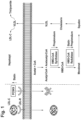
- PCSK9 is clinically important because it reduces the number of LDL receptors on the cell membrane of liver cells. LDL cholesterol is absorbed into the liver and broken down via LDL receptors. ( Fig. 1 Increased PCSK9 expression consequently leads to increased LDL cholesterol concentrations in the blood.
- atorvastatin One of the key disadvantages of atorvastatin is the increase in PCSK9 expression, which limits its cholesterol-lowering effect. This negative effect is not evident with propionates.
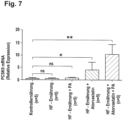
- Fig. 7 shows that the combination of propionate with atorvastatin leads to an even further increase in PCSK9 expression compared to atorvastatin alone. However, this does not lead to an increase in LDL cholesterol concentration in the blood, as would be expected, but rather to a reduction, see Fig. 2 .
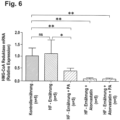
- Fig. 5 and 6 show a massive influence of propionates on the expression of HMG-Co-A synthase mRNA and reductase mRNA. Both enzymes are significantly downregulated by propionate, which has a dampening effect on cholesterol synthesis. The effect of propionate is significantly more pronounced on synthase than on atorvastatin, while atorvastatin has a greater influence on reductase.
- LDL cholesterol levels can be significantly reduced beyond the stable level achieved with regular administration of atorvastatin, with the reduction appearing to be greatest at high LDL levels.
Landscapes
- Health & Medical Sciences (AREA)
- Pharmacology & Pharmacy (AREA)
- Veterinary Medicine (AREA)
- Public Health (AREA)
- General Health & Medical Sciences (AREA)
- Chemical & Material Sciences (AREA)
- Animal Behavior & Ethology (AREA)
- Life Sciences & Earth Sciences (AREA)
- Medicinal Chemistry (AREA)
- Epidemiology (AREA)
- Obesity (AREA)
- Organic Chemistry (AREA)
- Nuclear Medicine, Radiotherapy & Molecular Imaging (AREA)
- General Chemical & Material Sciences (AREA)
- Chemical Kinetics & Catalysis (AREA)
- Hematology (AREA)
- Diabetes (AREA)
- Bioinformatics & Cheminformatics (AREA)
- Engineering & Computer Science (AREA)
- Pharmaceuticals Containing Other Organic And Inorganic Compounds (AREA)
- Acyclic And Carbocyclic Compounds In Medicinal Compositions (AREA)
Description
- Die Erfindung betrifft ein Mittel zur Verwendung bei der Behandlung überhöhter LDL-Werte.
- Cholesterin ist ein lebenswichtiges Sterol, das im menschlichen Körper in einer Menge von bis zu 2 g pro Tag synthetisiert wird. Hinzu kommt mit der Nahrung aufgenommenes Cholesterin. Die körpereigene Cholesterinsynthese ist weitgehend entschlüsselt.
- Physiologisch gesehen ist Cholesterin ein wichtiger Bestandteil der Plasmamembran. Es erhöht die Stabilität der Membran und trägt gemeinsam mit Proteinen dazu bei, Signalstoffe in die Zellmembran einzuschleusen und wieder hinaus zu befördern. Der menschliche Körper enthält etwa 140 g Cholesterin, wovon sich über 95 % innerhalb der Zellen und Zellmembranen befinden.
- Cholesterin selbst ist fettlöslich und im Wasser unlöslich. Um die Zellen über das Blut versorgen zu können, wird es für den Transport an Lipoproteine gebunden. Diese können von unterschiedlicher Dichte sein und werden nach ihrem Verhalten beim Zentrifugieren unterteilt in Chylomikronen, VLDL, IDL, LDL, HDL und Lipoprotein a.
- Cholesterin ist im Körper eine Vorstufe für Steroidhormone und Gallensäure. Neuere Forschungen zeigen zudem, dass der Körper Cholesterin zur Biosynthese herzwirksamer Glykoside nutzt.
- Der Körper hält das Gleichgewicht zwischen benötigtem und vorhandenem Cholesterin über eine Reihe von Mechanismen aufrecht. Dies ist auf der einen Seite die Hemmung der HMG-CoA-Synthetase und -Reduktase, Enzymen der Cholesterin-Biosynthese, und auf der anderen Seite die Verstoffwechselung im Plasma, die Umwandlung in Gallensäure und teilweise Ausscheidung mit der Gallensäure und der Abbau im Plasma. Eine Störung dieses Gleichgewichts kann zu überhöhten Cholesterinwerten führen, die sich anhand des Cholesterinspiegels im Blut ermitteln lassen. Ein Gesamtcholesterinwert im Bereich von 190 bis 280 mg/dl gilt als normal.
- Der Cholesterinstatus eines Menschen wird anhand des gemessenen Cholesterinwerts im Blut bestimmt. Nach den neuen Leitlinien zur Prävention für Herz-Kreislauf-Erkrankungen gilt, dass für gesunde Menschen mit einem Risiko das Gesamtcholesterin unter 190 mg/dl liegen sollte. Die empfohlenen LDL-Höchstwerte richten sich nach dem jeweiligen kardiovaskulären Risiko. Bei Patienten mit niedrigem bis mittlerem kardiovaskulären Risiko sollten die LDL-Werte 115 mg/dl nicht überschreiten, bei Patienten mit mittlerem bis hohem Risiko sollten die LDL-Werte 100 mg/dl nicht überschreiten und bei Patienten mit hohem kardiovaskulärem Risiko (z.B. bekannte koronare Herzerkrankung oder Diabetes mellitus) sollten die Werte 70 mg/dl nicht überschreiten, wobei der HDL-Wert mindestens 40 mg/dl betragen sollte. Hohe LDL-Werte gelten als Risikofaktor für Herzkreislauferkrankungen, hohe HDL-Werte gelten als Hinweis auf ein niedriges Risiko.
- Der Gesamtcholesterinwert ermittelt in der Regel den Gesamtwert aller Cholesterinvarianten. Daneben wird in der Regel der HDL-Wert ermittelt und der LDL-Wert abgeschätzt anhand des Gesamtcholesterinwerts, vermindert um den Wert des HDL-Cholesterins und 20 % des Triglyceridwerts.
- Zur Behandlung überhöhter Cholesterinwerte, insbesondere hoher Werte an LDL-Cholesterin wird auf einer Reihe von Mitteln zurückgegriffen. An erster Stelle zu nennen sind die Statine, die geeignet sind, in den Regulierungszyklus einzugreifen. Unter den Statinen hat sich in letzter Zeit das Atorvastatin weitgehend durchgesetzt, das in einer Standarddosierung in einer Menge von 10 bis 20 mg pro Tag verabreicht wird, in Fällen schwerer Hypercholesterinämie in einer Menge von bis zu 80 mg/Tag. Atorvastatin hat allerdings, wie andere Statine auch, eine Reihe von Nebenwirkungen, beispielsweise Störungen des Magen-Darmtrakts, Müdigkeit, Muskelschmerzen [Statin-assoziierte Muskelsymptome (SAMS)], Anstieg der Leberenzyme sowie Kopf- und Gelenkschmerzen. Hinzu kommen selten toxische Myopathien und ein erhöhtes Diabetesrisiko, wobei die Risiken von der FDA als schwerwiegend eingestuft werden. Ein Problem ist dabei, dass die Risiken mit der Dosierung einhergehen und bei der Normaldosis bereits als erheblich eingestuft werden.
- Die Cholesterinwerte eines Menschen lassen sich zudem durch die Ernährung beeinflussen, insbesondere durch faserreiche Kost und Hefeprodukte. Diese an und für sich wirksame Beeinflussung reicht aber bei stark erhöhten Cholesterinwerten zumeist nicht aus.
- Bei der Verstoffwechselung von Pflanzenfasern entsteht in geringen Mengen Propionsäure. Dies hat dazu geführt, Propionsäure und ihre Derivate auf eine Wirksamkeit bei Hypercholesterinämie hin zu untersuchen. In einer Reihe von Studien wurden widersprüchliche Ergebnisse erzielt.
- Von Chen et al, Proceedings of the Society for Experimental Biology and Medicine, 175, 215 - 218 (1984) wurde der Effekt der Verabreichung von Natriumpropionat auf den Cholesterinwert von Ratten bei Normalkost und cholesterinreicher Kost untersucht. Wurde das Propionat bei cholesterinreicher Kost verabreicht, ergab sich eine signifikante Senkung des Gesamtcholesterins, während bei normal ernährten Ratten die Zugabe von Propionat praktisch keinen Effekt zeigte. In der Studie wurde der LDL-Wert nicht bestimmt. Die verabreichte Dosis an Natriumpropionat betrug etwa 100 mg pro Tag, was, bezogen auf den Menschen, einer Tagesdosis von etwa 30 g entspricht.
- Den Autoren ist die Ambivalenz ihrer Ergebnisse bewusst; sie verweisen auf eine Studie, in der Schweine mit vergleichsweise höheren Dosen an Propionat gefüttert wurden und, bei vermindertem Gesamtcholesterin, eine leichte Erhöhung des Cholesterinanteils in der Leber und eine signifikant höhere Cholesterinkonzentration im Rückenfett nachwiesen.
- Berggren et al, British Journal of Nutrition (1996), 76, 287 - 294, zeigten, dass die orale und rektale Verabreichung von hohen Mengen Natriumpropionat an Ratten den Cholesteringehalt der Leber nur unwesentlich beeinflussen. In der Studie wird auf humane Studien verwiesen, wonach in einem Fall die Verabreichung von Propionat an Patienten in hohen Dosen eine geringfügige Verringerung des Serum-Cholesterinwerts bewirkte, in einem zweiten Fall die HDL-Serum-Cholesterinkonzentration erhöhte.
- Lin et al, British Journal of Nutrition (1995), 74, 197 - 207, verweisen auf große Unterschiede bei der Inhibierung der Cholesterin- und Triacylglycerinsynthese in Hepatozyten bei Mensch und Ratte.
- Aus der
JP 2012 201599 A - T.Todesco et al, Propionate lowers blood glucose and alters lipid metaboslism in healthy subjects, Am. J. of Clin. Nutr., Bd 54, 860-865, befasst sich mit der physiologischen Wirkung von mit Propionat konserviertem Brot.
- Insgesamt ergibt sich, dass die Verabreichung von Propionat einen Effekt auf den Cholesterinstoffwechsel eines Lebewesens ausübt, dieser Effekt bislang aber nur bedingt quantifiziert wurde.
- Es wurde jetzt gefunden, dass eine kontrollierte Verabreichung von Propionat durchaus geeignet ist, in die Cholesterinsynthese und den Abbau von Cholesterin in einem Körper steuernd einzugreifen. Dabei ergaben sich positive Effekte vor allem in der Kombination mit Statinen.
- Grundsätzlich wäre es wünschenswert, über ein alternatives Mittel zu verfügen, mit dem die cholesterinsenkende Wirkung von Statinen erreicht werden kann oder das zusammen mit Statinen dazu führt, dass die Statindosis nennenswert gesenkt werden kann.
- Es wurde gefunden, dass Propionsäure oder deren physiologisch vertretbare Salze eine prophylaktische oder therapeutische Wirkung auf hohe Cholesterinwerte ausüben. Insbesondere sind sie geeignet, den LDL-Serumspiegel auf gesundheitlich vertretbare Größen zu senken.
- Entsprechend betrifft die Erfindung ein Mittel zur Verwendung bei der Behandlung überhöhter LDL-Werte im Menschen, enthaltend Propionsäure oder ein physiologisch vertretbares Propionsäuresalz in einer Tagesdosis von 0,5 bis 1,5g.
- Propionsäure, CH3-CH2-COOH, ist eine kurzkettige Fettsäure, die in geringen Mengen von der Darmflora gebildet wird und bei der Verdauung von faserreicher Rohkost generiert wird. Sie dient in der Nahrungsmittelindustrie als Konservierungsmittel, vor allem für Teigwaren, und wurde früher zu Konservierung von Brot in großem Umfang eingesetzt. Inzwischen ist durch moderne Fertigungs- und Verpackungsmethoden die Zugabe von Konservierungsmitteln zu Brot weitgehend entfallen.
- Unter Propionsäuresalzen werden deren physiologisch vertretbare Salze vertreten, beispielsweise die Alkali- und Erdalkalisalze und insbesondere das Natrium-, Kalium-, Calcium- und Magnesiumsalz. Weiterhin können Salze anderer essentieller Metalle verwandt werden, beispielsweise von Eisen oder Zink, wie auch das Ammoniumsalz und Salze von organischen Aminen. Schließlich kommen auch beliebige Mischungen dieser Salze in Frage.
- Die Propionsäure oder ihr Salz wird in einer Tagesdosis von 0,5 g bis 1,5 gverabreicht, beispielsweise in Form von zwei Verabreichungen von 0,5 g morgens und abends. Eine Einheitsdosis enthält 200 bis 1.500 mg Wirkstoff, insbesondere 250 bis 1.000 mg.
- Als Verabreichungsform kommen in der Regel Kapseln oder Tabletten in Frage. Eine Verabreichung in Pulverform, enthalten beispielsweise in Sachets, ist ebenfalls möglich. Eine Kapsel, Tablette oder ein Sachet kann 0,2 bis 1,0 g Wirkstoff, beispielsweise 0,5 g Propionsäuresalz enthalten.
- Es ist festzuhalten, dass die Propionsäurederivate nach der Verabreichung im Körper überwiegend in die freie Propionsäure überführt werden, die im Darm ihre Wirkung entfaltet.
- Kapseln, Tabletten und Sachets können den Wirkstoff zusammen mit üblichen Träger- und Hilfsstoffen enthalten.
- Besonders bevorzugt ist die Kombination der Propionsäure oder ihres Salzes mit einem Statin. Diese Kombination erlaubt es, die Statindosis auf die Hälfte der üblichen Tagesdosis oder weniger zu senken. Für die Kombination kommen alle Statine in Frage, insbesondere aber Atorvastatin.
- Für die Dosierung in Kombination mit Atorvastatin liegt die Dosierung beispielsweise bei 2 x 0,5 g Propionsäuresalz und 5 bis 50 mg, vorzugsweise 5 bis 20 mg und insbesondere 5 bis 10 mg Atorvastatin. Üblicherweise wird Atorvastatin in Dosen von 10 bis 20 mg oder mehr verabreicht, je nach Schwere der Hypercholesterinämie, bis zu 80 mg täglich. Vorzugsweise wird dabei das Propionsäurederivat morgens und abends verabreicht, das Atorvastatin abends, ebenfalls wie üblich.
- Für die Verabreichung der Kombination ist es sinnvoll, die Wirkstoffe separat in Blisterpackungen anzubieten, wobei eine Tagesdosis aus zwei Kapseln oder Tabletten Propionsäuresalz und einer Tablette Atorvastatin besteht.
- Die Erfindung wird durch die angehängten Darstellungen näher erläutert. Es zeigen:
- Fig. 1
- zeigt ein Diagramm zur Cholesterinsynthese/-abbau in Hepatozyten. Die Aufnahme des LDL-Cholesterins (LDL-C) in die Hepatozyten mit konsekutivem Abbau erfolgt über LDL-Rezeptoren (LDL-R) an der Zelloberfläche. Die Degradation der LDL-Rezeptoren wiederum wird u.a. durch die Protease Proproteinkonvertase Subtilisin/Kexin Typ 9 (PCSK9) gefördert. Während die Expression des PCSK9 bekannterweise durch Statine erhöht wird, hat die Propionsäure in unseren Experimenten keinen Einfluss auf die PCSK9 Expression (s.
Fig. 7 ). Wir zeigen, dass die Expression von zwei Schlüsselenzymen der Cholesterinsynthese durch die Propionsäure negativ reguliert werden: a) 3-Hydroxy-3-Methylglutaryl-Coenzym-A-Synthase (HMG-CoA-Synthase) und b) HMG-CoA-Reduktase. - Fig. 2
- zeigt die Reduktion des LDL-Cholesterins durch Propionat im hypercholesterinämischem Mausmodell. HF: High Fat (60 KJ% Fettanteil); PA: Propionic acid.
- Fig. 3
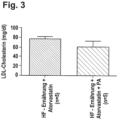
- zeigt einen Trend zur weiteren Reduktion des LDL-Cholesterins durch Propionsäure bei zusätzlicher Gabe zum Atorvastatin; HFD: High Fat Diet; PA: Propionic acid.
- Fig. 4.
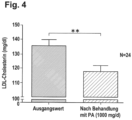
- zeigt die Cholesterin-senkende Wirkung der Propionsäure bei dyslipidämischen Patienten (n=24, davon 11 männlich u. 13 weiblich; Alter 21-70 J) mit einem initialen LDL-Cholesterinwert von > 110mg/dl nach 2-6 Monaten Behandlung (n=24).
- Fig. 5
- zeigt eine reduzierte Expression mittels Reverse Transkriptase-Polymerase-Kettenreaktion der HMG-CoA-Synthase auf mRNA Ebense durch die Propionsäure aber nicht durch das Atorvastatin.
- Fig. 6
- zeigt eine reduzierte Expression der HMG-CoA-Reduktase durch die Propionsäure mittels Reverse Transkriptase-Polymerase-Kettenreaktion. Dieser Effekt wird ebenfalls durch das Atorvastatin beobachtet.
- Fig. 7
- zeigt eine erhöhte Expression des PCSK9 mittels Reverse Transkriptase-Polymerase-Kettenreaktion durch das Atorvastatin. Die Propionsäure hat jedoch keinen Einfluss auf die PCSK9 Expression.
- Fig. 8
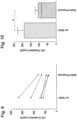
- zeigt die Expression des LDL-Rezeptors mittels Reverse Transkriptase-Polymerase-Kettenreaktion in der Leber nach Behandlung mit Propionsäure oder Atorvastatin. Weder die Propionsäure noch das Atorvastatin beeinflussen die Expression des LDL-Rezeptors.
- Fig. 9
- zeigt die Auswertung einer Studie an fünf Patienten, deren LDL-Cholesterinwert mit Atorvastatin auf ein stabiles Niveau eingestellt worden war. Nach mehr als achtwöchiger Einnahme von 2 x 500 mg Propionat ergab sich die im Diagramm angezeigte Reduktion des LDL-Wertes. Die Abnahme scheint bei Patienten mit dem höchsten LDL-Ausgangswert am größten zu sein.
- Fig. 10
- zeigt das Ergebnis einer Patientenstudie als Blockdiagramm. Links ist der gemittelte Ausgangswert der mit Atorvastatin stabil eingestellten Patienten dargestellt, rechts der gemittelte LDL-Wert der Patienten nach mindestens achtwöchiger Einnahme von 2 x 500 mg Propionat täglich. Es ergibt sich im Mittel eine Reduktion des LDL-Wertes um nahezu 40 %.
- Die Proproteinkonvertase PCSK9 wird von Propionaten nicht beeinflusst. PCSK9 besitzt klinische Bedeutung, da es die Anzahl von LDL-Rezeptoren an der Zellmembran der Leberzellen mindert. Über LDL-Rezeptoren wird das LDL-Cholesterin in die Leber aufgenommen und abgebaut. (
Fig. 1 ) Eine erhöhte Expression des PCSK9 führt folglich zur erhöhten Konzentrationen von LDL-Cholesterin im Blut. Einer der entscheidenden Nachteile von Atorvastatin ist die Steigerung der PCSK9-Expression, was die Cholesterin-senkende Wirkung begrenzt. Dieser negative Effekt ist bei Propionaten nicht nachzuweisen. -
Fig. 7 zeigt, dass die Kombination von Propionat mit Atorvastatin zu einer noch weiteren Steigerung der PCSK9-Expression führt, verglichen mit Atorvastatin alleine. Allerdings führt dies nicht zu einer Steigerung der LDL-Cholesterinkonzentration im Blut, wie zu erwarten wäre, sondern zu einer Absenkung, sieheFig. 2 . -
Fig. 5 und6 zeigen einen massiven Einfluss von Propionaten auf die Expression von HMG-Co-A-Synthase mRNA und Reduktase mRNA. Beide Enzyme werden durch Propionat deutlich herunter reguliert, was sich dämpfend auf die Cholesterinsynthese auswirkt. Bei der Synthase ist die Auswirkung von Propionat deutlich ausgeprägter als bei Atorvastatin, bei der Reduktase hat Atorvastatin den größeren Einfluss. - Die Patientenstudie zeigt den positiven Einfluss von 2 x 500 mg Natriumpropionat zusätzlich zu Atorvastatin. Die LDL-Cholesterinwerte können über das mit regelmäßiger Verabreichung von Atorvastatin erreichte stabile Niveau weiter erheblich abgesenkt werden, wobei die Abnahme bei hohen LDL-Werten am größten zu sein scheint.
Claims (12)
- Mittel zur Verwendung bei der Behandlung überhöhter LDL-Werte im Menschen, enthaltend Propionsäure oder ein physiologisch vertretbares Propionsäuresalz in einer Tagesdosis von 0,5 bis 1,5g.
- Mittel zur Verwendung bei der Behandlung überhöhter LDL-Werte im Menschen nach Anspruch 1, dadurch gekennzeichnet, dass das Propionsäurederivat ein Alkali- oder Erdalkalisalz der Propionsäure ist.
- Mittel zur Verwendung bei der Behandlung überhöhter LDL-Werte im Menschen nach Anspruch 2, dadurch gekennzeichnet, dass das Propionsäuresalz Natrium-, Kalzium- oder Magnesiumpropionat ist.
- Mittel zur Verwendung bei der Behandlung überhöhter LDL-Werte im Menschen nach einem der vorstehenden Ansprüche in Form einer Tablette, einer Kapsel oder eines Sachets.
- Mittel zur Verwendung bei der Behandlung überhöhter LDL-Werte im Menschen nach einem der vorstehenden Ansprüche in Form einer Einheitsdosis von 200 bis 1.500 mg Wirkstoff.
- Mittel nach Anspruch 5 mit einer Einheitsdosis von 250 bis 1.000 mg.
- Mittel zur Verwendung bei der Behandlung überhöhter LDL-Werte im Menschen nach einem der vorstehenden Ansprüche, dadurch gekennzeichnet, dass es einen Trägerstoff enthält.
- Mittel zur Verwendung bei der Behandlung überhöhter LDL-Werte im Menschen nach einem der vorstehenden Ansprüche in Kombination mit einem Statin.
- Mittel zur Verwendung bei der Behandlung überhöhter LDL-Werte im Menschen nach Anspruch 8, dadurch gekennzeichnet, dass das Statin Atorvastatin ist.
- Mittel zur Verwendung bei der Behandlung überhöhter LDL-Werte im Menschen nach Anspruch 12, dadurch gekennzeichnet, dass es 5 bis 50 mg, vorzugsweise 5 bis 20 mg und insbesondere 5 bis 10 mg, Atorvastatin enthält.
- Mittel zur Verwendung bei der Behandlung überhöhter LDL-Werte im Menschen nach einem der Ansprüche 9 bis 12, dadurch gekennzeichnet, dass es ein Propionsäuresalz und ein Statin getrennt voneinander in einer Blisterpackung enthält.
- Mittel zur Verwendung bei der Behandlung überhöhter LDL-Werte im Menschen nach Anspruch 11, dadurch gekennzeichnet, dass die Blisterpackung 2 x 0,5 g Calcium- oder Magnesiumpropionat und 5 mg Atorvastatin enthält.
Applications Claiming Priority (2)
| Application Number | Priority Date | Filing Date | Title |
|---|---|---|---|
| DE102017105036.1A DE102017105036A1 (de) | 2017-03-09 | 2017-03-09 | Mittel zur Anwendung bei der Behandlung der Dyslipidämie |
| PCT/EP2018/055876 WO2018162698A1 (de) | 2017-03-09 | 2018-03-09 | Mittel zur anwendung bei der behandlung von dyslipidämie |
Publications (3)
| Publication Number | Publication Date |
|---|---|
| EP3592390A1 EP3592390A1 (de) | 2020-01-15 |
| EP3592390B1 true EP3592390B1 (de) | 2025-05-14 |
| EP3592390C0 EP3592390C0 (de) | 2025-05-14 |
Family
ID=61837726
Family Applications (1)
| Application Number | Title | Priority Date | Filing Date |
|---|---|---|---|
| EP18714714.5A Active EP3592390B1 (de) | 2017-03-09 | 2018-03-09 | Mittel zur anwendung bei der behandlung von dyslipidämie |
Country Status (4)
| Country | Link |
|---|---|
| US (1) | US11602510B2 (de) |
| EP (1) | EP3592390B1 (de) |
| DE (1) | DE102017105036A1 (de) |
| WO (1) | WO2018162698A1 (de) |
Families Citing this family (3)
| Publication number | Priority date | Publication date | Assignee | Title |
|---|---|---|---|---|
| DE102014015314A1 (de) | 2014-10-17 | 2016-04-21 | Ppm-Medical Holding Gmbh | Mittel zur unterstützenden Immunmodulation |
| DE102016103242A1 (de) | 2016-02-24 | 2017-08-24 | Flexopharm Brain Gmbh & Co. Kg | Mittel zur unterstützenden Immunmodulation |
| DE102017105036A1 (de) | 2017-03-09 | 2018-09-13 | Flexopharm Brain Gmbh & Co. Kg | Mittel zur Anwendung bei der Behandlung der Dyslipidämie |
Citations (1)
| Publication number | Priority date | Publication date | Assignee | Title |
|---|---|---|---|---|
| JP2012201599A (ja) * | 2011-03-23 | 2012-10-22 | Meiji Co Ltd | 血中コレステロール低減剤 |
Family Cites Families (11)
| Publication number | Priority date | Publication date | Assignee | Title |
|---|---|---|---|---|
| DE19503598A1 (de) | 1995-02-03 | 1996-08-08 | Zuzana Dr Cully | Verfahren zur fermentativen Herstellung von Propionsäure oder Buttersäure bzw. deren Salze |
| NL1009990C2 (nl) | 1998-09-02 | 2000-03-15 | Sibeco Chemicals | Voedingssupplement en werkwijze voor het vervaardigen van zulk voedingssupplement. |
| DE19853487A1 (de) | 1998-11-19 | 2000-05-25 | Fumapharm Ag Muri | Verwendung von Dialkylfumaraten |
| US20030203004A1 (en) * | 2002-04-24 | 2003-10-30 | Kelm Gary Robert | Compositions comprising short and long chain fatty acids and methods of their use for the management of body weight |
| WO2009102443A2 (en) | 2008-02-15 | 2009-08-20 | The Government Of The Usa, As Represented By The Secretary Of The Dept. Of Health & Human Services; | Octanoic acid formulations and methods of treatment using the same |
| WO2010105112A1 (en) | 2009-03-11 | 2010-09-16 | Hemaquest Pharmaceuticals, Inc. | Detection of short-chain fatty acids in biological samples |
| US10226443B2 (en) | 2014-10-16 | 2019-03-12 | New York University | Methods for treating psoriatic arthritis |
| DE102014015314A1 (de) | 2014-10-17 | 2016-04-21 | Ppm-Medical Holding Gmbh | Mittel zur unterstützenden Immunmodulation |
| DE102016103242A1 (de) | 2016-02-24 | 2017-08-24 | Flexopharm Brain Gmbh & Co. Kg | Mittel zur unterstützenden Immunmodulation |
| US11065217B2 (en) | 2017-01-27 | 2021-07-20 | Temple University—Of the Commonwealth System of Higher Education | Use of short chain fatty acids for the treatment and prevention of diseases and disorders |
| DE102017105036A1 (de) | 2017-03-09 | 2018-09-13 | Flexopharm Brain Gmbh & Co. Kg | Mittel zur Anwendung bei der Behandlung der Dyslipidämie |
-
2017
- 2017-03-09 DE DE102017105036.1A patent/DE102017105036A1/de active Pending
-
2018
- 2018-03-09 WO PCT/EP2018/055876 patent/WO2018162698A1/de not_active Ceased
- 2018-03-09 EP EP18714714.5A patent/EP3592390B1/de active Active
- 2018-03-09 US US16/491,739 patent/US11602510B2/en active Active
Patent Citations (1)
| Publication number | Priority date | Publication date | Assignee | Title |
|---|---|---|---|---|
| JP2012201599A (ja) * | 2011-03-23 | 2012-10-22 | Meiji Co Ltd | 血中コレステロール低減剤 |
Non-Patent Citations (2)
| Title |
|---|
| HAGHIKIA ARASH ET AL: "Propionate attenuates atherosclerosis by immune-dependent regulation of intestinal cholesterol metabolism", EUROPEAN HEART JOURNAL, vol. 43, no. 6, 10 February 2022 (2022-02-10), GB, pages 518 - 533, ISSN: 0195-668X, DOI: 10.1093/eurheartj/ehab644 * |
| TODESCO T ET AL: "Propionate lowers blood glucose and alters lipid metabolism in healthy subjects", AMERICAN JOURNAL OF CLINICAL NUTRITION,, vol. 54, 1 November 1991 (1991-11-01), pages 860 - 865, XP002402308, ISSN: 0002-9165 * |
Also Published As
| Publication number | Publication date |
|---|---|
| US20200030267A1 (en) | 2020-01-30 |
| US11602510B2 (en) | 2023-03-14 |
| EP3592390A1 (de) | 2020-01-15 |
| WO2018162698A1 (de) | 2018-09-13 |
| DE102017105036A1 (de) | 2018-09-13 |
| EP3592390C0 (de) | 2025-05-14 |
Similar Documents
| Publication | Publication Date | Title |
|---|---|---|
| DE502007010071C5 (de) | Verwendung einer zusammensetzung aus mineralstoffen und gegebenenfalls acetogenen und/oder butyrogenen bakterien zur vermeidung oder reduzierung von gasbildung im dickdarm eines säugetiers und dadurch bedingter abdominaler beschwerden | |
| DE60000133T2 (de) | Essentielle fettsäuren zur vorbeugung von kardiovaskulären anfällen | |
| DE69901396T2 (de) | Zusammensetzung enthaltend beta-hydroxy-beta-methylbutyratsäuere und mindestens ein aminosäure | |
| DE102016103242A1 (de) | Mittel zur unterstützenden Immunmodulation | |
| EP3206676B1 (de) | Mittel zur unterstützenden immunmodulation bei multipler sklerose und psoriasis enthaltend propionsäure | |
| EP3592390A1 (de) | Mittel zur anwendung bei der behandlung von dyslipidämie | |
| US20230338450A1 (en) | Methods and compositions with purified bombyx mori cocoon silk peptide fiber and refined buglossoides arvensis seed oil providing anti-inflammatory effects and neuroprotection for disease states | |
| EP3651754B1 (de) | Propion- und/oder buttersäure zur verwendung zur prophylaktischen und/oder unterstützenden therapeutischen behandlung von morbus parkinson | |
| US11357810B2 (en) | Compositions with purified Bombyx mori cocoon silk peptide fiber and refined Buglossoides arvensis seed oil having synergistic effects for improving memory, focus, and cognitive function, and related methods | |
| DE60124516T2 (de) | Kombination des lezithins mit ascorbinsäure | |
| DE202023001867U1 (de) | Formulierung umfassend mindestens eine Kresse-Art | |
| AT412381B (de) | Kombinations-präparat, enthaltend mineralstoffe, vitamine, kohlenhydrate und aminosäuren | |
| DE19629803A1 (de) | Arzneimittel zur Behandlung von Neuropathien | |
| EP4297588A1 (de) | Pulverförmiges nahrungsergänzungsmittel zur herstellung eines getränks | |
| Al-Sa’ady et al. | effect of partial purified lovastatin from aspergillus terreus a50 on lipid profile and liver enzymes in vivo | |
| WO1998000148A1 (de) | Arzneimittelzubereitungen, enthaltend kreatin mit mindestens einem salz von calcium, magnesium, mangan oder zink | |
| DE69912383T2 (de) | Arzneimittel, insbesondere zur diätetischen Verwendung, das Brenztraubensäurederivate und ein Extrakt der unreifen Pomeranze enthält | |
| WO2019012137A1 (de) | Kombination aus propionsäure/buttersäure und fingolimod zur anwendung bei der behandlung von multipler sklerose | |
| EP4248956A2 (de) | Pharmazeutische zusammensetzung mit cannabidiol | |
| EP4687872A1 (de) | Orale wirkstoffkombination enthaltend l-arginin, l-citrullin, selenit, sowie wasserlösliches bor | |
| JP4473968B2 (ja) | 血球流動性改善剤 | |
| DE102006013624A1 (de) | Mittel zur Anwendung bei Fructoseintoleranz | |
| DE3821922A1 (de) | Pharmazeutisches naehrmittel fuer heilzwecke und verfahren zu dessen herstellung | |
| Jongeling et al. | Safety and tolerability of an oral zonisamide loading dose | |
| EP1474998B1 (de) | Zusammensetzung zur Gewichtskontrolle |
Legal Events
| Date | Code | Title | Description |
|---|---|---|---|
| STAA | Information on the status of an ep patent application or granted ep patent |
Free format text: STATUS: UNKNOWN |
|
| STAA | Information on the status of an ep patent application or granted ep patent |
Free format text: STATUS: THE INTERNATIONAL PUBLICATION HAS BEEN MADE |
|
| PUAI | Public reference made under article 153(3) epc to a published international application that has entered the european phase |
Free format text: ORIGINAL CODE: 0009012 |
|
| STAA | Information on the status of an ep patent application or granted ep patent |
Free format text: STATUS: REQUEST FOR EXAMINATION WAS MADE |
|
| 17P | Request for examination filed |
Effective date: 20191009 |
|
| AK | Designated contracting states |
Kind code of ref document: A1 Designated state(s): AL AT BE BG CH CY CZ DE DK EE ES FI FR GB GR HR HU IE IS IT LI LT LU LV MC MK MT NL NO PL PT RO RS SE SI SK SM TR |
|
| AX | Request for extension of the european patent |
Extension state: BA ME |
|
| DAV | Request for validation of the european patent (deleted) | ||
| DAX | Request for extension of the european patent (deleted) | ||
| STAA | Information on the status of an ep patent application or granted ep patent |
Free format text: STATUS: EXAMINATION IS IN PROGRESS |
|
| 17Q | First examination report despatched |
Effective date: 20220225 |
|
| REG | Reference to a national code |
Ref country code: DE Ref legal event code: R079 Free format text: PREVIOUS MAIN CLASS: A61K0045060000 Ipc: A61K0031190000 Ref country code: DE Ref legal event code: R079 Ref document number: 502018015818 Country of ref document: DE Free format text: PREVIOUS MAIN CLASS: A61K0045060000 Ipc: A61K0031190000 |
|
| GRAP | Despatch of communication of intention to grant a patent |
Free format text: ORIGINAL CODE: EPIDOSNIGR1 |
|
| STAA | Information on the status of an ep patent application or granted ep patent |
Free format text: STATUS: GRANT OF PATENT IS INTENDED |
|
| RIC1 | Information provided on ipc code assigned before grant |
Ipc: A61P 3/06 20060101ALI20241204BHEP Ipc: A61K 31/40 20060101ALI20241204BHEP Ipc: A61K 45/06 20060101ALI20241204BHEP Ipc: A61K 31/19 20060101AFI20241204BHEP |
|
| INTG | Intention to grant announced |
Effective date: 20241217 |
|
| GRAS | Grant fee paid |
Free format text: ORIGINAL CODE: EPIDOSNIGR3 |
|
| GRAA | (expected) grant |
Free format text: ORIGINAL CODE: 0009210 |
|
| STAA | Information on the status of an ep patent application or granted ep patent |
Free format text: STATUS: THE PATENT HAS BEEN GRANTED |
|
| AK | Designated contracting states |
Kind code of ref document: B1 Designated state(s): AL AT BE BG CH CY CZ DE DK EE ES FI FR GB GR HR HU IE IS IT LI LT LU LV MC MK MT NL NO PL PT RO RS SE SI SK SM TR |
|
| REG | Reference to a national code |
Ref country code: GB Ref legal event code: FG4D Free format text: NOT ENGLISH |
|
| REG | Reference to a national code |
Ref country code: CH Ref legal event code: EP |
|
| REG | Reference to a national code |
Ref country code: IE Ref legal event code: FG4D Free format text: LANGUAGE OF EP DOCUMENT: GERMAN |
|
| U01 | Request for unitary effect filed |
Effective date: 20250514 |
|
| U07 | Unitary effect registered |
Designated state(s): AT BE BG DE DK EE FI FR IT LT LU LV MT NL PT RO SE SI Effective date: 20250520 |
|
| PG25 | Lapsed in a contracting state [announced via postgrant information from national office to epo] |
Ref country code: ES Free format text: LAPSE BECAUSE OF FAILURE TO SUBMIT A TRANSLATION OF THE DESCRIPTION OR TO PAY THE FEE WITHIN THE PRESCRIBED TIME-LIMIT Effective date: 20250514 |
|
| PG25 | Lapsed in a contracting state [announced via postgrant information from national office to epo] |
Ref country code: GR Free format text: LAPSE BECAUSE OF FAILURE TO SUBMIT A TRANSLATION OF THE DESCRIPTION OR TO PAY THE FEE WITHIN THE PRESCRIBED TIME-LIMIT Effective date: 20250815 Ref country code: NO Free format text: LAPSE BECAUSE OF FAILURE TO SUBMIT A TRANSLATION OF THE DESCRIPTION OR TO PAY THE FEE WITHIN THE PRESCRIBED TIME-LIMIT Effective date: 20250814 |
|
| PG25 | Lapsed in a contracting state [announced via postgrant information from national office to epo] |
Ref country code: PL Free format text: LAPSE BECAUSE OF FAILURE TO SUBMIT A TRANSLATION OF THE DESCRIPTION OR TO PAY THE FEE WITHIN THE PRESCRIBED TIME-LIMIT Effective date: 20250514 |
|
| PG25 | Lapsed in a contracting state [announced via postgrant information from national office to epo] |
Ref country code: HR Free format text: LAPSE BECAUSE OF FAILURE TO SUBMIT A TRANSLATION OF THE DESCRIPTION OR TO PAY THE FEE WITHIN THE PRESCRIBED TIME-LIMIT Effective date: 20250514 |
|
| PG25 | Lapsed in a contracting state [announced via postgrant information from national office to epo] |
Ref country code: RS Free format text: LAPSE BECAUSE OF FAILURE TO SUBMIT A TRANSLATION OF THE DESCRIPTION OR TO PAY THE FEE WITHIN THE PRESCRIBED TIME-LIMIT Effective date: 20250814 |
|
| PG25 | Lapsed in a contracting state [announced via postgrant information from national office to epo] |
Ref country code: IS Free format text: LAPSE BECAUSE OF FAILURE TO SUBMIT A TRANSLATION OF THE DESCRIPTION OR TO PAY THE FEE WITHIN THE PRESCRIBED TIME-LIMIT Effective date: 20250914 |
|
| PG25 | Lapsed in a contracting state [announced via postgrant information from national office to epo] |
Ref country code: SM Free format text: LAPSE BECAUSE OF FAILURE TO SUBMIT A TRANSLATION OF THE DESCRIPTION OR TO PAY THE FEE WITHIN THE PRESCRIBED TIME-LIMIT Effective date: 20250514 |
|
| PG25 | Lapsed in a contracting state [announced via postgrant information from national office to epo] |
Ref country code: CZ Free format text: LAPSE BECAUSE OF FAILURE TO SUBMIT A TRANSLATION OF THE DESCRIPTION OR TO PAY THE FEE WITHIN THE PRESCRIBED TIME-LIMIT Effective date: 20250514 |
|
| PG25 | Lapsed in a contracting state [announced via postgrant information from national office to epo] |
Ref country code: SK Free format text: LAPSE BECAUSE OF FAILURE TO SUBMIT A TRANSLATION OF THE DESCRIPTION OR TO PAY THE FEE WITHIN THE PRESCRIBED TIME-LIMIT Effective date: 20250514 |
|
| PLBE | No opposition filed within time limit |
Free format text: ORIGINAL CODE: 0009261 |
|
| STAA | Information on the status of an ep patent application or granted ep patent |
Free format text: STATUS: NO OPPOSITION FILED WITHIN TIME LIMIT |
|
| REG | Reference to a national code |
Ref country code: CH Ref legal event code: L10 Free format text: ST27 STATUS EVENT CODE: U-0-0-L10-L00 (AS PROVIDED BY THE NATIONAL OFFICE) Effective date: 20260325 |
|
| 26N | No opposition filed |
Effective date: 20260217 |
|
| U20 | Renewal fee for the european patent with unitary effect paid |
Year of fee payment: 9 Effective date: 20260326 |