EP3589595B1 - Beschichteter artikel mit beschichtung mit niedriger emissivität mit ir-reflektierender(n) schicht(en) und dotierter(n) dielektrischen titanoxidschicht(en) und verfahren zur herstellung davon - Google Patents
Beschichteter artikel mit beschichtung mit niedriger emissivität mit ir-reflektierender(n) schicht(en) und dotierter(n) dielektrischen titanoxidschicht(en) und verfahren zur herstellung davon Download PDFInfo
- Publication number
- EP3589595B1 EP3589595B1 EP18712327.8A EP18712327A EP3589595B1 EP 3589595 B1 EP3589595 B1 EP 3589595B1 EP 18712327 A EP18712327 A EP 18712327A EP 3589595 B1 EP3589595 B1 EP 3589595B1
- Authority
- EP
- European Patent Office
- Prior art keywords
- layer
- amorphous
- coating
- substantially amorphous
- glass substrate
- Prior art date
- Legal status (The legal status is an assumption and is not a legal conclusion. Google has not performed a legal analysis and makes no representation as to the accuracy of the status listed.)
- Active
Links
Images





Classifications
-
- C—CHEMISTRY; METALLURGY
- C23—COATING METALLIC MATERIAL; COATING MATERIAL WITH METALLIC MATERIAL; CHEMICAL SURFACE TREATMENT; DIFFUSION TREATMENT OF METALLIC MATERIAL; COATING BY VACUUM EVAPORATION, BY SPUTTERING, BY ION IMPLANTATION OR BY CHEMICAL VAPOUR DEPOSITION, IN GENERAL; INHIBITING CORROSION OF METALLIC MATERIAL OR INCRUSTATION IN GENERAL
- C23C—COATING METALLIC MATERIAL; COATING MATERIAL WITH METALLIC MATERIAL; SURFACE TREATMENT OF METALLIC MATERIAL BY DIFFUSION INTO THE SURFACE, BY CHEMICAL CONVERSION OR SUBSTITUTION; COATING BY VACUUM EVAPORATION, BY SPUTTERING, BY ION IMPLANTATION OR BY CHEMICAL VAPOUR DEPOSITION, IN GENERAL
- C23C14/00—Coating by vacuum evaporation, by sputtering or by ion implantation of the coating forming material
- C23C14/06—Coating by vacuum evaporation, by sputtering or by ion implantation of the coating forming material characterised by the coating material
- C23C14/14—Metallic material, boron or silicon
- C23C14/18—Metallic material, boron or silicon on other inorganic substrates
-
- C—CHEMISTRY; METALLURGY
- C03—GLASS; MINERAL OR SLAG WOOL
- C03C—CHEMICAL COMPOSITION OF GLASSES, GLAZES OR VITREOUS ENAMELS; SURFACE TREATMENT OF GLASS; SURFACE TREATMENT OF FIBRES OR FILAMENTS MADE FROM GLASS, MINERALS OR SLAGS; JOINING GLASS TO GLASS OR OTHER MATERIALS
- C03C17/00—Surface treatment of glass, not in the form of fibres or filaments, by coating
- C03C17/34—Surface treatment of glass, not in the form of fibres or filaments, by coating with at least two coatings having different compositions
-
- C—CHEMISTRY; METALLURGY
- C03—GLASS; MINERAL OR SLAG WOOL
- C03C—CHEMICAL COMPOSITION OF GLASSES, GLAZES OR VITREOUS ENAMELS; SURFACE TREATMENT OF GLASS; SURFACE TREATMENT OF FIBRES OR FILAMENTS MADE FROM GLASS, MINERALS OR SLAGS; JOINING GLASS TO GLASS OR OTHER MATERIALS
- C03C17/00—Surface treatment of glass, not in the form of fibres or filaments, by coating
- C03C17/34—Surface treatment of glass, not in the form of fibres or filaments, by coating with at least two coatings having different compositions
- C03C17/36—Surface treatment of glass, not in the form of fibres or filaments, by coating with at least two coatings having different compositions at least one coating being a metal
-
- C—CHEMISTRY; METALLURGY
- C03—GLASS; MINERAL OR SLAG WOOL
- C03C—CHEMICAL COMPOSITION OF GLASSES, GLAZES OR VITREOUS ENAMELS; SURFACE TREATMENT OF GLASS; SURFACE TREATMENT OF FIBRES OR FILAMENTS MADE FROM GLASS, MINERALS OR SLAGS; JOINING GLASS TO GLASS OR OTHER MATERIALS
- C03C17/00—Surface treatment of glass, not in the form of fibres or filaments, by coating
- C03C17/34—Surface treatment of glass, not in the form of fibres or filaments, by coating with at least two coatings having different compositions
- C03C17/36—Surface treatment of glass, not in the form of fibres or filaments, by coating with at least two coatings having different compositions at least one coating being a metal
- C03C17/3602—Surface treatment of glass, not in the form of fibres or filaments, by coating with at least two coatings having different compositions at least one coating being a metal the metal being present as a layer
- C03C17/3618—Coatings of type glass/inorganic compound/other inorganic layers, at least one layer being metallic
-
- C—CHEMISTRY; METALLURGY
- C03—GLASS; MINERAL OR SLAG WOOL
- C03C—CHEMICAL COMPOSITION OF GLASSES, GLAZES OR VITREOUS ENAMELS; SURFACE TREATMENT OF GLASS; SURFACE TREATMENT OF FIBRES OR FILAMENTS MADE FROM GLASS, MINERALS OR SLAGS; JOINING GLASS TO GLASS OR OTHER MATERIALS
- C03C17/00—Surface treatment of glass, not in the form of fibres or filaments, by coating
- C03C17/34—Surface treatment of glass, not in the form of fibres or filaments, by coating with at least two coatings having different compositions
- C03C17/36—Surface treatment of glass, not in the form of fibres or filaments, by coating with at least two coatings having different compositions at least one coating being a metal
- C03C17/3602—Surface treatment of glass, not in the form of fibres or filaments, by coating with at least two coatings having different compositions at least one coating being a metal the metal being present as a layer
- C03C17/3644—Surface treatment of glass, not in the form of fibres or filaments, by coating with at least two coatings having different compositions at least one coating being a metal the metal being present as a layer the metal being silver
-
- C—CHEMISTRY; METALLURGY
- C03—GLASS; MINERAL OR SLAG WOOL
- C03C—CHEMICAL COMPOSITION OF GLASSES, GLAZES OR VITREOUS ENAMELS; SURFACE TREATMENT OF GLASS; SURFACE TREATMENT OF FIBRES OR FILAMENTS MADE FROM GLASS, MINERALS OR SLAGS; JOINING GLASS TO GLASS OR OTHER MATERIALS
- C03C17/00—Surface treatment of glass, not in the form of fibres or filaments, by coating
- C03C17/34—Surface treatment of glass, not in the form of fibres or filaments, by coating with at least two coatings having different compositions
- C03C17/36—Surface treatment of glass, not in the form of fibres or filaments, by coating with at least two coatings having different compositions at least one coating being a metal
- C03C17/3602—Surface treatment of glass, not in the form of fibres or filaments, by coating with at least two coatings having different compositions at least one coating being a metal the metal being present as a layer
- C03C17/3657—Surface treatment of glass, not in the form of fibres or filaments, by coating with at least two coatings having different compositions at least one coating being a metal the metal being present as a layer the multilayer coating having optical properties
- C03C17/366—Low-emissivity or solar control coatings
-
- C—CHEMISTRY; METALLURGY
- C03—GLASS; MINERAL OR SLAG WOOL
- C03C—CHEMICAL COMPOSITION OF GLASSES, GLAZES OR VITREOUS ENAMELS; SURFACE TREATMENT OF GLASS; SURFACE TREATMENT OF FIBRES OR FILAMENTS MADE FROM GLASS, MINERALS OR SLAGS; JOINING GLASS TO GLASS OR OTHER MATERIALS
- C03C17/00—Surface treatment of glass, not in the form of fibres or filaments, by coating
- C03C17/34—Surface treatment of glass, not in the form of fibres or filaments, by coating with at least two coatings having different compositions
- C03C17/36—Surface treatment of glass, not in the form of fibres or filaments, by coating with at least two coatings having different compositions at least one coating being a metal
- C03C17/3602—Surface treatment of glass, not in the form of fibres or filaments, by coating with at least two coatings having different compositions at least one coating being a metal the metal being present as a layer
- C03C17/3681—Surface treatment of glass, not in the form of fibres or filaments, by coating with at least two coatings having different compositions at least one coating being a metal the metal being present as a layer the multilayer coating being used in glazing, e.g. windows or windscreens
-
- C—CHEMISTRY; METALLURGY
- C23—COATING METALLIC MATERIAL; COATING MATERIAL WITH METALLIC MATERIAL; CHEMICAL SURFACE TREATMENT; DIFFUSION TREATMENT OF METALLIC MATERIAL; COATING BY VACUUM EVAPORATION, BY SPUTTERING, BY ION IMPLANTATION OR BY CHEMICAL VAPOUR DEPOSITION, IN GENERAL; INHIBITING CORROSION OF METALLIC MATERIAL OR INCRUSTATION IN GENERAL
- C23C—COATING METALLIC MATERIAL; COATING MATERIAL WITH METALLIC MATERIAL; SURFACE TREATMENT OF METALLIC MATERIAL BY DIFFUSION INTO THE SURFACE, BY CHEMICAL CONVERSION OR SUBSTITUTION; COATING BY VACUUM EVAPORATION, BY SPUTTERING, BY ION IMPLANTATION OR BY CHEMICAL VAPOUR DEPOSITION, IN GENERAL
- C23C14/00—Coating by vacuum evaporation, by sputtering or by ion implantation of the coating forming material
- C23C14/06—Coating by vacuum evaporation, by sputtering or by ion implantation of the coating forming material characterised by the coating material
- C23C14/14—Metallic material, boron or silicon
- C23C14/18—Metallic material, boron or silicon on other inorganic substrates
- C23C14/185—Metallic material, boron or silicon on other inorganic substrates by cathodic sputtering
Definitions
- This application relates to a coated article including a low emissivity (low-E) coating having at least one infrared (IR) reflecting layer of a material such as silver, gold, or the like, and at least one high refractive index layer of or including doped titanium oxide (e.g., TiO 2 doped with at least one additional element).
- the doped titanium oxide layer(s) is designed and deposited in a manner so as to be amorphous or substantially amorphous (as opposed to crystalline) in the low-E coating, so as to better withstand optional heat treatment (HT) such as thermal tempering.
- HT optional heat treatment
- the high index layer may be a transparent dielectric high index layer in preferred embodiments, which may be provided for antireflection purposes and/or color adjustment purposes, in addition to having thermal stability.
- the low-E coating may be used in applications such as monolithic or insulating glass (IG) window unit, vehicle windows, of the like.
- Coated articles are known in the art for use in window applications such as insulating glass (IG) window units, vehicle windows, monolithic windows, and/or the like.
- IG insulating glass
- US 2010/167034 A1 discloses a coated glass substrate, wherein the coating comprises a dielectric layer made of zirconium and yttrium containing titanium oxide.
- US 2009/004412 A1 discloses a coated glass substrate, wherein the coating comprises a dielectric layer made of TiSnO X , a silver containing infrared shielding layer and a second dielectric layer.
- Certain low-E coating utilize at least one transparent dielectric layer of titanium oxide (e.g., TiO 2 ), which has a high refractive index (n), for antireflection and/or coloration purposes.
- titanium oxide e.g., TiO 2
- n refractive index
- high refractive index dielectric materials such as TiO 2 are known and used in low-E coatings, these materials are not thermally stable and are typically not heat stable after tempering process of about 650C for 8 minutes, due to film crystallization (or change in crystallinity) in as-deposited or post-tempering state, which may in turn induce thermal or lattice stress on adjacent layers in the film stack. Such stress can further cause change in physical or material properties of the stack and hence impact on the Ag layer, which results in deteriorated low E stack performance.
- conventional TiO 2 layers are typically sputter-deposited so as to realize a crystalline structure, which leads to damage to the stack upon HT as explained above.
- Example embodiments of this invention solve these problems by providing a high index doped titanium oxide layer for use in low-E coatings that both has a high refractive index (n) and is substantially stable upon heat treatment (HT).
- Heat treatment means heat treating the glass substrate and coating thereon at temperature of at least 580 degrees C for at least 5 minutes.
- An example heat treatment is heat treating at temperature of about 600-650 degrees C for at least 8 minutes.
- a coated article includes a low emissivity (low-E) coating having at least one infrared (IR) reflecting layer of a material such as silver, gold, or the like, and at least one high refractive index dielectric layer of or including doped titanium oxide (e.g., TiO 2 doped with at least one additional element such as ZnSn, and/or Ba).
- IR infrared
- a high refractive index dielectric layer of or including doped titanium oxide e.g., TiO 2 doped with at least one additional element such as ZnSn, and/or Ba.
- the doped titanium oxide layer(s) is designed and deposited in a manner so as to be amorphous or substantially amorphous (as opposed to crystalline) in the low-E coating, so as to better withstand optional heat treatment (HT) such as thermal tempering.
- HT optional heat treatment
- the doped titanium oxide layer(s) may be deposited in an amorphous or substantially amorphous (as opposed to crystalline) state, which in turn allows the layer and overall coating to be much more stable upon HT.
- the high index layer(s) may be a transparent dielectric high index layer in preferred embodiments, which may be provided for antireflection purposes, transmission, and/or color adjustment purposes, in addition to having thermal stability.
- the low-E coating may be used in applications such as monolithic or insulating glass (IG) window units, vehicle windows, or the like.
- a coated article including a coating supported by a glass substrate, the coating comprising: a first transparent dielectric layer on the glass substrate; an infrared (IR) reflecting layer comprising silver on the glass substrate, located over at least the first transparent dielectric layer; a second transparent dielectric layer on the glass substrate, located over at least the IR reflecting layer; and wherein at least one of the first and second transparent dielectric layers is amorphous or substantially amorphous, and comprises an oxide of Ti doped with at least one of SnZn, and Ba, and wherein metal content of the amorphous or substantially amorphous layer comprises from about 70-99.5% Ti and from about 0.5-30% of at least one of Sn, SnZn, Zr, Y, and Ba (atomic %).
- IR infrared
- a coated article including a coating supported by a glass substrate, the coating comprising: a first transparent dielectric layer on the glass substrate; an infrared (IR) reflecting layer comprising silver on the glass substrate, located over at least the first transparent dielectric layer; a second transparent dielectric layer on the glass substrate, located over at least the IR reflecting layer; and wherein at least one of the first and second transparent dielectric layers is amorphous or substantially amorphous, and comprises an oxide of Ti and Ba, and wherein metal content of the amorphous or substantially amorphous layer comprises from about 30-70% Ti and from about 30-70% Ba (atomic %).
- IR infrared
- a method of making a coated article including a coating supported by a glass substrate comprising: sputter depositing a first transparent dielectric layer on the glass substrate; sputter-depositing an infrared (IR) reflecting layer comprising silver on the glass substrate, located over at least the first transparent dielectric layer; sputter-depositing a second transparent dielectric layer on the glass substrate, located over at least the IR reflecting layer; and wherein at least one of the first and second transparent dielectric layers is sputter-deposited so as to be amorphous or substantially amorphous, and comprise an oxide of Ti and at least one of SnZn, and Ba.
- IR infrared
- the at least one of the first and second transparent dielectric layers sputter-deposited, so as to be amorphous or substantially amorphous, may be sputter-deposited in an oxygen depleted atmosphere so that a difference in radii for metals during sputtering causes lattice disorder leading to amorphous or substantially amorphous structure of the layer.
- Coated articles herein may be used in applications such as monolithic windows, IG window units such as residential windows, patio doors, vehicle windows, and/or any other suitable application that includes single or multiple substrates such as glass substrates.
- High refractive index material such as TiO 2 with low or no light absorption in the visible range is often used in low-E coatings in window applications.
- TiO 2 is typically not heat stable after a thermal tempering process such as involving HT at about 650C for 8 minutes, due to film crystallization (or change in crystallinity) in as-deposited or post-tempering state, which may in turn induce thermal or lattice stress on adjacent layers in the film stack. Such a stress can further cause change in physical or material properties of the stack and hence impact on the IR reflecting Ag based layer, which results in deteriorated low E stack performance.
- Fig. 2 illustrates that TiO 2 is not thermally stable, and thus is not heat treatable from a practical point of view.
- Fig. 2 is a percentage (%) versus wavelength (nm) graph plotting transmission (T) %, glass side reflection (G) %, and film side reflection (F) % of a layer stack including a high index titanium oxide layer versus wavelength (nm) in both as-coated (AC) and post-HT states.
- the layer stack was glass/TiO 2 (27nm)/ZnO(4nm)/Ag(11nm)/NiTiNbO x (2.4nm)/ZnSnO(10nm)/ZnO(4nm)/SiN(10nm), where the ZnO layers were doped with Al in this Comparative Example (CE) stack.
- the AC curves are prior to HT, and the HT curves are after heat treatment at about 650 degrees C for about eight minutes.
- the top three are as coated (AC) which means prior to the HT, and the bottom three are following the heat treatment and thus are labeled "HT.”
- FIG. 2 shows that the layer stack with the crystalline TiO 2 is not thermally stable and thus not practically heat treable.
- the Comparative Example (CE) of Fig. 2 shows a significant shift in the IR range of the transmission and reflectance spectra, and increases in emissivity and haze were also found.
- Fig. 1 shows that the layer stack with the crystalline TiO 2 is not thermally stable and thus not practically heat treable.
- the Comparative Example (CE) of Fig. 2 shows a significant shift in the IR range of the transmission and reflectance spectra, and increases in emissivity and haze were also found.
- Example embodiments of this invention provide for a high index doped titanium oxide dielectric layer(s) designed to suppress crystallinity, irrespective of HT conditions such as thermal tempering.
- a high index doped titanium oxide dielectric layer 2 for use in low-E coatings is provided that has a high refractive index (n) and is amorphous or substantially amorphous and thus substantially stable upon heat treatment (HT).
- a coated article includes a low emissivity (low-E) coating having at least one infrared (IR) reflecting layer 4 of a material such as silver, gold, or the like, and at least one high refractive index dielectric layer 2 (and possibly 6) of or including doped titanium oxide (e.g., TiO 2 doped with at least one additional element such as ZnSn, V, Er, and/or Ba).
- the doped titanium oxide layer(s) 2 (and possibly 6) is designed and deposited in a manner so as to be amorphous or substantially amorphous (as opposed to crystalline) in the low-E coating, so as to better withstand optional heat treatment (HT) such as thermal tempering.
- HT optional heat treatment
- the difference in atomic radii between Ti and its dopant(s) can be enhanced and adjusted by changing the oxidation states of both atoms by reducing oxygen content in the sputtering gas atmosphere used when sputter-depositing the layer, and this oxygen depletion in the sputtering atmosphere causes a lattice disorder (e.g., disruption in the lattice formation) and impedes the formation of crystals in the deposited doped titanium oxide layer, thereby leading to amorphous or substantially amorphous structure for sputter deposited layer(s) 2, 6 which is stable even at high temperature thermal tempering.
- a lattice disorder e.g., disruption in the lattice formation
- ionic radii of Ti and dopant ions can disrupt the lattice and impede crystalline growth of the compound.
- the ionic radii depend on oxidation state and coordination number (e.g., see Fig. 7 ).
- Low oxygen conditions in the sputtering gaseous atmosphere force Ti into a lower oxidation state and/or lower coordination which in turn results in a larger difference in ionic radii with the dopant (e.g.,SnZn, for Ba)
- the dopant e.g.,SnZn, for Ba
- FIG. 6 illustrates that when the oxygen gas content used when sputtering a Sn-doped titanium oxide layer is dropped to 20% (e.g., remainder argon gas) the coating is much more thermally stable than when the oxygen content was at 70% in Fig. 5 .
- Fig. 7 shows that 6 coordination at 4+ oxidation states Ti and Sn have fairly close ionic radii of 61 and 69 pm (difference of 8 pm) which provides for significant crystalline growth under normal deposition oxidation conditions, but when the oxidation states change to +2 upon oxygen depletion Ti and Sn have very different ionic radii of 86 and 118 pm (difference of 32 pm) so as to impede crystalline growth.
- the oxygen depletion may also or instead cause Ti to move to the 4 coordination, which will also result in a large difference in ionic radii between Ti and Sn as shown in Fig. 7 .
- the doped titanium oxide layer(s) 2, 6 sputter-deposited in an oxygen depleted atmosphere is deposited in an amorphous or substantially amorphous state due to the large difference in ionic radii and lattice disruption and thus has thermal stability upon optional HT such as thermal tempering or heat bending.
- doped titanium oxide layer 2 (and/or 6) may be substoichiometric in certain example embodiments of this invention, so as to be only partially oxided, due to the oxygen depletion used when depositing the layer 2 (and/or 6).
- the high index layer(s) 2, 6 may be a dielectric high index layer in preferred embodiments, which may be provided for antireflection purposes, transmission, and/or color adjustment purposes, in addition to having thermal stability.
- the low-E coating may be used in applications such as monolithic or insulating glass (IG) window units, vehicle windows, or the like.
- substantially amorphous as used herein means majority amorphous, and more amorphous than crystalline.
- substantially amorphous includes at least 60% amorphous, at least 80% amorphous, at least 90% amorphous, and fully amorphous.
- the amorphous or substantially amorphous high index doped titanium oxide layer(s) 2, 6 may be a transparent dielectric high index layer, and may be oxided and/or nitrided, in preferred embodiments, and is provided for antireflection purposes and/or color adjustment purposes, in addition to having thermal stability.
- the doped titanium oxide layer(s) 2, 6 is/are nitride, it is preferably that the nitrogen content be small such as from 0-10%, more preferably from 0-5% (atomic %).
- doped titanium oxide layer 2 (and possibly 6) discussed herein may be sputter-deposited in an oxygen depleted atmosphere in order to realize and amorphous or substantially amorphous sputter deposited layer.
- no more than 50% of the gaseous atmosphere in which the doped titanium oxide layer 2 (and possibly 6) is sputter deposited is made up of oxygen gas, more preferably no more than 40%, even more preferably no more than 35%, and most preferably no more than 25%.
- the remainder of the gas in the atmosphere may be an inert gas such as argon gas, or the like.
- an example 20% oxygen atmosphere in the sputtering chamber(s) is made up of 20% oxygen gas and 80% argon gas. Small amounts of other gas may also be included, intentionally or unintentionally.
- Fig. 1 is a cross sectional view of a coated article according to an example embodiment of this invention.
- the coated article includes glass substrate 1 (e.g., clear, green, bronze, or blue-green glass substrate from about 1.0 to 10.0 mm thick, more preferably from about 1.0 mm to 6.0 mm thick), and a multi-layer coating (or layer system) provided on the substrate 1 either directly or indirectly.
- glass substrate 1 e.g., clear, green, bronze, or blue-green glass substrate from about 1.0 to 10.0 mm thick, more preferably from about 1.0 mm to 6.0 mm thick
- a multi-layer coating or layer system
- the example low-E coating may be of or include high index amorphous or substantially amorphous transparent dielectric layer 2 based on doped titanium oxide as discussed herein, zinc oxide and/or zinc stannate inclusive contact layer 3 (e.g., ZnO x where "x" may be about 1; or ZnAlO x ), IR (infrared) reflecting layer 4 including or of silver, gold, or the like, upper contact layer 5 of or including an oxide of Ni and/or Cr (e.g., NiCrO x ) or other suitable material, and a dielectric overcoat of or including dielectric layer 6 that may be a medium index layer such as zinc oxide or zinc stannate, or may be a high index layer such as the doped titanium oxide discussed herein, optional medium index layer 7 of or including zinc oxide, tin oxide, and/or zinc stannate or other suitable material, and dielectric layer 8 of or including silicon nitride and/or silicon oxynitride or other suitable material.
- the silicon nitride inclusive layers may further include Al, oxygen, or the like, and the zinc oxide based layers may also include tin and/or aluminum.
- Other layers and/or materials may also be provided in the coating in certain example embodiments of this invention, and it is also possible that certain layers may be removed or split in certain example instances.
- a zirconium oxide layer or a AlSiBO x layer (not shown) could be provided directly over and contacting silicon nitride layer 8.
- a medium index layer such as silicon nitride could be provided between the glass substrate 1 and high index layer 2.
- two silver based IR reflecting layers spaced apart by a dielectric layer stack including tin oxide for instance, may be provided and the overcoat and/or undercoat of Fig. 1 may be used therein.
- one or more of the layers discussed above may be doped with other materials in certain example embodiments of this invention. This invention is not limited to the layer stack shown in Fig. 1 , as the Fig. 1 stack is provided for purposes of example only in order to illustrate an example location(s) for a high index doped titanium oxide layer(s) 2 and/or 6 discussed herein.
- the coated article includes only one substrate such as glass substrate 1 (see Fig. 1 ).
- monolithic coated articles herein may be used in devices such as IG window units for example.
- an IG window unit may include two or more spaced apart substrates with an air gap defined therebetween.
- Example IG window units are illustrated and described, for example, in U.S. Patent Nos. 5,770,321 , 5,800,933 , 6,524,714 , 6,541,084 and US 2003/0150711 .
- the coated glass substrate shown in Fig. 1 may be coupled to another glass substrate via spacer(s), sealant(s) or the like with a gap being defined therebetween in an IG window unit.
- the coating may be provided on the side of the glass substrate 1 facing the gap, i.e., surface #2 or surface #3.
- the IG window unit may include additional glass sheets (e.g., the IG unit may include three spaced apart glass sheets instead of two).
- High index transparent dielectric layer 2 (and layer 6 when of doped titanium oxide discussed herein) preferably has a refractive index (n, measured at 550 nm) of at least 2.12, more preferably of at least 2.20, more preferably of at least 2.25. These layers may optionally include a small amount of nitrogen such as no greater than 15%, more preferably no greater than 10%, and most preferably no greater than 5% nitrogen (atomic %). Titanium oxide (e.g., TiO 2 ) is sputter deposited so as to be crystalline under normal sputtering conditions which involve high oxygen gas content. However, crystalline titanium oxide layers in low-E coatings are problematic because they are unstable upon HT such as thermal tempering.
- High index transparent dielectric layer 2 is based on titanium oxide and preferably includes titanium oxide (e.g., TiO 2 or TiO x where x is from 1.5 to 2.0, possibly from 1.6 to 1.97) doped with one or more of Sn, ZnSn, Y, Zr, and/or Ba.
- titanium oxide e.g., TiO 2 or TiO x where x is from 1.5 to 2.0, possibly from 1.6 to 1.97
- doped titanium oxide layer 2 and/or 6 has a metal content of from about 70-99.5% Ti, more preferably from about 80-99% Ti, still more preferably from about 87-99% Ti, and from about 0.5 to 30% dopant, more preferably from about 1-20% dopant, and most preferably from about 1-13% dopant (atomic %), where the dopant is of or includes one or more of ZnSn, and/or Ba. It has been found that these dopant amounts suffice for providing sufficient lattice mismatch upon oxygen depletion discussed herein, and also are low enough to allow the layer to have sufficiently high refractive index (n).
- Transparent dielectric lower contact layer 3 may be of or include zinc oxide (e.g., ZnO), zinc stannate, or other suitable material.
- the zinc oxide of layer 3 may contain other materials as well such as Al (e.g., to form ZnAlO x ) or Sn in certain example embodiments.
- zinc oxide layer 3 may be doped with from about 1 to 10% Al (or B), more preferably from about 1 to 5% Al (or B), and most preferably about 2 to 4% Al (or B).
- the use of zinc oxide 3 under the silver in layer 4 allows for an excellent quality of silver to be achieved.
- Zinc oxide layer 3 is typically deposited in a crystalline state.
- the zinc oxide inclusive layer 3 may be formed via sputtering a ceramic ZnO or metal rotatable magnetron sputtering target.
- Infrared (IR) reflecting layer 4 is preferably substantially or entirely metallic and/or conductive, and may comprise or consist essentially of silver (Ag), gold, or any other suitable IR reflecting material.
- the silver of IR reflecting layer 4 may be doped with other material(s), such as with Pd, Zn, or Cu, in certain example embodiments.
- IR reflecting layer 4 helps allow the coating to have low-E and/or good solar control characteristics such as low emittance, low sheet resistance, and so forth.
- the IR reflecting layer may, however, be slightly oxidized in certain embodiments of this invention.
- Multiple silver based IR reflecting layers 4 may be provided, spaced apart in low-E coating by at least one dielectric layer, in double or triple silver stacks including doped titanium oxide layers discussed herein in certain example embodiments of this invention.
- Upper contact layer 5 is located over and directly contacting the IR reflecting layer 4, and may be of or include an oxide of Ni and/or Cr in certain example embodiments.
- upper contact layer 5 may be of or include nickel (Ni) oxide, chromium/chrome (Cr) oxide, or a nickel alloy oxide such as nickel chrome oxide (NiCrO x ), or other suitable material(s) such as NiCrMoO x , NiCrMo, Ti, NiTiNbO x , TiO x , metallic NiCr, or the like.
- Contact layer 5 may or may not be oxidation graded in different embodiments of this invention.
- Oxidation grading means that the degree of oxidation in the layer changes through the thickness of the layer so that for example a contact layer may be graded so as to be less oxidized at the contact interface with the immediately adjacent IR reflecting layer 4 than at a portion of the contact layer further or more/most distant from the immediately adjacent IR reflecting layer.
- Contact layer 5 may or may not be continuous in different embodiments of this invention across the entire IR reflecting layer 4.
- Fig. 1 Other layer(s) below or above the illustrated Fig. 1 coating may also be provided.
- the layer system or coating is "on” or “supported by” substrate 1 (directly or indirectly), other layer(s) may be provided therebetween.
- the coating of Fig. 1 may be considered “on” and “supported by” the substrate 1 even if other layer(s) are provided between layer 2 and substrate 1.
- certain layers of the illustrated coating may be removed in certain embodiments, while others may be added between the various layers or the various layer(s) may be split with other layer(s) added between the split sections in other embodiments of this invention .
- silicon nitride layer 5 may be removed.
- example thicknesses and materials for the respective layers on the glass substrate 1 in the Fig. 1 embodiment may be as follows, from the glass substrate outwardly (e.g., the Al content in the zinc oxide layer and the silicon nitride layers may be from about 1-10%, more preferably from about 1-5% in certain example instances).
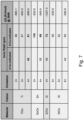
- Thickness are in units of angstroms ( ⁇ ). Table 1 (Example Materials/Thicknesses; Fig.
- coated articles herein may have the following low-E (low emissivity), solar and/or optical characteristics set forth in Table 2 when measured monolithically.
- high index transparent dielectric doped titanium oxide layer 2 (and possibly 6) is shown and described in connection with the low-E coating of Fig. 1 above, this invention is not so limited.
- Doped titanium oxide high index transparent dielectric layers (e.g., layer 2) described herein may be used as a high index layer(s) in any suitable low-E coating either above or below an IR reflecting layer(s).
- One or more of such doped titanium oxide layers 2 may be provided in any suitable low-E coating.
- amorphous or substantially amorphous doped titanium oxide layer 2 as described above and/or herein may be used to replace any high index (e.g., TiO x or TiO 2 ) layer in any of the low-E coatings in any of U.S. Patent Nos. 9,212,417 , 9,297,197 , 7,390,572 , 7,153,579 , 9,365,450 , and 9,403,345 .
- Fig. 11 is a cross sectional view of a coated article according to another example embodiment of this invention.
- Fig. 11 is similar to Fig. 1 , except that in the Fig. 11 embodiment a medium index (n) layer 23 of or including material such as silicon nitride or zinc oxide is provided between and directly contacting the glass substrate 1 and the doped titanium oxide layer 2, and a low index layer 21 of a material such as SiO 2 is provided in place of layer 8. It is noted that doped titanium oxide as discussed herein is used for the layer immediately above contact layer 5 in the Fig. 11 embodiment.
- Example 1 was a low-E coating on a glass substrate according to the Fig. 1 embodiment, for comparing to Fig. 2 above.
- the Example 1 layer stack was glass/TiSnO x (27nm)/ZnO(4nm)/Ag(11nm)/NiTiNbO x (2.4nm)/ZnSnO(10nm)/ZnO(4nm)/SiN(10nm), where the ZnO layers were doped with Al.
- Example 1 was the same coating stack as the Comparative Example (CE) described above regarding Fig. 2 , except that in Example 1 the TiO 2 layer of the CE was replaced with Sn-doped titanium oxide (TiSnO x ).
- the high index layer 2 was titanium oxide doped with tin (TiSnO x ) in Example 1.
- the oxygen depleted atmosphere in which the TiSnO x layer 2 was sputter deposited contained 20% oxygen gas and 80% argon gas (4 sccm O 2 and 16 sccm Ar). Power applied to the Ti target was 500 W, and power applied to the Sn target was 50 W. Metal content of the TiSnO x layer 2 was 88% Ti and 12% Sn (atomic %).
- the coating of Example 1 had a normal emissivity (E n ) of 0.068.
- the TiSnO x layer 2 of Example 1 had a refractive index (n), at 550 nm, of 2.27.
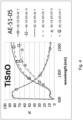
- Figs 4 and 6 show the data of Example 1, before and after HT, and should be compared to the CE of Fig. 2 .
- Figs. 4 and 6 are the same, but that Fig. 6 is downsized and provided next to Fig. 5 for purposes of comparison.
- the top three are "as coated” (AC) which means prior to the HT, and the bottom three are following the heat treatment and thus are labeled "HT.”
- AC as coated
- HT heat treatment
- the TiSnO x layer 2 was amorphous or substantially amorphous both as deposited as well as following the HT.
- Example 1 was surprisingly and unexpectedly improved compared to the CE with respect to thermal stability and heat treatability (e.g., thermal tempering).
- Example 2 ( Fig. 5 ) had the same layer stack as Example 1 ( Figs. 4 and 6 ) above, with the sole difference being that the TiSnO x layer 2 in Example 2 was sputter deposited in a gaseous atmosphere containing 70% oxygen gas whereas the TiSnO x layer 2 in Example 1 was sputter depositing in a gaseous atmosphere containing 20% oxygen gas.
- the high index layer 2 was titanium oxide doped with tin (TiSnO x ) in both of Examples 1-2.
- the oxygen depleted atmosphere in which the TiSnO x layer 2 was sputter deposited in Example 1 contained 20% oxygen gas and 80% argon gas (4 sccm O 2 and 16 sccm Ar), but in Example 2 the atmosphere was modified to contain 70% oxygen gas and 30% argon gas (14 sccm O 2 and 6 sccm Ar). Power applied to the Ti and Sn targets, the HT, and the metal content of the layer 2, were all the same in Examples 1 and 2. It can be seen by comparing Fig. 5 (Example 2 with 70% oxygen gas in sputtering atmosphere) to Fig. 6 (Example 1 with 20% oxygen gas in sputtering atmosphere), that the reduced oxygen gas in the sputtering atmosphere in Fig.
- Fig. 6 (Example 1) provided for significantly improved results over Fig. 5 (Example 2).
- Fig. 6 (like Fig. 4 ) shows that for Example 1 with 20% O 2 in the wavelength area from about 1500 to 2400 nm there was very little shift due to HT from the "AC T" (transmission, as coated prior to HT) curve to the "HT T" (transmission, after HT) curve of less than 4%; there was very little shift due to HT from the "AC G" (glass side reflectance, as coated prior to HT) curve to the "HT G" (glass side reflectance, after HT) curve of less than 5%; and there was very little shift due to HT from the "AC F” (film side reflectance, as coated prior to HT) curve to the "HT F" (film side reflectance, after HT) curve of less than 7or 8%.
- Fig. 5 shows that for Example 2 with an increased 70% O 2 in the wavelength area from about 1500 to 2400 nm there was a higher shift due to HT from the "AC T" (transmission, as coated prior to HT) curve to the "HT T" (transmission, after HT) curve of at least 6 4%; there was a much higher shift due to HT from the "AC G” (glass side reflectance, as coated prior to HT) curve to the "HT G" (glass side reflectance, after HT) curve of at least 14%; and there was a much higher shift due to HT from the "AC F" (film side reflectance, as coated prior to HT) curve to the "HT F" (film side reflectance, after HT) curve of at least 16%.
- Example 2 also had increased haze, compared to Example 1, both before and after the HT. Accordingly, comparing Example 1, Example, 2, and the Comparative Example of Fig. 2 , it can be seen that the reduced oxygen gas in the sputtering atmosphere in Example 1 provides for unexpected and surprising results with respect to improved thermal stability, improved/reduced haze, and the ability to achieve an amorphous or substantially amorphous doped titanium oxide layer.
- Example 3 was a low-E coating on a glass substrate according to the Fig. 1 embodiment, for comparing to Fig. 2 above.
- the Example 3 layer stack was glass/TiYO x (27nm)/ZnO(4nm)/Ag(11nm)/NiTiNbO x (2.4nm)/ZnSnO(10nm)/ZnO(4nm)/SiN(10nm), where the ZnO layers were doped with Al.
- Example 3 was the same coating stack as Example 1 and the Comparative Example (CE) described above regarding Fig. 2 , except that in Example 3 the high index layer 2 was Y-doped titanium oxide (TiYO x ).
- the high index layer 2 was titanium oxide doped with yttrium (TiYO x ) in Example 3, and sputter deposited in an oxygen depleted atmosphere. Metal content of the TiYO x layer was 95% Ti and 5% Y (atomic %). The composition ratio of the TiYO x was Y:Ti:O corresponding to 5:95:245 (atomic).
- the TiYO x layer 2 of Example 3 had a refractive index (n), at 550 nm, of 2.42.
- Fig. 9 shows the data of Example 3, before and after HT, and should be compared to the CE of Fig. 2 . In Figs.
- the top three are "as coated” (AC) which means prior to the HT, and the bottom three are following the heat treatment and thus are labeled "HT.”
- AC as coated
- HT heat treatment
- Example 3 was surprisingly and unexpectedly improved compared to the CE with respect to thermal stability and heat treatability (e.g., thermal tempering).
- Example 4 was a low-E coating on a glass substrate according to the Fig. 1 embodiment, for comparing to Fig. 2 above.
- the Example 4 layer stack was glass/TiBaO x (27nm)/ZnO(4nm)/Ag(11nm)/NiTiNbO x (2.4nm)/ZnSnO(10nm)/ZnO(4nm)/SiN(10nm), where the ZnO layers were doped with Al.
- Example 4 was the same coating stack as Example 1 and the Comparative Example (CE) described above regarding Fig. 2 , except that in Example 4 the high index layer 2 was titanium oxide barium (TiBaO x ).
- the high index layer 2 was titanium oxide supplemented with barium (TiBaO x ) in Example 4, and sputter deposited in an oxygen depleted atmosphere.
- the composition ratio of the TiBaO x was Ba:Ti:O corresponding to 0.98:1:3.36.
- Fig. 8 shows the data of Example 4, before and after HT, and should be compared to the CE of Fig. 2 .
- the top three are "as coated” (AC) which means prior to the HT, and the bottom three are following the heat treatment and thus are labeled "HT.”
- AC curves are prior to HT
- the HT curves are after heat treatment at about 650 degrees C for about eight minutes.
- the TiBaO x layer 2 was amorphous or substantially amorphous both as deposited as well as following the HT.
- Example 4 was surprisingly and unexpectedly improved compared to the CE with respect to thermal stability and heat treatability (e.g., thermal tempering).
- metal content of the TiBaO x layer may be from 30-70% Ti, more preferably from 40-60% Ti, and from 30-70% Ba, and more preferably from 40-60% Ba.
- Example 5 was a low-E coating on a glass substrate according to the Fig. 1 embodiment, for comparing to Fig. 2 above.
- the Example 5 layer stack was glass/TiZnSnO x (27nm)/ZnO(4nm)/Ag(11nm)/NiTiNbO x (2.4nm)/ZnSnO(10nm)/ZnO(4nm)/SiN(10nm) where the ZnO layers were doped with Al.
- Example 5 was the same coating stack as Example 1 and the Comparative Example (CE) described above regarding Fig. 2 , except that in Example 5 the high index layer 2 was ZnSn-doped titanium oxide (TiZnSnO x ).
- the high index layer 2 was titanium oxide doped with ZnSn in Example 5, and sputter deposited in an oxygen depleted atmosphere containing 30% oxygen gas and the remainder argon gas. Sn and Zn content was approximately the same.
- the TiZnSnO x layer 2 of Example 5 had a refractive index (n), at 550 nm, of 2.17.
- Fig. 10 shows the data of Example 5, before and after HT, and should be compared to the CE of Fig. 2 . In Figs.
- the top three are “as coated” (AC) which means prior to the HT, and the bottom three are following the heat treatment and thus are labeled "HT.”
- AC as coated
- HT heat treatment
- Example 5 was surprisingly and unexpectedly improved compared to the CE with respect to thermal stability and heat treatability (e.g., thermal tempering).
- Example 6 was a low-E coating on a glass substrate according to the Fig. 1 embodiment, for comparing to Fig. 2 above.
- the Example 6 layer stack was glass/TiZrO x (27nm)/ZnO(4nm)/Ag(11nm)/NiTiNbO x (2.4nm)/ZnSnO(10nm)/ZnO(4nm)/SiN(10nm), where the ZnO layers were doped with Al.
- Example 6 was the same coating stack as Example 1 and the Comparative Example (CE) described above regarding Fig. 2 , except that in Example 6 the high index layer 2 was Zr-doped titanium oxide (TiZrO x ).
- the high index layer 2 was titanium oxide doped with zirconium (TiZrO x ) in Example 6, and sputter deposited in an oxygen depleted atmosphere.
- Fig. 3 shows the data of Example 6, before and after HT, and should be compared to the CE of Fig. 2 .
- the top three are "as coated” (AC) which means prior to the HT, and the bottom three are following the heat treatment and thus are labeled "HT.”
- AC as coated
- HT heat treatment
- the TiZrO x layer 2 was amorphous or substantially amorphous both as deposited as well as following the HT.
- Example 6 was surprisingly and unexpectedly improved compared to the CE with respect to thermal stability and heat treatability (e.g., thermal tempering).
Landscapes
- Chemical & Material Sciences (AREA)
- Organic Chemistry (AREA)
- Chemical Kinetics & Catalysis (AREA)
- Engineering & Computer Science (AREA)
- Materials Engineering (AREA)
- General Chemical & Material Sciences (AREA)
- Life Sciences & Earth Sciences (AREA)
- Geochemistry & Mineralogy (AREA)
- Metallurgy (AREA)
- Mechanical Engineering (AREA)
- Inorganic Chemistry (AREA)
- Surface Treatment Of Glass (AREA)
- Laminated Bodies (AREA)
Claims (19)
- Beschichteter Artikel, der eine Beschichtung beinhaltet, die von einem Glassubstrat getragen wird, wobei die Beschichtung umfasst:eine erste transparente dielektrische Schicht auf dem Glassubstrat;eine Infrarot- (IR) reflektierende Schicht, die Silber umfasst, auf dem Glassubstrat, die sich über mindestens der ersten transparenten dielektrischen Schicht befindet;eine zweite transparente dielektrische Schicht auf dem Glassubstrat, die sich über mindestens der IR-reflektierenden Schicht befindet; undwobei mindestens eine der ersten und zweiten transparenten dielektrischen Schicht amorph oder im Wesentlichen amorph ist und ein Oxid von Ti umfasst, das mit mindestens einem aus SnZn und Ba dotiert ist, und wobei der Metallgehalt der amorphen oder im Wesentlichen amorphen Schicht 70-99,5 % Ti und 0,5-30 % von mindestens einem aus SnZn und Ba (Atom-%) umfasst.
- Beschichteter Artikel nach Anspruch 1, wobei ein Metallgehalt der amorphen oder im Wesentlichen amorphen Schicht 80-99 % Ti und 1-20 % von mindestens einem aus SnZn und Ba (Atom-%), vorzugsweise 87-99 % Ti und 1-13 % von mindestens einem aus SnZn und Ba (Atom-%) umfasst.
- Beschichteter Artikel nach einem vorstehenden Anspruch, wobei die amorphe oder im Wesentlichen amorphe Schicht einen Brechungsindex (n) von mindestens 2,12, vorzugsweise von mindestens 2,20, bevorzugter von mindestens 2,25 aufweist.
- Beschichteter Artikel nach einem vorstehenden Anspruch, wobei die Beschichtung eine Low-E-Beschichtung ist und eine normale Emissivität (En) von nicht mehr als 0,2, vorzugsweise von nicht mehr als 0,10 aufweist.
- Beschichteter Artikel nach einem vorstehenden Anspruch, wobei die amorphe oder im Wesentlichen amorphe Schicht ein Oxid von Ti und Sn und einen Metallgehalt von 70-99,5 % Ti und 0,5-30 % Sn (Atom-%) umfasst, und wobei die amorphe oder im Wesentlichen amorphe Schicht weiter Zn umfasst und/oder wobei die amorphe oder im Wesentlichen amorphe Schicht ein Oxid von Ti, Sn und Zn umfasst.
- Beschichteter Artikel nach einem der Ansprüche 1-5, wobei die amorphe oder im Wesentlichen amorphe Schicht ein Oxid von Ti und Ba und einen Metallgehalt umfasst, der 70-99,5 % Ti und 0,5-30 % Ba (Atom-%) umfasst, wobei die amorphe oder im Wesentlichen amorphe Schicht vorzugsweise ein Oxid von Ti und Ba und einen Metallgehalt umfasst, der 80-99 % Ti und 1-20 % Ba (Atom-%) umfasst.
- Beschichteter Artikel nach einem vorstehenden Anspruch, wobei die erste dielektrische Schicht die amorphe oder im Wesentlichen amorphe Schicht ist und sich zwischen dem Glassubstrat und der IR-reflektierenden Schicht befindet und/oder wobei die Beschichtung eine Deckschicht umfasst, die eine Schicht beinhaltet, die Siliziumnitrid umfasst, und/oder wobei die Beschichtung weiter eine Schicht umfasst, die Siliziumnitrid umfasst, die sich zwischen mindestens dem Glassubstrat und der ersten transparenten dielektrischen Schicht befindet.
- Beschichteter Artikel nach einem vorstehenden Anspruch, wobei die Beschichtung weiter eine Schicht umfasst, die Zinkoxid umfasst, die sich unter der IR-reflektierenden Schicht befindet und diese direkt berührt, und/oder wobei die Beschichtung weiter eine Schicht umfasst, die ein Oxid von Ni und/oder Cr umfasst, die sich über der IR-reflektierenden Schicht befindet und diese direkt berührt.
- Beschichteter Artikel nach einem vorstehenden Anspruch, wobei der beschichtete Artikel thermisch gehärtet ist und/oder wobei der beschichtete Artikel eine visuelle Transmission von mindestens 50 % aufweist.
- Beschichteter Artikel, der eine Beschichtung beinhaltet, die von einem Glassubstrat getragen wird, wobei die Beschichtung umfasst:eine erste transparente dielektrische Schicht auf dem Glassubstrat;eine Infrarot- (IR) reflektierende Schicht, die Silber umfasst, auf dem Glassubstrat, die sich über mindestens der ersten transparenten dielektrischen Schicht befindet;eine zweite transparente dielektrische Schicht auf dem Glassubstrat, die sich über mindestens der IR-reflektierenden Schicht befindet; undwobei mindestens eine der ersten und zweiten transparenten dielektrischen Schicht amorph oder im Wesentlichen amorph ist und ein Oxid von Ti und Ba umfasst, und wobei der Metallgehalt der amorphen oder im Wesentlichen amorphen Schicht 30-70 % Ti und 30-70 % Ba (Atom-%) umfasst.
- Beschichteter Artikel nach Anspruch 10, wobei der Metallgehalt der amorphen oder im Wesentlichen amorphen Schicht 40-60 % Ti und 40-60 % Ba (Atom-%) umfasst.
- Verfahren zur Herstellung eines beschichteten Artikels, der eine Beschichtung beinhaltet, die von einem Glassubstrat getragen wird, wobei das Verfahren umfasst:Sputter-Abscheiden einer ersten transparenten dielektrischen Schicht auf dem Glassubstrat;Sputter-Abscheiden einer Infrarot-(IR) reflektierenden Schicht auf dem Glassubstrat, die sich über mindestens der ersten transparenten dielektrischen Schicht befindet;Sputter-Abscheiden einer zweiten transparenten dielektrischen Schicht auf dem Glassubstrat, die sich über mindestens der IR-reflektierenden Schicht befindet; undwobei mindestens eine der ersten und zweiten transparenten dielektrischen Schicht durch Sputtern abgeschieden wird, um amorph oder im Wesentlichen amorph zu sein, und ein Oxid von Ti und mindestens eines von SnZn und Ba umfassen.
- Verfahren nach Anspruch 12, wobei der Metallgehalt der amorphen oder im Wesentlichen amorphen Schicht 70-99,5 % Ti und 0,5-30 % von mindestens einem aus SnZn und Ba (Atom-%) umfasst.
- Verfahren nach einem der Ansprüche 12-13, wobei die mindestens eine der ersten und zweiten transparenten dielektrischen Schicht, die durch Sputtern abgeschieden werden, um amorph oder im Wesentlichen amorph zu sein, in einer sauerstoffarmen Atmosphäre durch Sputtern abgeschieden werden, so dass ein Unterschied der Radien der Metalle beim Sputtern eine Gitterunordnung verursacht, die zu einer amorphen oder im Wesentlichen amorphen Struktur der Schicht führt.
- Verfahren nach einem der Ansprüche 12-14, wobei die Beschichtung eine Low-E-Beschichtung ist und eine normale Emissivität (En) von nicht mehr als 0,2 aufweist, und/oder wobei das Verfahren weiter thermisches Härten des Glassubstrats mit der darauf befindlichen Beschichtung umfasst, und/oder wobei der beschichtete Artikel eine visuelle Transmission von mindestens 50 % aufweist.
- Verfahren nach einem der Ansprüche 12-15, wobei die amorphe oder im Wesentlichen amorphe Schicht ein Oxid von Ti und Sn und einen Metallgehalt umfasst, der 70-99,5 % Ti und 0,5-30 % Sn (Atom-%) umfasst, wobei die amorphe oder im Wesentlichen amorphe Schicht weiter Zn umfasst, wobei die amorphe oder im Wesentlichen amorphe Schicht vorzugsweise ein Oxid von Ti und Sn und einen Metallgehalt umfasst, der 80-99 % Ti und 1-20 % Sn (Atom-%) umfasst.
- Verfahren nach einem der Ansprüche 12-16, wobei die amorphe oder im Wesentlichen amorphe Schicht ein Oxid von Ti, Sn und Zn umfasst und/oder wobei die amorphe oder im Wesentlichen amorphe Schicht ein Oxid von Ti und Ba umfasst.
- Verfahren nach einem der Ansprüche 13-17, wobei beim Sputter-Abscheiden der amorphen oder im Wesentlichen amorphen Schicht der Sauerstoff beim Sputter-Abscheiden durch Kontrollsauerstoffgas in der Sputteratmosphäre und/oder Sauerstoff im Sputtertargetmaterial kontrolliert wird, um eine durchschnittliche Differenz von mindestens 15 pm, vorzugsweise von mindestens 20 pm, in den Ionenradien zwischen Ti und Ba und damit eine Gitterunordnung zu verursachen, die zu einer amorphen oder im Wesentlichen amorphen Struktur der durch Sputtern abgeschiedenen Schicht führt.
- Verfahren nach einem der Ansprüche 12-18, wobei beim Sputter-Abscheiden der amorphen oder im Wesentlichen amorphen Schicht die Sputter-Atmosphäre nicht mehr als 50 %, vorzugsweise nicht mehr als 40 %, bevorzugter nicht mehr als 35 % an Sauerstoffgas enthält.
Applications Claiming Priority (2)
| Application Number | Priority Date | Filing Date | Title |
|---|---|---|---|
| US15/448,739 US10196735B2 (en) | 2017-03-03 | 2017-03-03 | Coated article having low-E coating with IR reflecting layer(s) and doped titanium oxide dielectric layer(s) and method of making same |
| PCT/US2018/020605 WO2018160933A1 (en) | 2017-03-03 | 2018-03-02 | Coated article having low-e coating with ir reflecting layers(s) and doped titanium oxide dielectric layer(s) and method of making same |
Publications (2)
| Publication Number | Publication Date |
|---|---|
| EP3589595A1 EP3589595A1 (de) | 2020-01-08 |
| EP3589595B1 true EP3589595B1 (de) | 2024-08-28 |
Family
ID=61692087
Family Applications (1)
| Application Number | Title | Priority Date | Filing Date |
|---|---|---|---|
| EP18712327.8A Active EP3589595B1 (de) | 2017-03-03 | 2018-03-02 | Beschichteter artikel mit beschichtung mit niedriger emissivität mit ir-reflektierender(n) schicht(en) und dotierter(n) dielektrischen titanoxidschicht(en) und verfahren zur herstellung davon |
Country Status (9)
| Country | Link |
|---|---|
| US (2) | US10196735B2 (de) |
| EP (1) | EP3589595B1 (de) |
| BR (1) | BR112019018294A2 (de) |
| CA (1) | CA3054940A1 (de) |
| ES (1) | ES2988186T3 (de) |
| MX (1) | MX2019010434A (de) |
| PL (1) | PL3589595T3 (de) |
| RU (1) | RU2759408C2 (de) |
| WO (1) | WO2018160933A1 (de) |
Families Citing this family (6)
| Publication number | Priority date | Publication date | Assignee | Title |
|---|---|---|---|---|
| US10196735B2 (en) | 2017-03-03 | 2019-02-05 | Guardian Glass, LLC | Coated article having low-E coating with IR reflecting layer(s) and doped titanium oxide dielectric layer(s) and method of making same |
| US10213988B2 (en) | 2017-03-03 | 2019-02-26 | Guardian Glass, LLC | Coated article having low-E coating with IR reflecting layer(s) and niobium-doped titanium oxide dielectric layer(s) and method of making same |
| CN111074229B (zh) * | 2018-10-19 | 2021-05-14 | 清华大学 | 调控硬质涂层颜色的方法、硬质涂层及其制备方法 |
| CN110104962A (zh) * | 2019-04-22 | 2019-08-09 | 太仓耀华玻璃有限公司 | 一种低辐射镀膜玻璃及其制备工艺 |
| FR3111891A1 (fr) * | 2020-06-24 | 2021-12-31 | Saint-Gobain Glass France | Materiau comportant un empilement a sous-couche dielectrique fine d’oxide a base de zinc et procede de depot de ce materiau |
| FR3129938B1 (fr) * | 2021-12-08 | 2026-03-13 | Saint Gobain | Vitrage comprenant un empilement antisolaire et un revêtement protecteur comprenant un oxyde d’yttrium et d’au moins un élément choisi parmi l’hafnium et/ou le titane |
Family Cites Families (44)
| Publication number | Priority date | Publication date | Assignee | Title |
|---|---|---|---|---|
| US4883721A (en) | 1987-07-24 | 1989-11-28 | Guardian Industries Corporation | Multi-layer low emissivity thin film coating |
| AU616736B2 (en) * | 1988-03-03 | 1991-11-07 | Asahi Glass Company Limited | Amorphous oxide film and article having such film thereon |
| US5344718A (en) | 1992-04-30 | 1994-09-06 | Guardian Industries Corp. | High performance, durable, low-E glass |
| US5770321A (en) | 1995-11-02 | 1998-06-23 | Guardian Industries Corp. | Neutral, high visible, durable low-e glass coating system and insulating glass units made therefrom |
| MX9605168A (es) | 1995-11-02 | 1997-08-30 | Guardian Industries | Sistema de recubrimiento con vidrio de baja emisividad, durable, de alto funcionamiento, neutro, unidades de vidrio aislante elaboradas a partir del mismo, y metodos para la fabricacion de los mismos. |
| FR2784984B1 (fr) | 1998-10-22 | 2001-10-26 | Saint Gobain Vitrage | Substrat transparent muni d'un empilement de couches minces |
| FR2784985B1 (fr) | 1998-10-22 | 2001-09-21 | Saint Gobain Vitrage | Substrat transparent muni d'un empilement de couches minces |
| US6610410B2 (en) | 1998-12-18 | 2003-08-26 | Asahi Glass Company, Limited | Glazing panel |
| FR2793889B1 (fr) * | 1999-05-20 | 2002-06-28 | Saint Gobain Vitrage | Substrat transparent a revetement anti-reflets |
| US6576349B2 (en) | 2000-07-10 | 2003-06-10 | Guardian Industries Corp. | Heat treatable low-E coated articles and methods of making same |
| US6541084B2 (en) | 2001-02-05 | 2003-04-01 | Guardian Industries Corp. | Vacuum IG window unit with polymer spacers |
| US6524714B1 (en) | 2001-05-03 | 2003-02-25 | Guardian Industries Corp. | Heat treatable coated articles with metal nitride layer and methods of making same |
| US6936347B2 (en) | 2001-10-17 | 2005-08-30 | Guardian Industries Corp. | Coated article with high visible transmission and low emissivity |
| US6602608B2 (en) | 2001-11-09 | 2003-08-05 | Guardian Industries, Corp. | Coated article with improved barrier layer structure and method of making the same |
| US6589658B1 (en) * | 2001-11-29 | 2003-07-08 | Guardian Industries Corp. | Coated article with anti-reflective layer(s) system |
| US6830817B2 (en) | 2001-12-21 | 2004-12-14 | Guardian Industries Corp. | Low-e coating with high visible transmission |
| US7241506B2 (en) | 2003-06-10 | 2007-07-10 | Cardinal Cg Company | Corrosion-resistant low-emissivity coatings |
| US7153579B2 (en) | 2003-08-22 | 2006-12-26 | Centre Luxembourgeois de Recherches pour le Verre et la Ceramique S.A, (C.R.V.C.) | Heat treatable coated article with tin oxide inclusive layer between titanium oxide and silicon nitride |
| US7390572B2 (en) | 2004-11-05 | 2008-06-24 | Centre Luxembourgeois De Recherches Pour Le Verre Et La Ceramique S.A. (C.R.V.C.) | Coated article with IR reflecting layer(s) and method of making same |
| BE1016553A3 (fr) * | 2005-03-17 | 2007-01-09 | Glaverbel | Vitrage a faible emissivite. |
| FR2892409B1 (fr) | 2005-10-25 | 2007-12-14 | Saint Gobain | Procede de traitement d'un substrat |
| EP1980539A1 (de) | 2007-03-19 | 2008-10-15 | AGC Flat Glass Europe SA | Verglasung mit geringer Emissivität |
| US7901781B2 (en) * | 2007-11-23 | 2011-03-08 | Agc Flat Glass North America, Inc. | Low emissivity coating with low solar heat gain coefficient, enhanced chemical and mechanical properties and method of making the same |
| US8409717B2 (en) | 2008-04-21 | 2013-04-02 | Guardian Industries Corp. | Coated article with IR reflecting layer and method of making same |
| US8734920B2 (en) | 2009-04-29 | 2014-05-27 | Guardian Industries Corp. | Coated article with low-E coating having titanium oxide layer and/or NiCr based layer(s) to improve color values and/or transmission, and method of making same |
| FR2946335B1 (fr) | 2009-06-05 | 2011-09-02 | Saint Gobain | Procede de depot de couche mince et produit obtenu. |
| US9028956B2 (en) | 2010-04-22 | 2015-05-12 | Centre Luxembourgeois De Recherches Pour Le Verre Et La Ceramique S.A. (C.R.V.C.) | Coated article having low-E coating with absorber layer(s) |
| US8815420B2 (en) * | 2010-09-17 | 2014-08-26 | Guardian Industries Corp. | Coated article having zinc oxide seed layer with reduced stress under functional layer and method of making the same |
| EA034095B1 (ru) | 2011-03-24 | 2019-12-26 | Сэн-Гобэн Гласс Франс | Прозрачная подложка, снабженная тонкопленочной многослойной системой, и составной стеклопакет |
| KR101381531B1 (ko) | 2011-08-18 | 2014-04-07 | (주)엘지하우시스 | 열처리가 가능한 저방사 유리 및 이의 제조방법 |
| US9052456B2 (en) | 2013-03-12 | 2015-06-09 | Intermolecular, Inc. | Low-E glazing performance by seed structure optimization |
| US9045363B2 (en) * | 2011-12-27 | 2015-06-02 | Intermolecular, Inc. | Low-E panels with ternary metal oxide dielectric layer and method for forming the same |
| US9017821B2 (en) | 2012-02-22 | 2015-04-28 | Guardian Industries Corp. | Coated article with low-E coating having multilayer overcoat and method of making same |
| US8889272B2 (en) | 2012-11-19 | 2014-11-18 | Guardian Industries Corp. | Coated article with low-E coating including tin oxide inclusive layer(s) with additional metal(s) |
| US20140170421A1 (en) * | 2012-12-14 | 2014-06-19 | Intermolecular Inc. | Low-E Panel with Improved Barrier Layer and Method for Forming the Same |
| US9365450B2 (en) * | 2012-12-27 | 2016-06-14 | Intermolecular, Inc. | Base-layer consisting of two materials layer with extreme high/low index in low-e coating to improve the neutral color and transmittance performance |
| US9309149B2 (en) * | 2013-03-13 | 2016-04-12 | Intermolecular, Inc. | Systems, methods, and apparatus for production coatings of low-emissivity glass |
| US9499899B2 (en) | 2013-03-13 | 2016-11-22 | Intermolecular, Inc. | Systems, methods, and apparatus for production coatings of low-emissivity glass including a ternary alloy |
| US9410359B2 (en) | 2013-03-14 | 2016-08-09 | Intermolecular, Inc. | Low-e panels and methods for forming the same |
| US8940400B1 (en) | 2013-09-03 | 2015-01-27 | Guardian Industries Corp. | IG window unit including double silver coating having increased SHGC to U-value ratio, and corresponding coated article for use in IG window unit or other window |
| US20150177585A1 (en) * | 2013-12-19 | 2015-06-25 | Intermolecular, Inc. | Systems, Methods, and Apparatus for Integrated Glass Units Having Adjustable Transmissivities |
| US20150177583A1 (en) * | 2013-12-23 | 2015-06-25 | Intermolecular Inc. | Systems, methods, and apparatus for integrated glass units having adjustable solar heat gains |
| FR3038598B1 (fr) | 2015-07-08 | 2017-07-21 | Saint Gobain | Substrat muni d'un empilement a proprietes thermiques |
| US10196735B2 (en) | 2017-03-03 | 2019-02-05 | Guardian Glass, LLC | Coated article having low-E coating with IR reflecting layer(s) and doped titanium oxide dielectric layer(s) and method of making same |
-
2017
- 2017-03-03 US US15/448,739 patent/US10196735B2/en active Active
-
2018
- 2018-03-02 EP EP18712327.8A patent/EP3589595B1/de active Active
- 2018-03-02 PL PL18712327.8T patent/PL3589595T3/pl unknown
- 2018-03-02 BR BR112019018294-2A patent/BR112019018294A2/pt not_active Application Discontinuation
- 2018-03-02 WO PCT/US2018/020605 patent/WO2018160933A1/en not_active Ceased
- 2018-03-02 ES ES18712327T patent/ES2988186T3/es active Active
- 2018-03-02 RU RU2019130992A patent/RU2759408C2/ru active
- 2018-03-02 MX MX2019010434A patent/MX2019010434A/es unknown
- 2018-03-02 CA CA3054940A patent/CA3054940A1/en not_active Abandoned
-
2019
- 2019-02-04 US US16/266,313 patent/US10584409B2/en active Active
Also Published As
| Publication number | Publication date |
|---|---|
| US20190226077A1 (en) | 2019-07-25 |
| EP3589595A1 (de) | 2020-01-08 |
| US20180251887A1 (en) | 2018-09-06 |
| RU2019130992A3 (de) | 2021-06-08 |
| RU2759408C2 (ru) | 2021-11-12 |
| US10196735B2 (en) | 2019-02-05 |
| CA3054940A1 (en) | 2018-09-07 |
| WO2018160933A1 (en) | 2018-09-07 |
| MX2019010434A (es) | 2019-11-05 |
| ES2988186T3 (es) | 2024-11-19 |
| PL3589595T3 (pl) | 2024-12-02 |
| RU2019130992A (ru) | 2021-04-05 |
| US10584409B2 (en) | 2020-03-10 |
| BR112019018294A2 (pt) | 2020-03-31 |
Similar Documents
| Publication | Publication Date | Title |
|---|---|---|
| EP3589595B1 (de) | Beschichteter artikel mit beschichtung mit niedriger emissivität mit ir-reflektierender(n) schicht(en) und dotierter(n) dielektrischen titanoxidschicht(en) und verfahren zur herstellung davon | |
| EP3589596B1 (de) | Beschichteter artikel mit beschichtung mit niedriger emissivität mit schutzschicht aus dotiertem silber oder aus dotiertem kupfer zum schutz der ir-reflexionsschicht(en) auf silber-basis und verfahren zur herstellung davon | |
| US6210784B1 (en) | Transparent substrate provided with a thin-film stack | |
| EP3592710B1 (de) | Beschichteter artikel mit low-e-beschichtung mit ir-reflexionsschicht(en) und nitrierter dielektrischer film mit hohem index mit mehreren schichten | |
| EP3699158B1 (de) | Beschichteter artikel mit ir-reflexionsschicht | |
| EP3802448B1 (de) | Beschichteter gegenstand mit einer oder mehreren ir-reflektierenden schichten und silizium-zirkonium-oxynitridschichten und verfahren zu seiner herstellung | |
| US7537677B2 (en) | Method of making low-E coating using ceramic zinc inclusive target, and target used in same | |
| EP3793959B1 (de) | Abstimmbare beschichtete low-e-artikel mit dotierter startschicht unter silver und zugehörige verfahren | |
| US10287673B2 (en) | Coated article having low-E coating with IR reflecting layer(S) and yttrium inclusive high index nitrided dielectric layer | |
| US10479053B2 (en) | Coated article having low-E coating with IR reflecting layer(s) and niobium-doped titanium oxide dielectric layer(s) and method of making same | |
| EP4007744A1 (de) | Beschichtetes substrat | |
| US20180257980A1 (en) | Coated article having low-e coating with ir reflecting layer(s) and doped titanium oxide bi-layer film dielectric and method of making same | |
| US10266937B2 (en) | Coated article having low-E coating with IR reflecting layer(s) and hafnium inclusive high index nitrided dielectric layer | |
| RU2759399C2 (ru) | Изделие с покрытием, имеющее низкоэмиссионное покрытие с отражающим(-ими) ик-излучение слоем(-ями) и слоем с высоким показателем преломления на основе ниобия и висмута, и способ его получения | |
| EP4007743A1 (de) | Vorspannbares beschichtetes substrat |
Legal Events
| Date | Code | Title | Description |
|---|---|---|---|
| STAA | Information on the status of an ep patent application or granted ep patent |
Free format text: STATUS: UNKNOWN |
|
| STAA | Information on the status of an ep patent application or granted ep patent |
Free format text: STATUS: THE INTERNATIONAL PUBLICATION HAS BEEN MADE |
|
| PUAI | Public reference made under article 153(3) epc to a published international application that has entered the european phase |
Free format text: ORIGINAL CODE: 0009012 |
|
| STAA | Information on the status of an ep patent application or granted ep patent |
Free format text: STATUS: REQUEST FOR EXAMINATION WAS MADE |
|
| 17P | Request for examination filed |
Effective date: 20191002 |
|
| AK | Designated contracting states |
Kind code of ref document: A1 Designated state(s): AL AT BE BG CH CY CZ DE DK EE ES FI FR GB GR HR HU IE IS IT LI LT LU LV MC MK MT NL NO PL PT RO RS SE SI SK SM TR |
|
| AX | Request for extension of the european patent |
Extension state: BA ME |
|
| DAV | Request for validation of the european patent (deleted) | ||
| DAX | Request for extension of the european patent (deleted) | ||
| RIN1 | Information on inventor provided before grant (corrected) |
Inventor name: DING, GUOWEN Inventor name: ZHANG, GUIZHEN Inventor name: CLAVERO, CESAR Inventor name: FRANK, MARCUS Inventor name: LEE, DANIEL Inventor name: SCHWEIGERT, DANIEL Inventor name: JEWHURST, SCOTT Inventor name: SARAF, GAURAV Inventor name: MURPHY, NESTOR, P. Inventor name: LE, MINH |
|
| STAA | Information on the status of an ep patent application or granted ep patent |
Free format text: STATUS: EXAMINATION IS IN PROGRESS |
|
| 17Q | First examination report despatched |
Effective date: 20220216 |
|
| GRAP | Despatch of communication of intention to grant a patent |
Free format text: ORIGINAL CODE: EPIDOSNIGR1 |
|
| STAA | Information on the status of an ep patent application or granted ep patent |
Free format text: STATUS: GRANT OF PATENT IS INTENDED |
|
| INTG | Intention to grant announced |
Effective date: 20240516 |
|
| GRAS | Grant fee paid |
Free format text: ORIGINAL CODE: EPIDOSNIGR3 |
|
| GRAA | (expected) grant |
Free format text: ORIGINAL CODE: 0009210 |
|
| STAA | Information on the status of an ep patent application or granted ep patent |
Free format text: STATUS: THE PATENT HAS BEEN GRANTED |
|
| AK | Designated contracting states |
Kind code of ref document: B1 Designated state(s): AL AT BE BG CH CY CZ DE DK EE ES FI FR GB GR HR HU IE IS IT LI LT LU LV MC MK MT NL NO PL PT RO RS SE SI SK SM TR |
|
| REG | Reference to a national code |
Ref country code: GB Ref legal event code: FG4D |
|
| RIN1 | Information on inventor provided before grant (corrected) |
Inventor name: FRANK, MARCUS Inventor name: MURPHY, NESTOR, P. Inventor name: LE, MINH Inventor name: SARAF, GAURAV Inventor name: JEWHURST, SCOTT Inventor name: CLAVERO, CESAR Inventor name: LEE, DANIEL Inventor name: DING, GUOWEN Inventor name: SCHWEIGERT, DANIEL Inventor name: ZHANG, GUIZHEN |
|
| REG | Reference to a national code |
Ref country code: CH Ref legal event code: EP |
|
| REG | Reference to a national code |
Ref country code: DE Ref legal event code: R096 Ref document number: 602018073589 Country of ref document: DE |
|
| REG | Reference to a national code |
Ref country code: IE Ref legal event code: FG4D |
|
| REG | Reference to a national code |
Ref country code: ES Ref legal event code: FG2A Ref document number: 2988186 Country of ref document: ES Kind code of ref document: T3 Effective date: 20241119 |
|
| REG | Reference to a national code |
Ref country code: LT Ref legal event code: MG9D |
|
| PG25 | Lapsed in a contracting state [announced via postgrant information from national office to epo] |
Ref country code: NO Free format text: LAPSE BECAUSE OF FAILURE TO SUBMIT A TRANSLATION OF THE DESCRIPTION OR TO PAY THE FEE WITHIN THE PRESCRIBED TIME-LIMIT Effective date: 20241128 |
|
| REG | Reference to a national code |
Ref country code: AT Ref legal event code: MK05 Ref document number: 1717830 Country of ref document: AT Kind code of ref document: T Effective date: 20240828 |
|
| PG25 | Lapsed in a contracting state [announced via postgrant information from national office to epo] |
Ref country code: NL Free format text: LAPSE BECAUSE OF FAILURE TO SUBMIT A TRANSLATION OF THE DESCRIPTION OR TO PAY THE FEE WITHIN THE PRESCRIBED TIME-LIMIT Effective date: 20240828 Ref country code: GR Free format text: LAPSE BECAUSE OF FAILURE TO SUBMIT A TRANSLATION OF THE DESCRIPTION OR TO PAY THE FEE WITHIN THE PRESCRIBED TIME-LIMIT Effective date: 20241129 Ref country code: FI Free format text: LAPSE BECAUSE OF FAILURE TO SUBMIT A TRANSLATION OF THE DESCRIPTION OR TO PAY THE FEE WITHIN THE PRESCRIBED TIME-LIMIT Effective date: 20240828 Ref country code: PT Free format text: LAPSE BECAUSE OF FAILURE TO SUBMIT A TRANSLATION OF THE DESCRIPTION OR TO PAY THE FEE WITHIN THE PRESCRIBED TIME-LIMIT Effective date: 20241230 |
|
| PG25 | Lapsed in a contracting state [announced via postgrant information from national office to epo] |
Ref country code: BG Free format text: LAPSE BECAUSE OF FAILURE TO SUBMIT A TRANSLATION OF THE DESCRIPTION OR TO PAY THE FEE WITHIN THE PRESCRIBED TIME-LIMIT Effective date: 20240828 |
|
| PG25 | Lapsed in a contracting state [announced via postgrant information from national office to epo] |
Ref country code: LV Free format text: LAPSE BECAUSE OF FAILURE TO SUBMIT A TRANSLATION OF THE DESCRIPTION OR TO PAY THE FEE WITHIN THE PRESCRIBED TIME-LIMIT Effective date: 20240828 |
|
| REG | Reference to a national code |
Ref country code: NL Ref legal event code: MP Effective date: 20240828 |
|
| PG25 | Lapsed in a contracting state [announced via postgrant information from national office to epo] |
Ref country code: AT Free format text: LAPSE BECAUSE OF FAILURE TO SUBMIT A TRANSLATION OF THE DESCRIPTION OR TO PAY THE FEE WITHIN THE PRESCRIBED TIME-LIMIT Effective date: 20240828 Ref country code: IS Free format text: LAPSE BECAUSE OF FAILURE TO SUBMIT A TRANSLATION OF THE DESCRIPTION OR TO PAY THE FEE WITHIN THE PRESCRIBED TIME-LIMIT Effective date: 20241228 |
|
| PG25 | Lapsed in a contracting state [announced via postgrant information from national office to epo] |
Ref country code: HR Free format text: LAPSE BECAUSE OF FAILURE TO SUBMIT A TRANSLATION OF THE DESCRIPTION OR TO PAY THE FEE WITHIN THE PRESCRIBED TIME-LIMIT Effective date: 20240828 |
|
| PG25 | Lapsed in a contracting state [announced via postgrant information from national office to epo] |
Ref country code: RS Free format text: LAPSE BECAUSE OF FAILURE TO SUBMIT A TRANSLATION OF THE DESCRIPTION OR TO PAY THE FEE WITHIN THE PRESCRIBED TIME-LIMIT Effective date: 20241128 |
|
| PG25 | Lapsed in a contracting state [announced via postgrant information from national office to epo] |
Ref country code: RS Free format text: LAPSE BECAUSE OF FAILURE TO SUBMIT A TRANSLATION OF THE DESCRIPTION OR TO PAY THE FEE WITHIN THE PRESCRIBED TIME-LIMIT Effective date: 20241128 Ref country code: PT Free format text: LAPSE BECAUSE OF FAILURE TO SUBMIT A TRANSLATION OF THE DESCRIPTION OR TO PAY THE FEE WITHIN THE PRESCRIBED TIME-LIMIT Effective date: 20241230 Ref country code: NO Free format text: LAPSE BECAUSE OF FAILURE TO SUBMIT A TRANSLATION OF THE DESCRIPTION OR TO PAY THE FEE WITHIN THE PRESCRIBED TIME-LIMIT Effective date: 20241128 Ref country code: NL Free format text: LAPSE BECAUSE OF FAILURE TO SUBMIT A TRANSLATION OF THE DESCRIPTION OR TO PAY THE FEE WITHIN THE PRESCRIBED TIME-LIMIT Effective date: 20240828 Ref country code: LV Free format text: LAPSE BECAUSE OF FAILURE TO SUBMIT A TRANSLATION OF THE DESCRIPTION OR TO PAY THE FEE WITHIN THE PRESCRIBED TIME-LIMIT Effective date: 20240828 Ref country code: IS Free format text: LAPSE BECAUSE OF FAILURE TO SUBMIT A TRANSLATION OF THE DESCRIPTION OR TO PAY THE FEE WITHIN THE PRESCRIBED TIME-LIMIT Effective date: 20241228 Ref country code: HR Free format text: LAPSE BECAUSE OF FAILURE TO SUBMIT A TRANSLATION OF THE DESCRIPTION OR TO PAY THE FEE WITHIN THE PRESCRIBED TIME-LIMIT Effective date: 20240828 Ref country code: GR Free format text: LAPSE BECAUSE OF FAILURE TO SUBMIT A TRANSLATION OF THE DESCRIPTION OR TO PAY THE FEE WITHIN THE PRESCRIBED TIME-LIMIT Effective date: 20241129 Ref country code: FI Free format text: LAPSE BECAUSE OF FAILURE TO SUBMIT A TRANSLATION OF THE DESCRIPTION OR TO PAY THE FEE WITHIN THE PRESCRIBED TIME-LIMIT Effective date: 20240828 Ref country code: BG Free format text: LAPSE BECAUSE OF FAILURE TO SUBMIT A TRANSLATION OF THE DESCRIPTION OR TO PAY THE FEE WITHIN THE PRESCRIBED TIME-LIMIT Effective date: 20240828 Ref country code: AT Free format text: LAPSE BECAUSE OF FAILURE TO SUBMIT A TRANSLATION OF THE DESCRIPTION OR TO PAY THE FEE WITHIN THE PRESCRIBED TIME-LIMIT Effective date: 20240828 |
|
| PG25 | Lapsed in a contracting state [announced via postgrant information from national office to epo] |
Ref country code: SM Free format text: LAPSE BECAUSE OF FAILURE TO SUBMIT A TRANSLATION OF THE DESCRIPTION OR TO PAY THE FEE WITHIN THE PRESCRIBED TIME-LIMIT Effective date: 20240828 Ref country code: DK Free format text: LAPSE BECAUSE OF FAILURE TO SUBMIT A TRANSLATION OF THE DESCRIPTION OR TO PAY THE FEE WITHIN THE PRESCRIBED TIME-LIMIT Effective date: 20240828 Ref country code: RO Free format text: LAPSE BECAUSE OF FAILURE TO SUBMIT A TRANSLATION OF THE DESCRIPTION OR TO PAY THE FEE WITHIN THE PRESCRIBED TIME-LIMIT Effective date: 20240828 |
|
| PG25 | Lapsed in a contracting state [announced via postgrant information from national office to epo] |
Ref country code: EE Free format text: LAPSE BECAUSE OF FAILURE TO SUBMIT A TRANSLATION OF THE DESCRIPTION OR TO PAY THE FEE WITHIN THE PRESCRIBED TIME-LIMIT Effective date: 20240828 |
|
| PG25 | Lapsed in a contracting state [announced via postgrant information from national office to epo] |
Ref country code: CZ Free format text: LAPSE BECAUSE OF FAILURE TO SUBMIT A TRANSLATION OF THE DESCRIPTION OR TO PAY THE FEE WITHIN THE PRESCRIBED TIME-LIMIT Effective date: 20240828 |
|
| PG25 | Lapsed in a contracting state [announced via postgrant information from national office to epo] |
Ref country code: SK Free format text: LAPSE BECAUSE OF FAILURE TO SUBMIT A TRANSLATION OF THE DESCRIPTION OR TO PAY THE FEE WITHIN THE PRESCRIBED TIME-LIMIT Effective date: 20240828 |
|
| REG | Reference to a national code |
Ref country code: DE Ref legal event code: R097 Ref document number: 602018073589 Country of ref document: DE |
|
| PLBE | No opposition filed within time limit |
Free format text: ORIGINAL CODE: 0009261 |
|
| STAA | Information on the status of an ep patent application or granted ep patent |
Free format text: STATUS: NO OPPOSITION FILED WITHIN TIME LIMIT |
|
| PGFP | Annual fee paid to national office [announced via postgrant information from national office to epo] |
Ref country code: ES Payment date: 20250410 Year of fee payment: 8 |
|
| 26N | No opposition filed |
Effective date: 20250530 |
|
| PG25 | Lapsed in a contracting state [announced via postgrant information from national office to epo] |
Ref country code: SE Free format text: LAPSE BECAUSE OF FAILURE TO SUBMIT A TRANSLATION OF THE DESCRIPTION OR TO PAY THE FEE WITHIN THE PRESCRIBED TIME-LIMIT Effective date: 20240828 |
|
| PG25 | Lapsed in a contracting state [announced via postgrant information from national office to epo] |
Ref country code: MC Free format text: LAPSE BECAUSE OF FAILURE TO SUBMIT A TRANSLATION OF THE DESCRIPTION OR TO PAY THE FEE WITHIN THE PRESCRIBED TIME-LIMIT Effective date: 20240828 |
|
| REG | Reference to a national code |
Ref country code: CH Ref legal event code: H13 Free format text: ST27 STATUS EVENT CODE: U-0-0-H10-H13 (AS PROVIDED BY THE NATIONAL OFFICE) Effective date: 20251023 |
|
| PG25 | Lapsed in a contracting state [announced via postgrant information from national office to epo] |
Ref country code: LU Free format text: LAPSE BECAUSE OF NON-PAYMENT OF DUE FEES Effective date: 20250302 |
|
| REG | Reference to a national code |
Ref country code: BE Ref legal event code: MM Effective date: 20250331 |
|
| PG25 | Lapsed in a contracting state [announced via postgrant information from national office to epo] |
Ref country code: BE Free format text: LAPSE BECAUSE OF NON-PAYMENT OF DUE FEES Effective date: 20250331 |
|
| PG25 | Lapsed in a contracting state [announced via postgrant information from national office to epo] |
Ref country code: CH Free format text: LAPSE BECAUSE OF NON-PAYMENT OF DUE FEES Effective date: 20250331 |
|
| PG25 | Lapsed in a contracting state [announced via postgrant information from national office to epo] |
Ref country code: IE Free format text: LAPSE BECAUSE OF NON-PAYMENT OF DUE FEES Effective date: 20250302 |
|
| PGFP | Annual fee paid to national office [announced via postgrant information from national office to epo] |
Ref country code: GB Payment date: 20260220 Year of fee payment: 9 |
|
| PGFP | Annual fee paid to national office [announced via postgrant information from national office to epo] |
Ref country code: DE Payment date: 20260219 Year of fee payment: 9 |
|
| PGFP | Annual fee paid to national office [announced via postgrant information from national office to epo] |
Ref country code: IT Payment date: 20260219 Year of fee payment: 9 |
|
| PGFP | Annual fee paid to national office [announced via postgrant information from national office to epo] |
Ref country code: FR Payment date: 20260219 Year of fee payment: 9 |
|
| PGFP | Annual fee paid to national office [announced via postgrant information from national office to epo] |
Ref country code: TR Payment date: 20260223 Year of fee payment: 9 |
|
| PGFP | Annual fee paid to national office [announced via postgrant information from national office to epo] |
Ref country code: PL Payment date: 20260220 Year of fee payment: 9 |