EP3585447B1 - Verfahren zur herstellung von doppelvernetzten kern-hülle-polymernanopartikeln für multimodale bildgebung und theranostische anwendungen - Google Patents
Verfahren zur herstellung von doppelvernetzten kern-hülle-polymernanopartikeln für multimodale bildgebung und theranostische anwendungen Download PDFInfo
- Publication number
- EP3585447B1 EP3585447B1 EP18708491.8A EP18708491A EP3585447B1 EP 3585447 B1 EP3585447 B1 EP 3585447B1 EP 18708491 A EP18708491 A EP 18708491A EP 3585447 B1 EP3585447 B1 EP 3585447B1
- Authority
- EP
- European Patent Office
- Prior art keywords
- poly
- nanoparticles
- acid
- chitosan
- coacervate
- Prior art date
- Legal status (The legal status is an assumption and is not a legal conclusion. Google has not performed a legal analysis and makes no representation as to the accuracy of the status listed.)
- Active
Links
Images



Classifications
-
- B—PERFORMING OPERATIONS; TRANSPORTING
- B01—PHYSICAL OR CHEMICAL PROCESSES OR APPARATUS IN GENERAL
- B01J—CHEMICAL OR PHYSICAL PROCESSES, e.g. CATALYSIS OR COLLOID CHEMISTRY; THEIR RELEVANT APPARATUS
- B01J13/00—Colloid chemistry, e.g. the production of colloidal materials or their solutions, not otherwise provided for; Making microcapsules or microballoons
- B01J13/02—Making microcapsules or microballoons
- B01J13/06—Making microcapsules or microballoons by phase separation
- B01J13/10—Complex coacervation, i.e. interaction of oppositely charged particles
-
- A—HUMAN NECESSITIES
- A61—MEDICAL OR VETERINARY SCIENCE; HYGIENE
- A61K—PREPARATIONS FOR MEDICAL, DENTAL OR TOILETRY PURPOSES
- A61K49/00—Preparations for testing in vivo
- A61K49/0002—General or multifunctional contrast agents, e.g. chelated agents
-
- A—HUMAN NECESSITIES
- A61—MEDICAL OR VETERINARY SCIENCE; HYGIENE
- A61K—PREPARATIONS FOR MEDICAL, DENTAL OR TOILETRY PURPOSES
- A61K49/00—Preparations for testing in vivo
- A61K49/001—Preparation for luminescence or biological staining
- A61K49/0013—Luminescence
- A61K49/0017—Fluorescence in vivo
- A61K49/0019—Fluorescence in vivo characterised by the fluorescent group, e.g. oligomeric, polymeric or dendritic molecules
- A61K49/0021—Fluorescence in vivo characterised by the fluorescent group, e.g. oligomeric, polymeric or dendritic molecules the fluorescent group being a small organic molecule
- A61K49/0032—Methine dyes, e.g. cyanine dyes
-
- A—HUMAN NECESSITIES
- A61—MEDICAL OR VETERINARY SCIENCE; HYGIENE
- A61K—PREPARATIONS FOR MEDICAL, DENTAL OR TOILETRY PURPOSES
- A61K49/00—Preparations for testing in vivo
- A61K49/001—Preparation for luminescence or biological staining
- A61K49/0013—Luminescence
- A61K49/0017—Fluorescence in vivo
- A61K49/0019—Fluorescence in vivo characterised by the fluorescent group, e.g. oligomeric, polymeric or dendritic molecules
- A61K49/0021—Fluorescence in vivo characterised by the fluorescent group, e.g. oligomeric, polymeric or dendritic molecules the fluorescent group being a small organic molecule
- A61K49/0032—Methine dyes, e.g. cyanine dyes
- A61K49/0034—Indocyanine green, i.e. ICG, cardiogreen
-
- A—HUMAN NECESSITIES
- A61—MEDICAL OR VETERINARY SCIENCE; HYGIENE
- A61K—PREPARATIONS FOR MEDICAL, DENTAL OR TOILETRY PURPOSES
- A61K49/00—Preparations for testing in vivo
- A61K49/001—Preparation for luminescence or biological staining
- A61K49/0063—Preparation for luminescence or biological staining characterised by a special physical or galenical form, e.g. emulsions, microspheres
- A61K49/0069—Preparation for luminescence or biological staining characterised by a special physical or galenical form, e.g. emulsions, microspheres the agent being in a particular physical galenical form
- A61K49/0089—Particulate, powder, adsorbate, bead, sphere
- A61K49/0091—Microparticle, microcapsule, microbubble, microsphere, microbead, i.e. having a size or diameter higher or equal to 1 micrometer
- A61K49/0093—Nanoparticle, nanocapsule, nanobubble, nanosphere, nanobead, i.e. having a size or diameter smaller than 1 micrometer, e.g. polymeric nanoparticle
-
- A—HUMAN NECESSITIES
- A61—MEDICAL OR VETERINARY SCIENCE; HYGIENE
- A61K—PREPARATIONS FOR MEDICAL, DENTAL OR TOILETRY PURPOSES
- A61K49/00—Preparations for testing in vivo
- A61K49/06—Nuclear magnetic resonance [NMR] contrast preparations; Magnetic resonance imaging [MRI] contrast preparations
- A61K49/18—Nuclear magnetic resonance [NMR] contrast preparations; Magnetic resonance imaging [MRI] contrast preparations characterised by a special physical form, e.g. emulsions, microcapsules, liposomes
- A61K49/1818—Nuclear magnetic resonance [NMR] contrast preparations; Magnetic resonance imaging [MRI] contrast preparations characterised by a special physical form, e.g. emulsions, microcapsules, liposomes particles, e.g. uncoated or non-functionalised microparticles or nanoparticles
-
- A—HUMAN NECESSITIES
- A61—MEDICAL OR VETERINARY SCIENCE; HYGIENE
- A61K—PREPARATIONS FOR MEDICAL, DENTAL OR TOILETRY PURPOSES
- A61K49/00—Preparations for testing in vivo
- A61K49/06—Nuclear magnetic resonance [NMR] contrast preparations; Magnetic resonance imaging [MRI] contrast preparations
- A61K49/18—Nuclear magnetic resonance [NMR] contrast preparations; Magnetic resonance imaging [MRI] contrast preparations characterised by a special physical form, e.g. emulsions, microcapsules, liposomes
- A61K49/1818—Nuclear magnetic resonance [NMR] contrast preparations; Magnetic resonance imaging [MRI] contrast preparations characterised by a special physical form, e.g. emulsions, microcapsules, liposomes particles, e.g. uncoated or non-functionalised microparticles or nanoparticles
- A61K49/1821—Nuclear magnetic resonance [NMR] contrast preparations; Magnetic resonance imaging [MRI] contrast preparations characterised by a special physical form, e.g. emulsions, microcapsules, liposomes particles, e.g. uncoated or non-functionalised microparticles or nanoparticles coated or functionalised microparticles or nanoparticles
- A61K49/1824—Nuclear magnetic resonance [NMR] contrast preparations; Magnetic resonance imaging [MRI] contrast preparations characterised by a special physical form, e.g. emulsions, microcapsules, liposomes particles, e.g. uncoated or non-functionalised microparticles or nanoparticles coated or functionalised microparticles or nanoparticles coated or functionalised nanoparticles
-
- A—HUMAN NECESSITIES
- A61—MEDICAL OR VETERINARY SCIENCE; HYGIENE
- A61K—PREPARATIONS FOR MEDICAL, DENTAL OR TOILETRY PURPOSES
- A61K51/00—Preparations containing radioactive substances for use in therapy or testing in vivo
- A61K51/02—Preparations containing radioactive substances for use in therapy or testing in vivo characterised by the carrier, i.e. characterised by the agent or material covalently linked or complexing the radioactive nucleus
- A61K51/04—Organic compounds
- A61K51/0491—Sugars, nucleosides, nucleotides, oligonucleotides, nucleic acids, e.g. DNA, RNA, nucleic acid aptamers
-
- A—HUMAN NECESSITIES
- A61—MEDICAL OR VETERINARY SCIENCE; HYGIENE
- A61K—PREPARATIONS FOR MEDICAL, DENTAL OR TOILETRY PURPOSES
- A61K51/00—Preparations containing radioactive substances for use in therapy or testing in vivo
- A61K51/12—Preparations containing radioactive substances for use in therapy or testing in vivo characterised by a special physical form, e.g. emulsion, microcapsules, liposomes, characterized by a special physical form, e.g. emulsions, dispersions, microcapsules
- A61K51/1241—Preparations containing radioactive substances for use in therapy or testing in vivo characterised by a special physical form, e.g. emulsion, microcapsules, liposomes, characterized by a special physical form, e.g. emulsions, dispersions, microcapsules particles, powders, lyophilizates, adsorbates, e.g. polymers or resins for adsorption or ion-exchange resins
- A61K51/1244—Preparations containing radioactive substances for use in therapy or testing in vivo characterised by a special physical form, e.g. emulsion, microcapsules, liposomes, characterized by a special physical form, e.g. emulsions, dispersions, microcapsules particles, powders, lyophilizates, adsorbates, e.g. polymers or resins for adsorption or ion-exchange resins microparticles or nanoparticles, e.g. polymeric nanoparticles
-
- A—HUMAN NECESSITIES
- A61—MEDICAL OR VETERINARY SCIENCE; HYGIENE
- A61P—SPECIFIC THERAPEUTIC ACTIVITY OF CHEMICAL COMPOUNDS OR MEDICINAL PREPARATIONS
- A61P35/00—Antineoplastic agents
-
- C—CHEMISTRY; METALLURGY
- C08—ORGANIC MACROMOLECULAR COMPOUNDS; THEIR PREPARATION OR CHEMICAL WORKING-UP; COMPOSITIONS BASED THEREON
- C08L—COMPOSITIONS OF MACROMOLECULAR COMPOUNDS
- C08L5/00—Compositions of polysaccharides or of their derivatives not provided for in groups C08L1/00 or C08L3/00
- C08L5/08—Chitin; Chondroitin sulfate; Hyaluronic acid; Derivatives thereof
-
- C—CHEMISTRY; METALLURGY
- C08—ORGANIC MACROMOLECULAR COMPOUNDS; THEIR PREPARATION OR CHEMICAL WORKING-UP; COMPOSITIONS BASED THEREON
- C08L—COMPOSITIONS OF MACROMOLECULAR COMPOUNDS
- C08L67/00—Compositions of polyesters obtained by reactions forming a carboxylic ester link in the main chain; Compositions of derivatives of such polymers
- C08L67/02—Polyesters derived from dicarboxylic acids and dihydroxy compounds
- C08L67/03—Polyesters derived from dicarboxylic acids and dihydroxy compounds the dicarboxylic acids and dihydroxy compounds having the carboxyl- and the hydroxy groups directly linked to aromatic rings
-
- C—CHEMISTRY; METALLURGY
- C08—ORGANIC MACROMOLECULAR COMPOUNDS; THEIR PREPARATION OR CHEMICAL WORKING-UP; COMPOSITIONS BASED THEREON
- C08L—COMPOSITIONS OF MACROMOLECULAR COMPOUNDS
- C08L77/00—Compositions of polyamides obtained by reactions forming a carboxylic amide link in the main chain; Compositions of derivatives of such polymers
- C08L77/04—Polyamides derived from alpha-amino carboxylic acids
-
- C—CHEMISTRY; METALLURGY
- C08—ORGANIC MACROMOLECULAR COMPOUNDS; THEIR PREPARATION OR CHEMICAL WORKING-UP; COMPOSITIONS BASED THEREON
- C08L—COMPOSITIONS OF MACROMOLECULAR COMPOUNDS
- C08L89/00—Compositions of proteins; Compositions of derivatives thereof
-
- B—PERFORMING OPERATIONS; TRANSPORTING
- B82—NANOTECHNOLOGY
- B82Y—SPECIFIC USES OR APPLICATIONS OF NANOSTRUCTURES; MEASUREMENT OR ANALYSIS OF NANOSTRUCTURES; MANUFACTURE OR TREATMENT OF NANOSTRUCTURES
- B82Y5/00—Nanobiotechnology or nanomedicine, e.g. protein engineering or drug delivery
-
- C—CHEMISTRY; METALLURGY
- C08—ORGANIC MACROMOLECULAR COMPOUNDS; THEIR PREPARATION OR CHEMICAL WORKING-UP; COMPOSITIONS BASED THEREON
- C08L—COMPOSITIONS OF MACROMOLECULAR COMPOUNDS
- C08L2205/00—Polymer mixtures characterised by other features
- C08L2205/22—Mixtures comprising a continuous polymer matrix in which are dispersed crosslinked particles of another polymer
-
- C—CHEMISTRY; METALLURGY
- C08—ORGANIC MACROMOLECULAR COMPOUNDS; THEIR PREPARATION OR CHEMICAL WORKING-UP; COMPOSITIONS BASED THEREON
- C08L—COMPOSITIONS OF MACROMOLECULAR COMPOUNDS
- C08L2207/00—Properties characterising the ingredient of the composition
- C08L2207/53—Core-shell polymer
-
- C—CHEMISTRY; METALLURGY
- C08—ORGANIC MACROMOLECULAR COMPOUNDS; THEIR PREPARATION OR CHEMICAL WORKING-UP; COMPOSITIONS BASED THEREON
- C08L—COMPOSITIONS OF MACROMOLECULAR COMPOUNDS
- C08L2312/00—Crosslinking
Definitions
- the present invention relates to the field of probes, radiotracers and contrast agents for medical imaging, in particular for the emerging multimodal imaging techniques.
- Multimodal imaging allows integration of the strengths of individual modalities while overcoming their limitations.
- anatomical imaging technologies such as Magnetic Resonance Imaging (MRI)
- MRI Magnetic Resonance Imaging
- PET Positron Emission Tomography
- hybrid imaging devices combining MRI and PET modalities enables two diagnostic tests to be performed on the same system simultaneously, thereby avoiding multiple tests and improving registration performance, all of which prove useful for planning radiation therapy.
- complex coacervation which is a unique type of electrostatically-driven liquid-liquid phase separation from association of oppositely charged macro-ions, is an interesting preparation process because it is considered scalable and low-cost. Furthermore, another great advantage of this process is the production of high payload (up to 99%) nanostructures with controlled release properties.
- the encapsulating materials are the ligand 1,11-bis(2,6-dicarboxypyridin-4-yloxy)-3,6,9-trioxaundecane (also named L 2 EO 4 ) and the di-block copolymer poly(N-methyl-2-vinyl-pyridinium iodide)-b-poly(ethylene oxide) (also named P2MVP 41 -b-PEO 205 ).
- the as obtained micelles showed a magnetic relaxation in the same order observed with other micelle systems.
- Nanoparticles with a core-shell structure capable of inhibiting the migratory capacity of metastatic cancer cells as a result of photodynamically activated cytotoxic stress.
- These nanoparticles include a core of poly lactic-co-glycolic acid (PLGA) encapsulating a photosensitizer (mTHPC) and an albumin shell encapsulating a tyrosine kinase inhibitor (Dasatinib) which inhibits the migration of tumors.
- PLGA poly lactic-co-glycolic acid
- mTHPC photosensitizer
- Dasatinib tyrosine kinase inhibitor
- Li Zhang et. al., Nanomaterials, 5(3) 2015, 1379-1396 described instead a process for the preparation of nanoparticles made of hyaluronic acid and chitosan for the delivery of Gd-DTPA as a contrast agent for the diagnosis of tumors.
- Gd-DTPA is first reacted with the chitosan chain via a carbodiimide reaction between the amino group of chitosan and the carboxyl group of DTPA.
- the present disclosure solves this long felt problem by providing a coacervation process which combines the presence of two crosslinking agents with a strict control of the complex coacervation conditions of biocompatible polymers during the phase separation step, thus leading to stable and biocompatible coacervates encapsulating multimodal contrast agents.
- the present disclosure relates to a process for the preparation of coacervate nanoparticles made of biocompatible polymers and stably encapsulating a contrast agent for medical imaging.
- the disclosure also relates to coacervate nanoparticles made of biocompatible polymers loaded with at least a contrast agent or a radiotracer obtainable by said process and to their use in vivo image diagnostic methods.
- Polyelectrolyte polymer is a polymer in which a substantial portion of the constitutional units have ionizable or ionic groups, or both.
- biocompatible referred to a material, means that said material does not have toxic or injurious effects on the biological functions.
- Contrast agent or “contrast medium” is a substance used to enhance the contrast of structures or fluids within the body in several medical imaging techniques.
- Radiotracer is a chemical compound in which one or more atoms have been replaced by a radioisotope so by virtue of its radioactive decay it can be used in medical imaging to explore the mechanism of chemical reactions inside the living body by tracing the path that the radioisotope follows from reactants to products.
- Optical tracer is a non-toxic molecules that can be visualized by using visible, ultraviolet, and infrared light.
- Coacervate or “coacervate nanoparticle” means a nanoparticle obtained by electrostatically-driven liquid-liquid phase separation.
- MRI Magnetic Resonance Imaging
- PET Positron Emission Tomography
- Optical Imaging refers to various imaging techniques that use visible, ultraviolet, and infrared light. Examples of optical imaging in medicine are Optical Coherence Tomography, Spectroscopy, Fluorescence microscope.
- the present invention relates to a process for the preparation of coacervate nanoparticles comprising the following steps:
- a water in oil (w/o) emulsion is prepared by first dissolving the biocompatible polyelectrolyte polymer, having a concentration ranging from 0.1% to 1% wt/v, in an aqueous solution and then mixing the obtained solution with an oil phase.
- Said oil phase is obtained by dissolving a surfactant, such as for example Span 80, Span 20, CTAB, SDS, Tween 20, Tween 80, Brij93 and Poloxamers, in an oil such as mineral oil, Silicon Oil, Chlorinated Paraffin Oil, Cotton Seed Oil, Vegetable Oil, Animal Oil, Triglyceride Oil, a combination thereof and similar products, and homogenizing the whole mixture.
- the biocompatible polyelectrolyte polymer of step a) is chitosan or bovine serum albumin (BSA).
- step b) an aqueous solution of a second biocompatible polyelectrolyte having opposite charges with respect the polyelectrolyte of step a) is prepared in a concentration range comprised between 0.01 and 1 %wt/v.
- the biocompatible polyelectrolyte polymer of step b) is hyaluronic acid or chitosan.
- a crosslinking agent in a concentration range between 5 and 60%v/v is added to the emulsion and another crosslinking agent is added to the solution.
- the crosslinking agent is a biocompatible crosslinking agent.
- DVS Divinyl Sulfone
- TPP TriPolyPhosphate
- the contrast agent can be added to the emulsion and/or to the solution on the basis of the chemical compatibility with the substances employed up to this step.
- Suitable contrast agents are selected from the group consisting of Gd-diethylenetriaminepentacetate (Gd-DTPA), gadolinium-diethylenetriaminepentaacetic acid (Gd-DOTA), Gadoterate, Gadodiamide, Gadobenate, Gadoteridol, Gadofosveset and Gadoversetamide, Fluorine-19.
- the MRI contrast agent is Gd-DTPA or Gd-DOTA or Fluorine-19.
- Step e) is carried out at strictly controlled pH and the temperature values, respectively kept in the range of 3 and 7 and 19°C and 37°C.
- coacervation starts as soon as the polyelectrolyte molecules of the solution reach the surface of the droplets contained in the emulsion.
- the reaction is kept under stirring at a selected constant temperature until a phase separation spontaneously occurs.
- a phase separation spontaneously occurs Preferably:
- the as obtained coacervates nanoparticles are preferably dialysed and ultracentrifugated.
- Step f) allows adding other contrast agents to the coacervate nanoparticles obtained in step e), such as fluorophores for optical imaging and/or radiopharmaceutical substances for PET or scintigraphy, in addition to contrast agents for MRI encapsulated in step d).
- Step f) is carried out by common addition techniques such as absorption, adsorption, solvent evaporation, solvent displacement, freeze drying, supercritical carbon dioxide techniques, phase separation, mixing.
- the as obtained final product coacervate nanoparticles loaded with several contrast agents for multimodal imaging.
- Suitable radiotracer for PET are for example Fludeoxyglucose (FDG) and radioactive technetium (Tc99m-MAA).
- Suitable contrast agents for fluorescence optical imaging are for example Indocyanine Green (ICG) and other commercially available optical tracers such as nt (BLZ-100), CLR1501 CLR1502, OTL38, cRGD-ZW800-1, YC-27, PSMA-1-IR800, Fluorocoxib A, BMV109, LUM105, MMP-2-sensitive NIRF probe, Z-Phe-Arg-HMRG, Lipidated probe 3, 6QCNIR, RACPP AVB-620 and C-SNAF.
- the contrast agent for florescence optical imaging is Indocyanine Green.
- trimodal imaging capability is obtained by: Gd-DTPA contrast agent for MRI, Fludeoxyglucose (FDG) radiotracer for PET and Indocyanine Green (ICG) for optical imaging. All these compounds are employed without any chemical modification, thus preserving the FDA approved formulation.
- FDG Fludeoxyglucose
- ICG Indocyanine Green
- the above described process is carried out by using chitosan as biocompatible polymer for the emulsion and hyaluronic acid (HA) as biocompatible polymer for the solution.
- HA hyaluronic acid
- a hyaluronic acid having a molecular weight ratio up to of 100:0.1 with respect to chitosan is preferably employed. It means that, for example, if chitosan is 30 000 Da, a preferred HA could be 90 000 Da.
- the choice of hyaluronic acid with a higher molecular weight with respect to the molecular weight of chitosan allows the complete coating of the chitosan nanodroplets.
- divynil sulfone (DVS) and triphosphate (TPP) are used as crosslinking agents in order to create the double crosslinking in the final coacervates: an external one between the chains of hyaluronic acid and an internal one between the chains of hyaluronic acid and the chains of chitosan.
- step e allows an improved stability of the final loaded coacervate nanoparticles and a reduction of the entire duration of the process.
- the inventors found that, thanks to temperature monitoring, a process time reduction from 24 hours to just 6.5-7 hours can be achieved.
- this process can be easily optimized and scaled up to a low cost industrial process, thanks to the availability of industrial monitoring technologies for parameters such as the concentration of the two polymers, the percentage of surfactants, the pH, the temperature and the duration of the different steps of the process.
- the present disclosure relates to core-shell coacervate nanoparticles stably encapsulating a contrast agent and optionally further including at least another contrast agent (e.g. a radiotracer or fluorophore molecule) for medical imaging.
- Said core-shell coacervate nanoparticles are obtainable by the process according to the present invention as described above.
- the coacervate nanoparticles of the present disclosure encapsulate a MRI contrast agent, a fluorophore molecule and a radiotracer.
- said MRI contrast agent is Gd-DTPA
- said fluorophore agent is a cyanine dye or Fluorescein Isothiocyanate (ICG)
- said radiotracer is Fludeoxyglucose (FDG).
- the coacervate nanoparticles of the present disclosure preferably have a size comprised between 40 and 500 nm, further preferably between 40 and 70 nm.
- the here disclosed coacervate nanoparticles obtained by the cooling step, are extremely stable in water and do not show a swelling behaviour typical of prior art coacervates, as it can be seen from comparative example 5 of this specification, even at different pH values, as shown in example 11.
- nanoparticles obtained at an isothermal temperature ranged between 22 and 27 °C show a pH-sensitive behaviour at pH 4-4.5.
- This characteristic pH behavior may provide significant advances in the use of the disclosed coacervate nanoparticles as vectors for the diagnosis and treatment of tumor pathologies, for example in the emerging field of theranostic particles.
- the tumor environment besides being devoid of oxygen, is also characterized by an acid pH and an impaired drainage ability of the lymphatic system.
- the pH behavior of any vector is a key parameter to preview its behavior in the tumor microenvironment and, therefore, to achieve a better diagnosis and/or therapy.
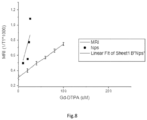
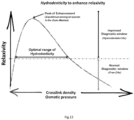
- the here disclosed coacervate nanoparticles shows an average enhanced relaxivity in MRI, up to 8 times higher than commercial Gd-DTPA (4 mM sec -1 ), as shown in Figure 8 .
- This is mainly due to the complex equilibrium formed in the coacervate nanoparticles by the elastic stretches of polymer chains, water osmotic pressure and hydration degree able to boost the relaxivity (data not shown).
- said complex equilibrium can be summarized in a new concept named by the present inventors "hydrodenticity”, which can be applied not only to coacervate particles, but also to other types of materials, such as hydrogels, polymeric films, etc.
- the present inventors found that hydrodenticity allows the formation of water compartments containing the encapsulated contrast agent. The water compartment is responsible for the improvement of the imaging performance of the nanoparticles of the invention.
- Modulation of the hydrodenticity through: (i) elastic stretching of the polymer meshes (ii) osmotic pressure and (iii) hydrated state of the contrast agent (e.g. Gd-DTPA) allows obtaining customized nanoparticles for each pathology to be diagnosed.
- the contrast agent e.g. Gd-DTPA
- Such a customized diagnostic window improves efficacy in the treatment of a particular disease, thus avoiding toxic effects, and increasing the performance of the MRI acquisitions.
- coacervates having size less than 70 nm may also be employed for controlled delivery of contrast agents to the brain.
- the present disclosure relates to the use of the above described coacervate nanoparticles as probe for multimodal imaging.
- the coacervate nanoparticles may advantageously be used in simultaneous PET/MRI imaging acquisition, preserving reduced toxicity, increased tissue specificity and higher sensitivity.
- the coacervate nanoparticles of the present disclosure are used, after loading with the appropriate contrast agents, as single probe for trimodal imaging, in particular combining simultaneous MRI, PET and fluorescence imaging.
- Example 1 synthesis of hyaluronic acid-chitosan coacervates
- the different materials that are used for nanoparticles production are: Chitosan (CHS) low molecular weight; Divinyl Sulfone (DVS) 118.15 g/mol; Sodium Tripolyphosphate (TPP) 367.86 g/mol; Glacial Acetic Acid molecular weight 60.05; Ethanol (EtOH) molecular weight 46.07; Gd-DTPA molecular weight 547.57; Mineral Oil 0.84 g/mL at 25°C (lit.); Span80 molecular weight 274.43; 1.005 g/mL at 20°C (lit.) are purchased by Sigma-Aldrich ® while Hyaluronic Acid (HA) 850 kDa parenteral grade is by Hyasis ® . MilliQ water is used for all experiments.
- CHS Chitosan
- DVS Divinyl Sulfone
- TPP Sodium Tripolyphosphate
- chitosan is solubilised in an aqueous solution in acid conditions.
- An aqueous solution of Chitosan and Acetic Acid (10-400 ⁇ l) was obtained by mixing 5 ml of MilliQ water at a chitosan concentration of 1% wt/v.
- the concentration of acetic acid is adjusted from 1.39 M to 0.034 M to balance the addition of Gd-DTPA at a concentration of 1.8 ⁇ M.
- the volume of acetic acid is added to balance the acid nature of Gd-DTPA to re-establish the pH conditions between 4.5 and 5.
- the oil phase is obtained by dissolving the surfactant Span 80 (0.5-1% wt/v) in 45 ml of Mineral Oil and homogenizing for 5 min at 7000 rpm. The as obtained primary emulsion is then treated for 20 minutes at 7000 rpm.
- the secondary solution (coacervant phase), composed of 0.1% wt/v of hyaluronic acid in a water solution of 3 ml at 30% TPP (pH 10-11), is added dropwise to the w/o primary emulsion previously prepared and homogenized at 7000 rpm for 30 min, by controlling pH and temperature values at 4.5 and 35°C respectively.
- the reaction is kept under stirring at room temperature until a phase separation spontaneously occurs.
- the final dispersion was homogenized at 7000 rpm for other 30 min, keeping the temperature at a constant value of 35°C.
- a cooling step is performed from 35°C to 25 °C at about 5-10°C/h.
- the same procedure can be applied without performing a cooling step but at isothermal conditions, preferably at 23°C.
- bovine serum albumin BSA
- Gd-DTPA bovine serum albumin
- the secondary solution (coacervant phase) of 0.1% wt/v chitosan in a water acid solution of 3 ml at pH 5-6 is prepared.
- the concentration of acetic acid is adjusted from 1.39 M to 0.034 M.
- the secondary solution containing chitosan as coacervate polymer, is added dropwise into the primary water in oil emulsion previously prepared and homogenized at 7000rpm for 30 minutes, by keeping the pH at constant values of 5-6.
- the reaction is kept under stirring over-night at 300rpm at room temperature.
- the final dispersion it is homogenized at 7000 rpm for other 30 min, keeping the system at constant room temperature..
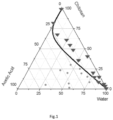
- Example 3 Assessment of the ternary diagram at room temperature
- the experimental assessment of the ternary diagram was made by varying the composition of the 3 compounds of example 1 at room temperature and analysing the behaviour of the final mixture.
- the experimental data are obtained from a solution obtained by mixing 1 ml of each of the 3 compounds. It has been found that, by adding the acetic acid dropwise, the gap between chitosan and water decreases, thus allowing the complete dissolution of the polymer into the acetic solution.
- the triangle working points represent concentrations at which the polymer is not dissolved into the solution (precipitation), while the circle working points represent the complete dissolution of the polymer.
- the line that drafts the gap of miscibility represents a transition line between the two different behaviours.
- the saturation of the system at 1% wt/v of chitosan is 2 ⁇ l/ml of the acetic acid solution.
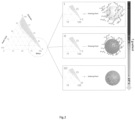
- the variation of temperature that is used to speed up the process is an isothermal at 35 °C for 5.5 h and a ramp from 35°C to 23°C for 1.5 h (8°C/h) (reported in figure 3 ).
- Example 5 comparative example
- nanoparticles obtained according to a traditional coacervation process are 0.1% wt/v of HA, 1% wt/v of chitosan, 30% TPP wt/v and Gd-DTPA/Chitosan ratio 1:1) showing how the presence of Gd-DTPA leads to nanoparticles unstable in water, characterized by a swelling behaviour.
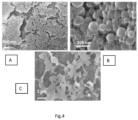
- figure 4(A) it is shown how the nanoparticles produced according to same coacervation method are stable in water in absence of Gd-DTPA and are unstable in presence of encapsulated Gd-DTPA.
- Figure 4 (A) and (B) are nanoparticles collected in ethanol and show how the coacervation process regularly occurs also in the presence of Gd.
- Figure (C) shows the instability of the nanoparticles when they are dissolved in water and obtained in the presence of Gd-DTPA, which interferes with the crosslinking.
- TEM Transmission Electron Microscope
- FEI ® in DRY, CRYO and Tomography (TOMO) modes
- DRY mode the samples are prepared using Formvar/Carbon 200 mesh Cu Agar ® depositing 20 ⁇ l of the suspended nanoparticles.
- CRYO mode the samples are prepared using VITROBOT FEI ® coating Lacey Carbon film 200 mesh Cu Agar ® with 3 ⁇ l of nanoparticles suspension.
- the parameters of verification performed by VITROBOT are: blotting time of 1s, humidity higher than 70% and temperature of 20°C. From the obtained images, a typical core-shell morphology can be seen.
- FE-SEM field emission scanning electron microscope
- Zeiss ® was used to investigate nanoparticles loaded with encapsulated Gd-DTPA and absorbed FDG.
- the sputter coating of the samples was made of 7nm Au or PtPd.
- Mass spectrometry (MS) measures are made on eluate after a purification step of the particles. The results show a sorption of about 50% of the FDG after the contact of 10 min with the nanoparticles.
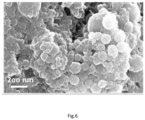
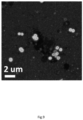
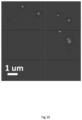
- Figure 6 shows nanoparticles with Gd-DTPA after the sorption with a volume of FDG at 0.014 mg/ml and it can be seen how the particles morphology has not been compromised by the adsorption procedure.
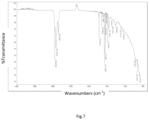
- the peaks at 2953.42 cm -1 , 2922.48 cm -1 and 2853.39 cm -1 show the interactions of -CH groups.
- Minispec 60mq BRUKER ® Relaxometric properties are studied by Minispec 60mq BRUKER ® through the evaluation of the relaxation times T1 and T2. Experiments by Minispec 60mq are made with glass tube on 300 ⁇ l of nanoparticles suspension. Free Induction Decay sequence (FID) is used to evaluate the best value of the Gain to control the saturation of the signal and measure T2*; Saturation Recovery (SR) and Inversion Recovery (IR) sequences are used to measure T1 instead Carr Purcell sequence (CPC) to evaluate T2. Concentrations of Gd-DTPA in the different nanostructures are evaluated by ICP-MS Agilent ® to gain information about the loading capability of the produced nanocapsules.
- FID Free Induction Decay sequence
- SR Saturation Recovery
- IR Inversion Recovery
- CPC Carr Purcell sequence
- Mass spectrometry (Agilent Technologies 6530 Accurate-Mass Q-TOF LC/MS) method is dedicated to the analysis of FDG.
- the mobile phase of elution system is chosen as acetonitrile (solvent A) and water (solvent B), with a flow rate of 10 ⁇ l/min and an injection volume of 10 ⁇ l.
- the used column is PLRP-S 100A 3 ⁇ m 50X4 5MM. Concentrations of Gd-DTPA in the different nanostructures are evaluated by ICP-MS Agilent ® .
- HyCoS nanocoacervates produced at 35 °C for 5.5 h and followed by a ramp from 35°C to 23°C for 1.5 h (8°C/hr), at pH 4, maintain their stability until the first hour, but after this time they dissolve completely. On the contrary, at pH 7 they preserve their stability at all the different times (30 min, 1h, 2h, 3h, 6h, 8h, 12h, 24h). Coacervated nanoparticles obtained by the here disclosed process do not seem to be pH sensitive and remain stable at any pH condition until 24 hours. On the contrary, coacervation occurred at room temperature produces nanoparticles that are pH-sensitive that seem to be stable at pH 7 for more than 24 hr while at pH 4 dissolve completely.
Landscapes
- Health & Medical Sciences (AREA)
- Chemical & Material Sciences (AREA)
- Life Sciences & Earth Sciences (AREA)
- Engineering & Computer Science (AREA)
- Veterinary Medicine (AREA)
- Animal Behavior & Ethology (AREA)
- Public Health (AREA)
- General Health & Medical Sciences (AREA)
- Epidemiology (AREA)
- Medicinal Chemistry (AREA)
- Organic Chemistry (AREA)
- Nanotechnology (AREA)
- Chemical Kinetics & Catalysis (AREA)
- Pharmacology & Pharmacy (AREA)
- Polymers & Plastics (AREA)
- Optics & Photonics (AREA)
- Physics & Mathematics (AREA)
- Biomedical Technology (AREA)
- Dispersion Chemistry (AREA)
- Nuclear Medicine, Radiotherapy & Molecular Imaging (AREA)
- Biochemistry (AREA)
- Biotechnology (AREA)
- Molecular Biology (AREA)
- Proteomics, Peptides & Aminoacids (AREA)
- Radiology & Medical Imaging (AREA)
- General Chemical & Material Sciences (AREA)
- Medicines Containing Antibodies Or Antigens For Use As Internal Diagnostic Agents (AREA)
- Graft Or Block Polymers (AREA)
Claims (11)
- Verfahren zur Herstellung von Koazervat-Nanopartikeln, umfassend die folgenden Schritte:a) Bereitstellen einer Wasser-in-Öl-Emulsion eines biokompatiblen Polyelektrolytpolymers, ausgewählt aus der Gruppe, bestehend aus Poly(L-Lysin), Chitosan, Rinderserumalbumin (BSA), Humanserumalbumin (HSA), Polymilch-co-Glykolsäure (PLGA), Polymilch-co-Glykolsäure-polyethylenglycol (PLGA-PEG) Di- und Triblock, Polymilchsäure (PLA) und Polymilchsäurepolyethylenglycol (PLA-PEG) Tri- und Diblock, Cellulosederivate, ausgewählt aus Chitosancarboxymethylcellulose (CMC), N-Alginat und Hydroxypropylmethylcellulose (HPMC); Stärkederivate, Dextranderivate, ausgewählt aus Poly(N-isopropylacrylamid) (PNIPAAm) und Poly(N-Vinylcaprolactam)-Hydroxyethylmethacrylat (PVCL-HEMA), gepfropft auf Dextrankette, methacryliertes Dextran (dex-MA) und hydroxyethylmethacryliertes Dextran (dex-HEMA), glycidylmethacryliertes Dextran (dex-GMA); Poly(vinylbenzyltrialkylammonium), Poly(4-vinyl-N-alkyl-pyridimiun), Poly(acryloyl-oxyalkyl-trialkylammonium), Poly(acryamidoalkyl-trialkylammonium), Poly(diallydimethylammonium), Poly(N-isopropylacrylamid) (PNIPAAm), Poly(hydroxyethylmethacrylat) Poly-HEMA und Maleinsäure/Diallylamin-Copolymer;b) Bereitstellen einer wässrigen Lösung eines biokompatiblen Polyelektrolytpolymers mit entgegengesetzten Ladungen des Polyelektrolyten von Schritt a), ausgewählt aus der Gruppe bestehend aus: Hyaluronsäure, Poly(L-glutamin)-Säure, Carraggenan, Alginaten, Pektin, Chitin, Cellulosederivaten, Stärkederivaten, Dextranderivaten, Poly(styrolsulfonsäure), Poly(vinylsulfonsäure), Poly(acryl- oder methacrylsäure), Poly(itaconsäure), Maleinsäure/Diallyamin-Copolymer und Chitosan;c) Zugeben von zwei Vernetzungsmitteln, eines zur Emulsion und eines zur wässrigen Lösung;d) Zugeben eines Kontrastmittels für medizinische Bildgebung entweder zur Emulsion oder zur wässrigen Lösung;e) Zugeben der wässrigen Lösung zu der Emulsion bei einer konstanten Temperatur zwischen 19 und 37 °C und bei einem pH-Wert zwischen 3 und 7, wodurch die Abtrennung der Koazervat-Nanopartikel erreicht wird.f) Optional Zugeben eines weiteren Kontrastmittels und eines optischen Tracers oder eines Radiotracers für medizinische Bildgebung zu den in Schritt e) erhaltenen Koazervat-Nanopartikeln.
- Verfahren nach Anspruch 1, wobei, wenn Schritt e) bei einem konstanten Temperaturwert im Bereich von 19 bis 27 °C durchgeführt wird, die Koazervation bei der gleichen isothermen Temperatur fortgesetzt wird, bis eine vollständige Koazervation auftritt.
- Verfahren nach Anspruch 1, wobei, wenn Schritt e) über 27 °C durchgeführt wird, sobald die Koazervation beginnt, die Lösung schnell auf eine Temperatur zwischen 19 und 25 °C abgekühlt wird.
- Verfahren nach einem der vorhergehenden Ansprüche, wobei das biokompatible Polyelektrolytpolymer von Schritt a) Chitosan, Polymilchsäure-co-Glykolsäure (PLGA) oder Rinderserumalbumin ist.
- Verfahren nach einem der vorhergehenden Ansprüche, wobei das biokompatible Polyelektrolytpolymer von Schritt b) Hyaluronsäure, Chitosan oder Polymilchsäure-co-Glykolsäure (PLGA) ist.
- Verfahren nach einem der vorhergehenden Ansprüche, wobei das biokompatible Polyelektrolytpolymer von Schritt a) Chitosan ist und das biokompatible Polyelektrolytpolymer von Schritt b) Hyaluronsäure ist.
- Verfahren nach einem der vorhergehenden Ansprüche, wobei die konstante Temperatur und der konstante pH-Wert von Schritt e) jeweils zwischen 22 °C und 27 °C und 3 und 7 liegen.
- Koazervat-Nanopartikel, die durch das Verfahren nach einem der vorhergehenden Ansprüche erhältlich sind und eine Kern-Hülle-Struktur aufweisen, die Wasserkompartimente umschließt, die mindestens ein Kontrastmittel einkapseln.
- Koazervat-Nanopartikel nach Anspruch 8 mit einer Größe zwischen 40 nm und 500 nm, vorzugsweise zwischen 40 nm und 70 nm.
- Verwendung der Koazervat-Nanopartikel nach Anspruch 8 oder 9 als Sonden für multimodale medizinische Bildgebung.
- Koazervat-Nanopartikel nach Anspruch 8 oder 9 zur Verwendung bei der theranostischen Behandlung von Krebs.
Applications Claiming Priority (2)
| Application Number | Priority Date | Filing Date | Title |
|---|---|---|---|
| IT102017000020707A IT201700020707A1 (it) | 2017-02-23 | 2017-02-23 | Process for the preparation of double crosslinked core-shell polymeric nanoparticles for multimodal imaging and theranostic applications |
| PCT/IB2018/051087 WO2018154470A1 (en) | 2017-02-23 | 2018-02-22 | Process for the preparation of double crosslinked core-shell polymeric nanoparticles for multimodal imaging and theranostic applications |
Publications (3)
| Publication Number | Publication Date |
|---|---|
| EP3585447A1 EP3585447A1 (de) | 2020-01-01 |
| EP3585447B1 true EP3585447B1 (de) | 2024-07-24 |
| EP3585447C0 EP3585447C0 (de) | 2024-07-24 |
Family
ID=59101619
Family Applications (1)
| Application Number | Title | Priority Date | Filing Date |
|---|---|---|---|
| EP18708491.8A Active EP3585447B1 (de) | 2017-02-23 | 2018-02-22 | Verfahren zur herstellung von doppelvernetzten kern-hülle-polymernanopartikeln für multimodale bildgebung und theranostische anwendungen |
Country Status (4)
| Country | Link |
|---|---|
| US (1) | US11311853B2 (de) |
| EP (1) | EP3585447B1 (de) |
| IT (1) | IT201700020707A1 (de) |
| WO (1) | WO2018154470A1 (de) |
Families Citing this family (5)
| Publication number | Priority date | Publication date | Assignee | Title |
|---|---|---|---|---|
| EP3793620B1 (de) * | 2018-05-18 | 2023-07-12 | Bard Peripheral Vascular, Inc. | Mikrokugeln mit radioaktiven isotopen und anderen markern sowie zugehörige verfahren |
| IT202100002537A1 (it) | 2021-02-05 | 2022-08-05 | Kyme Nanoimaging Srl | Processo microfluidico per la preparazione di nanostrutture liposomiche caricate con idrogel |
| IT202100006866A1 (it) | 2021-03-22 | 2022-09-22 | Kyme Nanoimaging Srl | Un processo per la preparazione di nanostrutture di idrogel mediante gelificazione ionotropica in microfluidica |
| IT202200022041A1 (it) | 2022-10-25 | 2024-04-25 | Kyme Nanoimaging Srl | Nanostrutture liposomiche caricate con idrogel |
| US12440585B2 (en) * | 2023-09-12 | 2025-10-14 | Curadel Surgical Innovations, Inc. | Zwitterionic metal chelators |
Citations (1)
| Publication number | Priority date | Publication date | Assignee | Title |
|---|---|---|---|---|
| WO2016097963A1 (en) * | 2014-12-16 | 2016-06-23 | Fondazione Istituto Italiano Di Tecnologia | Albumin nanoparticles encapsulating gadolinium and method of synthesis thereof |
Family Cites Families (1)
| Publication number | Priority date | Publication date | Assignee | Title |
|---|---|---|---|---|
| GB9902652D0 (en) | 1999-02-05 | 1999-03-31 | Fermentech Med Ltd | Process |
-
2017
- 2017-02-23 IT IT102017000020707A patent/IT201700020707A1/it unknown
-
2018
- 2018-02-22 EP EP18708491.8A patent/EP3585447B1/de active Active
- 2018-02-22 US US16/487,896 patent/US11311853B2/en active Active
- 2018-02-22 WO PCT/IB2018/051087 patent/WO2018154470A1/en not_active Ceased
Patent Citations (1)
| Publication number | Priority date | Publication date | Assignee | Title |
|---|---|---|---|---|
| WO2016097963A1 (en) * | 2014-12-16 | 2016-06-23 | Fondazione Istituto Italiano Di Tecnologia | Albumin nanoparticles encapsulating gadolinium and method of synthesis thereof |
Non-Patent Citations (1)
| Title |
|---|
| KOLLURU LAKSHMI PRASANNA ET AL: "Formulation development of albumin based theragnostic nanoparticles as a potential delivery system for tumor targeting", JOURNAL OF DRUG TARGETING, TAYLOR & FRANCIS, GB, vol. 21, no. 1, 1 January 2013 (2013-01-01), pages 77 - 86, XP009190644, ISSN: 1061-186X, DOI: 10.3109/1061186X.2012.729214 * |
Also Published As
| Publication number | Publication date |
|---|---|
| IT201700020707A1 (it) | 2018-08-23 |
| US20190381471A1 (en) | 2019-12-19 |
| WO2018154470A1 (en) | 2018-08-30 |
| EP3585447A1 (de) | 2020-01-01 |
| EP3585447C0 (de) | 2024-07-24 |
| US11311853B2 (en) | 2022-04-26 |
Similar Documents
| Publication | Publication Date | Title |
|---|---|---|
| EP3585447B1 (de) | Verfahren zur herstellung von doppelvernetzten kern-hülle-polymernanopartikeln für multimodale bildgebung und theranostische anwendungen | |
| JP4920056B2 (ja) | 癌標的性に優れたタンパク質複合体及びその製造方法 | |
| JP6234432B2 (ja) | pH活性化型多色蛍光ナノプラットフォーム | |
| Ren et al. | Near-infrared fluorescent carbon dots encapsulated liposomes as multifunctional nano-carrier and tracer of the anticancer agent cinobufagin in vivo and in vitro | |
| Wang et al. | Fluoropolymer-MOF hybrids with switchable hydrophilicity for 19F MRI-monitored cancer therapy | |
| US20110158901A1 (en) | Chitosan-based nanoparticles and methods for making and using the same | |
| US20150320890A1 (en) | Nanoparticles for brain tumor imaging | |
| CN106390143A (zh) | 肿瘤靶向核磁共振/荧光双模态成像造影剂及其制备和应用 | |
| CN105377309A (zh) | 荧光固体脂质纳米颗粒组合物及其制备 | |
| Zhang et al. | Gadolinium-hybridized mesoporous organosilica nanoparticles with high magnetic resonance imaging performance for targeted drug delivery | |
| CN104436220B (zh) | 一种壳聚糖磁性纳米微球的制备方法及其用途 | |
| US20180303946A1 (en) | Crosslinked polysaccharide beads comprising an imaging agent | |
| Gallo et al. | Systematic overview of soft materials as a novel frontier for MRI contrast agents | |
| Mallik et al. | Porous Silica Nanospheres with a Confined Mono (aquated) Mn (II)-Complex: A Potential T 1–T 2 Dual Contrast Agent for Magnetic Resonance Imaging | |
| Cheng et al. | Covalently conjugated hydrogelators for imaging and therapeutic applications | |
| Lee et al. | Amphiphilic hyaluronic acid-based nanoparticles for tumor-specific optical/MR dual imaging | |
| CN109876150B (zh) | 聚合物药物载体、其载药组合物及制备方法和应用 | |
| US10434193B2 (en) | Composition for use in medical imaging and a method for preparing thereof | |
| WO2010148395A1 (en) | Paramagnetic porous polymersomes and uses thereof | |
| WO2007054182A2 (de) | Nanopartikel als kontrastmittel für die kernspintomographie | |
| WO2017093902A1 (en) | A process for the preparation of nanoparticles for use as contrast agents in the magnetic resonance imaging | |
| IT202100002537A1 (it) | Processo microfluidico per la preparazione di nanostrutture liposomiche caricate con idrogel | |
| CN109897089B (zh) | 一种整合素配体vs多肽及其在制备肿瘤靶向诊治递药系统中的应用 | |
| Ghazimoradi et al. | Design and synthesis of novel trifunctional drug carrier comprising luminescent-magnetic nanocomposite adorned with a pH-sensitive copolymer as a controlled switch for dual drug delivery | |
| JP5685647B2 (ja) | 酸化鉄ナノカプセル、その製造方法およびそれを含む磁気共鳴画像診断造影剤 |
Legal Events
| Date | Code | Title | Description |
|---|---|---|---|
| STAA | Information on the status of an ep patent application or granted ep patent |
Free format text: STATUS: UNKNOWN |
|
| STAA | Information on the status of an ep patent application or granted ep patent |
Free format text: STATUS: THE INTERNATIONAL PUBLICATION HAS BEEN MADE |
|
| PUAI | Public reference made under article 153(3) epc to a published international application that has entered the european phase |
Free format text: ORIGINAL CODE: 0009012 |
|
| STAA | Information on the status of an ep patent application or granted ep patent |
Free format text: STATUS: REQUEST FOR EXAMINATION WAS MADE |
|
| 17P | Request for examination filed |
Effective date: 20190918 |
|
| AK | Designated contracting states |
Kind code of ref document: A1 Designated state(s): AL AT BE BG CH CY CZ DE DK EE ES FI FR GB GR HR HU IE IS IT LI LT LU LV MC MK MT NL NO PL PT RO RS SE SI SK SM TR |
|
| AX | Request for extension of the european patent |
Extension state: BA ME |
|
| DAV | Request for validation of the european patent (deleted) | ||
| DAX | Request for extension of the european patent (deleted) | ||
| STAA | Information on the status of an ep patent application or granted ep patent |
Free format text: STATUS: EXAMINATION IS IN PROGRESS |
|
| 17Q | First examination report despatched |
Effective date: 20210429 |
|
| GRAP | Despatch of communication of intention to grant a patent |
Free format text: ORIGINAL CODE: EPIDOSNIGR1 |
|
| STAA | Information on the status of an ep patent application or granted ep patent |
Free format text: STATUS: GRANT OF PATENT IS INTENDED |
|
| INTG | Intention to grant announced |
Effective date: 20240111 |
|
| GRAJ | Information related to disapproval of communication of intention to grant by the applicant or resumption of examination proceedings by the epo deleted |
Free format text: ORIGINAL CODE: EPIDOSDIGR1 |
|
| STAA | Information on the status of an ep patent application or granted ep patent |
Free format text: STATUS: EXAMINATION IS IN PROGRESS |
|
| GRAP | Despatch of communication of intention to grant a patent |
Free format text: ORIGINAL CODE: EPIDOSNIGR1 |
|
| STAA | Information on the status of an ep patent application or granted ep patent |
Free format text: STATUS: GRANT OF PATENT IS INTENDED |
|
| GRAS | Grant fee paid |
Free format text: ORIGINAL CODE: EPIDOSNIGR3 |
|
| INTC | Intention to grant announced (deleted) | ||
| GRAA | (expected) grant |
Free format text: ORIGINAL CODE: 0009210 |
|
| STAA | Information on the status of an ep patent application or granted ep patent |
Free format text: STATUS: THE PATENT HAS BEEN GRANTED |
|
| INTG | Intention to grant announced |
Effective date: 20240607 |
|
| AK | Designated contracting states |
Kind code of ref document: B1 Designated state(s): AL AT BE BG CH CY CZ DE DK EE ES FI FR GB GR HR HU IE IS IT LI LT LU LV MC MK MT NL NO PL PT RO RS SE SI SK SM TR |
|
| REG | Reference to a national code |
Ref country code: GB Ref legal event code: FG4D |
|
| REG | Reference to a national code |
Ref country code: CH Ref legal event code: EP |
|
| REG | Reference to a national code |
Ref country code: IE Ref legal event code: FG4D Ref country code: DE Ref legal event code: R096 Ref document number: 602018072127 Country of ref document: DE |
|
| U01 | Request for unitary effect filed |
Effective date: 20240802 |
|
| U07 | Unitary effect registered |
Designated state(s): AT BE BG DE DK EE FI FR IT LT LU LV MT NL PT SE SI Effective date: 20240820 |
|
| PG25 | Lapsed in a contracting state [announced via postgrant information from national office to epo] |
Ref country code: NO Free format text: LAPSE BECAUSE OF FAILURE TO SUBMIT A TRANSLATION OF THE DESCRIPTION OR TO PAY THE FEE WITHIN THE PRESCRIBED TIME-LIMIT Effective date: 20241024 |
|
| PG25 | Lapsed in a contracting state [announced via postgrant information from national office to epo] |
Ref country code: PL Free format text: LAPSE BECAUSE OF FAILURE TO SUBMIT A TRANSLATION OF THE DESCRIPTION OR TO PAY THE FEE WITHIN THE PRESCRIBED TIME-LIMIT Effective date: 20240724 Ref country code: GR Free format text: LAPSE BECAUSE OF FAILURE TO SUBMIT A TRANSLATION OF THE DESCRIPTION OR TO PAY THE FEE WITHIN THE PRESCRIBED TIME-LIMIT Effective date: 20241025 |
|
| PG25 | Lapsed in a contracting state [announced via postgrant information from national office to epo] |
Ref country code: IS Free format text: LAPSE BECAUSE OF FAILURE TO SUBMIT A TRANSLATION OF THE DESCRIPTION OR TO PAY THE FEE WITHIN THE PRESCRIBED TIME-LIMIT Effective date: 20241124 |
|
| PG25 | Lapsed in a contracting state [announced via postgrant information from national office to epo] |
Ref country code: HR Free format text: LAPSE BECAUSE OF FAILURE TO SUBMIT A TRANSLATION OF THE DESCRIPTION OR TO PAY THE FEE WITHIN THE PRESCRIBED TIME-LIMIT Effective date: 20240724 |
|
| PG25 | Lapsed in a contracting state [announced via postgrant information from national office to epo] |
Ref country code: RS Free format text: LAPSE BECAUSE OF FAILURE TO SUBMIT A TRANSLATION OF THE DESCRIPTION OR TO PAY THE FEE WITHIN THE PRESCRIBED TIME-LIMIT Effective date: 20241024 Ref country code: ES Free format text: LAPSE BECAUSE OF FAILURE TO SUBMIT A TRANSLATION OF THE DESCRIPTION OR TO PAY THE FEE WITHIN THE PRESCRIBED TIME-LIMIT Effective date: 20240724 |
|
| PG25 | Lapsed in a contracting state [announced via postgrant information from national office to epo] |
Ref country code: RS Free format text: LAPSE BECAUSE OF FAILURE TO SUBMIT A TRANSLATION OF THE DESCRIPTION OR TO PAY THE FEE WITHIN THE PRESCRIBED TIME-LIMIT Effective date: 20241024 Ref country code: PL Free format text: LAPSE BECAUSE OF FAILURE TO SUBMIT A TRANSLATION OF THE DESCRIPTION OR TO PAY THE FEE WITHIN THE PRESCRIBED TIME-LIMIT Effective date: 20240724 Ref country code: NO Free format text: LAPSE BECAUSE OF FAILURE TO SUBMIT A TRANSLATION OF THE DESCRIPTION OR TO PAY THE FEE WITHIN THE PRESCRIBED TIME-LIMIT Effective date: 20241024 Ref country code: IS Free format text: LAPSE BECAUSE OF FAILURE TO SUBMIT A TRANSLATION OF THE DESCRIPTION OR TO PAY THE FEE WITHIN THE PRESCRIBED TIME-LIMIT Effective date: 20241124 Ref country code: HR Free format text: LAPSE BECAUSE OF FAILURE TO SUBMIT A TRANSLATION OF THE DESCRIPTION OR TO PAY THE FEE WITHIN THE PRESCRIBED TIME-LIMIT Effective date: 20240724 Ref country code: GR Free format text: LAPSE BECAUSE OF FAILURE TO SUBMIT A TRANSLATION OF THE DESCRIPTION OR TO PAY THE FEE WITHIN THE PRESCRIBED TIME-LIMIT Effective date: 20241025 Ref country code: ES Free format text: LAPSE BECAUSE OF FAILURE TO SUBMIT A TRANSLATION OF THE DESCRIPTION OR TO PAY THE FEE WITHIN THE PRESCRIBED TIME-LIMIT Effective date: 20240724 |
|
| U20 | Renewal fee for the european patent with unitary effect paid |
Year of fee payment: 8 Effective date: 20250224 |
|
| PG25 | Lapsed in a contracting state [announced via postgrant information from national office to epo] |
Ref country code: RO Free format text: LAPSE BECAUSE OF FAILURE TO SUBMIT A TRANSLATION OF THE DESCRIPTION OR TO PAY THE FEE WITHIN THE PRESCRIBED TIME-LIMIT Effective date: 20240724 Ref country code: SM Free format text: LAPSE BECAUSE OF FAILURE TO SUBMIT A TRANSLATION OF THE DESCRIPTION OR TO PAY THE FEE WITHIN THE PRESCRIBED TIME-LIMIT Effective date: 20240724 |
|
| PG25 | Lapsed in a contracting state [announced via postgrant information from national office to epo] |
Ref country code: CZ Free format text: LAPSE BECAUSE OF FAILURE TO SUBMIT A TRANSLATION OF THE DESCRIPTION OR TO PAY THE FEE WITHIN THE PRESCRIBED TIME-LIMIT Effective date: 20240724 |
|
| PG25 | Lapsed in a contracting state [announced via postgrant information from national office to epo] |
Ref country code: SK Free format text: LAPSE BECAUSE OF FAILURE TO SUBMIT A TRANSLATION OF THE DESCRIPTION OR TO PAY THE FEE WITHIN THE PRESCRIBED TIME-LIMIT Effective date: 20240724 |
|
| PLBE | No opposition filed within time limit |
Free format text: ORIGINAL CODE: 0009261 |
|
| STAA | Information on the status of an ep patent application or granted ep patent |
Free format text: STATUS: NO OPPOSITION FILED WITHIN TIME LIMIT |
|
| 26N | No opposition filed |
Effective date: 20250425 |
|
| PG25 | Lapsed in a contracting state [announced via postgrant information from national office to epo] |
Ref country code: MC Free format text: LAPSE BECAUSE OF FAILURE TO SUBMIT A TRANSLATION OF THE DESCRIPTION OR TO PAY THE FEE WITHIN THE PRESCRIBED TIME-LIMIT Effective date: 20240724 |
|
| REG | Reference to a national code |
Ref country code: CH Ref legal event code: PL |
|
| PG25 | Lapsed in a contracting state [announced via postgrant information from national office to epo] |
Ref country code: CH Free format text: LAPSE BECAUSE OF NON-PAYMENT OF DUE FEES Effective date: 20250228 |
|
| GBPC | Gb: european patent ceased through non-payment of renewal fee |
Effective date: 20250222 |