EP3585159B1 - Verfahren zum testen der fähigkeit einer crispr/cas9-nuklease, einen genomischen zielort in vivo zu modifizieren, unter verwendung einer cas-transgenen maus oder ratte, deren genom eine cas9-expressionskassette enthält - Google Patents
Verfahren zum testen der fähigkeit einer crispr/cas9-nuklease, einen genomischen zielort in vivo zu modifizieren, unter verwendung einer cas-transgenen maus oder ratte, deren genom eine cas9-expressionskassette enthält Download PDFInfo
- Publication number
- EP3585159B1 EP3585159B1 EP18759200.1A EP18759200A EP3585159B1 EP 3585159 B1 EP3585159 B1 EP 3585159B1 EP 18759200 A EP18759200 A EP 18759200A EP 3585159 B1 EP3585159 B1 EP 3585159B1
- Authority
- EP
- European Patent Office
- Prior art keywords
- cas9
- sequence
- protein
- target
- mouse
- Prior art date
- Legal status (The legal status is an assumption and is not a legal conclusion. Google has not performed a legal analysis and makes no representation as to the accuracy of the status listed.)
- Active
Links
Images






Classifications
-
- A—HUMAN NECESSITIES
- A01—AGRICULTURE; FORESTRY; ANIMAL HUSBANDRY; HUNTING; TRAPPING; FISHING
- A01K—ANIMAL HUSBANDRY; AVICULTURE; APICULTURE; PISCICULTURE; FISHING; REARING OR BREEDING ANIMALS, NOT OTHERWISE PROVIDED FOR; NEW BREEDS OF ANIMALS
- A01K67/00—Rearing or breeding animals, not otherwise provided for; New or modified breeds of animals
- A01K67/027—New or modified breeds of vertebrates
-
- A—HUMAN NECESSITIES
- A01—AGRICULTURE; FORESTRY; ANIMAL HUSBANDRY; HUNTING; TRAPPING; FISHING
- A01K—ANIMAL HUSBANDRY; AVICULTURE; APICULTURE; PISCICULTURE; FISHING; REARING OR BREEDING ANIMALS, NOT OTHERWISE PROVIDED FOR; NEW BREEDS OF ANIMALS
- A01K67/00—Rearing or breeding animals, not otherwise provided for; New or modified breeds of animals
- A01K67/027—New or modified breeds of vertebrates
- A01K67/0275—Genetically modified vertebrates, e.g. transgenic
-
- A—HUMAN NECESSITIES
- A61—MEDICAL OR VETERINARY SCIENCE; HYGIENE
- A61K—PREPARATIONS FOR MEDICAL, DENTAL OR TOILETRY PURPOSES
- A61K49/00—Preparations for testing in vivo
- A61K49/0004—Screening or testing of compounds for diagnosis of disorders, assessment of conditions, e.g. renal clearance, gastric emptying, testing for diabetes, allergy, rheuma, pancreas functions
- A61K49/0008—Screening agents using (non-human) animal models or transgenic animal models or chimeric hosts, e.g. Alzheimer disease animal model, transgenic model for heart failure
-
- A—HUMAN NECESSITIES
- A61—MEDICAL OR VETERINARY SCIENCE; HYGIENE
- A61K—PREPARATIONS FOR MEDICAL, DENTAL OR TOILETRY PURPOSES
- A61K9/00—Medicinal preparations characterised by special physical form
- A61K9/0012—Galenical forms characterised by the site of application
- A61K9/0019—Injectable compositions; Intramuscular, intravenous, arterial, subcutaneous administration; Compositions to be administered through the skin in an invasive manner
-
- C—CHEMISTRY; METALLURGY
- C07—ORGANIC CHEMISTRY
- C07K—PEPTIDES
- C07K14/00—Peptides having more than 20 amino acids; Gastrins; Somatostatins; Melanotropins; Derivatives thereof
- C07K14/005—Peptides having more than 20 amino acids; Gastrins; Somatostatins; Melanotropins; Derivatives thereof from viruses
-
- C—CHEMISTRY; METALLURGY
- C12—BIOCHEMISTRY; BEER; SPIRITS; WINE; VINEGAR; MICROBIOLOGY; ENZYMOLOGY; MUTATION OR GENETIC ENGINEERING
- C12N—MICROORGANISMS OR ENZYMES; COMPOSITIONS THEREOF; PROPAGATING, PRESERVING, OR MAINTAINING MICROORGANISMS; MUTATION OR GENETIC ENGINEERING; CULTURE MEDIA
- C12N15/00—Mutation or genetic engineering; DNA or RNA concerning genetic engineering, vectors, e.g. plasmids, or their isolation, preparation or purification; Use of hosts therefor
- C12N15/09—Recombinant DNA-technology
- C12N15/11—DNA or RNA fragments; Modified forms thereof; Non-coding nucleic acids having a biological activity
-
- C—CHEMISTRY; METALLURGY
- C12—BIOCHEMISTRY; BEER; SPIRITS; WINE; VINEGAR; MICROBIOLOGY; ENZYMOLOGY; MUTATION OR GENETIC ENGINEERING
- C12N—MICROORGANISMS OR ENZYMES; COMPOSITIONS THEREOF; PROPAGATING, PRESERVING, OR MAINTAINING MICROORGANISMS; MUTATION OR GENETIC ENGINEERING; CULTURE MEDIA
- C12N15/00—Mutation or genetic engineering; DNA or RNA concerning genetic engineering, vectors, e.g. plasmids, or their isolation, preparation or purification; Use of hosts therefor
- C12N15/09—Recombinant DNA-technology
- C12N15/11—DNA or RNA fragments; Modified forms thereof; Non-coding nucleic acids having a biological activity
- C12N15/113—Non-coding nucleic acids modulating the expression of genes, e.g. antisense oligonucleotides; Antisense DNA or RNA; Triplex- forming oligonucleotides; Catalytic nucleic acids, e.g. ribozymes; Nucleic acids used in co-suppression or gene silencing
-
- C—CHEMISTRY; METALLURGY
- C12—BIOCHEMISTRY; BEER; SPIRITS; WINE; VINEGAR; MICROBIOLOGY; ENZYMOLOGY; MUTATION OR GENETIC ENGINEERING
- C12N—MICROORGANISMS OR ENZYMES; COMPOSITIONS THEREOF; PROPAGATING, PRESERVING, OR MAINTAINING MICROORGANISMS; MUTATION OR GENETIC ENGINEERING; CULTURE MEDIA
- C12N15/00—Mutation or genetic engineering; DNA or RNA concerning genetic engineering, vectors, e.g. plasmids, or their isolation, preparation or purification; Use of hosts therefor
- C12N15/09—Recombinant DNA-technology
- C12N15/63—Introduction of foreign genetic material using vectors; Vectors; Use of hosts therefor; Regulation of expression
- C12N15/79—Vectors or expression systems specially adapted for eukaryotic hosts
- C12N15/85—Vectors or expression systems specially adapted for eukaryotic hosts for animal cells
- C12N15/86—Viral vectors
-
- C—CHEMISTRY; METALLURGY
- C12—BIOCHEMISTRY; BEER; SPIRITS; WINE; VINEGAR; MICROBIOLOGY; ENZYMOLOGY; MUTATION OR GENETIC ENGINEERING
- C12N—MICROORGANISMS OR ENZYMES; COMPOSITIONS THEREOF; PROPAGATING, PRESERVING, OR MAINTAINING MICROORGANISMS; MUTATION OR GENETIC ENGINEERING; CULTURE MEDIA
- C12N15/00—Mutation or genetic engineering; DNA or RNA concerning genetic engineering, vectors, e.g. plasmids, or their isolation, preparation or purification; Use of hosts therefor
- C12N15/09—Recombinant DNA-technology
- C12N15/87—Introduction of foreign genetic material using processes not otherwise provided for, e.g. co-transformation
- C12N15/90—Stable introduction of foreign DNA into chromosome
- C12N15/902—Stable introduction of foreign DNA into chromosome using homologous recombination
- C12N15/907—Stable introduction of foreign DNA into chromosome using homologous recombination in mammalian cells
-
- C—CHEMISTRY; METALLURGY
- C12—BIOCHEMISTRY; BEER; SPIRITS; WINE; VINEGAR; MICROBIOLOGY; ENZYMOLOGY; MUTATION OR GENETIC ENGINEERING
- C12N—MICROORGANISMS OR ENZYMES; COMPOSITIONS THEREOF; PROPAGATING, PRESERVING, OR MAINTAINING MICROORGANISMS; MUTATION OR GENETIC ENGINEERING; CULTURE MEDIA
- C12N9/00—Enzymes; Proenzymes; Compositions thereof; Processes for preparing, activating, inhibiting, separating or purifying enzymes
- C12N9/14—Hydrolases (3)
- C12N9/16—Hydrolases (3) acting on ester bonds (3.1)
- C12N9/22—Ribonucleases [RNase]; Deoxyribonucleases [DNase]
-
- C—CHEMISTRY; METALLURGY
- C12—BIOCHEMISTRY; BEER; SPIRITS; WINE; VINEGAR; MICROBIOLOGY; ENZYMOLOGY; MUTATION OR GENETIC ENGINEERING
- C12Q—MEASURING OR TESTING PROCESSES INVOLVING ENZYMES, NUCLEIC ACIDS OR MICROORGANISMS; COMPOSITIONS OR TEST PAPERS THEREFOR; PROCESSES OF PREPARING SUCH COMPOSITIONS; CONDITION-RESPONSIVE CONTROL IN MICROBIOLOGICAL OR ENZYMOLOGICAL PROCESSES
- C12Q1/00—Measuring or testing processes involving enzymes, nucleic acids or microorganisms; Compositions therefor; Processes of preparing such compositions
- C12Q1/68—Measuring or testing processes involving enzymes, nucleic acids or microorganisms; Compositions therefor; Processes of preparing such compositions involving nucleic acids
- C12Q1/6897—Measuring or testing processes involving enzymes, nucleic acids or microorganisms; Compositions therefor; Processes of preparing such compositions involving nucleic acids involving reporter genes operably linked to promoters
-
- A—HUMAN NECESSITIES
- A01—AGRICULTURE; FORESTRY; ANIMAL HUSBANDRY; HUNTING; TRAPPING; FISHING
- A01K—ANIMAL HUSBANDRY; AVICULTURE; APICULTURE; PISCICULTURE; FISHING; REARING OR BREEDING ANIMALS, NOT OTHERWISE PROVIDED FOR; NEW BREEDS OF ANIMALS
- A01K2217/00—Genetically modified animals
- A01K2217/07—Animals genetically altered by homologous recombination
- A01K2217/072—Animals genetically altered by homologous recombination maintaining or altering function, i.e. knock in
-
- A—HUMAN NECESSITIES
- A01—AGRICULTURE; FORESTRY; ANIMAL HUSBANDRY; HUNTING; TRAPPING; FISHING
- A01K—ANIMAL HUSBANDRY; AVICULTURE; APICULTURE; PISCICULTURE; FISHING; REARING OR BREEDING ANIMALS, NOT OTHERWISE PROVIDED FOR; NEW BREEDS OF ANIMALS
- A01K2217/00—Genetically modified animals
- A01K2217/15—Animals comprising multiple alterations of the genome, by transgenesis or homologous recombination, e.g. obtained by cross-breeding
-
- A—HUMAN NECESSITIES
- A01—AGRICULTURE; FORESTRY; ANIMAL HUSBANDRY; HUNTING; TRAPPING; FISHING
- A01K—ANIMAL HUSBANDRY; AVICULTURE; APICULTURE; PISCICULTURE; FISHING; REARING OR BREEDING ANIMALS, NOT OTHERWISE PROVIDED FOR; NEW BREEDS OF ANIMALS
- A01K2217/00—Genetically modified animals
- A01K2217/20—Animal model comprising regulated expression system
- A01K2217/206—Animal model comprising tissue-specific expression system, e.g. tissue specific expression of transgene, of Cre recombinase
-
- A—HUMAN NECESSITIES
- A01—AGRICULTURE; FORESTRY; ANIMAL HUSBANDRY; HUNTING; TRAPPING; FISHING
- A01K—ANIMAL HUSBANDRY; AVICULTURE; APICULTURE; PISCICULTURE; FISHING; REARING OR BREEDING ANIMALS, NOT OTHERWISE PROVIDED FOR; NEW BREEDS OF ANIMALS
- A01K2227/00—Animals characterised by species
- A01K2227/10—Mammal
- A01K2227/105—Murine
-
- A—HUMAN NECESSITIES
- A01—AGRICULTURE; FORESTRY; ANIMAL HUSBANDRY; HUNTING; TRAPPING; FISHING
- A01K—ANIMAL HUSBANDRY; AVICULTURE; APICULTURE; PISCICULTURE; FISHING; REARING OR BREEDING ANIMALS, NOT OTHERWISE PROVIDED FOR; NEW BREEDS OF ANIMALS
- A01K2267/00—Animals characterised by purpose
- A01K2267/03—Animal model, e.g. for test or diseases
-
- A—HUMAN NECESSITIES
- A01—AGRICULTURE; FORESTRY; ANIMAL HUSBANDRY; HUNTING; TRAPPING; FISHING
- A01K—ANIMAL HUSBANDRY; AVICULTURE; APICULTURE; PISCICULTURE; FISHING; REARING OR BREEDING ANIMALS, NOT OTHERWISE PROVIDED FOR; NEW BREEDS OF ANIMALS
- A01K2267/00—Animals characterised by purpose
- A01K2267/03—Animal model, e.g. for test or diseases
- A01K2267/0393—Animal model comprising a reporter system for screening tests
-
- C—CHEMISTRY; METALLURGY
- C07—ORGANIC CHEMISTRY
- C07K—PEPTIDES
- C07K2319/00—Fusion polypeptide
- C07K2319/60—Fusion polypeptide containing spectroscopic/fluorescent detection, e.g. green fluorescent protein [GFP]
-
- C—CHEMISTRY; METALLURGY
- C12—BIOCHEMISTRY; BEER; SPIRITS; WINE; VINEGAR; MICROBIOLOGY; ENZYMOLOGY; MUTATION OR GENETIC ENGINEERING
- C12N—MICROORGANISMS OR ENZYMES; COMPOSITIONS THEREOF; PROPAGATING, PRESERVING, OR MAINTAINING MICROORGANISMS; MUTATION OR GENETIC ENGINEERING; CULTURE MEDIA
- C12N2310/00—Structure or type of the nucleic acid
- C12N2310/10—Type of nucleic acid
- C12N2310/20—Type of nucleic acid involving clustered regularly interspaced short palindromic repeats [CRISPR]
-
- C—CHEMISTRY; METALLURGY
- C12—BIOCHEMISTRY; BEER; SPIRITS; WINE; VINEGAR; MICROBIOLOGY; ENZYMOLOGY; MUTATION OR GENETIC ENGINEERING
- C12N—MICROORGANISMS OR ENZYMES; COMPOSITIONS THEREOF; PROPAGATING, PRESERVING, OR MAINTAINING MICROORGANISMS; MUTATION OR GENETIC ENGINEERING; CULTURE MEDIA
- C12N2750/00—MICROORGANISMS OR ENZYMES; COMPOSITIONS THEREOF; PROPAGATING, PRESERVING, OR MAINTAINING MICROORGANISMS; MUTATION OR GENETIC ENGINEERING; CULTURE MEDIA ssDNA viruses
- C12N2750/00011—Details
- C12N2750/14011—Parvoviridae
- C12N2750/14111—Dependovirus, e.g. adenoassociated viruses
- C12N2750/14141—Use of virus, viral particle or viral elements as a vector
-
- C—CHEMISTRY; METALLURGY
- C12—BIOCHEMISTRY; BEER; SPIRITS; WINE; VINEGAR; MICROBIOLOGY; ENZYMOLOGY; MUTATION OR GENETIC ENGINEERING
- C12N—MICROORGANISMS OR ENZYMES; COMPOSITIONS THEREOF; PROPAGATING, PRESERVING, OR MAINTAINING MICROORGANISMS; MUTATION OR GENETIC ENGINEERING; CULTURE MEDIA
- C12N2750/00—MICROORGANISMS OR ENZYMES; COMPOSITIONS THEREOF; PROPAGATING, PRESERVING, OR MAINTAINING MICROORGANISMS; MUTATION OR GENETIC ENGINEERING; CULTURE MEDIA ssDNA viruses
- C12N2750/00011—Details
- C12N2750/14011—Parvoviridae
- C12N2750/14111—Dependovirus, e.g. adenoassociated viruses
- C12N2750/14141—Use of virus, viral particle or viral elements as a vector
- C12N2750/14143—Use of virus, viral particle or viral elements as a vector viral genome or elements thereof as genetic vector
-
- C—CHEMISTRY; METALLURGY
- C12—BIOCHEMISTRY; BEER; SPIRITS; WINE; VINEGAR; MICROBIOLOGY; ENZYMOLOGY; MUTATION OR GENETIC ENGINEERING
- C12N—MICROORGANISMS OR ENZYMES; COMPOSITIONS THEREOF; PROPAGATING, PRESERVING, OR MAINTAINING MICROORGANISMS; MUTATION OR GENETIC ENGINEERING; CULTURE MEDIA
- C12N2800/00—Nucleic acids vectors
- C12N2800/30—Vector systems comprising sequences for excision in presence of a recombinase, e.g. loxP or FRT
-
- C—CHEMISTRY; METALLURGY
- C12—BIOCHEMISTRY; BEER; SPIRITS; WINE; VINEGAR; MICROBIOLOGY; ENZYMOLOGY; MUTATION OR GENETIC ENGINEERING
- C12N—MICROORGANISMS OR ENZYMES; COMPOSITIONS THEREOF; PROPAGATING, PRESERVING, OR MAINTAINING MICROORGANISMS; MUTATION OR GENETIC ENGINEERING; CULTURE MEDIA
- C12N2800/00—Nucleic acids vectors
- C12N2800/80—Vectors containing sites for inducing double-stranded breaks, e.g. meganuclease restriction sites
-
- C—CHEMISTRY; METALLURGY
- C12—BIOCHEMISTRY; BEER; SPIRITS; WINE; VINEGAR; MICROBIOLOGY; ENZYMOLOGY; MUTATION OR GENETIC ENGINEERING
- C12Q—MEASURING OR TESTING PROCESSES INVOLVING ENZYMES, NUCLEIC ACIDS OR MICROORGANISMS; COMPOSITIONS OR TEST PAPERS THEREFOR; PROCESSES OF PREPARING SUCH COMPOSITIONS; CONDITION-RESPONSIVE CONTROL IN MICROBIOLOGICAL OR ENZYMOLOGICAL PROCESSES
- C12Q2600/00—Oligonucleotides characterized by their use
- C12Q2600/106—Pharmacogenomics, i.e. genetic variability in individual responses to drugs and drug metabolism
Definitions
- CRISPR/Cas technology is a promising new therapeutic modality.
- One limitation of testing the system in vivo is the need to simultaneously introduce all components into a living organism.
- the typical method of intruding these components is to transiently transfect DNA constructs into cells that will generate the appropriate RNAs and protein.
- this approach has an inherent disadvantage as the cells must rely on the plasmid DNA constructs to first undergo transcription and then translation before the Cas9 protein is available to interact with the sgRNA component.
- CRISPR-Cas9 Knockin Mice for Genome Editing and Cancer Modeling Cell 159 (2014), 440-455 describe a Cre-dependent Rosa26 Cas9 knockin mouse and AAV1/2 or AAV9 for sgRNA and Cre delivery into the required cell types.
- US 2015/0020223 A1 describes Cas9 knock-in mice and in separate embodiments the use of AAV for delivery and expression of Cas9 and guideRNA.
- US 2016/049024 A2 describes a Cre-dependent Rosa26 Cas9 knockin mouse and AAV9 for sgRNA and Cre delivery into the required cell types for generation of mutants.
- WO 2016/049163 A2 describes a Cre-dependent Rosa26 Cas9 knockin mouse and AAV1/2 for sgRNA and Cre delivery into the required cell types.
- a dual AAV system enables the Cas9-mediated correction of a metabolic liver disease in newborn mice
- Nat Biotechnol. 34 (2016) 334-338 describes the use of one AAV expressing Cas9 and another expressing a guid RNA and a donor DNA for correction of a metabolic liver disease in newborn mice.
- the present invention relates to the embodiments as characterized in the claims.
- Methods are provided for assessing the ability of CRISPR/Cas nuclease agents to modify a target genomic locus in vivo as characterized in the claims.
- Provided herein are methods of testing the ability of a CRISPR/Cas nuclease to modify a target genomic locus in vivo.
- the methods comprise: (a) introducing into a non-human animal, i.e.
- a guide RNA designed to target a guide RNA target sequence at the target genomic locus
- the non-human animal comprises a genomically integrated Cas expression cassette comprising an NLS-Cas coding sequence, wherein the Cas9 expression cassette is integrated at a Rosa26 locus, and wherein the Cas9 expression cassete is integrated into the first intron of the Rosa26 locus, and wherein the guide RNA is introduced via adeno-associated virus (AAV)-mediated delivery; and (b) assessing the modification of the target genomic locus.
- AAV adeno-associated virus
- the AAV is AAV8, and step (b) comprises assessing modification of the target genomic locus in the liver of the mouse or rat.
- the route of administration of the AAV to the non-human animal is intravenous injection.
- an exogenous donor nucleic acid is introduced in step (a), wherein the exogenous donor nucleic acid is designed to recombine with the target genomic locus.
- the exogenous donor nucleic acid is a single-stranded oligodeoxynucleotide (ssODN).
- the non-human animal is a rat or mouse.
- the non-human animal is a mouse.
- the target genomic locus comprises a target gene
- step (b) comprises measuring expression of the target gene or activity of a protein encoded by the target gene.
- step (b) comprises sequencing the target genomic locus in one or more cells isolated from the non-human animal.
- step (b) comprises isolating a target organ or tissue from the non-human animal and assessing modification of the target genomic locus in the target organ or tissue.
- step (b) comprises assessing modification of the target genomic locus in two or more different cell types within the target organ or tissue.
- step (b) comprises isolating a non-target organ or tissue from the non-human animal and assessing modification of the target genomic locus in the non-target organ or tissue.
- the NLS-Cas coding sequence is an NLS-Cas9 coding sequence.
- the Cas expression cassette further comprises a polyadenylation signal upstream of the NLS-Cas coding sequence, wherein the polyadenylation signal is flanked by recombinase recognition sites, and wherein the polyadenylation signal in the Cas expression cassette has been excised in a tissue-specific manner.
- the polyadenylation signal upstream of the NLS-coding sequence in the Cas expression cassette has been excised in the liver.
- the recombinase that recognizes the recombinase recognition sites in the Cas expression cassette is a Cre recombinase.
- the non-human animal further comprises a genomically integrated Cre recombinase expression cassette, wherein the Cre recombinase expression cassette comprises a Cre recombinase coding sequence operably linked to a tissue-specific promoter.
- the Cre recombinase gene is operably linked to one of the promoters set forth in Table 2.
- the Cas expression cassette further comprises a polyadenylation signal upstream of the NLS-Cas coding sequence, wherein the polyadenylation signal is flanked by recombinase recognition sites, and wherein the method further comprises introducing a recombinase into the non-human animal in a tissue-specific manner.
- the recombinase is introduced via adeno-associated virus (AAV)-mediated delivery or lipid nanoparticle (LNP)-mediated delivery.
- AAV adeno-associated virus
- LNP lipid nanoparticle
- the recombinase is introduced via AAV8-mediated delivery.
- the recombinase is introduced into the liver.
- the Cas expression cassette further comprises a fluorescent protein coding sequence.
- the Cas expression cassette comprises a multicistronic nucleic acid comprising the NLS-Cas coding sequence and the fluorescent protein coding sequence separated by an intervening internal ribosome entry site (IRES) or an intervening 2A peptide coding sequence.
- the multicistronic nucleic acid in the Cas expression cassette comprises the NLS-Cas coding sequence and a green fluorescent protein coding sequence separated by an intervening P2A peptide coding sequence.
- the Cas expression cassette does not further comprise a fluorescent protein coding sequence.
- the NLS-Cas coding sequence encodes a Cas protein comprising a protein tag.
- the Cas expression cassette is operably linked to an endogenous promoter. In some such methods, the Cas expression cassette is operably linked to an exogenous, constitutive promoter.
- the 5' end of the Cas expression cassette further comprises a 3' splicing sequence.
- the Cas expression cassette encodes a protein comprising the sequence set forth in SEQ ID NO: 13, 16, 19, or 22.
- the Cas expression cassette comprises the sequence set forth in SEQ ID NO: 28, 29, 30, or 31.
- the Cas expression cassette comprises the sequence set forth in SEQ ID NO: 1, 12, 14, 15, 17, 18, 20, or 21.
- the Cas expression cassette is integrated at a safe harbor locus, i.e. into the Rosa26 locus and the Cas expression cassette is integrated into the first intron of the Rosa26 locus.
- the non-human animal is heterozygous for the Cas expression cassette. In some such methods, the non-human animal is homozygous for the Cas expression cassette.
- the non-human animal is a mouse
- the AAV is an AAV8
- the Cas expression cassette is operably linked to the endogenous Rosa26 promoter, is inserted into the first intron of the Rosa26 locus, and comprises from 5' to 3': (i) a 3' splicing sequence; and (ii) an NLS-Cas9 coding sequence
- step (b) comprises assessing modification of the target genomic locus in the liver of the non-human animal.
- the non-human animal is a mouse
- the AAV is an AAV8 delivered to the non-human animal by intravenous injection
- the Cas expression cassette is operably linked to the endogenous Rosa26 promoter, is inserted into the first intron of the Rosa26 locus, and comprises from 5' to 3': (i) a 3' splicing sequence; and (ii) an NLS-Cas9 coding sequence
- step (b) comprises assessing modification of the target genomic locus in the liver of the non-human animal.
- Such methods comprises: (I) performing the any of the above methods of testing the ability of a CRISPR/Cas nuclease to modify a target genomic locus in vivo a first time in a first mouse or rat; (II) changing a variable and performing the method of step (I) a second time with the changed variable in a second mouse or rat; and (III) comparing the modification of the target genomic locus in step (I) with the modification of the target genomic locus in step (II), and selecting the method resulting in the modification of the target genomic locus with one or more of higher efficacy, higher precision, higher consistency, or higher specificity.
- the changed variable in step (II) is the AAV serotype. In some such methods, the changed variable in step (II) is the concentration or amount of the guide RNA introduced into the mouse or rat. In some such methods, the changed variable in step (II) is the guide RNA (e.g., the form or sequence of the guide RNA) introduced into the mouse or rat. In some such methods, the method comprises introducing an exogenous donor nucleic acid, and wherein the changed variable in step (II) is the delivery method of introducing the exogenous donor nucleic acid into the mouse or rat.
- the method comprises introducing an exogenous donor nucleic acid, and the changed variable in step (II) is the route of administration of introducing the exogenous donor nucleic acid into the mouse or rat.
- the method comprises introducing an exogenous donor nucleic acid, and the changed variable in step (II) is the concentration or amount of the exogenous donor nucleic acid introduced into the mouse or rat.
- the method comprises introducing an exogenous donor nucleic acid, and the changed variable in step (II) is the concentration or amount of the guide RNA introduced into the mouse or rat relative to the concentration or amount of exogenous donor nucleic acid introduced into the mouse or rat.
- the changed variable in step (II) is the exogenous donor nucleic acid (e.g., the form of exogenous donor nucleic acid) introduced into the mouse or rat.
- protein polypeptide
- polypeptide polymeric forms of amino acids of any length, including coded and non-coded amino acids and chemically or biochemically modified or derivatized amino acids.
- the terms also include polymers that have been modified, such as polypeptides having modified peptide backbones.
- Proteins are said to have an "N-terminus” and a "C-terminus.”
- N-terminus relates to the start of a protein or polypeptide, terminated by an amino acid with a free amine group (-NH2).
- C-terminus relates to the end of an amino acid chain (protein or polypeptide), terminated by a free carboxyl group (-COOH).
- nucleic acid and “polynucleotide,” used interchangeably herein, include polymeric forms of nucleotides of any length, including ribonucleotides, deoxyribonucleotides, or analogs or modified versions thereof. They include single-, double-, and multi-stranded DNA or RNA, genomic DNA, cDNA, DNA-RNA hybrids, and polymers comprising purine bases, pyrimidine bases, or other natural, chemically modified, biochemically modified, non-natural, or derivatized nucleotide bases.
- Nucleic acids are said to have "5' ends” and "3' ends” because mononucleotides are reacted to make oligonucleotides in a manner such that the 5' phosphate of one mononucleotide pentose ring is attached to the 3' oxygen of its neighbor in one direction via a phosphodiester linkage.
- An end of an oligonucleotide is referred to as the "5' end” if its 5' phosphate is not linked to the 3' oxygen of a mononucleotide pentose ring.
- An end of an oligonucleotide is referred to as the "3' end” if its 3' oxygen is not linked to a 5' phosphate of another mononucleotide pentose ring.
- a nucleic acid sequence even if internal to a larger oligonucleotide, also may be said to have 5' and 3' ends.
- discrete elements are referred to as being "upstream” or 5' of the "downstream” or 3' elements.
- nucleic acid that has been introduced into a cell such that the nucleotide sequence integrates into the genome of the cell. Any protocol may be used for the stable incorporation of a nucleic acid into the genome of a cell.
- expression vector refers to a recombinant nucleic acid containing a desired coding sequence operably linked to appropriate nucleic acid sequences necessary for the expression of the operably linked coding sequence in a particular host cell or organism.
- Nucleic acid sequences necessary for expression in prokaryotes usually include a promoter, an operator (optional), and a ribosome binding site, as well as other sequences.
- Eukaryotic cells are generally known to utilize promoters, enhancers, and termination and polyadenylation signals, although some elements may be deleted and other elements added without sacrificing the necessary expression.
- targeting vector refers to a recombinant nucleic acid that can be introduced by homologous recombination, non-homologous-end-joining-mediated ligation, or any other means of recombination to a target position in the genome of a cell.
- viral vector refers to a recombinant nucleic acid that includes at least one element of viral origin and includes elements sufficient for or permissive of packaging into a viral vector particle.
- the vector and/or particle can be utilized for the purpose of transferring DNA, RNA, or other nucleic acids into cells either ex vivo or in vivo. Numerous forms of viral vectors are known.
- isolated with respect to proteins, nucleic acids, and cells includes proteins, nucleic acids, and cells that are relatively purified with respect to other cellular or organism components that may normally be present in situ, up to and including a substantially pure preparation of the protein, nucleic acid, or cell.
- isolated also includes proteins and nucleic acids that have no naturally occurring counterpart or proteins or nucleic acids that have been chemically synthesized and are thus substantially uncontaminated by other proteins or nucleic acids.
- isolated also includes proteins, nucleic acids, or cells that have been separated or purified from most other cellular components or organism components with which they are naturally accompanied (e.g., other cellular proteins, nucleic acids, or cellular or extracellular components).
- wild type includes entities having a structure and/or activity as found in a normal (as contrasted with mutant, diseased, altered, or so forth) state or context. Wild type genes and polypeptides often exist in multiple different forms (e.g., alleles).
- endogenous sequence refers to a nucleic acid sequence that occurs naturally within a cell or non-human animal.
- an endogenous Rosa26 sequence of a non-human animal refers to a native Rosa26 sequence that naturally occurs at the Rosa26 locus in the non-human animal.
- Exogenous molecules or sequences include molecules or sequences that are not normally present in a cell in that form. Normal presence includes presence with respect to the particular developmental stage and environmental conditions of the cell.
- An exogenous molecule or sequence for example, can include a mutated version of a corresponding endogenous sequence within the cell, such as a humanized version of the endogenous sequence, or can include a sequence corresponding to an endogenous sequence within the cell but in a different form (i.e., not within a chromosome).
- endogenous molecules or sequences include molecules or sequences that are normally present in that form in a particular cell at a particular developmental stage under particular environmental conditions.
- heterologous when used in the context of a nucleic acid or a protein indicates that the nucleic acid or protein comprises at least two segments that do not naturally occur together in the same molecule.
- heterologous when used with reference to segments of a nucleic acid or segments of a protein, indicates that the nucleic acid or protein comprises two or more sub-sequences that are not found in the same relationship to each other (e.g., joined together) in nature.
- a "heterologous" region of a nucleic acid vector is a segment of nucleic acid within or attached to another nucleic acid molecule that is not found in association with the other molecule in nature.
- a heterologous region of a nucleic acid vector could include a coding sequence flanked by sequences not found in association with the coding sequence in nature.
- a "heterologous" region of a protein is a segment of amino acids within or attached to another peptide molecule that is not found in association with the other peptide molecule in nature (e.g., a fusion protein, or a protein with a tag).
- a nucleic acid or protein can comprise a heterologous label or a heterologous secretion or localization sequence.
- Codon optimization takes advantage of the degeneracy of codons, as exhibited by the multiplicity of three-base pair codon combinations that specify an amino acid, and generally includes a process of modifying a nucleic acid sequence for enhanced expression in particular host cells by replacing at least one codon of the native sequence with a codon that is more frequently or most frequently used in the genes of the host cell while maintaining the native amino acid sequence.
- a nucleic acid encoding a Cas9 protein can be modified to substitute codons having a higher frequency of usage in a given prokaryotic or eukaryotic cell, including a bacterial cell, a yeast cell, a human cell, a non-human cell, a mammalian cell, a rodent cell, a mouse cell, a rat cell, a hamster cell, or any other host cell, as compared to the naturally occurring nucleic acid sequence.
- Codon usage tables are readily available, for example, at the "Codon Usage Database.” These tables can be adapted in a number of ways. See Nakamura et al. (2000) Nucleic Acids Research 28:292 . Computer algorithms for codon optimization of a particular sequence for expression in a particular host are also available (see, e.g., Gene Forge).
- a “promoter” is a regulatory region of DNA usually comprising a TATA box capable of directing RNA polymerase II to initiate RNA synthesis at the appropriate transcription initiation site for a particular polynucleotide sequence.
- a promoter may additionally comprise other regions which influence the transcription initiation rate.
- the promoter sequences disclosed herein modulate transcription of an operably linked polynucleotide.
- a promoter can be active in one or more of the cell types disclosed herein (e.g., a eukaryotic cell, a non-human mammalian cell, a human cell, a rodent cell, a pluripotent cell, a one-cell stage embryo, a differentiated cell, or a combination thereof).
- a promoter can be, for example, a constitutively active promoter, a conditional promoter, an inducible promoter, a temporally restricted promoter (e.g., a developmentally regulated promoter), or a spatially restricted promoter (e.g., a cell-specific or tissue-specific promoter). Examples of promoters can be found, for example, in WO 2013/176772 .
- a constitutive promoter is one that is active in all tissues or particular tissues at all developing stages.
- constitutive promoters include the human cytomegalovirus immediate early (hCMV), mouse cytomegalovirus immediate early (mCMV), human elongation factor 1 alpha (hEF1 ⁇ ), mouse elongation factor 1 alpha (mEF1 ⁇ ), mouse phosphoglycerate kinase (PGK), chicken beta actin hybrid (CAG or CBh), SV40 early, and beta 2 tubulin promoters.
- inducible promoters include, for example, chemically regulated promoters and physically-regulated promoters.
- Chemically regulated promoters include, for example, alcohol-regulated promoters (e.g., an alcohol dehydrogenase (alcA) gene promoter), tetracycline-regulated promoters (e.g., a tetracycline-responsive promoter, a tetracycline operator sequence (tetO), a tet-On promoter, or a tet-Off promoter), steroid regulated promoters (e.g., a rat glucocorticoid receptor, a promoter of an estrogen receptor, or a promoter of an ecdysone receptor), or metal-regulated promoters (e.g., a metalloprotein promoter).
- Physically regulated promoters include, for example temperature-regulated promoters (e.g., a heat shock promoter) and light-regulated promoters (e
- Tissue-specific promoters can be, for example, neuron-specific promoters, glia-specific promoters, muscle cell-specific promoters, heart cell-specific promoters, kidney cell-specific promoters, bone cell-specific promoters, endothelial cell-specific promoters, or immune cell-specific promoters (e.g., a B cell promoter or a T cell promoter).
- Developmentally regulated promoters include, for example, promoters active only during an embryonic stage of development, or only in an adult cell.
- “Operable linkage” or being “operably linked” includes juxtaposition of two or more components (e.g., a promoter and another sequence element) such that both components function normally and allow the possibility that at least one of the components can mediate a function that is exerted upon at least one of the other components.
- a promoter can be operably linked to a coding sequence if the promoter controls the level of transcription of the coding sequence in response to the presence or absence of one or more transcriptional regulatory factors.
- Operable linkage can include such sequences being contiguous with each other or acting in trans (e.g., a regulatory sequence can act at a distance to control transcription of the coding sequence).
- “Complementarity" of nucleic acids means that a nucleotide sequence in one strand of nucleic acid, due to orientation of its nucleobase groups, forms hydrogen bonds with another sequence on an opposing nucleic acid strand.
- the complementary bases in DNA are typically A with T and C with G. In RNA, they are typically C with G and U with A. Complementarity can be perfect or substantial/sufficient. Perfect complementarity between two nucleic acids means that the two nucleic acids can form a duplex in which every base in the duplex is bonded to a complementary base by Watson-Crick pairing.
- “Substantial” or “sufficient” complementary means that a sequence in one strand is not completely and/or perfectly complementary to a sequence in an opposing strand, but that sufficient bonding occurs between bases on the two strands to form a stable hybrid complex in set of hybridization conditions (e.g., salt concentration and temperature). Such conditions can be predicted by using the sequences and standard mathematical calculations to predict the Tm (melting temperature) of hybridized strands, or by empirical determination of Tm by using routine methods. Tm includes the temperature at which a population of hybridization complexes formed between two nucleic acid strands are 50% denatured (i.e., a population of double-stranded nucleic acid molecules becomes half dissociated into single strands).
- Hybridization condition includes the cumulative environment in which one nucleic acid strand bonds to a second nucleic acid strand by complementary strand interactions and hydrogen bonding to produce a hybridization complex. Such conditions include the chemical components and their concentrations (e.g., salts, chelating agents, formamide) of an aqueous or organic solution containing the nucleic acids, and the temperature of the mixture. Other factors, such as the length of incubation time or reaction chamber dimensions may contribute to the environment. See, e.g., Sambrook et al., Molecular Cloning, A Laboratory Manual, 2.sup.nd ed., pp. 1.90-1.91, 9.47-9.51, 1 1.47-11.57 (Cold Spring Harbor Laboratory Press, Cold Spring Harbor, N.Y., 1989 ).
- Hybridization requires that the two nucleic acids contain complementary sequences, although mismatches between bases are possible.
- the conditions appropriate for hybridization between two nucleic acids depend on the length of the nucleic acids and the degree of complementation, variables which are well known. The greater the degree of complementation between two nucleotide sequences, the greater the value of the melting temperature (Tm) for hybrids of nucleic acids having those sequences.
- Tm melting temperature
- the length for a hybridizable nucleic acid is at least about 10 nucleotides.
- Illustrative minimum lengths for a hybridizable nucleic acid include at least about 15 nucleotides, at least about 20 nucleotides, at least about 22 nucleotides, at least about 25 nucleotides, and at least about 30 nucleotides.
- the temperature and wash solution salt concentration may be adjusted as necessary according to factors such as length of the region of complementation and the degree of complementation.
- polynucleotide need not be 100% complementary to that of its target nucleic acid to be specifically hybridizable. Moreover, a polynucleotide may hybridize over one or more segments such that intervening or adjacent segments are not involved in the hybridization event (e.g., a loop structure or hairpin structure).
- a polynucleotide e.g., gRNA
- a gRNA in which 18 of 20 nucleotides are complementary to a target region, and would therefore specifically hybridize would represent 90% complementarity.
- the remaining noncomplementary nucleotides may be clustered or interspersed with complementary nucleotides and need not be contiguous to each other or to complementary nucleotides.
- Percent complementarity between particular stretches of nucleic acid sequences within nucleic acids can be determined routinely using BLAST programs (basic local alignment search tools) and PowerBLAST programs ( Altschul et al. (1990) J. Mol. Biol. 215:403-410 ; Zhang and Madden (1997) Genome Res. 7:649-656 ) or by using the Gap program (Wisconsin Sequence Analysis Package, Version 8 for Unix, Genetics Computer Group, University Research Park, Madison Wis.), using default settings, which uses the algorithm of Smith and Waterman (Adv. Appl. Math., 1981, 2, 482-489 ).
- the methods provided herein employ a variety of different components.
- Some components throughout the description can have active variants and fragments.
- Such components include, for example, Cas proteins, CRISPR RNAs, tracrRNAs, and guide RNAs.
- Biological activity for each of these components is described elsewhere herein.
- the term "functional" refers to the innate ability of a protein or nucleic acid (or a fragment or variant thereof) to exhibit a biological activity or function.
- Such biological activities or functions can include, for example, the ability of a Cas protein to bind to a guide RNA and to a target DNA sequence.
- the biological functions of functional fragments or variants may be the same or may in fact be changed (e.g., with respect to their specificity or selectivity or efficacy) in comparison to the original, but with retention of the basic biological function.
- variant refers to a nucleotide sequence differing from the sequence most prevalent in a population (e.g., by one nucleotide) or a protein sequence different from the sequence most prevalent in a population (e.g., by one amino acid).
- fragment when referring to a protein means a protein that is shorter or has fewer amino acids than the full-length protein.
- fragment when referring to a nucleic acid means a nucleic acid that is shorter or has fewer nucleotides than the full-length nucleic acid.
- a fragment can be, for example, an N-terminal fragment (i.e., removal of a portion of the C-terminal end of the protein), a C-terminal fragment (i.e., removal of a portion of the N-terminal end of the protein), or an internal fragment.
- Sequence identity or “identity” in the context of two polynucleotides or polypeptide sequences makes reference to the residues in the two sequences that are the same when aligned for maximum correspondence over a specified comparison window.
- residue positions which are not identical often differ by conservative amino acid substitutions, where amino acid residues are substituted for other amino acid residues with similar chemical properties (e.g., charge or hydrophobicity) and therefore do not change the functional properties of the molecule.
- sequences differ in conservative substitutions the percent sequence identity may be adjusted upwards to correct for the conservative nature of the substitution.
- Sequences that differ by such conservative substitutions are said to have "sequence similarity" or "similarity.” Means for making this adjustment are well known. Typically, this involves scoring a conservative substitution as a partial rather than a full mismatch, thereby increasing the percentage sequence identity. Thus, for example, where an identical amino acid is given a score of 1 and a non-conservative substitution is given a score of zero, a conservative substitution is given a score between zero and 1. The scoring of conservative substitutions is calculated, e.g., as implemented in the program PC/GENE (Intelligenetics, Mountain View, California).
- Percentage of sequence identity includes the value determined by comparing two optimally aligned sequences (greatest number of perfectly matched residues) over a comparison window, wherein the portion of the polynucleotide sequence in the comparison window may comprise additions or deletions (i.e., gaps) as compared to the reference sequence (which does not comprise additions or deletions) for optimal alignment of the two sequences. The percentage is calculated by determining the number of positions at which the identical nucleic acid base or amino acid residue occurs in both sequences to yield the number of matched positions, dividing the number of matched positions by the total number of positions in the window of comparison, and multiplying the result by 100 to yield the percentage of sequence identity. Unless otherwise specified (e.g., the shorter sequence includes a linked heterologous sequence), the comparison window is the full length of the shorter of the two sequences being compared.
- sequence identity/similarity values include the value obtained using GAP Version 10 using the following parameters: % identity and % similarity for a nucleotide sequence using GAP Weight of 50 and Length Weight of 3, and the nwsgapdna.cmp scoring matrix; % identity and % similarity for an amino acid sequence using GAP Weight of 8 and Length Weight of 2, and the BLOSUM62 scoring matrix; or any equivalent program thereof.
- "Equivalent program” includes any sequence comparison program that, for any two sequences in question, generates an alignment having identical nucleotide or amino acid residue matches and an identical percent sequence identity when compared to the corresponding alignment generated by GAP Version 10.
- conservative amino acid substitution refers to the substitution of an amino acid that is normally present in the sequence with a different amino acid of similar size, charge, or polarity.
- conservative substitutions include the substitution of a non-polar (hydrophobic) residue such as isoleucine, valine, or leucine for another non-polar residue.
- conservative substitutions include the substitution of one polar (hydrophilic) residue for another such as between arginine and lysine, between glutamine and asparagine, or between glycine and serine.
- substitution of a basic residue such as lysine, arginine, or histidine for another, or the substitution of one acidic residue such as aspartic acid or glutamic acid for another acidic residue are additional examples of conservative substitutions.
- non-conservative substitutions include the substitution of a non-polar (hydrophobic) amino acid residue such as isoleucine, valine, leucine, alanine, or methionine for a polar (hydrophilic) residue such as cysteine, glutamine, glutamic acid or lysine and/or a polar residue for a non-polar residue.
- Typical amino acid categorizations are summarized in Table 1 below. Table 1. Amino Acid Categorizations.
- in vitro includes artificial environments and to processes or reactions that occur within an artificial environment (e.g., a test tube).
- in vivo includes natural environments (e.g., a cell or organism or body) and to processes or reactions that occur within a natural environment.
- ex vivo includes cells that have been removed from the body of an individual and to processes or reactions that occur within such cells.
- reporter gene refers to a nucleic acid having a sequence encoding a gene product (typically an enzyme) that is easily and quantifiably assayed when a construct comprising the reporter gene sequence operably linked to an endogenous or heterologous promoter and/or enhancer element is introduced into cells containing (or which can be made to contain) the factors necessary for the activation of the promoter and/or enhancer elements.
- a gene product typically an enzyme
- reporter genes include, but are not limited, to genes encoding beta-galactosidase (lacZ), the bacterial chloramphenicol acetyltransferase (cat) genes, firefly luciferase genes, genes encoding beta-glucuronidase (GUS), and genes encoding fluorescent proteins.
- lacZ beta-galactosidase
- cat bacterial chloramphenicol acetyltransferase
- GUS beta-glucuronidase
- fluorescent proteins include, but are not limited, to genes encoding beta-galactosidase (lacZ), the bacterial chloramphenicol acetyltransferase (cat) genes, firefly luciferase genes, genes encoding beta-glucuronidase (GUS), and genes encoding fluorescent proteins.
- reporter protein refers to a protein encoded by a reporter gene.
- fluorescent reporter protein means a reporter protein that is detectable based on fluorescence wherein the fluorescence may be either from the reporter protein directly, activity of the reporter protein on a fluorogenic substrate, or a protein with affinity for binding to a fluorescent tagged compound.
- fluorescent proteins examples include green fluorescent proteins (e.g., GFP, GFP-2, tagGFP, turboGFP, eGFP, Emerald, Azami Green, Monomeric Azami Green, CopGFP, AceGFP, and ZsGreenl), yellow fluorescent proteins (e.g., YFP, eYFP, Citrine, Venus, YPet, PhiYFP, and ZsYellowl), blue fluorescent proteins (e.g., BFP, eBFP, eBFP2, Azurite, mKalamal, GFPuv, Sapphire, and T-sapphire), cyan fluorescent proteins (e.g., CFP, eCFP, Cerulean, CyPet, AmCyanl, and Midoriishi-Cyan), red fluorescent proteins (e.g., RFP, mKate, mKate2, mPlum, DsRed monomer, mCherry, mRFP1, DsRed-Express, DsRed2, DsRed
- DSBs double-strand breaks
- HR homologous recombination
- NHEJ non-homologous end joining
- repair of a target nucleic acid mediated by an exogenous donor nucleic acid can include any process of exchange of genetic information between the two polynucleotides.
- HDR homology directed repair
- HR homologous recombination
- such transfer can involve mismatch correction of heteroduplex DNA that forms between the broken target and the donor, and/or synthesis-dependent strand annealing, in which the donor is used to resynthesize genetic information that will become part of the target, and/or related processes.
- the donor polynucleotide, a portion of the donor polynucleotide, a copy of the donor polynucleotide, or a portion of a copy of the donor polynucleotide integrates into the target DNA. See Wang et al. (2013) Cell 153:910-918 ; Mandalos et al. (2012) PLOS ONE 7:e45768:1-9 ; and Wang et al. (2013) Nat Biotechnol. 31:530-532 .
- NHEJ includes the repair of double-strand breaks in a nucleic acid by direct ligation of the break ends to one another or to an exogenous sequence without the need for a homologous template. Ligation of non-contiguous sequences by NHEJ can often result in deletions, insertions, or translocations near the site of the double-strand break. For example, NHEJ can also result in the targeted integration of an exogenous donor nucleic acid through direct ligation of the break ends with the ends of the exogenous donor nucleic acid (i.e., NHEJ-based capture).
- NHEJ-mediated targeted integration can be preferred for insertion of an exogenous donor nucleic acid when homology directed repair (HDR) pathways are not readily usable (e.g., in non-dividing cells, primary cells, and cells which perform homology-based DNA repair poorly).
- HDR homology directed repair
- knowledge concerning large regions of sequence identity flanking the cleavage site is not needed, which can be beneficial when attempting targeted insertion into organisms that have genomes for which there is limited knowledge of the genomic sequence.
- the integration can proceed via ligation of blunt ends between the exogenous donor nucleic acid and the cleaved genomic sequence, or via ligation of sticky ends (i.e., having 5' or 3' overhangs) using an exogenous donor nucleic acid that is flanked by overhangs that are compatible with those generated by the Cas protein in the cleaved genomic sequence.
- blunt ends are ligated, target and/or donor resection may be needed to generation regions of microhomology needed for fragment joining, which may create unwanted alterations in the target sequence.
- compositions or methods "comprising” or “including” one or more recited elements may include other elements not specifically recited.
- a composition that "comprises” or “includes” a protein may contain the protein alone or in combination with other ingredients.
- the transitional phrase “consisting essentially of” means that the scope of a claim is to be interpreted to encompass the specified elements recited in the claim and those that do not materially affect the basic and novel characteristic(s) of the claimed invention.
- the term “consisting essentially of” when used in a claim of this invention is not intended to be interpreted to be equivalent to “comprising.”
- Designation of a range of values includes all integers within or defining the range, and all subranges defined by integers within the range.
- the term "about” encompasses values within a standard margin of error of measurement (e.g., SEM) of a stated value.
- a Cas protein or “at least one Cas protein” can include a plurality of Cas proteins, including mixtures thereof.
- the CRISPR/Cas9 system is a powerful tool for genome engineering.
- One limitation of the system in vivo is the need to simultaneously introduce all components into a living organism.
- the typical method of introducing these components is to transiently transfect DNA constructs into cells that will generate the appropriate RNAs and protein.
- Methods are provided herein for assessing CRISPR/Cas-mediated non-homologous end joining (NHEJ) activity and/or CRISPR/Cas-induced recombination of a target genomic locus with an exogenous donor nucleic acid in vivo and ex vivo.
- the methods employ non-human animals comprising a Cas expression cassette (e.g., a genomically integrated Cas expression cassette) so that the Cas protein can be constitutively available or, for example, available in a tissue-specific or temporal-specific manner.
- a Cas expression cassette e.g., a genomically integrated Cas expression cassette
- Non-human animals comprising the Cas expression cassettes simplify the process for testing delivery and activity of CRISPR/Cas components in vivo because only the guide RNAs need to be introduced into the non-human animal.
- the Cas expression cassettes can optionally be conditional Cas expression cassettes that can be selectively expressed in particular tissues or developmental stages, thereby reducing the risk of Cas-mediated toxicity in vivo, or can be constitutively expressed to enable testing of activity in any and all types of cells, tissues, and organs.
- Methods are also provided for making and using these non-human animals to test and measure the ability of a CRISPR/Cas nuclease to modify a target genomic locus in vivo as characterized in the claims.
- a guide RNA is delivered to the Cas-ready non-human animal via AAV-mediated delivery.
- AAV-mediated delivery of guide RNAs to Cas9-ready mice, and particularly AAV8-mediated delivery to the liver results in surprisingly higher levels of CRISPR/Cas targeting than delivery of guide RNAs via LNPs or HDD to Cas9-ready mice or delivery of both Cas9 and guide RNAs to wild type mice.
- the methods disclosed herein utilize non-human animals that are mice or rats comprising Cas expression cassettes to assess the ability of Clustered Regularly Interspersed Short Palindromic Repeats (CRISPR)/CRISPR-associated (Cas) systems or components of such systems (e.g., guide RNAs introduced into the non-human animal or cell) to modify a target genomic locus in vivo.
- CRISPR Clustered Regularly Interspersed Short Palindromic Repeats
- Cas CRISPR-associated systems
- components of such systems e.g., guide RNAs introduced into the non-human animal or cell
- CRISPR/Cas systems include transcripts and other elements involved in the expression of, or directing the activity of, Cas genes.
- a CRISPR/Cas system can be, for example, a type I, a type II, or a type III system.
- a CRISPR/Cas system can be a type V system (e.g., subtype V-A or subtype V-B).
- CRISPR/Cas systems used in the methods disclosed herein can be non-naturally occurring.
- non-naturally occurring system includes anything indicating the involvement of the hand of man, such as one or more components of the system being altered or mutated from their naturally occurring state, being at least substantially free from at least one other component with which they are naturally associated in nature, or being associated with at least one other component with which they are not naturally associated.
- CRISPR/Cas systems can employ CRISPR complexes comprising a gRNA and a Cas protein that do not naturally occur together, a Cas protein that does not occur naturally, or a gRNA that does not occur naturally.
- the methods disclosed herein employ the CRISPR/Cas systems by testing the ability of CRISPR complexes (comprising a guide RNA (gRNA) complexed with a Cas protein) to induce site-directed cleavage events within a target genomic locus in vivo to modify the target genomic locus via non-homologous end joining (NHEJ), via homology-directed repair in the presence of an exogenous donor nucleic acid, or via any other means of repair or recombination.
- CRISPR complexes comprising a guide RNA (gRNA) complexed with a Cas protein
- Cas proteins generally comprise at least one RNA recognition or binding domain that can interact with guide RNAs (gRNAs, described in more detail below), and nuclease domains.
- gRNAs guide RNAs
- a nuclease domain possesses catalytic activity for nucleic acid cleavage, which includes the breakage of the covalent bonds of a nucleic acid molecule. Cleavage can produce blunt ends or staggered ends, and it can be single-stranded or double-stranded.
- a Cas protein can have full cleavage activity to create a double-strand break in the target nucleic acid (e.g., a double-strand break with blunt ends), or it can be a nickase that creates a single-strand break in the target nucleic acid.
- Cells or non-human animals comprising a Cas expression cassette have the advantage of needing delivery only of guide RNAs in order to detect CRISPR/Cas-mediated modification of a target genomic locus.
- the non-human animals described herein comprise a Cas expression cassette.
- the Cas expression cassette is stably integrated into the genome (i.e., into a chromosome) of the non-human animal.
- the stably integrated Cas expression cassette is integrated into a predetermined region of the genome of the non-human animal (i.e., knock in).
- the Cas expression cassette is stably integrated into a safe harbor locus as described elsewhere herein.
- the target genomic locus at which the Cas expression cassette is stably integrated can be heterozygous for the Cas expression cassette or homozygous for the Cas expression cassette.
- the Cas protein encoded by the Cas expression cassette is a Cas9 protein, examples of which are described below.
- the encoded Cas protein further comprises one or more nuclear localization signals (NLSs) (e.g., an N-terminal NLS and a C-terminal NLS), and the sequence encoding the Cas protein can be codon-optimized for the cell or non-human animal as described below.
- NLSs nuclear localization signals
- such an expression cassette can encode a protein comprising, consisting essentially of, or consisting of an amino acid sequence at least 90%, 91%, 92%, 93%, 94%, 95%, 96%, 97%, 98%, 99%, or 100% identical to the Cas9 protein sequence set forth in SEQ ID NO: 19.
- the coding sequence can comprise, consist essentially of, or consist of a sequence at least 90%, 91%, 92%, 93%, 94%, 95%, 96%, 97%, 98%, 99%, or 100% identical to the Cas9 coding sequence set forth in SEQ ID NO: 30.
- An example of a Cas expression cassette comprises a Cas coding sequence downstream of a polyadenylation signal or transcription terminator flanked by recombinase recognition sites recognized by a site-specific recombinase.
- the polyadenylation signal or transcription terminator prevents transcription and expression of the Cas protein. However, upon exposure to the site-specific recombinase, the polyadenylation signal or transcription terminator will be excised, and the Cas protein can be expressed.
- Such a configuration for a Cas expression cassette can enable tissue-specific expression or developmental-stage-specific expression in non-human animals comprising the Cas expression cassette if the polyadenylation signal or transcription terminator is excised in a tissue-specific or developmental-stage-specific manner. This may reduce toxicity due to prolonged expression of the Cas protein in a cell or non-human animal or expression of the Cas protein at undesired developmental stages or in undesired cell or tissue types within an a non-human animal. For example, toxicity could result from cleavage and disruption of off-target sites. See, e.g., Parikh et al. (2015) PLoS One 10(1):e0116484.
- Inducible expression may also be beneficial because the possibility of editing some genes in certain tissues (e.g., such as immune cells) may be detrimental, along with potentially causing an immune response. For example, in some cases, if a gene is mutated throughout the individual it may be lethal, but if it is mutated in a specific tissue or cell type, it would be beneficial. Excision of the polyadenylation signal or transcription terminator in a tissue-specific or developmental-stage-specific manner can be achieved if the non-human animal comprising the Cas expression cassette further comprises the site-specific recombinase operably linked to a tissue-specific or developmental-stage-specific promoter (e.g., albumin promoter for liver-specific expression or insulin 2 promoter for pancreas-specific expression).
- tissue-specific or developmental-stage-specific promoter e.g., albumin promoter for liver-specific expression or insulin 2 promoter for pancreas-specific expression.
- LNP formulations specific for liver or other tissues can be used to deliver the recombinase
- AAV delivery methods or AAV serotypes specific for particular tissues e.g., AAV8 for liver, or AAV direct injection for pancreas
- the polyadenylation signal or transcription terminator will then be excised only in those tissues or at those developmental stages, enabling tissue-specific expression or developmental-stage-specific expression of the Cas protein.
- the Cas protein can be expressed in a liver-specific manner. Examples of such promoters that have been used to develop such "recombinase deleter" strains of non-human animals are disclosed elsewhere herein.
- transcription terminator refers to a DNA sequence that causes termination of transcription.
- transcription terminators are recognized by protein factors, and termination is followed by polyadenylation, a process of adding a poly(A) tail to the mRNA transcripts in presence of the poly(A) polymerase.
- the mammalian poly(A) signal typically consists of a core sequence, about 45 nucleotides long, that may be flanked by diverse auxiliary sequences that serve to enhance cleavage and polyadenylation efficiency.
- the core sequence consists of a highly conserved upstream element (AATAAA or AAUAAA) in the mRNA, referred to as a poly A recognition motif or poly A recognition sequence), recognized by cleavage and polyadenylation-specificity factor (CPSF), and a poorly defined downstream region (rich in Us or Gs and Us), bound by cleavage stimulation factor (CstF).
- AATAAA or AAUAAA highly conserved upstream element
- CPSF cleavage and polyadenylation-specificity factor
- CstF cleavage stimulation factor
- transcription terminators examples include, for example, the human growth hormone (HGH) polyadenylation signal, the simian virus 40 (SV40) late polyadenylation signal, the rabbit beta-globin polyadenylation signal, the bovine growth hormone (BGH) polyadenylation signal, the phosphoglycerate kinase (PGK) polyadenylation signal, an AOX1 transcription termination sequence, a CYC1 transcription termination sequence, or any transcription termination sequence known to be suitable for regulating gene expression in eukaryotic cells.
- HGH human growth hormone
- SV40 simian virus 40
- BGH bovine growth hormone
- PGK phosphoglycerate kinase
- Site-specific recombinases include enzymes that can facilitate recombination between recombinase recognition sites, where the two recombination sites are physically separated within a single nucleic acid or on separate nucleic acids.
- recombinases include Cre, Flp, and Dre recombinases.
- Crei Cre recombinase gene
- Crei a nuclear localization signal to facilitate localization to the nucleus (e.g., NLS-Crei).
- Recombinase recognition sites include nucleotide sequences that are recognized by a site-specific recombinase and can serve as a substrate for a recombination event.
- recombinase recognition sites include FRT, FRT11, FRT71, attp, att, rox, and lox sites such as loxP, lox511, lox2272, lox66, lox71, loxM2, and lox5171.
- the Cas expression cassette can be operably linked to any suitable promoter for expression in vivo within a non-human animal.
- the non-human animal can be any suitable non-human animal as described elsewhere herein.
- the Cas expression cassette can be operably linked to an endogenous promoter at a target genomic locus, such as a Rosa26 promoter.
- the Cas expression cassette can be operably linked to an exogenous promoter, such as a constitutively active promoter (e.g., a CAG promoter or a chicken beta actin promoter/enhancer coupled with the cytomegalovirus (CMV) immediate-early enhancer (CAGG)), a conditional promoter, an inducible promoter, a temporally restricted promoter (e.g., a developmentally regulated promoter), or a spatially restricted promoter (e.g., a cell-specific or tissue-specific promoter).
- a constitutively active promoter e.g., a CAG promoter or a chicken beta actin promoter/enhancer coupled with the cytomegalovirus (CMV) immediate-early enhancer (CAGG)
- CMV cytomegalovirus
- CAGG cytomegalovirus immediate-early enhancer
- a conditional promoter e.g., an inducible promoter, a temporally restricted promoter (
- An exemplary CAGG promoter is set forth in SEQ ID NO: 38 or comprises, consists essentially of, or consists of a sequence at least 90%, 91%, 92%, 93%, 94%, 95%, 96%, 97%, 98%, 99%, or 100% identical to the sequence set forth in SEQ ID NO: 38.
- the Cas expression cassettes disclosed herein can comprise other components as well.
- a Cas expression cassette can further comprise a 3' splicing sequence at the 5' end of the Cas expression cassette and/or a second polyadenylation signal following the coding sequence for the Cas protein at the 3' end of the Cas expression cassette.
- a Cas expression cassette can further comprise a selection cassette comprising, for example, the coding sequence for a drug resistance protein.
- selection markers include neomycin phosphotransferase (neo r ), hygromycin B phosphotransferase (hyg r ), puromycin-N-acetyltransferase (puro r ), blasticidin S deaminase (bsr r ), xanthine/guanine phosphoribosyl transferase (gpt), and herpes simplex virus thymidine kinase (HSV-k).
- the selection cassette can be flanked by recombinase recognition sites for a site-specific recombinase.
- the Cas expression cassette also comprises recombinase recognition sites flanking a polyadenylation signal upstream of the Cas coding sequence as described above, optionally a different set of recombinase recognition sites recognized by a different recombinase are used to flank the selection cassette.
- the same set of recombinase recognition sites can flank both the polyadenylation signal upstream of the Cas coding sequence and the selection cassette.
- An exemplary neo r -polyadenylation sequence is set forth in SEQ ID NO: 37 or comprises, consists essentially of, or consists of a sequence at least 90%, 91%, 92%, 93%, 94%, 95%, 96%, 97%, 98%, 99%, or 100% identical to the sequence set forth in SEQ ID NO: 37.
- a Cas expression cassette can also comprise a nucleic acid encoding a protein tag, such as a 3xFLAG tag.
- a protein tag such as a 3xFLAG tag.
- An example of such a tag is set forth in SEQ ID NO: 23, which is optionally encoded by SEQ ID NO: 34.
- the tag can be at the N-terminus of the Cas protein, at the C-terminus of the Cas protein, or internally within the Cas protein.
- such an expression cassette can encode a protein comprising, consisting essentially of, or consisting of an amino acid sequence at least 90%, 91%, 92%, 93%, 94%, 95%, 96%, 97%, 98%, 99%, or 100% identical to the 3xFLAG-Cas9 protein sequence set forth in SEQ ID NO: 22 or the 3xFLAG-Cas9-P2A-eGFP protein sequence set forth in SEQ ID NO: 16.
- the coding sequence can comprise, consist essentially of, or consist of a sequence at least 90%, 91%, 92%, 93%, 94%, 95%, 96%, 97%, 98%, 99%, or 100% identical to the 3xFLAG-Cas9 coding sequence set forth in SEQ ID NO: 31 or the 3xFLAG-Cas9-P2A-eGFP coding sequence set forth in SEQ ID NO: 29, respectively.
- a Cas expression cassette can also comprise a nucleic acid encoding one or more reporter proteins, such as a fluorescent protein (e.g., a green fluorescent protein).
- a fluorescent protein e.g., a green fluorescent protein
- Any suitable reporter protein can be used.
- a fluorescent reporter protein as defined elsewhere herein can be used, or a non-fluorescent reporter protein can be used. Examples of fluorescent reporter proteins are provided elsewhere herein.
- Non-fluorescent reporter proteins include, for example, reporter proteins that can be used in histochemical or bioluminescent assays, such as beta-galactosidase, luciferase (e.g., Renilla luciferase, firefly luciferase, and NanoLuc luciferase), and beta-glucuronidase.
- a Cas expression cassette can include a reporter protein that can be detected in a flow cytometry assay (e.g., a fluorescent reporter protein such as a green fluorescent protein) and/or a reporter protein that can be detected in a histochemical assay (e.g., beta-galactosidase protein).
- a reporter protein that can be detected in a flow cytometry assay
- a histochemical assay e.g., beta-galactosidase protein
- a histochemical assay is visualization of in situ beta-galactosidase expression histochemically through hydrolysis of X-Gal (5-bromo-4-chloro-3-indoyl-b-D-galactopyranoside), which yields a blue precipitate, or using fluorogenic substrates such as beta-methyl umbelliferyl galactoside (MUG) and fluorescein digalactoside (FDG).
- X-Gal 5-bromo-4-chloro-3-indoyl-b-D-galactopyranoside
- FDG fluorescein digalactoside
- the Cas expression cassette in such cases can comprise a multicistronic nucleic acid.
- such nucleic acids can the Cas protein coding sequence and the reporter protein coding sequence (in either order) separated by an intervening internal ribosome entry site (IRES) or an intervening 2A peptide coding sequence.
- IRS internal ribosome entry site
- Multicistronic expression constructs simultaneously express two or more separate proteins from the same mRNA (i.e., a transcript produced from the same promoter). Suitable strategies for multicistronic expression of proteins include, for example, the use of a 2A peptide and the use of an internal ribosome entry site (IRES).
- such nucleic acids can comprise coding sequences for two or more reporter proteins separated by an intervening internal ribosome entry site (IRES) or an intervening 2A peptide coding sequence.
- IRS internal ribosome entry site
- 2A peptide coding sequence can be used.
- IVS internal ribosome entry sites
- multicistronic vectors can use one or more 2A peptides. These peptides are small "self-cleaving" peptides, generally having a length of 18-22 amino acids and produce equimolar levels of multiple genes from the same mRNA.
- Ribosomes skip the synthesis of a glycyl-prolyl peptide bond at the C-terminus of a 2A peptide, leading to the "cleavage" between a 2A peptide and its immediate downstream peptide. See, e.g., Kim et al. (2011) PLoS One 6(4): e18556.
- the "cleavage” occurs between the glycine and proline residues found on the C-terminus, meaning the upstream cistron will have a few additional residues added to the end, while the downstream cistron will start with the proline.
- the "cleaved-off" downstream peptide has proline at its N-terminus.
- 2A-mediated cleavage is a universal phenomenon in all eukaryotic cells.
- 2A peptides have been identified from picornaviruses, insect viruses and type C rotaviruses. See, e.g., Szymczak et al. (2005) Expert Opin Biol Ther 5:627-638 .
- Examples of 2A peptides that can be used include Thosea asigna virus 2A (T2A); porcine teschovirus-1 2A (P2A); equine rhinitis A virus (ERAV) 2A (E2A); and FMDV 2A (F2A).
- T2A, P2A, E2A, and F2A sequences include the following: T2A (EGRGSLLTCGDVEENPGP; SEQ ID NO: 2); P2A (ATNFSLLKQAGDVEENPGP; SEQ ID NO: 3); E2A (QCTNYALLKLAGDVESNPGP; SEQ ID NO: 4); and F2A (VKQTLNFDLLKLAGDVESNPGP; SEQ ID NO: 5). GSG residues can be added to the 5' end of any of these peptides to improve cleavage efficiency.
- An exemplary coding sequence for P2A with GSG residues added at the 5' end is set forth in SEQ ID NO: 32 or comprises, consists essentially of, or consists of a sequence at least 90%, 91%, 92%, 93%, 94%, 95%, 96%, 97%, 98%, 99%, or 100% identical to the sequence set forth in SEQ ID NO: 32.
- such an expression cassette can encode a protein comprising, consisting essentially of, or consisting of an amino acid sequence at least 90%, 91%, 92%, 93%, 94%, 95%, 96%, 97%, 98%, 99%, or 100% identical to the Cas9-P2A-eGFP protein sequence set forth in SEQ ID NO: 13 or the 3xFLAG-Cas9-P2A-eGFP protein sequence set forth in SEQ ID NO: 16.
- the coding sequence can comprise, consist essentially of, or consist of a sequence at least 90%, 91%, 92%, 93%, 94%, 95%, 96%, 97%, 98%, 99%, or 100% identical to the Cas9-P2A-eGFP coding sequence set forth in SEQ ID NO: 28 or the 3xFLAG-Cas9-P2A-eGFP coding sequence set forth in SEQ ID NO: 29, respectively.
- Cas expression cassettes can also comprise other elements, such as posttranscriptional regulatory elements or polyadenylation signals downstream of the Cas coding sequence.
- An exemplary posttranscriptional regulatory element is the woodchuck hepatitis virus posttranscriptional regulatory element (WPRE) set forth in SEQ ID NO: 35 or comprises, consists essentially of, or consists of a sequence at least 90%, 91%, 92%, 93%, 94%, 95%, 96%, 97%, 98%, 99%, or 100% identical to the sequence set forth in SEQ ID NO: 35.
- WPRE woodchuck hepatitis virus posttranscriptional regulatory element
- An exemplary polyadenylation signal is the bovine growth hormone polyadenylation signal set forth in SEQ ID NO: 36 or comprises, consists essentially of, or consists of a sequence at least 90%, 91%, 92%, 93%, 94%, 95%, 96%, 97%, 98%, 99%, or 100% identical to the sequence set forth in SEQ ID NO: 36.
- One exemplary Cas expression cassette comprises from 5' to 3': (a) a 3' splicing sequence; (b) a polyadenylation signal flanked by first and second recombinase recognition sites for a recombinase (e.g., loxP sites for a Cre recombinase); (c) a Cas protein coding sequence (e.g., an NLS-Cas9 coding sequence, such as with an NLS at the N-terminal end and an NLS at the C-terminal end); (d) a 2A protein coding sequence (e.g., a P2A coding sequence); and (e) a coding sequence for a reporter protein (e.g., a fluorescent reporter protein, such as a green fluorescent protein).
- a reporter protein e.g., a fluorescent reporter protein, such as a green fluorescent protein.
- Such an expression cassette can comprise, consist essentially of, or consist of a sequence that is at least 90%, 91%, 92%, 93%, 94%, 95%, 96%, 97%, 98%, 99%, or 100% identical to the sequence set forth in SEQ ID NO: 1.
- such an expression cassette can encode a protein comprising, consisting essentially of, or consisting of an amino acid sequence at least 90%, 91%, 92%, 93%, 94%, 95%, 96%, 97%, 98%, 99%, or 100% identical to the Cas9-P2A-eGFP protein sequence set forth in SEQ ID NO: 13.
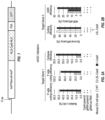
- Another exemplary Cas expression cassette comprises from 5' to 3': (a) a 3' splicing sequence; (b) a Cas protein coding sequence (e.g., an NLS-Cas9 coding sequence, such as with an NLS at the N-terminal end and an NLS at the C-terminal end); (c) a 2A protein coding sequence (e.g., a P2A coding sequence); and (d) a coding sequence for a reporter protein (e.g., a fluorescent reporter protein, such as a green fluorescent protein). See, e.g., MAID2600 in Figure 14 .
- a reporter protein e.g., a fluorescent reporter protein, such as a green fluorescent protein
- Such an expression cassette can comprise, consist essentially of, or consist of a sequence that is at least 90%, 91%, 92%, 93%, 94%, 95%, 96%, 97%, 98%, 99%, or 100% identical to the sequence set forth in SEQ ID NO: 12.
- such an expression cassette can encode a protein comprising, consisting essentially of, or consisting of an amino acid sequence at least 90%, 91%, 92%, 93%, 94%, 95%, 96%, 97%, 98%, 99%, or 100% identical to Cas9-P2A-eGFP protein sequence set forth in SEQ ID NO: 13.
- Another exemplary Cas expression cassette comprises from 5' to 3': (a) a 3' splicing sequence; (b) a polyadenylation signal flanked by first and second recombinase recognition sites for a recombinase (e.g., loxP sites for a Cre recombinase); and (c) a Cas protein coding sequence (e.g., an NLS-Cas9 coding sequence, such as with an NLS at the N-terminal end and an NLS at the C-terminal end). See, e.g., MAID2660 in Figure 14 .
- Such an expression cassette can comprise, consist essentially of, or consist of a sequence that is at least 90%, 91%, 92%, 93%, 94%, 95%, 96%, 97%, 98%, 99%, or 100% identical to the sequence set forth in SEQ ID NO: 17.
- such an expression cassette can encode a protein comprising, consisting essentially of, or consisting of an amino acid sequence at least 90%, 91%, 92%, 93%, 94%, 95%, 96%, 97%, 98%, 99%, or 100% identical to the Cas9 protein sequence set forth in SEQ ID NO: 19.
- Another exemplary Cas expression cassette comprises from 5' to 3': (a) a 3' splicing sequence; and (b) a Cas protein coding sequence (e.g., an NLS-Cas9 coding sequence, such as with an NLS at the N-terminal end and an NLS at the C-terminal end). See, e.g., MAID2661 in Figure 14 .
- a Cas protein coding sequence e.g., an NLS-Cas9 coding sequence, such as with an NLS at the N-terminal end and an NLS at the C-terminal end.
- Such an expression cassette can comprise, consist essentially of, or consist of a sequence that is at least 90%, 91%, 92%, 93%, 94%, 95%, 96%, 97%, 98%, 99%, or 100% identical to the sequence set forth in SEQ ID NO: 18.
- such an expression cassette can encode a protein comprising, consisting essentially of, or consisting of an amino acid sequence at least 90%, 91%, 92%, 93%, 94%, 95%, 96%, 97%, 98%, 99%, or 100% identical to the Cas9 protein sequence set forth in SEQ ID NO: 19.
- Another exemplary Cas expression cassette comprises from 5' to 3': (a) an exogenous promoter (e.g., a constitutive promoter, such as a CAGG promoter); (b) a polyadenylation signal flanked by first and second recombinase recognition sites for a recombinase (e.g., loxP sites for a Cre recombinase); (c) a Cas protein coding sequence (e.g., an NLS-Cas9 coding sequence, such as with an NLS at the N-terminal end and an NLS at the C-terminal end, optionally with a tag at the N-terminal or C-terminal end, such as a 3xFLAG tag at the N-terminal end); (d) a 2A protein coding sequence (e.g., a P2A coding sequence); and (e) a coding sequence for a reporter protein (e.g., a fluorescent reporter protein, such as a green fluorescent protein
- Such an expression cassette can comprise, consist essentially of, or consist of a sequence that is at least 90%, 91%, 92%, 93%, 94%, 95%, 96%, 97%, 98%, 99%, or 100% identical to the sequence set forth in SEQ ID NO: 14.
- such an expression cassette can encode a protein comprising, consisting essentially of, or consisting of an amino acid sequence at least 90%, 91%, 92%, 93%, 94%, 95%, 96%, 97%, 98%, 99%, or 100% identical to the 3xFLAG-Cas9-P2A-eGFP protein sequence set forth in SEQ ID NO: 16.
- Another exemplary Cas expression cassette comprises from 5' to 3': (a) an exogenous promoter (e.g., a constitutive promoter, such as a CAGG promoter); (b) a Cas protein coding sequence (e.g., an NLS-Cas9 coding sequence, such as with an NLS at the N-terminal end and an NLS at the C-terminal end, optionally with a tag at the N-terminal or C-terminal end, such as a 3xFLAG tag at the N-terminal end); (c) a 2A protein coding sequence (e.g., a P2A coding sequence); and (d) a coding sequence for a reporter protein (e.g., a fluorescent reporter protein, such as a green fluorescent protein).
- an exogenous promoter e.g., a constitutive promoter, such as a CAGG promoter
- a Cas protein coding sequence e.g., an NLS-Cas9 coding sequence, such
- Such an expression cassette can comprise, consist essentially of, or consist of a sequence that is at least 90%, 91%, 92%, 93%, 94%, 95%, 96%, 97%, 98%, 99%, or 100% identical to the sequence set forth in SEQ ID NO: 15.
- such an expression cassette can encode a protein comprising, consisting essentially of, or consisting of an amino acid sequence at least 90%, 91%, 92%, 93%, 94%, 95%, 96%, 97%, 98%, 99%, or 100% identical to the 3xFLAG-Cas9-P2A-eGFP protein sequence set forth in SEQ ID NO: 16.
- Another exemplary Cas expression cassette comprises from 5' to 3': (a) an exogenous promoter (e.g., a constitutive promoter, such as a CAGG promoter); (b) a polyadenylation signal flanked by first and second recombinase recognition sites for a recombinase (e.g., loxP sites for a Cre recombinase); and (c) a Cas protein coding sequence (e.g., an NLS-Cas9 coding sequence, such as with an NLS at the N-terminal end and an NLS at the C-terminal end, optionally with a tag at the N-terminal or C-terminal end, such as a 3xFLAG tag at the N-terminal end).
- an exogenous promoter e.g., a constitutive promoter, such as a CAGG promoter
- Such an expression cassette can comprise, consist essentially of, or consist of a sequence that is at least 90%, 91%, 92%, 93%, 94%, 95%, 96%, 97%, 98%, 99%, or 100% identical to the sequence set forth in SEQ ID NO: 20.
- such an expression cassette can encode a protein comprising, consisting essentially of, or consisting of an amino acid sequence at least 90%, 91%, 92%, 93%, 94%, 95%, 96%, 97%, 98%, 99%, or 100% identical to the 3xFLAG-Cas9 protein sequence set forth in SEQ ID NO: 22.
- Another exemplary Cas expression cassette comprises from 5' to 3': (a) an exogenous promoter (e.g., a constitutive promoter, such as a CAGG promoter); and (b) a Cas protein coding sequence (e.g., an NLS-Cas9 coding sequence, such as with an NLS at the N-terminal end and an NLS at the C-terminal end, optionally with a tag at the N-terminal or C-terminal end, such as a 3xFLAG tag at the N-terminal end). See, e.g., MAID2673 in Figure 14 .
- an exogenous promoter e.g., a constitutive promoter, such as a CAGG promoter
- a Cas protein coding sequence e.g., an NLS-Cas9 coding sequence, such as with an NLS at the N-terminal end and an NLS at the C-terminal end, optionally with a tag at the N-terminal or C-terminal end
- Such an expression cassette can comprise, consist essentially of, or consist of a sequence that is at least 90%, 91%, 92%, 93%, 94%, 95%, 96%, 97%, 98%, 99%, or 100% identical to the sequence set forth in SEQ ID NO: 21.
- such an expression cassette can encode a protein comprising, consisting essentially of, or consisting of an amino acid sequence at least 90%, 91%, 92%, 93%, 94%, 95%, 96%, 97%, 98%, 99%, or 100% identical to the 3xFLAG-Cas9 protein sequence set forth in SEQ ID NO: 22.
- a Cas expression cassette can be in any form.
- a Cas expression cassette can be in a vector or plasmid, such as a viral vector.
- the Cas expression cassette can be operably linked to a promoter in an expression construct capable of directing expression of the Cas protein upon removal of the upstream polyadenylation signal.
- a Cas expression cassette can be in a targeting vector as defined elsewhere herein.
- the targeting vector can comprise homology arms flanking the Cas expression cassette, wherein the homology arms are suitable for directing recombination with a desired target genomic locus to facilitate genomic integration.
- the Cas expression cassettes described herein can be in vitro, they can be within a cell (e.g., an embryonic stem cell) ex vivo (e.g., genomically integrated or extrachromosomal), or they can be in an organism (e.g., a non-human animal) in vivo (e.g., genomically integrated or extrachromosomal). If ex vivo, the Cas expression cassette can be in any type of cell from any organism, such as a totipotent cell such as an embryonic stem cell (e.g., a mouse or a rat embryonic stem cell) or an induced pluripotent stem cell (e.g., a human induced pluripotent stem cell). If in vivo, the Cas expression cassette can be in any type of organism (e.g., a non-human animal as described further elsewhere herein).
- Cas proteins generally comprise at least one RNA recognition or binding domain that can interact with guide RNAs (gRNAs, described in more detail below). Cas proteins can also comprise nuclease domains (e.g., DNase or RNase domains), DNA-binding domains, helicase domains, protein-protein interaction domains, dimerization domains, and other domains. Some such domains (e.g., DNase domains) can be from a native Cas protein. Other such domains can be added to make a modified Cas protein.
- a nuclease domain possesses catalytic activity for nucleic acid cleavage, which includes the breakage of the covalent bonds of a nucleic acid molecule.
- Cleavage can produce blunt ends or staggered ends, and it can be single-stranded or double-stranded.
- a wild type Cas9 protein will typically create a blunt cleavage product.
- a wild type Cpfl protein e.g., FnCpf1
- FnCpf1 can result in a cleavage product with a 5-nucleotide 5' overhang, with the cleavage occurring after the 18th base pair from the PAM sequence on the non-targeted strand and after the 23rd base on the targeted strand.
- a Cas protein can have full cleavage activity to create a double-strand break at a target genomic locus (e.g., a double-strand break with blunt ends), or it can be a nickase that creates a single-strand break at a target genomic locus.
- Cas proteins include Cas1, Cas1B, Cas2, Cas3, Cas4, Cas5, Cas5e (CasD), Cas6, Cas6e, Cas6f, Cas7, Cas8al, Cas8a2, Cas8b, Cas8c, Cas9 (Csn1 or Csx12), Cas10, Cas10d, CasF, CasG, CasH, Csy1, Csy2, Csy3, Cse1 (CasA), Cse2 (CasB), Cse3 (CasE), Cse4 (CasC), Csc1, Csc2, Csa5, Csn2, Csm2, Csm3, Csm4, Csm5, Csm6, Cmr1, Cmr3, Cmr4, Cmr5, Cmr6, Csb1, Csb2, Csb3, Csx17, Csx14, Csx10, Csx16, CsaX, Cs
- the Cas protein is a Cas9 protein or a protein derived from Cas9.
- Cas9 proteins are from a type II CRISPR/Cas system and typically share four key motifs with a conserved architecture. Motifs 1, 2, and 4 are RuvC-like motifs, and motif 3 is an HNH motif.
- Exemplary Cas9 proteins are from Streptococcus pyogenes, Streptococcus thermophilus, Streptococcus sp., Staphylococcus aureus, Nocardiopsis rougevillei, Streptomyces pristinaespiralis, Streptomyces viridochromogenes, Streptomyces viridochromogenes, Streptosporangium roseum, Streptosporangium roseum, Alicyclobacillus acidocaldarius, Bacillus pseudomycoides, Bacillus selenitireducens, Exiguobacterium sibiricum, Lactobacillus delbrueckii, Lactobacillus salivarius, Microscilla marina, Burkholderiales bacterium, Polaromonas naphthalenivorans, Polaromonas sp., Crocosphaera watsonii, Cyanothece sp., Microcystis aeruginos
- Cas9 from S. pyogenes (SpCas9) (assigned SwissProt accession number Q99ZW2) is an exemplary Cas9 protein.
- Cas9 from S. aureus (SaCas9) (assigned UniProt accession number J7RUA5) is another exemplary Cas9 protein.
- Cas9 from Campylobacter jejuni (CjCas9) (assigned UniProt accession number Q0P897) is another exemplary Cas9 protein. See, e.g., Kim et al. (2017) Nat. Comm. 8:14500 . SaCas9 is smaller than SpCas9, and CjCas9 is smaller than both SaCas9 and SpCas9.
- Cpfl CRISPR from Prevotella and Francisella 1
- Cpfl is a large protein (about 1300 amino acids) that contains a RuvC-like nuclease domain homologous to the corresponding domain of Cas9 along with a counterpart to the characteristic arginine-rich cluster of Cas9.
- Cpfl lacks the HNH nuclease domain that is present in Cas9 proteins, and the RuvC-like domain is contiguous in the Cpfl sequence, in contrast to Cas9 where it contains long inserts including the HNH domain. See, e.g., Zetsche et al. (2015) Cell 163(3):759-771 .
- Exemplary Cpfl proteins are from Francisella tularensis 1, Francisella tularensis subsp. novicida, Prevotella albensis, Lachnospiraceae bacterium MC2017 1, Butyrivibrio proteoclasticus, Peregrinibacteria bacterium GW2011_GWA2_33_10, Parcubacteria bacterium GW2011 _ GWC2_44_17, Smithella sp. SCADC, Acidaminococcus sp.
- Cpfl from Francisella novicida U112 (FnCpf1; assigned UniProt accession number A0Q7Q2) is an exemplary Cpfl protein.
- Cas proteins can be wild type proteins (i.e., those that occur in nature), modified Cas proteins (i.e., Cas protein variants), or fragments of wild type or modified Cas proteins.
- Cas proteins can also be active variants or fragments with respect to catalytic activity of wild type or modified Cas proteins. Active variants or fragments with respect to catalytic activity can comprise at least 80%, 85%, 90%, 91%, 92%, 93%, 94%, 95%, 96%, 97%, 98%, 99% or more sequence identity to the wild type or modified Cas protein or a portion thereof, wherein the active variants retain the ability to cut at a desired cleavage site and hence retain nick-inducing or double-strand-break-inducing activity. Assays for nick-inducing or double-strand-break-inducing activity are known and generally measure the overall activity and specificity of the Cas protein on DNA substrates containing the cleavage site.
- Cas proteins can be modified to increase or decrease one or more of nucleic acid binding affinity, nucleic acid binding specificity, and enzymatic activity. Cas proteins can also be modified to change any other activity or property of the protein, such as stability. For example, one or more nuclease domains of the Cas protein can be modified, deleted, or inactivated, or a Cas protein can be truncated to remove domains that are not essential for the function of the protein or to optimize (e.g., enhance or reduce) the activity or a property of the Cas protein.
- modified Cas protein is the modified SpCas9-HF1 protein, which is a high-fidelity variant of Streptococcus pyogenes Cas9 harboring alterations (N497A/R661A/Q695A/Q926A) designed to reduce non-specific DNA contacts. See, e.g., Kleinstiver et al. (2016) Nature 529(7587):490-495 .
- modified Cas protein is the modified eSpCas9 variant (K848A/K1003A/R1060A) designed to reduce off-target effects. See, e.g., Slaymaker et al. (2016) Science 351(6268):84-88 .
- Other SpCas9 variants include K855A and K810A/K1003A/R1060A.
- Cas proteins can comprise at least one nuclease domain, such as a DNase domain.
- a wild type Cpfl protein generally comprises a RuvC-like domain that cleaves both strands of target DNA, perhaps in a dimeric configuration.
- Cas proteins can also comprise at least two nuclease domains, such as DNase domains.
- a wild type Cas9 protein generally comprises a RuvC-like nuclease domain and an HNH-like nuclease domain. The RuvC and HNH domains can each cut a different strand of double-stranded DNA to make a double-stranded break in the DNA. See, e.g., Jinek et al. (2012) Science 337:816-821 .
- nuclease domains can be deleted or mutated so that they are no longer functional or have reduced nuclease activity.
- the resulting Cas9 protein can be referred to as a nickase and can generate a single-strand break at a guide RNA target sequence within a double-stranded DNA but not a double-strand break (i.e., it can cleave the complementary strand or the non-complementary strand, but not both).
- An example of a mutation that converts Cas9 into a nickase is a D10A (aspartate to alanine at position 10 of Cas9) mutation in the RuvC domain of Cas9 from S. pyogenes.
- H939A histidine to alanine at amino acid position 839
- H840A histidine to alanine at amino acid position 840
- N863A asparagine to alanine at amino acid position N863 in the HNH domain of Cas9 from S. pyogenes can convert the Cas9 into a nickase.
- mutations that convert Cas9 into a nickase include the corresponding mutations to Cas9 from S. thermophilus. See, e.g., Sapranauskas et al. (2011) Nucleic Acids Research 39:9275-9282 and WO 2013/141680 . Such mutations can be generated using methods such as site-directed mutagenesis, PCR-mediated mutagenesis, or total gene synthesis. Examples of other mutations creating nickases can be found, for example, in WO 2013/176772 and WO 2013/142578 .
- Staphyloccocus aureus Cas9 enzyme may comprise a substitution at position N580 (e.g., N580A substitution) and a substitution at position D10 (e.g., D10A substitution) to generate a nuclease-inactive Cas protein. See, e.g., WO 2016/106236 .
- inactivating mutations in the catalytic domains of Cpf1 proteins are also known.
- Cpfl proteins from Francisella novicida U112 (FnCpfl), Acidaminococcus sp. BV3L6 (AsCpfl), Lachnospiraceae bacterium ND2006 (LbCpf1), and Moraxella bovoculi 237 (MbCpf1 Cpfl)
- such mutations can include mutations at positions 908, 993, or 1263 of AsCpf1 or corresponding positions in Cpfl orthologs, or positions 832, 925, 947, or 1180 of LbCpf1 or corresponding positions in Cpfl orthologs.
- Such mutations can include, for example one or more of mutations D908A, E993A, and D1263A of AsCpfl or corresponding mutations in Cpfl orthologs, or D832A, E925A, D947A, and D1180A of LbCpf1 or corresponding mutations in Cpfl orthologs. See, e.g., US 2016/0208243 .
- Cas proteins can also be operably linked to heterologous polypeptides as fusion proteins.
- a Cas protein can be fused to a cleavage domain or an epigenetic modification domain. See WO 2014/089290 .
- Cas proteins can also be fused to a heterologous polypeptide providing increased or decreased stability.
- the fused domain or heterologous polypeptide can be located at the N-terminus, the C-terminus, or internally within the Cas protein.
- a Cas protein can be fused to one or more heterologous polypeptides that provide for subcellular localization.
- heterologous polypeptides can include, for example, one or more nuclear localization signals (NLS) such as the monopartite SV40 NLS and/or a bipartite alpha-importin NLS for targeting to the nucleus, a mitochondrial localization signal for targeting to the mitochondria, an ER retention signal, and the like.
- NLS nuclear localization signals
- Such subcellular localization signals can be located at the N-terminus, the C-terminus, or anywhere within the Cas protein.
- An NLS can comprise a stretch of basic amino acids, and can be a monopartite sequence or a bipartite sequence.
- a Cas protein can comprise two or more NLSs, including an NLS (e.g., an alpha-importin NLS or a monopartite NLS) at the N-terminus and an NLS (e.g., an SV40 NLS or a bipartite NLS) at the C-terminus.
- a Cas protein can also comprise two or more NLSs at the N-terminus and/or two or more NLSs at the C-terminus.
- Cas proteins can also be operably linked to a cell-penetrating domain or protein transduction domain.
- the cell-penetrating domain can be derived from the HIV-1 TAT protein, the TLM cell-penetrating motif from human hepatitis B virus, MPG, Pep-1, VP22, a cell penetrating peptide from Herpes simplex virus, or a polyarginine peptide sequence. See, e.g., WO 2014/089290 and WO 2013/176772 .
- the cell-penetrating domain can be located at the N-terminus, the C-terminus, or anywhere within the Cas protein.
- Cas proteins can also be operably linked to a heterologous polypeptide for ease of tracking or purification, such as a fluorescent protein, a purification tag, or an epitope tag.
- fluorescent proteins include green fluorescent proteins (e.g., GFP, GFP-2, tagGFP, turboGFP, eGFP, Emerald, Azami Green, Monomeric Azami Green, CopGFP, AceGFP, ZsGreenl), yellow fluorescent proteins (e.g., YFP, eYFP, Citrine, Venus, YPet, PhiYFP, ZsYellowl), blue fluorescent proteins (e.g., eBFP, eBFP2, Azurite, mKalamal, GFPuv, Sapphire, T-sapphire), cyan fluorescent proteins (e.g., eCFP, Cerulean, CyPet, AmCyanl, Midoriishi-Cyan), red fluorescent proteins (e.g., mKate, mKate2, mPlum, D
- tags include glutathione-S-transferase (GST), chitin binding protein (CBP), maltose binding protein, thioredoxin (TRX), poly(NANP), tandem affinity purification (TAP) tag, myc, AcV5, AU1 , AU5, E, ECS, E2, FLAG, hemagglutinin (HA), nus, Softag 1, Softag 3, Strep, SBP, Glu-Glu, HSV, KT3, S, S1 , T7, V5, VSV-G, histidine (His), biotin carboxyl carrier protein (BCCP), and calmodulin.
- GST glutathione-S-transferase
- CBP chitin binding protein
- TRX thioredoxin
- poly(NANP) poly(NANP)
- TAP tandem affinity purification
- Myc AcV5, AU1 , AU5, E, ECS, E2, FLAG, hemagglutinin (HA
- a nucleic acid encoding a Cas protein can be codon optimized for efficient translation into protein in a particular cell or organism.
- the nucleic acid encoding the Cas protein can be modified to substitute codons having a higher frequency of usage in a human cell, a non-human cell, a mammalian cell, a rodent cell, a mouse cell, a rat cell, or any other host cell of interest, as compared to the naturally occurring polynucleotide sequence.
- a “guide RNA” or “gRNA” is an RNA molecule that binds to a Cas protein (e.g., Cas9 protein) and targets the Cas protein to a specific location within a target DNA.
- Guide RNAs can comprise two segments: a "DNA-targeting segment” and a “protein-binding segment.”
- Segment includes a section or region of a molecule, such as a contiguous stretch of nucleotides in an RNA.
- Some gRNAs, such as those for Cas9 can comprise two separate RNA molecules: an "activator-RNA” (e.g., tracrRNA) and a “targeter-RNA” (e.g., CRISPR RNA or crRNA).
- gRNAs are a single RNA molecule (single RNA polynucleotide), which can also be called a "single-molecule gRNA," a “single-guide RNA,” or an "sgRNA.” See, e.g., WO 2013/176772 , WO 2014/065596 , WO 2014/089290 , WO 2014/093622 , WO 2014/099750 , WO 2013/142578 , and WO 2014/131833 .
- a single-guide RNA can comprise a crRNA fused to a tracrRNA (e.g., via a linker).
- guide RNA and "gRNA” include both double-molecule (i.e., modular) gRNAs and single-molecule gRNAs.
- An exemplary two-molecule gRNA comprises a crRNA-like (“CRISPR RNA” or “targeter-RNA” or “crRNA” or “crRNA repeat”) molecule and a corresponding tracrRNA-like (“trans-acting CRISPR RNA” or “activator-RNA” or “tracrRNA”) molecule.
- a crRNA comprises both the DNA-targeting segment (single-stranded) of the gRNA and a stretch of nucleotides (i.e., the crRNA tail) that forms one half of the dsRNA duplex of the protein-binding segment of the gRNA.
- crRNA tail located downstream (3') of the DNA-targeting segment, comprises, consists essentially of, or consists of GUUUUAGAGCUAUGCU (SEQ ID NO: 25). Any of the DNA-targeting segments disclosed herein can be joined to the 5' end of SEQ ID NO: 25 to form a crRNA.
- a corresponding tracrRNA comprises a stretch of nucleotides that forms the other half of the dsRNA duplex of the protein-binding segment of the gRNA.
- a stretch of nucleotides of a crRNA are complementary to and hybridize with a stretch of nucleotides of a tracrRNA to form the dsRNA duplex of the protein-binding domain of the gRNA.
- each crRNA can be said to have a corresponding tracrRNA.
- An example of a tracrRNA sequence comprises, consists essentially of, or consists of AGCAUAGCAAGUUAAAAUAAGGCUAGUCCGUUAUCAACUUGAAAAAGUGGCACC GAGUCGGUGCUUU (SEQ ID NO: 26).
- the crRNA and the corresponding tracrRNA hybridize to form a gRNA.
- the crRNA can be the gRNA.
- the crRNA additionally provides the single-stranded DNA-targeting segment that targets a guide RNA target sequence by hybridizing to the opposite strand (i.e., the complementary strand). If used for modification within a cell, the exact sequence of a given crRNA or tracrRNA molecule can be designed to be specific to the species in which the RNA molecules will be used. See, e.g., Mali et al. (2013) Science 339:823-826 ; Jinek et al.
- the DNA-targeting segment (crRNA) of a given gRNA comprises a nucleotide sequence that is complementary to a sequence (i.e., the complementary strand of the guide RNA recognition sequence on the strand opposite of the guide RNA target sequence) in a target DNA.
- the DNA-targeting segment of a gRNA interacts with a target DNA in a sequence-specific manner via hybridization (i.e., base pairing).
- the nucleotide sequence of the DNA-targeting segment may vary and determines the location within the target DNA with which the gRNA and the target DNA will interact.
- the DNA-targeting segment of a subject gRNA can be modified to hybridize to any desired sequence within a target DNA.
- Naturally occurring crRNAs differ depending on the CRISPR/Cas system and organism but often contain a targeting segment of between 21 to 72 nucleotides length, flanked by two direct repeats (DR) of a length of between 21 to 46 nucleotides (see, e.g., WO 2014/131833 .
- DR direct repeats
- the DRs are 36 nucleotides long and the targeting segment is 30 nucleotides long.
- the 3' located DR is complementary to and hybridizes with the corresponding tracrRNA, which in turn binds to the Cas protein.
- the DNA-targeting segment can have a length of at least about 12 nucleotides, at least about 15 nucleotides, at least about 17 nucleotides, at least about 18 nucleotides, at least about 19 nucleotides, at least about 20 nucleotides, at least about 25 nucleotides, at least about 30 nucleotides, at least about 35 nucleotides, or at least about 40 nucleotides.
- Such DNA-targeting segments can have a length from about 12 nucleotides to about 100 nucleotides, from about 12 nucleotides to about 80 nucleotides, from about 12 nucleotides to about 50 nucleotides, from about 12 nucleotides to about 40 nucleotides, from about 12 nucleotides to about 30 nucleotides, from about 12 nucleotides to about 25 nucleotides, or from about 12 nucleotides to about 20 nucleotides.
- the DNA targeting segment can be from about 15 nucleotides to about 25 nucleotides (e.g., from about 17 nucleotides to about 20 nucleotides, or about 17 nucleotides, about 18 nucleotides, about 19 nucleotides, or about 20 nucleotides). See, e.g., US 2016/0024523 .
- a typical DNA-targeting segment is between 16 and 20 nucleotides in length or between 17 and 20 nucleotides in length.
- Cas9 from S. aureus a typical DNA-targeting segment is between 21 and 23 nucleotides in length.
- Cpf1 a typical DNA-targeting segment is at least 16 nucleotides in length or at least 18 nucleotides in length.
- TracrRNAs can be in any form (e.g., full-length tracrRNAs or active partial tracrRNAs) and of varying lengths. They can include primary transcripts or processed forms.
- tracrRNAs (as part of a single-guide RNA or as a separate molecule as part of a two-molecule gRNA) may comprise, consist essentially of, or consist of all or a portion of a wild type tracrRNA sequence (e.g., about or more than about 20, 26, 32, 45, 48, 54, 63, 67, 85, or more nucleotides of a wild type tracrRNA sequence). Examples of wild type tracrRNA sequences from S.
- pyogenes include 171-nucleotide, 89-nucleotide, 75-nucleotide, and 65-nucleotide versions. See, e.g., Deltcheva et al. (2011) Nature 471:602-607 ; WO 2014/093661 .
- Examples of tracrRNAs within single-guide RNAs (sgRNAs) include the tracrRNA segments found within +48, +54, +67, and +85 versions of sgRNAs, where "+n" indicates that up to the +n nucleotide of wild type tracrRNA is included in the sgRNA. See US 8,697,359 .
- the percent complementarity between the DNA-targeting sequence and the complementary strand of the guide RNA recognition sequence within the target DNA can be at least 60% (e.g., at least 65%, at least 70%, at least 75%, at least 80%, at least 85%, at least 90%, at least 95%, at least 97%, at least 98%, at least 99%, or 100%).
- the percent complementarity between the DNA-targeting sequence and the complementary strand of the guide RNA recognition sequence within the target DNA can be at least 60% over about 20 contiguous nucleotides.
- the percent complementarity between the DNA-targeting sequence and the complementary strand of the guide RNA recognition sequence within the target DNA is 100% over the 14 contiguous nucleotides at the 5' end of the complementary strand of the guide RNA recognition sequence within the complementary strand of the target DNA and as low as 0% over the remainder.
- the DNA-targeting sequence can be considered to be 14 nucleotides in length.
- the percent complementarity between the DNA-targeting sequence and the complementary strand of the guide RNA recognition sequence within the target DNA is 100% over the seven contiguous nucleotides at the 5' end of the complementary strand of the guide RNA recognition sequence within the complementary strand of the target DNA and as low as 0% over the remainder.
- the DNA-targeting sequence can be considered to be 7 nucleotides in length.
- at least 17 nucleotides within the DNA-targeting sequence are complementary to the target DNA.
- the DNA-targeting sequence can be 20 nucleotides in length and can comprise 1, 2, or 3 mismatches with the complementary strand of the guide RNA recognition sequence.
- the mismatches are not adjacent to a protospacer adjacent motif (PAM) sequence (e.g., the mismatches are in the 5' end of the DNA-targeting sequence, or the mismatches are at least 2, 3, 4, 5, 6, 7, 8, 9, 10, 11, 12, 13, 14, 15, 16, 17, 18, or 19 base pairs away from the PAM sequence).
- PAM protospacer adjacent motif
- the protein-binding segment of a gRNA can comprise two stretches of nucleotides that are complementary to one another.
- the complementary nucleotides of the protein-binding segment hybridize to form a double-stranded RNA duplex (dsRNA).
- dsRNA double-stranded RNA duplex
- the protein-binding segment of a subject gRNA interacts with a Cas protein, and the gRNA directs the bound Cas protein to a specific nucleotide sequence within target DNA via the DNA-targeting segment.
- Single-guide RNAs have the DNA-targeting segment and a scaffold sequence (i.e., the protein-binding or Cas-binding sequence of the guide RNA).
- a scaffold sequence i.e., the protein-binding or Cas-binding sequence of the guide RNA.
- guide RNAs have a 5' DNA-targeting segment and a 3' scaffold sequence.
- Exemplary scaffold sequences comprise, consist essentially of, or consist of: GUUUAAGAGCUAUGCUGGAAACAGCAUAGCAAGUUUAAAUAAGGCUAGUCCGUU AUCAACUUGAAAAAGUGGCACCGAGUCGGUGC (version 4; SEQ ID NO: 8).
- Guide RNAs targeting any guide RNA target sequence can include, for example, a DNA-targeting segment on the 5' end of the guide RNA fused to any of the exemplary guide RNA scaffold sequences on the 3' end of the guide RNA. That is, any of the DNA-targeting segments disclosed herein can be joined to the 5' end of any one of SEQ ID NOS: 27, 6, 7, or 8 to form a single guide RNA (chimeric guide RNA).
- Guide RNA versions 1, 2, 3, and 4 as disclosed elsewhere herein refer to DNA-targeting segments joined with scaffold versions 1, 2, 3, and 4, respectively.
- Guide RNAs can include modifications or sequences that provide for additional desirable features (e.g., modified or regulated stability; subcellular targeting; tracking with a fluorescent label; a binding site for a protein or protein complex; and the like).
- modifications include, for example, a 5' cap (e.g., a 7-methylguanylate cap (m7G)); a 3' polyadenylated tail (i.e., a 3' poly(A) tail); a riboswitch sequence (e.g., to allow for regulated stability and/or regulated accessibility by proteins and/or protein complexes); a stability control sequence; a sequence that forms a dsRNA duplex (i.e., a hairpin); a modification or sequence that targets the RNA to a subcellular location (e.g., nucleus, mitochondria, chloroplasts, and the like); a modification or sequence that provides for tracking (e.g., direct conjugation to a fluorescent molecule, conjugation to a moiety that facilitate
- a bulge can be an unpaired region of nucleotides within the duplex made up of the crRNA-like region and the minimum tracrRNA-like region.
- a bulge can comprise, on one side of the duplex, an unpaired 5'-XXXY-3' where X is any purine and Y can be a nucleotide that can form a wobble pair with a nucleotide on the opposite strand, and an unpaired nucleotide region on the other side of the duplex.
- Unmodified nucleic acids can be prone to degradation. Exogenous nucleic acids can also induce an innate immune response. Modifications can help introduce stability and reduce immunogenicity.
- Guide RNAs can comprise modified nucleosides and modified nucleotides including, for example, one or more of the following: (1) alteration or replacement of one or both of the non-linking phosphate oxygens and/or of one or more of the linking phosphate oxygens in the phosphodiester backbone linkage; (2) alteration or replacement of a constituent of the ribose sugar such as alteration or replacement of the 2' hydroxyl on the ribose sugar; (3) replacement of the phosphate moiety with dephospho linkers; (4) modification or replacement of a naturally occurring nucleobase; (5) replacement or modification of the ribose-phosphate backbone; (6) modification of the 3' end or 5' end of the oligonucleotide (e.g., removal, modification or replacement of a terminal phosphate group or conjugation of
- RNA modifications include modifications of or replacement of uracils or poly-uracil tracts. See, e.g., WO 2015/048577 and US 2016/0237455 . Similar modifications can be made to Cas-encoding nucleic acids, such as Cas mRNAs.
- nucleotides at the 5' or 3' end of a guide RNA can include phosphorothioate linkages (e.g., the bases can have a modified phosphate group that is a phosphorothioate group).
- a guide RNA can include phosphorothioate linkages between the 2, 3, or 4 terminal nucleotides at the 5' or 3' end of the guide RNA.
- nucleotides at the 5' and/or 3' end of a guide RNA can have 2'-O-methyl modifications.
- a guide RNA can include 2'-O-methyl modifications at the 2, 3, or 4 terminal nucleotides at the 5' and/or 3' end of the guide RNA (e.g., the 5' end). See, e.g., WO 2017/173054 A1 and Finn et al. (2016) Cell Reports 22:1-9 .
- the guide RNA comprises 2'-O-methyl analogs and 3' phosphorothioate internucleotide linkages at the first three 5' and 3' terminal RNA residues.
- the guide RNA is modified such that all 2'OH groups that do not interact with the Cas9 protein are replaced with 2'-O-methyl analogs, and the tail region of the guide RNA, which has minimal interaction with Cas9, is modified with 5' and 3' phosphorothioate internucleotide linkages. See, e.g., Yin et al. (2017) Nat. Biotech. 35(12):1179-1187 .
- the gRNA can be provided in any form.
- the gRNA can be provided in the form of RNA, either as two molecules (separate crRNA and tracrRNA) or as one molecule (sgRNA), and optionally in the form of a complex with a Cas protein.
- the gRNA can also be provided in the form of DNA encoding the gRNA.
- the DNA encoding the gRNA can encode a single RNA molecule (sgRNA) or separate RNA molecules (e.g., separate crRNA and tracrRNA). In the latter case, the DNA encoding the gRNA can be provided as one DNA molecule or as separate DNA molecules encoding the crRNA and tracrRNA, respectively.
- the gRNA can be transiently, conditionally, or constitutively expressed in the cell.
- DNAs encoding gRNAs can be stably integrated into the genome of the cell and operably linked to a promoter active in the cell.
- DNAs encoding gRNAs can be operably linked to a promoter in an expression construct.
- the DNA encoding the gRNA can be in a vector comprising a heterologous nucleic acid, such as a nucleic acid encoding a Cas protein.
- it can be in a vector or a plasmid that is separate from the vector comprising the nucleic acid encoding the Cas protein.
- Promoters that can be used in such expression constructs include promoters active, for example, in one or more of a eukaryotic cell, a human cell, a non-human cell, a mammalian cell, a non-human mammalian cell, a rodent cell, a mouse cell, a rat cell, a hamster cell, a rabbit cell, a pluripotent cell, an embryonic stem (ES) cell, an adult stem cell, a developmentally restricted progenitor cell, an induced pluripotent stem (iPS) cell, or a one-cell stage embryo.
- Such promoters can be, for example, conditional promoters, inducible promoters, constitutive promoters, or tissue-specific promoters.
- Such promoters can also be, for example, bidirectional promoters.
- suitable promoters include an RNA polymerase III promoter, such as a human U6 promoter, a rat U6 polymerase III promoter, or a mouse U6 polymerase III promoter.
- gRNAs can be prepared by various other methods.
- gRNAs can be prepared by in vitro transcription using, for example, T7 RNA polymerase (see, e.g., WO 2014/089290 and WO 2014/065596 ).
- Guide RNAs can also be a synthetically produced molecule prepared by chemical synthesis.
- guide RNA recognition sequence includes nucleic acid sequences present in a target DNA to which a DNA-targeting segment of a gRNA will bind, provided sufficient conditions for binding exist.
- guide RNA recognition sequence as used herein encompasses both strands of the target double-stranded DNA (i.e., the sequence on the complementary strand to which the guide RNA hybridizes and the corresponding sequence on the non-complementary strand adjacent to the protospacer adjacent motif (PAM)).
- PAM protospacer adjacent motif
- guide RNA target sequence refers specifically to the sequence on the non-complementary strand adjacent to the PAM (i.e., upstream or 5' of the PAM).
- the guide RNA target sequence refers to the sequence on the non-complementary strand corresponding to the sequence to which the guide RNA hybridizes on the complementary strand.
- a guide RNA target sequence is equivalent to the DNA-targeting segment of a guide RNA, but with thymines instead of uracils.
- a guide RNA target sequence for a Cas9 enzyme would refer to the sequence on the non-complementary strand adjacent to the 5'-NGG-3' PAM.
- Guide RNA recognition sequences include sequences to which a guide RNA is designed to have complementarity, where hybridization between the complementary strand of a guide RNA recognition sequence and a DNA-targeting sequence of a guide RNA promotes the formation of a CRISPR complex.
- Guide RNA recognition sequences or guide RNA target sequences also include cleavage sites for Cas proteins, described in more detail below.
- a guide RNA recognition sequence or a guide RNA target sequence can comprise any polynucleotide, which can be located, for example, in the nucleus or cytoplasm of a cell or within an organelle of a cell, such as a mitochondrion or chloroplast.
- the guide RNA recognition sequence within a target DNA can be targeted by (i.e., be bound by, or hybridize with, or be complementary to) a Cas protein or a gRNA.
- Suitable DNA/RNA binding conditions include physiological conditions normally present in a cell.
- Other suitable DNA/RNA binding conditions e.g., conditions in a cell-free system are known (see, e.g., Molecular Cloning: A Laboratory Manual, 3rd Ed. (Sambrook et al., Harbor Laboratory Press 2001 )).
- the strand of the target DNA that is complementary to and hybridizes with the Cas protein or gRNA can be called the "complementary strand,” and the strand of the target DNA that is complementary to the “complementary strand” (and is therefore not complementary to the Cas protein or gRNA) can be called “non-complementary strand” or “template strand.”
- the Cas protein can cleave the nucleic acid at a site within or outside of the nucleic acid sequence present in the target DNA to which the DNA-targeting segment of a gRNA will bind.
- the "cleavage site” includes the position of a nucleic acid at which a Cas protein produces a single-strand break or a double-strand break.
- a CRISPR complex comprising a gRNA hybridized to the complementary strand of a guide RNA recognition sequence and complexed with a Cas protein
- formation of a CRISPR complex can result in cleavage of one or both strands in or near (e.g., within 1, 2, 3, 4, 5, 6, 7, 8, 9, 10, 20, 50, or more base pairs from) the nucleic acid sequence present in a target DNA to which a DNA-targeting segment of a gRNA will bind. If the cleavage site is outside of the nucleic acid sequence to which the DNA-targeting segment of the gRNA will bind, the cleavage site is still considered to be within the "guide RNA recognition sequence" or guide RNA target sequence.
- the cleavage site can be on only one strand or on both strands of a nucleic acid.
- Cleavage sites can be at the same position on both strands of the nucleic acid (producing blunt ends) or can be at different sites on each strand (producing staggered ends (i.e., overhangs)).
- Staggered ends can be produced, for example, by using two Cas proteins, each of which produces a single-strand break at a different cleavage site on a different strand, thereby producing a double-strand break.
- a first nickase can create a single-strand break on the first strand of double-stranded DNA (dsDNA), and a second nickase can create a single-strand break on the second strand of dsDNA such that overhanging sequences are created.
- the guide RNA recognition sequence or guide RNA target sequence of the nickase on the first strand is separated from the guide RNA recognition sequence or guide RNA target sequence of the nickase on the second strand by at least 2, 3, 4, 5, 6, 7, 8, 9, 10, 15, 20, 25, 30, 40, 50, 75, 100, 250, 500, or 1,000 base pairs.
- Site-specific binding and/or cleavage of target DNA by Cas proteins can occur at locations determined by both (i) base-pairing complementarity between the gRNA and the target DNA and (ii) a short motif, called the protospacer adjacent motif (PAM), in the target DNA.
- the PAM can flank the guide RNA target sequence on the non-complementary strand opposite of the strand to which the guide RNA hybridizes.
- the guide RNA target sequence can be flanked on the 3' end by the PAM.
- the guide RNA target sequence can be flanked on the 5' end by the PAM.
- the cleavage site of Cas proteins can be about 1 to about 10 or about 2 to about 5 base pairs (e.g., 3 base pairs) upstream or downstream of the PAM sequence.
- the PAM sequence of the non-complementary strand can be 5'-N 1 GG-3', where N 1 is any DNA nucleotide and is immediately 3' of the guide RNA recognition sequence of the non-complementary strand of the target DNA (i.e., immediately 3' of the guide RNA target sequence).
- the PAM sequence of the complementary strand would be 5'-CCN 2 -3', where N 2 is any DNA nucleotide and is immediately 5' of the guide RNA recognition sequence of the complementary strand of the target DNA.
- the PAM can be NNGRRT or NNGRR, where N can A, G, C, or T, and R can be G or A.
- Cas9 from C the case of Cas9 from C.
- the PAM can be, for example, NNNNACAC or NNNNRYAC, where N can be A, G, C, or T, and R can be G or A.
- the PAM sequence can be upstream of the 5' end and have the sequence 5'-TTN-3'.
- the guide RNA target sequence can be a 20-nucleotide DNA sequence immediately preceding an NGG motif recognized by a Cas9 protein.
- Examples of such guide RNA target sequences plus a PAM sequence are GN 19 NGG (SEQ ID NO: 9) or N 20 NGG (SEQ ID NO: 10). See, e.g., WO 2014/165825 .
- the guanine at the 5' end can facilitate transcription by RNA polymerase in cells.
- guide RNA target sequences plus a PAM sequence can include two guanine nucleotides at the 5' end (e.g., GGN 20 NGG; SEQ ID NO: 11) to facilitate efficient transcription by T7 polymerase in vitro. See, e.g., WO 2014/065596 .
- Other guide RNA target sequences plus a PAM sequence can have between 4-22 nucleotides in length of SEQ ID NOS: 9-11, including the 5' G or GG and the 3' GG or NGG.
- Yet other guide RNA target sequences can have between 14 and 20 nucleotides in length of SEQ ID NOS: 9-11.
- the guide RNA recognition sequence or guide RNA target sequence can be any nucleic acid sequence endogenous or exogenous to a cell.
- the guide RNA recognition sequence or guide RNA target sequence can be a sequence coding a gene product (e.g., a protein) or a noncoding sequence (e.g., a regulatory sequence) or can include both.
- Non-human animals comprising the Cas expression cassettes are also described herein.
- the Cas expression cassette is stably integrated into the genome (i.e., into a chromosome) of the cell in the non-human animal.
- the stably integrated Cas expression cassette is integrated into a predetermined region of the genome of the non-human animal (i.e., knock in).
- the Cas expression cassette is stably integrated into a safe harbor locus.
- the target genomic locus at which the Cas expression cassette is stably integrated can be heterozygous for the Cas expression cassette or homozygous for the Cas expression cassette.
- a diploid organism has two alleles at each genetic locus. Each pair of alleles represents the genotype of a specific genetic locus. Genotypes are described as homozygous if there are two identical alleles at a particular locus and as heterozygous if the two alleles differ.
- the cells described herein, which are not encompassed by the wording of the claims, can be non-human mammalian cells.
- a mammalian cell can be a rat cell or a mouse cell.
- the cells can also be any type of undifferentiated or differentiated state.
- a cell can be a totipotent cell, a pluripotent cell (e.g., a mouse embryonic stem (ES) cell or a rat ES cell), or a non-pluripotent cell.
- Totipotent cells include undifferentiated cells that can give rise to any cell type, and pluripotent cells include undifferentiated cells that possess the ability to develop into more than one differentiated cell types.
- pluripotent and/or totipotent cells can be, for example, ES cells or ES-like cells, such as an induced pluripotent stem (iPS) cells.
- iPS induced pluripotent stem
- ES cells include embryo-derived totipotent or pluripotent cells that are capable of contributing to any tissue of the developing embryo upon introduction into an embryo.
- ES cells can be derived from the inner cell mass of a blastocyst and are capable of differentiating into cells of any of the three vertebrate germ layers (endoderm, ectoderm, and mesoderm).
- human pluripotent cells do not belong to the invention, are described as examples only and include human ES cells, human adult stem cells, developmentally restricted human progenitor cells, and human induced pluripotent stem (iPS) cells, such as primed human iPS cells and naive human iPS cells.
- iPS human induced pluripotent stem
- Induced pluripotent stem cells include pluripotent stem cells that can be derived directly from a differentiated adult cell.
- Human iPS cells can be generated by introducing specific sets of reprogramming factors into a cell which can include, for example, Oct3/4, Sox family transcription factors (e.g., Sox1, Sox2, Sox3, Sox15), Myc family transcription factors (e.g., c-Myc, l-Myc, n-Myc), Krüppel-like family (KLF) transcription factors (e.g., KLF1, KLF2, KLF4, KLF5), and/or related transcription factors, such as NANOG, LIN28, and/or Glis1.
- Sox family transcription factors e.g., Sox1, Sox2, Sox3, Sox15
- Myc family transcription factors e.g., c-Myc, l-Myc, n-Myc
- KLF Krüppel-like family transcription factors
- Human iPS cells can also be generated, for example, by the use of miRNAs, small molecules that mimic the actions of transcription factors, or lineage specifiers.
- Human iPS cells are characterized by their ability to differentiate into any cell of the three vertebrate germ layers, e.g., the endoderm, the ectoderm, or the mesoderm. Human iPS cells are also characterized by their ability propagate indefinitely under suitable in vitro culture conditions. See, e.g., Takahashi and Yamanaka (2006) Cell 126:663-676 .
- Primed human ES cells and primed human iPS cells include cells that express characteristics similar to those of post-implantation epiblast cells and are committed for lineage specification and differentiation.
- Naive human ES cells and naive human iPS cells include cells that express characteristics similar to those of ES cells of the inner cell mass of a pre-implantation embryo and are not committed for lineage specification. See, e.g., Nichols and Smith (2009) Cell Stem Cell 4:487-492 .
- the cells described herein can also be germ cells (e.g., sperm or oocytes).
- the cells can be mitotically competent cells or mitotically-inactive cells, meiotically competent cells or meiotically-inactive cells.
- the cells can also be primary somatic cells or cells that are not a primary somatic cell. Somatic cells include any cell that is not a gamete, germ cell, gametocyte, or undifferentiated stem cell.
- the cells can be liver cells, kidney cells, hematopoietic cells, endothelial cells, epithelial cells, fibroblasts, mesenchymal cells, keratinocytes, blood cells, melanocytes, monocytes, mononuclear cells, monocytic precursors, B cells, erythroid-megakaryocytic cells, eosinophils, macrophages, T cells, islet beta cells, exocrine cells, pancreatic progenitors, endocrine progenitors, adipocytes, preadipocytes, neurons, glial cells, neural stem cells, neurons, hepatoblasts, hepatocytes, cardiomyocytes, skeletal myoblasts, smooth muscle cells, ductal cells, acinar cells, alpha cells, beta cells, delta cells, PP cells, cholangiocytes, white or brown adipocytes, or ocular cells (e.g., trabecular meshwork cells,
- Suitable cells described herein, which are not encompassed by the wording of the claims, include primary cells.
- Primary cells include cells or cultures of cells that have been isolated directly from an organism, organ, or tissue.
- Primary cells include cells that are neither transformed nor immortal. They include any cell obtained from an organism, organ, or tissue which was not previously passed in tissue culture or has been previously passed in tissue culture but is incapable of being indefinitely passed in tissue culture.
- Such cells can be isolated by conventional techniques and include, for example, somatic cells, hematopoietic cells, endothelial cells, epithelial cells, fibroblasts, mesenchymal cells, keratinocytes, melanocytes, monocytes, mononuclear cells, adipocytes, preadipocytes, neurons, glial cells, hepatocytes, skeletal myoblasts, and smooth muscle cells.
- primary cells can be derived from connective tissues, muscle tissues, nervous system tissues, or epithelial tissues.
- immortalized cells include cells from a multicellular organism that would normally not proliferate indefinitely but, due to mutation or alteration, have evaded normal cellular senescence and instead can keep undergoing division. Such mutations or alterations can occur naturally or be intentionally induced.
- immortalized cells include Chinese hamster ovary (CHO) cells, human embryonic kidney cells (e.g., HEK 293 cells or 293T cells), and mouse embryonic fibroblast cells (e.g., 3T3 cells). Numerous types of immortalized cells are well known.
- Immortalized or primary cells include cells that are typically used for culturing or for expressing recombinant genes or proteins.
- the cells described herein which are not encompassed by the wording of the claims, include one-cell stage embryos (i.e., fertilized oocytes or zygotes).
- Such one-cell stage embryos can be from any genetic background (e.g., BALB/c, C57BL/6, 129, or a combination thereof for mice), can be fresh or frozen, and can be derived from natural breeding or in vitro fertilization.
- the cells provided herein can be normal, healthy cells, or can be diseased or mutant-bearing cells.
- mice and rats comprising a Cas expression cassette as described herein can be made by the methods described elsewhere herein.
- mice and rats can be from any genetic background.
- suitable mice can be from a 129 strain, a C57BL/6 strain, a mix of 129 and C57BL/6, a BALB/c strain, or a Swiss Webster strain.
- 129 strains include 129P1, 129P2, 129P3, 129X1, 129S1 (e.g., 129S1/SV, 129S1/Svlm), 129S2, 129S4, 129S5, 129S9/SvEvH, 129S6 (129/SvEvTac), 129S7, 129S8, 129T1, and 129T2. See, e.g., Festing et al.
- C57BL strains include C57BL/A, C57BL/An, C57BL/GrFa, C57BL/Kal_wN, C57BL/6, C57BL/6J, C57BL/6ByJ, C57BL/6NJ, C57BL/10, C57BL/10ScSn, C57BL/10Cr, and C57BL/Ola.
- Suitable mice can also be from a mix of an aforementioned 129 strain and an aforementioned C57BL/6 strain (e.g., 50% 129 and 50% C57BL/6).
- suitable mice can be from a mix of aforementioned 129 strains or a mix of aforementioned BL/6 strains (e.g., the 129S6 (129/SvEvTac) strain).
- rats can be from any rat strain, including, for example, an ACI rat strain, a Dark Agouti (DA) rat strain, a Wistar rat strain, a LEA rat strain, a Sprague Dawley (SD) rat strain, or a Fischer rat strain such as Fisher F344 or Fisher F6.
- Rats can also be obtained from a strain derived from a mix of two or more strains recited above.
- a suitable rat can be from a DA strain or an ACI strain.
- the ACI rat strain is characterized as having black agouti, with white belly and feet and an RT1 av1 haplotype. Such strains are available from a variety of sources including Harlan Laboratories.
- the Dark Agouti (DA) rat strain is characterized as having an agouti coat and an RT1 av1 haplotype.
- Such rats are available from a variety of sources including Charles River and Harlan Laboratories. In some cases, suitable rats can be from an inbred rat strain. See, e.g., US 2014/0235933 .
- the Cas expression cassettes described herein are genomically integrated at a target genomic locus in a non-human animal as characterized in the claims.
- the target genomic locus into which the Cas expression cassettes described herein is stably integrated is a safe harbor locus in the genome of the non-human animal. Interactions between integrated exogenous DNA and a host genome can limit the reliability and safety of integration and can lead to overt phenotypic effects that are not due to the targeted genetic modification but are instead due to unintended effects of the integration on surrounding endogenous genes. For example, randomly inserted transgenes can be subject to position effects and silencing, making their expression unreliable and unpredictable. Likewise, integration of exogenous DNA into a chromosomal locus can affect surrounding endogenous genes and chromatin, thereby altering cell behavior and phenotypes.
- Safe harbor loci include chromosomal loci where transgenes or other exogenous nucleic acid inserts can be stably and reliably expressed in all tissues of interest without overtly altering cell behavior or phenotype (i.e., without any deleterious effects on the host cell). See, e.g., Sadelain et al. (2012) Nat. Rev. Cancer 12:51-58 .
- the safe harbor locus is one in which expression of the inserted gene sequence is not perturbed by any read-through expression from neighboring genes.
- safe harbor loci can include chromosomal loci where exogenous DNA can integrate and function in a predictable manner without adversely affecting endogenous gene structure or expression.
- Safe harbor loci can include extragenic regions or intragenic regions such as, for example, loci within genes that are non-essential, dispensable, or able to be disrupted without overt phenotypic consequences.
- the Rosa26 locus and its equivalent in humans offer an open chromatin configuration in all tissues and is ubiquitously expressed during embryonic development and in adults. See, e.g., Zambrowicz et al. (1997) Proc. Natl. Acad. Sci. USA 94:3789-3794 .
- the Rosa26 locus can be targeted with high efficiency, and disruption of the Rosa26 gene produces no overt phenotype.
- Other examples of safe harbor loci which however are not used according to the invention, include CCR5, HPRT, AAVS1, and albumin. See, e.g., US Patent Nos.
- non-human animals comprising a Cas expression cassette comprising a Cas coding sequence downstream of a polyadenylation signal or transcription terminator flanked by recombinase recognition sites recognized by a site-specific recombinase as described herein can further comprise a recombinase expression cassette that drives expression of the site-specific recombinase.
- Site-specific recombinases include enzymes that can facilitate recombination between recombinase recognition sites, where the two recombination sites are physically separated within a single nucleic acid or on separate nucleic acids. Examples of recombinases include Cre, Flp, and Dre recombinases.
- Crei a Cre recombinase gene
- Crei in which two exons encoding the Cre recombinase are separated by an intron to prevent its expression in a prokaryotic cell.
- Such recombinases can further comprise a nuclear localization signal to facilitate localization to the nucleus (e.g., NLS-Crei).
- Recombinase recognition sites include nucleotide sequences that are recognized by a site-specific recombinase and can serve as a substrate for a recombination event.
- Examples of recombinase recognition sites include FRT, FRT11, FRT71, attp, att, rox, and lox sites such as loxP, lox511, lox2272, lox66, lox71, loxM2, and lox5171.
- the Cas expression cassette and the recombinase expression cassette can be integrated at different target genomic loci, or they can be genomically integrated at the same target locus (e.g., a Rosa26 locus, such as integrated in the first intron of the Rosa26 locus).
- the cell or non-human animal can be heterozygous for each of the Cas expression cassette and the recombinase expression cassette, with one allele of the target genomic locus comprising the Cas expression cassette, and a second allele of the target genomic locus comprising the recombinase expression cassette expression cassette.
- the recombinase gene in a recombinase expression cassette can be operably linked to any suitable promoter.
- suitable promoter examples include promoters.
- the promoter can be a tissue-specific promoter (e.g., albumin promoter for liver-specific expression or insulin 2 promoter for pancreas-specific expression) or a developmental-stage-specific promoter.
- tissue-specific promoter e.g., albumin promoter for liver-specific expression or insulin 2 promoter for pancreas-specific expression
- a developmental-stage-specific promoter e.g., albumin promoter for liver-specific expression or insulin 2 promoter for pancreas-specific expression
- the advantage provided by such promoters is that Cas expression can be activated selectively in a desired tissue or only at a desired developmental stage, thereby reducing the possibility of Cas-mediated toxicity in vivo.
- a non-limiting list of exemplary promoters for mouse recombinase delete strains is provided in Table 2.
- Promoter (Species Site of Expression ACTA1 (human) Adult striated muscle fibers and embryonic striated muscle cells of the somites and heart Adipoq, adiponectin, C1Q and collagen domain containing (mouse) White adipose tissue (WAT) and brown adipose tissue (BAT) Agrp (mouse) ArGP neurons in the hypothalamus Alb, albumin (rat) Liver Alb1, albumin (mouse) Liver Amh (mouse) Testis Sertoli cells Aqp2 (mouse) Kidney cells (collecting duct, left) and testes (sperm, right).
- WAT White adipose tissue
- BAT brown adipose tissue
- Calb2 Calbindin 2 Calretinin interneurons in the brain and cortex Camk2a, calcium/calmodulin-dependent protein kinase II alpha (mouse) Forebrain, specifically CA1 pyramidal cell layer in hippocampus Cck, cholecystokinin (mouse) Cholecystokinin positive neurons (interneurons) of the cortex and in adult spinal cord and embryonic day 15.5 spinal cord and heart CD2, CD2 molecule (human) T cells and B cells (all committed B cell and T cell progenitors) Cd19 B cells Cdh5, cadherin 5 Endothelium of developing and quiescent vessels, and a subset of hematopoietic cells Chd16 (mouse) Renal tubules, especially collecting ducts, loops of Henle and distal tubules Chat, choline acetyltransferase (mouse) Cholinergic neurons Ckmm (mouse) Skeletal and cardiac muscle.
- cortistatin Cort-expressing cells CST positive neurons
- Crh corticotropin releasing hormone CRH-positive neurons
- Cspg4 (mouse) NG2-expressing glia polydendrocytes, oligodendrocyte progenitor cells
- Cspg4 (mouse) NG2-expressing glia polydendrocytes, oligodendrocyte progenitor cells in central nervous system and NG2-expressing cells in other organs
- Corpus Callosum CNS and other tissues such as testes and blood vessels Cyp39a1, cytochrome P450, family 39, subfamily a, polypeptide 1 (mouse) Cerebral cortex, hippocampus, striatum, olfactory bulb, and cerebellum dlx6a, distal-less homeobox gene 6a GABAergic forebrain neurons
- Ella adenovirus (adenovirus) Wide range of tissues, including the germ cells that transmit the genetic alteration to
- Lck lymphocyte protein tyrosine kinase
- Thymocytes Lck Thymus Lepr
- Hypothalamus arcuate, dorsomedial, lateral, and ventromedial nuclei
- limbic and cortical brain regions basolateral amygdaloid nucleus, piriform cortex, and lateral entorhinal cortex
- retrosplenial cortex Lyve1 (mouse) Lymphatic endothelium Lyz2, Lysozyme 2 (mouse) Myeloid cells, including monocytes, mature macrophages and granulocytes MMTV Mammary gland, salivary gland, seminal vesicle, skin, erythrocytes, B cells and T cells; lower in lung, kidney, liver and brain tissues Mnx1, motor neuron and pancreas homeobox 1 (mouse) Motor neurons Myf5, myogenic factor 5 Skeletal muscle and the dermis, and in several e
- Various methods are provided for assessing the ability of a CRISPR/Cas nickase or nuclease to modify a target genomic locus in vivo using the non-human animals comprising a Cas expression cassette described herein. Such methods comprise: (a) introducing into the non-human animal a guide RNA designed to target a guide RNA target sequence at the target genomic locus; and (b) assessing the modification of the target locus as characterized in detail in the claims.
- Modification of a target genomic locus will be induced when the guide RNA forms a complex with the Cas protein and directs the Cas protein to the target genomic locus, and the Cas/guide RNA complex cleaves the guide RNA target sequence, triggering repair by the cell (e.g., via non-homologous end joining (NHEJ) if no donor sequence is present).
- NHEJ non-homologous end joining
- two or more guide RNAs can be introduced, each designed to target a different guide RNA target sequence within the target genomic locus.
- two guide RNAs can be designed to excise a genomic sequence between the two guide RNA target sequences. Modification of a target genomic locus will be induced when the first guide RNA forms a complex with the Cas protein and directs the Cas protein to the target genomic locus, the second guide RNA forms a complex with the Cas protein and directs the Cas protein to the target genomic locus, the first Cas/guide RNA complex cleaves the first guide RNA target sequence, and the second Cas/guide RNA complex cleaves the second guide RNA target sequence, resulting in excision of the intervening sequence.
- two or more guide RNAs can be introduced, each designed to target to a different guide RNA target sequence at a different target genomic locus (i.e., multiplexing).
- an exogenous donor nucleic acid capable of recombining with and modifying the target genomic locus is also introduced into the non-human animal.
- the Cas protein can be tethered to the exogenous donor nucleic acid as described elsewhere herein.
- two or more exogenous donor nucleic acids are introduced, each capable of recombining with and modifying a different target genomic locus. Modification of the target genomic locus will be induced, for example, when the guide RNA forms a complex with the Cas protein and directs the Cas protein to the target genomic locus, the Cas/guide RNA complex cleaves the guide RNA target sequence, and the target genomic locus recombines with the exogenous donor nucleic acid to modify the target genomic locus.
- exogenous donor nucleic acid can recombine with the target genomic locus, for example, via homology-directed repair (HDR) or via NHEJ-mediated insertion. Any type of exogenous donor nucleic acid can be used, examples of which are provided elsewhere herein.
- HDR homology-directed repair
- NHEJ-mediated insertion any type of exogenous donor nucleic acid can be used, examples of which are provided elsewhere herein.
- CRISPR/Cas activity in vivo can also be used to assess CRISPR/Cas activity ex vivo using cells comprising a Cas expression cassette as described elsewhere herein.
- Guide RNAs and optionally exogenous donor nucleic acids are introduced into the non-human animal via an AAV8 delivery method by which the liver is being targeted.
- modification of the target genomic locus can be in any cell type, any tissue type, or any organ type as described elsewhere herein.
- modification of the target genomic locus is assessed in liver cells (e.g., assessing serum levels of a secreted protein expressed by the target genomic locus in liver cells).
- the target genomic locus comprises a target gene
- assessment can comprise measuring expression of the target gene or activity of a protein encoded by the target gene.
- assessment can comprise sequencing the target genomic locus in one or more cells isolated from the non-human animal.
- Assessment can comprise isolating a target organ or tissue from the non-human animal and assessing modification of the target genomic locus in the target organ or tissue. Assessment can also comprise assessing modification of the target genomic locus in two or more different cell types within the target organ or tissue. Similarly, assessment can comprise isolating a non-target organ or tissue (e.g., two or more non-target organs or tissues) from the non-human animal and assessing modification of the target genomic locus in the non-target organ or tissue.
- a non-target organ or tissue e.g., two or more non-target organs or tissues
- the methods disclosed herein utilize exogenous donor nucleic acids to modify a target genomic locus following cleavage of the target genomic locus with a Cas protein.
- the Cas protein cleaves the target genomic locus to create a single-strand break (nick) or double-strand break
- the exogenous donor nucleic acid recombines the target genomic locus via non-homologous end joining (NHEJ)-mediated ligation or through a homology-directed repair event.
- NHEJ non-homologous end joining
- repair with the exogenous donor nucleic acid removes or disrupts the guide RNA target sequence or the Cas cleavage site so that alleles that have been targeted cannot be re-targeted by the Cas protein.
- Exogenous donor nucleic acids can comprise deoxyribonucleic acid (DNA) or ribonucleic acid (RNA), they can be single-stranded or double-stranded, and they can be in linear or circular form.
- an exogenous donor nucleic acid can be a single-stranded oligodeoxynucleotide (ssODN). See, e.g., Yoshimi et al. (2016) Nat. Commun. 7:10431 .
- An exemplary exogenous donor nucleic acid is between about 50 nucleotides to about 5 kb in length, is between about 50 nucleotides to about 3 kb in length, or is between about 50 to about 1,000 nucleotides in length.
- exogenous donor nucleic acids are between about 40 to about 200 nucleotides in length.
- an exogenous donor nucleic acid can be between about 50-60, 60-70, 70-80, 80-90, 90-100, 100-110, 110-120, 120-130, 130-140, 140-150, 150-160, 160-170, 170-180, 180-190, or 190-200 nucleotides in length.
- an exogenous donor nucleic acid can be between about 50-100, 100-200, 200-300, 300-400, 400-500, 500-600, 600-700, 700-800, 800-900, or 900-1000 nucleotides in length.
- an exogenous donor nucleic acid can be between about 1-1.5, 1.5-2, 2-2.5, 2.5-3, 3-3.5, 3.5-4, 4-4.5, or 4.5-5 kb in length.
- an exogenous donor nucleic acid can be, for example, no more than 5 kb, 4.5 kb, 4 kb, 3.5 kb, 3 kb, 2.5 kb, 2 kb, 1.5 kb, 1 kb, 900 nucleotides, 800 nucleotides, 700 nucleotides, 600 nucleotides, 500 nucleotides, 400 nucleotides, 300 nucleotides, 200 nucleotides, 100 nucleotides, or 50 nucleotides in length.
- Exogenous donor nucleic acids e.g., targeting vectors
- an exogenous donor nucleic acid is an ssODN that is between about 80 nucleotides and about 200 nucleotides in length.
- an exogenous donor nucleic acids is an ssODN that is between about 80 nucleotides and about 3 kb in length.
- Such an ssODN can have homology arms, for example, that are each between about 40 nucleotides and about 60 nucleotides in length.
- Such an ssODN can also have homology arms, for example, that are each between about 30 nucleotides and 100 nucleotides in length.
- the homology arms can be symmetrical (e.g., each 40 nucleotides or each 60 nucleotides in length), or they can be asymmetrical (e.g., one homology arm that is 36 nucleotides in length, and one homology arm that is 91 nucleotides in length).
- Exogenous donor nucleic acids can include modifications or sequences that provide for additional desirable features (e.g., modified or regulated stability; tracking or detecting with a fluorescent label; a binding site for a protein or protein complex; and so forth).
- Exogenous donor nucleic acids can comprise one or more fluorescent labels, purification tags, epitope tags, or a combination thereof.
- an exogenous donor nucleic acid can comprise one or more fluorescent labels (e.g., fluorescent proteins or other fluorophores or dyes), such as at least 1, at least 2, at least 3, at least 4, or at least 5 fluorescent labels.
- Exemplary fluorescent labels include fluorophores such as fluorescein (e.g., 6-carboxyfluorescein (6-FAM)), Texas Red, HEX, Cy3, Cy5, Cy5.5, Pacific Blue, 5-(and-6)-carboxytetramethylrhodamine (TAMRA), and Cy7.
- fluorescein e.g., 6-carboxyfluorescein (6-FAM)
- Texas Red e.g., Texas Red
- HEX e.g., Cy3, Cy5, Cy5.5, Pacific Blue
- 5-(and-6)-carboxytetramethylrhodamine (TAMRA) etramethylrhodamine
- Cy7 Cy7.
- fluorescent dyes e.g., from Integrated DNA Technologies.
- Such fluorescent labels e.g., internal fluorescent labels
- the label or tag can be at the 5' end, the 3' end, or internally within the exogenous donor nucleic acid.
- an exogenous donor nucleic acid can be conjugated at 5' end with the IR700 fluorophore from Integrated DNA Technologies (5'IRDYE ® 700).
- Exogenous donor nucleic acids can also comprise nucleic acid inserts including segments of DNA to be integrated at target genomic loci. Integration of a nucleic acid insert at a target genomic locus can result in addition of a nucleic acid sequence of interest to the target genomic locus, deletion of a nucleic acid sequence of interest at the target genomic locus, or replacement of a nucleic acid sequence of interest at the target genomic locus (i.e., deletion and insertion). Some exogenous donor nucleic acids are designed for insertion of a nucleic acid insert at a target genomic locus without any corresponding deletion at the target genomic locus.
- exogenous donor nucleic acids are designed to delete a nucleic acid sequence of interest at a target genomic locus without any corresponding insertion of a nucleic acid insert.
- exogenous donor nucleic acids are designed to delete a nucleic acid sequence of interest at a target genomic locus and replace it with a nucleic acid insert.
- the nucleic acid insert or the corresponding nucleic acid at the target genomic locus being deleted and/or replaced can be various lengths.
- An exemplary nucleic acid insert or corresponding nucleic acid at the target genomic locus being deleted and/or replaced is between about 1 nucleotide to about 5 kb in length or is between about 1 nucleotide to about 1,000 nucleotides in length.
- a nucleic acid insert or a corresponding nucleic acid at the target genomic locus being deleted and/or replaced can be between about 1-10, 10-20, 20-30, 30-40, 40-50, 50-60, 60-70, 70-80, 80-90, 90-100, 100-110, 110-120, 120-130, 130-140, 140-150, 150-160, 160-170, 170-180, 180-190, or 190-120 nucleotides in length.
- a nucleic acid insert or a corresponding nucleic acid at the target genomic locus being deleted and/or replaced can be between 1-100, 100-200, 200-300, 300-400, 400-500, 500-600, 600-700, 700-800, 800-900, or 900-1000 nucleotides in length.
- a nucleic acid insert or a corresponding nucleic acid at the target genomic locus being deleted and/or replaced can be between about 1-1.5, 1.5-2, 2-2.5, 2.5-3, 3-3.5, 3.5-4, 4-4.5, or 4.5-5 kb in length or longer.
- the nucleic acid insert can comprise a sequence that is homologous or orthologous to all or part of sequence targeted for replacement.
- the nucleic acid insert can comprise a sequence that comprises one or more point mutations (e.g., 1, 2, 3, 4, 5, or more) compared with a sequence targeted for replacement at the target genomic locus.
- point mutations can result in a conservative amino acid substitution (e.g., substitution of aspartic acid [Asp, D] with glutamic acid [Glu, E]) in the encoded polypeptide.
- exogenous donor nucleic acids have short single-stranded regions at the 5' end and/or the 3' end that are complementary to one or more overhangs created by Cas-protein-mediated cleavage at the target genomic locus. These overhangs can also be referred to as 5' and 3' homology arms.
- some exogenous donor nucleic acids have short single-stranded regions at the 5' end and/or the 3' end that are complementary to one or more overhangs created by Cas-protein-mediated cleavage at 5' and/or 3' target sequences at the target genomic locus.
- Some such exogenous donor nucleic acids have a complementary region only at the 5' end or only at the 3' end.
- exogenous donor nucleic acids have a complementary region only at the 5' end complementary to an overhang created at a 5' target sequence at the target genomic locus or only at the 3' end complementary to an overhang created at a 3' target sequence at the target genomic locus.
- Other such exogenous donor nucleic acids have complementary regions at both the 5' and 3' ends.
- other such exogenous donor nucleic acids have complementary regions at both the 5' and 3' ends e.g., complementary to first and second overhangs, respectively, generated by Cas-mediated cleavage at the target genomic locus.
- the single-stranded complementary regions can extend from the 5' end of the top strand of the donor nucleic acid and the 5' end of the bottom strand of the donor nucleic acid, creating 5' overhangs on each end.
- the single-stranded complementary region can extend from the 3' end of the top strand of the donor nucleic acid and from the 3' end of the bottom strand of the template, creating 3' overhangs.
- the complementary regions can be of any length sufficient to promote ligation between the exogenous donor nucleic acid and the target nucleic acid.
- Exemplary complementary regions are between about 1 to about 5 nucleotides in length, between about 1 to about 25 nucleotides in length, or between about 5 to about 150 nucleotides in length.
- a complementary region can be at least about 1, 2, 3, 4, 5, 6, 7, 8, 9, 10, 11, 12, 13, 14, 15, 16, 17, 18, 19, 20, 21, 22, 23, 24, or 25 nucleotides in length.
- the complementary region can be about 5-10, 10-20, 20-30, 30-40, 40-50, 50-60, 60-70, 70-80, 80-90, 90-100, 100-110, 110-120, 120-130, 130-140, or 140-150 nucleotides in length, or longer.
- Such complementary regions can be complementary to overhangs created by two pairs of nickases.
- Two double-strand breaks with staggered ends can be created by using first and second nickases that cleave opposite strands of DNA to create a first double-strand break, and third and fourth nickases that cleave opposite strands of DNA to create a second double-strand break.
- a Cas protein can be used to nick first, second, third, and fourth guide RNA target sequences corresponding with first, second, third, and fourth guide RNAs.
- the first and second guide RNA target sequences can be positioned to create a first cleavage site such that the nicks created by the first and second nickases on the first and second strands of DNA create a double-strand break (i.e., the first cleavage site comprises the nicks within the first and second guide RNA target sequences).
- the third and fourth guide RNA target sequences can be positioned to create a second cleavage site such that the nicks created by the third and fourth nickases on the first and second strands of DNA create a double-strand break (i.e., the second cleavage site comprises the nicks within the third and fourth guide RNA target sequences).
- the nicks within the first and second guide RNA target sequences and/or the third and fourth guide RNA target sequences can be off-set nicks that create overhangs.
- the offset window can be, for example, at least about 5 bp, 10 bp, 20 bp, 30 bp, 40 bp, 50 bp, 60 bp, 70 bp, 80 bp, 90 bp, 100 bp or more. See Ran et al. (2013) Cell 154:1380-1389 ; Mali et al. (2013) Nat. Biotech.31:833-838 ; and Shen et al. (2014) Nat. Methods 11:399-404 .
- a double-stranded exogenous donor nucleic acid can be designed with single-stranded complementary regions that are complementary to the overhangs created by the nicks within the first and second guide RNA target sequences and by the nicks within the third and fourth guide RNA target sequences.
- Such an exogenous donor nucleic acid can then be inserted by non-homologous-end-joining-mediated ligation.
- exogenous donor nucleic acids comprise homology arms. If the exogenous donor nucleic acid also comprises a nucleic acid insert, the homology arms can flank the nucleic acid insert. For ease of reference, the homology arms are referred to herein as 5' and 3' (i.e., upstream and downstream) homology arms. This terminology relates to the relative position of the homology arms to the nucleic acid insert within the exogenous donor nucleic acid.
- the 5' and 3' homology arms correspond to regions within the target genomic locus, which are referred to herein as "5' target sequence" and "3' target sequence,” respectively.
- a homology arm and a target sequence "correspond" or are “corresponding” to one another when the two regions share a sufficient level of sequence identity to one another to act as substrates for a homologous recombination reaction.
- the term "homology” includes DNA sequences that are either identical or share sequence identity to a corresponding sequence.
- the sequence identity between a given target sequence and the corresponding homology arm found in the exogenous donor nucleic acid can be any degree of sequence identity that allows for homologous recombination to occur.
- the amount of sequence identity shared by the homology arm of the exogenous donor nucleic acid (or a fragment thereof) and the target sequence (or a fragment thereof) can be at least 50%, 55%, 60%, 65%, 70%, 75%, 80%, 81%, 82%, 83%, 84%, 85%, 86%, 87%, 88%, 89%, 90%, 91%, 92%, 93%, 94%, 95%, 96%, 97%, 98%, 99% or 100% sequence identity, such that the sequences undergo homologous recombination.
- a corresponding region of homology between the homology arm and the corresponding target sequence can be of any length that is sufficient to promote homologous recombination.
- Exemplary homology arms are between about 25 nucleotides to about 2.5 kb in length, are between about 25 nucleotides to about 1.5 kb in length, or are between about 25 to about 500 nucleotides in length.
- a given homology arm (or each of the homology arms) and/or corresponding target sequence can comprise corresponding regions of homology that are between about 25-30, 30-40, 40-50, 50-60, 60-70, 70-80, 80-90, 90-100, 100-150, 150-200, 200-250, 250-300, 300-350, 350-400, 400-450, or 450-500 nucleotides in length, such that the homology arms have sufficient homology to undergo homologous recombination with the corresponding target sequences within the target nucleic acid.
- a given homology arm (or each homology arm) and/or corresponding target sequence can comprise corresponding regions of homology that are between about 0.5 kb to about 1 kb, about 1 kb to about 1.5 kb, about 1.5 kb to about 2 kb, or about 2 kb to about 2.5 kb in length.
- the homology arms can each be about 750 nucleotides in length.
- the homology arms can be symmetrical (each about the same size in length), or they can be asymmetrical (one longer than the other).
- the 5' and 3' target sequences are optionally located in sufficient proximity to the Cas cleavage site (e.g., within sufficient proximity to a the guide RNA target sequence) so as to promote the occurrence of a homologous recombination event between the target sequences and the homology arms upon a single-strand break (nick) or double-strand break at the Cas cleavage site.
- the term "Cas cleavage site” includes a DNA sequence at which a nick or double-strand break is created by a Cas enzyme (e.g., a Cas9 protein complexed with a guide RNA).
- the target sequences within the targeted locus that correspond to the 5' and 3' homology arms of the exogenous donor nucleic acid are "located in sufficient proximity" to a Cas cleavage site if the distance is such as to promote the occurrence of a homologous recombination event between the 5' and 3' target sequences and the homology arms upon a single-strand break or double-strand break at the Cas cleavage site.
- the target sequences corresponding to the 5' and/or 3' homology arms of the exogenous donor nucleic acid can be, for example, within at least 1 nucleotide of a given Cas cleavage site or within at least 10 nucleotides to about 1,000 nucleotides of a given Cas cleavage site.
- the Cas cleavage site can be immediately adjacent to at least one or both of the target sequences.
- target sequences can be located 5' to the Cas cleavage site, target sequences can be located 3' to the Cas cleavage site, or the target sequences can flank the Cas cleavage site.
- Such methods can comprise, for example: (a) performing the method of testing the ability of CRISPR/Cas to modify a target genomic locus as described above a first time in a first non-human animal; (b) changing a variable and performing the method a second time in a second non-human animal (i.e., of the same species) with the changed variable; and (c) comparing modification of the target genomic locus in step (a) with the modification of the target genomic locus in step (b), and selecting the method resulting in the more effective modification of the target genomic locus, wherein the first and second non-human animal is a mouse or rat.
- More effective modification of the target genomic locus can mean different things depending on the desired effect within the non-human animal.
- more effective modification of the target genomic locus can mean one or more or all of higher efficacy, higher precision, higher consistency, or higher specificity.
- Higher efficacy refers to higher levels of modification of the target genomic locus (e.g., a higher percentage of cells is targeted within a particular target cell type, within a particular target tissue, or within a particular target organ).
- Higher precision refers to more precise modification of the target genomic locus (e.g., a higher percentage of targeted cells having the same modification or having the desired modification without extra unintended insertions and deletions (e.g., NHEJ indels)).
- Higher consistency refers to more consistent modification of the target genomic locus among different types of targeted cells, tissues, or organs if more than one type of cell, tissue, or organ is being targeted (e.g., modification of a greater number of cell types within a target organ). If a particular organ is being targeted, higher consistency can also refer to more consistent modification throughout all locations within the organ. Higher specificity can refer to higher specificity with respect to the genomic locus or loci targeted, higher specificity with respect to the cell type targeted, higher specificity with respect to the tissue type targeted, or higher specificity with respect to the organ targeted.
- increased genomic locus specificity refers to less modification of off-target genomic loci (e.g., a lower percentage of targeted cells having modifications at unintended, off-target genomic loci instead of or in addition to modification of the target genomic locus).
- increased cell type, tissue, or organ type specificity refers to less modification of off-target cell types, tissue types, or organ types if a particular cell type, tissue type, or organ type is being targeted (e.g., when a particular organ is targeted (e.g., the liver), there is less modification of cells in organs or tissues that are not intended targets).
- variable that is changed can be any parameter as characterized in the claims.
- the changed variable can be the concentration or amount of one or more or all of the guide RNA (e.g., packaged in AAV) introduced and the exogenous donor nucleic acid introduced.
- the changed variable can be the concentration or the amount of guide RNA (e.g., packaged in AAV) introduced relative to the concentration or the amount of exogenous donor nucleic acid introduced.
- the changed variable can be the timing of introducing one or more or all of the guide RNA (e.g., packaged in AAV) and the exogenous donor nucleic acid relative to the timing of measuring expression or activity of the one or more reporter proteins.
- the changed variable can be the number of times or frequency with which one or more or all of the guide RNA (e.g., packaged in AAV) and the exogenous donor nucleic acid are introduced.
- the changed variable can be the timing of introduction of guide RNA relative to the timing of introduction of exogenous donor nucleic acid.
- the changed variable can be the form in which one or more or all of the guide RNA and the exogenous donor nucleic acid are introduced.
- the guide RNA can be introduced in the form of DNA or in the form of RNA.
- the exogenous donor nucleic acid can be DNA, RNA, single-stranded, double-stranded, linear, circular, and so forth.
- each of the components can comprise various combinations of modifications for stability, to reduce off-target effects, to facilitate delivery, and so forth.
- the changed variable can be one or more or all of the guide RNA that is introduced (e.g., introducing a different guide RNA with a different sequence) and the exogenous donor nucleic acid that is introduced (e.g., introducing a different exogenous donor nucleic acid with a different sequence).
- the methods disclosed herein comprise introducing into a non-human animal one or more or all of guide RNAs as characterized in the claims and exogenous donor nucleic acids.
- "Introducing" includes presenting to the non-human animal the nucleic acid or protein in such a manner that the nucleic acid or protein gains access to the interior of cells within the non-human animal.
- the introducing can be accomplished by any means, and two or more of the components (e.g., two of the components, or all of the components) can be introduced into the non-human animal simultaneously or sequentially in any combination.
- an exogenous donor nucleic acid can be introduced into a non-human animal before introduction of a guide RNA, or it can be introduced following introduction of the guide RNA (e.g., the exogenous donor nucleic acid can be administered about 1, 2, 3, 4, 8, 12, 24, 36, 48, or 72 hours before or after introduction of the guide RNA). See, e.g., US 2015/0240263 and US 2015/0110762 .
- two or more of the components can be introduced into the non-human animal by the same delivery method or different delivery methods.
- two or more of the components can be introduced into a non-human animal by the same route of administration or different routes of administration.
- a guide RNA introduced into the cell in the form of an RNA (e.g., in vitro transcribed RNA) or in the form of a DNA encoding the guide RNA.
- the DNA encoding a guide RNA can be operably linked to a promoter active in the cell.
- a guide RNA may be delivered via AAV and expressed in vivo under a U6 promoter.
- Such DNAs can be in one or more expression constructs.
- such expression constructs can be components of a single nucleic acid molecule.
- DNAs encoding one or more CRISPR RNAs and DNAs encoding one or more tracrRNAs can be components of a separate nucleic acid molecules.
- Nucleic acids encoding guide RNAs can be operably linked to a promoter in an expression construct.
- Expression constructs include any nucleic acid constructs capable of directing expression of a gene or other nucleic acid sequence of interest and which can transfer such a nucleic acid sequence of interest to a target cell.
- Suitable promoters that can be used in an expression construct include promoters active, for example, in one or more of a eukaryotic cell, a human cell, a non-human cell, a mammalian cell, a non-human mammalian cell, a rodent cell, a mouse cell, a rat cell, a hamster cell, a rabbit cell, a pluripotent cell, an embryonic stem (ES) cell, an adult stem cell, a developmentally restricted progenitor cell, an induced pluripotent stem (iPS) cell, or a one-cell stage embryo.
- promoters can be, for example, conditional promoters, inducible promoters, constitutive promoters, or tissue-specific promoters.
- the promoter can be a bidirectional promoter driving expression of both a guide RNA in one direction and another component in the other direction.
- Such bidirectional promoters can consist of (1) a complete, conventional, unidirectional Pol III promoter that contains 3 external control elements: a distal sequence element (DSE), a proximal sequence element (PSE), and a TATA box; and (2) a second basic Pol III promoter that includes a PSE and a TATA box fused to the 5' terminus of the DSE in reverse orientation.
- the DSE is adjacent to the PSE and the TATA box, and the promoter can be rendered bidirectional by creating a hybrid promoter in which transcription in the reverse direction is controlled by appending a PSE and TATA box derived from the U6 promoter.
- the promoter can be rendered bidirectional by creating a hybrid promoter in which transcription in the reverse direction is controlled by appending a PSE and TATA box derived from the U6 promoter. See, e.g., US 2016/0074535 .
- Use of a bidirectional promoter to express genes encoding a guide RNA and another component simultaneously allows for the generation of compact expression cassettes to facilitate delivery.
- Exogenous donor nucleic acids and guide RNAs can be provided in compositions comprising a carrier increasing the stability of the exogenous donor nucleic acid or guide RNA (e.g., prolonging the period under given conditions of storage (e.g., -20°C, 4°C, or ambient temperature) for which degradation products remain below a threshold, such below 0.5% by weight of the starting nucleic acid or protein; or increasing the stability in vivo).
- a carrier increasing the stability of the exogenous donor nucleic acid or guide RNA (e.g., prolonging the period under given conditions of storage (e.g., -20°C, 4°C, or ambient temperature) for which degradation products remain below a threshold, such below 0.5% by weight of the starting nucleic acid or protein; or increasing the stability in vivo).
- Non-limiting examples of such carriers include poly(lactic acid) (PLA) microspheres, poly(D,L-lactic-coglycolic-acid) (PLGA) microspheres, liposomes, micelles, inverse micelles, lipid cochleates, and lipid microtubules.
- PLA poly(lactic acid)
- PLGA poly(D,L-lactic-coglycolic-acid)
- liposomes liposomes
- micelles micelles
- inverse micelles lipid cochleates
- lipid microtubules include poly(lactic acid) (PLA) microspheres, poly(D,L-lactic-coglycolic-acid) (PLGA) microspheres, liposomes, micelles, inverse micelles, lipid cochleates, and lipid microtubules.
- nucleic acid or protein Various methods and compositions are described herein to allow for introduction of a nucleic acid or protein into a non-human animal.
- Methods for introducing nucleic acids into various cell types are known in the art and include, for example, stable transfection methods, transient transfection methods, and virus-mediated methods.
- Transfection protocols as well as protocols for introducing nucleic acid sequences into cells, which are not encompassed by the wording of the claims, may vary.
- Non-limiting transfection methods include chemical-based transfection methods using liposomes; nanoparticles; calcium phosphate ( Graham et al. (1973) Virology 52 (2): 456-67 , Bacchetti et al. (1977) Proc. Natl. Acad. Sci. USA 74 (4): 1590-4 , and Kriegler, M (1991). Transfer and Expression: A Laboratory Manual. New York: W. H. Freeman and Company. pp. 96-97 ); dendrimers; or cationic polymers such as DEAE-dextran or polyethylenimine.
- Non-chemical methods include electroporation, Sono-poration, and optical transfection.
- Particle-based transfection includes the use of a gene gun, or magnet-assisted transfection ( Bertram (2006) Current Pharmaceutical Biotechnology 7, 277-28 ). Viral methods can also be used for transfection.
- nucleic acids or proteins into a cell can also be mediated by electroporation, by intracytoplasmic injection, by viral infection, by adenovirus, by adeno-associated virus, by lentivirus, by retrovirus, by transfection, by lipid-mediated transfection, or by nucleofection.
- Nucleofection is an improved electroporation technology that enables nucleic acid substrates to be delivered not only to the cytoplasm but also through the nuclear membrane and into the nucleus.
- use of nucleofection in the methods disclosed herein typically requires much fewer cells than regular electroporation (e.g., only about 2 million compared with 7 million by regular electroporation).
- nucleofection is performed using the LONZA ® NUCLEOFECTOR TM system.
- microinjection Introduction of nucleic acids or proteins into a cell (e.g., a zygote), which is not encompassed by the wording of the claims, can also be accomplished by microinjection.
- zygotes i.e., one-cell stage embryos
- microinjection can be into the maternal and/or paternal pronucleus or into the cytoplasm. If the microinjection is into only one pronucleus, the paternal pronucleus is preferable due to its larger size.
- microinjection can be carried out by injection into both the nucleus/pronucleus and the cytoplasm: a needle can first be introduced into the nucleus/pronucleus and a first amount can be injected, and while removing the needle from the one-cell stage embryo a second amount can be injected into the cytoplasm.
- Methods for carrying out microinjection are well known. See, e.g., Nagy et al. ( Nagy A, Gertsenstein M, Vintersten K, Behringer R., 2003, Manipulating the Mouse Embryo. Cold Spring Harbor, New York: Cold Spring Harbor Laboratory Press ); see also Meyer et al. (2010) Proc. Natl. Acad. Sci. USA 107:15022-15026 and Meyer et al. (2012) Proc. Natl. Acad. Sci. USA 109:9354-9359 .
- nucleic acid or proteins can include, for example, vector delivery, particle-mediated delivery, exosome-mediated delivery, lipid-nanoparticle-mediated delivery, cell-penetrating-peptide-mediated delivery, or implantable-device-mediated delivery.
- a nucleic acid or protein can be introduced into a cell or non-human animal in a carrier such as a poly(lactic acid) (PLA) microsphere, a poly(D,L-lactic-coglycolic-acid) (PLGA) microsphere, a liposome, a micelle, an inverse micelle, a lipid cochleate, or a lipid microtubule.
- a carrier such as a poly(lactic acid) (PLA) microsphere, a poly(D,L-lactic-coglycolic-acid) (PLGA) microsphere, a liposome, a micelle, an inverse micelle, a lipid cochleate, or a lipid microtubule.
- PLA poly(lactic acid)
- PLGA poly(D,L-lactic-coglycolic-acid)
- a liposome such as a liposome, a micelle, an inverse micelle, a lipid cochleate, or a
- Hydrodynamic delivery has emerged as a method for intracellular DNA delivery in vivo.
- DNA is capable of reaching cells in the different tissues accessible to the blood.
- Hydrodynamic delivery employs the force generated by the rapid injection of a large volume of solution into the incompressible blood in the circulation to overcome the physical barriers of endothelium and cell membranes that prevent large and membrane-impermeable compounds from entering parenchymal cells.
- RNA, proteins, and other small compounds in vivo. See, e.g., Bonamassa et al. (2011) Pharm. Res. 28(4):694-701 .
- viruses/viral vectors include retroviruses, adenoviruses, vaccinia viruses, poxviruses, and herpes simplex viruses.
- the viruses can infect dividing cells, non-dividing cells, or both dividing and non-dividing cells.
- the viruses can integrate into the host genome or alternatively do not integrate into the host genome.
- Such viruses can also be engineered to have reduced immunity.
- the viruses can be replication-competent or can be replication-defective (e.g., defective in one or more genes necessary for additional rounds of virion replication and/or packaging).
- Viruses can cause transient expression, long-lasting expression (e.g., at least 1 week, 2 weeks, 1 month, 2 months, or 3 months), or permanent expression (e.g., of Cas9 and/or gRNA).
- Exemplary viral titers e.g., AAV titers
- Exemplary viral titers include 10 12 , 10 13 , 10 14 , 10 15 , and 10 16 vector genomes/mL.
- the ssDNA AAV genome consists of two open reading frames, Rep and Cap, flanked by two inverted terminal repeats that allow for synthesis of the complementary DNA strand.
- AAV can require a helper plasmid containing genes from adenovirus. These genes (E4, E2a, and VA) mediated AAV replication.
- E4, E2a, and VA mediated AAV replication.
- the transfer plasmid, Rep/Cap, and the helper plasmid can be transfected into HEK293 cells containing the adenovirus gene E1+ to produce infectious AAV particles.
- the Rep, Cap, and adenovirus helper genes may be combined into a single plasmid. Similar packaging cells and methods can be used for other viruses, such as retroviruses.
- serotypes of AAV have been identified. These serotypes differ in the types of cells they infect (i.e., their tropism), allowing preferential transduction of specific cell types.
- Serotypes for CNS tissue include AAV1, AAV2, AAV4, AAV5, AAV8, and AAV9.
- Serotypes for heart tissue include AAV1, AAV8, and AAV9.
- Serotypes for kidney tissue include AAV2.
- Serotypes for lung tissue include AAV4, AAV5, AAV6, and AAV9.
- Serotypes for pancreas tissue include AAV8.
- Serotypes for photoreceptor cells include AAV2, AAV5, and AAV8.
- Serotypes for retinal pigment epithelium tissue include AAV1, AAV2, AAV4, AAV5, and AAV8.
- Serotypes for skeletal muscle tissue include AAV1, AAV6, AAV7, AAV8, and AAV9.
- Serotypes for liver tissue include AAV7, AAV8, and AAV9, and particularly AAV8.
- Tropism can be further refined through pseudotyping, which is the mixing of a capsid and a genome from different viral serotypes.
- AAV2/5 indicates a virus containing the genome of serotype 2 packaged in the capsid from serotype 5.
- Use of pseudotyped viruses can improve transduction efficiency, as well as alter tropism.
- Hybrid capsids derived from different serotypes can also be used to alter viral tropism.
- AAV-DJ contains a hybrid capsid from eight serotypes and displays high infectivity across a broad range of cell types in vivo.
- AAV-DJ8 is another example that displays the properties of AAV-DJ but with enhanced brain uptake.
- AAV serotypes can also be modified through mutations.
- mutational modifications of AAV2 include Y444F, Y500F, Y730F, and S662V.
- mutational modifications of AAV3 include Y705F, Y731F, and T492V.
- mutational modifications of AAV6 include S663V and T492V.
- Other pseudotyped/modified AAV variants include AAV2/1, AAV2/6, AAV2/7, AAV2/8, AAV2/9, AAV2.5, AAV8.2, and AAV/SASTG.
- scAAV self-complementary AAV
- scAAV self-complementary AAV
- scAAV single-stranded AAV vectors
- transgenes may be split between two AAV transfer plasmids, the first with a 3' splice donor and the second with a 5' splice acceptor. Upon co-infection of a cell, these viruses form concatemers, are spliced together, and the full-length transgene can be expressed. Although this allows for longer transgene expression, expression is less efficient. Similar methods for increasing capacity utilize homologous recombination. For example, a transgene can be divided between two transfer plasmids but with substantial sequence overlap such that co-expression induces homologous recombination and expression of the full-length transgene.
- Lipid nanoparticle lipid nanoparticle
- Delivery through such methods results in transient presence of the guide RNA, and the biodegradable lipids improve clearance, improve tolerability, and decrease immunogenicity.
- Lipid formulations can protect biological molecules from degradation while improving their cellular uptake.
- Lipid nanoparticles are particles comprising a plurality of lipid molecules physically associated with each other by intermolecular forces. These include microspheres (including unilamellar and multilamellar vesicles, e.g., liposomes), a dispersed phase in an emulsion, micelles, or an internal phase in a suspension.
- Such lipid nanoparticles can be used to encapsulate one or more nucleic acids or proteins for delivery.
- Formulations which contain cationic lipids are useful for delivering polyanions such as nucleic acids.
- Other lipids that can be included are neutral lipids (i.e., uncharged or zwitterionic lipids), anionic lipids, helper lipids that enhance transfection, and stealth lipids that increase the length of time for which nanoparticles can exist in vivo.
- neutral lipids i.e., uncharged or zwitterionic lipids
- anionic lipids i.e., helper lipids that enhance transfection
- stealth lipids that increase the length of time for which nanoparticles can exist in vivo.
- suitable cationic lipids, neutral lipids, anionic lipids, helper lipids, and stealth lipids can be found in WO 2016/010840 A1 .
- An exemplary lipid nanoparticle can comprise a cationic lipid and one or more other components.
- the other component can comprise a helper lipid such as cholesterol.
- the other components can comprise a helper lipid such as cholesterol and a neutral lipid such as DSPC.
- the other components can comprise a helper lipid such as cholesterol, an optional neutral lipid such as DSPC, and a stealth lipid such as S010, S024, S027, S031, or S033.
- the LNP may contain one or more or all of the following: (i) a lipid for encapsulation and for endosomal escape; (ii) a neutral lipid for stabilization; (iii) a helper lipid for stabilization; and (iv) a stealth lipid. See, e.g., Finn et al. (2016) Cell Reports 22:1-9 and WO 2017/173054 A1 .
- the cargo can include a guide RNA or a nucleic acid encoding a guide RNA.
- the cargo can include a guide RNA or a nucleic acid encoding a guide RNA and an exogenous donor nucleic acid.
- the lipid for encapsulation and endosomal escape can be a cationic lipid.
- the lipid can also be a biodegradable lipid, such as a biodegradable ionizable lipid.
- a suitable lipid is Lipid A or LP01, which is (9Z,12Z)-3-((4,4-bis(octyloxy)butanoyl)oxy)-2-((((3-(diethylamino)propoxy)carbonyl)oxy)methyl)propyl octadeca-9,12-dienoate, also called 3-((4,4-bis(octyloxy)butanoyl)oxy)-2-(((3-(diethylamino)propoxy)carbonyl)oxy)methyl)propyl (9Z,12Z)-octadeca-9,12-dienoate.
- Lipid B is ((5-((dimethylamino)methyl)-1,3-phenylene)bis(oxy))bis(octane-8,1-diyl)bis(decanoate), also called ((5-((dimethylamino)methyl)-1,3-phenylene)bis(oxy))bis(octane-8,1-diyl)bis(decanoate).
- Lipid C is 2-((4-(((3-(dimethylamino)propoxy)carbonyl)oxy)hexadecanoyl)oxy)propane-1,3-diyl(9Z,9'Z,12Z,12'Z)-bis(octadeca-9,12-dienoate).
- Lipid D is 3-(((3-(dimethylamino)propoxy)carbonyl)oxy)-13-(octanoyloxy)tridecyl 3-octylundecanoate.
- Other suitable lipids include heptatriaconta-6,9,28,31-tetraen-19-yl 4-(dimethylamino)butanoate (also known as Dlin-MC3-DMA (MC3))).
- LNPs suitable for use in the LNPs described herein are biodegradable in vivo.
- LNPs comprising such a lipid include those where at least 75% of the lipid is cleared from the plasma within 8, 10, 12, 24, or 48 hours, or 3, 4, 5, 6, 7, or 10 days.
- at least 50% of the LNP is cleared from the plasma within 8, 10, 12, 24, or 48 hours, or 3, 4, 5, 6, 7, or 10 days.
- Such lipids may be ionizable depending upon the pH of the medium they are in. For example, in a slightly acidic medium, the lipids may be protonated and thus bear a positive charge. Conversely, in a slightly basic medium, such as, for example, blood where pH is approximately 7.35, the lipids may not be protonated and thus bear no charge. In some embodiments, the lipids may be protonated at a pH of at least about 9, 9.5, or 10. The ability of such a lipid to bear a charge is related to its intrinsic pKa. For example, the lipid may, independently, have a pKa in the range of from about 5.8 to about 6.2.
- Neutral lipids function to stabilize and improve processing of the LNPs.
- suitable neutral lipids include a variety of neutral, uncharged or zwitterionic lipids.
- neutral phospholipids suitable for use in the present disclosure include, but are not limited to, 5-heptadecylbenzene-1,3-diol (resorcinol), dipalmitoylphosphatidylcholine (DPPC), distearoylphosphatidylcholine (DSPC), phosphocholine (DOPC), dimyristoylphosphatidylcholine (DMPC), phosphatidylcholine (PLPC), 1,2-distearoyl-sn-glycero-3-phosphocholine (DAPC), phosphatidylethanolamine (PE), egg phosphatidylcholine (EPC), dilauryloylphosphatidylcholine (DLPC), dimyristoylphosphatidylcholine (DMPC), 1-myristoyl-2-palmit
- Helper lipids include lipids that enhance transfection.
- the mechanism by which the helper lipid enhances transfection can include enhancing particle stability.
- the helper lipid can enhance membrane fusogenicity.
- Helper lipids include steroids, sterols, and alkyl resorcinols.
- suitable helper lipids suitable include cholesterol, 5-heptadecylresorcinol, and cholesterol hemisuccinate.
- the helper lipid may be cholesterol or cholesterol hemisuccinate.
- Stealth lipids include lipids that alter the length of time the nanoparticles can exist in vivo. Stealth lipids may assist in the formulation process by, for example, reducing particle aggregation and controlling particle size. Stealth lipids may modulate pharmacokinetic properties of the LNP. Suitable stealth lipids include lipids having a hydrophilic head group linked to a lipid moiety.
- the hydrophilic head group of stealth lipid can comprise, for example, a polymer moiety selected from polymers based on PEG (sometimes referred to as poly(ethylene oxide)), poly(oxazoline), poly(vinyl alcohol), poly(glycerol), poly(N- vinylpyrrolidone), polyaminoacids, and poly N-(2-hydroxypropyl)methacrylamide.
- PEG means any polyethylene glycol or other polyalkylene ether polymer.
- the PEG is a PEG-2K, also termed PEG 2000, which has an average molecular weight of about 2,000 daltons. See, e.g., WO 2017/173054 A1 .
- the stealth lipid may be selected from PEG-dilauroylglycerol, PEG-dimyristoylglycerol (PEG-DMG), PEG-dipalmitoylglycerol, PEG-distearoylglycerol (PEG-DSPE), PEG-dilaurylglycamide, PEG- dimyristylglycamide, PEG-dipalmitoylglycamide, and PEG-distearoylglycamide, PEG- cholesterol (1-[8'-(Cholest-5-en-3[beta]-oxy)carboxamido-3',6'-dioxaoctanyl]carbamoyl-[omega]-methyl-poly(ethylene glycol), PEG-DMB (3,4-ditetradecoxylbenzyl-[omega]-methyl-poly(ethylene glycol)ether), 1,2-dimyristoyl-sn- glycerol,
- the LNPs can comprise different respective molar ratios of the component lipids in the formulation.
- the mol-% of the CCD lipid may be, for example, from about 30 mol-% to about 60 mol-%, from about 35 mol-% to about 55 mol-%, from about 40 mol-% to about 50 mol-%, from about 42 mol-% to about 47 mol-%, or about 45%.
- the mol-% of the helper lipid may be, for example, from about 30 mol-% to about 60 mol-%, from about 35 mol-% to about 55 mol-%, from about 40 mol-% to about 50 mol-%, from about 41 mol-% to about 46 mol-%, or about 44 mol-%.
- the mol-% of the neutral lipid may be, for example, from about 1 mol-% to about 20 mol-%, from about 5 mol-% to about 15 mol-%, from about 7 mol-% to about 12 mol-%, or about 9 mol-%.
- the mol-% of the stealth lipid may be, for example, from about 1 mol-% to about 10 mol-%, from about 1 mol-% to about 5 mol-%, from about 1 mol-% to about 3 mol-%, about 2 mol-%, or about 1 mol-%.
- the LNPs can have different ratios between the positively charged amine groups of the biodegradable lipid (N) and the negatively charged phosphate groups (P) of the nucleic acid to be encapsulated. This may be mathematically represented by the equation N/P.
- the N/P ratio may be from about 0.5 to about 100, from about 1 to about 50, from about 1 to about 25, from about 1 to about 10, from about 1 to about 7, from about 3 to about 5, from about 4 to about 5, about 4, about 4.5, or about 5.
- the cargo can comprise exogenous donor nucleic acid and gRNA.
- the exogenous donor nucleic acid and gRNAs can be in different ratios.
- the LNP formulation can include a ratio of exogenous donor nucleic acid to gRNA nucleic acid ranging from about 25:1 to about 1:25, ranging from about 10:1 to about 1:10, ranging from about 5:1 to about 1:5, or about 1:1.
- the LNP formulation can include a ratio of exogenous donor nucleic acid to gRNA nucleic acid from about 1:1 to about 1:5, about 5:1 to about 1:1, about 10:1, or about 1:10.
- the LNP formulation can include a ratio of exogenous donor nucleic acid to gRNA nucleic acid of about 1:10, 25:1, 10:1, 5:1, 3:1, 1:1, 1:3, 1:5, 1:10, or 1:25.
- a specific example of a suitable LNP has a nitrogen-to-phosphate (N/P) ratio of 4.5 and contains biodegradable cationic lipid, cholesterol, DSPC, and PEG2k-DMG in a 45:44:9:2 molar ratio.
- N/P nitrogen-to-phosphate
- the biodegradable cationic lipid can be (9Z,12Z)-3-((4,4-bis(octyloxy)butanoyl)oxy)-2-((((3-(diethylamino)propoxy)carbonyl)oxy)methyl)propyl octadeca-9,12-dienoate, also called 3-((4,4-bis(octyloxy)butanoyl)oxy)-2-(((3-(diethylamino)propoxy)carbonyl)oxy)methyl)propyl (9Z,12Z)-octadeca-9,12-dienoate. See, e.g., Finn et al. (2016) Cell Reports 22:1-9 .
- Another specific example of a suitable LNP contains Dlin-MC3-DMA (MC3), cholesterol, DSPC, and PEG-DMG in a 50:38.5:10:1.5 molar ratio.
- the mode of delivery can be selected to decrease immunogenicity.
- a gRNA and an exogenous donor nucleic acid may be delivered by different modes (e.g., bi-modal delivery). These different modes may confer different pharmacodynamics or pharmacokinetic properties on the subject delivered molecule (e.g., gRNA or nucleic acid encoding, or exogenous donor nucleic acid/repair template).
- the different modes can result in different tissue distribution, different half-life, or different temporal distribution.
- Some modes of delivery result in more persistent expression and presence of the molecule, whereas other modes of delivery are transient and less persistent (e.g., delivery of an RNA or a protein). Delivery of components in a more transient manner, for example as RNA or protein, can ensure that the Cas/gRNA complex is only present and active for a short period of time and can reduce immunogenicity. Such transient delivery can also reduce the possibility of off-target modifications.
- Administration in vivo can be by any suitable route including, for example, parenteral, intravenous, oral, subcutaneous, intra-arterial, intracranial, intrathecal, intraperitoneal, topical, intranasal, or intramuscular.
- Systemic modes of administration include, for example, oral and parenteral routes.
- parenteral routes include intravenous, intraarterial, intraosseous, intramuscular, intradermal, subcutaneous, intranasal, and intraperitoneal routes.
- a specific example is intravenous infusion.
- Local modes of administration include, for example, intrathecal, intracerebroventricular, intraparenchymal (e.g., localized intraparenchymal delivery to the striatum (e.g., into the caudate or into the putamen), cerebral cortex, precentral gyrus, hippocampus (e.g., into the dentate gyrus or CA3 region), temporal cortex, amygdala, frontal cortex, thalamus, cerebellum, medulla, hypothalamus, tectum, tegmentum, or substantia nigra), intraocular, intraorbital, subconjuctival, intravitreal, subretinal, and transscleral routes.
- intraparenchymal e.g., localized intraparenchymal delivery to the striatum (e.g., into the caudate or into the putamen)
- cerebral cortex e.g., precentral gyrus, hippocampus (e.g.
- Significantly smaller amounts of the components may exert an effect when administered locally (for example, intraparenchymal or intravitreal) compared to when administered systemically (for example, intravenously).
- Local modes of administration may also reduce or eliminate the incidence of potentially toxic side effects that may occur when therapeutically effective amounts of a component are administered systemically.
- Administration in vivo can be by any suitable route including, for example, parenteral, intravenous, oral, subcutaneous, intra-arterial, intracranial, intrathecal, intraperitoneal, topical, intranasal, or intramuscular.
- a specific example is intravenous infusion.
- Nasal instillation and intravitreal injection are other specific examples.
- Compositions comprising the guide RNAs can be formulated using one or more physiologically and pharmaceutically acceptable carriers, diluents, excipients or auxiliaries.
- the formulation can depend on the route of administration chosen.
- pharmaceutically acceptable means that the carrier, diluent, excipient, or auxiliary is compatible with the other ingredients of the formulation and not substantially deleterious to the recipient thereof.
- the frequency of administration and the number of dosages can be depend on the half-life of the exogenous donor nucleic acids or guide RNAs (or nucleic acids encoding the guide RNAs) and the route of administration among other factors.
- the introduction of nucleic acids or proteins into the cell or non-human animal can be performed one time or multiple times over a period of time.
- the introduction can be performed at least two times over a period of time, at least three times over a period of time, at least four times over a period of time, at least five times over a period of time, at least six times over a period of time, at least seven times over a period of time, at least eight times over a period of time, at least nine times over a period of times, at least ten times over a period of time, at least eleven times, at least twelve times over a period of time, at least thirteen times over a period of time, at least fourteen times over a period of time, at least fifteen times over a period of time, at least sixteen times over a period of time, at least seventeen times over a period of time, at least eighteen times over a period of time, at least nineteen times over a period of time, or at least twenty times over a period of time.
- the methods disclosed herein comprise assessing modification of the target genomic locus.
- the methods for detecting or measuring expression or activity will depend on the target genomic locus being modified.
- the method of assessing modification of the target genomic locus can comprise measuring expression or activity of the encoded RNA or protein.
- the encoded protein is a protein released into the serum, serum levels of the encoded protein can be measured. Assays for measuring levels and activity of RNA and proteins are well known.
- the methods disclosed herein can further comprise identifying a cell having a modified target genomic locus in which the sequence has been modified by non-homologous end joining (e.g., presence of small insertions or deletions (indels)) following cleavage by CRISPR/Cas, in which a sequence at the target genomic locus between two guide RNA target sequences has been excised, or in which the target genomic locus has been modified by recombination with an exogenous donor nucleic acid.
- Various methods can be used to identify cells having a targeted genetic modification.
- the screening can comprise a quantitative assay for assessing modification of allele (MOA) of a parental chromosome.
- the quantitative assay can be carried out via a quantitative PCR, such as a real-time PCR (qPCR).
- the real-time PCR can utilize a first primer set that recognizes the target locus and a second primer set that recognizes a non-targeted reference locus.
- the primer set can comprise a fluorescent probe that recognizes the amplified sequence.
- suitable quantitative assays include fluorescence-mediated in situ hybridization (FISH), comparative genomic hybridization, isothermic DNA amplification, quantitative hybridization to an immobilized probe(s), INVADER ® Probes, TAQMAN ® Molecular Beacon probes, or ECLIPSE TM probe technology ( see, e.g., US 2005/0144655 ).
- NGS Next-generation sequencing
- MOA Metal-assisted Amplification
- Assessing modification of the target genomic locus in a non-human animal can be in any cell type from any tissue or organ.
- modification of the target genomic locus can be assessed in multiple cell types from the same tissue or organ or in cells from multiple locations within the tissue or organ. This can provide information about which cell types within a target tissue or organ are being modified or which sections of a tissue or organ are being reached by the CRISPR/Cas and modified.
- modification of the target genomic locus can be assessed in multiple types of tissue or in multiple organs. In methods in which a particular tissue or organ is being targeted, this can provide information about how effectively that tissue or organ is being targeted and whether there are off-target effects in other tissues or organs.
- Cas9-ready non-human animals can be used to evaluate the editing rates of various guide RNAs.
- Guide RNAs may be introduced as either single guide RNA (modified and unmodified) or duplex RNA, or expressed under a U6 promoter (e.g., via AAV).
- Cas9-ready non-human animals can also be crossed to non-human animals comprising humanized alleles non-human animals expressing guide RNAs for evaluation in disease modeling.
- a non-human animal that is a mouse or a rat comprising one or more or all of a Cas expression cassette and a recombinase expression cassette as disclosed elsewhere herein.
- Any convenient method or protocol for producing a genetically modified organism is suitable for producing such a genetically modified non-human animal. See, e.g., Cho et al. (2009) Current Protocols in Cell Biology 42:19.11:19.11.1-19.11.22 and Gama Sosa et al. (2010) Brain Struct. Funct. 214(2-3):91-109 .
- Such genetically modified non-human animals can be generated, for example, through gene knock-in at a targeted locus (e.g., a safe harbor locus such as Rosa26 ) or through use of a randomly integrating transgene. See, e.g., WO 2014/093622 and WO 2013/176772 . Methods of targeting a construct to the Rosa26 locus are described, for example, in US 2012/0017290 , US 2011/0265198 , and US 2013/0236946 .
- the method of producing a non-human animal comprising one or more or all of a Cas expression cassette and a recombinase expression cassette as described elsewhere herein can comprise: (1) modifying the genome of a pluripotent cell to comprise one or more or all of a Cas expression cassette and a recombinase expression cassette; (2) identifying or selecting the genetically modified pluripotent cell comprising the one or more or all of a Cas expression cassette and a recombinase expression cassette; (3) introducing the genetically modified pluripotent cell into a non-human animal host embryo; and (4) implanting and gestating the host embryo in a surrogate mother.
- the host embryo comprising modified pluripotent cell e.g., a non-human ES cell
- modified pluripotent cell e.g., a non-human ES cell
- the surrogate mother can then produce an F0 generation non-human animal comprising one or more or all of a Cas expression cassette and a recombinase expression cassette.
- the methods can further comprise identifying a cell or animal having a modified target genomic locus.
- Various methods can be used to identify cells and animals having a targeted genetic modification.
- the screening step can comprise, for example, a quantitative assay for assessing modification of allele (MOA) of a parental chromosome.
- the quantitative assay can be carried out via a quantitative PCR such as a real-time PCR (qPCR).
- the real-time PCR can utilize a first primer set that recognizes the target locus and a second primer set that recognizes a non-targeted reference locus.
- the primer set can comprise a fluorescent probe that recognizes the amplified sequence.
- FISH fluorescence-mediated in situ hybridization
- comparative genomic hybridization isothermic DNA amplification
- quantitative hybridization to an immobilized probe(s) include INVADER ® Probes, TAQMAN ® Molecular Beacon probes, or ECLIPSE TM probe technology (see, e.g., US 2005/0144655 ).
- a suitable pluripotent cell is an embryonic stem (ES) cell that is a a mouse ES cell or a rat ES cell.
- the modified pluripotent cell can be generated, for example, by (a) introducing into the cell one or more targeting vectors comprising an insert nucleic acid flanked by 5' and 3' homology arms corresponding to 5' and 3' target sites, wherein the insert nucleic acid comprises one or more or all of a Cas expression cassette and a recombinase expression cassette; and (b) identifying at least one cell comprising in its genome the insert nucleic acid integrated at the target genomic locus.
- the modified pluripotent cell can be generated by (a) introducing into the cell: (i) a nuclease agent, wherein the nuclease agent induces a nick or double-strand break at a target sequence within the target genomic locus; and (ii) one or more targeting vectors comprising an insert nucleic acid flanked by 5' and 3' homology arms corresponding to 5' and 3' target sites located in sufficient proximity to the target sequence, wherein the insert nucleic acid comprises one or more or all of a Cas expression cassette and a recombinase expression cassette; and (c) identifying at least one cell comprising a modification (e.g., integration of the insert nucleic acid) at the target genomic locus.
- a nuclease agent wherein the nuclease agent induces a nick or double-strand break at a target sequence within the target genomic locus
- one or more targeting vectors comprising an insert nucleic acid flanked by 5' and 3' homology arms
- nuclease agent that induces a nick or double-strand break into a desired target sequence
- suitable nucleases include a Transcription Activator-Like Effector Nuclease (TALEN), a zinc-finger nuclease (ZFN), a meganuclease, and Clustered Regularly Interspersed Short Palindromic Repeats (CRISPR)/CRISPR-associated (Cas) systems or components of such systems (e.g., CRISPR/Cas9). See, e.g., US 2013/0309670 and US 2015/0159175 .
- the donor cell can be introduced into a host embryo at any stage, such as the blastocyst stage or the pre-morula stage (i.e., the 4 cell stage or the 8 cell stage). Progeny that are capable of transmitting the genetic modification though the germline are generated. See, e.g., US Patent No. 7,294,754 .
- the method of producing the non-human animals described elsewhere herein can comprise: (1) modifying the genome of a one-cell stage embryo to comprise the one or more or all of a Cas expression cassette and a recombinase expression cassette using the methods described above for modifying pluripotent cells; (2) selecting the genetically modified embryo; and (3) implanting and gestating the genetically modified embryo into a surrogate mother. Progeny that are capable of transmitting the genetic modification though the germline are generated.
- Nuclear transfer techniques can also be used to generate the non-human mammalian animals.
- methods for nuclear transfer can include the steps of: (1) enucleating an oocyte or providing an enucleated oocyte; (2) isolating or providing a donor cell or nucleus to be combined with the enucleated oocyte; (3) inserting the cell or nucleus into the enucleated oocyte to form a reconstituted cell; (4) implanting the reconstituted cell into the womb of an animal to form an embryo; and (5) allowing the embryo to develop.
- oocytes are generally retrieved from deceased animals, although they may be isolated also from either oviducts and/or ovaries of live animals.
- Oocytes can be matured in a variety of well-known media prior to enucleation. Enucleation of the oocyte can be performed in a number of well-known manners. Insertion of the donor cell or nucleus into the enucleated oocyte to form a reconstituted cell can be by microinjection of a donor cell under the zona pellucida prior to fusion. Fusion may be induced by application of a DC electrical pulse across the contact/fusion plane (electrofusion), by exposure of the cells to fusion-promoting chemicals, such as polyethylene glycol, or by way of an inactivated virus, such as the Sendai virus.
- fusion-promoting chemicals such as polyethylene glycol
- a reconstituted cell can be activated by electrical and/or non-electrical means before, during, and/or after fusion of the nuclear donor and recipient oocyte.
- Activation methods include electric pulses, chemically induced shock, penetration by sperm, increasing levels of divalent cations in the oocyte, and reducing phosphorylation of cellular proteins (as by way of kinase inhibitors) in the oocyte.
- the activated reconstituted cells, or embryos can be cultured in well-known media and then transferred to the womb of an animal. See, e.g., US 2008/0092249 , WO 1999/005266 , US 2004/0177390 , WO 2008/017234 , and US Patent No. 7,612,250 .
- the various methods described herein allow for the generation of a genetically modified non-human F0 animal wherein the cells of the genetically modified F0 animal comprise the one or more or all of a Cas expression cassette and a recombinase expression cassette. It is recognized that depending on the method used to generate the F0 animal, the number of cells within the F0 animal that have the one or more or all of a Cas expression cassette and a recombinase expression cassette will vary.
- the introduction of the donor ES cells into a pre-morula stage embryo from a corresponding organism via for example, the VELOCIMOUSE ® method allows for a greater percentage of the cell population of the F0 animal to comprise cells having the nucleotide sequence of interest comprising the targeted genetic modification. For example, at least 50%, 60%, 65%, 70%, 75%, 85%, 86%, 87%, 87%, 88%, 89%, 90%, 91%, 92%, 93%, 94%, 95%, 96%, 97%, 98%, 99% or 100% of the cellular contribution of the non-human F0 animal can comprise a cell population having the targeted modification.
- the cells of the genetically modified F0 animal can be heterozygous for one or more or all of a Cas expression cassette and a recombinase expression cassette or can be homozygous for one or more or all of a Cas expression cassette and a recombinase expression cassette.
- the version associated with the accession number at the effective filing date of this application is meant.
- the effective filing date means the earlier of the actual filing date or filing date of a priority application referring to the accession number if applicable.
- the version most recently published at the effective filing date of the application is meant unless otherwise indicated. Any feature, step, element, embodiment, or aspect of the invention can be used in combination with any other unless specifically indicated otherwise.
- nucleotide and amino acid sequences listed in the accompanying sequence listing are shown using standard letter abbreviations for nucleotide bases, and three-letter code for amino acids.
- the nucleotide sequences follow the standard convention of beginning at the 5' end of the sequence and proceeding forward (i.e., from left to right in each line) to the 3' end. Only one strand of each nucleotide sequence is shown, but the complementary strand is understood to be included by any reference to the displayed strand.
- codon degenerate variants thereof that encode the same amino acid sequence are also provided.
- DNA Cas9-P2A-eGFP Coding Sequence 29 DNA 3xFLAG-Cas9-P2A-eGFP Coding Sequence 30
- DNA Cas9 Coding Sequence 31 DNA 3xFLAG-Cas9 Coding Sequence 32
- DNA eGFP Coding Sequence 34 DNA 3xFLAG Coding Sequence 35
- DNA Woodchuck Hepatitis Virus Posttranscriptional Regulatory Element 36
- CRISPR/Cas9 an RNA-guided DNA endonuclease, catalyzes the creation of a double-strand break (DSB) of DNA at the binding site of its RNA guide.
- An exemplary RNA guide can consist of a 42 nucleotide CRISPR RNA (crRNA) that joins with an 87 nucleotide trans-activating RNA (tracrRNA).
- the tracrRNA is complementary to and base pairs with the crRNA, forming a functional crRNA/tracrRNA guide.
- This duplex RNA becomes bound to the Cas9 protein to form an active ribonucleoprotein (RNP) that can interrogate the genome for complementarity with the 20-nucleotide guide portion of the crRNA.
- RNP active ribonucleoprotein
- a secondary requirement for strand breakage is that the Cas9 protein must recognize a protospacer adjacent motif (PAM) directly adjacent to the sequence complementary to the guide portion of crRNA (the crRNA target sequence).
- PAM protospacer adjacent motif
- an active RNP complex can also be formed by replacing the crRNA/tracrRNA duplex with a single guide RNA (sgRNA) formed by covalently joining the crRNA and the tracrRNA.
- sgRNA single guide RNA
- Such a sgRNA can be formed, for example, by fusing the 20 nucleotide guide portion of the crRNA directly to the processed tracrRNA sequence.
- the sgRNA can interact with both the Cas9 protein and the DNA in the same way and with similar efficiency as the crRNA/tracrRNA duplex would.
- the CRISPR bacterial natural defense mechanism has been shown to function effectively in mammalian cells and to activate break induced endogenous repair pathways.
- repair pathways will attempt to fix the DNA by either the canonical or alternative non-homologous end joining (NHEJ) pathways or homologous recombination, also referred to as homology-directed repair (HDR), if an appropriate template is available.
- NHEJ non-homologous end joining
- HDR homology-directed repair
- the CRISPR/Cas9 system is a powerful tool for genome engineering.
- one limitation of the system for use in vivo is the need to simultaneously introduce all components into a living organism.
- the typical method of introducing these components into cells is to transiently transfect DNA constructs into cells that will generate the appropriate RNAs and protein.
- this approach has an inherent disadvantage as the cells must rely on the plasmid DNA constructs to first undergo transcription and then translation before the Cas9 protein is available to interact with the sgRNA component.
- Cas9-induced mutation frequency and recombination frequency can be vastly improved by having the protein constitutively available.
- the wild-type Cas9 coding sequence (CDS) was codon-optimized for expression in mice.
- An N-terminal monopartite nuclear localization (NLS) signal, a C-terminal bipartite NLS, and C-terminal P2A linked GFP fluorescent reporter were then incorporated.
- the Cas9 expression cassette (MAID2599) is depicted in Figures 1 and 14 and SEQ ID NO: 1.
- the P2A-GFP can be used for better tracking of Cas9 expression in vivo.
- the neomycin resistance gene Prior to removal of the cassette by the action of Cre recombinase, the neomycin resistance gene will normally be efficiently transcribed and translated; however, the Cas9 CDS will not normally be expressed due to the presence of the strong poly(A) region, which can effectively block run-through transcription.
- the hybrid mRNA for the Cas9 and GFP proteins Upon removal of the neo cassette by the action of Cre recombinase, the hybrid mRNA for the Cas9 and GFP proteins will normally be constitutively expressed by the Rosa26 promoter. Targeted cells before and after neo cassette removal were first verified by loss-of-allele screening to detect the single, site-specific integration of the targeting vector at the Rosa26 locus.
- Cas9 and GFP expression were validated by extracting total RNA from targeted mESCs, followed by reverse transcription to generate cDNA and TAQMAN ® qPCR to detect the reverse transcribed cDNA (RT-qPCR).
- RT-qPCR reverse transcribed cDNA
- the first version included the P2A-eGFP (MAID2658), and the second version was designed without the P2A-eGFP (MAID2672). See Figure 14 .
- the components of first version of the CAGG-Cas9 expression cassette from 5' to 3' are shown in Table 8, and the components of the first version of the CAGG-Cas9 allele following removal of the floxed neomycin cassette are shown in Table 9.
- the 3xFLAG-Cas9-P2A-eGFP protein sequence encoded by this allele is set forth in SEQ ID NO: 16.
- Components of MAID2672 Cas9 Allele Component Nucleotide Region Within SEQ ID NO: 20 Mouse Rosa26 upstream sequence 1-170 Chicken beta actin promoter/enhancer coupled with the cytomegalovirus (CMV) immediate-early enhancer (CAGG) 205-1923 First loxP site 2006-2039 Sequence encoding neomycin phosphotransferase for resistance to neomycin family antibiotics (e.g.
- Cas9 mESCs with and without the neomycin cassette were transfected with two sgRNAs targeting the start and stop codon regions of a first target gene. See Figure 2A .
- Cas9 cleavage efficiency was then assayed by loss-of-allele screening to assess the proportion of mESC clones having insertion-deletion mutations at the gRNA-targeted Cas9 cleavage sites.
- Cas9 was able to induce these genomic changes only when the neomycin cassette and poly(A) (stop sequence) had been removed (MAID2600).
- an sgRNA targeting a second target gene was introduced along with a single stranded oligodeoxynucleotide (ssODN) as a point mutation donor. See Figure 2B .
- the constitutive Cas9 expression system described herein was compared to traditional methods of introducing Cas9 and sgRNA via plasmids along with an ssODN.
- the Cas9 expression system described herein when combined with a plasmid expressing the sgRNA, was able to activate break-induced endogenous repair pathways to incorporate our desired point mutation at a frequency that was equal to that when both Cas9 and the sgRNA were expressed from exogenous plasmids.
- the Cas9 expression system described herein when combined with directly delivered sgRNA, it induced homology-directed insertional mutagenesis at nearly double the efficiency of plasmid delivery methods.
- the fully ES cell-derived mice were normal, healthy, and fertile (with germline transmission). Tissue was harvested from cassette-deleted F0 mice (MAID2600) for GFP visualization, Cas9 mRNA expression, and Cas9 protein expression. See Figures 3A-3F (bright field and GFP visualization) and Figures 4A-4C (Cas9 mRNA expression in Figures 4A and 4C , and protein expression in Figure 4B ).
- Figure 3D shows eGFP expression in heterozygous Rosa26Cas9 mice (MAID2600) but a lack of corresponding eGFP expression in wild type mice in liver
- Figure 3E shows eGFP expression in heterozygous Rosa26Cas9 mice but a lack of corresponding eGFP expression in wild type mice in kidney
- Figure 3F shows eGFP expression in heterozygous Rosa26Cas9 mice but a lack of corresponding eGFP expression in wild type mice in brain.
- Cas9 mRNA expression was observed in heterozygous Rosa26Cas9 mice in brain, heart, kidney, liver, lung, quadriceps, spleen, and thymus, but no Cas9 mRNA expression was observed in the corresponding tissues from wild-type mice. See Figures 4A and 4C .
- equal mass amounts of RNA from each tissue were assayed by RT-qPCR.
- the data show that Cas9-ready mice express Cas9 mRNA at an easily detectable level in all tissues.
- Various tissues were harvested from Cas9-ready mice.
- Cas9 protein expression as determined by western blot using ThermoFisher Cas9 antibody MA5-23519 at a 1:250 dilution and using actin as a control showed Cas9 protein expression in heterozygous Rosa26Cas9 mice (MAID2600) in spleen, liver, and brain, whereas Cas9 protein was not observed in the same tissues in wild type mice. See Figure 4B . All three tests indicated a consistent level of expression in all assayed tissues.
- An experiment to knock out target gene 3 in vivo was then performed by introducing an sgRNA into cassette-deleted Cas9 mice (MAID2600) via hydrodynamic DNA delivery (HDD), lipid nanoparticle (LNP) delivery, or introduction of an adeno-associated virus (AAV) carrying an sgRNA expression sequence by tail vein injection. See Figures 6A-6D .
- HDD hydrodynamic DNA delivery
- LNP lipid nanoparticle
- AAV adeno-associated virus
- mice For LNP-mediated delivery, three groups of mice were tested: (1) Cas9-ready mice (3 male + 3 female; 2 mg/kg control sgRNA + GFP mRNA); (2) Cas9-ready mice (3 male + 3 female; 2 mg/kg sgRNA for target gene 3 + GFP mRNA); and (3) WT mice (3 male + 3 female; 2 mg/kg sgRNA for target gene 3 + Cas9 mRNA).
- Cas9-ready mice 3 male + 3 female; AAV8-sgRNA for target gene 3
- WT mice Male + 3 female; AAV8-sgRNA for target gene 3 + AAV8-Cas9.
- Cas9-ready mice (3 male + 3 female; sgRNA for target gene 3); and (2) WT mice (3 male + 3 female; sgRNA for target gene 3 + Cas9).
- Cas9-ready mice had consistently and significantly more targeted gene inactivation than WT mice with exogenous Cas9 expression.
- AAV8-mediated delivery of target gene 3 sgRNA to Cas9-ready mice was more effective than either LNP-mediated delivery or HDD at targeting liver target gene 3. See Figures 6A-6D .
- AAV8-mediated delivery of target gene 3 sgRNA to Cas9-ready mice was more effective than AAV8-mediated delivery of both target gene 3 sgRNA and Cas9 to WT mice, whereas not much difference was observed between both conditions using LNP-mediated delivery or HDD.
- AAV-mediated delivery of guide RNAs to Cas9-ready mice can be a particularly effective means for testing gRNA activity in vivo.
- Serum levels of the protein encoded by target gene 3 were measured in female and male mice on days 7 and 21 following introduction of the CRISPR/Cas components.
- the mice tested included Cas9-ready mice and wild type mice.
- Controls included Cas9-ready mice and WT mice in which neither Cas9 nor the target gene 3 sgRNA were introduce.
- Hydrodynamic delivery of the guide RNA or the combination of Cas9 and the guide RNA did not reduce serum levels of target protein 3 in a significant way over control WT mice in which neither Cas9 nor guide RNA were introduced.
- Figure 7 shows percent NHEJ activity (indel frequency) at the target gene 3 locus in liver in wild type mice and cassette-deleted Cas9 mice (MAID2600) one month after lipid nanoparticle (LNP) delivery of sgRNA alone or together with Cas9 mRNA, hydrodynamic delivery (HDD) of sgRNA plasmid alone or together with Cas9 plasmid, or AAV8-sgRNA alone or together with AAV8-Cas9.
- LNP lipid nanoparticle
- HDD hydrodynamic delivery
- sgRNA plasmid alone or together with Cas9 plasmid
- AAV8-sgRNA alone or together with AAV8-Cas9.
- the percentage of liver cells with insertions/deletions (indels) at the locus was measured by NGS.
- Hydrodynamic delivery of the guide RNA or the combination of Cas9 and the guide RNA resulted in a low percentage of indels.
- next-generation sequencing is also performed in harvested tissues. Amplicon sequencing is then used to assess the amount of editing in harvested tissues.
- Target specific primers are designed to produce a ⁇ 300 bp product that is slightly off center around the expected cut site of the guide. The primers then have "adapter" sequences added to them that will allow the individual samples to be barcoded in a secondary PCR reaction. Once the barcodes are added, the samples are all pooled together and loaded onto the MiSeq. Five thousand to ten thousand reads are expected over the region of interest. Informatic programs are then run to map the reads to determine the precise sequence of each edit. The program then counts the number of WT (unedited) reads and provides a breakdown of the type of edit done to all edited reads (assessment of the number of base pairs added and/or deleted in the predicted region of editing).
- target gene 4 which encodes a type II membrane-bound glycoprotein
- Cas9 with a sgRNA targeting exon 2 of target gene 4 into primary hepatocytes isolated from wild type (WT) mice.
- Five different sgRNAs (guides 1-5) were tested.
- Cas9/sgRNA ribonucleoprotein (RNP) complexes were introduced into the cells via lipofectamine.
- Non-homologous end joining was then assessed by next-generation sequencing (NGS) to measure indel frequencies at the target gene 4 locus. Percent editing is a measure of total NHEJ events over total reads.
- NGS next-generation sequencing
- NHEJ events are considered to be all edits (insertion, deletion, base change) that occur in the 20 bp before and after the cut site.
- the percent editing for guides 1 to 5 were as follows: 35.4%, 37.4%, 43.8%, 51.2%, and 55.8%, respectively (data not shown).
- the LSL-Cas9 allele described in Example 1 includes a floxed strong poly(A) region (lox-stop-lox, or LSL) upstream of the Cas9 coding sequence.
- a floxed strong poly(A) region lox-stop-lox, or LSL
- the neomycin resistance gene Prior to removal of the cassette by the action of Cre recombinase, the neomycin resistance gene will normally be efficiently transcribed and translated; however, the Cas9 CDS will not normally be expressed due to the presence of the strong poly(A) region, which can effectively block run-through transcription.
- Cre recombinase Upon removal of the neo cassette by the action of Cre recombinase, the hybrid mRNA for the Cas9 and GFP proteins will normally be constitutively expressed by the Rosa26 promoter. This makes the Cas9 allele inducible.
- lipid nanoparticles (LNPs) containing Cre recombinase mRNA were formulated on the Precision Nanosystems Benchtop NanoAssmblr. Cre mRNA from Trilink (cat#7211) was diluted in 10 mM sodium citrate and was combined through the NanoAssemblr cassette at 3:1 with the lipid combination of a cationic lipid, DSPC, cholesterol, and PEG-DMG at a molar ratio of 50:10:38.5:1.5. This formulation is readily absorbed by the liver. The resulting LNP-Cre was injected through the tail vein of LSL-Cas9 mice (MAID2599) at 1 mg/kg.
- LNP-Cre was formulated as described above. Mice were dosed with LNP-Cre and AAV8-gRNA targeting target gene 3 (coinjection via tail vein injection) in the following groups: (1) 3 LSL-Cas9 mice treated with LNP-Cre and AAV8-gRNA; (2) 3 LSL-Cas9 mice treated with LNP-Cre and PBS; (3) 3 LSL-Cas9 mice treated with PBS and AAV8-gRNA; (4) 3 LSL-Cas9 mice treated with PBS alone; (5) 3 cassette-deleted Cas9 mice treated with LNP-Cre; (6) 3 cassette-deleted Cas9 mice treated with AAV8-gRNA; (7) 3 cassette-deleted Cas9 mice treated with PBS; and (8) 3 WT mice (untreated).
- LNP-Cre In groups in which LNP-Cre was delivered, it was delivered at a concentration of 1 mg/kg. In groups in which AAV8-gRNA was delivered, it was delivered at a viral load of approximately 2 ⁇ 10 11 .
- mice One and three weeks post-injection, mice were bled for serum chemistry and to measure circulating serum levels of target protein 3. At three weeks, tissues were also harvested for NGS and for western analysis. Serum levels of target protein 3 were measured by ELISA. The results are shown in Figure 10 . Delivery of LNP-Cre to LSL-Cas9 mice together with AAV8-gRNA resulted in a decrease in serum levels of target protein 3 consistent with the decrease observed in cassette-deleted Cas9 mice in which AAV8-gRNA was delivered. These ELISA results were consistent with the NGS results for percent editing in target gene 3 in livers isolated from the mice 3 weeks post-injection. See Figure 11 .
- LSL-Cas9 mice were crossed with albumin-Cre mice from Jax (3601-Tg(Alb-cre)21Mgn; MAID3601) in which the albumin promoter is operably linked to the Cre recombinase coding sequence and drives its expression in the liver.
- several tissues were harvested from the mice for western blot analysis.
- Corresponding tissues were harvested from LSL-Cas9 mice that were not crossed with the albumin-Cre mice.
- Western blots measuring Cas9 expression in the liver and brain were then performed. Actin was used as a loading control.
- the predicted size of Cas9 was 150.48 kD, and the predicted size of actin was 41.25 kD.
- mice LSL-Cas9:Alb-Cre MAID2599 Het, MAID3601 Het
- mice WT:Alb-Cre MAID2599 WT, MAID3601 Het
- mice LSL-Cas9:WT MAID2599 Het, MAID3601 WT
- mice Cas9 MAID2600 Het or Hom
- mice 75/25 50500 WT
- AAV8-gRNA In groups in which AAV8-gRNA was delivered, it was delivered at a viral load of approximately 2 ⁇ 10 11 .
- One week post-injection the mice were bled for serum chemistry and ELISAs.
- Three weeks post-injection the mice were bled and tissues were harvested. The results are shown in Figure 13 .
- Crossing the LSL-Cas9 mice with the albumin-Cre mice and then injecting AAV8-gRNA resulted in a decrease in serum levels of target protein 3 consistent with the decrease observed in cassette-deleted Cas9 mice in which AAV8-gRNA was delivered.
- the Cas9-ready mouse system described herein is able to induce more robust gene editing than other methods relying on exogenous introduction of Cas9. Further, the system can conditionally express Cas9 based on the deletion of a neomycin cassette. By combining this system with various Cre deleter mouse lines, the timing of Cas9-induced genome editing can be controlled and tissue-specific Cas9 expression can be provided in vivo.
Landscapes
- Life Sciences & Earth Sciences (AREA)
- Health & Medical Sciences (AREA)
- Genetics & Genomics (AREA)
- Engineering & Computer Science (AREA)
- Chemical & Material Sciences (AREA)
- Zoology (AREA)
- Organic Chemistry (AREA)
- Wood Science & Technology (AREA)
- Molecular Biology (AREA)
- Bioinformatics & Cheminformatics (AREA)
- Biotechnology (AREA)
- Biomedical Technology (AREA)
- General Health & Medical Sciences (AREA)
- General Engineering & Computer Science (AREA)
- Biochemistry (AREA)
- Microbiology (AREA)
- Biophysics (AREA)
- Environmental Sciences (AREA)
- Physics & Mathematics (AREA)
- Animal Behavior & Ethology (AREA)
- Proteomics, Peptides & Aminoacids (AREA)
- Veterinary Medicine (AREA)
- Plant Pathology (AREA)
- Medicinal Chemistry (AREA)
- Biodiversity & Conservation Biology (AREA)
- Animal Husbandry (AREA)
- Analytical Chemistry (AREA)
- Gastroenterology & Hepatology (AREA)
- Public Health (AREA)
- Epidemiology (AREA)
- Immunology (AREA)
- Cell Biology (AREA)
- Mycology (AREA)
- Diabetes (AREA)
- Pathology (AREA)
- Rheumatology (AREA)
- Toxicology (AREA)
- Urology & Nephrology (AREA)
- Endocrinology (AREA)
- Virology (AREA)
Claims (19)
- Verfahren zum Testen der Fähigkeit einer CRISPR/Cas9-Nuklease, einen genomischen Ziellocus in vivo zu modifizieren, umfassend:(a) Einführen einer Leit-RNA, die dafür vorgesehen ist, auf eine Leit-RNA-Zielsequenz am genomischen Ziellocus abzuzielen, in ein nichtmenschliches Tier, bei dem es sich um eine Maus oder Ratte handelt,wobei die Maus oder die Ratte eine genomisch integrierte Cas9-Expressionskassette umfasst, die eine kodierende Sequenz für ein Cas9-Protein umfasst, die ferner ein oder mehrere Kernlokalisierungssignale umfasst,wobei die Cas9-Expressionskassette an einem Rosa26-Locus integriert ist, und wobei die Cas9-Expressionskassette in das erste Intron des Rosa26-Locus integriert ist, undwobei die Leit-RNA über eine Adeno-assoziierte Virus (AAV)-vermittelte Zuführung eingeführt wird, wobei das AAV ein AAV8 ist, das der Maus oder Ratte durch intravenöse Injektion zugeführt wird; und(b) Bestimmung der Modifikation des genomischen Ziellocus in der Leber der Maus oder Ratte.
- Verfahren nach Anspruch 1, wobei in Schritt (a) eine exogene Donor-Nukleinsäure eingeführt wird, wobei die exogene Donor-Nukleinsäure dafür gestaltet ist, dass sie mit dem genomischen Ziellocus rekombiniert, wobei es sich optional bei der exogenen Donor-Nukleinsäure um ein einzelsträngiges Oligodesoxynukleotid (ssODN) handelt.
- Verfahren nach Anspruch 1 oder 2, wobei das nichtmenschliche Tier die Maus ist.
- Verfahren nach einem der vorhergehenden Ansprüche, wobei:(I) der genomische Ziellocus ein Zielgen umfasst und Schritt (b) die Messung der Expression des Zielgens oder der Aktivität eines von dem Zielgen kodierten Proteins umfasst; und/oder(II) Schritt (b) das Sequenzieren des genomischen Ziellocus in einer oder mehreren aus der Maus oder Ratte isolierten Zellen umfasst; und/oder(III) Schritt (b) das Isolieren eines Zielorgans oder -gewebes aus der Maus oder Ratte umfasst und die Bestimmung der Modifikation des genomischen Ziellocus in dem Zielorgan oder -gewebe, wobei Schritt (b) optional die Bestimmung der Modifikation des genomischen Ziellocus in zwei oder mehr verschiedenen Zelltypen innerhalb des Zielorgans oder -gewebes umfasst; und/oder(IV) Schritt (b) das Isolieren eines Nicht-Zielorgans oder -gewebes aus der Maus oder Ratte und die Bestimmung der Veränderung des genomischen Ziellocus in dem Nicht-Zielorgan oder -gewebe umfasst.
- Verfahren nach einem der vorhergehenden Ansprüche, wobei das Cas9-Protein einen Protein-Tag umfasst.
- Verfahren nach einem der vorhergehenden Ansprüche, wobei die Cas9-Expressionskassette ferner ein Polyadenylierungssignal stromaufwärts der kodierenden Sequenz für das Cas9-Protein umfasst, wobei das Polyadenylierungssignal von Rekombinase-Erkennungsstellen flankiert ist und wobei das Polyadenylierungssignal in der Cas9-Expressionskassette in der Leber gewebespezifisch ausgeschnitten wurde.
- Verfahren nach Anspruch 6, wobei die Rekombinase, die die Rekombinase-Erkennungsstellen in der Cas9-Expressionskassette erkennt, eine Cre-Rekombinase ist, wobei die Maus oder die Ratte optional ferner eine genomisch integrierte Cre-Rekombinase-Expressionskassette umfasst, die eine Cre-Rekombinase-kodierende Sequenz umfasst, die operativ mit einem gewebespezifischen Promotor verbunden ist, und wobei die Cre-Rekombinase-kodierende Sequenz optional operativ mit einem Ratten-Albumin-Promotor oder einem Maus-Albumin-Promotor verbunden ist.
- Verfahren nach einem der Ansprüche 1 bis 5, wobei die Cas9-Expressionskassette ferner ein Polyadenylierungssignal stromaufwärts der kodierenden Sequenz für das Cas9-Protein umfasst, wobei das Polyadenylierungssignal von Rekombinase-Erkennungsstellen flankiert ist, und wobei das Verfahren ferner das Einführen einer Rekombinase in die Maus oder Ratte in einer gewebespezifischen Weise umfasst, wobei die Rekombinase optional über eine Adeno-assoziierte Virus (AAV)-vermittelte Zuführung oder eine Lipid-Nanopartikel (LNP)-vermittelte Zuführung eingeführt wird.
- Verfahren nach einem der vorhergehenden Ansprüche, wobei die Cas9-Expressionskassette ferner eine kodierende Sequenz für ein fluoreszierendes Protein umfasst, wobei die Cas9-Expressionskassette optional eine multicistronische Nukleinsäure umfasst, die die kodierende Sequenz für das Cas9-Protein und die kodierende Sequenz für das fluoreszierende Protein umfasst, die durch eine dazwischenliegende interne Ribosomen-Eintrittsstelle (IRES) oder eine dazwischenliegende 2A-Peptid-kodierende Sequenz getrennt sind, und wobei die multicistronische Nukleinsäure optional in der Cas9-Expressionskassette die kodierende Sequenz für das Cas9-Protein und eine kodierende Sequenz für ein Grün fluoreszierendes Protein umfasst, die durch eine dazwischen liegende P2A-Peptid-kodierende Sequenz getrennt sind.
- Verfahren nach einem der Ansprüche 1 bis 8, wobei die Cas9-Expressionskassette ferner keine für ein fluoreszierendes Protein kodierende Sequenz enthält.
- Verfahren nach einem der vorhergehenden Ansprüche, wobei das 5'-Ende der Cas9-Expressionskassette ferner eine 3'-Spleißsequenz umfasst.
- Verfahren nach einem der vorhergehenden Ansprüche, wobei die Cas9-Expressionskassette funktionell mit einem endogenen Promotor verbunden ist.
- Verfahren nach einem der Ansprüche 1 bis 11, wobei die Cas9-Expressionskassette funktionsfähig mit einem exogenen, konstitutiven Promotor verbunden ist.
- Verfahren nach einem der vorhergehenden Ansprüche, wobei die Cas9-Expressionskassette für ein Protein kodiert, das die in SEQ ID NO: 13, 16, 19 oder 22 dargelegte Sequenz umfasst, wobei die Cas9-Expressionskassette optional die in SEQ ID NO: 28, 29, 30 oder 31 dargelegte Sequenz umfasst, und wobei die Cas9-Expressionskassette optional die in SEQ ID NO: 1, 12, 14, 15, 17, 18, 20 oder 21 dargelegte Sequenz umfasst.
- Verfahren nach einem der vorhergehenden Ansprüche, wobei die Maus oder Ratte heterozygot für die Cas9-Expressionskassette ist.
- Verfahren nach einem der Ansprüche 1 bis 14, wobei die Maus oder Ratte homozygot für die Cas9-Expressionskassette ist.
- Verfahren nach einem der vorhergehenden Ansprüche, wobei das nicht-menschliche Tier die Maus ist, und
wobei die Cas9-Expressionskassette funktionsfähig mit einem endogenen Rosa26-Promotor verbunden ist und von 5' nach 3' umfasst: (i) eine 3'-Spleißsequenz; und (ii) die kodierende Sequenz für das Cas9-Protein, die ferner ein oder mehrere Kernlokalisierungssignale umfasst. - Verfahren zur Optimierung der Fähigkeit einer CRISPR/Cas9-Nuklease, einen genomischen Ziellocus in vivo zu modifizieren, umfassend:(I) erstmaliges Durchführen des Verfahrens nach einem der vorhergehenden Ansprüche an einer ersten Maus oder Ratte;(II) Ändern einer Variablen und Durchführen des Verfahrens von Schritt (I) ein zweites Mal mit der geänderten Variablen an einer zweiten Maus oder Ratte; und(III) Vergleichen der Modifikation des genomischen Ziellocus in Schritt (I) mit der Modifikation des genomischen Ziellocus in Schritt (II) und Auswählen des Verfahrens, das zu der Modifikation des genomischen Ziellocus mit einer oder mehreren von höherer Wirksamkeit, höherer Präzision, höherer Konsistenz oder höherer Spezifität führt.
- Verfahren nach Anspruch 18, wobei:(1) die veränderte Variable in Schritt (II) die Konzentration oder Menge der in die Maus oder Ratte eingeführten Leit-RNA ist;(2) die veränderte Variable in Schritt (II) die in die Maus oder Ratte eingeführte Leit-RNA ist;(3) wobei das Verfahren das Einführen einer exogenen Donor-Nukleinsäure umfasst, und wobei die veränderte Variable in Schritt (II) das Zuführungsverfahren oder der Verabreichungsweg des Einführens der exogenen Donor-Nukleinsäure in die Maus oder Ratte ist;(4) wobei das Verfahren das Einführen einer exogenen Donor-Nukleinsäure umfasst und die veränderte Variable in Schritt (II) die Konzentration oder Menge der exogenen Donor-Nukleinsäure ist, die in die Maus oder Ratte eingeführt wird;(5) wobei das Verfahren das Einführen einer exogenen Donor-Nukleinsäure umfasst und die veränderte Variable in Schritt (II) die Konzentration oder Menge der in die Maus oder Ratte eingeführten Leit-RNA im Verhältnis zu der Konzentration oder Menge der in die Maus oder Ratte eingeführten exogenen Donor-Nukleinsäure ist; oder(6) wobei das Verfahren die Einführung einer exogenen Donor-Nukleinsäure umfasst und die veränderte Variable in Schritt (II) die in die Maus oder Ratte eingeführte exogene Donor-Nukleinsäure ist.
Applications Claiming Priority (2)
| Application Number | Priority Date | Filing Date | Title |
|---|---|---|---|
| US201762539275P | 2017-07-31 | 2017-07-31 | |
| PCT/US2018/044615 WO2019028032A1 (en) | 2017-07-31 | 2018-07-31 | EMBRYONIC STEM CELLS OF TRANSGENIC MOUSE CASES AND MICE AND USES THEREOF |
Publications (3)
| Publication Number | Publication Date |
|---|---|
| EP3585159A1 EP3585159A1 (de) | 2020-01-01 |
| EP3585159C0 EP3585159C0 (de) | 2025-05-14 |
| EP3585159B1 true EP3585159B1 (de) | 2025-05-14 |
Family
ID=63350596
Family Applications (1)
| Application Number | Title | Priority Date | Filing Date |
|---|---|---|---|
| EP18759200.1A Active EP3585159B1 (de) | 2017-07-31 | 2018-07-31 | Verfahren zum testen der fähigkeit einer crispr/cas9-nuklease, einen genomischen zielort in vivo zu modifizieren, unter verwendung einer cas-transgenen maus oder ratte, deren genom eine cas9-expressionskassette enthält |
Country Status (13)
| Country | Link |
|---|---|
| US (3) | US11130999B2 (de) |
| EP (1) | EP3585159B1 (de) |
| JP (2) | JP7359753B2 (de) |
| KR (2) | KR102712142B1 (de) |
| CN (2) | CN110891420B (de) |
| AU (2) | AU2018309716B2 (de) |
| BR (1) | BR112020001364A2 (de) |
| CA (1) | CA3067872A1 (de) |
| ES (1) | ES3033963T3 (de) |
| IL (1) | IL272334A (de) |
| MX (1) | MX2020001178A (de) |
| SG (1) | SG11201912235PA (de) |
| WO (1) | WO2019028032A1 (de) |
Families Citing this family (16)
| Publication number | Priority date | Publication date | Assignee | Title |
|---|---|---|---|---|
| EP3585159B1 (de) | 2017-07-31 | 2025-05-14 | Regeneron Pharmaceuticals, Inc. | Verfahren zum testen der fähigkeit einer crispr/cas9-nuklease, einen genomischen zielort in vivo zu modifizieren, unter verwendung einer cas-transgenen maus oder ratte, deren genom eine cas9-expressionskassette enthält |
| CA3127814C (en) | 2019-03-18 | 2024-05-14 | Regeneron Pharmaceuticals, Inc. | Crispr/cas dropout screening platform to reveal genetic vulnerabilities associated with tau aggregation |
| SG11202108091YA (en) | 2019-03-18 | 2021-08-30 | Regeneron Pharma | Crispr/cas screening platform to identify genetic modifiers of tau seeding or aggregation |
| JP7524214B2 (ja) | 2019-04-03 | 2024-07-29 | リジェネロン・ファーマシューティカルズ・インコーポレイテッド | 抗体コード配列をセーフハーバー遺伝子座に挿入するための方法および組成物 |
| WO2020236597A1 (en) * | 2019-05-17 | 2020-11-26 | Massachusetts Institute Of Technology | Engineered post-poly a signal rna and uses thereof |
| JP7664854B2 (ja) | 2019-06-14 | 2025-04-18 | リジェネロン・ファーマシューティカルズ・インコーポレイテッド | タウオパチーのモデル |
| BR112022008861A2 (pt) | 2019-11-08 | 2022-08-23 | Regeneron Pharma | Construto de ácido nucleico, vetor, nanopartícula lipídica, célula, composição para uso na expressão de retinosquisina, método para integrar uma sequência de codificação, e, método para modificar um gene rs1 |
| JP2023516052A (ja) | 2020-03-04 | 2023-04-17 | リジェネロン・ファーマシューティカルズ・インコーポレイテッド | B4galt1媒介性機能の齧歯類モデル |
| US12152258B2 (en) * | 2020-04-20 | 2024-11-26 | Integrated Dna Technologies, Inc. | Optimized protein fusions and linkers |
| KR20240023030A (ko) * | 2021-05-20 | 2024-02-20 | 신테니 테라퓨틱스, 인코포레이티드 | 게놈 세이프 하버 |
| CN113999873B (zh) * | 2021-12-31 | 2022-05-20 | 北京市疾病预防控制中心 | 一种基因修饰的非人动物的构建方法及其应用 |
| WO2023212616A2 (en) * | 2022-04-27 | 2023-11-02 | Alpha Teknova, Inc. | Detection, quantification, and expression analysis of full viral capsids |
| CA3256953A1 (en) * | 2022-05-09 | 2023-11-16 | Regeneron Pharma | VECTORS AND METHODS FOR IN VIVO ANTIBODY PRODUCTION |
| WO2023235725A2 (en) | 2022-05-31 | 2023-12-07 | Regeneron Pharmaceuticals, Inc. | Crispr-based therapeutics for c9orf72 repeat expansion disease |
| CN115992178A (zh) * | 2022-08-08 | 2023-04-21 | 首都医科大学附属北京天坛医院 | 核心蛋白聚糖转基因小鼠的制备方法及应用 |
| CN118086394B (zh) * | 2024-04-24 | 2024-07-12 | 中国农业科学院北京畜牧兽医研究所 | 猪脂肪组织发育示踪系统及应用 |
Family Cites Families (97)
| Publication number | Priority date | Publication date | Assignee | Title |
|---|---|---|---|---|
| US5523226A (en) | 1993-05-14 | 1996-06-04 | Biotechnology Research And Development Corp. | Transgenic swine compositions and methods |
| WO1999005266A2 (en) | 1997-07-26 | 1999-02-04 | Wisconsin Alumni Research Foundation | Trans-species nuclear transfer |
| US20050144655A1 (en) | 2000-10-31 | 2005-06-30 | Economides Aris N. | Methods of modifying eukaryotic cells |
| US6586251B2 (en) | 2000-10-31 | 2003-07-01 | Regeneron Pharmaceuticals, Inc. | Methods of modifying eukaryotic cells |
| AUPR451401A0 (en) | 2001-04-20 | 2001-05-24 | Monash University | A method of nuclear transfer |
| WO2003087341A2 (en) | 2002-01-23 | 2003-10-23 | The University Of Utah Research Foundation | Targeted chromosomal mutagenesis using zinc finger nucleases |
| US20030232410A1 (en) | 2002-03-21 | 2003-12-18 | Monika Liljedahl | Methods and compositions for using zinc finger endonucleases to enhance homologous recombination |
| US7612250B2 (en) | 2002-07-29 | 2009-11-03 | Trustees Of Tufts College | Nuclear transfer embryo formation method |
| US9447434B2 (en) | 2002-09-05 | 2016-09-20 | California Institute Of Technology | Use of chimeric nucleases to stimulate gene targeting |
| US7888121B2 (en) | 2003-08-08 | 2011-02-15 | Sangamo Biosciences, Inc. | Methods and compositions for targeted cleavage and recombination |
| US8409861B2 (en) | 2003-08-08 | 2013-04-02 | Sangamo Biosciences, Inc. | Targeted deletion of cellular DNA sequences |
| US7972854B2 (en) | 2004-02-05 | 2011-07-05 | Sangamo Biosciences, Inc. | Methods and compositions for targeted cleavage and recombination |
| CA2579677A1 (en) | 2004-09-16 | 2006-03-30 | Sangamo Biosciences, Inc. | Compositions and methods for protein production |
| WO2006044962A1 (en) | 2004-10-19 | 2006-04-27 | Regeneron Pharmaceuticals, Inc. | Method for generating an animal homozygous for a genetic modification |
| DE602007005634D1 (de) | 2006-05-25 | 2010-05-12 | Sangamo Biosciences Inc | Variante foki-spaltungshälften-domänen |
| ATE536371T1 (de) | 2006-05-25 | 2011-12-15 | Sangamo Biosciences Inc | Verfahren und zusammensetzungen zur gendeaktivierung |
| JP4692417B2 (ja) | 2006-06-30 | 2011-06-01 | 富士ゼロックス株式会社 | 画像形成装置 |
| CN101117633B (zh) | 2006-08-03 | 2011-07-20 | 上海交通大学附属儿童医院 | 一种细胞核移植方法 |
| ATE489465T1 (de) | 2007-04-26 | 2010-12-15 | Sangamo Biosciences Inc | Gezielte integration in die ppp1r12c-position |
| WO2008149176A1 (en) | 2007-06-06 | 2008-12-11 | Cellectis | Meganuclease variants cleaving a dna target sequence from the mouse rosa26 locus and uses thereof |
| WO2009126161A1 (en) | 2008-04-11 | 2009-10-15 | Utc Fuel Cells, Llc | Fuel cell and bipolar plate having manifold sump |
| CA2796600C (en) | 2010-04-26 | 2019-08-13 | Sangamo Biosciences, Inc. | Genome editing of a rosa locus using zinc-finger nucleases |
| AU2011256838B2 (en) | 2010-05-17 | 2014-10-09 | Sangamo Therapeutics, Inc. | Novel DNA-binding proteins and uses thereof |
| CA2826674A1 (en) * | 2011-03-07 | 2012-09-13 | Fondazione Telethon | Tfeb phosphorylation inhibitors and uses thereof |
| IL293650B2 (en) | 2011-09-21 | 2024-10-01 | Sangamo Therapeutics Inc | Methods and compositions for regulation of transgene expression |
| US8895264B2 (en) | 2011-10-27 | 2014-11-25 | Sangamo Biosciences, Inc. | Methods and compositions for modification of the HPRT locus |
| US9637739B2 (en) | 2012-03-20 | 2017-05-02 | Vilnius University | RNA-directed DNA cleavage by the Cas9-crRNA complex |
| WO2013141680A1 (en) | 2012-03-20 | 2013-09-26 | Vilnius University | RNA-DIRECTED DNA CLEAVAGE BY THE Cas9-crRNA COMPLEX |
| JP6275120B2 (ja) | 2012-04-25 | 2018-02-07 | リジェネロン・ファーマシューティカルズ・インコーポレイテッドRegeneron Pharmaceuticals, Inc. | 大きい標的化ベクターによるヌクレアーゼ媒介標的化 |
| US20160046961A1 (en) | 2012-05-25 | 2016-02-18 | Emmanuelle Charpentier | Methods and Compositions for RNA-Directed Target DNA Modification and For RNA-Directed Modulation of Transcription |
| WO2014033644A2 (en) | 2012-08-28 | 2014-03-06 | Novartis Ag | Methods of nuclease-based genetic engineering |
| KR101706085B1 (ko) | 2012-10-23 | 2017-02-14 | 주식회사 툴젠 | 표적 DNA에 특이적인 가이드 RNA 및 Cas 단백질을 암호화하는 핵산 또는 Cas 단백질을 포함하는, 표적 DNA를 절단하기 위한 조성물 및 이의 용도 |
| EP2928496B1 (de) | 2012-12-06 | 2019-10-09 | Sigma Aldrich Co. LLC | Crispr-basierte genommodifizierung und -regulierung |
| US8697359B1 (en) | 2012-12-12 | 2014-04-15 | The Broad Institute, Inc. | CRISPR-Cas systems and methods for altering expression of gene products |
| JP2016501531A (ja) | 2012-12-12 | 2016-01-21 | ザ・ブロード・インスティテュート・インコーポレイテッド | 配列操作および治療適用のための系、方法および組成物の送達、エンジニアリングおよび最適化 |
| US9970024B2 (en) | 2012-12-17 | 2018-05-15 | President And Fellows Of Harvard College | RNA-guided human genome engineering |
| BR112015019950B1 (pt) | 2013-02-20 | 2023-02-14 | Regeneron Pharmaceuticals, Inc | Método para gerar linhagem de células-tronco embrionárias (es) de rato, e, cultura in vitro |
| JP2016507244A (ja) | 2013-02-27 | 2016-03-10 | ヘルムホルツ・ツェントルム・ミュンヒェン・ドイチェス・フォルシュンクスツェントルム・フューア・ゲズントハイト・ウント・ウムベルト(ゲーエムベーハー)Helmholtz Zentrum MuenchenDeutsches Forschungszentrum fuer Gesundheit und Umwelt (GmbH) | Cas9ヌクレアーゼによる卵母細胞における遺伝子編集 |
| US9234213B2 (en) | 2013-03-15 | 2016-01-12 | System Biosciences, Llc | Compositions and methods directed to CRISPR/Cas genomic engineering systems |
| EP2971041B1 (de) | 2013-03-15 | 2018-11-28 | The General Hospital Corporation | Verwendung von rna-geführten foki-nukleasen (rfns) zur erhöhung der spezifität für rna-geführte genomeditierung |
| EP4286517A3 (de) | 2013-04-04 | 2024-03-13 | President and Fellows of Harvard College | Therapeutische verwendungen einer genomänderung mit crispr-/cas-systemen |
| SI3456831T1 (sl) | 2013-04-16 | 2021-11-30 | Regeneron Pharmaceuticals, Inc., | Ciljna modifikacija podganjega genoma |
| EP3778899A1 (de) | 2013-05-22 | 2021-02-17 | Northwestern University | Rna-gerichtete dna-spaltung und genmanipulation durch das enzym cas9 aus neisseria meningitidis |
| EP3620524A1 (de) | 2013-06-17 | 2020-03-11 | The Broad Institute, Inc. | Freisetzung, manipulation und optimierung von systeme, verfahren und zusammensetzungen für targeting und modellierung von erkrankungen und störungen postmitotischer zellen |
| EP3825406A1 (de) | 2013-06-17 | 2021-05-26 | The Broad Institute Inc. | Abgabe und verwendung von crispr-cas-systemen, vektoren und zusammensetzungen für leber-targeting und -behandlung |
| US20160264982A1 (en) | 2013-07-16 | 2016-09-15 | Shanghai Institutes For Biological Sciences, Chinese Academy Of Sciences | Method for plant genome site-directed modification |
| US11306328B2 (en) | 2013-07-26 | 2022-04-19 | President And Fellows Of Harvard College | Genome engineering |
| EP3988649B1 (de) | 2013-09-18 | 2024-11-27 | Kymab Limited | Verfahren, zellen und organismen |
| LT4269430T (lt) | 2013-09-23 | 2025-08-25 | Regeneron Pharmaceuticals, Inc. | Gyvūnai, išskyrus žmogų, turintys humanizuotą signalų reguliavimo baltymo geną |
| US20160237455A1 (en) | 2013-09-27 | 2016-08-18 | Editas Medicine, Inc. | Crispr-related methods and compositions |
| AU2014337248B2 (en) | 2013-10-17 | 2020-09-24 | Sangamo Therapeutics, Inc. | Delivery methods and compositions for nuclease-mediated genome engineering |
| US9546384B2 (en) | 2013-12-11 | 2017-01-17 | Regeneron Pharmaceuticals, Inc. | Methods and compositions for the targeted modification of a mouse genome |
| US20150166982A1 (en) | 2013-12-12 | 2015-06-18 | President And Fellows Of Harvard College | Methods for correcting pi3k point mutations |
| WO2015127439A1 (en) | 2014-02-24 | 2015-08-27 | Sangamo Biosciences, Inc. | Methods and compositions for nuclease-mediated targeted integration |
| EP3971283A1 (de) | 2014-02-27 | 2022-03-23 | Monsanto Technology LLC | Zusammensetzungen und verfahren zur stellengerichteten genommodifikation |
| CN103911376B (zh) * | 2014-04-03 | 2017-02-15 | 黄行许 | CRISPR‑Cas9靶向敲除乙肝病毒cccDNA及其特异性sgRNA |
| WO2015179540A1 (en) | 2014-05-20 | 2015-11-26 | Regents Of The University Of Minnesota | Method for editing a genetic sequence |
| EP3155116A4 (de) | 2014-06-10 | 2017-12-27 | Massachusetts Institute Of Technology | Verfahren zur genbearbeitung |
| JP6930834B2 (ja) | 2014-06-16 | 2021-09-01 | ザ・ジョンズ・ホプキンス・ユニバーシティー | H1プロモーターを用いるcrisprガイドrnaの発現のための組成物および方法 |
| PT3354732T (pt) | 2014-06-23 | 2020-04-02 | Regeneron Pharma | Montagem de dna mediada por nuclease |
| US20150376587A1 (en) | 2014-06-25 | 2015-12-31 | Caribou Biosciences, Inc. | RNA Modification to Engineer Cas9 Activity |
| KR102386101B1 (ko) | 2014-06-26 | 2022-04-14 | 리제너론 파마슈티칼스 인코포레이티드 | 표적화된 유전자 변형을 위한 방법 및 그 조성물, 및 사용 방법 |
| EP2966170A1 (de) | 2014-07-10 | 2016-01-13 | Heinrich-Pette-Institut Leibniz-Institut für experimentelle Virologie-Stiftung bürgerlichen Rechts - | HBV-Inaktivierung |
| ES2949172T3 (es) | 2014-07-16 | 2023-09-26 | Novartis Ag | Método de encapsulamiento de un ácido nucleico en un hospedante de nanopartículas lipídicas |
| CN104178461B (zh) * | 2014-08-14 | 2017-02-01 | 北京蛋白质组研究中心 | 携带cas9的重组腺病毒及其应用 |
| BR112017005245A2 (pt) | 2014-09-19 | 2017-12-12 | Regeneron Pharma | animal não humano geneticamente modificado, métodos para produzir célula t, hibridoma de célula t, um ácido nucleico, um anticorpo específico, uma célula humana, um animal não humano geneticamente modificado e para induzir uma resposta imunológica, célula, hibridoma de célula t, ácido nucleico, anticorpo específico, receptor de antígeno quimérico, embrião não humano, locus de um receptor de antígeno quimérico, e, composição de ácidos nucleicos. |
| WO2016049163A2 (en) * | 2014-09-24 | 2016-03-31 | The Broad Institute Inc. | Use and production of chd8+/- transgenic animals with behavioral phenotypes characteristic of autism spectrum disorder |
| WO2016049024A2 (en) | 2014-09-24 | 2016-03-31 | The Broad Institute Inc. | Delivery, use and therapeutic applications of the crispr-cas systems and compositions for modeling competition of multiple cancer mutations in vivo |
| JP6788584B2 (ja) | 2014-10-31 | 2020-11-25 | マサチューセッツ インスティテュート オブ テクノロジー | Crisprについての超並列コンビナトリアル遺伝学 |
| CA2963820A1 (en) | 2014-11-07 | 2016-05-12 | Editas Medicine, Inc. | Methods for improving crispr/cas-mediated genome-editing |
| CN107208078B (zh) | 2014-11-21 | 2021-07-16 | 瑞泽恩制药公司 | 使用成对向导rna进行靶向遗传修饰的方法和组合物 |
| US20170266320A1 (en) | 2014-12-01 | 2017-09-21 | President And Fellows Of Harvard College | RNA-Guided Systems for In Vivo Gene Editing |
| WO2016106236A1 (en) | 2014-12-23 | 2016-06-30 | The Broad Institute Inc. | Rna-targeting system |
| CN104498493B (zh) * | 2014-12-30 | 2017-12-26 | 武汉大学 | CRISPR/Cas9特异性敲除乙型肝炎病毒的方法以及用于特异性靶向HBV DNA的gRNA |
| WO2016112351A1 (en) | 2015-01-09 | 2016-07-14 | Bio-Rad Laboratories, Inc. | Detection of genome editing |
| CN107429263A (zh) | 2015-01-15 | 2017-12-01 | 斯坦福大学托管董事会 | 调控基因组编辑的方法 |
| US10787523B2 (en) | 2015-01-29 | 2020-09-29 | University Of Massachusetts | Nanoparticle-protein complex for intracellular protein delivery |
| WO2016132122A1 (en) | 2015-02-17 | 2016-08-25 | University Of Edinburgh | Assay construct |
| WO2016137949A1 (en) | 2015-02-23 | 2016-09-01 | Voyager Therapeutics, Inc. | Regulatable expression using adeno-associated virus (aav) |
| EP3288594B1 (de) | 2015-04-27 | 2022-06-29 | The Trustees of The University of Pennsylvania | Duales aav-vektorsystem für crispr-/cas9-vermittelte korrektur von menschlichen erkrankungen |
| US10179918B2 (en) | 2015-05-07 | 2019-01-15 | Sangamo Therapeutics, Inc. | Methods and compositions for increasing transgene activity |
| US9790490B2 (en) | 2015-06-18 | 2017-10-17 | The Broad Institute Inc. | CRISPR enzymes and systems |
| EP3159407A1 (de) | 2015-10-23 | 2017-04-26 | Silence Therapeutics (London) Ltd | Guide-rnas, verfahren und verwendungen |
| CA3003786C (en) | 2015-11-20 | 2023-09-12 | Regeneron Pharmaceuticals, Inc. | Non-human animals having a humanized lymphocyte-activation gene 3 |
| EP3392337B1 (de) | 2015-12-18 | 2024-03-06 | Japan Science and Technology Agency | Genetische veränderung eines nicht-menschlichen organismus, eizellen, befruchtete eizellen und verfahren zur modifizierung von zielgenen |
| CN105647968B (zh) | 2016-02-02 | 2019-07-23 | 浙江大学 | 一种CRISPR/Cas9工作效率快速测试系统及其应用 |
| FI3436077T3 (fi) | 2016-03-30 | 2025-07-10 | Intellia Therapeutics Inc | Lipidinanopartikkeliformulaatioita crispr/cas-komponenteille |
| WO2018007871A1 (en) | 2016-07-08 | 2018-01-11 | Crispr Therapeutics Ag | Materials and methods for treatment of transthyretin amyloidosis |
| GB201619876D0 (en) | 2016-11-24 | 2017-01-11 | Cambridge Entpr Ltd | Controllable transcription |
| CN110291198B (zh) | 2016-12-08 | 2024-11-26 | 因特利亚治疗公司 | 经修饰的指导rna |
| CA3045122A1 (en) | 2016-12-09 | 2018-06-14 | Sangamo Therapeutics, Inc. | Delivery of target specific nucleases |
| JP7317706B2 (ja) | 2016-12-14 | 2023-07-31 | リガンダル インコーポレイテッド | 核酸およびタンパク質ペイロード送達のための方法および組成物 |
| WO2018132936A1 (en) | 2017-01-17 | 2018-07-26 | Guangzhou Institutes Of Biomedicine And Health, Chinese Academy Of Sciences | Genetical alternation and disease modelling using cre-dependent cas9 expressing mammals |
| EP3585159B1 (de) | 2017-07-31 | 2025-05-14 | Regeneron Pharmaceuticals, Inc. | Verfahren zum testen der fähigkeit einer crispr/cas9-nuklease, einen genomischen zielort in vivo zu modifizieren, unter verwendung einer cas-transgenen maus oder ratte, deren genom eine cas9-expressionskassette enthält |
| US11690921B2 (en) | 2018-05-18 | 2023-07-04 | Sangamo Therapeutics, Inc. | Delivery of target specific nucleases |
| JP2021526804A (ja) | 2018-06-08 | 2021-10-11 | インテリア セラピューティクス,インコーポレイテッド | 遺伝子編集のための修飾されたガイドrna |
| EP3810148A4 (de) | 2018-06-19 | 2022-06-08 | The Board Of Regents Of The University Of Texas System | Lipidnanopartikelzusammensetzungen zur verabreichung von mrna und langen nukleinsäuren |
-
2018
- 2018-07-31 EP EP18759200.1A patent/EP3585159B1/de active Active
- 2018-07-31 CN CN201880044435.2A patent/CN110891420B/zh active Active
- 2018-07-31 CA CA3067872A patent/CA3067872A1/en active Pending
- 2018-07-31 WO PCT/US2018/044615 patent/WO2019028032A1/en not_active Ceased
- 2018-07-31 ES ES18759200T patent/ES3033963T3/es active Active
- 2018-07-31 KR KR1020207001973A patent/KR102712142B1/ko active Active
- 2018-07-31 KR KR1020247032133A patent/KR102780441B1/ko active Active
- 2018-07-31 US US16/050,784 patent/US11130999B2/en active Active
- 2018-07-31 SG SG11201912235PA patent/SG11201912235PA/en unknown
- 2018-07-31 JP JP2020504684A patent/JP7359753B2/ja active Active
- 2018-07-31 AU AU2018309716A patent/AU2018309716B2/en active Active
- 2018-07-31 BR BR112020001364-1A patent/BR112020001364A2/pt not_active IP Right Cessation
- 2018-07-31 MX MX2020001178A patent/MX2020001178A/es unknown
- 2018-07-31 CN CN202210528912.0A patent/CN115074343A/zh active Pending
-
2020
- 2020-01-29 IL IL272334A patent/IL272334A/en unknown
-
2021
- 2021-08-24 US US17/410,437 patent/US11866794B2/en active Active
-
2023
- 2023-09-28 JP JP2023168417A patent/JP7549721B2/ja active Active
- 2023-11-27 US US18/520,007 patent/US20240093316A1/en active Pending
-
2025
- 2025-02-12 AU AU2025200939A patent/AU2025200939A1/en active Pending
Non-Patent Citations (5)
| Title |
|---|
| AMIT C NATHWANI ET AL: "Long-term Safety and Efficacy Following Systemic Administration of a Self-complementary AAV Vector Encoding Human FIX Pseudotyped With Serotype 5 and 8 Capsid Proteins", MOLECULAR THERAPY, vol. 19, no. 5, 1 May 2011 (2011-05-01), US, pages 876 - 885, XP055405392, ISSN: 1525-0016, DOI: 10.1038/mt.2010.274 * |
| CHANNABASAVAIAH B. GURUMURTHY ET AL: "Generating mouse models for biomedical research: technological advances", DISEASE MODELS & MECHANISMS, vol. 12, no. 1, 8 January 2019 (2019-01-08), GB, XP055653495, ISSN: 1754-8403, DOI: 10.1242/dmm.029462 * |
| CHENOUARD VANESSA ET AL: "Advances in Genome Editing and Application to the Generation of Genetically Modified Rat Models", FRONTIERS IN GENETICS, vol. 12, 20 April 2021 (2021-04-20), Switzerland, XP093129269, ISSN: 1664-8021, DOI: 10.3389/fgene.2021.615491 * |
| KANG JINYU ET AL: "Promoter CAG is more efficient than hepatocyte-targeting TBG for transgene expression via rAAV8 in liver tissues", MOLECULAR MEDICINE REPORTS, vol. 25, no. 1, 12 November 2021 (2021-11-12), GR, XP093129286, ISSN: 1791-2997, DOI: 10.3892/mmr.2021.12532 * |
| YANG YANG ET AL: "A dual AAV system enables the Cas9-mediated correction of a metabolic liver disease in newborn mice", NATURE BIOTECHNOLOGY, vol. 34, no. 3, 1 February 2016 (2016-02-01), New York, pages 334 - 338, XP055569763, ISSN: 1087-0156, DOI: 10.1038/nbt.3469 * |
Also Published As
| Publication number | Publication date |
|---|---|
| CN110891420A (zh) | 2020-03-17 |
| CN115074343A (zh) | 2022-09-20 |
| BR112020001364A2 (pt) | 2020-08-11 |
| KR102780441B1 (ko) | 2025-03-17 |
| KR102712142B1 (ko) | 2024-10-07 |
| KR20200032693A (ko) | 2020-03-26 |
| JP2023165953A (ja) | 2023-11-17 |
| RU2020105343A (ru) | 2021-09-02 |
| EP3585159C0 (de) | 2025-05-14 |
| US11130999B2 (en) | 2021-09-28 |
| AU2025200939A1 (en) | 2025-02-27 |
| SG11201912235PA (en) | 2020-01-30 |
| RU2020105343A3 (de) | 2021-11-11 |
| US20210392862A1 (en) | 2021-12-23 |
| JP7549721B2 (ja) | 2024-09-11 |
| JP7359753B2 (ja) | 2023-10-11 |
| WO2019028032A1 (en) | 2019-02-07 |
| AU2018309716A1 (en) | 2020-01-16 |
| CA3067872A1 (en) | 2019-02-07 |
| EP3585159A1 (de) | 2020-01-01 |
| IL272334A (en) | 2020-03-31 |
| KR20240145526A (ko) | 2024-10-07 |
| ES3033963T3 (en) | 2025-08-11 |
| MX2020001178A (es) | 2020-09-25 |
| US11866794B2 (en) | 2024-01-09 |
| JP2020532952A (ja) | 2020-11-19 |
| US20240093316A1 (en) | 2024-03-21 |
| US20190032155A1 (en) | 2019-01-31 |
| CN110891420B (zh) | 2022-06-03 |
| AU2018309716B2 (en) | 2024-11-21 |
Similar Documents
| Publication | Publication Date | Title |
|---|---|---|
| US11866794B2 (en) | Cas-ready mouse embryonic stem cells and mice and uses thereof | |
| US20230123296A1 (en) | Transcription modulation in animals using crispr/cas systems | |
| US11021719B2 (en) | Methods and compositions for assessing CRISPER/Cas-mediated disruption or excision and CRISPR/Cas-induced recombination with an exogenous donor nucleic acid in vivo | |
| EP3585162B1 (de) | Nagetiere mit einem humanisierten ttr-locus und verfahren zur verwendung | |
| JP7756639B2 (ja) | X連鎖性若年網膜分離療法のためのcrisprおよびaav戦略 | |
| US20190032156A1 (en) | Methods and compositions for assessing crispr/cas-induced recombination with an exogenous donor nucleic acid in vivo | |
| WO2021195079A1 (en) | Non-human animals comprising a humanized ttr locus comprising a v30m mutation and methods of use | |
| WO2021108363A1 (en) | Crispr/cas-mediated upregulation of humanized ttr allele | |
| HK40018000B (en) | Method of testing the ability of a crispr/cas9 nuclease to modify a target genomic locus in vivo, by making use of a cas-transgenic mouse or rat which comprises a cas9 expression cassette in its genome | |
| HK40018000A (en) | Method of testing the ability of a crispr/cas9 nuclease to modify a target genomic locus in vivo, by making use of a cas-transgenic mouse or rat which comprises a cas9 expression cassette in its genome | |
| HK40018001A (en) | Rodents comprising a humanized ttr locus and methods of use | |
| HK40018001B (en) | Rodents comprising a humanized ttr locus and methods of use |
Legal Events
| Date | Code | Title | Description |
|---|---|---|---|
| STAA | Information on the status of an ep patent application or granted ep patent |
Free format text: STATUS: UNKNOWN |
|
| STAA | Information on the status of an ep patent application or granted ep patent |
Free format text: STATUS: THE INTERNATIONAL PUBLICATION HAS BEEN MADE |
|
| PUAI | Public reference made under article 153(3) epc to a published international application that has entered the european phase |
Free format text: ORIGINAL CODE: 0009012 |
|
| STAA | Information on the status of an ep patent application or granted ep patent |
Free format text: STATUS: REQUEST FOR EXAMINATION WAS MADE |
|
| 17P | Request for examination filed |
Effective date: 20190926 |
|
| AK | Designated contracting states |
Kind code of ref document: A1 Designated state(s): AL AT BE BG CH CY CZ DE DK EE ES FI FR GB GR HR HU IE IS IT LI LT LU LV MC MK MT NL NO PL PT RO RS SE SI SK SM TR |
|
| AX | Request for extension of the european patent |
Extension state: BA ME |
|
| REG | Reference to a national code |
Ref country code: HK Ref legal event code: DE Ref document number: 40018000 Country of ref document: HK |
|
| DAV | Request for validation of the european patent (deleted) | ||
| DAX | Request for extension of the european patent (deleted) | ||
| STAA | Information on the status of an ep patent application or granted ep patent |
Free format text: STATUS: EXAMINATION IS IN PROGRESS |
|
| 17Q | First examination report despatched |
Effective date: 20230412 |
|
| RIC1 | Information provided on ipc code assigned before grant |
Ipc: C12N 9/22 20060101ALI20240923BHEP Ipc: C12N 15/90 20060101ALI20240923BHEP Ipc: A01K 67/0275 20240101ALI20240923BHEP Ipc: A01K 67/027 20060101AFI20240923BHEP |
|
| GRAP | Despatch of communication of intention to grant a patent |
Free format text: ORIGINAL CODE: EPIDOSNIGR1 |
|
| STAA | Information on the status of an ep patent application or granted ep patent |
Free format text: STATUS: GRANT OF PATENT IS INTENDED |
|
| INTG | Intention to grant announced |
Effective date: 20241212 |
|
| GRAS | Grant fee paid |
Free format text: ORIGINAL CODE: EPIDOSNIGR3 |
|
| GRAA | (expected) grant |
Free format text: ORIGINAL CODE: 0009210 |
|
| STAA | Information on the status of an ep patent application or granted ep patent |
Free format text: STATUS: THE PATENT HAS BEEN GRANTED |
|
| AK | Designated contracting states |
Kind code of ref document: B1 Designated state(s): AL AT BE BG CH CY CZ DE DK EE ES FI FR GB GR HR HU IE IS IT LI LT LU LV MC MK MT NL NO PL PT RO RS SE SI SK SM TR |
|
| REG | Reference to a national code |
Ref country code: GB Ref legal event code: FG4D |
|
| REG | Reference to a national code |
Ref country code: CH Ref legal event code: EP |
|
| REG | Reference to a national code |
Ref country code: IE Ref legal event code: FG4D |
|
| REG | Reference to a national code |
Ref country code: DE Ref legal event code: R096 Ref document number: 602018081923 Country of ref document: DE |
|
| PGFP | Annual fee paid to national office [announced via postgrant information from national office to epo] |
Ref country code: GB Payment date: 20250619 Year of fee payment: 8 |
|
| U01 | Request for unitary effect filed |
Effective date: 20250612 |
|
| U07 | Unitary effect registered |
Designated state(s): AT BE BG DE DK EE FI FR IT LT LU LV MT NL PT RO SE SI Effective date: 20250620 |
|
| PGFP | Annual fee paid to national office [announced via postgrant information from national office to epo] |
Ref country code: IE Payment date: 20250623 Year of fee payment: 8 |
|
| REG | Reference to a national code |
Ref country code: ES Ref legal event code: FG2A Ref document number: 3033963 Country of ref document: ES Kind code of ref document: T3 Effective date: 20250811 |
|
| U20 | Renewal fee for the european patent with unitary effect paid |
Year of fee payment: 8 Effective date: 20250716 |
|
| PGFP | Annual fee paid to national office [announced via postgrant information from national office to epo] |
Ref country code: ES Payment date: 20250801 Year of fee payment: 8 |
|
| PG25 | Lapsed in a contracting state [announced via postgrant information from national office to epo] |
Ref country code: GR Free format text: LAPSE BECAUSE OF FAILURE TO SUBMIT A TRANSLATION OF THE DESCRIPTION OR TO PAY THE FEE WITHIN THE PRESCRIBED TIME-LIMIT Effective date: 20250815 Ref country code: NO Free format text: LAPSE BECAUSE OF FAILURE TO SUBMIT A TRANSLATION OF THE DESCRIPTION OR TO PAY THE FEE WITHIN THE PRESCRIBED TIME-LIMIT Effective date: 20250814 |
|
| PG25 | Lapsed in a contracting state [announced via postgrant information from national office to epo] |
Ref country code: PL Free format text: LAPSE BECAUSE OF FAILURE TO SUBMIT A TRANSLATION OF THE DESCRIPTION OR TO PAY THE FEE WITHIN THE PRESCRIBED TIME-LIMIT Effective date: 20250514 |
|
| PG25 | Lapsed in a contracting state [announced via postgrant information from national office to epo] |
Ref country code: HR Free format text: LAPSE BECAUSE OF FAILURE TO SUBMIT A TRANSLATION OF THE DESCRIPTION OR TO PAY THE FEE WITHIN THE PRESCRIBED TIME-LIMIT Effective date: 20250514 |
|
| PGFP | Annual fee paid to national office [announced via postgrant information from national office to epo] |
Ref country code: CH Payment date: 20250801 Year of fee payment: 8 |
|
| PG25 | Lapsed in a contracting state [announced via postgrant information from national office to epo] |
Ref country code: RS Free format text: LAPSE BECAUSE OF FAILURE TO SUBMIT A TRANSLATION OF THE DESCRIPTION OR TO PAY THE FEE WITHIN THE PRESCRIBED TIME-LIMIT Effective date: 20250814 |
|
| PG25 | Lapsed in a contracting state [announced via postgrant information from national office to epo] |
Ref country code: IS Free format text: LAPSE BECAUSE OF FAILURE TO SUBMIT A TRANSLATION OF THE DESCRIPTION OR TO PAY THE FEE WITHIN THE PRESCRIBED TIME-LIMIT Effective date: 20250914 |