EP3576753B1 - Sterile emulsion comprising a stable phosphorothioate oligonucleotide - Google Patents
Sterile emulsion comprising a stable phosphorothioate oligonucleotide Download PDFInfo
- Publication number
- EP3576753B1 EP3576753B1 EP18703305.5A EP18703305A EP3576753B1 EP 3576753 B1 EP3576753 B1 EP 3576753B1 EP 18703305 A EP18703305 A EP 18703305A EP 3576753 B1 EP3576753 B1 EP 3576753B1
- Authority
- EP
- European Patent Office
- Prior art keywords
- emulsion
- hpo
- seq
- oil
- weight
- Prior art date
- Legal status (The legal status is an assumption and is not a legal conclusion. Google has not performed a legal analysis and makes no representation as to the accuracy of the status listed.)
- Active
Links
Images

Classifications
-
- A—HUMAN NECESSITIES
- A61—MEDICAL OR VETERINARY SCIENCE; HYGIENE
- A61K—PREPARATIONS FOR MEDICAL, DENTAL OR TOILETRY PURPOSES
- A61K31/00—Medicinal preparations containing organic active ingredients
- A61K31/70—Carbohydrates; Sugars; Derivatives thereof
- A61K31/7088—Compounds having three or more nucleosides or nucleotides
- A61K31/7125—Nucleic acids or oligonucleotides having modified internucleoside linkage, i.e. other than 3'-5' phosphodiesters
-
- A—HUMAN NECESSITIES
- A61—MEDICAL OR VETERINARY SCIENCE; HYGIENE
- A61K—PREPARATIONS FOR MEDICAL, DENTAL OR TOILETRY PURPOSES
- A61K47/00—Medicinal preparations characterised by the non-active ingredients used, e.g. carriers or inert additives; Targeting or modifying agents chemically bound to the active ingredient
- A61K47/02—Inorganic compounds
-
- A—HUMAN NECESSITIES
- A61—MEDICAL OR VETERINARY SCIENCE; HYGIENE
- A61K—PREPARATIONS FOR MEDICAL, DENTAL OR TOILETRY PURPOSES
- A61K9/00—Medicinal preparations characterised by special physical form
- A61K9/0012—Galenical forms characterised by the site of application
- A61K9/0048—Eye, e.g. artificial tears
-
- A—HUMAN NECESSITIES
- A61—MEDICAL OR VETERINARY SCIENCE; HYGIENE
- A61K—PREPARATIONS FOR MEDICAL, DENTAL OR TOILETRY PURPOSES
- A61K9/00—Medicinal preparations characterised by special physical form
- A61K9/10—Dispersions; Emulsions
- A61K9/107—Emulsions ; Emulsion preconcentrates; Micelles
- A61K9/1075—Microemulsions or submicron emulsions; Preconcentrates or solids thereof; Micelles, e.g. made of phospholipids or block copolymers
-
- A—HUMAN NECESSITIES
- A61—MEDICAL OR VETERINARY SCIENCE; HYGIENE
- A61K—PREPARATIONS FOR MEDICAL, DENTAL OR TOILETRY PURPOSES
- A61K9/00—Medicinal preparations characterised by special physical form
- A61K9/10—Dispersions; Emulsions
- A61K9/107—Emulsions ; Emulsion preconcentrates; Micelles
- A61K9/113—Multiple emulsions, e.g. oil-in-water-in-oil
-
- A—HUMAN NECESSITIES
- A61—MEDICAL OR VETERINARY SCIENCE; HYGIENE
- A61P—SPECIFIC THERAPEUTIC ACTIVITY OF CHEMICAL COMPOUNDS OR MEDICINAL PREPARATIONS
- A61P27/00—Drugs for disorders of the senses
- A61P27/02—Ophthalmic agents
Definitions
- the present invention relates to the therapeutic use of oligonucleotides and aims at solving the problem of the stability of said oligonucleotides in a composition, in particular in a composition comprising at least one fatty acid and at least one emulsifying agent. More specifically, the present invention relates to a sterile composition comprising at least one fatty acid, at least one emulsifying agent, a phosphorothioate antisense oligonucleotide specific for IRS-1 as described herein, N-acetylcysteine and at least one phosphate compound.
- Oligonucleotides are commonly used as laboratory tools and increasingly used as therapeutic agents. Oligonucleotides are characterized by their specificity, as they are able to recognize and bind to a specific target, for example through sequence complementarity by virtue of Watson-Crick base pairing. Antisense oligonucleotides, siRNAs and shRNAs, the most common oligonucleotides with therapeutic purposes, are thus able to modulate the expression of a target gene. In particular, antisense oligonucleotides bind to a specific mRNA target and induce its degradation through the recruitment of RNase H, a ubiquitous enzyme that hydrolyzes the RNA strand of RNA/DNA hybrids.
- RNase H a ubiquitous enzyme that hydrolyzes the RNA strand of RNA/DNA hybrids.
- antisense oligonucleotides may act as "steric blockers" as they block the access of cellular machinery to their RNA target.
- Antisense oligonucleotides are useful in the treatment of many disorders, including cancer, metabolic diseases, inflammatory diseases and angiogenesis related diseases.
- Treatments consisting in the administration of an oligonucleotide to a human subject require compositions in which the oligonucleotide is stable.
- Unmodified oligonucleotides are susceptible to degradation by both intracellular and extracellular nucleases. Chemical modifications of the natural phosphodiester backbone were thus developed, and are currently commonly used to increase the stability of the modified oligonucleotides.
- phosphorothioate oligonucleotides are known to be more resistant to degradation by nucleases.
- Phosphorothioate antisense oligonucleotides are able to activate RNase H activity and thus can induce the degradation of their target mRNA.
- oligonucleotides are very stable in aqueous solutions.
- administration of oligonucleotides has also been envisaged in the form of emulsions, creams or any bi- or multiphasic formulations, in particular for topical administration, in order to ensure a sufficient exposure of the target tissue to the active oligonucleotides.
- a topical application of an emulsion may be required for the treatment of some diseases of the eyes, as disclosed in the US2012/0149758 patent application. Being applied in an emulsion rather than in an aqueous solution may indeed prevent the hydrophilic oligonucleotides from being readily absorbed in the vitreous humor.
- phosphorothioate nucleotides in emulsions.
- phosphorothioate oligonucleotides are susceptible to desulfurization through the action of peroxide radicals generated from excipients present in the compositions.
- WO03005822 presents how the addition of antioxidants which partition into the aqueous phase of a bi- or multiphasic topical formulation prevents desulfurization of phosphorothioate internucleoside linkages.
- bi- or multiphasic compositions comprising a phosphorothioate oligonucleotide and an antioxidant described in WO03005822 were not submitted to temperatures higher than 40°C.
- some treatments such as an ophthalmic application, require the administration of a sterile emulsion obtained by autoclaving, i.e., a sterile emulsion obtained by sterilization by saturated steam under pressure (more than 100°C).
- a sterile emulsion obtained by autoclaving i.e., a sterile emulsion obtained by sterilization by saturated steam under pressure (more than 100°C).
- the Applicant demonstrated that phosphorothioate oligonucleotides may be subjected to ⁇ -elimination following sequential peripheral oxidation, as shown in Figures 1 and 2 .
- a sterile composition comprising at least one fatty acid and/or at least one emulsifying agent wherein the phosphorothioate oligonucleotide is stable.
- the present invention relates to an ophthalmic emulsion comprising a phosphorothioate oligonucleotide, at least one fatty acid and at least one emulsifying agent, wherein said emulsion is sterile and wherein said composition further comprises at least one phosphate compound and N-acetylcysteine, wherein the phosphate compound is selected from the group comprising Na 2 HPO 4 , NaH 2 PO 4 , Na 3 PO 4 , K 2 HPO 4 , K 3 PO 4 , KH 2 PO 4 , (NH 4 ) 2 HPO 4 , (NH 4 ) 3 PO 4 , Mg(H 2 PO 4 ) 2 , Mg 3 (PO 4 ) 2 , MgHPO 4 , MgNH 4 PO 4 , Ca(H 2 PO 4 ) 2 , CaHPO 4 , Ca 3 (PO 4 ) 2 , Ca 8 (HPO 4 ) 2 (PO 4 ) 4 , H 3 PO 4 and phosphate
- the ophthalmic emulsion is an oil-in-water emulsion or a water-in-oil-in-water emulsion.
- the function-conservative derivative of SEQ ID NO: 2 is selected from SEQ ID NO: 3 to SEQ ID NO: 28.
- the phosphorothioate oligonucleotide is stable for at least 1 day at 25°C, and/or the phosphorothioate oligonucleotide is stable for at least 1 day at 40°C.
- the present invention further relates to a pharmaceutical composition
- a pharmaceutical composition comprising the ophthalmic emulsion of the invention and at least one pharmaceutically acceptable excipient.
- the present invention further relates to a medicament comprising the ophthalmic emulsion of the invention.
- the present invention further relates to a method for preventing and/or inhibiting the degradation of a phosphorothioate oligonucleotide in an ophthalmic emulsion comprising at least one fatty acid and at least one emulsifying agent and subjected to autoclaving, wherein said method comprises adding at least one phosphate compound and N-acetylcysteine within the emulsion, wherein the phosphate compound is selected from the group comprising Na 2 HPO 4 , NaH 2 PO 4 , Na 3 PO 4 , K 2 HPO 4 , K 3 PO 4 , KH 2 PO 4 , (NH 4 ) 2 HPO 4 , (NH 4 ) 3 PO 4 , Mg(H 2 PO 4 ) 2 , Mg 3 (PO 4 ) 2 , MgHPO 4 , MgNH 4 PO 4 , Ca(H 2 PO 4 ) 2 , CaHPO 4 , Ca 3 (PO 4 ) 2 , Ca 8 (HPO 4 )
- the present invention further relates to a method for obtaining a sterile ophthalmic emulsion comprising a phosphorothioate oligonucleotide and at least one fatty acid and at least one emulsifying agent, wherein said phosphorothioate oligonucleotide is stable within the sterile emulsion, and wherein said method comprises adding at least one phosphate compound and N-acetylcysteine within the emulsion ; wherein the phosphate compound is selected from the group comprising Na 2 HPO 4 , NaH 2 PO 4 , Na 3 PO 4 , K 2 HPO 4 , K 3 PO 4 , KH 2 PO 4 , (NH 4 ) 2 HPO 4 , (NH 4 ) 3 PO 4 , Mg(H 2 PO 4 ) 2 , Mg 3 (PO 4 ) 2 , MgHPO 4 , MgNH 4 PO 4 , Ca(H 2 PO 4 ) 2 , CaHPO 4
- the method comprises the steps of:
- the percentage of the bulk emulsion ranges from about 60% to about 99% in weight to the total weight of the sterile ophthalmic emulsion and comprises:
- the present invention further relates to an ophthalmic emulsion, pharmaceutical composition or medicament as described hereinabove, for use for treating an angiogenic disorder.
- the present invention further relates to an ophthalmic kit comprising:
- One object of the invention is an ophthalmic emulsion (also called emulsion) comprising a phosphorothioate oligonucleotide, at least one fatty acid and at least one emulsifying agent, wherein said emulsion is sterile and wherein said composition further comprises at least one phosphate compound and N-acetylcysteine, wherein the phosphate compound is selected from the group comprising Na 2 HPO 4 , NaH 2 PO 4 , Na 3 PO 4 , K 2 HPO 4 , K 3 PO 4 , KH 2 PO 4 , (NH 4 ) 2 HPO 4 , (NH 4 ) 3 PO 4 , Mg(H 2 PO 4 ) 2 , Mg 3 (PO 4 ) 2 , MgHPO 4 , MgNH 4 PO 4 , Ca(H 2 PO 4 ) 2 , CaHPO 4 , Ca 3 (PO 4 ) 2 , Ca 8 (HPO 4 ) 2 (PO 4 ) 4 ,
- the emulsion of the invention provides stability to the phosphorothioate oligonucleotide.
- N-acetylcysteine which is an agent comprising a thiol group, prevents the degradation of the phosphorothioate oligonucleotide, while the presence of a phosphate compound stabilizes the structural conformation of the phosphorothioate oligonucleotide.
- N-acetylcysteine which is an agent comprising a thiol group, may prevent the oligonucleotide from attack by chemical bases liberated from fatty acids and/or from emulsifying agents during an autoclaving step.
- compositions comprising at least one fatty acid and at least one emulsifying agent include, but are not limited to, gels, ointments, micelles and emulsions.
- the emulsion comprising at least one fatty acid and at least one emulsifying agent is a water-in-oil emulsion, an oil-in-water emulsion, a water-in-oil-in-water emulsion or any multiphasic emulsion.
- the emulsion comprising at least one fatty acid and at least one emulsifying agent is a water-in-oil-in-water emulsion, i.e., an oil-in-water emulsion further comprising an aqueous phase inside the oil droplets dispersed in the aqueous phase.
- the emulsion is cationic. In another embodiment, the emulsion is anionic.
- the emulsion of the invention comprises an aqueous phase and an oil phase dispersed in the aqueous phase, wherein:
- the emulsion of the invention comprises an aqueous phase and an oil phase dispersed in the aqueous phase, wherein:
- the phosphorothioate oligonucleotide is present in the aqueous phase of the emulsion.
- the emulsion is a water-in-oil-in-water emulsion, and the phosphorothioate oligonucleotide is present both in the aqueous phase surrounding the oil droplets and in the aqueous phase inside the oil droplets.
- N-acetylcysteine is present in the aqueous phase of the emulsion.
- the emulsion is a water-in-oil-in-water emulsion, and N-acetylcysteine is present both in the aqueous phase surrounding the oil droplets and in the aqueous phase inside the oil droplets.
- the at least one phosphate compound, as described above is present in the aqueous phase of the emulsion.
- the emulsion is a water-in-oil-in-water emulsion, and the at least one phosphate compound, as described above, is present both in the aqueous phase surrounding the oil droplets and in the aqueous phase inside the oil droplets.
- the phosphorothioate oligonucleotide comprised in the invention's ophthalmic emulsion is an antisense oligonucleotide specific for IRS-1 (insulin receptor substrate-1) of SEQ ID NO: 2 or a function-conservative derivative of SEQ ID NO: 2 comprising from 9 to 50 nucleotides, having at least 75% identity compared to SEQ ID NO: 2 and conserving the capacity of inhibiting IRS-1 expression as SEQ ID NO: 2.
- At least one (such as, for example, 1, 2, 3, 4, 5, 6, 7, 8, 9 or 10 or more) phosphodiester linkage of the oligonucleotide of the invention is replaced by a phosphorothioate linkage.
- the first phosphodiester linkage in 5' and the first phosphodiester linkage in 3' of the oligonucleotide of the invention are replaced by a phosphorothioate linkage.
- all phosphodiester linkages of the oligonucleotide of the invention are replaced by phosphorothioate linkages.
- Antisense oligonucleotides are commonly used to modulate gene expression through their hybridization to a specific RNA target by virtue of Watson-Crick base pairing.
- antisense oligonucleotides bind to a specific mRNA target and may induce its degradation through the recruitment of RNase H, a ubiquitous enzyme that hydrolyzes the RNA strand of RNA/DNA hybrids.
- RNase H a ubiquitous enzyme that hydrolyzes the RNA strand of RNA/DNA hybrids.
- some antisense oligonucleotides act as "steric blockers" as they block the access of cellular machinery to their RNA target.
- the IRS-1 antisense oligonucleotide is GS-101.
- GS-101 is an antisense oligonucleotide having the sequence SEQ ID NO: 2 (5'-TCTCCGGAGGGCTCGCCATGCTGCT-3').
- the IRS-1 antisense oligonucleotide is a function conservative sequence of SEQ ID NO: 2, wherein said function conservative sequence comprises from 9 to 50, 12 to 45, 15 to 40, 20 to 35, or 25 to 30 nucleotides that has at least about 75%, 80%, 85%, 90%, 95% or more than about 95%, 96%, 97%, 98%, 99% of identity with SEQ ID NO: 2 and that conserves the capacity of inhibiting IRS-1 expression as SEQ ID NO: 2.
- the function conservative sequence of SEQ ID NO: 2 comprises 9, 10, 11, 12, 13, 14, 15, 16, 17, 18, 19, 20, 21, 22, 23, 24, 25, 26, 27, 28, 29 or 30 nucleotides.
- identity refers to the degree of sequence relatedness between nucleotide sequences, as determined by the number of matches between strings of two or more bases. "Identity” measures the percent of identical matches between the smaller of two or more sequences with gap alignments (if any) addressed by a particular mathematical model or computer program ( i . e ., "algorithms”). Identity of related nucleotide sequences can be readily calculated by known methods. Such methods include, but are not limited to, those described in Arthur M. Lesk, Computational Molecular Biology: Sources and Methods for Sequence Analysis (New-York: Oxford University Press, 1988 ); Douglas W.
- Preferred computer program methods for determining identity between two sequences include the GCG program package, including GAP ( Devereux et al., 1984. Nucl. Acid. Res. 12(1 Pt 1):387-395 ; Genetics Computer Group, University of Wisconsin Biotechnology Center, Madison, WI), BLASTP, BLASTN, TBLASTN and FASTA ( Altschul et al., 1990. J. Mol. Biol. 215(3):403-410 ).
- the BLASTX program is publicly available from the National Center for Biotechnology Information (NCBI) and other sources (BLAST Manual, Altschul et al. NCB/NLM/NIH Bethesda, Md. 20894; Altschul et al., 1990. J. Mol. Biol. 215(3):403-410 ).
- the well-known Smith Waterman algorithm may also be used to determine identity.
- SEQ ID NO: 3 5'-TATCCGGAGGGCTCGCCATGCTGCT-3'.
- function conservative sequences of SEQ ID NO: 2 include, but are not limited to, the following sequences:
- said function conservative sequence of SEQ ID NO: 2 of 25, 30, 35, 40, 45 or 50 nucleotides may be a sequence comprising SEQ ID NO: 2 or SEQ ID NO: 3 between other nucleic acids in C-terminal and N-terminal.
- Said function conservative sequence may also be a 9 to 12 contiguous nucleotides fragment of SEQ ID NO: 2 or SEQ ID NO: 3.
- said function conservative sequence of SEQ ID NO: 2 is a nucleic acid sequence comprising SEQ ID NO: 21. In one embodiment, said function conservative sequence of SEQ ID NO: 2 is a nucleic acid sequence of 12, 13, 14, 15, 16, 17, 18, 19, 20, 21, 22, 23, 24, 25, 30, 35, 40, 45 or 50 nucleotides comprising SEQ ID NO: 21.
- phosphorothioate antisense oligonucleotide specific for IRS-1 of the invention as hereinabove described may be synthesized by all methods well known by the person skilled in the art, such as chemical synthesis.
- the phosphorothioate antisense oligonucleotide specific for IRS-1 is not conjugated.
- the phosphorothioate antisense oligonucleotide specific for IRS-1 is not conjugated to a lipid (such as for example, to a fatty acid), to a carbohydrate, to another nucleic acid, to a peptide.
- the phosphorothioate antisense oligonucleotide specific for IRS-1 is not part of a nanomaterial such for example, to a layered inorganic hydroxide nanohybrid.
- the phosphorothioate antisense oligonucleotide specific for IRS-1as described hereinabove is not conjugated to at least one fatty acid.
- the phosphorothioate antisense oligonucleotide specific for IRS-1 of the invention may be sterilized, such as, for example, by filtration, preferably using a filter with a size ranging from about 0.2 to about 0.8 ⁇ m, preferably from about 0.4 to about 0.5 ⁇ m, and more preferably through a 0.45 ⁇ m filter.
- the emulsion of the invention comprises an amount of said at least one phosphorothioate antisense oligonucleotide specific for IRS-1 as described hereinabove ranging from about 0.01% to about 3% in weight to the total weight of the emulsion, preferably from about 0.04% to about 2% w/w and more preferably is of about 1.72% w/w.
- the emulsion of the invention comprises an amount of said at least one phosphorothioate antisense oligonucleotide specific for IRS-1 ranging from about 0.01% to about 3% in weight to the total weight of the emulsion, preferably from about 0.04% to about 2% w/w and more preferably is of about 0.086% w/w.
- the emulsion comprises an amount of said at least one phosphorothioate antisense oligonucleotide specific for IRS-1 ranging from about 0.01% to about 3% in weight to the total weight of the aqueous phase of the emulsion, preferably from about 0.04% to about 2.5% w/w and more preferably is of about 2.11% w/w.
- the emulsion of the invention comprises from about 0.40 mg/mL to about 1.75, preferably from about 0.50 mg/mL to about 1.75 mg/mL, more preferably from about 0.60 mg/mL to about 1.5 mg/mL of said phosphorothioate antisense oligonucleotide specific for IRS-1 as hereinabove described.
- the emulsion of the invention comprises from about 0.70 mg/mL to about 1.25 mg/mL of a phosphorothioate antisense oligonucleotide specific for IRS-1 as hereinabove described.
- the emulsion of the invention comprises from about 0.80 mg/mL to about 1 mg/mL, preferably from about 0.80 mg/mL to about 0.90 mg/mL of a phosphorothioate antisense oligonucleotide specific for IRS-1 as hereinabove described.
- the emulsion of the invention comprises from about 0.40 mg/mL to about 0.50 mg/mL, preferably about 0.43 mg/mL of a phosphorothioate oligonucleotide antisense oligonucleotide specific for IRS-1 as hereinabove described.
- the emulsion of the invention comprises from about 0.80 mg/mL to about 0.90 mg/mL, preferably about 0.86 mg/mL of a phosphorothioate antisense oligonucleotide specific for IRS-1 as hereinabove described.
- the emulsion of the invention comprises from about 1.60 mg/mL to about 1.80 mg/mL, preferably about 1.70 mg/mL of a phosphorothioate antisense oligonucleotide specific for IRS-1 as hereinabove described.
- the emulsion of the invention comprises at least one fatty acid.
- fatty acids include, but are not limited to:
- fatty acids that may be used include, but are not limited to, lauric acid; 14 carbon fatty acids such as myristic acid; 16 carbon fatty acids such as palmitic and palmitoleic acid; 18 carbon fatty acids such as stearic acid, oleic acid, linoleic acid, [alpha]-linolenic acid, and [gamma]-linolenic acid; 20 carbon fatty acids such as eicosapentaenoic acid; 22 carbon fatty acids such as arachidic acid; and 24 carbon fatty acids such as lignoceric acid and nervonic acid.
- lauric acid 14 carbon fatty acids such as myristic acid
- 16 carbon fatty acids such as palmitic and palmitoleic acid
- 18 carbon fatty acids such as stearic acid, oleic acid, linoleic acid, [alpha]-linolenic acid, and [gamma]-linolenic acid
- 20 carbon fatty acids such
- the at least one fatty acid is comprised in the oil phase of the emulsion.
- the emulsion of the invention comprises at least one oil which may be a vegetable oil, for example, castor oil, olive oil, soy oil, sesame oil, cotton seed oil, sweet almond oil or arachis oil; triglycerides, such as, for example, semi-synthetic oils (medium chains triglycerides (MCT) or long chain triglycerides (LCT)); monoglycerides; diglycerides; oily fatty acids; isopropyl myristate; oily fatty alcohols; esters of sorbitol and fatty acids, oily sucrose esters, or a mineral oil, for example, liquid paraffin or petrolatum; and in general any oily substance which is physiologically tolerated and mixtures thereof.
- triglycerides such as, for example, semi-synthetic oils (medium chains triglycerides (MCT) or long chain triglycerides (LCT)); monoglycerides; diglycerides; oily fatty
- the oil phase of the emulsion comprises MCT, i.e., a triglyceride oil in which the carbohydrate chain has about 8-12 carbon atoms.
- MCT oil which may be used in emulsions of the present invention is Miglyol 812 TM (supplied for example by Dynamit Novel, Sweden).
- Miglyol 812 TM is a mixture of triglycerides of the fractionated plant fatty acids C8 and C10, comprising about 2% w/w or less of caproic acid (C6:0), from about 50% w/w and about 65% w/w of caprylic acid (C8:0), from about 30% w/w and about 45% w/w of capric acid (C10:0), about 2% w/w or less of lauric acid (C12:0) and about 1% w/w or less of myristic acid.
- caproic acid C6:0
- caprylic acid C8:0
- lauric acid C12:0
- myristic acid a mixture of triglycerides of the fractionated plant fatty acids C8 and C10, comprising about 2% w/w or less of caproic acid (C6:0), from about 50% w/w and about 65% w/w of caprylic acid (C8:0), from about 30%
- the amount of the oil in the emulsion ranges from about 1 to about 20% in weight to the total weight of the emulsion, preferably from about 5% to about 10% w/w, more preferably is of about 8% w/w.
- the amount of the oil in the emulsion ranges from about 25 to about 75% in weight to the total weight of the oil phase of the emulsion, preferably from about 35% to about 50% w/w, more preferably is of about 43.2% w/w.
- the emulsion of the invention comprises at least one emulsifying agent.
- the emulsion of the invention comprises at least one emulsifying agent.
- emulsifying agent may be used interchangeably with surfactant.
- the emulsifying agent is in the aqueous and/or in the oil phase.
- a surfactant may be used for assisting in dissolving an excipient or an active agent, dispersing a solid or liquid in a composition, enhancing wetting, modifying drop size, or a number of other purposes.
- useful surfactants include, but are not limited to surfactants of the following classes: alcohols; amine oxides; block polymers; carboxylated alcohol or alkylphenol ethoxylates; carboxylic acids/fatty acids; ethoxylated alcohols; ethoxylated alkylphenols; ethoxylated aryl phenols; ethoxylated fatty acids; ethoxylated; fatty esters or oils (animal and vegetal); fatty esters; fatty acid methyl ester ethoxylates; glycerol esters; glycol esters; lanolin-based derivatives; lecithin and lecithin derivatives; lignin and lignin derivatives; methyl esters; monoglycerides and derivatives; polyethylene glycols; polymeric surfactants; propoxylated and ethoxylated fatty acids, alcohols, or alkyl phenols; protein-based surfactants; sarcosine derivatives; s
- the surfactant is an ethoxylate surfactant.
- An ethoxylate surfactants is one that comprises the moiety -O(CH 2 CH2O) n -OH, wherein n is at least about 1.
- n ranges from about 1 to about 10,000, preferably from 1 to about 1000, more preferably from about 1 to about 500.
- Some ethoxylates contain one ethoxylate moiety. In other words, there is a single ethoxylate chain on each molecule.
- Examples of surfactants with one ethoxylate moiety include, but are not limited to, ethoxylated alcohols wherein the alcohol has a single hydroxyl unit; alkylphenol ethoxylates; ethoxylated fatty acids; fatty acid methyl ester ethoxylates; polyethylene glycols; and the like.
- ethoxylated alcohols examples include, but are not limited to:
- Ethoxylates may comprise more than one ethoxylate moiety. In other words, there may be ethoxylate moieties attached to several different parts of the molecule. Examples include, but are not limited to, block polymers; ethoxylated oils; sorbitan derivatives; sucrose and glucose ethoxylates; and the like.
- Block polymers are polymers with the structure A-B-A', wherein A and A' are polyethylene chains of 1 or more ethylene units, and B is a polypropylene chain of one or more propylene units. Generally, but not necessarily, A and A' are approximately the same length.
- a and A' contain from about 2 to about 200 ethylene units, preferably from about 5 to about 100 ethylene units, preferably from about 7 to about 15 ethylene units, more preferably about 7, about 8, or about 12 ethylene units.
- B contains from about 25 to about 100 propylene units, preferably from about 30 to about 55 propylene units, more preferably about 30, about 34, or about 54 propylene units.
- the molecular weight of the block polymers is from about 1000 g/mol to about 20000 g/mol, preferably from about 2000 g/mol to about 10000 g/mol, preferably about 2500 g/mol, about 3000 g/mol, about 3800 g/mol, or about 8400 g/mol.
- block polymers include, but are not limited to:
- Ethoxylated fatty esters or oils are products which result from reacting ethylene oxide with a fatty ester or an oil.
- the products is a mixture of ethoxylates of the fatty acids present in the oil, ethoxylates of glycerin, ethoxylates of mono and diglycerides, and the like.
- oils include, but are not limited to: ethoxylates of the following oils: anise oil, castor oil, clove oil, cassia oil, cinnamon oil, almond oil, corn oil, arachis oil, cottonseed oil, safflower oil, maize oil, linseed oil, rapeseed oil, soybean oil, olive oil, caraway oil, rosemary oil, peanut oil, peppermint oil, sunflower oil, eucalyptus oil and sesame oil, coriander oil, lavender oil, citronella oil, juniper oil, lemon oil, orange oil, clary sage oil, nutmeg oil, tea tree oil, coconut oil, tallow oil, and lard.
- from 1 to about 50 moles of ethylene oxide is used per mole of the oil triglyceride. In another embodiment, from about 30 to about 40 moles of ethylene oxide is used per mole of the oil triglyceride.
- Ethylene oxide may also react with a fatty acid ester with a formula RCO 2 R' to form RCO 2 (CH 2 CH 2 O) n R'.
- RCO 2 R' a formula RCO 2 R'
- surfactants having the formula RCO 2 (CH 2 CH 2 O) n R', where RCO 2 H is a fatty acid and R' is alkyl having from 1 to 6 carbons are contemplated.
- the surfactant is a fatty acid methyl ester ethoxylate, wherein R' is methyl.
- RCO 2 H examples include, but are not limited to, lauric acid; a 14-carbon fatty acid such as myristic acid; a 16-carbon fatty acid such as palmitic and palmitoleic acid; 18-carbon fatty acids such as stearic acid, oleic acid, linoleic acid, [alpha]-linolenic acid, and [gamma]-linolenic acid; a 20-carbon fatty acids such as eicosapentaenoic acid; a 22-carbon fatty acids such as arachidic acid; or a 24-carbon fatty acids such as lignoceric acid and nervonic acid.
- lauric acid such as myristic acid
- 16-carbon fatty acid such as palmitic and palmitoleic acid
- 18-carbon fatty acids such as stearic acid, oleic acid, linoleic acid, [alpha]-linolenic acid, and [gamma]-linole
- the surfactant is a polyethylene glycol.
- Polyethylene glycols are ethoxylates that are unsubstituted, or terminated with oxygen on both ends, i.e., HO(CH 2 CH 2 O) n H.
- the surfactant is a sorbitan derivative.
- Sorbitan derivatives are ethoxylated sorbates having a fatty acid capping one or more of the ethoxylated chains. These include, but are not limited to: (A) sorbitan derivatives wherein the total number of ethylene oxide units is from 3 to 30; (B) sorbitan derivatives wherein the total number of ethylene oxide units is 4, 5, or 20; (C) sorbitan derivatives wherein the capping acid is laurate, palmitate, stearate, or oleate.
- the sorbitan derivative may be a polyoxyethylene (POE) sorbitan monolaurate, a POE sorbitan dilaurate, a POE sorbitan trilaurate, a POE sorbitan monopalmitate, a POE sorbitan dipalmitate, a POE sorbitan tripalmitate, a POE sorbitan monostearate, a POE sorbitan distearate, a POE sorbitan tristearate, a POE sorbitan monooleate, a POE sorbitan dioleate, and/or a POE sorbitan trioleate.
- POE polyoxyethylene
- the surfactant is a sucrose or glucose ester, or a derivative thereof.
- Sucrose and glucose esters and derivatives include, but are not limited to, polyvinyl alcohol, povidone, hydroxypropyl methyl cellulose, poloxamers, carboxymethyl cellulose, hydroxyethyl cellulose, and acrylates (e.g., Pemulen(R)).
- Suitable emulsifying agents include, but are not limited to, naturally-occurring gums, for example, gum acacia or gum tragacanth; naturally-occurring phosphatides, for example, soya bean lecithin, and esters or partial esters derived from fatty acids and hexitol anhydrides, for example, sorbitan mono-oleate, and condensation products of the said partial esters with ethylene oxide, for example, polyoxyethylene sorbitan mono-oleate; sorbitan ester such as, for example, sorbitan stearate, sorbitan mono laurate, polyoxyethylene sorbitan mono oleate and sorbitan monopalmitate; bentonite; glycerin monostearate; glyceryl monooleate and propylene glycol monolaurate or mixtures thereof; glyceryl stearate; Poloxamer 188; Poloxamer 282; Poloxamer 407; tyl
- the emulsifying agent is comprised in the oil phase of the emulsion.
- the emulsion of the invention comprises glyceryl stearate and PEG75 as emulsifying agent.
- a mixture of glyceryl stearate and PEG75 is commercially available as Gelot 64 ® .
- the amount of emulsifying agent in the emulsion ranges from about 1% to about 10% in weight to the total weight of the emulsion, preferably from about 2.5% to about 5% w/w, more preferably is of about 3.5% w/w.
- the amount of emulsifying agent in the emulsion ranges from about 5% to about 40% in weight to the total weight of the oil phase of the emulsion, preferably from about 10% to about 30% w/w, more preferably is of about 18.9% w/w.
- the emulsion of the invention further comprises a thickening agent.
- suitable thickening agents include, but are not limited to, beeswax, hard paraffin and cetyl alcohol.
- said thickening agent is cetyl alcohol.
- the thickening agent is comprised in the oil phase of the emulsion.
- the amount of thickening agent in the emulsion ranges from about 0.1% to about 10% in weight to the total weight of the emulsion, preferably from about 0.5% to about 5% w/w, more preferably is of about 2% w/w.
- the amount of thickening agent in the emulsion ranges from about 1% to about 30% in weight to the total weight of the oil phase of the emulsion, preferably from about 5% to about 20% w/w, more preferably is of about 10.8% w/w.
- the emulsion of the invention further comprises an osmolality modifying agent.
- Suitable osmolality modifying agents include, but are not limited to, NaCl, KCl, CaCl 2 , glycerol, mannitol, alpha-trehalose and propylene-glycol.
- the osmolality modifying agent is advantageously comprised in the oil phase of the emulsion.
- An example of suitable osmolality modifying agent present in the oil phase of the emulsion is glycerol.
- the amount of osmolality modifying agent in the the emulsion ranges from about 0.5% to about 25% in weight to the total weight of the emulsion, preferably from about 1% to about 10% w/w, more preferably is of about 5% w/w.
- the amount of osmolality modifying agent in the emulsion ranges from about 10% to about 45% in weight to the total weight of the oil phase of the emulsion, preferably from about 20% to about 35% w/w, more preferably is of about 27% w/w.
- the emulsion of the invention comprises N-acetylcysteine.
- N-acetylcysteine is comprised in the aqueous phase of the emulsion.
- the amount of N-acetylcysteine in the emulsion ranges from about 0.5% to about 5% in weight to the total weight of the emulsion, preferably from about 1 to about 3% w/w, more preferably is of about 2% w/w.
- the amount of N-acetylcysteine in the emulsion ranges from about 0.01% to about 2% in weight to the total weight of the emulsion, preferably from about 0.05% to about 0.5% w/w, more preferably is of about 0.1% w/w.
- the amount of N-acetylcysteine in the emulsion ranges from about 0.05% to about 2% in weight to the total weight of the emulsion, preferably from about 0.1% to about 1% w/w, more preferably is of about 0.25% w/w.
- the amount of N-acetylcysteine in the emulsion of the invention ranges from about 0.5% to about 5% in weight to the total weight of the aqueous phase, preferably from about 1 to about 3% w/w, more preferably is of about 2.45% w/w.
- the emulsion of the invention further comprises at least one phosphate compound, as set forth in the claims.
- the at least one phosphate compound is selected from the group comprising Na 2 HPO 4 , NaH 2 PO 4 , Na 3 PO 4 , K 2 HPO 4 , K 3 PO 4 , KH 2 PO 4 , (NH 4 ) 2 HPO 4 , (NH 4 ) 3 PO 4 , Mg(H 2 PO 4 ) 2 , Mg 3 (PO 4 ) 2 , MgHPO 4 , MgNH 4 PO 4 , Ca(H 2 PO 4 ) 2 , CaHPO 4 , Ca 3 (PO 4 ) 2 , Ca 8 (HPO 4 ) 2 (PO 4 ) 4 , H 2 PO 4 and H 3 PO 4 ; preferably, the at least one phosphate compound is selected from the group comprising Na 2 HPO 4 , NaH 2 PO 4 , K 2 HPO 4 and KH 2 PO 4 .
- the phosphate compound is selected from Na 2 HPO 4 , NaH 2 PO 4 , Na 3 PO 4 , K 2 HPO 4 , K 3 PO 4 , and KH 2 PO 4 .
- the at least one phosphate compound is selected from the group comprising Na 2 HPO 4 , NaH 2 PO 4 , and Na 3 PO 4 .
- the at least one phosphate compound is comprised in the aqueous phase of the emulsion.
- the amount of the at least one phosphate compound in the emulsion ranges from about 0.05% to about 2% in weight to the total weight of the emulsion, preferably from about 0.1% to about 1% w/w, more preferably from about 0.3% to about 0.7% w/w, even more preferably is of about 0.4-0.6% w/w.
- the amount of the at least one phosphate compound in the emulsion of the invention ranges from about 0.01% to about 2% in weight to the total weight of the aqueous phase, preferably from about 0.1% to about 1% w/w, more preferably is of about 0.5% w/w.
- the amount of the at least one phosphate compound in the emulsion of the invention ranges from about 0.1 mM to about 100 mM of the total emulsion, preferably from about 1 mM to about 50 mM, more preferably is of about 15 mM.
- the at least one phosphate compound is present as a phosphate acid/base conjugate pair.
- phosphate acid/base conjugate pairs include, but are not limited to, NaH 2 PO 4 /Na 2 HPO 4 , KH 2 PO 4 /K 2 HPO 4 , Na 2 HPO 4 /Na 3 PO 4 , and K 2 HPO 4 /K 3 PO 4 , wherein the first member of the pair is the acid and the second member of the pair is the conjugated base.
- the ratio of the phosphate acid to phosphate base in the acid/base conjugate pairs ranges between about 1:2 to about 1:20, preferably from about 1:2 to about 1:12.
- the amount of phosphate acid ranges from about 5% to about 30% in weight to the total weight of the phosphate acid/base conjugate pairs, preferably from about 7.5% w/w to about 25% w/w.
- the amount of phosphate base ranges from about 70% to about 95% in weight to the total weight of the phosphate acid/base conjugate pairs, preferably from about 75% w/w to about 92.5% w/w.
- the emulsion of the invention may further comprise another emulsifying agent such as a viscosity modifying agent.
- the emulsion comprises 15 mM of at least one phosphate compound, preferably selected from Na 2 HPO 4 , NaH 2 PO 4 , Na 3 PO 4 , K 2 HPO 4 , K 3 PO 4 , KH 2 PO 4 and mixtures thereof, and 0.25% N-acetylcysteine.
- viscosity modifying agents include, but are not limited to, a hydrogel of sodium hyaluronate, polymers of acrylic acid, for example polymers of acrylic acids cross-linked with polyalkenyl ethers or divinyl glycol, such as, for example, Carbopol ® gels (also known as carbomers), hydroxyethyl cellulose, dextran, carboxymethyl cellulose, polyethylene glycol, polyvinyl alcohol and collagen.
- a hydrogel of sodium hyaluronate polymers of acrylic acid, for example polymers of acrylic acids cross-linked with polyalkenyl ethers or divinyl glycol, such as, for example, Carbopol ® gels (also known as carbomers), hydroxyethyl cellulose, dextran, carboxymethyl cellulose, polyethylene glycol, polyvinyl alcohol and collagen.
- the viscosity modifying agent is comprised in the aqueous phase.
- the viscosity modifying agent is a Carbopol ® , such as, for example, Carbopol ® 980 NF.
- a Carbopol ® is a homopolymer of acrylic acid, cross-linked with an allyl ether of pentaerythritol, an allyl ether of sucrose, or an allyl ether of propylene.
- the viscosity modifying agent is in the aqueous phase of the emulsion.
- the amount of the viscosity modifying agent in the emulsion ranges from about 0.01% to about 0.1% in weight to the total weight of the emulsion, preferably from about 0.03% to about 0.08% w/w, more preferably is of about 0.05% w/w.
- the amount of the viscosity modifying agent in the emulsion ranges from about 0.01% to about 0.3% in weight to the total weight of the emulsion, preferably from about 0.05% to about 0.2% w/w, more preferably is of about 0.1% w/w.
- the amount of the viscosity modifying agent in the emulsion ranges from about 0.01% to about 0.2% in weight to the total weight of the aqueous phase of the emulsion, preferably from about 0.03% to about 0.1% w/w, more preferably is of about 0.061% w/w.
- the amount of the viscosity modifying agent in the emulsion ranges from about 0.01% to about 0.3% in weight to the total weight of the aqueous phase of the emulsion, preferably from about 0.07% to about 0.2% w/w, more preferably is of about 0.123% w/w.
- the emulsion of the invention further comprises a pH buffering agent.
- the pH of the emulsion is constant, and ranges from about 6 to about 8, preferably from about 6.8 to about 7.2, more preferably is of about 7.
- pH buffering agents include, but are not limited to, NaOH, phosphate buffer, citrate buffer, tris buffer, histidine buffer and acetate buffer.
- the pH buffering agent is NaOH.
- the pH buffering agent is advantageously present in the aqueous phase of the emulsion.
- the amount of pH buffering agent in the emulsion is sufficient for buffering the emulsion at the desired pH.
- the amount of pH buffering agent in the emulsion ranges from about 0.1% to about 0.5% in weight to the total weight of the emulsion, preferably from about 0.2% to about 0.4% w/w, more preferably is of about 0.29% w/w.
- the amount of the pH buffering agent in the emulsion ranges from about 0.2% to about 0.5% in weight to the total weight of the aqueous phase of the emulsion, preferably from about 0.3% to about 0.4% w/w, more preferably is of about 0.35% w/w.
- the emulsion of the invention further comprises urea.
- Urea may help to denature secondary structures in the active phosphorothioate oligonucleotide present in the composition of the invention.
- urea is preferably comprised in the aqueous phase of the emulsion.
- the amount of urea in the emulsion ranges from about 0.5% to about 20% in weight to the total weight of the emulsion, preferably from about 1% to about 10% w/w, more preferably is of about 4% w/w.
- the amount of urea in the emulsion of the invention ranges from about 0.5% to about 20% in weight to the total weight of the aqueous phase of the emulsion of the invention, preferably from about 1% to about 10% w/w, more preferably is of about 4.9% w/w.
- the emulsion of the invention is an oil-in-water emulsion or a water-in-oil-in-water emulsion, preferably a water-in-oil-in-water emulsion, wherein said emulsion comprises:
- the emulsion of the invention is an oil-in-water emulsion or a water-in-oil-in-water emulsion, preferably a water-in-oil-in-water emulsion, wherein said emulsion comprises:
- the aqueous phase in the emulsion comprises:
- the aqueous phase in the emulsion comprises:
- the oil phase in the emulsion comprises:
- the emulsion of the invention is an oil-in-water emulsion or a water-in-oil-in-water emulsion, preferably a water-in-oil-in-water emulsion, wherein said emulsion comprises:
- the emulsion of the invention is an oil-in-water emulsion or a water-in-oil-in-water emulsion, preferably a water-in-oil-in-water emulsion, wherein said emulsion comprises:
- the emulsion of the invention is an oil-in-water emulsion or a water-in-oil-in-water emulsion, preferably a water-in-oil-in-water emulsion, wherein said emulsion comprises:
- the emulsion of the invention is an oil-in-water emulsion or a water-in-oil-in-water emulsion, preferably a water-in-oil-in-water emulsion, wherein said emulsion comprises:
- the emulsion of the invention is an oil-in-water emulsion or a water-in-oil-in-water emulsion, preferably a water-in-oil-in-water emulsion, wherein said emulsion comprises:
- the emulsion of the invention is an oil-in-water emulsion or a water-in-oil-in-water emulsion, preferably a water-in-oil-in-water emulsion, wherein said emulsion comprises:
- the emulsion of the invention is an oil-in-water emulsion or a water-in-oil-in-water emulsion, preferably a water-in-oil-in-water emulsion, wherein said emulsion comprises:
- the emulsion of the invention is an oil-in-water emulsion or a water-in-oil-in-water emulsion, preferably a water-in-oil-in-water emulsion, wherein said emulsion comprises:
- the emulsion of the invention is an oil-in-water emulsion or a water-in-oil-in-water emulsion, preferably a water-in-oil-in-water emulsion, wherein said emulsion comprises:
- ⁇ are preserved compounds which increase in viscosity upon administration to the eye.
- examples of such compounds include "gelling polysaccharides", disclosed in US 5,212,162 .
- ophthalmic formulations containing carrageenans and furcellarans which are administered as partially gelled liquids which gel upon instillation into the eye.
- US 4,136,173 , US 4,136,177 , and US 4,136,178 disclose the use of therapeutic compositions containing xanthan gum and locust bean gum which are delivered in liquid form to the eye and which gel upon instillation.
- US 4,861,760 discloses ophthalmological compositions containing gellan gum which are administered to the eye as non-gelled liquids and which gel upon instillation.
- preserved oils, ointments, gels and the like are preserved oils, ointments, gels and the like.
- the present invention also relates to a method for preventing and/or inhibiting the degradation of a phosphorothioate antisense oligonucleotide specific for IRS-1 as described hereinabove in an opthalmic emulsion comprising at least one fatty acid and at least one emulsifying agent and subjected to steam sterilization, preferably to autoclaving, wherein said method comprises adding at least one phosphate compound as described herein above and N-acetylcysteine within the emulsion.
- the present invention also relates to a method for obtaining a sterile ophthalmic emulsion comprising a phosphorothioate antisense oligonucleotide specific for IRS-1 as described hereinabove, at least one fatty acid and at least one emulsifying agent, wherein said phosphorothioate antisense oligonucleotide is stable within the sterile emulsion, wherein said method comprises adding at least one phosphate compound as described hereinabove and N-acetylcysteine within the emulsion.
- the method according to the present invention comprises or consists of mixing a bulk emulsion and a phosphorothioate solution of the phosphorothioate antisense oligonucleotide specific for IRS-1 as described hereinabove.
- the method according to the present invention comprises or consists of mixing a bulk emulsion and a phosphorothioate solution of the phosphorothioate antisense oligonucleotide specific for IRS-1 as described hereinabove, wherein:
- the bulk emulsion is an emulsion such as a water-in-oil bulk emulsion, an oil-in-water bulk emulsion, a water-in-oil-in-water bulk emulsion or any multiphasic bulk emulsion.
- the bulk emulsion is a water-in-oil-in-water bulk emulsion.
- the bulk emulsion is cationic. In another embodiment, the bulk emulsion is anionic.
- the bulk emulsion according to the present invention comprises an aqueous phase and an oil phase dispersed in the aqueous phase, wherein:
- the oil phase of the bulk emulsion may comprise an oil, an emulsifying agent, a thickening agent, and an osmolality modifying agent, as described hereinabove.
- the aqueous phase of the bulk emulsion may comprise a viscosity modifying agent, a pH buffering agent, and/or urea, as described hereinabove.
- the amount of the oil in the bulk emulsion ranges from about 1 to about 20% in weight to the total weight of the bulk emulsion, preferably from about 5% to about 10% w/w, more preferably is of about 10% w/w.
- the amount of emulsifying agent in the bulk emulsion ranges from about 1% to about 10% in weight to the total weight of the bulk emulsion, preferably from about 2.5% to about 6.5% w/w, more preferably is of about 4.375% w/w.
- the amount of thickening agent in the bulk emulsion ranges from about 0.1% to about 10% in weight to the total weight of the bulk emulsion, preferably from about 1% to about 5% w/w, more preferably is of about 2.5% w/w.
- the amount of osmolality modifying agent in the bulk emulsion ranges from about 0.5% to about 20% in weight to the total weight of the bulk emulsion, preferably from about 2% to about 10% w/w, more preferably is of about 6.25% w/w.
- the amount of the viscosity modifying agent in the emulsion ranges from about 0.01% to about 0.25% in weight to the total weight of the bulk emulsion, preferably from about 0.025% to about 0.1% w/w, more preferably is of about 0.0625% w/w.
- the amount of the viscosity modifying agent in the emulsion ranges from about 0.01% to about 0.25% in weight to the total weight of the bulk emulsion, preferably from about 0.075% to about 0.175% w/w, more preferably is of about 0.125% w/w.
- the oil-in-water bulk emulsion described hereinabove further comprises an aqueous phase inside the oil droplets dispersed in the aqueous phase, and is therefore a water-in-oil-in-water bulk emulsion.
- the phosphorothioate solution comprises at least one phosphorothioate antisense oligonucleotide specific for IRS-1 as described hereinabove, N-acetylcysteine and at least one phosphate compound as described hereinabove.
- the method of the invention comprises or consists of (i) mixing the ingredients of the aqueous phase, to the exclusion of N-acetylcysteine, of the at least one phosphate compound and of the phosphorothioate oligonucleotide, (ii) mixing the ingredients of the oil phase, and (iii) mixing the oil and aqueous phases to obtain a bulk emulsion.
- the method of the invention comprises (i) mixing the ingredients of the oil phase, (ii) mixing the ingredients of the aqueous phase, to the exclusion of N-acetylcysteine, of the at least one phosphate compound and of the phosphorothioate oligonucleotide, and (iii) mixing the oil and aqueous phases to obtain a bulk emulsion.
- the mixing step(s) of the method of the invention is/are carried out by magnetic stirring. In one embodiment, the mixing step(s) of the method of the invention is/are carried out by heating, preferably by heating to a temperature ranging from about 40° to 100°C, preferably at about 70°C. In one embodiment, the mixing step(s) of the method of the invention is/are carried out by magnetic sitting and heating.
- the pH of the bulk emulsion is constant, and ranges from about 6 to about 8, preferably from about 6.8 to about 7.2, more preferably is of about 7.
- the pH of the phosphorothioate solution is constant, and ranges from about 6.5 to about 8.5, preferably from about 7 to about 8, more preferably is of about 7.5.
- the pH of the sterile emulsion is constant, and ranges from about 6 to about 8, preferably from about 6.8 to about 7.2, more preferably is of about 7.
- said pH of the sterile emulsion is sterile overtime, such as, for example, for 1 week, 2 weeks, 1 month, 2 months, 3 months, 6 months or more, at a temperature ranging from about 5 to about 40 °C, more preferably at a temperature of about 5°C or of about 17 to 25°C.
- the methods of the invention further comprise a step of sterilization of the bulk emulsion.
- the sterilization of the bulk emulsion is carried out by steam heating, such as autoclaving.
- the sterilization step preferably the autoclaving step comprises heating the bulk emulsion, at a temperature ranging from about 100°C to about 130°C, preferably at a temperature ranging from about 116°C to about 125°C and more preferably at about 121°C; for a period ranging from about 10 to about 30 minutes, preferably from about 15 to about 25 minutes and more preferable of about 20 minutes.
- the autoclaving step comprises heating the composition, preferably the emulsion, at about 121°C for about 20 minutes.
- the autoclaving step is carried out under a pressure ranging from about 0.5 bar to about 1.5 bar, preferably from about 0.8 bar to about 1.2 bar, and more preferably of about 1 bar.
- the methods of the invention further comprise a step of preparing a phosphorothioate solution, by mixing at least one phosphorothioate oligonucleotide as described above, N-acetylcysteine and at least one phosphate compound as described hereinabove.
- the methods of the invention further comprise a step of sterilizing the phosphorothioate solution.
- the phosphorothioate solution sterilization step comprises filtering the solution, preferably using a filter with a size ranging from about 0.2 ⁇ m to about 0.8 ⁇ m, preferably from about 0.4 ⁇ m to about 0.5 ⁇ m, and more preferably through a 0.45 ⁇ m filter.
- the methods of the invention further comprise a step of mixing the sterile bulk emulsion and the sterile phosphorothioate solution, preferably under sterile conditions.
- the method according to the present invention may comprise or consist of the following steps:
- the method of the invention comprises or consists of the steps of:
- the method of the invention comprises or consists of the steps of:
- the steps of the method of the invention described above can be carried out in any order.
- the phosphorothioate antisense oligonucleotide specific for IRS-1 as described hereinabove is stable in the emulsion of the invention.
- the emulsion of the invention prevents degradation of the phosphorothioate oligonucleotide.
- stable refers to the phosphorothioate antisense oligonucleotide specific for IRS-1 as described hereinabove which remains within about 20% or less by weight of the original amount when incubated at the recited temperature for the recited amount of time, preferably within about 15% w/w, about 10% w/w, about 9% w/w, about 8% w/w, about 7% w/w, about 6% w/w, about 5% w/w, about 4% w/w, about 3% w/w, about 2% w/w, about 1% w/w or less.
- the degradation of the phosphorothioate oligonucleotide comprises sequential oxidation provoked by the attack of highly reactive entities liberated from the at least one fatty acid and/or from the at least one emulsifying agent due to the high temperature of steam sterilization, and subsequent ⁇ -elimination as shown in Figures 1 and 2 .
- the stability of the phosphorothioate oligonucleotide can be assessed, after extraction of the oligonucleotide from the composition, by ion-exchange chromatography (IEX-HPLC) coupled to UV detection.
- IEX-HPLC ion-exchange chromatography
- chromatographic conditions include, but are not limited to, the following conditions:
- RP-HPLC reverse-phase high-performance liquid chromatography
- chromatographic conditions include, but are not limited to, the following conditions:
- the stability of the phosphorothioate oligonucleotide is expressed as a percentage assay value. Percentage assays are techniques well-known to the skilled artisan.
- the phosphorothioate oligonucleotide is considered stable when the percentage assay value remains within about 20% or less of the original percentage assay value when incubated at the recited temperature for the recited amount of time, preferably within about 15%, about 10%, about 9%, about 8%, about 7%, about 6%, about 5%, about 4%, about 3%, about 2%, about 1% or less.
- the phosphorothioate oligonucleotide is stable for at least about 1 day, preferably at least about 1 week, more preferably for at least about 1 month or more, such as 2, 3, 4, 5, 6, 12, 24 months or more at room temperature (i.e., a temperature ranging from about 15 to about 25°C, preferably at a temperature of about 20°C) in the composition of the invention.
- the phosphorothioate oligonucleotide is stable for at least about 10 minutes, preferably at least about 1 hour, more preferably for at least about 5, 6, 7, 8, 9, 10, 12, 24, 48 hours or more at a temperature of at least about 40°C, preferably of at least about 50°C, more preferably of about 60°C.
- the phosphorothioate oligonucleotide is stable for at least about 1, 2, 3, 4, 5, 6, 7, 10, 14, 21, 28 days, 1 month, 2, 3, 4, 5, 6 months or more at a temperature of at least about 40°C.
- less than about 10%, preferably less than about 5%, preferably less than about 4%, 3%, 2%, 1% of the initial amount of phosphorothioate oligonucleotide is degraded after 1 month of incubation at 5°C. In one embodiment, less than about 10%, preferably less than about 5%, preferably less than about 4%, 3%, 2%, 1% of the initial amount of phosphorothioate oligonucleotide is degraded after 2 months of incubation at 5°C.
- less than about 10%, preferably less than about 5%, preferably less than about 4%, 3%, 2%, 1% of the initial amount of phosphorothioate oligonucleotide is degraded after 3 months of incubation at 5°C. In one embodiment, less than about 10%, preferably less than about 5%, preferably less than about 4%, 3%, 2%, 1% of the initial amount of phosphorothioate oligonucleotide is degraded after 6 months of incubation at 5°C.
- less than about 10%, preferably less than about 5%, preferably less than about 4%, 3%, 2%, 1% of the initial amount of phosphorothioate oligonucleotide is degraded after 2 weeks of incubation at 25°C. In one embodiment, less than about 10%, preferably less than about 5%, preferably less than about 4%, 3%, 2%, 1% of the initial amount of phosphorothioate oligonucleotide is degraded after 1 month of incubation at 25°C.
- less than about 10%, preferably less than about 5%, preferably less than about 4%, 3%, 2%, 1% of the initial amount of phosphorothioate oligonucleotide is degraded after 2 months of incubation at 25°C. In one embodiment, less than about 10%, preferably less than about 5%, preferably less than about 4%, 3%, 2%, 1% of the initial amount of phosphorothioate oligonucleotide is degraded after 3 months of incubation at 25°C. In one embodiment, less than about 20%, preferably less than about 15%, preferably less than about 10%, of the initial amount of phosphorothioate oligonucleotide is degraded after 6 months of incubation at 25°C.
- less than about 10%, preferably less than about 5%, preferably less than about 4%, 3%, 2%, 1% of the initial amount of phosphorothioate oligonucleotide is degraded after 2 weeks of incubation at 40°C. In one embodiment, less than about 10%, preferably less than about 9%, 8%, 7%, 6%, 5%, 4%, 3%, 2%, 1% of the initial amount of phosphorothioate oligonucleotide is degraded after 1 month of incubation at 40°C.
- less than about 15%, preferably less than about 10%, preferably less than about 9%, 8%, 7%, 6%, 5%, 4%, 3%, 2%, 1% of the initial amount of phosphorothioate oligonucleotide is degraded after 2 months of incubation at 40°C.
- the present invention further relates to a emulsion obtained by, or obtainable by, the methods of the invention.
- the phosphorothioate oligonucleotide comprised in the emulsion obtained by, or obtainable by, the method of the invention is stable.
- the emulsion obtained by, or obtainable by, the methods of the invention prevents the degradation of the phosphorothioate oligonucleotide.
- the stability of the phosphorothioate oligonucleotide comprised in the emulsion obtained by, or obtainable by, the method of the invention can be assessed, after extraction of the oligonucleotide from the emulsion, by ion-exchange chromatography (IEX-HPLC) coupled to UV detection or by reverse-phase high-performance liquid chromatography (RP-HPLC) coupled to UV detection, as described hereinabove.
- IEX-HPLC ion-exchange chromatography
- RP-HPLC reverse-phase high-performance liquid chromatography
- the phosphorothioate oligonucleotide comprised in the emulsion obtained by, or obtainable by, the method of the invention is stable for at least about 1 day, preferably at least about 1 week, more preferably for at least about 1 month or more, such as 2, 3, 4, 5, 6, 12, 24 months or more at room temperature (i.e., a temperature ranging from about 15 to about 25°C, preferably at a temperature of about 20°C) in the composition of the invention.
- the phosphorothioate oligonucleotide comprised in the emulsion obtained by, or obtainable by, the method of the invention is stable for at least about 10 minutes, preferably at least about 1 hour, more preferably for at least about 5, 6, 7, 8, 9, 10, 12, 24, 48 hours or more at a temperature of at least about 40°C, preferably of at least about 50°C, more preferably of about 60°C.
- the phosphorothioate oligonucleotide comprised in the emulsion obtained by, or obtainable by, the method of the invention is stable for at least about 1, 2, 3, 4, 5, 6, 7, 10, 14, 21, 28 days, 1 month, 2, 3, 4, 5, 6 months or more at a temperature of at least about 40°C.
- the emulsion of the invention or the emulsion obtained by, or obtainable by the methods of the invention is a pharmaceutical composition, and comprises at least one pharmaceutically acceptable excipient.
- the present invention further relates to a pharmaceutical composition
- a pharmaceutical composition comprising the emulsion of the invention or the emulsion obtained by, or obtainable by, the methods of the invention, and at least one pharmaceutically acceptable excipient.
- Examples of pharmaceutically acceptable excipients include but are not limited to water, saline, Ringer's solution, dextrose solution, and solutions of ethanol, glucose, sucrose, dextran, mannose, mannitol, sorbitol, polyethylene glycol (PEG), phosphate, acetate, gelatin, collagen, Carbopol ® , vegetable oils, and the like.
- suitable preservatives, stabilizers, antioxidants, antimicrobials, and buffering agents such as, for example, BHA, BHT, citric acid, ascorbic acid, tetracycline, and the like.
- compositions of the invention include, but are not limited to, ion exchangers, alumina, aluminum stearate, lecithin, serum proteins, such as human serum albumin, buffer substances such as phosphates, glycine, sorbic acid, potassium sorbate, partial glyceride mixtures of saturated vegetable fatty acids, water, salts or electrolytes, such as protamine sulfate, disodium hydrogen phosphate, potassium hydrogen phosphate, sodium chloride, zinc salts, colloidal silica, magnesium trisilicate, polyvinyl pyrrolidone, cellulose-based substances, polyethylene glycol, sodium carboxymethylcellulose, polyacrylates, waxes, polyethylene- polyoxypropylene- block polymers, polyethylene glycol and wool fat.
- ion exchangers alumina, aluminum stearate, lecithin
- serum proteins such as human serum albumin
- buffer substances such as phosphates, glycine, sorbic acid, potassium sorbate, partial
- pharmaceutically acceptable excipients may comprise some excipients, such as, for example, surfactants (e.g. hydroxypropylcellulose); suitable carriers, such as, for example, solvents and dispersion media containing, for example, water, ethanol, polyol (e.g.
- glycerol, propylene glycol, and liquid polyethylene glycol, and the like suitable mixtures thereof, and vegetable oils, such as, for example, peanut oil and sesame oil
- isotonic agents such as, for example, sugars or sodium chloride
- coating agents such as, for example, lecithin
- agents delaying absorption such as, for example, aluminum monostearate and gelatin
- preservatives such as, for example, benzalkonium chloride, benzethonium chloride, chlorobutanol, thimerosal and the like
- buffers such as, for example, boric acid, sodium and potassium bicarbonate, sodium and potassium borates, sodium and potassium carbonate, sodium acetate, sodium biphosphate and the like
- tonicity agents such as, for example, dextrose, potassium chloride, propylene glycol, sodium chloride
- antioxidants and stabilizers such as, for example, sodium bisulfite, sodium metabisulfite, sodium thiosulfite,
- the present invention further relates to a medicament comprising the emulsion of the invention or the emulsion obtained by, or obtainable by, the methods of the invention.
- the ophthalmic emulsion, pharmaceutical composition and/or medicament of the invention may be formulated into a variety of topically or injectable administrable compositions.
- examples of such formulations include, but are not limited to, emulsions, gels, ointments, micelles or eye drops.
- the composition is formulated in accordance with routine procedures as a composition, pharmaceutical composition or medicament adapted for topical administration (in particular for topical administration to the eye) or for injection (in particular for intravitreal injection, subconjuctival injection, injection into the conjunctival sac, sub-tenon injections, retrobulbar injection, suprachoroidal injection, or intracameral injection) to human beings.
- topical administration in particular for topical administration to the eye
- injection in particular for intravitreal injection, subconjuctival injection, injection into the conjunctival sac, sub-tenon injections, retrobulbar injection, suprachoroidal injection, or intracameral injection
- said emulsion, pharmaceutical composition or medicament of the invention is packaged in the form of unit dose.
- unit doses include, but are not limited to, a container capable of dispensing eye drops such as common manual bulb-operated pipette or small squeeze bottle with a dropper tip; a container to which a device for the placement of eye drops may be applied; a container capable of atomizing drops or droplets and a disposable syringe.
- the total daily usage of the emulsion, pharmaceutical composition and medicament of the present invention will be decided by the attending physician within the scope of sound medical judgment.
- the specific therapeutically effective amount for any particular patient will depend upon a variety of factors including the disorder being treated and the severity of the disorder; activity of the specific phosphorothioate antisense oligonucleotide specific for IRS-1 as described hereinabove employed; the specific emulsion employed, the age, body weight, general health, sex and diet of the subject; the time of administration, route of administration, and rate of excretion of the specific phosphorothioate oligonucleotide employed; the duration of the treatment; drugs used in combination or coincidental with the specific phosphorothioate oligonucleotide employed; and like factors well known in the medical arts. For example, it is well within the skill of the art to start doses of a therapeutic compound at levels lower than those required to achieve the desired therapeutic effect and to gradually increase the dosage until the desired effect is achieved.
- the present invention further relates to the emulsion, pharmaceutical composition or medicament of the invention for use for treating or for use in the treatment of an angiogenic disorder in a subject in need thereof, wherein the emulsion, pharmaceutical composition or medicament preferably comprises an IRS-1 inhibitor as described hereinabove.
- Angiogenesis is a fundamental process by means of which new blood vessels are formed. Angiogenesis is essential in multiple normal physiological phenomena such as reproduction, development and even wound healing.
- Angiogenic disorder refers to a pathological neovascularization as is occurring in a number of diseases, where the pathological neovascularization is linked to the invasion of tissues and organs by neovessels.
- angiogenic disorders include, but are not limited to, ocular neovascular diseases (such as, for example, ischemic retinopathy, diabetic retinopathy, retinopathy of prematurity, retinal vein occlusions, age-related macular degeneration, corneal neovascularisation, neovascular glaucoma), atherosclerosis, arthritis, psoriasis, obesity, cancer and Alzheimer's disease.
- ocular neovascular diseases such as, for example, ischemic retinopathy, diabetic retinopathy, retinopathy of prematurity, retinal vein occlusions, age-related macular degeneration, corneal neovascularisation, neovascular glaucoma
- atherosclerosis arthritis
- psoriasis obesity
- cancer and Alzheimer's disease Alzheimer's disease.
- the angiogenic disorder is an ocular angiogenic disease.
- the ocular angiogenic disease is associated with retinal, peripheral retinal and/or choroidal neovascularization.
- angiogenic diseases include, but are not limited to uveitis, choroiditis, choroidal vasculopathy, hypersensitive retinopathy, retinochoroiditis, chorioretinitis, retinal angiomatosis, retinal degeneration, macular degeneration, AMD, retinal detachment, retinal neovascularisation, proliferative vitreoretinopathy, retinopathy of prematurity (ROP), central serous chorioretinopathy, diabetic retinopathy, posterior segment trauma, retinal vascular pathologies, retinal telangiectasia, endophthalmitis, macular edema, radiation-induced retinopathy, cystoid macular edema, diabetic retinopathy, inflammatory pathologies of the retina, sickle cell anemia, sickle cell retinopathy, inflammatory
- the ocular angiogenic disease is associated with corneal neovascularization.
- angiogenic diseases include, but are not limited to diabetic retinopathy, retinopathy of prematurity, corneal graft rejection, neovascular glaucoma and retrolental fibroplasia, epidemic keratoconjunctivitis, Vitamin A deficiency, contact lens overwear, atopic keratitis, superior limbic keratitis, pterygium keratitis sicca, Sjogren's syndrome, acne rosacea, phlyctenulosis, syphilis, Mycobacteria infections, lipid degeneration, chemical bums, bacterial ulcers, fungal ulcers, Herpes simplex infections, Herpes zoster infections, protozoan infections, Kaposi sarcoma, Mooren ulcer, Terrien's marginal degeneration, mariginal keratolysis, trauma, rheum
- the ocular angiogenic disease is selected from the group comprising diseases associated with rubeosis (neovascularization of the angle) and diseases caused by the abnormal proliferation of fibrovascular or fibrous tissue including all forms of proliferative vitreoretinopathy, whether or not associated with diabetes.
- the present specification discloses, a method for inhibiting angiogenesis in a subject in need thereof, that is not claimed, wherein the method comprises administering to the subject the emulsion, pharmaceutical composition or medicament of the invention, wherein said emulsion, pharmaceutical composition or medicament comprises an IRS-1 inhibitor as described hereinabove.
- the present specification further discloses a method for preventing, stabilizing and/or inhibiting lymph or blood vascularization or corneal angiogenesis in a subject in need thereof, that is not claimed, wherein the method comprises administering to the subject the emulsion, pharmaceutical composition or medicament of the invention, wherein said emulsion, pharmaceutical composition or medicament comprises an IRS-1 inhibitor as described hereinabove.
- the present invention further discloses a method for preventing or stabilizing neovascularization in a subject in need thereof, that is not claimed, wherein the method comprises administering to the subject the emulsion, pharmaceutical composition or medicament of the invention, wherein said emulsion, pharmaceutical composition or medicament comprises an IRS-1 inhibitor as described hereinabove.
- a therapeutically effective amount of the emulsion, pharmaceutical composition or medicament of the invention is administered to the subject.
- the amount of said phosphorothioate antisense oligonucleotide inhibitor of IRS-1 to be administrated per eye per day can range from about 8 ⁇ g to about 40 ⁇ g, preferably from about 10 ⁇ g to about 35 ⁇ g, preferably from about 12 ⁇ g to about 30 ⁇ g, more preferably from about 14 ⁇ g to about 25 ⁇ g and even more preferably from about 16 ⁇ g to about 20 ⁇ g.
- the emulsion, pharmaceutical composition or medicament of the invention can be administrated as drops of about 1 ⁇ L to about 1 mL, preferably from about 10 ⁇ L to about 100 ⁇ L, more preferably of about 50 ⁇ L per eye. It is generally acknowledged that, when a pharmaceutical composition is administrated in the form of an eye drop i.e., 50 ⁇ L, only about 10 ⁇ L may stay on the eye.
- One or two drops of the composition of the invention can be administered per eye per day.
- the pharmaceutical composition can be administrated once, twice, three or more times a day.
- the pharmaceutical composition can be administrated once a day.
- the pharmaceutical composition can be administrated twice a day, preferably in the morning and in the evening.
- the amount of the IRS-1 antisense phosphorothioate oligonucleotide, to be administrated per eye per day can range from about 20 ⁇ g to 100 ⁇ g, preferably from about 30 ⁇ g to about 90 ⁇ g, more preferably from about 40 ⁇ g to about 90 ⁇ g, even more preferably from about 50 ⁇ g to about 90 ⁇ g, still even more preferably from about 60 ⁇ g to about 90 ⁇ g, still even more preferably from about 70 ⁇ g to about 90 ⁇ g and still even more preferably from about 80 ⁇ g to about 90 ⁇ g.
- the amount of the IRS-1 antisense phosphorothioate oligonucleotide to be administrated per eye per day can range from about 40 ⁇ g to about 50 ⁇ g, preferably is of about 43 ⁇ g, corresponding for example, to about 20 ⁇ g to 25 ⁇ g per drop with an administration of 2 drops per eye per day.
- the amount of the IRS-1 antisense phosphorothioate oligonucleotide to be administrated per eye per day can range from about 80 ⁇ g to about 100 ⁇ g, preferably is about 86 ⁇ g, corresponding for example, to about 40 ⁇ g to 50 ⁇ g per drop with an administration of 2 drops per eye per day.
- the pharmaceutical composition is preferably in the form of a unit dose for administering from about 80 ⁇ g to 100 ⁇ g, preferably about 86 ⁇ g, of said phosphorothioate oligonucleotide per eye per day.
- two drops of 50 ⁇ L of a composition comprising from about 0.80 mg/mL to about 1 mg/mL of said antisense oligonucleotide may be administrated per eye in one time to the subject in need thereof.
- one drop of 50 ⁇ L of a composition comprising from about 1.60 mg/mL to about 2 mg/mL of said antisense oligonucleotide may be administrated per eye to the subject in need thereof.
- one drop of 50 ⁇ L of a composition comprising from about 0.80 mg/mL to about 1 mg/mL of said phosphorothioate oligonucleotide is administrated per eye twice a day to the subject in need thereof.
- the present invention further relates to an ophthalmic kit, for performing the methods of the present invention.
- kit refers to any manufacture (e.g., a package or at least one container) comprising different reagents necessary for carrying out the methods according to the present invention, packed so as to allow their transport and storage.
- a kit may be promoted, distributed, or sold as a unit for performing the methods of the present invention.
- any or all of the kit reagents may be provided within containers that protect them from the external environment, such as in sealed and sterile containers.
- the kit may also contain a package insert describing the kit and methods for its use.
- the ophthalmic kit of the present invention comprises:
- the kit of the present invention comprises:
- Example 1 Accelerated stability study of GS-101 in presence of phosphate
- GS-101 The accelerated stability study of GS-101 is reported in this example.
- a composition containing 0.86 mg GS-101/g emulsion was evaluated in 7 different formulations, comprising phosphate compounds and/or an antioxidant, such as an agent comprising a thiol group. These formulations were kept at different storage conditions, and the stability of GS-101 in the different formulations was evaluated by reversed-phase high-performance liquid chromatography (RP-HPLC).
- RP-HPLC reversed-phase high-performance liquid chromatography
- the prepared oil phase kept at 70°C was gradually added to the prepared aqueous phase kept at 70°C, under stirring, at room temperature.
- the resulting bulk emulsion was autoclaved for 20 minutes at 121°C under 1 bar pressure.
- the sterile bulk emulsions were kept under agitation until their cooling to room temperature.
- Table 1 Formulation number % of Carbopol ® 980NF (w/w) 15 mM phosphate buffer? Aeration with N 2 -gas? % and type of antioxidant (w/w) 1 0.05 No No No 2 0.1 Yes No No 3 0.1 Yes Yes No 4 0.1 Yes No 0.1% NAC 5 0.1 Yes No 0.25% NAC 6 0.1 Yes No 0.1% Na-metabisulfite 7 0.1 Yes No 0.25% Na-metabisulfite
- GS-101 formulation #3 was also aerated with N 2 gas for 90 minutes to get rid of all oxygen that might be present in the sample. In this way, the effect of the presence of oxygen on the stability of the GS-101 (i.e., the amount of air oxidation) could be investigated by making a comparison with GS-101 formulation #2.
- the GS-101 sterile emulsion formulations were incubated at 25°C/60% RH (relative humidity) or 40°C/75% RH for different time periods. Analysis were carried out as described below on day 0 (T0), 1 week (T1w) and 2 weeks (T2w).
- the percentage assay i.e., the ratio of purities (intact GS-101 oligonucleotides) versus impurities (degraded GS-101 oligonucleotides), expressed as a percentage, was calculated for each GS-101 sterile emulsions, using chromatographic conditions summarized in Table 2 below.
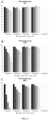
- formulation #1 without phosphate buffer, shows a much greater decrease in assay than the other formulations (-28.9% after 1 week, -42.0% after 2 weeks).
- Formulations #6 and #7 were made with a phosphate buffer and metabisulfite as an antioxidant, and show a similar decrease (-22.8% after 1 week, -30.1% to -34.1% after 2 weeks), even though formulation #2 and #3 show less of a decrease and don't contain an antioxidant. This means that metabisulfite, which does not comprise a thiol group, is not a suitable antioxidant for this formulation.
- formulations #4 and #5 comprising a phosphate buffer and NAC as an antioxidant, show a decrease of less than 10% at 40°C, after a 2-week incubation.
- GS-101 A long-term stability study of GS-101 was initiated and is reported in this example.
- the emulsion containing 0.86 mg GS-101/g emulsion was evaluated in 5 different formulations, comprising phosphate and/or an agent comprising a thiol group. These formulations were kept at different storage conditions, and the stability of GS-101 in the different formulations was evaluated by RP-HPLC, as described in Example 1.
- the GS-101 sterile emulsions were prepared similarly to the emulsions of Example 1. These emulsions can contain one or more of the following substances:
- the GS-101 sterile emulsion formulations were incubated at 5°C, 25°C/ 60% RH or 40°C / 75% RH for different time periods. Analysis were carried out on day 0 (T0), 2 weeks (T2w), one month (T1m), 2 months (T2m), 3 months (T3m) and 6 months (T6m).
- formulation #2 which comprises a phosphate buffer, shows a stabilization of GS-101 and a slowed-down decrease.
- Formulations #3 and #4 which comprise a phosphate buffer and NAC as an antioxidant at different concentrations (0.1 and 0.25% w/w final), show further stabilization of GS-101 when kept at 5°C or 25 °C even after 6 months of incubation.
- an agent comprising a thiol group such as N-acetylcysteine
Landscapes
- Health & Medical Sciences (AREA)
- Chemical & Material Sciences (AREA)
- Life Sciences & Earth Sciences (AREA)
- Pharmacology & Pharmacy (AREA)
- Veterinary Medicine (AREA)
- Public Health (AREA)
- General Health & Medical Sciences (AREA)
- Animal Behavior & Ethology (AREA)
- Medicinal Chemistry (AREA)
- Epidemiology (AREA)
- Dispersion Chemistry (AREA)
- Molecular Biology (AREA)
- Ophthalmology & Optometry (AREA)
- Bioinformatics & Cheminformatics (AREA)
- Nuclear Medicine, Radiotherapy & Molecular Imaging (AREA)
- Engineering & Computer Science (AREA)
- Oil, Petroleum & Natural Gas (AREA)
- Chemical Kinetics & Catalysis (AREA)
- General Chemical & Material Sciences (AREA)
- Biophysics (AREA)
- Organic Chemistry (AREA)
- Inorganic Chemistry (AREA)
- Biochemistry (AREA)
- Pharmaceuticals Containing Other Organic And Inorganic Compounds (AREA)
- Medicinal Preparation (AREA)
- Acyclic And Carbocyclic Compounds In Medicinal Compositions (AREA)
- Medicines That Contain Protein Lipid Enzymes And Other Medicines (AREA)
Priority Applications (5)
| Application Number | Priority Date | Filing Date | Title |
|---|---|---|---|
| HRP20240849TT HRP20240849T1 (hr) | 2017-02-03 | 2018-02-02 | Sterilna emulzija koja sadrži stabilni fosforotioat oligonukleotida |
| SI201831117T SI3576753T1 (sl) | 2017-02-03 | 2018-02-02 | Sterilna emulzija, ki vsebuje fosforotioatni oligonukleotid |
| EP24169866.1A EP4403219A3 (en) | 2017-02-03 | 2018-02-02 | Sterile formulation comprising a stable phosphorothioate oligonucleotide |
| RS20240710A RS65648B1 (sr) | 2017-02-03 | 2018-02-02 | Sterilna emulzija koja sadrži stabilan fosforotioatni oligonukleotid |
| SM20240261T SMT202400261T1 (it) | 2017-02-03 | 2018-02-02 | Emulsione sterile comprendente un oligonucleotide fosforotioato stabile |
Applications Claiming Priority (3)
| Application Number | Priority Date | Filing Date | Title |
|---|---|---|---|
| US15/423,964 US10052343B1 (en) | 2017-02-03 | 2017-02-03 | Sterile formulation comprising a stable phosphorothioate oligonucleotide |
| EP17154670 | 2017-02-03 | ||
| PCT/EP2018/052663 WO2018141908A1 (en) | 2017-02-03 | 2018-02-02 | Sterile formulation comprising a stable phosphorothioate oligonucleotide |
Related Child Applications (1)
| Application Number | Title | Priority Date | Filing Date |
|---|---|---|---|
| EP24169866.1A Division EP4403219A3 (en) | 2017-02-03 | 2018-02-02 | Sterile formulation comprising a stable phosphorothioate oligonucleotide |
Publications (2)
| Publication Number | Publication Date |
|---|---|
| EP3576753A1 EP3576753A1 (en) | 2019-12-11 |
| EP3576753B1 true EP3576753B1 (en) | 2024-04-17 |
Family
ID=61163718
Family Applications (2)
| Application Number | Title | Priority Date | Filing Date |
|---|---|---|---|
| EP18703305.5A Active EP3576753B1 (en) | 2017-02-03 | 2018-02-02 | Sterile emulsion comprising a stable phosphorothioate oligonucleotide |
| EP24169866.1A Withdrawn EP4403219A3 (en) | 2017-02-03 | 2018-02-02 | Sterile formulation comprising a stable phosphorothioate oligonucleotide |
Family Applications After (1)
| Application Number | Title | Priority Date | Filing Date |
|---|---|---|---|
| EP24169866.1A Withdrawn EP4403219A3 (en) | 2017-02-03 | 2018-02-02 | Sterile formulation comprising a stable phosphorothioate oligonucleotide |
Country Status (16)
| Country | Link |
|---|---|
| EP (2) | EP3576753B1 (pl) |
| JP (1) | JP2020515525A (pl) |
| CN (1) | CN110520134B (pl) |
| AU (1) | AU2018214221B2 (pl) |
| CA (1) | CA3051724A1 (pl) |
| ES (1) | ES2980870T3 (pl) |
| FI (1) | FI3576753T3 (pl) |
| HR (1) | HRP20240849T1 (pl) |
| HU (1) | HUE066897T2 (pl) |
| LT (1) | LT3576753T (pl) |
| PL (1) | PL3576753T3 (pl) |
| PT (1) | PT3576753T (pl) |
| RS (1) | RS65648B1 (pl) |
| SI (1) | SI3576753T1 (pl) |
| SM (1) | SMT202400261T1 (pl) |
| WO (1) | WO2018141908A1 (pl) |
Families Citing this family (6)
| Publication number | Priority date | Publication date | Assignee | Title |
|---|---|---|---|---|
| WO2021210409A1 (ja) * | 2020-04-14 | 2021-10-21 | 住友化学株式会社 | 核酸オリゴマーを含む組成物 |
| DK4137500T3 (da) * | 2020-04-14 | 2026-04-20 | Sumitomo Chemical Co | Fremgangsmåde til fremstilling af nukleinsyreoligomer |
| US20240067956A1 (en) * | 2021-01-13 | 2024-02-29 | The Regents Of The University Of Colorado, A Body Corporate | Methods and compositions for molecular tracking in individual cells in vivo |
| US20240300993A1 (en) * | 2021-07-06 | 2024-09-12 | Sumitomo Chemical Company, Limited | Composition containing nucleic acid oligomer |
| WO2025072748A2 (en) * | 2023-09-29 | 2025-04-03 | Insitro, Inc. | Compositions and methods for treating nonalcoholic fatty liver disease |
| CN122055446A (zh) * | 2024-06-26 | 2026-05-15 | 思合基因(北京)生物科技有限公司 | 一种靶向IRS-1 mRNA的寡聚核苷酸及其应用 |
Family Cites Families (9)
| Publication number | Priority date | Publication date | Assignee | Title |
|---|---|---|---|---|
| US4136178A (en) | 1977-01-31 | 1979-01-23 | American Home Products Corp. | Locust bean gum therapeutic compositions |
| US4136173A (en) | 1977-01-31 | 1979-01-23 | American Home Products Corp. | Mixed xanthan gum and locust beam gum therapeutic compositions |
| US4136177A (en) | 1977-01-31 | 1979-01-23 | American Home Products Corp. | Xanthan gum therapeutic compositions |
| FR2588189B1 (fr) | 1985-10-03 | 1988-12-02 | Merck Sharp & Dohme | Composition pharmaceutique de type a transition de phase liquide-gel |
| US5212162A (en) | 1991-03-27 | 1993-05-18 | Alcon Laboratories, Inc. | Use of combinations gelling polysaccharides and finely divided drug carrier substrates in topical ophthalmic compositions |
| US20030096770A1 (en) | 2001-07-11 | 2003-05-22 | Krotz Achim H. | Enhancement of the stability of oligonucleotides comprising phosphorothioate linkages by addition of water-soluble antioxidants |
| US8580947B2 (en) * | 2009-02-05 | 2013-11-12 | Gene Signal International Sa | Pharmaceutical composition for preventing, stabilising and/or inhibiting blood and lymph vascularization |
| WO2017025471A1 (en) * | 2015-08-07 | 2017-02-16 | Gene Signal International Sa | Sterile emulsion comprising a stable phosphorothioate oligonucleotide |
| EP3128007A1 (en) * | 2015-08-07 | 2017-02-08 | Gene Signal International SA | Sterile emulsion comprising a stable phosphorothioate oligonucleotide |
-
2018
- 2018-02-02 PT PT187033055T patent/PT3576753T/pt unknown
- 2018-02-02 PL PL18703305.5T patent/PL3576753T3/pl unknown
- 2018-02-02 RS RS20240710A patent/RS65648B1/sr unknown
- 2018-02-02 SI SI201831117T patent/SI3576753T1/sl unknown
- 2018-02-02 LT LTEPPCT/EP2018/052663T patent/LT3576753T/lt unknown
- 2018-02-02 EP EP18703305.5A patent/EP3576753B1/en active Active
- 2018-02-02 JP JP2019542107A patent/JP2020515525A/ja active Pending
- 2018-02-02 CN CN201880017414.1A patent/CN110520134B/zh active Active
- 2018-02-02 SM SM20240261T patent/SMT202400261T1/it unknown
- 2018-02-02 FI FIEP18703305.5T patent/FI3576753T3/fi active
- 2018-02-02 ES ES18703305T patent/ES2980870T3/es active Active
- 2018-02-02 HU HUE18703305A patent/HUE066897T2/hu unknown
- 2018-02-02 CA CA3051724A patent/CA3051724A1/en active Pending
- 2018-02-02 HR HRP20240849TT patent/HRP20240849T1/hr unknown
- 2018-02-02 WO PCT/EP2018/052663 patent/WO2018141908A1/en not_active Ceased
- 2018-02-02 AU AU2018214221A patent/AU2018214221B2/en active Active
- 2018-02-02 EP EP24169866.1A patent/EP4403219A3/en not_active Withdrawn
Also Published As
| Publication number | Publication date |
|---|---|
| CN110520134B (zh) | 2023-07-18 |
| FI3576753T3 (fi) | 2024-06-28 |
| PL3576753T3 (pl) | 2024-07-29 |
| EP4403219A2 (en) | 2024-07-24 |
| HRP20240849T1 (hr) | 2024-09-27 |
| CA3051724A1 (en) | 2018-08-09 |
| RS65648B1 (sr) | 2024-07-31 |
| JP2020515525A (ja) | 2020-05-28 |
| LT3576753T (lt) | 2024-07-25 |
| SI3576753T1 (sl) | 2024-08-30 |
| HUE066897T2 (hu) | 2024-09-28 |
| EP3576753A1 (en) | 2019-12-11 |
| AU2018214221A1 (en) | 2019-08-15 |
| SMT202400261T1 (it) | 2024-09-16 |
| PT3576753T (pt) | 2024-06-26 |
| EP4403219A3 (en) | 2024-10-09 |
| AU2018214221B2 (en) | 2024-02-01 |
| WO2018141908A1 (en) | 2018-08-09 |
| ES2980870T3 (es) | 2024-10-03 |
| CN110520134A (zh) | 2019-11-29 |
Similar Documents
| Publication | Publication Date | Title |
|---|---|---|
| EP4403219A2 (en) | Sterile formulation comprising a stable phosphorothioate oligonucleotide | |
| JP2021075564A (ja) | シクロスポリン組成物 | |
| WO2023225551A1 (en) | Novel applications of zwitterions in ophthalmic topical cream compositions and preparations | |
| KR101751585B1 (ko) | 데옥시콜린산 및 그의 염들의 제형물들 | |
| JP5898789B2 (ja) | 眼用医薬組成物およびその製造方法と使用方法 | |
| JP6677779B2 (ja) | フロセミドの皮下投与用の医薬製剤 | |
| US20250188461A1 (en) | Methods of treating osmidrosis | |
| EP2869819A1 (en) | Compositions, methods and/or devices for prevention and/or treatment of dry eye disorders | |
| US11357790B2 (en) | Sterile formulation comprising a stable phosphorothioate oligonucleotide | |
| EP2575854B1 (en) | Cyclosporin emulsions | |
| KR101635915B1 (ko) | 사이클로스포린과 히알루론산 또는 이의 염을 포함하는 수용액 형태의 안과용 조성물 | |
| EP3128007A1 (en) | Sterile emulsion comprising a stable phosphorothioate oligonucleotide | |
| WO2017025471A1 (en) | Sterile emulsion comprising a stable phosphorothioate oligonucleotide | |
| TWI510243B (zh) | 用於治療膀胱癌的組成物及方法 | |
| KR20140069210A (ko) | 안과적 겔 조성물 | |
| US8329685B1 (en) | Enhancement of the action of anti-infective agents and of central and peripheral nervous system agents and transportation of nucleic acid substances | |
| US20170035693A1 (en) | Sterile Emulsion Comprising a Stable Phosphorothioate Oligonucleotide | |
| Theerdhala et al. | Mupirocin-Loaded Niosomal Gel for Topical Wound Healing Application | |
| EP4110365A2 (en) | Fidgetin-like 2 as a target to enhance wound healing | |
| KR20150068647A (ko) | 폴리데옥시리보뉴클레오티드 미세입자를 함유하는 점안제 조성물 및 이의 제조방법 | |
| CN109820825A (zh) | 一种用于治疗眼部疾病的药物组合物 |
Legal Events
| Date | Code | Title | Description |
|---|---|---|---|
| REG | Reference to a national code |
Ref country code: HR Ref legal event code: TUEP Ref document number: P20240849T Country of ref document: HR |
|
| STAA | Information on the status of an ep patent application or granted ep patent |
Free format text: STATUS: UNKNOWN |
|
| STAA | Information on the status of an ep patent application or granted ep patent |
Free format text: STATUS: THE INTERNATIONAL PUBLICATION HAS BEEN MADE |
|
| PUAI | Public reference made under article 153(3) epc to a published international application that has entered the european phase |
Free format text: ORIGINAL CODE: 0009012 |
|
| STAA | Information on the status of an ep patent application or granted ep patent |
Free format text: STATUS: REQUEST FOR EXAMINATION WAS MADE |
|
| 17P | Request for examination filed |
Effective date: 20190903 |
|
| AK | Designated contracting states |
Kind code of ref document: A1 Designated state(s): AL AT BE BG CH CY CZ DE DK EE ES FI FR GB GR HR HU IE IS IT LI LT LU LV MC MK MT NL NO PL PT RO RS SE SI SK SM TR |
|
| AX | Request for extension of the european patent |
Extension state: BA ME |
|
| DAV | Request for validation of the european patent (deleted) | ||
| DAX | Request for extension of the european patent (deleted) | ||
| STAA | Information on the status of an ep patent application or granted ep patent |
Free format text: STATUS: EXAMINATION IS IN PROGRESS |
|
| 17Q | First examination report despatched |
Effective date: 20220404 |
|
| 19U | Interruption of proceedings before grant |
Effective date: 20210415 |
|
| 19W | Proceedings resumed before grant after interruption of proceedings |
Effective date: 20231002 |
|
| GRAP | Despatch of communication of intention to grant a patent |
Free format text: ORIGINAL CODE: EPIDOSNIGR1 |
|
| STAA | Information on the status of an ep patent application or granted ep patent |
Free format text: STATUS: GRANT OF PATENT IS INTENDED |
|
| RAP3 | Party data changed (applicant data changed or rights of an application transferred) |
Owner name: LABORATOIRES KOL |
|
| INTG | Intention to grant announced |
Effective date: 20231103 |
|
| GRAS | Grant fee paid |
Free format text: ORIGINAL CODE: EPIDOSNIGR3 |
|
| GRAA | (expected) grant |
Free format text: ORIGINAL CODE: 0009210 |
|
| STAA | Information on the status of an ep patent application or granted ep patent |
Free format text: STATUS: THE PATENT HAS BEEN GRANTED |
|
| AK | Designated contracting states |
Kind code of ref document: B1 Designated state(s): AL AT BE BG CH CY CZ DE DK EE ES FI FR GB GR HR HU IE IS IT LI LT LU LV MC MK MT NL NO PL PT RO RS SE SI SK SM TR |
|
| REG | Reference to a national code |
Ref country code: GB Ref legal event code: FG4D |
|
| REG | Reference to a national code |
Ref country code: CH Ref legal event code: EP |
|
| REG | Reference to a national code |
Ref country code: IE Ref legal event code: FG4D Ref country code: DE Ref legal event code: R096 Ref document number: 602018068139 Country of ref document: DE |
|
| P01 | Opt-out of the competence of the unified patent court (upc) registered |
Effective date: 20240405 |
|
| REG | Reference to a national code |
Ref country code: RO Ref legal event code: EPE |
|
| REG | Reference to a national code |
Ref country code: DK Ref legal event code: T3 Effective date: 20240618 |
|
| REG | Reference to a national code |
Ref country code: PT Ref legal event code: SC4A Ref document number: 3576753 Country of ref document: PT Date of ref document: 20240626 Kind code of ref document: T Free format text: AVAILABILITY OF NATIONAL TRANSLATION Effective date: 20240620 |
|
| REG | Reference to a national code |
Ref country code: FI Ref legal event code: FGE |
|
| REG | Reference to a national code |
Ref country code: SE Ref legal event code: TRGR |
|
| REG | Reference to a national code |
Ref country code: NL Ref legal event code: FP |
|
| REG | Reference to a national code |
Ref country code: SK Ref legal event code: T3 Ref document number: E 44440 Country of ref document: SK |
|
| REG | Reference to a national code |
Ref country code: GR Ref legal event code: EP Ref document number: 20240401546 Country of ref document: GR Effective date: 20240819 |
|
| REG | Reference to a national code |
Ref country code: HR Ref legal event code: T1PR Ref document number: P20240849 Country of ref document: HR |
|
| REG | Reference to a national code |
Ref country code: HU Ref legal event code: AG4A Ref document number: E066897 Country of ref document: HU |
|
| REG | Reference to a national code |
Ref country code: ES Ref legal event code: FG2A Ref document number: 2980870 Country of ref document: ES Kind code of ref document: T3 Effective date: 20241003 |
|
| REG | Reference to a national code |
Ref country code: EE Ref legal event code: FG4A Ref document number: E024428 Country of ref document: EE Effective date: 20240626 |
|
| REG | Reference to a national code |
Ref country code: DE Ref legal event code: R097 Ref document number: 602018068139 Country of ref document: DE |
|
| REG | Reference to a national code |
Ref country code: HR Ref legal event code: ODRP Ref document number: P20240849 Country of ref document: HR Payment date: 20250123 Year of fee payment: 8 |
|
| PLBE | No opposition filed within time limit |
Free format text: ORIGINAL CODE: 0009261 |
|
| STAA | Information on the status of an ep patent application or granted ep patent |
Free format text: STATUS: NO OPPOSITION FILED WITHIN TIME LIMIT |
|
| 26N | No opposition filed |
Effective date: 20250120 |
|
| REG | Reference to a national code |
Ref country code: AT Ref legal event code: UEP Ref document number: 1676598 Country of ref document: AT Kind code of ref document: T Effective date: 20240417 |
|
| REG | Reference to a national code |
Ref country code: HR Ref legal event code: ODRP Ref document number: P20240849 Country of ref document: HR Payment date: 20260122 Year of fee payment: 9 |
|
| REG | Reference to a national code |
Ref country code: CH Ref legal event code: U11 Free format text: ST27 STATUS EVENT CODE: U-0-0-U10-U11 (AS PROVIDED BY THE NATIONAL OFFICE) Effective date: 20260301 |
|
| PGFP | Annual fee paid to national office [announced via postgrant information from national office to epo] |
Ref country code: LU Payment date: 20260218 Year of fee payment: 9 Ref country code: NL Payment date: 20260218 Year of fee payment: 9 |
|
| PGFP | Annual fee paid to national office [announced via postgrant information from national office to epo] |
Ref country code: HU Payment date: 20260220 Year of fee payment: 9 |
|
| PGFP | Annual fee paid to national office [announced via postgrant information from national office to epo] |
Ref country code: SM Payment date: 20260128 Year of fee payment: 9 |
|
| PGFP | Annual fee paid to national office [announced via postgrant information from national office to epo] |
Ref country code: SE Payment date: 20260218 Year of fee payment: 9 |
|
| PGFP | Annual fee paid to national office [announced via postgrant information from national office to epo] |
Ref country code: GB Payment date: 20260219 Year of fee payment: 9 Ref country code: LT Payment date: 20260123 Year of fee payment: 9 |
|
| PGFP | Annual fee paid to national office [announced via postgrant information from national office to epo] |
Ref country code: MC Payment date: 20260220 Year of fee payment: 9 |
|
| PGFP | Annual fee paid to national office [announced via postgrant information from national office to epo] |
Ref country code: DE Payment date: 20260218 Year of fee payment: 9 Ref country code: NO Payment date: 20260220 Year of fee payment: 9 Ref country code: DK Payment date: 20260220 Year of fee payment: 9 Ref country code: IE Payment date: 20260218 Year of fee payment: 9 |
|
| PGFP | Annual fee paid to national office [announced via postgrant information from national office to epo] |
Ref country code: AT Payment date: 20260219 Year of fee payment: 9 Ref country code: HR Payment date: 20260122 Year of fee payment: 9 |
|
| PGFP | Annual fee paid to national office [announced via postgrant information from national office to epo] |
Ref country code: RO Payment date: 20260127 Year of fee payment: 9 Ref country code: BE Payment date: 20260218 Year of fee payment: 9 Ref country code: FI Payment date: 20260226 Year of fee payment: 9 Ref country code: IT Payment date: 20260224 Year of fee payment: 9 |
|
| PGFP | Annual fee paid to national office [announced via postgrant information from national office to epo] |
Ref country code: RS Payment date: 20260123 Year of fee payment: 9 |
|
| PGFP | Annual fee paid to national office [announced via postgrant information from national office to epo] |
Ref country code: FR Payment date: 20260218 Year of fee payment: 9 Ref country code: IS Payment date: 20260216 Year of fee payment: 9 |
|
| PGFP | Annual fee paid to national office [announced via postgrant information from national office to epo] |
Ref country code: TR Payment date: 20260128 Year of fee payment: 9 |
|
| PGFP | Annual fee paid to national office [announced via postgrant information from national office to epo] |
Ref country code: CH Payment date: 20260301 Year of fee payment: 9 Ref country code: PT Payment date: 20260122 Year of fee payment: 9 Ref country code: CZ Payment date: 20260127 Year of fee payment: 9 |
|
| PGFP | Annual fee paid to national office [announced via postgrant information from national office to epo] |
Ref country code: GR Payment date: 20260218 Year of fee payment: 9 Ref country code: PL Payment date: 20260130 Year of fee payment: 9 Ref country code: CY Payment date: 20260122 Year of fee payment: 9 Ref country code: MT Payment date: 20260129 Year of fee payment: 9 |
|
| PGFP | Annual fee paid to national office [announced via postgrant information from national office to epo] |
Ref country code: EE Payment date: 20260225 Year of fee payment: 9 Ref country code: LV Payment date: 20260213 Year of fee payment: 9 Ref country code: SK Payment date: 20260126 Year of fee payment: 9 |
|
| PGFP | Annual fee paid to national office [announced via postgrant information from national office to epo] |
Ref country code: SI Payment date: 20260122 Year of fee payment: 9 |
|
| PGFP | Annual fee paid to national office [announced via postgrant information from national office to epo] |
Ref country code: BG Payment date: 20260220 Year of fee payment: 9 |
|
| PGFP | Annual fee paid to national office [announced via postgrant information from national office to epo] |
Ref country code: MK Payment date: 20260122 Year of fee payment: 9 |
|
| PGFP | Annual fee paid to national office [announced via postgrant information from national office to epo] |
Ref country code: AL Payment date: 20260201 Year of fee payment: 9 |
|
| PGFP | Annual fee paid to national office [announced via postgrant information from national office to epo] |
Ref country code: ES Payment date: 20260408 Year of fee payment: 9 |