EP3573624B1 - Zwitterionically modified polymers and hydrogels - Google Patents
Zwitterionically modified polymers and hydrogels Download PDFInfo
- Publication number
- EP3573624B1 EP3573624B1 EP18744703.2A EP18744703A EP3573624B1 EP 3573624 B1 EP3573624 B1 EP 3573624B1 EP 18744703 A EP18744703 A EP 18744703A EP 3573624 B1 EP3573624 B1 EP 3573624B1
- Authority
- EP
- European Patent Office
- Prior art keywords
- formula
- group
- monomer
- polymer
- alkyl
- Prior art date
- Legal status (The legal status is an assumption and is not a legal conclusion. Google has not performed a legal analysis and makes no representation as to the accuracy of the status listed.)
- Active
Links
Images








Classifications
-
- A—HUMAN NECESSITIES
- A61—MEDICAL OR VETERINARY SCIENCE; HYGIENE
- A61K—PREPARATIONS FOR MEDICAL, DENTAL OR TOILETRY PURPOSES
- A61K35/00—Medicinal preparations containing materials or reaction products thereof with undetermined constitution
- A61K35/12—Materials from mammals; Compositions comprising non-specified tissues or cells; Compositions comprising non-embryonic stem cells; Genetically modified cells
- A61K35/37—Digestive system
- A61K35/39—Pancreas; Islets of Langerhans
-
- A—HUMAN NECESSITIES
- A61—MEDICAL OR VETERINARY SCIENCE; HYGIENE
- A61K—PREPARATIONS FOR MEDICAL, DENTAL OR TOILETRY PURPOSES
- A61K45/00—Medicinal preparations containing active ingredients not provided for in groups A61K31/00 - A61K41/00
-
- A—HUMAN NECESSITIES
- A61—MEDICAL OR VETERINARY SCIENCE; HYGIENE
- A61K—PREPARATIONS FOR MEDICAL, DENTAL OR TOILETRY PURPOSES
- A61K47/00—Medicinal preparations characterised by the non-active ingredients used, e.g. carriers or inert additives; Targeting or modifying agents chemically bound to the active ingredient
- A61K47/30—Macromolecular organic or inorganic compounds, e.g. inorganic polyphosphates
- A61K47/32—Macromolecular compounds obtained by reactions only involving carbon-to-carbon unsaturated bonds, e.g. carbomers, poly(meth)acrylates, or polyvinyl pyrrolidone
-
- A—HUMAN NECESSITIES
- A61—MEDICAL OR VETERINARY SCIENCE; HYGIENE
- A61K—PREPARATIONS FOR MEDICAL, DENTAL OR TOILETRY PURPOSES
- A61K47/00—Medicinal preparations characterised by the non-active ingredients used, e.g. carriers or inert additives; Targeting or modifying agents chemically bound to the active ingredient
- A61K47/30—Macromolecular organic or inorganic compounds, e.g. inorganic polyphosphates
- A61K47/34—Macromolecular compounds obtained otherwise than by reactions only involving carbon-to-carbon unsaturated bonds, e.g. polyesters, polyamino acids, polysiloxanes, polyphosphazines, copolymers of polyalkylene glycol or poloxamers
-
- A—HUMAN NECESSITIES
- A61—MEDICAL OR VETERINARY SCIENCE; HYGIENE
- A61K—PREPARATIONS FOR MEDICAL, DENTAL OR TOILETRY PURPOSES
- A61K9/00—Medicinal preparations characterised by special physical form
- A61K9/0012—Galenical forms characterised by the site of application
- A61K9/0019—Injectable compositions; Intramuscular, intravenous, arterial, subcutaneous administration; Compositions to be administered through the skin in an invasive manner
- A61K9/0024—Solid, semi-solid or solidifying implants, which are implanted or injected in body tissue
-
- A—HUMAN NECESSITIES
- A61—MEDICAL OR VETERINARY SCIENCE; HYGIENE
- A61K—PREPARATIONS FOR MEDICAL, DENTAL OR TOILETRY PURPOSES
- A61K9/00—Medicinal preparations characterised by special physical form
- A61K9/06—Ointments; Bases therefor; Other semi-solid forms, e.g. creams, sticks, gels
-
- A—HUMAN NECESSITIES
- A61—MEDICAL OR VETERINARY SCIENCE; HYGIENE
- A61K—PREPARATIONS FOR MEDICAL, DENTAL OR TOILETRY PURPOSES
- A61K9/00—Medicinal preparations characterised by special physical form
- A61K9/48—Preparations in capsules, e.g. of gelatin, of chocolate
- A61K9/4808—Preparations in capsules, e.g. of gelatin, of chocolate characterised by the form of the capsule or the structure of the filling; Capsules containing small tablets; Capsules with outer layer for immediate drug release
-
- A—HUMAN NECESSITIES
- A61—MEDICAL OR VETERINARY SCIENCE; HYGIENE
- A61K—PREPARATIONS FOR MEDICAL, DENTAL OR TOILETRY PURPOSES
- A61K9/00—Medicinal preparations characterised by special physical form
- A61K9/48—Preparations in capsules, e.g. of gelatin, of chocolate
- A61K9/4841—Filling excipients; Inactive ingredients
- A61K9/4866—Organic macromolecular compounds
-
- A—HUMAN NECESSITIES
- A61—MEDICAL OR VETERINARY SCIENCE; HYGIENE
- A61K—PREPARATIONS FOR MEDICAL, DENTAL OR TOILETRY PURPOSES
- A61K9/00—Medicinal preparations characterised by special physical form
- A61K9/48—Preparations in capsules, e.g. of gelatin, of chocolate
- A61K9/50—Microcapsules having a gas, liquid or semi-solid filling; Solid microparticles or pellets surrounded by a distinct coating layer, e.g. coated microspheres, coated drug crystals
- A61K9/5005—Wall or coating material
- A61K9/5021—Organic macromolecular compounds
- A61K9/5031—Organic macromolecular compounds obtained otherwise than by reactions only involving carbon-to-carbon unsaturated bonds, e.g. polyethylene glycol, poly(lactide-co-glycolide)
-
- A—HUMAN NECESSITIES
- A61—MEDICAL OR VETERINARY SCIENCE; HYGIENE
- A61P—SPECIFIC THERAPEUTIC ACTIVITY OF CHEMICAL COMPOUNDS OR MEDICINAL PREPARATIONS
- A61P3/00—Drugs for disorders of the metabolism
- A61P3/08—Drugs for disorders of the metabolism for glucose homeostasis
- A61P3/10—Drugs for disorders of the metabolism for glucose homeostasis for hyperglycaemia, e.g. antidiabetics
-
- C—CHEMISTRY; METALLURGY
- C07—ORGANIC CHEMISTRY
- C07D—HETEROCYCLIC COMPOUNDS
- C07D249/00—Heterocyclic compounds containing five-membered rings having three nitrogen atoms as the only ring hetero atoms
- C07D249/02—Heterocyclic compounds containing five-membered rings having three nitrogen atoms as the only ring hetero atoms not condensed with other rings
- C07D249/04—1,2,3-Triazoles; Hydrogenated 1,2,3-triazoles
-
- C—CHEMISTRY; METALLURGY
- C07—ORGANIC CHEMISTRY
- C07H—SUGARS; DERIVATIVES THEREOF; NUCLEOSIDES; NUCLEOTIDES; NUCLEIC ACIDS
- C07H15/00—Compounds containing hydrocarbon or substituted hydrocarbon radicals directly attached to hetero atoms of saccharide radicals
- C07H15/02—Acyclic radicals, not substituted by cyclic structures
- C07H15/04—Acyclic radicals, not substituted by cyclic structures attached to an oxygen atom of the saccharide radical
-
- C—CHEMISTRY; METALLURGY
- C07—ORGANIC CHEMISTRY
- C07H—SUGARS; DERIVATIVES THEREOF; NUCLEOSIDES; NUCLEOTIDES; NUCLEIC ACIDS
- C07H15/00—Compounds containing hydrocarbon or substituted hydrocarbon radicals directly attached to hetero atoms of saccharide radicals
- C07H15/02—Acyclic radicals, not substituted by cyclic structures
- C07H15/04—Acyclic radicals, not substituted by cyclic structures attached to an oxygen atom of the saccharide radical
- C07H15/08—Polyoxyalkylene derivatives
-
- C—CHEMISTRY; METALLURGY
- C07—ORGANIC CHEMISTRY
- C07H—SUGARS; DERIVATIVES THEREOF; NUCLEOSIDES; NUCLEOTIDES; NUCLEIC ACIDS
- C07H7/00—Compounds containing non-saccharide radicals linked to saccharide radicals by a carbon-to-carbon bond
- C07H7/02—Acyclic radicals
- C07H7/033—Uronic acids
-
- C—CHEMISTRY; METALLURGY
- C08—ORGANIC MACROMOLECULAR COMPOUNDS; THEIR PREPARATION OR CHEMICAL WORKING-UP; COMPOSITIONS BASED THEREON
- C08B—POLYSACCHARIDES; DERIVATIVES THEREOF
- C08B37/00—Preparation of polysaccharides not provided for in groups C08B1/00 - C08B35/00; Derivatives thereof
- C08B37/006—Heteroglycans, i.e. polysaccharides having more than one sugar residue in the main chain in either alternating or less regular sequence; Gellans; Succinoglycans; Arabinogalactans; Tragacanth or gum tragacanth or traganth from Astragalus; Gum Karaya from Sterculia urens; Gum Ghatti from Anogeissus latifolia; Derivatives thereof
- C08B37/0084—Guluromannuronans, e.g. alginic acid, i.e. D-mannuronic acid and D-guluronic acid units linked with alternating alpha- and beta-1,4-glycosidic bonds; Derivatives thereof, e.g. alginates
-
- C—CHEMISTRY; METALLURGY
- C08—ORGANIC MACROMOLECULAR COMPOUNDS; THEIR PREPARATION OR CHEMICAL WORKING-UP; COMPOSITIONS BASED THEREON
- C08F—MACROMOLECULAR COMPOUNDS OBTAINED BY REACTIONS ONLY INVOLVING CARBON-TO-CARBON UNSATURATED BONDS
- C08F116/00—Homopolymers of compounds having one or more unsaturated aliphatic radicals, each having only one carbon-to-carbon double bond, and at least one being terminated by an alcohol, ether, aldehydo, ketonic, acetal or ketal radical
- C08F116/02—Homopolymers of compounds having one or more unsaturated aliphatic radicals, each having only one carbon-to-carbon double bond, and at least one being terminated by an alcohol, ether, aldehydo, ketonic, acetal or ketal radical by an alcohol radical
- C08F116/04—Acyclic compounds
- C08F116/06—Polyvinyl alcohol ; Vinyl alcohol
-
- C—CHEMISTRY; METALLURGY
- C08—ORGANIC MACROMOLECULAR COMPOUNDS; THEIR PREPARATION OR CHEMICAL WORKING-UP; COMPOSITIONS BASED THEREON
- C08F—MACROMOLECULAR COMPOUNDS OBTAINED BY REACTIONS ONLY INVOLVING CARBON-TO-CARBON UNSATURATED BONDS
- C08F16/00—Homopolymers and copolymers of compounds having one or more unsaturated aliphatic radicals, each having only one carbon-to-carbon double bond, and at least one being terminated by an alcohol, ether, aldehydo, ketonic, acetal or ketal radical
- C08F16/02—Homopolymers and copolymers of compounds having one or more unsaturated aliphatic radicals, each having only one carbon-to-carbon double bond, and at least one being terminated by an alcohol, ether, aldehydo, ketonic, acetal or ketal radical by an alcohol radical
- C08F16/04—Acyclic compounds
- C08F16/06—Polyvinyl alcohol ; Vinyl alcohol
-
- C—CHEMISTRY; METALLURGY
- C08—ORGANIC MACROMOLECULAR COMPOUNDS; THEIR PREPARATION OR CHEMICAL WORKING-UP; COMPOSITIONS BASED THEREON
- C08F—MACROMOLECULAR COMPOUNDS OBTAINED BY REACTIONS ONLY INVOLVING CARBON-TO-CARBON UNSATURATED BONDS
- C08F220/00—Copolymers of compounds having one or more unsaturated aliphatic radicals, each having only one carbon-to-carbon double bond, and only one being terminated by only one carboxyl radical or a salt, anhydride ester, amide, imide or nitrile thereof
- C08F220/02—Monocarboxylic acids having less than ten carbon atoms; Derivatives thereof
- C08F220/52—Amides or imides
- C08F220/54—Amides, e.g. N,N-dimethylacrylamide or N-isopropylacrylamide
- C08F220/60—Amides, e.g. N,N-dimethylacrylamide or N-isopropylacrylamide containing nitrogen in addition to the carbonamido nitrogen
- C08F220/603—Amides, e.g. N,N-dimethylacrylamide or N-isopropylacrylamide containing nitrogen in addition to the carbonamido nitrogen and containing oxygen in addition to the carbonamido oxygen and nitrogen
-
- C—CHEMISTRY; METALLURGY
- C08—ORGANIC MACROMOLECULAR COMPOUNDS; THEIR PREPARATION OR CHEMICAL WORKING-UP; COMPOSITIONS BASED THEREON
- C08F—MACROMOLECULAR COMPOUNDS OBTAINED BY REACTIONS ONLY INVOLVING CARBON-TO-CARBON UNSATURATED BONDS
- C08F220/00—Copolymers of compounds having one or more unsaturated aliphatic radicals, each having only one carbon-to-carbon double bond, and only one being terminated by only one carboxyl radical or a salt, anhydride ester, amide, imide or nitrile thereof
- C08F220/02—Monocarboxylic acids having less than ten carbon atoms; Derivatives thereof
- C08F220/52—Amides or imides
- C08F220/54—Amides, e.g. N,N-dimethylacrylamide or N-isopropylacrylamide
- C08F220/60—Amides, e.g. N,N-dimethylacrylamide or N-isopropylacrylamide containing nitrogen in addition to the carbonamido nitrogen
- C08F220/606—Amides, e.g. N,N-dimethylacrylamide or N-isopropylacrylamide containing nitrogen in addition to the carbonamido nitrogen and containing other heteroatoms
-
- C—CHEMISTRY; METALLURGY
- C08—ORGANIC MACROMOLECULAR COMPOUNDS; THEIR PREPARATION OR CHEMICAL WORKING-UP; COMPOSITIONS BASED THEREON
- C08F—MACROMOLECULAR COMPOUNDS OBTAINED BY REACTIONS ONLY INVOLVING CARBON-TO-CARBON UNSATURATED BONDS
- C08F8/00—Chemical modification by after-treatment
-
- C—CHEMISTRY; METALLURGY
- C08—ORGANIC MACROMOLECULAR COMPOUNDS; THEIR PREPARATION OR CHEMICAL WORKING-UP; COMPOSITIONS BASED THEREON
- C08L—COMPOSITIONS OF MACROMOLECULAR COMPOUNDS
- C08L29/00—Compositions of homopolymers or copolymers of compounds having one or more unsaturated aliphatic radicals, each having only one carbon-to-carbon double bond, and at least one being terminated by an alcohol, ether, aldehydo, ketonic, acetal or ketal radical; Compositions of hydrolysed polymers of esters of unsaturated alcohols with saturated carboxylic acids; Compositions of derivatives of such polymers
- C08L29/02—Homopolymers or copolymers of unsaturated alcohols
- C08L29/04—Polyvinyl alcohol; Partially hydrolysed homopolymers or copolymers of esters of unsaturated alcohols with saturated carboxylic acids
-
- C—CHEMISTRY; METALLURGY
- C08—ORGANIC MACROMOLECULAR COMPOUNDS; THEIR PREPARATION OR CHEMICAL WORKING-UP; COMPOSITIONS BASED THEREON
- C08L—COMPOSITIONS OF MACROMOLECULAR COMPOUNDS
- C08L5/00—Compositions of polysaccharides or of their derivatives not provided for in groups C08L1/00 or C08L3/00
- C08L5/04—Alginic acid; Derivatives thereof
Definitions
- the present invention relates to a zwitterionic monomers, polymers, and hydrogels, and their use to coat and/or encapsulate biological materials.
- alkyl means an aliphatic hydrocarbon group which may be straight or branched having about 1 to about 20 (e.g., 1, 2, 3, 4, 5, 6, 7, 8, 9, 10, 11, 12, 13, 14, 15, 16, 17, 18, 19, 20) carbon atoms in the chain, unless otherwise specified. Branched means that one or more lower alkyl groups such as methyl, ethyl, or propyl are attached to a linear alkyl chain. Exemplary alkyl groups include methyl, ethyl, n-propyl, i-propyl, n-butyl, t-butyl, n-pentyl, and 3-pentyl.
- alkenyl means an aliphatic hydrocarbon group containing a carbon-carbon double bond and which may be straight or branched having about 2 to about 20 (e.g., 2, 3, 4, 5, 6, 7, 8, 9, 10, 11, 12, 13, 14, 15, 16, 17, 18, 19, 20) carbon atoms in the chain.
- Preferred alkenyl groups have 2 to about 6 (e.g., 2, 3, 4, 5, 6) carbon atoms in the chain.
- Exemplary alkenyl groups include ethenyl, propenyl, n-butenyl, and i-butenyl.
- An alkenylene is a divalent, straight or branched chain alkene group.
- cycloalkyl refers to a non-aromatic saturated mono- or polycyclic ring system which may contain 3 to 20 (e.g., 3, 4, 5, 6, 7, 8, 9, 10, 11, 12, 13, 14, 15, 16, 17, 18, 19, 20) carbon atoms.
- exemplary cycloalkyl groups include, without limitation, cyclopropyl, cyclobutyl, cyclopentyl, cyclohexyl.
- cycloalkylene means a group obtained by removal of a hydrogen atom from a cycloalkyl group.
- Non-limiting examples of cycloalkylene include cyclobutylene and cyclopropylene.
- cycloalkenyl refers to a non-aromatic unsaturated mono- or polycyclic ring system which may contain 3 to 12 (e.g., 3, 4, 5, 6, 7, 8, 9, 10, 11, or 12) carbon atoms, and which includes at least one double bond.
- exemplary cycloalkenyl groups include, without limitation, cyclopropenyl, cyclobutenyl, cyclopentenyl, cyclohexenyl.
- a cycloalkenylene is a divalent, straight or branched chain cycloalkene group.
- heterocyclyl refers to a stable 3- to 18-membered (e.g., 3-, 4-, 5-, 6-, 7-, 8-, 9-, 10-, 11-, 12-, 13-, 14-, 15-, 16-, 17-, or 18-membered) ring system that consists of carbon atoms and from one to five (e.g., 1, 2, 3, 4, or 5) heteroatoms selected from the group consisting of nitrogen, oxygen, sulfur, and silicon.
- the heterocyclyl may be a monocyclic or a polycyclic ring system, which may include fused, bridged, or spiro ring systems; and the nitrogen, carbon, sulfur, or silicon atoms in the heterocyclyl may be optionally oxidized; the nitrogen atom may be optionally quaternized; and the ring may be partially or fully saturated.
- Representative monocyclic heterocyclyls include piperidine, piperazine, pyrimidine, morpholine, thiomorpholine, pyrrolidine, tetrahydrofuran, pyran, tetrahydropyran, oxetane, and the like.
- Representative polycyclic heterocyclyls include indole, isoindole, indolizine, quinoline, isoquinoline, purine, carbazole, dibenzofuran, chromene, xanthene, and the like.
- aryl refers to an aromatic monocyclic or polycyclic ring system containing from 6 to 19 (e.g., 6, 7, 8, 9, 10, 11, 12, 13, 14, 15, 16, 17, 18, or 19) carbon atoms, where the ring system may be optionally substituted.
- Aryl groups of the present invention include, but are not limited to, groups such as phenyl, naphthyl, azulenyl, phenanthrenyl, anthracenyl, fluorenyl, pyrenyl, triphenylenyl, chrysenyl, and naphthacenyl.
- arylene means a group obtained by removal of a hydrogen atom from an aryl group.
- Non-limiting examples of arylene include phenylene and naphthylene.
- heteroaryl refers to an aromatic ring radical which consists of carbon atoms and from one to five (e.g., 1, 2, 3, 4, or 5) heteroatoms selected from the group consisting of nitrogen, oxygen, sulfur, and silicon.
- heteroaryl groups include, without limitation, pyrrolyl, pyrazolyl, imidazolyl, triazolyl, furyl, thiophenyl, oxazolyl, isoxazolyl, thiazolyl, isothiazolyl, oxadiazolyl, thiadiazolyl, pyridyl, pyrazinyl, pyrimidinyl, pyridazinyl, triazinyl, thienopyrrolyl, furopyrrolyl, indolyl, azaindolyl, isoindolyl, indolinyl, indolizinyl, indazolyl, benzimidazolyl, imidazopyridinyl, benzotriazolyl, benzoxazolyl, benzoxadiazolyl, benzothiazolyl, pyrazolopyridinyl, triazolopyridinyl, thienopyridinyl, be
- heteroarylene means a group obtained by removal of a hydrogen atom from a heteroaryl group.
- heteroarylene include pyridylene, pyrazinylene, furanylene, thienylene and pyrimidinylene.
- a group may have a substituent at each substitutable atom of the group (including more than one substituent on a single atom), provided that the designated atom's normal valency is not exceeded and the identity of each substituent is independent of the others.
- Up to three H atoms in each residue are replaced with alkyl, halogen, haloalkyl, hydroxy, loweralkoxy, carboxy, carboalkoxy (also referred to as alkoxycarbonyl), carboxamido (also referred to as alkylaminocarbonyl), cyano, carbonyl, nitro, amino, alkylamino, dialkylamino, mercapto, alkylthio, sulfoxide, sulfone, acylamino, amidino, phenyl, benzyl, heteroaryl, phenoxy, benzyloxy, or heteroaryloxy. "Unsubstituted" atoms bear all of the hydrogen atoms dictated by their valency.
- polycyclic indicates a molecular structure having two or more rings, including, but not limited to, fused, bridged, or spiro rings.
- halogen means fluorine, chlorine, bromine, or iodine.
- cyano means a cyano group as shown below
- alkoxy means groups of from 1 to 8 carbon atoms of a straight, branched, or cyclic configuration and combinations thereof attached to the parent structure through an oxygen. Examples include methoxy, ethoxy, propoxy, isopropoxy, cyclopropyloxy, cyclohexyloxy, and the like. Lower-alkoxy refers to groups containing one to four carbons.
- alkoxy also includes methylenedioxy and ethylenedioxy in which each oxygen atom is bonded to the atom, chain, or ring from which the methylenedioxy or ethylenedioxy group is pendant so as to form a ring.
- phenyl substituted by alkoxy may be, for example,
- Monomers and compounds as described herein may contain one or more asymmetric centers and may thus give rise to enantiomers, diastereomers, and other stereoisomeric forms.
- Each chiral center may be defined, in terms of absolute stereochemistry, as (R)- or (S)-.
- the present invention is meant to include all such possible isomers, as well as mixtures thereof, including racemic and optically pure forms.
- Optically active (R)- and (S)-, (-)- and (+)-, or (D)- and (L)- isomers may be prepared using chiral synthons or chiral reagents, or resolved using conventional techniques.
- the compounds described herein contain olefinic double bonds or other centers of geometric asymmetry, and unless specified otherwise, it is intended that the compounds include both E and Z geometric isomers. Likewise, all tautomeric forms are also intended to be included.
- a "saccharide containing unit” is any chemical unit comprising a saccharide, in particular, a chemical unit comprising a monosaccharide, a disaccharide, or an oligosaccharide.
- Monosaccharides are aldehydes or ketone derivatives of polyhydroxy alcohols having the general structure of (CH 2 O) n , where n ⁇ 3.
- the monosaccharide can be, without limitation, a substituted or unsubstituted triose, triulose, tetrose, tetulose, pentose, pentulose, penturonic acid, hexose, hexulose, hexuronic acid, heptose, heptulose, or hepturonic acid in its dextro (D-) or levo (L) form.
- Exemplary monosaccharides include, without limitation, a substituted or unsubstituted, erythrose, threose, ribose, arabinose, xylose, lyxose, allose, altrose, glucose, mannose, gulose, idose, galactose, talose, fucose, fructose, erythrulose, ribulose, xylulose, psicose, sorbose, tagatose, and derivatives thereof, such as aldonic and uronic acids (e.g., gluconic acid, mannuronic acid, glucuronic acid, galacturonic acid, mannuronic acid, xyluronic acid), deoxy sugars (e.g., deoxyribose, rhamnose, and fucose), and amino sugars (e.g., glucosamine, galactosamine, N-acetylmuramic
- Disaccharides comprise two monosaccharides linked together by glycosidic bonds, and oligosaccharides comprise more than two, usually three to ten monosaccharides linked together by glycosidic bonds.
- a disaccharide or oligosaccharide containing unit of the monomers and polymers as described herein may comprise one type, or more than one type, of monosaccharide.
- Exemplary disaccharides include, without limitation, sucrose, lactose, maltose, trehalose, cellobiose, isomaltose, maltitol and the like.
- Exemplary oligosaccharides include, without limitation, fructo-oligosaccharides, galacto-oligosaccharides, gluco-oligosaccharides, raffinose, and the like.
- the monomer of the present invention has the Formula (Ic):
- the monomer of the present invention has the formula selected from the group consisting of: and
- Another aspect of the present invention is directed to a polymer of Formula (IV): wherein
- Q is absent from the monomer unit of the polymer. In another embodiment, Q is present as a linker in the monomer unit of the polymer.
- Q is an organic grouping containing any number of carbon atoms, 1-30 carbon atoms, 1-20 carbon atoms, or 1-14 carbon atoms, and optionally including one or more heteroatoms such as nitrogen, sulfur, or nitrogen in linear, branched, or cyclic structural formats.
- Q is selected from the group consisting of C 1-20 alkylene, C 3-20 cycloalkylene, arylene, heteroarylene, heterocyclene, -O-C 1-20 alkylene, poly(ethylene glycol), and polypeptide, wherein C 1-20 alkylene, C 3-20 cycloalkylene, arylene, heteroarylene, heterocyclylene, or -O-C 1-20 alkylene is optionally substituted from 1 to 20 times with a substituent selected independently at each occurrence thereof from the group consisting of - OH, halogen, cyano, -CF 3 , C 1 - 6 alkyl, and C 1 - 6 alkoxy, and wherein C 1-20 alkylene is optionally interrupted by one or more heteroatoms selected from the group consisting of oxygen nitrogen, sulfur, or nitrogen.
- Q is heteroarylene
- polymer of the present invention Formula (IVc):
- a "polymer” as referred to herein, is a macromolecule comprising a set of regularly repeated chemical units, i.e., monomer units, that are joined together to form a chain molecule.
- the repeated monomers can be of the same type, or of a limited number of different types.
- the number of monomer units in the polymers as described herein can be any integer. In one embodiment, the number (k 1 ) of monomer units in the polymer is from about 5 to about 1,000 units, from about 5 to about 10,000 units, or from about 5 to about 100,000 units.
- the monomers of the polymer may be joined together end-to-end, or in a more complicated fashion when forming the chemical chain.
- the polymers described herein can be homopolymers, i.e., comprising only one type of repeating monomer unit, or copolymers, i.e., comprising more than one type of repeating monomer unit.
- Copolymers of the present disclosure include alternating polymers, periodic polymers, random polymers, and block polymers.
- the polymers described herein include linear polymers and branched polymers, including star polymers, brush polymers and comb polymers.
- the polymer as described herein is a polyvinyl alcohol containing polymer (i.e., the polymer has a polyvinyl alcohol backbone), where A at each instance of Formula IV is a polyvinyl alcohol containing unit.
- a "polyvinyl alcohol containing unit” is a unit comprising the chemical formula of -CH 2 CH(OH)- or wherein is the point of attachment of A to X and wherein -CH 2 CH(OH)- and can be optionally substituted.
- the polymer as described herein is a saccharide containing polymer (i.e., the polymer has a saccharide backbone).
- a of Formula IV is a saccharide containing unit.
- a saccharide containing unit is any chemical unit comprising a saccharide, in particular, a chemical unit comprising a monosaccharide, a disaccharide, or an oligosaccharide.
- A is independently selected at each occurrence from a monosaccharide, disaccharide, and oligosaccharide. Exemplary saccharides are described supra.
- the polymer as described herein is a homopolymer comprising one type of monosaccharide containing monomer unit as described herein. In another embodiment, the homopolymer comprises one type of disaccharide containing monomer unit as described herein. In another embodiment, the homopolymer comprises one type of oligosaccharide containing monomer unit as described herein.
- the polymer is a copolymer containing two or more different monomer units.
- the copolymer comprises two or more different monosaccharide containing monomer units as described herein.
- the copolymer comprises two or more different disaccharide containing monomer units.
- the copolymer comprises two or more different oligosaccharide containing monomer units.
- the copolymer comprises two or more different monomer units, where each monomer unit is independently selected from a monosaccharide, disaccharide, and oligosaccharide containing monomer unit.
- the polymer of the present invention is a modified saccharide polymer.
- Saccharide polymers also known as polysaccharides or polymeric carbohydrates, are polymers comprising repeating monomeric units of one or more saccharides linked together by glycosidic linkages. Saccharide polymers are well known in the art, including, for example and without limitation, alginate, hyaluronic acid, chitin, cellulose, starch, agarose, dextran, carrageenan, guar, chondroitin, dermatan, among others.
- a modified saccharide polymer of the present invention is a polymer where A of Formula IV is a monomeric saccharide unit or a monosaccharide unit of a known saccharide polymer, and k 2 of one or more monomeric units is 1.
- the polymer of the present invention is a modified cellulose polymer.
- a of Formula IV comprises a glucose unit or substituted glucose unit to form the modified cellulose polymer or derivative thereof (e.g., a modified alkyl cellulose, hydroxyalkyl cellulose, carboxyalkyl cellulose, or cellulose ester).
- the polymer of the present invention is a modified dextran polymer.
- a of Formula IV is a D-glucopyranosyl unit to form the modified dextran polymer.
- the polymer of the present invention is a modified agarose polymer.
- a of Formula IV alternates and is selected from D-galactose and 3,6-anhydro-L-galactopyranose to form a modified agarose polymer.
- the polymer of the present invention is a modified hyaluronan polymer.
- a of Formula IV alternates and is selected from glucuronic acid and N-acetyl-D-glucosamine to form a modified hyaluronan polymer.
- the polymer of the present invention is a modified dermatan polymer.
- a of Formula IV alternates and is selected from iduronic acid and N-acetylgalactosamine to form a modified dermatan sulfate polymer.
- the polymer of the present invention is a guar polymer.
- a of Formula IV is independently selected from galactose and mannose to form a modified guar polymer.
- the polymer of the present disclosure is a modified alginate polymer.
- Alginate is a linear copolymer with homopolymeric blocks of (1-4)-linked ⁇ -D-mannuronate and ⁇ -L-guluronate.
- a at each occurrence in Formula IV is selected from ⁇ -D-mannuronate and ⁇ -L-guluronate.
- the polymer comprises homopolymeric blocks of mannuronate containing monomer units. In another embodiment, the polymer comprises homopolymeric blocks of guluronate containing monomer units.
- the polymer comprises alternating mannuronate and guluronate containing monomer units or alternating blocks of mannuronate and guluronate containing monomer units.
- the ratio of mannuronate to guluronate in the polymer of the present invention is about 1. In another embodiment, the ratio of mannuronate to guluronate is greater than 1. In another embodiment, the ratio of mannuronate to guluronate is less than 1.
- exemplary alginate polymers of the disclosure comprise monomer units where A is independently selected at each occurrence from: where is the point of attachment of A to X.
- Exemplary modified alginate polymers of the present invention include monomeric units independently selected at each occurrence from the following:
- k 2 of the polymer of Formula IV is independently selected for each monomer unit from 0 or 1, with the proviso that at least one k 2 is 1.
- k 2 is 1 for at least 1% of the monomer units of the polymer as described herein.
- k 2 is 1 for at least 5%, 10%, 15%, 20%, 25%, 30%, 35%, 40%, 45%, 50%, 55%, 60%, 65%, 70%, 75%, 80%, 85%, 90%, 95% or more of the monomer units of the polymer as described herein.
- k 2 is 1 for 100% of the monomer units of the polymer as described herein.
- Another aspect of the present invention relates to a polymer comprising one or more monomers of Formula (I): and further comprising one or more monomers of Formula (II): wherein
- the polymer has Formula (IIa): wherein n 1 , n 2 , and n 3 are any integer.
- n 1 , n 2 , and n 3 are each selected independently from an integer of 5 to 10,000.
- Another aspect of the present invention relates to a monomer of Formula (III): wherein
- the monomer of Formula (III) has Formula (III'):
- the monomer of Formula (III) has Formula (IIIa):
- the monomer of Formula (III) has Formula (IIIa'):
- the monomer of Formula (III) has Formula (IIIb):
- the monomer of Formula (III) has Formula (IIIb'):
- the monomer of Formula (III) has Formula (IIIc):
- the monomer of Formula (III) has Formula (IIIc'):
- an exemplary monomer of Formula (III) is selected from the group consisting of:
- Another aspect of the present invention relates to a polymeric network of crosslinked monomers of Formula (III):
- the network is a homopolymeric network, comprising one type of monomer of Formula (III). In another embodiment, the network is heteropolymeric, comprising two or more different monomers of Formula (III).
- the polymeric network of monomers is formed using a crosslinker agent, and the monomers of the network are linked together via the crosslinker.
- the crosslinking agent is a zwitterionic crosslinking agent.
- the zwitterionic crosslinking agent can be copolymerized with the monomers and co-monomers of Formula III to provide crosslinked polymeric networks of the present invention.
- Suitable crosslinkers that can be used according to the present invention include bifunctional zwitterionic carboxybetaine diacrylamide cross-linker (CBAAX), as well as any of the zwitterionic crosslinking agents disclosed in U.S. Patent Application Publication No. 20170009069 to Jiang et al.
- hydrogel comprising any one or more of the polymers described herein (i.e., polymers of Formula IV), any one or more monomers of Formula III, any one or more of the polymeric networks as described herein, or any combination thereof.
- Preferred hydrogels as described herein are zwitterionic hydrogels.
- Hydrogels of the present invention can be homopolymeric hydrogels, copolymeric hydrogels, or multipolymeric hydrogels.
- the hydrogel comprises one type of polymer as described herein.
- the hydrogel comprises two or more different types of polymers as described herein.
- the hydrogel is made from a single type of monomer of Formula III.
- the hydrogel comprises two or more different types of monomers of Formula III.
- the hydrogel is made from a polymeric network comprising a single type of monomer of Formula III.
- the hydrogel is made from a polymeric network comprising one or more different types of monomers of Formula III.
- the hydrogel is a saccharide hydrogel, i.e., a hydrogel comprising saccharide containing polymers as described here.
- the hydrogel is an alginate hydrogel, i.e., a hydrogel comprising modified alginate polymers as described herein.
- Hydrogels of the present invention are formed using conventional methods known to those in the art and described in the Examples herein.
- the crosslinks between the polymers and monomers of the hydrogel can be formed via chemical crosslinking reaction, ionizing radiation, or physical interactions.
- Another aspect of the present invention relates to a capsule comprising the hydrogel of the present invention and a therapeutic agent encapsulated in the hydrogel.
- a “capsule,” as used herein, refers to a particle having a mean diameter of about 150 ⁇ m to about 5 cm. In one embodiment, the capsules of the present invention have a mean diameter of about 150 ⁇ m to about 8 mm.
- a “microcapsule” as referred to herein has a mean diameter of about 150 ⁇ m to about 1000 ⁇ m.
- the capsule or microcapsule is formed of the polymers, polymeric matrix, or hydrogels as described herein.
- the capsule may comprise a cross-linked hydrogel core that is surrounded by one or more polymeric shells, one or more cross-linked hydrogel layers, a cross-linked hydrogel coating, or a combination thereof.
- the capsule can be any suitable shape for cell encapsulation or encapsulation of a therapeutic agent.
- Useful shapes include spheres, sphere-like shapes, spheroids, spheroid-like shapes, ellipsoids, ellipsoid-like shapes, stadiumoids, stadiumoid-like shapes, disks, disk-like shapes, cylinders, cylinder-like shapes, rods, rod-like shapes, cubes, cube-like shapes, cuboids, cuboid-like shapes, toruses, torus-like shapes, and flat and curved surfaces.
- the capsule When used for cell encapsulation, the capsule may contain one or more cells dispersed in the cross-linked hydrogel, thereby "encapsulating" the cells.
- the rate of molecules entering the capsule necessary for cell viability and the rate of therapeutic products and waste material exiting the capsule membrane can be selected by modulating capsule permeability.
- Capsule permeability can also be modified to limit entry of immune cells, antibodies, and cytokines into the capsule.
- known methods of forming hydrogel capsules can produce capsules having limited entry of immune cells, antibodies, and cytokines into the capsule. Since different cell types have different metabolic requirements, the permeability of the capsule can be optimized based on the cell type encapsulated in the hydrogel.
- the diameter of the capsules is an important factor that influences both the immune response towards the cell capsules as well as the mass transport across the capsule membrane.
- the therapeutic agent can be any biologically reactive agent including, for example, and without limitation, therapeutic proteins, peptides, antibodies or fragments thereof, antibody mimetics, and other binding molecules, nucleic acids, small molecules, hormones, growth factors, angiogenic factors, cytokines, and anti-inflammatory agents.
- the types of drugs (or therapeutic agents) that can be delivered using the capsules and microcapsules as described herein are numerous, and include both small molecular weight compounds in the size range from 100 daltons to about 1,000 daltons as well as the larger macromolecular drugs, such as peptide and protein drugs in the size range from about 1,000 daltons to about 100,000 daltons, and beyond.
- the capsules made of the polymers and hydrogels described herein are particularly well suited to deliver drugs having relatively low effective doses, e.g., in the micrograms/day, nanograms/day, and even picograms/day range.
- Protein and/or peptide therapeutic agents which may be contained within the capsule for delivery upon implantation in a subject include, without limitation, peptide hormones such as insulin, glucagon, parathyroid hormone, calcitonin, vasopression, renin, prolactin, growth hormone, the gonadotropins, including chorionic gonadotropin, follicle stimulating hormone, thyroid stimulating hormone, and luteinizing hormone; physiologically active enzymes such as transferases, hydrolases, lyases, isomerases, phosphatases, glycosidases, superoxide dismutase, factor VIII, plasminogen activators; and other therapeutic agents including protein factors such as epidermal growth factor, insulin-like growth factor, tumour necrosis factor, transforming growth factors, fibroblast growth factors, platelet-derived growth factors, erythropoietin, colony stimulating factors, bone morphogenetic proteins, interleukins, and interferons.
- peptide hormones such as insulin, glu
- Non-protein macromolecules particularly including polysaccharides, nucleic acid polymers, and therapeutic secondary metabolites, including plant products such as vinblastine, vincristine, taxol, and the like may also be delivered using the present system. Small molecular weight compounds may also be delivered.
- the therapeutic agent is a biological agent produced and/or secreted or released from tissue and/or a preparation of cells encapsulated within or residing within the capsule as described herein.
- the cells may comprise naturally occurring or genetically engineered cells which may be in the form of single cells and/or cell clusters.
- the cells within the capsule secrete one or more biological factors that are useful in the treatment of a disease or condition. These factors are secreted from the cells, released from the hydrogel or polymeric layer of the capsule, and are delivered to or diffuse to surrounding target cells, tissue, or organ in need thereof.
- Suitable cells include, without limitation, one or more cell types selected from the group consisting of smooth muscle cells, cardiac myocytes, platelets, epithelial cells, endothelial cells, urothelial cells, fibroblasts, embryonic fibroblasts, myoblasts, chondrocytes, chondroblasts, osteoblasts, osteoclasts, keratinocytes, hepatocytes, bile duct cells, pancreatic islet cells, thyroid, parathyroid, adrenal, hypothalamic, pituitary, ovarian, testicular, salivary gland cells, adipocytes, stem cells, including mesenchymal stem cells, neural cells, endothelial progenitor cells, hematopoietic cells, embryonic stem cells, induced pluripotent stem cells, or cells derived from such stem cells.
- Suitable cells include xenogeneic, autologous, or allogeneic cells. Cells can be primary cells or cells derived from the culture and expansion of
- the cells are insulin secreting cells.
- An insulin secreting cells is a cell that produces insulin, preferably in response to glucose levels.
- Insulin secreting cells include pancreatic islet cells, insulin-producing cells derived from stem cells, and cells genetically engineered to produce insulin.
- the cells are mammalian insulin secreting cells.
- the cells are human insulin secreting cells.
- the cells are human pancreatic islet cells. Islet cells are endocrine cells derived from a mammalian pancreas.
- Islet cells include alpha cells that secrete glucagon, beta cells that secrete insulin and amylin, delta cells that secrete somatostatin, PP cells that secrete pancreatic polypeptide, or epsilon cells that secrete ghrelin.
- the term includes homogenous and heterogeneous populations of these cells.
- a population of islet cells contains at least beta cells.
- pancreatic islet cells that are suitable for encapsulation in the capsule as described herein are known in the art. See e.g. Field et al., Transplantation 61:1554 (1996 ); Linetsky et al., Diabetes 46:1120 (1997 ). Fresh pancreatic tissue can be divided by mincing, teasing, comminution and/or collagenase digestion. The islets can then be isolated from contaminating cells and materials by washing, filtering, centrifuging or picking procedures. Methods and apparatus for isolating and purifying islet cells are described in U.S. Patent No. 5,447,863 to Langley , U.S. Patent No. 5,322,790 to Scharp et al.
- pancreatic cells may optionally be cultured prior to inclusion in the hydrogel capsule using any suitable method of culturing islet cells as is known in the art. See e.g., U.S. Pat. No. 5,821,121 to Brothers . Isolated cells may be cultured in a medium under conditions that helps to eliminate antigenic components. Insulin-producing cells can also be derived from stem cells and cell lines and can be cells genetically engineered to produce insulin. See e.g., U.S. Patent Application Publication No. 20040005301 to Goldman and U.S. Patent No. 9,624,472 to Firpo.
- suitable cells include progenitor and/or stem cells.
- Suitable stem cells may be pluripotent, multipotent, oligopotent, or unipotent cells or cell populations, and include embryonic stem cells, epiblast cells, primitive ectoderm cells, and primordial germ cells.
- suitable stem cells also include induced pluripotent stem (iPS) cells, which are pluripotent stem cells derived from a non-pluripotent cell.
- iPS induced pluripotent stem
- the capsule may further comprise the growth and differentiation factors suitable for promoting stem cell differentiation into a desired population of cells capable of producing and releasing the therapeutic agent of interest.
- Suitable cells for encapsulation in the capsule described herein can be derived from any animal capable of generating the desired cells.
- the animals from which the cells are harvested may be vertebrate or invertebrate, mammalian or non-mammalian, human or non-human. Examples of animal sources include, but are not limited to, primate, rodent, canine, feline, equine, bovine, or porcine.
- the cells may be obtained from or comprise a primary cell preparation or immortalized cells preparations.
- the encapsulated cells may be isolated from the same species as the implant recipient or from a different species than the implant recipient.
- the capsule described herein comprises a cell density between approximately 1 ⁇ 10 5 or 1 ⁇ 10 6 cells/ml to about 1 ⁇ 10 10 cells/mL or more.
- the cell holding capacity of the capsule is based, at least in part, on the size of the capsule.
- the capsule membrane prohibits cells in the hydrogel from escaping the capsule.
- the cells are capable of surviving in vivo in the capsule for at least a month, two months, three months, four months, five months, six months, seven months, eight months, nine months, ten months, eleven months, twelve months or a year or more with a functionality that represents at least about 50%, 55%, 60%, 65%, 70%, 75%, 80%, 81%, 82%, 83%, 84%, 85%, 86%, 87%, 88%, 89%, 90%, 91%, 92%, 93%, 94%, 95%, 96%, 97%, 98%, 99% or 100% of the function expressed at the time the cells are/were introduced into the capsule or at the time the cells fully develop and/or mature in the capsule, e.g ., implantation of progenitor cells which need to further develop or mature to functional cells in vivo.
- the cells or cell preparation in the system expand within the capsule to increase cell density and/or cell function upon implantation of the system in vivo.
- additional cell specific growth and/or differentiation factors may be added to the hydrogel or polymeric solution to enhance cell growth, differentiation, and survival.
- these factors include supplements (e.g., glutamine, non-essential amino acids), growth factors (e.g., epidermal growth factors, fibroblast growth factors, transforming growth factor/bone morphogenetic proteins, platelet derived growth factors, insulin growth factors, cytokines), extracellular matrix proteins (e.g., fibronectin, laminin, heparin, collagen, glycosaminoglycan, proteoglycan, elastin, chitin derivatives, fibrin, and fibrinogen), angiogenic factors (e.g., FGF, bFGF, acid FGF (aFGF), FGF-2, FGF-4, EGF, PDGF, TGF-beta, angiopoietin-1, angiopoietin-2, placental growth factor (PlGF), VEGF, and PM
- Another aspect of the present invention is directed to a method of delivering a therapeutic agent to a subject. This method involves administering the capsule comprising the hydrogel and a therapeutic agent encapsulated by the hydrogel to the subject.
- the capsule described herein can be employed for treating a variety of diseases and conditions requiring a continuous supply of biologically active substance or substances to the subject.
- the capsule may contain homogenous or heterogenous mixtures of biologically active agents and/or cells, or cells producing one or more biologically active substances of interest.
- the biologically active agents and/or cells are wholly encapsulated within the hydrogel layer of the capsule.
- Such a semi-permeable outer layer allows the encapsulated biologically active substance of interest (e.g., insulin, glucagon, pancreatic polypeptide, and the like in the case of treating diabetes) to pass out of the system, making the active substance available to target cells outside the system and in the recipient subject's body.
- the capsule membrane is a semi-permeable membrane that allows nutrients naturally present in the subject to pass through the membrane to provide essential nutrients to cells present in the hydrogel.
- a semi-permeable membrane prevents the recipient subject's cells, more particularly, their immune system cells, from passing through and into the capsule to harm the cells in the system.
- this approach can allow glucose and oxygen (e.g., contained within the body) to stimulate insulin-producing cells of the capsule to release insulin as required by the body in real time while preventing host immune system cells from recognizing and destroying the implanted cells.
- Another aspect of the present invention is directed to a method of treating a diabetic subject.
- This method involves selecting a subject having diabetes, and implanting the capsule comprising the hydrogel and a therapeutic agent encapsulated by the hydrogel to the subject.
- the capsule contains a preparation of insulin secreting cells encapsulated in the hydrogel, and the therapeutic agent delivered to the subject is insulin.
- the subject having diabetes has type-1 diabetes (also called juvenile diabetes).
- the subject has type-2 diabetes.
- the subject has Maturity Onset Diabetes of the Young (MODY).
- the capsule can be surgically implanted into subjects.
- the capsule is implanted using minimally invasive surgical techniques such as laparoscopy.
- the capsule can be implanted percutaneously, subcutaneously, intraperitoneally, intrathoracically, intramuscularly, intraarticularly, intraocularly, or intracerebrally depending on the therapeutic agent being delivered, condition to be treated, and tissue or organ targeted for delivery.
- Subjects amenable to treatment with the capsule according to the present invention include mammals (e.g., a human, horse, pig, rabbit, dog, sheep, goat, non-human primate, cow, cat, guinea pig or rodent), fish, birds, reptiles, and amphibians.
- mammals e.g., a human, horse, pig, rabbit, dog, sheep, goat, non-human primate, cow, cat, guinea pig or rodent
- fish birds, reptiles, and amphibians.
- the term does not denote a particular age or sex. Thus, adult and newborn subjects, as well as fetuses, whether male or female, are intended to be covered.
- the subject is afflicted with a disease or disorder.
- subject includes human and veterinary subjects.
- Another aspect of the present invention is directed to surfaces coated with the polymers, polymeric networks, and hydrogels described herein.
- the polymers, polymeric networks, and hydrogels can be advantageously used to coat surfaces of a variety of devices including, for example, medical devices to provide biocompatible, non-fibrotic, and non-fouling surfaces.
- the invention provides devices and materials having a surface (i.e., one or more surfaces) to which have been applied (e.g., coated, covalently coupled, ionically associated, hydrophobically associated) one or more polymers, polymeric networks, or hydrogels of the invention.
- Representative devices and carriers that may be advantageously treated or coated with the polymers and polymeric networks described herein include: particles (e.g., nanoparticles) having a surface treated with, modified to include, or incorporating the polymers or polymeric network described herein; a drug carrier having a surface treated with, modified to include, or incorporating the polymers or polymeric network described herein; a non-viral gene delivery system having a surface treated with, modified to include, or incorporating the polymers or polymeric network described herein; a biosensor having a surface treated with, modified to include, or incorporating the polymers or polymeric network described herein; devices for bioprocesses or bioseparations, such as membranes for microbial suspension, hormone separation, protein fractionation, cell separation, waste water treatment, oligosaccharide bioreactors, protein ultrafiltration, and dairy processing having a surface treated with, modified to include, or incorporating the polymers or polymeric network described herein; implantable sensor having a surface treated with, modified to include, or incorporating the poly
- the capsules, products, devices, and surfaces made from or coated with the polymers or polymeric network as described herein can remain substantially free of fibrotic effects, or can continue to exhibit a reduced foreign body response, for 2 weeks, 3 weeks, 4 weeks, 5 weeks, 6 weeks, 7 weeks, 8 weeks, 9 weeks, 10 weeks, 2 months, 3 months, 4 months, 5 months, 6 months, 7 months, 8, months, 9 months, 10 months, 11 months, 1 year, 2 years, or longer after administration or implantation in a subject.
- Another aspect of the present invention relates to methods of preparing the monomers and polymers as described herein.
- polymers comprising one or more monomers of Formula (I) can be prepared according to Schemes 1-2 outlined below.
- M is metal
- Another aspect of the present invention relates to methods of synthesizing monomers of Formula (III). These monomers can be prepared according to Schemes 3-5 outlined below.
- Reaction between compound (7) and sodium azide leads to formation of azide (8).
- the reaction can be carried out in a variety of solvents, for example in dimethyl sulfoxide (DMSO), methanol, ethanol, dimethylformamide (DMF), or other such solvents or in the mixture of such solvents.
- Reaction between the azide (8) and the compound (5a) leads to formation of the compound (9).
- the reaction can be carried out in a variety of solvents, for example in acetonitrile, methanol, ethanol, methylene chloride (CH 2 Cl 2 ), tetrahydrofuran (THF), dimethylformamide (DMF), or other such solvents or in the mixture of such solvents.
- the non-participating carboxylic acids on the compound 5a can be protected by a suitable protecting group which can be selectively removed at a later time if desired.
- a suitable protecting group which can be selectively removed at a later time if desired.
- useful protective groups for the amino group are benzyloxycarbonyl (Cbz), t-butyloxycarbonyl (t-BOC), 2,2,2-trichloroethoxycarbonyl (Troc), t-amyloxycarbonyl, 4-methoxybenzyloxycarbonyl, 2-(trichlorosilyl)ethoxycarbonyl, 9-fluorenylmethoxycarbonyl (Fmoc), phthaloyl, acetyl (Ac), formyl, trifluoroacetyl, and the like.
- the reaction can be carried out in a variety of solvents, for example in dimethyl sulfoxide (DMSO), methanol, ethanol, dimethylformamide (DMF), or other such solvents or in the mixture of such solvents. Removal of the protecting groups leads to formation of compound (IIIa").
- DMSO dimethyl sulfoxide
- DMF dimethylformamide
- the reaction can be carried out in a variety of solvents, for example in acetonitrile, methanol, ethanol, methylene chloride (CH 2 Cl 2 ), tetrahydrofuran (THF), dimethylformamide (DMF), or other such solvents or in the mixture of such solvents.
- Reaction between the azide (12) and the compound (5b) leads to formation of the monomer (IIIb').
- the reaction can be carried out in a variety of solvents, for example in acetonitrile, methanol, ethanol, methylene chloride (CH 2 Cl 2 ), tetrahydrofuran (THF), dimethylformamide (DMF), or other such solvents or in the mixture of such solvents.
- solvents for example in acetonitrile, methanol, ethanol, methylene chloride (CH 2 Cl 2 ), tetrahydrofuran (THF), dimethylformamide (DMF), or other such solvents or in the mixture of such solvents.
- Alkyne (10) can be prepared by reacting compound (13) with alkyne (14) in the presence of a base. This reaction can be carried out in a variety of solvents, for example in acetonitrile, methanol, ethanol, methylene chloride (CH 2 Cl 2 ), tetrahydrofuran (THF), dimethylformamide (DMF), or other such solvents or in the mixture of such solvents. Reaction between the alkyne (10) and azide (15) leads to formation of the triazole (16). During this process, the non-participating carboxylic acids on the compound 5a can be protected by a suitable protecting group which can be selectively removed at a later time if desired.
- a suitable protecting group which can be selectively removed at a later time if desired.
- useful protective groups for the amino group are benzyloxycarbonyl (Cbz), t-butyloxycarbonyl (t-BOC), 2,2,2-trichloroethoxycarbonyl (Troc), t-amyloxycarbonyl, 4-methoxybenzyloxycarbonyl, 2-(trichlorosilyl)ethoxycarbonyl, 9-fluorenylmethoxycarbonyl (Fmoc), phthaloyl, acetyl (Ac), formyl, trifluoroacetyl, and the like.
- the reaction can be carried out in a variety of solvents, for example in acetonitrile, methanol, ethanol, methylene chloride (CH 2 Cl 2 ), tetrahydrofuran (THF), dimethylformamide (DMF), or other such solvents or in the mixture of such solvents.
- solvents for example in acetonitrile, methanol, ethanol, methylene chloride (CH 2 Cl 2 ), tetrahydrofuran (THF), dimethylformamide (DMF), or other such solvents or in the mixture of such solvents.
- the non-participating carboxylic acids on the compound 15 can be protected by a suitable protecting group which can be selectively removed at a later time if desired.
- a suitable protecting group which can be selectively removed at a later time if desired.
- useful protective groups for the amino group are benzyloxycarbonyl (Cbz), t-butyloxycarbonyl (t-BOC), 2,2,2-trichloroethoxycarbonyl (Troc), t-amyloxycarbonyl, 4-methoxybenzyloxycarbonyl, 2-(trichlorosilyl)ethoxycarbonyl, 9-fluorenylmethoxycarbonyl (Fmoc), phthaloyl, acetyl (Ac), formyl, trifluoroacetyl, and the like.
- Azide (12) can be alkylated with alkyl halide (R 4 Hal) to form the compound (17).
- the reaction can be carried out in a variety of solvents, for example in acetonitrile, methanol, ethanol, methylene chloride (CH 2 Cl 2 ), tetrahydrofuran (THF), dimethylformamide (DMF), or other such solvents or in the mixture of such solvents. Removal of the protecting groups leads to formation of monomer (IIIc').
- Another aspect of the invention relates to a process for preparation of a monomer of Formula (IIIa'): where
- PG protecting group
- PG is selected form the group consisting of t-butyloxycarbonyl (t-BOC), 9-fluorenylmethoxycarbonyl (Fmoc), benzyloxycarbonyl (Cbz), 2,2,2-trichloroethoxycarbonyl (Troc), t-amyloxycarbonyl, 4-methoxybenzyloxycarbonyl, 2-(trichlorosilyl)ethoxycarbonyl, phthaloyl, acetyl (Ac), formyl, and trifluoroacetyl.
- t-BOC t-butyloxycarbonyl
- Fmoc 9-fluorenylmethoxycarbonyl
- Cbz benzyloxycarbonyl
- Troc 2,2,2-trichloroethoxycarbonyl
- t-amyloxycarbonyl 4-methoxybenzyloxycarbonyl, 2-(trichlorosilyl)ethoxycarbonyl, phthalo
- One embodiment relates to a process for preparation of a monomer of Formula (IIIa'), wherein said forming the monomer of Formula (IIIa') comprises reacting the compound of Formula (V) with a suitable protecting group removing agent.
- Another embodiment relates to a process for preparation of a monomer of Formula (IIIa') that further includes:
- a further embodiment relates to a process for preparation of a monomer of Formula (IIIa'), wherein said forming the compound of Formula (V) comprises reacting the compound of Formula (VI) with the compound of Formula (VII): under conditions effective to produce the compound of Formula (V).
- Another embodiment relates to a process for preparation of a monomer of Formula (IIIa') that further includes:
- a further embodiment relates to a process for preparation of a monomer of Formula (IIIa'), wherein said forming the compound of Formula (VI) comprises reacting the compound of Formula (VIII) with the compound of Formula (IX): wherein Hal is halogen, under conditions effective to produce the compound of Formula (VI).
- Yet another embodiment relates to a process for preparation of a monomer of Formula (IIIa') that further includes:
- a further embodiment relates to a process for preparation of a monomer of Formula (IIIa'), wherein said forming the compound of Formula (VIII) comprises reacting the compound of Formula (X) with metal azide (MN 3 ), wherein M is any suitable metal, under conditions effective to produce the compound of Formula (VIII).
- MN 3 metal azide
- Yet another embodiment relates to a process for preparation of a monomer of Formula (IIIa') that further includes:
- a further embodiment relates to a process for preparation of a monomer of Formula (IIIa'), wherein said forming the compound of Formula (VII) comprises reacting the compound of Formula (XI) with the compound of Formula (XII): under conditions effective to produce the compound of Formula (VII).
- Another aspect of the invention relates to a process for preparation of a monomer of Formula (IIIb'): where
- Another embodiment relates to a process for preparation of a monomer of Formula (IIIb') that further includes:
- a further embodiment relates to a process for preparation of a monomer of Formula (IIIb'), wherein said forming the compound of Formula (XIII) comprises reacting the compound of Formula (XV) with the compound of Formula (VII): under conditions effective to produce the compound of Formula (XIII).
- Yet another embodiment relates to a process for preparation of a monomer of Formula (IIIb') that further includes:
- a further embodiment relates to a process for preparation of a monomer of Formula (IIIb'), wherein said forming the compound of Formula (VII) comprises reacting the compound of Formula (XI) with the compound of Formula (XII): under conditions effective to produce the compound of Formula (VII).
- Another aspect of the invention relates to a process for preparation of a monomer of Formula (IIIc'): where
- PG protecting group
- PG is selected form the group consisting of t-butyloxycarbonyl (t-BOC), 9-fluorenylmethoxycarbonyl (Fmoc), benzyloxycarbonyl (Cbz), 2,2,2-trichloroethoxycarbonyl (Troc), t-amyloxycarbonyl, 4-methoxybenzyloxycarbonyl, 2-(trichlorosilyl)ethoxycarbonyl, phthaloyl, acetyl (Ac), formyl, and trifluoroacetyl.
- t-BOC t-butyloxycarbonyl
- Fmoc 9-fluorenylmethoxycarbonyl
- Cbz benzyloxycarbonyl
- Troc 2,2,2-trichloroethoxycarbonyl
- t-amyloxycarbonyl 4-methoxybenzyloxycarbonyl, 2-(trichlorosilyl)ethoxycarbonyl, phthalo
- One embodiment relates to a process for preparation of a monomer of Formula (IIIc'), wherein said forming the monomer of Formula (IIIc') comprises reacting the compound of Formula (XVI) with a suitable protecting group removing agent.
- Another embodiment relates to a process for preparation of a monomer of Formula (IIIc') that further includes:
- a further embodiment relates to a process for preparation of a monomer of Formula (IIIc'), wherein said forming the compound of Formula (XVI) comprises reacting the compound of Formula (XVII) with the compound of Formula (XVIII): R 4 Hal (XVIII), under conditions effective to produce the compound of Formula (XVI).
- Another embodiment relates to a process for preparation of a monomer of Formula (IIIc') that further includes:
- a further embodiment relates to a process for preparation of a monomer of Formula (IIIc'), wherein said forming the compound of Formula (XVII) comprises reacting the compound of Formula (VII) with the compound of Formula (XIX): under conditions effective to produce the compound of Formula (XVII).
- Yet another embodiment relates to a process for preparation of a monomer of Formula (IIIc') that further includes:
- a further embodiment relates to a process for preparation of a monomer of Formula (IIIc'), wherein said forming the compound of Formula (VII) comprises reacting the compound of Formula (XI) with the compound of Formula (XII): under conditions effective to produce the compound of Formula (VII).
- Another aspect of the invention relates to a process for preparation of a compound of Formula (XXa): wherein
- PG protecting group
- PG is selected form the group consisting of t-butyloxycarbonyl (t-BOC), 9-fluorenylmethoxycarbonyl (Fmoc), benzyloxycarbonyl (Cbz), 2,2,2-trichloroethoxycarbonyl (Troc), t-amyloxycarbonyl, 4-methoxybenzyloxycarbonyl, 2-(trichlorosilyl)ethoxycarbonyl, phthaloyl, acetyl (Ac), formyl, and trifluoroacetyl.
- t-BOC t-butyloxycarbonyl
- Fmoc 9-fluorenylmethoxycarbonyl
- Cbz benzyloxycarbonyl
- Troc 2,2,2-trichloroethoxycarbonyl
- t-amyloxycarbonyl 4-methoxybenzyloxycarbonyl, 2-(trichlorosilyl)ethoxycarbonyl, phthalo
- One embodiment relates to a process for preparation of a compound of Formula (XXa), wherein said forming the compound of Formula (XXa) comprises reacting the compound of Formula (XXI) with a suitable protecting group removing agent.
- Another embodiment relates to a process for preparation of a compound of Formula (XXa) that further includes:
- a further embodiment relates to a process for preparation of a compound of Formula (XXa), wherein said forming the compound of Formula (XXI) comprises reacting the compound of Formula (XXII) with the compound of Formula (XXIII): under conditions effective to produce the compound of Formula (XXI).
- Yet another embodiment relates to a process for preparation of a compound of Formula (XXa) that further includes:
- a further embodiment relates to a process for preparation of a compound of Formula (XXa), wherein said forming the compound of Formula (XXII) comprises reacting the compound of Formula (XXIV) with a suitable protecting group introducing agent, under conditions effective to produce the compound of Formula (XXII).
- Another aspect of the invention relates to a process for preparation of a compound of Formula (XXb): wherein
- PG* protecting group
- PG* is selected form the group consisting of t-butyloxycarbonyl (t-BOC), 9-fluorenylmethoxycarbonyl (Fmoc), benzyloxycarbonyl (Cbz), 2,2,2-trichloroethoxycarbonyl (Troc), t-amyloxycarbonyl, 4-methoxybenzyloxycarbonyl, 2-(trichlorosilyl)ethoxycarbonyl, phthaloyl, acetyl (Ac), formyl, and trifluoroacetyl.
- t-BOC t-butyloxycarbonyl
- Fmoc 9-fluorenylmethoxycarbonyl
- Cbz benzyloxycarbonyl
- Troc 2,2,2-trichloroethoxycarbonyl
- t-amyloxycarbonyl 4-methoxybenzyloxycarbonyl, 2-(trichlorosilyl)ethoxycarbonyl, phthal
- Another embodiment relates to a process for preparation of a compound of Formula (XXb), wherein said forming the compound of Formula (XXb) comprises reacting the compound of Formula (XXV) with a suitable protecting group removing agent.
- Another embodiment relates to a process for preparation of a compound of Formula (XXb) that further includes:
- Another embodiment relates to a process for preparation of a compound of Formula (XXb), wherein said forming the compound of Formula (XXV) comprises reacting the compound of Formula (XXII) with a compound of Formula (XXVI): wherein Z is halogen.
- Yet another embodiment relates to a process for preparation of a compound of Formula (XXb) that further includes:
- a further embodiment relates to a process for preparation of a compound of Formula (XXb), wherein said forming the compound of Formula (XXII) comprises reacting the compound of Formula (XXIV) with a suitable protecting group introducing agent, under conditions effective to produce the compound of Formula (XXII).
- Di-tert-butyl dicarbonate, triethylamine, N,N-dimethylethylenediamine, barium chloride, magnesium sulfate, magnesium chloride hexahydrate, HEPES buffer, diethyl ether, ethyl alcohol, acetonitrile, and dichloromethane (DCM) were obtained from Sigma-Aldrich.
- 2-Chloro-4,6-dimethoxy-1,3,5-triazine (CDMT), N-methylmorpholine (NMM), 1,3-propanesultone, and trifluoroacetic acid (TFA) were purchased from the Alfa Aesar.
- N,N-dimethyl-2-((pivaloyloxy)amino)ethan-1-amine (40.0 mmol), 1, 3-propanesultone (4.9 g, 40.0 mmol), and acetonitrile (150 mL) were added into a 250 mL round-bottom flask.
- the mixture was stirred under nitrogen atmosphere for 48 hours at 40°C. After reaction, the solvent was removed by rotary evaporator.
- the product was precipitated by anhydrous diethyl ether and washed with anhydrous diethyl ether to get white powder.
- N,N-Dimethyl-2-((pivaloyloxy)amino)ethan-1-amine (40.0 mmol), tert-butyl bromoacetate (40.0 mmol), and acetonitrile (150 mL) were added into a 250 mL round-bottom flask.
- the mixture was stirred under nitrogen atmosphere for 48 hours at 40°C. After reaction, the solvent was removed by rotary evaporator.
- the product was precipitated by anhydrous diethyl ether and washed with anhydrous diethyl ether to get white powder.
- VLVG alginate (0.5 g) was dissolved in the 40 ml of mixture solvent (30 ml of DI water and 10 ml acetonitrile). 2-Chloro-4,6-dimethoxy-1,3,5-triazine (CDMT) (225 mg) and N-methylmorpholine (NMM) (280 ⁇ l) were added. Then 0.84 g of sulfobetaine-NH 2 material was dissolved in 10 ml DI water and added into the mixture. The reaction was stirred overnight at 55 °C. The solvent was removed under reduced pressure and the solid product was redissolved in DI water. The solution was filtered through a pad of cyano-functionalized silica.
- CDMT 2-Chloro-4,6-dimethoxy-1,3,5-triazine
- NMM N-methylmorpholine
- alginate solution 2% (w/v) alginate (VLVG, SLG20, or SLG100) was dissolved in 0.8% (w/v) NaCl solution. 2% (w/v) sulfobetaine-based alginate conjugate was dissolved in 0.8% (w/v) NaCl solution. The mixture of 80% (by volume) sulfobetaine-based alginate conjugate and 20% (by volume) SLG100 were blended to obtain the sulfobetaine-alginate (or SA) solution.
- Alginate hydrogel microcapsules were prepared via the method of electrospraying. Briefly, a high voltage power generator was connected to a blunt-tipped needle. This needle was attached to a 3 ml syringe which was clipped to a syringe pump that was oriented vertically. The syringe pump pumped alginate solution out into a sterile, grounded dish containing a 20 mM barium chloride solution.
- alginate microcapsules After the alginate microcapsules were formed, they were collected and then washed with prepared buffer (NaCl 15.43 g, KCl 0.70 g, MgCl 2 •6H 2 O 0.49 g, 50 ml of HEPES (1 M) buffer solution in 2 L of DI water) 3 times. The alginate capsules were left overnight at 4 °C. The capsules were finally washed 2 times in 0.8% saline and kept at 4 °C before use.
- buffer NaCl 15.43 g, KCl 0.70 g, MgCl 2 •6H 2 O 0.49 g, 50 ml of HEPES (1 M) buffer solution in 2 L of DI water
- mice were anesthetized using 3% isoflurane in oxygen and maintained at the same rate throughout the procedure.
- the abdomens of the mice were shaved and alternately scrubbed with betadine and isopropyl alcohol to create a sterile field before being transferred to the surgical field.
- a ⁇ 0.5 mm incision was made along the midline of the abdomen and the peritoneum was exposed using blunt dissection.
- the peritoneum was then grasped with forceps and a 0.5-1 mm incision was made along the linea alba.
- a volume of ⁇ 300 ⁇ l of microcapsules was then loaded into a sterile pipette and implanted into the peritoneal cavity through the incision.
- phase contrast images of the microcapsules were taken using an EVOS AMF4300 imaging system.
- sulfobetaine and carboxybetaine were chosen as examples. These zwitterionic materials have previously been shown to exhibit excellent antifouling properties ( Zhang et al., "Superlow Fouling Sulfobetaine and Carboxybetaine Polymers on Glass Slides," Langmuir 22(24):10072-10077 (2006 ).
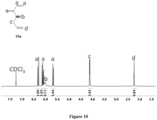
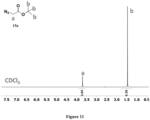
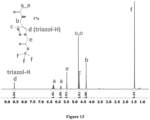
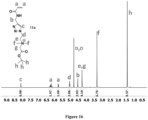
- the sulfobetaine-NH 2 and carboxybetaine-NH 2 monomers were synthesized according to Scheme 6. The structures of the monomers were confirmed by nuclear magnetic resonance (NMR), and the chemical shifts of the corresponding protons were marked in Figures 1A-B .
- the sulfobetaine-NH 2 and carboxybetaine-NH 2 monomers were prepared using N, N-dimethylethylenediamine and either (a) propanesultone or (b) tert-butyl bromoacetate.
- VLVG alginate was used as the starting material.
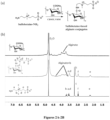
- 2-Chloro-4, 6-dimethoxy-1,3,5-triazine (CDMT) and N-methylmorpholine (NMM) were used as coupling reagents to conjugate alginate with sulfobetaine-NH 2 via a triazine-based coupling reaction as shown in Figure 2A .
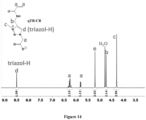
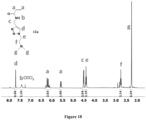
- the sulfobetaine-based alginate conjugate was characterized by 1 H NMR spectrum ( Figure 2B ).
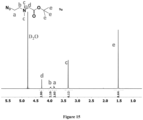
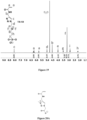
- the characteristic peak of sulfobetaine-NH 2 segment is as follows: the peak at 3.20 ppm is attributed to six protons in two methyl groups attached to the quaternary amine in the sulfobetaine pendant group. The result suggests that sulfobetaine-NH 2 was successfully conjugated to alginate. About 30.5% modification of the starting alginate was confirmed by NMR data analysis. Carboxybetaine-based alginate was prepared as shown in Figure 3A . For the carboxybetaine-based alginate, characteristic peak of 3.25 ppm in Figure 3B was attributed to six protons in two methyl groups attached to the quaternary amine in the carboxybetaine pendant group, and the modification degree is about 35.6%.
- hydrogel microcapsules have been used extensively for cell encapsulation, culture, and transplantation, the microcapsules of sulfobetaine-based alginate conjugate were fabricated by electrospraying using barium chloride as cross-linker, although other polyvalent ions such as Ca 2+ , Sr 2+ could be used, which were previously demonstrated to have long-term in vivo stability.
- the foreign body response to the SA microcapsules was evaluated in the intraperitoneal space of C57BL/6J mice 14 days post implantation, with SLG20 alginate as control.
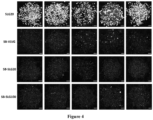
- SB-SLG 20 microcapsules were implanted into the intraperitoneal space of immunocompetent C57BL/6J mice and harvested after 100 days.
- Dark field phase contrast microscopy of retrieved SLG 20 microcapsules showed extensive fibrotic deposition ( Figure 5 , top row of images), whereas SB-SLG20 microspheres showed much lower level of fibrotic deposition ( Figure 5 , bottom row of images).
- some of retrieved SLG 20 microcapsule even aggregated together, a sign of severe fibrosis ( Figure 5 , top row, third image from left).
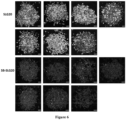
- SB-SLG20 microcapsules were examined after 180 days implantation in C57BL/6J. As shown in Figure 6 , SB-SLG 20 microcapsules after retrieval were largely clean of fibrotic deposition ( Figure 6 , top two rows of images) while there was substantial fibrosis observed on the conventional SLG 20 microcapsules surfaces ( Figure 6 , bottom two rows of images). Figure 7 shows numerous retrieved microcapsules in each dish. The whiteness on the microcapsule surfaces indicated the fibrotic deposition.
- ethylene-glycol SB alginate was also designed and developed.
- the foreign body response to the ethylene-glycol SB-SLG20 microcapsules was evaluated in the intraperitoneal space of C57BL/6J mice 30 days post implantation. After retrieval, ethylene-glycol SB-SLG20 microcapsules ( Figure 8 ) were clean, and showed almost no fibrosis.
- zwitterionic modified alginates were capable of mitigating the foreign body response effectively and reproducibly. This may be attributed to the zwitterionic sulfobetaine group that reduces biofouling and improves the biocompatibility of alginate. This zwitterionic sulfobetaine-based alginate conjugate will be applicable to islet encapsulation to support long-term diabetes correction for type-1 diabetes (TD1).
- zwitterionically modified alginates such as SB-SLG20 resists fibrosis in C57BL/6J mice
- its therapeutic potential as a cell encapsulation medium for the treatment of diabetes was explored.
- Encapsulated rat islets were transplanted into the peritoneal cavity of streptozotocin (STZ)-induced C57BL/6 diabetic mice and evaluated for 90 days for their ability to restore normoglycemia.
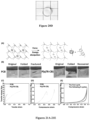
- Rat islets were encapsulated with 1000 ⁇ m SB-SLG20 microcapsules as barrier to shield foreign body response, or with SLG 20 microcapsules as control ( Figure 9A ).
- mice transplanted with rat islets encapsulated in SLG 20 microcapsules showed a shorter duration of glycemic control and were unable to sustain normoglycemia beyond 45 days, while the mice transplanted with rat islets encapsulated in SB-SLG 20 microcapsules remained cured for 3 months before the microcapsules were retrieved.
- encapsulated rat islets were able to achieve long-term glycemic correction (90 days) in STZ-treated C57BL/6J mice for T1D, using the zwitterionically modified alginate capable of mitigating the FBR effectively.
- Super-biocompatible, zwitterionically modified alginates were designed and synthesized.
- Sulfobetaine-NH2, ethylene glycol sulfobetaine-NH2, and carboxybetaine-NH2 were successfully synthesized and subsequently conjugated to alginate.
- the sulfobetaine-modified alginate were tested in C57BL/6 mice and mitigated the foreign body response effectively compared to the unmodified control alginate.
- the therapeutic potential of the SB modified alginate was demonstrated through a type 1 diabetic mouse model using rat islets.
- SB-SLG 20 encapsulated islet cells were proven to be capable of providing long-term glycemic correction in immune-competent diabetic C57BL/6J mice. It was determined that this zwitterionically modified alginate may contribute to the translation of cell encapsulation for T1D and potentially other diseases.
- Tert-butyl bromoacetate and ion exchange resin (Amberlyst A-26, OH form) were obtained from Alfa Aesar. Procedures for the synthesis of qTR-CB, TR-CB, and TR-SB monomers are described below.
- Carboxybetaine methacrylate ( Yang et al., “Pursuing “Zero” Protein Adsorption of Poly(carboxybetaine) from Undiluted Blood Serum and Plasma,” Langmuir 25(19):11911-11916 (2009 )) and carboxybetaine diacrylamide (CBAAX) ( Zhang et al., “Zwitterionic gel Encapsulation Promotes Protein Stability, Enhances Pharmacokinetics, and Reduces Immunogenicity," Proceedings of the National Academy of Sciences 112(39):12046-12051 (2015 )) were synthesized using methods reported previously.
- the TR-ZW hydrogels were prepared via radical polymerization initiated by UV irradiation.
- the hydrogel solution consisted of 1 mL DI water, 600 mg monomer, 4 % CBAAX cross linker (molar percent of monomer), and 3.5 mg 2-hydroxy-2-methylpropiophenone photoinitiator.
- the resulting solution was cast between a pair of glass slides, separated with a 2-mm-thickness poly(tetrafluoroethylene) (PTFE) spacer, and polymerized under UV (365 nm) for 45 min.
- PHEMA and PCB hydrogels were prepared using a similar procedure.
- hydrogel samples were equilibrated in sterile PBS buffer and the PBS buffer solution was changed at least three times a day for five days.
- the hydrogels were punched into disks with a diameter of 6 mm, and stored in sterile PBS at 4 °C before use.
- P(qTR-CB) polymer brushes were grafted onto gold-coated surface plasmonic resonance (SPR) sensor chips following the procedure reported previously ( Zhang et al., "Zwitterionic Hydrogels: an in vivo Implantation Study," Journal of Biomaterials Science, Polymer Edition 20(13):1845-1859 (2009 ).
- the protein adsorption on the P(qTR-CB)-grafted gold surfaces was evaluated using a four-channel SPR sensor. Firstly, PBS buffer was flowed into the channels for 10 min to build the baseline. Secondly, a 1 mg/mL fibrinogen solution or 100% human blood plasma was run through the channels for 10 min followed by a PBS buffer wash to remove unbound protein molecules.
- the amount of adsorbed protein was finally quantified by the change of wavelength shift between the pre-adsorptive and post-adsorptive baselines.
- a 1 nm SPR wavelength shift at 750 nm corresponded to a protein surface coverage of 15 ng/cm 2 ( Liu et al., "Amino Acid-Based Zwitterionic Poly(Serine Methacrylate) as an Antifouling Material," Biomacromolecules 14(1):226-231 (2012 )).
- the protein adsorption on the P(TR-CB) and P(TR-SB) surfaces was evaluated using the same procedure.
- NIH/3T3 cells were cultured in a humidified incubator with 5% CO 2 at 37°C.
- the culture medium was composed of Dulbecco's modified Eagle medium (DMEM), 10% fetal bovine serum (FBS), and 2% penicillin streptomycin.
- DMEM Dulbecco's modified Eagle medium
- FBS fetal bovine serum
- penicillin streptomycin The hydrogel disks with a diameter of 6 mm were individually placed into a 12-well plate and washed with sterile PBS buffer three times.
- Cell suspension (2 mL) (concentration: 105 cells/mL) was then transferred into each well and incubated with these hydrogels for 3 days at 37°C. After incubation, the hydrogels were transferred to a new 12-well plate containing sterile PBS in each well.
- the LIVE/DEAD assay solution was added into each well and incubated for 30 min. These hydrogels were finally imaged by using an EVOS AMF4300 imaging system
- BMDMs Bone marrow derived macrophages
- LPS lipopolysaccharide
- IFN ⁇ 1.0 ng/mL IFN ⁇
- IL-4 20 ng/mL IL-4
- IL-13 20 ng/mL IL-13
- mice All animal protocols were approved by the Cornell Institutional Animal Care and Use Committee. Eight-week-old, immune-competent male C57BL/6 mice were obtained from Jackson Laboratory. The equilibrated hydrogel disks were implanted subcutaneously in mice for 1, 2, and 3 months, respectively. For each mouse, hydrogel disks made from different monomers were implanted on the back of the mouse and the sites of various hydrogel samples were alternated in order to eliminate the effect of implantation positions. At the end of each experiment, mice were euthanized by CO 2 asphyxiation. The hydrogel disks together with surrounding tissues were dissected and fixed in 10% neutrally buffered formalin. After embedded in paraffin wax, the samples were sectioned and stained with Masson's trichrome by Cornell Histology Core Facility.
- the stained histology slides were scanned using an Aperio CS2 ScanScope (Leica Biosystems, Nusslock GmbH).
- the blue-pixel density was measured using an Image J software.
- the collagen density was quantified as a percentage of average maximum blue-pixel density as determined from all analyzed sections.
- three random fields were analyzed for each fixed distance (e.g. 0 to 10 ⁇ m; 10 to 20 ⁇ m; etc.) within 60 ⁇ m from the tissue-hydrogel interface.
- paraffin-embedded sections were stained using primary Goat anti-mouse CD31 (R&D Systems, dilution 1:200), which is an endothelial cell biomarker.
- the Alexa Fluor 488 donkey anti-Goat as secondary antibody (Life Technologies, dilution 1:500) was used in this work.
- Two stained sections at different positions of each hydrogel disks were used and five different fields were randomly examined in each section.
- Propargylamine (3.3 g, 60 mmol) was dissolved in 150 mL DCM at 0 °C. Aqueous NaOH (1.5 M, 100 mL) was then added into the solution. Acryloyl chloride (14.9 g, 165 mmol) was added dropwise into the denser dichloromethane layer over 30 minutes resulting in a yellow orange solution. The mixture was stirred for 1 hour at 0 °C and then for 18 hours at room temperature. The resulting solution was washed successively with water. The organic layer was dried over anhydrous sodium sulfate and evaporated to get yellow oil.
- the obtained product 11a (8.0 g) was treated with a mixture of 16 mL TFA and 16 mL DCM overnight at room temperature, concentrated with rotary evaporator, precipitated in anhydrous diethyl ether, and dissolved in methanol. Ion-exchange resin (Amberlyst A26, OH-form) was then added into it for complete neutralization. The resulting solution was added into neutral alumina column to remove residual copper ion. The product TR-CB (3.1 g, 57%) was collected after removing methanol solvent.
- a new zwitterionic monomer qTR-CB was designed ( Figure 20A ).
- This monomer includes a triazole moiety that plays a critical role in the anti-fibrotic properties of modified alginates and forms energy-dissipating ⁇ - ⁇ stacking.
- the synthesis of qTR-CB involved several steps. First, N-propargylacrylamide with dual reactive alkyne and vinyl groups was developed. Next, the alkyne group was then transformed into triazole group through Azide-Alkyne Huisgen Cycloaddition chemistry followed by a subsequent quaternization. Finally the qTR-CB monomer was obtained after removal of the protecting group of the carboxylic acid. The chemical structure of the qTR-CB monomer was confirmed by 1 H NMR ( Figure 17 ) and 13 C NMR.
- Non-specific protein adsorption on the implant surface is considered the initial, critical step in the foreign body response.
- a gold surface was grafted with P(qTR-CB) using a surface-initiated photoiniferter-mediated polymerization.
- the protein-resistance of P(qTR-CB) was evaluated via surface plasmon resonance (SPR) using a single protein solution and an undiluted human plasma.
- SPR surface plasmon resonance
- the bare gold and P(qTR-CB)-grafted surfaces had adsorptions of 337.5 ⁇ 36.1 and 0.6 ⁇ 0.3 ng/cm 2 , respectively.
- the protein adsorptions were 211.6 ⁇ 10.3 and 3.1 ⁇ 1.8 ng/cm 2 respectively for these two surfaces.
- the P(qTR-CB)-grafted surface was highly resistant to non-specific protein adsorption, as compared to the bare gold surface.
- the P(qTR-CB) hydrogel was designed to address the mechanical property challenge faced by current zwitterionic hydrogels which are known to be relatively brittle or weak ( Chin et al., "Additive Manufacturing of Hydrogel-Based Materials for Next-Generation Implantable Medical Devices," Science Robotics 2(2):eaah6451 (2017 ); Lynn et al., “Characterization of the in Vitro Macrophage Response and in Vivo Host Response to Poly (Ethylene Glycol)-Based Hydrogels," Journal of Biomedical Materials Research Part A 93(3):941-953 (2010 )). Robust mechanical properties are highly desirable for handling, implantation and any future clinical applications.
- the P(qTR-CB) hydrogel had a breaking strain close to 71% while the PCB hydrogel could only be stretched 11% ( Figure 21C ). That represented a 6.5-fold increase in the breaking strain.
- the P(qTR-CB) hydrogel sustained a 80% compression, while the PCB hydrogel could only be compressed 48 %, which was in agreement with previous work ( Merino et al., "Nanocomposite Hydrogels: 3D Polymer-Nanoparticle Synergies for On-Demand Drug Delivery," ACS nano 9(5):4686-4697 (2015 )).
- Macrophages as a key component of the FBR regulate pro-inflammatory or pro-healing processes.
- Pro-inflammatory macrophages secrete inflammatory cytokines such as tumor necrosis factor- ⁇ (TNF- ⁇ ) that triggers further recruitment and activation of inflammatory cells, while pro-healing macrophages produce anti-inflammatory cytokines such as interleukin (IL-10) that facilitates angiogenesis and tissue repair.
- TNF- ⁇ tumor necrosis factor- ⁇
- IL-10 interleukin
- the antifouling property or biocompatibility is compromised if hydrophobic moiety is incorporated into zwitterionic materials.
- the triazole group as a hydrophobic moiety indeed affected its antifouling property.
- the amount of plasma adsorption for P(qTR-CB), P(TR-CB), and P(TR-SB) surfaces was 3.1 ⁇ 1.8, 6.4 ⁇ 2.5, and 10.9 ⁇ 3.2 ng/cm2, respectively (Table 1) while PCB surface was reported to only adsorb ⁇ 0.3 ng/cm2 protein from plasma.
- the in vivo biocompatibility or the FBR-resistant property of the TR-ZW hydrogels was not affected.
- the triazole group plays a role here in mitigating the fibrotic response in addition to the zwitterionic moiety.
- Chemically modified alginates containing triazole groups were reported to be capable of mitigating the fibrotic response effectively ( Desai et al., "Versatile Click Alginate Hydrogels Crosslinked via Tetrazine-Norbomene Chemistry," Biomaterials 50:30-37 (2015 )).
- the FBR-resistant property of the TR-ZW hydrogels was also consistent with the macrophage activation data ( Figure 22B ). Thus, a new class of hydrogels was developed that exhibited similar FBR-resistant properties but were much more mechanically robust than the zwitterionic hydrogels developed to date. Table 1.
Landscapes
- Health & Medical Sciences (AREA)
- Chemical & Material Sciences (AREA)
- Life Sciences & Earth Sciences (AREA)
- Medicinal Chemistry (AREA)
- General Health & Medical Sciences (AREA)
- Organic Chemistry (AREA)
- Animal Behavior & Ethology (AREA)
- Veterinary Medicine (AREA)
- Pharmacology & Pharmacy (AREA)
- Public Health (AREA)
- Epidemiology (AREA)
- Engineering & Computer Science (AREA)
- Chemical Kinetics & Catalysis (AREA)
- Polymers & Plastics (AREA)
- Diabetes (AREA)
- Molecular Biology (AREA)
- Biochemistry (AREA)
- Bioinformatics & Cheminformatics (AREA)
- Inorganic Chemistry (AREA)
- Biomedical Technology (AREA)
- General Chemical & Material Sciences (AREA)
- Biotechnology (AREA)
- Dermatology (AREA)
- Neurosurgery (AREA)
- Materials Engineering (AREA)
- Proteomics, Peptides & Aminoacids (AREA)
- Nuclear Medicine, Radiotherapy & Molecular Imaging (AREA)
- Obesity (AREA)
- Hematology (AREA)
- Endocrinology (AREA)
- Emergency Medicine (AREA)
- Genetics & Genomics (AREA)
- Crystallography & Structural Chemistry (AREA)
- Cell Biology (AREA)
- Nutrition Science (AREA)
- Gastroenterology & Hepatology (AREA)
- Physiology (AREA)
- Developmental Biology & Embryology (AREA)
- Immunology (AREA)
- Virology (AREA)
Applications Claiming Priority (2)
| Application Number | Priority Date | Filing Date | Title |
|---|---|---|---|
| US201762451629P | 2017-01-27 | 2017-01-27 | |
| PCT/US2018/015613 WO2018140834A1 (en) | 2017-01-27 | 2018-01-27 | Zwitterionically modified polymers and hydrogels |
Publications (3)
| Publication Number | Publication Date |
|---|---|
| EP3573624A1 EP3573624A1 (en) | 2019-12-04 |
| EP3573624A4 EP3573624A4 (en) | 2020-10-21 |
| EP3573624B1 true EP3573624B1 (en) | 2025-03-19 |
Family
ID=62978825
Family Applications (1)
| Application Number | Title | Priority Date | Filing Date |
|---|---|---|---|
| EP18744703.2A Active EP3573624B1 (en) | 2017-01-27 | 2018-01-27 | Zwitterionically modified polymers and hydrogels |
Country Status (14)
| Country | Link |
|---|---|
| US (3) | US11634512B2 (enExample) |
| EP (1) | EP3573624B1 (enExample) |
| JP (1) | JP7198210B2 (enExample) |
| KR (1) | KR102618302B1 (enExample) |
| CN (2) | CN118108677A (enExample) |
| AU (1) | AU2018212895B2 (enExample) |
| BR (1) | BR112019015141A2 (enExample) |
| CA (1) | CA3051142A1 (enExample) |
| IL (1) | IL267991A (enExample) |
| MX (1) | MX2019008388A (enExample) |
| RU (1) | RU2019126801A (enExample) |
| SG (1) | SG11201906804UA (enExample) |
| WO (1) | WO2018140834A1 (enExample) |
| ZA (1) | ZA201904624B (enExample) |
Families Citing this family (14)
| Publication number | Priority date | Publication date | Assignee | Title |
|---|---|---|---|---|
| AU2018212895B2 (en) | 2017-01-27 | 2024-02-22 | Cornell University | Zwitterionically modified polymers and hydrogels |
| WO2020181121A1 (en) * | 2019-03-05 | 2020-09-10 | University Of Florida Research Foundation, Inc. | Polyurethane copolymers and blends, methods of manufacture thereof and articles containing the same |
| CN114072675B (zh) | 2019-04-30 | 2025-02-18 | 康奈尔大学 | 具有包括两性离子部分的带正电组分的主链的聚合物纤维 |
| EP4126001A4 (en) * | 2020-04-02 | 2024-07-31 | Cornell University | ENCAPSULATION DEVICES BASED ON NANOFIBERS AND THEIR USES |
| WO2021237369A1 (en) * | 2020-05-28 | 2021-12-02 | Mcmaster University | In situ gelling zwitterionic hydrogel compositions, and methods of use thereof |
| KR102413336B1 (ko) * | 2020-07-10 | 2022-06-27 | 부경대학교 산학협력단 | 다공성 알지네이트 기반 하이드로겔, 이의 제조방법 및 이를 이용한 약물 전달체 |
| CN113563267B (zh) * | 2021-07-08 | 2023-05-30 | 深圳华源再生医学有限公司 | 一种磺酸甜菜碱的制备方法及应用 |
| CN113667141B (zh) * | 2021-07-09 | 2023-10-03 | 深圳华源再生医学有限公司 | 抗蛋白粘附的海藻酸盐水凝胶及其制备方法和应用 |
| WO2023023116A1 (en) * | 2021-08-18 | 2023-02-23 | Cornell University | Broad spectrum anti-microbial polymeric composition |
| JP7694952B2 (ja) * | 2021-11-17 | 2025-06-18 | 国立大学法人 奈良先端科学技術大学院大学 | ポリブチレンサクシネート系共重合体 |
| CN114702606A (zh) * | 2022-02-18 | 2022-07-05 | 深圳华源再生医学有限公司 | 一种两性离子修饰的多糖类聚合物及其制备方法与应用 |
| EP4531879A1 (en) | 2022-05-25 | 2025-04-09 | Flagship Pioneering Innovations VI, LLC | Compositions of secretory and/or catalytic cells and methods using the same |
| JP2025520113A (ja) | 2022-06-03 | 2025-07-01 | フラッグシップ パイオニアリング イノベーションズ シックス,エルエルシー | 組成物及び方法 |
| WO2026026907A1 (zh) * | 2024-07-31 | 2026-02-05 | 北京拓界生物医药科技有限公司 | 一种修饰的聚合物及其用途 |
Family Cites Families (24)
| Publication number | Priority date | Publication date | Assignee | Title |
|---|---|---|---|---|
| US2744130A (en) | 1952-04-11 | 1956-05-01 | Du Pont | Quaternary ammonium monomers and polymers thereof |
| US4868121A (en) | 1985-02-07 | 1989-09-19 | Mcdonnell Douglas Corporation | Islet isolation process |
| US5821121A (en) | 1991-06-24 | 1998-10-13 | Pacific Biomedical Research, Inc. | Hormone-secreting cells maintained in long-term culture |
| JPH05148288A (ja) | 1991-11-29 | 1993-06-15 | Kao Corp | 新規ベタイン化糖化合物 |
| US5273904A (en) | 1992-03-18 | 1993-12-28 | Cobe Laboratories, Inc. | Apparatus for purifying islets of Langerhans |
| JP4335316B2 (ja) | 1996-09-19 | 2009-09-30 | ザ・リージェンツ・オブ・ザ・ユニバーシティ・オブ・ミシガン | アルギネートまたは修飾アルギネートのようなポリサッカライドを含むポリマー |
| CA2297025A1 (en) * | 1997-07-25 | 1999-02-04 | Sdg, Inc. | Polymer based pharmaceutical compositions for targeted delivery of biologically active agents |
| GB0119665D0 (en) * | 2001-08-10 | 2001-10-03 | Isis Innovation | Conjugates |
| WO2003068357A2 (en) | 2002-02-12 | 2003-08-21 | Cornell Research Foundation, Inc. | Identification and high-yield isolation of human pancreatic islet progenitor and stem cells |
| AU2006303545B2 (en) | 2005-10-17 | 2012-09-06 | Isagro Ricerca S.R.L. | Compounds and relative use for the control of phytopathogens |
| CN102770407A (zh) * | 2009-11-06 | 2012-11-07 | 华盛顿大学商业中心 | 交联的两性离子水凝胶 |
| WO2011160066A1 (en) | 2010-06-17 | 2011-12-22 | Regents Of The University Of Minnesota | Production of insulin producing cells |
| JP5690671B2 (ja) * | 2010-06-30 | 2015-03-25 | 富士フイルム株式会社 | 新規な重合性組成物及びそれに用いる重合性化合物、並びに新規な重合性組成物を用いた画像形成材料及び平版印刷版原版 |
| CA2837558C (en) * | 2011-06-02 | 2018-11-20 | Massachusetts Institute Of Technology | Modified alginates for cell encapsulation and cell therapy |
| CZ303879B6 (cs) | 2012-02-28 | 2013-06-05 | Contipro Biotech S.R.O. | Deriváty na bázi kyseliny hyaluronové schopné tvorit hydrogely, zpusob jejich prípravy, hydrogely na bázi techto derivátu, zpusob jejich prípravy a pouzití |
| WO2014194268A1 (en) | 2013-05-30 | 2014-12-04 | The University Of Akron | Switchable antimicrobial and antifouling carboxybetaine-based hydrogels |
| WO2015057645A1 (en) | 2013-10-14 | 2015-04-23 | The University Of Akron | Zwitterionic polysaccharide polymers having antifouling, antimicrobial and optical transparency properties |
| KR20160100407A (ko) * | 2014-01-06 | 2016-08-23 | 리젠 파마슈티컬스 소시에떼 아노님 | 신규한 글루타미나제의 저해제 |
| ES3036749T3 (en) | 2014-08-01 | 2025-09-23 | Massachusetts Inst Technology | Modified alginates for anti-fibrotic materials and applications |
| EP3261626A4 (en) | 2015-02-27 | 2018-10-03 | Wayne State University | Methods and compositions relating to biocompatible implants |
| ES2978718T3 (es) | 2015-11-01 | 2024-09-18 | Massachusetts Inst Technology | Alginatos modificados para materiales antifibróticos y aplicaciones |
| CA3027200A1 (en) * | 2016-06-13 | 2017-12-21 | Massachusetts Institute Of Technology | Biocompatible zwitterionic polymer coatings and hydrogels for reducing foreign body response and fibrosis |
| EP3472323A1 (en) | 2016-06-16 | 2019-04-24 | Pioneer Hi-Bred International, Inc. | Compositions and methods to control insect pests |
| AU2018212895B2 (en) | 2017-01-27 | 2024-02-22 | Cornell University | Zwitterionically modified polymers and hydrogels |
-
2018
- 2018-01-27 AU AU2018212895A patent/AU2018212895B2/en active Active
- 2018-01-27 BR BR112019015141-9A patent/BR112019015141A2/pt not_active IP Right Cessation
- 2018-01-27 KR KR1020197023740A patent/KR102618302B1/ko active Active
- 2018-01-27 JP JP2019540665A patent/JP7198210B2/ja active Active
- 2018-01-27 WO PCT/US2018/015613 patent/WO2018140834A1/en not_active Ceased
- 2018-01-27 CN CN202410053011.XA patent/CN118108677A/zh active Pending
- 2018-01-27 EP EP18744703.2A patent/EP3573624B1/en active Active
- 2018-01-27 SG SG11201906804UA patent/SG11201906804UA/en unknown
- 2018-01-27 MX MX2019008388A patent/MX2019008388A/es unknown
- 2018-01-27 CA CA3051142A patent/CA3051142A1/en active Pending
- 2018-01-27 CN CN201880017027.8A patent/CN110381956B/zh active Active
- 2018-01-27 RU RU2019126801A patent/RU2019126801A/ru unknown
- 2018-01-27 US US16/480,996 patent/US11634512B2/en active Active
-
2019
- 2019-07-11 IL IL267991A patent/IL267991A/en unknown
- 2019-07-15 ZA ZA2019/04624A patent/ZA201904624B/en unknown
-
2023
- 2023-03-16 US US18/122,416 patent/US12378329B2/en active Active
-
2025
- 2025-07-07 US US19/260,985 patent/US20260152580A1/en active Pending
Also Published As
| Publication number | Publication date |
|---|---|
| MX2019008388A (es) | 2019-12-02 |
| CA3051142A1 (en) | 2018-08-02 |
| CN110381956A (zh) | 2019-10-25 |
| RU2019126801A3 (enExample) | 2021-05-24 |
| SG11201906804UA (en) | 2019-08-27 |
| AU2018212895B2 (en) | 2024-02-22 |
| IL267991A (en) | 2019-09-26 |
| CN110381956B (zh) | 2024-02-02 |
| US20260152580A1 (en) | 2026-06-04 |
| WO2018140834A1 (en) | 2018-08-02 |
| KR102618302B1 (ko) | 2023-12-28 |
| JP2020506919A (ja) | 2020-03-05 |
| KR20190109446A (ko) | 2019-09-25 |
| EP3573624A1 (en) | 2019-12-04 |
| EP3573624A4 (en) | 2020-10-21 |
| CN118108677A (zh) | 2024-05-31 |
| US20240018276A1 (en) | 2024-01-18 |
| ZA201904624B (en) | 2024-11-27 |
| RU2019126801A (ru) | 2021-03-02 |
| AU2018212895A1 (en) | 2019-08-15 |
| US12378329B2 (en) | 2025-08-05 |
| JP7198210B2 (ja) | 2022-12-28 |
| US20190389979A1 (en) | 2019-12-26 |
| BR112019015141A2 (pt) | 2020-03-24 |
| US11634512B2 (en) | 2023-04-25 |
Similar Documents
| Publication | Publication Date | Title |
|---|---|---|
| US12378329B2 (en) | Zwitterionically modified polymers and hydrogels | |
| AU2019200810B2 (en) | Modified alginates for anti-fibrotic materials and applications | |
| US20250161536A1 (en) | Click-crosslinked hydrogels and methods of use | |
| CN107530295A (zh) | 与生物相容性植入物相关的方法和组合物 | |
| HK40039092B (en) | Click-crosslinked hydrogels and methods of use | |
| HK40039092A (en) | Click-crosslinked hydrogels and methods of use | |
| HK1238663A1 (en) | Modified alginates for anti-fibrotic materials and applications | |
| HK1238663B (en) | Modified alginates for anti-fibrotic materials and applications |
Legal Events
| Date | Code | Title | Description |
|---|---|---|---|
| STAA | Information on the status of an ep patent application or granted ep patent |
Free format text: STATUS: THE INTERNATIONAL PUBLICATION HAS BEEN MADE |
|
| PUAI | Public reference made under article 153(3) epc to a published international application that has entered the european phase |
Free format text: ORIGINAL CODE: 0009012 |
|
| STAA | Information on the status of an ep patent application or granted ep patent |
Free format text: STATUS: REQUEST FOR EXAMINATION WAS MADE |
|
| 17P | Request for examination filed |
Effective date: 20190727 |
|
| AK | Designated contracting states |
Kind code of ref document: A1 Designated state(s): AL AT BE BG CH CY CZ DE DK EE ES FI FR GB GR HR HU IE IS IT LI LT LU LV MC MK MT NL NO PL PT RO RS SE SI SK SM TR |
|
| AX | Request for extension of the european patent |
Extension state: BA ME |
|
| DAV | Request for validation of the european patent (deleted) | ||
| DAX | Request for extension of the european patent (deleted) | ||
| A4 | Supplementary search report drawn up and despatched |
Effective date: 20200917 |
|
| RIC1 | Information provided on ipc code assigned before grant |
Ipc: A61K 31/715 20060101AFI20200911BHEP Ipc: A61K 31/738 20060101ALI20200911BHEP |
|
| REG | Reference to a national code |
Ref country code: HK Ref legal event code: DE Ref document number: 40020414 Country of ref document: HK |
|
| STAA | Information on the status of an ep patent application or granted ep patent |
Free format text: STATUS: EXAMINATION IS IN PROGRESS |
|
| 17Q | First examination report despatched |
Effective date: 20220921 |
|
| P01 | Opt-out of the competence of the unified patent court (upc) registered |
Effective date: 20230530 |
|
| GRAP | Despatch of communication of intention to grant a patent |
Free format text: ORIGINAL CODE: EPIDOSNIGR1 |
|
| STAA | Information on the status of an ep patent application or granted ep patent |
Free format text: STATUS: GRANT OF PATENT IS INTENDED |
|
| INTG | Intention to grant announced |
Effective date: 20240604 |
|
| RIN1 | Information on inventor provided before grant (corrected) |
Inventor name: LIU, QINGSHENG Inventor name: MA, MINGLIN |
|
| GRAJ | Information related to disapproval of communication of intention to grant by the applicant or resumption of examination proceedings by the epo deleted |
Free format text: ORIGINAL CODE: EPIDOSDIGR1 |
|
| STAA | Information on the status of an ep patent application or granted ep patent |
Free format text: STATUS: EXAMINATION IS IN PROGRESS |
|
| GRAP | Despatch of communication of intention to grant a patent |
Free format text: ORIGINAL CODE: EPIDOSNIGR1 |
|
| STAA | Information on the status of an ep patent application or granted ep patent |
Free format text: STATUS: GRANT OF PATENT IS INTENDED |
|
| INTC | Intention to grant announced (deleted) | ||
| INTG | Intention to grant announced |
Effective date: 20241018 |
|
| GRAS | Grant fee paid |
Free format text: ORIGINAL CODE: EPIDOSNIGR3 |
|
| GRAA | (expected) grant |
Free format text: ORIGINAL CODE: 0009210 |
|
| STAA | Information on the status of an ep patent application or granted ep patent |
Free format text: STATUS: THE PATENT HAS BEEN GRANTED |
|
| AK | Designated contracting states |
Kind code of ref document: B1 Designated state(s): AL AT BE BG CH CY CZ DE DK EE ES FI FR GB GR HR HU IE IS IT LI LT LU LV MC MK MT NL NO PL PT RO RS SE SI SK SM TR |
|
| REG | Reference to a national code |
Ref country code: GB Ref legal event code: FG4D |
|
| REG | Reference to a national code |
Ref country code: CH Ref legal event code: EP |
|
| REG | Reference to a national code |
Ref country code: IE Ref legal event code: FG4D |
|
| REG | Reference to a national code |
Ref country code: DE Ref legal event code: R096 Ref document number: 602018080264 Country of ref document: DE |
|
| PG25 | Lapsed in a contracting state [announced via postgrant information from national office to epo] |
Ref country code: RS Free format text: LAPSE BECAUSE OF FAILURE TO SUBMIT A TRANSLATION OF THE DESCRIPTION OR TO PAY THE FEE WITHIN THE PRESCRIBED TIME-LIMIT Effective date: 20250619 |
|
| PG25 | Lapsed in a contracting state [announced via postgrant information from national office to epo] |
Ref country code: FI Free format text: LAPSE BECAUSE OF FAILURE TO SUBMIT A TRANSLATION OF THE DESCRIPTION OR TO PAY THE FEE WITHIN THE PRESCRIBED TIME-LIMIT Effective date: 20250319 |
|
| REG | Reference to a national code |
Ref country code: LT Ref legal event code: MG9D |
|
| PG25 | Lapsed in a contracting state [announced via postgrant information from national office to epo] |
Ref country code: NO Free format text: LAPSE BECAUSE OF FAILURE TO SUBMIT A TRANSLATION OF THE DESCRIPTION OR TO PAY THE FEE WITHIN THE PRESCRIBED TIME-LIMIT Effective date: 20250619 |
|
| PG25 | Lapsed in a contracting state [announced via postgrant information from national office to epo] |
Ref country code: HR Free format text: LAPSE BECAUSE OF FAILURE TO SUBMIT A TRANSLATION OF THE DESCRIPTION OR TO PAY THE FEE WITHIN THE PRESCRIBED TIME-LIMIT Effective date: 20250319 |
|
| PG25 | Lapsed in a contracting state [announced via postgrant information from national office to epo] |
Ref country code: LV Free format text: LAPSE BECAUSE OF FAILURE TO SUBMIT A TRANSLATION OF THE DESCRIPTION OR TO PAY THE FEE WITHIN THE PRESCRIBED TIME-LIMIT Effective date: 20250319 |
|
| PG25 | Lapsed in a contracting state [announced via postgrant information from national office to epo] |
Ref country code: GR Free format text: LAPSE BECAUSE OF FAILURE TO SUBMIT A TRANSLATION OF THE DESCRIPTION OR TO PAY THE FEE WITHIN THE PRESCRIBED TIME-LIMIT Effective date: 20250620 Ref country code: BG Free format text: LAPSE BECAUSE OF FAILURE TO SUBMIT A TRANSLATION OF THE DESCRIPTION OR TO PAY THE FEE WITHIN THE PRESCRIBED TIME-LIMIT Effective date: 20250319 |
|
| REG | Reference to a national code |
Ref country code: NL Ref legal event code: MP Effective date: 20250319 |
|
| REG | Reference to a national code |
Ref country code: AT Ref legal event code: MK05 Ref document number: 1776402 Country of ref document: AT Kind code of ref document: T Effective date: 20250319 |
|
| PG25 | Lapsed in a contracting state [announced via postgrant information from national office to epo] |
Ref country code: NL Free format text: LAPSE BECAUSE OF FAILURE TO SUBMIT A TRANSLATION OF THE DESCRIPTION OR TO PAY THE FEE WITHIN THE PRESCRIBED TIME-LIMIT Effective date: 20250319 |
|
| PG25 | Lapsed in a contracting state [announced via postgrant information from national office to epo] |
Ref country code: SE Free format text: LAPSE BECAUSE OF FAILURE TO SUBMIT A TRANSLATION OF THE DESCRIPTION OR TO PAY THE FEE WITHIN THE PRESCRIBED TIME-LIMIT Effective date: 20250319 |
|
| PG25 | Lapsed in a contracting state [announced via postgrant information from national office to epo] |
Ref country code: SM Free format text: LAPSE BECAUSE OF FAILURE TO SUBMIT A TRANSLATION OF THE DESCRIPTION OR TO PAY THE FEE WITHIN THE PRESCRIBED TIME-LIMIT Effective date: 20250319 |
|
| PG25 | Lapsed in a contracting state [announced via postgrant information from national office to epo] |
Ref country code: PT Free format text: LAPSE BECAUSE OF FAILURE TO SUBMIT A TRANSLATION OF THE DESCRIPTION OR TO PAY THE FEE WITHIN THE PRESCRIBED TIME-LIMIT Effective date: 20250721 Ref country code: ES Free format text: LAPSE BECAUSE OF FAILURE TO SUBMIT A TRANSLATION OF THE DESCRIPTION OR TO PAY THE FEE WITHIN THE PRESCRIBED TIME-LIMIT Effective date: 20250319 |
|
| PG25 | Lapsed in a contracting state [announced via postgrant information from national office to epo] |
Ref country code: IT Free format text: LAPSE BECAUSE OF FAILURE TO SUBMIT A TRANSLATION OF THE DESCRIPTION OR TO PAY THE FEE WITHIN THE PRESCRIBED TIME-LIMIT Effective date: 20250319 Ref country code: PL Free format text: LAPSE BECAUSE OF FAILURE TO SUBMIT A TRANSLATION OF THE DESCRIPTION OR TO PAY THE FEE WITHIN THE PRESCRIBED TIME-LIMIT Effective date: 20250319 |
|
| PG25 | Lapsed in a contracting state [announced via postgrant information from national office to epo] |
Ref country code: AT Free format text: LAPSE BECAUSE OF FAILURE TO SUBMIT A TRANSLATION OF THE DESCRIPTION OR TO PAY THE FEE WITHIN THE PRESCRIBED TIME-LIMIT Effective date: 20250319 |
|
| PG25 | Lapsed in a contracting state [announced via postgrant information from national office to epo] |
Ref country code: EE Free format text: LAPSE BECAUSE OF FAILURE TO SUBMIT A TRANSLATION OF THE DESCRIPTION OR TO PAY THE FEE WITHIN THE PRESCRIBED TIME-LIMIT Effective date: 20250319 Ref country code: CZ Free format text: LAPSE BECAUSE OF FAILURE TO SUBMIT A TRANSLATION OF THE DESCRIPTION OR TO PAY THE FEE WITHIN THE PRESCRIBED TIME-LIMIT Effective date: 20250319 |
|
| PG25 | Lapsed in a contracting state [announced via postgrant information from national office to epo] |
Ref country code: RO Free format text: LAPSE BECAUSE OF FAILURE TO SUBMIT A TRANSLATION OF THE DESCRIPTION OR TO PAY THE FEE WITHIN THE PRESCRIBED TIME-LIMIT Effective date: 20250319 |
|
| PG25 | Lapsed in a contracting state [announced via postgrant information from national office to epo] |
Ref country code: SK Free format text: LAPSE BECAUSE OF FAILURE TO SUBMIT A TRANSLATION OF THE DESCRIPTION OR TO PAY THE FEE WITHIN THE PRESCRIBED TIME-LIMIT Effective date: 20250319 |
|
| PG25 | Lapsed in a contracting state [announced via postgrant information from national office to epo] |
Ref country code: IS Free format text: LAPSE BECAUSE OF FAILURE TO SUBMIT A TRANSLATION OF THE DESCRIPTION OR TO PAY THE FEE WITHIN THE PRESCRIBED TIME-LIMIT Effective date: 20250719 |
|
| REG | Reference to a national code |
Ref country code: DE Ref legal event code: R097 Ref document number: 602018080264 Country of ref document: DE |
|
| PG25 | Lapsed in a contracting state [announced via postgrant information from national office to epo] |
Ref country code: DK Free format text: LAPSE BECAUSE OF FAILURE TO SUBMIT A TRANSLATION OF THE DESCRIPTION OR TO PAY THE FEE WITHIN THE PRESCRIBED TIME-LIMIT Effective date: 20250319 |
|
| PLBE | No opposition filed within time limit |
Free format text: ORIGINAL CODE: 0009261 |
|
| STAA | Information on the status of an ep patent application or granted ep patent |
Free format text: STATUS: NO OPPOSITION FILED WITHIN TIME LIMIT |
|
| REG | Reference to a national code |
Ref country code: CH Ref legal event code: L10 Free format text: ST27 STATUS EVENT CODE: U-0-0-L10-L00 (AS PROVIDED BY THE NATIONAL OFFICE) Effective date: 20260128 |
|
| 26N | No opposition filed |
Effective date: 20251222 |
|
| PGFP | Annual fee paid to national office [announced via postgrant information from national office to epo] |
Ref country code: GB Payment date: 20260127 Year of fee payment: 9 |
|
| PGFP | Annual fee paid to national office [announced via postgrant information from national office to epo] |
Ref country code: DE Payment date: 20260128 Year of fee payment: 9 |
|
| PGFP | Annual fee paid to national office [announced via postgrant information from national office to epo] |
Ref country code: FR Payment date: 20260126 Year of fee payment: 9 |
|
| PG25 | Lapsed in a contracting state [announced via postgrant information from national office to epo] |
Ref country code: LT Free format text: LAPSE BECAUSE OF FAILURE TO SUBMIT A TRANSLATION OF THE DESCRIPTION OR TO PAY THE FEE WITHIN THE PRESCRIBED TIME-LIMIT Effective date: 20250319 |