EP3564001A1 - Method for the production of multiphase composite materials using microwave plasma process - Google Patents
Method for the production of multiphase composite materials using microwave plasma process Download PDFInfo
- Publication number
- EP3564001A1 EP3564001A1 EP19162518.5A EP19162518A EP3564001A1 EP 3564001 A1 EP3564001 A1 EP 3564001A1 EP 19162518 A EP19162518 A EP 19162518A EP 3564001 A1 EP3564001 A1 EP 3564001A1
- Authority
- EP
- European Patent Office
- Prior art keywords
- droplets
- metal oxide
- plasma
- composite particles
- oxide composite
- Prior art date
- Legal status (The legal status is an assumption and is not a legal conclusion. Google has not performed a legal analysis and makes no representation as to the accuracy of the status listed.)
- Withdrawn
Links
- 238000000034 method Methods 0.000 title claims abstract description 78
- 230000008569 process Effects 0.000 title claims abstract description 21
- 239000002131 composite material Substances 0.000 title claims abstract description 11
- 238000004519 manufacturing process Methods 0.000 title claims description 9
- 239000002245 particle Substances 0.000 claims abstract description 67
- 239000000243 solution Substances 0.000 claims abstract description 53
- 239000002243 precursor Substances 0.000 claims abstract description 51
- 238000000197 pyrolysis Methods 0.000 claims abstract description 6
- XLYOFNOQVPJJNP-UHFFFAOYSA-N water Substances O XLYOFNOQVPJJNP-UHFFFAOYSA-N 0.000 claims description 53
- 239000000203 mixture Substances 0.000 claims description 43
- 239000002114 nanocomposite Substances 0.000 claims description 31
- 239000007789 gas Substances 0.000 claims description 29
- 239000012266 salt solution Substances 0.000 claims description 23
- 229910044991 metal oxide Inorganic materials 0.000 claims description 21
- 150000004706 metal oxides Chemical class 0.000 claims description 20
- 150000003839 salts Chemical class 0.000 claims description 19
- 229910052727 yttrium Inorganic materials 0.000 claims description 19
- 239000011777 magnesium Substances 0.000 claims description 18
- 239000003960 organic solvent Substances 0.000 claims description 17
- 229910052782 aluminium Inorganic materials 0.000 claims description 16
- XAGFODPZIPBFFR-UHFFFAOYSA-N aluminium Chemical compound [Al] XAGFODPZIPBFFR-UHFFFAOYSA-N 0.000 claims description 16
- 229910052749 magnesium Inorganic materials 0.000 claims description 16
- VWQVUPCCIRVNHF-UHFFFAOYSA-N yttrium atom Chemical compound [Y] VWQVUPCCIRVNHF-UHFFFAOYSA-N 0.000 claims description 16
- FYYHWMGAXLPEAU-UHFFFAOYSA-N Magnesium Chemical compound [Mg] FYYHWMGAXLPEAU-UHFFFAOYSA-N 0.000 claims description 15
- 150000001768 cations Chemical class 0.000 claims description 13
- PXHVJJICTQNCMI-UHFFFAOYSA-N Nickel Chemical compound [Ni] PXHVJJICTQNCMI-UHFFFAOYSA-N 0.000 claims description 11
- IJGRMHOSHXDMSA-UHFFFAOYSA-N Atomic nitrogen Chemical compound N#N IJGRMHOSHXDMSA-UHFFFAOYSA-N 0.000 claims description 10
- KDLHZDBZIXYQEI-UHFFFAOYSA-N Palladium Chemical compound [Pd] KDLHZDBZIXYQEI-UHFFFAOYSA-N 0.000 claims description 8
- 229910052772 Samarium Inorganic materials 0.000 claims description 8
- 229910052746 lanthanum Inorganic materials 0.000 claims description 8
- FZLIPJUXYLNCLC-UHFFFAOYSA-N lanthanum atom Chemical compound [La] FZLIPJUXYLNCLC-UHFFFAOYSA-N 0.000 claims description 8
- BASFCYQUMIYNBI-UHFFFAOYSA-N platinum Chemical compound [Pt] BASFCYQUMIYNBI-UHFFFAOYSA-N 0.000 claims description 8
- KZUNJOHGWZRPMI-UHFFFAOYSA-N samarium atom Chemical compound [Sm] KZUNJOHGWZRPMI-UHFFFAOYSA-N 0.000 claims description 8
- 229910052684 Cerium Inorganic materials 0.000 claims description 7
- 229910052771 Terbium Inorganic materials 0.000 claims description 7
- GWXLDORMOJMVQZ-UHFFFAOYSA-N cerium Chemical compound [Ce] GWXLDORMOJMVQZ-UHFFFAOYSA-N 0.000 claims description 7
- GZCRRIHWUXGPOV-UHFFFAOYSA-N terbium atom Chemical compound [Tb] GZCRRIHWUXGPOV-UHFFFAOYSA-N 0.000 claims description 7
- QGZKDVFQNNGYKY-UHFFFAOYSA-N Ammonia Chemical compound N QGZKDVFQNNGYKY-UHFFFAOYSA-N 0.000 claims description 6
- XKRFYHLGVUSROY-UHFFFAOYSA-N Argon Chemical compound [Ar] XKRFYHLGVUSROY-UHFFFAOYSA-N 0.000 claims description 6
- 229910052692 Dysprosium Inorganic materials 0.000 claims description 6
- 229910052691 Erbium Inorganic materials 0.000 claims description 6
- 229910052689 Holmium Inorganic materials 0.000 claims description 6
- 229910052779 Neodymium Inorganic materials 0.000 claims description 6
- 229910052775 Thulium Inorganic materials 0.000 claims description 6
- 229910052769 Ytterbium Inorganic materials 0.000 claims description 6
- KBQHZAAAGSGFKK-UHFFFAOYSA-N dysprosium atom Chemical compound [Dy] KBQHZAAAGSGFKK-UHFFFAOYSA-N 0.000 claims description 6
- UYAHIZSMUZPPFV-UHFFFAOYSA-N erbium Chemical compound [Er] UYAHIZSMUZPPFV-UHFFFAOYSA-N 0.000 claims description 6
- KJZYNXUDTRRSPN-UHFFFAOYSA-N holmium atom Chemical compound [Ho] KJZYNXUDTRRSPN-UHFFFAOYSA-N 0.000 claims description 6
- VNWKTOKETHGBQD-UHFFFAOYSA-N methane Chemical compound C VNWKTOKETHGBQD-UHFFFAOYSA-N 0.000 claims description 6
- QEFYFXOXNSNQGX-UHFFFAOYSA-N neodymium atom Chemical compound [Nd] QEFYFXOXNSNQGX-UHFFFAOYSA-N 0.000 claims description 6
- 229910052706 scandium Inorganic materials 0.000 claims description 6
- SIXSYDAISGFNSX-UHFFFAOYSA-N scandium atom Chemical compound [Sc] SIXSYDAISGFNSX-UHFFFAOYSA-N 0.000 claims description 6
- 229910052723 transition metal Inorganic materials 0.000 claims description 6
- 150000003624 transition metals Chemical class 0.000 claims description 6
- NAWDYIZEMPQZHO-UHFFFAOYSA-N ytterbium Chemical compound [Yb] NAWDYIZEMPQZHO-UHFFFAOYSA-N 0.000 claims description 6
- 229910052693 Europium Inorganic materials 0.000 claims description 5
- 229910052688 Gadolinium Inorganic materials 0.000 claims description 5
- 229910052765 Lutetium Inorganic materials 0.000 claims description 5
- 229910052777 Praseodymium Inorganic materials 0.000 claims description 5
- 229910052773 Promethium Inorganic materials 0.000 claims description 5
- QCWXUUIWCKQGHC-UHFFFAOYSA-N Zirconium Chemical compound [Zr] QCWXUUIWCKQGHC-UHFFFAOYSA-N 0.000 claims description 5
- 229910052784 alkaline earth metal Inorganic materials 0.000 claims description 5
- 150000001342 alkaline earth metals Chemical class 0.000 claims description 5
- 239000002019 doping agent Substances 0.000 claims description 5
- OGPBJKLSAFTDLK-UHFFFAOYSA-N europium atom Chemical compound [Eu] OGPBJKLSAFTDLK-UHFFFAOYSA-N 0.000 claims description 5
- UIWYJDYFSGRHKR-UHFFFAOYSA-N gadolinium atom Chemical compound [Gd] UIWYJDYFSGRHKR-UHFFFAOYSA-N 0.000 claims description 5
- 229910052747 lanthanoid Inorganic materials 0.000 claims description 5
- 150000002602 lanthanoids Chemical class 0.000 claims description 5
- OHSVLFRHMCKCQY-UHFFFAOYSA-N lutetium atom Chemical compound [Lu] OHSVLFRHMCKCQY-UHFFFAOYSA-N 0.000 claims description 5
- 229910052759 nickel Inorganic materials 0.000 claims description 5
- 229910052757 nitrogen Inorganic materials 0.000 claims description 5
- PUDIUYLPXJFUGB-UHFFFAOYSA-N praseodymium atom Chemical compound [Pr] PUDIUYLPXJFUGB-UHFFFAOYSA-N 0.000 claims description 5
- VQMWBBYLQSCNPO-UHFFFAOYSA-N promethium atom Chemical compound [Pm] VQMWBBYLQSCNPO-UHFFFAOYSA-N 0.000 claims description 5
- 229910052726 zirconium Inorganic materials 0.000 claims description 5
- XEEYBQQBJWHFJM-UHFFFAOYSA-N Iron Chemical compound [Fe] XEEYBQQBJWHFJM-UHFFFAOYSA-N 0.000 claims description 4
- BQCADISMDOOEFD-UHFFFAOYSA-N Silver Chemical compound [Ag] BQCADISMDOOEFD-UHFFFAOYSA-N 0.000 claims description 4
- PCHJSUWPFVWCPO-UHFFFAOYSA-N gold Chemical compound [Au] PCHJSUWPFVWCPO-UHFFFAOYSA-N 0.000 claims description 4
- 229910052737 gold Inorganic materials 0.000 claims description 4
- 239000010931 gold Substances 0.000 claims description 4
- 229910052755 nonmetal Inorganic materials 0.000 claims description 4
- 229910052763 palladium Inorganic materials 0.000 claims description 4
- 229910052697 platinum Inorganic materials 0.000 claims description 4
- 229910001848 post-transition metal Inorganic materials 0.000 claims description 4
- 229910052709 silver Inorganic materials 0.000 claims description 4
- 239000004332 silver Substances 0.000 claims description 4
- ZOKXTWBITQBERF-UHFFFAOYSA-N Molybdenum Chemical compound [Mo] ZOKXTWBITQBERF-UHFFFAOYSA-N 0.000 claims description 3
- KJTLSVCANCCWHF-UHFFFAOYSA-N Ruthenium Chemical compound [Ru] KJTLSVCANCCWHF-UHFFFAOYSA-N 0.000 claims description 3
- 229910052768 actinide Inorganic materials 0.000 claims description 3
- 150000001255 actinides Chemical class 0.000 claims description 3
- 229910052783 alkali metal Inorganic materials 0.000 claims description 3
- 150000001340 alkali metals Chemical class 0.000 claims description 3
- 229910021529 ammonia Inorganic materials 0.000 claims description 3
- 229910052786 argon Inorganic materials 0.000 claims description 3
- QVGXLLKOCUKJST-UHFFFAOYSA-N atomic oxygen Chemical compound [O] QVGXLLKOCUKJST-UHFFFAOYSA-N 0.000 claims description 3
- 229910017052 cobalt Inorganic materials 0.000 claims description 3
- 239000010941 cobalt Substances 0.000 claims description 3
- GUTLYIVDDKVIGB-UHFFFAOYSA-N cobalt atom Chemical compound [Co] GUTLYIVDDKVIGB-UHFFFAOYSA-N 0.000 claims description 3
- WPBNNNQJVZRUHP-UHFFFAOYSA-L manganese(2+);methyl n-[[2-(methoxycarbonylcarbamothioylamino)phenyl]carbamothioyl]carbamate;n-[2-(sulfidocarbothioylamino)ethyl]carbamodithioate Chemical compound [Mn+2].[S-]C(=S)NCCNC([S-])=S.COC(=O)NC(=S)NC1=CC=CC=C1NC(=S)NC(=O)OC WPBNNNQJVZRUHP-UHFFFAOYSA-L 0.000 claims description 3
- 229910052752 metalloid Inorganic materials 0.000 claims description 3
- 150000002738 metalloids Chemical class 0.000 claims description 3
- 229910052750 molybdenum Inorganic materials 0.000 claims description 3
- 239000011733 molybdenum Substances 0.000 claims description 3
- 150000002843 nonmetals Chemical class 0.000 claims description 3
- 229910052760 oxygen Inorganic materials 0.000 claims description 3
- 239000001301 oxygen Substances 0.000 claims description 3
- 229910052703 rhodium Inorganic materials 0.000 claims description 3
- 239000010948 rhodium Substances 0.000 claims description 3
- MHOVAHRLVXNVSD-UHFFFAOYSA-N rhodium atom Chemical compound [Rh] MHOVAHRLVXNVSD-UHFFFAOYSA-N 0.000 claims description 3
- 229910052707 ruthenium Inorganic materials 0.000 claims description 3
- 229910052720 vanadium Inorganic materials 0.000 claims description 3
- LEONUFNNVUYDNQ-UHFFFAOYSA-N vanadium atom Chemical compound [V] LEONUFNNVUYDNQ-UHFFFAOYSA-N 0.000 claims description 3
- OYPRJOBELJOOCE-UHFFFAOYSA-N Calcium Chemical compound [Ca] OYPRJOBELJOOCE-UHFFFAOYSA-N 0.000 claims description 2
- VYZAMTAEIAYCRO-UHFFFAOYSA-N Chromium Chemical compound [Cr] VYZAMTAEIAYCRO-UHFFFAOYSA-N 0.000 claims description 2
- RYGMFSIKBFXOCR-UHFFFAOYSA-N Copper Chemical compound [Cu] RYGMFSIKBFXOCR-UHFFFAOYSA-N 0.000 claims description 2
- RTAQQCXQSZGOHL-UHFFFAOYSA-N Titanium Chemical compound [Ti] RTAQQCXQSZGOHL-UHFFFAOYSA-N 0.000 claims description 2
- HCHKCACWOHOZIP-UHFFFAOYSA-N Zinc Chemical compound [Zn] HCHKCACWOHOZIP-UHFFFAOYSA-N 0.000 claims description 2
- 229910052788 barium Inorganic materials 0.000 claims description 2
- DSAJWYNOEDNPEQ-UHFFFAOYSA-N barium atom Chemical compound [Ba] DSAJWYNOEDNPEQ-UHFFFAOYSA-N 0.000 claims description 2
- 229910052793 cadmium Inorganic materials 0.000 claims description 2
- BDOSMKKIYDKNTQ-UHFFFAOYSA-N cadmium atom Chemical compound [Cd] BDOSMKKIYDKNTQ-UHFFFAOYSA-N 0.000 claims description 2
- 229910052791 calcium Inorganic materials 0.000 claims description 2
- 239000011575 calcium Substances 0.000 claims description 2
- 229910052804 chromium Inorganic materials 0.000 claims description 2
- 239000011651 chromium Substances 0.000 claims description 2
- 229910052802 copper Inorganic materials 0.000 claims description 2
- 239000010949 copper Substances 0.000 claims description 2
- 229910052735 hafnium Inorganic materials 0.000 claims description 2
- VBJZVLUMGGDVMO-UHFFFAOYSA-N hafnium atom Chemical compound [Hf] VBJZVLUMGGDVMO-UHFFFAOYSA-N 0.000 claims description 2
- 229910052741 iridium Inorganic materials 0.000 claims description 2
- GKOZUEZYRPOHIO-UHFFFAOYSA-N iridium atom Chemical compound [Ir] GKOZUEZYRPOHIO-UHFFFAOYSA-N 0.000 claims description 2
- 229910052742 iron Inorganic materials 0.000 claims description 2
- 229910052758 niobium Inorganic materials 0.000 claims description 2
- 239000010955 niobium Substances 0.000 claims description 2
- GUCVJGMIXFAOAE-UHFFFAOYSA-N niobium atom Chemical compound [Nb] GUCVJGMIXFAOAE-UHFFFAOYSA-N 0.000 claims description 2
- 229910052762 osmium Inorganic materials 0.000 claims description 2
- SYQBFIAQOQZEGI-UHFFFAOYSA-N osmium atom Chemical compound [Os] SYQBFIAQOQZEGI-UHFFFAOYSA-N 0.000 claims description 2
- 229910052702 rhenium Inorganic materials 0.000 claims description 2
- WUAPFZMCVAUBPE-UHFFFAOYSA-N rhenium atom Chemical compound [Re] WUAPFZMCVAUBPE-UHFFFAOYSA-N 0.000 claims description 2
- 229910052712 strontium Inorganic materials 0.000 claims description 2
- CIOAGBVUUVVLOB-UHFFFAOYSA-N strontium atom Chemical compound [Sr] CIOAGBVUUVVLOB-UHFFFAOYSA-N 0.000 claims description 2
- 229910052713 technetium Inorganic materials 0.000 claims description 2
- GKLVYJBZJHMRIY-UHFFFAOYSA-N technetium atom Chemical compound [Tc] GKLVYJBZJHMRIY-UHFFFAOYSA-N 0.000 claims description 2
- 229910052719 titanium Inorganic materials 0.000 claims description 2
- 239000010936 titanium Substances 0.000 claims description 2
- 229910052725 zinc Inorganic materials 0.000 claims description 2
- 239000011701 zinc Substances 0.000 claims description 2
- 239000011246 composite particle Substances 0.000 claims 11
- 239000012456 homogeneous solution Substances 0.000 claims 2
- 239000012702 metal oxide precursor Substances 0.000 claims 1
- XGZGDYQRJKMWNM-UHFFFAOYSA-N tantalum tungsten Chemical compound [Ta][W][Ta] XGZGDYQRJKMWNM-UHFFFAOYSA-N 0.000 claims 1
- 238000002347 injection Methods 0.000 abstract description 13
- 239000007924 injection Substances 0.000 abstract description 13
- 238000010791 quenching Methods 0.000 abstract description 13
- 230000000171 quenching effect Effects 0.000 abstract description 13
- 238000009826 distribution Methods 0.000 abstract description 9
- LYCAIKOWRPUZTN-UHFFFAOYSA-N Ethylene glycol Chemical compound OCCO LYCAIKOWRPUZTN-UHFFFAOYSA-N 0.000 description 54
- KRKNYBCHXYNGOX-UHFFFAOYSA-N citric acid Chemical compound OC(=O)CC(O)(C(O)=O)CC(O)=O KRKNYBCHXYNGOX-UHFFFAOYSA-N 0.000 description 54
- 229910019901 yttrium aluminum garnet Inorganic materials 0.000 description 23
- JNDMLEXHDPKVFC-UHFFFAOYSA-N aluminum;oxygen(2-);yttrium(3+) Chemical compound [O-2].[O-2].[O-2].[Al+3].[Y+3] JNDMLEXHDPKVFC-UHFFFAOYSA-N 0.000 description 22
- 239000000843 powder Substances 0.000 description 19
- 239000012071 phase Substances 0.000 description 17
- 239000011224 oxide ceramic Substances 0.000 description 14
- 229910052596 spinel Inorganic materials 0.000 description 14
- LFQSCWFLJHTTHZ-UHFFFAOYSA-N Ethanol Chemical compound CCO LFQSCWFLJHTTHZ-UHFFFAOYSA-N 0.000 description 12
- 229910002651 NO3 Inorganic materials 0.000 description 12
- NHNBFGGVMKEFGY-UHFFFAOYSA-N Nitrate Chemical compound [O-][N+]([O-])=O NHNBFGGVMKEFGY-UHFFFAOYSA-N 0.000 description 12
- 239000000047 product Substances 0.000 description 12
- 238000002441 X-ray diffraction Methods 0.000 description 11
- 239000000919 ceramic Substances 0.000 description 11
- 239000000463 material Substances 0.000 description 11
- 229910052574 oxide ceramic Inorganic materials 0.000 description 11
- 239000002904 solvent Substances 0.000 description 11
- OKKJLVBELUTLKV-UHFFFAOYSA-N Methanol Chemical compound OC OKKJLVBELUTLKV-UHFFFAOYSA-N 0.000 description 9
- 238000002156 mixing Methods 0.000 description 9
- 230000005855 radiation Effects 0.000 description 9
- 239000010935 stainless steel Substances 0.000 description 9
- 229910001220 stainless steel Inorganic materials 0.000 description 9
- PNEYBMLMFCGWSK-UHFFFAOYSA-N aluminium oxide Inorganic materials [O-2].[O-2].[O-2].[Al+3].[Al+3] PNEYBMLMFCGWSK-UHFFFAOYSA-N 0.000 description 8
- 238000001816 cooling Methods 0.000 description 8
- 229910052751 metal Inorganic materials 0.000 description 8
- 239000002184 metal Substances 0.000 description 8
- 229910052761 rare earth metal Inorganic materials 0.000 description 8
- 239000011029 spinel Substances 0.000 description 8
- 239000008367 deionised water Substances 0.000 description 7
- 229910021641 deionized water Inorganic materials 0.000 description 7
- 239000012153 distilled water Substances 0.000 description 7
- 239000000428 dust Substances 0.000 description 7
- -1 metal oxide cations Chemical class 0.000 description 7
- 238000012545 processing Methods 0.000 description 7
- BDERNNFJNOPAEC-UHFFFAOYSA-N propan-1-ol Chemical compound CCCO BDERNNFJNOPAEC-UHFFFAOYSA-N 0.000 description 7
- KFZMGEQAYNKOFK-UHFFFAOYSA-N Isopropanol Chemical compound CC(C)O KFZMGEQAYNKOFK-UHFFFAOYSA-N 0.000 description 6
- 229910026161 MgAl2O4 Inorganic materials 0.000 description 6
- 239000002253 acid Substances 0.000 description 6
- 238000010438 heat treatment Methods 0.000 description 6
- RUDFQVOCFDJEEF-UHFFFAOYSA-N yttrium(III) oxide Inorganic materials [O-2].[O-2].[O-2].[Y+3].[Y+3] RUDFQVOCFDJEEF-UHFFFAOYSA-N 0.000 description 6
- 239000004677 Nylon Substances 0.000 description 5
- 230000004048 modification Effects 0.000 description 5
- 238000012986 modification Methods 0.000 description 5
- 229920001778 nylon Polymers 0.000 description 5
- 239000007787 solid Substances 0.000 description 5
- OAICVXFJPJFONN-UHFFFAOYSA-N Phosphorus Chemical compound [P] OAICVXFJPJFONN-UHFFFAOYSA-N 0.000 description 4
- WYURNTSHIVDZCO-UHFFFAOYSA-N Tetrahydrofuran Chemical compound C1CCOC1 WYURNTSHIVDZCO-UHFFFAOYSA-N 0.000 description 4
- 238000001035 drying Methods 0.000 description 4
- 239000011159 matrix material Substances 0.000 description 4
- 239000000126 substance Substances 0.000 description 4
- 229910001233 yttria-stabilized zirconia Inorganic materials 0.000 description 4
- 150000004703 alkoxides Chemical class 0.000 description 3
- AZDRQVAHHNSJOQ-UHFFFAOYSA-N alumane Chemical class [AlH3] AZDRQVAHHNSJOQ-UHFFFAOYSA-N 0.000 description 3
- JLDSOYXADOWAKB-UHFFFAOYSA-N aluminium nitrate Chemical class [Al+3].[O-][N+]([O-])=O.[O-][N+]([O-])=O.[O-][N+]([O-])=O JLDSOYXADOWAKB-UHFFFAOYSA-N 0.000 description 3
- 150000001450 anions Chemical class 0.000 description 3
- 229910052593 corundum Inorganic materials 0.000 description 3
- 239000002360 explosive Substances 0.000 description 3
- 238000002844 melting Methods 0.000 description 3
- 230000008018 melting Effects 0.000 description 3
- 238000005245 sintering Methods 0.000 description 3
- 229910001845 yogo sapphire Inorganic materials 0.000 description 3
- BXJPTTGFESFXJU-UHFFFAOYSA-N yttrium(3+);trinitrate Chemical class [Y+3].[O-][N+]([O-])=O.[O-][N+]([O-])=O.[O-][N+]([O-])=O BXJPTTGFESFXJU-UHFFFAOYSA-N 0.000 description 3
- 229940044613 1-propanol Drugs 0.000 description 2
- QTBSBXVTEAMEQO-UHFFFAOYSA-M Acetate Chemical compound CC([O-])=O QTBSBXVTEAMEQO-UHFFFAOYSA-M 0.000 description 2
- OKTJSMMVPCPJKN-UHFFFAOYSA-N Carbon Chemical compound [C] OKTJSMMVPCPJKN-UHFFFAOYSA-N 0.000 description 2
- BVKZGUZCCUSVTD-UHFFFAOYSA-L Carbonate Chemical compound [O-]C([O-])=O BVKZGUZCCUSVTD-UHFFFAOYSA-L 0.000 description 2
- VEXZGXHMUGYJMC-UHFFFAOYSA-M Chloride anion Chemical compound [Cl-] VEXZGXHMUGYJMC-UHFFFAOYSA-M 0.000 description 2
- KRKNYBCHXYNGOX-UHFFFAOYSA-K Citrate Chemical compound [O-]C(=O)CC(O)(CC([O-])=O)C([O-])=O KRKNYBCHXYNGOX-UHFFFAOYSA-K 0.000 description 2
- 229910019142 PO4 Inorganic materials 0.000 description 2
- XUIMIQQOPSSXEZ-UHFFFAOYSA-N Silicon Chemical compound [Si] XUIMIQQOPSSXEZ-UHFFFAOYSA-N 0.000 description 2
- QAOWNCQODCNURD-UHFFFAOYSA-L Sulfate Chemical compound [O-]S([O-])(=O)=O QAOWNCQODCNURD-UHFFFAOYSA-L 0.000 description 2
- BOTDANWDWHJENH-UHFFFAOYSA-N Tetraethyl orthosilicate Chemical compound CCO[Si](OCC)(OCC)OCC BOTDANWDWHJENH-UHFFFAOYSA-N 0.000 description 2
- 229910009246 Y(NO3)3.6H2O Inorganic materials 0.000 description 2
- 150000001242 acetic acid derivatives Chemical class 0.000 description 2
- 239000011149 active material Substances 0.000 description 2
- 239000003570 air Substances 0.000 description 2
- 238000004458 analytical method Methods 0.000 description 2
- 238000013459 approach Methods 0.000 description 2
- 230000005540 biological transmission Effects 0.000 description 2
- 229910052799 carbon Inorganic materials 0.000 description 2
- 239000003054 catalyst Substances 0.000 description 2
- 230000003197 catalytic effect Effects 0.000 description 2
- 238000004891 communication Methods 0.000 description 2
- 238000002425 crystallisation Methods 0.000 description 2
- 230000008025 crystallization Effects 0.000 description 2
- 239000006185 dispersion Substances 0.000 description 2
- 239000012467 final product Substances 0.000 description 2
- 239000006260 foam Substances 0.000 description 2
- 239000000446 fuel Substances 0.000 description 2
- 238000007731 hot pressing Methods 0.000 description 2
- 229930195733 hydrocarbon Natural products 0.000 description 2
- 150000002430 hydrocarbons Chemical class 0.000 description 2
- 238000011065 in-situ storage Methods 0.000 description 2
- 239000002086 nanomaterial Substances 0.000 description 2
- 230000003287 optical effect Effects 0.000 description 2
- 150000007524 organic acids Chemical class 0.000 description 2
- NBIIXXVUZAFLBC-UHFFFAOYSA-K phosphate Chemical compound [O-]P([O-])([O-])=O NBIIXXVUZAFLBC-UHFFFAOYSA-K 0.000 description 2
- 239000010452 phosphate Substances 0.000 description 2
- 229910052698 phosphorus Inorganic materials 0.000 description 2
- 239000011574 phosphorus Substances 0.000 description 2
- 238000012805 post-processing Methods 0.000 description 2
- 239000000376 reactant Substances 0.000 description 2
- 238000001878 scanning electron micrograph Methods 0.000 description 2
- 229910052710 silicon Inorganic materials 0.000 description 2
- 239000010703 silicon Substances 0.000 description 2
- 239000000758 substrate Substances 0.000 description 2
- YLQBMQCUIZJEEH-UHFFFAOYSA-N tetrahydrofuran Natural products C=1C=COC=1 YLQBMQCUIZJEEH-UHFFFAOYSA-N 0.000 description 2
- 239000012720 thermal barrier coating Substances 0.000 description 2
- 238000007669 thermal treatment Methods 0.000 description 2
- WFKWXMTUELFFGS-UHFFFAOYSA-N tungsten Chemical compound [W] WFKWXMTUELFFGS-UHFFFAOYSA-N 0.000 description 2
- 229910052721 tungsten Inorganic materials 0.000 description 2
- 239000010937 tungsten Substances 0.000 description 2
- ZSLUVFAKFWKJRC-IGMARMGPSA-N 232Th Chemical compound [232Th] ZSLUVFAKFWKJRC-IGMARMGPSA-N 0.000 description 1
- NGDQQLAVJWUYSF-UHFFFAOYSA-N 4-methyl-2-phenyl-1,3-thiazole-5-sulfonyl chloride Chemical compound S1C(S(Cl)(=O)=O)=C(C)N=C1C1=CC=CC=C1 NGDQQLAVJWUYSF-UHFFFAOYSA-N 0.000 description 1
- ZOXJGFHDIHLPTG-UHFFFAOYSA-N Boron Chemical compound [B] ZOXJGFHDIHLPTG-UHFFFAOYSA-N 0.000 description 1
- VGGSQFUCUMXWEO-UHFFFAOYSA-N Ethene Chemical compound C=C VGGSQFUCUMXWEO-UHFFFAOYSA-N 0.000 description 1
- 239000005977 Ethylene Substances 0.000 description 1
- IAYPIBMASNFSPL-UHFFFAOYSA-N Ethylene oxide Chemical compound C1CO1 IAYPIBMASNFSPL-UHFFFAOYSA-N 0.000 description 1
- GYHNNYVSQQEPJS-UHFFFAOYSA-N Gallium Chemical compound [Ga] GYHNNYVSQQEPJS-UHFFFAOYSA-N 0.000 description 1
- DGAQECJNVWCQMB-PUAWFVPOSA-M Ilexoside XXIX Chemical compound C[C@@H]1CC[C@@]2(CC[C@@]3(C(=CC[C@H]4[C@]3(CC[C@@H]5[C@@]4(CC[C@@H](C5(C)C)OS(=O)(=O)[O-])C)C)[C@@H]2[C@]1(C)O)C)C(=O)O[C@H]6[C@@H]([C@H]([C@@H]([C@H](O6)CO)O)O)O.[Na+] DGAQECJNVWCQMB-PUAWFVPOSA-M 0.000 description 1
- WHXSMMKQMYFTQS-UHFFFAOYSA-N Lithium Chemical compound [Li] WHXSMMKQMYFTQS-UHFFFAOYSA-N 0.000 description 1
- ZLMJMSJWJFRBEC-UHFFFAOYSA-N Potassium Chemical compound [K] ZLMJMSJWJFRBEC-UHFFFAOYSA-N 0.000 description 1
- BUGBHKTXTAQXES-UHFFFAOYSA-N Selenium Chemical compound [Se] BUGBHKTXTAQXES-UHFFFAOYSA-N 0.000 description 1
- NINIDFKCEFEMDL-UHFFFAOYSA-N Sulfur Chemical compound [S] NINIDFKCEFEMDL-UHFFFAOYSA-N 0.000 description 1
- 229910052776 Thorium Inorganic materials 0.000 description 1
- ATJFFYVFTNAWJD-UHFFFAOYSA-N Tin Chemical compound [Sn] ATJFFYVFTNAWJD-UHFFFAOYSA-N 0.000 description 1
- ZTJUKMDKBGULHB-UHFFFAOYSA-N [O--].[O--].[O--].[O--].[Mg++].[Al+3].[La+3] Chemical compound [O--].[O--].[O--].[O--].[Mg++].[Al+3].[La+3] ZTJUKMDKBGULHB-UHFFFAOYSA-N 0.000 description 1
- NGPPDZPTIUGPEM-UHFFFAOYSA-N [Y+3].[O-2].[Mg+2] Chemical compound [Y+3].[O-2].[Mg+2] NGPPDZPTIUGPEM-UHFFFAOYSA-N 0.000 description 1
- 230000002730 additional effect Effects 0.000 description 1
- 239000004411 aluminium Substances 0.000 description 1
- KVLCHQHEQROXGN-UHFFFAOYSA-N aluminium(1+) Chemical compound [Al+] KVLCHQHEQROXGN-UHFFFAOYSA-N 0.000 description 1
- 229940007076 aluminum cation Drugs 0.000 description 1
- SNAAJJQQZSMGQD-UHFFFAOYSA-N aluminum magnesium Chemical compound [Mg].[Al] SNAAJJQQZSMGQD-UHFFFAOYSA-N 0.000 description 1
- 229910052787 antimony Inorganic materials 0.000 description 1
- WATWJIUSRGPENY-UHFFFAOYSA-N antimony atom Chemical compound [Sb] WATWJIUSRGPENY-UHFFFAOYSA-N 0.000 description 1
- 229910052785 arsenic Inorganic materials 0.000 description 1
- RQNWIZPPADIBDY-UHFFFAOYSA-N arsenic atom Chemical compound [As] RQNWIZPPADIBDY-UHFFFAOYSA-N 0.000 description 1
- 238000000889 atomisation Methods 0.000 description 1
- 229910052797 bismuth Inorganic materials 0.000 description 1
- JCXGWMGPZLAOME-UHFFFAOYSA-N bismuth atom Chemical compound [Bi] JCXGWMGPZLAOME-UHFFFAOYSA-N 0.000 description 1
- 229910052796 boron Inorganic materials 0.000 description 1
- 230000015556 catabolic process Effects 0.000 description 1
- 239000003153 chemical reaction reagent Substances 0.000 description 1
- 238000002485 combustion reaction Methods 0.000 description 1
- 239000000470 constituent Substances 0.000 description 1
- 230000007812 deficiency Effects 0.000 description 1
- 238000006356 dehydrogenation reaction Methods 0.000 description 1
- 238000010586 diagram Methods 0.000 description 1
- 238000009792 diffusion process Methods 0.000 description 1
- 230000002500 effect on skin Effects 0.000 description 1
- 230000000694 effects Effects 0.000 description 1
- 239000003792 electrolyte Substances 0.000 description 1
- 230000032050 esterification Effects 0.000 description 1
- 238000005886 esterification reaction Methods 0.000 description 1
- 238000001704 evaporation Methods 0.000 description 1
- 230000008020 evaporation Effects 0.000 description 1
- 239000003925 fat Substances 0.000 description 1
- 238000001914 filtration Methods 0.000 description 1
- 229910052733 gallium Inorganic materials 0.000 description 1
- 239000002223 garnet Substances 0.000 description 1
- 229910052732 germanium Inorganic materials 0.000 description 1
- GNPVGFCGXDBREM-UHFFFAOYSA-N germanium atom Chemical compound [Ge] GNPVGFCGXDBREM-UHFFFAOYSA-N 0.000 description 1
- XLYOFNOQVPJJNP-ZSJDYOACSA-N heavy water Substances [2H]O[2H] XLYOFNOQVPJJNP-ZSJDYOACSA-N 0.000 description 1
- 238000005984 hydrogenation reaction Methods 0.000 description 1
- 230000006872 improvement Effects 0.000 description 1
- 229910052738 indium Inorganic materials 0.000 description 1
- APFVFJFRJDLVQX-UHFFFAOYSA-N indium atom Chemical compound [In] APFVFJFRJDLVQX-UHFFFAOYSA-N 0.000 description 1
- JLRJWBUSTKIQQH-UHFFFAOYSA-K lanthanum(3+);triacetate Chemical compound [La+3].CC([O-])=O.CC([O-])=O.CC([O-])=O JLRJWBUSTKIQQH-UHFFFAOYSA-K 0.000 description 1
- 239000007791 liquid phase Substances 0.000 description 1
- 239000012705 liquid precursor Substances 0.000 description 1
- 229910052744 lithium Inorganic materials 0.000 description 1
- UEGPKNKPLBYCNK-UHFFFAOYSA-L magnesium acetate Chemical compound [Mg+2].CC([O-])=O.CC([O-])=O UEGPKNKPLBYCNK-UHFFFAOYSA-L 0.000 description 1
- 229940069446 magnesium acetate Drugs 0.000 description 1
- 235000011285 magnesium acetate Nutrition 0.000 description 1
- 239000011654 magnesium acetate Substances 0.000 description 1
- YIXJRHPUWRPCBB-UHFFFAOYSA-N magnesium nitrate Chemical class [Mg+2].[O-][N+]([O-])=O.[O-][N+]([O-])=O YIXJRHPUWRPCBB-UHFFFAOYSA-N 0.000 description 1
- MIOQWPPQVGUZFD-UHFFFAOYSA-N magnesium yttrium Chemical compound [Mg].[Y] MIOQWPPQVGUZFD-UHFFFAOYSA-N 0.000 description 1
- 239000000696 magnetic material Substances 0.000 description 1
- 239000012528 membrane Substances 0.000 description 1
- 239000002105 nanoparticle Substances 0.000 description 1
- 150000002815 nickel Chemical class 0.000 description 1
- KBJMLQFLOWQJNF-UHFFFAOYSA-N nickel(ii) nitrate Chemical class [Ni+2].[O-][N+]([O-])=O.[O-][N+]([O-])=O KBJMLQFLOWQJNF-UHFFFAOYSA-N 0.000 description 1
- FGHSTPNOXKDLKU-UHFFFAOYSA-N nitric acid;hydrate Chemical compound O.O[N+]([O-])=O FGHSTPNOXKDLKU-UHFFFAOYSA-N 0.000 description 1
- 230000006911 nucleation Effects 0.000 description 1
- 238000010899 nucleation Methods 0.000 description 1
- 230000008520 organization Effects 0.000 description 1
- 230000002093 peripheral effect Effects 0.000 description 1
- 230000002572 peristaltic effect Effects 0.000 description 1
- JTJMJGYZQZDUJJ-UHFFFAOYSA-N phencyclidine Chemical class C1CCCCN1C1(C=2C=CC=CC=2)CCCCC1 JTJMJGYZQZDUJJ-UHFFFAOYSA-N 0.000 description 1
- 229910052700 potassium Inorganic materials 0.000 description 1
- 239000011591 potassium Substances 0.000 description 1
- 238000002360 preparation method Methods 0.000 description 1
- 229960005335 propanol Drugs 0.000 description 1
- 150000002910 rare earth metals Chemical class 0.000 description 1
- 229910052701 rubidium Inorganic materials 0.000 description 1
- IGLNJRXAVVLDKE-UHFFFAOYSA-N rubidium atom Chemical compound [Rb] IGLNJRXAVVLDKE-UHFFFAOYSA-N 0.000 description 1
- 238000004626 scanning electron microscopy Methods 0.000 description 1
- 229910052711 selenium Inorganic materials 0.000 description 1
- 239000011669 selenium Substances 0.000 description 1
- 229910052708 sodium Inorganic materials 0.000 description 1
- 239000011734 sodium Substances 0.000 description 1
- 238000000935 solvent evaporation Methods 0.000 description 1
- 238000001228 spectrum Methods 0.000 description 1
- 238000003756 stirring Methods 0.000 description 1
- 229910052717 sulfur Inorganic materials 0.000 description 1
- 239000011593 sulfur Substances 0.000 description 1
- 238000001308 synthesis method Methods 0.000 description 1
- 238000010189 synthetic method Methods 0.000 description 1
- 229910052715 tantalum Inorganic materials 0.000 description 1
- GUVRBAGPIYLISA-UHFFFAOYSA-N tantalum atom Chemical compound [Ta] GUVRBAGPIYLISA-UHFFFAOYSA-N 0.000 description 1
- 229910052714 tellurium Inorganic materials 0.000 description 1
- PORWMNRCUJJQNO-UHFFFAOYSA-N tellurium atom Chemical compound [Te] PORWMNRCUJJQNO-UHFFFAOYSA-N 0.000 description 1
- 229910052716 thallium Inorganic materials 0.000 description 1
- BKVIYDNLLOSFOA-UHFFFAOYSA-N thallium Chemical compound [Tl] BKVIYDNLLOSFOA-UHFFFAOYSA-N 0.000 description 1
- FRNOGLGSGLTDKL-UHFFFAOYSA-N thulium atom Chemical compound [Tm] FRNOGLGSGLTDKL-UHFFFAOYSA-N 0.000 description 1
- 229910052718 tin Inorganic materials 0.000 description 1
- 238000009827 uniform distribution Methods 0.000 description 1
- 230000000007 visual effect Effects 0.000 description 1
- 150000003746 yttrium Chemical class 0.000 description 1
Images



Classifications
-
- B—PERFORMING OPERATIONS; TRANSPORTING
- B01—PHYSICAL OR CHEMICAL PROCESSES OR APPARATUS IN GENERAL
- B01J—CHEMICAL OR PHYSICAL PROCESSES, e.g. CATALYSIS OR COLLOID CHEMISTRY; THEIR RELEVANT APPARATUS
- B01J2/00—Processes or devices for granulating materials, e.g. fertilisers in general; Rendering particulate materials free flowing in general, e.g. making them hydrophobic
- B01J2/02—Processes or devices for granulating materials, e.g. fertilisers in general; Rendering particulate materials free flowing in general, e.g. making them hydrophobic by dividing the liquid material into drops, e.g. by spraying, and solidifying the drops
-
- B—PERFORMING OPERATIONS; TRANSPORTING
- B01—PHYSICAL OR CHEMICAL PROCESSES OR APPARATUS IN GENERAL
- B01J—CHEMICAL OR PHYSICAL PROCESSES, e.g. CATALYSIS OR COLLOID CHEMISTRY; THEIR RELEVANT APPARATUS
- B01J2/00—Processes or devices for granulating materials, e.g. fertilisers in general; Rendering particulate materials free flowing in general, e.g. making them hydrophobic
- B01J2/18—Processes or devices for granulating materials, e.g. fertilisers in general; Rendering particulate materials free flowing in general, e.g. making them hydrophobic using a vibrating apparatus
-
- C—CHEMISTRY; METALLURGY
- C01—INORGANIC CHEMISTRY
- C01F—COMPOUNDS OF THE METALS BERYLLIUM, MAGNESIUM, ALUMINIUM, CALCIUM, STRONTIUM, BARIUM, RADIUM, THORIUM, OR OF THE RARE-EARTH METALS
- C01F17/00—Compounds of rare earth metals
- C01F17/30—Compounds containing rare earth metals and at least one element other than a rare earth metal, oxygen or hydrogen, e.g. La4S3Br6
- C01F17/32—Compounds containing rare earth metals and at least one element other than a rare earth metal, oxygen or hydrogen, e.g. La4S3Br6 oxide or hydroxide being the only anion, e.g. NaCeO2 or MgxCayEuO
- C01F17/34—Aluminates, e.g. YAlO3 or Y3-xGdxAl5O12
-
- C—CHEMISTRY; METALLURGY
- C01—INORGANIC CHEMISTRY
- C01F—COMPOUNDS OF THE METALS BERYLLIUM, MAGNESIUM, ALUMINIUM, CALCIUM, STRONTIUM, BARIUM, RADIUM, THORIUM, OR OF THE RARE-EARTH METALS
- C01F7/00—Compounds of aluminium
- C01F7/02—Aluminium oxide; Aluminium hydroxide; Aluminates
- C01F7/16—Preparation of alkaline-earth metal aluminates or magnesium aluminates; Aluminium oxide or hydroxide therefrom
- C01F7/162—Magnesium aluminates
-
- C—CHEMISTRY; METALLURGY
- C01—INORGANIC CHEMISTRY
- C01G—COMPOUNDS CONTAINING METALS NOT COVERED BY SUBCLASSES C01D OR C01F
- C01G1/00—Methods of preparing compounds of metals not covered by subclasses C01B, C01C, C01D, or C01F, in general
- C01G1/02—Oxides
-
- C—CHEMISTRY; METALLURGY
- C01—INORGANIC CHEMISTRY
- C01G—COMPOUNDS CONTAINING METALS NOT COVERED BY SUBCLASSES C01D OR C01F
- C01G25/00—Compounds of zirconium
-
- C—CHEMISTRY; METALLURGY
- C04—CEMENTS; CONCRETE; ARTIFICIAL STONE; CERAMICS; REFRACTORIES
- C04B—LIME, MAGNESIA; SLAG; CEMENTS; COMPOSITIONS THEREOF, e.g. MORTARS, CONCRETE OR LIKE BUILDING MATERIALS; ARTIFICIAL STONE; CERAMICS; REFRACTORIES; TREATMENT OF NATURAL STONE
- C04B35/00—Shaped ceramic products characterised by their composition; Ceramics compositions; Processing powders of inorganic compounds preparatory to the manufacturing of ceramic products
- C04B35/01—Shaped ceramic products characterised by their composition; Ceramics compositions; Processing powders of inorganic compounds preparatory to the manufacturing of ceramic products based on oxide ceramics
- C04B35/44—Shaped ceramic products characterised by their composition; Ceramics compositions; Processing powders of inorganic compounds preparatory to the manufacturing of ceramic products based on oxide ceramics based on aluminates
- C04B35/443—Magnesium aluminate spinel
-
- C—CHEMISTRY; METALLURGY
- C04—CEMENTS; CONCRETE; ARTIFICIAL STONE; CERAMICS; REFRACTORIES
- C04B—LIME, MAGNESIA; SLAG; CEMENTS; COMPOSITIONS THEREOF, e.g. MORTARS, CONCRETE OR LIKE BUILDING MATERIALS; ARTIFICIAL STONE; CERAMICS; REFRACTORIES; TREATMENT OF NATURAL STONE
- C04B35/00—Shaped ceramic products characterised by their composition; Ceramics compositions; Processing powders of inorganic compounds preparatory to the manufacturing of ceramic products
- C04B35/01—Shaped ceramic products characterised by their composition; Ceramics compositions; Processing powders of inorganic compounds preparatory to the manufacturing of ceramic products based on oxide ceramics
- C04B35/48—Shaped ceramic products characterised by their composition; Ceramics compositions; Processing powders of inorganic compounds preparatory to the manufacturing of ceramic products based on oxide ceramics based on zirconium or hafnium oxides, zirconates, zircon or hafnates
- C04B35/486—Fine ceramics
-
- C—CHEMISTRY; METALLURGY
- C04—CEMENTS; CONCRETE; ARTIFICIAL STONE; CERAMICS; REFRACTORIES
- C04B—LIME, MAGNESIA; SLAG; CEMENTS; COMPOSITIONS THEREOF, e.g. MORTARS, CONCRETE OR LIKE BUILDING MATERIALS; ARTIFICIAL STONE; CERAMICS; REFRACTORIES; TREATMENT OF NATURAL STONE
- C04B35/00—Shaped ceramic products characterised by their composition; Ceramics compositions; Processing powders of inorganic compounds preparatory to the manufacturing of ceramic products
- C04B35/50—Shaped ceramic products characterised by their composition; Ceramics compositions; Processing powders of inorganic compounds preparatory to the manufacturing of ceramic products based on rare-earth compounds
- C04B35/505—Shaped ceramic products characterised by their composition; Ceramics compositions; Processing powders of inorganic compounds preparatory to the manufacturing of ceramic products based on rare-earth compounds based on yttrium oxide
-
- C—CHEMISTRY; METALLURGY
- C04—CEMENTS; CONCRETE; ARTIFICIAL STONE; CERAMICS; REFRACTORIES
- C04B—LIME, MAGNESIA; SLAG; CEMENTS; COMPOSITIONS THEREOF, e.g. MORTARS, CONCRETE OR LIKE BUILDING MATERIALS; ARTIFICIAL STONE; CERAMICS; REFRACTORIES; TREATMENT OF NATURAL STONE
- C04B35/00—Shaped ceramic products characterised by their composition; Ceramics compositions; Processing powders of inorganic compounds preparatory to the manufacturing of ceramic products
- C04B35/515—Shaped ceramic products characterised by their composition; Ceramics compositions; Processing powders of inorganic compounds preparatory to the manufacturing of ceramic products based on non-oxide ceramics
- C04B35/58—Shaped ceramic products characterised by their composition; Ceramics compositions; Processing powders of inorganic compounds preparatory to the manufacturing of ceramic products based on non-oxide ceramics based on borides, nitrides, i.e. nitrides, oxynitrides, carbonitrides or oxycarbonitrides or silicides
- C04B35/581—Shaped ceramic products characterised by their composition; Ceramics compositions; Processing powders of inorganic compounds preparatory to the manufacturing of ceramic products based on non-oxide ceramics based on borides, nitrides, i.e. nitrides, oxynitrides, carbonitrides or oxycarbonitrides or silicides based on aluminium nitride
-
- C—CHEMISTRY; METALLURGY
- C01—INORGANIC CHEMISTRY
- C01P—INDEXING SCHEME RELATING TO STRUCTURAL AND PHYSICAL ASPECTS OF SOLID INORGANIC COMPOUNDS
- C01P2002/00—Crystal-structural characteristics
- C01P2002/30—Three-dimensional structures
- C01P2002/32—Three-dimensional structures spinel-type (AB2O4)
-
- C—CHEMISTRY; METALLURGY
- C01—INORGANIC CHEMISTRY
- C01P—INDEXING SCHEME RELATING TO STRUCTURAL AND PHYSICAL ASPECTS OF SOLID INORGANIC COMPOUNDS
- C01P2002/00—Crystal-structural characteristics
- C01P2002/30—Three-dimensional structures
- C01P2002/34—Three-dimensional structures perovskite-type (ABO3)
-
- C—CHEMISTRY; METALLURGY
- C01—INORGANIC CHEMISTRY
- C01P—INDEXING SCHEME RELATING TO STRUCTURAL AND PHYSICAL ASPECTS OF SOLID INORGANIC COMPOUNDS
- C01P2002/00—Crystal-structural characteristics
- C01P2002/50—Solid solutions
- C01P2002/52—Solid solutions containing elements as dopants
- C01P2002/54—Solid solutions containing elements as dopants one element only
-
- C—CHEMISTRY; METALLURGY
- C01—INORGANIC CHEMISTRY
- C01P—INDEXING SCHEME RELATING TO STRUCTURAL AND PHYSICAL ASPECTS OF SOLID INORGANIC COMPOUNDS
- C01P2002/00—Crystal-structural characteristics
- C01P2002/60—Compounds characterised by their crystallite size
-
- C—CHEMISTRY; METALLURGY
- C01—INORGANIC CHEMISTRY
- C01P—INDEXING SCHEME RELATING TO STRUCTURAL AND PHYSICAL ASPECTS OF SOLID INORGANIC COMPOUNDS
- C01P2002/00—Crystal-structural characteristics
- C01P2002/70—Crystal-structural characteristics defined by measured X-ray, neutron or electron diffraction data
- C01P2002/72—Crystal-structural characteristics defined by measured X-ray, neutron or electron diffraction data by d-values or two theta-values, e.g. as X-ray diagram
-
- C—CHEMISTRY; METALLURGY
- C01—INORGANIC CHEMISTRY
- C01P—INDEXING SCHEME RELATING TO STRUCTURAL AND PHYSICAL ASPECTS OF SOLID INORGANIC COMPOUNDS
- C01P2004/00—Particle morphology
- C01P2004/01—Particle morphology depicted by an image
- C01P2004/03—Particle morphology depicted by an image obtained by SEM
-
- C—CHEMISTRY; METALLURGY
- C01—INORGANIC CHEMISTRY
- C01P—INDEXING SCHEME RELATING TO STRUCTURAL AND PHYSICAL ASPECTS OF SOLID INORGANIC COMPOUNDS
- C01P2004/00—Particle morphology
- C01P2004/30—Particle morphology extending in three dimensions
- C01P2004/32—Spheres
-
- C—CHEMISTRY; METALLURGY
- C01—INORGANIC CHEMISTRY
- C01P—INDEXING SCHEME RELATING TO STRUCTURAL AND PHYSICAL ASPECTS OF SOLID INORGANIC COMPOUNDS
- C01P2004/00—Particle morphology
- C01P2004/60—Particles characterised by their size
-
- C—CHEMISTRY; METALLURGY
- C01—INORGANIC CHEMISTRY
- C01P—INDEXING SCHEME RELATING TO STRUCTURAL AND PHYSICAL ASPECTS OF SOLID INORGANIC COMPOUNDS
- C01P2004/00—Particle morphology
- C01P2004/60—Particles characterised by their size
- C01P2004/64—Nanometer sized, i.e. from 1-100 nanometer
-
- C—CHEMISTRY; METALLURGY
- C01—INORGANIC CHEMISTRY
- C01P—INDEXING SCHEME RELATING TO STRUCTURAL AND PHYSICAL ASPECTS OF SOLID INORGANIC COMPOUNDS
- C01P2004/00—Particle morphology
- C01P2004/80—Particles consisting of a mixture of two or more inorganic phases
- C01P2004/82—Particles consisting of a mixture of two or more inorganic phases two phases having the same anion, e.g. both oxidic phases
-
- C—CHEMISTRY; METALLURGY
- C04—CEMENTS; CONCRETE; ARTIFICIAL STONE; CERAMICS; REFRACTORIES
- C04B—LIME, MAGNESIA; SLAG; CEMENTS; COMPOSITIONS THEREOF, e.g. MORTARS, CONCRETE OR LIKE BUILDING MATERIALS; ARTIFICIAL STONE; CERAMICS; REFRACTORIES; TREATMENT OF NATURAL STONE
- C04B2235/00—Aspects relating to ceramic starting mixtures or sintered ceramic products
- C04B2235/02—Composition of constituents of the starting material or of secondary phases of the final product
- C04B2235/30—Constituents and secondary phases not being of a fibrous nature
- C04B2235/32—Metal oxides, mixed metal oxides, or oxide-forming salts thereof, e.g. carbonates, nitrates, (oxy)hydroxides, chlorides
- C04B2235/3205—Alkaline earth oxides or oxide forming salts thereof, e.g. beryllium oxide
- C04B2235/3206—Magnesium oxides or oxide-forming salts thereof
-
- C—CHEMISTRY; METALLURGY
- C04—CEMENTS; CONCRETE; ARTIFICIAL STONE; CERAMICS; REFRACTORIES
- C04B—LIME, MAGNESIA; SLAG; CEMENTS; COMPOSITIONS THEREOF, e.g. MORTARS, CONCRETE OR LIKE BUILDING MATERIALS; ARTIFICIAL STONE; CERAMICS; REFRACTORIES; TREATMENT OF NATURAL STONE
- C04B2235/00—Aspects relating to ceramic starting mixtures or sintered ceramic products
- C04B2235/02—Composition of constituents of the starting material or of secondary phases of the final product
- C04B2235/30—Constituents and secondary phases not being of a fibrous nature
- C04B2235/32—Metal oxides, mixed metal oxides, or oxide-forming salts thereof, e.g. carbonates, nitrates, (oxy)hydroxides, chlorides
- C04B2235/3224—Rare earth oxide or oxide forming salts thereof, e.g. scandium oxide
- C04B2235/3225—Yttrium oxide or oxide-forming salts thereof
-
- C—CHEMISTRY; METALLURGY
- C04—CEMENTS; CONCRETE; ARTIFICIAL STONE; CERAMICS; REFRACTORIES
- C04B—LIME, MAGNESIA; SLAG; CEMENTS; COMPOSITIONS THEREOF, e.g. MORTARS, CONCRETE OR LIKE BUILDING MATERIALS; ARTIFICIAL STONE; CERAMICS; REFRACTORIES; TREATMENT OF NATURAL STONE
- C04B2235/00—Aspects relating to ceramic starting mixtures or sintered ceramic products
- C04B2235/02—Composition of constituents of the starting material or of secondary phases of the final product
- C04B2235/30—Constituents and secondary phases not being of a fibrous nature
- C04B2235/32—Metal oxides, mixed metal oxides, or oxide-forming salts thereof, e.g. carbonates, nitrates, (oxy)hydroxides, chlorides
- C04B2235/3224—Rare earth oxide or oxide forming salts thereof, e.g. scandium oxide
- C04B2235/3227—Lanthanum oxide or oxide-forming salts thereof
-
- C—CHEMISTRY; METALLURGY
- C04—CEMENTS; CONCRETE; ARTIFICIAL STONE; CERAMICS; REFRACTORIES
- C04B—LIME, MAGNESIA; SLAG; CEMENTS; COMPOSITIONS THEREOF, e.g. MORTARS, CONCRETE OR LIKE BUILDING MATERIALS; ARTIFICIAL STONE; CERAMICS; REFRACTORIES; TREATMENT OF NATURAL STONE
- C04B2235/00—Aspects relating to ceramic starting mixtures or sintered ceramic products
- C04B2235/02—Composition of constituents of the starting material or of secondary phases of the final product
- C04B2235/30—Constituents and secondary phases not being of a fibrous nature
- C04B2235/44—Metal salt constituents or additives chosen for the nature of the anions, e.g. hydrides or acetylacetonate
- C04B2235/443—Nitrates or nitrites
-
- C—CHEMISTRY; METALLURGY
- C04—CEMENTS; CONCRETE; ARTIFICIAL STONE; CERAMICS; REFRACTORIES
- C04B—LIME, MAGNESIA; SLAG; CEMENTS; COMPOSITIONS THEREOF, e.g. MORTARS, CONCRETE OR LIKE BUILDING MATERIALS; ARTIFICIAL STONE; CERAMICS; REFRACTORIES; TREATMENT OF NATURAL STONE
- C04B2235/00—Aspects relating to ceramic starting mixtures or sintered ceramic products
- C04B2235/02—Composition of constituents of the starting material or of secondary phases of the final product
- C04B2235/30—Constituents and secondary phases not being of a fibrous nature
- C04B2235/44—Metal salt constituents or additives chosen for the nature of the anions, e.g. hydrides or acetylacetonate
- C04B2235/449—Organic acids, e.g. EDTA, citrate, acetate, oxalate
-
- C—CHEMISTRY; METALLURGY
- C04—CEMENTS; CONCRETE; ARTIFICIAL STONE; CERAMICS; REFRACTORIES
- C04B—LIME, MAGNESIA; SLAG; CEMENTS; COMPOSITIONS THEREOF, e.g. MORTARS, CONCRETE OR LIKE BUILDING MATERIALS; ARTIFICIAL STONE; CERAMICS; REFRACTORIES; TREATMENT OF NATURAL STONE
- C04B2235/00—Aspects relating to ceramic starting mixtures or sintered ceramic products
- C04B2235/02—Composition of constituents of the starting material or of secondary phases of the final product
- C04B2235/50—Constituents or additives of the starting mixture chosen for their shape or used because of their shape or their physical appearance
- C04B2235/52—Constituents or additives characterised by their shapes
- C04B2235/528—Spheres
-
- C—CHEMISTRY; METALLURGY
- C04—CEMENTS; CONCRETE; ARTIFICIAL STONE; CERAMICS; REFRACTORIES
- C04B—LIME, MAGNESIA; SLAG; CEMENTS; COMPOSITIONS THEREOF, e.g. MORTARS, CONCRETE OR LIKE BUILDING MATERIALS; ARTIFICIAL STONE; CERAMICS; REFRACTORIES; TREATMENT OF NATURAL STONE
- C04B2235/00—Aspects relating to ceramic starting mixtures or sintered ceramic products
- C04B2235/02—Composition of constituents of the starting material or of secondary phases of the final product
- C04B2235/50—Constituents or additives of the starting mixture chosen for their shape or used because of their shape or their physical appearance
- C04B2235/54—Particle size related information
- C04B2235/5418—Particle size related information expressed by the size of the particles or aggregates thereof
- C04B2235/5427—Particle size related information expressed by the size of the particles or aggregates thereof millimeter or submillimeter sized, i.e. larger than 0,1 mm
-
- C—CHEMISTRY; METALLURGY
- C04—CEMENTS; CONCRETE; ARTIFICIAL STONE; CERAMICS; REFRACTORIES
- C04B—LIME, MAGNESIA; SLAG; CEMENTS; COMPOSITIONS THEREOF, e.g. MORTARS, CONCRETE OR LIKE BUILDING MATERIALS; ARTIFICIAL STONE; CERAMICS; REFRACTORIES; TREATMENT OF NATURAL STONE
- C04B2235/00—Aspects relating to ceramic starting mixtures or sintered ceramic products
- C04B2235/02—Composition of constituents of the starting material or of secondary phases of the final product
- C04B2235/50—Constituents or additives of the starting mixture chosen for their shape or used because of their shape or their physical appearance
- C04B2235/54—Particle size related information
- C04B2235/5418—Particle size related information expressed by the size of the particles or aggregates thereof
- C04B2235/5436—Particle size related information expressed by the size of the particles or aggregates thereof micrometer sized, i.e. from 1 to 100 micron
-
- C—CHEMISTRY; METALLURGY
- C04—CEMENTS; CONCRETE; ARTIFICIAL STONE; CERAMICS; REFRACTORIES
- C04B—LIME, MAGNESIA; SLAG; CEMENTS; COMPOSITIONS THEREOF, e.g. MORTARS, CONCRETE OR LIKE BUILDING MATERIALS; ARTIFICIAL STONE; CERAMICS; REFRACTORIES; TREATMENT OF NATURAL STONE
- C04B2235/00—Aspects relating to ceramic starting mixtures or sintered ceramic products
- C04B2235/02—Composition of constituents of the starting material or of secondary phases of the final product
- C04B2235/50—Constituents or additives of the starting mixture chosen for their shape or used because of their shape or their physical appearance
- C04B2235/54—Particle size related information
- C04B2235/5463—Particle size distributions
- C04B2235/5481—Monomodal
-
- C—CHEMISTRY; METALLURGY
- C04—CEMENTS; CONCRETE; ARTIFICIAL STONE; CERAMICS; REFRACTORIES
- C04B—LIME, MAGNESIA; SLAG; CEMENTS; COMPOSITIONS THEREOF, e.g. MORTARS, CONCRETE OR LIKE BUILDING MATERIALS; ARTIFICIAL STONE; CERAMICS; REFRACTORIES; TREATMENT OF NATURAL STONE
- C04B2235/00—Aspects relating to ceramic starting mixtures or sintered ceramic products
- C04B2235/65—Aspects relating to heat treatments of ceramic bodies such as green ceramics or pre-sintered ceramics, e.g. burning, sintering or melting processes
- C04B2235/66—Specific sintering techniques, e.g. centrifugal sintering
- C04B2235/667—Sintering using wave energy, e.g. microwave sintering
-
- C—CHEMISTRY; METALLURGY
- C04—CEMENTS; CONCRETE; ARTIFICIAL STONE; CERAMICS; REFRACTORIES
- C04B—LIME, MAGNESIA; SLAG; CEMENTS; COMPOSITIONS THEREOF, e.g. MORTARS, CONCRETE OR LIKE BUILDING MATERIALS; ARTIFICIAL STONE; CERAMICS; REFRACTORIES; TREATMENT OF NATURAL STONE
- C04B2235/00—Aspects relating to ceramic starting mixtures or sintered ceramic products
- C04B2235/70—Aspects relating to sintered or melt-casted ceramic products
- C04B2235/74—Physical characteristics
- C04B2235/76—Crystal structural characteristics, e.g. symmetry
- C04B2235/762—Cubic symmetry, e.g. beta-SiC
- C04B2235/763—Spinel structure AB2O4
-
- C—CHEMISTRY; METALLURGY
- C04—CEMENTS; CONCRETE; ARTIFICIAL STONE; CERAMICS; REFRACTORIES
- C04B—LIME, MAGNESIA; SLAG; CEMENTS; COMPOSITIONS THEREOF, e.g. MORTARS, CONCRETE OR LIKE BUILDING MATERIALS; ARTIFICIAL STONE; CERAMICS; REFRACTORIES; TREATMENT OF NATURAL STONE
- C04B2235/00—Aspects relating to ceramic starting mixtures or sintered ceramic products
- C04B2235/70—Aspects relating to sintered or melt-casted ceramic products
- C04B2235/96—Properties of ceramic products, e.g. mechanical properties such as strength, toughness, wear resistance
- C04B2235/9646—Optical properties
- C04B2235/9653—Translucent or transparent ceramics other than alumina
Definitions
- the present invention is generally directed to a method for making multiphase composite materials directly from solution precursor droplets by a fast pyrolysis process using microwave generated plasma.
- step 1 consists of moderate heating at low temperature to evaporate water and form a foam consisting of the complexion network of organic acid and alcohol necessary to achieve the homogenous dispersion of metal oxide cations
- step 2 consists of thermal heating up to 400 °C to eliminate all carbon embedded in the foam while keeping grain size below 20 nanometers (nm)
- step 3 uses thermal treatment up to 1100 °C to achieve full crystallinity of the magnesia-yttrium nanocomposite with grain size about 100 nm.
- Major drawbacks of such approach include the fact that it is not easily scalable, as it will require large furnaces, and requires hours, if not days, of thermal heating to eliminate the solvents, and also achieve full crystallization of the final product.
- a method that achieves ultrafine and somewhat homogenous metal oxide nanocomposites is Liquid-Feed-Flame-Pyrolysis by R. Laine et al. (US Patent # 7,770,152, 2010 ).
- This method injects atomized droplets of metal precursors into a combustion flame to produce nanocomposite particles powders in few milliseconds, similar to the present invention.
- this method suffers from some drawbacks including non-uniform size and size distribution of particles due to atomization, and non homogenous thermal heating of droplets due to large temperature gradient across the flame whose temperature does not exceed 2000 °C. This results in non-homogeneity of phase microstructure of composition distribution in the final product.
- Post processing steps involving cyclones and ceramic filters are required to separate large agglomerates from nanoscale particles.
- Another method that features the 1-step approach for the production of nanocomposite materials uses radio frequency plasma to process atomized droplets of metal precursors ( Boulos, US Patent # 6,919,527 B2, 2005 ). Although high temperature and axisymmetry of physical embodiment to contain the plasma are achieved, this method still suffers from non uniformity of composition due to, in part, injection of atomized liquid precursors of variable sizes, but also to the non uniformity of the plasma which exhibits a hollow core due to skin effect. Particles passing through the core of the plasma tend not to be fully processed compared to the particles passing through the peripheral part of the plasma. This leads to non homogeneity of particle processing and production of particles with homogeneous phase microstructure.
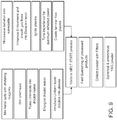
- multiphase composite materials were produced by first preparing a salt solution in water, in organic solvent, or in a mixture of water and organic solvent, followed by generating precursor droplets from this salt solution using a feed injection device; the droplets were then introduced axially into a microwave plasma torch using gas flows towards a microwave generated plasma; upon exposing to high temperature within the plasma with controlled residence time, the droplets were pyrolyzed and converted into particles by quenching with a controlled rate of the exhaust gas in a gas chamber; finally, the particles were filtered and extracted from the exhaust gas.
- the salt solution was generated in accordance with a different method.
- the salt solution was prepared by further including an acid in the solution.
- a salt solution was prepared by combining a solution of a) water and organic solvent (e.g. water and ethylene glycol), b) water and acid (e.g. water and citric acid), or c) water, organic solvent, and acid (e.g. water, ethylene glycol, and citric acid), with another solution of a) water and salt, or b) water, salt, and organic solvent.
- the organic solvent was selected from solvents that are miscible with water, for example, ethanol, methanol, 1- propanol, 2-propanol, tetrahydrofuran, or a mixture of those solvents.
- compositions of the resulting particles are adjusted by selecting salts with different cations.
- the cations are chosen from elements of alkali metals, alkaline earth metals, transition metals, post transition metals, lanthanides, actinides, metalloids, nonmetals, and a mixture of those elements.
- cations of the salt solution are aluminum, yttrium (and/or scandium), and other dopant such as lanthanum, cerium, praseodymium, neodymium, promethium, samarium, europium, gadolinium, terbium, dysprosium, holmium, erbium, thulium, ytterbium, lutetium, and their combinations.
- the product particles can be used as active material for lasers or phosphors and other applications.
- cations are selected from a.) post transition metal and transition metal mixtures, b.) magnesium and yttrium, c.) magnesium and aluminum, d.) lanthanum, magnesium, and aluminium, e.) zirconium, and yttrium (and/or samarium).
- the product particles from these selections are used as active materials for different applications, such as, catalysts, infrared transmitting material, transparent armor, thermal barrier coating, and solid oxide fuel cells.
- the anions of the salt are chosen from nitrate, acetate, citrate, sulfate, carbonate, chloride, phosphate, alkoxide, atrane, tetraethyl orthosilicate, metallic borohydride, and a mixture of these anions.
- the salt solution droplets are entrained using at least two concentric laminar flows, and such laminar flows are generated using gases of air, oxygen, argon, methane, ammonia, nitrogen, and any combination of these gases.
- the exhaust gas from the microwave plasma is quenched by selecting quenching rate no less than 10 3 Kelvin per second (K/s) to no more than 10 6 K/s, and the quenching is achieved by using a chamber with controllable atmosphere.
- Disclosed herein is a method to produce multiphase composite materials directly from solution precursor droplets by a fast pyrolysis process using a microwave plasma embodiment containing a microwave generating source as described in patent application # US 2008/0173641 , a dielectric plasma torch described in a patent application elsewhere, and droplet maker dispensing uniform precursor droplet described in a patent elsewhere.
- a microwave plasma embodiment containing a microwave generating source as described in patent application # US 2008/0173641 , a dielectric plasma torch described in a patent application elsewhere, and droplet maker dispensing uniform precursor droplet described in a patent elsewhere.
- droplets are generated with a narrow size distribution, and are injected and introduced into the microwave plasma torch with generally uniform thermal path.
- the generally uniform thermal path in the torch is achieved by axial injection of droplets into an axisymmetric hot zone with laminar flows.
- the droplets Upon exposing to high temperature within the plasma with controlled residence time, the droplets are pyrolyzed and converted into particles by quenching with a controlled rate of the exhaust gas in a gas chamber.
- the particles generated have generally uniform sizes and uniform thermal history, and can be used for a variety of applications.
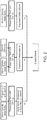
- this method for making metal oxide nanocomposite ceramics consists of an apparatus that includes a microwave radiation generator 1 , a plasma chamber 2 , a dielectric sheathing plasma torch 3 , a droplet maker 4 , and a gas flow communication scheme 5 .
- the microwave generator 1 is combined with plasma chamber 2 and dielectric plasma torch sheathing 3 to ignite stable plasma in hot zone 6 inside dielectric torch 3 .
- a homogenous solution of metal salts and solvents, under constant stirring and pressure in tank 7 is injected into the droplet maker 4 .
- a piezo-electric element 8 is activated to produce uniform droplets 9 which are axially injected into plasma torch 3, and entrained as particles 10 by laminar gas flows due to gas flow communication scheme 5 .
- particles 10 undergo homogeneous thermal treatment to become spherical product particles 11 collected in stainless steel or ceramic filters.
- Route 1 ( FIG. 2a ) involves an organic acid, for instance citric acid, and an organic alcohol, for instance ethylene glycol, to produce a complexion network for an optimum dispersion of solutes in solution.
- organic acid for instance citric acid
- organic alcohol for instance ethylene glycol
- This route has been used to produce porous particles of MgO-Y 2 O 3 , shells of MgAl 2 O 4 (Spinel), and Y 3 Al 5 O 12 (YAG) oxide nanocomposites.
- Route 2 involves an alcohol, such as ethanol, methanol, or propanol, mixed with high molar concentration of water soluble metal salts. This method was used to produce solid particles of MgO.
- route 3 involves using more expensive precursors using alkoxides diluted in alcohol to provide the metal source to produce metal oxide ceramics. This method was used to produce particles of LaMgAl 11 O 19 . All three mixtures are thoroughly stirred in a pressurized tank to produce homogenous solution precursors.
- compositions of metal oxide ceramics suitable for laser, phosphor, catalytic, armor, and visible-to-infrared windows applications are based on, for instance, stoichiometric ratios of binary, ternary systems of aluminum, magnesium, yttrium to produce yttrium-aluminum-garnet (YAG), monoclinic YAM, perovskite YAP, magnesium-aluminum- spinel (MgAl 2 O 4 ), and magnesia-yttria (MgO-Y 2 O 3 ).
- YAG yttrium-aluminum-garnet
- MgAl 2 O 4 magnesium-aluminum- spinel
- MgO-Y 2 O 3 magnesia-yttria
- This composite material is a multiphase material having a microstructure that can be amorphous with very small grain size less than 5 nm, nanocrystalline with a grain size above 5 nm and below 100 nm, a transitional phase with grain size above 100 nm and below 1 micron, or crystalline with grain size above one micron.
- a solution precursor consisting of a stoichiometric composition of water soluble aluminum and yttrium nitrates, distilled or deionized water, citric acid, and ethylene glycol is prepared to produce yttrium-aluminum-garnet oxide ceramic.
- a typical solution consists of 1250 ml of 0.5 mole solution of Al(NO 3 ) 3 .9H 2 O, 750 ml of 0.5 mole solution of Y(NO 3 ) 3 .6H 2 O, 1798 ml of 0.5 mole solution of citric acid, and 17.77 ml of ethylene glycol.
- the precursor is thoroughly mixed using a magnetic mixer for at least one hour to insure thorough molecular mixing of composition.
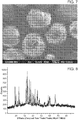
- a SEM was used to investigate the size, size distribution, and morphology of amorphous yttrium-aluminum-garnet particles 12 of FIG. 1 .
- the resulting YAG particles are nearly spherical, shell-like, with a porous texture at the surface.
- the diameter varies between 300 to 400 micrometers, or four times the size of the injected precursor droplet.
- the particles obtained tend to expand and are fluffy due to primarily to the explosive nature of the solvent exhausting during the thermal drying process of the nitrate laden precursor droplet.
- FIG. 4 a detailed analysis of the internal microstructure of YAG powder product particle 12 using XRD technique is shown. It reveals that the phase microstructure of the particle product was found to be totally amorphous. This amorphous state denotes the presence of high quenching rates as the processed material exits the plasma hot zone with this particular embodiment.
- the amorphous product particles were subsequently calcined at 1200 C for one hour, and analyzed using XRD technique.
- the resulting crystalline structure is compared to the crystalline structure of YAG using PDF-33-40 from the XRD database (Reference intensity scaled accordingly for better visual comparison at comparable angles). It can clearly be seen that there is a perfect match between most of the major and small peaks in the XRD plot of the UniMelt-processed and calcined YAG and crystalline YAG used as reference. The perfect alignment of all the peaks denotes the phase purity of the resulting YAG free of any other phases of YAM and YAP in the binary Y 2 O 3 -Al 2 O 3 oxide system.
- processed particles of metal oxides can be produced with nanocrystalline microstructure using the 1-step thermal process by increasing the residence time of the particle in the hot zone.
- Such increase of residence time is achieved by increasing the volume of the plasma plume in the dielectric tube housing the microwave plasma. This is performed through the increase of microwave power at the source for generating the plasma.
- An elongated plasma plume allows full evaporation of solvents, drying of the solutes, melting, and additional sintering of the particle product to achieve nanocrystalline microstructure in-situ before the particles exit the dielectric tube housing the plasma. This allows the additional step of in-situ sintering for crystallization which eliminates the post processing step of sintering amorphous product as described in paragraph [0038].
- a modification of the composition consisting of yttrium and aluminum elements includes addition of a dopant in amounts of few weight percent of rare earth elements to modify the fundamental properties of the nanocomposite metal oxide YAG.
- rare earth salts are added to yttrium and aluminum salts, and solvents which are thermally processed used the microwave plasma.
- Rare earth elements to be considered include Neodymium (Nd), Erbium (Er),Terbium (Tr), Ytterbium (Yb), Holmium (Ho), and Thulium (Tm).
- the doping levels range between 0.5 and 3 percent (molar).
- the nanocomposite YAG powders produced serves as hosting material for laser applications.
- composition consisting of yttrium and aluminum elements includes addition of a dopant in amounts of few weight percent of another group of rare earth elements to modify the fundamental properties of the nanocomposite metal oxide YAG.
- Rare earth elements to be considered include Cerium (Ce), Dysprosium (Dy), Samarium (Sm), and Terbium (Tb). This is accomplished by adding the appropriate precursor sources of the rare earth element to the initial aluminum and yttrium solution precursors and injecting into the microwave plasma. Similar doping levels are used, i.e., between 0.5 and 3 percent (molar).
- the rare-earth doped nanocomposite YAG is suitable to be used as a phosphor.
- a solution precursor consisting of a composition of water soluble aluminum and nickel nitrates, distilled or deionized water, citric acid, and ethylene glycol is prepared to produce nickel-alumina (Ni-Al 2 O 3 ) oxide ceramic.
- a typical solution consists of 22 ml of 0.82 mole solution of Ni(NO 3 ) 2 .7.2H 2 O, 847 ml of 0.82 mole solution of Al(NO 3 ) 3 .9H 2 O, 900 ml of 0.82 mole solution of citric acid, and 14.5 ml of ethylene glycol.
- Nickel represents 5% molar ratio of the Ni-Al 2 O 3 composite. Other ratios between 2 to 10% molar can be also considered.
- the precursor is thoroughly mixed using a magnetic mixer for at least one hour to insure thorough molecular mixing of composition. It is then injected as uniform droplets of dozens to 100 micrometers in diameter produced by a high frequency driven piezo-actuated droplet maker at injection flow rates between 1 and 5 milliliters per minute (ml/mn). Gas flows not lower than 40 SCFH, and not exceeding a total of 120 SCFH for particle entrainment and cooling of the inner wall of the dielectric have been used to stabilize plasma at a relatively low microwave radiation power of 5.5 KW.
- the nickel-alumina nanocomposites powder particles were collected using nylon, ceramic, or stainless-steel filters, encased in an apparatus inserted in the path of the dust collecting and heat evacuation system.
- compositions can include instead of a nickel salt, other metal salts including platinum, palladium, nickel, silver , gold that are added separately in small amounts to dope an aluminum cation.
- nickel salt other metal salts including platinum, palladium, nickel, silver , gold that are added separately in small amounts to dope an aluminum cation.
- platinum-doped alumina is used in the dehydrogenation of hydrocarbons in the petrochemical industry, whereas palladium- and nickel-doped alumina is used for the hydrogenation of hydrocarbons and fats.
- Silver-doped alumina is used to transform ethylene to ethylene oxide.
- a solution precursor consisting of a composition of water soluble magnesium and yttrium nitrates, distilled or deionized water, citric acid, and ethylene glycol is prepared to produce magnesium-aluminum-spinel (MgO-Y 2 O 3 ) oxide ceramic.
- a typical solution consists of 1744 ml of 0.5 mole solution of Mg(NO 3 ) 2 .9H 2 O, 218 ml of 0.5 mole solution of Y(NO 3 ) 3 .6H 2 O, 1798 ml of 0.5 mole solution of citric acid, and 17.17 ml of ethylene glycol.
- the precursor is thoroughly mixed using a magnetic mixer for at least one hour to insure thorough molecular mixing of composition.
- MgO-Y 2 O 3 particles are spherical, shell-like, with a porous and honeycomblike texture.
- the average diameter of a typical shell is about 100 micrometers, relatively equal to the diameter of the injected precursor droplet.
- the particles obtained are fluffy and porous due primarily to the explosive nature of the solvent exhausting during the thermal drying process of the nitrate laden precursor droplet.
- the magnesium yttrium oxide ceramic (MgO-Y 2 O 3 ) synthesized with the present method can be consolidated using sinter/HIP, hot pressing, and hot press/HIP to produce transparent bodies that are suitable for Infrared transmission. Powders produced with the present method have been found to sinter at lower temperature thus lowering the cost of processing into solid 3D bodies that can be turned into Infra-red domes or windows.
- a solution precursor consisting of a stoichiometric composition of water soluble magnesium and aluminum nitrates, distilled or deionized water, citric acid, and ethylene glycol is prepared to produce magnesium-aluminum-spinel (MgAl 2 O 4 ) nanocomposite oxide ceramic.
- a typical solution consists of 1333 ml of 0.5 mole solution of Al(NO 3 ) 2 .9H 2 O, 666 ml of 0.5 mole solution of Mg(NO 3 ) 2 .6H 2 O, 1798 ml of 0.5 mole solution of citric acid, and 17.77 ml of ethylene glycol.
- the precursor is thoroughly mixed using a magnetic mixer for at least one hour to insure thorough molecular mixing of composition. It is then injected as uniform droplets of dozens to 130 micrometers in unique diameter produced by a high frequency driven piezo-actuated droplet maker at injection flow rates between 1 and 5 milliliters per minute (ml/mn). Gas flows not lower than 40 SCFH, and not exceeding a total of 120 SCFH for particle entrainment and cooling of the inner wall of the dielectric have been used to stabilize plasma at a relatively low microwave radiation power of 5.5 KW.
- the MgAl 2 O 4 nanocomposite spinel powder particles were collected using nylon, ceramic, or stainless-steel filters, encased in an apparatus inserted in the path of the dust collecting and heat evacuation system.
- MgAl 2 O 4 particles are nearly spherical, shell-like, with a porous texture at the surface.
- the average diameter of a typical shell is about 300 micrometers, or three times the diameter of the injected precursor droplet.
- the particles obtained tend to expand and are fluffy due to primarily to the explosive nature of the solvent exhausting during the thermal drying process of the nitrate laden precursor droplet.
- the magnesium aluminate spinel (MgAl 2 O 4 ) synthesized with the present method can be consolidated using sinter/HIP, hot pressing, and hot press/HIP to produce transparent bodies that are suitable for visible-to-infrared transmission, or as a transparent armor.
- Powder produced with the present method have been found to sinter at lower temperature thus lowering the cost of processing into solid 3D bodies that can be turned into domes, or transparent armor plates.
- a solution precursor consisting of a stoichiometric composition of water soluble lanthanum, magnesium nitrates or acetates, and aluminum nitrates, distilled or deionized water is prepared to produce lanthanum-magnesium-hexaaluminate (LaMgAl 11 O 19 ) nanocomposite oxide ceramic powder.
- a typical solution consists of 676.4 ml of water with 100 grams Al(NO 3 ) 2 .9H 2 O, 61.50 ml with 8.31 grams of magnesium acetate, and 61.70 ml of water with 5.20 grams of lanthanum acetate,
- the precursor is thoroughly mixed using a magnetic mixer for at least one hour to insure thorough molecular mixing of composition. It is then injected as uniform droplets of dozens to 130 micrometers in unique diameter produced by a high frequency driven piezo-actuated droplet maker at injection flow rates between 1 and 5 milliliters per minute (ml/mn).
- LaMgAl 11 O 19 nanocomposite powder particles are collected using ceramic, or stainless-steel filters, encased in an apparatus inserted in the path of the dust collecting and heat evacuation system. These LaMgAl 11 O 19 nanocomposite powders are suitable for thermal barrier coatings or catalyst applications.
- FIG. 8 a detailed analysis of the internal microstructure of LaMgAl 11 O 19 using XRD technique is shown.
- This figure illustrates the result of quenching into a different environment other than ambient atmosphere as mentioned in paragraph [0016].
- the particle product after UniMelt processing is quenched into a heated substrate (typical temperature ⁇ 450 °C). This results in a lower quenching rate compared to quenching into ambient atmosphere.
- the XRD spectrum shown in Figure 8 is defined by a series of sharp peaks (black curve) indicating the existence of a nanocomposite phase microstructure for the lanthanum-magnesium-aluminum oxide.
- a solution precursor consisting of a stoichiometric composition of water soluble zyrconyl and yttrium nitrates, distilled or deionized water, citric acid, and ethylene glycol is prepared to produce 8-weight% yttria stabilized zirconia (8YSZ) nanocomposite oxide ceramic powder.
- a typical solution consists of 251. 24ml of water with 50.24 grams zyrconyl nitrate hydrate, 23.84 ml with 7.32 grams of yttrium nitrate, 251.24 ml of water with 38.72 grams of citric acid, and 3.78 ml of ethylene glycol.
- the precursor solution is thoroughly mixed using a magnetic mixer for at least one hour to insure thorough molecular mixing of composition. It is then injected as uniform droplets of dozens to 130 micrometers in unique diameter produced by a high frequency driven piezo-actuated droplet maker at injection flow rates between 1 and 5 milliliters per minute (ml/mn). Gas flows not lower than 40 SCFH, and not exceeding a total of 120 SCFH for particle entrainment and cooling of the inner wall of the dielectric have been used to stabilize plasma at a relatively low microwave radiation power of 5.5 KW.
- the 8YSZ nanocomposite powder particles are collected using ceramic, or stainless-steel filters, encased in an apparatus inserted in the path of the dust collecting and heat evacuation system. These 8YSZ nanocomposite powders are suitable as electrolytes for solid oxide fuel cell (SOFC) applications.
- SOFC solid oxide fuel cell
- a solution precursor consisting of a stoichiometric composition of water soluble magnesium and aluminum nitrates or acetates, and distilled or deionized water is prepared and then injected into a nitrogen microwave plasma gas to produce magnesium-aluminum-oxynitride (MgALON) nanocomposite oxide ceramic powder.
- the precursor solution is thoroughly mixed using a magnetic mixer for at least one hour to insure thorough molecular mixing of composition. It is then injected as uniform droplets of dozens to 130 micrometers in unique diameter produced by a high frequency driven piezo-actuated droplet maker at injection flow rates between 1 and 5 milliliters per minute (ml/mn).
- Gas flows consisting of nitrogen not lower than 40 SCFH, and not exceeding a total of 120 SCFH for particle entrainment and cooling of the inner wall of the dielectric are used to stabilize plasma at a relatively low microwave radiation power of 5.5 KW.
- the MgALON nanocomposite powder particles are collected using ceramic, or stainless-steel filters, encased in an apparatus inserted in the path of the dust collecting and heat evacuation system. These MgALON nanocomposite powders are suitable for transparent armor applications.
- the amorphous or nanocrystalline metal oxide particles are made using uniform solution droplets according to the procedure described therein.
- the desired chemical composition is first mixed according to the assigned proportions of reactants. It is subsequently thoroughly stirred to yield a homogenous molecular mix of reactants.
- the solution is then pumped inside a reservoir of a droplet maker using a peristaltic pump, or a pressurized tank. Once the reservoir is full, a piezo transducer is activated using high frequency drive electronics to impinge the adequate perturbation into the rigid ceiling, or membrane, of the solution reservoir. This in turns creates a disturbance in the volume of solution in the reservoir.
- the solution emerges through a capillary nozzle as a continuous stream of uniform droplets exiting at a constant speed for a given frequency of the electronics drive.
- Special attention is afforded to the nature of the droplets stream so that it is not in a burst mode, but instead it is in the form of a jet with uniform droplets.
- a microwave radiation is introduced into the waveguide towards the plasma chamber where the dielectric plasma torch is located, and placed perpendicularly to the waveguide.
- Two annular flows are introduced: one for entrainment of injected droplets; the other flow to protect the inner wall of the outer tube of the plasma torch from melting under the effect of high heat from plasma.
- the plasma is ignited inside the dielectric plasma torch.
- Adequate combination of entrainment and cooling flows are chosen to stabilize the plasma. Also, these flows are chosen so as to allow smooth circulation of droplets towards the plasma and avoid turbulence that could create recirculation and back flow of droplets above the hot zone.
- the droplets are processed volumetrically and uniformly as all solvents are burned off.
- the processed particles exit into a controlled atmospheric quenching chamber below the exit nozzle of the plasma.
- the particle product are collected in nylon, ceramic, or stainless steel filters and analyzed for its microstructure and its mechanical, optical, and thermal properties.
Landscapes
- Chemical & Material Sciences (AREA)
- Organic Chemistry (AREA)
- Engineering & Computer Science (AREA)
- Ceramic Engineering (AREA)
- Manufacturing & Machinery (AREA)
- Materials Engineering (AREA)
- Structural Engineering (AREA)
- Inorganic Chemistry (AREA)
- Chemical Kinetics & Catalysis (AREA)
- Geology (AREA)
- Life Sciences & Earth Sciences (AREA)
- Composite Materials (AREA)
- Compounds Of Alkaline-Earth Elements, Aluminum Or Rare-Earth Metals (AREA)
- Physical Or Chemical Processes And Apparatus (AREA)
- Plasma Technology (AREA)
- Inorganic Compounds Of Heavy Metals (AREA)
- Carbon And Carbon Compounds (AREA)
- Manufacture Of Alloys Or Alloy Compounds (AREA)
Applications Claiming Priority (4)
| Application Number | Priority Date | Filing Date | Title |
|---|---|---|---|
| US201361802769P | 2013-03-18 | 2013-03-18 | |
| US14/208,955 US9242224B2 (en) | 2012-12-04 | 2014-03-13 | Method for the production of multiphase composite materials using microwave plasma process |
| EP14770859.8A EP2976198B1 (en) | 2013-03-18 | 2014-03-18 | Method for the production of multiphase composite materials using microwave plasma process |
| PCT/US2014/030965 WO2014153318A1 (en) | 2013-03-18 | 2014-03-18 | Method for the production of multiphase composite materials using microwave plasma process |
Related Parent Applications (2)
| Application Number | Title | Priority Date | Filing Date |
|---|---|---|---|
| EP14770859.8A Division-Into EP2976198B1 (en) | 2013-03-18 | 2014-03-18 | Method for the production of multiphase composite materials using microwave plasma process |
| EP14770859.8A Division EP2976198B1 (en) | 2013-03-18 | 2014-03-18 | Method for the production of multiphase composite materials using microwave plasma process |
Publications (1)
| Publication Number | Publication Date |
|---|---|
| EP3564001A1 true EP3564001A1 (en) | 2019-11-06 |
Family
ID=51581480
Family Applications (2)
| Application Number | Title | Priority Date | Filing Date |
|---|---|---|---|
| EP19162518.5A Withdrawn EP3564001A1 (en) | 2013-03-18 | 2014-03-18 | Method for the production of multiphase composite materials using microwave plasma process |
| EP14770859.8A Active EP2976198B1 (en) | 2013-03-18 | 2014-03-18 | Method for the production of multiphase composite materials using microwave plasma process |
Family Applications After (1)
| Application Number | Title | Priority Date | Filing Date |
|---|---|---|---|
| EP14770859.8A Active EP2976198B1 (en) | 2013-03-18 | 2014-03-18 | Method for the production of multiphase composite materials using microwave plasma process |
Country Status (7)
| Country | Link |
|---|---|
| EP (2) | EP3564001A1 (cg-RX-API-DMAC7.html) |
| JP (5) | JP6359633B2 (cg-RX-API-DMAC7.html) |
| CA (1) | CA2942322C (cg-RX-API-DMAC7.html) |
| ES (1) | ES2930642T3 (cg-RX-API-DMAC7.html) |
| HU (1) | HUE060218T2 (cg-RX-API-DMAC7.html) |
| PL (1) | PL2976198T3 (cg-RX-API-DMAC7.html) |
| WO (1) | WO2014153318A1 (cg-RX-API-DMAC7.html) |
Families Citing this family (23)
| Publication number | Priority date | Publication date | Assignee | Title |
|---|---|---|---|---|
| JP6359633B2 (ja) * | 2013-03-18 | 2018-07-18 | アマスタン・テクノロジーズ・エル・エル・シー | マイクロ波プラズマ処理を使用した多相複合材料の製造方法 |
| US10987735B2 (en) | 2015-12-16 | 2021-04-27 | 6K Inc. | Spheroidal titanium metallic powders with custom microstructures |
| PL3389862T3 (pl) | 2015-12-16 | 2024-03-04 | 6K Inc. | Sferoidalne metale podlegające odwodornieniu oraz cząstki stopów metali |
| EP3474978B1 (en) * | 2016-06-23 | 2021-10-13 | 6K Inc. | Lithium ion battery materials |
| JP7194544B2 (ja) * | 2017-10-03 | 2022-12-22 | 三井金属鉱業株式会社 | 粒子の製造方法 |
| JP6962825B2 (ja) * | 2018-01-04 | 2021-11-05 | 日本電子株式会社 | 高周波誘導熱プラズマ装置 |
| CN108585850B (zh) * | 2018-06-15 | 2020-11-13 | 济南大学 | 一种超低温烧结微波介质陶瓷及制备方法 |
| US10639712B2 (en) | 2018-06-19 | 2020-05-05 | Amastan Technologies Inc. | Process for producing spheroidized powder from feedstock materials |
| JP7699057B2 (ja) | 2019-04-30 | 2025-06-26 | シックスケー インコーポレイテッド | 機械的に合金化された粉末原料 |
| SG11202111578UA (en) | 2019-04-30 | 2021-11-29 | 6K Inc | Lithium lanthanum zirconium oxide (llzo) powder |
| KR20220100861A (ko) | 2019-11-18 | 2022-07-18 | 6케이 인크. | 구형 분말을 위한 고유한 공급원료 및 제조 방법 |
| US11590568B2 (en) | 2019-12-19 | 2023-02-28 | 6K Inc. | Process for producing spheroidized powder from feedstock materials |
| CN116034496A (zh) | 2020-06-25 | 2023-04-28 | 6K有限公司 | 微观复合合金结构 |
| CA3186082A1 (en) | 2020-09-24 | 2022-03-31 | 6K Inc. | Systems, devices, and methods for starting plasma |
| CA3196653A1 (en) | 2020-10-30 | 2022-05-05 | Sunil Bhalchandra BADWE | Systems and methods for synthesis of spheroidized metal powders |
| AU2022206483A1 (en) | 2021-01-11 | 2023-08-31 | 6K Inc. | Methods and systems for reclamation of li-ion cathode materials using microwave plasma processing |
| EP4294777A4 (en) * | 2021-02-22 | 2025-04-02 | 6K Inc. | SYSTEMS AND METHODS FOR SILICON OXYCARBIDE-BASED CERAMIC MATERIALS CONTAINING SILICON METAL |
| EP4313449A1 (en) | 2021-03-31 | 2024-02-07 | 6K Inc. | Systems and methods for additive manufacturing of metal nitride ceramics |
| US12261023B2 (en) | 2022-05-23 | 2025-03-25 | 6K Inc. | Microwave plasma apparatus and methods for processing materials using an interior liner |
| US12040162B2 (en) | 2022-06-09 | 2024-07-16 | 6K Inc. | Plasma apparatus and methods for processing feed material utilizing an upstream swirl module and composite gas flows |
| JP2025522835A (ja) * | 2022-07-01 | 2025-07-17 | ユニバーシティ オブ メリーランド, カレッジ パーク | 超高速高温焼結(uhs)システムおよび環境-熱遮断コーティングの製造方法 |
| WO2024044498A1 (en) | 2022-08-25 | 2024-02-29 | 6K Inc. | Plasma apparatus and methods for processing feed material utilizing a powder ingress preventor (pip) |
| US12195338B2 (en) | 2022-12-15 | 2025-01-14 | 6K Inc. | Systems, methods, and device for pyrolysis of methane in a microwave plasma for hydrogen and structured carbon powder production |
Citations (9)
| Publication number | Priority date | Publication date | Assignee | Title |
|---|---|---|---|---|
| US20040009118A1 (en) * | 2002-07-15 | 2004-01-15 | Jonathan Phillips | Method for producing metal oxide nanoparticles |
| US20050118094A1 (en) * | 2003-09-11 | 2005-06-02 | Lu Zhang | Plasma synthesis of metal oxide nanoparticles |
| US6919527B2 (en) | 2001-10-05 | 2005-07-19 | Tekna Plasma Systems, Inc. | Multi-coil induction plasma torch for solid state power supply |
| US20060145124A1 (en) * | 2004-12-31 | 2006-07-06 | Industrial Technology Research Institute | Method for preparing YAG fluorescent powder |
| WO2006079213A1 (en) * | 2005-01-28 | 2006-08-03 | Tekna Plasma Systems Inc. | Induction plasma synthesis of nanopowders |
| US20070075052A1 (en) * | 2005-06-08 | 2007-04-05 | Fanson Paul T | Metal oxide nanoparticles and process for producing the same |
| US20080173641A1 (en) | 2007-01-18 | 2008-07-24 | Kamal Hadidi | Microwave plasma apparatus and method for materials processing |
| US7770152B1 (en) | 2005-05-20 | 2010-08-03 | Oracle America, Inc. | Method and apparatus for coordinating state and execution context of interpreted languages |
| US20120322645A1 (en) | 2010-12-17 | 2012-12-20 | Jordan Eric H | Method of synthesizing multi-iphase oxide ceramics with small phase domain sizes |
Family Cites Families (19)
| Publication number | Priority date | Publication date | Assignee | Title |
|---|---|---|---|---|
| DE3537624A1 (de) * | 1985-10-23 | 1987-04-23 | Bayer Ag | Feinteilige isometrische hexaferritpigmente, verfahren zu ihrer herstellung und deren verwendung |
| US5240493A (en) * | 1992-01-16 | 1993-08-31 | Institute Of Gas Technology | Process for preparing submicron/nanosize ceramic powders from precursors incorporated within a polymeric foam |
| EP0560537A1 (en) * | 1992-03-10 | 1993-09-15 | Mds Health Group Limited | Apparatus and method for liquid sample introduction |
| JPH05269372A (ja) * | 1992-03-27 | 1993-10-19 | Toyo Ink Mfg Co Ltd | セラミックス粉末の製造方法 |
| JPH06279098A (ja) * | 1993-03-30 | 1994-10-04 | Ngk Insulators Ltd | 超電導性組成物の製造方法及び超電導磁気シールド体 |
| JPH08170112A (ja) * | 1994-12-16 | 1996-07-02 | Sumitomo Metal Mining Co Ltd | 金属粉末の噴霧熱分解製造方法および装置 |
| EP0946414B1 (en) * | 1996-11-04 | 2005-06-29 | Materials Modification, Inc. | Microwave plasma chemical synthesis of ultrafine powders |
| US6752979B1 (en) * | 2000-11-21 | 2004-06-22 | Very Small Particle Company Pty Ltd | Production of metal oxide particles with nano-sized grains |
| US6989529B2 (en) * | 2001-07-03 | 2006-01-24 | Varian Australia Pty Ltd. | Plasma torch |
| US7182929B1 (en) * | 2003-08-18 | 2007-02-27 | Nei, Inc. | Nanostructured multi-component and doped oxide powders and method of making same |
| JP2005120283A (ja) | 2003-10-17 | 2005-05-12 | Nisshin Seifun Group Inc | 微粒子の製造方法 |
| JP2005170760A (ja) * | 2003-12-12 | 2005-06-30 | Nisshin Seifun Group Inc | 微粒子及びその製造方法 |
| US7465430B2 (en) * | 2004-07-20 | 2008-12-16 | E. I. Du Pont De Nemours And Company | Apparatus for making metal oxide nanopowder |
| JP4988164B2 (ja) * | 2005-03-08 | 2012-08-01 | 株式会社日清製粉グループ本社 | 微粒子の製造方法と装置 |
| JP4560621B2 (ja) | 2004-09-21 | 2010-10-13 | 国立大学法人山梨大学 | 微粒子触媒、合金微粒子触媒又は複合酸化物微粒子触媒の製造方法及びその装置、並びにその使用方法 |
| NO329785B1 (no) * | 2005-12-02 | 2010-12-20 | Prototech As | Fremgangsmate for sol-gel prosessering og geler og nanopartikler produsert med nevnte fremgangsmate |
| JP4565191B2 (ja) * | 2006-01-30 | 2010-10-20 | 国立大学法人山梨大学 | 微粒子触媒の製造方法、微粒子触媒、及び改質装置 |
| JP2009095685A (ja) | 2007-10-12 | 2009-05-07 | Tokyo Electron Ltd | 粉体製造装置および方法 |
| JP6359633B2 (ja) * | 2013-03-18 | 2018-07-18 | アマスタン・テクノロジーズ・エル・エル・シー | マイクロ波プラズマ処理を使用した多相複合材料の製造方法 |
-
2014
- 2014-03-18 JP JP2016504326A patent/JP6359633B2/ja active Active
- 2014-03-18 WO PCT/US2014/030965 patent/WO2014153318A1/en not_active Ceased
- 2014-03-18 EP EP19162518.5A patent/EP3564001A1/en not_active Withdrawn
- 2014-03-18 CA CA2942322A patent/CA2942322C/en active Active
- 2014-03-18 EP EP14770859.8A patent/EP2976198B1/en active Active
- 2014-03-18 PL PL14770859.8T patent/PL2976198T3/pl unknown
- 2014-03-18 ES ES14770859T patent/ES2930642T3/es active Active
- 2014-03-18 HU HUE14770859A patent/HUE060218T2/hu unknown
-
2018
- 2018-06-19 JP JP2018116125A patent/JP2018192471A/ja active Pending
-
2020
- 2020-01-10 JP JP2020002900A patent/JP2020089880A/ja active Pending
-
2021
- 2021-03-26 JP JP2021052769A patent/JP7672851B2/ja active Active
-
2023
- 2023-10-20 JP JP2023181046A patent/JP2024020224A/ja not_active Withdrawn
Patent Citations (9)
| Publication number | Priority date | Publication date | Assignee | Title |
|---|---|---|---|---|
| US6919527B2 (en) | 2001-10-05 | 2005-07-19 | Tekna Plasma Systems, Inc. | Multi-coil induction plasma torch for solid state power supply |
| US20040009118A1 (en) * | 2002-07-15 | 2004-01-15 | Jonathan Phillips | Method for producing metal oxide nanoparticles |
| US20050118094A1 (en) * | 2003-09-11 | 2005-06-02 | Lu Zhang | Plasma synthesis of metal oxide nanoparticles |
| US20060145124A1 (en) * | 2004-12-31 | 2006-07-06 | Industrial Technology Research Institute | Method for preparing YAG fluorescent powder |
| WO2006079213A1 (en) * | 2005-01-28 | 2006-08-03 | Tekna Plasma Systems Inc. | Induction plasma synthesis of nanopowders |
| US7770152B1 (en) | 2005-05-20 | 2010-08-03 | Oracle America, Inc. | Method and apparatus for coordinating state and execution context of interpreted languages |
| US20070075052A1 (en) * | 2005-06-08 | 2007-04-05 | Fanson Paul T | Metal oxide nanoparticles and process for producing the same |
| US20080173641A1 (en) | 2007-01-18 | 2008-07-24 | Kamal Hadidi | Microwave plasma apparatus and method for materials processing |
| US20120322645A1 (en) | 2010-12-17 | 2012-12-20 | Jordan Eric H | Method of synthesizing multi-iphase oxide ceramics with small phase domain sizes |
Also Published As
| Publication number | Publication date |
|---|---|
| ES2930642T3 (es) | 2022-12-20 |
| CA2942322C (en) | 2022-10-25 |
| JP2020089880A (ja) | 2020-06-11 |
| JP2021112738A (ja) | 2021-08-05 |
| EP2976198B1 (en) | 2022-10-26 |
| WO2014153318A8 (en) | 2015-01-22 |
| JP6359633B2 (ja) | 2018-07-18 |
| HK1220949A1 (en) | 2017-05-19 |
| JP7672851B2 (ja) | 2025-05-08 |
| WO2014153318A1 (en) | 2014-09-25 |
| PL2976198T3 (pl) | 2022-12-19 |
| JP2016521198A (ja) | 2016-07-21 |
| JP2018192471A (ja) | 2018-12-06 |
| CA3169580A1 (en) | 2014-09-25 |
| CA2942322A1 (en) | 2014-09-25 |
| WO2014153318A4 (en) | 2014-12-04 |
| EP2976198A1 (en) | 2016-01-27 |
| EP2976198A4 (en) | 2016-11-02 |
| HUE060218T2 (hu) | 2023-02-28 |
| JP2024020224A (ja) | 2024-02-14 |
Similar Documents
| Publication | Publication Date | Title |
|---|---|---|
| JP7672851B2 (ja) | マイクロ波プラズマ処理を使用した多相複合材料の製造方法 | |
| US9242224B2 (en) | Method for the production of multiphase composite materials using microwave plasma process | |
| US9643891B2 (en) | Method for making amorphous particles using a uniform melt-state in a microwave generated plasma torch | |
| JP2018192471A5 (cg-RX-API-DMAC7.html) | ||
| Marchal et al. | Yttrium aluminum garnet nanopowders produced by liquid-feed flame spray pyrolysis (LF-FSP) of metalloorganic precursors | |
| EP2206681B1 (en) | Method for preparing metal compound nanoparticles | |
| EP1626929B1 (en) | Metal delivery system for nanoparticle manufacture | |
| Aytimur et al. | Magnesia stabilized zirconia doped with boron, ceria and gadolinia | |
| Loghman-Estarki et al. | Large scale synthesis of non-transformable tetragonal Sc2O3, Y2O3 doped ZrO2 nanopowders via the citric acid based gel method to obtain plasma sprayed coating | |
| TW200406358A (en) | Method for manufacturing highly-crystallized oxide powder | |
| JP5251521B2 (ja) | 固溶体微粒子の製造方法 | |
| US8206672B2 (en) | Production of phase-pure ceramic garnet particles | |
| WO2015080780A2 (en) | Metal oxide nanopowders as alternate precursor source to nitrates | |
| HK40024652A (en) | Method for the production of multiphase composite materials using microwave plasma process | |
| Behera et al. | Conventional approaches to synthesis and deposition of perovskite metal oxides | |
| HK1220949B (en) | Method for the production of multiphase composite materials using microwave plasma process | |
| KR100968805B1 (ko) | 전계 분무 에어로졸 화염 분사법을 이용한 Gd 도핑된CeO₂ 나노 분말의 제조방법 및 제조장치 | |
| JP7565149B2 (ja) | セラミックス粉末の製造方法、セラミックス粉末及びセラミックス緻密質体の製造方法 | |
| Lee et al. | Synthesis of $ hboxAl_2hboxO_3 $–$ hboxZrO_2 $ Nanocomposite Powders by Pulsed Wire Discharge | |
| Perez-Page et al. | Synthesis of porous yttria-stabilized zirconia microspheres by ultrasonic spray pyrolysis | |
| JP2007290885A (ja) | 無機物粒子の製造方法 | |
| Evstropov et al. | Flame Spray Synthesis of Yttrium Oxide Powders for Transparent Ceramics | |
| JP2007165782A (ja) | 磁性体の製造方法及び製造装置、並びに磁性体粒子及びその前駆体 | |
| Yancey | Continuous Synthesis of Doped Pyrochlore Materials by Spray Pyrolysis for Auto-thermal Reforming Applications |
Legal Events
| Date | Code | Title | Description |
|---|---|---|---|
| PUAI | Public reference made under article 153(3) epc to a published international application that has entered the european phase |
Free format text: ORIGINAL CODE: 0009012 |
|
| STAA | Information on the status of an ep patent application or granted ep patent |
Free format text: STATUS: THE APPLICATION HAS BEEN PUBLISHED |
|
| AC | Divisional application: reference to earlier application |
Ref document number: 2976198 Country of ref document: EP Kind code of ref document: P |
|
| AK | Designated contracting states |
Kind code of ref document: A1 Designated state(s): AL AT BE BG CH CY CZ DE DK EE ES FI FR GB GR HR HU IE IS IT LI LT LU LV MC MK MT NL NO PL PT RO RS SE SI SK SM TR |
|
| STAA | Information on the status of an ep patent application or granted ep patent |
Free format text: STATUS: REQUEST FOR EXAMINATION WAS MADE |
|
| 17P | Request for examination filed |
Effective date: 20200428 |
|
| RBV | Designated contracting states (corrected) |
Designated state(s): AL AT BE BG CH CY CZ DE DK EE ES FI FR GB GR HR HU IE IS IT LI LT LU LV MC MK MT NL NO PL PT RO RS SE SI SK SM TR |
|
| RAP1 | Party data changed (applicant data changed or rights of an application transferred) |
Owner name: 6K INC. |
|
| REG | Reference to a national code |
Ref country code: HK Ref legal event code: DE Ref document number: 40024652 Country of ref document: HK |
|
| STAA | Information on the status of an ep patent application or granted ep patent |
Free format text: STATUS: EXAMINATION IS IN PROGRESS |
|
| 17Q | First examination report despatched |
Effective date: 20220531 |
|
| STAA | Information on the status of an ep patent application or granted ep patent |
Free format text: STATUS: THE APPLICATION IS DEEMED TO BE WITHDRAWN |
|
| 18D | Application deemed to be withdrawn |
Effective date: 20240907 |