EP3561001B1 - Temperaturreaktives gel mit lcst ohne volumenphasenübergang und herstellungsverfahren dafür - Google Patents
Temperaturreaktives gel mit lcst ohne volumenphasenübergang und herstellungsverfahren dafür Download PDFInfo
- Publication number
- EP3561001B1 EP3561001B1 EP17884942.8A EP17884942A EP3561001B1 EP 3561001 B1 EP3561001 B1 EP 3561001B1 EP 17884942 A EP17884942 A EP 17884942A EP 3561001 B1 EP3561001 B1 EP 3561001B1
- Authority
- EP
- European Patent Office
- Prior art keywords
- temperature
- acid
- lcst
- carboxyl group
- monomer
- Prior art date
- Legal status (The legal status is an assumption and is not a legal conclusion. Google has not performed a legal analysis and makes no representation as to the accuracy of the status listed.)
- Active
Links
Images







Classifications
-
- C—CHEMISTRY; METALLURGY
- C08—ORGANIC MACROMOLECULAR COMPOUNDS; THEIR PREPARATION OR CHEMICAL WORKING-UP; COMPOSITIONS BASED THEREON
- C08F—MACROMOLECULAR COMPOUNDS OBTAINED BY REACTIONS ONLY INVOLVING CARBON-TO-CARBON UNSATURATED BONDS
- C08F220/00—Copolymers of compounds having one or more unsaturated aliphatic radicals, each having only one carbon-to-carbon double bond, and only one being terminated by only one carboxyl radical or a salt, anhydride ester, amide, imide or nitrile thereof
- C08F220/02—Monocarboxylic acids having less than ten carbon atoms; Derivatives thereof
- C08F220/04—Acids; Metal salts or ammonium salts thereof
- C08F220/06—Acrylic acid; Methacrylic acid; Metal salts or ammonium salts thereof
-
- C—CHEMISTRY; METALLURGY
- C08—ORGANIC MACROMOLECULAR COMPOUNDS; THEIR PREPARATION OR CHEMICAL WORKING-UP; COMPOSITIONS BASED THEREON
- C08K—Use of inorganic or non-macromolecular organic substances as compounding ingredients
- C08K5/00—Use of organic ingredients
- C08K5/04—Oxygen-containing compounds
- C08K5/09—Carboxylic acids; Metal salts thereof; Anhydrides thereof
- C08K5/098—Metal salts of carboxylic acids
-
- C—CHEMISTRY; METALLURGY
- C08—ORGANIC MACROMOLECULAR COMPOUNDS; THEIR PREPARATION OR CHEMICAL WORKING-UP; COMPOSITIONS BASED THEREON
- C08F—MACROMOLECULAR COMPOUNDS OBTAINED BY REACTIONS ONLY INVOLVING CARBON-TO-CARBON UNSATURATED BONDS
- C08F20/00—Homopolymers and copolymers of compounds having one or more unsaturated aliphatic radicals, each having only one carbon-to-carbon double bond, and only one being terminated by only one carboxyl radical or a salt, anhydride, ester, amide, imide or nitrile thereof
- C08F20/02—Monocarboxylic acids having less than ten carbon atoms, Derivatives thereof
- C08F20/04—Acids, Metal salts or ammonium salts thereof
- C08F20/06—Acrylic acid; Methacrylic acid; Metal salts or ammonium salts thereof
-
- C—CHEMISTRY; METALLURGY
- C08—ORGANIC MACROMOLECULAR COMPOUNDS; THEIR PREPARATION OR CHEMICAL WORKING-UP; COMPOSITIONS BASED THEREON
- C08J—WORKING-UP; GENERAL PROCESSES OF COMPOUNDING; AFTER-TREATMENT NOT COVERED BY SUBCLASSES C08B, C08C, C08F, C08G or C08H
- C08J3/00—Processes of treating or compounding macromolecular substances
- C08J3/02—Making solutions, dispersions, lattices or gels by other methods than by solution, emulsion or suspension polymerisation techniques
- C08J3/03—Making solutions, dispersions, lattices or gels by other methods than by solution, emulsion or suspension polymerisation techniques in aqueous media
- C08J3/075—Macromolecular gels
-
- C—CHEMISTRY; METALLURGY
- C08—ORGANIC MACROMOLECULAR COMPOUNDS; THEIR PREPARATION OR CHEMICAL WORKING-UP; COMPOSITIONS BASED THEREON
- C08K—Use of inorganic or non-macromolecular organic substances as compounding ingredients
- C08K5/00—Use of organic ingredients
- C08K5/04—Oxygen-containing compounds
- C08K5/09—Carboxylic acids; Metal salts thereof; Anhydrides thereof
-
- C—CHEMISTRY; METALLURGY
- C08—ORGANIC MACROMOLECULAR COMPOUNDS; THEIR PREPARATION OR CHEMICAL WORKING-UP; COMPOSITIONS BASED THEREON
- C08L—COMPOSITIONS OF MACROMOLECULAR COMPOUNDS
- C08L101/00—Compositions of unspecified macromolecular compounds
- C08L101/02—Compositions of unspecified macromolecular compounds characterised by the presence of specified groups, e.g. terminal or pendant functional groups
- C08L101/06—Compositions of unspecified macromolecular compounds characterised by the presence of specified groups, e.g. terminal or pendant functional groups containing oxygen atoms
- C08L101/08—Carboxyl groups
-
- C—CHEMISTRY; METALLURGY
- C08—ORGANIC MACROMOLECULAR COMPOUNDS; THEIR PREPARATION OR CHEMICAL WORKING-UP; COMPOSITIONS BASED THEREON
- C08J—WORKING-UP; GENERAL PROCESSES OF COMPOUNDING; AFTER-TREATMENT NOT COVERED BY SUBCLASSES C08B, C08C, C08F, C08G or C08H
- C08J2300/00—Characterised by the use of unspecified polymers
- C08J2300/10—Polymers characterised by the presence of specified groups, e.g. terminal or pendant functional groups
- C08J2300/104—Polymers characterised by the presence of specified groups, e.g. terminal or pendant functional groups containing oxygen atoms
- C08J2300/105—Polymers characterised by the presence of specified groups, e.g. terminal or pendant functional groups containing oxygen atoms containing carboxyl groups
-
- C—CHEMISTRY; METALLURGY
- C08—ORGANIC MACROMOLECULAR COMPOUNDS; THEIR PREPARATION OR CHEMICAL WORKING-UP; COMPOSITIONS BASED THEREON
- C08J—WORKING-UP; GENERAL PROCESSES OF COMPOUNDING; AFTER-TREATMENT NOT COVERED BY SUBCLASSES C08B, C08C, C08F, C08G or C08H
- C08J2333/00—Characterised by the use of homopolymers or copolymers of compounds having one or more unsaturated aliphatic radicals, each having only one carbon-to-carbon double bond, and only one being terminated by only one carboxyl radical, or of salts, anhydrides, esters, amides, imides, or nitriles thereof; Derivatives of such polymers
- C08J2333/02—Homopolymers or copolymers of acids; Metal or ammonium salts thereof
Definitions
- the present invention relates to a temperature-responsive gel having an LCST that does not exhibit a volume phase transition, and relates to a method for producing same.
- Poly(N-isopropylacrylamide) [poly(NIPAAm)] is known to be a typical example of a temperature-responsive polymer.
- Poly(NIPAAm) exhibits a lower critical solution temperature (LCST), which is a phenomenon in which solubility in an aqueous solution is exhibited at lower temperatures while precipitation (phase separation) occurs at higher temperatures.
- LCST critical solution temperature
- a volume phase transition is also known to occur with poly(NIPAAm) hydrogels.
- PTL 1 A volume phase transition is also known to occur with poly(NIPAAm) hydrogels.
- PTL 2 Application to drug delivery systems utilizing this property has been proposed (PTL 1).
- thermo-responsible hydrogels examples are described in NPL1 and NPL 2.
- hydrogels containing a metal salt of an organic acid are described in NPL3, PTL2, PTL3, and PTL 4.
- NPL 4 a self-assembly formed by "net-like" bridges of the carboxylic acid of a polyacrylic polymer with the calcium ions of an aqueous solution of calcium acetate.
- the present invention therefore addresses the problem of providing a temperature-responsive gel having an LCST that does not exhibit a volume phase transition, and a method for producing same.
- the present invention is as follows.
- the present invention can provide a temperature-responsive gel that has an LCST without a volume phase transition.
- This gel has the following properties.
- the following properties are exhibited by the gel that has a chemically crosslinked structure (due to a crosslinking agent), which is according to the present invention. (5) With regard to the temperature responsiveness, for both an increasing temperature and a declining temperature, the response is faster than for a gel having a physically crosslinked structure.
- the following properties are exhibited by the gel that has a physically crosslinked structure (not due to a crosslinking agent), not according to the present invention.
- the present invention relates to a temperature-responsive hydrogel that comprises a carboxyl group-bearing polymer and a divalent metal salt of an organic acid.
- the carboxyl group-bearing polymer is a copolymer of a plurality of monomer species that includes such a monomer.
- the carboxyl group-bearing monomer can be exemplified by ⁇ , ⁇ -unsaturated carboxylic acids that contain one or two or more carboxyl groups in the molecule.
- ⁇ , ⁇ -unsaturated carboxylic acids can be exemplified by acrylic acid, methacrylic acid, itaconic acid, maleic acid, maleic anhydride, aconitic acid, fumaric acid, and crotonic acid.
- the copolymer can be a copolymer of a plurality of carboxyl group-bearing monomer species or can be a copolymer of carboxyl group-bearing monomer and monomer other than carboxyl group-bearing monomer.
- the monomer constituting the copolymer other than the carboxyl group-bearing monomer there are no particular limitations on the monomer constituting the copolymer other than the carboxyl group-bearing monomer, and the former can be exemplified by at least one selected from the group consisting of acrylate monomers (for example, esters of ⁇ , ⁇ -ethylenically unsaturated carboxylic acids, hydroxyalkyl esters of ⁇ , ⁇ -ethylenically unsaturated carboxylic acids, and alkoxyalkyl esters of ⁇ , ⁇ -ethylenically unsaturated carboxylic acids), acrylamide monomers, and styrenic monomers.
- acrylate monomers for example, esters of ⁇ , ⁇ -ethylenically unsaturated carboxylic acids, hydroxyalkyl esters of ⁇ , ⁇ -ethylenically unsaturated carboxylic acids, and alkoxyalkyl esters of ⁇ , ⁇ -ethy
- the aforementioned acrylate monomers are not particularly limited and can be exemplified by esters of ⁇ , ⁇ -ethylenically unsaturated carboxylic acids, e.g., methyl acrylate, methyl methacrylate, ethyl acrylate, ethyl methacrylate, n-propyl acrylate, n-propyl methacrylate, isopropyl acrylate, isopropyl methacrylate, lauryl acrylate, and stearyl acrylate; hydroxyalkyl esters of ⁇ , ⁇ -ethylenically unsaturated carboxylic acids, e.g., 2-hydroxyethyl acrylate, 2-hydroxyethyl methacrylate, and 3-hydroxypropyl methacrylate; and alkoxyalkyl esters of ⁇ , ⁇ -ethylenically unsaturated carboxylic acids, e.g., diethylene glycol methacrylate.
- the aforementioned acrylamide monomers are not particularly limited and can be exemplified by acrylamide and methylolmethacrylamide.
- the aforementioned styrenic monomer is not particularly limited and can be exemplified by styrene and alkylstyrenes.
- copolymer preferably equal to or more than 50% as a molar ratio is derived from carboxyl group-bearing monomer from the standpoint of exhibiting the temperature responsiveness that is a characteristic of the hydrogel according to the present invention.
- a copolymer for which preferably equal to or more than 60%, more preferably equal to or more than 70%, still more preferably equal to or more than 80%, and most preferably equal to or more than 90%, as a molar ratio, is derived from carboxyl group-bearing monomer is advantageous.
- the carboxyl group content in the polymer is, for example, suitably in the range from 0.001 to 0.05 mol/g and is preferably in the range from 0.005 to 0.03 mol/g and more preferably in the range from 0.007 to 0.014 mol/g.
- the group-bearing polymer has a chemically crosslinked structure.
- the chemically crosslinked structure can be formed by crosslinking with a crosslinking agent during polymer formation or after polymer formation.
- a di-functional or more multi-functional monomer is used as the crosslinking agent used to form a chemically crosslinked structure.
- This crosslinking agent can be exemplified by N,N'-methylenebisacrylamide (MbAAd), N,N'ethylenebisacrylamide, diethylene glycol diacrylate, diethylene glycol dimethacrylate, polyethylene glycol diacrylate, polyethylene glycol dimethacrylate, and 1-acryloyloxy-3-methacryloyloxy-2-propanol.
- the amount of the crosslinking agent can be in the range, for example, from 0 to 10 mol% with reference to the monomer concentration in conformity with the desired degree of crosslinking.
- the mass-average molecular weight of the polymer is not particularly limited, but may be, for example, equal to or less than 1,000,000 and is more preferably equal to or less than 500,000.
- the lower limit may be, for example, equal to or more than 5,000 and is preferably equal to or more than 10,000. However, it may not actually be possible to measure the average molecular weight of the polymer having a crosslinked structure.
- a physically crosslinked structure is formed by the formation of a salt between two carboxyl groups possessed by the polymer and one divalent metal and/or by polymer entanglement.
- the former physically crosslinked structure is formed by the formation of a salt by the divalent metal in polymer that has been formed without using a crosslinking agent.
- a phenomenon wherein the physically cut hydrogel undergoes re-unification after cutting is due mainly to salt formation between the carboxyl groups and divalent metal.
- polymer entanglement also proceeds with the passage of a relatively long period of time and further strengthens the re-unification due to salt formation.
- the hydrogel according to the present invention having a chemical crosslinked structure may also have a physically crosslinked structure due to salt formation between one divalent metal and two carboxyl groups possessed by the polymer and also due to the presence of polymer entanglement.
- the polymerization method used to prepare the polymer is exemplified by radical polymerization using a thermal initiator (thermal polymerization) and by photopolymerization using a photoinitiator. Photopolymerization is preferred.
- thermal initiator thermal polymerization
- photoinitiator photoinitiator
- Known initiators may be used as appropriate as the polymerization initiator.
- the photoinitiator can be, for example, ⁇ -ketoglutaric acid.
- the initiator can be, for example, in the range from 0.01 to 10 mol% with reference to the monomer concentration.
- the organic acid is at least one organic acid selected from the group consisting of formic acid, acetic acid, and propionic acid based on a consideration of the solubility curve and solubility in aqueous solution of the salt in the hydrogel.
- the solubility curve and solubility in aqueous solution of the salt in the hydrogel are relatively modestly positive solubility curve (the solubility rises when the temperature rises).
- calcium acetate exhibits a negative solubility curve in the range from 0°C to approximately 60°C and exhibits a relatively modestly positive solubility curve in the range from approximately 50°C to approximately 85°C.
- calcium propionate exhibits a negative solubility curve in the range from 0°C to approximately 50°C and a positive solubility curve in the range from approximately 50°C to 100°C.
- the divalent metal salt of the organic acid is at least one selected from the group consisting of Ca formate, Ca acetate, and Ca propionate.
- the LCST of the hydrogel can be varied using the concentration of the divalent metal salt of the organic acid contained in the polymer.
- the concentration of the divalent metal in the polymer tends to be higher than the divalent metal concentration in the aqueous solution of divalent metal salt of an organic acid that is impregnated in the polymer, and varies with conditions such as the carboxyl group concentration in the polymer, the concentration of the divalent metal salt of an organic acid in the aqueous solution, and so forth, and may be, for example, a concentration that is approximately 1.1- to 2.0-times and more typically approximately 1.2- to 1.5-times higher.
- the divalent metal concentration in the polymer is, for example, in the range from approximately 1 mg to 100 mg in 1 g of polymer (gel), and more typically can be in the range from 10 mg to 70 mg and even more typically can be in the range from approximately 15 mg to 50 mg.
- the total metal ion concentration in the polymer can be measured, for example, using inductively coupled plasma atomic emission analysis (ICP).
- ICP inductively coupled plasma atomic emission analysis
- a known volume of the polymer is incinerated (for example, at approximately 1000°C) to remove the organic component; the residue is dissolved in a known volume of water; and the metal ion concentration can be determined by submitting this aqueous solution to measurement by ICP.
- the concentration in the polymer of free metal ion, which does not participate in formation of the organic acid salt can be measured, for example, using a metal ion electrode. When metal ion forming the organic acid salt and free metal ion are present in the polymer, the two can be discriminated using this method.
- the present invention relates to a hydrogel, wherein a hydrogel is a gel for which the main constituent components are a polymer and water or an aqueous solution.
- a hydrogel is a gel for which the main constituent components are a polymer and water or an aqueous solution.
- the concentration of the polymerization initiator For the same polymer mass, the tendency to undergo gelation increases at a higher polymerization initiator concentration. From this standpoint, for the case, for example, of acrylic acid as the monomer, gelation tends to occur at equal to or higher than 3 M when the polymerization initiator concentration is 0.1 mol% and at equal to or higher than 2 M when the polymerization initiator concentration is 0.01 mol%. This is about the same when the monomer is methacrylic acid.
- the polymerization initiator concentration can be suitably selected in the hydrogel formation range, in conformity with the type of polymerization initiator and the type of monomer.
- the temperature-responsive hydrogel according to the present invention has a lower critical solution temperature (LCST).
- the LCST is the lower critical solution temperature where the hydrogel develops turbidity due to phase separation, and is an indicator of the phase separation temperature.
- the presence of an LCST can be evaluated, for example, by measurement of the turbidity (transmittance) using an ultraviolet-visible-near infrared spectrophotometer. This evaluation can also be performed by endo-/exothermic peak measurement by differential scanning calorimetry. This evaluation can also be performed by measurement of the temperature dependence of the dynamic elastic modulus using a rheometer (viscoelastic measurement instrument).
- the LCST of the temperature-responsive hydrogel according to the present invention while varying with the composition of the polymer and the type and concentration of the divalent metal salt of an organic acid, is, for example, in the range from 10°C to 80°C and is preferably in the range from 25°C to 45°C.
- the temperature-responsive hydrogel according to the present invention is transparent at a temperature below the LCST and is in a turbid state at a temperature above the LCST.
- transparent denotes a transmittance at a wavelength of 550 nm of equal to or more than 85%
- a turbid state denotes a transmittance at a wavelength of 550 nm of equal to or less than 30%.
- the present invention encompasses a method for producing a temperature-responsive hydrogel, wherein the method includes immersing a carboxyl group-bearing polymer having a chemically crosslinked structure formed by a crosslinking agent, which is a di-functional or more monomer in an aqueous solution of a divalent metal salt of an organic acid, wherein the divalent metal is an alkaline-earth metal calcium, wherein the carboxyl group-bearing polymer is a copolymer of a plurality of monomer species that includes the carboxyl group-bearing monomer, wherein the organic acid is at least one organic acid selected from the group consisting of formic acid, acetic acid, and propionic acid and wherein the concentration of the divalent metal salt of the organic acid in the aqueous solution is in the range from 50 mM to 500 mM.
- the carboxyl group-bearing polymer and the divalent metal salt of an organic acid are the same as described above with reference to the temperature-responsive hydrogel according to the present invention.
- Immersion of the polymer in the aqueous solution of divalent metal salt of an organic acid can be performed at normal temperatures, for example, at a temperature in the range from 4°C to 30°C. However, it can be performed at a temperature higher than or at a temperature lower than the LCST in terms of the LCST of the obtained temperature-responsive hydrogel.
- the concentration of the divalent metal salt of an organic acid in the aqueous solution of the divalent metal salt of an organic acid may be determined as appropriate considering the type of polymer, type of divalent metal salt of an organic acid, and desired LCST, and, is in the range from 50 mM to 500 mM.
- the temperature-responsive hydrogel according to the present invention can be obtained by immersion, until an approximate equilibrium is reached.
- an approximate equilibrium is reached at about 1 to 72 hours
- a physically crosslinked gel which is not according to the present invention
- immersion until reaching equilibrium may also be unnecessary as long as the desired properties are obtained.
- a temperature-responsive hydrogel according to the present invention as described above can be produced by the production method according to the present invention.
- the temperature-responsive hydrogel according to the present invention has the following properties.
- the following properties are exhibited by the gel that has a chemically crosslinked structure (due to a crosslinking agent), which is according to the present invention. (5) With regard to the temperature responsiveness, the response is fast at both an increasing temperature and a declining temperature.
- the following properties are exhibited by the gel that has a physically crosslinked structure (not due to a crosslinking agent), which is not according of the present invention.
- the density of the hydrogel according to the present invention can be controlled and varied through the charge concentration of the monomer and the use/nonuse of a crosslinking agent.
- a crosslinking agent for acrylic acid as the monomer
- the temperature-responsive hydrogel according to the present invention exhibits the properties indicated above and can be deployed in a variety of applications.
- it can be used as a temperature-responsive structural material, as a temperature-responsive scaffolding material for cell culture, and as a temperature-responsive porous material, in each case for which the dimensions thereof do not change with temperature.
- a temperature-responsive structural material for example, it can be used as a temperature-responsive scaffolding material for cell culture, and as a temperature-responsive porous material, in each case for which the dimensions thereof do not change with temperature.
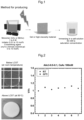
- a diagram that outlines a method for producing the temperature-responsive hydrogel according to the present invention is given in Fig. 1 .
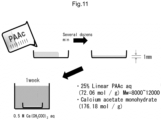
- a precursor aqueous solution is prepared by dissolving the following in ultrapure water: carboxyl group-bearing monomer (typically acrylic acid (AAc) or methacrylic acid (MAAc)) in the range from 1 to 6 M, the initiator ⁇ -ketoglutaric acid in the range from 0.01 to 10 mol% with reference to the monomer concentration, and the crosslinking agent N,N'-methylenebisacrylamide (MbAAd) in the range from 0 to 10 mol% with reference to the monomer concentration.
- carboxyl group-bearing monomer typically acrylic acid (AAc) or methacrylic acid (MAAc)
- MbAAd N,N'-methylenebisacrylamide
- a physically crosslinked gel which is not according to the present invention, is obtained at a crosslinking agent concentration of 0 mol%
- a chemically crosslinked gel which
- This solution is poured into a form with a freely selected shape, and a gel is formed by polymerizing for equal to or more than 8 hours under exposure to ultraviolet radiation at a wavelength of 365 nm in an argon gas atmosphere.
- a sample is obtained by immersing, until equilibrium is reached, the polymerized gel or nonflowable high-viscosity material in a sufficient amount of an aqueous solution which is prepared by dissolving a salt formed of a carboxylic selected from formic acid, acetic acid, or propionic acid and calcium as divalent cation (typically calcium acetate) in ultrapure water at a concentration in a range from 50 mM to the saturation concentration.
- volume measurement before and after phase transition, the thickness and diameter are measured three times on the gel molded on a disk, and the average thereof and deviation are calculated.
- Measurement of the LCST temperature this was determined from the turbidity using an ultraviolet-visible-infrared spectrophotometer.
- the sample and soaking salt solution were introduced into a quartz cell and the absorbance was measured at a fixed wavelength of 500 nm while raising the temperature/lowering the temperature at a constant heating/cooling rate (0.1°C/min) in the range from 20°C to 60°C.
- tensile testing was performed in the salt solution soaking the test specimen, which had been molded in a dumbbell shape.
- the temperature of the salt solution was adjusted using a water bath. After holding long enough to make the temperature uniform, pulling was carried out at a speed in the range from 1 to 1000 mm/min and the stress-strain curve was obtained from the initial dimensions of the sample.
- the Young's modulus was determined from the initial slope; the fracture stress and fracture strain were determined when fracture occurred; and the toughness was determined from the area of the stress-strain curve.
- the volume and mass of a hydrogel sample were measured, following by incineration of the hydrogel sample at approximately 1000°C to remove the organic component.
- the residue was dissolved in a known amount of water, and the total metal ion concentration in the polymer was measured by inductively coupled plasma atomic emission analysis (ICP) using the resulting aqueous solution.
- ICP inductively coupled plasma atomic emission analysis
- the metal ion concentration in the hydrogel sample was calculated from the measurement results (for example, number of moles or mass of metal ion in 1 g).
- Fig. 2 shows the appearance (transparent and turbid) at a temperature (room temperature) below the LCST and at a temperature (50°C) above the LCST, and the volume change for room temperature and 50°C. It is demonstrated that the volume change is almost nonexistent and is constant.
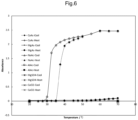
- the results of measurement of the LCST are shown in Fig. 3a .
- the LCST for each system is shown in Fig. 3b .
- the LCST is shown to change due to a change in the organic acid in the organic acid salt.
- Fig. 4 shows the change in volume with ionic species at room temperature and 50°C. It is shown that the volume substantially does not change regardless of the ionic species.
- Fig. 5 gives photographs of the surface state of the gel at room temperature and 50°C.
- the structural principle (reason) is demonstrated whereby the hydrogel according to the present invention has a constant volume with respect to temperature changes.
- MgAc (not according to the present invention), NaAc (not according to the present invention), AlAc (not according to the present invention), CaCl 2 (not according to the present invention), MaSO 4 (not according to the present invention), each at 100 mM
- LCST is shown to have a minimum value depending on the salt concentration.
- PAAc-MgAc in Fig. 8a and PMAAc-CaAc in Fig. 8b it is shown that the LCST declines when the salt concentration is raised, while at higher concentrations the LCST increases.
- Organic acid salt 400 mM CaAc (Ca concentration in mM in gel)
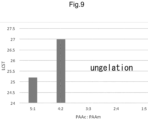
- the LCST was measured at different copolymerization ratios between AAc, which exhibits an LCST, and acrylamide (AAm), which does not exhibit an LCST. The results are given in Fig. 9 . At higher AAc concentrations, the LCST is lower and a phase separation structure is more readily produced. It is shown that gelation does not occur when the AAm concentration exceeds 50%.
- LCST 33.5°C
- Fig. 10 gives the results of tensile mechanical testing for measurement temperatures of 25°C, 37°C, 50°C, and 60°C.
- 50°C which is equal to or above the LCST
- a high strength and high toughness are obtained and the elastic modulus and toughness both increase with an increase in temperature.
- 60°C it is shown that the elastic modulus is sharply higher (becomes very hard) and the toughness is reduced.
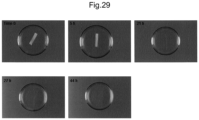
- Photographs of the test specimen at 25°C and 60°C are given in Fig. 28 .
- Fig. 14 The results of tensile mechanical testing at 25°C, 37°C, and 50°C are given in Fig. 14 . It is shown that, at or above the LCST, the strength and toughness are sharply increased, while at a higher temperature the strength is ultrahigh while the toughness declines.
- the Ca concentration (measured by ICP) in the hydrogel is as follows.
- the LCST was measured using differential scanning calorimetry (DSC). A small amount of the sample (several tens of milligrams) was introduced into an aluminum pan (container), which was sealed using a tool provided for this purpose. Using air for the reference sample, the temperature was raised from 0°C to 90°C at a ramp rate of 3°C/min and the endothermic peak associated with phase separation was measured.
- Fig. 16 is the DSC profile for a typical polymer (3 M PAAc - 250 mM CaAc). The downward peak represents the heat absorption of the sample and corresponds to phase separation. The position of the LCST was determined from the intersection of the two straight lines for the curve segment where the endothermic peak begins.
- Fig. 17 gives the LCSTs for various combinations of PAAc and CaAc concentrations.
- An increasing trend for the LCST was exhibited as the polymer concentration increased and as the calcium acetate concentration declined.
- An LCST was not observed in the measurement range for the white region in the lower right (4 M PAAc - 50 mM CaAc, 5 M PAAc - 50 mM CaAc).
- This gel exhibits a phenomenon wherein it abruptly hardens when the temperature is further increased.
- the temperature when this occurs is called the hardening temperature (HT).
- the HT was determined using rheometric measurements. Using an instant glue, one side of the gel, which had been molded with a diameter of 15 mm, was attached to the center of a stainless steel parallel plate (pressing horizontal tool) and the opposite side was also attached to a stainless steel rotary container. In order to prevent drying, the container was filled with an aqueous calcium acetate solution having the same concentration as that used for sample preparation.
- the ramp rate is 3°C/min
- the temperature range is from 0°C to 95°C
- the angular velocity for the frequency of the applied shear is 10 rad/s
- the strain is 0.1%.
- Fig. 18 is the rheometric profile for a typical polymer (3 M PAAc - 250 mM CaAc).
- G' is the storage modulus, which is the elastic component
- G" is the loss modulus, which is the viscous component.
- Tan ⁇ known as the loss tangent, is G"/G' and is an index that shows whether a material is elastic or viscous; higher values indicate viscousness.
- the temperature at the peak for tan ⁇ was taken to be the HT.
- the HTs for various combinations of PAAc and CaAc concentrations are collected in Fig. 19 .
- the HT presents an increasing trend as the PAAc concentration increases and the CaAc concentration declines.
- the white region below 91.3°C in the figure indicates samples for which hardening was not identified in the measurement temperature range.
- LCSTs Fig. 17
- HTs Fig. 19
- the horizontal axis is the calcium acetate concentration/polyacrylic acid concentration ratio, which means that the salt concentration declines or the polymer concentration increases as 0 is approached.
- the inverted filled triangle ⁇ refers to the LCST
- the upright open triangle ⁇ refers to the HT.
- the performance as a heat-responsive protector was evaluated.
- the postulate is protection of the clothing and body from frictional heat caused by, for example, an individual being dragged along the road surface due to, for example, a motorcycle accident.
- the evaluation was performed in this test with a composite material provided by the formation of a composite between the hydrogel according to the present invention and a glass fiber fabric (GF).
- the composite was fabricated as follows: the glass fiber fabric was preliminarily inserted in a reaction cell; hydrogel polymerization was carried out in this reaction cell; and a sample was obtained in which the glass fiber fabric was embedded in the gel provided by the polymerization.
- the composition of the gel is 5 M AAc, 0.01 mol% MBAA, crosslinking agent, 0.01 mol% ⁇ -Keto, initiator.
- Fig. 23 is a schematic diagram of the test system.
- a seesaw is attached to a tow truck, and a test cart for installing the sample is attached to one end.
- the road surface side of the test cart has a protrusion near the center, to which the four sides of the composite material are attached using four screws.
- the cart has four auxiliary wheels at the four corners for posture maintenance. When the cart is on the road surface and the posture is maintained, only the sample surface is in contact with the road surface, while the auxiliary wheels are designed to float. Thus, all the load is applied to the sample when the posture is maintained.
- the test sequence is as follows. First, the cart is lifted from the road surface by operating the seesaw. While in this state, the tow truck is driven to a speed of 80 km/h (50 mph). While holding this speed, the seesaw is lowered and the sample is pressed against the road surface and the friction test is started. After 5 seconds of test time, the seesaw is raised and the sample is separated from the road surface. The air temperature was 25.6°C and the road surface temperature was 45.7°C. The temperature decline by the sample after the test was recorded with a thermographic camera, and the temperature immediately after the friction test was determined from Newton's cooling formula, see below, in order to evaluate whether or not hardening due to the frictional heat had occurred.
- Fig. 24 shows the appearance of the samples before and after the friction test.
- the composite material with the hydrogel of the present invention was white after the test, only small scratches were observed on the surface, and damage to the fiber and back surface was not seen.
- the PA-GF composite material was highly ruptured to the fiber level. The PAAm-GF appeared unbroken at first glance; however, the regions held by the screws tore at the instant of pressing against the road surface and the sample ended up separating from the test cart, and it was thus weaker.
- Fig. 25 contains temperature maps of the sample surface provided by a thermographic camera and contains a graph of the temperature drop as determined therefrom. Newton's cooling formula was fit to this data for the temperature drop, and the temperature immediately after the friction test was determined by extrapolation to zero seconds.
- Tt is the temperature at t seconds
- T 0 is the temperature at zero seconds (start)
- K is a constant composed of the heat transfer coefficient ⁇ , the sample area S, and the heat capacity C
- t is time.
- thermographic data Two points of the actually measured thermographic data were inserted and K and T 0 were determined from the simultaneous equations to give a surface temperature of 90.7°C immediately after the friction test. This was higher than the HT (50.6°C) of the composition of this gel, which suggested that hardening had occurred due to the frictional heat.
- the frictional heat resistance was evaluated from the tearing energy determined using a trouser tearing test.
- the L thickness in the denominator is the sample thickness
- the L bulk is the test length
- the integral in the numerator is the area made by the x-axis and the curve yielded by the tearing test.
- the present invention is useful in the sectors and fields associated with temperature-responsive polymers.
Landscapes
- Chemical & Material Sciences (AREA)
- Health & Medical Sciences (AREA)
- Chemical Kinetics & Catalysis (AREA)
- Medicinal Chemistry (AREA)
- Polymers & Plastics (AREA)
- Organic Chemistry (AREA)
- Dispersion Chemistry (AREA)
- Addition Polymer Or Copolymer, Post-Treatments, Or Chemical Modifications (AREA)
- Materials For Medical Uses (AREA)
- Compositions Of Macromolecular Compounds (AREA)
Claims (9)
- Temperaturreaktives Hydrogel, umfassend ein Carboxylgruppen-tragendes Polymer und eine wässrige Lösung aus einem divalenten Metallsalz einer organischen Säure, mit der das Polymer imprägniert ist, wobei das Carboxylgruppen-tragende Polymer ein Copolymer aus einer Vielzahl von Monomerspezies ist, die das Carboxylgruppen-tragende Monomer umfassen, wobei das Carboxylgruppen-tragende Polymer eine chemisch vernetzte Struktur aufweist, die durch ein Vernetzungsmittel gebildet wird, das ein difunktionelles oder multifunktionelles Monomer ist, wobei das divalente Metall Calcium ist, wobei die organische Säure mindestens eine organische Säure ist, die ausgewählt ist aus der Gruppe, bestehend aus Ameisensäure, Essigsäure und Propionsäure, und wobei die Konzentration des divalenten Metallsalzes der organischen Säure in der wässrigen Lösung im Bereich von 50 mM bis 500 mM liegt.
- Temperaturreaktives Hydrogel nach Anspruch 1, wobei das Caboxylgruppentragende Monomer mindestens eines ist, das aus der Gruppe, bestehend aus Acrylsäure, Methacrylsäure, Itaconsäure, Maleinsäureanhydrid, Maleinsäure, Fumarsäure und Crotonsäure, ausgewählt ist.
- Temperaturreaktives Hydrogel nach Anspruch 1 oder 2, wobei das Copolymer ein Copolymer aus einem Caboxylgruppen-tragenden Monomer und einem anderen Monomer als einem Carboxylgruppen-tragenden Monomer ist, und wobei das andere als das Carboxylgruppen-tragende Monomer, aus dem das Copolymer besteht, mindestens eines ist, das ausgewählt ist aus der Gruppe, bestehend aus Acrylatmonomeren, Estern von α,β-ethylenisch ungesättigten Carbonsäuren, Hydroxyalkylestern von α,β-ethylenisch ungesättigten Carbonsäuren, Alkoxyalkylestern von α,β-ethylenisch ungesättigten Carbonsäuren, Acrylamidmonomeren und Styrolmonomeren.
- Temperaturreaktives Hydrogel nach Anspruch 1, 2 oder 3, wobei gleich 50 % oder mehr des Molverhältnisses des Copolymers aus einem Carboxylgruppen-tragenden Monomer stammt.
- Temperaturreaktives Hydrogel nach einem der Ansprüche 1 bis 4, wobei das Polymer Carboxylgruppen in einer Menge im Bereich von 0,001 bis 0,05 mol/g umfasst.
- Temperaturreaktives Hydrogel nach einem der Ansprüche 1 bis 5, wobei das temperaturreaktive Hydrogel eine untere kritische Lösungstemperatur (LCST, lower critical solution temperature) aufweist.
- Temperaturreaktives Hydrogel nach einem der Ansprüche 1 bis 6, wobei das temperaturreaktive Hydrogel bei einer Temperatur unter der LCST transparent ist und sich bei einer Temperatur über der LCST in einem trüben Zustand befindet.
- Temperaturreaktives Hydrogel nach Anspruch 6 oder 7, wobei die LCST in einen Bereich von 10 °C bis 80 °C fällt.
- Verfahren zur Herstellung eines temperaturreaktiven Hydrogels, umfassend das Eintauchen eines Carboxylgruppen-tragenden Polymers, das eine chemisch vernetzte Struktur aufweist, die durch ein Vernetzungsmittel gebildet wird, das ein difunktionelles oder multifunktionelles Monomer ist, in eine wässrige Lösung eines divalenten Metallsalzes einer organischen Säure, wobei das divalente Metall Calcium ist, wobei das Carboxylgruppen-tragende Polymer ein Copolymer aus einer Vielzahl von Monomerspezies ist, die das Carboxylgruppen-tragende Monomer umfassen, wobei die organische Säure mindestens eine organische Säure ist, die ausgewählt ist aus der Gruppe, bestehend aus Ameisensäure, Essigsäure und Propionsäure, und wobei die Konzentration des divalenten Metallsalzes der organischen Säure in der wässrigen Lösung im Bereich von 50 mM bis 500 mM liegt.
Applications Claiming Priority (2)
| Application Number | Priority Date | Filing Date | Title |
|---|---|---|---|
| JP2016246385 | 2016-12-20 | ||
| PCT/JP2017/045768 WO2018117165A1 (ja) | 2016-12-20 | 2017-12-20 | 体積相転移を示さないlcstを有する温度応答性ゲル及びその製造方法 |
Publications (3)
| Publication Number | Publication Date |
|---|---|
| EP3561001A1 EP3561001A1 (de) | 2019-10-30 |
| EP3561001A4 EP3561001A4 (de) | 2020-06-17 |
| EP3561001B1 true EP3561001B1 (de) | 2025-06-25 |
Family
ID=62626200
Family Applications (1)
| Application Number | Title | Priority Date | Filing Date |
|---|---|---|---|
| EP17884942.8A Active EP3561001B1 (de) | 2016-12-20 | 2017-12-20 | Temperaturreaktives gel mit lcst ohne volumenphasenübergang und herstellungsverfahren dafür |
Country Status (4)
| Country | Link |
|---|---|
| US (1) | US11248104B2 (de) |
| EP (1) | EP3561001B1 (de) |
| JP (1) | JP6999942B2 (de) |
| WO (1) | WO2018117165A1 (de) |
Families Citing this family (6)
| Publication number | Priority date | Publication date | Assignee | Title |
|---|---|---|---|---|
| CN109354700B (zh) * | 2018-10-22 | 2021-03-16 | 中国科学院上海硅酸盐研究所 | 一种温敏水凝胶及其制备方法 |
| WO2021026349A1 (en) | 2019-08-08 | 2021-02-11 | Institute For Cancer Research D/B/A The Research Institute Of Fox Chase Cancer Center | Combination therapy for treatment of cancer |
| US12590735B2 (en) | 2022-01-31 | 2026-03-31 | Toyota Motor Engineering & Manufacturing North America, Inc. | Passive thermal regulation system and devices thereof |
| DE112022006649T5 (de) * | 2022-04-11 | 2025-01-30 | National University Corporation Hokkaido University | Kautschukzusammensetzung für reifen, und reifen |
| CN115260394B (zh) * | 2022-06-30 | 2024-02-23 | 海安启弘纺织科技有限公司 | 一种智能调温纺织品用相转换微胶囊的制备方法 |
| CN115353642B (zh) * | 2022-08-26 | 2025-08-29 | 中山大学 | 一种离子敏感水凝胶及其制备方法和应用、离子溶液的检测装置 |
Citations (6)
| Publication number | Priority date | Publication date | Assignee | Title |
|---|---|---|---|---|
| EP0391108A2 (de) * | 1989-04-01 | 1990-10-10 | CASSELLA Aktiengesellschaft | Hydrophile, quellfähige Pfropfcopolymerisate, deren Herstellung und Verwendung |
| WO2007057043A1 (en) * | 2005-11-18 | 2007-05-24 | Sca Hygiene Products Ab | Absorbent articles comprising acidic superabsorber and an organic zinc salt |
| WO2012045822A1 (en) * | 2010-10-08 | 2012-04-12 | Solvay (Société Anonyme) | A thermo-responsive polymer covalently bound with a peptide |
| US20120126455A1 (en) * | 2010-11-24 | 2012-05-24 | Tyco Electronics Corporation | Methods of Processing High Service Temperature Hydrocarbon Gels |
| WO2013124661A1 (en) * | 2012-02-22 | 2013-08-29 | C.G.I. International Limited | Fire resistant glazing unit |
| WO2015069955A2 (en) * | 2013-11-06 | 2015-05-14 | Rawls Henry Ralph | Oxygen generating biomaterial |
Family Cites Families (5)
| Publication number | Priority date | Publication date | Assignee | Title |
|---|---|---|---|---|
| JP2002020318A (ja) | 2000-07-07 | 2002-01-23 | Mitsuo Okano | 温度応答性の薬物キャリヤー |
| JP2005239860A (ja) | 2004-02-26 | 2005-09-08 | Teijin Ltd | 温度応答性ハイドロゲル |
| US8318306B2 (en) | 2008-01-30 | 2012-11-27 | Evonik Stockhausen, Llc | Superabsorbent polymer compositions having a triggering composition |
| JP5246855B2 (ja) | 2008-05-09 | 2013-07-24 | 一般財団法人川村理化学研究所 | カルボン酸塩構造又はカルボキシアニオン構造の基を有する有機無機複合ヒドロゲルの製造方法 |
| CN105705584B (zh) | 2013-11-11 | 2020-05-12 | 日产化学工业株式会社 | 水凝胶形成性组合物及由其制作的水凝胶 |
-
2017
- 2017-12-20 JP JP2018558040A patent/JP6999942B2/ja active Active
- 2017-12-20 EP EP17884942.8A patent/EP3561001B1/de active Active
- 2017-12-20 US US16/471,224 patent/US11248104B2/en active Active
- 2017-12-20 WO PCT/JP2017/045768 patent/WO2018117165A1/ja not_active Ceased
Patent Citations (6)
| Publication number | Priority date | Publication date | Assignee | Title |
|---|---|---|---|---|
| EP0391108A2 (de) * | 1989-04-01 | 1990-10-10 | CASSELLA Aktiengesellschaft | Hydrophile, quellfähige Pfropfcopolymerisate, deren Herstellung und Verwendung |
| WO2007057043A1 (en) * | 2005-11-18 | 2007-05-24 | Sca Hygiene Products Ab | Absorbent articles comprising acidic superabsorber and an organic zinc salt |
| WO2012045822A1 (en) * | 2010-10-08 | 2012-04-12 | Solvay (Société Anonyme) | A thermo-responsive polymer covalently bound with a peptide |
| US20120126455A1 (en) * | 2010-11-24 | 2012-05-24 | Tyco Electronics Corporation | Methods of Processing High Service Temperature Hydrocarbon Gels |
| WO2013124661A1 (en) * | 2012-02-22 | 2013-08-29 | C.G.I. International Limited | Fire resistant glazing unit |
| WO2015069955A2 (en) * | 2013-11-06 | 2015-05-14 | Rawls Henry Ralph | Oxygen generating biomaterial |
Also Published As
| Publication number | Publication date |
|---|---|
| US20200087485A1 (en) | 2020-03-19 |
| JP6999942B2 (ja) | 2022-02-10 |
| WO2018117165A1 (ja) | 2018-06-28 |
| US11248104B2 (en) | 2022-02-15 |
| EP3561001A4 (de) | 2020-06-17 |
| JPWO2018117165A1 (ja) | 2019-10-31 |
| EP3561001A1 (de) | 2019-10-30 |
Similar Documents
| Publication | Publication Date | Title |
|---|---|---|
| EP3561001A1 (de) | Temperaturreaktives gel mit lcst ohne volumenphasenübergang und herstellungsverfahren dafür | |
| Wang et al. | Synthesis and properties of pH and temperature sensitive P (NIPAAm-co-DMAEMA) hydrogels | |
| Corkhill et al. | Synthetic hydrogels: 1. Hydroxyalkyl acrylate and methacrylate copolymers-water binding studies | |
| Wei et al. | Self-assembled thermoresponsive micelles of poly (N-isopropylacrylamide-b-methyl methacrylate) | |
| Wei et al. | Self-assembled, thermosensitive micelles of a star block copolymer based on PMMA and PNIPAAm for controlled drug delivery | |
| Kirsebom et al. | Modulating the porosity of cryogels by influencing the nonfrozen liquid phase through the addition of inert solutes | |
| Luo et al. | Poly (MAA-co-AN) hydrogels with improved mechanical properties for theophylline controlled delivery | |
| Principi et al. | Solution properties of hydrophobically modified copolymers of N-isopropylacrylamide and N-glycine acrylamide: a study by microcalorimetry and fluorescence spectroscopy | |
| Zahra et al. | Fabrication of polyethylene glycol hydrogels with enhanced swelling; loading capacity and release kinetics | |
| Jozaghkar et al. | Preparation, Characterization, and swelling study of N, N’-dimethylacrylamide/acrylic acid amphiphilic hydrogels in different conditions | |
| Xu et al. | Fabrication and characterization of a novel composite PNIPAAm hydrogel for controlled drug release | |
| Reddy et al. | Simultaneous and sequential micro-porous semi-interpenetrating polymer network hydrogel films for drug delivery and wound dressing applications | |
| Fernandez et al. | Thermoresponsive nanostructured poly (N-isopropylacrylamide) hydrogels made via inverse microemulsion polymerization | |
| Shekhar et al. | Swelling, thermal and mechanical properties of NIPAM-based terpolymeric hydrogel | |
| Jeong et al. | Tuning responsiveness and structural integrity of a pH responsive hydrogel using a poly (ethylene glycol) cross-linker | |
| Suljovrujic et al. | Swelling properties and drug release of new biocompatible POEGOPGMA hydrogels with VPTT near to the human body temperature | |
| Dinu et al. | Composite IPN ionic hydrogels based on polyacrylamide and dextran sulfate | |
| Damonte et al. | Mechanically-reinforced biocompatible hydrogels based on poly (N-isopropylacrylamide) and star-shaped polycaprolactones | |
| Liao et al. | Gelation kinetics of thermosensitive PNIPAM microgel dispersions | |
| Boyaci et al. | pH-responsive poly (N, N-dimethylaminoethyl methacrylate-co-2-acrylamido-2-methyl-propanosulfonic acid) cryogels: Swelling, elasticity and diffusive properties | |
| McCormick et al. | Water‐soluble copolymers. XIII. Copolymers of acrylamide with sodium‐3‐acrylamido‐3‐methylbutanoate: Solution properties | |
| Long et al. | Dimensionally stable thermal-stiffening composite hydrogels enabled by thermo-responsive SiO2 hybrid nanoparticles | |
| EP2430057B1 (de) | Temperaturempfindliche co-polymere und deren verwendungen | |
| Choi et al. | Effect of stereoregularity on the properties of syndiotactic‐rich ultrahigh molecular weight poly (vinyl alcohol)/dimethyl sulfoxide/water gel | |
| Zeng et al. | Molecular chain properties of poly (N-isopropyl acrylamide) |
Legal Events
| Date | Code | Title | Description |
|---|---|---|---|
| STAA | Information on the status of an ep patent application or granted ep patent |
Free format text: STATUS: THE INTERNATIONAL PUBLICATION HAS BEEN MADE |
|
| PUAI | Public reference made under article 153(3) epc to a published international application that has entered the european phase |
Free format text: ORIGINAL CODE: 0009012 |
|
| STAA | Information on the status of an ep patent application or granted ep patent |
Free format text: STATUS: REQUEST FOR EXAMINATION WAS MADE |
|
| 17P | Request for examination filed |
Effective date: 20190719 |
|
| AK | Designated contracting states |
Kind code of ref document: A1 Designated state(s): AL AT BE BG CH CY CZ DE DK EE ES FI FR GB GR HR HU IE IS IT LI LT LU LV MC MK MT NL NO PL PT RO RS SE SI SK SM TR |
|
| AX | Request for extension of the european patent |
Extension state: BA ME |
|
| DAV | Request for validation of the european patent (deleted) | ||
| DAX | Request for extension of the european patent (deleted) | ||
| A4 | Supplementary search report drawn up and despatched |
Effective date: 20200514 |
|
| RIC1 | Information provided on ipc code assigned before grant |
Ipc: C08L 33/06 20060101ALI20200508BHEP Ipc: C08F 20/06 20060101ALI20200508BHEP Ipc: C08L 33/02 20060101ALI20200508BHEP Ipc: C08L 101/08 20060101AFI20200508BHEP Ipc: C08J 3/075 20060101ALI20200508BHEP Ipc: C08K 5/09 20060101ALI20200508BHEP |
|
| STAA | Information on the status of an ep patent application or granted ep patent |
Free format text: STATUS: EXAMINATION IS IN PROGRESS |
|
| 17Q | First examination report despatched |
Effective date: 20230330 |
|
| GRAP | Despatch of communication of intention to grant a patent |
Free format text: ORIGINAL CODE: EPIDOSNIGR1 |
|
| STAA | Information on the status of an ep patent application or granted ep patent |
Free format text: STATUS: GRANT OF PATENT IS INTENDED |
|
| INTG | Intention to grant announced |
Effective date: 20250314 |
|
| P01 | Opt-out of the competence of the unified patent court (upc) registered |
Free format text: CASE NUMBER: APP_17141/2025 Effective date: 20250408 |
|
| GRAS | Grant fee paid |
Free format text: ORIGINAL CODE: EPIDOSNIGR3 |
|
| GRAA | (expected) grant |
Free format text: ORIGINAL CODE: 0009210 |
|
| STAA | Information on the status of an ep patent application or granted ep patent |
Free format text: STATUS: THE PATENT HAS BEEN GRANTED |
|
| AK | Designated contracting states |
Kind code of ref document: B1 Designated state(s): AL AT BE BG CH CY CZ DE DK EE ES FI FR GB GR HR HU IE IS IT LI LT LU LV MC MK MT NL NO PL PT RO RS SE SI SK SM TR |
|
| REG | Reference to a national code |
Ref country code: GB Ref legal event code: FG4D |
|
| REG | Reference to a national code |
Ref country code: CH Ref legal event code: EP |
|
| REG | Reference to a national code |
Ref country code: CH Ref legal event code: EP |
|
| REG | Reference to a national code |
Ref country code: IE Ref legal event code: FG4D |
|
| REG | Reference to a national code |
Ref country code: DE Ref legal event code: R096 Ref document number: 602017090190 Country of ref document: DE |
|
| PG25 | Lapsed in a contracting state [announced via postgrant information from national office to epo] |
Ref country code: FI Free format text: LAPSE BECAUSE OF FAILURE TO SUBMIT A TRANSLATION OF THE DESCRIPTION OR TO PAY THE FEE WITHIN THE PRESCRIBED TIME-LIMIT Effective date: 20250625 |
|
| REG | Reference to a national code |
Ref country code: LT Ref legal event code: MG9D |
|
| PG25 | Lapsed in a contracting state [announced via postgrant information from national office to epo] |
Ref country code: GR Free format text: LAPSE BECAUSE OF FAILURE TO SUBMIT A TRANSLATION OF THE DESCRIPTION OR TO PAY THE FEE WITHIN THE PRESCRIBED TIME-LIMIT Effective date: 20250926 Ref country code: NO Free format text: LAPSE BECAUSE OF FAILURE TO SUBMIT A TRANSLATION OF THE DESCRIPTION OR TO PAY THE FEE WITHIN THE PRESCRIBED TIME-LIMIT Effective date: 20250925 |
|
| PG25 | Lapsed in a contracting state [announced via postgrant information from national office to epo] |
Ref country code: BG Free format text: LAPSE BECAUSE OF FAILURE TO SUBMIT A TRANSLATION OF THE DESCRIPTION OR TO PAY THE FEE WITHIN THE PRESCRIBED TIME-LIMIT Effective date: 20250625 |
|
| PG25 | Lapsed in a contracting state [announced via postgrant information from national office to epo] |
Ref country code: HR Free format text: LAPSE BECAUSE OF FAILURE TO SUBMIT A TRANSLATION OF THE DESCRIPTION OR TO PAY THE FEE WITHIN THE PRESCRIBED TIME-LIMIT Effective date: 20250625 |
|
| PG25 | Lapsed in a contracting state [announced via postgrant information from national office to epo] |
Ref country code: RS Free format text: LAPSE BECAUSE OF FAILURE TO SUBMIT A TRANSLATION OF THE DESCRIPTION OR TO PAY THE FEE WITHIN THE PRESCRIBED TIME-LIMIT Effective date: 20250925 |
|
| PG25 | Lapsed in a contracting state [announced via postgrant information from national office to epo] |
Ref country code: LV Free format text: LAPSE BECAUSE OF FAILURE TO SUBMIT A TRANSLATION OF THE DESCRIPTION OR TO PAY THE FEE WITHIN THE PRESCRIBED TIME-LIMIT Effective date: 20250625 |
|
| REG | Reference to a national code |
Ref country code: NL Ref legal event code: MP Effective date: 20250625 |
|
| PG25 | Lapsed in a contracting state [announced via postgrant information from national office to epo] |
Ref country code: NL Free format text: LAPSE BECAUSE OF FAILURE TO SUBMIT A TRANSLATION OF THE DESCRIPTION OR TO PAY THE FEE WITHIN THE PRESCRIBED TIME-LIMIT Effective date: 20250625 |
|
| PG25 | Lapsed in a contracting state [announced via postgrant information from national office to epo] |
Ref country code: PT Free format text: LAPSE BECAUSE OF FAILURE TO SUBMIT A TRANSLATION OF THE DESCRIPTION OR TO PAY THE FEE WITHIN THE PRESCRIBED TIME-LIMIT Effective date: 20251027 |
|
| REG | Reference to a national code |
Ref country code: AT Ref legal event code: MK05 Ref document number: 1806425 Country of ref document: AT Kind code of ref document: T Effective date: 20250625 |
|
| PG25 | Lapsed in a contracting state [announced via postgrant information from national office to epo] |
Ref country code: IS Free format text: LAPSE BECAUSE OF FAILURE TO SUBMIT A TRANSLATION OF THE DESCRIPTION OR TO PAY THE FEE WITHIN THE PRESCRIBED TIME-LIMIT Effective date: 20251025 |
|
| PGFP | Annual fee paid to national office [announced via postgrant information from national office to epo] |
Ref country code: DE Payment date: 20251211 Year of fee payment: 9 |
|
| PG25 | Lapsed in a contracting state [announced via postgrant information from national office to epo] |
Ref country code: AT Free format text: LAPSE BECAUSE OF FAILURE TO SUBMIT A TRANSLATION OF THE DESCRIPTION OR TO PAY THE FEE WITHIN THE PRESCRIBED TIME-LIMIT Effective date: 20250625 Ref country code: SM Free format text: LAPSE BECAUSE OF FAILURE TO SUBMIT A TRANSLATION OF THE DESCRIPTION OR TO PAY THE FEE WITHIN THE PRESCRIBED TIME-LIMIT Effective date: 20250625 |
|
| PG25 | Lapsed in a contracting state [announced via postgrant information from national office to epo] |
Ref country code: CZ Free format text: LAPSE BECAUSE OF FAILURE TO SUBMIT A TRANSLATION OF THE DESCRIPTION OR TO PAY THE FEE WITHIN THE PRESCRIBED TIME-LIMIT Effective date: 20250625 |
|
| PG25 | Lapsed in a contracting state [announced via postgrant information from national office to epo] |
Ref country code: PL Free format text: LAPSE BECAUSE OF FAILURE TO SUBMIT A TRANSLATION OF THE DESCRIPTION OR TO PAY THE FEE WITHIN THE PRESCRIBED TIME-LIMIT Effective date: 20250625 |
|
| PG25 | Lapsed in a contracting state [announced via postgrant information from national office to epo] |
Ref country code: EE Free format text: LAPSE BECAUSE OF FAILURE TO SUBMIT A TRANSLATION OF THE DESCRIPTION OR TO PAY THE FEE WITHIN THE PRESCRIBED TIME-LIMIT Effective date: 20250625 |
|
| PG25 | Lapsed in a contracting state [announced via postgrant information from national office to epo] |
Ref country code: SK Free format text: LAPSE BECAUSE OF FAILURE TO SUBMIT A TRANSLATION OF THE DESCRIPTION OR TO PAY THE FEE WITHIN THE PRESCRIBED TIME-LIMIT Effective date: 20250625 |
|
| PG25 | Lapsed in a contracting state [announced via postgrant information from national office to epo] |
Ref country code: ES Free format text: LAPSE BECAUSE OF FAILURE TO SUBMIT A TRANSLATION OF THE DESCRIPTION OR TO PAY THE FEE WITHIN THE PRESCRIBED TIME-LIMIT Effective date: 20250625 |
|
| PG25 | Lapsed in a contracting state [announced via postgrant information from national office to epo] |
Ref country code: RO Free format text: LAPSE BECAUSE OF FAILURE TO SUBMIT A TRANSLATION OF THE DESCRIPTION OR TO PAY THE FEE WITHIN THE PRESCRIBED TIME-LIMIT Effective date: 20250625 |
|
| PG25 | Lapsed in a contracting state [announced via postgrant information from national office to epo] |
Ref country code: DK Free format text: LAPSE BECAUSE OF FAILURE TO SUBMIT A TRANSLATION OF THE DESCRIPTION OR TO PAY THE FEE WITHIN THE PRESCRIBED TIME-LIMIT Effective date: 20250625 |
|
| PG25 | Lapsed in a contracting state [announced via postgrant information from national office to epo] |
Ref country code: IT Free format text: LAPSE BECAUSE OF FAILURE TO SUBMIT A TRANSLATION OF THE DESCRIPTION OR TO PAY THE FEE WITHIN THE PRESCRIBED TIME-LIMIT Effective date: 20250625 |
|
| PLBE | No opposition filed within time limit |
Free format text: ORIGINAL CODE: 0009261 |
|
| STAA | Information on the status of an ep patent application or granted ep patent |
Free format text: STATUS: NO OPPOSITION FILED WITHIN TIME LIMIT |
|
| REG | Reference to a national code |
Ref country code: CH Ref legal event code: L10 Free format text: ST27 STATUS EVENT CODE: U-0-0-L10-L00 (AS PROVIDED BY THE NATIONAL OFFICE) Effective date: 20260507 |