EP3553046A1 - Herstellungsverfahren für n(hydroxyethyl)formamid, herstellungsverfahren für n(alkoxyethyl)formamid, herstellungsvorrichtung für n(hydroxyethyl)formamid und herstellungsvorrichtung für n(alkoxyethyl)formamid - Google Patents
Herstellungsverfahren für n(hydroxyethyl)formamid, herstellungsverfahren für n(alkoxyethyl)formamid, herstellungsvorrichtung für n(hydroxyethyl)formamid und herstellungsvorrichtung für n(alkoxyethyl)formamid Download PDFInfo
- Publication number
- EP3553046A1 EP3553046A1 EP17878160.5A EP17878160A EP3553046A1 EP 3553046 A1 EP3553046 A1 EP 3553046A1 EP 17878160 A EP17878160 A EP 17878160A EP 3553046 A1 EP3553046 A1 EP 3553046A1
- Authority
- EP
- European Patent Office
- Prior art keywords
- formamide
- catalyst
- hydroxyethyl
- basic catalyst
- producing
- Prior art date
- Legal status (The legal status is an assumption and is not a legal conclusion. Google has not performed a legal analysis and makes no representation as to the accuracy of the status listed.)
- Granted
Links
Images

Classifications
-
- C—CHEMISTRY; METALLURGY
- C07—ORGANIC CHEMISTRY
- C07C—ACYCLIC OR CARBOCYCLIC COMPOUNDS
- C07C231/00—Preparation of carboxylic acid amides
- C07C231/12—Preparation of carboxylic acid amides by reactions not involving the formation of carboxamide groups
-
- C—CHEMISTRY; METALLURGY
- C07—ORGANIC CHEMISTRY
- C07C—ACYCLIC OR CARBOCYCLIC COMPOUNDS
- C07C233/00—Carboxylic acid amides
- C07C233/01—Carboxylic acid amides having carbon atoms of carboxamide groups bound to hydrogen atoms or to acyclic carbon atoms
- C07C233/16—Carboxylic acid amides having carbon atoms of carboxamide groups bound to hydrogen atoms or to acyclic carbon atoms having the nitrogen atom of at least one of the carboxamide groups bound to a carbon atom of a hydrocarbon radical substituted by singly-bound oxygen atoms
- C07C233/17—Carboxylic acid amides having carbon atoms of carboxamide groups bound to hydrogen atoms or to acyclic carbon atoms having the nitrogen atom of at least one of the carboxamide groups bound to a carbon atom of a hydrocarbon radical substituted by singly-bound oxygen atoms with the substituted hydrocarbon radical bound to the nitrogen atom of the carboxamide group by an acyclic carbon atom
- C07C233/18—Carboxylic acid amides having carbon atoms of carboxamide groups bound to hydrogen atoms or to acyclic carbon atoms having the nitrogen atom of at least one of the carboxamide groups bound to a carbon atom of a hydrocarbon radical substituted by singly-bound oxygen atoms with the substituted hydrocarbon radical bound to the nitrogen atom of the carboxamide group by an acyclic carbon atom having the carbon atom of the carboxamide group bound to a hydrogen atom or to a carbon atom of an acyclic saturated carbon skeleton
-
- B—PERFORMING OPERATIONS; TRANSPORTING
- B01—PHYSICAL OR CHEMICAL PROCESSES OR APPARATUS IN GENERAL
- B01J—CHEMICAL OR PHYSICAL PROCESSES, e.g. CATALYSIS OR COLLOID CHEMISTRY; THEIR RELEVANT APPARATUS
- B01J23/00—Catalysts comprising metals or metal oxides or hydroxides, not provided for in group B01J21/00
- B01J23/02—Catalysts comprising metals or metal oxides or hydroxides, not provided for in group B01J21/00 of the alkali- or alkaline earth metals or beryllium
- B01J23/04—Alkali metals
-
- B—PERFORMING OPERATIONS; TRANSPORTING
- B01—PHYSICAL OR CHEMICAL PROCESSES OR APPARATUS IN GENERAL
- B01J—CHEMICAL OR PHYSICAL PROCESSES, e.g. CATALYSIS OR COLLOID CHEMISTRY; THEIR RELEVANT APPARATUS
- B01J37/00—Processes, in general, for preparing catalysts; Processes, in general, for activation of catalysts
- B01J37/04—Mixing
-
- C—CHEMISTRY; METALLURGY
- C07—ORGANIC CHEMISTRY
- C07B—GENERAL METHODS OF ORGANIC CHEMISTRY; APPARATUS THEREFOR
- C07B61/00—Other general methods
Definitions
- the present invention relates to a method for producing N-( ⁇ -hydroxyethyl)formamide, a method for producing N-( ⁇ -alkoxyethyl)formamide, a device for producing N-( ⁇ -hydroxyethyl)formamide, and a device for producing N-( ⁇ -alkoxyethyl)formamide.
- N-( ⁇ -hydroxyethyl)formamide and N-( ⁇ -alkoxyethyl)formamide are important substances as intermediate raw materials for N-vinylformamide.
- N-( ⁇ -hydroxyethyl)formamide is obtained by reacting (hydroxylation reaction) formamide with acetaldehyde in the presence of a basic catalyst.
- N-( ⁇ -alkoxyethyl)formamide is obtained by reacting (alkoxylation reaction) N-( ⁇ -hydroxyethyl)formamide with an alcohol in the presence of an acid catalyst (see Patent Document 1).
- the basic catalyst is supplied to the reaction system, for example, by the following method.
- the basic catalyst stored in the catalyst storage tank first passes through the powder feeder and the amount thereof supplied to the mixing tank is adjusted.
- the basic catalyst of which the amount supplied has been adjusted is supplied to the mixing tank through the catalyst supply pipe and mixed with formamide in the mixing tank.
- the basic catalyst is supplied to the reaction system as this basic catalyst mixed with formamide is supplied to the hydroxylation reaction tank through the catalyst-mixed liquid supply pipe.
- the formamide supplied to the reaction system reacts with acetaldehyde in the hydroxylation reaction tank to form a slurry-like reaction product.
- Patent Document 1 JP 6-298713 A
- the reaction yield of the reaction (hydroxylation reaction) for obtaining N-( ⁇ -hydroxyethyl)formamide from formamide decreases when a sufficient amount of basic catalyst cannot be supplied to the reaction system.
- the reaction yield of the reaction (alkoxylation reaction) for obtaining N-( ⁇ -alkoxyethyl)formamide from N-( ⁇ -hydroxyethyl)formamide decreases, and as a result, the purity and quality of N-vinylformamide decrease.
- the invention has been made in view of the above circumstances, and an object thereof is to provide a method for producing N-( ⁇ -hydroxyethyl)formamide by which the amount of the basic catalyst retained at the bottom portion of the catalyst storage tank, in the powder feeder, and in the catalyst supply pipe decreases, the amount of the basic catalyst to be supplied from the catalyst storage tank to the mixing tank becomes quantitative, the flow rate of the hydroxylation reaction slurry does not decrease, and the reaction yield of hydroxylation reaction is improved, a method for producing N-( ⁇ -alkoxyethyl)formamide by which the reaction yield of alkoxylation is improved and N-(a-alkoxyethyl)formamide exhibiting excellent quality is obtained, a device for producing N-( ⁇ -hydroxyethyl)formamide, and a device for producing N-( ⁇ -alkoxyethyl)formamide.
- the invention has the following configuration.
- N-(a-hydroxyethyl)formamide by which the amount of the basic catalyst retained at the bottom portion of the catalyst storage tank, in the powder feeder, and in the catalyst supply pipe decreases, the amount of the basic catalyst to be supplied from the catalyst storage tank to the mixing tank becomes quantitative, the flow rate of the hydroxylation reaction slurry does not decrease, and the reaction yield of hydroxylation reaction is improved, a method for producing N-( ⁇ -alkoxyethyl)formamide by which the reaction yield of alkoxylation is improved and N-( ⁇ -alkoxyethyl)formamide exhibiting excellent quality is obtained, a device for producing N-( ⁇ -hydroxyethyl)formamide, and a device for producing N-( ⁇ -alkoxyethyl)formamide.
- the method for producing N-( ⁇ -hydroxyethyl)formamide of the invention includes the following step (1) and step (2).
- the step (1) is a step of mixing a basic catalyst with formamide and obtaining a mixture (reaction raw material liquid A) of a basic catalyst and formamide.
- the basic catalyst is supplied to the mixing tank while vibrating at least a part of the catalyst supply facility.
- the catalyst supply facility includes a catalyst storage tank for storing a basic catalyst, a powder feeder for supplying the basic catalyst, and a catalyst supply pipe for supplying the basic catalyst.
- the basic catalyst stored in the catalyst storage tank first passes through the powder feeder so that the amount thereof supplied to the mixing tank is adjusted.
- the basic catalyst of which the amount supplied has been adjusted is then supplied to the mixing tank through the catalyst supply pipe and mixed with formamide in the mixing tank.
- the basic catalyst is filled in the powder feeder and then supplied to the mixing tank. It is preferable that the basic catalyst is filled in the powder feeder since it is possible to accurately measure the amount of the basic catalyst stored in the catalyst storage tank and to supply a regulated amount of the basic catalyst to the reaction system.
- the means for generating vibration to at least a part of the catalyst supply facility is not particularly limited, but hammering (hammering) is preferable since it is possible to easily and inexpensively generate vibration.
- hammering may include an air pulse generator, an air knocker, an electric knocker, and vibration generators such as an ultrasonic vibrator, a piezoelectric vibrator, and a ball vibrator as well as a hammer, but the examples are not limited thereto.
- an air pulse generator, an air knocker, an electric knocker, and a vibration generator which impart vibration having a constant vibration frequency can uniformly supply a constant amount of catalyst, and do not hinder the measuring of catalyst are preferable.
- the site at which vibration is imparted to the catalyst supply facility by hammering may be the top portion of the catalyst storage or the side portion thereof, but the bottom portion of the catalyst storage tank is preferable.
- vibration may be imparted to the powder feeder and the catalyst supply pipe.
- the amount of the basic catalyst supplied from the catalyst supply facility to the mixing tank is preferably 90% by mass or more and more preferably 98% by mass or more of the amount of the basic catalyst stored in the catalyst supply facility.
- the specific aspect of mixing of the basic catalyst with formamide is not particularly limited, but it is preferable to spread liquid formamide in the mixing tank and to drop the basic catalyst thereon for mixing.
- the basic catalyst contained in the reaction raw material liquid A is present by being dissolved in formamide, but it is not particularly limited as long as the basic catalyst is present in the liquid of formamide as a mixture.
- the basic catalyst is not particularly limited as long as it is a general basic compound, but it is preferably a weak basic salt composed of a strong base and a weak acid having a pKa value of from 4 to 15, and specific examples thereof may include sodium carbonate, sodium hydrogencarbonate, potassium carbonate, potassium hydrogencarbonate, lithium carbonate, lithium hydrogencarbonate, potassium phosphate, potassium monohydrogen phosphate, and sodium pyrophosphate.
- potassium hydrogencarbonate is preferable from the viewpoint of being able to decrease by-products (for example, aldol condensate of acetaldehyde) to be formed by the reaction of formamide with acetaldehyde in the next step (2).
- the optimum value of the concentration of the basic catalyst varies depending on the impurities in formamide, particularly the acidic components and the like, but it is preferably from 0.3 to 3 moles, more preferably from 0.5 to 1.2 moles, still more preferably from 0.7 to 1 mole, and most preferably from 0.8 to 0.9 mole per 1 kg of formamide.
- the aldehydes are condensed with each other, crotonaldehyde or a more condensed substance is thus formed, a decrease in the reaction yield of N-( ⁇ -alkoxyethyl)formamide occurs, and also the polymerization of N-vinylformamide is delayed and a decrease in the molecular weight after polymerization is caused when these condensates are mixed into the raw materials for N-vinylformamide.
- the amount of the basic catalyst supplied is set to be more than 3% by moles with respect to formamide, the solid components in the reaction slurry accumulate in the supply control valve for the hydroxylation reaction slurry and the flow rate of the reaction slurry decreases when the hydroxylation reaction slurry is supplied to the alkoxylation reaction tank (fourth tank) in the step (3) in the (method for producing N-(a-alkoxyethyl)formamide) to be described later. Furthermore, the filtration property deteriorates and it takes a long time to complete solid-liquid separation when separating the product which is solid and the reaction liquid which is liquid from each other in the step (3). On the other hand, when the amount of the basic catalyst is less than the above range, a decrease in the yield and inhibition of polymerization by the residual aldehyde as described above are caused.
- the amount of the basic catalyst supplied is within the above range, and it is thus important to measure the amount thereof required and to supply the entire catalyst measured to the reaction tank.
- the step (2) is a step of bringing the reaction raw material liquid A obtained in the step (1) into contact with acetaldehyde and obtaining N-( ⁇ -hydroxyethyl)formamide.
- the hydroxylation reaction proceeds as the reaction raw material liquid A and acetaldehyde are brought into contact with each other.
- the specific aspect of the hydroxylation reaction is not particularly limited, but it is preferable to spread a mixed liquid (reaction raw material liquid B) of acetaldehyde and a solvent and to drop the reaction raw material liquid A thereon for the hydroxylation reaction.
- aliphatic hydrocarbons such as hexane, heptane, and cyclohexane
- aromatic hydrocarbons such as benzene, toluene, and xylene
- halogenated hydrocarbons such as methylene chloride and chloroform are preferable from the viewpoint of crystallizing N-( ⁇ -hydroxyethyl)formamide.
- the amount of the solvent used is preferably from 0.2 to 10 times the mass of formamide.
- the molar ratio of formamide to acetaldehyde is preferably from 1 : 1 to 1 : 10 and more preferably from 1 : 1 to 1 : 5. It is possible to increase the percent conversion of formamide by setting the molar ratio of acetaldehyde to be excessive.
- the reaction temperature in the hydroxylation reaction can be measured by using a thermometer to be usually industrially used such as a thermocouple thermometer.
- the reaction temperature in the hydroxylation reaction is not particularly limited, and it is usually preferably about from -10°C to 100°C.
- the reaction temperature is preferably from 0°C to 40°C from the viewpoint of the hydroxylation reaction yield from formamide to N-( ⁇ -hydroxyethyl)formamide and of crystallizing the N-( ⁇ -hydroxyethyl)formamide formed. It is possible to increase the hydroxylation reaction yield by crystallizing N-( ⁇ -hydroxyethyl)formamide.
- N-( ⁇ -hydroxyethyl)formamide By precipitating the crystals of N-( ⁇ -hydroxyethyl)formamide, N-( ⁇ -hydroxyethyl)formamide can be subjected to the alkoxylation reaction in the step (3) in the (method for producing N-( ⁇ -alkoxyethyl)formamide) to be described later by simply collecting the crystals by a method such as filtration and further most of the solvent can be separated and recovered.
- the reaction mixture contains unreacted formamide and acetaldehyde, an aldol condensate of acetaldehyde which is a by-product of the hydroxylation reaction, the basic catalyst which is a catalyst, the reaction solvent, and the like in addition to N-( ⁇ -hydroxyethyl)formamide which is a reaction product of formamide with acetaldehyde.
- the basic catalyst is supplied to the mixing tank while vibrating the catalyst storage tank in the step (1) and thus the amount of the basic catalyst retained at the bottom portion of the catalyst storage tank, in the powder feeder, and in the catalyst supply pipe decreases, a regulated amount of basic catalyst can be quantitatively supplied to the reaction system, the solid components do not accumulate in a valve which controls the amount of the reaction slurry supplied, and the flow rate of the hydroxylation reaction slurry does not decrease.
- the reaction yield of N-( ⁇ -alkoxyethyl)formamide increases by quantitatively supplying a regulated amount of catalyst.
- the method for producing N-( ⁇ -alkoxyethyl)formamide of the invention includes a step (3).
- the step (3) is a step of bringing N-( ⁇ -hydroxyethyl)formamide obtained by the (method for producing N-( ⁇ -hydroxyethyl)formamide) described above into contact with an alcohol in the presence of an acid catalyst and obtaining N-( ⁇ -alkoxyethyl)formamide.
- the alkoxylation reaction proceeds as N-( ⁇ -hydroxyethyl)formamide and an alcohol are brought into contact with each other in the presence of an acid catalyst.
- reaction mixture obtained by the hydroxylation reaction described above may be used or N-( ⁇ -hydroxyethyl)formamide may be isolated from the reaction mixture and used.
- the specific aspect of the alkoxylation reaction is not particularly limited, but for example, the alkoxylation reaction is easily accomplished by adding an acid catalyst to a mixture N-( ⁇ -hydroxyethyl)formamide and an alcohol or bringing these into contact with each other.
- a method in which an acid catalyst is dissolved in an alcohol in advance to prepare a catalyst solution and the catalyst solution is then added to N-( ⁇ -hydroxyethyl)formamide may be used.
- the reaction temperature is preferably from -10°C to 60°C, more preferably from 0°C to 40°C, and still more preferably from 5°C to 30°C from the viewpoint of the reactivity of the alkoxylation reaction and the stability of N-( ⁇ -hydroxyethyl)formamide.
- Alcohols having from 1 to 8 carbon atoms are preferable and alcohols having from 1 to 4 carbon atoms are more preferable from the viewpoint of reactivity and handling property of N-( ⁇ -hydroxyethyl)formamide.
- the alcohol may include methanol, ethanol, n-propanol, n-butanol, isobutyl alcohol, n-pentanol, n-hexanol, n-heptanol, n-octanol, benzyl alcohol, 2-methoxyethanol, 2-ethoxyethanol, 2-propoxyethanol, 2-butoxyethanol, diethylene glycol monomethyl ether, ethylene glycol, propylene glycol, 1,4-butanediol, and diethylene glycol.
- a primary alcohol is preferable and methanol which has a low boiling point as a raw material and provides a product having a low boiling point is particularly preferable.
- a molar amount to be from 1.1 to 50 times the amount of N-( ⁇ -alkoxyethyl)formamide is preferable and a molar amount to be from 2.0 to 30 times the amount of N-( ⁇ -alkoxyethyl)formamide is more preferable.
- Examples of the acid catalyst to be used in the alkoxylation reaction may include a mineral acid, an organic acid, an ion exchange resin exhibiting weak acidity or strong acidity, and a solid acid catalyst.
- a strongly acidic catalyst is preferable, and specific examples thereof may include sulfuric acid, hydrochloric acid, nitric acid, sulfamic acid, methanesulfonic acid, and crosslinked polystyrene sulfonic acid.
- the amount of the acid catalyst used As the amount of the acid catalyst used, the total amount of the amount required to neutralize the basic catalyst contained in N-( ⁇ -hydroxyethyl)formamide and the amount required to advance the alkoxylation reaction is required.
- the amount of the acid catalyst used as the total amount is preferably a molar amount to be from 1.01 to 10 times the amount required to neutralize the basic catalyst and more preferably a molar amount to be from 1.1 to 5 times the amount required to neutralize the basic catalyst.
- the acid catalyst is usually neutralized with an alkali compound or it is filtered and separated in a case in which the acid catalyst is in the form of solid such as an ion exchange resin.
- the neutralization treatment itself is not an essential operation, but it is preferable to conduct the neutralization treatment from the viewpoint of minimizing the decomposition of N-(a-alkoxyethyl)formamide which is a product in the purification and recovery step since N-( ⁇ -alkoxyethyl)formamide is more stable under a neutral condition.
- the basic catalyst in the N-( ⁇ -hydroxyethyl)formamide obtained in the step (2) in the (method for producing N-( ⁇ -alkoxyethyl)formamide) reacts with sulfuric acid to form a sulfate such as sodium sulfate or potassium sulfate, for example, in the case of using sulfuric acid as the acid catalyst in the alkoxylation reaction.
- a sulfate such as sodium sulfate or potassium sulfate
- This sulfate hardly dissolves in the reaction mixture after the completion of the alkoxylation reaction, and the sulfate can be thus separated from the N-( ⁇ -alkoxyethyl)formamide by using a filter or the like.
- the N-( ⁇ -alkoxyethyl)formamide obtained in the step (3) is purified by distillation to remove impurities and the like after the acid catalyst is neutralized or removed in the case of a solid acid.
- the method for producing N-( ⁇ -alkoxyethyl)formamide of the invention may be a batch type in which a series of reactions (hydroxylation reaction and alkoxylation reaction) are discontinuously conducted or a continuous type in which a series of reactions are continuously conducted.
- the basic catalyst In the case of a batch type, it is preferable to measure the basic catalyst by the amount to be calculated as the amount of catalyst required for one time of reaction and to store the basic catalyst in the first layer.
- N-( ⁇ -alkoxyethyl)formamide of the invention impurities in the N-( ⁇ -alkoxyethyl)formamide decrease since N-( ⁇ -hydroxyethyl)formamide obtained by the method for producing N-(a-hydroxyethyl)formamide of the invention is used as a raw material in this method.
- the N-( ⁇ -alkoxyethyl)formamide thus obtained is a raw material for N-vinylformamide exhibiting excellent purity and quality.
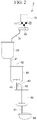
- the catalyst supply facility includes a catalyst storage tank 10 for storing a basic catalyst, a powder feeder 30 for supplying the basic catalyst, and a catalyst supply pipe 31 for supplying the basic catalyst.
- the powder feeder 30 and the catalyst supply pipe 31 are provided between the catalyst storage tank 10 and the mixing tank 20.
- a catalyst-mixed liquid supply pipe 21 is provided between the mixing tank 20 and the third tank 40.
- the catalyst storage tank 10 is a tank for storing a basic catalyst measured and is a tank for supplying the basic catalyst to the mixing tank 20.
- the powder feeder 30 adjusts the amount of the basic catalyst supplied from the catalyst storage tank 10 to the mixing tank 20.
- the catalyst supply pipe 31 connects the catalyst storage tank 10, the powder feeder 30, and the mixing tank 20 with one another and supplies the basic catalyst from the catalyst storage tank 10 to the mixing tank 20.
- the mixing tank 20 is a tank for mixing formamide with the basic catalyst supplied from the catalyst storage tank 10.
- the catalyst-mixed liquid supply pipe 21 connects the mixing tank 20 with the third tank 40 and supplies a mixture (reaction raw material liquid A) of a basic catalyst and formamide from the mixing tank 20 to the third tank 40.
- the third tank 40 is a tank for reacting (hydroxylation reaction) the reaction raw material liquid A supplied from the mixing tank 20 with acetaldehyde and thus forming N-( ⁇ -hydroxyethyl)formamide.
- the vibration imparting means 11 for vibrating at least a part of the catalyst supply facility is hammering.
- hammering may include an air pulse generator, an air knocker, an electric knocker, and vibration generators such as an ultrasonic vibrator, a piezoelectric vibrator, and a ball vibrator as well as a hammer, but the examples are not limited thereto.
- an air pulse generator, an air knocker, an electric knocker, and a vibration generator which impart vibration having a constant vibration frequency can uniformly supply a constant amount of catalyst, and do not hinder the measuring of catalyst are preferable.
- the vibration imparting means 11 imparts vibration to at least a part of the catalyst storage facility when the basic catalyst is supplied from the catalyst storage facility to the mixing tank 20. This vibration is propagated from the catalyst storage tank 10 to the powder feeder 30 and the catalyst supply pipe 31, for example, in a case in which vibration is imparted to the catalyst storage tank 10.
- the installation place of the vibration imparting means 11 may be the powder feeder 30 or the catalyst supply pipe 31, but it is preferably the catalyst storage tank 10, and it is most preferably the bottom portion of the catalyst storage tank 10 as illustrated in Fig. 1 .
- the production device 1 of the invention has a vibration imparting means for vibrating at least a part of the catalyst storage facility when the basic catalyst is supplied from the catalyst storage facility to the mixing tank 20. For this reason, the amount of the basic catalyst retained at the bottom portion of the catalyst storage tank 10, in the powder feeder 30, and in the catalyst supply pipe 31 decreases and further the basic catalyst is filled in the powder feeder 30. As a result, the amount of the basic catalyst supplied can be adjusted by the powder feeder 30 while measuring the amount of the basic catalyst stored in the catalyst storage tank 10 and a regulated amount of basic catalyst can be quantitatively and sufficiently supplied to the reaction system. In addition, the solid components do not accumulate in a supply control valve 43 for the reaction slurry and the flow rate of the hydroxylation reaction slurry does not decrease.
- a device 2 for producing N-( ⁇ -alkoxyethyl)formamide of the invention (hereinafter simply referred to as the "production device 2") is equipped with a catalyst supply facility for storing a basic catalyst, a mixing tank 20 provided downstream of the catalyst supply facility, a third tank 40 (hydroxylation reaction tank) provided downstream of the mixing tank 20, a fourth tank 50 (alkoxylation reaction tank) provided downstream of the third tank 40, and a vibration imparting means 11 for vibrating at least a part of the catalyst supply facility when the basic catalyst is supplied from the catalyst supply facility to the mixing tank.
- a catalyst supply facility for storing a basic catalyst
- a mixing tank 20 provided downstream of the catalyst supply facility
- a third tank 40 hydroxylation reaction tank
- fourth tank 50 alkoxylation reaction tank
- a supply pipe 41 is provided between the third tank 40 and the fourth tank 50.
- a supply pipe 51 is provided between the fourth tank 50 and a filter 60.
- the supply pipe 41 is provided with a supply control valve 43.
- the supply pipe 41 connects the third tank 40 with the fourth tank 50 and supplies N-( ⁇ -hydroxyethyl)formamide from the third tank 40 to the fourth tank 50.
- the fourth tank 50 is a tank for reacting (alkoxylation reaction) the N-( ⁇ -hydroxyethyl)formamide formed in the third tank 40 with an alcohol in the presence of an acid catalyst and thus forming N-( ⁇ -alkoxyethyl)formamide.
- the supply pipe 51 connects the fourth tank 50 with the filter 60 and supplies the N-( ⁇ -alkoxyethyl)formamide from the fourth tank 50 to the filter 60.
- the filter 60 separates the N-( ⁇ -alkoxyethyl)formamide and the solid phase from each other.
- the production device 2 of the invention has a vibration imparting means for vibrating at least a part of the catalyst storage facility when the basic catalyst is supplied from the catalyst supply facility to the mixing tank 20, and thus the amount of the basic catalyst retained at the bottom portion of the catalyst storage tank 10, in the powder feeder 30, and in the catalyst supply pipe 31 decreases and further the basic catalyst is filled in the powder feeder 30.
- the amount of the basic catalyst supplied can be adjusted by the powder feeder 30 while measuring the amount of the basic catalyst stored in the catalyst storage tank 10 and a regulated amount of basic catalyst can be quantitatively and sufficiently supplied to the reaction system.
- the solid components do not accumulate in the supply control valve 43 for the reaction slurry and the flow rate of the hydroxylation reaction slurry does not decrease.
- the N-( ⁇ -alkoxyethyl)formamide thus obtained is a raw material for N-vinylformamide exhibiting excellent purity and quality.
- N-( ⁇ -hydroxyethyl)formamide was produced and subsequently N-( ⁇ -alkoxyethyl)formamide was produced in the following manner.
- Potassium hydrogencarbonate was stored in the catalyst storage tank 10 illustrated in Fig. 2 , and 95.2 kg of formamide was charged into the mixing tank 20.
- the third tank 40 which was made of glass lining and equipped with a stirrer 42 and a temperature controller (not illustrated), the third tank 40 was purged with nitrogen gas, 107 kg of acetaldehyde was then added to the toluene, and the temperature was adjusted to 20°C.
- the reaction slurry obtained was transferred to the fourth tank 50 which was made of glass lining and equipped with a stirrer 52 and a temperature controller (not illustrated) and filtered to separate toluene of a solvent.
- reaction mixture Apart of solid component (reaction mixture) filtered was sampled and analyzed by liquid chromatography under the following conditions, and as a result, the reaction mixture contained N-( ⁇ -hydroxyethyl)formamide at 64.3%, formamide at 0.7%, acetaldehyde at 1.4%, and an aldol condensate of acetaldehyde at 0.2%, and the hydroxylation reaction yield from formamide to N-( ⁇ -hydroxyethyl)formamide was 97.0%.
- the filtrate obtained by this solid-liquid separation was analyzed by liquid chromatography under the above conditions, and as a result, the filtrate contained N-( ⁇ -methoxyethyl)formamide (MeO form) at 46.0%, formamide (FAM) at 0.18%, and N-(a-hydroxyethyl)formamide (OH form) at 0.95%.
- the percent conversion of formamide (abbreviated as the "FAM conversion” in Table 2) at this time was 99.1%, and the selectivity coefficient from formamide to N-( ⁇ -methoxyethyl)formamide (abbreviated as the "MeO form selectivity" in Table 2) was 97.7%.
- N-( ⁇ -methoxyethyl)formamide was produced in the same manner as in Example 1 except that the bottom portion of the catalyst storage tank 10 was not hammered by using an air knocker.
- the results are presented in Table 1 and Table 2.
- [Table 1] Hammering Amount of catalyst retained [g] FAM [% by mass] AAL [% by mass] Aldol condensate [% by mass] OH form [% by mass] Hydroxylation reaction yield [%] Example 1 ⁇ About 15 0.7 1.4 0.2 64.3 97.0 Comparative Example 1 ⁇ About 500 0.9 1.9 0.2 63.6 96.0
- [Table 2] Hammering Time required for solid-liquid separation [hours] FAM [% by mass] OH form [% by mass] MeO form [% by mass] FAM conversion [%] MeO form selectivity [%] Methoxylation reaction yield [%] Example 1 ⁇ 0.5 0.18 0.95 46.0 99.1 97.7 96.8 Comparative Example 1 ⁇ 5.0 0.58 4.95
- the total amount of potassium hydrogencarbonate retained in the catalyst storage tank 10, the powder feeder 30, and the catalyst supply pipe 31 after the catalyst supply in Example 1 was about 15 g and the total reaction yield of the hydroxylation reaction and methoxylation reaction from formamide to N-(a-methoxyethyl)formamide was 96.8%.
- the hydroxylation reaction yield was 96.0% in Comparative Example 1 but 97.0% in Example 1, and the values of selectivity coefficient of the methoxy form and methoxylation reaction yield were remarkably favorable in Example 1 as compared with those in Comparative Example 1. It is presumed that the hydroxy form has been converted into an unknown impurity since the value of percent conversion of formamide after the methoxylation reaction in Comparative Example 1 is comparable to that in Example 1.
- N-(a-hydroxyethyl)formamide by which the amount of the basic catalyst retained at the bottom portion of the catalyst storage tank, in the powder feeder, and in the catalyst supply pipe decreases, the amount of the basic catalyst to be supplied from the catalyst storage tank to the mixing tank becomes quantitative, the flow rate of the hydroxylation reaction slurry does not decrease, and the reaction yield of hydroxylation reaction is improved, a method for producing N-( ⁇ -alkoxyethyl)formamide by which the reaction yield of alkoxylation is improved and N-( ⁇ -alkoxyethyl)formamide exhibiting excellent quality is obtained, a device for producing N-( ⁇ -hydroxyethyl)formamide, and a device for producing N-( ⁇ -alkoxyethyl)formamide.
Landscapes
- Chemical & Material Sciences (AREA)
- Organic Chemistry (AREA)
- Chemical Kinetics & Catalysis (AREA)
- Organic Low-Molecular-Weight Compounds And Preparation Thereof (AREA)
- Low-Molecular Organic Synthesis Reactions Using Catalysts (AREA)
Applications Claiming Priority (2)
| Application Number | Priority Date | Filing Date | Title |
|---|---|---|---|
| JP2016238206 | 2016-12-08 | ||
| PCT/JP2017/044152 WO2018105720A1 (ja) | 2016-12-08 | 2017-12-08 | N-(α-ヒドロキシエチル)ホルムアミドの製造方法、N-(α-アルコキシエチル)ホルムアミドの製造方法、N-(α-ヒドロキシエチル)ホルムアミドの製造装置およびN-(α-アルコキシエチル)ホルムアミドの製造装置 |
Publications (3)
| Publication Number | Publication Date |
|---|---|
| EP3553046A1 true EP3553046A1 (de) | 2019-10-16 |
| EP3553046A4 EP3553046A4 (de) | 2019-11-20 |
| EP3553046B1 EP3553046B1 (de) | 2021-03-10 |
Family
ID=62491036
Family Applications (1)
| Application Number | Title | Priority Date | Filing Date |
|---|---|---|---|
| EP17878160.5A Active EP3553046B1 (de) | 2016-12-08 | 2017-12-08 | Herstellungsverfahren für n(hydroxyethyl)formamid, herstellungsverfahren für n(alkoxyethyl)formamid, herstellungsvorrichtung für n(hydroxyethyl)formamid und herstellungsvorrichtung für n(alkoxyethyl)formamid |
Country Status (4)
| Country | Link |
|---|---|
| US (2) | US20190241502A1 (de) |
| EP (1) | EP3553046B1 (de) |
| JP (1) | JPWO2018105720A1 (de) |
| WO (1) | WO2018105720A1 (de) |
Family Cites Families (4)
| Publication number | Priority date | Publication date | Assignee | Title |
|---|---|---|---|---|
| JPH05319481A (ja) * | 1992-05-15 | 1993-12-03 | Toray Ind Inc | 粉粒体ブリッジ防止装置 |
| JP3318992B2 (ja) * | 1992-12-18 | 2002-08-26 | ダイヤニトリックス株式会社 | N−(α−アルコキシエチル)ホルムアミドの製造方法 |
| JP3319020B2 (ja) | 1993-04-13 | 2002-08-26 | ダイヤニトリックス株式会社 | N−(α−ヒドロキシエチル)ホルムアミド及びN−(α−アルコキシエチル)ホルムアミドの製造方法 |
| JPWO2018135574A1 (ja) * | 2017-01-18 | 2019-11-07 | 三菱ケミカル株式会社 | N−(α−ヒドロキシエチル)ホルムアミドの製造方法およびN−ビニルホルムアミドの製造方法 |
-
2017
- 2017-12-08 JP JP2018555074A patent/JPWO2018105720A1/ja active Pending
- 2017-12-08 WO PCT/JP2017/044152 patent/WO2018105720A1/ja not_active Ceased
- 2017-12-08 EP EP17878160.5A patent/EP3553046B1/de active Active
-
2019
- 2019-04-18 US US16/387,608 patent/US20190241502A1/en not_active Abandoned
-
2020
- 2020-10-09 US US17/066,555 patent/US20210024456A1/en not_active Abandoned
Also Published As
| Publication number | Publication date |
|---|---|
| WO2018105720A1 (ja) | 2018-06-14 |
| US20190241502A1 (en) | 2019-08-08 |
| JPWO2018105720A1 (ja) | 2019-10-24 |
| EP3553046B1 (de) | 2021-03-10 |
| US20210024456A1 (en) | 2021-01-28 |
| EP3553046A4 (de) | 2019-11-20 |
Similar Documents
| Publication | Publication Date | Title |
|---|---|---|
| US9783506B2 (en) | Process for the large scale production of 1H-[1,2,3]triazole and its intermediate 1-benzyl-1H-[1,2,3]triazole | |
| US20220144638A1 (en) | Purification of bis(fluorosulfonyl) imide | |
| US9889103B2 (en) | Method for the preparation of N-acetyl cysteine amide | |
| US9000218B2 (en) | Process for preparing secondary amines in the liquid phase | |
| US20090187045A1 (en) | Process for preparing monomethylhydrazine | |
| JPH0832675B2 (ja) | ビウレット類とその製法 | |
| KR101684044B1 (ko) | 이치환된 카보다이이미드 및 다이프로필렌 트라이아민의 반응에 의한 1,5,7-트라이아자바이사이클로[4.4.0] 데스-5-엔의 제조 방법 | |
| JP2645603B2 (ja) | カルバメートの製造法 | |
| EP3553046B1 (de) | Herstellungsverfahren für n(hydroxyethyl)formamid, herstellungsverfahren für n(alkoxyethyl)formamid, herstellungsvorrichtung für n(hydroxyethyl)formamid und herstellungsvorrichtung für n(alkoxyethyl)formamid | |
| JP2004262835A (ja) | 芳香族イソシアネートの製造方法 | |
| EP3572397B1 (de) | Verfahren zur herstellung von n-(alpha-hydroxyethyl)formamid und verfahren zur herstellung von n-vinylformamid | |
| EP2243769A1 (de) | Verfahren zur herstellung von optisch aktivem fluoramin | |
| CN1062856C (zh) | 异氰酸酯的制备方法 | |
| US10899701B2 (en) | Method for producing N-(alpha-alkoxyethyl)formamide | |
| US10906868B2 (en) | Method for purifying N-(alpha-alkoxyethyl)formamide, method for producing high-purity N-(alpha-alkoxyethyl)formamide, and device for purifying N-(alpha-alkoxyethyl)formamide | |
| JP2008518983A (ja) | ポリイソシアネートの製造方法 | |
| JPS61172862A (ja) | 1,3−ジメチル−2−イミダゾリジノンの製造方法 | |
| JP2003201275A (ja) | 芳香族ウレタン化合物の製造方法 | |
| JP4035286B2 (ja) | イサチンビス(o−クレゾール)の製造方法 | |
| JP4564786B2 (ja) | 1−置換―1―アミノグアニジン又はその塩、及びこれらの製造方法 | |
| US10150731B2 (en) | Method for preparing 4-cyanopiperidine hydrochloride | |
| JPH04253948A (ja) | 3−シアノ−3,5,5−トリメチルシクロヘキサノンの製造方法 | |
| JP2002338544A (ja) | N−アルコキシカルボニルラクタム化合物の製造方法 | |
| JP2000212152A (ja) | N―置換グリシノニトリルの製造方法 | |
| JPS62292761A (ja) | 2−イミダゾリジノン類の製造方法 |
Legal Events
| Date | Code | Title | Description |
|---|---|---|---|
| STAA | Information on the status of an ep patent application or granted ep patent |
Free format text: STATUS: THE INTERNATIONAL PUBLICATION HAS BEEN MADE |
|
| PUAI | Public reference made under article 153(3) epc to a published international application that has entered the european phase |
Free format text: ORIGINAL CODE: 0009012 |
|
| STAA | Information on the status of an ep patent application or granted ep patent |
Free format text: STATUS: REQUEST FOR EXAMINATION WAS MADE |
|
| 17P | Request for examination filed |
Effective date: 20190529 |
|
| AK | Designated contracting states |
Kind code of ref document: A1 Designated state(s): AL AT BE BG CH CY CZ DE DK EE ES FI FR GB GR HR HU IE IS IT LI LT LU LV MC MK MT NL NO PL PT RO RS SE SI SK SM TR |
|
| AX | Request for extension of the european patent |
Extension state: BA ME |
|
| A4 | Supplementary search report drawn up and despatched |
Effective date: 20191017 |
|
| RIC1 | Information provided on ipc code assigned before grant |
Ipc: C07B 61/00 20060101ALI20191011BHEP Ipc: C07C 233/18 20060101ALI20191011BHEP Ipc: C07C 231/12 20060101AFI20191011BHEP |
|
| DAV | Request for validation of the european patent (deleted) | ||
| DAX | Request for extension of the european patent (deleted) | ||
| GRAP | Despatch of communication of intention to grant a patent |
Free format text: ORIGINAL CODE: EPIDOSNIGR1 |
|
| STAA | Information on the status of an ep patent application or granted ep patent |
Free format text: STATUS: GRANT OF PATENT IS INTENDED |
|
| INTG | Intention to grant announced |
Effective date: 20201023 |
|
| GRAS | Grant fee paid |
Free format text: ORIGINAL CODE: EPIDOSNIGR3 |
|
| GRAA | (expected) grant |
Free format text: ORIGINAL CODE: 0009210 |
|
| STAA | Information on the status of an ep patent application or granted ep patent |
Free format text: STATUS: THE PATENT HAS BEEN GRANTED |
|
| AK | Designated contracting states |
Kind code of ref document: B1 Designated state(s): AL AT BE BG CH CY CZ DE DK EE ES FI FR GB GR HR HU IE IS IT LI LT LU LV MC MK MT NL NO PL PT RO RS SE SI SK SM TR |
|
| REG | Reference to a national code |
Ref country code: GB Ref legal event code: FG4D |
|
| REG | Reference to a national code |
Ref country code: AT Ref legal event code: REF Ref document number: 1369681 Country of ref document: AT Kind code of ref document: T Effective date: 20210315 Ref country code: CH Ref legal event code: EP |
|
| REG | Reference to a national code |
Ref country code: IE Ref legal event code: FG4D |
|
| REG | Reference to a national code |
Ref country code: DE Ref legal event code: R096 Ref document number: 602017034554 Country of ref document: DE |
|
| REG | Reference to a national code |
Ref country code: LT Ref legal event code: MG9D |
|
| PG25 | Lapsed in a contracting state [announced via postgrant information from national office to epo] |
Ref country code: FI Free format text: LAPSE BECAUSE OF FAILURE TO SUBMIT A TRANSLATION OF THE DESCRIPTION OR TO PAY THE FEE WITHIN THE PRESCRIBED TIME-LIMIT Effective date: 20210310 Ref country code: HR Free format text: LAPSE BECAUSE OF FAILURE TO SUBMIT A TRANSLATION OF THE DESCRIPTION OR TO PAY THE FEE WITHIN THE PRESCRIBED TIME-LIMIT Effective date: 20210310 Ref country code: GR Free format text: LAPSE BECAUSE OF FAILURE TO SUBMIT A TRANSLATION OF THE DESCRIPTION OR TO PAY THE FEE WITHIN THE PRESCRIBED TIME-LIMIT Effective date: 20210611 Ref country code: NO Free format text: LAPSE BECAUSE OF FAILURE TO SUBMIT A TRANSLATION OF THE DESCRIPTION OR TO PAY THE FEE WITHIN THE PRESCRIBED TIME-LIMIT Effective date: 20210610 Ref country code: LT Free format text: LAPSE BECAUSE OF FAILURE TO SUBMIT A TRANSLATION OF THE DESCRIPTION OR TO PAY THE FEE WITHIN THE PRESCRIBED TIME-LIMIT Effective date: 20210310 Ref country code: BG Free format text: LAPSE BECAUSE OF FAILURE TO SUBMIT A TRANSLATION OF THE DESCRIPTION OR TO PAY THE FEE WITHIN THE PRESCRIBED TIME-LIMIT Effective date: 20210610 |
|
| REG | Reference to a national code |
Ref country code: AT Ref legal event code: MK05 Ref document number: 1369681 Country of ref document: AT Kind code of ref document: T Effective date: 20210310 |
|
| REG | Reference to a national code |
Ref country code: NL Ref legal event code: MP Effective date: 20210310 |
|
| PG25 | Lapsed in a contracting state [announced via postgrant information from national office to epo] |
Ref country code: SE Free format text: LAPSE BECAUSE OF FAILURE TO SUBMIT A TRANSLATION OF THE DESCRIPTION OR TO PAY THE FEE WITHIN THE PRESCRIBED TIME-LIMIT Effective date: 20210310 Ref country code: LV Free format text: LAPSE BECAUSE OF FAILURE TO SUBMIT A TRANSLATION OF THE DESCRIPTION OR TO PAY THE FEE WITHIN THE PRESCRIBED TIME-LIMIT Effective date: 20210310 Ref country code: RS Free format text: LAPSE BECAUSE OF FAILURE TO SUBMIT A TRANSLATION OF THE DESCRIPTION OR TO PAY THE FEE WITHIN THE PRESCRIBED TIME-LIMIT Effective date: 20210310 |
|
| PG25 | Lapsed in a contracting state [announced via postgrant information from national office to epo] |
Ref country code: NL Free format text: LAPSE BECAUSE OF FAILURE TO SUBMIT A TRANSLATION OF THE DESCRIPTION OR TO PAY THE FEE WITHIN THE PRESCRIBED TIME-LIMIT Effective date: 20210310 |
|
| PG25 | Lapsed in a contracting state [announced via postgrant information from national office to epo] |
Ref country code: EE Free format text: LAPSE BECAUSE OF FAILURE TO SUBMIT A TRANSLATION OF THE DESCRIPTION OR TO PAY THE FEE WITHIN THE PRESCRIBED TIME-LIMIT Effective date: 20210310 Ref country code: CZ Free format text: LAPSE BECAUSE OF FAILURE TO SUBMIT A TRANSLATION OF THE DESCRIPTION OR TO PAY THE FEE WITHIN THE PRESCRIBED TIME-LIMIT Effective date: 20210310 Ref country code: SM Free format text: LAPSE BECAUSE OF FAILURE TO SUBMIT A TRANSLATION OF THE DESCRIPTION OR TO PAY THE FEE WITHIN THE PRESCRIBED TIME-LIMIT Effective date: 20210310 Ref country code: AT Free format text: LAPSE BECAUSE OF FAILURE TO SUBMIT A TRANSLATION OF THE DESCRIPTION OR TO PAY THE FEE WITHIN THE PRESCRIBED TIME-LIMIT Effective date: 20210310 |
|
| PG25 | Lapsed in a contracting state [announced via postgrant information from national office to epo] |
Ref country code: PT Free format text: LAPSE BECAUSE OF FAILURE TO SUBMIT A TRANSLATION OF THE DESCRIPTION OR TO PAY THE FEE WITHIN THE PRESCRIBED TIME-LIMIT Effective date: 20210712 Ref country code: PL Free format text: LAPSE BECAUSE OF FAILURE TO SUBMIT A TRANSLATION OF THE DESCRIPTION OR TO PAY THE FEE WITHIN THE PRESCRIBED TIME-LIMIT Effective date: 20210310 Ref country code: SK Free format text: LAPSE BECAUSE OF FAILURE TO SUBMIT A TRANSLATION OF THE DESCRIPTION OR TO PAY THE FEE WITHIN THE PRESCRIBED TIME-LIMIT Effective date: 20210310 Ref country code: RO Free format text: LAPSE BECAUSE OF FAILURE TO SUBMIT A TRANSLATION OF THE DESCRIPTION OR TO PAY THE FEE WITHIN THE PRESCRIBED TIME-LIMIT Effective date: 20210310 Ref country code: IS Free format text: LAPSE BECAUSE OF FAILURE TO SUBMIT A TRANSLATION OF THE DESCRIPTION OR TO PAY THE FEE WITHIN THE PRESCRIBED TIME-LIMIT Effective date: 20210710 |
|
| REG | Reference to a national code |
Ref country code: DE Ref legal event code: R097 Ref document number: 602017034554 Country of ref document: DE |
|
| PLBE | No opposition filed within time limit |
Free format text: ORIGINAL CODE: 0009261 |
|
| STAA | Information on the status of an ep patent application or granted ep patent |
Free format text: STATUS: NO OPPOSITION FILED WITHIN TIME LIMIT |
|
| PG25 | Lapsed in a contracting state [announced via postgrant information from national office to epo] |
Ref country code: ES Free format text: LAPSE BECAUSE OF FAILURE TO SUBMIT A TRANSLATION OF THE DESCRIPTION OR TO PAY THE FEE WITHIN THE PRESCRIBED TIME-LIMIT Effective date: 20210310 Ref country code: AL Free format text: LAPSE BECAUSE OF FAILURE TO SUBMIT A TRANSLATION OF THE DESCRIPTION OR TO PAY THE FEE WITHIN THE PRESCRIBED TIME-LIMIT Effective date: 20210310 Ref country code: DK Free format text: LAPSE BECAUSE OF FAILURE TO SUBMIT A TRANSLATION OF THE DESCRIPTION OR TO PAY THE FEE WITHIN THE PRESCRIBED TIME-LIMIT Effective date: 20210310 |
|
| 26N | No opposition filed |
Effective date: 20211213 |
|
| PG25 | Lapsed in a contracting state [announced via postgrant information from national office to epo] |
Ref country code: SI Free format text: LAPSE BECAUSE OF FAILURE TO SUBMIT A TRANSLATION OF THE DESCRIPTION OR TO PAY THE FEE WITHIN THE PRESCRIBED TIME-LIMIT Effective date: 20210310 |
|
| PG25 | Lapsed in a contracting state [announced via postgrant information from national office to epo] |
Ref country code: IT Free format text: LAPSE BECAUSE OF FAILURE TO SUBMIT A TRANSLATION OF THE DESCRIPTION OR TO PAY THE FEE WITHIN THE PRESCRIBED TIME-LIMIT Effective date: 20210310 |
|
| PG25 | Lapsed in a contracting state [announced via postgrant information from national office to epo] |
Ref country code: IS Free format text: LAPSE BECAUSE OF FAILURE TO SUBMIT A TRANSLATION OF THE DESCRIPTION OR TO PAY THE FEE WITHIN THE PRESCRIBED TIME-LIMIT Effective date: 20210710 |
|
| REG | Reference to a national code |
Ref country code: DE Ref legal event code: R119 Ref document number: 602017034554 Country of ref document: DE |
|
| PG25 | Lapsed in a contracting state [announced via postgrant information from national office to epo] |
Ref country code: MC Free format text: LAPSE BECAUSE OF FAILURE TO SUBMIT A TRANSLATION OF THE DESCRIPTION OR TO PAY THE FEE WITHIN THE PRESCRIBED TIME-LIMIT Effective date: 20210310 |
|
| REG | Reference to a national code |
Ref country code: CH Ref legal event code: PL |
|
| GBPC | Gb: european patent ceased through non-payment of renewal fee |
Effective date: 20211208 |
|
| REG | Reference to a national code |
Ref country code: BE Ref legal event code: MM Effective date: 20211231 |
|
| PG25 | Lapsed in a contracting state [announced via postgrant information from national office to epo] |
Ref country code: LU Free format text: LAPSE BECAUSE OF NON-PAYMENT OF DUE FEES Effective date: 20211208 Ref country code: IE Free format text: LAPSE BECAUSE OF NON-PAYMENT OF DUE FEES Effective date: 20211208 Ref country code: GB Free format text: LAPSE BECAUSE OF NON-PAYMENT OF DUE FEES Effective date: 20211208 Ref country code: DE Free format text: LAPSE BECAUSE OF NON-PAYMENT OF DUE FEES Effective date: 20220701 |
|
| PG25 | Lapsed in a contracting state [announced via postgrant information from national office to epo] |
Ref country code: BE Free format text: LAPSE BECAUSE OF NON-PAYMENT OF DUE FEES Effective date: 20211231 |
|
| PG25 | Lapsed in a contracting state [announced via postgrant information from national office to epo] |
Ref country code: LI Free format text: LAPSE BECAUSE OF NON-PAYMENT OF DUE FEES Effective date: 20211231 Ref country code: CH Free format text: LAPSE BECAUSE OF NON-PAYMENT OF DUE FEES Effective date: 20211231 |
|
| P01 | Opt-out of the competence of the unified patent court (upc) registered |
Effective date: 20230522 |
|
| PG25 | Lapsed in a contracting state [announced via postgrant information from national office to epo] |
Ref country code: CY Free format text: LAPSE BECAUSE OF FAILURE TO SUBMIT A TRANSLATION OF THE DESCRIPTION OR TO PAY THE FEE WITHIN THE PRESCRIBED TIME-LIMIT Effective date: 20210310 |
|
| PG25 | Lapsed in a contracting state [announced via postgrant information from national office to epo] |
Ref country code: HU Free format text: LAPSE BECAUSE OF FAILURE TO SUBMIT A TRANSLATION OF THE DESCRIPTION OR TO PAY THE FEE WITHIN THE PRESCRIBED TIME-LIMIT; INVALID AB INITIO Effective date: 20171208 |
|
| PG25 | Lapsed in a contracting state [announced via postgrant information from national office to epo] |
Ref country code: MK Free format text: LAPSE BECAUSE OF FAILURE TO SUBMIT A TRANSLATION OF THE DESCRIPTION OR TO PAY THE FEE WITHIN THE PRESCRIBED TIME-LIMIT Effective date: 20210310 |
|
| PG25 | Lapsed in a contracting state [announced via postgrant information from national office to epo] |
Ref country code: TR Free format text: LAPSE BECAUSE OF FAILURE TO SUBMIT A TRANSLATION OF THE DESCRIPTION OR TO PAY THE FEE WITHIN THE PRESCRIBED TIME-LIMIT Effective date: 20210310 |
|
| PG25 | Lapsed in a contracting state [announced via postgrant information from national office to epo] |
Ref country code: MT Free format text: LAPSE BECAUSE OF FAILURE TO SUBMIT A TRANSLATION OF THE DESCRIPTION OR TO PAY THE FEE WITHIN THE PRESCRIBED TIME-LIMIT Effective date: 20210310 |
|
| PGFP | Annual fee paid to national office [announced via postgrant information from national office to epo] |
Ref country code: FR Payment date: 20251120 Year of fee payment: 9 |