EP3551786B1 - Procédé d'électropolissage et électrolyte pour ce procédé - Google Patents
Procédé d'électropolissage et électrolyte pour ce procédé Download PDFInfo
- Publication number
- EP3551786B1 EP3551786B1 EP17816393.7A EP17816393A EP3551786B1 EP 3551786 B1 EP3551786 B1 EP 3551786B1 EP 17816393 A EP17816393 A EP 17816393A EP 3551786 B1 EP3551786 B1 EP 3551786B1
- Authority
- EP
- European Patent Office
- Prior art keywords
- pulse
- electrolyte
- current
- component
- weight
- Prior art date
- Legal status (The legal status is an assumption and is not a legal conclusion. Google has not performed a legal analysis and makes no representation as to the accuracy of the status listed.)
- Active
Links
Images

Classifications
-
- C—CHEMISTRY; METALLURGY
- C25—ELECTROLYTIC OR ELECTROPHORETIC PROCESSES; APPARATUS THEREFOR
- C25F—PROCESSES FOR THE ELECTROLYTIC REMOVAL OF MATERIALS FROM OBJECTS; APPARATUS THEREFOR
- C25F3/00—Electrolytic etching or polishing
- C25F3/16—Polishing
-
- B—PERFORMING OPERATIONS; TRANSPORTING
- B22—CASTING; POWDER METALLURGY
- B22F—WORKING METALLIC POWDER; MANUFACTURE OF ARTICLES FROM METALLIC POWDER; MAKING METALLIC POWDER; APPARATUS OR DEVICES SPECIALLY ADAPTED FOR METALLIC POWDER
- B22F10/00—Additive manufacturing of workpieces or articles from metallic powder
- B22F10/60—Treatment of workpieces or articles after build-up
- B22F10/62—Treatment of workpieces or articles after build-up by chemical means
-
- B—PERFORMING OPERATIONS; TRANSPORTING
- B22—CASTING; POWDER METALLURGY
- B22F—WORKING METALLIC POWDER; MANUFACTURE OF ARTICLES FROM METALLIC POWDER; MAKING METALLIC POWDER; APPARATUS OR DEVICES SPECIALLY ADAPTED FOR METALLIC POWDER
- B22F3/00—Manufacture of workpieces or articles from metallic powder characterised by the manner of compacting or sintering; Apparatus specially adapted therefor ; Presses and furnaces
- B22F3/24—After-treatment of workpieces or articles
-
- B—PERFORMING OPERATIONS; TRANSPORTING
- B33—ADDITIVE MANUFACTURING TECHNOLOGY
- B33Y—ADDITIVE MANUFACTURING, i.e. MANUFACTURING OF THREE-DIMENSIONAL [3D] OBJECTS BY ADDITIVE DEPOSITION, ADDITIVE AGGLOMERATION OR ADDITIVE LAYERING, e.g. BY 3D PRINTING, STEREOLITHOGRAPHY OR SELECTIVE LASER SINTERING
- B33Y40/00—Auxiliary operations or equipment, e.g. for material handling
- B33Y40/20—Post-treatment, e.g. curing, coating or polishing
-
- B—PERFORMING OPERATIONS; TRANSPORTING
- B22—CASTING; POWDER METALLURGY
- B22F—WORKING METALLIC POWDER; MANUFACTURE OF ARTICLES FROM METALLIC POWDER; MAKING METALLIC POWDER; APPARATUS OR DEVICES SPECIALLY ADAPTED FOR METALLIC POWDER
- B22F10/00—Additive manufacturing of workpieces or articles from metallic powder
- B22F10/60—Treatment of workpieces or articles after build-up
- B22F10/66—Treatment of workpieces or articles after build-up by mechanical means
-
- B—PERFORMING OPERATIONS; TRANSPORTING
- B22—CASTING; POWDER METALLURGY
- B22F—WORKING METALLIC POWDER; MANUFACTURE OF ARTICLES FROM METALLIC POWDER; MAKING METALLIC POWDER; APPARATUS OR DEVICES SPECIALLY ADAPTED FOR METALLIC POWDER
- B22F10/00—Additive manufacturing of workpieces or articles from metallic powder
- B22F10/60—Treatment of workpieces or articles after build-up
- B22F10/68—Cleaning or washing
-
- B—PERFORMING OPERATIONS; TRANSPORTING
- B22—CASTING; POWDER METALLURGY
- B22F—WORKING METALLIC POWDER; MANUFACTURE OF ARTICLES FROM METALLIC POWDER; MAKING METALLIC POWDER; APPARATUS OR DEVICES SPECIALLY ADAPTED FOR METALLIC POWDER
- B22F3/00—Manufacture of workpieces or articles from metallic powder characterised by the manner of compacting or sintering; Apparatus specially adapted therefor ; Presses and furnaces
- B22F3/24—After-treatment of workpieces or articles
- B22F2003/241—Chemical after-treatment on the surface
-
- B—PERFORMING OPERATIONS; TRANSPORTING
- B22—CASTING; POWDER METALLURGY
- B22F—WORKING METALLIC POWDER; MANUFACTURE OF ARTICLES FROM METALLIC POWDER; MAKING METALLIC POWDER; APPARATUS OR DEVICES SPECIALLY ADAPTED FOR METALLIC POWDER
- B22F3/00—Manufacture of workpieces or articles from metallic powder characterised by the manner of compacting or sintering; Apparatus specially adapted therefor ; Presses and furnaces
- B22F3/24—After-treatment of workpieces or articles
- B22F2003/247—Removing material: carving, cleaning, grinding, hobbing, honing, lapping, polishing, milling, shaving, skiving, turning the surface
-
- B—PERFORMING OPERATIONS; TRANSPORTING
- B22—CASTING; POWDER METALLURGY
- B22F—WORKING METALLIC POWDER; MANUFACTURE OF ARTICLES FROM METALLIC POWDER; MAKING METALLIC POWDER; APPARATUS OR DEVICES SPECIALLY ADAPTED FOR METALLIC POWDER
- B22F2999/00—Aspects linked to processes or compositions used in powder metallurgy
-
- C—CHEMISTRY; METALLURGY
- C22—METALLURGY; FERROUS OR NON-FERROUS ALLOYS; TREATMENT OF ALLOYS OR NON-FERROUS METALS
- C22C—ALLOYS
- C22C14/00—Alloys based on titanium
-
- C—CHEMISTRY; METALLURGY
- C22—METALLURGY; FERROUS OR NON-FERROUS ALLOYS; TREATMENT OF ALLOYS OR NON-FERROUS METALS
- C22C—ALLOYS
- C22C21/00—Alloys based on aluminium
-
- C—CHEMISTRY; METALLURGY
- C25—ELECTROLYTIC OR ELECTROPHORETIC PROCESSES; APPARATUS THEREFOR
- C25F—PROCESSES FOR THE ELECTROLYTIC REMOVAL OF MATERIALS FROM OBJECTS; APPARATUS THEREFOR
- C25F3/00—Electrolytic etching or polishing
- C25F3/16—Polishing
- C25F3/18—Polishing of light metals
- C25F3/20—Polishing of light metals of aluminium
-
- C—CHEMISTRY; METALLURGY
- C25—ELECTROLYTIC OR ELECTROPHORETIC PROCESSES; APPARATUS THEREFOR
- C25F—PROCESSES FOR THE ELECTROLYTIC REMOVAL OF MATERIALS FROM OBJECTS; APPARATUS THEREFOR
- C25F3/00—Electrolytic etching or polishing
- C25F3/16—Polishing
- C25F3/22—Polishing of heavy metals
- C25F3/26—Polishing of heavy metals of refractory metals
-
- Y—GENERAL TAGGING OF NEW TECHNOLOGICAL DEVELOPMENTS; GENERAL TAGGING OF CROSS-SECTIONAL TECHNOLOGIES SPANNING OVER SEVERAL SECTIONS OF THE IPC; TECHNICAL SUBJECTS COVERED BY FORMER USPC CROSS-REFERENCE ART COLLECTIONS [XRACs] AND DIGESTS
- Y02—TECHNOLOGIES OR APPLICATIONS FOR MITIGATION OR ADAPTATION AGAINST CLIMATE CHANGE
- Y02P—CLIMATE CHANGE MITIGATION TECHNOLOGIES IN THE PRODUCTION OR PROCESSING OF GOODS
- Y02P10/00—Technologies related to metal processing
- Y02P10/25—Process efficiency
Definitions
- the invention relates to an electrolyte for the electropolishing of metal surfaces, in particular parts produced from metal powder by means of an additive method, the electrolyte containing methanesulfonic acid, and a method for this purpose.
- 3D printing The additive manufacturing of metal parts (“3D printing”) is a relatively new technology that is being used more and more frequently in the design of components due to its considerably expanded flexibility compared to conventional manufacturing processes.
- the principle of this manufacturing process is to sinter or melt a metal powder applied in layers using a laser or electron beam in a controlled manner. In the end, the finished component is embedded in the metal powder.
- Electropolishing processes according to the state of the art are suitable for leveling roughness in the single-digit to the low double-digit micrometer range (the removal here is typically 10 ⁇ m to 40 ⁇ m), but regularly fail because of the roughness that occurs in 3D printing, which can reach into the tenths of a millimeter .
- the DE 10 2006 053 586 B3 describes such an electropolishing process in which an electrolyte of the type mentioned is used.
- this object is achieved by an electrolyte of the type mentioned at the outset in that the electrolyte also contains at least one phosphonic acid.
- the electrolyte according to the invention is able to level the large roughness that occurs during 3D printing due to the process.
- the electrolyte according to the invention can also be used in the post-processing of conventionally manufactured metal components. It is particularly suitable for the post-processing of components made of titanium alloys; if the composition is varied appropriately, the processing of aluminum alloys is also possible.
- the at least one phosphonic acid is selected from a group which contains mono-, di- and / or polyphosphonic acids, preferably amino-tris (methylenephosphonic acid) or mixtures thereof.
- the electrolyte according to the invention also contains at least one polyhydric alcohol, preferably with at least three, particularly preferably more than three functional hydroxyl groups and / or at least one polyalcohol, the alcohol preferably being composed of a group is selected which contains glycol, glycerol, polyvinyl alcohol, inositol or sorbitol or mixtures thereof. It has been shown that these alcohols, as complexing agents, wetting agents and viscosity modifiers, have a significant influence on the leveling effect. In particular, this effect increases with an increasing number of functional hydroxyl groups in the alcohol used. Mixtures of different alcohols can also be used.
- the at least one alcohol is usually contained in the electrolyte according to the invention in a concentration of up to 10% by weight.
- further additives are contained in the electrolyte according to the invention.
- further additives are used which are selected from a group which contains mineral acids, in particular phosphoric acid and sulfuric acid, fluorides, in particular ammonium hydrogen difluoride, and amines, in particular ethanolamines and isopropanolamines.
- the mineral acids are usually in a concentration of up to 50% by weight, the fluorides in a concentration of up to 20% by weight, and the amines in a concentration of up to 15% by weight in the electrolyte.
- the electrolyte according to the invention is used in particular for the post-processing of parts produced by means of an additive process from metal powder, in particular from titanium and aluminum alloys.
- the electrolyte according to the invention is particularly suitable for an electropolishing process for components made of metal using 3D printing, with at least one component to be processed acting as a first electrode and at least a second electrode being provided as a counter electrode, and at least partial removal of a region of the component surface in takes place in an electrolyte bath with the electrolyte according to the invention.
- the current is applied in the form of repetitive pulse sequences, with at least one anodic pulse being provided, the current intensity of which has a steady increase over time up to a predeterminable value, the increase preferably being linear, non-linear or exponential.
- this anodic pulse does not have a rectangular shape as is customary in the prior art, but rather its current intensity increases in the course of the pulse duration, so that the current intensity does not increase abruptly but instead in the form of a non-linear edge or linear ramp over the pulse duration.
- the pulse shape in particular the rate of rise and, if applicable, the rate of fall of the current, are responsible for the time course of the formation and degradation of the polishing film.
- This essential part of the polishing process can be carried out optimally through targeted control of the timing of the pulse edge.
- the control over the temporal build-up of the polishing film allows the areas of etching - passivation - polishing to be run through in a planned and reproducible manner during electropolishing and thus to control the material removal in a targeted manner.
- the etching phase can be lengthened by a slowly rising ramp or a step pulse, thus both shortening the process time and improving the result.
- the pulse has micropulses following the rise. In doing so, higher-frequency micropulses are "applied" to the pulse, the so-called base pulse. These micropulses have the effect that the polishing process is accelerated because these micropulses have a disproportionately strong effect on tips and edges due to the field line concentration at these points. Furthermore, this influences the local current distribution over the workpiece as a function of the frequency of the micropulses, which in turn is essential for the smoothing effect of the method according to the invention.
- the electrolytic double-layer capacitance occurs on a rough and chemically inhomogeneous surface, such as that of a 3D-printed part usually present, has locally different values, the distribution of the current is different at higher frequencies than at low frequencies.
- the reason is that the effective resistance of a capacitance decreases with increasing frequency of the applied current, so that the higher-frequency components of the current pulse preferentially flow through points with high capacitance, while the low-frequency component flows through the regions with low polarization resistance. This means that the local current distribution on the workpiece can be significantly influenced by the pulse shape.
- the at least one anodic pulse is followed by at least one second anodic pulse, the at least second pulse being the same or different from the first pulse, and preferably at least two consecutive anodic pulses and / or pulse sequences through a pulse pause and / or interrupted by at least one cathodic pulse.
- These pulse sequences can have identical or different repetitive pulses. It is essential here that at least one anodic pulse has the continuous rise according to the invention.
- the pulse frequency can change with the duration of the method according to the invention due to the progressive smoothing of the component.
- the control of the frequency is a further influencing variable for controlling the removal rate in the case of inhomogeneous initial roughness and is usually between 0.2 - 2000 Hz.
- the control of the current or voltage signal of the pulses as well as the control of the pulse lengths, pulse edges and pulse pause phases allow the polishing effect to be controlled.
- the effect of the pulse edges is partly based on the time-dependent build-up of the effective polishing film, which is controlled by the ramp steepness, and partly on the different frequency spectrum of the pulses used.
- the pulses have an average current density of 0.5 A / dm 2 to 30 A / dm 2 and the pulses and / or the pulse pauses have a pulse length of 0.0005 s to 5 s.
- the electrolyte can contain additional additives, in particular wetting agents, inhibitors and / or complexing agents. It can also be provided that the electrolyte or the workpiece is moved periodically or continuously.
- inert cathodes in particular steel cathodes or stainless steel cathodes, are used as counter electrodes.
- the first step is mechanical cleaning, for example by blasting or shot peening, in order to remove loosely adhering metal powder or metal powder that has accumulated in cavities and undercuts and is not connected to the component.
- the component is mechanically fixed at a suitable point, electrically contacted, immersed in the electrolyte according to the invention and anodically loaded according to an electrochemical process tailored to the material and the component geometry.
- the concentrations of the individual components of the electrolyte are set in such a way that a predefined final roughness of the component surface is achieved.
- the current used can be direct current, a unipolar pulse current or a bipolar reverse pulse current, depending on the requirements. A combination of different methods is also possible.
- the bath temperature is between 20 ° C and 75 ° C and is also adjusted to the workpiece to be treated.
- the results are improved if the electrolyte is moved by pumping and / or stirring in order to achieve effective electrolyte circulation at those points where the greatest erosion is to take place.
- Example 1 Post-treatment of a 3D-printed component made of Ti6Al4V
- a 3D-printed component for technical applications made of the titanium alloy Ti6Al4V is removed from the 3D printer, mechanically pre-cleaned and electrically contacted.
- the component is then placed in an electrolyte bath consisting of 98% methanesulfonic acid, 2% amino-tris (methylenephosphonic acid) and at a temperature of 50 ° C., with an average voltage of 20 V and an average current density of 12.5 A / dm 2 Pulse current for 30 minutes treated.
- the component is then rinsed with deionized water and dried using compressed air.
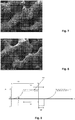
- Fig. 1 an SEM image of a surface region of the component is shown before the method according to the invention described above is carried out.
- Fig. 2 shows this surface after the method according to the invention has been carried out.
- the Ra value is reduced from 15 ⁇ m before to 3 ⁇ m after the post-treatment according to the invention.
- Example 2 Post-treatment of a 3D-printed component made of AlMgSi10
- a 3D-printed component made of the high silicon alloy AlMgSi10 is after mechanical cleaning and electrical contacting in an electrolyte consisting of 4.4% methanesulfonic acid, 45.6% phosphoric acid, 32.7% sulfuric acid, 4.5% triethanolamine, 0, 4% amino-tris (methylenephosphonic acid) and 12.4% ammonium hydrogen difluoride at a voltage of 18 V and a current density of 4 A / dm 2 for 40 minutes.
- the component is then rinsed with deionized water and dried using compressed air.
- Fig. 3 and Fig. 4 again show an SEM image of the surface of the component before or after the method according to the invention has been carried out, the determined Ra value decreasing from 1.4 ⁇ m to 0.3 ⁇ m.
- Example 3 Post-treatment of a 3D-printed component made of Ti6Al4V
- a 3D-printed component for technical applications made of the titanium alloy Ti6Al4V is removed from the 3D printer, mechanically pre-cleaned and electrically contacted.
- the component is then placed in an electrolyte bath consisting of 98% methanesulfonic acid, 1.5% amino-tris (methylenephosphonic acid) and 0.5% inositol at a temperature of 45 ° C, at an average voltage of 20 V and an average current density of 5 A / dm 2 treated with pulsed current for 30 minutes.
- the component is then rinsed with deionized water and dried using compressed air.
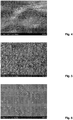
- Fig. 5 the surface of the component is shown, with an Ra value of 15 ⁇ m. After treating the component in the manner described above by the method according to the invention, the Ra value was only 3 ⁇ m. In Fig. 6 the smoothing of the surface of the component treated according to the invention is evident.
- Example 4 Post-treatment of a 3D-printed component made of Ti6Al4V
- a 3D-printed component for medical applications is placed in an electrolyte Consists of 90% methanesulfonic acid, 1.5% 1-hydroxyethane (1,1-diphosphonic acid), 3% amino-tris (methylenephosphonic acid) and 5.5% glycol at a voltage of 22 V and a current density of 10 A / dm 2 smoothed using direct current for 60 minutes.
- the component is then rinsed with deionized water and dried using compressed air.
- this component has a grid-like structure, the roughness of which is caused by powder residues from 3D printing adhering to the surface. After treatment using the method according to the invention, these particle residues are practically completely removed ( Fig. 8 ).
- a typical pulse sequence 100 which, according to the invention, consists of an anodic pulse 110, the current intensity j + of which has a steady rise 111 over time up to a predeterminable value J1.
- This anodic pulse 110 held for a certain time ⁇ t1 is superimposed with micropulses 112, that is to say multipulses with a higher frequency.
- This anodic pulse 110 is followed by a cathodic pulse 120 in a rectangular shape.
- This pulse sequence 100 which consists of anodic pulse 110 and cathodic pulse 120, is repeated until the desired removal and, associated therewith, the desired surface quality is achieved.
- the duration and level of the steady rise 111 namely the edge or ramp, is dependent on the initial roughness and the etching duration required as a result.
- the number and height of the micropulses 112 depend on the material.
- Example 5 Smoothing a component made of a titanium alloy (Ti6Al4V)
- the resulting surfaces meet the requirements for surface roughness for the given application; further processing is not necessary for this. Depending on the application, however, the surface can be further functionalized.
Landscapes
- Chemical & Material Sciences (AREA)
- Engineering & Computer Science (AREA)
- Materials Engineering (AREA)
- Chemical Kinetics & Catalysis (AREA)
- Electrochemistry (AREA)
- Metallurgy (AREA)
- Organic Chemistry (AREA)
- Manufacturing & Machinery (AREA)
- General Chemical & Material Sciences (AREA)
- Mechanical Engineering (AREA)
- Electrical Discharge Machining, Electrochemical Machining, And Combined Machining (AREA)
Claims (15)
- Electrolyte pour le polissage électrolytique de surfaces métalliques, l'électrolyte comprenant de l'acide méthanesulfonique, au moins un acide phosphonique et au moins un alcool polyhydrique et/ou au moins un polyalcool.
- Electrolyte selon la revendication 1, caractérisé en ce que l'acide phosphonique est choisi dans un groupe constitué par les acides mono-, di- et/ou polyphosphoniques, de préférence l'acide aminotri(méthylènephosphonique) ou des combinaisons de ceux-ci.
- Electrolyte selon la revendication 1 ou 2, caractérisé en ce que ledit au moins un acide phosphonique est présent à une concentration de l'ordre de 0,1 % en poids à 10 % en poids.
- Electrolyte selon l'une quelconque des revendications 1 à 3, caractérisé en ce que le polyalcool est choisi dans un groupe constitué par le glycol, le glycérol, l'alcool polyvinylique, l'inositol ou le sorbitol ou des combinaisons de ceux-ci.
- Electrolyte selon la revendication 4, caractérisé en ce que ledit au moins un alcool est présent à une concentration pouvant atteindre 10 % en poids.
- Electrolyte selon l'une quelconque des revendications 1 à 5, caractérisé en ce que d'autres additifs choisis dans un groupe constitué par les acides minéraux, en particulier l'acide phosphorique et l'acide sulfurique, à une concentration allant respectivement jusqu'à 50 % en poids, les fluorures, en particulier le difluorure d'ammonium, à une concentration pouvant atteindre 20 % en poids, et les amines, en particulier les éthanolamines et les isopropanolamines, à une concentration pouvant atteindre 15 % en poids, sont présents.
- Electrolyte selon l'une quelconque des revendications 1 à 6, caractérisé en ce que l'électrolyte contient des additifs supplémentaires, en particulier des agents mouillants, des inhibiteurs et/ou des agents complexants.
- Utilisation d'un électrolyte selon l'une quelconque des revendications 1 à 7 dans un procédé de traitement électrochimique de surface pour le post-traitement de pièces fabriquées à partir de poudre métallique au moyen d'un procédé à additifs, en particulier à partir d'alliages de titane et d'aluminium.
- Utilisation d'un électrolyte selon la revendication 8, caractérisée en ce que le post-traitement dans l'électrolyte est réalisé par courant continu, courant alternatif, courant pulsé ou courant pulsé inversé
- Procédé de polissage électrolytique, en particulier de pièces métalliques fabriqués en impression 3D, dans lequel au moins une pièce à traiter fait office de de première électrode et au moins une seconde électrode est prévue en tant que contre-électrode, et au moins un enlèvement partiel d'une couche superficielle de la pièce est réalisé dans un bain électrolytique en utilisant un électrolyte selon l'une quelconque des revendications 1 à 7 par application de courant sur la pièce, caractérisé en ce que le courant est appliqué sous la forme de séquences répétitives d'impulsions (100), au moins une impulsion anodique (110) étant prévue dont l'intensité (j+) présente au cours du temps (t) une augmentation (111) constante jusqu'à une valeur (J1) qui peut être prédéterminée.
- Procédé selon la revendication 10, caractérisé en ce que l'augmentation (111) est linéaire, non linéaire ou exponentielle
- Procédé selon la revendication 10 ou 11, caractérisé en ce que l'impulsion anodique (110) présente des micro-impulsions (112) à la suite de l'augmentation (111).
- Procédé selon l'une quelconque des revendications 10 à 12, caractérisé en ce que ladite au moins une impulsion anodique (110) est suivie d'au moins une seconde impulsion (120), ladite au moins une seconde impulsion (120) étant de préférence différente de la première impulsion (110), et la première impulsion et ladite au moins seconde impulsion formant une séquence d'impulsions répétitives (100) qui sont de préférence interrompues par une pause et/ou par au moins une impulsion cathodique (120).
- Procédé selon l'une quelconque des revendications 10 à 13, caractérisé en ce que les impulsions (110, 120) présentent une densité moyenne de courant de l'ordre de 0,5 A/dm2 à 30 A/dm2.
- Procédé selon l'une quelconque des revendications 10 à 14, caractérisé en ce que les impulsions (110, 120) et/ou les pauses d'impulsion présentent une durée d'impulsion de l'ordre de 0,0005 s à 5 s.
Applications Claiming Priority (3)
| Application Number | Priority Date | Filing Date | Title |
|---|---|---|---|
| ATA51119/2016A AT519430A1 (de) | 2016-12-09 | 2016-12-09 | Elektrochemisches pulspolieren |
| ATA50716/2017A AT520365B1 (de) | 2017-08-29 | 2017-08-29 | Elektrolyt zum elektropolieren von metalloberflächen |
| PCT/AT2017/060326 WO2018102845A1 (fr) | 2016-12-09 | 2017-12-07 | Procédé d'électropolissage et électrolyte pour ce procédé |
Publications (2)
| Publication Number | Publication Date |
|---|---|
| EP3551786A1 EP3551786A1 (fr) | 2019-10-16 |
| EP3551786B1 true EP3551786B1 (fr) | 2021-04-07 |
Family
ID=60702243
Family Applications (1)
| Application Number | Title | Priority Date | Filing Date |
|---|---|---|---|
| EP17816393.7A Active EP3551786B1 (fr) | 2016-12-09 | 2017-12-07 | Procédé d'électropolissage et électrolyte pour ce procédé |
Country Status (5)
| Country | Link |
|---|---|
| US (1) | US11549194B2 (fr) |
| EP (1) | EP3551786B1 (fr) |
| DK (1) | DK3551786T3 (fr) |
| ES (1) | ES2879297T3 (fr) |
| WO (1) | WO2018102845A1 (fr) |
Cited By (1)
| Publication number | Priority date | Publication date | Assignee | Title |
|---|---|---|---|---|
| EP4438774A1 (fr) | 2023-03-30 | 2024-10-02 | Centre de Recherches Métallurgiques ASBL - Centrum voor Research in de Metallurgie VZW | Contre-électrode pour procédé électrochimique à adaptation automatique à la géométrie de la pièce à traiter |
Families Citing this family (4)
| Publication number | Priority date | Publication date | Assignee | Title |
|---|---|---|---|---|
| EP3640372A1 (fr) * | 2018-10-18 | 2020-04-22 | Hirtenberger Engineered Surfaces GmbH | Procédé d'élimination des structures de support métalliques d'un composant métallique fabriqué de manière additive |
| DE102019207864A1 (de) * | 2019-05-28 | 2020-12-03 | Trumpf Laser- Und Systemtechnik Gmbh | Verfahren zum additiven Herstellen von Bauteilen |
| EP4073294B1 (fr) | 2019-12-10 | 2024-01-03 | Biotronik Ag | Nouvel électrolyte pour le polissage électrolytique d'alliages de titane |
| DE202022104389U1 (de) | 2021-09-09 | 2022-08-23 | Siemens Healthcare Gmbh | Effiziente Wärmeabfuhr über Gleitlager einer Drehanode |
Family Cites Families (21)
| Publication number | Priority date | Publication date | Assignee | Title |
|---|---|---|---|---|
| DE2412091C2 (de) | 1973-03-14 | 1983-09-01 | Mitsubishi Denki K.K., Tokyo | Verfahren und Vorrichtung zur Elektroerosionsbearbeitung |
| US3974357A (en) | 1973-03-22 | 1976-08-10 | Mitsubishi Denki Kabushiki Kaisha | Process and apparatus for electrical discharge shaping using sequential switching |
| DE3302011C1 (de) | 1983-01-21 | 1984-06-20 | Kraftwerk Union AG, 4330 Mülheim | Verfahren zum elektrolytischen Oberflächenpolieren von Fertigteilen aus Zirkon und/oder Zirkonlegierungen |
| DE3419945C1 (de) | 1984-05-11 | 1985-11-21 | Aktiengesellschaft für industrielle Elektronik AGIE Losone bei Locarno, Losone, Locarno | Impulsgenerator zur funkenerosiven Metallbearbeitung |
| US5126525A (en) | 1988-11-01 | 1992-06-30 | Sodick Co., Ltd. | Power supply system for electric discharge machines |
| US5147995A (en) | 1991-04-30 | 1992-09-15 | Industrial Technology Research Institute | Discharging circuit arrangement for an electrical discharging machine |
| US5539178A (en) | 1992-11-18 | 1996-07-23 | Mitsubishi Denki Kabushiki Kaisha | Method and apparatus for controlling the power supply for electrical discharge machine |
| EP1302569A3 (fr) * | 2001-10-11 | 2004-03-03 | Shipley Co. L.L.C. | Solution d'enlèvement |
| DE10320909A1 (de) * | 2003-05-09 | 2004-11-18 | Poligrat Holding Gmbh | Elektrolyt zum elektrochemischen Polieren von Metalloberflächen |
| US9399618B2 (en) * | 2003-05-12 | 2016-07-26 | Arkema Inc. | High purity electrolytic sulfonic acid solutions |
| DE102006045221B3 (de) | 2006-09-25 | 2008-04-03 | Poligrat Gmbh | Elektropolierverfahren für Kobalt und Kobaltlegierungen und Elektrolyt |
| DE102006047713B3 (de) * | 2006-10-09 | 2008-03-27 | Poligrat Gmbh | Elektropolierverfahren für Niob und Tantal und Elektrolyt |
| DE102006050317B3 (de) | 2006-10-25 | 2008-06-19 | Poligrat Gmbh | Elektrolyt zum Elektropolieren von Edelstahl (Eisen-Chrom- und Chrom-Eisen-Legierungen) und Elektropolierverfahren für Edelstahl |
| DE102006053586B3 (de) | 2006-11-14 | 2008-04-17 | Poligrat Gmbh | Elektropolierverfahren |
| US8021491B2 (en) * | 2006-12-07 | 2011-09-20 | Lawrence Bernard Kool | Method for selectively removing coatings from metal substrates |
| DE102007011632B3 (de) | 2007-03-09 | 2008-06-26 | Poligrat Gmbh | Elektropolierverfahren für Titan |
| JP4874358B2 (ja) | 2009-02-27 | 2012-02-15 | 株式会社ソディック | 形彫放電加工装置の加工用電源装置 |
| US20110303553A1 (en) * | 2010-06-11 | 2011-12-15 | Inman Maria E | Electrochemical system and method for machining strongly passivating metals |
| US8617380B2 (en) * | 2011-10-12 | 2013-12-31 | Abbott Cardiovascular Systems, Inc. | Electropolishing solution containing a water sequestering agent and methods of use thereof |
| EP2878713A1 (fr) * | 2013-11-28 | 2015-06-03 | Abbott Laboratories Vascular Enterprises Limited | Composition électrolytique et procédé pour le traitement de polissage électrolytique d'alliages de nickel-titane et/ou d'autres substrats métalliques comprenant des alliages de tungstène, niobate et tantale |
| US10522850B2 (en) | 2014-09-30 | 2019-12-31 | The Government Of The United States Of America, As Represented By The Secretary Of The Navy | Three-dimensionally printed bipolar plate for a proton exchange membrane fuel cell |
-
2017
- 2017-12-07 EP EP17816393.7A patent/EP3551786B1/fr active Active
- 2017-12-07 ES ES17816393T patent/ES2879297T3/es active Active
- 2017-12-07 WO PCT/AT2017/060326 patent/WO2018102845A1/fr not_active Ceased
- 2017-12-07 US US16/467,206 patent/US11549194B2/en active Active
- 2017-12-07 DK DK17816393.7T patent/DK3551786T3/da active
Non-Patent Citations (1)
| Title |
|---|
| None * |
Cited By (1)
| Publication number | Priority date | Publication date | Assignee | Title |
|---|---|---|---|---|
| EP4438774A1 (fr) | 2023-03-30 | 2024-10-02 | Centre de Recherches Métallurgiques ASBL - Centrum voor Research in de Metallurgie VZW | Contre-électrode pour procédé électrochimique à adaptation automatique à la géométrie de la pièce à traiter |
Also Published As
| Publication number | Publication date |
|---|---|
| WO2018102845A1 (fr) | 2018-06-14 |
| ES2879297T3 (es) | 2021-11-22 |
| US11549194B2 (en) | 2023-01-10 |
| EP3551786A1 (fr) | 2019-10-16 |
| US20200080222A1 (en) | 2020-03-12 |
| DK3551786T3 (da) | 2021-06-28 |
Similar Documents
| Publication | Publication Date | Title |
|---|---|---|
| EP3551787B1 (fr) | Procédé d'électropolissage et installation associée | |
| DE69608579T2 (de) | Elektrolytisches verfahren zur reinigung von elektrisch leitenden oberflächen | |
| WO2018102845A1 (fr) | Procédé d'électropolissage et électrolyte pour ce procédé | |
| DE102017006205B4 (de) | Verfahren zum Glätten eines generativ gefertigten Bauteils | |
| AT520365B1 (de) | Elektrolyt zum elektropolieren von metalloberflächen | |
| CH690273A5 (de) | Verfahren zum galvanischen Aufbringen einer Oberflächenbeschichtung. | |
| DE102010013415B4 (de) | Beschichtung aus anodischem Oxid und Verfahren zum anodischen Oxidieren | |
| DE102008012596B4 (de) | Kontinuierliches Verfahren und Vorrichtung zur elektrolytischen Bearbeitung von metallischen Werkstücken | |
| WO2017212051A1 (fr) | Procédé et dispositif permettant de produire des rayures dans le canon d'armes à feu | |
| EP2386378A2 (fr) | Procédé de fabrication de prothèses vasculaires médicales | |
| EP2237914B1 (fr) | Procédé d'usinage d'un élément en métal | |
| EP2105236A1 (fr) | Procédé d'usinage par électroérosion d'un composant électroconducteur pourvu d'un revêtement non électroconducteur | |
| WO2020079245A1 (fr) | Procédé pour retirer des structures de support métalliques sur un élément métallique fabriqué de manière additive | |
| DE102007062559A1 (de) | Verfahren zur Herstellung und Reparatur eines Bauteils und Bauteil einer Gasturbine | |
| DE102019216048A1 (de) | Verfahren und Elektrode zum Bearbeiten von Bauteilen durch elektrochemisches Abtragen | |
| EP3875636A1 (fr) | Procédé d'oxydation électrolytique plasma d'un substrat métallique | |
| EP2461933B1 (fr) | Procédé pour l'usinage électrochimique d'une pièce | |
| DE4334122A1 (de) | Verfahren zum galvanischen Aufbringen einer Oberflächenbeschichtung | |
| DE3624695A1 (de) | Anordnung zur elektrolytischen behandlung profilierter werkstuecke | |
| DE885333C (de) | Verfahren zur elektrochemischen Behandlung von Metallkoerpern zwecks Abtragens von Oberflaechenschichten | |
| DE102019204979A1 (de) | Verfahren zur Herstellung einer Komponente für EUV-Lithographievorrichtungen | |
| EP1473387A1 (fr) | Procédé de décapage d'une couche d'une pièce | |
| DE2854605C2 (fr) | ||
| DE2742123C3 (de) | Verfahren zum anodischen Polieren von metallischen Oberflächenteilen | |
| DE102015103224A1 (de) | Verfahren zur elektrochemischen Bearbeitung eines Werkstückes |
Legal Events
| Date | Code | Title | Description |
|---|---|---|---|
| STAA | Information on the status of an ep patent application or granted ep patent |
Free format text: STATUS: UNKNOWN |
|
| STAA | Information on the status of an ep patent application or granted ep patent |
Free format text: STATUS: THE INTERNATIONAL PUBLICATION HAS BEEN MADE |
|
| PUAI | Public reference made under article 153(3) epc to a published international application that has entered the european phase |
Free format text: ORIGINAL CODE: 0009012 |
|
| STAA | Information on the status of an ep patent application or granted ep patent |
Free format text: STATUS: REQUEST FOR EXAMINATION WAS MADE |
|
| 17P | Request for examination filed |
Effective date: 20190709 |
|
| AK | Designated contracting states |
Kind code of ref document: A1 Designated state(s): AL AT BE BG CH CY CZ DE DK EE ES FI FR GB GR HR HU IE IS IT LI LT LU LV MC MK MT NL NO PL PT RO RS SE SI SK SM TR |
|
| AX | Request for extension of the european patent |
Extension state: BA ME |
|
| DAV | Request for validation of the european patent (deleted) | ||
| DAX | Request for extension of the european patent (deleted) | ||
| GRAP | Despatch of communication of intention to grant a patent |
Free format text: ORIGINAL CODE: EPIDOSNIGR1 |
|
| STAA | Information on the status of an ep patent application or granted ep patent |
Free format text: STATUS: GRANT OF PATENT IS INTENDED |
|
| INTG | Intention to grant announced |
Effective date: 20201008 |
|
| GRAS | Grant fee paid |
Free format text: ORIGINAL CODE: EPIDOSNIGR3 |
|
| GRAA | (expected) grant |
Free format text: ORIGINAL CODE: 0009210 |
|
| STAA | Information on the status of an ep patent application or granted ep patent |
Free format text: STATUS: THE PATENT HAS BEEN GRANTED |
|
| AK | Designated contracting states |
Kind code of ref document: B1 Designated state(s): AL AT BE BG CH CY CZ DE DK EE ES FI FR GB GR HR HU IE IS IT LI LT LU LV MC MK MT NL NO PL PT RO RS SE SI SK SM TR |
|
| RAP1 | Party data changed (applicant data changed or rights of an application transferred) |
Owner name: RENA TECHNOLOGIES AUSTRIA GMBH |
|
| REG | Reference to a national code |
Ref country code: GB Ref legal event code: FG4D Free format text: NOT ENGLISH |
|
| REG | Reference to a national code |
Ref country code: AT Ref legal event code: REF Ref document number: 1379801 Country of ref document: AT Kind code of ref document: T Effective date: 20210415 Ref country code: CH Ref legal event code: EP |
|
| REG | Reference to a national code |
Ref country code: DE Ref legal event code: R096 Ref document number: 502017010033 Country of ref document: DE |
|
| REG | Reference to a national code |
Ref country code: IE Ref legal event code: FG4D Free format text: LANGUAGE OF EP DOCUMENT: GERMAN |
|
| REG | Reference to a national code |
Ref country code: NL Ref legal event code: FP |
|
| REG | Reference to a national code |
Ref country code: DK Ref legal event code: T3 Effective date: 20210624 |
|
| REG | Reference to a national code |
Ref country code: SE Ref legal event code: TRGR |
|
| REG | Reference to a national code |
Ref country code: LT Ref legal event code: MG9D |
|
| PG25 | Lapsed in a contracting state [announced via postgrant information from national office to epo] |
Ref country code: LT Free format text: LAPSE BECAUSE OF FAILURE TO SUBMIT A TRANSLATION OF THE DESCRIPTION OR TO PAY THE FEE WITHIN THE PRESCRIBED TIME-LIMIT Effective date: 20210407 Ref country code: FI Free format text: LAPSE BECAUSE OF FAILURE TO SUBMIT A TRANSLATION OF THE DESCRIPTION OR TO PAY THE FEE WITHIN THE PRESCRIBED TIME-LIMIT Effective date: 20210407 Ref country code: BG Free format text: LAPSE BECAUSE OF FAILURE TO SUBMIT A TRANSLATION OF THE DESCRIPTION OR TO PAY THE FEE WITHIN THE PRESCRIBED TIME-LIMIT Effective date: 20210707 Ref country code: HR Free format text: LAPSE BECAUSE OF FAILURE TO SUBMIT A TRANSLATION OF THE DESCRIPTION OR TO PAY THE FEE WITHIN THE PRESCRIBED TIME-LIMIT Effective date: 20210407 |
|
| REG | Reference to a national code |
Ref country code: ES Ref legal event code: FG2A Ref document number: 2879297 Country of ref document: ES Kind code of ref document: T3 Effective date: 20211122 |
|
| PG25 | Lapsed in a contracting state [announced via postgrant information from national office to epo] |
Ref country code: GR Free format text: LAPSE BECAUSE OF FAILURE TO SUBMIT A TRANSLATION OF THE DESCRIPTION OR TO PAY THE FEE WITHIN THE PRESCRIBED TIME-LIMIT Effective date: 20210708 Ref country code: IS Free format text: LAPSE BECAUSE OF FAILURE TO SUBMIT A TRANSLATION OF THE DESCRIPTION OR TO PAY THE FEE WITHIN THE PRESCRIBED TIME-LIMIT Effective date: 20210807 Ref country code: RS Free format text: LAPSE BECAUSE OF FAILURE TO SUBMIT A TRANSLATION OF THE DESCRIPTION OR TO PAY THE FEE WITHIN THE PRESCRIBED TIME-LIMIT Effective date: 20210407 Ref country code: NO Free format text: LAPSE BECAUSE OF FAILURE TO SUBMIT A TRANSLATION OF THE DESCRIPTION OR TO PAY THE FEE WITHIN THE PRESCRIBED TIME-LIMIT Effective date: 20210707 Ref country code: LV Free format text: LAPSE BECAUSE OF FAILURE TO SUBMIT A TRANSLATION OF THE DESCRIPTION OR TO PAY THE FEE WITHIN THE PRESCRIBED TIME-LIMIT Effective date: 20210407 Ref country code: PT Free format text: LAPSE BECAUSE OF FAILURE TO SUBMIT A TRANSLATION OF THE DESCRIPTION OR TO PAY THE FEE WITHIN THE PRESCRIBED TIME-LIMIT Effective date: 20210809 Ref country code: PL Free format text: LAPSE BECAUSE OF FAILURE TO SUBMIT A TRANSLATION OF THE DESCRIPTION OR TO PAY THE FEE WITHIN THE PRESCRIBED TIME-LIMIT Effective date: 20210407 |
|
| REG | Reference to a national code |
Ref country code: DE Ref legal event code: R097 Ref document number: 502017010033 Country of ref document: DE |
|
| PG25 | Lapsed in a contracting state [announced via postgrant information from national office to epo] |
Ref country code: CZ Free format text: LAPSE BECAUSE OF FAILURE TO SUBMIT A TRANSLATION OF THE DESCRIPTION OR TO PAY THE FEE WITHIN THE PRESCRIBED TIME-LIMIT Effective date: 20210407 Ref country code: EE Free format text: LAPSE BECAUSE OF FAILURE TO SUBMIT A TRANSLATION OF THE DESCRIPTION OR TO PAY THE FEE WITHIN THE PRESCRIBED TIME-LIMIT Effective date: 20210407 Ref country code: RO Free format text: LAPSE BECAUSE OF FAILURE TO SUBMIT A TRANSLATION OF THE DESCRIPTION OR TO PAY THE FEE WITHIN THE PRESCRIBED TIME-LIMIT Effective date: 20210407 Ref country code: SK Free format text: LAPSE BECAUSE OF FAILURE TO SUBMIT A TRANSLATION OF THE DESCRIPTION OR TO PAY THE FEE WITHIN THE PRESCRIBED TIME-LIMIT Effective date: 20210407 Ref country code: SM Free format text: LAPSE BECAUSE OF FAILURE TO SUBMIT A TRANSLATION OF THE DESCRIPTION OR TO PAY THE FEE WITHIN THE PRESCRIBED TIME-LIMIT Effective date: 20210407 |
|
| PGFP | Annual fee paid to national office [announced via postgrant information from national office to epo] |
Ref country code: DK Payment date: 20211220 Year of fee payment: 5 |
|
| PLBE | No opposition filed within time limit |
Free format text: ORIGINAL CODE: 0009261 |
|
| STAA | Information on the status of an ep patent application or granted ep patent |
Free format text: STATUS: NO OPPOSITION FILED WITHIN TIME LIMIT |
|
| PGFP | Annual fee paid to national office [announced via postgrant information from national office to epo] |
Ref country code: CH Payment date: 20211222 Year of fee payment: 5 Ref country code: BE Payment date: 20211217 Year of fee payment: 5 |
|
| 26N | No opposition filed |
Effective date: 20220110 |
|
| PG25 | Lapsed in a contracting state [announced via postgrant information from national office to epo] |
Ref country code: IS Free format text: LAPSE BECAUSE OF FAILURE TO SUBMIT A TRANSLATION OF THE DESCRIPTION OR TO PAY THE FEE WITHIN THE PRESCRIBED TIME-LIMIT Effective date: 20210807 Ref country code: AL Free format text: LAPSE BECAUSE OF FAILURE TO SUBMIT A TRANSLATION OF THE DESCRIPTION OR TO PAY THE FEE WITHIN THE PRESCRIBED TIME-LIMIT Effective date: 20210407 |
|
| PG25 | Lapsed in a contracting state [announced via postgrant information from national office to epo] |
Ref country code: MC Free format text: LAPSE BECAUSE OF FAILURE TO SUBMIT A TRANSLATION OF THE DESCRIPTION OR TO PAY THE FEE WITHIN THE PRESCRIBED TIME-LIMIT Effective date: 20210407 |
|
| PG25 | Lapsed in a contracting state [announced via postgrant information from national office to epo] |
Ref country code: LU Free format text: LAPSE BECAUSE OF NON-PAYMENT OF DUE FEES Effective date: 20211207 Ref country code: IE Free format text: LAPSE BECAUSE OF NON-PAYMENT OF DUE FEES Effective date: 20211207 |
|
| PG25 | Lapsed in a contracting state [announced via postgrant information from national office to epo] |
Ref country code: CY Free format text: LAPSE BECAUSE OF FAILURE TO SUBMIT A TRANSLATION OF THE DESCRIPTION OR TO PAY THE FEE WITHIN THE PRESCRIBED TIME-LIMIT Effective date: 20210407 |
|
| REG | Reference to a national code |
Ref country code: DK Ref legal event code: EBP Effective date: 20221231 |
|
| PG25 | Lapsed in a contracting state [announced via postgrant information from national office to epo] |
Ref country code: HU Free format text: LAPSE BECAUSE OF FAILURE TO SUBMIT A TRANSLATION OF THE DESCRIPTION OR TO PAY THE FEE WITHIN THE PRESCRIBED TIME-LIMIT; INVALID AB INITIO Effective date: 20171207 |
|
| REG | Reference to a national code |
Ref country code: CH Ref legal event code: PL |
|
| REG | Reference to a national code |
Ref country code: BE Ref legal event code: MM Effective date: 20221231 |
|
| PG25 | Lapsed in a contracting state [announced via postgrant information from national office to epo] |
Ref country code: LI Free format text: LAPSE BECAUSE OF NON-PAYMENT OF DUE FEES Effective date: 20221231 Ref country code: CH Free format text: LAPSE BECAUSE OF NON-PAYMENT OF DUE FEES Effective date: 20221231 |
|
| PG25 | Lapsed in a contracting state [announced via postgrant information from national office to epo] |
Ref country code: BE Free format text: LAPSE BECAUSE OF NON-PAYMENT OF DUE FEES Effective date: 20221231 |
|
| PGFP | Annual fee paid to national office [announced via postgrant information from national office to epo] |
Ref country code: GB Payment date: 20231220 Year of fee payment: 7 |
|
| PG25 | Lapsed in a contracting state [announced via postgrant information from national office to epo] |
Ref country code: DK Free format text: LAPSE BECAUSE OF NON-PAYMENT OF DUE FEES Effective date: 20221231 |
|
| PGFP | Annual fee paid to national office [announced via postgrant information from national office to epo] |
Ref country code: SE Payment date: 20231219 Year of fee payment: 7 Ref country code: NL Payment date: 20231219 Year of fee payment: 7 Ref country code: AT Payment date: 20231213 Year of fee payment: 7 |
|
| PG25 | Lapsed in a contracting state [announced via postgrant information from national office to epo] |
Ref country code: MK Free format text: LAPSE BECAUSE OF FAILURE TO SUBMIT A TRANSLATION OF THE DESCRIPTION OR TO PAY THE FEE WITHIN THE PRESCRIBED TIME-LIMIT Effective date: 20210407 |
|
| PGFP | Annual fee paid to national office [announced via postgrant information from national office to epo] |
Ref country code: IT Payment date: 20231229 Year of fee payment: 7 |
|
| PG25 | Lapsed in a contracting state [announced via postgrant information from national office to epo] |
Ref country code: TR Free format text: LAPSE BECAUSE OF FAILURE TO SUBMIT A TRANSLATION OF THE DESCRIPTION OR TO PAY THE FEE WITHIN THE PRESCRIBED TIME-LIMIT Effective date: 20210407 |
|
| PG25 | Lapsed in a contracting state [announced via postgrant information from national office to epo] |
Ref country code: MT Free format text: LAPSE BECAUSE OF FAILURE TO SUBMIT A TRANSLATION OF THE DESCRIPTION OR TO PAY THE FEE WITHIN THE PRESCRIBED TIME-LIMIT Effective date: 20210407 |
|
| REG | Reference to a national code |
Ref country code: SE Ref legal event code: EUG |
|
| REG | Reference to a national code |
Ref country code: NL Ref legal event code: MM Effective date: 20250101 |
|
| REG | Reference to a national code |
Ref country code: AT Ref legal event code: MM01 Ref document number: 1379801 Country of ref document: AT Kind code of ref document: T Effective date: 20241207 |
|
| GBPC | Gb: european patent ceased through non-payment of renewal fee |
Effective date: 20241207 |
|
| PG25 | Lapsed in a contracting state [announced via postgrant information from national office to epo] |
Ref country code: NL Free format text: LAPSE BECAUSE OF NON-PAYMENT OF DUE FEES Effective date: 20250101 |
|
| PG25 | Lapsed in a contracting state [announced via postgrant information from national office to epo] |
Ref country code: IT Free format text: LAPSE BECAUSE OF NON-PAYMENT OF DUE FEES Effective date: 20241207 |
|
| PG25 | Lapsed in a contracting state [announced via postgrant information from national office to epo] |
Ref country code: GB Free format text: LAPSE BECAUSE OF NON-PAYMENT OF DUE FEES Effective date: 20241207 |
|
| PG25 | Lapsed in a contracting state [announced via postgrant information from national office to epo] |
Ref country code: AT Free format text: LAPSE BECAUSE OF NON-PAYMENT OF DUE FEES Effective date: 20241207 |
|
| PGFP | Annual fee paid to national office [announced via postgrant information from national office to epo] |
Ref country code: FR Payment date: 20251218 Year of fee payment: 9 |
|
| PGFP | Annual fee paid to national office [announced via postgrant information from national office to epo] |
Ref country code: ES Payment date: 20260119 Year of fee payment: 9 |
|
| PGFP | Annual fee paid to national office [announced via postgrant information from national office to epo] |
Ref country code: DE Payment date: 20251222 Year of fee payment: 9 |