EP3545804A1 - Verfahren zur herstellung eines toilettensitzes mit wenigstens einem teilweise reliefartigen motiv und ein nach diesem verfahren hergestellter toilettensitz - Google Patents
Verfahren zur herstellung eines toilettensitzes mit wenigstens einem teilweise reliefartigen motiv und ein nach diesem verfahren hergestellter toilettensitz Download PDFInfo
- Publication number
- EP3545804A1 EP3545804A1 EP19163654.7A EP19163654A EP3545804A1 EP 3545804 A1 EP3545804 A1 EP 3545804A1 EP 19163654 A EP19163654 A EP 19163654A EP 3545804 A1 EP3545804 A1 EP 3545804A1
- Authority
- EP
- European Patent Office
- Prior art keywords
- motif
- relief
- toilet seat
- decorative side
- printing
- Prior art date
- Legal status (The legal status is an assumption and is not a legal conclusion. Google has not performed a legal analysis and makes no representation as to the accuracy of the status listed.)
- Granted
Links
Images

Classifications
-
- A—HUMAN NECESSITIES
- A47—FURNITURE; DOMESTIC ARTICLES OR APPLIANCES; COFFEE MILLS; SPICE MILLS; SUCTION CLEANERS IN GENERAL
- A47K—SANITARY EQUIPMENT; ACCESSORIES THEREFOR, e.g. TOILET ACCESSORIES
- A47K13/00—Seats or covers for all kinds of closets
-
- B—PERFORMING OPERATIONS; TRANSPORTING
- B33—ADDITIVE MANUFACTURING TECHNOLOGY
- B33Y—ADDITIVE MANUFACTURING, i.e. MANUFACTURING OF THREE-DIMENSIONAL [3D] OBJECTS BY ADDITIVE DEPOSITION, ADDITIVE AGGLOMERATION OR ADDITIVE LAYERING, e.g. BY 3D PRINTING, STEREOLITHOGRAPHY OR SELECTIVE LASER SINTERING
- B33Y80/00—Products made by additive manufacturing
Definitions
- the invention relates to a toilet seat referred to in the preamble of claim 1 and a method for its production.
- Toilet seats have been widely used ever since. Recently, the desire of the end users to make the toilet seats more decorative came more and more. Some consumers used stickers to decorate their toilet seats. But these often do not last well and dissolve - especially with the more frequent exposure to water and cleaning agents. Remains then still adhesive residues that make the toilet seat unsightly.
- the DE 296 01 540 U1 describes a toilet seat with on at least one surface of the lid and / or the glasses at least on a portion of a graphic or decorative element. Described are various ways to apply this decorative element, including spraying. However, it is not described here to give the decorative element more visual depth and realism by this is designed in relief. Rather, it is shown as a preferred embodiment that the decorative element is formed on a film and can then be applied at the desired location. So it's just a two-dimensional decorative element for toilet seats described, which has the same optical disadvantages as other conventional decorative elements, in particular, the improved and higher-quality appearance and feel was concerned.
- the product comprises an individualization surface, to which a multidimensional individualization can be applied by means of an additive manufacturing process. It is not intended to design the individualization according to graphical aspects so that it gives a special optical depth and a particularly realistic decorative image, but rather serves the individual identification of a product.
- the at least one element is a 3D printed element and consists of a base body and at least one structure that is visually recognizable and / or haptic.
- the structure may, for example, be raised and protrude from the surface of the base body.
- this document does not describe a method to provide a design element with more optical depth or more realism and thus make visually even more appealing than known design elements. Rather, providing the element with a structure aims to prevent an operator from fatiguing too quickly when working with the element.
- the object of the invention is therefore to provide a method for producing a toilet seat with an improved motif, which has a haptic and visually appealing, higher quality, more plastic and realistic representation with increased optical depth and a toilet seat that meets these requirements for an improved subject.
- the decorative side of the toilet seat In order to produce a toilet seat with an improved motif, which has a visually and haptically appealing, higher-quality, more plastic and realistic representation than conventional motifs on toilet seats, the decorative side of the toilet seat, on which the at least partially relief-like motif is to be arranged, first cleaned to completely rid it of dust and particles. Depending on the characteristics of the surface of the decorative side, it must first be polished and / or smoothed and / or sanded in order to obtain a perfectly smooth and clean surface after cleaning. Then the desired course of the motif on the decorative side is vorskiz into. In addition, the required color system, ie the composition of the required colors to achieve the desired result, determined.
- the desired course of the relief region can be formed as a line or as a pattern course.
- a first monochrome material is applied to the decorative side to produce the relief-like structure. It is advantageous if the individual drops of the material are not made too small to produce the relief-like structure.
- the order of this first material is at least twice, but possibly more often. It has proven itself a spray frequency of two to five times - depending on the exact course of the relief-like structure. As a result, the relief-like structure can be made particularly realistic and also, depending on the desired design, have different thicknesses.
- the first monochrome material is a relief blank produced. It forms the contour of the three-dimensional relief and at the same time the highest areas of the decor side.
- the finished relief blank has a cross-section which is rectangular or forms an isosceles trapezoid.
- the material used for it is monochrome and thus often cheaper. It has been proven to use a black material for the structure of the relief-like structure, since then the colors applied to the color pattern layer are even better. A bleeding of different colors in the construction of the relief-like structure is avoided.
- a second material is applied by means of 3D printing on the decorative side of the toilet seat.
- This second material is colored and tailored to the special design. So different colors can be used in the motif to achieve the desired result.
- both the relief blank and one or more further areas of the decorative side can be printed with the second material by means of 3D printing, so that areas of the motif can arise which have a relief-like structure and others which are smooth or planar. It can also be provided the entire decorative side with the relief-like structure.
- the application of the color pattern layer can be done in one step or in several, depending on the exact subject. Possibly. For each color used, a separate printing process can be carried out. A bleeding of different colors is avoided by the relief-like structure arranged below the color pattern layer, whereby a stable color gradient is produced and the relief-like structure arranged below the color pattern layer ensures that the three-dimensional effect of the motif is enhanced.
- the thickness of the Color pattern layer is usually less than the thickness of the relief-like structure.
- motif there are no limits to the choice of motif and animals, plants, landscapes, cartoon characters, patterns, paintings, etc. can be implemented.
- the printing methods used combine classic 3D printing with an inkjet printing process. Due to the printing process according to the invention, the resulting motif appears more vivid, realistic and lively, the colors appear fresher and the motif has an attractive and high-quality look and feel and has more optical depth.
- the motif is given a three-dimensional relief texture by the production method according to the invention. The process can be carried out in series to produce a large number of toilet seats.
- an adhesion promoter or stabilizing agent is first applied to the decorative side before starting to apply the first and / or second material.
- Adhesion promoters or a stabilizing agent are used, for example, when the body of the toilet seat made of a thermoplastic material such as PVC or acrylic glass, glass, rock, urea-formaldehyde, etc.
- This stabilizing layer or the adhesion promoter can, for example, from a Foil or plate, which is applied to the decorative side of the toilet seat.
- a potassium permanganate-containing agent can be used, since this has a strong oxidizing effect.
- transparent polymers may also be used, for example, a transparent polyethylene terephthalate plate. If the body is made of a different material, with a rough surface such as a wood material or bamboo, a stabilizing layer and / or an adhesion promoter can often be dispensed with, since the adhesion of the material to the decorative side is also sufficient.
- the first and / or the second material are preferably applied via at least one nozzle on the decorative side of the toilet seat.
- the material is preferably sprayed on.
- the nozzle may be part of an applicator head to which also - in the use of UV-curing materials - directly a UV light source can be arranged to cure the same after the application of the material this.
- a multiple spraying of the first material so the desired relief blank.
- the use of materials that cure under UV light is advantageous because then the cure of the materials can be well controlled, as well as the time of cure of the material, while still the precise areas that are irradiated by the UV light , can be targeted. Both the first and / or the second material can cure under UV light.
- the relief-like structure and motif itself can be printed in processes that combine 3D printing and inkjet printing. Both materials can cure under UV light. Of course, it is also possible to run through two different printing processes and to use only for one of the two a material which cures under UV light.
- a finishing layer on the subject applied.
- This serves to seal both the relief-like structure and the color pattern layer and thus secures the entire motif itself.
- the relief-like structure is still noticeable, but it avoids that there are small openings or fine structures in it, in which dirt or microorganisms could settle. This is particularly important in the planned use in the sanitary sector.
- the motif is protected by the top layer waterproof and corrosion-resistant and protected from damage, or the abort or falling of the motif is prevented.
- the toilet seat is also more rigid.
- the top layer consists of a curing under UV light varnish, after the application to the motif or the toilet seat first for several minutes, for example, eight to 20 at a slightly elevated temperature such as 20 ° C to 30 ° C rest is, so that the paint can settle and possibly when applying occurred bubbles have collapsed. Only then is the paint cured under UV light to seal the motif.
- the same UV light source can again be used here as for the application of the material of the motif.
- the paint should be best colorless so as not to distort the colors of the subject.
- a less expensive black material is used, which then forms the relief-like structure and the second material is a colored material which is composed of four colors, preferably as a CMYW system (cyan, magenta, yellow, White).
- CMYW system cyan, magenta, yellow, White
- CMYKW - cyan, magenta, yellow, black, white cyan, magenta, yellow, black, white
- the thickness of the relief-like structure can be, for example 0.8 mm to 2 mm, the thickness of the color pattern layer, for example, 0.1 mm to 0.5 mm. But there are also other circumstances conceivable.
- Another advantage of printing can be experienced if you anfast the edge of the toilet seat before printing or deburred the toilet seat.
- the material can be applied evenly and well adhering to the edge of the toilet seat and any burrs that may have occurred during the production of the toilet seat are removed in order to obtain an optimum printing result.
- the printing machine is designed so that it goes into a stand-by mode after the completion of the printing process or completely shuts off. This avoids unnecessary energy consumption.
- UV curing material When a UV curing material is used for printing, it can be produced by LEDs. This is a particularly low-energy way of producing light and the curing process can be carried out selectively by exposing the material to light.
- a desired motif on a toilet seat In order to print a desired motif on a toilet seat, it can be previously prepared on a computer by a suitable computer program in order to generate the correct printing parameters and to be able to perform the desired printing of the motif with the complete or partial relief-like structure.
- Toilet seats according to the invention have at least one partially relief-like motif and comprise a seating area and a lid, which is arranged pivotably on the seating area.
- the motif may be on the inside and / or the outside of the seat area and / or the lid be arranged. It can be arranged on a toilet seat and several motifs, identical or different motives can be selected.
- the motif applied to the toilet seat has at least one area in which it has a relief-like structure, wherein the motif located on the toilet seat is advantageously picked up or emulated by the relief-like structure, so that the printed pattern of the motif is in the relief-like structure finds. This results in an interaction of the printed pattern and the relief, which improves and enhances the overall visual impression, but also the feel of the toilet seat.
- the body of the toilet seat itself can be made of any material, such as MDF, HDF, chipboard, plywood, solid wood, bamboo, glass, urea-formaldehyde, rock, a plastic, such as. PVC or polyacrylic, of a metal or of a composite material.
- the material of the toilet seat itself is irrelevant to the invention, since the relief-like structure can be applied to almost any material.
- the production method according to the invention has, inter alia, the advantage that virtually any desired motif with a desired amount of relief-like structure in all possible colors can be produced.
- prototypes or individually designed toilet seats can be made in a simple manner and the motif works through the relief-like structure livelier and more intense both in optical and in haptic view than conventional toilet seats.
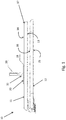
- Fig. 1 shows a toilet seat 10 according to the invention in side view.
- the toilet seat 10 comprises a lid 11 and a seating area 12, which are pivotally connected to one another via a hinge in a known manner.
- Both the cover 11 may have a motif 20 on its inner side 13 and / or outer side 14 and also the seating area 12 on its inner side 15 and / or outer side 16.
- a motif 20 according to the invention is arranged on the outer side 14 of the lid 11.
- the edge 17 of the toilet seat 10 can be seen, which can be chamfered before the printing process.
- nozzle 30 which applies a material 31 to the surface 18 of the toilet seat 10 to be printed.
- the nozzle 30, the material 31 and the distance to the surface to be printed 18 are not shown to scale here but only stylistically.
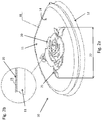
- Fig. 2a now shows the finished and printed toilet seat 10.
- a motif 20 here is a rose recognizable. This is expressly only one Exemplary embodiment. It can be seen that the motif 20 has a relief-like structure 21 over the entire area 22, which represents the rose. The remaining area of the decorative side 18 is also printed like the relief-like structure 21 of the second material and forms a color pattern layer 23. In this embodiment, the top of the motif 20 is at a height and rises from the outside 14 of the lid 11 and the rest the decorative side 18 from. It is of course also possible to further elaborate the top of the subject 20 and to provide even more relief-like structures 21 here.
- Fig. 2b shows a stylized partial cross section through the lid 11 of the toilet seat 10 in Fig. 2a , It can be seen that the motif 20 has been applied as a relief-like layer on the surface 18 of the lid 11 to be printed.
- the relief-like structure 21 and the rest of the decorative side 18 are printed with the second material and which here forms a color pattern layer 23. This results in a particularly appealing visual and haptic overall picture of the toilet seat 10.
- Fig. 3 Finally, one recognizes the structure of the motif 20 applied to the decorative side 18.
- the toilet seat 10 itself or the decorative side 18 are not shown here.
- the decorative side 18 is in Fig. 3 however, arranged below the illustrated structure of the motif 20.
- As the lowest layer here serves a bonding agent 24, which ensures good adhesion of the material of the subject 20 on the decorative side 18. This is particularly necessary when using materials with a very smooth upper surface for the toilet seat 10 in order to optimize the retention of the material 31 on the decorative side 18.
- the relief-like structure 21 is applied at least partially.
- the relief-like structure 21 does not cover the entire surface of the decorative side 18 here, but this may vary from motif 20 to motif 20.
- all areas of the relief-like structure 21 are covered by the color pattern layer 23.
- a finishing layer 25 is provided which completely covers and protects the motif 20.
- the motif 20 is thus water resistant and corrosion resistant and protected against contamination and damage. Due to the course of the finishing layer 25, the relief-like three-dimensional structure of the motif 20 is retained.
- the embodiment described here represents only an exemplary realization of the invention. This is not limited to this. On the contrary, modifications and modifications are possible.
- the relief-like structure may extend over the entire surface of the lid or the seating area.
- the combination of two-dimensional areas and relief-like structures can be combined as desired - depending on the wishes and motifs.
Landscapes
- Chemical & Material Sciences (AREA)
- Engineering & Computer Science (AREA)
- Manufacturing & Machinery (AREA)
- Materials Engineering (AREA)
- Health & Medical Sciences (AREA)
- Public Health (AREA)
- Toilet Supplies (AREA)
Abstract
Description
- Die Erfindung betrifft einen Toilettensitz der im Oberbegriff von Anspruch 1 genannten Art sowie ein Verfahren zu dessen Herstellung.
- Toilettensitze sind seit je weit verbreitet. In letzter Zeit kam immer mehr der Wunsch der Endverbraucher auf, die Toilettensitze dekorativer zu gestalten. Einige Verbraucher nutzten Aufkleber, mit denen sie ihre Toilettensitze verzierten. Aber diese halten oft nicht gut und lösen sich - insbesondere auch bei der häufigeren Einwirkung von Wasser und Reinigungsmitteln - ab. Zurück bleiben dann noch Klebereste, die den Toilettensitz unansehnlich machen.
- Es gibt auch Toilettensitze, die farbig ausgestaltet oder die mit Motiven versehen sind. Hier ist eine breite Anzahl an verschiedenen Motiven erhältlich, angefangen von Mustern, bildlichen Darstellungen von Tieren oder Pflanzen, Comicfiguren, Landschaften etc. Diese Darstellungen sind aber jeweils nur zweidimensional und wirken oft sehr einfach.
- Die
DE 296 01 540 U1 beschreibt einen Toilettensitz bei auf zumindest eine Oberfläche des Deckels und/oder der Brille wenigstens auf einem Teilbereich ein graphisches oder Dekorationselement aufweist. Beschrieben werden verschiedene Möglichkeiten dieses Dekorationselement aufzubringen, unter anderem auch aufspritzen. Es ist hierbei jedoch nicht beschrieben, dem Dekorationselement mehr optische Tiefe und Realismus zu verleihen, indem dieses reliefartig ausgestaltet wird. Vielmehr wird als bevorzugte Ausführungsform dargestellt, dass das Dekorationselement auf einer Folie ausgebildet ist und dann an gewünschter Stelle aufgebracht werden kann. Es wird also lediglich ein zweidimensionales Dekorationselement für Toilettensitze beschrieben, welches die gleichen optischen Nachteile aufweist wie andere herkömmliche Dekorationselemente, insbesondere war die verbesserte und hochwertigere Optik und Haptik betrifft. - In der
DE 10 2014 220 617 A1 wird ein Verfahren zur Weiterverarbeitung eines zumindest teilweise vorgefertigten Produktes beschrieben. Hierbei umfasst das Produkt eine Individualisierungsfläche, auf die mittels eines additiven Fertigungsverfahrens eine mehrdimensionale Individualisierung aufbringbar ist. Hierbei ist es nicht vorgesehen, die Individualisierung nach grafischen Aspekten so zu gestalten, dass sie eine besondere optische Tiefe und ein besonders realistisches dekoratives Bild abgibt, sondern sie dient vielmehr der individuellen Identifizierung eines Produktes. - Eine Verwendung eines Elements für Schreib-, Zeichen-, Markier- und/oder Malgerät oder Kosmetikgerät oder Eingabegerät für berührungsempfindliche Oberflächen wird in der
DE 10 2015 012 940 A1 beschrieben. Hier ist das mindestens eine Element ein 3D-gedrucktes Element und besteht aus einem Grundkörper und mindestens einer Struktur, die visuell erkennbar und/oder haptisch ausgebildet ist. Die Struktur kann beispielsweise erhaben sein und aus der Oberfläche des Grundkörpers hervorstehen. Auch dieses Dokument beschreibt keine Methode ein Designelement mit mehr optischer Tiefe oder mehr Realismus zu versehen und somit optisch noch ansprechender zu gestalten als bekannte Designelemente. Vielmehr zielt das Versehen des Elements mit einer Struktur darauf ab, zu verhindern, dass eine Bedienperson bei der Arbeit mit dem Element zu schnell ermüdet. - In den vorliegenden Unterlagen wird vereinfacht von einem Toilettensitz gesprochen. Damit sind sowohl der vollständige Toilettensitz als auch einzelne seiner Teile, wie Deckel und/oder Sitzbereich gemeint.
- Aufgabe der Erfindung ist es daher, ein Verfahren zur Herstellung eines Toilettensitz mit verbessertem Motiv zu schaffen, das eine haptisch und optisch ansprechendere, hochwertigere, plastischere und realistischere Darstellung mit erhöhter optischer Tiefe aufweist sowie einen Toilettensitz, der diese Anforderungen an ein verbessertes Motiv erfüllt. Diese Aufgabe wird durch die kennzeichnenden Merkmale der Ansprüche 1 und 12 gelöst, denen folgende besondere Bedeutung zukommt.
- Um einen Toilettensitz mit einem verbesserten Motiv, welches eine optisch und haptisch ansprechendere, hochwertigere, plastischere und realistischere Darstellung aufweist als herkömmliche Motive auf Toilettensitzen herzustellen, wird die Dekorseite des Toilettensitzes, auf der das zumindest bereichsweise reliefartige Motiv angeordnet werden soll, zunächst gereinigt, um es vollständig von Staub und Partikeln zu befreien. Je nach den Eigenschaften der Oberfläche der Dekorseite muss diese zuvor noch poliert und/oder geglättet und/oder geschliffen werden, um nach der Reinigung eine einwandfreie glatte und saubere Oberfläche zu erhalten. Dann wird der gewünschte Verlauf des Motivs auf der Dekorseite vorskizziert. Außerdem wird das benötigte Farbsystem, also die Zusammenstellung der benötigten Farben, um das gewünschte Ergebnis zu erzielen, ermittelt. Der gewünschte Verlauf des Reliefbereichs kann dabei als Strich oder auch als Musterverlauf ausgebildet sein.
- Schließlich wird mittels 3D-Druck ein erstes einfarbiges Material auf die Dekorseite aufgebracht, um die reliefartige Struktur zu erzeugen. Es ist dabei vorteilhaft, wenn die einzelnen Tropfen des Materials nicht zu klein ausgeführt sind, um die reliefartige Struktur zu erzeugen. Hierbei erfolgt der Auftrag dieses ersten Materials wenigstens zweimal, ggf. jedoch auch häufiger. Es hat sich eine Sprühhäufigkeit von zwei bis fünf Mal - je nach genauem Verlauf der reliefartigen Struktur - bewährt. Hierdurch kann die reliefartige Struktur besonders realistisch hergestellt werden und dabei auch, je nach gewünschtem Design, verschiedene Dicken aufweisen. Durch das Aufbringen des ersten einfarbigen Materials wird ein Reliefrohling erzeugt. Dieser bildet quasi die Kontur des dreidimensionalen Reliefs aus und zugleich auch die höchsten Bereiche der Dekorseite. Häufig hat der fertige Reliefrohling einen Querschnitt, der rechteckig ausgebildet ist oder ein gleichschenkliges Trapez bildet. Das dafür verwendete Material ist einfarbig und somit oft preisgünstiger. Es hat sich bewährt ein schwarzes Material für den Aufbau der reliefartigen Struktur zu verwenden, da dann die danach aufgebrachten Farben der Farbmusterschicht noch besser zur Geltung kommen. Ein Verlaufen verschiedener Farben beim Aufbau der reliefartigen Struktur wird vermieden.
- Dann wird ein zweites Material mittels 3D-Druck auf die Dekorseite des Toilettensitzes aufgebracht. Dieses zweite Material ist farbig und auf das spezielle Design abgestimmt. Es können also im Motiv verschiedene Farben verwendet werden, um das gewünschte Ergebnis zu erzielen. Selbstverständlich kann es auch Motive geben, bei denen nur eine einzige Farbe verwendet wird. Dabei können sowohl der Reliefrohling als auch ein oder mehrere weitere Bereiche der Dekorseite mit dem zweiten Material durch 3D-Druck bedruckt werden, so dass Bereiche des Motivs entstehen können, die eine reliefartige Struktur aufweisen und andere, die glatt bzw. eben ausgestaltet sind. Es kann auch die gesamte Dekorseite mit der reliefartigen Struktur versehen sein. Durch den Druck mit dem zweiten, farbigen Material entsteht auf der Dekorseite eine Farbmusterschicht.
- Das Aufbringen der Farbmusterschicht kann in einem Schritt erfolgen oder auch in mehreren, je nach genauem Motiv. Ggf. kann für jede verwendete Farbe ein eigener Druckvorgang durchgeführt werden. Ein Verlaufen verschiedener Farben wird durch die unter der Farbmusterschicht angeordnete reliefartige Struktur vermieden, wodurch ein stabiler Farbverlauf entsteht und die unter der Farbmusterschicht angeordnete reliefartige Struktur dafür sorgt, dass die dreidimensionale Wirkung des Motivs verstärkt wird. Die Dicke der Farbmusterschicht ist dabei üblicherweise geringer, als die Dicke der reliefartigen Struktur.
- Der Auswahl des Motivs sind dabei keine Grenzen gesetzt und es können Tiere, Pflanzen, Landschaften, Comicfiguren, Muster, Gemälde usw. umgesetzt werden. Es können je nach Motiv auch mehrere reliefartige Strukturen vorgesehen sein, die dann gemeinschaftlich und mit den weiteren Bereichen der Dekorseite mit dem zweiten farbigen Material bedruckt werden. Die verwendeten Druckverfahren kombinieren dabei einen klassischen 3D-Druck mit einem Tintenstrahldruckverfahren. Durch das erfindungsgemäße Druckverfahren wirkt das entstandene Motiv plastischer, realistischer und lebendiger, die Farben wirken frischer und das Motiv hat eine ansprechende und hochwertige Optik und Haptik und besitzt mehr optische Tiefe. Das Motiv erhält durch das erfindungsgemäße Herstellungsverfahren eine dreidimensionale Relieftextur. Das Verfahren kann in Serie durchgeführt werden, um eine große Anzahl an Toilettensitzen herzustellen.
- Beim Auftrag der verschiedenen Materialien muss sichergestellt werden, dass die Dekorseite des Toilettensitzes nicht verschoben wird, damit die aufgetragene Farbmusterschicht mit dem Verlauf der reliefartigen Struktur übereinstimmt, um ein gutes Ergebnis zu erzielen.
- In einem bevorzugten Ausführungsbeispiel wird zunächst ein Haftvermittler oder ein Stabilisierungsmittel auf die Dekorseite aufgebracht, bevor mit dem Auftrag des ersten und/oder des zweiten Materials begonnen wird. Hierdurch wird die Haftung der reliefartigen Struktur und der Farbstrukturschicht an der Dekorseite des Toilettensitzes verbessert. Haftvermittler oder ein Stabilisierungsmittel werden beispielsweise verwendet, wenn der Korpus des Toilettensitzes aus einem thermoplastischen Kunststoff, wie PVC oder Acrylglas, aus Glas, Gestein, Harnstoff-Formaldehyd usw. besteht. Diese Stabilisierungsschicht bzw. der Haftvermittler können beispielsweise aus einer Folie oder Platte bestehen, die auf die Dekorseite des Toilettensitzes aufgebracht wird. Als Mittel kann beispielsweise ein Kaliumpermanganathaltiges Mittel verwendet werden, da dies stark oxidierend wirkt. Außerdem können auch transparente Polymere verwendet werden, beispielsweise eine transparente Polyethylenterephthalat-Platte. Besteht der Korpus aus einem anderen Material, mit rauer Oberfläche wie ein Holzwerkstoff oder Bambus, kann oft auf eine Stabilisierungsschicht und/oder einen Haftvermittler verzichtet werden, da die Haftung des Materials an der Dekorseite auch so ausreichend ist.
- Das erste und/oder das zweite Material werden vorzugsweise über wenigstens eine Düse auf die Dekorseite des Toilettensitzes aufgebracht. Hierbei wird das Material bevorzugterweise aufgespritzt. Die Düse kann dabei teil eines Auftragskopfes sein, an dem auch - bei der Verwendung von unter UV-Licht aushärtenden Materialien - direkt eine UV-Lichtquelle angeordnet sein kann, um nach dem Auftrag des Materials dieses auch gleich aushärten zu lassen. Durch ein mehrfaches Aufsprühen des ersten Materials entsteht so der gewünschte Reliefrohling. Die Verwendung von Materialien die unter UV-Licht aushärten ist deshalb vorteilhaft, weil dann die Aushärtung der Materialien gut gesteuert werden kann, ebenso wie der Zeitpunkt der Aushärtung des Materials, wobei dabei auch noch die genauen Bereiche, die von dem UV-Licht bestrahlt werden, gezielt angesteuert werden können. Dabei können sowohl das erste und/ oder das zweite Material unter UV-Licht aushärten. Die reliefartige Struktur und das Motiv an sich können in Verfahren gedruckt werden, welche 3D-Druck und Tintenstrahldruck kombinieren. Beide Materialien können dabei unter UV-Licht aushärten. Selbstverständlich ist es auch möglich, zwei verschiedene Druckprozesse durchlaufen zu lassen und nur für eines der beiden ein Material zu verwenden, welches unter UV-Licht aushärtet.
- In einem bevorzugten Ausführungsbeispiel wird nach dem Aufbringen des zweiten farbigen Materials noch eine Abschlussschicht auf das Motiv aufgebracht. Diese dient der Versiegelung sowohl der reliefartigen Struktur als auch der Farbmusterschicht und sichert so das gesamte Motiv an sich. Die reliefartige Struktur ist noch spürbar, aber es wird vermieden, dass sich kleine Öffnungen oder feine Strukturen darin befinden, in welchen sich Schmutz oder Mikroorganismen ansiedeln könnten. Dies ist insbesondere bei dem geplanten Einsatz im Sanitärbereich wichtig. Außerdem wird das Motiv durch die Abschlussschicht wasserbeständiger und korrosionsbeständiger und vor Beschädigungen geschützt, bzw. das Abbrechen oder Abfallen des Motives wird verhindert. Der Toilettensitz wird auch biegesteifer. Vorteilhafterweise besteht die Abschlussschicht dabei aus einem unter UV-Licht aushärtenden Lack, der nach dem Aufbringen auf das Motiv bzw. den Toilettensitz zunächst für mehrere Minuten, z.B. acht bis 20 bei einer etwas erhöhten Temperatur wie beispielsweise 20°C bis 30°C ruhen gelassen wird, damit der Lack sich setzen kann und ggf. beim Auftragen aufgetretene Bläschen zusammengefallen sind. Erst danach wird der Lack unter UV-Licht gehärtet, um das Motiv zu versiegeln. Als Lichtquelle für das erforderliche UV-Licht kann auch hier wieder die gleiche UV-Lichtquelle verwendet werden wie für den Auftrag des Materials des Motivs. Der Lack sollte dabei am besten farblos sein, um die Farben des Motivs nicht zu verfälschen. Durch das Aufbringen der Abschlussschicht wird die Oberfläche des Motivs von einem Benutzer als unebenes dreidimensionales Reliefmuster wahrgenommen.
- Bevorzugt wird für den Druck des Motivs als erstes Material ein kostengünstigeres schwarzes Material verwendet, welches dann die reliefartige Struktur bildet und als zweites Material ein farbiges Material, welches sich aus vier Farben zusammensetzt, am besten als CMYW-System (cyan, magenta, gelb, weiß). Hierdurch erhält man in Kombination mit dem schwarzen Material der reliefartigen Struktur ein Fünf-Farbsystem (CMYKW - cyan, magenta, gelb, schwarz, weiß) und so können alle gewünschten Farbschattierungen für das Motiv zusammen gemischt werden, um einen optisch ansprechenden Farbverlauf zu bilden. Wenn das Material für den Aufbau der reliefartigen Struktur schwarz ist, werden für den Aufbau der Farbmusterschicht nur noch die anderen vier Farben verwendet. Die Dicke der reliefartigen Struktur kann dabei beispielsweise 0,8 mm bis 2 mm betragen, die Dicke der Farbmusterschicht beispielsweise 0,1 mm bis 0,5 mm. Es sind aber auch andere Verhältnisse denkbar.
- Einen weiteren Vorteil beim Drucken erfährt man, wenn man den Rand des Toilettensitzes vor dem Druckvorgang anfast bzw. den Toilettensitz entgratet. Hierdurch kann das Material bis zum Rand des Toilettensitzes gleichmäßig und gut haftend aufgebracht werden und es werden eventuelle bei der Herstellung des Toilettensitzes an sich aufgetretene Grate entfernt, um ein optimales Druckergebnis zu erhalten.
- Vorteilhafterweise ist die Druckmaschine so ausgebildet, dass sie nach der Beendigung des Druckprozesses in einen Stand-By-Modus geht oder sich vollständig abschaltet. So wird unnötiger Energieverbrauch vermieden.
- Wenn ein im UV-Licht aushärtendes Material für den Druck verwendet wird, kann dieses durch LEDs erzeugt werden. Dies ist eine besonders energiearme Art der Erzeugung von Licht und der Aushärtungsprozess kann gezielt ausgeführt werden, indem das Material dem Licht ausgesetzt wird.
- Um ein gewünschtes Motiv auf einen Toilettensitz zu drucken, kann es vorher an einem Computer durch ein passendes Computerprogramm aufbereitet werden, um die richtigen Druckparameter zu generieren und den gewünschten Druck des Motivs mit der vollständigen oder teilweisen reliefartigen Struktur durchführen zu können.
- Erfindungsgemäße Toilettensitze weisen zumindest ein bereichsweise reliefartiges Motiv auf und umfassen einen Sitzbereich und einen Deckel, welcher schwenkbar am Sitzbereich angeordnet ist. Das Motiv kann dabei auf der Innenseite und/oder der Außenseite des Sitzbereichs und/oder des Deckels angeordnet sein. Es können an einem Toilettensitz auch mehrere Motive angeordnet sein, wobei identisch ähnliche oder auch unterschiedliche Motive gewählt werden können.
- Das auf den Toilettensitz aufgebrachte Motiv weist wenigstens einen Bereich auf, in dem es eine reliefartige Struktur besitzt, wobei vorteilhafterweise das auf dem Toilettensitz befindliche Motiv von der reliefartigen Struktur aufgegriffen bzw. nachempfunden wird, so dass das aufgedruckte Muster des Motivs sich in der reliefartigen Struktur wiederfindet. Hierdurch entsteht ein Zusammenspiel aus dem aufgedruckten Muster und dem Relief, welches den optischen Gesamteindruck, aber auch die Haptik des Toilettensitzes verbessert und verstärkt.
- Der Korpus des Toilettensitzes selbst kann dabei aus einem beliebigen Material bestehen, beispielsweise aus MDF, HDF, Spanholz, Sperrholz, massivem Holz, Bambus, Glas, Harnstoff-Formaldehyd, Gestein, einem Kunststoff, wie z.B. PVC oder Polyacryl, aus einem Metall oder aus einem Verbundwerkstoff. Das Material des Toilettensitzes an sich ist für die Erfindung unerheblich, da die reliefartige Struktur auf nahezu jedes Material aufgebracht werden kann.
- Das erfindungsgemäße Herstellungsverfahren hat unter anderem den Vorteil, dass quasi jedes gewünschte Motiv mit einer gewünschten Menge an reliefartiger Struktur in allen möglichen Farben herstellbar ist. Hierdurch können auch Prototypen oder individuell gestaltete Toilettensitze auf einfach Weise hergestellt werden und das Motiv wirkt durch die reliefartige Struktur lebendiger und intensiver sowohl in optischer als auch in haptischer Sicht als herkömmliche Toilettensitze.
- Weitere Vorteile und Ausführungsformen ergeben sich aus der nachfolgenden Beschreibung, den Unteransprüchen sowie den Zeichnungen. In den Fig. ist ein erfindungsgemäßer Toilettensitz in einem Ausführungsbeispiel dargestellt. Es zeigen:
- Fig. 1:
- einen erfindungsgemäßen Toilettensitz während des Druckprozesses, in Seitenansicht,
- Fig. 2a:
- einen Toilettensitz mit fertig gedrucktem Motiv auf dem Deckel perspektivisch von oben,
- Fig. 2b:
- eine Vergrößerung eines stilisierten Querschnitts durch den Deckel des Toilettensitzes aus
Fig. 2a , - Fig. 3:
- ein Querschnitt durch den Aufbau des auf die Dekorseite aufgebrachten Motivs.
-
Fig. 1 zeigt einen erfindungsgemäßen Toilettensitz 10 in Seitenansicht. Der Toilettensitz 10 umfasst einen Deckel 11 und einen Sitzbereich 12, die über ein Gelenk miteinander schwenkbar in bekannter Weise verbunden sind. Sowohl der Deckel 11 kann auf seiner Innenseite 13 und/oder Außenseite 14 ein Motiv 20 aufweisen als auch der Sitzbereich 12 an seiner Innenseite 15 und/oder Außenseite 16. Am häufigsten wird ein erfindungsgemäßes Motiv 20 auf der Außenseite 14 des Deckels 11 angeordnet. Weiterhin ist der Rand 17 des Toilettensitzes 10 zu erkennen, der vor dem Druckprozess angefast werden kann. - Man erkennt eine Düse 30, die ein Material 31 auf die zu bedruckende Oberfläche 18 des Toilettensitzes 10 aufbringt. Die Düse 30, das Material 31 und der Abstand zu der zu bedruckenden Oberfläche 18 sind hier nicht maßstabsgetreu sondern nur stilistisch dargestellt.
-
Fig. 2a zeigt nun den fertig hergestellten und bedruckten Toilettensitz 10. Als Motiv 20 ist hier eine Rose erkennbar. Dies ist ausdrücklich nur ein Ausführungsbeispiel zur Veranschaulichung. Man erkennt, dass das Motiv 20 eine reliefartige Struktur 21 über den ganzen Bereich 22 aufweist, der die Rose darstellt. Der restliche Bereich der Dekorseite 18 ist ebenfalls wie die reliefartige Struktur 21 von dem zweiten Material bedruckt und bildet dabei eine Farbmusterschicht 23. In diesem Ausführungsbeispiel ist die Oberseite des Motivs 20 auf einer Höhe und hebt sich von der Außenseite 14 des Deckels 11 und dem Rest der Dekorseite 18 ab. Es ist selbstverständlich auch möglich, die Oberseite des Motivs 20 noch weiter auszuarbeiten und auch hier noch weitere reliefartige Strukturen 21 vorzusehen. - Die Vergrößerung aus
Fig. 2b zeigt einen stilisierten Teilquerschnitt durch den Deckel 11 des Toilettensitzes 10 inFig. 2a . Man erkennt, dass das Motiv 20 als reliefartige Schicht auf die zu bedruckende Oberfläche 18 des Deckels 11 aufgebracht wurde. Die reliefartige Struktur 21 und der Rest der Dekorseite 18 sind mit dem zweiten Material bedruckt und welches hier eine Farbmusterschicht 23 bildet. So ergibt sich ein besonders ansprechendes optisches und haptisches Gesamtbild des Toilettensitzes 10. - In
Fig. 3 erkennt man schließlich den Aufbau des auf die Dekorseite 18 aufgebrachten Motivs 20. Der Toilettensitz 10 selbst bzw. die Dekorseite 18 sind hier nicht dargestellt. Die Dekorseite 18 ist inFig. 3 jedoch unterhalb des dargestellten Aufbaus des Motivs 20 angeordnet. Als unterste Schicht dient hier ein Haftvermittler 24, der für eine gute Haftung des Materials des Motivs 20 an der Dekorseite 18 sorgt. Dieser ist insbesondere bei der Verwendung von Materialien mit sehr glatter Oberseite für den Toilettensitz 10 notwendig, um den Halt der Materials 31 an der Dekorseite 18 zu optimieren. - Auf den Haftvermittler 24 wird die reliefartige Struktur 21 zumindest bereichsweise aufgebracht. Die reliefartige Struktur 21 bedeckt hier nicht die gesamte Oberfläche der Dekorseite 18, aber dies kann von Motiv 20 zu Motiv 20 variieren. Die dann angebrachte Farbmusterschicht 23 bedeckt in diesem Ausführungsbeispiel die beiden in
Fig. 3 gezeigten Bereiche der reliefartigen Struktur 21 nicht, was bedeutet, dass diese hier schwarz bleiben, wenn schwarzes Material für den Aufbau der reliefartigen Struktur 21 verwendet wird. Je nach Motiv 20 werden jedoch auch alle Bereiche der reliefartigen Struktur 21 von der Farbmusterschicht 23 bedeckt. - Schließlich ist noch eine Abschlussschicht 25 vorgesehen, die das Motiv 20 vollständig bedeckt und schützt. Das Motiv 20 wird so wasserbeständig und korrosionsbeständig und vor Verunreinigungen und Beschädigungen geschützt. Durch den Verlauf der Abschlussschicht 25 bleibt die reliefartige dreidimensionale Struktur des Motivs 20 erhalten.
- Abschließend sei noch darauf hingewiesen, dass die hier beschriebene Ausführungsform lediglich eine beispielhafte Verwirklichung der Erfindung darstellt. Diese ist nicht darauf beschränkt. Es sind vielmehr noch Abänderungen und Abwandlungen möglich. So kann sich die reliefartige Struktur auch über die gesamte Oberfläche des Deckels oder des Sitzbereiches erstrecken. Die Kombination aus zweidimensionalen Bereichen und reliefartigen Strukturen kann dabei beliebig - je nach Wunsch und Motiv - kombiniert werden.
-
- 10
- Toilettensitz
- 11
- Deckel
- 12
- Sitzbereich
- 13
- Innenseite von 11
- 14
- Außenseite von 11
- 15
- Innenseite von 12
- 16
- Außenseite von 12
- 17
- Rand von 10
- 18
- Dekorseite
- 20
- Motiv
- 21
- reliefartige Struktur
- 22
- Bereich
- 23
- Farbmusterschicht
- 24
- Haftvermittler
- 25
- Abschlussschicht
- 30
- Düse
- 31
- Material
Claims (14)
- Verfahren zur Herstellung eines mit einem zumindest bereichsweise reliefartigen Motiv (20) versehenen Toilettensitzes (10),
wobei auf dem Toilettensitz (10) auf wenigstens einer Seite das Motiv (20) aufgebracht wird, im Weiteren Dekorseite (18) genannt,
wobei zunächst die Dekorseite (18) gereinigt und ggf. noch geglättet und/oder geschliffen und/oder poliert wird,
danach der geplante Verlauf des Motivs (20) auf der Dekorseite (18) vorskizziert wird,
dann ein erstes einfarbiges Material (31) durch 3D-Druck in Form der gewünschten reliefartigen Struktur (21) des Motivs (20) aufgebracht wird, um einen Reliefrohling zu bilden
und schließlich ein zweites, farbiges Material durch 3D-Druck auf die Dekorseite (18) und den Reliefrohling aufgebracht wird, wobei eine Farbmusterschicht (23) gebildet wird, um das gewünschte farbige reliefartige Motiv (20) zu erzielen. - Verfahren nach Anspruch 1, dadurch gekennzeichnet, dass auf der Dekorseite (18) zunächst ein Haftvermittler (24) und/oder ein Stabilisierungsmittel aufgebracht werden, bevor die Dekorseite (18) einem Reinigungs- und/oder Glättungsschritt und/oder dem Druckprozess unterzogen wird.
- Verfahren nach einem der Ansprüche 1 oder 2, dadurch gekennzeichnet, dass wenigstens eine Düse (30) das erste Material (31) auf die Dekorseite (18) des Toilettensitzes (10) aufbringt bzw. aufsprüht.
- Verfahren nach einem der Ansprüche 1 bis 3, dadurch gekennzeichnet, dass das erste Material (31) und/oder das zweite Material, welches für das Aufbringen des Motivs (20) und/oder für das Aufbringen der reliefartigen Struktur (21) verwendet wird, ein unter UV-Licht aushärtendes Material (31) ist.
- Verfahren nach einem oder mehreren der vorherigen Ansprüche, dadurch gekennzeichnet, dass nach dem Aufbringen des zweiten farbigen Materials noch eine Abschlussschicht (25) aufgebracht wird, um das reliefartige Motiv (20) zu schützen und/oder zu versiegeln.
- Verfahren nach Anspruch 5, dadurch gekennzeichnet, dass die Abschlussschicht (25) aus einem unter UV-Licht aushärtenden Lack besteht und nach dem Aufbringen zunächst für mehrere Minuten, insbesondere 8 bis 20 Minuten, ruhen gelassen wird, bevor der Lack durch Bestrahlung mit UV-Licht ausgehärtet wird.
- Verfahren nach einem oder mehreren der vorherigen Ansprüche, dadurch gekennzeichnet, dass für das Druckverfahren als erstes Material (31) schwarzes Material und als zweites Material farbiges Material, insbesondere in vier verschiedenen Farben, verwendet wird.
- Verfahren nach einem oder mehreren der vorherigen Ansprüche, dadurch gekennzeichnet, dass der Rand (17) des Toilettensitzes (10) vor der Durchführung des Druckvorgangs angefast und/oder der Toilettensitz (10) entgratet wird.
- Verfahren nach einem oder mehreren der vorherigen Ansprüche, dadurch gekennzeichnet, dass nach Beendigung des Druckvorgangs sich die Maschine, die den Druckprozess durchführt, automatisch abschaltet oder in einen Stand-By-Modus geht.
- Verfahren nach einem oder mehreren der vorherigen Ansprüche, dadurch gekennzeichnet, dass das Aushärten des verwendeten Materials (31) und/ oder der Abschlussschicht (25) durch Bestrahlung mit von einer oder mehreren LEDs erzeugtem Licht erfolgt.
- Verfahren nach einem oder mehreren der vorherigen Ansprüche, dadurch gekennzeichnet, dass das zu druckende Motiv (20) von einem Computer derartig verarbeitet wird, dass die Parameter sowohl für den Druck der reliefartigen Struktur als auch für den Druck des Motivs (20) an sich generiert werden.
- Toilettensitz (10) mit wenigstens einem zumindest bereichsweise reliefartigen Motiv (20), hergestellt nach einem oder mehreren der vorhergehenden Ansprüche,
mit einem Sitzbereich (12) und einem Deckel (11), der schwenkbar am Sitzbereich (12) angeordnet ist,
wobei das Motiv (20) auf der Innenseite (13) und/oder der Außenseite (14) des Deckels (11) und/oder auf der Innenseite (15) und/oder der Außenseite (16) des Sitzbereichs (12) vorgesehen ist. - Toilettensitz (10) nach Anspruch 11, dadurch gekennzeichnet, dass die reliefartige Struktur (21) das auf dem Toilettensitz (10) befindliche Motiv (20) nachempfindet.
- Toilettensitz (10) nach einem der Ansprüche 11 oder 12, dadurch gekennzeichnet, dass der Toilettensitz (10) aus MDF, HDF, Spanholz, Sperrholz, massivem Holz, Bambus, Glas, Harnstoff-Formaldehyd, Gestein, einem Kunststoff, wie z.B. PVC oder Polyacryl, aus einem Metall oder aus einem Verbundwerkstoff besteht.
Applications Claiming Priority (1)
| Application Number | Priority Date | Filing Date | Title |
|---|---|---|---|
| DE102018107066.7A DE102018107066A1 (de) | 2018-03-26 | 2018-03-26 | Toilettensitz mit wenigstens einem reliefartigen Motiv und Verfahren zur Herstellung eines solchen Toilettensitzes |
Publications (2)
| Publication Number | Publication Date |
|---|---|
| EP3545804A1 true EP3545804A1 (de) | 2019-10-02 |
| EP3545804B1 EP3545804B1 (de) | 2021-04-21 |
Family
ID=65903910
Family Applications (1)
| Application Number | Title | Priority Date | Filing Date |
|---|---|---|---|
| EP19163654.7A Active EP3545804B1 (de) | 2018-03-26 | 2019-03-19 | Verfahren zur herstellung eines toilettensitzes mit wenigstens einem teilweise reliefartigen motiv und ein nach diesem verfahren hergestellter toilettensitz |
Country Status (2)
| Country | Link |
|---|---|
| EP (1) | EP3545804B1 (de) |
| DE (1) | DE102018107066A1 (de) |
Citations (7)
| Publication number | Priority date | Publication date | Assignee | Title |
|---|---|---|---|---|
| DE29601540U1 (de) | 1996-01-30 | 1996-07-11 | Seeholzer, Christine, 85435 Erding | Toilettenaufsatz |
| JP2004285628A (ja) * | 2003-03-20 | 2004-10-14 | Toto Ltd | 便座装置 |
| US20110083258A1 (en) * | 2009-10-13 | 2011-04-14 | Nora Lee Hastings | Cosmetic toilet seat and lid |
| US20140047627A1 (en) * | 2011-04-08 | 2014-02-20 | Topseat International, Inc. | Composite toilet lid and seat and method for manufacturing |
| DE102014220617A1 (de) | 2014-10-10 | 2016-04-14 | Arburg Gmbh + Co Kg | Verfahren zur Weiterverarbeitung eines vorgefertigten Produktes sowie zugehöriges vorgefertigtes Produkt |
| WO2016191255A1 (en) * | 2015-05-27 | 2016-12-01 | Nike Innovate C.V. | Color density based thickness compensation printing |
| DE102015012940A1 (de) | 2015-10-05 | 2017-04-06 | Staedtler Mars Gmbh & Co. Kg | Verwendung von Elementen für Schreib-. Zeichen-. Markier- und/oder Malgeräte oder Kosmetikgeräte oder Eingabegeräte |
Family Cites Families (2)
| Publication number | Priority date | Publication date | Assignee | Title |
|---|---|---|---|---|
| US6337122B1 (en) * | 2000-01-11 | 2002-01-08 | Micron Technology, Inc. | Stereolithographically marked semiconductors devices and methods |
| DE102014104321A1 (de) * | 2014-03-27 | 2015-10-01 | Leonhard Kurz Stiftung & Co. Kg | Formkörper und Verfahren zu dessen Herstellung |
-
2018
- 2018-03-26 DE DE102018107066.7A patent/DE102018107066A1/de not_active Withdrawn
-
2019
- 2019-03-19 EP EP19163654.7A patent/EP3545804B1/de active Active
Patent Citations (7)
| Publication number | Priority date | Publication date | Assignee | Title |
|---|---|---|---|---|
| DE29601540U1 (de) | 1996-01-30 | 1996-07-11 | Seeholzer, Christine, 85435 Erding | Toilettenaufsatz |
| JP2004285628A (ja) * | 2003-03-20 | 2004-10-14 | Toto Ltd | 便座装置 |
| US20110083258A1 (en) * | 2009-10-13 | 2011-04-14 | Nora Lee Hastings | Cosmetic toilet seat and lid |
| US20140047627A1 (en) * | 2011-04-08 | 2014-02-20 | Topseat International, Inc. | Composite toilet lid and seat and method for manufacturing |
| DE102014220617A1 (de) | 2014-10-10 | 2016-04-14 | Arburg Gmbh + Co Kg | Verfahren zur Weiterverarbeitung eines vorgefertigten Produktes sowie zugehöriges vorgefertigtes Produkt |
| WO2016191255A1 (en) * | 2015-05-27 | 2016-12-01 | Nike Innovate C.V. | Color density based thickness compensation printing |
| DE102015012940A1 (de) | 2015-10-05 | 2017-04-06 | Staedtler Mars Gmbh & Co. Kg | Verwendung von Elementen für Schreib-. Zeichen-. Markier- und/oder Malgeräte oder Kosmetikgeräte oder Eingabegeräte |
Also Published As
| Publication number | Publication date |
|---|---|
| EP3545804B1 (de) | 2021-04-21 |
| DE102018107066A1 (de) | 2019-09-26 |
Similar Documents
| Publication | Publication Date | Title |
|---|---|---|
| EP2497650B1 (de) | Verfahren zur bearbeitung einer strukturierten oberfläche eines prägewerkzeuges | |
| DE10323412B4 (de) | Verfahren und Vorrichtung zum Herstellen eines Bauteils mit einer Oberfläche vorbestimmten Aussehens | |
| EP2801456B1 (de) | Verfahren der Oberflächenstrukturierung | |
| DE102005046264A1 (de) | Oberflächenbearbeitung mit Laserwerkzeug | |
| EP2452829B2 (de) | Verfahren zum Aufbringen eines Dekors auf eine Holzwerkstoffplatte | |
| DE20317527U1 (de) | Fußbodenpaneel | |
| DE102009044802A1 (de) | Verfahren und Vorrichtung zur Erzeugung einer dreidimensionalen Oberflächenstruktur auf einem Werkstück | |
| EP2873535A1 (de) | Werkstücke mit oberflächenstrukturierter Dekoroberfläche | |
| DE69529862T2 (de) | Dekorierter Formkörper | |
| EP3634739B1 (de) | Dekoranordnung für eine innenverkleidung eines kraftfahrzeuges sowie verfahren zur herstellung einer solchen | |
| EP2301762B1 (de) | Verfahren und eine Vorrichtung zum Aufbringen einer Struktur auf eine Holzwerkstoffplatte | |
| EP3545804B1 (de) | Verfahren zur herstellung eines toilettensitzes mit wenigstens einem teilweise reliefartigen motiv und ein nach diesem verfahren hergestellter toilettensitz | |
| EP3656566B1 (de) | Verfahren zum bedrucken von länglichen profilleisten und profilleisten | |
| DE102022116423B4 (de) | Presswerkzeug und Verfahren zur Herstellung eines Presswerkzeugs | |
| DE102004009854B4 (de) | Verfahren zur Gestaltung einer dekorierten Kunststoffoberfläche | |
| DE102009018832A1 (de) | Beschichteter Träger mit Fase-bzw.Radiusprägung und Verfahren zur Herstellung | |
| DE4208034A1 (de) | Verfahren zum herstellen eines farbauftrages sowie danach hergestelltes produkt | |
| DE102009058209A1 (de) | Verfahren zur Herstellung eines Schmuckeinsatzes für einen Fingernagel sowie Verfahren zum Verzieren eines Fingernagels | |
| DE323079C (de) | Vorrichtung zur Herstellung von Eichenholzkern-Imitationen | |
| DE102022116429A1 (de) | Verfahren zur Bearbeitung einer Oberfläche eines Presswerkzeugs und Polierwerkzeug zum Polieren einer Oberfläche eines Presswerkzeugs | |
| DE2602120C2 (de) | ||
| DE10003412A1 (de) | Verfahren zur Verschönerung/Veredelung eines dreidimensionalen Rings aus Holz, Holzwerkstoff oder Kunststoff, sowie einen mit diesem Verfahren veredelten Ring | |
| DE102022116426A1 (de) | Verfahren zur Bearbeitung einer Oberfläche eines Presswerkzeugs | |
| WO2024231155A1 (de) | Verfahren zur herstellung einer werkstoffplatte | |
| WO2018010834A1 (de) | Holzwerkstoff mit beschichtung und verfahren zu dessen herstellung |
Legal Events
| Date | Code | Title | Description |
|---|---|---|---|
| PUAI | Public reference made under article 153(3) epc to a published international application that has entered the european phase |
Free format text: ORIGINAL CODE: 0009012 |
|
| STAA | Information on the status of an ep patent application or granted ep patent |
Free format text: STATUS: THE APPLICATION HAS BEEN PUBLISHED |
|
| AK | Designated contracting states |
Kind code of ref document: A1 Designated state(s): AL AT BE BG CH CY CZ DE DK EE ES FI FR GB GR HR HU IE IS IT LI LT LU LV MC MK MT NL NO PL PT RO RS SE SI SK SM TR |
|
| AX | Request for extension of the european patent |
Extension state: BA ME |
|
| STAA | Information on the status of an ep patent application or granted ep patent |
Free format text: STATUS: REQUEST FOR EXAMINATION WAS MADE |
|
| 17P | Request for examination filed |
Effective date: 20191021 |
|
| RBV | Designated contracting states (corrected) |
Designated state(s): AL AT BE BG CH CY CZ DE DK EE ES FI FR GB GR HR HU IE IS IT LI LT LU LV MC MK MT NL NO PL PT RO RS SE SI SK SM TR |
|
| GRAP | Despatch of communication of intention to grant a patent |
Free format text: ORIGINAL CODE: EPIDOSNIGR1 |
|
| STAA | Information on the status of an ep patent application or granted ep patent |
Free format text: STATUS: GRANT OF PATENT IS INTENDED |
|
| INTG | Intention to grant announced |
Effective date: 20201222 |
|
| GRAS | Grant fee paid |
Free format text: ORIGINAL CODE: EPIDOSNIGR3 |
|
| GRAA | (expected) grant |
Free format text: ORIGINAL CODE: 0009210 |
|
| STAA | Information on the status of an ep patent application or granted ep patent |
Free format text: STATUS: THE PATENT HAS BEEN GRANTED |
|
| AK | Designated contracting states |
Kind code of ref document: B1 Designated state(s): AL AT BE BG CH CY CZ DE DK EE ES FI FR GB GR HR HU IE IS IT LI LT LU LV MC MK MT NL NO PL PT RO RS SE SI SK SM TR |
|
| REG | Reference to a national code |
Ref country code: GB Ref legal event code: FG4D Free format text: NOT ENGLISH |
|
| REG | Reference to a national code |
Ref country code: CH Ref legal event code: EP |
|
| REG | Reference to a national code |
Ref country code: DE Ref legal event code: R096 Ref document number: 502019001244 Country of ref document: DE |
|
| REG | Reference to a national code |
Ref country code: IE Ref legal event code: FG4D Free format text: LANGUAGE OF EP DOCUMENT: GERMAN |
|
| REG | Reference to a national code |
Ref country code: AT Ref legal event code: REF Ref document number: 1383745 Country of ref document: AT Kind code of ref document: T Effective date: 20210515 |
|
| REG | Reference to a national code |
Ref country code: NL Ref legal event code: FP |
|
| REG | Reference to a national code |
Ref country code: LT Ref legal event code: MG9D |
|
| PG25 | Lapsed in a contracting state [announced via postgrant information from national office to epo] |
Ref country code: FI Free format text: LAPSE BECAUSE OF FAILURE TO SUBMIT A TRANSLATION OF THE DESCRIPTION OR TO PAY THE FEE WITHIN THE PRESCRIBED TIME-LIMIT Effective date: 20210421 Ref country code: LT Free format text: LAPSE BECAUSE OF FAILURE TO SUBMIT A TRANSLATION OF THE DESCRIPTION OR TO PAY THE FEE WITHIN THE PRESCRIBED TIME-LIMIT Effective date: 20210421 Ref country code: HR Free format text: LAPSE BECAUSE OF FAILURE TO SUBMIT A TRANSLATION OF THE DESCRIPTION OR TO PAY THE FEE WITHIN THE PRESCRIBED TIME-LIMIT Effective date: 20210421 Ref country code: BG Free format text: LAPSE BECAUSE OF FAILURE TO SUBMIT A TRANSLATION OF THE DESCRIPTION OR TO PAY THE FEE WITHIN THE PRESCRIBED TIME-LIMIT Effective date: 20210721 |
|
| PG25 | Lapsed in a contracting state [announced via postgrant information from national office to epo] |
Ref country code: IS Free format text: LAPSE BECAUSE OF FAILURE TO SUBMIT A TRANSLATION OF THE DESCRIPTION OR TO PAY THE FEE WITHIN THE PRESCRIBED TIME-LIMIT Effective date: 20210821 Ref country code: GR Free format text: LAPSE BECAUSE OF FAILURE TO SUBMIT A TRANSLATION OF THE DESCRIPTION OR TO PAY THE FEE WITHIN THE PRESCRIBED TIME-LIMIT Effective date: 20210722 Ref country code: RS Free format text: LAPSE BECAUSE OF FAILURE TO SUBMIT A TRANSLATION OF THE DESCRIPTION OR TO PAY THE FEE WITHIN THE PRESCRIBED TIME-LIMIT Effective date: 20210421 Ref country code: SE Free format text: LAPSE BECAUSE OF FAILURE TO SUBMIT A TRANSLATION OF THE DESCRIPTION OR TO PAY THE FEE WITHIN THE PRESCRIBED TIME-LIMIT Effective date: 20210421 Ref country code: PT Free format text: LAPSE BECAUSE OF FAILURE TO SUBMIT A TRANSLATION OF THE DESCRIPTION OR TO PAY THE FEE WITHIN THE PRESCRIBED TIME-LIMIT Effective date: 20210823 Ref country code: NO Free format text: LAPSE BECAUSE OF FAILURE TO SUBMIT A TRANSLATION OF THE DESCRIPTION OR TO PAY THE FEE WITHIN THE PRESCRIBED TIME-LIMIT Effective date: 20210721 Ref country code: PL Free format text: LAPSE BECAUSE OF FAILURE TO SUBMIT A TRANSLATION OF THE DESCRIPTION OR TO PAY THE FEE WITHIN THE PRESCRIBED TIME-LIMIT Effective date: 20210421 Ref country code: LV Free format text: LAPSE BECAUSE OF FAILURE TO SUBMIT A TRANSLATION OF THE DESCRIPTION OR TO PAY THE FEE WITHIN THE PRESCRIBED TIME-LIMIT Effective date: 20210421 |
|
| REG | Reference to a national code |
Ref country code: DE Ref legal event code: R097 Ref document number: 502019001244 Country of ref document: DE |
|
| PG25 | Lapsed in a contracting state [announced via postgrant information from national office to epo] |
Ref country code: RO Free format text: LAPSE BECAUSE OF FAILURE TO SUBMIT A TRANSLATION OF THE DESCRIPTION OR TO PAY THE FEE WITHIN THE PRESCRIBED TIME-LIMIT Effective date: 20210421 Ref country code: SM Free format text: LAPSE BECAUSE OF FAILURE TO SUBMIT A TRANSLATION OF THE DESCRIPTION OR TO PAY THE FEE WITHIN THE PRESCRIBED TIME-LIMIT Effective date: 20210421 Ref country code: DK Free format text: LAPSE BECAUSE OF FAILURE TO SUBMIT A TRANSLATION OF THE DESCRIPTION OR TO PAY THE FEE WITHIN THE PRESCRIBED TIME-LIMIT Effective date: 20210421 Ref country code: CZ Free format text: LAPSE BECAUSE OF FAILURE TO SUBMIT A TRANSLATION OF THE DESCRIPTION OR TO PAY THE FEE WITHIN THE PRESCRIBED TIME-LIMIT Effective date: 20210421 Ref country code: SK Free format text: LAPSE BECAUSE OF FAILURE TO SUBMIT A TRANSLATION OF THE DESCRIPTION OR TO PAY THE FEE WITHIN THE PRESCRIBED TIME-LIMIT Effective date: 20210421 Ref country code: EE Free format text: LAPSE BECAUSE OF FAILURE TO SUBMIT A TRANSLATION OF THE DESCRIPTION OR TO PAY THE FEE WITHIN THE PRESCRIBED TIME-LIMIT Effective date: 20210421 Ref country code: ES Free format text: LAPSE BECAUSE OF FAILURE TO SUBMIT A TRANSLATION OF THE DESCRIPTION OR TO PAY THE FEE WITHIN THE PRESCRIBED TIME-LIMIT Effective date: 20210421 |
|
| PLBE | No opposition filed within time limit |
Free format text: ORIGINAL CODE: 0009261 |
|
| STAA | Information on the status of an ep patent application or granted ep patent |
Free format text: STATUS: NO OPPOSITION FILED WITHIN TIME LIMIT |
|
| 26N | No opposition filed |
Effective date: 20220124 |
|
| PG25 | Lapsed in a contracting state [announced via postgrant information from national office to epo] |
Ref country code: IS Free format text: LAPSE BECAUSE OF FAILURE TO SUBMIT A TRANSLATION OF THE DESCRIPTION OR TO PAY THE FEE WITHIN THE PRESCRIBED TIME-LIMIT Effective date: 20210821 Ref country code: AL Free format text: LAPSE BECAUSE OF FAILURE TO SUBMIT A TRANSLATION OF THE DESCRIPTION OR TO PAY THE FEE WITHIN THE PRESCRIBED TIME-LIMIT Effective date: 20210421 |
|
| PG25 | Lapsed in a contracting state [announced via postgrant information from national office to epo] |
Ref country code: IT Free format text: LAPSE BECAUSE OF FAILURE TO SUBMIT A TRANSLATION OF THE DESCRIPTION OR TO PAY THE FEE WITHIN THE PRESCRIBED TIME-LIMIT Effective date: 20210421 |
|
| PG25 | Lapsed in a contracting state [announced via postgrant information from national office to epo] |
Ref country code: MC Free format text: LAPSE BECAUSE OF FAILURE TO SUBMIT A TRANSLATION OF THE DESCRIPTION OR TO PAY THE FEE WITHIN THE PRESCRIBED TIME-LIMIT Effective date: 20210421 |
|
| REG | Reference to a national code |
Ref country code: CH Ref legal event code: PL |
|
| REG | Reference to a national code |
Ref country code: BE Ref legal event code: MM Effective date: 20220331 |
|
| PG25 | Lapsed in a contracting state [announced via postgrant information from national office to epo] |
Ref country code: LU Free format text: LAPSE BECAUSE OF NON-PAYMENT OF DUE FEES Effective date: 20220319 Ref country code: LI Free format text: LAPSE BECAUSE OF NON-PAYMENT OF DUE FEES Effective date: 20220331 Ref country code: IE Free format text: LAPSE BECAUSE OF NON-PAYMENT OF DUE FEES Effective date: 20220319 Ref country code: CH Free format text: LAPSE BECAUSE OF NON-PAYMENT OF DUE FEES Effective date: 20220331 |
|
| PG25 | Lapsed in a contracting state [announced via postgrant information from national office to epo] |
Ref country code: BE Free format text: LAPSE BECAUSE OF NON-PAYMENT OF DUE FEES Effective date: 20220331 |
|
| P01 | Opt-out of the competence of the unified patent court (upc) registered |
Effective date: 20230530 |
|
| GBPC | Gb: european patent ceased through non-payment of renewal fee |
Effective date: 20230319 |
|
| PG25 | Lapsed in a contracting state [announced via postgrant information from national office to epo] |
Ref country code: GB Free format text: LAPSE BECAUSE OF NON-PAYMENT OF DUE FEES Effective date: 20230319 |
|
| PG25 | Lapsed in a contracting state [announced via postgrant information from national office to epo] |
Ref country code: GB Free format text: LAPSE BECAUSE OF NON-PAYMENT OF DUE FEES Effective date: 20230319 |
|
| PG25 | Lapsed in a contracting state [announced via postgrant information from national office to epo] |
Ref country code: MK Free format text: LAPSE BECAUSE OF FAILURE TO SUBMIT A TRANSLATION OF THE DESCRIPTION OR TO PAY THE FEE WITHIN THE PRESCRIBED TIME-LIMIT Effective date: 20210421 Ref country code: CY Free format text: LAPSE BECAUSE OF FAILURE TO SUBMIT A TRANSLATION OF THE DESCRIPTION OR TO PAY THE FEE WITHIN THE PRESCRIBED TIME-LIMIT Effective date: 20210421 |
|
| PG25 | Lapsed in a contracting state [announced via postgrant information from national office to epo] |
Ref country code: HU Free format text: LAPSE BECAUSE OF FAILURE TO SUBMIT A TRANSLATION OF THE DESCRIPTION OR TO PAY THE FEE WITHIN THE PRESCRIBED TIME-LIMIT; INVALID AB INITIO Effective date: 20190319 |
|
| PG25 | Lapsed in a contracting state [announced via postgrant information from national office to epo] |
Ref country code: TR Free format text: LAPSE BECAUSE OF FAILURE TO SUBMIT A TRANSLATION OF THE DESCRIPTION OR TO PAY THE FEE WITHIN THE PRESCRIBED TIME-LIMIT Effective date: 20210421 |
|
| PG25 | Lapsed in a contracting state [announced via postgrant information from national office to epo] |
Ref country code: MT Free format text: LAPSE BECAUSE OF FAILURE TO SUBMIT A TRANSLATION OF THE DESCRIPTION OR TO PAY THE FEE WITHIN THE PRESCRIBED TIME-LIMIT Effective date: 20210421 |
|
| REG | Reference to a national code |
Ref country code: AT Ref legal event code: MM01 Ref document number: 1383745 Country of ref document: AT Kind code of ref document: T Effective date: 20240319 |
|
| PG25 | Lapsed in a contracting state [announced via postgrant information from national office to epo] |
Ref country code: AT Free format text: LAPSE BECAUSE OF NON-PAYMENT OF DUE FEES Effective date: 20240319 |
|
| PGFP | Annual fee paid to national office [announced via postgrant information from national office to epo] |
Ref country code: DE Payment date: 20260224 Year of fee payment: 8 |
|
| PGFP | Annual fee paid to national office [announced via postgrant information from national office to epo] |
Ref country code: AT Payment date: 20260410 Year of fee payment: 5 |
|
| PGFP | Annual fee paid to national office [announced via postgrant information from national office to epo] |
Ref country code: NL Payment date: 20260330 Year of fee payment: 8 |
|
| PGFP | Annual fee paid to national office [announced via postgrant information from national office to epo] |
Ref country code: FR Payment date: 20260330 Year of fee payment: 8 |