EP3543239B1 - Selektiver bruton-tyrosinkinase-inhibitor und dessen verwendung - Google Patents
Selektiver bruton-tyrosinkinase-inhibitor und dessen verwendung Download PDFInfo
- Publication number
- EP3543239B1 EP3543239B1 EP17871671.8A EP17871671A EP3543239B1 EP 3543239 B1 EP3543239 B1 EP 3543239B1 EP 17871671 A EP17871671 A EP 17871671A EP 3543239 B1 EP3543239 B1 EP 3543239B1
- Authority
- EP
- European Patent Office
- Prior art keywords
- alkyl
- compound
- formula
- carried out
- halogen
- Prior art date
- Legal status (The legal status is an assumption and is not a legal conclusion. Google has not performed a legal analysis and makes no representation as to the accuracy of the status listed.)
- Active
Links
Classifications
-
- A—HUMAN NECESSITIES
- A61—MEDICAL OR VETERINARY SCIENCE; HYGIENE
- A61K—PREPARATIONS FOR MEDICAL, DENTAL OR TOILETRY PURPOSES
- A61K31/00—Medicinal preparations containing organic active ingredients
- A61K31/33—Heterocyclic compounds
- A61K31/395—Heterocyclic compounds having nitrogen as a ring hetero atom, e.g. guanethidine or rifamycins
- A61K31/495—Heterocyclic compounds having nitrogen as a ring hetero atom, e.g. guanethidine or rifamycins having six-membered rings with two or more nitrogen atoms as the only ring heteroatoms, e.g. piperazine or tetrazines
- A61K31/505—Pyrimidines; Hydrogenated pyrimidines, e.g. trimethoprim
- A61K31/519—Pyrimidines; Hydrogenated pyrimidines, e.g. trimethoprim ortho- or peri-condensed with heterocyclic rings
-
- A—HUMAN NECESSITIES
- A61—MEDICAL OR VETERINARY SCIENCE; HYGIENE
- A61K—PREPARATIONS FOR MEDICAL, DENTAL OR TOILETRY PURPOSES
- A61K45/00—Medicinal preparations containing active ingredients not provided for in groups A61K31/00 - A61K41/00
- A61K45/06—Mixtures of active ingredients without chemical characterisation, e.g. antiphlogistics and cardiaca
-
- A—HUMAN NECESSITIES
- A61—MEDICAL OR VETERINARY SCIENCE; HYGIENE
- A61P—SPECIFIC THERAPEUTIC ACTIVITY OF CHEMICAL COMPOUNDS OR MEDICINAL PREPARATIONS
- A61P1/00—Drugs for disorders of the alimentary tract or the digestive system
-
- A—HUMAN NECESSITIES
- A61—MEDICAL OR VETERINARY SCIENCE; HYGIENE
- A61P—SPECIFIC THERAPEUTIC ACTIVITY OF CHEMICAL COMPOUNDS OR MEDICINAL PREPARATIONS
- A61P17/00—Drugs for dermatological disorders
-
- A—HUMAN NECESSITIES
- A61—MEDICAL OR VETERINARY SCIENCE; HYGIENE
- A61P—SPECIFIC THERAPEUTIC ACTIVITY OF CHEMICAL COMPOUNDS OR MEDICINAL PREPARATIONS
- A61P19/00—Drugs for skeletal disorders
- A61P19/02—Drugs for skeletal disorders for joint disorders, e.g. arthritis, arthrosis
-
- A—HUMAN NECESSITIES
- A61—MEDICAL OR VETERINARY SCIENCE; HYGIENE
- A61P—SPECIFIC THERAPEUTIC ACTIVITY OF CHEMICAL COMPOUNDS OR MEDICINAL PREPARATIONS
- A61P21/00—Drugs for disorders of the muscular or neuromuscular system
- A61P21/04—Drugs for disorders of the muscular or neuromuscular system for myasthenia gravis
-
- A—HUMAN NECESSITIES
- A61—MEDICAL OR VETERINARY SCIENCE; HYGIENE
- A61P—SPECIFIC THERAPEUTIC ACTIVITY OF CHEMICAL COMPOUNDS OR MEDICINAL PREPARATIONS
- A61P3/00—Drugs for disorders of the metabolism
- A61P3/08—Drugs for disorders of the metabolism for glucose homeostasis
- A61P3/10—Drugs for disorders of the metabolism for glucose homeostasis for hyperglycaemia, e.g. antidiabetics
-
- A—HUMAN NECESSITIES
- A61—MEDICAL OR VETERINARY SCIENCE; HYGIENE
- A61P—SPECIFIC THERAPEUTIC ACTIVITY OF CHEMICAL COMPOUNDS OR MEDICINAL PREPARATIONS
- A61P35/00—Antineoplastic agents
-
- A—HUMAN NECESSITIES
- A61—MEDICAL OR VETERINARY SCIENCE; HYGIENE
- A61P—SPECIFIC THERAPEUTIC ACTIVITY OF CHEMICAL COMPOUNDS OR MEDICINAL PREPARATIONS
- A61P35/00—Antineoplastic agents
- A61P35/02—Antineoplastic agents specific for leukemia
-
- A—HUMAN NECESSITIES
- A61—MEDICAL OR VETERINARY SCIENCE; HYGIENE
- A61P—SPECIFIC THERAPEUTIC ACTIVITY OF CHEMICAL COMPOUNDS OR MEDICINAL PREPARATIONS
- A61P37/00—Drugs for immunological or allergic disorders
- A61P37/02—Immunomodulators
-
- A—HUMAN NECESSITIES
- A61—MEDICAL OR VETERINARY SCIENCE; HYGIENE
- A61P—SPECIFIC THERAPEUTIC ACTIVITY OF CHEMICAL COMPOUNDS OR MEDICINAL PREPARATIONS
- A61P37/00—Drugs for immunological or allergic disorders
- A61P37/02—Immunomodulators
- A61P37/06—Immunosuppressants, e.g. drugs for graft rejection
-
- C—CHEMISTRY; METALLURGY
- C07—ORGANIC CHEMISTRY
- C07D—HETEROCYCLIC COMPOUNDS
- C07D487/00—Heterocyclic compounds containing nitrogen atoms as the only ring hetero atoms in the condensed system, not provided for by groups C07D451/00 - C07D477/00
- C07D487/02—Heterocyclic compounds containing nitrogen atoms as the only ring hetero atoms in the condensed system, not provided for by groups C07D451/00 - C07D477/00 in which the condensed system contains two hetero rings
- C07D487/04—Ortho-condensed systems
Definitions
- the present invention belongs to the field of medicine, and in particular relates to a dual-site irreversible Bruton's tyrosine kinase inhibitory compound as specified in any of claims 1-11, and compositions as specified in claim 12, preparation as specified in claim 13 and compound for use as specified in claim 14 thereof.
- Covalent inhibitors also known as irreversible inhibitors, are a class of inhibitors that exert their biological functions by irreversible binding of covalent bonds to target protein residues.
- Covalent inhibitor drugs have made important contributions to human health over the past few decades. Relative to non-covalent inhibitors, covalent inhibitors enhance affinity to targets by covalent bonding to target proteins, which is the underlying cause of the high bioactivity of the covalent inhibitors.
- due to generation of resistance to non-covalent targeting anti-tumor drugs, especially to a large number of kinase-targeted tinib drugs people have paid more attention to covalent inhibitor drugs again.
- many large pharmaceutical companies have developed covalent inhibitors for specific enzyme targets.
- afatinib was officially approved by the US FDA on July 12, 2013 for the treatment of metastatic non-small cell lung cancer with epidermal growth factor receptor (EGFR) gene mutation, becoming the first FDA-approved new irreversible inhibitor drug for treatment of lung cancer.
- EGFR epidermal growth factor receptor
- antiviral covalent drugs have also been a research hotspot in recent years, and great progress has been made. For example, in 2011, FDA approved two anti-hepatitis C virus covalent inhibitory drugs, namely, Telaprevir and Boceprevir. These studies demonstrate that irreversible inhibitors are effective for the treatment of diseases.
- Btk Bruton's tyrosine kinase
- BCR cell surface B-cell receptor
- Btk is a key regulator, affecting B cell development, activation, signaling, and survival.
- Bkt plays a role in signaling pathways of numerous other hematopoietic cells, such as Toll like receptor (TLR)- and cytokine receptor-mediated TNF- ⁇ production in macrophages, Immunoglobulin E receptor (Fc ⁇ R1) signaling in mast cells, signaling for inhibition of Fas/APO-1 apoptosis in B-lineage lymphoid cells, and collagen-stimulated platelet aggregation.
- TLR Toll like receptor
- Fc ⁇ R1 Immunoglobulin E receptor
- Btk signaling pathway is a new hotspot in the current clinical treatment researches of non-Hodgkin's lymphoma (NHL), especially chronic lymphocytic leukemia (CLL), B-cell lymphoma and autoimmune diseases.
- Small-molecule Btk inhibitors inhibit Btkautophosphorylation by binding to Btk by acting on the BCR signaling pathway, thereby preventing Btk activation and further blocking cell conduction and inducing apoptosis.
- the release of the Btk inhibitor, ibrutinib has been considered as a "breakthrough" new drug by FDA, and its research and development prospects are broad.
- the object of the present invention is to provide a novel and unreported BTK inhibitory compound as specified in any of claims 1-11 having efficient BTK inhibitory activity, high specificity (good kinase selectivity) and low HERG channel blocking activity, and their optical isomers thereof or pharmaceutically acceptable salts or solvates thereof.
- the present invention further provides a pharmaceutical composition as specified in claim 12 comprising the compound and their optical isomers, or the pharmaceutically acceptable salts or solvates.
- the present invention further provides a pharmaceutical preparation as specified in claim 13 comprising the compound and their optical isomers, or the pharmaceutically acceptable salts or solvates.
- the present invention also provides a compound, and their optical isomers, or the pharmaceutically acceptable salts or solvates for use as specified in claim 14 in a method for treating proliferation related diseases, cancers, autoimmune diseases or rheumatoid arthritis and lupus erythematosus, alone or in combination with other drugs.
- the present invention adopts the following technical solutions:
- the claimed compound of the present invention has a structure of Formula II or Formula II':
- Another claimed compound of the present invention has a structure of Formula III or Formula III'or Formula III":
- Another claimed compound has a structure of Formula VI-a or Formula VI-a' or Formula VI-a":
- the Bruton's tyrosine kinase inhibitor is of the following formula: where each Rg is independently H, halogen, -CF 2 H, -CF 3 , C1-C3 alkyl, or C1-C3 alkoxy, preferably H, F, Cl, methyl, or methoxy; Ri is independently selected from H, halogen, C1-C3 alkyl, -CF 3 , or -CF 2 H, preferably from H or F.
- the another claimed compound of the present invention has a structure of Formula VII or Formula VII' or Formula VII":
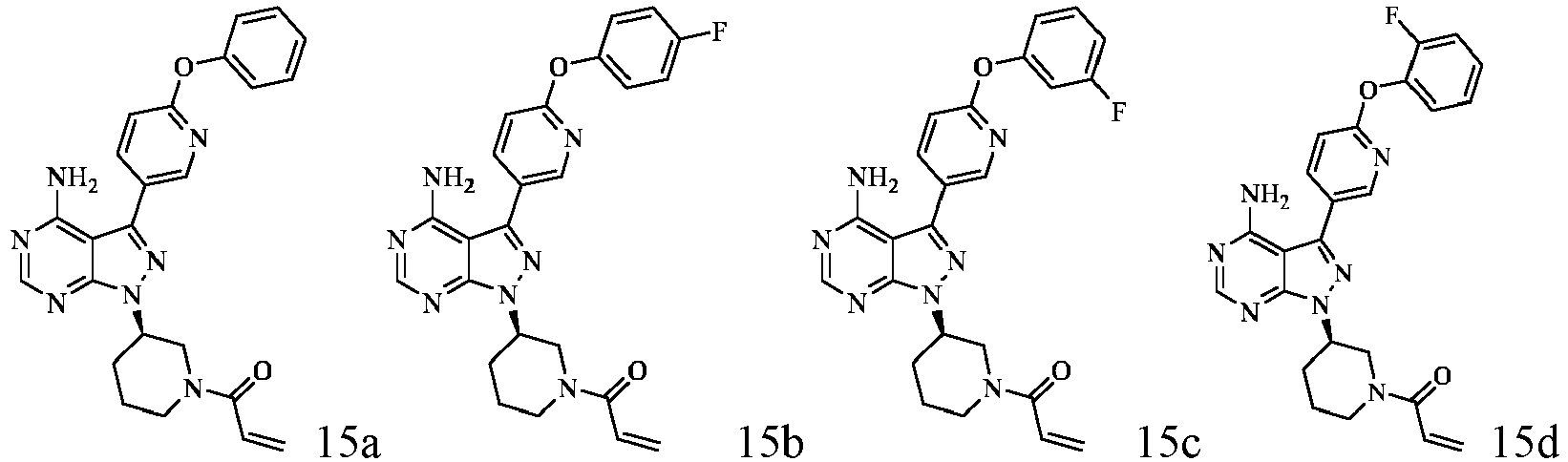
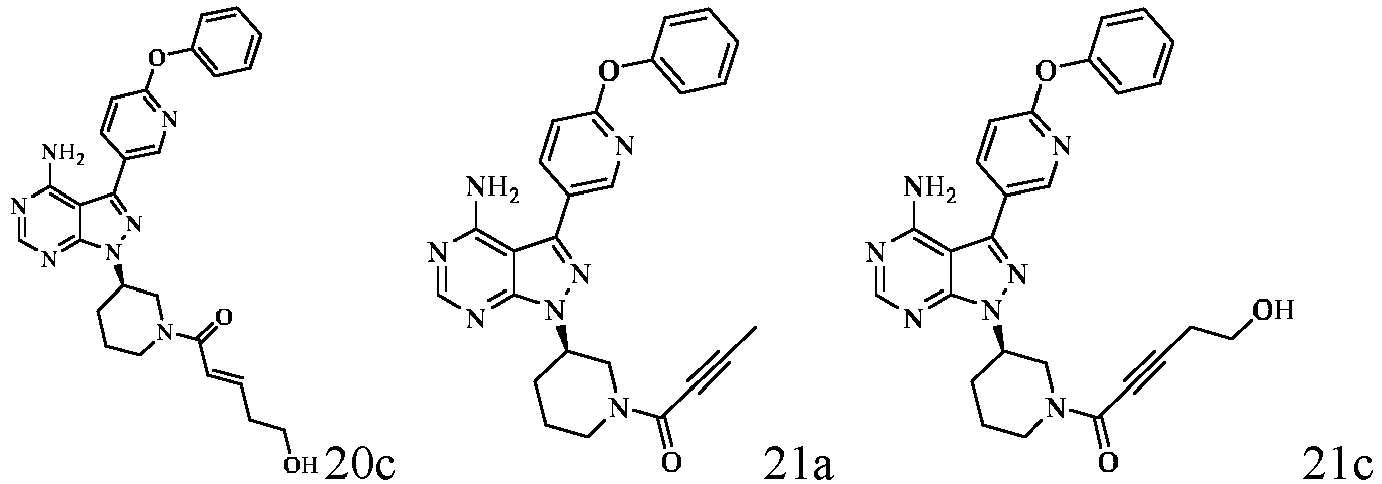
- the Bruton's tyrosine kinase inhibitors are preferably the following specific compounds: No. Structure No. Structure 15a 17h 15b 17i 15c 18 15d 19 15e 20a 15f 15g 20c 15h 21a 15i 15j 21c 15k 22 16a 23a 16b 23b 16c 23c 16d 23d 17a 24a 17b 24b 17c 24c 17d 24d 17e 24e 17f 25a 17g 25b and their optical isomers, or pharmaceutically acceptable salts or solvates.
- the compoundsand representative numerals are as follows:
- the salts of the compounds of the present invention may be prepared by the present invention using methods well known to those skilled in the art.
- the salts may be organic acid salts, inorganic acid salts, etc..
- the organic acid salts include citrates, fumarates, oxalates, malates, lactates, camphor sulfonates, p-toluenesulfonates, and mesylates.
- the inorganic acid salts include hydrohalides, sulfates, phosphates, and nitrates.
- mesylate salts or triflate salts of the compounds may be formed; with arylsulfonic acids such as benzenesulfonic acid or p-toluenesulfonic acid, p-toluenesulfonates or besylates of the compounds may be formed; with organic carboxylic acids such as acetic acid, fumaric acid, tartaric acid, oxalic acid, maleic acid, malic acid, succinic acid or citric acid, corresponding salts of the compounds may be formed; with amino acids such as glutamic acid or aspartic acid, glutamates or aspartates of the compounds may be formed.
- arylsulfonic acids such as benzenesulfonic acid or p-toluenesulfonic acid, p-toluenesulfonates or besylates of the compounds
- organic carboxylic acids such as acetic acid, fumaric acid, tartaric acid, oxalic
- Corresponding salts of the compounds may also be formed with inorganic acids such as hydrohalic acids (e.g., hydrofluoric acid, hydrobromic acid, hydroiodic acid, hydrochloric acid), nitric acid, carbonic acid, sulfuric acid or phosphoric acid.
- hydrohalic acids e.g., hydrofluoric acid, hydrobromic acid, hydroiodic acid, hydrochloric acid
- nitric acid e.g., carbonic acid, sulfuric acid or phosphoric acid.
- the second object of the present invention is to provide a pharmaceutical composition, comprising one or more of the claimed compounds of any one of the above-mentioned technical solutions.
- the pharmaceutical composition of the present invention may comprise one or more of the compounds described in any one of the above technical solutions and other compounds, or may comprise one or more of the compounds of any one of the above-mentioned technical solutions.
- the present invention provides a pharmaceutical preparation comprising at least one active component, and the active component(s) is/are one or more of the claimed compounds of any one of the above-mentioned technical solutions.
- the pharmaceutical preparation comprises at least one active component and one or more pharmaceutically acceptable carriers or excipients.
- the active component(s) may be any one or more of the BTK inhibitor compounds of the present invention, optical isomers of the compounds, pharmaceutically acceptable salts of the compounds or the optical isomers, and solvates of the compounds or the optical isomers.
- the carriers include conventional diluents, excipients, fillers, binders, wetting agents, disintegrating agents, absorption enhancers, surfactants, adsorption carriers, and lubricants in the pharmaceutical field, and an odorant, a sweetener and the like may also be added if necessary.
- the drug of the present invention may be prepared into various forms such as tablets, powders, granules, capsules, oral liquids and injectable preparations, and all the drugs in the above forms can be prepared according to a conventional method in the pharmaceutical field.
- the present invention provides claimed compounds of Formula II to Formula VIII, Formula II' to Formula VIII', Formula III" to Formula VIII", and Formula VI-a Formula VI-a' and Formula VI-a” and optical isomers of the compounds, or pharmaceutically acceptable salts or solvates of the compounds and the optical isomers for use in a method of of treatment of cell proliferation related diseases, cancers, autoimmune diseases or rheumatoid arthritis and lupus erythematosus, alone or in combination with other drugs.
- a method for inhibiting Bruton's tyrosine kinase activity of a subject by administering to the subject in need of a composition comprising a therapeutically effective amount of at least one of the compounds, where the compounds has a structure of Formula I to Formula III and Formula I' to Formula VIII, Formula III" to Formula VIII", and Formula VI-a, Formula VI-a' and Formula VI-a".
- the subject in need is suffering from an autoimmune disease, such as inflammatory bowel disease, arthritis, lupus, rheumatoid arthritis, psoriatic arthritis, osteoarthritis, Still's disease, juvenile arthritis, diabetes, myasthenia gravis, Hashimoto's thyroiditis, Ord's thyroiditis, Graves'disease, Sjögren's syndrome, multiple sclerosis, Guillain-Barré syndrome, acute disseminated encephalomyelitis, Addison's disease, visual ocular palsy-myoclonus Syndrome, mandatory spondylitis, antiphospholipid antibody syndrome, aplastic anemia, autoimmune hepatitis, coeliac disease, Goodpasture's syndrome, idiopathic thrombocytopenic purpura , optic neuritis, scleroderma, primary biliary cirrhosis, Reiter's syndrome, Takayasu's arteritis, temporal art
- the subject in need has a cancer.
- the cancer is a B cell proliferation related disease, such as diffuse large B-cell lymphoma, follicular lymphoma, chronic lymphocytic lymphoma, chronic lymphocytic leukemia, B-cell pro-lymphocytic leukemia, Lymphocyte lymphoma/Waldenströmmacroglobulinemia, splenic marginal lymphoma, plasma cell myeloma, plasmacytoma, extranodal marginal zone B-cell lymphoma, lymph node marginal zone B cell lymphoma, mantle cell lymphoma, mediastinum (thymus) large B-cell lymphoma, intravascular large B-cell lymphoma, primary exudative lymphoma, Burkitt lymphomalleukemia or lymphomatoid granulomatous disease.
- B cell proliferation related disease such as diffuse large B-cell lymphoma, follicular lymphoma, chronic lymphocytic lymphom
- the present invention further provides use of the compounds of the present invention or pharmaceutically acceptable salts thereof in preparation of a BTK inhibitor, in particular for the preparation of a drug for treatment of cell proliferation related diseases.
- the cell proliferation related diseases include cancers.
- the present invention also provides compounds of Formula II to Formula VIII, Formula II' to Formula VIII', Formula III" to Formula VIII", and Formula VI-a Formula VI-a' and Formula VI-a” and optical isomers of the compounds, or pharmaceutically acceptable salts or solvates of the compounds and the optical isomers alone or in combination with other drugs for use in a method of treating proliferation related diseases such as cancers.
- Antitumor drugs which may be used in combination with the compounds provided by the present invention or pharmaceutically acceptable salts of the compound include, but are not limited to, at least one of the following classes: mitotic inhibitors (such as vinblastine, vindesine, and vinorelbine); tubulin decomposition inhibitors (such as Taxol); alkylating agents (such as cisplatin, carboplatin and cyclophosphamide); antimetabolites (such as 5-fluorouracil, tegafur, methotrexate, cytarabine and Hydroxyurea); insertable antibiotics (such as arrhenone, mitomycin and bleomycin); enzymes (such as aspartate); topoisomerase inhibitors (such as etoricin and camptothecin); and biological response modifier (such as interferon).
- mitotic inhibitors such as vinblastine, vindesine, and vinorelbine
- tubulin decomposition inhibitors such as Taxol
- alkylating agents such as
- the compounds of the present invention have anti-proliferation and inhibitory effects on tumor cell strains such as A549, MINO, OCI-LY10 and TMD-8, and shows an excellent anti-tumor activity in tumor models such as Mino subcutaneous xenografts, and can be applied to drugs for treating solid tumors or leukemia associated with cell proliferation in humans or animals.
- the compounds of the present invention have good pharmacokinetic properties and can be applied to the oral treatment of solid tumors or leukemia associated with cell proliferation or autoimmune diseases in humans or animals.
- Step 1 Corresponding compounds 3a-3k were dissolved in dried THF and cooled to -78 °C in an Ar atmosphere, and then n-butyllithiumwasgradually added dropwise. The reaction system was further continued for 1 hour at this temperature while stirring, and then triisopropyl borate was added. Then, the reaction was carried out at -78 °C for 1 hour, then the reaction system was slowly increased to room temperature, and the reaction was quenched with an aqueous solution of ammonium chloride. Extraction with ethyl acetate was carried out three times, the organic phases were combined, rinsed with water and a saturated NaCl solution and then dried over anhydrous sodium sulfate, and then filtering and reduced-pressure concentration were carried out. Recrystallization was carried out with ethyl acetate and petroleum ether, thus obtaining a white solid boric acid product which was directly used in the next step.
- Step 2 The boric acid product of the previous step was added to 70mL of DMF which had just been bubbled with Ar, the Compound 1a and tetrakis (triphenylphosphine) palladium were stirred in an Ar atmosphere, and then 2N aq. K 2 CO 3 aqueous solution was added.
- the reaction system was heated to 85 °C in an Ar atmosphere for keeping reaction overnight until the reaction was complete under the tracking of TLC.
- the reaction system was cooled to room temperature, filtering was carried out with kieselguhr, and rinsing with ethyl acetate was carried out for several times.
- Rinsing with water was carried out three times, and then rinsing with a saturated NaCl solution was carried out; then, drying, filtering, and reduced-pressure concentration were carried out; and purification was carried out by silica gel column chromatograph with petroleum ether-ethyl acetate as an eluting agent.
- Step 1 Corresponding compounds 4a-4d were dissolved in 15mL of dried THF and cooled to - 78 °C in an Ar atmosphere, and then n-butyllithiumwas gradually added dropwise. The reaction system was further continued for 1 hour at this temperature while stirring, and then triisopropyl borate was added. Then, the reaction was carried out at -78 °C for 1 hour, then the reaction system was slowly increased to room temperature, and the reaction was quenched with an aqueous solution of ammonium chloride.
- Step 2 The boric acid product of the previous step was added to 7mL of DMF which had just been bubbled with Ar, the Compound 1a and tetrakis(triphenylphosphine)palladium were stirred in an Ar atmosphere, and then 2N aq. K 2 CO 3 aqueous solution was added.
- the reaction system was heated to 85 °C in an Ar atmosphere for keeping reaction overnight until the reaction was complete under the tracking of TLC.
- the reaction system was cooled to room temperature, filtering was carried out with kieselguhr, and rinsing with EA was carried out for several times.
- Step 1 Corresponding compounds in Compounds 5a-5h were dissolved in dried THF and cooled to -78 °C in an Ar atmosphere, and then n-butyllithiumwas gradually added dropwise. The reaction system was further continued for 1 hour at this temperature while stirring, and then triisopropyl borate was added. Then, the reaction was carried out at -78 °C for 1 hour, then the reaction system was slowly increased to room temperature, and the reaction was quenched with an aqueous solution of ammonium chloride.
- Step 2 The boric acid product of the previous step was added to 70mL of DMF which had just been bubbled with Ar, the Compound 1a and tetrakis(triphenylphosphine)palladium were stirred in an Ar atmosphere, and then 2N aq. K 2 CO 3 aqueous solution was added.
- the reaction system was heated to 85 °C in an Ar atmosphere for keeping reaction overnight until the reaction was complete under the tracking of TLC.
- the reaction system was cooled to room temperature, filtering was carried out with kieselguhr, and rinsing with ethyl acetate was carried out for several times.
- Rinsing with water was carried out three times, and then rinsing with a saturated NaCl solution was carried out; then, drying, filtering, and reduced-pressure concentration were carried out; and purification was carried out by silica gel column chromatograph with petroleum ether-ethyl acetate as an eluting agent, thus obtaining a white solid product.
- Step 1 The Compound 5a (3mmol) was dissolved in dried THF and cooled to -78 °C in an Ar atmosphere, and then n-butyllithium (3mmol) was gradually added dropwise. The reaction system was further continued for 1 hour at this temperature while stirring, and then triisopropyl borate (3.94mmol) was added. Then, the reaction was carried out at -78 °C for 1 hour, then the reaction system was slowly increased to room temperature, and the reaction was quenched with an aqueous solution of ammonium chloride.
- Step 2 The boric acid product of the previous step was added to 70mL of DMF which had just been bubbled with Ar, the Compound 1b (1.73mmol) and tetrakis(triphenylphosphine)palladium (0.078mmol) were stirred in an Ar atmosphere, and then 2N aq. K 2 CO 3 aqueous solution (2.6mL) was added.
- the reaction system was heated to 85 °C in an Ar atmosphere for keeping reaction overnight until the reaction was complete under the tracking of TLC.
- the reaction system was cooled to room temperature, filtering was carried out with kieselguhr, and rinsing with ethyl acetate was carried out for several times.
- Step 1 The Compound 6 (3mmol) was dissolved in 15mL of dried THF and cooled to -78 °C in an Ar atmosphere, and then n-butyllithium (1.3mL, 3.3mmol, 2.5M in THF) was gradually added dropwise. The reaction system was further continued for 1 hour at this temperature while stirring, and then triisopropyl borate (0.74g, 3.94mmol) was added. Then, the reaction was carried out at - 78 °C for 1 hour, then the reaction system was slowly increased to room temperature, and the reaction was quenched with an aqueous solution of ammonium chloride.
- Step 2 The boric acid product (2.3mmol) of the previous step was added to 7mL of DMF which had just been bubbled with Ar, the Compound 1a (1.73mmol) and tetrakis(triphenylphosphine)palladium (0.078mmol) were stirred in an Ar atmosphere, and then 2.6mL of 2N aq. K 2 CO 3 aqueous solution was added.
- the reaction system was heated to 85 °C in an Ar atmosphere for keeping reaction overnight until the reaction was complete under the tracking of TLC.
- the reaction system was cooled to room temperature, filtering was carried out with kieselguhr, and rinsing with EA was carried out for several times.
- Step 1 The Compound 7 (3mmol) was dissolved in 15mL of dried THF and cooled to -78 °C in an Ar atmosphere, and then n-butyllithium (1.3mL, 3.3mmol, 2.5M in THF) was gradually added dropwise. The reaction system was further continued for 1 hour at this temperature while stirring, and then triisopropyl borate (0.74g, 3.94mmol) was added. Then, the reaction was carried out at - 78 °C for 1 hour, then the reaction system was slowly increased to room temperature, and the reaction was quenched with an aqueous solution of ammonium chloride.
- Step 2 The boric acid product (1. 5mmol) of the previous step was added to 5mL of DMF which had just been bubbled with Ar, the Compound 1a (1.1mmol) and tetrakis(triphenylphosphine)palladium (0.06mmol) were stirred in an Ar atmosphere, and then 1.5mL of 2N aq. K 2 CO 3 aqueous solution was added.
- the reaction system was heated to 85 °C in an Ar atmosphere for keeping reaction overnight until the reaction was complete under the tracking of TLC.
- the reaction system was cooled to room temperature, filtering was carried out with kieselguhr, and rinsing with EA was carried out for several times.
- Step 1 The Compound 3a, the Compound 3d, the Compound 3g or the Compound 3h (3mmol) was dissolved in 15mL of dried THF and cooled to -78 °C in an Ar atmosphere, and then n-butyllithium (1.3mL, 3.3mmol, 2.5M in THF) was gradually added dropwise. The reaction system was further continued for 1 hour at this temperature while stirring, and then triisopropyl borate (0.74g, 3.94mmol) was added. Then, the reaction was carried out at -78 °C for 1 hour, then the reaction system was slowly increased to room temperature, and the reaction was quenched with an aqueous solution of ammonium chloride.
- Step 2 The boric acid product (4.2mmol) of the previous step was added to 15mL of DMF which had just been bubbled with Ar, the Compound 2a (3mmol) and tetrakis(triphenylphosphine)palladium (0.15mmol) were stirred in an Ar atmosphere, and then 4.5mL of 2N aq. K 2 CO 3 aqueous solution was added.
- the reaction system was heated to 85 °C in an Ar atmosphere for keeping reaction overnight until the reaction was complete under the tracking of TLC.
- the reaction system was cooled to room temperature, filtering was carried out with kieselguhr, and rinsing with EA was carried out for several times.
- Step 1 The Compound 3a (3mmol) was dissolved in 15mL of dried THF and cooled to -78 °C in an Ar atmosphere, and then n-butyllithium (1.3mL, 3.3mmol, 2.5M in THF) was gradually added dropwise. The reaction system was further continued for 1 hour at this temperature while stirring, and then triisopropyl borate (0.74g, 3.94mmol) was added. Then, the reaction was carried out at - 78 °C for 1 hour, then the reaction system was slowly increased to room temperature, and the reaction was quenched with an aqueous solution of ammonium chloride.
- Step 2 The boric acid product (4.2mmol) of the previous step was added to 15mL of DMF which had just been bubbled with Ar, the Compound 2b (3mmol) and tetrakis(triphenylphosphine)palladium (0.15mmol) were stirred in an Ar atmosphere, and then 4.5mL of 2N aq. K 2 CO 3 aqueous solution was added.
- the reaction system was heated to 85 °C in an Ar atmosphere for keeping reaction overnight until the reaction was complete under the tracking of TLC.
- the reaction system was cooled to room temperature, filtering was carried out with kieselguhr, and rinsing with EA was carried out for several times.
- Step 1 The Compound 5a, the Compound 5b, the Compound 5g or the Compound 5h was dissolved in dried THF and cooled to -78 °C in an Ar atmosphere, and then n-butyllithiumwas gradually added dropwise. The reaction system was further continued for 1 hour at this temperature while stirring, and then triisopropyl borate was added. Then, the reaction was carried out at -78 °C for 1 hour, then the reaction system was slowly increased to room temperature, and the reaction was quenched with an aqueous solution of ammonium chloride.
- Step 2 The boric acid product of the previous step was added to 70mL of DMF which had just been bubbled with Ar, the Compound 2a and tetrakis(triphenylphosphine)palladium were stirred in an Ar atmosphere, and then 2N aq. K 2 CO 3 aqueous solution was added.
- the reaction system was heated to 85 °C in an Ar atmosphere for keeping reaction overnight until the reaction was complete under the tracking of TLC.
- the reaction system was cooled to room temperature, filtering was carried out with kieselguhr, and rinsing with ethyl acetate was carried out for several times.
- Rinsing with water was carried out three times, and then rinsing with a saturated NaCl solution was carried out; then, drying, filtering, and reduced-pressure concentration were carried out; and purification was carried out by silica gel column chromatograph with petroleum ether-ethyl acetate as an eluting agent, thus obtaining a white solid product.
- Step 1 The Compound 5a (3mmol) was dissolved in dried THF and cooled to -78 °C in an Ar atmosphere, and then n-butyllithium (3mmol) was gradually added dropwise. The reaction system was further continued for 1 hour at this temperature while stirring, and then triisopropyl borate (3.94mmol) was added. Then, the reaction was carried out at -78 °C for 1 hour, then the reaction system was slowly increased to room temperature, and the reaction was quenched with an aqueous solution of ammonium chloride.
- Step 2 The boric acid product of the previous step was added to 70mL of DMF which had just been bubbled with Ar, the Compound 2b (3mmol) and tetrakis(triphenylphosphine)palladium (0.15mmol) were stirred in an Ar atmosphere, and then 2N aq. K 2 CO 3 aqueous solution (4.5mL) was added.
- the reaction system was heated to 85 °C in an Ar atmosphere for keeping reaction overnight until the reaction was complete under the tracking of TLC.
- the reaction system was cooled to room temperature, filtering was carried out with kieselguhr, and rinsing with ethyl acetate was carried out for several times.
- LC-ESI-MS 509 [M+H].
- Example 34 Test on In-vitro Btk Kinase Inhibitory Activity and In-vitro Antitumor Activity
- the drug was dissolved in DMSO to make a 10 mM (mmol/L) stock solution, and the stock solution was then diluted to a drug solution with 50 ⁇ test concentrations for later use, wherein the test concentrations were reached through dilution at a 3-fold gradient and were 25 nM (nmol / L), 8.33 nM, 2.78 nM, 0.93 nM, 0.31 nM, 0.10 nM, respectively.
- 10 ⁇ L of the 50 ⁇ drug stock solution was added to a 96-well plate and then 90 ⁇ L of a 1 ⁇ Kinase Buffer was added and the 96-well plate was shaken for 10 minutes on a shaker. From each well of the 96-well plate, 5 ⁇ L of the drug solution was taken and then transferred to a 384-well plate which was provided with 2 duplicate wells.
- the in-vitro antitumor activity assay was carried out on the synthesized compound by using different solid tumors and leukemia cell lines:
- Preparation method of the drug the drug was dissolved in DMSO to make a 10 mM stock solution, and then the stock solution was diluted in a certain ratio to obtain 5 different concentrations (test concentration 100 ⁇ ).
- In-vitro culture of tumor cells The selected four tumor cells A549, MINO, OCI-LY10, and TMD-8 were incubated in a 37 °C, 5% CO 2 cell incubator and then were passaged for later experiments when the cell density reaches 70-90% (passage was carried out after adherent cells were digested with Duck's EDTA).
- the tumor cells A549, MINO, OCI-LY10, and TMD-8 were seeded in a 96-well plate at 4000 cells/200 ⁇ L/well and then incubated overnight at 37 °C in a 5% CO 2 cell culture incubator. 2 ⁇ L of the compound was added to each well to final concentrations of 50 ⁇ M, 10 ⁇ M, 2 ⁇ M, 0.4 ⁇ M, and 0.08 ⁇ M and then incubated for 72 hours at 37 °C in a 5% CO 2 cell incubator, with DMSO (2%) as a control group. After 72 hours, 20 ⁇ L of a CCK-8 solution was added and then the 96-well plate was placed in a 37 °C, 5% CO 2 cell incubator for incubation for 4 hours.
- cell inhibition rate % [(control group OD value - blank group OD value) - (treatment group OD value - blank group OD value)] / (control cell OD value - blank group OD value) ⁇ 100%, the half inhibitory concentration (IC 50 ) was calculated by CalcuSyn software.
- Table 1 shows that all the compounds obtained by the present invention have significant inhibitory activity against BTK, and the activity of Compound 17a was superior to that of the positive control ibrutinib and was equivalent to that of Compound I (Patent Application No.: 201510242552.8 ), indicating that introduction of nitrogen atom in the aromatic ring does not affect the inhibitory activity against BTK, and further, the inhibitory activity of Compound 17a was 11.7 times stronger than that of Compound II (Patent Application No.: 201610286399.3 ).
- Other derivatives also show potent BTK inhibitory activity with IC 50 ranging from 1.2 to 32.5, which has further application prospects.
- the cells used in this experiment were CHO cell lines transfected with HergCdna and stably expressing Herg channels (supplied by Sophion Bioscience, Denmark). The cells were cultured in a medium containing the following components (all from Invitrogen): Ham's F12 medium, 10% (v/v) inactivated fetal bovine serum, 100 ⁇ g/ml hygromycin B, 100 ⁇ g/ml Geneticin. 2.1.2 CHO Herg cells grow in culture dishes containing the above culture liquid and cultured in a 37 °C, 5% CO 2 incubator. 24 to 48 hours before an electrophysiological experiment, CHO Herg cells were transferred to circular slides placed in the culture dishes and grow with the same culture liquid under the same culture conditions as above. The density of CHO Herg cells on each circular slide was required to reach such a value that most cells were independent and stand alone.
- the following concentrations (30, 10, 3, 1, 0.3 and 0.1 Mm) were selected for test.
- the compound was first diluted with DMSO at gradient to make stock solutions with concentrations of 10, 3, 1, 0.3 and 0.1 Mm and the stock solutions were then diluted with extracellular fluid to a final Mm test concentration. Except that the DMSO concentration in the 30 Mm compound test solution was 0.3%, the final concentration of DMSO in each of the compound solutions with other concentrations was 0.1%.
- the test concentration of a positive control Cisapride was 0.1 Mm. All compound solutions were conventionally sonicated and shaken for 5 to 10 minutes to ensure complete dissolution of the compound.
- This experiment uses a manual patch clamp system (HEKA EPC-10 signal amplifier and digital conversion system, purchased from HEKA Electronics, Germany) for the recording of whole cell currents.
- the circular slides with CHO Herg cells growing on the surfaces were placed in an electrophysiological recording slot under an inverted microscope.
- the extracellular fluid was used for continuous perfusion in the recording slot (approximately 1ml per minute).
- the experimental procedure uses a conventional whole-cell patch clamp current recording technique. Unless otherwise stated, the experiment was carried out at regular room temperature ( ⁇ 25 °C).
- the cells were clamped at a voltage of -80 Mv.
- the cell clamp voltage was depolarized to +20 Mv to activate the Herg potassium channel, and 5 seconds later, it was clamped to -50 Mv to eliminate inactivation and generate tail current.
- the peak of the tail current was used as the value of the Herg current.
- the test results of Table 3 indicate that the hERG channel blocking effects of the compounds of the present invention were markedly weak.
- the IC 50 of Compound 15a was 15.48 ⁇ M, 4.41 times that of ibutinib.
- the IC 50 of Compound 15a was 2.98 times that of Compound II. Since hERG channel blocking effect was associated with the risk of cardiotoxicity of the drug. Therefore, the low hERGpotassium channel blocking activity of this class of compounds was beneficial to reducing the risk of toxic side effects and improving their druggability.
- a 1 ⁇ kinase base buffer and a reaction stop buffer for respective kinases in the experiment were prepared as required.
- the Caliper program reads the plate and uses the data to obtain the IC 50 values of the corresponding compounds against kinases.
- the test results are shown in Table 4.
- Table 4 Inhibitory activities of some compounds against various kinases (IC 50 , nM) Kinase Ibrutinib I 15a 17a 24a ITK 186 428 >1000 >1000 >1000 BLK 0.58 1.6 30 11 5.4 CSK 37 180 >1000 >1000 >1000 >1000 FGR 8.0 27 >1000 >1000 >1000 HCK 179 >1000 >1000 >1000 >1000 >1000 JAK3 105 901 >1000 >1000 >1000 FLT3 231 350 >1000 >1000 >1000 >1000
- test results of Table 4 show that the compounds designed by the present invention have obvious selectivity advantages for kinases, and with Compound 15a as an example, and its inhibitory activity against kinases such as ITK, CSK, FGR, HCK, JAK3, and FLT3 was very weak, and the activities of most of the kinases were greater than 1000 nM; therefore, its kinase selectivity for BTK was significantly better than that of Ibutinib and Compound I, and thus, such compounds will have significant advantages in side effects caused by poor selectivity.
- kinases such as ITK, CSK, FGR, HCK, JAK3, and FLT3
- SD rats were used as experimental animals and were subjected to intragastric administration in a dose of 10mg/kg and tail-vein intravenous injection in a dose of 2mg/kg.
- the tail-vein blood sampling time points in the intragastric administration were 0.17, 0.33, 0.5, 1, 1.5, 2, 4, 6, 8, 12, and 24 hours; the blood sampling time points in the intravenous administration were 0.05, 0.1, 0.17, 0.5, 1, 2, 4, 6, 8, 12, and 24 hours.
- 0.3ml of whole blood was taken, and 0.1ml of plasma after centrifugation was taken and analyzed by LC-MS.
- the pharmacokinetic properties of Compounds 15a, 24a and 24e in rats were examined by using ibrutinib as a reference.
- the test results of Tables 5 and 6 show that the oral bioavailability of Compounds 15a, 24a and 24b were obviously improved and were 1.67, 4.62 and 3.69 times of that of ibrutinib, respectively. Therefore, the compounds of the present invention can be administered by oral absorption for the treatment of diseases.
- Example 38 In-vivo Pharmacodynamic Study of Compounds 15a, 17a, 24a and 24e on Mino Subcutaneous Xenograft Tumor Models
- CB17 SCID mice 0.2mL of cell suspension containing 5 ⁇ 10 ⁇ 6 Mino cells was subcutaneously inoculated into the right back of each mouse, and when the mean tumor volume reaches approximately 139.94mm3 (day 26 after inoculation), group administration was started (intragastric administration, twice a day, 14 days in total). Animals were monitored daily for health and mortality, and tumor diameters were measured twice a week using vernier calipers to see if tumor growth could be inhibited, delayed, or cured.
- TGI tumor volume of the control group
- TGI (%) (1-(TV Control-Dn -TV Control-D0 )/(TV treatment-Dn -TV treatment-D0 )/ ⁇ 100%
- TV Control refers to the tumor volume of the control group
- TV Treatment refers to the tumor volume of the treatment group. If TGI ⁇ 58%, the drug was considered effective.
- TWc tumor weight of the control group
- TW T tumor weight of the treatment group. According to the NIH guidelines, if TGI ⁇ 58%, the drug was considered effective.
- Test results During the administration period, all the mice show good performance in body weight. At the end of the last administration, tumors were taken and weighed, and the tumor weight TGI evaluation shows that the TGIs of all the mice were greater than 58% (see Table 6), showing a good tumor inhibitory effect.
- the compounds of the present invention have certain advantages in in-vivo tumor activity as compared with Compound II.
- Example 39 Treatment of rheumatoid arthritis with Compounds 15a, 17a, 24a and 24e
Landscapes
- Health & Medical Sciences (AREA)
- Chemical & Material Sciences (AREA)
- Organic Chemistry (AREA)
- Medicinal Chemistry (AREA)
- Veterinary Medicine (AREA)
- Public Health (AREA)
- General Health & Medical Sciences (AREA)
- Animal Behavior & Ethology (AREA)
- Life Sciences & Earth Sciences (AREA)
- Pharmacology & Pharmacy (AREA)
- General Chemical & Material Sciences (AREA)
- Nuclear Medicine, Radiotherapy & Molecular Imaging (AREA)
- Chemical Kinetics & Catalysis (AREA)
- Bioinformatics & Cheminformatics (AREA)
- Engineering & Computer Science (AREA)
- Immunology (AREA)
- Diabetes (AREA)
- Physical Education & Sports Medicine (AREA)
- Orthopedic Medicine & Surgery (AREA)
- Epidemiology (AREA)
- Hematology (AREA)
- Rheumatology (AREA)
- Transplantation (AREA)
- Obesity (AREA)
- Neurology (AREA)
- Dermatology (AREA)
- Oncology (AREA)
- Endocrinology (AREA)
- Emergency Medicine (AREA)
- Pharmaceuticals Containing Other Organic And Inorganic Compounds (AREA)
- Nitrogen Condensed Heterocyclic Rings (AREA)
Claims (14)
- Eine Verbindung mit einer Struktur der Formel II oder Formel II':
 oder ihre optischen Isomere, oder pharmazeutisch annehmbare Salze oder Solvate;wobei jedes Rg unabhängig H, Halogen, -CF2H, -CF3, -CN, C1-C3-Alkyl oder C1-C3-Alkoxy ist;n aus 0, 1 und 2 ausgewählt ist;Rd aus


 Y1, Y2, Y3 und Y4 unabhängig voneinander aus C(Rf) und N ausgewählt sind, und mindestens eines von Y1, Y2, Y3 und Y4 N ist, wobei Rf aus H, Halogen, C1-C3-Alkyl, -CF3 und -CF2H ausgewählt ist.
 - Verbindung nach Anspruch 1 mit einer Struktur der Formel III oder Formel III' oder Formel III":
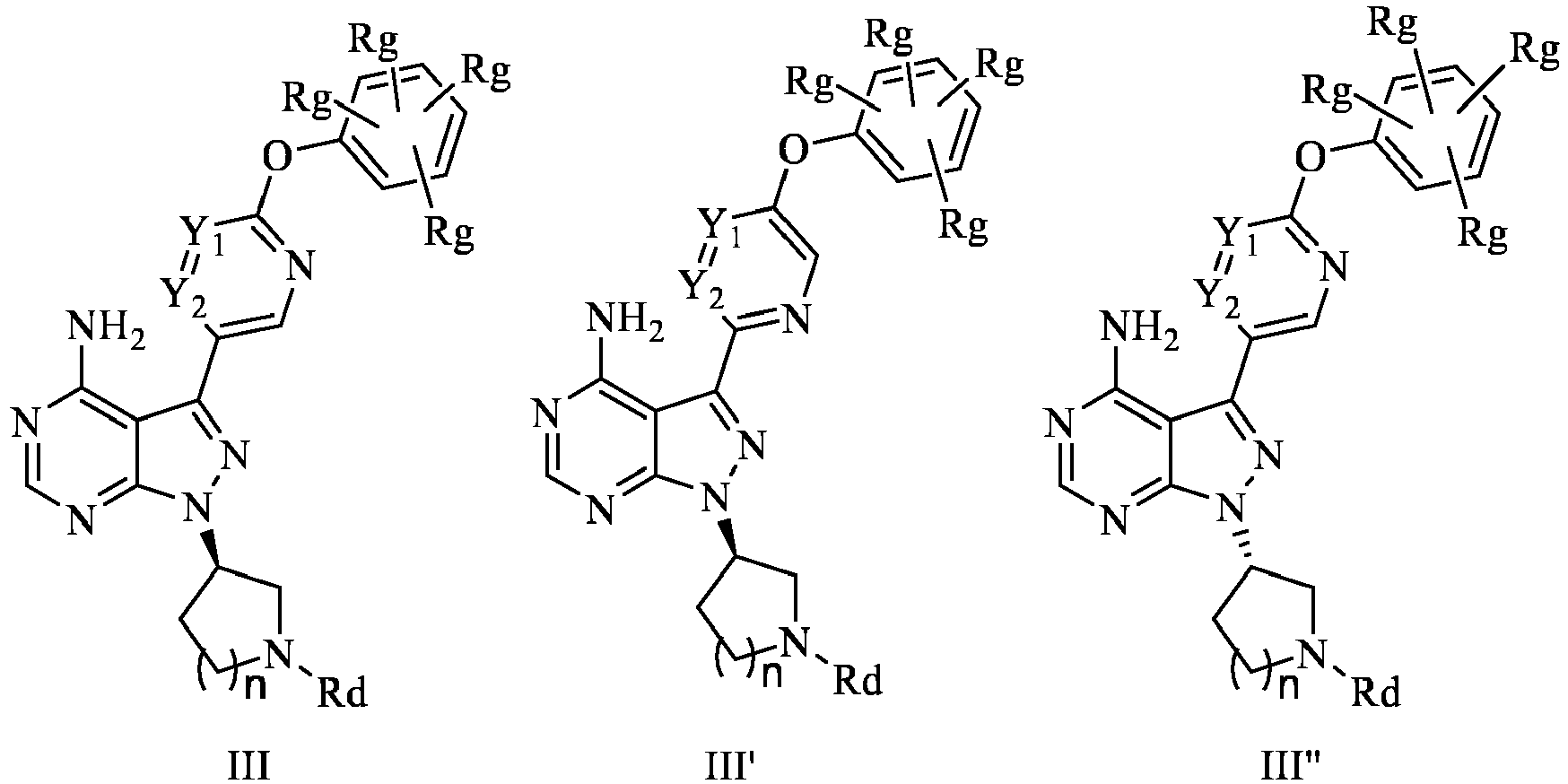 und ihre optischen Isomere, oder pharmazeutisch annehmbare Salze oder Solvate;worin jedes Rg unabhängig H, Halogen, -CF2H, -CF3, C1-C3-Alkyl oder C1-C3-Alkoxy ist;n aus 0, 1 und 2 ausgewählt ist;Rd aus


 Y1 und Y2 unabhängig voneinander aus C(Rf) und N ausgewählt sind, wobei Rf aus H, Halogen, C1-C3-Alkyl, -CF3 und -CF2H ausgewählt ist.
 - Verbindung nach einem der Ansprüche 1 bis 2 mit einer Struktur der Formel IV oder Formel IV' oder Formel IV":
 und ihre optischen Isomere, oder pharmazeutisch annehmbare Salze oder Solvate;worin jedes Rg unabhängig H, Halogen, -CF2H, -CF3, C1-C3-Alkyl oder C1-C3-Alkoxy ist;n aus 0, 1 und 2 ausgewählt ist;Rd aus


 Rh unabhängig aus H, Halogen, C1-C3-Alkyl, -CF3 und -CF2H ausgewählt ist.
 - Verbindung nach einem der Ansprüche 1 bis 3 mit einer Struktur der Formel V oder Formel V' oder Formel V":
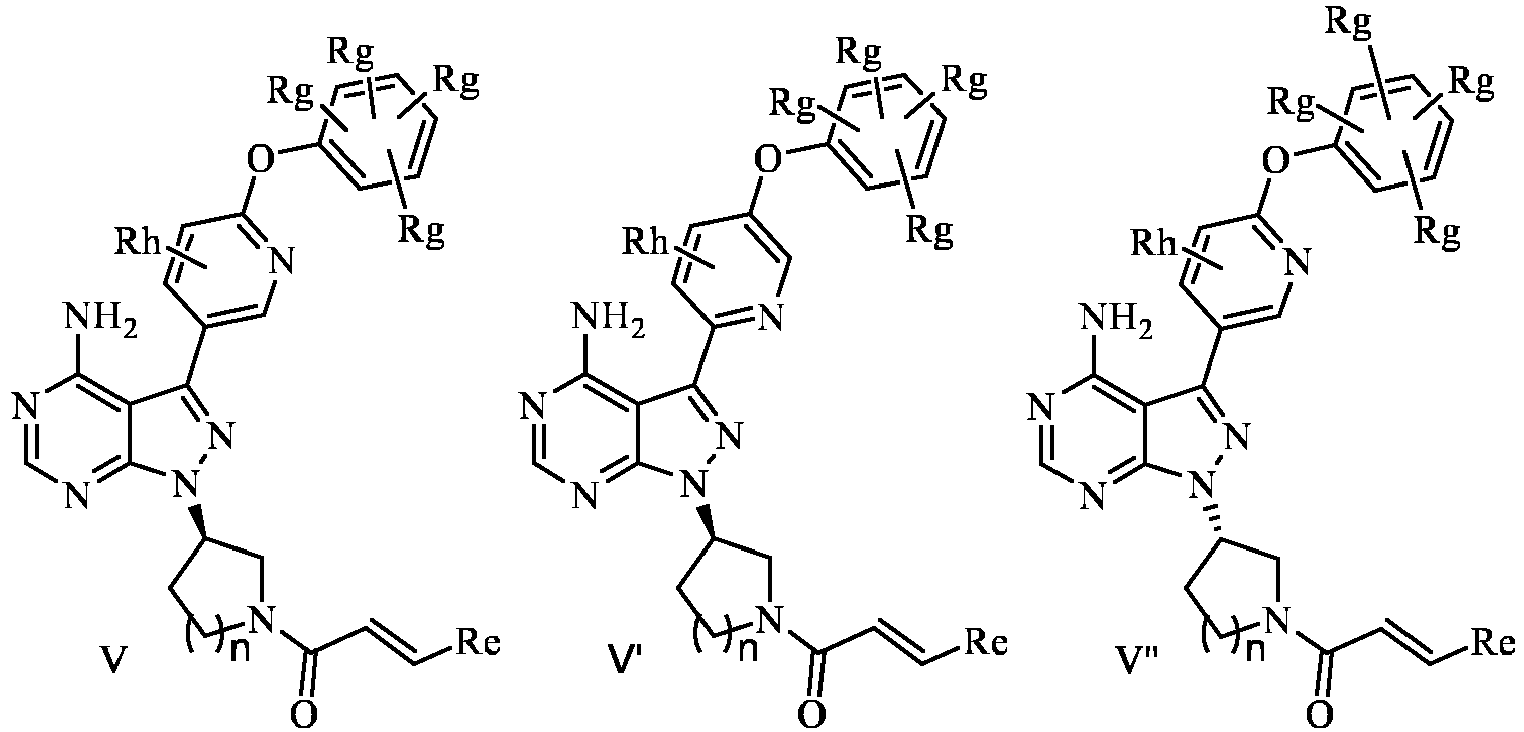 und ihre optischen Isomere, oder pharmazeutisch annehmbare Salze oder Solvate;worin jedes Rg unabhängig H, Halogen, -CF2H, -CF3, C1-C3-Alkyl oder C1-C3-Alkoxy ist;n aus 0, 1 und 2 ausgewählt ist;Re aus H, C2-C6-Alkyl, C1-C6-Azaalkyl und C1-C6-Oxaalkyl ausgewählt ist, wobei vorzugsweise C2-C6-Alkyl, C1-C6-Azaalkyl und C1-C6-Oxaalkyl weiter mit Amino, Hydroxyl und C1-C3-Alkyl substituiert sind;Rh aus H, Halogen, C1-C3-Alkyl, -CF3 und -CF2H ausgewählt ist.
 - Verbindung nach Anspruch 4 mit einer Struktur der Formel VI oder Formel VI' oder Formel VI":
 und ihre optischen Isomere, oder pharmazeutisch annehmbare Salze oder Solvate;wobei jedes Rg unabhängig H, Halogen, -CF2H, -CF3, C1-C3-Alkyl oder C1-C3-Alkoxy ist;n aus 0, 1 und 2 ausgewählt ist;Rh unabhängig aus H, Halogen, C1-C3-Alkyl, -CF3 und -CF2H ausgewählt ist.
 - Verbindung nach Anspruch 5 mit einer Struktur der Formel VI-a oder Formel VI-a' oder Formel VI-a":
 und ihre optischen Isomere, oder pharmazeutisch annehmbare Salze oder Solvate;worin jedes Rg unabhängig H, Halogen, -CF2H, -CF3, C1-C3-Alkyl oder C1-C3-Alkoxy ist;Rh unabhängig aus H, Halogen, C1-C3-Alkyl, -CF3 und -CF2H ausgewählt ist.
 - Eine Verbindung nach Anspruch 1 mit einer Struktur der Formel VI-a-1 oder Formel VI-a-2':
 worin jedes Rg unabhängig H, Halogen, -CF2H, -CF3, C1-C3-Alkyl oder C1-C3-Alkoxy ist;Ri unabhängig aus H, Halogen, C1-C3-Alkyl, -CF3 und -CF2H ausgewählt ist.
 - Eine Verbindung nach einem der Ansprüche 1 bis 3 mit einer Struktur der Formel VII oder der Formel VII' oder der Formel VII":
 und ihre optischen Isomere, oder pharmazeutisch annehmbare Salze oder Solvate;worin jedes Rg unabhängig H, Halogen, -CF2H, -CF3, C1-C3-Alkyl oder C1-C3-Alkoxy ist;n aus 0, 1 und 2 ausgewählt ist;Re aus H, CH3, C2-C6-Alkyl, C1-C6-Azaalkyl und C1-C6-Oxaalkyl ausgewählt ist, wobei vorzugsweise CH3, C2-C6-Alkyl, C1-C6-Azaalkyl und C1-C6-Oxaalkyl weiter mit Amino, Hydroxyl und C1-C3-Alkyl substituiert sein können;Rh unabhängig aus H, Halogen, C1-C3-Alkyl, -CF3 und -CF2H ausgewählt ist.
 - Verbindung nach Anspruch 8 mit einer Struktur der Formel VIII oder Formel VIII' oder Formel VIII":
 und ihre optischen Isomere, oder pharmazeutisch annehmbare Salze oder Solvate;wobei jedes Rg unabhängig H, Halogen, -CF2H, -CF3, C1-C3-Alkyl oder C1-C3-Alkoxy ist;n ausgewählt ist aus 0, 1 und 2;Rh unabhängig ausgewählt ist aus H, Halogen, C1-C3-Alkyl, -CF3 und -CF2H.
 - Verbindung nach Anspruch 1 mit einer Struktur mit einer der folgenden Formeln:




- Verbindung nach einem der Ansprüche 1, 2, 3, 4 und 8, wobei sich das Azaalkyl darauf bezieht, dass ein oder mehrere Kohlenstoffatome von C1-C6-Alkyl durch Stickstoffatome substituiert sind; wobei das Oxaalkyl sich darauf bezieht, dass ein oder mehrere Kohlenstoffatome von C1-C6-Alkyl durch Sauerstoffatome substituiert sind.
- Pharmazeutische Zusammensetzung, umfassend eine oder mehrere der Verbindungen nach einem der Ansprüche 1 bis 11.
- Pharmazeutisches Präparat, umfassend mindestens eine aktive Komponente, wobei die aktive(n) Komponente(n) eine oder mehrere der Verbindungen nach einem der Ansprüche 1-11 ist/sind.
- Verbindung nach einem der Ansprüche 1-11 zur Verwendung in einem Verfahren zur Behandlung von mit Zellproliferation zusammenhängenden Krankheiten, Krebs, Autoimmunkrankheiten oder rheumatischer Arthritis und Lupus erythematodes, allein oder in Kombination mit anderen Arzneimitteln.
Applications Claiming Priority (3)
| Application Number | Priority Date | Filing Date | Title |
|---|---|---|---|
| CN201611014370 | 2016-11-15 | ||
| CN201710789936 | 2017-09-05 | ||
| PCT/CN2017/107416 WO2018090792A1 (zh) | 2016-11-15 | 2017-10-24 | 一种选择性布鲁顿酪氨酸激酶抑制剂及其应用 |
Publications (4)
| Publication Number | Publication Date |
|---|---|
| EP3543239A1 EP3543239A1 (de) | 2019-09-25 |
| EP3543239A4 EP3543239A4 (de) | 2019-09-25 |
| EP3543239C0 EP3543239C0 (de) | 2024-11-13 |
| EP3543239B1 true EP3543239B1 (de) | 2024-11-13 |
Family
ID=62145232
Family Applications (1)
| Application Number | Title | Priority Date | Filing Date |
|---|---|---|---|
| EP17871671.8A Active EP3543239B1 (de) | 2016-11-15 | 2017-10-24 | Selektiver bruton-tyrosinkinase-inhibitor und dessen verwendung |
Country Status (6)
| Country | Link |
|---|---|
| US (1) | US10711006B2 (de) |
| EP (1) | EP3543239B1 (de) |
| JP (1) | JP6782855B2 (de) |
| CN (1) | CN108069974B (de) |
| ES (1) | ES3006132T3 (de) |
| WO (1) | WO2018090792A1 (de) |
Families Citing this family (8)
| Publication number | Priority date | Publication date | Assignee | Title |
|---|---|---|---|---|
| CN110483520B (zh) * | 2018-05-14 | 2021-04-16 | 杭州和正医药有限公司 | 布鲁顿酪氨酸激酶抑制剂的晶型、制备方法及其应用 |
| CN109369654A (zh) * | 2018-11-20 | 2019-02-22 | 山东大学 | 1,3-二取代-4-氨基吡唑并嘧啶类化合物及其制备方法和应用 |
| EA202192575A1 (ru) | 2019-03-21 | 2022-01-14 | Онксео | Соединения dbait в сочетании с ингибиторами киназ для лечения рака |
| CN112538082B (zh) * | 2019-09-20 | 2023-05-09 | 鲁南制药集团股份有限公司 | 作为btk抑制剂的吡唑并氧代二氮杂类化合物 |
| CN114761006A (zh) | 2019-11-08 | 2022-07-15 | Inserm(法国国家健康医学研究院) | 对激酶抑制剂产生耐药性的癌症的治疗方法 |
| WO2021148581A1 (en) | 2020-01-22 | 2021-07-29 | Onxeo | Novel dbait molecule and its use |
| CN113527300B (zh) * | 2020-06-04 | 2023-02-03 | 广州百霆医药科技有限公司 | 布鲁顿酪氨酸蛋白激酶抑制剂 |
| US20240100172A1 (en) | 2020-12-21 | 2024-03-28 | Hangzhou Jijing Pharmaceutical Technology Limited | Methods and compounds for targeted autophagy |
Family Cites Families (12)
| Publication number | Priority date | Publication date | Assignee | Title |
|---|---|---|---|---|
| JP2006219373A (ja) * | 2003-06-13 | 2006-08-24 | Daiichi Asubio Pharma Co Ltd | Pde7阻害作用を有するピリジニルピラゾロピリミジノン誘導体 |
| US7851468B2 (en) * | 2006-05-15 | 2010-12-14 | Cephalon, Inc. | Substituted pyrazolo[3,4-d]pyrimidines |
| DK2526933T3 (en) * | 2006-09-22 | 2015-05-18 | Pharmacyclics Inc | Inhibitors of Bruton's tyrosine kinase |
| SG10202107066WA (en) * | 2007-03-28 | 2021-07-29 | Pharmacyclics Llc | Inhibitors of bruton's tyrosine kinase |
| JP2014520863A (ja) * | 2011-07-13 | 2014-08-25 | ファーマサイクリックス,インク. | Bruton型チロシンキナーゼの阻害剤 |
| MX391121B (es) * | 2011-10-19 | 2025-03-19 | Pharmacyclics Llc | Uso de inhibidores de la tirosina cinasa de bruton (btk). |
| GB201309085D0 (en) | 2013-05-20 | 2013-07-03 | Redx Pharma Ltd | Compounds |
| CN105017256A (zh) * | 2014-04-29 | 2015-11-04 | 浙江导明医药科技有限公司 | 多氟化合物作为布鲁顿酪氨酸激酶抑制剂 |
| CN105461720B (zh) * | 2014-08-08 | 2019-08-06 | 南京圣和药业股份有限公司 | 吗啉类酪氨酸激酶抑制剂 |
| CN106146508A (zh) * | 2015-03-19 | 2016-11-23 | 浙江导明医药科技有限公司 | 优化的联合用药及其治疗癌症和自身免疫疾病的用途 |
| CN105777759B (zh) * | 2016-04-29 | 2018-01-26 | 杭州和正医药有限公司 | 一种布鲁顿酪氨酸激酶抑制剂 |
| CN106146518A (zh) * | 2016-06-30 | 2016-11-23 | 苏州爱玛特生物科技有限公司 | 一种布鲁顿酪氨酸激酶抑制剂中间体及其制备方法 |
-
2017
- 2017-10-24 WO PCT/CN2017/107416 patent/WO2018090792A1/zh not_active Ceased
- 2017-10-24 ES ES17871671T patent/ES3006132T3/es active Active
- 2017-10-24 CN CN201710998664.5A patent/CN108069974B/zh active Active
- 2017-10-24 US US16/346,448 patent/US10711006B2/en active Active
- 2017-10-24 EP EP17871671.8A patent/EP3543239B1/de active Active
- 2017-10-24 JP JP2019546960A patent/JP6782855B2/ja active Active
Non-Patent Citations (1)
| Title |
|---|
| PAOLA CIAPETTI AND BRUNO GIETHLEN ED - CAMILLE GEORGES WERMUTH: "Chapter 15 - Molecular Variations Based on Isosteric Replacements", 1 January 2008, THE PRACTICE OF MEDICINAL CHEMISTRY (THIRD EDITION), ELSEVIER, NL, PAGE(S) 290 - 342, ISBN: 978-0-12-374194-3, XP009142466 * |
Also Published As
| Publication number | Publication date |
|---|---|
| US10711006B2 (en) | 2020-07-14 |
| EP3543239A1 (de) | 2019-09-25 |
| WO2018090792A1 (zh) | 2018-05-24 |
| ES3006132T3 (en) | 2025-03-17 |
| CN108069974A (zh) | 2018-05-25 |
| CA3043376A1 (en) | 2018-05-24 |
| EP3543239C0 (de) | 2024-11-13 |
| CN108069974B (zh) | 2019-12-10 |
| EP3543239A4 (de) | 2019-09-25 |
| JP2019535820A (ja) | 2019-12-12 |
| US20190276461A1 (en) | 2019-09-12 |
| JP6782855B2 (ja) | 2020-11-11 |
Similar Documents
| Publication | Publication Date | Title |
|---|---|---|
| EP3543239B1 (de) | Selektiver bruton-tyrosinkinase-inhibitor und dessen verwendung | |
| EP4212527B1 (de) | Glp-1r-rezeptoragonistenverbindung und verwendung davon | |
| EP4144732A1 (de) | Benzothiazolylbiarylverbindung sowie herstellungsverfahren und verwendung | |
| JP2023508772A (ja) | Jak阻害剤化合物及びその使用 | |
| WO2023045816A1 (zh) | 作为axl抑制剂的苯并环庚烷类化合物 | |
| HUE031955T2 (en) | New pyrrole pyrimidine compounds as inhibitors of protein kinases | |
| EP3697786B1 (de) | Substituierte pyrrolopyridine als inhibitoren der activinrezeptor-ähnlichen kinase | |
| JP6301374B2 (ja) | キナーゼ阻害剤としてのキナゾリン類 | |
| WO2024067744A1 (zh) | 杂环取代喹唑啉及其制备方法和应用 | |
| JP2022515335A (ja) | 置換ピラゾロ[1,5-a]ピリジン化合物、該化合物を含む組成物およびその使用 | |
| EP4015513B1 (de) | Irak-inhibitor und herstellungsverfahren dafür sowie verwendung davon | |
| EP3307731A1 (de) | Adipatformen und zusammensetzungen von biarylinhibitoren der bruton-tyrosinkinase | |
| CN109651359A (zh) | 取代的烟酰胺类化合物及药物组合物及其用途 | |
| EP4155304B1 (de) | Verbindung als ret-kinasehemmer und anwendung davon | |
| CN111763215A (zh) | 一种具有含氮杂环结构的化合物及其制备方法和用途 | |
| EP3919494B1 (de) | Inhibitor der janus-kinase(jak)-familie, herstellung und anwendungen davon | |
| CN106660999A (zh) | 新化合物 | |
| WO2019057112A1 (zh) | 2-取代吡唑氨基-4-取代氨基-5-嘧啶甲酰胺类化合物、组合物及其应用 | |
| US20230382916A1 (en) | Heteroaryl heterocyclic compounds and uses thereof | |
| WO2023103898A1 (zh) | 具有clk和dyrk抑制活性的化合物、其制备方法及用途 | |
| CN111039947A (zh) | 一类蛋白受体激酶抑制剂的制备和应用 | |
| CA3043376C (en) | 1-h-pyrazolo[3,4-d]pyrimidinyl derivatives and pharmaceutical compositions thereof useful as selective bruton's tyrosine kinase inhibitor | |
| EP4714948A1 (de) | Verbindung zum abbau von egfr-proteinen und verwendung davon | |
| AU2024335979A1 (en) | Lpar1 antagonist and use thereof | |
| WO2024215817A1 (en) | Novel 5-cycloproylquinoline derivatives as plpro inhibitors |
Legal Events
| Date | Code | Title | Description |
|---|---|---|---|
| STAA | Information on the status of an ep patent application or granted ep patent |
Free format text: STATUS: THE INTERNATIONAL PUBLICATION HAS BEEN MADE |
|
| PUAI | Public reference made under article 153(3) epc to a published international application that has entered the european phase |
Free format text: ORIGINAL CODE: 0009012 |
|
| STAA | Information on the status of an ep patent application or granted ep patent |
Free format text: STATUS: REQUEST FOR EXAMINATION WAS MADE |
|
| 17P | Request for examination filed |
Effective date: 20190605 |
|
| A4 | Supplementary search report drawn up and despatched |
Effective date: 20190801 |
|
| AK | Designated contracting states |
Kind code of ref document: A1 Designated state(s): AL AT BE BG CH CY CZ DE DK EE ES FI FR GB GR HR HU IE IS IT LI LT LU LV MC MK MT NL NO PL PT RO RS SE SI SK SM TR |
|
| AX | Request for extension of the european patent |
Extension state: BA ME |
|
| DAV | Request for validation of the european patent (deleted) | ||
| DAX | Request for extension of the european patent (deleted) | ||
| STAA | Information on the status of an ep patent application or granted ep patent |
Free format text: STATUS: EXAMINATION IS IN PROGRESS |
|
| 17Q | First examination report despatched |
Effective date: 20210924 |
|
| P01 | Opt-out of the competence of the unified patent court (upc) registered |
Effective date: 20230601 |
|
| RAP3 | Party data changed (applicant data changed or rights of an application transferred) |
Owner name: HANGZHOU HEALZEN THERAPEUTICS CO., LTD. |
|
| GRAP | Despatch of communication of intention to grant a patent |
Free format text: ORIGINAL CODE: EPIDOSNIGR1 |
|
| STAA | Information on the status of an ep patent application or granted ep patent |
Free format text: STATUS: GRANT OF PATENT IS INTENDED |
|
| INTG | Intention to grant announced |
Effective date: 20240726 |
|
| GRAS | Grant fee paid |
Free format text: ORIGINAL CODE: EPIDOSNIGR3 |
|
| GRAA | (expected) grant |
Free format text: ORIGINAL CODE: 0009210 |
|
| STAA | Information on the status of an ep patent application or granted ep patent |
Free format text: STATUS: THE PATENT HAS BEEN GRANTED |
|
| AK | Designated contracting states |
Kind code of ref document: B1 Designated state(s): AL AT BE BG CH CY CZ DE DK EE ES FI FR GB GR HR HU IE IS IT LI LT LU LV MC MK MT NL NO PL PT RO RS SE SI SK SM TR |
|
| P04 | Withdrawal of opt-out of the competence of the unified patent court (upc) registered |
Free format text: CASE NUMBER: APP_53432/2024 Effective date: 20240925 |
|
| REG | Reference to a national code |
Ref country code: GB Ref legal event code: FG4D |
|
| REG | Reference to a national code |
Ref country code: CH Ref legal event code: EP |
|
| REG | Reference to a national code |
Ref country code: DE Ref legal event code: R096 Ref document number: 602017086152 Country of ref document: DE |
|
| REG | Reference to a national code |
Ref country code: IE Ref legal event code: FG4D |
|
| U01 | Request for unitary effect filed |
Effective date: 20241126 |
|
| U07 | Unitary effect registered |
Designated state(s): AT BE BG DE DK EE FI FR IT LT LU LV MT NL PT RO SE SI Effective date: 20241203 |
|
| REG | Reference to a national code |
Ref country code: ES Ref legal event code: FG2A Ref document number: 3006132 Country of ref document: ES Kind code of ref document: T3 Effective date: 20250317 |
|
| PG25 | Lapsed in a contracting state [announced via postgrant information from national office to epo] |
Ref country code: HR Free format text: LAPSE BECAUSE OF FAILURE TO SUBMIT A TRANSLATION OF THE DESCRIPTION OR TO PAY THE FEE WITHIN THE PRESCRIBED TIME-LIMIT Effective date: 20241113 Ref country code: IS Free format text: LAPSE BECAUSE OF FAILURE TO SUBMIT A TRANSLATION OF THE DESCRIPTION OR TO PAY THE FEE WITHIN THE PRESCRIBED TIME-LIMIT Effective date: 20250313 |
|
| PG25 | Lapsed in a contracting state [announced via postgrant information from national office to epo] |
Ref country code: NO Free format text: LAPSE BECAUSE OF FAILURE TO SUBMIT A TRANSLATION OF THE DESCRIPTION OR TO PAY THE FEE WITHIN THE PRESCRIBED TIME-LIMIT Effective date: 20250213 |
|
| PG25 | Lapsed in a contracting state [announced via postgrant information from national office to epo] |
Ref country code: GR Free format text: LAPSE BECAUSE OF FAILURE TO SUBMIT A TRANSLATION OF THE DESCRIPTION OR TO PAY THE FEE WITHIN THE PRESCRIBED TIME-LIMIT Effective date: 20250214 |
|
| PG25 | Lapsed in a contracting state [announced via postgrant information from national office to epo] |
Ref country code: PL Free format text: LAPSE BECAUSE OF FAILURE TO SUBMIT A TRANSLATION OF THE DESCRIPTION OR TO PAY THE FEE WITHIN THE PRESCRIBED TIME-LIMIT Effective date: 20241113 |
|
| PG25 | Lapsed in a contracting state [announced via postgrant information from national office to epo] |
Ref country code: RS Free format text: LAPSE BECAUSE OF FAILURE TO SUBMIT A TRANSLATION OF THE DESCRIPTION OR TO PAY THE FEE WITHIN THE PRESCRIBED TIME-LIMIT Effective date: 20250213 |
|
| PG25 | Lapsed in a contracting state [announced via postgrant information from national office to epo] |
Ref country code: SM Free format text: LAPSE BECAUSE OF FAILURE TO SUBMIT A TRANSLATION OF THE DESCRIPTION OR TO PAY THE FEE WITHIN THE PRESCRIBED TIME-LIMIT Effective date: 20241113 |
|
| PG25 | Lapsed in a contracting state [announced via postgrant information from national office to epo] |
Ref country code: SK Free format text: LAPSE BECAUSE OF FAILURE TO SUBMIT A TRANSLATION OF THE DESCRIPTION OR TO PAY THE FEE WITHIN THE PRESCRIBED TIME-LIMIT Effective date: 20241113 |
|
| PG25 | Lapsed in a contracting state [announced via postgrant information from national office to epo] |
Ref country code: CZ Free format text: LAPSE BECAUSE OF FAILURE TO SUBMIT A TRANSLATION OF THE DESCRIPTION OR TO PAY THE FEE WITHIN THE PRESCRIBED TIME-LIMIT Effective date: 20241113 |
|
| PLBE | No opposition filed within time limit |
Free format text: ORIGINAL CODE: 0009261 |
|
| STAA | Information on the status of an ep patent application or granted ep patent |
Free format text: STATUS: NO OPPOSITION FILED WITHIN TIME LIMIT |
|
| 26N | No opposition filed |
Effective date: 20250814 |
|
| U20 | Renewal fee for the european patent with unitary effect paid |
Year of fee payment: 9 Effective date: 20251027 |
|
| PGFP | Annual fee paid to national office [announced via postgrant information from national office to epo] |
Ref country code: GB Payment date: 20251029 Year of fee payment: 9 |
|
| PGFP | Annual fee paid to national office [announced via postgrant information from national office to epo] |
Ref country code: ES Payment date: 20251104 Year of fee payment: 9 |