EP3531759B1 - Verfahren zum senden von positionierungsinformationen, zugehörige vorrichtung und system - Google Patents
Verfahren zum senden von positionierungsinformationen, zugehörige vorrichtung und system Download PDFInfo
- Publication number
- EP3531759B1 EP3531759B1 EP16920618.2A EP16920618A EP3531759B1 EP 3531759 B1 EP3531759 B1 EP 3531759B1 EP 16920618 A EP16920618 A EP 16920618A EP 3531759 B1 EP3531759 B1 EP 3531759B1
- Authority
- EP
- European Patent Office
- Prior art keywords
- measurement information
- subframe
- base station
- terminal device
- uplink
- Prior art date
- Legal status (The legal status is an assumption and is not a legal conclusion. Google has not performed a legal analysis and makes no representation as to the accuracy of the status listed.)
- Active
Links
Images





Classifications
-
- G—PHYSICS
- G01—MEASURING; TESTING
- G01S—RADIO DIRECTION-FINDING; RADIO NAVIGATION; DETERMINING DISTANCE OR VELOCITY BY USE OF RADIO WAVES; LOCATING OR PRESENCE-DETECTING BY USE OF THE REFLECTION OR RERADIATION OF RADIO WAVES; ANALOGOUS ARRANGEMENTS USING OTHER WAVES
- G01S5/00—Position-fixing by co-ordinating two or more direction or position line determinations; Position-fixing by co-ordinating two or more distance determinations
- G01S5/0009—Transmission of position information to remote stations
- G01S5/0081—Transmission between base stations
-
- H—ELECTRICITY
- H04—ELECTRIC COMMUNICATION TECHNIQUE
- H04W—WIRELESS COMMUNICATION NETWORKS
- H04W64/00—Locating users or terminals or network equipment for network management purposes, e.g. mobility management
-
- G—PHYSICS
- G01—MEASURING; TESTING
- G01S—RADIO DIRECTION-FINDING; RADIO NAVIGATION; DETERMINING DISTANCE OR VELOCITY BY USE OF RADIO WAVES; LOCATING OR PRESENCE-DETECTING BY USE OF THE REFLECTION OR RERADIATION OF RADIO WAVES; ANALOGOUS ARRANGEMENTS USING OTHER WAVES
- G01S5/00—Position-fixing by co-ordinating two or more direction or position line determinations; Position-fixing by co-ordinating two or more distance determinations
- G01S5/02—Position-fixing by co-ordinating two or more direction or position line determinations; Position-fixing by co-ordinating two or more distance determinations using radio waves
- G01S5/14—Determining absolute distances from a plurality of spaced points of known location
-
- H—ELECTRICITY
- H04—ELECTRIC COMMUNICATION TECHNIQUE
- H04W—WIRELESS COMMUNICATION NETWORKS
- H04W4/00—Services specially adapted for wireless communication networks; Facilities therefor
-
- H—ELECTRICITY
- H04—ELECTRIC COMMUNICATION TECHNIQUE
- H04W—WIRELESS COMMUNICATION NETWORKS
- H04W4/00—Services specially adapted for wireless communication networks; Facilities therefor
- H04W4/02—Services making use of location information
Definitions
- the present invention relates to the field of communications technologies, and in particular, to a positioning information transmission method, a related device, and a system.
- the positioning service plays an important role as an indispensable part of a mobile communications or personal communications service.
- the positioning service is to obtain position information (longitude and latitude coordinates) of a terminal device (User Equipment, UE) by using a network (such as an LTE network) of a mobile telecom operator, for example, to estimate a distance between a base station and the UE, and determine position information of the UE based on position information of the base station and the distance between the base station and the UE.
- the distance between the base station and the UE may be obtained by using a difference between an uplink subframe for carrying an uplink signal and a downlink subframe for carrying a downlink signal.
- the "difference between the uplink subframe for carrying the uplink signal and the downlink subframe for carrying the downlink signal" is variable.
- the "difference between the uplink subframe for carrying the uplink signal and the downlink subframe for carrying the downlink signal” is already known to a positioning server, and that the "difference between the uplink subframe for carrying the uplink signal and the downlink subframe for carrying the downlink signal” in the positioning server remains fixed and unchanged. Consequently, the positioning server cannot accurately calculate the distance between the UE and the base station, and positioning accuracy is reduced.
- US 2012/287800 A1 describes methods in a radio network node for enabling an enhanced cell Identity, E-CID, timing measurement for positioning of a user equipment in a cell served by the radio network node.
- the radio network node obtains information that the user equipment in the cell is requested to perform an E-CID timing measurement.
- the radio network node then configures uplink and/or downlink signals that are needed to perform the E-CID timing measurement.
- US 2014/254412 A1 describes wireless devices and methods for performing a positioning measurement.
- the wireless device obtains uplink/downlink, "UL/DL", subframe configuration information relating to a second radio network node neighboring to a first radio network node.
- the wireless device performs the positioning measurement while taking the obtained UL/DL subframe configuration information into account.
- Embodiments of the present invention provide a positioning information transmission method, a related device, and a system, to improve positioning accuracy.
- the invention is defined by the features of the independent claims. Preferred embodiments are described by the dependent claims.
- a first aspect of the embodiments of the present invention provides a positioning information transmission method.
- a base station may determine an uplink subframe for carrying an uplink signal, determine a downlink subframe for carrying a downlink signal, determine first measurement information, determine second measurement information, and send the first measurement information and the second measurement information to a positioning server, for locating a terminal device by the positioning server.
- the first measurement information includes a difference between a receiving time of the uplink signal and a sending time of the downlink signal, or the first measurement information includes a difference between a receiving time of the downlink signal and a sending time of the uplink signal.
- the second measurement information is used to indicate a difference between the uplink subframe and the downlink subframe.
- the difference between the uplink subframe and the downlink subframe is obtained by using a difference between a subframe identifier of the uplink subframe and a subframe identifier of the downlink subframe.
- the second measurement information may include at least one of the following: the uplink subframe and the downlink subframe; a quantity of times of repeatedly carrying the uplink subframe; a quantity of times of repeatedly carrying the downlink subframe; the difference between the uplink subframe and the downlink subframe; and a configuration (UL/DL configuration) between the uplink subframe and the downlink subframe.
- the base station may send identity information to the positioning server; and when receiving a measurement information obtaining request that is fed back by the positioning server in response to the identity information, the base station sends the second measurement information to the positioning server.
- the identity information is used to indicate that the base station has a capability of sending the second measurement information.
- a second aspect of the embodiments of the present invention provides a positioning information transmission method.
- a base station may determine third measurement information, and send the third measurement information to a positioning server, for locating a terminal device by the positioning server.
- the third measurement information is used to indicate a distance between the base station and the terminal device, or the third measurement information is used to indicate a transmission time of an uplink signal and/or a transmission time of a downlink signal.
- a specific manner in which the base station determines the third measurement information may be: receiving, by the base station, the third measurement information sent by the terminal device.
- a specific manner in which the base station determines the third measurement information may be: determining, by the base station, first measurement information, receiving second measurement information sent by the terminal device, and calculating the third measurement information based on the first measurement information and the second measurement information.
- the first measurement information includes a difference between a receiving time of the uplink signal and a sending time of the downlink signal, or the first measurement information includes a difference between a receiving time of the downlink signal and a sending time of the uplink signal.
- the second measurement information is used to indicate a difference between an uplink subframe for carrying the uplink signal and a downlink subframe for carrying the downlink signal.
- the difference between the uplink subframe and the downlink subframe is obtained by using a difference between a subframe identifier of the uplink subframe and a subframe identifier of the downlink subframe.
- the second measurement information may include at least one of the following: the uplink subframe and the downlink subframe; a quantity of times of repeatedly carrying the uplink subframe; a quantity of times of repeatedly carrying the downlink subframe; the difference between the uplink subframe and the downlink subframe; and a configuration (UL/DL configuration) between the uplink subframe and the downlink subframe.
- the base station may send identity information to the positioning server; and when receiving a measurement information obtaining request that is fed back by the positioning server in response to the identity information, the base station may send the third measurement information to the positioning server.
- the identity information is used to indicate that the base station has a capability of sending the third measurement information.
- the third measurement information includes a sum of the transmission time of the uplink signal and the transmission time of the downlink signal, the transmission time of the uplink signal, the transmission time of the downlink signal, and a round-trip distance between the base station and the terminal device or a one-way distance between the base station and the terminal device.
- a third aspect of the embodiments of the present invention provides a positioning information transmission method.
- a terminal device may determine first measurement information, and send the first measurement information to a positioning server, for locating the terminal device by the positioning server.
- the first measurement information includes a difference between a receiving time of a downlink signal and a sending time of an uplink signal.
- the terminal device may further determine an uplink subframe for carrying the uplink signal, determine a downlink subframe for carrying the downlink signal, determine second measurement information, calculate third measurement information based on the first measurement information and the second measurement information, and send the third measurement information to the positioning server, for locating the terminal device by the positioning server.
- the second measurement information is used to indicate a difference between the uplink subframe and the downlink subframe.
- the third measurement information is used to indicate a distance between a base station and the terminal device, or the third measurement information is used to indicate a transmission time of the uplink signal and/or a transmission time of the downlink signal.
- the terminal device may further determine an uplink subframe for carrying the uplink signal, determine a downlink subframe for carrying the downlink signal, determine second measurement information, and send the second measurement information to the positioning server.
- the second measurement information is used to indicate a difference between the uplink subframe and the downlink subframe.
- the terminal device may further determine an uplink subframe for carrying the uplink signal, determine a downlink subframe for carrying the downlink signal, determine second measurement information, and send the second measurement information to a base station.
- the second measurement information is used to indicate a difference between the uplink subframe and the downlink subframe.
- the difference between the uplink subframe and the downlink subframe is obtained by using a difference between a subframe identifier of the uplink subframe and a subframe identifier of the downlink subframe.
- the second measurement information includes at least one of the following: the uplink subframe and the downlink subframe; a quantity of times of repeatedly carrying the uplink subframe; a quantity of times of repeatedly carrying the downlink subframe; the difference between the uplink subframe and the downlink subframe; and a configuration (UL/DL configuration) between the uplink subframe and the downlink subframe.
- the terminal device may further send identity information to the positioning server; and when receiving a measurement information obtaining request that is fed back by the positioning server in response to the identity information, the terminal device sends the second measurement information to the positioning server.
- the identity information is used to indicate that the terminal device has a capability of sending the second measurement information.
- the terminal device may further send identity information to the positioning server; and when receiving a measurement information obtaining request that is fed back by the positioning server in response to the identity information, the terminal device sends the third measurement information to the positioning server.
- the identity information is used to indicate that the terminal device has a capability of sending the third measurement information.
- the third measurement information includes a sum of the transmission time of the uplink signal and the transmission time of the downlink signal, the transmission time of the uplink signal, the transmission time of the downlink signal, and a round-trip distance between the base station and the terminal device or a one-way distance between the base station and the terminal device.
- a fourth aspect of the embodiments of the present invention provides a positioning information transmission method.
- a positioning server may receive first measurement information and second measurement information, and locate a terminal device based on the first measurement information and the second measurement information.
- the first measurement information includes a difference between a receiving time of the uplink signal and a sending time of the downlink signal, or the first measurement information includes a difference between a receiving time of the downlink signal and a sending time of the uplink signal.
- the second measurement information is used to indicate a difference between an uplink subframe for carrying the uplink signal and a downlink subframe for carrying the downlink signal.
- the positioning server may further receive third measurement information, and locate the terminal device based on the third measurement information.
- the third measurement information is used to indicate a distance between the base station and the terminal device, or the third measurement information is used to indicate a transmission time of the uplink signal and/or a transmission time of the downlink signal.
- the second measurement information includes at least one of the following: the uplink subframe and the downlink subframe; a quantity of times of repeatedly carrying the uplink subframe; a quantity of times of repeatedly carrying the downlink subframe; the difference between the uplink subframe and the downlink subframe; and a configuration (UL/DL configuration) between the uplink subframe and the downlink subframe.
- the third measurement information includes a sum of the transmission time of the uplink signal and the transmission time of the downlink signal, the transmission time of the uplink signal, the transmission time of the downlink signal, and a round-trip distance between the base station and the terminal device or a one-way distance between the base station and the terminal device.
- a fifth aspect of the embodiments of the present invention provides a computer storage medium, where the computer storage medium stores a program.
- the program When the program is executed, all or some steps of the positioning information transmission method provided in the first aspect of the embodiments of the present invention are included.
- a sixth aspect of the embodiments of the present invention provides a computer storage medium, where the computer storage medium stores a program. When the program is executed, all or some steps of the positioning information transmission method provided in the second aspect of the embodiments of the present invention are included.
- a seventh aspect of the embodiments of the present invention provides a computer storage medium, where the computer storage medium stores a program.
- the program When the program is executed, all or some steps of the positioning information transmission method provided in the third aspect of the embodiments of the present invention are included.
- An eighth aspect of the embodiments of the present invention provides a computer storage medium, where the computer storage medium stores a program. When the program is executed, all or some steps of the positioning information transmission method provided in the fourth aspect of the embodiments of the present invention are included.
- a ninth aspect of the embodiments of the present invention discloses a base station.
- the base station includes modules configured to perform the positioning information transmission method disclosed in the first aspect of the embodiments of the present invention.
- a tenth aspect of the embodiments of the present invention discloses a base station.
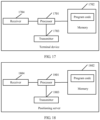
- the base station includes a processor, a memory, a transmitter, and a receiver, where the memory stores a set of program code, and the processor calls the program code stored in the memory to perform the following operations:
- An eleventh aspect of the embodiments of the present invention discloses a base station.
- the base station includes modules configured to perform the positioning information transmission method disclosed in the second aspect of the embodiments of the present invention.
- a twelfth aspect of the embodiments of the present invention discloses a base station.
- the base station includes a processor, a memory, a transmitter, and a receiver, where the memory stores a set of program code, and the processor calls the program code stored in the memory to perform the following operations:
- a thirteenth aspect of the embodiments of the present invention discloses a terminal device.
- the terminal device includes modules configured to perform the positioning information transmission method disclosed in the third aspect of the embodiments of the present invention.
- a fourteenth aspect of the embodiments of the present invention discloses a terminal device.
- the terminal device includes a processor, a memory, a transmitter, and a receiver, where the memory stores a set of program code, and the processor calls the program code stored in the memory to perform the following operations:
- a fifteenth aspect of the embodiments of the present invention discloses a positioning server.
- the positioning server includes modules configured to perform the positioning information transmission method disclosed in the fourth aspect of the embodiments of the present invention.
- a sixteenth aspect of the embodiments of the present invention discloses a positioning server.
- the positioning server includes a processor, a memory, a transmitter, and a receiver, where the memory stores a set of program code, and the processor calls the program code stored in the memory to perform the following operations:
- a seventeenth aspect of the embodiments of the present invention discloses a positioning information transmission system.
- the positioning information transmission system includes the base station disclosed in the tenth aspect of the embodiments of the present invention, the terminal device disclosed in the fourteenth aspect of the embodiments of the present invention, and the positioning server disclosed in the sixteenth aspect of the embodiments of the present invention.
- An eighteenth aspect of the embodiments of the present invention discloses a positioning information transmission system.
- the positioning information transmission system includes the base station disclosed in the twelfth aspect of the embodiments of the present invention, the terminal device disclosed in the fourteenth aspect of the embodiments of the present invention, and the positioning server disclosed in the sixteenth aspect of the embodiments of the present invention.
- a distance between UE and a base station may be determined by using UE Rx-Tx measurement (a difference between a transmission time at which the UE transmits an uplink signal and a receiving time at which the UE receives a downlink signal) or eNB Rx-Tx measurement (a difference between a transmission time at which the base station transmits a downlink signal and a receiving time at which the base station receives an uplink signal).
- UE Rx-Tx measurement a difference between a transmission time at which the UE transmits an uplink signal and a receiving time at which the UE receives a downlink signal
- eNB Rx-Tx measurement a difference between a transmission time at which the base station transmits a downlink signal and a receiving time at which the base station receives an uplink signal.
- the distance between the UE and the base station is equal to: (eNB Rx-Tx time difference - (Uplink subframe in which the base station receives the uplink signal - Downlink subframe in which the base station transmits the downlink signal))/(2 * Light velocity).
- eNB Rx-Tx time difference - Uplink subframe in which the base station receives the uplink signal - Downlink subframe in which the base station transmits the downlink signal
- the base station may fast schedule the subframe in which the uplink signal is located or the subframe in which the downlink signal is located.
- the "difference between the uplink subframe in which the base station receives the uplink signal and the downlink subframe in which the base station transmits the downlink signal” is variable.
- the "difference between the uplink subframe in which the base station receives the uplink signal and the downlink subframe in which the base station transmits the downlink signal” is already known to a positioning server, and that the "difference between the uplink subframe in which the base station receives the uplink signal and the downlink subframe in which the base station transmits the downlink signal" remains fixed and unchanged. Consequently, the positioning server cannot accurately calculate the distance between the UE and the base station, and positioning accuracy is reduced.
- the “difference” in the present invention for example, a difference between A and B, includes a difference obtained after B is subtracted from A or a difference obtained after A is subtracted from B, and no distinction is made.
- the "subframe” in the present invention includes frame concepts, such as a radio frame, a super frame, a hyperframe, a subframe, and a frame, in different communications systems.
- An embodiment of the present invention provides a positioning information transmission method.
- a base station may determine an uplink subframe for carrying an uplink signal and a downlink subframe for carrying a downlink signal, and determine first measurement information and second measurement information; the base station may send the first measurement information and the second measurement information to a positioning server; the positioning server may calculate a distance between the base station and a terminal device based on the first measurement information and the second measurement information; and the positioning server may further locate the terminal device based on the calculated distance between the base station and the terminal device, thereby improving positioning accuracy.
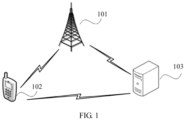
- an embodiment of the present invention provides a schematic architectural diagram of a positioning information transmission system.
- an architecture of the positioning information transmission system may include at least: a base station 101, a terminal device 102, and a positioning server 103.
- a communications interface between the positioning server 103 and the base station 101 may be 3GPP 36.455 LPPa
- a communications interface between the positioning server 103 and the terminal device 102 may be 3GPP 36.355 LPP.
- a data flow between the base station 101 and the terminal device 102 may be as follows: The terminal device 102 sends an uplink signal to the base station 101, and the base station 101 sends a downlink signal to the terminal device 102.
- the terminal device 102 (or the base station 101) may obtain first measurement information based on a sending time at which the terminal device 102 sends the uplink signal and a receiving time at which the terminal device 102 receives the downlink signal, where the first measurement information includes a difference between the receiving time of the downlink signal and the sending time of the uplink signal.
- the terminal device 102 may further obtain second measurement information based on an uplink subframe in which the terminal device 102 sends the uplink signal and a downlink subframe in which the terminal device 102 receives the downlink signal, where the second measurement information is used to indicate a difference between the downlink subframe and the uplink subframe.
- the terminal device 102 (or the base station 101) sends the first measurement information and the second measurement information to the positioning server103.
- the positioning server 103 may obtain a distance between the base station 101 and the terminal device 102 based on the first measurement information and the second measurement information, and the positioning server 103 may further locate the terminal device 102 based on the distance between the base station 101 and the terminal device 102.
- the terminal device 102 may obtain third measurement information based on the first measurement information and the second measurement information, where the third measurement information is used to indicate the distance between the base station 101 and the terminal device 102 or a round-trip distance between the base station 101 and the terminal device 102.
- the terminal device 102 (or the base station 101) may send the third measurement information to the positioning server 103, and the positioning server 103 may locate the terminal device 102 based on the third measurement information.
- the third measurement information may be used to indicate a transmission time of the uplink signal and/or a transmission time of the downlink signal, or a round-trip transmission time.
- the positioning server 103 may obtain the distance between the base station 101 and the terminal device 102 based on the third measurement information, and the positioning server 103 may further locate the terminal device 102 based on the distance between the base station 101 and the terminal device 102.
- a data flow between the base station 101 and the terminal device 102 may be as follows:
- the base station 101 sends a downlink signal to the terminal device 102, and the terminal device 102 sends the uplink signal to the base station 101.
- the base station 101 may obtain first measurement information based on a sending time at which the base station 101 sends the downlink signal and a receiving time at which the base station 101 receives the uplink signal, where the first measurement information includes a difference between the receiving time of the uplink signal and the sending time of the downlink signal.
- the base station 101 may further obtain second measurement information based on a downlink subframe in which the base station 101 sends the downlink signal and an uplink subframe in which the base station 101 receives the uplink signal, where the second measurement information is used to indicate a difference between the uplink subframe and the downlink subframe.
- the base station 101 sends the first measurement information and the second measurement information to the positioning server 103.
- the positioning server 103 may obtain, based on the first measurement information and the second measurement information, a distance between the base station 101 and the terminal device 102 or a round-trip distance between the base station 101 and the terminal device 102.
- the positioning server 103 may further locate the terminal device 102 based on the distance between the base station 101 and the terminal device 102.
- the base station 101 may obtain third measurement information based on the first measurement information and the second measurement information, where the third measurement information is used to indicate the distance between the base station 101 and the terminal device 102 or the round-trip distance between the base station 101 and the terminal device 102.
- the base station 101 may send the third measurement information to the positioning server 103, and the positioning server 103 may locate the terminal device 102 based on the third measurement information.
- the third measurement information may be used to indicate a transmission time of the uplink signal and/or a transmission time of the downlink signal, or a round-trip transmission time.
- the positioning server 103 may obtain the distance between the base station 101 and the terminal device 102 based on the third measurement information, and the positioning server 103 may further locate the terminal device 102 based on the distance between the base station 101 and the terminal device 102.
- the base station may be a macro base station; an LMU; a femtocell; a picocell base station; a pico remote radio unit (pico Remote Radio Unit, pRRU), a remote radio unit (Remote Radio Head, RRH), and the like that belong to a same macro base station; or a pRRU, an RRH, and the like that belong to different macro base stations.
- pRRU pico Remote Radio Unit
- RRH Remote Radio Head
- the LMU is a logical entity, and may share a device with a base station, or may be an independent network element device, and is used in an Uplink Time Difference of Arrival (Uplink Time Difference of Arrival, UTDOA) technology, to participate in positioning and receive a sounding reference signal (Sounding Reference Signal, SRS) sent by UE.
- UTDOA Uplink Time Difference of Arrival
- SRS Sounding Reference Signal
- the terminal device may also be referred to as UE, a mobile station, an access terminal, a subscriber unit, a subscriber station, a mobile station, a remote station, a remote terminal, a mobile device, a terminal, a wireless communications device, a user agent, a user apparatus, or the like; and may be specifically any one of a station (Station, ST) in a WLAN, a cellular phone, a cordless telephone set, a Session Initiation Protocol (Session Initiation Protocol, SIP) phone, a wireless local loop (Wireless Local Loop, WLL) station, a personal digital assistant (Personal Digital Assistant, PDA), a handheld device or a computing device having a wireless communication function, another processing device connected to a wireless modem, an in-vehicle device, a wearable device, a mobile station on a future 5G network, a terminal device on a future evolved PLMN network, and the like.
- the positioning server Enhanced Serving Mobile Location Center,
- Signals transmitted between UE and a base station may be classified into a uplink signal and a downlink signal.
- the uplink signal is a signal sent by the UE to the base station
- the downlink signal is a signal sent by the base station to the UE.
- a subframe in which the base station receives the uplink signal sent by the UE may be referred to as an uplink subframe for carrying the uplink signal.
- the base station may receive a subframe number of the subframe in which the uplink signal sent by the UE is located, for example, system frame number (System Frame Number, SFN) information and subframe number information.
- a subframe in which the base station sends the downlink signal may be referred to as a downlink subframe for carrying the downlink signal.
- the base station may obtain a subframe number of the subframe in which the downlink signal sent to the UE is located, for example, SFN information and subframe number information.
- a subframe in which the UE receives the downlink signal sent by the base station may be referred to as a downlink subframe for carrying the downlink signal.
- the UE may receive a subframe number of the subframe in which the downlink signal sent by the base station is located, for example, SFN information and subframe number information.
- a subframe in which the UE sends the uplink signal may be referred to as an uplink subframe for carrying the uplink signal.
- the UE may obtain a subframe number of the subframe in which the uplink signal sent to the base station is located, for example, SFN information and subframe number information.
- the subframe in which the UE receives the downlink signal is the same as the subframe in which the base station sends the downlink signal
- the subframe in which the UE sends the uplink signal is the same as the subframe in which the base station receives the uplink signal.
- One system radio frame may include several subframes, a subframe length of a carrier may be 15 kHz*2 ⁇ n (where 2 ⁇ n is 2 to the power of n), and a subframe length corresponding to the system radio frame is 1/(2 ⁇ n) ms, where n is an integer.
- a plurality of transmission time units such as 0.5 ms, 0.25 ms, and 0.125 ms are supported.
- Different subframes correspond to different subframe identifiers, such as subframe numbers. Because naming manners and components of frames in different communications systems are different, the "subframe" in the present invention includes frame concepts, such as a radio frame, a super frame, a hyperframe, a subframe, and a frame, in different communications systems.
- eNB Rx-Tx measurement is a difference between a sending time at which the base station sends the downlink signal and a receiving time at which the base station receives the uplink signal;
- eNB Rx-Tx time difference - (Subframe in which the base station receives the uplink signal - Subframe in which the base station transmits the downlink signal) is a sum of a transmission time of the uplink signal and a transmission time of the downlink signal;
- eNB Rx-Tx time difference - (Subframe in which the base station receives the uplink signal - Subframe in which the base station transmits the downlink signal))/(2 * Light velocity) is a one-way distance between the base station and the UE; and
- UE Rx-Tx measurement is a difference between a receiving time at which the UE receives the downlink signal and a sending time at which the UE sends the uplink signal;
- UE Rx-Tx time difference - (Subframe in which the UE receives the downlink signal - Subframe in which the UE sends the uplink signal) is a sum of a transmission time of the uplink signal and a transmission time of the downlink signal;
- UE Rx-Tx time difference - (Subframe in which the UE receives the downlink signal - Subframe in which the UE sends the uplink signal))/(2 * Light velocity) is a one-way distance between the base station and the UE; and
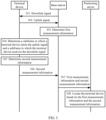
- FIG. 2 is a schematic flowchart of a positioning information transmission method according to an embodiment of the present invention. As shown in FIG. 2 , the positioning information transmission method in this embodiment of the present invention may include the following steps.
- a base station sends a downlink signal to a terminal device.
- the base station may send a downlink signal to the terminal device at an interval of preset duration, and receive an uplink signal fed back by the terminal device. After determining first measurement information and second measurement information, the base station may send the first measurement information and the second measurement information to a positioning server, for locating the terminal device by the positioning server.
- the positioning server may configure the base station to measure an eNB Rx-Tx time difference.
- the base station may send the downlink signal to the terminal device.
- the positioning server may inquire whether the base station has a capability of reporting the second measurement information.
- the positioning server may send a second measurement information obtaining request to the base station, and the base station may send the downlink signal to the terminal device in response to the second measurement information obtaining request.
- the base station may alternatively send, to the positioning server in response to the second measurement information obtaining request, second measurement information that is obtained most recently.
- the terminal device generates an uplink signal, and sends the uplink signal to the base station.
- the terminal device After receiving the downlink signal, the terminal device can process the downlink signal, generate an uplink signal, and then send the uplink signal to the base station.
- a period from a time at which the terminal device receives the downlink signal to a time at which the terminal device sends the uplink signal may be duration in which the terminal device processes the downlink signal, where the processing duration may be obtained by using a difference between a subframe in which the terminal device sends the uplink signal and a subframe in which the terminal device receives the downlink signal.
- the base station determines first measurement information, where the first measurement information includes a difference between a receiving time of the uplink signal and a sending time of the downlink signal.
- the base station may determine the first measurement information, where the first measurement information may include the difference between the receiving time of the uplink signal and the sending time of the downlink signal. For example, if the receiving time at which the base station receives the uplink signal is 10:30, and the sending time at which the base station sends the downlink signal is 10:10, the base station may determine that the first measurement information is 20 min.
- the base station determines a subframe in which the base station receives the uplink signal and a subframe in which the base station sends the downlink signal.
- the base station may determine the subframe in which the base station sends the downlink signal, for example, a subframe number of the subframe in which the base station sends the downlink signal.
- the base station may determine the subframe in which the base station receives the uplink signal, for example, a subframe number of the subframe in which the base station receives the uplink signal.
- this embodiment of the present invention does not limit a time sequence based on which the base station determines the subframe in which the base station receives the uplink signal and the base station determines the subframe in which the base station sends the downlink signal.
- the base station may determine the subframe in which the base station sends the downlink signal after determining the subframe in which the base station receives the uplink signal; for another example, the base station may determine the subframe in which the base station receives the uplink signal after determining the subframe in which the base station sends the downlink signal; and for another example, the base station may simultaneously determine the subframe in which the base station receives the uplink signal and the subframe in which the base station sends the downlink signal, and this is not limited by this embodiment of the present invention.
- the base station determines second measurement information, where the second measurement information is used to indicate a difference between the subframe in which the base station receives the uplink signal and the subframe in which the base station sends the downlink signal.
- the base station may determine the second measurement information, where the second measurement information is used to indicate the difference between the subframe in which the base station receives the uplink signal and the subframe in which the base station sends the downlink signal.
- the second measurement information may include the subframe number of the subframe in which the base station receives the uplink signal and the subframe number of the subframe in which the base station sends the downlink signal.
- the second measurement information may include the difference between the subframe in which the base station receives the uplink signal and the subframe in which the base station sends the downlink signal.
- the duration in which the terminal device processes the downlink signal is 0.25 ms.
- the second measurement information may include at least one of the following: an uplink subframe and/or a downlink subframe; a quantity of times of repeatedly carrying the uplink subframe; a quantity of times of repeatedly carrying the downlink subframe; a difference between the uplink subframe and the downlink subframe; a configuration (UL/DL configuration) between the uplink subframe and the downlink subframe; configuration information of the uplink subframe and/or configuration information of the downlink subframe, such as a bit map; configuration information of an uplink resource element (resource element) and/or configuration information of a downlink resource element, such as a bit map; and configuration information of an uplink resource block (resource block) and/or configuration information of a downlink resource block, such as a bit map.
- the base station sends the first measurement information and the second measurement information to a positioning server.
- the base station may send the first measurement information and the second measurement information to the positioning server by using a communications interface between the base station and the positioning server.
- the positioning server locates the terminal device based on the first measurement information and the second measurement information.
- the positioning server may obtain a distance between the terminal device and the base station by using the following formula: (eNB Rx-Tx time difference - (Subframe in which the base station receives the uplink signal - Subframe in which the base station transmits the downlink signal))/(2 * Light velocity); and then locate the terminal device based on the distance between the terminal device and the base station.
- the base station determines the first measurement information, where the first measurement information includes the difference between the receiving time of the uplink signal and the sending time of the downlink signal, and determines the second measurement information, where the second measurement information is used to indicate the difference between the uplink subframe and the downlink subframe; and the base station sends the first measurement information and the second measurement information to the positioning server, so that the positioning server locates the terminal device based on the first measurement information and the second measurement information, thereby improving positioning accuracy.
- FIG. 3 is a schematic flowchart of a positioning information transmission method according to another embodiment of the present invention. As shown in FIG. 3 , the positioning information transmission method in this embodiment of the present invention may include the following steps.
- a base station sends a downlink signal to a terminal device.
- step S201 For details, refer to the foregoing description about step S201. Details are not described again in this embodiment of the present invention.
- the terminal device generates an uplink signal, and sends the uplink signal to the base station.
- step S202 Details are not described again in this embodiment of the present invention.
- the base station determines first measurement information, where the first measurement information includes a difference between a receiving time of the uplink signal and a sending time of the downlink signal.
- step S203 Details are not described again in this embodiment of the present invention.
- the terminal device determines a subframe in which the terminal device sends the uplink signal and a subframe in which the terminal device receives the downlink signal.
- the terminal device may determine the subframe in which the terminal device sends the uplink signal, for example, a number of the subframe in which the terminal device sends the uplink signal. In addition, after receiving the downlink signal sent by the base station, the terminal device may determine the subframe in which the terminal device receives the downlink signal, for example, a number of the subframe in which the terminal device receives the downlink signal.
- the terminal device determines second measurement information, where the second measurement information is used to indicate a difference between the subframe in which the terminal device sends the uplink signal and the subframe in which the terminal device receives the downlink signal.
- the terminal device may determine the second measurement information, where the second measurement information is used to indicate the difference between the subframe in which the terminal device sends the uplink signal and the subframe in which the terminal device receives the downlink signal.
- the second measurement information may include the subframe number of the subframe in which the terminal device sends the uplink signal and the subframe number of the subframe in which the terminal device receives the downlink signal.
- the second measurement information may include the difference between the subframe in which the terminal device sends the uplink signal and the subframe in which the terminal device receives the downlink signal.
- the terminal device sends the second measurement information to the base station.
- the terminal device may send the second measurement information to a positioning server by using a communications interface between the terminal device and the positioning server.
- the base station may send the first measurement information to the positioning server by using a communications interface between the base station and the positioning server, so that the positioning server locates the terminal device based on the first measurement information and the second measurement information.
- the base station sends the first measurement information and the second measurement information to a positioning server.
- the positioning server locates the terminal device based on the first measurement information and the second measurement information.
- the base station determines the first measurement information, where the first measurement information includes the difference between the receiving time of the uplink signal and the sending time of the downlink signal; the terminal device determines the second measurement information, where the second measurement information is used to indicate the difference between the subframe in which the terminal device sends the uplink signal and the subframe in which the terminal device receives the downlink signal; the terminal device sends the second measurement information to the base station; and the base station sends the first measurement information and the second measurement information to the positioning server, for locating the terminal device by the positioning server.
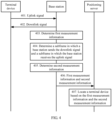
- FIG. 4 is a schematic flowchart of a positioning information transmission method according to still another embodiment of the present invention. As shown in FIG. 4 , the positioning information transmission method in this embodiment of the present invention may include the following steps.
- a terminal device sends an uplink signal to a base station.
- the terminal device may send an uplink signal to the base station at an interval of preset duration, and receive a downlink signal sent by the base station.
- the base station may send the first measurement information and the second measurement information to a positioning server, for locating the terminal device by the positioning server.
- the positioning server may configure the base station to measure an eNB Rx-Tx time difference.
- the base station may send a signal request to the terminal device, and the terminal device sends the uplink signal to the base station based on the signal request.
- the positioning server may inquire whether the base station has a capability of reporting the second measurement information.
- the positioning server may send a second measurement information obtaining request to the base station, and the base station may send a signal obtaining request to the terminal device in response to the second measurement information obtaining request, so that the terminal device sends the uplink signal to the base station based on the signal request.
- the base station may alternatively send, to the positioning server in response to the second measurement information obtaining request, second measurement information that is obtained most recently.
- the base station generates a downlink signal, and sends the downlink signal to the terminal device.
- the base station may process the uplink signal, generate a downlink signal, and send the downlink signal to the terminal device.
- a period from a time at which the base station receives the uplink signal to a time at which the base station sends the downlink signal may be duration in which the base station processes the uplink signal, where the processing duration may be obtained by using a difference between a subframe in which the base station sends the downlink signal and a subframe in which the base station receives the uplink signal.
- the base station determines first measurement information, where the first measurement information includes a difference between a sending time of the downlink signal and a receiving time of the uplink signal.
- the base station may determine the first measurement information, where the first measurement information may include the difference between the sending time of the downlink signal and the receiving time of the uplink signal. For example, if the sending time at which the base station sends the downlink signal is 10:30, and the receiving time at which the base station receives the uplink signal is 10:10, the base station may determine that the first measurement information is 20 min.
- the base station determines a subframe in which the base station sends the downlink signal and a subframe in which the base station receives the uplink signal.
- the base station may determine the subframe in which the base station receives the uplink signal, for example, the subframe number of the subframe in which the base station receives the uplink signal.
- the base station may determine the subframe in which the base station sends the downlink signal, for example, the subframe number of the subframe in which the base station sends the downlink signal.
- the base station determines second measurement information, where the second measurement information is used to indicate a difference between the subframe in which the base station sends the downlink signal and the subframe in which the base station receives the uplink signal.
- the base station may determine the second measurement information, where the second measurement information is used to indicate the difference between the subframe in which the base station sends the downlink signal and the subframe in which the base station receives the uplink signal.
- the second measurement information may include the subframe number of the subframe in which the base station receives the uplink signal and the subframe number of the subframe in which the base station sends the downlink signal.
- the second measurement information may include the difference between the subframe in which the base station sends the downlink signal and the subframe in which the base station receives the uplink signal.
- the base station sends the first measurement information and the second measurement information to a positioning server.
- the base station may send the first measurement information and the second measurement information to the positioning server by using a communications interface between the base station and the positioning server.
- the positioning server locates the terminal device based on the first measurement information and the second measurement information.
- the positioning server may obtain a distance between the terminal device and the base station by using the following formula: (eNB Rx-Tx time difference - (Subframe in which the base station sends the downlink signal - Subframe in which the base station receives the uplink signal))/(2 * Light velocity); and locate the terminal device based on the distance between the terminal device and the base station.
- the base station determines the first measurement information, where the first measurement information includes the difference between the sending time of the downlink signal and the receiving time of the uplink signal; determines the second measurement information, where the second measurement information is used to indicate the difference between the subframe in which the base station sends the downlink signal and the subframe in which the base station receives the uplink signal; and sends the first measurement information and the second measurement information to the positioning server, for locating the terminal device by the positioning server, thereby improving positioning accuracy.
- FIG. 5 is a schematic flowchart of a positioning information transmission method according to yet another embodiment of the present invention. As shown in FIG. 5 , the positioning information transmission method in this embodiment of the present invention may include the following steps.
- a terminal device sends an uplink signal to a base station.
- the terminal device may send an uplink signal to the base station at an interval of preset duration, and receive a downlink signal sent by the base station. After determining first measurement information and second measurement information, the terminal device may send the first measurement information and the second measurement information to a positioning server, for locating the terminal device by the positioning server.
- the positioning server may configure the terminal device to measure a UE Rx-Tx time difference.
- the terminal device may send the uplink signal to the base station.
- the positioning server may inquire whether the terminal device has a capability of reporting the second measurement information.
- the positioning server may send a second measurement information obtaining request to the terminal device.
- the terminal device may send the uplink signal to the base station in response to the second measurement information obtaining request.
- the terminal device may alternatively send, to the positioning server in response to the second measurement information obtaining request, second measurement information that is obtained most recently.
- the base station generates a downlink signal, and sends the downlink signal to the terminal device.
- step S402. Details are not described again in this embodiment of the present invention.
- the terminal device determines first measurement information, where the first measurement information includes a difference between a receiving time of the downlink signal and a sending time of the uplink signal.
- the terminal device may determine the sending time of the uplink signal; and when receiving the downlink signal sent by the base station, the terminal device may determine the receiving time of the downlink signal, so as to obtain the first measurement information by using the difference between the receiving time of the downlink signal and the sending time of the uplink signal.
- the terminal device determines a subframe in which the terminal device receives the downlink signal and a subframe in which the terminal device sends the uplink signal.
- the terminal device may determine the subframe in which the terminal device sends the uplink signal, for example, a number of the subframe in which the terminal device sends the uplink signal. In addition, after receiving the downlink signal sent by the base station, the terminal device may determine the subframe in which the terminal device receives the downlink signal, for example, a number of the subframe in which the terminal device receives the downlink signal.
- the terminal device determines second measurement information, where the second measurement information is used to indicate a difference between the subframe in which the terminal device receives the downlink signal and the subframe in which the terminal device sends the uplink signal.
- the terminal device may determine the second measurement information, where the second measurement information is used to indicate the difference between the subframe in which the terminal device receives the downlink signal and the subframe in which the terminal device sends the uplink signal.
- the second measurement information may include the subframe number of the subframe in which the terminal device sends the uplink signal and the subframe number of the subframe in which the terminal device receives the downlink signal.
- the second measurement information may include the difference between the subframe in which the terminal device receives the downlink signal and the subframe in which the terminal device sends the uplink signal.
- the terminal device sends the first measurement information and the second measurement information to a positioning server.
- the terminal device may send the first measurement information and the second measurement information to the positioning server by using a communications interface between the terminal device and the positioning server.
- the positioning server locates the terminal device based on the first measurement information and the second measurement information.
- the positioning server may obtain a distance between the terminal device and the base station by using the following formula: (UE Rx-Tx time difference - (Subframe in which the terminal device receives the downlink signal - Subframe in which the terminal device sends the uplink signal))/(2 * Light velocity); and locate the terminal device based on the distance between the terminal device and the base station.
- the terminal device determines the first measurement information, where the first measurement information includes the difference between the sending time of the downlink signal and the receiving time of the uplink signal; determines the second measurement information, where the second measurement information is used to indicate the difference between the subframe in which the base station sends the downlink signal and the subframe in which the base station receives the uplink signal; and sends the first measurement information and the second measurement information to the positioning server, for locating the terminal device by the positioning server, thereby improving positioning accuracy.
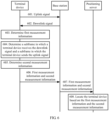
- FIG. 6 is a schematic flowchart of a positioning information transmission method according to still yet another embodiment of the present invention. As shown in FIG. 6 , the positioning information transmission method in this embodiment of the present invention may include the following steps.
- a terminal device sends an uplink signal to a base station.
- step S401 Details are not described again in this embodiment of the present invention.
- the base station generates a downlink signal, and sends the downlink signal to the terminal device.
- step S402. Details are not described again in this embodiment of the present invention.
- the terminal device determines first measurement information, where the first measurement information includes a difference between a receiving time of the downlink signal and a sending time of the uplink signal.
- step S503 Details are not described again in this embodiment of the present invention.
- the terminal device determines a subframe in which the terminal device receives the downlink signal and a subframe in which the terminal device sends the uplink signal.
- the terminal device determines second measurement information, where the second measurement information is used to indicate a difference between the subframe in which the terminal device receives the downlink signal and the subframe in which the terminal device sends the uplink signal.
- the terminal device sends the first measurement information and the second measurement information to the base station.
- the base station sends the first measurement information and the second measurement information to a positioning server.
- the positioning server locates the terminal device based on the first measurement information and the second measurement information.
- the base station may determine the first measurement information, and the base station sends the first measurement information to the positioning server; and the terminal device may determine the second measurement information, and the terminal device sends the second measurement information to the positioning server, so that the positioning server locates the terminal device based on the first measurement information and the second measurement information.
- the base station may determine the first measurement information, and the terminal device may determine the second measurement information; and the terminal device sends the second measurement information to the base station, and the base station sends the first measurement information and the second measurement information to the positioning server, so that the positioning server locates the terminal device based on the first measurement information and the second measurement information.
- the terminal device may determine the first measurement information, and the terminal device sends the first measurement information to the positioning server; and the base station may determine the second measurement information, and the base station sends the second measurement information to the positioning server, so that the positioning server locates the terminal device based on the first measurement information and the second measurement information.
- the terminal device may determine the first measurement information, and the terminal device sends the first measurement information to the base station; and the base station may determine the second measurement information, and the base station sends the first measurement information and the second measurement information to the positioning server, so that the positioning server locates the terminal device based on the first measurement information and the second measurement information.
- the terminal device determines the first measurement information and the second measurement information, and then may send the first measurement information and the second measurement information to the base station, and the base station sends the first measurement information and the second measurement information to the positioning server, for locating the terminal device by the positioning server, thereby improving positioning accuracy.
- FIG. 7 is a schematic flowchart of a positioning information transmission method according to a further embodiment of the present invention. As shown in FIG. 7 , the positioning information transmission method in this embodiment of the present invention may include the following steps.
- a base station sends a downlink signal to a terminal device.
- step S201 For details, refer to the foregoing description about step S201. Details are not described again in this embodiment of the present invention.
- the terminal device generates an uplink signal, and sends the uplink signal to the base station.
- step S202 Details are not described again in this embodiment of the present invention.
- the base station determines third measurement information, where the third measurement information is used to indicate a distance between the base station and the terminal device, or the third measurement information is used to indicate a transmission time of the uplink signal and/or a transmission time of the downlink signal.
- the base station may determine first measurement information, where the first measurement information includes a difference between a receiving time of the uplink signal and a sending time of the downlink signal; and determine second measurement information, where the second measurement information is used to indicate a difference between a subframe in which the base station receives the uplink signal and a subframe in which the base station sends the downlink signal; and the base station may calculate the third measurement information based on the first measurement information and the second measurement information. For example, the base station subtracts the second measurement information from the first measurement information, and obtained third measurement information is used to indicate a sum of the transmission time of the uplink signal and the transmission time of the downlink signal.
- the base station uses, as the third measurement information, half of a difference that is obtained after the second measurement information is subtracted from the first measurement information, where the third measurement information is used to indicate the transmission time of the uplink signal or the transmission time of the downlink signal.
- the base station uses, as the third measurement information, a quotient that is obtained after half of the difference between the first measurement information and the second measurement information is divided by light velocity, where the third measurement information is used to indicate a one-way distance between the base station and the terminal device.
- the base station uses, as the third measurement information, a quotient that is obtained after the difference between the first measurement information and the second measurement information is divided by light velocity, where the third measurement information is used to indicate a round-trip distance between the base station and the terminal device.
- the terminal device may determine the second measurement information, and send the second measurement information to the base station; and the base station calculates the third measurement information based on the determined first measurement information and the second measurement information that is sent by the terminal device.
- the base station sends the third measurement information to a positioning server.
- the base station may send the third measurement information to the positioning server by using a communications interface between the base station and the positioning server.
- the positioning server locates the terminal device based on the third measurement information.
- the base station sends the third measurement information to the positioning server, where the third measurement information is used to indicate the distance between the base station and the terminal device, or the third measurement information is used to indicate the transmission time of the uplink signal and/or the transmission time of the downlink signal, for locating the terminal device by the positioning server, thereby improving positioning accuracy.
- FIG. 8 is a schematic flowchart of a positioning information transmission method according to a still further embodiment of the present invention.
- the positioning information transmission method in this embodiment of the present invention may include the following steps.
- a terminal device sends an uplink signal to a base station.
- step S401 Details are not described again in this embodiment of the present invention.
- the base station generates a downlink signal, and sends the downlink signal to the terminal device.
- step S402. Details are not described again in this embodiment of the present invention.
- the base station determines third measurement information, where the third measurement information is used to indicate a distance between the base station and the terminal device, or the third measurement information is used to indicate a transmission time of the uplink signal and/or a transmission time of the downlink signal.
- the base station may determine first measurement information, where the first measurement information includes a difference between a sending time of the downlink signal and a receiving time of the uplink signal; and determine second measurement information, where the second measurement information is used to indicate a difference between a subframe in which the base station sends the downlink signal and a subframe in which the base station receives the uplink signal; and the base station may calculate the third measurement information based on the first measurement information and the second measurement information. For example, the base station subtracts the second measurement information from the first measurement information, and obtained third measurement information is used to indicate a sum of the transmission time of the uplink signal and the transmission time of the downlink signal.
- the base station uses, as the third measurement information, half of a difference that is obtained after the second measurement information is subtracted from the first measurement information, where the third measurement information is used to indicate the transmission time of the uplink signal or the transmission time of the downlink signal.
- the base station uses, as the third measurement information, a quotient that is obtained after half of the difference between the first measurement information and the second measurement information is divided by light velocity, where the third measurement information is used to indicate a one-way distance between the base station and the terminal device.
- the base station uses, as the third measurement information, a quotient that is obtained after the difference between the first measurement information and the second measurement information is divided by light velocity, where the third measurement information is used to indicate a round-trip distance between the base station and the terminal device.
- the terminal device may determine the second measurement information, and send the second measurement information to the base station; and the base station calculates the third measurement information based on the determined first measurement information and the second measurement information that is sent by the terminal device.
- the terminal device may determine the first measurement information, and send the first measurement information to the base station; and the base station calculates the third measurement information based on the first measurement information sent by the terminal device and the determined second measurement information.
- the terminal device may determine the first measurement information and the second measurement information, and send the first measurement information and the second measurement information to the base station; and the base station calculates the third measurement information based on the first measurement information and the second measurement information that are sent by the terminal device.
- the base station sends the third measurement information to a positioning server.
- the positioning server locates the terminal device based on the third measurement information.
- the base station sends the third measurement information to the positioning server, where the third measurement information is used to indicate the distance between the base station and the terminal device, or the third measurement information is used to indicate the transmission time of the uplink signal and/or the transmission time of the downlink signal, for locating the terminal device by the positioning server, thereby improving positioning accuracy.
- FIG. 9 is a schematic flowchart of a positioning information transmission method according to a yet further embodiment of the present invention. As shown in FIG. 9 , the positioning information transmission method in this embodiment of the present invention may include the following steps.
- a terminal device sends an uplink signal to a base station.
- step S501 For details, refer to the foregoing description about step S501. Details are not described again in this embodiment of the present invention.
- the base station generates a downlink signal, and sends the downlink signal to the terminal device.
- step S402. Details are not described again in this embodiment of the present invention.
- the terminal device determines third measurement information, where the third measurement information is used to indicate a distance between the base station and the terminal device, or the third measurement information is used to indicate a transmission time of the uplink signal and/or a transmission time of the downlink signal.
- the terminal device may determine first measurement information, where the first measurement information includes a difference between a receiving time of the downlink signal and a sending time of the uplink signal; and determine second measurement information, where the second measurement information is used to indicate a difference between a subframe in which the terminal device receives the downlink signal and a subframe in which the terminal device sends the uplink signal; and the terminal device may calculate the third measurement information based on the first measurement information and the second measurement information. For example, the terminal device subtracts the second measurement information from the first measurement information, and obtained third measurement information is used to indicate a sum of the transmission time of the uplink signal and the transmission time of the downlink signal.
- the terminal device uses, as the third measurement information, half of a difference that is obtained after the second measurement information is subtracted from the first measurement information, where the third measurement information is used to indicate the transmission time of the uplink signal or the transmission time of the downlink signal.
- the terminal device uses, as the third measurement information, a quotient that is obtained after half of the difference between the first measurement information and the second measurement information is divided by light velocity, where the third measurement information is used to indicate a one-way distance between the base station and the terminal device.
- the terminal device uses, as the third measurement information, a quotient that is obtained after the difference between the first measurement information and the second measurement information is divided by light velocity, where the third measurement information is used to indicate a round-trip distance between the base station and the terminal device.
- the terminal device sends the third measurement information to a positioning server.
- the positioning server locates the terminal device based on the third measurement information.
- the terminal device sends the third measurement information to the positioning server, where the third measurement information is used to indicate the distance between the base station and the terminal device, or the third measurement information is used to indicate the transmission time of the uplink signal and/or the transmission time of the downlink signal, for locating the terminal device by the positioning server, thereby improving positioning accuracy.
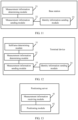
- FIG. 10 is a schematic structural diagram of a base station according to an embodiment of the present invention.
- the base station in this embodiment of the present invention may include a subframe determining module 11, a measurement information determining module 12, and a measurement information sending module 13.
- the subframe determining module 11 is configured to determine an uplink subframe for carrying an uplink signal.
- the subframe determining module 11 is further configured to determine a downlink subframe for carrying a downlink signal.
- the measurement information determining module 12 is configured to determine first measurement information, where the first measurement information includes a difference between a receiving time of the uplink signal and a sending time of the downlink signal, or the first measurement information includes a difference between a receiving time of the downlink signal and a sending time of the uplink signal.
- the measurement information determining module 12 is further configured to determine second measurement information, where the second measurement information is used to indicate a difference between the uplink subframe and the downlink subframe.
- the measurement information sending module 13 is configured to send the first measurement information and the second measurement information to a positioning server, for locating a terminal device by the positioning server.
- the difference between the uplink subframe and the downlink subframe is obtained by using a difference between a subframe identifier of the uplink subframe and a subframe identifier of the downlink subframe.
- the second measurement information includes at least one of the following:
- the base station may further include: an identity information sending module 14, configured to: before the measurement information sending module 13 sends the second measurement information to the positioning server, send identity information to the positioning server, where the identity information is used to indicate that the base station has a capability of sending the second measurement information.
- an identity information sending module 14 configured to: before the measurement information sending module 13 sends the second measurement information to the positioning server, send identity information to the positioning server, where the identity information is used to indicate that the base station has a capability of sending the second measurement information.
- the measurement information sending module 13 is further configured to: when a measurement information obtaining request that is fed back by the positioning server in response to the identity information is received, send the second measurement information to the positioning server.
- the subframe determining module 11 determines the uplink subframe for carrying the uplink signal and the downlink subframe for carrying the downlink signal; the measurement information determining module 12 determines the first measurement information and the second measurement information; and the measurement information sending module 13 sends the first measurement information and the second measurement information to the positioning server, for locating the terminal device by the positioning server, thereby improving positioning accuracy.
- FIG. 11 is a schematic structural diagram of a base station according to another embodiment of the present invention.
- the base station in this embodiment of the present invention may include: a measurement information determining module 21 and a measurement information sending module 22.
- the measurement information determining module 21 is configured to determine third measurement information, where the third measurement information is used to indicate a distance between the base station and a terminal device, or the third measurement information is used to indicate a transmission time of an uplink signal and/or a transmission time of a downlink signal.
- the measurement information sending module 22 is configured to send the third measurement information to a positioning server, for locating the terminal device by the positioning server.
- the measurement information determining module 21 is specifically configured to receive the third measurement information sent by the terminal device.
- the measurement information determining module 21 may be specifically configured to:
- the difference between the uplink subframe and the downlink subframe is obtained by using a difference between a subframe identifier of the uplink subframe and a subframe identifier of the downlink subframe.
- the second measurement information includes at least one of the following:
- the base station may further include:
- the third measurement information includes a sum of the transmission time of the uplink signal and the transmission time of the downlink signal, the transmission time of the uplink signal, the transmission time of the downlink signal, and a round-trip distance between the base station and the terminal device or a one-way distance between the base station and the terminal device.
- the measurement information determining module 21 determines the third measurement information
- the measurement information sending module 22 sends the third measurement information to the positioning server, for locating a terminal device by the positioning server, thereby improving positioning accuracy.
- FIG. 12 is a schematic structural diagram of a terminal device according to an embodiment of the present invention.
- the terminal device in this embodiment of the present invention may include a measurement information determining module 32 and a measurement information sending module 33.
- the measurement information determining module 31 is configured to determine first measurement information, where the first measurement information includes a difference between a receiving time of a downlink signal and a sending time of an uplink signal.
- the measurement information sending module 32 is configured to send the first measurement information to a positioning server, for locating the terminal device by the positioning server.
- the terminal device may further include:
- the terminal device may further include:
- the terminal device may further include:
- the difference between the uplink subframe and the downlink subframe is obtained by using a difference between a subframe identifier of the uplink subframe and a subframe identifier of the downlink subframe.
- the second measurement information includes at least one of the following:
- the terminal device may further include:
- the terminal device may further include:
- the third measurement information includes a sum of the transmission time of the uplink signal and the transmission time of the downlink signal, the transmission time of the uplink signal, the transmission time of the downlink signal, and a round-trip distance between the base station and the terminal device or a one-way distance between the base station and the terminal device.
- the measurement information determining module 31 determines the first measurement information
- the measurement information sending module 32 sends the first measurement information to the positioning server, for locating the terminal device by the positioning server, thereby improving positioning accuracy.
- FIG. 13 is a schematic structural diagram of a positioning server according to an embodiment of the present invention.
- the positioning server in this embodiment of the present invention may include a measurement information receiving module 41 and a positioning module 42.
- the measurement information receiving module 41 is configured to receive first measurement information and second measurement information, where the first measurement information includes a difference between a receiving time of the uplink signal and a sending time of the downlink signal, or the first measurement information includes a difference between a receiving time of the downlink signal and a sending time of the uplink signal, and the second measurement information is used to indicate a difference between an uplink subframe for carrying the uplink signal and a downlink subframe for carrying the downlink signal.
- the positioning module 42 is configured to locate a terminal device based on the first measurement information and the second measurement information.
- the measurement information receiving module 41 may receive only the first measurement information and the third measurement information, or receive only the third measurement information; and the positioning module locates the terminal device based on the first measurement information and the third measurement information or based on the third measurement information.
- the second measurement information includes at least one of the following:
- the third measurement information includes a sum of the transmission time of the uplink signal and the transmission time of the downlink signal, the transmission time of the uplink signal, the transmission time of the downlink signal, and a round-trip distance between the base station and the terminal device or a one-way distance between the base station and the terminal device.
- the measurement information receiving module 41 receives the first measurement information and the second measurement information
- the positioning module 42 locates the terminal device based on the first measurement information and the second measurement information, thereby improving positioning accuracy.
- FIG. 14 is a schematic structural diagram of a positioning information transmission system according to an embodiment of the present invention. As shown in FIG. 14 , the system includes a base station, a terminal device, and a positioning server.
- FIG. 15 is a schematic structural diagram of a base station according to an embodiment of the present invention.
- the base station may include a processor 1501, a memory 1502, a transmitter 1503, and a receiver 1504.
- the memory 1502 may be a high-speed RAM memory, or may be a non-volatile memory (non-volatile memory), such as at least one magnetic disk memory.
- the memory 1502 may be further at least one storage apparatus far away from the processor 1501.
- the memory 1502 stores a set of program code, and the processor 1501 calls the program code stored in the memory to perform the following operations:
- the base station described in this embodiment of the present invention may be configured to implement some or all processes in the method embodiments of the present invention that are described with reference to FIG. 2 to FIG. 9 .
- FIG. 16 is a schematic structural diagram of a base station according to yet another embodiment of the present invention.
- the base station may include a processor 1601, a memory 1602, a transmitter 1603, and a receiver 1604.
- the memory 1602 may be a high-speed RAM memory, or may be a non-volatile memory (non-volatile memory), such as at least one magnetic disk memory.
- the memory 1602 may be further at least one storage apparatus far away from the processor 1601.
- the memory 1602 stores a set of program code, and the processor 1601 calls the program code stored in the memory to perform the following operations:
- the base station described in this embodiment of the present invention may be configured to implement some or all processes in the method embodiments of the present invention that are described with reference to FIG. 2 to FIG. 9 .
- FIG. 17 is a schematic structural diagram of a terminal device according to an embodiment of the present invention.
- the terminal device may include a processor 1701, a memory 1702, a transmitter 1703, and a receiver 1704.
- the memory 1702 may be a high-speed RAM memory, or may be a non-volatile memory (non-volatile memory), such as at least one magnetic disk memory.
- the memory 1702 may be further at least one storage apparatus far away from the processor 1701.
- the memory 1702 stores a set of program code, and the processor 1701 calls the program code stored in the memory to perform the following operations:
- the terminal device described in this embodiment of the present invention may be configured to implement some or all processes in the method embodiments of the present invention that are described with reference to FIG. 2 to FIG. 9 .
- FIG. 18 is a schematic structural diagram of a positioning server according to an embodiment of the present invention.
- the positioning server may include a processor 1801, a memory 1802, a transmitter 1803, and a receiver 1804.
- the memory 1802 may be a high-speed RAM memory, or may be a non-volatile memory (non-volatile memory), such as at least one magnetic disk memory.
- the memory 1802 may be further at least one storage apparatus far away from the processor 1801.
- the memory 1802 stores a set of program code, and the processor 1801 calls the program code stored in the memory 1802 to perform the following operations:
- the positioning server described in this embodiment of the present invention may be configured to implement some or all processes in the method embodiments of the present invention that are described with reference to FIG. 2 to FIG. 9 .
- references terms such as “an embodiment”, “some embodiments”, “an example”, “a specific example”, and “some examples” mean that specific features, structures, materials, or characteristics described with reference to the embodiments or examples are included in at least one embodiment or example of the present invention.
- the foregoing example expressions of the terms are not necessarily with respect to a same embodiment or example.
- the described specific features, structures, materials, or characteristics may be combined in a proper manner in any one or more of the embodiments or examples.
- a person skilled in the art may integrate or combine different embodiments or examples and characteristics of different embodiments or examples described in this specification, as long as they do not conflict with each other.
- first and second are merely intended for a purpose of description, and shall not be understood as an indication or implication of relative importance or implicit indication of a quantity of indicated technical features. Therefore, a feature limited by “first” or “second” may explicitly or implicitly include at least one of the features.
- a plurality of means at least two, for example, two or three, unless otherwise specifically limited.
- Logic and/or steps shown in the flowcharts or described herein in other manners, for example, may be considered as a program list of executable instructions that are used to implement logic functions, and may be specifically implemented on any computer-readable medium, for an instruction execution system, apparatus, or device (for example, a computer-based system, a system including a processor, or another system that can fetch instructions from the instruction execution system, apparatus, or device and execute the instructions) to use, or for a combination of the instruction execution system, apparatus, or device to use.
- the "computer-readable medium" may be any apparatus that may include, store, communicate, propagate, or transmit programs, for the instruction execution system, apparatus, or device to use, or for a combination of the instruction execution system, apparatus, or device to use.
- the computer-readable medium includes the following: an electrical portion (an electrical apparatus) with one or more buses, a portable computer cartridge (a magnetic apparatus), a random-access memory (RAM), a read-only memory (ROM), an electrically erasable programmable read-only memory (EPROM or flash memory), an optical fiber apparatus, and a compact disc read-only memory (CD-ROM).
- the computer-readable medium may even be a piece of paper on which the programs can be printed or another appropriate medium. Because, for example, optical scanning may be performed on the paper or the another medium, then processing, such as edition, decoding, or another appropriate means when necessary, may be performed to obtain the programs in an electronic manner, and then the programs are stored in a computer memory.
- various parts in the present invention may be implemented by using hardware, software, firmware, or a combination thereof.
- a plurality of steps or methods may be implemented by using software or firmware that is stored in a memory and that is executed by an appropriate instruction execution system.
- any item or a combination of the following well-known technologies in the art may be used for implementation: a discrete logic circuit having a logic gate circuit that is used to implement a logic function for a data signal, an application-specific integrated circuit having an appropriate combinatorial logic circuit, a programmable gate array (PGA), a field programmable gate array (FPGA), and the like.
- a person of ordinary skill in the art may understand that all or some of the steps of the method embodiments may be implemented by a program instructing related hardware.
- the program may be stored in a computer readable storage medium. When the program runs, one or a combination of the steps of the method embodiments are performed.
- functional units in the embodiments of the present invention may be integrated into one processing module, or each of the units may exist alone physically, or two or more units are integrated into one module.
- the integrated module may be implemented in a form of hardware, or may be implemented in a form of a software functional module.
- the integrated unit may be stored in a computer-readable storage medium.
- the foregoing storage medium may be a read-only memory, a magnetic disk, an optical disk, or the like.
Landscapes
- Engineering & Computer Science (AREA)
- Computer Networks & Wireless Communication (AREA)
- Signal Processing (AREA)
- Physics & Mathematics (AREA)
- General Physics & Mathematics (AREA)
- Radar, Positioning & Navigation (AREA)
- Remote Sensing (AREA)
- Mobile Radio Communication Systems (AREA)
- Position Fixing By Use Of Radio Waves (AREA)
- Telephonic Communication Services (AREA)
Claims (12)
- Verfahren zur Übertragung von Positionsbestimmungsinformationen, wobei das Verfahren auf eine Basisstation angewandt wird und das Verfahren Folgendes umfasst:Bestimmen eines Uplink-Subframes zum Mitführen eines Uplink-Signals,Bestimmen eines Downlink-Subframes zum Mitführen eines Downlink-Signals,Bestimmen (S203) erster Messinformationen, wobei die ersten Messinformationen eine Differenz zwischen einer Empfangszeit des Uplink-Signals und einer Sendezeit des Downlink-Signals umfassen oder die ersten Messinformationen eine Differenz zwischen einer Empfangszeit des Downlink-Signals und einer Sendezeit des Uplink-Signals umfassen,Bestimmen (S205) zweiter Messinformationen, wobei die zweiten Messinformationen verwendet werden, um eine Zeitdifferenz zwischen dem Uplink-Subframe und dem Downlink-Subframe anzugeben, undSenden (S206) der ersten Messinformationen und der zweiten Messinformationen an einen Positionsbestimmungsserver zum Lokalisieren eines Endgerätes durch den Positionsbestimmungsserver.
- Verfahren nach Anspruch 1, wobei die zweiten Messinformationen mindestens eines der Folgenden umfassen:den Uplink-Subframe und den Downlink-Subframe,eine Häufigkeit der Wiederholung des Uplink-Subframes,eine Häufigkeit der Wiederholung des Downlink-Subframes,die Differenz zwischen dem Uplink-Subframe und dem Downlink-Subframe undeine Konfiguration, UL-/DL-Konfiguration, zwischen Uplink-Subframe und Downlink-Subframe.
- Verfahren zur Übertragung von Positionsbestimmungsinformationen, wobei das Verfahren auf ein Endgerät angewandt wird und das Verfahren Folgendes umfasst:Bestimmen (S503) erster Messinformationen, wobei die ersten Messinformationen eine Differenz zwischen einer Empfangszeit eines Downlink-Signals und einer Sendezeit eines Uplink-Signals umfassen, undBestimmen (S505) zweiter Messinformationen, wobei die zweiten Messinformationen verwendet werden, um eine Zeitdifferenz zwischen dem Uplink-Subframe und dem Downlink-Subframe anzugeben, undBestimmen (S903) dritter Messinformationen basierend auf den ersten Messinformationen und den zweiten Messinformationen, wobei die dritten Messinformationen verwendet werden, um eine Distanz zwischen einer Basisstation und dem Endgerät anzugeben, oder die dritten Messinformationen verwendet werden, um eine Übertragungszeit des Uplink-Signals und/oder eine Übertragungszeit des Downlink-Signals anzugeben, undSenden der dritten Messinformationen an einen Positionsbestimmungsserver.
- Verfahren zur Übertragung von Positionsbestimmungsinformationen, wobei das Verfahren auf einen Positionsbestimmungsserver angewandt wird und das Verfahren Folgendes umfasst:Empfangen (S307, S406, S506, S607) erster Messinformationen und zweiter Messinformationen, wobei die ersten Messinformationen eine Differenz zwischen einer Empfangszeit eines Uplink-Signals und einer Sendezeit eines Downlink-Signals umfassen oder die ersten Messinformationen eine Differenz zwischen einer Empfangszeit eines Downlink-Signals und einer Sendezeit eines Uplink-Signals umfassen, und die zweiten Messinformationen verwendet werden, um eine Zeitdifferenz zwischen einem Uplink-Subframe zum Mitführen des Uplink-Signals und einem Downlink-Subframe zum Mitführen des Downlink-Signals anzugeben, undLokalisieren (S308, S407, S507, S608) eines Endgeräts basierend auf den ersten Messinformationen und den zweiten Messinformationen.
- Verfahren nach Anspruch 4, wobei die zweiten Messinformationen mindestens eines der Folgenden umfassen:den Uplink-Subframe und den Downlink-Subframe,eine Häufigkeit der Wiederholung des Uplink-Subframes,eine Häufigkeit der Wiederholung des Downlink-Subframes,die Differenz zwischen dem Uplink-Subframe und dem Downlink-Subframe undeine Konfiguration, UL-/DL-Konfiguration, zwischen dem Uplink-Subframe und dem Downlink-Subframe.
- Basisstation, wobei die Basisstation Folgendes umfasst:ein Subframe-Bestimmungsmodul (11), das zum Bestimmen eines Uplink-Subframes zum Mitführen eines Uplink-Signals konfiguriert ist, wobeidas Subframe-Bestimmungsmodul (11) ferner zum Bestimmen eines Downlink-Subframes zum Mitführen eines Downlink-Signals konfiguriert ist,ein Messinformationen-Bestimmungsmodul (12), das zum Bestimmen erster Messinformationen konfiguriert ist, wobei die ersten Messinformationen eine Differenz zwischen einer Empfangszeit des Uplink-Signals und einer Sendezeit des Downlink-Signals umfassen oder die ersten Messinformationen eine Differenz zwischen einer Empfangszeit des Downlink-Signals und einer Sendezeit des Uplink-Signals umfassen, wobeidas Messinformationen-Bestimmungsmodul (12) ferner zum Bestimmen zweiter Messinformationen konfiguriert ist, wobei die zweiten Messinformationen verwendet werden, um eine Zeitdifferenz zwischen dem Uplink-Subframe und dem Downlink-Subframe anzugeben, undein Messinformationen-Sendemodul (13), das zum Senden der ersten Messinformationen und der zweiten Messinformationen an einen Positionsbestimmungsserver zum Lokalisieren eines Endgerätes durch den Positionsbestimmungsserver konfiguriert ist.
- Basisstation nach Anspruch 6, wobei die zweiten Messinformationen mindestens eines der Folgenden umfassen:den Uplink-Subframe und den Downlink-Subframe,eine Häufigkeit der Wiederholung des Uplink-Subframes,eine Häufigkeit der Wiederholung des Downlink-Subframes,die Differenz zwischen dem Uplink-Subframe und dem Downlink-Subframe undeine Konfiguration, UL-/DL-Konfiguration, zwischen Uplink-Subframe und Downlink-Subframe.
- Endgerät, wobei das Endgerät Folgendes umfasst:ein Messinformationen-Bestimmungsmodul (31), das zum Bestimmen erster Messinformationen konfiguriert ist, wobei die ersten Messinformationen eine Differenz zwischen einer Empfangszeit eines Downlink-Signals und einer Sendezeit eines Uplink-Signals umfassen, undein Messinformationen-Sendemodul (32), das zum Senden der ersten Messinformationen an einen Positionsbestimmungsserver zum Lokalisieren des Endgerätes durch den Positionsbestimmungsserver konfiguriert ist,wobei das Messinformationen-Bestimmungsmodul (31) ferner zum Bestimmen zweiter Messinformationen konfiguriert ist, wobei die zweiten Messinformationen verwendet werden, um eine Zeitdifferenz zwischen dem Uplink-Subframe und dem Downlink-Subframe anzugeben,wobei das Messinformationen-Bestimmungsmodul (31) ferner zum Bestimmen dritter Messinformationen basierend auf den ersten Messinformationen und den zweiten Messinformationen konfiguriert ist, wobei die dritten Messinformationen verwendet werden, um eine Distanz zwischen einer Basisstation und dem Endgerät anzugeben, oder die dritten Messinformationen verwendet werden, um eine Übertragungszeit des Uplink-Signals und/oder eine Übertragungszeit des Downlink-Signals anzugeben, undein Messinformationen-Sendemodul (32), das zum Senden der dritten Messinformationen an den Positionsbestimmungsserver konfiguriert ist.
- Positionsbestimmungsserver, wobei der Positionsbestimmungsserver Folgendes umfasst:ein Messinformationen-Empfangsmodul (41), das zum Empfangen erster Messinformationen und zweiter Messinformationen konfiguriert ist, wobei die ersten Messinformationen eine Differenz zwischen einer Empfangszeit des Uplink-Signals und einer Sendezeit des Downlink-Signals umfassen oder die ersten Messinformationen eine Differenz zwischen einer Empfangszeit des Downlink-Signals und einer Sendezeit des Uplink-Signals umfassen, und die zweiten Messinformationen verwendet werden, um eine Zeitdifferenz zwischen einem Uplink-Subframe zum Mitführen des Uplink-Signals und einem Downlink-Subframe zum Mitführen des Downlink-Signals anzugeben, undein Positionsbestimmungsmodul (42), das zum Lokalisieren eines Endgeräts basierend auf den ersten Messinformationen und den zweiten Messinformationen konfiguriert ist.
- Positionsbestimmungsserver nach Anspruch 9, wobei:das Messinformationen-Empfangsmodul (41) ferner zum Empfangen dritter Messinformationen konfiguriert ist, wobei die dritten Messinformationen verwendet werden, um eine Distanz zwischen einer Basisstation und dem Endgerät anzugeben, oder die dritten Messinformationen verwendet werden, um eine Übertragungszeit des Uplink-Signals und/oder eine Übertragungszeit des Downlink-Signals anzugeben, unddas Positionsbestimmungsmodul (42) ferner zum Lokalisieren des Endgeräts basierend auf den dritten Messinformationen konfiguriert ist.
- Positionsbestimmungsserver nach Anspruch 9 oder 10, wobei die zweiten Messinformationen mindestens eines der Folgenden umfassen:den Uplink-Subframe und den Downlink-Subframe,eine Häufigkeit der Wiederholung des Uplink-Subframes,eine Häufigkeit der Wiederholung des Downlink-Subframes,die Differenz zwischen dem Uplink-Subframe und dem Downlink-Subframe undeine Konfiguration, UL-/DL-Konfiguration, zwischen Uplink-Subframe und Downlink-Subframe.
- Computerlesbares Speichermedium, auf dem Anweisungen gespeichert sind, wobei die Anweisungen einen Computer veranlassen, das Verfahren nach Anspruch 1 oder 2 zu implementieren, oder die Anweisungen einen Computer veranlassen, das Verfahren nach Anspruch 3 zu implementieren, oder die Anweisungen einen Computer veranlassen, das Verfahren nach Anspruch 4 oder 5 zu implementieren.
Applications Claiming Priority (1)
| Application Number | Priority Date | Filing Date | Title |
|---|---|---|---|
| PCT/CN2016/104791 WO2018082075A1 (zh) | 2016-11-04 | 2016-11-04 | 一种定位信息传输方法、相关设备以及系统 |
Publications (3)
| Publication Number | Publication Date |
|---|---|
| EP3531759A4 EP3531759A4 (de) | 2019-08-28 |
| EP3531759A1 EP3531759A1 (de) | 2019-08-28 |
| EP3531759B1 true EP3531759B1 (de) | 2025-06-25 |
Family
ID=62075467
Family Applications (1)
| Application Number | Title | Priority Date | Filing Date |
|---|---|---|---|
| EP16920618.2A Active EP3531759B1 (de) | 2016-11-04 | 2016-11-04 | Verfahren zum senden von positionierungsinformationen, zugehörige vorrichtung und system |
Country Status (5)
| Country | Link |
|---|---|
| US (1) | US11234207B2 (de) |
| EP (1) | EP3531759B1 (de) |
| JP (1) | JP6822724B2 (de) |
| CN (1) | CN109906642B (de) |
| WO (1) | WO2018082075A1 (de) |
Families Citing this family (6)
| Publication number | Priority date | Publication date | Assignee | Title |
|---|---|---|---|---|
| CN111147220B (zh) * | 2019-12-27 | 2021-09-03 | 京信网络系统股份有限公司 | Srs传输方法、装置、设备、系统和存储介质 |
| EP4128937A4 (de) | 2020-03-31 | 2024-01-03 | Qualcomm Incorporated | Super-slot-format für halbduplex (hd)-frequenzteilungsduplex (fdd) (hd-fdd) in drahtloser kommunikation |
| CN116094670B (zh) * | 2021-11-05 | 2026-03-17 | 大唐移动通信设备有限公司 | 信号处理方法及装置 |
| JP2025524034A (ja) * | 2022-10-11 | 2025-07-25 | 華為技術有限公司 | 測定方法および測定装置 |
| CN118488392A (zh) * | 2023-02-10 | 2024-08-13 | 华为技术有限公司 | 通信方法和通信装置 |
| CN118785365A (zh) * | 2023-04-07 | 2024-10-15 | 华为技术有限公司 | 通信方法和通信装置 |
Family Cites Families (24)
| Publication number | Priority date | Publication date | Assignee | Title |
|---|---|---|---|---|
| GB2215932A (en) * | 1988-03-26 | 1989-09-27 | Gec Traffic Automation | Radio position finding system |
| US6011974A (en) * | 1997-09-23 | 2000-01-04 | Telefonaktiebolaget L M Ericsson (Publ) | Method and system for determining position of a cellular mobile terminal |
| FI109839B (fi) * | 2000-08-22 | 2002-10-15 | Nokia Corp | Menetelmä matkaviestimen paikantamiseksi |
| US7110774B1 (en) * | 2000-10-27 | 2006-09-19 | Intel Corporation | Dual mode uplink/downlink location measurement and multi-protocol location measurement |
| US20040080454A1 (en) * | 2002-10-23 | 2004-04-29 | Camp William O. | Methods and systems for determining the position of a mobile terminal using digital television signals |
| KR100800738B1 (ko) * | 2003-10-31 | 2008-02-01 | 삼성전자주식회사 | 이동통신망에서 중계기 시간 지연 판단 방법 |
| EP2134006B1 (de) * | 2005-10-26 | 2014-10-08 | Mitsubishi Electric R&D Centre Europe B.V. | Verfahren zur Übermittlung von Abwärts- und Aufwärtsstrecken-Unterrahmen in einem Halbduplexkommunikationssystem |
| US20100135178A1 (en) * | 2008-11-21 | 2010-06-03 | Qualcomm Incorporated | Wireless position determination using adjusted round trip time measurements |
| CN101801085A (zh) * | 2010-02-11 | 2010-08-11 | 华为技术有限公司 | 一种定位方法、定位装置和基站 |
| US8781492B2 (en) * | 2010-04-30 | 2014-07-15 | Qualcomm Incorporated | Device for round trip time measurements |
| US20120287800A1 (en) * | 2011-05-11 | 2012-11-15 | Telefonaktiebolaget L M Ericsson (Publ) | Radio Network Node, a Node and Methods Therein for Enabling Enhanced Cell ID Timing Measurement for Positioning of a User Equipment |
| CN102958154B (zh) * | 2011-08-24 | 2015-05-27 | 华为技术有限公司 | 用户设备的定位方法及装置 |
| CN103379427B (zh) * | 2012-04-13 | 2016-06-15 | 华为技术有限公司 | 一种定位方法、设备及系统 |
| US9648573B2 (en) * | 2012-08-13 | 2017-05-09 | Telefonaktiebolaget Lm Ericsson (Publ) | Enhancing positioning with transmit-timing adjustment information |
| WO2014056172A1 (zh) * | 2012-10-08 | 2014-04-17 | 华为技术有限公司 | 定位方法和装置 |
| WO2014112915A1 (en) * | 2013-01-17 | 2014-07-24 | Telefonaktiebolaget L M Ericsson (Publ) | Perform positioning measurements taking ul/dl subframe configuration into account |
| JP5842908B2 (ja) * | 2013-12-26 | 2016-01-13 | カシオ計算機株式会社 | 電波時計 |
| US9907044B2 (en) * | 2014-09-15 | 2018-02-27 | Qualcomm Incorporated | IEEE 802.11 enhancements for high efficiency positioning |
| CN104394590A (zh) * | 2014-11-26 | 2015-03-04 | 中国联合网络通信集团有限公司 | 一种定位方法、装置及系统 |
| CN105743626B (zh) * | 2014-12-30 | 2020-09-15 | 北京三星通信技术研究有限公司 | 一种下行信道和/或下行参考信号的接收方法和设备 |
| RU2676895C1 (ru) * | 2015-01-21 | 2019-01-11 | Телефонактиеболагет Лм Эрикссон (Пабл) | Сетевой узел, беспроводное устройство и способы, выполняемые ими для обработки информации обратной связи автоматических запросов повторения передачи (arq) |
| CN105208653A (zh) * | 2015-09-30 | 2015-12-30 | 广州慧睿思通信息科技有限公司 | 一种无线通信终端定位方法 |
| US10541802B2 (en) * | 2016-03-31 | 2020-01-21 | Telefonaktiebolaget Lm Ericsson (Publ) | Application of timing advance command in wireless communication device in enhanced coverage mode |
| JP2017188812A (ja) * | 2016-04-07 | 2017-10-12 | 富士通株式会社 | 無線制御装置及び中継無線装置 |
-
2016
- 2016-11-04 EP EP16920618.2A patent/EP3531759B1/de active Active
- 2016-11-04 WO PCT/CN2016/104791 patent/WO2018082075A1/zh not_active Ceased
- 2016-11-04 JP JP2019523546A patent/JP6822724B2/ja active Active
- 2016-11-04 CN CN201680090551.9A patent/CN109906642B/zh active Active
-
2019
- 2019-05-03 US US16/403,117 patent/US11234207B2/en active Active
Also Published As
| Publication number | Publication date |
|---|---|
| EP3531759A4 (de) | 2019-08-28 |
| US11234207B2 (en) | 2022-01-25 |
| US20190261305A1 (en) | 2019-08-22 |
| EP3531759A1 (de) | 2019-08-28 |
| CN109906642A (zh) | 2019-06-18 |
| JP6822724B2 (ja) | 2021-01-27 |
| WO2018082075A1 (zh) | 2018-05-11 |
| CN109906642B (zh) | 2021-02-09 |
| JP2019536016A (ja) | 2019-12-12 |
Similar Documents
| Publication | Publication Date | Title |
|---|---|---|
| CN110971326B (zh) | 一种时间同步的方法和装置 | |
| CN113785633B (zh) | 用于对无线通信装置定位的方法、用于促进定位的方法 | |
| EP3531759B1 (de) | Verfahren zum senden von positionierungsinformationen, zugehörige vorrichtung und system | |
| US11902931B2 (en) | Method and apparatus for transmitting positioning measurement report | |
| US9743249B2 (en) | User equipment, device to device user equipment, backhaul device and positioning method thereof | |
| US20160337805A1 (en) | User equipment, device to device user equipment, base station, backhaul device and assistant positioning method for device to device user equipment | |
| EP3448099A1 (de) | Ressourcenzuteilungsverfahren, netzwerkseitige vorrichtung und endgerätevorrichtung | |
| US10656241B2 (en) | Methods and apparatus for reporting RSTD values | |
| KR20190092548A (ko) | 포지셔닝 방법 및 시스템, 및 관련 디바이스 | |
| WO2017113072A1 (zh) | 基于到达时间差定位方法、用户设备及网络设备 | |
| WO2017219283A1 (zh) | 定位基站确定方法、定位服务器、服务基站以及网络系统 | |
| US12267796B2 (en) | Rx-tx time difference generation, measurement and reporting with neighboring base stations | |
| CN104521297B (zh) | 移动终端定位测量处理方法及装置 | |
| US12520269B2 (en) | Positioning based on multiple measurement reports | |
| CN104010362B (zh) | 定位终端位置的方法、装置及定位设备 | |
| CN119948967A (zh) | 组合的一对多和多对一的侧链路定位 | |
| CN117204071A (zh) | 终端的定位方法、装置、设备及介质 | |
| KR20250011216A (ko) | 자원 구성 방법 및 통신 장치 | |
| CN117202355A (zh) | 资源配置方法及通信装置 | |
| CN116457683A (zh) | 用于多sim用户设备的设备定位 | |
| CN118119857A (zh) | 无线定位 | |
| WO2014176733A1 (zh) | 用于定位的方法、小基站和宏基站 |
Legal Events
| Date | Code | Title | Description |
|---|---|---|---|
| STAA | Information on the status of an ep patent application or granted ep patent |
Free format text: STATUS: THE INTERNATIONAL PUBLICATION HAS BEEN MADE |
|
| PUAI | Public reference made under article 153(3) epc to a published international application that has entered the european phase |
Free format text: ORIGINAL CODE: 0009012 |
|
| STAA | Information on the status of an ep patent application or granted ep patent |
Free format text: STATUS: REQUEST FOR EXAMINATION WAS MADE |
|
| 17P | Request for examination filed |
Effective date: 20190520 |
|
| A4 | Supplementary search report drawn up and despatched |
Effective date: 20190729 |
|
| AK | Designated contracting states |
Kind code of ref document: A1 Designated state(s): AL AT BE BG CH CY CZ DE DK EE ES FI FR GB GR HR HU IE IS IT LI LT LU LV MC MK MT NL NO PL PT RO RS SE SI SK SM TR |
|
| AX | Request for extension of the european patent |
Extension state: BA ME |
|
| DAV | Request for validation of the european patent (deleted) | ||
| DAX | Request for extension of the european patent (deleted) | ||
| STAA | Information on the status of an ep patent application or granted ep patent |
Free format text: STATUS: EXAMINATION IS IN PROGRESS |
|
| 17Q | First examination report despatched |
Effective date: 20210512 |
|
| GRAP | Despatch of communication of intention to grant a patent |
Free format text: ORIGINAL CODE: EPIDOSNIGR1 |
|
| STAA | Information on the status of an ep patent application or granted ep patent |
Free format text: STATUS: GRANT OF PATENT IS INTENDED |
|
| RIC1 | Information provided on ipc code assigned before grant |
Ipc: G01S 5/14 20060101ALN20250124BHEP Ipc: H04W 4/02 20180101ALN20250124BHEP Ipc: H04W 4/00 20180101ALN20250124BHEP Ipc: G01S 5/00 20060101ALI20250124BHEP Ipc: G01S 5/02 20100101ALI20250124BHEP Ipc: H04W 64/00 20090101AFI20250124BHEP |
|
| RIC1 | Information provided on ipc code assigned before grant |
Ipc: G01S 5/14 20060101ALN20250205BHEP Ipc: H04W 4/02 20180101ALN20250205BHEP Ipc: H04W 4/00 20180101ALN20250205BHEP Ipc: G01S 5/00 20060101ALI20250205BHEP Ipc: G01S 5/02 20100101ALI20250205BHEP Ipc: H04W 64/00 20090101AFI20250205BHEP |
|
| INTG | Intention to grant announced |
Effective date: 20250212 |
|
| GRAS | Grant fee paid |
Free format text: ORIGINAL CODE: EPIDOSNIGR3 |
|
| GRAA | (expected) grant |
Free format text: ORIGINAL CODE: 0009210 |
|
| STAA | Information on the status of an ep patent application or granted ep patent |
Free format text: STATUS: THE PATENT HAS BEEN GRANTED |
|
| AK | Designated contracting states |
Kind code of ref document: B1 Designated state(s): AL AT BE BG CH CY CZ DE DK EE ES FI FR GB GR HR HU IE IS IT LI LT LU LV MC MK MT NL NO PL PT RO RS SE SI SK SM TR |
|
| REG | Reference to a national code |
Ref country code: GB Ref legal event code: FG4D |
|
| REG | Reference to a national code |
Ref country code: CH Ref legal event code: EP |
|
| REG | Reference to a national code |
Ref country code: CH Ref legal event code: EP |
|
| REG | Reference to a national code |
Ref country code: IE Ref legal event code: FG4D |
|
| REG | Reference to a national code |
Ref country code: DE Ref legal event code: R096 Ref document number: 602016092699 Country of ref document: DE |
|
| REG | Reference to a national code |
Ref country code: NL Ref legal event code: FP |
|
| PG25 | Lapsed in a contracting state [announced via postgrant information from national office to epo] |
Ref country code: FI Free format text: LAPSE BECAUSE OF FAILURE TO SUBMIT A TRANSLATION OF THE DESCRIPTION OR TO PAY THE FEE WITHIN THE PRESCRIBED TIME-LIMIT Effective date: 20250625 |
|
| REG | Reference to a national code |
Ref country code: LT Ref legal event code: MG9D |
|
| PG25 | Lapsed in a contracting state [announced via postgrant information from national office to epo] |
Ref country code: GR Free format text: LAPSE BECAUSE OF FAILURE TO SUBMIT A TRANSLATION OF THE DESCRIPTION OR TO PAY THE FEE WITHIN THE PRESCRIBED TIME-LIMIT Effective date: 20250926 Ref country code: NO Free format text: LAPSE BECAUSE OF FAILURE TO SUBMIT A TRANSLATION OF THE DESCRIPTION OR TO PAY THE FEE WITHIN THE PRESCRIBED TIME-LIMIT Effective date: 20250925 |
|
| PG25 | Lapsed in a contracting state [announced via postgrant information from national office to epo] |
Ref country code: BG Free format text: LAPSE BECAUSE OF FAILURE TO SUBMIT A TRANSLATION OF THE DESCRIPTION OR TO PAY THE FEE WITHIN THE PRESCRIBED TIME-LIMIT Effective date: 20250625 |
|
| PGFP | Annual fee paid to national office [announced via postgrant information from national office to epo] |
Ref country code: GB Payment date: 20250930 Year of fee payment: 10 |
|
| PG25 | Lapsed in a contracting state [announced via postgrant information from national office to epo] |
Ref country code: HR Free format text: LAPSE BECAUSE OF FAILURE TO SUBMIT A TRANSLATION OF THE DESCRIPTION OR TO PAY THE FEE WITHIN THE PRESCRIBED TIME-LIMIT Effective date: 20250625 |
|
| PG25 | Lapsed in a contracting state [announced via postgrant information from national office to epo] |
Ref country code: RS Free format text: LAPSE BECAUSE OF FAILURE TO SUBMIT A TRANSLATION OF THE DESCRIPTION OR TO PAY THE FEE WITHIN THE PRESCRIBED TIME-LIMIT Effective date: 20250925 |
|
| PG25 | Lapsed in a contracting state [announced via postgrant information from national office to epo] |
Ref country code: LV Free format text: LAPSE BECAUSE OF FAILURE TO SUBMIT A TRANSLATION OF THE DESCRIPTION OR TO PAY THE FEE WITHIN THE PRESCRIBED TIME-LIMIT Effective date: 20250625 |
|
| PGFP | Annual fee paid to national office [announced via postgrant information from national office to epo] |
Ref country code: NL Payment date: 20251003 Year of fee payment: 10 |
|
| PG25 | Lapsed in a contracting state [announced via postgrant information from national office to epo] |
Ref country code: PT Free format text: LAPSE BECAUSE OF FAILURE TO SUBMIT A TRANSLATION OF THE DESCRIPTION OR TO PAY THE FEE WITHIN THE PRESCRIBED TIME-LIMIT Effective date: 20251027 |
|
| REG | Reference to a national code |
Ref country code: AT Ref legal event code: MK05 Ref document number: 1807983 Country of ref document: AT Kind code of ref document: T Effective date: 20250625 |
|
| PG25 | Lapsed in a contracting state [announced via postgrant information from national office to epo] |
Ref country code: IS Free format text: LAPSE BECAUSE OF FAILURE TO SUBMIT A TRANSLATION OF THE DESCRIPTION OR TO PAY THE FEE WITHIN THE PRESCRIBED TIME-LIMIT Effective date: 20251025 |
|
| PGFP | Annual fee paid to national office [announced via postgrant information from national office to epo] |
Ref country code: DE Payment date: 20250930 Year of fee payment: 10 |
|
| PG25 | Lapsed in a contracting state [announced via postgrant information from national office to epo] |
Ref country code: AT Free format text: LAPSE BECAUSE OF FAILURE TO SUBMIT A TRANSLATION OF THE DESCRIPTION OR TO PAY THE FEE WITHIN THE PRESCRIBED TIME-LIMIT Effective date: 20250625 Ref country code: SM Free format text: LAPSE BECAUSE OF FAILURE TO SUBMIT A TRANSLATION OF THE DESCRIPTION OR TO PAY THE FEE WITHIN THE PRESCRIBED TIME-LIMIT Effective date: 20250625 |
|
| PG25 | Lapsed in a contracting state [announced via postgrant information from national office to epo] |
Ref country code: CZ Free format text: LAPSE BECAUSE OF FAILURE TO SUBMIT A TRANSLATION OF THE DESCRIPTION OR TO PAY THE FEE WITHIN THE PRESCRIBED TIME-LIMIT Effective date: 20250625 |
|
| PG25 | Lapsed in a contracting state [announced via postgrant information from national office to epo] |
Ref country code: PL Free format text: LAPSE BECAUSE OF FAILURE TO SUBMIT A TRANSLATION OF THE DESCRIPTION OR TO PAY THE FEE WITHIN THE PRESCRIBED TIME-LIMIT Effective date: 20250625 |
|
| PG25 | Lapsed in a contracting state [announced via postgrant information from national office to epo] |
Ref country code: EE Free format text: LAPSE BECAUSE OF FAILURE TO SUBMIT A TRANSLATION OF THE DESCRIPTION OR TO PAY THE FEE WITHIN THE PRESCRIBED TIME-LIMIT Effective date: 20250625 |
|
| PG25 | Lapsed in a contracting state [announced via postgrant information from national office to epo] |
Ref country code: SK Free format text: LAPSE BECAUSE OF FAILURE TO SUBMIT A TRANSLATION OF THE DESCRIPTION OR TO PAY THE FEE WITHIN THE PRESCRIBED TIME-LIMIT Effective date: 20250625 Ref country code: RO Free format text: LAPSE BECAUSE OF FAILURE TO SUBMIT A TRANSLATION OF THE DESCRIPTION OR TO PAY THE FEE WITHIN THE PRESCRIBED TIME-LIMIT Effective date: 20250625 |
|
| PG25 | Lapsed in a contracting state [announced via postgrant information from national office to epo] |
Ref country code: ES Free format text: LAPSE BECAUSE OF FAILURE TO SUBMIT A TRANSLATION OF THE DESCRIPTION OR TO PAY THE FEE WITHIN THE PRESCRIBED TIME-LIMIT Effective date: 20250625 |