EP3526374B1 - Verfahren zur erhöhung der korrosionsbeständigkeit eines verchromten substrats - Google Patents
Verfahren zur erhöhung der korrosionsbeständigkeit eines verchromten substrats Download PDFInfo
- Publication number
- EP3526374B1 EP3526374B1 EP18713706.2A EP18713706A EP3526374B1 EP 3526374 B1 EP3526374 B1 EP 3526374B1 EP 18713706 A EP18713706 A EP 18713706A EP 3526374 B1 EP3526374 B1 EP 3526374B1
- Authority
- EP
- European Patent Office
- Prior art keywords
- electrolyte
- chrome
- range
- trivalent chromium
- plated
- Prior art date
- Legal status (The legal status is an assumption and is not a legal conclusion. Google has not performed a legal analysis and makes no representation as to the accuracy of the status listed.)
- Active
Links
Images


Classifications
-
- C—CHEMISTRY; METALLURGY
- C25—ELECTROLYTIC OR ELECTROPHORETIC PROCESSES; APPARATUS THEREFOR
- C25D—PROCESSES FOR THE ELECTROLYTIC OR ELECTROPHORETIC PRODUCTION OF COATINGS; ELECTROFORMING; APPARATUS THEREFOR
- C25D9/00—Electrolytic coating other than with metals
- C25D9/04—Electrolytic coating other than with metals with inorganic materials
- C25D9/06—Electrolytic coating other than with metals with inorganic materials by anodic processes
-
- C—CHEMISTRY; METALLURGY
- C25—ELECTROLYTIC OR ELECTROPHORETIC PROCESSES; APPARATUS THEREFOR
- C25D—PROCESSES FOR THE ELECTROLYTIC OR ELECTROPHORETIC PRODUCTION OF COATINGS; ELECTROFORMING; APPARATUS THEREFOR
- C25D11/00—Electrolytic coating by surface reaction, i.e. forming conversion layers
- C25D11/38—Chromatising
-
- C—CHEMISTRY; METALLURGY
- C25—ELECTROLYTIC OR ELECTROPHORETIC PROCESSES; APPARATUS THEREFOR
- C25D—PROCESSES FOR THE ELECTROLYTIC OR ELECTROPHORETIC PRODUCTION OF COATINGS; ELECTROFORMING; APPARATUS THEREFOR
- C25D5/00—Electroplating characterised by the process; Pretreatment or after-treatment of workpieces
- C25D5/18—Electroplating using modulated, pulsed or reversing current
-
- C—CHEMISTRY; METALLURGY
- C25—ELECTROLYTIC OR ELECTROPHORETIC PROCESSES; APPARATUS THEREFOR
- C25D—PROCESSES FOR THE ELECTROLYTIC OR ELECTROPHORETIC PRODUCTION OF COATINGS; ELECTROFORMING; APPARATUS THEREFOR
- C25D5/00—Electroplating characterised by the process; Pretreatment or after-treatment of workpieces
- C25D5/48—After-treatment of electroplated surfaces
-
- C—CHEMISTRY; METALLURGY
- C25—ELECTROLYTIC OR ELECTROPHORETIC PROCESSES; APPARATUS THEREFOR
- C25D—PROCESSES FOR THE ELECTROLYTIC OR ELECTROPHORETIC PRODUCTION OF COATINGS; ELECTROFORMING; APPARATUS THEREFOR
- C25D5/00—Electroplating characterised by the process; Pretreatment or after-treatment of workpieces
- C25D5/60—Electroplating characterised by the structure or texture of the layers
- C25D5/623—Porosity of the layers
-
- C—CHEMISTRY; METALLURGY
- C25—ELECTROLYTIC OR ELECTROPHORETIC PROCESSES; APPARATUS THEREFOR
- C25D—PROCESSES FOR THE ELECTROLYTIC OR ELECTROPHORETIC PRODUCTION OF COATINGS; ELECTROFORMING; APPARATUS THEREFOR
- C25D5/00—Electroplating characterised by the process; Pretreatment or after-treatment of workpieces
- C25D5/60—Electroplating characterised by the structure or texture of the layers
- C25D5/625—Discontinuous layers, e.g. microcracked layers
-
- C—CHEMISTRY; METALLURGY
- C25—ELECTROLYTIC OR ELECTROPHORETIC PROCESSES; APPARATUS THEREFOR
- C25D—PROCESSES FOR THE ELECTROLYTIC OR ELECTROPHORETIC PRODUCTION OF COATINGS; ELECTROFORMING; APPARATUS THEREFOR
- C25D5/00—Electroplating characterised by the process; Pretreatment or after-treatment of workpieces
- C25D5/627—Electroplating characterised by the visual appearance of the layers, e.g. colour, brightness or mat appearance
-
- C—CHEMISTRY; METALLURGY
- C25—ELECTROLYTIC OR ELECTROPHORETIC PROCESSES; APPARATUS THEREFOR
- C25D—PROCESSES FOR THE ELECTROLYTIC OR ELECTROPHORETIC PRODUCTION OF COATINGS; ELECTROFORMING; APPARATUS THEREFOR
- C25D9/00—Electrolytic coating other than with metals
- C25D9/04—Electrolytic coating other than with metals with inorganic materials
- C25D9/08—Electrolytic coating other than with metals with inorganic materials by cathodic processes
-
- C—CHEMISTRY; METALLURGY
- C25—ELECTROLYTIC OR ELECTROPHORETIC PROCESSES; APPARATUS THEREFOR
- C25D—PROCESSES FOR THE ELECTROLYTIC OR ELECTROPHORETIC PRODUCTION OF COATINGS; ELECTROFORMING; APPARATUS THEREFOR
- C25D3/00—Electroplating: Baths therefor
- C25D3/02—Electroplating: Baths therefor from solutions
- C25D3/04—Electroplating: Baths therefor from solutions of chromium
- C25D3/06—Electroplating: Baths therefor from solutions of chromium from solutions of trivalent chromium
Definitions
- the present invention relates to a method for increasing the corrosion resistance of a chrome-plated substrate wherein at least one part of a chrome-plated surface of a chrome-plated substrate is dipped into an electrolyte comprising trivalent chromium ions, at least one conducting salt and at least one reducing agent, and afterwards, a trivalent chromium oxide film is formed on the at least one part of the chrome-plated surface by applying a pulse reverse current between the chrome-plated surface and a counter electrode electrically connected with the chrome-plated surface through the electrolyte.
- the chrome deposit is preceded by Ni and/or Copper deposits to give a bright aspect to the item and improve its corrosion resistance.
- These new chrome-plated processes based on trivalent chromium can be of different types and defined as based on chlorides or based on sulfates. Then, each of them allows obtaining Cr deposits having different colors that may vary from dark colors to the one similar to Cr(VI) deposits. All Cr deposits obtained from a trivalent chromium electrolyte are alloys and may include C, N, O, S, Fe, Ni, while Cr deposits obtained from a hexavalent chromium electrolyte are almost pure.
- hexavalent chromium has the capability to passivate and protect other metals such as Ni, Cu, Fe, and their alloys and consequently to passivate unplated areas. Trivalent Cr does not have this ability.
- a method that is usually required to test chrome-plated items' corrosion resistance is the Neutral Salt Spray Test according to ISO9227 NSST or ASTM b117. Requested results for neutral salt spray resistance depend upon the tested item type. Generally, from 24h to 1000h are required, depending on the item nature.
- ABS ABS or ABS/Polycarbonate
- the request may vary from 480 h to 1000 h.
- test passing occurs when there is no aspect change or corrosion appearance. The latter is highlighted by salinity formation due to the corrosion of Cr deposit's underlying metals.
- the corrosion of Cr deposit's underlying metals might be Ni or Cu deposits or the very own item base material.
- a method for increasing the corrosion resistance of a chrome-plated substrate contains the following steps:
- the substrate used in the method according to the invention is a chrome-plated substrate and, thus, has a chrome-plated surface.
- the method according to the invention represents a post-treatment of a chrome-plated substrate in order to increase the corrosion resistance of the chrome-plated substrate.
- the chrome-plated substrate used in this post treatment should have been obtained by trivalent chromium electroplating of an (initial) substrate, i.e. the chrome-plated surface of the substrate used in the method according to the invention should have preferably been produced by trivalent chromium electroplating.
- step a) of the method according to the present invention at least one part of a chrome-plated surface of the chrome-plated substrate which corrosion resistance should be increased is dipped into an electrolyte.
- step b) a pulse reverse current is applied between the chrome-plated surface, which is at least partly dipped into the electrolyte, and a counter electrode while the chrome-plated surface of the substrate and the counter electrode are electrically connected through the electrolyte.
- the method according to the invention enables to create a trivalent chromium oxide film while increasing the corrosion resistance of the substrate without changing its decorative aspect.
- a specific trivalent chromium electrolyte in combination with a pulse reverse current, a consistent and uniform trivalent chromium oxide film is formed on the chrome-plated substrate. This specific film guarantees a high corrosion resistance to the substrate, underlined using the ISO9227 NSS standard.
- the chrome-plated substrate without the specific chromium oxide film may be exposed to corrosion because the Cr deposit, i.e. the chrome-plating of the substrate, is neither continuous nor uniform. In fact, the Cr deposit always presents micro-porosities and/or micro-cracking. For this reason, the method according to the invention enables the formation of a consistent and uniform trivalent chromium oxide film. Due to its consistency and uniformity, this specific film is suitable for suppressing corrosion of the substrate.
- the method according to the present invention enables achieving a high corrosion resistance of the chrome-plated substrate without using any hexavalent chromium ions.
- the electrolyte used within the method according to the invention is a trivalent chromium electrolyte.
- the formation of hexavalent ions during the method can be avoided due to the presence of a reducing agent in the electrolyte.
- the corrosion resistance of the chrome-plated substrate is increased such that a high corrosion resistance of the substrate is achieved while the use and the formation of hexavalent chromium during the method can be avoided.
- the trivalent chromium oxide film formed on the chrome-plated substrate does not contain any hexavalent chromium ions.
- a pulse reverse current is applied between the chrome-plated surface and a counter electrode electrically connected with the chrome-plated surface through the electrolyte.
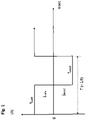
- pulse reverse current means that the chrome-plated surface is polarized alternatively under cathodic and anodic polarity during the appliance of this current.
- Such pulse reverse current is schematically shown in Fig. 1 .
- the parameters of the pulse reverse current such as the frequency, the current density and the duty cycle, may be adjusted such that they lie in specific preferred ranges. Thus, an even higher corrosion resistance of the chrome-plated substrate may be achieved.
- the pulse reverse current has a frequency (f) (i.e. a polarity inversion speed) in the range of 0.1 to 1000 Hz, preferably in the range of 0.5 to 100 Hz, more preferably in the range of 0.1 to 50 Hz.
- a further preferred embodiment is characterized in that the pulse reverse current has a current density (j cat , j ano ) in the range of 0.01 to 5 A/dm 2 , preferably in the range of 0.05 to 0.5 A/dm 2 .
- the duty cycle (y) of the pulse reverse current is in the range of 40 to 95 %, preferably in the range of 50 to 80 %.
- the corrosion resistance of the chrome-plated substrate can be further increased.
- the pulse reverse current is applied for a time period from 30 to 300 seconds, preferably for a time period from 60 to 240 seconds.
- a particular high corrosion resistance of the chrome-plated substrate can be achieved.
- the chrome-plated surface of the chrome-plated substrate has been obtained by trivalent chromium electroplating, i.e. by electroplating from an electrolyte containing trivalent chromium ions.
- Chrome-plated substrates that have been produced by hexavalent chromium electroplating, i.e. by electroplating from an electrolyte containing hexavalent chromium ions may contain at least rests of hexavalent chromium ions. Hence, if such substrate is dipped into an electrolyte, there may be a risk that hexavalent chromium ions may get into the electrolyte.
- chrome-plated substrates produced by trivalent chromium electroplating do generally not contain such rests of hexavalent chromium ions since they have not been produced by using hexavalent chromium electrolytes. Consequently, such substrates are particularly suitable for the use in the method according to the invention since no hexavalent chromium ions are present within the chrome-plated substrate that may get into the electrolyte.
- the Cr deposit that has been added to the surface of the substrate by trivalent chromium electroplating may have different shades depending upon the electrolyte used.
- the Cr deposit concerned may be a Cr alloy that contains one or more elements of the group consisting of Fe, Ni, C, O, N, and S.
- a further preferred embodiment of the method according to the present invention is characterized in that the chrome-plated substrate comprises a main part made of plastic, preferably acrylonitrile butadiene styrene (ABS), and at least one under layer arranged on the main part, wherein the at least one under layer is composed of a deposit selected from a metal, a metal alloy or mixtures thereof. More preferably, the at least one under layer is composed of a deposit selected from the group consisting of nickel, alloys of nickel, copper, alloys of copper, and mixtures thereof. Due to the combination of the specific electrolyte and the pulse reverse current, the method according to the invention is particularly suitable for increasing the corrosion resistance of such specific substrates based on plastic.
- ABS acrylonitrile butadiene styrene
- the chrome-plated substrate comprises a main part made of plastic, in particular ABS, one under layer made of copper arranged on the main part, and three under layers made of nickel arranged, one upon the other, on or above the under layer of copper.
- This exemplary substrate is chrome-plated and, thus, contains a chrome layer, i.e. a chrome-plating, on its surface, i.e. on the outer one of the three nickel layers.
- the under layer deposits may be exposed to corrosion because the Cr deposit, i.e. the chrome-plating of the substrate, is neither continuous nor uniform. In fact, the Cr deposit always presents micro-porosities and/or micro-cracking. For this reason, the method according to the invention enables the formation of a trivalent chromium oxide film suitable for suppressing corrosion taking place between the underlying deposit and the final Cr deposit into micro-inconsistencies therein included.
- the electrolyte into which the at least one part of the chrome-plated surface of the chrome-plated substrate is dipped, comprises trivalent chromium ions, at least one conducting salt and at least one reducing agent.
- the aim of the conducting salt is to assign conductivity to the electrolyte while the reducing agent prevents the formation of hexavalent chromium.
- the electrolyte is an aqueous electrolyte.
- the electrolyte should not contain hexavalent chromium ions in order to avoid toxicity caused by such ions of the electrolyte and the product obtained by the method of the invention.
- the concentration of the trivalent chromium ions in the electrolyte is in the range of 0.002 to 0.08 M.
- a concentration of 0.002 M corresponds to 100 ppm while a concentration of 0.08 M corresponds to 4 g/L.
- a further preferred embodiment is characterized in that the electrolyte comprises at least one trivalent chromium salt comprising the trivalent chromium ions.
- the electrolyte into which the at least one part of the chrome-plated surface of the chrome-plated substrate is dipped, may comprise at least one trivalent chromium salt (that comprises trivalent chromium ions), at least one conducting salt and at least one reducing agent.
- the at least one trivalent chromium salt is preferably selected from the group consisting of chromium sulfate, chromium potassium sulfate, chromium chloride and mixtures thereof.
- the concentration of the at least one conducting salt in the electrolyte is in the range of 5 to 30 g/L.
- the at least one conducting salt does not comprise trivalent chromium ions.
- the at least one conducting salt is selected from the group consisting of sulfates, nitrates, phosphates, carbonates, bicarbonates, acetates, chlorides, and mixtures thereof. It is particularly preferred that the at least one conducting salt is selected from the group consisting of sodium sulfate, potassium sulfate, ammonium sulfate, sodium nitrate, potassium nitrate, ammonium nitrate, sodium phosphate, potassium phosphate, ammonium phosphate, sodium carbonate, potassium carbonate, ammonium carbonate, sodium bicarbonate, potassium bicarbonate, ammonium bicarbonate, sodium acetate, potassium acetate, ammonium acetate, sodium chloride, potassium chloride, ammonium chloride, and mixtures thereof.
- the concentration of the at least one reducing agent in the electrolyte is in the range of 0.1 to 10 g/L, more preferably in the range of 0.1 to 5 g/L. If the concentration of the at least one reducing agent is below 0.1 g/L, Cr(VI) is created.
- the at least one reducing agent is selected from the group consisting of sulfites, metabisulfites, thiosulfates, hydrosulfites, hydrazine, hydroxylamine, hydroxylammonium salts, ascorbic acid, sodium ascorbate, potassium ascorbate, formic acid, sodium formate, potassium formate, glyoxylic acid, sodium glyoxylate, potassium glyoxylate, glyoxal, glucose, sorbitol, and mixtures thereof.
- a further preferred embodiment is characterized in that the electrolyte comprises at least one Cr(III) complexing agent.
- the electrolyte consists of at least one trivalent chromium salt, at least one conducting salt, at least one reducing agent, water and, optionally, at least one Cr(III) complexing agent.
- the pH value of the electrolyte is in the range of 2 to 10.
- the counter electrode used in the method according to the invention has the scope to close the circuit with the chrome-plated surface of the substrate.
- the counter electrode is made of stainless steel, graphite, or titanium.
- the counter electrode is preferably covered by a mixed metal oxide or platinum.
- a chrome-plated substrate having a continuous and uniform trivalent chromium oxide film on at least one part of its chrome-plated surface, wherein the trivalent chromium oxide film does not contain any hexavalent chromium ions.
- Such chrome-plated substrate differs from chrome-plated substrates known from the state of the art that have been treated by a known post-treatment using a trivalent chromium electrolyte for increasing their corrosion resistance in that it exhibits a continuous and uniform trivalent chromium oxide film on at least one part of its chrome-plated surface. This specific film guarantees a high corrosion resistance to the substrate.
- the chrome-plated substrate has a higher corrosion resistance than chrome-plated substrates known from the state of the art that have been post-treated using a trivalent chromium electrolyte according to a post-treatment known in the state of the art.
- chrome-plated substrates post-treated according to a post-treatment known in the state of the art using a trivalent chromium electrolyte only contain trivalent chromium oxide films that are not continuous and not uniform, which results in these known chrome-plated substrates having a low corrosion resistance.
- the chrome-plated substrate differs from chrome-plated substrates known from the state that have been treated by a known post-treatment using a hexavalent chromium electrolyte for increasing their corrosion resistance in that they contain a trivalent chromium oxide film that does not contain any hexavalent chromium ions.
- Films for corrosion resistance formed on chrome-plated substrates by using a hexavalent chromium electrolyte always contain at least rests of hexavalent chromium ions.
- the chrome-plated substrate is obtained by a method according to the present invention or obtained by one of the preferred embodiments of the method according to the present invention.
- chrome-plated substrate that has been obtained by the method according to the present invention.
- the trivalent chromium oxide film of the chrome-plated substrate can have a thickness from 5 to 15 nm, preferably from 7 to 13 nm, more preferably from 9 to 11 nm. It has been found that such specific thickness results in an increased corrosion resistance of the chrome-plated substrate. It is assumed that such specific thickness of the trivalent chromium oxide film leads to a more continuous and more uniform trivalent chromium oxide film. The film thickness may be measured by the method described on page 14, second paragraph.
- ABS parts having all the same shape and size have been preliminarily treated to make the surface conductive, suitable for electroplating.
- Examples from 1 to 6 have been taken as a reference to establish the exact corrosion resistance, according to ISO9227 NSST or ASTM b117 standards, of parts without any treatment or of parts that underwent a conventional Cr(VI) treatment.
- the chrome-plated surface has been analyzed after the post-treatment to determine its film thickness and type.
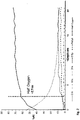
- the samples have been analyzed by XPS.
- Argon gun profiles have been performed to evaluate the thickness of the top surface chromium oxide layer.
- the XPS profile has been obtained (in atomic%) for the different elements depending on depth.
- the estimated chromium oxide layer on the surface of the samples is measured at the half of maximum oxygen concentration.
- XPS analysis profiles are shown in figures 2 , 3 , 4 and 5 .
- the profiles were performed with a step of 0.9 nm depth (1 min sputtering between 2 acquisitions). At each step, the elements were analyzed with a pass energy of 23.5 eV (high resolution spectra): Atomic compositions were derived from peak areas using photoionisation cross-sections calculated by Scofield, corrected for the dependence of the escape depth on the kinetic energy of the electrons and corrected for the analyzer transmission function of our spectrometer. Atomic compositions were derived from peak areas after a Shirley background subtraction.
- Table 1 summarizes the tests and analysis results. Examples 13, 14 and 15 have been performed according to the method of the present invention while examples 1 to 12 are reference samples. Therefore, the mentioned examples achieved the targeted goal to obtain a corrosion resistance, according to the ISO 9227 NSST Standard, comparable or higher than a post-treatment done using hexavalent chromium, even if Cr deposit type or Cr alloy varies and avoiding the hexavalent chromium formation into the post-treatment electrolyte. The goal achievement has been confirmed by XPS analysis profile, which highlighted how the use of pulse reverse current on the same electrolyte allows to form a thicker Cr(III) oxide film.
- Fig. 1 highlights the pulsed reverse current type applied on the above mentioned examples, leading to the achievement of the objective of the present invention.
- Table 1 Summary of post treatment performances Exam pies Chromium color Chromium electrolyte based kind of post treatment Cr(VI) presence after use in the electrolyte 120 h 240 h 360 h 480 h 600 h 720 h 840 h 960 h Thick ness by XPS (nm) 1 Bright Chloride - - Ok No No - - - - - 2.7 2 Bright Sulfate - - Ok No No - - - - - - 3 Dark Chloride - - Ok No No - - - - - - - 4 Bright Chloride Cathodic Cr(VI) Yes Ok Ok Ok Ok Ok Ok Ok 4.3 5 Bright Sulfate Cathodic Cr(VI) Yes Ok Ok Ok Ok Ok Ok Ok - 6 Dark Chloride Cathodic Cr(VI) Yes Ok Ok Ok Ok Ok
Landscapes
- Chemical & Material Sciences (AREA)
- Engineering & Computer Science (AREA)
- Chemical Kinetics & Catalysis (AREA)
- Electrochemistry (AREA)
- Materials Engineering (AREA)
- Metallurgy (AREA)
- Organic Chemistry (AREA)
- Inorganic Chemistry (AREA)
- Electroplating Methods And Accessories (AREA)
- Electroplating And Plating Baths Therefor (AREA)
Claims (12)
- Verfahren zum Erhöhen der Korrosionsbeständigkeit eines verchromten Substrats, wobei das Verfahren die folgenden Schritte umfasst:a) Eintauchen mindestens eines Teils einer verchromten Oberfläche eines verchromten Substrats in einen Elektrolyten, wobei der Elektrolyt umfasstdreiwertige Chromionen, wobei die Konzentration der dreiwertigen Chromionen im Elektrolyten im Bereich von 0,001 bis 0,1 M liegt,mindestens ein Leitsalz, wobei die Konzentration des mindestens einen Leitsalzes im Elektrolyten im Bereich von 2 bis 50 g/l liegt, undmindestens ein Reduktionsmittel, ausgewählt aus der Gruppe bestehend aus Sulfiten, Metabisulfiten, Thiosulfaten, Hydrosulfiten, Hydrazin, Hydroxylamin, Hydroxylammoniumsalzen, Ascorbinsäure und ihren Na- und K-Salzen, Methansäure und ihren Na- und K-Salzen, Glyoxylsäure und ihren Na- und K-Salzen, Glyoxal, Glucose, Sorbit und Mischungen davon, wobei die Konzentration des mindestens einen Reduktionsmittels in dem Elektrolyten im Bereich von 0,1 bis 50 g/l liegt,wobei der Elektrolyt keine hexavalenten Chromionen enthält,b) Bilden eines Films aus dreiwertigem Chromoxid auf dem mindestens einen Teil der verchromten Oberfläche durch Anlegen eines Pulsrückstroms zwischen der verchromten Oberfläche und einer Gegenelektrode, die durch den Elektrolyten elektrisch mit der verchromten Oberfläche verbunden ist,
wobei der angelegte Pulsrückstrom eine Stromdichte jcat, jano im Bereich von 0,01 bis 10 A/dm2 aufweist. - Verfahren nach Anspruch 1, dadurch gekennzeichnet, dass der angelegte Pulsrückstrom aufweist- eine Frequenz im Bereich von 0,1 bis 1000 Hz, vorzugsweise im Bereich von 0,5 bis 100 Hz, mehr bevorzugt im Bereich von 0,1 bis 50 Hz und/oder- eine Stromdichte jcat, jano im Bereich von 0,01 bis 5 A/dm2, vorzugsweise im Bereich von 0,05 bis 0,5 A/dm2 und/oder- einen Betriebszyklus im Bereich von 40 bis 95 %, vorzugsweise im Bereich von 50 bis 80 %, wobei der Betriebszyklus durch die Formel: γ = tcat / (tcat+tano) definiert ist, wobei tcat die kathodische Zeit ist und tano die anodische Zeit ist.
- Verfahren nach einem der vorstehenden Ansprüche, dadurch gekennzeichnet, dass der Pulsrückstrom für einen Zeitraum von 30 bis 300 Sekunden, vorzugsweise für einen Zeitraum von 60 bis 240 Sekunden angelegt wird.
- Verfahren nach einem der vorstehenden Ansprüche, dadurch gekennzeichnet, dass die verchromte Oberfläche des Substrats durch Galvanisierung mit dreiwertigem Chrom erhalten wird.
- Verfahren nach einem der vorstehenden Ansprüche, dadurch gekennzeichnet, dass das Substrat ein Hauptteil aus Kunststoff und mindestens eine auf dem Hauptteil angeordnete Unterschicht umfasst, wobei die mindestens eine Unterschicht aus einer Ablagerung besteht, die aus einem Metall, einer Metalllegierung oder Mischungen davon ausgewählt ist, wobei die Ablagerung vorzugsweise aus der Gruppe ausgewählt ist, bestehend aus Nickel, Nickellegierungen, Kupfer, Kupferlegierungen und Mischungen davon.
- Verfahren nach einem der vorstehenden Ansprüche, dadurch gekennzeichnet, dass die Konzentration der dreiwertigen Chromionen im Elektrolyten im Bereich von 0,002 bis 0,08 M liegt.
- Verfahren nach einem der vorstehenden Ansprüche, dadurch gekennzeichnet, dass der Elektrolyt mindestens ein dreiwertiges Chromsalz umfasst, das die dreiwertigen Chromionen umfasst, wobei das mindestens eine dreiwertige Chromsalz vorzugsweise aus der Gruppe ausgewählt ist, die aus Chromsulfat, Chromkaliumsulfat, Chromchlorid und Mischungen davon besteht.
- Verfahren nach einem der vorstehenden Ansprüche, dadurch gekennzeichnet, dass das mindestens eine Leitsalz ausgewählt ist aus der Gruppe bestehend aus Sulfaten, Nitraten, Phosphaten, Carbonaten, Bicarbonaten, Acetaten, Chloriden und Mischungen davon, wobei die Konzentration des mindestens einen Leitsalzes im Elektrolyten vorzugsweise im Bereich von 5 bis 30 g/l liegt.
- Verfahren nach einem der vorstehenden Ansprüche, dadurch gekennzeichnet, dass die Konzentration des mindestens einen Reduktionsmittels im Elektrolyten im Bereich von 0,1 bis 10 g/l, vorzugsweise im Bereich von 0,1 bis 5 g/l liegt.
- Verfahren nach einem der vorstehenden Ansprüche, dadurch gekennzeichnet, dass der Elektrolyt mindestens einen Cr(III)-Komplexbildner umfasst.
- Verfahren nach einem der vorstehenden Ansprüche, dadurch gekennzeichnet, dass der pH-Wert des Elektrolyten im Bereich von 2 bis 10 liegt.
- Verfahren nach einem der vorstehenden Ansprüche, dadurch gekennzeichnet, dass die Gegenelektrode aus Edelstahl, Graphit oder Titan besteht, wobei die Gegenelektrode vorzugsweise von einem gemischten Metalloxid oder Platin bedeckt wird.
Applications Claiming Priority (2)
| Application Number | Priority Date | Filing Date | Title |
|---|---|---|---|
| EP17164327.3A EP3382062A1 (de) | 2017-03-31 | 2017-03-31 | Verfahren zur erhöhung der korrosionsbeständigkeit eines verchromten substrats |
| PCT/EP2018/058429 WO2018178390A1 (en) | 2017-03-31 | 2018-04-03 | Method for increasing the corrosion resistance of a chrome-plated substrate |
Publications (2)
| Publication Number | Publication Date |
|---|---|
| EP3526374A1 EP3526374A1 (de) | 2019-08-21 |
| EP3526374B1 true EP3526374B1 (de) | 2022-09-07 |
Family
ID=58606011
Family Applications (2)
| Application Number | Title | Priority Date | Filing Date |
|---|---|---|---|
| EP17164327.3A Withdrawn EP3382062A1 (de) | 2017-03-31 | 2017-03-31 | Verfahren zur erhöhung der korrosionsbeständigkeit eines verchromten substrats |
| EP18713706.2A Active EP3526374B1 (de) | 2017-03-31 | 2018-04-03 | Verfahren zur erhöhung der korrosionsbeständigkeit eines verchromten substrats |
Family Applications Before (1)
| Application Number | Title | Priority Date | Filing Date |
|---|---|---|---|
| EP17164327.3A Withdrawn EP3382062A1 (de) | 2017-03-31 | 2017-03-31 | Verfahren zur erhöhung der korrosionsbeständigkeit eines verchromten substrats |
Country Status (7)
| Country | Link |
|---|---|
| US (1) | US11268206B2 (de) |
| EP (2) | EP3382062A1 (de) |
| CN (1) | CN110546311B (de) |
| CA (1) | CA3056982C (de) |
| ES (1) | ES2929908T3 (de) |
| PT (1) | PT3526374T (de) |
| WO (1) | WO2018178390A1 (de) |
Families Citing this family (8)
| Publication number | Priority date | Publication date | Assignee | Title |
|---|---|---|---|---|
| CN110760900A (zh) * | 2019-11-29 | 2020-02-07 | 扬州大学 | 一种六价铬废水还原作电镀铬源的方法及其电镀方法 |
| CN110923768B (zh) * | 2019-12-19 | 2022-01-25 | 漳州市福美鑫新材料科技有限公司 | 一种用于三价铬电镀工件后处理工艺的设备 |
| CN111500962B (zh) * | 2020-04-28 | 2022-04-29 | 中国石油大学(华东) | 调控热浸镀锌铝合金镀层表面三价铬化学转化膜性能的成膜方法 |
| FR3110606A1 (fr) * | 2020-05-20 | 2021-11-26 | Institut De Recherche Technologique Matériaux, Métallurgie, Procédés | Procédé de chromage dur à partir de chrome trivalent |
| CN113151873A (zh) * | 2021-04-27 | 2021-07-23 | 深圳市通之泰科技有限公司 | 一种用于提高电镀抗腐蚀的工艺方法 |
| EP4239100A1 (de) | 2022-03-03 | 2023-09-06 | Advanced Capital Management Schweiz AG | Verfahren zur beschichtung eines substrats und zubehörteil eines elektrohaushaltsgeräts zur anwendung in der gastronomie |
| DE102022105844A1 (de) | 2022-03-14 | 2023-09-14 | Carl Freudenberg Kg | Passivierungsschicht für metallhaltige Substrate |
| EP4703500A1 (de) | 2024-08-26 | 2026-03-04 | Dr.-Ing. Max Schlötter GmbH & Co. KG | Dreiwertiges chromplattierungsbad |
Citations (3)
| Publication number | Priority date | Publication date | Assignee | Title |
|---|---|---|---|---|
| US6004448A (en) * | 1995-06-06 | 1999-12-21 | Atotech Usa, Inc. | Deposition of chromium oxides from a trivalent chromium solution containing a complexing agent for a buffer |
| JP2009235456A (ja) * | 2008-03-26 | 2009-10-15 | Okuno Chem Ind Co Ltd | 3価クロムめっき皮膜用電解処理液 |
| WO2015177314A1 (en) * | 2014-05-21 | 2015-11-26 | Tata Steel Ijmuiden B.V. | Method for plating a moving metal strip and coated metal strip produced thereby |
Family Cites Families (14)
| Publication number | Priority date | Publication date | Assignee | Title |
|---|---|---|---|---|
| US4167460A (en) * | 1978-04-03 | 1979-09-11 | Oxy Metal Industries Corporation | Trivalent chromium plating bath composition and process |
| DE3680555D1 (de) * | 1985-03-15 | 1991-09-05 | Kawasaki Steel Co | Zinnfreie stahlbaender, die zur produktion geschweisster dosen verwendet werden und verfahren zu ihrer herstellung. |
| GB9705149D0 (en) * | 1997-03-13 | 1997-04-30 | Ea Tech Ltd | A method for chromating metals having surface oxide layers |
| US20010054557A1 (en) * | 1997-06-09 | 2001-12-27 | E. Jennings Taylor | Electroplating of metals using pulsed reverse current for control of hydrogen evolution |
| JP5379426B2 (ja) | 2007-08-30 | 2013-12-25 | 日産自動車株式会社 | クロムめっき部品およびその製造方法 |
| JP2009074168A (ja) * | 2007-08-30 | 2009-04-09 | Nissan Motor Co Ltd | クロムめっき部品およびその製造方法 |
| EP2186928A1 (de) | 2008-11-14 | 2010-05-19 | Enthone, Inc. | Verfahren zur Nachbehandlung von Metallschichten |
| DE102010055968A1 (de) * | 2010-12-23 | 2012-06-28 | Coventya Spa | Substrat mit korrosionsbeständigem Überzug und Verfahren zu dessen Herstellung |
| CA2869032C (en) * | 2012-03-30 | 2016-07-05 | Tata Steel Ijmuiden B.V. | Coated substrate for packaging applications and a method for producing said coated substrate |
| EP2826890A1 (de) | 2013-07-19 | 2015-01-21 | ATOTECH Deutschland GmbH | Verfahren für kathodischen Korrosionsschutz von Chromoberflächen |
| US9695523B2 (en) * | 2013-10-12 | 2017-07-04 | Hamilton Sundstrand Corporation | Controlled trivalent chromium pretreatment |
| EP2899299A1 (de) * | 2014-01-24 | 2015-07-29 | COVENTYA S.p.A. | Galvanisierbad auf der Basis von dreiwertigem Chrom und Verfahren zur Abscheidung von Chrom |
| US10415148B2 (en) | 2014-03-07 | 2019-09-17 | Macdermid Acumen, Inc. | Passivation of micro-discontinuous chromium deposited from a trivalent electrolyte |
| EP3228729A1 (de) | 2016-04-04 | 2017-10-11 | COVENTYA S.p.A. | Verfahren zur metallisierung eines artikels mit einer kunststoffoberfläche mit vermeidung der metallisierung des gestells, das den artikel in dem plattierungsbad fixiert |
-
2017
- 2017-03-31 EP EP17164327.3A patent/EP3382062A1/de not_active Withdrawn
-
2018
- 2018-04-03 CA CA3056982A patent/CA3056982C/en active Active
- 2018-04-03 WO PCT/EP2018/058429 patent/WO2018178390A1/en not_active Ceased
- 2018-04-03 US US16/499,130 patent/US11268206B2/en active Active
- 2018-04-03 CN CN201880022120.8A patent/CN110546311B/zh active Active
- 2018-04-03 EP EP18713706.2A patent/EP3526374B1/de active Active
- 2018-04-03 ES ES18713706T patent/ES2929908T3/es active Active
- 2018-04-03 PT PT187137062T patent/PT3526374T/pt unknown
Patent Citations (3)
| Publication number | Priority date | Publication date | Assignee | Title |
|---|---|---|---|---|
| US6004448A (en) * | 1995-06-06 | 1999-12-21 | Atotech Usa, Inc. | Deposition of chromium oxides from a trivalent chromium solution containing a complexing agent for a buffer |
| JP2009235456A (ja) * | 2008-03-26 | 2009-10-15 | Okuno Chem Ind Co Ltd | 3価クロムめっき皮膜用電解処理液 |
| WO2015177314A1 (en) * | 2014-05-21 | 2015-11-26 | Tata Steel Ijmuiden B.V. | Method for plating a moving metal strip and coated metal strip produced thereby |
Also Published As
| Publication number | Publication date |
|---|---|
| US11268206B2 (en) | 2022-03-08 |
| EP3526374A1 (de) | 2019-08-21 |
| WO2018178390A1 (en) | 2018-10-04 |
| PT3526374T (pt) | 2022-11-21 |
| CN110546311A (zh) | 2019-12-06 |
| ES2929908T3 (es) | 2022-12-02 |
| CN110546311B (zh) | 2022-02-25 |
| CA3056982C (en) | 2023-11-28 |
| EP3382062A1 (de) | 2018-10-03 |
| US20210108326A1 (en) | 2021-04-15 |
| CA3056982A1 (en) | 2018-10-04 |
Similar Documents
| Publication | Publication Date | Title |
|---|---|---|
| US11268206B2 (en) | Method for increasing the corrosion resistance of a chrome-plated substrate | |
| JP6991227B2 (ja) | 最外クロム層または最外クロム合金層を電解不動態化して耐食性を向上させる方法 | |
| JP6788506B2 (ja) | 三価電解液から析出される微小不連続クロムの不動態化 | |
| JP6806152B2 (ja) | Sn系合金めっき鋼板 | |
| US11851780B2 (en) | Method for electrolytically passivating a surface of silver, silver alloy, gold, or gold alloy | |
| NL8300090A (nl) | Chromateringsmengsel en werkwijze om zink/nikkellegeringen te behandelen. | |
| EP1783249B1 (de) | Phosphatiertes verzinktes stahlblech | |
| Hwang et al. | Plasma electrolytic oxidation of AZ91 Mg alloy in the sodium stannate electrolyte | |
| KR20160088361A (ko) | 용기용 강판 및 그 제조 방법 | |
| KR101760729B1 (ko) | 용기용 강판 | |
| KR102492021B1 (ko) | 최외부 크롬 합금 층을 포함하는 기판의 부식 저항성을 증가시키는 방법 | |
| JP7844428B2 (ja) | 三価クロム電解液から機能または装飾クロム層を電着する方法 | |
| KR20190034910A (ko) | 마그네슘계 금속의 표면 처리 방법 | |
| Roesch et al. | Zinc/tin alloy coating for improved corrosion protection | |
| JPS62218598A (ja) | 金属めつきの後処理方法 |
Legal Events
| Date | Code | Title | Description |
|---|---|---|---|
| STAA | Information on the status of an ep patent application or granted ep patent |
Free format text: STATUS: UNKNOWN |
|
| STAA | Information on the status of an ep patent application or granted ep patent |
Free format text: STATUS: THE INTERNATIONAL PUBLICATION HAS BEEN MADE |
|
| PUAI | Public reference made under article 153(3) epc to a published international application that has entered the european phase |
Free format text: ORIGINAL CODE: 0009012 |
|
| STAA | Information on the status of an ep patent application or granted ep patent |
Free format text: STATUS: REQUEST FOR EXAMINATION WAS MADE |
|
| 17P | Request for examination filed |
Effective date: 20190514 |
|
| AK | Designated contracting states |
Kind code of ref document: A1 Designated state(s): AL AT BE BG CH CY CZ DE DK EE ES FI FR GB GR HR HU IE IS IT LI LT LU LV MC MK MT NL NO PL PT RO RS SE SI SK SM TR |
|
| AX | Request for extension of the european patent |
Extension state: BA ME |
|
| STAA | Information on the status of an ep patent application or granted ep patent |
Free format text: STATUS: EXAMINATION IS IN PROGRESS |
|
| 17Q | First examination report despatched |
Effective date: 20200330 |
|
| DAV | Request for validation of the european patent (deleted) | ||
| DAX | Request for extension of the european patent (deleted) | ||
| REG | Reference to a national code |
Ref country code: DE Ref legal event code: R079 Ref document number: 602018040316 Country of ref document: DE Free format text: PREVIOUS MAIN CLASS: C25D0003060000 Ipc: C25D0009080000 |
|
| GRAP | Despatch of communication of intention to grant a patent |
Free format text: ORIGINAL CODE: EPIDOSNIGR1 |
|
| STAA | Information on the status of an ep patent application or granted ep patent |
Free format text: STATUS: GRANT OF PATENT IS INTENDED |
|
| RIC1 | Information provided on ipc code assigned before grant |
Ipc: C25D 9/06 20060101ALI20220228BHEP Ipc: C25D 11/38 20060101ALI20220228BHEP Ipc: C25D 5/48 20060101ALI20220228BHEP Ipc: C25D 9/08 20060101AFI20220228BHEP |
|
| INTG | Intention to grant announced |
Effective date: 20220406 |
|
| GRAS | Grant fee paid |
Free format text: ORIGINAL CODE: EPIDOSNIGR3 |
|
| GRAA | (expected) grant |
Free format text: ORIGINAL CODE: 0009210 |
|
| STAA | Information on the status of an ep patent application or granted ep patent |
Free format text: STATUS: THE PATENT HAS BEEN GRANTED |
|
| AK | Designated contracting states |
Kind code of ref document: B1 Designated state(s): AL AT BE BG CH CY CZ DE DK EE ES FI FR GB GR HR HU IE IS IT LI LT LU LV MC MK MT NL NO PL PT RO RS SE SI SK SM TR |
|
| REG | Reference to a national code |
Ref country code: GB Ref legal event code: FG4D |
|
| REG | Reference to a national code |
Ref country code: CH Ref legal event code: EP Ref country code: AT Ref legal event code: REF Ref document number: 1517099 Country of ref document: AT Kind code of ref document: T Effective date: 20220915 |
|
| REG | Reference to a national code |
Ref country code: DE Ref legal event code: R096 Ref document number: 602018040316 Country of ref document: DE |
|
| REG | Reference to a national code |
Ref country code: IE Ref legal event code: FG4D |
|
| REG | Reference to a national code |
Ref country code: FI Ref legal event code: FGE |
|
| REG | Reference to a national code |
Ref country code: PT Ref legal event code: SC4A Ref document number: 3526374 Country of ref document: PT Date of ref document: 20221121 Kind code of ref document: T Free format text: AVAILABILITY OF NATIONAL TRANSLATION Effective date: 20221116 |
|
| REG | Reference to a national code |
Ref country code: ES Ref legal event code: FG2A Ref document number: 2929908 Country of ref document: ES Kind code of ref document: T3 Effective date: 20221202 |
|
| REG | Reference to a national code |
Ref country code: LT Ref legal event code: MG9D |
|
| REG | Reference to a national code |
Ref country code: NL Ref legal event code: MP Effective date: 20220907 |
|
| PG25 | Lapsed in a contracting state [announced via postgrant information from national office to epo] |
Ref country code: SE Free format text: LAPSE BECAUSE OF FAILURE TO SUBMIT A TRANSLATION OF THE DESCRIPTION OR TO PAY THE FEE WITHIN THE PRESCRIBED TIME-LIMIT Effective date: 20220907 Ref country code: RS Free format text: LAPSE BECAUSE OF FAILURE TO SUBMIT A TRANSLATION OF THE DESCRIPTION OR TO PAY THE FEE WITHIN THE PRESCRIBED TIME-LIMIT Effective date: 20220907 Ref country code: NO Free format text: LAPSE BECAUSE OF FAILURE TO SUBMIT A TRANSLATION OF THE DESCRIPTION OR TO PAY THE FEE WITHIN THE PRESCRIBED TIME-LIMIT Effective date: 20221207 Ref country code: LV Free format text: LAPSE BECAUSE OF FAILURE TO SUBMIT A TRANSLATION OF THE DESCRIPTION OR TO PAY THE FEE WITHIN THE PRESCRIBED TIME-LIMIT Effective date: 20220907 Ref country code: LT Free format text: LAPSE BECAUSE OF FAILURE TO SUBMIT A TRANSLATION OF THE DESCRIPTION OR TO PAY THE FEE WITHIN THE PRESCRIBED TIME-LIMIT Effective date: 20220907 |
|
| REG | Reference to a national code |
Ref country code: AT Ref legal event code: MK05 Ref document number: 1517099 Country of ref document: AT Kind code of ref document: T Effective date: 20220907 |
|
| PG25 | Lapsed in a contracting state [announced via postgrant information from national office to epo] |
Ref country code: HR Free format text: LAPSE BECAUSE OF FAILURE TO SUBMIT A TRANSLATION OF THE DESCRIPTION OR TO PAY THE FEE WITHIN THE PRESCRIBED TIME-LIMIT Effective date: 20220907 Ref country code: GR Free format text: LAPSE BECAUSE OF FAILURE TO SUBMIT A TRANSLATION OF THE DESCRIPTION OR TO PAY THE FEE WITHIN THE PRESCRIBED TIME-LIMIT Effective date: 20221208 |
|
| PG25 | Lapsed in a contracting state [announced via postgrant information from national office to epo] |
Ref country code: SM Free format text: LAPSE BECAUSE OF FAILURE TO SUBMIT A TRANSLATION OF THE DESCRIPTION OR TO PAY THE FEE WITHIN THE PRESCRIBED TIME-LIMIT Effective date: 20220907 Ref country code: RO Free format text: LAPSE BECAUSE OF FAILURE TO SUBMIT A TRANSLATION OF THE DESCRIPTION OR TO PAY THE FEE WITHIN THE PRESCRIBED TIME-LIMIT Effective date: 20220907 Ref country code: CZ Free format text: LAPSE BECAUSE OF FAILURE TO SUBMIT A TRANSLATION OF THE DESCRIPTION OR TO PAY THE FEE WITHIN THE PRESCRIBED TIME-LIMIT Effective date: 20220907 Ref country code: AT Free format text: LAPSE BECAUSE OF FAILURE TO SUBMIT A TRANSLATION OF THE DESCRIPTION OR TO PAY THE FEE WITHIN THE PRESCRIBED TIME-LIMIT Effective date: 20220907 |
|
| PG25 | Lapsed in a contracting state [announced via postgrant information from national office to epo] |
Ref country code: SK Free format text: LAPSE BECAUSE OF FAILURE TO SUBMIT A TRANSLATION OF THE DESCRIPTION OR TO PAY THE FEE WITHIN THE PRESCRIBED TIME-LIMIT Effective date: 20220907 Ref country code: PL Free format text: LAPSE BECAUSE OF FAILURE TO SUBMIT A TRANSLATION OF THE DESCRIPTION OR TO PAY THE FEE WITHIN THE PRESCRIBED TIME-LIMIT Effective date: 20220907 Ref country code: IS Free format text: LAPSE BECAUSE OF FAILURE TO SUBMIT A TRANSLATION OF THE DESCRIPTION OR TO PAY THE FEE WITHIN THE PRESCRIBED TIME-LIMIT Effective date: 20230107 Ref country code: EE Free format text: LAPSE BECAUSE OF FAILURE TO SUBMIT A TRANSLATION OF THE DESCRIPTION OR TO PAY THE FEE WITHIN THE PRESCRIBED TIME-LIMIT Effective date: 20220907 |
|
| REG | Reference to a national code |
Ref country code: DE Ref legal event code: R097 Ref document number: 602018040316 Country of ref document: DE |
|
| P01 | Opt-out of the competence of the unified patent court (upc) registered |
Effective date: 20230524 |
|
| PG25 | Lapsed in a contracting state [announced via postgrant information from national office to epo] |
Ref country code: NL Free format text: LAPSE BECAUSE OF FAILURE TO SUBMIT A TRANSLATION OF THE DESCRIPTION OR TO PAY THE FEE WITHIN THE PRESCRIBED TIME-LIMIT Effective date: 20220907 Ref country code: AL Free format text: LAPSE BECAUSE OF FAILURE TO SUBMIT A TRANSLATION OF THE DESCRIPTION OR TO PAY THE FEE WITHIN THE PRESCRIBED TIME-LIMIT Effective date: 20220907 |
|
| PLBE | No opposition filed within time limit |
Free format text: ORIGINAL CODE: 0009261 |
|
| STAA | Information on the status of an ep patent application or granted ep patent |
Free format text: STATUS: NO OPPOSITION FILED WITHIN TIME LIMIT |
|
| PG25 | Lapsed in a contracting state [announced via postgrant information from national office to epo] |
Ref country code: DK Free format text: LAPSE BECAUSE OF FAILURE TO SUBMIT A TRANSLATION OF THE DESCRIPTION OR TO PAY THE FEE WITHIN THE PRESCRIBED TIME-LIMIT Effective date: 20220907 |
|
| 26N | No opposition filed |
Effective date: 20230608 |
|
| PG25 | Lapsed in a contracting state [announced via postgrant information from national office to epo] |
Ref country code: SI Free format text: LAPSE BECAUSE OF FAILURE TO SUBMIT A TRANSLATION OF THE DESCRIPTION OR TO PAY THE FEE WITHIN THE PRESCRIBED TIME-LIMIT Effective date: 20220907 |
|
| GBPC | Gb: european patent ceased through non-payment of renewal fee |
Effective date: 20230403 |
|
| PG25 | Lapsed in a contracting state [announced via postgrant information from national office to epo] |
Ref country code: LU Free format text: LAPSE BECAUSE OF NON-PAYMENT OF DUE FEES Effective date: 20230403 |
|
| REG | Reference to a national code |
Ref country code: BE Ref legal event code: MM Effective date: 20230430 |
|
| PG25 | Lapsed in a contracting state [announced via postgrant information from national office to epo] |
Ref country code: MC Free format text: LAPSE BECAUSE OF FAILURE TO SUBMIT A TRANSLATION OF THE DESCRIPTION OR TO PAY THE FEE WITHIN THE PRESCRIBED TIME-LIMIT Effective date: 20220907 |
|
| PG25 | Lapsed in a contracting state [announced via postgrant information from national office to epo] |
Ref country code: GB Free format text: LAPSE BECAUSE OF NON-PAYMENT OF DUE FEES Effective date: 20230403 |
|
| PG25 | Lapsed in a contracting state [announced via postgrant information from national office to epo] |
Ref country code: MC Free format text: LAPSE BECAUSE OF FAILURE TO SUBMIT A TRANSLATION OF THE DESCRIPTION OR TO PAY THE FEE WITHIN THE PRESCRIBED TIME-LIMIT Effective date: 20220907 Ref country code: GB Free format text: LAPSE BECAUSE OF NON-PAYMENT OF DUE FEES Effective date: 20230403 |
|
| REG | Reference to a national code |
Ref country code: IE Ref legal event code: MM4A |
|
| PG25 | Lapsed in a contracting state [announced via postgrant information from national office to epo] |
Ref country code: BE Free format text: LAPSE BECAUSE OF NON-PAYMENT OF DUE FEES Effective date: 20230430 |
|
| REG | Reference to a national code |
Ref country code: DE Ref legal event code: R081 Ref document number: 602018040316 Country of ref document: DE Owner name: COVENTYA S.R.L., IT Free format text: FORMER OWNER: COVENTYA S.P.A., CARUGO, IT |
|
| PG25 | Lapsed in a contracting state [announced via postgrant information from national office to epo] |
Ref country code: IE Free format text: LAPSE BECAUSE OF NON-PAYMENT OF DUE FEES Effective date: 20230403 |
|
| PG25 | Lapsed in a contracting state [announced via postgrant information from national office to epo] |
Ref country code: IE Free format text: LAPSE BECAUSE OF NON-PAYMENT OF DUE FEES Effective date: 20230403 |
|
| REG | Reference to a national code |
Ref country code: ES Ref legal event code: PC2A Owner name: COVENTYA S.R.L Effective date: 20241007 |
|
| PG25 | Lapsed in a contracting state [announced via postgrant information from national office to epo] |
Ref country code: BG Free format text: LAPSE BECAUSE OF FAILURE TO SUBMIT A TRANSLATION OF THE DESCRIPTION OR TO PAY THE FEE WITHIN THE PRESCRIBED TIME-LIMIT Effective date: 20220907 |
|
| PG25 | Lapsed in a contracting state [announced via postgrant information from national office to epo] |
Ref country code: BG Free format text: LAPSE BECAUSE OF FAILURE TO SUBMIT A TRANSLATION OF THE DESCRIPTION OR TO PAY THE FEE WITHIN THE PRESCRIBED TIME-LIMIT Effective date: 20220907 |
|
| PGFP | Annual fee paid to national office [announced via postgrant information from national office to epo] |
Ref country code: FI Payment date: 20250319 Year of fee payment: 8 |
|
| PGFP | Annual fee paid to national office [announced via postgrant information from national office to epo] |
Ref country code: FR Payment date: 20250319 Year of fee payment: 8 |
|
| PGFP | Annual fee paid to national office [announced via postgrant information from national office to epo] |
Ref country code: IT Payment date: 20250319 Year of fee payment: 8 |
|
| PGFP | Annual fee paid to national office [announced via postgrant information from national office to epo] |
Ref country code: DE Payment date: 20250319 Year of fee payment: 8 |
|
| PGFP | Annual fee paid to national office [announced via postgrant information from national office to epo] |
Ref country code: ES Payment date: 20250502 Year of fee payment: 8 |
|
| PGFP | Annual fee paid to national office [announced via postgrant information from national office to epo] |
Ref country code: CH Payment date: 20250501 Year of fee payment: 8 |
|
| PG25 | Lapsed in a contracting state [announced via postgrant information from national office to epo] |
Ref country code: CY Free format text: LAPSE BECAUSE OF FAILURE TO SUBMIT A TRANSLATION OF THE DESCRIPTION OR TO PAY THE FEE WITHIN THE PRESCRIBED TIME-LIMIT; INVALID AB INITIO Effective date: 20180403 |
|
| PG25 | Lapsed in a contracting state [announced via postgrant information from national office to epo] |
Ref country code: HU Free format text: LAPSE BECAUSE OF FAILURE TO SUBMIT A TRANSLATION OF THE DESCRIPTION OR TO PAY THE FEE WITHIN THE PRESCRIBED TIME-LIMIT; INVALID AB INITIO Effective date: 20180403 |
|
| PGFP | Annual fee paid to national office [announced via postgrant information from national office to epo] |
Ref country code: TR Payment date: 20260325 Year of fee payment: 9 |
|
| PGFP | Annual fee paid to national office [announced via postgrant information from national office to epo] |
Ref country code: PT Payment date: 20260319 Year of fee payment: 9 |
|
| REG | Reference to a national code |
Ref country code: CH Ref legal event code: U11 Free format text: ST27 STATUS EVENT CODE: U-0-0-U10-U11 (AS PROVIDED BY THE NATIONAL OFFICE) Effective date: 20260501 |