EP3494137B1 - Antibodies against human ctla-4 - Google Patents
Antibodies against human ctla-4 Download PDFInfo
- Publication number
- EP3494137B1 EP3494137B1 EP17752494.9A EP17752494A EP3494137B1 EP 3494137 B1 EP3494137 B1 EP 3494137B1 EP 17752494 A EP17752494 A EP 17752494A EP 3494137 B1 EP3494137 B1 EP 3494137B1
- Authority
- EP
- European Patent Office
- Prior art keywords
- antibody
- ctla
- antibodies
- antigen
- seq
- Prior art date
- Legal status (The legal status is an assumption and is not a legal conclusion. Google has not performed a legal analysis and makes no representation as to the accuracy of the status listed.)
- Active
Links
Images

Classifications
-
- C—CHEMISTRY; METALLURGY
- C07—ORGANIC CHEMISTRY
- C07K—PEPTIDES
- C07K16/00—Immunoglobulins [IG], e.g. monoclonal or polyclonal antibodies
- C07K16/18—Immunoglobulins [IG], e.g. monoclonal or polyclonal antibodies against material from animals or humans
- C07K16/28—Immunoglobulins [IG], e.g. monoclonal or polyclonal antibodies against material from animals or humans against receptors, cell surface antigens or cell surface determinants
- C07K16/2803—Immunoglobulins [IG], e.g. monoclonal or polyclonal antibodies against material from animals or humans against receptors, cell surface antigens or cell surface determinants against the immunoglobulin superfamily
- C07K16/2818—Immunoglobulins [IG], e.g. monoclonal or polyclonal antibodies against material from animals or humans against receptors, cell surface antigens or cell surface determinants against the immunoglobulin superfamily against CD28 or CD152
-
- A—HUMAN NECESSITIES
- A61—MEDICAL OR VETERINARY SCIENCE; HYGIENE
- A61P—SPECIFIC THERAPEUTIC ACTIVITY OF CHEMICAL COMPOUNDS OR MEDICINAL PREPARATIONS
- A61P31/00—Antiinfectives, i.e. antibiotics, antiseptics, chemotherapeutics
-
- A—HUMAN NECESSITIES
- A61—MEDICAL OR VETERINARY SCIENCE; HYGIENE
- A61P—SPECIFIC THERAPEUTIC ACTIVITY OF CHEMICAL COMPOUNDS OR MEDICINAL PREPARATIONS
- A61P35/00—Antineoplastic agents
-
- A—HUMAN NECESSITIES
- A61—MEDICAL OR VETERINARY SCIENCE; HYGIENE
- A61P—SPECIFIC THERAPEUTIC ACTIVITY OF CHEMICAL COMPOUNDS OR MEDICINAL PREPARATIONS
- A61P35/00—Antineoplastic agents
- A61P35/02—Antineoplastic agents specific for leukemia
-
- A—HUMAN NECESSITIES
- A61—MEDICAL OR VETERINARY SCIENCE; HYGIENE
- A61P—SPECIFIC THERAPEUTIC ACTIVITY OF CHEMICAL COMPOUNDS OR MEDICINAL PREPARATIONS
- A61P37/00—Drugs for immunological or allergic disorders
- A61P37/02—Immunomodulators
-
- A—HUMAN NECESSITIES
- A61—MEDICAL OR VETERINARY SCIENCE; HYGIENE
- A61P—SPECIFIC THERAPEUTIC ACTIVITY OF CHEMICAL COMPOUNDS OR MEDICINAL PREPARATIONS
- A61P37/00—Drugs for immunological or allergic disorders
- A61P37/02—Immunomodulators
- A61P37/04—Immunostimulants
-
- A—HUMAN NECESSITIES
- A61—MEDICAL OR VETERINARY SCIENCE; HYGIENE
- A61P—SPECIFIC THERAPEUTIC ACTIVITY OF CHEMICAL COMPOUNDS OR MEDICINAL PREPARATIONS
- A61P43/00—Drugs for specific purposes, not provided for in groups A61P1/00-A61P41/00
-
- C—CHEMISTRY; METALLURGY
- C07—ORGANIC CHEMISTRY
- C07K—PEPTIDES
- C07K16/00—Immunoglobulins [IG], e.g. monoclonal or polyclonal antibodies
- C07K16/18—Immunoglobulins [IG], e.g. monoclonal or polyclonal antibodies against material from animals or humans
- C07K16/28—Immunoglobulins [IG], e.g. monoclonal or polyclonal antibodies against material from animals or humans against receptors, cell surface antigens or cell surface determinants
- C07K16/30—Immunoglobulins [IG], e.g. monoclonal or polyclonal antibodies against material from animals or humans against receptors, cell surface antigens or cell surface determinants from tumour cells
-
- A—HUMAN NECESSITIES
- A61—MEDICAL OR VETERINARY SCIENCE; HYGIENE
- A61K—PREPARATIONS FOR MEDICAL, DENTAL OR TOILETRY PURPOSES
- A61K39/00—Medicinal preparations containing antigens or antibodies
-
- C—CHEMISTRY; METALLURGY
- C07—ORGANIC CHEMISTRY
- C07K—PEPTIDES
- C07K2317/00—Immunoglobulins specific features
- C07K2317/20—Immunoglobulins specific features characterized by taxonomic origin
- C07K2317/24—Immunoglobulins specific features characterized by taxonomic origin containing regions, domains or residues from different species, e.g. chimeric, humanized or veneered
-
- C—CHEMISTRY; METALLURGY
- C07—ORGANIC CHEMISTRY
- C07K—PEPTIDES
- C07K2317/00—Immunoglobulins specific features
- C07K2317/30—Immunoglobulins specific features characterized by aspects of specificity or valency
- C07K2317/33—Crossreactivity, e.g. for species or epitope, or lack of said crossreactivity
-
- C—CHEMISTRY; METALLURGY
- C07—ORGANIC CHEMISTRY
- C07K—PEPTIDES
- C07K2317/00—Immunoglobulins specific features
- C07K2317/30—Immunoglobulins specific features characterized by aspects of specificity or valency
- C07K2317/34—Identification of a linear epitope shorter than 20 amino acid residues or of a conformational epitope defined by amino acid residues
-
- C—CHEMISTRY; METALLURGY
- C07—ORGANIC CHEMISTRY
- C07K—PEPTIDES
- C07K2317/00—Immunoglobulins specific features
- C07K2317/50—Immunoglobulins specific features characterized by immunoglobulin fragments
- C07K2317/56—Immunoglobulins specific features characterized by immunoglobulin fragments variable (Fv) region, i.e. VH and/or VL
-
- C—CHEMISTRY; METALLURGY
- C07—ORGANIC CHEMISTRY
- C07K—PEPTIDES
- C07K2317/00—Immunoglobulins specific features
- C07K2317/50—Immunoglobulins specific features characterized by immunoglobulin fragments
- C07K2317/56—Immunoglobulins specific features characterized by immunoglobulin fragments variable (Fv) region, i.e. VH and/or VL
- C07K2317/565—Complementarity determining region [CDR]
-
- C—CHEMISTRY; METALLURGY
- C07—ORGANIC CHEMISTRY
- C07K—PEPTIDES
- C07K2317/00—Immunoglobulins specific features
- C07K2317/70—Immunoglobulins specific features characterized by effect upon binding to a cell or to an antigen
- C07K2317/73—Inducing cell death, e.g. apoptosis, necrosis or inhibition of cell proliferation
- C07K2317/732—Antibody-dependent cellular cytotoxicity [ADCC]
-
- C—CHEMISTRY; METALLURGY
- C07—ORGANIC CHEMISTRY
- C07K—PEPTIDES
- C07K2317/00—Immunoglobulins specific features
- C07K2317/70—Immunoglobulins specific features characterized by effect upon binding to a cell or to an antigen
- C07K2317/73—Inducing cell death, e.g. apoptosis, necrosis or inhibition of cell proliferation
- C07K2317/734—Complement-dependent cytotoxicity [CDC]
-
- C—CHEMISTRY; METALLURGY
- C07—ORGANIC CHEMISTRY
- C07K—PEPTIDES
- C07K2317/00—Immunoglobulins specific features
- C07K2317/70—Immunoglobulins specific features characterized by effect upon binding to a cell or to an antigen
- C07K2317/76—Antagonist effect on antigen, e.g. neutralization or inhibition of binding
-
- C—CHEMISTRY; METALLURGY
- C07—ORGANIC CHEMISTRY
- C07K—PEPTIDES
- C07K2317/00—Immunoglobulins specific features
- C07K2317/90—Immunoglobulins specific features characterized by (pharmaco)kinetic aspects or by stability of the immunoglobulin
- C07K2317/92—Affinity (KD), association rate (Ka), dissociation rate (Kd) or EC50 value
Definitions
- the present invention relates to treatments of conditions ameliorated by stimulation of an immune response, in particular by the stimulation of antigen-specific T-lymphocytes. More specifically, the present invention relates to anti-human CTLA-4 antibodies, as well as use of these antibodies in the treatment of diseases such as cancer and infectious disease.
- T lymphocytes play a central role in the adaptive immune response to antigen.
- Naive T cells require two signals for their full activation ( Bretscher 1999, Proc Natl Acad Sci USA 96:185-90 ).
- the first signal is antigen-specific and is provided by interaction of the T-cell receptor (TCR) with MHC/peptide complex on an antigen-presenting cell (APC).
- the second signal is a co-stimulatory signal provided by the interactions between receptors on the T cell and their ligands on the APC.
- T-cell activation via a number of intracellular pathways, including calcium calcineurin and RAS mitogen-activated protein kinase, and subsequent activation of transcription factors for a number of effector compounds, including cytokines such as IL-2.
- cytokines such as IL-2.
- CD28 promotes T-cell differentiation and enhances antibody production by B cells and activation of T cells.
- CD86 is constitutively expressed and is rapidly upregulated on APCs coincident with TCR/MHC engagement.
- CD80 expression is very low on the resting cell, but is typically induced after prolonged T-cell stimulation.
- CTLA-4 Cytotoxic T Lymphocyte Antigen 4
- CD152 Cytotoxic T Lymphocyte Antigen 4
- CTLA-4 inhibits the immune response in two principal ways - it competes with CD28 for the CD80 and CD86 ligands and thus blocks co-stimulation, and it also signals in a negative way to inhibit T cell activation ( Krummel and Allison, 1995, J Exp Med 182:459-465 ; Walunas et al., 1994, Immunity 1:405-413 ). It has further been shown that CD86 engages CD28 more than CTLA-4 at the immune synapse, while CD80 ligates more CTLA-4 than CD28 ( Collins et al., 2002, Immunity 17:201-210 ; Jansson et al., 2005, J Immunol 175:1575-1585 ).
- CTLA-4 blockade augments T cell responses in vitro and in vivo, exacerbates antitumor immunity, and enhances an induced autoimmune disease. It has also been reported that CTLA-4 has an alternative or additional impact on the initial character of the T cell immune response. This is consistent with the observation that some autoimmune patients have autoantibodies to CTLA-4. It is possible that CTLA-4 blocking autoantibodies play a pathogenic role in these patients. Furthermore, human antibodies against human CTLA-4 have been described as immunostimulation modulators in a number of disease conditions, such as treating or preventing viral and bacterial infection and for treating cancer.
- Ipilimumab is a human anti-human CTLA-4 antibody which blocks the binding of CTLA-4 to CD80 and CD86 expressed on APCs, blocking the negative downregulation of the immune responses elicited by the interaction of these molecules.
- ipilimumab (10D1) or another anti-CTLA-4 antibody, tremelimumab (CP-675,206) and durable responses have been observed with ipilimumab in patients with melanoma, ovarian cancer, prostate cancer and renal cell cancer.
- antitumor responses may be characterized by short-term progression followed by delayed regression, and an important, possibly unique, clinical characteristic of anti-CTLA-4 antibodies is that the duration of clinical responses and even stable disease is often quite prolonged.
- ipilimumab promotes antitumor activity as monotherapy and in combination with treatments such as chemotherapy, antibodies, vaccines, or cytokines ( Weber, J., The Oncologist, 12(7):864-872, 2007 ; Scott, A.M. et al., Nature Reviews (Cancer) 12:278-287, 2012 ; Hodi, F.S. et al., New Eng. J. Med.
- a second proposed mechanism of CTLA-4 targeting by ipilimumab is depletion of CTLA-4+ regulatory T cells (Tregs), which has been shown to be a critical driver behind the efficacy of CTLA-4 targeting in mice ( Peggs et al, J Exp Med, 2009, DOI: 10.1084/jem.20082492 ; Simpson et al, J Exp med, 2013, DOI: 10.1084/jem.20130579 ; Selby et al Cancer Immunol, 2013 DOI:10.1158/2326-6066.CIR-13-0013 ).
- WO 2006/066568 A2 concerns a CTLA-4-specific, agonistic, isolated monoclonal antibody which does not bond to the C"D loop of CTLA-4.
- WO 2009/100140 A1 concerns anti-CTLA-4 antibodies with reduced blocking of binding of CTLA-4 to B7 and uses thereof.
- WO 01/14424 A2 concerns human CTLA-4 antibodies and their uses.
- anti CTLA-4 antibodies comprising:
- said antibody has a heavy chain according to SEQ ID NO: 7. Further preferably said antibody has a light chain according to SEQ ID NO: 8. More preferably, the heavy chain is chosen from any of SEQ ID NO: 10, 12, 14, 16, 18 or 20. More preferably, the light chain is chosen from any of SEQ ID NO: 22, 24, 26, 30.
- the description further relates to an antibody or antigen binding fragment thereof that binds to human CTLA-4 comprising a light chain immunoglobulin, a heavy chain immunoglobulin or both a light chain and a heavy chain immunoglobulin selected from the group consisting of:
- said antibody or antigen binding fragment has at least one of the following characteristics:
- the description further comprises an antibody or antigen binding fragment thereof that binds to an epitope of human CTLA-4 wherein said antibody or antigen binding fragment does not bind to the mouse-human chimeric CTLA-4 molecule of SEQ ID NO: 44.
- an antibody or antigen binding fragment thereof that binds to the same epitope of human CTLA-4 as an antibody comprising the variable heavy chain of SEQ ID NO: 7 and the variable light chain of SEQ ID NO: 8, wherein the antibody or fragment thereof does not bind to the mouse-human chimeric CTLA-4 molecule of SEQ ID NO: 44 and has one, two, three, or all four of the following characteristics:
- an antibody or antigen binding fragment thereof that binds to human CTLA-4, wherein the antibody or antigen binding fragment binds to an epitope of human CTLA4 comprising at least 8 contiguous residues of SFVCEYASPGKAT (SEQ ID NO: 53).
- the antibody or antigen binding fragment of the present description is a humanized antibody comprising two heavy chains and two light chains.
- the invention is directed to an isolated nucleic acid encoding: any one of the antibodies of the invention.
- the invention also encompasses an expression vector comprising such an isolated nucleic acid.
- the invention also comprises a host cell comprising the antibody, binding fragment, polypeptide, polynucleotide or expression vector of the invention.
- Said host cell preferably is a Pichia cell or a Chinese hamster ovary cell.
- an antibody of the invention is used in association with one or more cyclic dinucleotides or other STING pathway agonists.
- STING stimulation of interferon genes, also known as TMEM173, MITA, ERIS, and MPYS
- CDNs cyclic dinucleotides
- the STING pathway in tumor-resident host antigen presenting cells is involved in the induction of a spontaneous CD8+ T cell response against tumor-derived antigens. Activation of this pathway and the subsequent production of IFN- ⁇ also reportedly contributes to the anti-tumor effect of radiation.
- STING agonists and their uses are described in, for example, US20060040887 , US20080286296 , US20120041057 , US20140205653 , WO2014179335 , WO 2014179760 , US20150056224 , WO 2016096174 , WO 2017011444 , WO 2017027645 , and WO 2017027646 . wherein the compound is administered as a pharmaceutical composition comprising a pharmaceutically acceptable carrier.
- Sting agonists may be administered by one or more non-parenteral or parenteral routes.
- the administration is subcutaneous, intramuscular, intradermal, mucosal, vaginal, cervical, peri-tumoral, intra-tumoral, or directly into the tumor-draining lymph node(s).
- the STING agonist and an antibody or antigen binding fragment of the invention are administered as separate administrations, e.g., at different times and/or by different routes of administration.
- compositions comprising the antibody of the invention and a pharmaceutically acceptable carrier, diluent, excipient or stabilizer.
- said composition further comprises an agent selected from the group consisting of:
- the anti-PD1 antibody or an antigen binding fragment thereof is selected from the group consisting of: pembrolizumab or an antigen binding fragment thereof and nivolumab or an antigen binding fragment thereof.
- composition of the invention further comprises a compound selected from the group of ADU-S 100, melphalan, vincristine, fludarabine, chlorambucil, bendamustine, etoposide, doxorubicin, cyclophosphamide, cisplatin, immune modulating agents such as corticosteroids, for example dexamethasone or prednisolone, thalidomide analogs, for example thalidomide, lenalidomide or pomalidomide, kinase inhibitors, for example ibrutinib, idealisib, antibody targeting CD20, for example rituximab, ofatumab or obinotuzumab, antibody targeting CD52, for example alemtuzumab, antibody targeting CD38, for example daratumumab, antibody targeting IL-6 or IL-6 receptor, for example sarilumab or tocilizumab, antibody targeting CS-1, for example elotuzuma
- the host cell comprises an expression vector comprising such a polynucleotide, wherein the expression vector comprises control sequences operably linked to the polynucleotide which drive expression of the antibody or antigen binding fragment.
- the polynucleotide comprises a secretion signal sequence which mediates secretion of the antibody or antigen binding fragment by the host cell.
- a further aspect of the present description is a method of treating cancer in a subject, preferably a human subject, comprising, administering to the subject an effective amount of the antibody or antigen binding thereof as disclosed herein, or of an expression vector which mediates expression of the antibody or antigen binding thereof within the subject-optionally in association with a further therapeutic agent or therapeutic procedure.
- Also part of the description is a method of treating an infection or infectious disease in a human subject, comprising administering to the subject an effective amount of the antibody or antigen binding fragment according to the description, optionally in association with a further therapeutic agent or therapeutic procedure.
- the description comprises a method for detecting the presence of a CTLA-4 peptide or a fragment thereof in a sample comprising contacting the sample with an antibody or fragment of the description and detecting the presence of a complex between the antibody or fragment and the peptide; wherein detection of the complex indicates the presence of the CTLA-4 peptide.
- the description also relates to a method of increasing the activity of an immune cell, comprising administering to a subject in need thereof an effective amount of an antibody or antigen binding fragment according to the description, or of an expression vector which mediates expression of the antibody or antigen binding fragment within the subject.
- said method is used for:
- the description is directed to an antibody or antigen binding fragment according the description, or an expression vector which mediates expression of the antibody or antigen binding fragment within the subject for use in the preparation of a medicament to:
- the description comprises, in a following aspect, the use of the antibody or antigen binding fragment of the present description for the manufacture of a medicament for the treatment of cancer for: increasing immune cell activation; treating cancer; or treating an infection or infectious disease.
- the description is also directed to a method of stimulating an immune response in a subject, comprising administering to a subject in need thereof the antibody or antigen binding fragment thereof of the description in an amount effective to stimulate the immune response.
- the antibody molecule is administered in combination with an agonist of one or more costimulatory molecules for example one or more molecules selected from the group consisting of OX40, CD2, CD27, CDS, ICAM-1, LFA-1 (CD11a/CD18), ICOS (CD278), 4-1BB (CD137), GITR, CD30, CD40, BAFFR, HVEM, CD7, LIGHT, NKG2C, SLAMF7, NKp80, CD160, B7-H3 or CD83 ligand.
- the antibody molecule is administered in combination with one or more inhibitors of an immune checkpoint molecule, for example one or more inhibitors selected from the group consisting of PD-1, PD-L1, PD-L2, TIM-3, LAG-3, CEACAM-1, CEACAM-5, VISTA, BTLA, TIGIT, LAIR1, CD160, 2B4 or TGFR
- one or more inhibitors of an immune checkpoint molecule for example one or more inhibitors selected from the group consisting of PD-1, PD-L1, PD-L2, TIM-3, LAG-3, CEACAM-1, CEACAM-5, VISTA, BTLA, TIGIT, LAIR1, CD160, 2B4 or TGFR
- the invention comprises a method of treating cancer wherein the cancer is selected from the group consisting of a lung cancer, a melanoma, a renal cancer, a liver cancer, a myeloma, a prostate cancer, a breast cancer, a colorectal cancer, a gastric cancer, a pancreatic cancer, a thyroid cancer, a hematological cancer, a lymphoma, a myeloma, or a leukemia, or a metastatic lesion of the cancer.
- the cancer is selected from the group consisting of a lung cancer, a melanoma, a renal cancer, a liver cancer, a myeloma, a prostate cancer, a breast cancer, a colorectal cancer, a gastric cancer, a pancreatic cancer, a thyroid cancer, a hematological cancer, a lymphoma, a myeloma, or a leukemia, or a metastatic lesion of the cancer.
- the description also is directed to a method wherein the antibody molecule is administered in combination with one or more second therapeutic agents or procedures, for example wherein the second therapeutic agent or procedure is selected from the group consisting of chemotherapy, a targeted anti-cancer therapy, an oncolytic drug, a cytotoxic agent, an immune-based therapy, a cytokine, surgical procedure, a radiation procedure, an activator of a costimulatory molecule, an inhibitor of an inhibitory molecule, a vaccine, or a cellular immunotherapy.
- the second therapeutic agent or procedure is selected from the group consisting of chemotherapy, a targeted anti-cancer therapy, an oncolytic drug, a cytotoxic agent, an immune-based therapy, a cytokine, surgical procedure, a radiation procedure, an activator of a costimulatory molecule, an inhibitor of an inhibitory molecule, a vaccine, or a cellular immunotherapy.
- Treating means to administer a therapeutic agent, such as a composition containing any of the antibodies or antigen-binding fragments of the present invention, internally or externally to a subject or patient having one or more disease symptoms, or being suspected of having a disease, for which the agent has therapeutic activity.
- the agent is administered in an amount effective to alleviate one or more disease symptoms in the treated subject or population, whether by inducing the regression of or inhibiting the progression of such symptom(s) by any clinically measurable degree.
- the amount of a therapeutic agent that is effective to alleviate any particular disease symptom may vary according to factors such as the disease state, age, and weight of the patient, and the ability of the drug to elicit a desired response in the subject. Whether a disease symptom has been alleviated can be assessed by any clinical measurement typically used by physicians or other skilled healthcare providers to assess the severity or progression status of that symptom.
- anti-CTLA-4 antibodies and methods of use thereof.
- antibody refers to any form of antibody that exhibits the desired biological activity. Thus, it is used in the broadest sense and specifically covers, but is not limited to, monoclonal antibodies (including full length monoclonal antibodies comprising two light chains and two heavy chains), polyclonal antibodies, multispecific antibodies (e.g ., bispecific antibodies), humanized antibodies, fully human antibodies, chimeric antibodies and camelized single domain antibodies.
- antibody fragment or "antigen-binding fragment” refers to antigen-binding fragments of antibodies, i.e. antibody fragments that retain the ability to bind specifically to the antigen bound by the full-length antibody, e.g . fragments that retain one or more CDR regions.
- antigen-binding fragments include, but are not limited to, Fab, Fab', F(ab') 2 , and Fv fragments; diabodies; linear antibodies; single-chain antibody molecules, e.g., sc-Fv; nanobodies and multispecific antibodies formed from antibody fragments.
- a "Fab fragment” is comprised of one light chain and the C H 1 and variable regions of one heavy chain.
- the heavy chain of a Fab molecule cannot form a disulfide bond with another heavy chain molecule.
- An "Fab fragment” can be the product of papain cleavage of an antibody.
- the present description includes anti- CTLA-4 antibodies and antigen-binding fragments thereof which comprise an Fc region and methods of use thereof.
- An "Fc" region contains two heavy chain fragments comprising the C H 2 and C H 3 domains of an antibody. The two heavy chain fragments are held together by two or more disulfide bonds and by hydrophobic interactions of the C H 3 domains.
- a "Fab' fragment” contains one light chain and a portion or fragment of one heavy chain that contains the V H domain and the C H 1 domain and also the region between the C H 1 and C H 2 domains, such that an interchain disulfide bond can be formed between the two heavy chains of two Fab' fragments to form a F(ab') 2 molecule.
- the present description includes anti- CTLA-4 Fv fragments and methods of use thereof.
- the "Fv region” comprises the variable regions from both the heavy and light chains, but lacks the constant regions.
- the present description includes anti- CTLA-4 scFv fragments and methods of use thereof.
- the term "single-chain Fv” or “scFv” antibody refers to antibody fragments comprising the V H and V L domains of an antibody, wherein these domains are present in a single polypeptide chain.
- the Fv polypeptide further comprises a polypeptide linker between the V H and V L domains which enables the scFv to form the desired structure for antigen-binding.
- scFv see Pluckthun (1994) THE PHARMACOLOGY OF MONOCLONAL ANTIBODIES, vol. 113, Rosenburg and Moore eds. Springer-Verlag, New York, pp. 269-315 . See also, International Patent Application Publication No. WO 88/01649 and U.S. Pat. Nos. 4,946, 778 and 5,260,203 .
- a "domain antibody” is an immunologically functional immunoglobulin fragment containing only the variable region of a heavy chain or the variable region of a light chain.
- two or more V H regions are covalently joined with a peptide linker to create a bivalent domain antibody.
- the two V H regions of a bivalent domain antibody may target the same or different antigens.
- bivalent antibodies comprises two antigen-binding sites. In some instances, the two binding sites have the same antigen specificities. However, bivalent antibodies may be bispecific (see below).
- antibodies herein also include camelized single domain antibodies. See, e.g., Muyldermans et al. (2001) Trends Biochem. Sci. 26:230 ; Reichmann et al. (1999) J. Immunol. Methods 231:25 ; WO 94/04678 ; WO 94/25591 ; U.S. Pat. No. 6,005,079 ).
- the present invention provides single domain antibodies comprising two V H domains with modifications such that single domain antibodies are formed.
- the present description includes anti-CTLA-4 diabodies and methods of use thereof.
- the term "diabodies” refers to small antibody fragments with two antigen-binding sites, which fragments comprise a heavy chain variable domain (V H ) connected to a light chain variable domain (V L ) in the same polypeptide chain (V H -V L or V L -V H ).
- V H heavy chain variable domain
- V L light chain variable domain
- V H -V L or V L -V H the same polypeptide chain
- the domains are forced to pair with the complementary domains of another chain and create two antigen-binding sites.
- Diabodies are described more fully in, e.g., EP 404,097 ; WO 93/11161 ; and Holliger et al. (1993) Proc. Natl. Acad. Sci. USA 90: 6444-6448 .
- Holliger and Hudson (2005) Nat. Biotechnol. 23:1126-1136 For a review
- an antibody or antigen-binding fragment of the description which is modified in some way retains at least 10% of its binding activity (when compared to the parental antibody) when that activity is expressed on a molar basis.
- an antibody or antigen-binding fragment of the description retains at least 20%, 50%, 70%, 80%, 90%, 95% or 100% or more of the CTLA-4 binding affinity as the parental antibody.
- an antibody or antigen-binding fragment of the description can include conservative or non-conservative amino acid substitutions (referred to as "conservative variants" or “function conserved variants” of the antibody) that do not substantially alter its biologic activity.
- variable domains are obtained from an antibody from an experimental animal (the "parental antibody”), such as a rodent, and the constant domain sequences are obtained from human antibodies, so that the resulting chimeric antibody will be less likely to elicit an adverse immune response in a human subject than the parental ( e.g., mouse) antibody.
- parental antibody an antibody from an experimental animal
- the constant domain sequences are obtained from human antibodies, so that the resulting chimeric antibody will be less likely to elicit an adverse immune response in a human subject than the parental (e.g., mouse) antibody.
- variable regions of each light/heavy chain pair form the antibody binding site.
- an intact antibody has two binding sites.
- the two binding sites are, in general, the same.
- hypervariable region refers to the amino acid residues of an antibody or antigen-binding fragment thereof that are responsible for antigen-binding.
- the hypervariable region comprises amino acid residues from a "complementarity determining region” or "CDR" (i.e. LCDR1, LCDR2 and LCDR3 in the light chain variable domain and HCDR1, HCDR2 and HCDR3 in the heavy chain variable domain).
- CDR complementarity determining region
- a nucleic acid molecule comprising a particular nucleotide sequence does not encompass intact chromosomes.
- control sequences refers to DNA sequences necessary for the expression of an operably linked coding sequence in a particular host organism.
- the control sequences that are suitable for prokaryotes include a promoter, optionally an operator sequence, and a ribosome binding site.
- Eukaryotic cells are known to use promoters, polyadenylation signals, and enhancers.
- a nucleic acid or polynucleotide is "operably linked" when it is placed into a functional relationship with another nucleic acid sequence.
- DNA for a presequence or secretory leader is operably linked to DNA for a polypeptide if it is expressed as a preprotein that participates in the secretion of the polypeptide;
- a promoter or enhancer is operably linked to a coding sequence if it affects the transcription of the sequence; or a ribosome binding site is operably linked to a coding sequence if it is positioned so as to facilitate translation.
- operably linked means that the DNA sequences being linked are contiguous, and, in the case of a secretory leader, contiguous and in reading phase. However, enhancers do not have to be contiguous. Linking is accomplished by ligation at convenient restriction sites. If such sites do not exist, the synthetic oligonucleotide adaptors or linkers are used in accordance with conventional practice.
- germline sequence refers to a sequence of unrearranged immunoglobulin DNA sequences. Any suitable source of unrearranged immunoglobulin sequences may be used.
- Human germline sequences may be obtained, for example, from JOINSOLVER germline databases on the website for the National Institute of Arthritis and Musculoskeletal and Skin Diseases of the United States National Institutes of Health.
- Mouse germline sequences may be obtained, for example, as described in Giudicelli et al. (2005) Nucleic Acids Res. 33:D256-D261 .
- anti-CTLA-4 antibodies and antigen-binding fragments thereof having specified structural and functional features, and methods of use of the antibodies or antigen-binding fragments thereof in the treatment or prevention of disease (e.g., cancer or infectious disease).
- disease e.g., cancer or infectious disease.
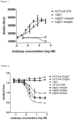
- This antibody and the humanize antibodies derived therefrom are characterized because they bind to human CTLA-4 (hCTLA-4) with an EC50 of less than 20 nM, preferably less than 1 nM and they are able to block the binding of hCTLA-4 to hCD80 or hCD86 with an IC50 of less than 100 nM, preferably less than 10 nM for hCD80 blocking and preferably less than 10 nM, more preferably less than 2.5nM for hCD86 blocking.
- the hCD80 blocking profile of the antibodies of the present invention lies in between the hCD80 blocking profiles of 10D1 (ipilimumab) and CP-675,206 (tremelimumab) (see Fig.
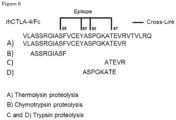
- HDX Hydrogen Deuterium Exchange
- proteolysis and mass spectrometry can be used to determine the epitope of an antibody on a specific antigen Y.
- HDX-MS relies on the accurate measurement and comparison of the degree of deuterium incorporation by an antigen when incubated in D 2 O on its own and in presence of its antibody at various time intervals. Deuterium is exchanged with hydrogen on the amide backbone of the proteins in exposed areas whereas regions of the antigen bound to the antibody will be protected and will show less or no exchange after analysis by LC-MS/MS of proteolytic fragments.
- the description also comprises anti-CTLA-4 antibodies which bind to an epitope of human CTLA-4 but which do not bind to the mouse-human chimera CTLA-4 molecule of SEQ ID NO: 44.
- the description provides antibodies or antigen-binding fragment thereof that bind human CTLA-4 (e.g ., humanized antibodies) and have V L domains and V H domains with at least 80%, 85%, 90%, 95%, 96%, 97%, 98% or 99% sequence identity with the amino acid sequences of SEQ ID NOs: 7-30, preferably with at least 80%, 85%, 90%, 95%, 96%, 97%, 98% or 99% sequence identity with SEQ ID NOs: 10, 12, 14, 16, 18, 20, 22, 24, 26 or 30; wherein the variant exhibits the desired binding and properties, being the ability to bind to CTLA-4 and thereby block CTLA-4 binding to CD80 and/or CD86.
- human CTLA-4 e.g ., humanized antibodies
- V L domains and V H domains with at least 80%, 85%, 90%, 95%, 96%, 97%, 98% or 99% sequence identity with the amino acid sequences of SEQ ID NOs: 7-30, preferably with at least 80%, 85%, 90%,
- antibodies or antigen-binding fragment thereof that bind human CTLA-4 (e.g ., humanized antibodies) and have V L domains and V H domains with at least 95% sequence identity with the amino acid sequences of SEQ ID NOs: 7-30, preferably with at least 80%, 85%, 90%, 95%, 96%, 97%, 98% or 99% sequence identity with SEQ ID NOs: 10, 12, 14, 16, 18, 20, 22, 24, 26 or 30.
- the description provides antibodies or antigen-binding fragment thereof that bind human CTLA-4 (e.g ., humanized antibodies) and have V L domains and V H domains with at least 97% sequence identity with the amino acid sequences of SEQ ID NOs: 7-30, preferably with at least 80%, 85%, 90%, 95%, 96%, 97%, 98% or 99% sequence identity with SEQ ID NOs: 10, 12, 14, 16, 18, 20, 22, 24, 26 or 30.
- the description provides antibodies or antigen-binding fragment thereof that bind human CTLA-4 (e.g ., humanized antibodies) and have V L domains and V H domains with at least 99% sequence identity with the amino acid sequences of SEQ ID NOs: 7-30, preferably with at least 80%, 85%, 90%, 95%, 96%, 97%, 98% or 99% sequence identity with SEQ ID NOs: 10, 12, 14, 16, 18, 20, 22, 24, 26 or 30.
- Consatively modified variants or “conservative substitution” refers to substitutions of amino acids in a protein with other amino acids having similar characteristics (e.g. charge, side-chain size, hydrophobicity/hydrophilicity, backbone conformation and rigidity, etc.), such that the changes can frequently be made without altering the biological activity of the protein.
- Those of skill in this art recognize that, in general, single amino acid substitutions in non-essential regions of a polypeptide do not substantially alter biological activity ( see, e.g., Watson et al. (1987) Molecular Biology of the Gene, The Benjamin/Cummings Pub. Co., p. 224 (4th Ed .)).
- substitutions of structurally or functionally similar amino acids are less likely to disrupt biological activity.
- Exemplary conservative substitutions are set forth in Table 2. Table 2.
- Exemplary Conservative Amino Acid Substitutions Original residue Conservative substitution Ala (A) Gly; Ser Arg (R) Lys; His Asn (N) Gln; His Asp (D) Glu; Asn Cys (C) Ser; Ala Gln (Q) Asn Glu (E) Asp; Gln Gly (G) Ala His (H) Asn; Gln Ile (I) Leu; Val Leu (L) Ile; Val Lys (K) Arg; His Met (M) Leu; Ile; Tyr Phe (F) Tyr; Met; Leu Pro (P) Ala Ser (S) Thr Thr (T) Ser Trp (W) Tyr; Phe Tyr (Y) Trp; Phe Val (V) Ile; Leu
- “Function-conservative variants,” as used herein, refers to antibodies or fragments in which one or more amino acid residues have been changed without altering a desired property, such an antigen affinity and/or specificity. Such variants include, but are not limited to, replacement of an amino acid with one having similar properties, such as the conservative amino acid substitutions of Table 2.
- isolated polypeptides comprising the V L domains of the anti-CTLA-4 antibodies of the description (e.g., SEQ ID NOs: 22, 24, 26, 30), and isolated polypeptides comprising the V H domains of the anti- CTLA-4 antibodies of the description (e.g ., SEQ ID NOs: 10, 12, 14, 16, 18, 20) having up to 0, 1, 2, 3, 4, 5, 6, 7, 8, 9, 10 or more amino acid substitutions.
- an antibody or antigen-binding fragment thereof that binds human CTLA-4 and has V L domains and V H domains with at least 99% 98%, 97%, 96%, 95%, 90%, 85%, 80% or 75% sequence identity to one or more of the V L domains or V H domains described herein, and exhibits specific binding to CTLA-4.
- the binding antibody or antigen-binding fragment thereof of the present description comprises V L and V H domains (with and without signal sequence) having up to 0, 1, 2, 3, 4, 5, 6, 7, 8, 9, 10, 11, 12, 13, 14, 15, 16, 17, 18, 19, 20, 21, 22, 23, 24, 25 or more amino acid substitutions, and exhibits specific binding to CTLA-4.
- the present description further comprises the polynucleotides encoding any of the polypeptides or immunoglobulin chains of anti-CTLA-4 antibodies of the invention.
- the present description includes the polynucleotides encoding the amino acids described in any one of SEQ ID NOs: 1-30.
- An isolated polynucleotide for example DNA, encoding the polypeptide chains of the isolated antibodies or antigen-binding fragments set forth herein is provided.
- the isolated polynucleotide encodes an antibody or antigen-binding fragment thereof comprising at least one mature immunoglobulin light chain variable (V L ) domain according to the invention and/or at least one mature immunoglobulin heavy chain variable (V H ) domain according to the invention.
- V L immunoglobulin light chain variable
- V H immunoglobulin heavy chain variable
- the isolated polynucleotide encodes both a light chain and a heavy chain on a single polynucleotide molecule, and in other embodiments the light and heavy chains are encoded on separate polynucleotide molecules.
- the polynucleotide further encodes a signal sequence.
- the description comprises an isolated polynucleotide encoding an antibody heavy variable (V H ) domain or an antigen-binding fragment thereof comprising HCDR-1 (SEQ ID NO: 1), HCDR-2 (SEQ ID NO: 2) and HCDR-3 (SEQ ID NO: 3).
- V H antibody heavy variable
- the description comprises an isolated polynucleotide encoding an antibody light chain variable (V L ) domain or an antigen-binding fragment thereof comprising LCDR-1 (SEQ ID NO: 4), LCDR-2 (SEQ ID NO: 5) and LCDR-3 (SEQ ID NO: 6).
- V L antibody light chain variable
- the description comprises an isolated polynucleotide encoding the immunoglobulin heavy chain variable (V H ) domain of SEQ ID NO: 7.
- the description comprises an isolated polynucleotide encoding the immunoglobulin light chain variable (VL) domain of SEQ ID NO: 8.
- the description comprises an isolated polynucleotide according to any of SEQ ID NO: 9, 11, 13, 15, 17 or 19 encoding a humanized heavy chain
- the description comprises an isolated polynucleotide according to any of SEQ ID NO: 21, 23, 25 or 29 encoding a humanized light chain.
- an isolated polynucleotide is comprised which comprises an isolated polynucleotide according to any of SEQ ID NO: 9, 11, 13, 15, 17 or 19 encoding a humanized heavy chain and an isolated polynucleotide according to any of SEQ ID NO: 21, 23, 25 or 29 encoding a humanized light chain. All possible combinations of these are included.
- the description comprises a polynucleotide comprising SEQ ID NO: 9 and SEQ ID NO: 21, a polynucleotide comprising SEQ ID NO: 11 and SEQ ID NO: 21, a polynucleotide comprising SEQ ID NO: 13 and SEQ ID NO: 21, a polynucleotide comprising SEQ ID NO: 15 and SEQ ID NO: 21, a polynucleotide comprising SEQ ID NO: 17 and SEQ ID NO: 21, a polynucleotide comprising SEQ ID NO: 19 and SEQ ID NO: 21, a polynucleotide comprising SEQ ID NO: 9 and SEQ ID NO: 23.
- This present invention also provides vectors, e.g., expression vectors, such as plasmids, comprising the isolated polynucleotides of the invention, wherein the polynucleotide is operably linked to control sequences that are recognized by a host cell when the host cell is transfected with the vector.
- vectors e.g., expression vectors, such as plasmids
- host cells comprising a vector description of the present invention and methods for producing the antibody or antigen-binding fragment thereof or polypeptide disclosed herein comprising culturing a host cell harboring an expression vector or a nucleic acid encoding the immunoglobulin chains of the antibody or antigen-binding fragment thereof in culture medium, and isolating the antigen or antigen-binding fragment thereof from the host cell or culture medium.
- polypeptides e.g., immunoglobulin polypeptides, comprising amino acid sequences that are at least about 75% identical, 80% identical, more preferably at least about 90% identical and most preferably at least about 95% identical (e.g., 95%, 96%, 97%, 98%, 99%, 100%) to the amino acid sequences of the antibodies provided herein when the comparison is performed by a BLAST algorithm wherein the parameters of the algorithm are selected to give the largest match between the respective sequences over the entire length of the respective reference sequences (e.g. expect threshold: 10; word size: 3; max matches in a query range: 0; BLOSUM 62 matrix; gap costs: existence 11, extension 1; conditional compositional score matrix adjustment).
- BLAST algorithm wherein the parameters of the algorithm are selected to give the largest match between the respective sequences over the entire length of the respective reference sequences (e.g. expect threshold: 10; word size: 3; max matches in a query range: 0; BLOSUM 62 matrix; gap costs: existence 11,
- Sequence identity refers to the degree to which the amino acids of two polypeptides are the same at equivalent positions when the two sequences are optimally aligned.
- BLAST ALGORITHMS Altschul et al. (2005) FEBS J. 272(20): 5101-5109 ; Altschul, S.F., et al., (1990) J. Mol. Biol. 215:403-410 ; Gish, W., et al., (1993) Nature Genet. 3:266-272 ; Madden, T.L., et al., (1996) Meth. Enzymol. 266:131-141 ; Altschul, S.F., et al., (1997) Nucleic Acids Res. 25:3389-3402 ; Zhang, J., et al., (1997) Genome Res.
- the anti-CTLA-4 antibodies or antigen binding fragments of the invention are able to block binding of human CTLA-4 to human CD80 and/or human CD86.
- the ability to block binding of human CTLA-4 to human CD80 and/or human CD86 can be determined using any method known in the art.
- the ability of the antibodies to block binding of human CTLA-4 to human CD80 and/or human CD86 is determined using an ELISA assay.
- the antibodies so identified may then be further analyzed for affinity and specificity in the assay design selected.
- the purified target protein acts as a standard with which to judge the sensitivity and specificity of the immunoassay using the antibodies that have been selected. Because the binding affinity of various antibodies may differ; certain antibody pairs (e.g., in sandwich assays) may interfere with one another sterically, etc., assay performance of an antibody may be a more important measure than absolute affinity and specificity of an antibody.
- the present invention includes methods for expressing an antibody or antigen-binding fragment thereof or immunoglobulin chain thereof in a host cell (e.g., bacterial host cell such as E.coli such as BL21 or BL21DE3) comprising expressing T7 RNA polymerase in the cell which also includes a polynucleotide encoding an immunoglobulin chain that is operably linked to a T7 promoter.
- a host cell e.g., bacterial host cell such as E.coli such as BL21 or BL21DE3
- T7 RNA polymerase in the cell which also includes a polynucleotide encoding an immunoglobulin chain that is operably linked to a T7 promoter.
- a bacterial host cell such as a E.
- the antibodies are produced by culturing the host cells for a period of time sufficient to allow for expression of the antibody or fragment or chain in the host cells or secretion of the into the culture medium in which the host cells are grown.
- Per C.6 cells rat retinal cells developed by Crucell harboring recombinant expression constructs containing promoters derived from the genome of mammalian cells (e.g., metallothionein promoter) or from mammalian viruses (e.g., the adenovirus late promoter; the vaccinia virus 7.5K promoter).
- promoters derived from the genome of mammalian cells (e.g., metallothionein promoter) or from mammalian viruses (e.g., the adenovirus late promoter; the vaccinia virus 7.5K promoter).
- a number of expression vectors may be advantageously selected depending upon the use intended for the antibody being expressed. For example, when a large quantity of such a protein is to be produced, for the generation of pharmaceutical compositions of an antibody, vectors which direct the expression of high levels of fusion protein products that are readily purified may be desirable.
- Such vectors include, but are not limited, to the E. coli expression vector pUR278 ( Ruther et al. (1983) "Easy Identification Of cDNA Clones," EMBO J. 2:1791-1794 ), in which the antibody coding sequence may be ligated individually into the vector in frame with the lac Z coding region so that a fusion protein is produced; pIN vectors ( Inouye et al.
- pGEX vectors may also be used to express foreign polypeptides as fusion proteins with glutathione S-transferase (GST). In general, such fusion proteins are soluble and can easily be purified from lysed cells by adsorption and binding to a matrix glutathione-agarose beads followed by elution in the presence of free gluta-thione.
- GST glutathione S-transferase
- the pGEX vectors are designed to include thrombin or factor Xa protease cleavage sites so that the cloned target gene product can be released from the GST moiety.
- Autographa californica nuclear polyhedrosis virus (AcNPV) is used as a vector to express foreign genes.
- the virus grows in Spodoptera frugiperda cells.
- the antibody coding sequence may be cloned individually into non-essential regions (e.g., the polyhedrin gene) of the virus and placed under control of an AcNPV promoter (e.g., the polyhedrin promoter).
- a number of viral-based expression systems may be utilized.
- the antibody coding sequence of interest may be ligated to an adenovirus transcription/translation control complex, e.g., the late promoter and tripartite leader sequence.
- This chimeric gene may then be inserted in the adenovirus genome by in vitro or in vivo recombination. Insertion in a non-essential region of the viral genome (e.g., region E1 or E3) will result in a recombinant virus that is viable and capable of expressing the immunoglobulin molecule in infected hosts.
- a non-essential region of the viral genome e.g., region E1 or E3
- a host cell strain may be chosen which modulates the expression of the inserted sequences, or modifies and processes the gene product in the specific fashion desired. Such modifications (e.g., glycosylation) and processing (e.g., cleavage) of protein products may be important for the function of the protein.
- Different host cells have characteristic and specific mechanisms for the post-translational processing and modification of proteins and gene products. Appropriate cell lines or host systems can be chosen to ensure the correct modification and processing of the foreign protein expressed.
- eukaryotic host cells which possess the cellular machinery for proper processing of the primary transcript, glycosylation, and phosphorylation of the gene product may be used.
- Such mammalian host cells include but are not limited to CHO, VERY, BHK, Hela, COS, MDCK, 293, 293T, 3T3, WI38, BT483, Hs578T, HTB2, BT20 and T47D, CRL7030 and Hs578Bst.
- cell lines which stably express an antibody of the invention may be engineered.
- host cells can be transformed with DNA controlled by appropriate expression control elements (e.g., promoter, enhancer, sequences, transcription terminators, polyadenylation sites, etc.), and a selectable marker.
- appropriate expression control elements e.g., promoter, enhancer, sequences, transcription terminators, polyadenylation sites, etc.
- engineered cells may be allowed to grow for 1-2 days in an enriched media, and then are switched to a selective media.
- the selectable marker in the recombinant plasmid confers resistance to the selection and allows cells to stably integrate the plasmid into their chromosomes and grow to form foci which in turn can be cloned and expanded into cell lines.
- This method may advantageously be used to engineer cell lines which express the antibodies of the invention. Such engineered cell lines may be particularly useful in screening and evaluation of compounds that interact directly or indirectly with the antibodies of the invention.
- a number of selection systems may be used, including but not limited to the herpes simplex virus thymidine kinase ( Wigler et al. (1977) "Transfer Of Purified Herpes Virus Thymidine Kinase Gene To Cultured Mouse Cells," Cell 11:223-232 ), hypoxanthine-guanine phosphoribosyltransferase ( Szybalska et al. (1962) "Genetics Of Human Cess Line. IV. DNA-Mediated Heritable Transformation Of A Biochemical Trait," Proc. Natl. Acad. Sci. (U.S.A.) 48:2026-2034 ), and adenine phosphoribosyltransferase ( Lowy et al.
- an antibody of the invention can be increased by vector amplification (for a review, see Bebbington and Hentschel, "The Use Of Vectors Based On Gene Amplification For The Expression Of Cloned Genes In Mammaian Cells," in DNA CLONING, Vol. 3. (Academic Press, New York, 1987 )).
- vector amplification for a review, see Bebbington and Hentschel, "The Use Of Vectors Based On Gene Amplification For The Expression Of Cloned Genes In Mammaian Cells," in DNA CLONING, Vol. 3. (Academic Press, New York, 1987 )).
- a marker in the vector system expressing an antibody is amplifiable
- increase in the level of inhibitor present in culture of host cell will increase the number of copies of the marker gene. Since the amplified region is associated with the nucleotide sequence of the antibody, production of the antibody will also increase ( Crouse et al. (1983) "Expression And Amplification Of Engineered Mouse Dihydrofolate Reductas
- the host cell may be co-transfected with two expression vectors of the invention, the first vector encoding a heavy chain derived polypeptide and the second vector encoding a light chain derived polypeptide.
- the two vectors may contain identical selectable markers which enable equal expression of heavy and light chain polypeptides.
- a single vector may be used which encodes both heavy and light chain polypeptides.
- the light chain should be placed before the heavy chain to avoid an excess of toxic free heavy chain ( Proudfoot (1986) "Expression And Amplification Of Engineered Mouse Dihydrofolate Reductase Minigenes," Nature 322:562-565 ; Kohler (1980) "Immunoglobulin Chain Loss In Hybridoma Lines," Proc. Natl. Acad. Sci. (U.S.A.) 77:2197-2199 ).
- the coding sequences for the heavy and light chains may comprise cDNA or genomic DNA.
- Antibodies and antigen-binding fragments thereof and immunoglobulin chains can be recovered from the culture medium using standard protein purification methods. Further, expression of antibodies and antigen-binding fragments thereof and immunoglobulin chains of the invention (or other moieties therefrom) from production cell lines can be enhanced using a number of known techniques.
- the glutamine synthetase gene expression system (the GS system) is a common approach for enhancing expression under certain conditions. The GS system is discussed in whole or part in connection with European Patent Nos. 0 216 846 , 0 256 055 , and 0 323 997 and European Patent Application No. 89303964.4 .
- the mammalian host cells e.g., CHO
- the polynucleotide encoding the immunoglobulin chain comprises a glutamine synthetase gene which complements the lack of the gene in the host cell.
- the present invention includes methods for purifying an anti-CTLA-4 antibody of the present invention comprising introducing a sample comprising the antibody or fragment to a purification medium (e.g ., cation exchange medium, anion exchange medium, hydrophobic exchange medium, affinity purification medium (e.g., protein-A, protein-G, protein-A/G, protein-L)) and either collecting purified antibody or fragment from the flow-through fraction of said sample that does not bind to the medium; or, discarding the flow-through fraction and eluting bound antibody or fragment from the medium and collecting the eluate.
- a purification medium e.g ., cation exchange medium, anion exchange medium, hydrophobic exchange medium, affinity purification medium (e.g., protein-A, protein-G, protein-A/G, protein-L)
- a purification medium e.g ., cation exchange medium, anion exchange medium, hydrophobic exchange medium, affinity purification medium (e.g., protein-A, protein-G, protein
- the purification method is conducted following recombinant expression of the antibody or fragment in a host cell, e.g., wherein the host cell is first lysed and, optionally, the lysate is purified of insoluble materials prior to purification on a medium.
- glycoproteins produced in a particular cell line or transgenic animal will have a glycosylation pattern that is characteristic for glycoproteins produced in the cell line or transgenic animal. Therefore, the particular glycosylation pattern of an antibody will depend on the particular cell line or transgenic animal used to produce the antibody.
- all antibodies encoded by the nucleic acid molecules provided herein, or comprising the amino acid sequences provided herein comprise the instant invention, independent of the glycosylation pattern the antibodies may have.
- antibodies with a glycosylation pattern comprising only non-fucosylated N-glycans may be advantageous, because these antibodies have been shown to typically exhibit more potent efficacy than their fucosylated counterparts both in vitro and in vivo ( See for example, Shinkawa et al., J. Biol. Chem. 278: 3466-3473 (2003 ); U.S. Patent Nos. 6,946,292 and 7,214,775 ). These antibodies with non-fucosylated N-glycans are not likely to be immunogenic because their carbohydrate structures are a normal component of the population that exists in human serum IgG.
- the present description includes bispecific and bifunctional antibodies and antigen-binding fragments having a binding specificity for CTLA-4 and another antigen such as, for example and antigen that plays a role in immune stimulation, such as, PD-1, PD-L1, TSLP, IL-10, 4-IBB, SIRP-alpha, ICOS, NKG2C, NKG2A, KR2DL and KIR3DL antigens, OX40, CD40, ITL-1 to ITL-8, GITR, CD137, CS1, CD27, APRIL, or LAG-3, or antigens that play a role in targeting to and recognition of cancer cells, such as EGFR (ERBB1), HER2 (ERBB2), ERBB3, CD19, CD20, CD30, CD33, CD52, CEA, alpha-fetoprotein, CC49, VEGF.
- another antigen such as, for example and antigen that plays a role in immune stimulation, such as, PD-1, PD-L1, TSLP
- the anti-CTLA-4 chains comprise any one of the VH/VL sequences provided in SEQ ID NOs: 7-30 (or an antigen binding fragment of any of said sequences, such as provided in SEQ ID NOs: 1-6).
- a bispecific or bifunctional antibody is an artificial hybrid antibody having two different heavy/light chain pairs and two different binding sites. Bispecific antibodies can be produced by a variety of methods including fusion of hybridomas or linking of Fab' fragments.
- bispecific antibodies may be formed as "diabodies” ( Holliger, et al., (1993) PNAS USA 90:6444-6448 ) or as "Janusins” ( Traunecker, et al., (1991) EMBO J. 10:3655-3659 and Traunecker, et al., (1992) Int. J. Cancer Suppl. 7:51-52 ).
- bispecific antibodies may be formed as "Duobodies” ( Labrijn et al, PNAS 2013;110(13):5145-5150 ).
- the present description further includes anti-CTLA-4 antigen-binding fragments of the anti-CTLA-4 antibodies disclosed herein.
- the antibody fragments include F(ab) 2 fragments, which may be produced by enzymatic cleavage of an IgG by, for example, pepsin.
- Fab fragments may be produced by, for example, reduction of F(ab) 2 with dithiothreitol or mercaptoethylamine.
- Immunoglobulins may be assigned to different classes depending on the amino acid sequences of the constant domain of their heavy chains. In some embodiments, different constant domains may be appended to humanized V L and V H regions derived from the CDRs provided herein. There are at least five major classes of immunoglobulins: IgA, IgD, IgE, IgG and IgM, and several of these may be further divided into subclasses (isotypes), e.g. IgG1, IgG2, IgG3 and IgG4, IgA1 and IgA2. The description comprises antibodies and antigen-binding fragments of any of these classes or subclasses of antibodies.
- the antibody comprises a heavy chain constant region, e.g. a human constant region, such as ⁇ 1, ⁇ 2, ⁇ 3, or ⁇ 4 human heavy chain constant region or a variant thereof.
- the antibody or antigen-binding fragment comprises a light chain constant region, e.g. a human light chain constant region, such as lambda or kappa human light chain region or variant thereof.
- the human heavy chain constant region can be ⁇ 4 and the human light chain constant region can be kappa.
- the Fc region of the antibody is ⁇ 4 with a Ser228Pro mutation ( Angal S. et al., 1993, Mol Immunol. 30: 105-108 position 241 is based on the Kabat numbering system).
- the antibody or antigen-binding fragment comprises a heavy chain constant region of the IgG1 subtype.
- the anti-CTLA-4 antibodies and antigen-binding fragments thereof are engineered antibodies to include modifications to framework residues within the variable domains of the parental hCTLA4.27 A monoclonal antibody, e.g. to improve the properties of the antibody or fragment. Typically, such framework modifications are made to decrease the immunogenicity of the antibody or fragment. This is usually accomplished by replacing non-CDR residues in the variable domains (i.e. framework residues) in a parental ( e.g. rodent) antibody or fragment with analogous residues from the immune repertoire of the species in which the antibody is to be used, e.g. human residues in the case of human therapeutics. Such an antibody or fragment is referred to as a "humanized" antibody or fragment.
- an engineered ( e.g . humanized) antibody In some cases it is desirable to increase the affinity, or alter the specificity of an engineered ( e.g . humanized) antibody.
- One approach is to "backmutate" one or more framework residues to the corresponding germline sequence. More specifically, an antibody or fragment that has undergone somatic mutation can contain framework residues that differ from the germline sequence from which the antibody is derived. Such residues can be identified by comparing the antibody or fragment framework sequences to the germline sequences from which the antibody or fragment is derived.
- Another approach is to revert to the original parental ( e.g. , rodent) residue at one or more positions of the engineered ( e.g. humanized) antibody, e.g. to restore binding affinity that may have been lost in the process of replacing the framework residues. (See, e.g. , U.S. Patent No. 5,693,762 , U.S. Patent No. 5,585,089 and U.S. Patent No. 5,530,101
- the anti-CTLA-4 antibodies and antigen-binding fragments thereof are engineered (e.g. humanized) to include modifications to in the framework and/or CDRs to improve their properties.
- engineered changes can be based on molecular modelling.
- a molecular model for the variable region for the parental (non-human) antibody sequence can be constructed to understand the structural features of the antibody and used to identify potential regions on the antibody that can interact with the antigen.
- Conventional CDRs are based on alignment of immunoglobulin sequences and identifying variable regions. Kabat et al., (1991) Sequences of Proteins of Immunological Interest, Kabat, et al.; National Institutes of Health, Bethesda, Md.
- Mol Recog. 25, 3, 103-113 analyzed several antibody -antigen crystal complexes and observed that the antigen binding regions in antibodies do not necessarily conform strictly to the "CDR" residues or "hypervariable” loops.
- the molecular model for the variable region of the non-human antibody can be used to guide the selection of regions that can potentially bind to the antigen. In practice the potential antigen binding regions based on model differ from the conventional "CDR"s or "hyper variable” loops.
- Commercial scientific software such as Discovery Studio (BIOVIA, Dassault Systemes) can be used for molecular modeling. Human frameworks can be selected based on best matches with the non-human sequence both in the frameworks and in the CDRs.
- FR4 (framework 4) in VH VJ regions for the human germlines are compared with the corresponding non-human region.
- FR4 (framework 4) in VL J-kappa and J-Lambda regions of human germline sequences are compared with the corresponding non-human region.
- the CDRs are grafted into the selected human frameworks.
- certain residues in the VL-VH interface can be retained as in the non-human (parental) sequence.
- Molecular models can also be used for identifying residues that can potentially alter the CDR conformations and hence binding to antigen. In some cases, these residues are retained as in the non-human (parental) sequence.
- Molecular models can also be used to identify solvent exposed amino acids that can result in unwanted effects such as glycosylation, deamidation and oxidation. Developability filters can be introduced early on in the design stage to eliminate/minimize these potential problems.
- Another type of framework modification involves mutating one or more residues within the framework region, or even within one or more CDR regions, to remove T cell epitopes to thereby reduce the potential immunogenicity of the antibody. This approach is also referred to as "deimmunization" and is described in further detail in U.S. Patent No. 7,125,689 .
- the antibodies of the present disclosure do not contain deamidation or asparagine isomerism sites.
- an asparagine (Asn) residue may be changed to Gln or Ala to reduce the potential for formation of isoaspartate at any Asn-Gly sequences, particularly within a CDR.
- a similar problem may occur at a Asp-Gly sequence. Reissner and Aswad (2003) Cell. Mol. Life Sci. 60:1281 . Isoaspartate formation may debilitate or completely abrogate binding of an antibody to its target antigen. See , Presta (2005) J. Allergy Clin. Immunol. 116:731 at 734 .
- the asparagine is changed to glutamine (Gln).
- any methionine residues (typically solvent exposed Met) in CDRs may be changed to Lys, Leu, Ala, or Phe or other amino acids in order to reduce the possibility that the methionine sulfur would oxidize, which could reduce antigen-binding affinity and also contribute to molecular heterogeneity in the final antibody preparation. Id.
- Exemplary stabilizing CDR variants CDR Residue Stabilizing Variant Sequence Asn-Gly Gln-Gly, Ala-Gly, or Asn-Ala (N-G) (Q-G), (A-G), or (N-A) Asp-Gly Glu-Gly, Ala-Gly or Asp-Ala (D-G) (E-G), (A-G), or (D-A) Met (typically solvent exposed) Lys, Leu, Ala, or Phe (M) (K), (L), (A), or (F) Asn Gln or Ala (N) (Q) or (A) Asn-Pro Gln-Pro, Ala-Pro, or Asn-Ala (N-P) (Q-P), (A-P), or (N-A)
- the antibodies (e.g ., humanized antibodies) and antigen-binding fragments thereof disclosed herein can also be engineered to include modifications within the Fc region, typically to alter one or more properties of the antibody, such as serum half-life, complement fixation, Fc receptor binding, and/or effector function (e.g ., antigen-dependent cellular cytotoxicity).
- the antibodies and antigen-binding fragments thereof disclosed herein e.g ., antibody 27A and humanized versions thereof
- can be chemically modified e.g. , one or more chemical moieties can be attached to the antibody
- be modified to alter its glycosylation again to alter one or more properties of the antibody or fragment.
- the antibodies and antigen-binding fragments thereof disclosed herein also include antibodies and fragments with modified (or blocked) Fc regions to provide altered effector functions. See, e.g. , U.S. Pat. No. 5,624,821 ; WO2003/086310 ; WO2005/120571 ; WO2006/0057702 . Such modifications can be used to enhance or suppress various reactions of the immune system, with possible beneficial effects in diagnosis and therapy. Alterations of the Fc region include amino acid changes (substitutions, deletions and insertions), glycosylation or deglycosylation, and adding multiple Fc regions.
- the antibody or antigen-binding fragment of the description is an IgG4 isotype antibody or fragment comprising a Serine to Proline mutation at a position corresponding to position 228 (S228P; EU index) in the hinge region of the heavy chain constant region.
- S228P Serine to Proline mutation at a position corresponding to position 228
- This mutation has been reported to abolish the heterogeneity of inter-heavy chain disulfide bridges in the hinge region ( Angal S. et al., 1993, Mol Immunol. 30: 105-108 ; position 241 is based on the Kabat numbering system).
- the hinge region of CH1 is modified such that the number of cysteine residues in the hinge region is increased or decreased. This approach is described further in U.S. Patent No. 5,677,425 .
- the number of cysteine residues in the hinge region of CH1 is altered, for example, to facilitate assembly of the light and heavy chains or to increase or decrease the stability of the antibody.
- the Fc hinge region of an antibody or antigen-binding fragment of the invention is mutated to decrease the biological half-life of the antibody or fragment. More specifically, one or more amino acid mutations are introduced into the CH2-CH3 domain interface region of the Fc-hinge fragment such that the antibody or fragment has impaired Staphylococcyl protein A (SpA) binding relative to native Fc-hinge domain SpA binding.
- SpA Staphylococcyl protein A
- the antibody or antigen-binding fragment of the invention is modified to increase its biological half-life.
- the antibody or antigen-binding fragment of the invention e.g., antibody 27A and humanized versions thereof
- the antibody or antigen-binding fragment of the invention is modified to increase its biological half-life.
- the antibody can be altered within the CH1 or CL region to contain a salvage receptor binding epitope taken from two loops of a CH2 domain of an Fc region of an IgG, as described in U.S. Patent Nos. 5,869,046 and 6,121,022 .
- the Fc region is altered by replacing at least one amino acid residue with a different amino acid residue to alter the effector function(s) of the antibody or antigen-binding fragment.
- one or more amino acids selected from amino acid residues 234, 235, 236, 237, 297, 318, 320 and 322 can be replaced with a different amino acid residue such that the antibody has an altered affinity for an effector ligand and retains the antigen-binding ability of the parent antibody.
- the effector ligand to which affinity is altered can be, for example, an Fc receptor or the C1 component of complement. This approach is described in further detail in U.S. Patent Nos. 5,624,821 and 5,648,260 .
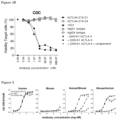
- one or more amino acids selected from amino acid residues 329, 331 and 322 can be replaced with a different amino acid residue such that the antibody has altered C1q binding and/or reduced or abolished complement dependent cytotoxicity (CDC).
- CDC complement dependent cytotoxicity
- one or more amino acid residues within amino acid positions 231 and 239 are altered to thereby alter the ability of the antibody to fix complement. This approach is described further in PCT Publication WO 94/29351 .
- the Fc region is modified to decrease the ability of the antibody or antigen-binding fragment of the invention (e.g., antibody 27A and humanized versions thereof) to mediate antibody dependent cellular cytotoxicity (ADCC) and/or to decrease the affinity of the antibody or fragment for an Fcy receptor by modifying one or more amino acids at the following positions: 238, 239, 243, 248, 249, 252, 254, 255, 256, 258, 264, 265, 267, 268, 269, 270, 272, 276, 278, 280, 283, 285, 286, 289, 290, 292, 293, 294, 295, 296, 298, 301, 303, 305, 307, 309, 312, 315, 320, 322, 324, 326, 327, 329, 330, 331, 333, 334, 335, 337, 338, 340, 360, 373, 376, 378, 382, 388, 389, 398, 414, 416, 419,
- ADCC
- the Fc region is modified to decrease the ability of the antibody of the invention (e.g ., antibody 27A and humanized versions thereof) to mediate effector function and/or to increase anti-inflammatory properties by modifying residues 243 and 264.
- the Fc region of the antibody or fragment is modified by changing the residues at positions 243 and 264 to alanine.
- the Fc region is modified to decrease the ability of the antibody or fragment to mediate effector function and/or to increase anti-inflammatory properties by modifying residues 243, 264, 267 and 328.
- the Fc region of an anti-CTLA-4 antibody is modified to increase the ability of the antibody or antigen-binding fragment to mediate effector function and/or to increase their binding to the Fcgamma receptors (Fc ⁇ Rs).
- ADCC Antibody Dependent Cell-mediated Cytotoxic activity
- CDC Complement-dependent cytotoxic activity
- ADCP antibody dependent cellular phagocytosis
- FcR FcgammaRI
- FcgammaRII CD64
- FcgammaRII CD32
- FcgammaRIII CD16
- Effector function can be measured in a number of ways including for example via binding of the FcgammaRIII to Natural Killer cells or via FcgammaRI to monocytes/macrophages to measure for ADCC effector function.
- an antigen binding protein of the present invention can be assessed for ADCC effector function in a Natural Killer cell assay. Examples of such assays can be found in Shields et al, 2001 J. Biol. Chem., Vol. 276, p 6591-6604 ; Chappel et al, 1993 J. Biol. Chem., Vol 268, p 25124-25131 ; Lazar et al, 2006 PNAS, 103; 4005-4010 .
- ADCC or CDC properties of antibodies of the present description, or their cross-linking properties may be enhanced in a number of ways.
- such mutations are in one or more of positions selected from 239, 332 and 330 (IgG1)
- suitable mutations are S239D and I332E and A330L.
- the antigen binding protein of the invention herein described is mutated at positions 239 and 332, for example S239D and I332E or in a further embodiment it is mutated at three or more positions selected from 239 and 332 and 330, for example S239D and I332E and A330L (EU index numbering).
- an antibody comprising a heavy chain constant region with an altered glycosylation profile such that the antigen binding protein has enhanced effector function.
- the antibody has enhanced ADCC or enhanced CDC or wherein it has both enhanced ADCC and CDC effector function.
- suitable methodologies to produce antigen binding proteins with an altered glycosylation profile are described in WO2003011878 , WO2006014679 and EP1229125 .
- the present invention provides "non-fucosylated” or "afucosylated” antibodies.
- Non-fucosylated antibodies harbour a tri-mannosyl core structure of complex-type N-glycans of Fc without fucose residue.
- These glycoengineered antibodies that lack core fucose residue from the Fc N-glycans may exhibit stronger ADCC than fucosylated equivalents due to enhancement of FcgammaRIIIa binding capacity.
- the present description also provides a method for the production of an antibody according to the description comprising the steps of: a) culturing a recombinant host cell comprising an expression vector comprising the isolated nucleic acid as described herein, wherein the recombinant host cell does not comprise an alpha-1,6-fucosyltransferase; and b) recovering the antigen binding protein.
- the recombinant host cell may be not normally contain a gene encoding an alpha-1,6-fucosyltransferase (for example yeast host cells such as Pichia sp.) or may have been genetically modified to inactive an alpha-1,6-fucosyltransferase.
- Recombinant host cells which have been genetically modified to inactivate the FUT8 gene encoding an alpha-1,6-fucosyltransferase are available. See, e.g., the POTELLIGENT TM technology system available from BioWa, Inc. (Princeton, N.J.) in which CHOK1SV cells lacking a functional copy of the FUT8 gene produce monoclonal antibodies having enhanced antibody dependent cell mediated cytotoxicity (ADCC) activity that is increased relative to an identical monoclonal antibody produced in a cell with a functional FUT8 gene. Aspects of the POTELLIGENT TM technology system are described in US7214775 , US6946292 , WO0061739 and WO0231240 . Those of ordinary skill in the art will also recognize other appropriate systems.
- ADCC antibody dependent cell mediated cytotoxicity
- the antibodies of the invention comprise a particular glycosylation pattern.
- an afucosylated or an aglycosylated antibody or fragment can be made ( i.e. , the antibody lacks fucose or glycosylation, respectively).
- the glycosylation pattern of an antibody or fragment may be altered to, for example, increase the affinity or avidity of the antibody or fragment for a CTLA-4 antigen.
- modifications can be accomplished by, for example, altering one or more of the glycosylation sites within the antibody or fragment sequence.
- one or more amino acid substitutions can be made that result removal of one or more of the variable region framework glycosylation sites to thereby eliminate glycosylation at that site.
- Such aglycosylation may increase the affinity or avidity of the antibody or fragment for antigen. See , e.g. , U.S. Patent Nos. 5,714,350 and 6,350,861 .
- Antibodies and antigen-binding fragments disclosed herein may further include those produced in lower eukaryote host cells, in particular fungal host cells such as yeast and filamentous fungi have been genetically engineered to produce glycoproteins that have mammalian- or human-like glycosylation patterns (See for example, Choi et al, (2003) Proc. Natl. Acad. Sci.
- the antibodies and antigen-binding fragments thereof disclosed herein further include those produced in lower eukaryotic host cells and which comprise fucosylated and non-fucosylated hybrid and complex N -glycans, including bisected and multiantennary species, including but not limited to N -glycans such as GlcNAc (1-4) Man 3 GlcNAc 2 ; Gal (1-4) GlcNAc (1-4) Man 3 GlcNAc 2 ; NANA (1-4) Gal (1-4) GlcNAc (1-4) Man 3 GlcNAc 2 .
- N -glycans such as GlcNAc (1-4) Man 3 GlcNAc 2 ; Gal (1-4) GlcNAc (1-4) Man 3 GlcNAc 2 ; NANA (1-4) Gal (1-4) GlcNAc (1-4) Man 3 GlcNAc 2 .
- the antibodies and antigen-binding fragments thereof provided herein may comprise antibodies or fragments having at least one hybrid N -glycan selected from the group consisting of GlcNAcMan 5 GlcNAc 2 ; GalGlcNAcMan 5 GlcNAc 2 ; and NANAGalGlcNAcMan 5 GlcNAc 2 .
- the hybrid N -glycan is the predominant N-glycan species in the composition.
- the complex N -glycan are the predominant N -glycan species in the composition.
- the complex N -glycan is a particular N -glycan species that comprises about 30%, 40%, 50%, 60%, 70%, 80%, 90%, 95%, 97%, 98%, 99%, or 100% of the complex N- glycans in the composition.
- the antibody and antigen binding fragments thereof provided herein comprise complex N-glycans, wherein at least 50%, 60%, 70%, 80%, 90%, 95%, 97%, 98%, 99%, or 100% of the complex N -glycans in comprise the structure NANA 2 Gal 2 GlcNAc 2 Man 3 GlcNAc 2 , wherein such structure is afucosylated.
- complex N -glycans can be produced, e.g., in engineered Pichia pastoris host cells.
- the N -glycan is fucosylated.
- the fucose is in an ⁇ 1,3-linkage with the GlcNAc at the reducing end of the N -glycan, an ⁇ 1,6-linkage with the GlcNAc at the reducing end of the N -glycan, an ⁇ 1,2-linkage with the Gal at the non-reducing end of the N -glycan, an ⁇ 1,3-linkage with the GlcNac at the non-reducing end of the N -glycan, or an ⁇ 1,4-linkage with a GlcNAc at the non-reducing end of the N-glycan.
- the glycoform is in an ⁇ 1,3-linkage or ⁇ 1,6-linkage fucose to produce a glycoform selected from the group consisting of Man 5 GlcNAc 2 (Fuc), GlcNAcMan 5 GlcNAc 2 (Fuc), Man 3 GlcNAc 2 (Fuc), GlcNAcMan 3 GlcNAc 2 (Fuc), GlcNAc 2 Man 3 GlcNAc 2 (Fuc), GalGlcNAc 2 Man 3 GlcNAc 2 (Fuc), Gal 2 GlcNAc 2 Man 3 GlcNAc 2 (Fuc), NANAGal 2 GlcNAc 2 Man 3 GlcNAc 2 (Fuc), and NANA 2 Gal 2 GlcNAc 2 Man 3 GlcNAc 2 (Fuc); in an ⁇ 1,3-linkage or ⁇ 1,4-linkage fucose to produce a glycoform selected from the group consisting of Man 5 GlcNAc 2 (Fu
- the antibodies e.g ., humanized antibodies
- antigen-binding fragments thereof comprise high mannose N -glycans, including but not limited to, Man 8 GlcNAc 2 , Man 7 GlcNAc 2 , Man 6 GlcNAc 2 , Man 5 GlcNAc 2 , Man 4 GlcNAc 2 , or N -glycans that consist of the Man 3 GlcNAc 2 N -glycan structure.
- the complex N -glycans further include fucosylated and non-fucosylated bisected and multiantennary species.
- N -glycan and “glycoform” are used interchangeably and refer to an N -linked oligosaccharide, for example, one that is attached by an asparagine- N -acetylglucosamine linkage to an asparagine residue of a polypeptide.
- N -linked glycoproteins contain an N -acetylglucosamine residue linked to the amide nitrogen of an asparagine residue in the protein.
- glycoproteins The predominant sugars found on glycoproteins are glucose, galactose, mannose, fucose, N -acetylgalactosamine (GalNAc), N -acetylglucosamine (GlcNAc) and sialic acid (e.g ., N -acetyl-neuraminic acid (NANA)).
- GalNAc N -acetylgalactosamine
- GlcNAc N -acetylglucosamine
- sialic acid e.g ., N -acetyl-neuraminic acid (NANA)
- N -glycans have a common pentasaccharide core of Man 3 GlcNAc 2 ("Man” refers to mannose; “Glc” refers to glucose; and “NAc” refers to N -acetyl; GlcNAc refers to N- acetylglucosamine).
- Man refers to mannose
- Glc refers to glucose
- NAc refers to N -acetyl
- GlcNAc refers to N- acetylglucosamine
- N -glycan structures are presented with the non-reducing end to the left and the reducing end to the right.
- the reducing end of the N -glycan is the end that is attached to the Asn residue comprising the glycosylation site on the protein.
- N -glycans differ with respect to the number of branches (antennae) comprising peripheral sugars (e.g ., GlcNAc, galactose, fucose and sialic acid) that are added to the Man 3 GlcNAc 2 ("Man3") core structure which is also referred to as the "trimannose core", the "pentasaccharide core” or the "paucimannose core”.
- N -glycans are classified according to their branched constituents (e.g ., high mannose, complex or hybrid).
- a "high mannose” type N -glycan has five or more mannose residues.
- a “complex” type N -glycan typically has at least one GlcNAc attached to the 1,3 mannose arm and at least one GlcNAc attached to the 1,6 mannose arm of a "trimannose” core.
- Complex N -glycans may also have galactose (“Gal”) or N- acetylgalactosamine (“GalNAc”) residues that are optionally modified with sialic acid or derivatives (e.g ., "NANA” or "NeuAc”, where “Neu” refers to neuraminic acid and “Ac” refers to acetyl).
- Complex N -glycans may also have intrachain substitutions comprising "bisecting" GlcNAc and core fucose ("Fuc").
- Complex N -glycans may also have multiple antennae on the "trimannose core,” often referred to as “multiple antennary glycans.”
- a "hybrid" N-glycan has at least one GlcNAc on the terminal of the 1,3 mannose arm of the trimannose core and zero or more mannoses on the 1,6 mannose arm of the trimannose core.
- the various N -glycans are also referred to as "glycoforms.”
- G-2 refers to an N -glycan structure that can be characterized as Man 3 GlcNAc 2
- G-1 refers to an N -glycan structure that can be characterized as GlcNAcMan 3 GlcNAc 2
- G0 refers to an N -glycan structure that can be characterized as GlcNAc 2 Man 3 GlcNAc 2
- G1 refers to an N -glycan structure that can be characterized as GalGlcNAc 2 Man 3 GlcNAc 2
- G2 refers to an N -glycan structure that can be characterized as Gal 2 GlcNAc 2 Man 3 GlcNAc 2
- A1 refers to an N -glycan structure that can be characterized as Gal 2 GlcNAc 2 Man 3 GlcNAc 2
- A1 refers to an N -glycan structure that can be characterized as Gal 2 GlcNAc 2 Man 3 GlcNAc 2
- A1 refers to an N -
- G-2", “G-1”, “G0”, “G1”, “G2”, “A1”, and “A2” refer to N-glycan species that lack fucose attached to the GlcNAc residue at the reducing end of the N -glycan.
- the term includes an "F”
- the "F” indicates that the N -glycan species contains a fucose residue on the GlcNAc residue at the reducing end of the N -glycan.
- G0F, G1F, G2F, A1F, and A2F all indicate that the N -glycan further includes a fucose residue attached to the GlcNAc residue at the reducing end of the N -glycan.
- Lower eukaryotes such as yeast and filamentous fungi do not normally produce N -glycans that produce fucose.
- multiantennary N -glycan refers to N -glycans that further comprise a GlcNAc residue on the mannose residue comprising the non-reducing end of the 1,6 arm or the 1,3 arm of the N -glycan or a GlcNAc residue on each of the mannose residues comprising the non-reducing end of the 1,6 arm and the 1,3 arm of the N -glycan.
- multiantennary N -glycans can be characterized by the formulas GlcNAc (2-4) Man 3 GlcNAc 2 , Gal (1-4) GlcNAc (2-4) Man 3 GlcNAc 2 , or NANA (1-4) Gal (1-4) GlcNAc (2-4) Man 3 GlcNAc 2 .
- the term "1-4" refers to 1, 2, 3, or 4 residues.
- bisected N -glycan refers to N- glycans in which a GlcNAc residue is linked to the mannose residue at the reducing end of the N -glycan.
- a bisected N -glycan can be characterized by the formula GlcNAc 3 Man 3 GlcNAc 2 wherein each mannose residue is linked at its non-reducing end to a GlcNAc residue.
- a multiantennary N -glycan is characterized as GlcNAc 3 Man 3 GlcNAc 2
- the formula indicates that two GlcNAc residues are linked to the mannose residue at the non-reducing end of one of the two arms of the N -glycans and one GlcNAc residue is linked to the mannose residue at the non-reducing end of the other arm of the N-glycan.
- the antibodies and antigen-binding fragments thereof disclosed herein may further contain one or more glycosylation sites in either the light or heavy chain immunoglobulin variable region. Such glycosylation sites may result in increased immunogenicity of the antibody or fragment or an alteration of the pK of the antibody due to altered antigen-binding ( Marshall et al.
- Each antibody or antigen-binding fragment (e.g ., 27A or humanized versions thereof) will have a unique isoelectric point (pI), which generally falls in the pH range between 6 and 9.5.
- the pI for an IgG1 antibody typically falls within the pH range of 7-9.5 and the pI for an IgG4 antibody typically falls within the pH range of 6-8.
- Each antibody or antigen-binding fragment (e.g ., 27A or humanized versions thereof) will have a characteristic melting temperature, with a higher melting temperature indicating greater overall stability in vivo ( Krishnamurthy R and Manning MC (2002) Curr Pharm Biotechnol 3:361-71 ).
- the T M1 (the temperature of initial unfolding) may be greater than 60°C, greater than 65°C, or greater than 70°C.
- the melting point of an antibody or fragment can be measured using differential scanning calorimetry ( Chen et al (2003) Pharm Res 20:1952-60 ; Ghirlando et al (1999) Immunol Lett 68:47-52 ) or circular dichroism ( Murray et al. (2002) J. Chromatogr Sci 40:343-9 ).
- antibodies and antigen-binding fragments thereof are selected that do not degrade rapidly.
- Degradation of an antibody or fragment can be measured using capillary electrophoresis (CE) and MALDI-MS ( Alexander AJ and Hughes DE (1995) Anal Chem 67:3626-32 ).
- antibodies e . g ., antibody 27A and humanized versions thereof
- antigen-binding fragments thereof are selected that have minimal aggregation effects, which can lead to the triggering of an unwanted immune response and/or altered or unfavorable pharmacokinetic properties.
- antibodies and fragments are acceptable with aggregation of 25% or less, 20% or less, 15% or less, 10% or less, or 5% or less.
- Aggregation can be measured by several techniques, including size-exclusion column (SEC), high performance liquid chromatography (HPLC), and light scattering.
- the anti-CTLA-4 antibodies and antigen-binding fragments thereof disclosed herein may also be conjugated to a chemical moiety.
- the chemical moiety may be, inter alia , a polymer, a radionuclide or a cytotoxic factor.
- the chemical moiety is a polymer which increases the half-life of the antibody or fragment in the body of a subject.
- Suitable polymers include, but are not limited to, hydrophilic polymers which include but are not limited to polyethylene glycol (PEG) ( e.g.
- PEG with a molecular weight of 2kDa, 5 kDa, 10 kDa, 12kDa, 20 kDa, 30kDa or 40kDa
- dextran and monomethoxypolyethylene glycol (mPEG).
- mPEG monomethoxypolyethylene glycol
- the antibodies and antigen-binding fragments thereof disclosed herein may also be conjugated with labels such as 99 Tc, 90 Y, 111 In, 32 P, 14 C, 125 I, 3 H, 131 I, 11 C, 15 O, 13 N, 13 F, 35 S, 51 Cr, 57 To, 226 Ra, 60 Co, 59 Fe, 57 Se, 152 Eu, 67 CU, 217 Ci, 211 At, 212 Pb, 47 Sc, 109 Pd, 234 Th, and 40 K, 157 Gd, 55 Mn, 52 Tr, and 56 Fe.
- labels such as 99 Tc, 90 Y, 111 In, 32 P, 14 C, 125 I, 3 H, 131 I, 11 C, 15 O, 13 N, 13 F, 35 S, 51 Cr, 57 To, 226 Ra, 60 Co, 59 Fe, 57 Se, 152 Eu, 67 CU, 217 Ci, 211 At, 212 Pb, 47 Sc, 109 Pd, 234 Th, and 40 K, 157
- the antibodies and antigen-binding fragments disclosed herein may also be PEGylated, for example to increase its biological (e.g ., serum) half-life.
- PEG polyethylene glycol
- the antibody or fragment typically is reacted with a reactive form of polyethylene glycol (PEG), such as a reactive ester or aldehyde derivative of PEG, under conditions in which one or more PEG groups become attached to the antibody or antibody fragment.
- PEG polyethylene glycol
- the PEGylation is carried out via an acylation reaction or an alkylation reaction with a reactive PEG molecule (or an analogous reactive water-soluble polymer).
- polyethylene glycol is intended to encompass any of the forms of PEG that have been used to derivatize other proteins, such as mono (C1-C10) alkoxy- or aryloxy-polyethylene glycol or polyethylene glycol-maleimide.
- the antibody or fragment to be PEGylated is an aglycosylated antibody or fragment. Methods for PEGylating proteins are known in the art and can be applied to the antibodies of the invention. See , e.g. , EP 0 154 316 and EP 0 401 384 .
- the antibodies and antigen-binding fragments disclosed herein may also be conjugated with fluorescent or chemilluminescent labels, including fluorophores such as rare earth chelates, fluorescein and its derivatives, rhodamine and its derivatives, isothiocyanate, phycoerythrin, phycocyanin, allophycocyanin, o-phthaladehyde, fluorescamine, 152 Eu, dansyl, umbelliferone, luciferin, luminal label, isoluminal label, an aromatic acridinium ester label, an imidazole label, an acridimium salt label, an oxalate ester label, an aequorin label, 2,3-dihydrophthalazinediones, biotin/avidin, spin labels and stable free radicals.
- fluorophores such as rare earth chelates, fluorescein and its derivatives, rhodamine and its derivatives, isothiocyanate,
- the antibodies and antigen-binding fragments thereof of the description may also be conjugated to a cytotoxic factor such as diptheria toxin, Pseudomonas aeruginosa exotoxin A chain , ricin A chain, abrin A chain, modeccin A chain, alpha-sarcin, Aleurites fordii proteins and compounds (e.g.
- fatty acids fatty acids
- dianthin proteins Phytoiacca americana proteins PAPI, PAPII, and PAP-S
- momordica charantia inhibitor momordica charantia inhibitor
- curcin crotin
- saponaria officinalis inhibitor mitogellin
- restrictocin phenomycin, and enomycin.
- any method known in the art for conjugating the antibodies and antigen-binding fragments thereof of the description (e.g ., antibody 27A and humanized versions thereof) to the various moieties may be employed, including those methods described by Hunter, et al., (1962) Nature 144:945 ; David, et al., (1974) Biochemistry 13:1014 ; Pain, et al., (1981) J. Immunol. Meth. 40:219 ; and Nygren, J., (1982) Histochem. and Cytochem. 30:407 . Methods for conjugating antibodies and fragments are conventional and very well known in the art.
- Antibodies or other polypeptides may be bound to specific zones of assay devices either by conjugating directly to an assay device surface, or by indirect binding. In an example of the later case, antibodies or other polypeptides may be immobilized on particles or other solid supports, and that solid support immobilized to the device surface.
- Biological assays require methods for detection, and one of the most common methods for quantitation of results is to conjugate a detectable label to a protein or nucleic acid that has affinity for one of the components in the biological system being studied.
- Detectable labels may include molecules that are themselves detectable (e.g ., fluorescent moieties, electrochemical labels, metal chelates, etc. ) as well as molecules that may be indirectly detected by production of a detectable reaction product (e.g ., enzymes such as horseradish peroxidase, alkaline phosphatase, etc.
- a specific binding molecule which itself may be detectable (e.g., biotin, digoxigenin, maltose, oligohistidine, 2,4-dinitrobenzene, phenylarsenate, ssDNA, dsDNA, etc.).
- Cross-linking reagents contain at least two reactive groups, and are divided generally into homofunctional cross-linkers (containing identical reactive groups) and heterofunctional cross-linkers (containing non-identical reactive groups). Homobifunctional cross-linkers that couple through amines, sulfhydryls or react non- specifically are available from many commercial sources. Maleimides, alkyl and aryl halides, alpha-haloacyls and pyridyl disulfides are thiol reactive groups.
- the cancer is , e.g ., osteosarcoma, rhabdomyosarcoma, neuroblastoma, kidney cancer, leukemia, renal transitional cell cancer, bladder cancer, Wilm's cancer, ovarian cancer, pancreatic cancer, breast cancer, prostate cancer, bone cancer, lung cancer ( e.g ., non-small cell lung cancer), gastric cancer, colorectal cancer, cervical cancer, synovial sarcoma, head and neck cancer, squamous cell carcinoma, multiple myeloma, renal cell cancer, retinoblastoma, hepatoblastoma, hepatocellular carcinoma, melanoma, rhabdoid tumor of the kidney, Ewing's sarcoma, chondrosarcoma, brain cancer, glioblastoma, meningioma, pituitary adenoma, vestibular schwannoma, a primitive neuroectodermal tumor, medulloblast
- the invention provides methods for treating subjects using an anti-CTLA-4 antibody of the invention, wherein the subject suffers from a parasitic infection.
- the parasitic infection is infection with a parasite selected from the group consisting of Entamoeba histolytica , Balantidium coli, Naegleria fowleri, Acanthamoeba , Giardia lambia , Cryptosporidium, Pneumocystis carinii, Plasmodium vivax, Babesia microti, Trypanosoma brucei, Trypanosoma cruzi , Leishmania donovani , Toxoplasma gondii and Nippostrongylus brasiliensis.
- the methods and compositions described herein are administered in combination with one or more of other antibody molecules, STING agonists, chemotherapy, other anti-cancer therapy (e.g., targeted anti-cancer therapies, gene therapy, viral therapy, RNA therapy bone marrow transplantation, nanotherapy, or oncolytic drugs), cytotoxic agents, immune-based therapies (e.g., cytokines or cell-based immune therapies), surgical procedures (e.g., lumpectomy or mastectomy) or radiation procedures, or a combination of any of the foregoing.
- the additional therapy may be in the form of adjuvant or neoadjuvant therapy.
- the additional therapy is an enzymatic inhibitor (e.g., a small molecule enzymatic inhibitor) or a metastatic inhibitor.
- exemplary cytotoxic agents that can be administered in combination with include antimicrotubule agents, topoisomerase inhibitors, anti-metabolites, mitotic inhibitors, alkylating agents, anthracyclines, vinca alkaloids, intercalating agents, agents capable of interfering with a signal transduction pathway, agents that promote apoptosis, proteosome inhibitors, and radiation (e.g., local or whole body irradiation (e.g., gamma irradiation).
- the additional therapy is surgery or radiation, or a combination thereof.
- the additional therapy is a therapy targeting one or more of PI3K/AKT/mTOR pathway, an HSP90 inhibitor, or a tubulin inhibitor.
- the methods and compositions described herein can be administered in combination with one or more of: an immunomodulator (e.g., an activator of a costimulatory molecule or an inhibitor of an inhibitory molecule, e.g., an immune checkpoint molecule); a vaccine, e.g., a therapeutic cancer vaccine; or other forms of cellular immunotherapy.
- an immunomodulator e.g., an activator of a costimulatory molecule or an inhibitor of an inhibitory molecule, e.g., an immune checkpoint molecule
- a vaccine e.g., a therapeutic cancer vaccine
- the antibodies or antigen-binding fragments thereof disclosed herein may be used alone, or in association with tumor vaccines.
- antibodies or antigen-binding fragments thereof disclosed herein may be used alone, or in association with chemotherapeutic agents.
- the antibodies or antigen-binding fragments thereof disclosed herein may be used alone, or in association with radiation therapy.
- targeted therapies include: hormone therapies, signal transduction inhibitors (e.g., EGFR inhibitors, such as cetuximab (Erbitux) and erlotinib (Tarceva)); HER2 inhibitors (e.g., trastuzumab (Herceptin) and pertuzumab (Perjeta)); BCR-ABL inhibitors (such as imatinib (Gleevec) and dasatinib (Sprycel)); ALK inhibitors (such as crizotinib (Xalkori) and ceritinib (Zykadia)); BRAF inhibitors (such as vemurafenib (Zelboraf) and dabrafenib (Tafinlar)), gene expression modulators, apoptosis inducers (e.g., bortezomib (Velcade) and carfilz
- EGFR inhibitors such as cetuximab (Erbitux) and erlotinib (
- the anti-CTLA-4 antibodies of the invention may be used in combination with an anti-cancer therapeutic agent or immunomodulatory drug such as an immunomodulatory receptor inhibitor, e.g ., an antibody or antigen-binding fragment thereof that specifically binds to the receptor.
- an immunomodulatory receptor inhibitor e.g ., an antibody or antigen-binding fragment thereof that specifically binds to the receptor.
- the present invention includes compositions comprising an anti-CTLA-4 antibody of of the present invention in association with one or more of PD-1/PD-L1 blocking antibodies: pembrolizumab, nivolumab, pidilizumab, REGN2810, MEDI-0680, PDR-001, SHR-1210, BGB-A317, PF-06801591, TSR-042, atezoluzimab, durvalumab, BMS-936559; as well as methods for treating or preventing cancer in a subject comprising administering an effective amount of the anti-CTLA-4 antibody and one or more of pembrolizumab, nivolumab, pidilizumab, REGN2810 to the subject.
- the subject is also administered a further therapeutic agent.
- an anti-CTLA-4 antibody of the present invention is in association with an isolated antibody encoding the heavy and light chain of pembrolizumab.
- an anti-CTLA-4 antibody of the present invention is in association with an isolated antibody encoding the heavy and light chain of nivolumab.
- an anti-CTLA-4 antibody of the invention is in association with one or more of: anti-PD1 antibody (e.g ., pembrolizumab, nivolumab, pidilizumab (CT-011)), anti-PDL1 antibody, anti-TIGIT antibody, anti-CD27 antibody, anti-CS1 antibody ( e.g. , elotuzumab), anti-KIR2DL1/2/3 antibody ( e.g. , lirilumab), anti-CD137 antibody ( e.g. , urelumab), anti-GITR antibody ( e.g. , TRX518), anti-PD-L1 antibody ( e.g.
- anti-PD-L2 antibody anti-ILT1 antibody, anti-ILT2 antibody, anti-ILT3 antibody, anti-ILT4 antibody, anti-ILT5 antibody, anti-ILT6 antibody, anti-ILT7 antibody, anti-ILT8 antibody, anti-CD40 antibody, anti-OX40 antibody, anti-ICOS, anti-SIRP ⁇ , anti-KIR2DL1 antibody, anti-KIR2DL2/3 antibody, anti-KIR2DL4 antibody, anti-KIR2DL5A antibody, anti-KIR2DL5B antibody, anti-KIR3DL1 antibody, anti-KIR3DL2 antibody, anti-KIR3DL3 antibody, anti-NKG2A antibody, anti-NKG2C antibody, anti-NKG2E antibody, anti-4-1BB antibody (e.g., PF-05082566), anti-TSLP antibody, anti-IL-10 antibody, anti-APRIL (e.g. BION1301),
- an anti-CTLA-4 antibody of the invention is in association with an anti-PD1 antibody.
- an anti-CTLA-4 antibody of the invention is in association with an anti-PDL1 antibody (e.g ., BMS-936559, MSB0010718C or MPDL3280A).
- an anti-PDL1 antibody e.g ., BMS-936559, MSB0010718C or MPDL3280A.
- an anti-CTLA-4 antibody of the invention is in association with an anti-CD27 antibody.
- an anti-CTLA-4 antibody of the invention is in association with an anti-CS1 antibody.
- an anti-CTLA-4 antibody of the invention is in association with an anti-KIR2DL1/2/3 antibody.
- an anti-CTLA-4 antibody of the invention is in association with an anti-CD137 (e.g ., urelumab) antibody.
- an anti-CD137 e.g ., urelumab
- an anti-CTLA-4 antibody of the invention is in association with an anti-GITR (e.g ., TRX518) antibody.
- an anti-CTLA-4 antibody of the invention is in association with an anti-PD-L2 antibody.
- an anti-CTLA-4 antibody of the invention is in association with an anti-ITL1 antibody.
- an anti-CTLA-4 antibody of the invention is in association with an anti-ITL2 antibody.
- an anti-CTLA-4 antibody of the invention is in association with an anti-ITL3 antibody.
- an anti-CTLA-4 antibody of the invention is in association with an anti-ITL4 antibody.
- an anti-CTLA-4 antibody of the invention is in association with an anti-ITL5 antibody.
- an anti-CTLA-4 antibody of the invention is in association with an anti-ITL6 antibody.
- an anti-CTLA-4 antibody of the invention is in association with an anti-ITL7 antibody.
- an anti-CTLA-4 antibody of the invention is in association with an anti-ITL8 antibody.
- an anti-CTLA-4 antibody of the invention is in association with an anti-KIR2DL2/3 antibody.
- Tyrosinase-related proteins 1 and 2 (TRP-1 and TRP-2).
- GenBank Acc. No. NM_001922. (see also, e.g., Bronte, et al. (2000) Cancer Res. 60:253-258 ). Gp100/pmel-17.
- GenBank Acc. Nos. AH003567 ; U31798 ; U31799 ; U31807 ; U31799 see also, e.g., Bronte, et al. (2000) Cancer Res. 60:253-258 ).
- TARP See, e.g., Clifton, et al. (2004) Proc. Natl. Acad. Sci.
- Antigenic components of F. tularensis include, e.g., 80 antigens, including 10 kDa and 60 kDa chaperonins ( Havlasova, et al.
- CSP Circumsporozoite protein
- SSP2 SSP2
- HEP17 HEP17
- Exp-1 orthologs found in P. falciparum and LSA-1.
- CSP Circumsporozoite protein
- SSP2 SSP2
- HEP17 HEP17
- Exp-1 orthologs found in P. falciparum and LSA-1.
- CSP Circumsporozoite protein
- LSA-1 (see, e.g., GenBank Acc. No. Z30319). Ring-infected erythrocyte survace protein (RESA); merozoite surface protein 2 (MSP2); Spf66; merozoite surface protein 1(MSP1); 195A; BVp42.
- RSA Ring-infected erythrocyte survace protein
- MSP2 merozoite surface protein 2
- Spf66 merozoite surface protein 1(MSP1)
- 195A BVp42.
- MSP2 see, e.g., GenBank Acc. No. X96399; X96397).
- MSP1 see, e.g., GenBank Acc. No. X03371).
- RESA see, e.g., GenBank Acc. No. X05181; X05182).
- Apical membrane antigen 1 AMA1. See, e.g. , Gupta, et al. (2005) Protein Expr. Purif. 41:186-198 .
- AMA1 see, e.g., GenBank Acc. No. A'13; AJ494905; AJ490565).
- Viruses and viral antigens Hepatitis A GenBank Acc.
- Hepatitis B Complete genome (see, e.g., GenBank Acc. Nos. AB214516; NC_003977; AB205192; AB205191; AB205190; AJ748098; AB198079; AB198078; AB198076; AB074756).
- Hepatitis C Complete genome (see, e.g., GenBank Acc. Nos. NC_004102; AJ238800; AJ238799; AJ132997; AJ132996; AJ000009; D84263).
- Human papillomavirus including all 200+ subtypes (classed in 16 groups), such as the high risk subtypes 16, 18, 30, 31, 33, 45. See, e.g., Trimble, et al. (2003) Vaccine 21:4036-4042 ; Kim, et al. (2004) Gene Ther. 11:1011-1018 ; Simon, et al. (2003) Eur. J. Obstet. Gynecol. Reprod. Biol. 109:219-223 ; Jung, et al. (2004) J. Microbiol.
- HTLV Human T-cell lymphotropic virus
- HTLV types I and II including the HTLV type I subtypes Cosmopolitan, Central African, and Austro-Melanesian, and the HTLV type II subtypes Iia, Iib, Iic, and Iid. See, e.g., Capdepont, et al. (2005) AIDS Res. Hum. Retrovirus 21:28-42 ; Bhigjee, et al. (1999) AIDS Res. Hum.
- HTLV type I see, e.g., GenBank Acc. Nos. AY563954; AY563953.
- HTLV type II see, e.g., GenBank Acc. Nos. L03561; Y13051; AF139382).
- Coronaviridae including Coronaviruses, such as SARS-coronavirus (SARS-CoV), and Toroviruses.
- Coxsackie virus A including the serotypes 1, 11, 13, 15, 17, 18, 19, 20, 21, 22, and 24 (also known as Human enterovirus C; HEV-C). See, e.g., Brown, et al. (2003) J. Virol. 77:8973-8984 .
- Coxsackie virus B including subtypes 1-6.
- Human enteroviruses including, e.g., human enterovirus A (HEV-A, CAV2 to CAV8, CAV10, CAV12, CAV14, CAV16, and EV71) and also including HEV-B (CAV9, CBV1 to CBV6, E1 to E7, E9, E11 to E21, E24 to E27, E29 to E33, and EV69 and E73), as well as HEV. See, e.g., Oberste, et al. (2004) J. Virol. 78:855-867 . Human enterovirus A (GenBank Acc. Nos.
- Viral encephalitides viruses including equine encephalitis, Venezuelan equine encephalitis (VEE) (including subtypes IA, IB, IC, ID, IIIC, IIID), Eastern equine encephalitis (EEE), Western equine encephalitis (WEE), St. Louis encephalitis, See, e.g., Hoke (2005) Mil. Med. 170:92-105 ; Estrada-Franco, et al. (2004) Emerg. Infect. Dis. 10:2113-2121 ; Das, et al. (2004) Antiviral Res. 64:85-92 ; Aguilar, et al. (2004) Emerg. Infect. Dis.
- HHV-8 Human herpesvirus 8
- group M including subtypes A to J
- group O including any distinguishable subtypes
- HIV-2 including subtypes A-E. See, e.g., Smith, et al. (1998) J. Med. Virol. 56:264-268 . See also, e.g., GenBank Acc. Nos.
- Epstein-Barr virus including subtypes A and B. See, e.g., Peh, et al. (2002) Pathology 34:446-450 . Epstein-Barr virus strain B95-8 (GenBank Acc. No. V01555).
- CMV Cytomegalovirus
- NC_004001 AC_000019; AC_000018; AC_000017; AC_000015; AC_000008; AC_000007; AC_000006; AC_000005; AY737798; AY737797;NC_003266; NC_002067; AY594256; AY594254; AY875648; AJ854486; AY163756; AY594255; AY594253; NC_001460; NC_001405; AY598970; AY458656; AY487947; NC_001454; AF534906; AY45969; AY128640; L19443; AY339865; AF532578.
- Ebola-Sudan EBO-S
- Ebola-Zaire EBO-Z
- Ebola-Reston EBO-R
- Marburg virus see, e.g., GenBank Acc. No. NC_001608
- Ebola virus see, e.g., GenBank Acc. Nos. NC_006432; AY769362; NC_002549; AF272001; AF086833).
- Arenaviruses including lymphocytic choriomeningitis (LCM) virus, Lassa virus, Junin virus, and Machupo virus.
- Junin virus segment S (GenBank Acc. No. NC_005081); Junin virus, segment L (GenBank Acc. No. NC_005080).
- Rabies virus See, e.g., GenBank Acc. Nos. NC_001542; AY956319; AY705373; AF499686; AB128149; AB085828; AB009663.
- Arboviruses including West Nile virus, Dengue viruses 1 to 4, Colorado tick fever virus, Sindbis virus, Togaviraidae, Flaviviridae, Bunyaviridae, Reoviridae, Rhabdoviridae, Dengue virus type 1 (see, e.g., GenBank Acc. Nos. AB195673; AY762084). Dengue virus type 2 (see, e.g., GenBank Acc. Nos. NC_001474; AY702040; AY702039; AY702037). Dengue virus type 3 (see, e.g., GenBank Acc. Nos. AY923865; AT858043).
- Dengue virus type 4 (see, e.g., GenBank Acc. Nos. AY947539; AY947539; AF326573).
- Sindbis virus (see, e.g., GenBank Acc. Nos. NC_001547; AF429428; J02363; AF103728).
- West Nile virus (see, e.g., GenBank Acc. Nos. NC_001563; AY603654).
- Orthomyxoviridae and the like.
- Poxvirus including orthopoxvirus (variola virus, monkeypox virus, vaccinia virus, cowpox virus), yatapoxvirus (tanapox virus, Yaba monkey tumor virus), parapoxvirus, and molluscipoxvirus.
- Viriola virus see, e.g., GenBank Acc. Nos. NC_001611; Y16780; X72086; X69198. Yellow fever. See, e.g., GenBank Acc. No. NC_002031; AY640589; X03700.
- Hantaviruses including serotypes Hantaan (HTN), Seoul (SEO), Dobrava (DOB), Sin Nombre (SN), Puumala (PUU), and Dobrava-like Saaremaa (SAAV).
- HTN Hantaan
- SEO Dobrava
- DOB Dobrava
- SN Sin Nombre
- Puumala Puumala
- SAAV Dobrava-like Saaremaa
- Flaviviruses including Dengue virus, Japanese encephalitis virus, West Nile virus, and yellow fever virus. See, e.g., Mukhopadhyay, et al. (2005) Nature Rev. Microbiol. 3:13-22 .
- GenBank Acc. Nos NC_001474 and AY702040 (Dengue).
- Measles virus See, e.g., GenBank Acc. Nos. AB040874 and AY486084.
- Human parainfluenza virus 2 (see, e.g., GenBank Acc. Nos. AB176531; NC003443). Human parainfluenza virus 3 (see, e.g., GenBank Acc. No. NC_001796).
- Influenza virus including influenza virus types A, B, and C.
- Influenza nucleocapsid see, e.g., GenBank Acc. No. AY626145
- Influenza hemagglutinin see, e.g., GenBank Acc. Nos. AY627885; AY555153.
- Influenza neuraminidase (see, e.g., GenBank Acc. Nos. AY555151; AY577316).
- Influenza matrix protein 2 (see, e.g., GenBank Acc. Nos. AY626144(. Influenza basic protein 1 (see, e.g., GenBank Acc. No. AY627897). Influenza polymerase acid protein (see, e.g., GenBank Acc. No. AY627896). Influenza nucleoprotein (see, e.g., GenBank Acc. Nno. AY627895). Influenza A viruses of various subtypes that originate from other species:, e.g., swine influenza viruses (SIV) (e.g. H1N1) and avian influenza virus (AIV) (e.g.
- SIV swine influenza viruses
- AIV avian influenza virus
- H5N1; H7N7; H9N2 Hemagglutinin of H1N1 (GenBank Acc. No. S67220). Influenza A virus matrix protein (GenBank Acc. No. AY700216). Influenza virus A H5H1 nucleoprotein (GenBank Acc. No. AY646426). H1N1 haemagglutinin (GenBank Acc. No. D00837). See also, GenBank Acc. Nos. BD006058; BD006055; BD006052. See also, e.g., Wentworth, et al. (1994) J. Virol. 68:2051-2058 ; Wells, et al. (1991) J.A.M.A.
- Respiratory syncytial virus including subgroup A and subgroup B. Respiratory syncytial virus (RSV) (see, e.g., GenBank Acc. Nos. AY353550; NC_001803; NC001781).
- Rotaviruses including human rotaviruses A to E, bovine rotavirus, rhesus monkey rotavirus, and human-RVV reassortments.
- Human rotavirus C segment 8 GenBank Acc. No. AJ549087
- Human rotavirus G9 strain outer capsid protein see, e.g., GenBank Acc. No.
- Human rotavirus B strain non-structural protein 4 see, e.g., GenBank Acc. No. AY548957
- human rotavirus A strain major inner capsid protein see, e.g., GenBank Acc. No. AY601554.
- Polyomavirus including simian virus 40 (SV40), JC virus (JCV) and BK virus (BKV). See, e.g., Engels, et al. (2004) J. Infect. Dis. 190:2065-2069 ; Vilchez and Butel (2004) Clin. Microbiol. Rev. 17:495-508 ; Shivapurkar, et al. (2004) Cancer Res.
- Calciviruses including the genogroups Norwalk, Snow Mountain group (SMA), and Saaporo. Snow Mountain virus (see, e.g., GenBank Acc. No. AY134748).
- an anti-CTLA-4 antibody of the invention is administered in association with anti-cancer radiation therapy.
- the radiation therapy is external beam therapy (EBT): a method for delivering a beam of high-energy X-rays to the location of the tumor. The beam is generated outside the patient ( e.g., by a linear accelerator) and is targeted at the tumor site. These X-rays can destroy the cancer cells and careful treatment planning allows the surrounding normal tissues to be spared. No radioactive sources are placed inside the patient's body.
- the radiation therapy is proton beam therapy: a type of conformal therapy that bombards the diseased tissue with protons instead of X-rays.
- the term "in association with” indicates that the components administered in a method of the present invention along with pembrolizumab) can be formulated into a single composition for simultaneous delivery or formulated separately into two or more compositions (e.g. , a kit).
- Each component can be administered to a subject at a different time than when the other component is administered; for example, each administration may be given non-simultaneously ( e.g ., separately or sequentially) at several intervals over a given period of time.
- the separate components may be administered to a subject by the same or by a different route.
- Anti-CTLA-4 antibodies e.g ., humanized antibodies
- antigen-binding fragments thereof may also be useful in diagnostic assays for CTLA-4 protein, e.g., detecting its expression in specific cells, tissues, or serum, e.g ., tumor cells such as melanoma cells.
- diagnostic methods may be useful in various disease diagnoses.
- the labeled antibody or antigen-binding fragment thereof is labeled with peroxidase which react with ABTS (e.g ., 2,2'-azino-bis(3-ethylbenzthiazoline-6-sulphonic acid)) or 3,3',5,5'-Tetramethylbenzidine to produce a color change which is detectable.
- ABTS e.g ., 2,2'-azino-bis(3-ethylbenzthiazoline-6-sulphonic acid)
- 3,3',5,5'-Tetramethylbenzidine e.g ., 2,2'-azino-bis(3-ethylbenzthiazoline-6-sulphonic acid)
- 3,3',5,5'-Tetramethylbenzidine e.g ., 2,2'-azino-bis(3-ethylbenzthiazoline-6-sulphonic acid)
- 3,3',5,5'-Tetramethylbenzidine e.g a detectable radio
- An anti- CTLA-4 antibody of the invention may be used in a Western blot or immune-protein blot procedure. Such a procedure forms part of the present invention and includes e.g .:
- anti-CTLA-4 antibodies and antigen-binding fragments thereof disclosed herein may also be used for immunohistochemistry.
- Such a method forms part of the present description and comprises, e.g.,
- the antibody or fragment itself is detectably labeled, it can be detected directly. Alternatively, the antibody or fragment may be bound by a detectably labeled secondary antibody which is detected.
- Certain anti-CTLA-4 antibodies and antigen-binding fragments thereof disclosed herein may also be used for in vivo tumor imaging.
- Such a method may include injection of a radiolabeled anti-CTLA-4 antibody or antigen-binding fragment thereof into the body of a patient to be tested for the presence of a tumor associated with CTLA-4 expression (e.g ., which expresses CTLA-4, for example, on tumor-infiltrating lymphocytes) followed by nuclear imaging of the body of the patient to detect the presence of the labeled antibody or fragment e.g., at loci comprising a high concentration of the antibody or fragment which are bound to the tumor. The detection of the loci indicates the presence of the CTLA-4 + cells in the tumor.
- a tumor associated with CTLA-4 expression e.g ., which expresses CTLA-4, for example, on tumor-infiltrating lymphocytes
- nuclear imaging of the body of the patient to detect the presence of the labeled antibody or fragment e.g., at loci comprising
- Imaging techniques include SPECT imaging (single photon emission computed tomography) or PET imaging (positron emission tomography).
- Labels include e.g., iodine-123 ( 123 I) and technetium-99m ( 99m Tc), e.g., in conjunction with SPECT imaging or 11 C, 13 N, 15 O or 18 F, e.g., in conjunction with PET imaging or Indium-111 (See e.g., Gordon et al., (2005) International Rev. Neurobiol. 67:385-440 ).
- the anti-CTLA-4 antibodies or antigen-binding fragments thereof of the invention can be administered by an invasive route such as by injection.
- an anti-CTLA-4 antibody or antigen-binding fragment thereof, or pharmaceutical composition thereof is administered intravenously, subcutaneously, intramuscularly, intraarterially, intratumorally, or by inhalation, aerosol delivery.
- Administration by non-invasive routes e.g., orally; for example, in a pill, capsule or tablet) is also within the scope of the present description.
- kits comprising one or more such reagents for use in a variety of detection assays, including for example, immunoassays such as ELISA (sandwich-type or competitive format).
- the kit's components may be pre-attached to a solid support, or may be applied to the surface of a solid support when the kit is used.
- the signal generating means may come pre-associated with an antibody or fragment of the description or may require combination with one or more components, e.g. , buffers, antibody-enzyme conjugates, enzyme substrates, or the like, prior to use.
- concurrent administration of two therapeutic agents does not require that the agents be administered at the same time or by the same route, as long as there is an overlap in the time period during which the agents are exerting their therapeutic effect.
- Simultaneous or sequential administration is contemplated, as is administration on different days or weeks.
- kits disclosed herein will also typically include a means for containing the vial(s) in close confinement for commercial sale, such as, e.g., injection or blow-molded plastic containers into which the desired vial(s) are retained.
- a processor a computer readable memory, and a routine stored on the computer readable memory and adapted to be executed on the processor to perform any of the methods described herein.
- suitable computing systems, environments, and/or configurations include personal computers, server computers, hand-held or laptop devices, multiprocessor systems, microprocessor-based systems, set top boxes, programmable consumer electronics, network PCs, minicomputers, mainframe computers, distributed computing environments that include any of the above systems or devices, or any other systems known in the art.
- Monoclonal, polyclonal, and humanized antibodies can be prepared (see, e.g., Sheperd and Dean (eds.) (2000) Monoclonal Antibodies, Oxford Univ. Press, New York, NY ; Kontermann and Dubel (eds.) (2001) Antibody Engineering, Springer-Verlag, New York ; Harlow and Lane (1988) Antibodies A Laboratory Manual, Cold Spring Harbor Laboratory Press, Cold Spring Harbor, NY, pp. 139-243 ; Carpenter, et al. (2000) J. Immunol. 165:6205 ; He, et al. (1998) J. Immunol. 160:1029 ; Tang et al. (1999) J. Biol. Chem.
- Animals can be immunized with cells bearing the antigen of interest. Splenocytes can then be isolated from the immunized animals, and the splenocytes can fused with a myeloma cell line to produce a hybridoma (see, e.g., Meyaard et al. (1997) Immunity 7:283-290 ; Wright et al. (2000) Immunity 13:233-242 ; Preston et al., supra; Kaithamana et al. (1999) J. Immunol. 163:5157-5164 ).
- Fluorescent reagents suitable for modifying nucleic acids including nucleic acid primers and probes, polypeptides, and antibodies, for use, e.g., as diagnostic reagents, are available ( Molecular Probes (2003) Catalogue, Molecular Probes, Inc., Eugene , OR; Sigma-Aldrich (2003) Catalogue, St. Louis, MO ).
- CHO-K1 cells were used, that were transiently transfected with the pCI-neo-CTLA-4 construct, using Lipofectamine 2000 (Invitrogen). Transfected cells were cultured overnight and a subsequently single cell suspension was obtained using cell dissocation solution (Sigma). 7,5*10 5 cells were incubated with each sample of the diluted mouse sera for 30 minutes at 4°C. Then, cells were washed with Phosphate-buffered Saline (PBS)/2%Fetal Bovine serum (FBS) and stained with FITC-labelled goat-anti-mouse IgG (BD Pharmingen) for 30 minutes at 4°C.
- PBS Phosphate-buffered Saline
- FBS Fetal Bovine serum
- CHO-K1.hCTLA-4 stable cell-lines were generated by transfecting CHO-K1 cells (American Type Culture Collection) with pCI-neo vector encoding a mutant hCTLA-4 cDNA (Y166G and Y183G, SEQ ID NO: 37). Stable clones were obtained by limiting dilution.
- a selection strategy was designed and developed that preferentially bound B-cells expressing antibodies that bind to hCTLA-4.
- Splenocyte and lymph nodes were harvested from the hCTLA-4 immunized mice and isolated cells werewere incubated with CHO-K1.hCTLA-4 cells that were irradiated at 3,000RAD. After 1 hour unbound cells were removed with multiple wash steps using culture medium. Subsequently CHO-K1.hCTLA-4 cells with bound lymphocytes were harvested with dissociation buffer. Bound B-cells were cultured, as described by Steenbakkers et al., 1994, Mol. Biol. Rep. 19: 125-134 .
- CHO-K1.hCTLA-4 cells were seeded in culture medium (DMEM-F12 (Gibco) with 10% Fetal Bovine Serum (Hyclone) and Pen/Strep (Gibco)) in tissue culture plates and cultured at 37°C, 5% CO 2 and 95% humidity until they were confluent. Subsequently, culture medium was removed and cells were incubated for 1 hour at 37°C, 5% CO 2 and 95% humidity with supernatants from the B cell cultures. Next, cells were washed with PBS/0.05% Tween (PBST) and incubated for 1 hour at 37°C, 5% CO 2 and 95% humidity with goat-anti-mouse IgG-HRP (Southern Biotechnology).
- culture medium DMEM-F12 (Gibco) with 10% Fetal Bovine Serum (Hyclone) and Pen/Strep (Gibco)
- culture medium was removed and cells were incubated for 1 hour at 37°C, 5% CO
- HTRF Homogeneous Time Resolved Fluorescence
- B-cell clones from the hCTLA-4 reactive supernatants, which were shown to block the hCTLA-4/hCD80 interaction were immortalized by mini-electrofusion following published procedures ( Steenbakkers et al., 1992, J. Immunol. Meth. 152: 69-77 ; Steenbakkers et al., 1994, Mol. Biol. Rep. 19:125-34 ). Briefly, B-cells were mixed with 10 6 Sp2/0-Ag14 myeloma cells in Electrofusion Isomolar Buffer (Eppendorf).
- Electrofusions were performed in a 50 ⁇ L fusion chamber by an alternating electric field of 30 s, 1 MHz, 15 Vrms followed by a square, high field pulse of 10 ⁇ s, 3 kV/cm and again by an alternating electric field of 30 s, 1 MHz, 15 Vrms. Content of the chamber was transferred to hybridoma selective medium and plated in a 96-well plate under limiting dilution conditions. On day 12 following the electrofusion, hybridoma supernatants were screened for hCTLA-4 binding activity, as described above. Hybridomas that secreted antibodies in the supernatant that bound hCTLA-4 were subcloned by limited dilution to safeguard their integrity and stability.
- Stable hybridomas were cultured in serum-free media for 7-10 days; supernatants were harvested and antibodies were purified using MabSelect Sure Protein A resin according to the manufacturer's instructions (GE Healthcare). Antibody concentrations were quantified using spectrophotometry. Supernatants of the hybridoma cultures were used to isotype the hybridomas. In short, isotyping was done using a mouse monoclonal antibody isotyping kit (Biorad) based on a dipstick with immobilized goat-anti-mouse antibody bands to each of the common mouse isotypes and light chains. Recovered antibodies were all identified as mouse IgG1.
- Antibody sequences were elucidated by sequencing of variable regions of the mouse IgG1 hybridoma material, using the following method: the total RNA of the hybridoma cells was extracted, which allowed cDNA synthesis. Rapid Amplification of cDNA Ends (RACE) was performed that allowed cloning of positive fragments in a TOPO (ThermoFisher) vector. TOPO clones were sequenced and sequences were annotated using VBASE2 (http://www.vbase2.org).
- RACE Rapid Amplification of cDNA Ends
- Buffer was exchanged for 10 mM Histidine, 100 mM NaCl pH 5.5 buffer using Zeba desalting columns (Thermo Scientific). The concentration of purified antibodies was determined based on OD280 (Nanodrop ND-1000). Endotoxin level was determined by LAL-test according to the manufacturer's instructions (Lonza).
- hCTLA-4 antibodies were characterized for binding to hCTLA-4, Macaca fascicularis (cynomolgus) CTLA-4 and blockade of ligand binding (hCD80/hCD86).
- hCTLA-4 Macaca fascicularis
- hCD80/hCD86 blockade of ligand binding
- in vitro functionality was determined using a Jurkat-based reporter assay (Promega), following the manufacturer's procedures.
- Raji cells expressing hCD80/hCD86 were co-incubated with Jurkat T cells stably expressing membrane CTLA-4 and an IL2-RE-luciferase reporter.
- hCTLA4 mouse antibodies (starting at 200 ⁇ g/ml and the dilutions thereof).
- IL-2 promoter activity was detected by addition of Bio-Glo TM substrate (Promega) and using an Envision reader (Perkin Elmer).
- hCTLA4.27A more potently enhances IL-2 promoter as compared to 10D1.
- Example 2 Humanized antibody design and CDR grafting
- the mouse hCTLA4.27A antibody was humanized by CDR-grafting technology (see e.g. U.S. Patent No. 5,225,539 and Williams, D.G. et al., 2010, Antibody Engineering, volume 1, Chapter 21 ).
- mouse hCTLA4.27A V H and V L (SEQ ID NO: 32 and 34) were expressed as a chimeric human IgG1 (hCTLA4.27A.C1) and IgG4 (hCTLA4.27A.C4), kappa antibody, cloned in the pcDNA3.1(+) vector and transient transfection in HEK293 Free-style cells.
- PBMCs were stimulated with ⁇ CD3/ ⁇ CD28/ ⁇ CD2 coated beads (Milteny Biotec) for 48 hours. Subsequently, stimulation of the PBMCs was confirmed by detection of blast formation using flow cytometry. Next, the cells were analyzed by flow cytometry for intracellular binding of hCTLA4.27 antibodies.
- hCD80 blockade was assessed in CELISA format for the full panel of humanized hCTLA4.27 antibodies.
- CHO-K1.hCTLA-4 cells were seeded in tissue culture plates and incubated at 37°C, 5% CO 2 and 95% humidity in culture medium. Once the cells were confluent culture medium was removed and cells were incubated for 1 hour with the humanized hCTL4.27 antibody variants (10 ⁇ g/ml and dilutions thereof) at 37°C, 5% CO 2 and 95% humidity.
- PBMCs were isolated from buffy coats of human donor blood. First, the buffy coat was diluted and mixed to a total volume of 180 ml with PBS at room temperature. Aliquots were loaded on a Ficoll-Paque Plus gradient in Sepmate tubes (Stemcell Technologies) and centrifuged at 1200 g for 10 min, at 20°C without a brake. Next, plasma was removed by aspiration and PBMCs were recovered from the plasma/Ficoll interface. PBMCs were washed three times in PBS before use in the assay. PBMCs were seeded at 2* 10 5 cells per well.
- humanized hCTLA4.27 and control antibodies were diluted in RPMI 1640 medium (Gibco) supplemented with 10% Fetal Calf Serum and added in a concentration range starting at 100ug/ml with square root 10 dilution steps.
- Staphylococcus Enterotoxin B (Sigma) diluted in RPMI 1640 medium supplemented with 10% Fetal Calf Serum was added at a concentration of 10 ⁇ g/ml. Plates were incubated for seventy-two hours at 37°C, 5% CO 2 and 95% humidity, followed by isolation of supernatants.
- IL-2 secretion was detected in the supernatant as a measure of immune activation.
- Supernatants were cleared from any cell material by centrifugation and added to Nunc maxisorp ELISA plates that had been coated with anti-hIL-2 antibody (BD Pharmingen) in PBS by incubation at 4°C for a minimal period of 16 hours. Prior to addition of the supernatant, wells were emptied and blocked with PBS/1%BSA for one hour at Room Temperature (RT). Supernatants were incubated in the anti-hIL-2 coated plates for one hour at RT after which plates were washed three times with PBST (PBS with 0.05% Tween 20).
- PBST/0.5%BSA 0.5 ⁇ g/ml of anti-hIL2-biotin (BD Pharmingen) was added in PBST/0.5%BSA and incubated for one hour at RT. After three washes with PBST, 1:5000 diluted streptavidin-HRP (BD Pharmingen) was added in PBST/0.5%BSA. After six washes with PBST, IL-2 was detected by addition of TMB stabilized chromogen (Invitrogen). Reactions were stopped with 0.5 M H 2 SO 4 and absorbances were read at 450 and 610 nm. In this assay, recombinant human IL-2 (Sigma) was used as a reference to quantify IL-2 protein levels in the supernatants. Fig. 3 shows that hCTLA4.27 antibodies enhance immune activation.
- hCTLA4.27 antibodies was added to confluent monolayers of CHO-K1.hCTLA-4 target cells. After a 15 minutes incubation period 50% human complement serum (Sigma) was added to the cells. After 3,5 hours incubation cells were washed with PBST (PBS and 0.01% Tween-20), incubated with supplemented RPMI (Gibco) and incubated at 37°C, 5% CO 2 and 95% humidity for 30 minutes. Subsequently Celltiter 96 Aqueous One solution (Promega) was added followed by 3 hours incubated at 37°C, 5% CO 2 and 95% humidity.
- hCTLA4.27A.C1does induce Complement-mediated cell lysis in the CDC assay, while formatted as an hIgG4 it does not induce complement-mediated cell cytotoxicity.
- the biosensor surface was quenched using a solution of 1M ethanolamine for 5 minutes.
- Biosensors were equilibrated in Octet kinetics buffer (ForteBio) for 5 minutes. Association of rhCTLA-4/Fc was observed by placing the biosensors in wells containing a fixed concentration rhCTLA-4/Fc (12 ⁇ g/ml) and monitoring interferometry for 15 minutes. Next, for an additional 2 minutes the same anti-hCTLA-4 mAb as coupled to the biosensor was allowed to bind, to ensure binding of all available rhCTLA-4/Fc binding sites.
- hCTLA-4 mutants were designed which were half human and half mouse. Based on the fold of CTLA-4, an Ig-like V-type (immunoglobulin-like) domain, the protein can be divided into two subdomains: one containing beta-strand 1, 2, 5, and 6, including connecting loops and one containing beta-strand 3, 4, 7, and 8, including connecting loops.
- the human-mouse variant (SEQ ID NO: 42, Hum-Mou-CTLA-4) contains human residues on strand 1, 2, 5 and 6 and mouse residues (SEQ ID NO: 46) on strand 3, 4, 7, and 8.
- the mouse-human variant (SEQ ID NO: 44, Mou-Hum-CTLA-4) contains mouse residues on strand 1, 2, 5 and 6 and human residues on strand 3, 4, 7, and 8.
- the transfected cells were cultured at 37°C, 5% CO 2 and 95% humidity in medium (DMEM-F12 (Gibco) with 5% New Born Calf serum (Biowest) and Pen/Strep (Gibco)) until confluent. Subsequently, cells were trypsinized and seeded in tissue culture plates and cultured at 37°C, 5% CO 2 and 95% humidity in culture medium until confluent. Then, culture medium was removed and cells were incubated for 1 hour at 37°C, 5% CO 2 and 95% humidity with hCTLA-4 antibodies.
- medium DMEM-F12 (Gibco) with 5% New Born Calf serum (Biowest) and Pen/Strep (Gibco)
- Example 11 Mapping the interaction interface between hCTLA-4 and hCTLA4.27A
- hCTLA4.27A to hCTLA-4 The binding epitope of hCTLA4.27A to hCTLA-4 was elucidated by a procedure that involves deuterated chemical crosslinking followed by enzymatic digesting and detection using mass spectrometry.
- antibody hCTLA4.27A and antigen rhCTLA-4/Fc/6His R&D systems; SEQ ID NO: 59
- R&D systems SEQ ID NO: 59
- HM4 interaction module CovalX
- peptide mass fingerprinting of rhCTLA-4/Fc was performed.
- Samples were submitted to ASP-N, trypsin, chymotrypsin, elastase and thermolysin (Roche Diagnostic) proteolysis, following the manufacturer's instructions followed by analysis by nLC-LTQ Orbitrap MS/MS using an Ultimate 3000 (Dionex) system in line with a LTQ Orbitrap XL mass spectrometer (Thermo Scientific).
- the result of this proteolysis array resulted in 92.52% of the sequence being covered by the identified peptides.
- the antibody/antigen complex (antigen:antibody ratio 4 ⁇ M:2 ⁇ M) was incubated with deuterated cross-linkers d0/d12 (K200 MALDI Kit) for 180 minutes and subjected to multi-enzymatic cleavage with the enzymes ASP-N, trypsin, chymotrypsin, elastase and thermolysin. After enrichment of the cross-linked peptides, the samples were analyzed by high-resolution mass spectrometry (nLC-Orbitrap MS) and the data generated were analyzed using XQuest [ Y.J. Lee, Mol.
Landscapes
- Health & Medical Sciences (AREA)
- Chemical & Material Sciences (AREA)
- Immunology (AREA)
- Organic Chemistry (AREA)
- Life Sciences & Earth Sciences (AREA)
- General Health & Medical Sciences (AREA)
- Medicinal Chemistry (AREA)
- Chemical Kinetics & Catalysis (AREA)
- Public Health (AREA)
- Animal Behavior & Ethology (AREA)
- Pharmacology & Pharmacy (AREA)
- Veterinary Medicine (AREA)
- Nuclear Medicine, Radiotherapy & Molecular Imaging (AREA)
- General Chemical & Material Sciences (AREA)
- Genetics & Genomics (AREA)
- Biochemistry (AREA)
- Biophysics (AREA)
- Molecular Biology (AREA)
- Proteomics, Peptides & Aminoacids (AREA)
- Engineering & Computer Science (AREA)
- Bioinformatics & Cheminformatics (AREA)
- Oncology (AREA)
- Cell Biology (AREA)
- Hematology (AREA)
- Communicable Diseases (AREA)
- Peptides Or Proteins (AREA)
- Medicines Containing Antibodies Or Antigens For Use As Internal Diagnostic Agents (AREA)
- Micro-Organisms Or Cultivation Processes Thereof (AREA)
- Medicines That Contain Protein Lipid Enzymes And Other Medicines (AREA)
- Preparation Of Compounds By Using Micro-Organisms (AREA)
Applications Claiming Priority (2)
| Application Number | Priority Date | Filing Date | Title |
|---|---|---|---|
| NL2017270A NL2017270B1 (en) | 2016-08-02 | 2016-08-02 | New anti-hCTLA-4 antibodies |
| PCT/IB2017/054697 WO2018025178A1 (en) | 2016-08-02 | 2017-08-01 | Antibodies against human ctla-4 |
Publications (3)
| Publication Number | Publication Date |
|---|---|
| EP3494137A1 EP3494137A1 (en) | 2019-06-12 |
| EP3494137B1 true EP3494137B1 (en) | 2025-07-02 |
| EP3494137C0 EP3494137C0 (en) | 2025-07-02 |
Family
ID=57104133
Family Applications (1)
| Application Number | Title | Priority Date | Filing Date |
|---|---|---|---|
| EP17752494.9A Active EP3494137B1 (en) | 2016-08-02 | 2017-08-01 | Antibodies against human ctla-4 |
Country Status (9)
| Country | Link |
|---|---|
| US (1) | US10808030B2 (enExample) |
| EP (1) | EP3494137B1 (enExample) |
| JP (2) | JP7214623B2 (enExample) |
| CN (1) | CN110088134B (enExample) |
| AR (1) | AR109276A1 (enExample) |
| ES (1) | ES3038117T3 (enExample) |
| NL (1) | NL2017270B1 (enExample) |
| TW (1) | TW201808997A (enExample) |
| WO (1) | WO2018025178A1 (enExample) |
Families Citing this family (34)
| Publication number | Priority date | Publication date | Assignee | Title |
|---|---|---|---|---|
| PT3463436T (pt) | 2016-06-02 | 2023-12-28 | Ultimovacs As | Uma vacina em combinação com um inibidor de ponto de verificação imune para utilização no tratamento do cancro |
| US12139536B2 (en) * | 2017-06-08 | 2024-11-12 | Antibody Biopharm Inc. | Guided combinational therapeutic antibody |
| CN110272490B (zh) * | 2018-03-14 | 2021-05-14 | 上海开拓者生物医药有限公司 | 靶向ctla-4抗体、其制备方法和用途 |
| WO2019233413A1 (en) * | 2018-06-05 | 2019-12-12 | Jiangsu Alphamab Biopharmaceuticals Co., Ltd. | Dimer and use thereof |
| CN110760002A (zh) * | 2018-07-25 | 2020-02-07 | 南京金斯瑞生物科技有限公司 | 人源化抗人ctla4单克隆抗体及其制备方法和用途 |
| EP3617230A1 (en) * | 2018-09-03 | 2020-03-04 | BioInvent International AB | Novel antibodies and nucleotide sequences, and uses thereof |
| US20230132385A9 (en) * | 2018-09-20 | 2023-04-27 | Tikcro Technologies Ltd. | Antibodies specific to ctla-4 and uses thereof |
| WO2020127377A1 (en) | 2018-12-21 | 2020-06-25 | Ose Immunotherapeutics | Bifunctional anti-pd-1/il-7 molecule |
| CN114008071B (zh) | 2018-12-27 | 2025-01-21 | 吉加根公司 | 抗ctla-4结合蛋白及其使用方法 |
| WO2020165374A1 (en) | 2019-02-14 | 2020-08-20 | Ose Immunotherapeutics | Bifunctional molecule comprising il-15ra |
| GB201905552D0 (en) * | 2019-04-18 | 2019-06-05 | Kymab Ltd | Antagonists |
| CN114174336B (zh) | 2019-07-15 | 2024-10-11 | 英特维特国际股份有限公司 | 针对人和犬ctla-4的犬源化抗体 |
| TW202136287A (zh) | 2019-12-17 | 2021-10-01 | 法商Ose免疫治療公司 | 包含il-7變體之雙官能分子 |
| CN113121689B (zh) * | 2020-01-16 | 2022-08-19 | 三优生物医药(上海)有限公司 | Ctla-4结合分子及其用途 |
| WO2021178611A1 (en) * | 2020-03-05 | 2021-09-10 | Merck Sharp & Dohme Corp. | Methods for treating cancer or infection using a combination of an anti-pd-1 antibody, an anti-ctla4 antibody, and an anti-tigit antibody |
| MX2022010910A (es) * | 2020-03-06 | 2022-10-07 | Regeneron Pharma | Anticuerpos anti-gitr y usos de estos. |
| US20210301019A1 (en) * | 2020-03-26 | 2021-09-30 | Aetio Biotherapy, Inc. | Bi-specific fusion proteins for depletion of regulatory t cells |
| US12559565B2 (en) * | 2020-04-13 | 2026-02-24 | Biosion Inc. | Antibodies binding CTLA4 and uses thereof |
| EP4168451A2 (en) | 2020-06-22 | 2023-04-26 | NGM Biopharmaceuticals, Inc. | Lair-1-binding agents and methods of use thereof |
| US20230265192A1 (en) * | 2020-07-02 | 2023-08-24 | Gigagen, Inc. | Anti-ctla-4 binding proteins and methods of use thereof |
| US12655219B2 (en) | 2020-07-21 | 2026-06-16 | Shanghai Junshi Biosciences Co., Ltd. | Anti-CTLA-4 antibody and use thereof |
| CN114437228B (zh) * | 2020-10-30 | 2024-02-06 | 中国科学院生物物理研究所 | 一种il-2与抗体亚单位构成的双功能融合蛋白 |
| WO2022112198A1 (en) | 2020-11-24 | 2022-06-02 | Worldwide Innovative Network | Method to select the optimal immune checkpoint therapies |
| EP4320156A1 (en) | 2021-04-09 | 2024-02-14 | Ose Immunotherapeutics | Scaffold for bifunctioanl molecules comprising pd-1 or cd28 and sirp binding domains |
| MX2023011964A (es) | 2021-04-09 | 2024-01-08 | Ose Immunotherapeutics | Nuevo andamio para moléculas bifuncionales con propiedades mejoradas. |
| US20260053913A1 (en) * | 2022-06-10 | 2026-02-26 | Bioentre Llc | Combinations of ctla4 binding proteins and methods of treating cancer |
| WO2024003360A1 (en) | 2022-07-01 | 2024-01-04 | Institut Curie | Biomarkers and uses thereof for the treatment of neuroblastoma |
| EP4565610A1 (en) | 2022-08-02 | 2025-06-11 | Ose Immunotherapeutics | Multifunctional molecule directed against cd28 |
| WO2024200820A1 (en) | 2023-03-30 | 2024-10-03 | Ose Immunotherapeutics | Method of synthesis of targeted lipid nanoparticle and uses thereof |
| JP2026512425A (ja) | 2023-03-30 | 2026-04-16 | オーエスイー・イミュノセラピューティクス | 免疫細胞増強分子の発現のための活性化免疫細胞に標的化された脂質ベースのナノ粒子及びその使用 |
| CN122341642A (zh) | 2023-09-21 | 2026-07-03 | 多曼治疗学公司 | 抗ccr8单克隆抗体及其治疗用途 |
| WO2025061993A1 (en) | 2023-09-21 | 2025-03-27 | Domain Therapeutics | Anti-ccr8 monoclonal antibodies and their therapeutic use |
| WO2025242835A1 (en) | 2024-05-22 | 2025-11-27 | Ose Immunotherapeutics | Molecules comprising masking linkers and uses thereof for the treatment of cancer |
| WO2026068705A1 (en) | 2024-09-26 | 2026-04-02 | Ose Immunotherapeutics | Lipid-based nanoparticles comprising non-glycosylated fc domains and uses thereof |
Family Cites Families (102)
| Publication number | Priority date | Publication date | Assignee | Title |
|---|---|---|---|---|
| US4447233A (en) | 1981-04-10 | 1984-05-08 | Parker-Hannifin Corporation | Medication infusion pump |
| US4439196A (en) | 1982-03-18 | 1984-03-27 | Merck & Co., Inc. | Osmotic drug delivery system |
| US4447224A (en) | 1982-09-20 | 1984-05-08 | Infusaid Corporation | Variable flow implantable infusion apparatus |
| US4487603A (en) | 1982-11-26 | 1984-12-11 | Cordis Corporation | Implantable microinfusion pump system |
| US4816567A (en) | 1983-04-08 | 1989-03-28 | Genentech, Inc. | Recombinant immunoglobin preparations |
| DE3572982D1 (en) | 1984-03-06 | 1989-10-19 | Takeda Chemical Industries Ltd | Chemically modified lymphokine and production thereof |
| US5807715A (en) | 1984-08-27 | 1998-09-15 | The Board Of Trustees Of The Leland Stanford Junior University | Methods and transformed mammalian lymphocyte cells for producing functional antigen-binding protein including chimeric immunoglobulin |
| US4596556A (en) | 1985-03-25 | 1986-06-24 | Bioject, Inc. | Hypodermic injection apparatus |
| GB2183662B (en) | 1985-04-01 | 1989-01-25 | Celltech Ltd | Transformed myeloma cell-line and a process for the expression of a gene coding for a eukaryotic polypeptide employing same |
| GB8601597D0 (en) | 1986-01-23 | 1986-02-26 | Wilson R H | Nucleotide sequences |
| US5225539A (en) | 1986-03-27 | 1993-07-06 | Medical Research Council | Recombinant altered antibodies and methods of making altered antibodies |
| US5260203A (en) | 1986-09-02 | 1993-11-09 | Enzon, Inc. | Single polypeptide chain binding molecules |
| US4946778A (en) | 1987-09-21 | 1990-08-07 | Genex Corporation | Single polypeptide chain binding molecules |
| EP0281604B1 (en) | 1986-09-02 | 1993-03-31 | Enzon Labs Inc. | Single polypeptide chain binding molecules |
| JP3101690B2 (ja) | 1987-03-18 | 2000-10-23 | エス・ビィ・2・インコーポレイテッド | 変性抗体の、または変性抗体に関する改良 |
| US4941880A (en) | 1987-06-19 | 1990-07-17 | Bioject, Inc. | Pre-filled ampule and non-invasive hypodermic injection device assembly |
| US4790824A (en) | 1987-06-19 | 1988-12-13 | Bioject, Inc. | Non-invasive hypodermic injection device |
| GB8717430D0 (en) | 1987-07-23 | 1987-08-26 | Celltech Ltd | Recombinant dna product |
| US5677425A (en) | 1987-09-04 | 1997-10-14 | Celltech Therapeutics Limited | Recombinant antibody |
| GB8809129D0 (en) | 1988-04-18 | 1988-05-18 | Celltech Ltd | Recombinant dna methods vectors and host cells |
| US5223409A (en) | 1988-09-02 | 1993-06-29 | Protein Engineering Corp. | Directed evolution of novel binding proteins |
| EP0401384B1 (en) | 1988-12-22 | 1996-03-13 | Kirin-Amgen, Inc. | Chemically modified granulocyte colony stimulating factor |
| US5530101A (en) | 1988-12-28 | 1996-06-25 | Protein Design Labs, Inc. | Humanized immunoglobulins |
| DE3920358A1 (de) | 1989-06-22 | 1991-01-17 | Behringwerke Ag | Bispezifische und oligospezifische, mono- und oligovalente antikoerperkonstrukte, ihre herstellung und verwendung |
| US5413923A (en) | 1989-07-25 | 1995-05-09 | Cell Genesys, Inc. | Homologous recombination for universal donor cells and chimeric mammalian hosts |
| US5064413A (en) | 1989-11-09 | 1991-11-12 | Bioject, Inc. | Needleless hypodermic injection device |
| US5312335A (en) | 1989-11-09 | 1994-05-17 | Bioject Inc. | Needleless hypodermic injection device |
| EP1690935A3 (en) | 1990-01-12 | 2008-07-30 | Abgenix, Inc. | Generation of xenogeneic antibodies |
| US5814318A (en) | 1990-08-29 | 1998-09-29 | Genpharm International Inc. | Transgenic non-human animals for producing heterologous antibodies |
| US5661016A (en) | 1990-08-29 | 1997-08-26 | Genpharm International Inc. | Transgenic non-human animals capable of producing heterologous antibodies of various isotypes |
| US5545806A (en) | 1990-08-29 | 1996-08-13 | Genpharm International, Inc. | Ransgenic non-human animals for producing heterologous antibodies |
| US5633425A (en) | 1990-08-29 | 1997-05-27 | Genpharm International, Inc. | Transgenic non-human animals capable of producing heterologous antibodies |
| US5625126A (en) | 1990-08-29 | 1997-04-29 | Genpharm International, Inc. | Transgenic non-human animals for producing heterologous antibodies |
| ES2246502T3 (es) | 1990-08-29 | 2006-02-16 | Genpharm International, Inc. | Animales no humanos transgenicos capaces de producir anticuerpos heterologos. |
| US5904920A (en) | 1991-10-04 | 1999-05-18 | Whitehead Institute For Biomedical Research | Regulation of systemic immune responses utilizing cytokines and antigens |
| US5637483A (en) | 1991-10-04 | 1997-06-10 | Whitehead Institute For Biomedical Research | Irradiated tumor cell vaccine engineered to express GM-CSF |
| DE69233528T2 (de) | 1991-11-25 | 2006-03-16 | Enzon, Inc. | Verfahren zur Herstellung von multivalenten antigenbindenden Proteinen |
| US5932448A (en) | 1991-11-29 | 1999-08-03 | Protein Design Labs., Inc. | Bispecific antibody heterodimers |
| US5714350A (en) | 1992-03-09 | 1998-02-03 | Protein Design Labs, Inc. | Increasing antibody affinity by altering glycosylation in the immunoglobulin variable region |
| US6129914A (en) | 1992-03-27 | 2000-10-10 | Protein Design Labs, Inc. | Bispecific antibody effective to treat B-cell lymphoma and cell line |
| AU4116793A (en) | 1992-04-24 | 1993-11-29 | Board Of Regents, The University Of Texas System | Recombinant production of immunoglobulin-like domains in prokaryotic cells |
| US5351481A (en) | 1992-06-26 | 1994-10-04 | Flowmaster, Inc. | Muffler assembly with balanced chamber and method |
| US5383851A (en) | 1992-07-24 | 1995-01-24 | Bioject Inc. | Needleless hypodermic injection device |
| DE69334275D1 (de) | 1992-08-21 | 2009-05-20 | Univ Bruxelles | Immunoglobuline ohne Leichtkette |
| US6005079A (en) | 1992-08-21 | 1999-12-21 | Vrije Universiteit Brussels | Immunoglobulins devoid of light chains |
| WO1994025591A1 (en) | 1993-04-29 | 1994-11-10 | Unilever N.V. | PRODUCTION OF ANTIBODIES OR (FUNCTIONALIZED) FRAGMENTS THEREOF DERIVED FROM HEAVY CHAIN IMMUNOGLOBULINS OF $i(CAMELIDAE) |
| AU691811B2 (en) | 1993-06-16 | 1998-05-28 | Celltech Therapeutics Limited | Antibodies |
| US5532210A (en) | 1994-06-08 | 1996-07-02 | E. I. Du Pont De Nemours And Company | High temperature superconductor dielectric slow wave structures for accelerators and traveling wave tubes |
| US5869046A (en) | 1995-04-14 | 1999-02-09 | Genentech, Inc. | Altered polypeptides with increased half-life |
| US6121022A (en) | 1995-04-14 | 2000-09-19 | Genentech, Inc. | Altered polypeptides with increased half-life |
| JPH10508205A (ja) | 1995-04-25 | 1998-08-18 | バクスター インターナショナル インコーポレイテッド | 肝細胞および膵臓ランゲルハンス島細胞を単離するためのコラーゲナーゼおよびキモパパインを含有する組成物 |
| CA2219361C (en) | 1995-04-27 | 2012-02-28 | Abgenix, Inc. | Human antibodies derived from immunized xenomice |
| WO1996034096A1 (en) | 1995-04-28 | 1996-10-31 | Abgenix, Inc. | Human antibodies derived from immunized xenomice |
| US6033674A (en) | 1995-12-28 | 2000-03-07 | Johns Hopkins University School Of Medicine | Method of treating cancer with a tumor cell line having modified cytokine expression |
| US6277368B1 (en) | 1996-07-25 | 2001-08-21 | The Regents Of The University Of California | Cancer immunotherapy using autologous tumor cells combined with cells expressing a membrane cytokine |
| EP1972194A1 (en) | 1996-12-03 | 2008-09-24 | Amgen Fremont Inc. | Transgenic mammals having human ig loci including plural vh and vk regions and antibodies produced therefrom |
| US6277375B1 (en) | 1997-03-03 | 2001-08-21 | Board Of Regents, The University Of Texas System | Immunoglobulin-like domains with increased half-lives |
| US6057098A (en) | 1997-04-04 | 2000-05-02 | Biosite Diagnostics, Inc. | Polyvalent display libraries |
| EP0983303B1 (en) | 1997-05-21 | 2006-03-08 | Biovation Limited | Method for the production of non-immunogenic proteins |
| US6194551B1 (en) | 1998-04-02 | 2001-02-27 | Genentech, Inc. | Polypeptide variants |
| GB9818110D0 (en) | 1998-08-19 | 1998-10-14 | Weston Medical Ltd | Needleless injectors and other devices |
| US6096002A (en) | 1998-11-18 | 2000-08-01 | Bioject, Inc. | NGAS powered self-resetting needle-less hypodermic jet injection apparatus and method |
| WO2000032634A1 (en) | 1998-12-01 | 2000-06-08 | Protein Design Labs, Inc. | Humanized antibodies to gamma-interferon |
| ES2706547T3 (es) * | 1998-12-23 | 2019-03-29 | Pfizer | Anticuerpos monoclonales humanos para CTLA-4 |
| HUP0104865A3 (en) | 1999-01-15 | 2004-07-28 | Genentech Inc | Polypeptide variants with altered effector function |
| EP2275540B1 (en) | 1999-04-09 | 2016-03-23 | Kyowa Hakko Kirin Co., Ltd. | Method for controlling the activity of immunologically functional molecule |
| US7605238B2 (en) | 1999-08-24 | 2009-10-20 | Medarex, Inc. | Human CTLA-4 antibodies and their uses |
| NZ517202A (en) * | 1999-08-24 | 2004-05-28 | Medarex Inc | Human CTLA-4 antibodies and their uses |
| CA2388245C (en) | 1999-10-19 | 2012-01-10 | Kyowa Kirin Co., Ltd. | The use of serum-free adapted rat cells for producing heterologous polypeptides |
| AU2001233027A1 (en) * | 2000-01-27 | 2001-08-07 | Genetics Institute, Llc | Antibodies against ctla4 (cd152), conjugates comprising same, and uses thereof |
| US7029872B2 (en) | 2000-06-28 | 2006-04-18 | Glycofi, Inc | Methods for producing modified glycoproteins |
| US7449308B2 (en) | 2000-06-28 | 2008-11-11 | Glycofi, Inc. | Combinatorial DNA library for producing modified N-glycans in lower eukaryotes |
| CA2460014A1 (en) | 2000-09-21 | 2002-03-28 | The Regents Of The University Of California | Spas-1 cancer antigen |
| US6946292B2 (en) | 2000-10-06 | 2005-09-20 | Kyowa Hakko Kogyo Co., Ltd. | Cells producing antibody compositions with increased antibody dependent cytotoxic activity |
| CN103333860B (zh) | 2000-10-06 | 2015-07-08 | 协和发酵麒麟株式会社 | 产生抗体组合物的细胞 |
| US6374470B1 (en) | 2000-10-06 | 2002-04-23 | Milliken & Company | Face plate for spun-like textured yarn |
| EP1423510A4 (en) | 2001-08-03 | 2005-06-01 | Glycart Biotechnology Ag | ANTIBODY GLYCOSYLATION VARIANTS WITH INCREASED ANTIBODY-DEPENDENT CELLULAR CYTOTOXICITY |
| US20070134247A9 (en) | 2002-04-12 | 2007-06-14 | Ramot At Tel Aviv University Ltd. | Prevention of brain inflammation as a result of induced autoimmune response |
| US7410483B2 (en) | 2003-05-23 | 2008-08-12 | Novare Surgical Systems, Inc. | Hand-actuated device for remote manipulation of a grasping tool |
| KR20060130038A (ko) | 2003-10-15 | 2006-12-18 | 메디뮨 인코포레이티드 | 리스테리아에 의거한 EphA2 백신 |
| US7592326B2 (en) | 2004-03-15 | 2009-09-22 | Karaolis David K R | Method for stimulating the immune, inflammatory or neuroprotective response |
| WO2005089777A1 (en) | 2004-03-15 | 2005-09-29 | Karaolis David K R | A method for inhibiting cancer cell proliferation or increasing cancer cell apoptosis |
| WO2005120571A2 (en) | 2004-06-07 | 2005-12-22 | Ramot At Tel Aviv University Ltd. | Method of passive immunization against disease or disorder characterized by amyloid aggregation with diminished risk of neuroinflammation |
| AU2005269759A1 (en) | 2004-07-21 | 2006-02-09 | Glycofi, Inc. | Immunoglobulins comprising predominantly a GlcNAc2Man3GlcNAc2 glycoform |
| DE102004063494A1 (de) * | 2004-12-23 | 2006-07-13 | Tegenero Ag | Antikörper |
| EP1782826A1 (en) | 2005-11-08 | 2007-05-09 | GBF Gesellschaft für Biotechnologische Forschung mbH | PQS and c-diGMP and its conjugates as adjuvants and their uses in pharmaceutical compositions |
| WO2007113648A2 (en) | 2006-04-05 | 2007-10-11 | Pfizer Products Inc. | Ctla4 antibody combination therapy |
| US7968300B2 (en) | 2007-11-21 | 2011-06-28 | Li-Te Chin | Method of isolating regulatory T cells from human samples |
| WO2009100140A1 (en) * | 2008-02-04 | 2009-08-13 | Medarex, Inc. | Anti-clta-4 antibodies with reduced blocking of binding of ctla-4 to b7 and uses thereof |
| US8840881B2 (en) | 2008-08-28 | 2014-09-23 | Aduro Gvax Inc. | Methods and compositions for treating prostate cancer or inducing a humoral immune response against prostate cancer |
| US8450293B2 (en) | 2010-08-10 | 2013-05-28 | Rutgers, The State University Of New Jersey | Synthesis and characterization of C8 analogs of c-di-GMP |
| DK2640842T3 (en) | 2010-11-17 | 2018-08-13 | Aduro Biotech Inc | Methods and compositions for inducing an immune response to EGFRVIII |
| SG11201502796RA (en) | 2012-12-13 | 2015-05-28 | Aduro Biotech Inc | Compositions comprising cyclic purine dinucleotides having defined stereochemistries and methods for their preparation and use |
| JP2016524593A (ja) | 2013-04-29 | 2016-08-18 | メモリアル スローン−ケタリング キャンサー センター | セカンドメッセンジャーのシグナル伝達を変えるための組成物及び方法 |
| CN105377867B (zh) | 2013-05-03 | 2019-11-12 | 加利福尼亚大学董事会 | I型干扰素的环状二核苷酸诱导 |
| CU24377B1 (es) | 2013-05-18 | 2018-12-05 | Aduro Biotech Inc | Dinucléotidos de purina cíclicos y composiciones de los mismos útiles para inducir la producción de interferón de tipo i dependientes de sting |
| JO3663B1 (ar) * | 2014-08-19 | 2020-08-27 | Merck Sharp & Dohme | الأجسام المضادة لمضاد lag3 وأجزاء ربط الأنتيجين |
| DK3233882T3 (da) | 2014-12-16 | 2020-01-27 | Kayla Therapeutics | Fluorinerede cykliske dinukleotider til cytokininduktion |
| WO2017011444A1 (en) | 2015-07-13 | 2017-01-19 | The Wistar Institute Of Anatomy And Biology | Methods and compositions for treating b cell cancers |
| CN108137641B (zh) | 2015-08-13 | 2022-04-01 | 默沙东公司 | 作为sting激动剂的环状双核苷酸化合物 |
| WO2018035710A1 (en) * | 2016-08-23 | 2018-03-01 | Akeso Biopharma, Inc. | Anti-ctla4 antibodies |
| IL307242B1 (en) * | 2016-12-07 | 2026-07-01 | Agenus Inc | Anti-CTLA-4 antibodies and methods of using them |
-
2016
- 2016-08-02 NL NL2017270A patent/NL2017270B1/en active
-
2017
- 2017-08-01 EP EP17752494.9A patent/EP3494137B1/en active Active
- 2017-08-01 ES ES17752494T patent/ES3038117T3/es active Active
- 2017-08-01 TW TW106125917A patent/TW201808997A/zh unknown
- 2017-08-01 AR ARP170102189A patent/AR109276A1/es unknown
- 2017-08-01 CN CN201780060282.6A patent/CN110088134B/zh active Active
- 2017-08-01 WO PCT/IB2017/054697 patent/WO2018025178A1/en not_active Ceased
- 2017-08-01 JP JP2019505381A patent/JP7214623B2/ja active Active
- 2017-10-02 US US15/665,858 patent/US10808030B2/en active Active
-
2021
- 2021-10-08 JP JP2021166154A patent/JP7440473B2/ja active Active
Non-Patent Citations (1)
| Title |
|---|
| MAAIKE HENDRIKS ET AL: "Characterization of a novel differentiated anti-CTLA-4 antibody (ADU-1604) in vitro and in vivo", JOURNAL FOR IMMUNOTHERAPY OF CANCER, 8 January 2010 (2010-01-08), pages 1, XP055694597, Retrieved from the Internet <URL:https://www.aduro.com/file.cfm/13/docs/SITC_2017_ADU-1604_Poster.pdf> [retrieved on 20200513] * |
Also Published As
| Publication number | Publication date |
|---|---|
| CN110088134B (zh) | 2023-07-21 |
| NL2017270B1 (en) | 2018-02-09 |
| JP7440473B2 (ja) | 2024-02-28 |
| WO2018025178A1 (en) | 2018-02-08 |
| ES3038117T3 (en) | 2025-10-09 |
| AR109276A1 (es) | 2018-11-14 |
| TW201808997A (zh) | 2018-03-16 |
| EP3494137A1 (en) | 2019-06-12 |
| JP2022008982A (ja) | 2022-01-14 |
| JP2019532619A (ja) | 2019-11-14 |
| US10808030B2 (en) | 2020-10-20 |
| US20180037654A1 (en) | 2018-02-08 |
| JP7214623B2 (ja) | 2023-01-30 |
| CN110088134A (zh) | 2019-08-02 |
| EP3494137C0 (en) | 2025-07-02 |
Similar Documents
| Publication | Publication Date | Title |
|---|---|---|
| US10808030B2 (en) | Anti-HCTLA-4 antibodies | |
| US10494436B2 (en) | Anti-PD-1 antibodies | |
| US11278620B2 (en) | Anti-LAG3 antibodies and antigen-binding fragments | |
| TWI724997B (zh) | 抗tigit抗體 | |
| AU2016307845B2 (en) | Anti-TIGIT antibodies | |
| US20190177414A1 (en) | Anti-ctla4 antibodies | |
| BR112018009972B1 (pt) | Ligante de ctla4, ligante, recipiente ou dispositivo de injeção, polinucleotídeo, vetor, célula hospedeira, métodos para fabricar o ligante de ctla4 e para prevenir que ctla4 se ligue à cd80 ou cd86 e usos do referido ligante de ctla4 | |
| EP3606959A2 (en) | Anti-icos agonist antibodies and uses thereof | |
| AU2019361923A1 (en) | Combination therapy for cancer | |
| WO2020214957A1 (en) | Anti-pd-1 antibodies and uses thereof | |
| HK40012435A (en) | Antibodies against human ctla-4 | |
| HK40012435B (en) | Antibodies against human ctla-4 | |
| EA048356B1 (ru) | МУЛЬТИСПЕЦИФИЧЕСКИЕ АНТИТЕЛА К EGFRxCD28 | |
| HK40007354A (en) | Anti-ctla4 antibodies | |
| EA039293B1 (ru) | Антитела против lag3 и антигенсвязывающие фрагменты | |
| BR112017003108B1 (pt) | Anticorpo ou fragmento de ligação a antígeno do mesmo, molécula de ácido nucleico isolado, vetor de expressão,microorganismo transgênico, composição, e, método para produção de um anticorpo ou fragmento de ligação a antígeno | |
| EA051240B1 (ru) | Антитела против tigit |
Legal Events
| Date | Code | Title | Description |
|---|---|---|---|
| STAA | Information on the status of an ep patent application or granted ep patent |
Free format text: STATUS: UNKNOWN |
|
| STAA | Information on the status of an ep patent application or granted ep patent |
Free format text: STATUS: THE INTERNATIONAL PUBLICATION HAS BEEN MADE |
|
| PUAI | Public reference made under article 153(3) epc to a published international application that has entered the european phase |
Free format text: ORIGINAL CODE: 0009012 |
|
| STAA | Information on the status of an ep patent application or granted ep patent |
Free format text: STATUS: REQUEST FOR EXAMINATION WAS MADE |
|
| 17P | Request for examination filed |
Effective date: 20190301 |
|
| AK | Designated contracting states |
Kind code of ref document: A1 Designated state(s): AL AT BE BG CH CY CZ DE DK EE ES FI FR GB GR HR HU IE IS IT LI LT LU LV MC MK MT NL NO PL PT RO RS SE SI SK SM TR |
|
| AX | Request for extension of the european patent |
Extension state: BA ME |
|
| DAV | Request for validation of the european patent (deleted) | ||
| DAX | Request for extension of the european patent (deleted) | ||
| STAA | Information on the status of an ep patent application or granted ep patent |
Free format text: STATUS: EXAMINATION IS IN PROGRESS |
|
| 17Q | First examination report despatched |
Effective date: 20200129 |
|
| RAP1 | Party data changed (applicant data changed or rights of an application transferred) |
Owner name: SAIROPA B.V. |
|
| RAP3 | Party data changed (applicant data changed or rights of an application transferred) |
Owner name: SAIROPA B.V. |
|
| P01 | Opt-out of the competence of the unified patent court (upc) registered |
Effective date: 20230427 |
|
| GRAP | Despatch of communication of intention to grant a patent |
Free format text: ORIGINAL CODE: EPIDOSNIGR1 |
|
| STAA | Information on the status of an ep patent application or granted ep patent |
Free format text: STATUS: GRANT OF PATENT IS INTENDED |
|
| INTG | Intention to grant announced |
Effective date: 20240716 |
|
| GRAJ | Information related to disapproval of communication of intention to grant by the applicant or resumption of examination proceedings by the epo deleted |
Free format text: ORIGINAL CODE: EPIDOSDIGR1 |
|
| STAA | Information on the status of an ep patent application or granted ep patent |
Free format text: STATUS: EXAMINATION IS IN PROGRESS |
|
| INTC | Intention to grant announced (deleted) | ||
| GRAP | Despatch of communication of intention to grant a patent |
Free format text: ORIGINAL CODE: EPIDOSNIGR1 |
|
| STAA | Information on the status of an ep patent application or granted ep patent |
Free format text: STATUS: GRANT OF PATENT IS INTENDED |
|
| INTG | Intention to grant announced |
Effective date: 20250130 |
|
| GRAS | Grant fee paid |
Free format text: ORIGINAL CODE: EPIDOSNIGR3 |
|
| GRAA | (expected) grant |
Free format text: ORIGINAL CODE: 0009210 |
|
| STAA | Information on the status of an ep patent application or granted ep patent |
Free format text: STATUS: THE PATENT HAS BEEN GRANTED |
|
| AK | Designated contracting states |
Kind code of ref document: B1 Designated state(s): AL AT BE BG CH CY CZ DE DK EE ES FI FR GB GR HR HU IE IS IT LI LT LU LV MC MK MT NL NO PL PT RO RS SE SI SK SM TR |
|
| REG | Reference to a national code |
Ref country code: GB Ref legal event code: FG4D |
|
| REG | Reference to a national code |
Ref country code: CH Ref legal event code: EP |
|
| REG | Reference to a national code |
Ref country code: DE Ref legal event code: R096 Ref document number: 602017090291 Country of ref document: DE |
|
| REG | Reference to a national code |
Ref country code: IE Ref legal event code: FG4D |
|
| U01 | Request for unitary effect filed |
Effective date: 20250723 |
|
| U07 | Unitary effect registered |
Designated state(s): AT BE BG DE DK EE FI FR IT LT LU LV MT NL PT RO SE SI Effective date: 20250730 |
|
| U20 | Renewal fee for the european patent with unitary effect paid |
Year of fee payment: 9 Effective date: 20250813 |
|
| REG | Reference to a national code |
Ref country code: ES Ref legal event code: FG2A Ref document number: 3038117 Country of ref document: ES Kind code of ref document: T3 Effective date: 20251009 |
|
| REG | Reference to a national code |
Ref country code: CH Ref legal event code: U11 Free format text: ST27 STATUS EVENT CODE: U-0-0-U10-U11 (AS PROVIDED BY THE NATIONAL OFFICE) Effective date: 20251104 |
|
| PG25 | Lapsed in a contracting state [announced via postgrant information from national office to epo] |
Ref country code: IS Free format text: LAPSE BECAUSE OF FAILURE TO SUBMIT A TRANSLATION OF THE DESCRIPTION OR TO PAY THE FEE WITHIN THE PRESCRIBED TIME-LIMIT Effective date: 20251102 |
|
| PGFP | Annual fee paid to national office [announced via postgrant information from national office to epo] |
Ref country code: GB Payment date: 20251016 Year of fee payment: 9 |
|
| PG25 | Lapsed in a contracting state [announced via postgrant information from national office to epo] |
Ref country code: NO Free format text: LAPSE BECAUSE OF FAILURE TO SUBMIT A TRANSLATION OF THE DESCRIPTION OR TO PAY THE FEE WITHIN THE PRESCRIBED TIME-LIMIT Effective date: 20251002 |
|
| PG25 | Lapsed in a contracting state [announced via postgrant information from national office to epo] |
Ref country code: HR Free format text: LAPSE BECAUSE OF FAILURE TO SUBMIT A TRANSLATION OF THE DESCRIPTION OR TO PAY THE FEE WITHIN THE PRESCRIBED TIME-LIMIT Effective date: 20250702 |
|
| PG25 | Lapsed in a contracting state [announced via postgrant information from national office to epo] |
Ref country code: GR Free format text: LAPSE BECAUSE OF FAILURE TO SUBMIT A TRANSLATION OF THE DESCRIPTION OR TO PAY THE FEE WITHIN THE PRESCRIBED TIME-LIMIT Effective date: 20251003 |
|
| PGFP | Annual fee paid to national office [announced via postgrant information from national office to epo] |
Ref country code: CH Payment date: 20251104 Year of fee payment: 9 |
|
| PG25 | Lapsed in a contracting state [announced via postgrant information from national office to epo] |
Ref country code: CZ Free format text: LAPSE BECAUSE OF FAILURE TO SUBMIT A TRANSLATION OF THE DESCRIPTION OR TO PAY THE FEE WITHIN THE PRESCRIBED TIME-LIMIT Effective date: 20250702 |
|
| PG25 | Lapsed in a contracting state [announced via postgrant information from national office to epo] |
Ref country code: PL Free format text: LAPSE BECAUSE OF FAILURE TO SUBMIT A TRANSLATION OF THE DESCRIPTION OR TO PAY THE FEE WITHIN THE PRESCRIBED TIME-LIMIT Effective date: 20250702 |
|
| PG25 | Lapsed in a contracting state [announced via postgrant information from national office to epo] |
Ref country code: RS Free format text: LAPSE BECAUSE OF FAILURE TO SUBMIT A TRANSLATION OF THE DESCRIPTION OR TO PAY THE FEE WITHIN THE PRESCRIBED TIME-LIMIT Effective date: 20251002 |
|
| PGFP | Annual fee paid to national office [announced via postgrant information from national office to epo] |
Ref country code: ES Payment date: 20251114 Year of fee payment: 9 |
|
| PG25 | Lapsed in a contracting state [announced via postgrant information from national office to epo] |
Ref country code: SM Free format text: LAPSE BECAUSE OF FAILURE TO SUBMIT A TRANSLATION OF THE DESCRIPTION OR TO PAY THE FEE WITHIN THE PRESCRIBED TIME-LIMIT Effective date: 20250702 |
|
| PG25 | Lapsed in a contracting state [announced via postgrant information from national office to epo] |
Ref country code: SK Free format text: LAPSE BECAUSE OF FAILURE TO SUBMIT A TRANSLATION OF THE DESCRIPTION OR TO PAY THE FEE WITHIN THE PRESCRIBED TIME-LIMIT Effective date: 20250702 |
|
| PLBE | No opposition filed within time limit |
Free format text: ORIGINAL CODE: 0009261 |
|
| STAA | Information on the status of an ep patent application or granted ep patent |
Free format text: STATUS: NO OPPOSITION FILED WITHIN TIME LIMIT |
|
| REG | Reference to a national code |
Ref country code: CH Ref legal event code: L10 Free format text: ST27 STATUS EVENT CODE: U-0-0-L10-L00 (AS PROVIDED BY THE NATIONAL OFFICE) Effective date: 20260518 |
|
| 26N | No opposition filed |
Effective date: 20260407 |
|
| PG25 | Lapsed in a contracting state [announced via postgrant information from national office to epo] |
Ref country code: MC Free format text: LAPSE BECAUSE OF FAILURE TO SUBMIT A TRANSLATION OF THE DESCRIPTION OR TO PAY THE FEE WITHIN THE PRESCRIBED TIME-LIMIT Effective date: 20250702 |
|
| PG25 | Lapsed in a contracting state [announced via postgrant information from national office to epo] |
Ref country code: IE Free format text: LAPSE BECAUSE OF NON-PAYMENT OF DUE FEES Effective date: 20250801 |
|
| PG25 | Lapsed in a contracting state [announced via postgrant information from national office to epo] |
Ref country code: CY Free format text: LAPSE BECAUSE OF FAILURE TO SUBMIT A TRANSLATION OF THE DESCRIPTION OR TO PAY THE FEE WITHIN THE PRESCRIBED TIME-LIMIT Effective date: 20250702 |